
Unit No9
Muhammad Hasanein Badawi
|
Coordinates of the main entrance |
30.045464N - 31.272703E |
|
Attribution |
Muhammad Hasanein Badawi |
|
Higri (AH)Dates as given in the Inscription |
1366 |
|
Miladi (AD)Dates as given in the Inscription |
|
|
Inscription Contemporary with the building? |
Yes |
|
Multiple date(s) In the inscription? |
Yes |
|
Assumed Date |
|
|
Based on |
|
|
Original Use |
Funerary enclosure |
|
Current Use |
Funerary enclosure |
|
Overall condition |
Fair |
Features of unit 9
| Present | Count | Material | Comments (see description for details) | |
|---|---|---|---|---|
| Free standing structure | No | |||
| Walled enclosure | Yes | |||
| Rooms by the perimeter wall | No | Open loggia behind the front façade | ||
| Freestanding structure(s) in enclousure | No | |||
| Dome over the tomb chamber | No | |||
| Neo-Mamluk architectural decoration | Yes | |||
| Garden layout | No | |||
| Sabil(s) | No | |||
| Wall fountain(s) | No | |||
| Canopy on columns / pillars | No | Inaccessible | ||
| Carved marble cenotaph(s) | No | Inaccessible | ||
| Decorated limestone tomb-markers | No | |||
| Decorated gateway | Yes | 1 | stone | |
| Decorative door-leaves | Yes | 2 | steel | |
| Decorative window grilles | Yes | 2 | steel | |
| Decorative shutters | Yes | 4 | steel | |
| Painted ceiling(s) | No | |||
| Decorative paving(s) | No |
Unusual or unique features
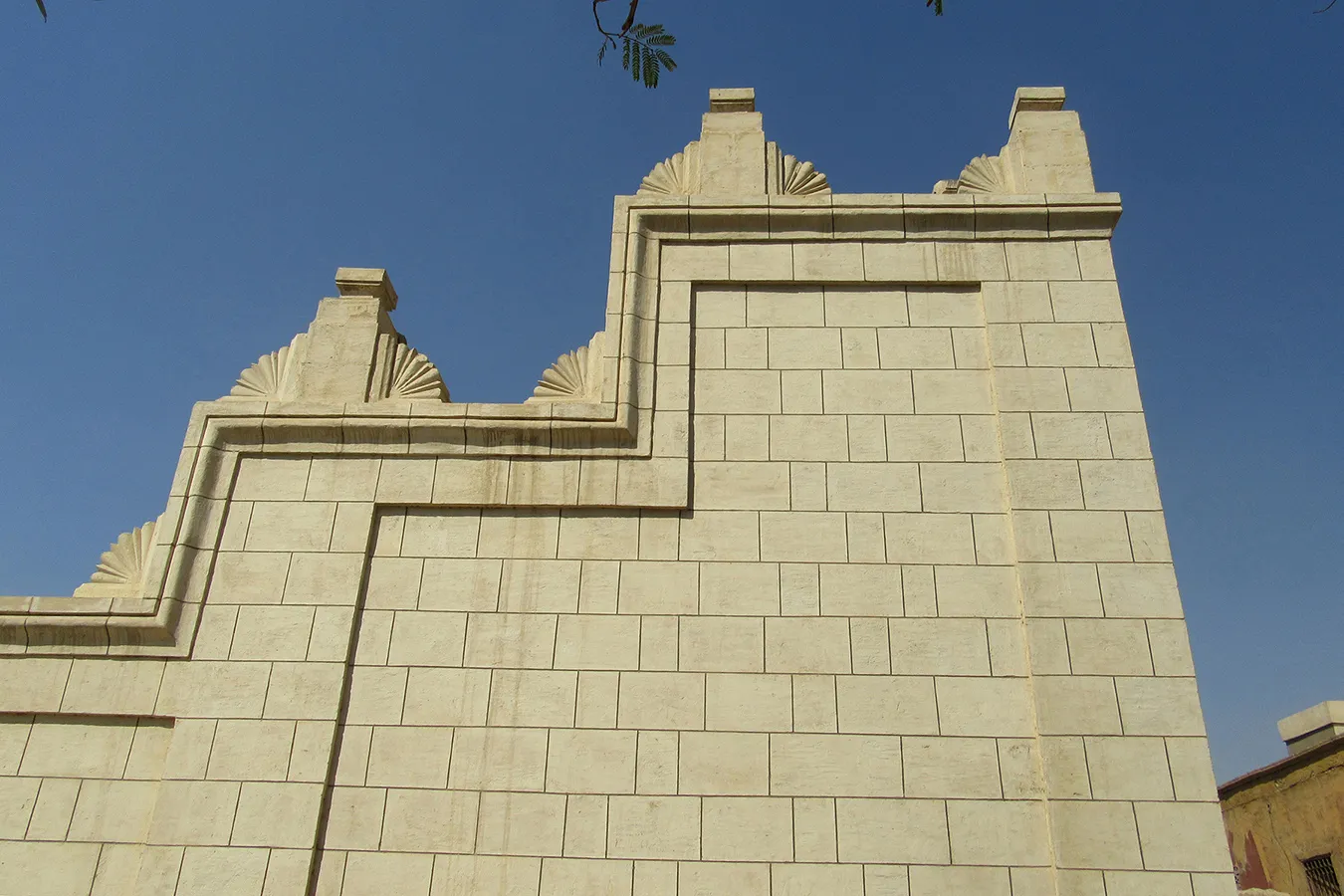
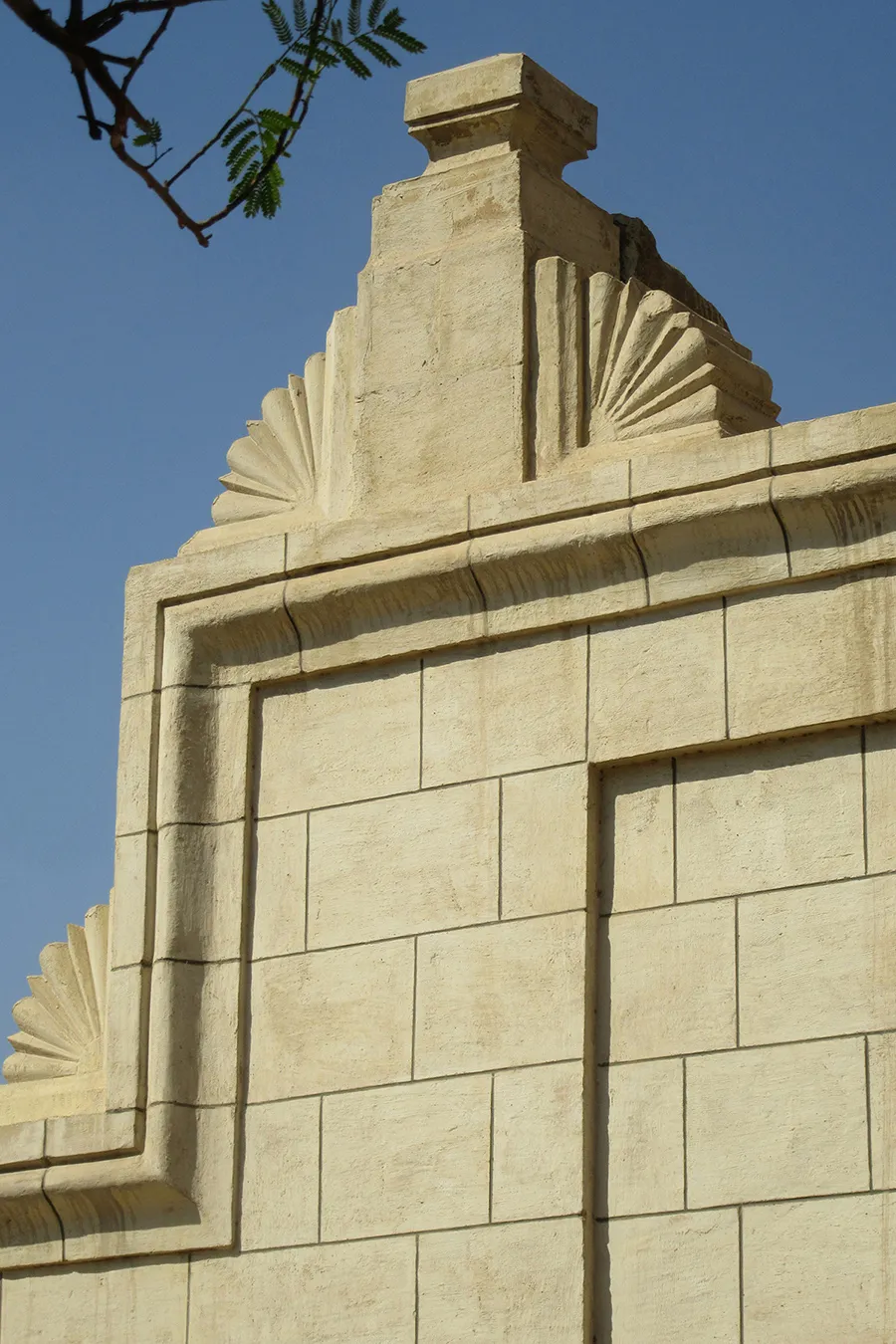
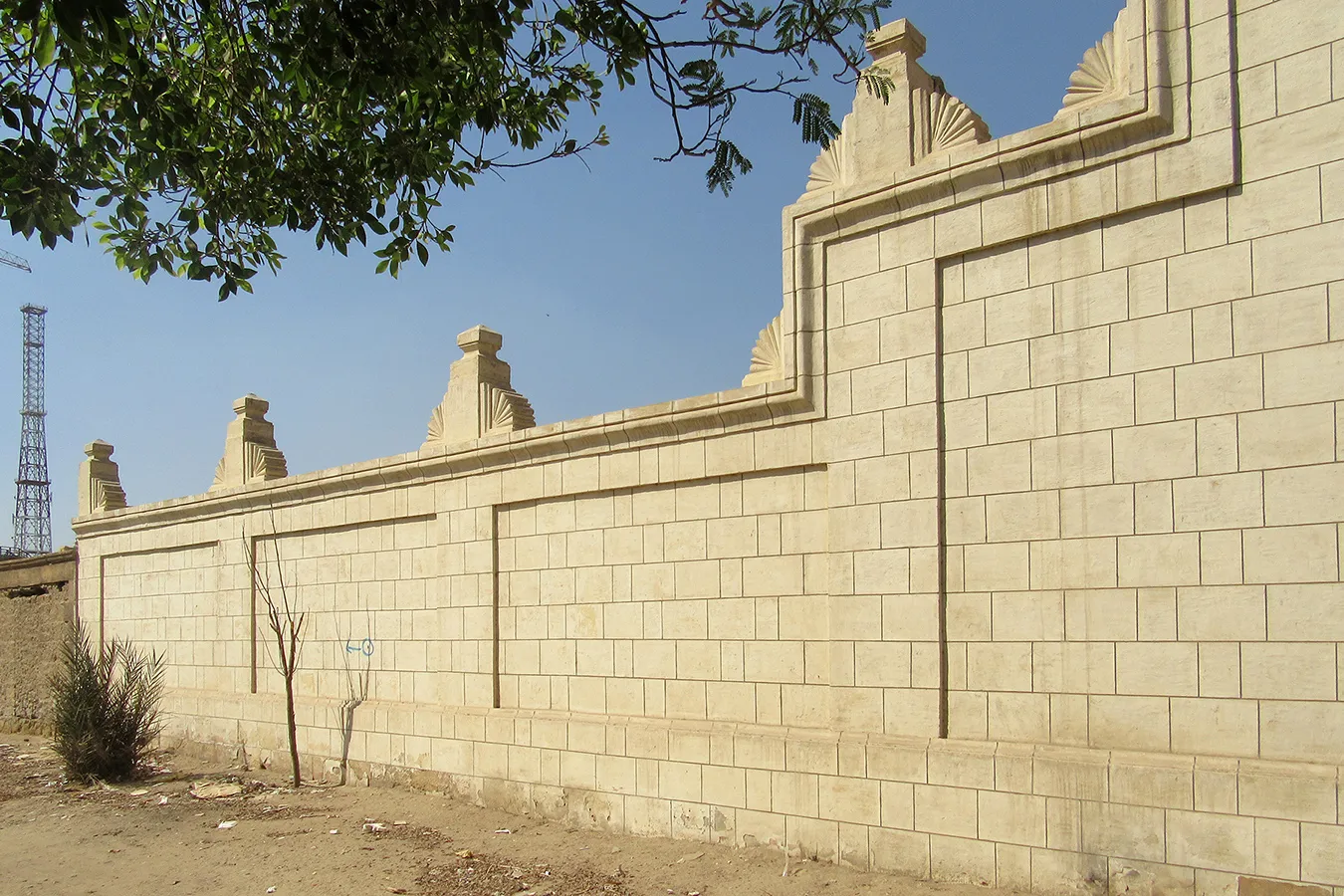
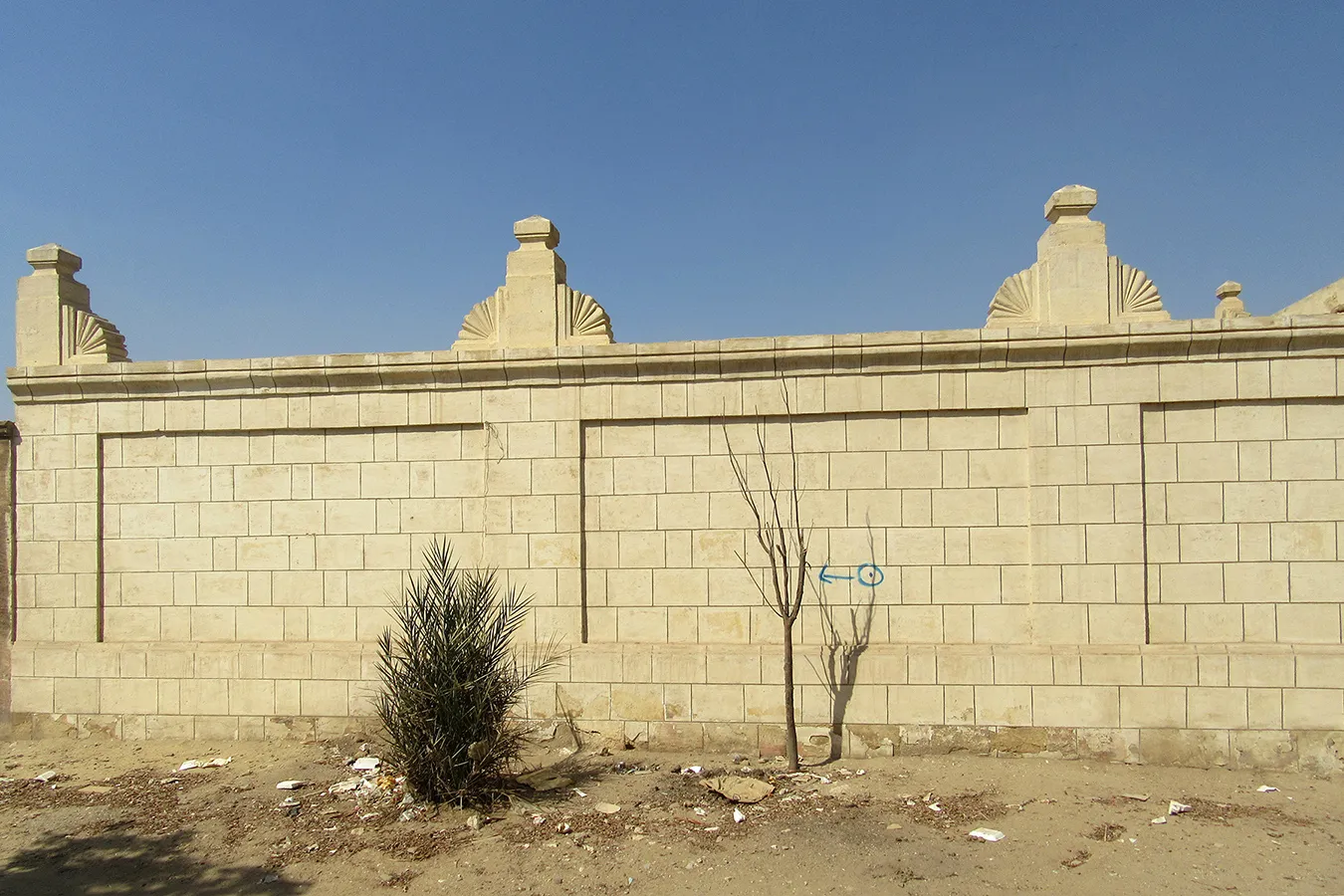
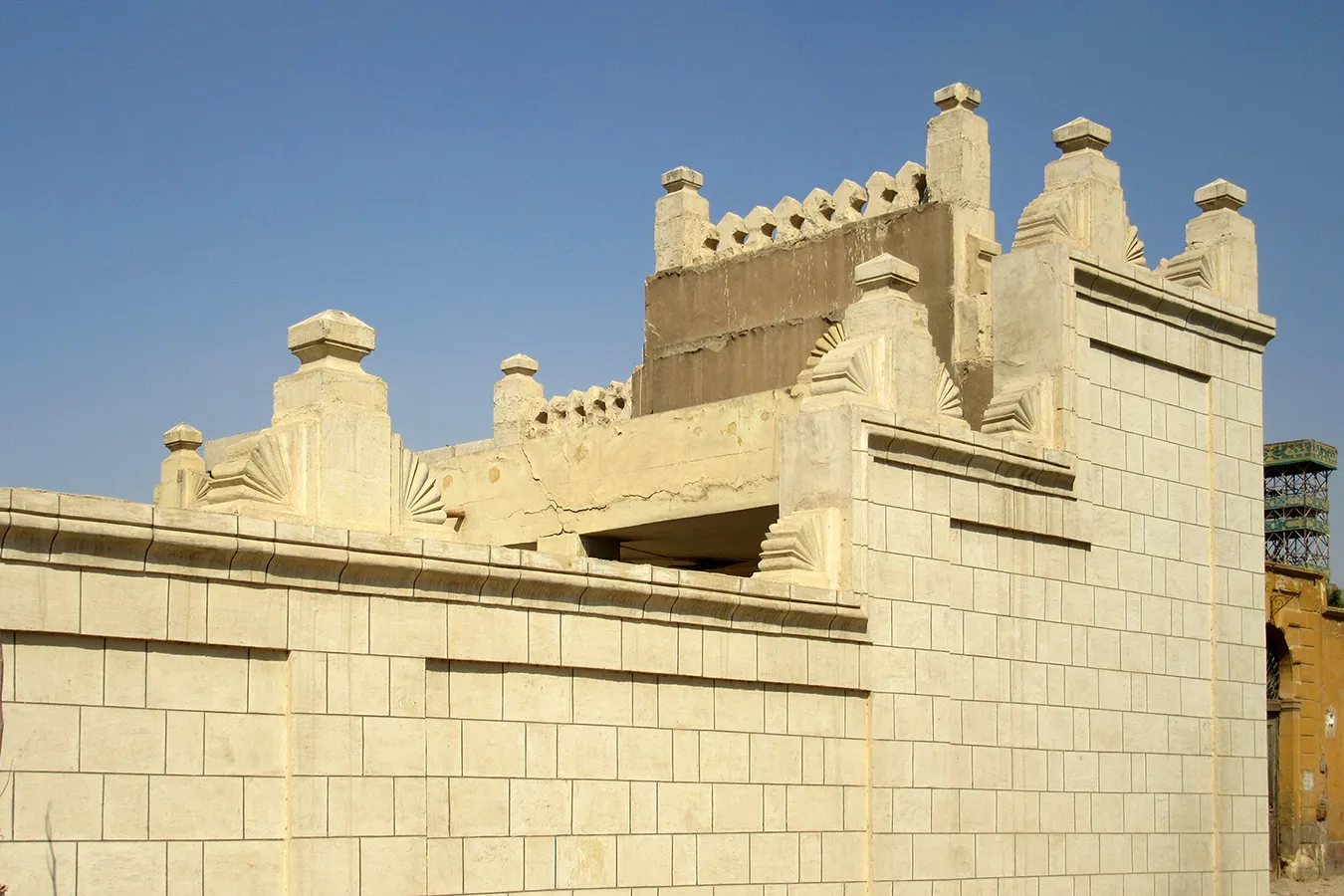
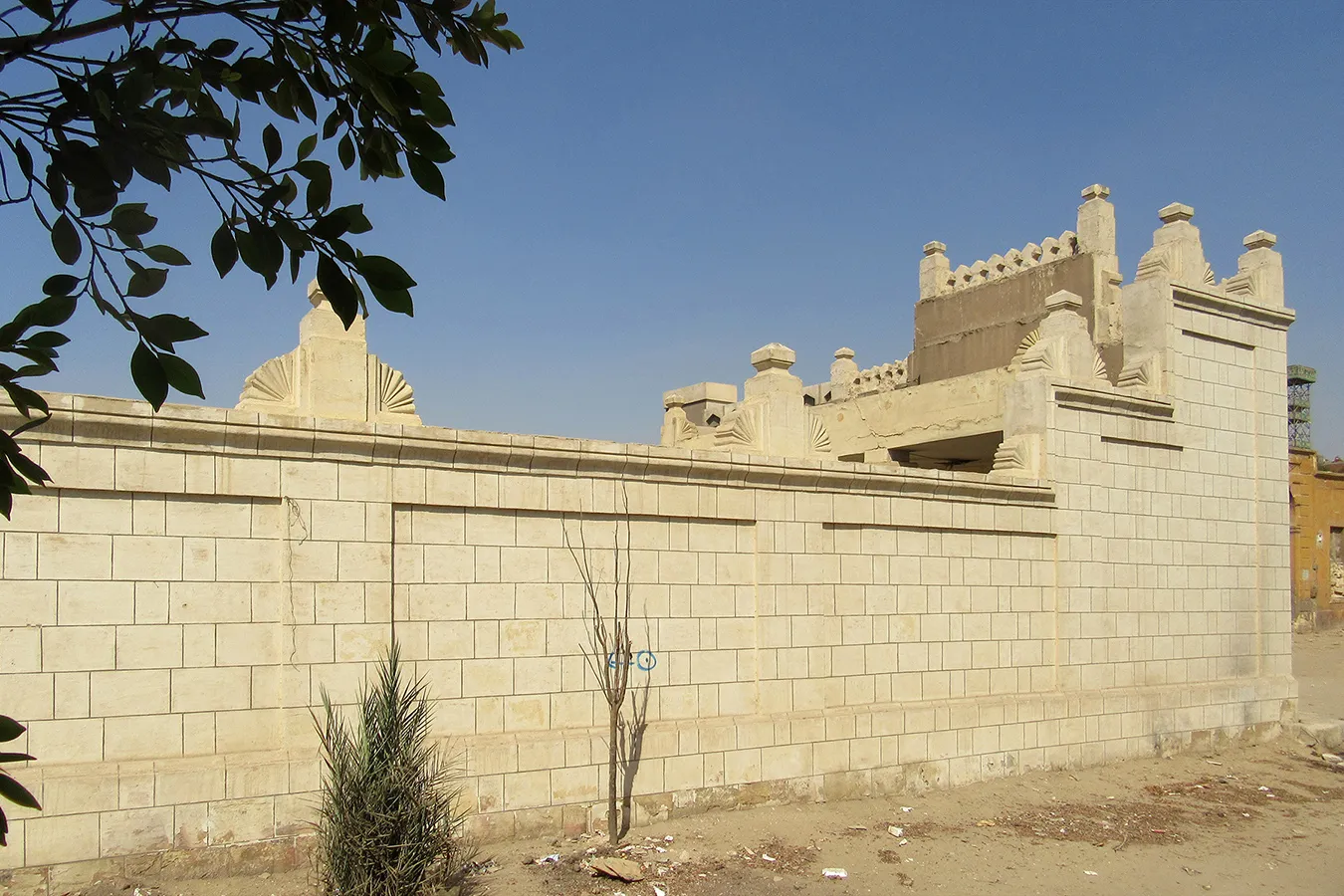
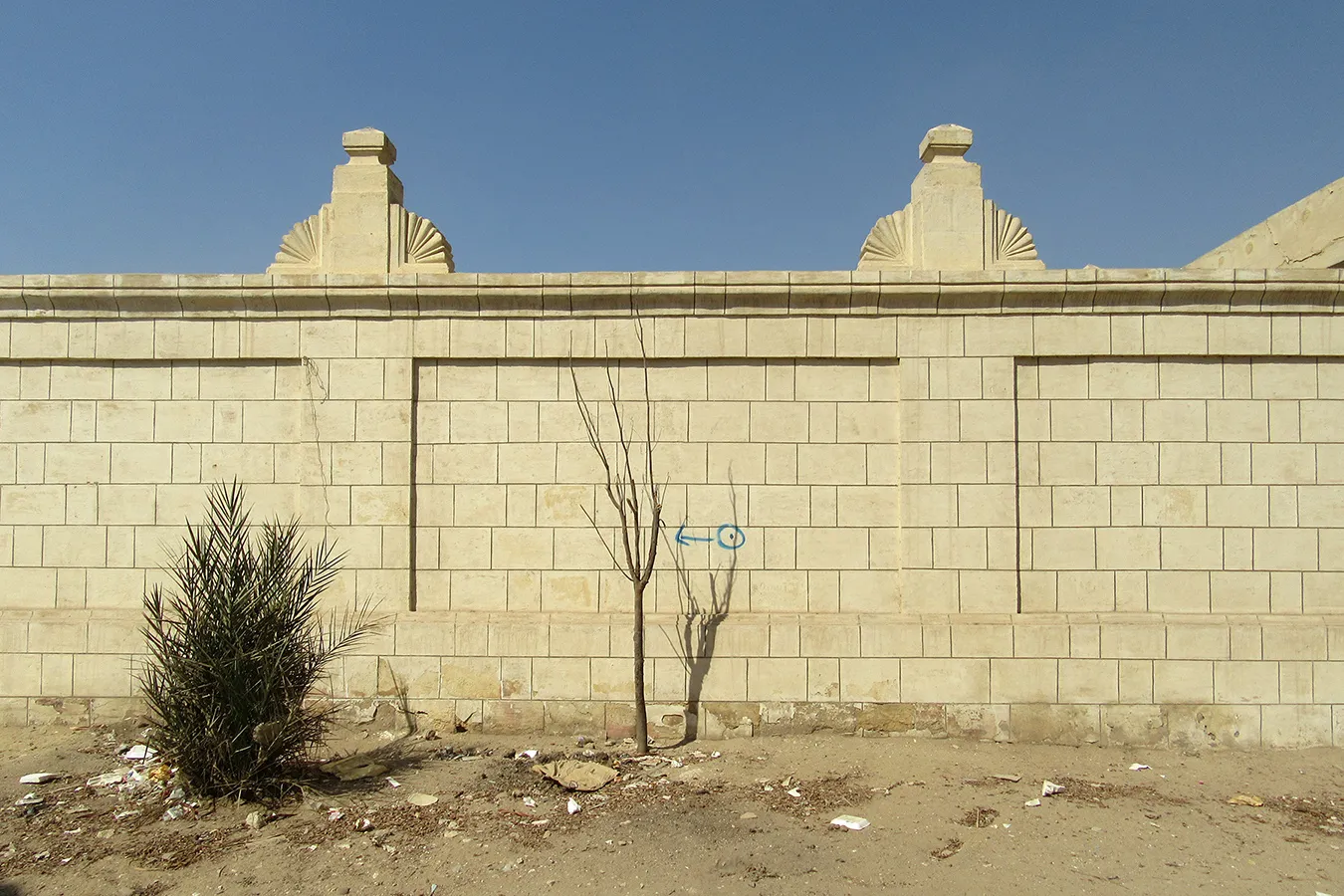
• Unusual form of ornaments on top of the perimeter wall
Description (The direction towards Mecca (Qibla) is described as eastern and other directions are named accordingly)
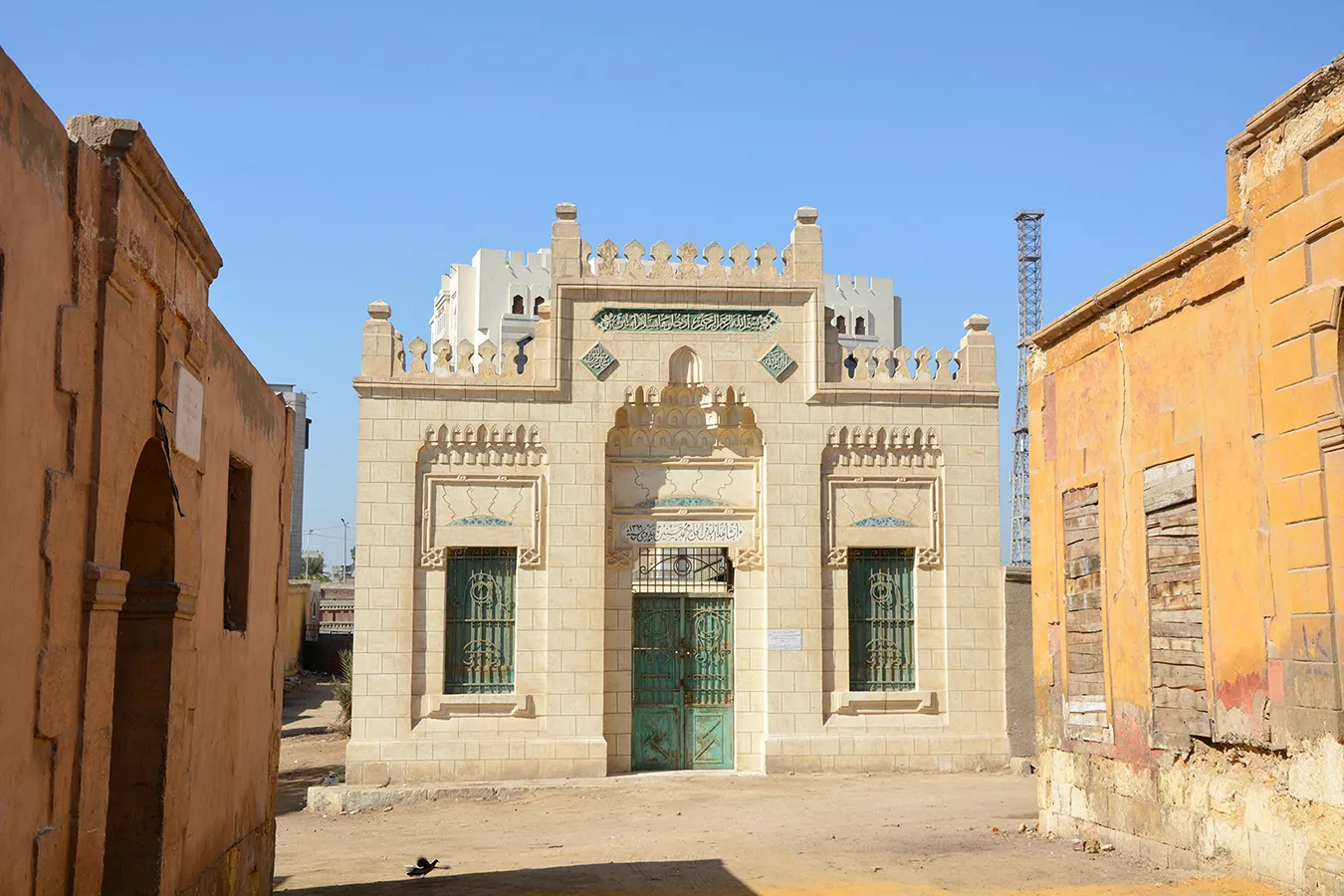
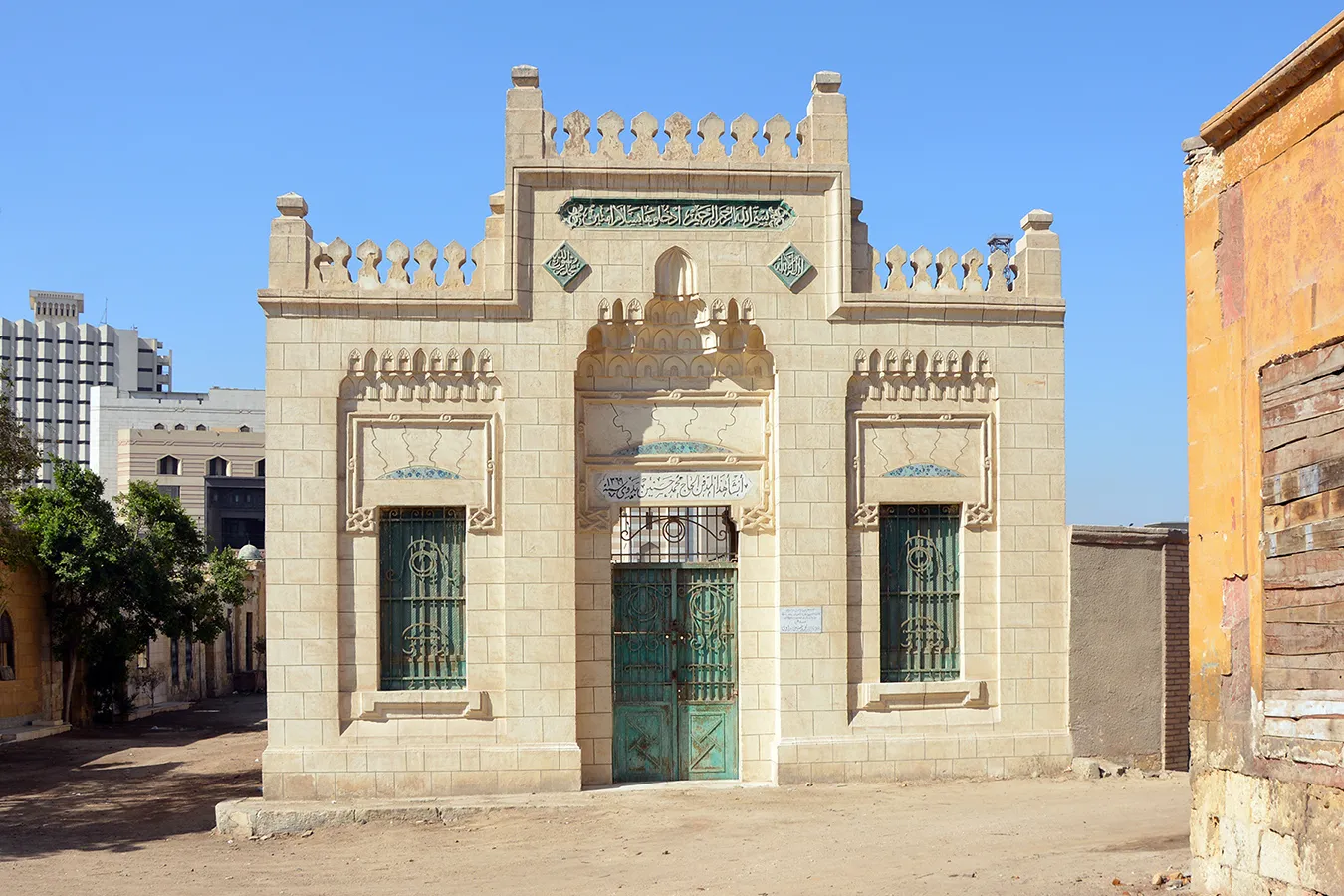
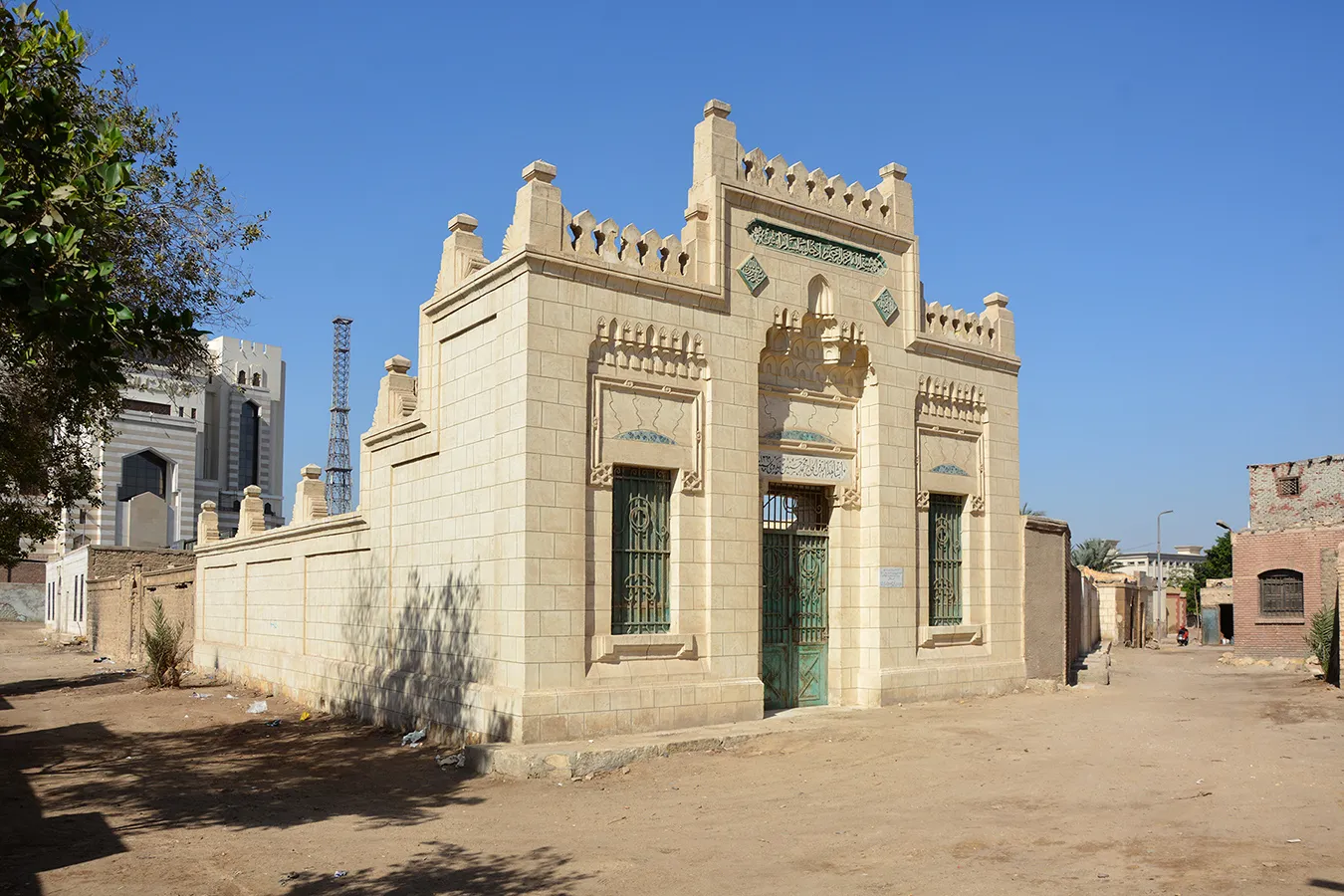
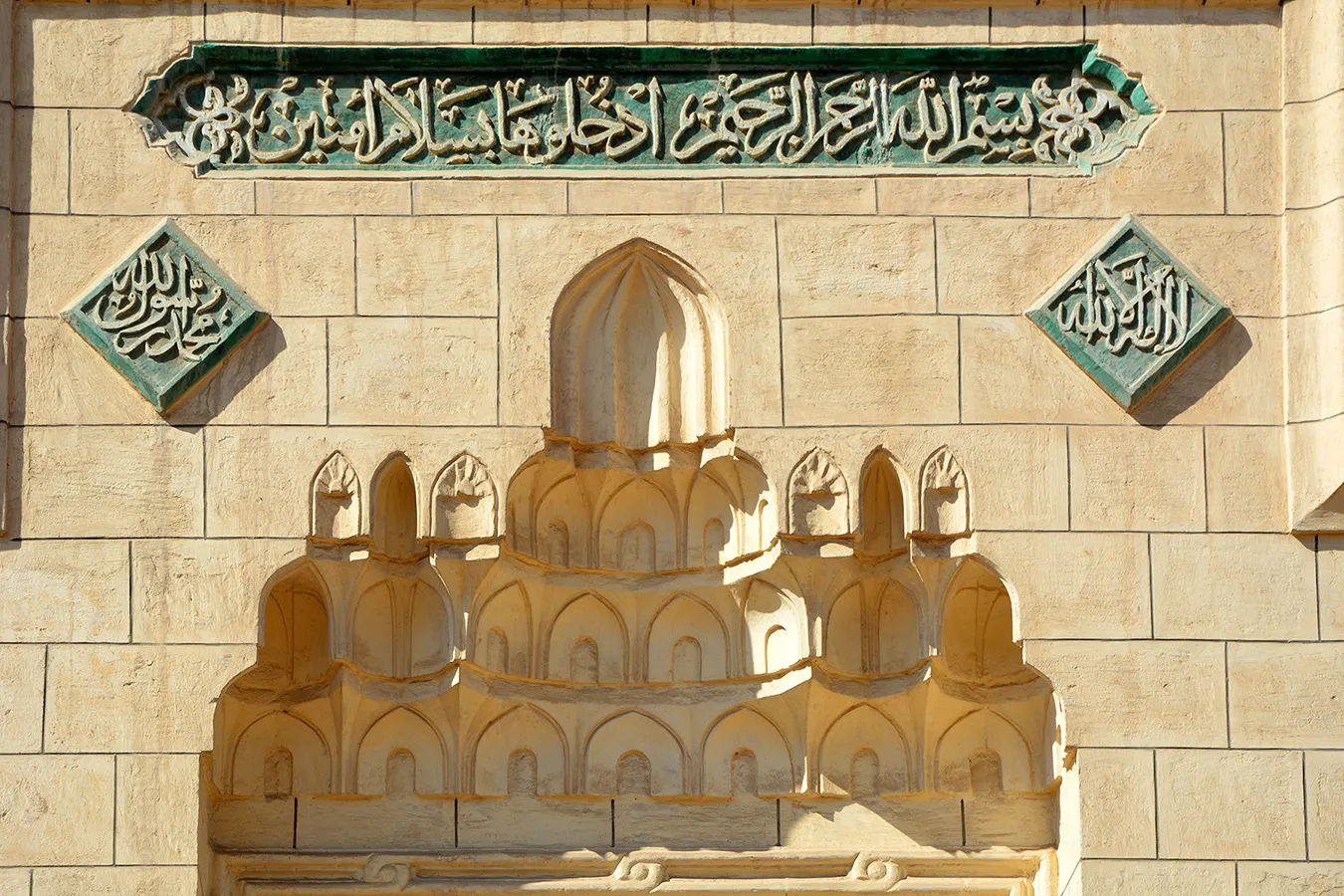
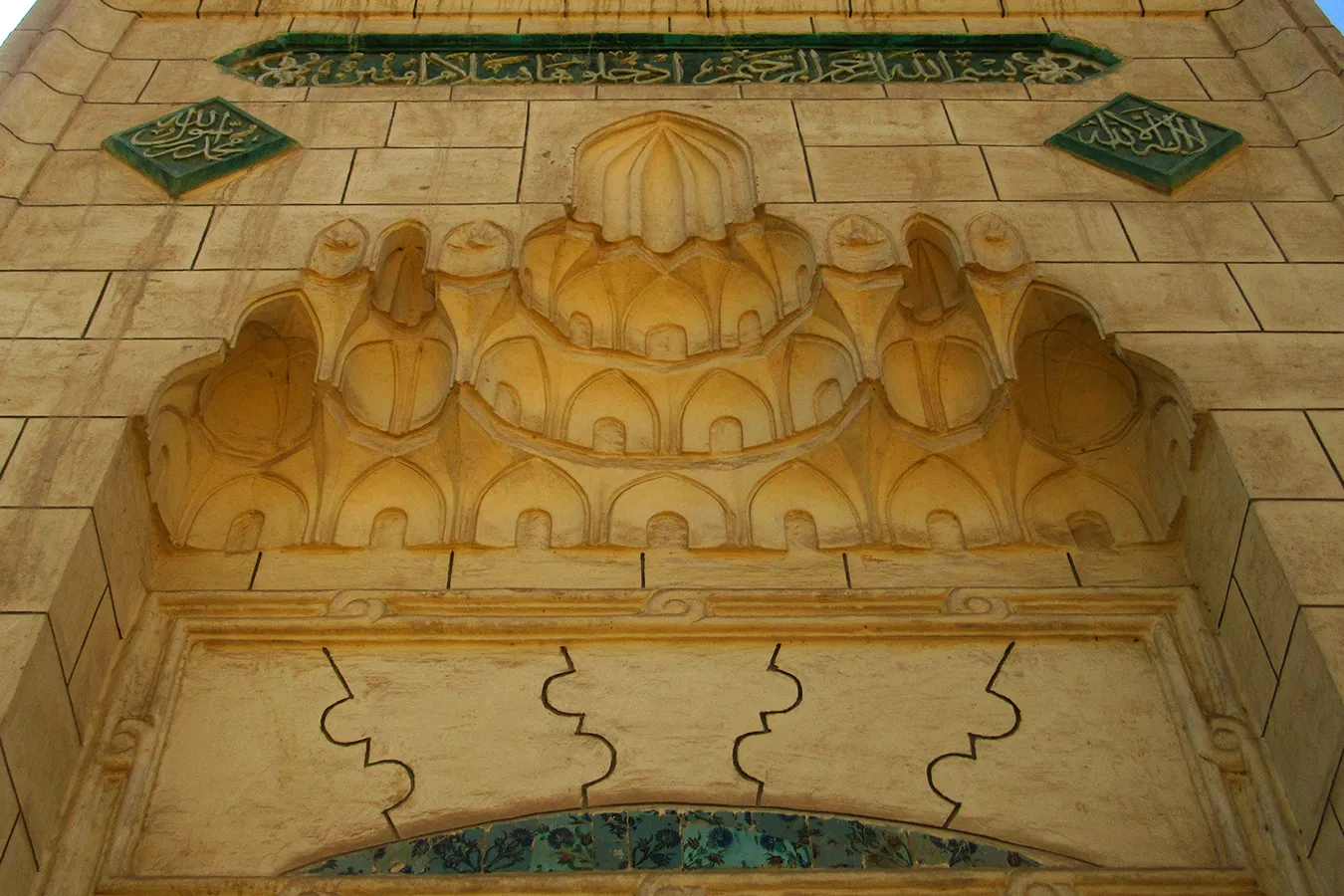
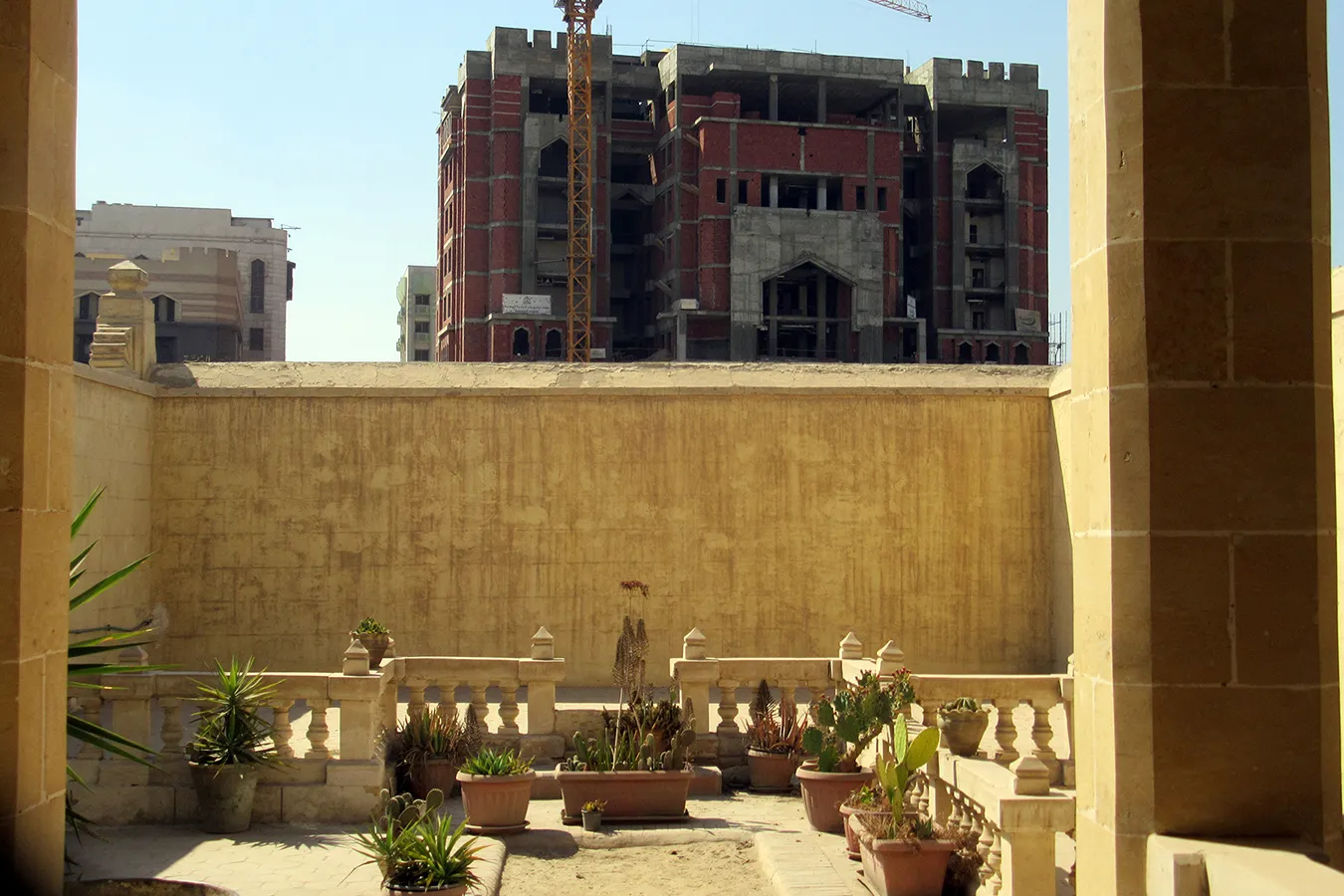
The modest-size walled funerary enclosure is a rectangle comprising a courtyard and a single-storey building on its eastern (shorter) side which faces a street. The tripartite front façade is formally and strictly symmetrically designed in a modernist-tinged neo-Mamluk style. The architectural details in cement plaster skillfully imitate the forms of Mamluk-period stone architecture. The central entrance section raises above the side sections forming a pishtaq (Petersen, 234). The entrance gate is placed in a recess topped with a muqarnas hood with a crowning fluted niche. The muqarnases in the middle row of the three-tiered arrangement skillfully imitate “stalactite” forms which they in fact have not.
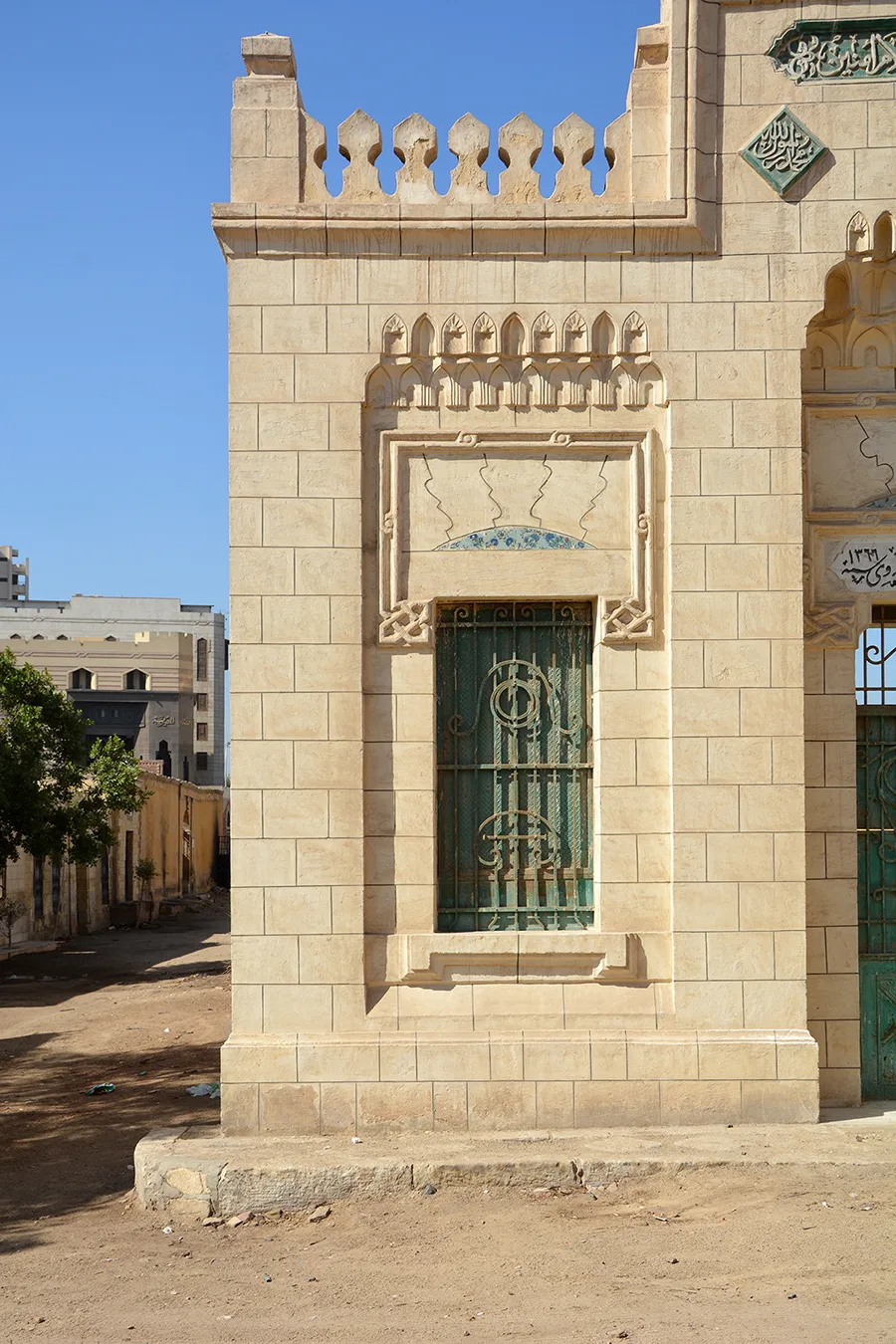
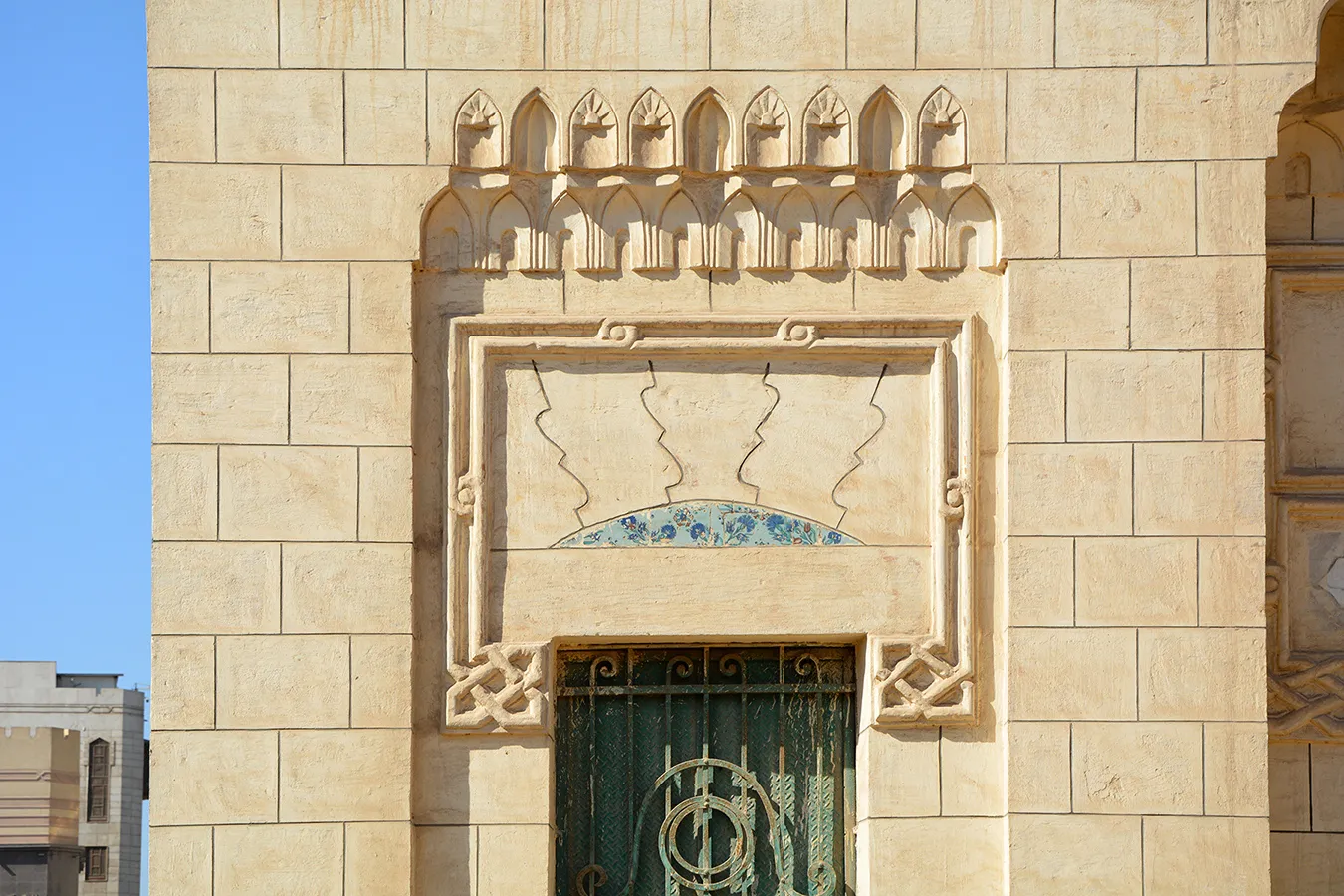
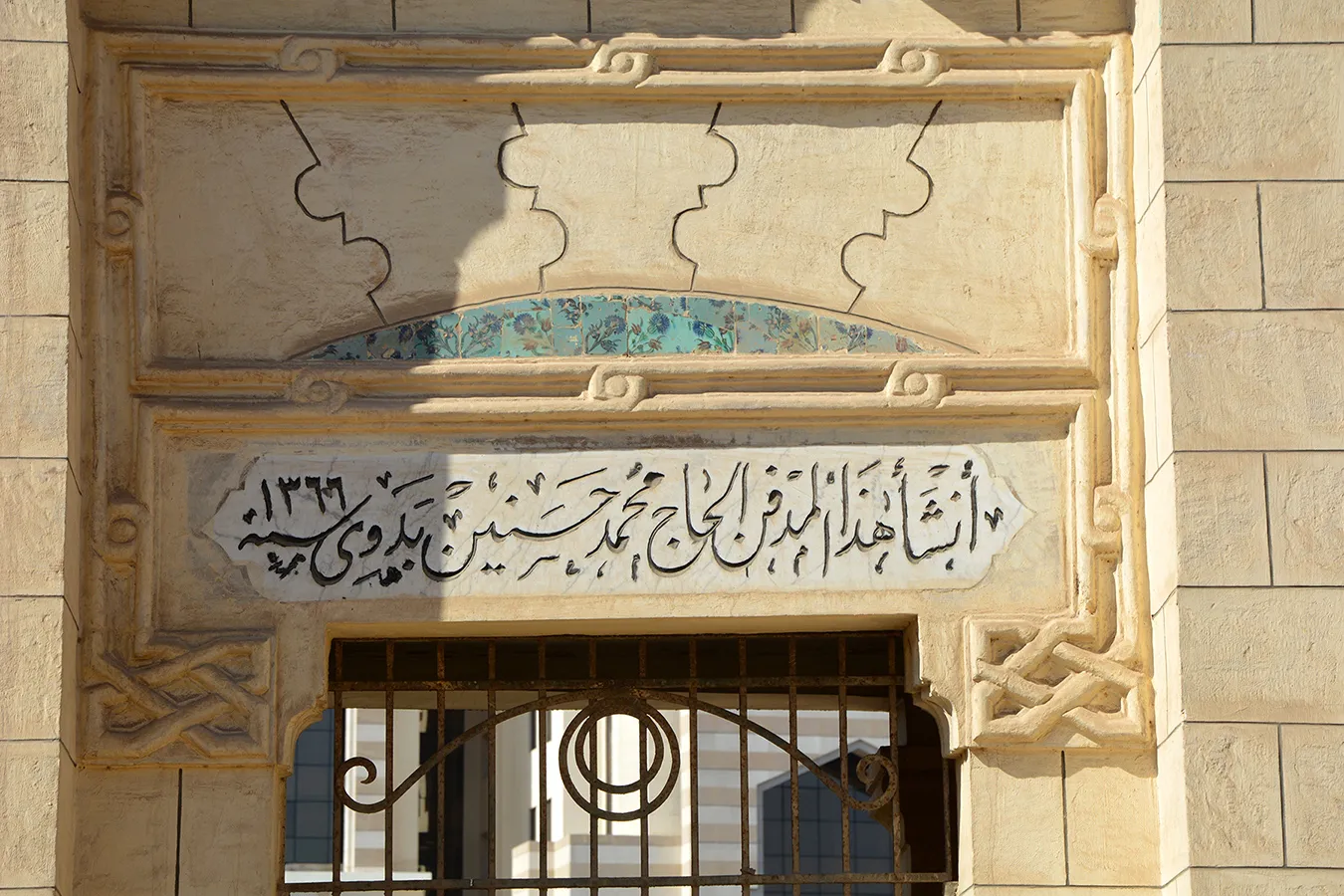
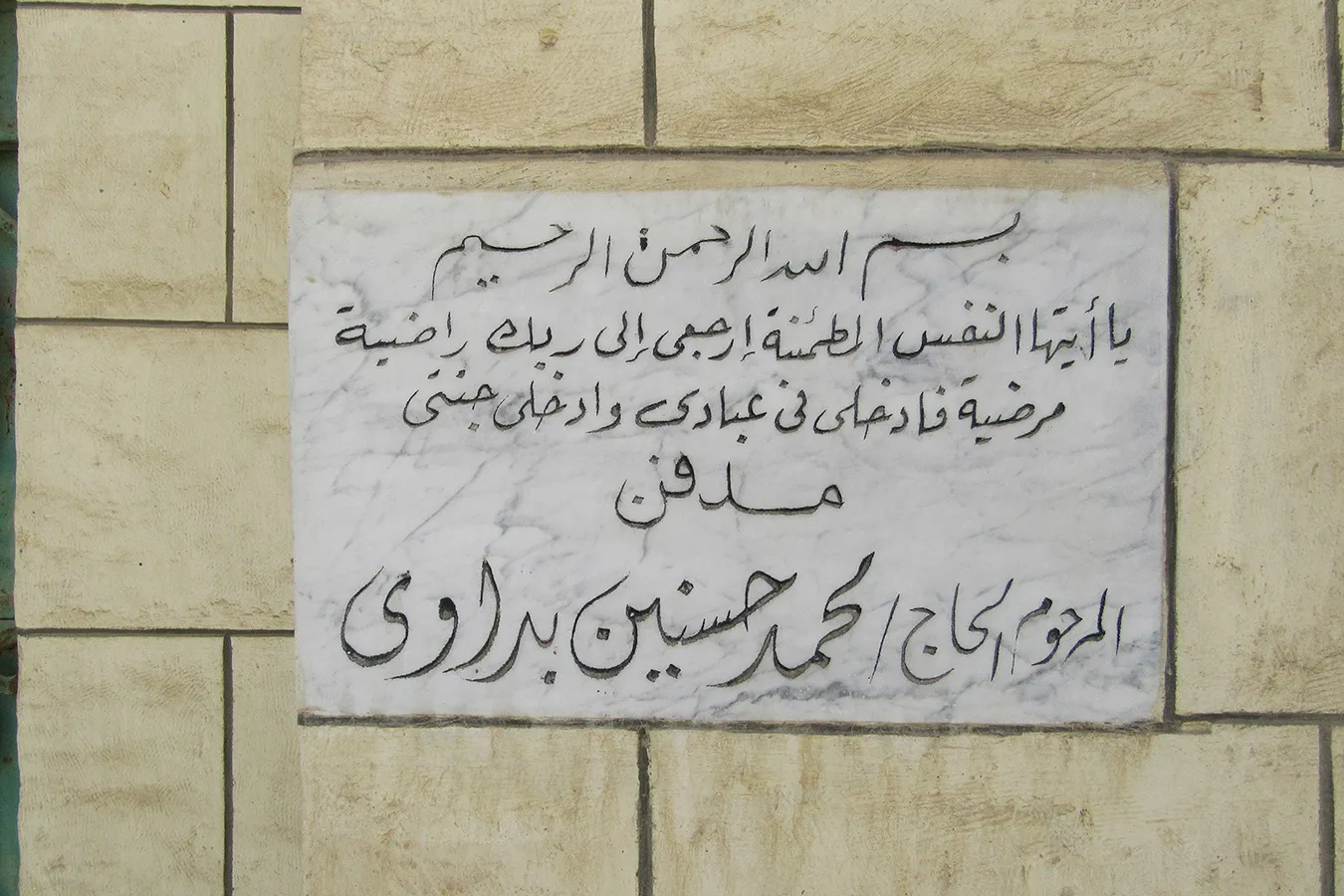
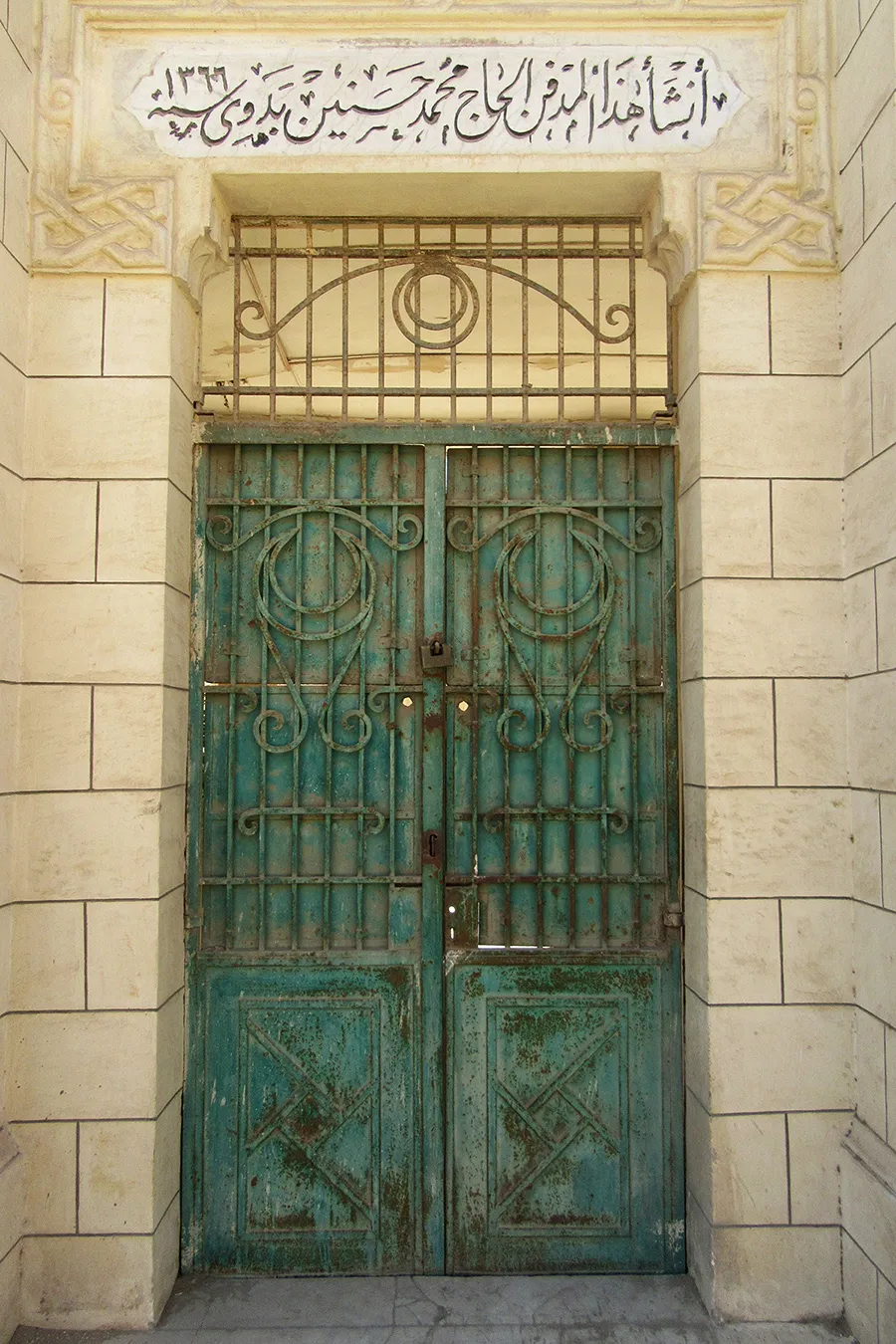
The windows to the sides are placed in shallower recesses topped with muqarnas friezes. The windows and doors have a typically Mamluk decoration of knotted mouldings that frame the lintels and (in this case, imitated) flat arches of joggled voissioirs over segmental relieving arches. The marble lintel over the entrance door bears an inscription with the founder’s name and date, while a sunken panel above the entrance recess contains the verse 15:46 (in surat l-hig’r) of the Qur’an: “Enter ye here in peace and security” (translation: Yusuf ‘Ali). Below, two diamond-positioned square inscriptions to the sides contain the shahada. The door and windows are fitted with wrought-iron grilles with decoration of simple Art Noveau-inspired design. In the relieving arches over the openings are painted glazed ceramic tiles. They do not form regular patterns, but are randomly placed fragmentary pieces of an Ottoman-style wall decoration. This may either result from the tiles being genuine Ottoman-period Iznik or Kütahia tiles (or their Syrian imitations), or else from the designer’s desire to create such an impression. Behind the front façade is an open loggia with concrete roof supported on two square stone pillars with chamfered corners. The side (southern) elevation is much lower than the building on the front side, with a stepped transitional section. Both the ornaments over the divisions of the side facades and the crenellations of the front façade are, rather typically for their period, very free modernist interpretations of Mamluk architectural forms in the Art Deco vein.
Condition of preservation
The unit is overall in very good condition and well maintained. Under risk of demolition to execute a new road parallel to Salah Salem Road
Information abut the founder, family history, etc.
The date 1366 AH in the inscription over the entrance gate corresponds to AD 1947, which is consistent with the architectural style of the building.
References in published/primary sources
• Petersen, Andrew Dictionary of Islamic Architecture, Routledge 1996, p. 234
• Ali, Abdullah Yusuf The Holy Qur’an: Text, Translation & Commentary (3rd ed.). Kashmiri Bazar, Lahore: Shaik Muhammad Ashraf, 1938
- Field recording by
- Amr Abotawla and Nur Atiya
- Date recorded
- August 18, 2022
- Data entered by
- Hadeer Ahmad
- Date entered
- May 12, 2024