
Unit No76
Funerary enclosure of inheritors of Basma Khatun
|
Coordinates of the main entrance |
30.041037N - 31.270205E |
|
Attribution |
Funerary enclosure of inheritors of Basma Khatun |
|
Higri (AH)Dates as given in the Inscription |
|
|
Miladi (AD)Dates as given in the Inscription |
|
|
Inscription Contemporary with the building? |
Yes |
|
Multiple date(s) In the inscription? |
Yes |
|
Assumed Date |
Mid-20th century remodelling of earlier enclosure |
|
Based on |
|
|
Original Use |
Funerary enclosure |
|
Current Use |
Funerary enclosure |
|
Overall condition |
Fair |
Features of unit 76
| Present | Count | Material | Comments (see description for details) | |
|---|---|---|---|---|
| Free standing structure | No | |||
| Walled enclosure | Yes | 1 | brick, stone | |
| Rooms by the perimeter wall | Yes | 2 | brick, wood | |
| Freestanding structure(s) in enclousure | No | |||
| Dome over the tomb chamber | No | |||
| Neo-Mamluk architectural decoration | No | |||
| Garden layout | No | |||
| Sabil(s) | No | |||
| Wall fountain(s) | No | |||
| Canopy on columns / pillars | No | |||
| Carved marble cenotaph(s) | No | |||
| Decorated limestone tomb-markers | Yes | 15 | limestone | Simple uninscribed tomb-markers |
| Decorated gateway | No | A very simple, well-built stone gate | ||
| Decorative door-leaves | No | |||
| Decorative window grilles | No | |||
| Decorative shutters | No | |||
| Painted ceiling(s) | No | |||
| Decorative paving(s) | No |
Unusual or unique features
• An open funerary courtyard without rooms of residential function
Description (The direction towards Mecca (Qibla) is described as eastern and other directions are named accordingly)
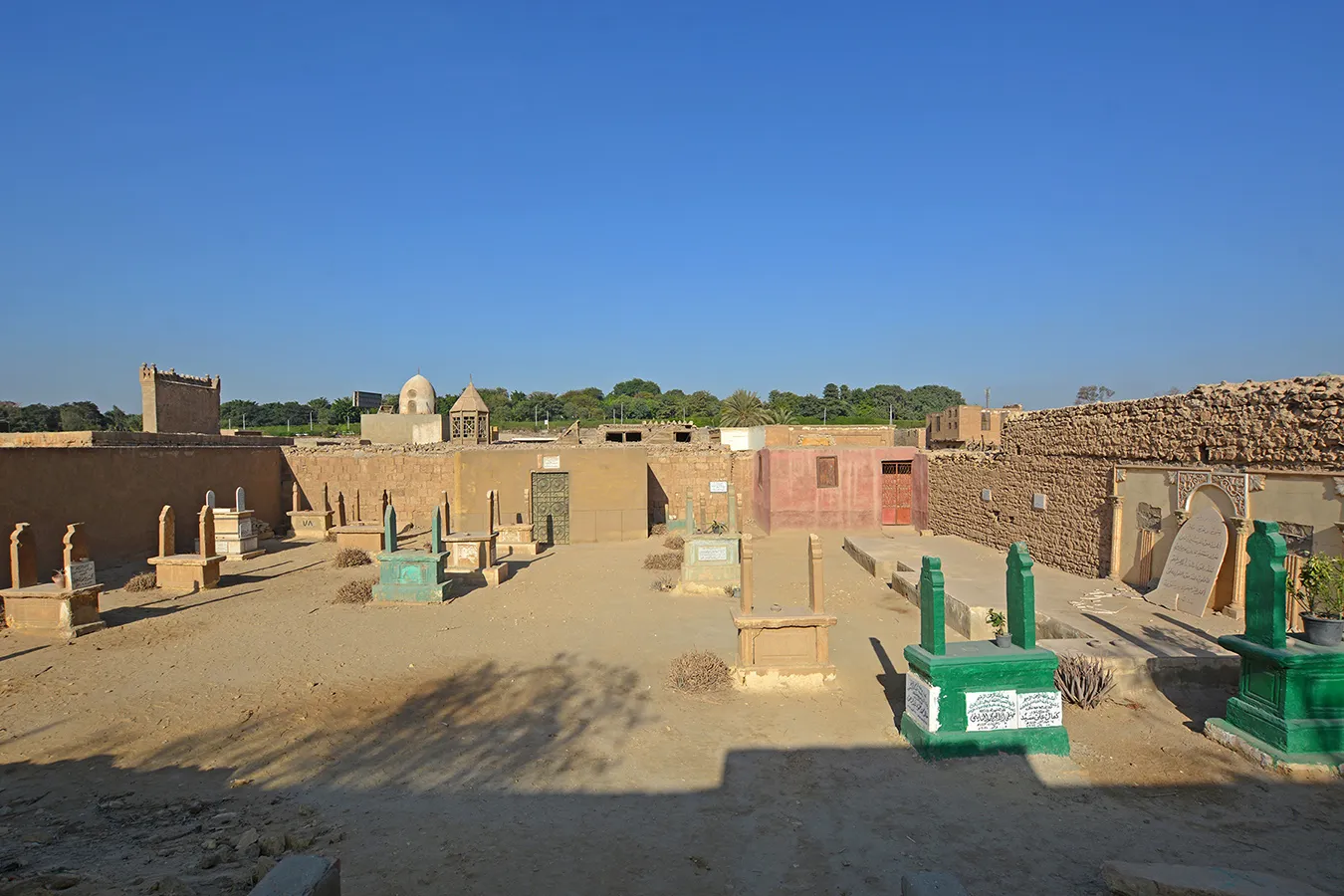
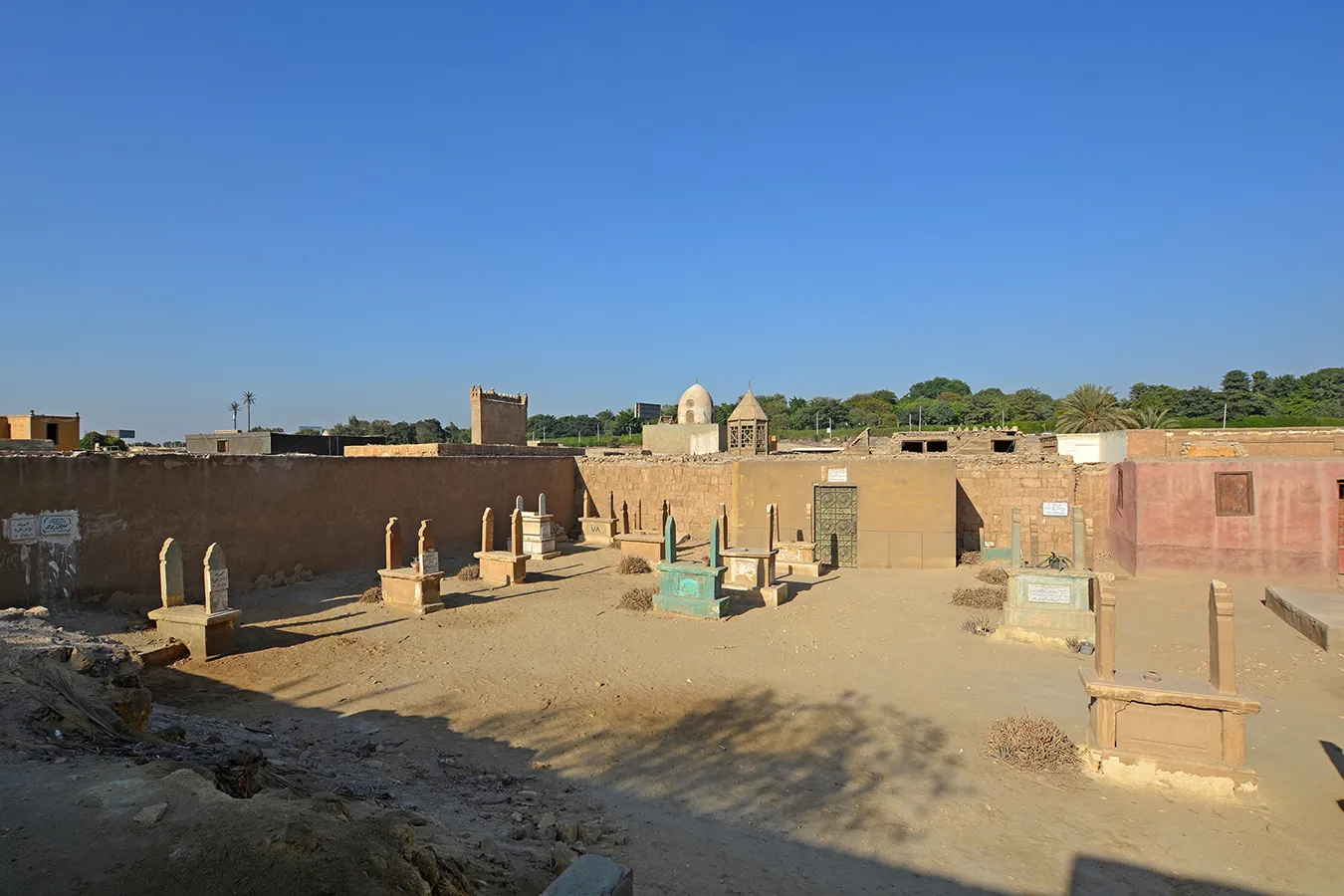
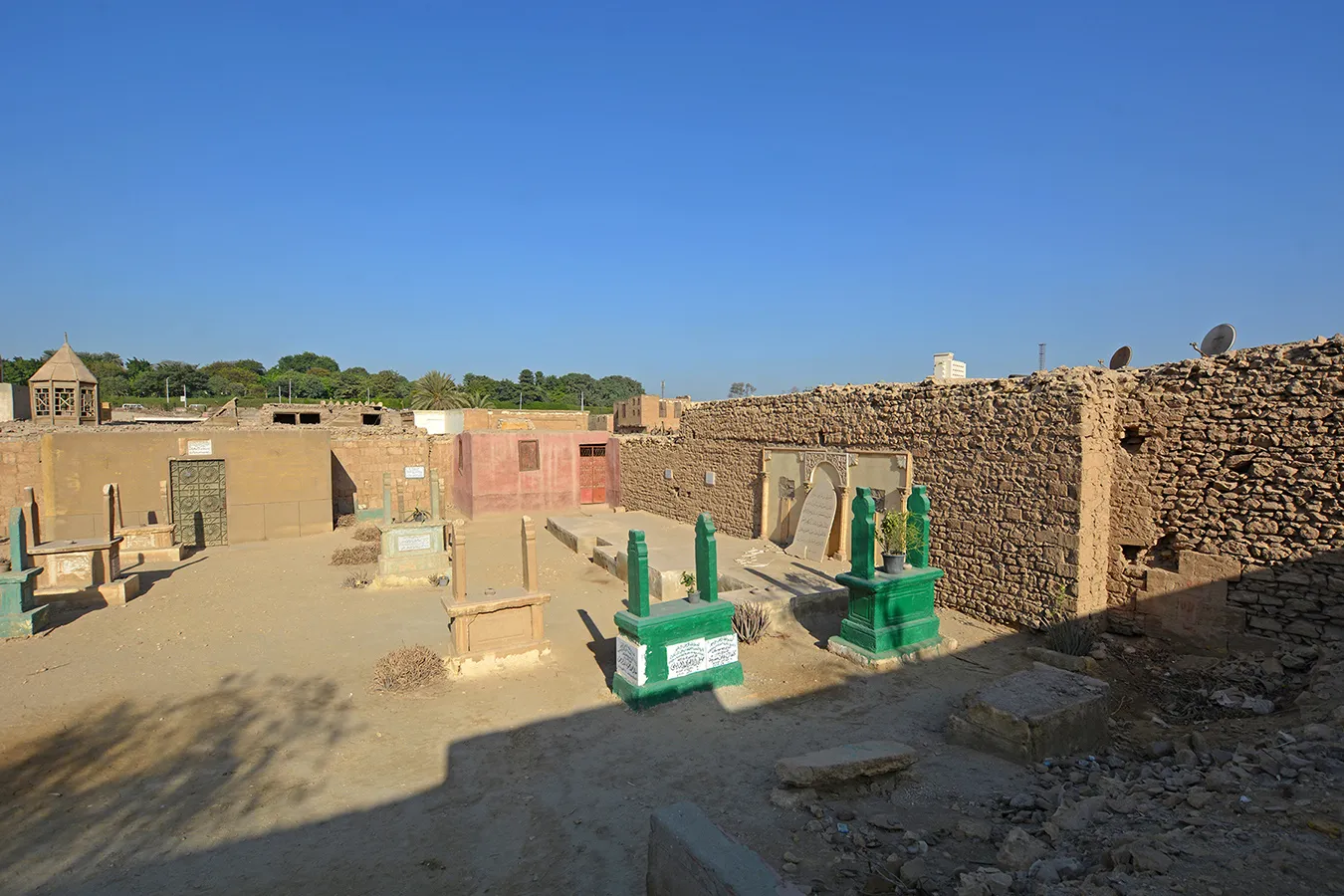
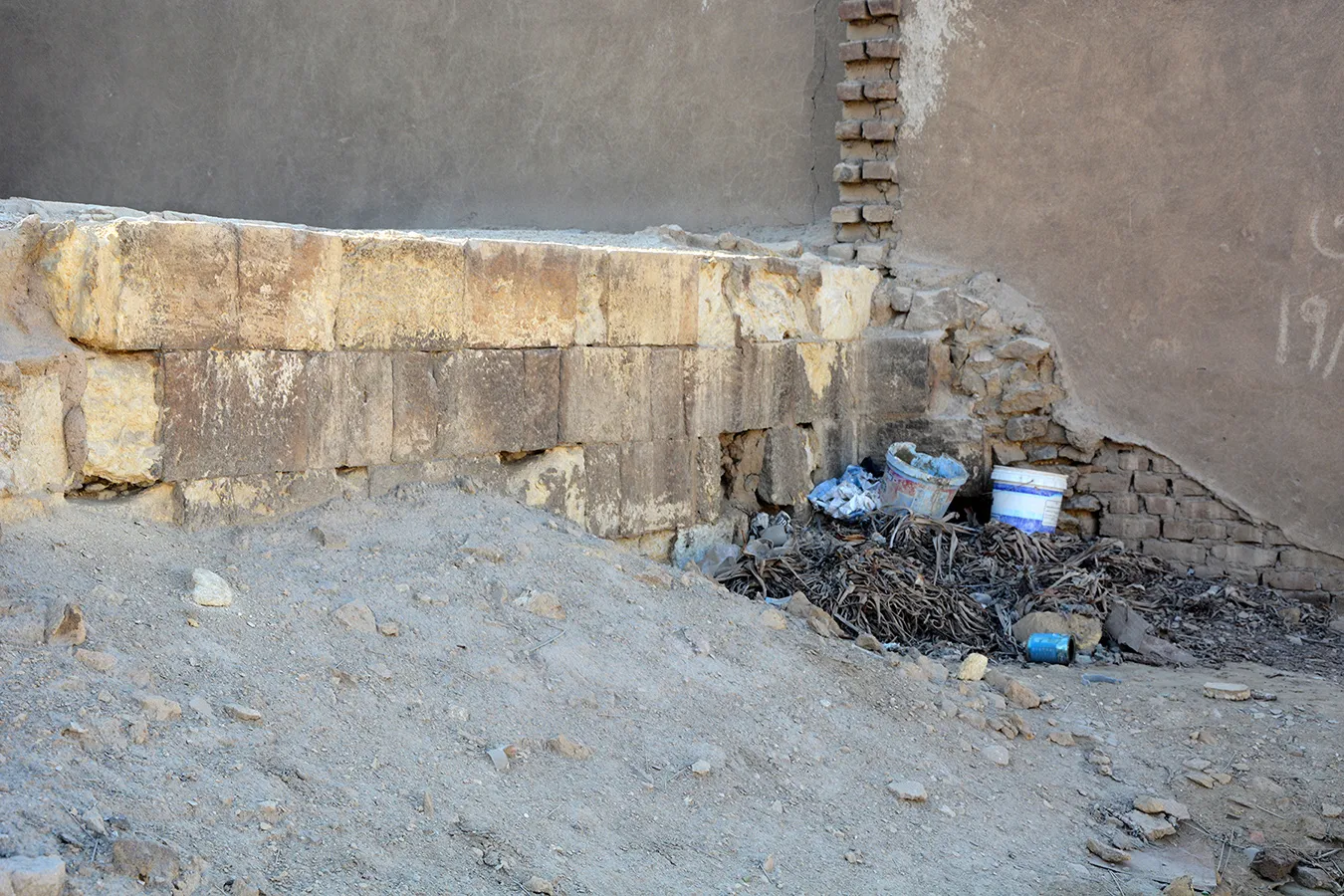
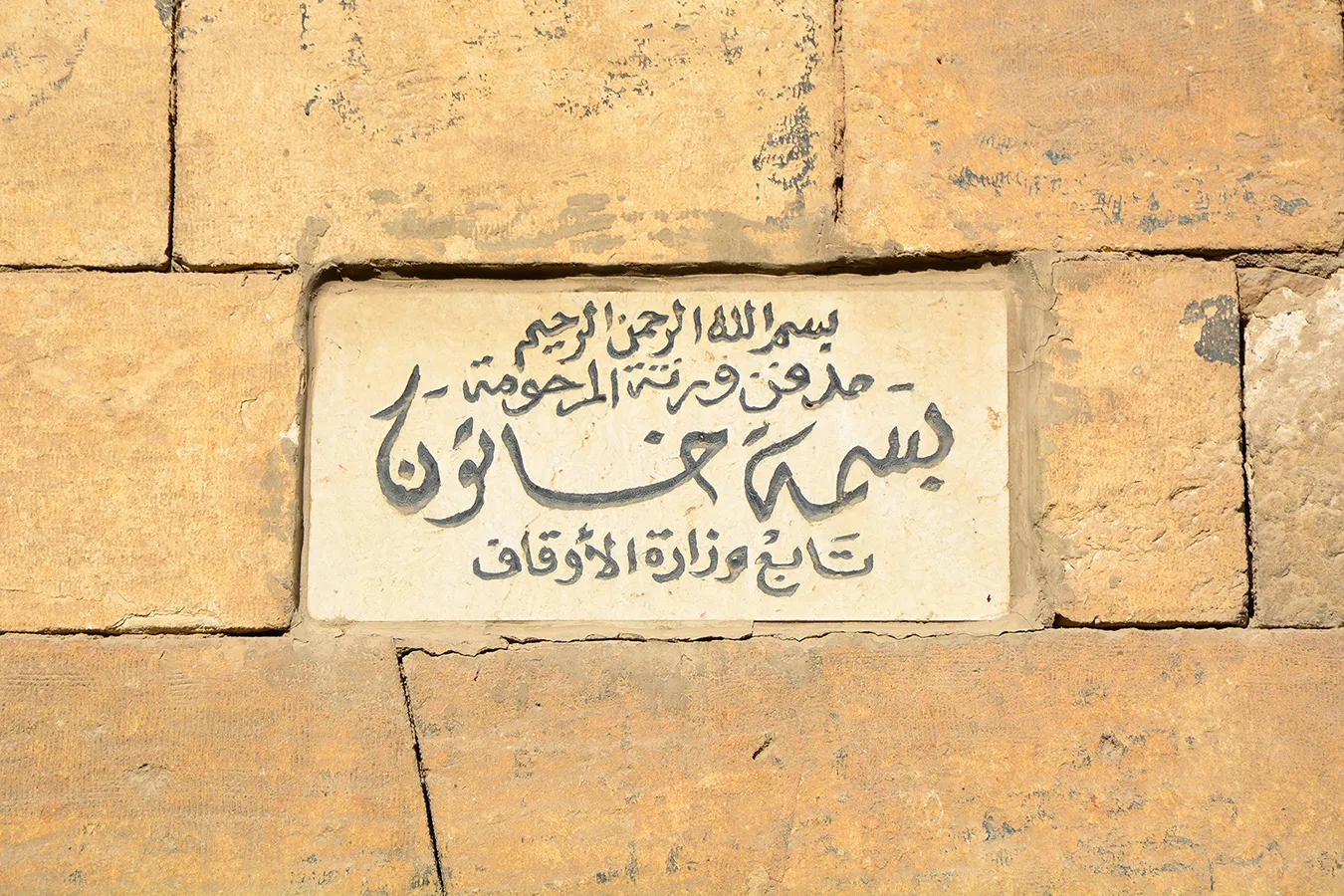
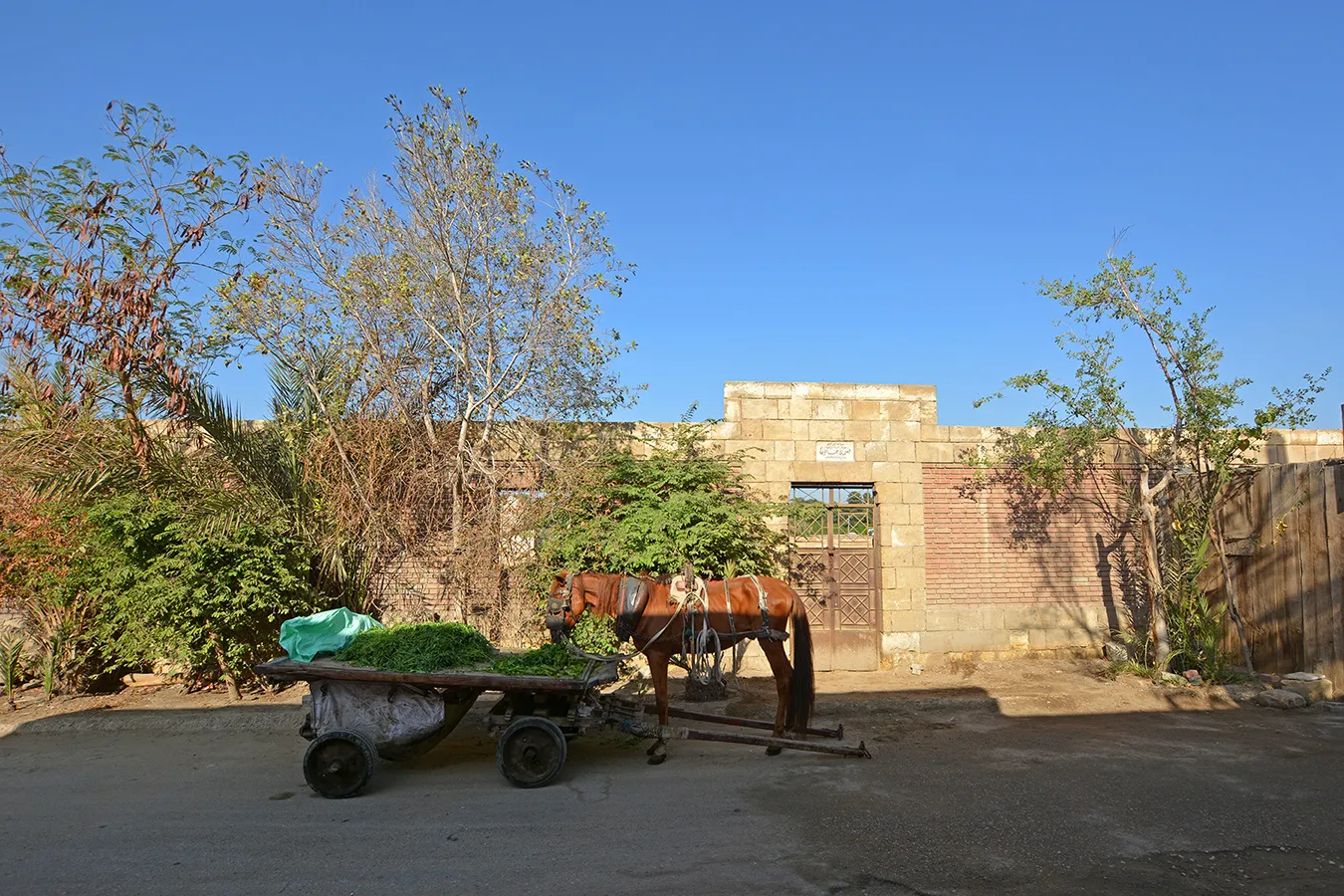
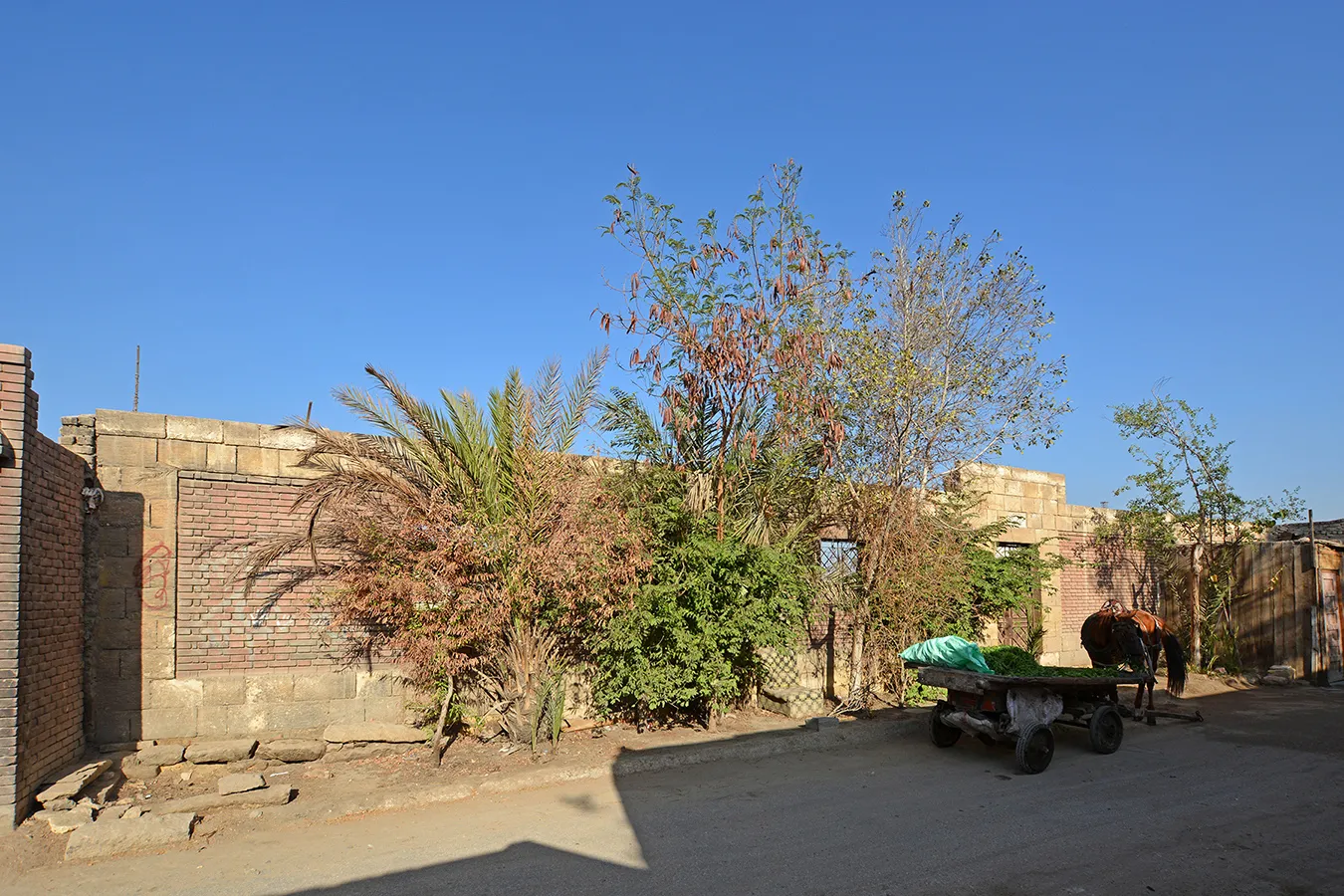
A sizeable roughly rectangular open enclosure measuring approximately 23 x 27 – 29 metres. The eastern wall is recessed a few metres from the street relative to the neighbouring enclosures. It is built with bottom and top parts, the corner sections, and the entrance gate in the middle constructed of dressed ashlar stone, and the remaining parts built of ret-tinted cement bricks. The section of the wall over the gate is slightly taller; the undecorated gate is covered by a flat stone arch. Over the gate, a simple rectangular marble plaque is set in the wall, with an incised inscription stating that the burial ground belongs to the ancestors of the late Ms Basma Khatun and is affiliated to the Ministry of Awqaf (religious foundations.) Left of the gate is a single square window covered with a flat arch of bricks, opening on the courtyard. Both the gate and the window are fitted with openwork grilles of welded rolled steel in very simple geometric patterns. The southern wall of the enclosure is built of bricks and plastered, the western wall of dressed stone, and the northern wall of rubble stone. The eastern section of the enclosure, about five metres wide, is raised about 1.5 m above the rest of the open courtyard, which is accessed by a few steps. The raised platform was supported by a retaining wall, preserved only in the southern part built of ashlar stone masonry and apparently earlier than the present enclosure walls.
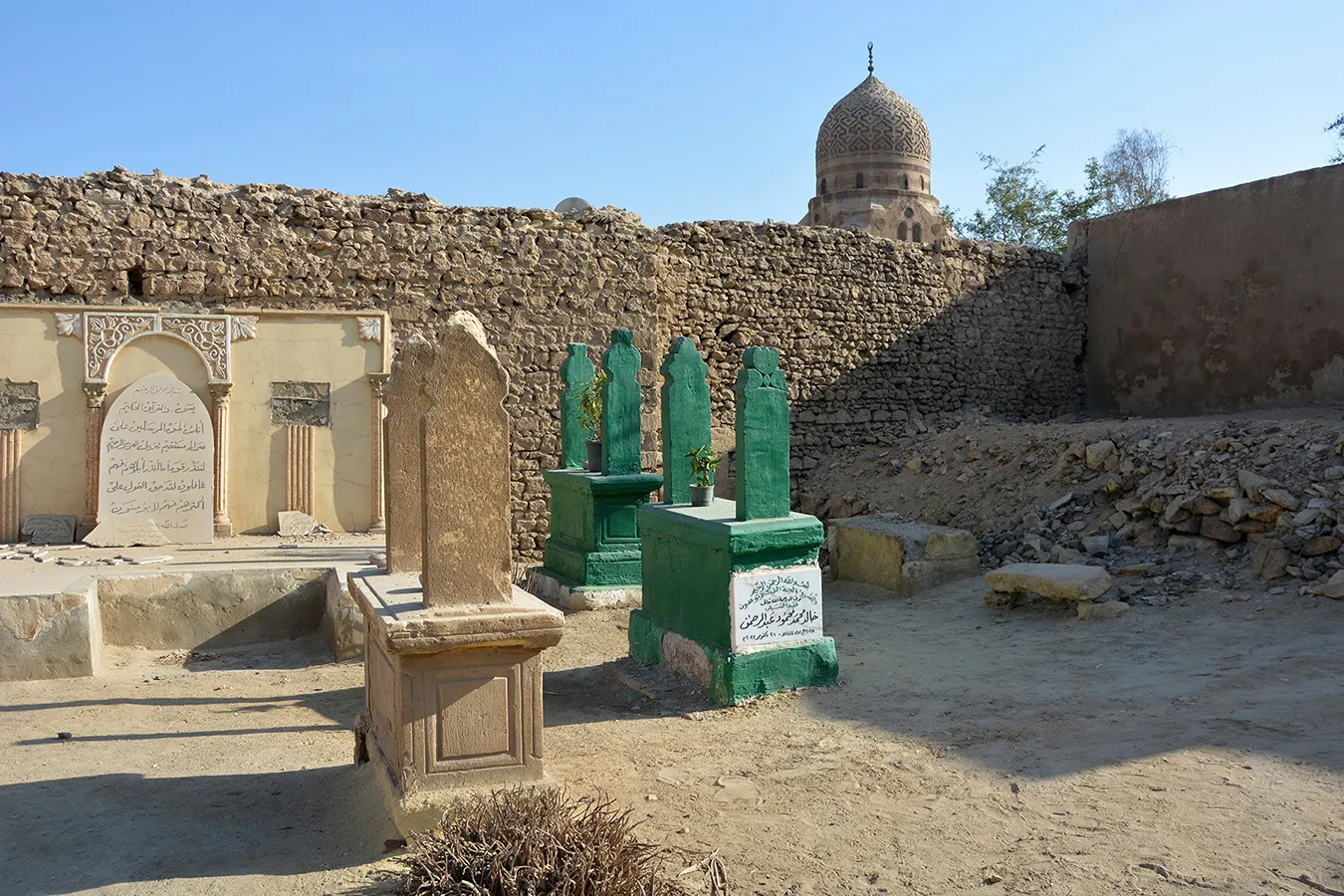
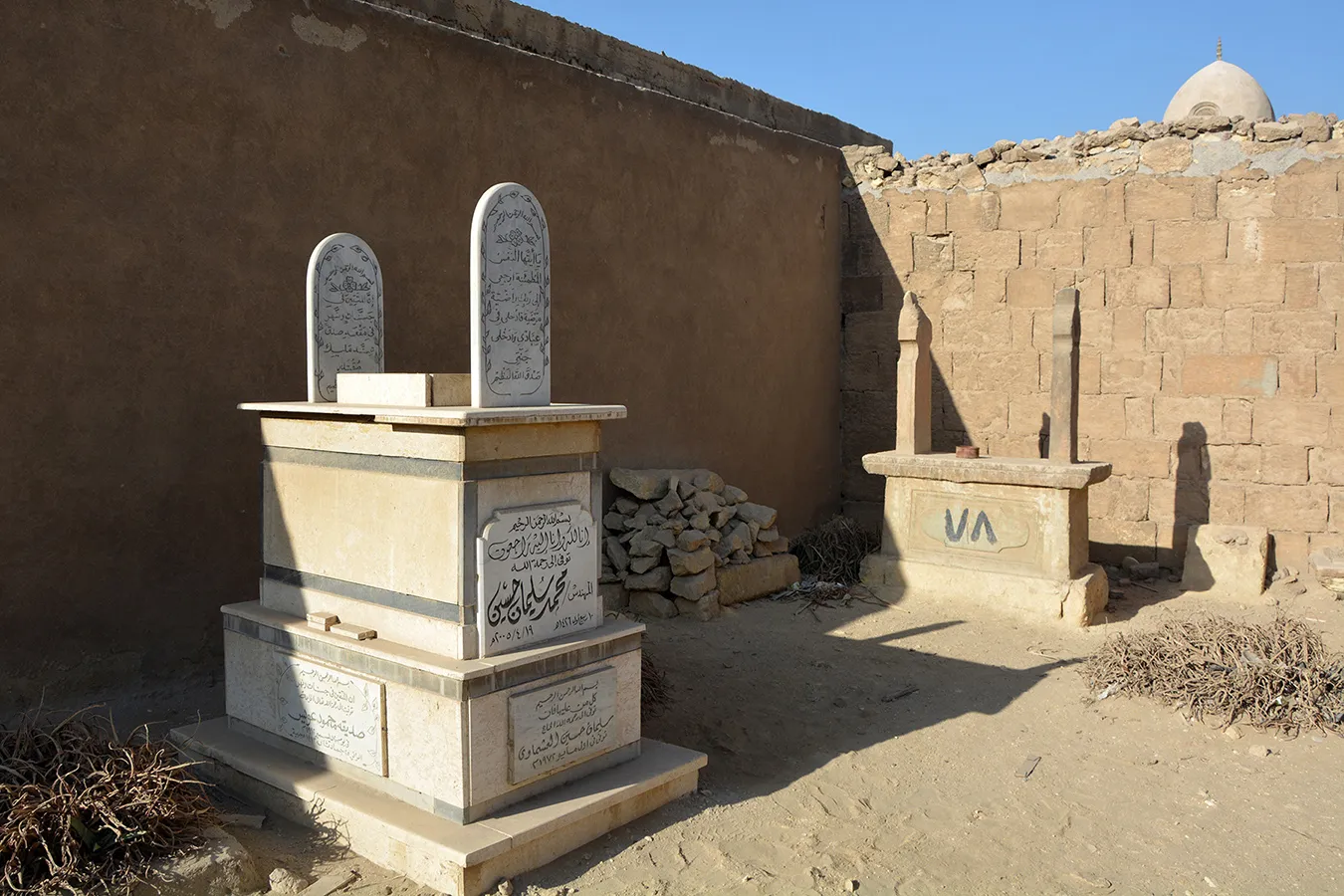
In the enclosure stand fifteen irregularly placed simple limestone cenotaphs with no inscriptions on their shahid stelae. On many, marble plaques with incised inscriptions are mounted, dating to the second half of the 20th century and as late as 2005. There appear to be remnants of two more destoyed ones in the north-eastern corner. There is a simple room with a steel door attached to the middle of the western wall, with a simple marble inscription plaque over the door mentioning Zuzu Khalid Ahmad ‘Aris, an inheritor of Basma Khatun. Another small simple room is built in the north-western corner of the enclosure.
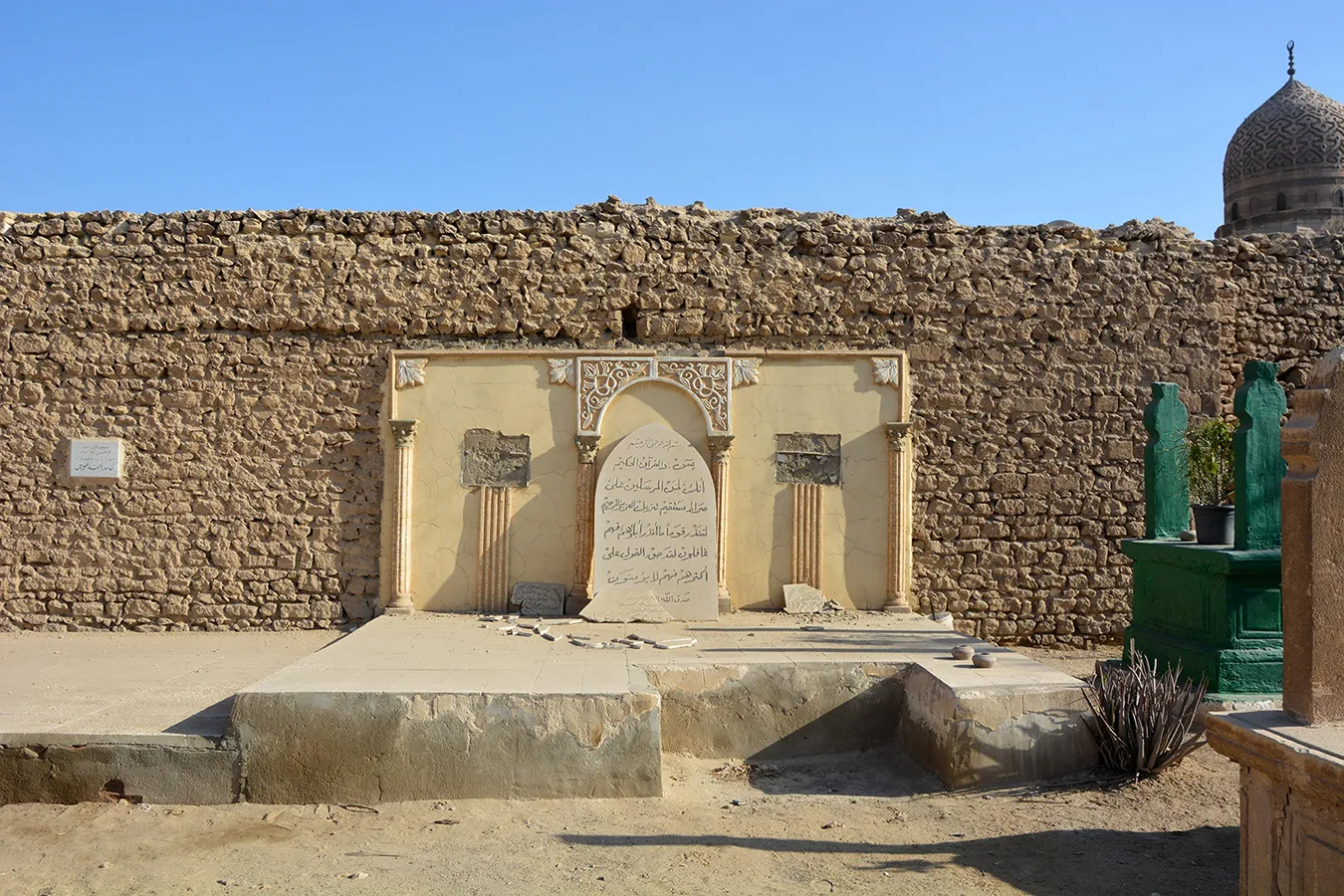
On the northern wall of the enclosure is a huge and pretentious commemorative panel decorated with various architectural motifs cast in gypsum and with inscribed stone panels, apparently dating to the 1980s or 1990s. Due to poor craftsmanship, it is already in desolate condition, its ornaments and panels detached and broken.
It is clear that the present appearance of the unit is the result of a 20th-century remodelling and renovation of an earlier funerary enclosure, although nothing points directly at any of the tomb markers to predate ca. 1900.
Condition of preservation
The enclosure receives basic maintenance and is in generally fair condition. The stone blocks of the front wall have been cleaned by re-dressing the surface.
Information abut the founder, family history, etc.
The inscriptions over the gate and on the room by the western wall mention that the funerary enclosure belongs to descendants (literally, “inheritors”) of Basma Khatun, but it is not clear who she was or where she is buried.
- Field recording by
- Jaroslaw Dobrowolski
- Date recorded
- November 20, 2023
- Data entered by
- Yusuf Yassir
- Date entered
- May 23, 2024