
Unit No68
Muhammad Khairallah
|
Coordinates of the main entrance |
30.044965N - 31.274262E |
|
Attribution |
Muhammad Khairallah |
|
Higri (AH)Dates as given in the Inscription |
1312?, 1321? |
|
Miladi (AD)Dates as given in the Inscription |
|
|
Inscription Contemporary with the building? |
Yes |
|
Multiple date(s) In the inscription? |
Yes |
|
Assumed Date |
Early 20th century |
|
Based on |
(based on stylistic features) |
|
Original Use |
Funerary enclosure |
|
Current Use |
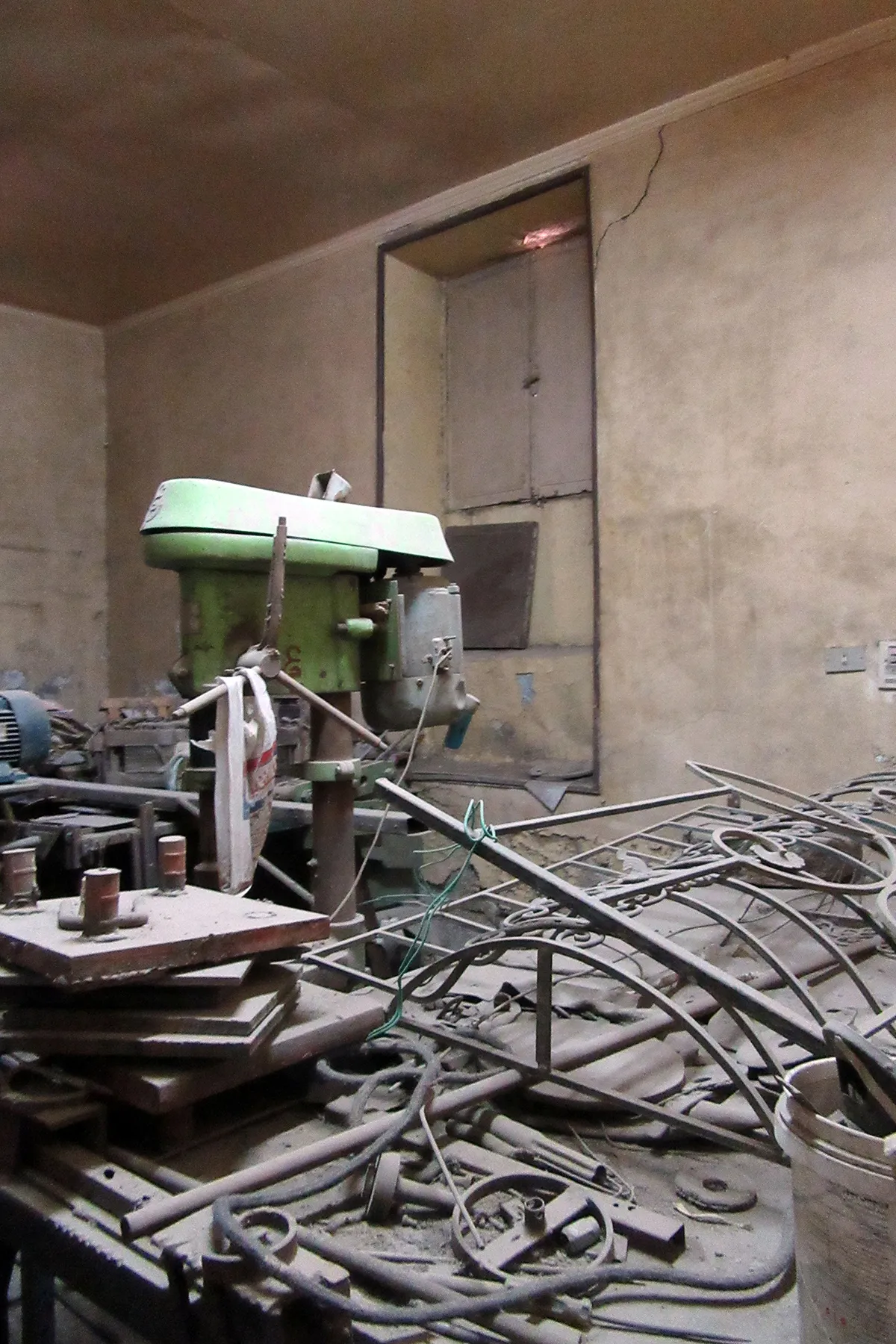
Funerary enclosure, workshops (disused) |
|
Overall condition |
Fair |
Features of unit 68
| Present | Count | Material | Comments (see description for details) | |
|---|---|---|---|---|
| Free standing structure | No | |||
| Walled enclosure | Yes | 1 | stone | |
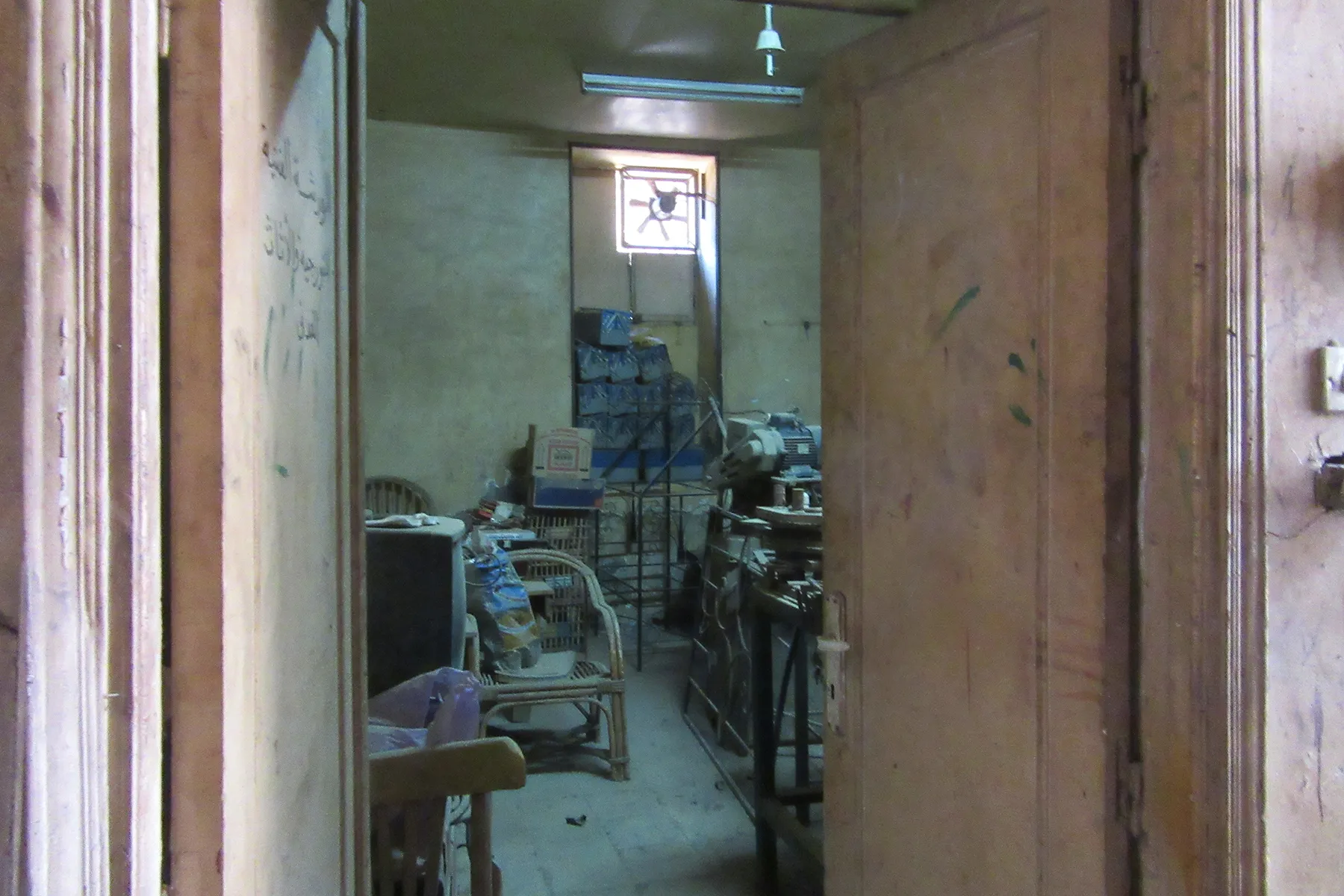
| Rooms by the perimeter wall | Yes | 4 | stone | Residential section turned into a workshop |
| Freestanding structure(s) in enclousure | No | |||
| Dome over the tomb chamber | No | |||
| Neo-Mamluk architectural decoration | Yes | |||
| Garden layout | No | Trees in the courtyard, no formal layout | ||
| Sabil(s) | Yes | 1 | stone | |
| Wall fountain(s) | No | |||
| Canopy on columns / pillars | No | |||
| Carved marble cenotaph(s) | No | Interior and courtyard inaccessible | ||
| Decorated limestone tomb-markers | No | Interior and courtyard inaccessible | ||
| Decorated gateway | Yes | 1 | stone | |
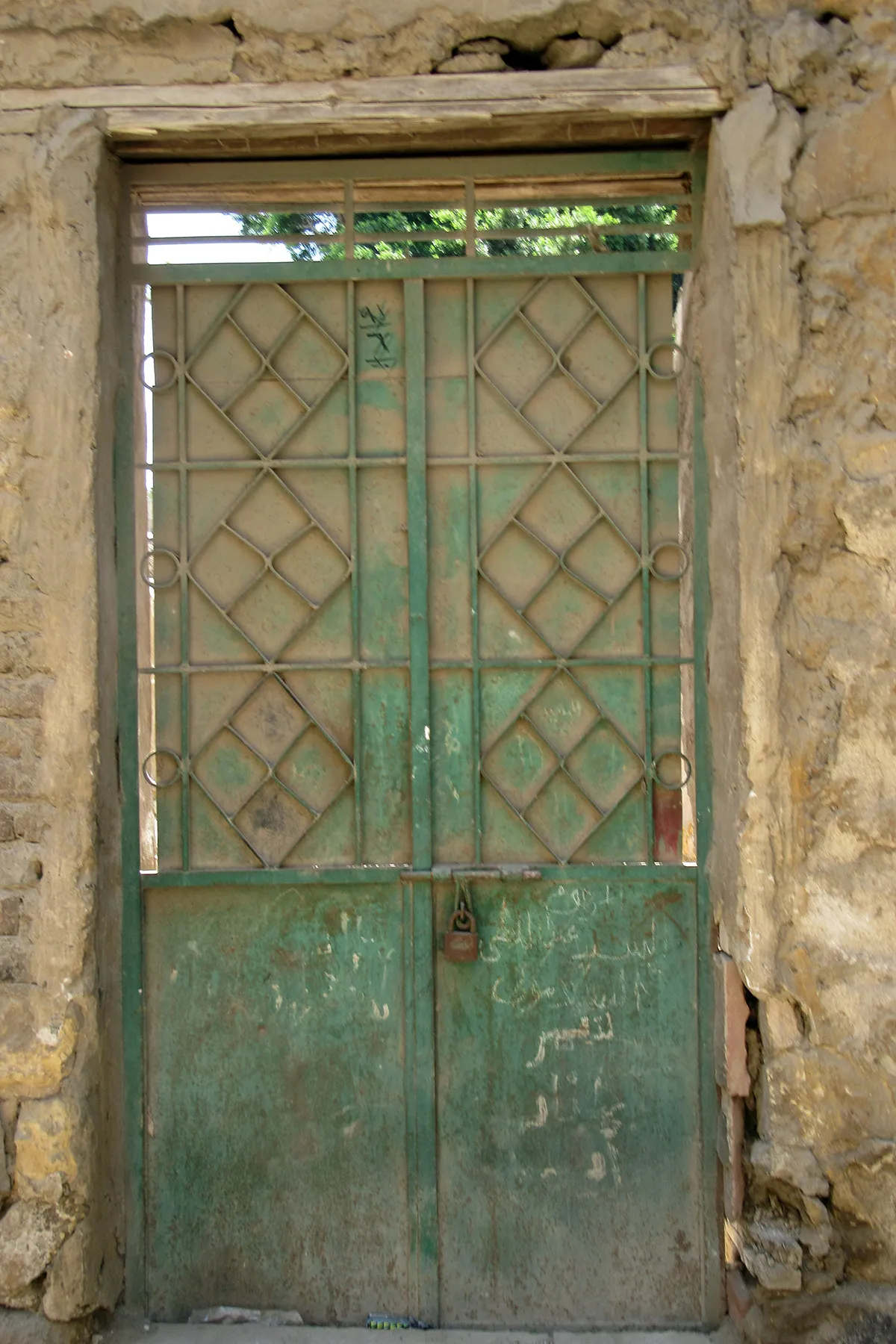
| Decorative door-leaves | Yes | 2 | steel | Main gateway, very simple |
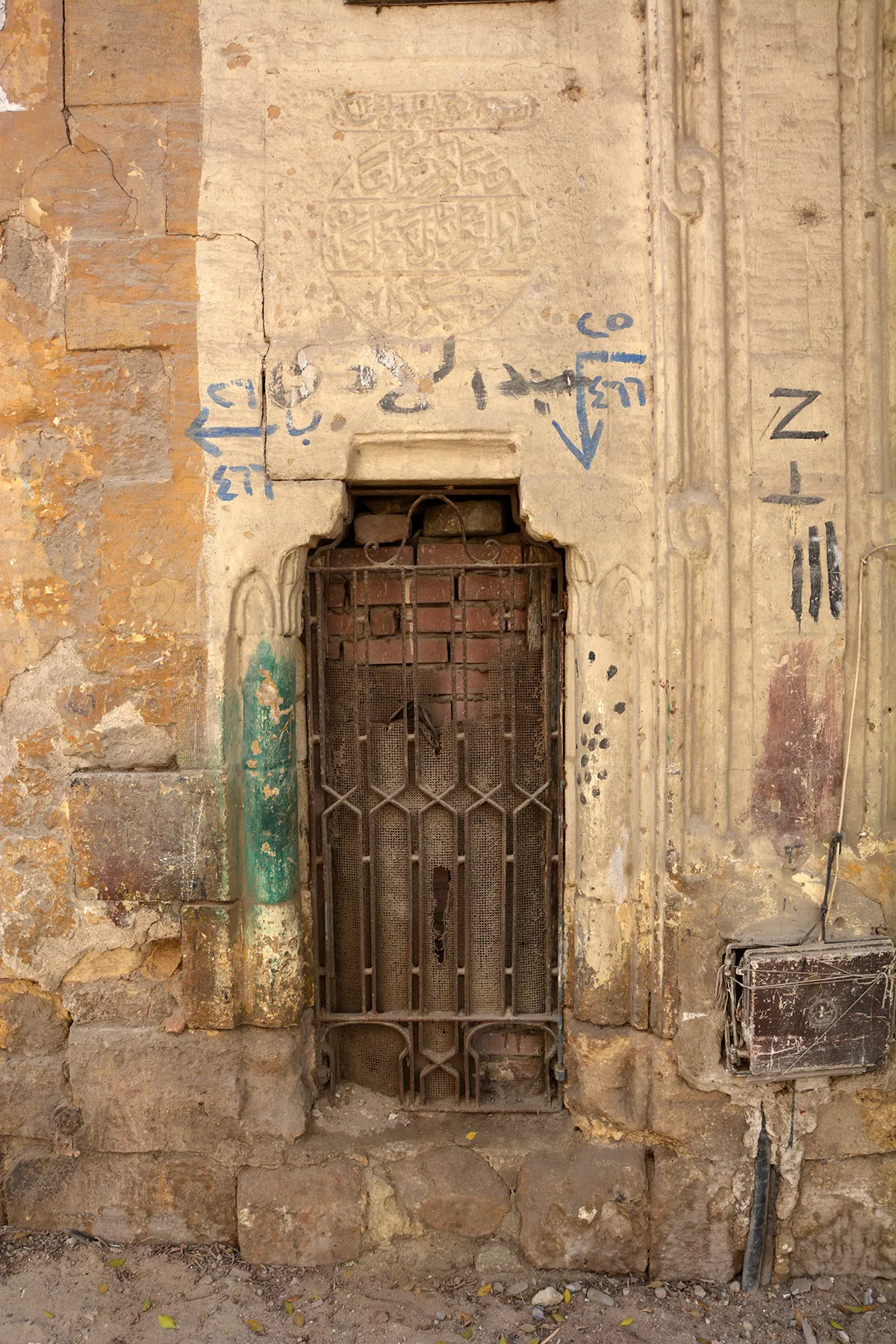
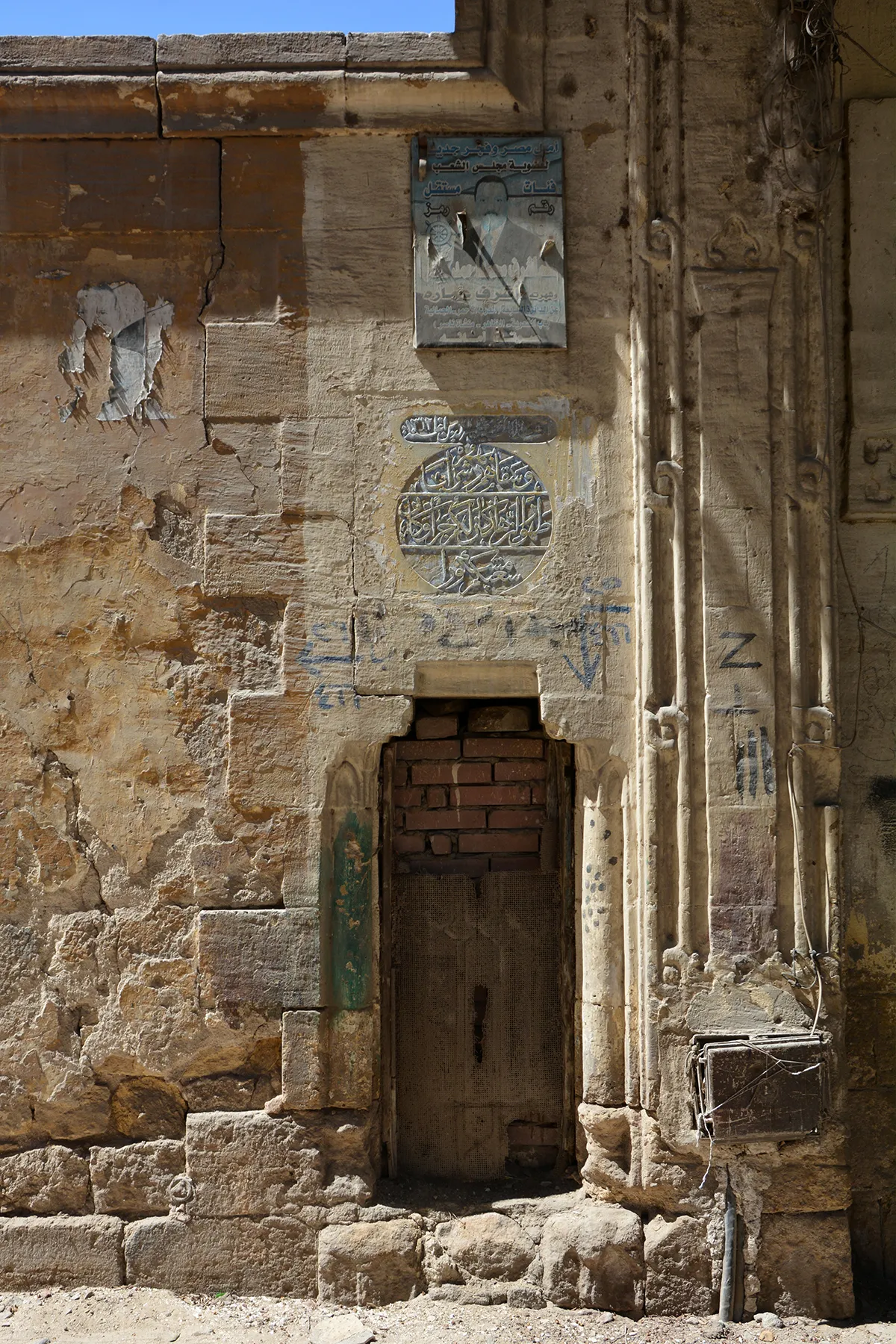
| Decorative window grilles | Yes | 1 | steel | Sabil window, welded from rolled steel |
| Decorative shutters | No | |||
| Painted ceiling(s) | No | |||
| Decorative paving(s) | No |
Unusual or unique features
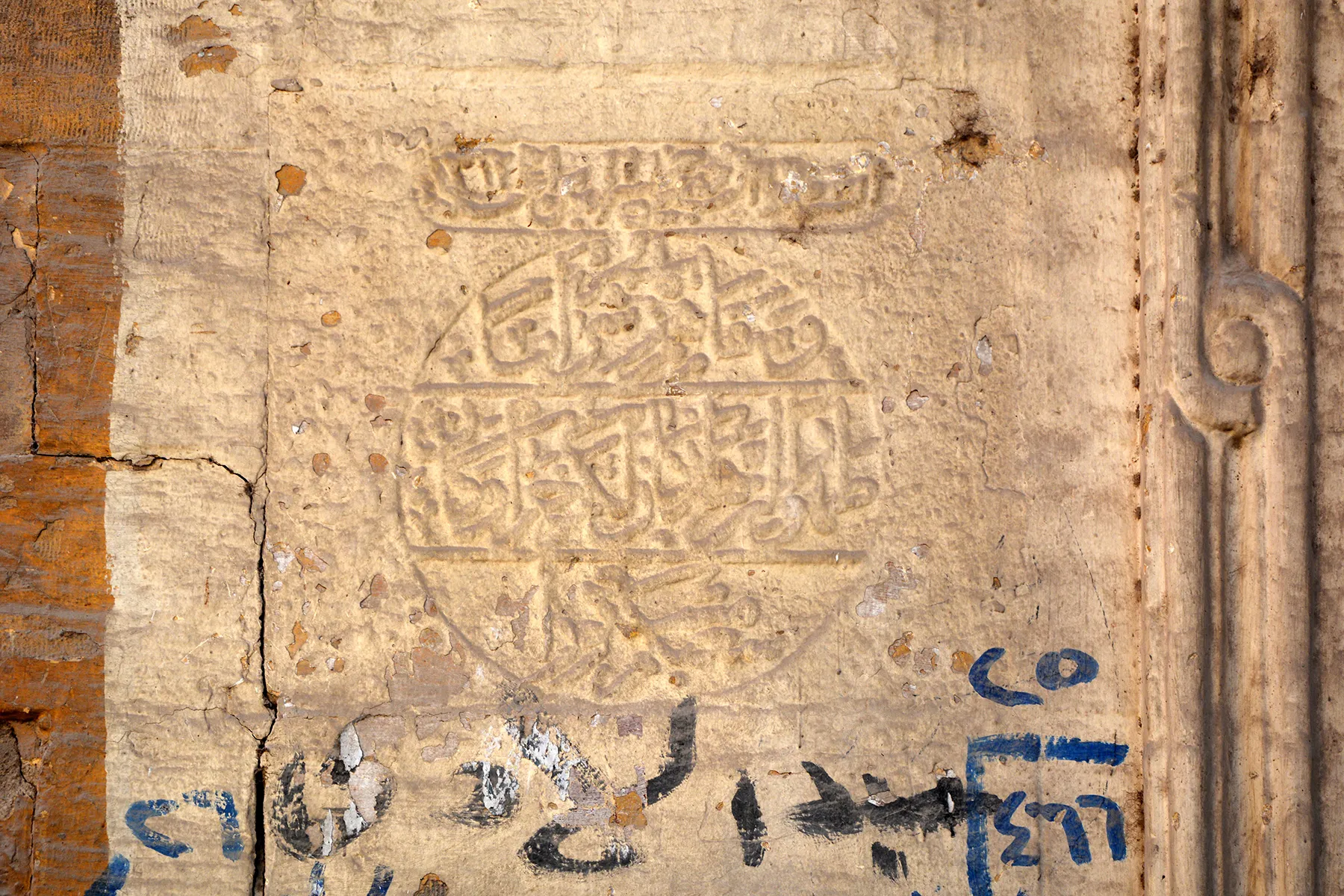
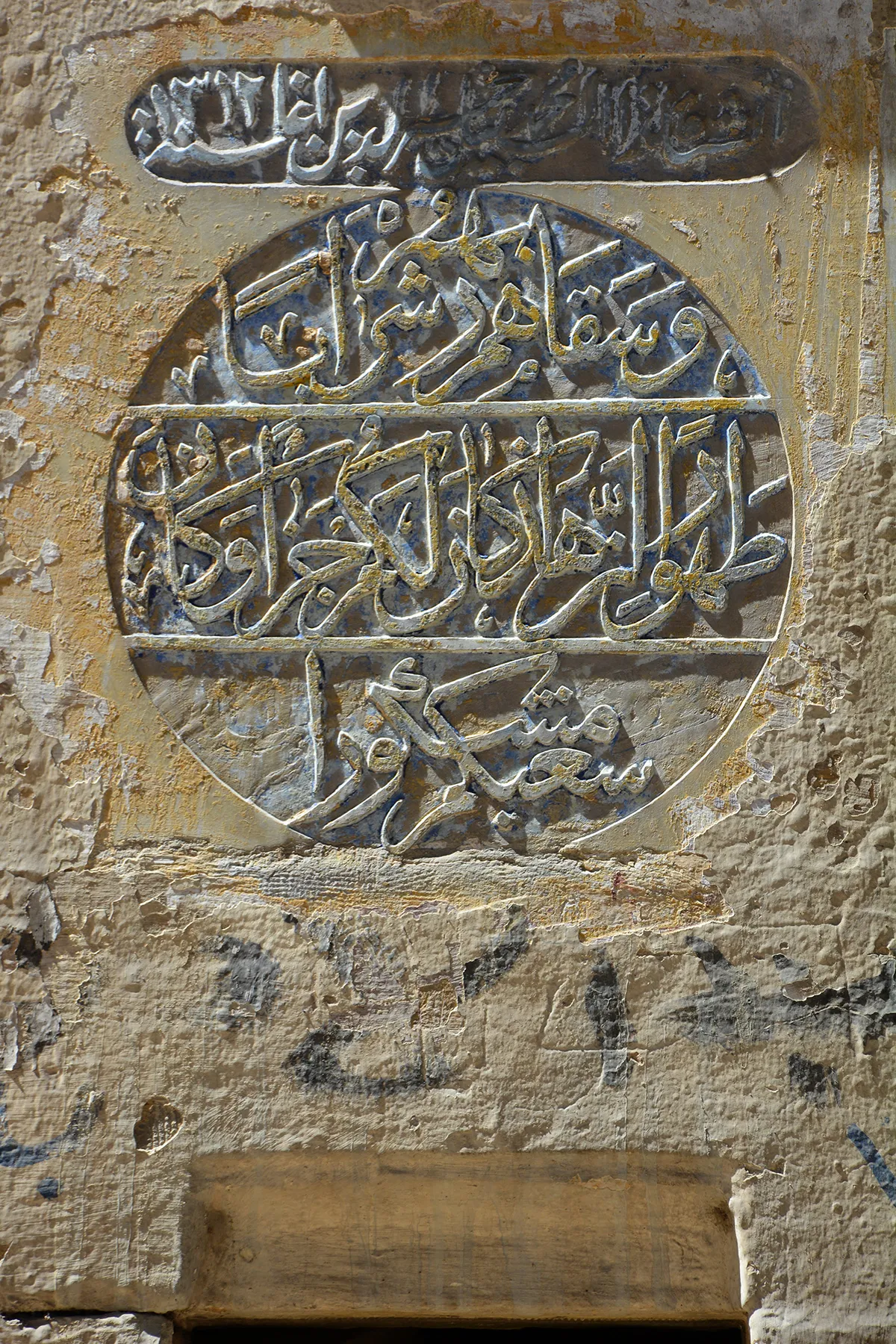
• Dedicatory inscription copies accurately the form of a Mamluk sultan’s blazon
Description (The direction towards Mecca (Qibla) is described as eastern and other directions are named accordingly)
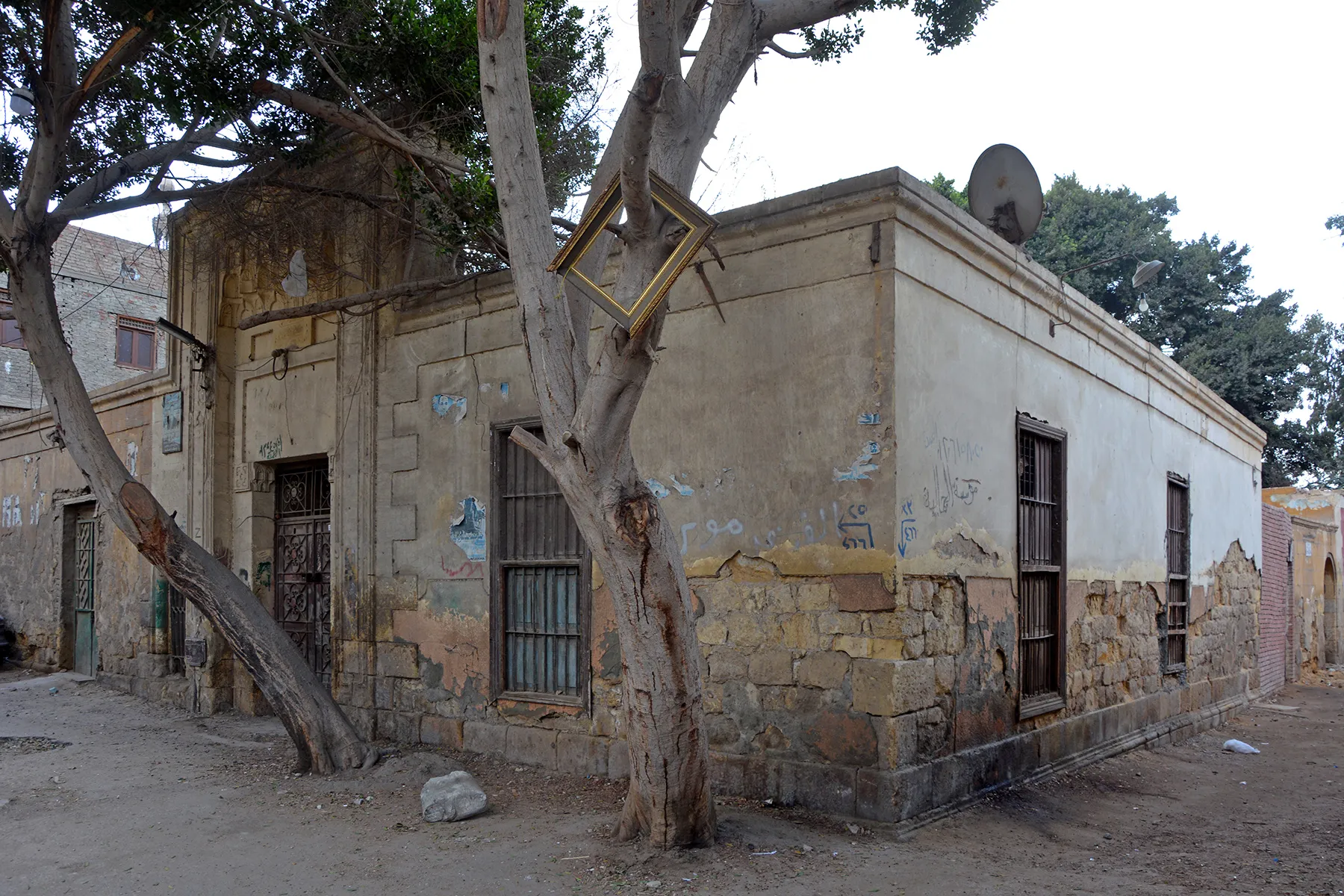
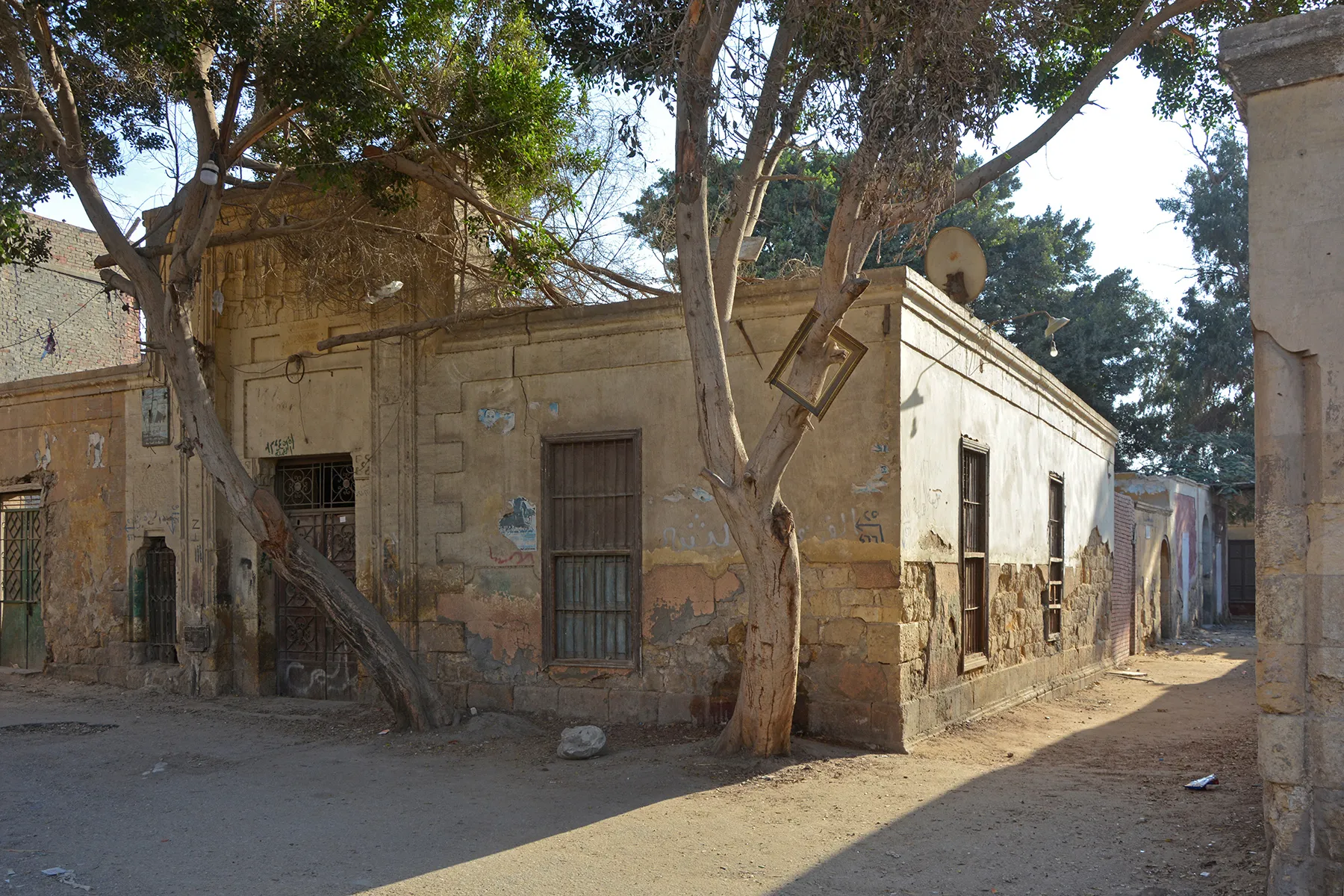
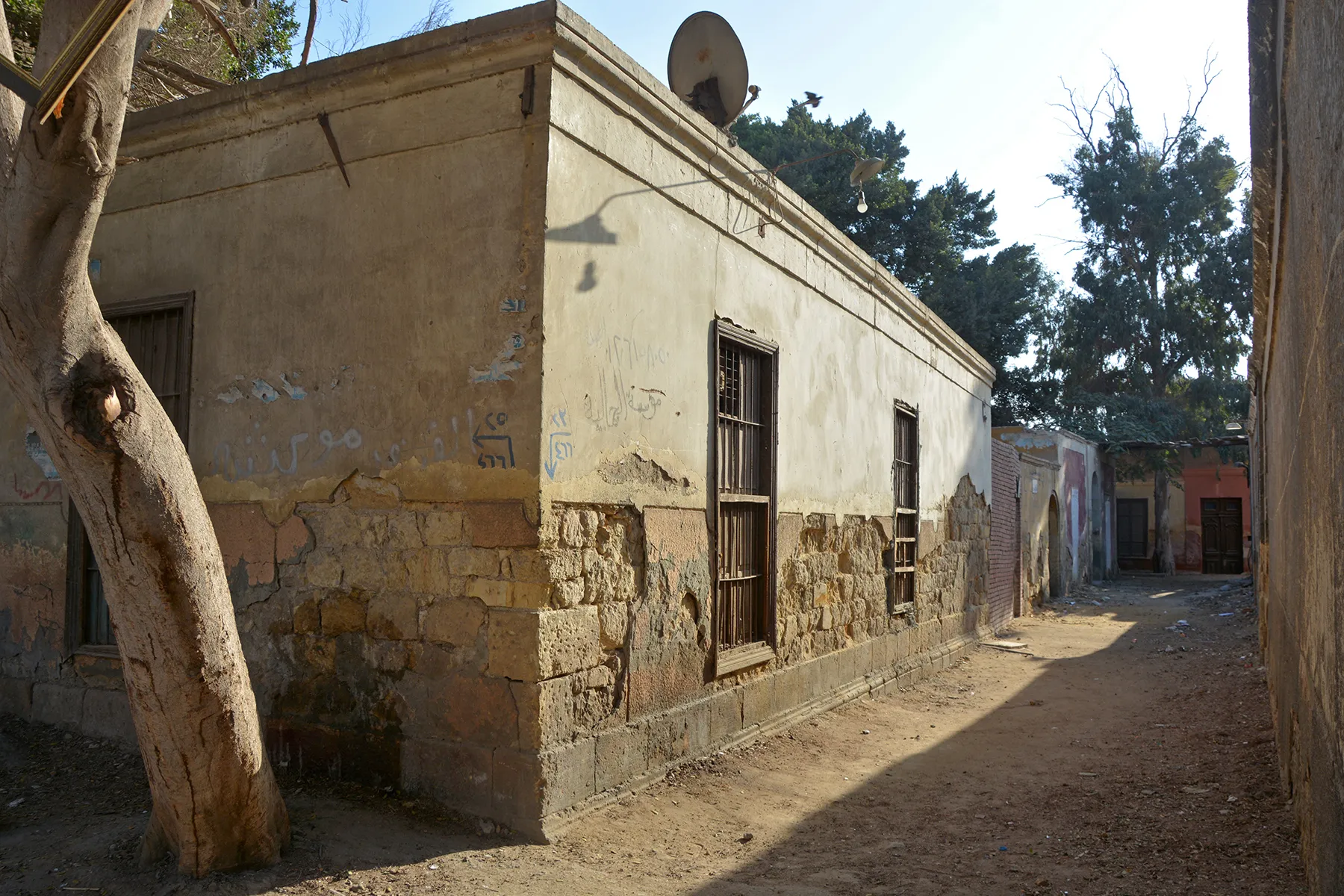
A small rectangular enclosure measuring ca 12 x 19 metres, facing streets to the north and west and adjoining neighbouring structures to the east and north. The entrance façade faces north.
The unit comprises a small single storey building in the western part, and an open courtyard that occupies the eastern part of the site. The front building comprises six rooms. The entrance portal and the section left of it containing a sabil window, the base course, the corners and the cornice are built of ashlar stone; the rest of the walls are constructed of rough stone and plastered. The building is topped with a simple Classical cornice, with no traces of crenellations.
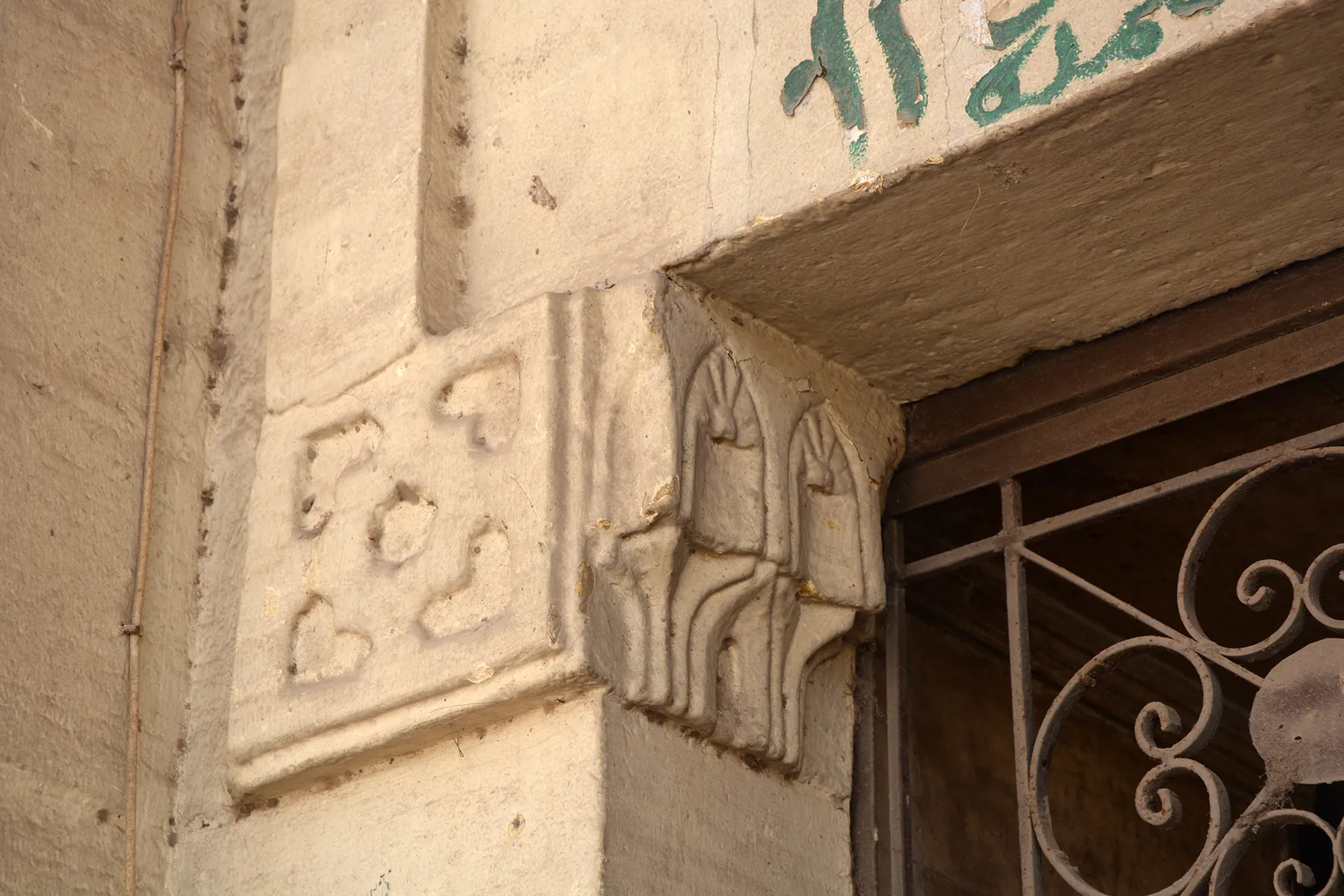
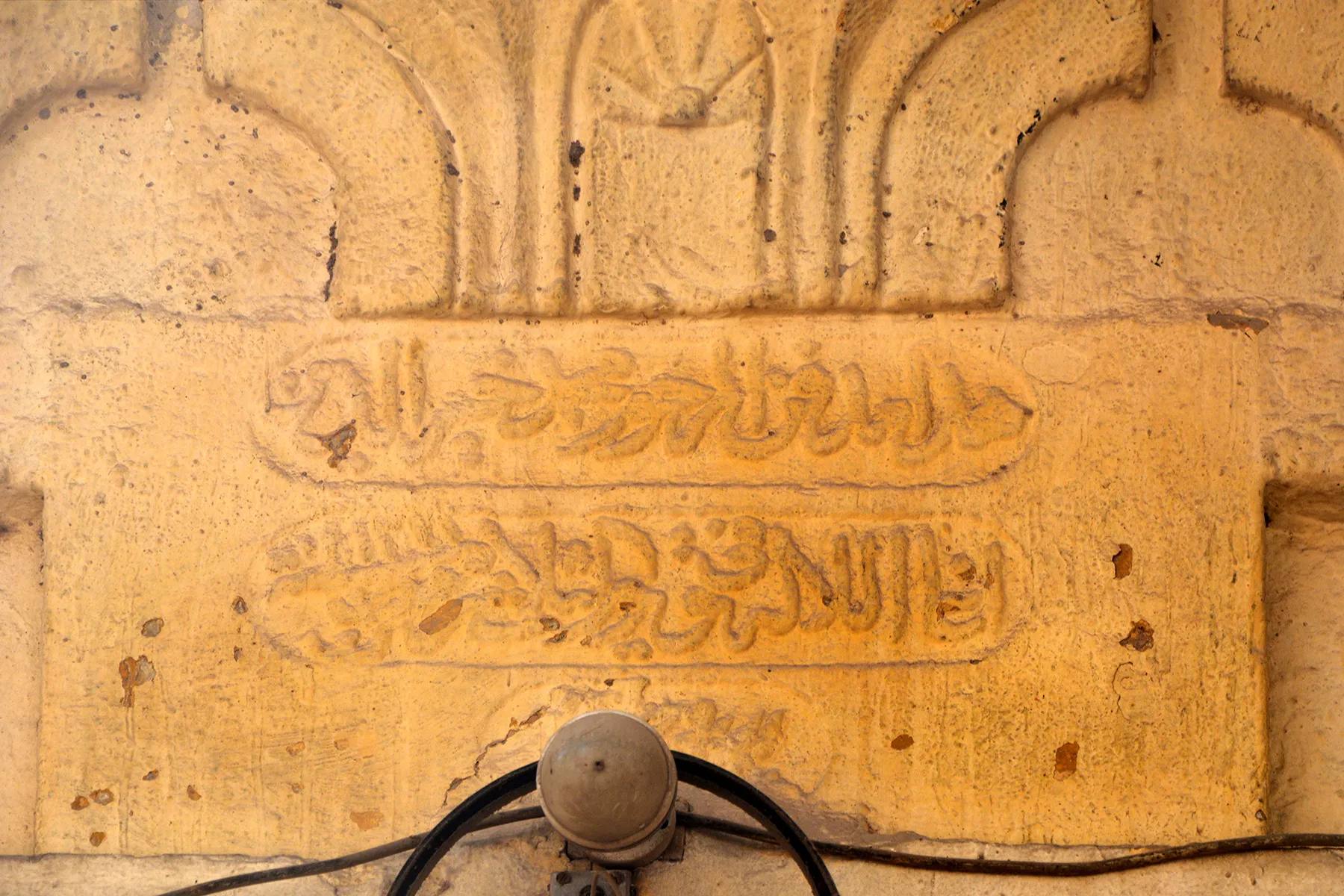
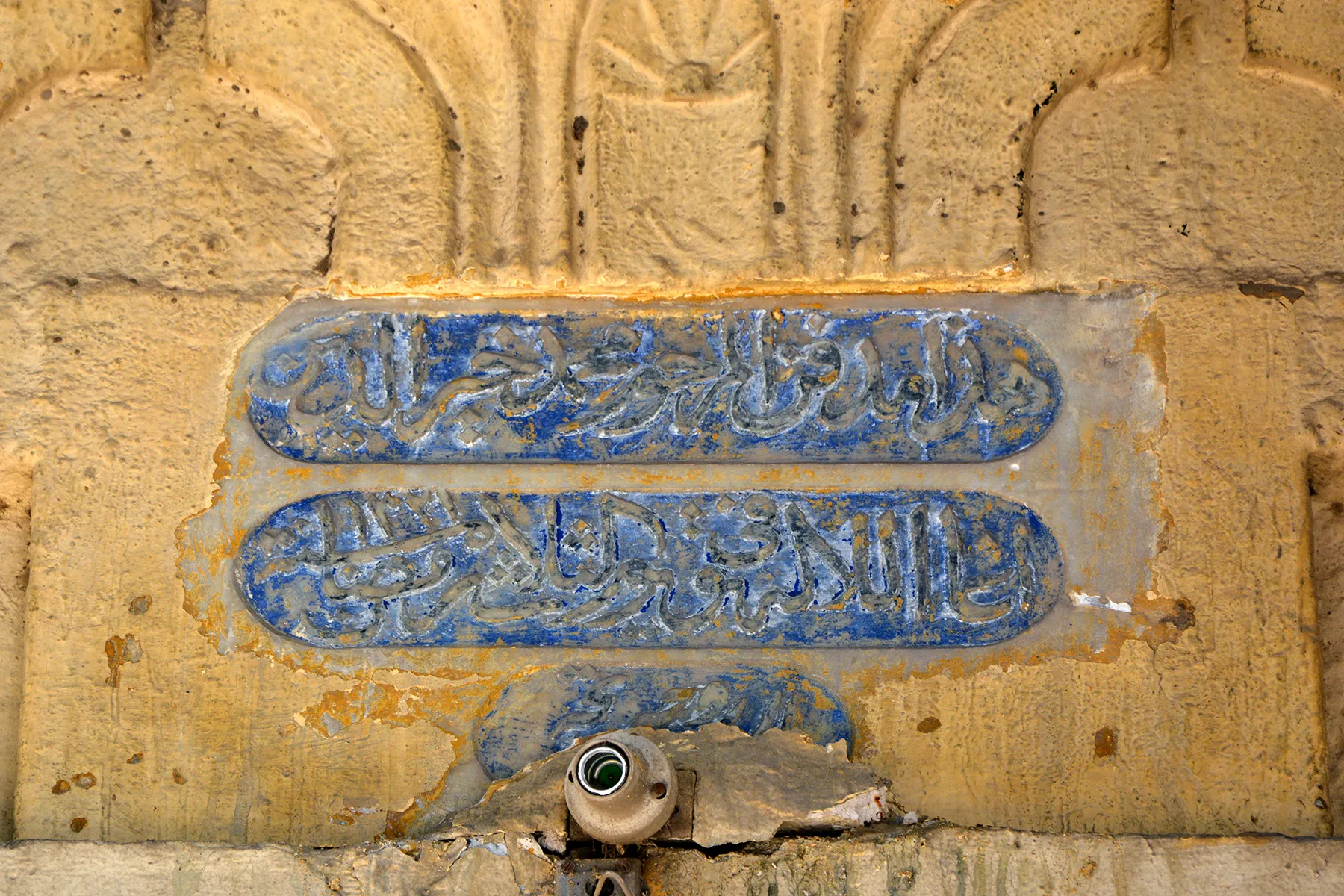
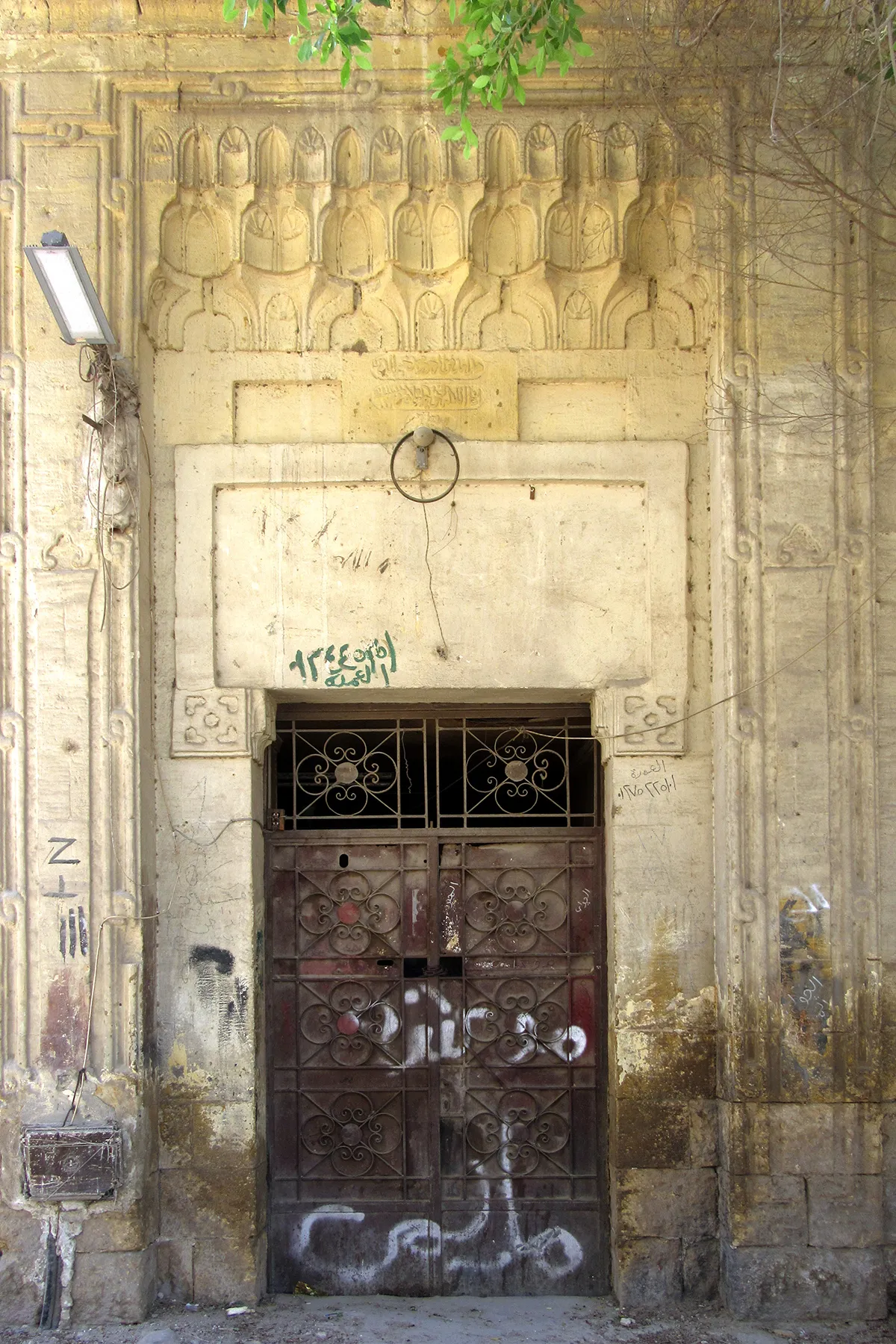
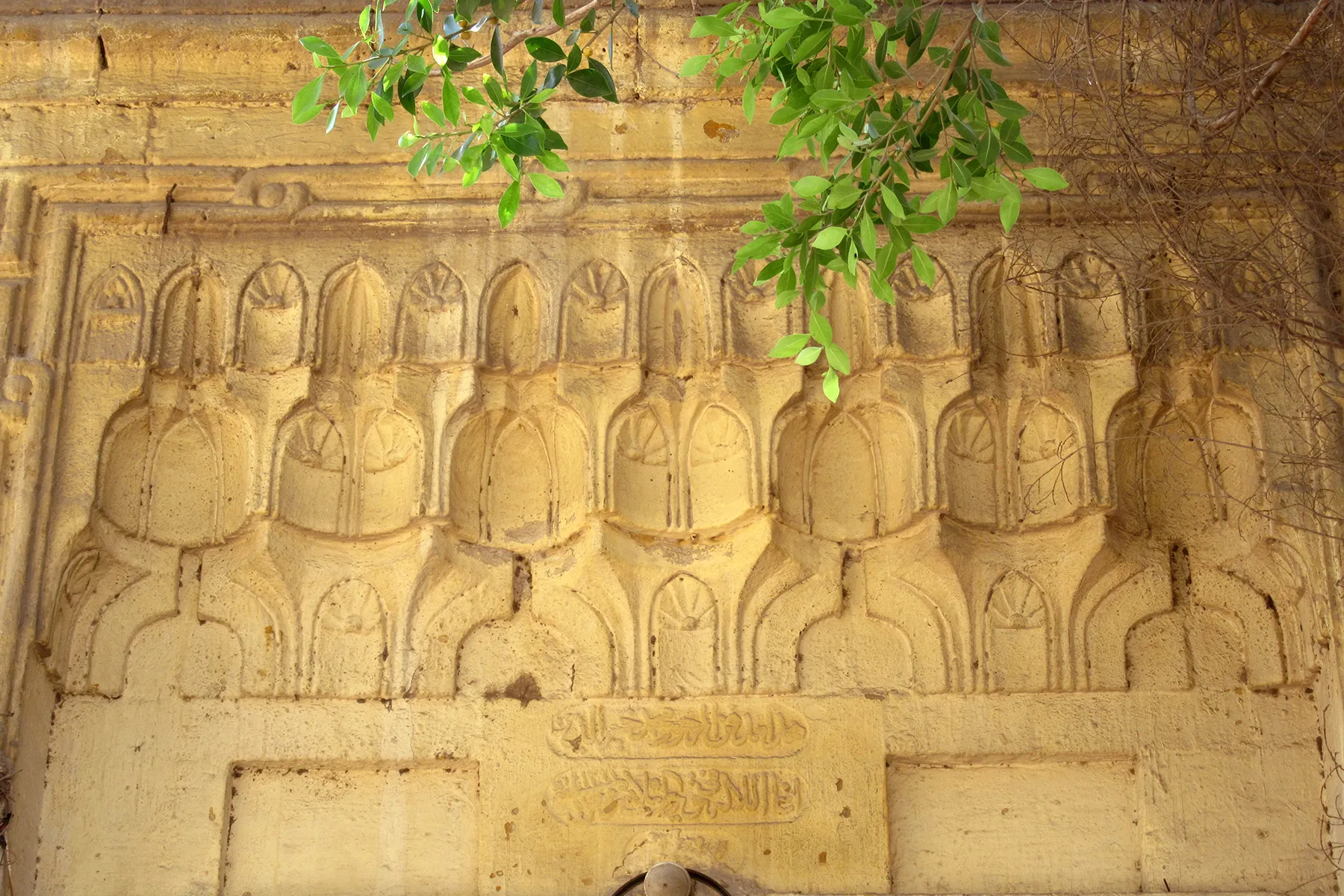
The entrance portal forms a pishtaq taller than the rest of the walls. The entrance door is set in a shallow rectangular recess covered with a three-tiered muqarnas frieze. Around the recess runs the band of knotted mouldings; on the sides are elongated vertical panels framed in knotted mouldings that appear like their upper parts were intended to be carved into bands of floral decoration, but were apparently never completed. Around the lintel of the door and its relieving arch and under the muqarnas (i.e., around the inscription panel over the door) are also plain bands and blocks of masonry that appear to be unfinished mouldings. To the left (east) of the portal is s narrow sabil window (now walled up with bricks) flanked by engaged colonnettes with simple muqarnas capitals and covered with a stone lintel supported on simple corbels. In the window is a very simple decorative grille welded from pieces if rolled iron. Above the window is a roundel with a Qur’anic inscription carved into the surface of the wall. It imitates the form of the blazons with royal titles (rank) that were used on buildings founded by Mamluk sultans (examples abound in the neighbourhood.) Over the roundel is an inscription panel that includes the date AH 1312. Another inscription carved over the entrance door includes the name Muhammad Khairallah and the date AH 1321. The portal and the sabil door are the only elements of the building in neo-Mamluk style. They follow the mediaeval Mamluk patterns quite closely, while the quality of craftsmanship is good, but not outstanding, and overall, the unit is a modest one.
There is a plain rectangular window with a simple, non-decorative iron grille and simple panelled shutters to the right (west) of the portal, and two more such windows in the plain western façade, which is undecorated save a simple cornice. In the eastern part of the entrance façade is a plain rectangular door leading to the courtyard. Both entrances are fitted with modern steel doors of crude simple decorative designs.
Condition of preservation
The unit is disused and dilapidating, although it is not in immediate danger of collapse. There is serious damage from rising damp to the lower portions of the walls.
Information abut the founder, family history, etc.
The dates 1312 and 1321 AH correspond to AD 1894 and1903 respectively. The style and craftsmanship of bothe unscriptions containing the dates appear similar, so it is possible that one of the numbers is the carver’s mistake.
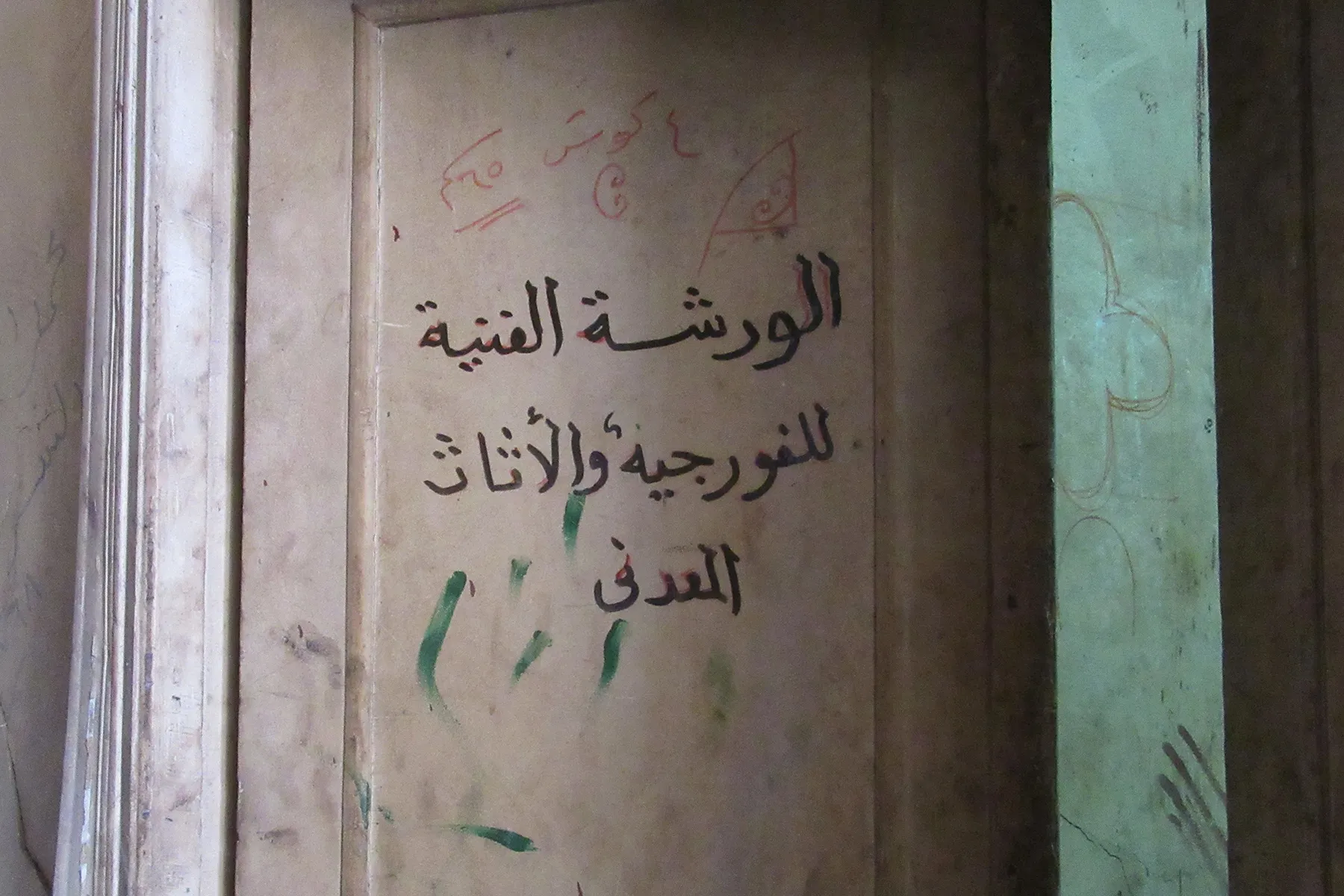
According to the keeper, before 2004 the residential part was used by a charity for educational classes for girls and for literacy courses. After 2004, it was turned into steel, leather, and bamboo-working workshops. When the funding discontinued, they were abandoned, with some unusable machinery and materials left behind in the interiors.
- Field recording by
- Hadeer Ahmad, Muhammad Esam, and Esraa al-Mahdi, edited by Jaroslaw Dobrowolski
- Date recorded
- August 8, 2023
- Data entered by
- Hadeer Ahmad
- Date entered
- May 7, 2024