
Unit No65
Khalil Salih al-Barad
|
Coordinates of the main entrance |
30.046494N - 31.274139E |
|
Attribution |
Khalil Salih al-Barad |
|
Higri (AH)Dates as given in the Inscription |
|
|
Miladi (AD)Dates as given in the Inscription |
|
|
Inscription Contemporary with the building? |
Yes |
|
Multiple date(s) In the inscription? |
Yes |
|
Assumed Date |
First half of the 20th century |
|
Based on |
(based on stylistic features) |
|
Original Use |
Funerary enclosure |
|
Current Use |
Funerary enclosure |
|
Overall condition |
Poor/Ruin |
Features of unit 65
| Present | Count | Material | Comments (see description for details) | |
|---|---|---|---|---|
| Free standing structure | No | |||
| Walled enclosure | Yes | 1 | stone | |
| Rooms by the perimeter wall | Yes | stone | Inaccessible | |
| Freestanding structure(s) in enclousure | No | |||
| Dome over the tomb chamber | No | |||
| Neo-Mamluk architectural decoration | Yes | |||
| Garden layout | No | Trees in the courtyard, no formal layout | ||
| Sabil(s) | No | |||
| Wall fountain(s) | No | |||
| Canopy on columns / pillars | No | |||
| Carved marble cenotaph(s) | Yes | 2 | 2 | Very simple, extremely eroded |
| Decorated limestone tomb-markers | No | |||
| Decorated gateway | Yes | 1 | ashlar stone | Plus a simple stone side gate |
| Decorative door-leaves | No | |||
| Decorative window grilles | No | |||
| Decorative shutters | No | |||
| Painted ceiling(s) | No | Interiors inaccessible | ||
| Decorative paving(s) | No | Interiors inaccessible |
Description (The direction towards Mecca (Qibla) is described as eastern and other directions are named accordingly)
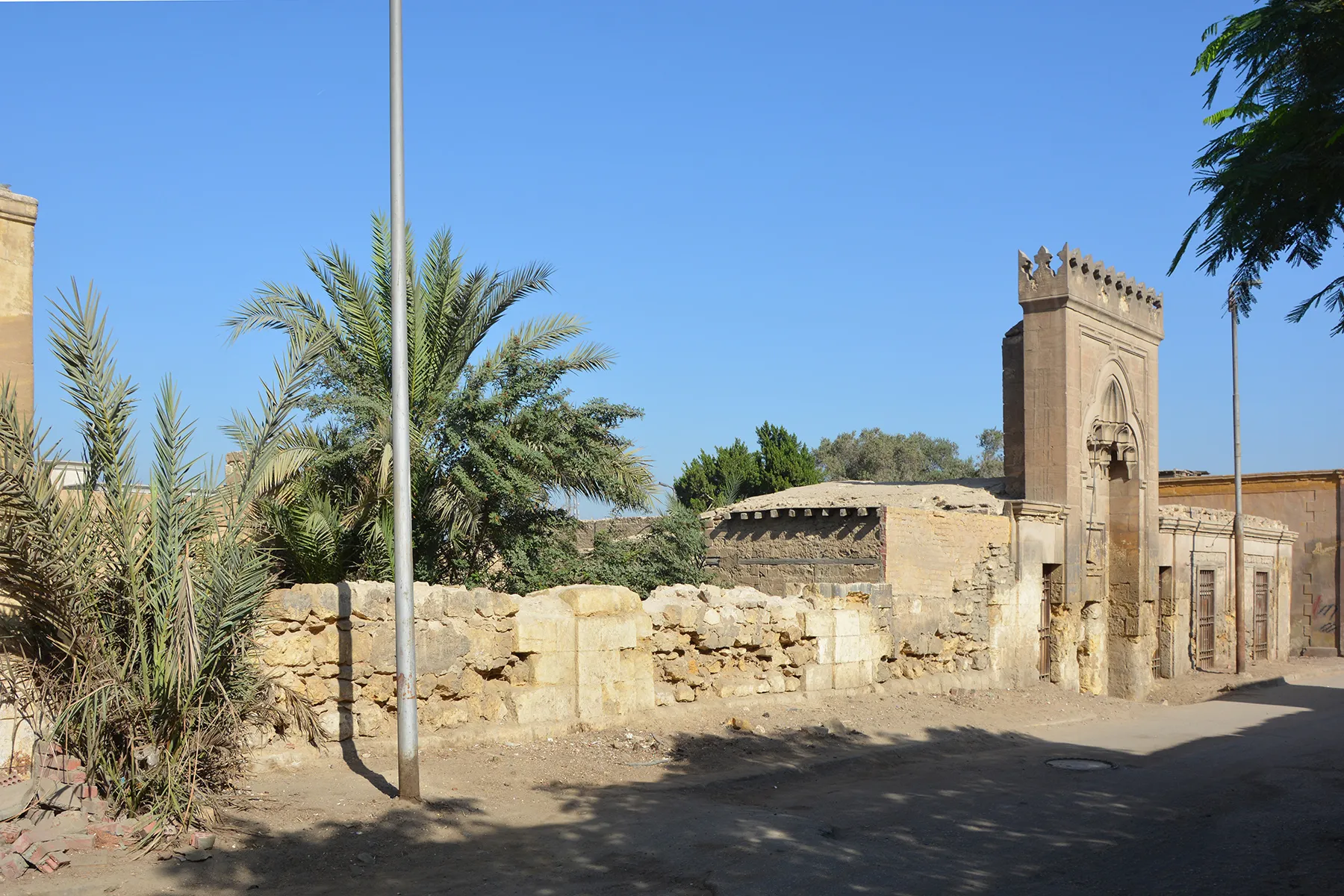
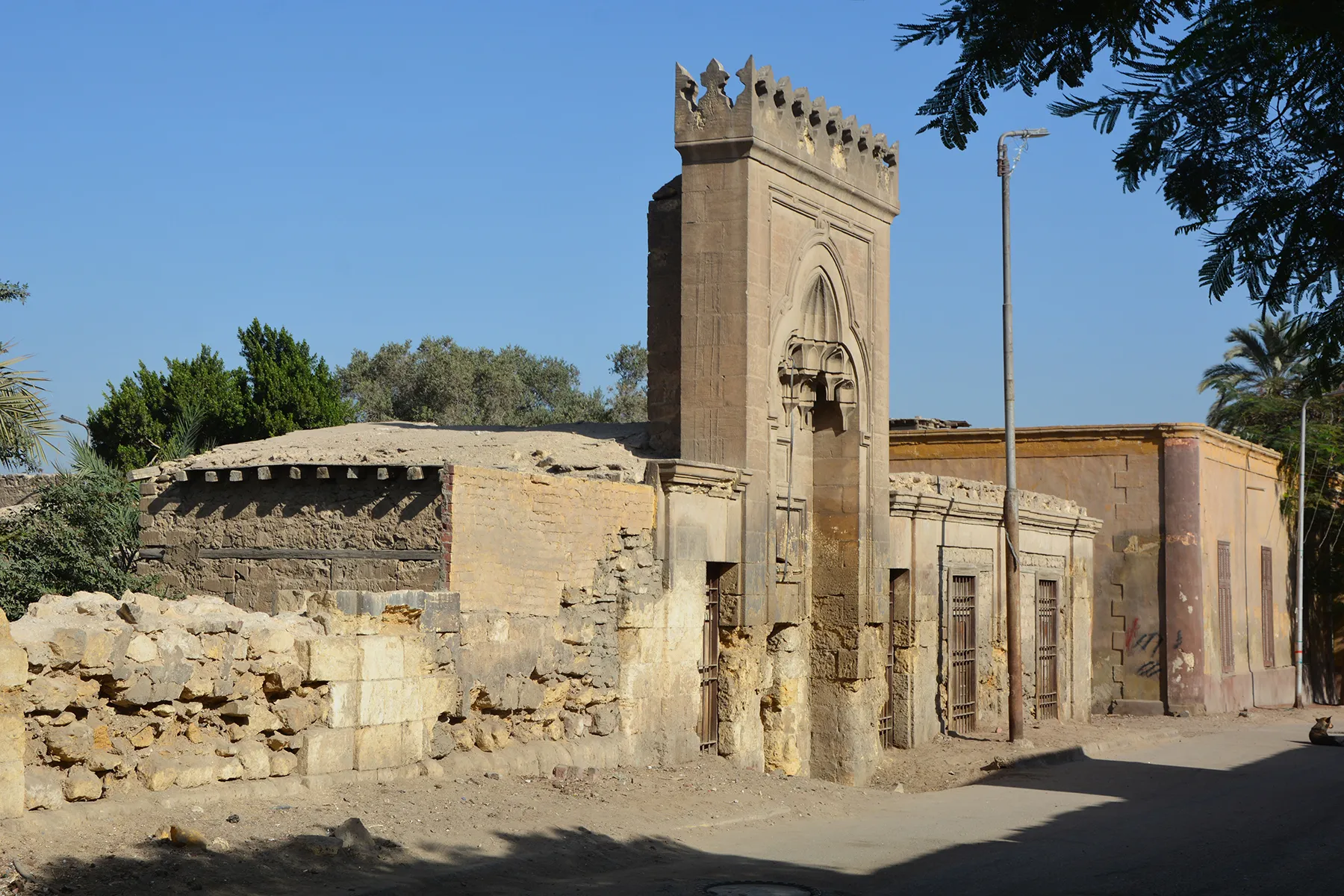
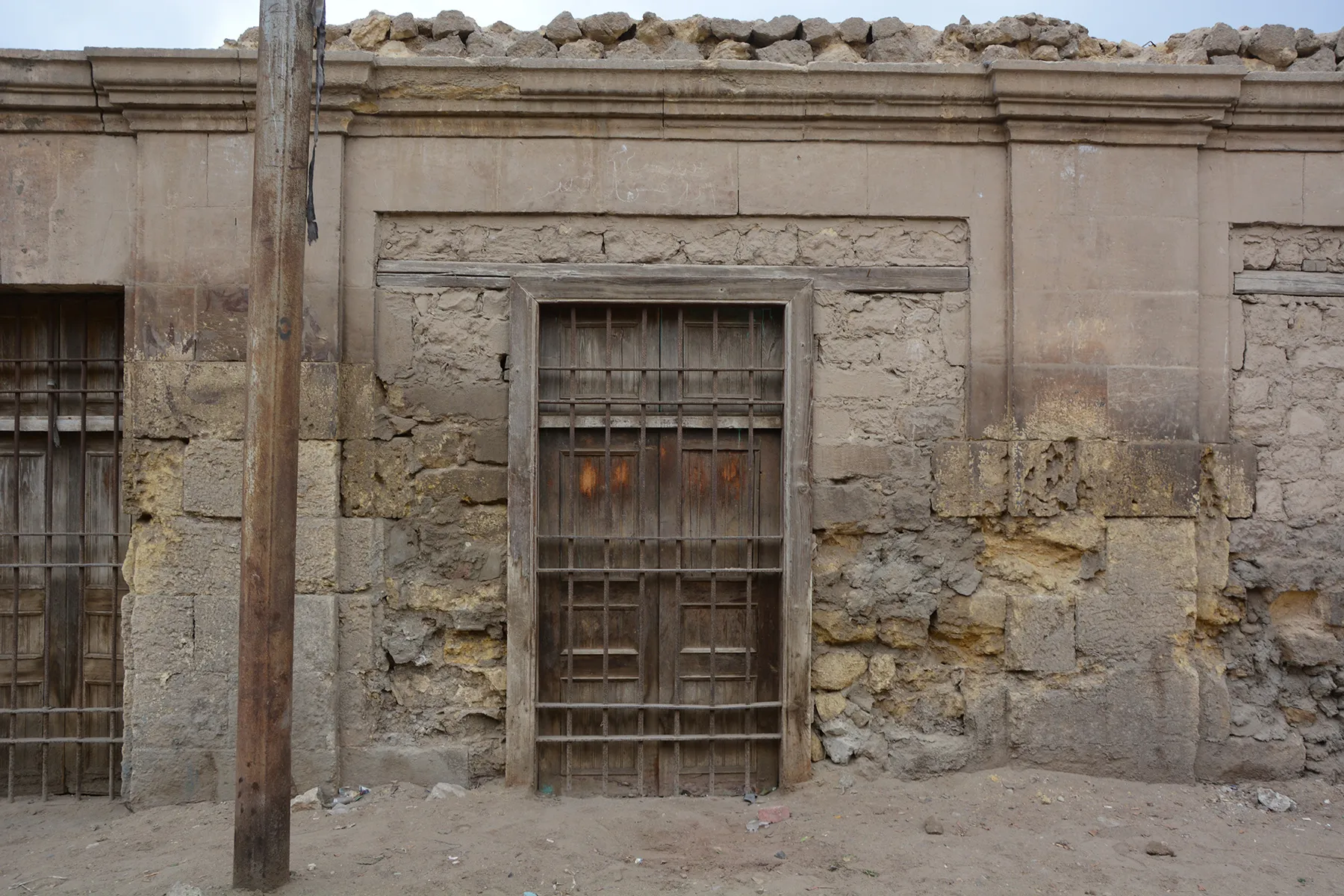
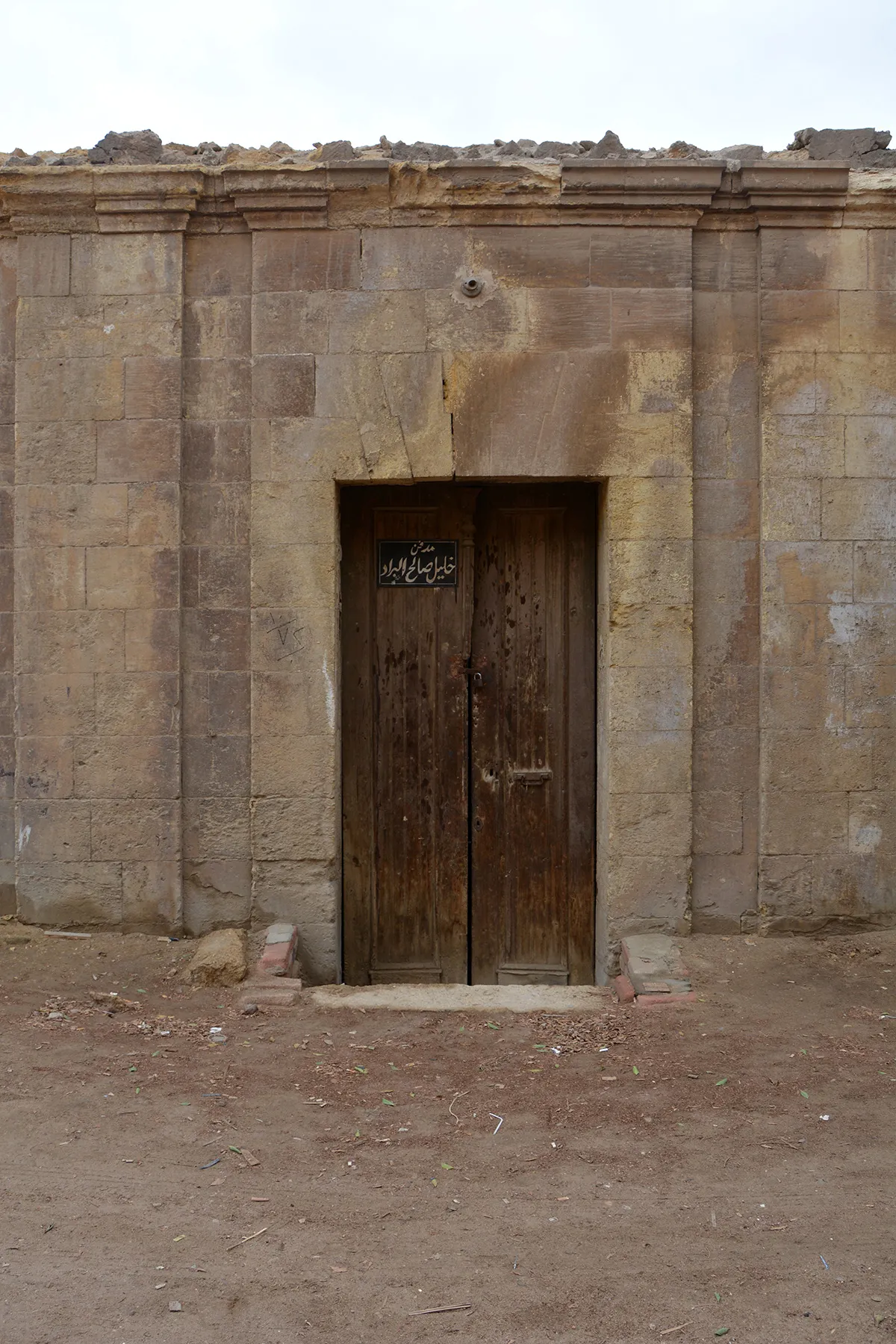
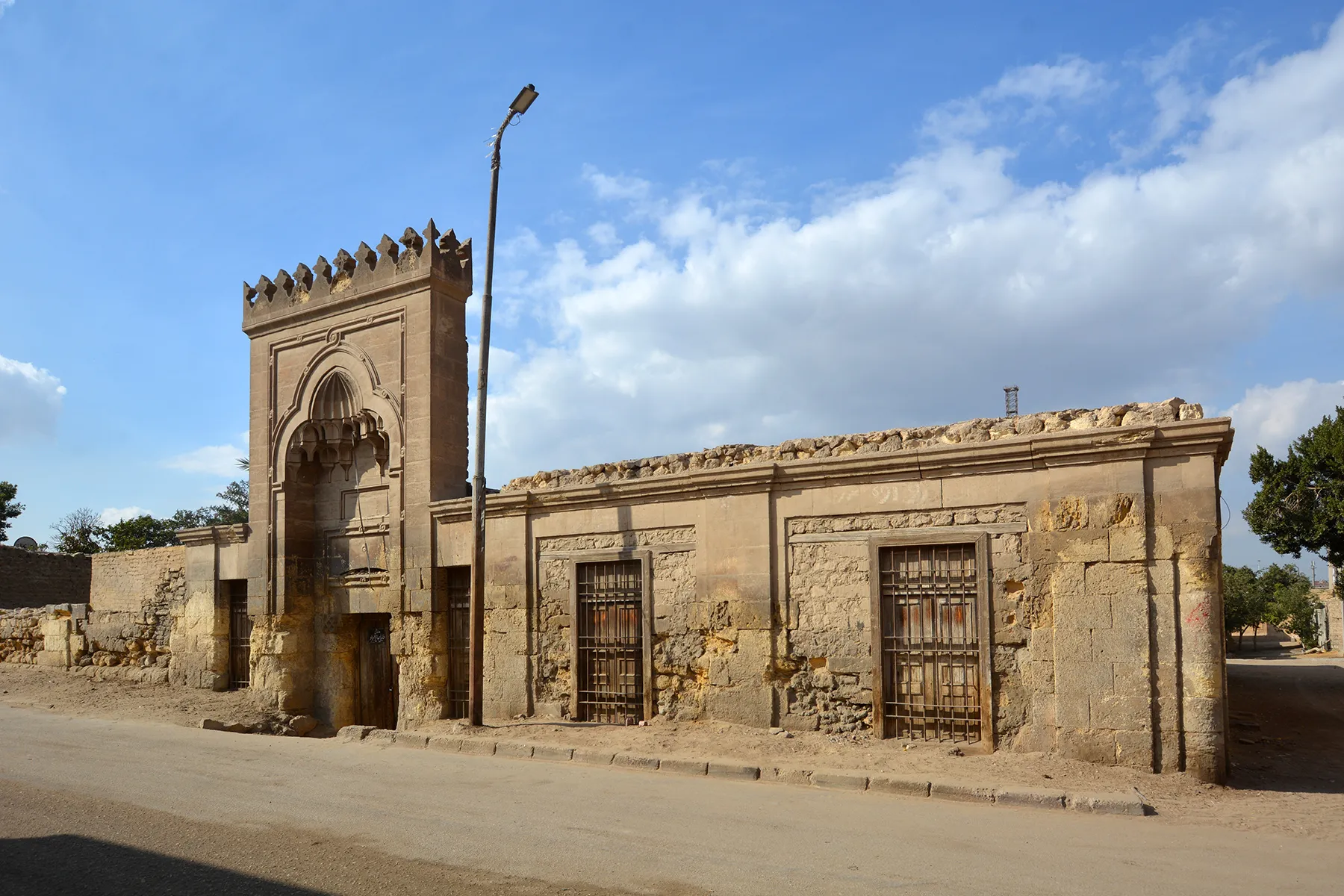
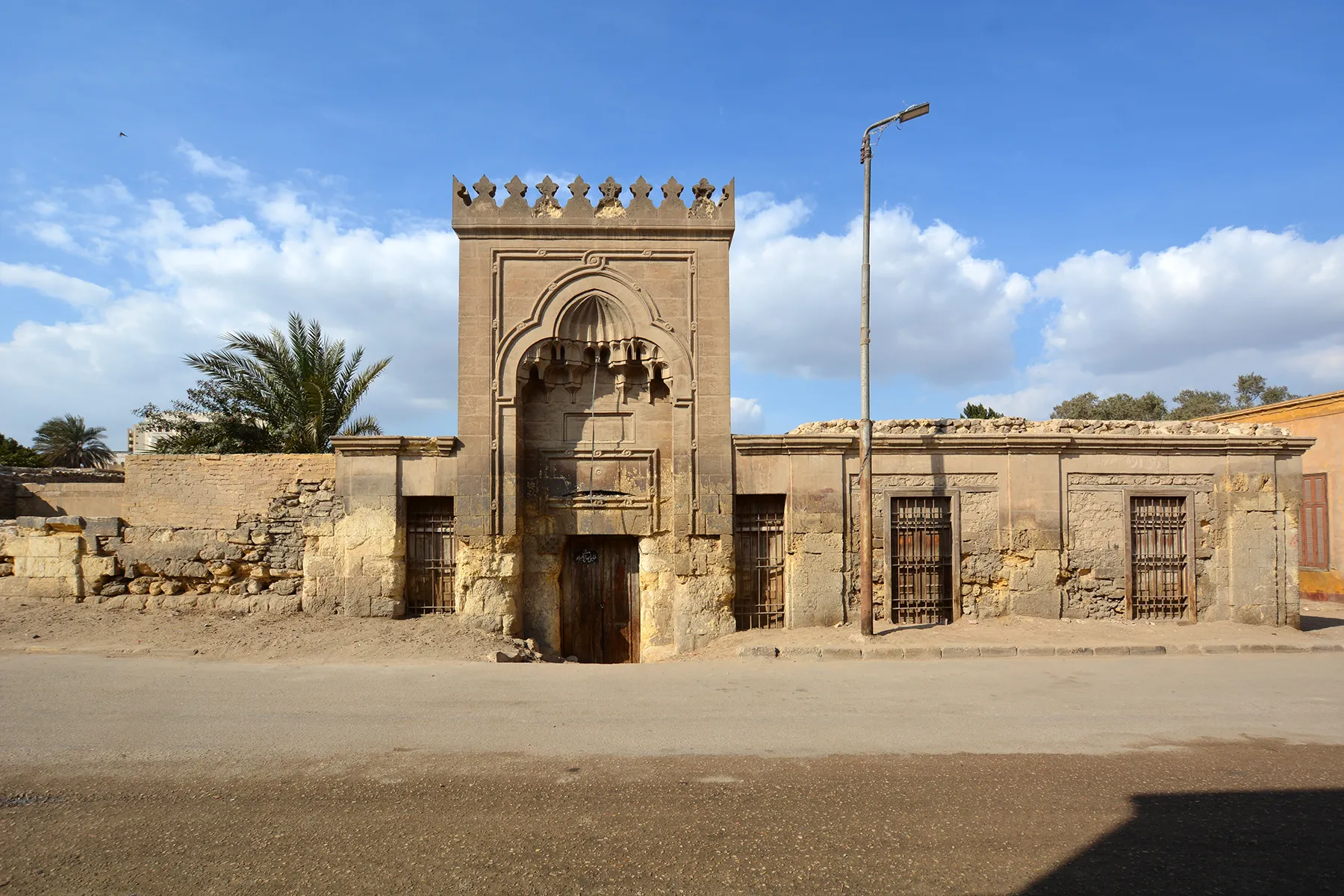
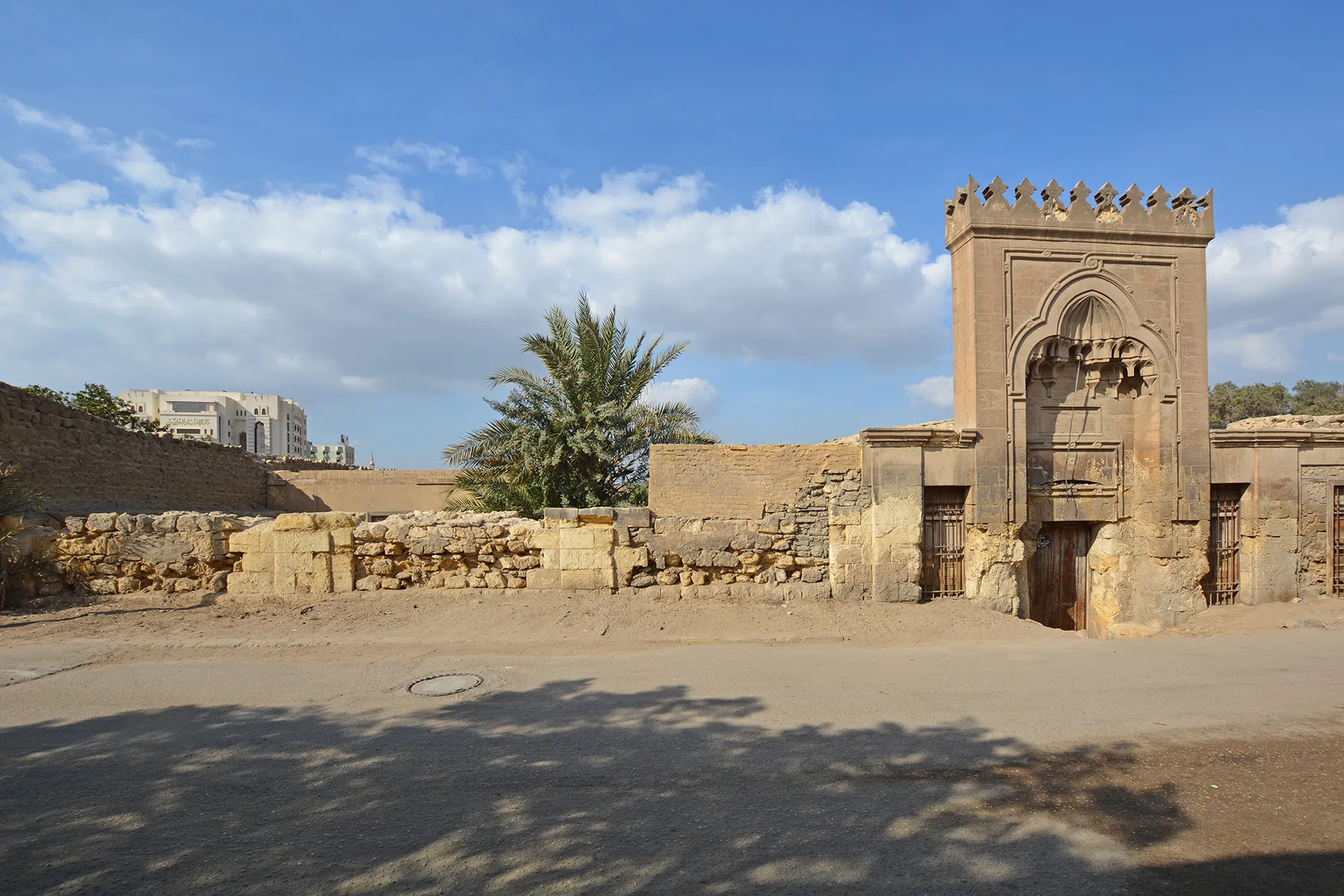
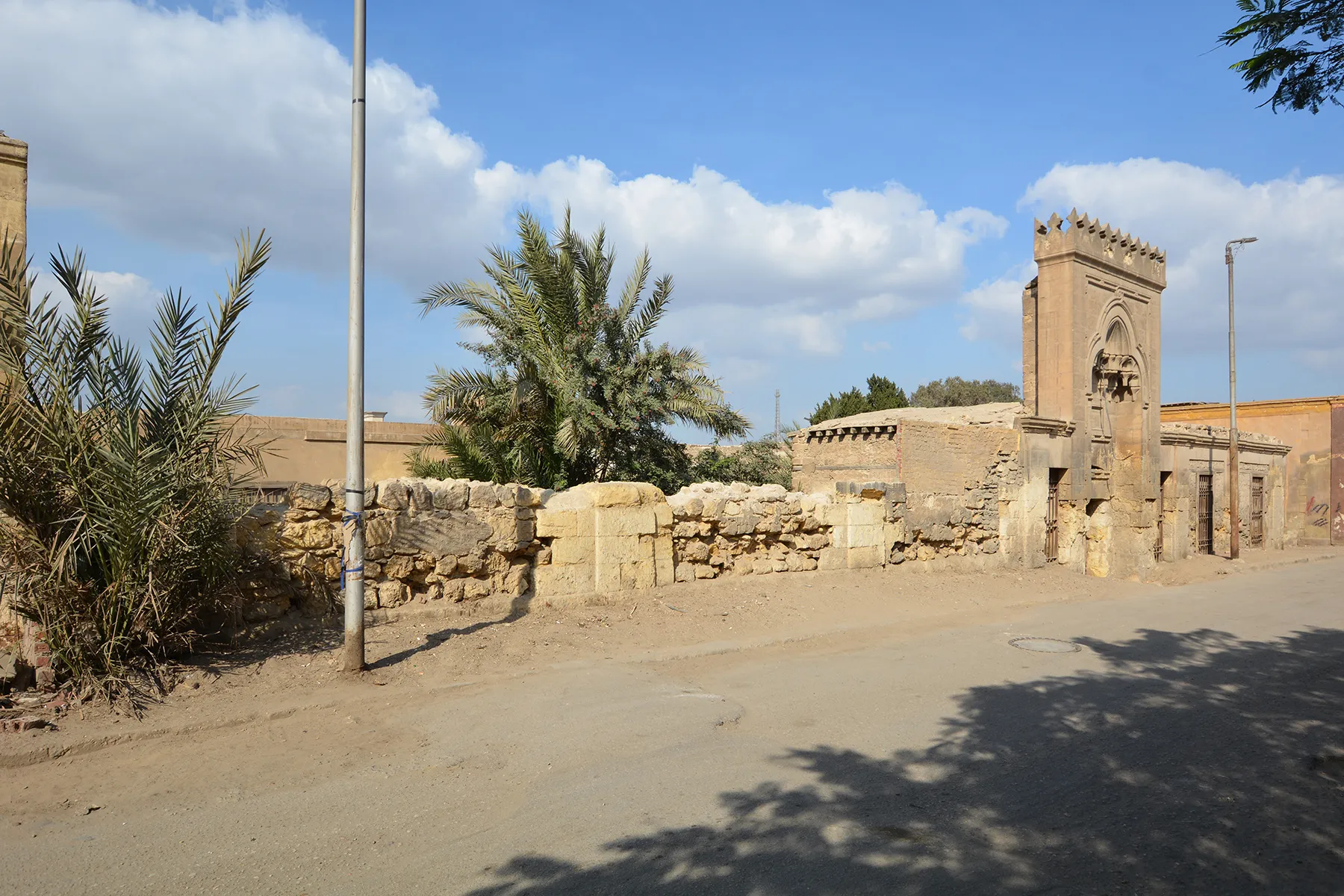
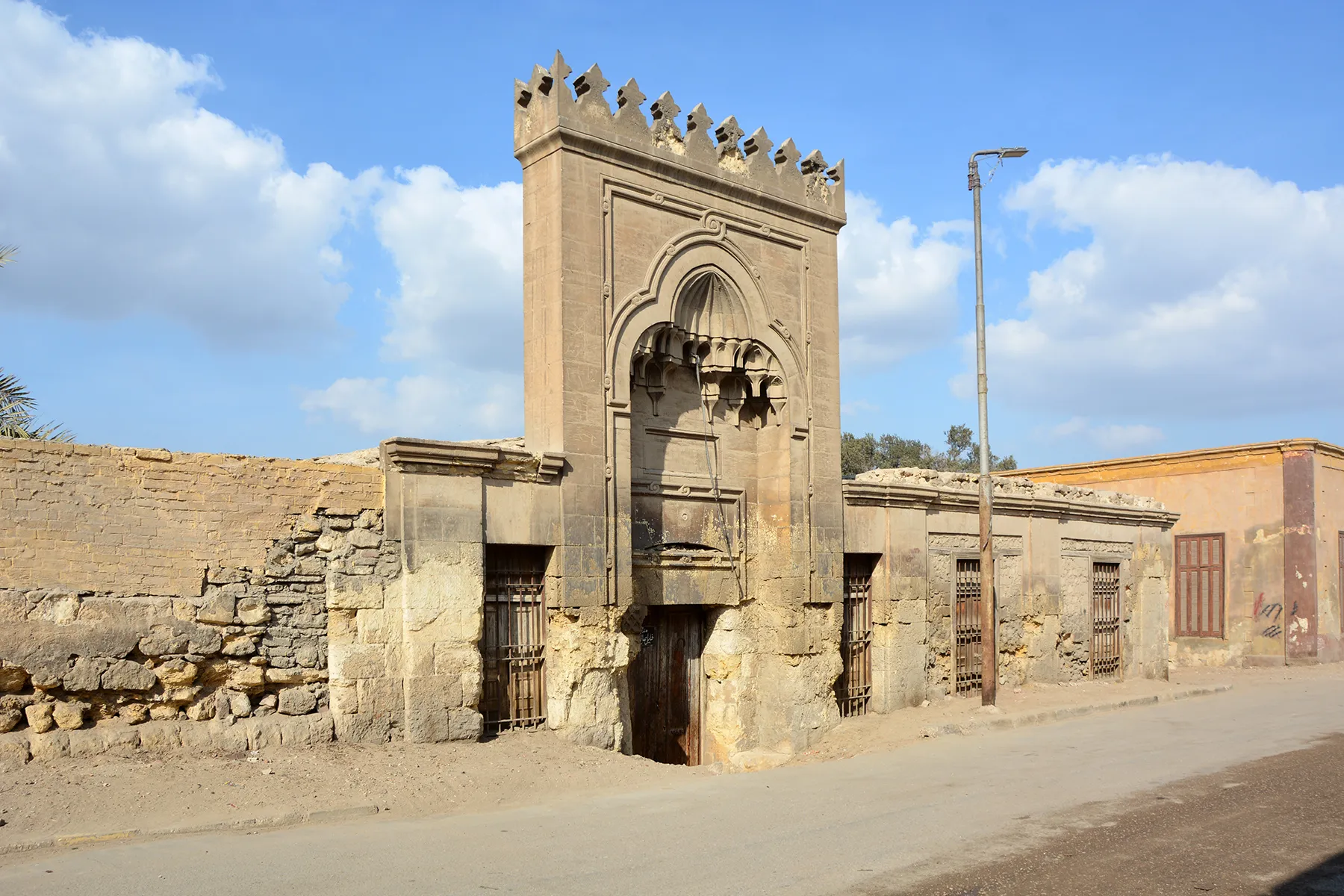
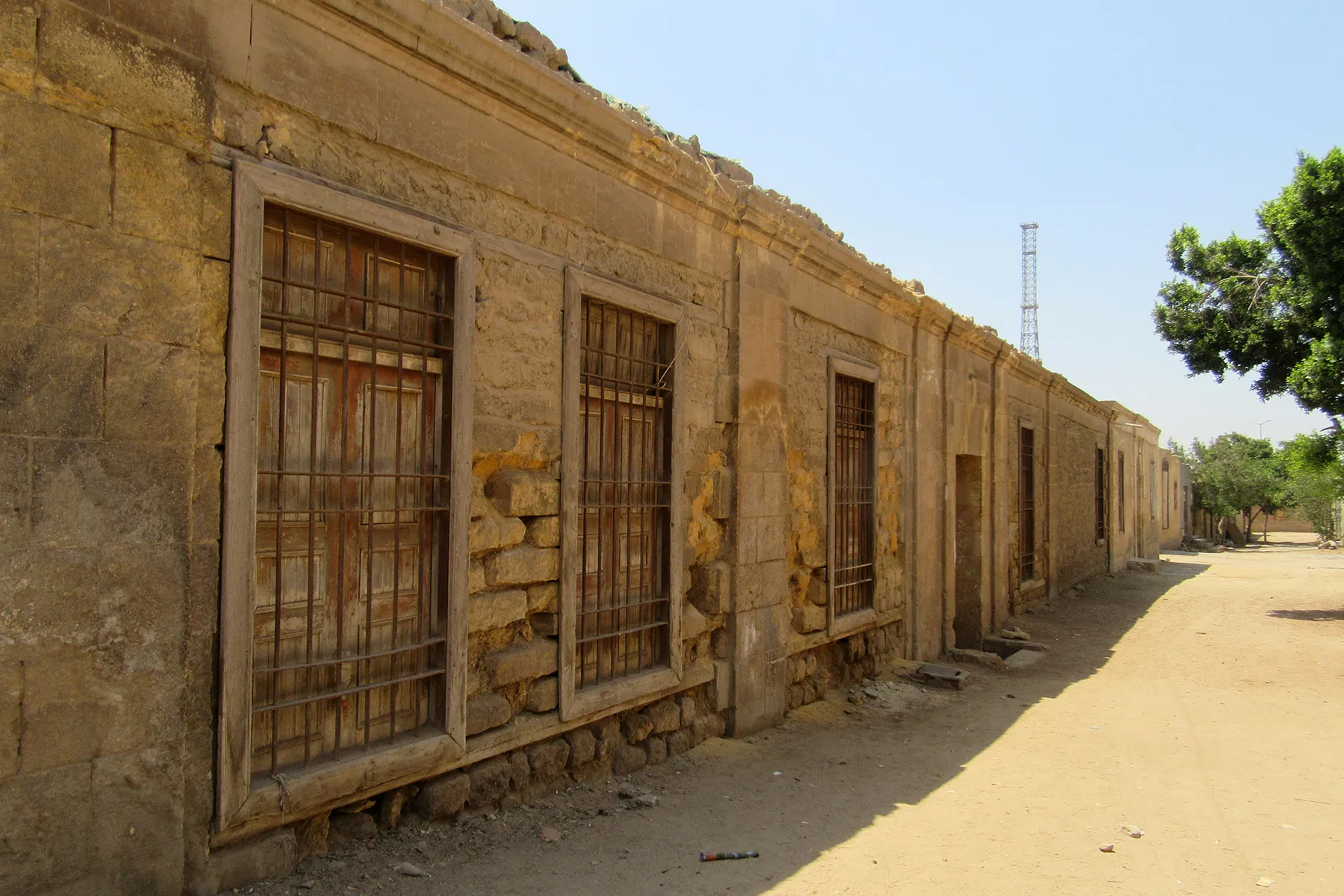
A rectangular enclosure (measuring ca 25 x 29 metres), with eastern and northern façades facing streets, and bordering on an adjacent enclosures to the south and west. The main (entrance) façade faces east, i.e., is on Sultan Ahmad Street. There is an L-shaped single-storey building by the eastern side of the north wall and northern part of the east wall of the enclosure, with a gateway in the east wing leading from the street onto the courtyard, and apparently with a pergola where the eastern and northern wings meet. Another rectangular single-storey building stands by the southern wall, forming a front courtyard in the south-eastern corner of the enclosure. The main portal and adjoining parts of the façade, the secondary gate in the northern façade, the base course and the cornice are built of ashlar stone. The rest of the walls are built of rough stone, divided into sections by ashlar stone pillars. There is no evidence that the rough stone sections were ever plastered, although the building does not appear to be unfinished.
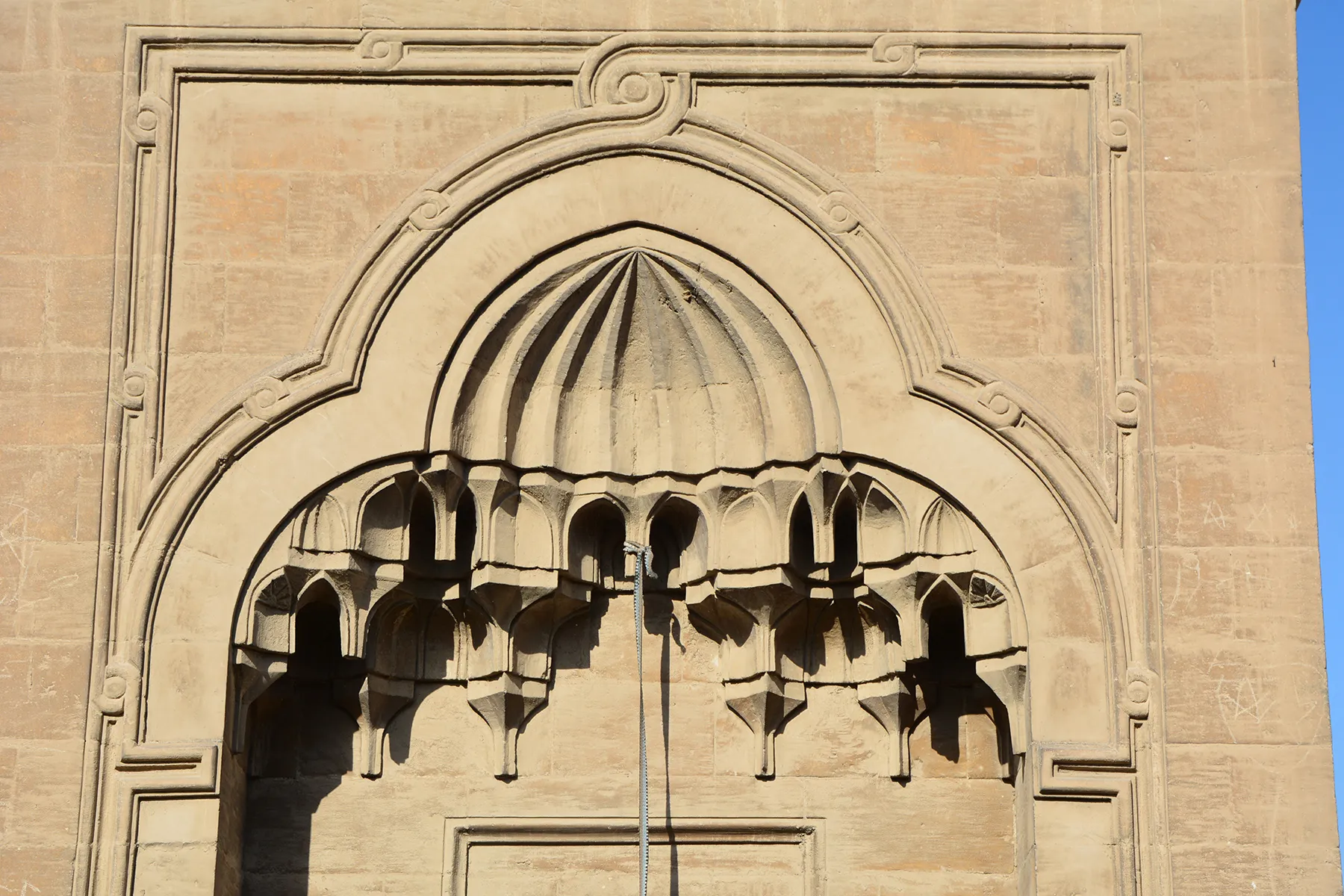
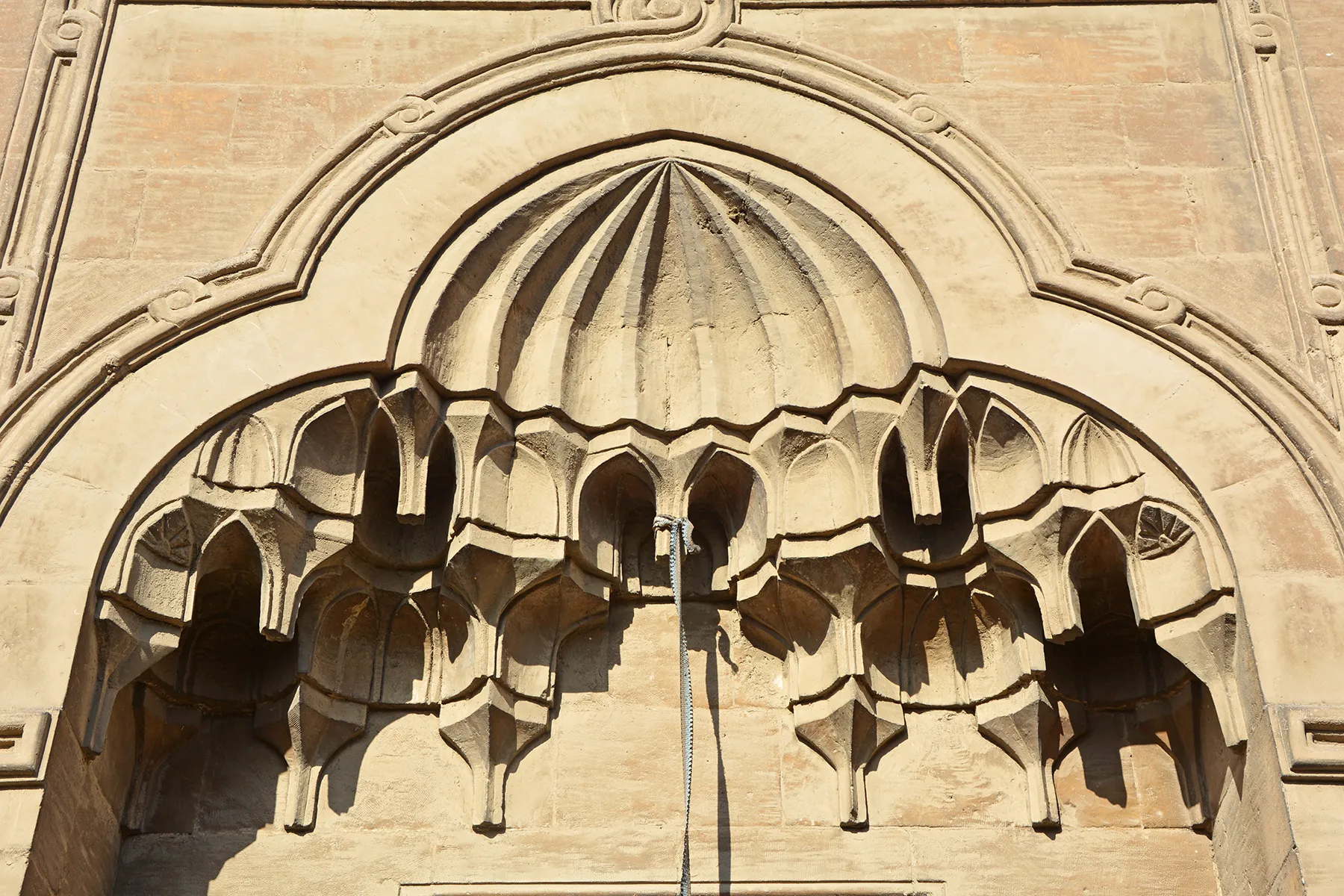
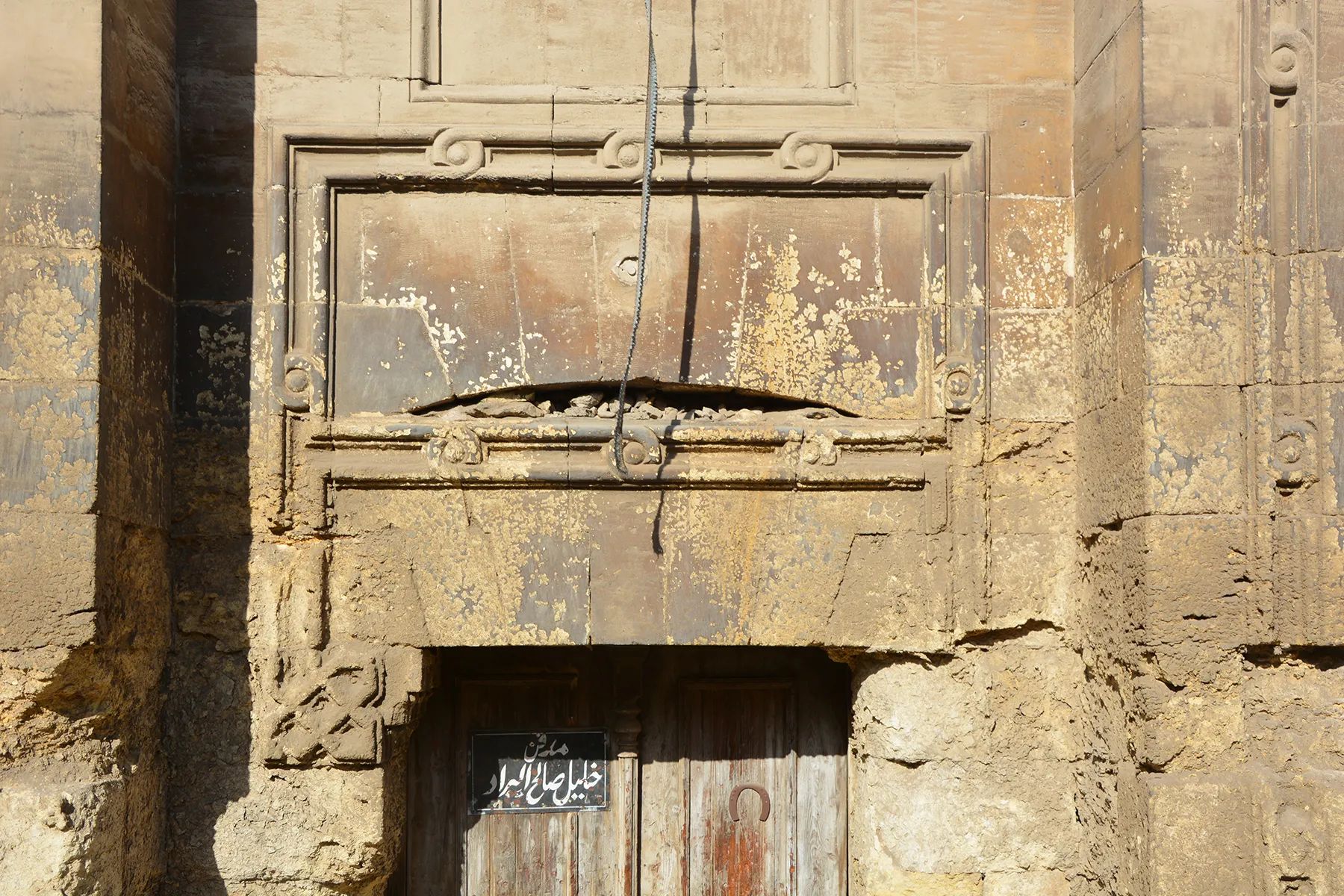
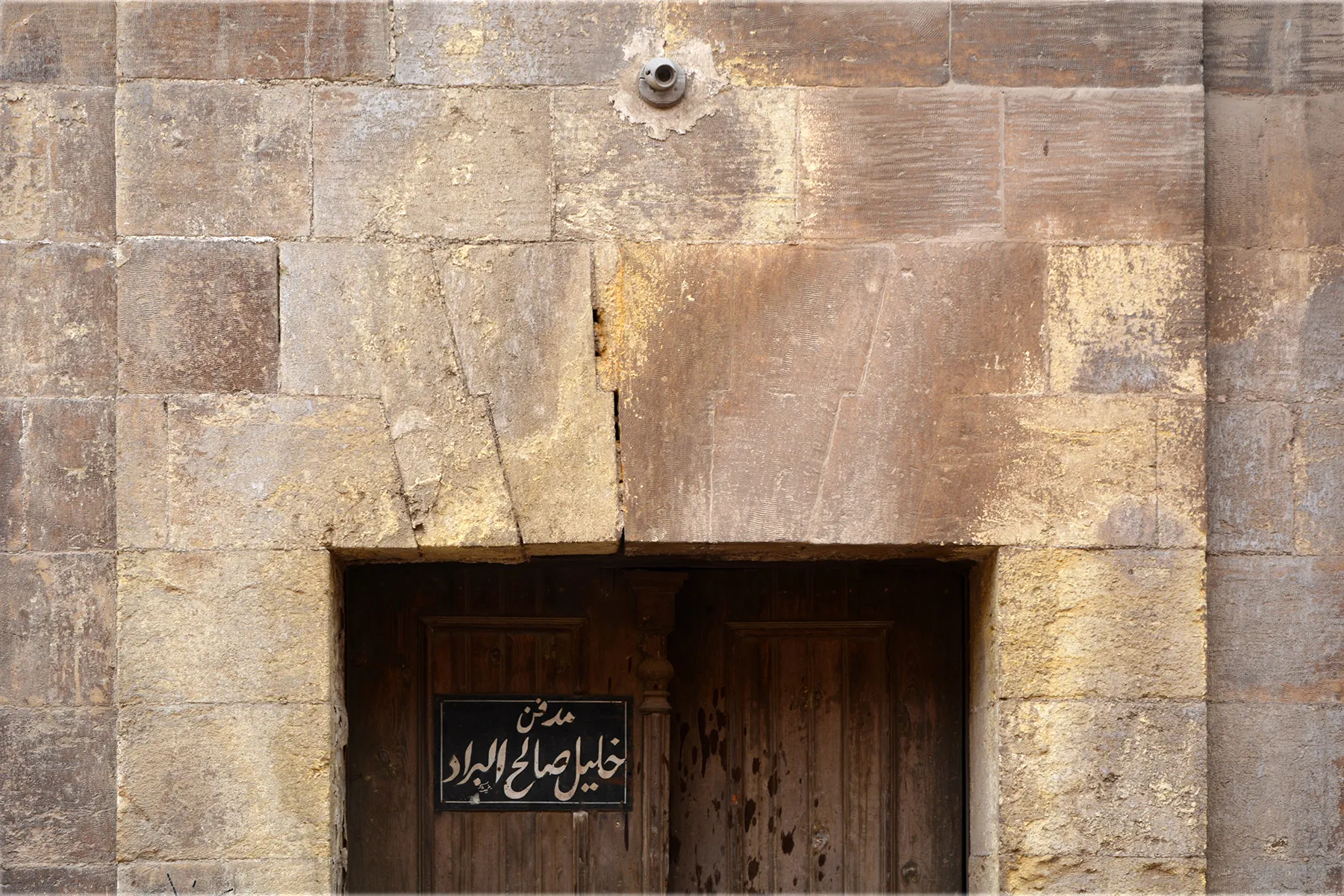
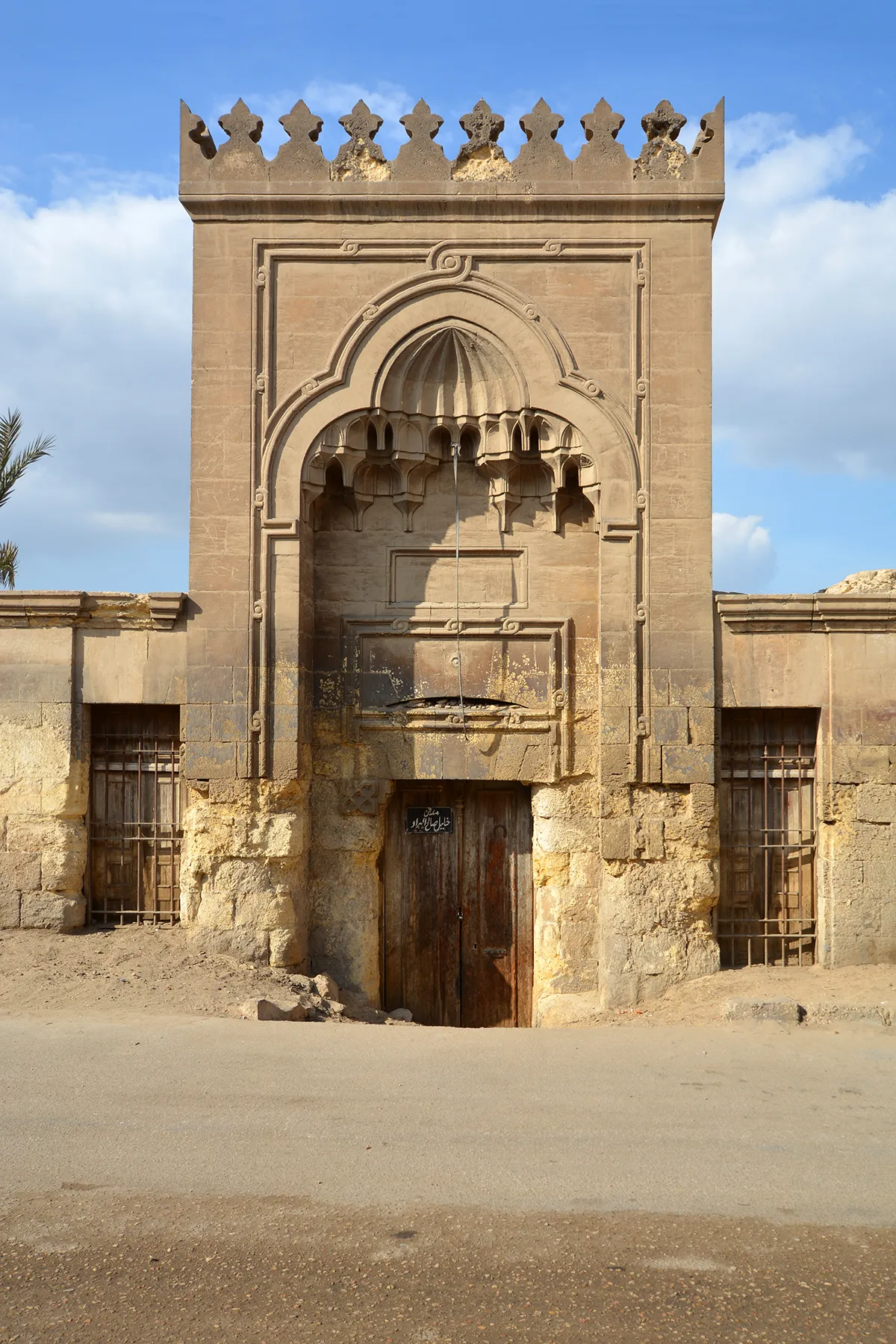
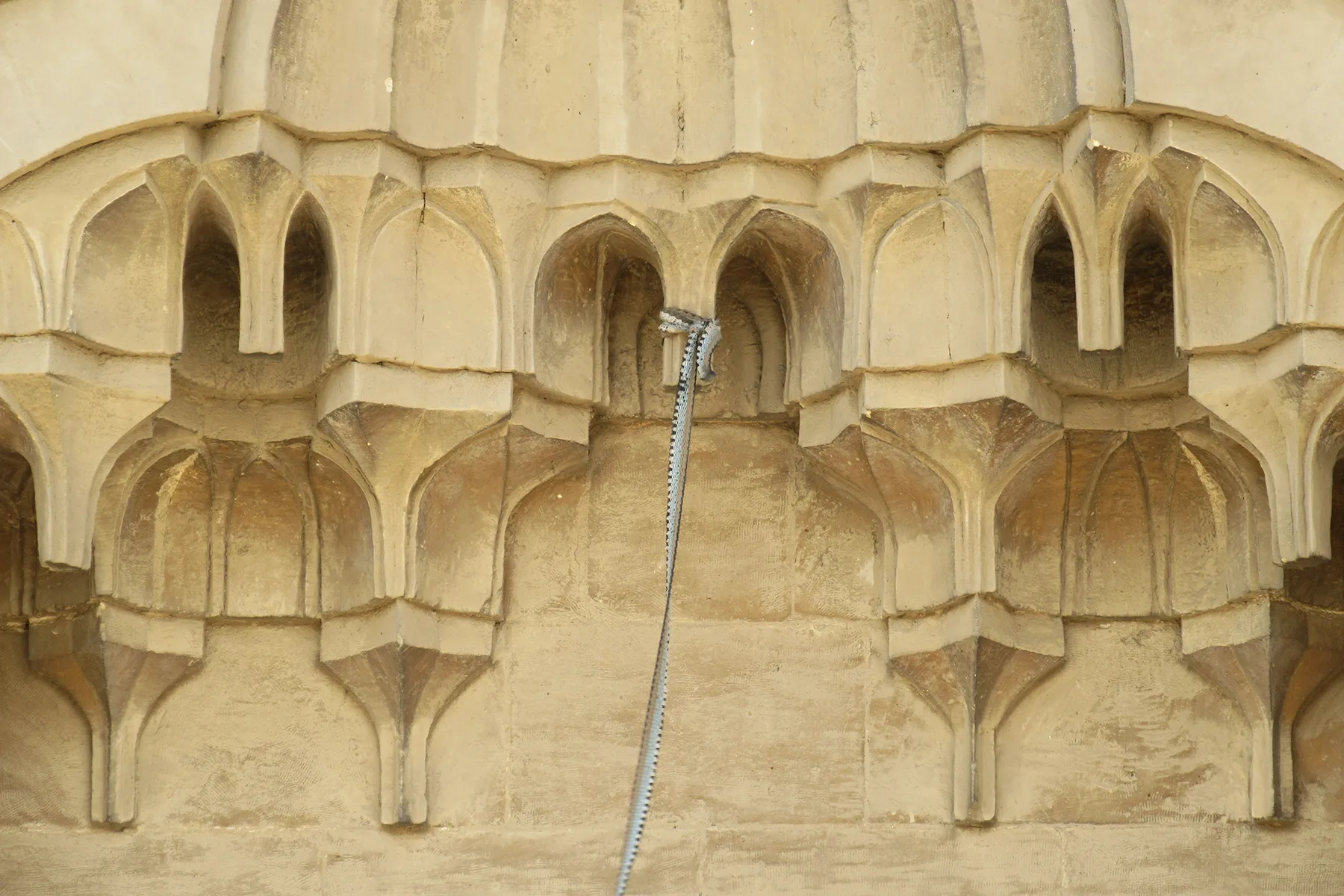
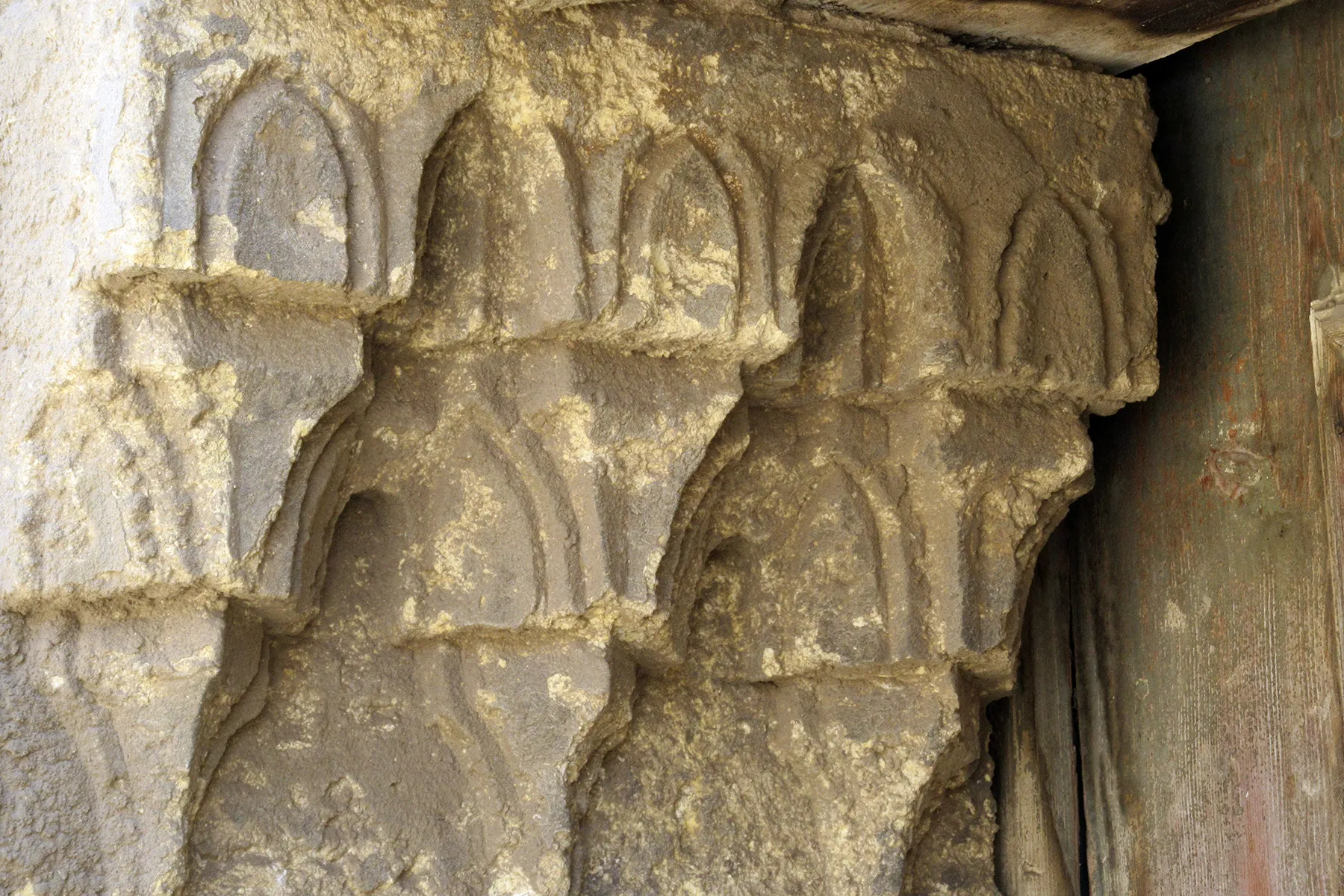
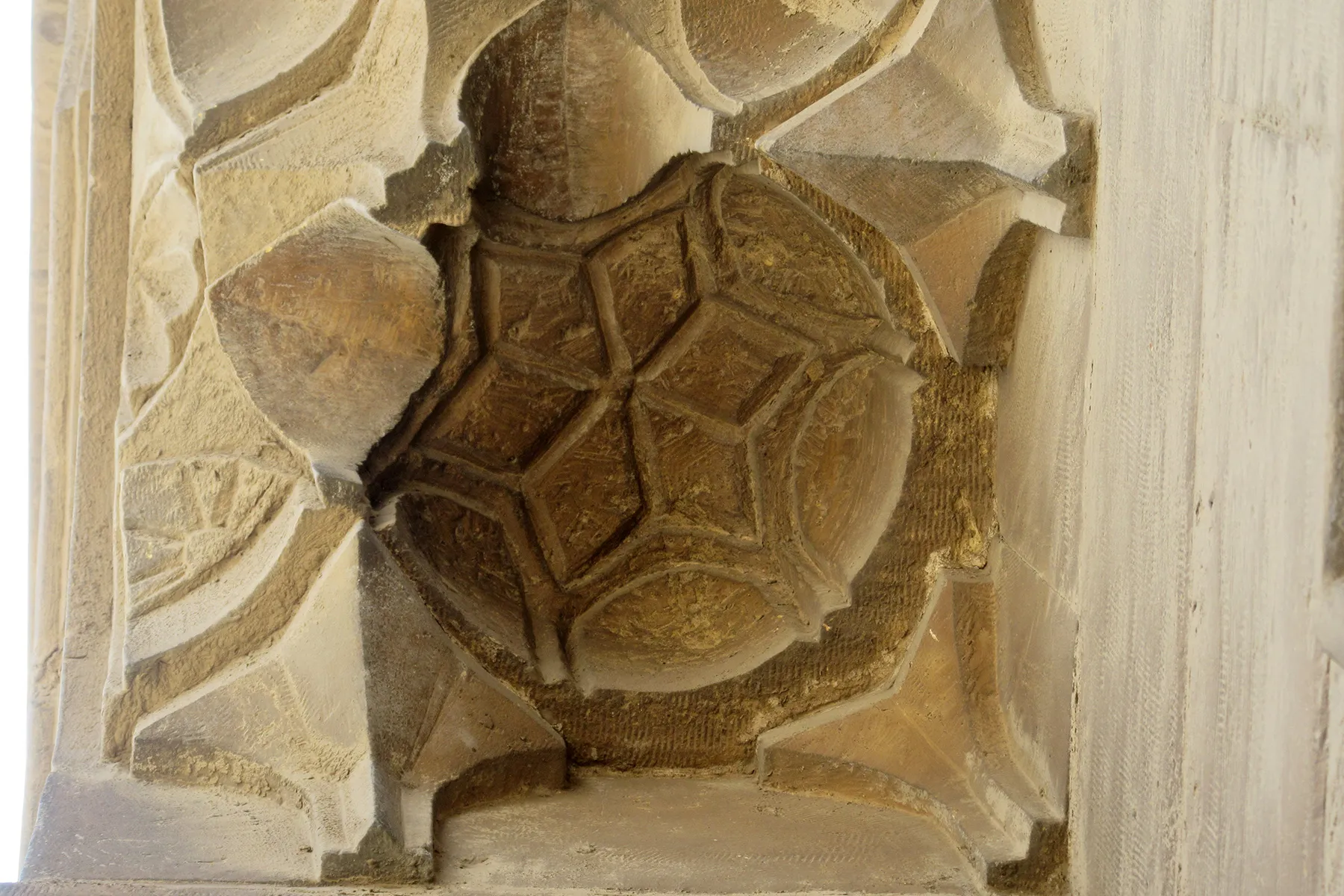
In the front façade, the main portal is asymmetrically placed closer to the northern end, and forms a pishtaq twice the height of the rest of the walls, topped with huge fleur-de-lys crenellations. The entrance is placed in a recess topped with a trefoil hood with a fluted semi-dome in the upper part resting on a very elaborate muqarnas frieze with “stalactite” muqarnases. The recess is framed in knotted mouldings. The composition follows very closely the forms of Mamluk-period architecture in Cairo. The rectangular entrance door has its lintel, which is a flat arch of limestone blocks, and a segmental relieving arch above it framed in knotted mouldings. Over the door is a rectangular recess in moulded frame, evidently intended for an inscription panel, but now empty. There are two narrow undecorated windows with flat-arch lintels flanking the portal, and two large, plain rectangular windows in the right (northern) section of the façade. The wider left section of the façade (now ruined) that formed the wall of the south-eastern courtyard apparently was blank, with no windows. There is a simple secondary gate in the northern façade with a rectangular undecorated door covered with a flat arch of limestone blocks. It leads to the building in the north-eastern corner of the enclosure. There are three windows to the left (east) of the gate and two windows to the right, identical with those in the front façade and irregularly placed.
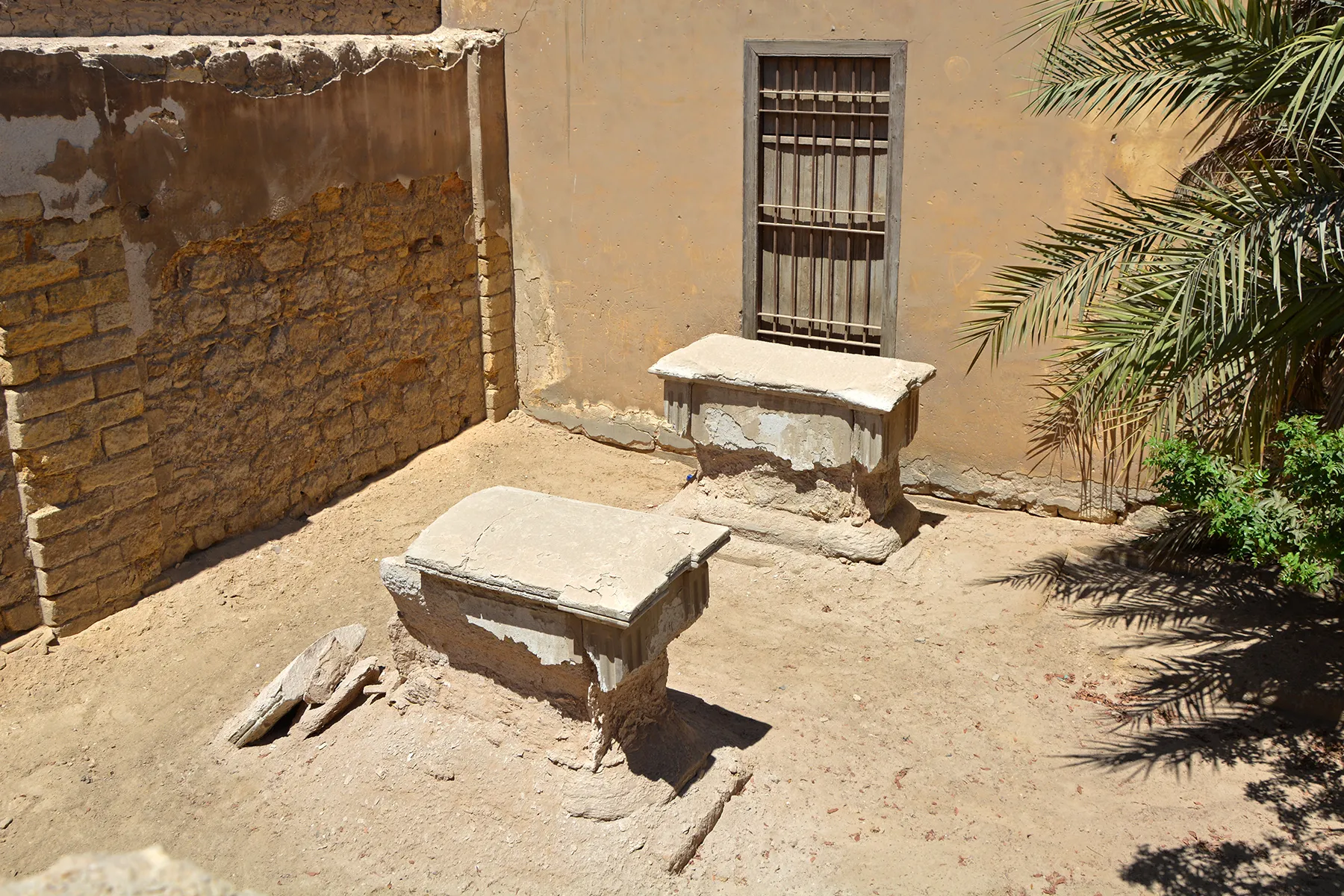
In the south-eastern courtyard stand two badly damaged simple uninscribed tomb markers of classical-based forms clad in marble. Possibly a carved marble cenotaph stands in the north-western corner of the enclosure.
Interior was inaccessible at the time of recording, the description is partially based on aerial photographs.
Condition of preservation
The complex is abandoned, disused and neglected. There is very serious damage to the stone from rising damp, exacerbated by the fact that the front façade is buried about a metre deep in the ground due to the rising street level. The marble-clad tomb markers in the south-eastern corner are eaten in more than a half away by groundwater-caused erosion, illustrating the severity of the problem. The southern part of the main façade is in ruin, its upper part collapsed.
- Field recording by
- Muhammad Esam-edited by Jaroslaw Dobrowolski
- Date recorded
- August 3, 2022
- Data entered by
- Yusuf Yassir
- Date entered
- May 21, 2024