
Unit No4
Funerary enclosure of Mahmud Fahmi Pasha al-Nuqrashi family
|
Coordinates of the main entrance |
30.041149N - 31.273808E |
|
Attribution |
Funerary enclosure of Mahmud Fahmi Pasha al-Nuqrashi family |
|
Higri (AH)Dates as given in the Inscription |
|
|
Miladi (AD)Dates as given in the Inscription |
|
|
Inscription Contemporary with the building? |
Yes |
|
Multiple date(s) In the inscription? |
Yes |
|
Assumed Date |
About 1948 |
|
Based on |
date of Mahmud Fathi Pasha’s death. See also section "History" |
|
Original Use |
Funerary enclosure |
|
Current Use |
Funerary enclosure, and residential |
|
Overall condition |
Fair |
Features of unit 4
| Present | Count | Material | Comments (see description for details) | |
|---|---|---|---|---|
| Free standing structure | No | |||
| Walled enclosure | Yes | 1 | stone | |
| Rooms by the perimeter wall | Yes | 12 | stone | |
| Freestanding structure(s) in enclousure | No | |||
| Dome over the tomb chamber | No | |||
| Neo-Mamluk architectural decoration | Yes | |||
| Garden layout | No | |||
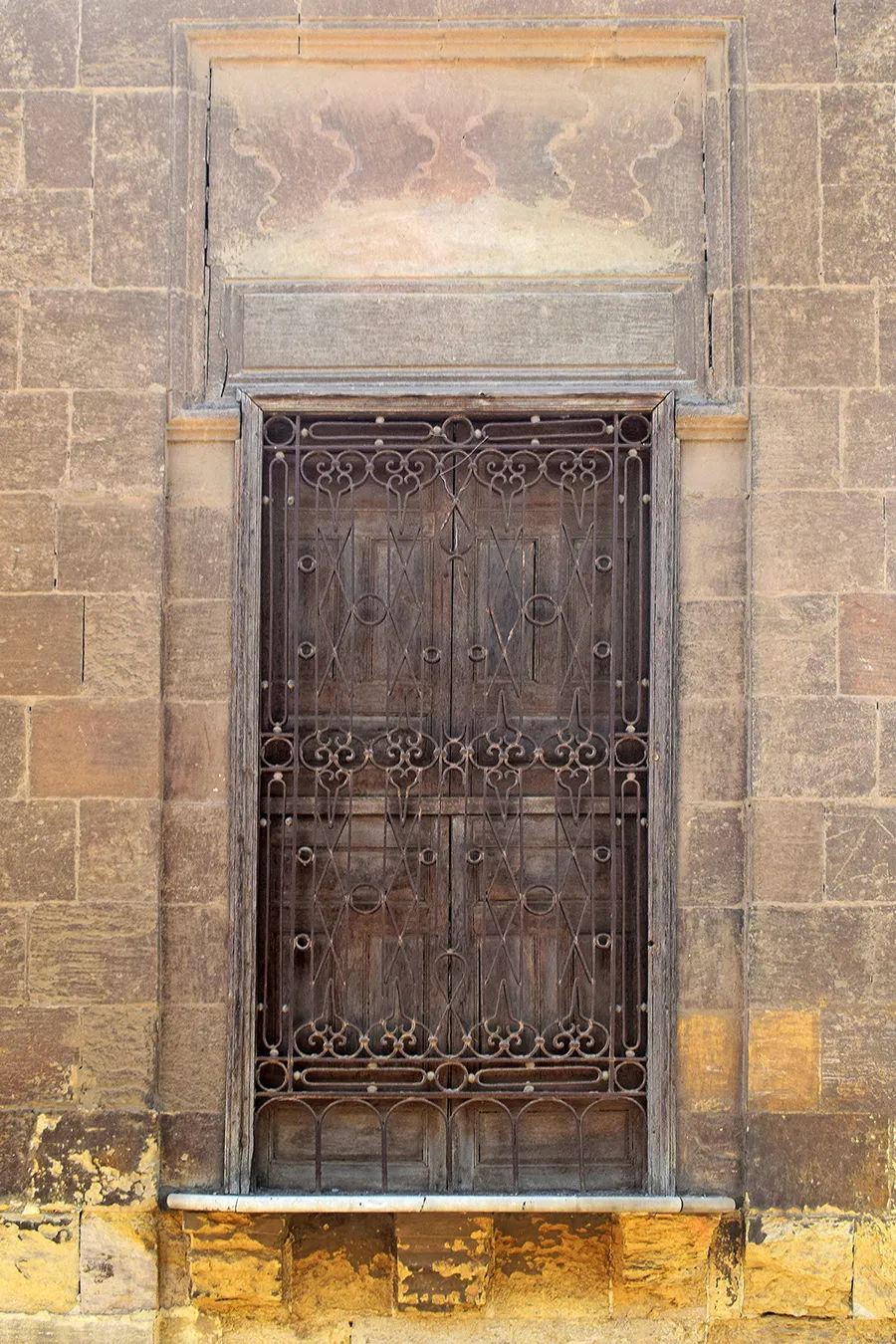
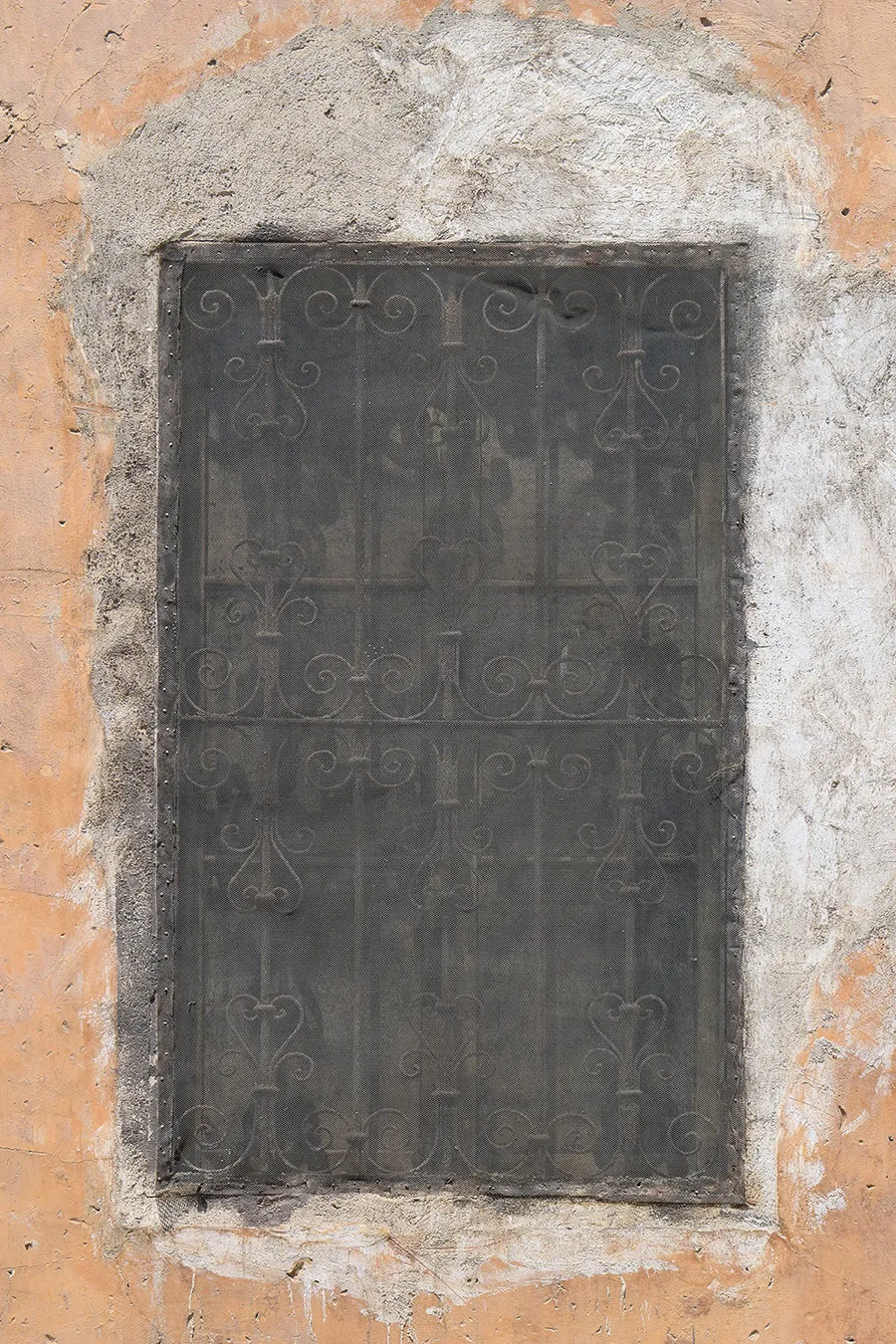
| Sabil(s) | Yes | 1 | stone | With decorative steel grilles in sabil window and side windows |
| Wall fountain(s) | No | |||
| Canopy on columns / pillars | No | |||
| Carved marble cenotaph(s) | Yes | 8 | 8 | Also two simple undecorated marble cenotaphs and a wooden cenotaph |
| Decorated limestone tomb-markers | No | 2 | limestone | |
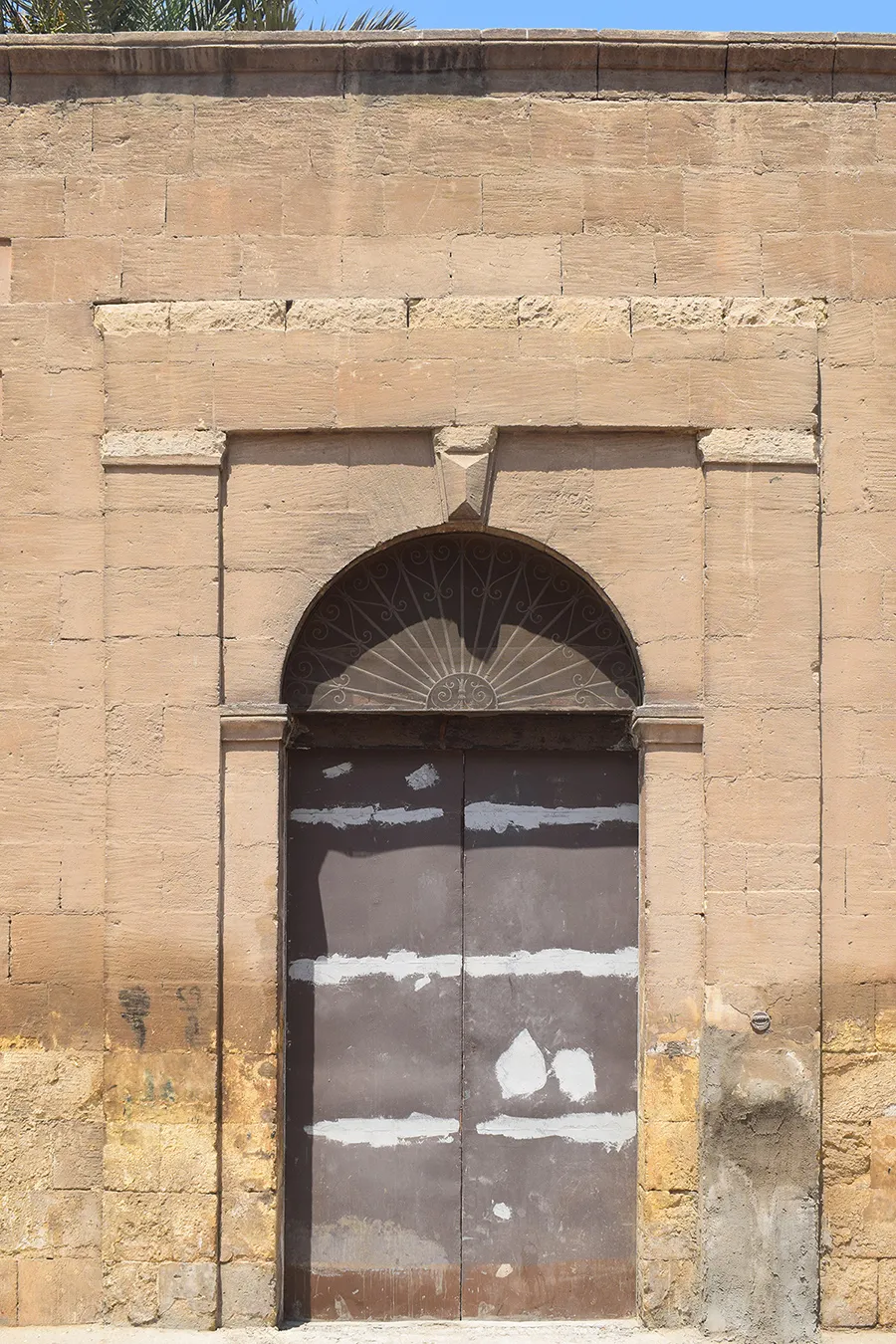
| Decorated gateway | Yes | 2 | stone | The main gate is elaborately decorated. The side gate has a very simple architectural framing |
| Decorative door-leaves | Yes | 2 | wood | In the main entrance gate |
| Decorative window grilles | Yes | 2 | marble | |
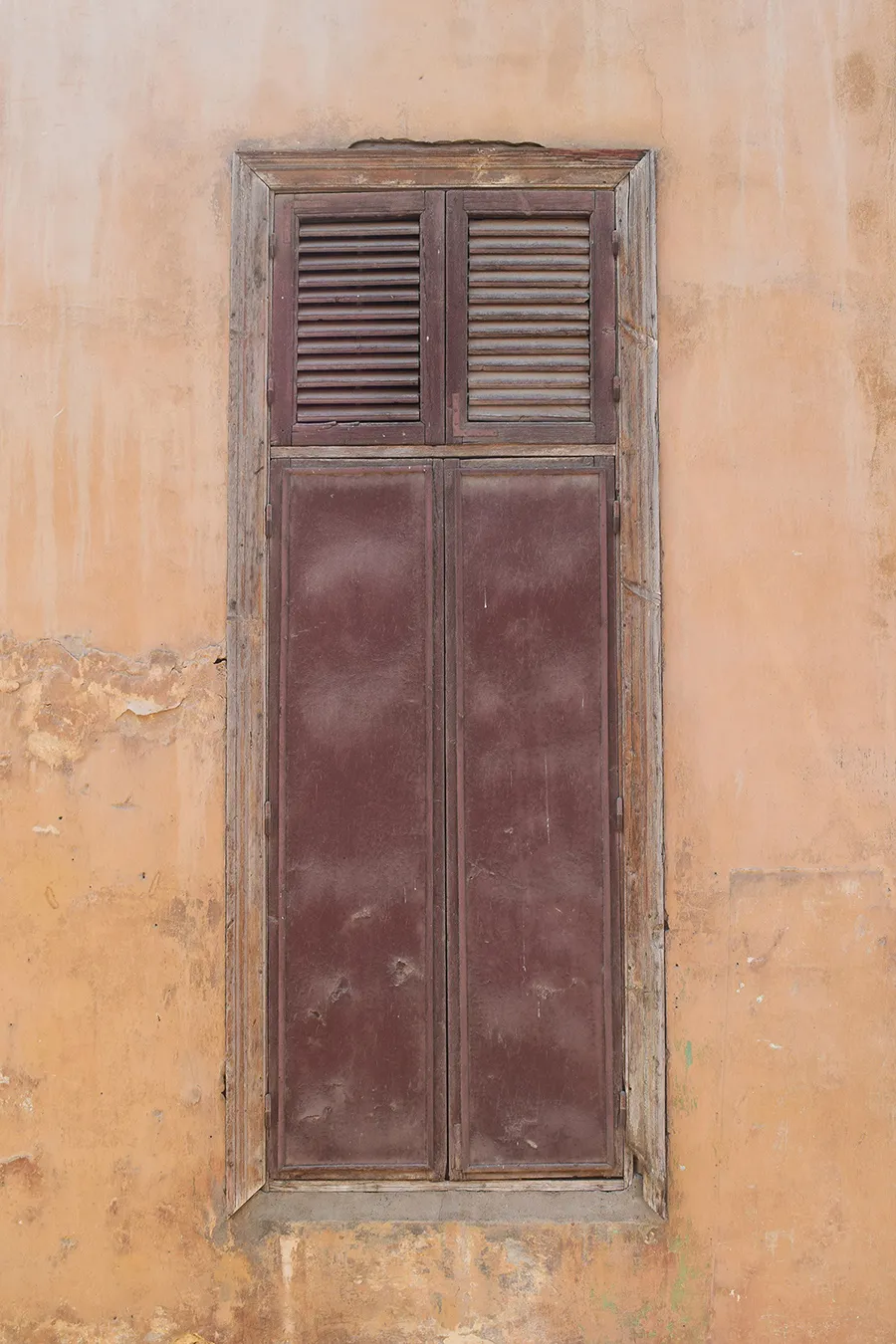
| Decorative shutters | No | |||
| Painted ceiling(s) | No | |||
| Decorative paving(s) | No |
Description (The direction towards Mecca (Qibla) is described as eastern and other directions are named accordingly)
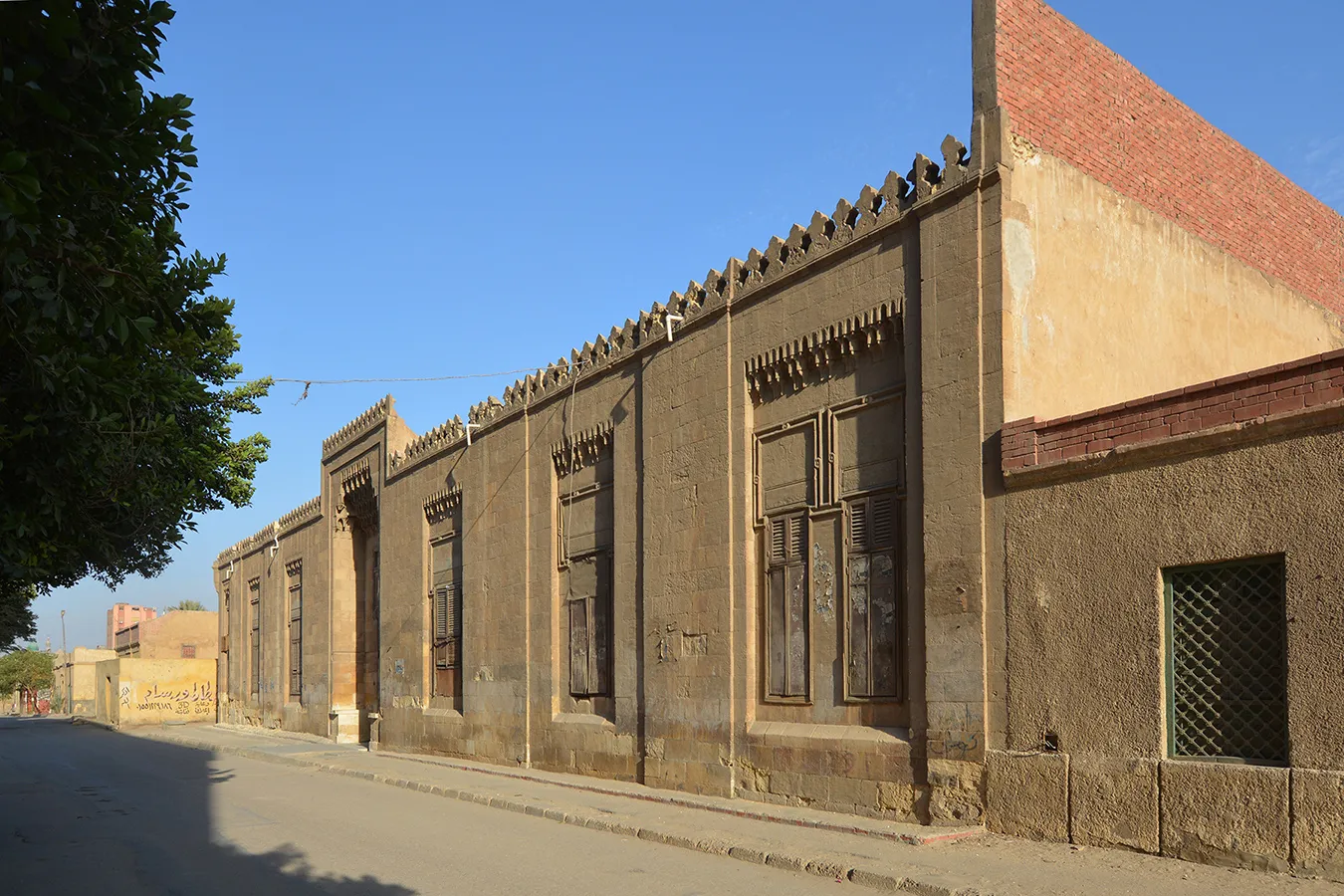
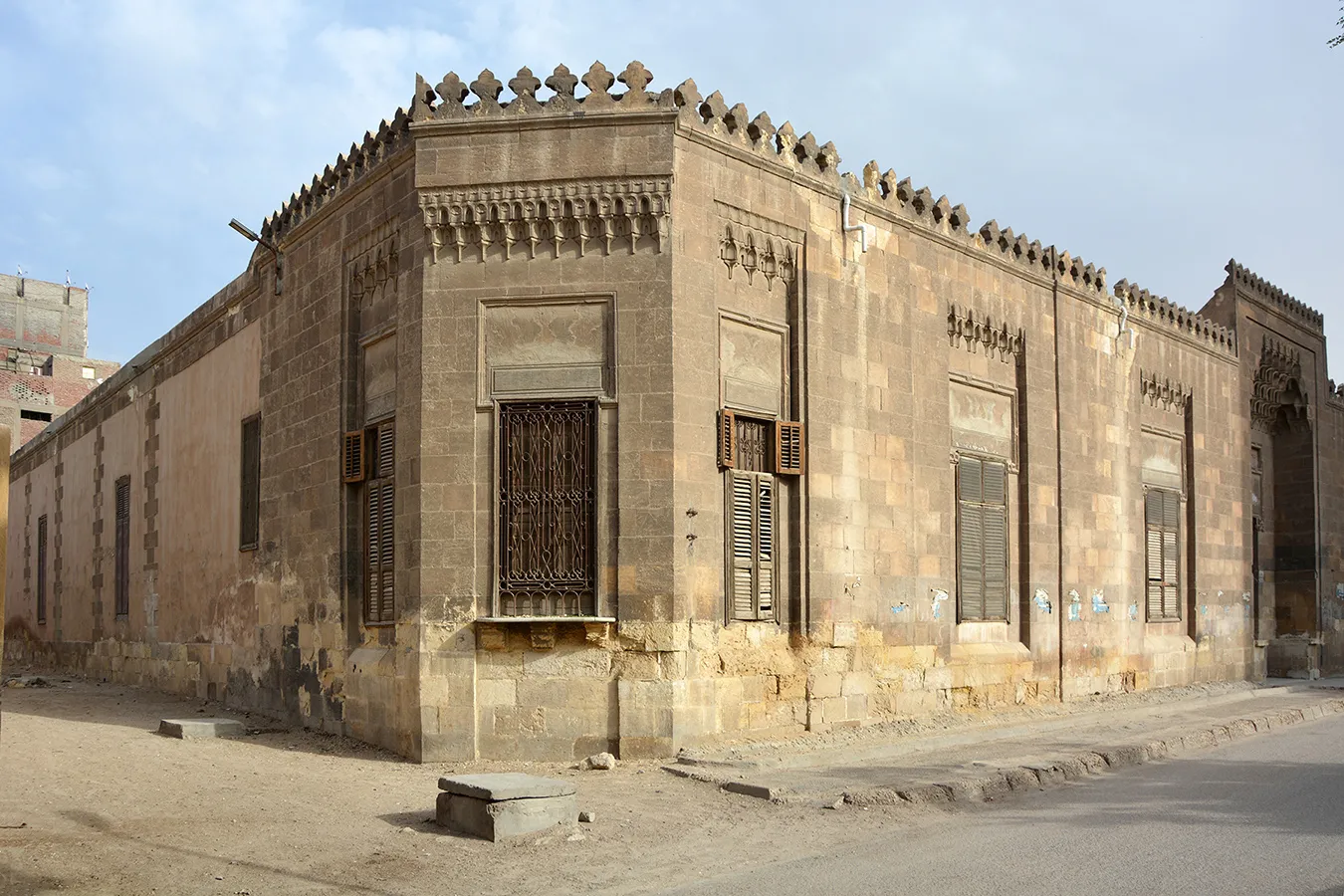
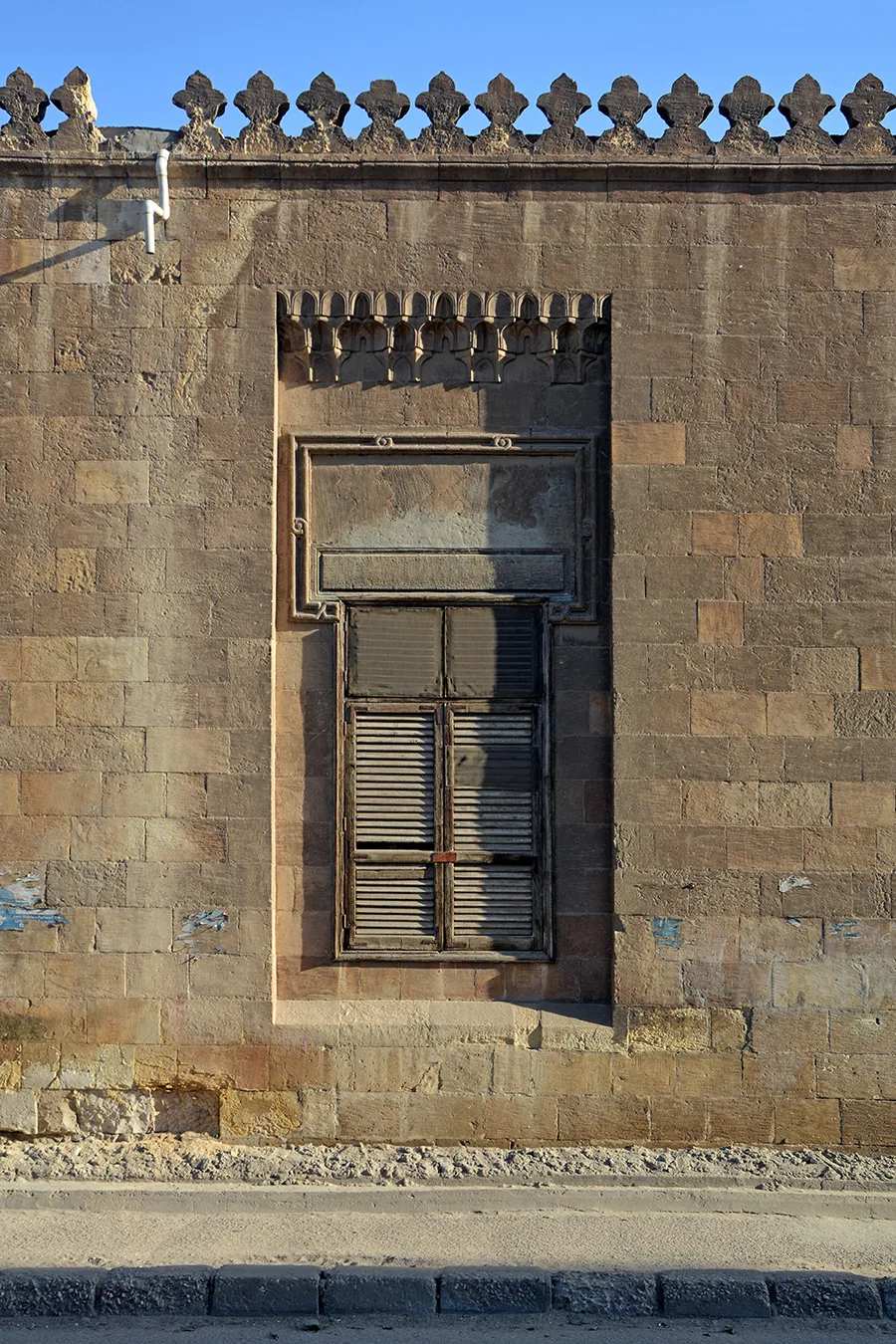
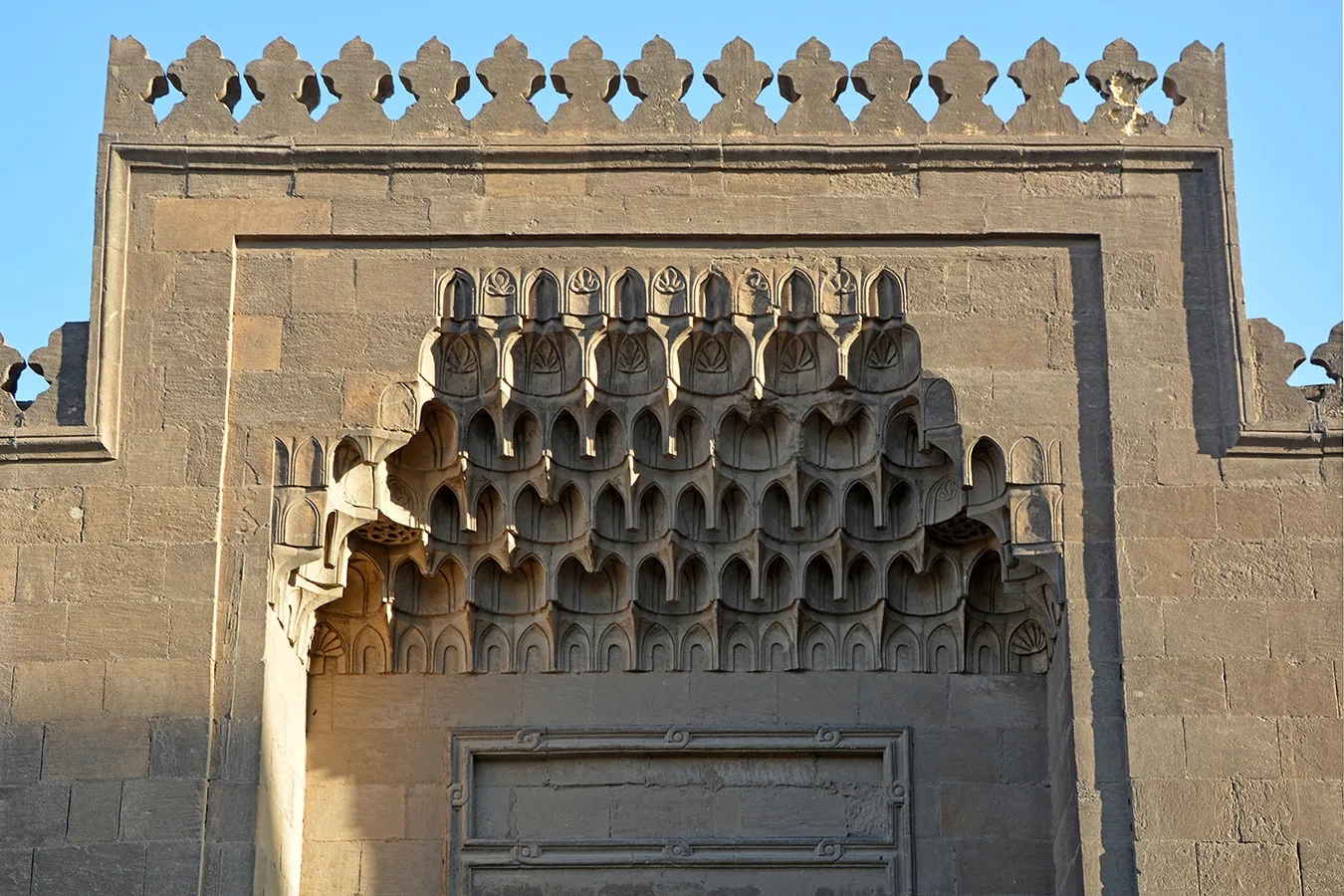
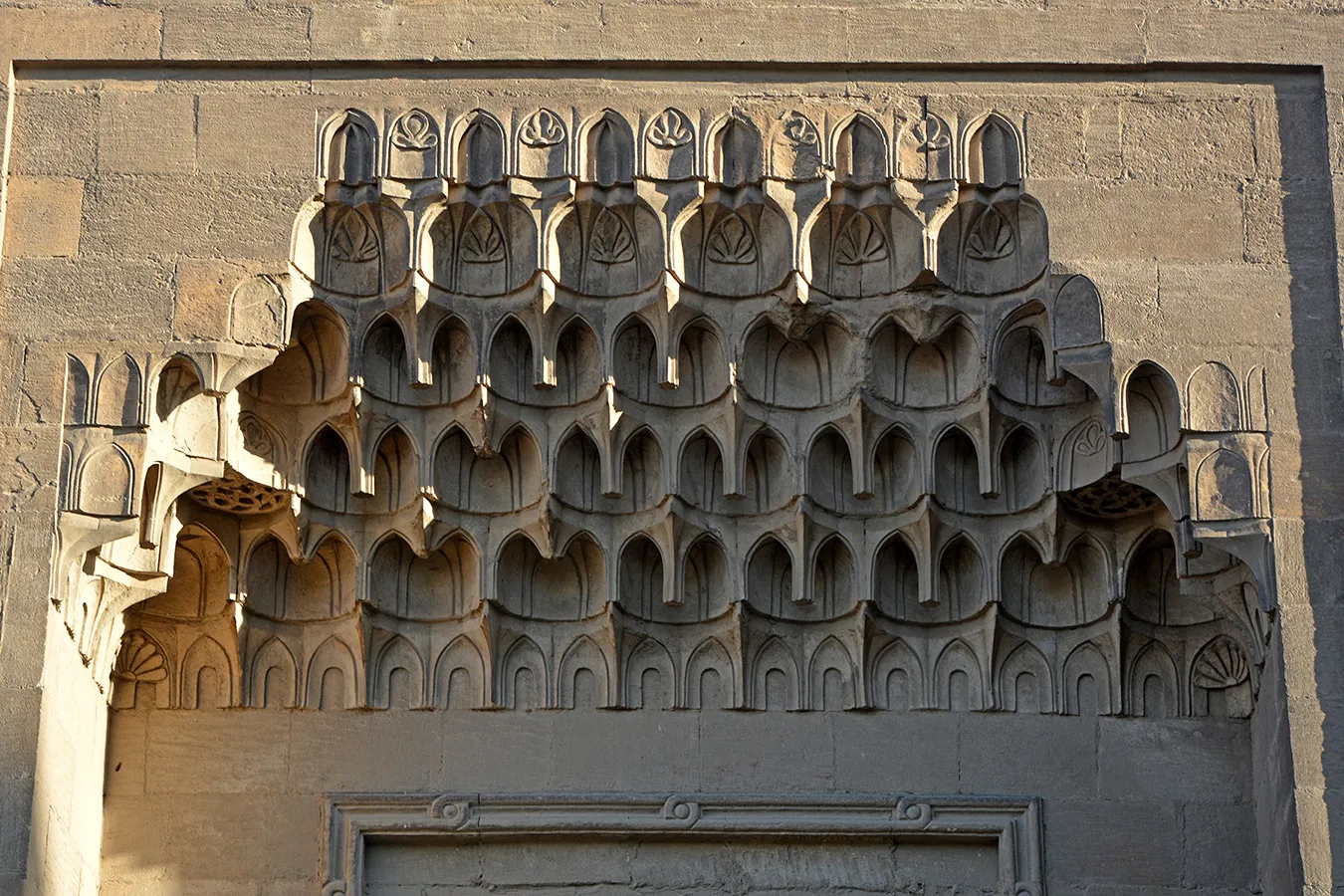
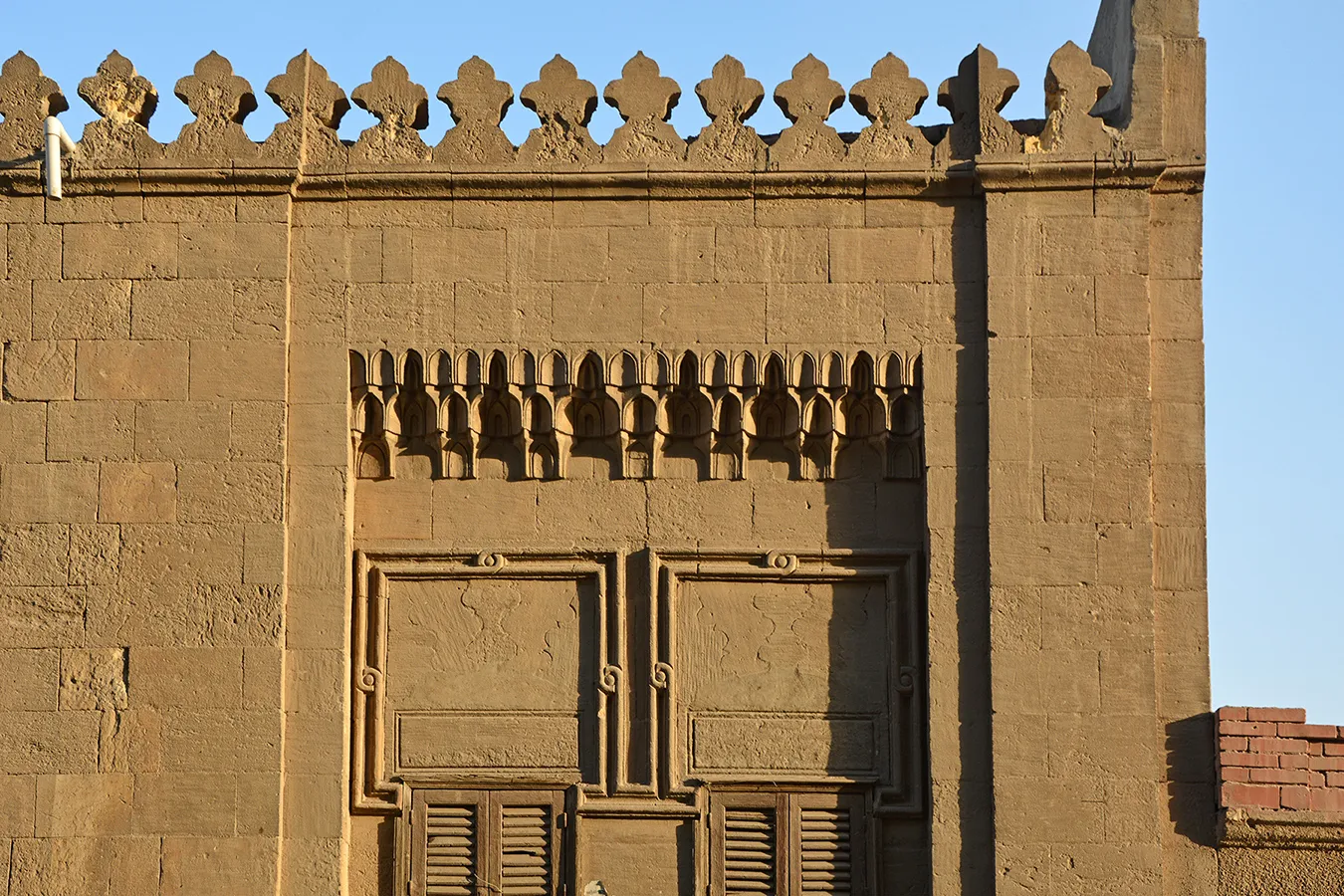
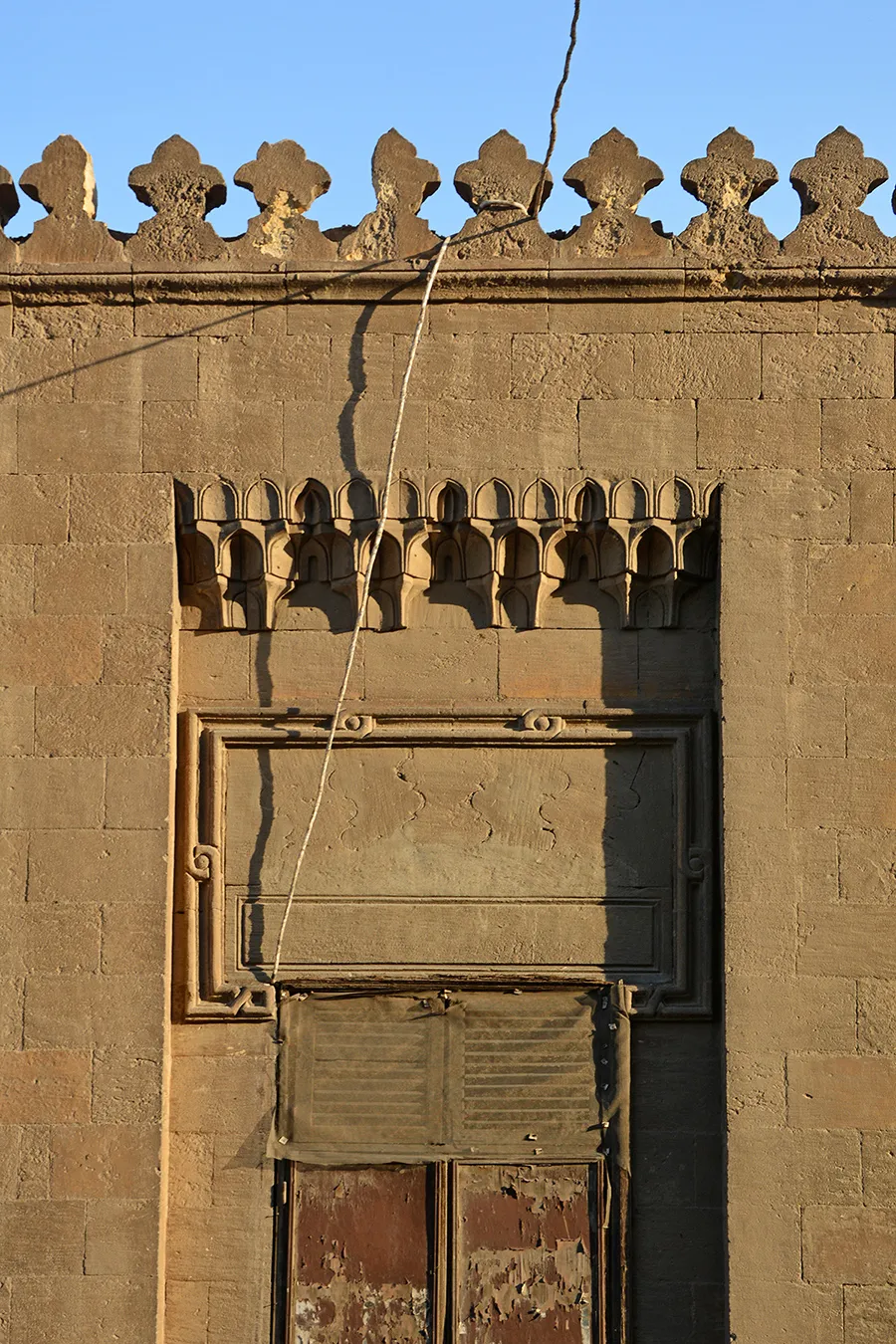
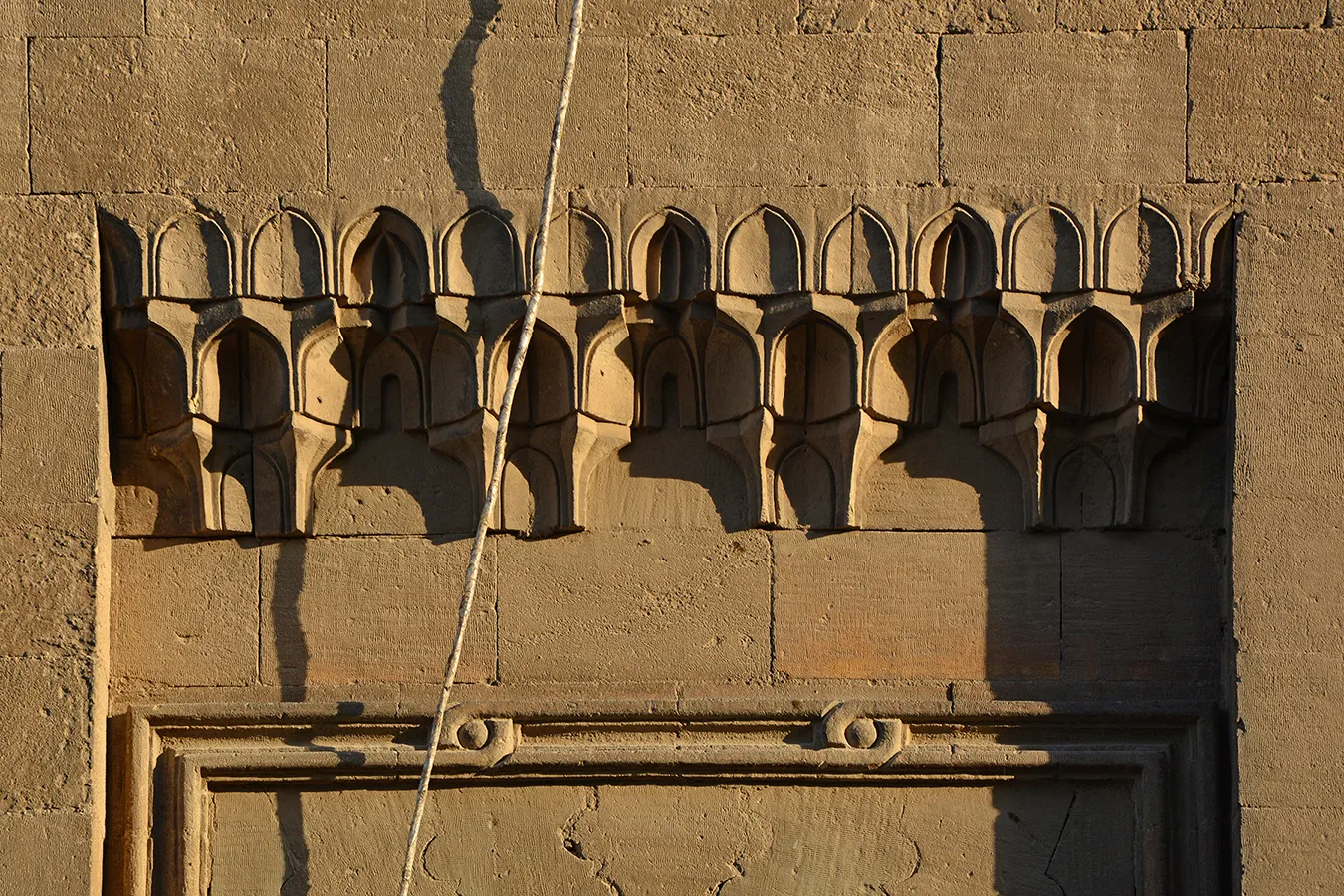
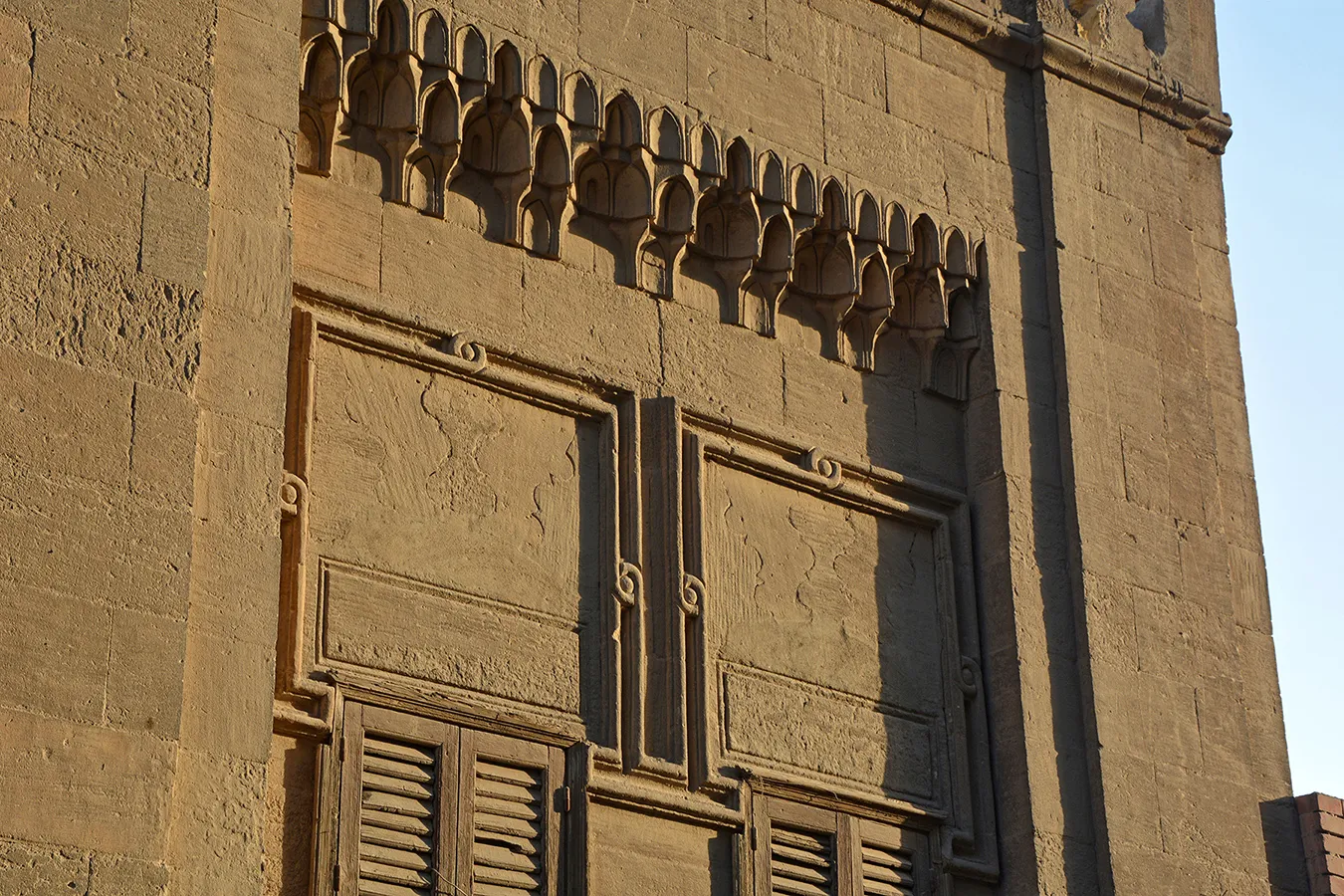
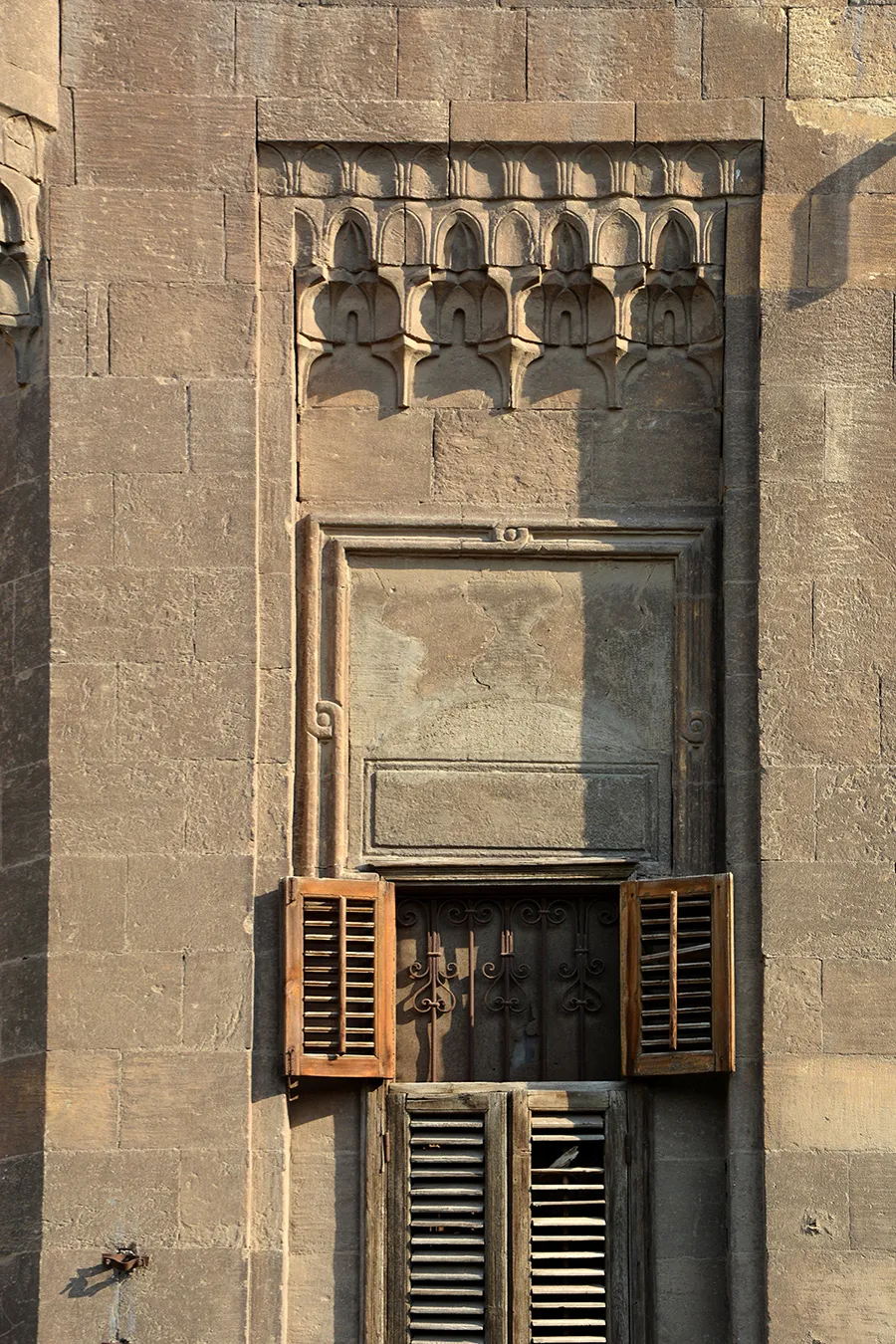
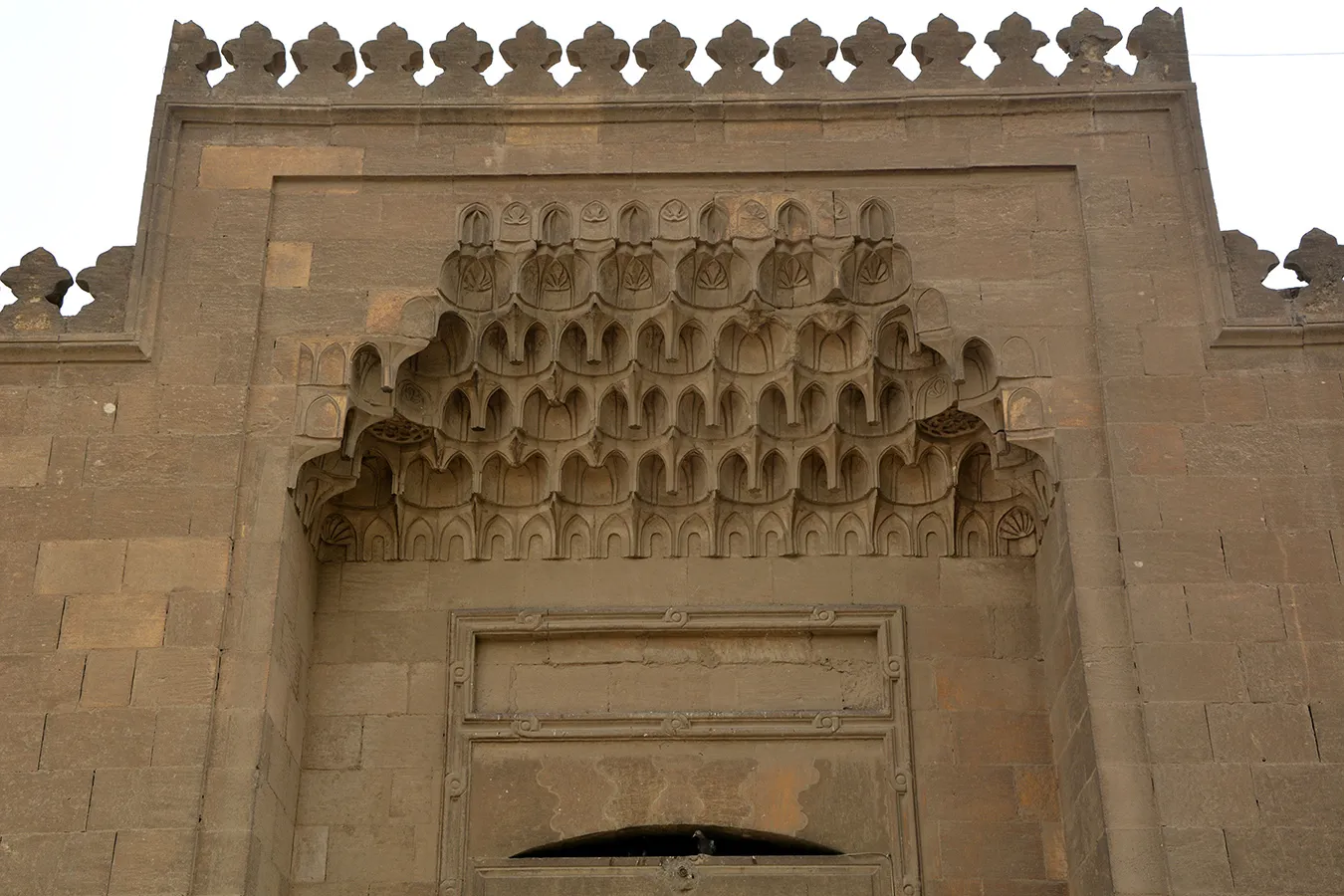
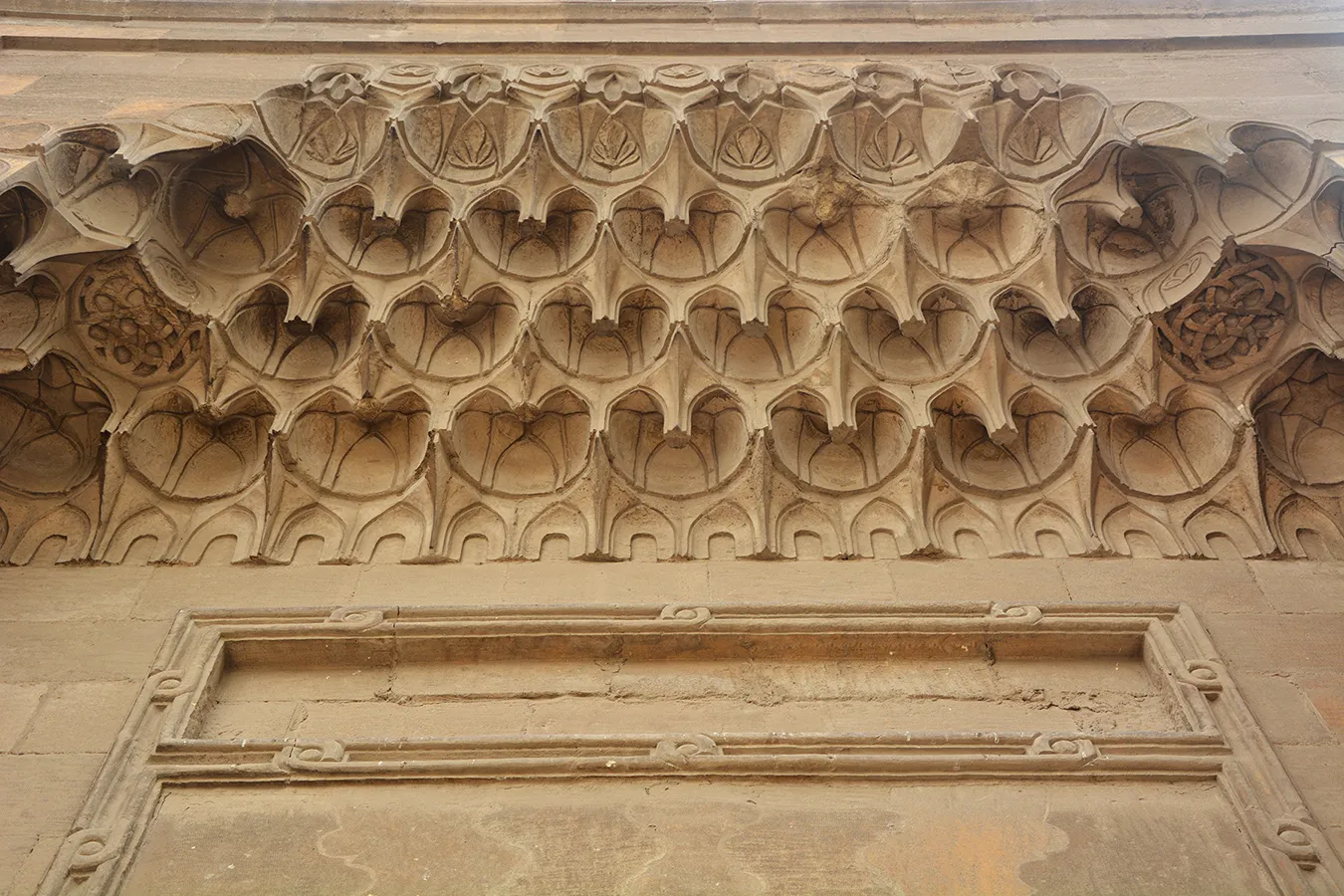
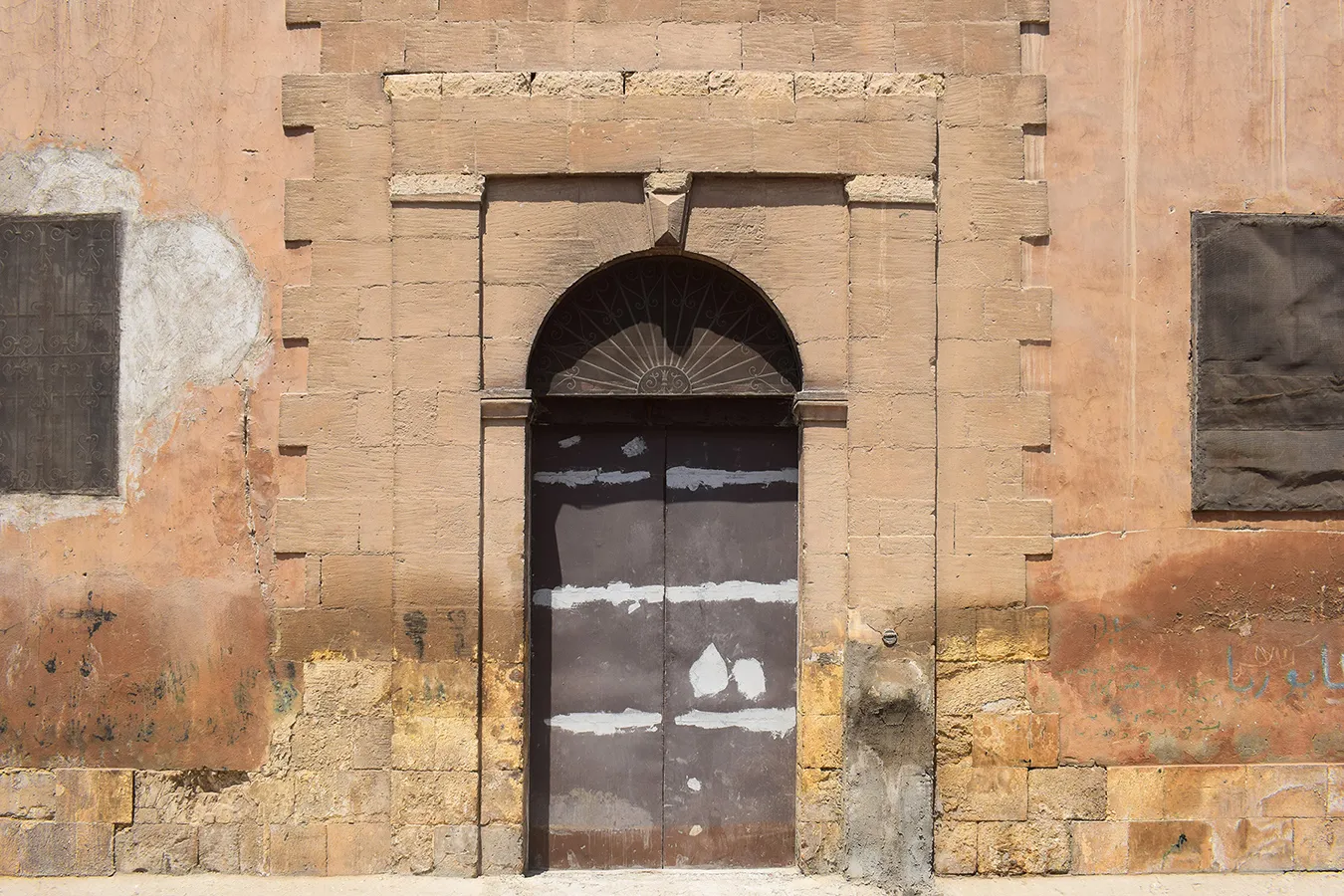
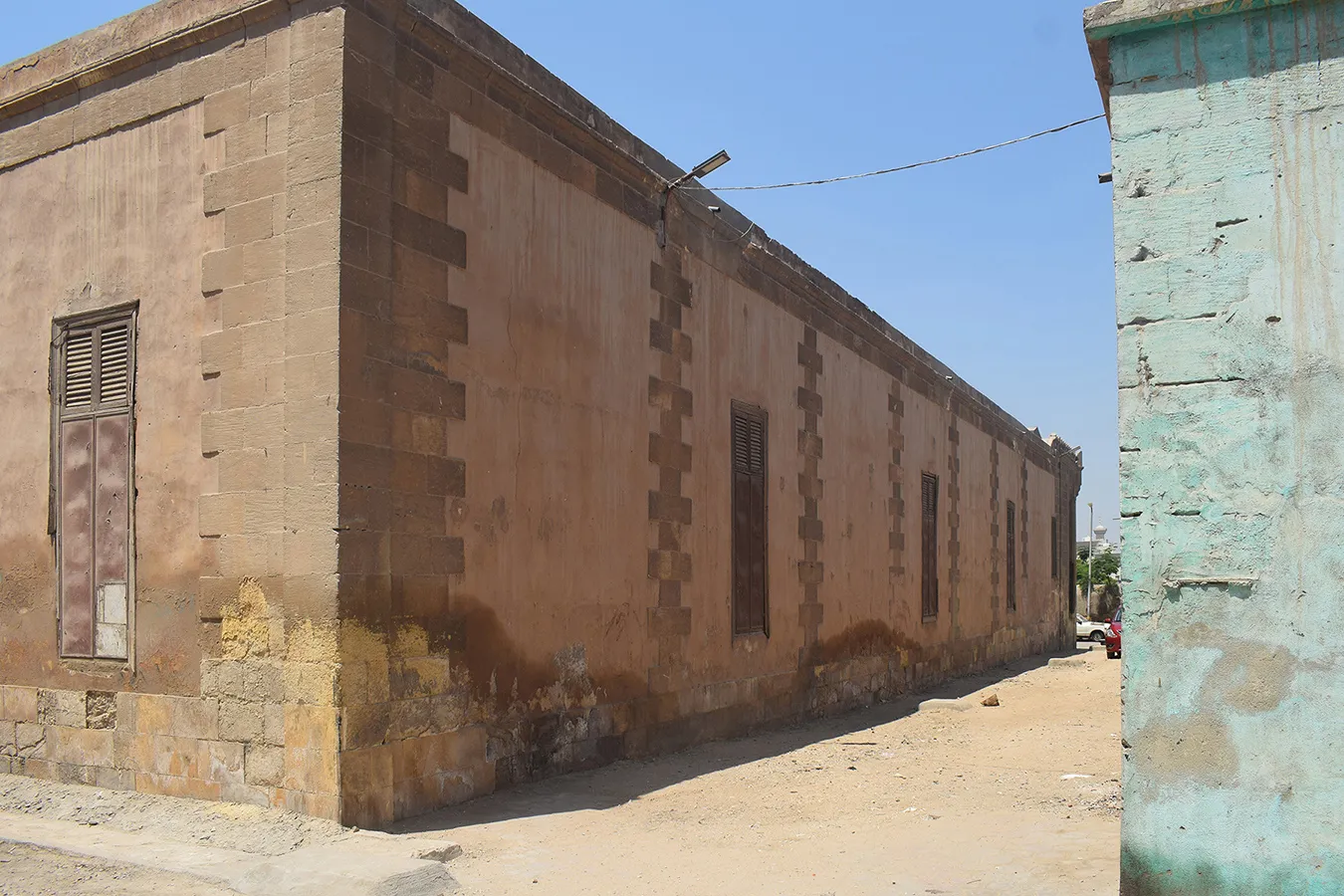
The main (western) façade facing the Sultan Ahmad Street is built of ashlar stone, topped with fleur-de-lys crenelations, and designed in neo-Mamluk style with close resemblance to mediaeval Mamluk architectural forms. The northern and eastern elevations are plain, covered with a simple classical-style corniche, and plastered. The north elevation is divided into bays with vertical stripes of ashlar stone masonry. Huge rectangular windows are plain, and the gate in the middle of the east façade has very simple architectural framing with no neo-Mamluk elements. The central part of the front façade is strictly symmetrical, with two windows on each side of the central entrance gate placed in shallow rectangular recesses topped with muqarnas friezes and with knotted mouldings that frame the lintels and flat arches of joggled voussoirs over segmental relieving arch above them – all in typically Mamluk manner. The entrance gate section is taller than the rest of the façade, forming a pishtaq (Petersen, p.234). The rectangular entrance door with knotted moulding framing similar to these over the windows is set in a wide recess covered with very elaborate muqarnas hood of five tiers of “stalactite” muqarnas niches. Two gals seats flank the doorway to the sides of its recess in a typically Mamluk manner (Amin & Ibrahim, p. 30). The decorated door-leaves feature neo-classical, not neo-Mamluk motifs. In the southern end of the façade is a
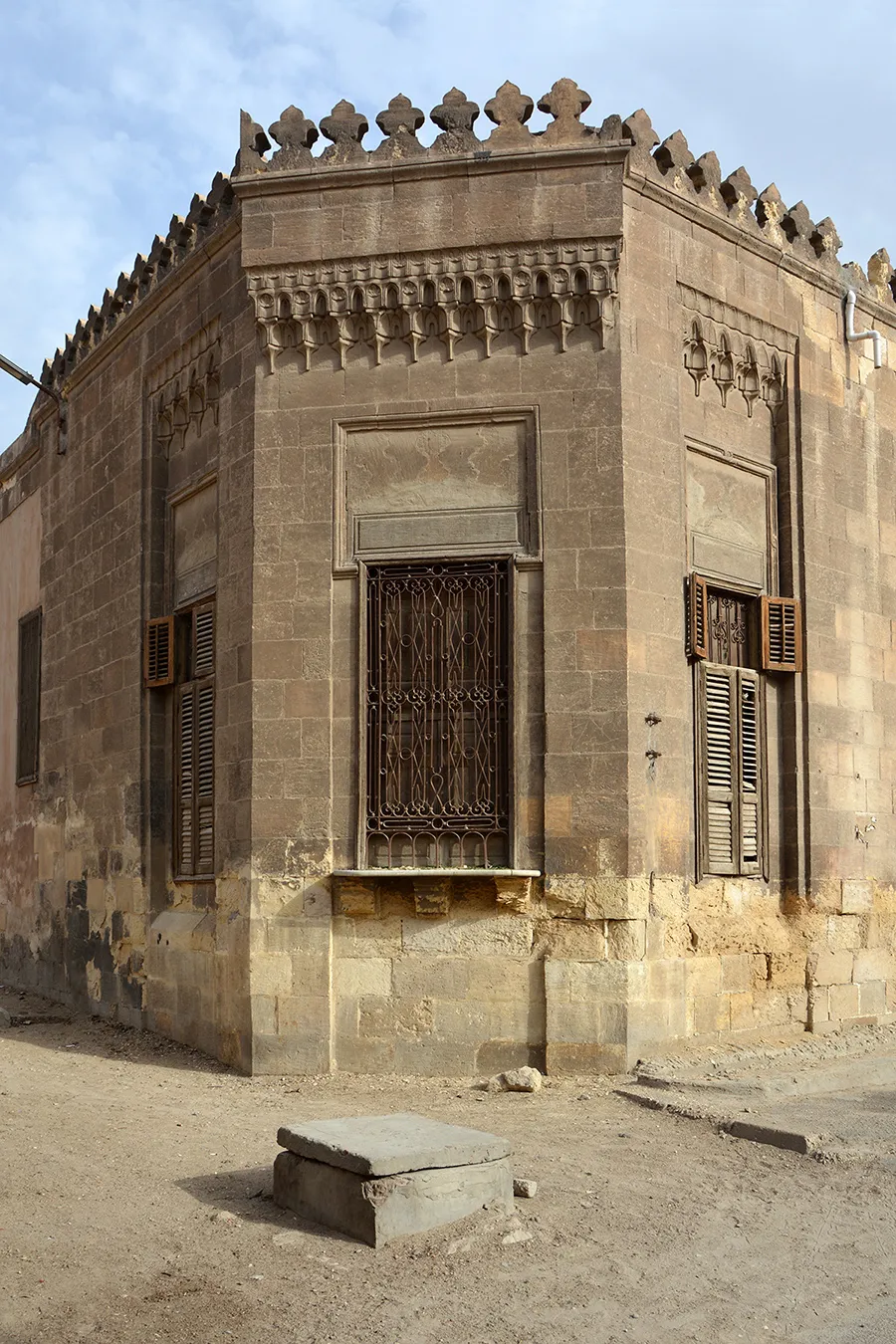
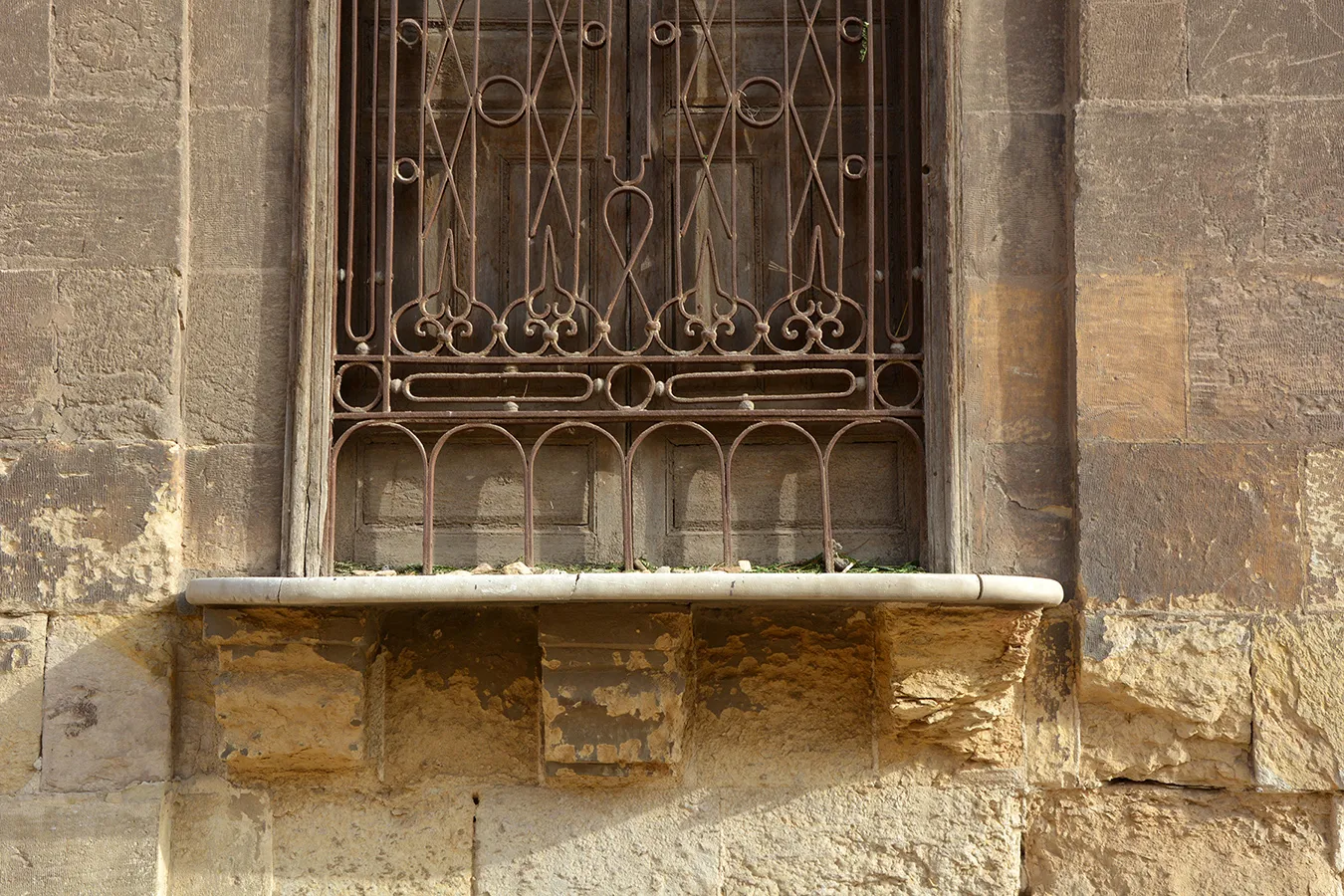
wider recess with a pair of narrow windows, while at the northern end is a sabil placed in a chamfered corner, with a central window fitted with a marble ledge and two side windows.
The two gateways are on the main axis opposite each other and lead to the central courtyard. There are two residential flats on either side of the main entrance on the western side, two rooms on either side of the secondary entrance, and two burial chambers extending at the southern and the northern sides, all overlooking an enclosed courtyard with a garden layout.
The burial chamber on the southern side contains two limestone cenotaphs and three decorative marble cenotaphs. The other chamber is on the northern side and contains five decorative marble cenotaphs, one simple marble cenotaph, and one wooden cenotaph.
Condition of preservation
The enclosure is in a good condition but lower parts of the walls are seriously damaged by moisture. The roof has recently been repaired and new drainage pipes installed. The relieving arches over doors and windows in the stone sections of the façade have recently been crudely filled in with mortar, which suggests that decorative ceramic tiles were recently stolen from them.
Information abut the founder, family history, etc.
A small, apparently modern inscription plaque by the main entrance door gives the name of Mahmud Fahmi al-Nuqrashi Pasha, the Prime Minister.
Mahmud al-Nuqrashi was an Egyptian politician. After resigning in 1937 from the Wafd party then lead by Mustafa Nahas (whose likely heir he was considered), al-Nuqrashi founded with Ahmad Mahir in January 1938 the S‘adist Party which claimed to be the true heirs to Wafd’s founder S‘ad Zaghlul. Mahmud al-Nuqrashi held various ministerial posts in the 1930s and 40s, served as Prime Minister from February 1945 for one year, and then again from December 1946 until his death. On 8 December 1948 he outlawed the Muslim Brotherhood he was assassinated by its member Twenty days later. (Wucher King, p.491-2; Vatikiotis, p.364-7).
The date AH 1305 on a cenotaph inside corresponds to AD 1888. This seems too early for the front façade designed in historically accurate neo-Mamluk style, but does not seem improbable for the back and side facades and the back gateway. It is not impossible that the front façade is a later remodelling.
The local lore reported by the keeper is that the enclosure founder was called not al-Nuqrashi, but Muhammad Zaki Pasha and he was reportedly a relative to Mustafa Fahmi, the father of Safia Zahgloul.
References in published/primary sources
• Amin, Muhammad Muhammad and Ibrahim, Layla ‘Ali Architectural Terms in Mamluk Documents, American University in Cairo Press 1990, p. 30
• Vatikiotis, P. J., The History of Modern Egypt: From Muhammad Ali to Mubarak, the John Hopkins University Press 1991 (fourth edition), p.364-7
• Wucher King, Joan Historical Dictionary of Egypt, American University in Cairo Press 1984, p. 491-2
• Petersen, Andrew Dictionary of Islamic Architecture, Routledge 1996, p. 234
- Field recording by
- Hadeer Ahmad and Radwa al-Saeed
- Date recorded
- August 18, 2022
- Data entered by
- Hadeer Ahmad
- Date entered
- May 12, 2024