

Unit No34
Ahmad Bey Raghib
|
Coordinates of the main entrance |
30.042032N - 31.269379E |
|
Attribution |
Ahmad Bey Raghib |
|
Higri (AH)Dates as given in the Inscription |
1314 |
|
Miladi (AD)Dates as given in the Inscription |
|
|
Inscription Contemporary with the building? |
Yes |
|
Multiple date(s) In the inscription? |
No |
|
Assumed Date |
|
|
Based on |
|
|
Original Use |
Funerary enclosure |
|
Current Use |
Funerary enclosure and residential |
|
Overall condition |
Good |
Features of unit 34
| Present | Count | Material | Comments (see description for details) | |
|---|---|---|---|---|
| Free standing structure | No | |||
| Walled enclosure | Yes | stone | ||
| Rooms by the perimeter wall | Yes | 6 | stone | |
| Freestanding structure(s) in enclousure | No | |||
| Dome over the tomb chamber | No | |||
| Neo-Mamluk architectural decoration | Yes | |||
| Garden layout | No | |||
| Sabil(s) | Yes | A free-standing wooden structure outside the gate | ||
| Wall fountain(s) | No | |||
| Canopy on columns / pillars | No | |||
| Carved marble cenotaph(s) | Yes | 6 | 6 | |
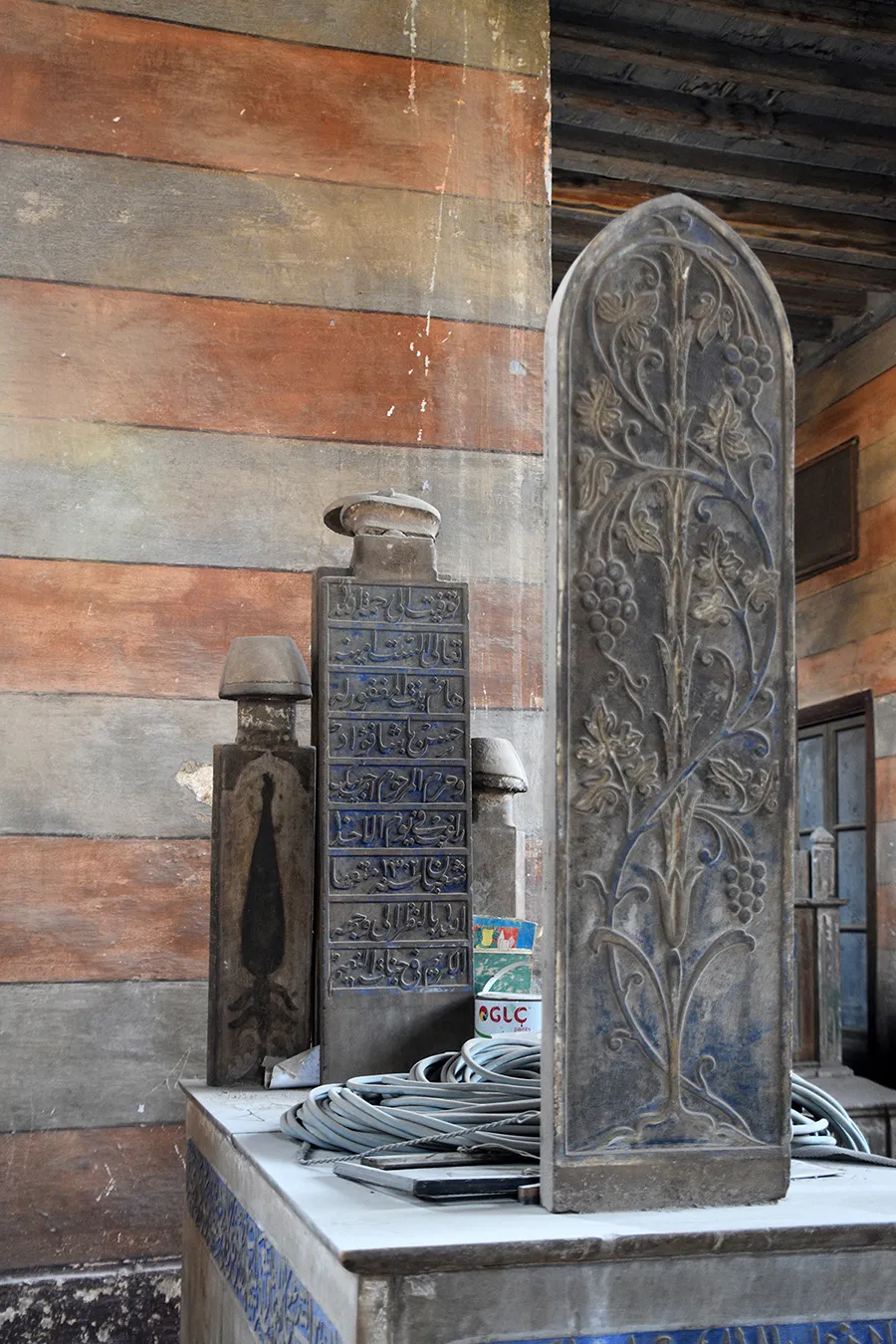
| Decorated limestone tomb-markers | Yes | 1 | limestone | |
| Decorated gateway | Yes | 1 | stone | |
| Decorative door-leaves | No | |||
| Decorative window grilles | No | |||
| Decorative shutters | Yes | 6 | wood | Simple “baghdadli” grating |
| Painted ceiling(s) | No | |||
| Decorative paving(s) | No |
Unusual or unique features
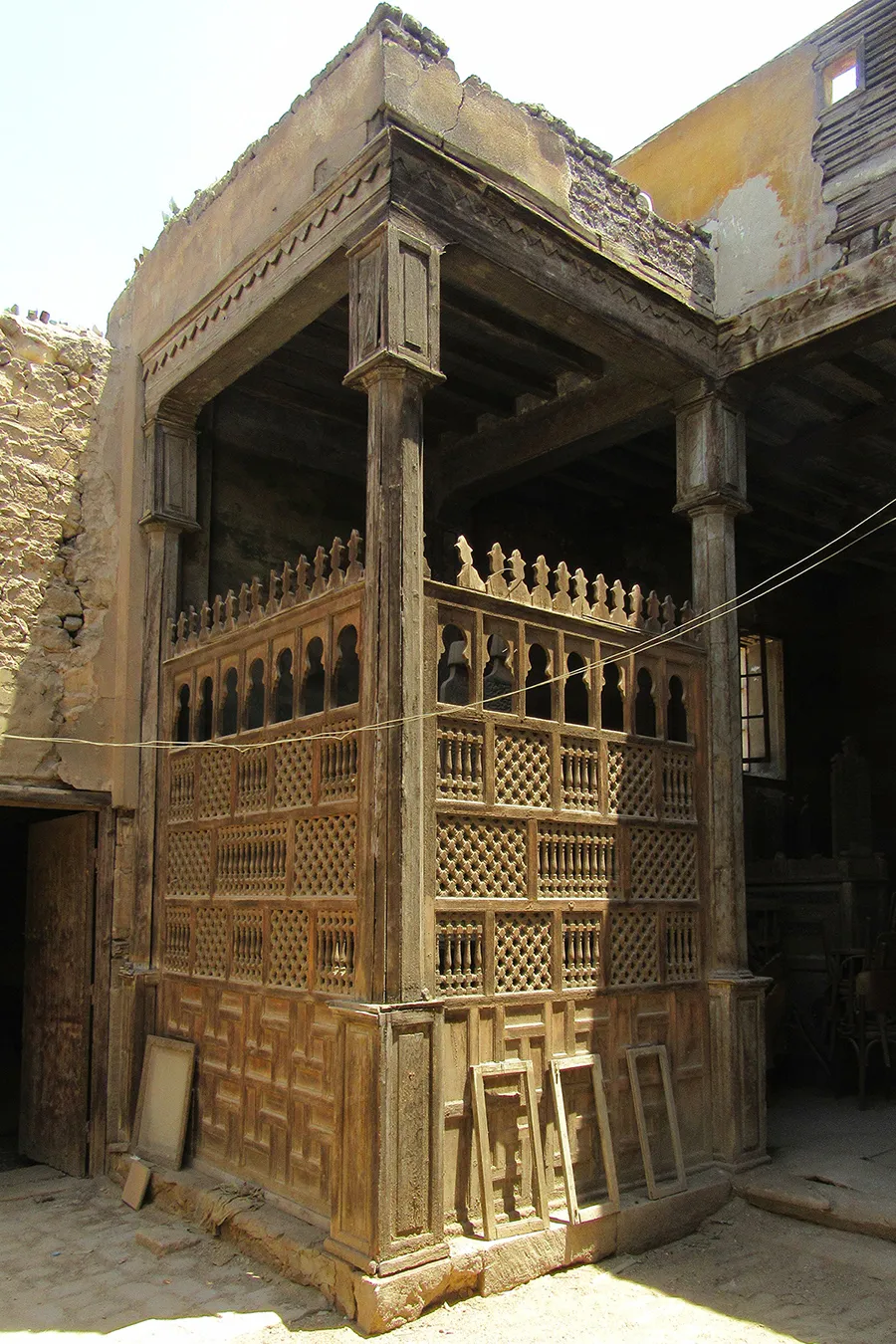
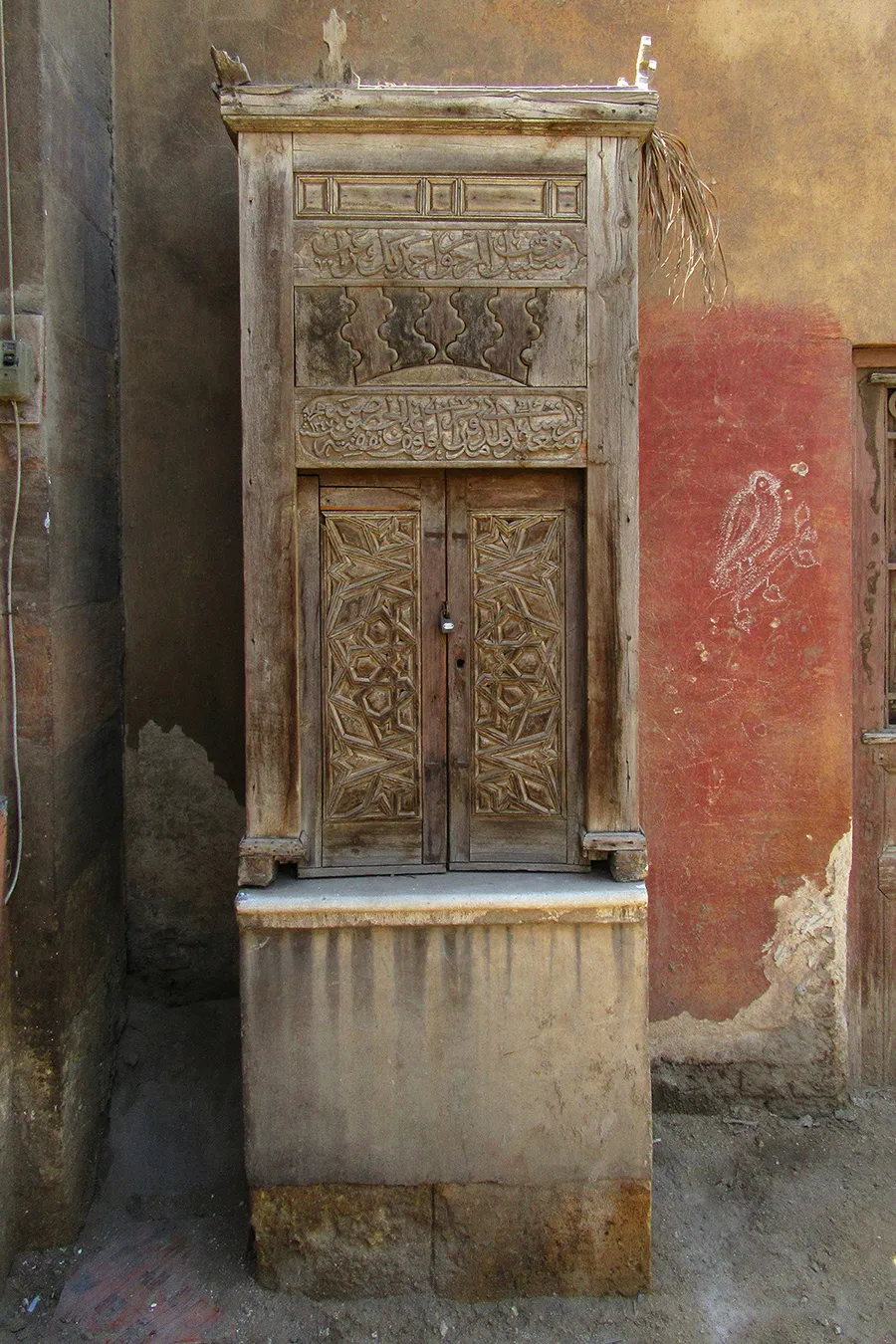
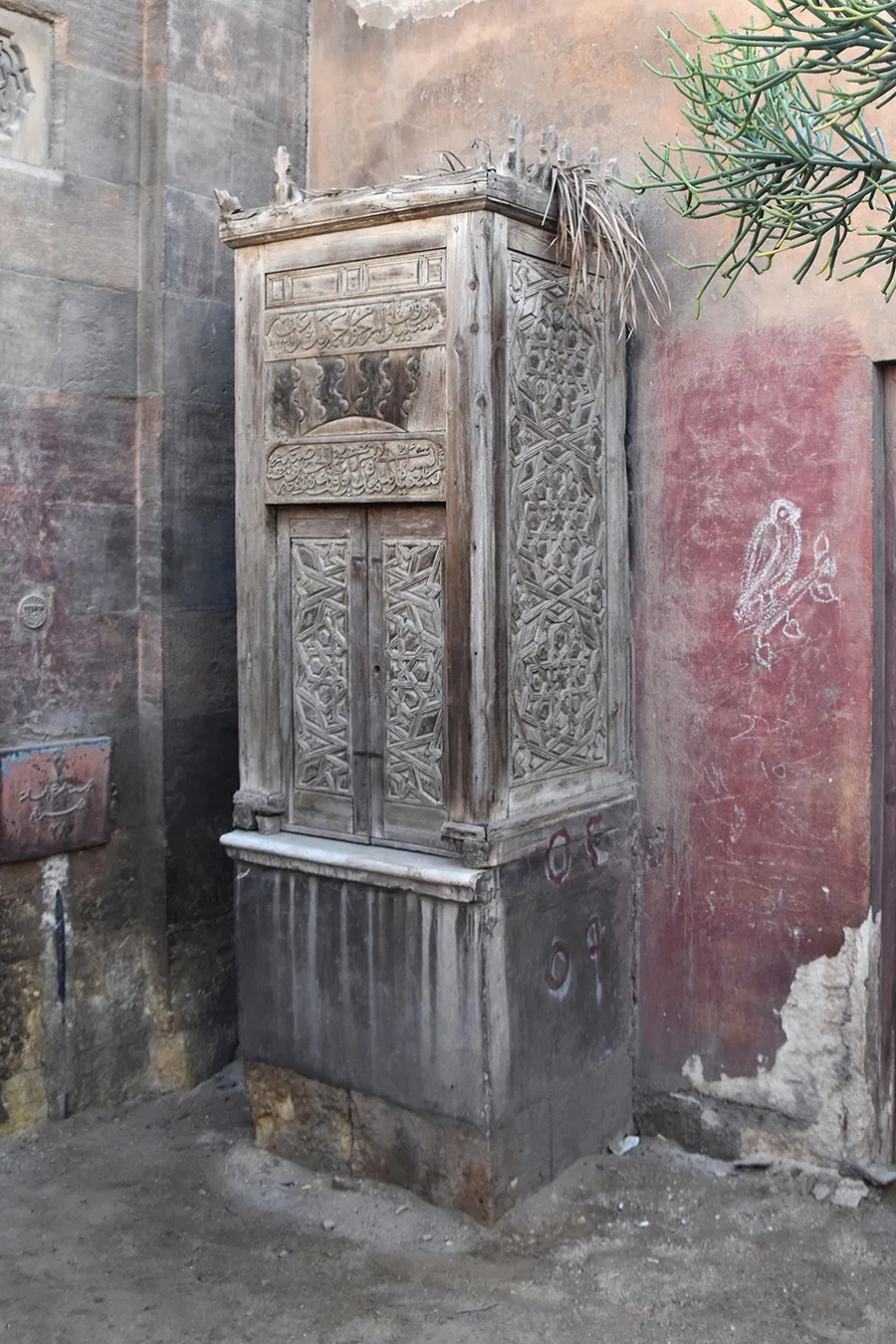
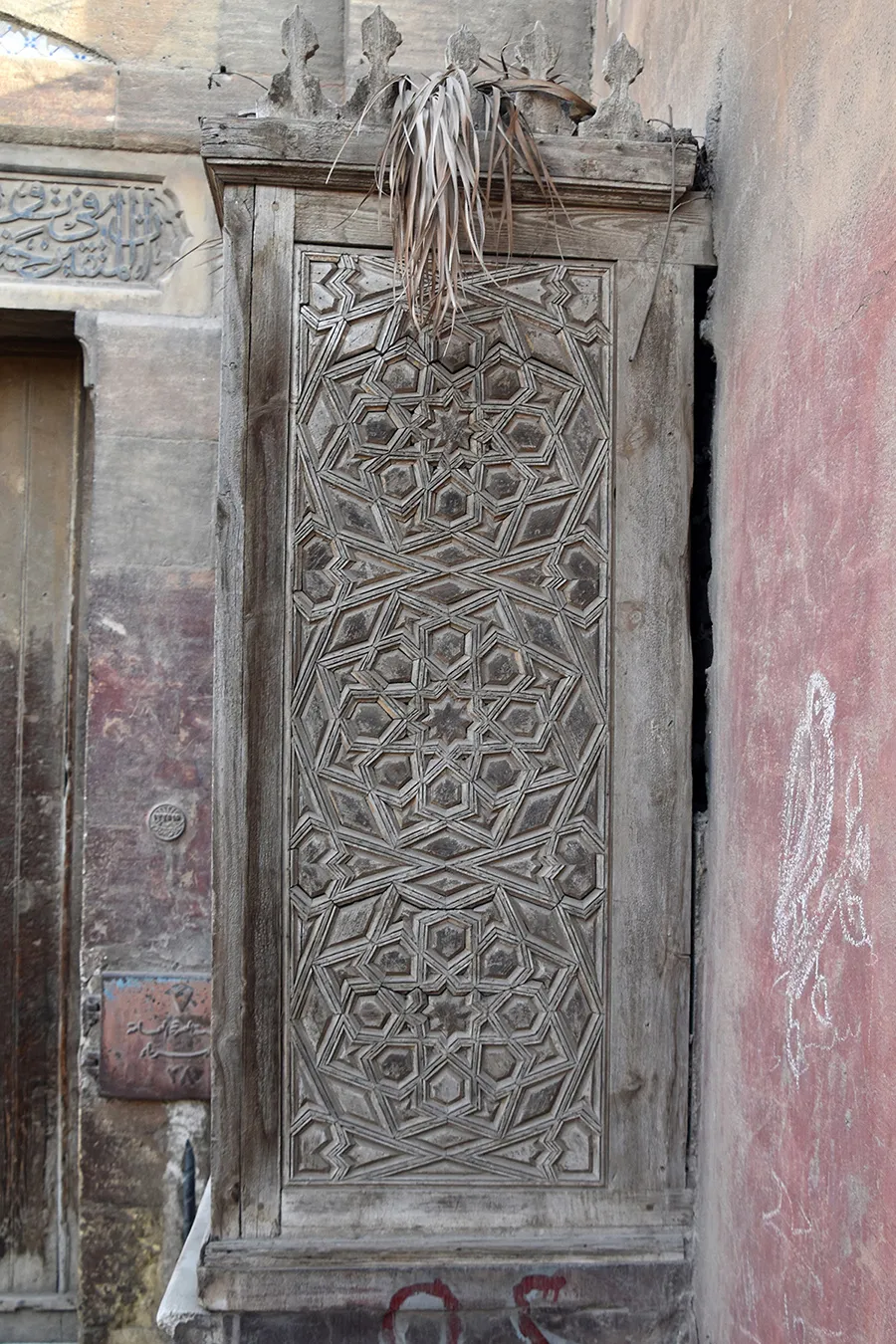
• A free-standing wooden sabil resting on a marble base outside the entrance gate
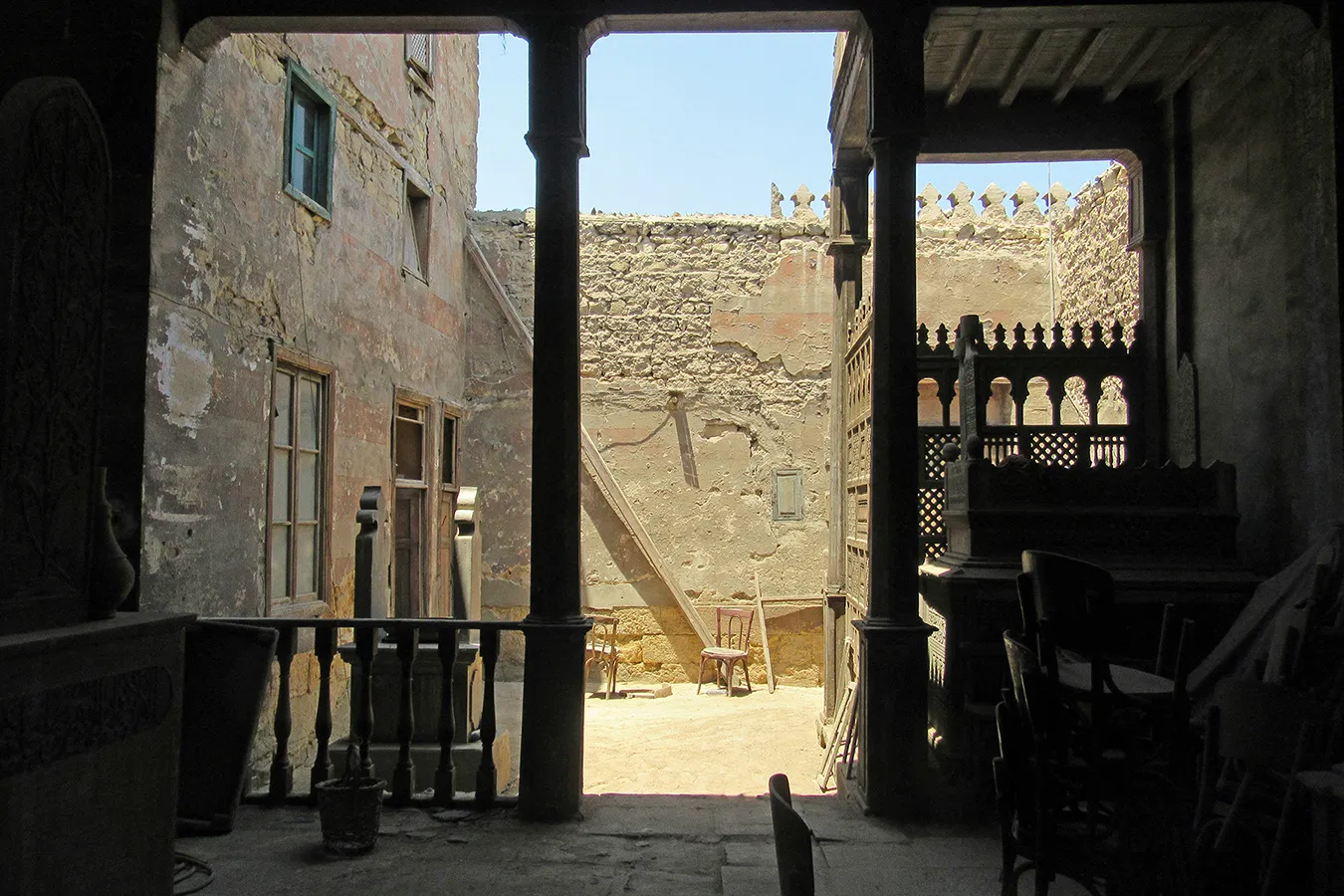
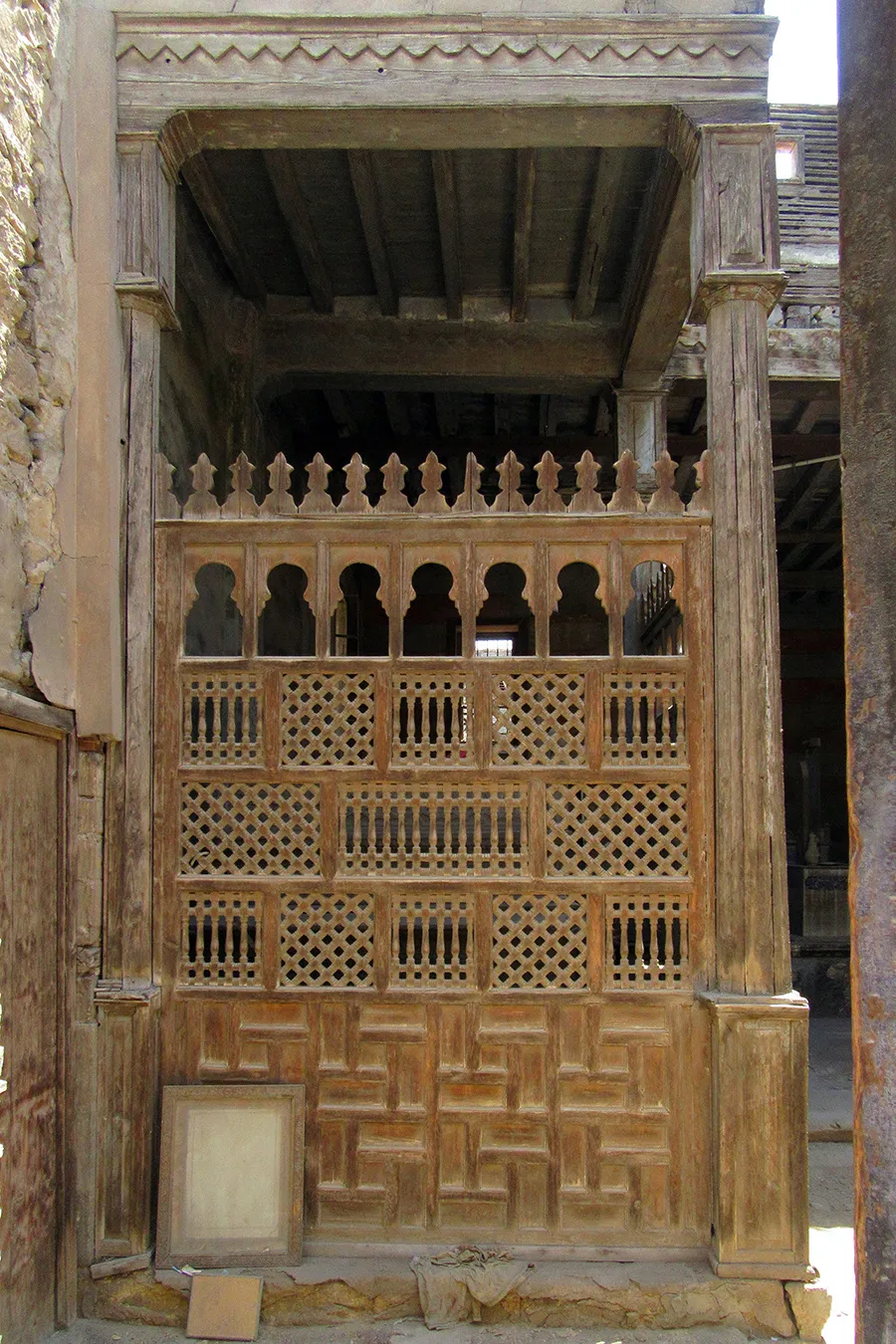
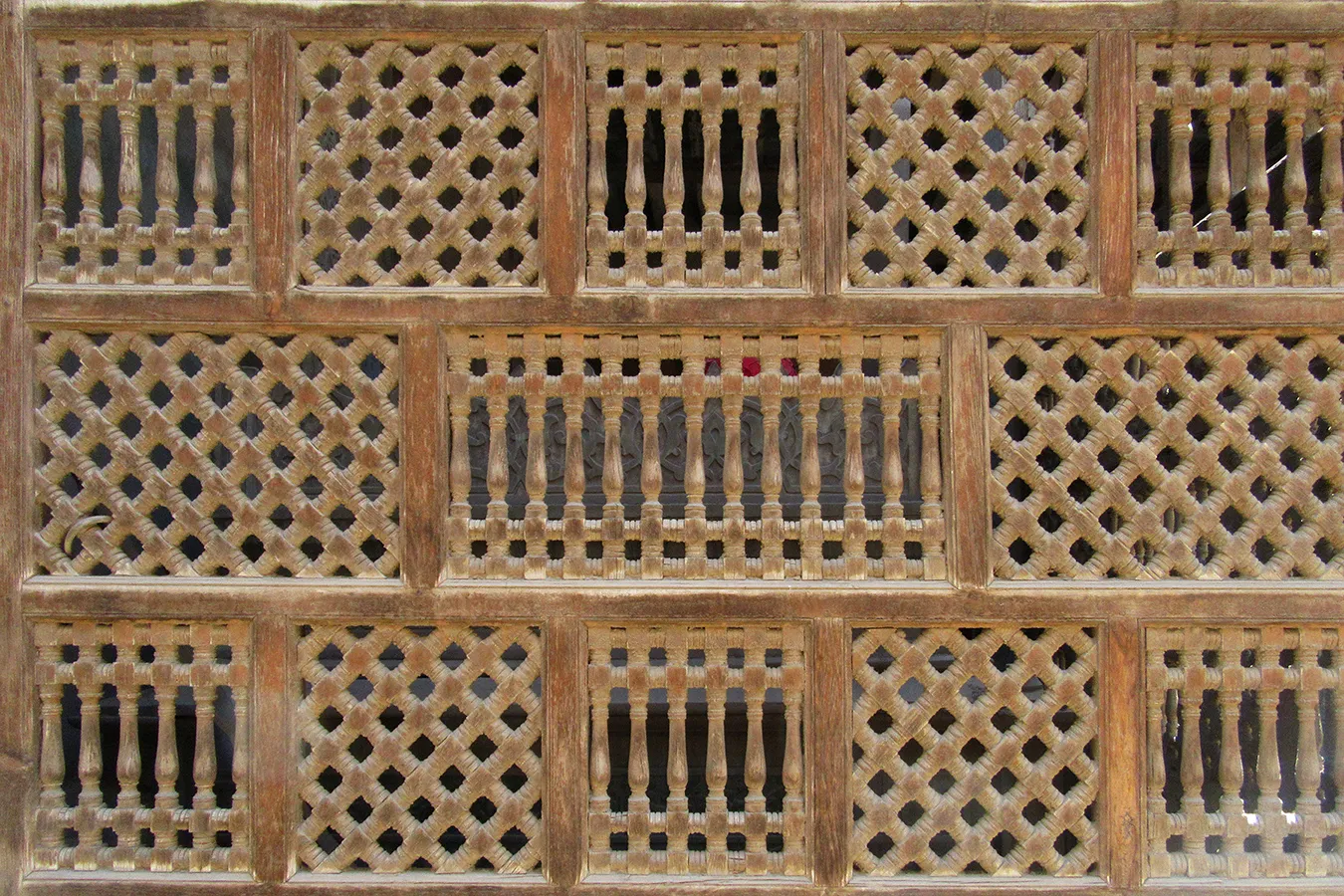
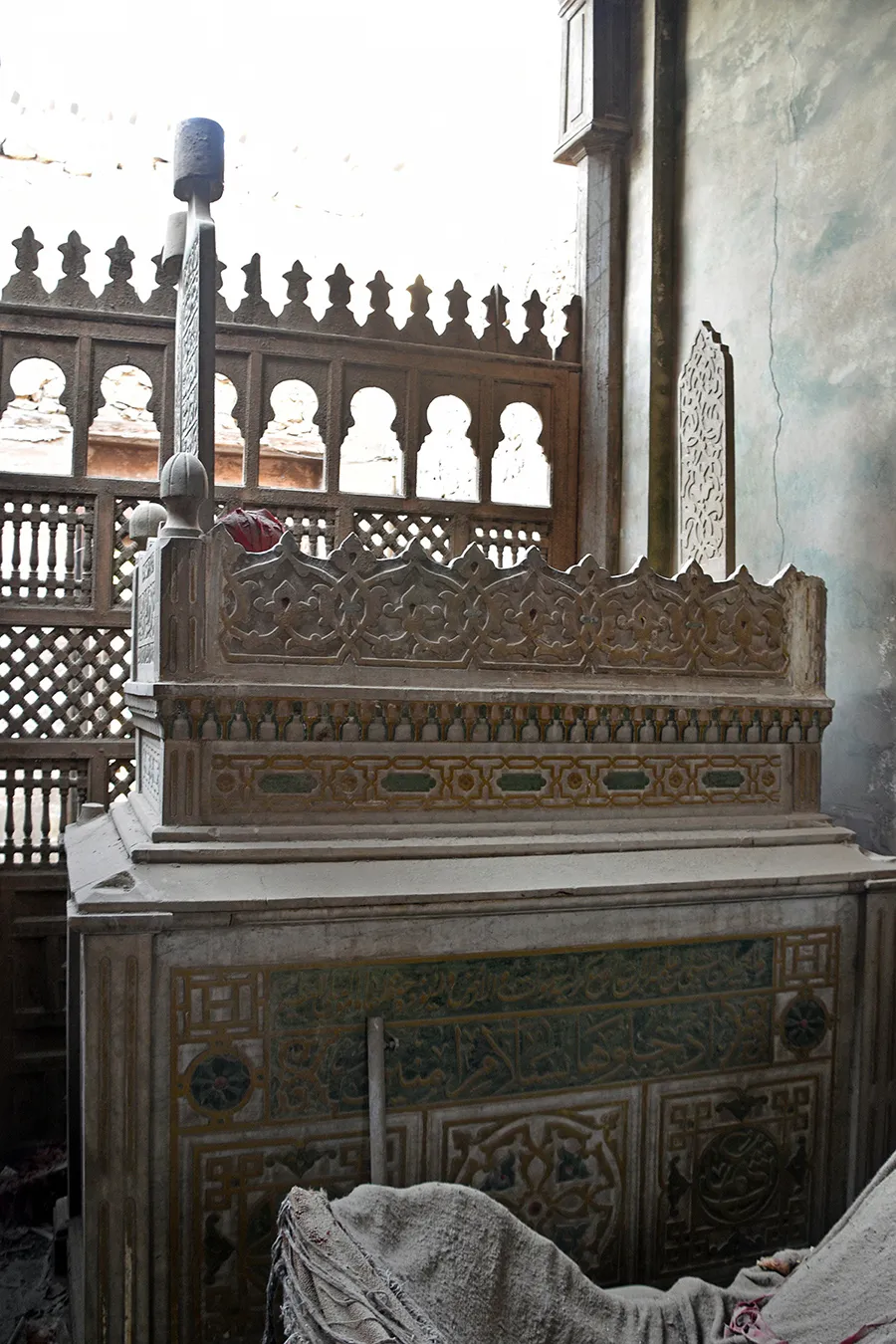
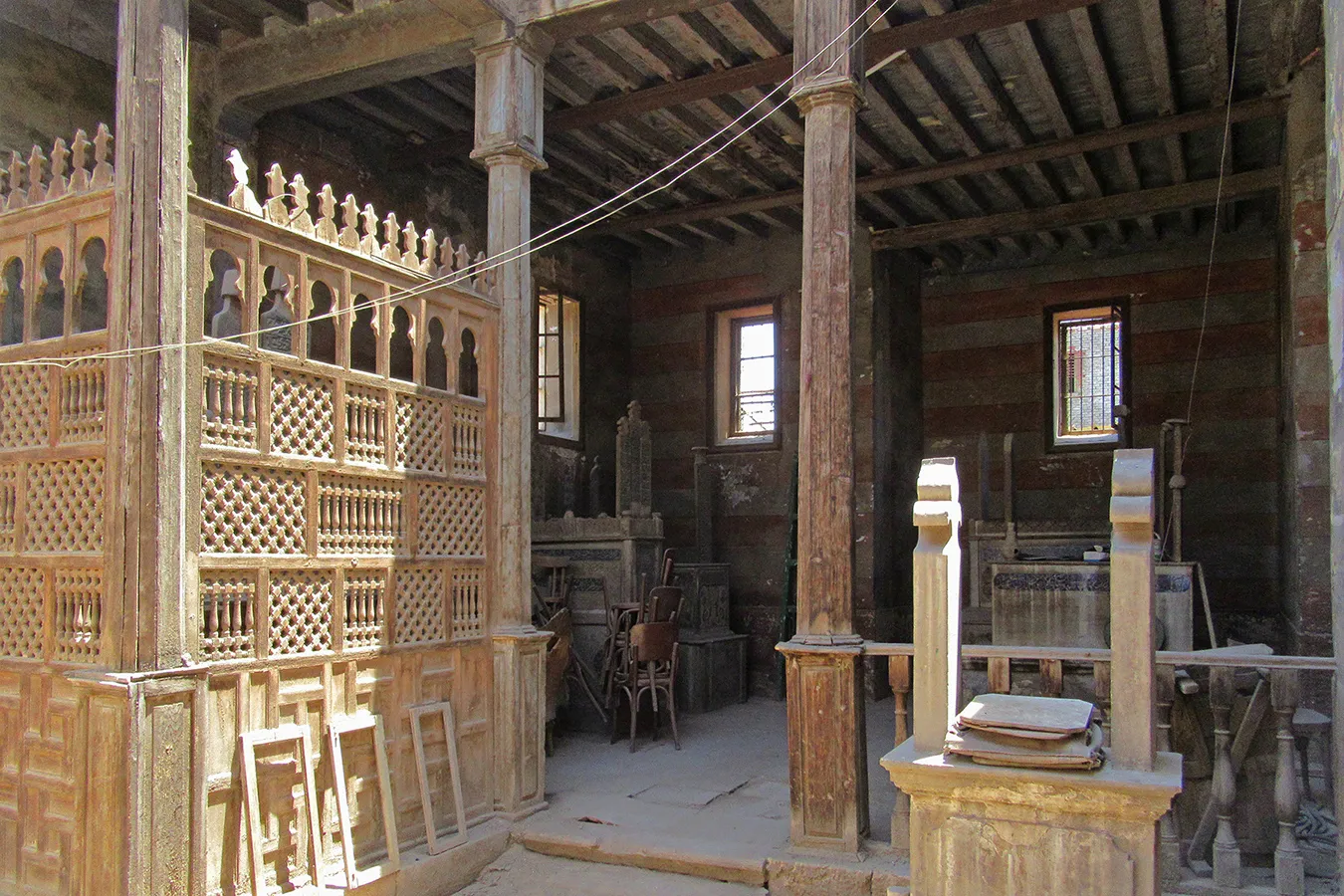
• A canopy of mashrabiya screens over a cenotaph in the courtyard
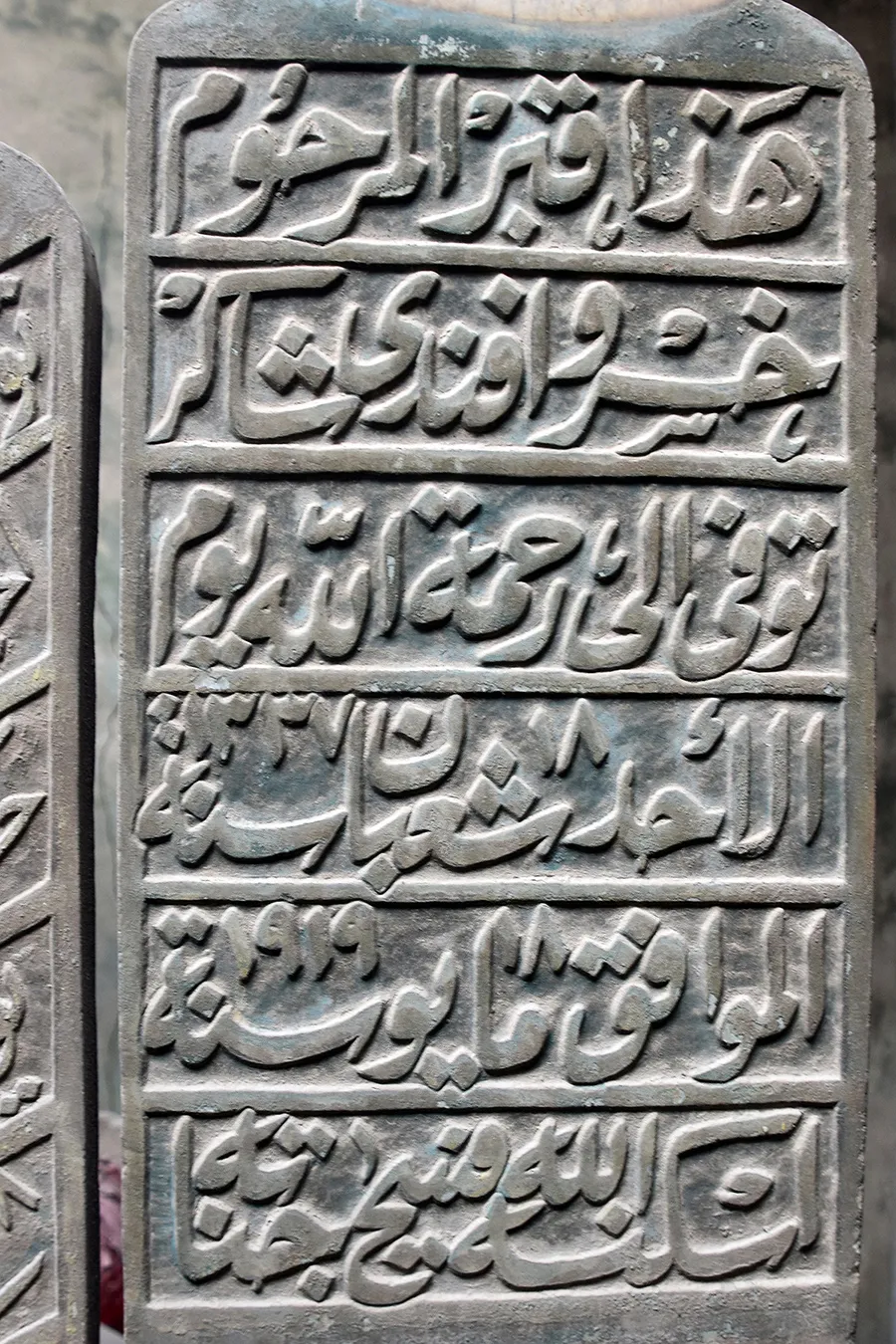
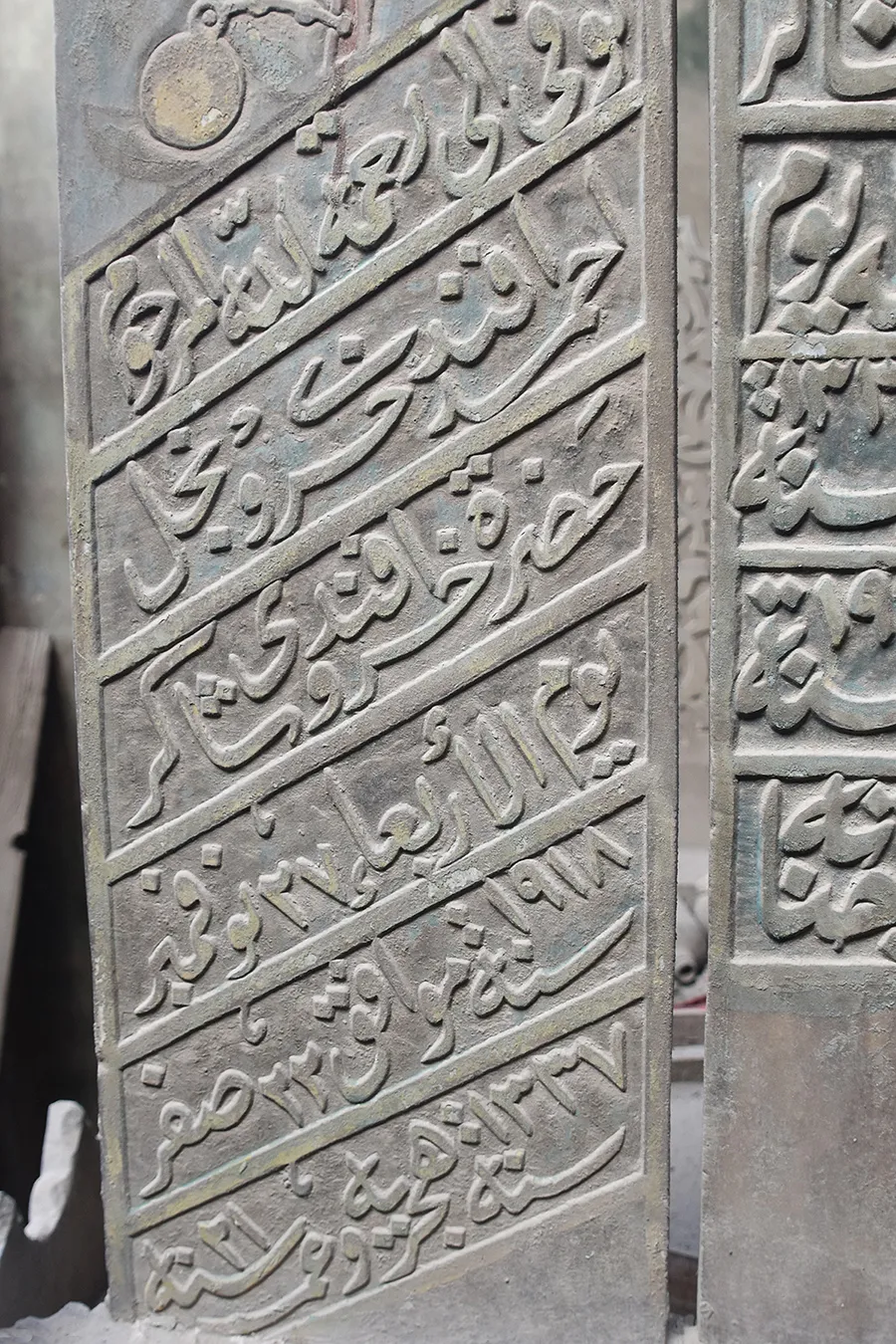
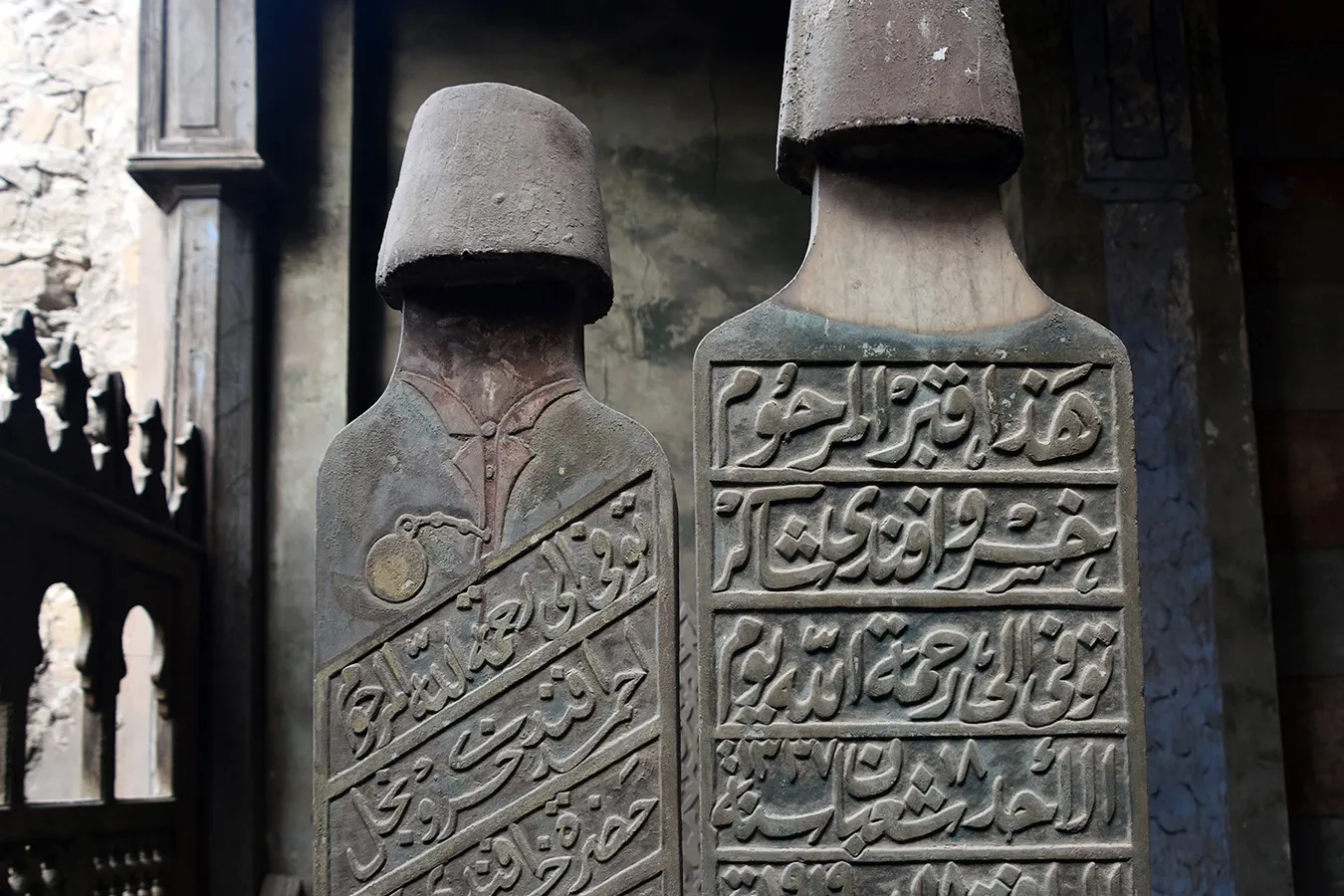
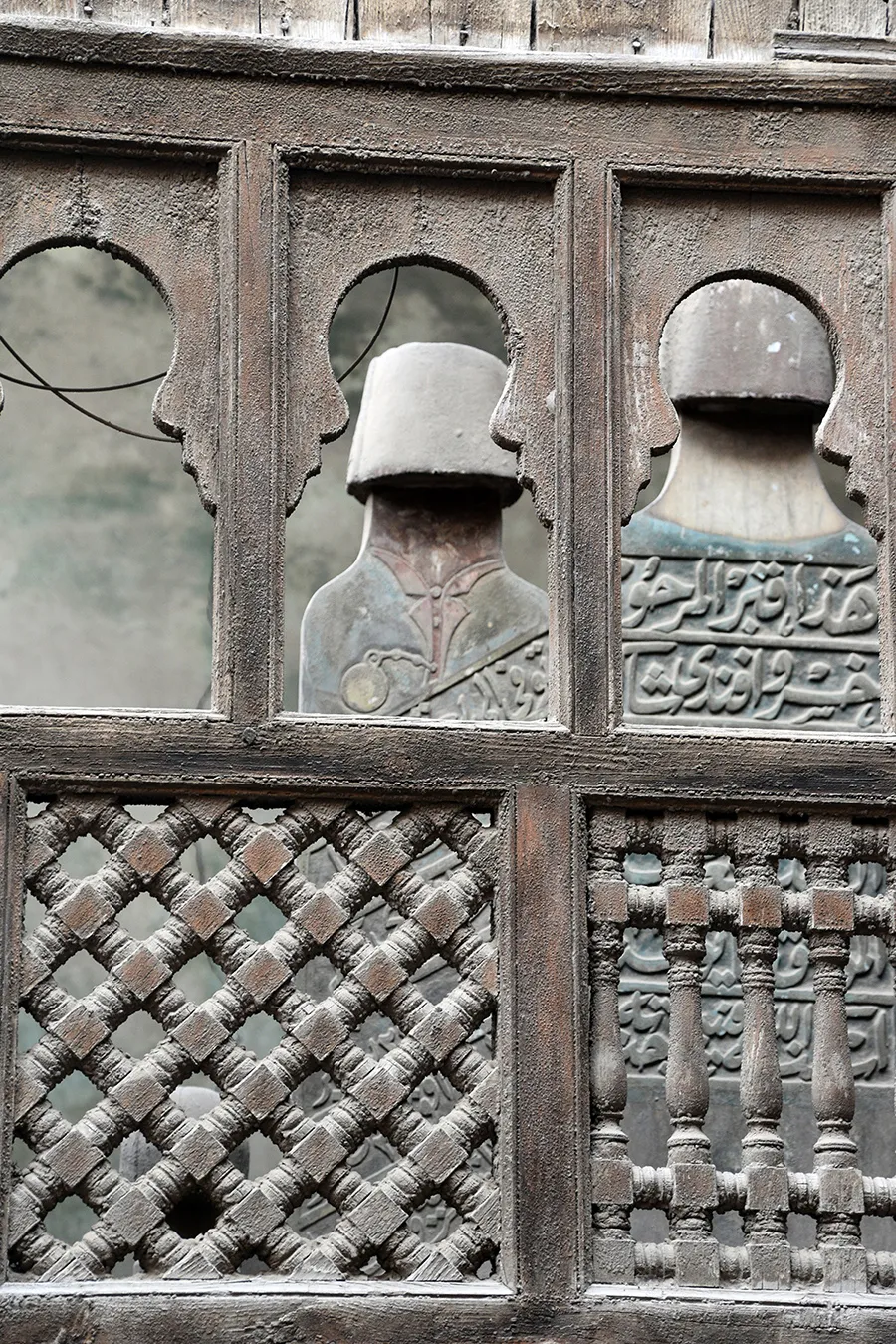
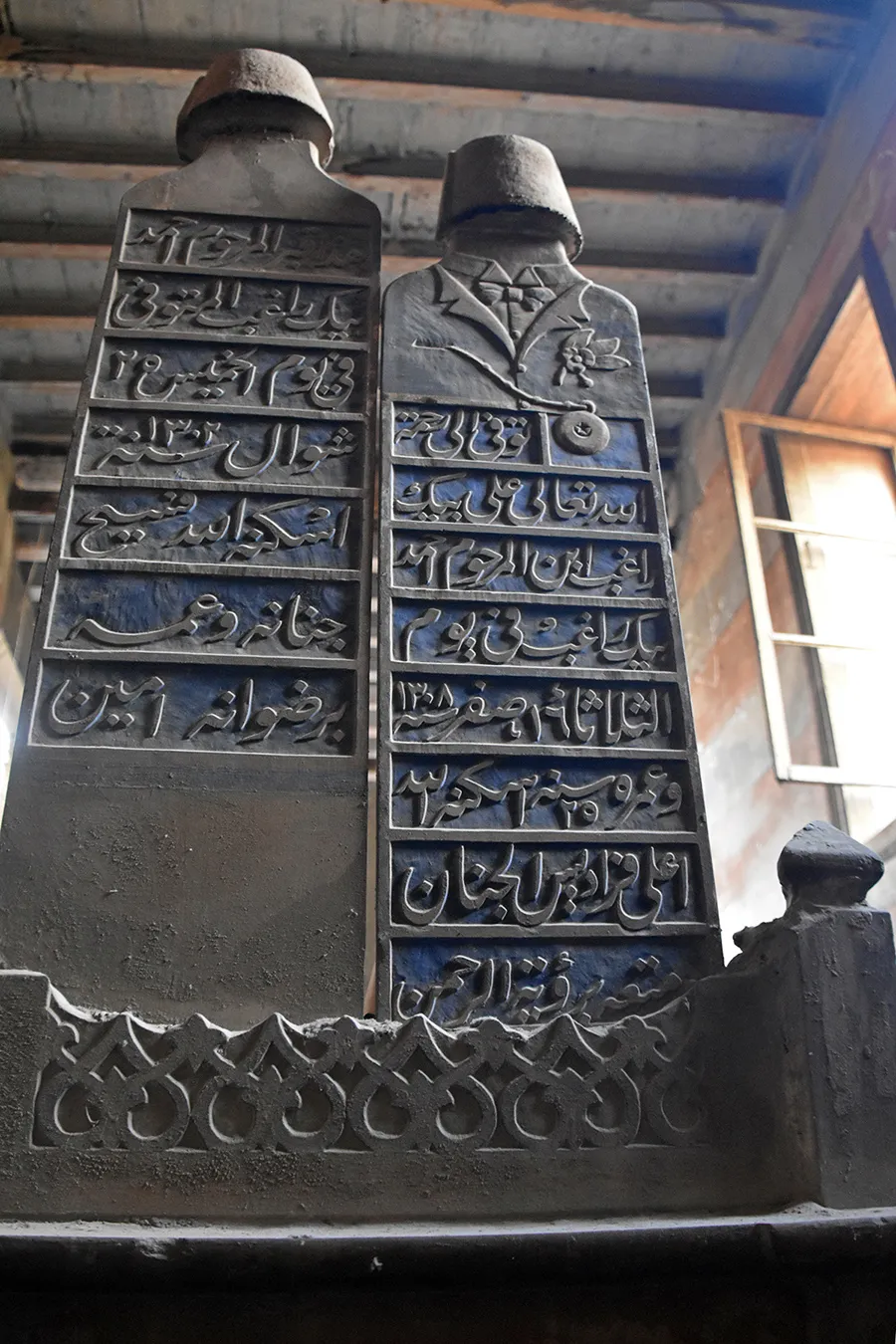
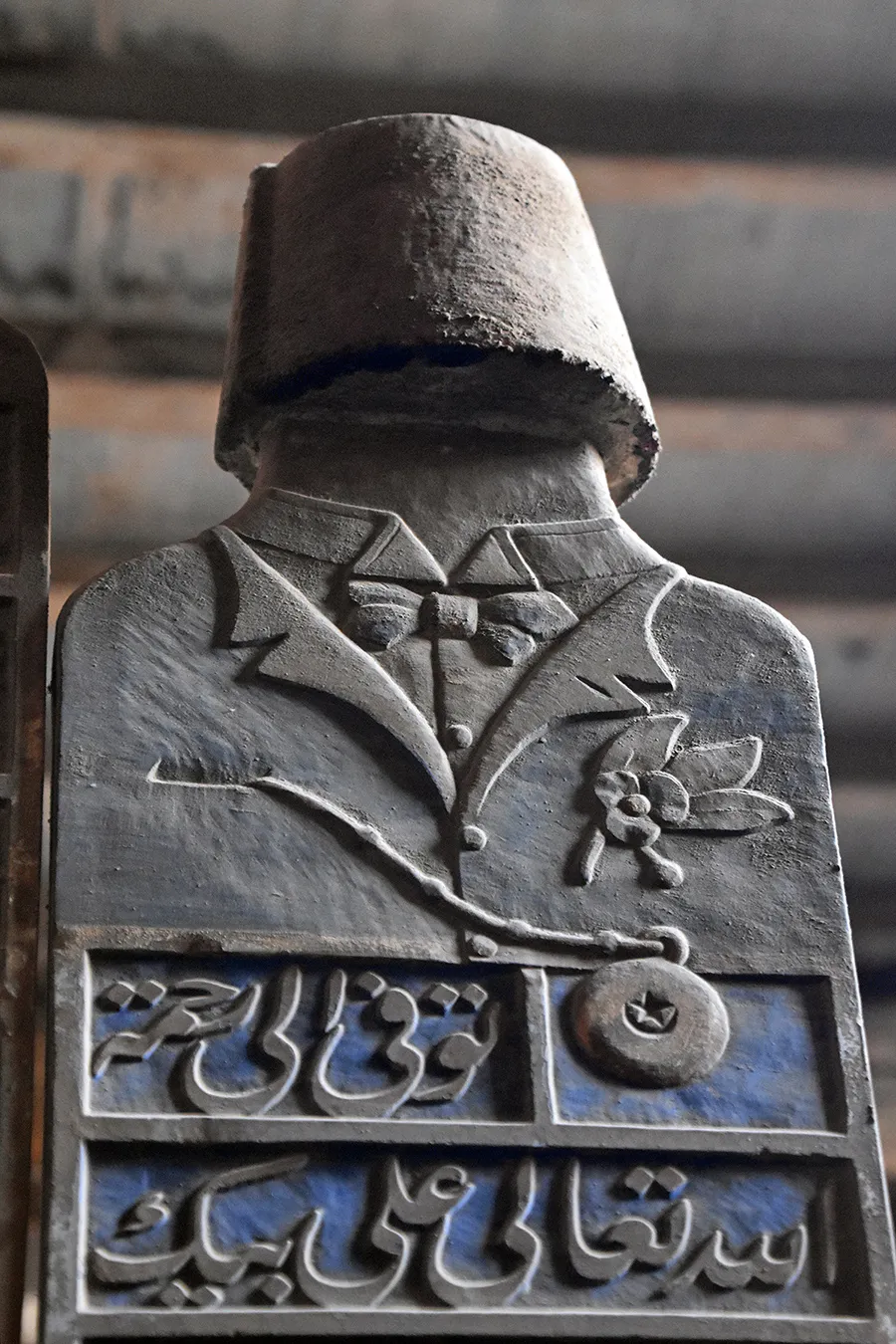
• Highly unusual decoration of shahid stelae with naturalistic depictions of clothing
Description (The direction towards Mecca (Qibla) is described as eastern and other directions are named accordingly)
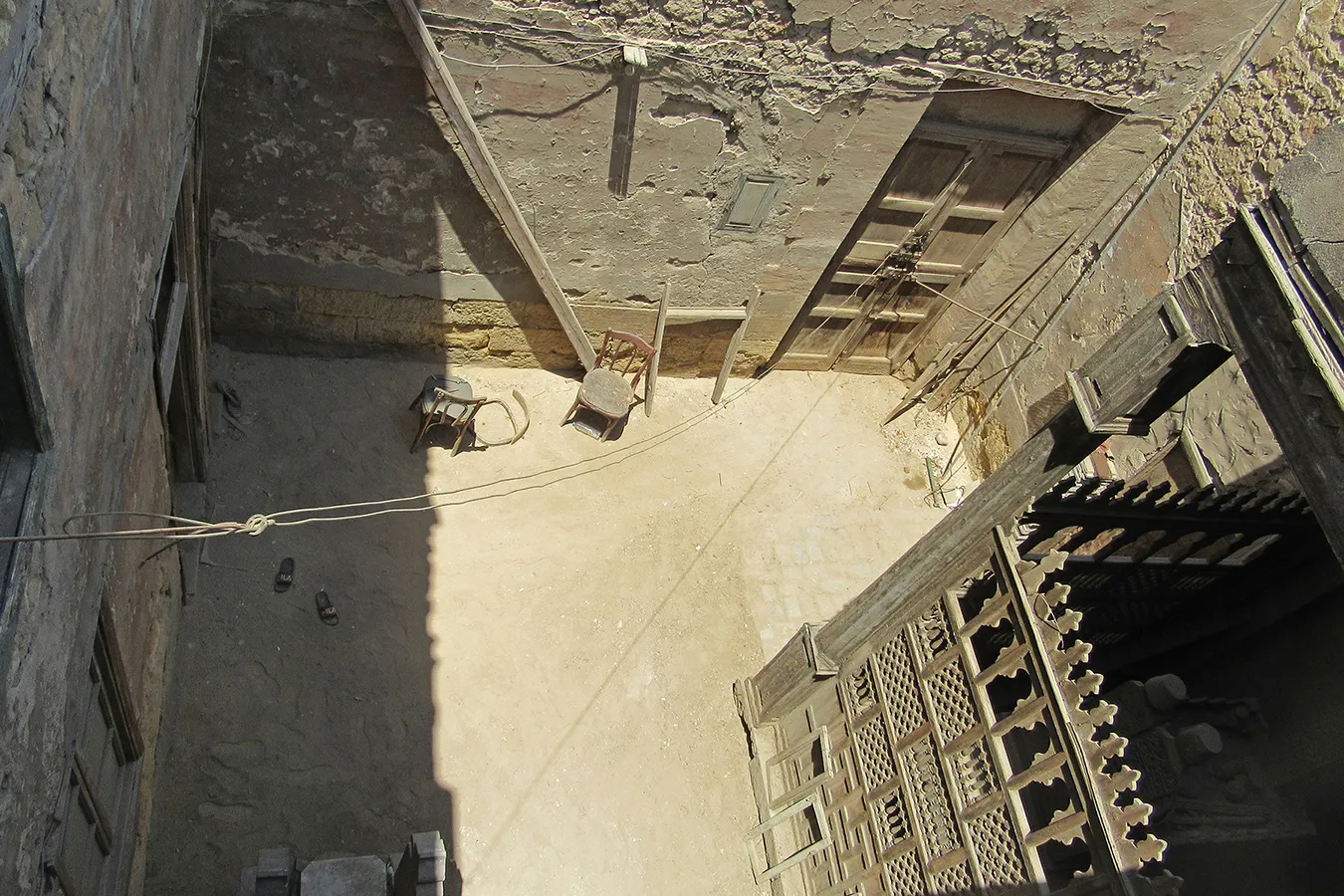
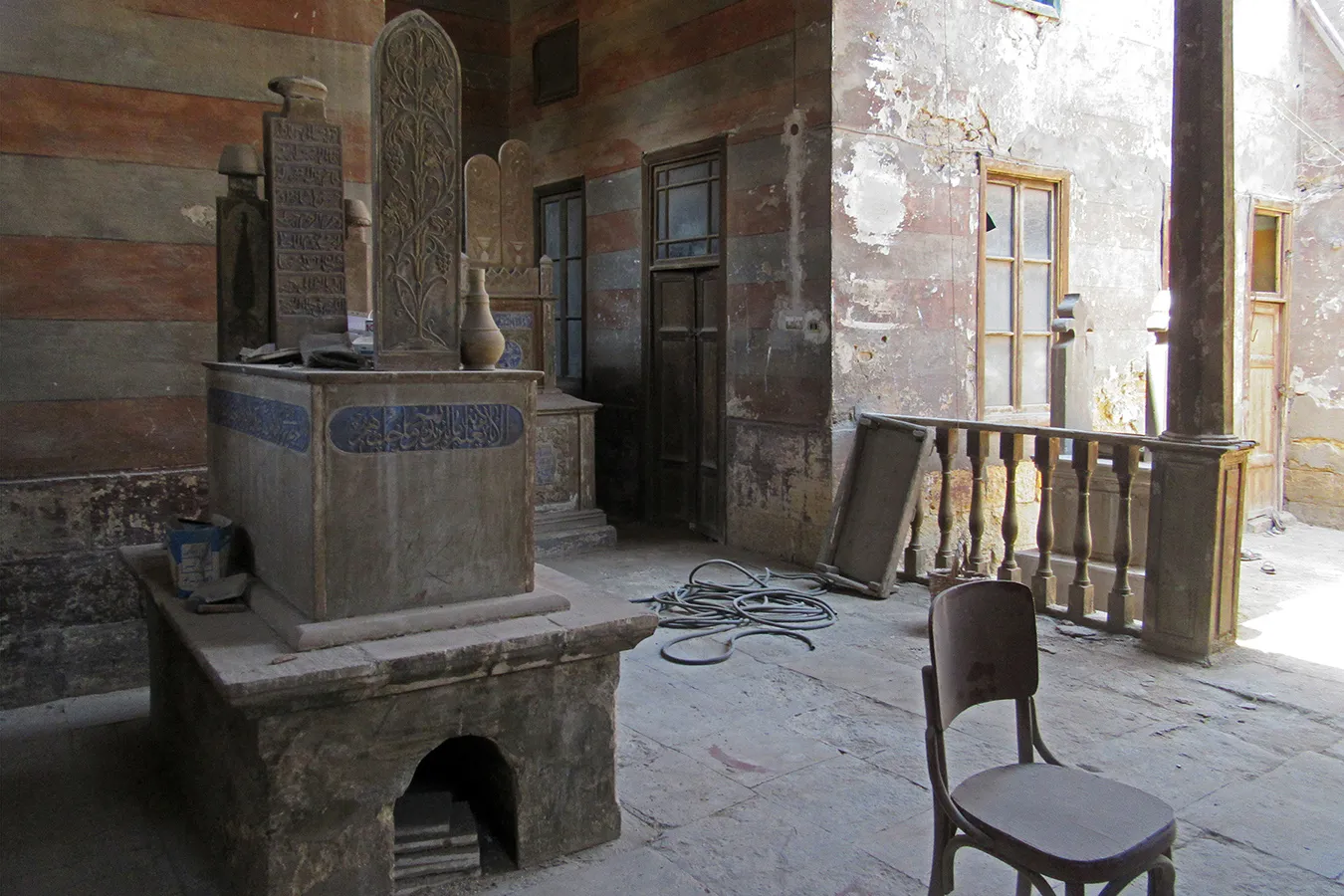
A roughly square enclosure measuring ca. 11.5 x 13 m, with the entrance gate in the northern end of the eastern wall and with a two-storey building occupying the southern side of the enclosure. Of the remaining northern part of the enclosure, the western half is a courtyard, surrounded by a tall wall, to which the entrance gate leads. The northern part is a roofed, open-fronted burial area raised by one step, with the roof supported on two wooden pillars. Another identical pillar supports the roof of an open canopy with mashrabiya wooden screens on two sides that is an extension of the burial area into the north-eastern corner of the courtyard.
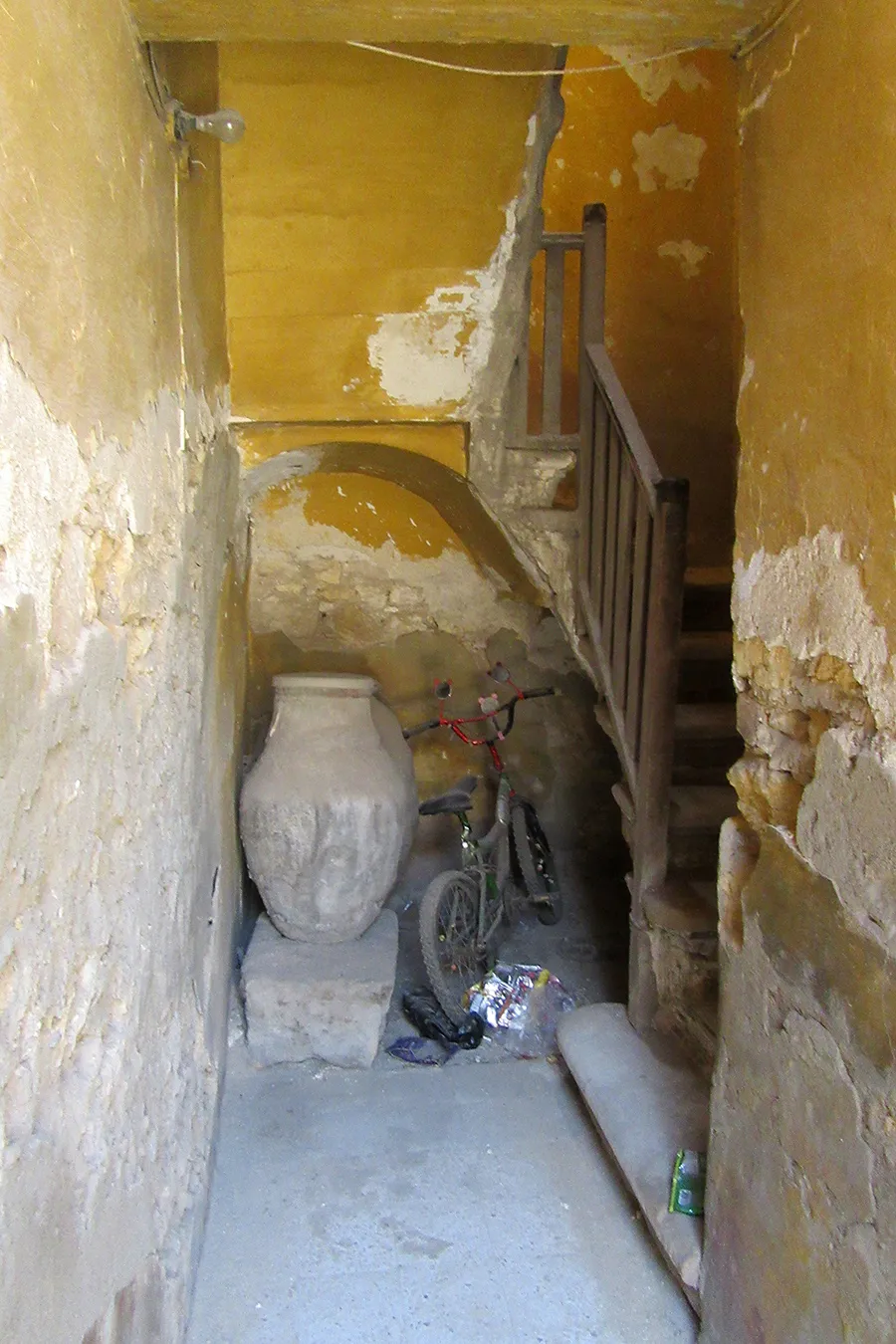
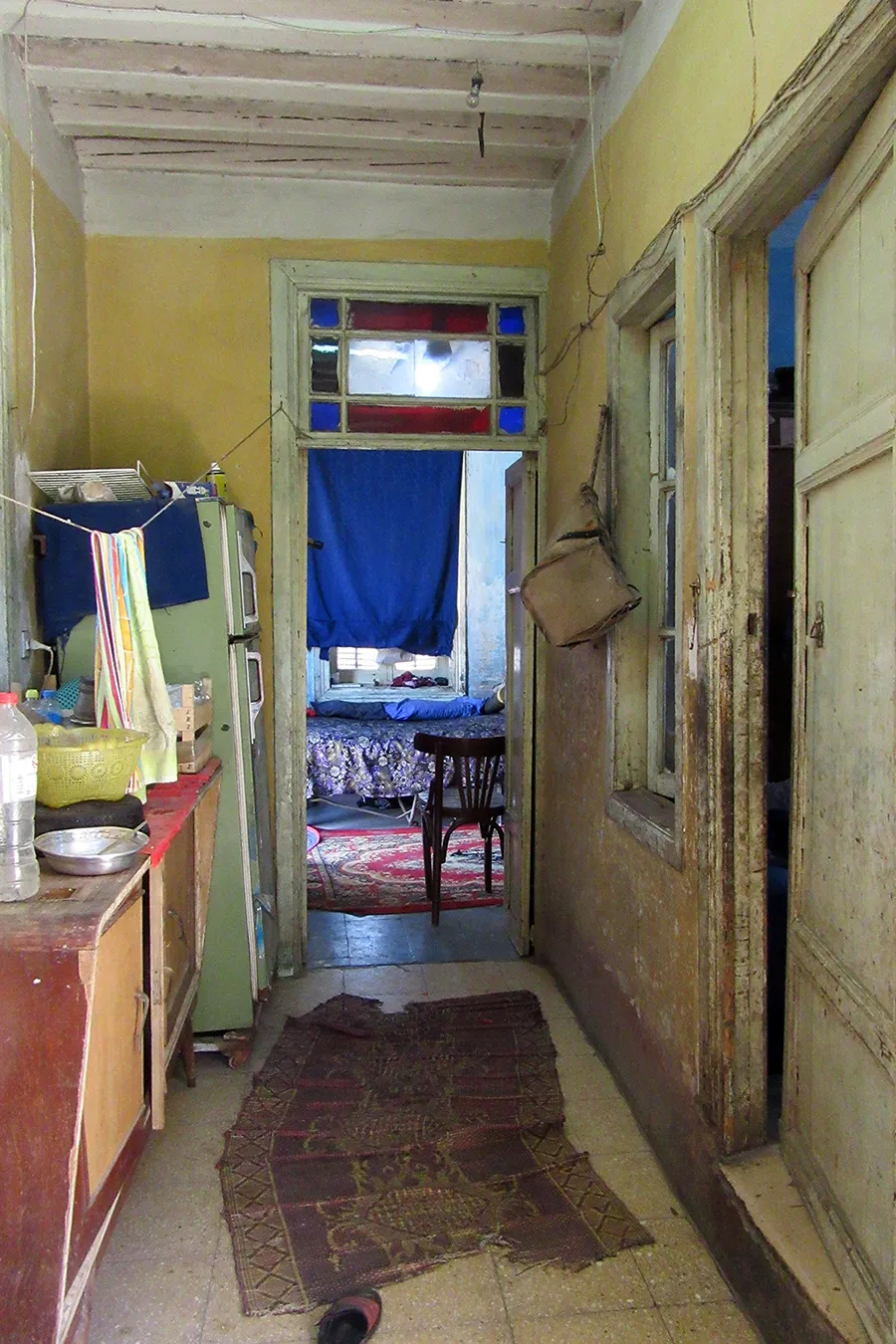
The two-story building to the south of the courtyard is accessed from a doorway in the western part of the façade, leading into a staircase. A mezzanine of two small low-ceiling storage rooms is accessed from the staircase landing. The upper floor is a residential apartment consisting of a kitchen, a toilet and a bedroom with a doorway leading into a spacious roof overlooking the courtyard.
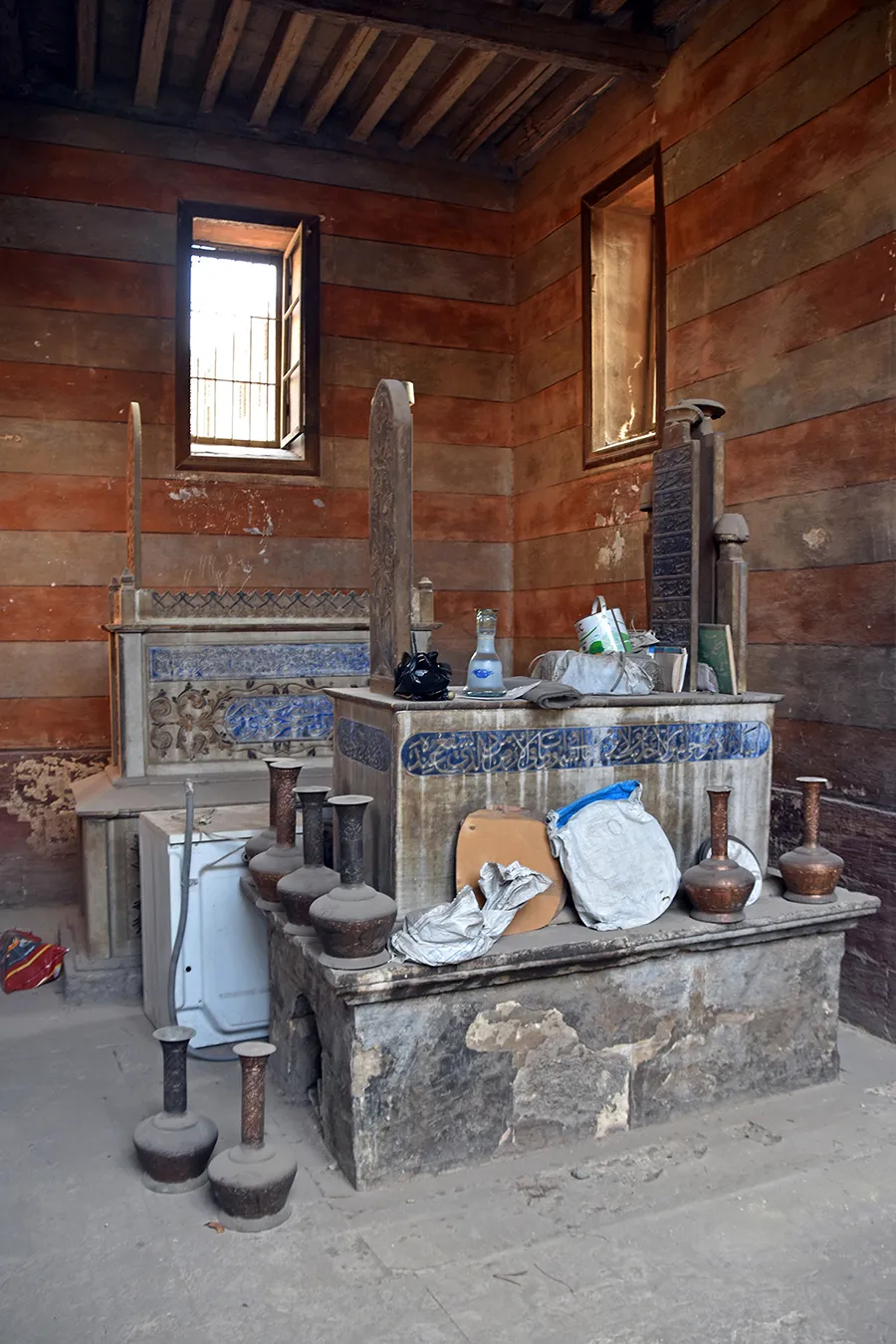
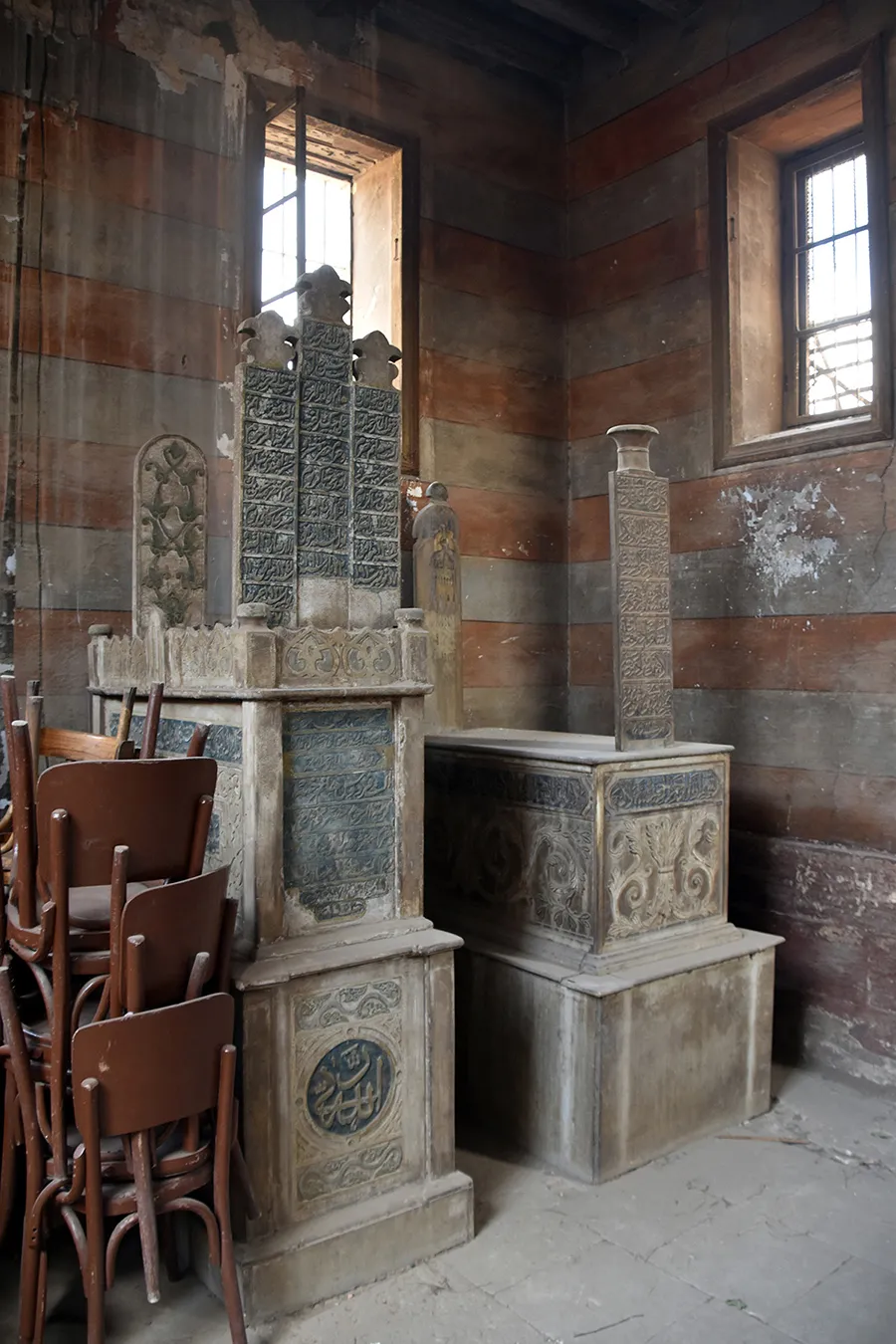
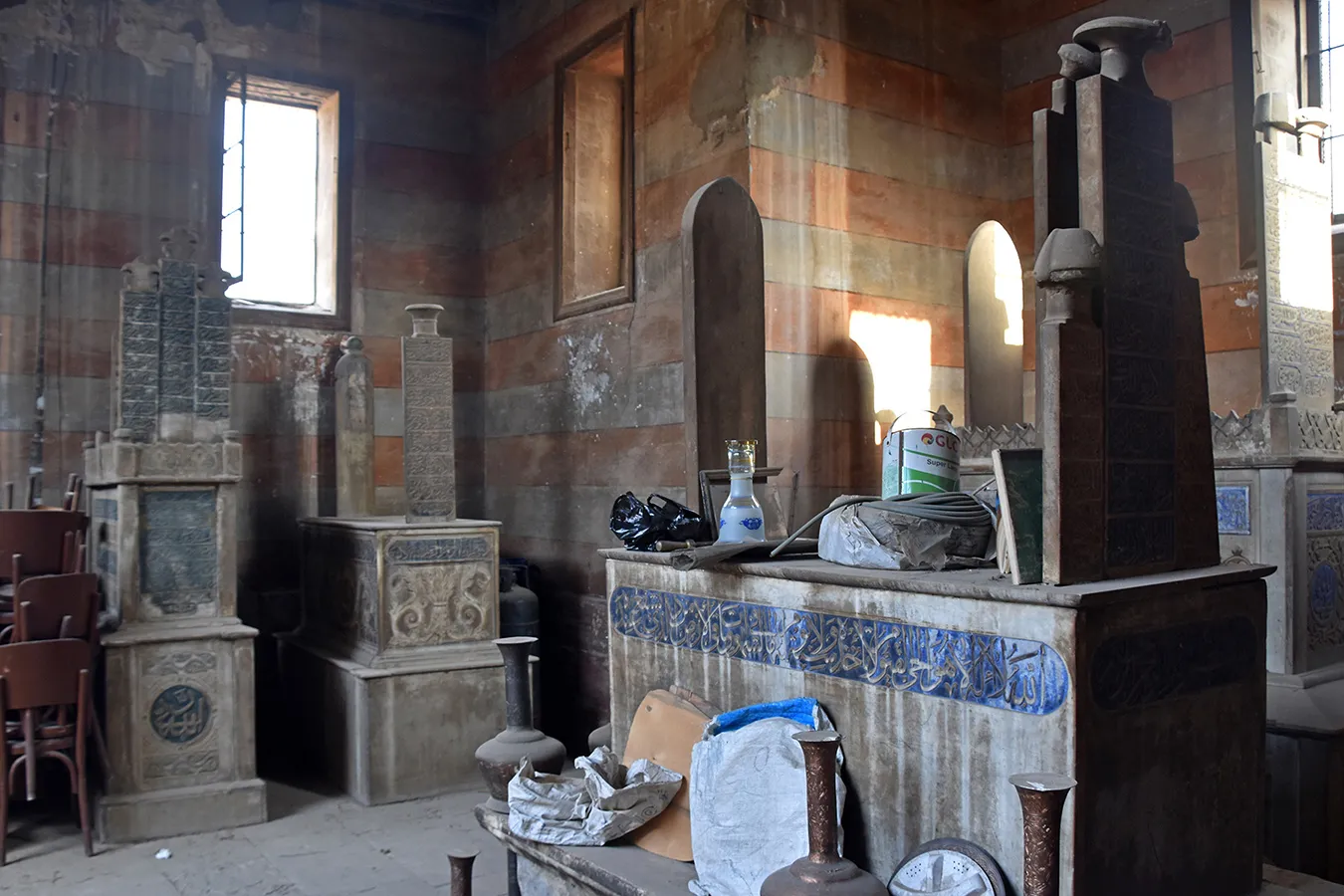
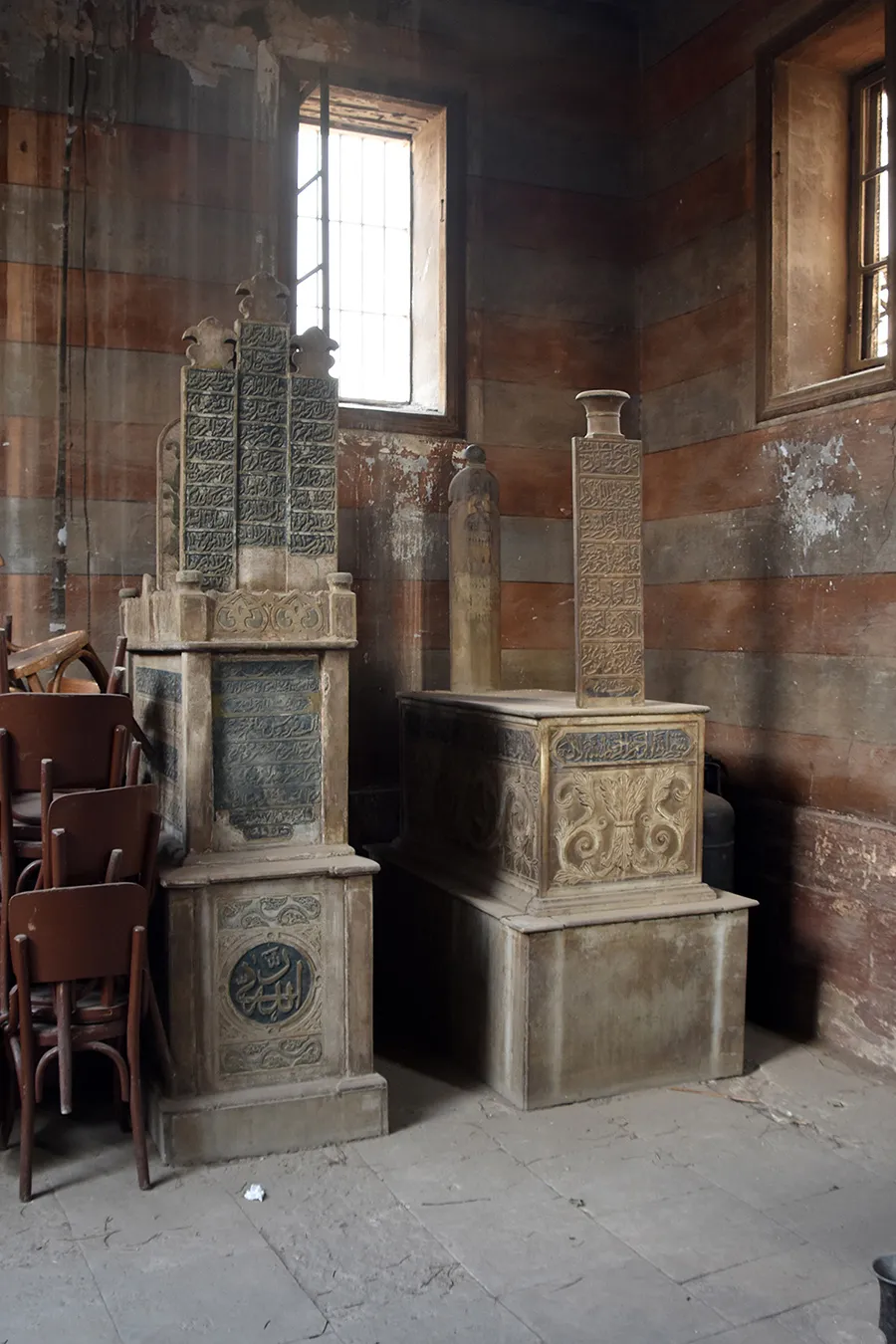
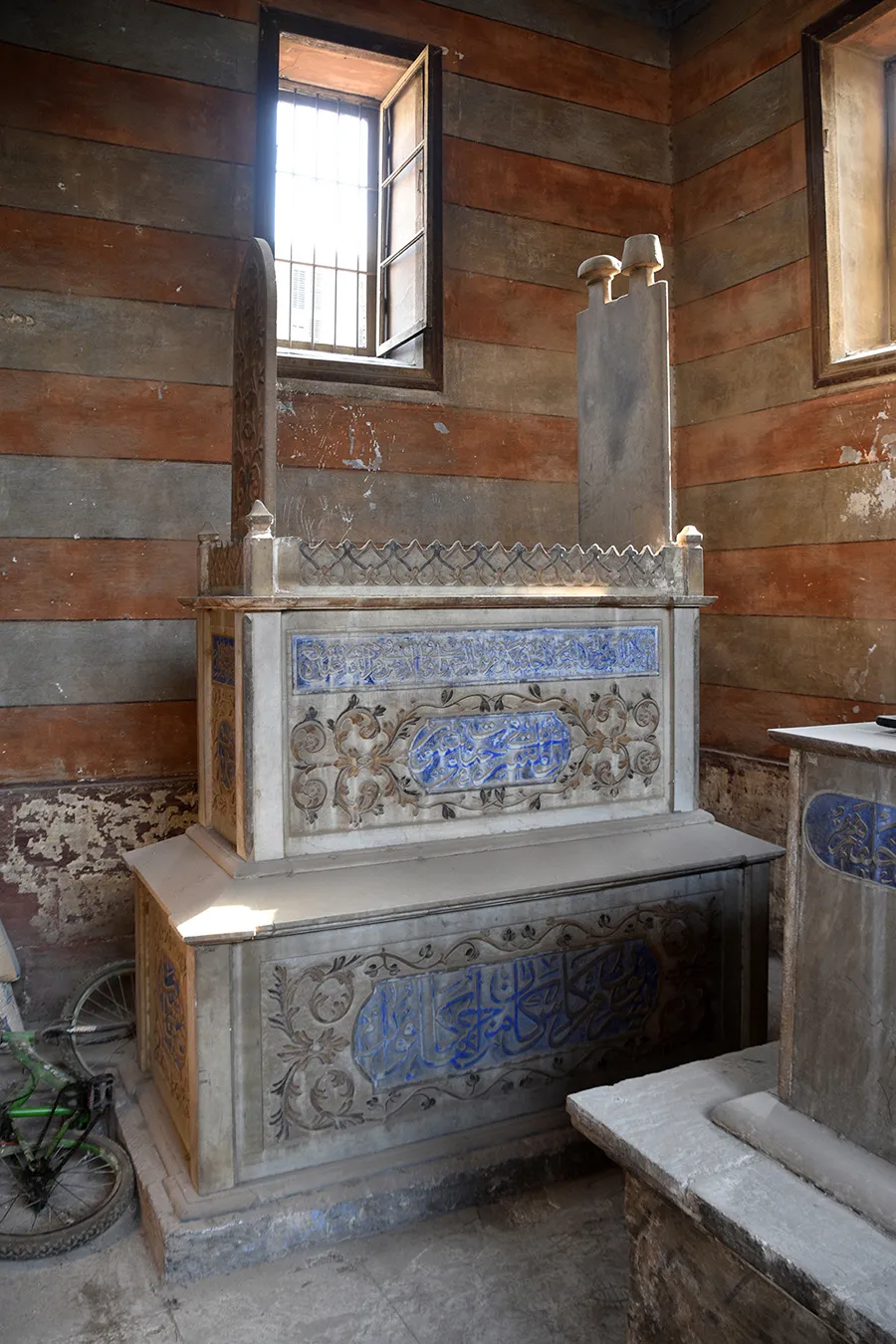
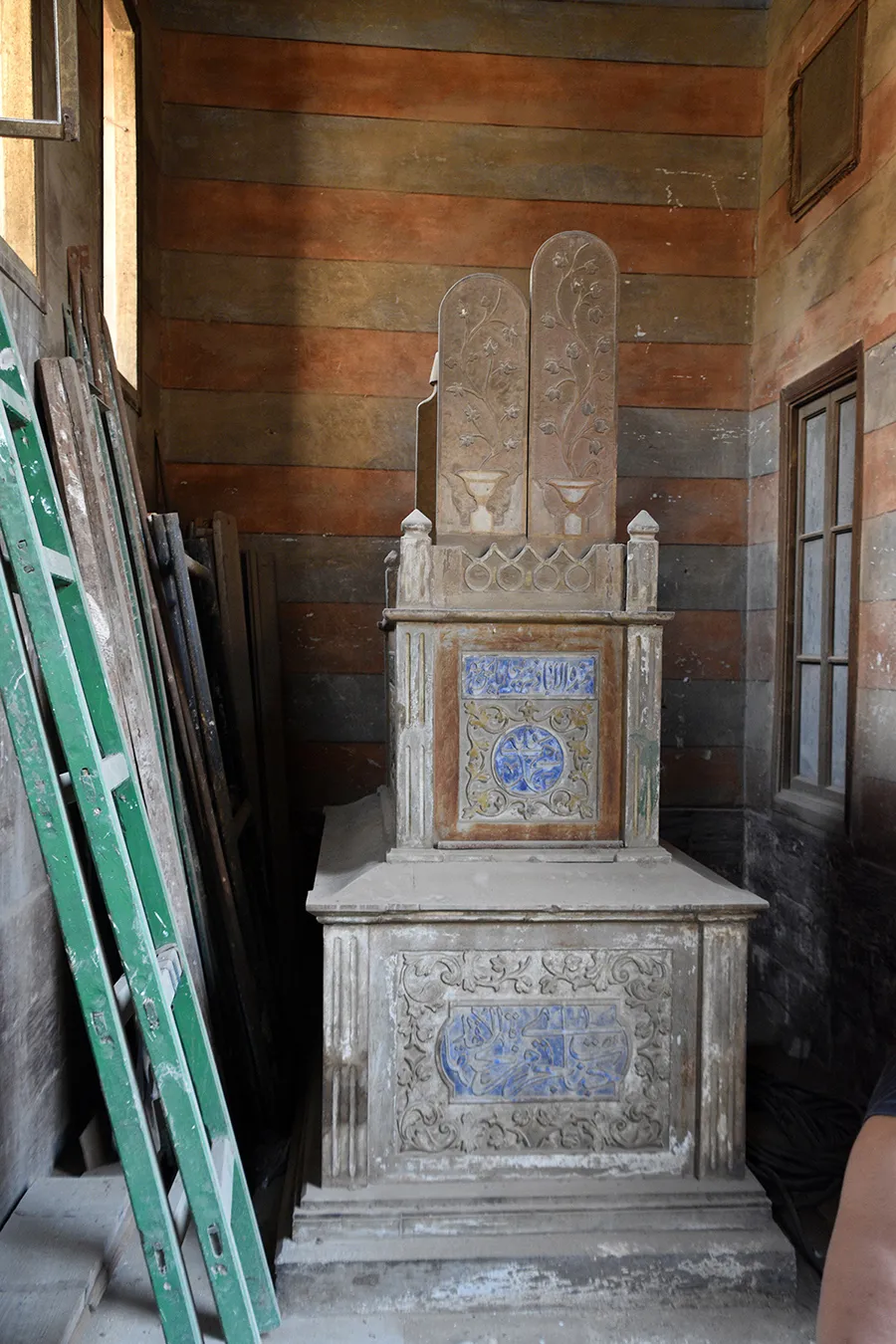
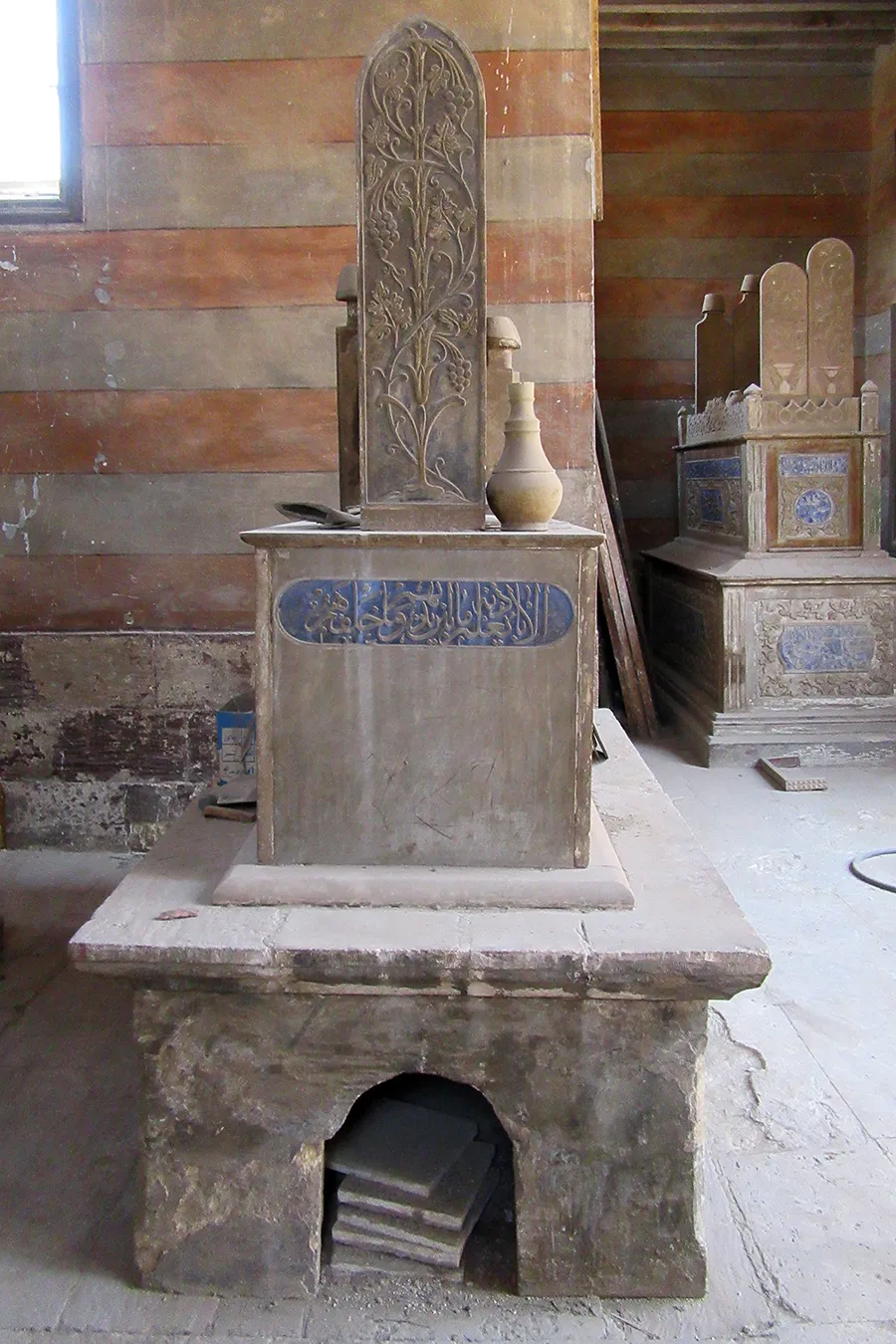
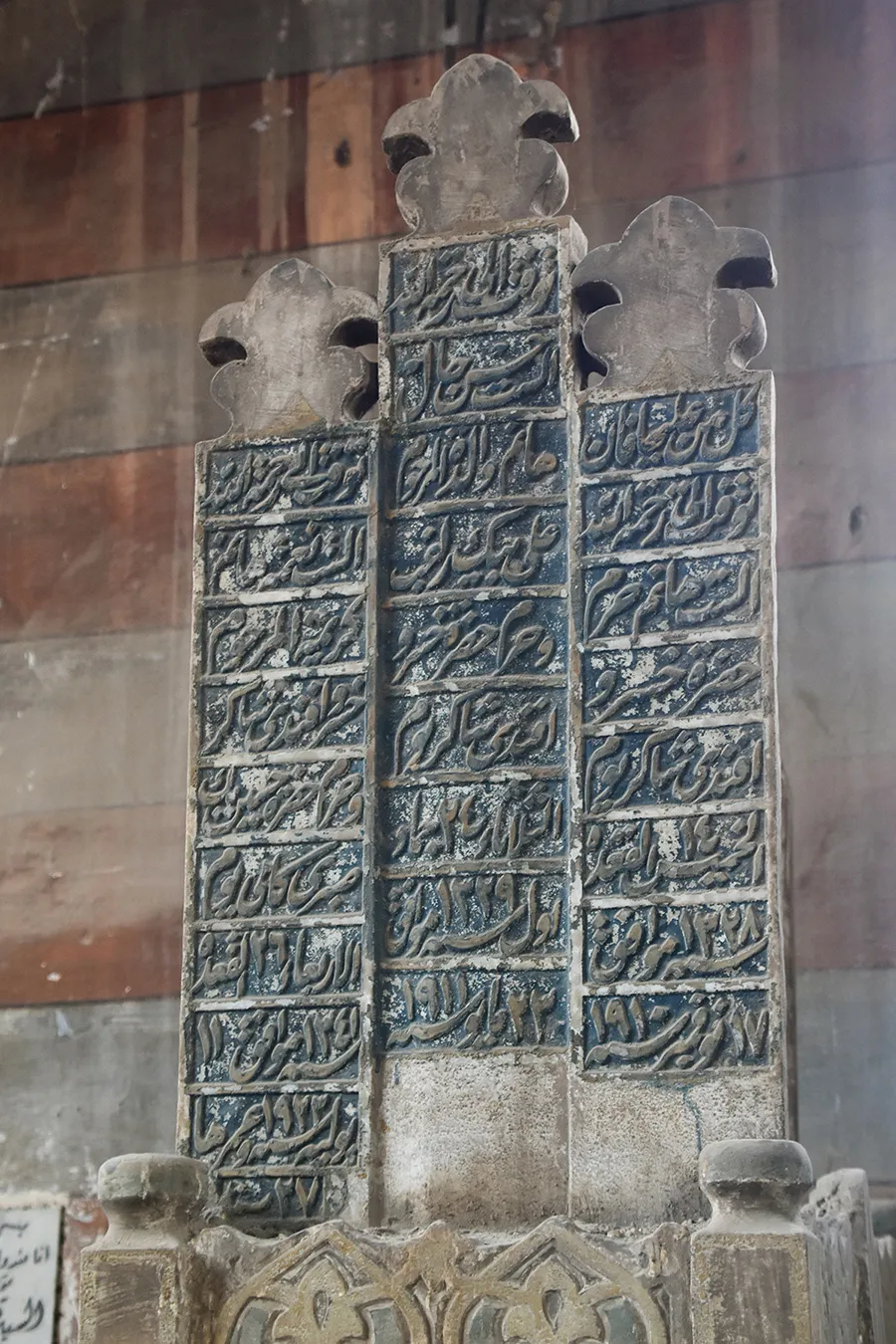
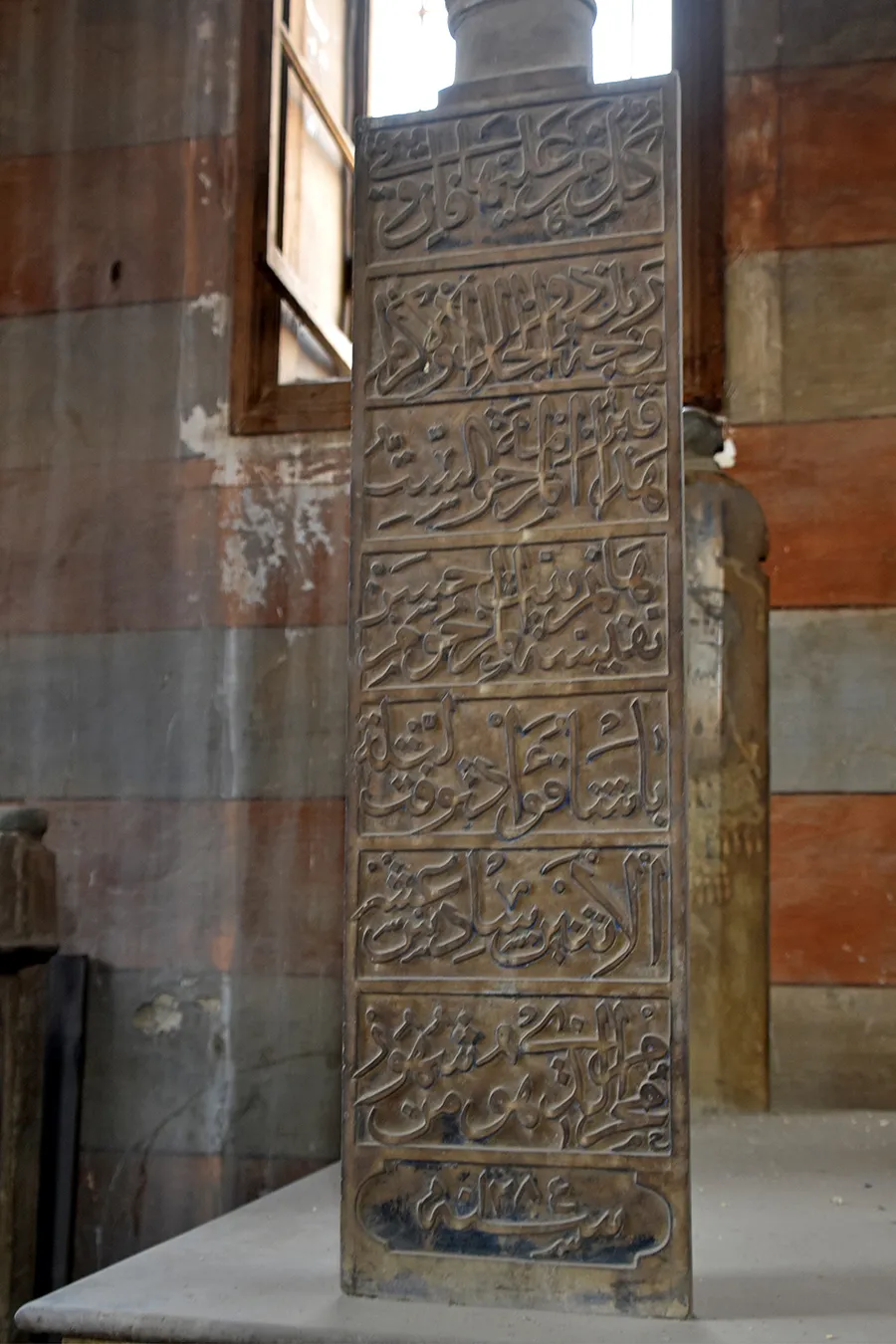
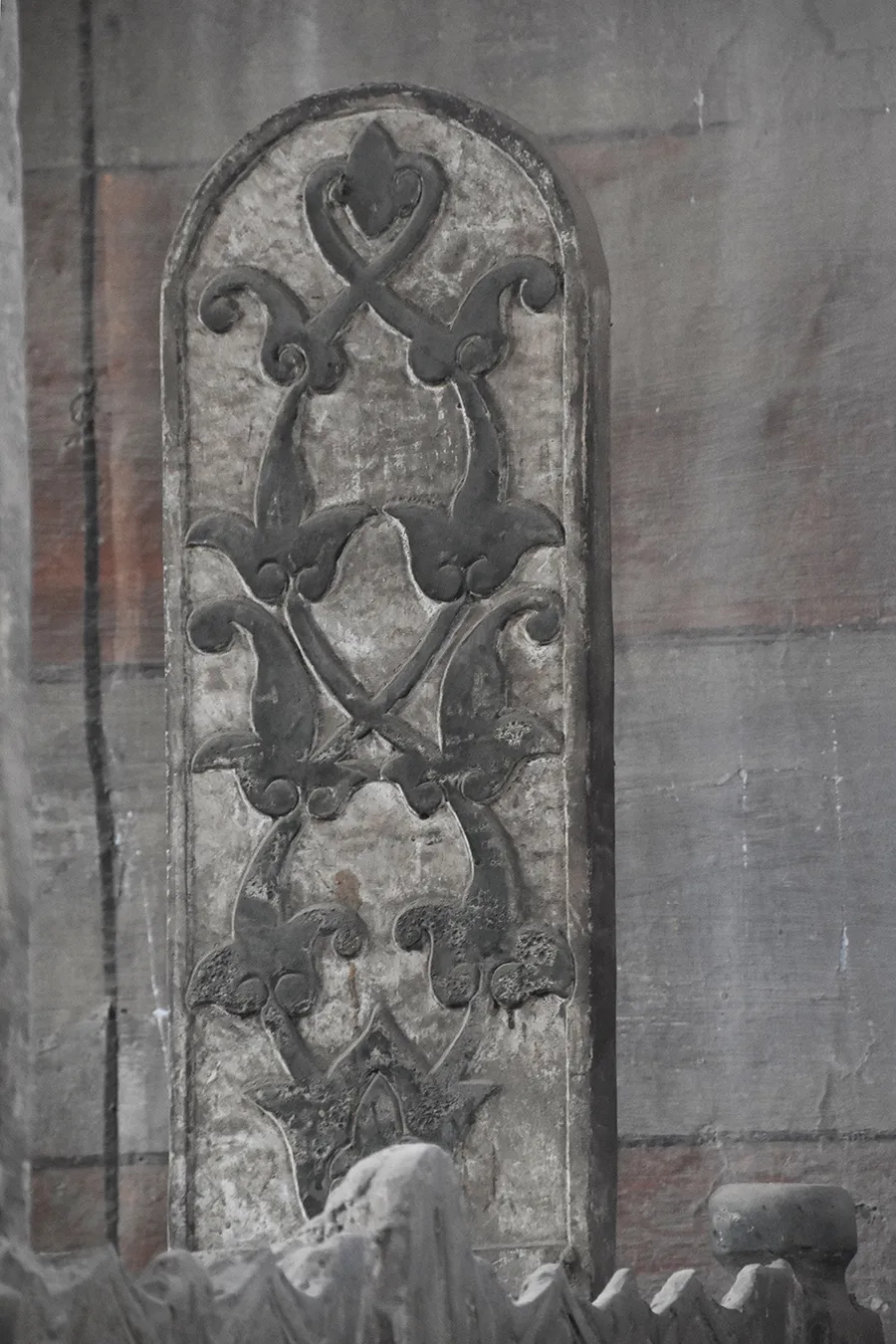
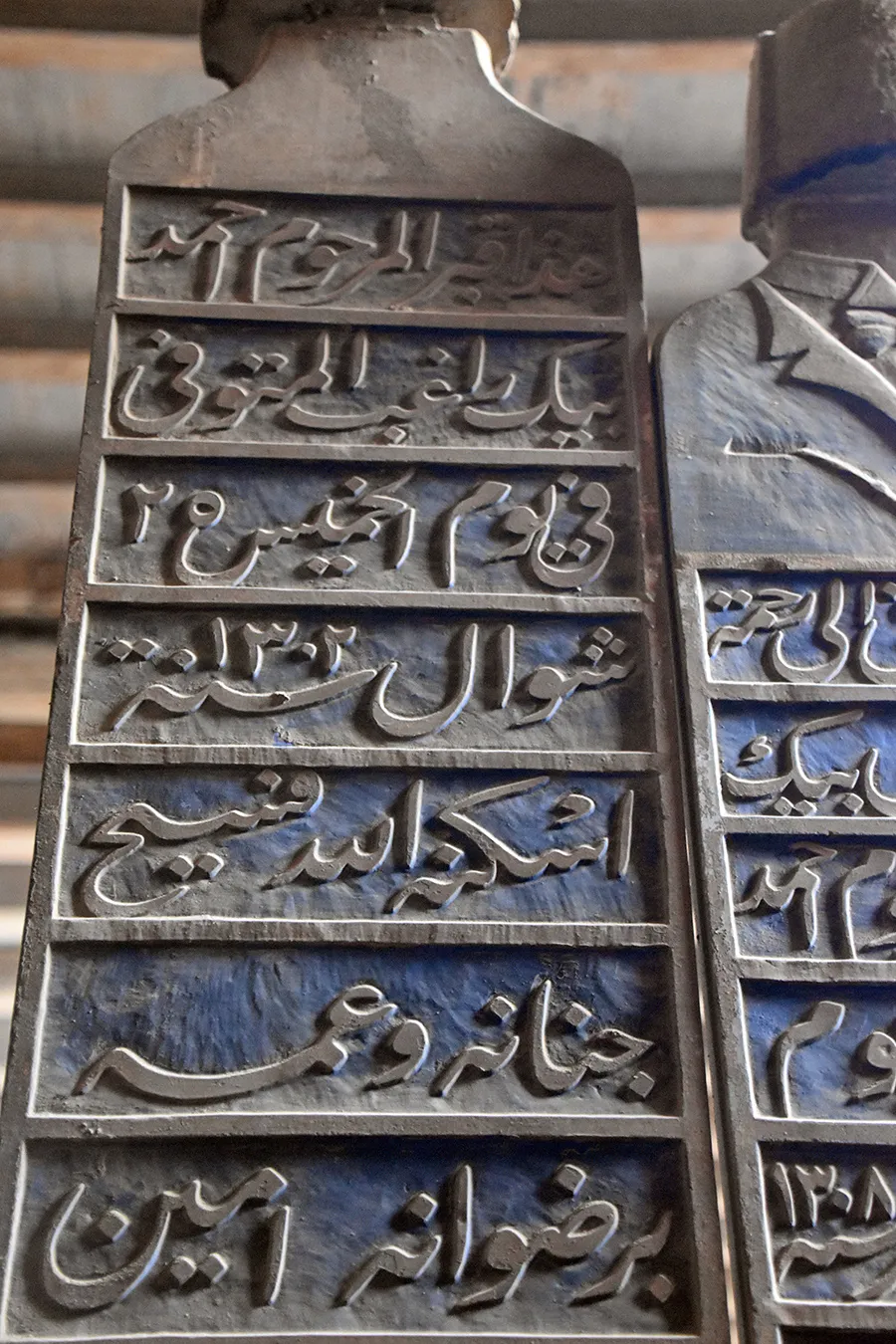
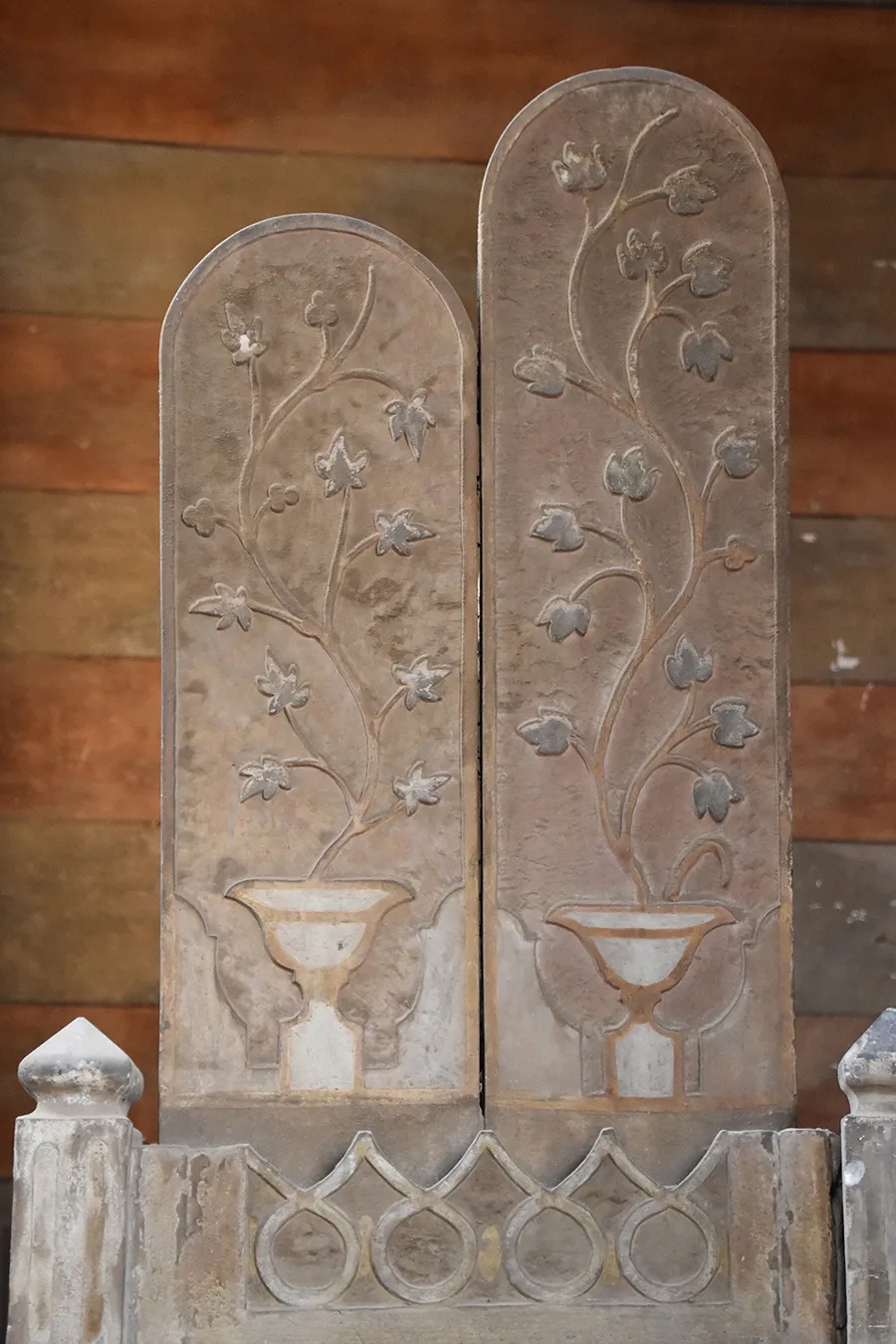
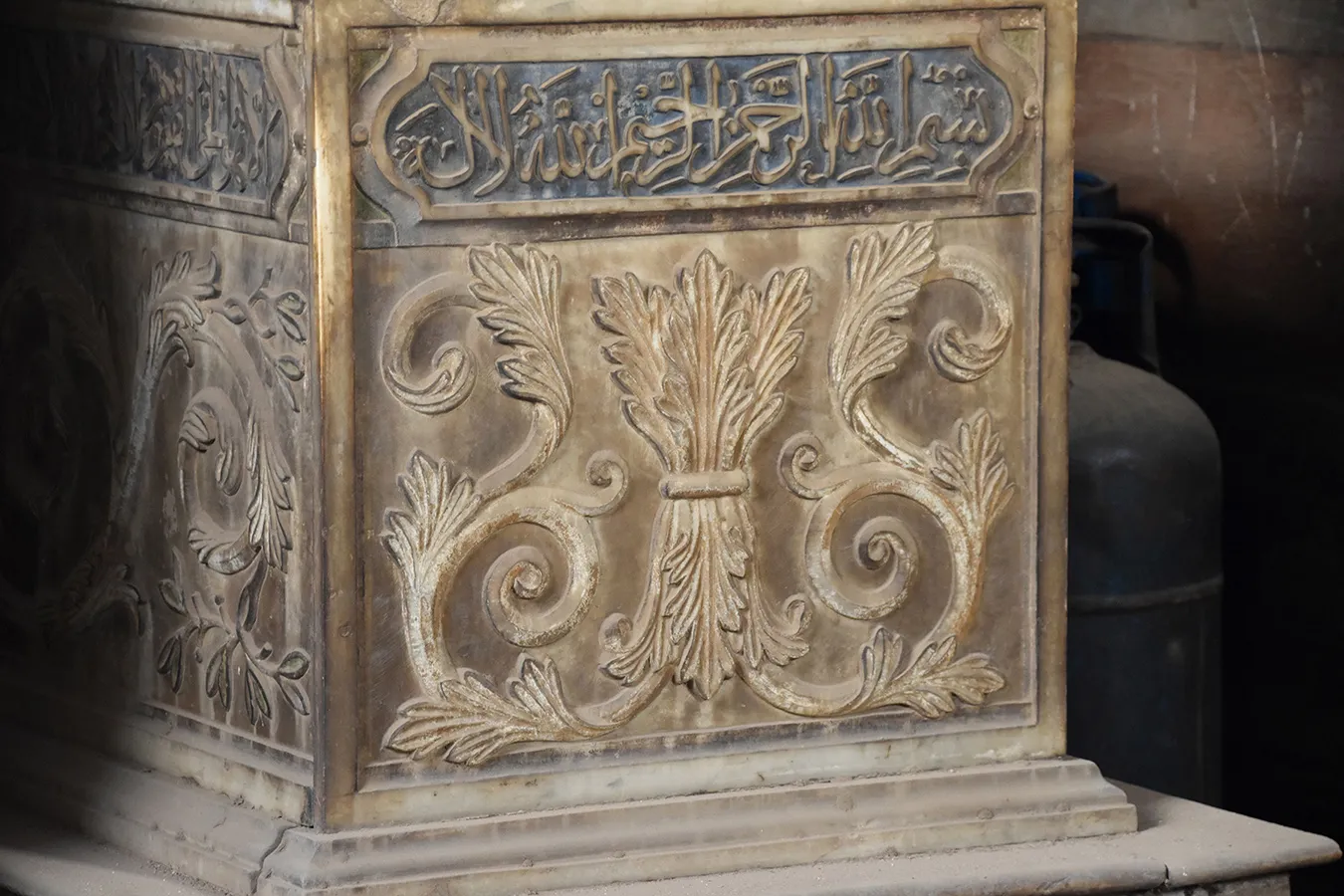
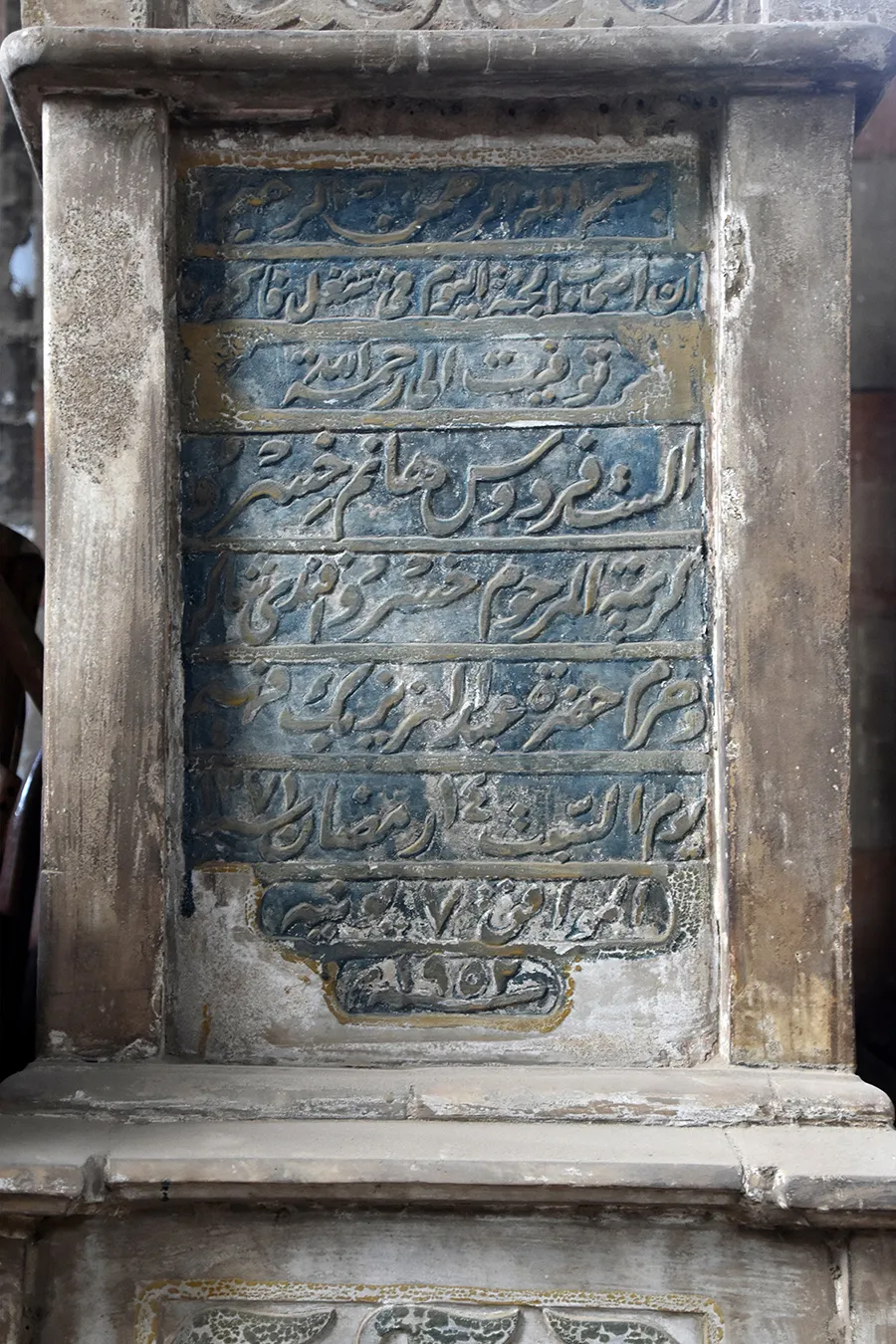
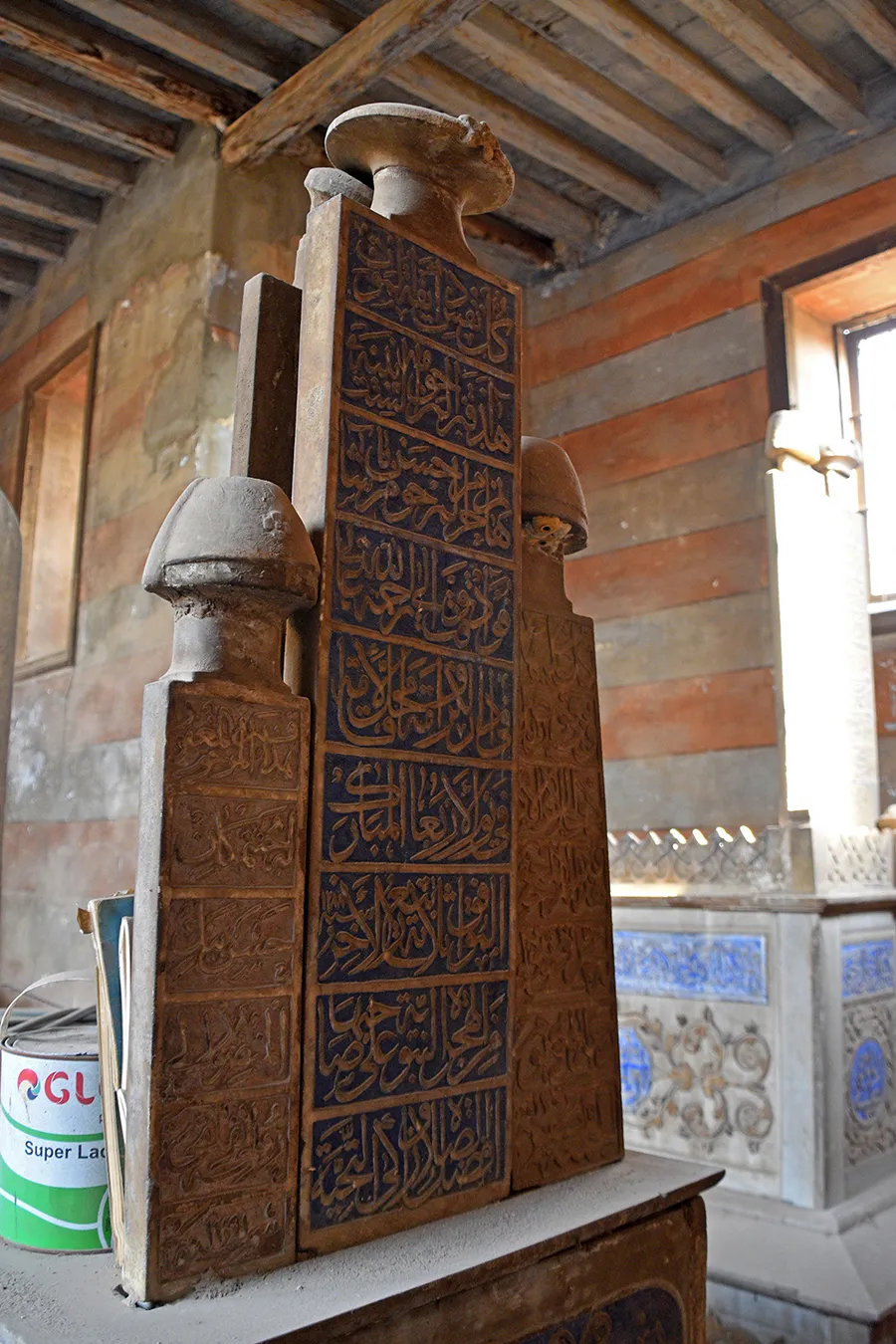
In the shaded burial area are six carved marble cenotaphs, some with multiple shahid stelae. The earliest date is this of Ahmad Bey Raghib’s death: 25 Shawwal 1302 AH [corresponding to 6 August AD 1885]. Other dates are mostly from the 1910s, the latest is 1925. Some of the shahid stelae are highly unusual in representing men’s torsos in naturalistically depicted clothing, complete with lapels, bowties and pocket watches on watch chains. There is also one uninscribed limestone cenotaph inside the courtyard.
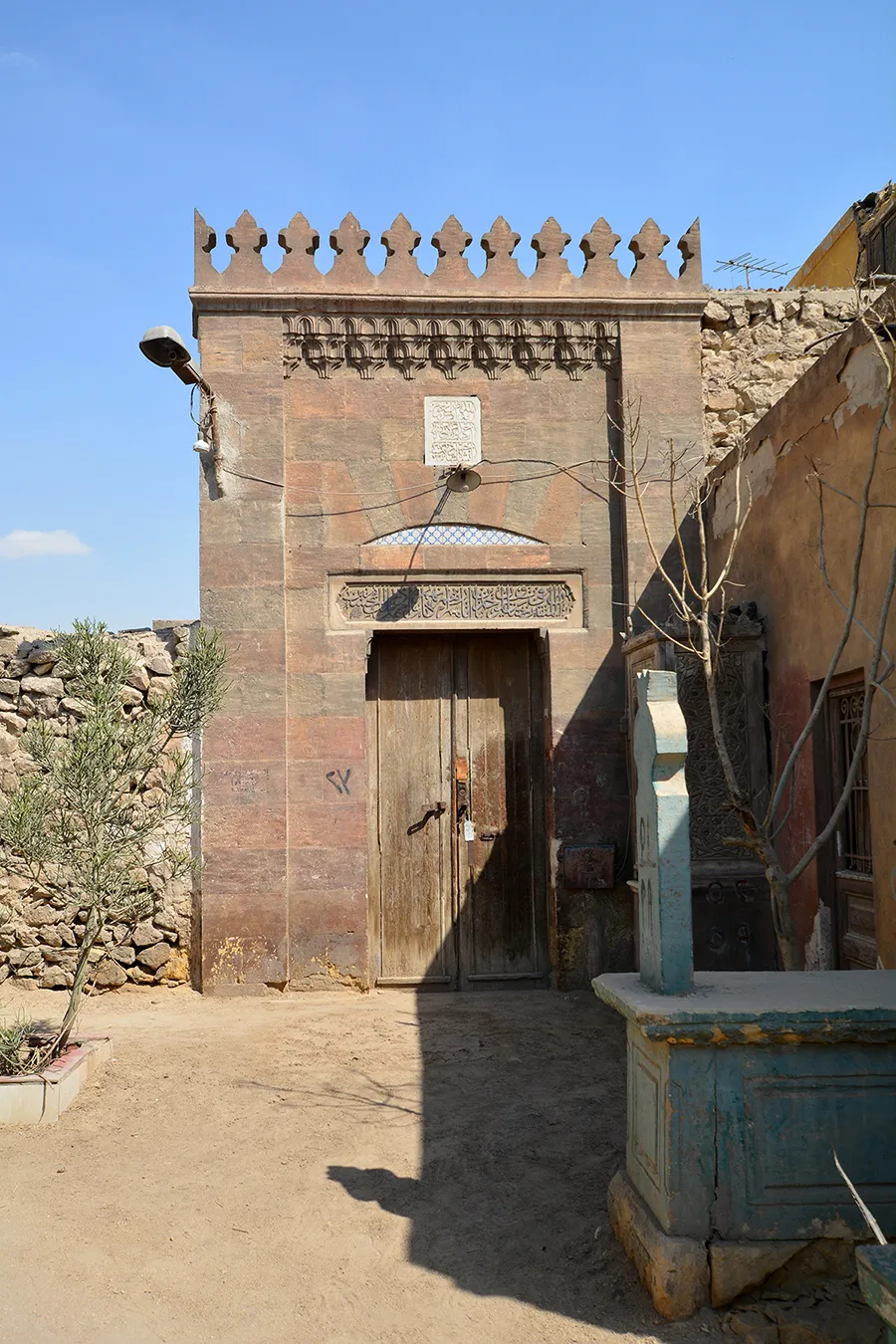
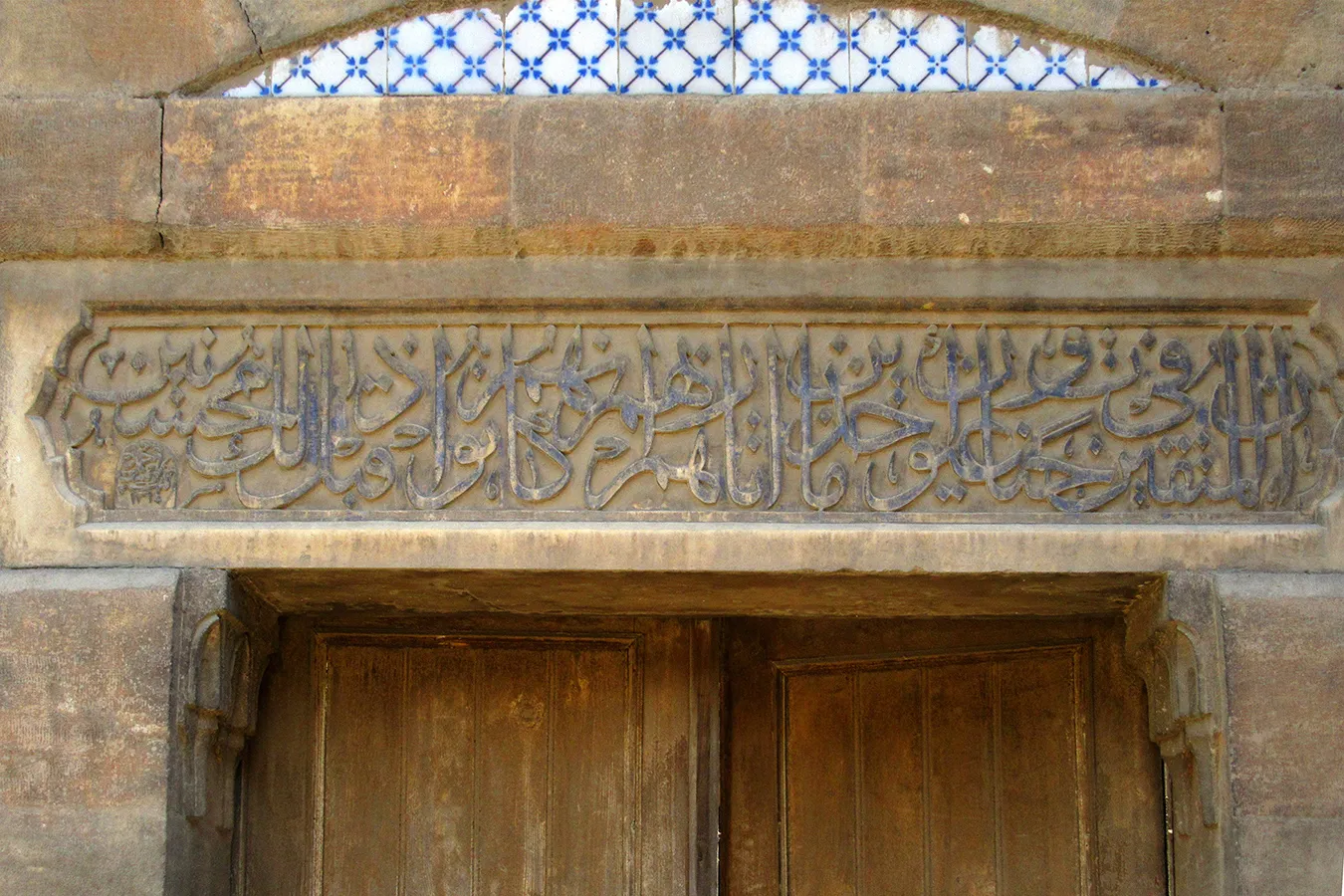
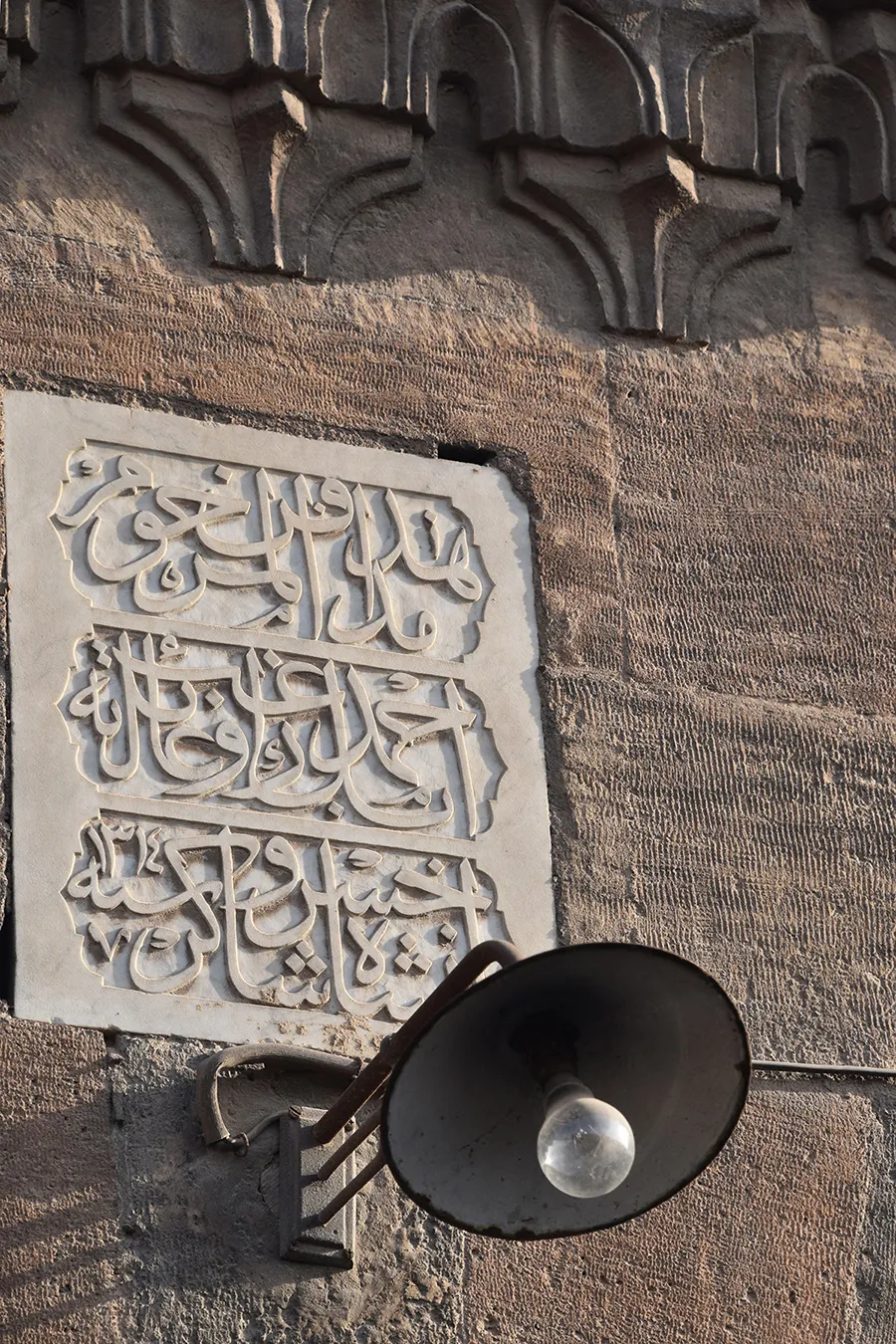
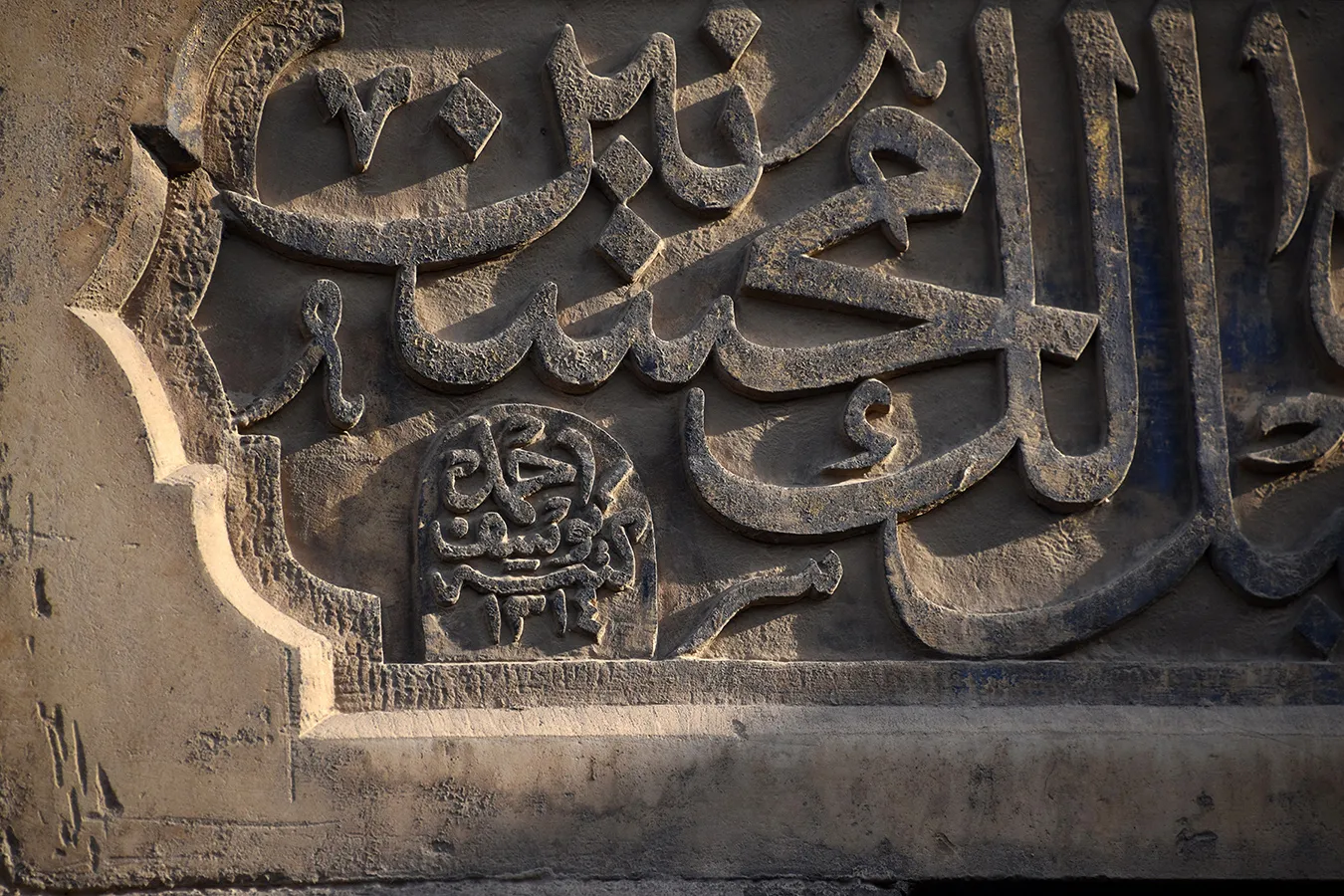
The neo-Mamluk entrance portal of finely dressed ashlar stone is in the north-western corner of the enclosure, the rest of the eastern wall being blocked by the neighbouring funerary enclosure. The rectangular entrance door is set in a shallow full-height recess topped with a three-tiered muqanas frieze. The door lintel is a monolithic block of marble with an inscription panel in fine calligraphic script, signed by the calligrapher Ahmad Yusuf and dated AH 1314. Over the door is a segmental relieving arch with white-and-blue ceramic tiles in its lunette, and above it, a rectangular panel with the foundation inscription. The Mamluk-style fleur-de-lys crenellation over the portal does not continue over the perimeter wall built of rough stone.
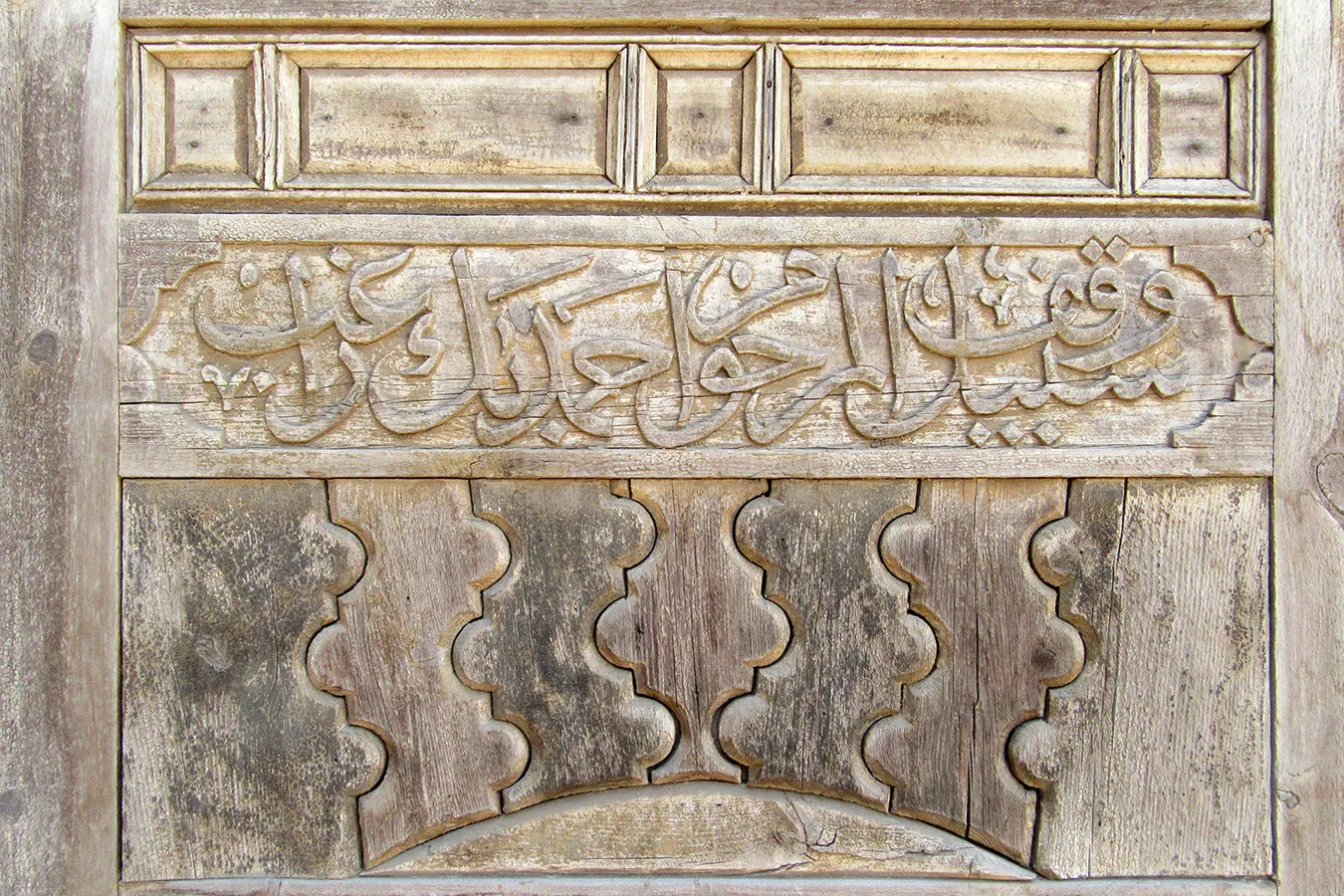
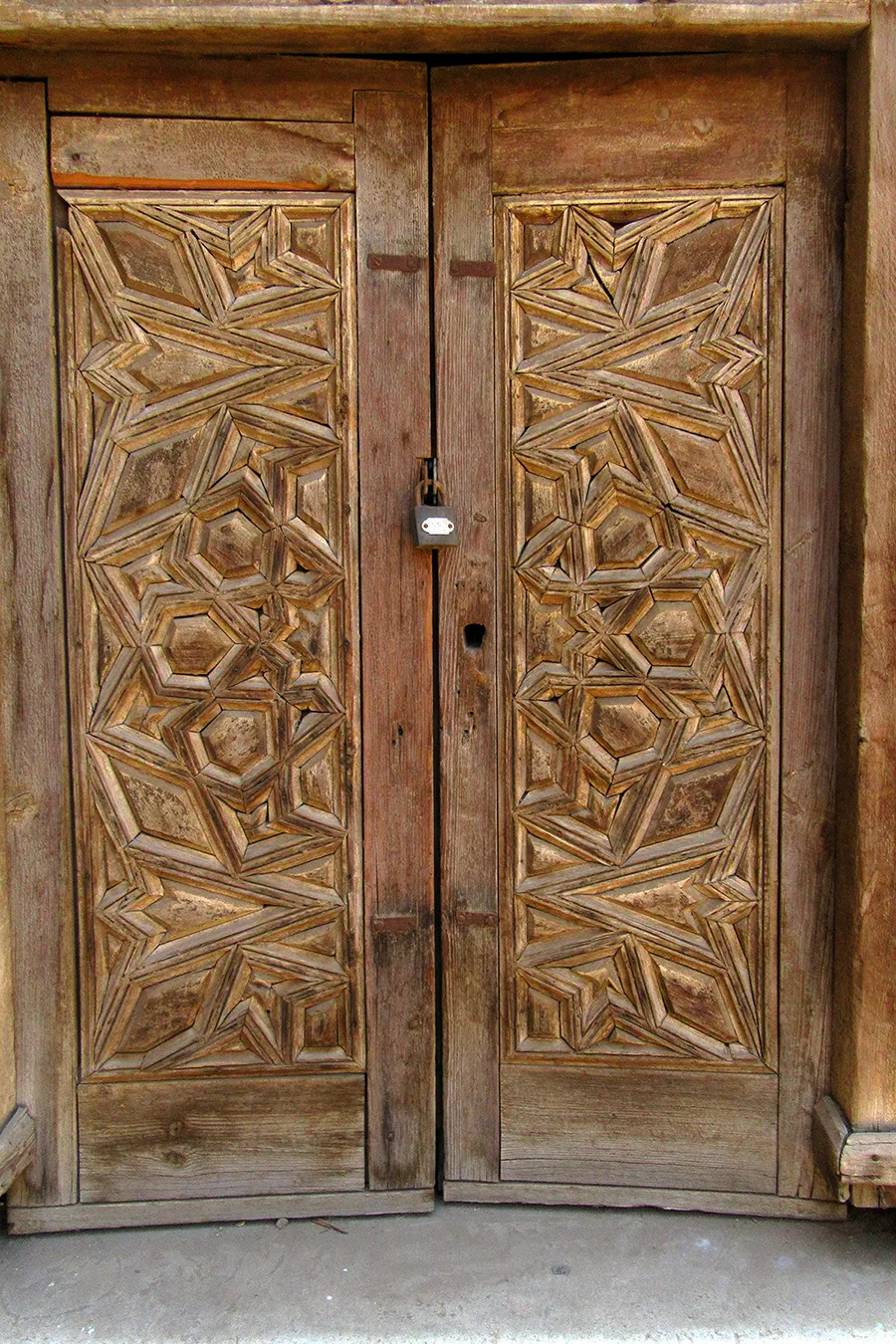
In front of the gate and against the wall of the neighbouring enclosure stands a sabil, which is a wooden cupboard-like structure on a simple marble base. The walls of the sabil are geometric panels of very high quality of design and of joinery. Over the door is an imitation in wooden panels of a relieving arch of joggled voissoirs. The inscription panel over the sabil door is dated AH 1347 [corresponds to AD 1928).
Condition of preservation
The enclosure is in generally good condition, but shows signs of wear-out. There is damage from rising damp to the lower parts of the walls. All woodwork is in need of maintenance. The wooden sabil is seriously desiccated.
Information abut the founder, family history, etc.
Professor Ahmad Bey Raghib was a professor who specialized in international law. He participated in the agricultural ownership reform law. He was related to Isma‘il Fahmy, a onetime minister of foreign affairs. (Moa ‘wad, 105-80)
According to the property keeper, the sabil was funded by his ancestor. He also mentioned the name Mirza in reference to the enclosure’s owners.
References in published/primary sources
Moa‘wad, Ibrahim Al-Amayir al-Janayiziah al-Baqiah bi Qarafat al-Mujawirin Bi al-Qahirah Department of Islamic Archeology, Faculty of Archeology, Cairo University, 2022, pp. 105–108
- Field recording by
- Amr Abotawila and Nur ‘Atiya
- Date recorded
- August 11, 2022
- Data entered by
- Yusuf Yassir
- Date entered
- May 28, 2024