


Unit No32
Abu Bakr Ratib Pasha
|
Coordinates of the main entrance |
30.042361N - 31.269033E |
|
Attribution |
Abu Bakr Ratib Pasha |
|
Higri (AH)Dates as given in the Inscription |
|
|
Miladi (AD)Dates as given in the Inscription |
|
|
Inscription Contemporary with the building? |
No |
|
Multiple date(s) In the inscription? |
No |
|
Assumed Date |
Early 20th c. A.D. |
|
Based on |
stylistic features; includes earlier elements |
|
Original Use |
Funerary enclosure |
|
Current Use |
Funerary enclosure |
|
Overall condition |
Good |
Features of unit 32
| Present | Count | Material | Comments (see description for details) | |
|---|---|---|---|---|
| Free standing structure | No | |||
| Walled enclosure | Yes | |||
| Rooms by the perimeter wall | Yes | 4 | stone, concrete | An elaborate building by the N wall |
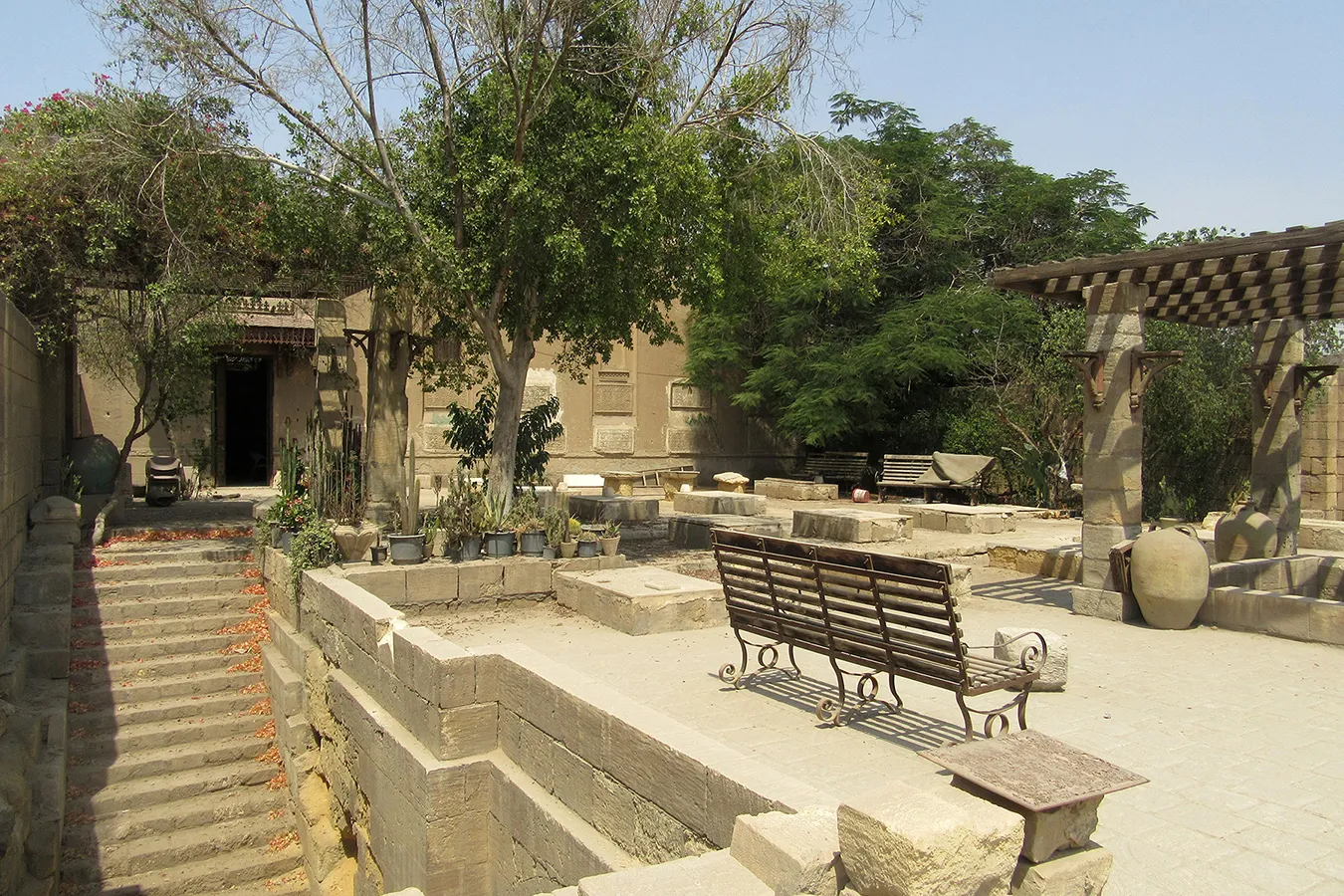
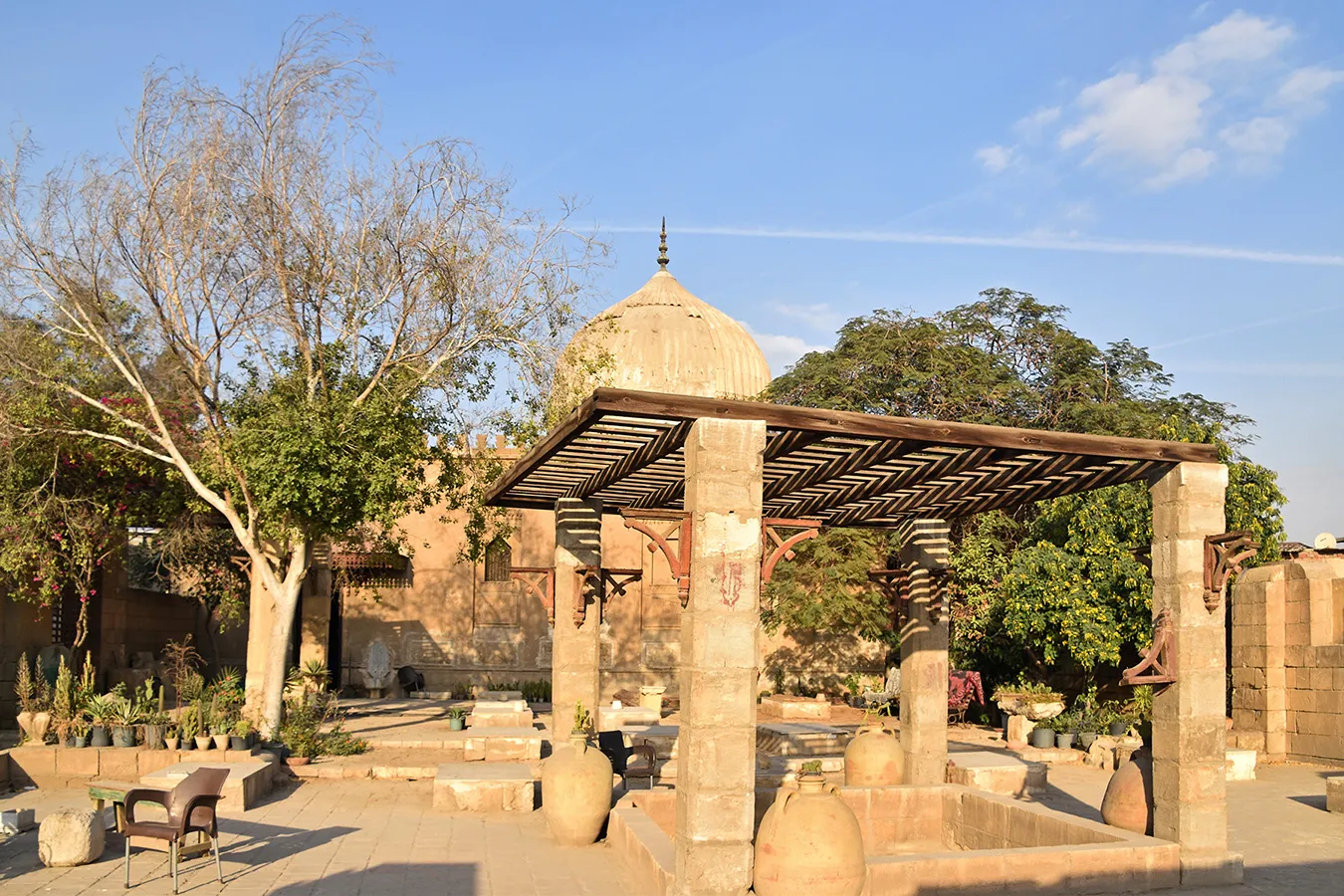
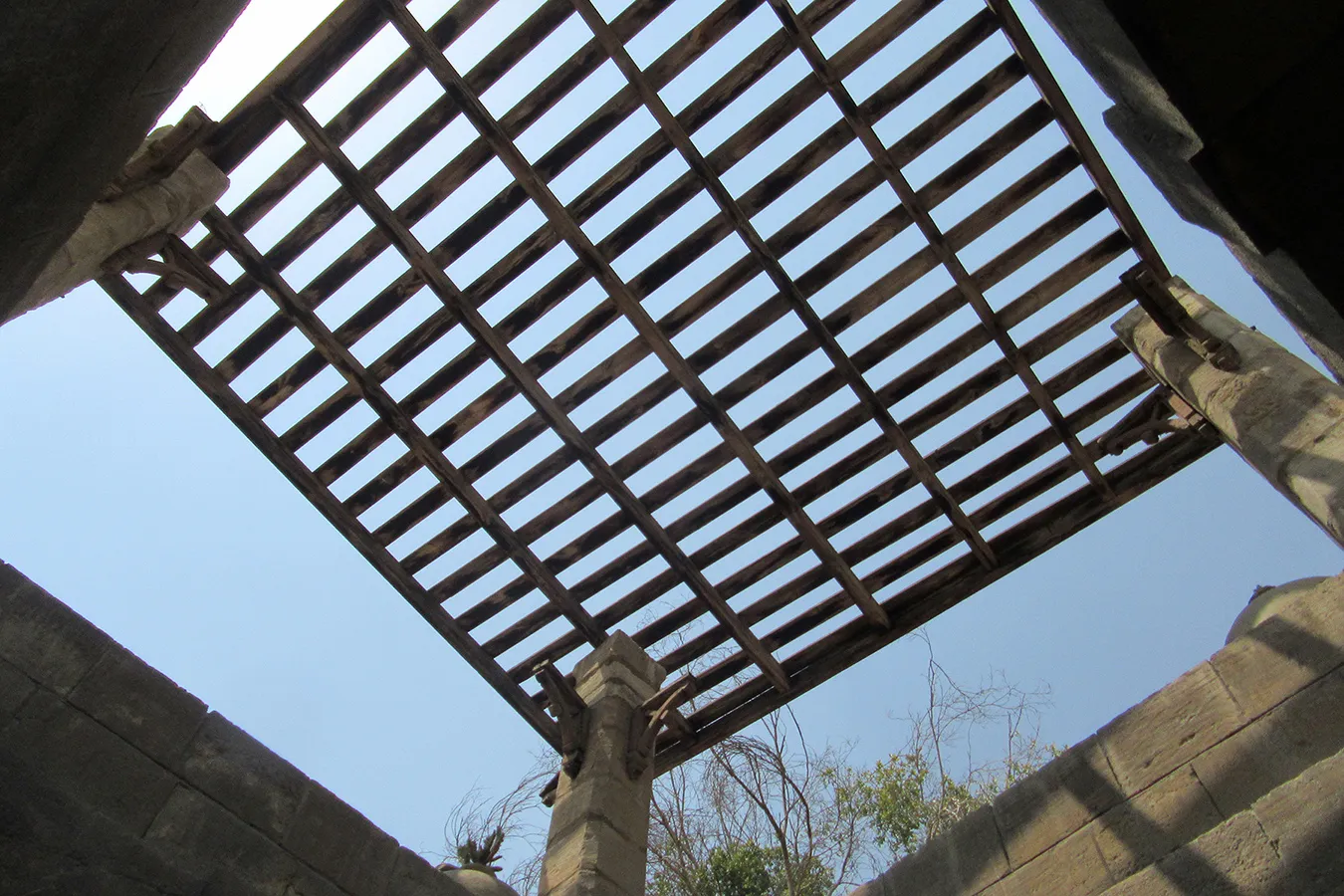
| Freestanding structure(s) in enclousure | Yes | 1 | stone, wood | A pergola over the light shaft of the underground passage |
| Dome over the tomb chamber | Yes | |||
| Neo-Mamluk architectural decoration | Yes | |||
| Garden layout | Yes | |||
| Sabil(s) | No | |||
| Wall fountain(s) | No | See section "Description" | ||
| Canopy on columns / pillars | No | |||
| Carved marble cenotaph(s) | No | Remnants present, but not in situ. See section "Description" | ||
| Decorated limestone tomb-markers | Yes | 1 | limestone | |
| Decorated gateway | No | |||
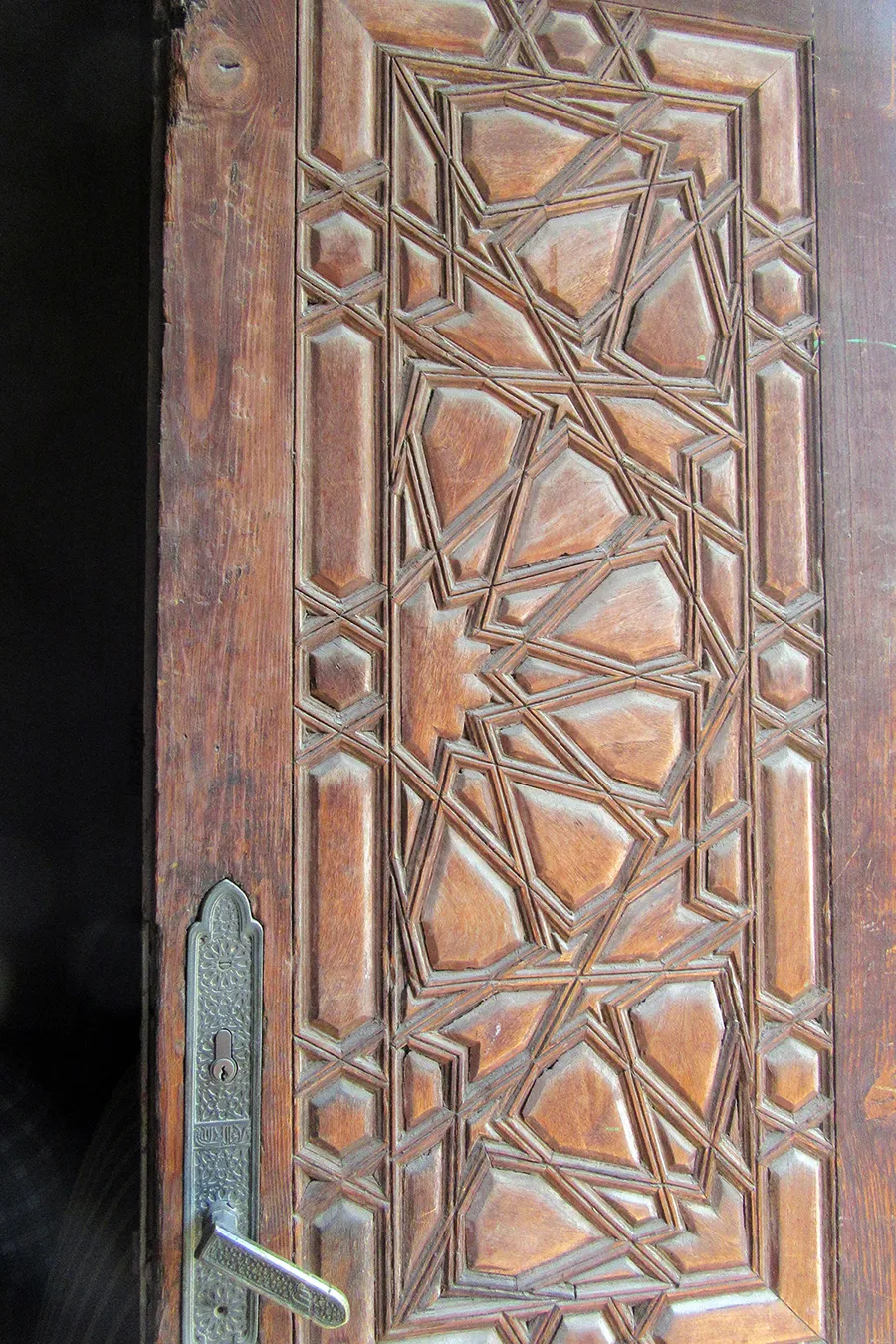
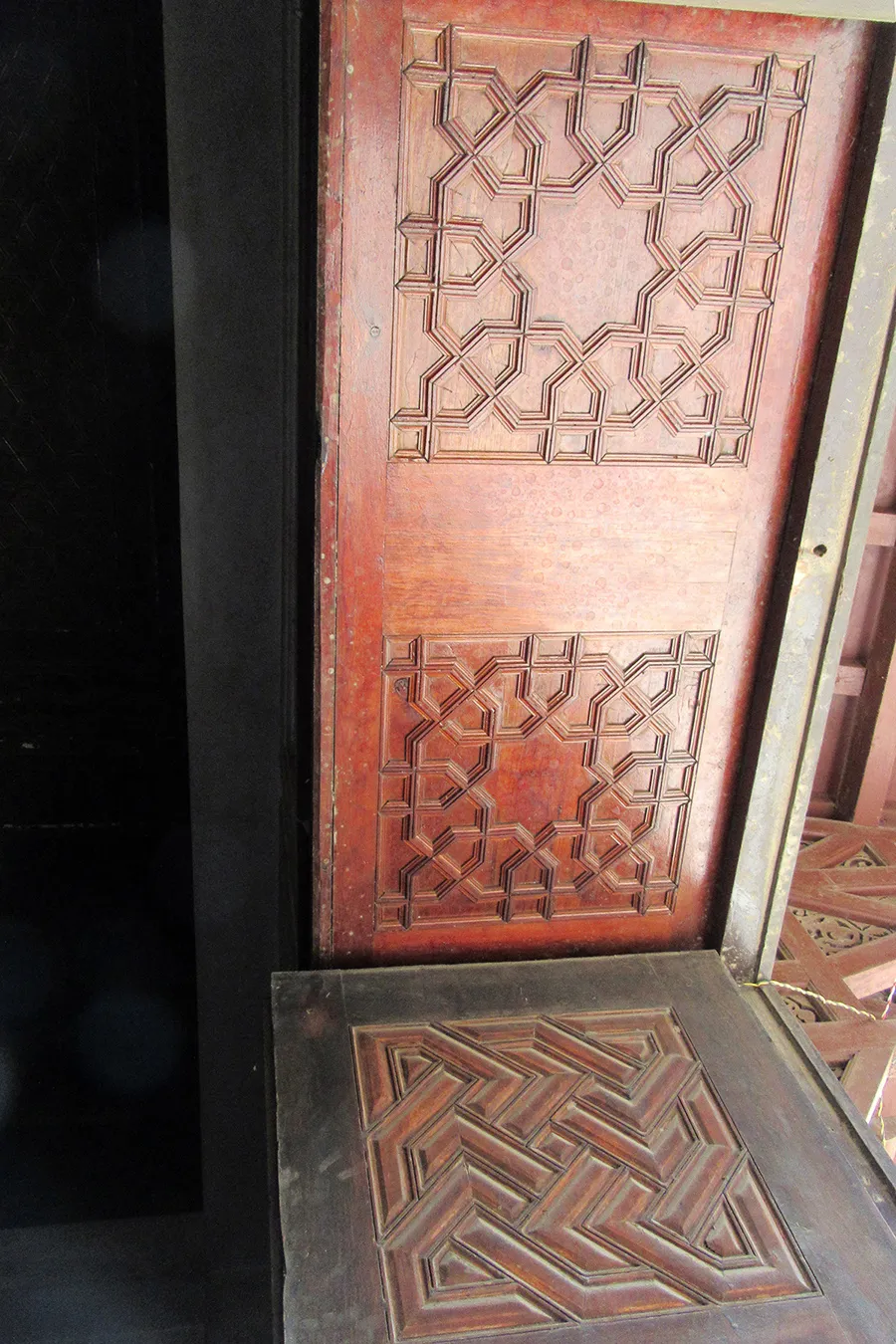
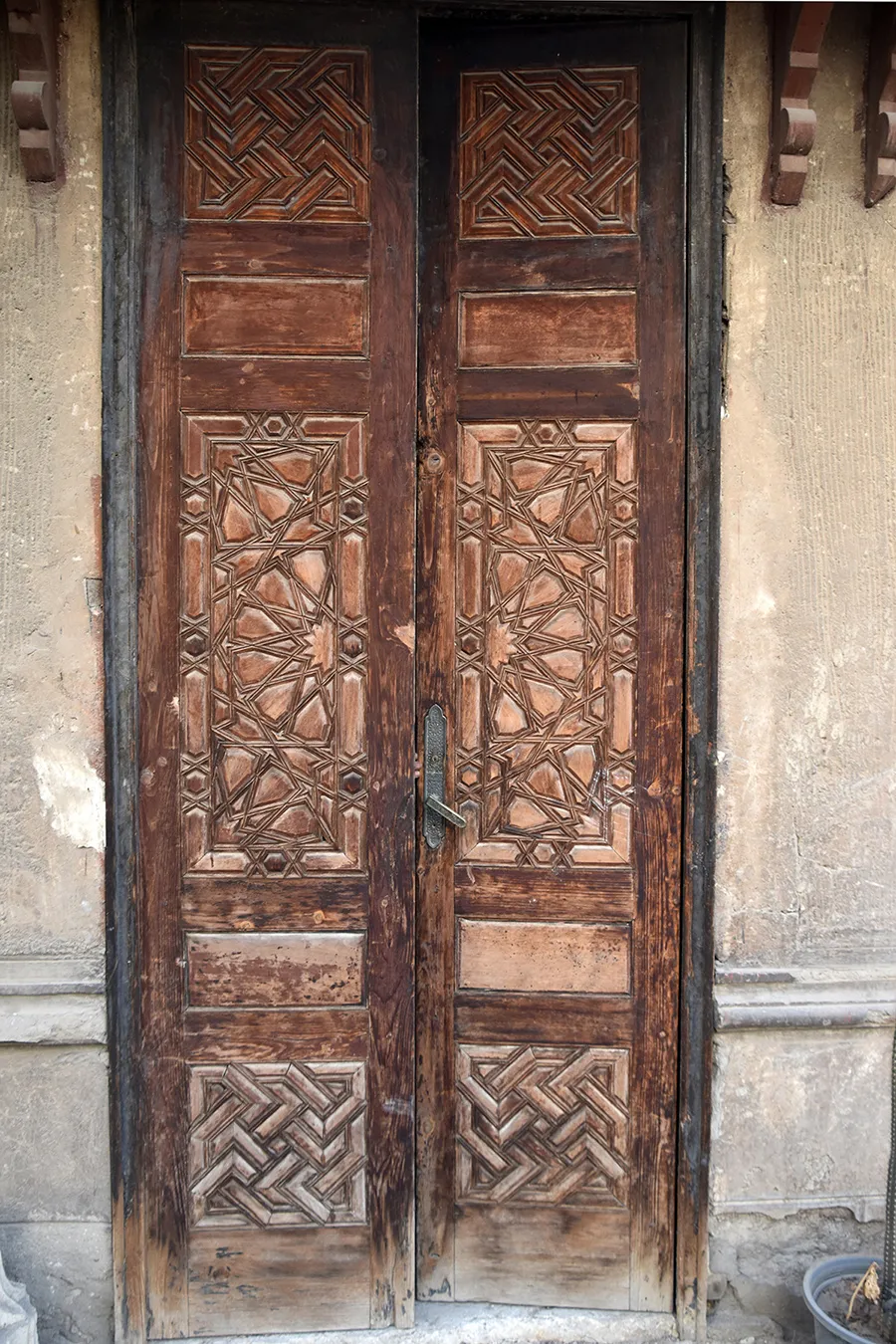
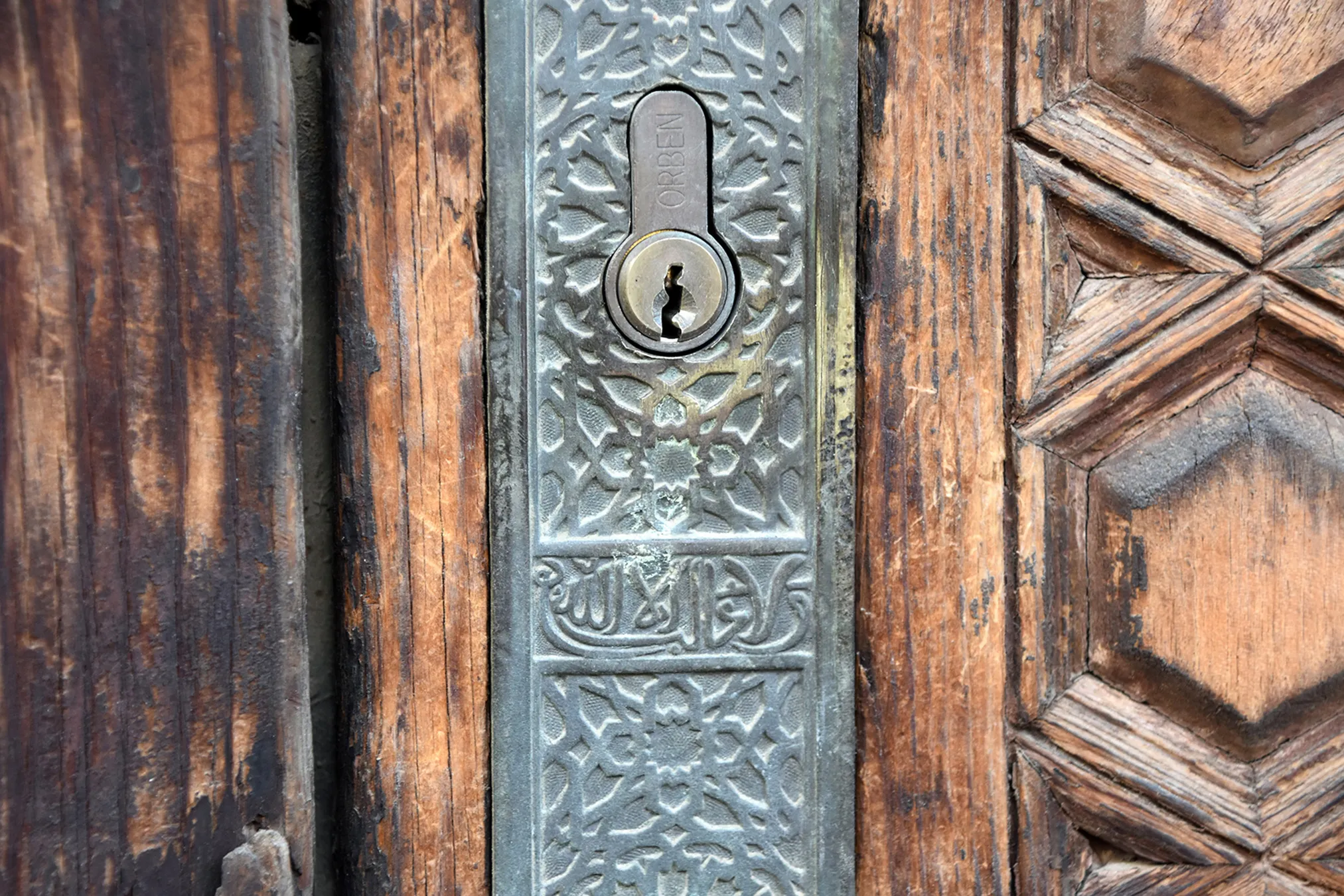
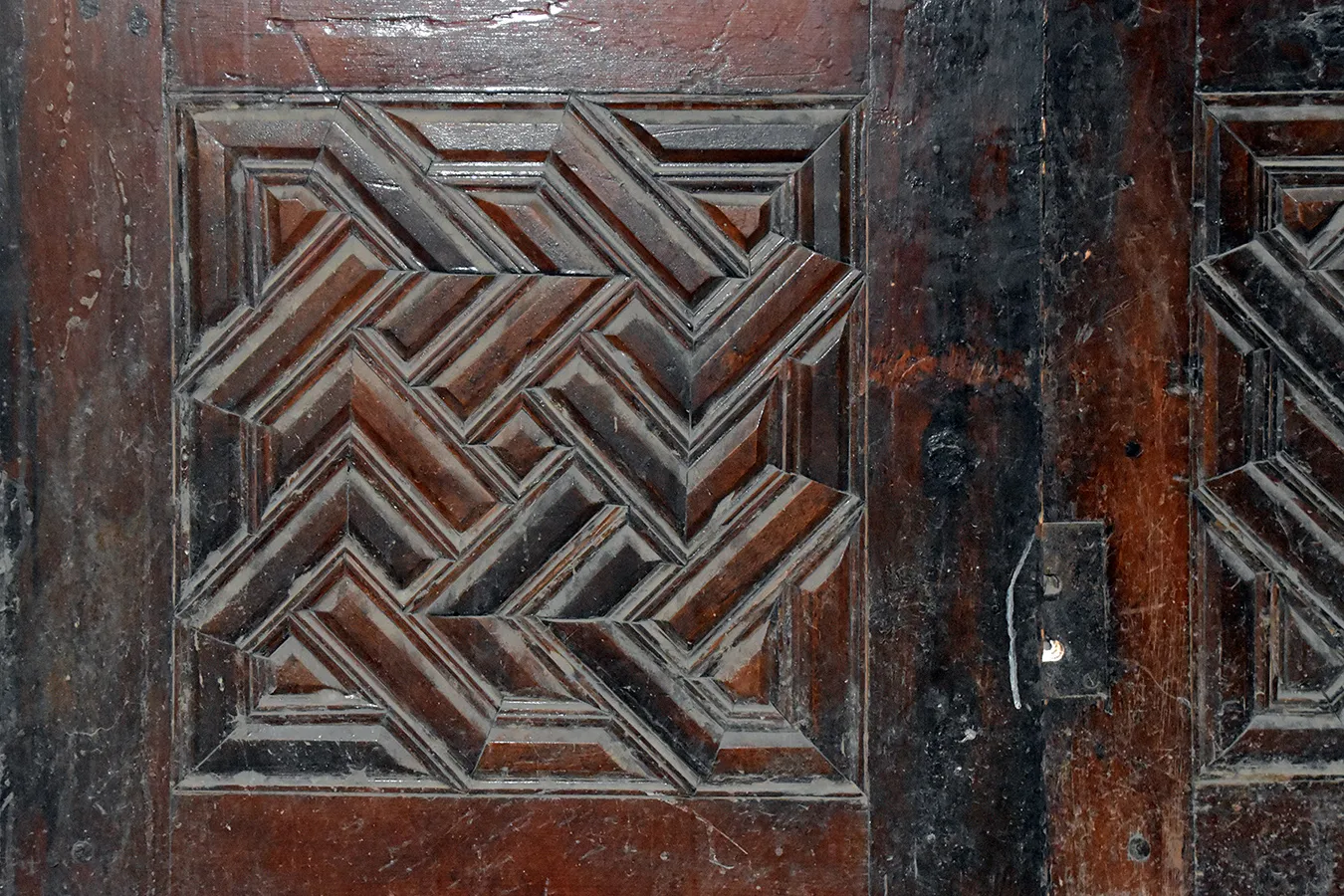
| Decorative door-leaves | Yes | 2 | wood | Extraordinary quality of woodwork and metal fittings |
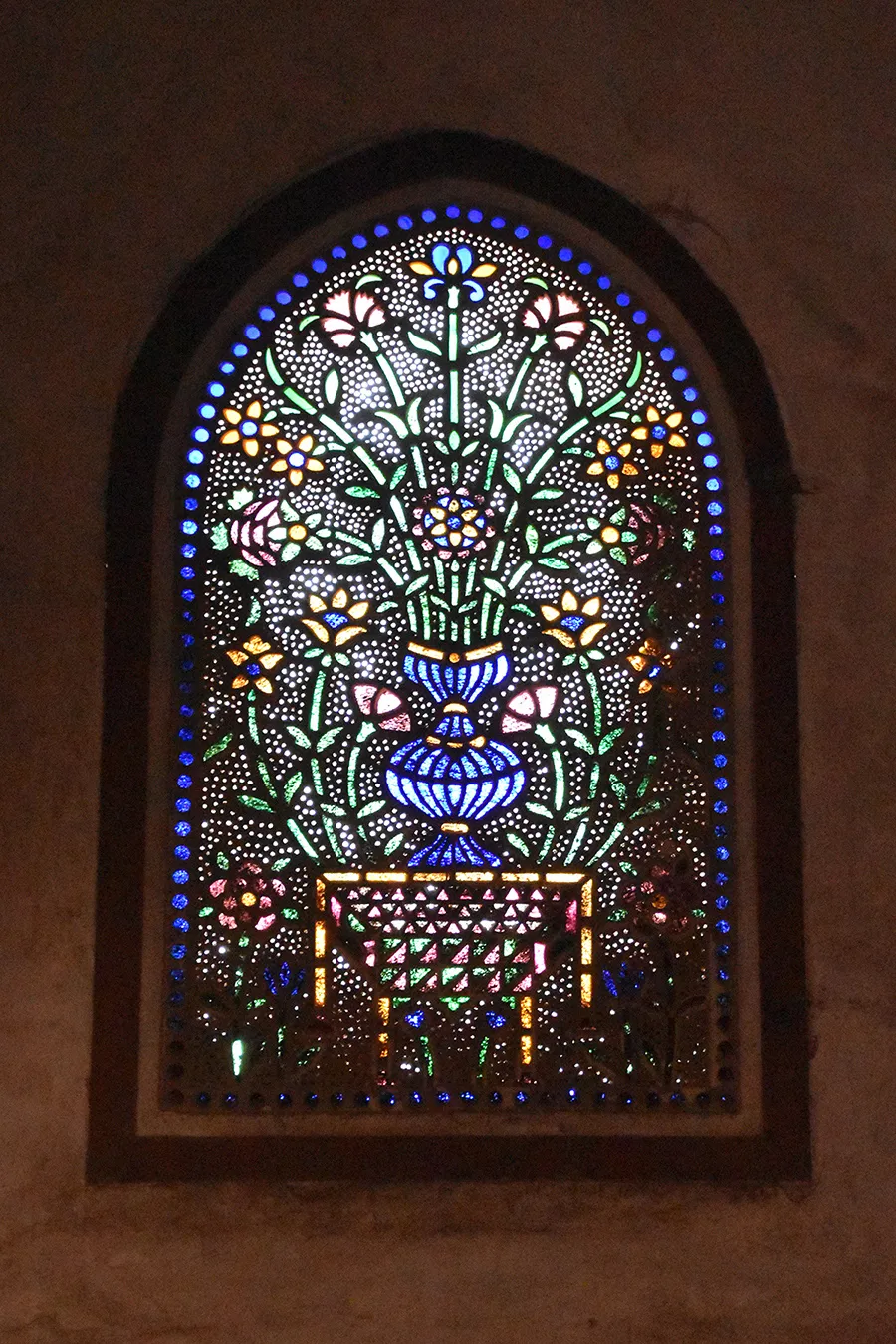
| Decorative window grilles | Yes | 11 | gypsum/stained glass | Qamariyat window grilles in the main building |
| Decorative shutters | Yes | 4 | ||
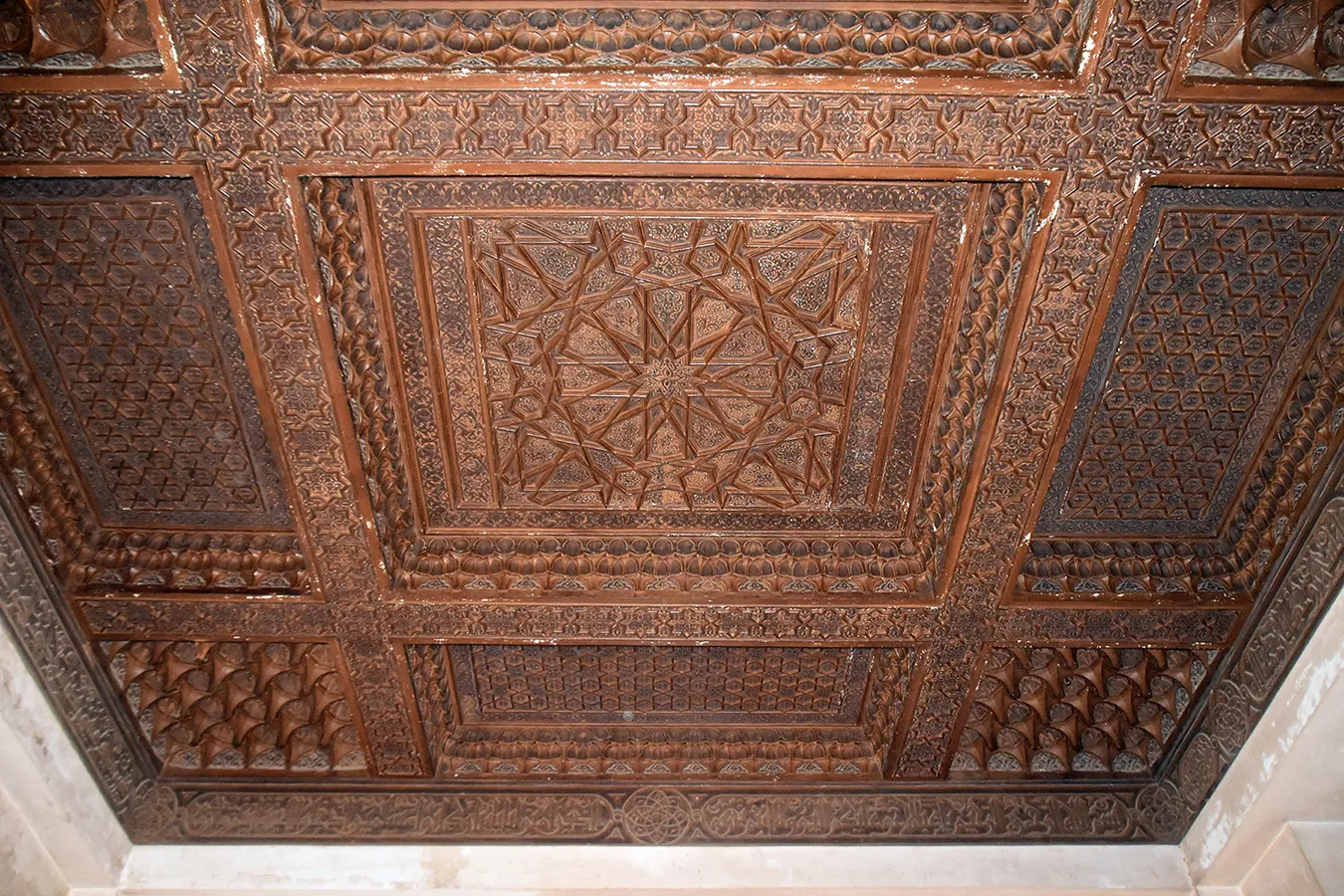
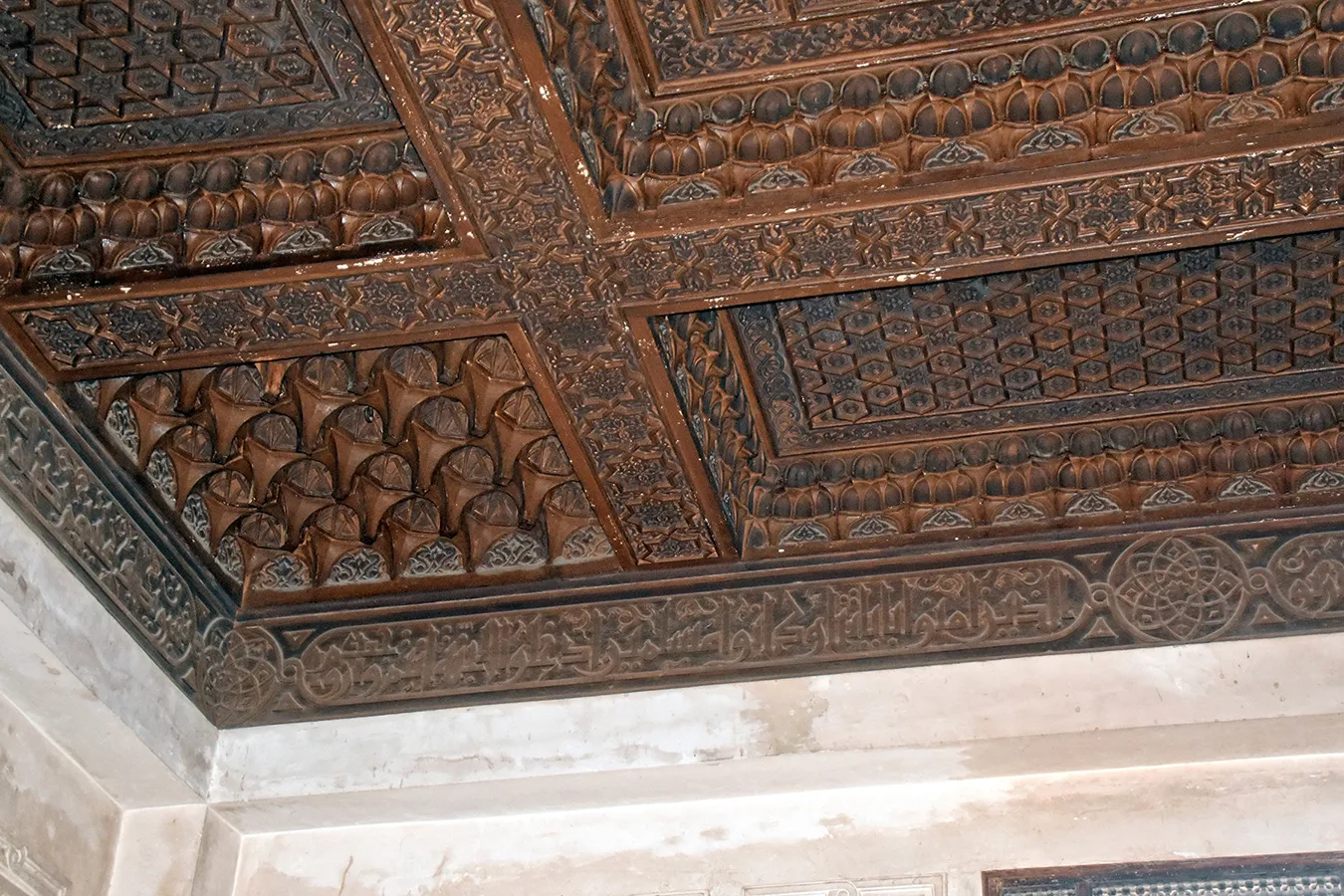
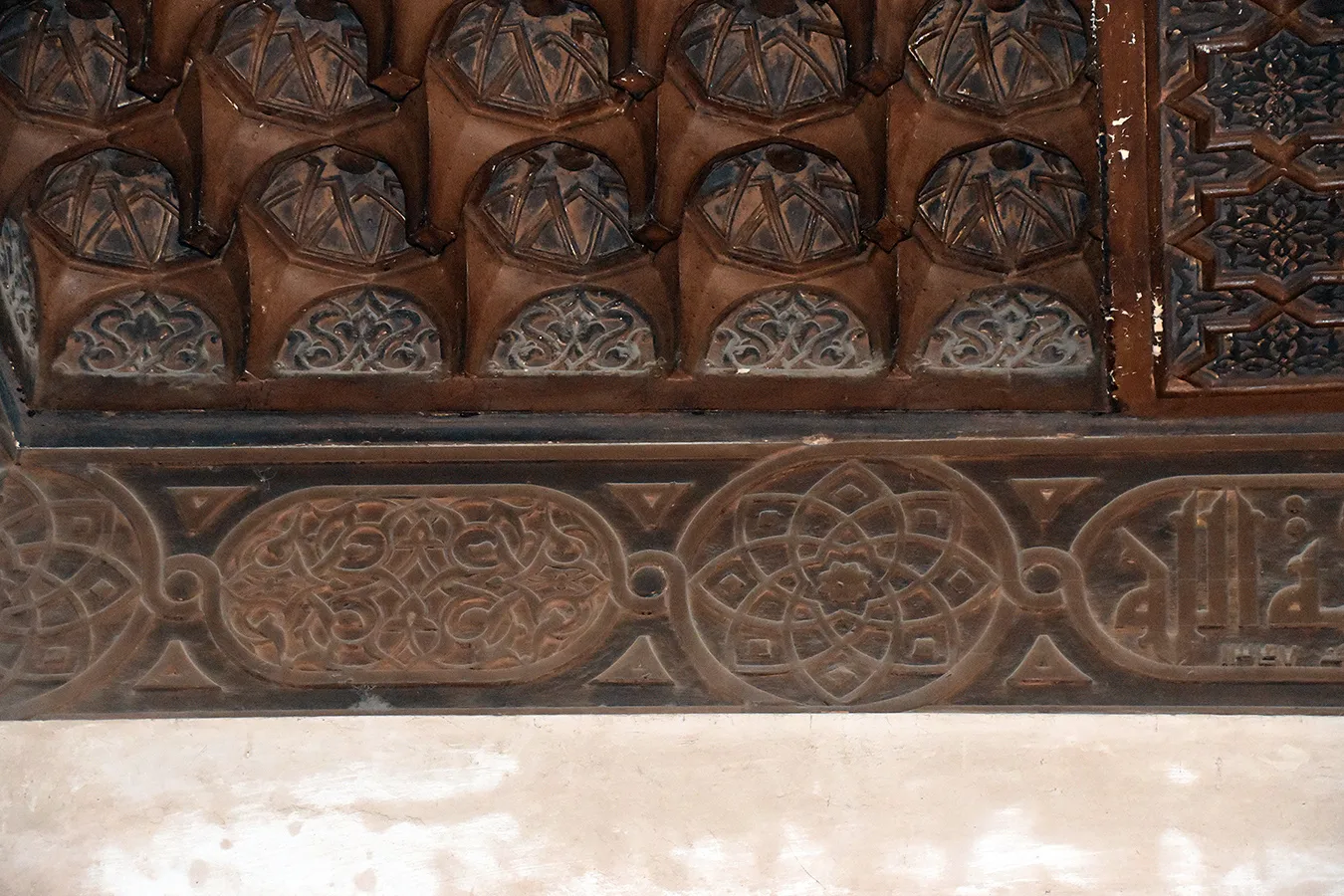
| Painted ceiling(s) | Yes | 1 | wood | Very elaborately carved (but not) painted coffered ceiling |
| Decorative paving(s) | No |
Unusual or unique features
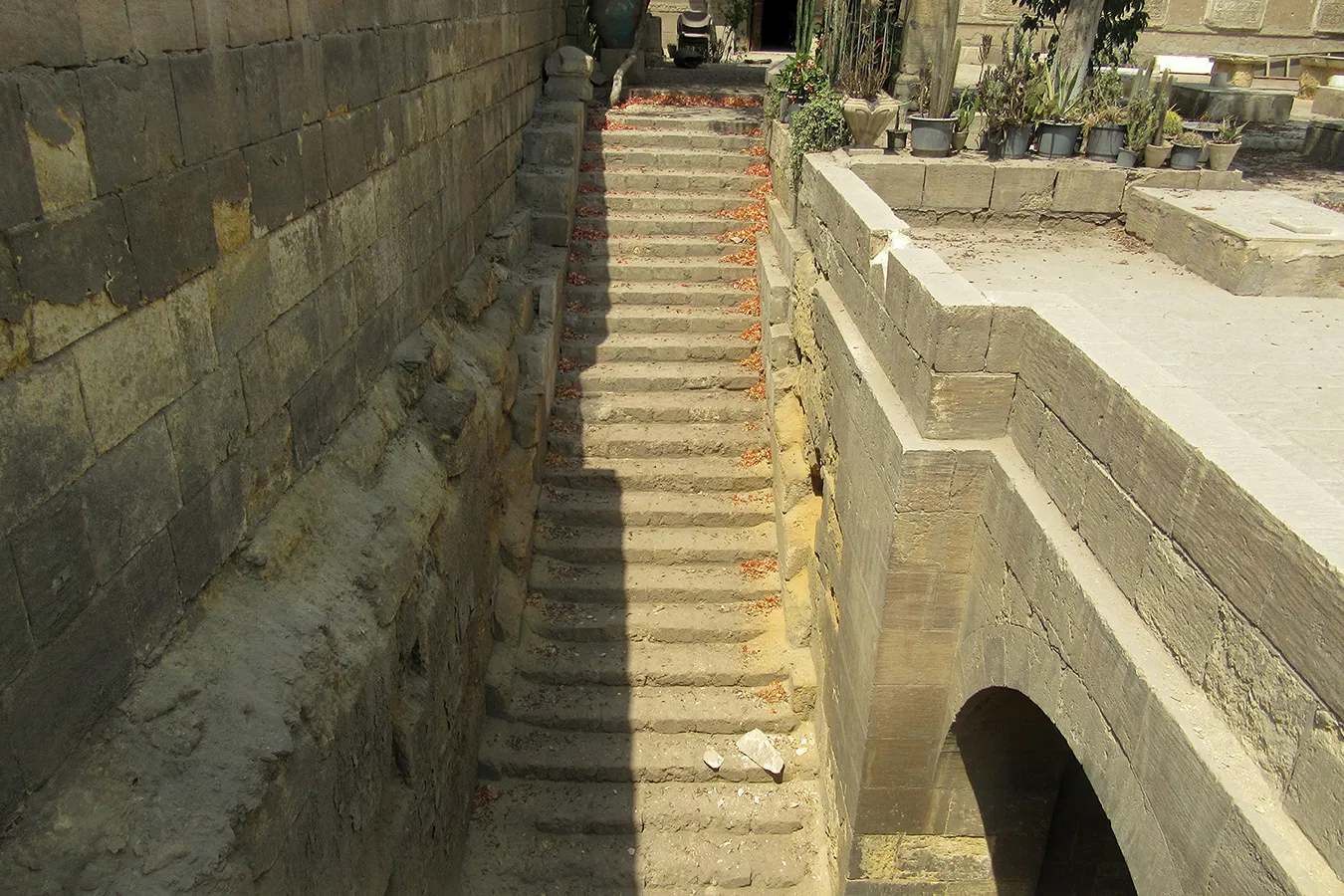
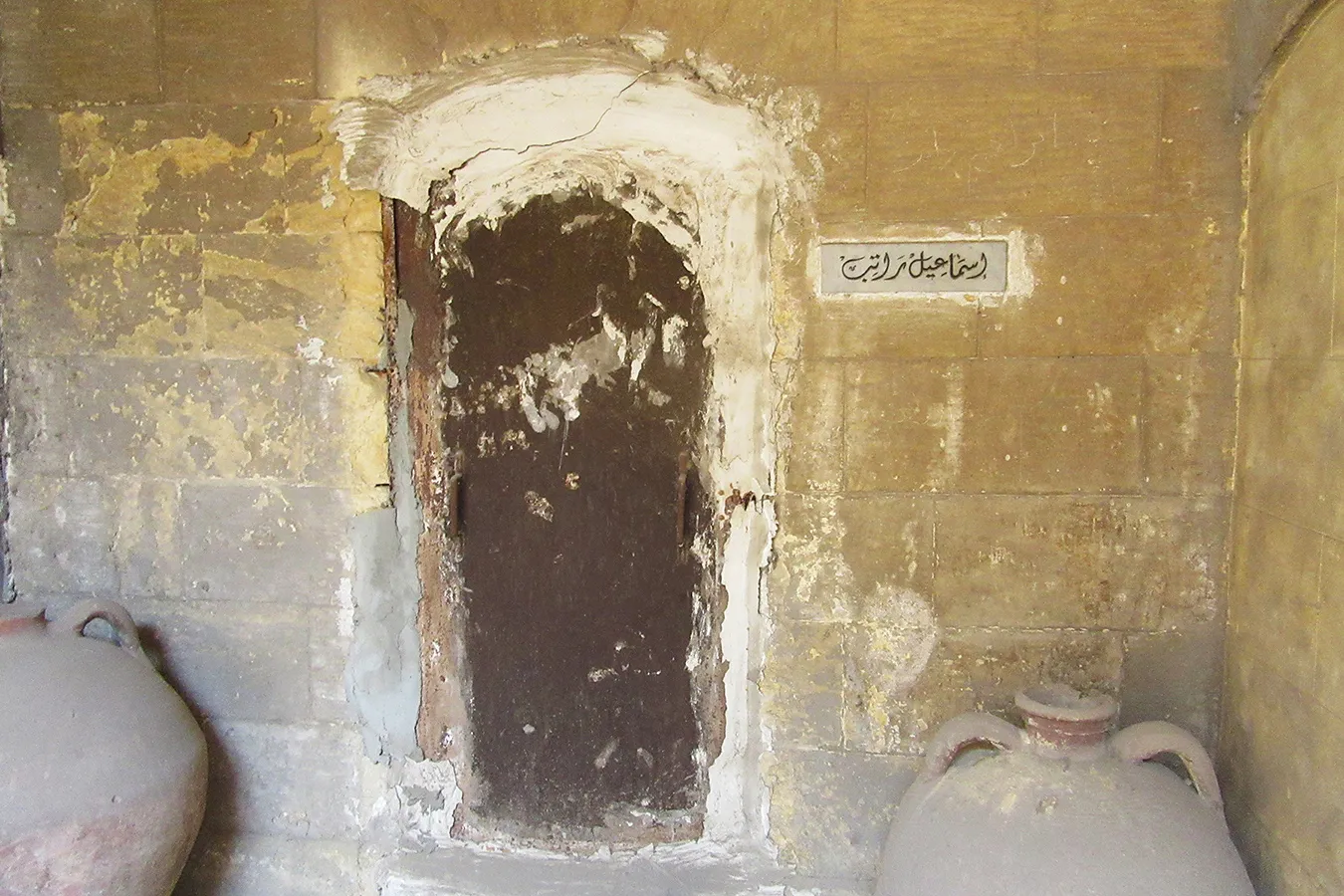
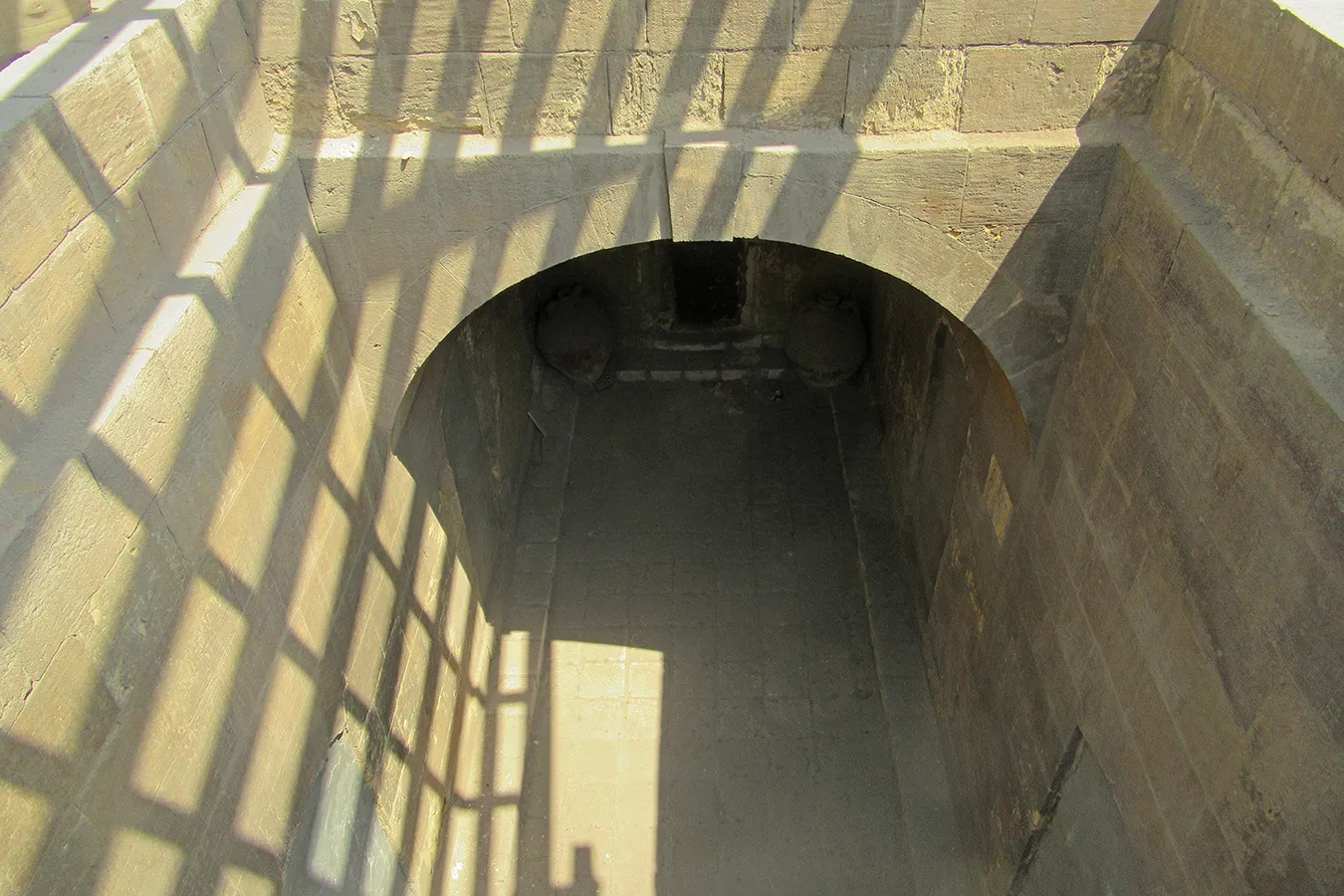
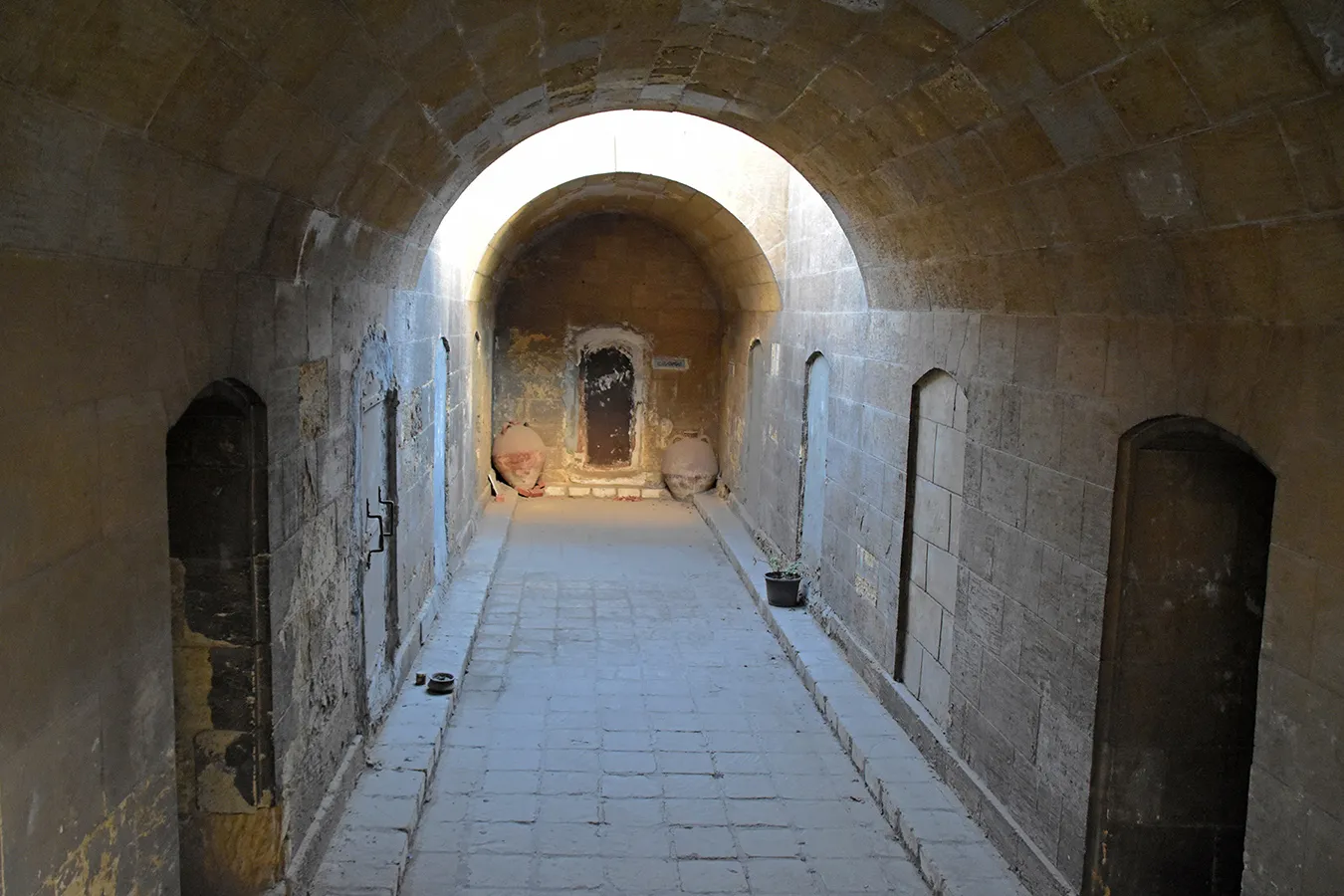
• Set of underground crypts facing a subterranean passage accessible through external stairs and lit by a light-shaft.
• Extremely high quality of woodwork, metalwork, and stucco decoratio.
Description (The direction towards Mecca (Qibla) is described as eastern and other directions are named accordingly)
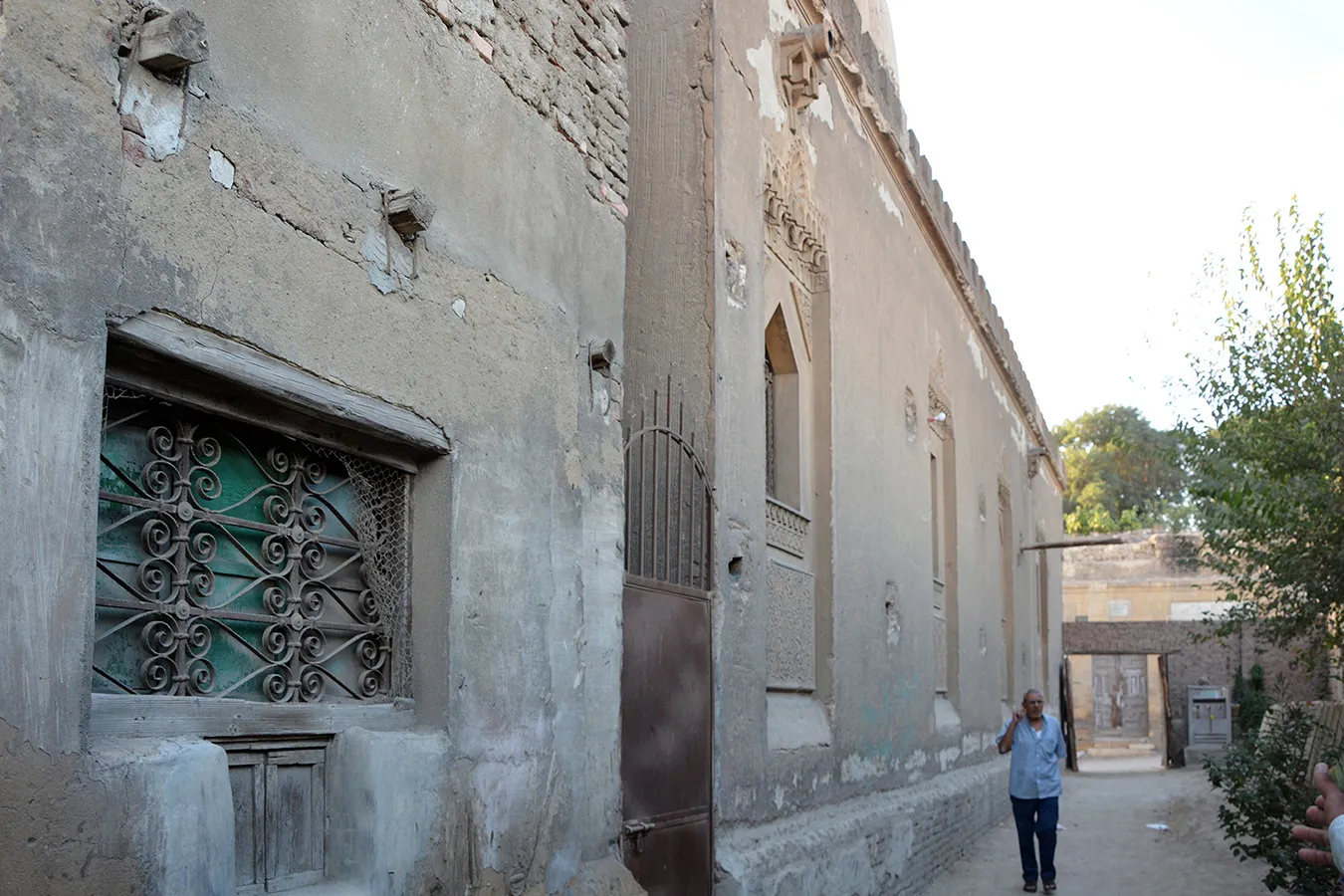
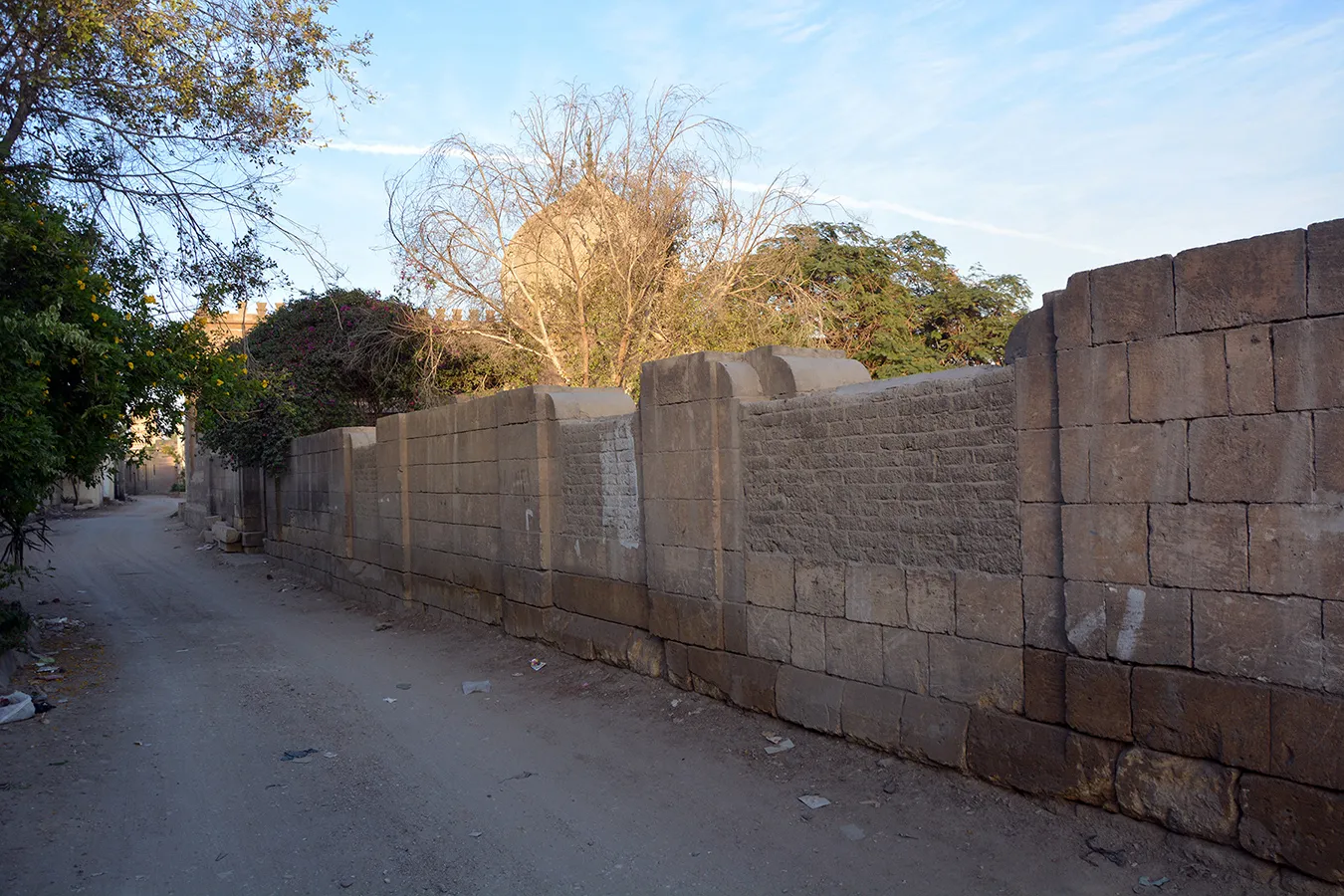
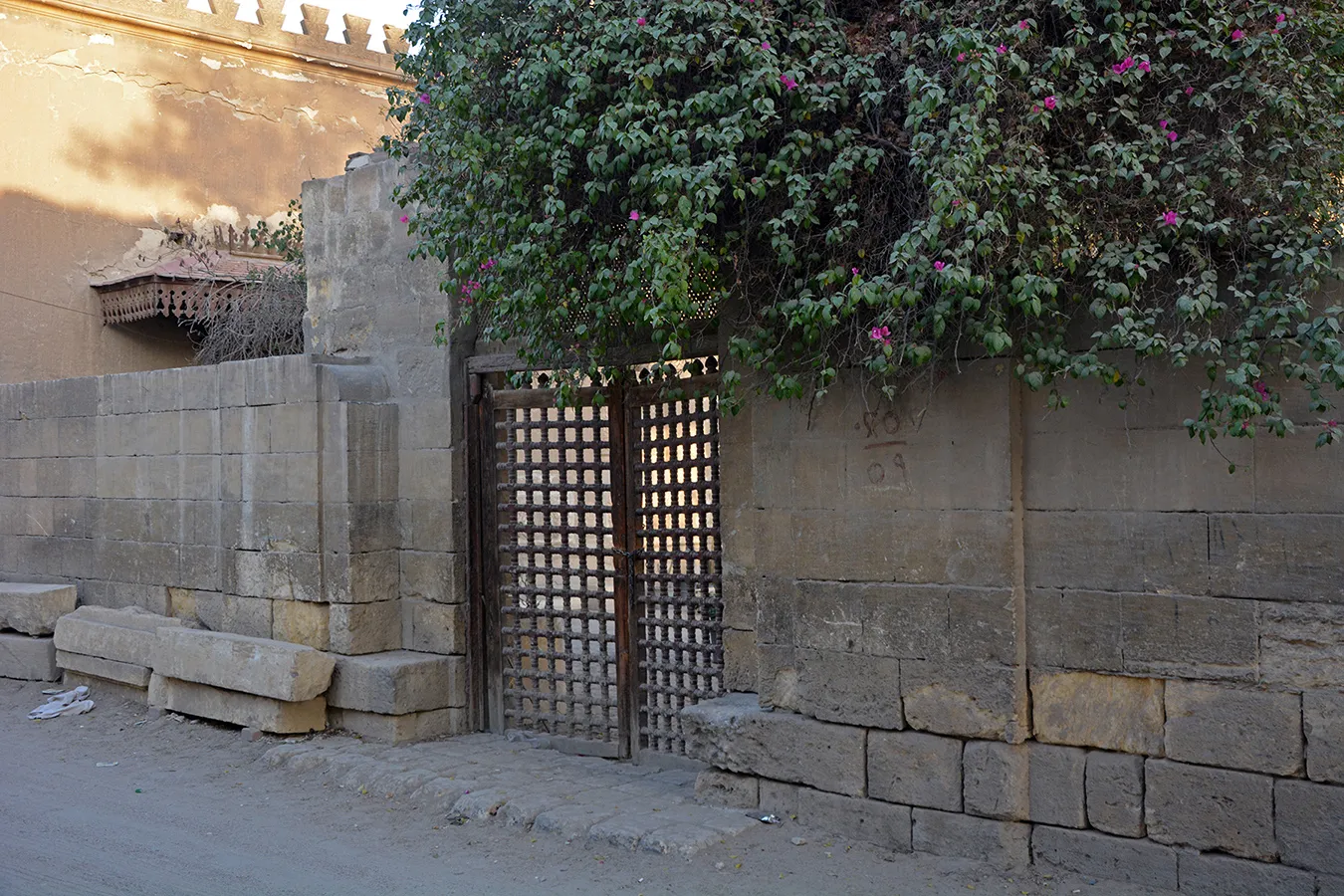
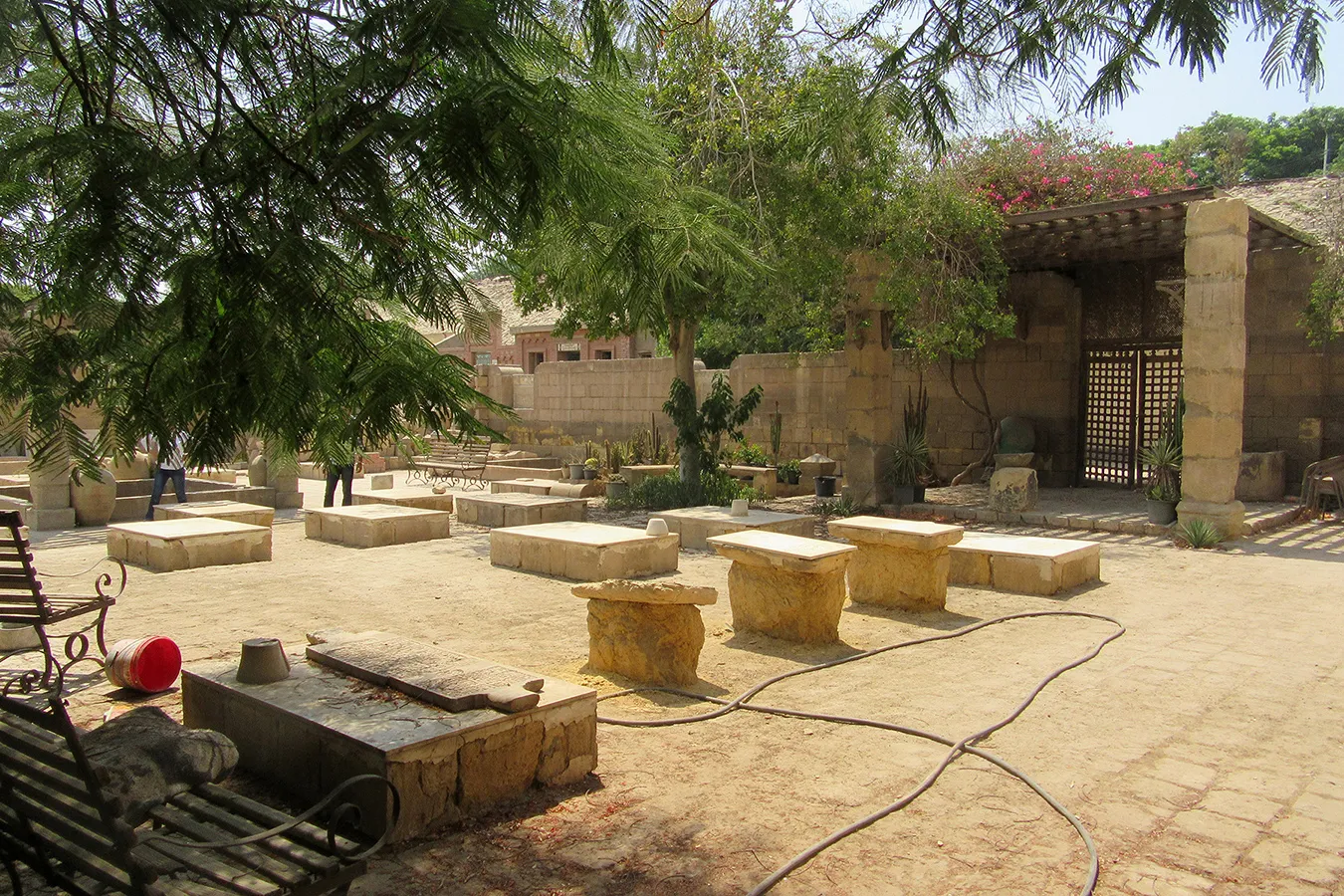
A large slightly irregular rectangular enclosure measuring ca. 37 x 19 m, with a huge building on the northern side of the enclosure.
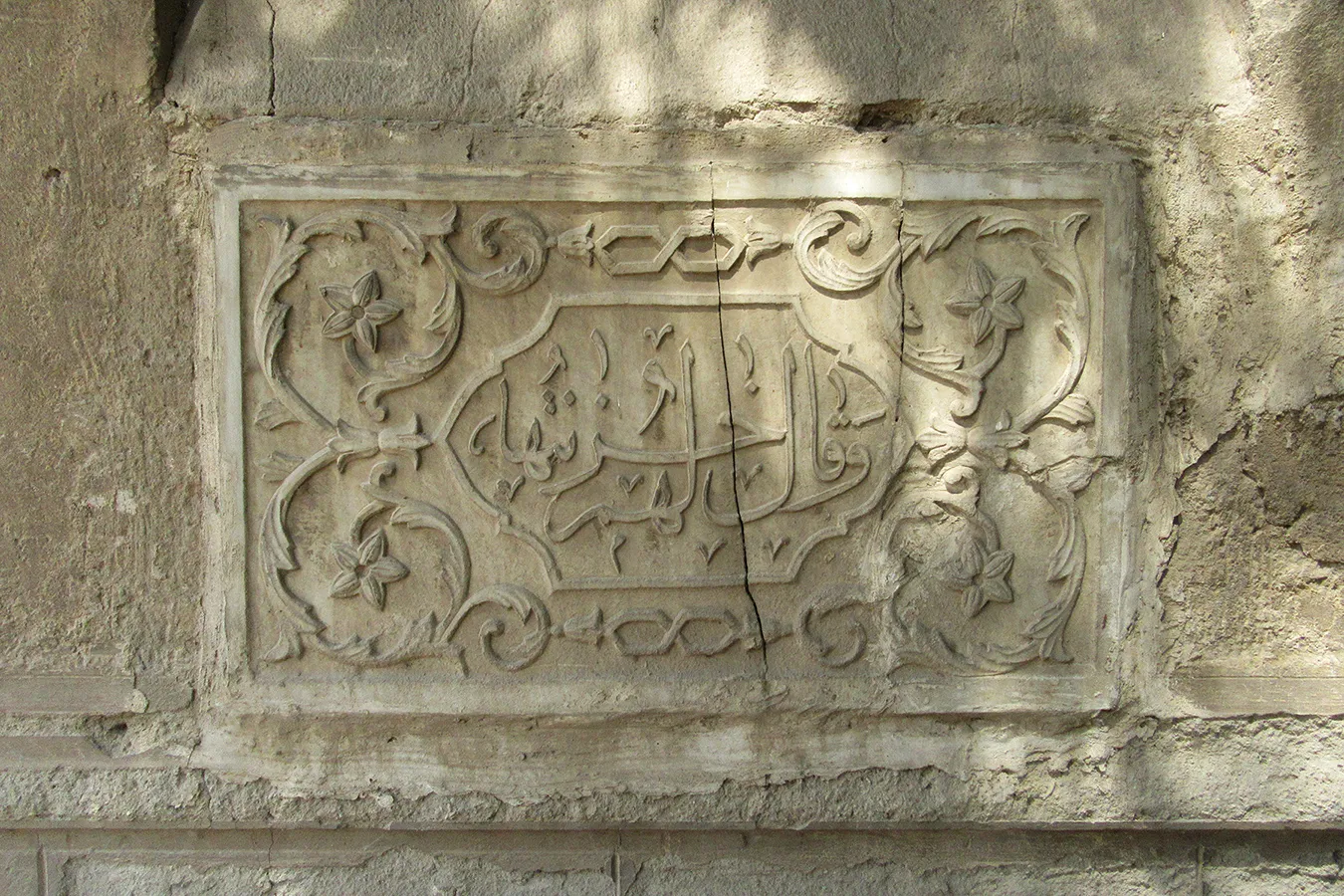
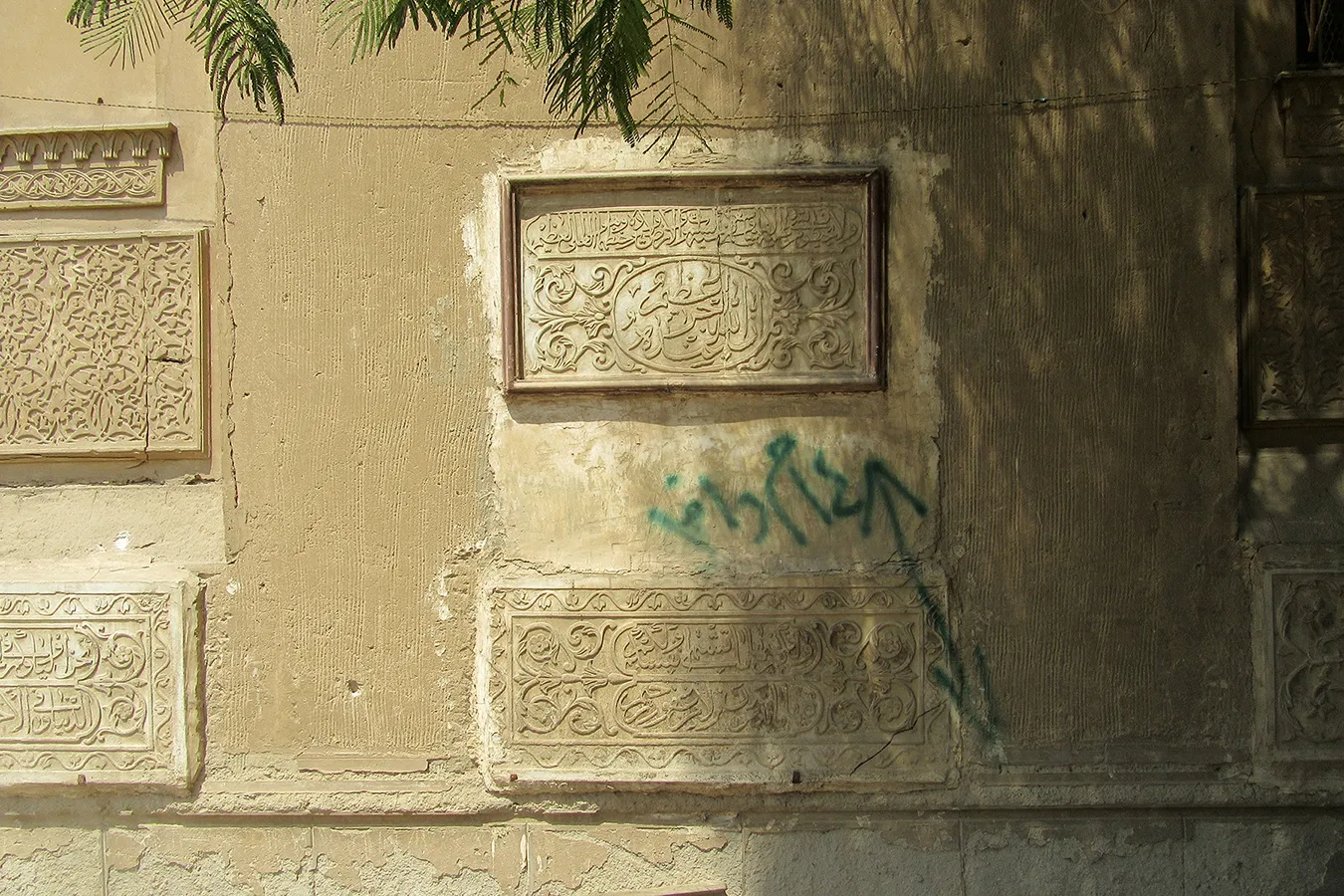
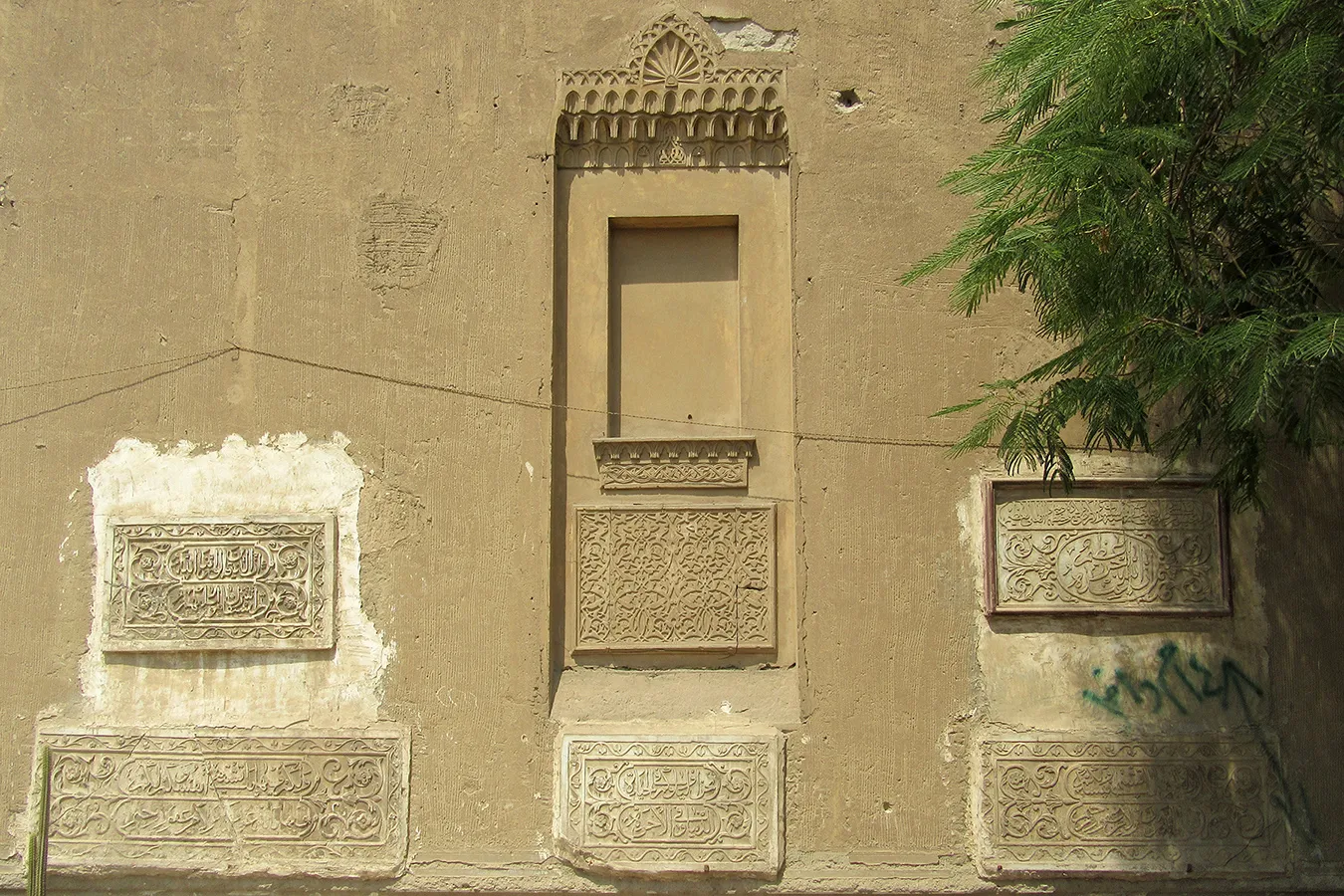
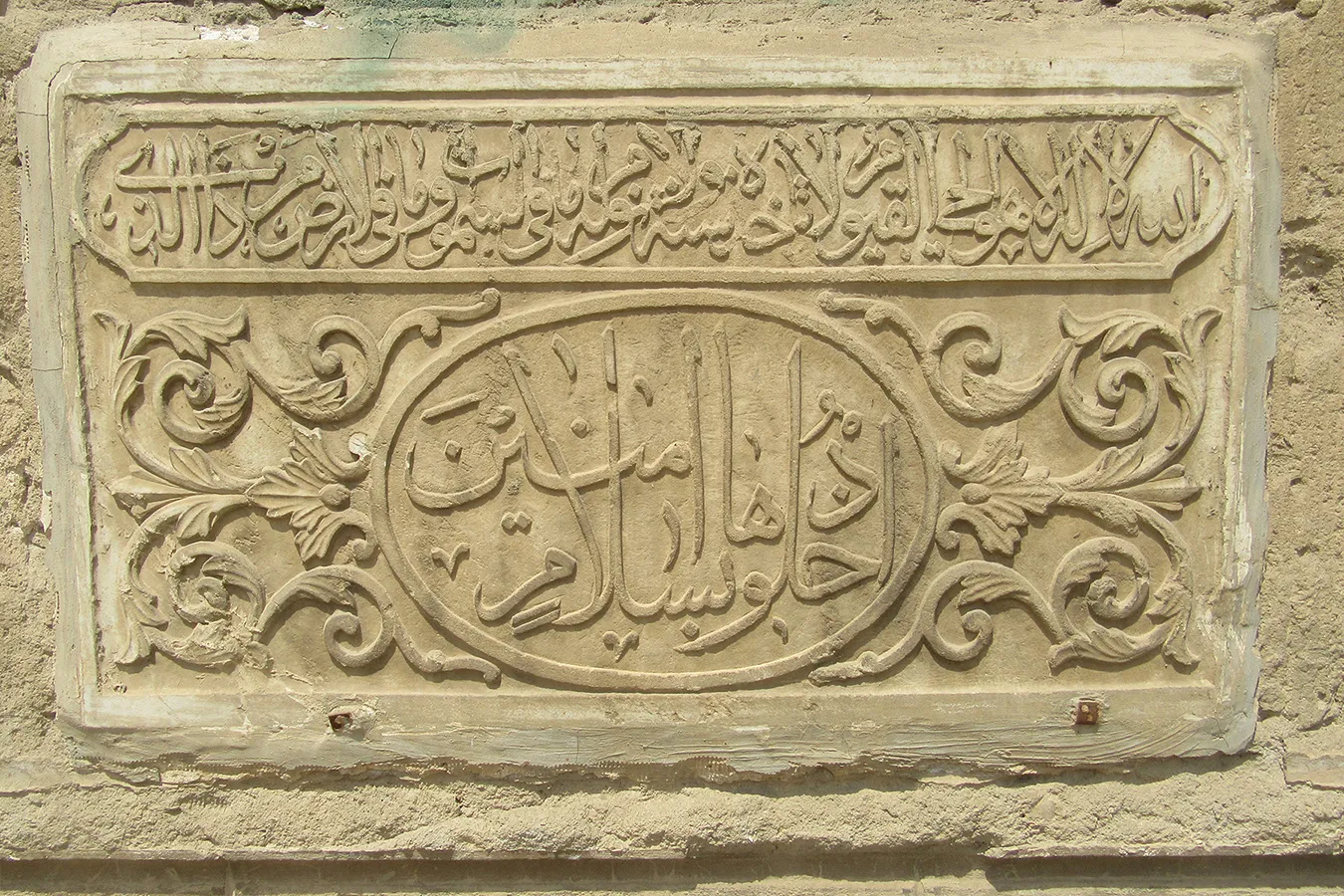
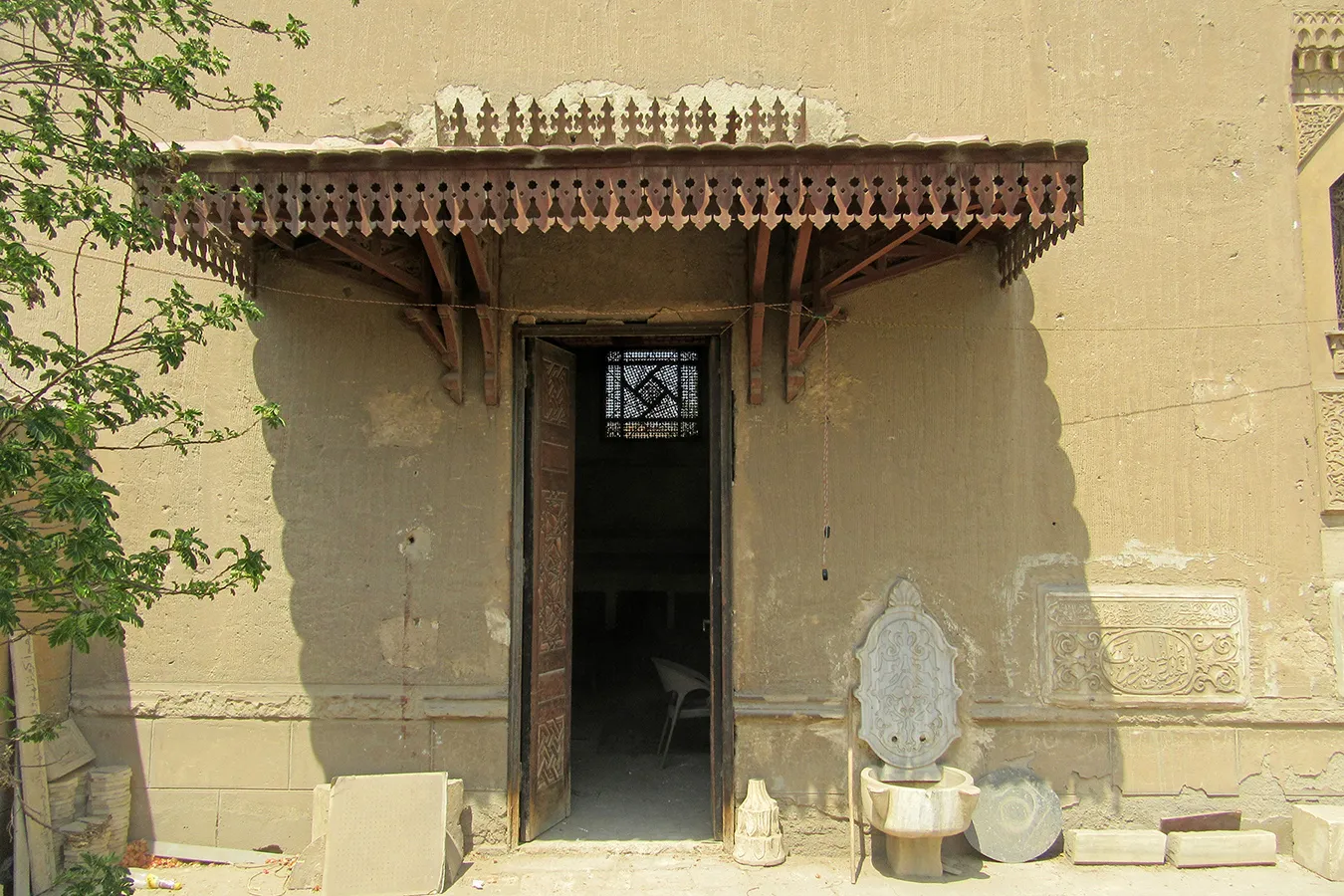
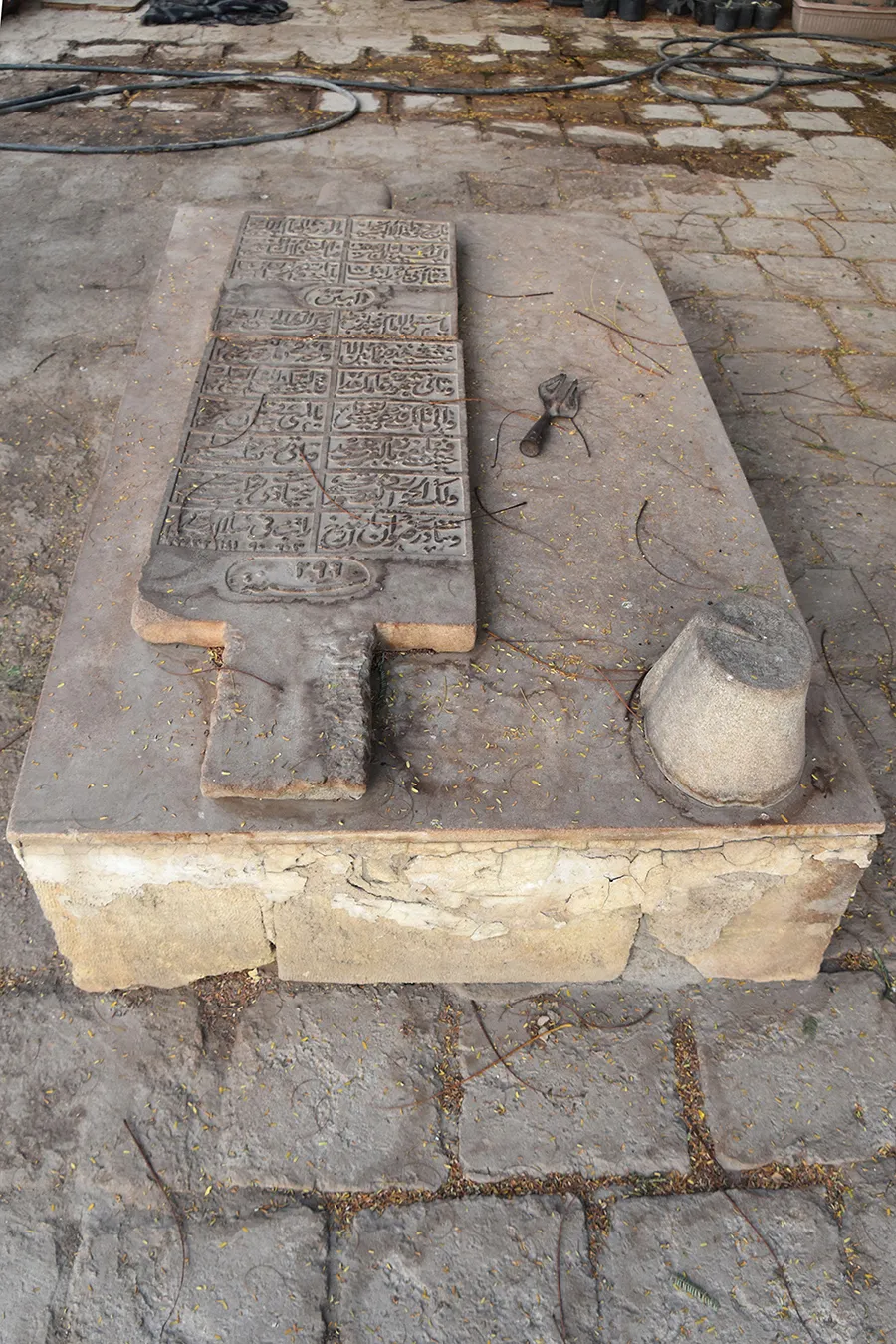
In the spacious courtyard are numerous (over twenty) simple masonry mastabas without shahid stelas typical of Muslim tomb markers. Carved marble panels apparently from dismantled cenotaphs are mounted on the S wall of the main building, and some shahids lay on the mastabas. (See section 17). A marble wall-fountain in Ottoman Baroque style, apparently transferred from elsewhere, is also mounted on the wall next to the entrance to the main building.
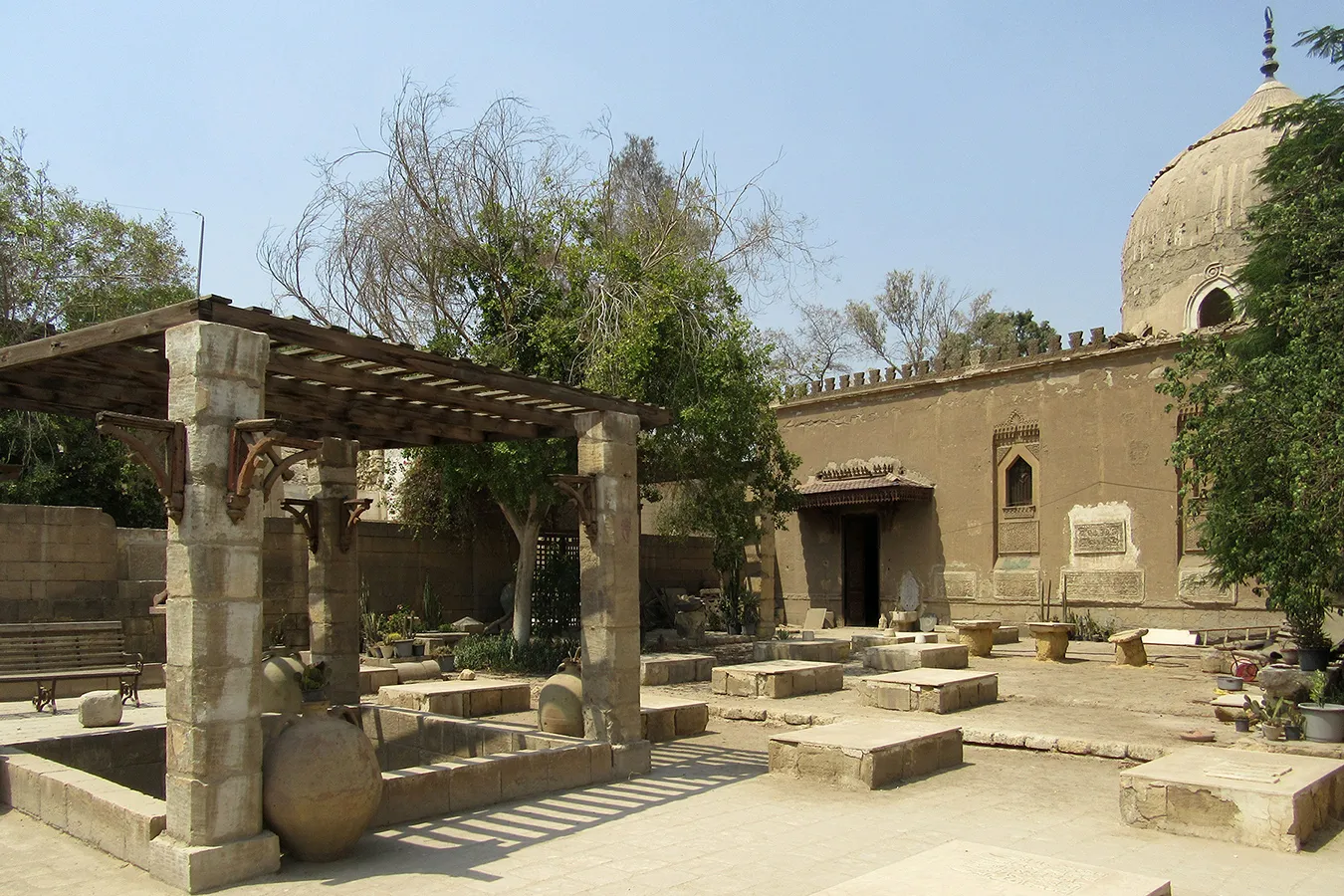
By the western wall of the enclosure, a straight flight of stone stairs leads from the northern side to a subterranean barrel-vaulted corridor of stone masonry, with walled-up doors leading to burial crypts. The passage is lit by a large square light-shaft, over which stands a pergola of wood on stone piers.
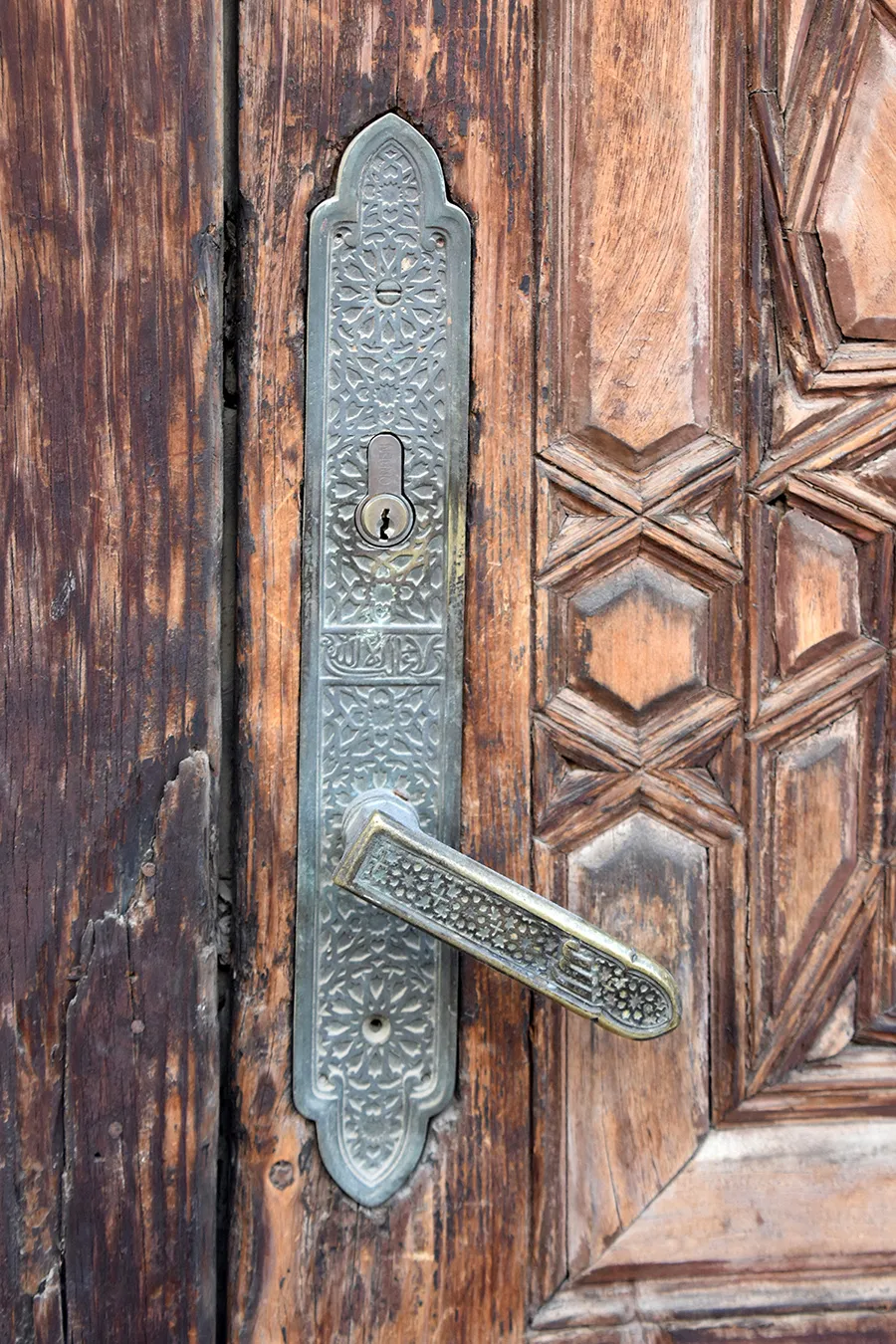
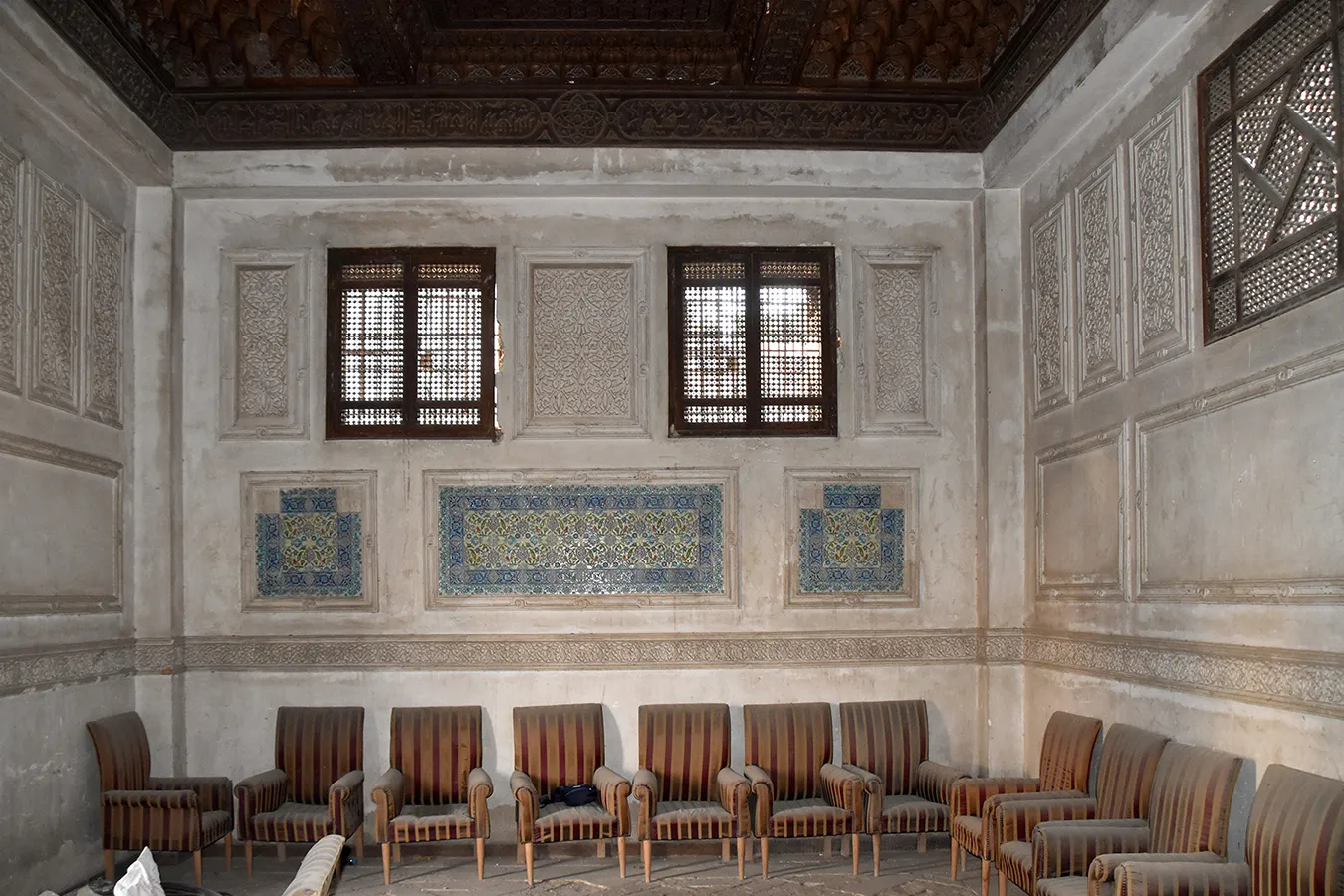
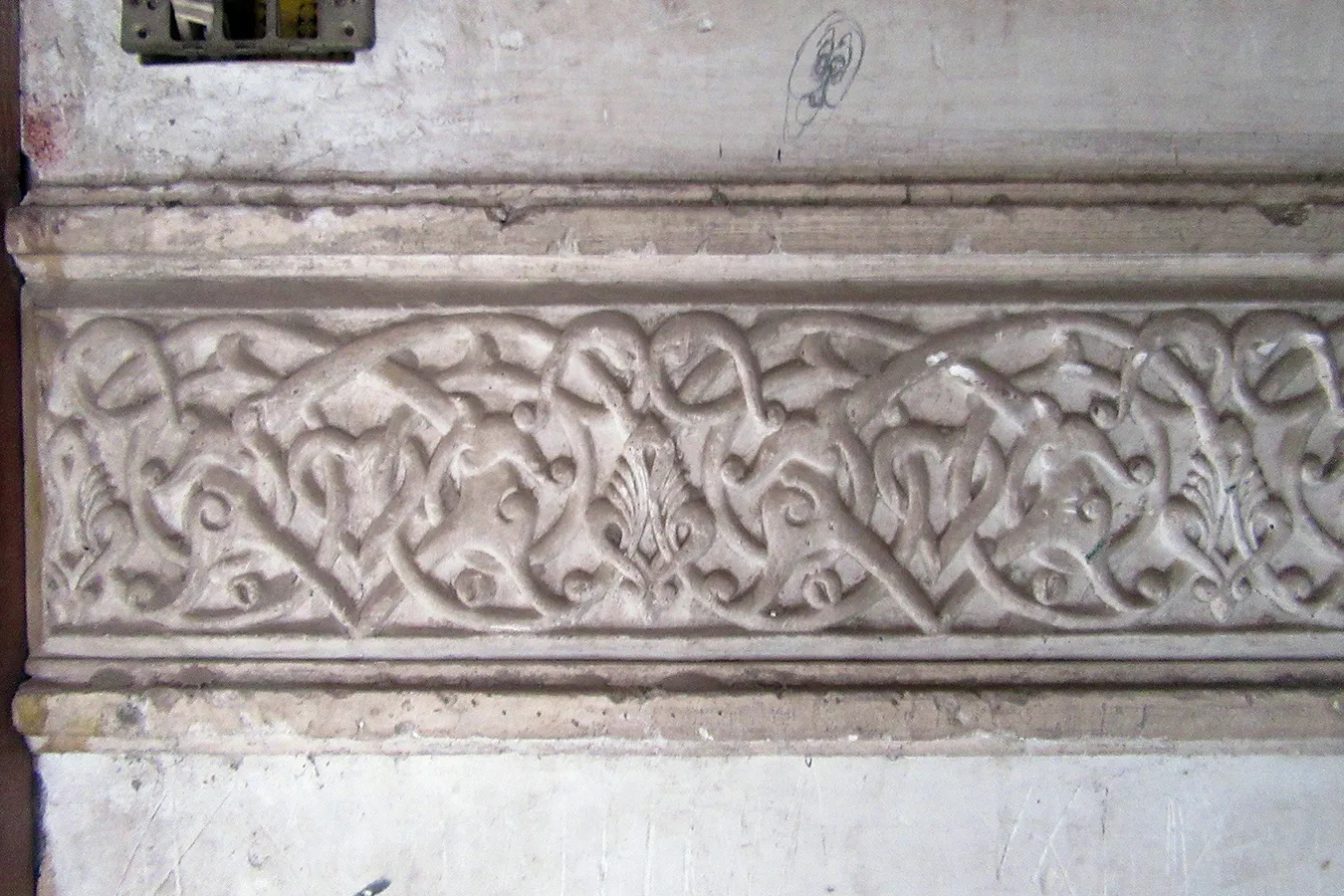
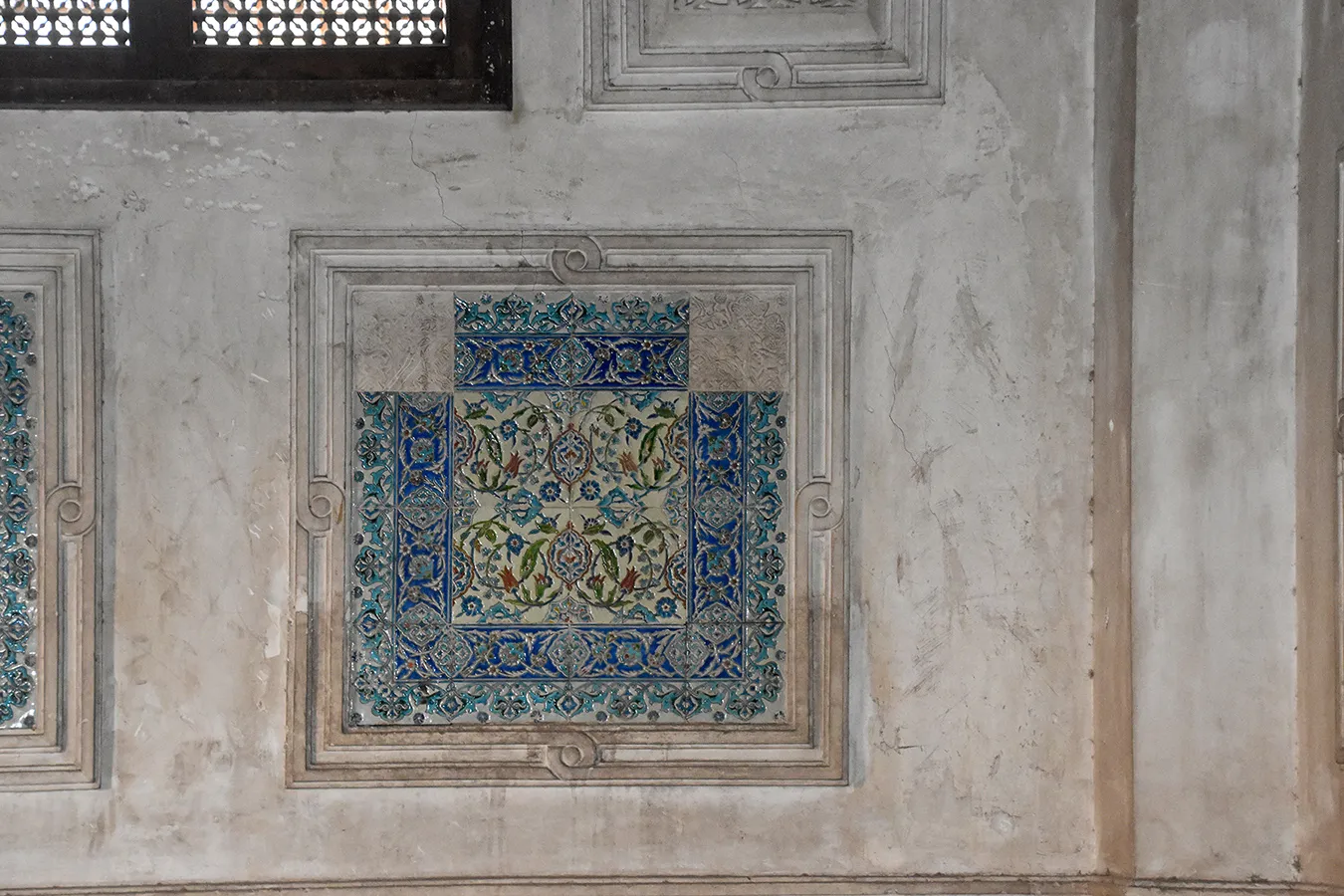
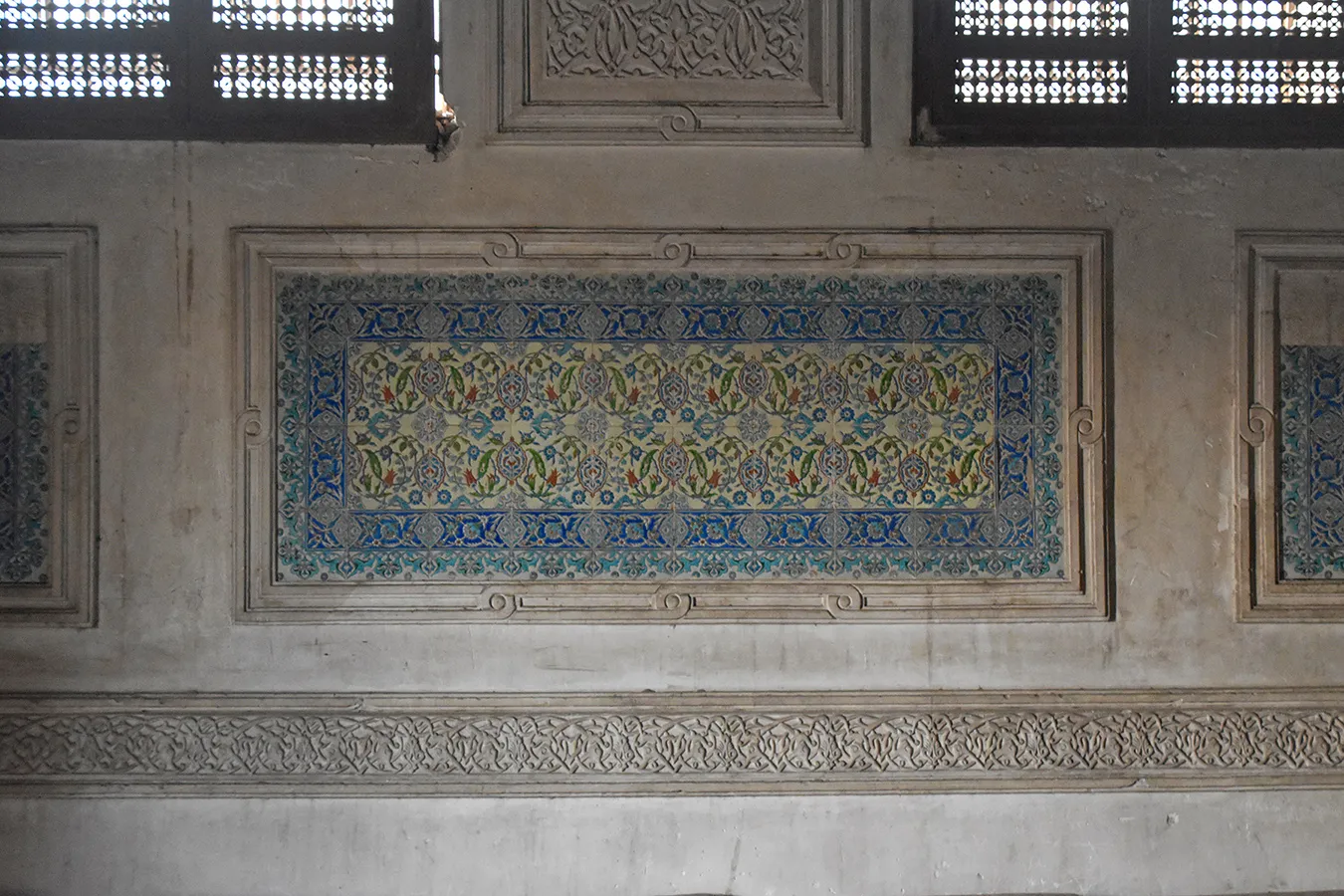
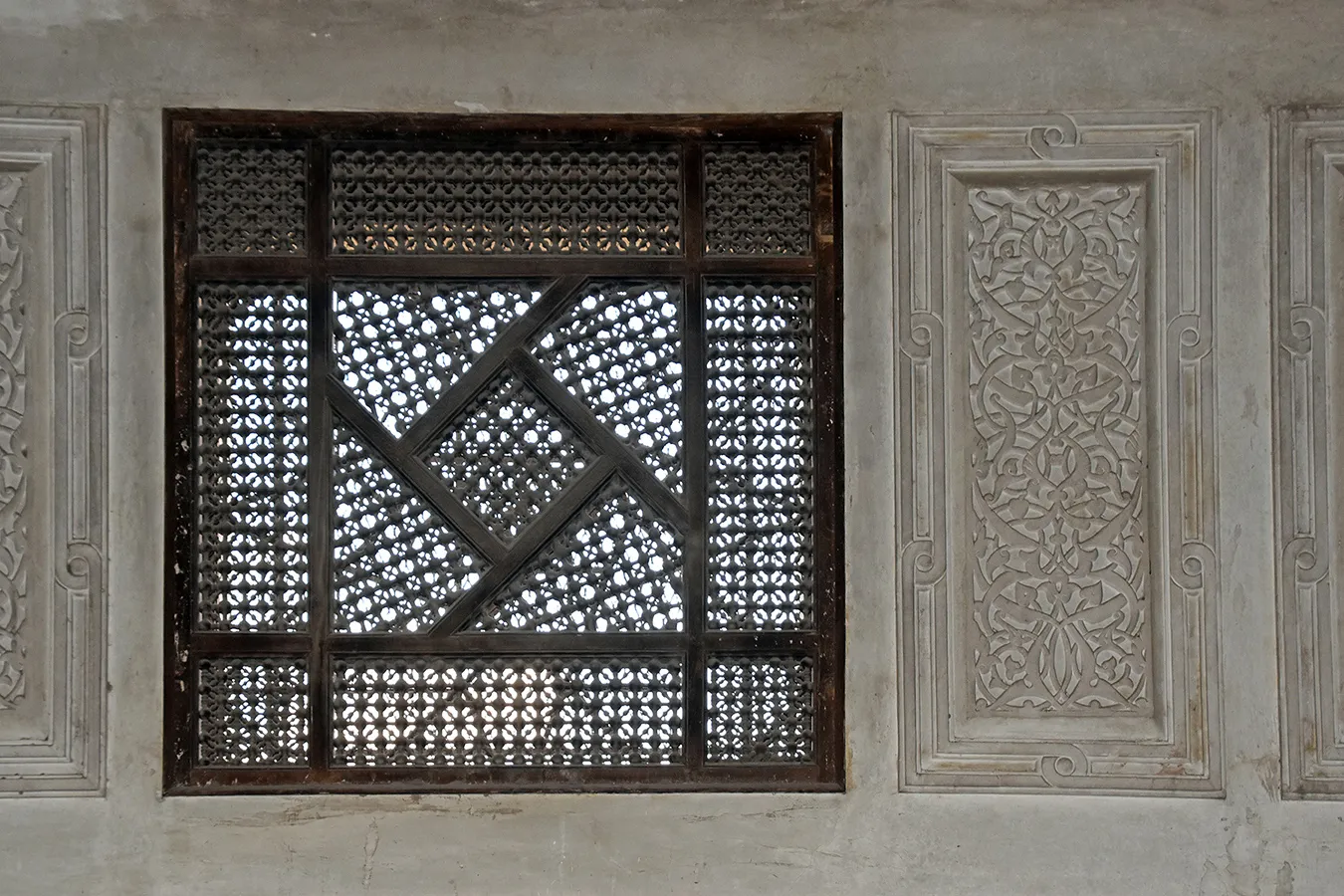
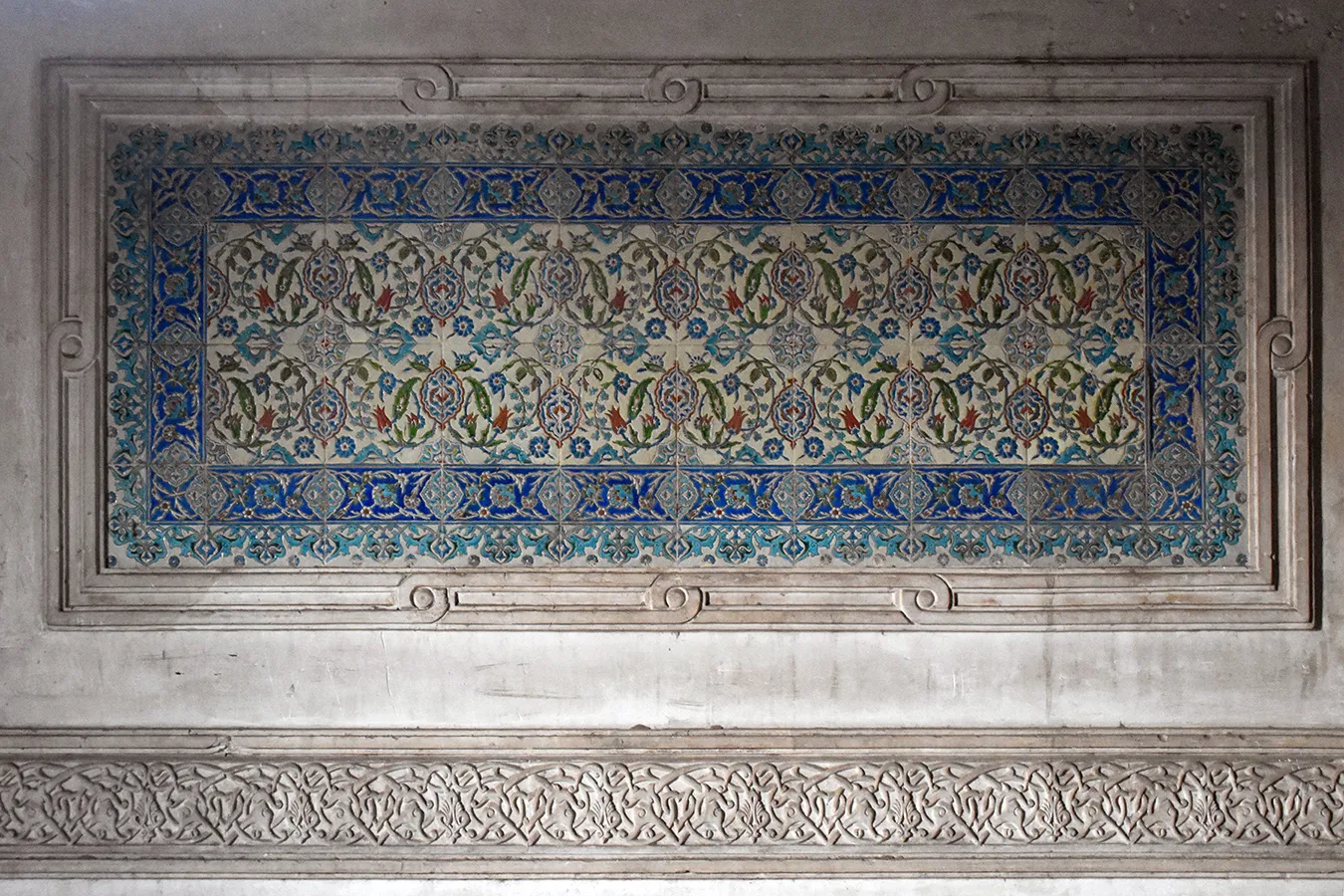
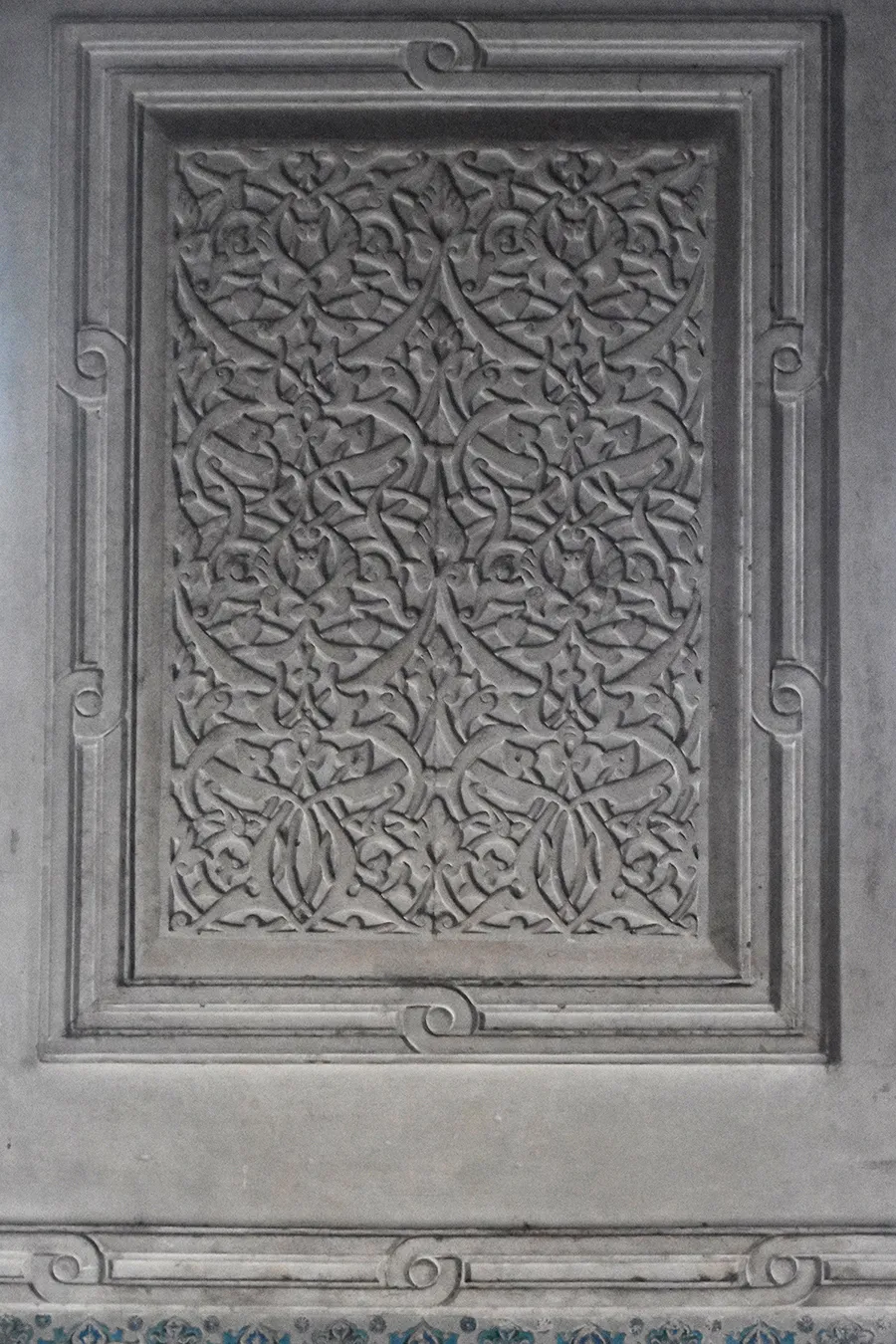
The entrance to main building on the N side of the courtyard is shaded by an elaborate wooden eave on decorative wooden brackets. The door-leaves are of high-quality elaborate geometric paneling, with elaborate brass fittings decorated with floral scrolls and inscriptions. The door leads to a square entrance hall at the W end of the building. This sitting room (equipped with armchairs) is decorated with stucco panels of elaborate arabesque floral scrolls in knotted mouldings frames and a band of stucco floral scrolls around the walls at breast-heighth. On the western wall is a long rectangular panel of Ottoman-style ceramic tiles framed in knotted mouldings and framed by two similar square panels. In the northern wall is a square window with a mashrabiya grille in the mafruka form. The entrance hall is covered with a very elaborate wooden ceiling, with “stalactite” coffers, geometric decoration and an inscription band in the frieze.
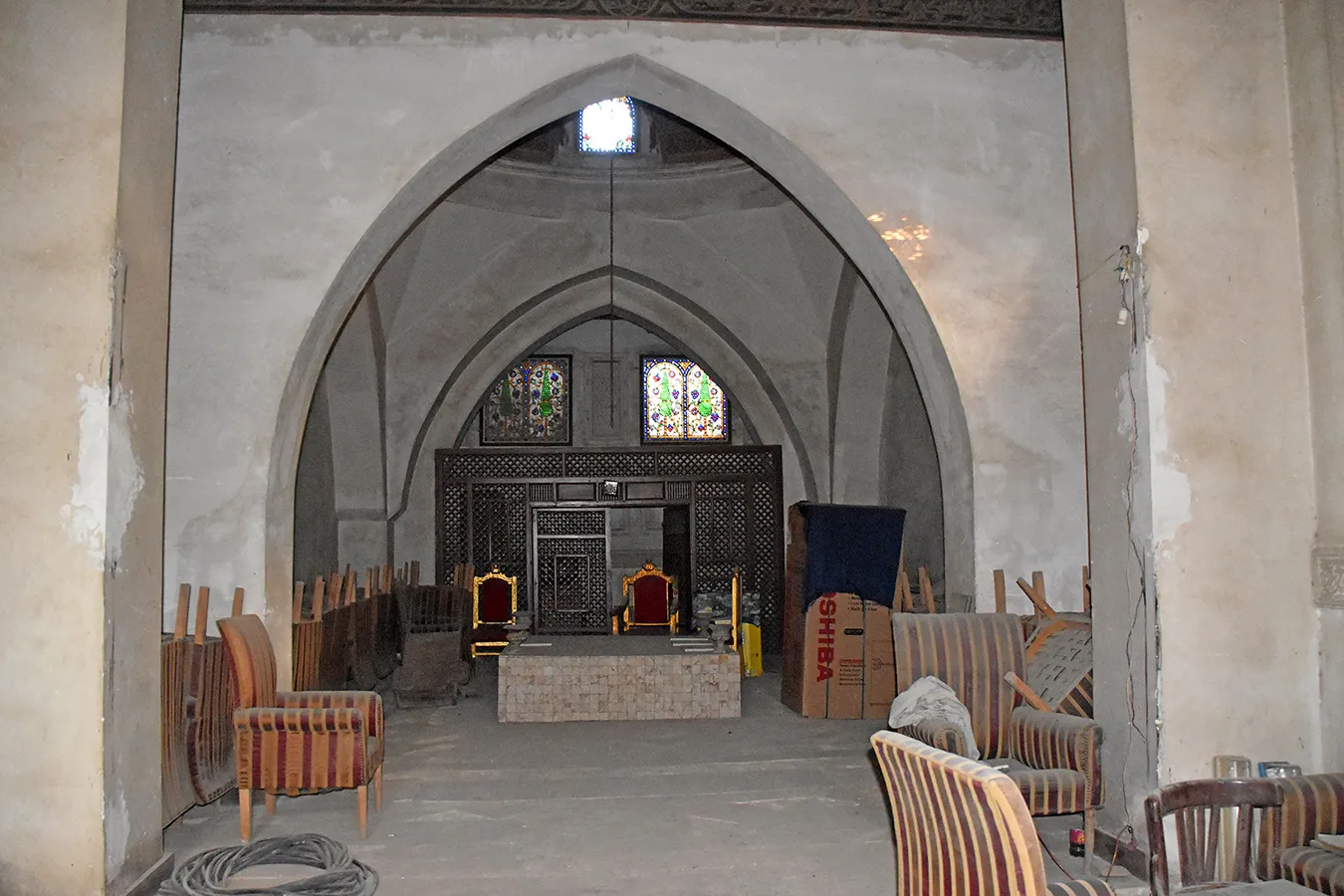
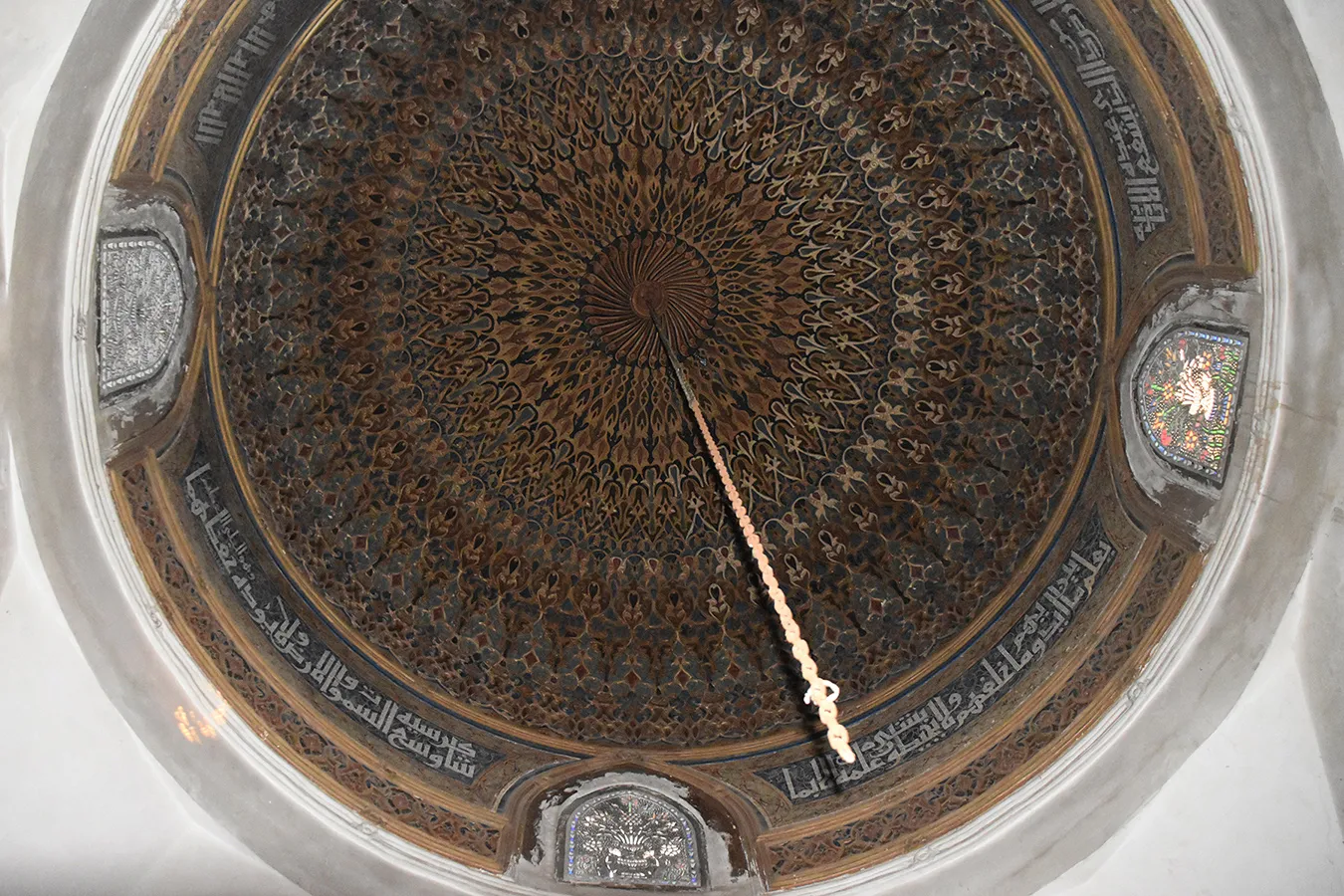
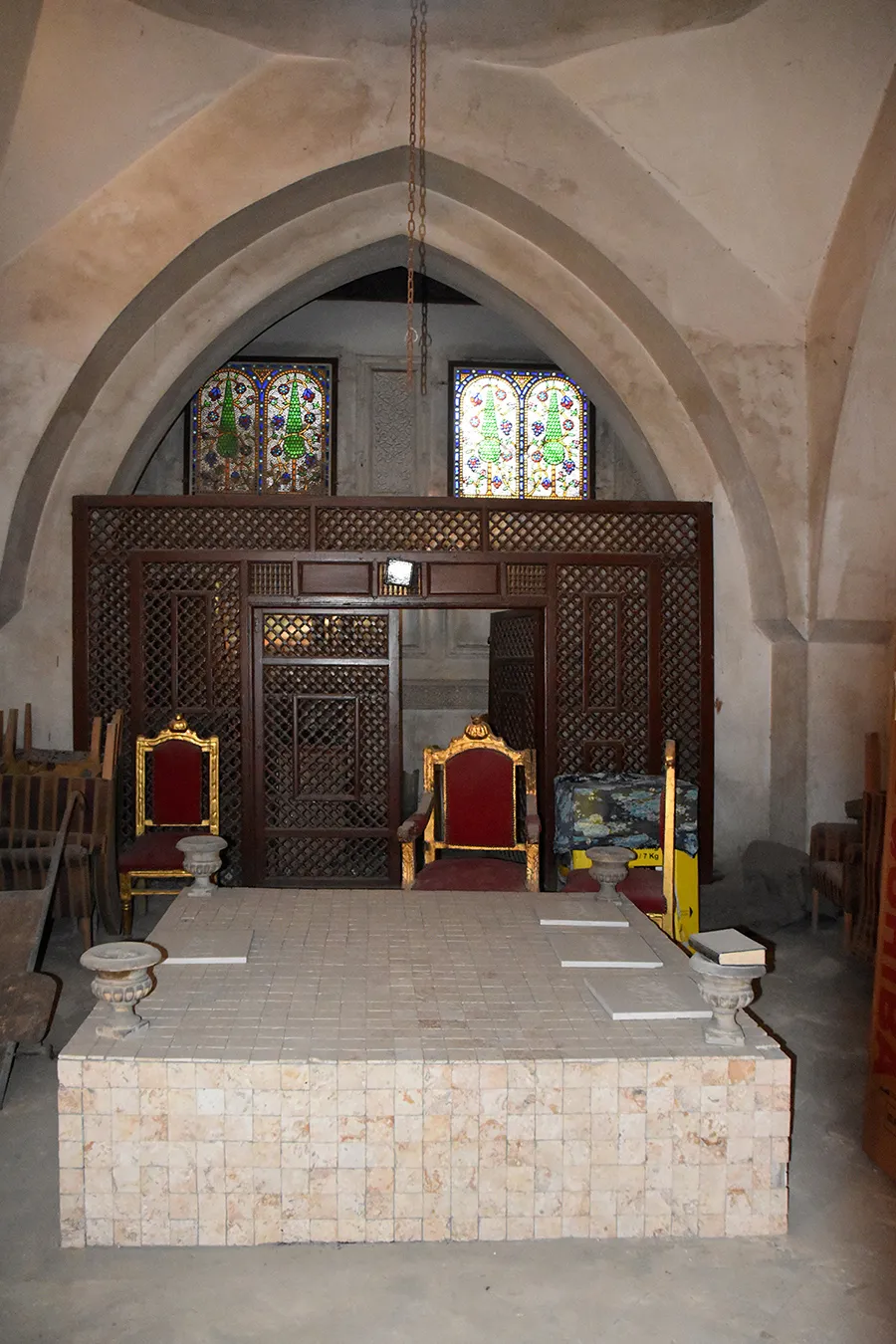
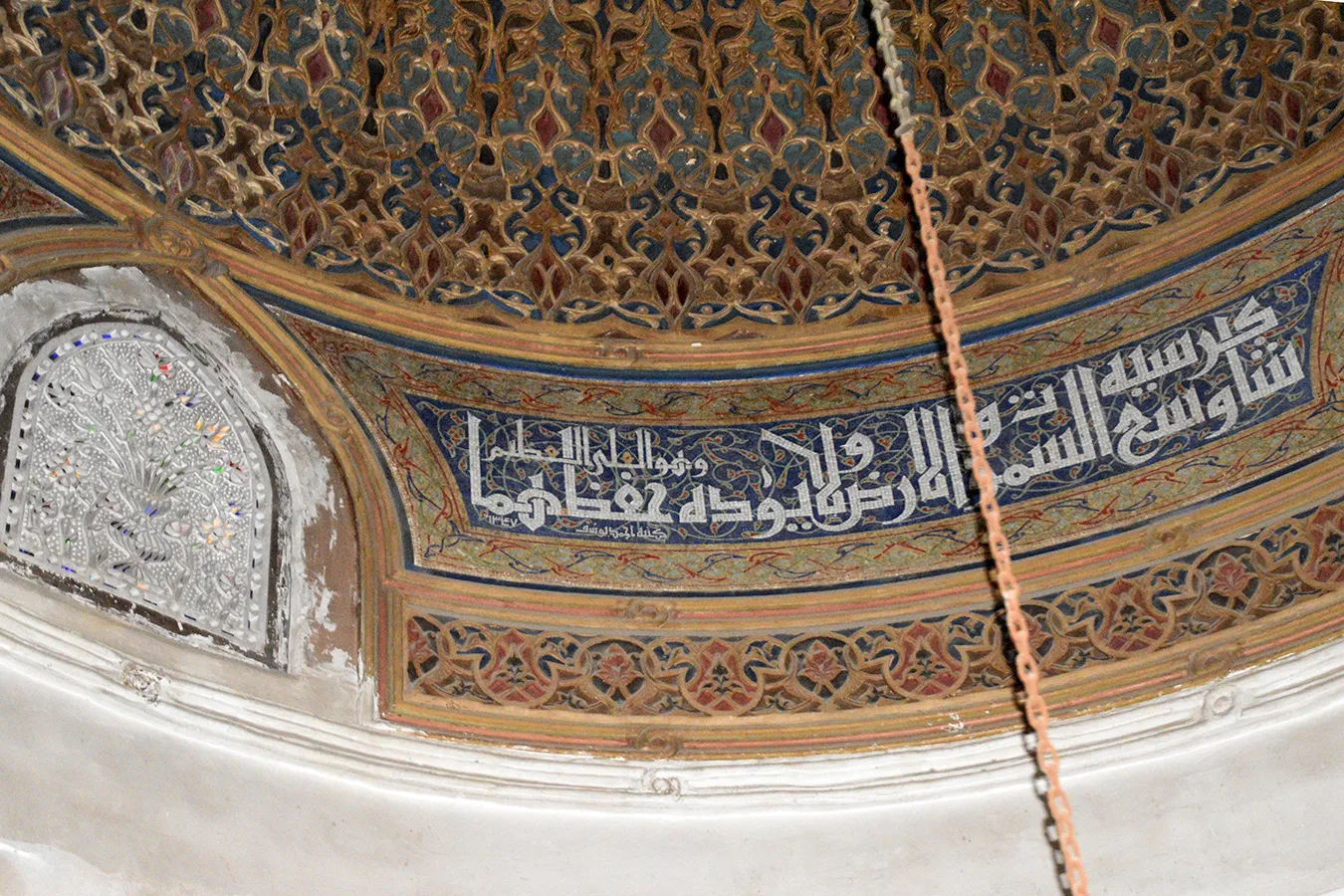
The entrance hall opens with a wide opening on the central domed chamber, which it adjoins via a simple narrow room. The dome rests on four pointed arches, two of which open onto the side rooms. The drum is pierced with four windows with qamariyat grilles. The dome interior and drum are richly painted in elaborate colourful geometric patterns. A Kufic inscription band runs around the drum. Internally, the zone –of-transition is formed by two plain triangular planes set at an angle in each corner. Under the dome is a low dais, square in plan and clad with stone tiles, on which lay four plain marble slabs with names (but no dates or other information) in incised calligraphic script.
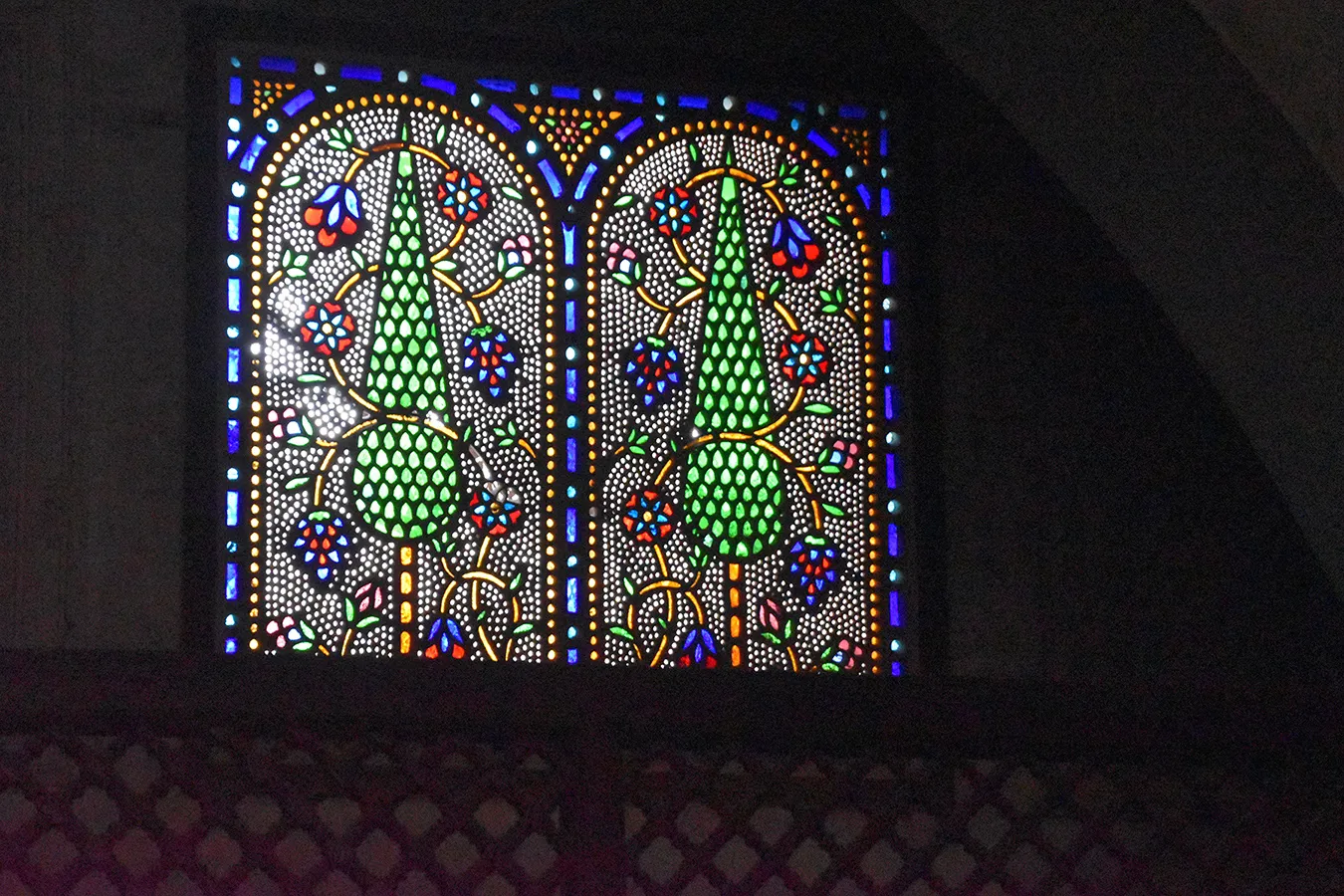
To the east of the domed chamber is a room separated from it by a wooden mashrabiya screen. The walls of the room are decorated with stucco panels similar to those in the western hall. The windows covered with semi-circular arches are fitted with qamariyat gypsum-and-stained-glass grilles.
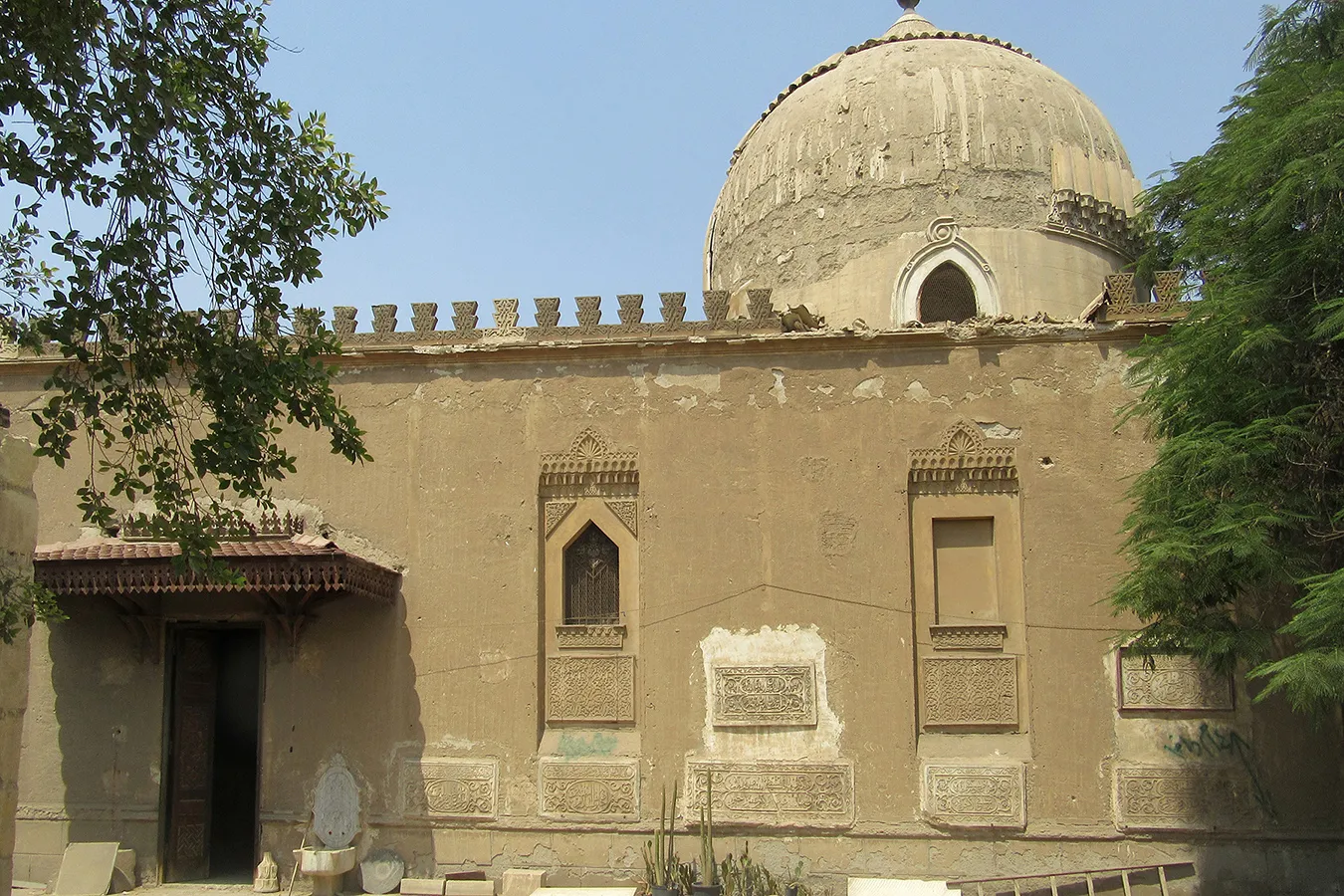
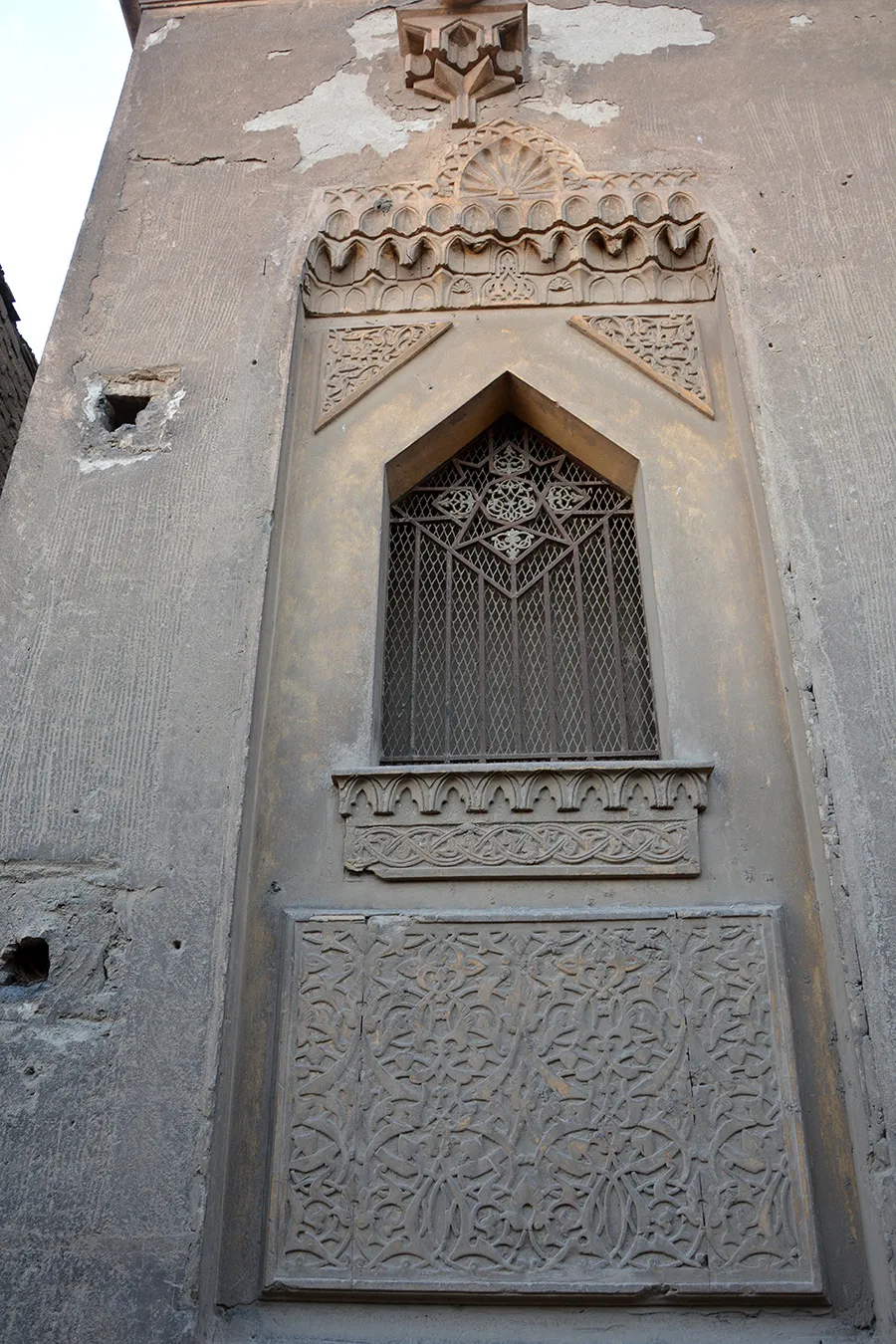
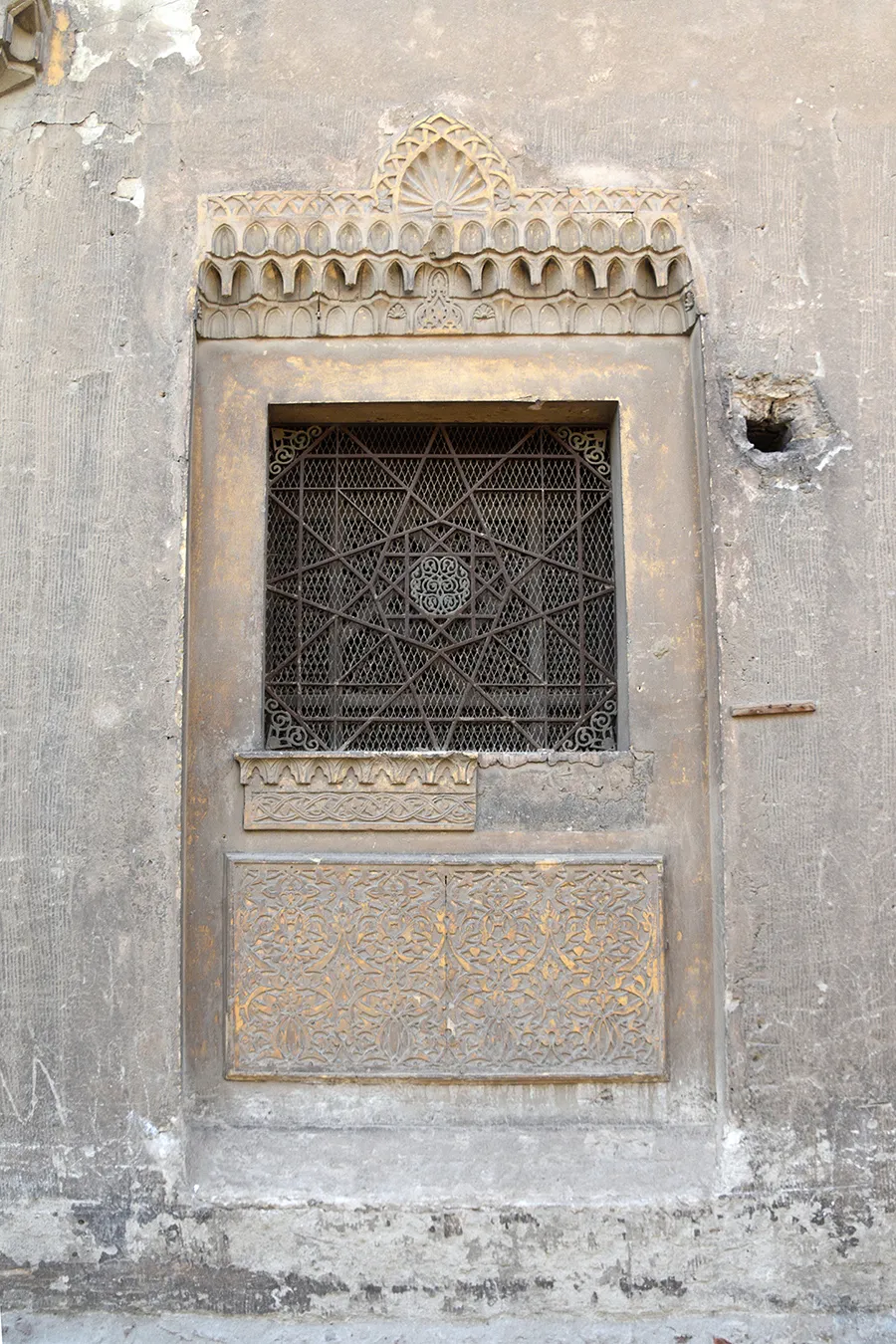
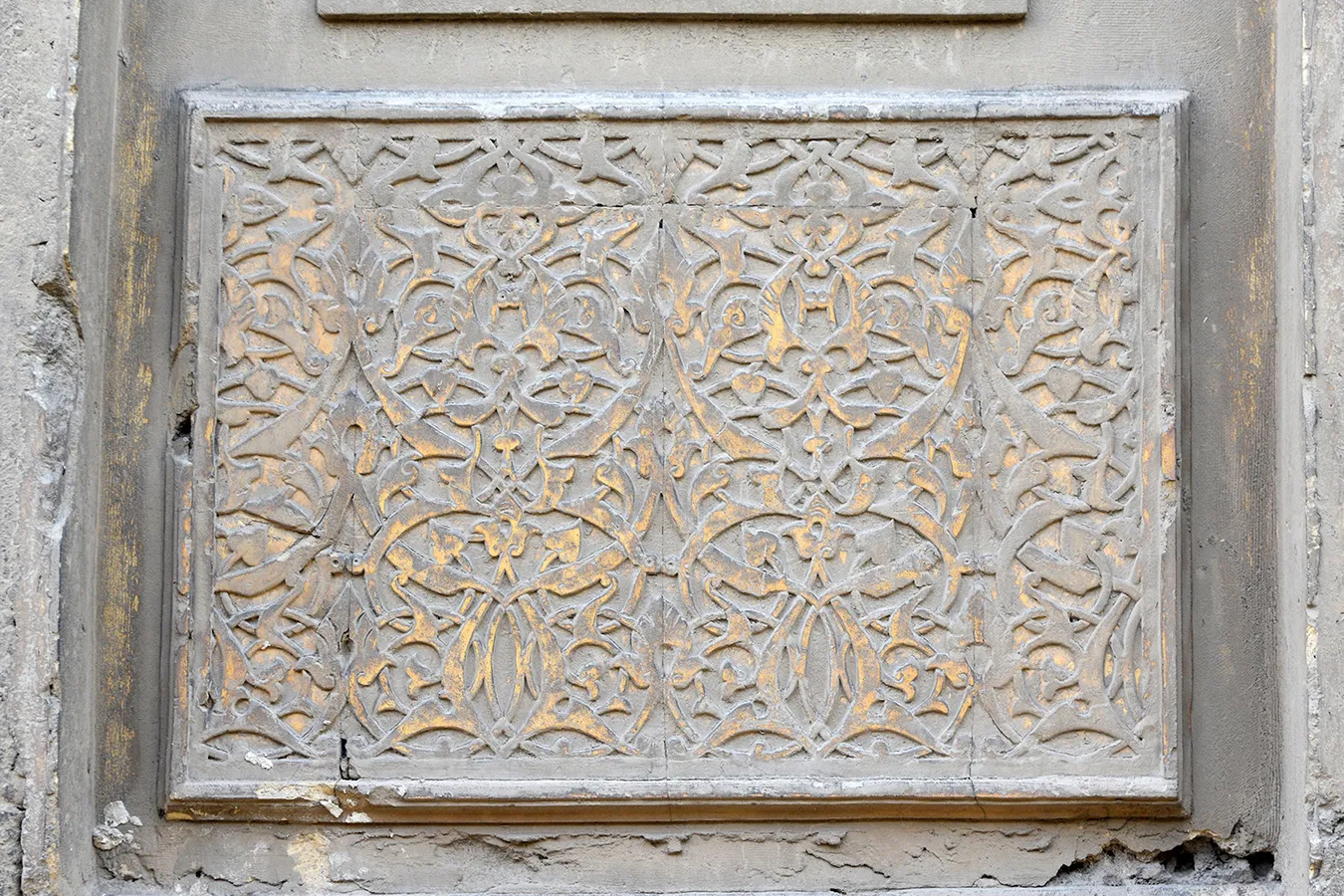
External façades are covered with plaster, with windows and blind niches set in rectangular recesses covered with muqarnas friezes, and with elaborate arabesque stucco panels beneath. The recesses are placed sparsely and asymmetrically. The entrance is to the side of the façade. The mausoleum is thus one of the few at the cemetery that does not employ Mamluk-style motifs on a strictly symmetrical Beaux-Arts design.
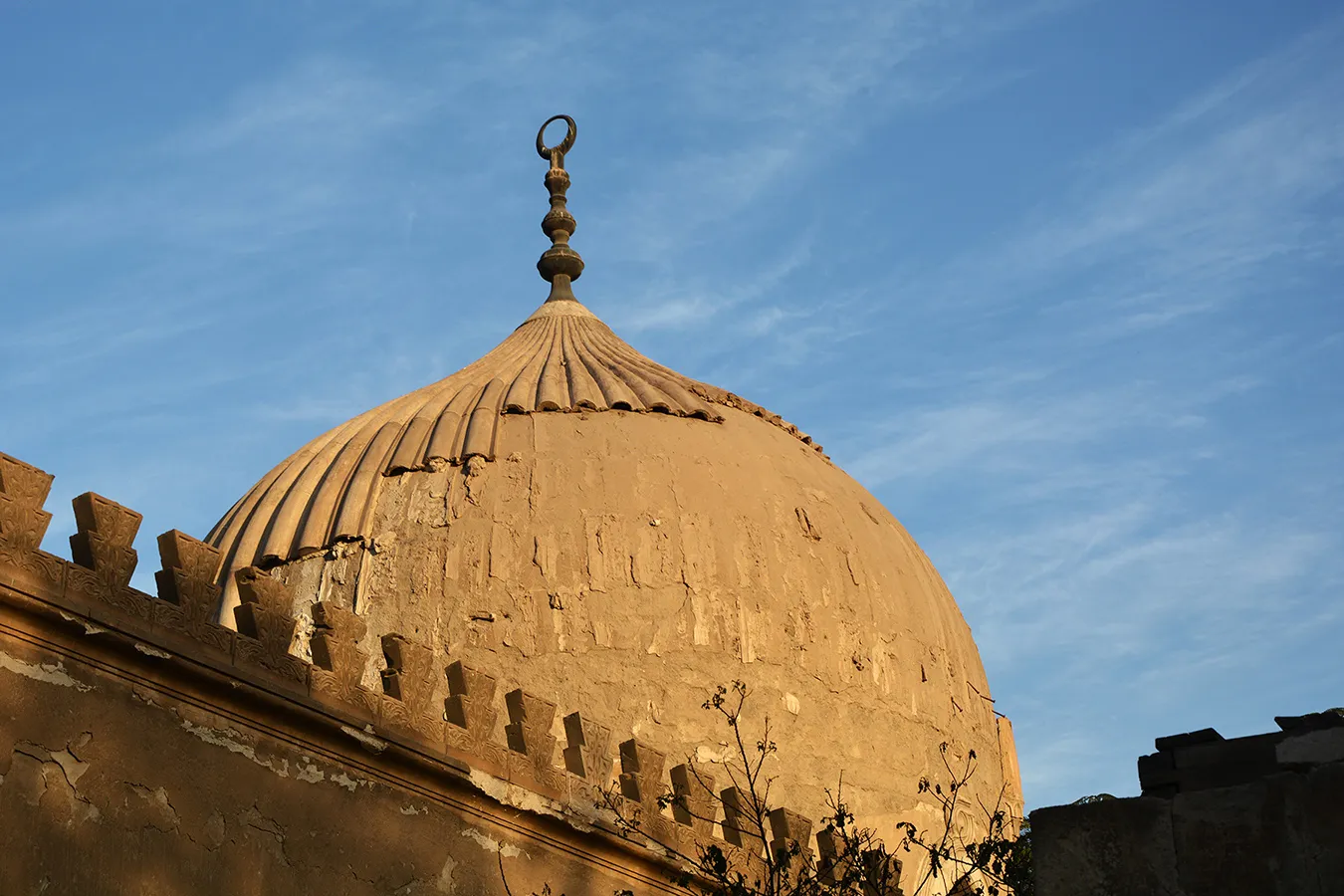
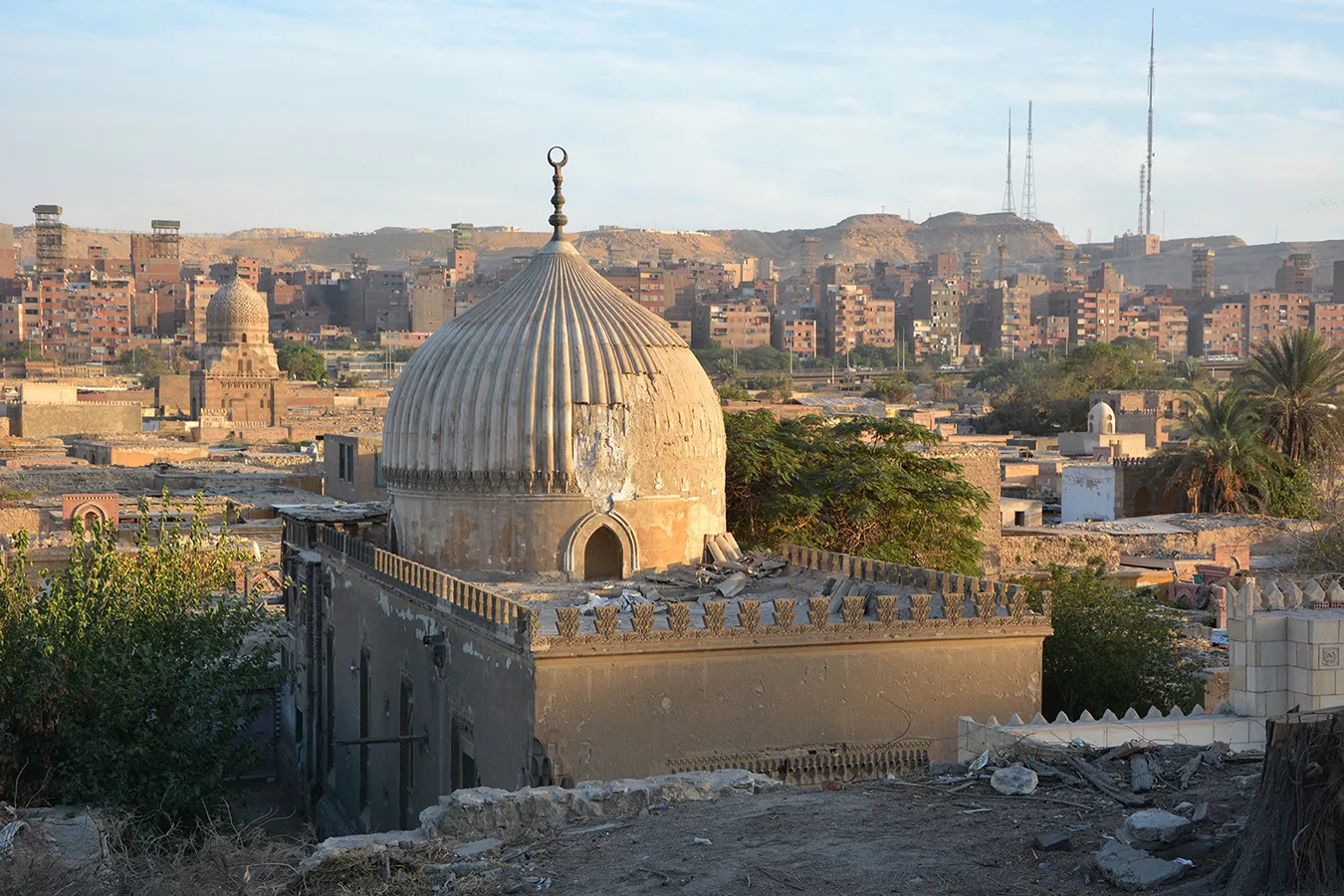
The reinforced-concrete shell of the dome is covered on the outside with fluted ribs in plaster, overhanging on stalactite corbels and giving the dome a slightly “onion” profile (a form of Persian origin, found sometimes in Mamluk architecture in Cairo: in mausoleums al-Sultaniya [No 288], of Sargatmish [No 218], and of Yunis al-Dawadar [No 139]). The crenellations on the façade are of zigzag-profile form typical of Ayyubid and early Mamluk architecture in Cairo, rather than the late-Mamluk form more typical of the cemetery.
Condition of preservation
The enclosure is in generally good condition, but shows signs of wear-out. Big part of the plaster fluted decoration on the concrete dome is missing. Damage to cornices and upper parts of walls suggests rainwater penetration through inadequate roof cover.
According to the property keeper, the funerary enclosure is at high risk of partial demolition and he was notified about the removal of half the dome. (The property is located close to the Salah Salem freeway and susceptible to destruction in case of its planned widening / doubling.)
Information abut the founder, family history, etc.
Abu Bakr Ratib Pasha was a previous minister of Military Production as well as the governor of Alexandria and the head of the parliament twice: in 1871 and 1873. (1)
Abu Bakar Ratib Effendi is also referred to as “sometime Ottoman Secretary of State (Rais Effendi) and Envoy Extraordinary & Minister Plenipotentiary to the Court of Vienna.” (2)
The earliest date found in the enclosure (on a broken marble tomb marker) is AH 1291 [corresponds to AD 1874]. The present mausoleum is definitely later, dating to the first half of the 20th century and probably as late as 1940s, judging from both stylistic features and use of reinforced concrete in construction. Evidently, an earlier mausoleum was replaced with the current one and a pre-existing burial ground rearranged, with pieces of earlier cenotaphs incorporated into the new building.
The enclosure is listed by the National Organization for Urban Harmony as a building of significant importance no.03200000171. (3)
Famous Egyptian actors Gamil Rateb (1926 – 2018) and Ezzat Abu Auf (1948 – 2019) are buried within the enclosure. (4)
References in published/primary sources
Information in section 17 is quoted from the following websites:
(1) Egyptian State Information Service https://www.sis.gov.eg/
(2) Royalark.net https://www.royalark.net/Egypt/egypt4.htm (a website dedicated to the genealogy of the Egyptian royal family)
(3) National Organization for Urban Harmony https://www.royalark.net/Egypt/egypt4.htm
(4) Elcinema elcinema.com, the Egyptian equivalent to IMDB.
Analogies in Mamluk architecture in Cairo: Doris Behrens-Abuseif Cairo of the Mamluks: A History of Architecture and Its Culture, American University in Cairo Press, 2007: p. 83; 196-9; 214-7.
- Field recording by
- Amr Abotawila
- Date recorded
- August 4, 2022
- Data entered by
- Hadeer Ahmad
- Date entered
- May 9, 2024