
Unit No27
Rifa’a al-Tahtawi
|
Coordinates of the main entrance |
30.0414N - 31.272992E |
|
Attribution |
Rifa’a al-Tahtawi |
|
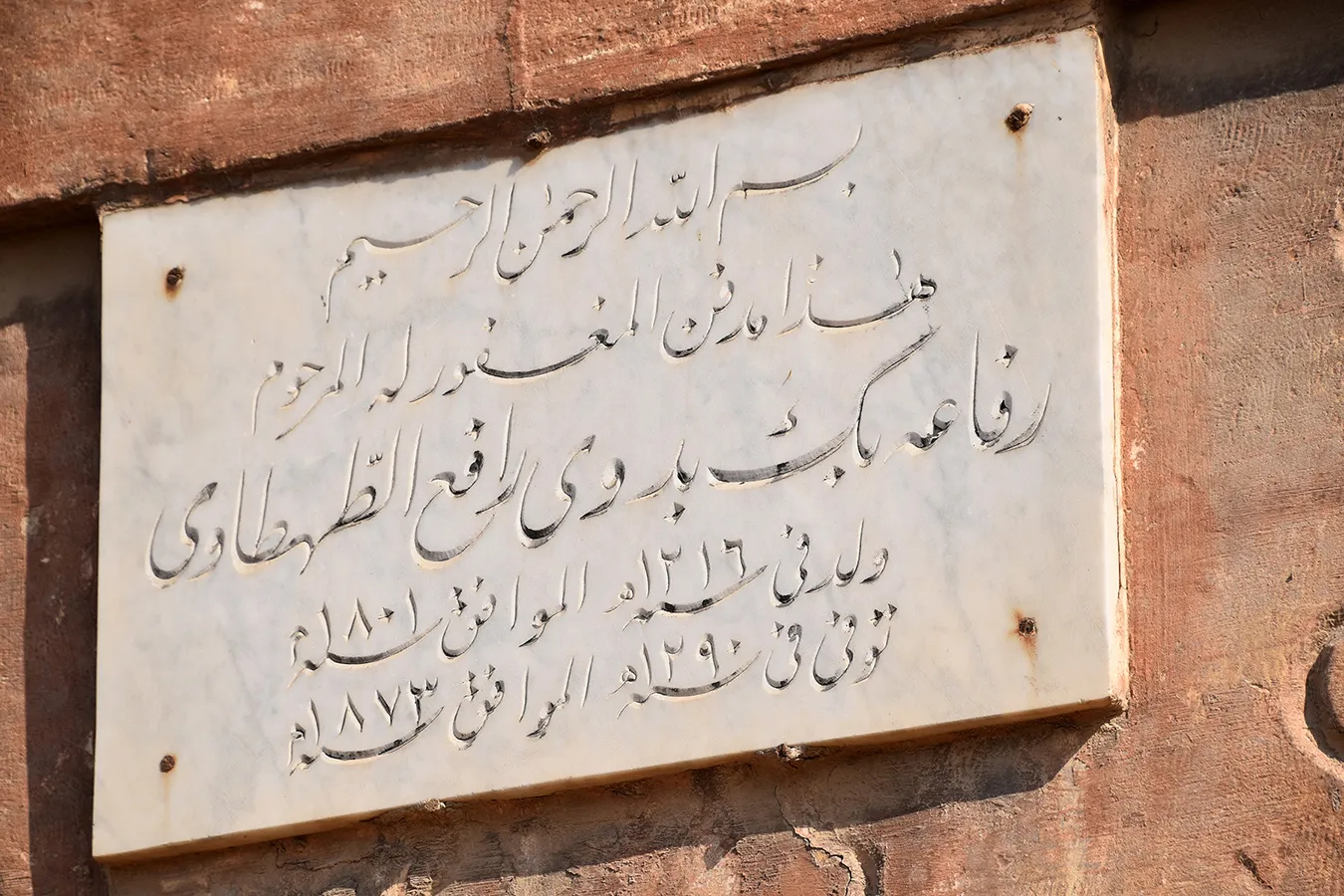
Higri (AH)Dates as given in the Inscription |
1216-1290 |
|
Miladi (AD)Dates as given in the Inscription |
1801-1873 |
|
Inscription Contemporary with the building? |
Yes |
|
Multiple date(s) In the inscription? |
Yes |
|
Assumed Date |
Early 20th century |
|
Based on |
(based on the style of architecture and especially the marble cenotaphs inside) |
|
Original Use |
Mausoleum with a service area |
|
Current Use |
Mausoleum with a service area |
|
Overall condition |
Fair |
Features of unit 27
| Present | Count | Material | Comments (see description for details) | |
|---|---|---|---|---|
| Free standing structure | Yes | 1 | Stone | |
| Walled enclosure | No | |||
| Rooms by the perimeter wall | No | |||
| Freestanding structure(s) in enclousure | No | |||
| Dome over the tomb chamber | No | |||
| Neo-Mamluk architectural decoration | No | |||
| Garden layout | No | |||
| Sabil(s) | No | |||
| Wall fountain(s) | No | |||
| Canopy on columns / pillars | No | |||
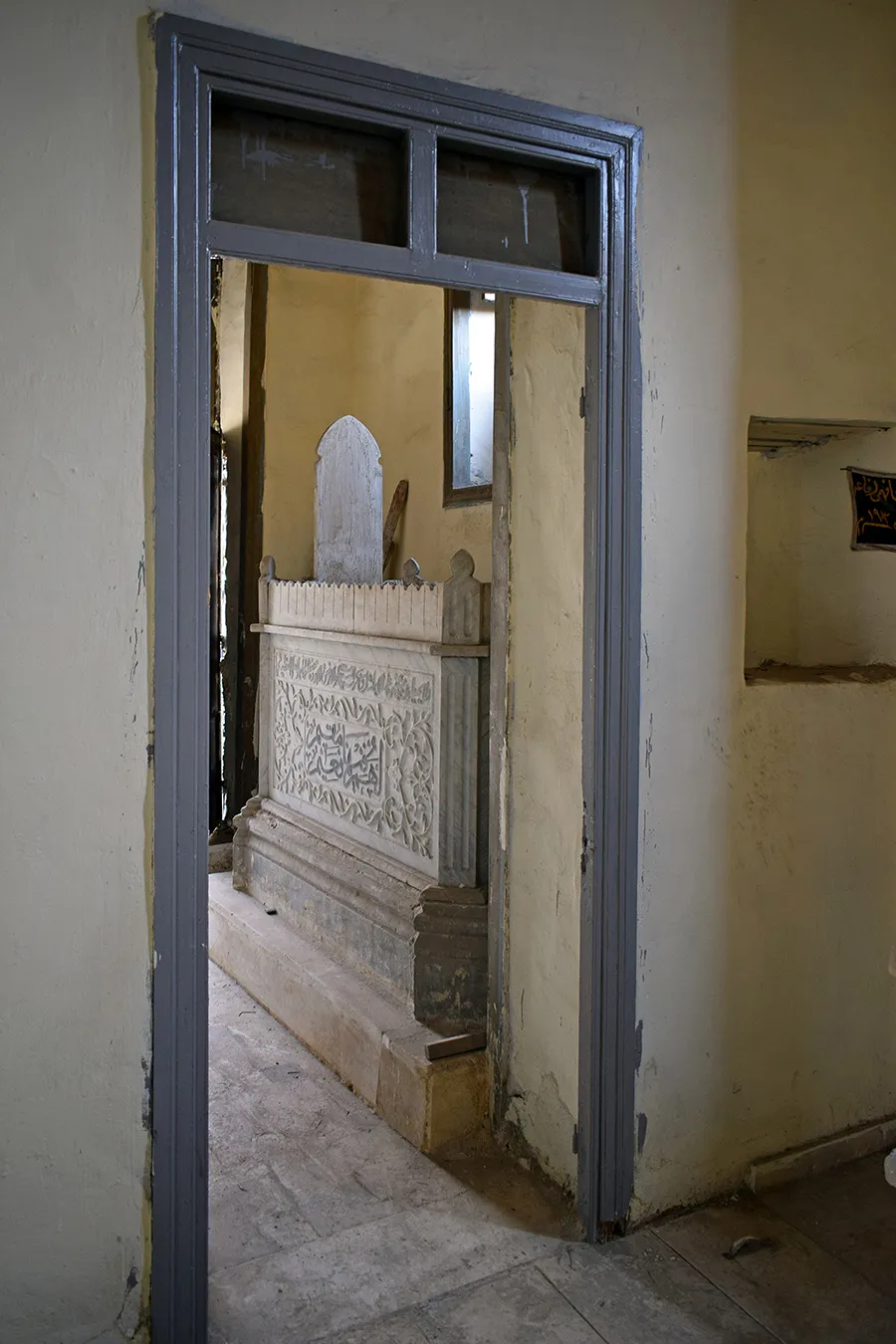
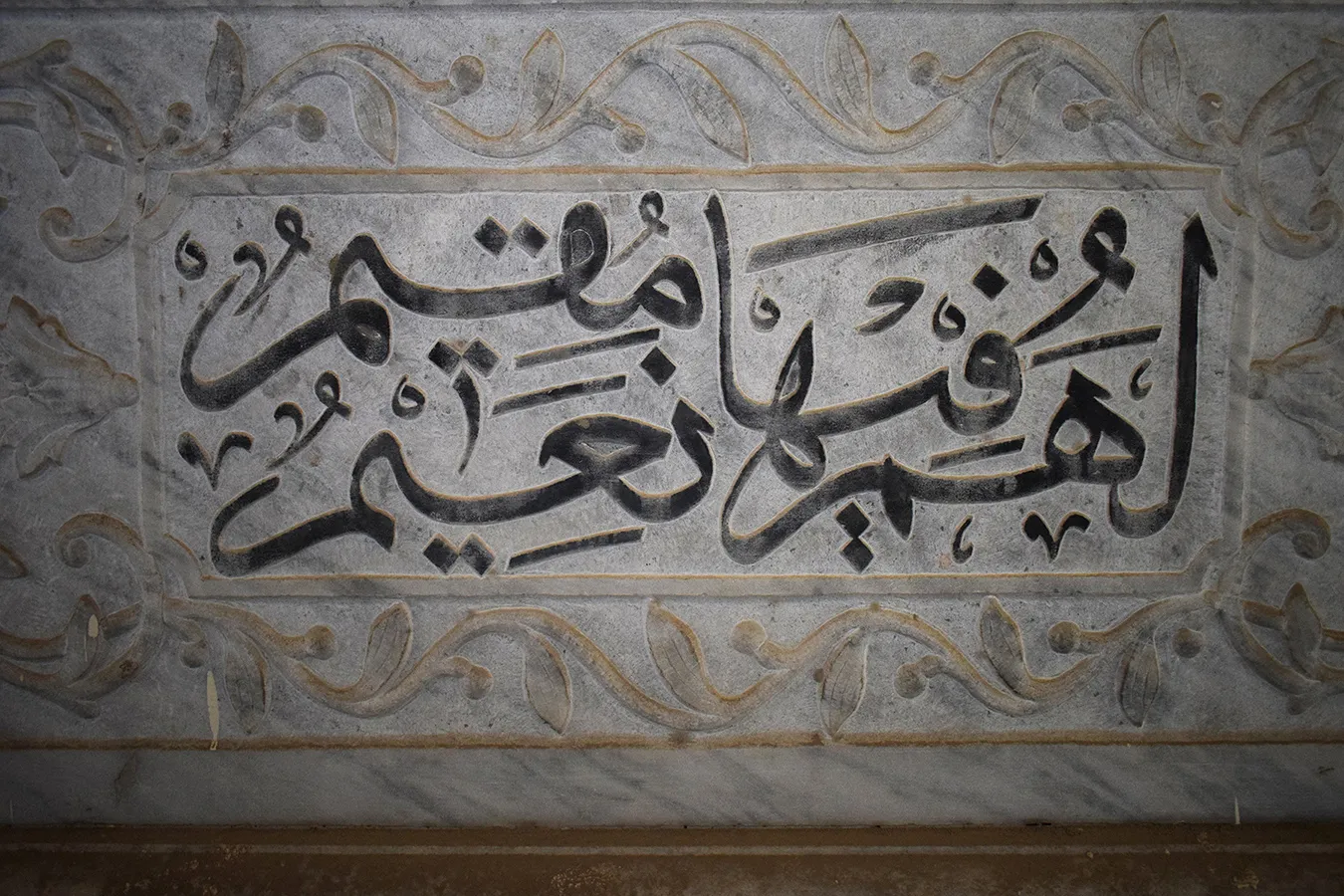
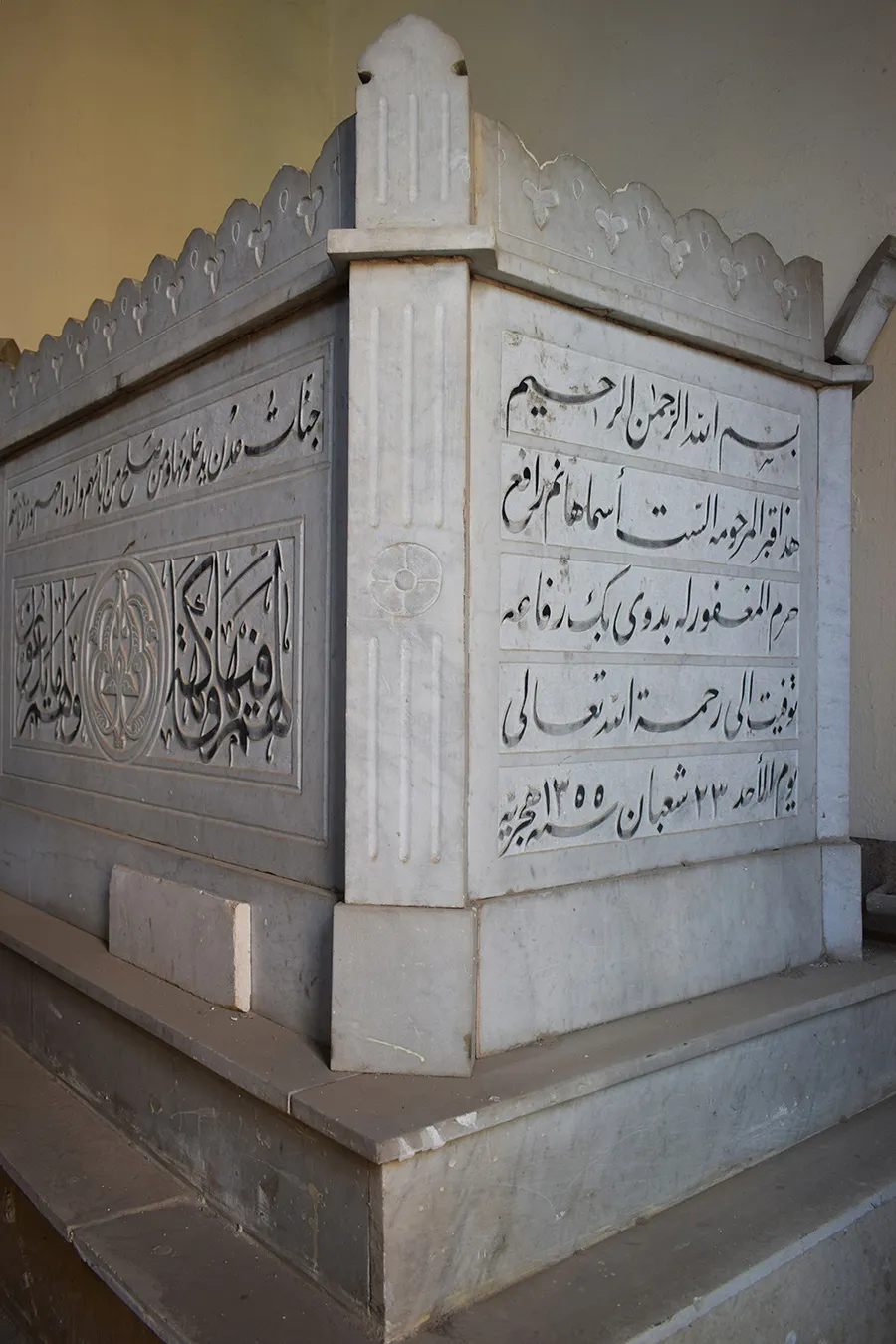
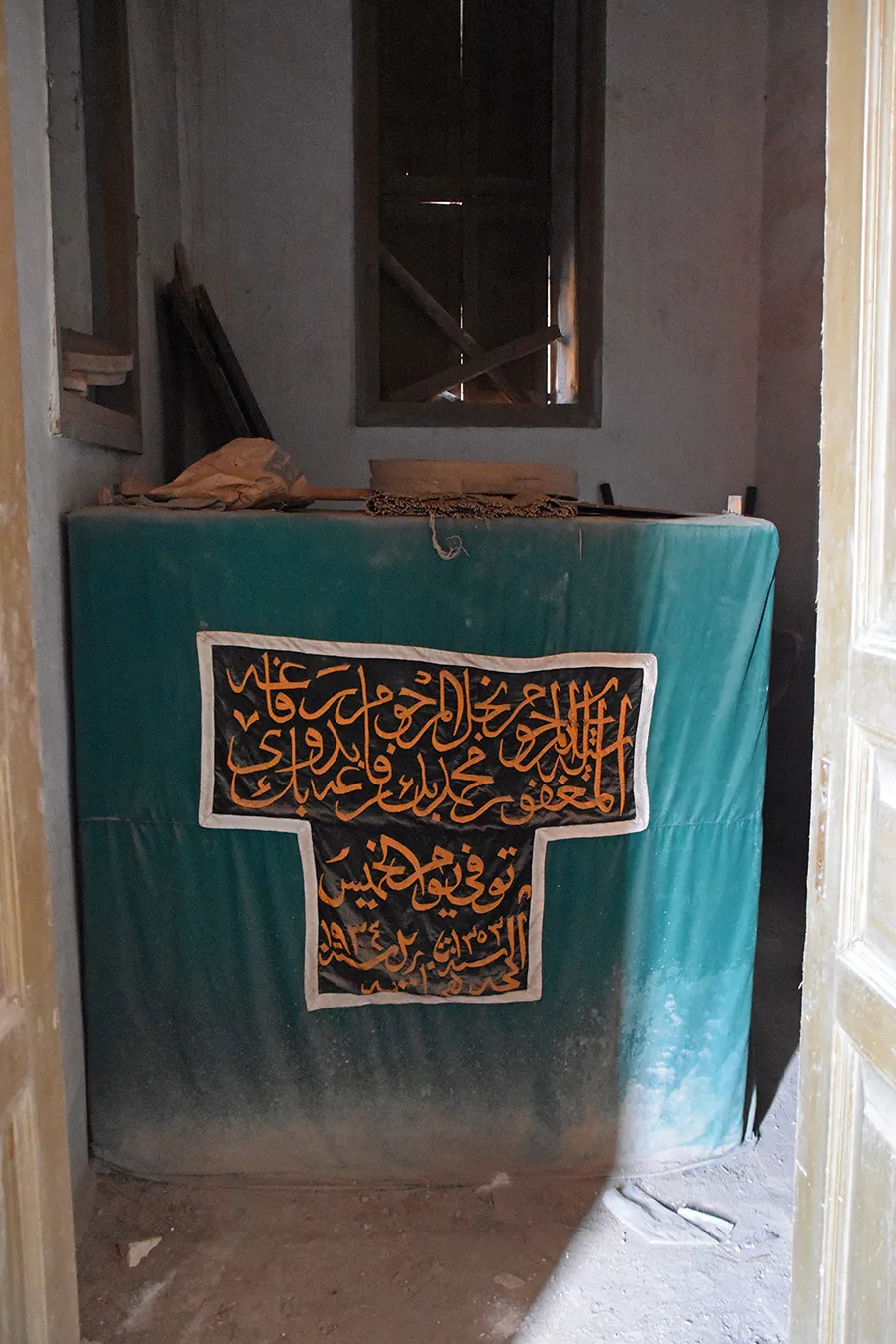
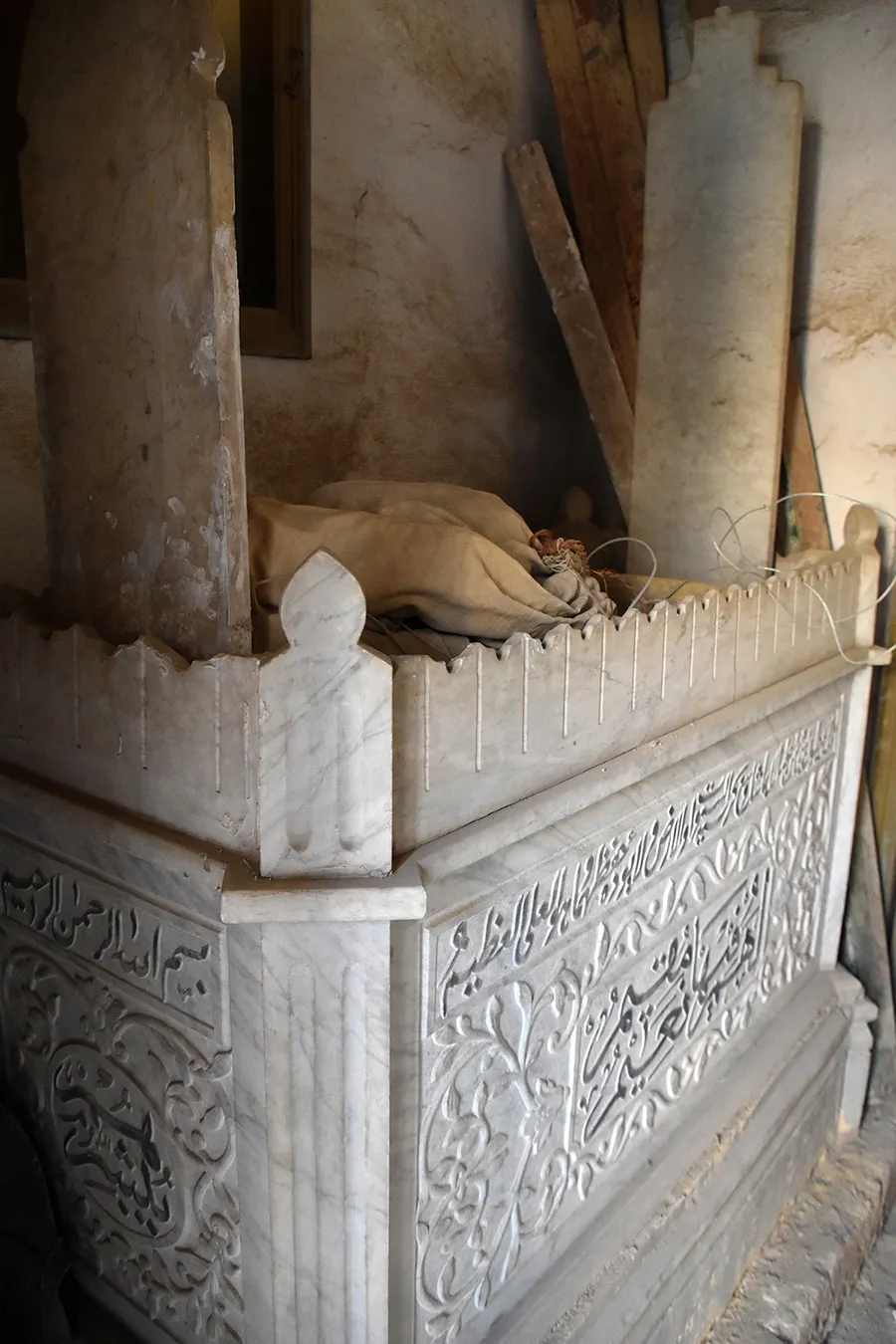
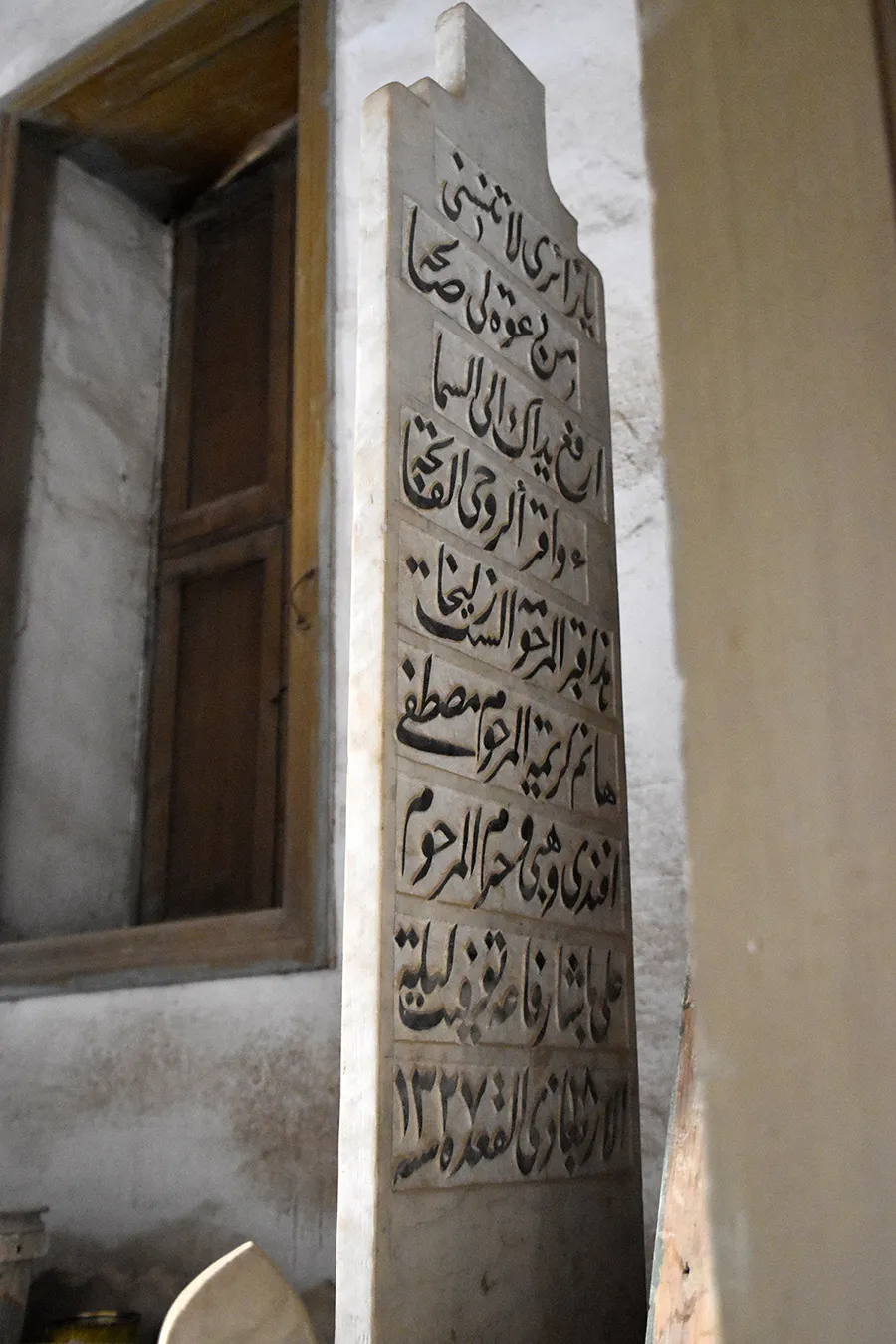
| Carved marble cenotaph(s) | Yes | 2 | 2 | Also one wooden cenotaph covered with a green cloth |
| Decorated limestone tomb-markers | No | |||
| Decorated gateway | Yes | 1 | Stone/plaster | Extremely simple |
| Decorative door-leaves | No | |||
| Decorative window grilles | No | |||
| Decorative shutters | No | |||
| Painted ceiling(s) | No | |||
| Decorative paving(s) | No |
Unusual or unique features
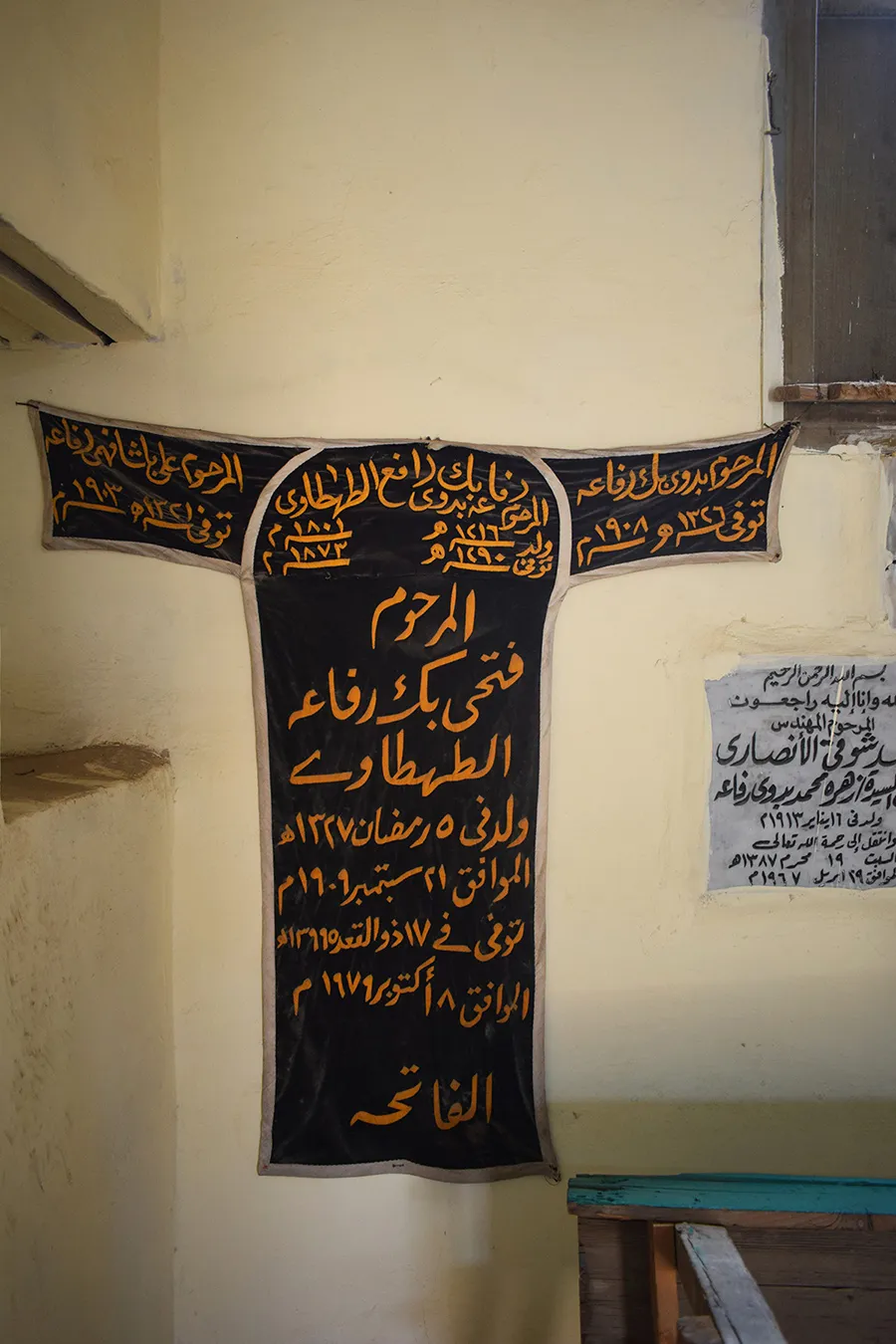
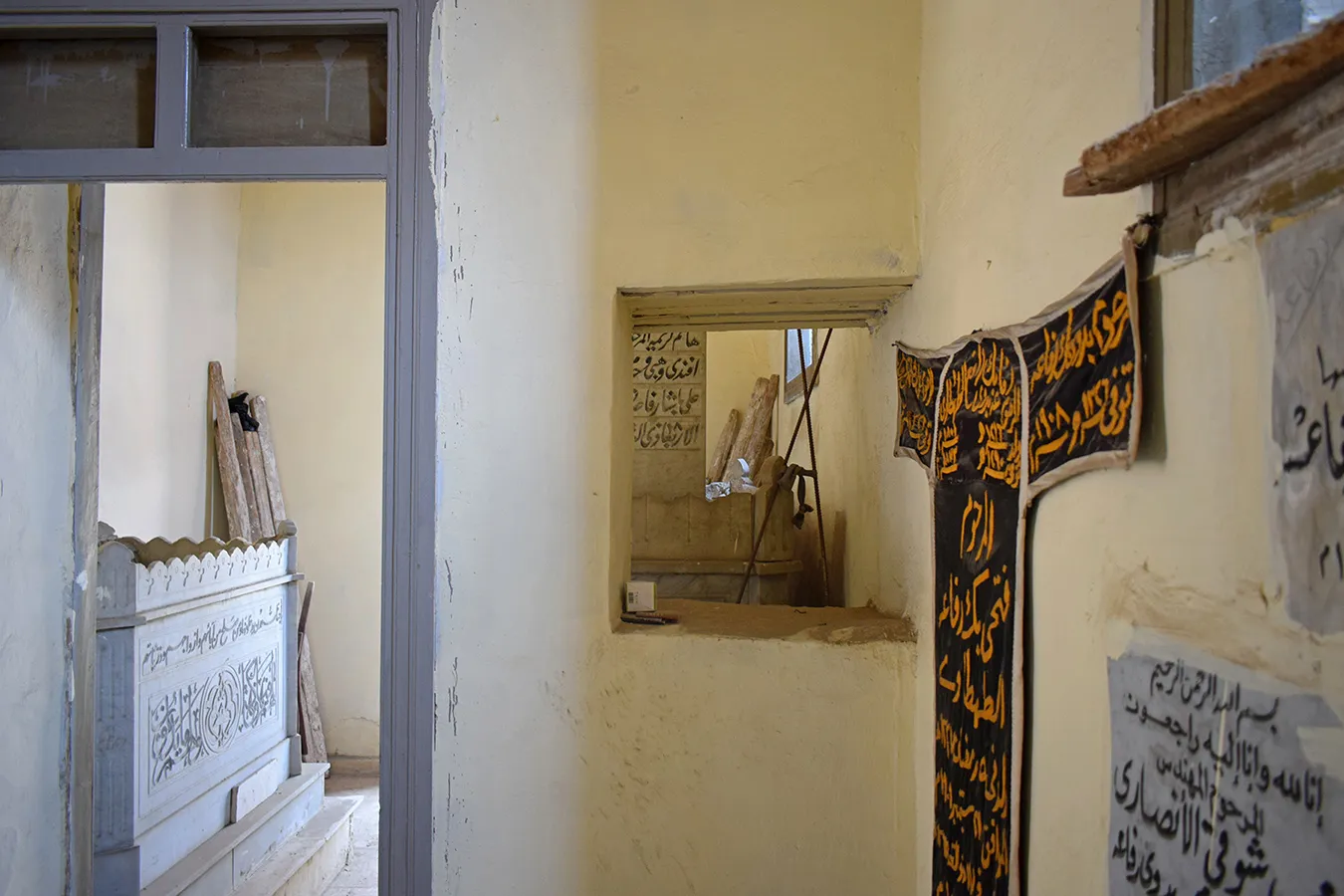
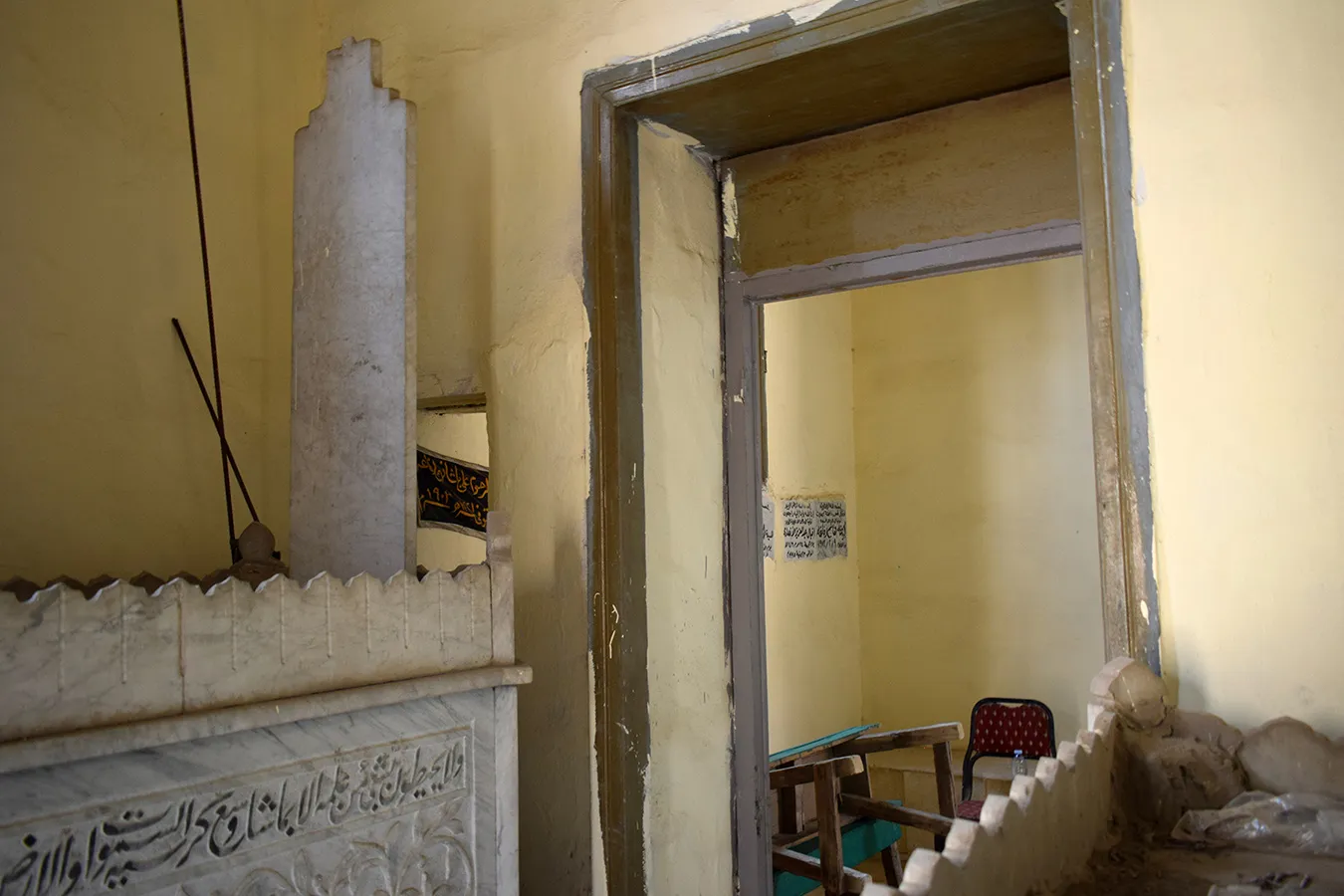
• A piece of cloth in the shape of the traditional Egyptian “galabeya” dress, with the names of Rifa’a al-Tahtawi and his family and the dates of their deaths embroidered hanging on the wall of the vestibule preceding the secondary burial chamber.
Description (The direction towards Mecca (Qibla) is described as eastern and other directions are named accordingly)
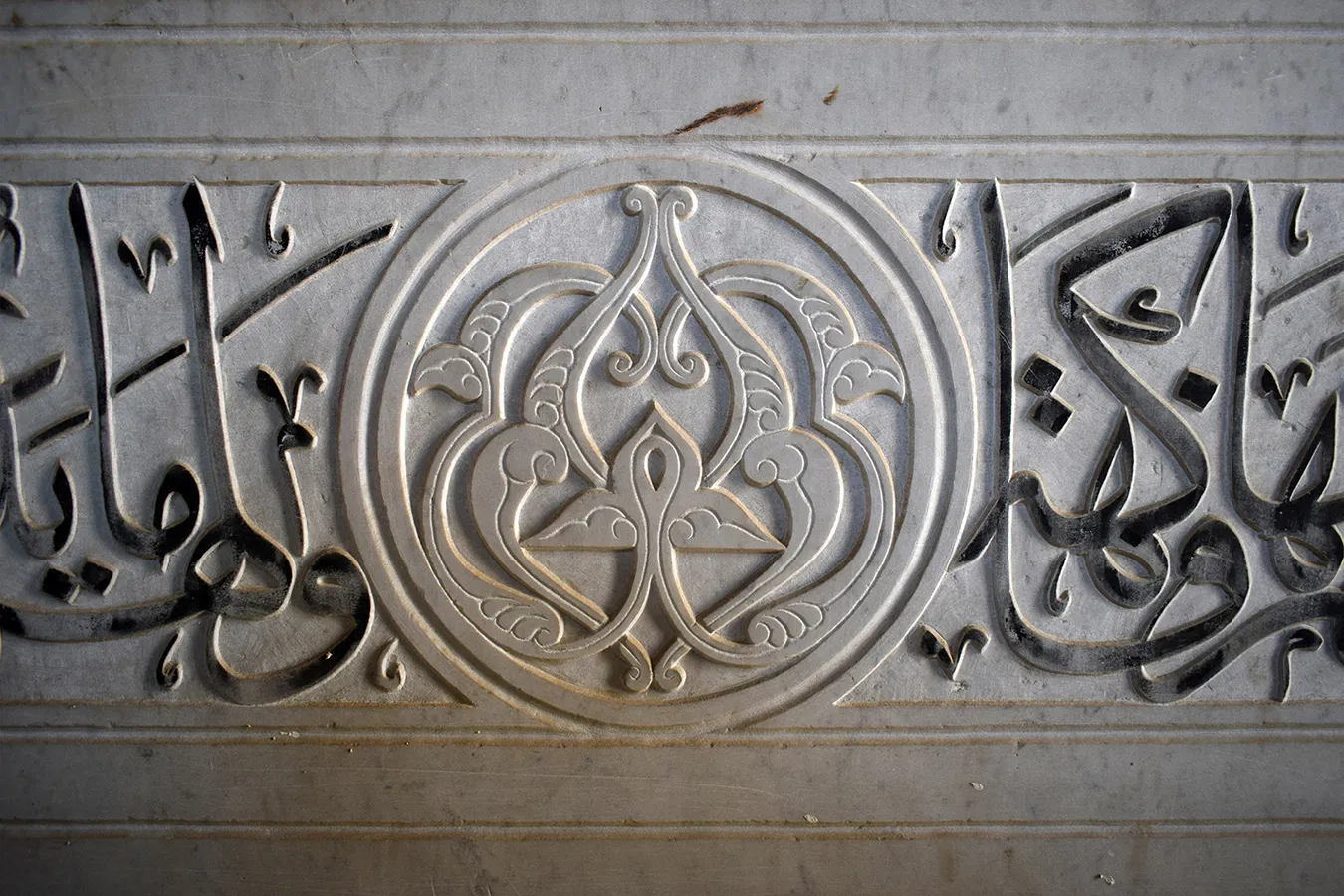
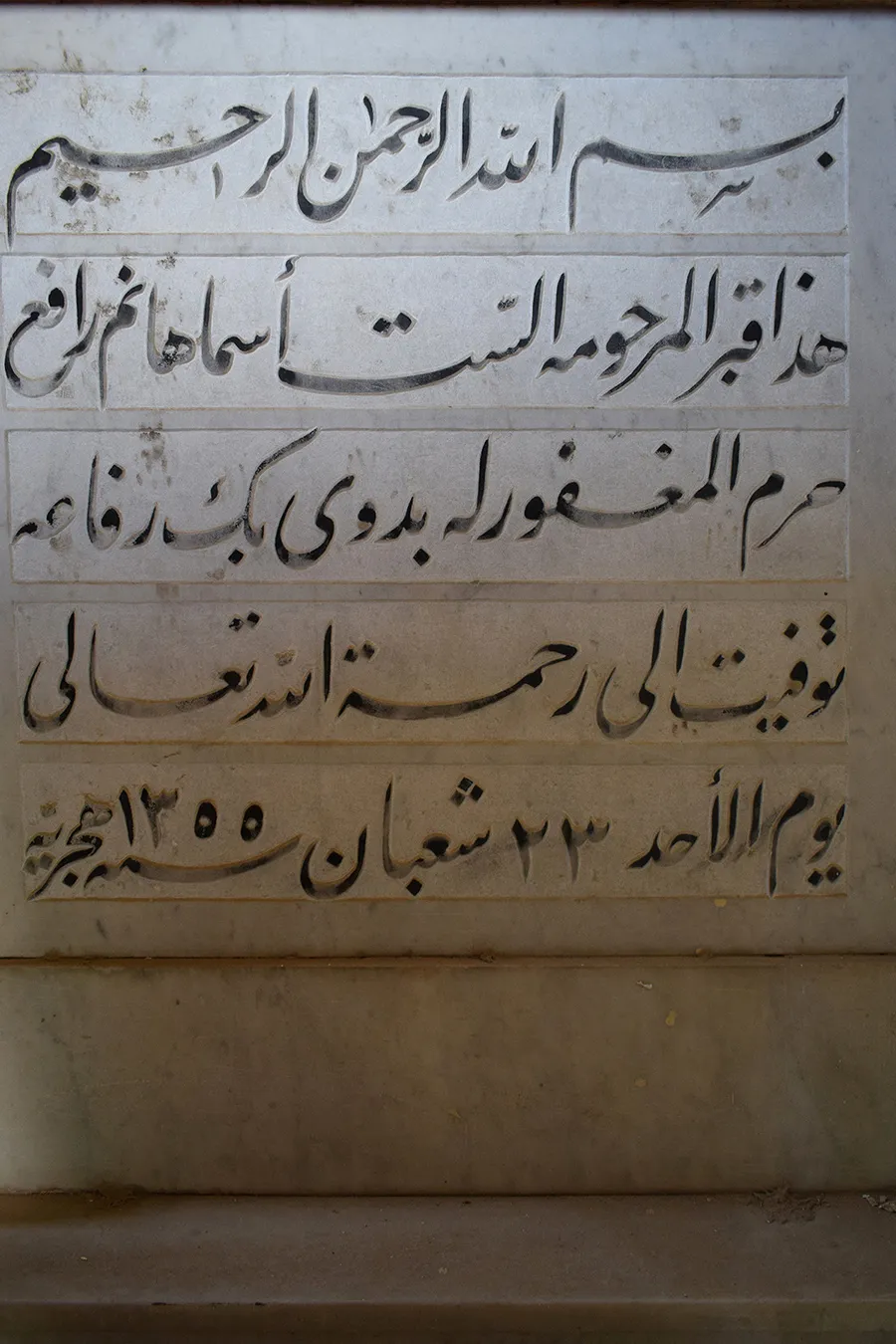
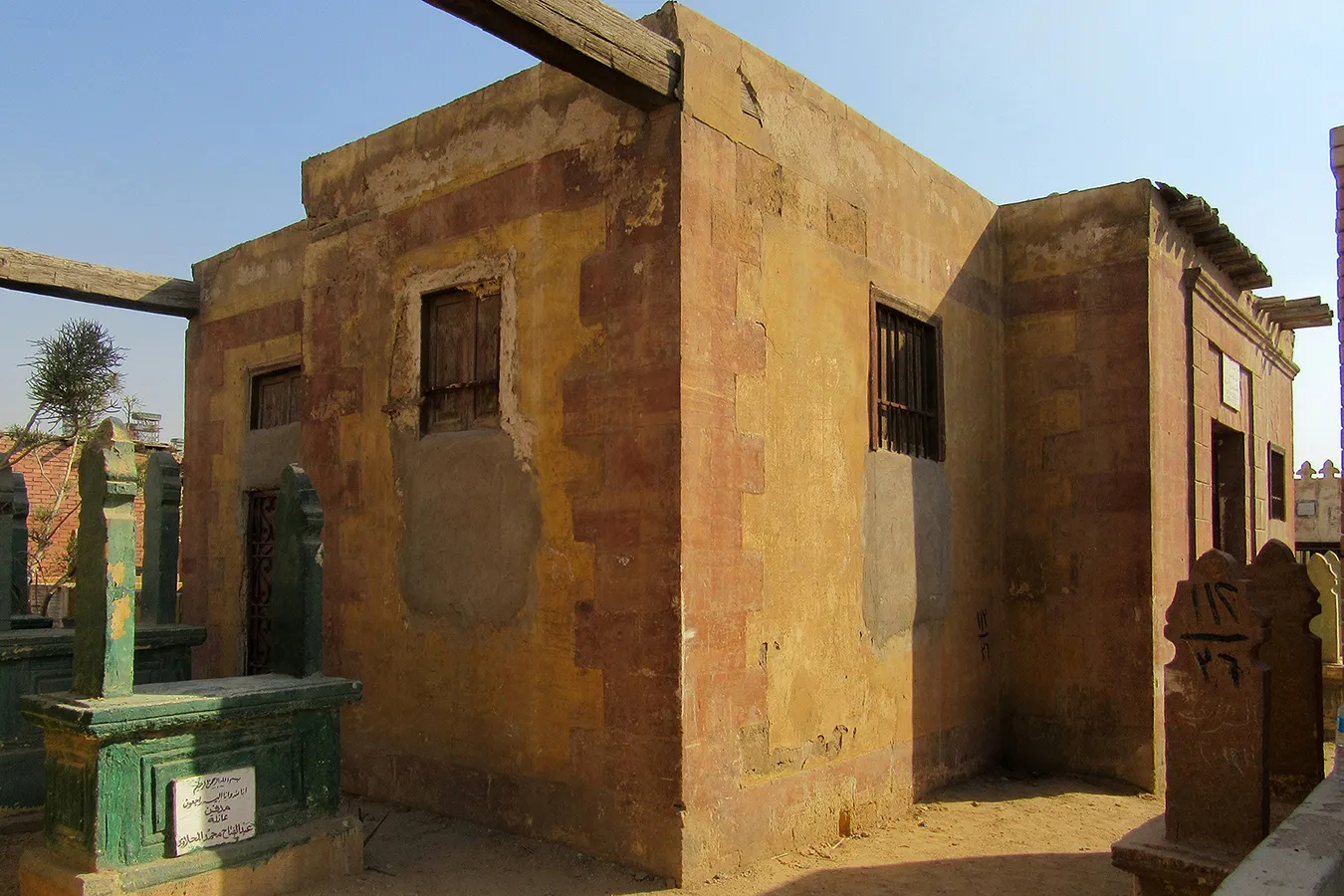
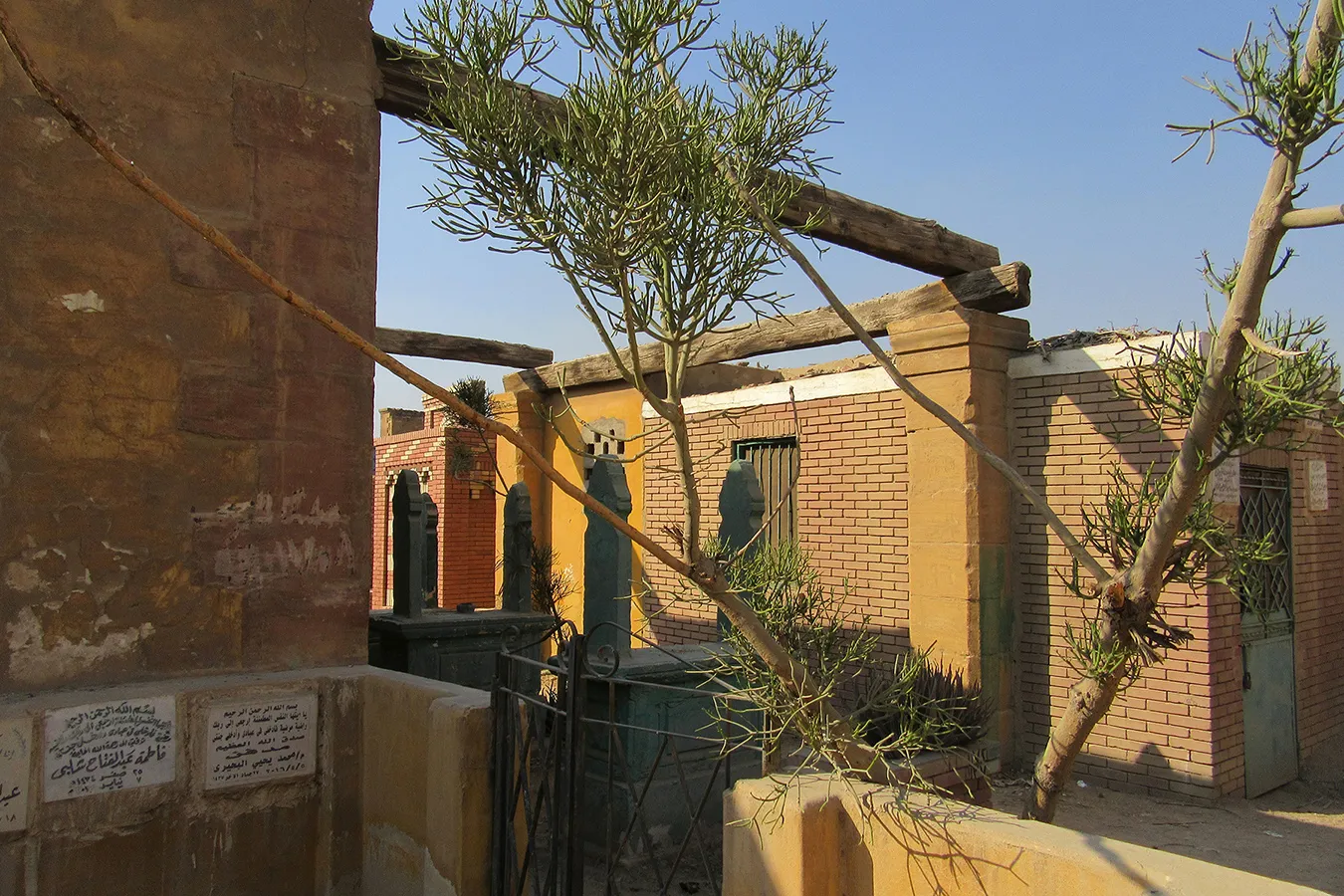
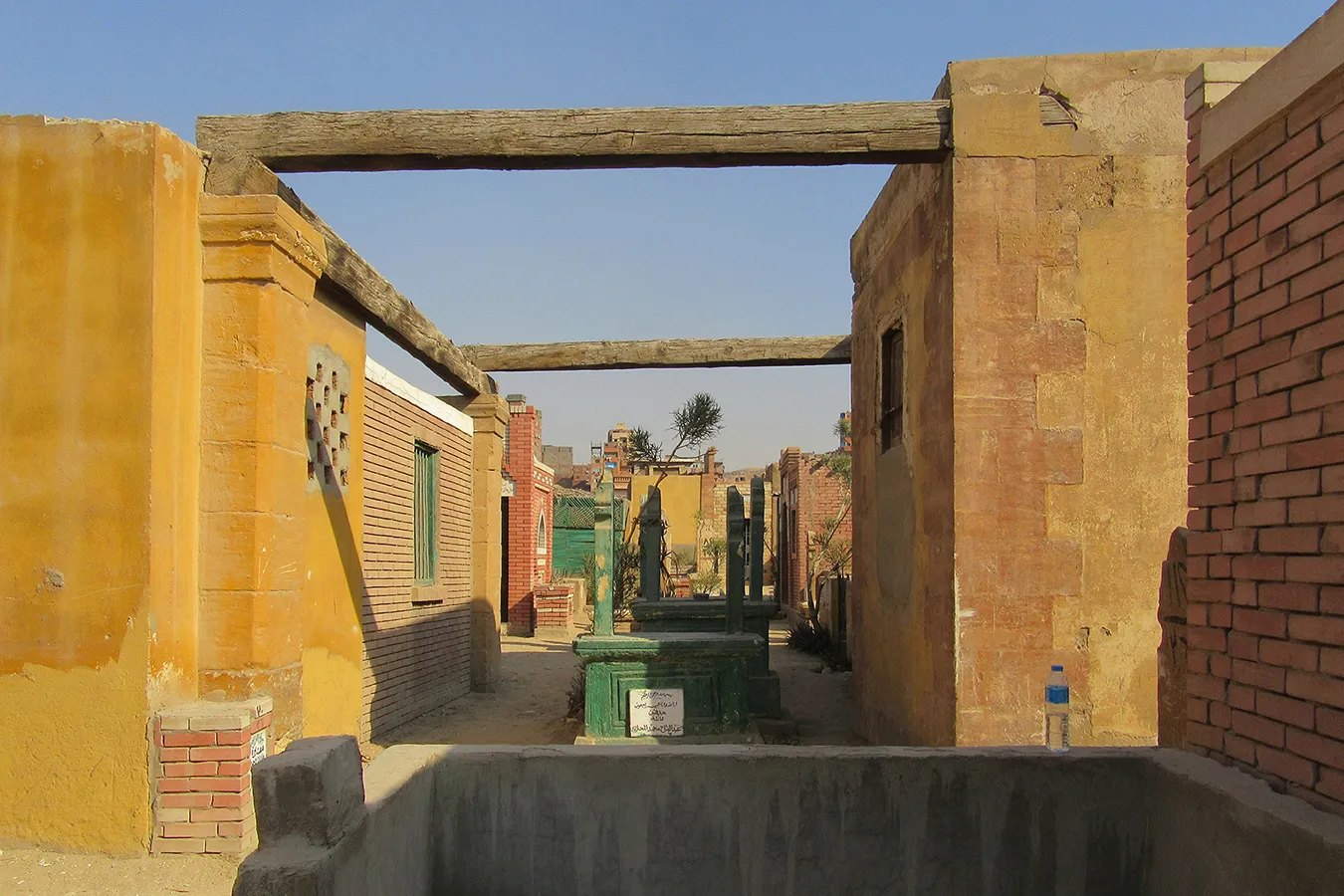
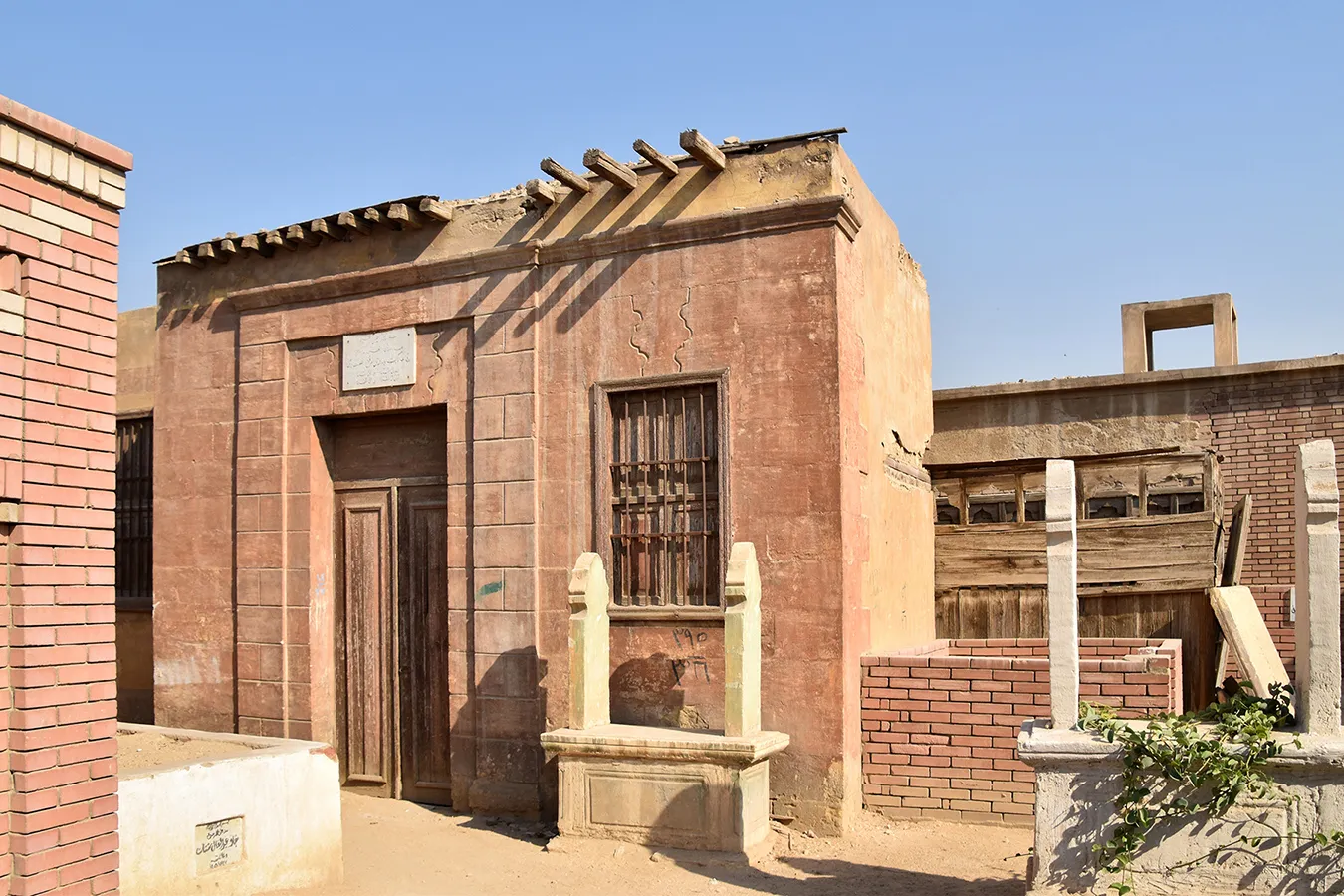
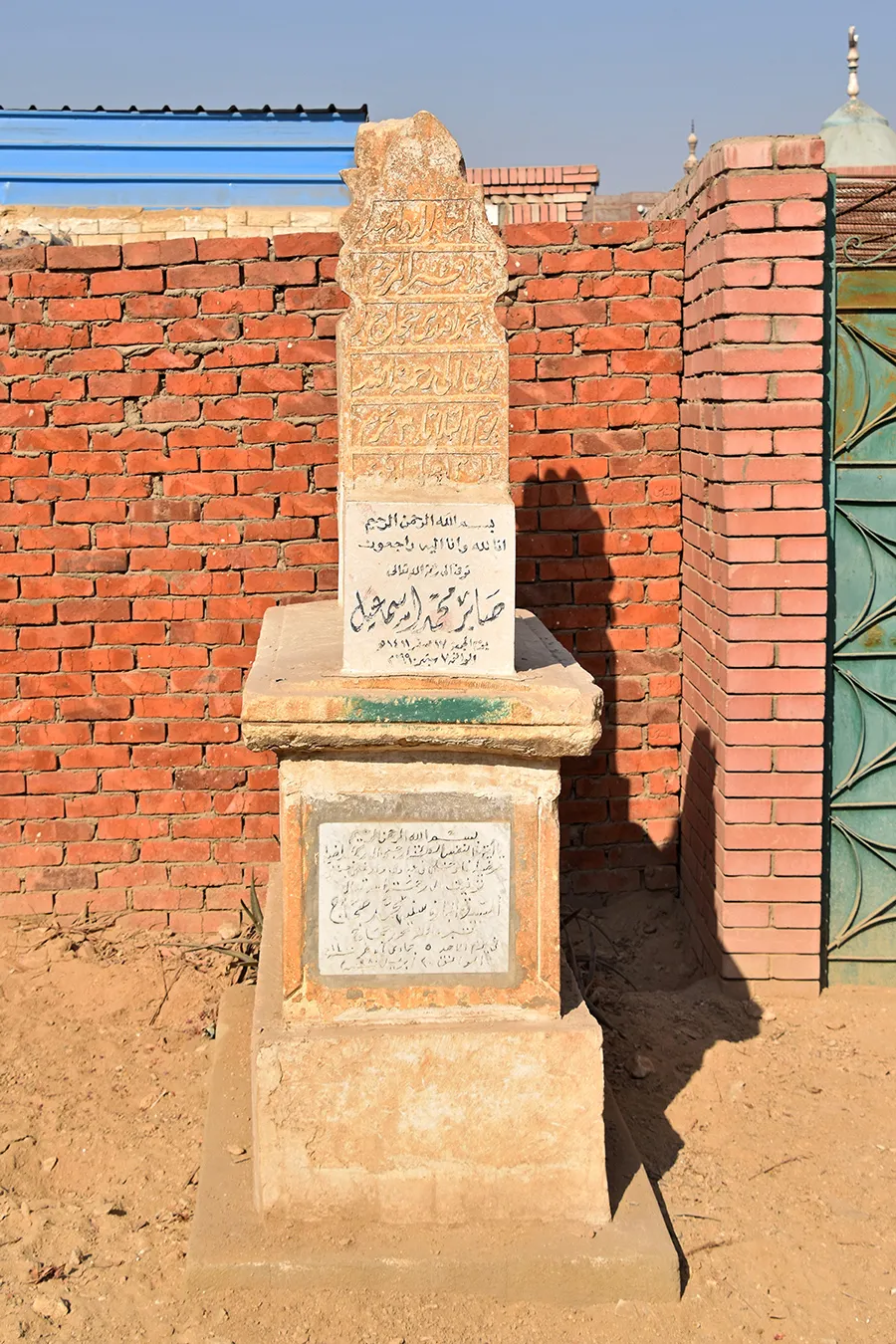
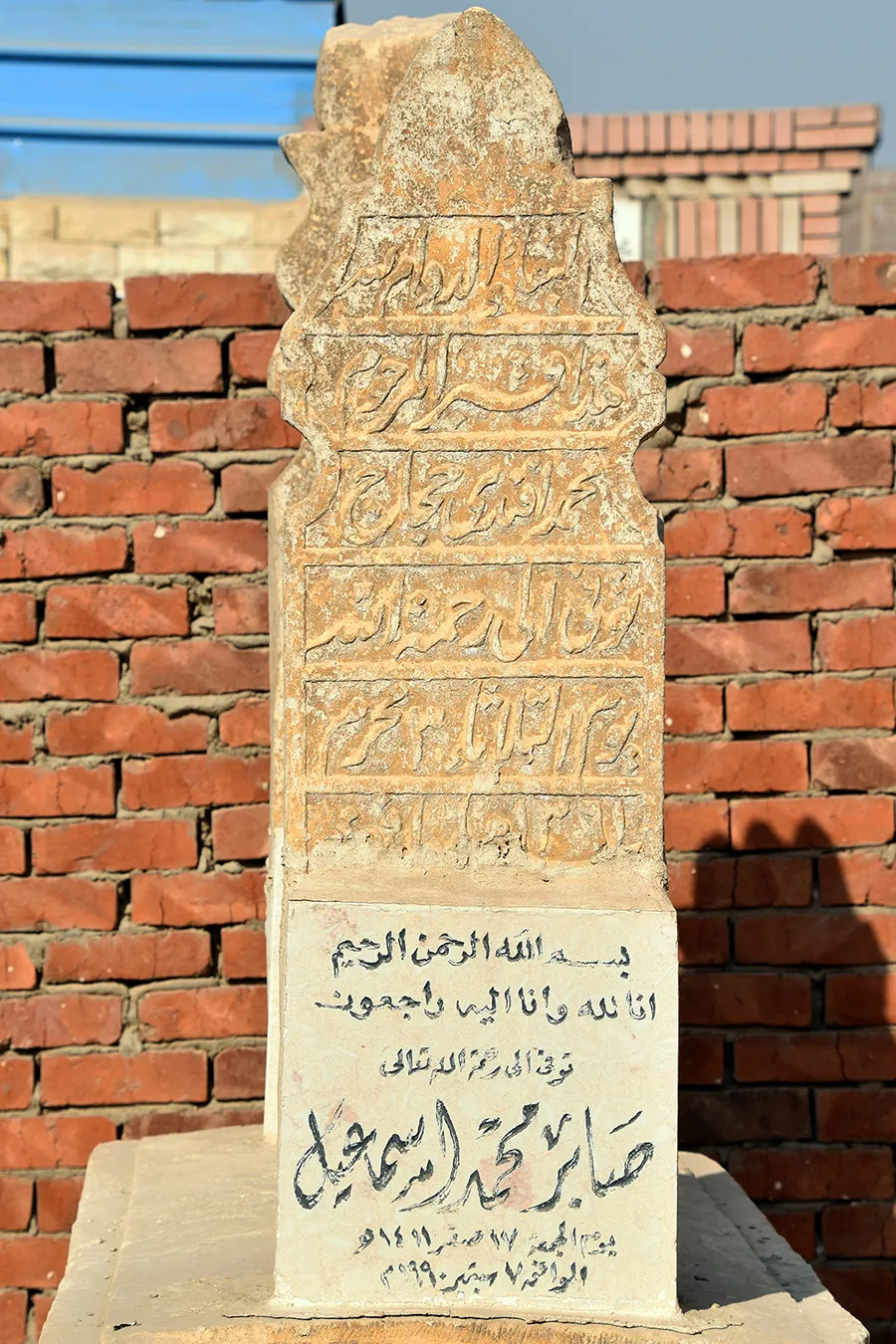
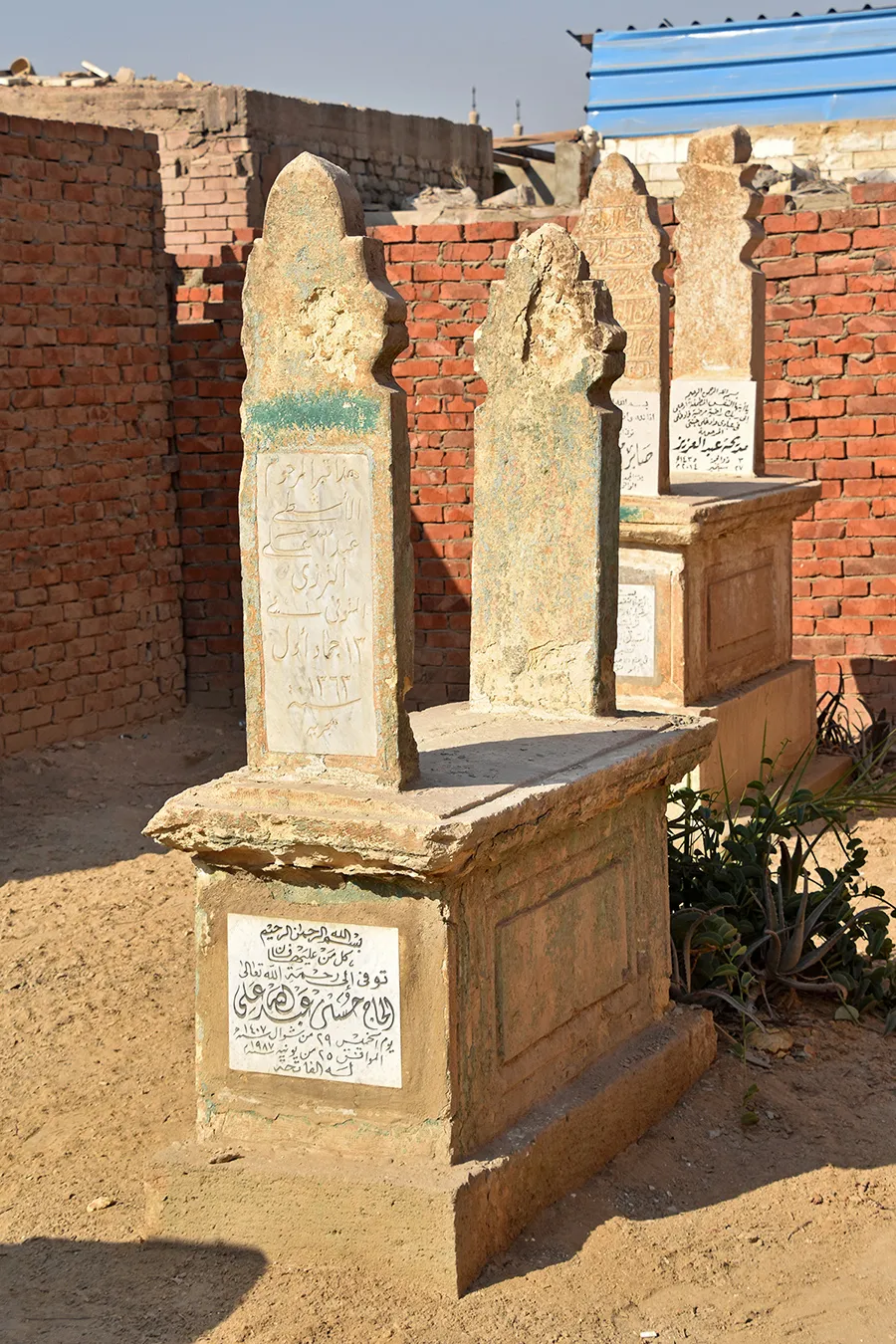
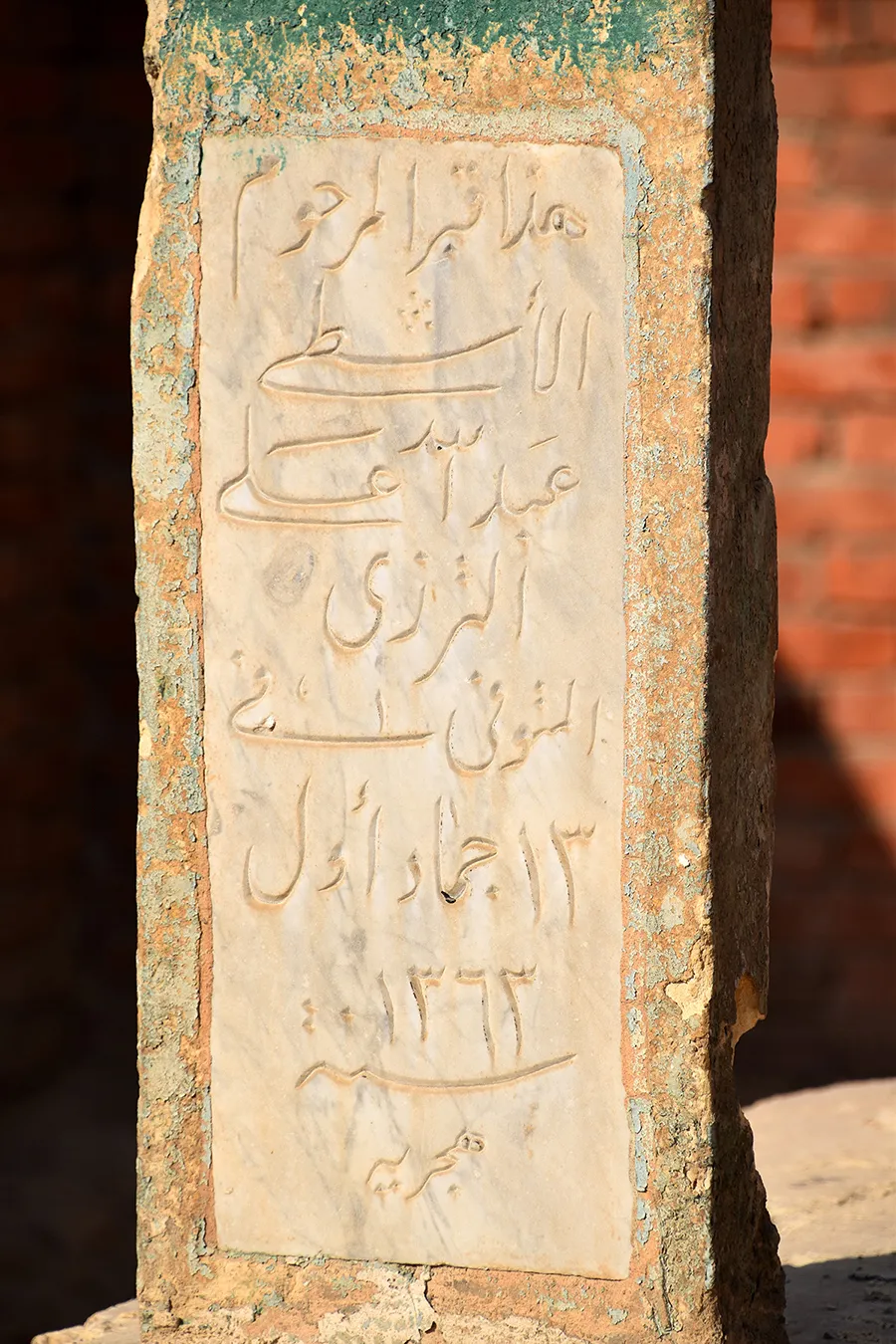
A simple, small single-storey free-standing structure, comprising five high-ceiling rooms combining in an irregular plan. It is built of coarse stone, with corners, base course and top of the walls in ashlar stone, all now covered by thick wash. The main entrance is in the eastern elevation, asymmetrically placed in a protruding section, with one window to the right. The door is set in an extremely simplified rusticated framing and has a flat arch of joggled voussoirs as a lintel, as does the front façade window. A secondary door in the northern elevation leads to an external pergola (now missing any cover) on massive wooden beams resting on two stone pillars. Within the pergola are two simple limestone tomb markers, while more apparently related cenotaphs, some with fine calligraphic inscriptions, are located around the building. The main doorway leads into a vestibule from which are accessible: a service area with a toilet and a kitchenette; the burial chamber containing a wooden cenotaph of Rifa’a al-Tahtawi covered in a green cloth; and a second burial chamber preceded by an internal sitting area with numerous marble inscription panels commemorating persons deceased in the second half of the 20th century mounted on the western wall, as well as piece of cloth in the shape of the traditional Egyptian “galabeya” dress, with the names of Rifa’a al-Tahtawi and his family and the dates of their deaths embroidered. To the north of the room is a chamber with two large marble cenotaphs decorated with inscription panels dedicated to the female members of the family, those married to Al-Tahtawi sons. The style of the cenotaphs suggests an early 20th century date.
Condition of preservation
The unit is overall in good condition, although dilapidated. The covering of the external pergola is missing.
Information abut the founder, family history, etc.
Together with his contemporary ‘Ali Mubarak, Rifa’a Al-Tahtawi was essential in promoting in Egypt modern methods of organization in areas of public policy: administration, health care, irrigation, and especially education – a trend in the mid-19th century that is sometimes called “Islamic Renaissance”. Coming from a rural background, he was educated as a religious scholar at the al-Azhar University. He then went in 1826-1831 to Paris to study a broad range of subjects. Upon his return, he held different positions serving Muhammad ‘Ali’s and his descendants’ governments, including the director of the School of Languages that he established for the training of professional translators. He also translated himself numerous important works on medicine, geography, military arts, history, literature, politics, and jurisprudence (including translating the French Civil Code.) He wrote and published his own works on the subjects of European political institutions, the need for enlightened education (including education of girls), and on the public interest and public good.
References in published/primary sources
• Vatikiotis, P. J. The History of Modern Egypt: From Muhammad Ali to Mubarak, fourth edition, the Johns Hopkins University Press, Baltimore, 1991, p. 108–9, 112–118]
- Field recording by
- Amr Abotawila and Hadeer Ahmad
- Date recorded
- September 5, 2022
- Data entered by
- Yusuf Yassir
- Date entered
- May 28, 2024