
Unit No24
Unknown
|
Coordinates of the main entrance |
30.042408N - 31.272083E |
|
Attribution |
Unknown |
|
Higri (AH)Dates as given in the Inscription |
|
|
Miladi (AD)Dates as given in the Inscription |
|
|
Inscription Contemporary with the building? |
Yes |
|
Multiple date(s) In the inscription? |
Yes |
|
Assumed Date |
Early 20th century |
|
Based on |
(Based on the style of the neo-Mamluk façade) |
|
Original Use |
Funerary enclosure (possibly never completed) |
|
Current Use |
Funerary enclosure |
|
Overall condition |
Fair |
Features of unit 24
| Present | Count | Material | Comments (see description for details) | |
|---|---|---|---|---|
| Free standing structure | Yes | stone | Currently unroofed and forming an open enclosure | |
| Walled enclosure | Yes | stone | See above | |
| Rooms by the perimeter wall | No | |||
| Freestanding structure(s) in enclousure | No | |||
| Dome over the tomb chamber | No | |||
| Neo-Mamluk architectural decoration | Yes | |||
| Garden layout | No | |||
| Sabil(s) | No | |||
| Wall fountain(s) | No | |||
| Canopy on columns / pillars | No | |||
| Carved marble cenotaph(s) | No | |||
| Decorated limestone tomb-markers | Yes | 2 | Simple, undecorated | |
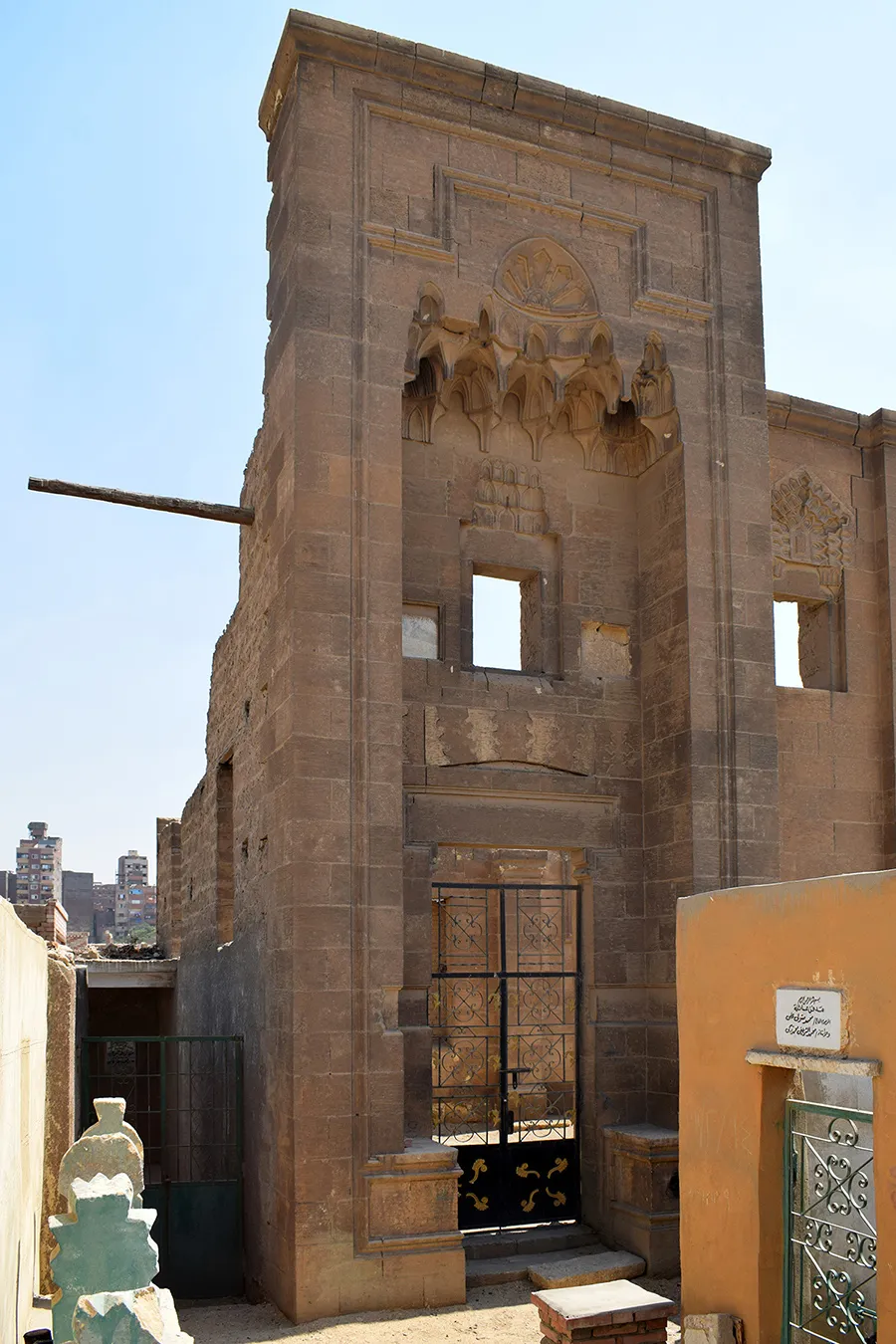
| Decorated gateway | Yes | 1 | Ashlar stone | An elaborate Mamluk-style portal |
| Decorative door-leaves | Yes | 1 | Steel, welded | Modern, recent |
| Decorative window grilles | No | All windows are bricked-up, with no traces of any fittings ever installed | ||
| Decorative shutters | No | Se above | ||
| Painted ceiling(s) | No | |||
| Decorative paving(s) | No |
Unusual or unique features
• The building follows remarkably closely the Mamluk architectural style, not merely in decoration, but in overall design principles.
Description (The direction towards Mecca (Qibla) is described as eastern and other directions are named accordingly)
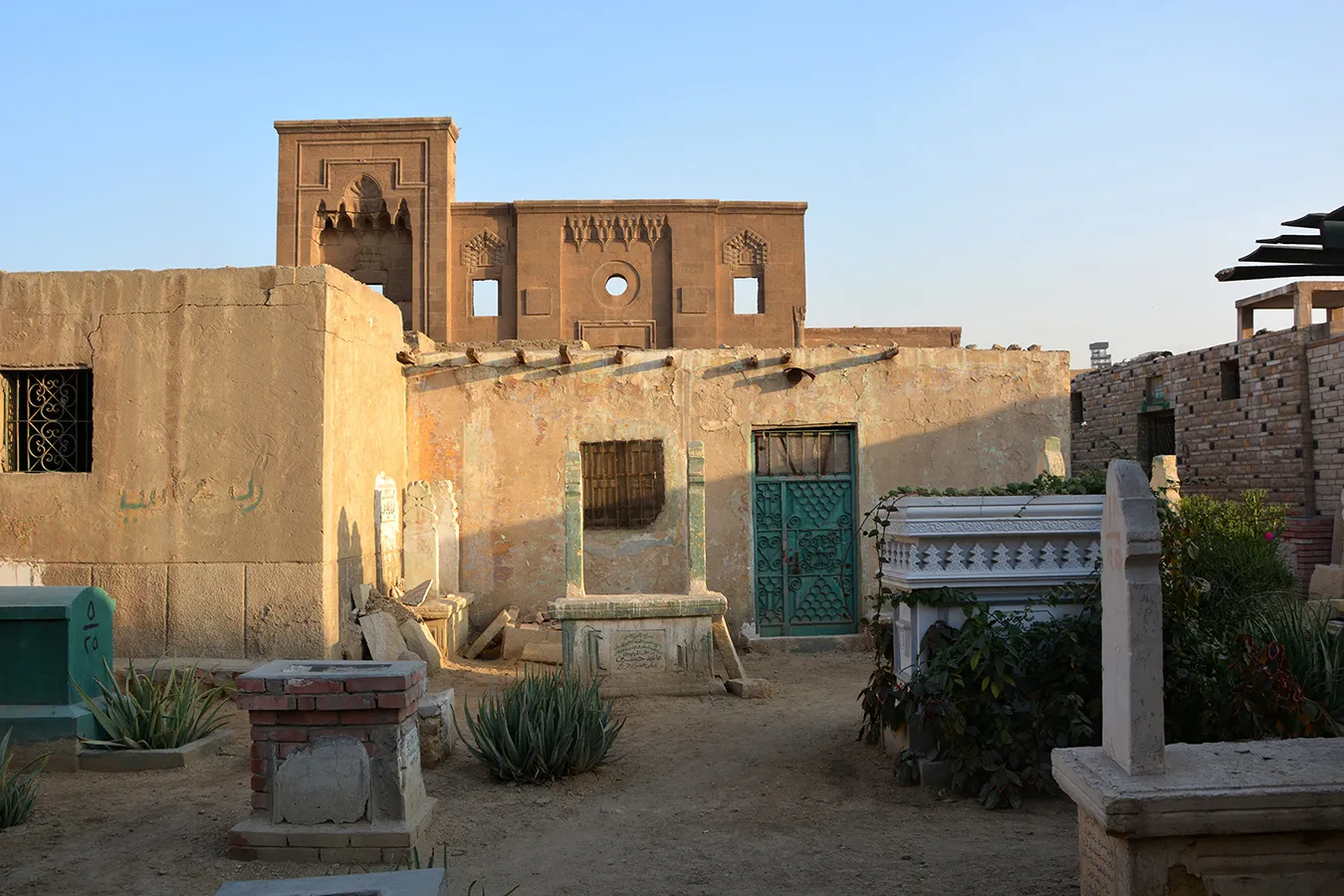
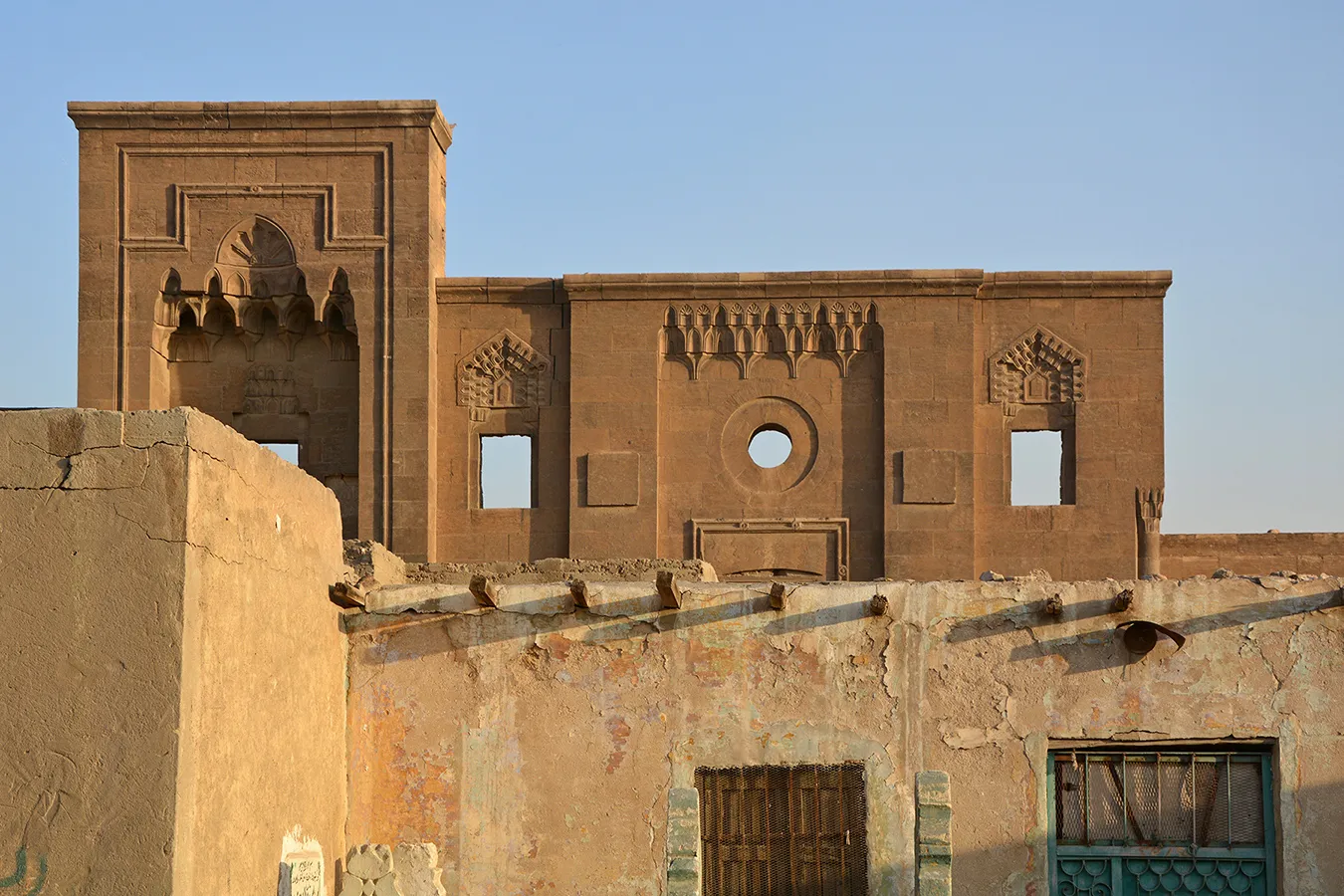
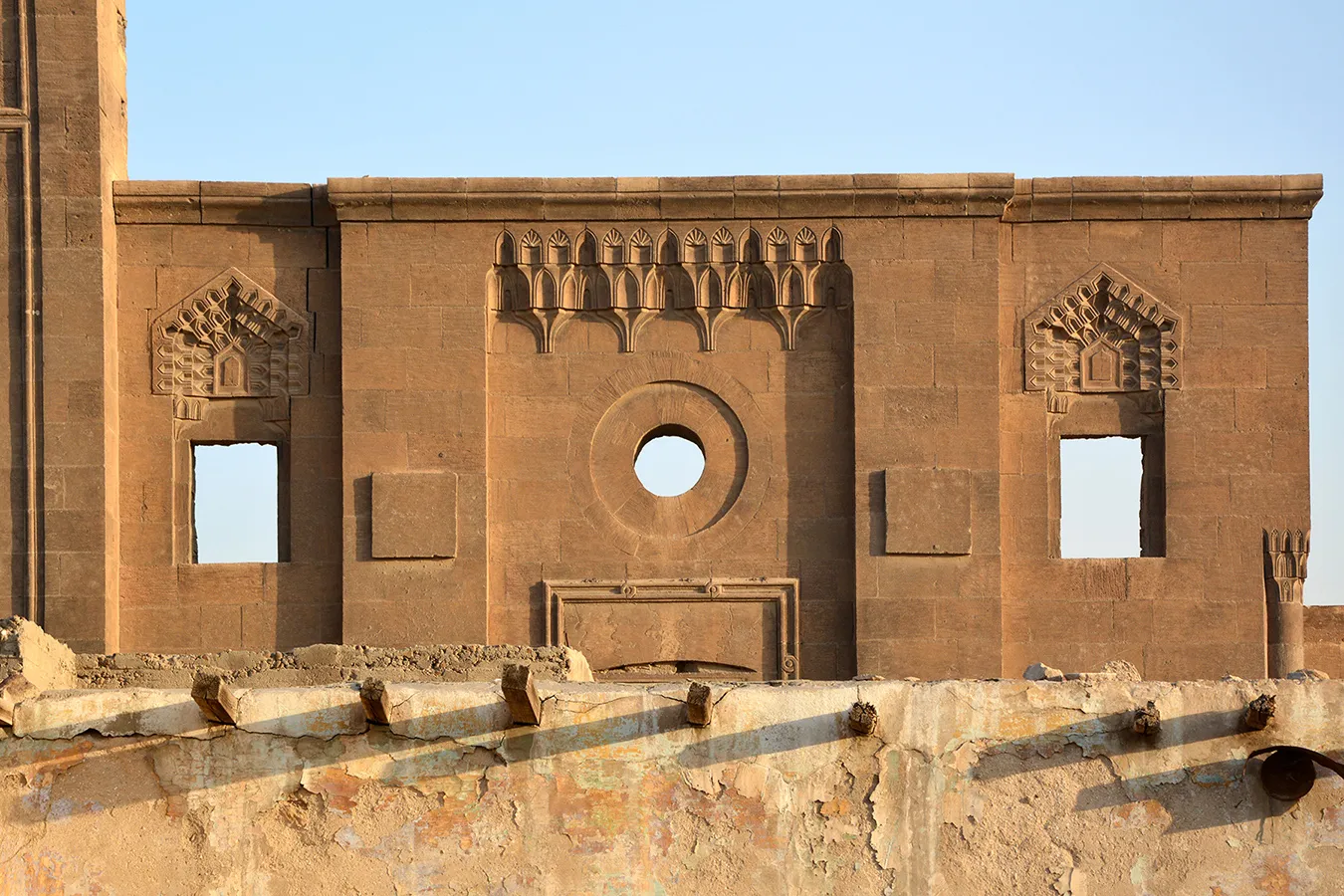
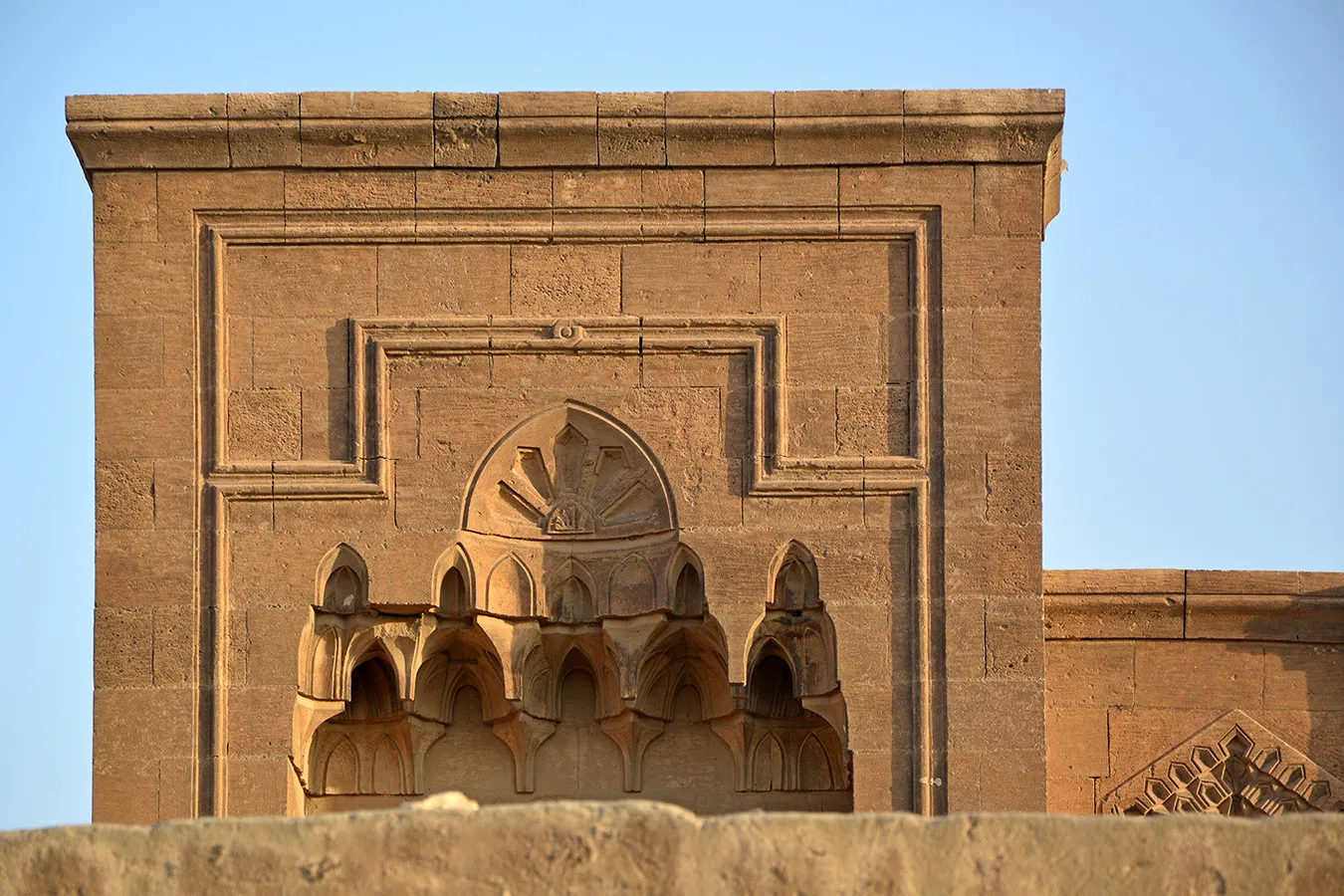
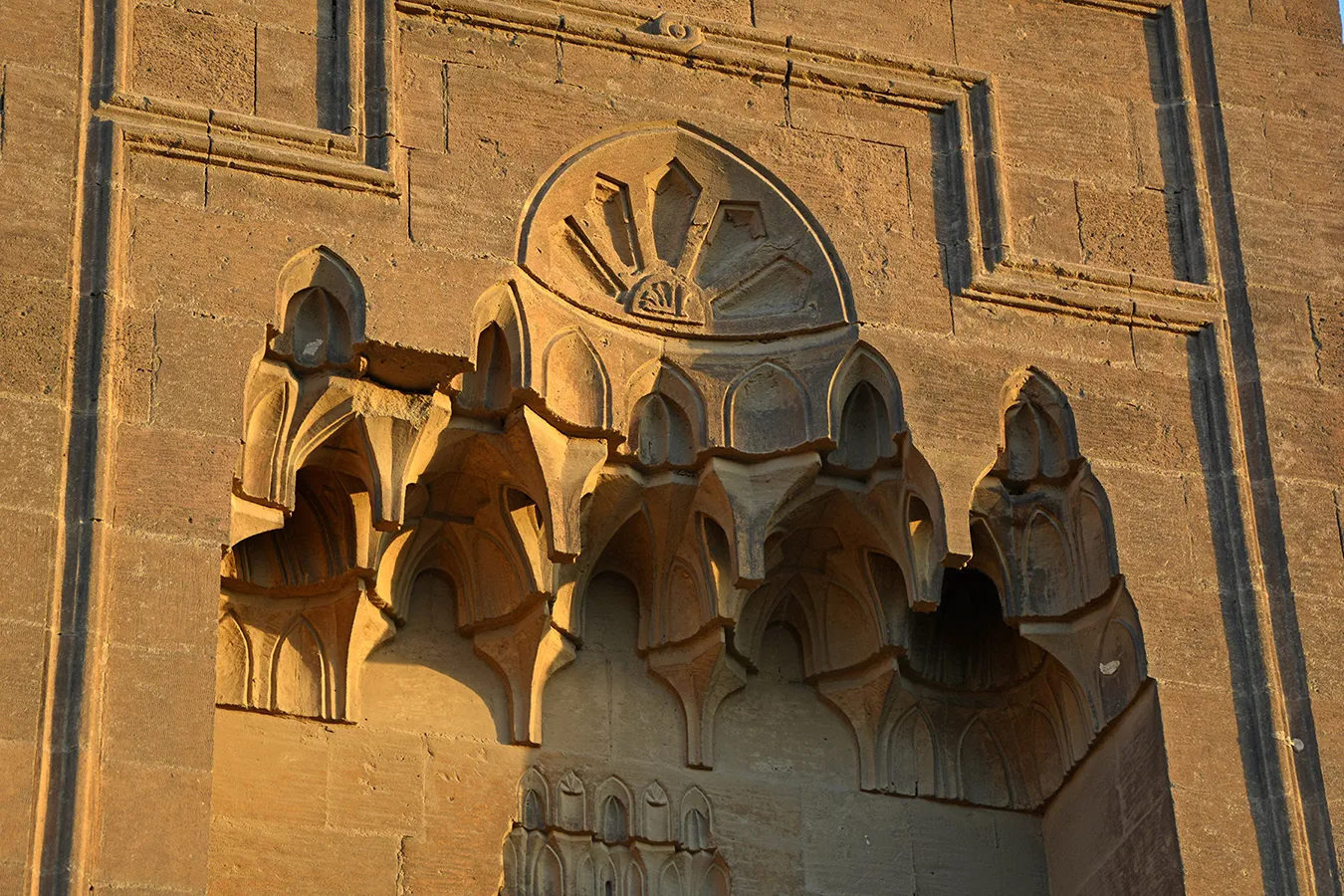
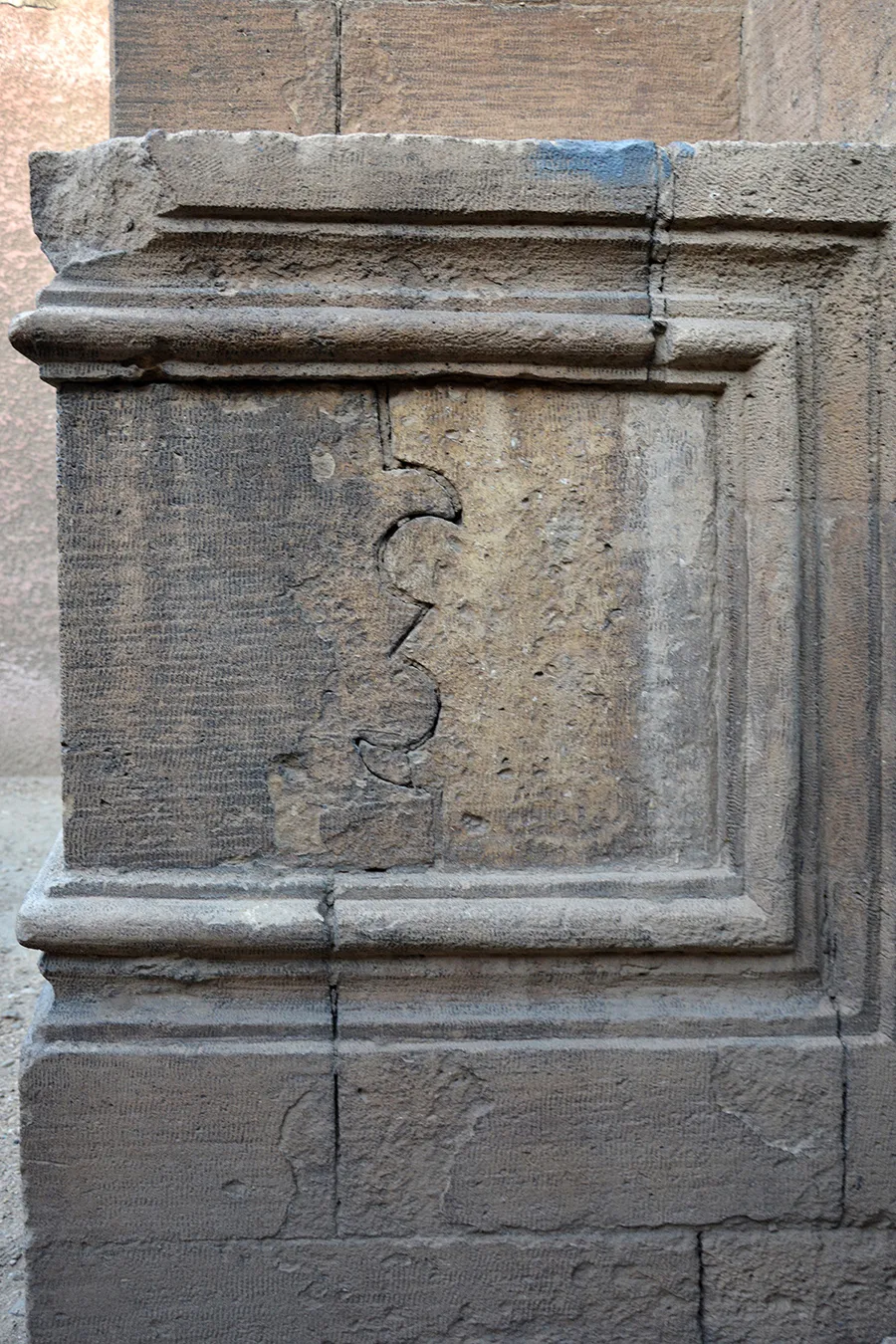
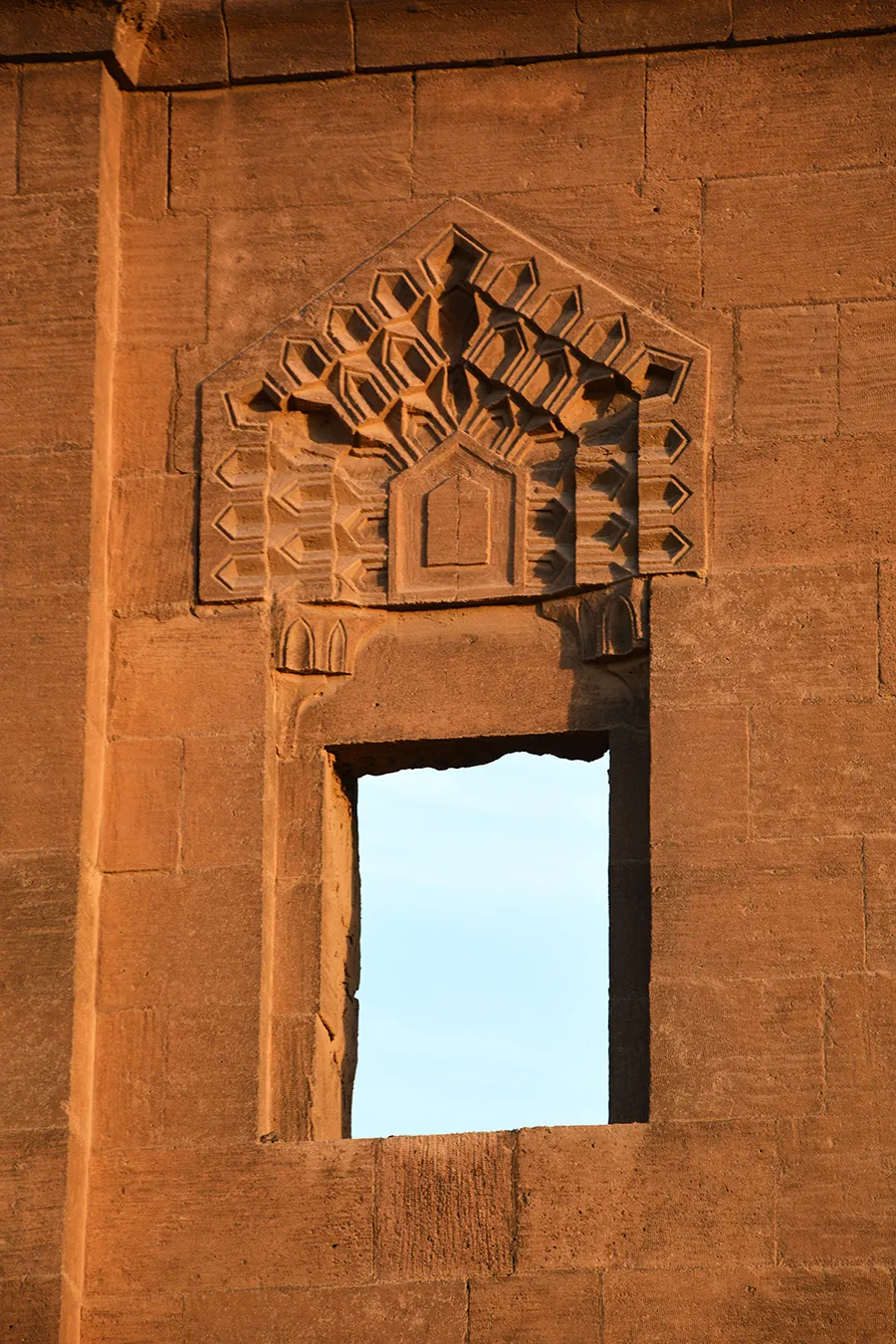
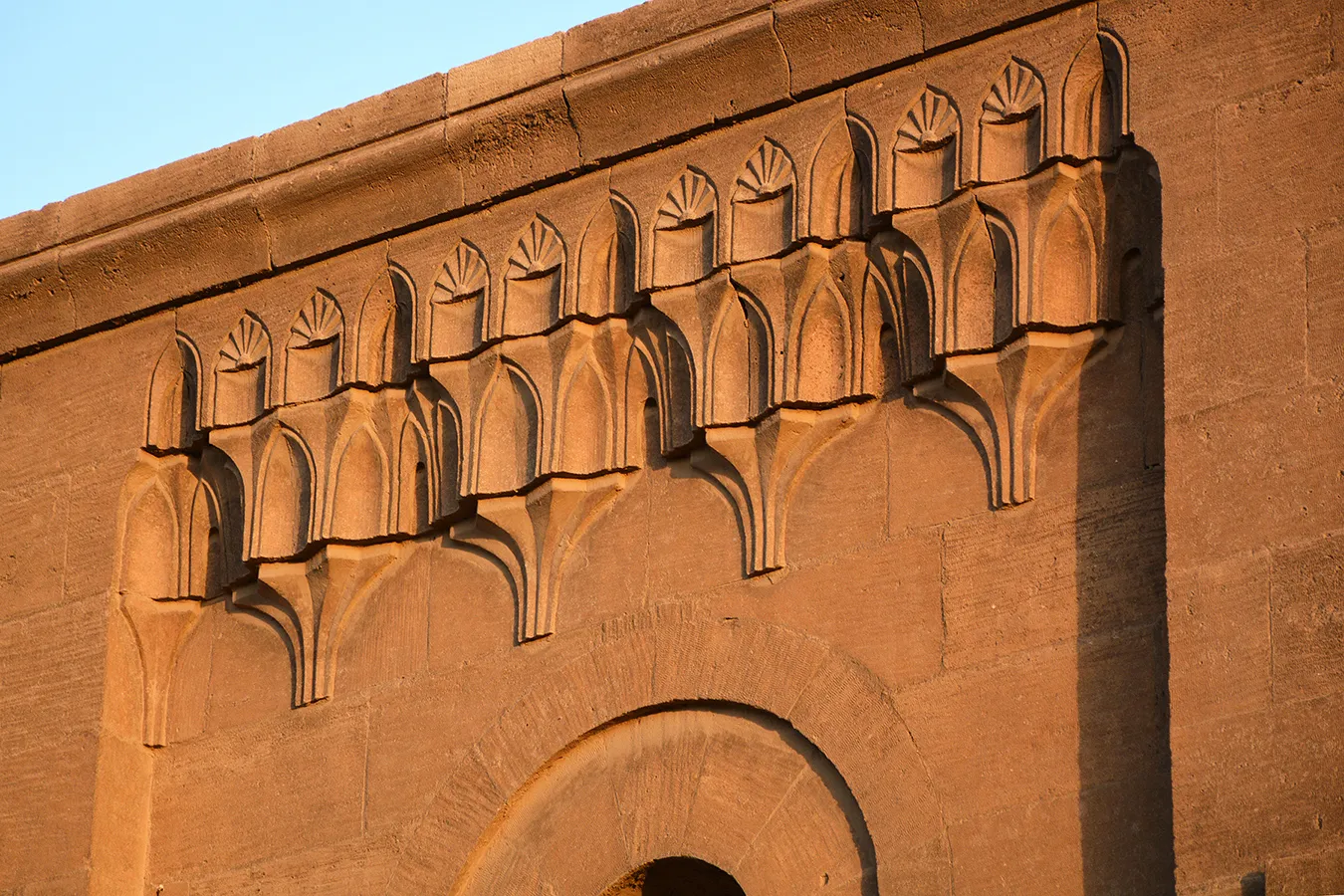
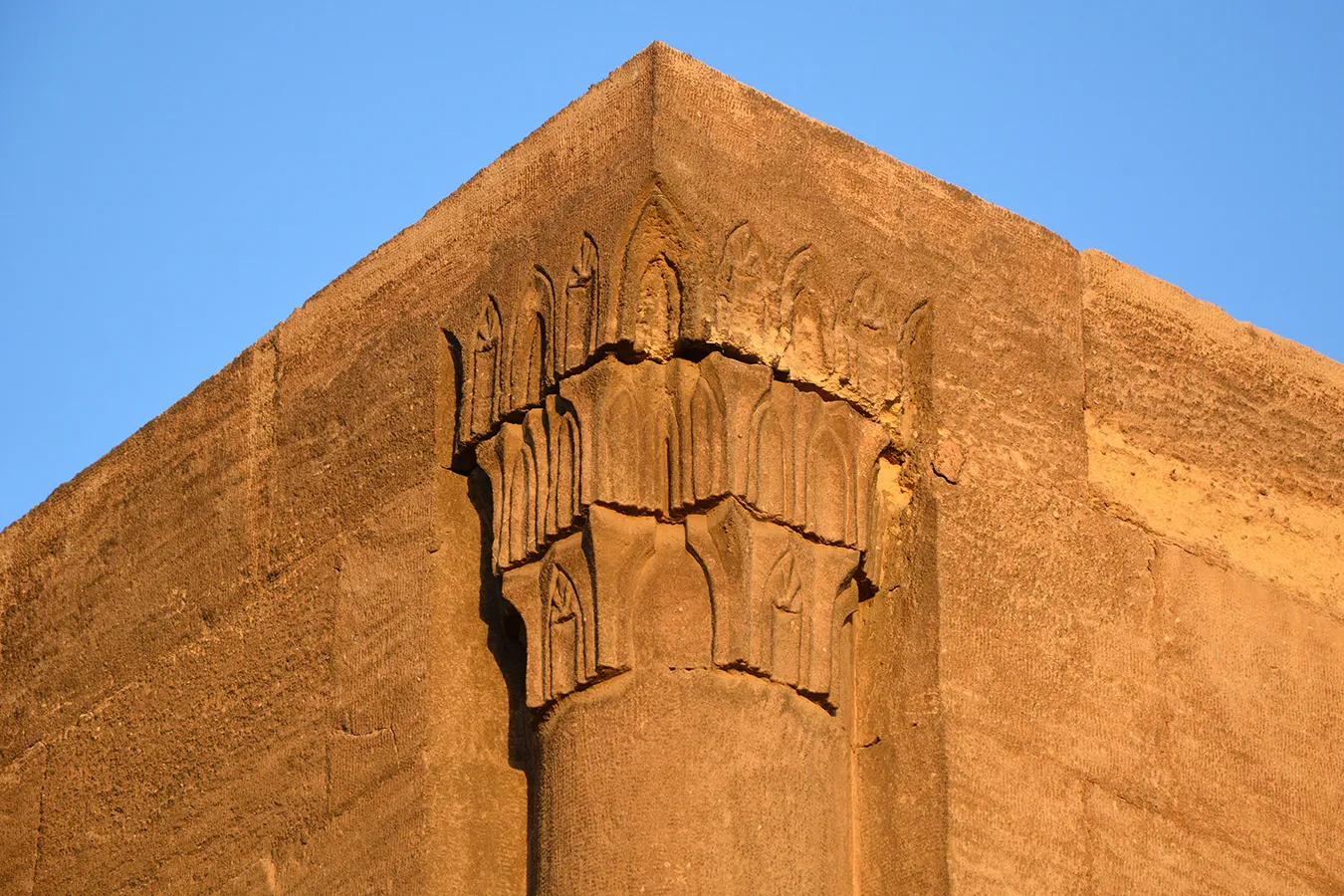
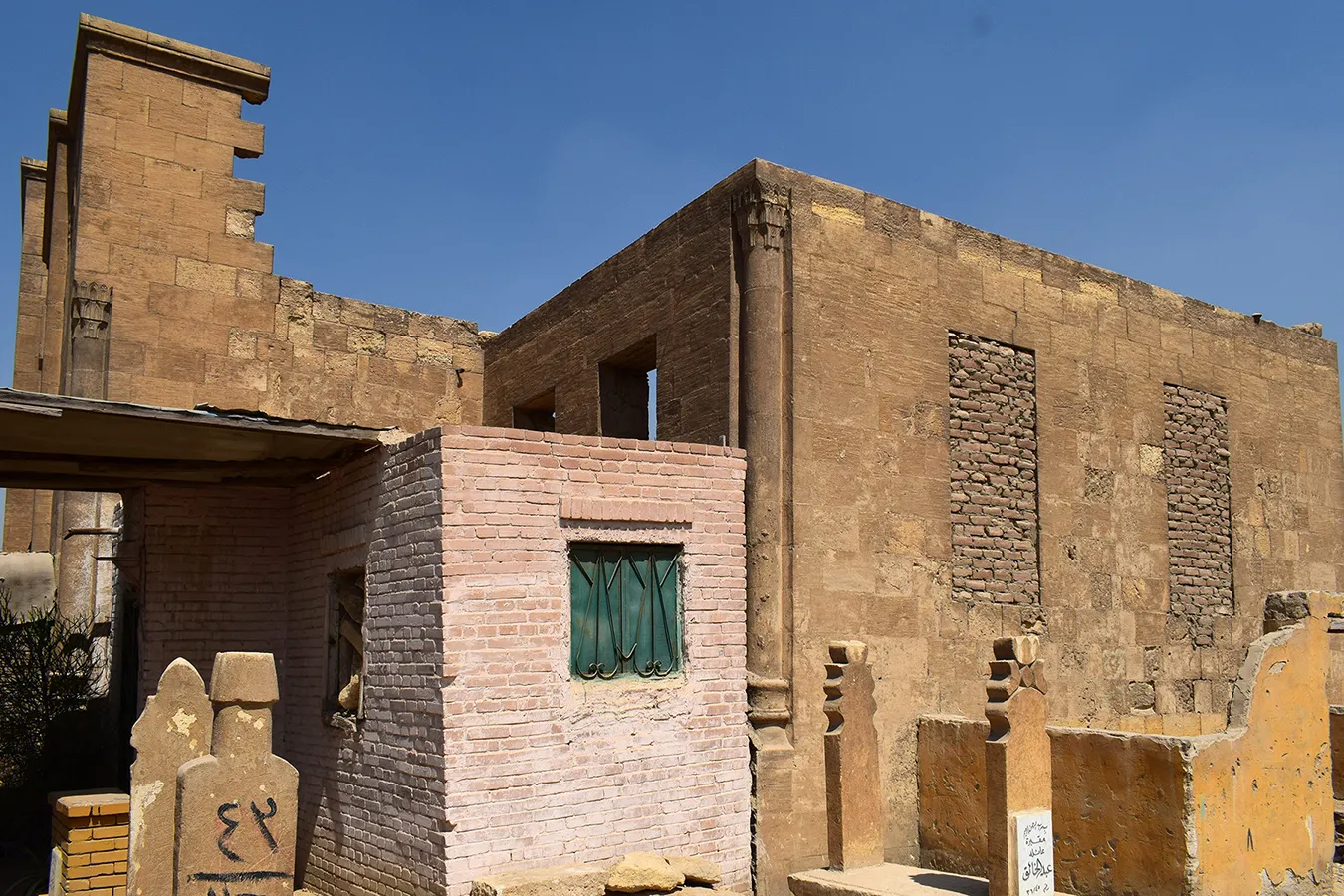
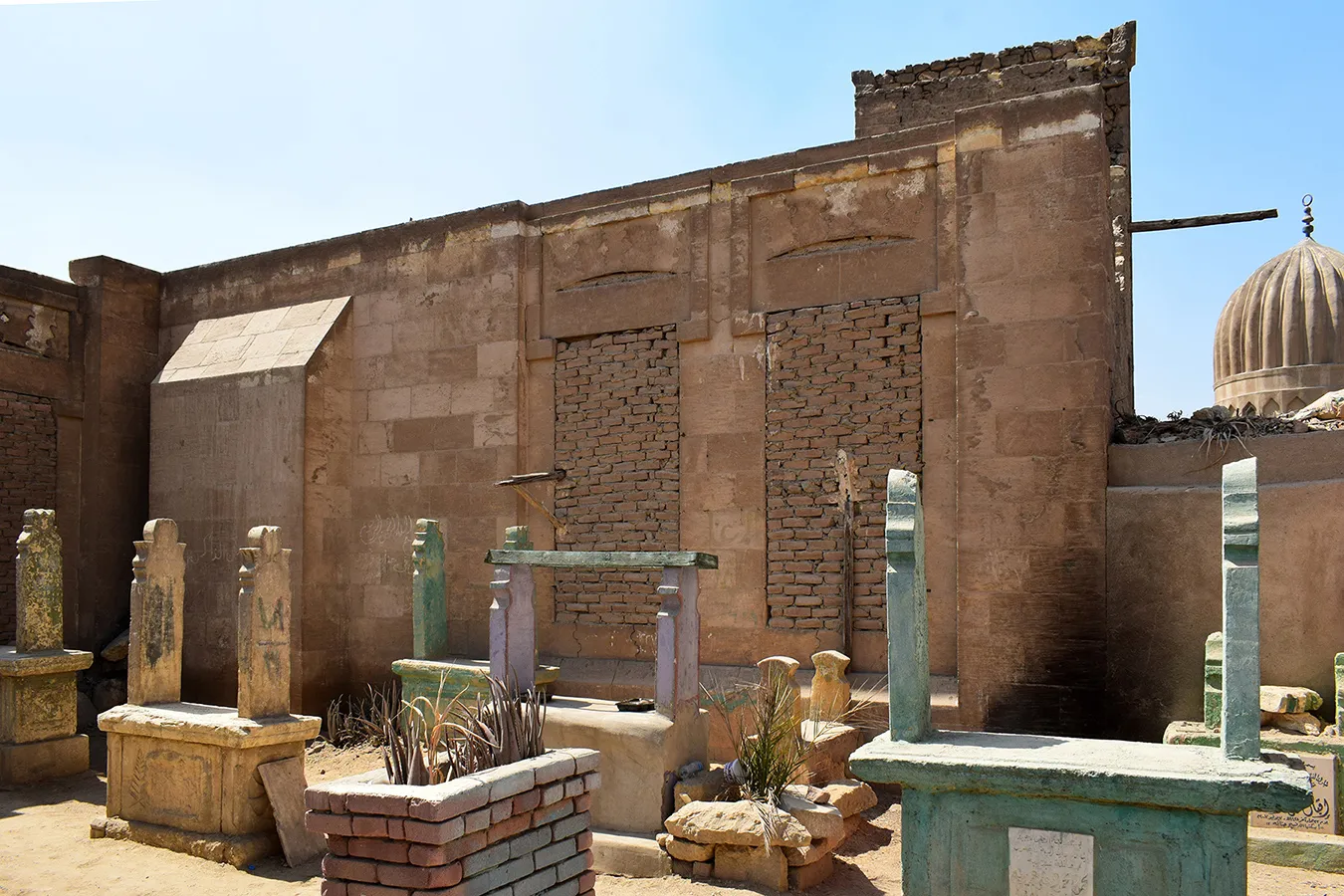
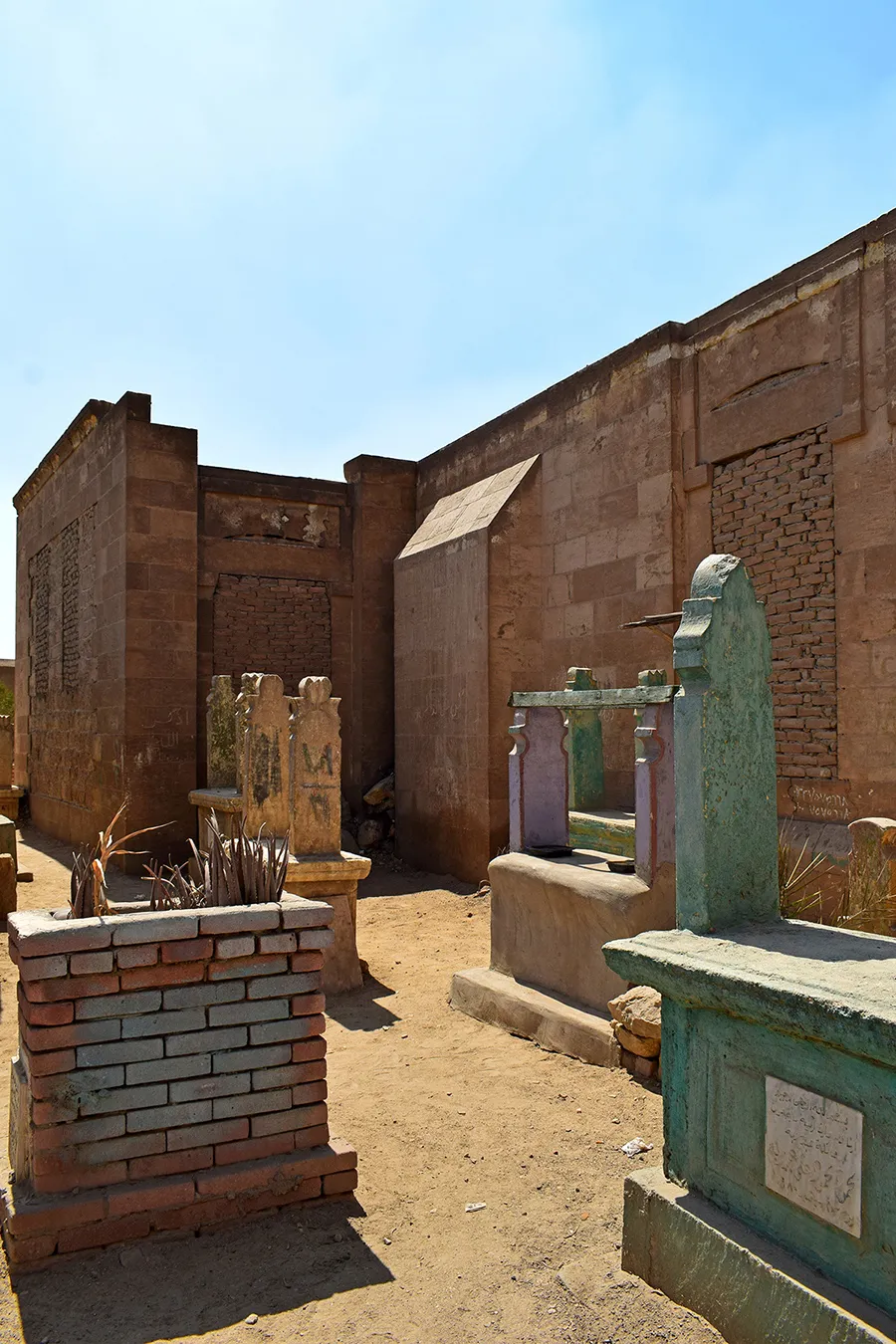
The unit comprises a large roughly rectangular hall (with the back wall, i.e., qibla-facing, slightly oblique), and a smaller rectangular space connected to the south-eastern corner and protruding towards south and east. The main façade faces west and is composed of a tripartite elevation and a taller block of the entrance portal attached to it to the left (north) and slightly protruding. The portal is set in a deep recess covered with a flat muqarnas hood topped with a pointed-arch niche. It includes all typical elements of a Circassian Mamluk porch such as this in the nearby mosques of Sultan Qaitbey (monument No 99, AD 1474) and Sultan Farag Ibn Barquq (No 149, 1400-11): a rectangular door flanked with “gals” (plural: galas) seats and topped with a lintel framed with mouldings, with a flat arch of joggled voussoirs with intrados forming a segmental relieving arch over the lintel; a recessed inscription band (in this case empty) to the sides at about eye level; a rectangular small window above the door with a flat muqarnas hood; the crowning muqarnas hood; all framed in knotted mouldings. To the sides of the window in the entrance recess are two sunken square panels: the left one contains a plain uninscribed marble slab, from the one to the right the marble has been recently stolen as evidenced by fresh marks from prying off. The façade to the right looks much like an external façade of the qibla (Mecca-facing) wall of a Mamluk madrasa/mosque although it is the opposite, western wall. As would be the case in a Mamluk building, the double-level fenestration belies the single full-height interior. In the lower level is a large window topped with a typically Circassian Mamluk arrangement of a rectangular panel of knotted mouldings that frames the lintel and above it a flat arch of stepped voussoirs with the intrados forming a segmental relieving arch over the lintel. It is placed in a slightly protruding section of the wall and placed in a full-height recess in it, topped with an elaborate flat muqarnas hood. Over the ground floor window is a plain round window. Also in the upper level, to each side of the protruding section is a rectangular window with a rectilinear keel-arch flat niche decorated conch-like with three tiers of angular recesses. Such form is typical of windows on internal walls in the central courtyard of Circassian Mamluk-period madrasa/mosque (such as in Sultan Qaitbey’s, No 99), but not used externally. The south-western corners of both units that comprise the building are decorated with engaged corner columns with elaborate muqarnas capitals. Windows on side and back walls have the typically Mamluk arrangement, but the framings are not carved into knotted mouldings, but left plain.
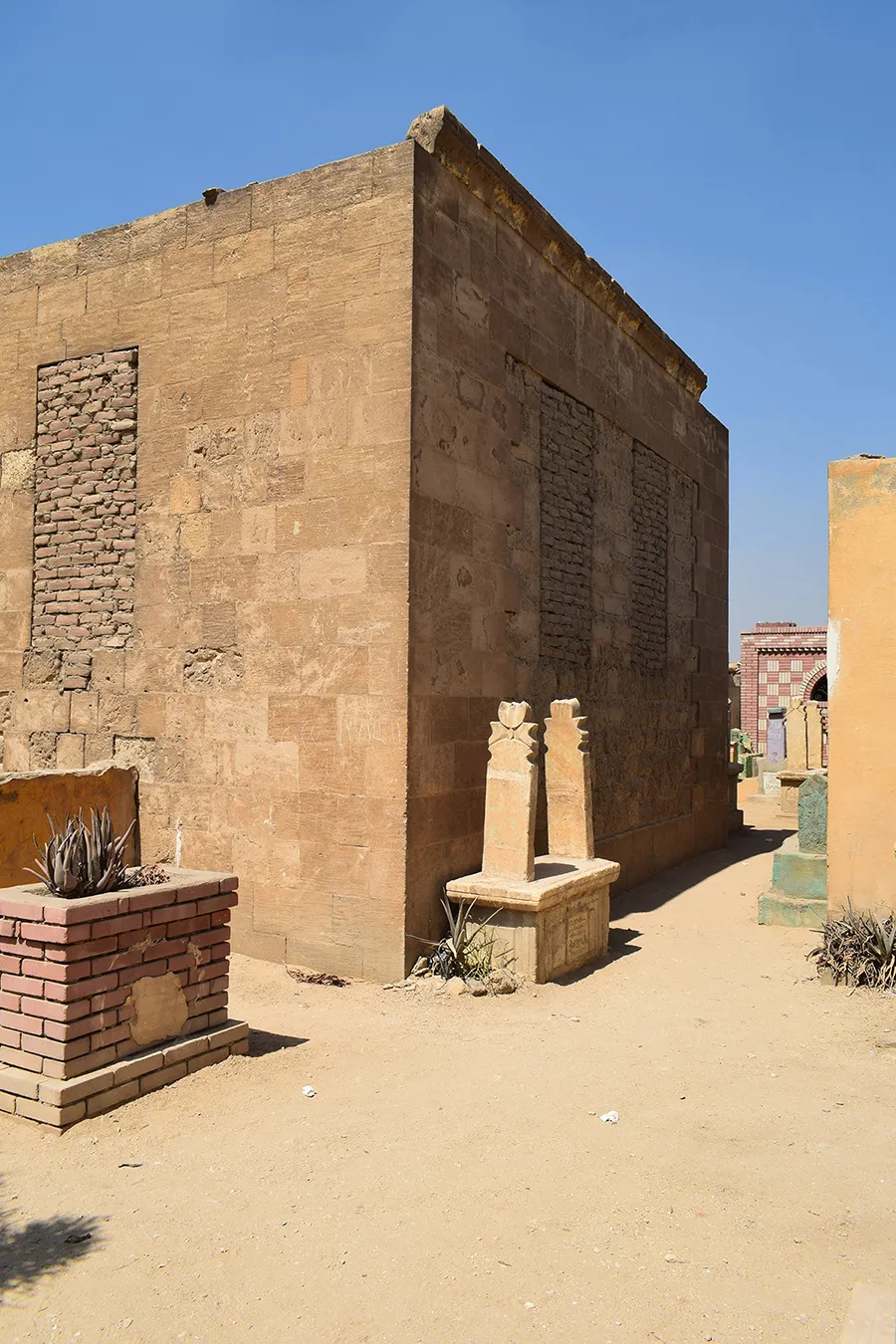
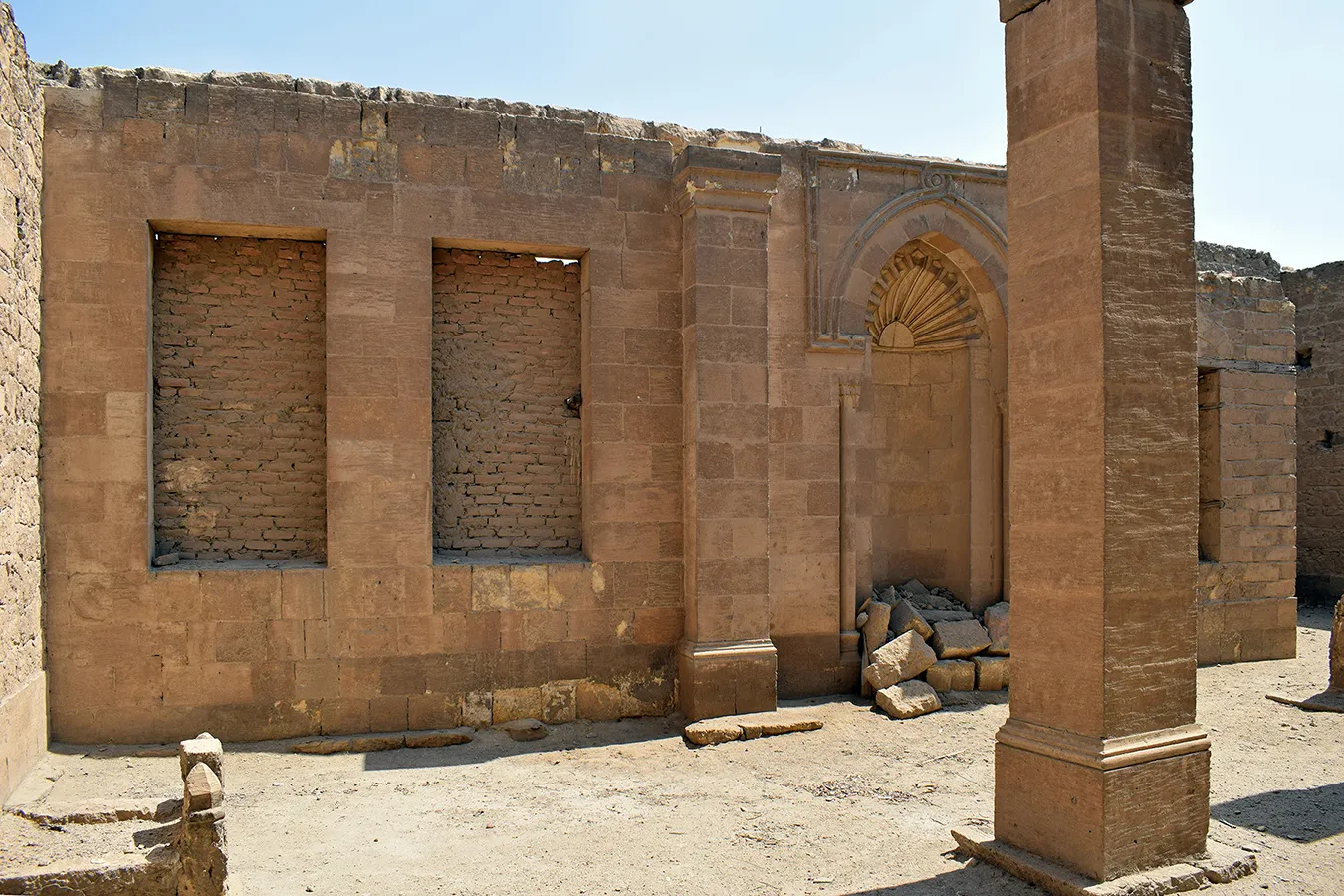
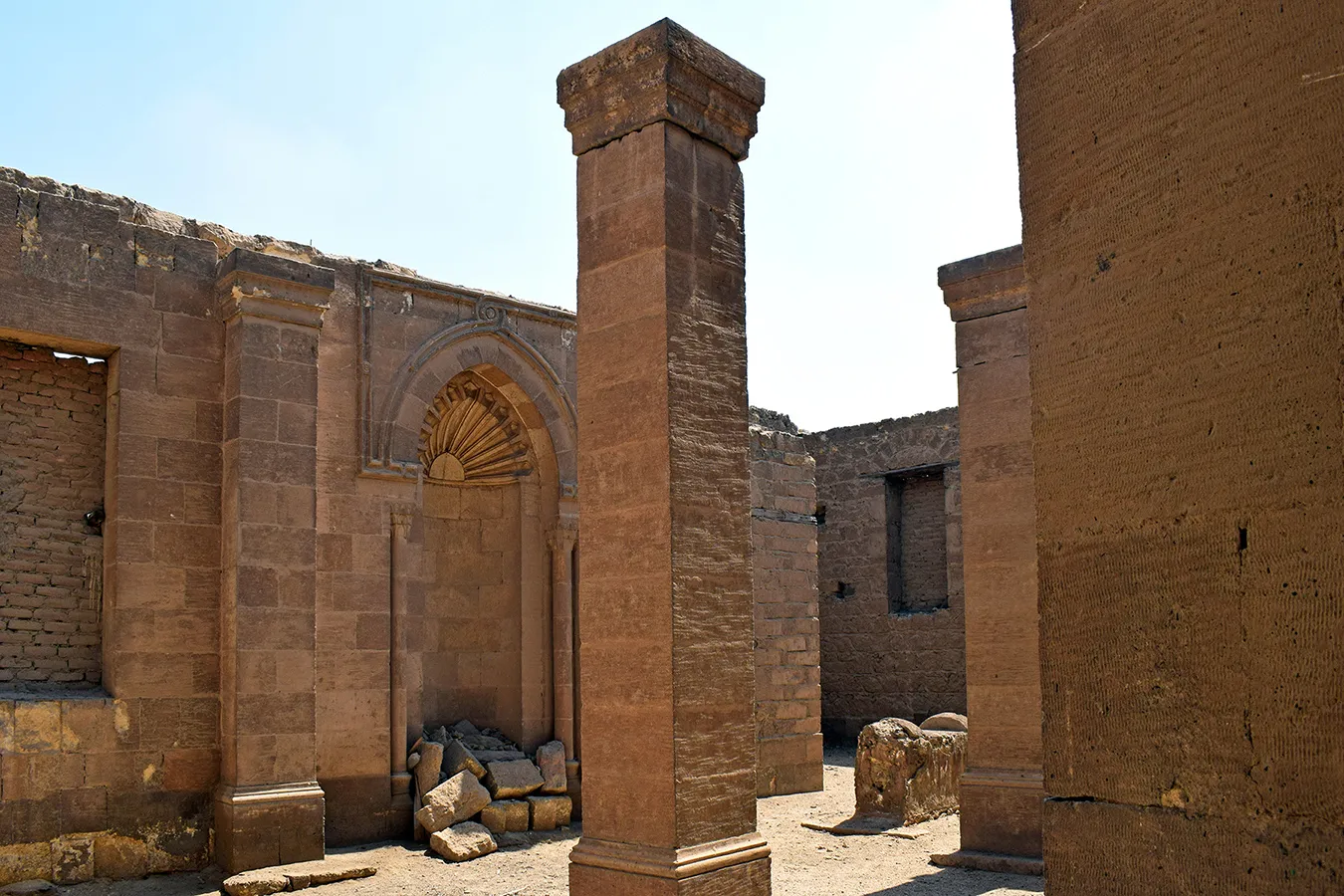
The interior of the larger space would constitute a sizeable prayer hall if it was roofed. There is a huge and elaborate mihrab prayer niche flanked by colonettes with muqarnas capitals and with a fluted conch in the crowning pointed-arch niche. The two square pillars in the room and corresponding engaged pillars in the walls indicate that the space was designed to be divided into two aisles of three bays each, but it appears that the roof was never constructed. There are more indications that the building was never completed. Some interior walls are built of rough stone which was apparently designed to be covered with plaster, but has been left exposed. All windows are bricked up, with no indication that any windows, window grilles, or shutters were ever installed. There is not a single inscription on the building, the mouldings around side and back windows are apparently unfinished, as are two plain square panels on the front façade.
Condition of preservation
The walls are in sound condition, but the building is disused and unroofed. Various haphazardly built structures abut directly, completely obscuring the front façade.
Information abut the founder, family history, etc.
There is a conspicuous absence of any inscriptions on the building (see point 15)
- Field recording by
- Hadeer Ahmad and Nur Atiya
- Date recorded
- September 5, 2022
- Data entered by
- Yusuf Yassir
- Date entered
- May 8, 2024