
Unit No22
‘Ali Bey al-Turguman
|
Coordinates of the main entrance |
30.043347N - 31.271994E |
|
Attribution |
‘Ali Bey al-Turguman |
|
Higri (AH)Dates as given in the Inscription |
1324 |
|
Miladi (AD)Dates as given in the Inscription |
|
|
Inscription Contemporary with the building? |
Yes |
|
Multiple date(s) In the inscription? |
Yes |
|
Assumed Date |
|
|
Based on |
|
|
Original Use |
Tomb and residential |
|
Current Use |
Tomb and residential |
|
Overall condition |
Fair |
Features of unit 22
| Present | Count | Material | Comments (see description for details) | |
|---|---|---|---|---|
| Free standing structure | Yes | 1 | stone | Main two-storied building |
| Walled enclosure | Yes | stone | Comprising the main building and the mausoleum that fill most of the enclosure | |
| Rooms by the perimeter wall | Yes | stone | the main building and the mausoleum that fill most of the enclosure | |
| Freestanding structure(s) in enclousure | No | |||
| Dome over the tomb chamber | No | |||
| Neo-Mamluk architectural decoration | Yes | |||
| Garden layout | No | |||
| Sabil(s) | Yes | 1 | stone | |
| Wall fountain(s) | No | |||
| Canopy on columns / pillars | No | |||
| Carved marble cenotaph(s) | Yes | 1 | 1 | |
| Decorated limestone tomb-markers | No | |||
| Decorated gateway | Yes | 1 | Ashlar stone | An elaborate Mamluk-style portal |
| Decorative door-leaves | No | |||
| Decorative window grilles | Yes | 4 | Brass | Simple grilles imitating Mamluk-period ones |
| Decorative shutters | No | |||
| Painted ceiling(s) | No | |||
| Decorative paving(s) | No |
Description (The direction towards Mecca (Qibla) is described as eastern and other directions are named accordingly)
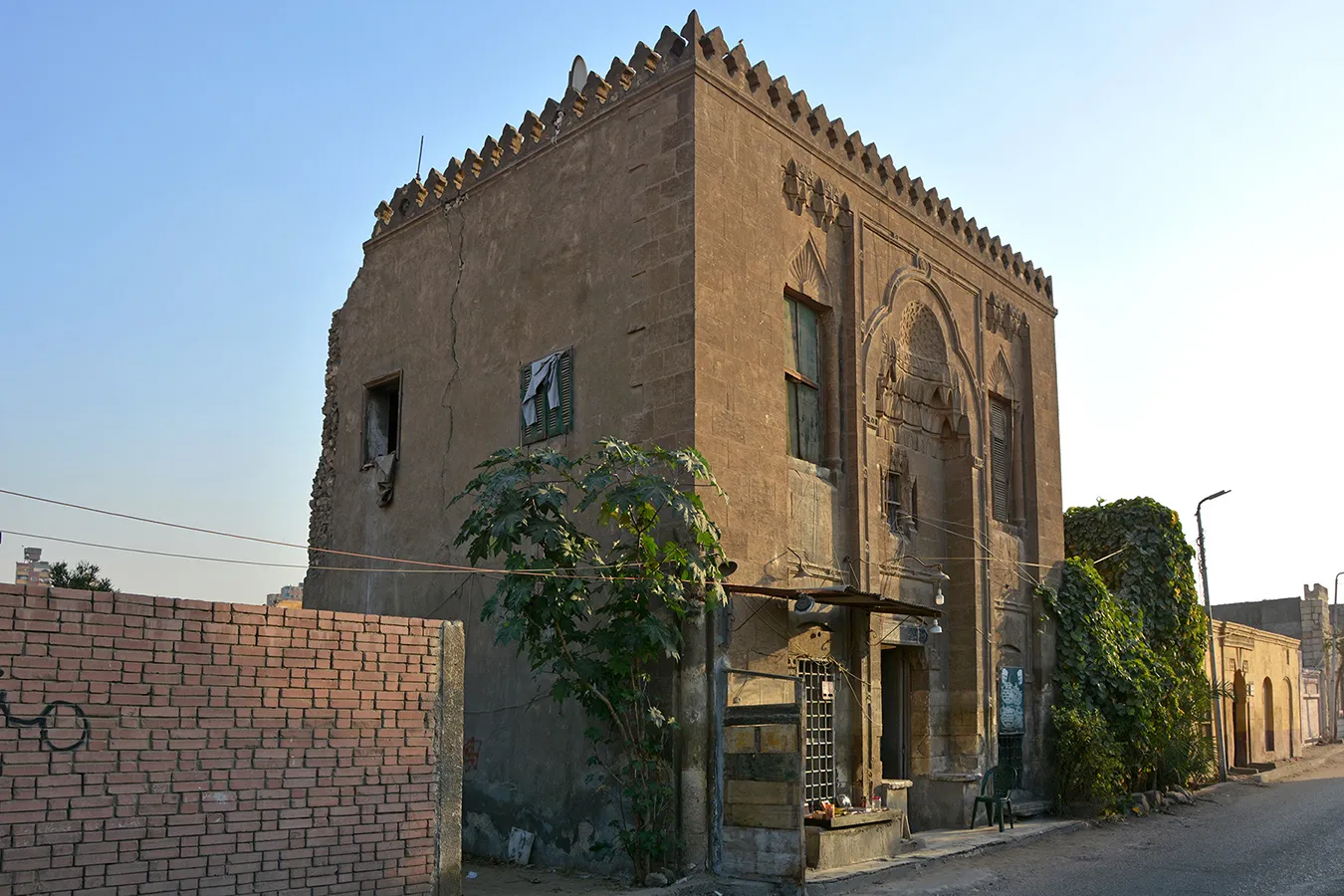
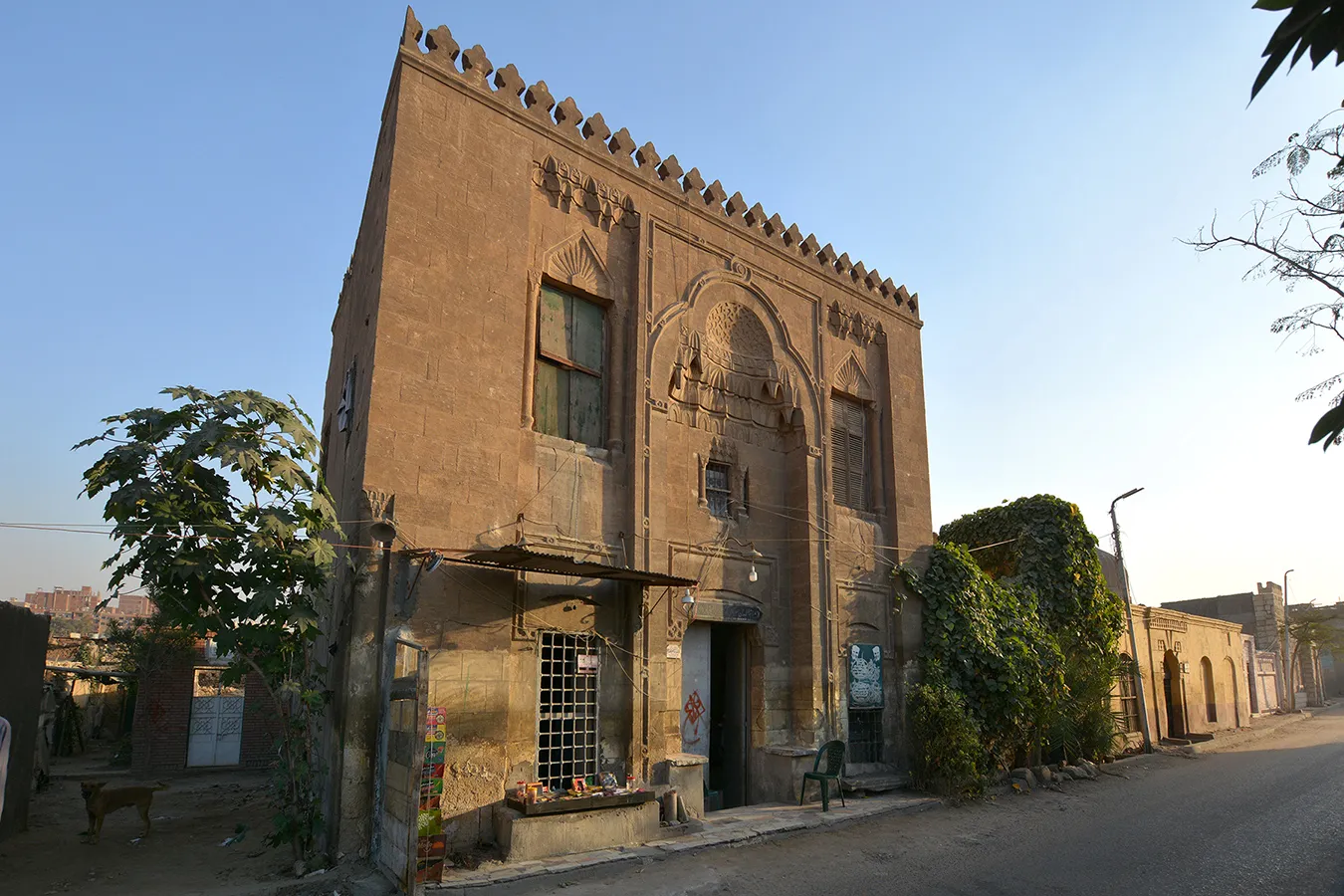
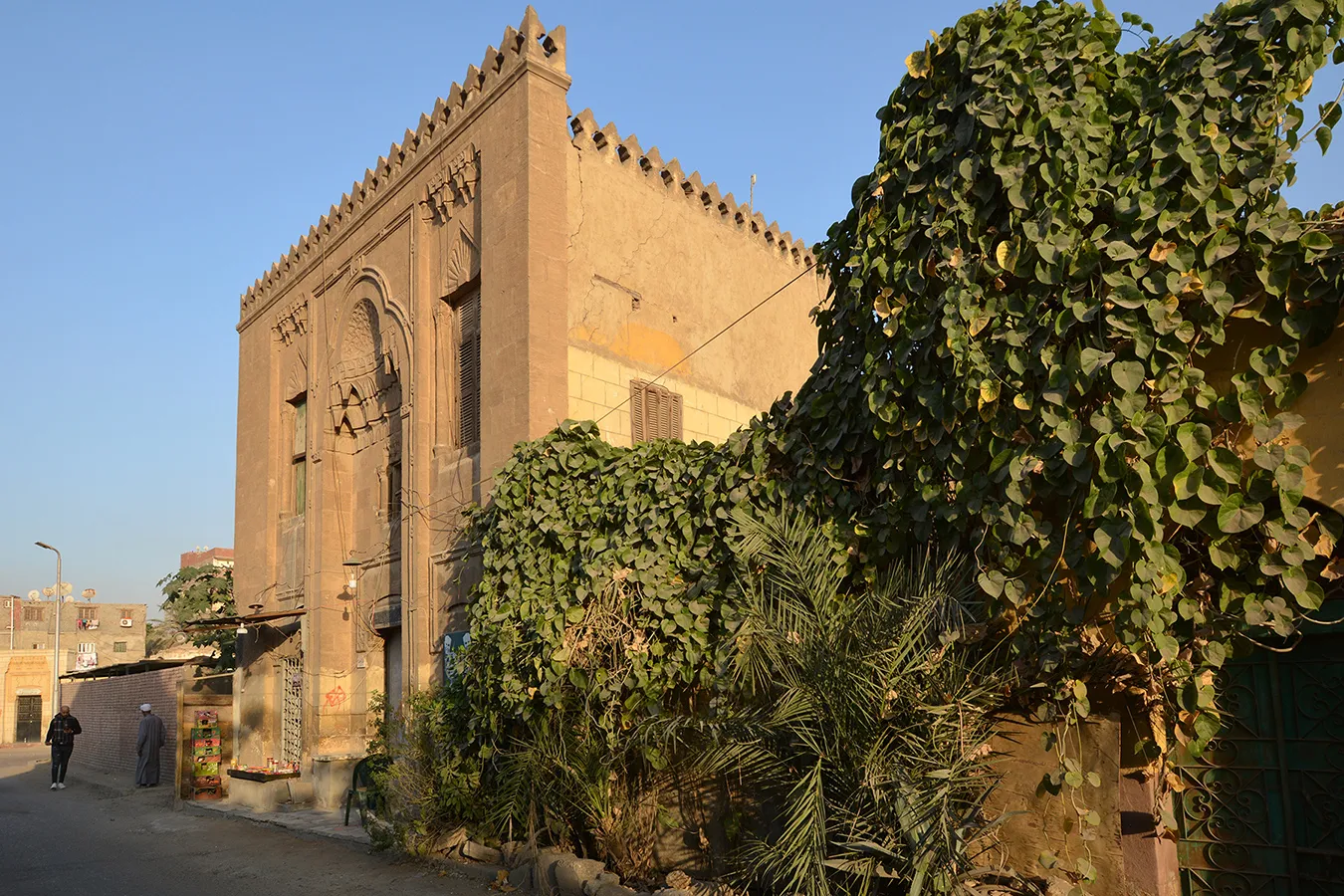
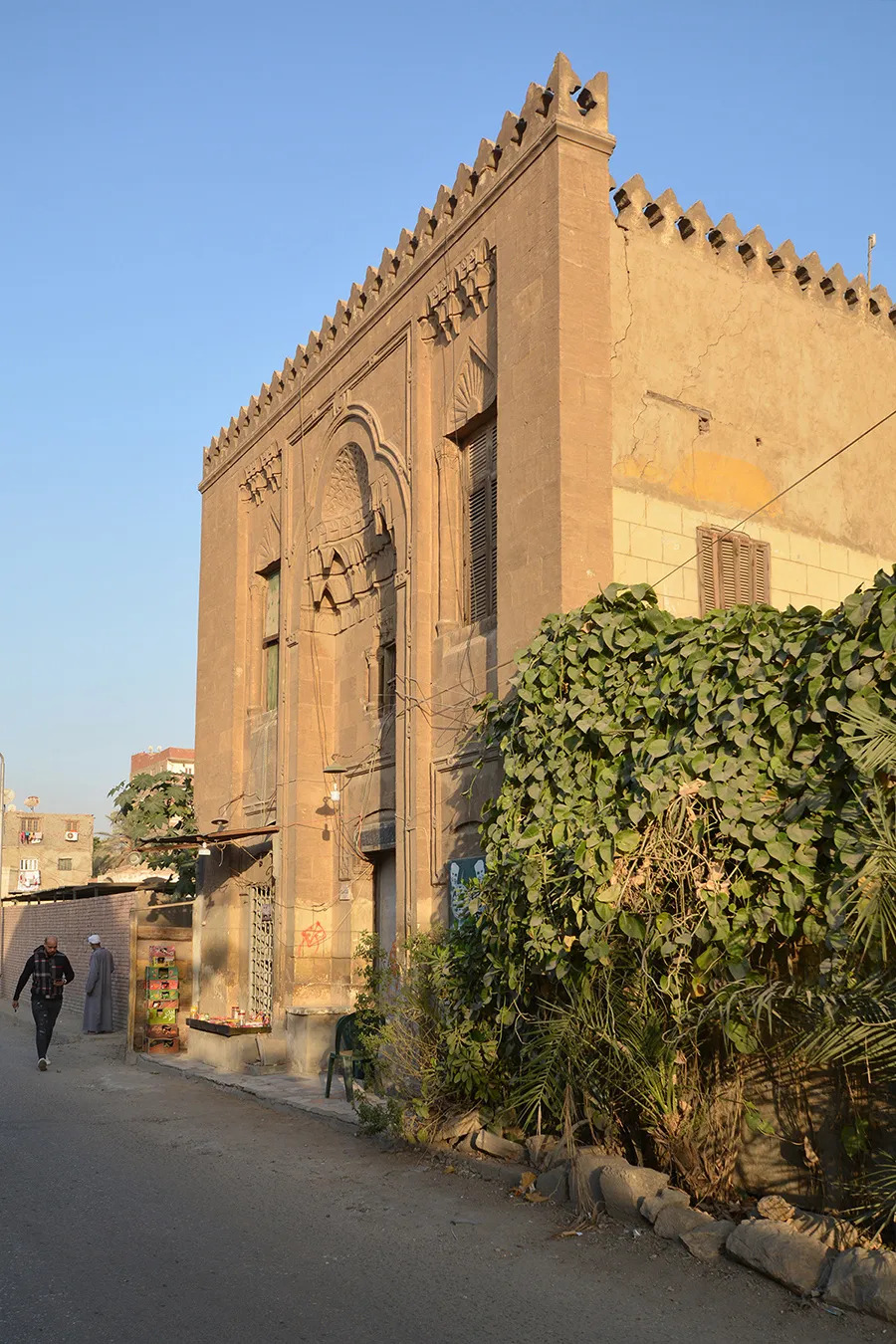
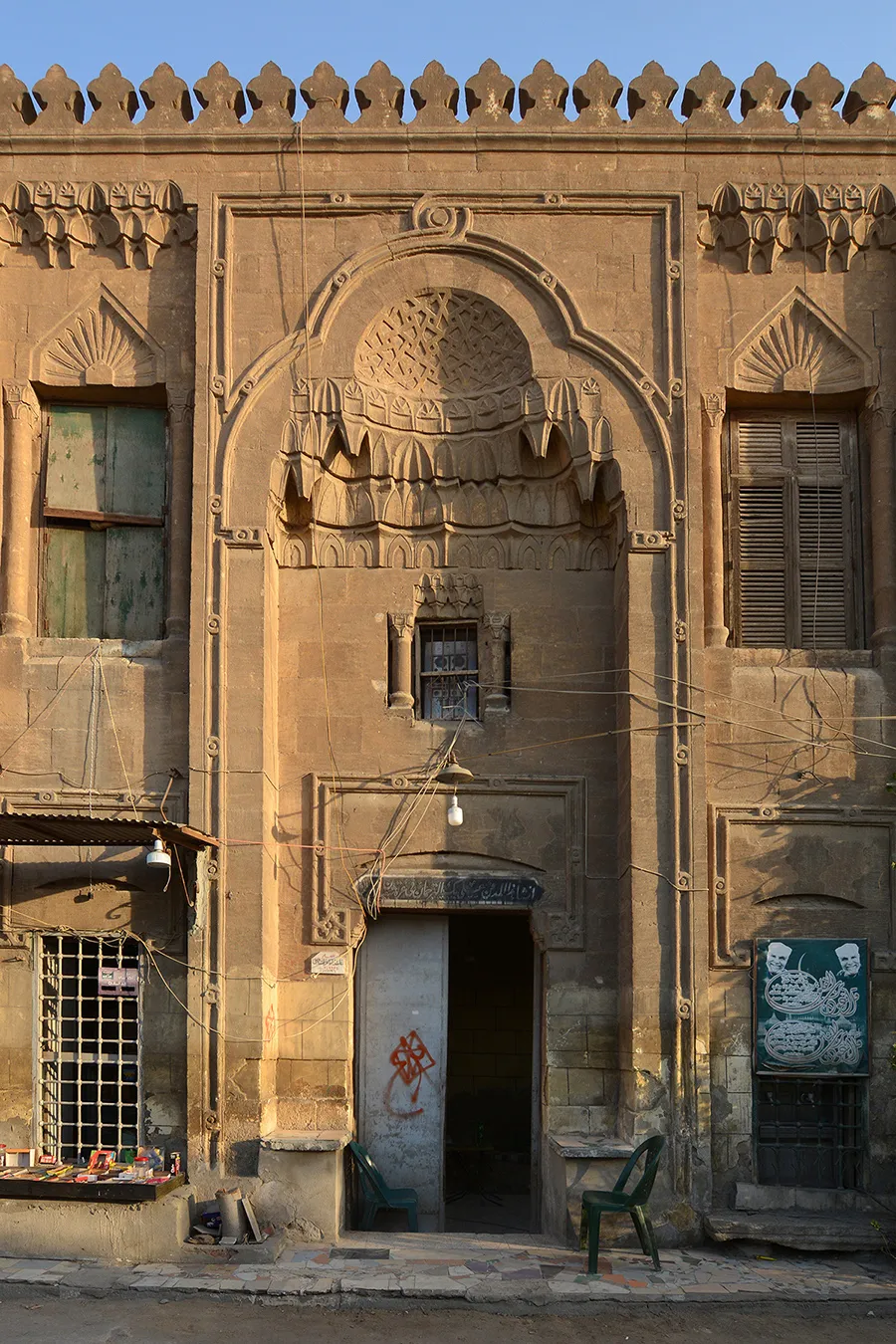
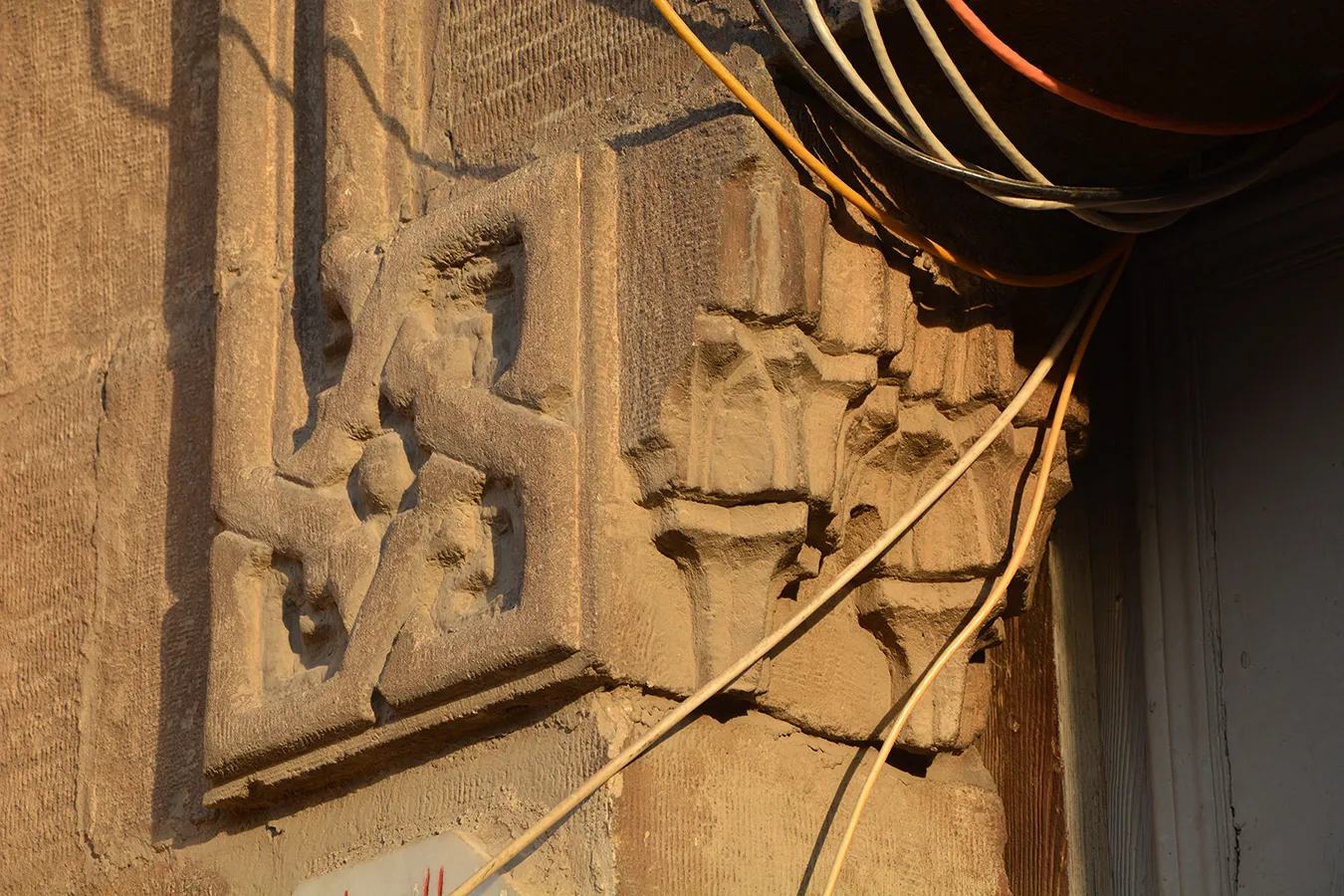
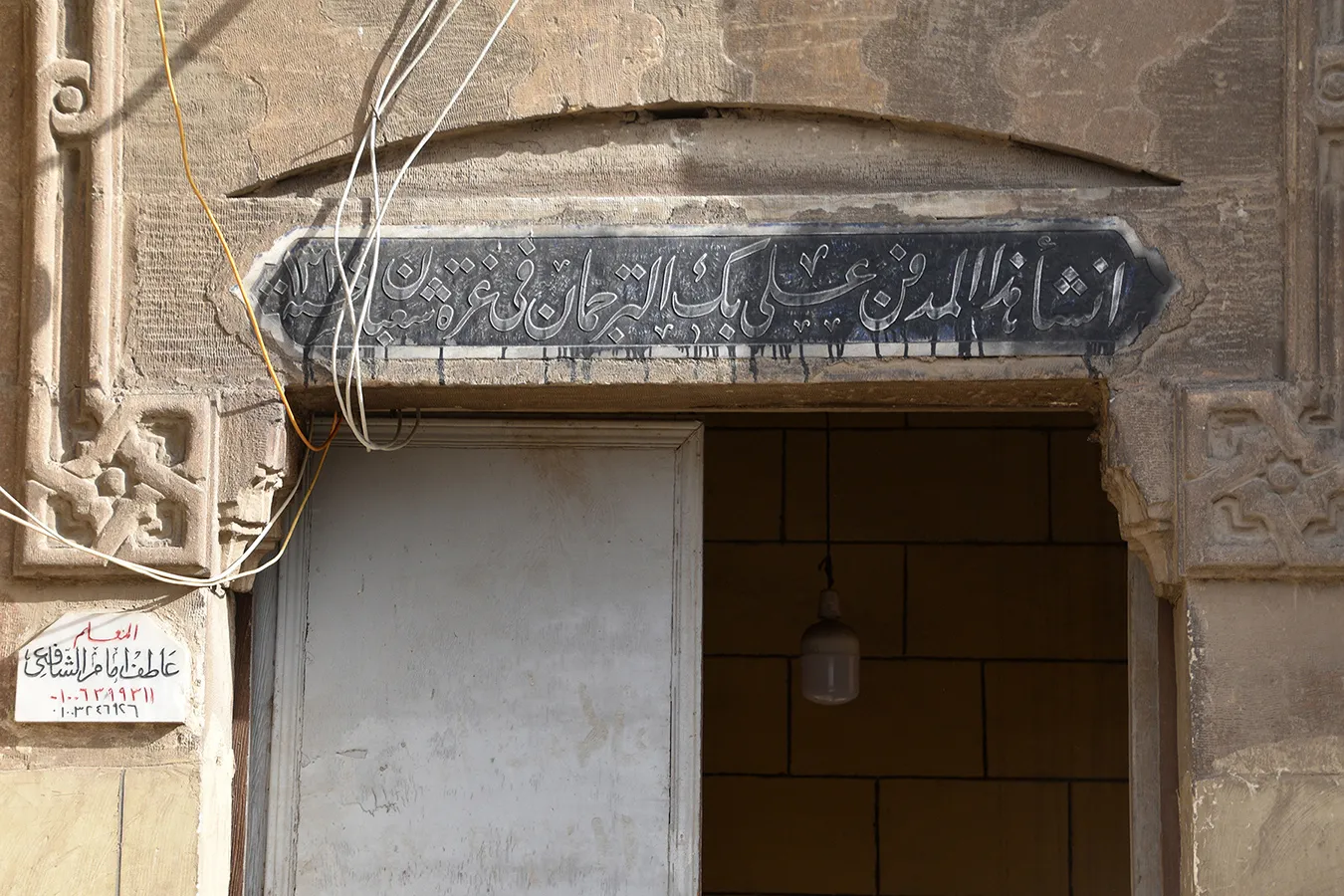
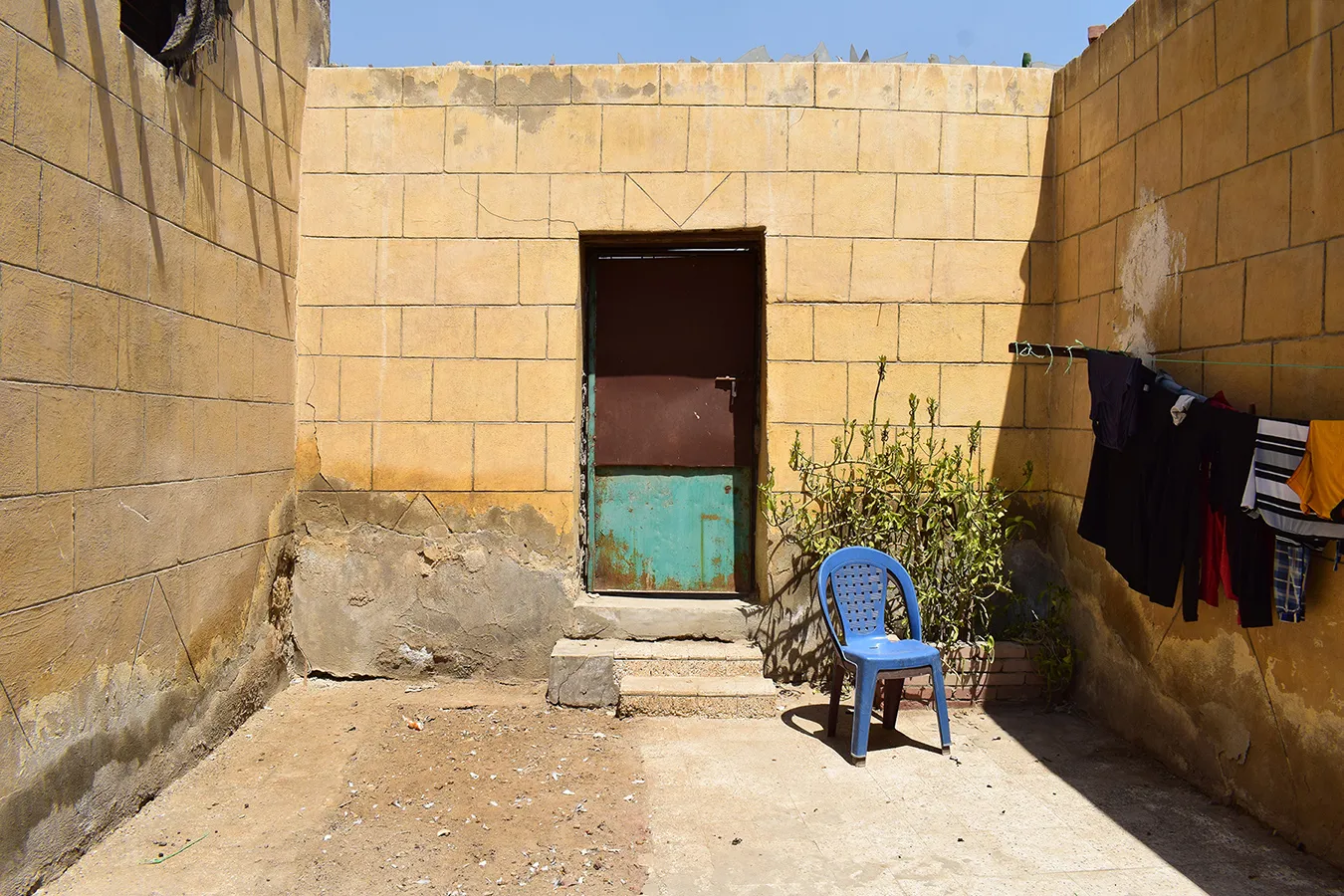
The lot facing the Sultan Ahmad Street with its western elevation is divided into two parts: the northern part contains a two-storey building of a roughly square plan with a narrow courtyard behind (with a secondary entrance in the northern wall); the narrower southern part comprises of a courtyard in its western section and a single-storey rectangular burial chamber by the eastern wall. The neo-Mamluk façade of the main building is symmetrical and tripartite. The quality of stonemasonry is very high. The central part is taken by the entrance portal that is set in a full-height recess and includes all typical elements of a Circassian Mamluk porch such as this in the nearby mosques of Sultan Qaitbey (monument No 99, AD 1474) and Sultan Farag Ibn Barquq (No 149, 1400-11): a rectangular door flanked with “gals” (plural: galas) seats and topped with a lintel supported on muqarnas corbels to the sides, with a flat arch of joggled voussoirs with intrados forming a segmental relieving arch over the lintel; a recessed inscription band (in this case empty) to the sides (originally at about eye level); a rectangular small window above the door with a flat muqarnas hood; the crowning muqarnas hood; all framed in knotted mouldings. A marble plaque with an inscription in fina ruqa’ script in raised relief is set into the monolithic limestone lintel of the entrance door. The crowning hood is a combination of a flat muqarnas hood with a trilobe arrangement. The intertwining endings of the knotted mouldings over the entrance door are complex, angular, and closely-knit. This does not resemble Mamluk forms, but late Ottoman ones that kept in use well into the 19th century; it may therefore may represent a living architectural tradition rather than part of Mamluk Revival. A marble panel with a single-line calligraphic inscription stating the name of the deceased person and the date is inserted into a recess in the limestone door lintel. As the street level has risen considerably, the building is reached by a few steps leading down, and the side “gals” seats by the door have been rebuilt on a higher level, while the (empty) inscription band is now awkwardly low.
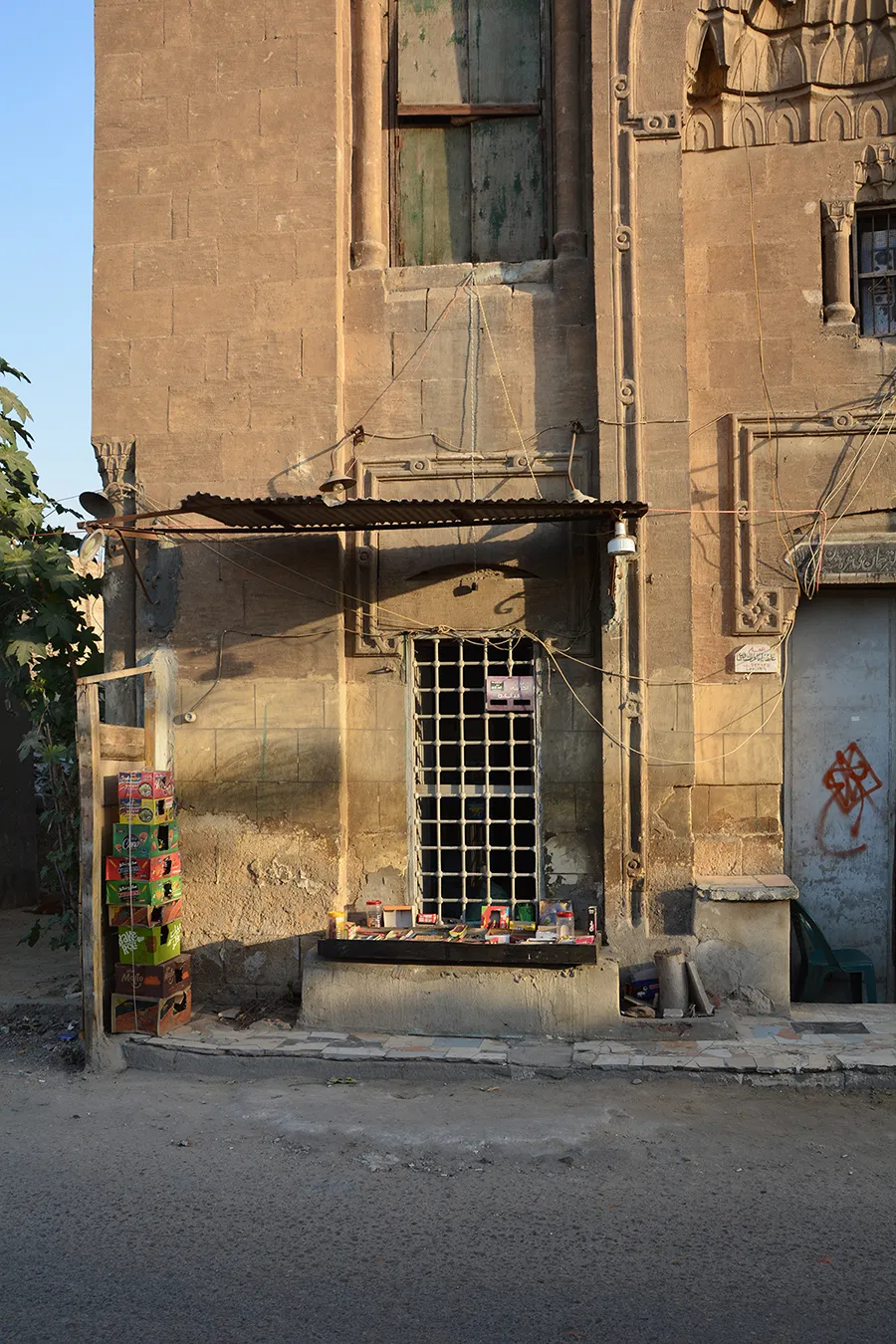
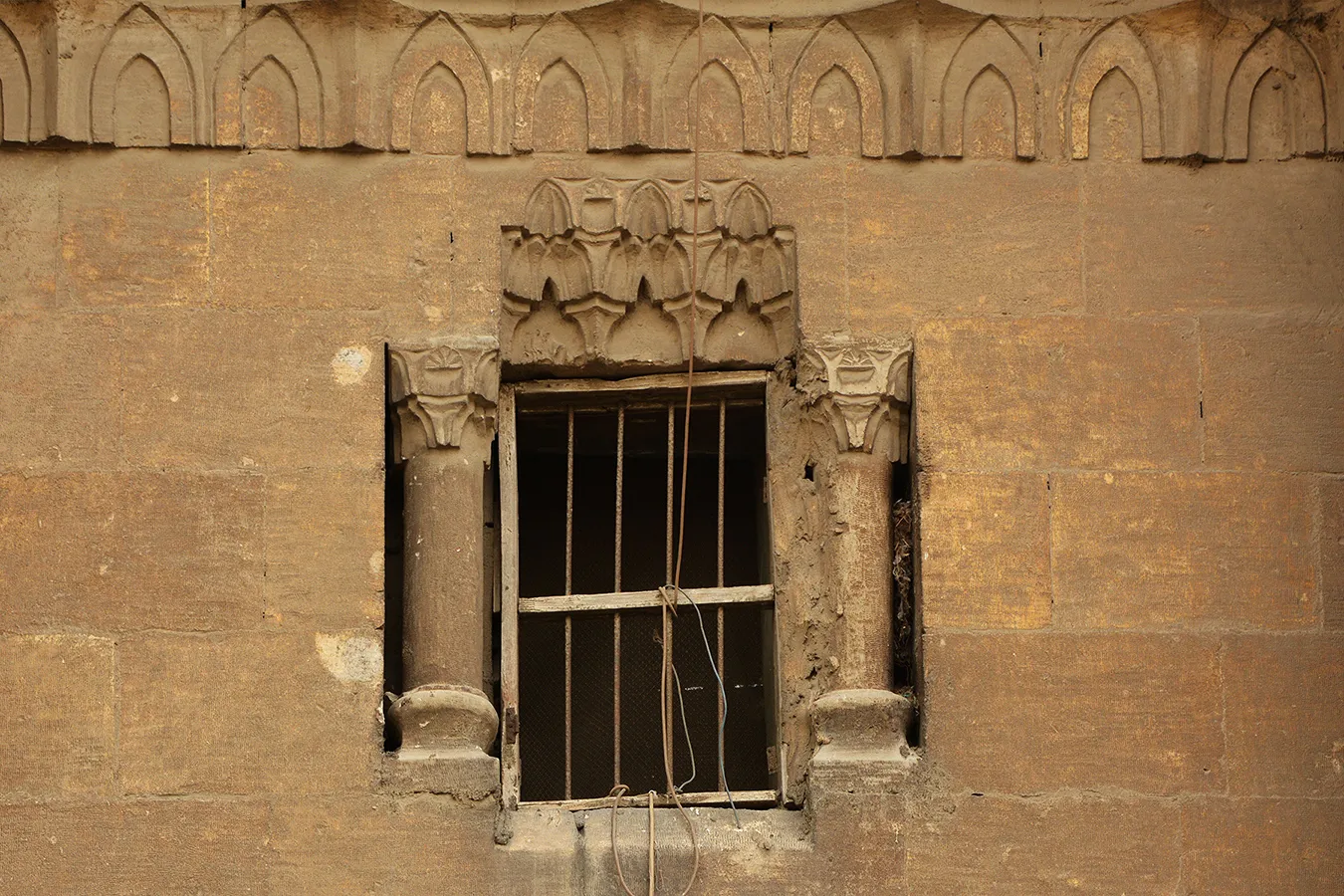
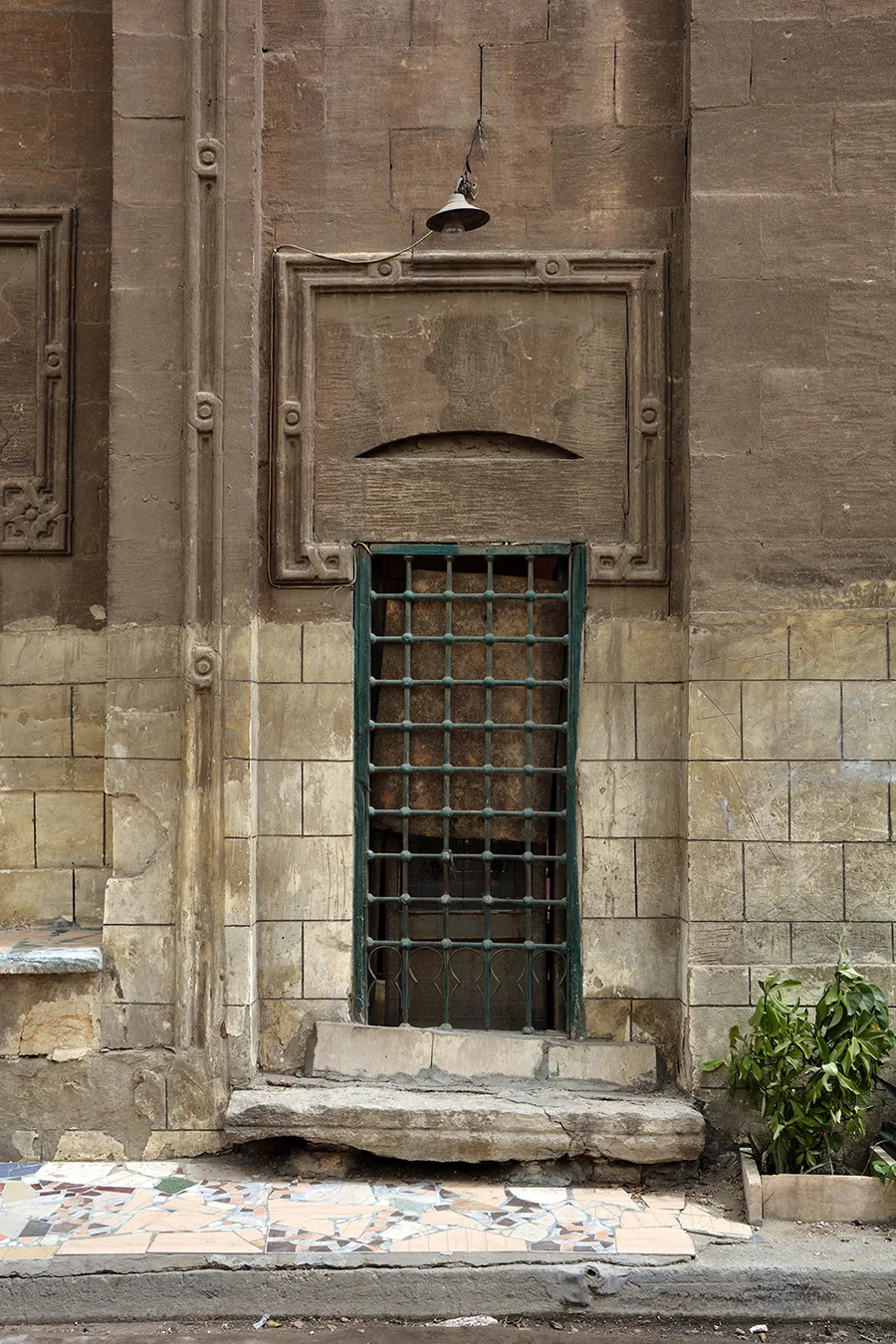
To the sides of the central entrance portal are shallower full-height recesses topped with flat muqarnas friezes that each contain a rectangular ground floor window with a typically Circassian Mamluk arrangement of a rectangular panel of knotted mouldings that frames the lintel and above it a flat arch of stepped voussoirs with the intrados forming a segmental relieving arch over the lintel. The right-side one is a sabil window with larger openings at the bottom of the window grille and a stone ledge. The large rectangular upper floor windows are flanked with colonnettes with muqarnas capitals and topped with rectilinear keel-arch fluted flat niches. The façade is crowned with fleur-de-lys crenelations and terminates to the left with an engaged corner column with a muqarnas capital.
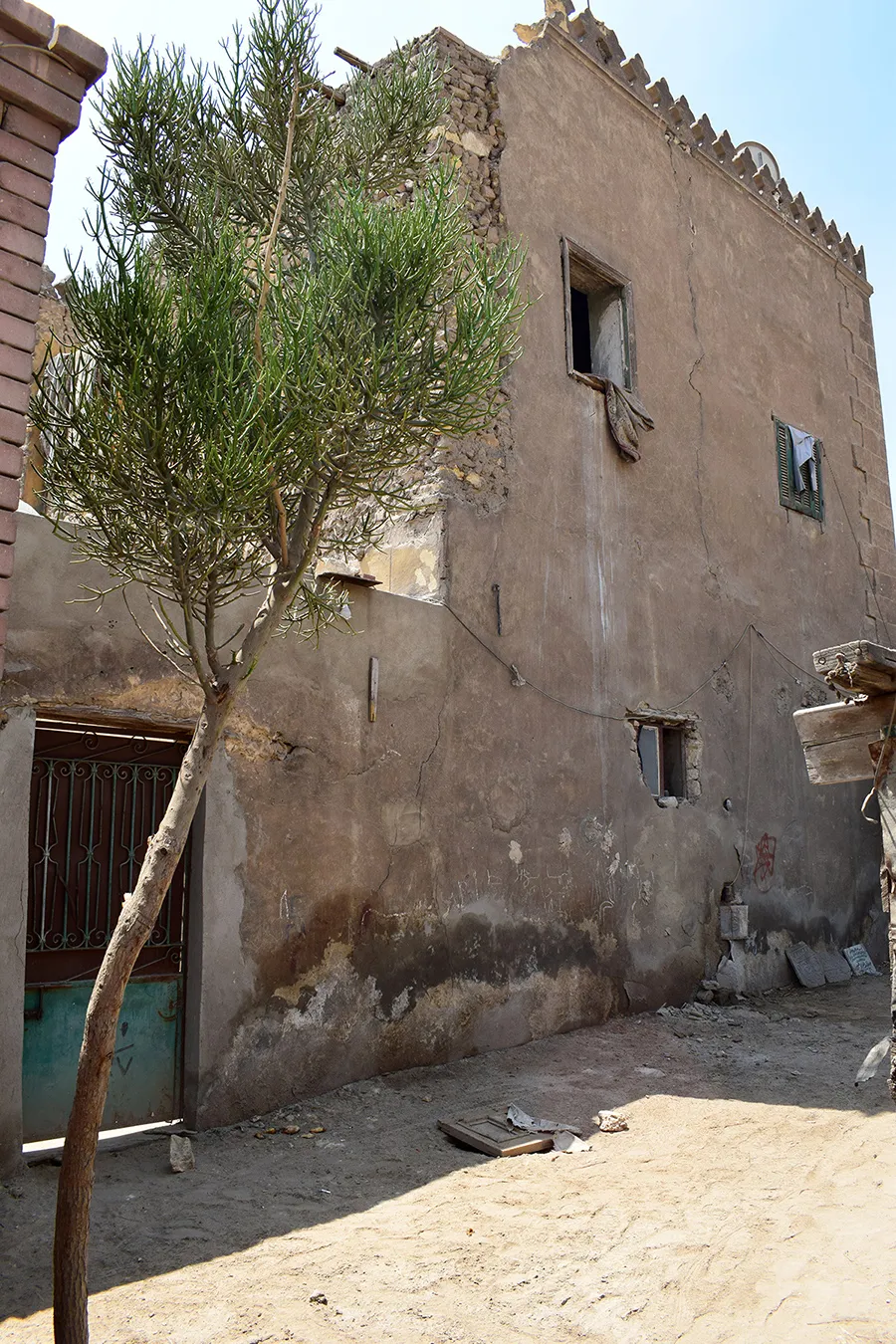
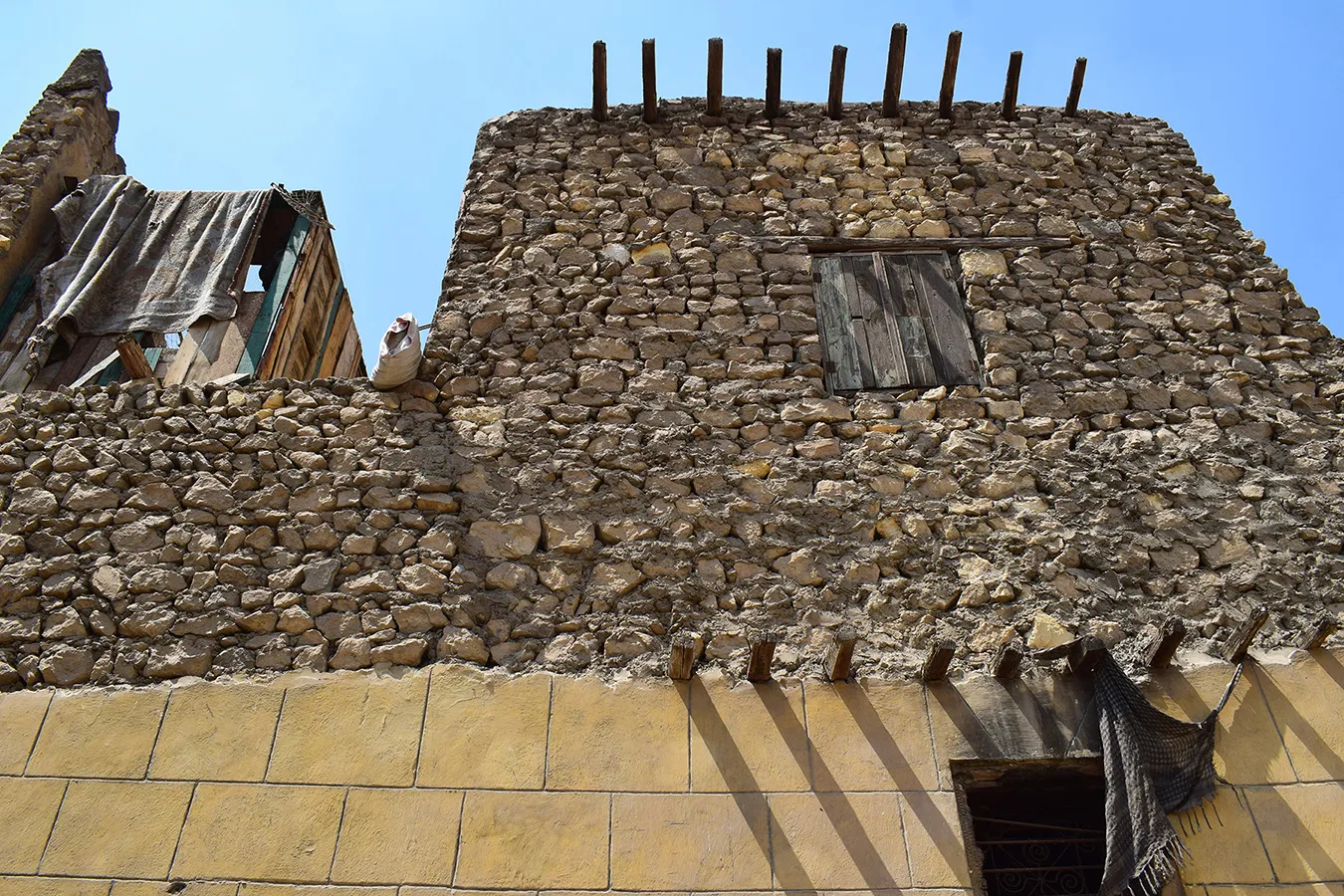
The side elevations are undecorated save the crenelations on top, built of rough stone and plastered, with irregularly placed windows, while the rough-stone back wall of the main building is plain and un-plastered.
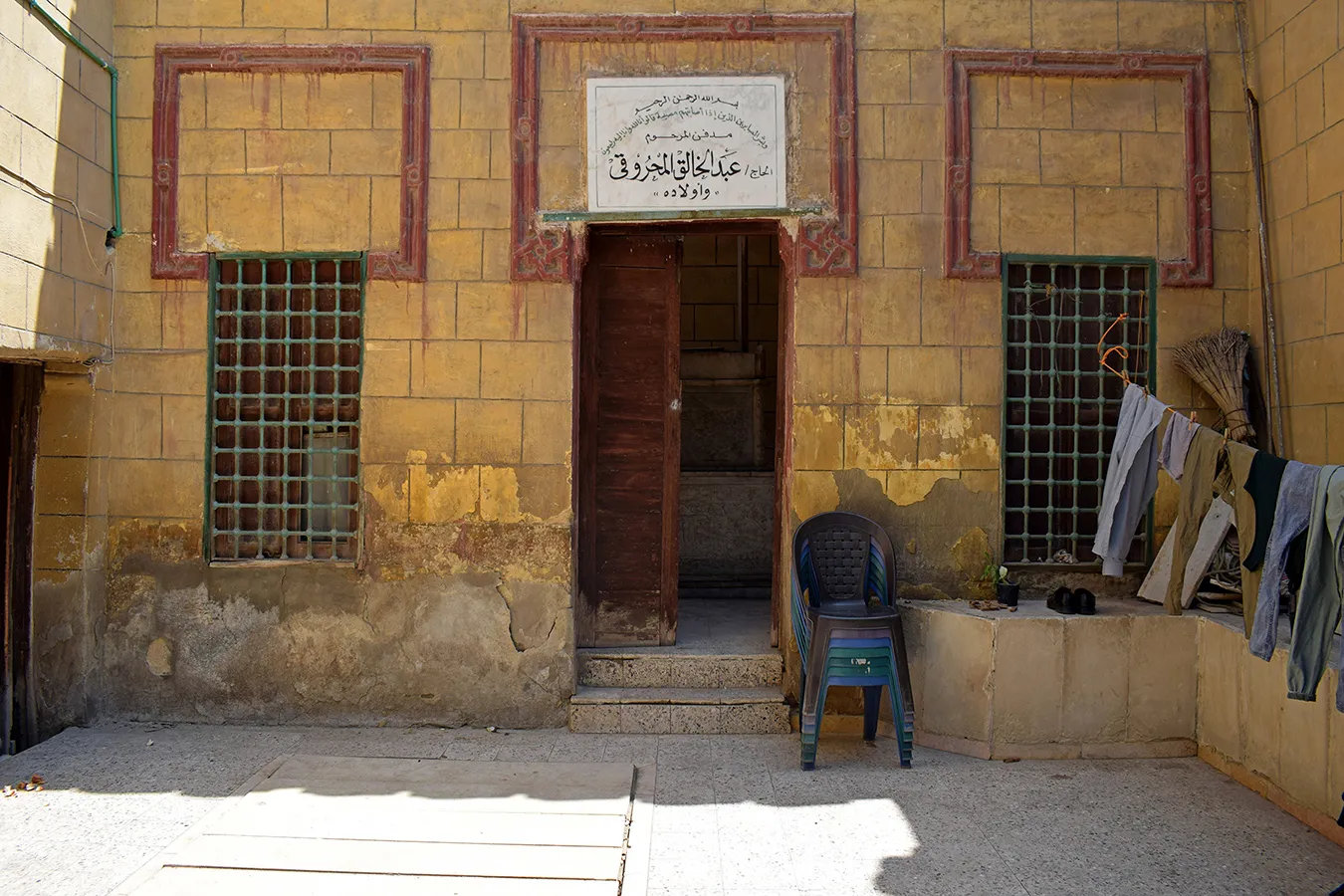
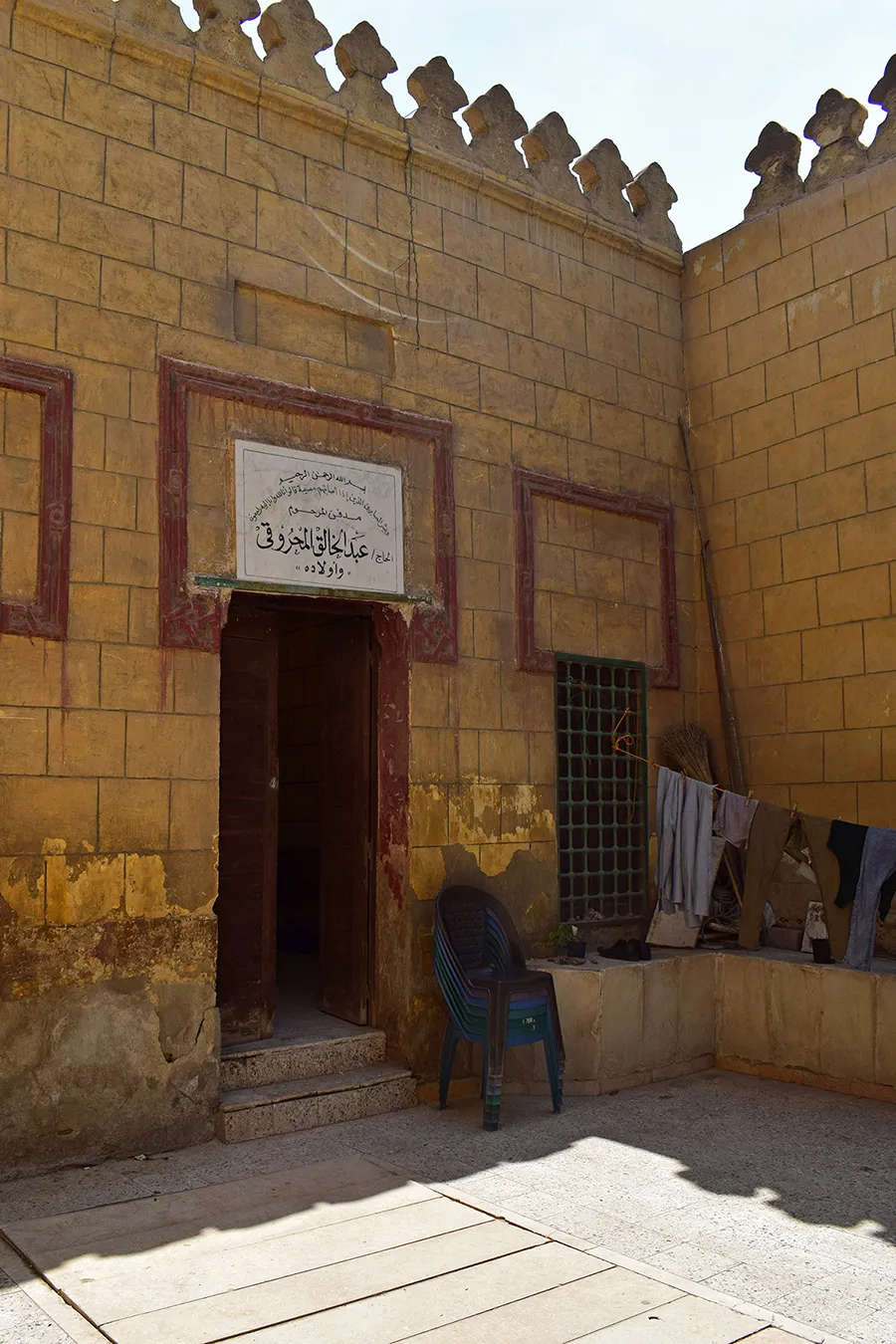
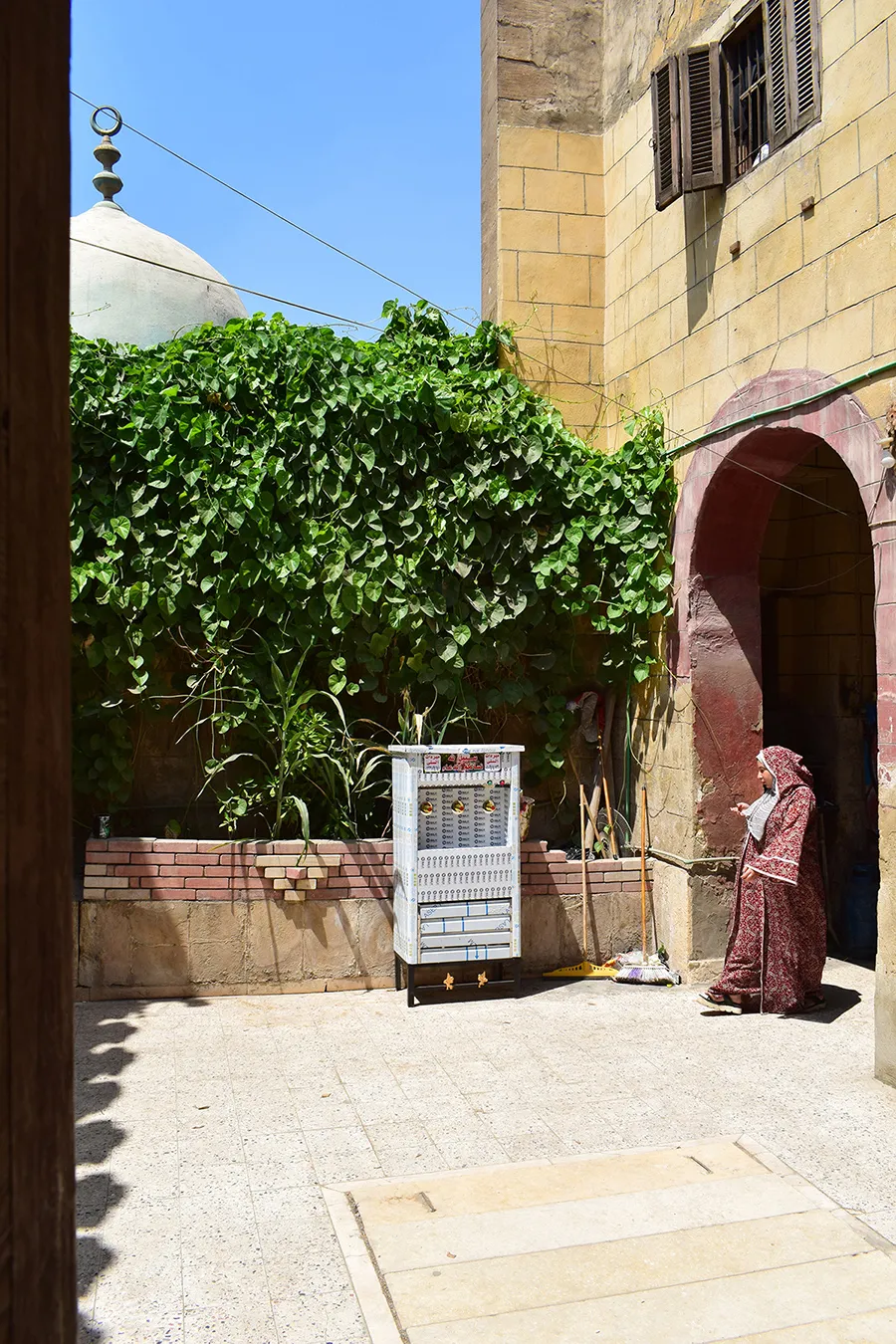
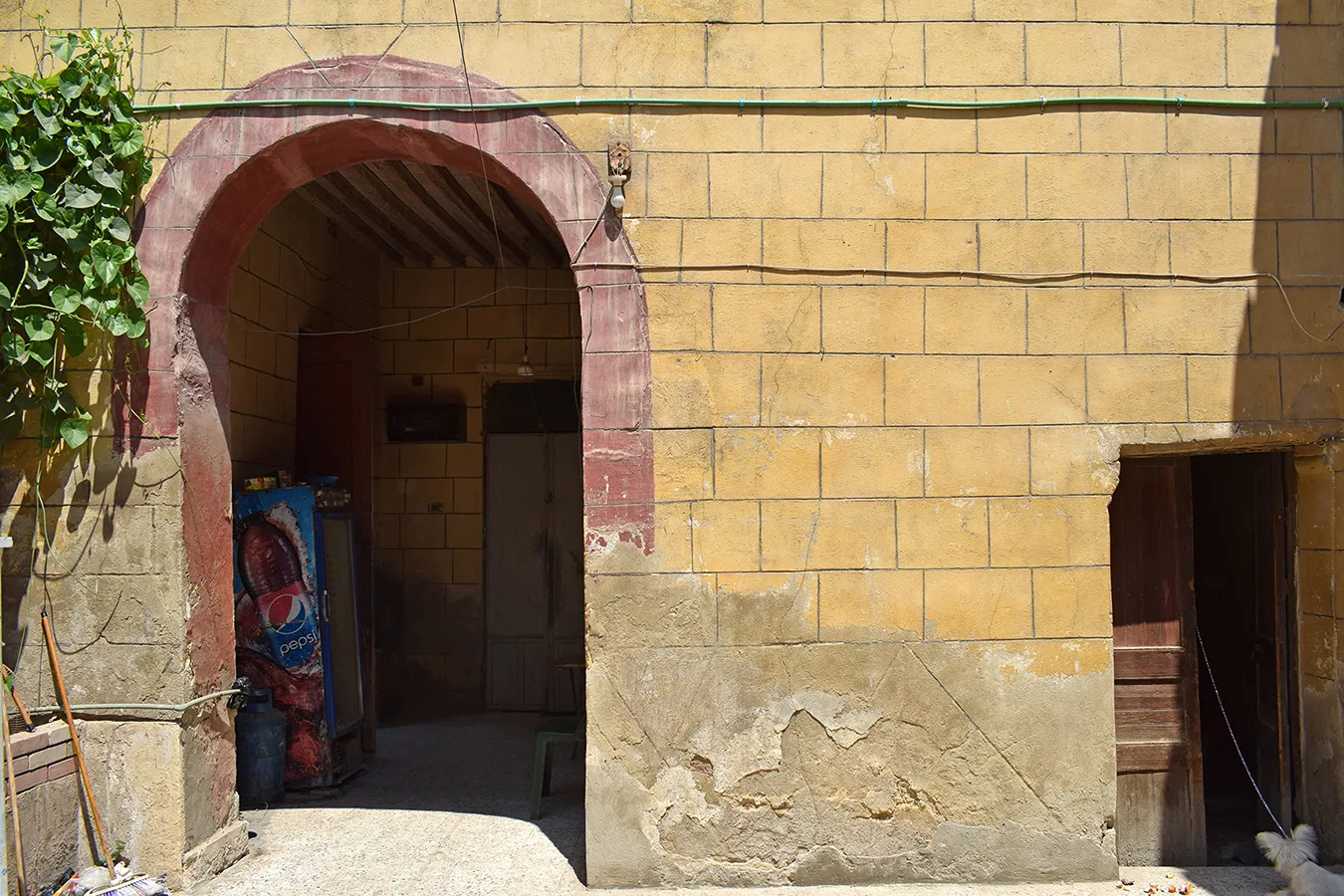
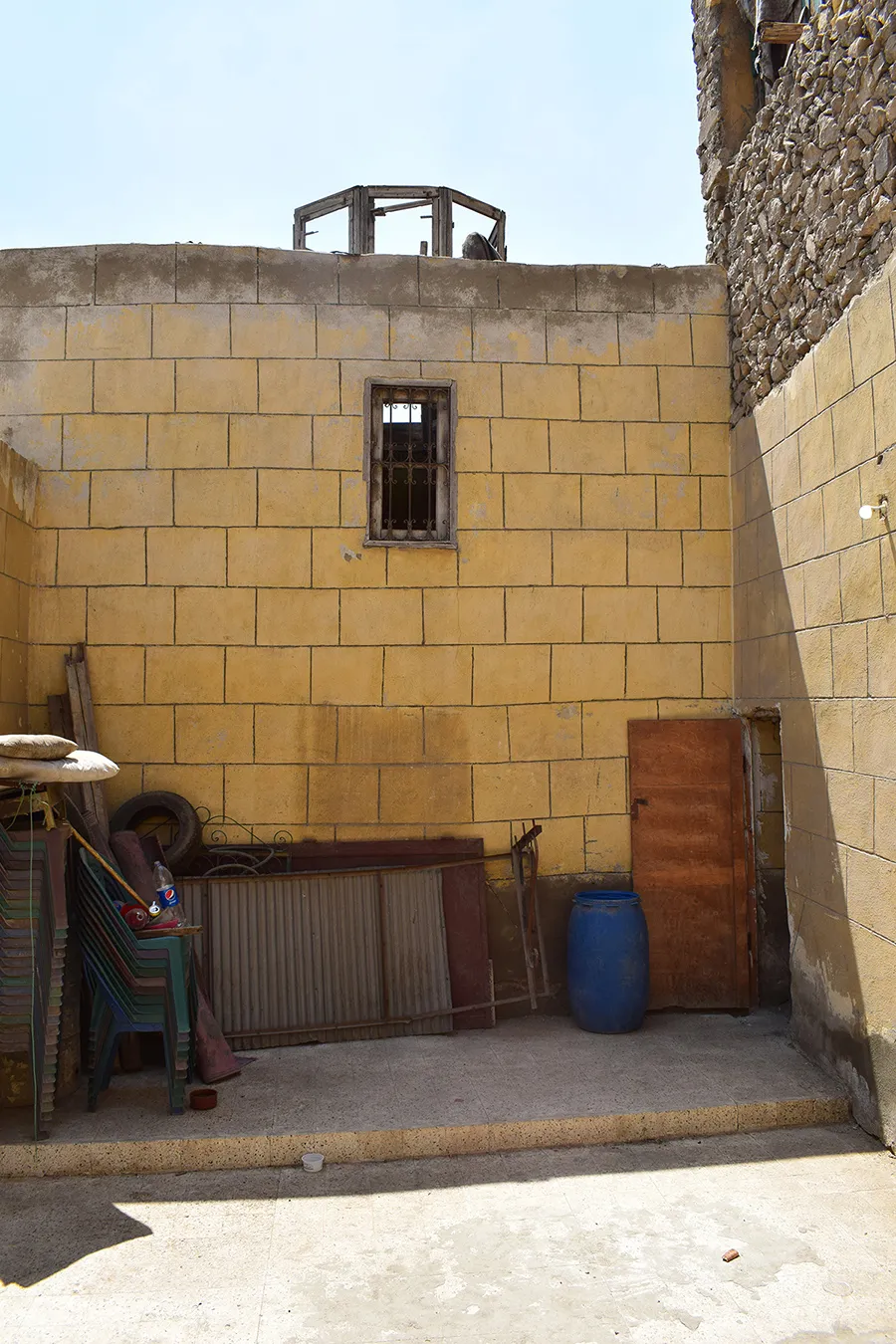
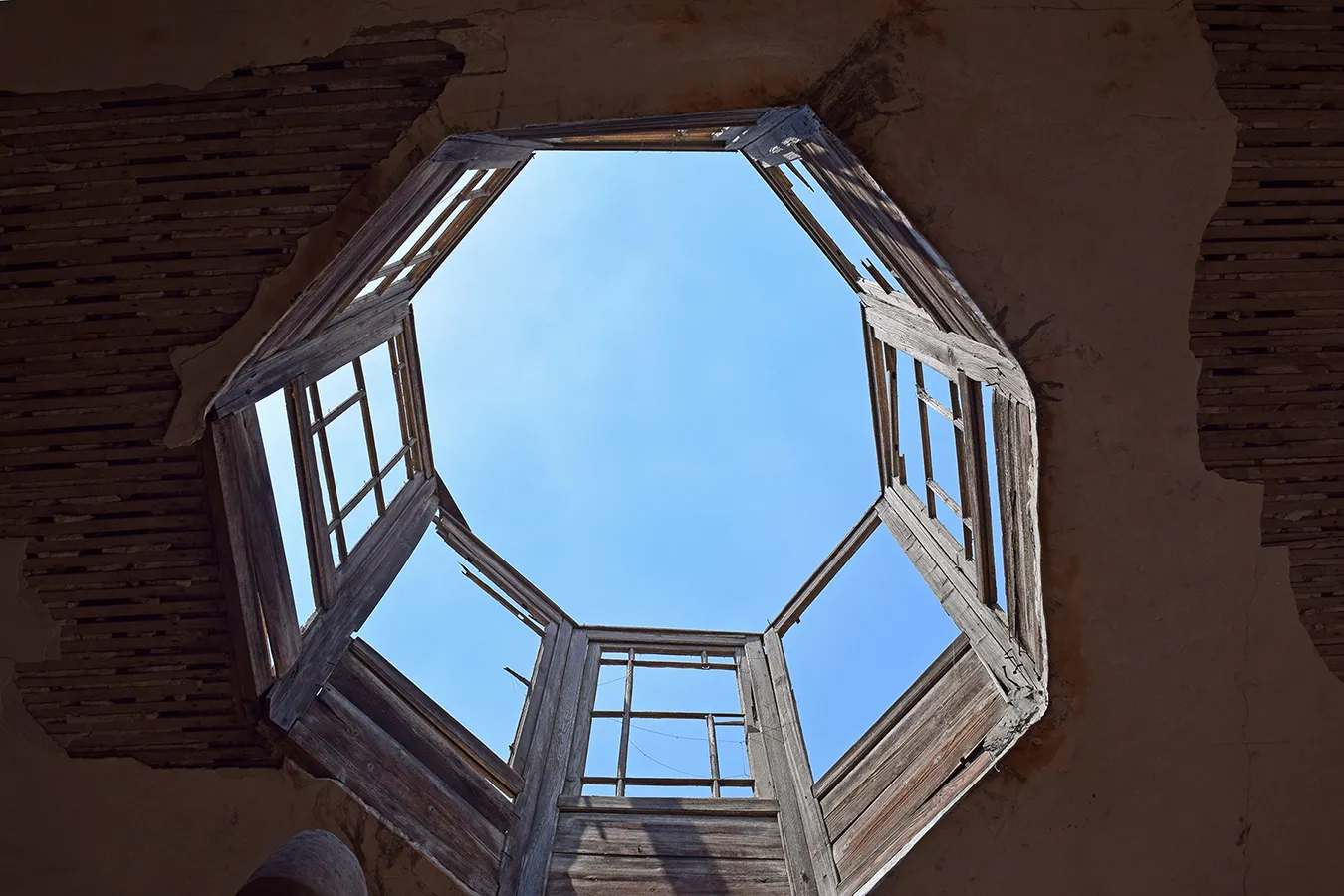
The entrance gate leads to a vestibule from which the rooms in the building are accessed, and from which a gate topped with a semi-circular arch leads to the courtyard to the south. At the eastern end of the courtyard stands a single-storey burial chamber. Like the rest of the courtyard and interior of the vestibule, it is covered with cement plaster with a crude imitation of stone courses. The façade of the mausoleum is tripartite, with the door placed between two windows. Over the openings are knotted-moulding frames that repeat those on the front façade, and covered with thick wash. Inside the frames are plain rectangles of plaster with very crudely and non-tectonically imitated stone courses. In the flat roof of the mausoleum is an octagonal lantern.
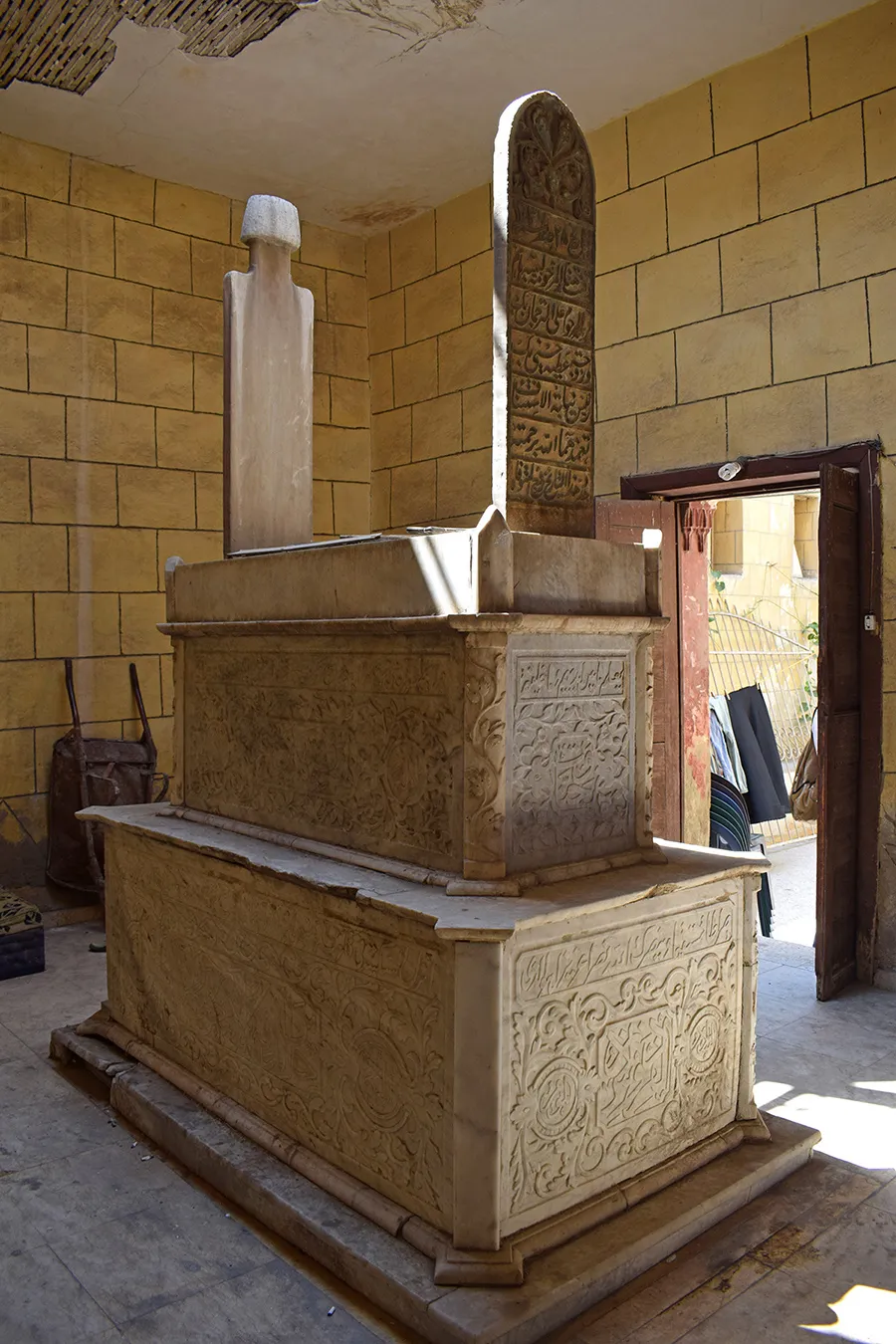
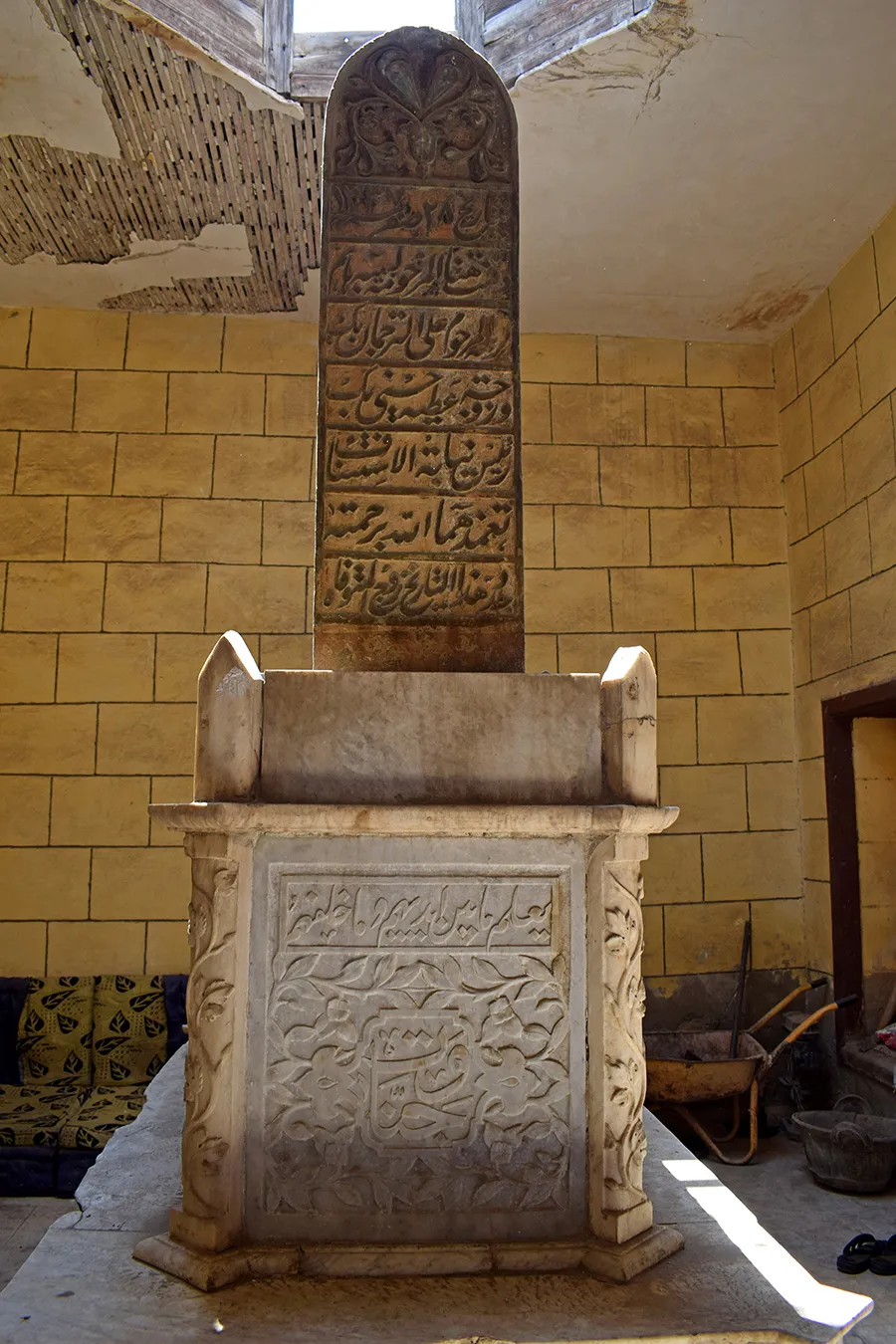
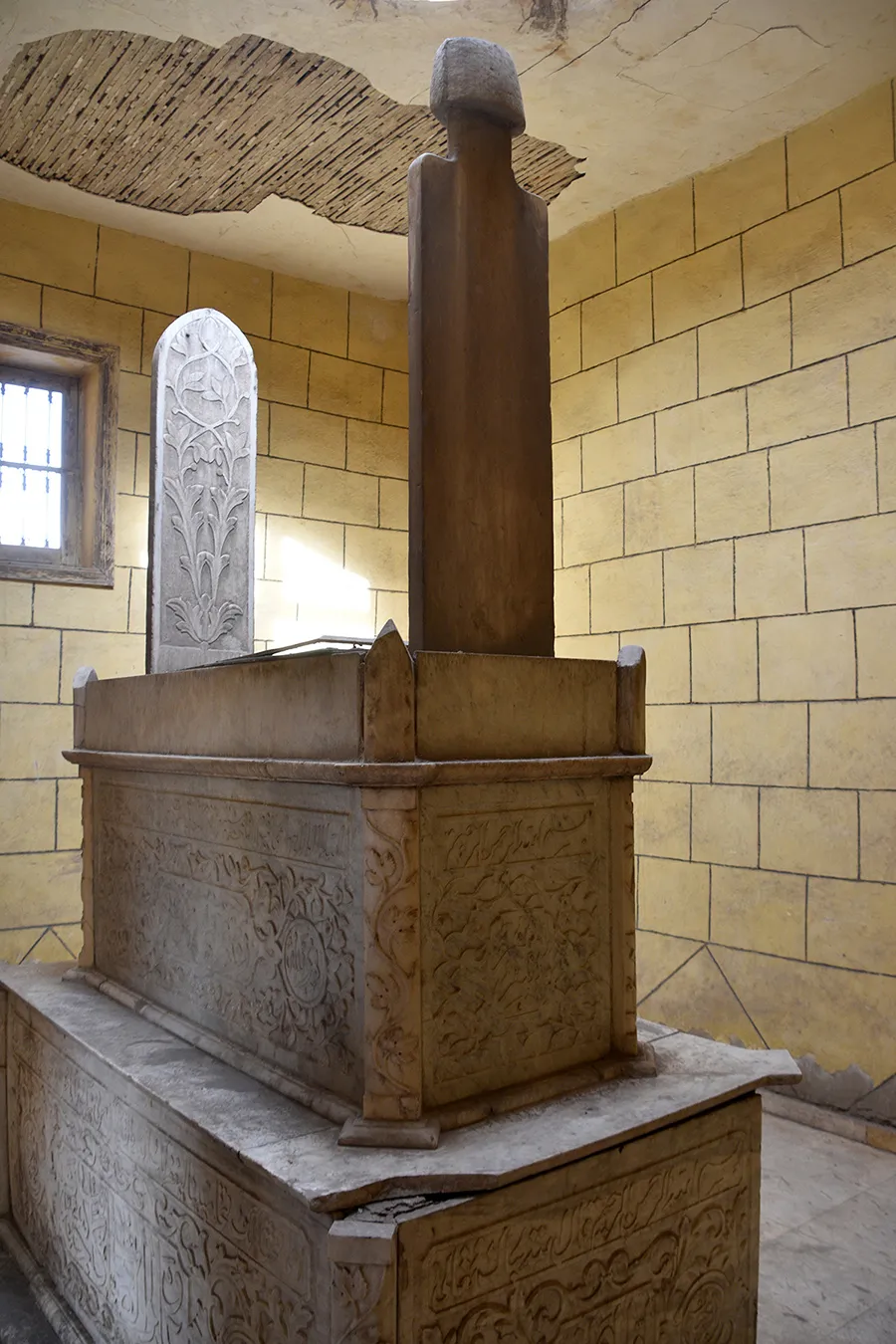
The mausoleum contains a single marble cenotaph richly decorated in the Ottoman Baroque style.
Condition of preservation
The unit is in use and receives regular maintenance. However, the routine repairs are done unprofessionally. There is visible damage to the lower parts of the walls from rising damp. Attempted repairs by covering with cement plaster are already peeling out.
The roof over the south-eastern section of the main building is missing, as is the southern end of its back (eastern) wall.
The covering of the roof lantern over the mausoleum is missing.
Information abut the founder, family history, etc.
The inscription over the entrance door gives the name ‘Ali Bey al-Turguman and the date 4 sha‘ban 1324 AH, which corresponds to 22 September 1906.
The stela (shahid) on the cenotaph mentions Labiba, the daughter of ‘Ali Bey al-Turguman, who married Atiya Hosni Bey, the Head of the Public Prosecutor Office (nyaba), and gives the date 28 safar 1337 AH corresponding to 1 December 1918.
A modern marble plaque over the entrance to the mausoleum refers to “the burial place of the deceased al-Hagg [a person who performed the pilgrimage to Mecca] ‘Abd al-Khalq al-Mahruqi and his children” without providing a date. No information about this person was available.
- Field recording by
- Hadeer Ahmad and Nur Atiya
- Date recorded
- September 5, 2022
- Data entered by
- Hadeer Ahmad
- Date entered
- May 9, 2024