



Unit No2
Muhammad Tal‘at Pasha Harb funerary enclosure
|
Coordinates of the main entrance |
30.049089N - 31.275894E |
|
Attribution |
Muhammad Tal‘at Pasha Harb funerary enclosure |
|
Higri (AH)Dates as given in the Inscription |
|
|
Miladi (AD)Dates as given in the Inscription |
|
|
Inscription Contemporary with the building? |
Yes |
|
Multiple date(s) In the inscription? |
Yes |
|
Assumed Date |
ca AH 1360 = AD 1941 |
|
Based on |
earliest date on the main marble cenotaph |
|
Original Use |
Funerary enclosure |
|
Current Use |
Funerary enclosure, with a residential unit for the doorman |
|
Overall condition |
Good |
Features of unit 2
| Present | Count | Material | Comments (see description for details) | |
|---|---|---|---|---|
| Free standing structure | No | |||
| Walled enclosure | Yes | |||
| Rooms by the perimeter wall | Yes | |||
| Freestanding structure(s) in enclousure | Yes | 3 | Reinforced concrete | 2 residential units and 1 main burial chamber. |
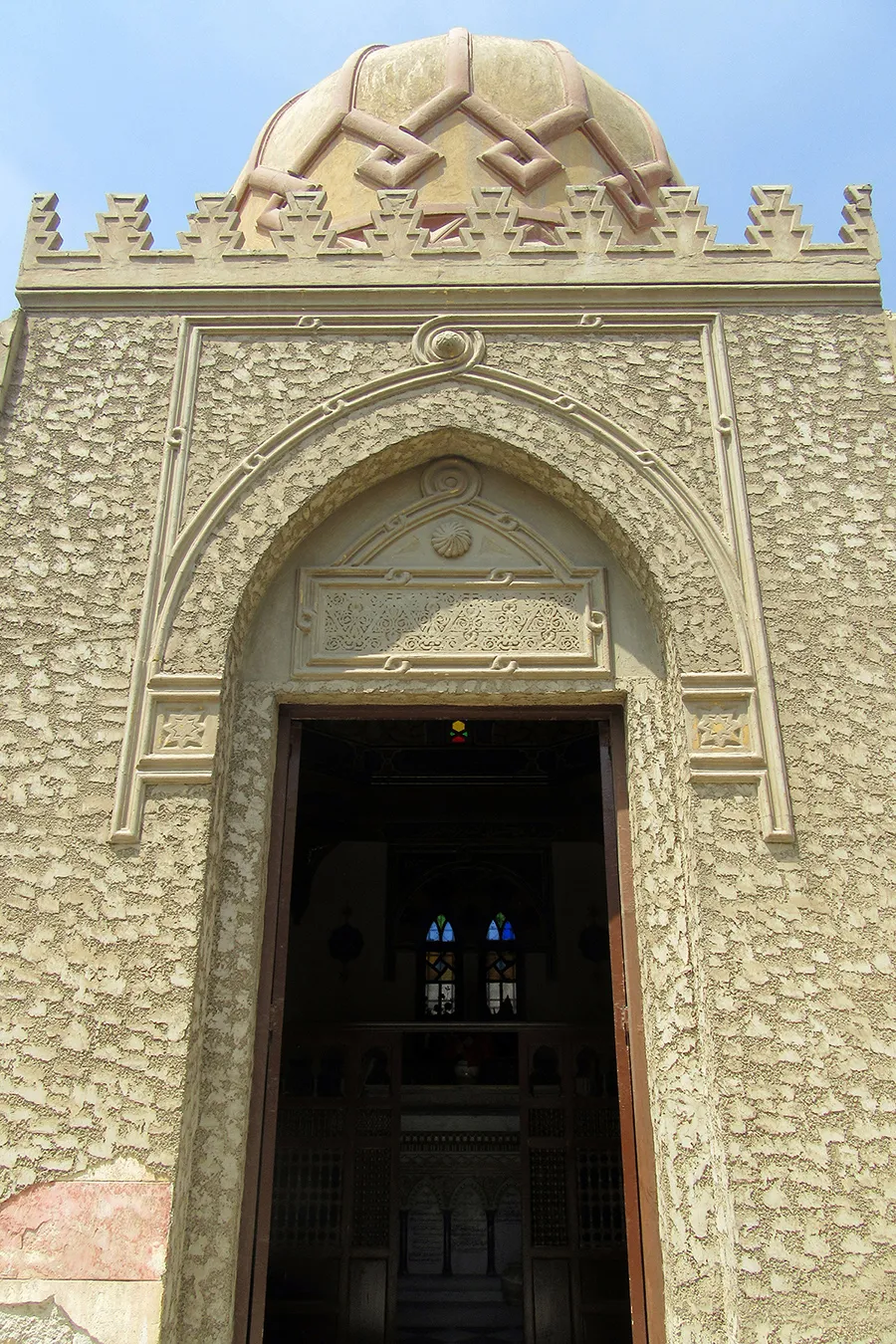
| Dome over the tomb chamber | Yes | |||
| Neo-Mamluk architectural decoration | Yes | |||
| Garden layout | Yes | 1 | ||
| Sabil(s) | No | |||
| Wall fountain(s) | No | |||
| Canopy on columns / pillars | No | |||
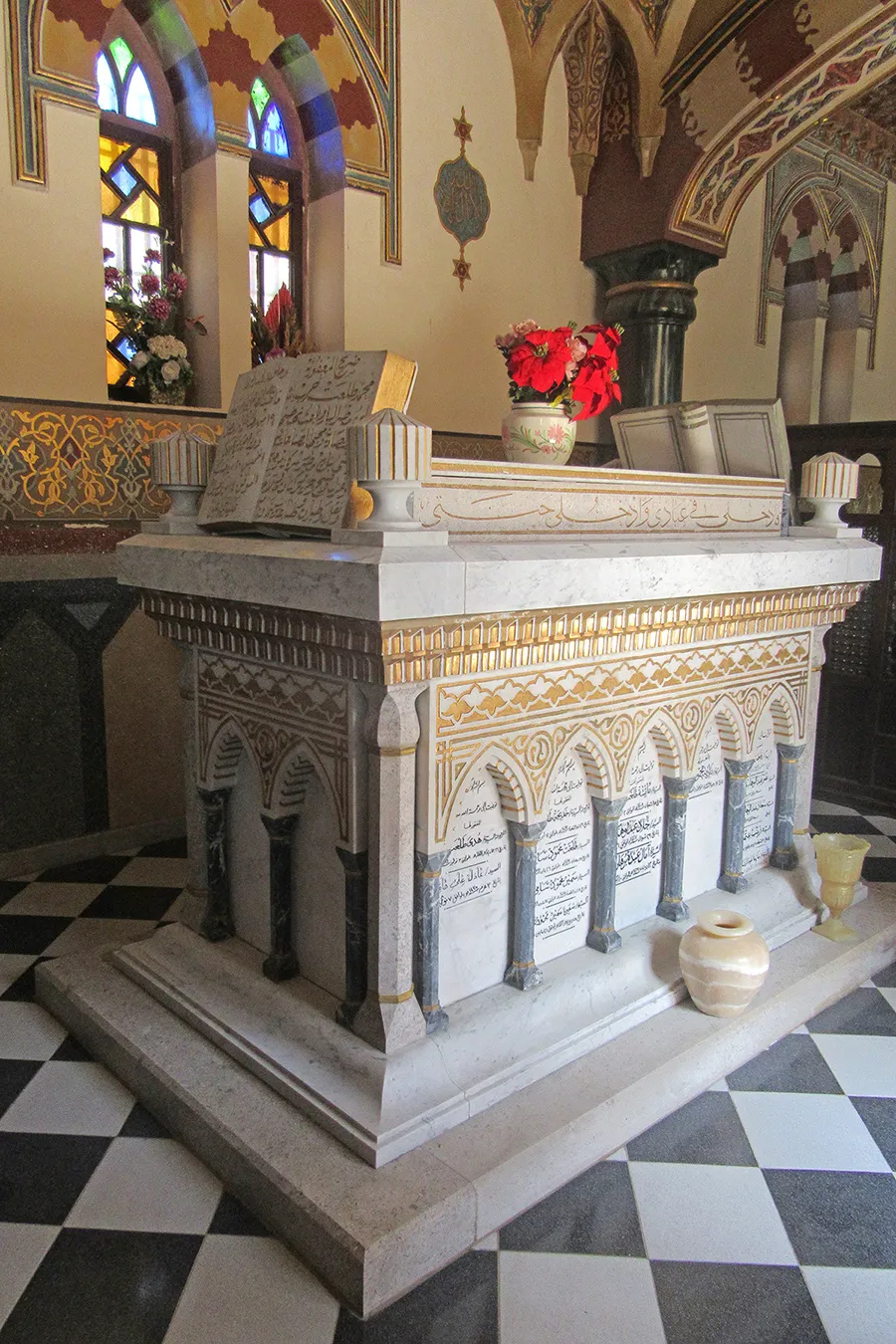
| Carved marble cenotaph(s) | Yes | 1 | 1 | In the middle of the burial chamber under the dome |
| Decorated limestone tomb-markers | No | There are undecorated marble cenotaphs located in the garden | ||
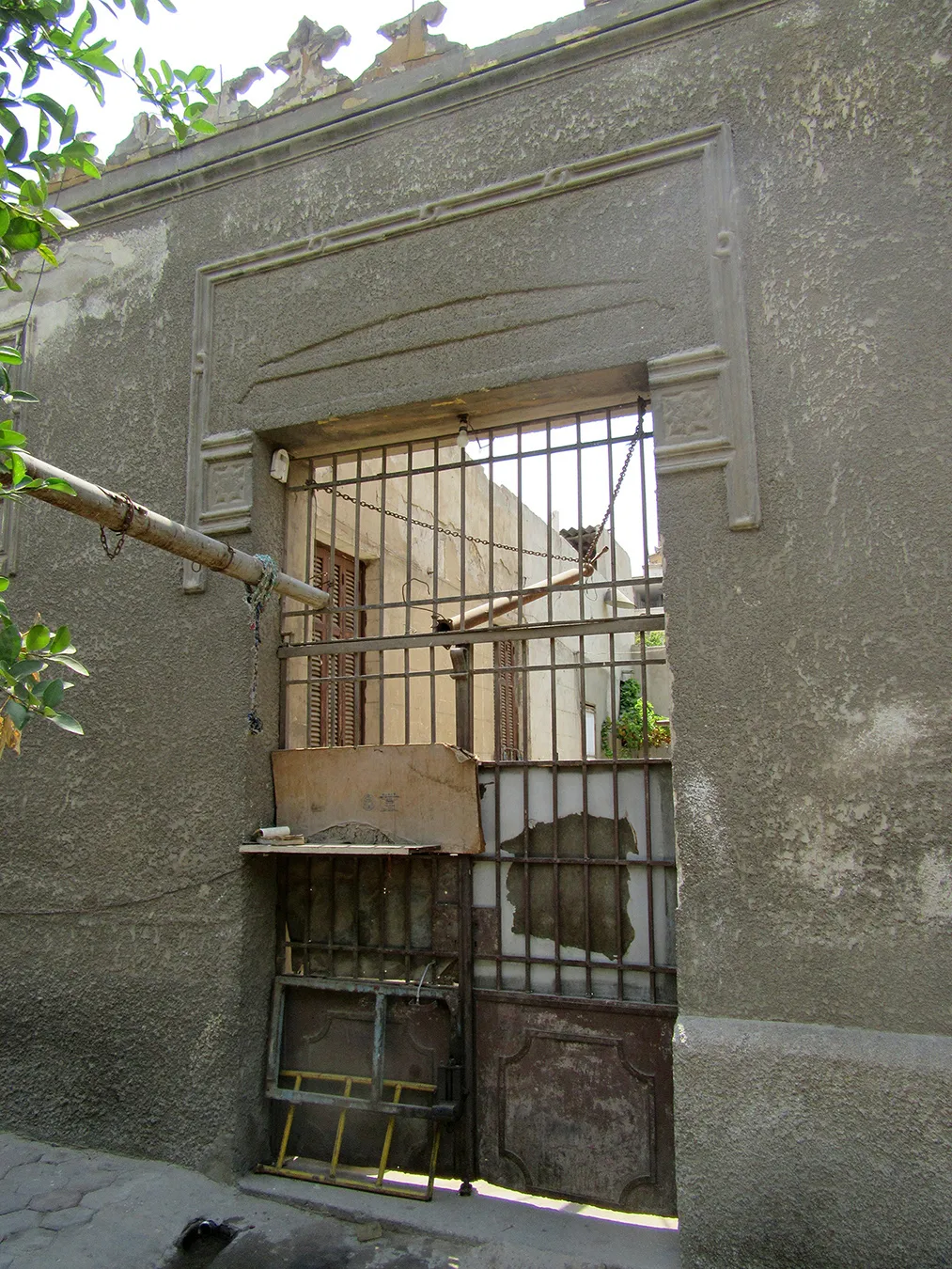
| Decorated gateway | Yes | Simply decorated with knotted mouldings | ||
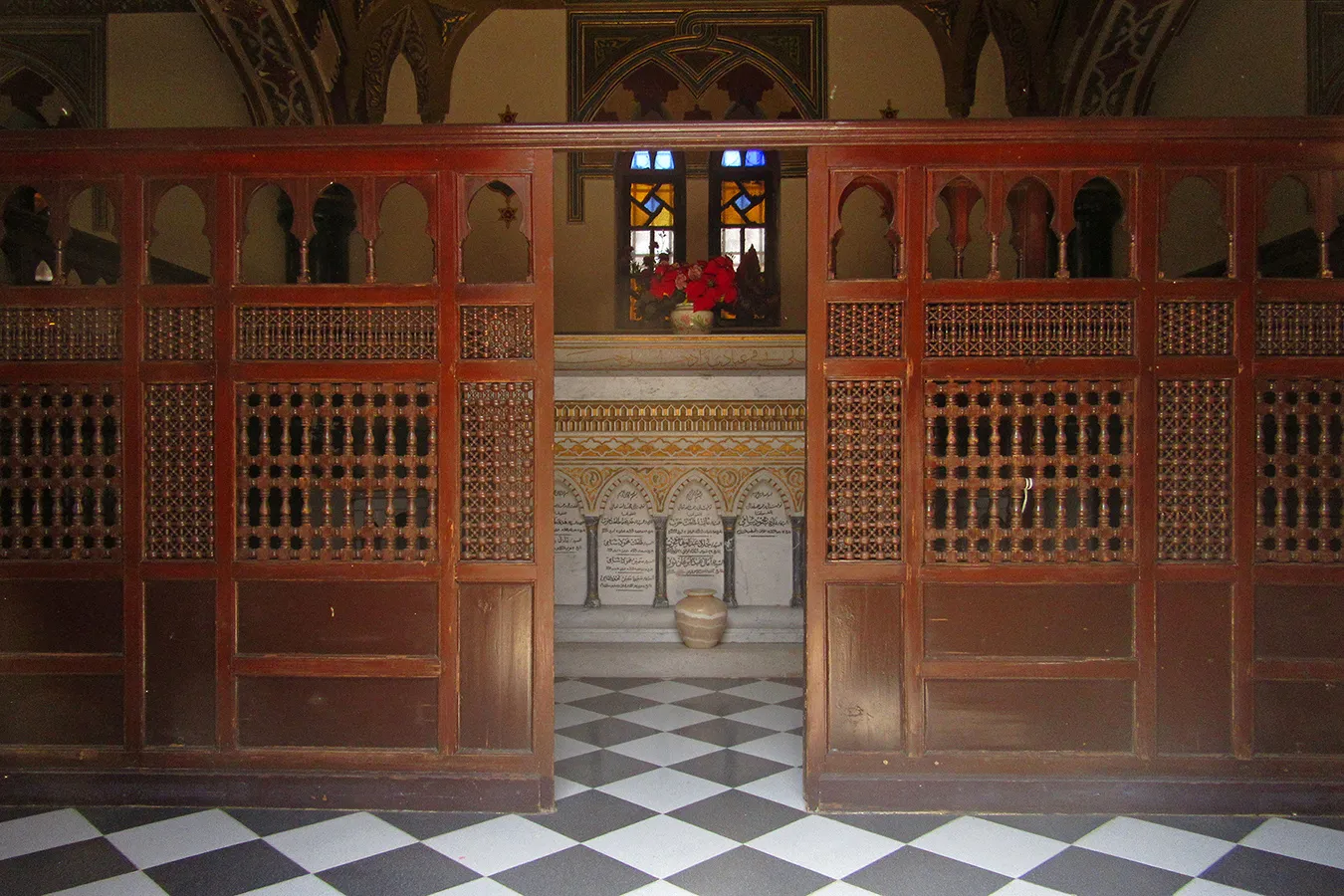
| Decorative door-leaves | Yes | 2 | wood | The door to the burial chamber |
| Decorative window grilles | No | |||
| Decorative shutters | No | |||
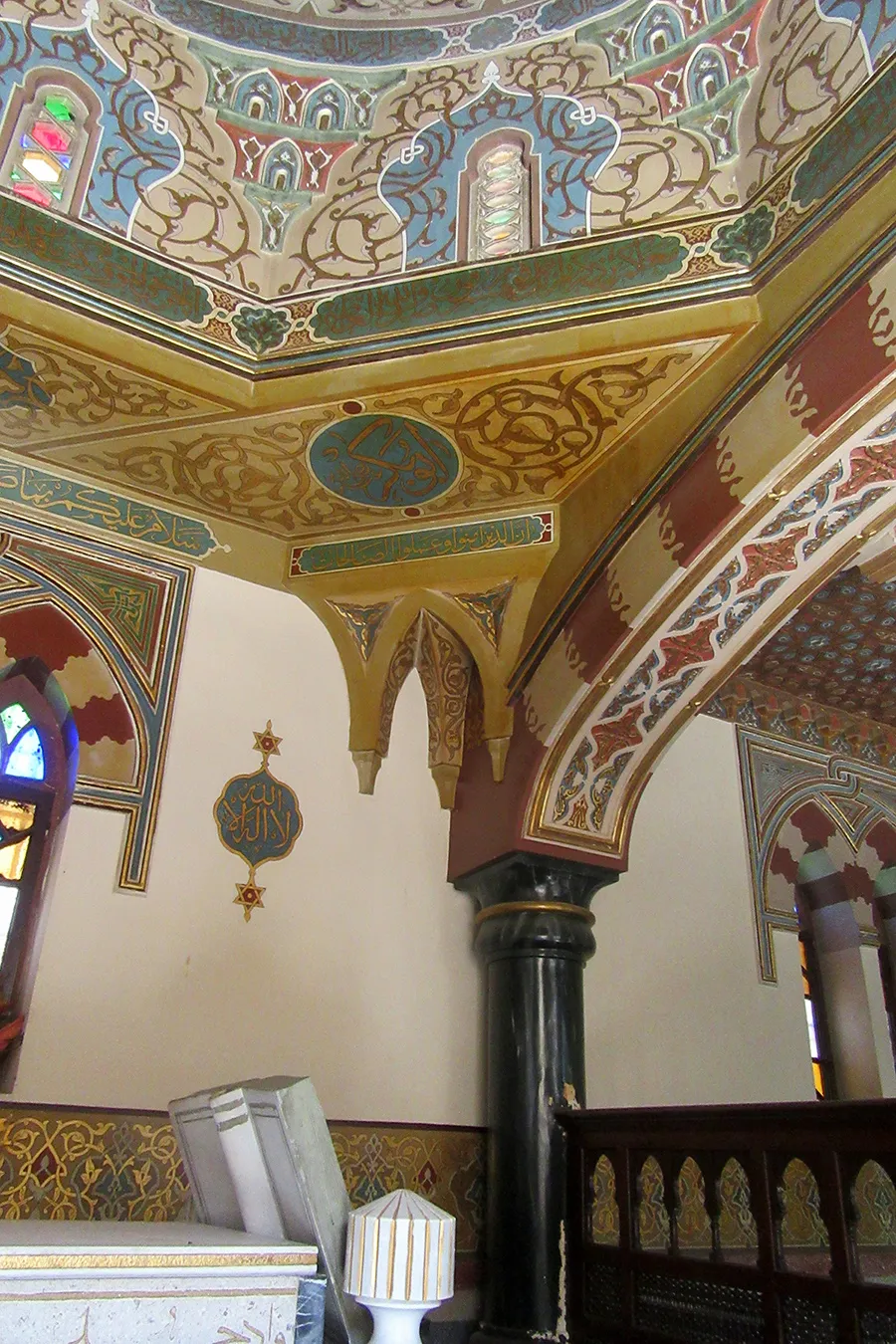
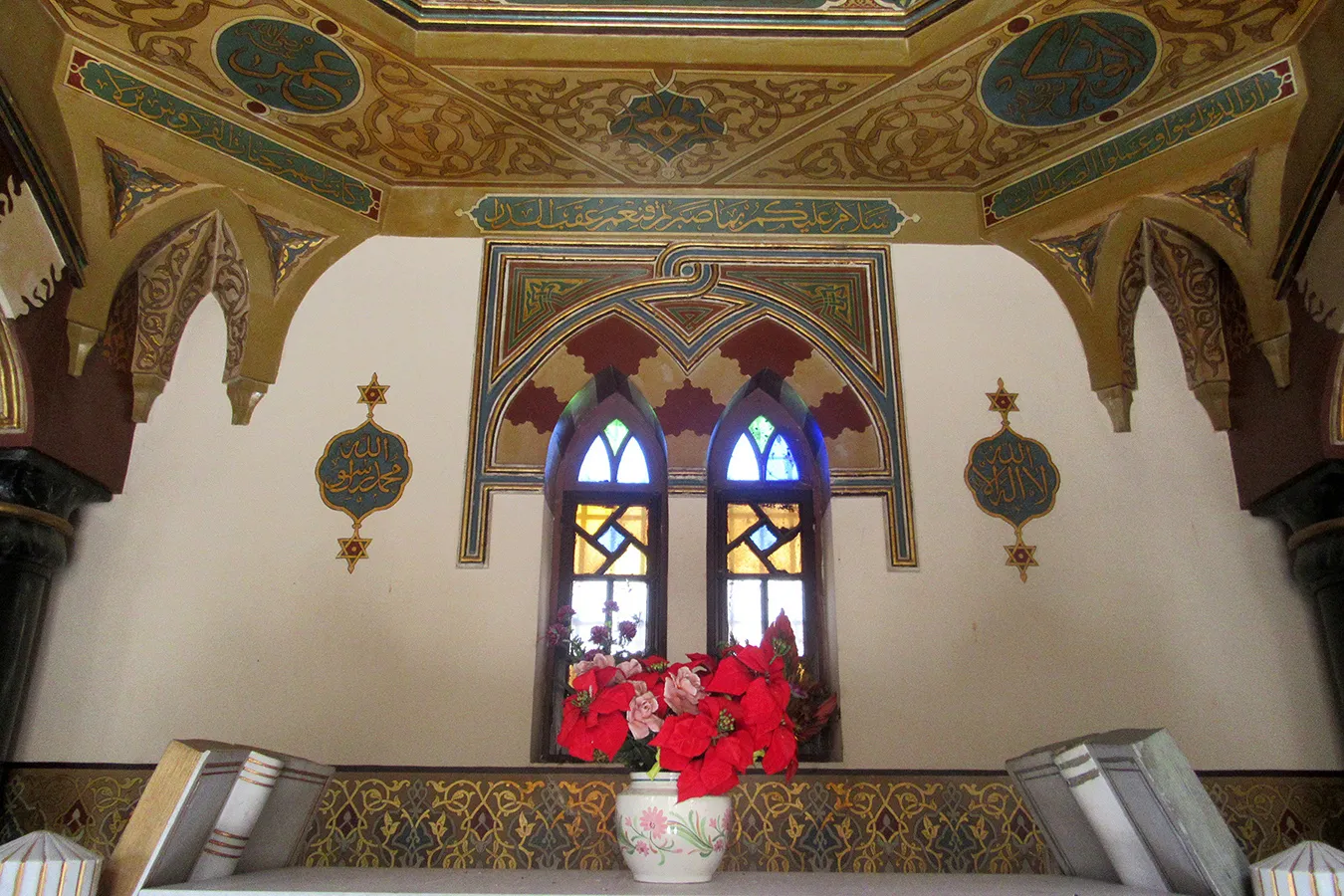
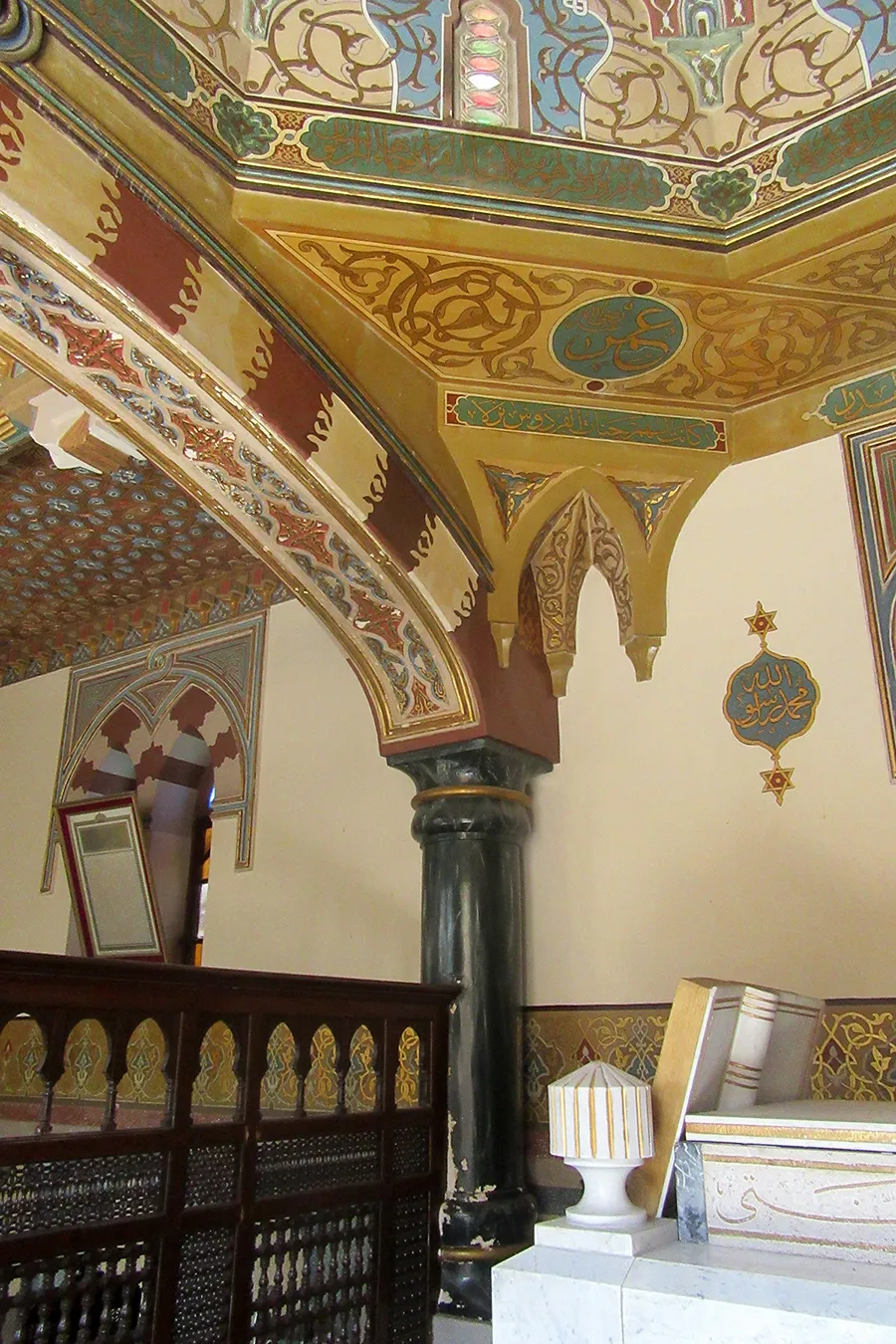
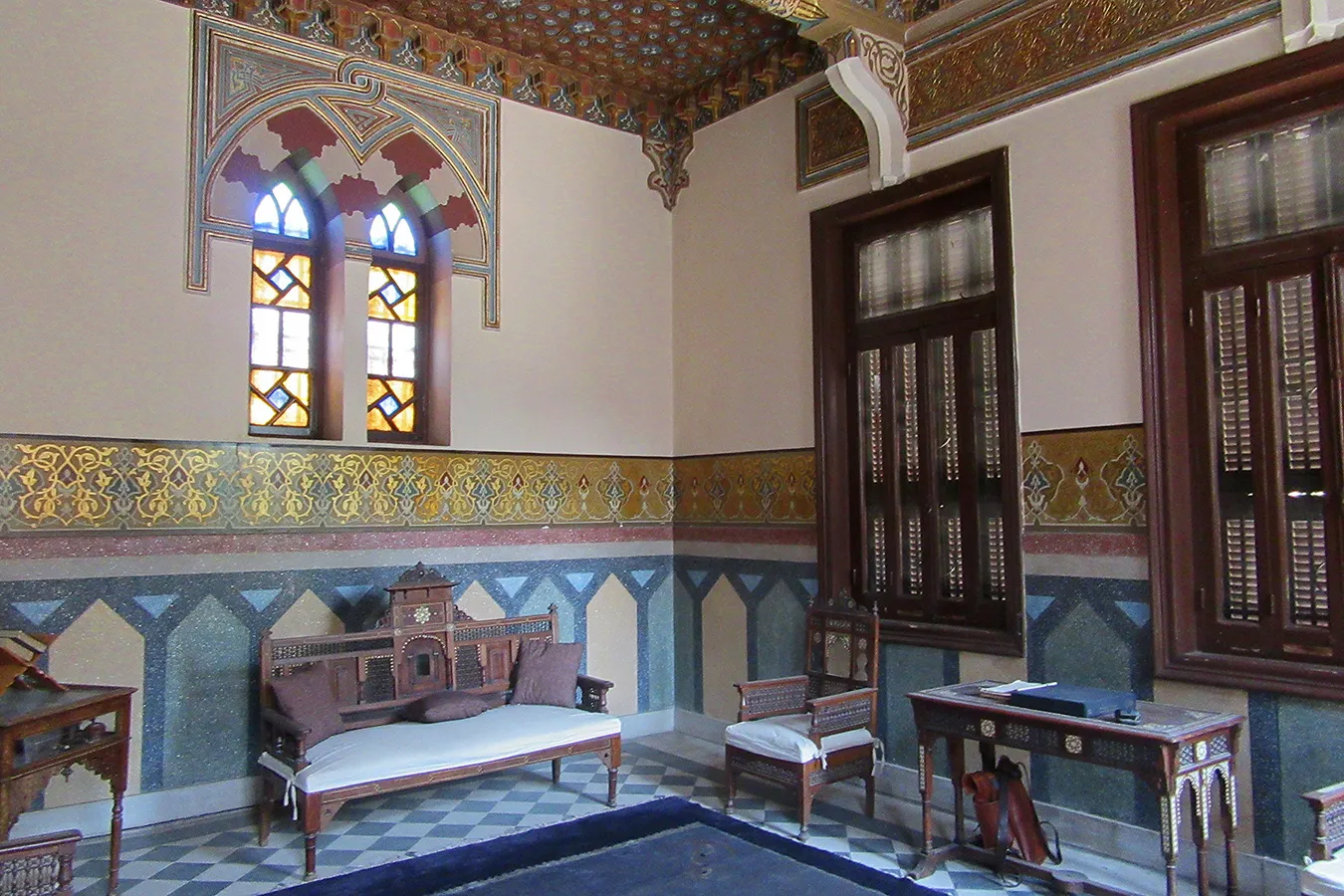
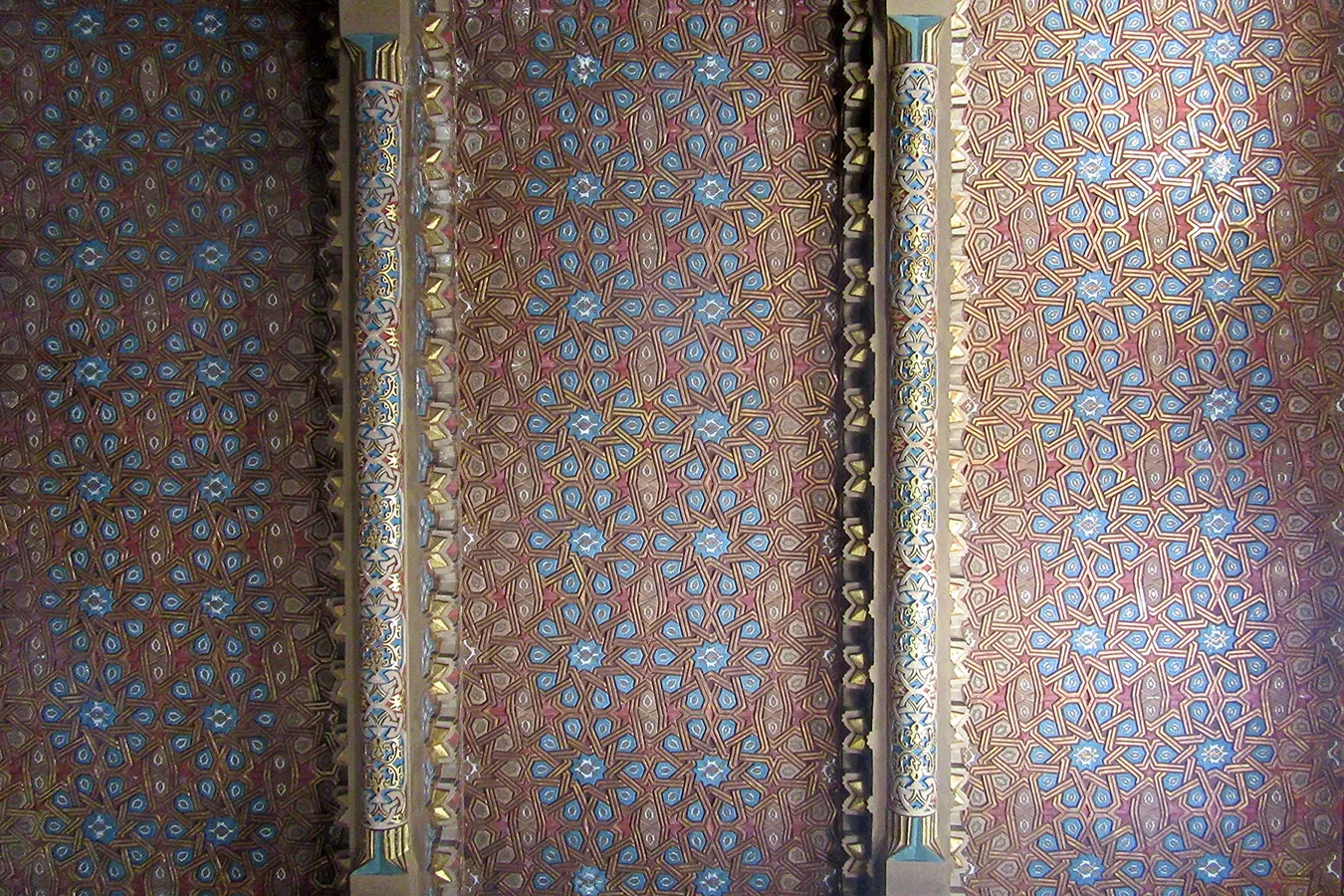
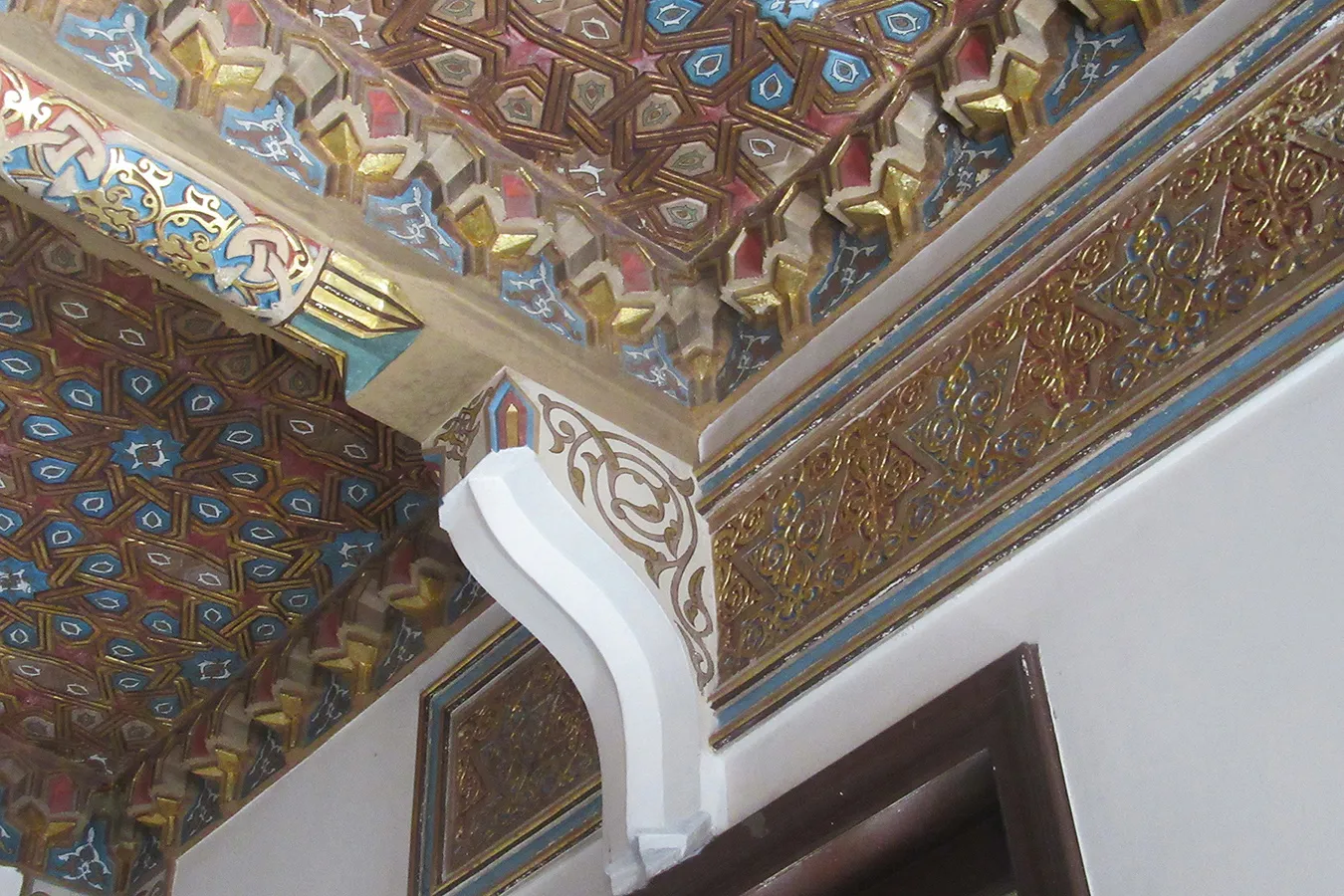
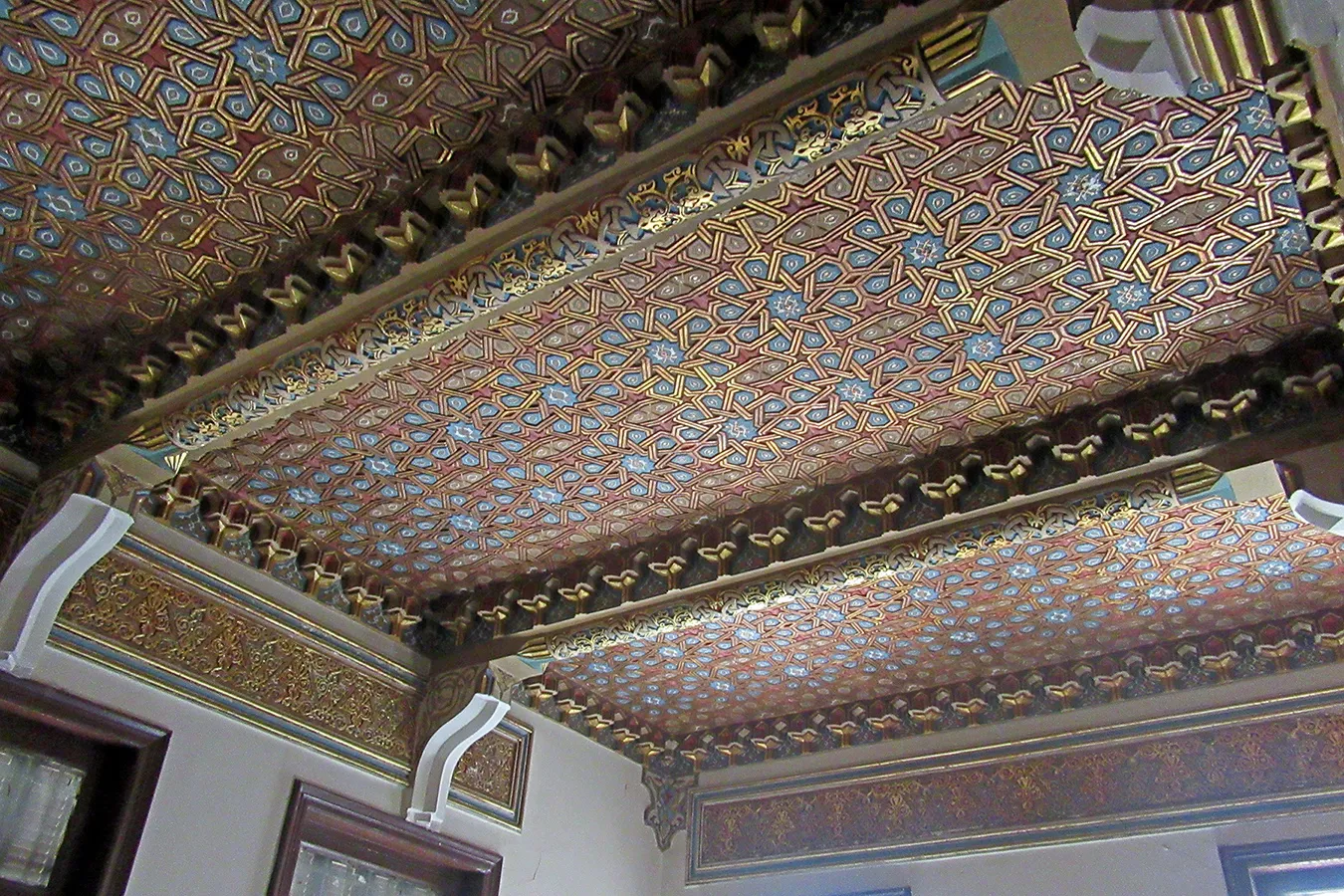
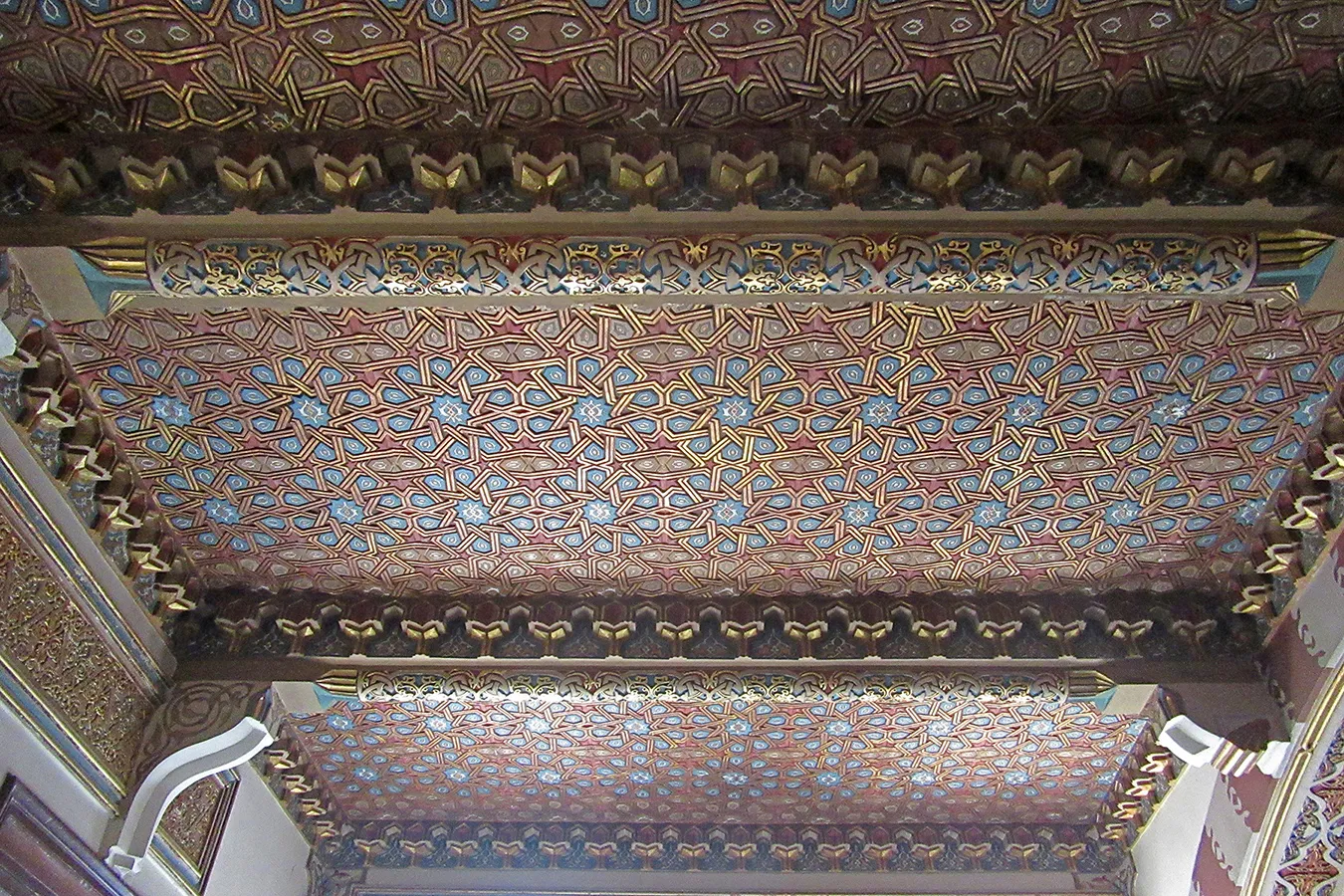
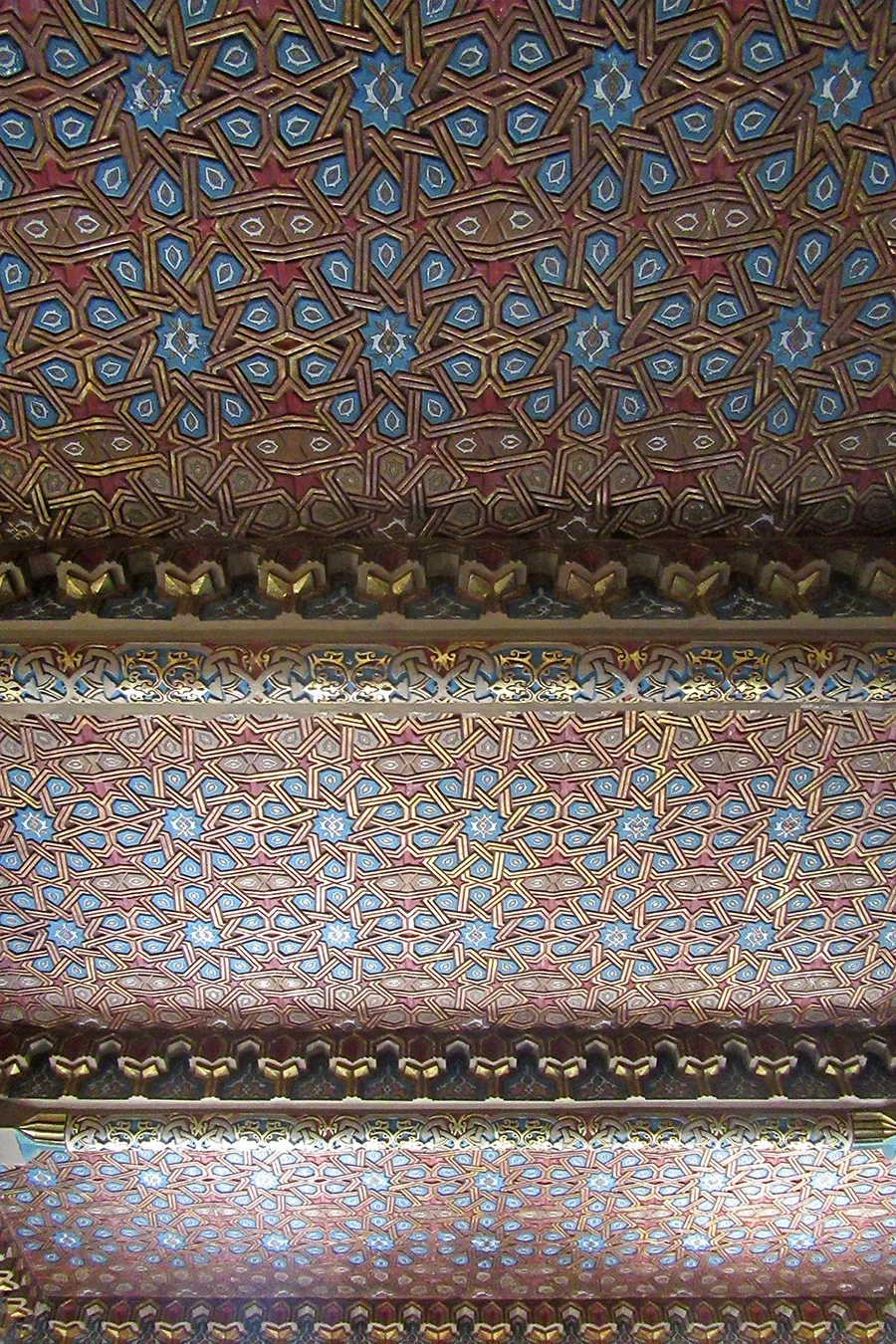
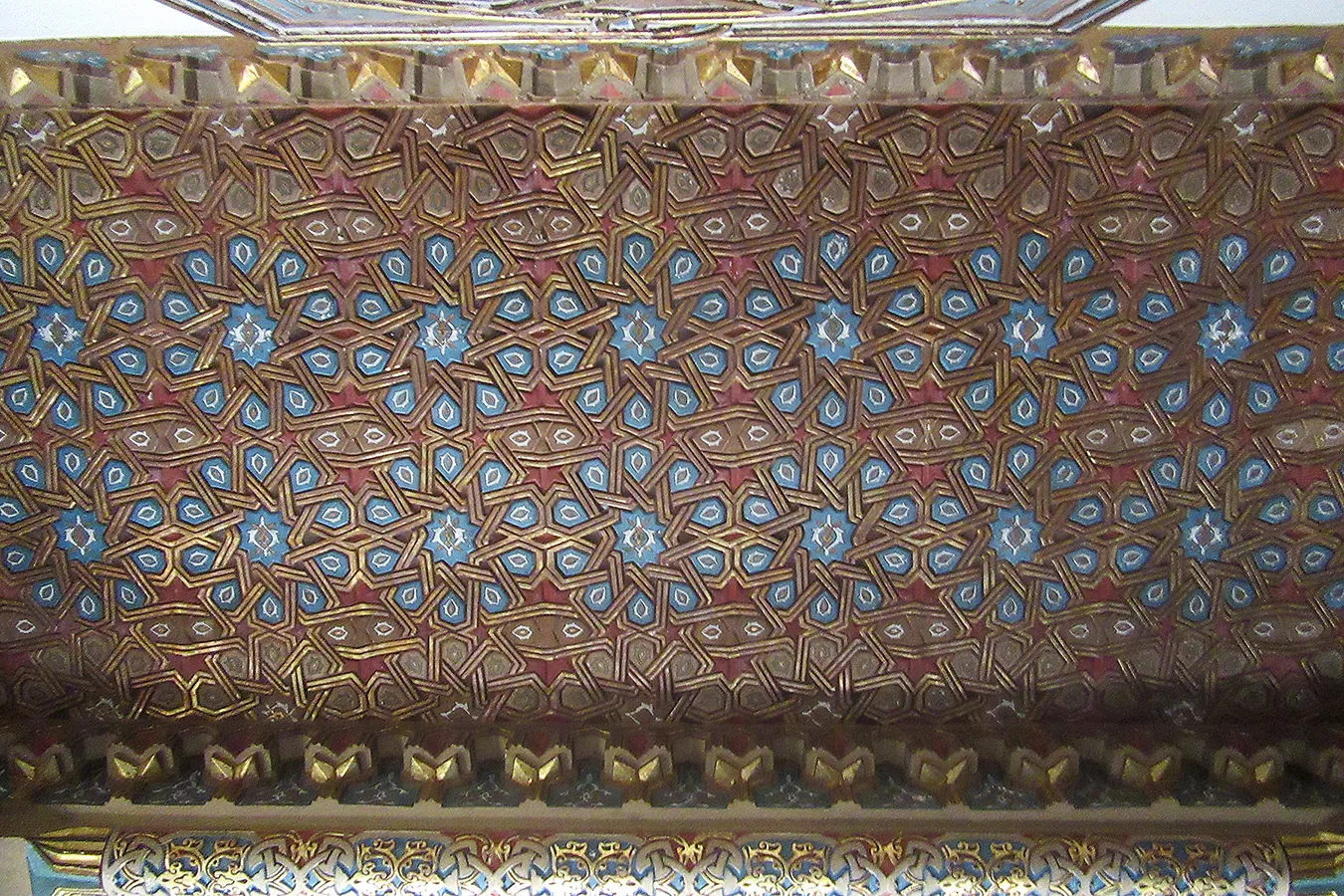
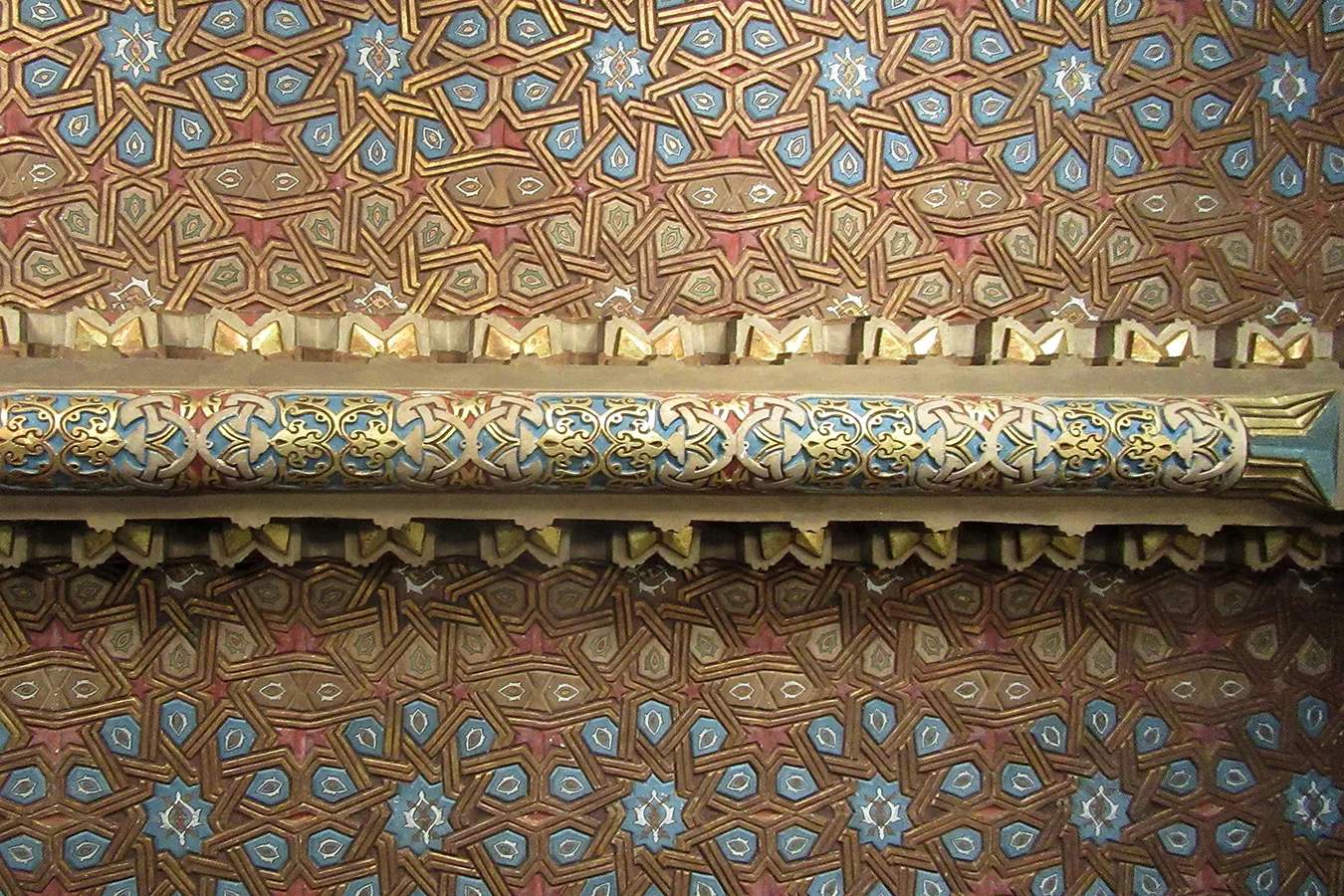
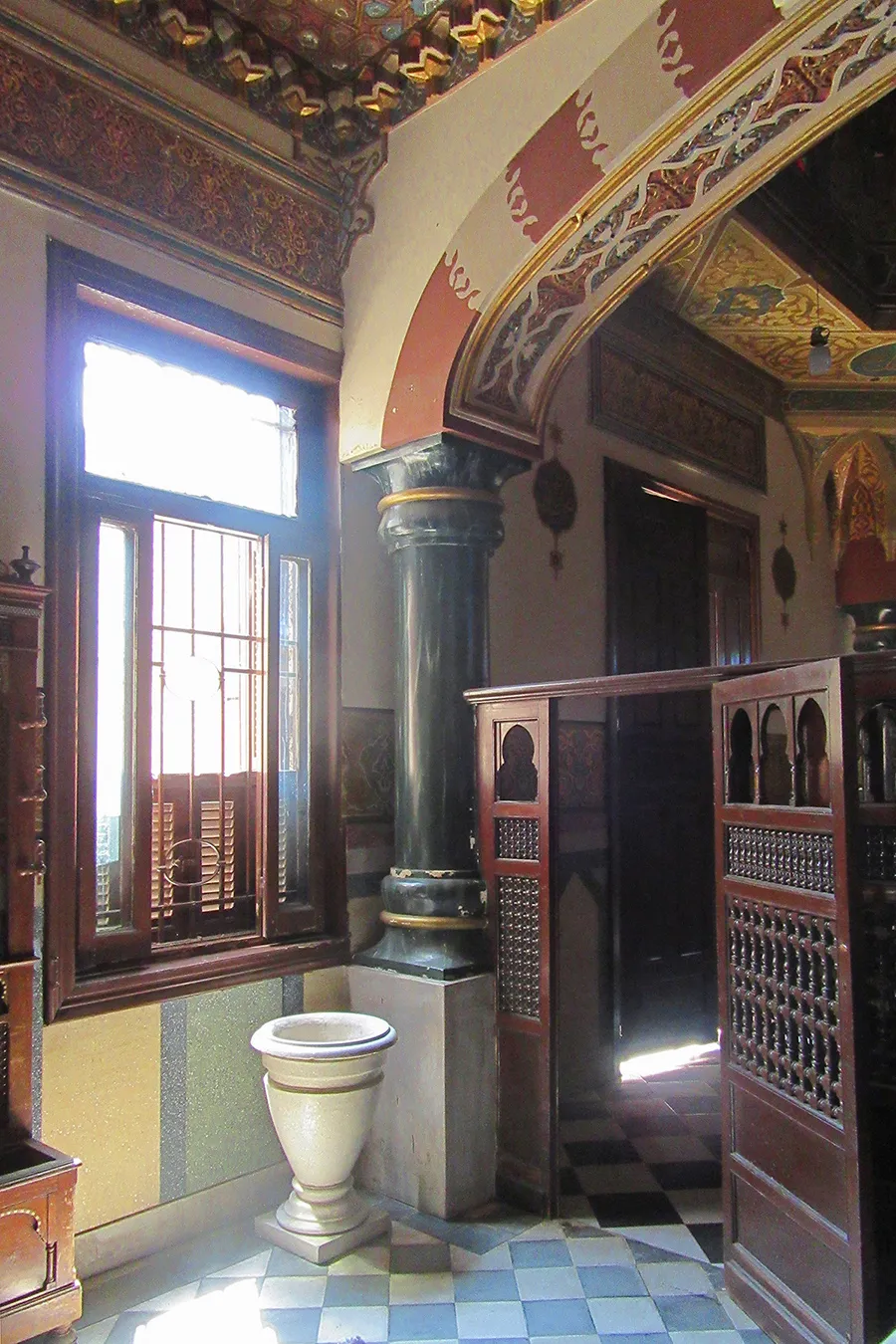
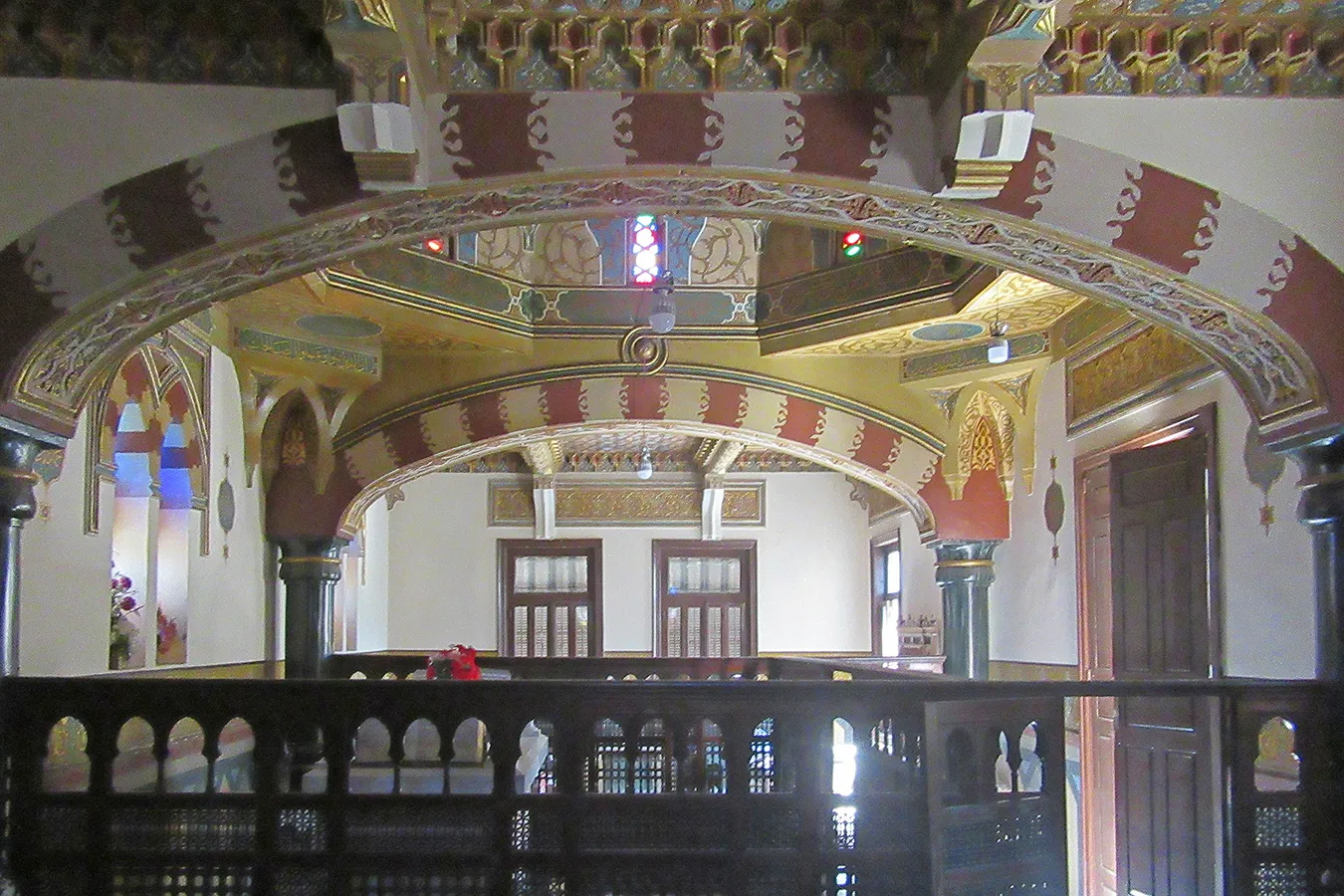
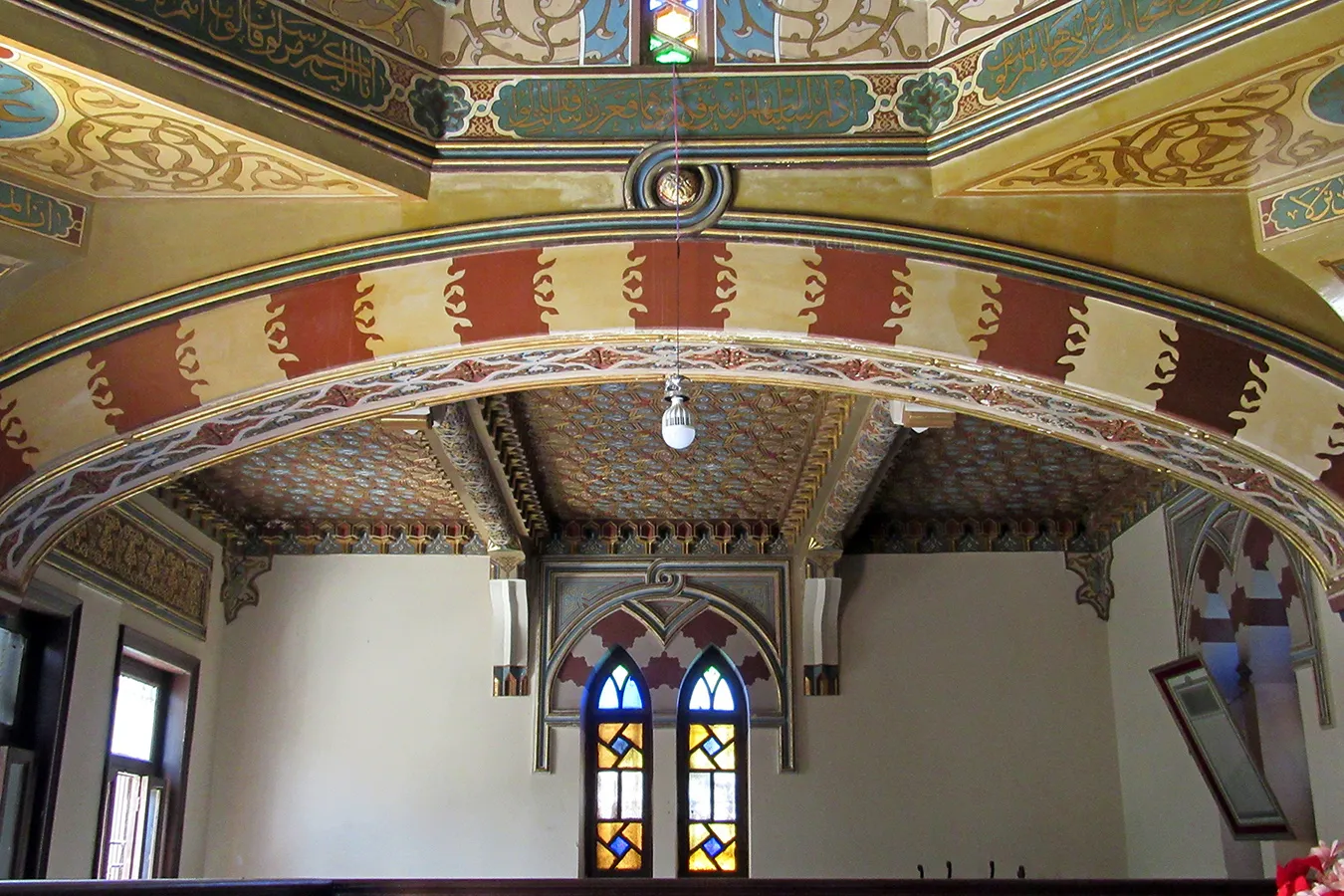
| Painted ceiling(s) | Yes | 1 | Reinforced concrete | In the main burial chamber: multicolour and elaborately decorated with Islamic patterns. |
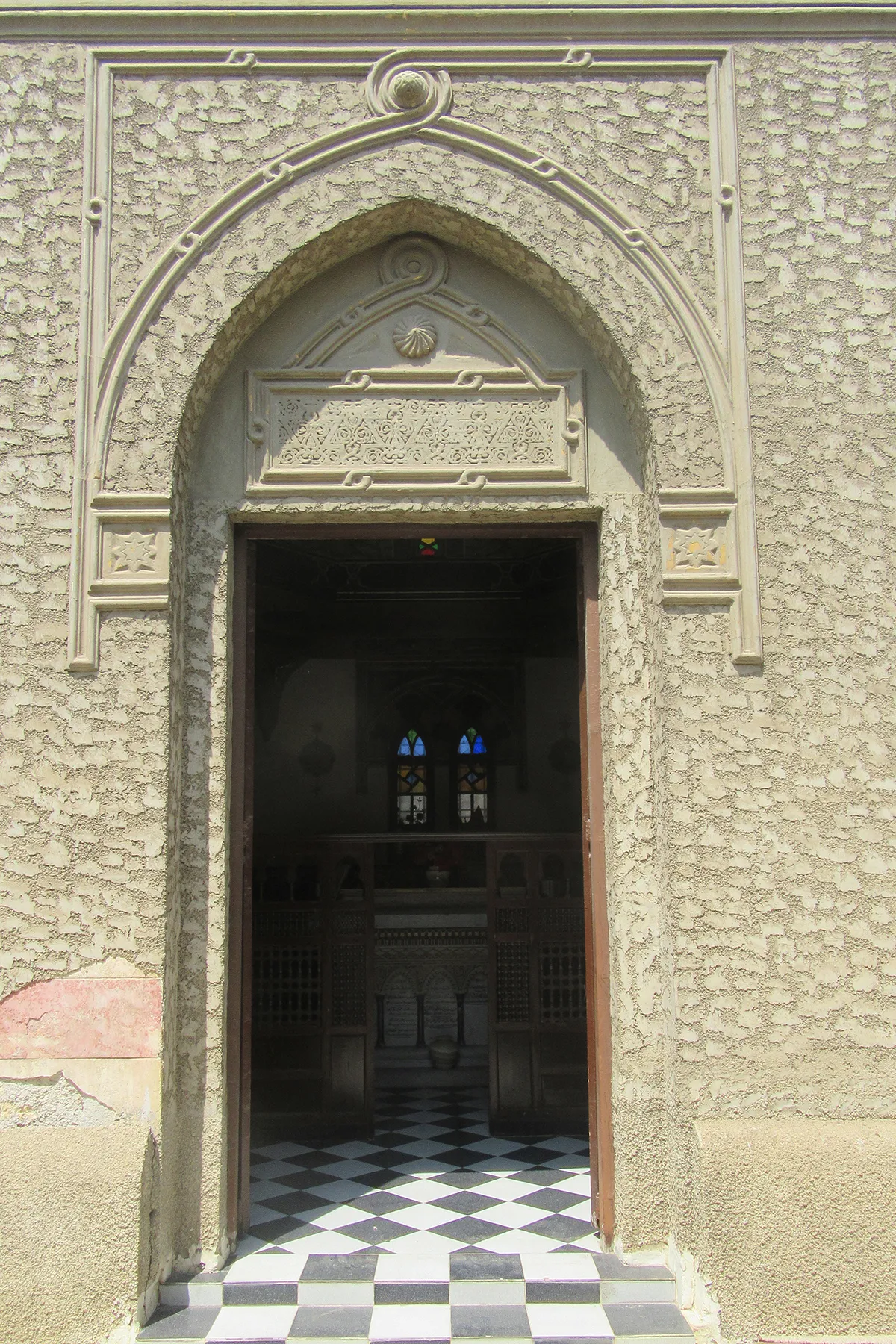
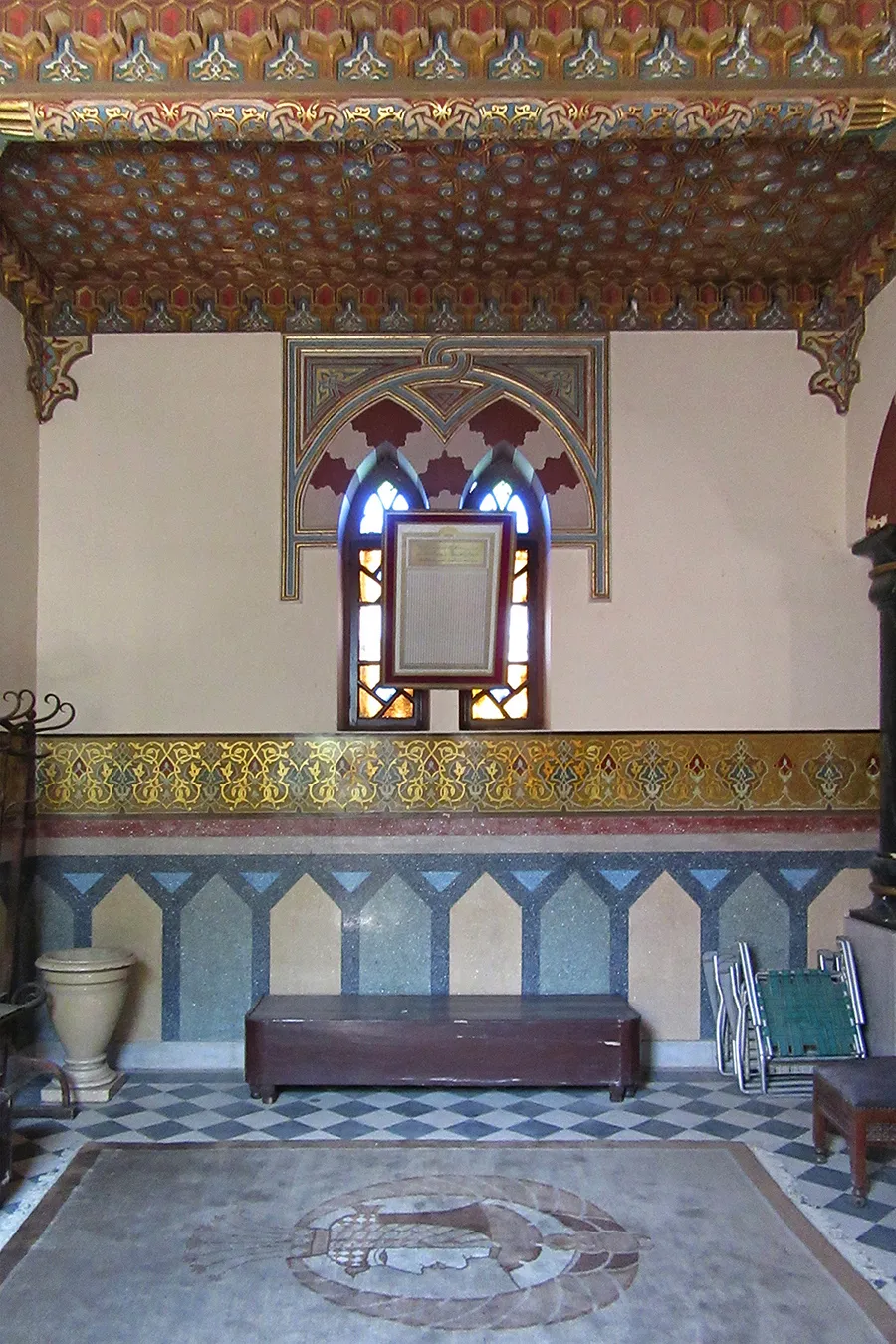
| Decorative paving(s) | Yes | 1 | ceramics | Simple black-and-white checkered pattern in the burial chamber, possibly newly added |
Unusual or unique features
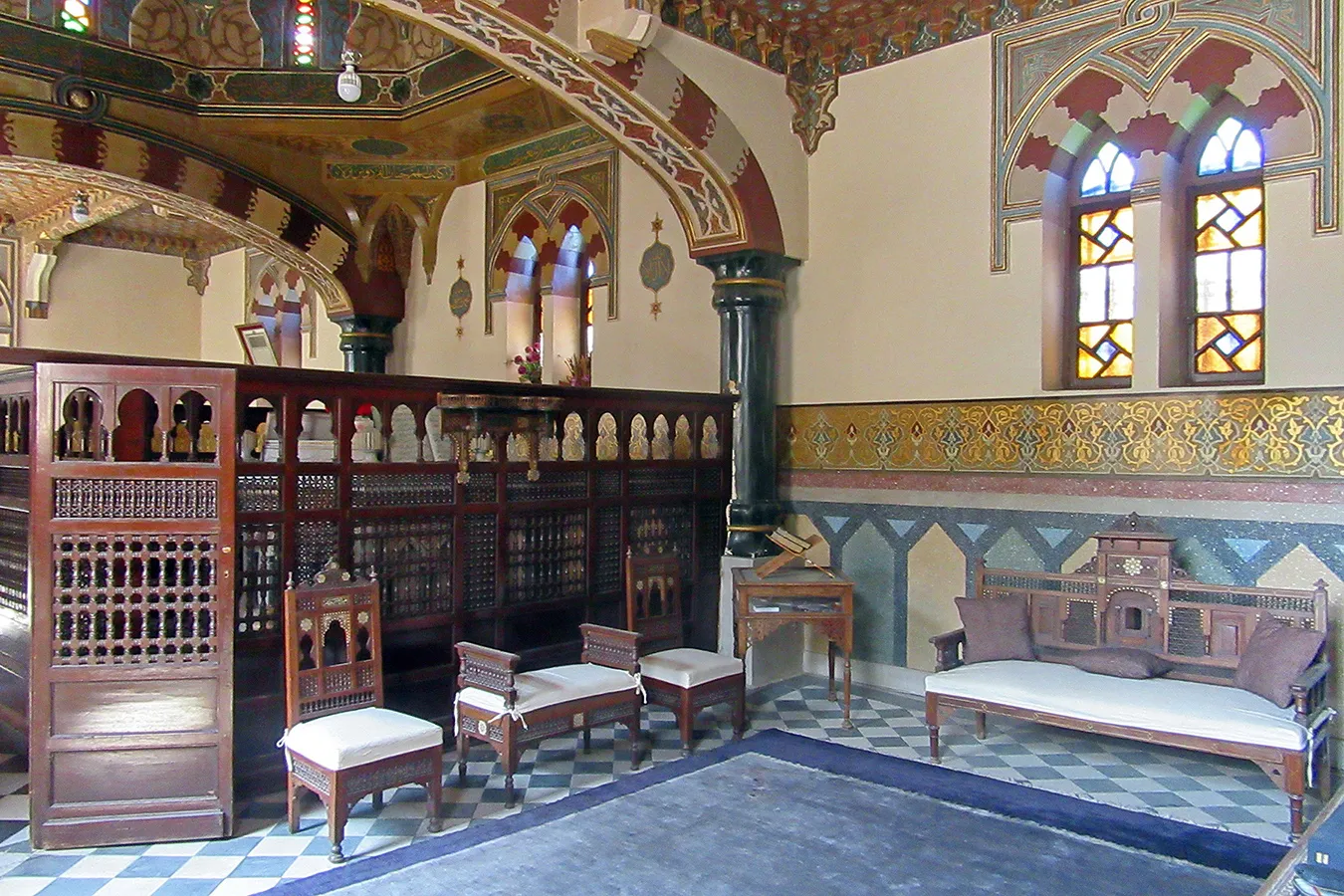
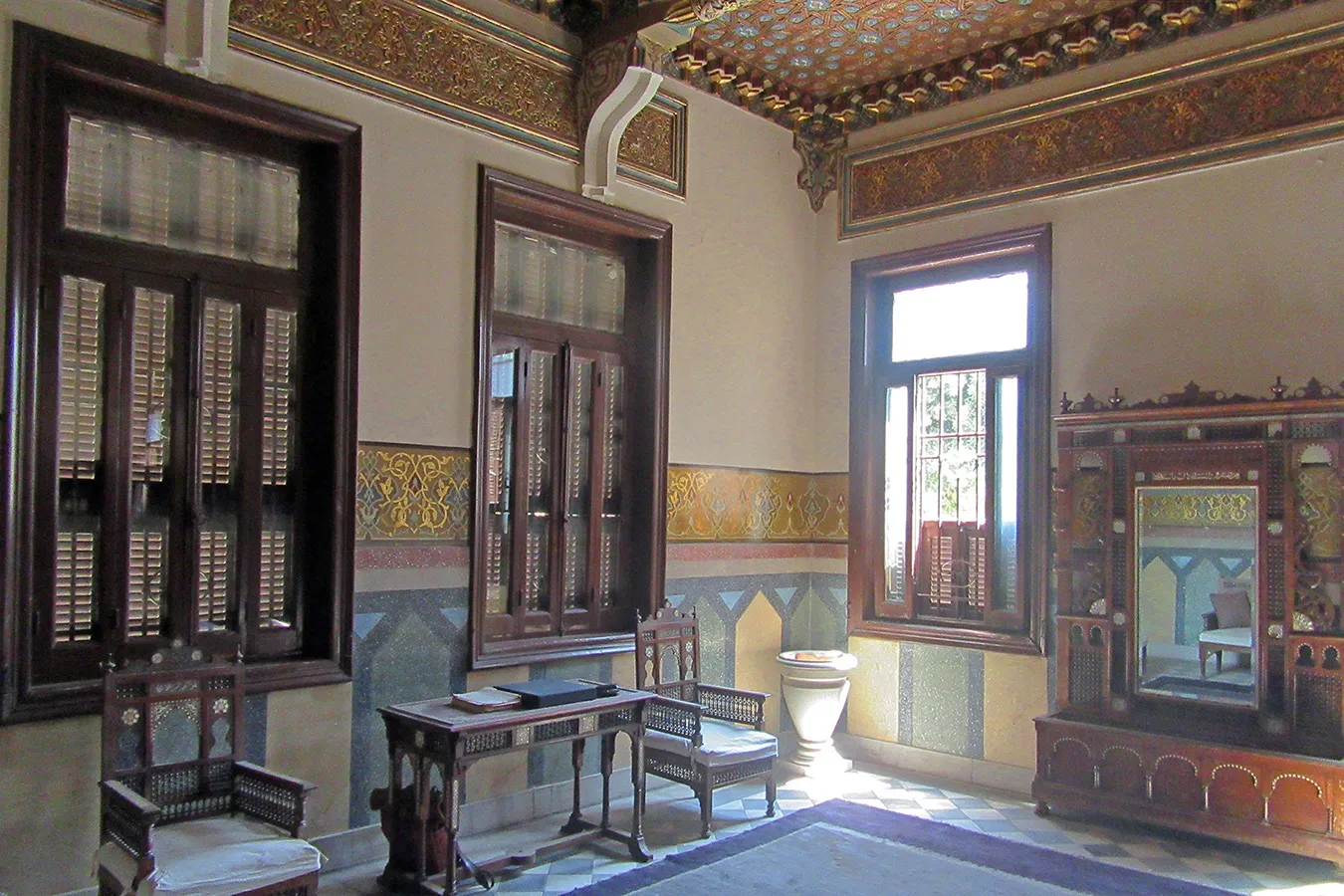
• The colourful decorated ceiling in the main burial chamber
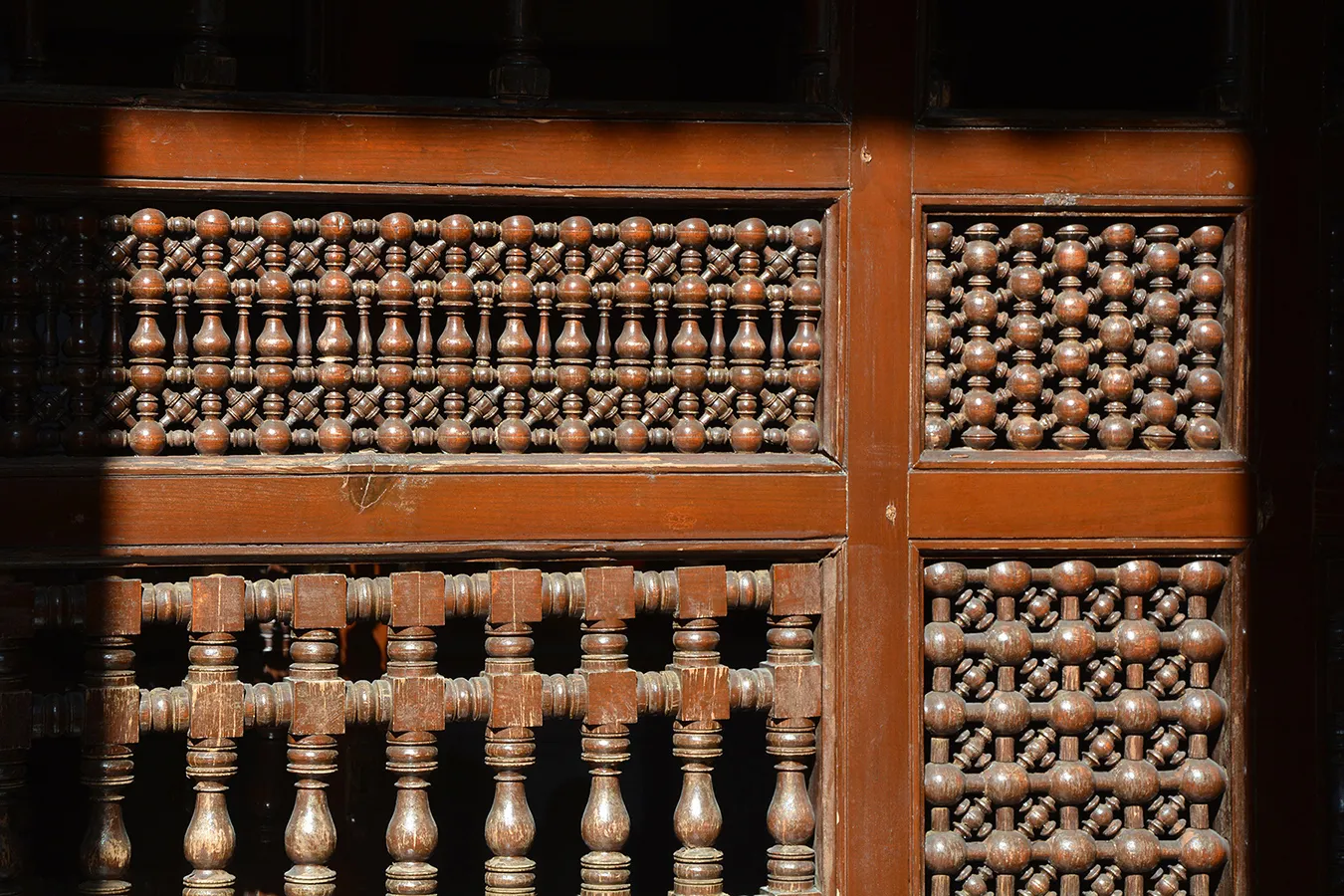
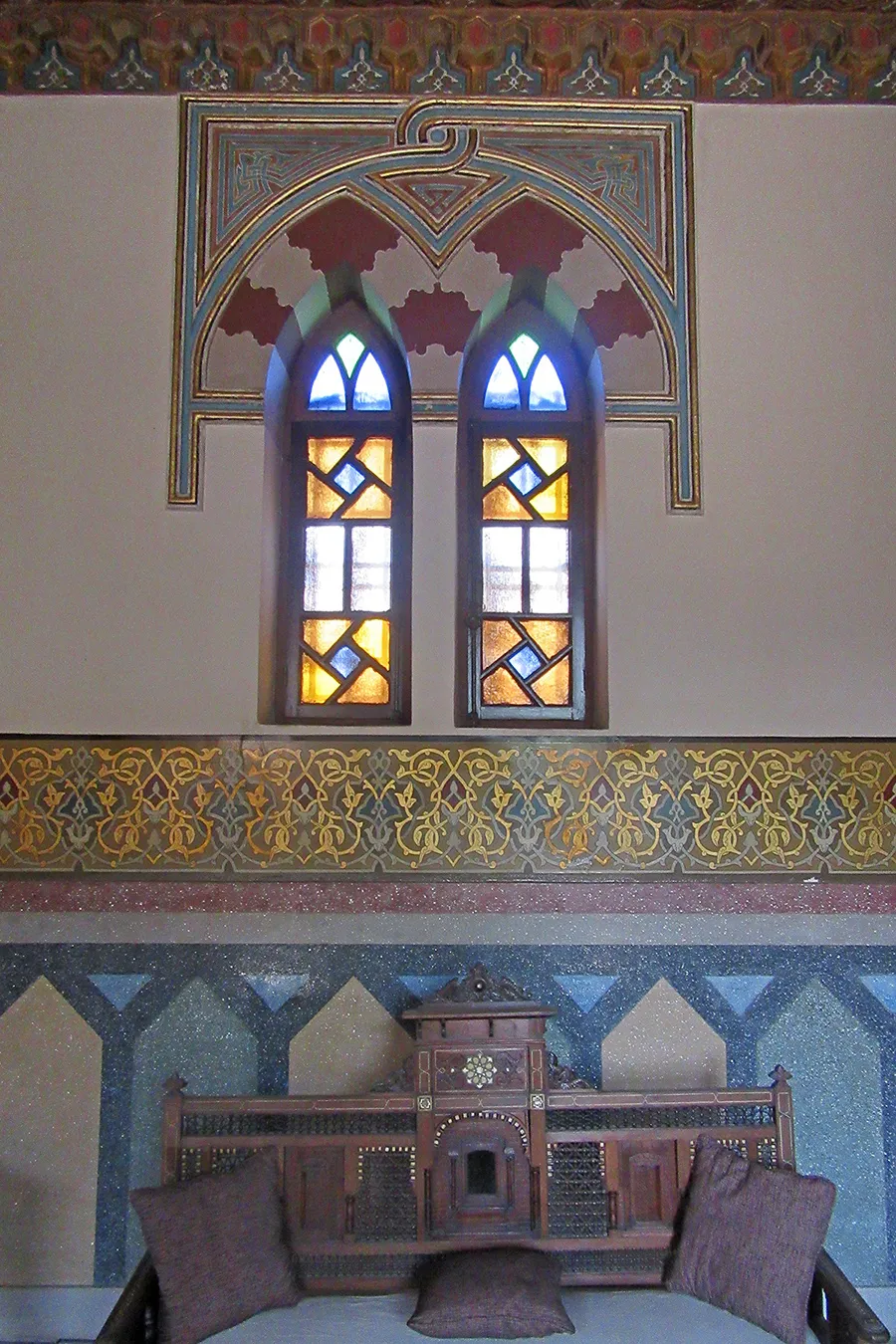
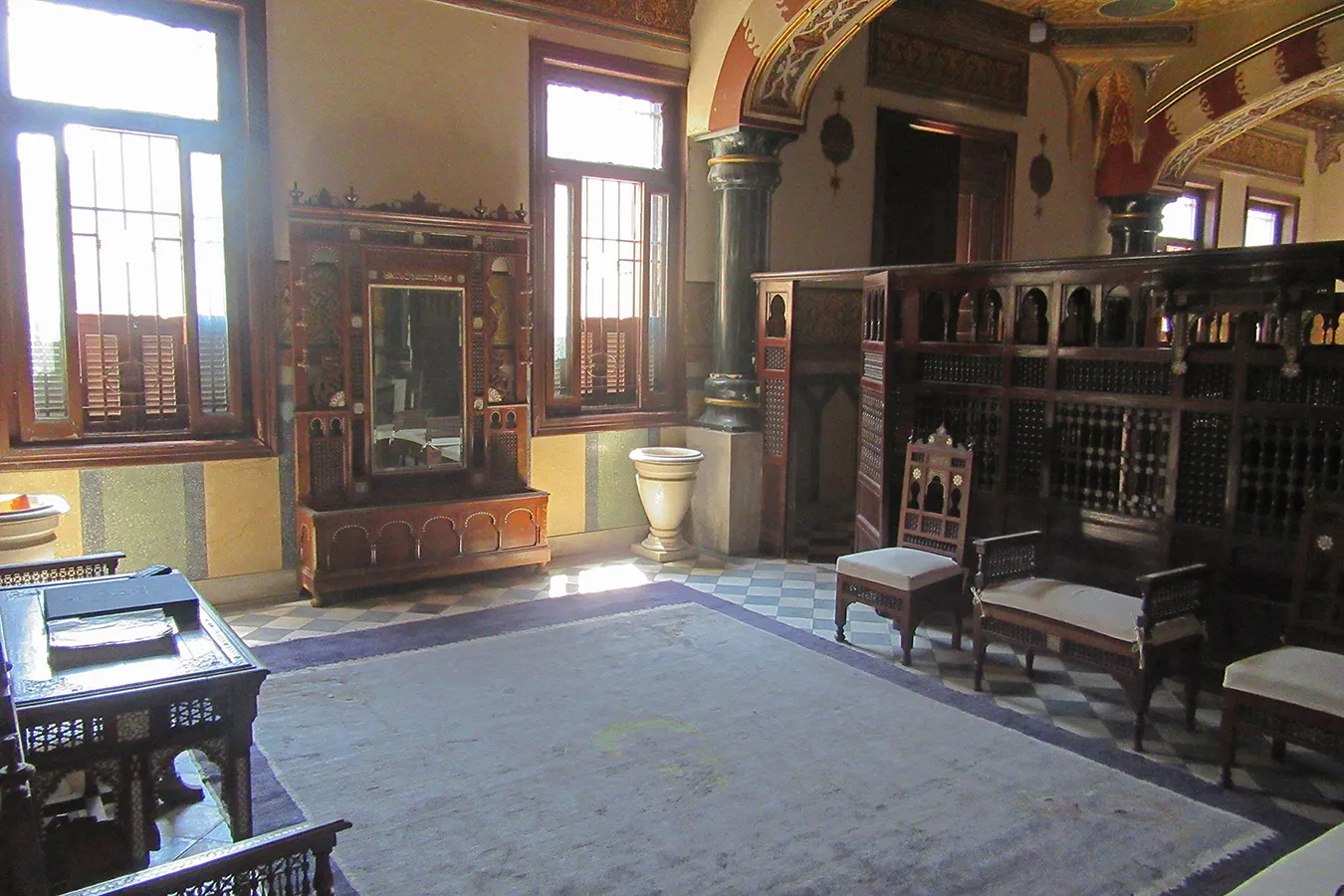
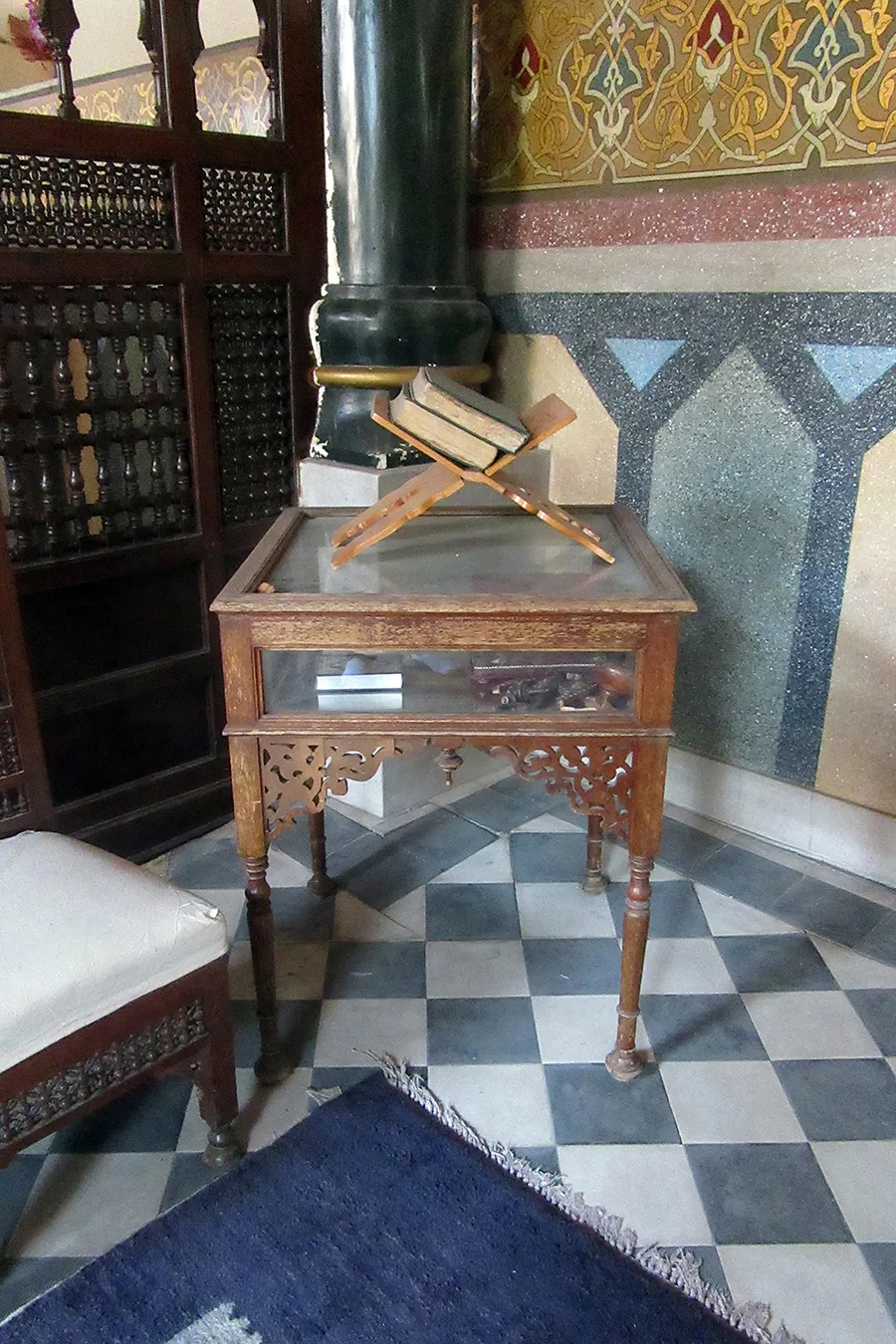
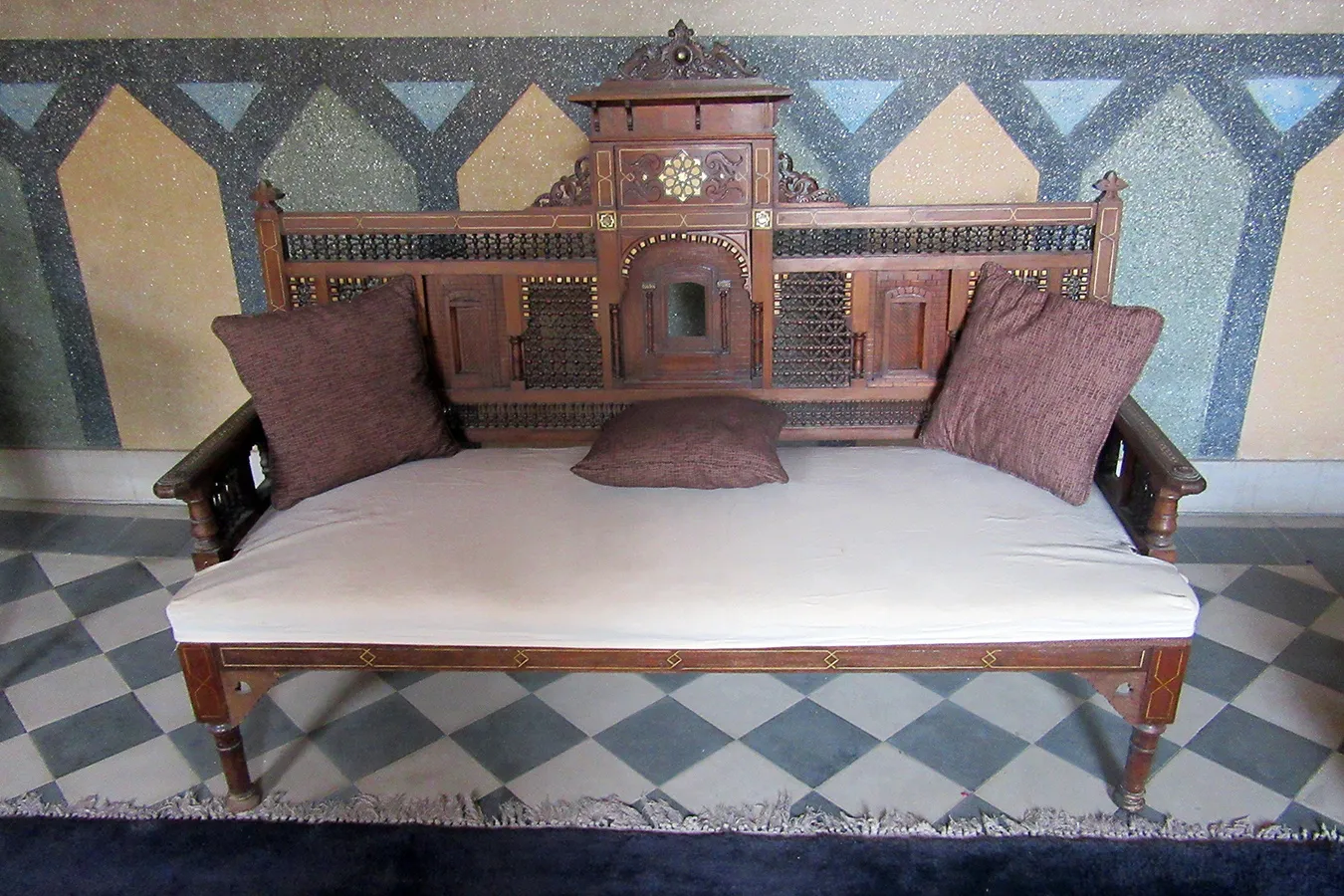
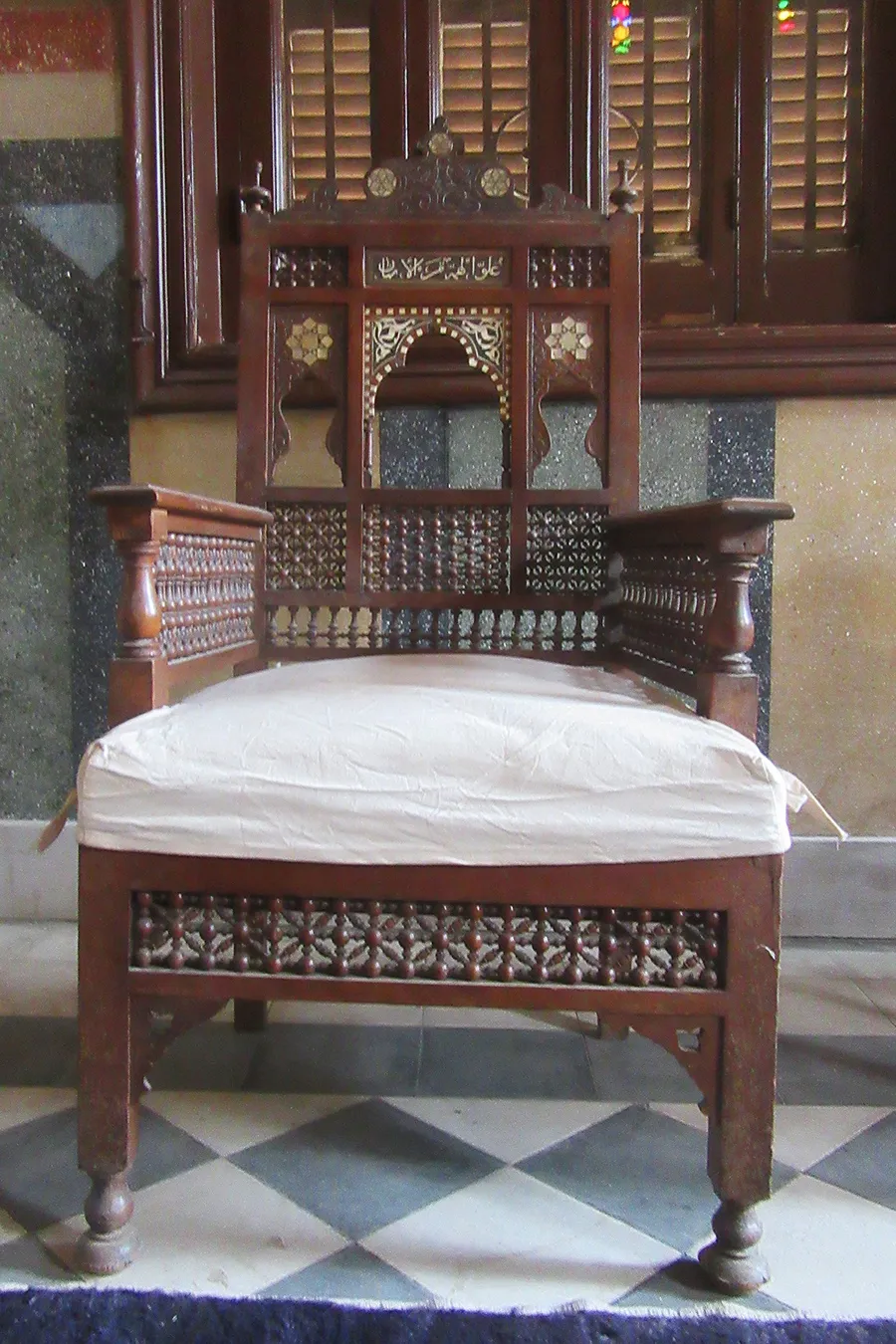
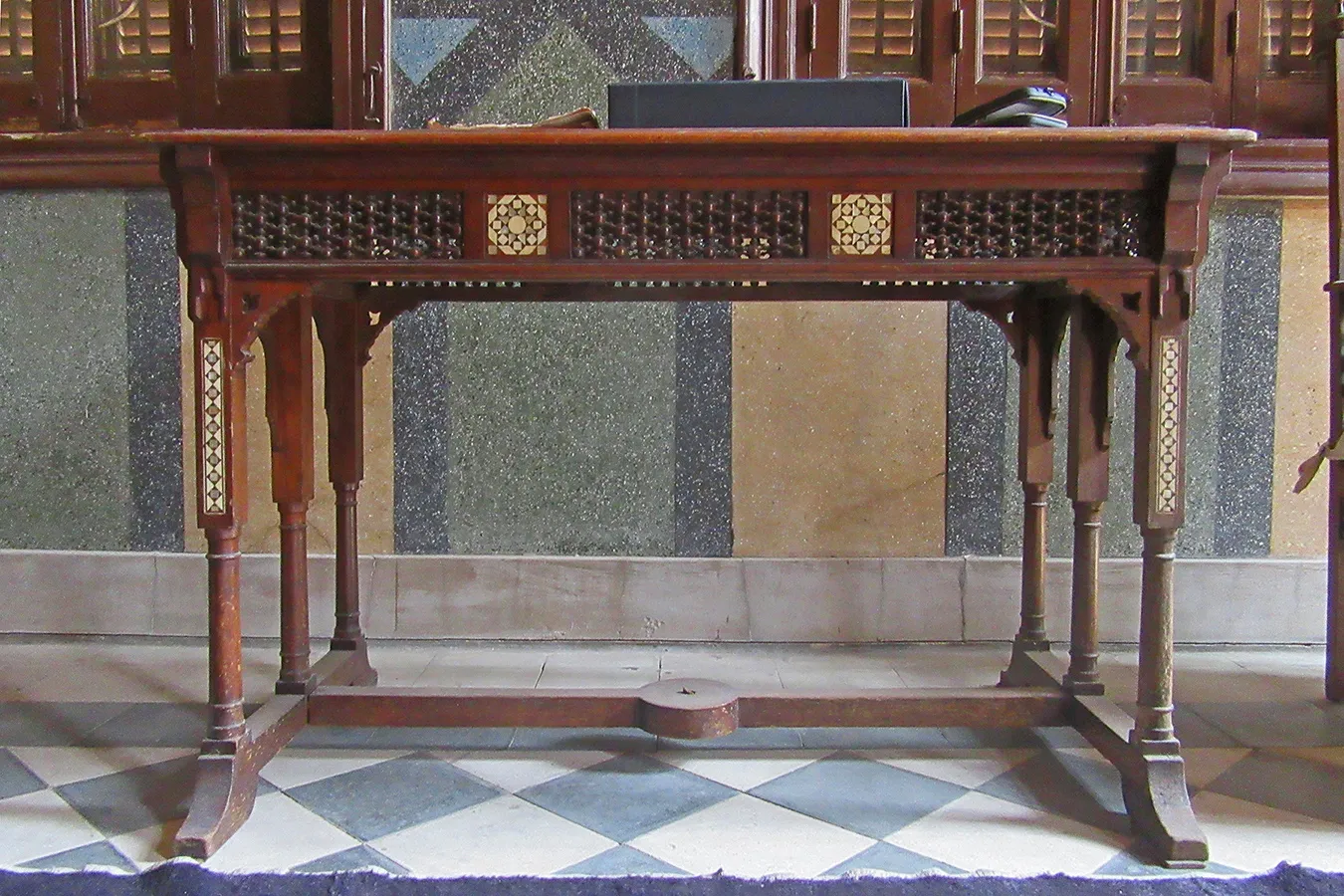
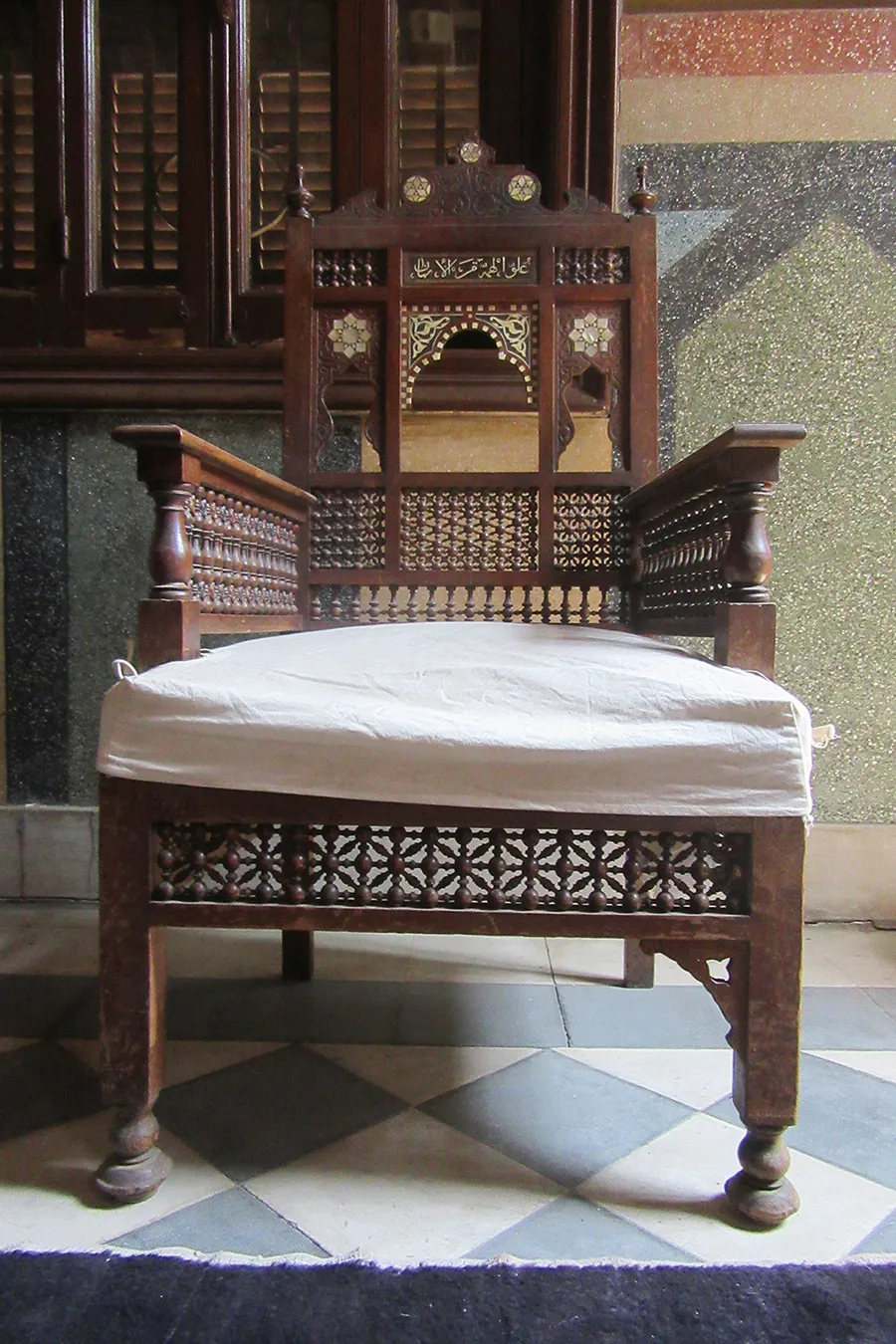
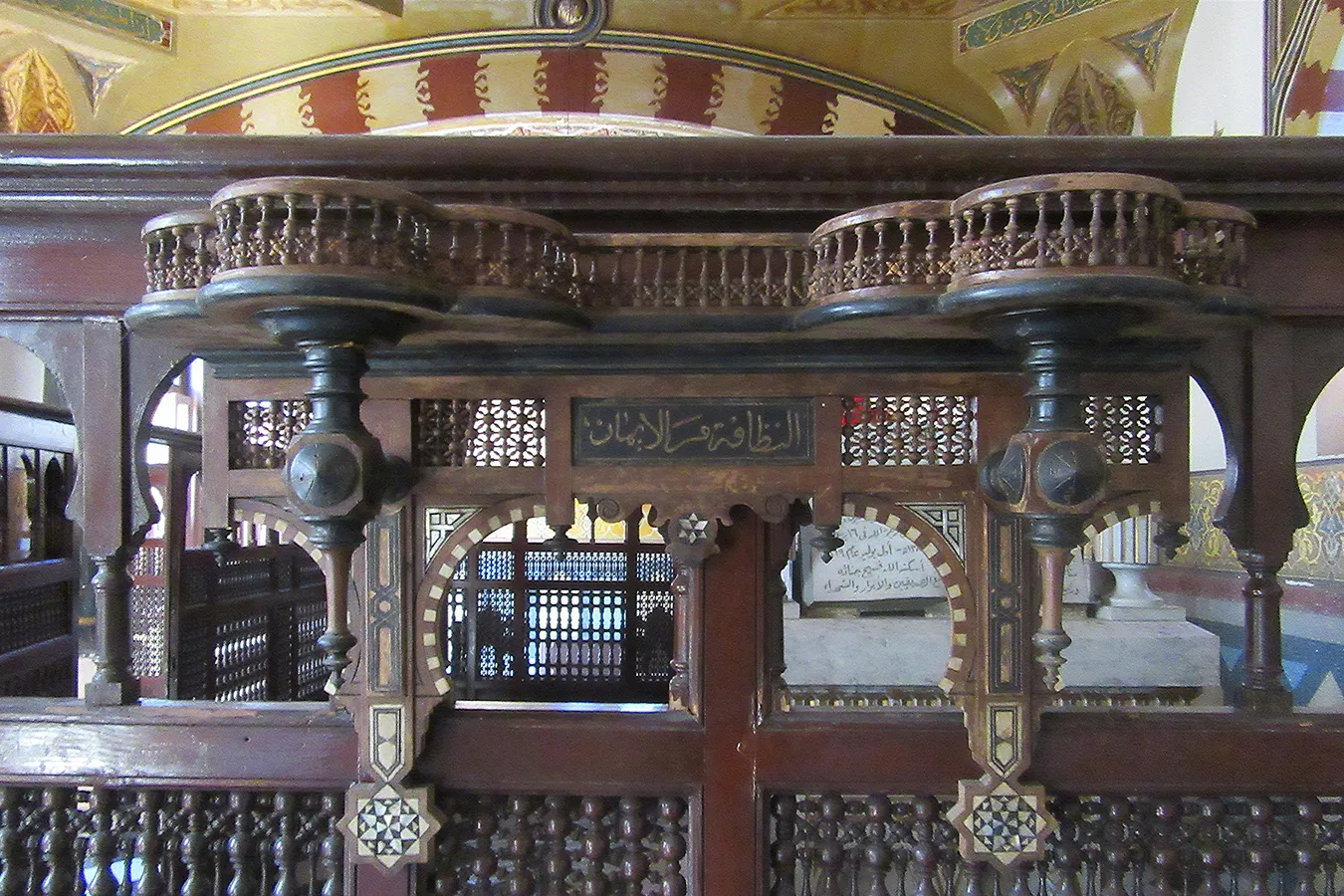
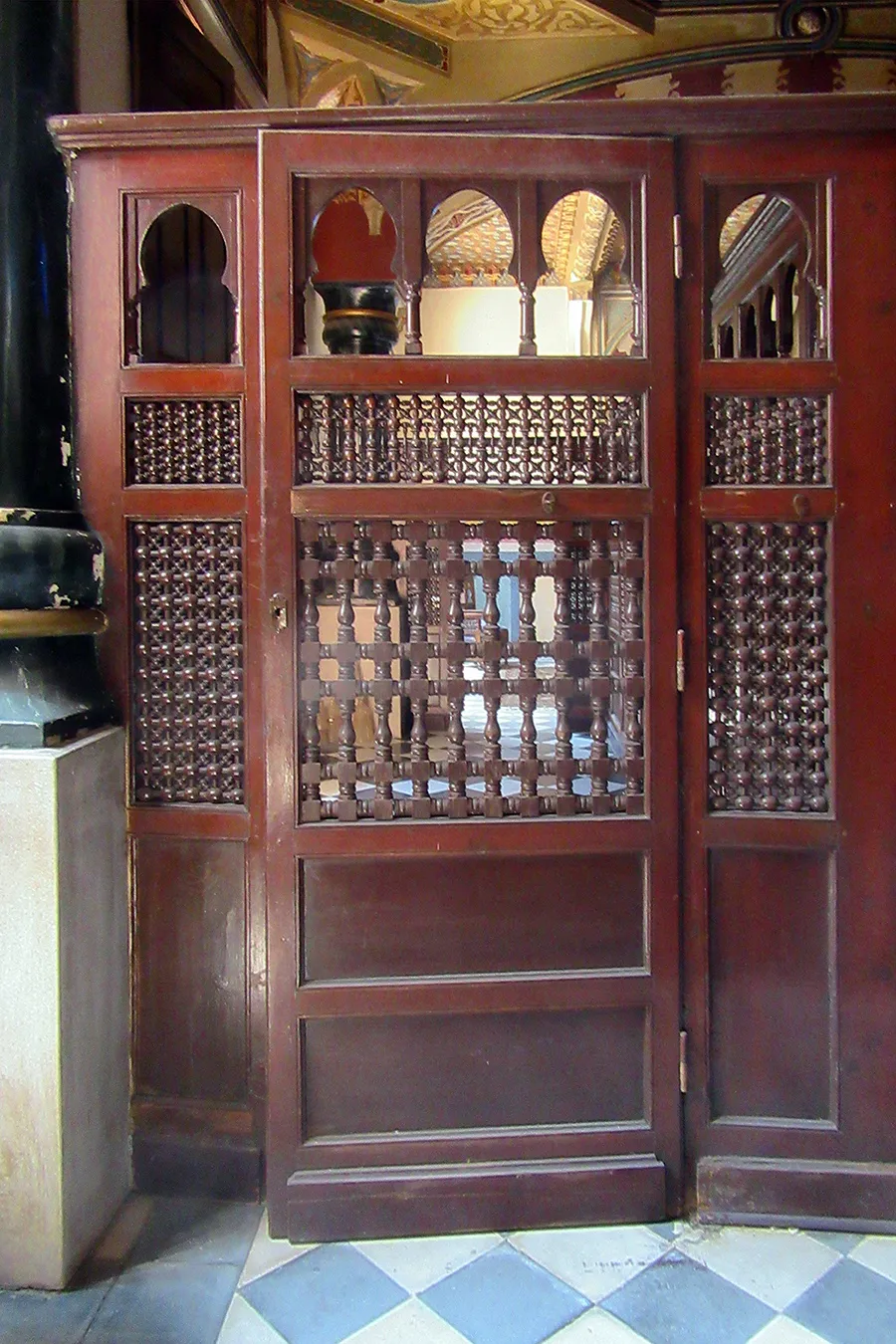
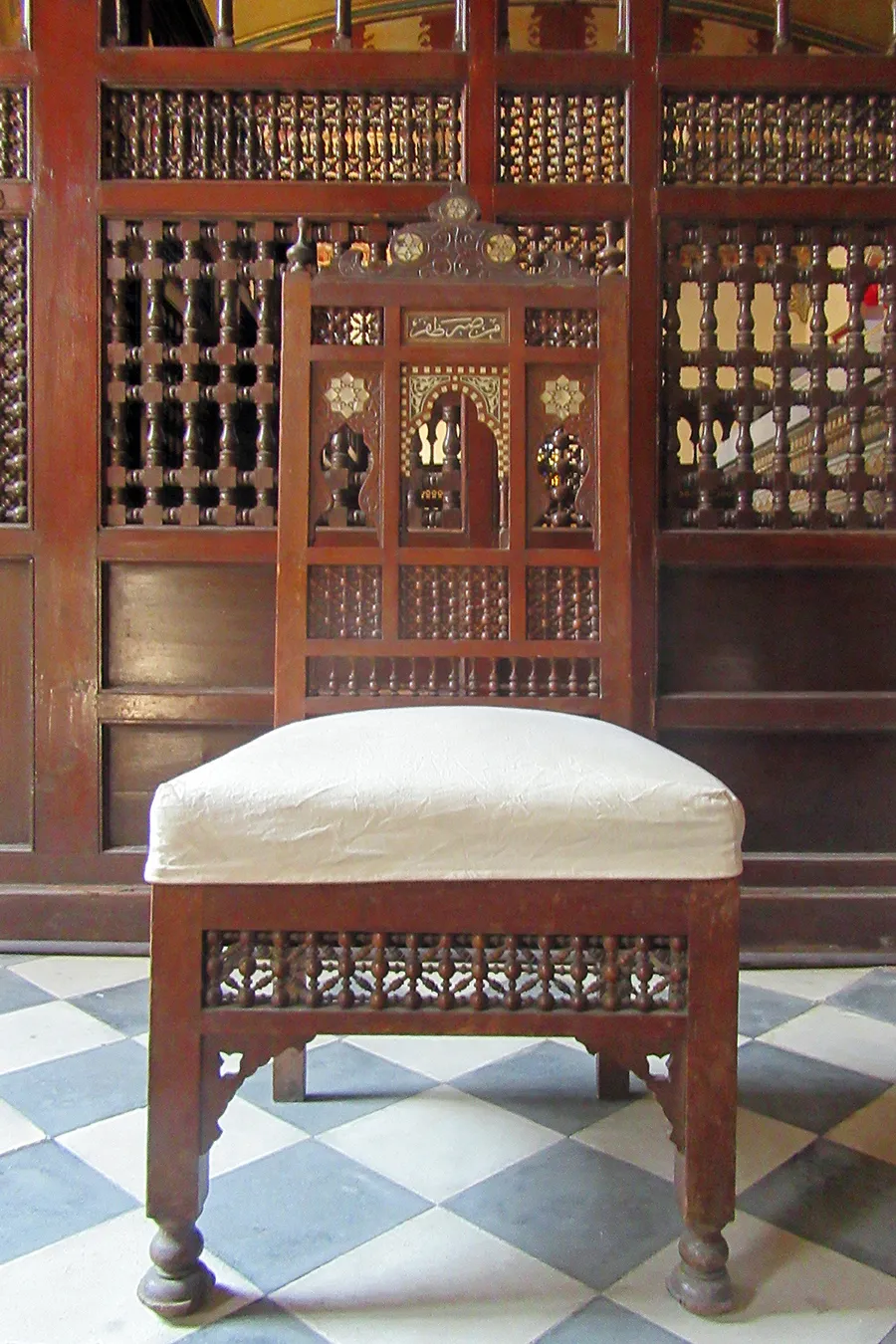
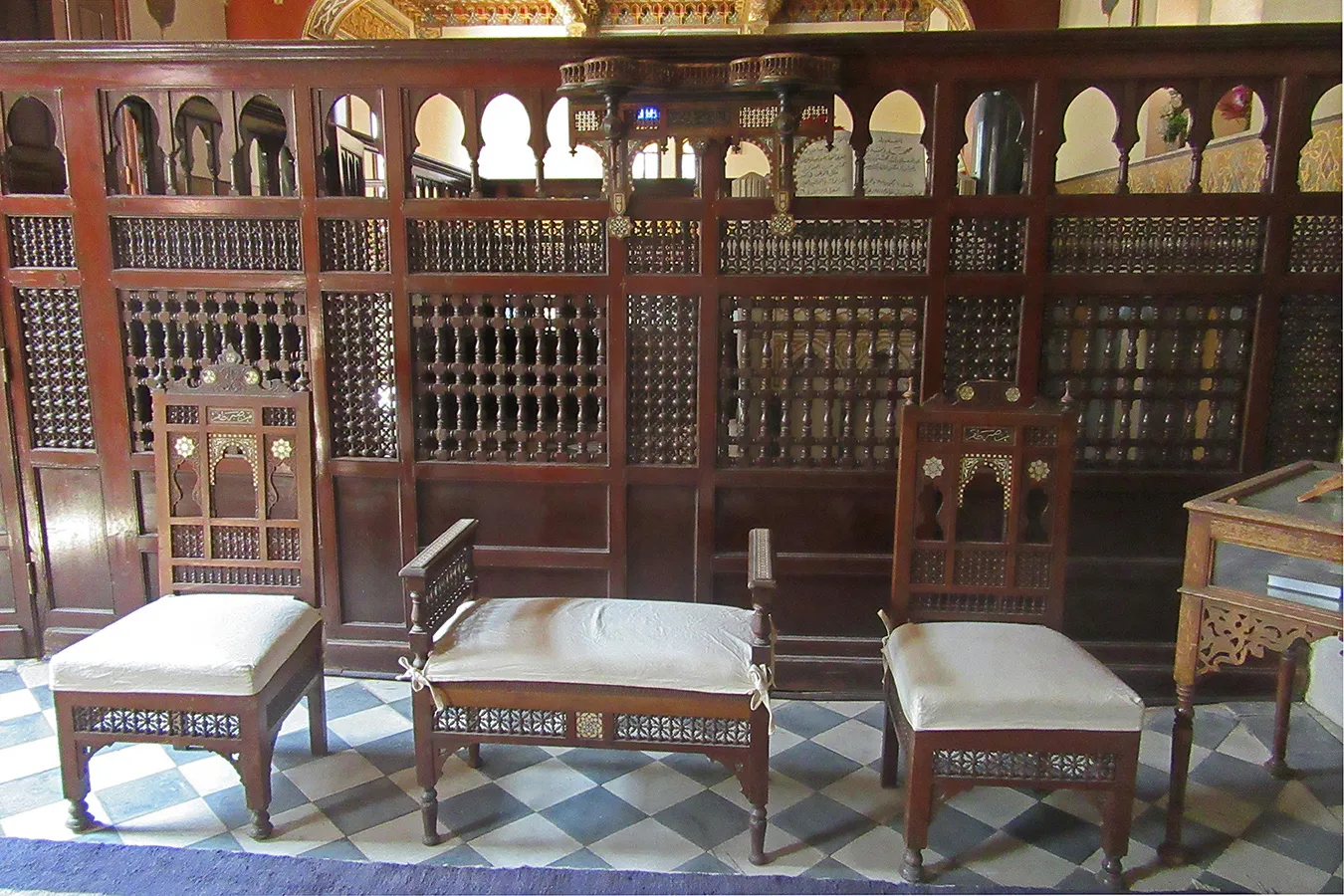
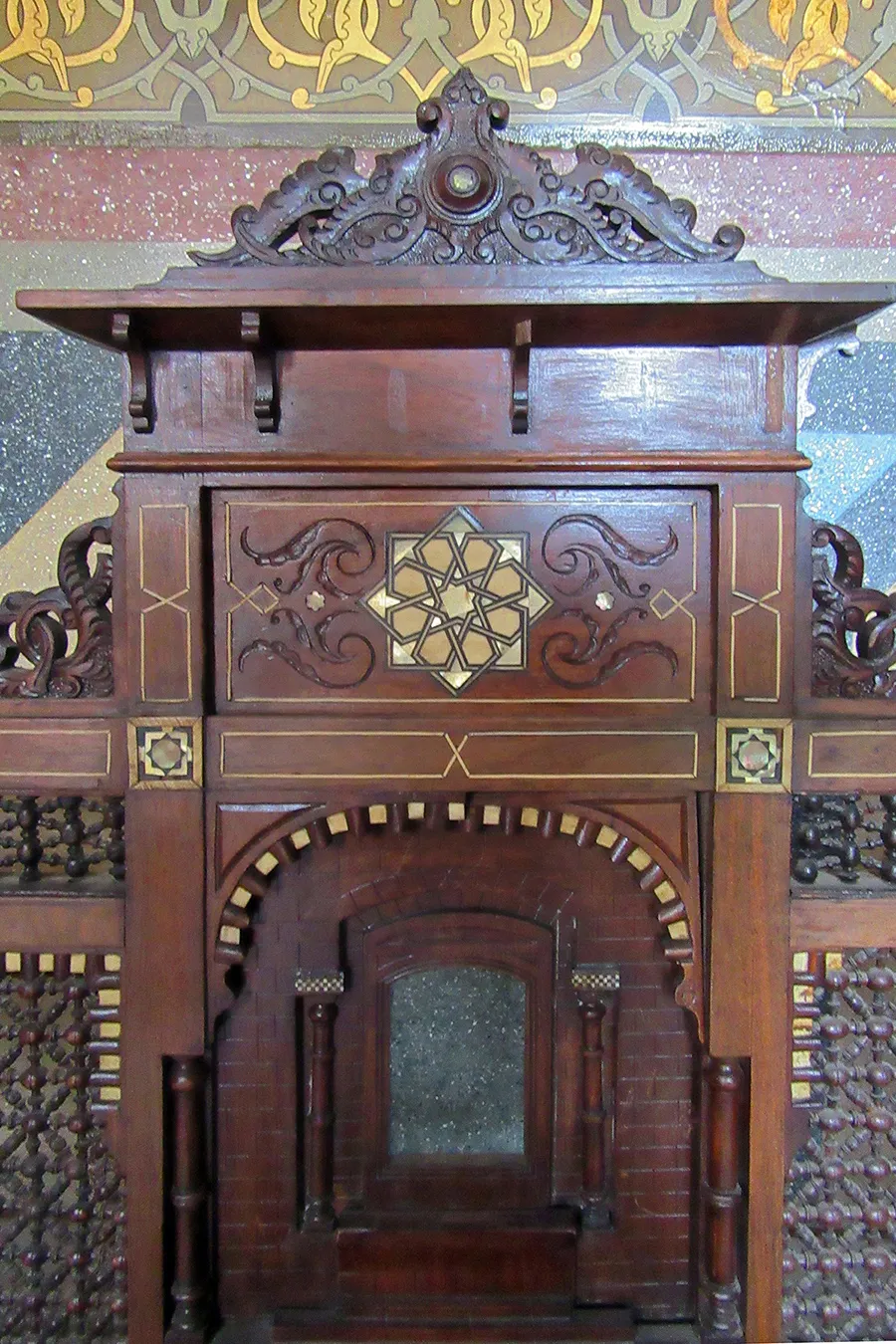
• The well-preserved wooden furniture and mashrabiya screens inspired by Islamic art
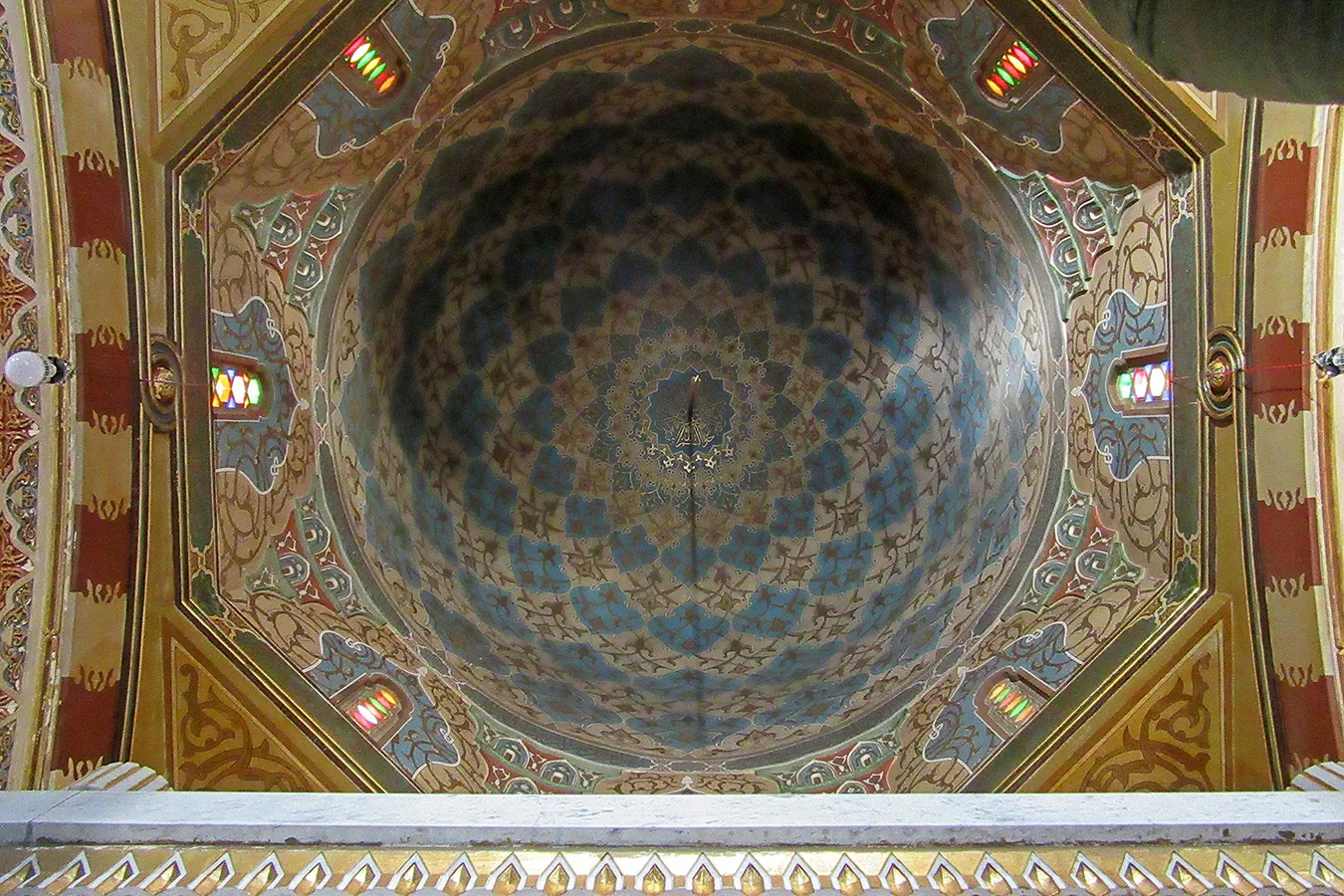
• The large dome with painted interior decoration
Description (The direction towards Mecca (Qibla) is described as eastern and other directions are named accordingly)
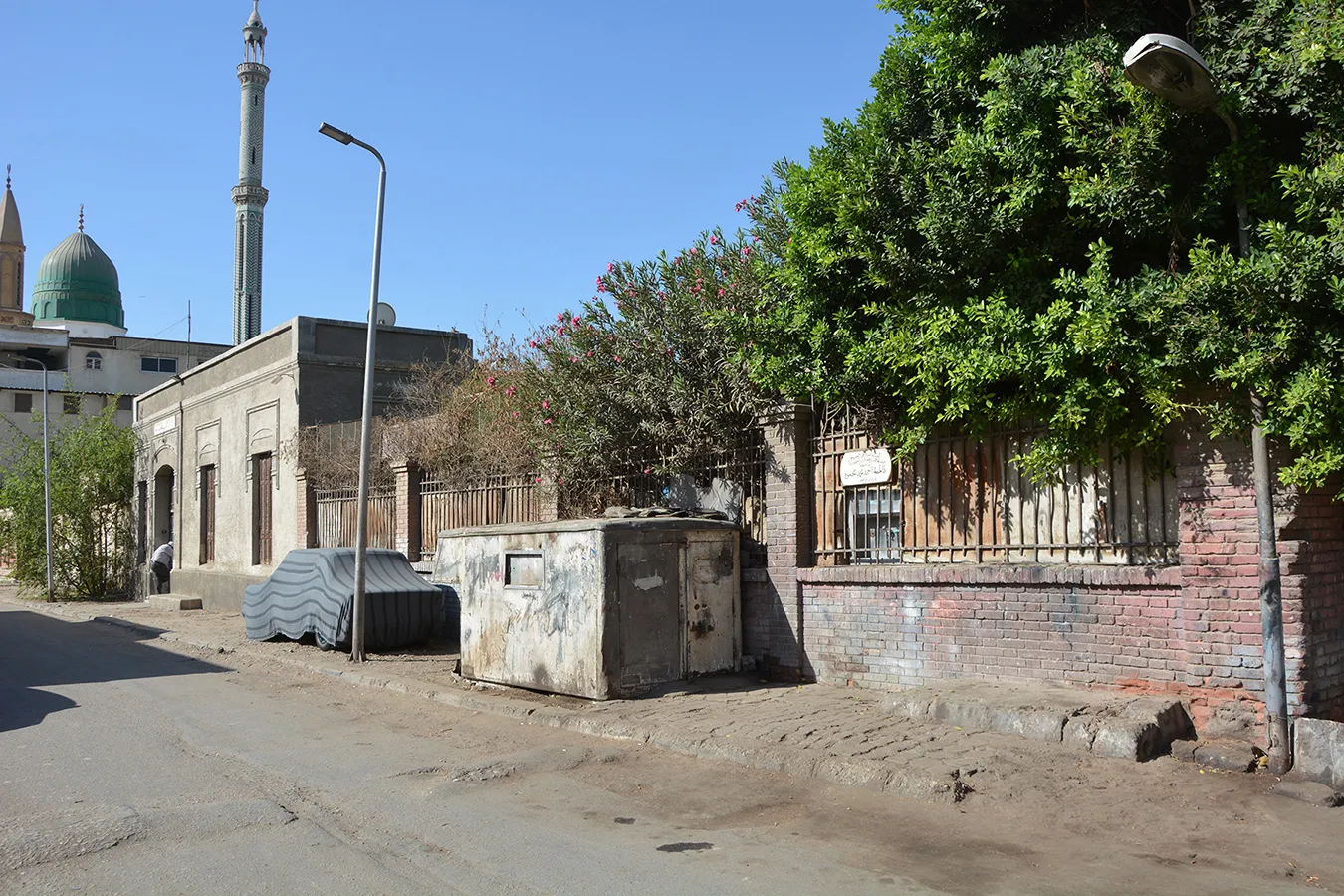
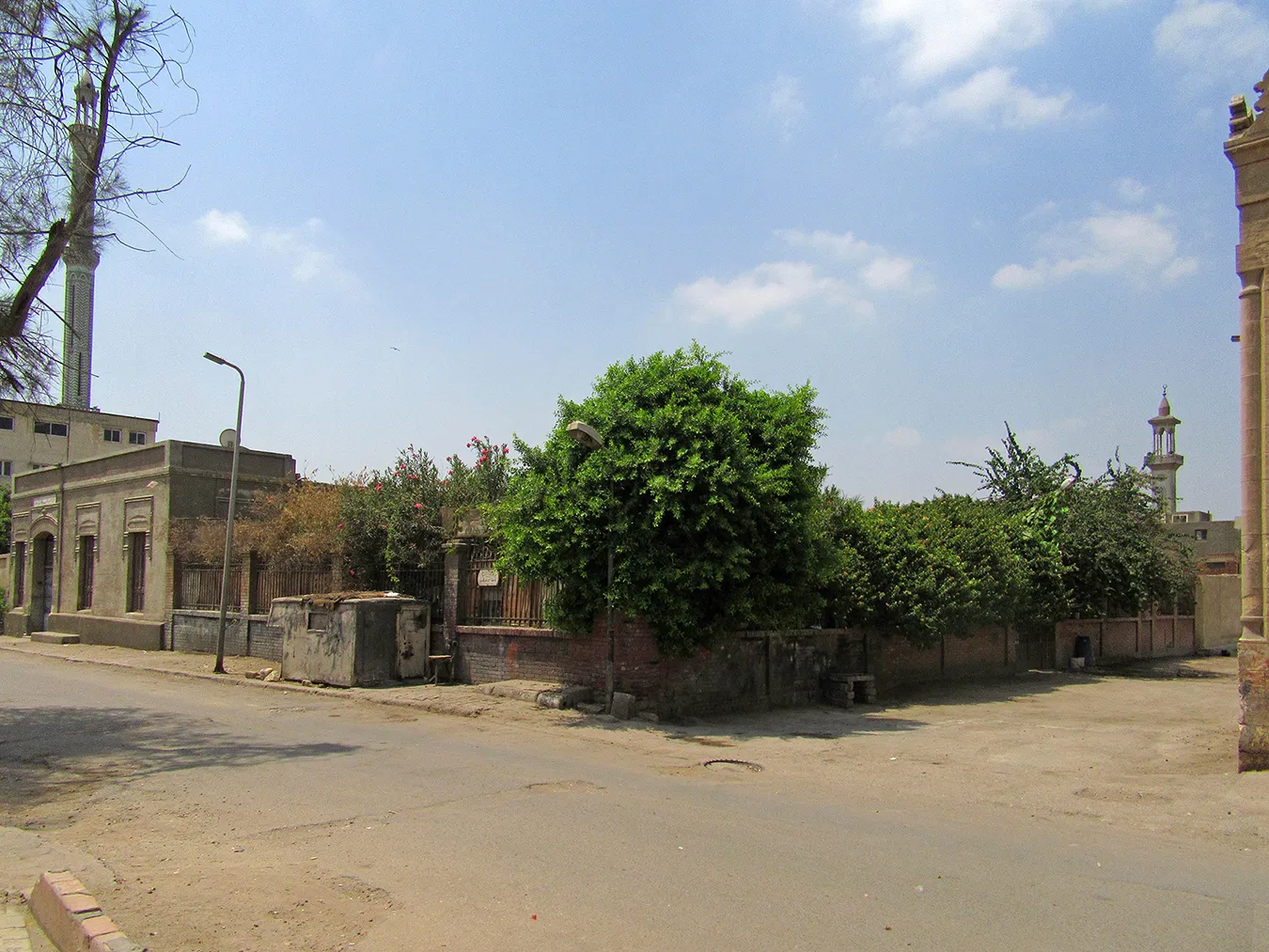
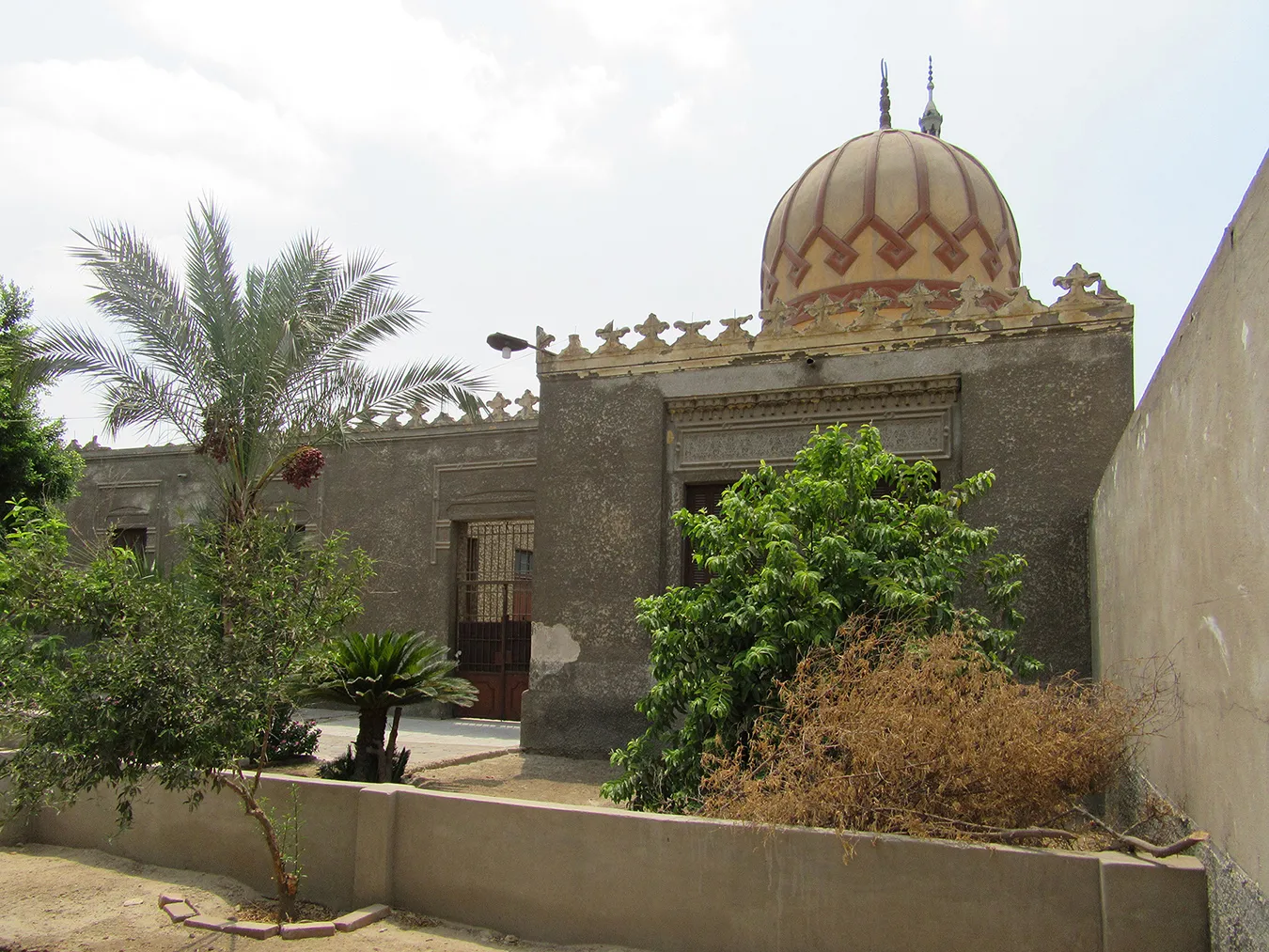
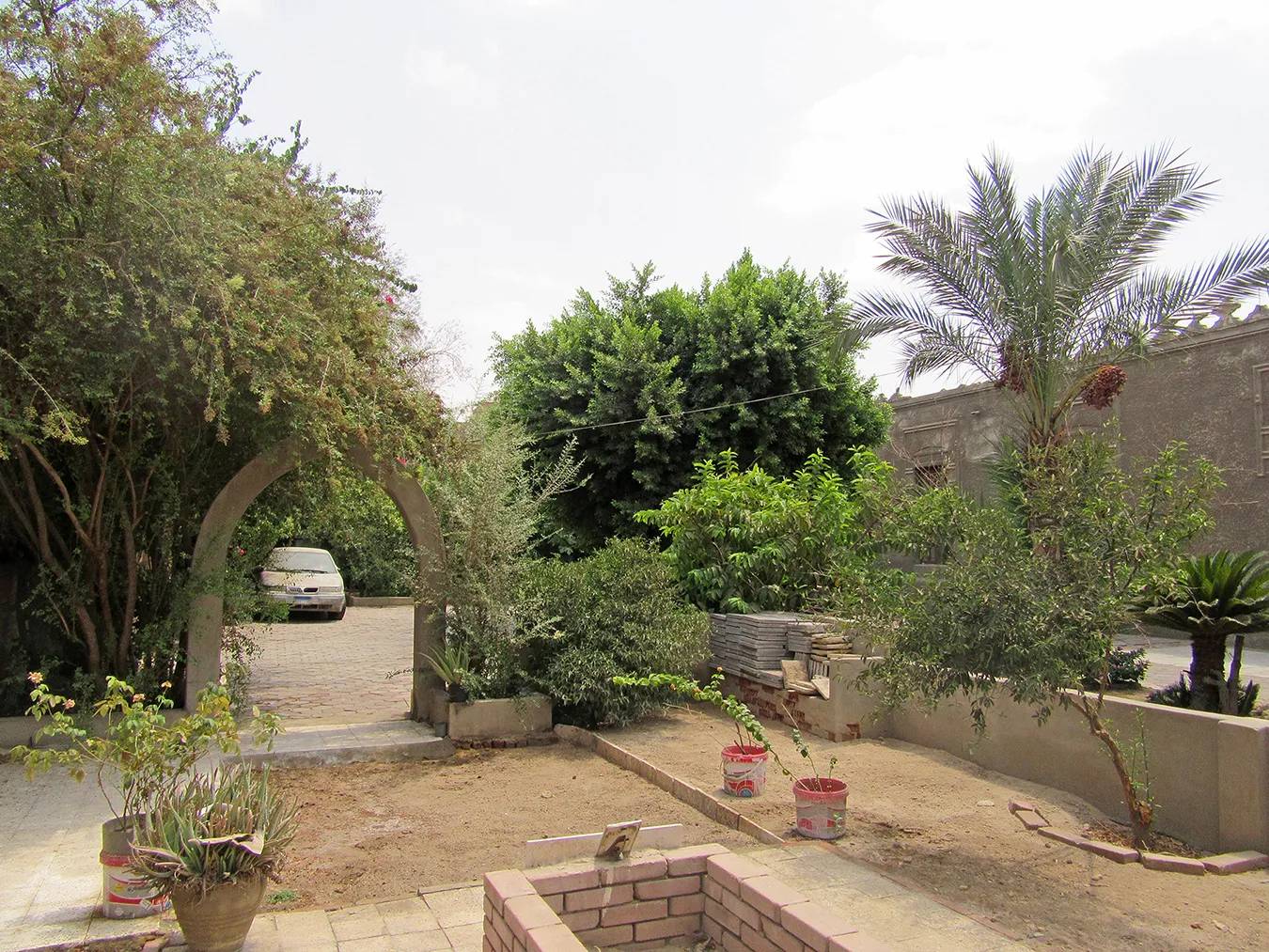
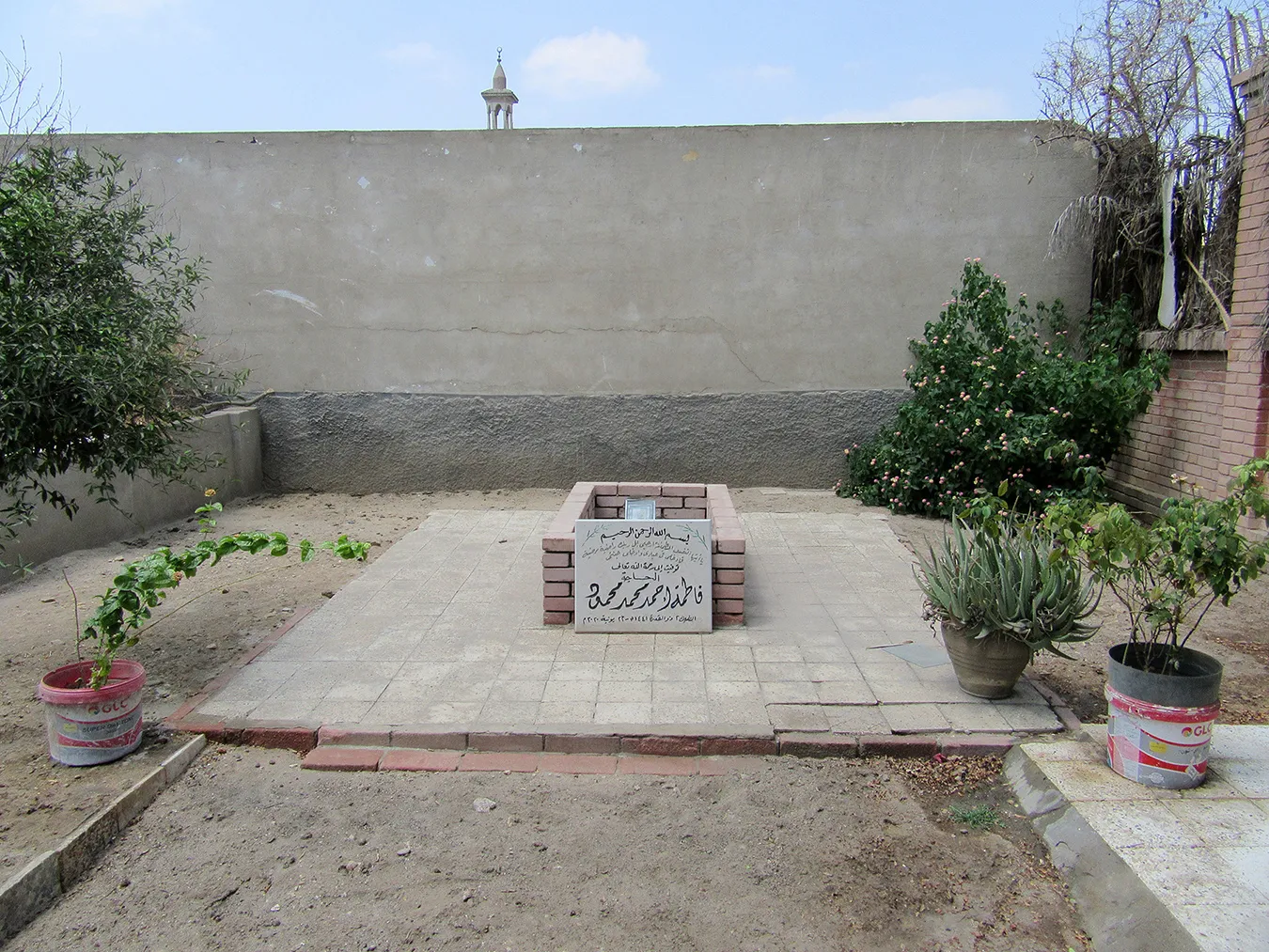
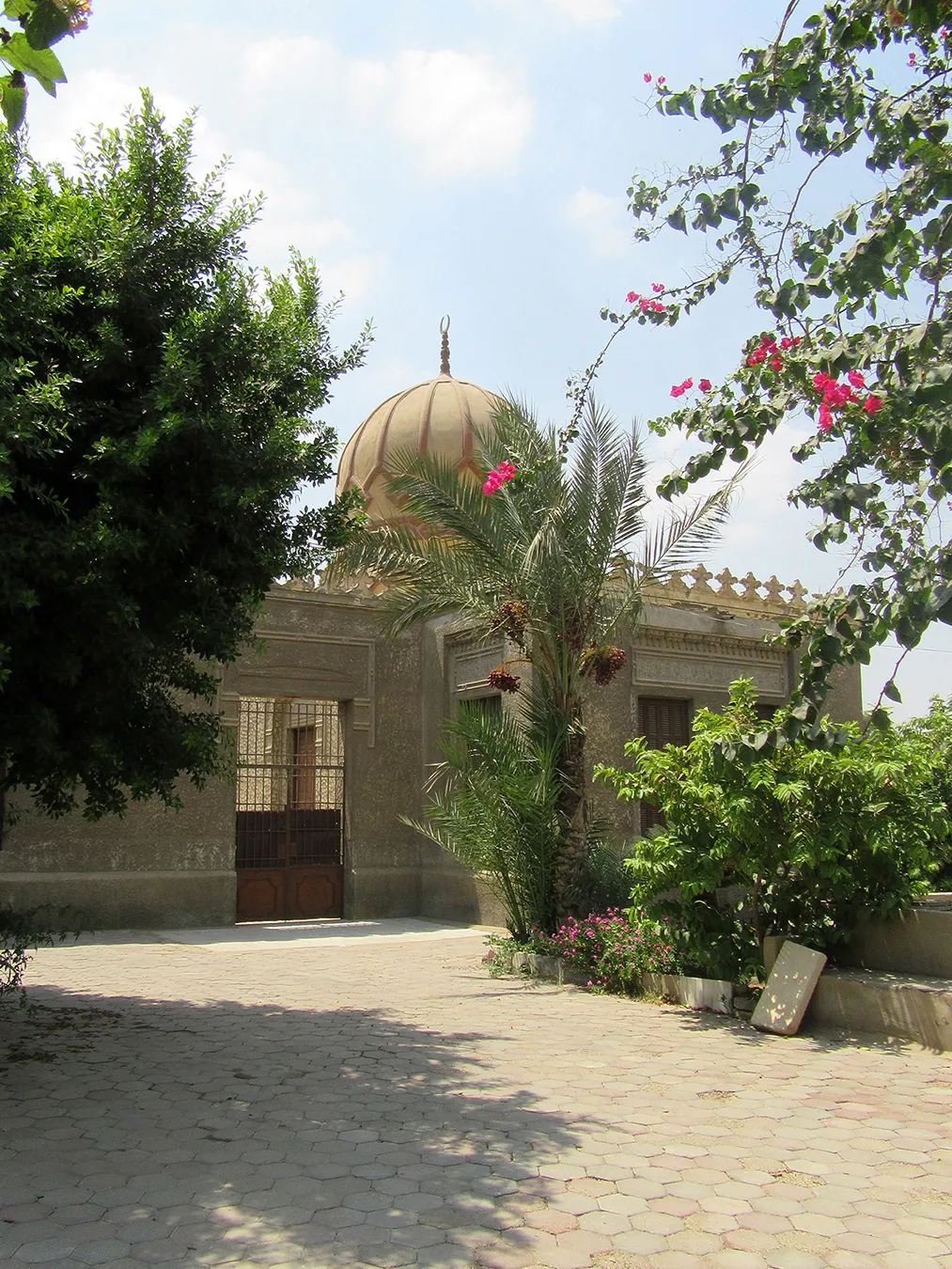
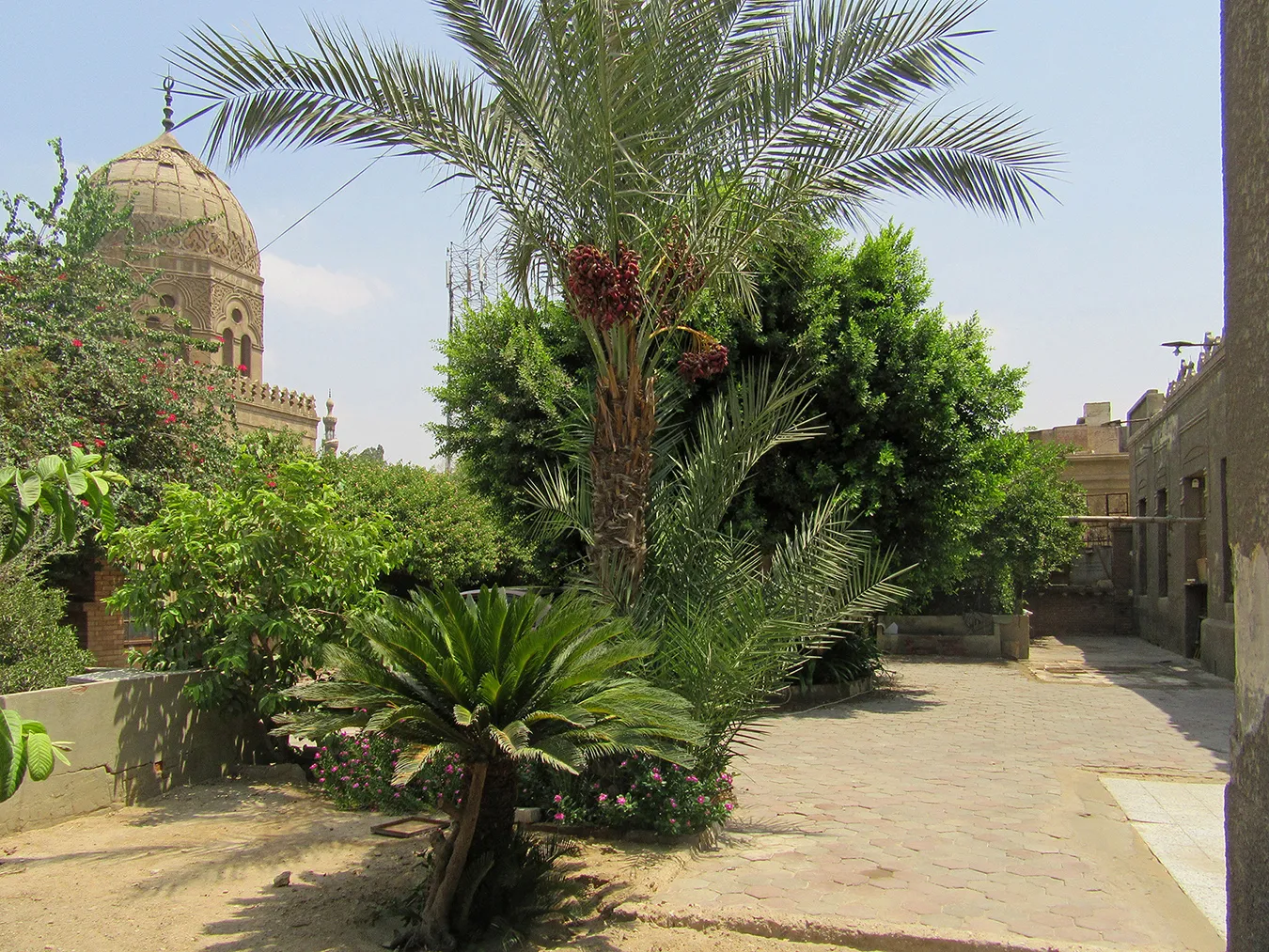
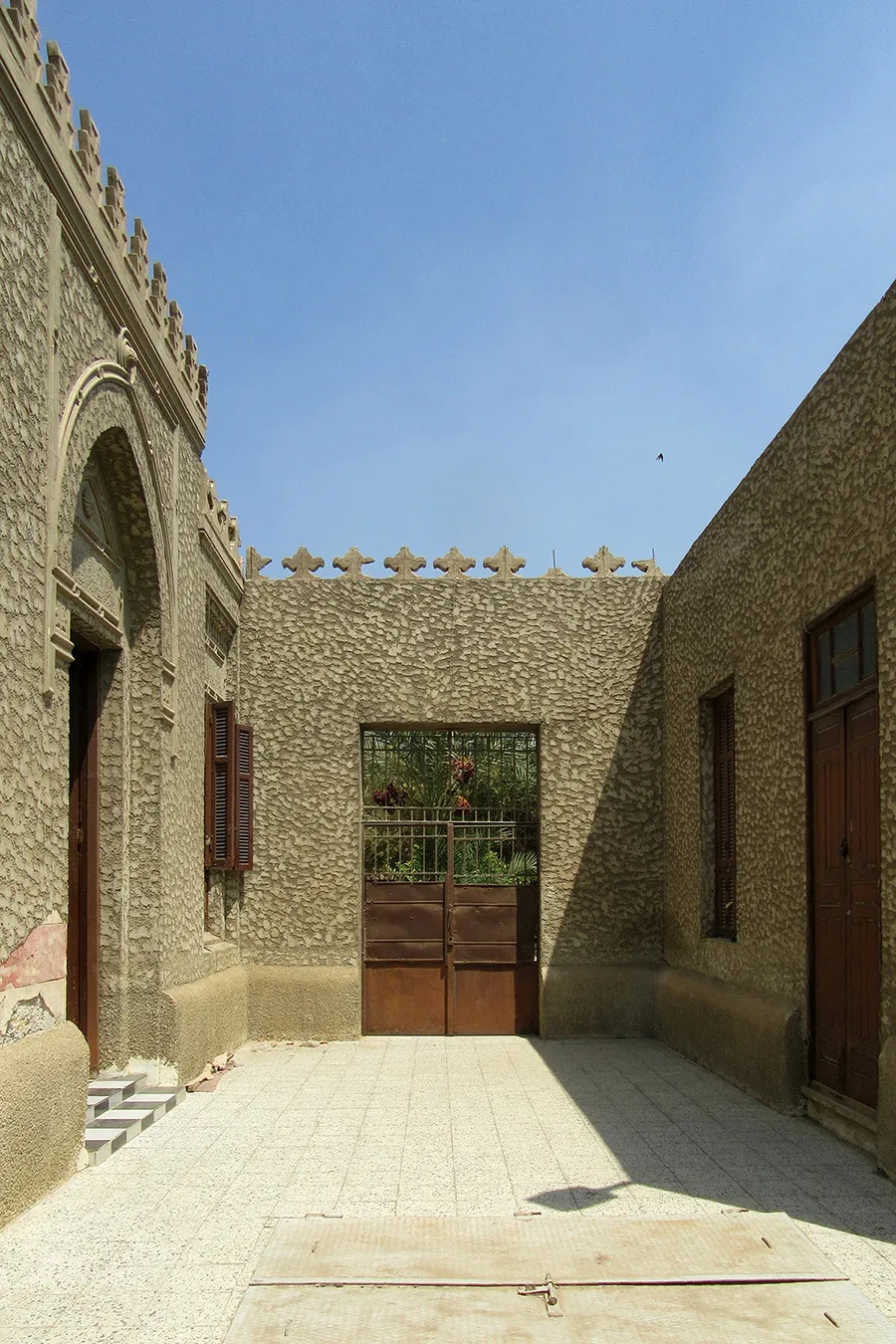
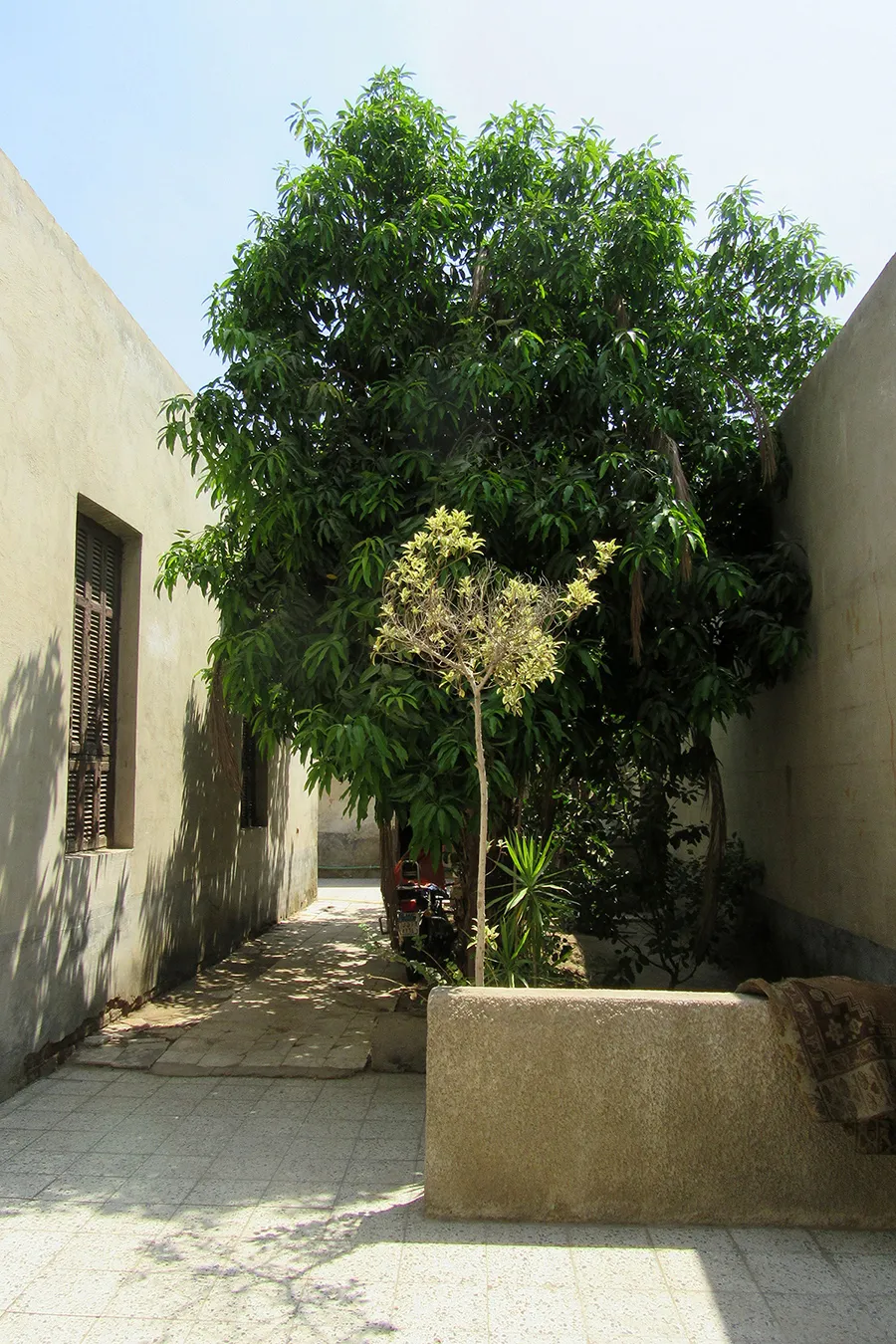
The roughly square walled enclosure is separated by a wall into two sections. The broader northern part is a well-maintained garden including only one new brick cenotaph. The narrower southern section contains: a domed burial chamber in the south-western corner, rectangular and protruding into the garden beyond the wall dividing the enclosure; a residential unit in the south-eastern corne of the enclosure; and another residential unit in the middle, with narow courtyards to the sides and a passage between it and the southern perimeter wall.
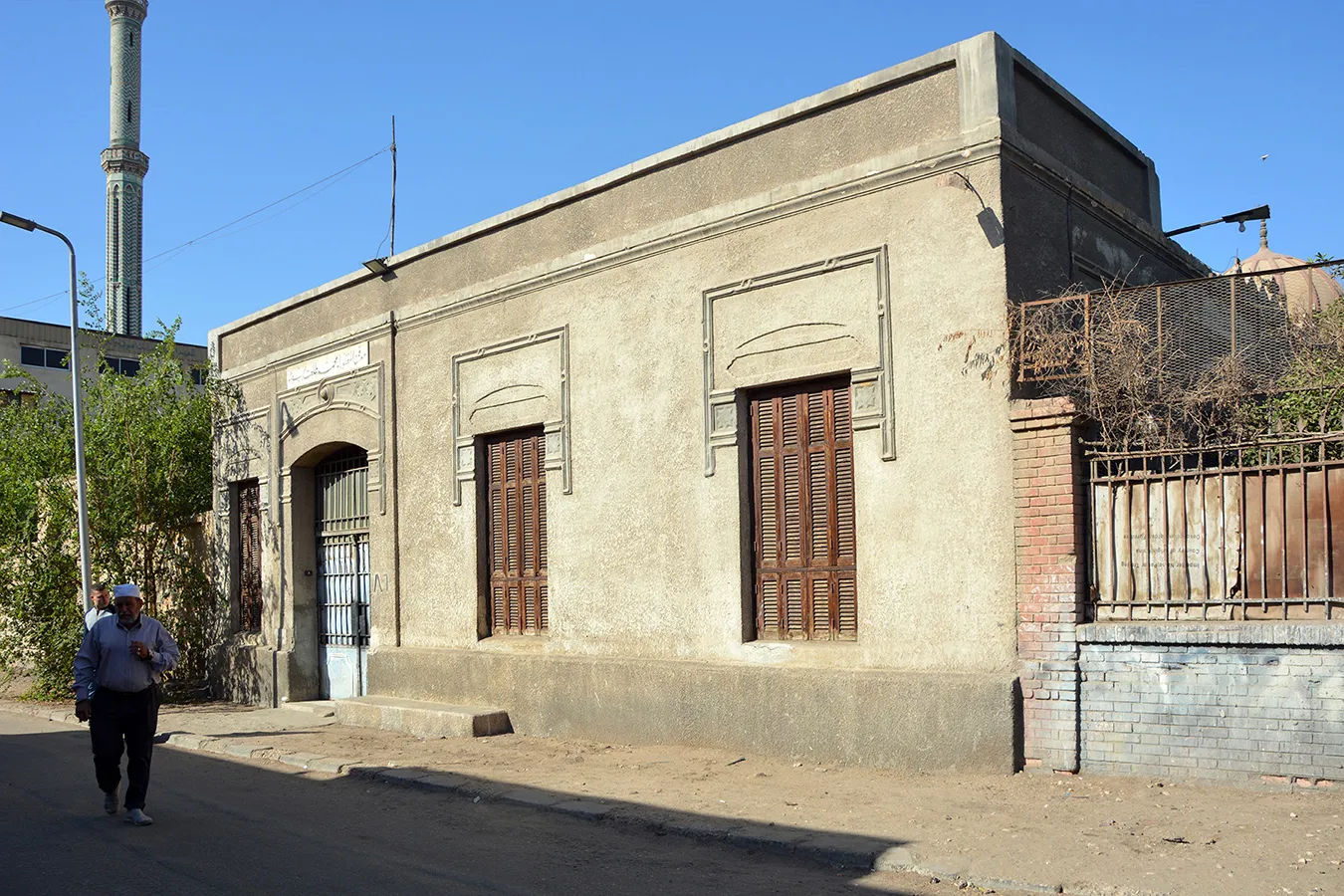
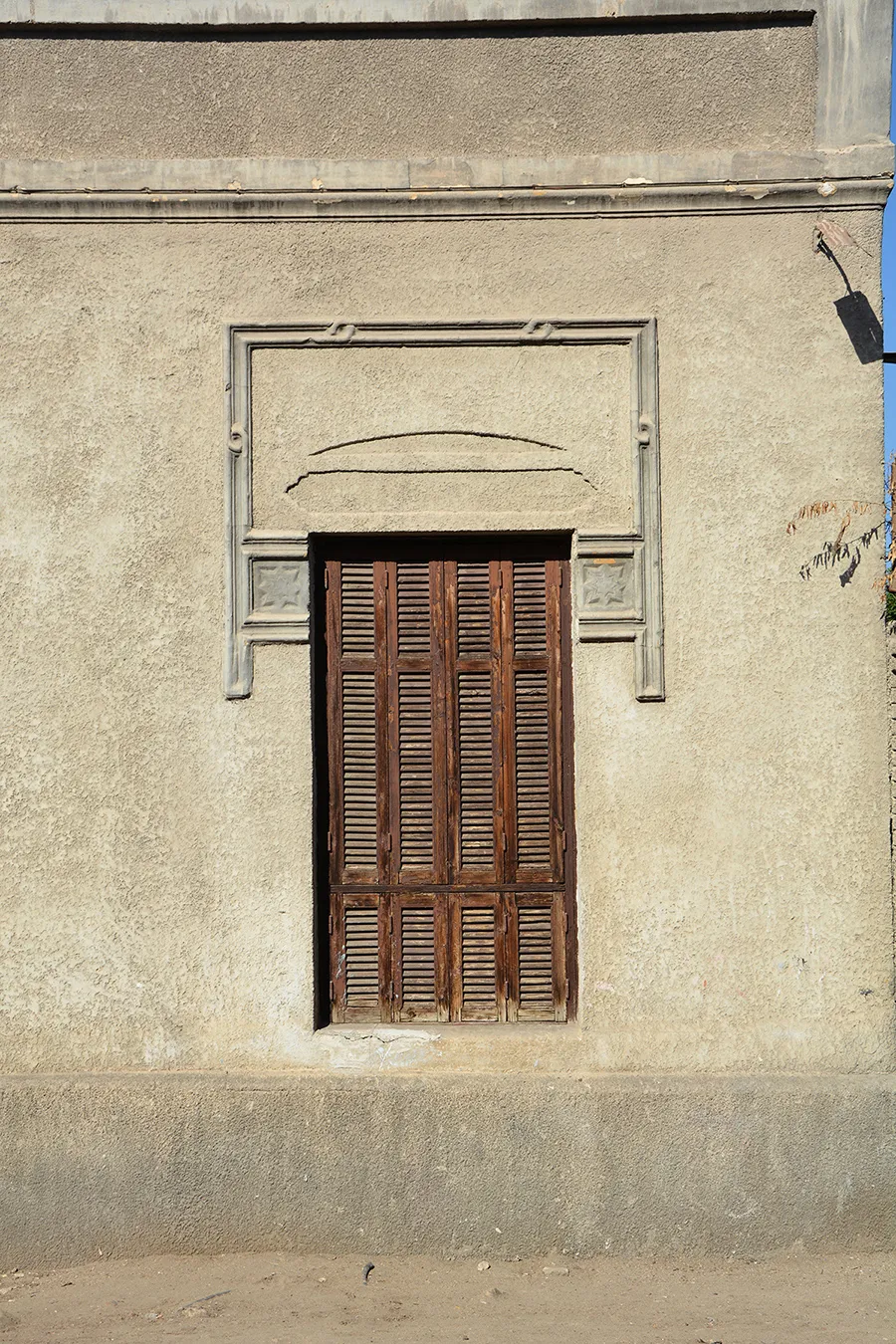
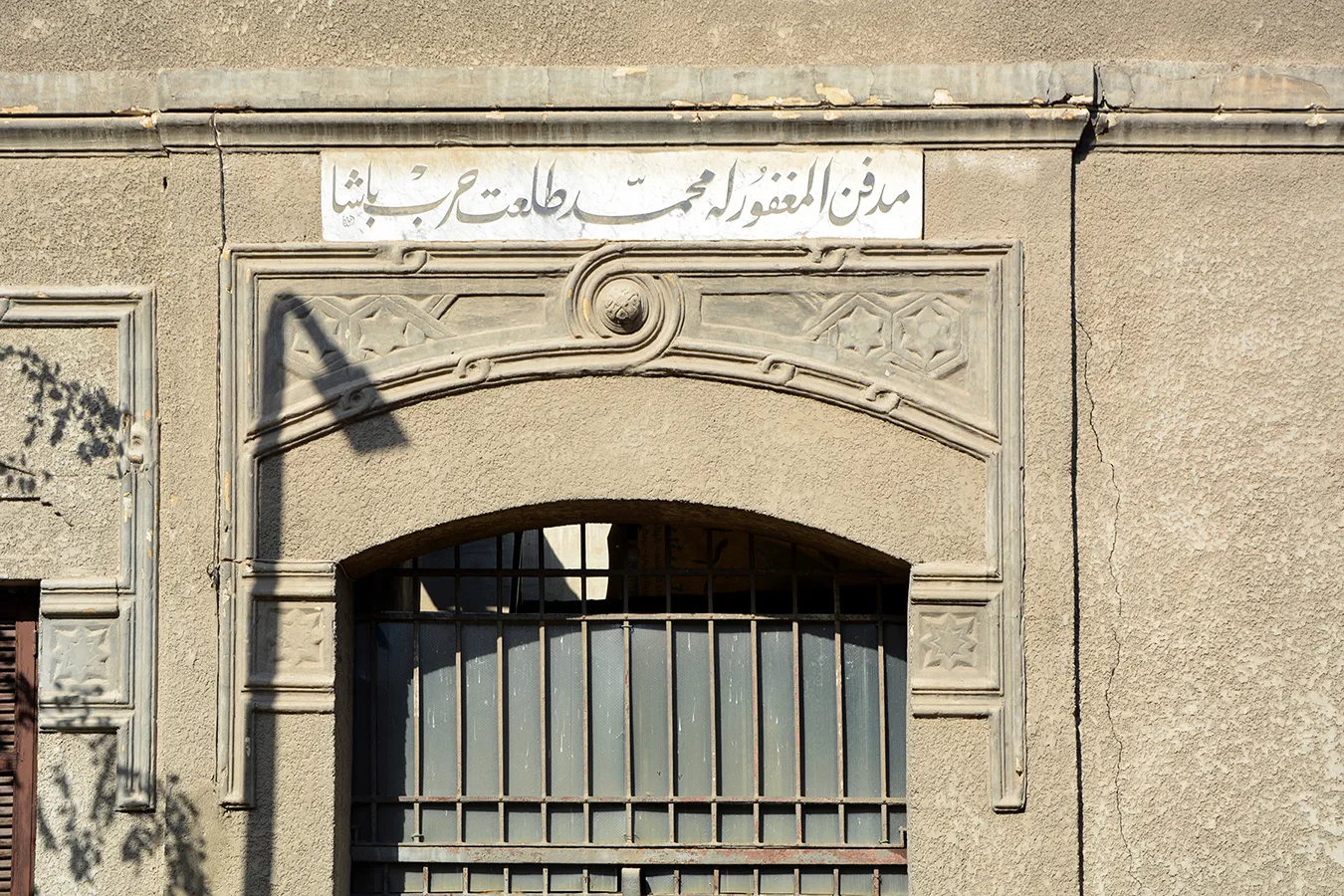
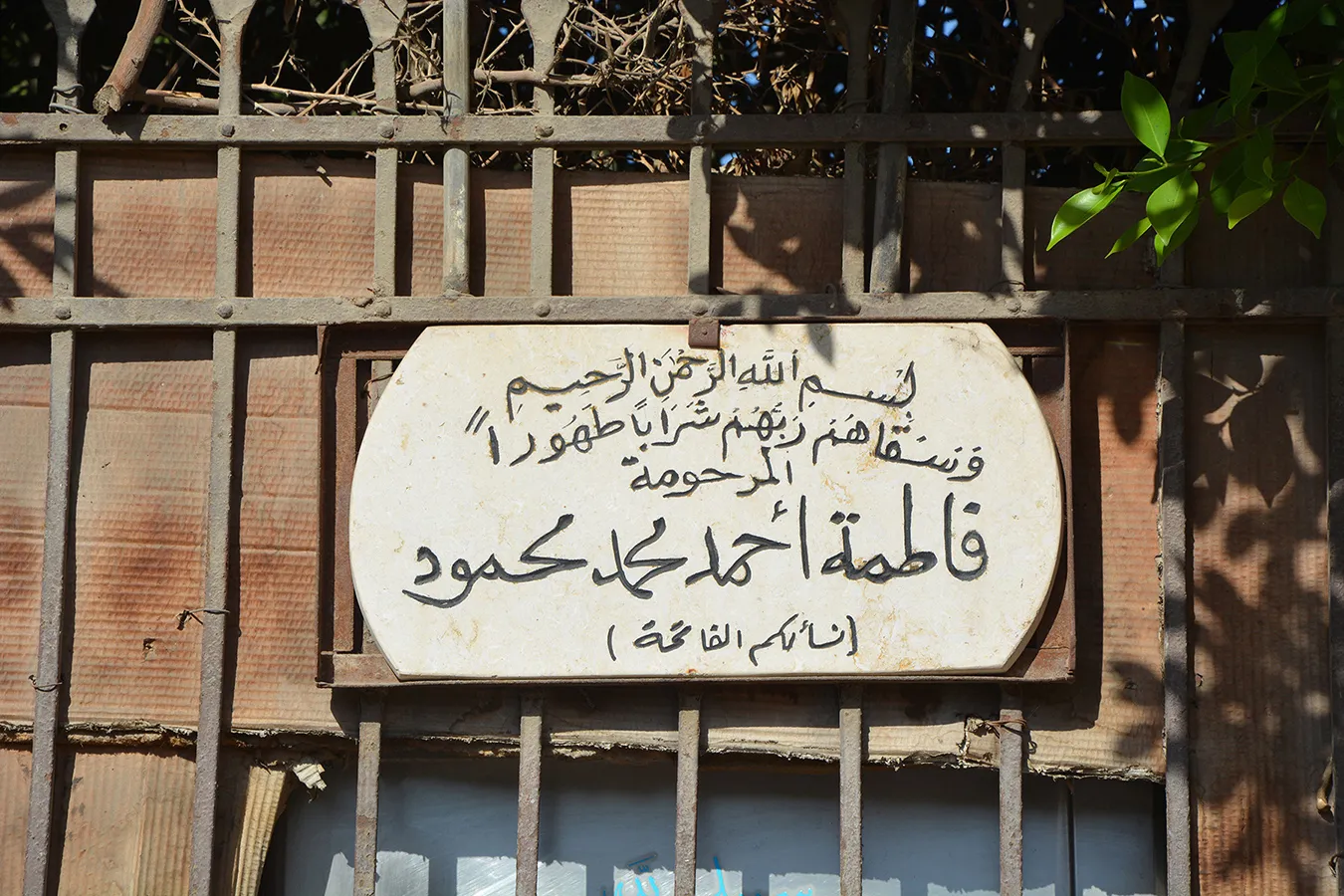
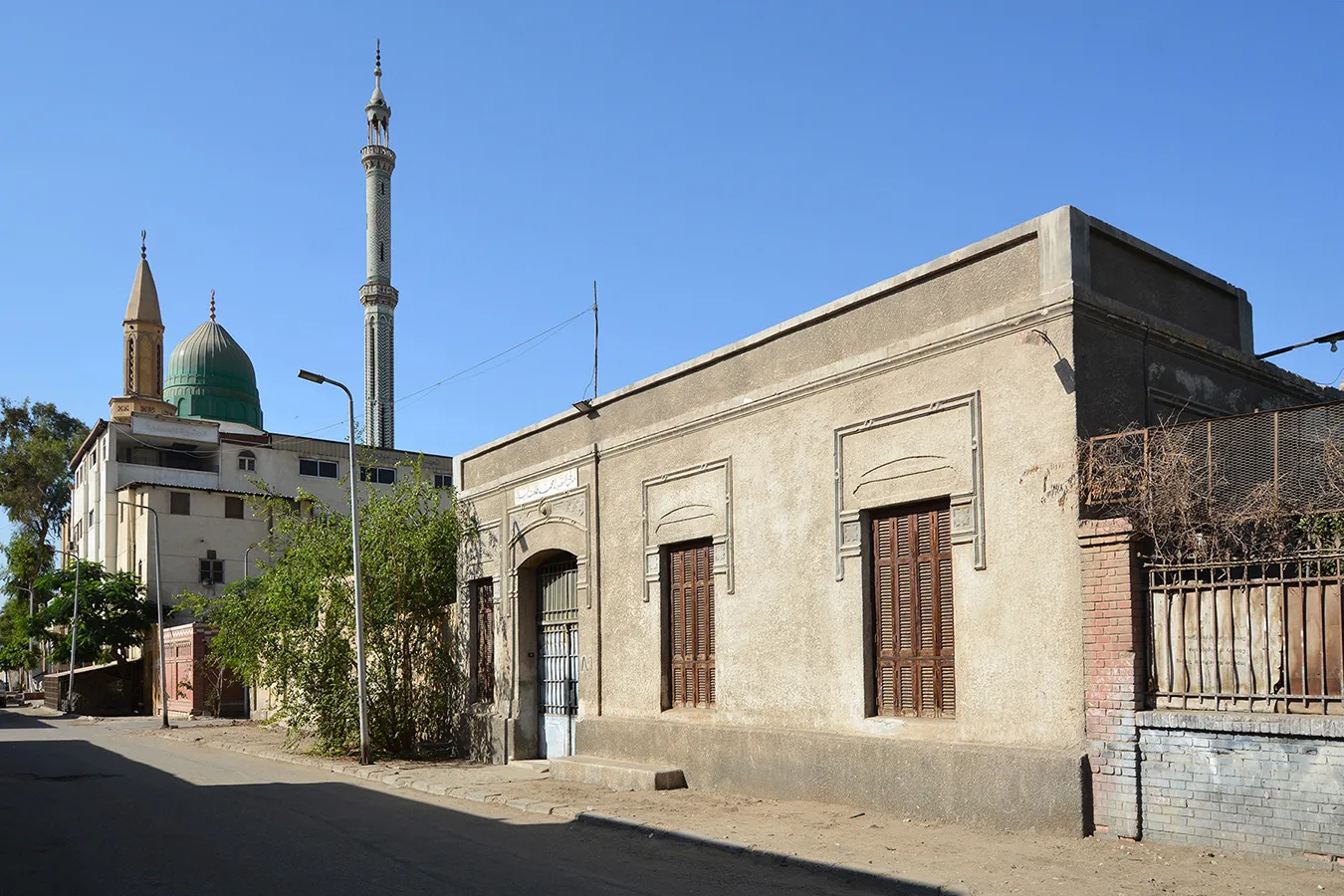
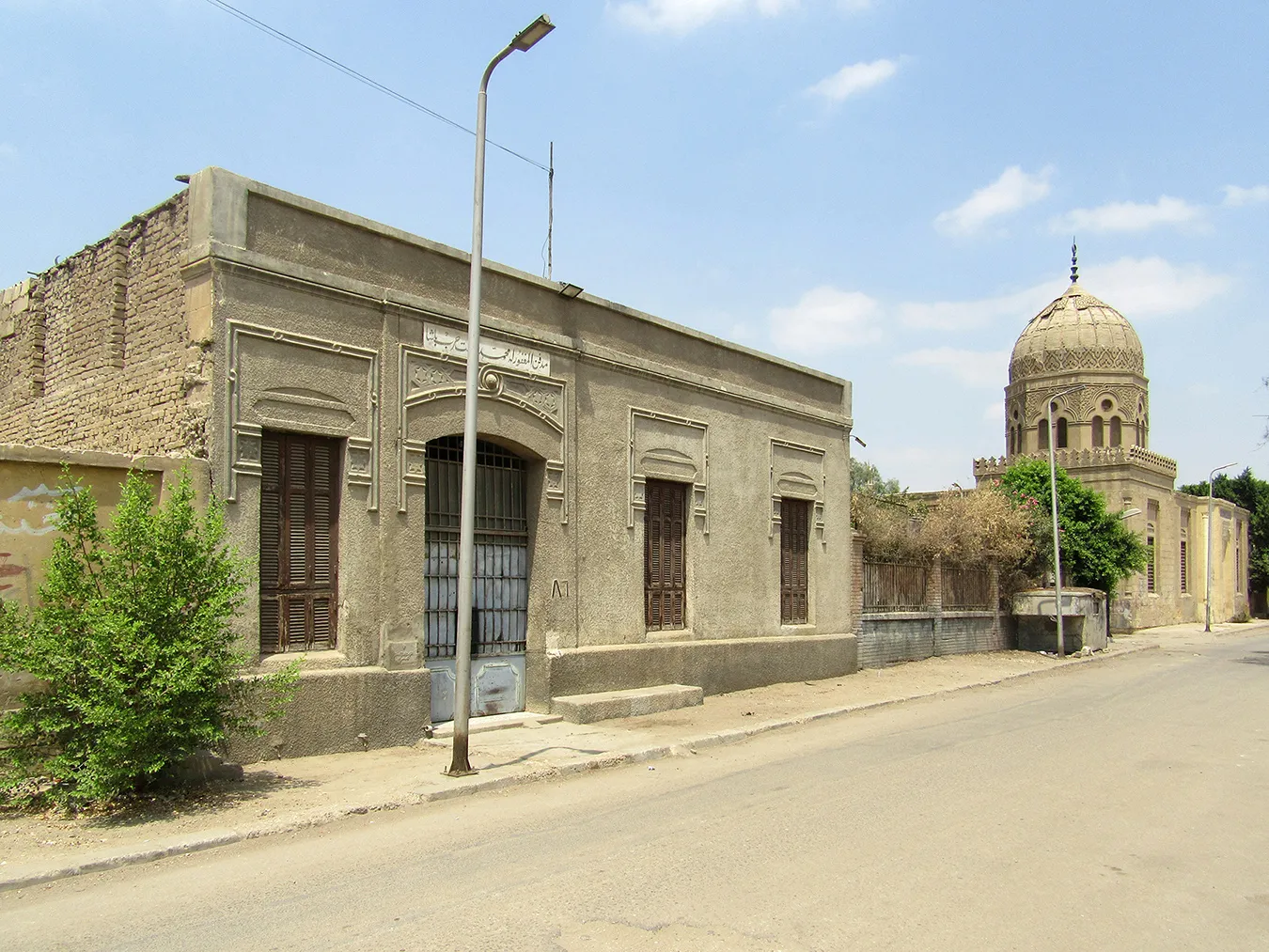
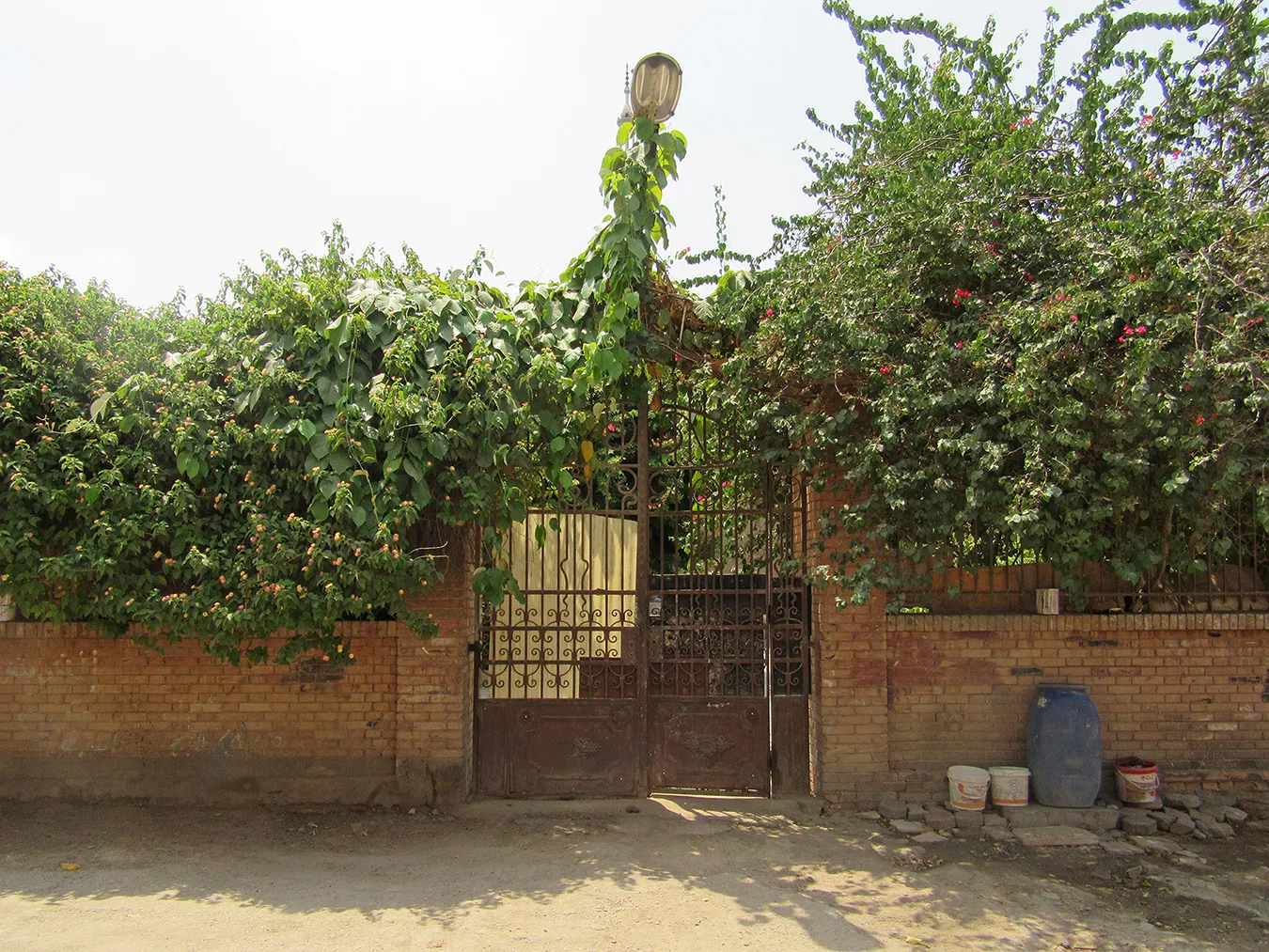
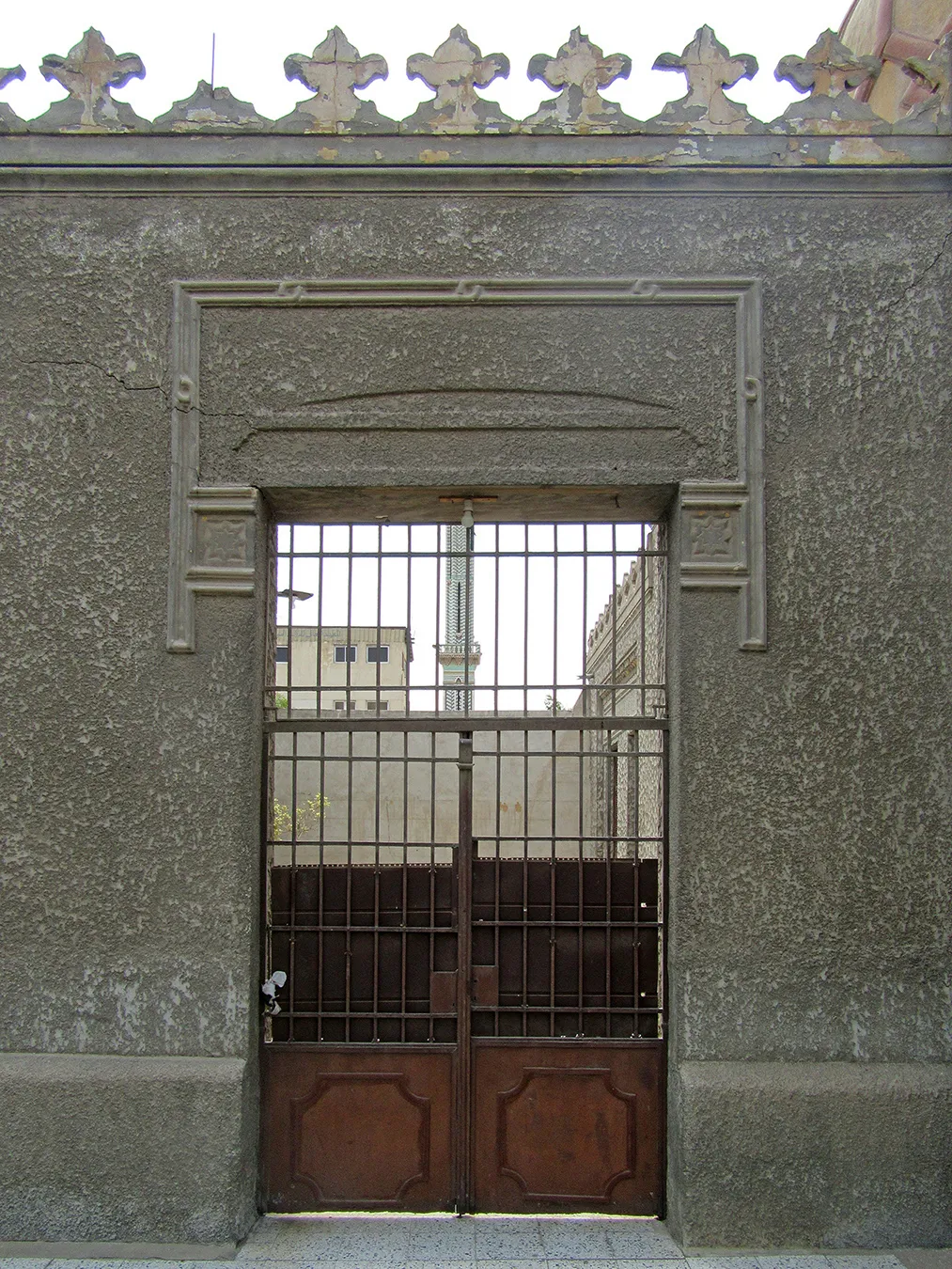
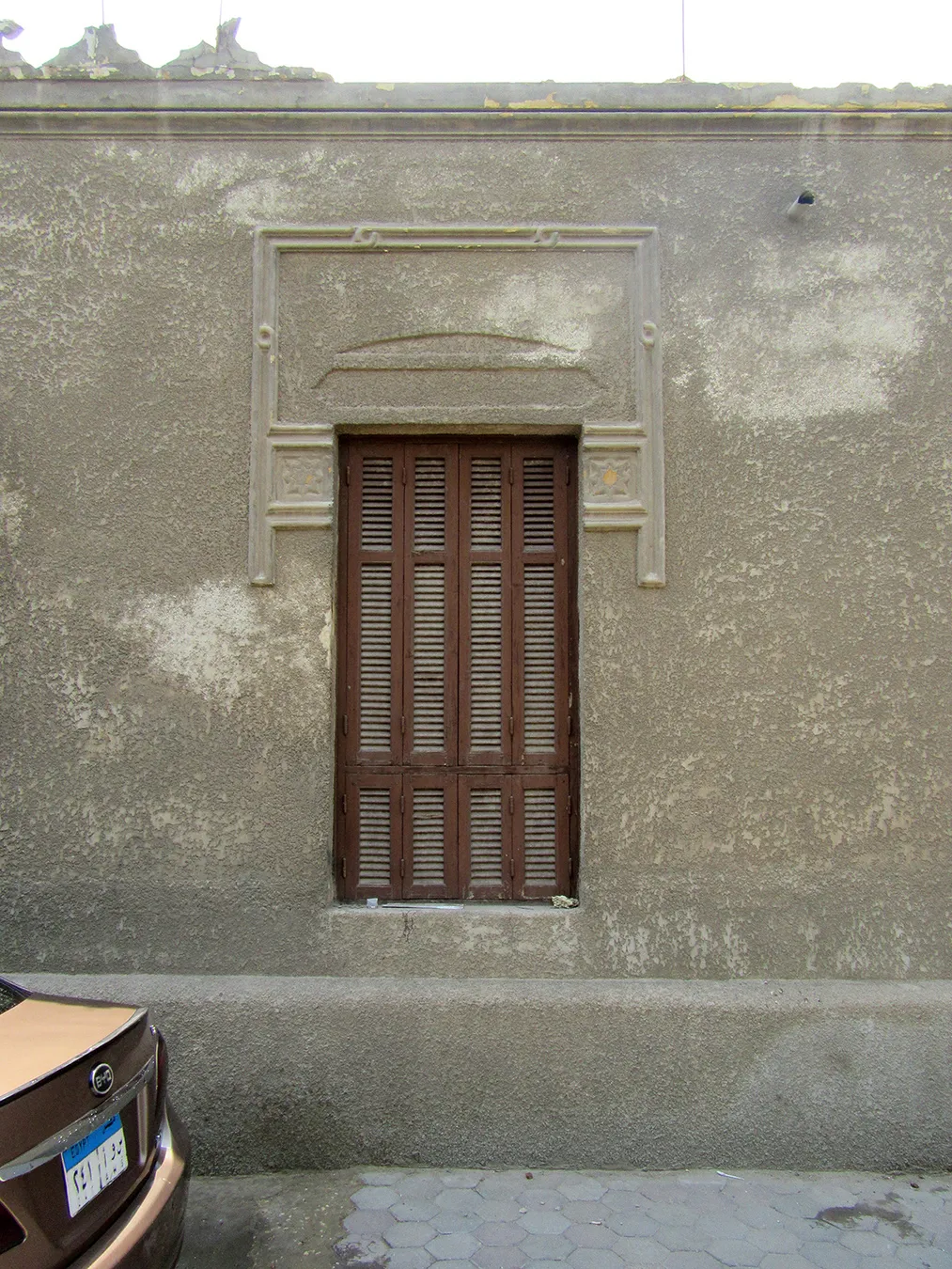
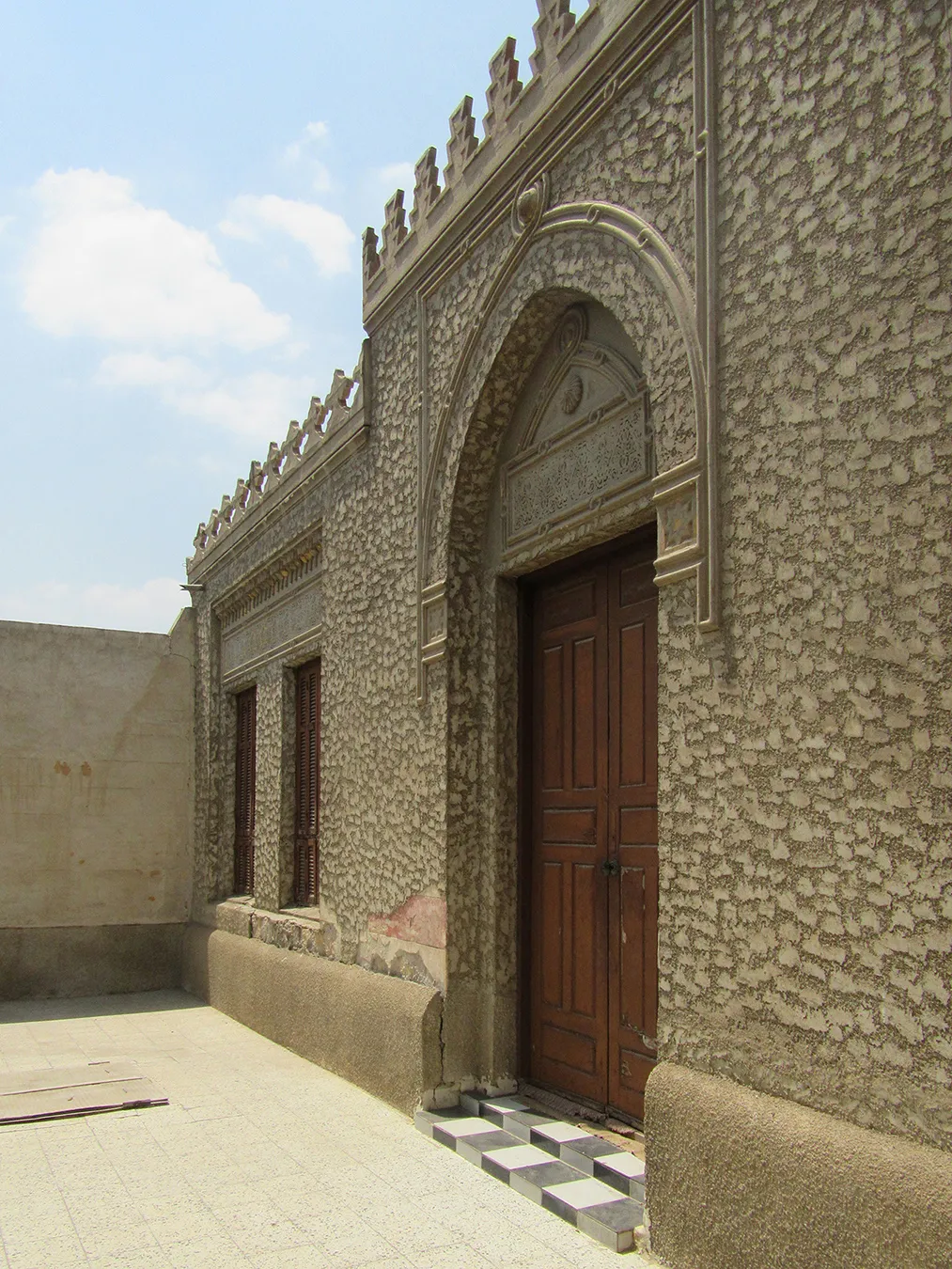
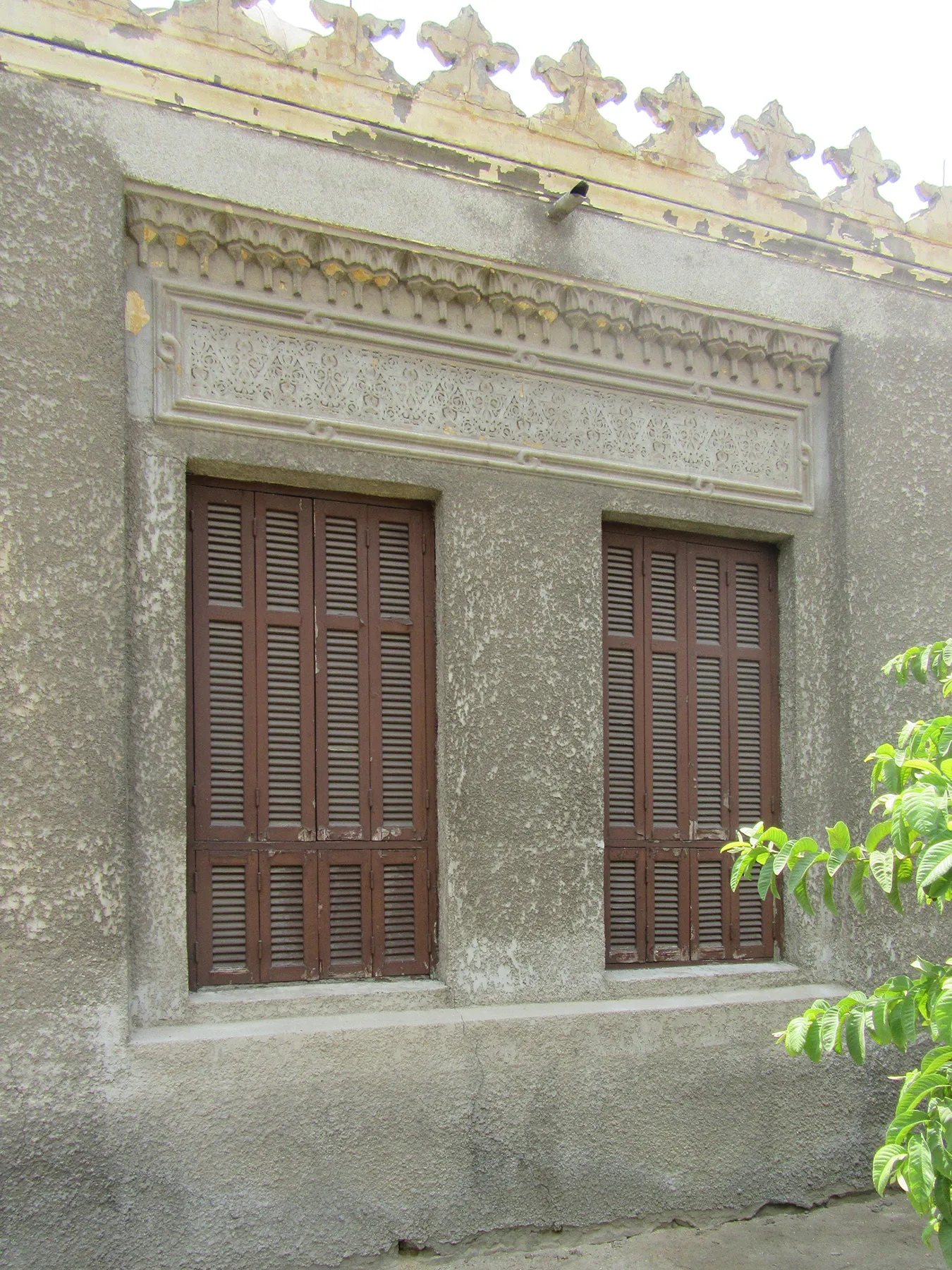
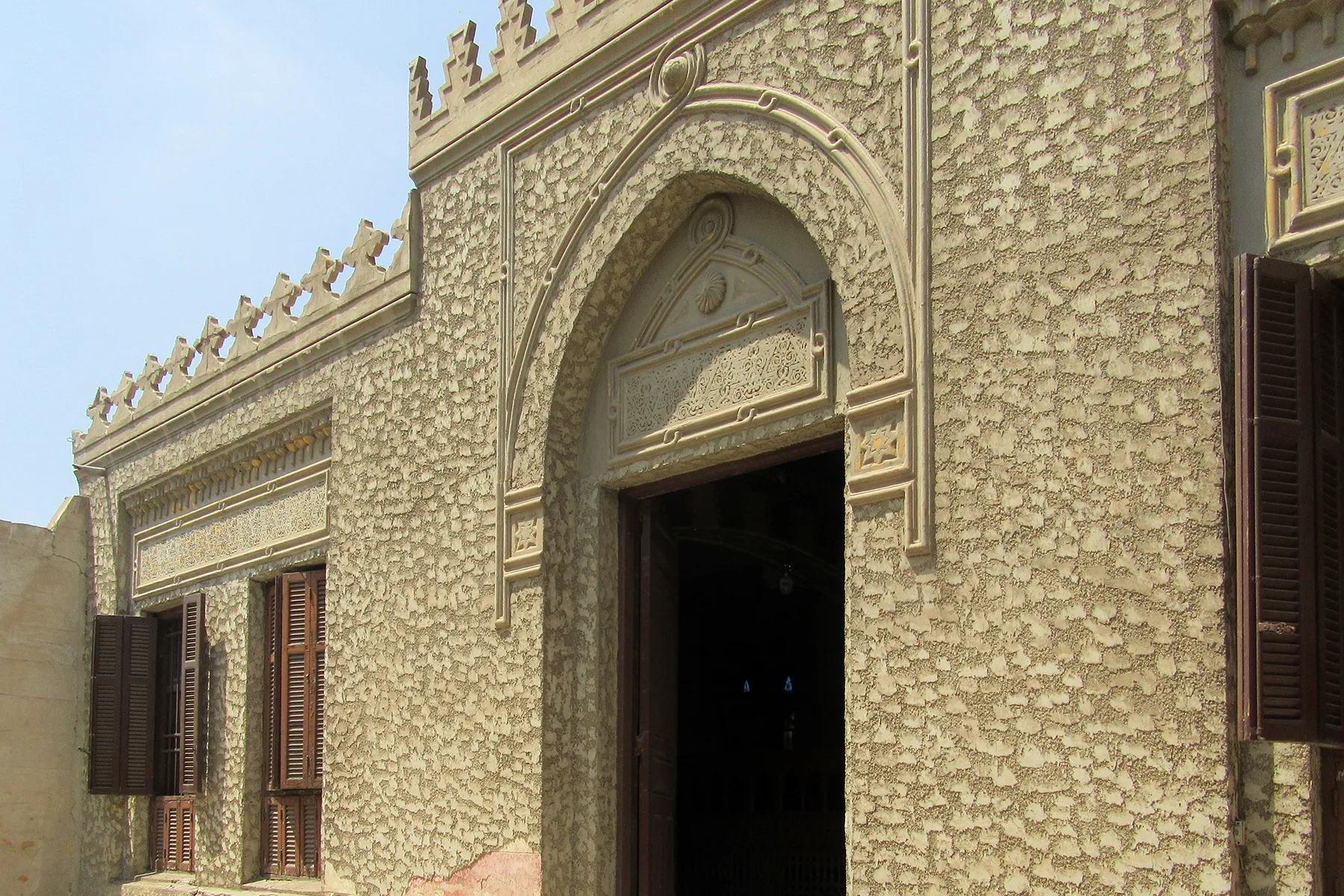
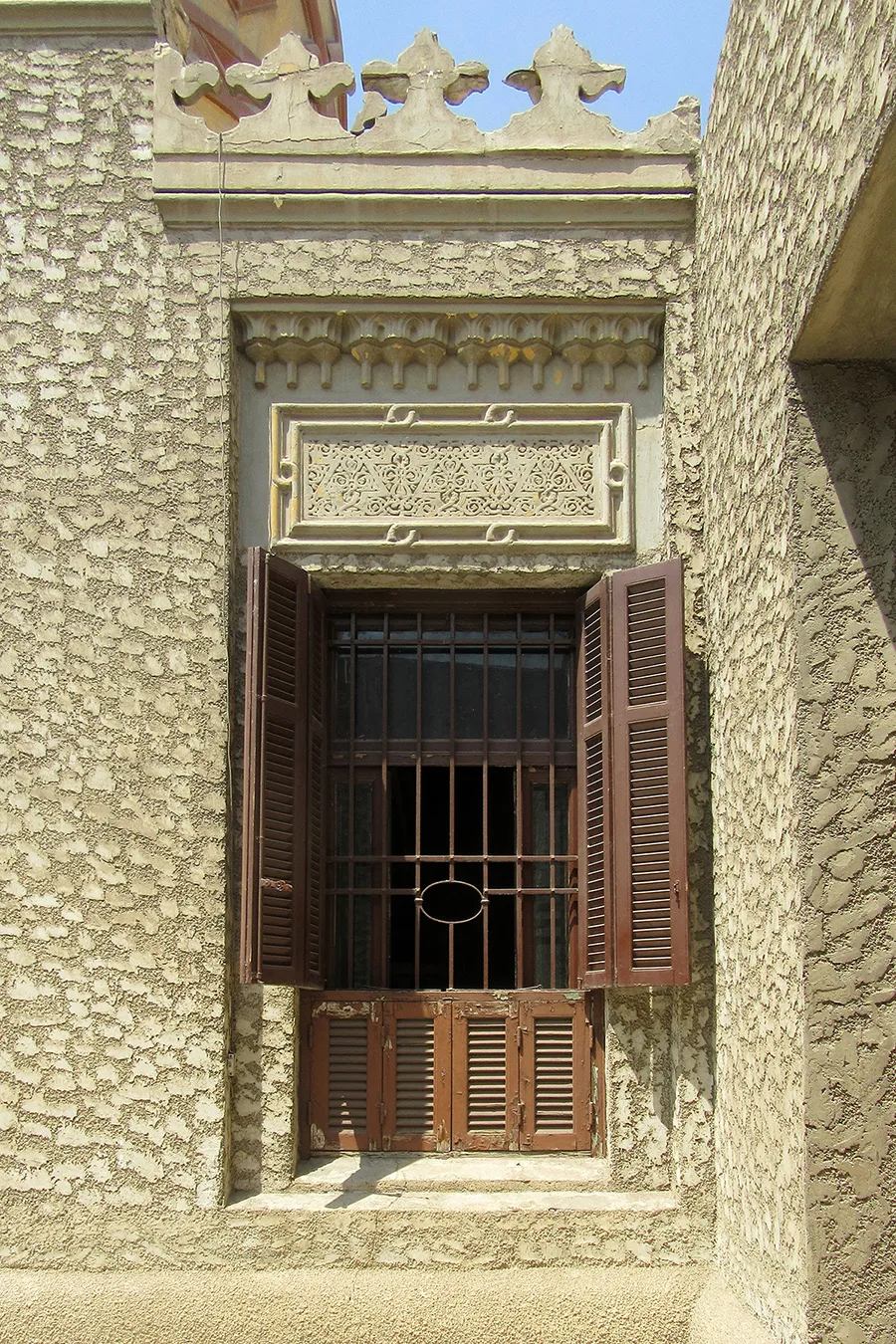
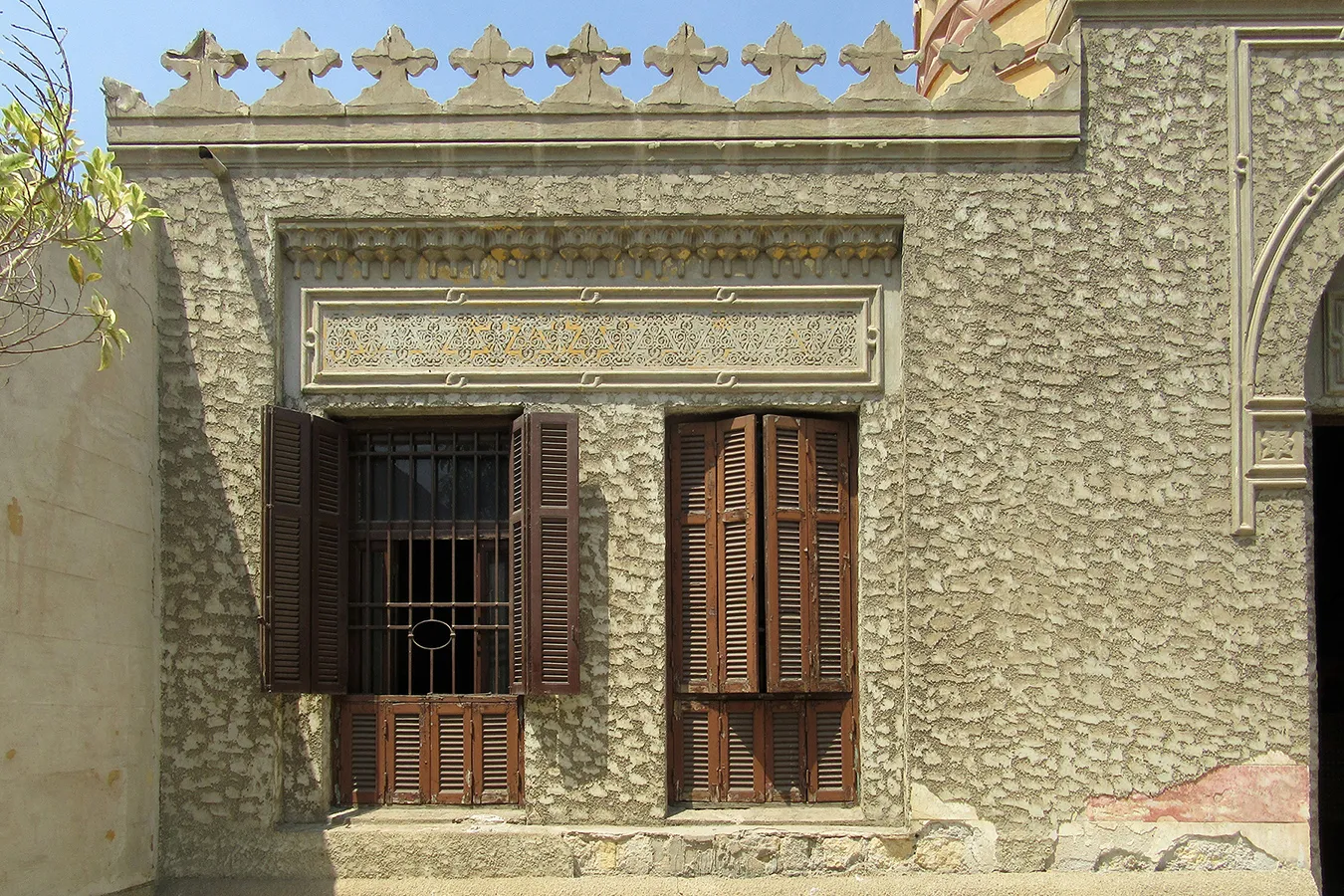
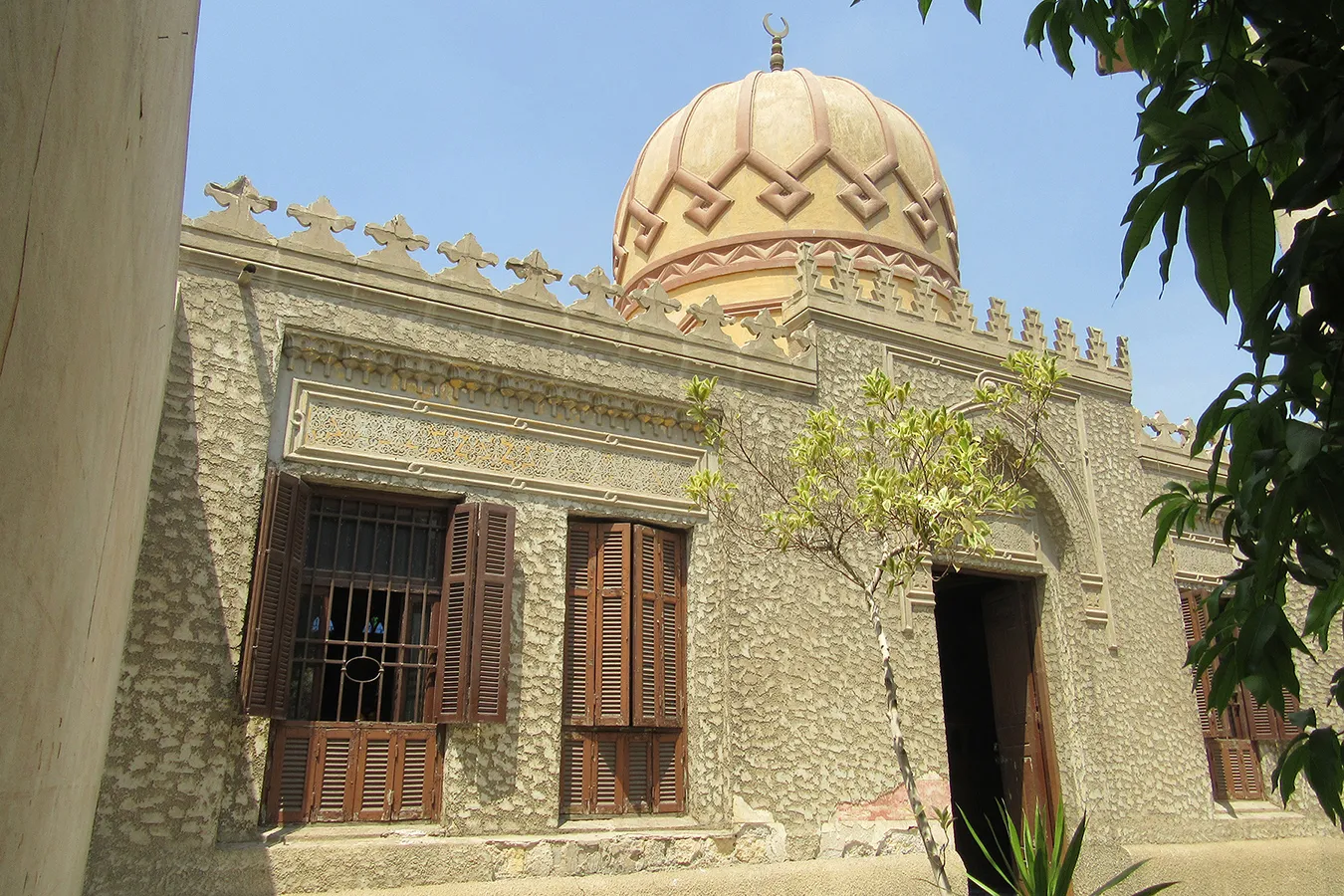
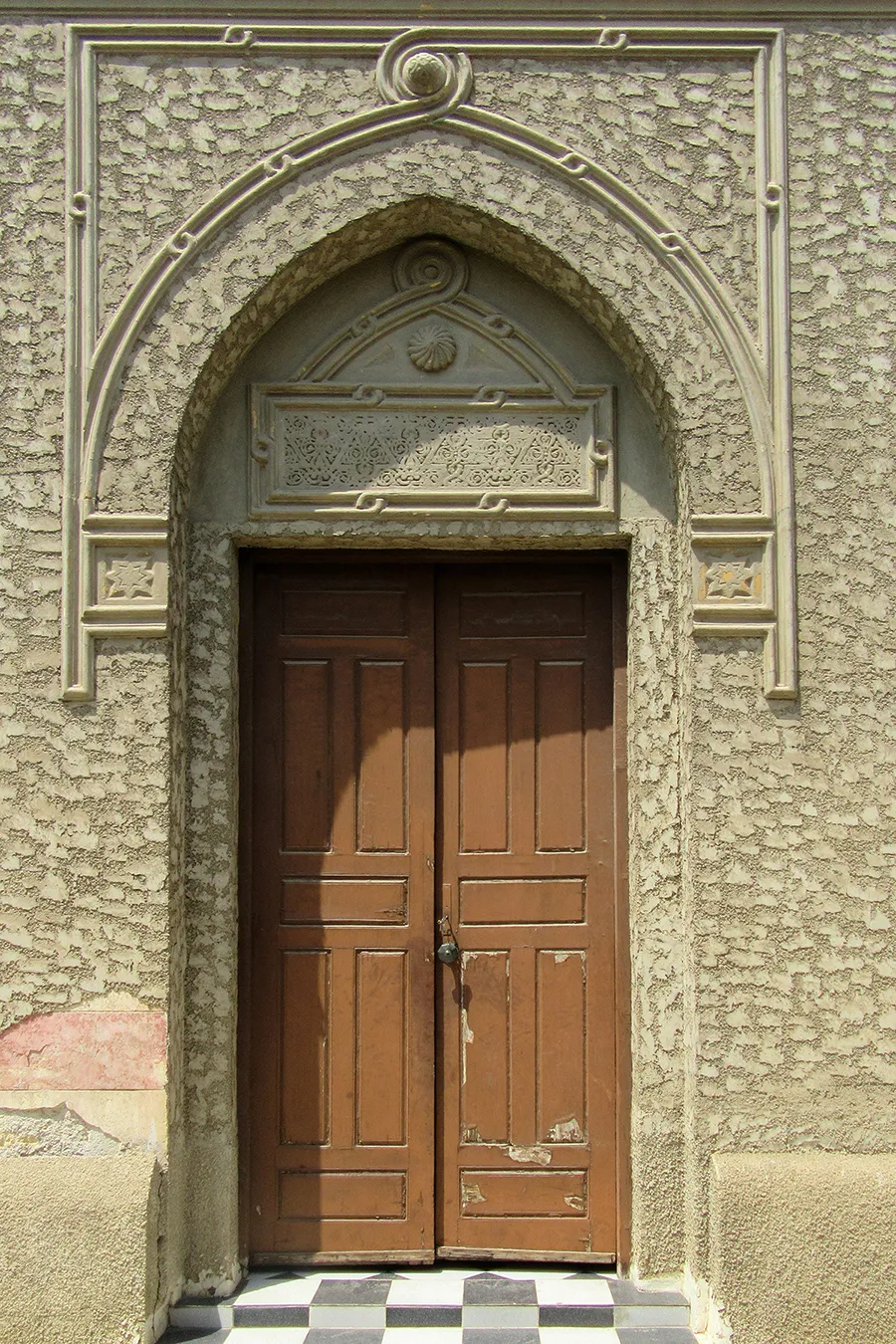
The enclosure has two entrances: the in the nothern perimeter wall is a simply decorated wrought-iron gate leading to the garden section of the enclosure. The entrance on the eastern side leads from the Sultan Ahmad Street to the building with the street façade that features an asymmetrically placed wide gate covered with a segmental arch, simply decorated with Mamluk-inspired knotted moldings, over which a marble panel with a single line of inscription is placed. There is a single window to the left of the gate and two on the right, all rectangular and with Mamluk-inspired knotted moulding framing around the lintels with segmental relieving arches above them. The building includes a reception space and two guest rooms with a small toilet and kitchen. This space is currently used as residential house for the doorman.
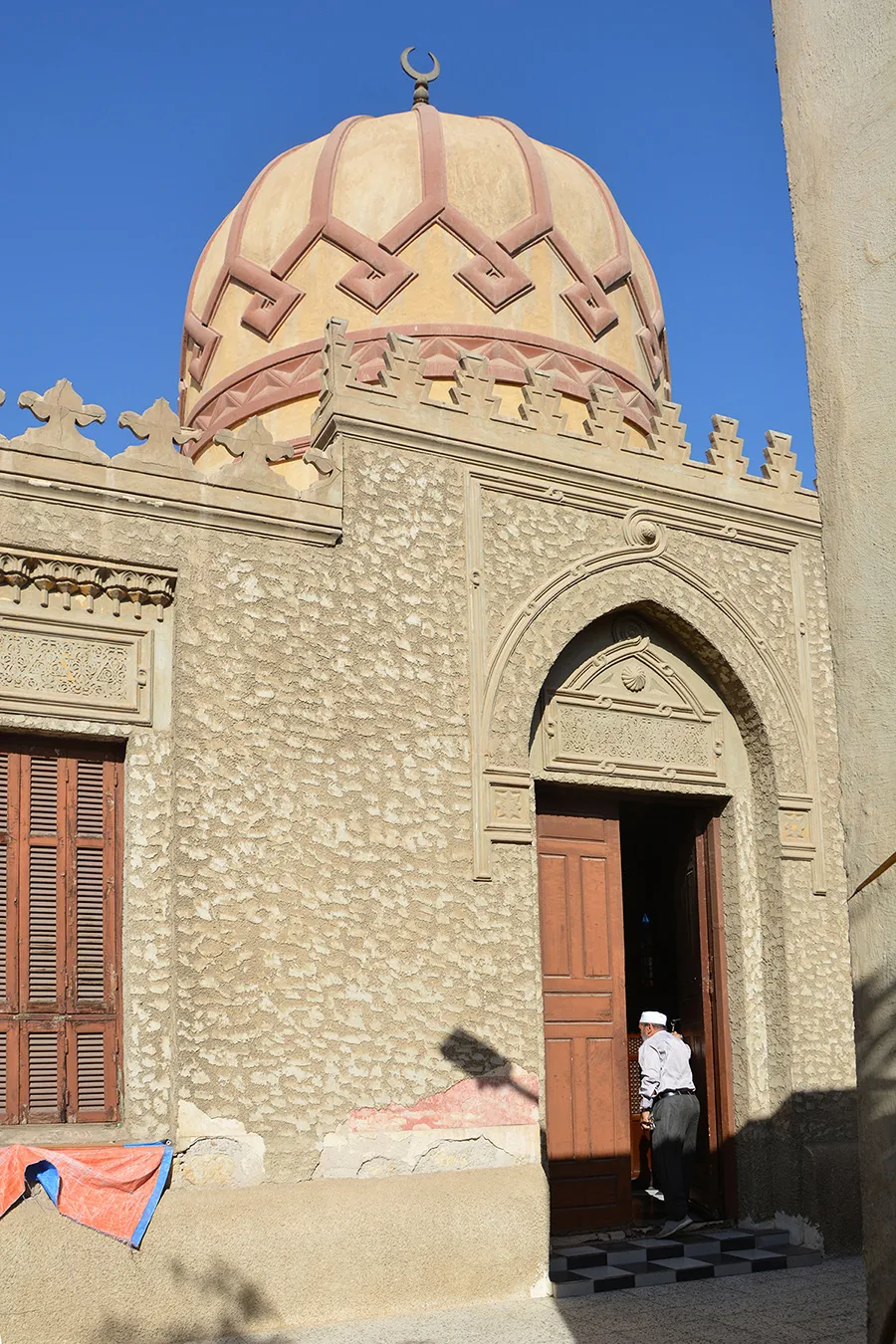
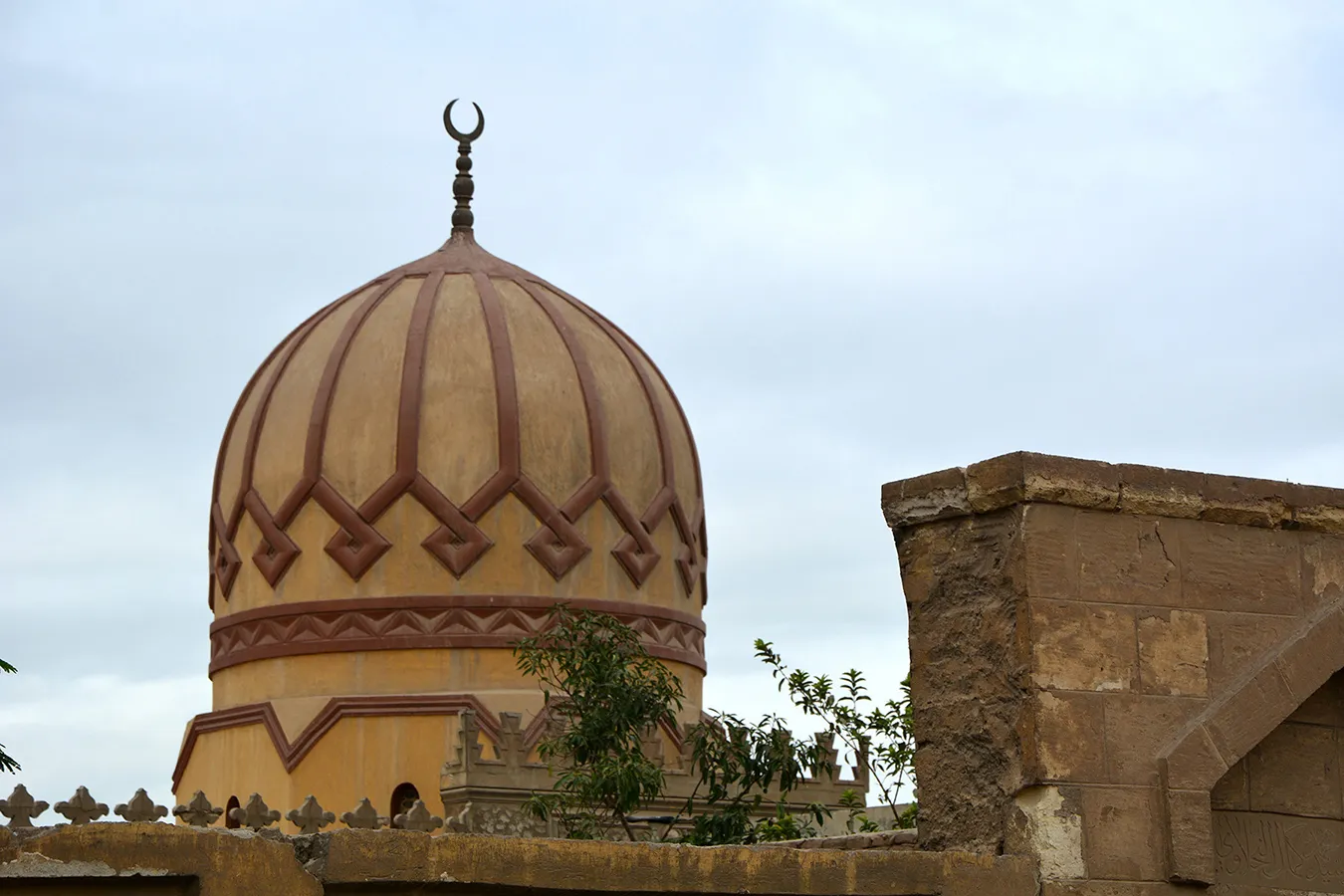
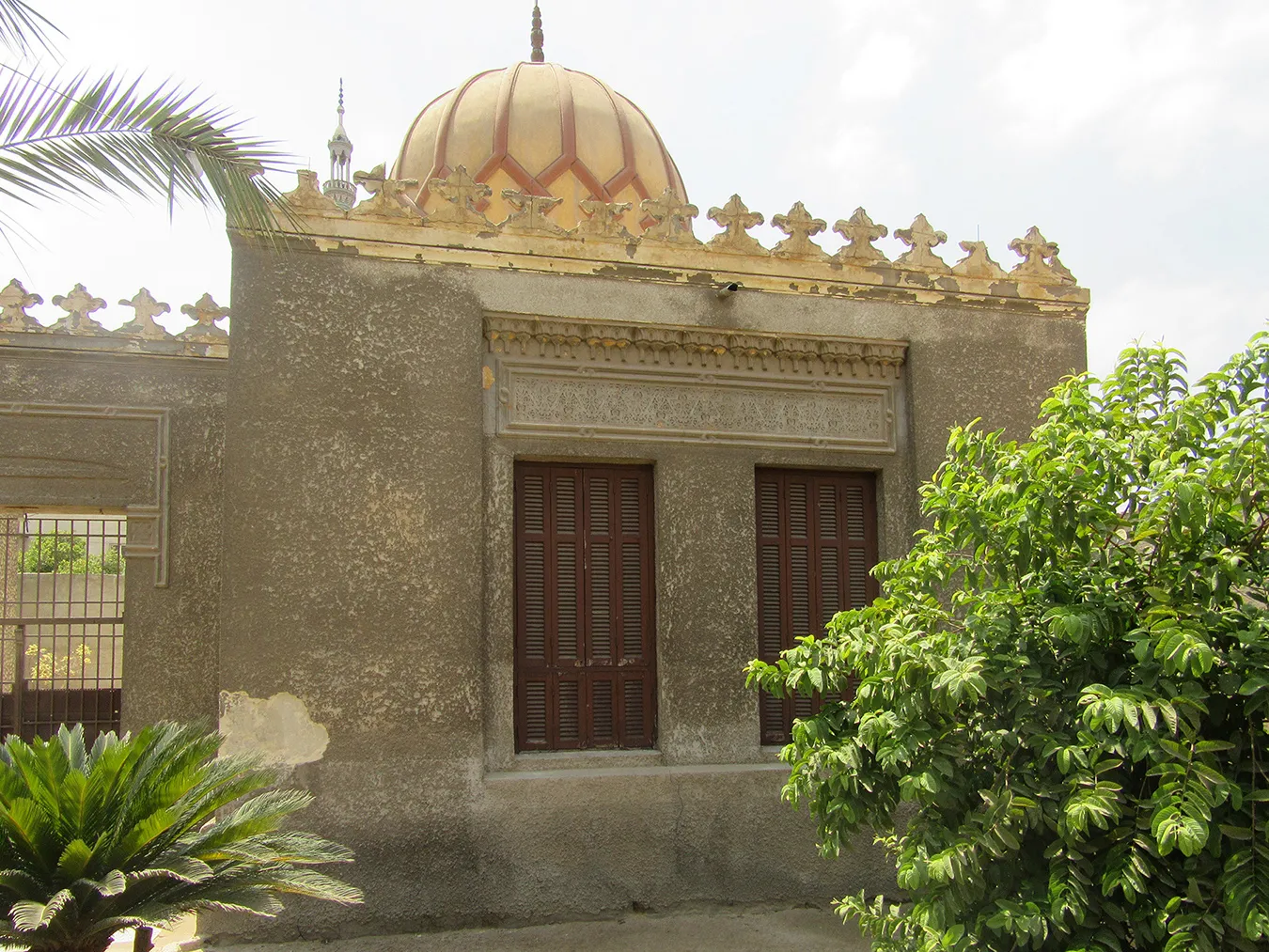
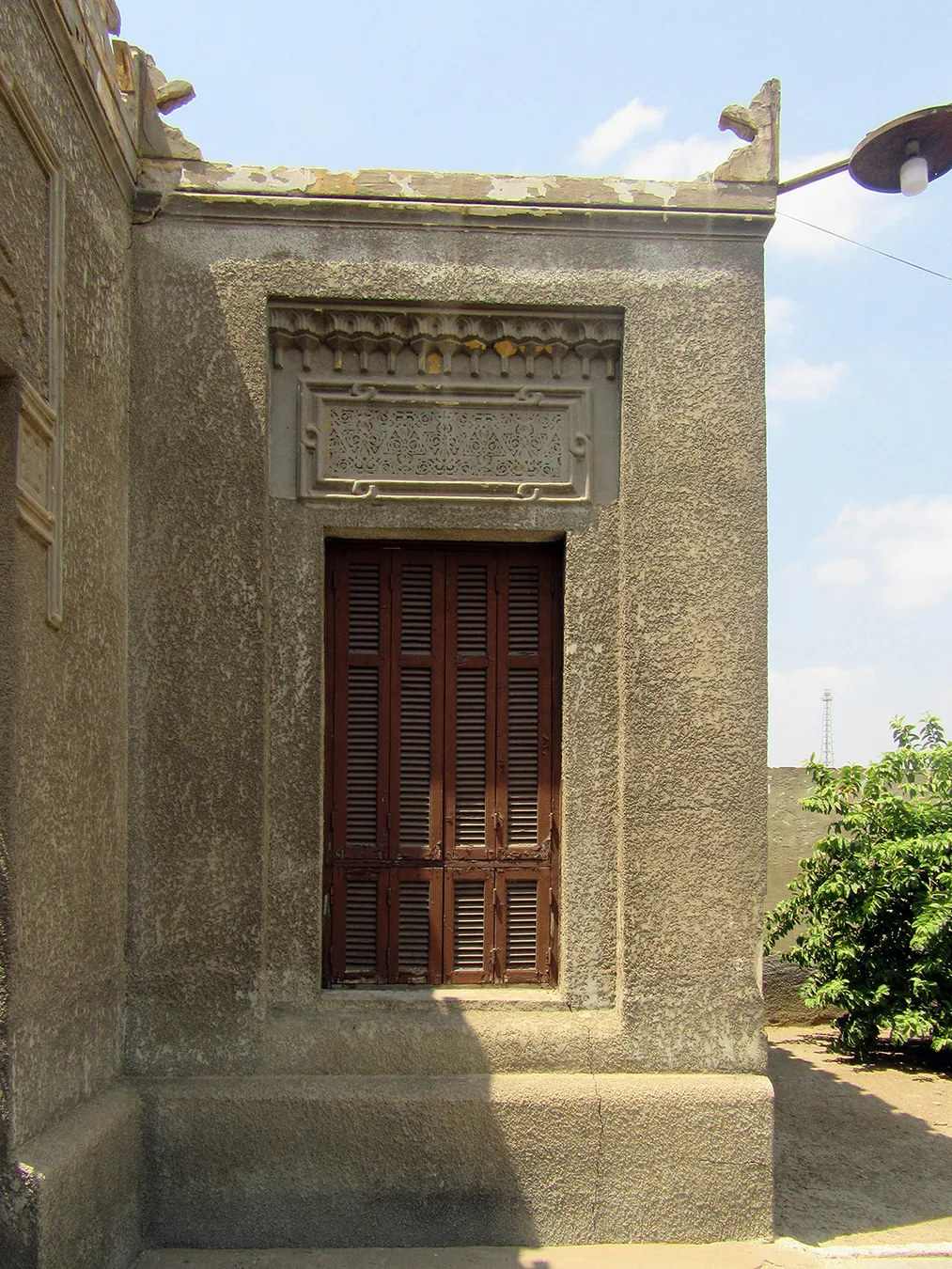
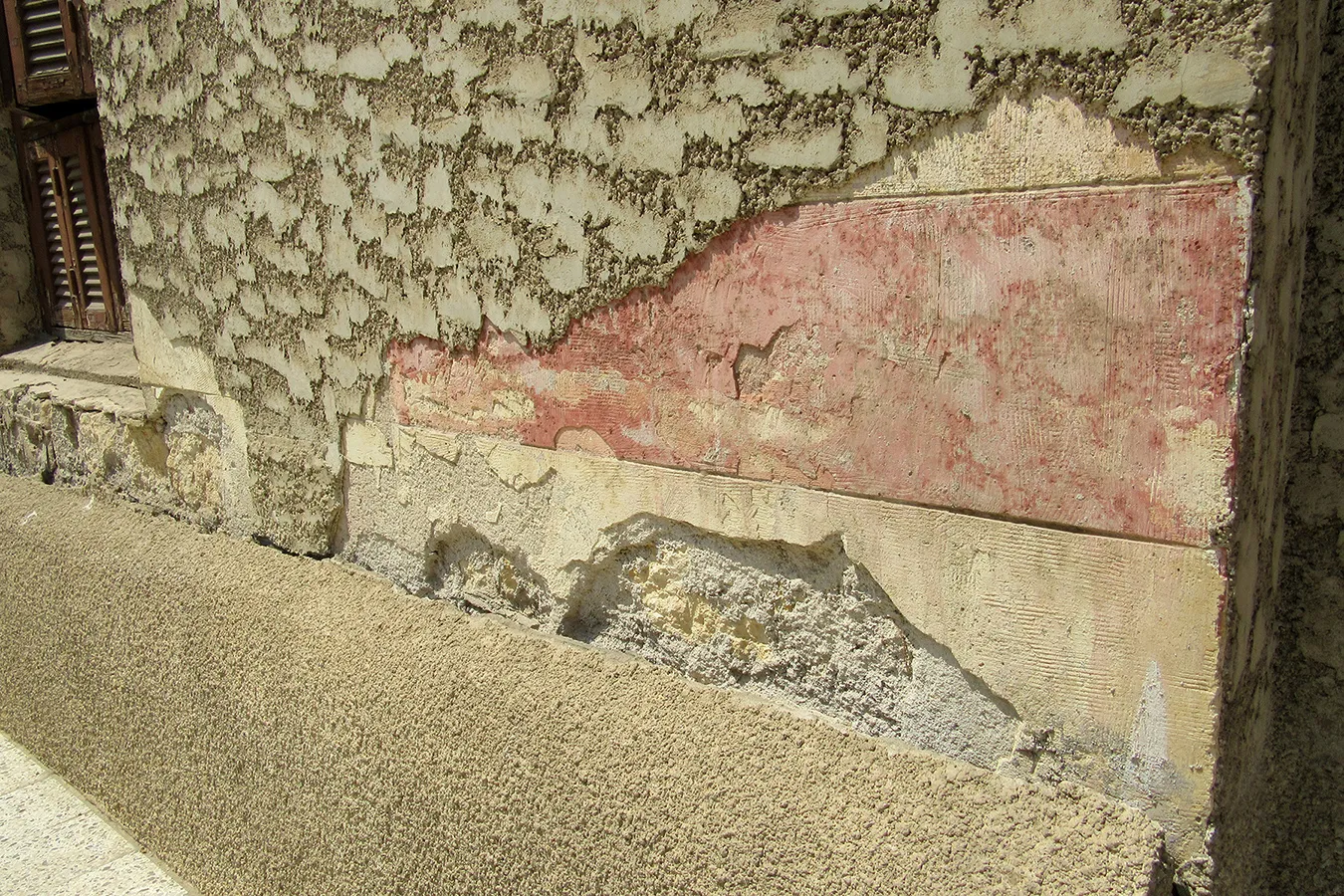
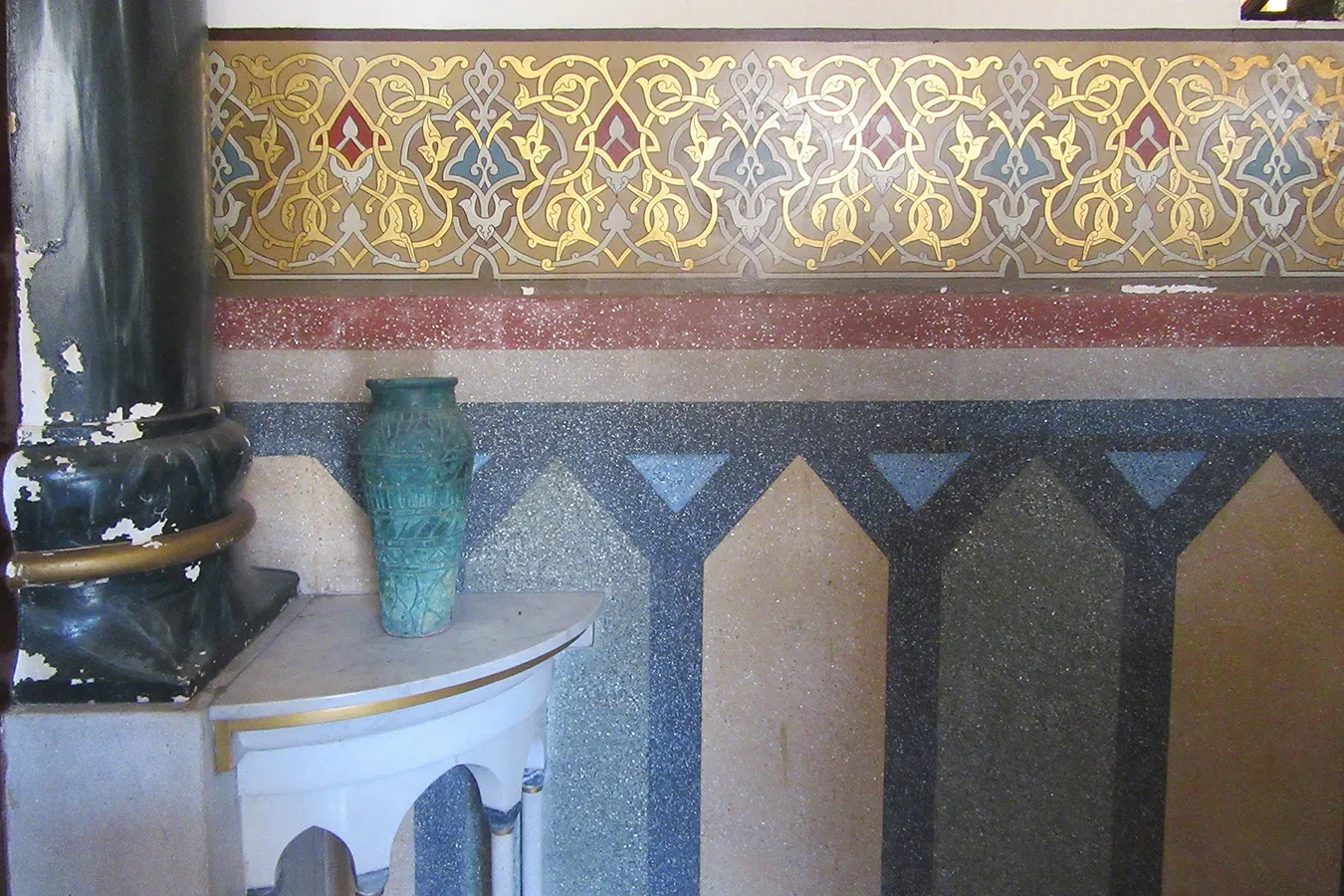
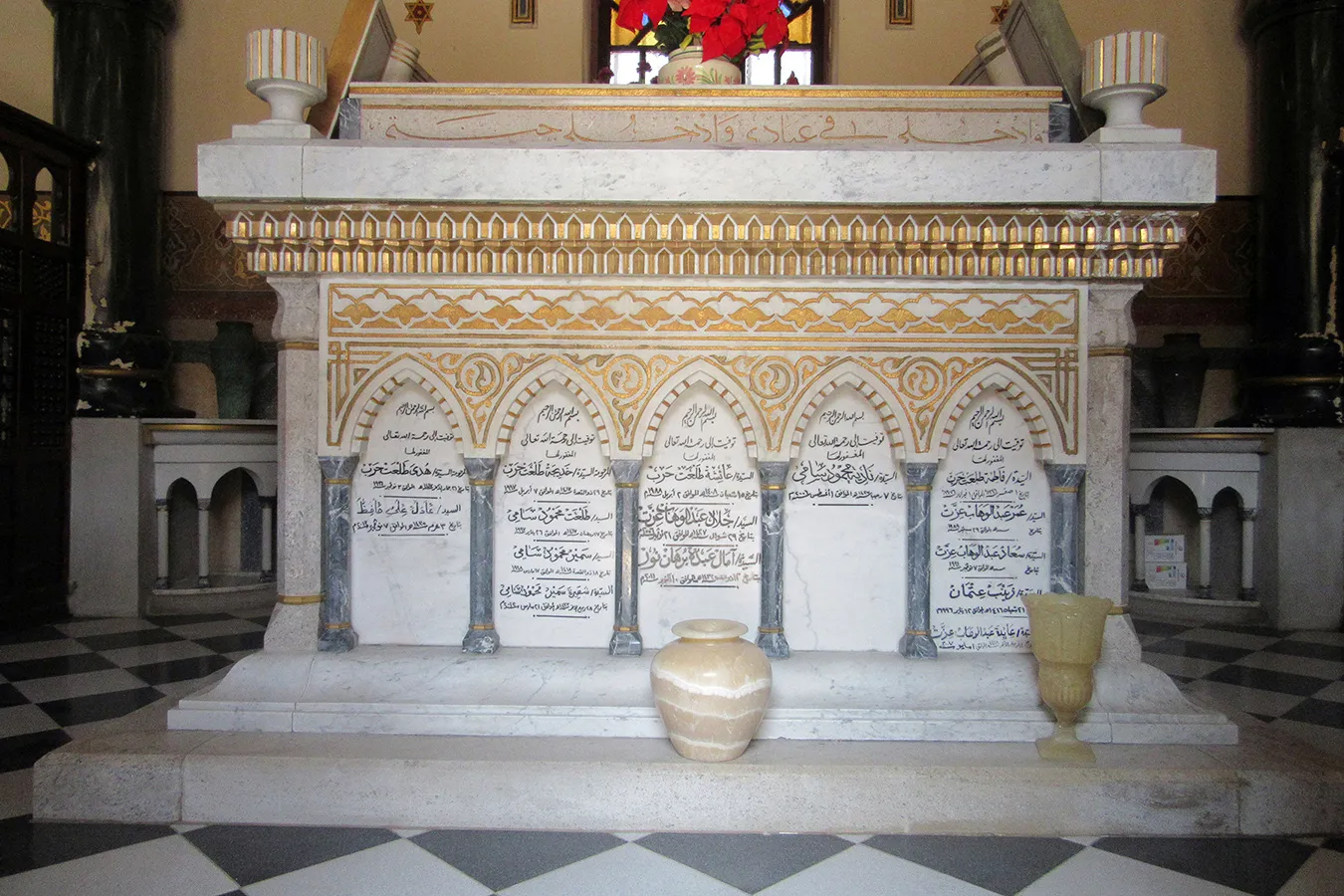
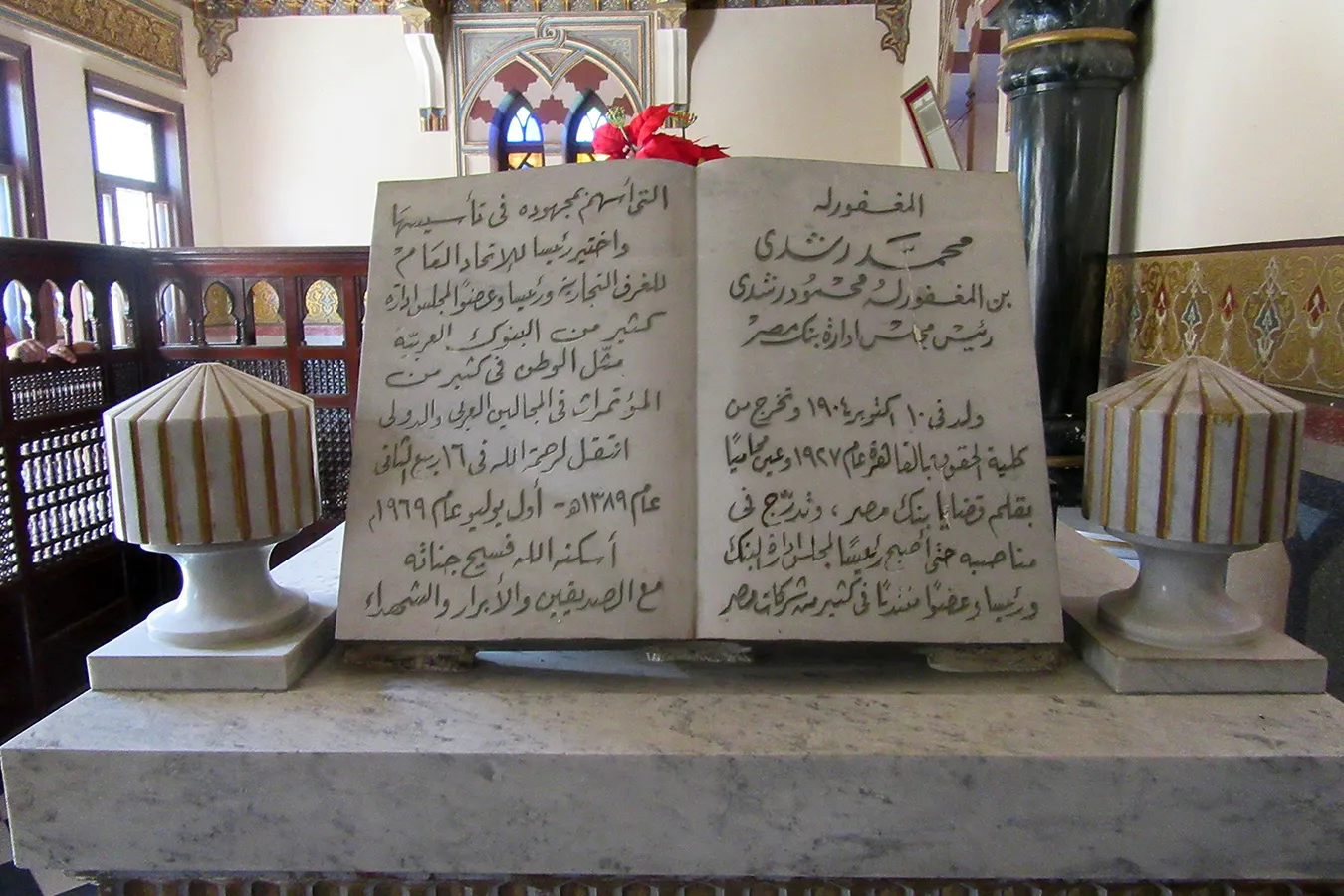
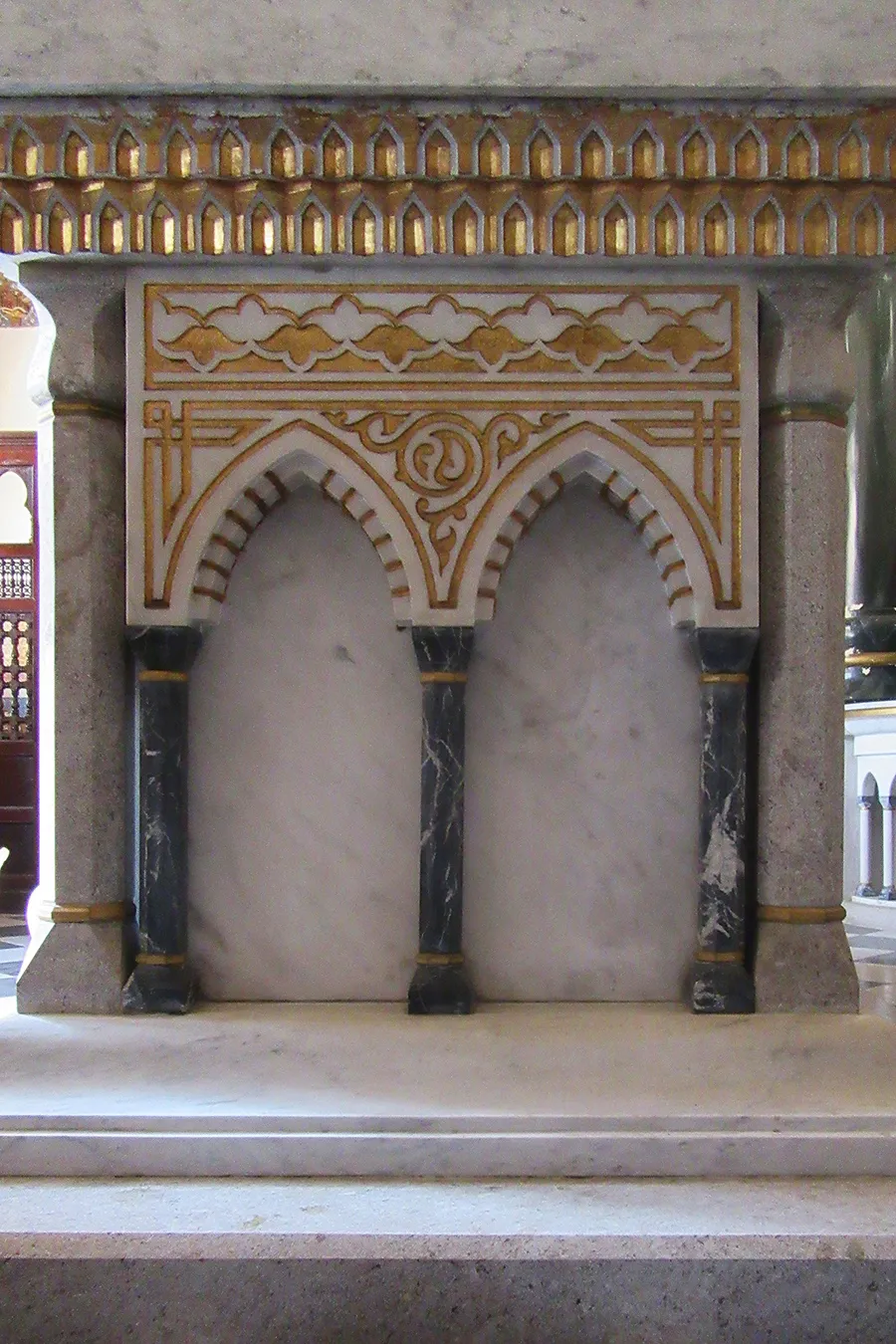
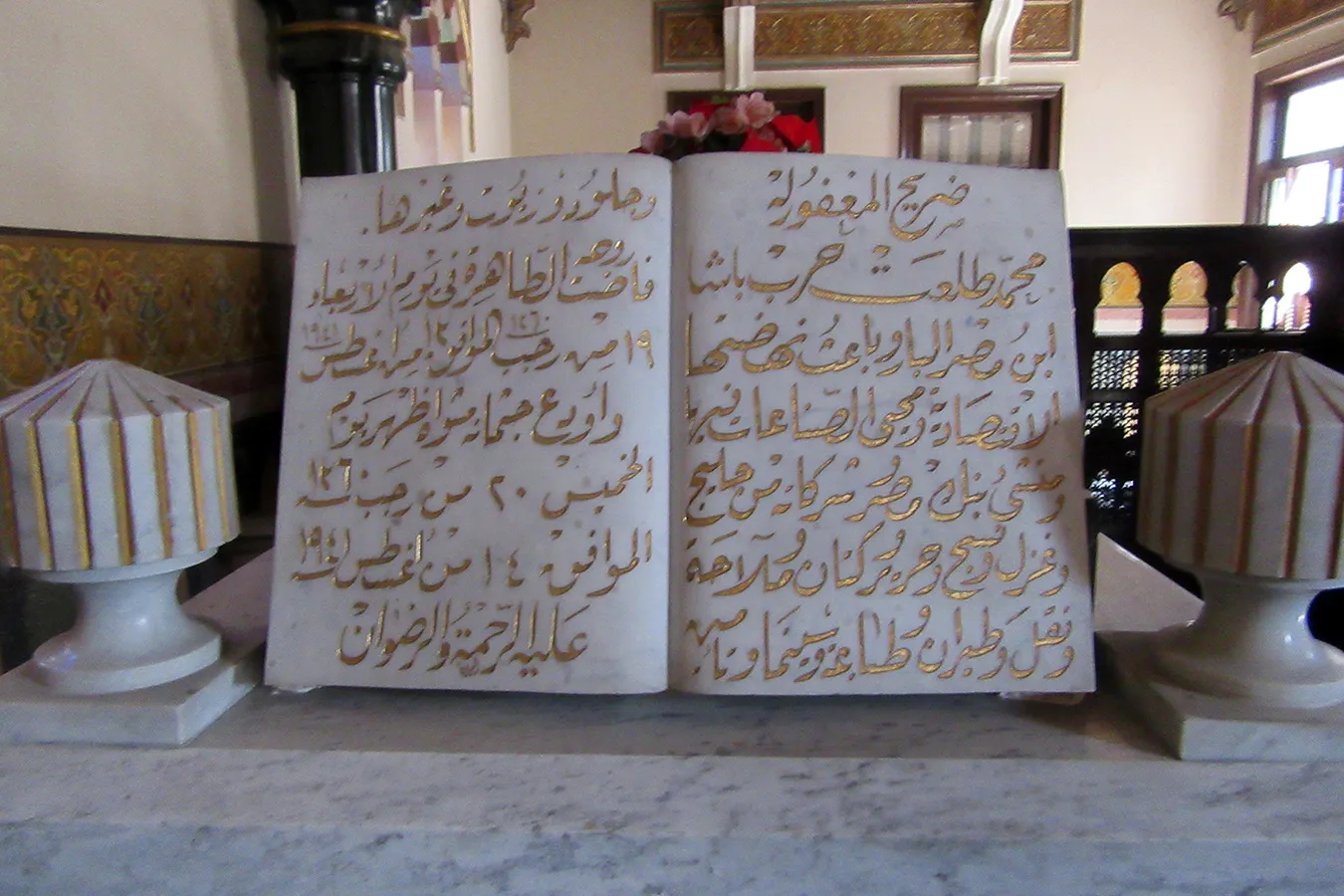
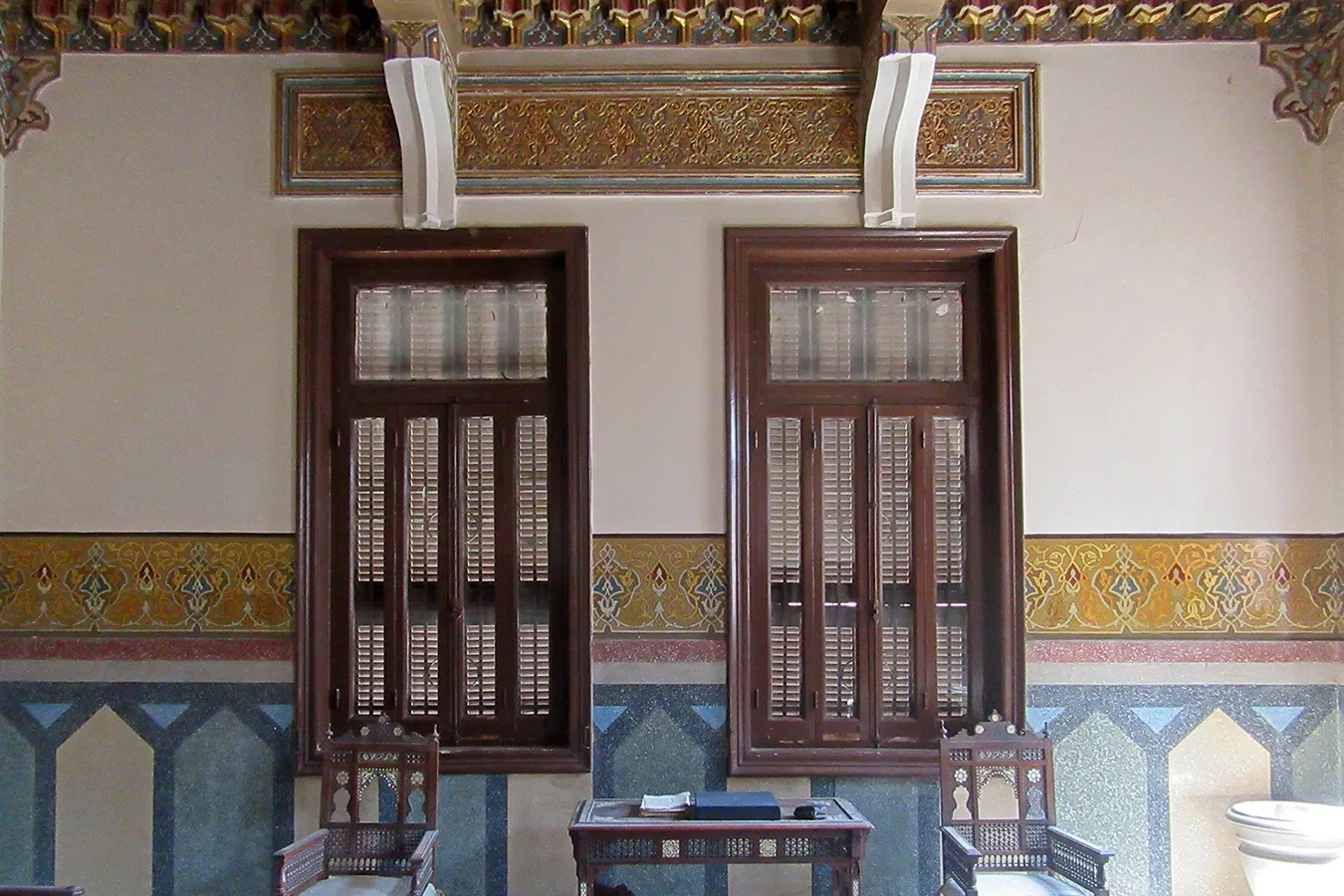
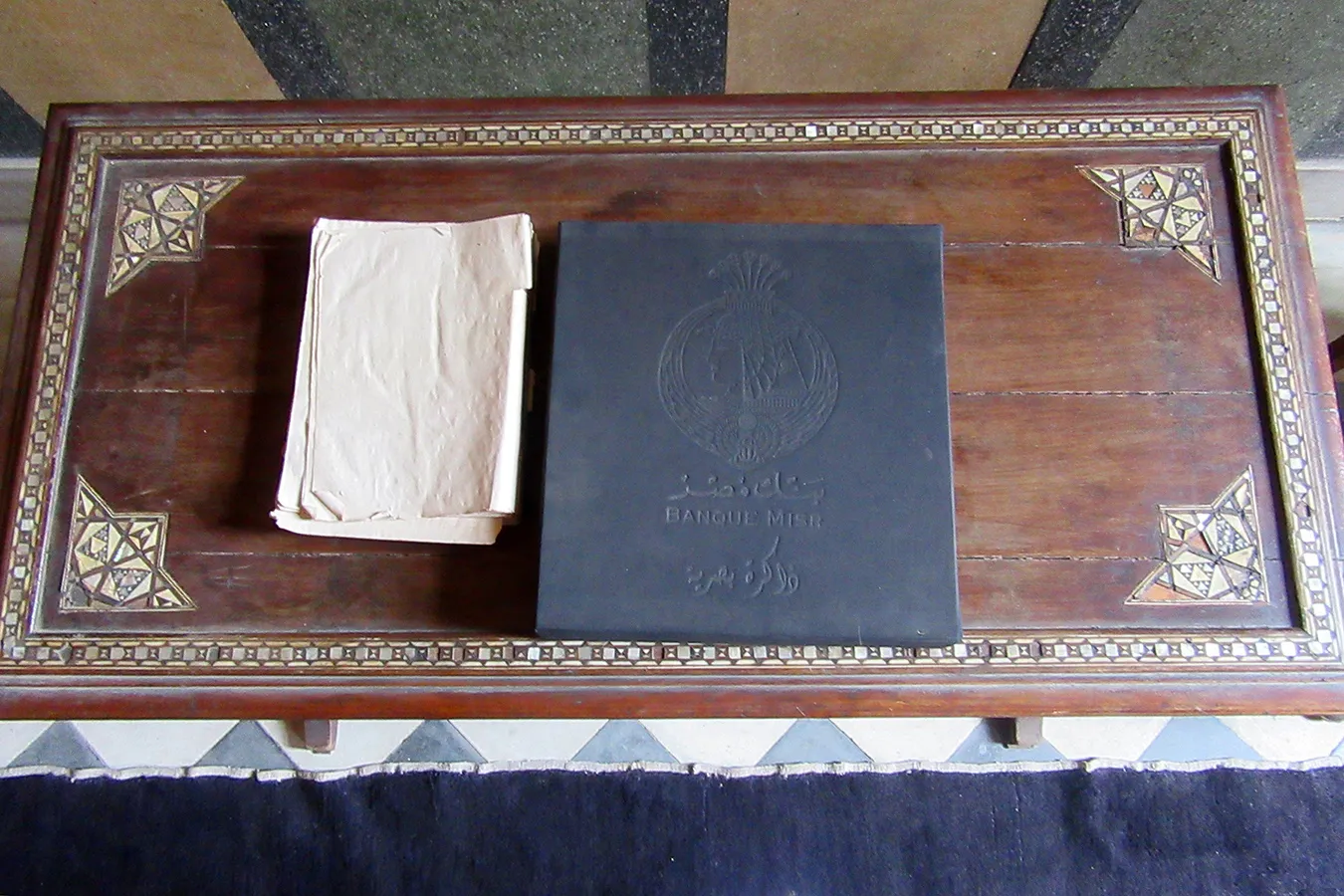
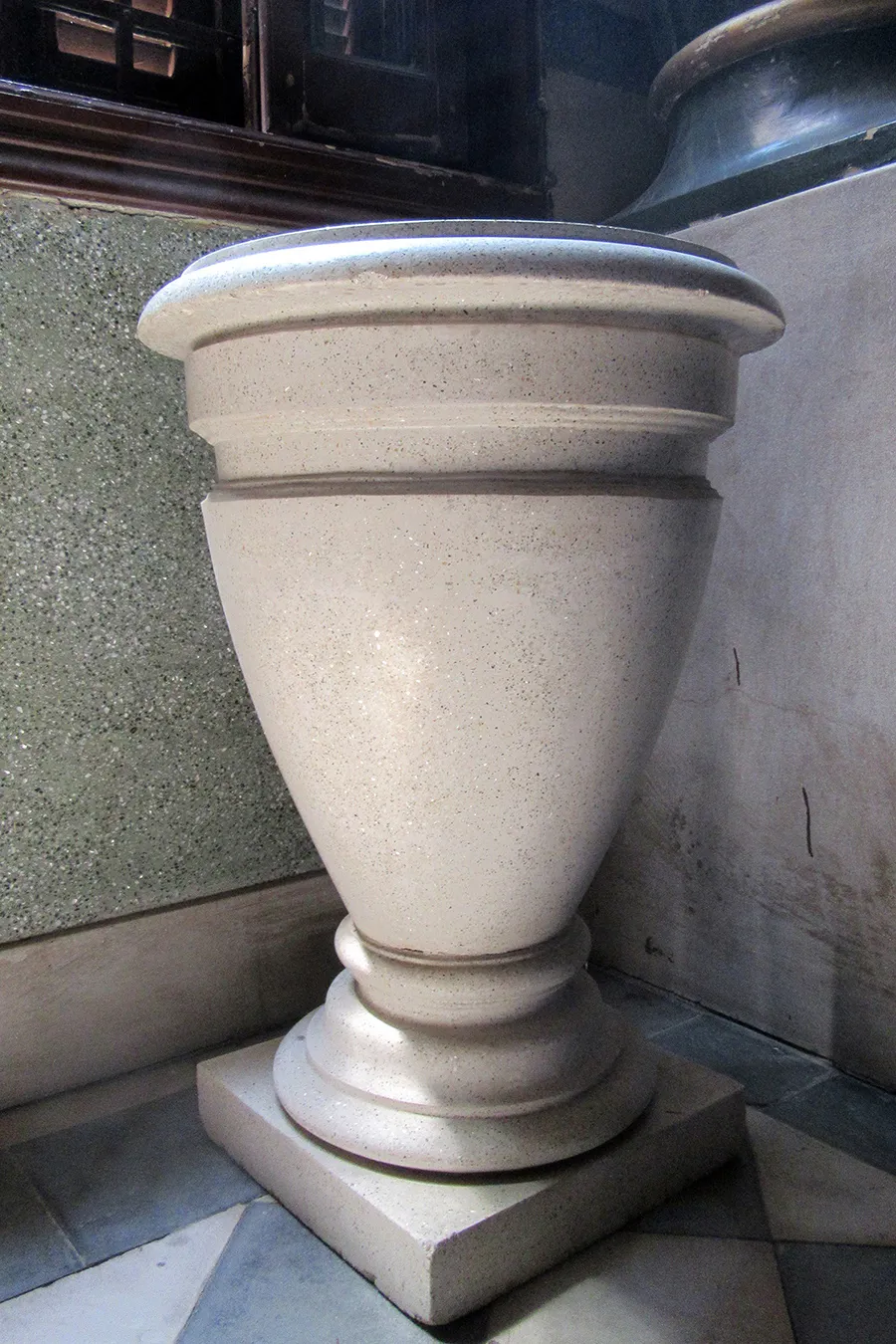
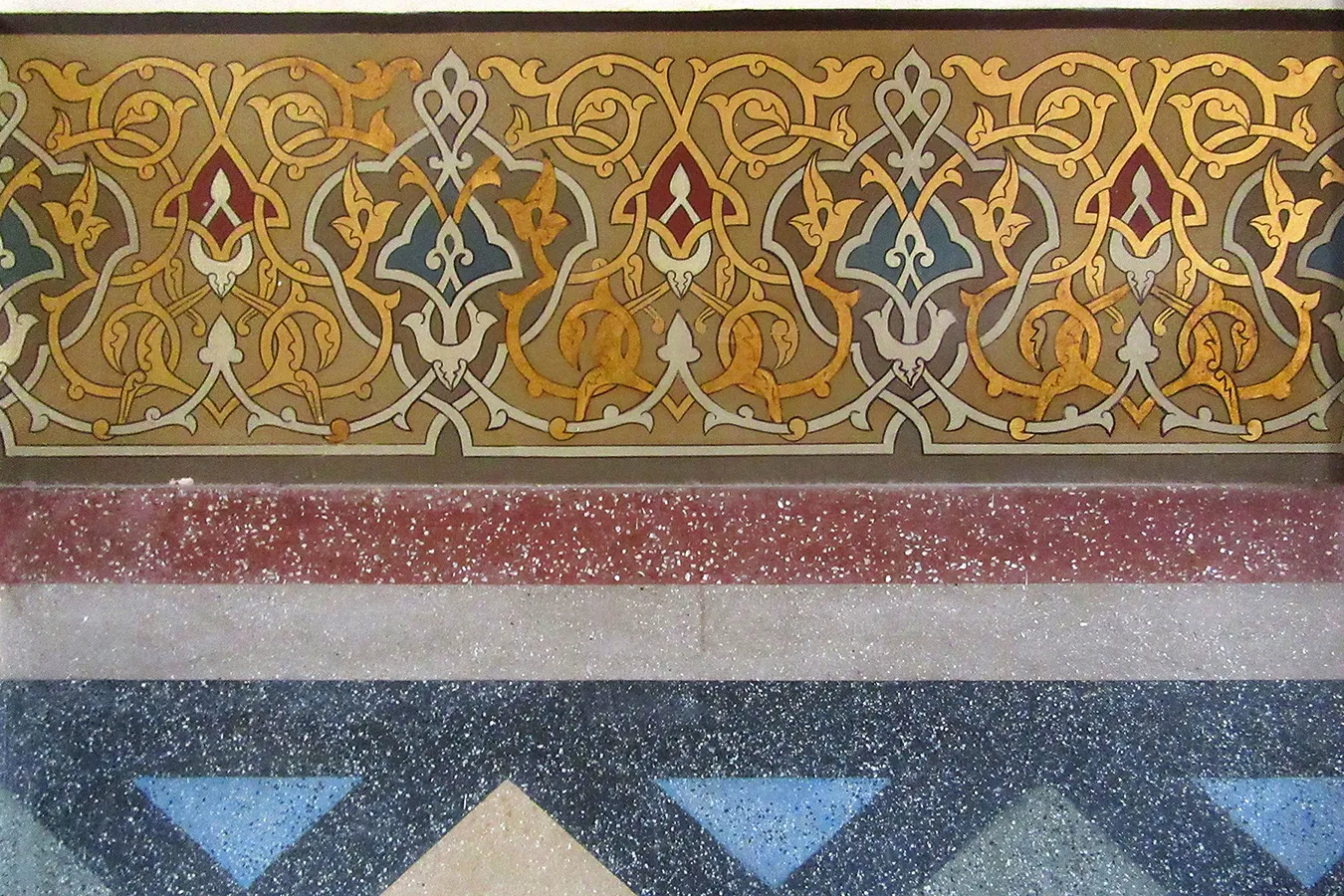
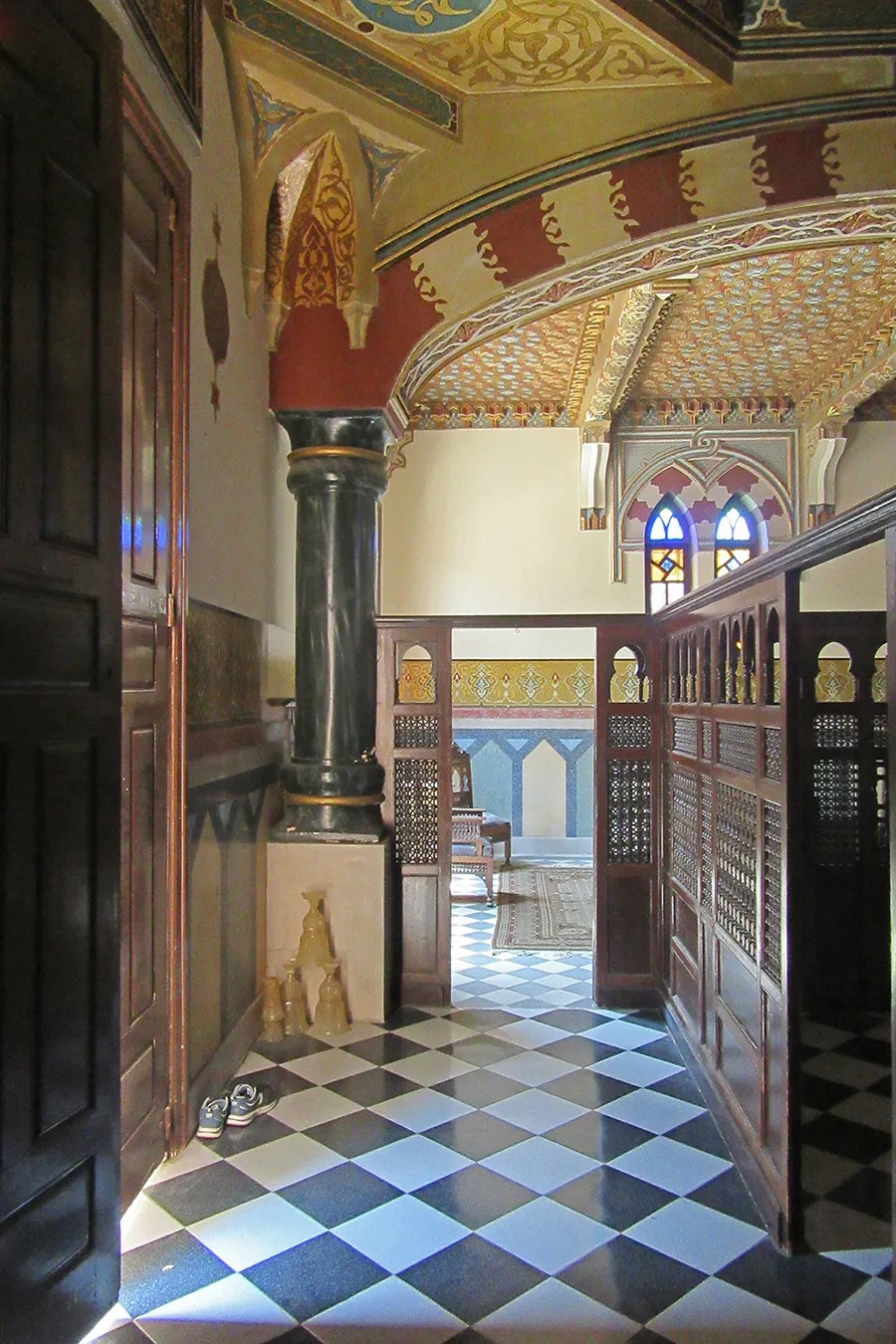
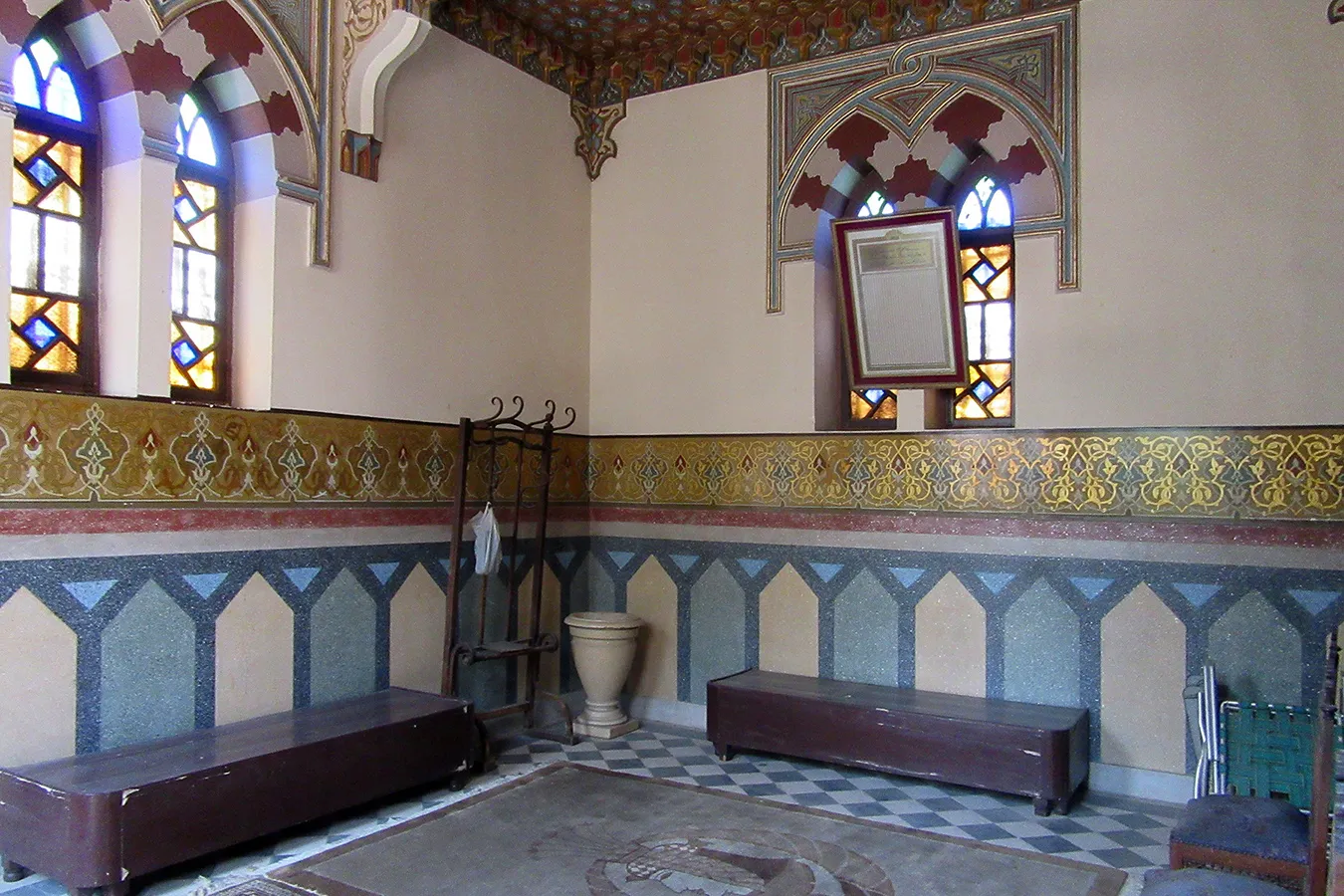
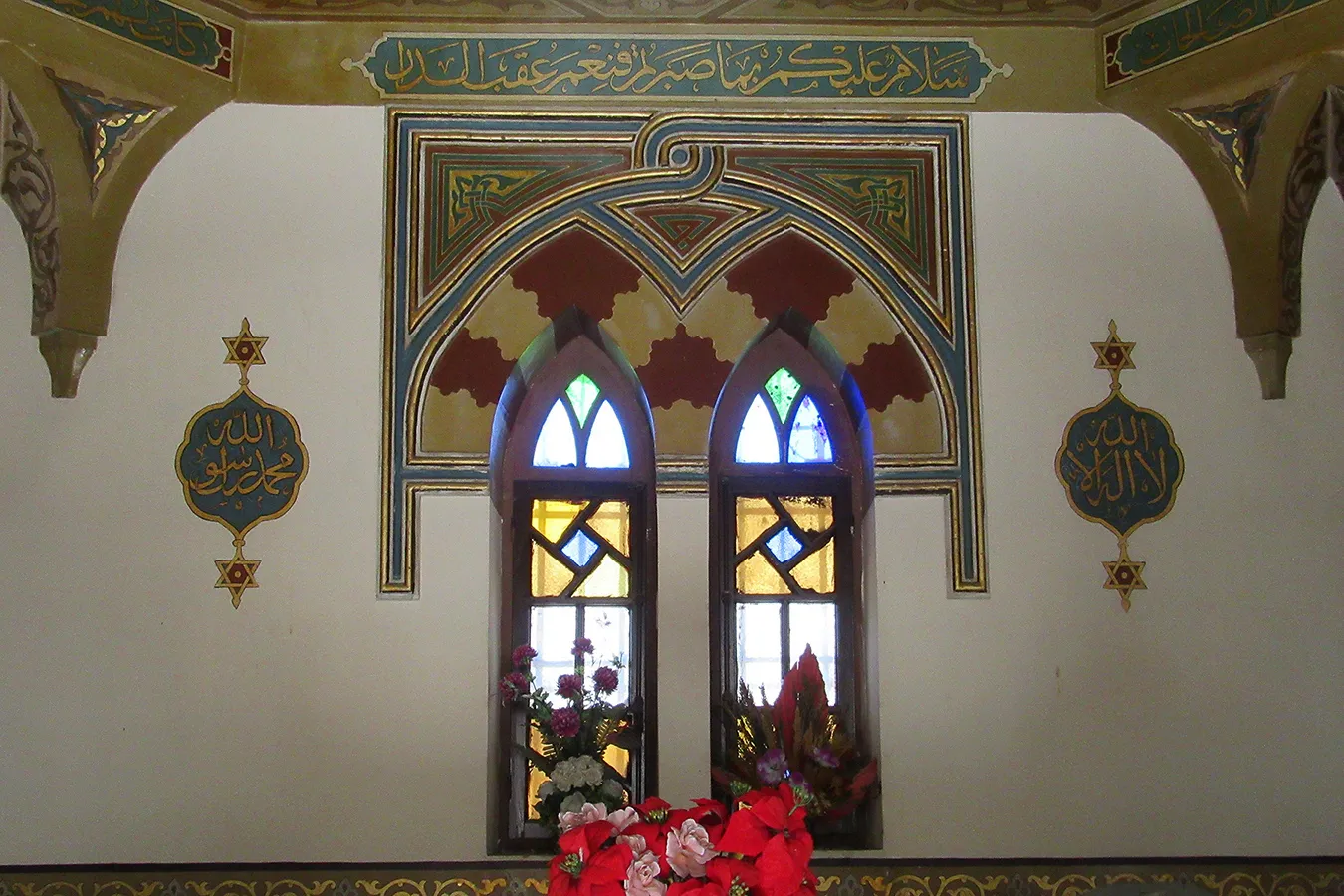
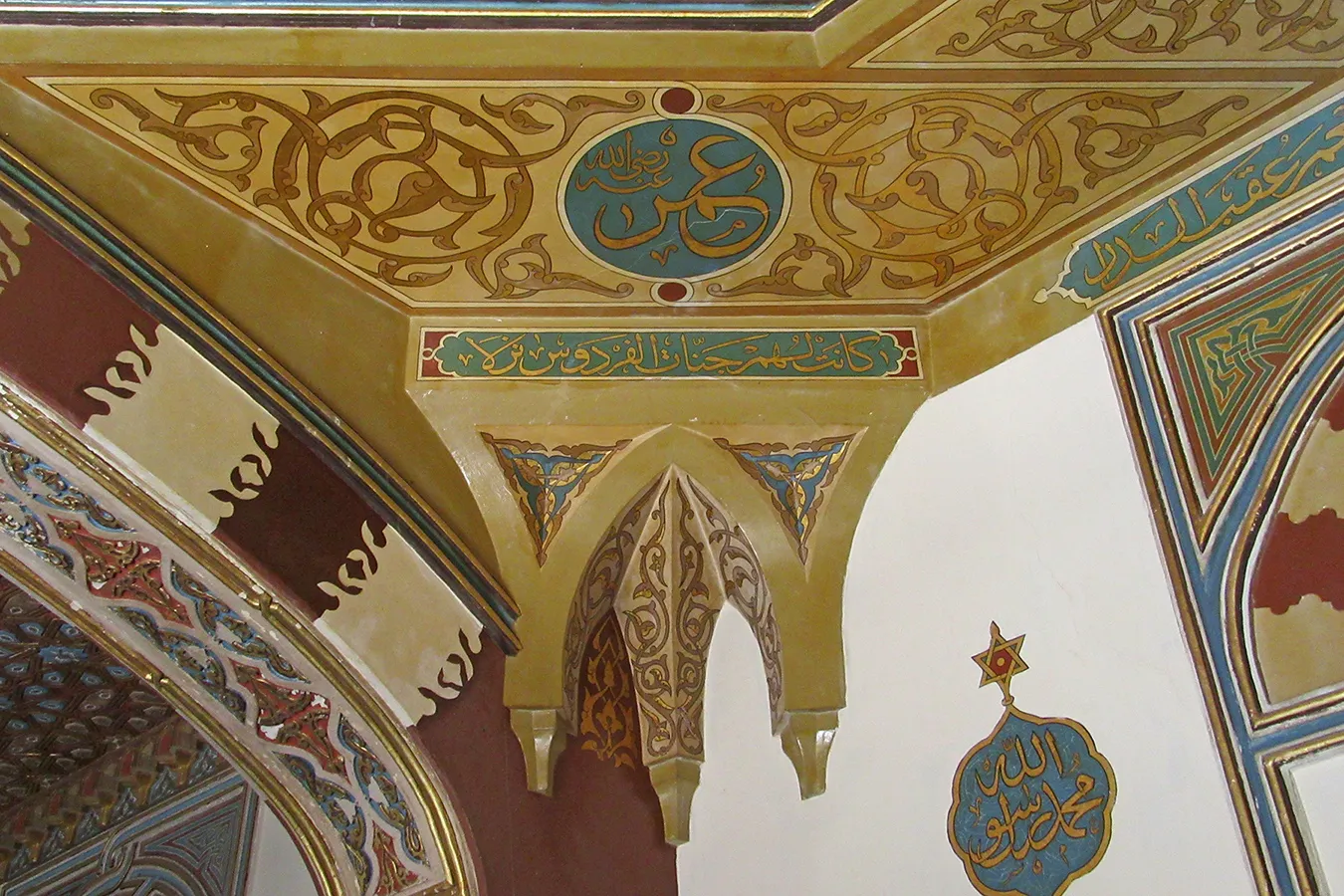
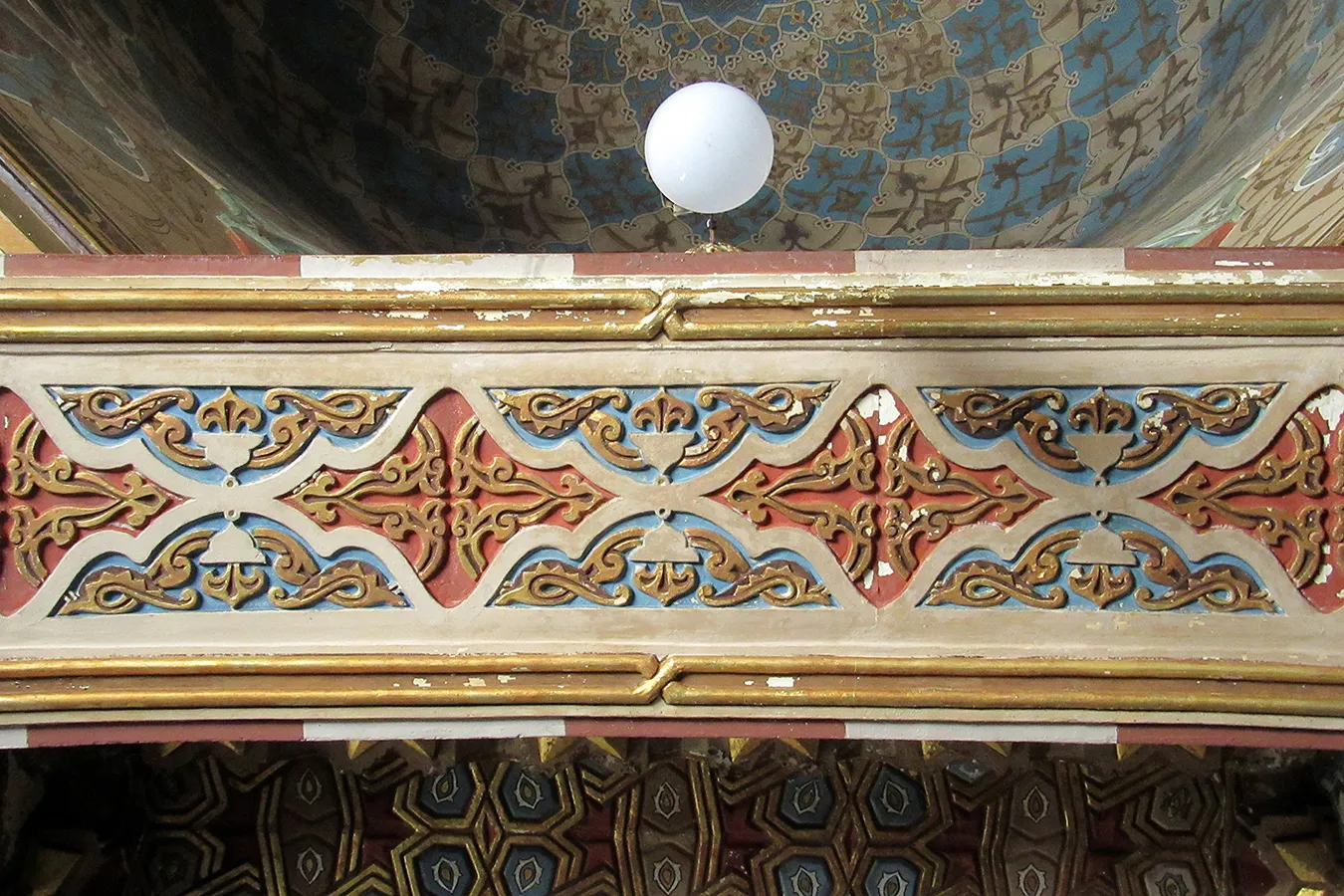
Another free-standing simple structure in the middle of the southern section of the enclosure was also used as a residential space for the visitors but was inaccessible at the time of recording. The third concrete-and-brick structure is the burial chamber located in the north-western corner of the enclosure. It is a one-story building with a large concrete dome in the middle, wider than the walled-off southern part of the enclosure, i.e., protruding into the garden. The facades of the burial chamber and the wall dividing the enclosure are decorated with simple Mamluk-inspired knotted moulding and are topped with rather complex fleur-de-lys crenellations prefabricated as reinforced concrete slabs. The huge rectangular windows of the burial chamber are in the easten and northern façades grouped in pairs within shallow rectangular recesses topped with simple muqarnases, while these in the western and southern façades are much smaller, placed in pairs and covered with pointed arches. The rectangular entrance door of the mausoleum in the middle of the eastern façade is placed in a shallow pointed-arched recess in the entrance section of the elevation which is taller than the rest of the wall, forming a pishtaq (Petersen, p.234). All facades have recently been covered with thick textured cement plaster that obscures the details of decoration. It is applied over the original, much finer plaster, which was painted in red and beige-yellow stripes imitationg ablaq masonry (Petersen, p.1-2.) The burial chamber is a large space divided into three internal sections by wide, flat elliptical arches resting on squat Islamic-style columns standing by the walls on high pedestals. The central space in the center is covered a dome on an octogonal drum that incorporates a muqarnas zone-of-transition and is supported by pointed-arched squinches in the corners. The single marble cenotaph placed under the dome is unusual in featuring open books sculpted in marble on its both ends. The central space is separated by wooden mashrabiya screens from the side chambers that are used as reception spaces and contain finely decorated Islamic-style wooden furniture. There is a dado of multicolour terrazzo around the walls of the burial chamber, and above it, a band of intricate Islamic arabesque floral pattern. The interior of the dome, its drum and base, decorative panels over the windows, and the ceilings of the side chambers and muqarnas friezes under on top of the walls are very richly decorated with colourful painted Islamic geometric and floral patterns and calligraphic inscriptions panels.
Condition of preservation
The buildings and the garden are well maintained. However, some of the crenellations in the internal separating wall between the buildings and the garden are broken or missing. The external walls, originally painted in two-tone imitation of ablaq masonry, have recently been covered with a layer of brownish gray textured cement plaster that obscures architectural decoration.
Information abut the founder, family history, etc.
Tal‘at Harb (25 November 1867 – 13 August 1941) was a leading Egyptian entrepreneur and founder of Banque Misr, and its group of companies, in May 1920. (Wucher King, p.193-4). The establishment of Banque Misr, the first real Egyptian bank owned by Egyptian shareholders and staffed by Egyptian nationals, where Arabic (the national language) was used in all communications, was a major step in establishing a national economic identity. The idea of establishing Banque Misr first emerged in 1907, when Tal‘at Harb contributed 100 EGP to the establishment of al-Ahly Sporting Club. He was a renowned nationalist industrialist; he published books calling for the founding of a national bank with Egyptian financing. (Wikipedia).
References in published/primary sources
• Wucher King, Joan Historical Dictionary of Egypt, American University in Cairo Press 1984, p. 193-4
• Petersen, Andrew Dictionary of Islamic Architecture, Routledge 1996, p. 1-2, 234
- Field recording by
- Amr Abotawila, edited by Jaroslaw Dobrowolski
- Date recorded
- November 5, 2025
- Data entered by
- Hadeer Ahmad
- Date entered
- May 12, 2024