
Unit No17
Shrine of al-Said Muhammad al-Bayumi
|
Coordinates of the main entrance |
30.044647N - 31.272619E |
|
Attribution |
Shrine of al-Said Muhammad al-Bayumi |
|
Higri (AH)Dates as given in the Inscription |
|
|
Miladi (AD)Dates as given in the Inscription |
|
|
Inscription Contemporary with the building? |
Yes |
|
Multiple date(s) In the inscription? |
Yes |
|
Assumed Date |
About AH 1336 |
|
Based on |
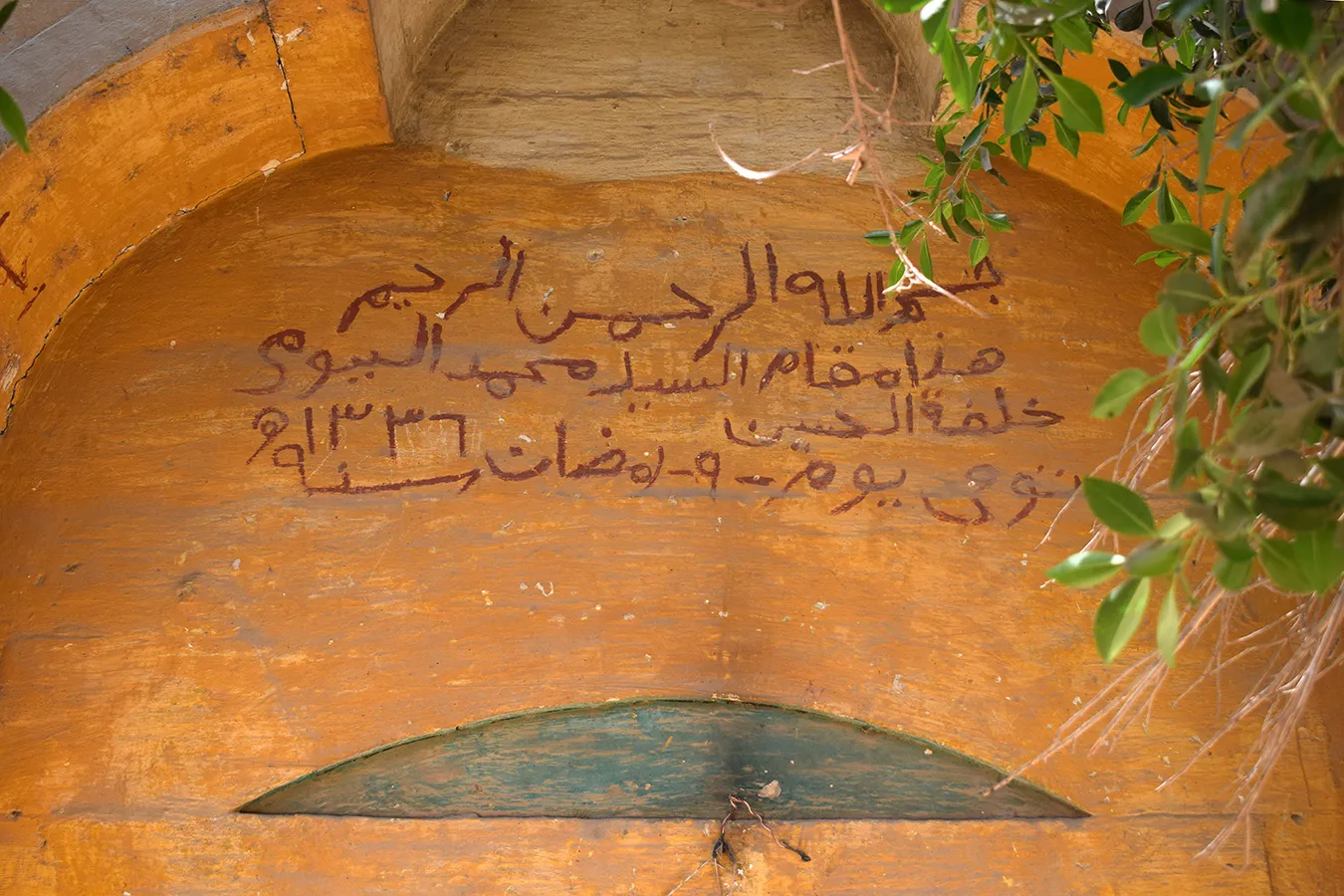
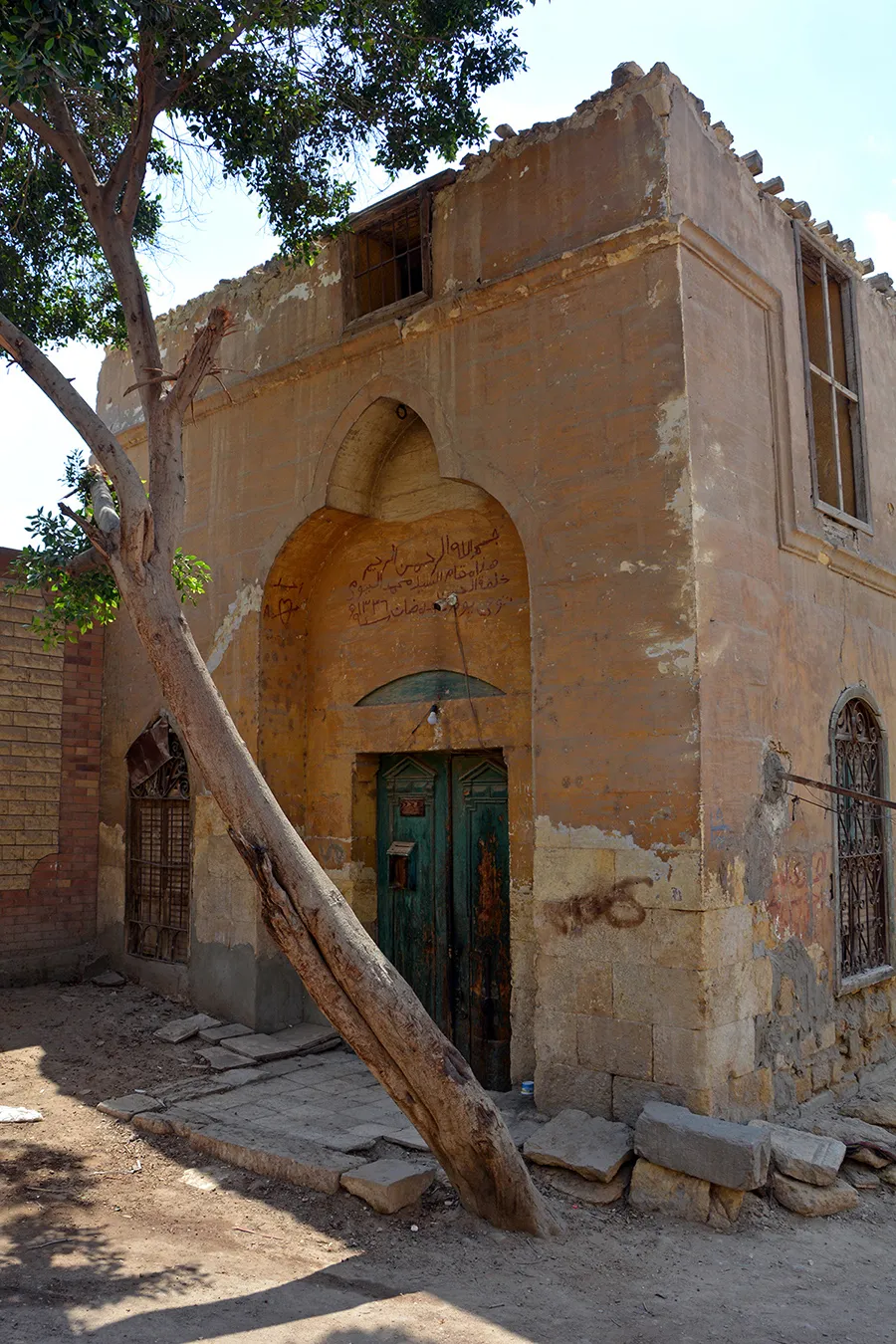
Hand-painted modern inscription over the door |
|
Original Use |
Shrine |
|
Current Use |
Shrine and residential |
|
Overall condition |
Fair |
Features of unit 17
| Present | Count | Material | Comments (see description for details) | |
|---|---|---|---|---|
| Free standing structure | Yes | |||
| Walled enclosure | No | |||
| Rooms by the perimeter wall | No | |||
| Freestanding structure(s) in enclousure | No | |||
| Dome over the tomb chamber | No | |||
| Neo-Mamluk architectural decoration | No | |||
| Garden layout | No | |||
| Sabil(s) | No | |||
| Wall fountain(s) | No | |||
| Canopy on columns / pillars | No | |||
| Carved marble cenotaph(s) | No | |||
| Decorated limestone tomb-markers | No | One wooden tomb-marker | ||
| Decorated gateway | Yes | 1 | Limestone | Very simple recessed trefoil portal |
| Decorative door-leaves | Yes | 2 | wood | In main door. Simple, based on classical motifs |
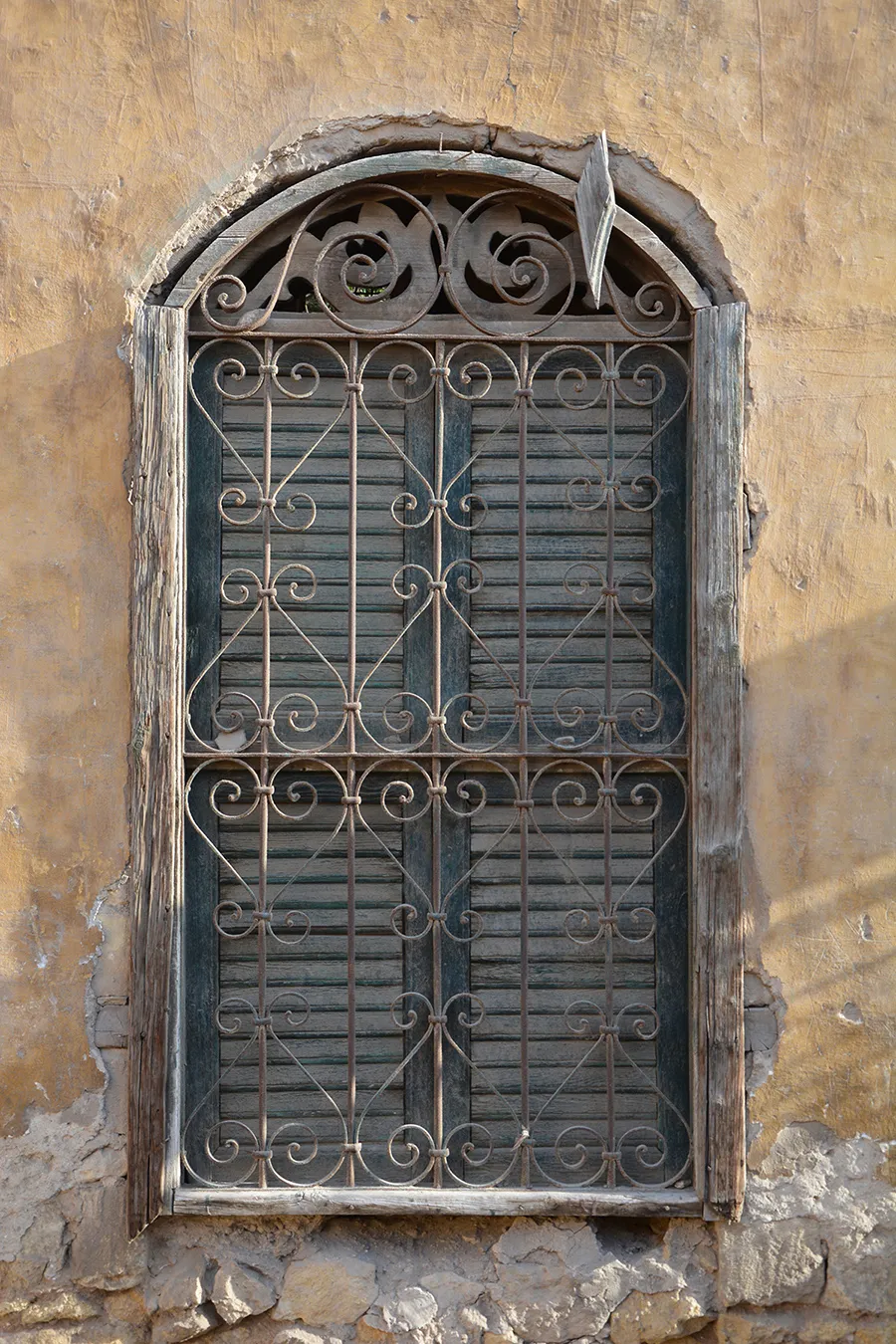
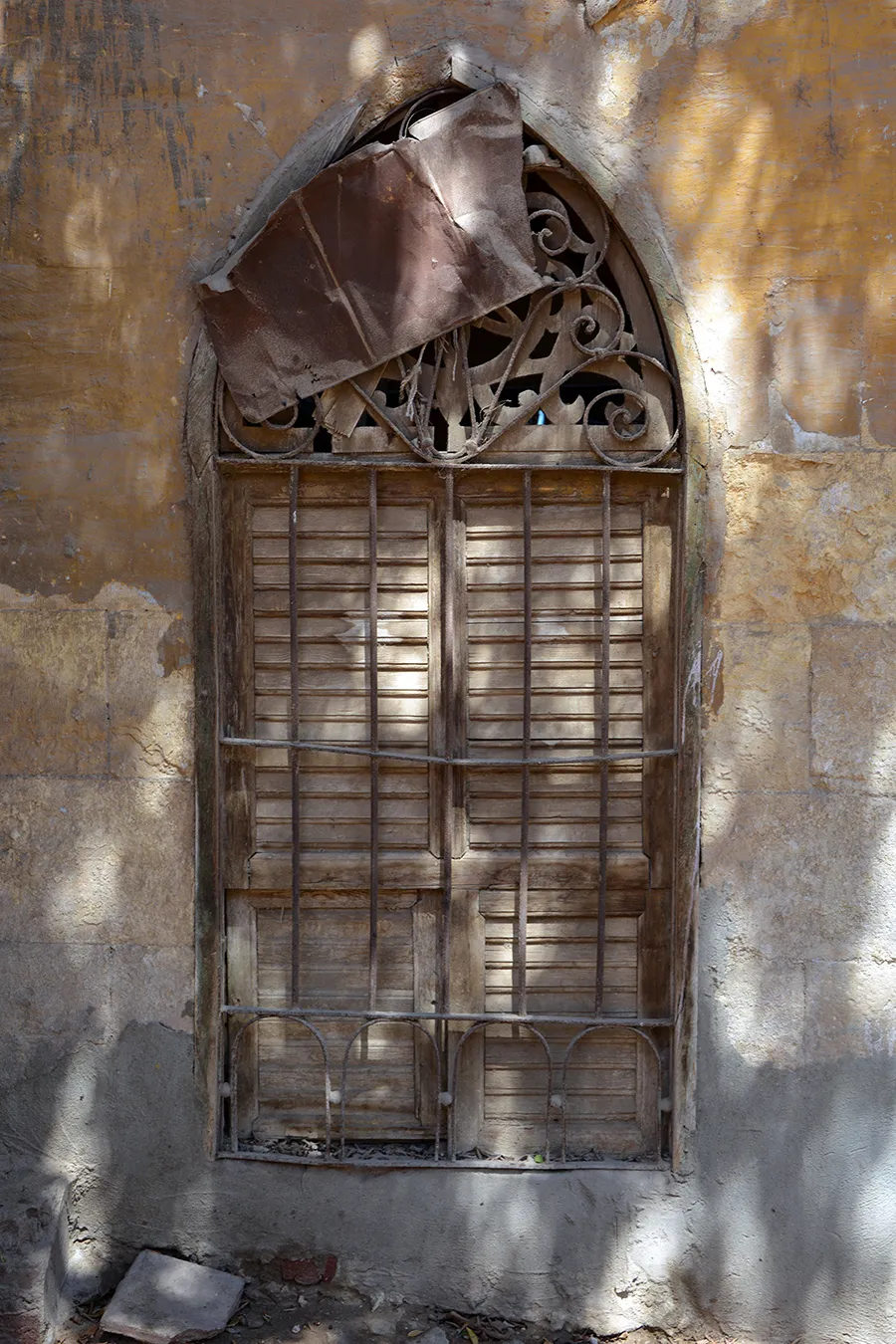
| Decorative window grilles | Yes | 12 | Iron and wood | Simple wrought-iron grilles and openwork woodwork above the window shutters |
| Decorative shutters | No | |||
| Painted ceiling(s) | No | |||
| Decorative paving(s) | No |
Description (The direction towards Mecca (Qibla) is described as eastern and other directions are named accordingly)
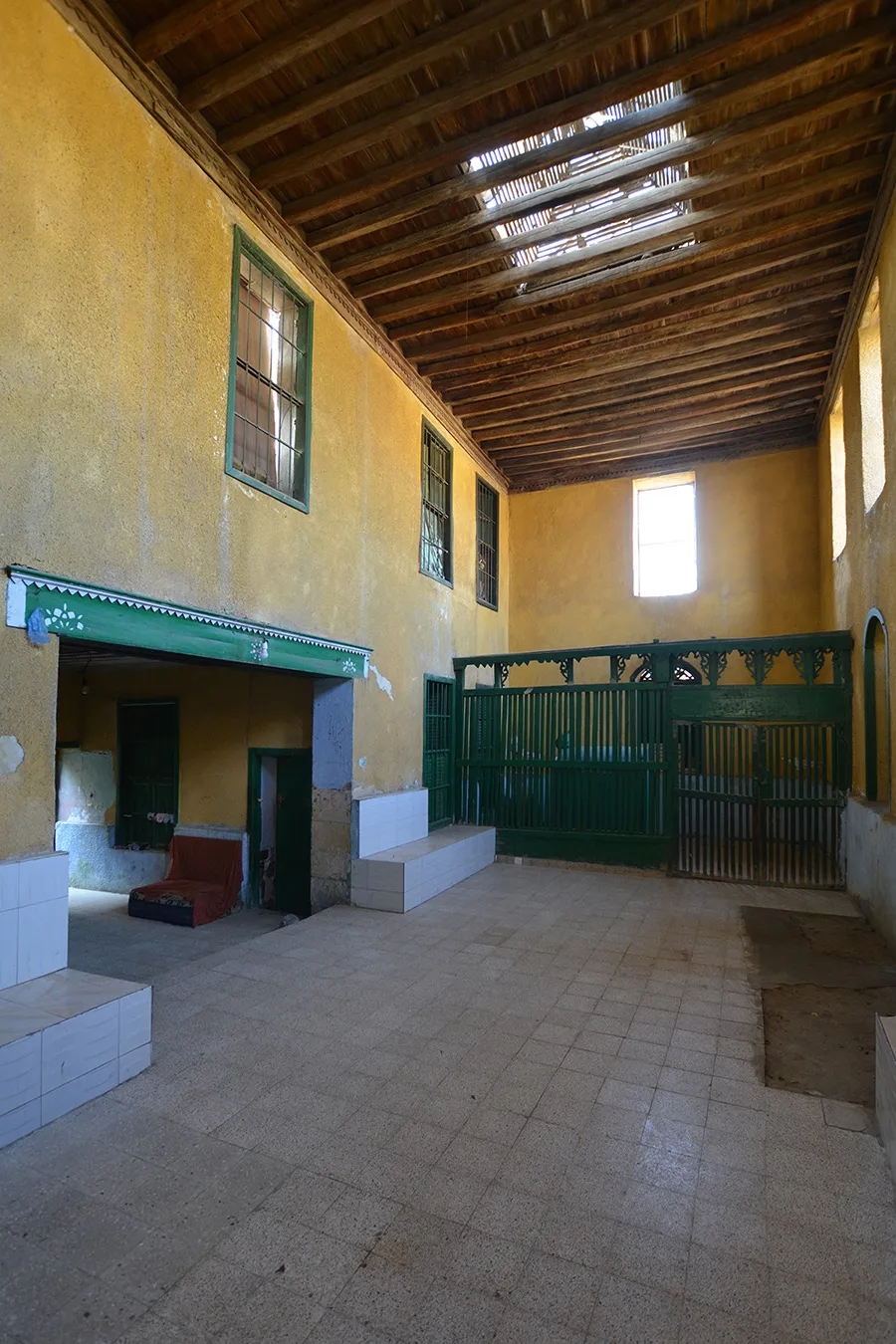
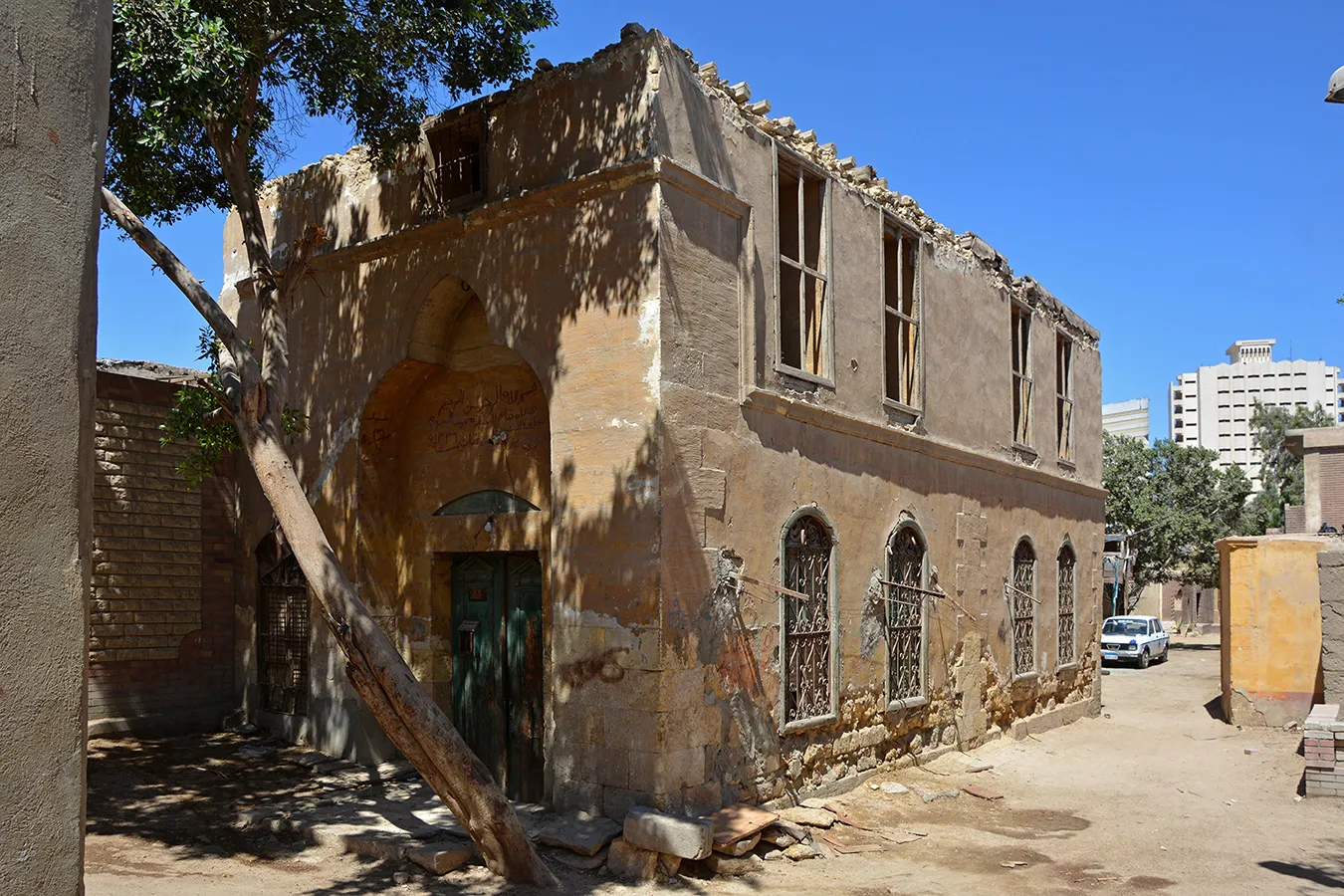
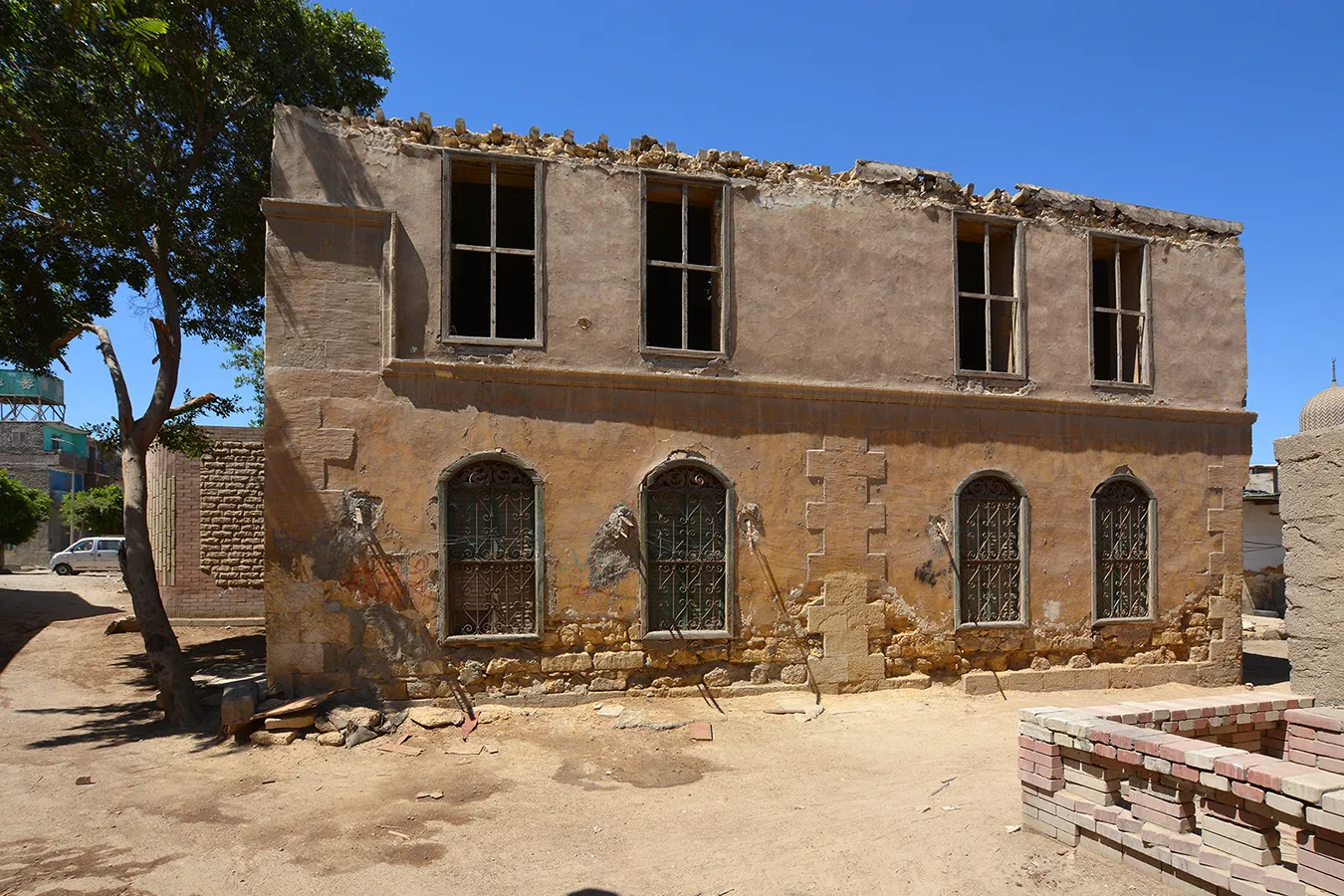
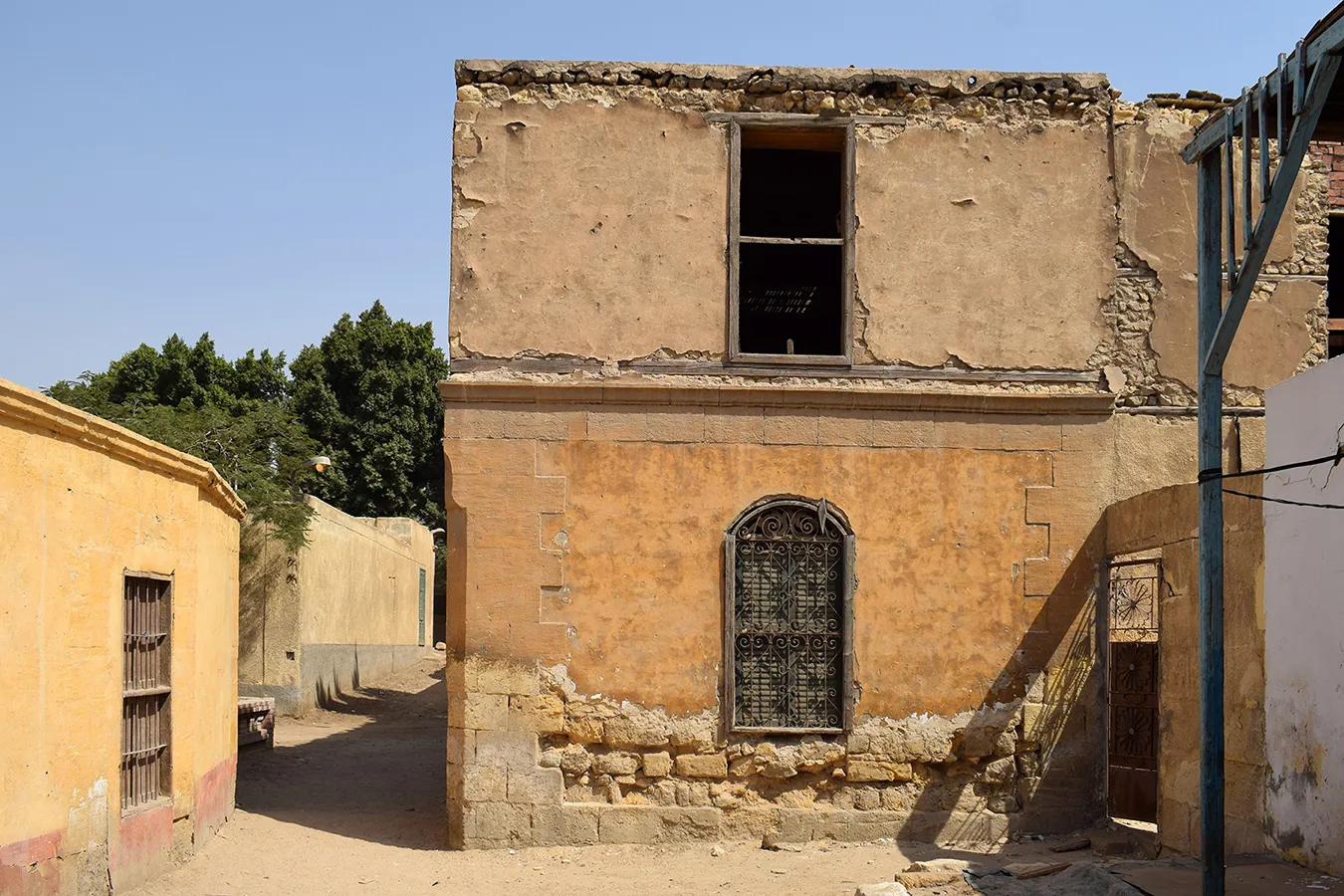
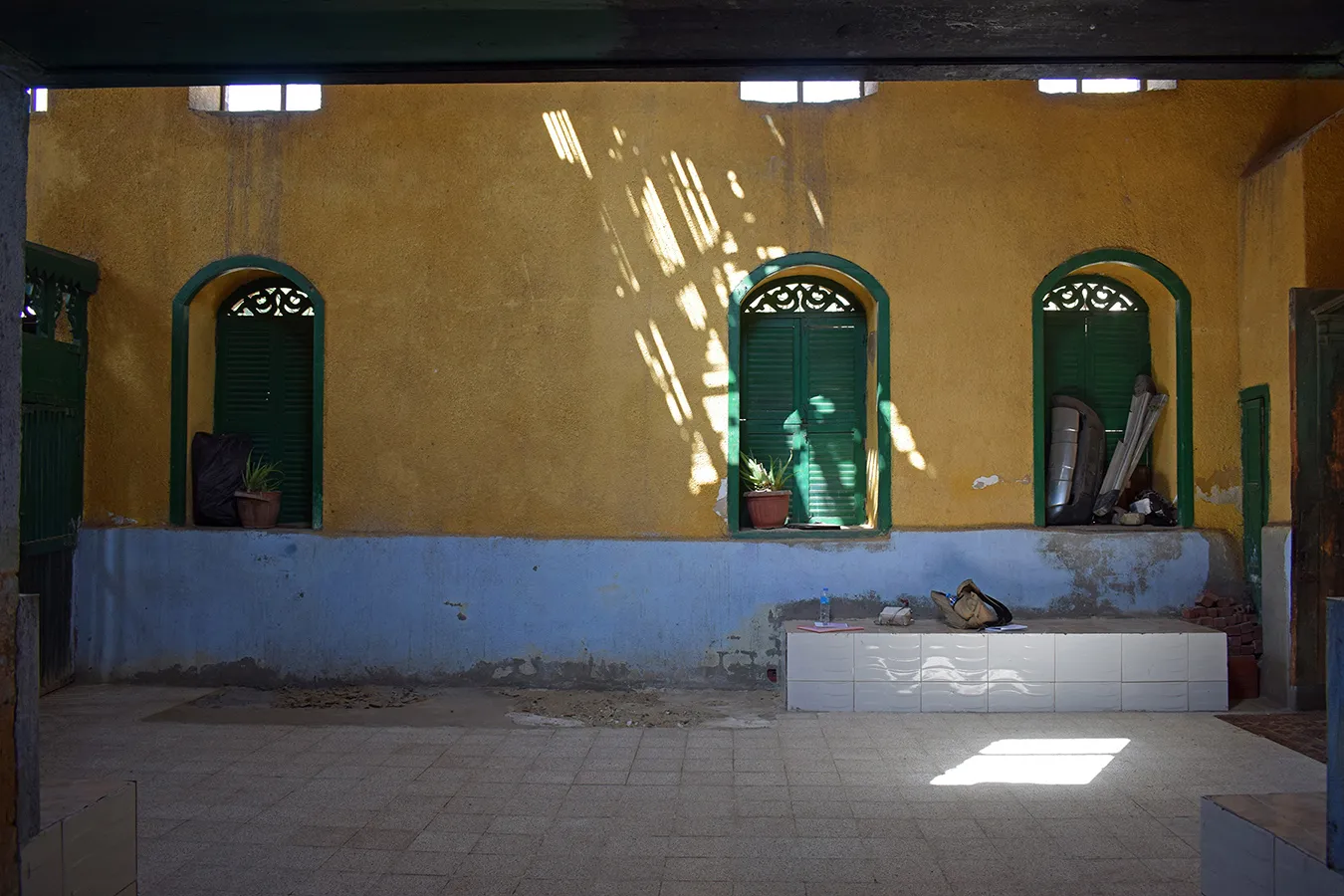
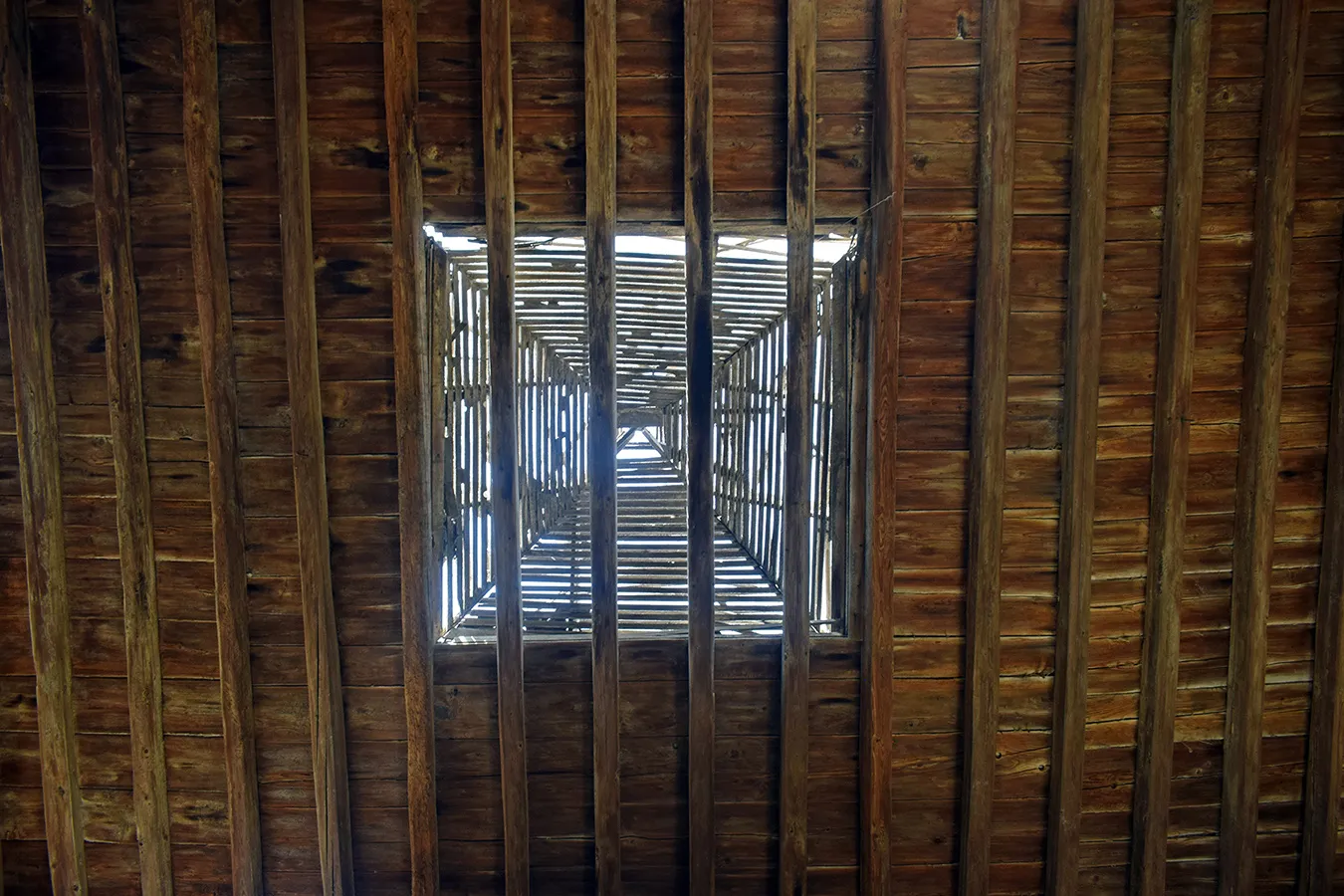
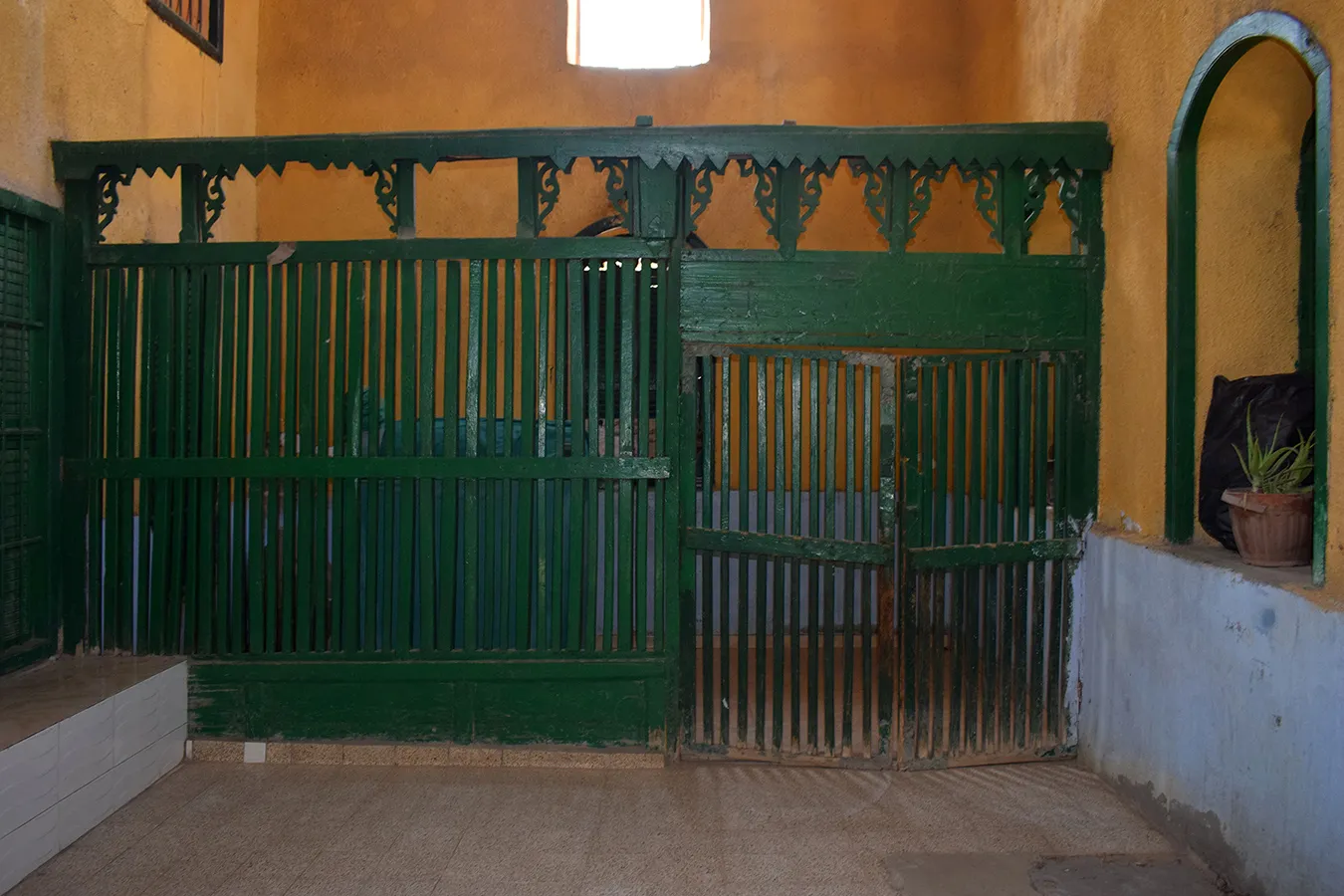
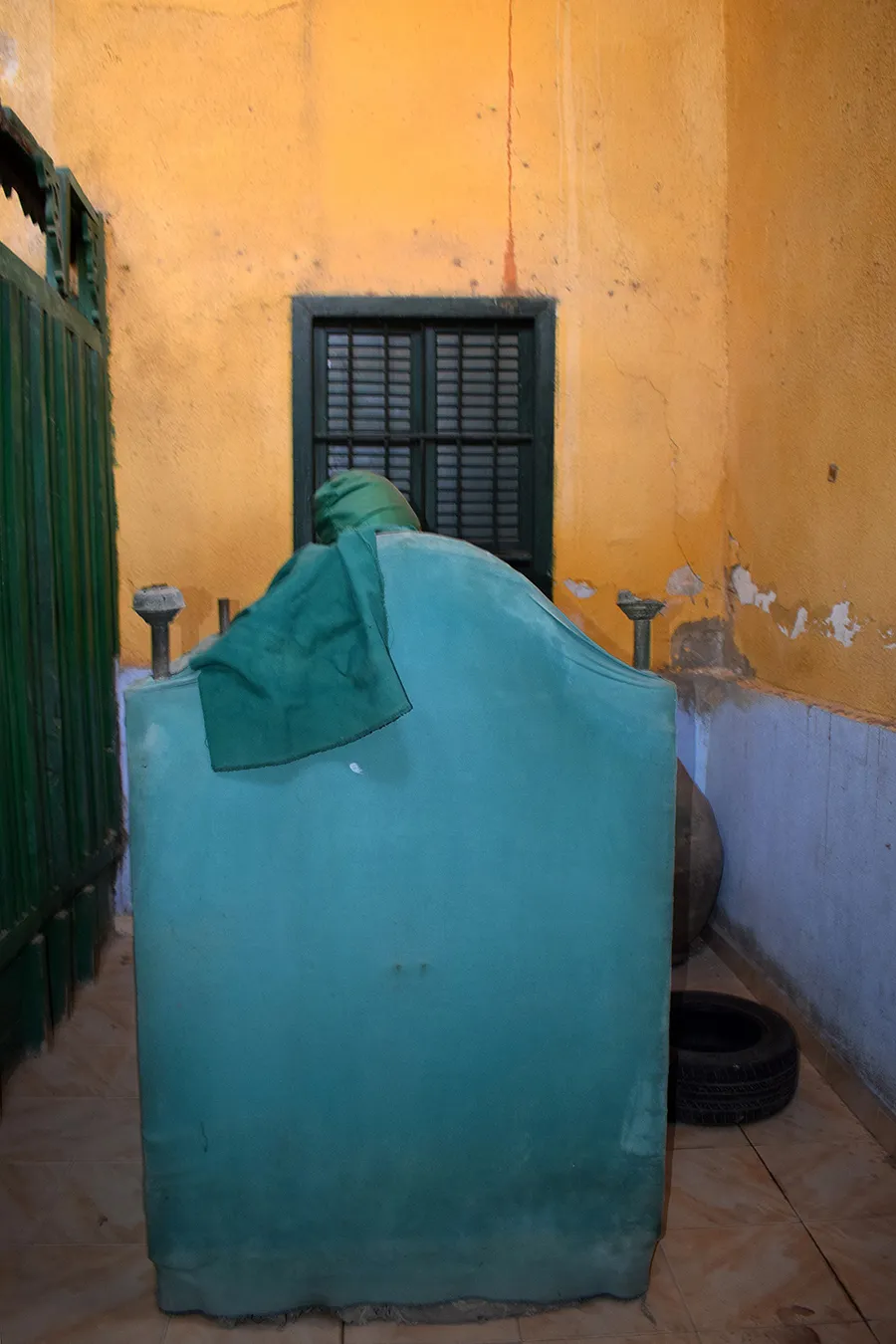
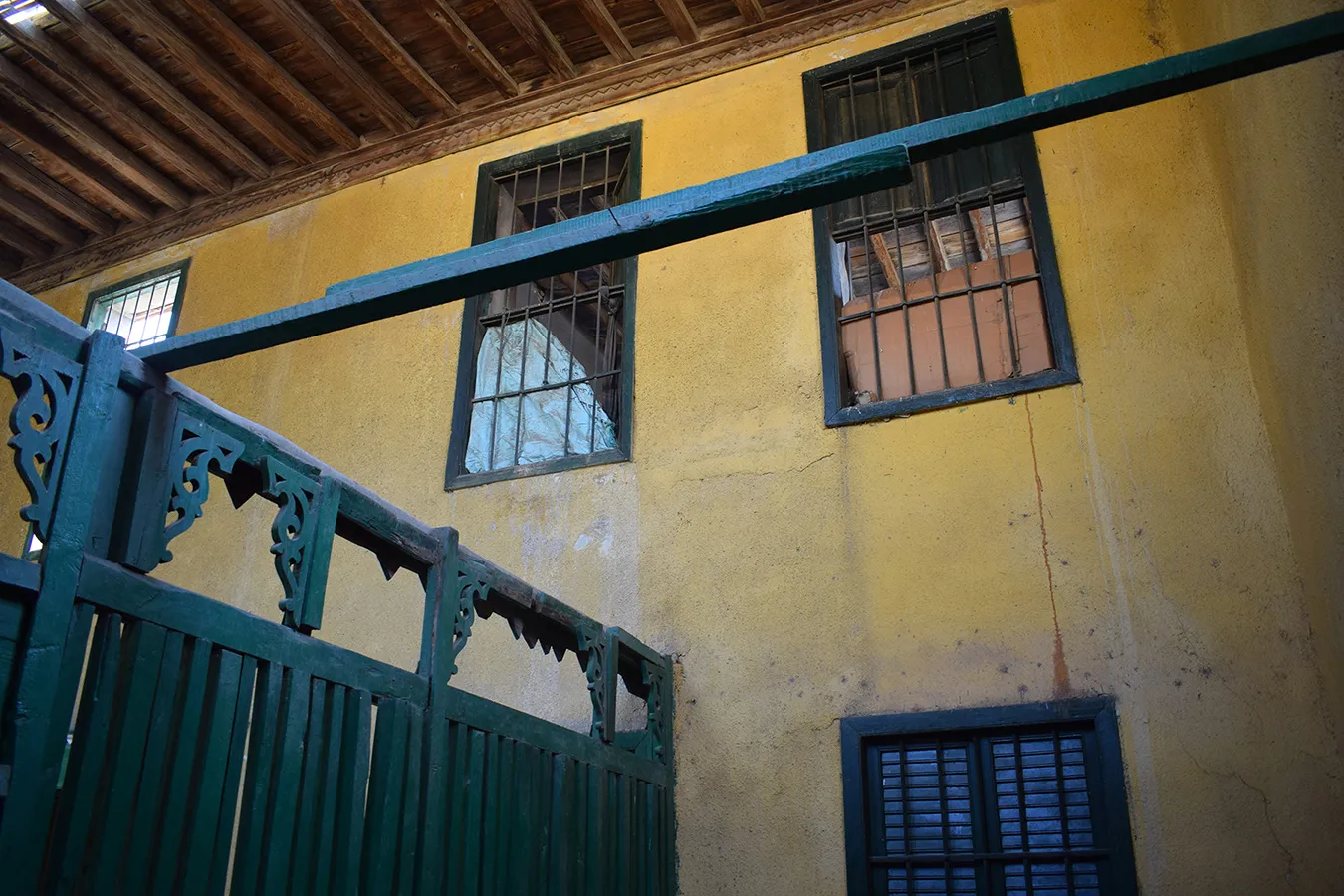
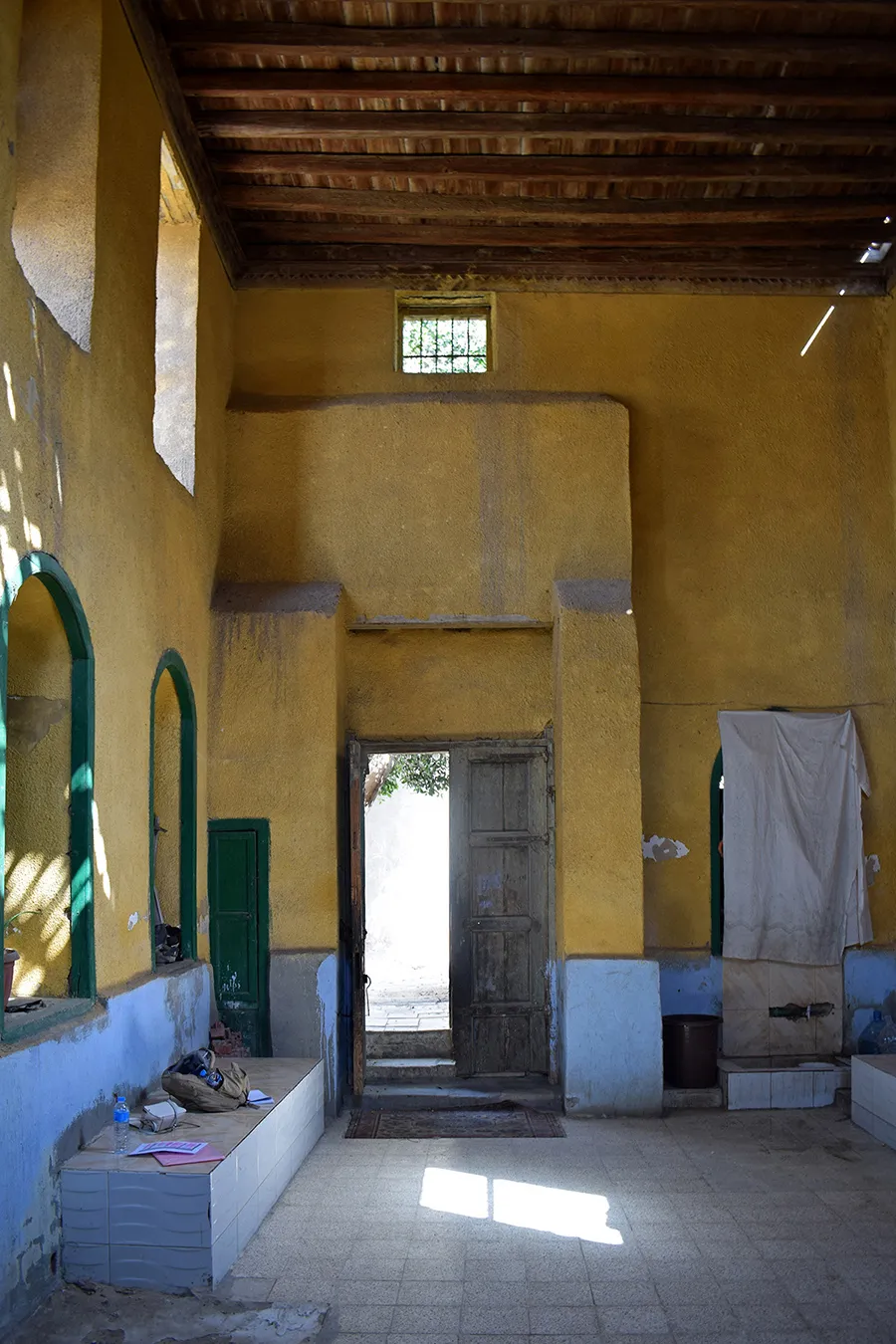
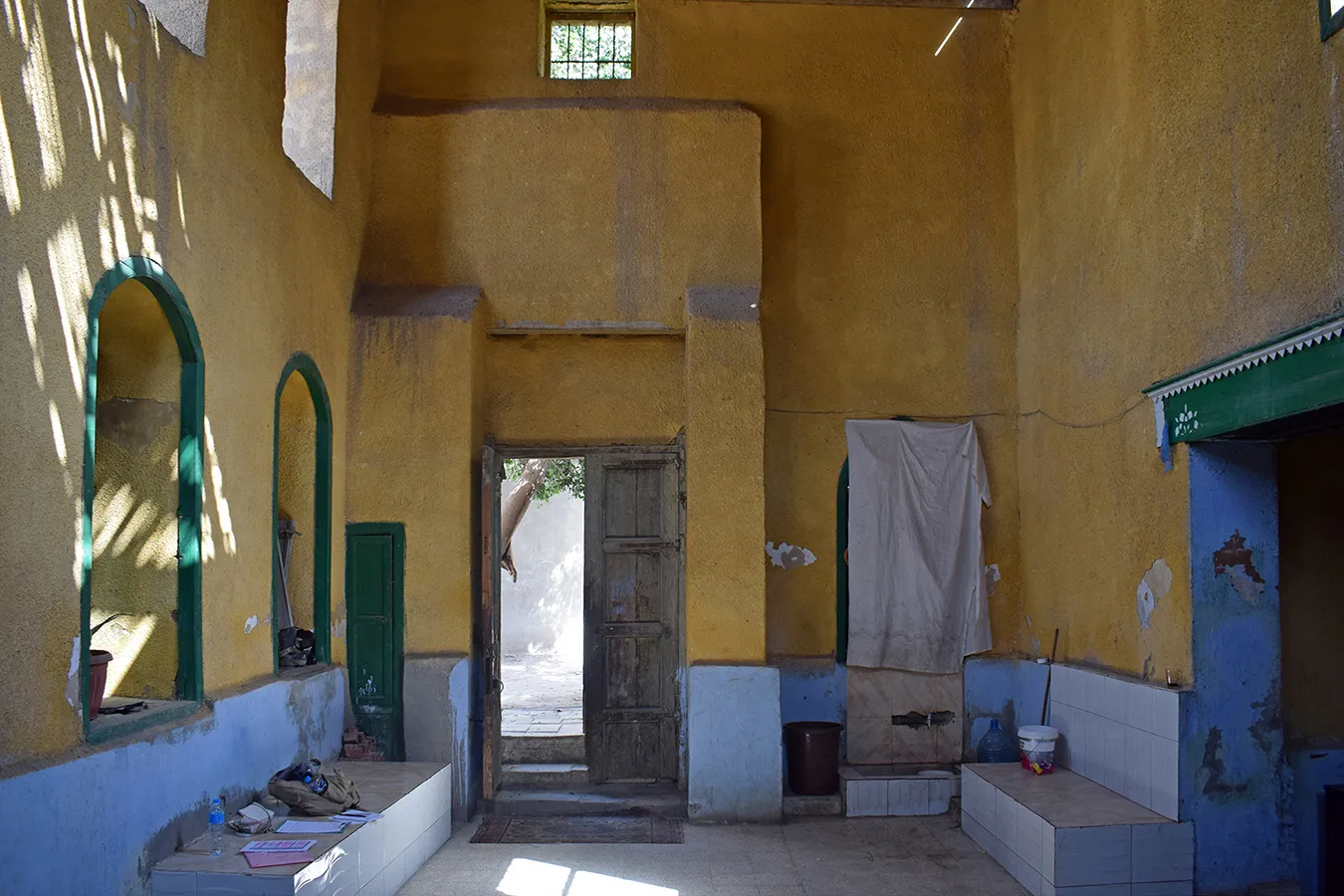
The shrine is a free-standing, U-shaped structure with the double-height shrine chamber in the northern part and two-storied residential unit with a small courtyard to the south of it. The lower storey is built of irregular coursed stone masonry with corners, base course, cornice, and the entrance porch built of ashlar stone, while the upper floor is entirely built of rubble stone and plastered. The entrance in the shorter wall of the rectangular shrine is from the east. The recessed entrance is topped by a simple, undecorated trefoil arch. There is a segmental relieving arch over the stone lintel of the main door, above which the name of the shaykh buried in the shrine and a date of his death have been recently rather crudely painted. The wooden door leaves have a simple decoration based on Classical motifs. The doorway leads into a double-height spacious burial chamber with windows in two levels (the lower-level ones cowered with semicircular arches and the large upper-level windows rectangular.) An uninscribed wooden tomb marker covered in green cloth is placed at the fat end of the hall behind a simple wooden screen with openwork wooden ornaments in the upper section. Similar ornaments are placed in the arches of the lower-level windows, over the louvre window shutters.
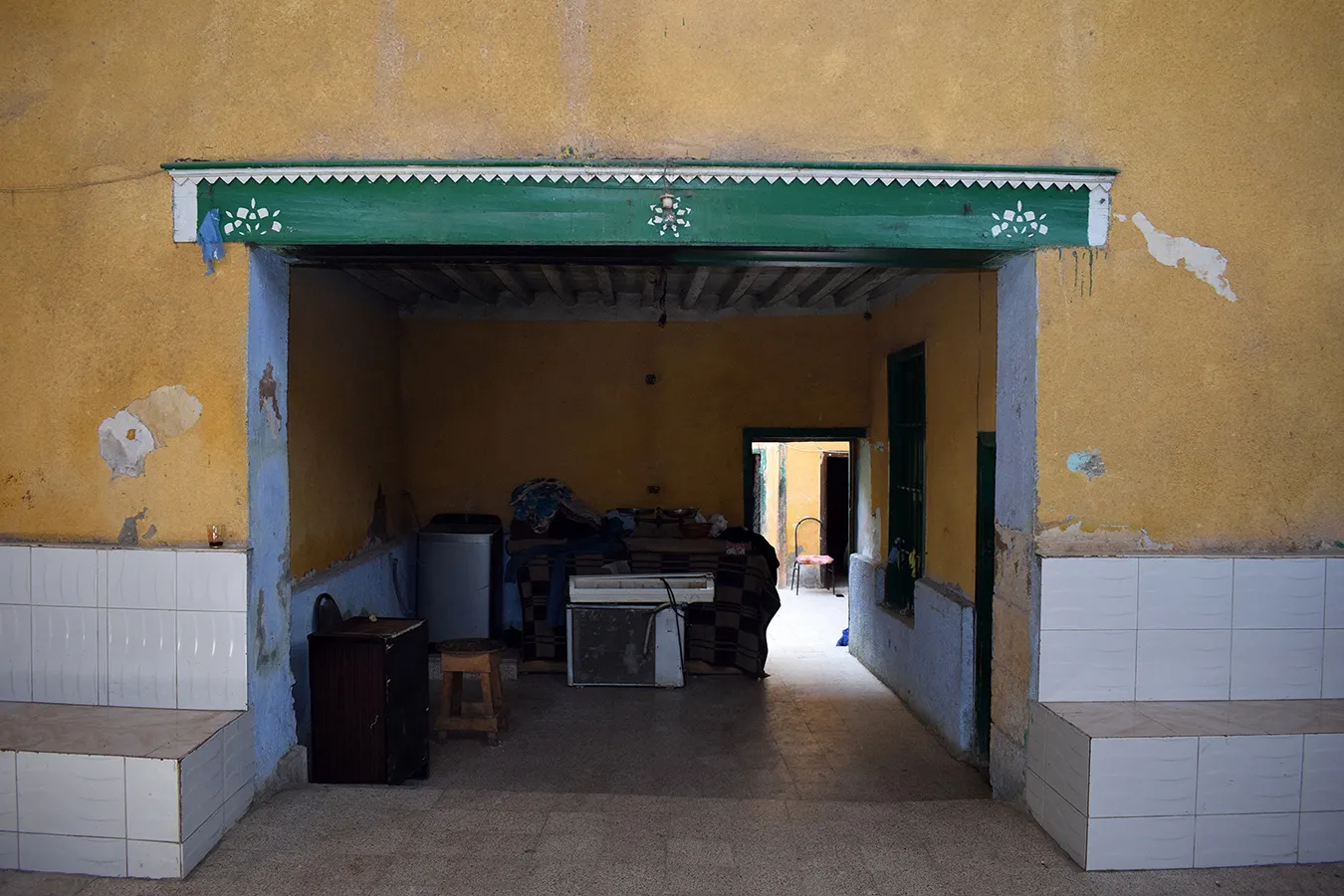
In the southern interior wall of the burial space, a wide rectangular opening leads into a lobby of the residential section and an adjoining room. The lobby leads into a small courtyard, including 2 kitchen spaces on the western perimeter of the enclosure, a shared toilet on the south-eastern corner, and two bedrooms on the south side, where one of the bedrooms is accessed from a corridor that also leads to a staircase leading into 4 bedrooms and a lobby on the upper floor, with one of the rooms overlooking the double-height burial space.
Condition of preservation
The shrine itself is well-kept by the keeper. Most of widows glazing is gone or broken, the entrance door and other woodwork damaged. Plaster has largely fallen off the upper floor walls. There is severe damage from rising damp to the lower parts of the walls.
Information abut the founder, family history, etc.
The date 4 Ramadan 1326 AH painted over the entrance gate corresponds to 17 June AD 1918.
- Field recording by
- Hadeer Ahmad and Nur Atiya
- Date recorded
- August 22, 2022
- Data entered by
- Hadeer Ahmad
- Date entered
- May 14, 2024