
glossary
This glossary defines terms in the sense in which they are used in the database. It is not meant to be definitive or authoritative
Arabic words that are not in common usage in English are marked as (Ar).
Arabic translations of English terms are in the contemporary Egyptian dialect of Cairo.
Words in UPPERCASE refer to other entries in the glossary.
| English | Arabic | Comments (see description for details) | ||
|---|---|---|---|---|
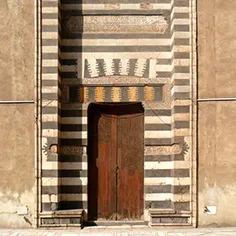 |
AblaqأبلقAblaq (Ar): alternating courses of differently coloured masonry | Ablaq | أبلق | Ablaq (Ar): alternating courses of differently coloured masonry |
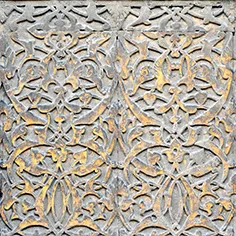 |
ArabesqueآرابيسكOrnament based on vegetal forms in which leaves and stems form a reciprocal, continuous, interlacing pattern. (The term is confusingly also used for MASHRABIYA in modern Egyptian usage) | Arabesque | آرابيسك | Ornament based on vegetal forms in which leaves and stems form a reciprocal, continuous, interlacing pattern. (The term is confusingly also used for MASHRABIYA in modern Egyptian usage) |
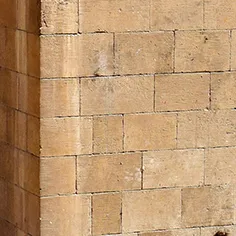 |
Ashlarمداميك(Of stone masonry): constructed of well-dressed stone blocks of rectangular faces, laid on mortar in even courses | Ashlar | مداميك | (Of stone masonry): constructed of well-dressed stone blocks of rectangular faces, laid on mortar in even courses |
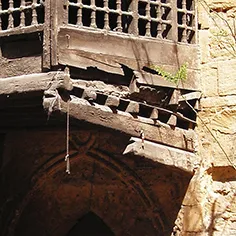 |
CantileverرفرفةA projecting beam or member supported at only one end and held in place by the load on its embedded end. The structural principle of CORBELS, brackets, cornices, etc. | Cantilever | رفرفة | A projecting beam or member supported at only one end and held in place by the load on its embedded end. The structural principle of CORBELS, brackets, cornices, etc. |
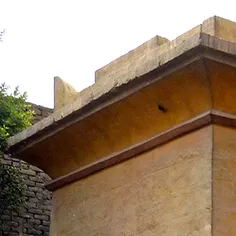 |
Cavetto corniceكهفيةA cornice of a quarter-circle concave profile. Extensively used in Ancient Egyptian architecture | Cavetto cornice | كهفية | A cornice of a quarter-circle concave profile. Extensively used in Ancient Egyptian architecture |
 |
Cenotaphنصب المدفنA symbolic funerary monument that does not hold the body of the deceased person, a tomb-marker | Cenotaph | نصب المدفن | A symbolic funerary monument that does not hold the body of the deceased person, a tomb-marker |
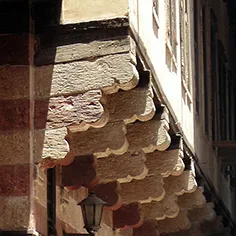 |
CorbelكابوليA projecting CANTILEVERED piece (usually of stone) supporting an overhanging part of a structure. | Corbel | كابولي | A projecting CANTILEVERED piece (usually of stone) supporting an overhanging part of a structure. |
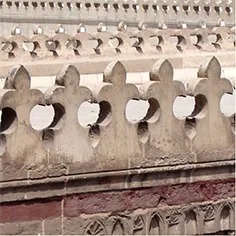 |
Crenellationشرافات / عرائس السماءA row of repeated decorative elements alternating with gaps at the wall’s parapet. Originates in the indentations of a battlement on a defense wall (See FLEUR-DE-LYS) | Crenellation | شرافات / عرائس السماء | A row of repeated decorative elements alternating with gaps at the wall’s parapet. Originates in the indentations of a battlement on a defense wall (See FLEUR-DE-LYS) |
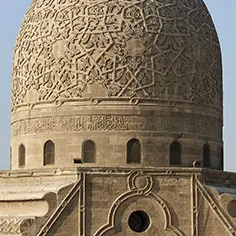 |
Drumرقبة القبةA cylindrical or polygonal structure that serves as a base for a dome. | Drum | رقبة القبة | A cylindrical or polygonal structure that serves as a base for a dome. |
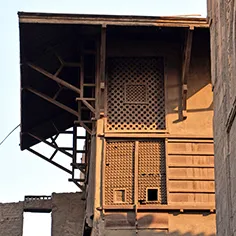 |
EavesرفرفThe projecting edges of a roof that overhang the walls of a building, providing shadow and protection from rainwater. | Eaves | رفرف | The projecting edges of a roof that overhang the walls of a building, providing shadow and protection from rainwater. |
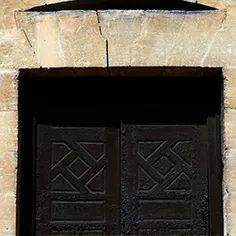 |
Flat archعقد مستقيمAn architectural element that structurally works as an arch, but has its VUOISSOIRS so shaped that the bottom surface is flat, not curved. Usually used in place of a LINTEL. | Flat arch | عقد مستقيم | An architectural element that structurally works as an arch, but has its VUOISSOIRS so shaped that the bottom surface is flat, not curved. Usually used in place of a LINTEL. |
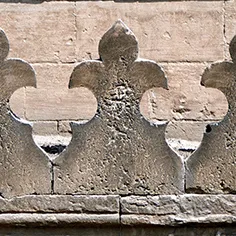 |
Fleur-de-lysزهرة الزنبق[Or fleur-de-lis]: An ornamental design based on a stylized lily, used in both Islamic and European art. The form was often used in MAMLUK-period CRENELLATIONS | Fleur-de-lys | زهرة الزنبق | [Or fleur-de-lis]: An ornamental design based on a stylized lily, used in both Islamic and European art. The form was often used in MAMLUK-period CRENELLATIONS |
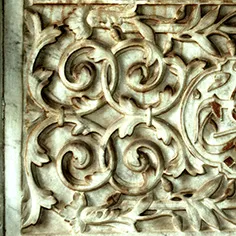 |
Floral scrollزخرفة نباتيةAn ornament of floral motifs stylized so that the looping stems form a geometric pattern | Floral scroll | زخرفة نباتية | An ornament of floral motifs stylized so that the looping stems form a geometric pattern |
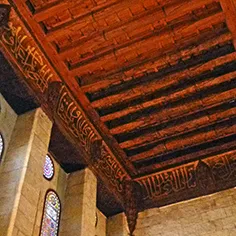 |
FriezeإفريزA horizontal band of decoration in the upper part of an internal or external wall. (In the original meaning, the middle section of classical entablature) | Frieze | إفريز | A horizontal band of decoration in the upper part of an internal or external wall. (In the original meaning, the middle section of classical entablature) |
 |
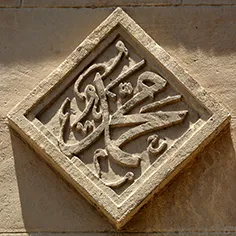
GalsجلسةGals (Ar, pl. galas): in Mamluk buildings, raised stone seats placed on both sides of the door inside the recess of the entrance porch | Gals | جلسة | Gals (Ar, pl. galas): in Mamluk buildings, raised stone seats placed on both sides of the door inside the recess of the entrance porch |
 |
Hadithحديث شريفHadith (Ar): The sayings of Prophet Muhammad, as reported by his companions and preserved in collections of Islamic literature | Hadith | حديث شريف | Hadith (Ar): The sayings of Prophet Muhammad, as reported by his companions and preserved in collections of Islamic literature |
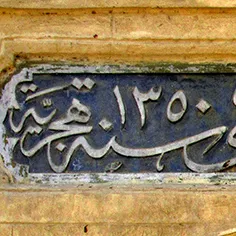 |
HigriهجريHigri (Ar): expressed as a date in the Islamic lunar calendar, with the staring date equivalent to 16 July 622 | Higri | هجري | Higri (Ar): expressed as a date in the Islamic lunar calendar, with the staring date equivalent to 16 July 622 |
 |
Joggled Voussoirsصنجة (صَنَج) معشقةStructural pieces forming an arch (VOUSSOIRS) that interlock and create a decorative pattern. In Islamic Egypt, especially in MAMLUK-period Cairo, the technique reached extraordinary mastery of craftsmanship | Joggled Voussoirs | صنجة (صَنَج) معشقة | Structural pieces forming an arch (VOUSSOIRS) that interlock and create a decorative pattern. In Islamic Egypt, especially in MAMLUK-period Cairo, the technique reached extraordinary mastery of craftsmanship |
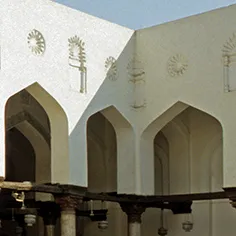 |
Keel archالعقد المدبب ذو المركزينAn arch with straight-line (rather than curving) undersides. | Keel arch | العقد المدبب ذو المركزين | An arch with straight-line (rather than curving) undersides. |
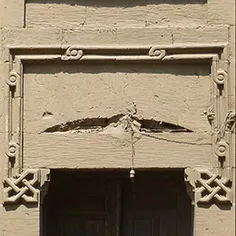 |
Knotted mouldingجفت / جفوتDecorative pattern of double roll mouldings intertwined at intervals with rounded knots. Used abundantly in MAMLUK architecture. Continued in use in Egypt in Ottoman times with the “knots” angular, not round | Knotted moulding | جفت / جفوت | Decorative pattern of double roll mouldings intertwined at intervals with rounded knots. Used abundantly in MAMLUK architecture. Continued in use in Egypt in Ottoman times with the “knots” angular, not round |
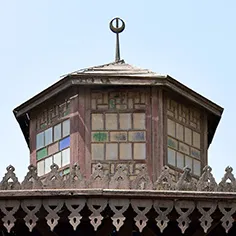 |
LanternشخشيخةA structure (often polygonal or circular) rising above the roof of a building with openings on its sides admitting daylight to the area below | Lantern | شخشيخة | A structure (often polygonal or circular) rising above the roof of a building with openings on its sides admitting daylight to the area below |
 |
LintelعتبةHorizontal beam or stone bridging an opening | Lintel | عتبة | Horizontal beam or stone bridging an opening |
 |
LiwanإيوانLiwan [or iwan] (Ar): an open-fronted hall, often vaulted, opening with a wide arch on a courtyard (sometimes a roofed courtyard) | Liwan | إيوان | Liwan [or iwan] (Ar): an open-fronted hall, often vaulted, opening with a wide arch on a courtyard (sometimes a roofed courtyard) |
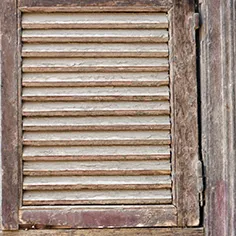 |
Louvre shuttersشيشWindow shutters made of overlapping slanted wooden slats that permit air flow, but block direct sunshine or rain | Louvre shutters | شيش | Window shutters made of overlapping slanted wooden slats that permit air flow, but block direct sunshine or rain |
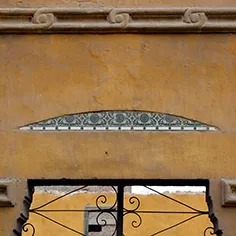 |
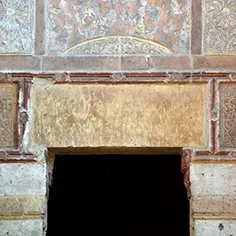
Lunetteالنفيس / طبلة العقد[As used here]: The space between a LINTEL and the SEGMENTAL RELIEVING ARCH above it. It is often filled with decorative patterns, and in MAMLUK and Ottoman-period Cairo with glazed wall-tiles | Lunette | النفيس / طبلة العقد | [As used here]: The space between a LINTEL and the SEGMENTAL RELIEVING ARCH above it. It is often filled with decorative patterns, and in MAMLUK and Ottoman-period Cairo with glazed wall-tiles |
 |
MafrukaمفروكةMafruka (Ar): a geometric ornament consisting of a square with a smaller rotated square within, forming four identical regular shapes around. Found especially in wood paneling. | Mafruka | مفروكة | Mafruka (Ar): a geometric ornament consisting of a square with a smaller rotated square within, forming four identical regular shapes around. Found especially in wood paneling. |
 |
MamlukمملوكيPertaining to the period of the Mamluk Sultanate reigning over Egypt and the neighbouring lands in 1250 – 1517, and the distinctive architectural and artistic style developed at the time. | Mamluk | مملوكي | Pertaining to the period of the Mamluk Sultanate reigning over Egypt and the neighbouring lands in 1250 – 1517, and the distinctive architectural and artistic style developed at the time. |
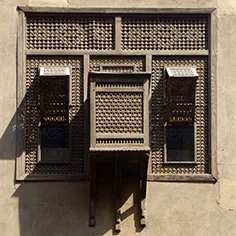 |
MashrabiyaمشربيةBay windows of turned-wood screens, very popular in historic residential houses, and sometimes religious buildings in Cairo. Also, turned-wood panels in general. (Compare ARABESQUE) | Mashrabiya | مشربية | Bay windows of turned-wood screens, very popular in historic residential houses, and sometimes religious buildings in Cairo. Also, turned-wood panels in general. (Compare ARABESQUE) |
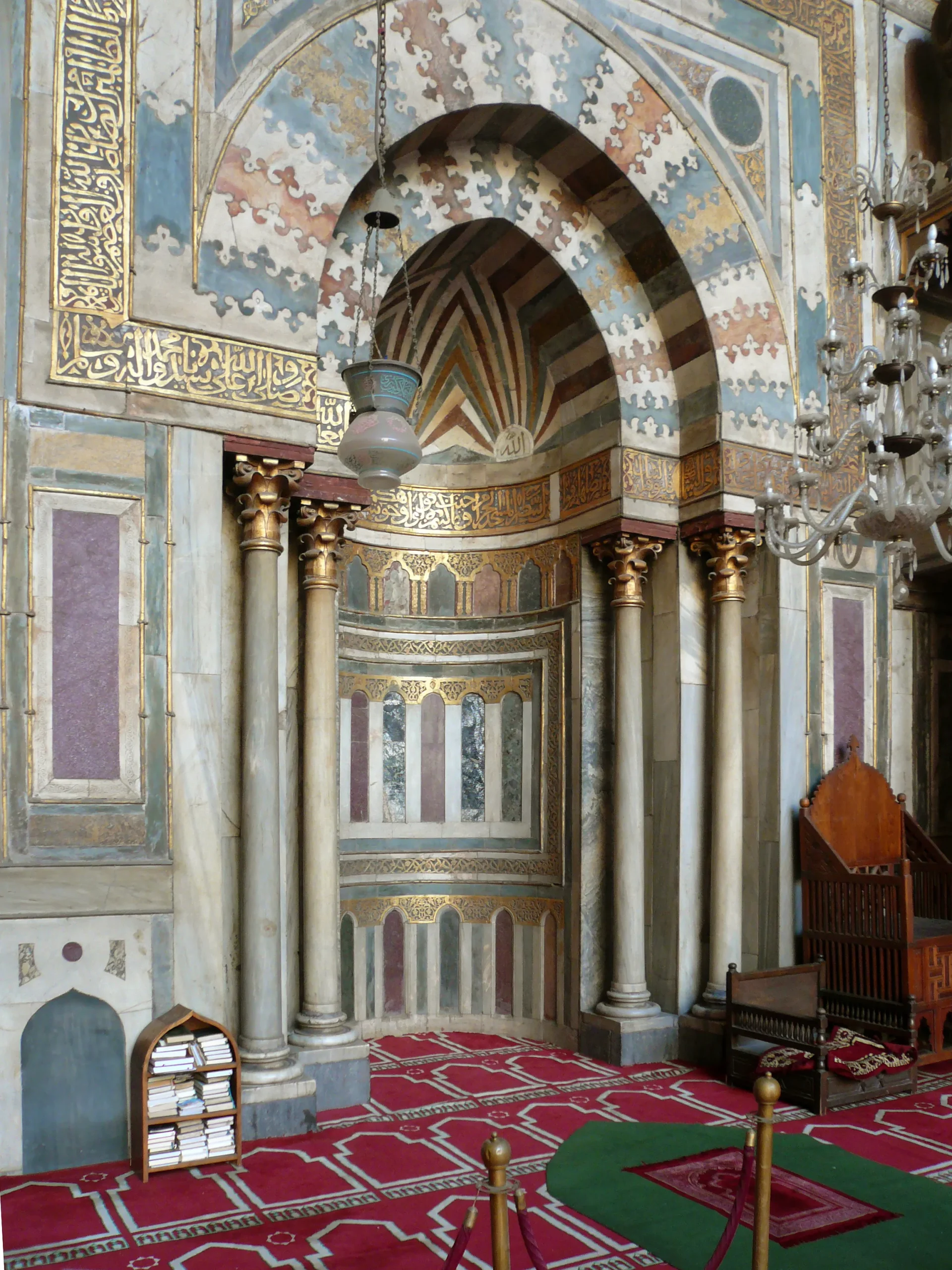 |
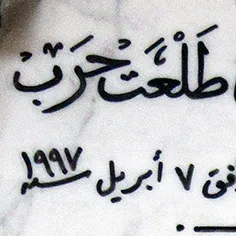
MihrabمحرابMihrab (Ar): Niche indicating the QIBLA, the direction towards Mecca. | Mihrab | محراب | Mihrab (Ar): Niche indicating the QIBLA, the direction towards Mecca. |
 |
MiladiميلاديMiladi (Ar): expressed as a date in the Christian solar calendar (currently, the Julian calendar) | Miladi | ميلادي | Miladi (Ar): expressed as a date in the Christian solar calendar (currently, the Julian calendar) |
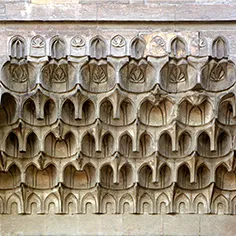 |
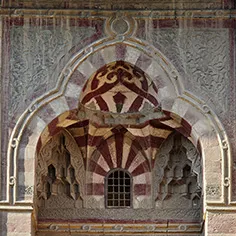
MuqarnasمقرنصMuqarnas (Ar): ornamental arrangement of multi-tiered niches widely used in Islamic art and architecture. More elaborate versions can be of “stalactite” form. In Mamuk-period buildings they typically decorate SQUINCHES under domes, wall niches, and portal | Muqarnas | مقرنص | Muqarnas (Ar): ornamental arrangement of multi-tiered niches widely used in Islamic art and architecture. More elaborate versions can be of “stalactite” form. In Mamuk-period buildings they typically decorate SQUINCHES under domes, wall niches, and portal |
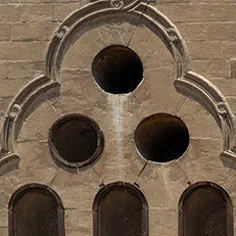 |
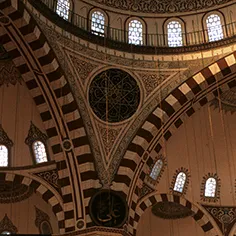
OculusعينOculus (pl. oculi): a round window. In MAMLUK architecture, oculi are often grouped over windows topped with semicircular arches in a triangular one-over two- over three pattern | Oculus | عين | Oculus (pl. oculi): a round window. In MAMLUK architecture, oculi are often grouped over windows topped with semicircular arches in a triangular one-over two- over three pattern |
 |
Pendentiveالمثلث الكرويA triangular vaulting (a segment of a sphere) over a corner of a square room, providing a transition from the square and the circular base of the dome or its drum (compare SQUINCH) | Pendentive | المثلث الكروي | A triangular vaulting (a segment of a sphere) over a corner of a square room, providing a transition from the square and the circular base of the dome or its drum (compare SQUINCH) |
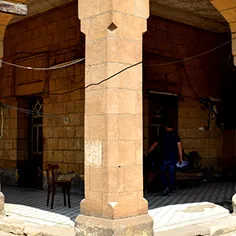 |
PierركيزةA solid masonry support, usually square or rectangular in plan | Pier | ركيزة | A solid masonry support, usually square or rectangular in plan |
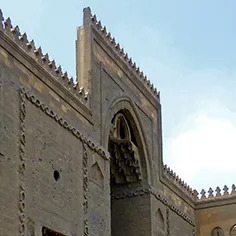 |
PishtaqبشتاقA section of the façade containing the entrance portal that is taller than the rest of the wall. Originates in Persian architecture | Pishtaq | بشتاق | A section of the façade containing the entrance portal that is taller than the rest of the wall. Originates in Persian architecture |
 |
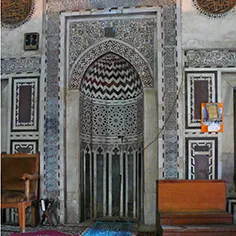
QamariyaقمريةQamariya (Ar): a window of stained glass pieces set in a gypsum lattice forming geometric or floral patterns | Qamariya | قمرية | Qamariya (Ar): a window of stained glass pieces set in a gypsum lattice forming geometric or floral patterns |
 |
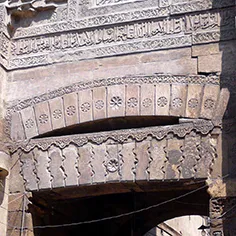
QiblaقبلةQibla (Ar): direction in which Muslims face to pray, i.e., toward Mecca, which in Egypt is approximately southeast. The qibla wall is the one in which the MIHRAB is located. | Qibla | قبلة | Qibla (Ar): direction in which Muslims face to pray, i.e., toward Mecca, which in Egypt is approximately southeast. The qibla wall is the one in which the MIHRAB is located. |
 |
Relieving archعقد عاتقAn arch (usually SEGMENTAL) placed above a LINTEL, so the weight of the masonry above is carried by the arch and not the lintel. (See also LUNETTE) | Relieving arch | عقد عاتق | An arch (usually SEGMENTAL) placed above a LINTEL, so the weight of the masonry above is carried by the arch and not the lintel. (See also LUNETTE) |
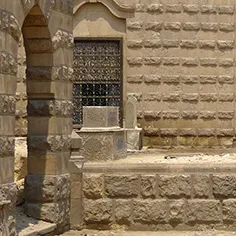 |
Rusticatedمخشّنة(Of stone masonry): built of stone blocks with a rough finish of surface, separated by sunken joints | Rusticated | مخشّنة | (Of stone masonry): built of stone blocks with a rough finish of surface, separated by sunken joints |
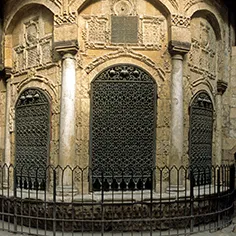 |
SabilسبيلSabil (Ar): a structure housing a charity distributing free drinking water to passers-by (usually from an underground cistern) through large windows fitted with grilles. | Sabil | سبيل | Sabil (Ar): a structure housing a charity distributing free drinking water to passers-by (usually from an underground cistern) through large windows fitted with grilles. |
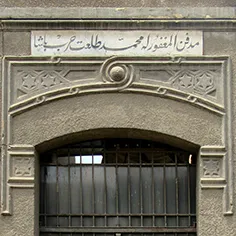 |
Segmental archالعقد المقببAn arch with the bottom surface forming a segment of a circle, not a semicircle. This results in a flat profile. (See also LUNETTE) | Segmental arch | العقد المقبب | An arch with the bottom surface forming a segment of a circle, not a semicircle. This results in a flat profile. (See also LUNETTE) |
 |
ShahidشاهدShahid (Ar): An upright stela placed at one or both ends of a TABUT CENOTAPH, usually with a commemorative inscription, sometimes topped with stylized headgear | Shahid | شاهد | Shahid (Ar): An upright stela placed at one or both ends of a TABUT CENOTAPH, usually with a commemorative inscription, sometimes topped with stylized headgear |
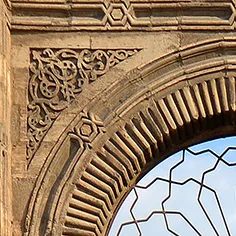 |
SpandrelأطروفيّةThe area contained between an arch and its rectangular framing | Spandrel | أطروفيّة | The area contained between an arch and its rectangular framing |
 |
Squinchحنية مقرنصAn arch or a system of arches placed over a corner of a square structure to accommodate a dome by providing a transition from a square to an octagon (compare PENDENTIVE) | Squinch | حنية مقرنص | An arch or a system of arches placed over a corner of a square structure to accommodate a dome by providing a transition from a square to an octagon (compare PENDENTIVE) |
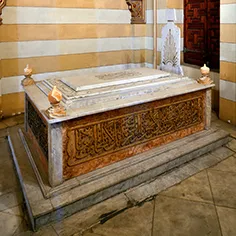 |
TabutتابوتTabut (Ar): a tomb marker traditionally of stone or wood (now often of brick masonry),commemorating the dead but not containing the body, a CENOTAPH | Tabut | تابوت | Tabut (Ar): a tomb marker traditionally of stone or wood (now often of brick masonry),commemorating the dead but not containing the body, a CENOTAPH |
 |
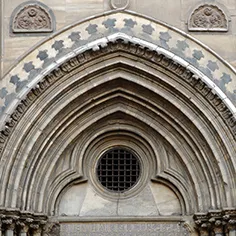
Trilobedعقد ثلاثيTrilobed [or trilobite]: composed of or divided into three lobes in a trefoil (cloverleaf-like) manner | Trilobed | عقد ثلاثي | Trilobed [or trilobite]: composed of or divided into three lobes in a trefoil (cloverleaf-like) manner |
 |
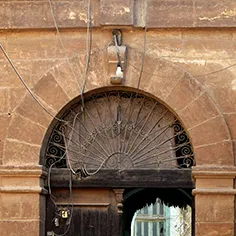
TympanumطبلةTympanum (pl. tympana): Area enclosed by an arch over a door or window. (Also a triangular or segmental area within a pediment) | Tympanum | طبلة | Tympanum (pl. tympana): Area enclosed by an arch over a door or window. (Also a triangular or segmental area within a pediment) |
 |
Voussoirsصنجة / صَنَجWedge-shaped stones used in arch construction (see JOGGLED VOISSOIRS) | Voussoirs | صنجة / صَنَج | Wedge-shaped stones used in arch construction (see JOGGLED VOISSOIRS) |
 |
Zone of transitionمنطقة الإنتقالThe section of a structure providing transition from the square plan of a room covered with a dome to the circular base of the dome or its drum. Internally, it incorporates a system of PENDENTIVES or SQUINCHES, often concealed with MUQARNAS. | Zone of transition | منطقة الإنتقال | The section of a structure providing transition from the square plan of a room covered with a dome to the circular base of the dome or its drum. Internally, it incorporates a system of PENDENTIVES or SQUINCHES, often concealed with MUQARNAS. |