
Unit No80
Muhammad Baiumi Bey Makram
|
Coordinates of the main entrance |
30.038891N - 31.271499E |
|
Attribution |
Muhammad Baiumi Bey Makram |
|
Higri (AH)Dates as given in the Inscription |
|
|
Miladi (AD)Dates as given in the Inscription |
1929 |
|
Inscription Contemporary with the building? |
Yes |
|
Multiple date(s) In the inscription? |
Yes |
|
Assumed Date |
|
|
Based on |
|
|
Original Use |
Funerary enclosure |
|
Current Use |
Funerary enclosure |
|
Overall condition |
Poor |
Features of unit 80
| Present | Count | Material | Comments (see description for details) | |
|---|---|---|---|---|
| Free standing structure | No | |||
| Walled enclosure | Yes | 1 | stone | |
| Rooms by the perimeter wall | Yes | 3 | stone | Interior inaccessible |
| Freestanding structure(s) in enclousure | No | |||
| Dome over the tomb chamber | Yes | |||
| Neo-Mamluk architectural decoration | Yes | |||
| Garden layout | No | Greenery in courtyard, no formal layout | ||
| Sabil(s) | Yes | 1 | stone | |
| Wall fountain(s) | No | |||
| Canopy on columns / pillars | No | |||
| Carved marble cenotaph(s) | No | Possibly present, interior inaccessible | ||
| Decorated limestone tomb-markers | Yes | 1 | In the courtyard | |
| Decorated gateway | Yes | 2 | stone | One very simple |
| Decorative door-leaves | Yes | 6 | wood, iron, glass | |
| Decorative window grilles | Yes | 8 | wood | In roof lantern, scarce remnants only |
| Decorative shutters | No | |||
| Painted ceiling(s) | No | Interior inaccessible | ||
| Decorative paving(s) | No | Interior inaccessible |
Unusual or unique features
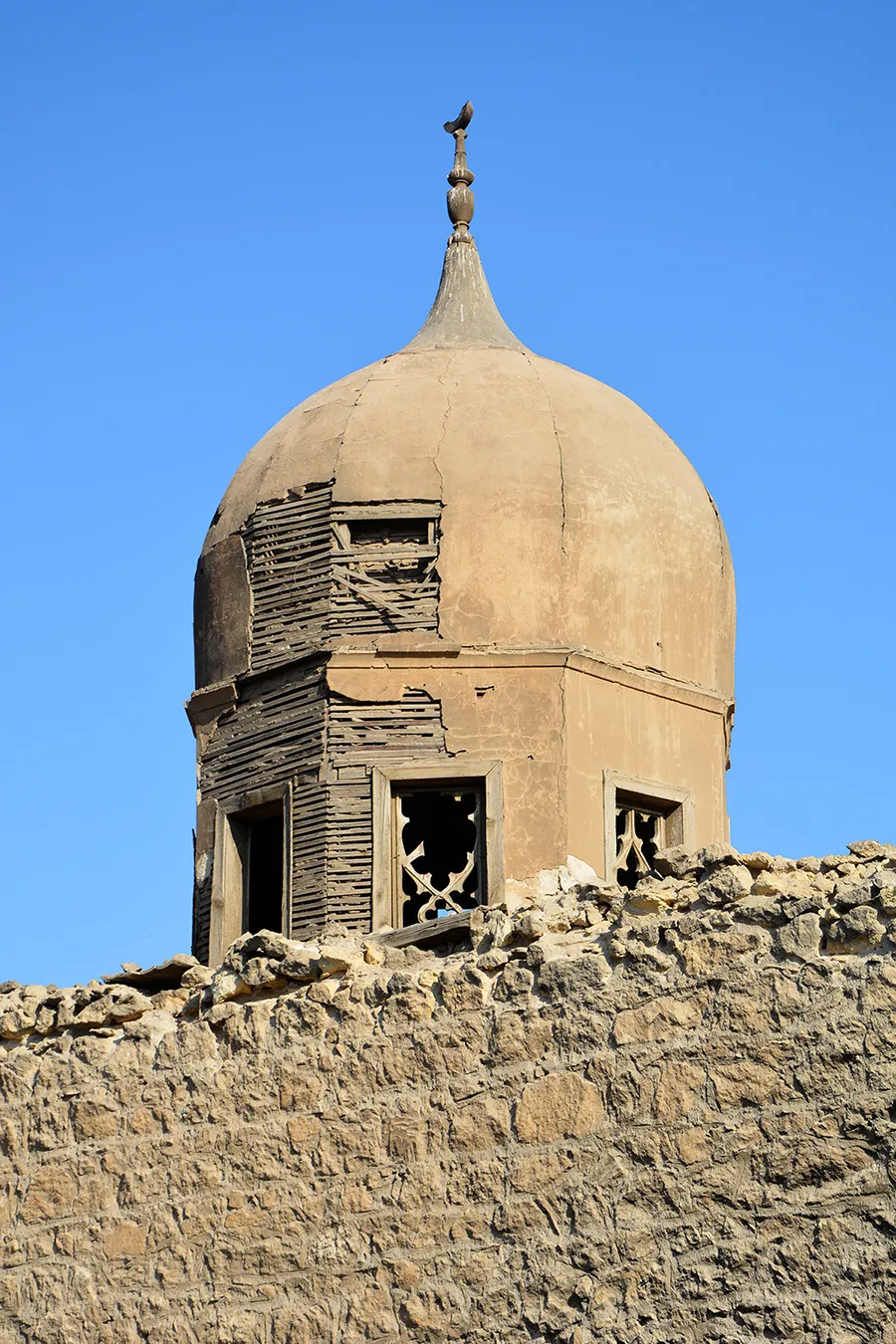
• European Gothic Revival tracery patterns in the wooden window grilles in the roof lantern over the burial chamber, instead of neo-Mamluk motifs more popular in the cemetery.
Description (The direction towards Mecca (Qibla) is described as eastern and other directions are named accordingly)
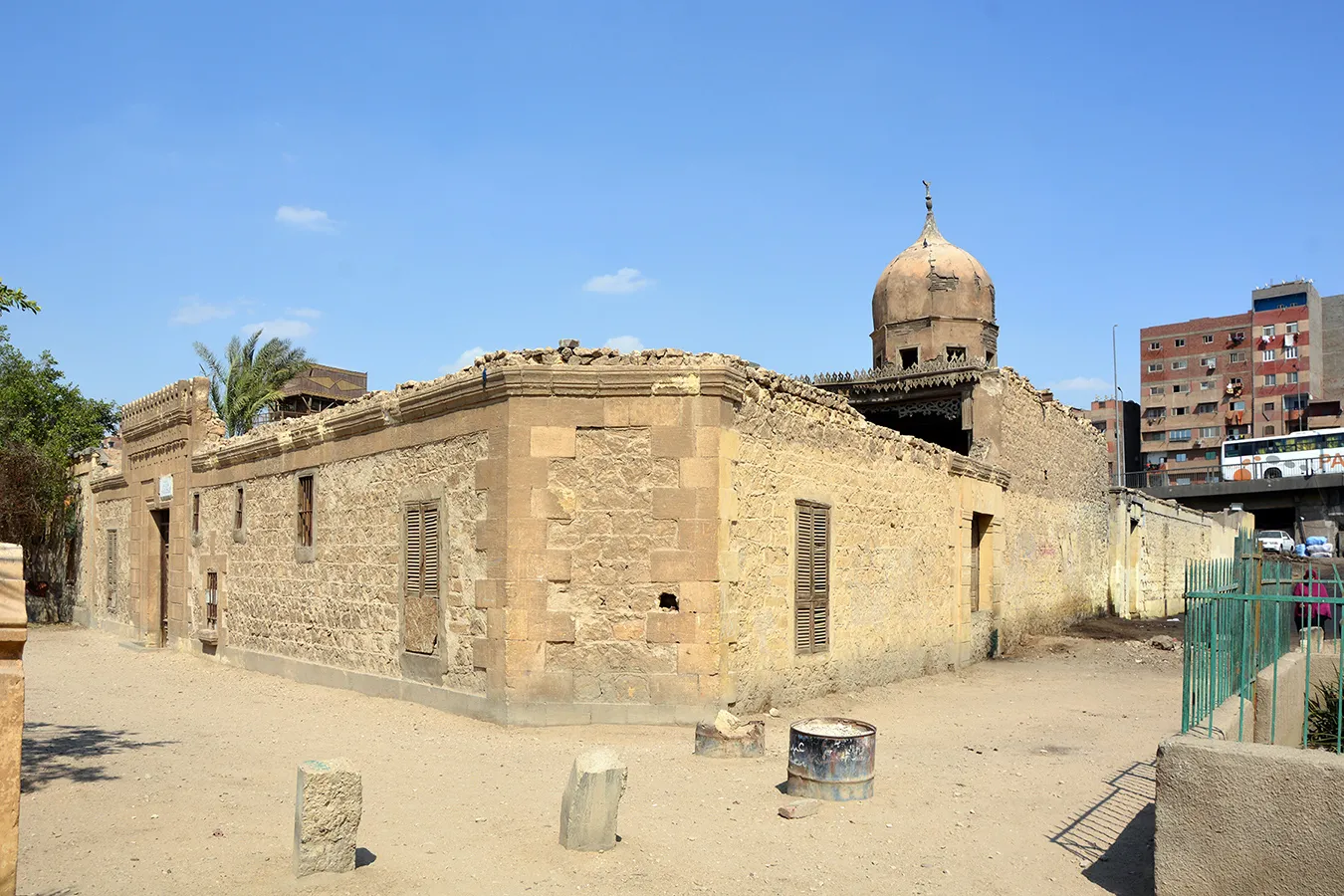
The funerary enclosure occupies a middle-size quadrilateral lot measuring approximately 20 x 17–22 metres, with southern, eastern and northern walls meeting at right angles, and the western wall oblique. The acute-angle south-western corner is chamfered. The enclosure faces streets on the southern and western sides, and borders on neighbouring funerary enclosures to the other sides.
There is a single-storey building along the western wall, apparently housing reception and/or service rooms, and a huge burial chamber of square plan in the south-eastern corner, open-fronted on the western side.
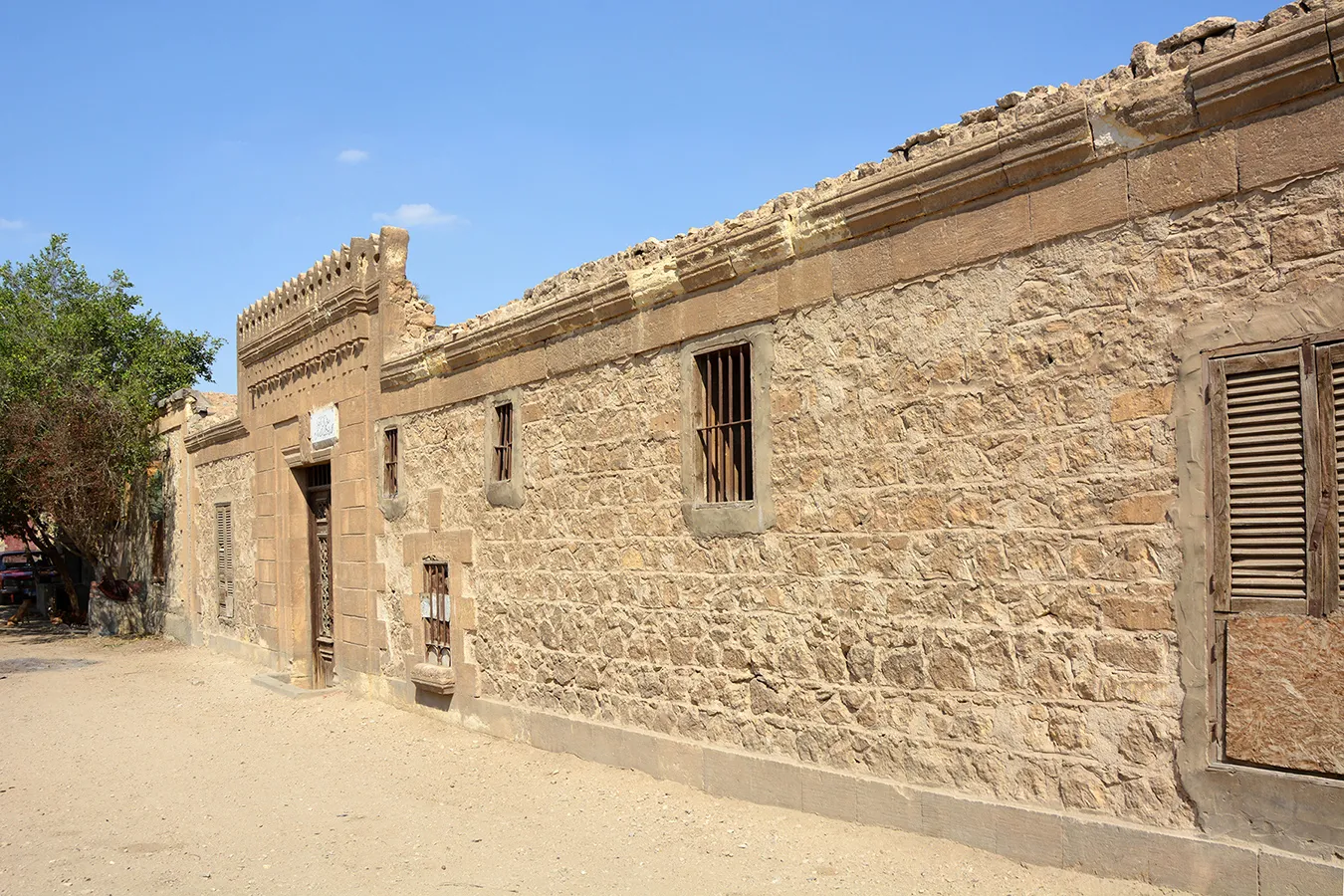
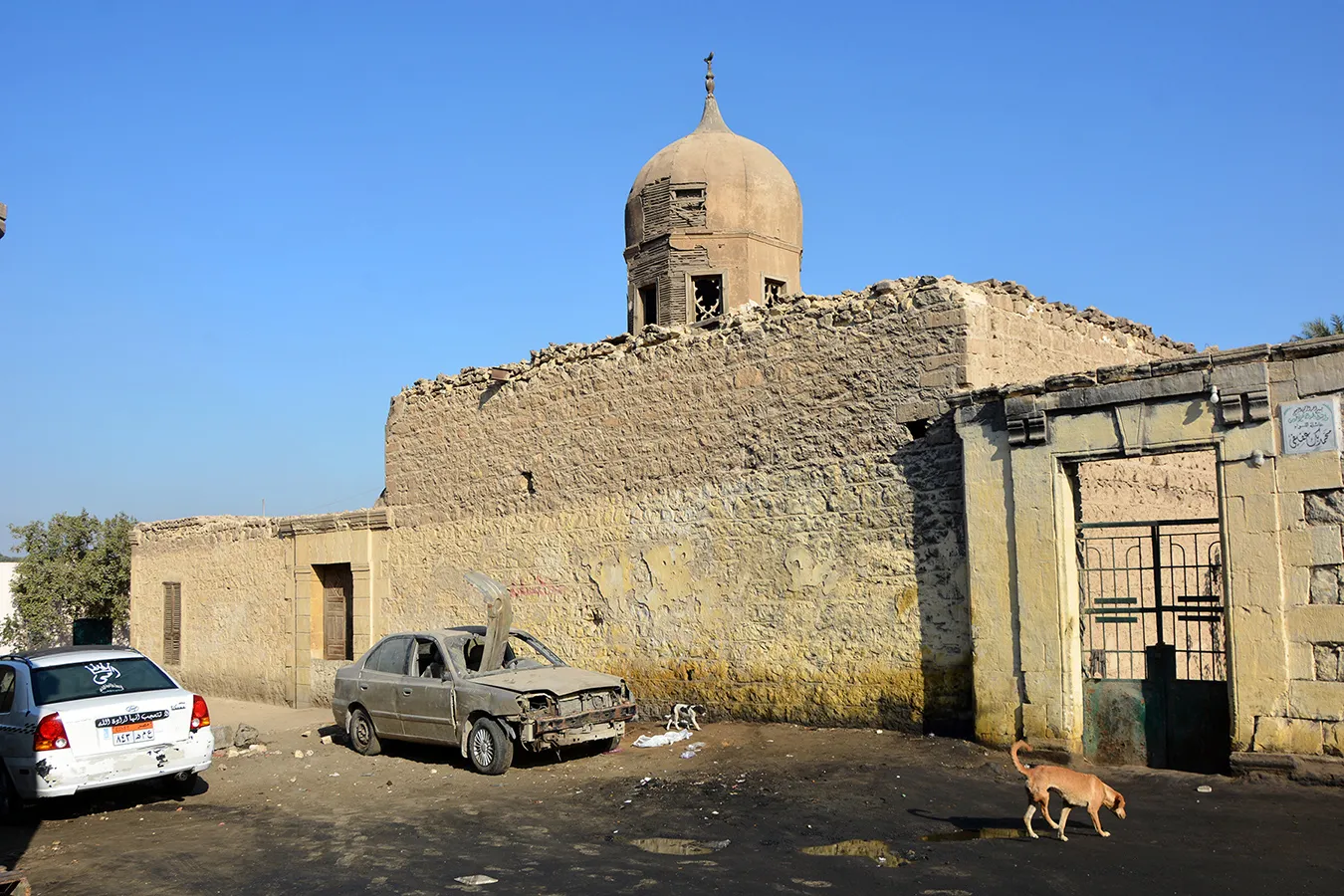
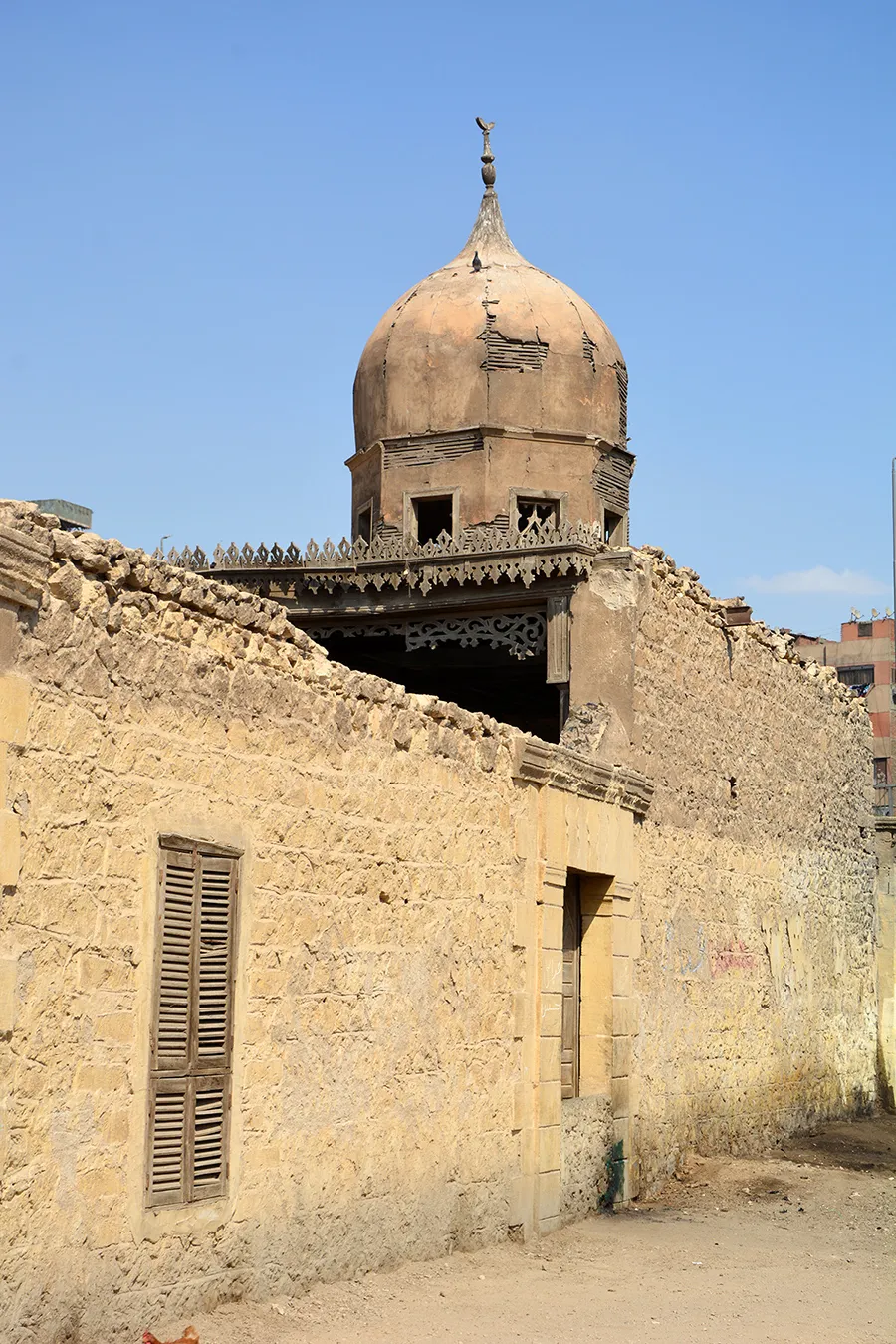
There is a portal in the western façade leading to the entrance hall in the western building, and a simple gate in the southern wall (now partially walled up) leading directly to the courtyard. The gates, corners, and the cornice are built of ashlar stone, the other walls are built of course rough stone. It appears that the rough stone walls were originally plastered, but the rendering is now gone (removed?)
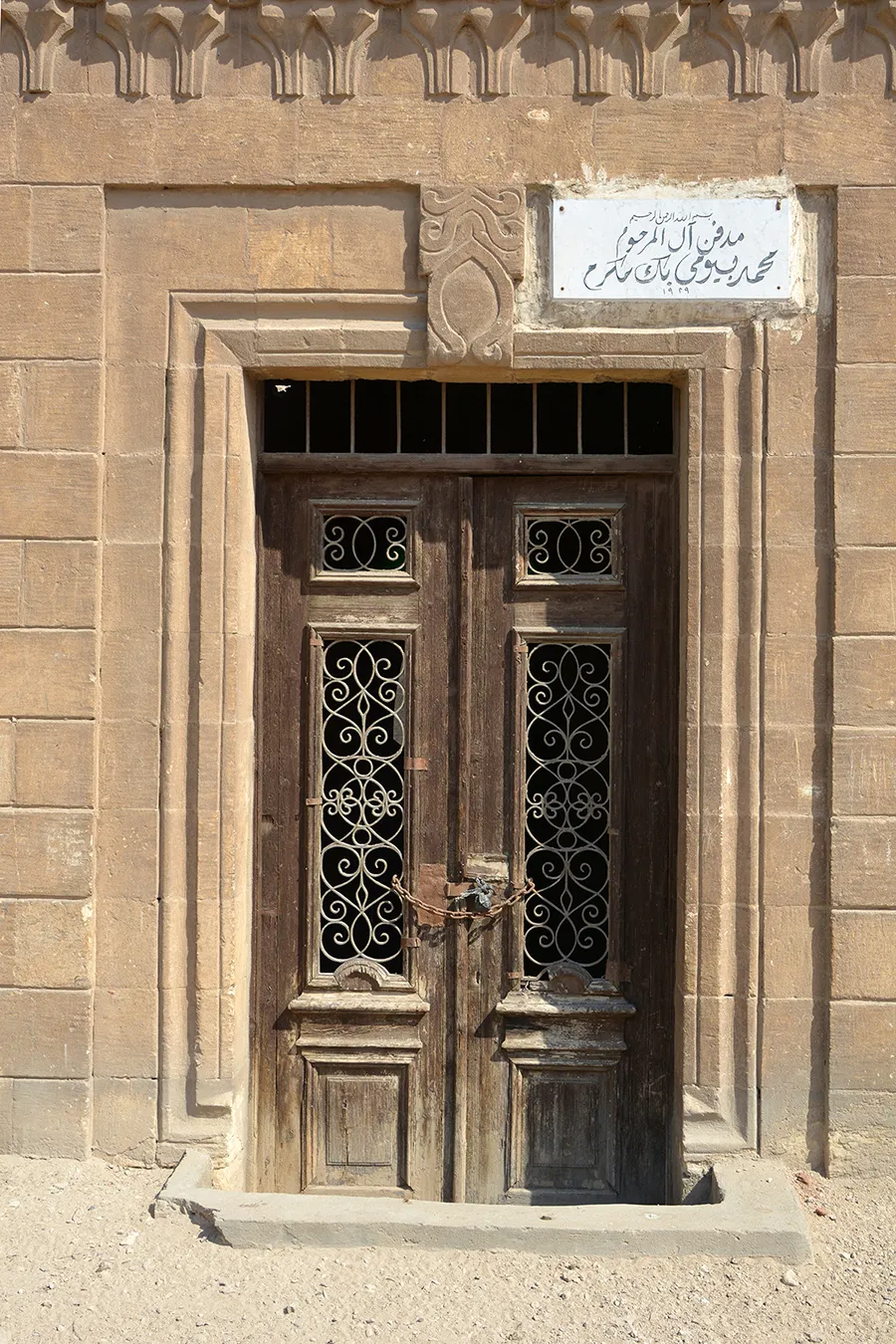
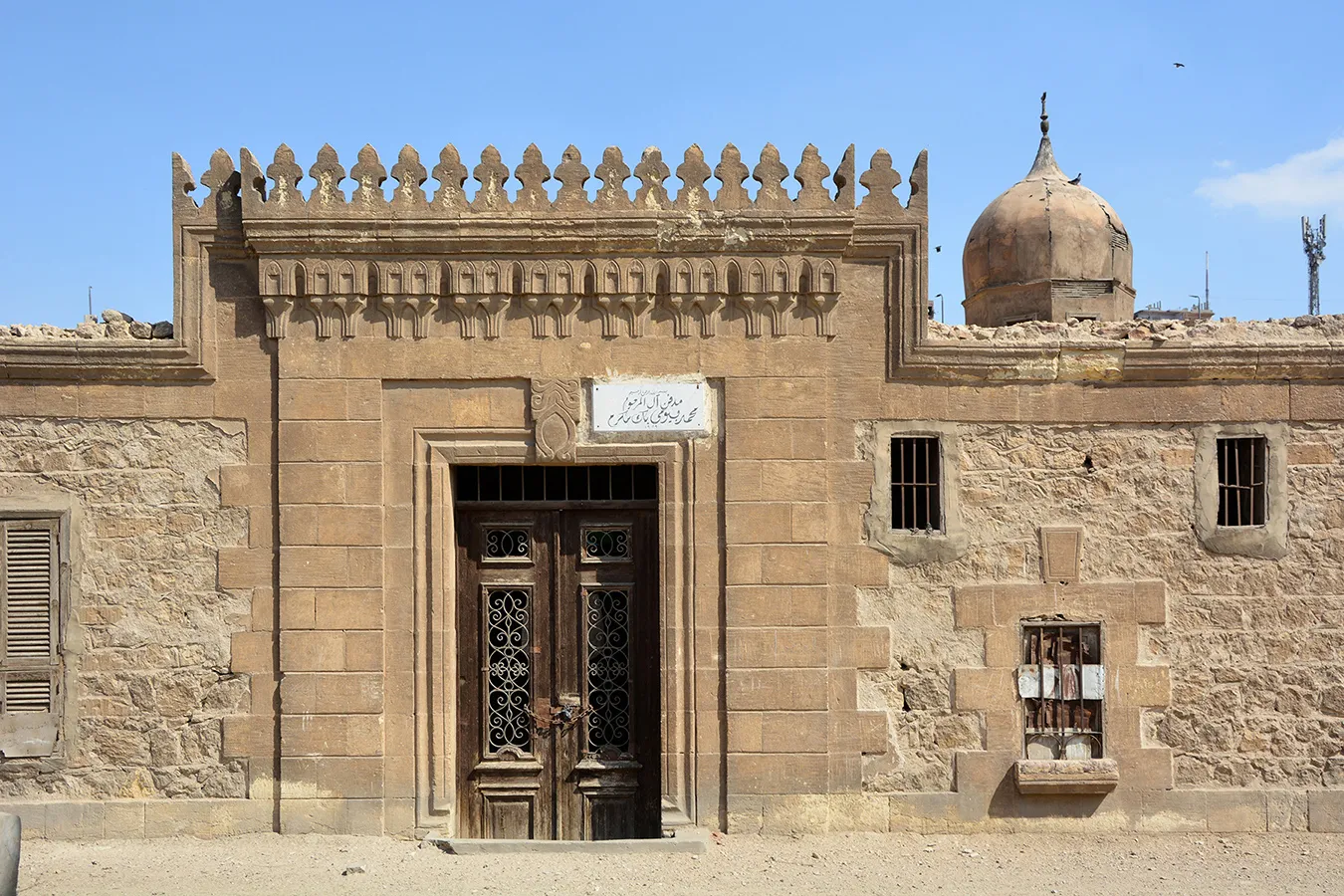
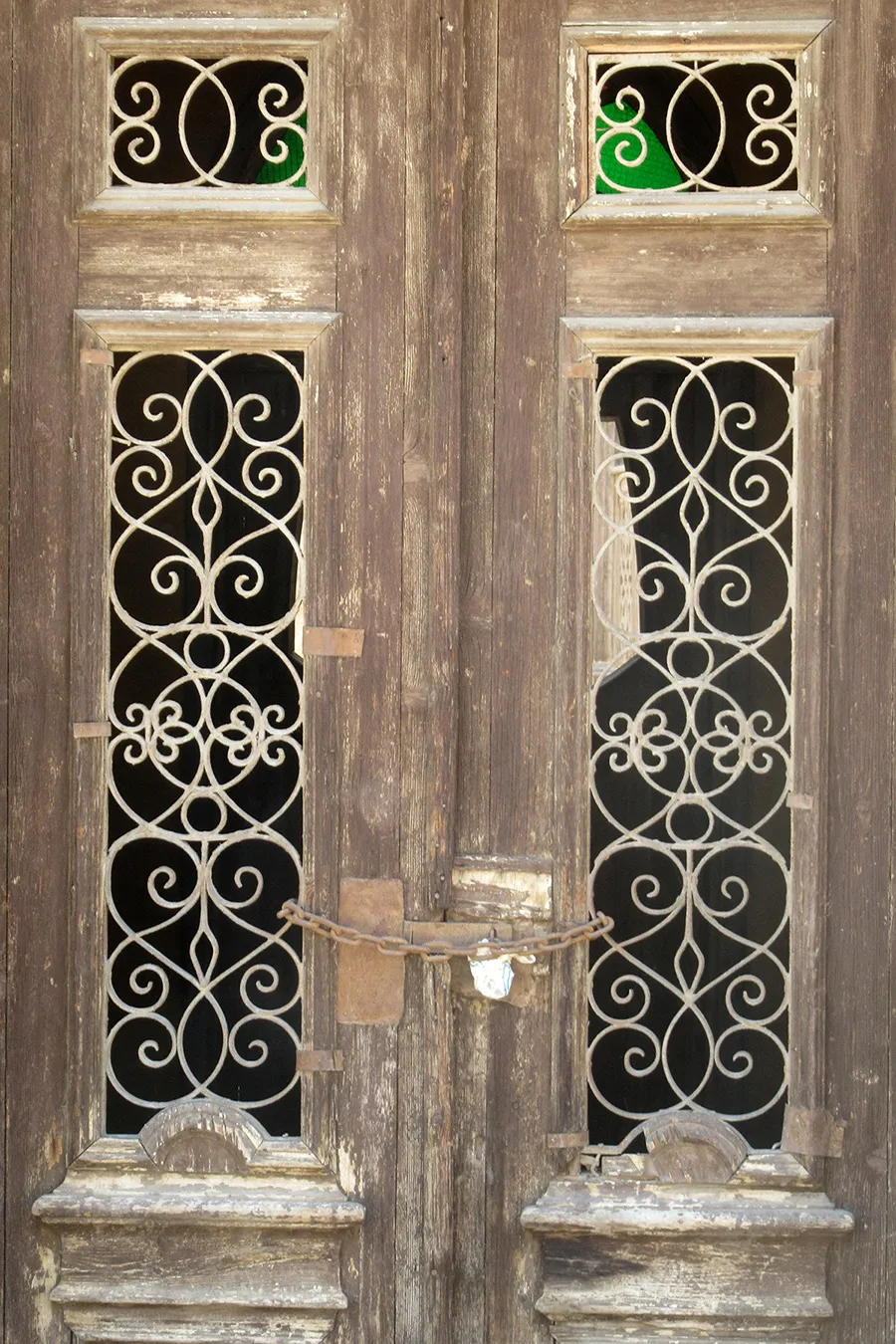
The main portal is placed asymmetrically in the left (northern) part of the western façade. The rectangular entrance door covered with a flat arch of angularly joggled voussoirs is set in a shallow rectangular recess, which is itself placed in a flat projection of flatly rusticated masonry. The projection is topped with a muqarnas frieze and a bold cornice that turns down and continues on the top of lower side sections of the façade. The portal section is crowned with simple stone fleur-de-lys crenelation. The entrance door is framed with a moulding, the inner part of which decidedly appears unfinished, as does the keystone, on which an outline of decoration is sketched. The panelled door leaves with elaborate mouldings have glazed central and top panels fitted with elaborate wrought-iron grilles of patterns unrelated to Islamic art.
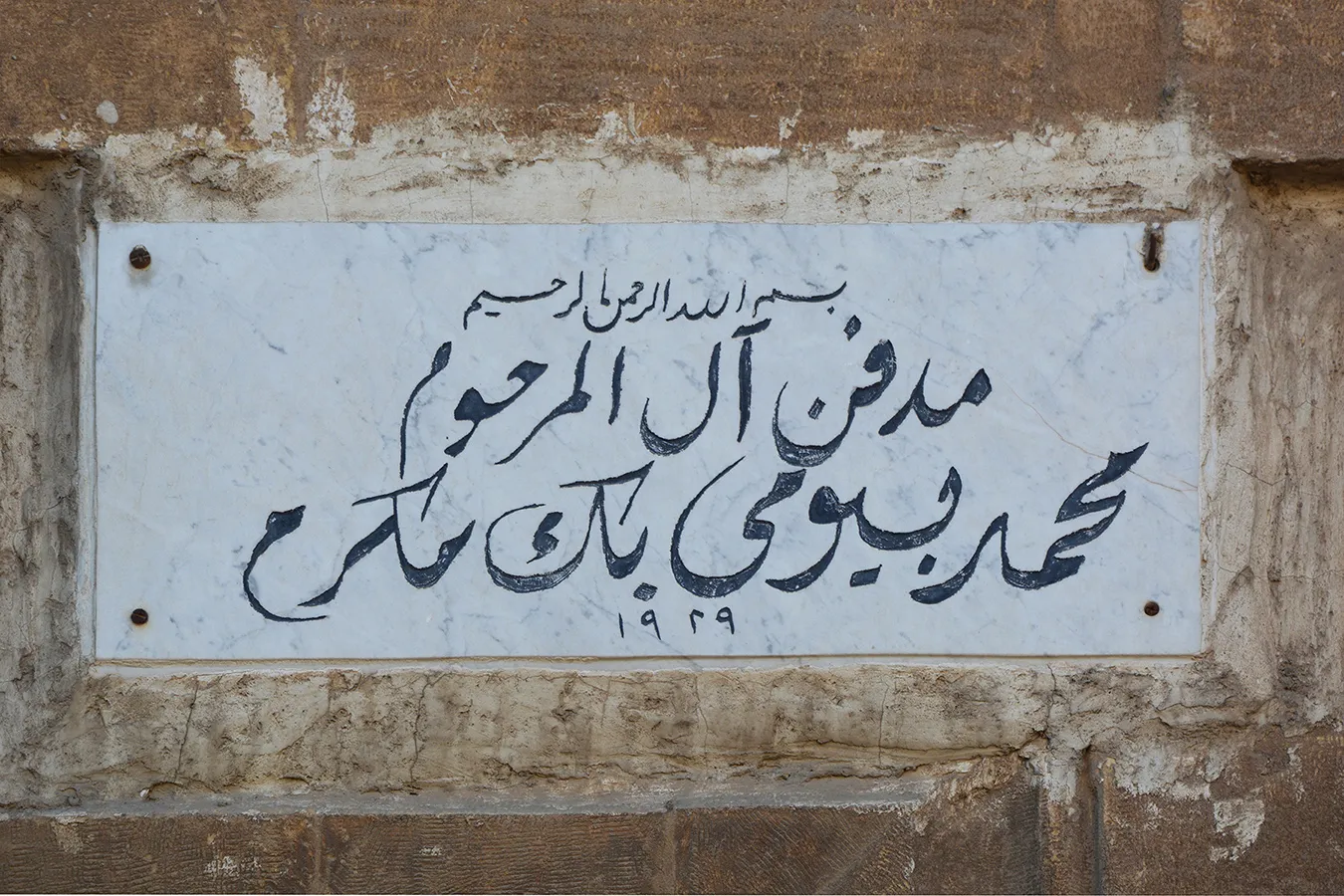
Over the entrance door on the right side, a modern marble panel is crudely mounted. It states in incised/sunken relief inscription that the funerary enclosure belongs to Muhammad Baiumi Bey Makram and gives the date 1929 (Miladi only).
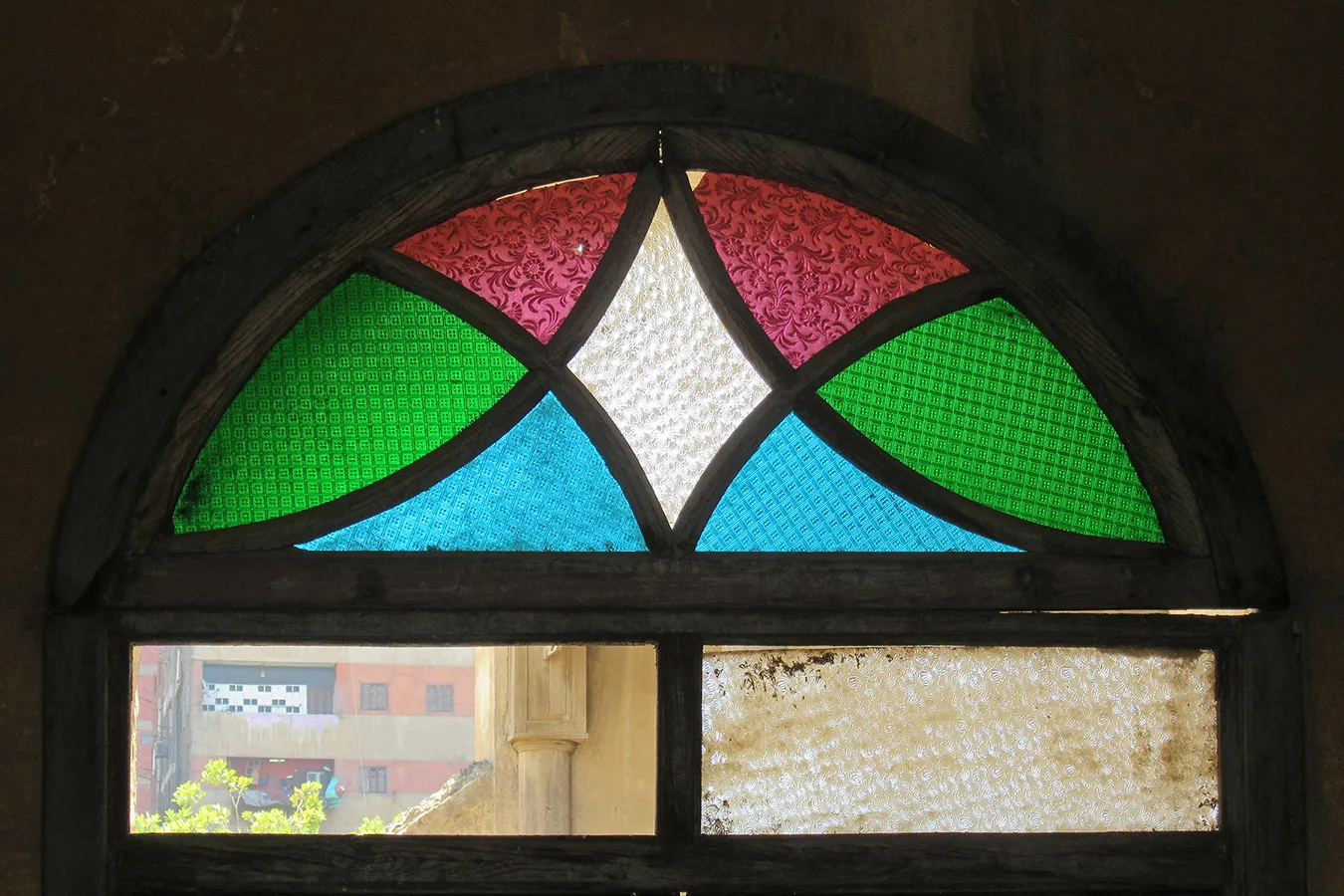
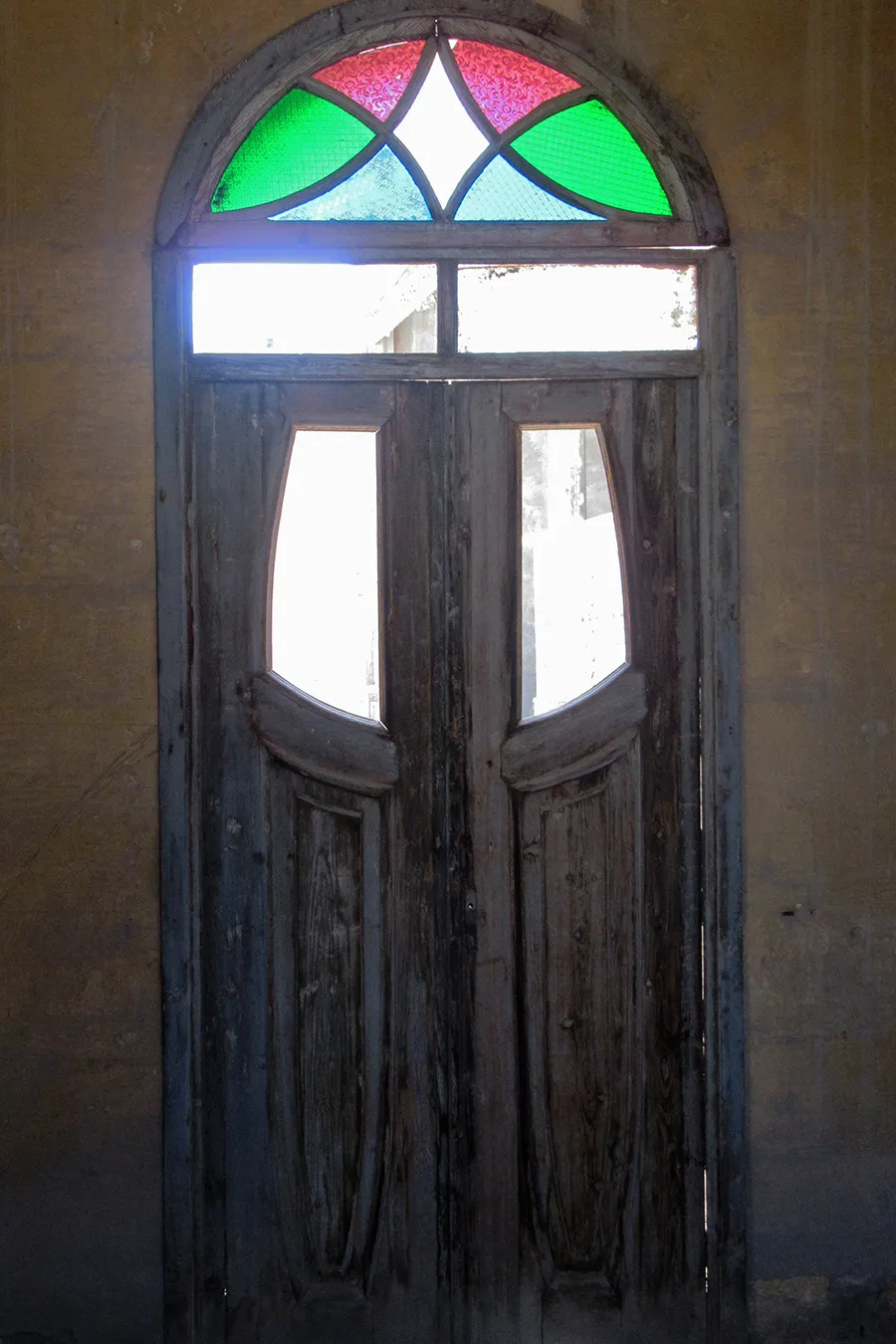
The panelled wooden door from the entrance hall to the courtyard is in distinctly Art Nouveau style, with curvilinear shapes of the panels. The arch above the door is filled with stained-glass pieces in a simple geometric pattern.
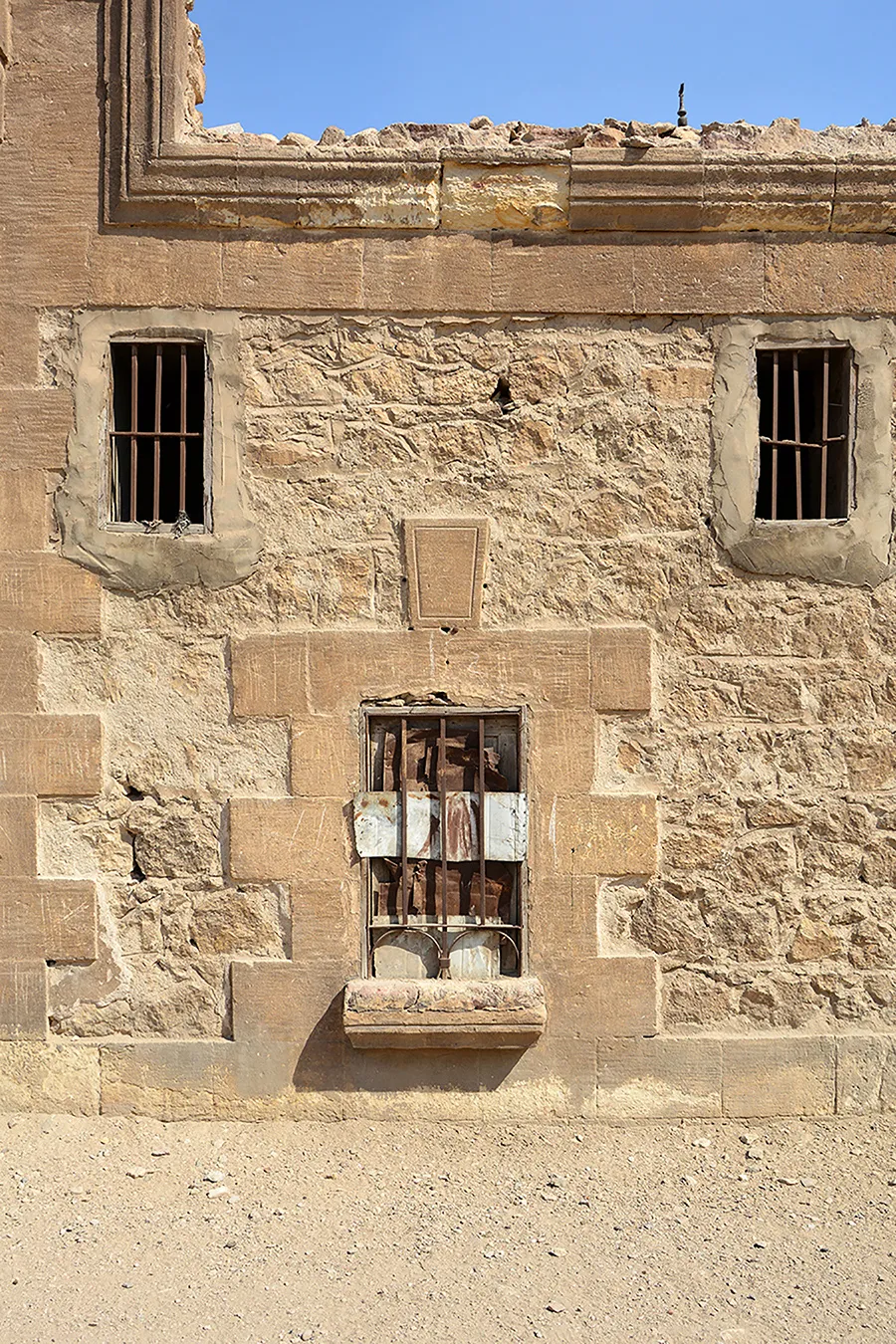
To the right (south) of the portal is a simple rectangular sabil window framed in plain flatly rusticated masonry, with a simple limestone ledge at the bottom. The two plain rectangular windows to the sides of the western façade have simple wooden louvre shutters; to the right of the portal are three irregularly placed small windows of the service rooms.
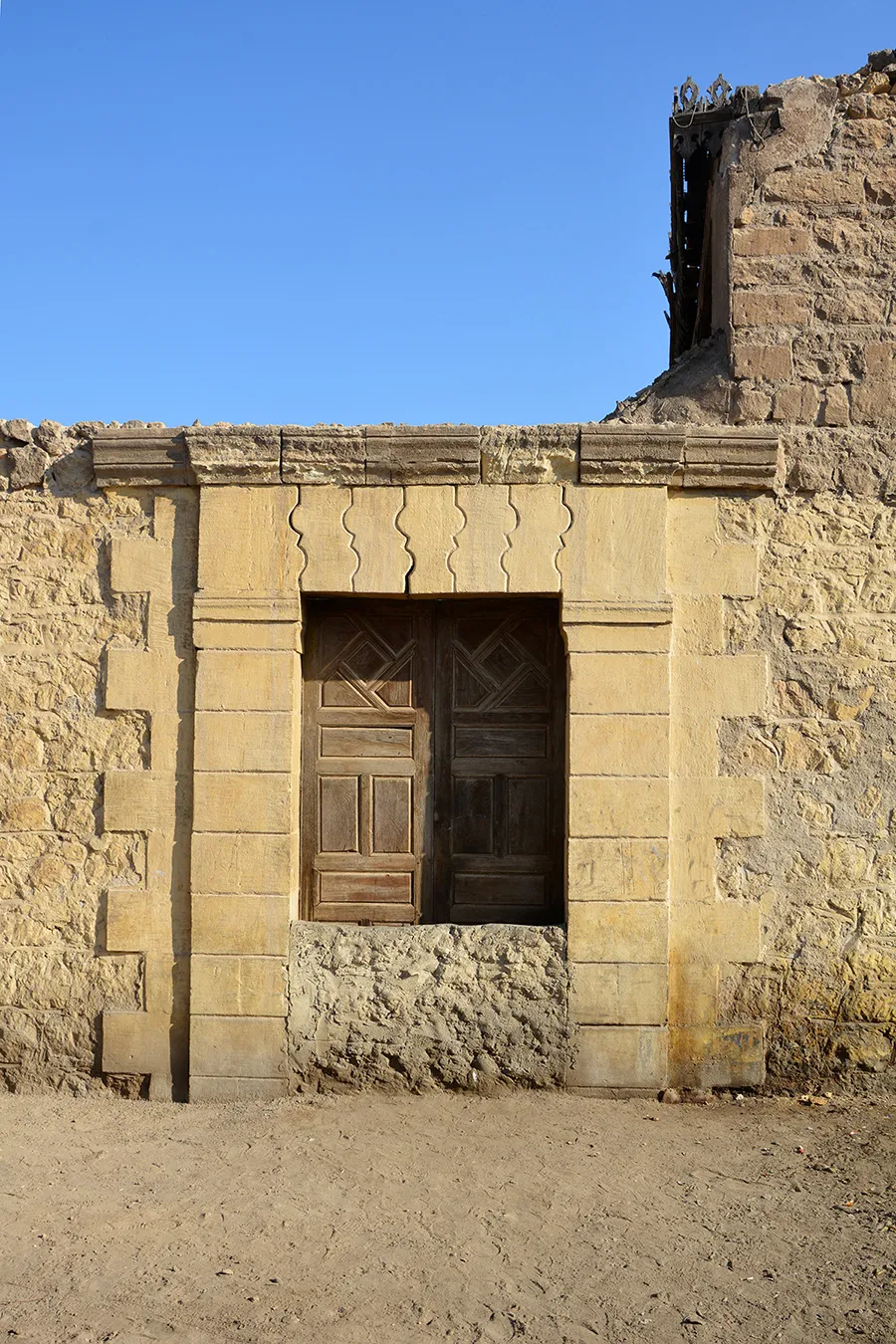
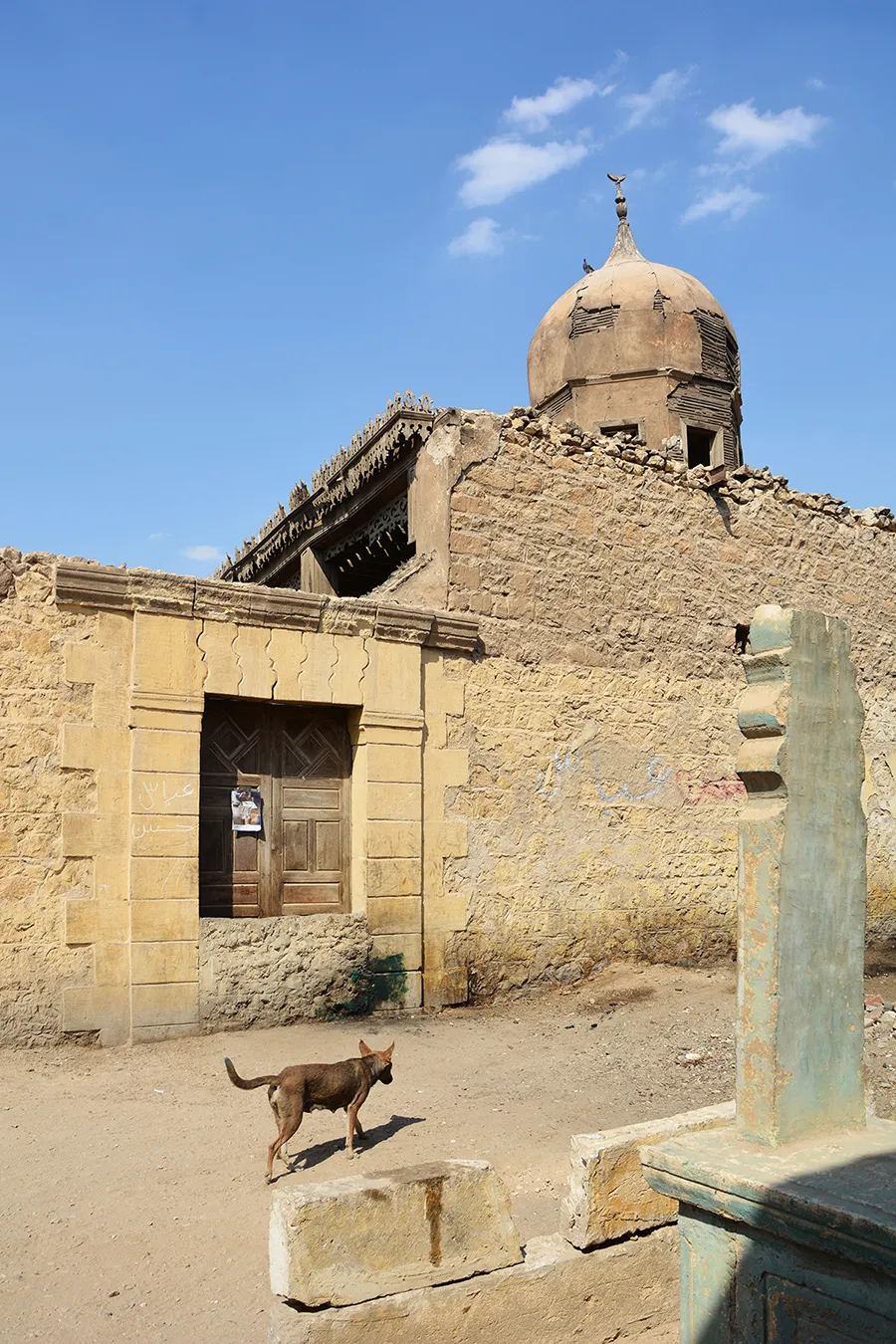
The gate in the southern wall is very simple, flanked with simplified flatly rusticated pilasters and covered with flat arch of joggled voussoirs. The panelled wooden door leaves include simple mafruka motifs.
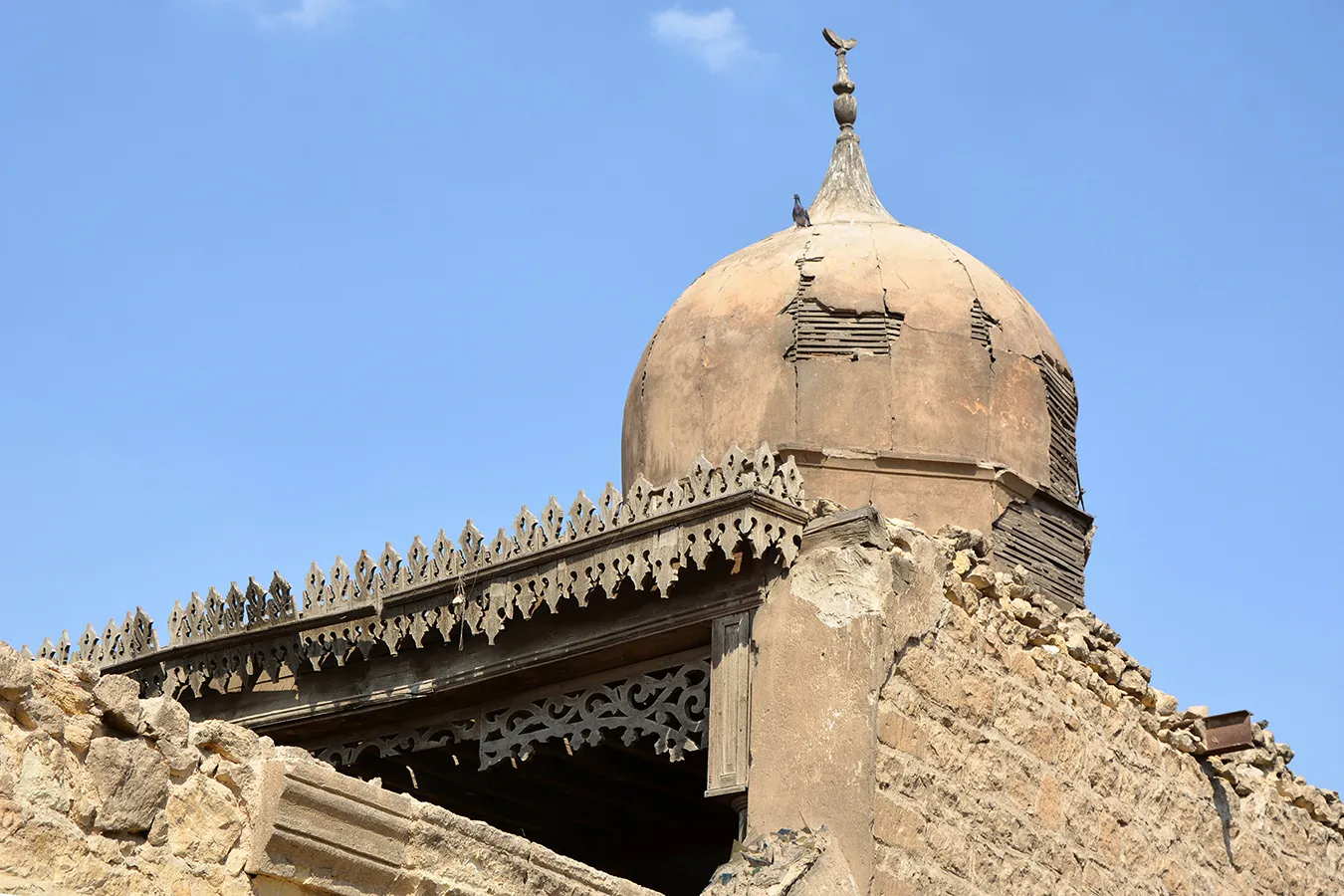
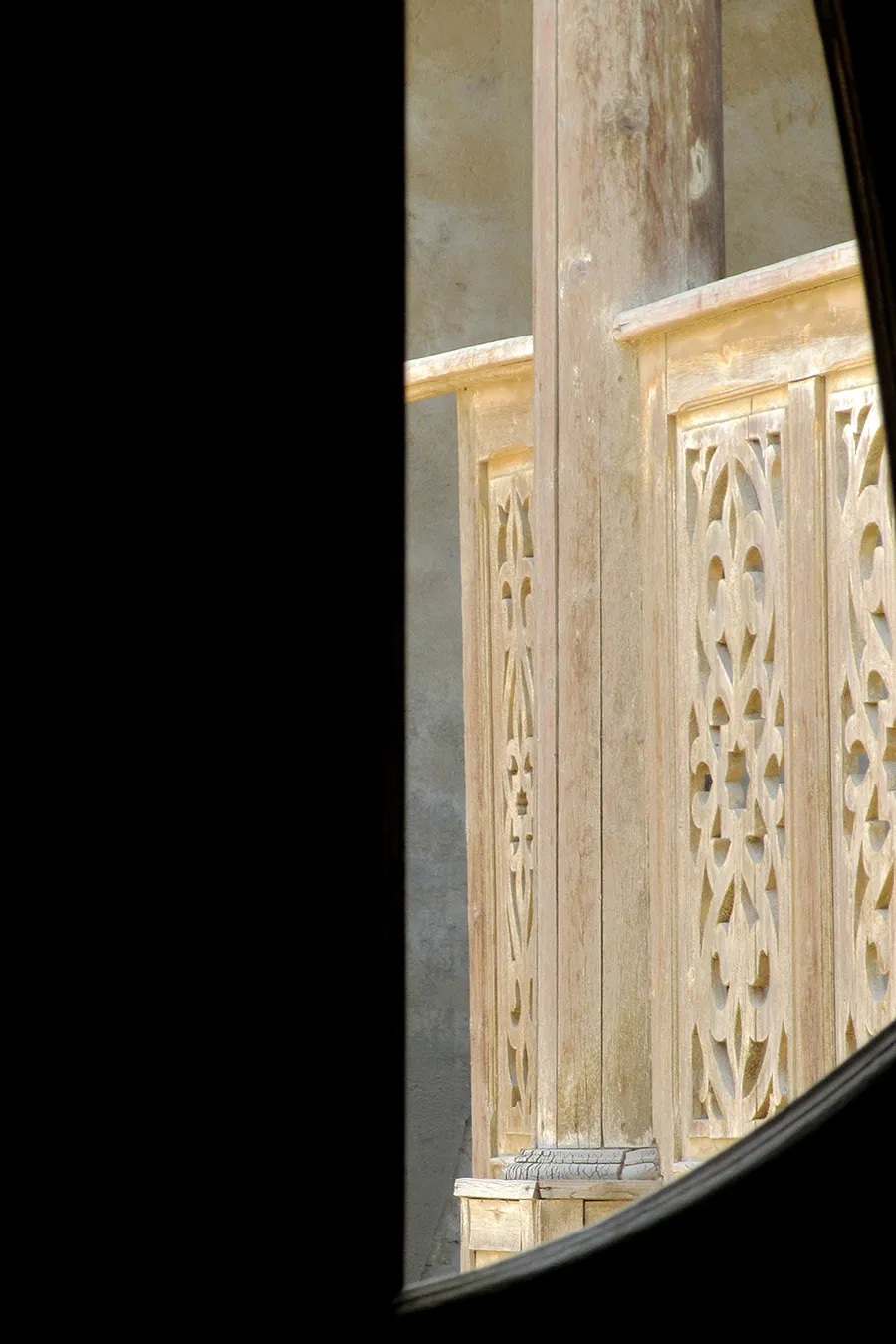
The western side of the burial chamber in the south-eastern corner of the courtyard is an open arcade of two wooden columns stone pedestals, with the upper parts of the openings and the balustrade in the front made of elaborate openwork wooden pieces. The wall is topped with a very elaborate cornice of openwork wooden lace.
In the south-western part of the roof over the burial chamber is an octagonal roof lantern built in lath-and-plaster construction. It is covered with a lath-and-plaster dome topped with a “hilal” crescent finial of turned wood. In the eight plain rectangular windows in the octagonal drum are wooden grilles carved into European-style Gothic tracery patterns (now in poor condition).
The interior was inaccessible at the time of recording.
Condition of preservation
The disused building is in poor overall condition. The wooden decoration of the burial chamber is seriously damaged and in large parts missing. The domed roof lantern is seriously damaged, with much of plaster missing and many supporting laths broken. All woodwork is damaged and desiccated.
- Field recording by
- Mohammad Esam, Esraa al-Mahdi, Hadir Ahmad-edited by Jaroslaw Dobrowolski
- Date recorded
- August 14, 2023
- Data entered by
- Yusuf Yassir
- Date entered
- May 28, 2024