

Unit No79
Hanifa Hanim al-Silahdar (assumed)
|
Coordinates of the main entrance |
30.039336N - 31.271692E |
|
Attribution |
Hanifa Hanim al-Silahdar (assumed) |
|
Higri (AH)Dates as given in the Inscription |
1333 |
|
Miladi (AD)Dates as given in the Inscription |
|
|
Inscription Contemporary with the building? |
Yes |
|
Multiple date(s) In the inscription? |
Yes |
|
Assumed Date |
|
|
Based on |
|
|
Original Use |
Funerary enclosure |
|
Current Use |
Funerary enclosure and residential |
|
Overall condition |
Poor |
Features of unit 79
| Present | Count | Material | Comments (see description for details) | |
|---|---|---|---|---|
| Free standing structure | No | |||
| Walled enclosure | Yes | 1 | stone | |
| Rooms by the perimeter wall | Yes | 4 | stone | A building in each corner of enclosure |
| Freestanding structure(s) in enclousure | No | |||
| Dome over the tomb chamber | No | |||
| Neo-Mamluk architectural decoration | No | |||
| Garden layout | Yes | Greenery in courtyard, no formal layout | ||
| Sabil(s) | Yes | 1 | stone | |
| Wall fountain(s) | Yes | 1 | marble | Beside the sabil window |
| Canopy on columns / pillars | No | |||
| Carved marble cenotaph(s) | Yes | 3 | 3 | Interior inaccessible, information from the keeper |
| Decorated limestone tomb-markers | No | Interior inaccessible | ||
| Decorated gateway | Yes | 1 | stone | |
| Decorative door-leaves | No | |||
| Decorative window grilles | Yes | 5 | iron | |
| Decorative shutters | No | |||
| Painted ceiling(s) | No | Interior inaccessible | ||
| Decorative paving(s) | No | Interior inaccessible |
Description (The direction towards Mecca (Qibla) is described as eastern and other directions are named accordingly)
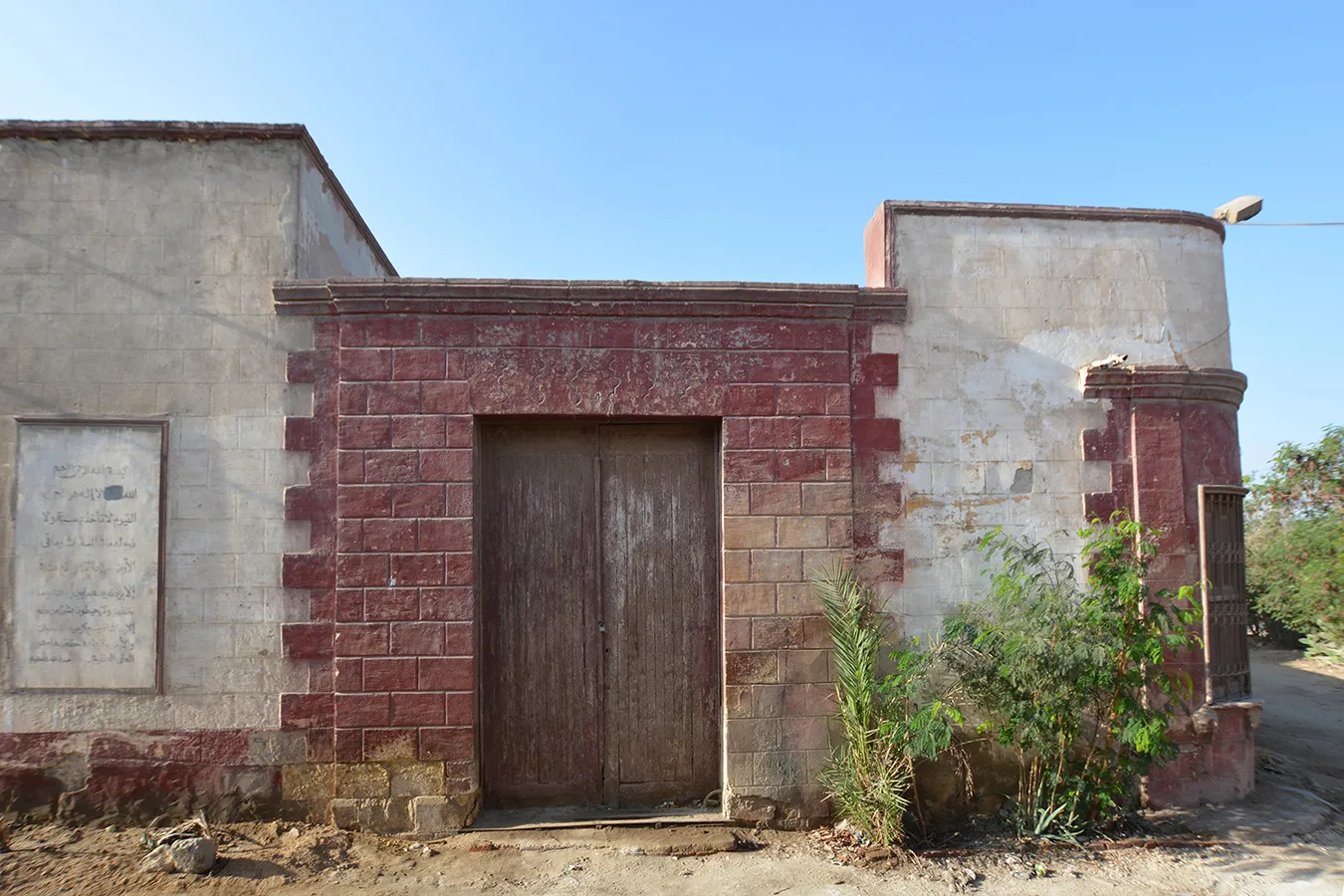
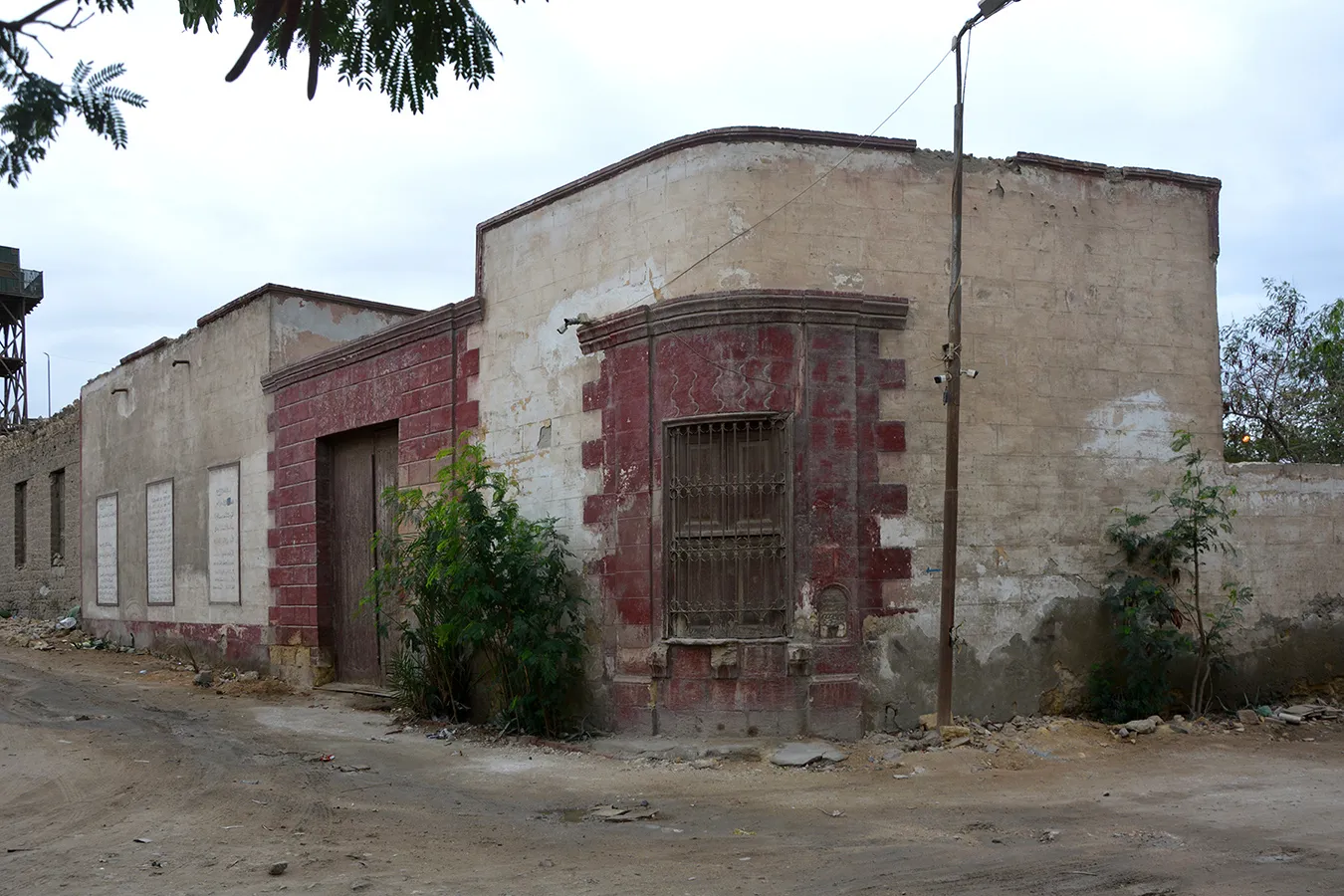
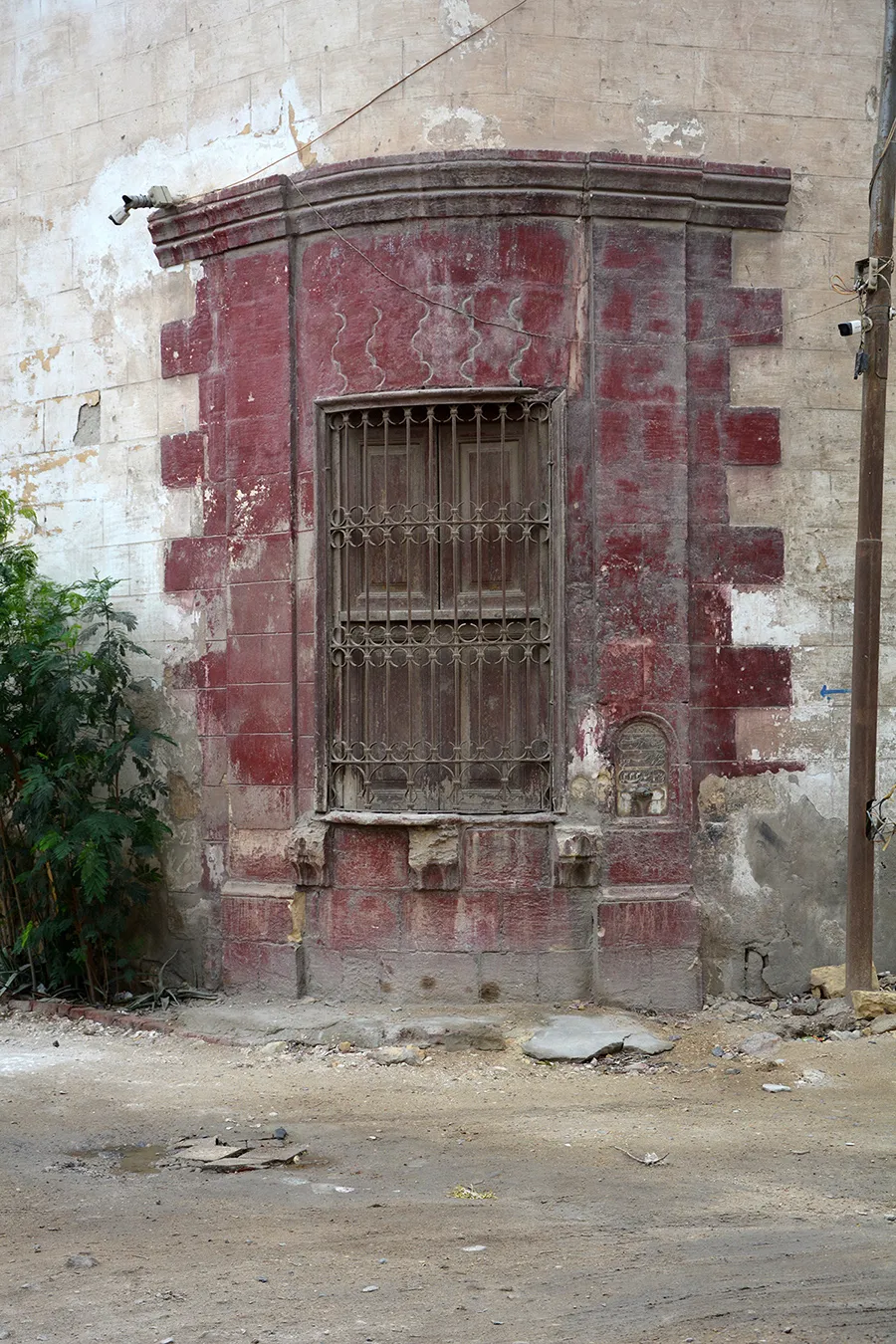
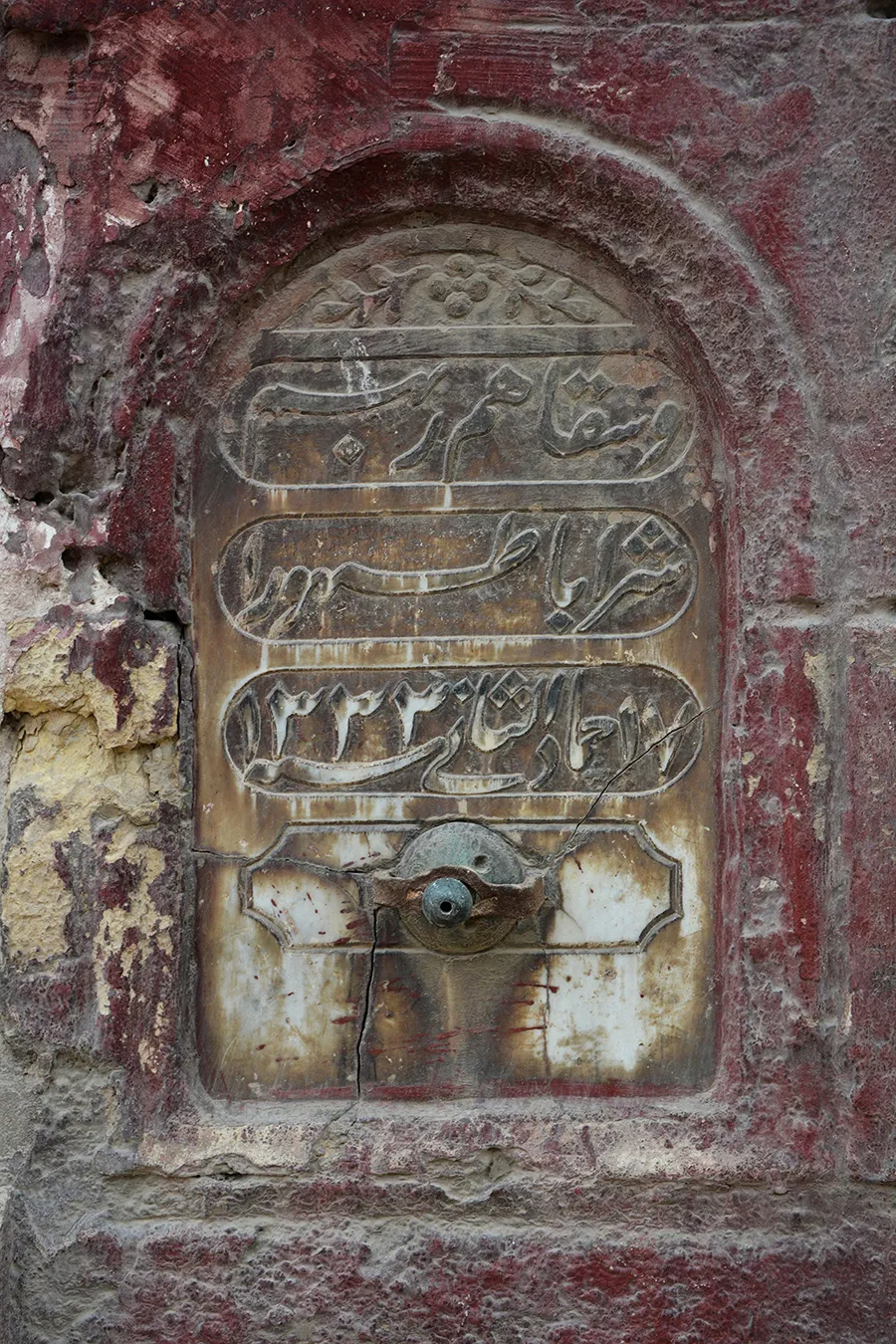
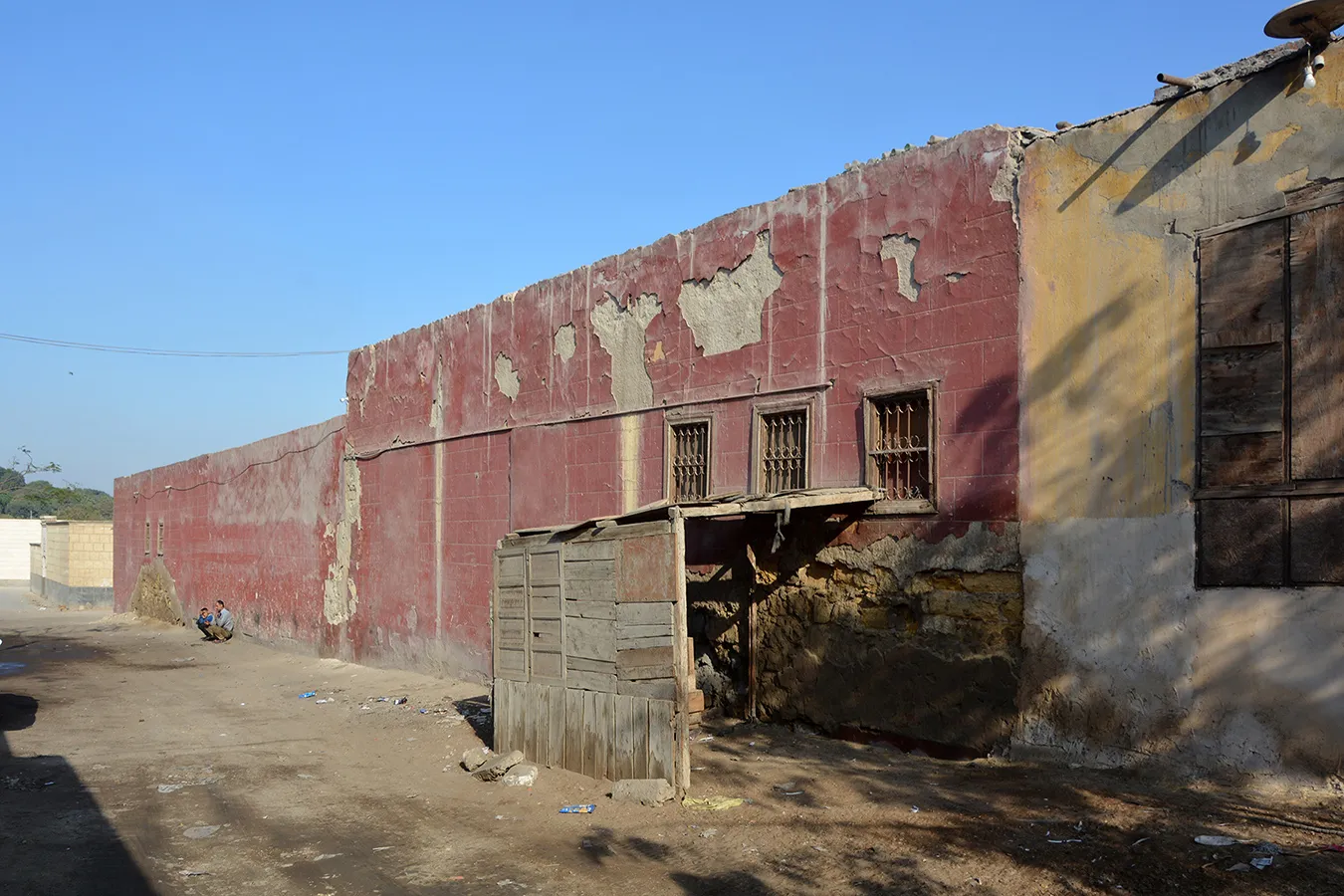
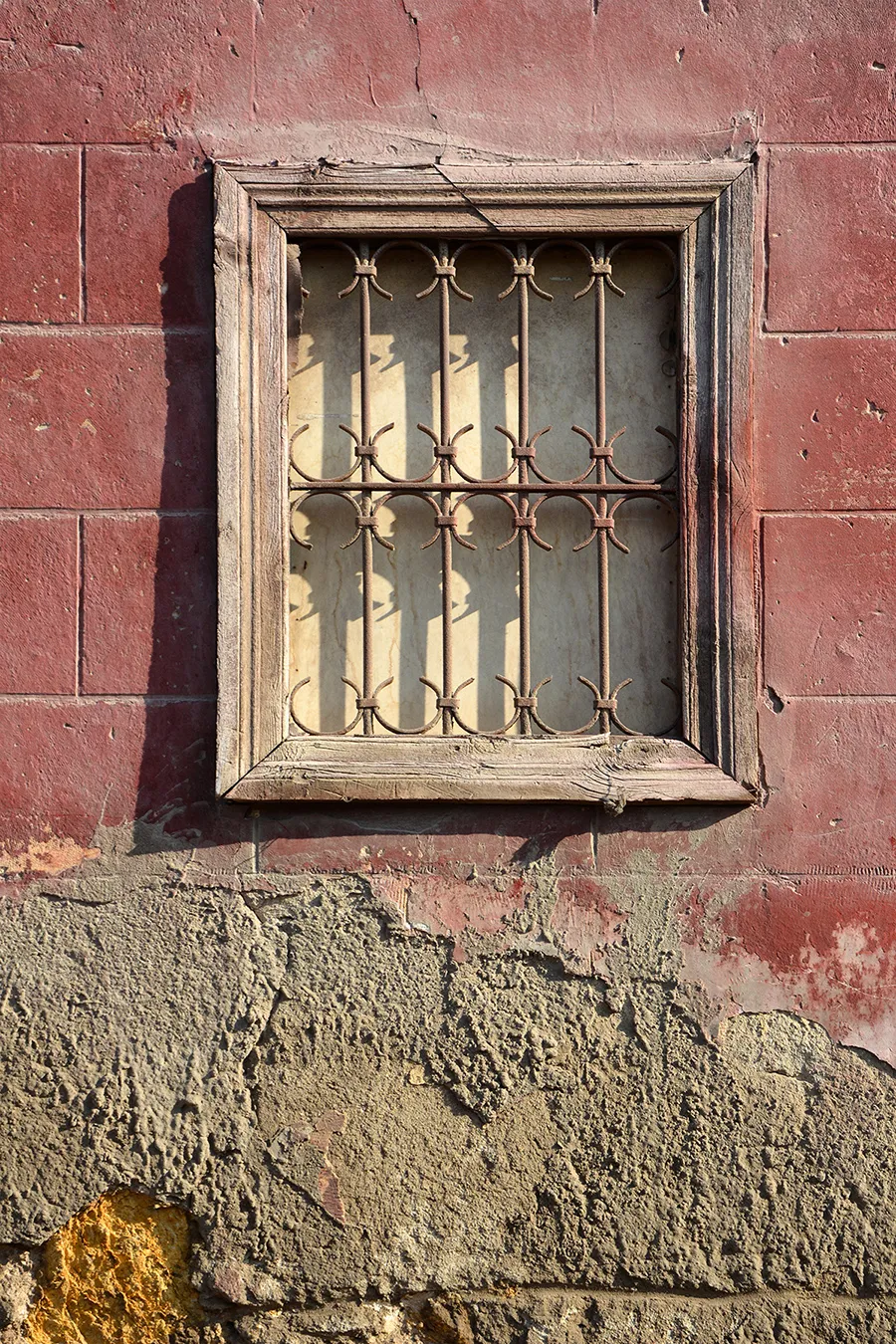
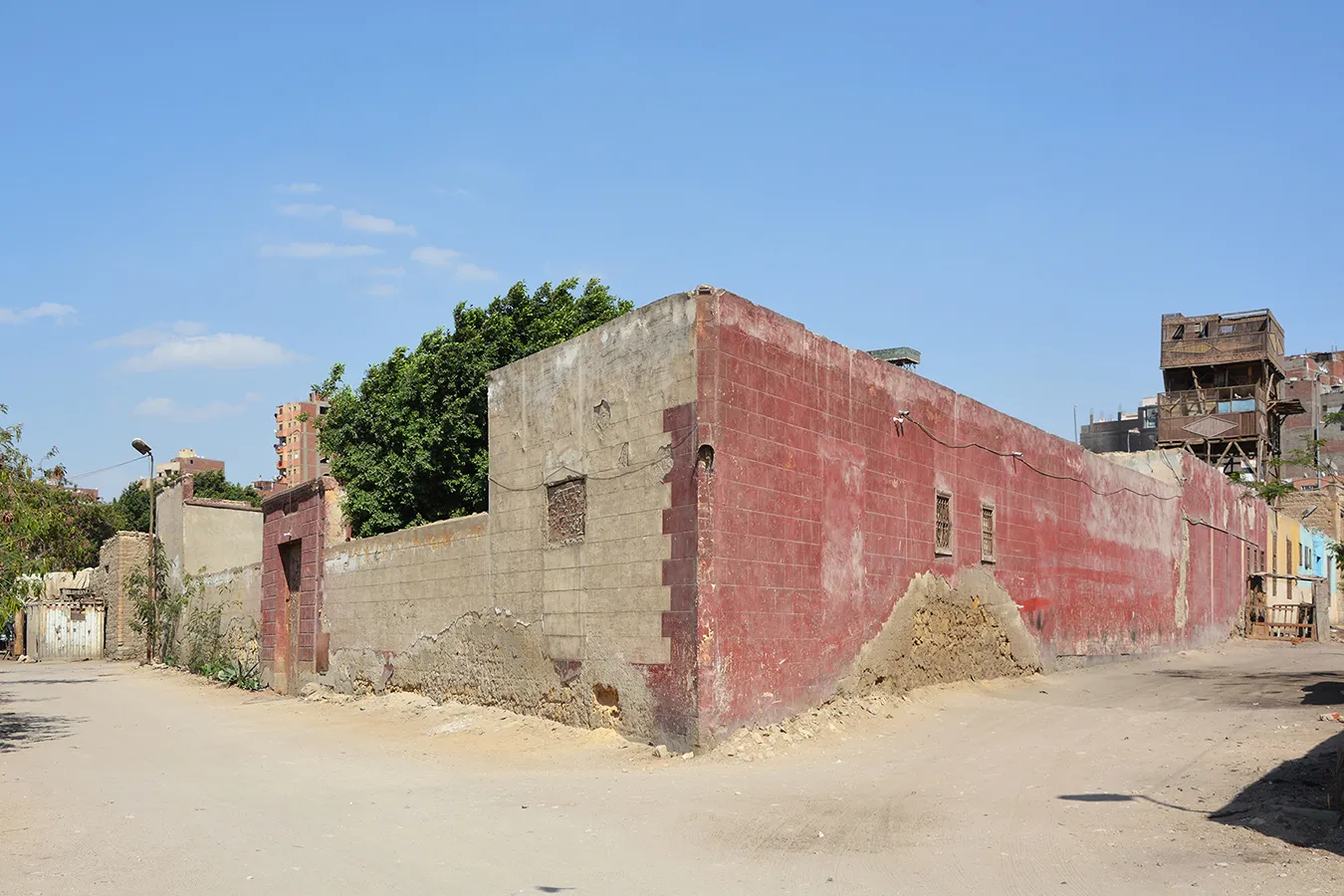
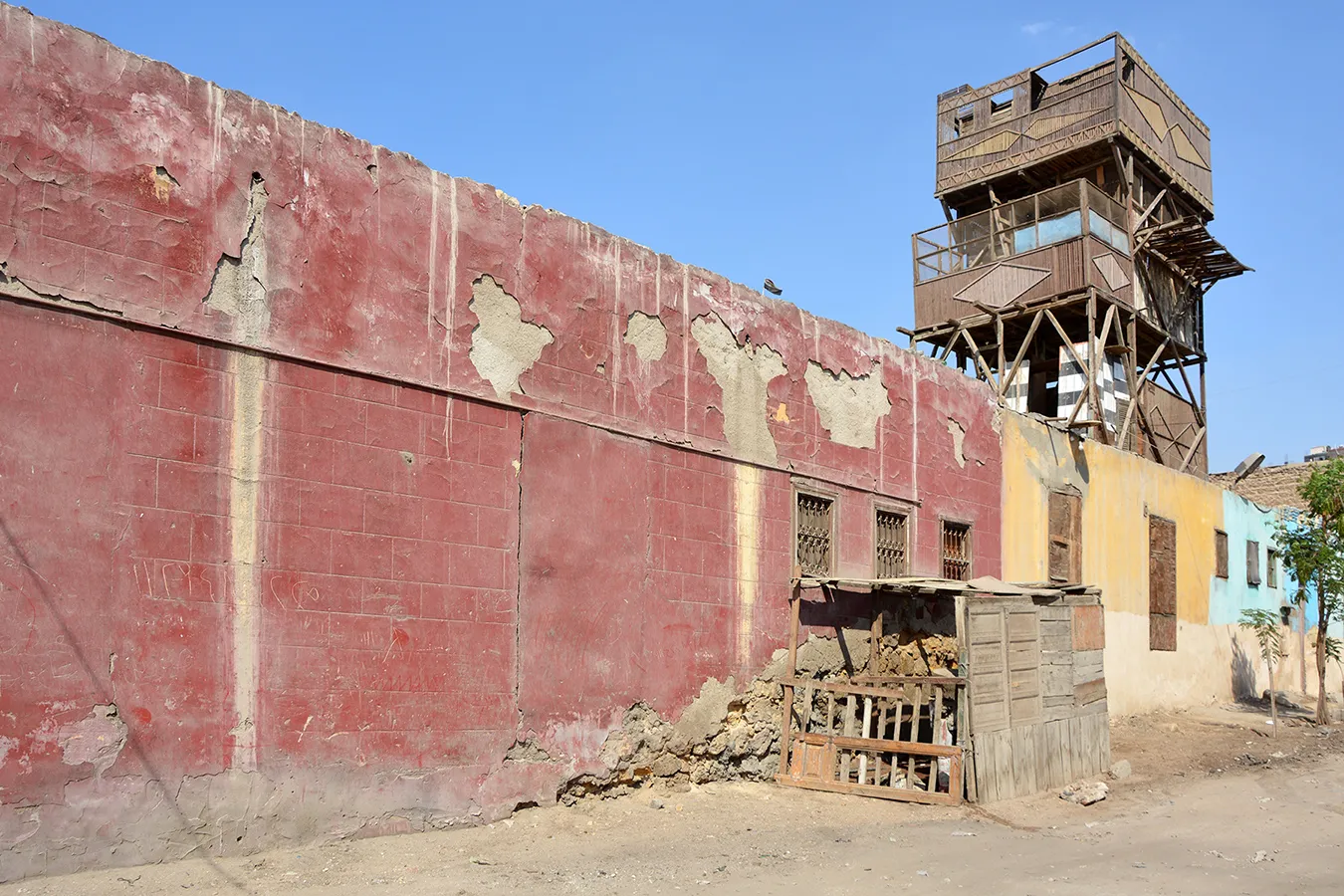
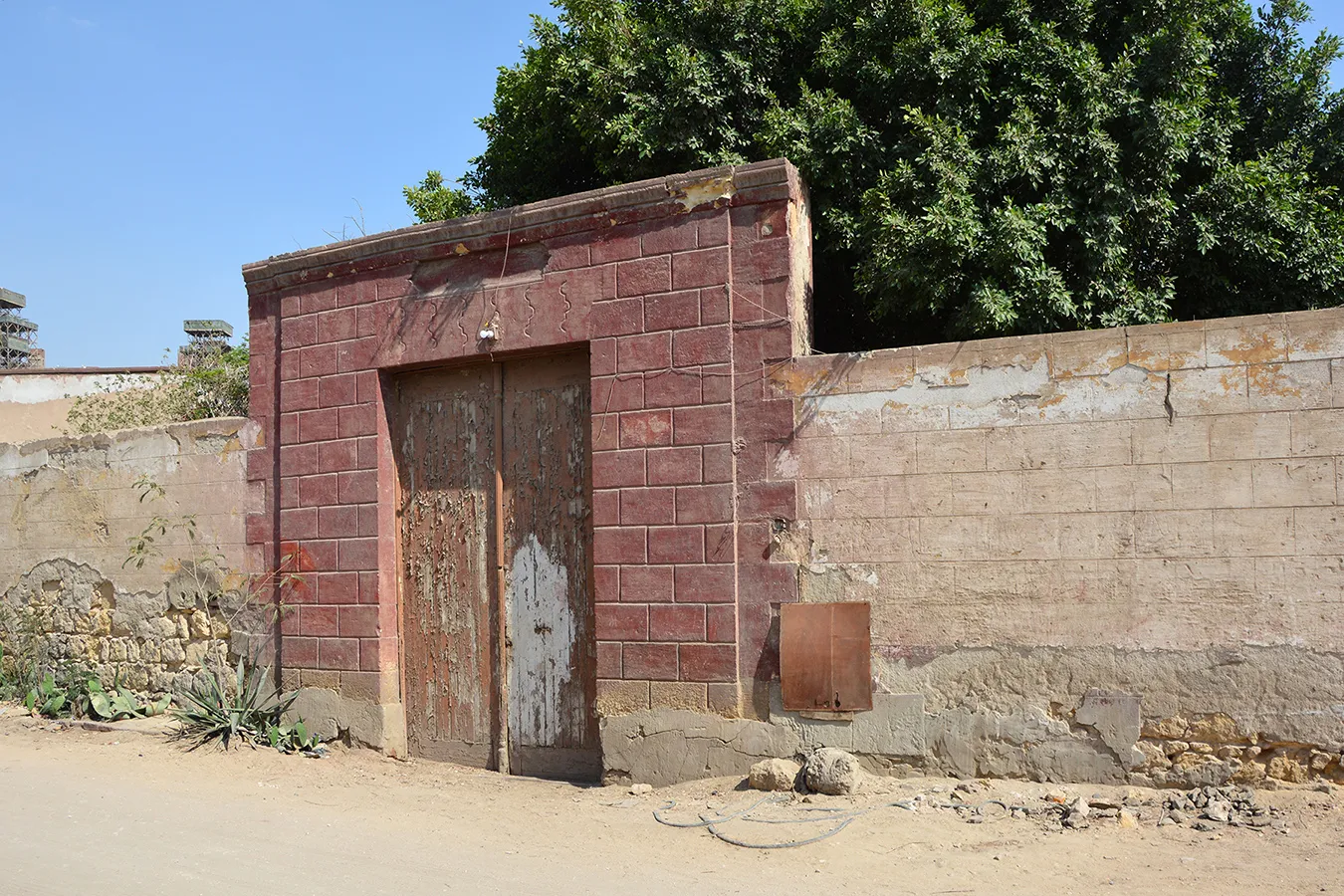
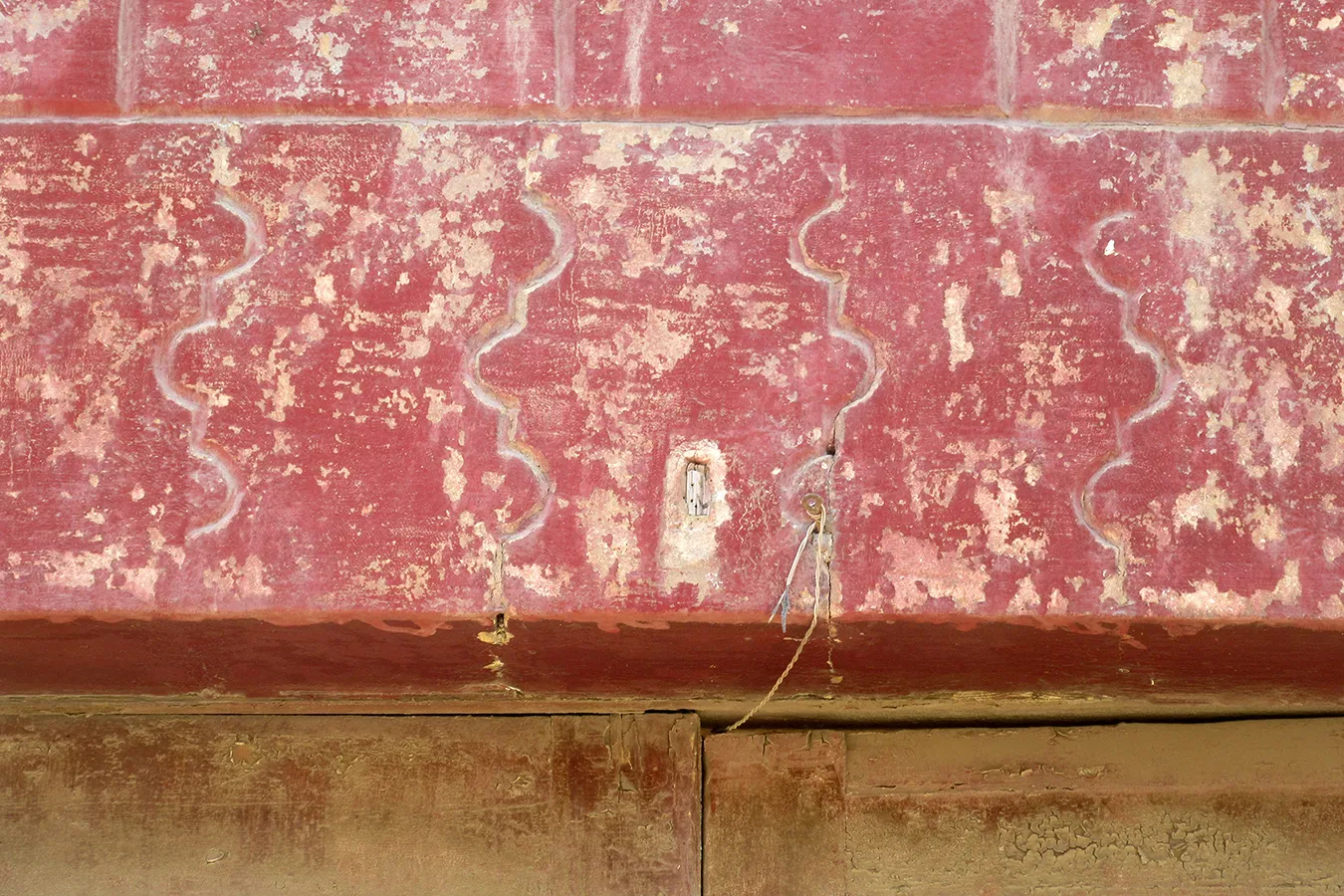
The funerary enclosure occupies a sizeable quadrilateral lot measuring approximately 32 x 20–40 metres, with southern, eastern and northern walls meeting at right angles, and the western wall oblique. It faces streets on the southern, western and northern sides, and borders on neighbouring funerary enclosure to the east. The corner where the western and northern walls meet at an obtuse angle is rounded and pierced with a large sabil window. It is rectangular, covered with a flat arch of joggled voussoirs, and flanked with two very simple pilasters carrying a simple Classical moulding. There are two similarly treated gates in the northern and western walls (the western one taller than the western wall, which is much lower than the buildings in the corners of the enclosure. Otherwise, there is no architectural decoration; the building hasn’t got a formally arranged façade. The sabil window had a marble ledge at the bottom supported on three muqarnas corbels. Only scarce remnants remain. The corbels, the joggled voussoirs, and an empty recess over the western gate are the only elements of the building related to Mamluk style. Right of the sabil window is a small wall fountain with a bronze spigot in a marble wall panel with rounded top that is set in a recess framed with simple moulding. The panel contains three lines of calligraphic inscription in raised relief. The text relates to the beneficence of water and includes the date 17 Gumada al-Thani 1333 AH. The windows in the southern elevation are rectangular, small and plain. There are clear traces of at least three large openings in the wall that have been walled up. The windows (including the sabil window) are fitted with simple decorative wrought iron grilles. The northern elevation is windowless. On the wall of the building in the north-eastern corner three huge panels in wooden frames are mounted (apparently later than the original construction.) They include hand-painted religious inscriptions in a trained, but not masterly hand.
Interior was inaccessible at the time of recording. According to the keeper, in the north-eastern chamber are three gilded marble cenotaphs.
Condition of preservation
The building was repainted some years ago, and apparently the roof cover was repaired, as new rain pipes were installed. However, it is in poor overall condition, with severe damage from rising damp to the lower parts of the walls. Woodwork is damaged and desiccated.
Information abut the founder, family history, etc.
According to a neighbour, the founder was Hanifa Hanim al-Silahdar. Hanim is a Turkish honorific title for a lady; silahdar was a title of a high-ranking official in various Islamic states, in the Mamluk Sultanate the Amir in charge of military armaments (Seton-Williams & Stock, 92). Sulayman Agha al-Silahdar was a minister of Muhammad ‘Ali Pasha (ruled 1805 – 1848) in charge of the arsenal, who founded a number of buildings in Cairo in the 1830s. (Williams, 240-1, Warner, 150,170,172, Seton-Williams & Stock, 237). He is buried in his funerary enclosure located nearby.
The date 17 Gumada al-Thani 1333 AH written on the marble wall-fountain on the wall corresponds to 1 May AD 1915.
References in published/primary sources
• Seton-Williams, Veronica and Stocks, Peter Blue Guide Egypt, A&C Black, London 1988, p.92, 237
• Warner, Nicholas The Monuments of Historic Cairo: A Map and Descriptive Catalogue, American University in Cairo Press, 2005, p. 150, 170, 172
• Williams, Caroline Islamic Monuments of Cairo: The Practical Guide, American University in Cairo Press, 7th edition 2018, p. 240-1
- Field recording by
- Mohammad Esam, Esraa al-Mahdi, Hadir Ahmad-edited by Jaroslaw Dobrowolski
- Date recorded
- August 14, 2023
- Data entered by
- Yusuf Yassir
- Date entered
- May 28, 2024