
Unit No74
Muhammad Bey Ahmad Karara
|
Coordinates of the main entrance |
30.041989N - 31.271526E |
|
Attribution |
Muhammad Bey Ahmad Karara |
|
Higri (AH)Dates as given in the Inscription |
1339 |
|
Miladi (AD)Dates as given in the Inscription |
|
|
Inscription Contemporary with the building? |
Yes |
|
Multiple date(s) In the inscription? |
Yes |
|
Assumed Date |
|
|
Based on |
|
|
Original Use |
Funerary enclosure with a residential unit |
|
Current Use |
Funerary enclosure (and an abandoned residential unit) |
|
Overall condition |
Fair |
Features of unit 74
| Present | Count | Material | Comments (see description for details) | |
|---|---|---|---|---|
| Free standing structure | No | |||
| Walled enclosure | Yes | 1 | stone | |
| Rooms by the perimeter wall | Yes | stone, wood | Two-storey building on the E side of the lot | |
| Freestanding structure(s) in enclousure | No | |||
| Dome over the tomb chamber | No | |||
| Neo-Mamluk architectural decoration | Yes | |||
| Garden layout | No | |||
| Sabil(s) | No | |||
| Wall fountain(s) | No | |||
| Canopy on columns / pillars | No | |||
| Carved marble cenotaph(s) | No | Interior inaccessible | ||
| Decorated limestone tomb-markers | No | Interior inaccessible | ||
| Decorated gateway | Yes | 2 | stone | Main portal of the eastern building and a simple gate to the courtyard |
| Decorative door-leaves | Yes | 4 | wood | |
| Decorative window grilles | Yes | 5 | wrought iron, turned wood | 4 iron grilles, 1 turned-wood mashrabiya screen |
| Decorative shutters | Yes | 4 | wood | Plus 4 (originally 5) simple panelled ones |
| Painted ceiling(s) | No | Interior inaccessible | ||
| Decorative paving(s) | No | Interior inaccessible |
Description (The direction towards Mecca (Qibla) is described as eastern and other directions are named accordingly)
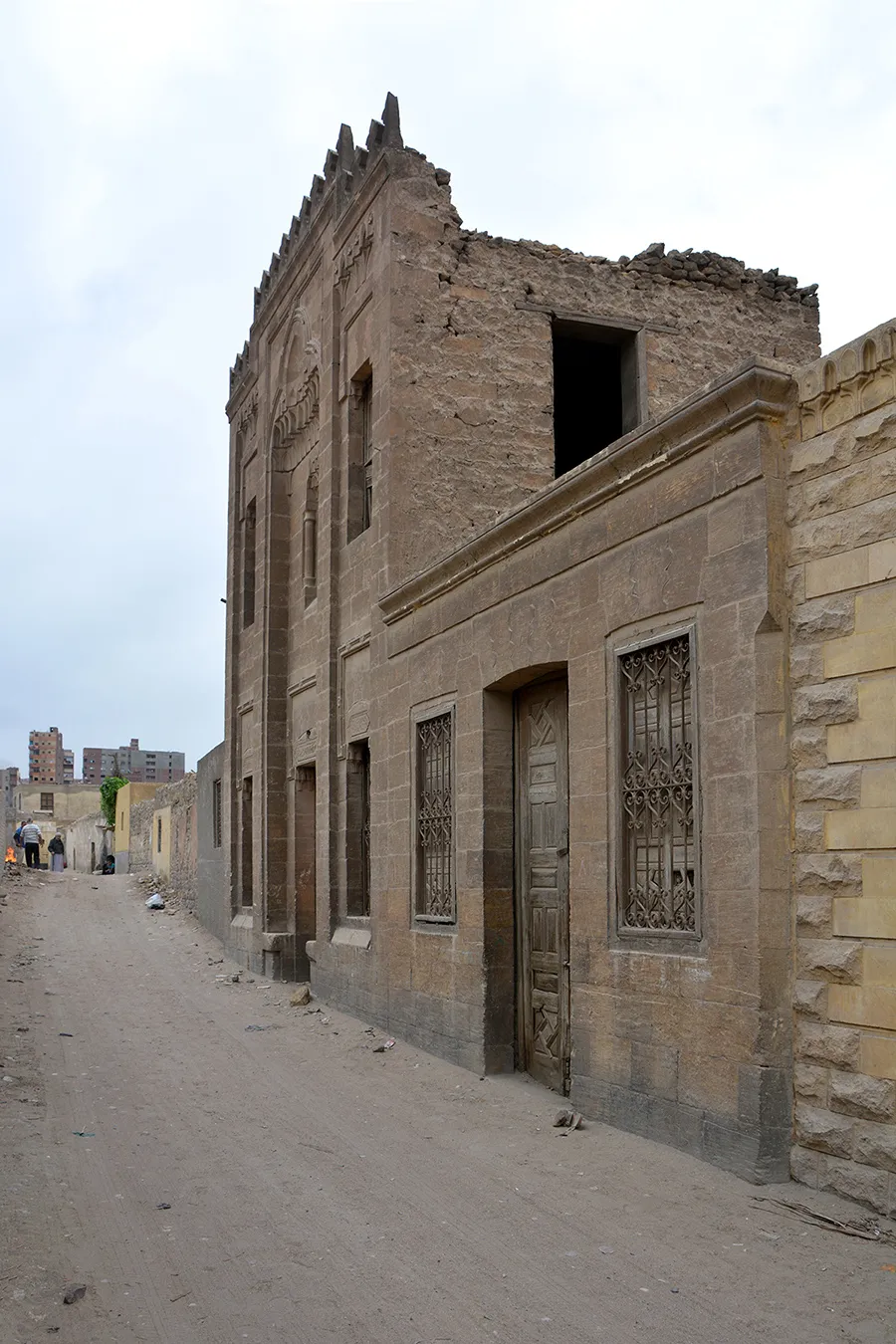
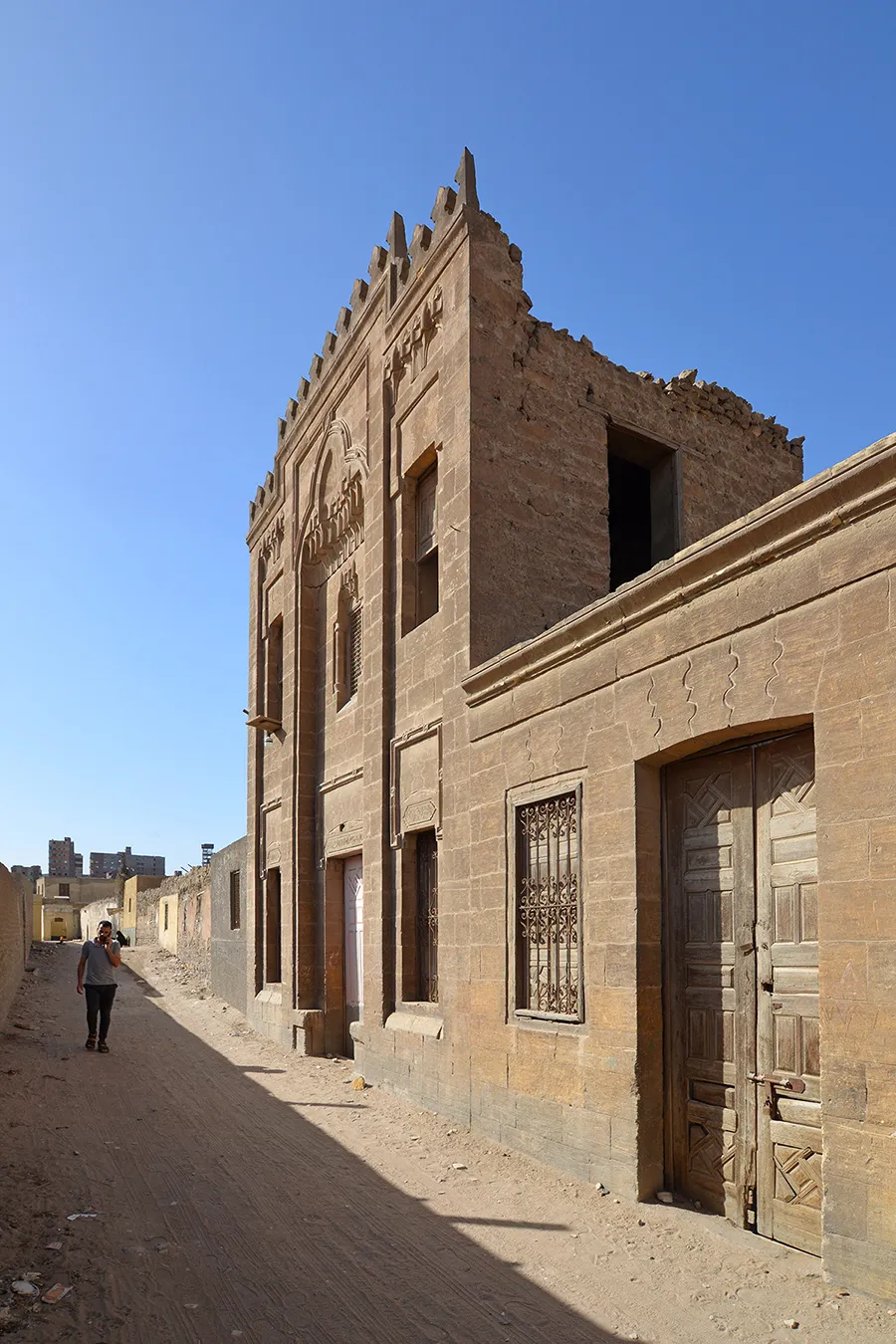
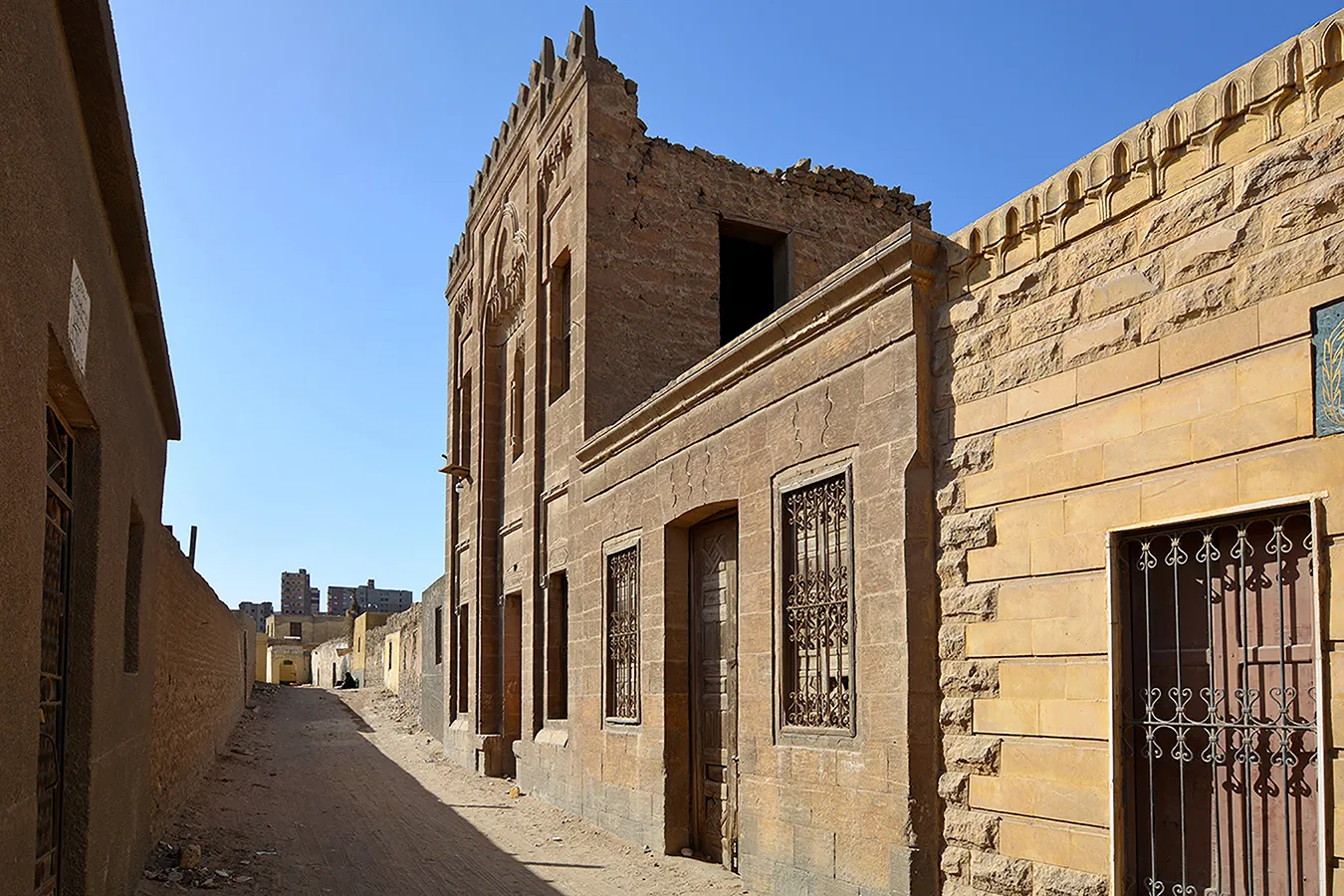
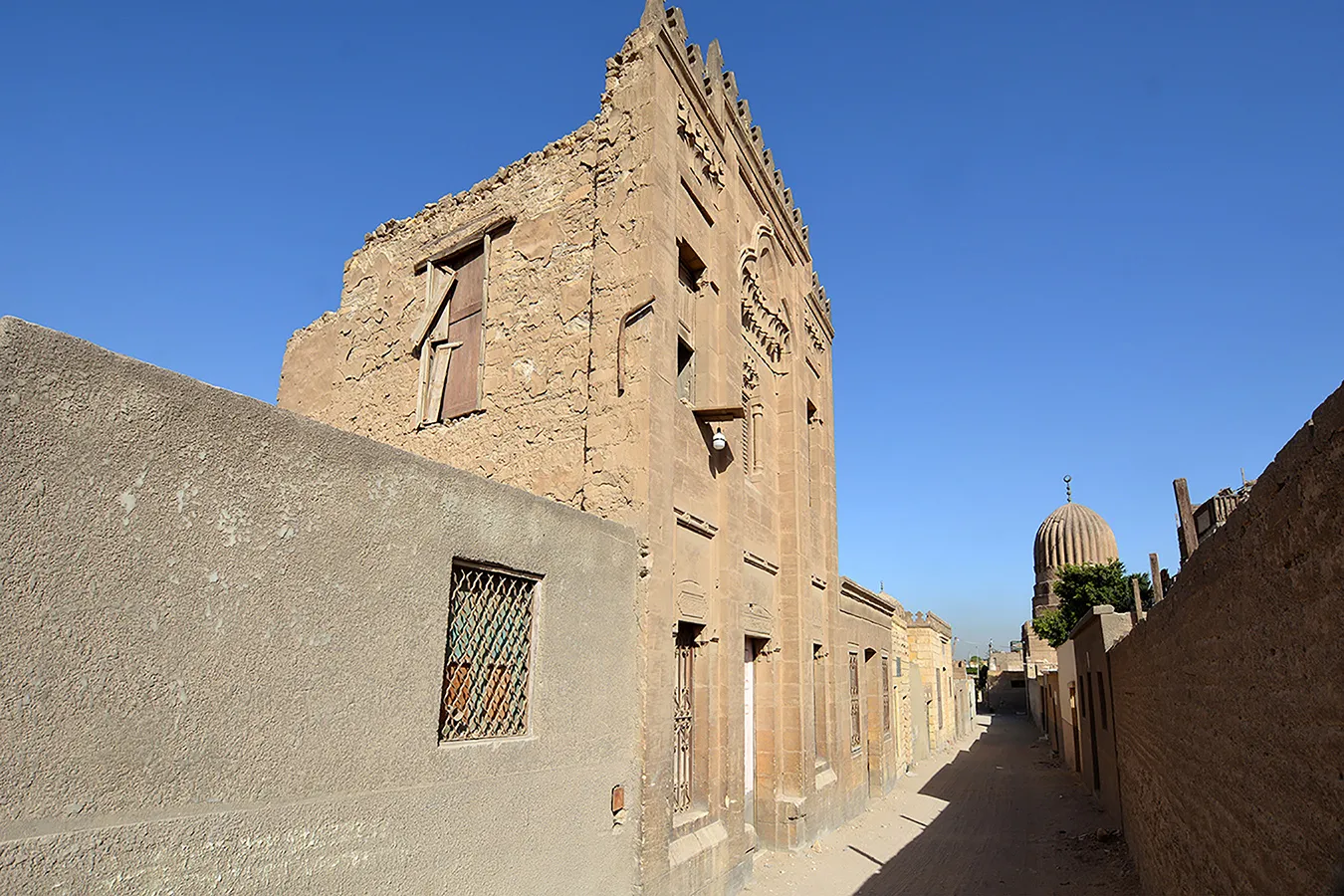
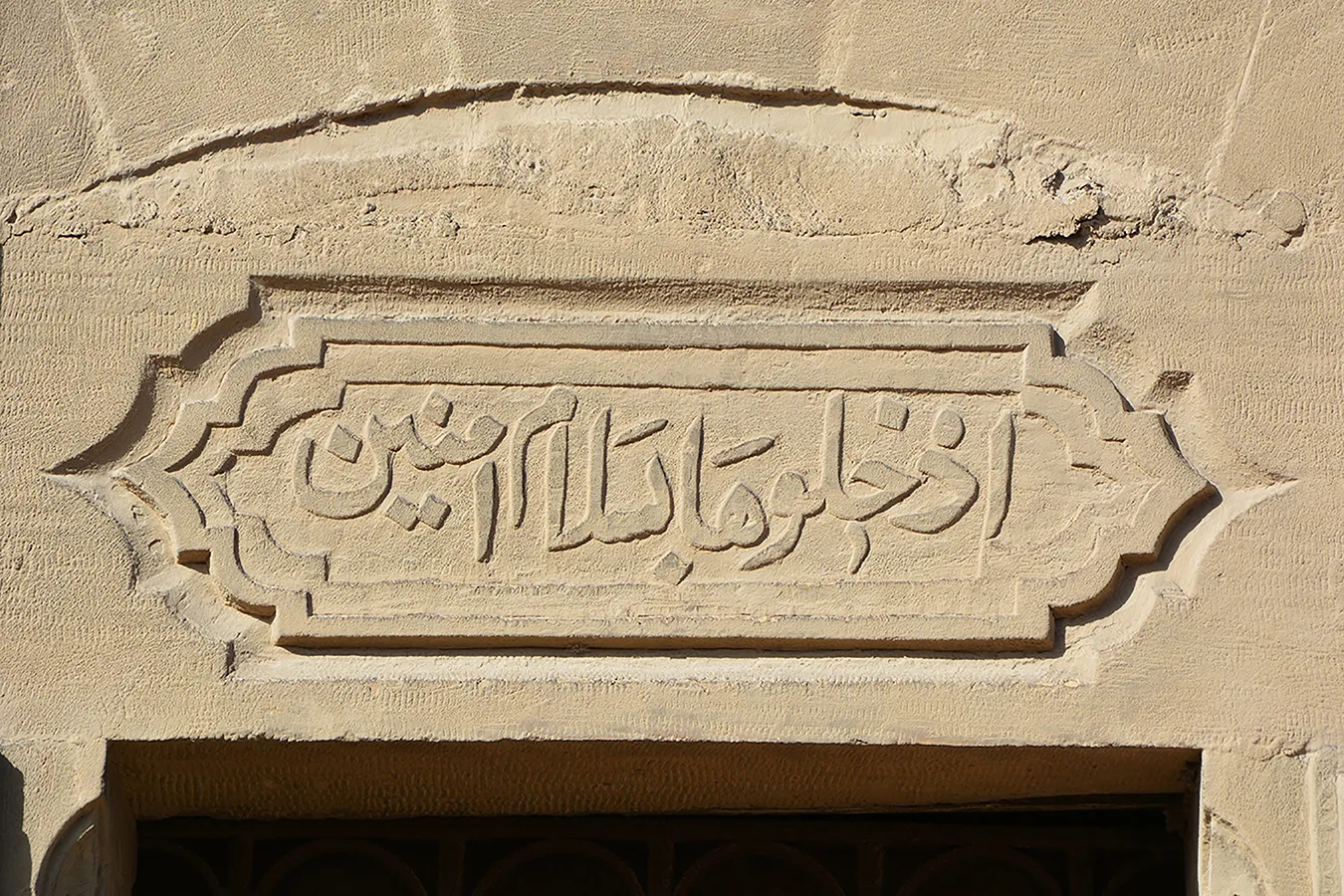
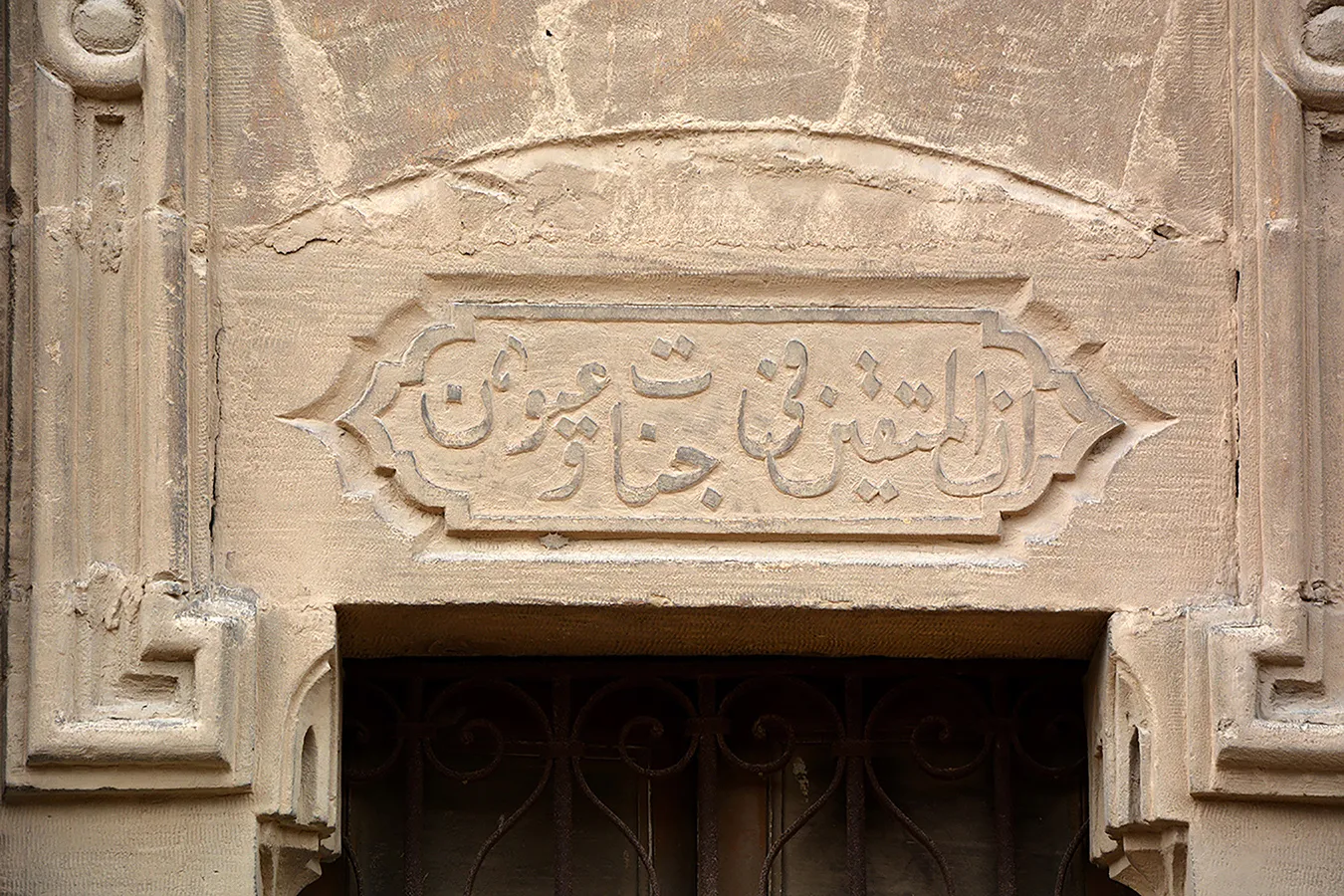
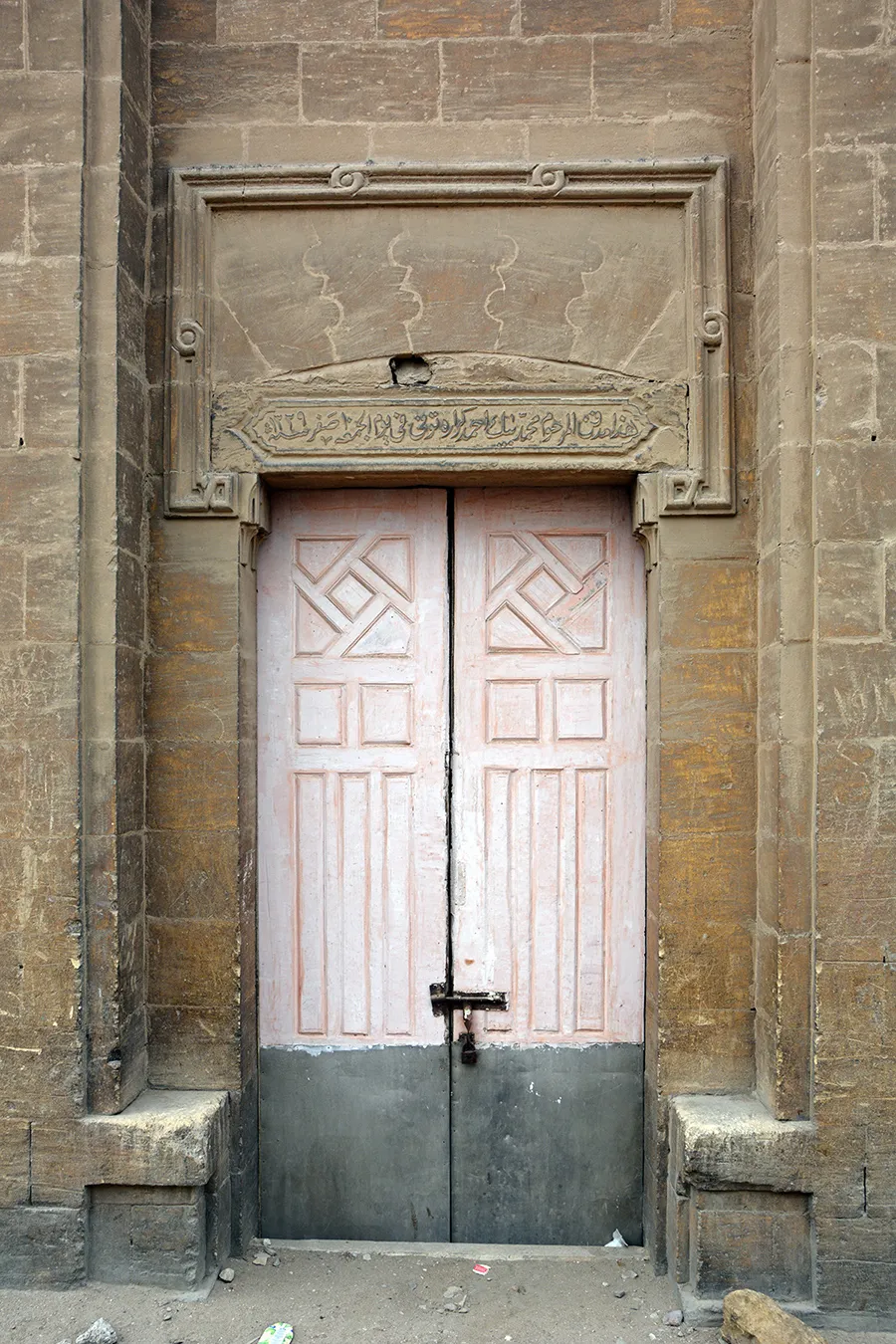
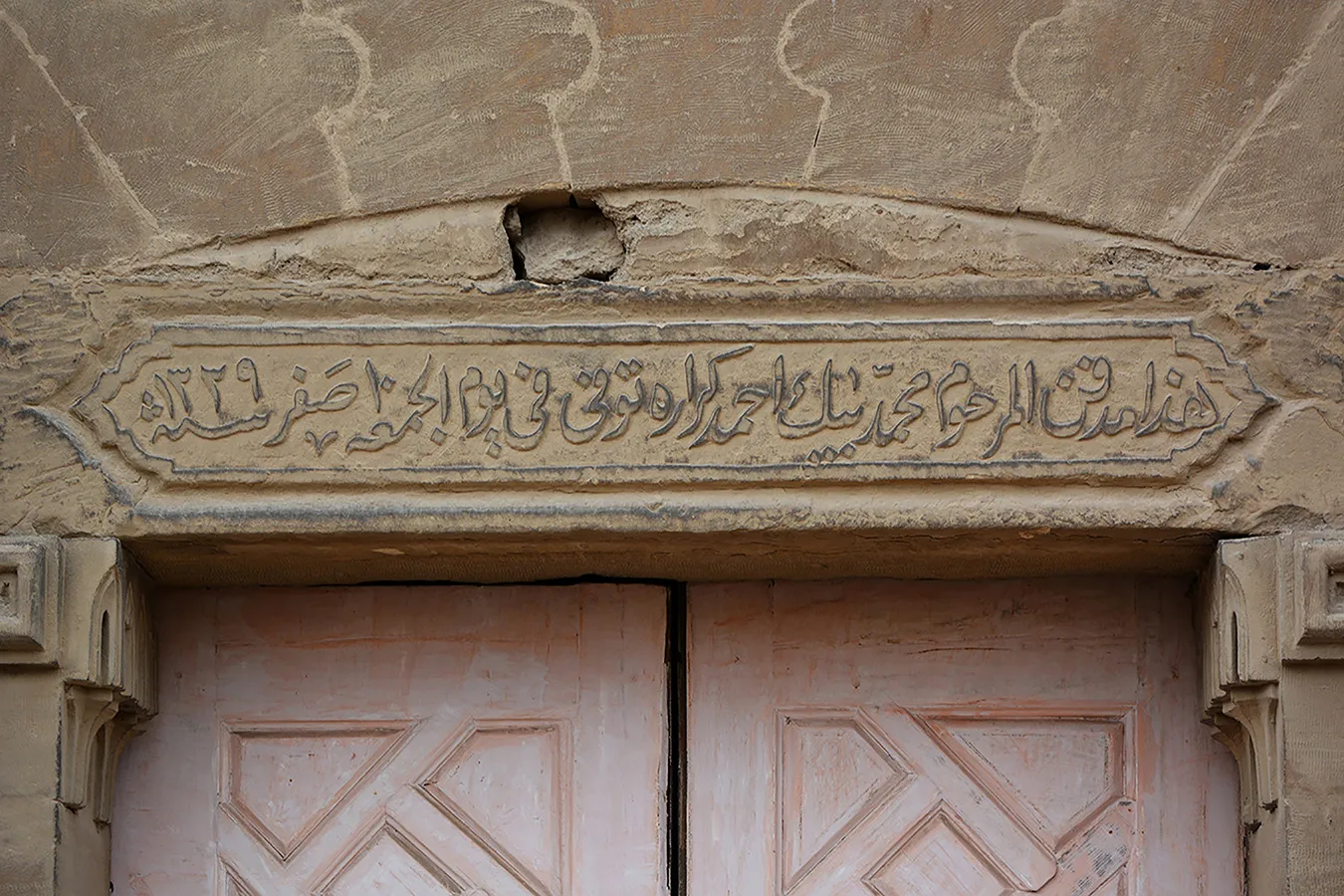
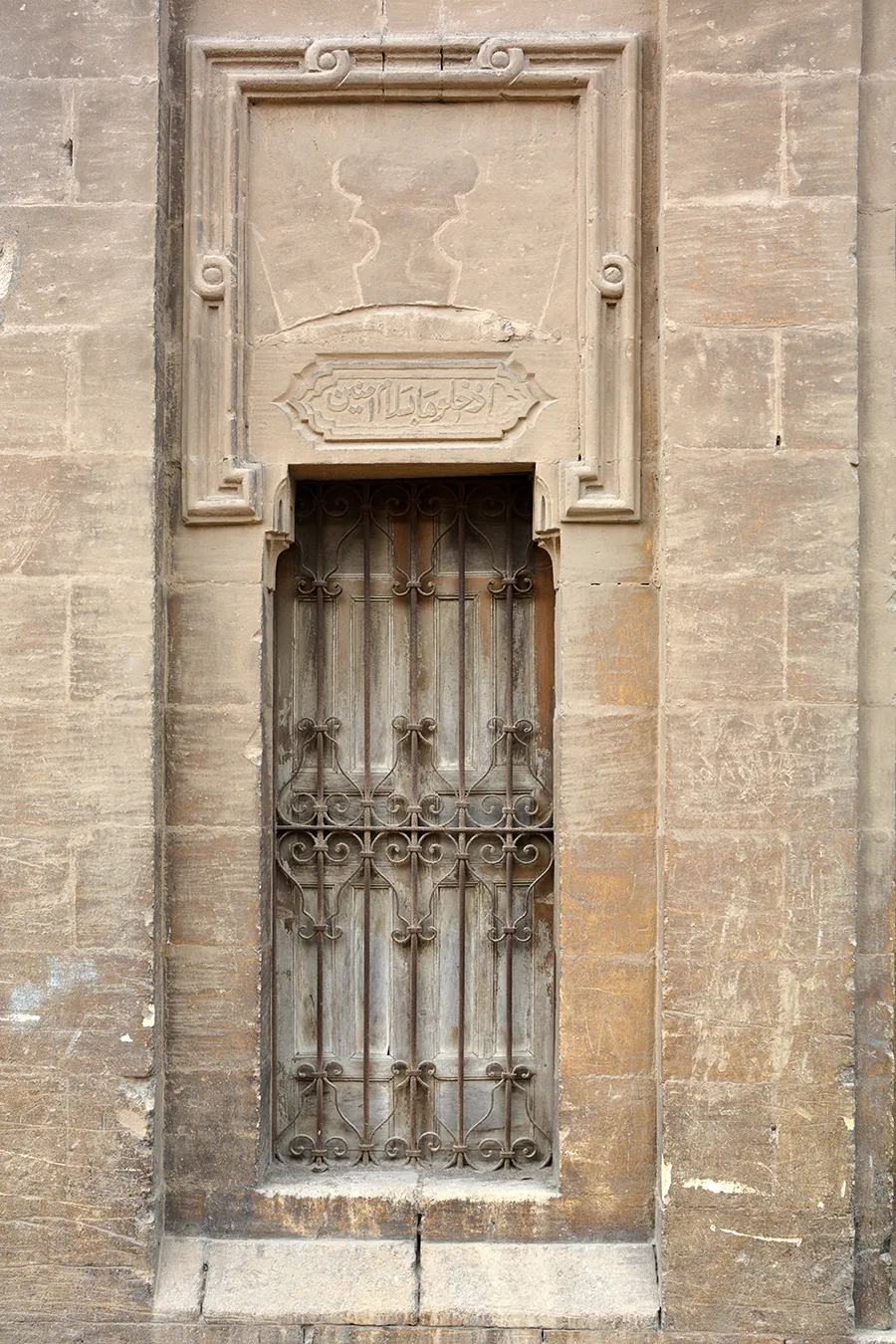
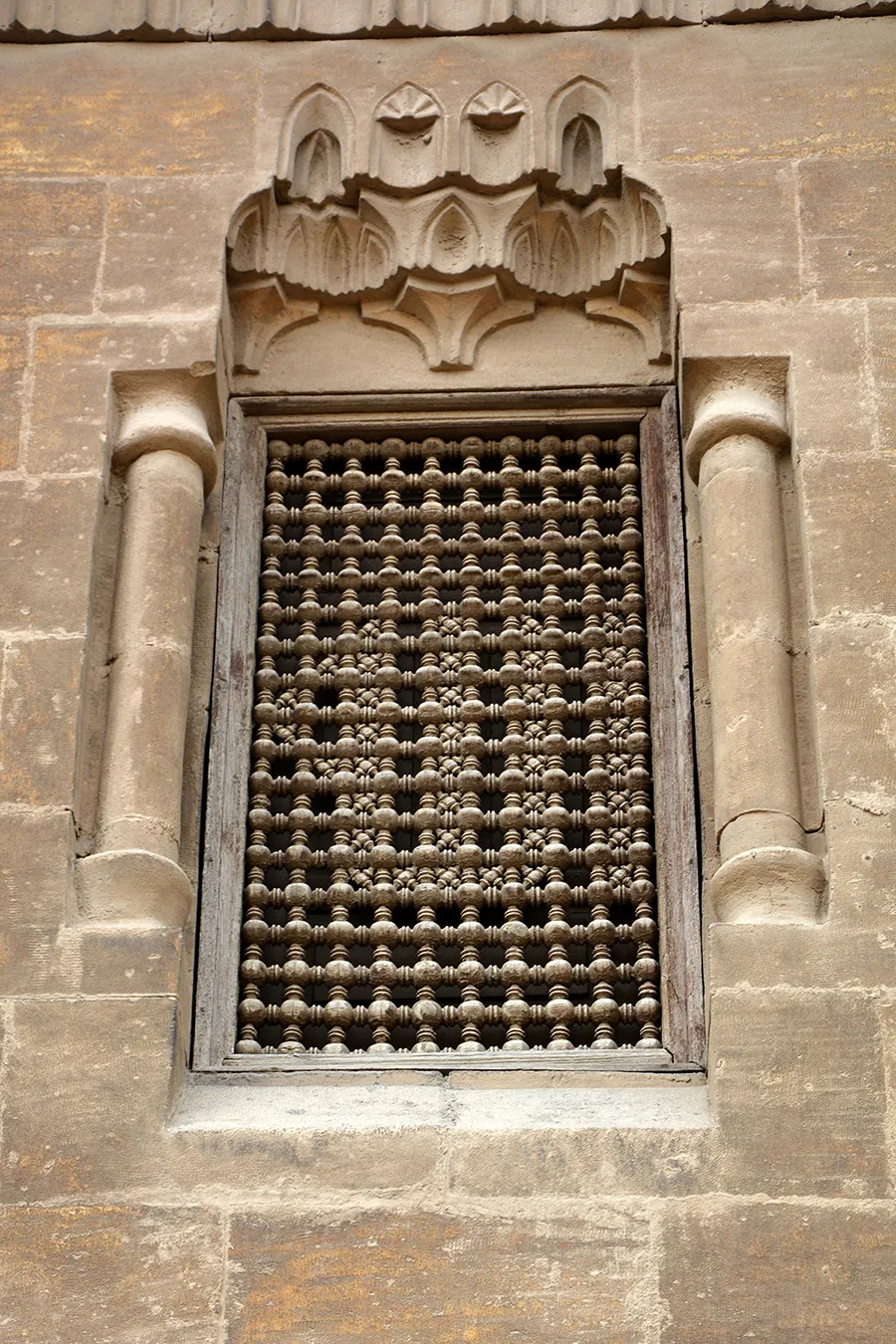
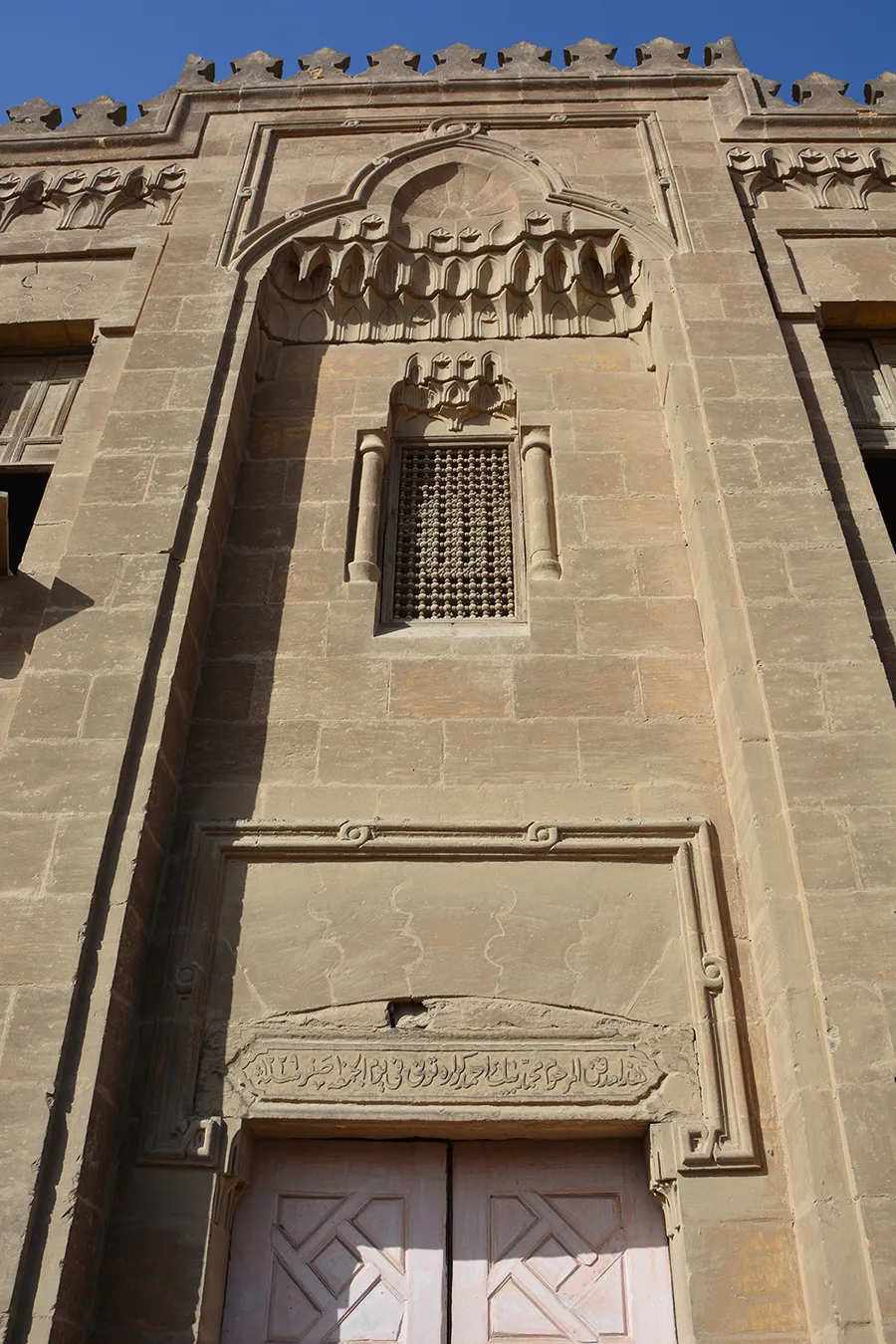
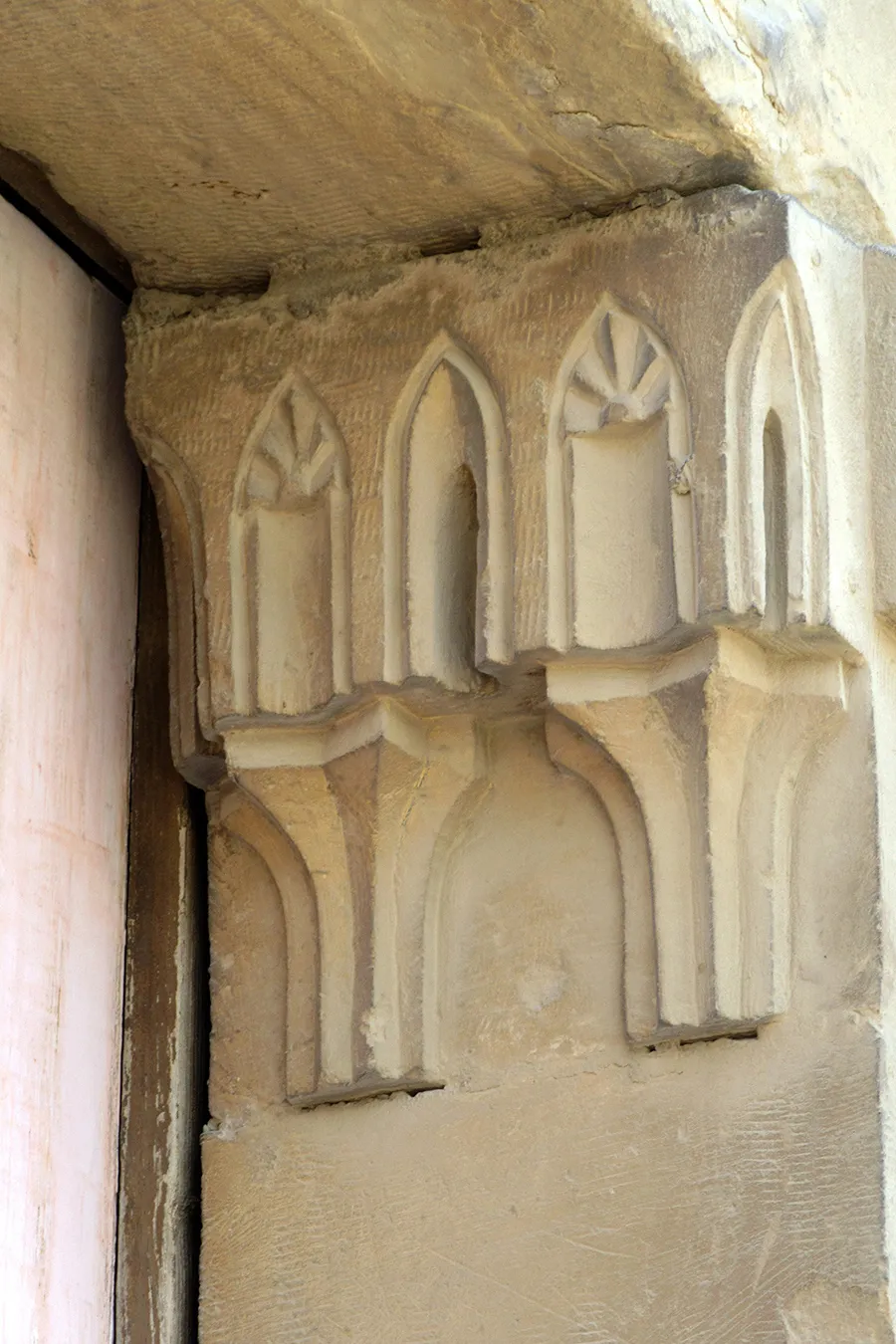
A rectangular enclosure facing a street to the north and bordering on neighbouring funerary enclosures on the other sides. Comprises a two-storey building on the eastern side of the lot and an open courtyard west of it. The front (northern) façades of the building and the courtyard are built of well-dressed ashlar stone masonry, the side and back wall are built of rubble stone and were originally plastered. The strictly symmetrical neo-Mamluk façade of the main building has a portal in the middle set in a full-height (i.e. double-storey) recess topped with a trilobe hood with an elaborate muqarnas frieze including “stalactite” forms in its lower part. The rectangular entrance door has a stone lintel with a calligraphic inscription in raised relief including the name of Muhammad Bey Ahmad Karara and the date of his death 10 Safar 1339 AH [corresponding to 22 October 1920]. The lintel and the segmental relieving arch of joggled voissoirs above it are framed in knotted mouldings. Above the entrance door is a rectangular window flanked by engaged colonnettes and topped with a muqarnas frieze. It is fitted with a turned-wood mashrabiya screen with the word “Allah” formed by fine turned wood pieces crossing the larger square divisions. On each side of the main portal recess is a shallower full-height recess topped with a muqarnas frieze and containing single windows of the ground and upper floors. The ground-floor windows have Mamluk-profile inscription panels on their stone lintels and knotted moulding framing over the lintels and relieving arches like the entrance portal. The upper floor windows are plain, their lintels formed by flat arches of joggled voissoirs. The framing around the lintels is in the form of simple rectangular projecting bands. Similarly, the moulding over the entrance recess does not continue on its sides, and the galas benches on the sides of the door are similarly treated. This seems to indicate that the carving of the mouldings was not completed as planned. Stone fleur-de-lys crenellations are placed both on the slightly taller central section of the façade containing the portal, and the lower side sections.
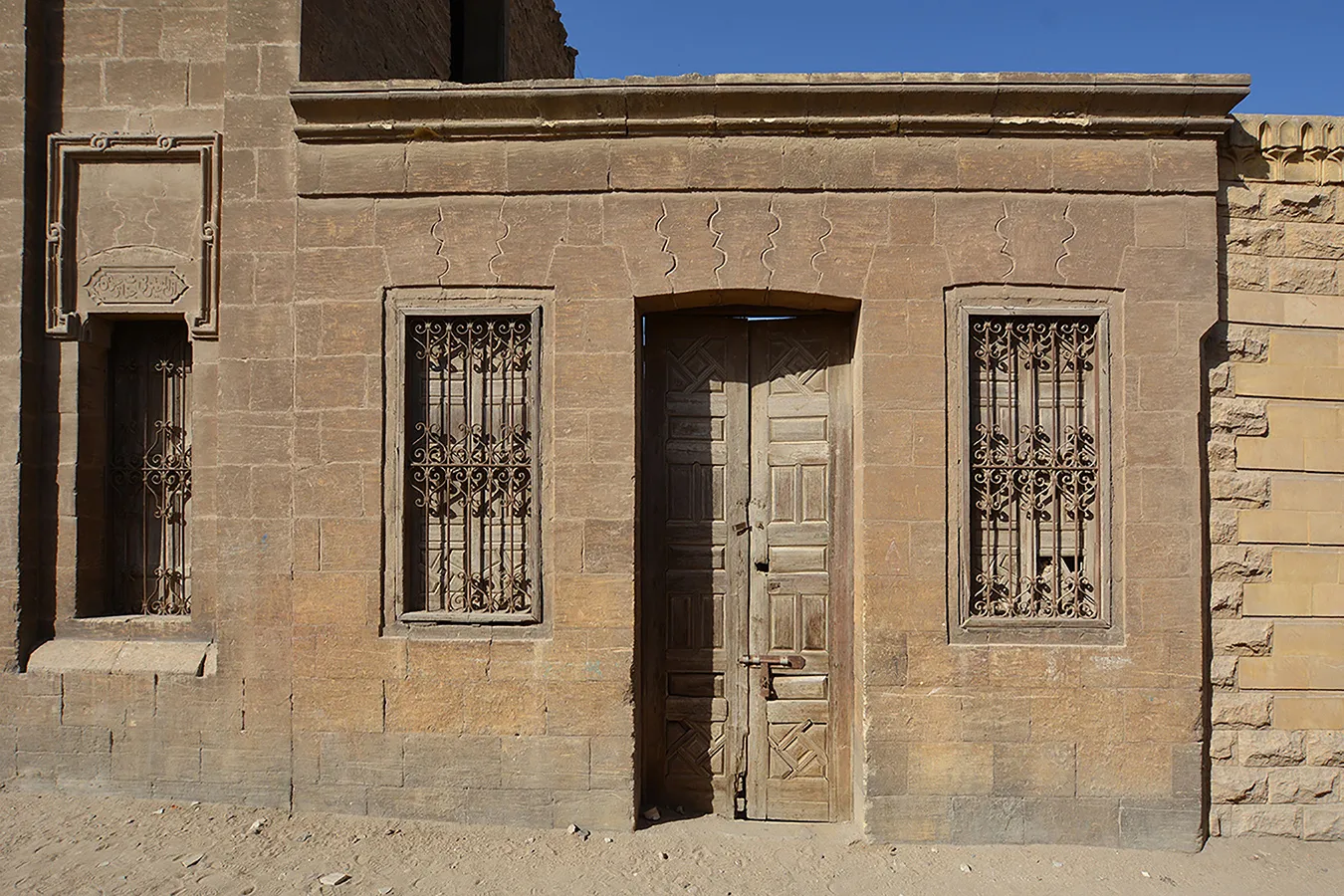
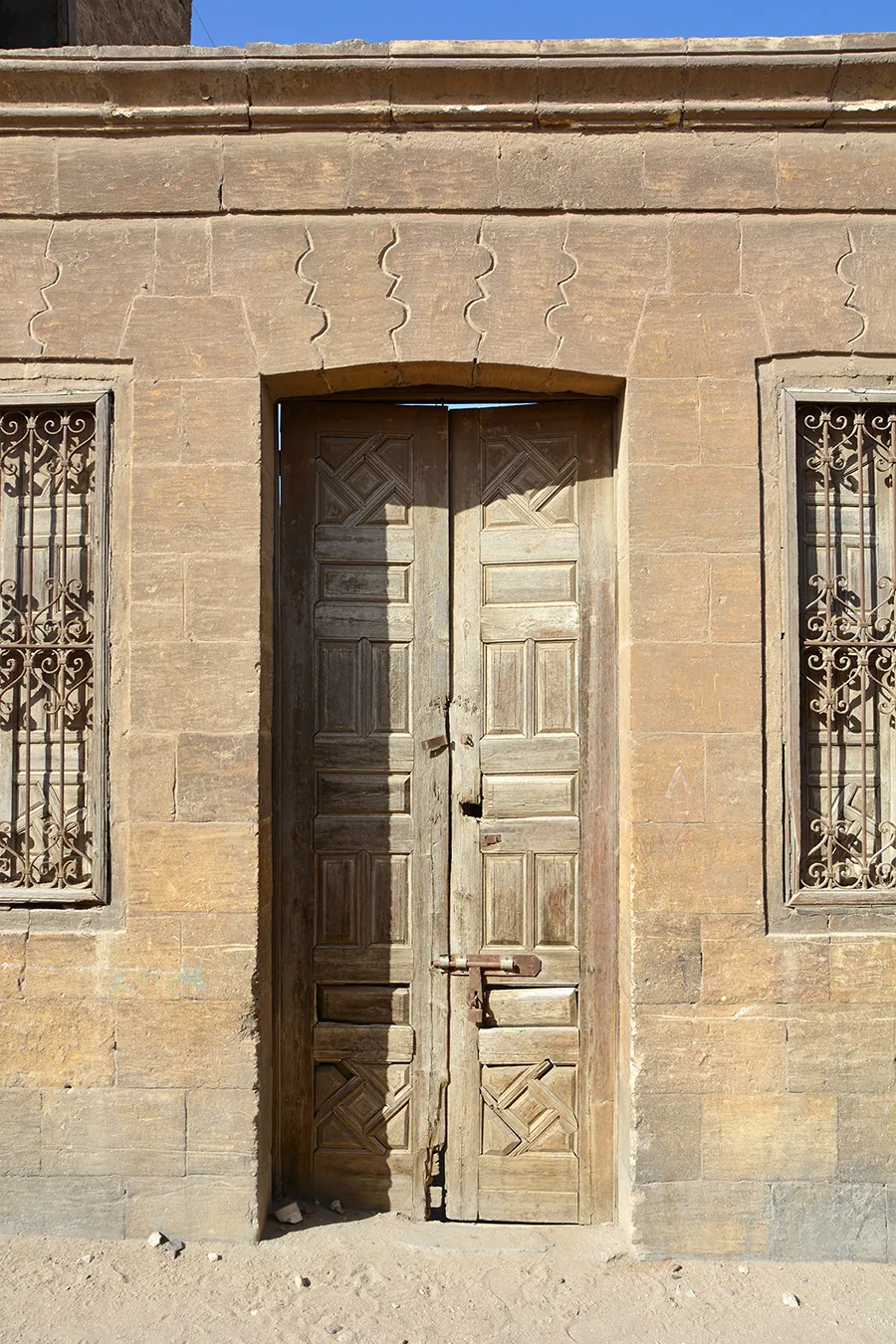
The simple undecorated single-storey façade of the courtyard that adjoins the main building to the west is tripartite, with a door covered with a segmental arch of joggled voissoirs in the middle flanked on each side by a rectangular window. The façade is topped by a simple cornice, with no crenelation.
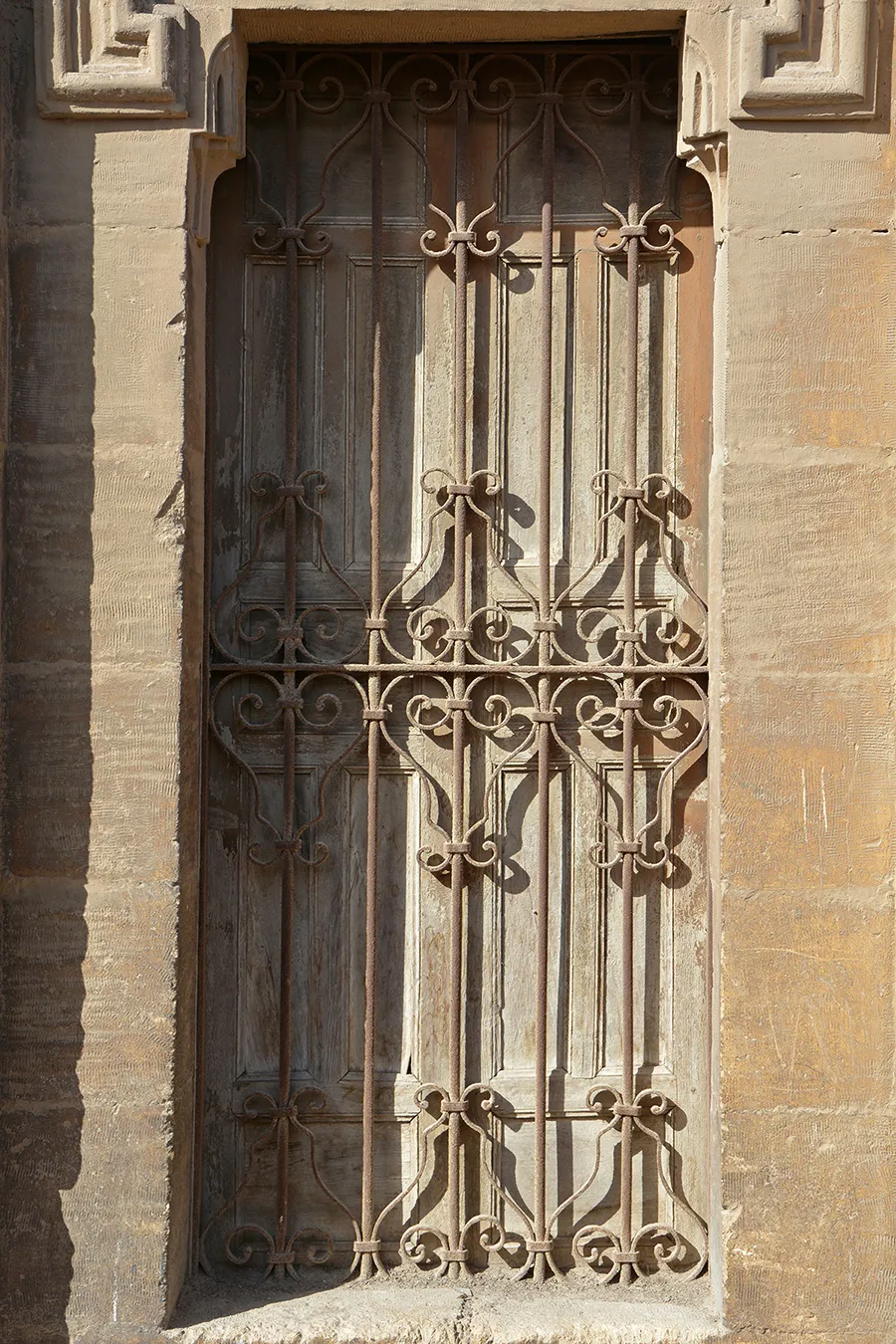
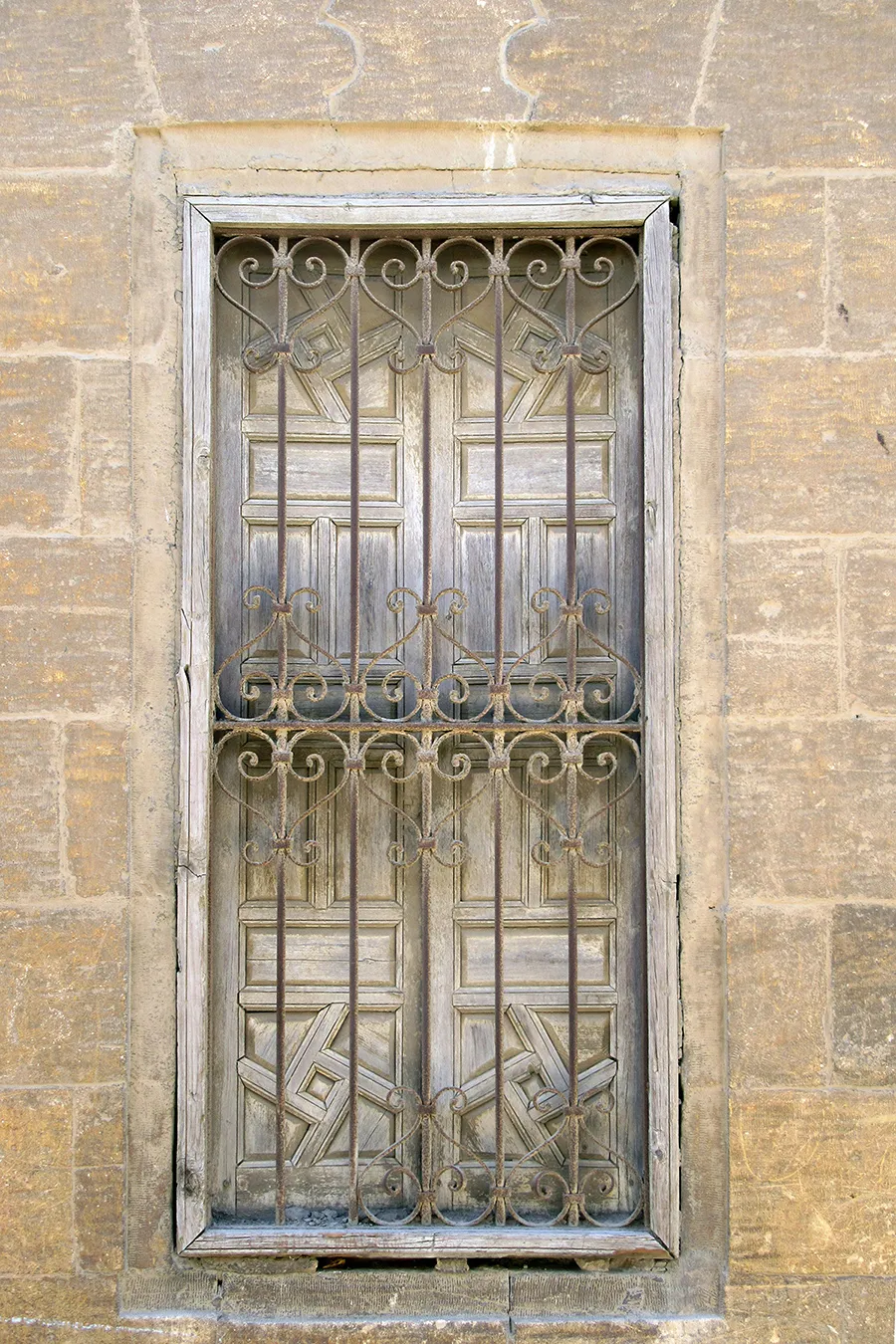
All ground-floor windows are fitted with simple decorative grilles of wrought iron with generic motifs not relating to Islamic art. The ground-floor windows have wooden shutters panelled in mafruka motifs; the door leaves of both doors are also so decorated. The upper floor windows had simple panelled shutters, now damaged and partially or completely missing.
The interior was inaccessible at the time of recording.
Condition of preservation
The building is disused and dilapidated, although there are no indications of structural failures threatening collapse. Woodwork is damaged and seriously desiccated.
- Field recording by
- Muhammad Esam, Esraa al-Mahdy, Hadeer Ahmad-edited by Jaroslaw Dobrowolski
- Date recorded
- August 14, 2022
- Data entered by
- Yusuf Yassir
- Date entered
- May 23, 2024