
Unit No71
Ahmad Hasanein Pasha
|
Coordinates of the main entrance |
30.044944N - 31.271142E |
|
Attribution |
Ahmad Hasanein Pasha |
|
Higri (AH)Dates as given in the Inscription |
|
|
Miladi (AD)Dates as given in the Inscription |
|
|
Inscription Contemporary with the building? |
Yes |
|
Multiple date(s) In the inscription? |
Yes |
|
Assumed Date |
after 1947 |
|
Based on |
Based on published data |
|
Original Use |
Funerary enclosure |
|
Current Use |
Funerary monument (the original layout of the lot not preserved) |
|
Overall condition |
Good |
Features of unit 71
| Present | Count | Material | Comments (see description for details) | |
|---|---|---|---|---|
| Free standing structure | Yes | 1 | stone, concrete | |
| Walled enclosure | No | Originally a walled garden, not preserved | ||
| Rooms by the perimeter wall | No | Original layout altered | ||
| Freestanding structure(s) in enclousure | No | |||
| Dome over the tomb chamber | Yes | |||
| Neo-Mamluk architectural decoration | Yes | |||
| Garden layout | Yes | In the original layout, not preserved | ||
| Sabil(s) | No | Originally present, now destroyed | ||
| Wall fountain(s) | No | |||
| Canopy on columns / pillars | No | |||
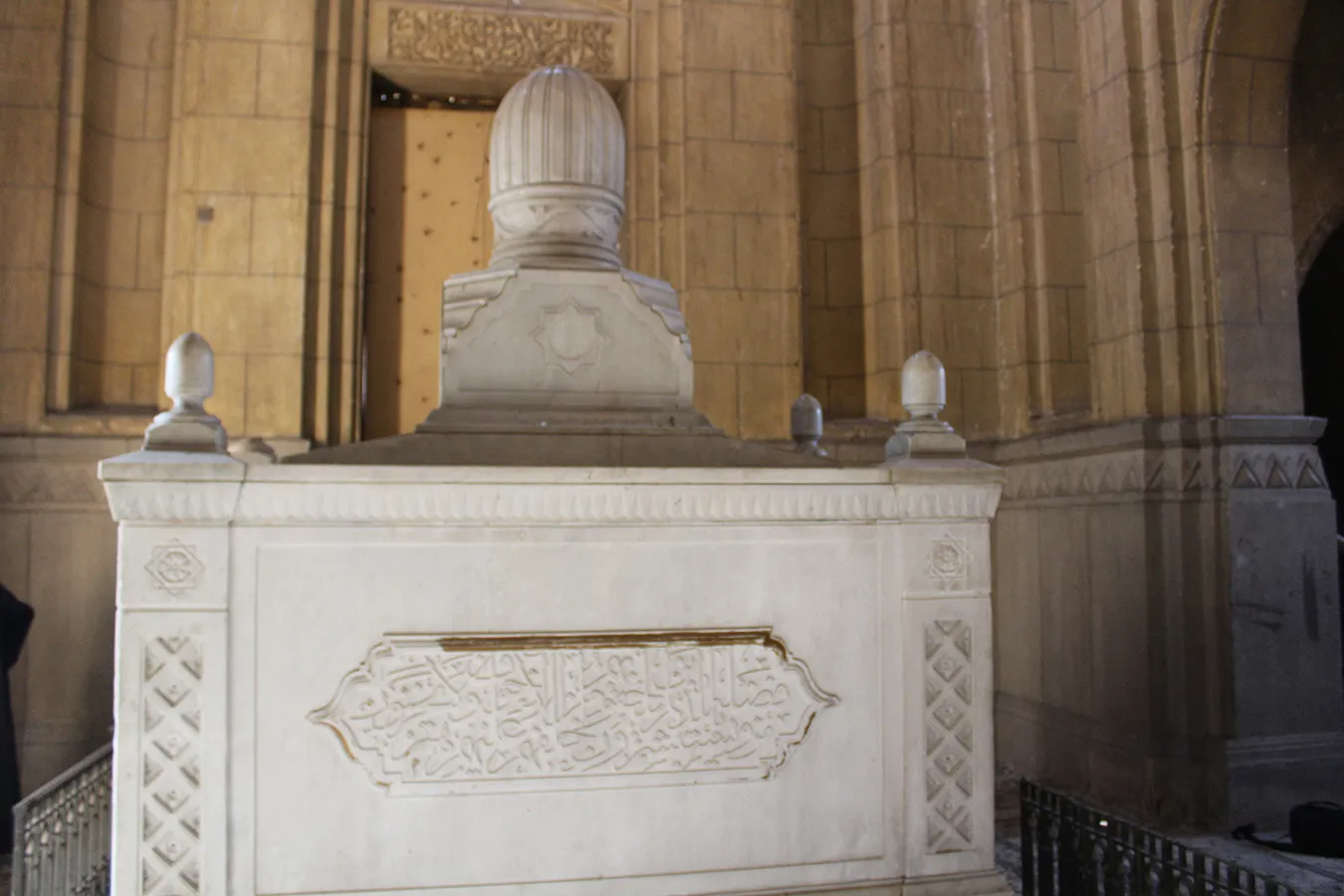
| Carved marble cenotaph(s) | Yes | 1 | 1 | Inside the mausoleum |
| Decorated limestone tomb-markers | No | |||
| Decorated gateway | Yes | In mausoleum. Original gate destroyed | ||
| Decorative door-leaves | Yes | 2 | steel | |
| Decorative window grilles | Yes | 6 | steel steel | |
| Decorative shutters | No | |||
| Painted ceiling(s) | No | |||
| Decorative paving(s) | No |
Unusual or unique features
Designed by the world-famous architect Hasan Fathi
Description (The direction towards Mecca (Qibla) is described as eastern and other directions are named accordingly)
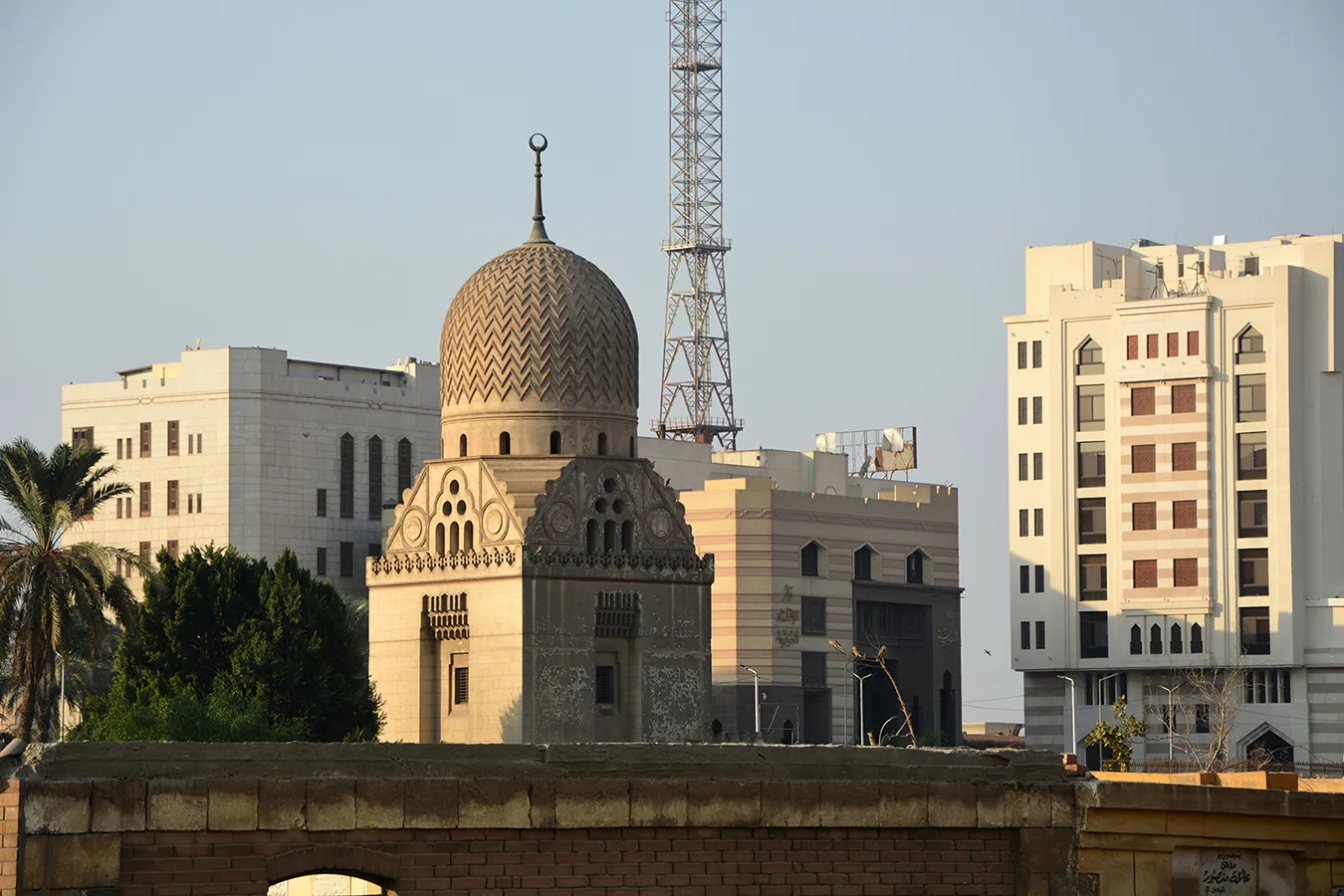
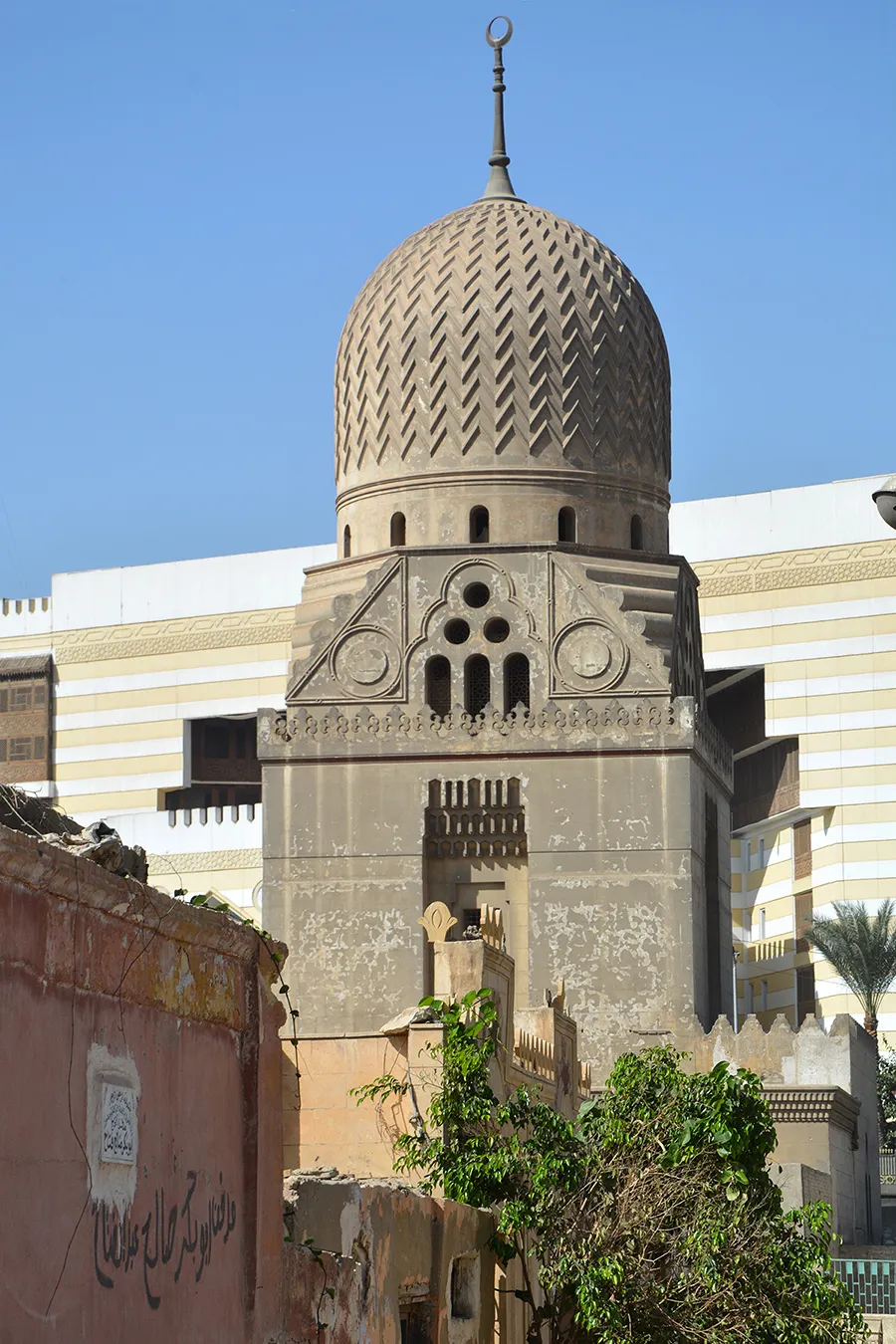
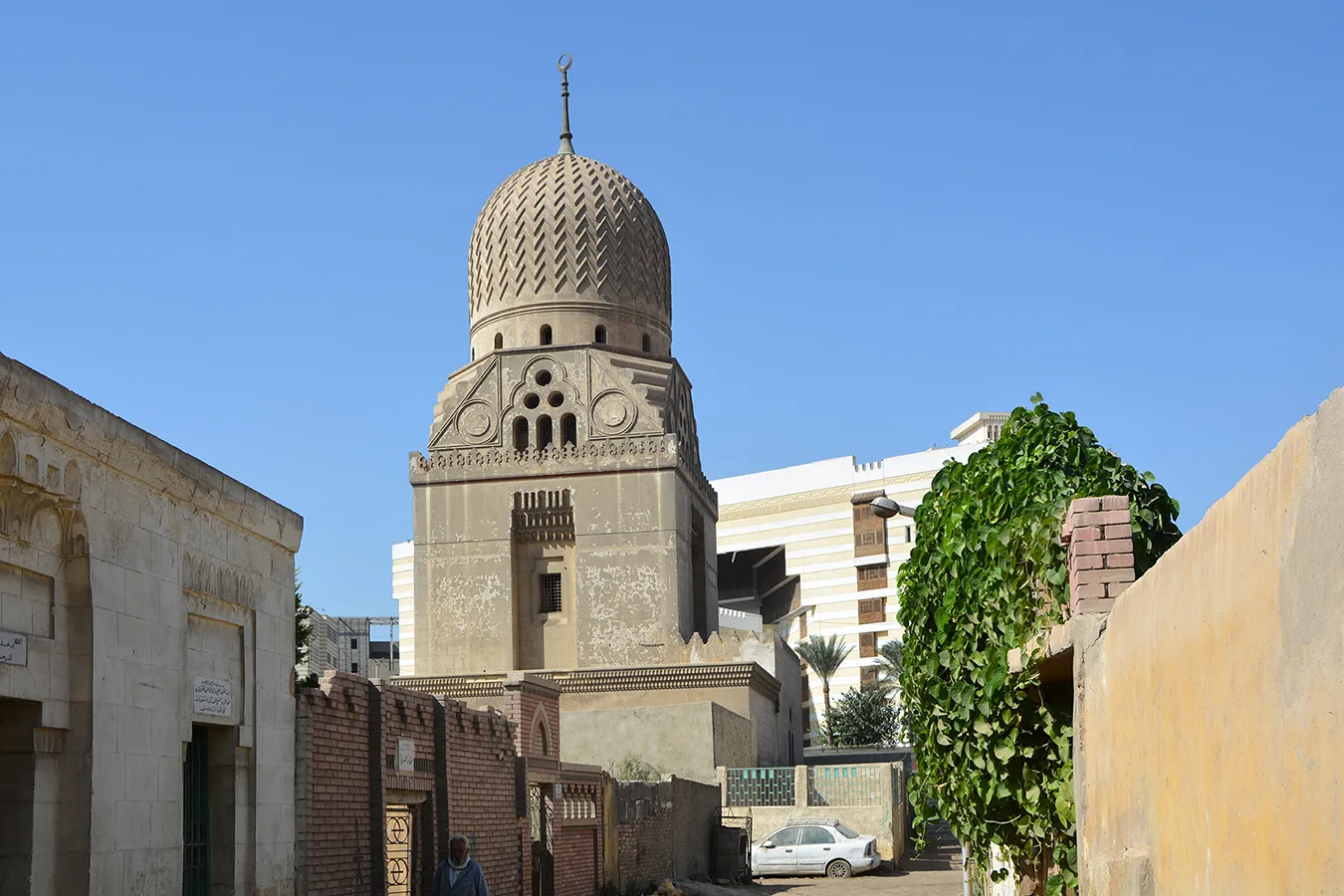
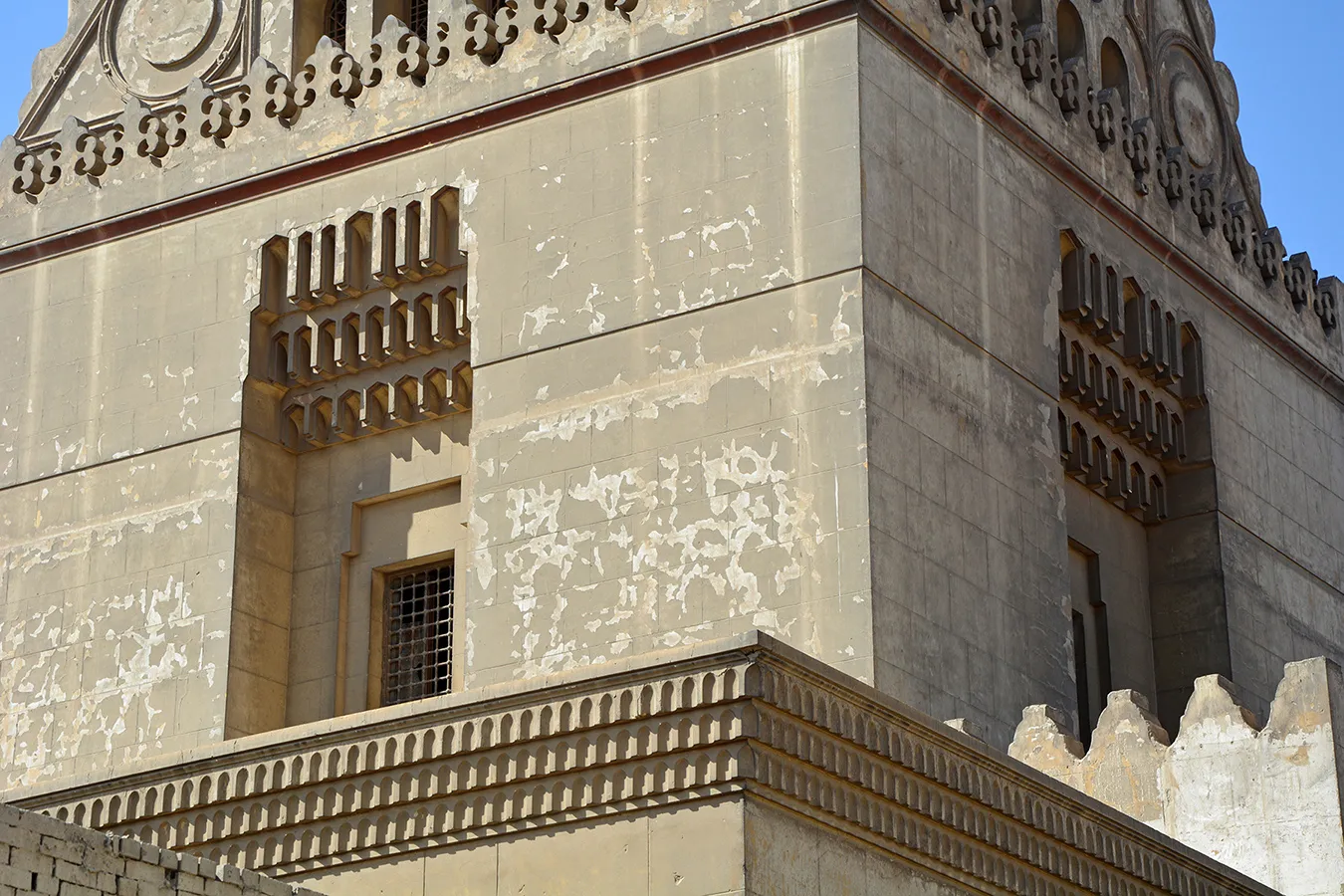
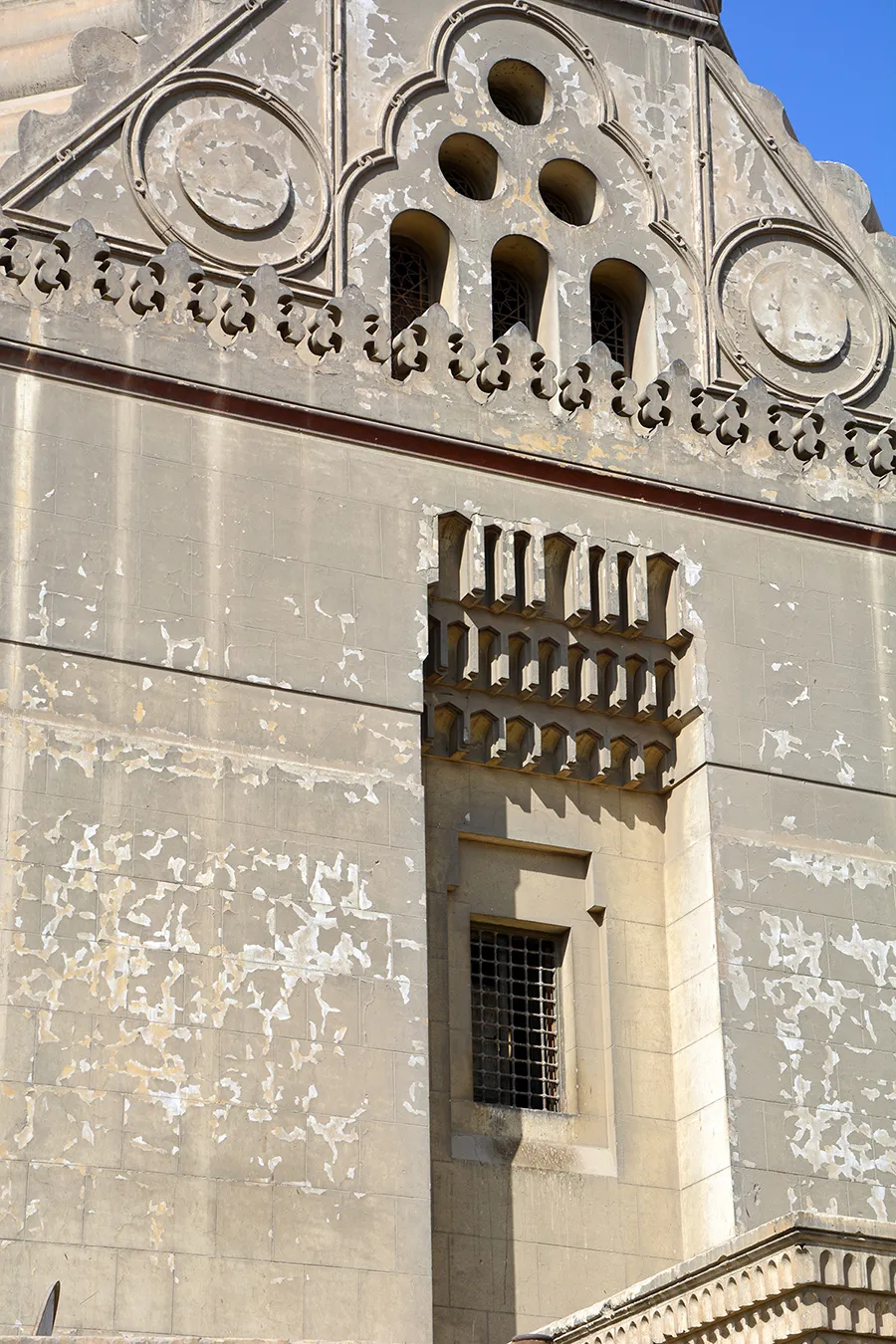
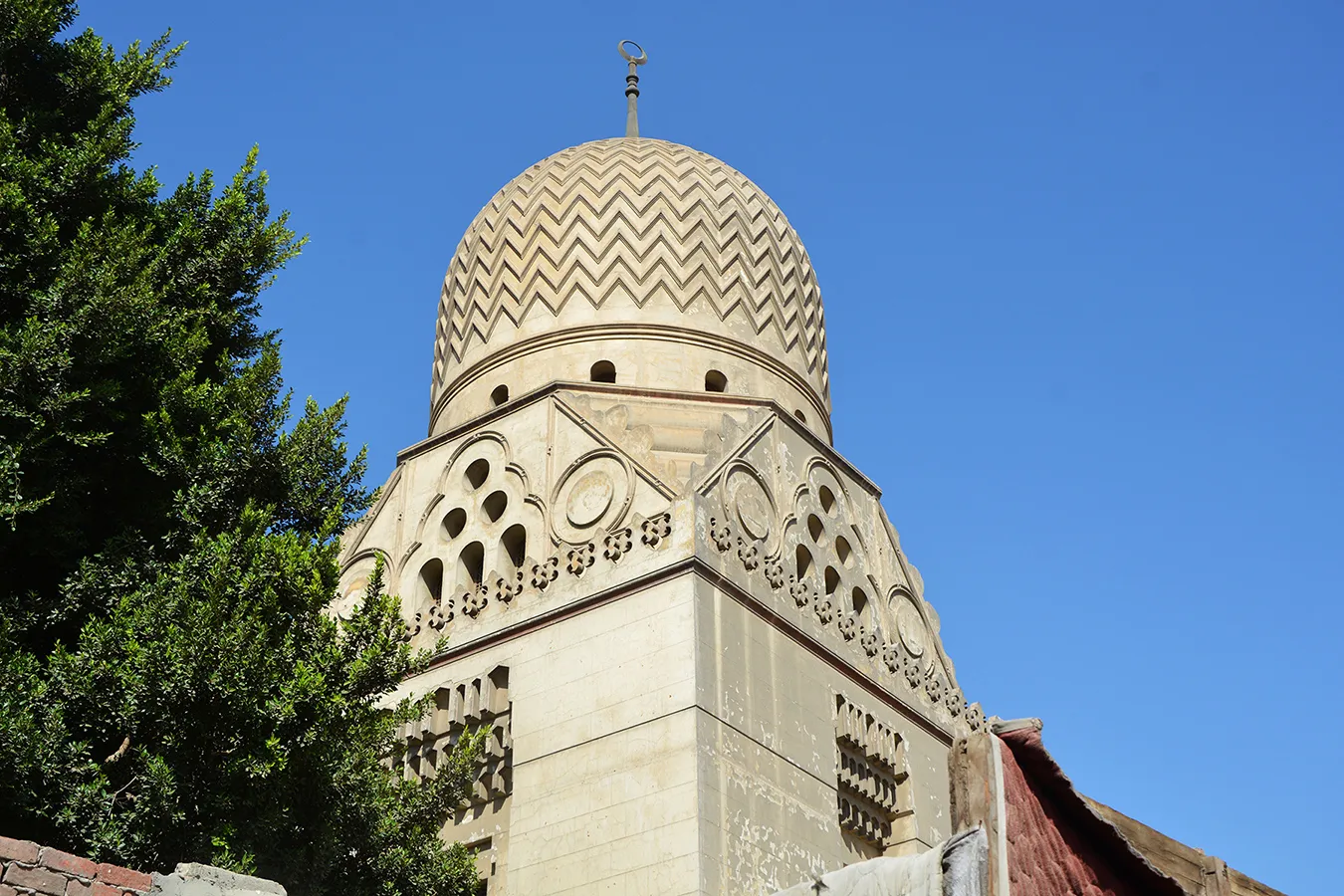
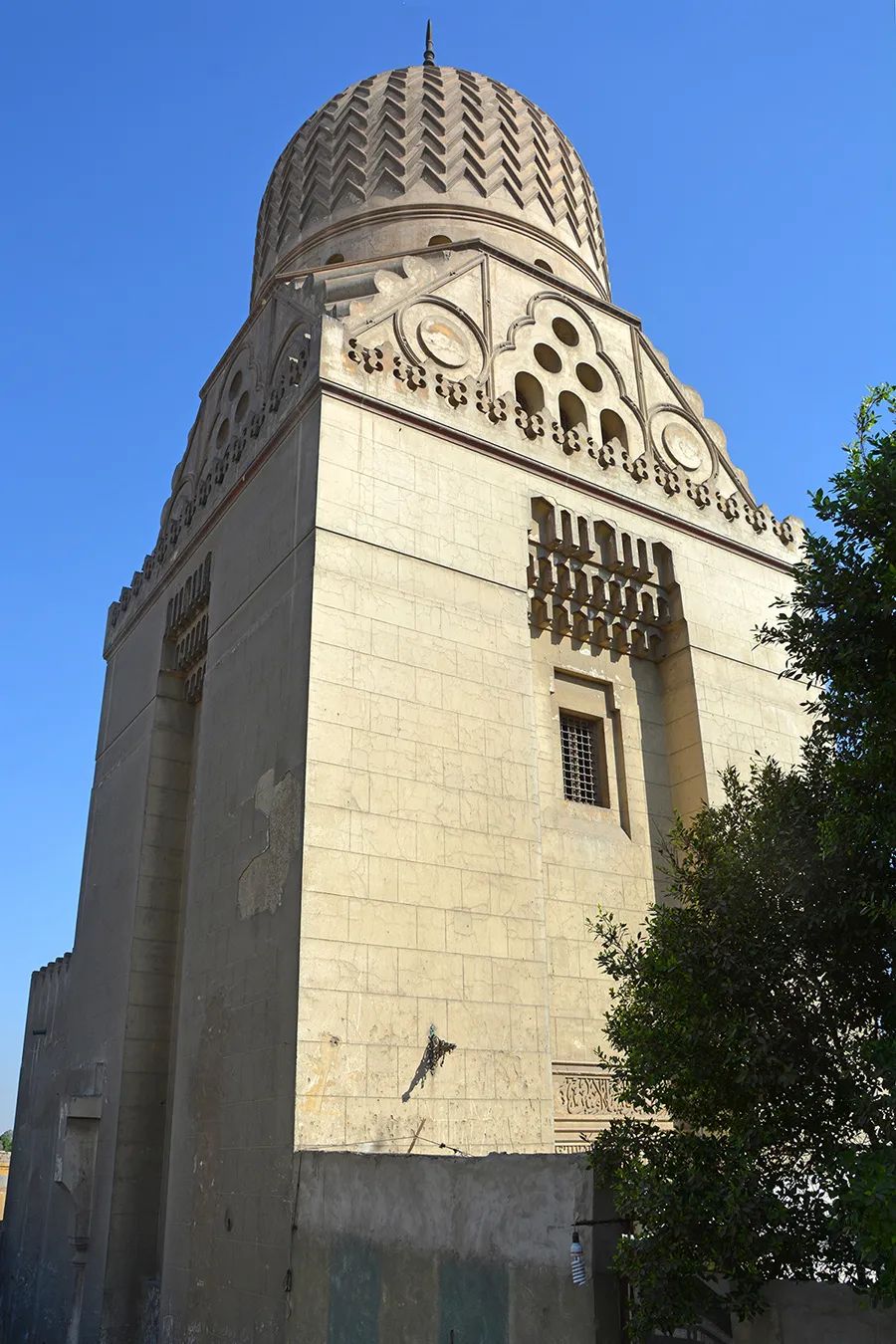
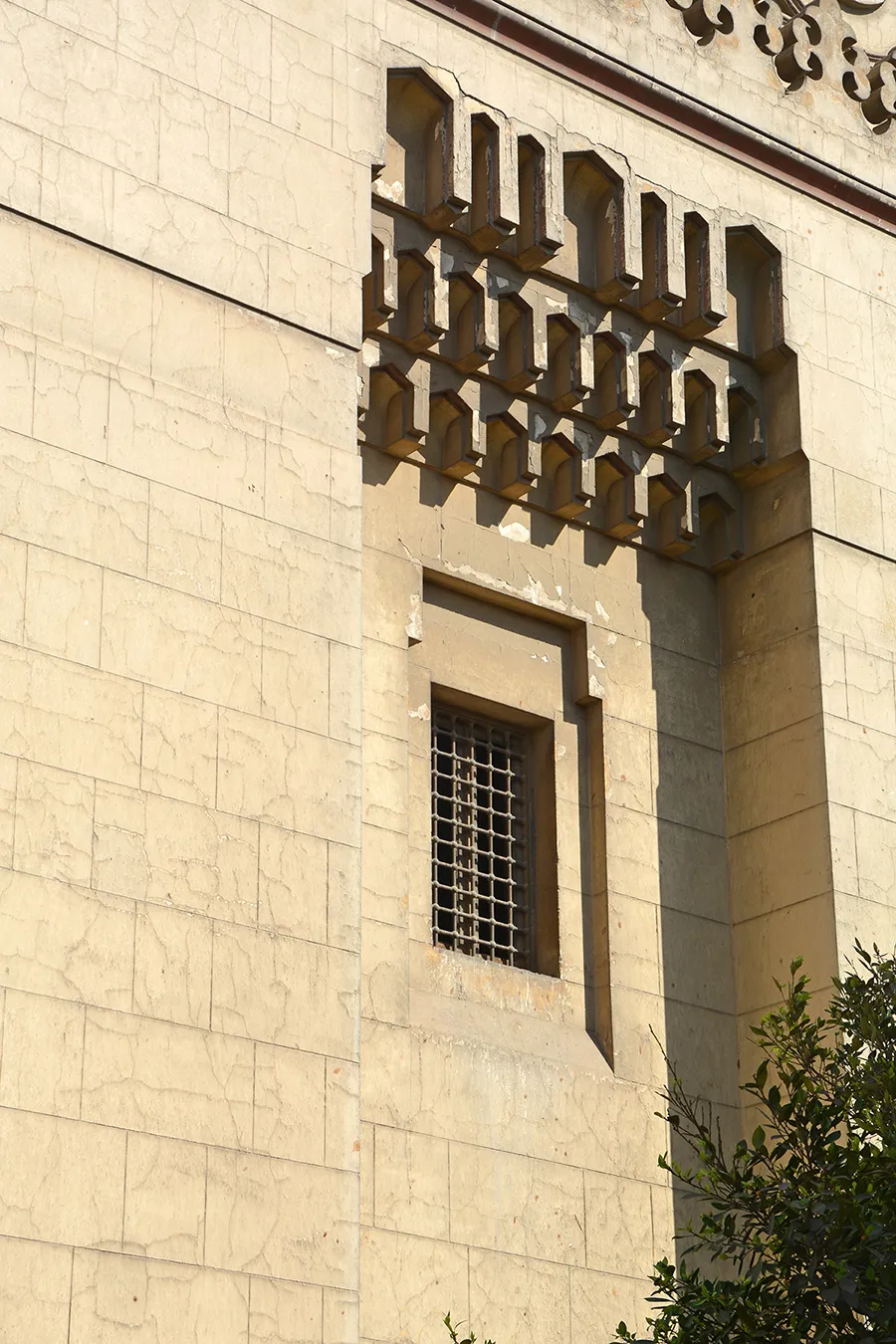
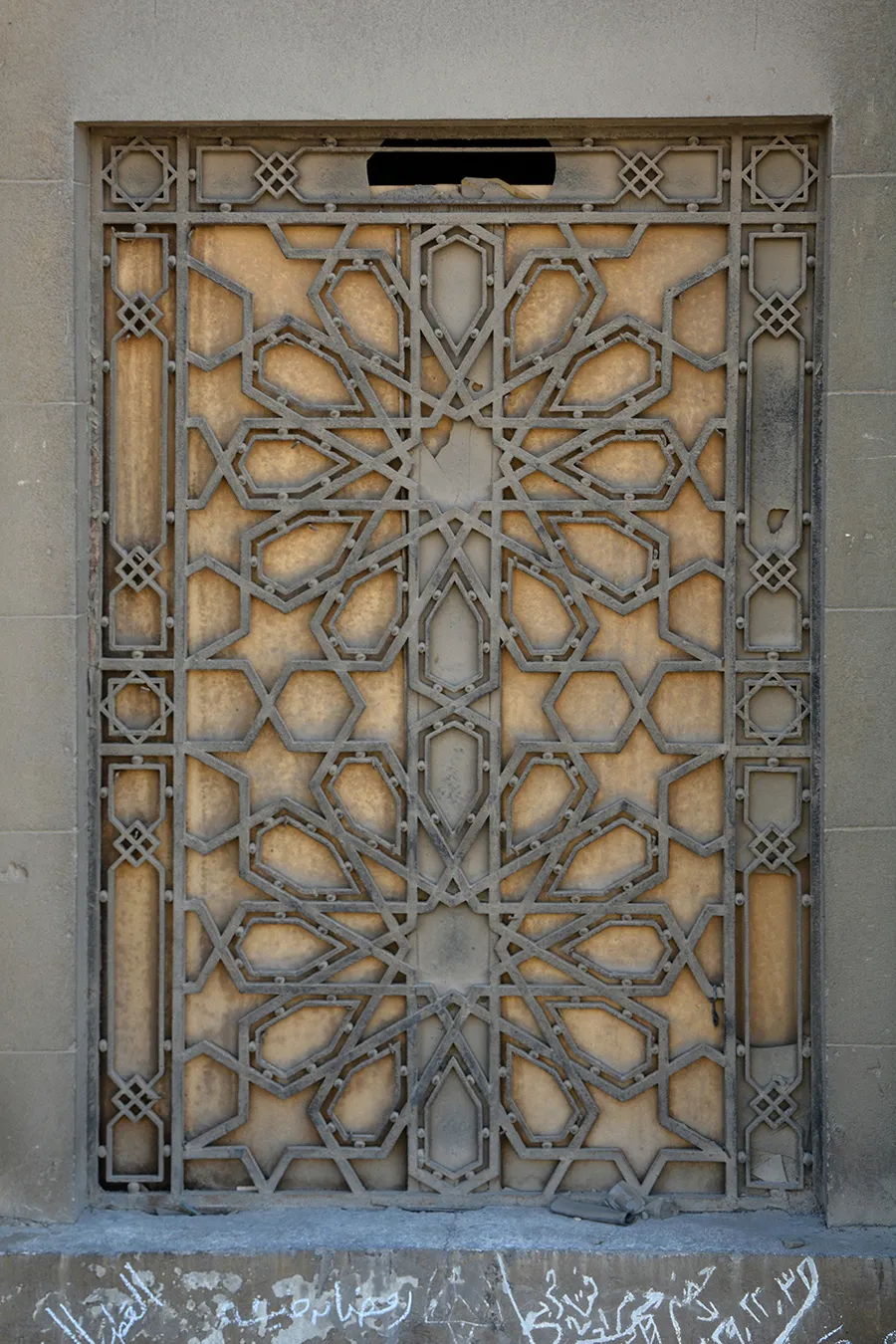
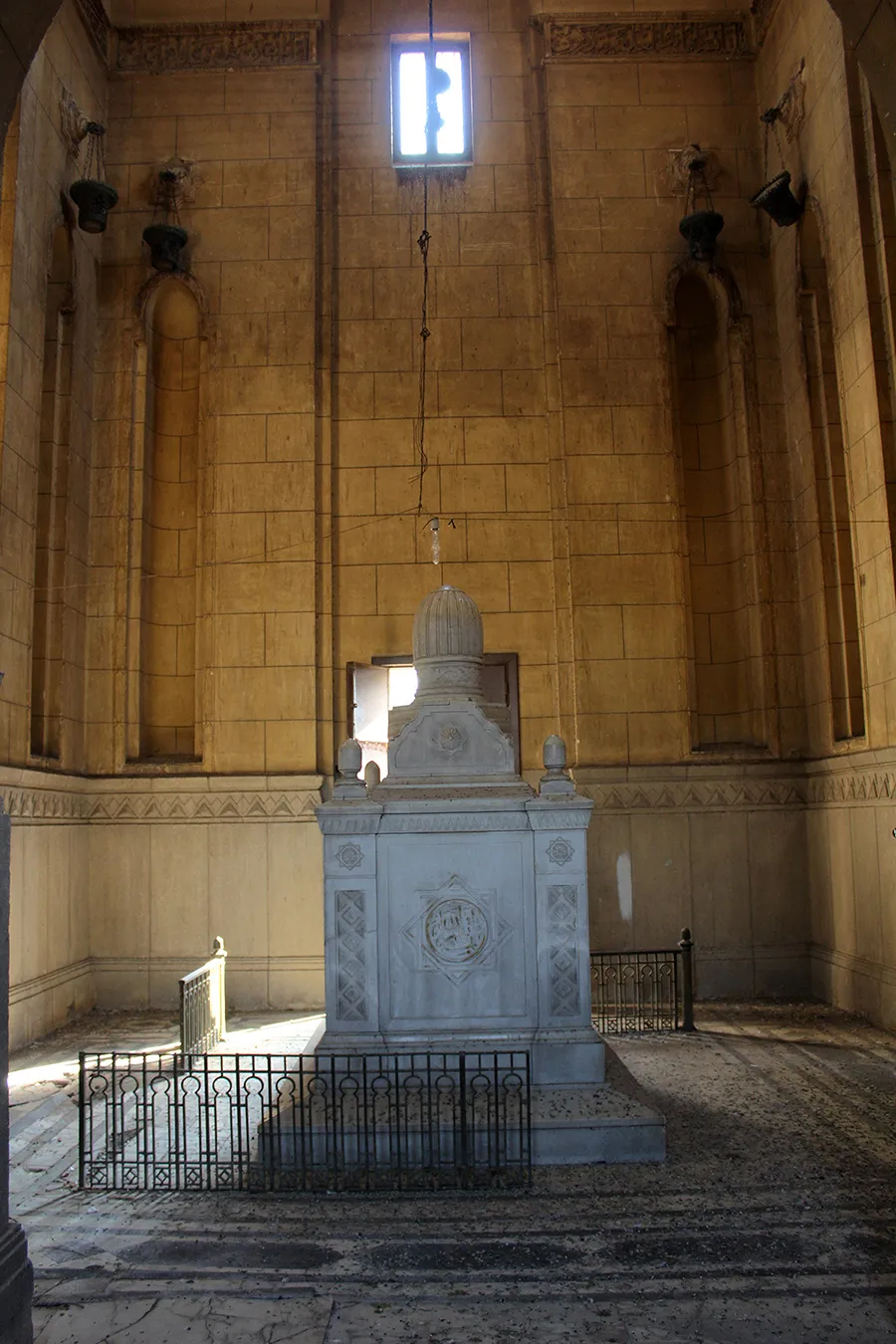
A domed mausoleum of square plan. The design is closely based on Burgi-period Mamluk ones, of which excellent examples are preserved nearby. The decoration is Mamluk-inspired, but simplified into basic geometric forms. Currently, the structure comprises a square domed burial chamber entered from the south and a lower rectangular annexe to its northern side. Originally, there were more rooms and arcades. Externally, there is a single deep recess in each façade, covered with a flat hood of three rows of extremely simplified muqarnases. Originally, there were four ground-level openings in the burial chamber: the entrance door on the southern side (door now replaced), tall rectangular doors opening onto no longer extant arcaded spaces on the east and west sides, fitted with steel grilles of geometric star patterns (the eastern one now fully and the western one partially walled up), and a wide pointed-arch opening to the northern annexe. The rectangular upper row windows, identical in each façade, are set in recesses of simplified rectangular forms and are fitted with bronze grilles similar to those in Mamluk-period windows.
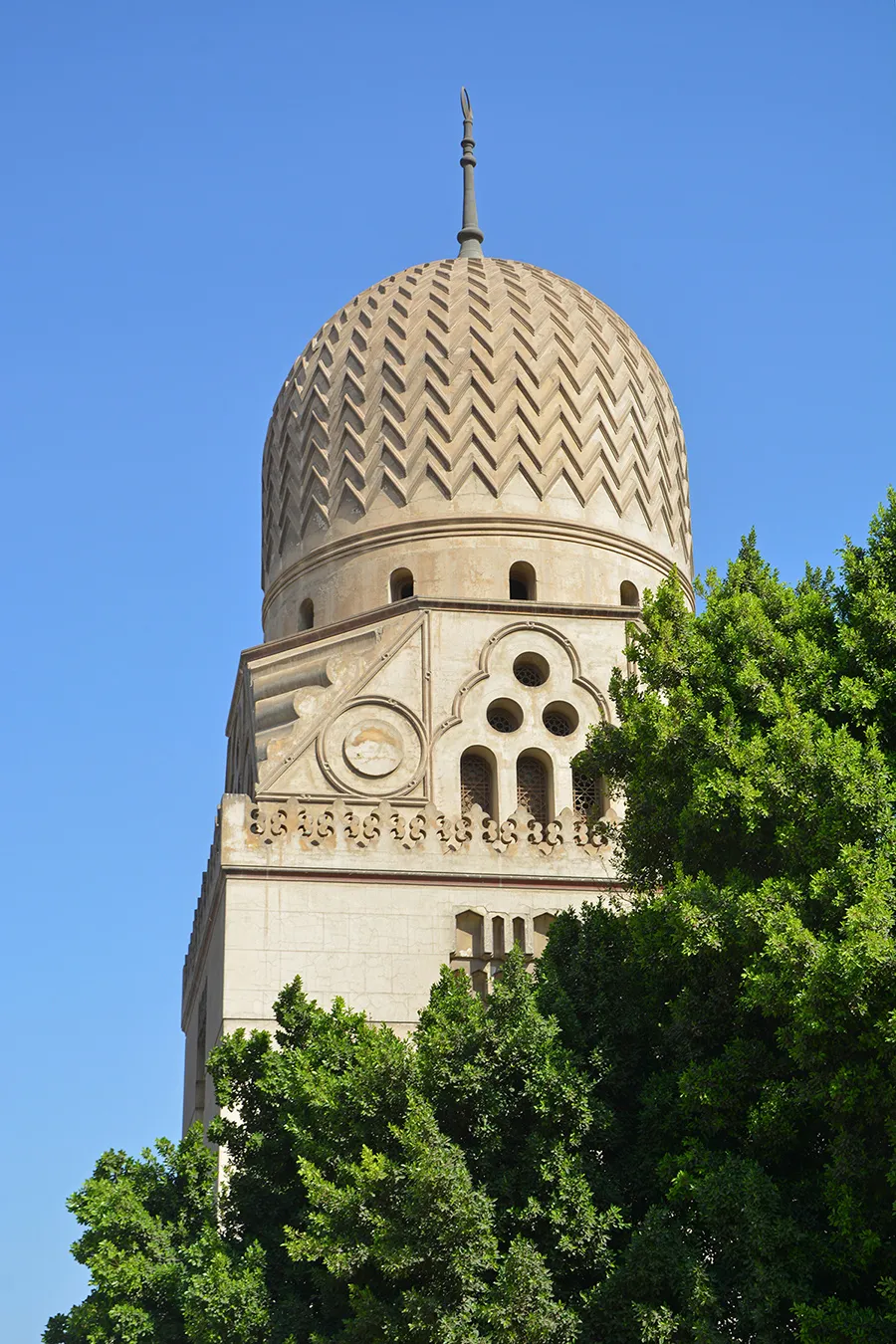
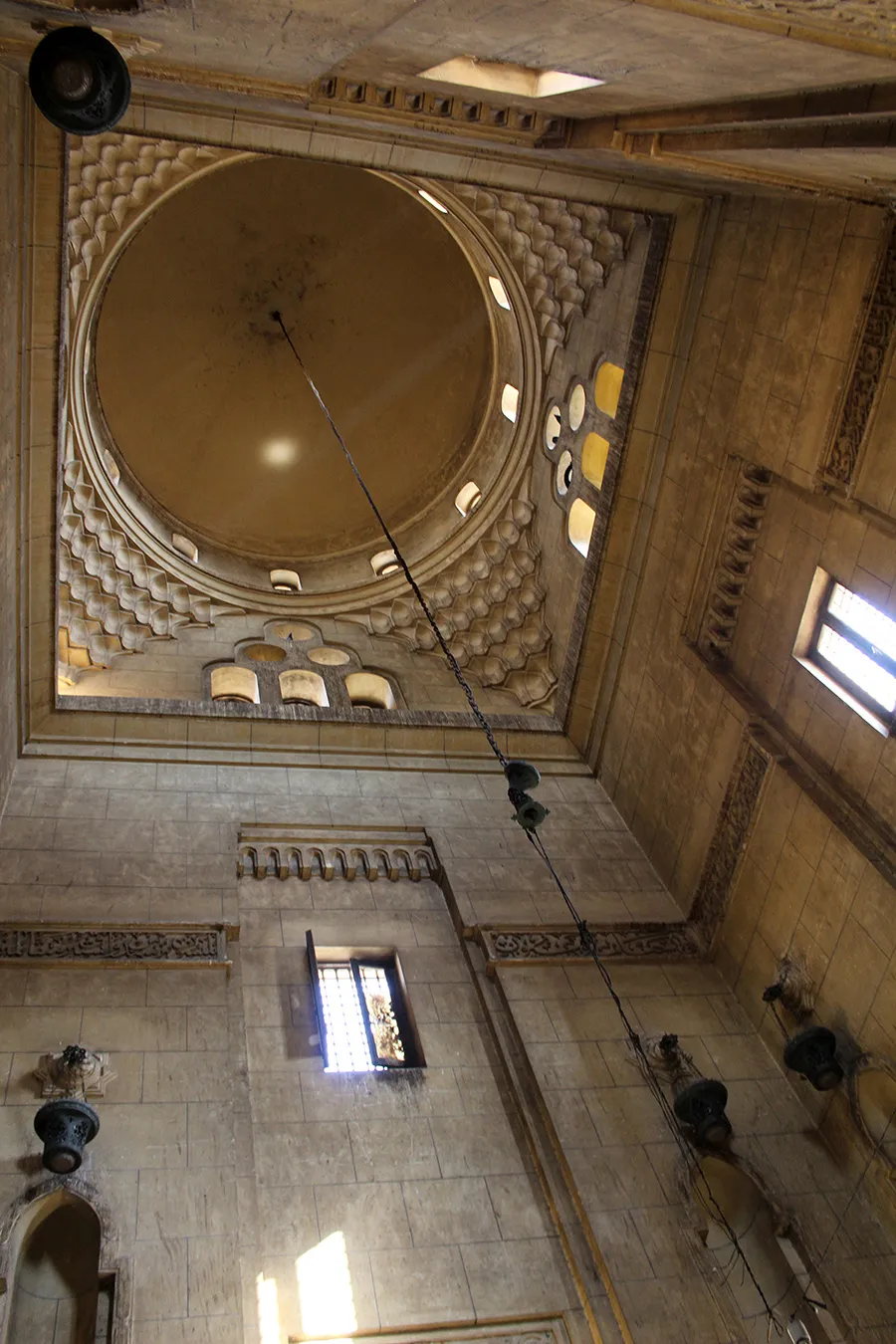
The zone of transition under the dome features Mamluk-style elaborate bold mouldings in the corners and is pierces on each side with typically Mamluk arrangement of oculi and round-arched windows in a one-over-two-over-three pattern. The windows are framed with knotted mouldings. The plain drum is pierced with twelve undecorated round-arched windows, and the dome is decorated with herringbone zigzag pattern (similar to this in the neighbouring dome of Amir Kebir Qurqumas (1507) and originating in the domes of nearby monument of Farag Ibn Barquq (1400-11). The dome is surmounted by a very tall brass crescent finial Taller than in Hasan Fathi’s original design drawings (see point 17, “references”, 1).
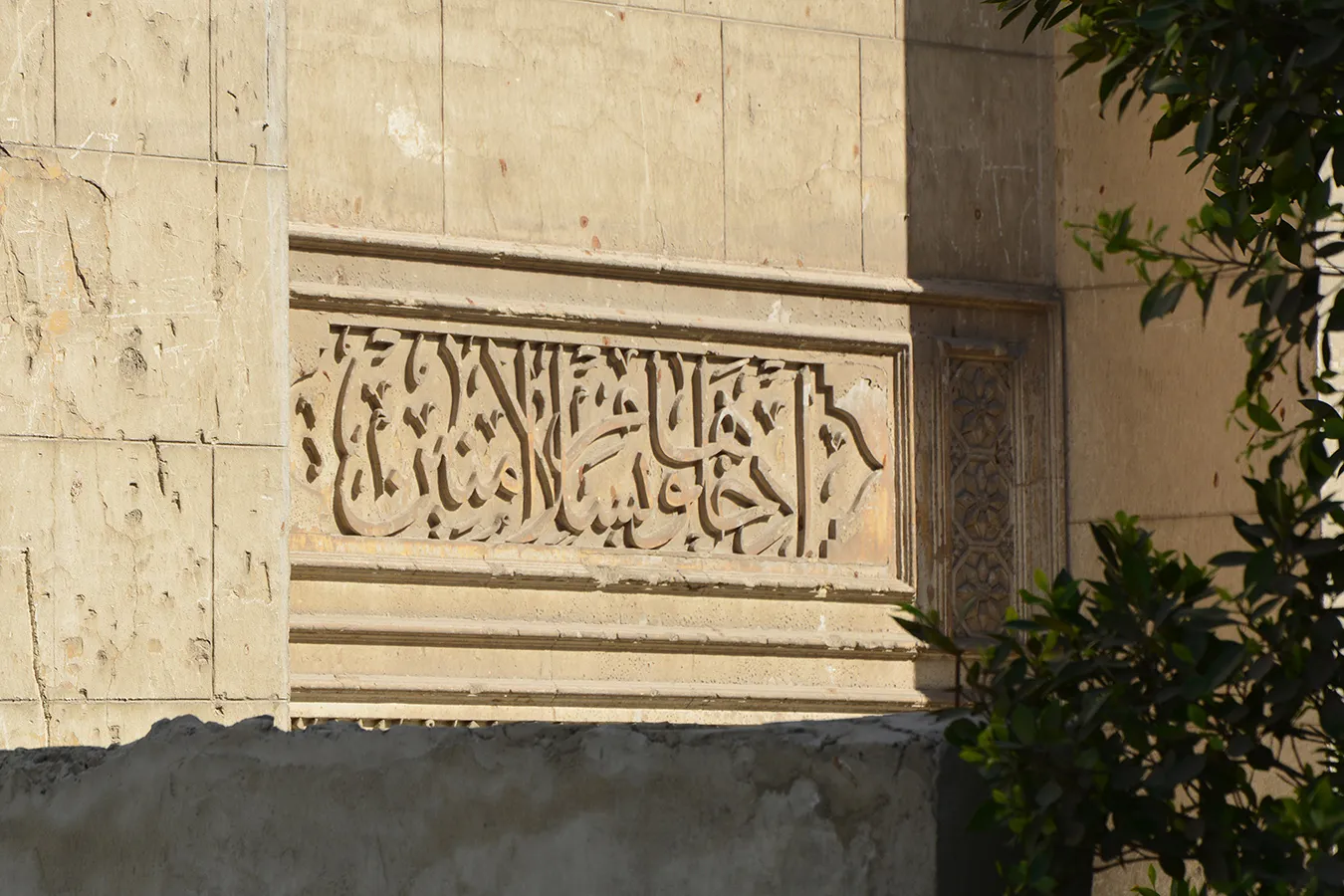
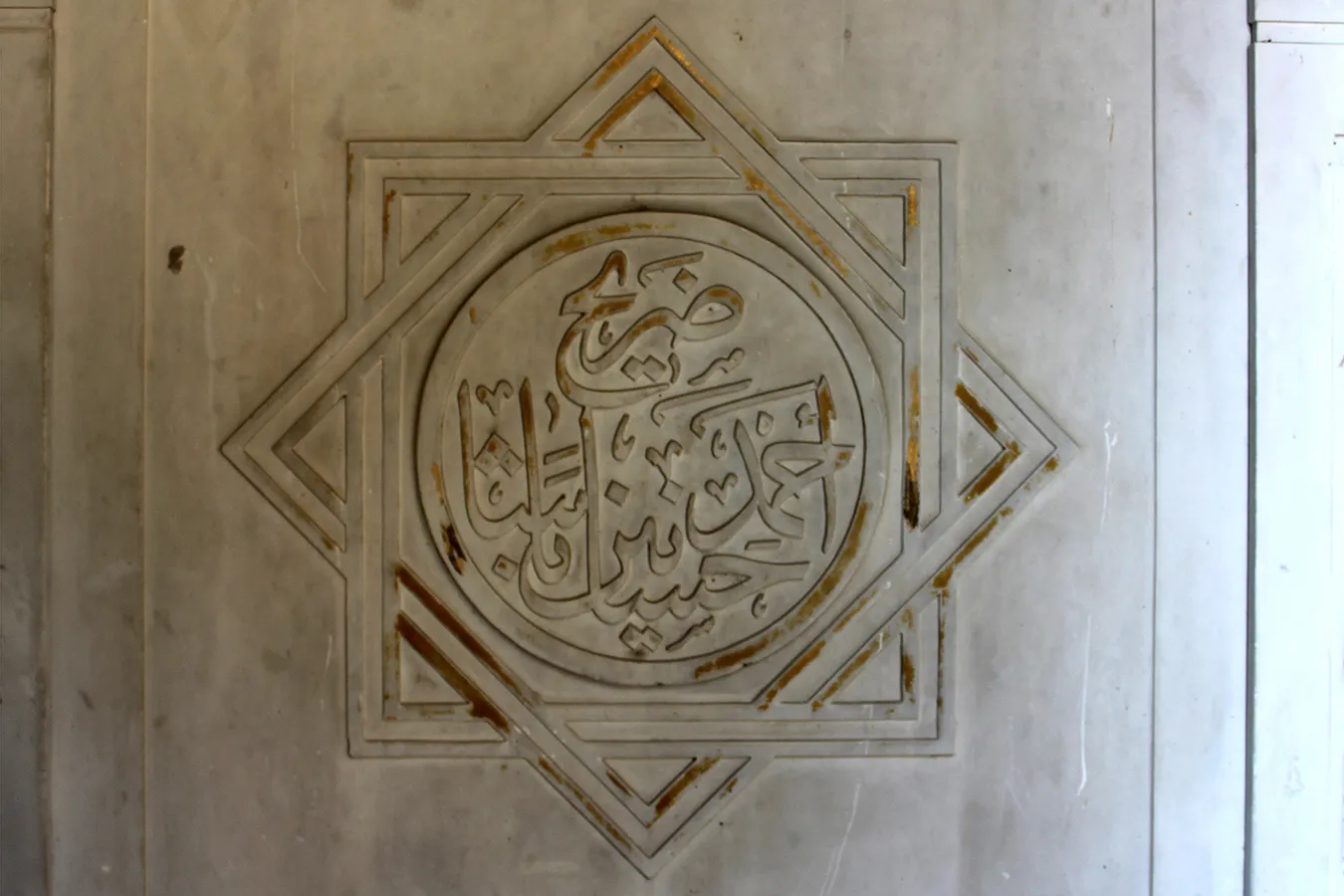
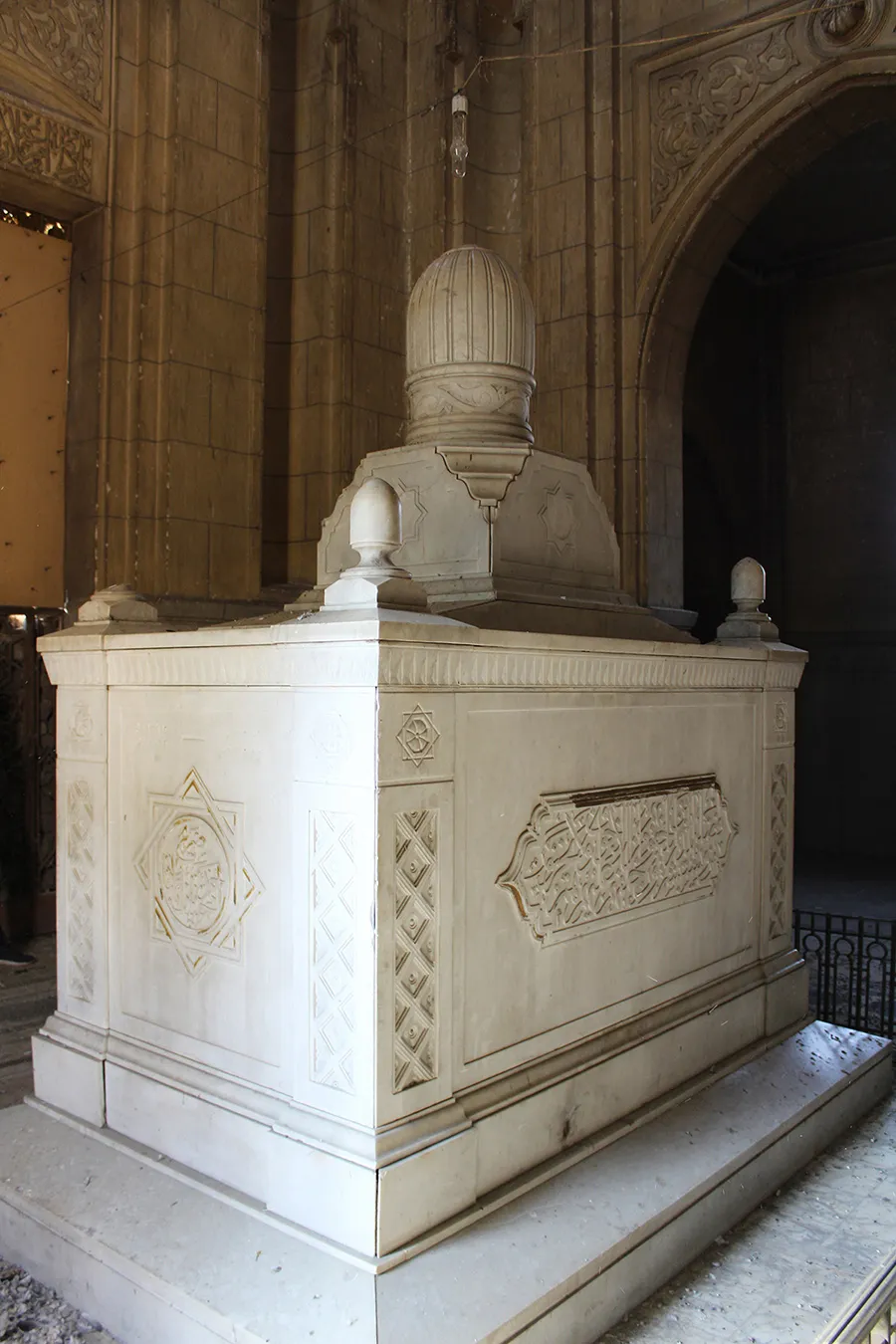
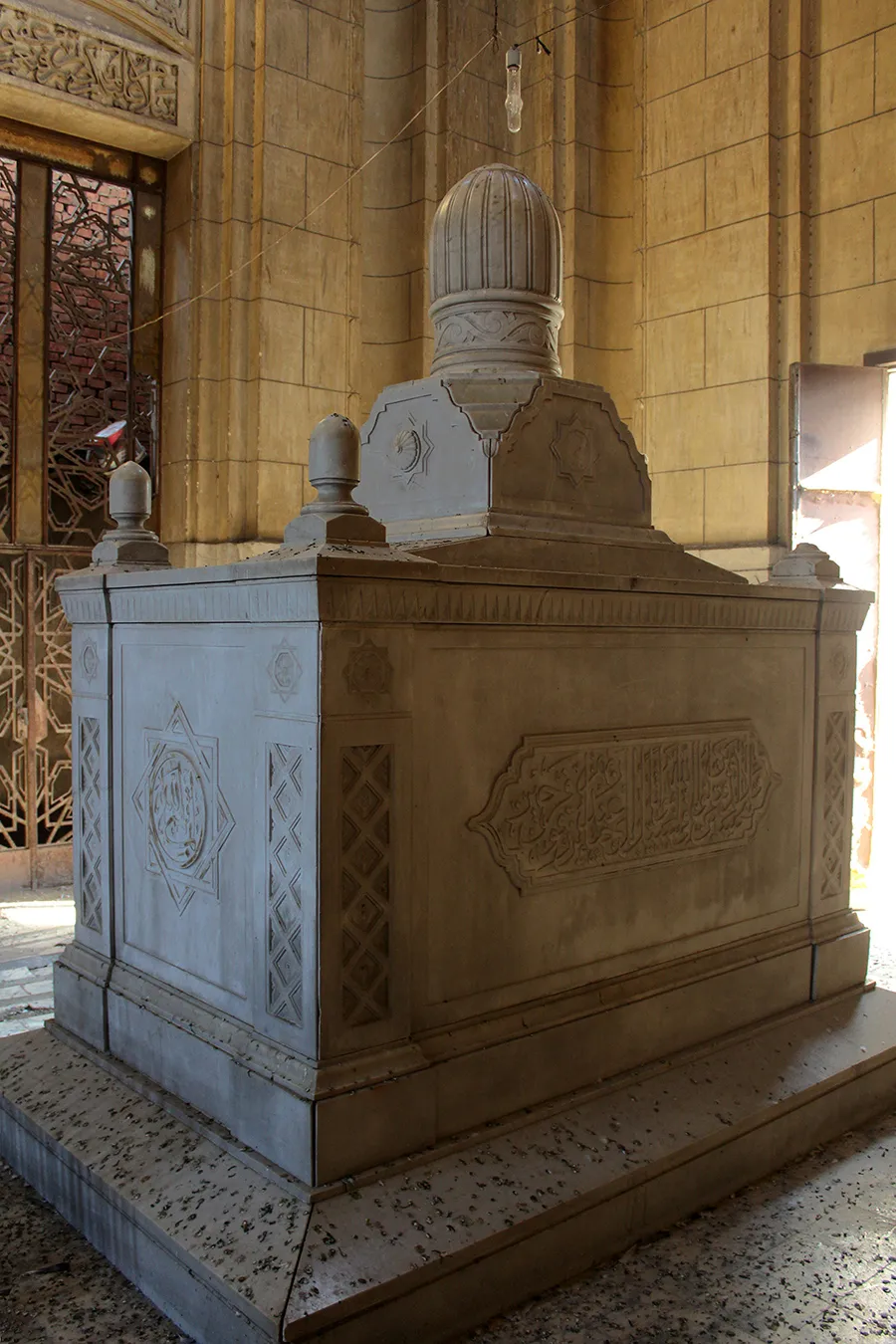
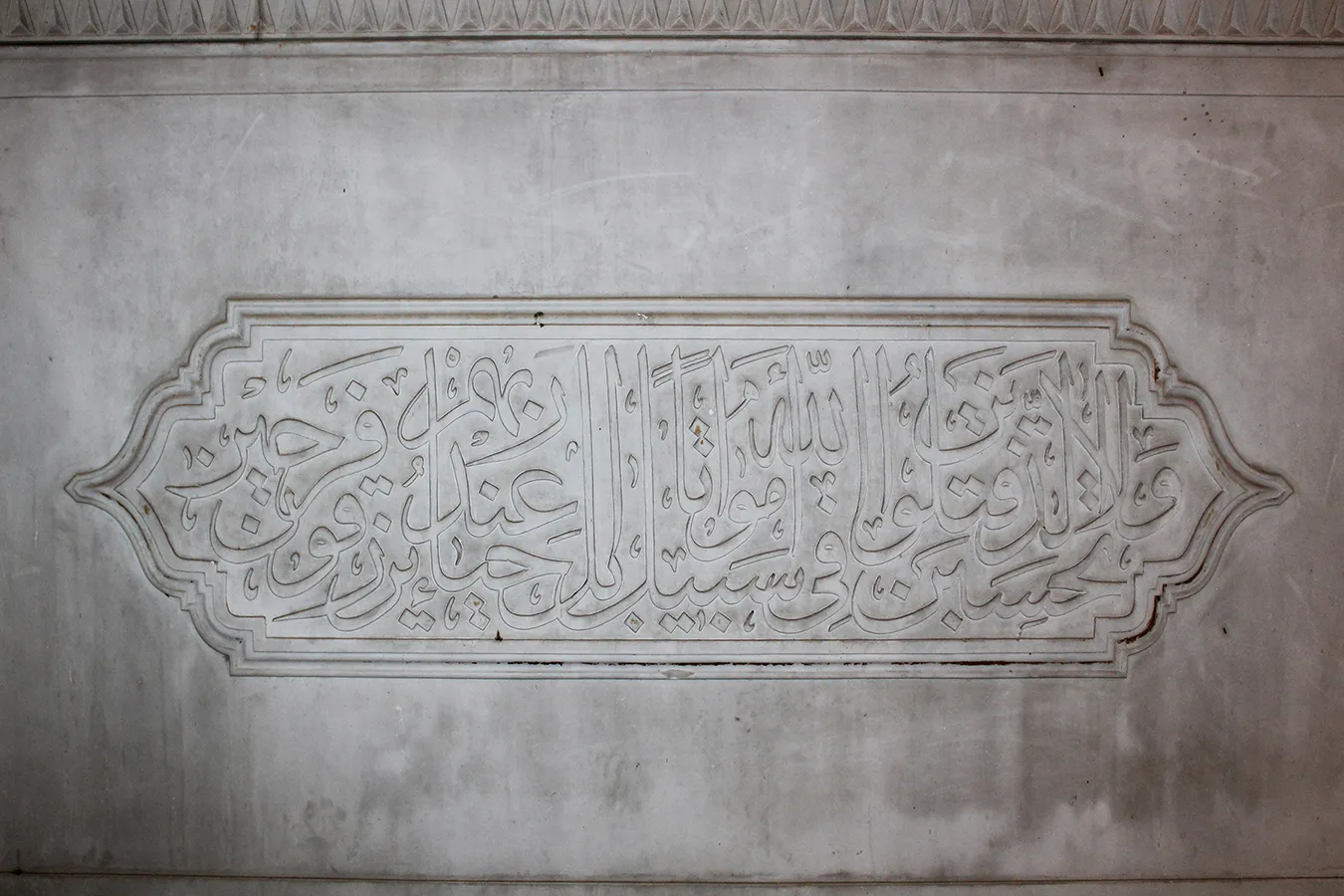
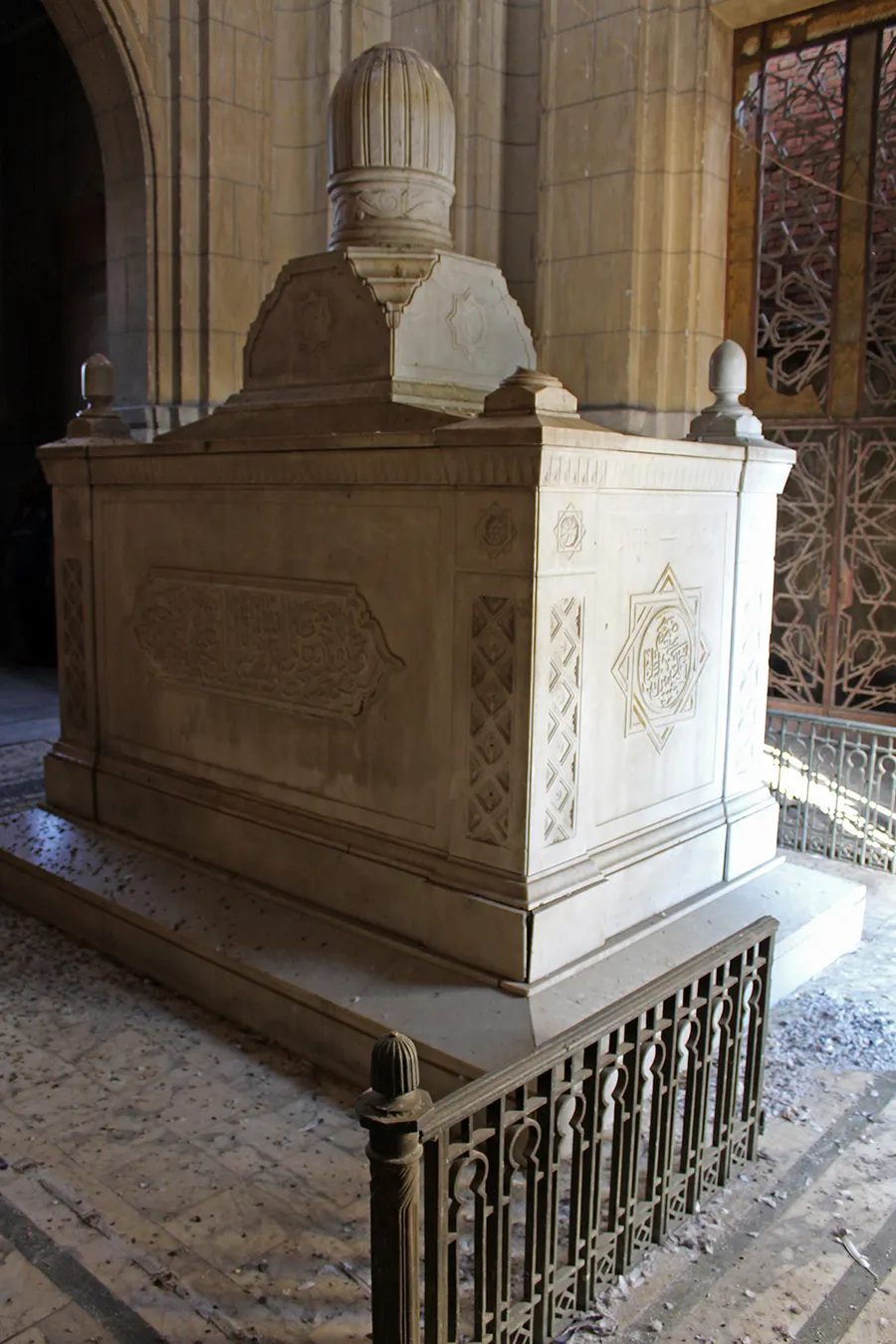
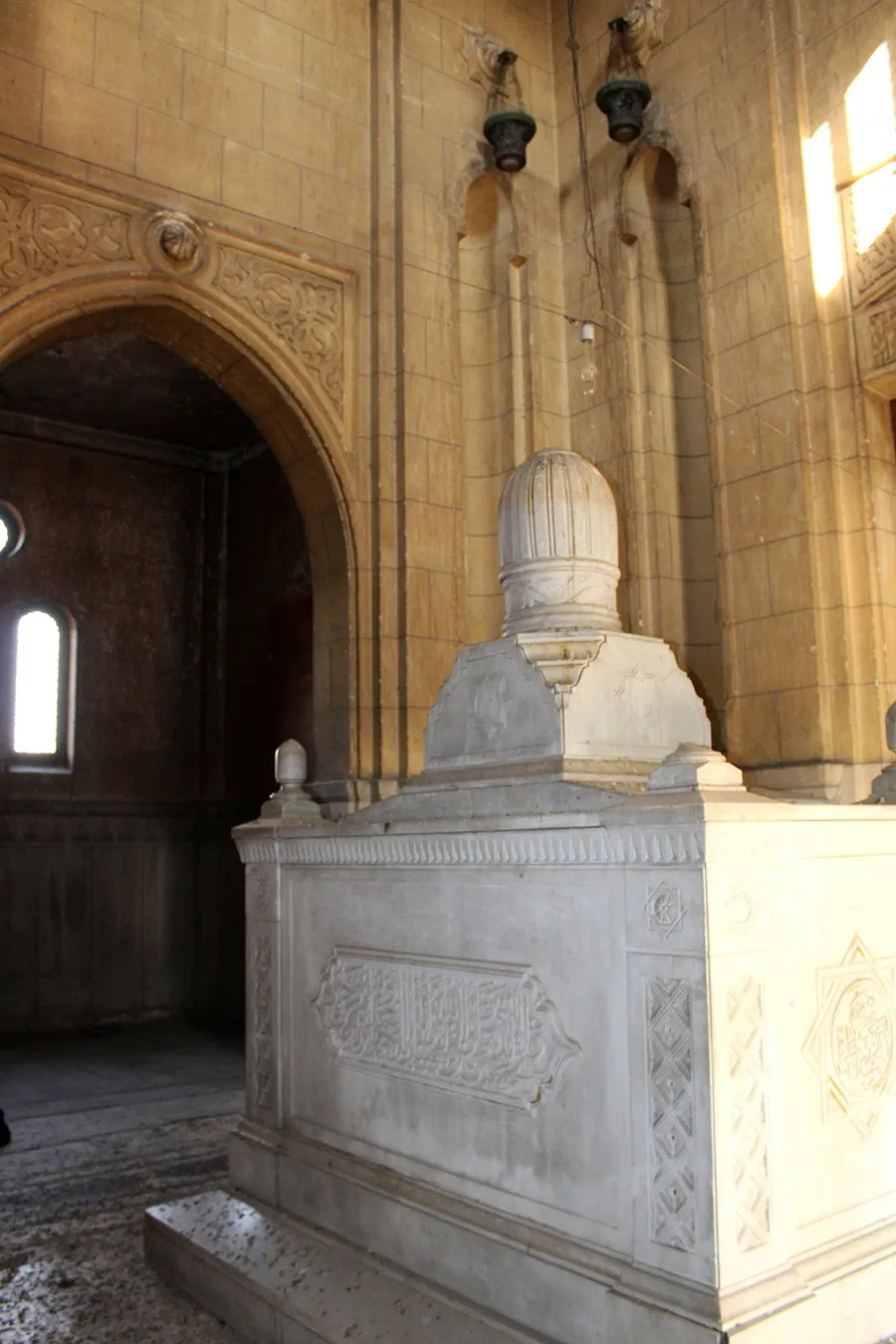
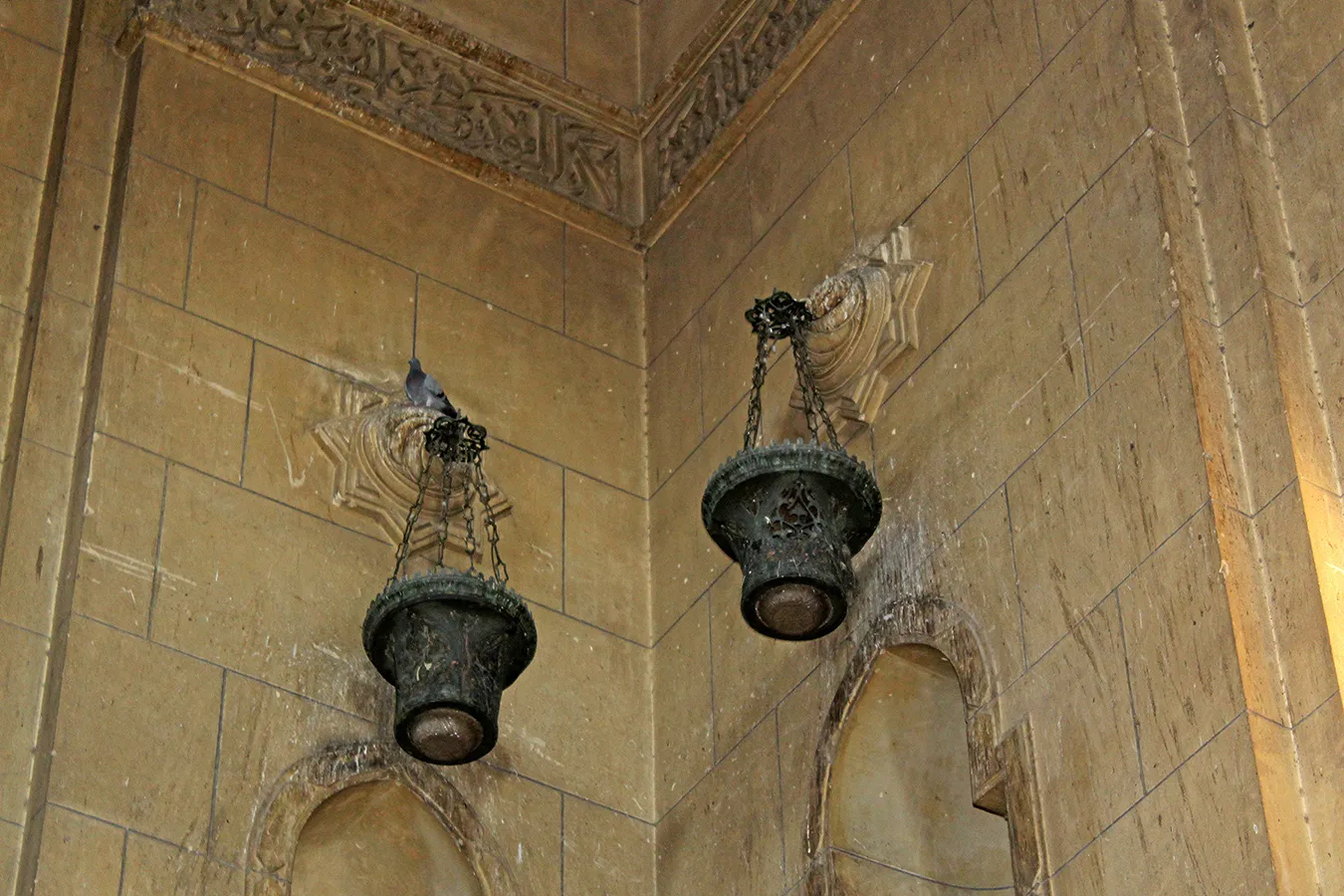
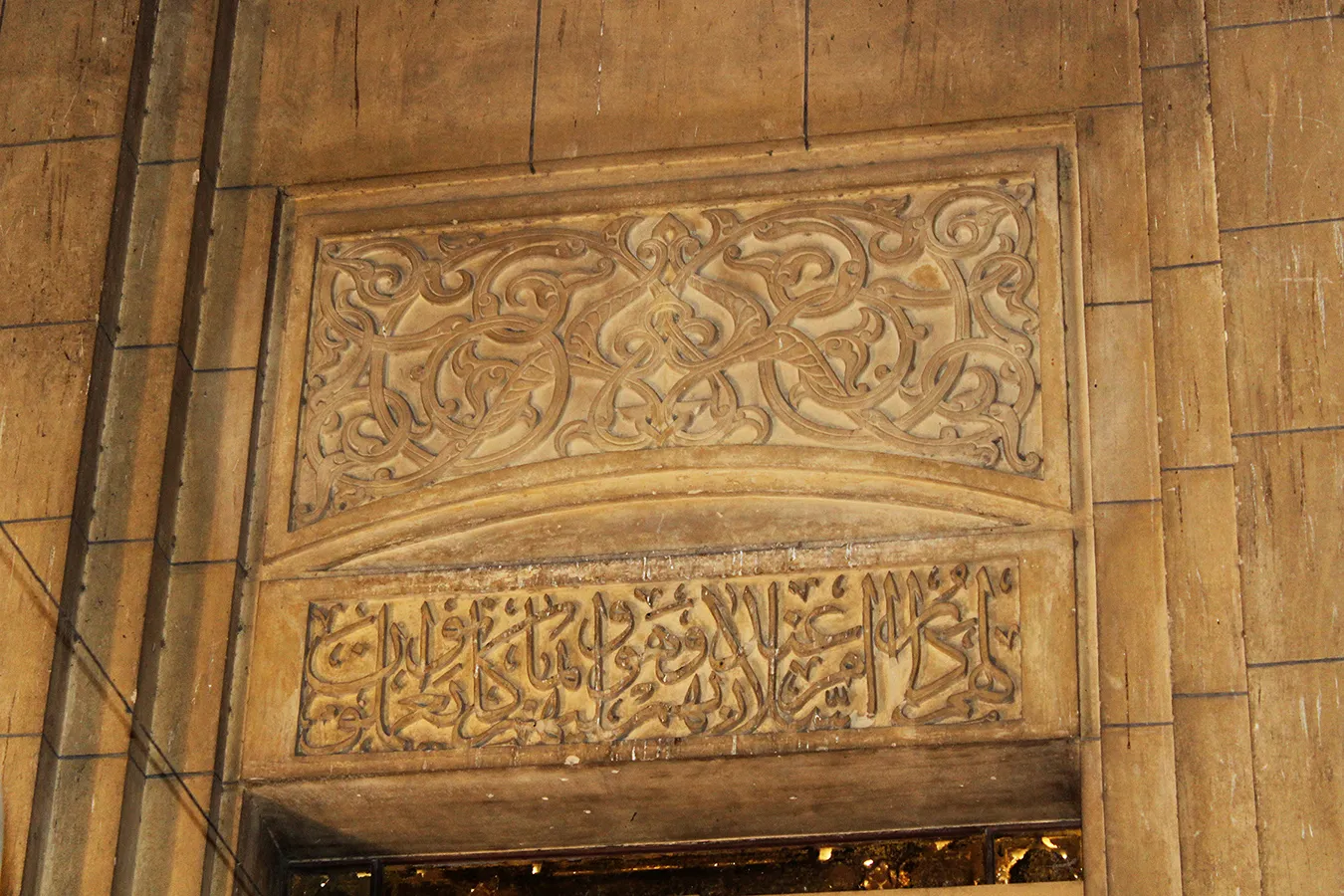
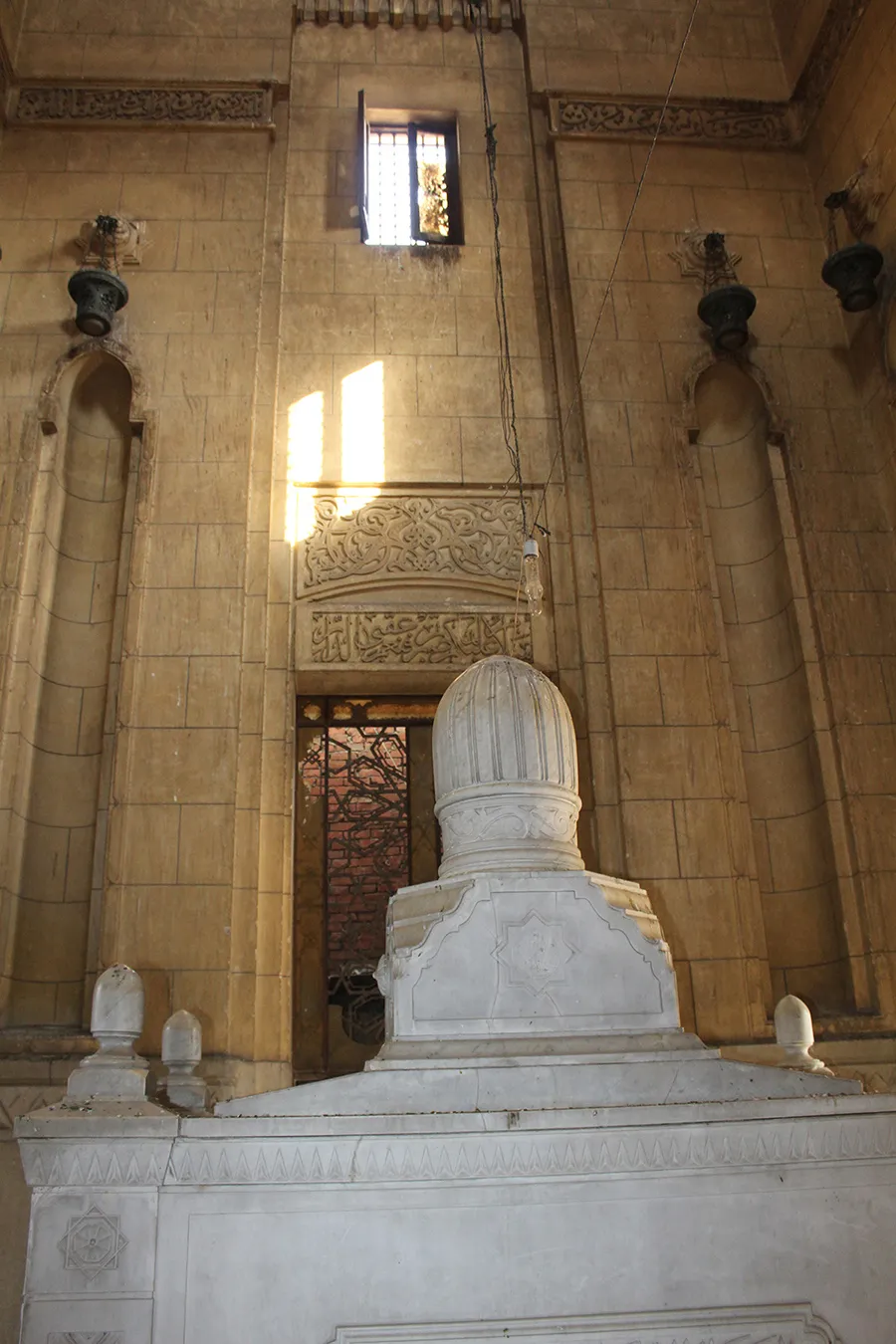
Internally, the openings in the walls of the mausoleum are set in rectangular recesses topped with simplified muqarnas friezes that are flanked by tall slender semi-circular niches topped with simple semi-domes. The side doors have calligraphically inscribed lintels and arabesque patterns on the relieving arches above them. An inscription band runs around the upper part of the burial chamber. The lower parts of the walls are covered with a simple marble dado with a simple geometric frieze at the top. The zone-of-transition below the dome is formed by five rows of simplified muqarnases. In the middle of the burial chamber stands a huge marble cenotaph decorated with simple Islamic art-inspired motifs including calligraphic inscription panels on its sides. The cenotaph is surmounted with an oversized “pomegranate” bulb on a moulded pedestal.
Condition of preservation
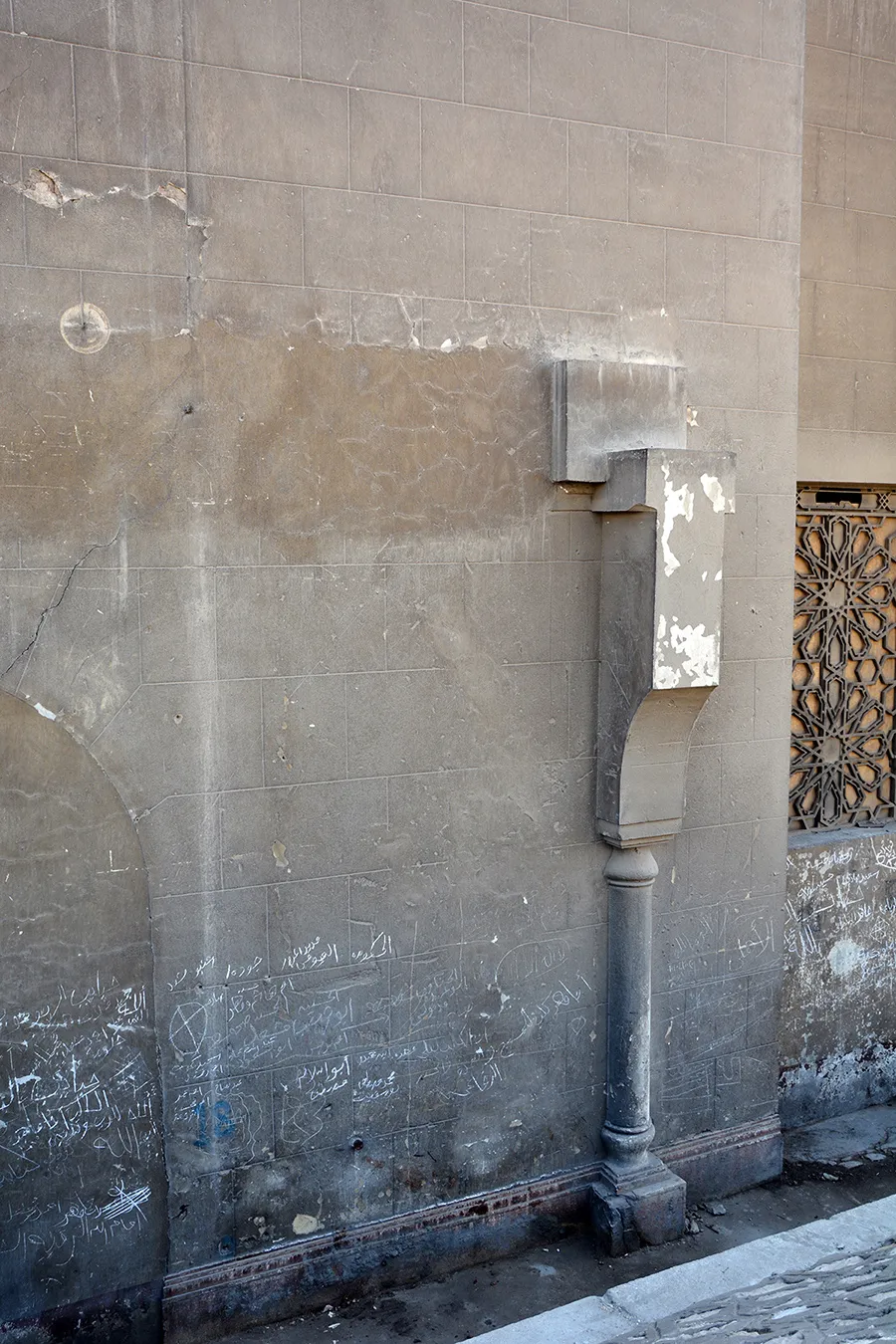
The extant structure is in good structural condition, although it shows signs of inadequate maintenance: peeling paint, soiled wall surfaces, the floor and cenotaphs covered with birds’ droppings, haphazardly blocked openings.
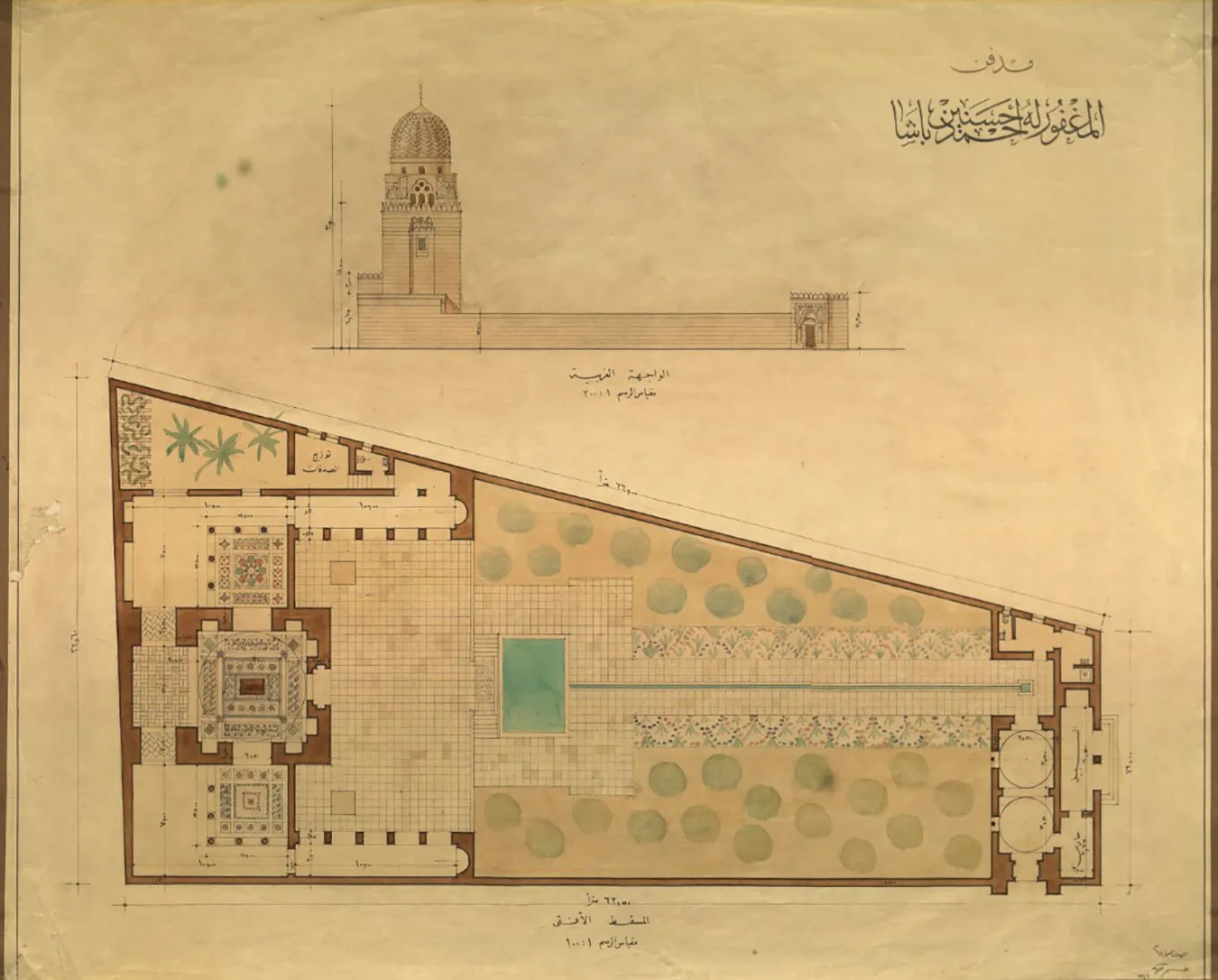
The existing mausoleum is only a part of an originally larger layout. Physical evidence on site shows that at least parts or the original design were was not only originally planned, but actually constructed and then partly destroyed. The original complex was laid out on a lot measuring 62 metres from north to south and with the eastern border slanting, so the lot tapered from 32.6 meters on the north to 16 metres on the south. The mausoleum located in the northern part of the lot was accessed from an elevated terrace with arcades of five arches on each side. The openings in the eastern and western sides of the mausoleum and its northern annexe led to L-shaped rooms wrapping around small square courtyards attached to the mausoleum, with arcades on three columns to two sides. The entrance to the complex was through a neo-Mamluk portal in the southern side of the western wall of the enclosure. It led to a vestibule covered with two domes that was located in a building occupying the southern side of the lot. The building also included a sabil in the form of a loggia with two openings in the southern façade, a guard’s room and sanitary service facilities. The space between the entrance building and the mausoleum was taken up by a garden with water features including a narrow long channel at its axis and a reflecting pool in front of the mausoleum.
The existing mausoleum is just a part of the original layout. The whole western side of the lot, about 8 metres wide, was obliterated when the Salah Salem road was built. Only scant traces of the arcade once adjacent to the western wall of the mausoleum remain. The entrance building has been demolished, and the garden built up with nondescript structures, as was the eastern side of the front courtyard in front of the mausoleum. The arcaded courtyard east of the mausoleum has been covered with a roof; it is unknown how much of its colonnaded arcades are preserved (the unit was not accessible at the time of recording.)
The original design drawings by Hasan Fathy are preserved in the American University in Cairo Rare Books and Special Collections Digital library (see point 17, 4), a reproduction is attached to this record with the photographic record.
Information abut the founder, family history, etc.
Ahmad Muhammad Makhlouf Hasanein al-Bulaqi, known as Ahmad Hasanein Bey, was born on 31 October 1889 in Bulaq, the commercial Nile port of Cairo. His father was a professor at al-Azhar; his grandfather Ahmad Pasha Mazhar Hasanein was the last Admiral of the Egyptian fleet. Hasanein Bey was educated in Cairo and graduated in 1914 from Balliol College at the University of Oxford. During the First World War he served as the Arab Secretary to General Maxwell, British Commanding Officer in Cairo in 1914. He was appointed a Member of the British Empire (MBE) and received the 1915 star, the British War Medal and the Victory Medal. (2)
Hassanein Bey was a renowned explorer and published The Lost Oases (1925), which describes his 1923 journey of 2,200 miles by camel from the Egyptian port of Sollum on the shores of the Mediterranean to Al Obeid Anglo-Egyptian Sudan. He led the seven-month expedition which discovered the oases of Jebel Arkenu and Jebel Ouenat and he was awarded the Founder’s Medal by the Royal Geographical Society in 1924. (2)
In 1924 he was appointed First Secretary of the Egyptian Legation in Washington, D.C. From 1925 to 1936 he was adviser to King Fuad and tutor of Crown Prince Faruk during his studies in London. He also served as Chamberlain to Queen Nazli between 1936 and 1946. He came to be considered one of the most influential men in Egypt (2).
Hassanein Bey was an accomplished fencer and represented Egypt in the Olympic Games in Brussels 1920 and Paris 1924. (2) He was also a pilot (3).
In 1926 he married Lutfia Hanim (born 1905), daughter of Seyfullah Yousri Pasha, first Egyptian Ambassador to Washington D.C., and Princess Shavikar Hanim Effendi, ex-wife of King Fuad. They later divorced. (3)
Hassanein Bey died on 19 February 1946, killed in a car accident involving a British military vehicle. (2) The accident happened on the Qasr al-Nil Bridge in Cairo in rainy weather (3).
Ahmad Hasanein was a brother-in-law to Hasan Fathi, the designer of the mausoleum. (1)
The mausoleum was built with funding from the Egyptian government, then headed by the prime minister Mahmud Fahmy al-Nuqrashi [who is buried in a mausoleum nearby – record No 04], in recognition of Ahmad Hasanein’s lifelong contributions to Egypt (1, 3, 5).
References in published/primary sources
• (1) Serageldin, Ismail, ed. Hasan Fathy Bibliotheca Alexandrina 2007, p. 66-7
• (2) Website of the De Laszlo Archive Trust: https://www.delaszlocatalogueraisonne.com/catalogue/the-catalogue/hassanein-al-bulaki-bey-ahmed-mohamed-makhlouf-111042 retrieved 12 October 2023
• (3) ‘Amara al-ard: blog of Ashraf ‘Abd al-Rahman Muhammad: 651 – darih ahmad hasanein basha bi al-qahira masr, posted 1 March 2015 (in Arabic): https://earth-arch.blogspot.com/2015/03/651.html retrieved 12 October 2023
• (4) The American University in Cairo Rare Books and Special Collections Digital library, Object Identifier: HF 46.01: original plan and elevation design drawing by Hasan Fathy, 1946 https://digitalcollections.aucegypt.edu/digital/collection/p15795coll13/id/19/rec/4 retrieved 12 October 2023
• (5) Steele, James An Architecture for People: The Complete Works of Hassan Fathy The American University in Cairo Press 1997, p. 191
- Field recording by
- Jaroslaw Dobrowolski
- Date recorded
- November 9, 2023
- Data entered by
- Hadeer Ahmad
- Date entered
- May 1, 2024