




Unit No64
Ahmad ‘Abd al-Wahab al-Shanuani
|
Coordinates of the main entrance |
30.046519N - 31.274325E |
|
Attribution |
Ahmad ‘Abd al-Wahab al-Shanuani |
|
Higri (AH)Dates as given in the Inscription |
|
|
Miladi (AD)Dates as given in the Inscription |
|
|
Inscription Contemporary with the building? |
Yes |
|
Multiple date(s) In the inscription? |
Yes |
|
Assumed Date |
1326 AH / AD 1908 |
|
Based on |
date on the oldest cenotaph |
|
Original Use |
Funerary enclosure |
|
Current Use |
Funerary enclosure, residential |
|
Overall condition |
Fair |
Features of unit 64
| Present | Count | Material | Comments (see description for details) | |
|---|---|---|---|---|
| Free standing structure | No | |||
| Walled enclosure | Yes | 1 | stone | |
| Rooms by the perimeter wall | Yes | 9 | stone | Three apartments |
| Freestanding structure(s) in enclousure | No | |||
| Dome over the tomb chamber | No | |||
| Neo-Mamluk architectural decoration | Yes | |||
| Garden layout | Yes | |||
| Sabil(s) | No | |||
| Wall fountain(s) | No | |||
| Canopy on columns / pillars | Yes | |||
| Carved marble cenotaph(s) | No | 2 | 2 | |
| Decorated limestone tomb-markers | No | Two wooden tomb markers | ||
| Decorated gateway | Yes | 2 | stone, plastered | |
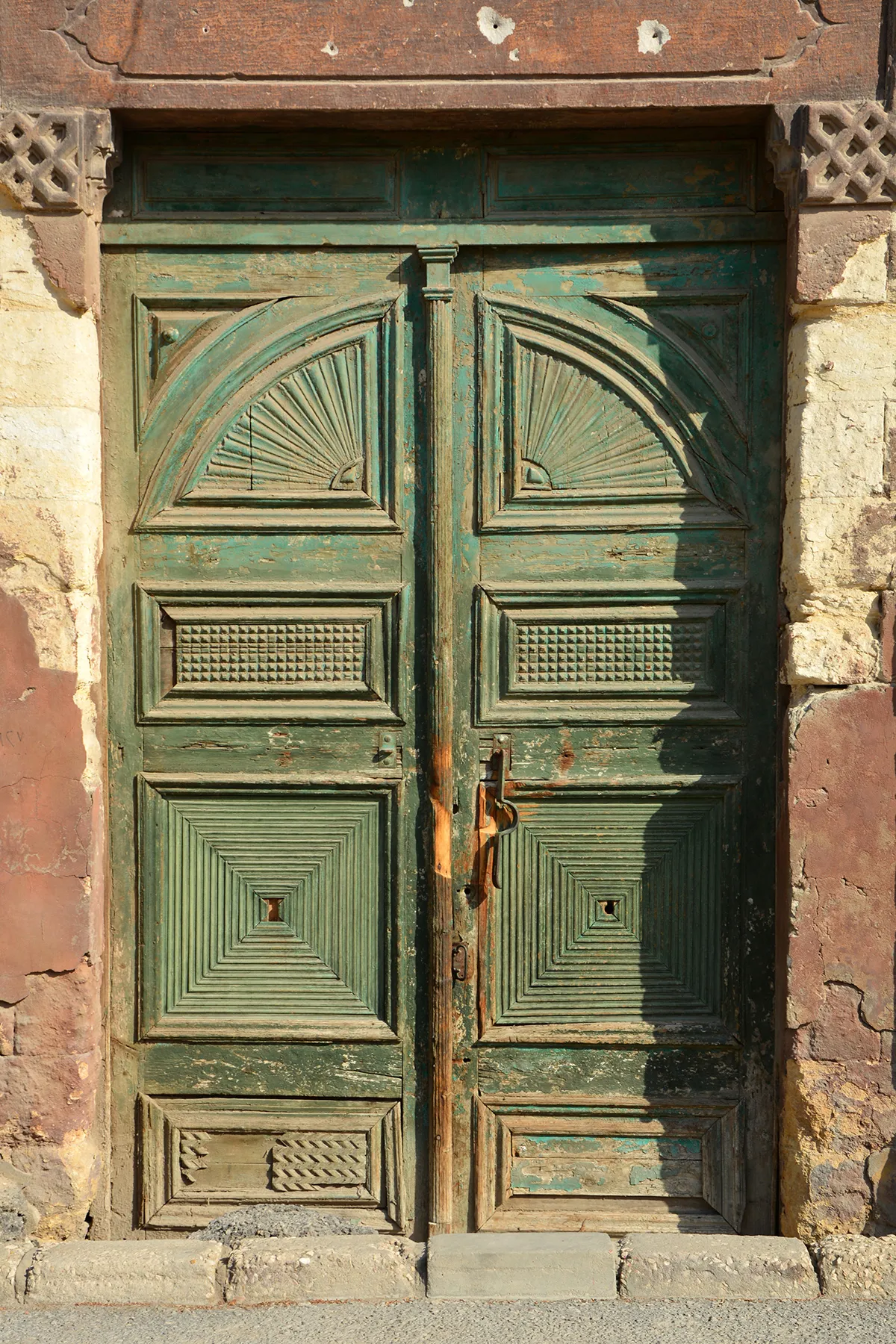
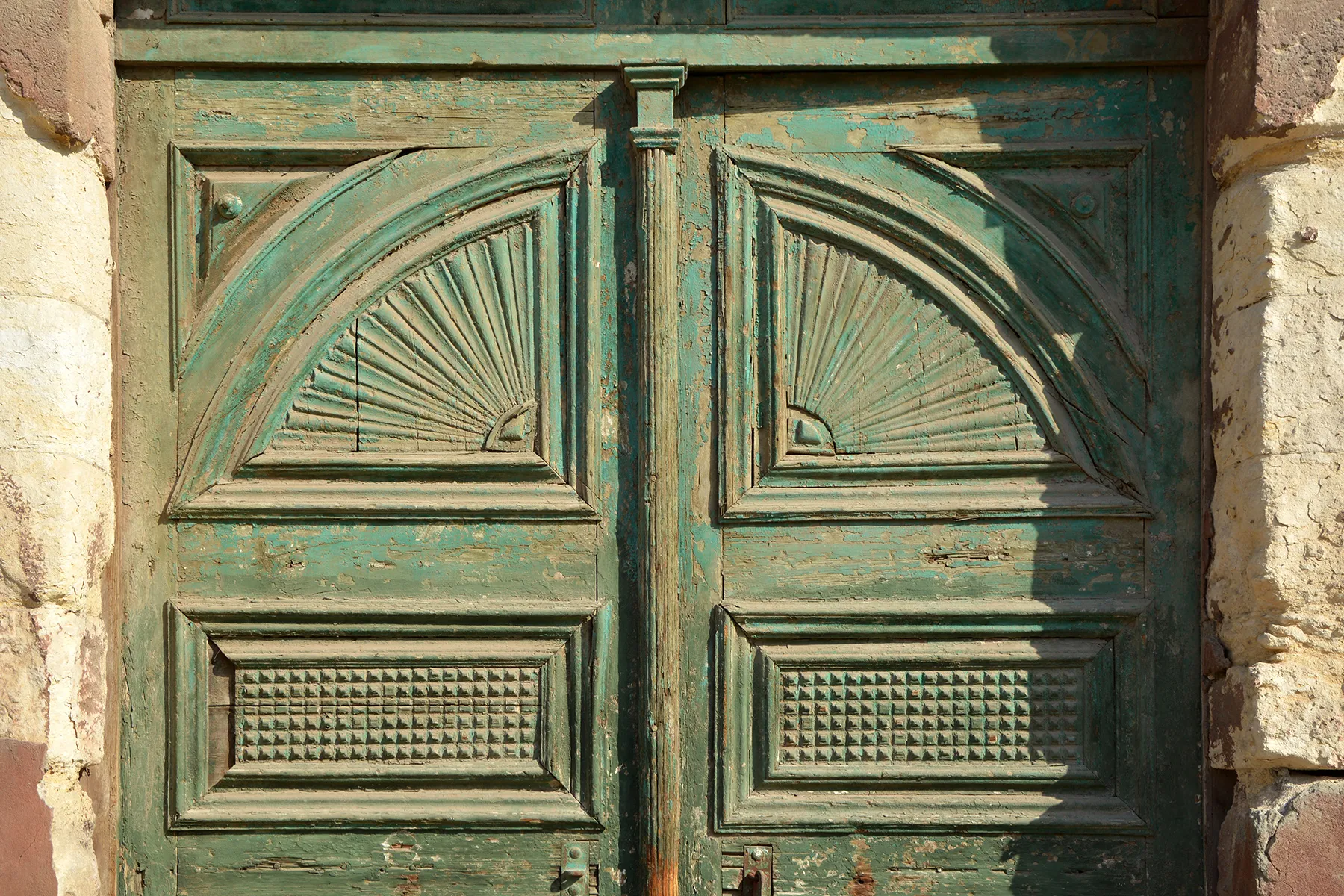
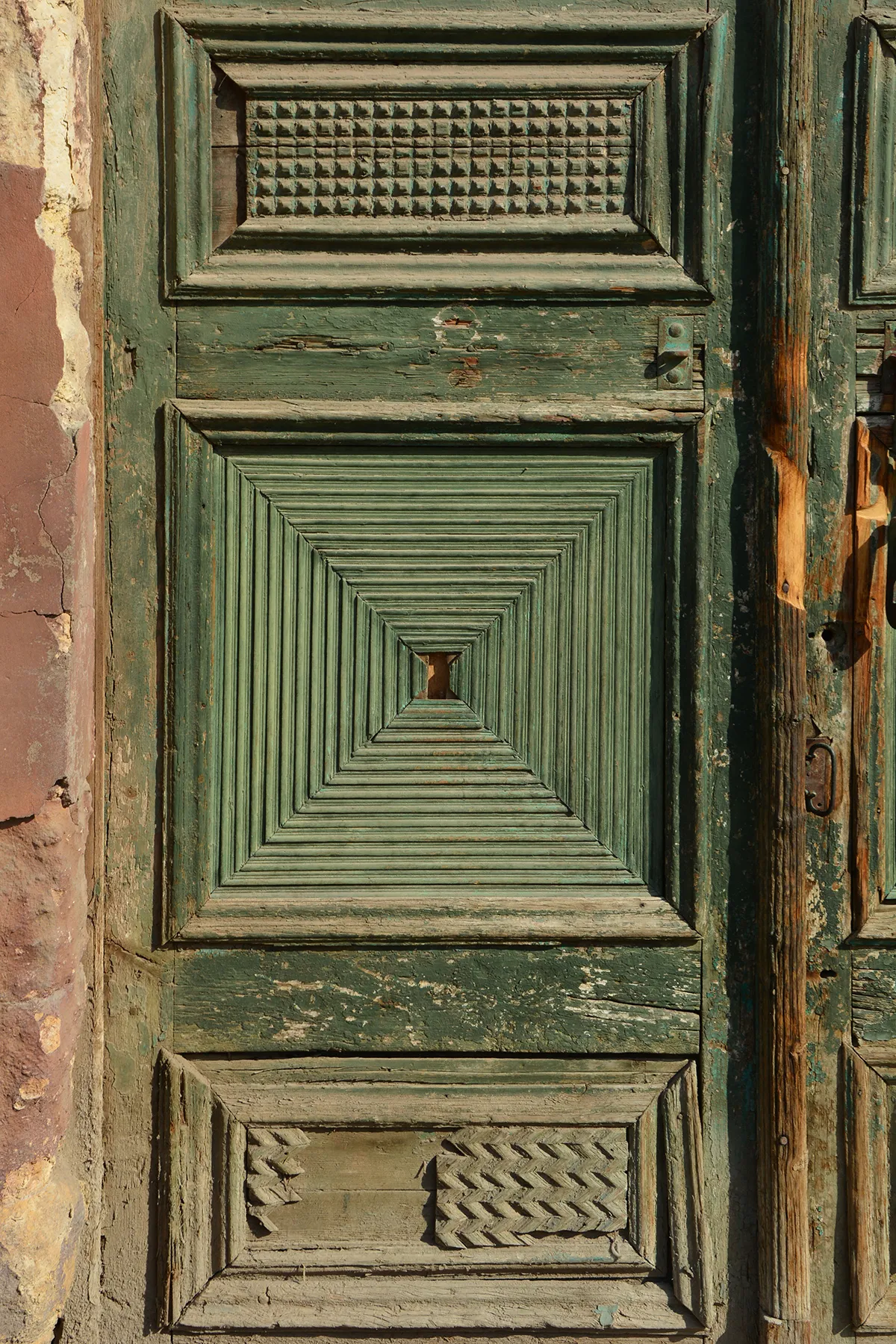
| Decorative door-leaves | Yes | 4 | wood | |
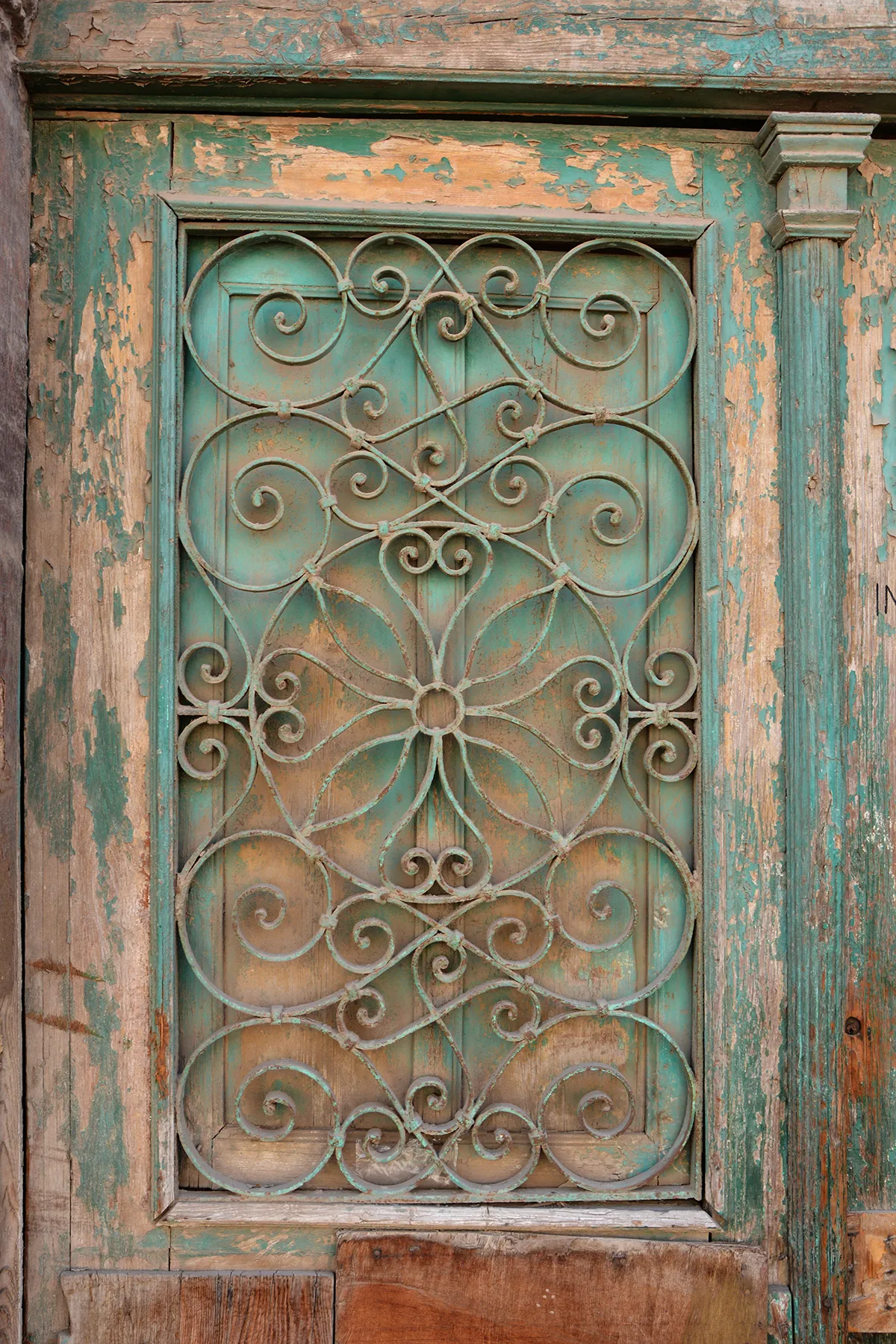
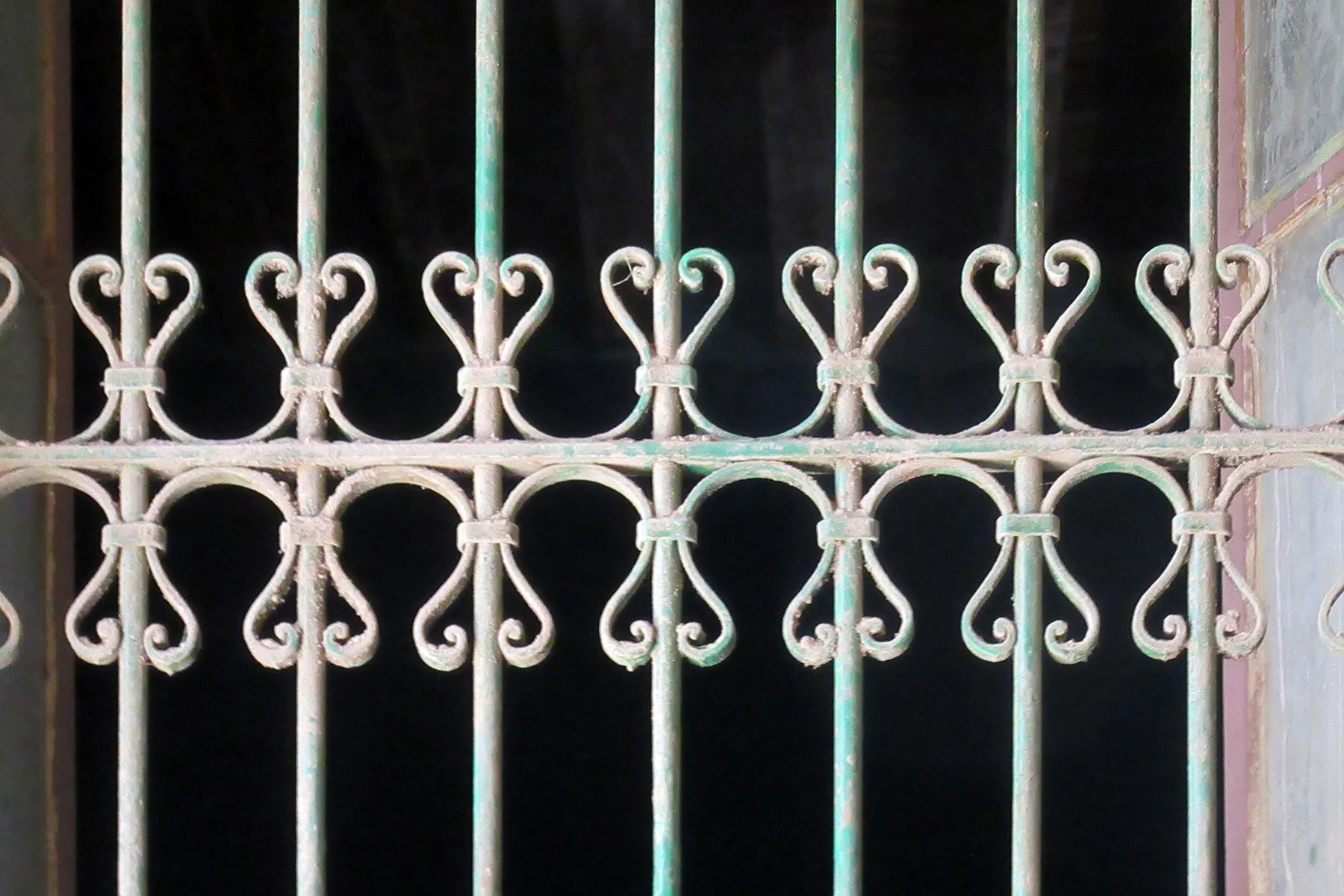
| Decorative window grilles | Yes | 18 | wrought iron | |
| Decorative shutters | No | |||
| Painted ceiling(s) | No | |||
| Decorative paving(s) | No |
Description (The direction towards Mecca (Qibla) is described as eastern and other directions are named accordingly)
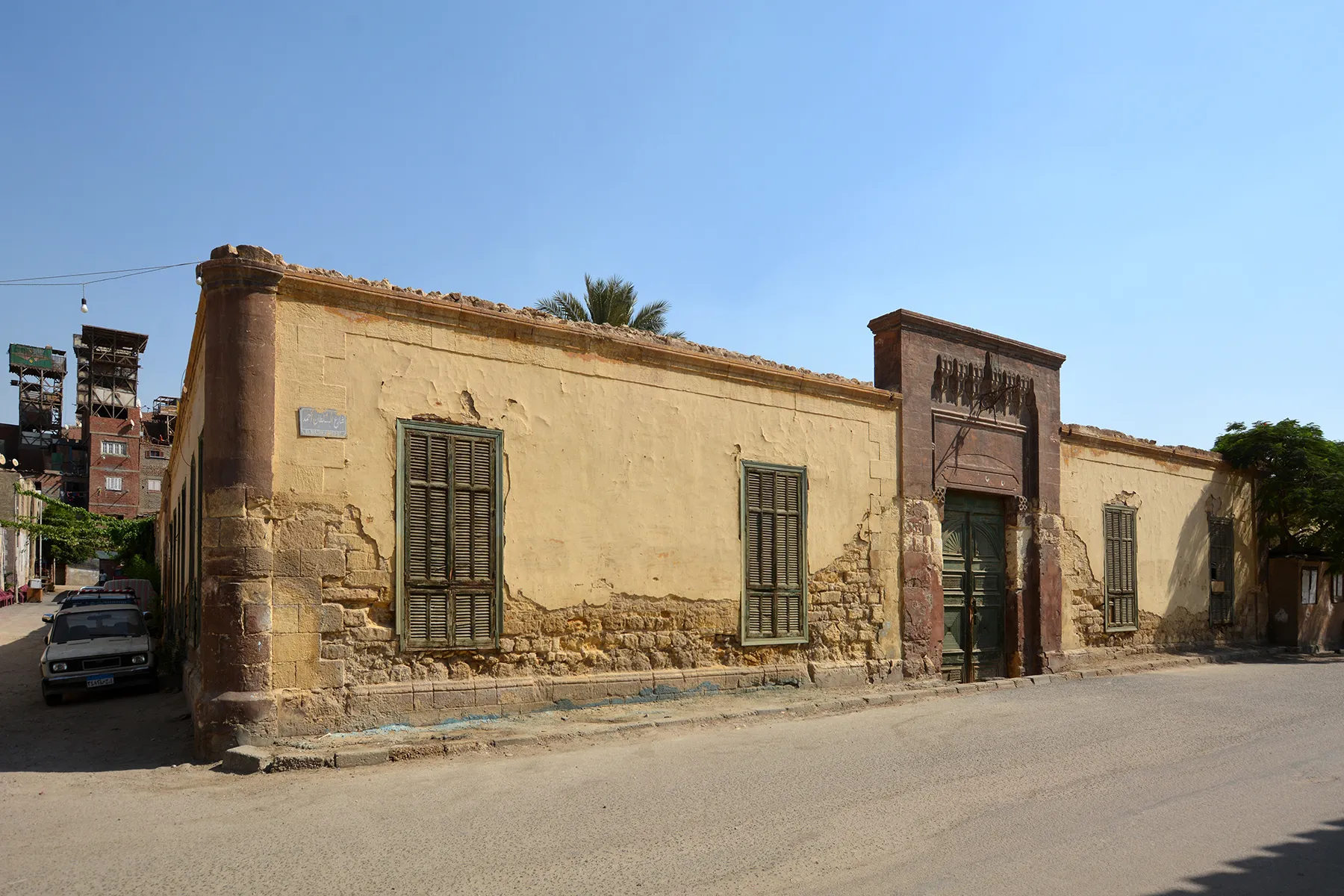
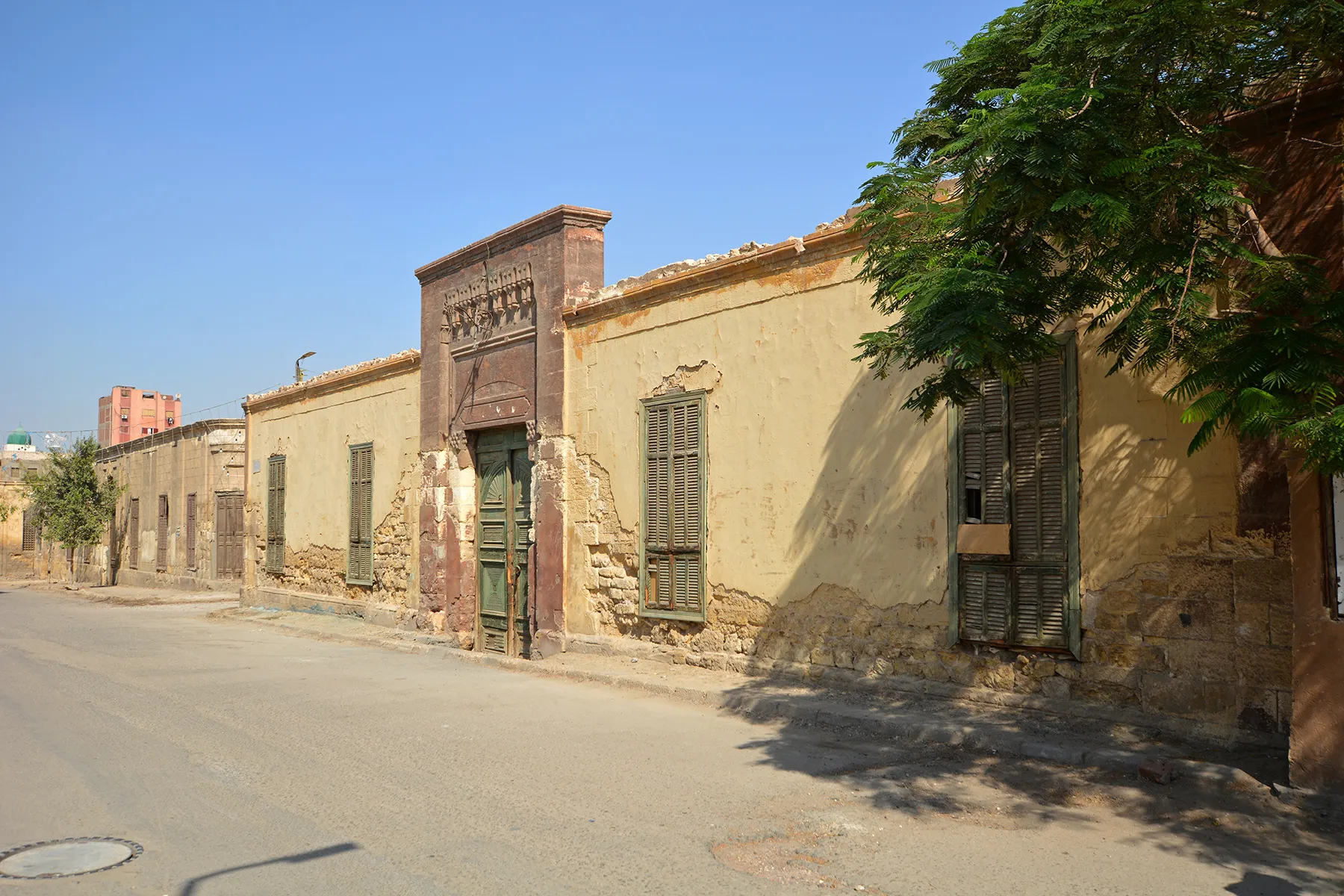
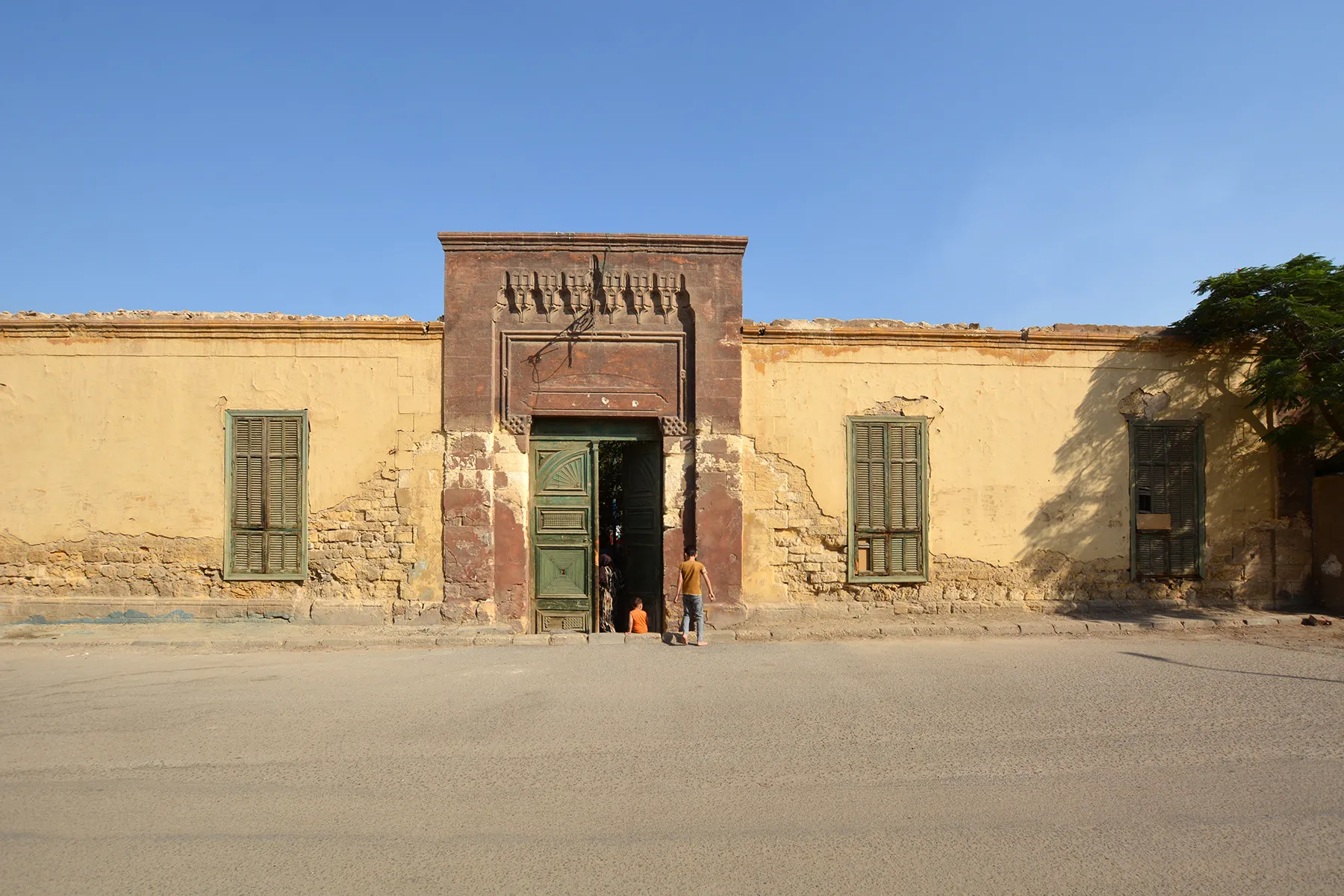
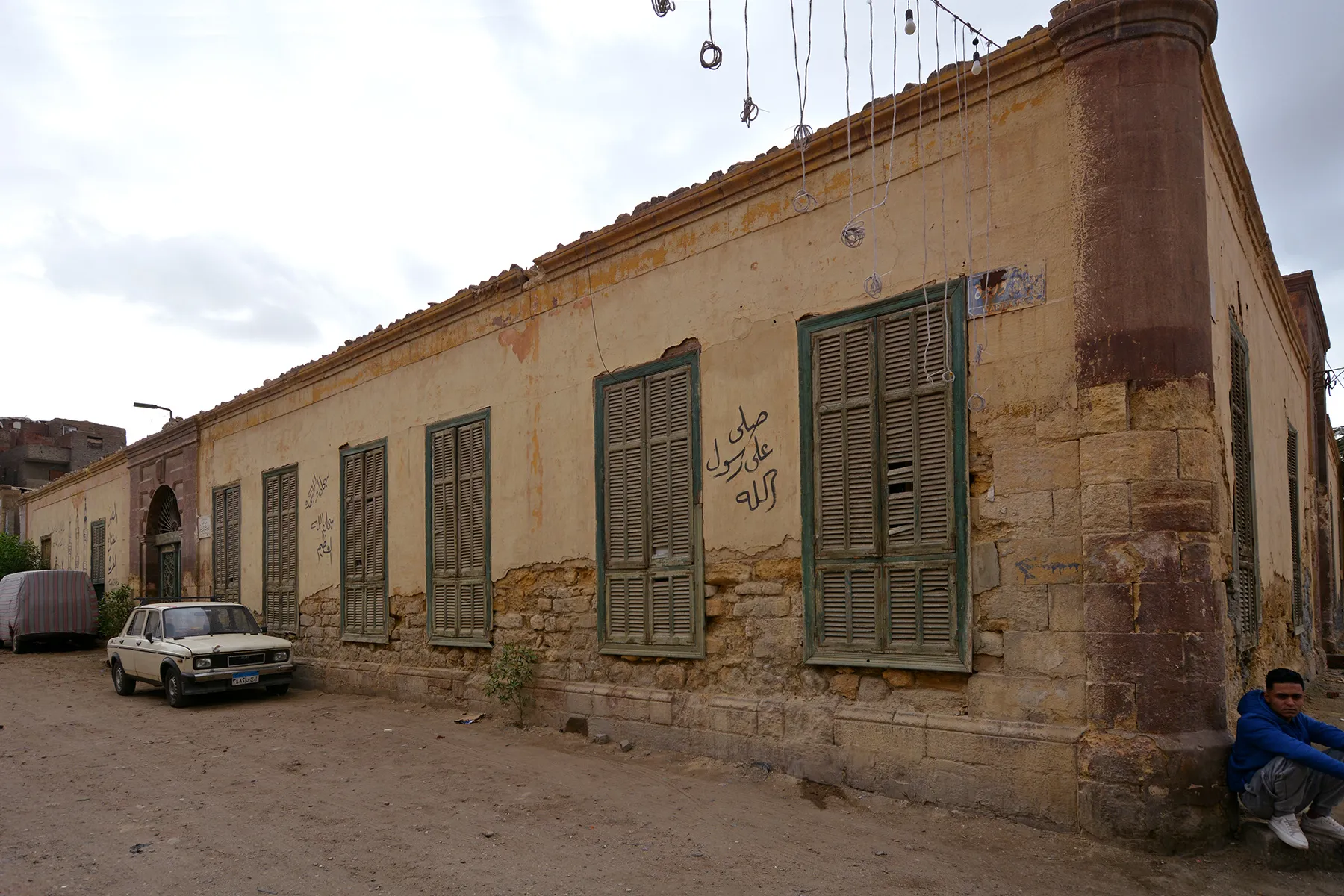
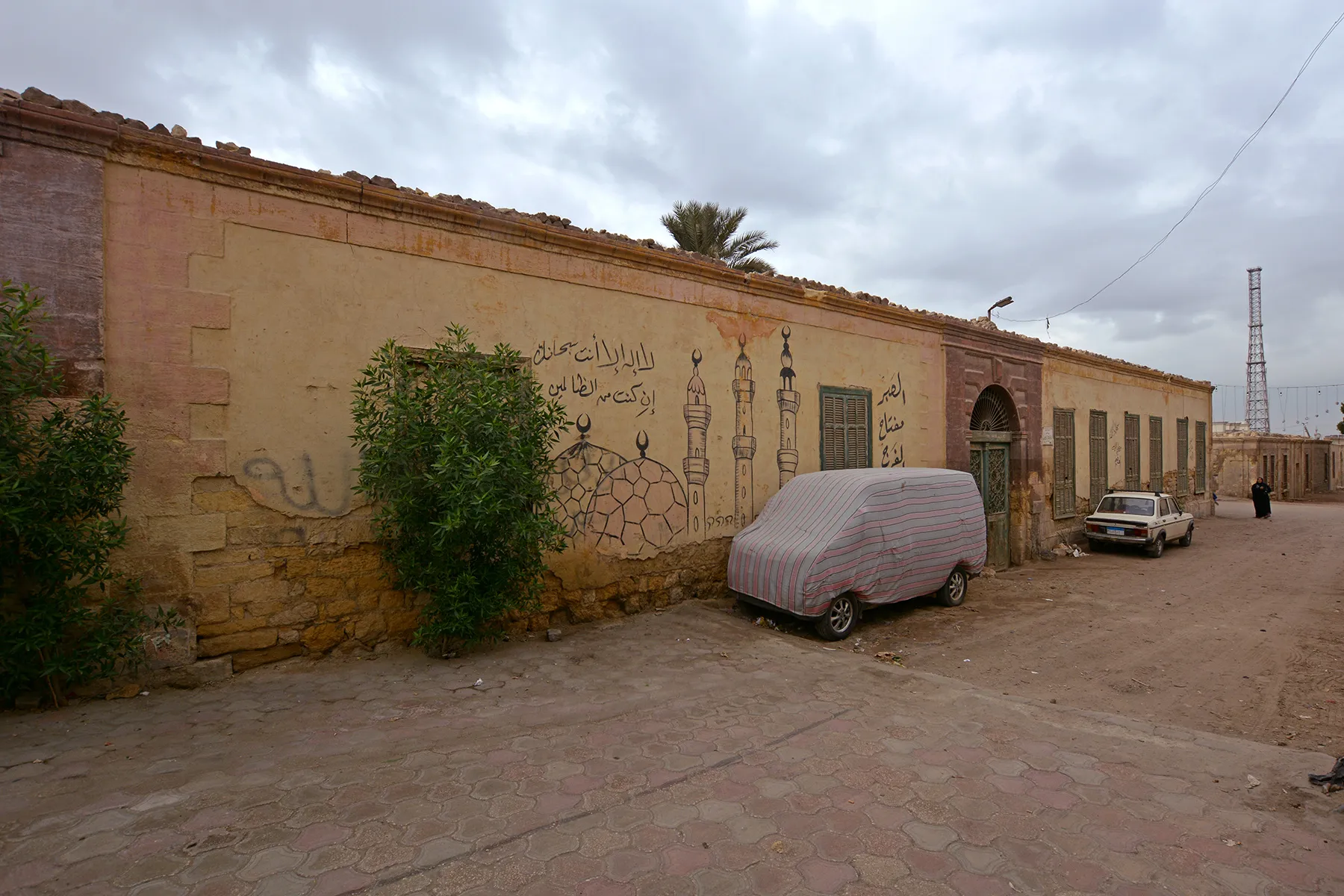
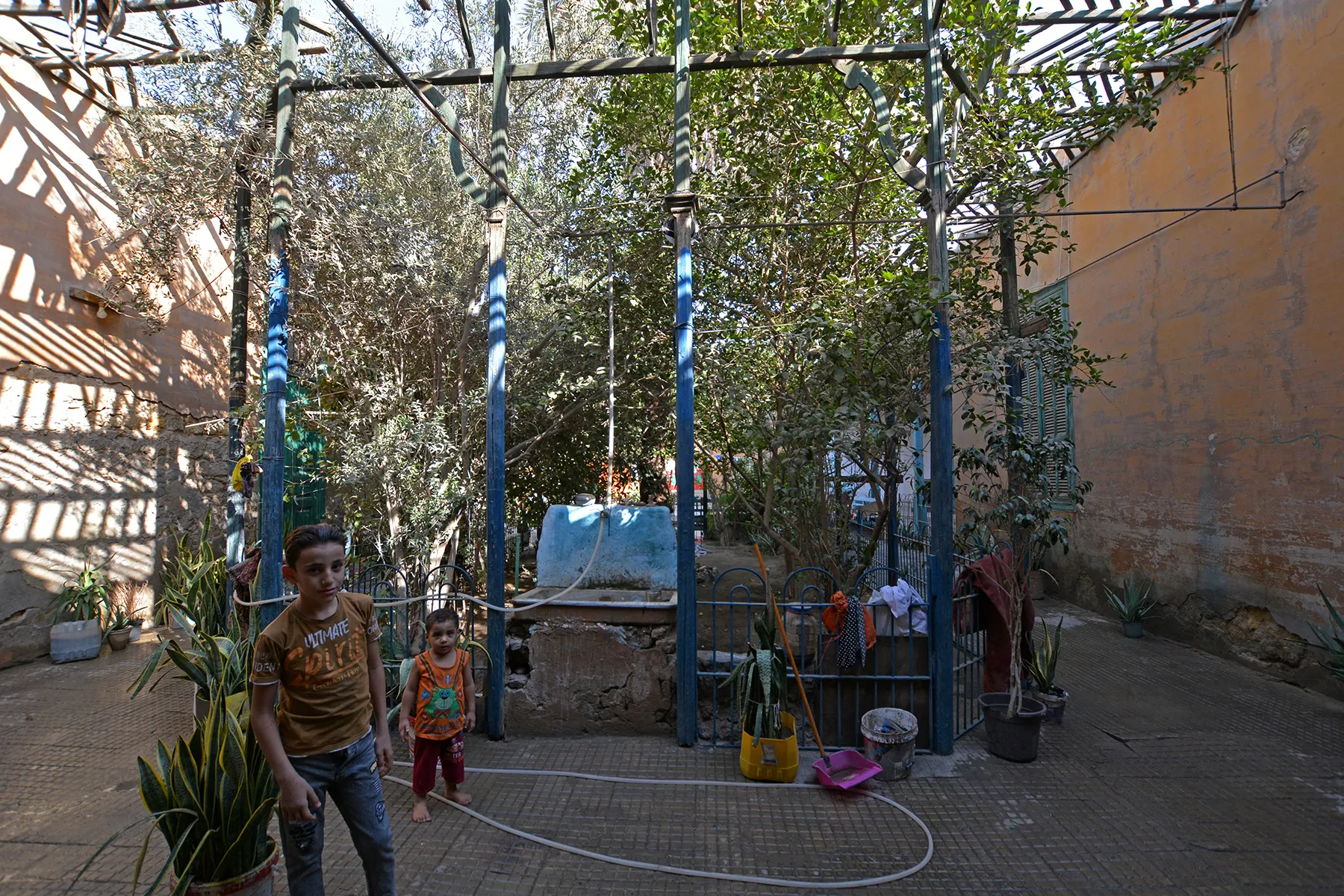
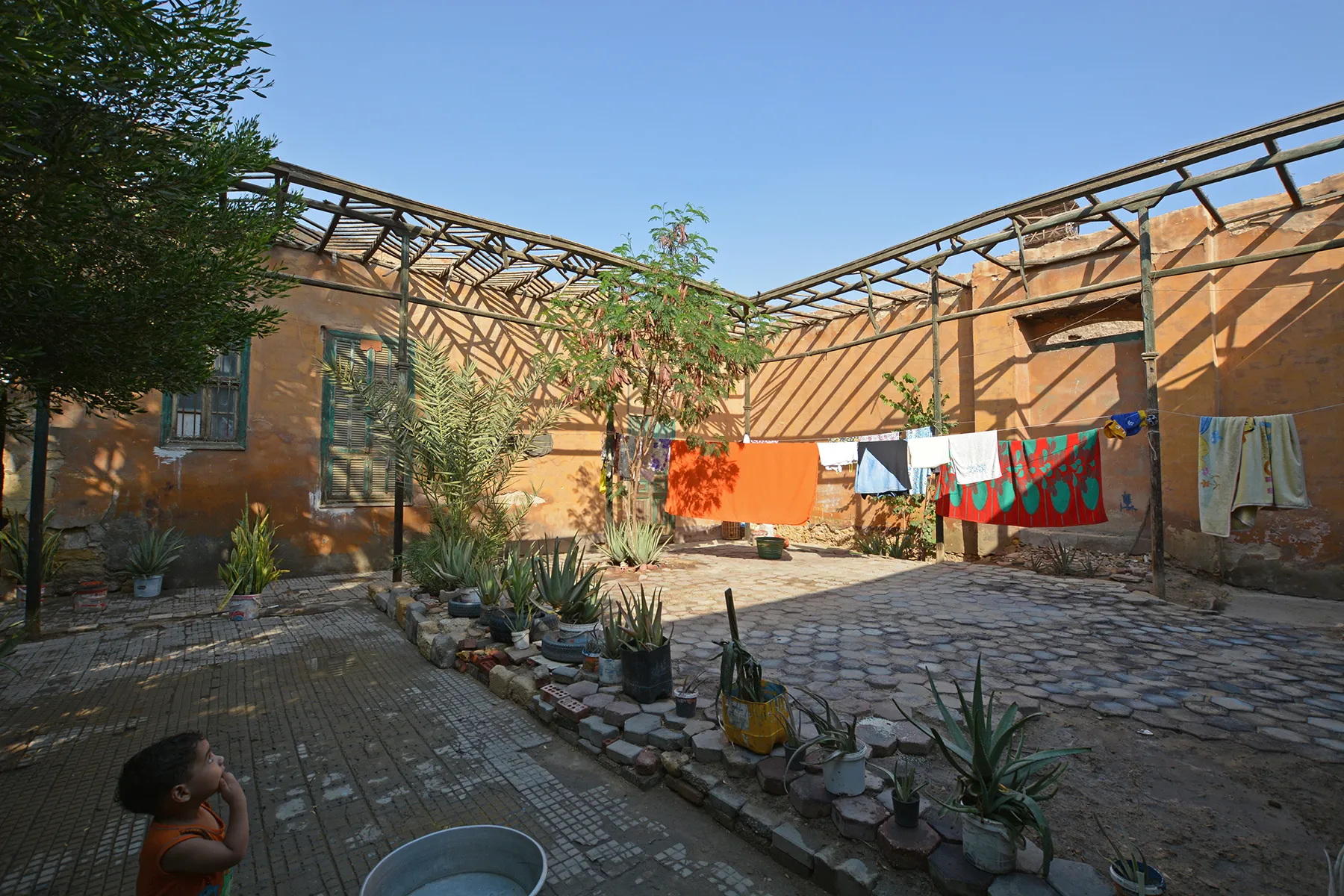
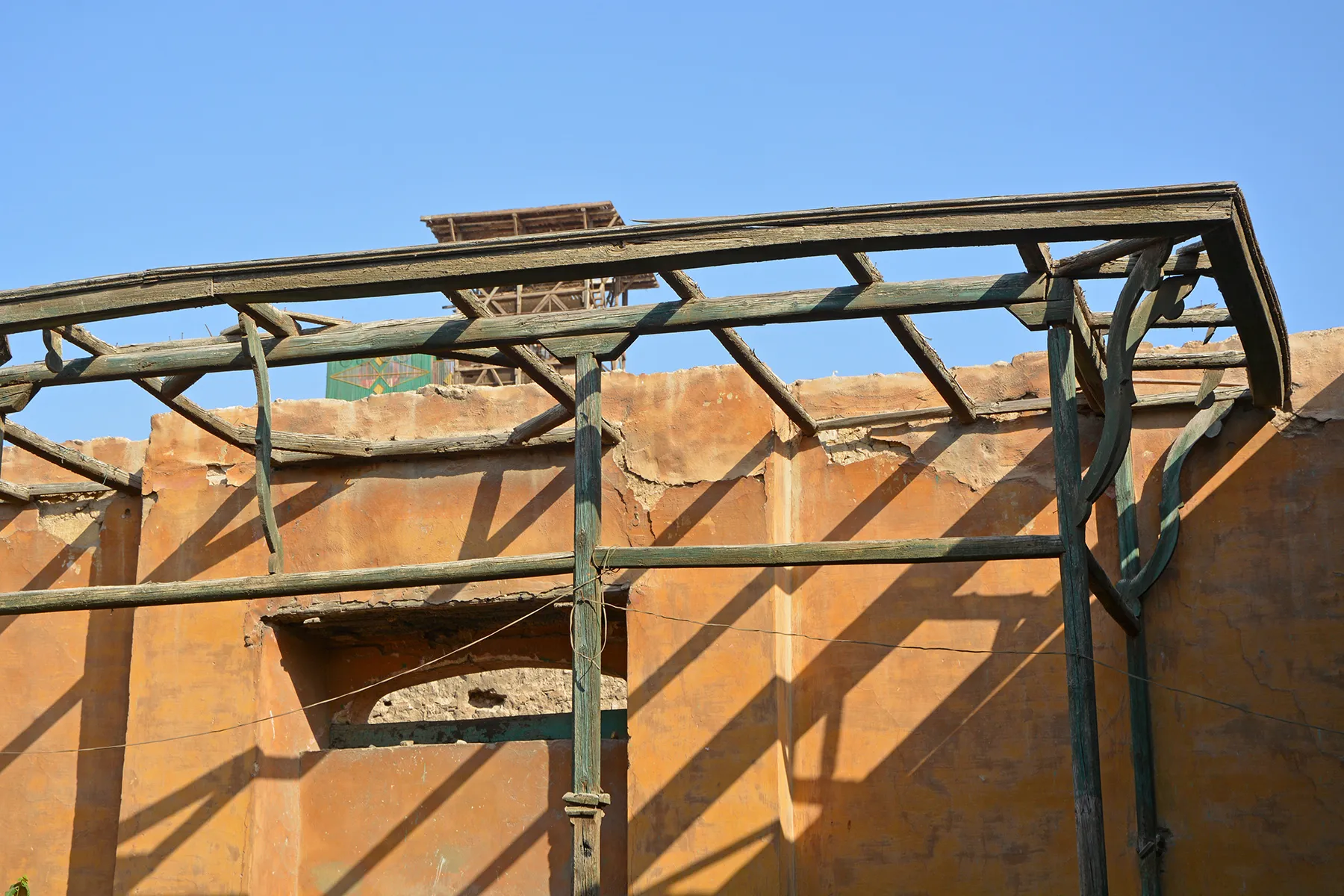
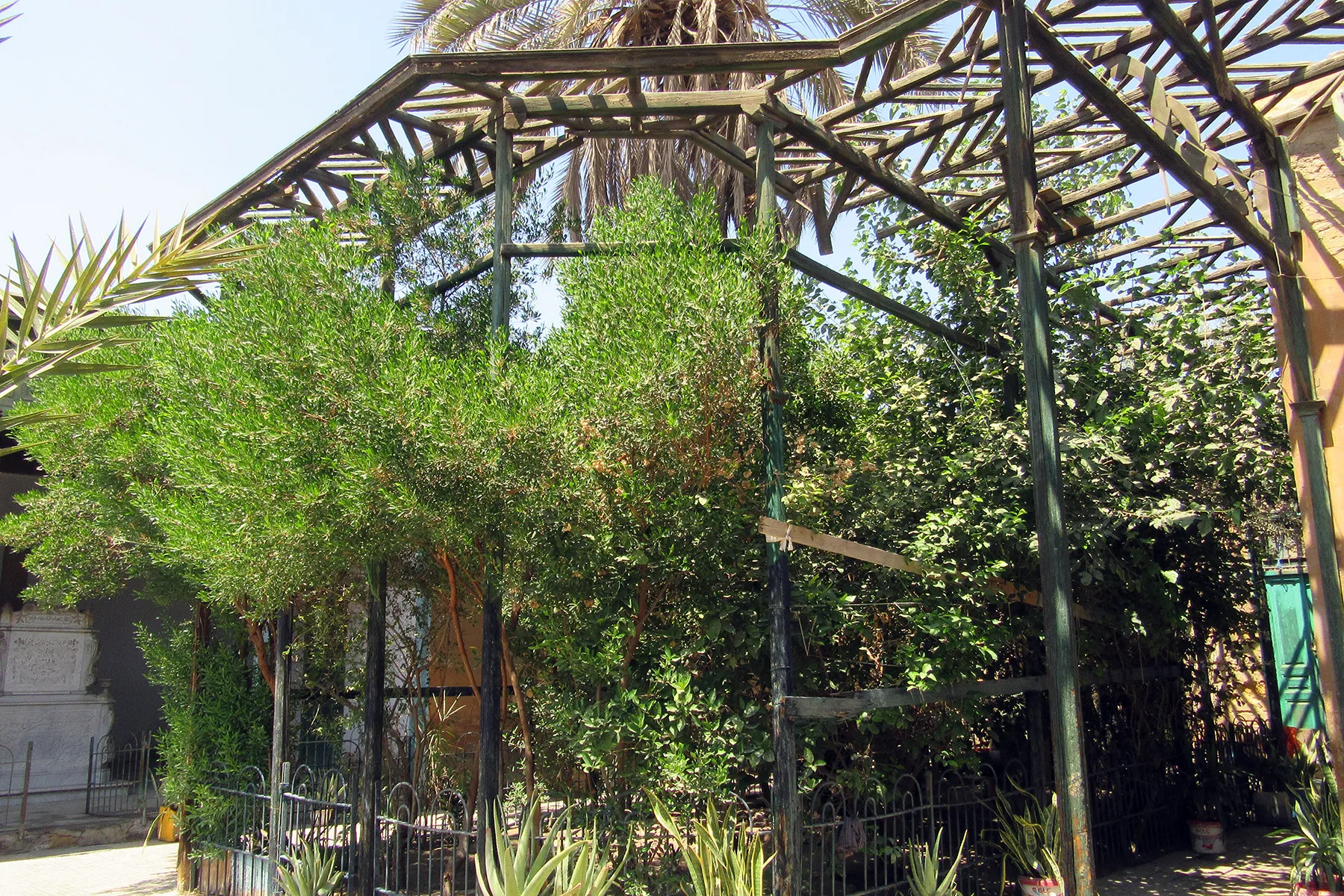
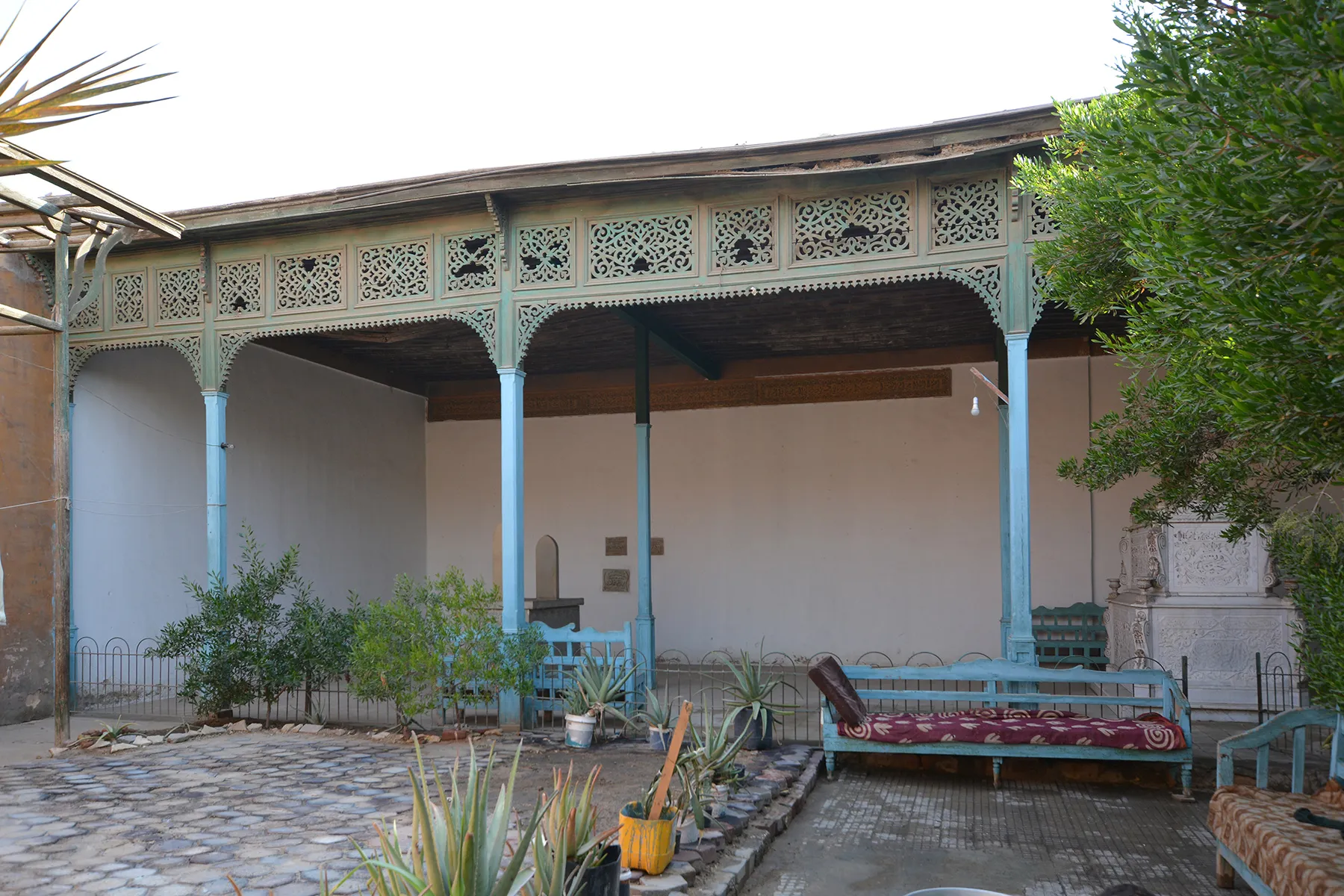
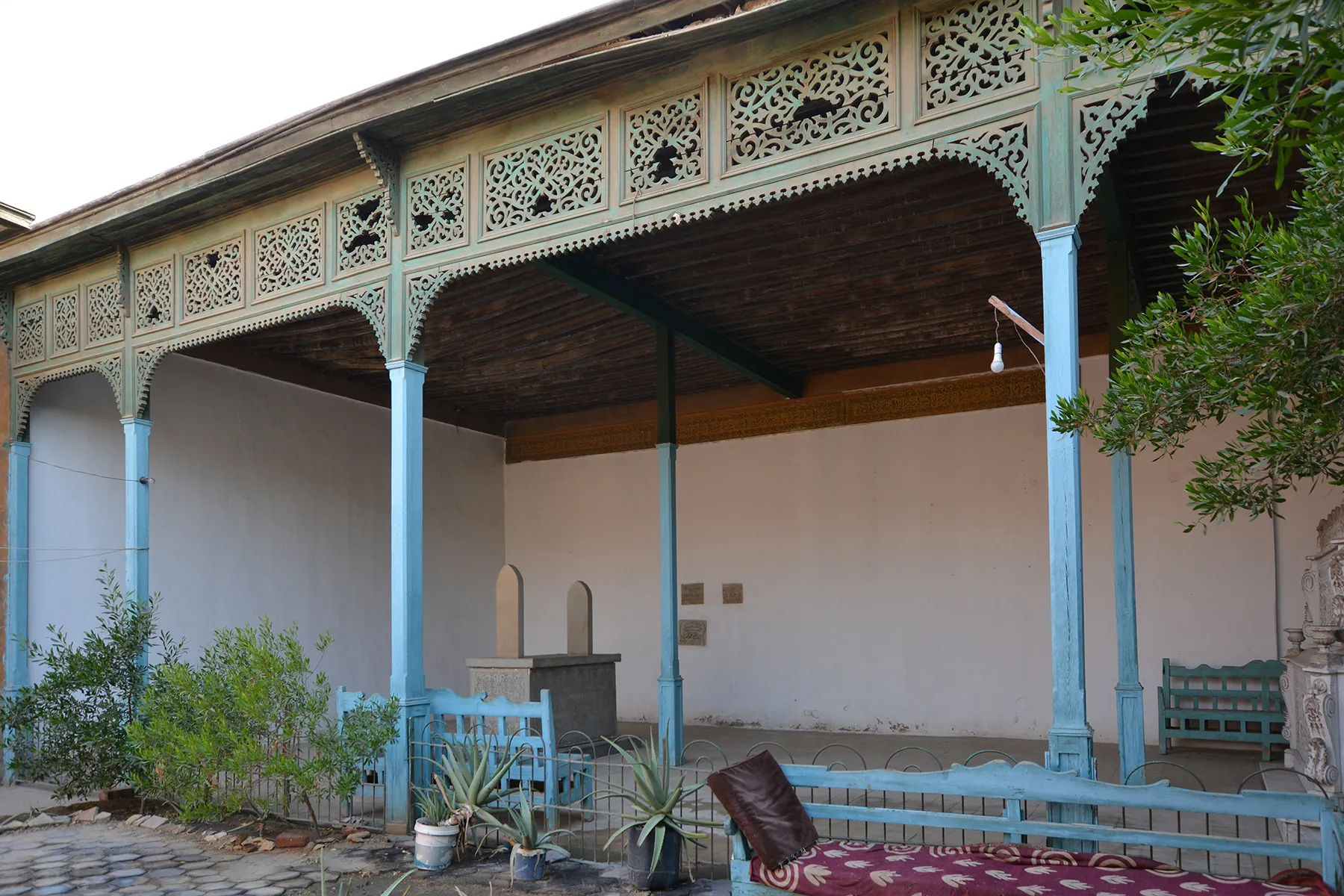
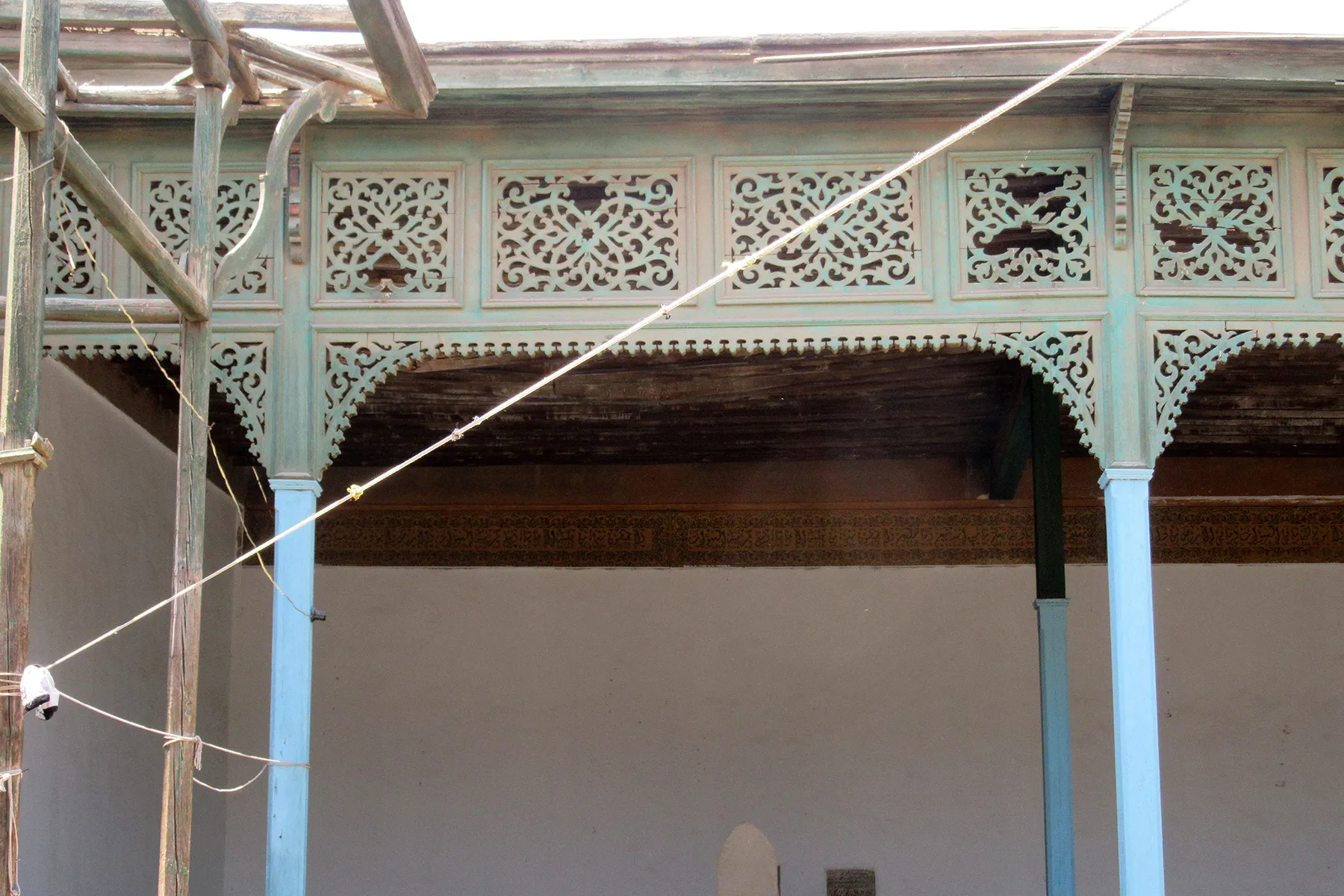
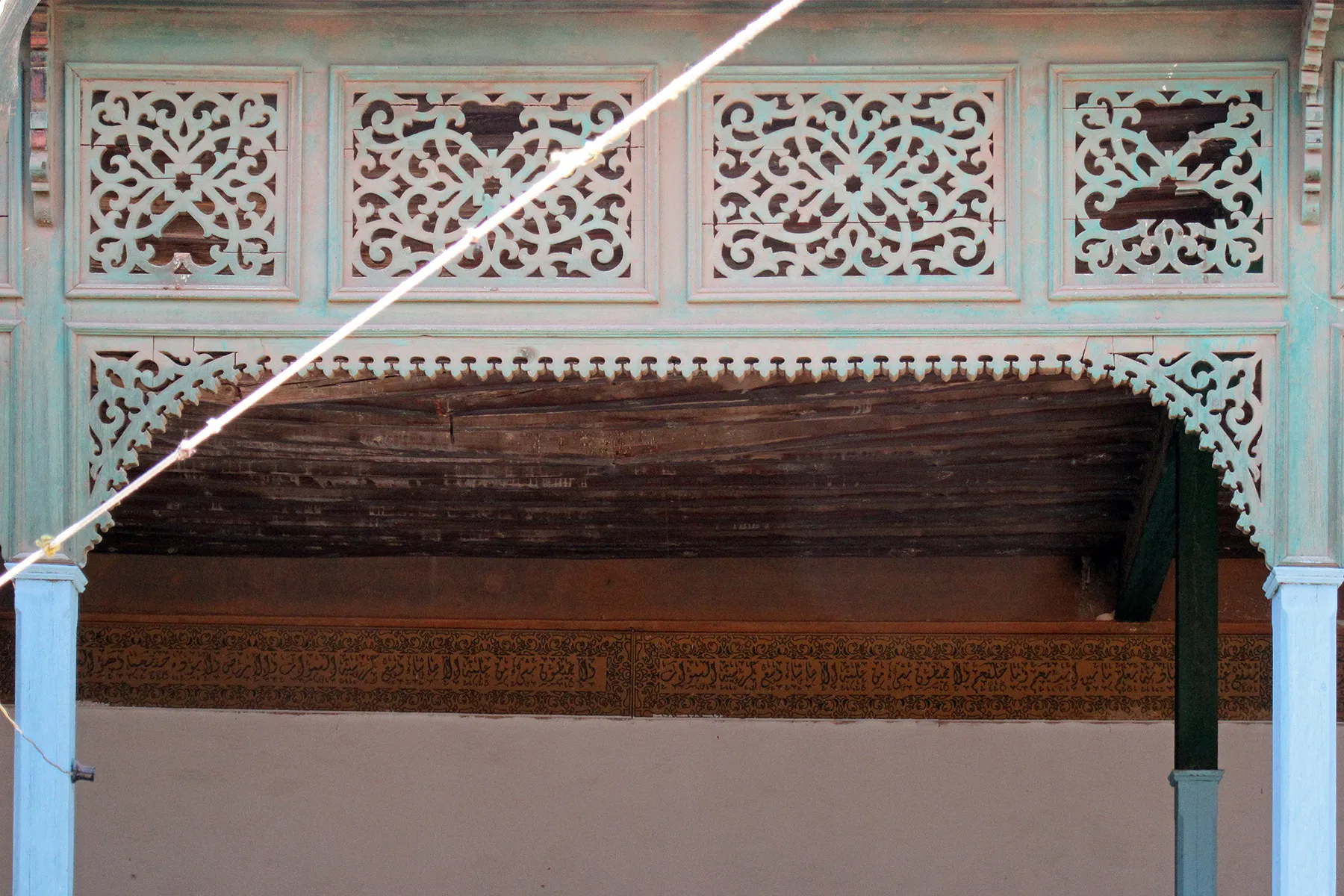
A rectangular enclosure (measuring ca 25 x 32 metres), with western and southern façades facing surrounding streets, with a narrow back alley to the east, and bordering on an adjacent enclosure to the south. The main (entrance) façade faces west, i.e., is on Sultan Ahmad Street. The front part of the lot is taken by a building on a U-shaped plan, with a centrally placed gateway leading from the street to the courtyard on which it opens with a wide arch. In the back part of the lot, there is a narrower building by the northern wall, separated from the front one by another gateway leading to the courtyard from the street to the north, and on the southern side, a roofed burial area opening onto the courtyard, with the roof supported on slender wooden pillars and separated from the courtyard by a simple iron fence. There was originally a gate leading to the courtyard directly from the alley to the east, which is now walled up. There are wooden pergolas along the eastern and northern sides of the courtyard, in in the middle of its western part (now dilapidated and incomplete). There are planted greenery and potted plants in the courtyard.
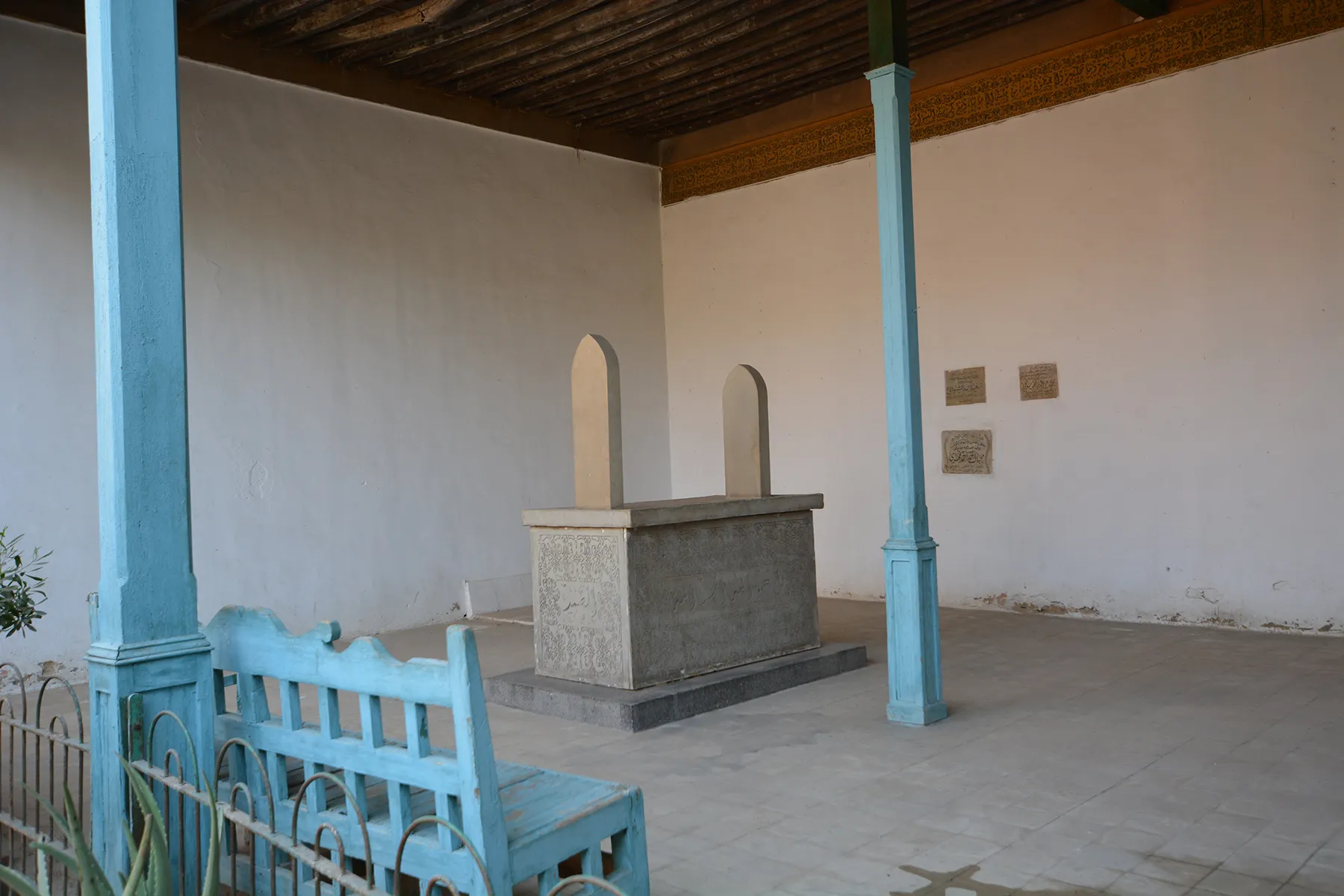
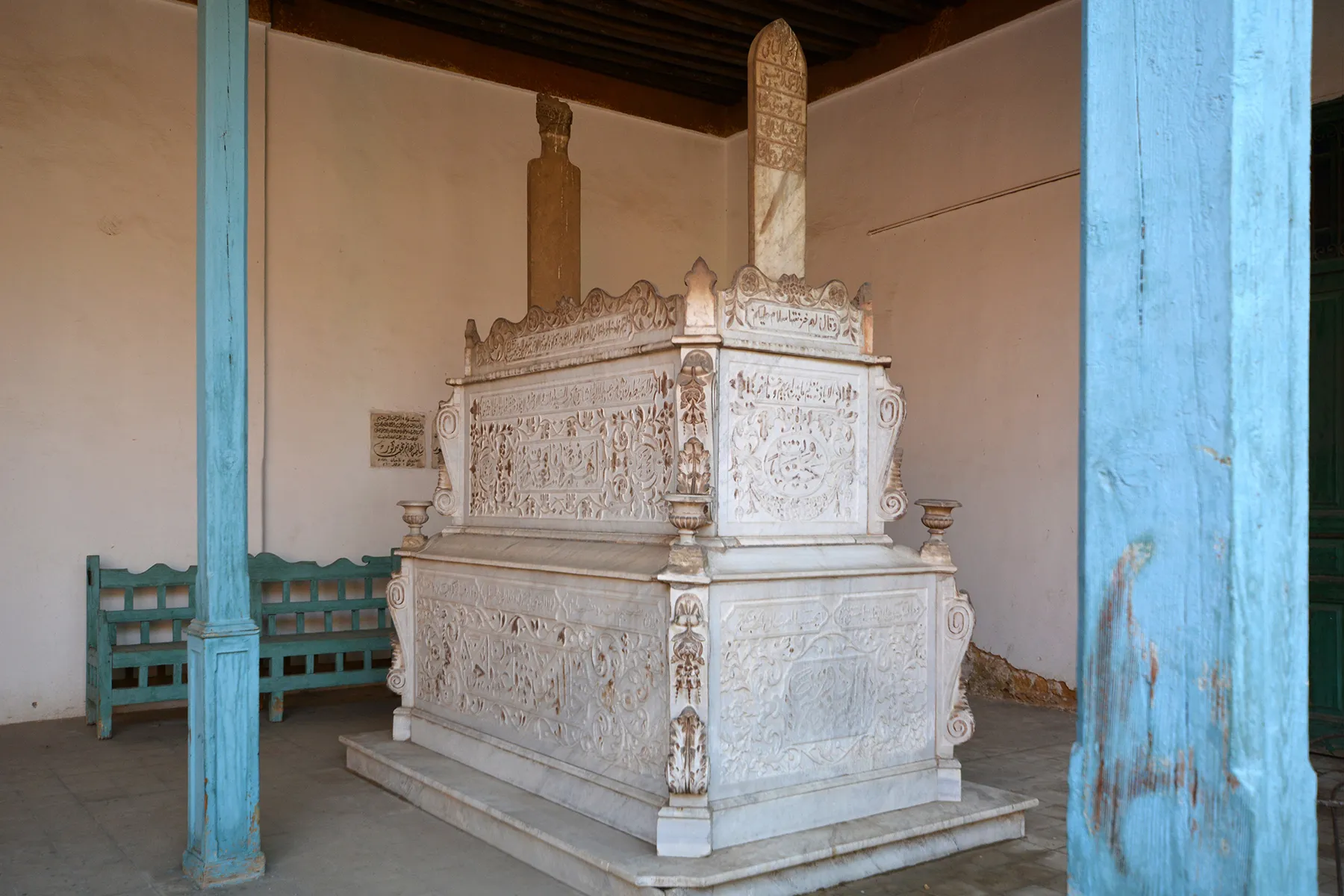
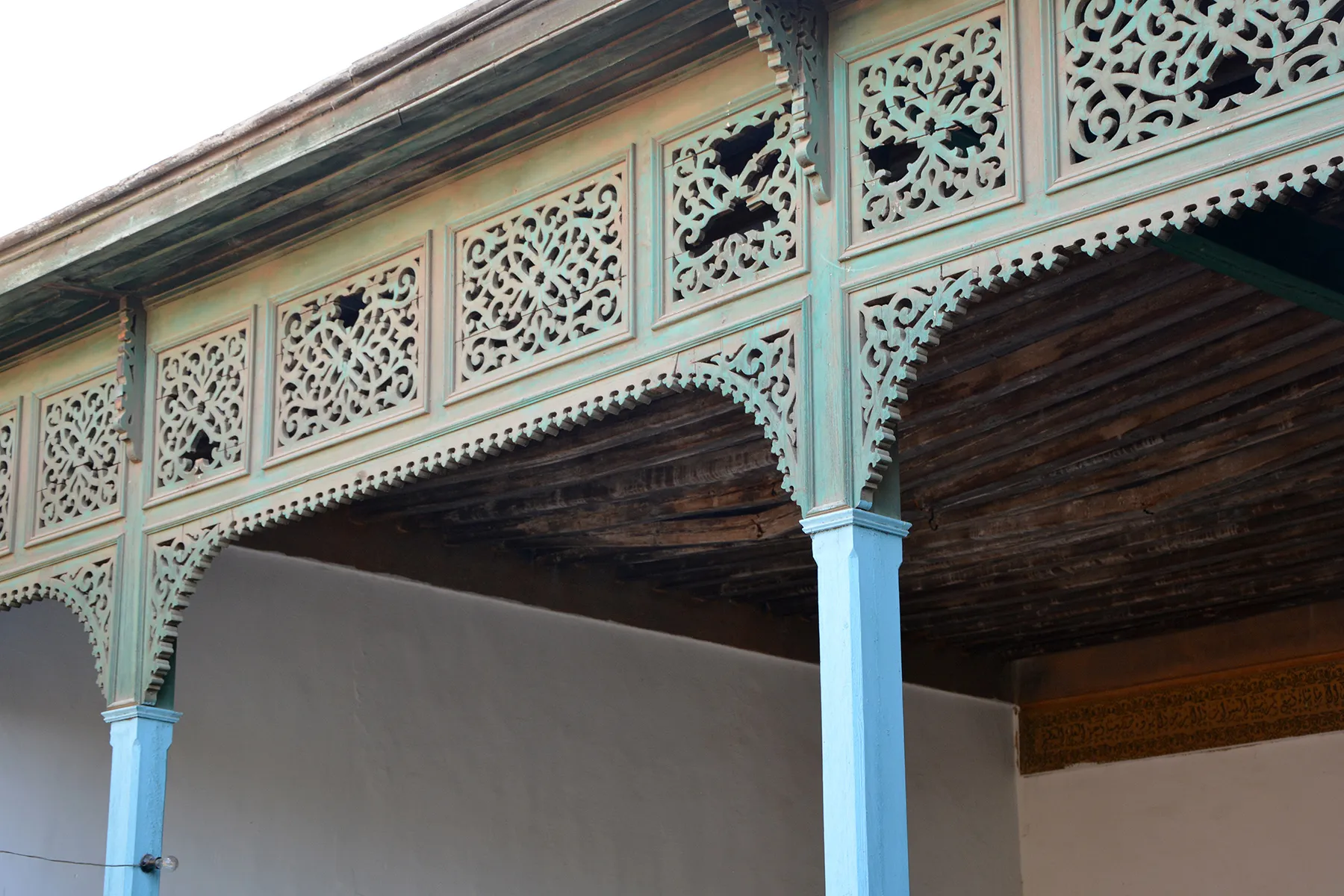
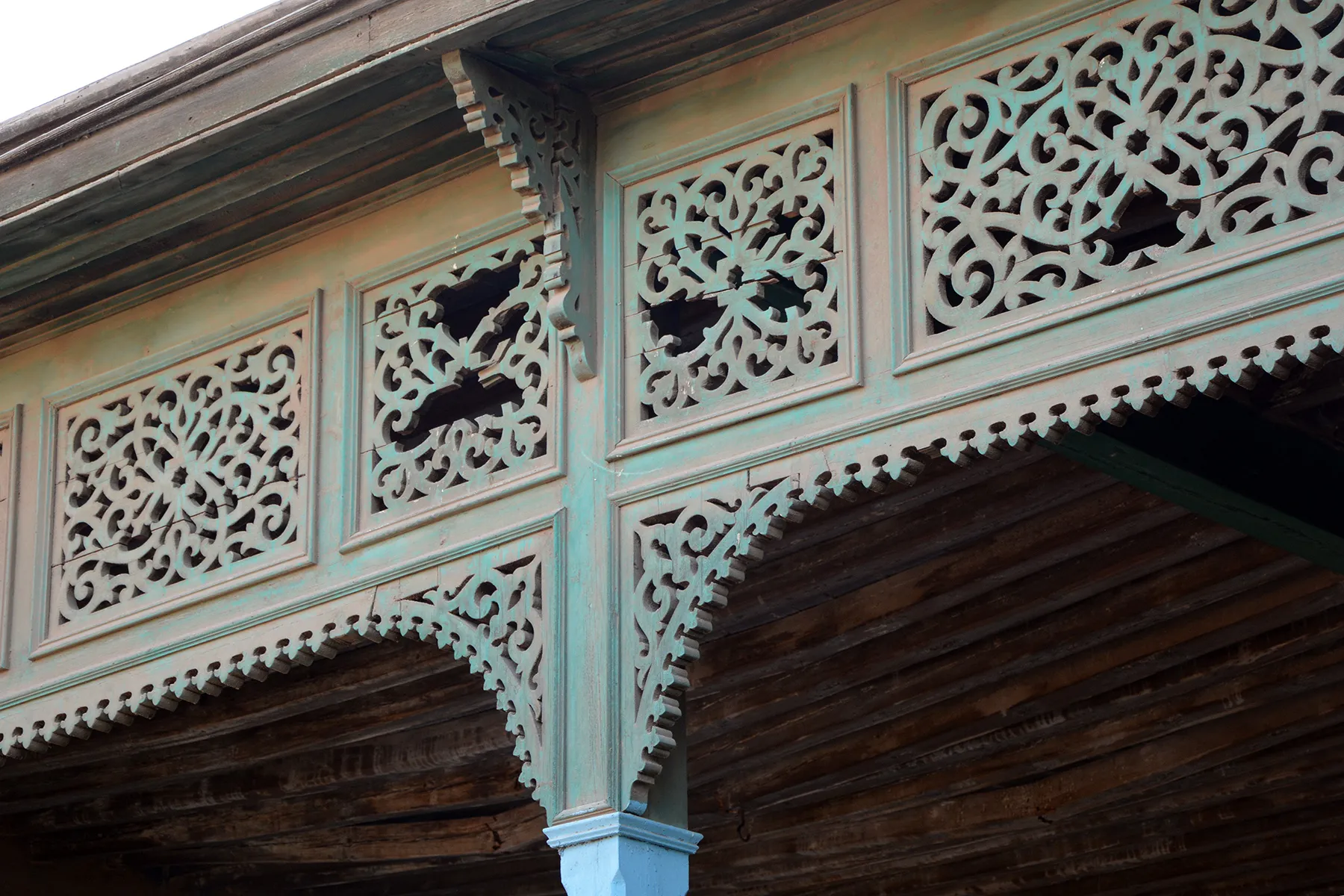
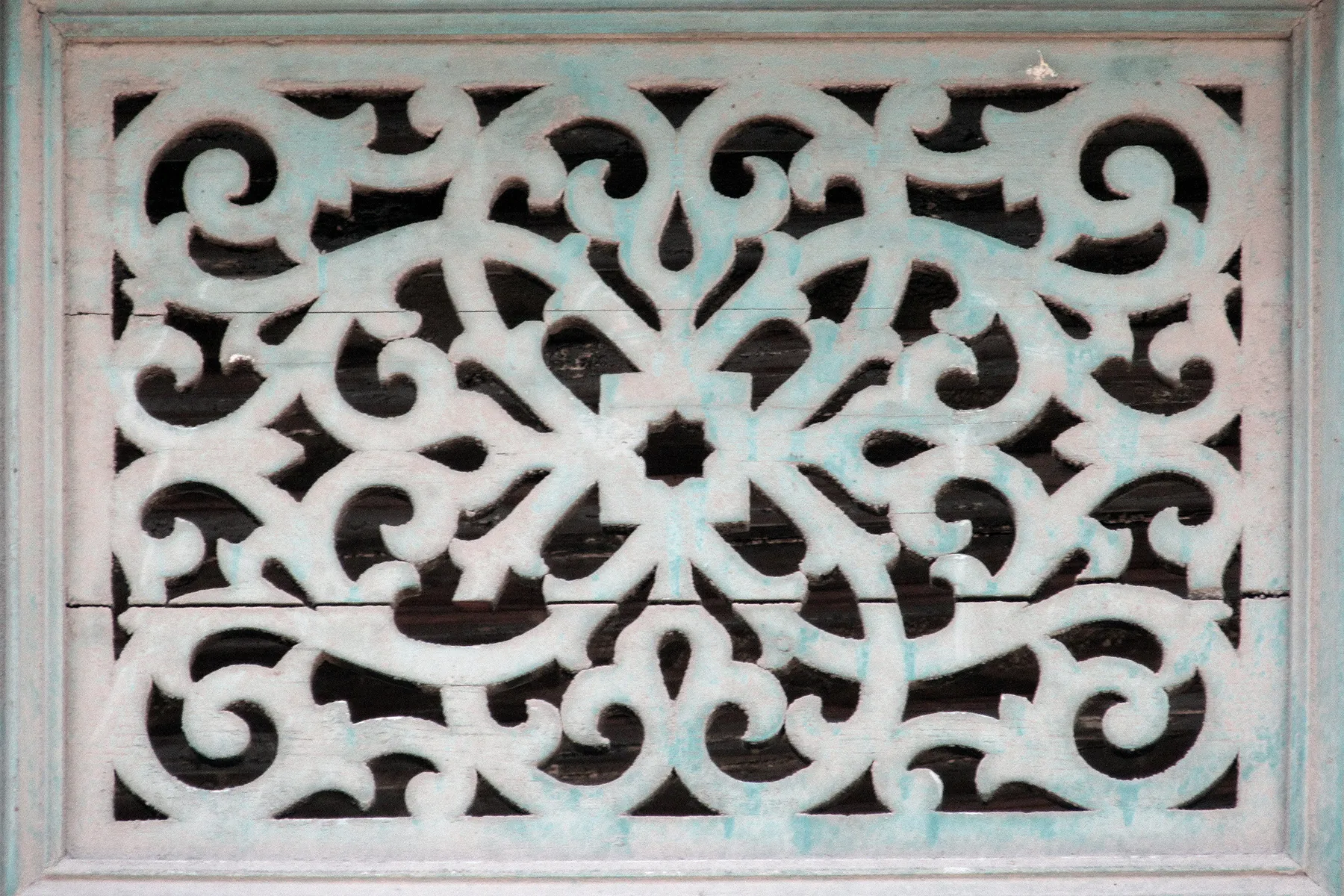
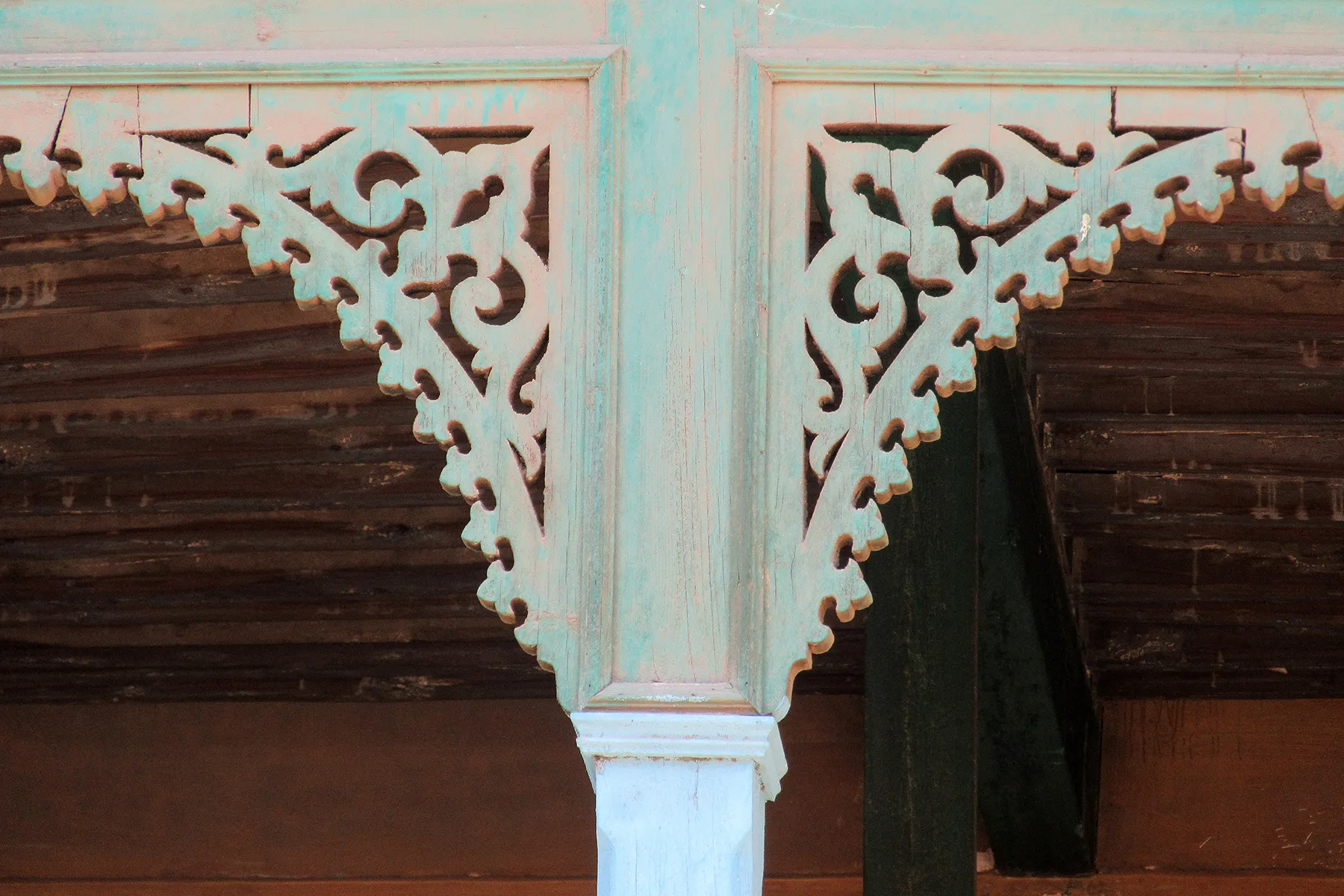
The front of the roofed burial area has wooden openwork panels in the upper part, with openwork wooden corbels under the beams between the posts and under the overhanging eave. The roof over the burial area is plain, with exposed wooden beams.
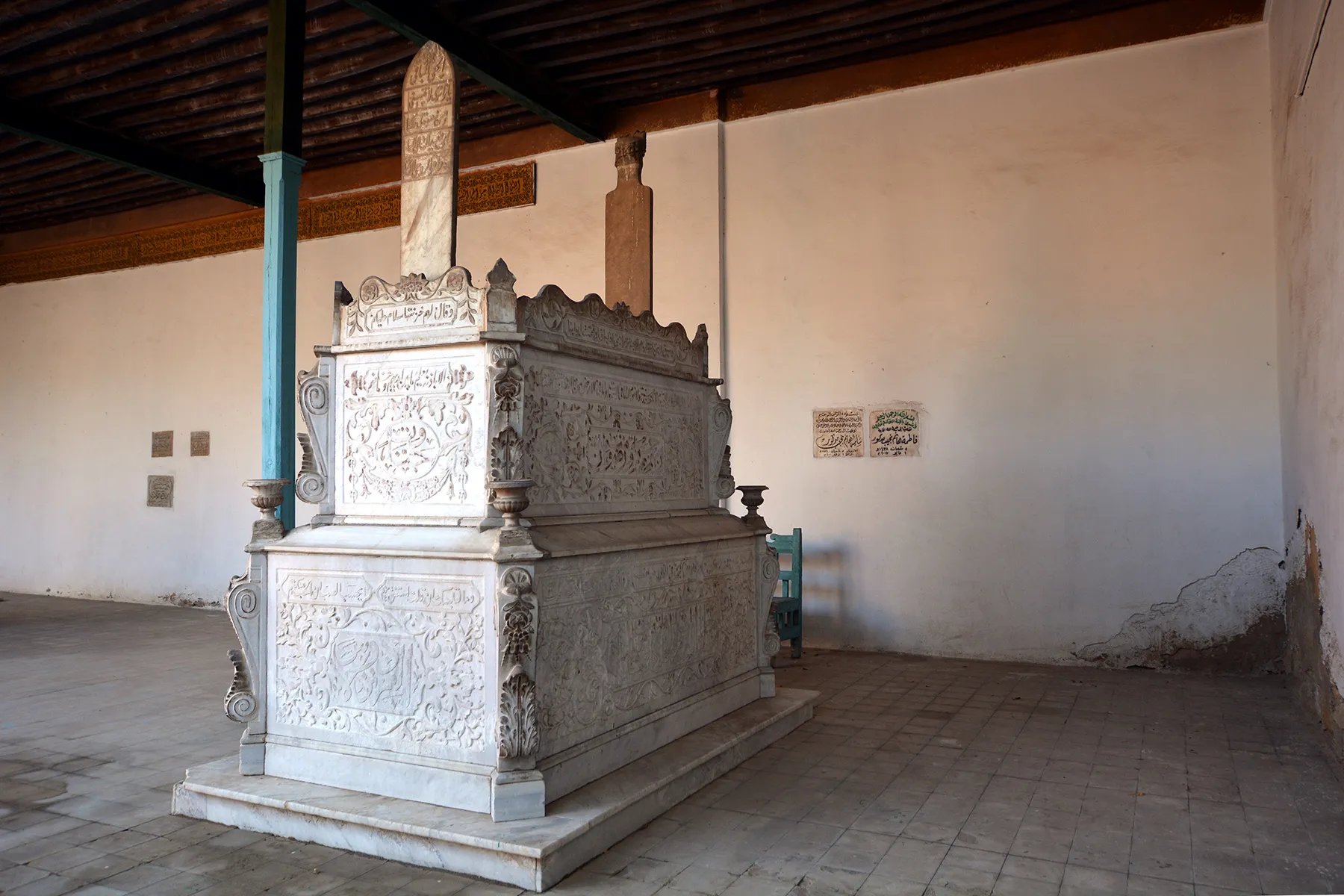
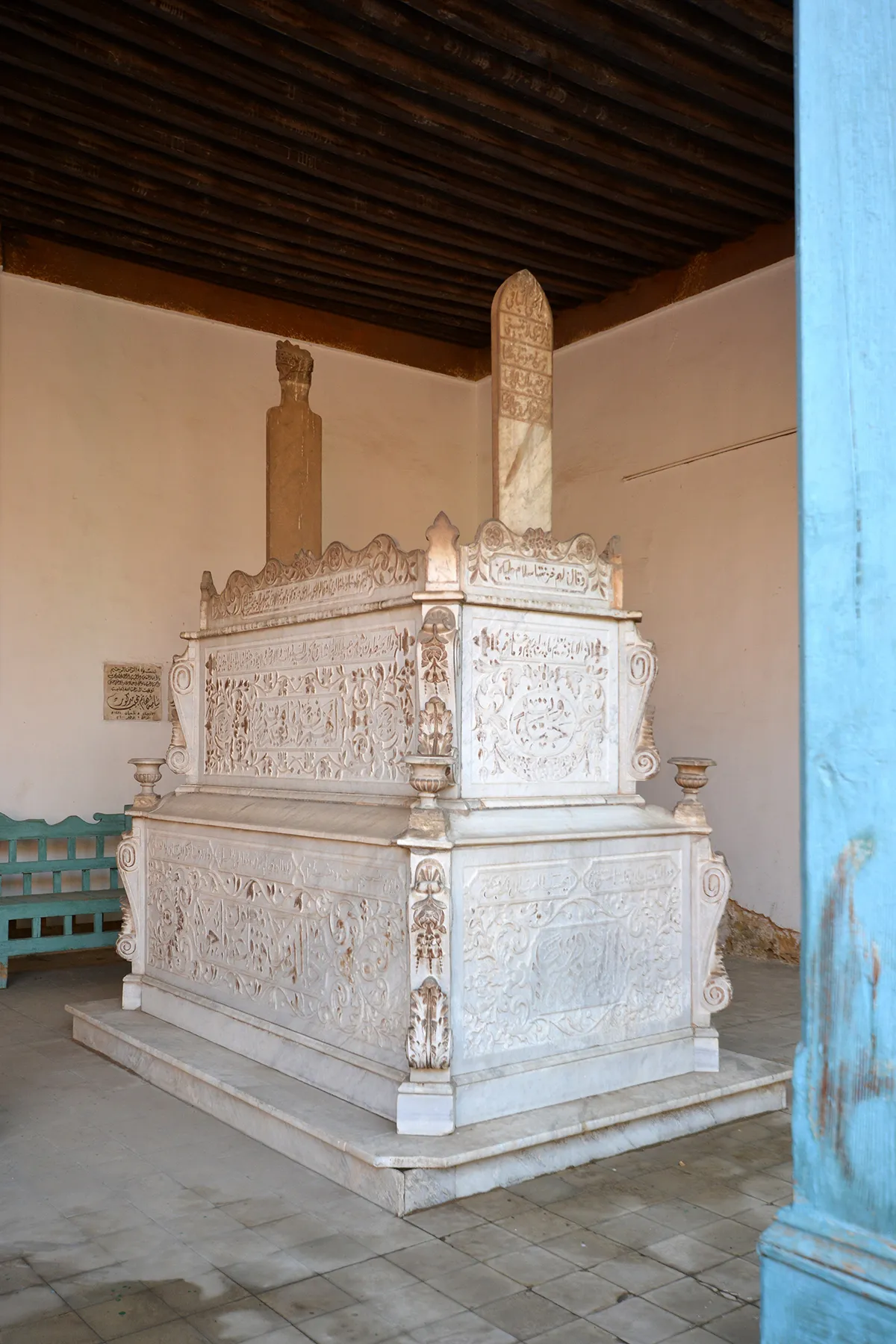
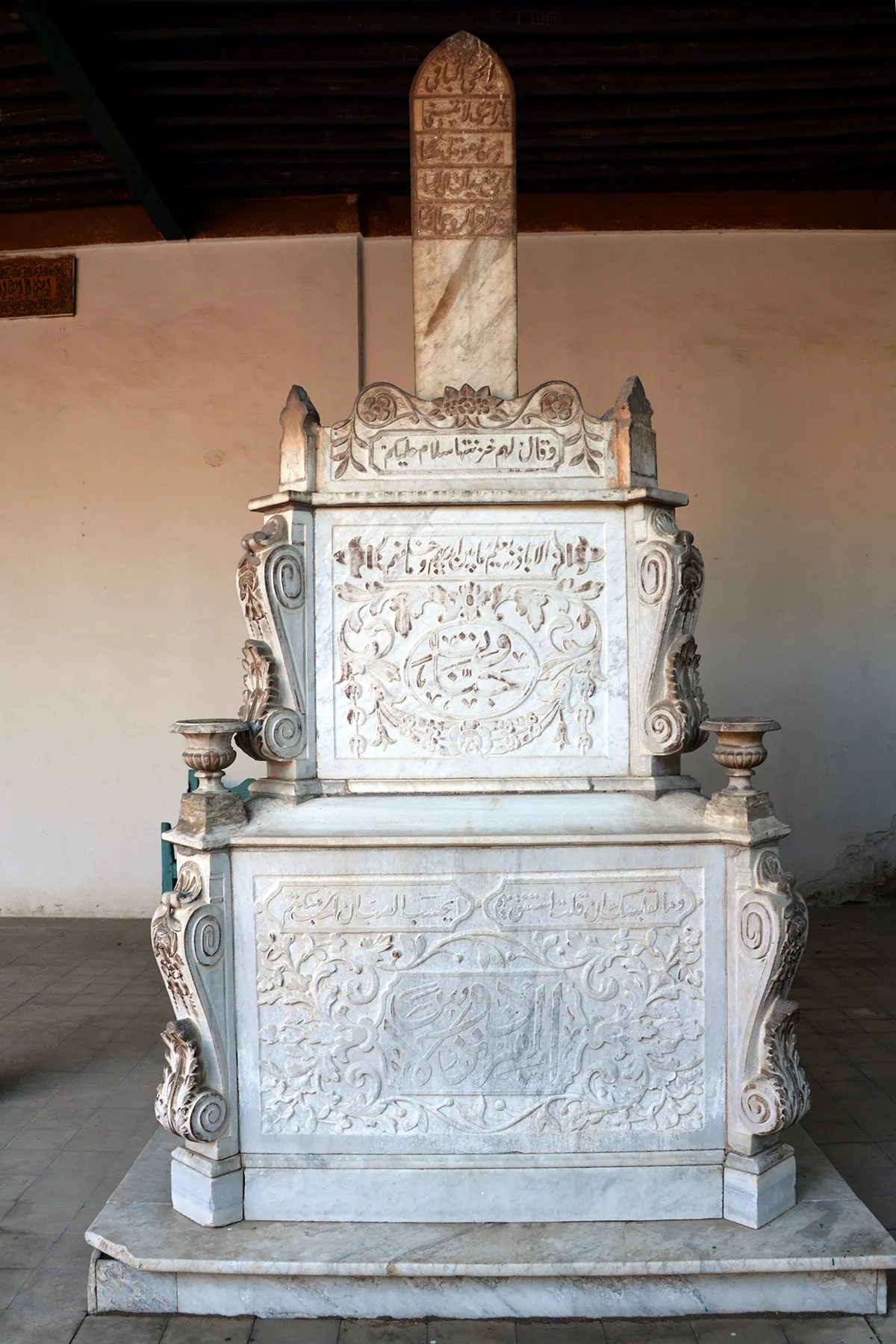
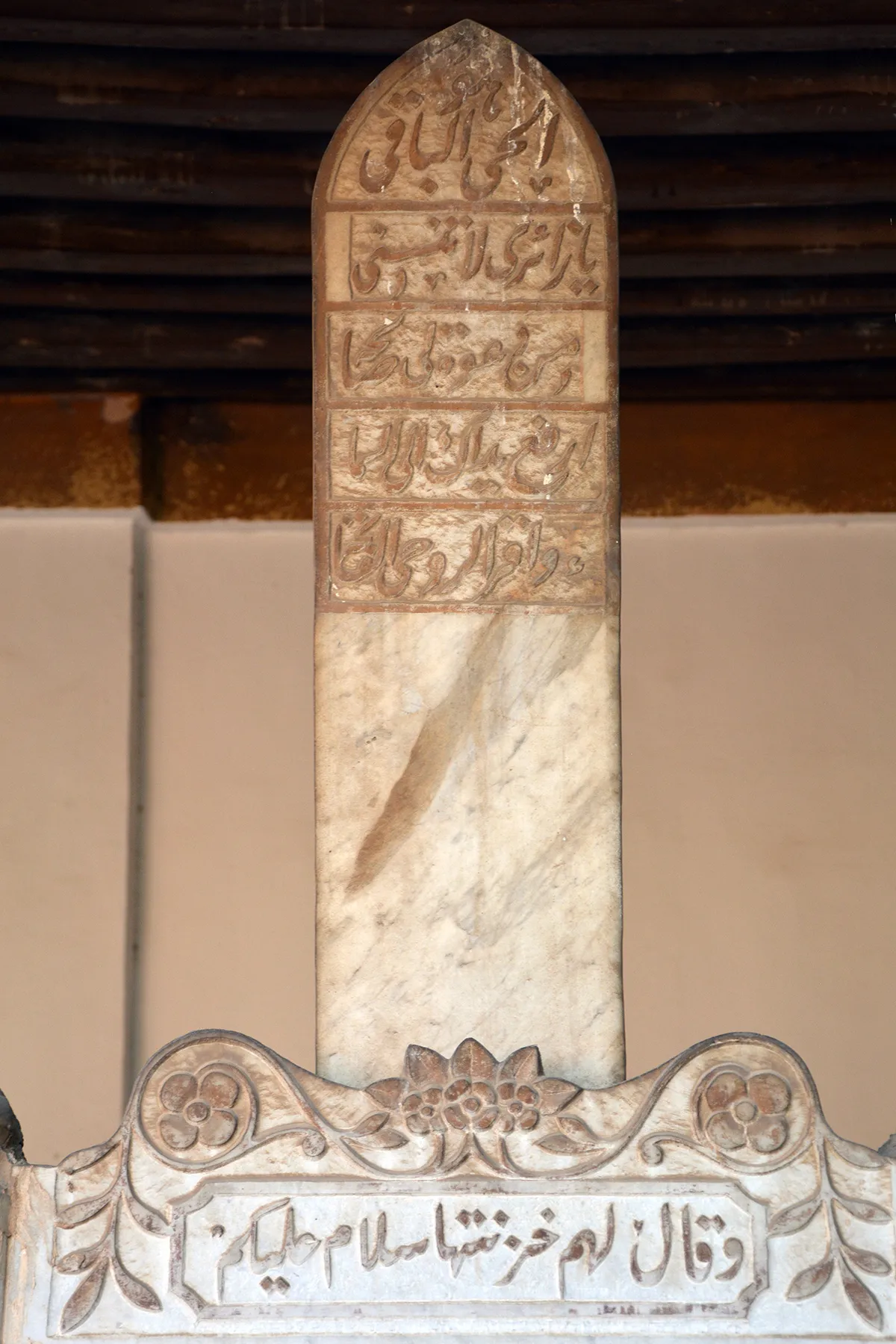
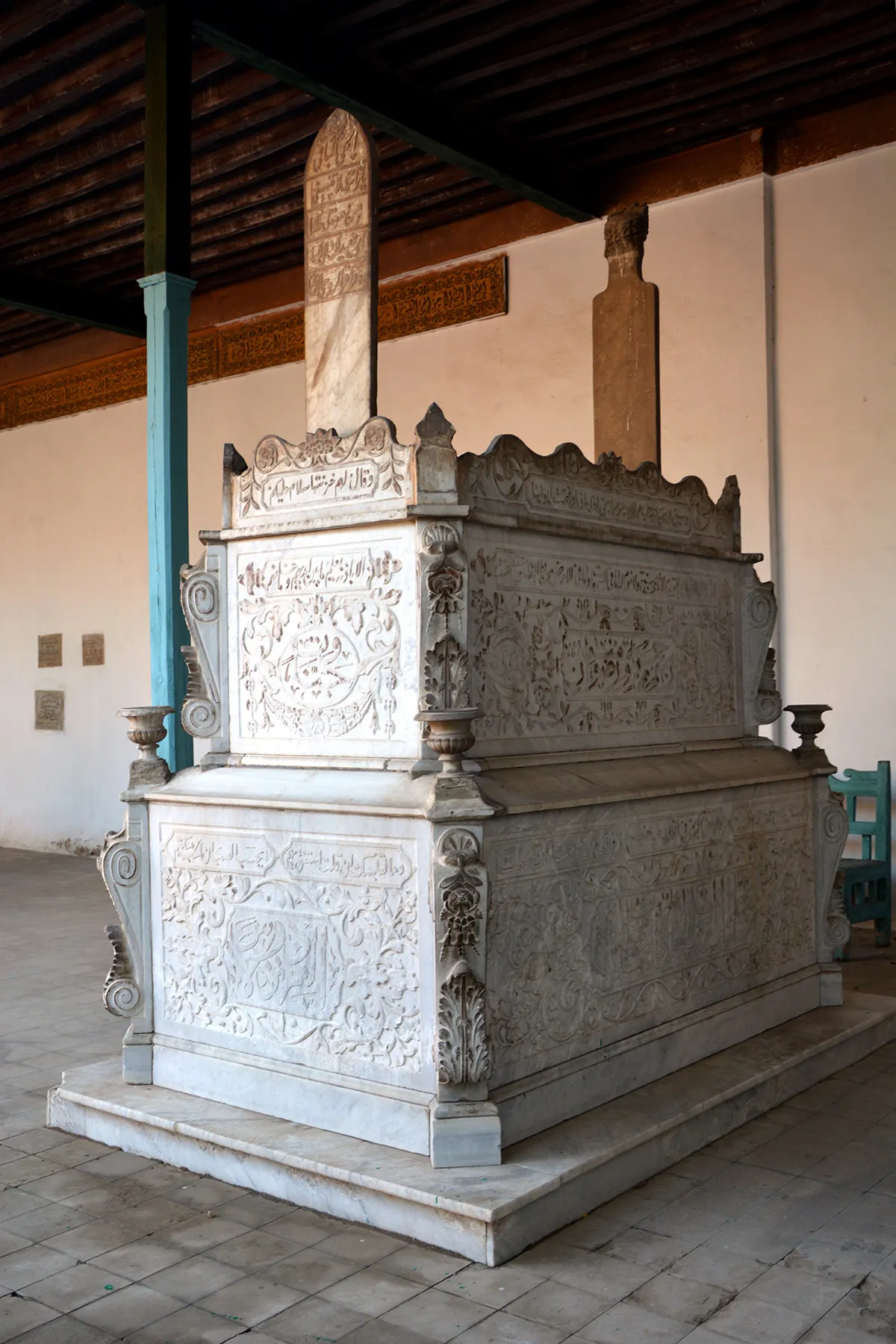
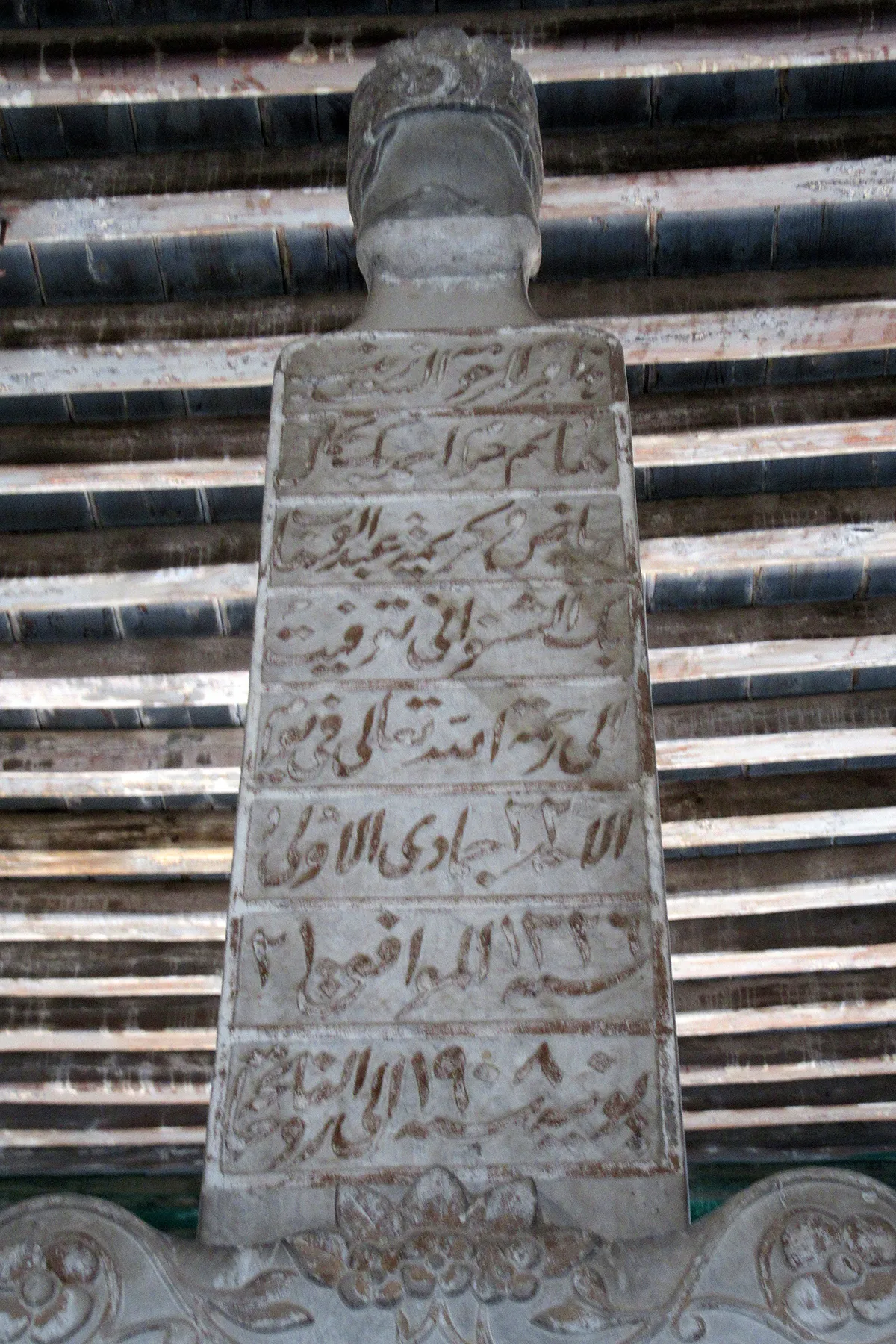
In the western part of the burial area is a richly carved marble cenotaph dated 1326 AH / AD 1908. In the eastern part is a simple marble cenotaph of apparently recent date, with incised inscriptions and with simple incised decoration of floral arabesque (possibly a computer-generated pattern).
The corners of the enclosure, gates, base course and cornice are built of ashlar stone, the rest of the walls are constructed of rough stone and plastered.
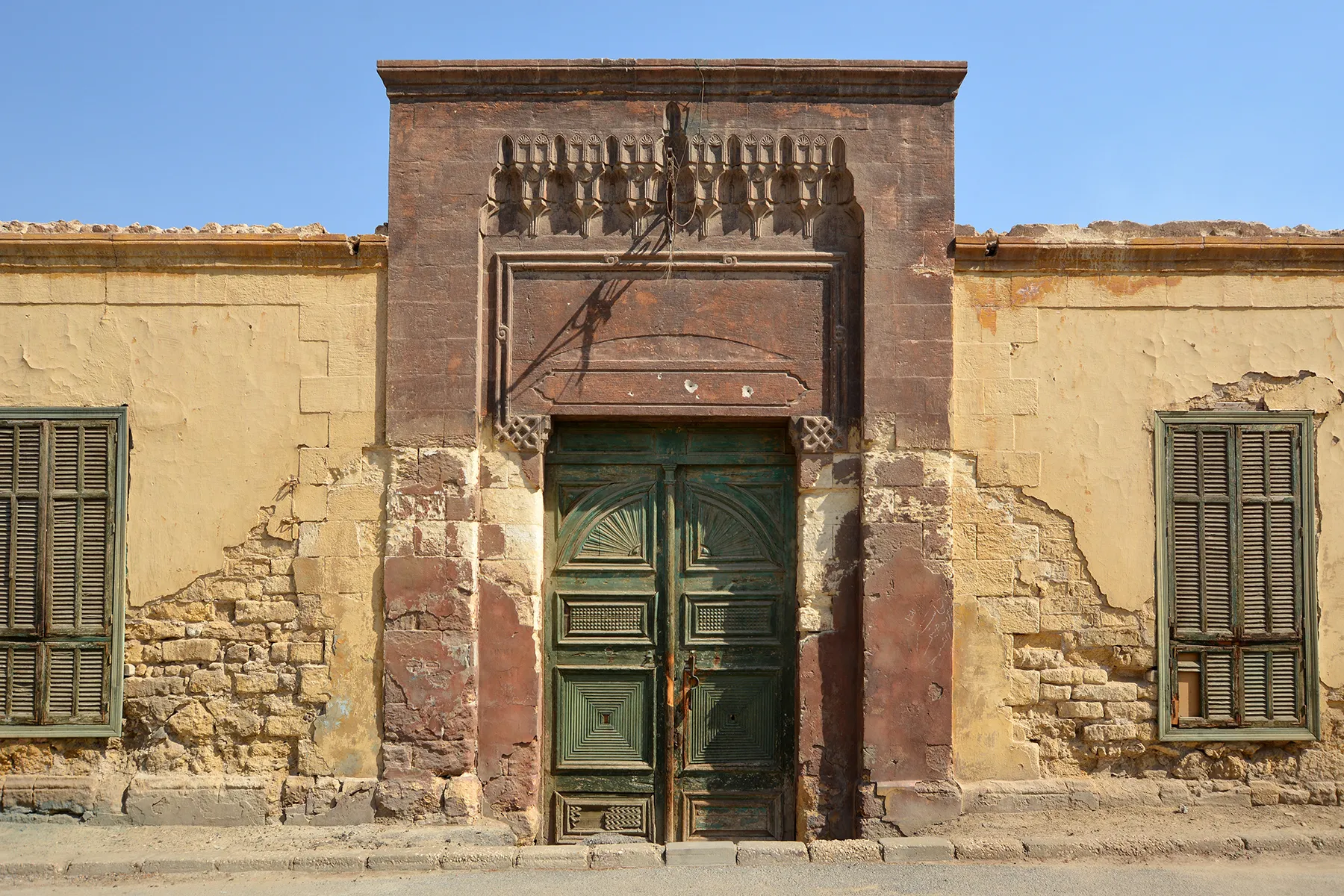
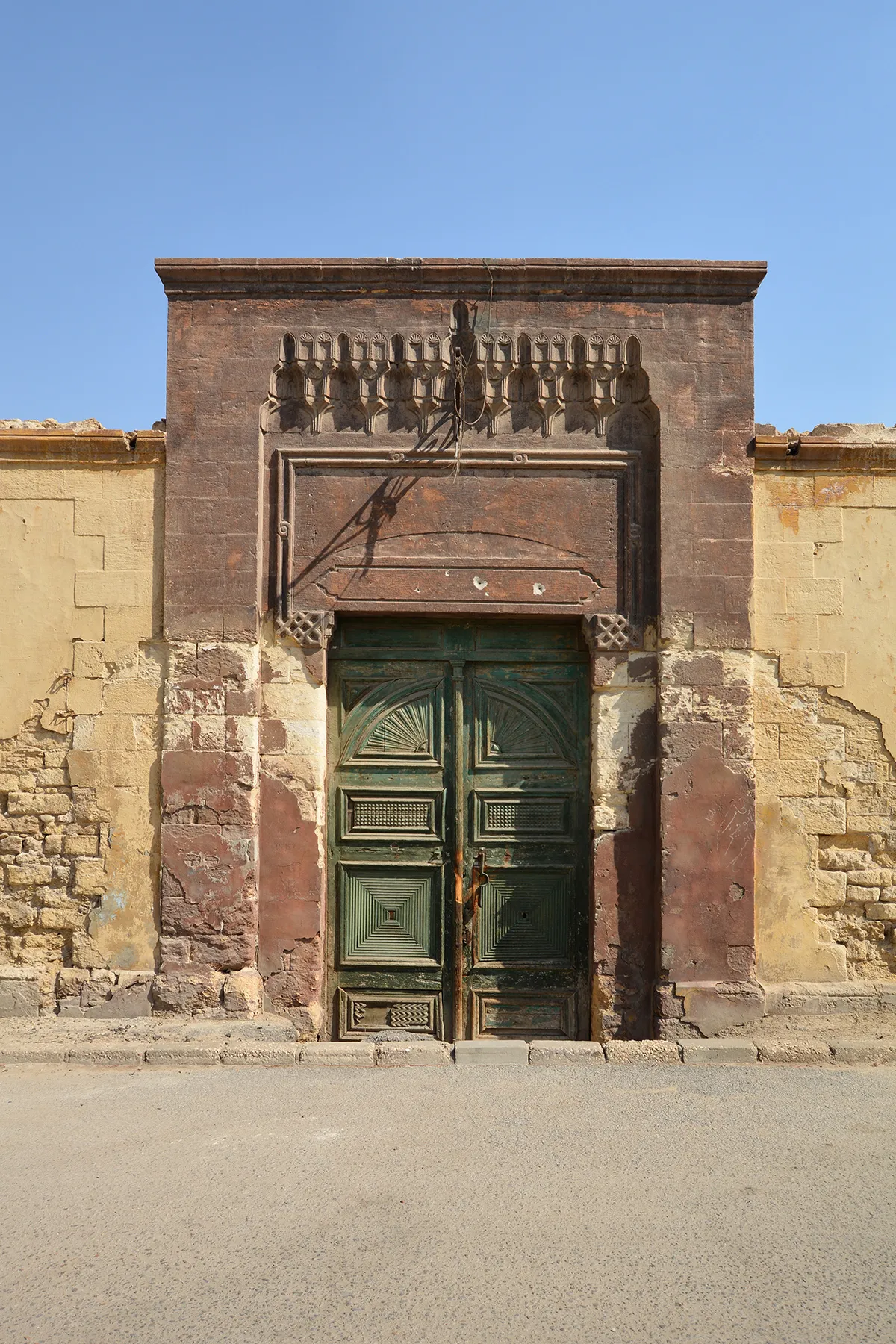
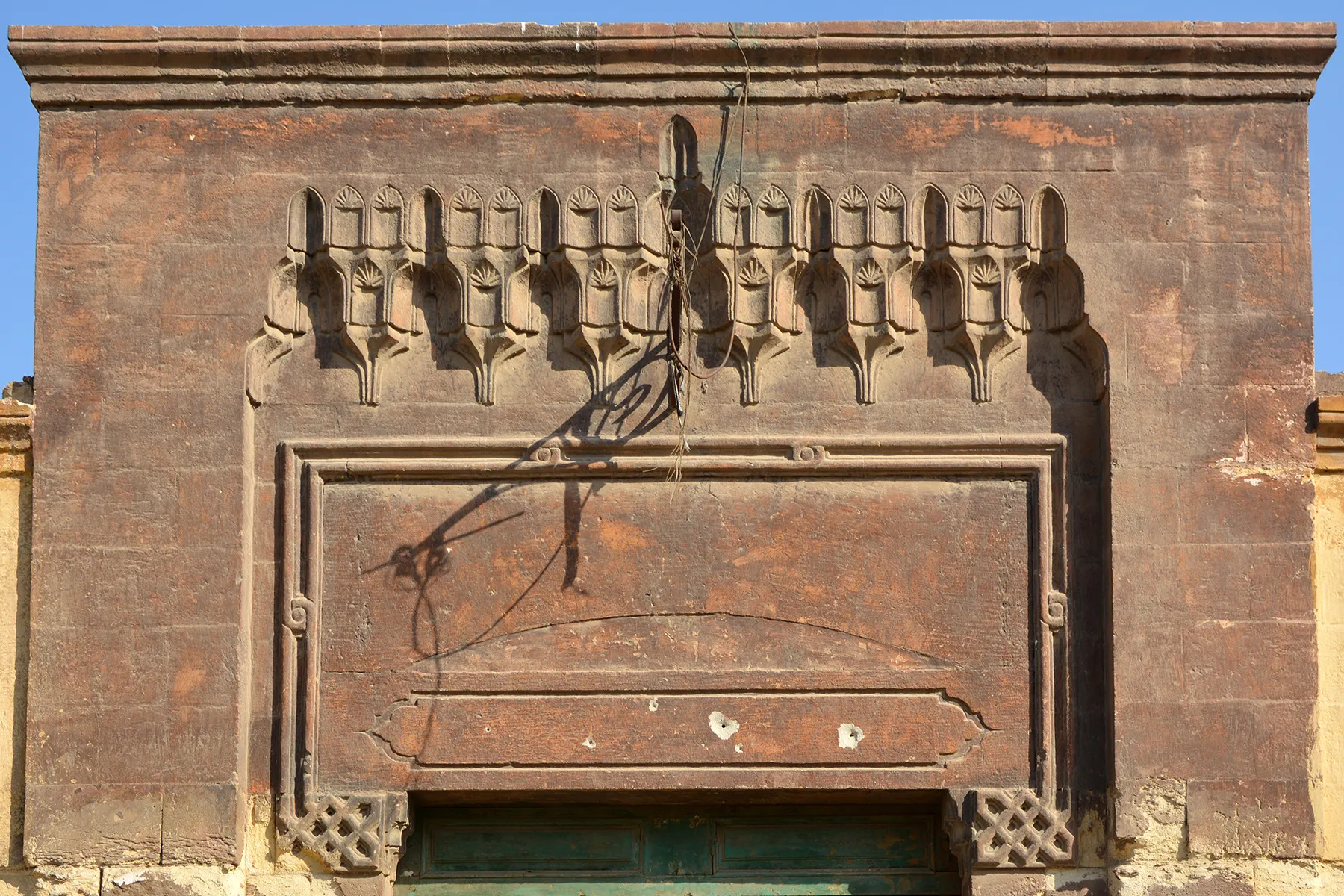
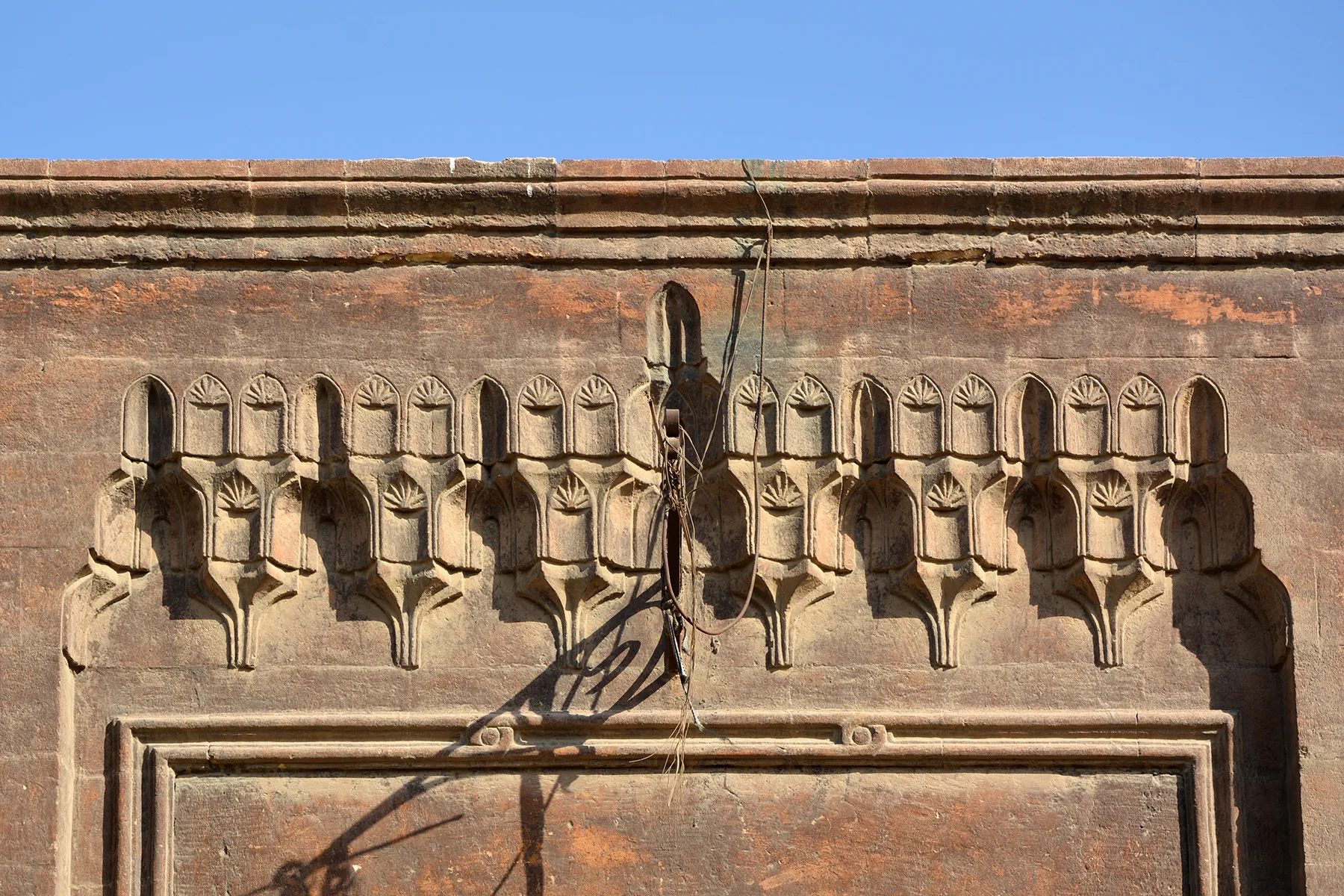
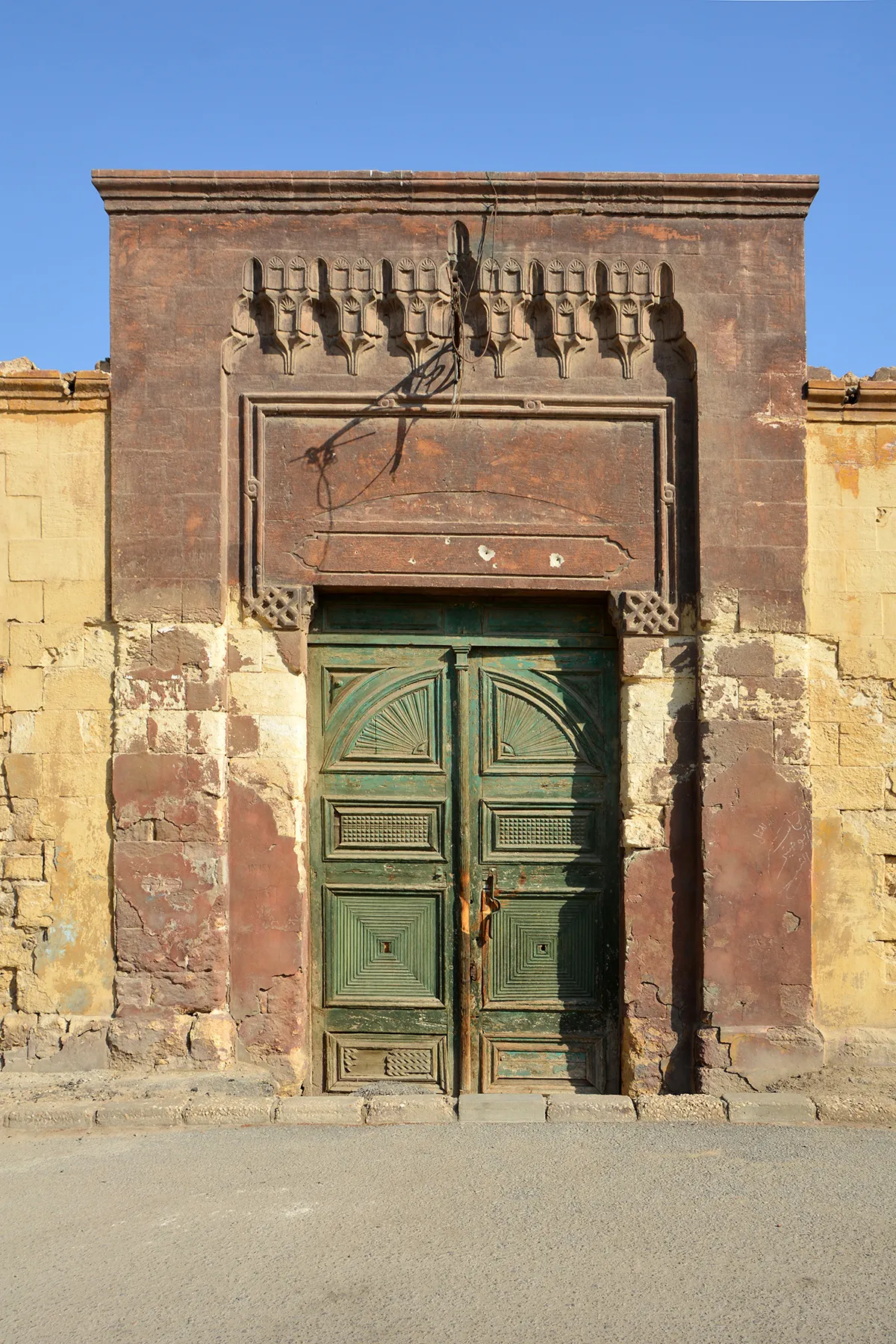
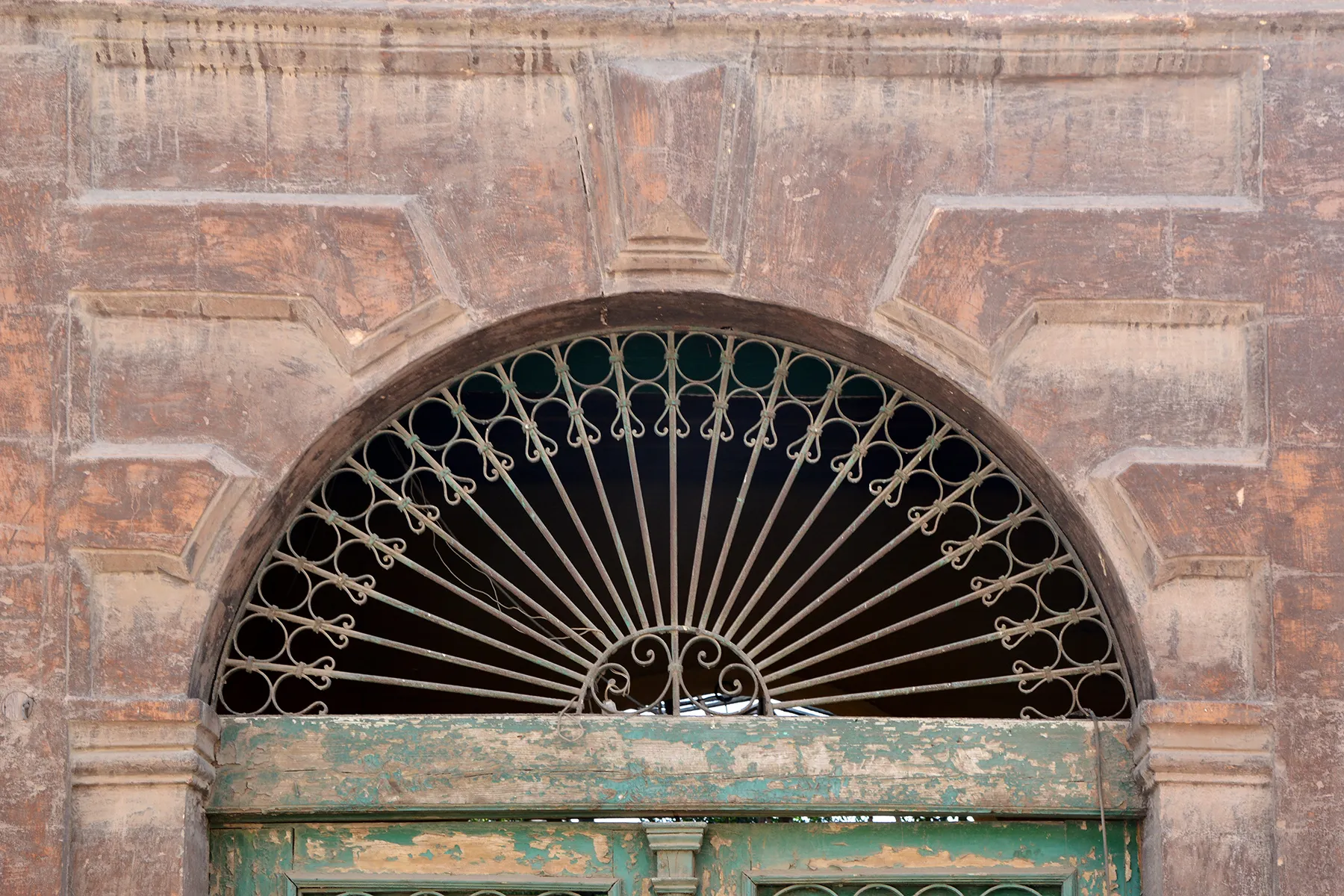
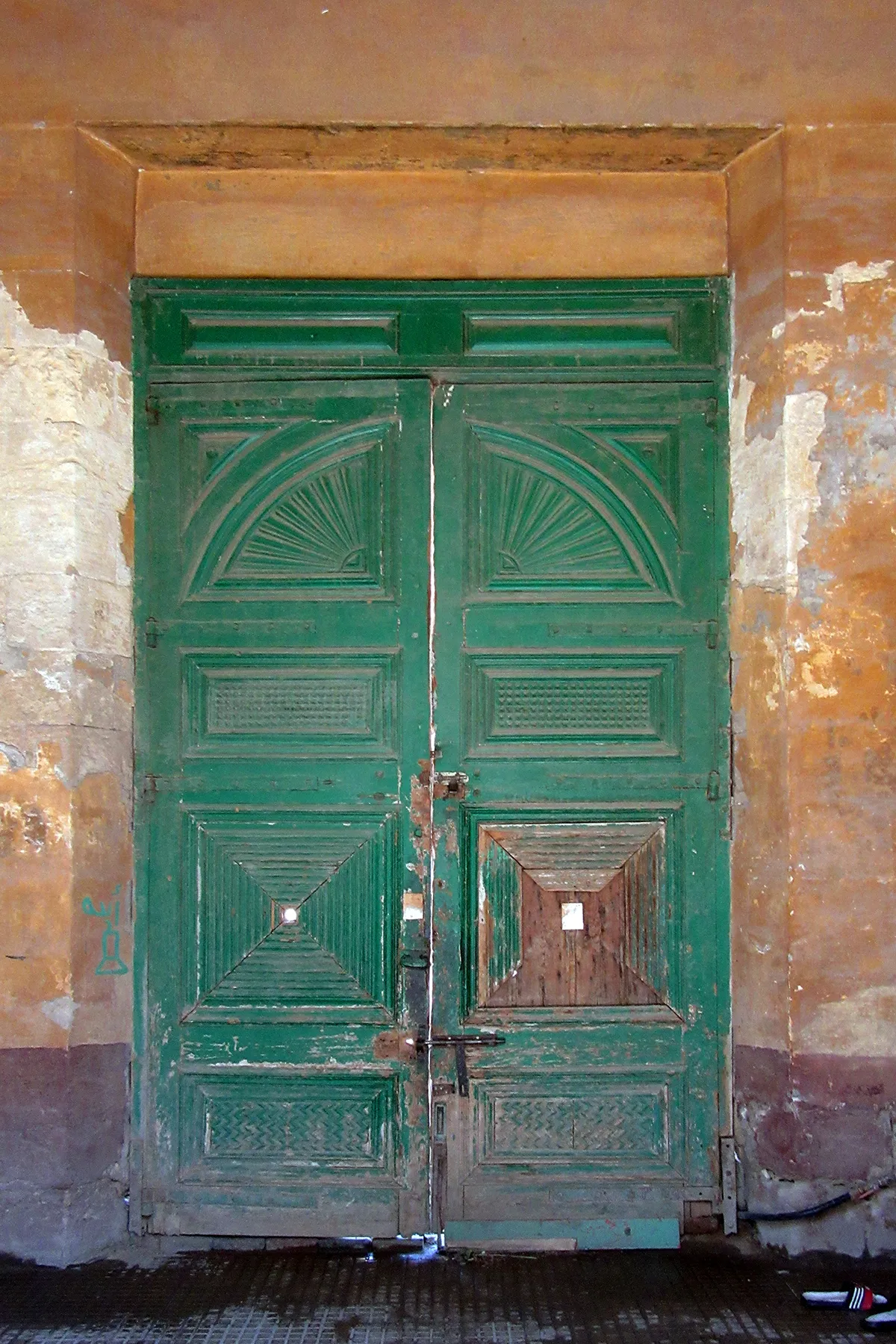
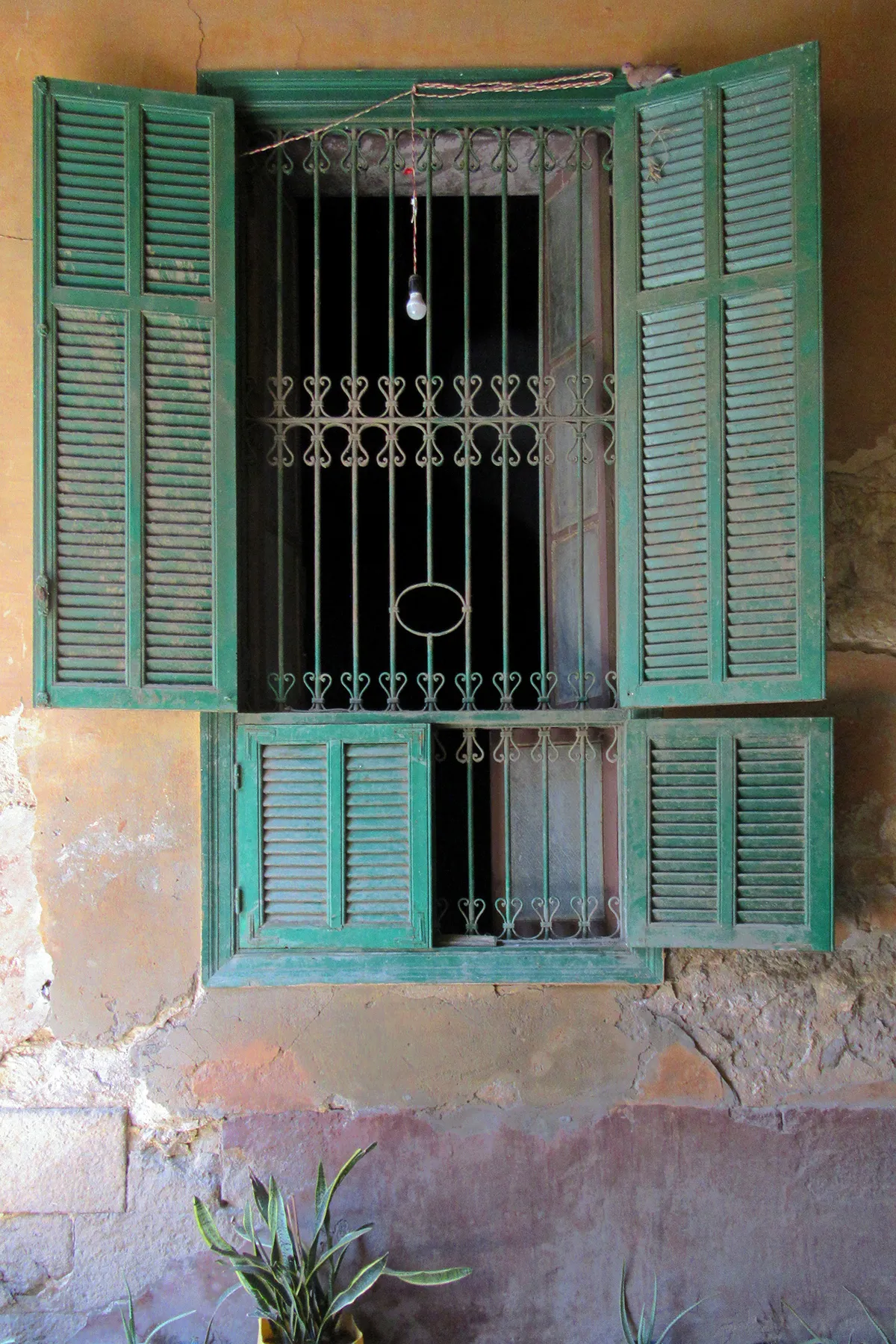
In the front façade there are four huge, plain rectangular windows fitted with simple louvre shutters and simple decorative wrought iron grilles, and in the middle, the entrance portal. It is taller than the rest of the façade, with a wide rectangular entrance door set in a shallow recess topped with a muqarnas frieze. The lintel of the door, which is a monolithic limestone block, and the relieving arch above it are framed in simple knotted mouldings. There are no crenellations neither over the portal, nor the rest of the facades. The portal is the only neo-Mamluk element in the building. The double-leaved entrance door has very elaborate decorative panelling; the arch above is filled with a simple decorative wrought iron grille.
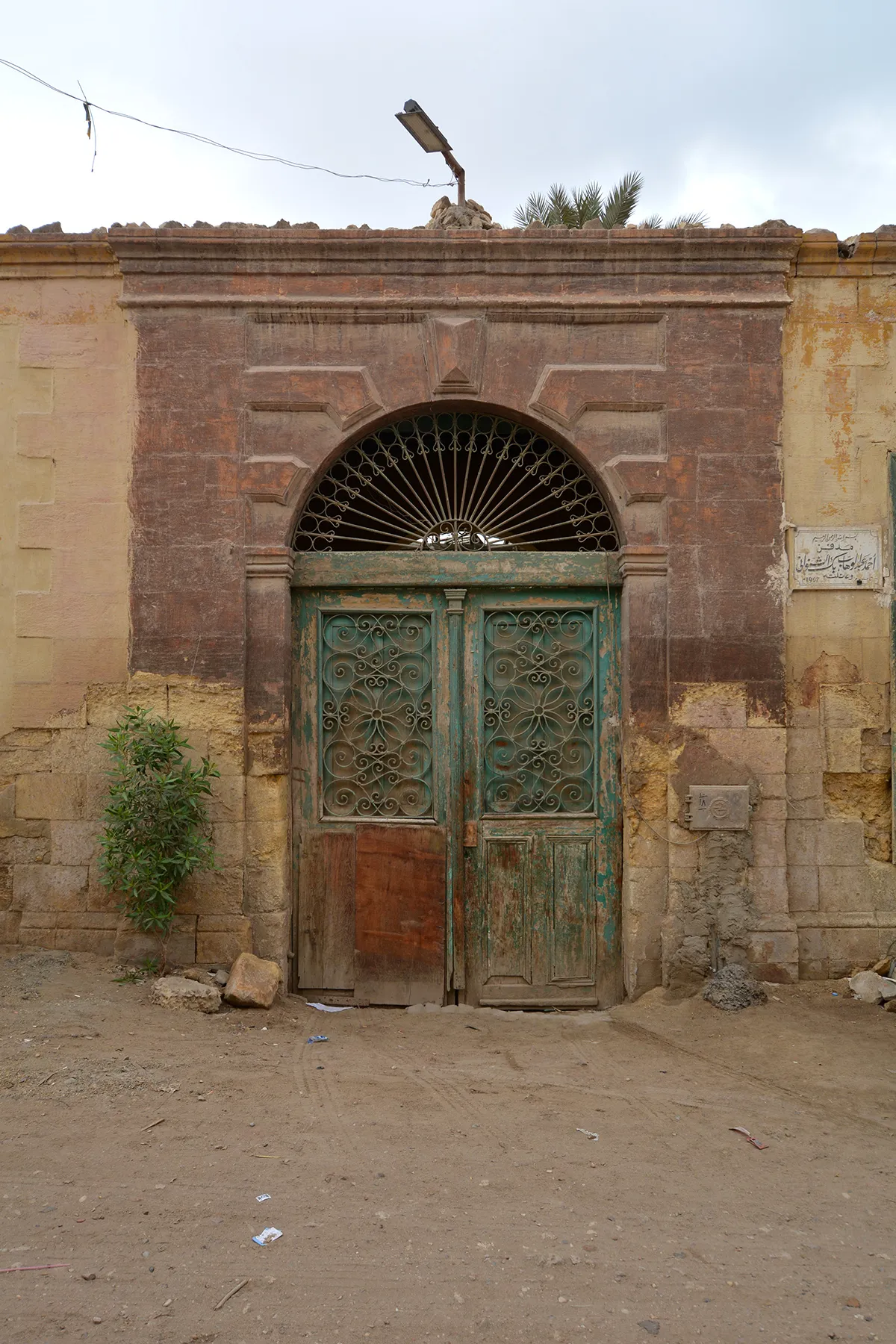
The northern façade has the entrance gate placed slightly off-centre, with six windows to the right (west) of it and two windows to the left. The entrance gate is topped with a boldly rusticated semi-circular arch, with two-leaved wooden door with decorative wrought-iron grilles in their panels and a simple decorative wrought iron grille in the arch above.
Condition of preservation
The overall structural condition of the unit is fair. It is in continuous use as residential quarters. There is severe damage to the walls from rising damp, with powdering stones and detaching plaster. Wooden pergolas in the courtyard are damaged and incomplete.
Information abut the founder, family history, etc.
The larger cenotaph in the burial area bears the name of Lady Zeinab Hanim, the wife of Ahmad Bey Kamel Riad and the daughter of ‘Abd al-Wahab Bey al Shanuani. The lady died on Sunday, 22 Gumada al-Awwal 1326 AH, corresponding to 21 June 1908.
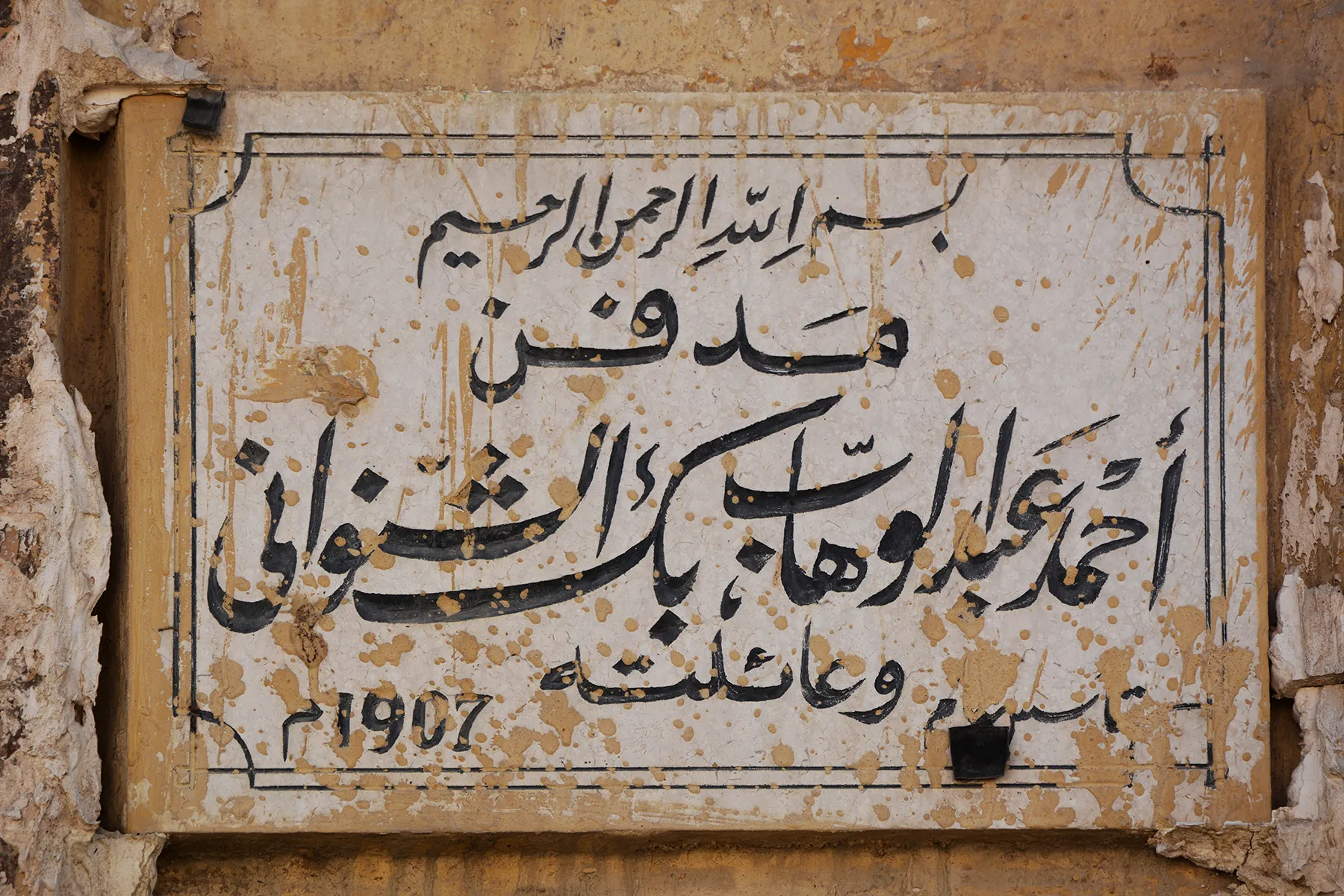
A modern marble plaque mounted to the side of the secondary gate in the northern façade ststes tha this is the funerary enclosure of Ahmad ‘Abd al-Wahab al Shanuani (so apparently, the brother of lady Zeinab) and his family and gives the date 1907 miladi in Latin characters.
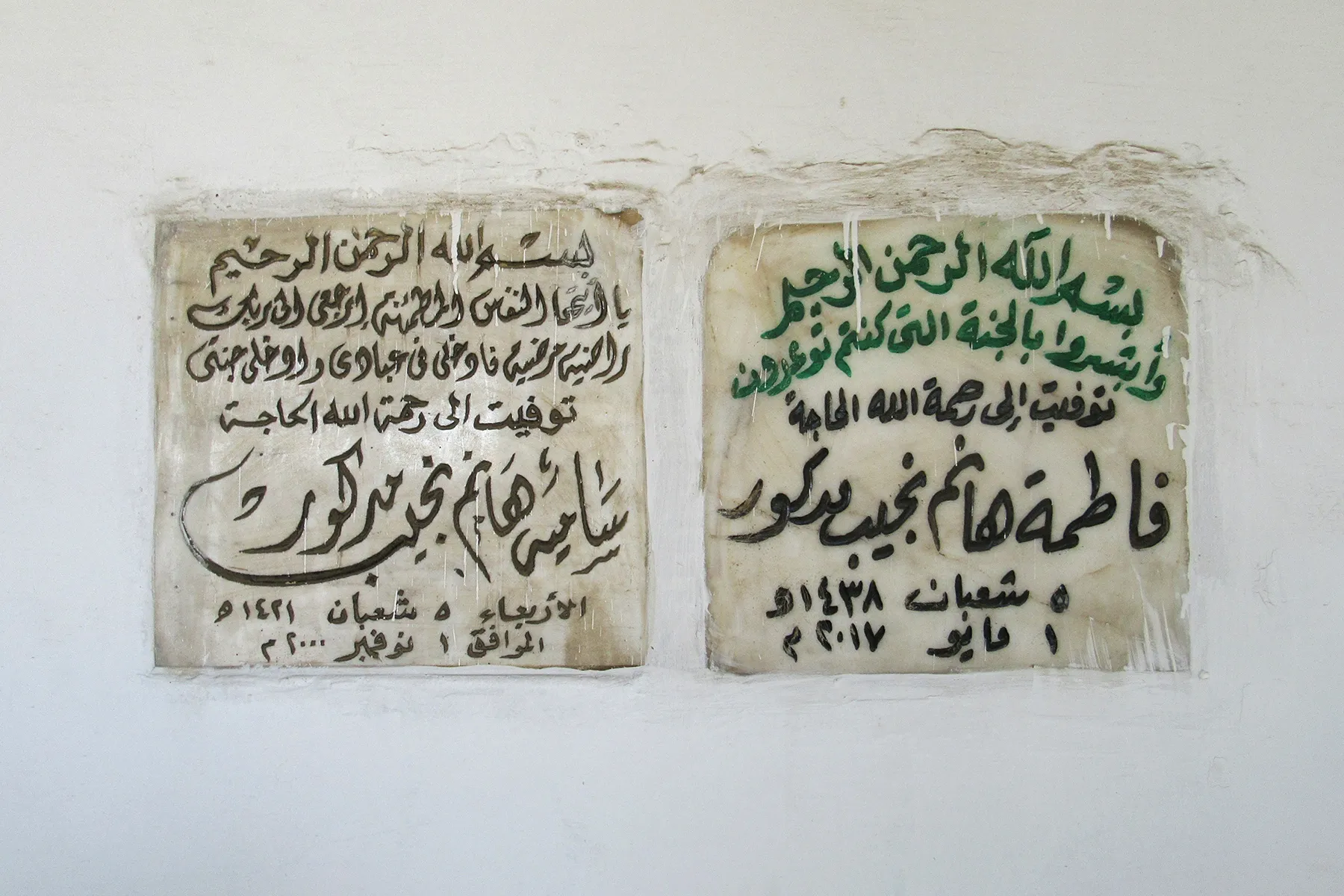
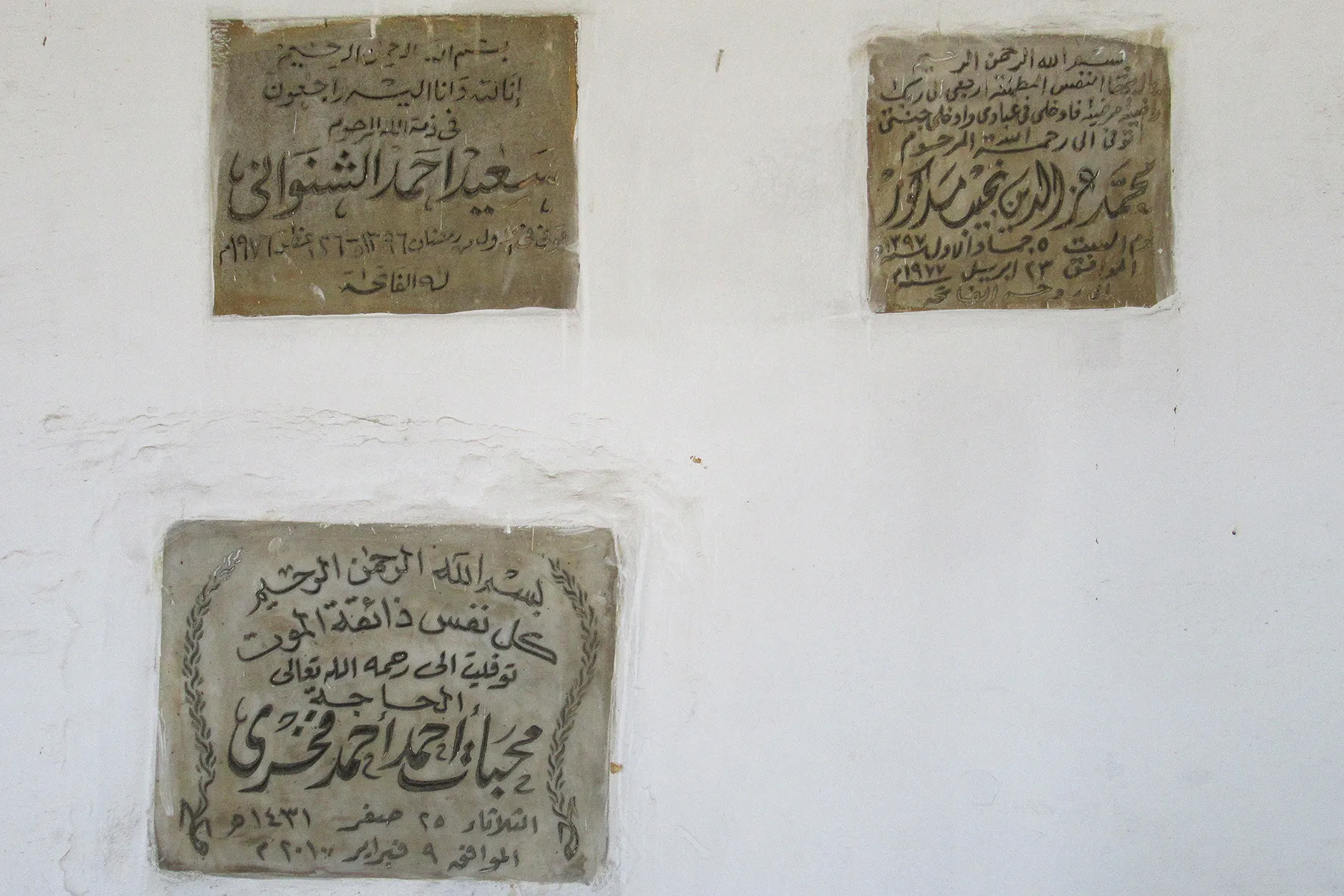
On the walls of both burial chambers are mounted marble commemorative panels for family members buried in the complex, with the dates in the late 20th and early 21st centuries, with the most recent date of AH 1438 / AD 2017.
The complex is one of similar neighbouring ones on regularly laid out lots apparently resulting from a larger-scale urban planning of the neighbouring area (possibly at the time of laying of the Sultan Ahmad Street.) This group of funerary enclosures have highly standardised building techniques and architectural details.
- Field recording by
- Hadeer Ahmad, Muhammad Esam, and Esraa al-Mahdi, edited by Jaroslaw Dobrowolski
- Date recorded
- August 3, 2023
- Data entered by
- Hadeer Ahmad
- Date entered
- May 8, 2024