

Unit No63
Al-Suyufi Family
|
Coordinates of the main entrance |
30.046789N - 31.274364E |
|
Attribution |
Al-Suyufi Family |
|
Higri (AH)Dates as given in the Inscription |
|
|
Miladi (AD)Dates as given in the Inscription |
|
|
Inscription Contemporary with the building? |
Yes |
|
Multiple date(s) In the inscription? |
Yes |
|
Assumed Date |
|
|
Based on |
|
|
Original Use |
Funerary enclosure |
|
Current Use |
Funerary enclosure, residential |
|
Overall condition |
Fair |
Features of unit 63
| Present | Count | Material | Comments (see description for details) | |
|---|---|---|---|---|
| Free standing structure | No | |||
| Walled enclosure | Yes | 1 | stone | |
| Rooms by the perimeter wall | Yes | 8 | stone | |
| Freestanding structure(s) in enclousure | No | |||
| Dome over the tomb chamber | No | |||
| Neo-Mamluk architectural decoration | No | |||
| Garden layout | Yes | |||
| Sabil(s) | Yes | |||
| Wall fountain(s) | No | |||
| Canopy on columns / pillars | No | |||
| Carved marble cenotaph(s) | Yes | 4 | 4 | Two more inscribed, undecorated ones |
| Decorated limestone tomb-markers | No | |||
| Decorated gateway | Yes | 1 | stone, plastered | |
| Decorative door-leaves | Yes | 2 | wood | In the main gate |
| Decorative window grilles | Yes | 2 | wrought iron | In the sabil window and in the main gate |
| Decorative shutters | No | |||
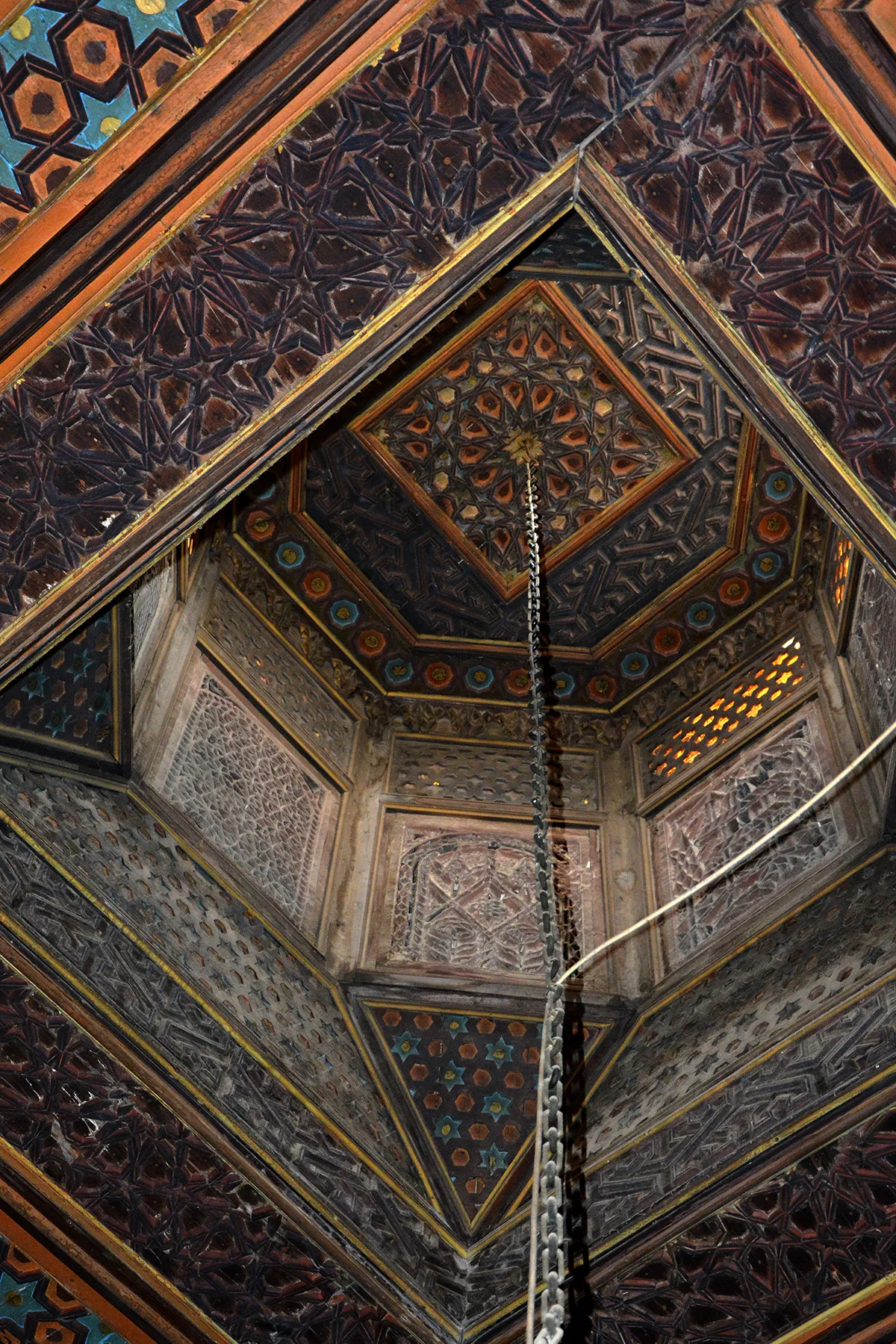
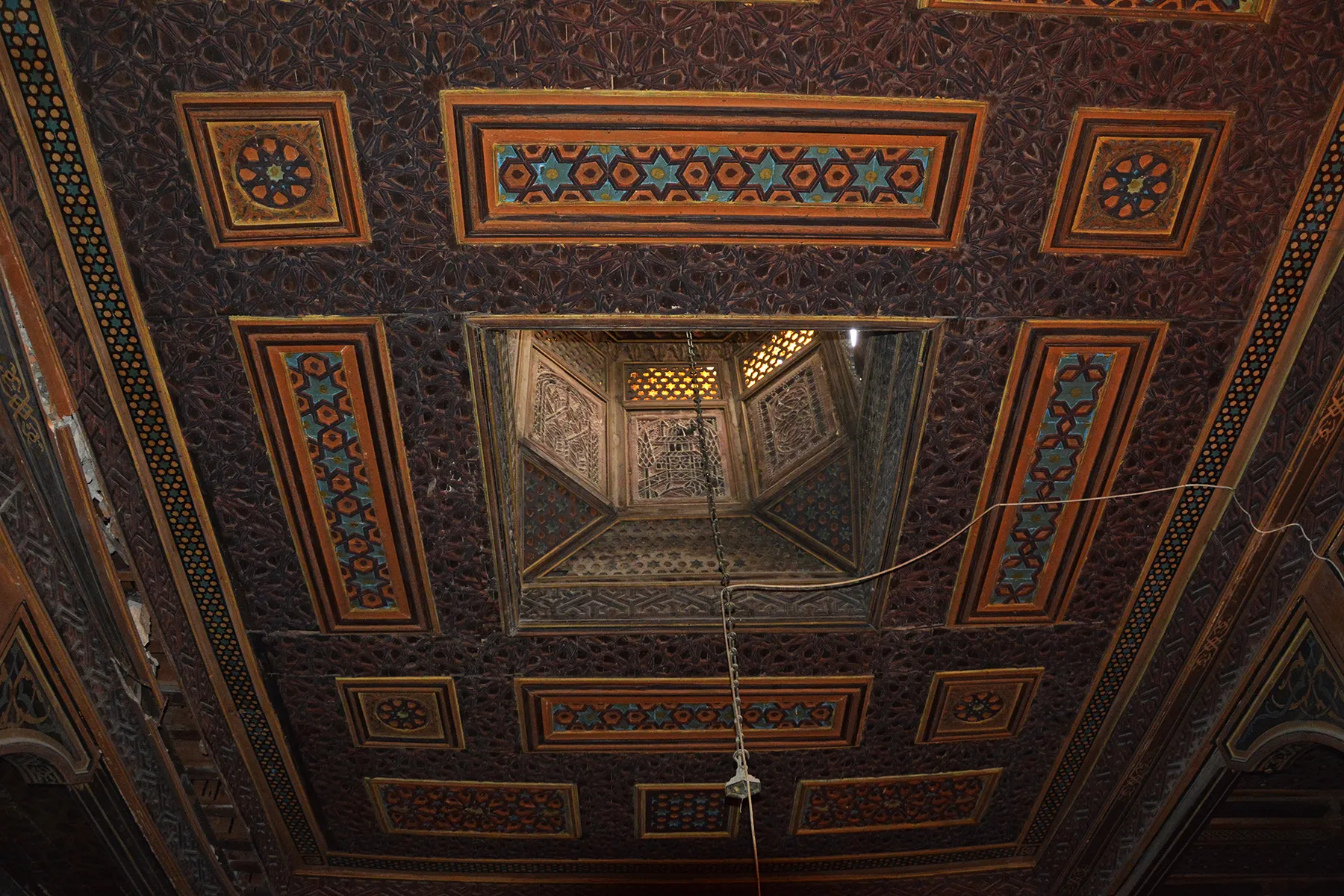
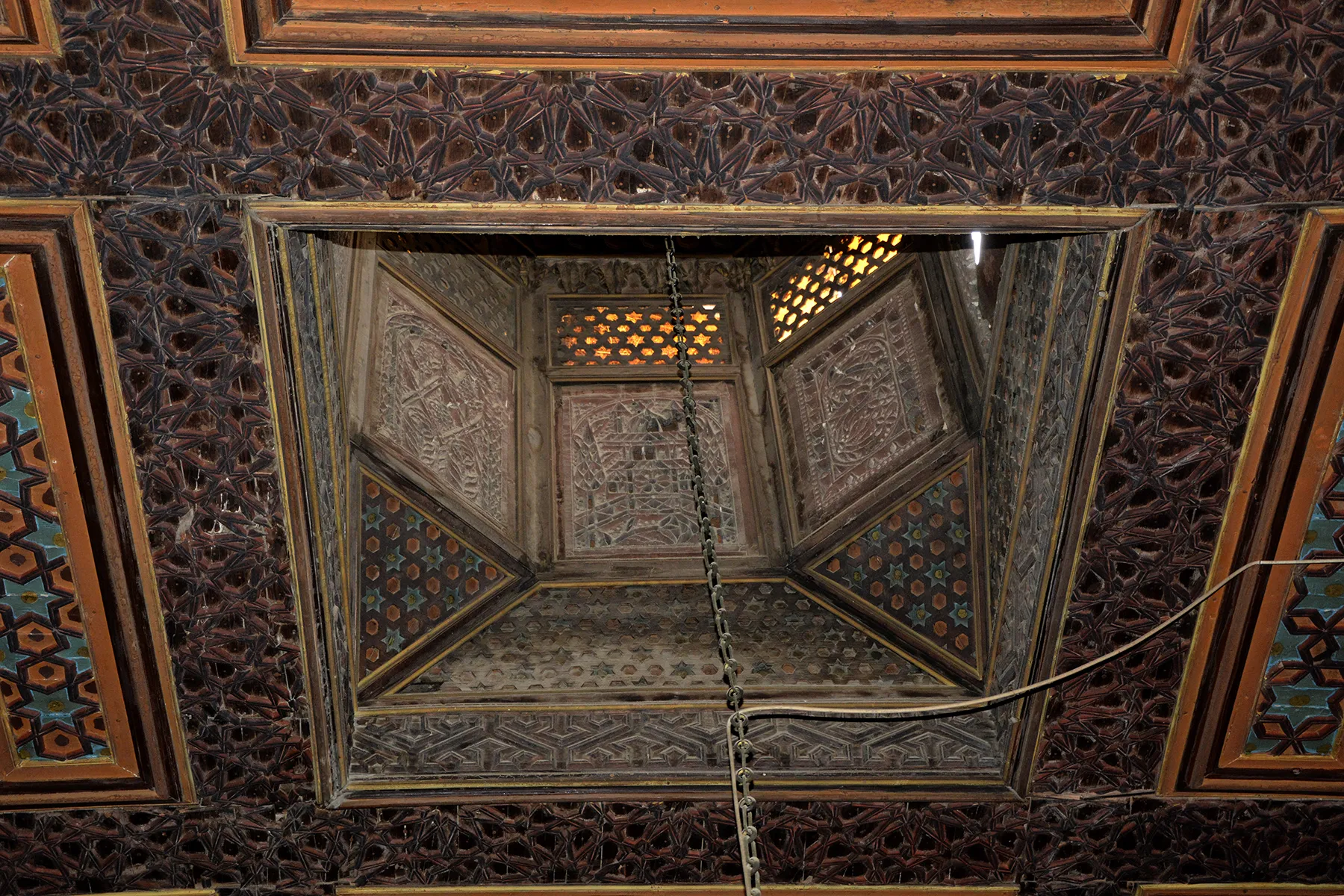
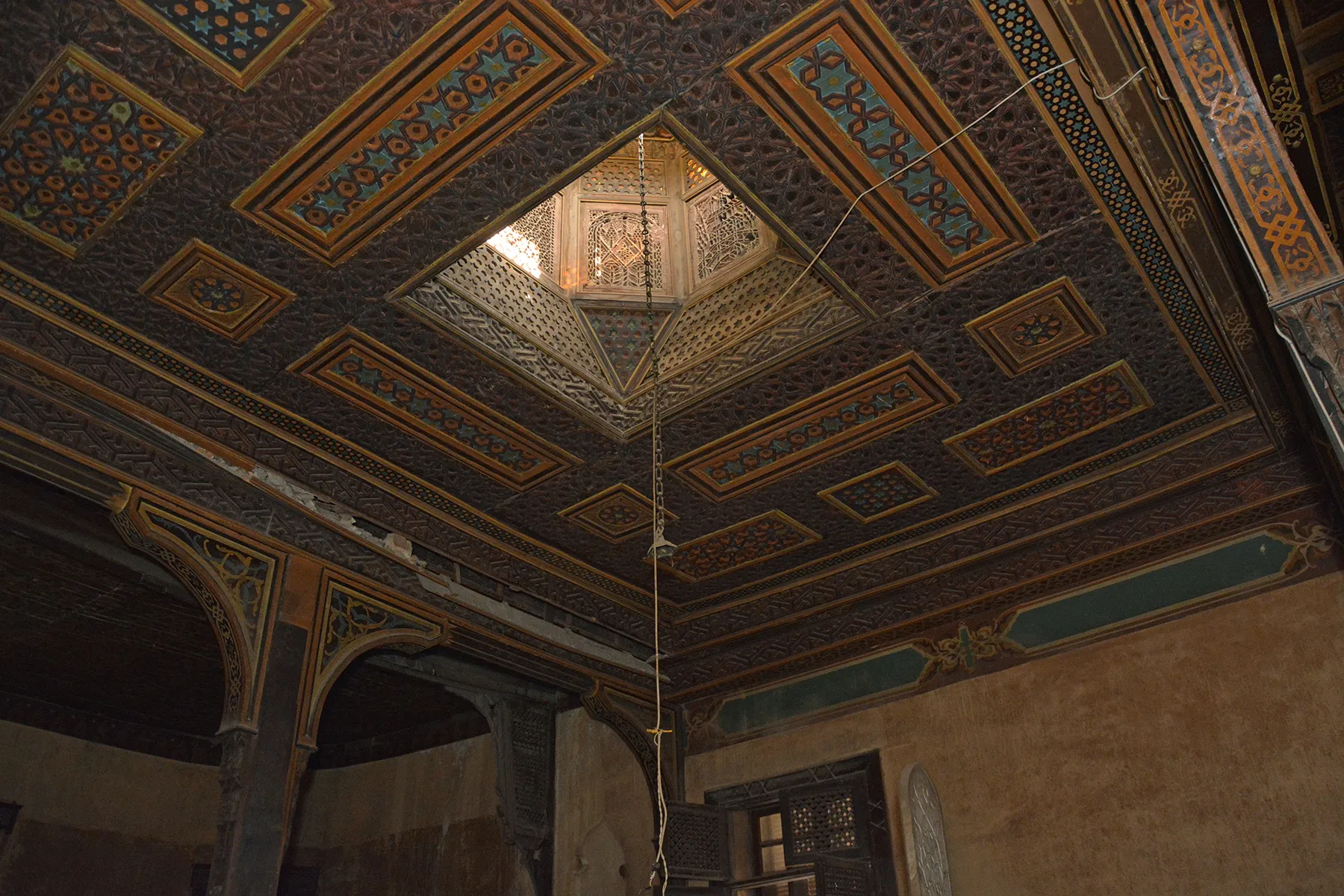
| Painted ceiling(s) | Yes | 1 | wood | Very elaborately decorated, with lantern |
| Decorative paving(s) | No |
Unusual or unique features
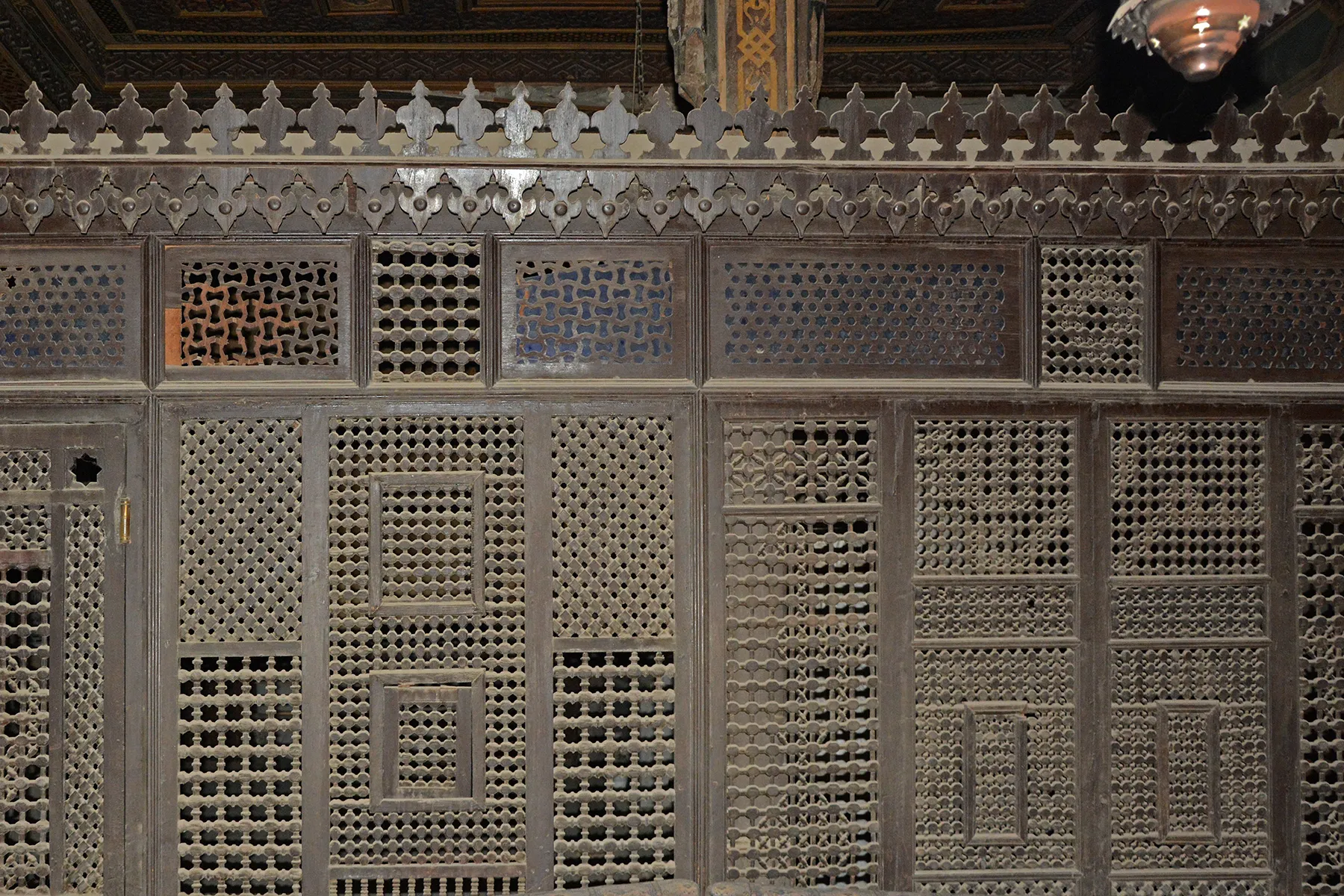
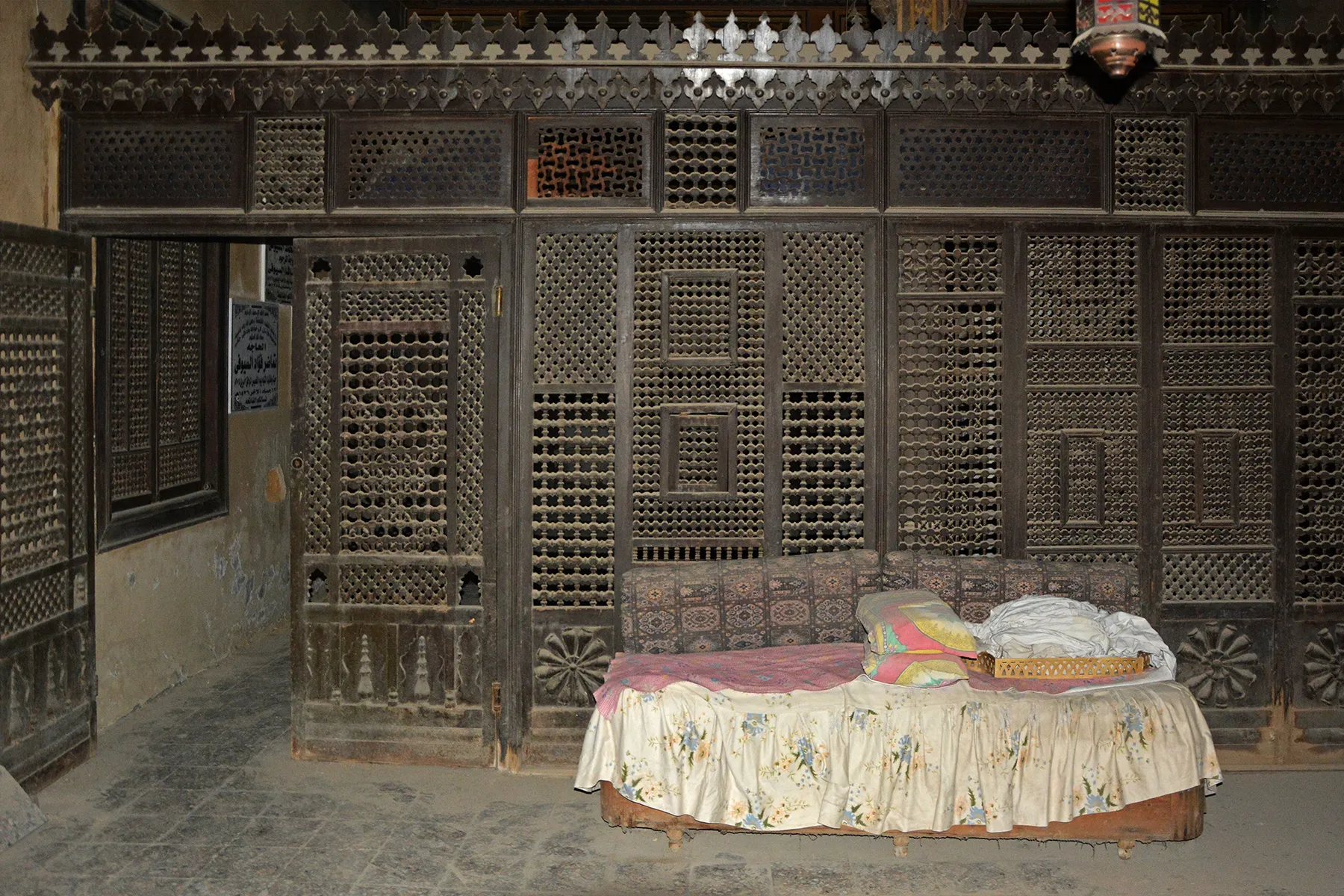
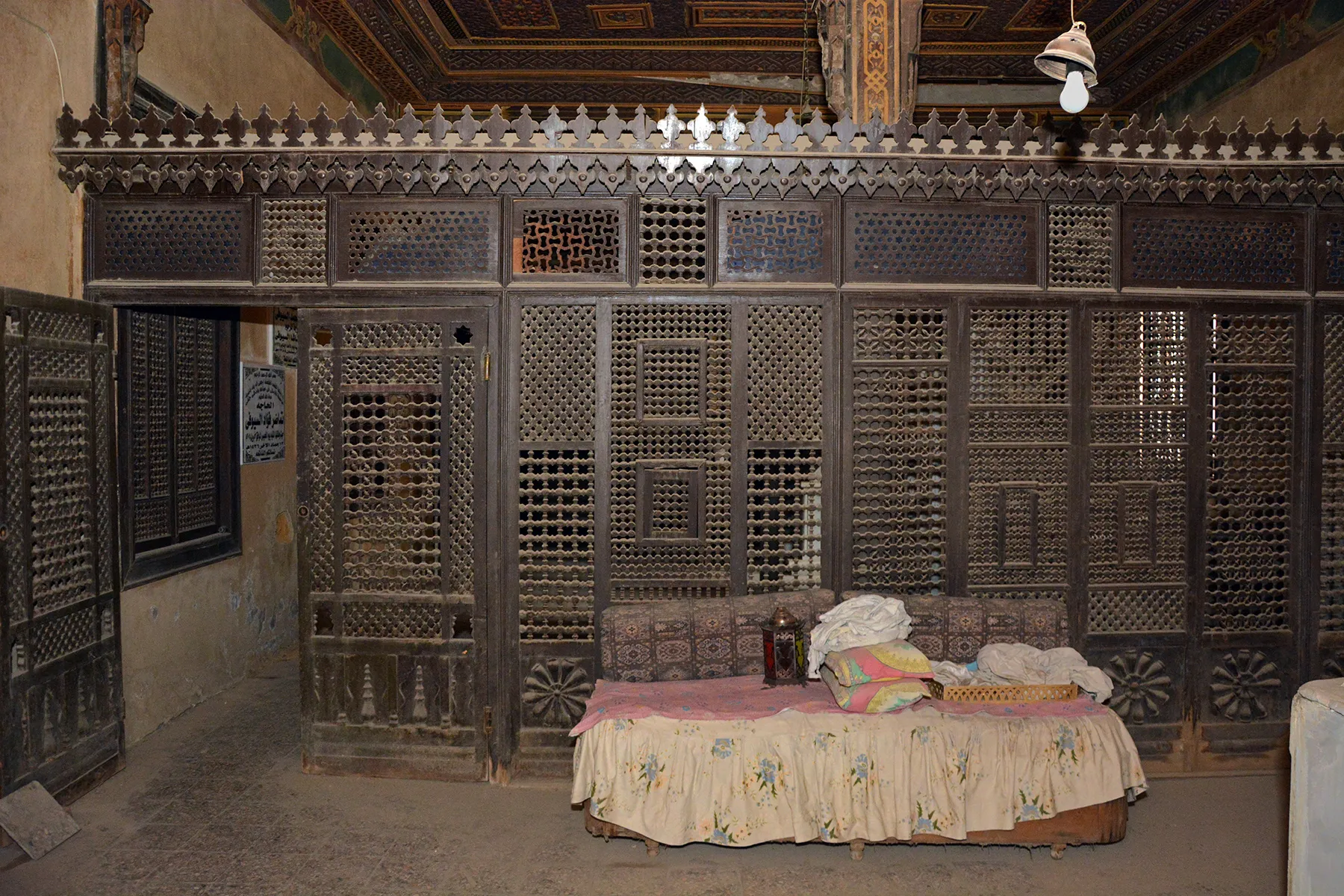
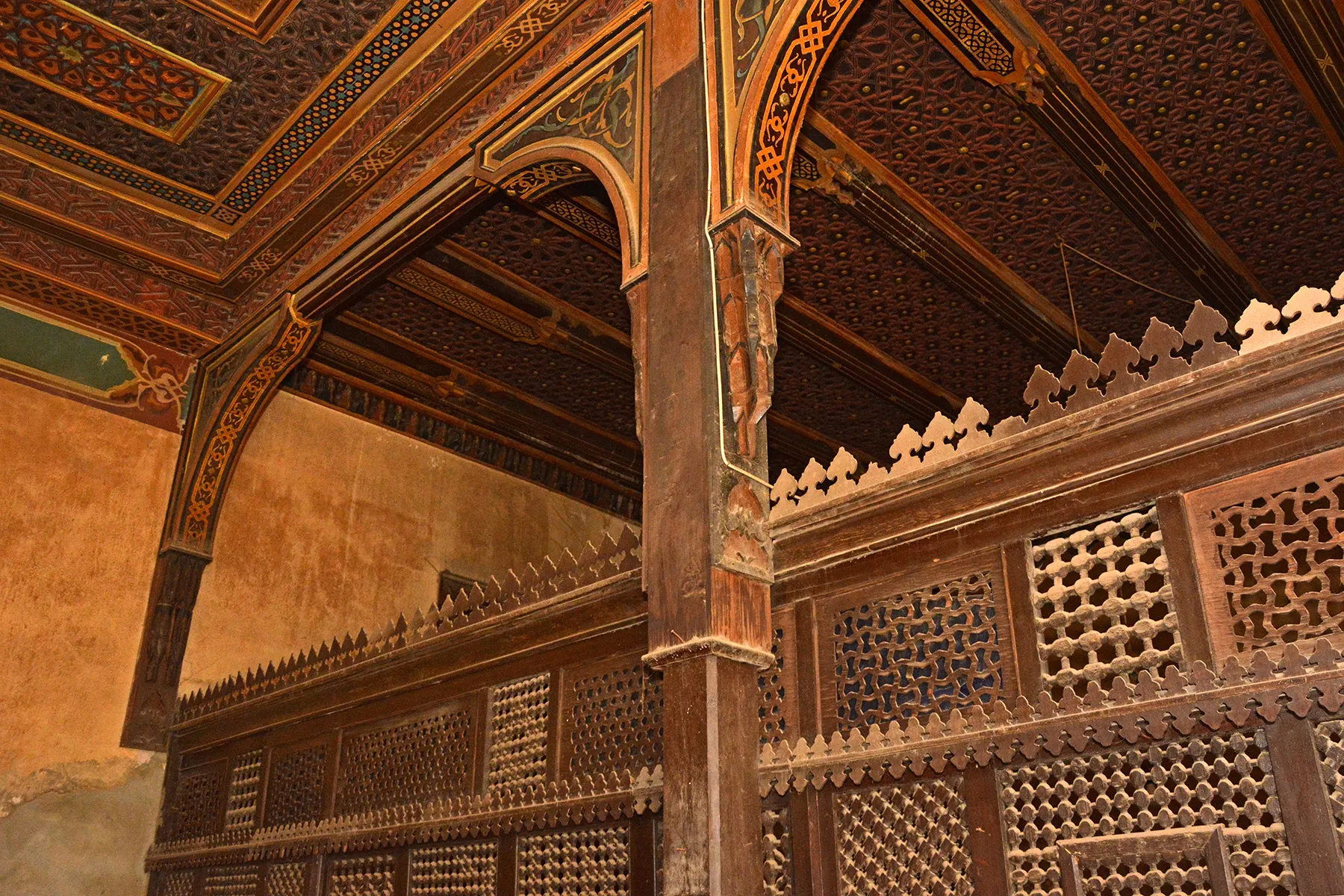
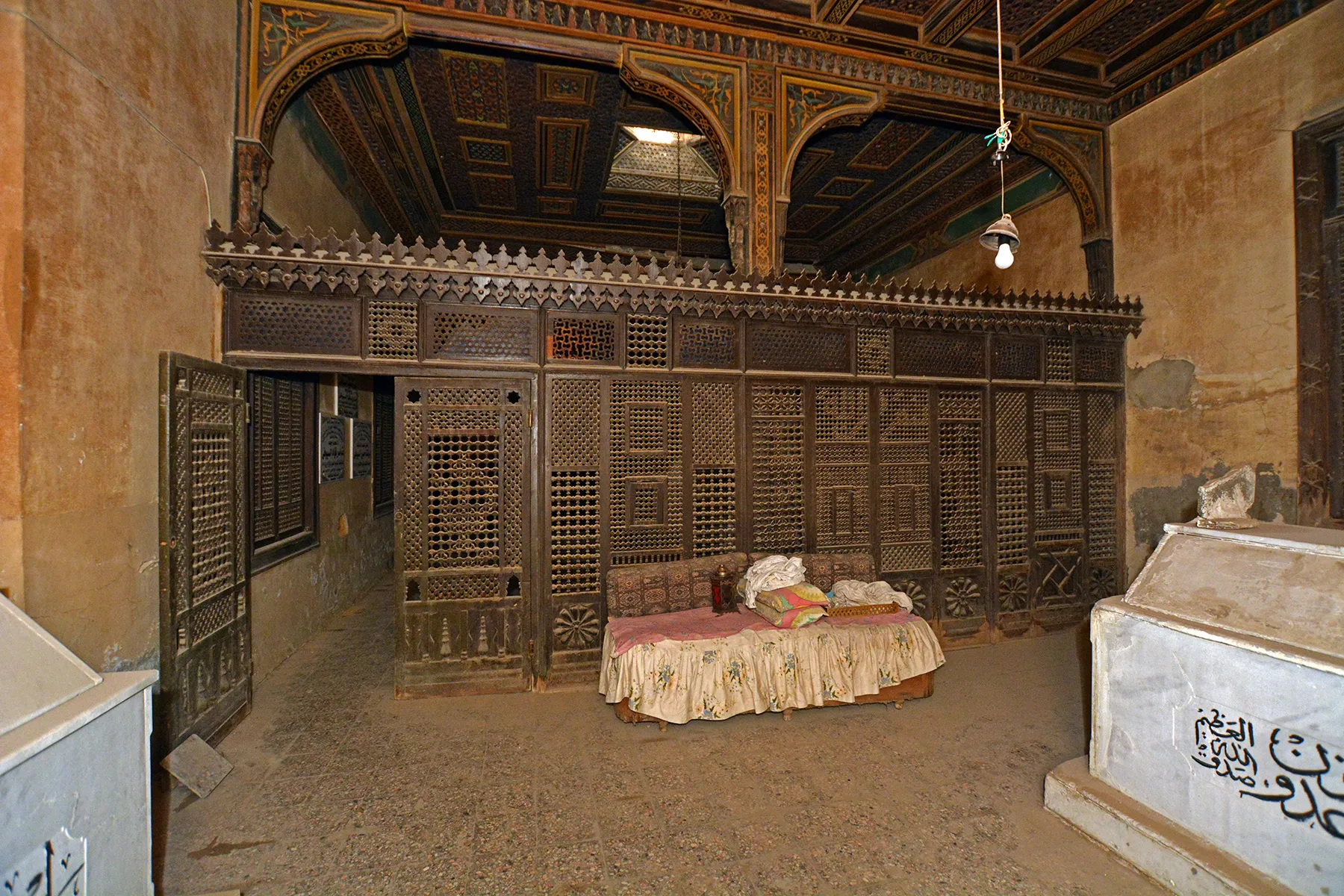
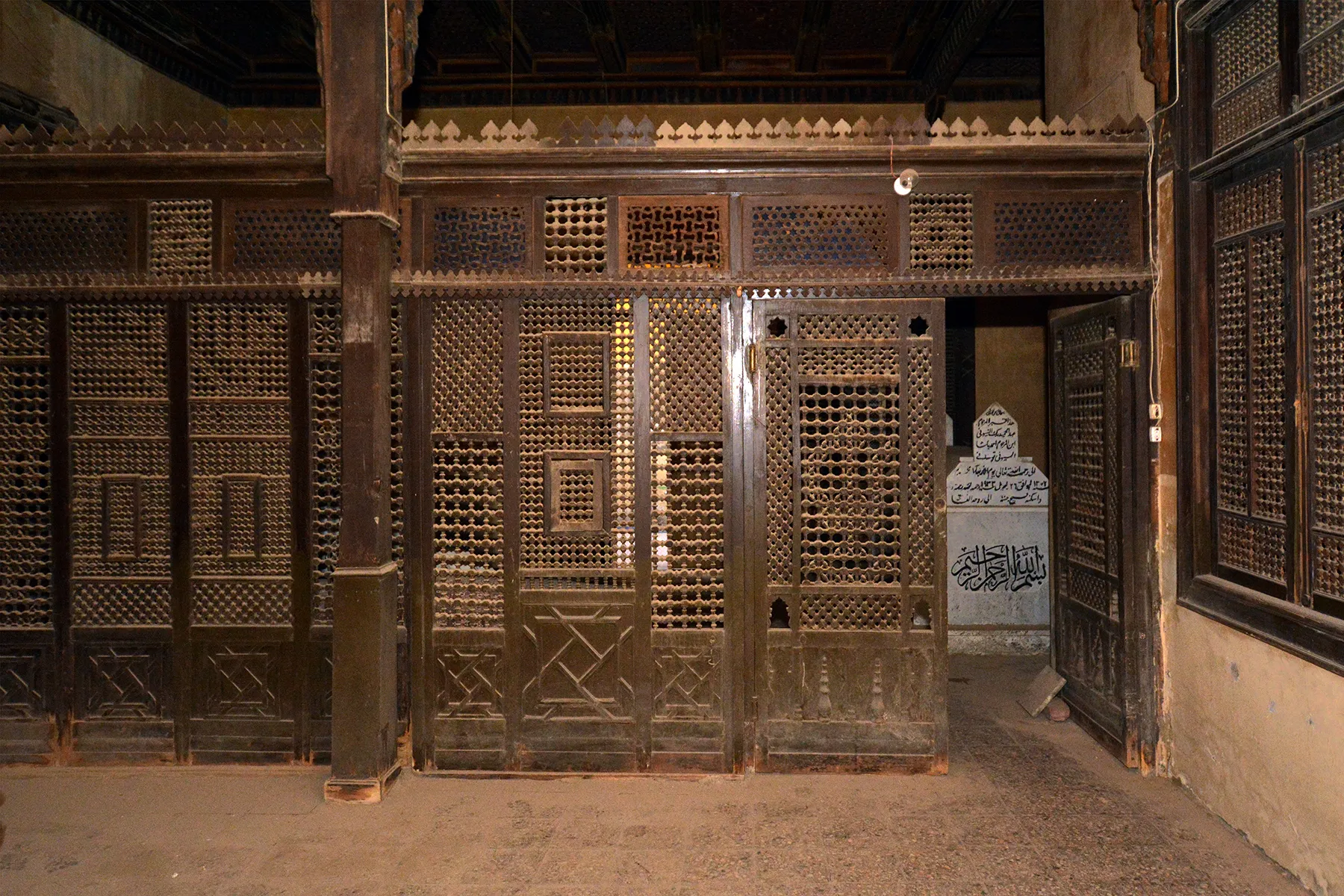
• Very high quality of design and execution of the decorated ceiling over the northern burial chamber and mashrabiya turned-wood screens in the chamber
Description (The direction towards Mecca (Qibla) is described as eastern and other directions are named accordingly)
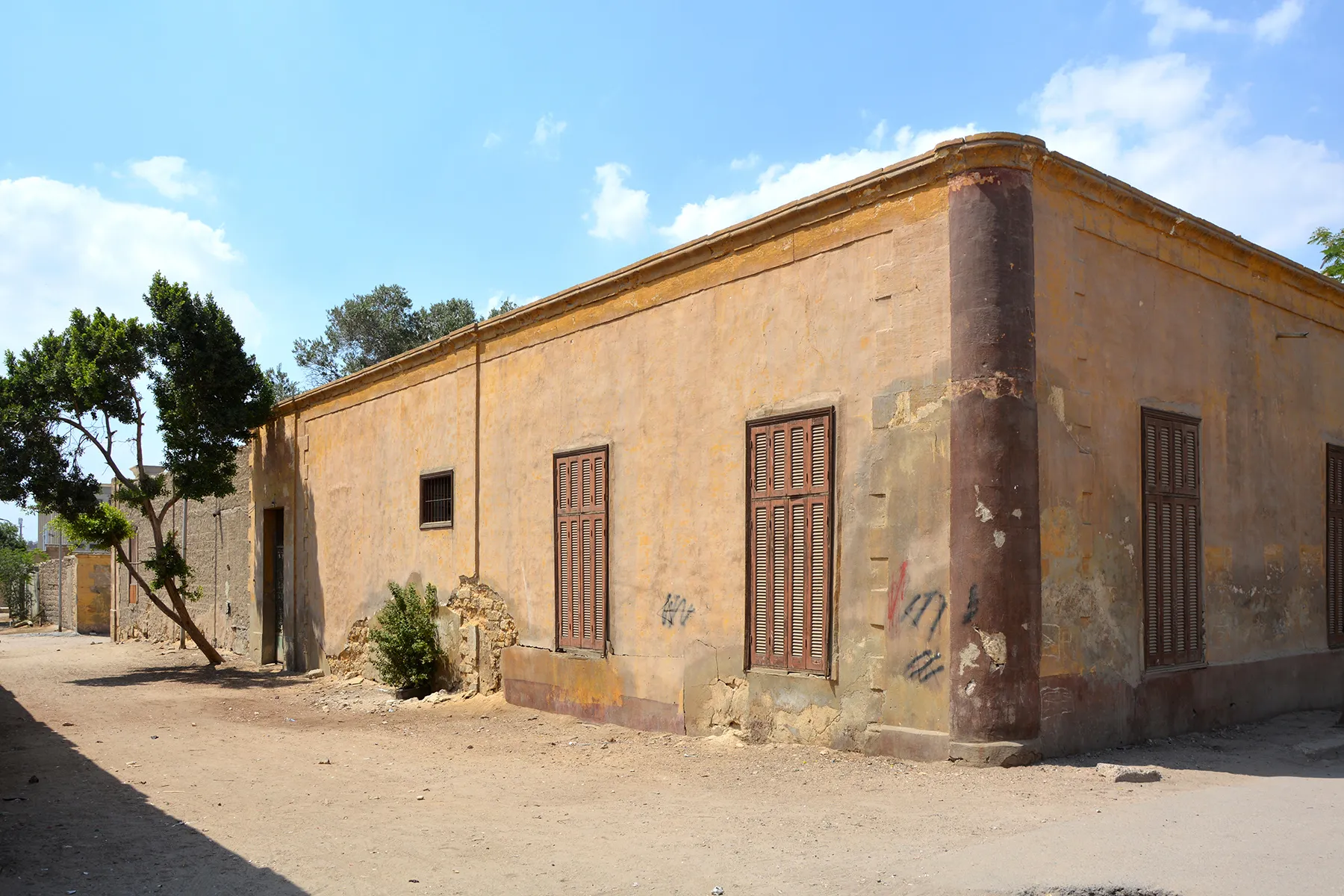
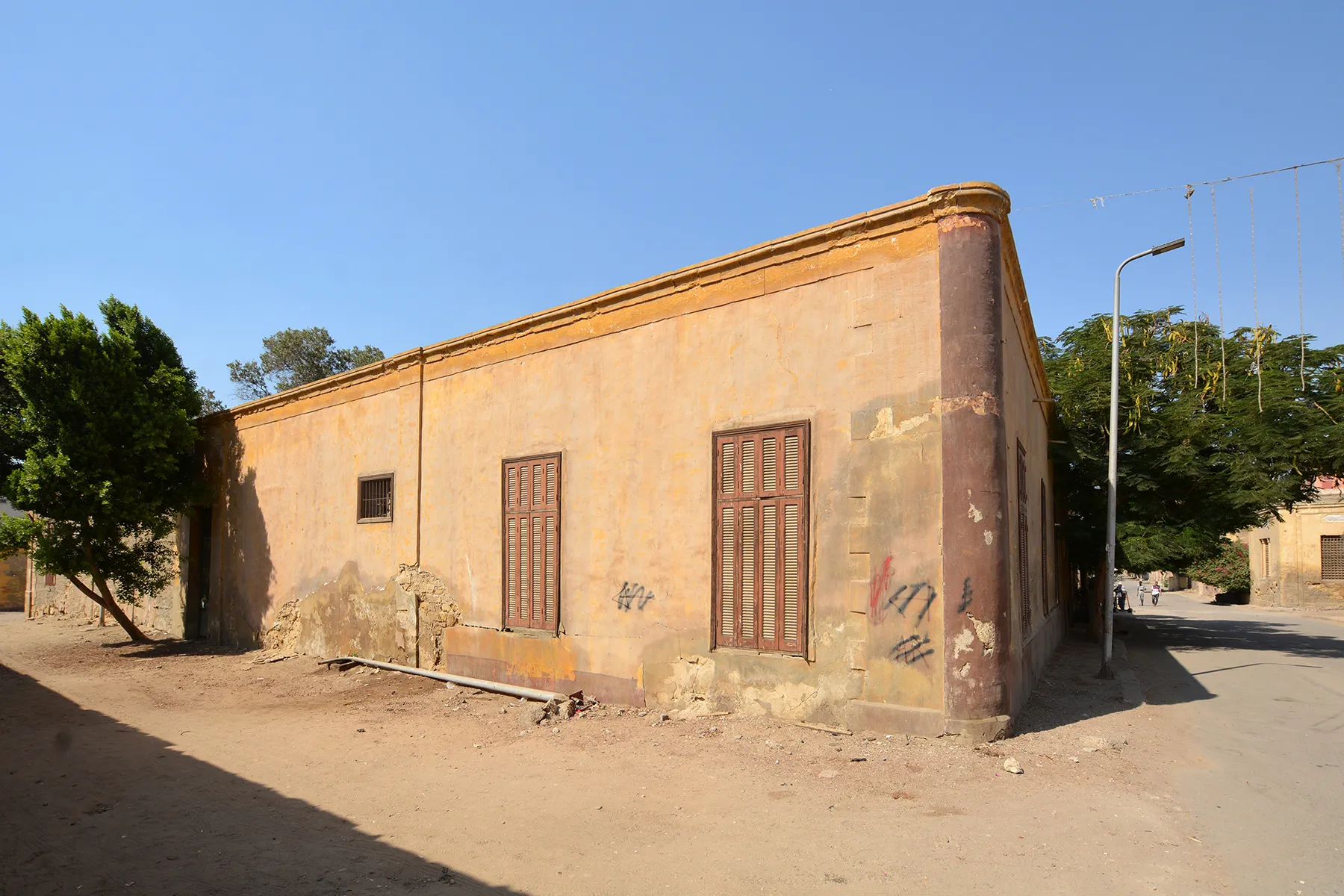
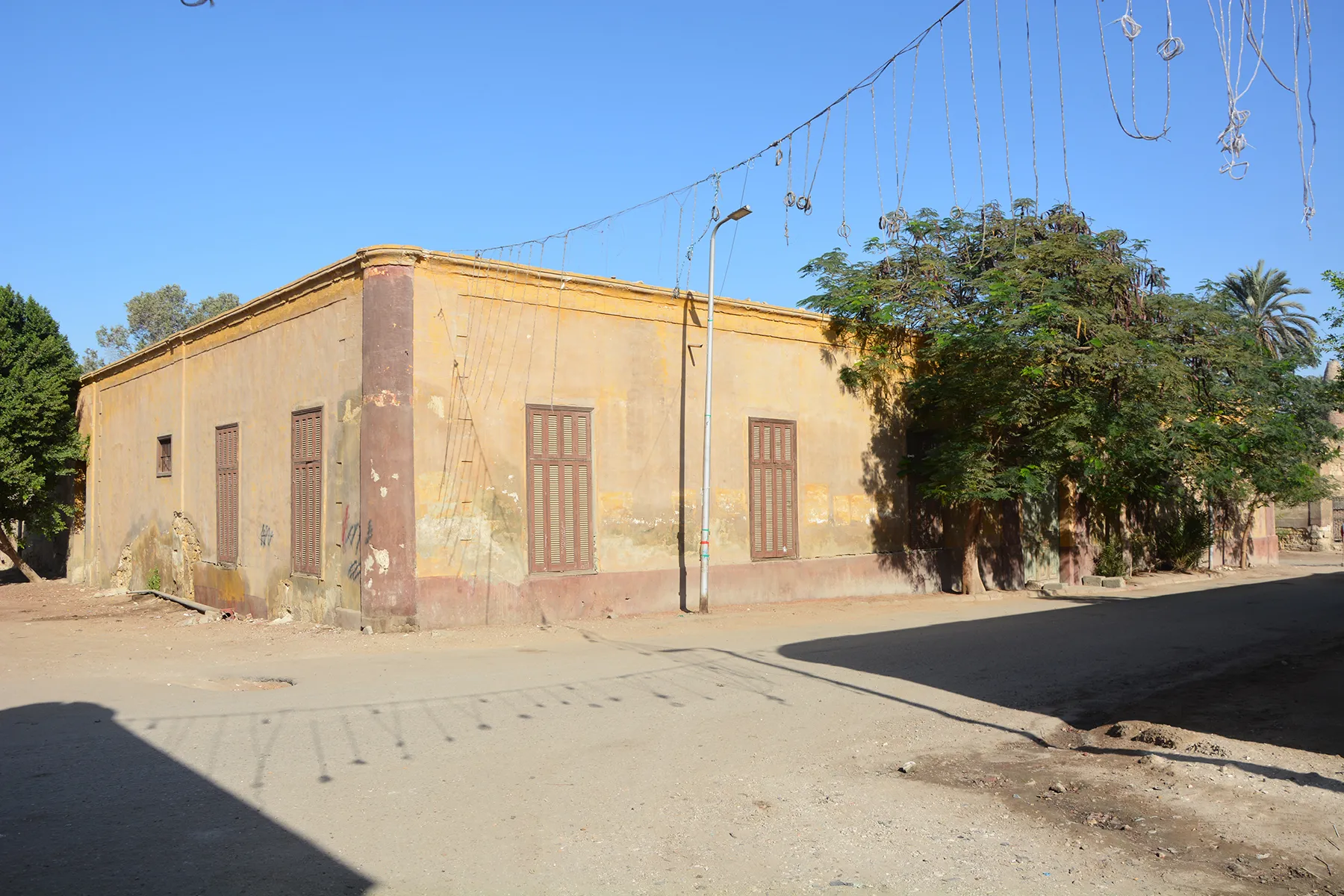
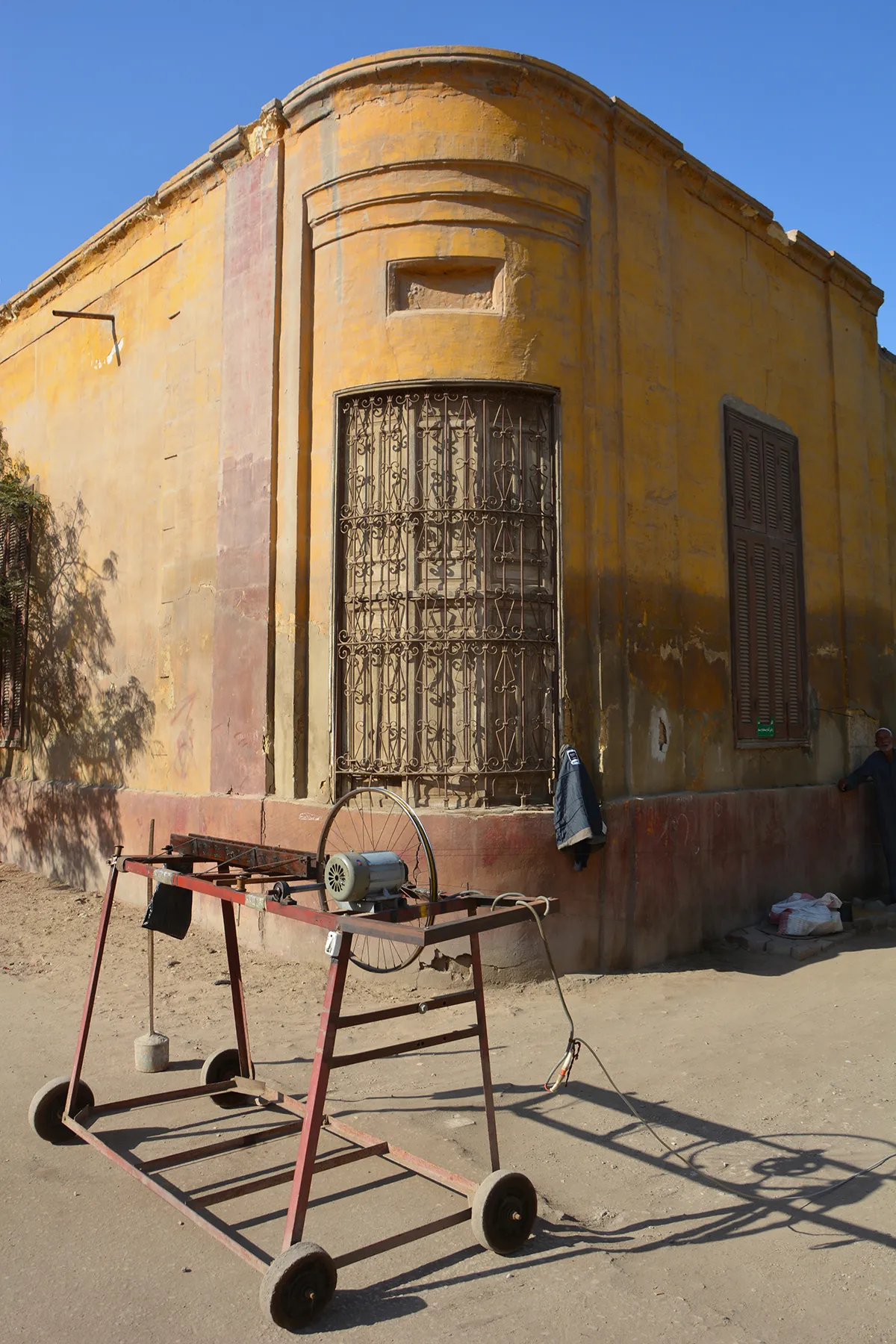
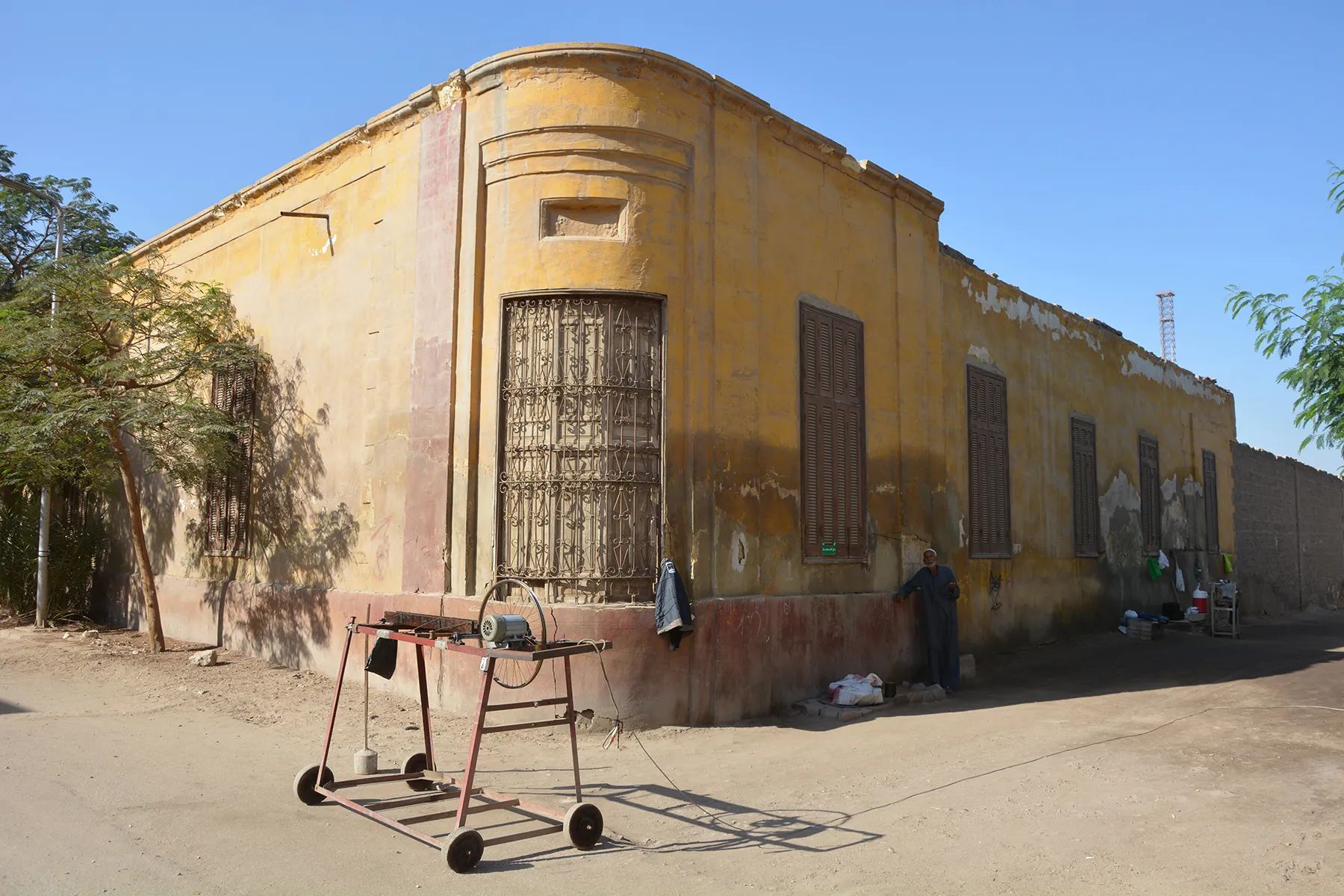
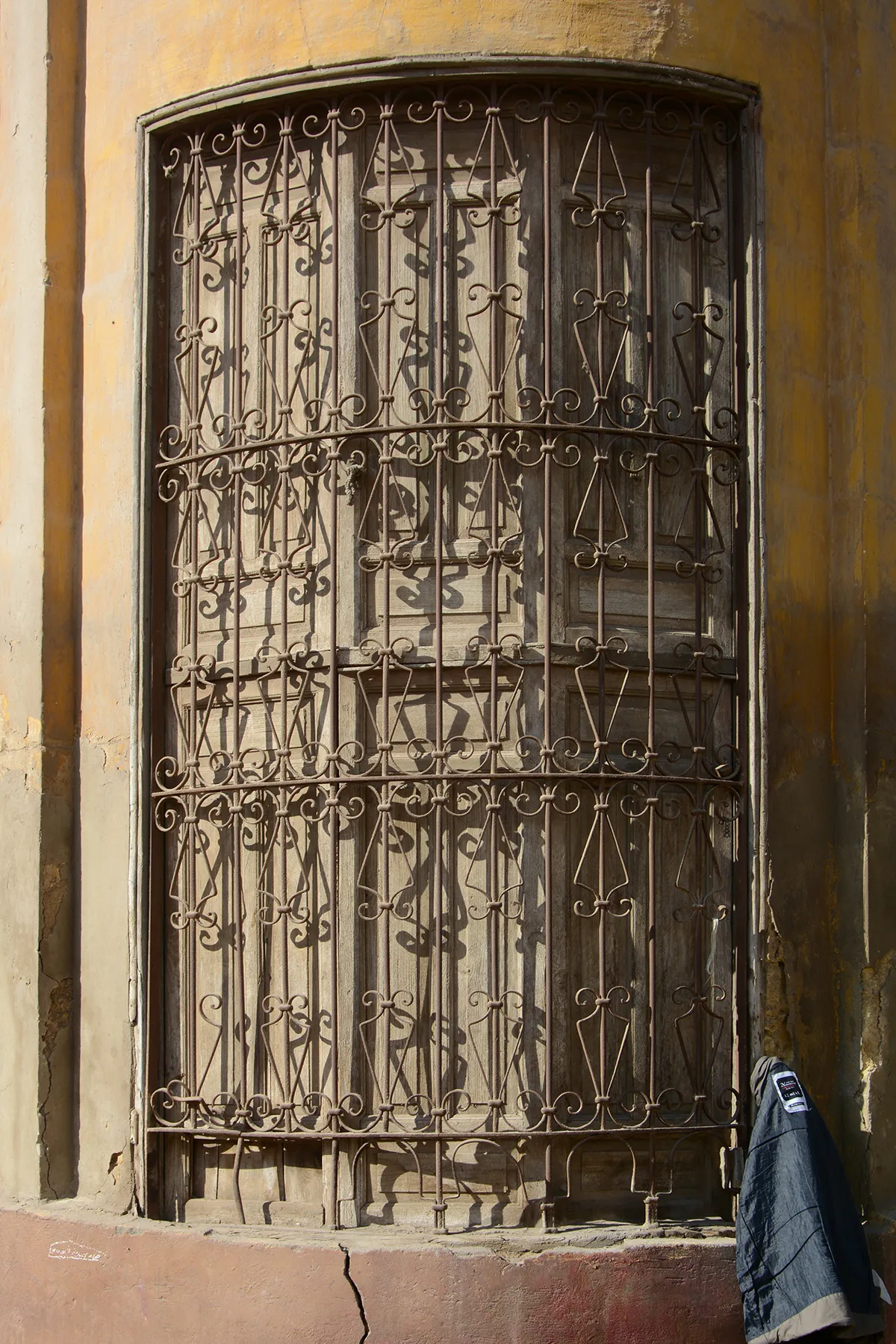
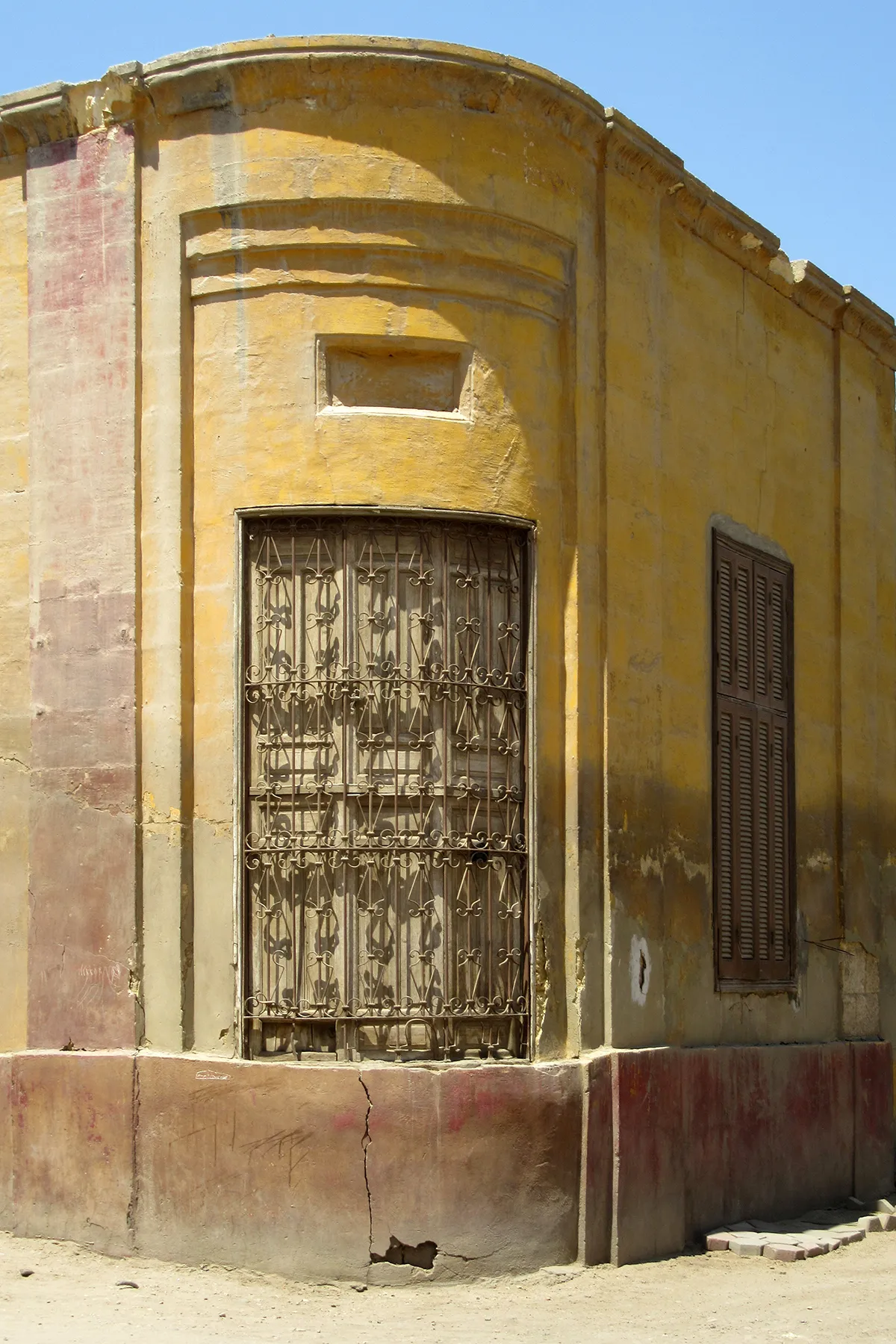
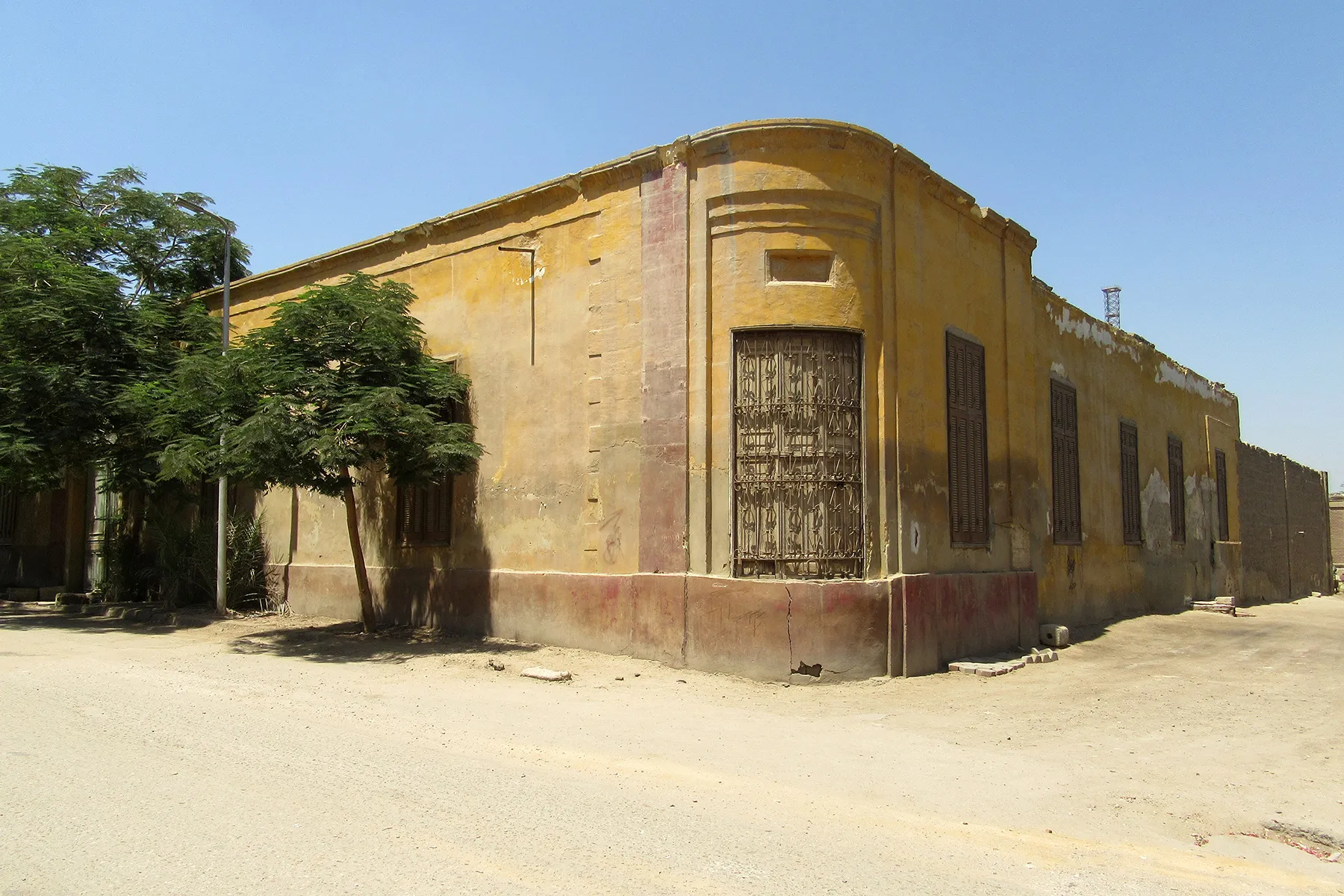
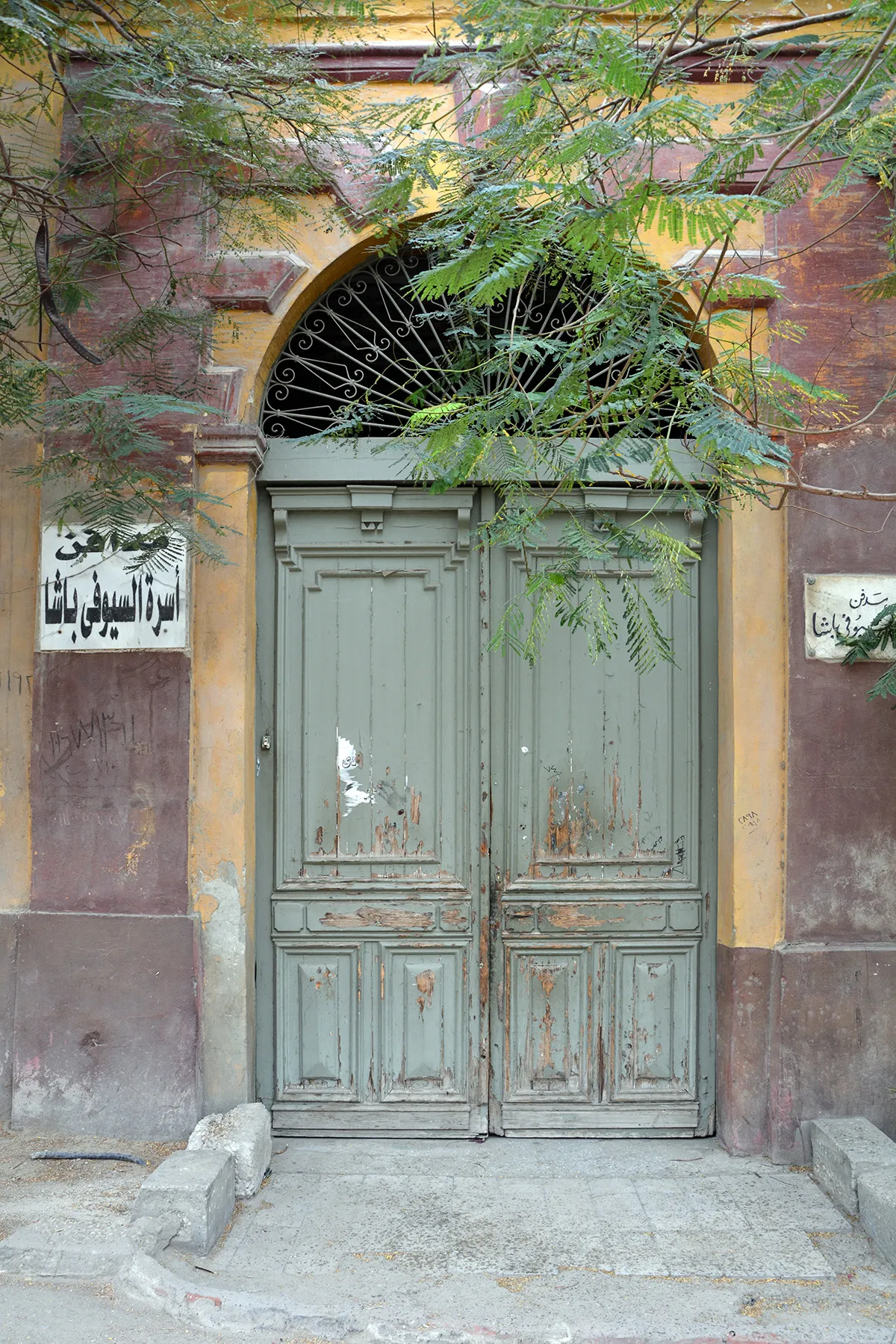
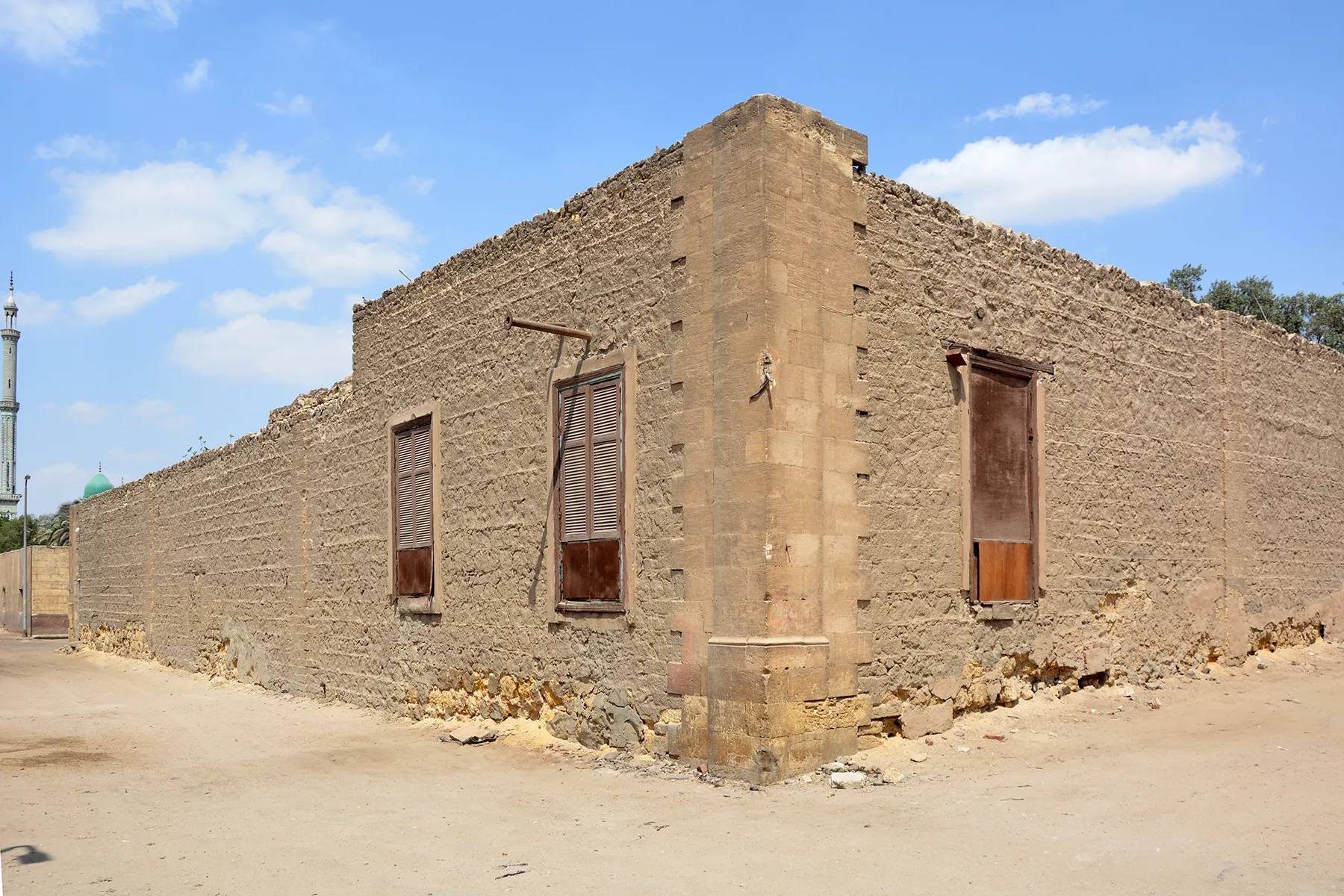
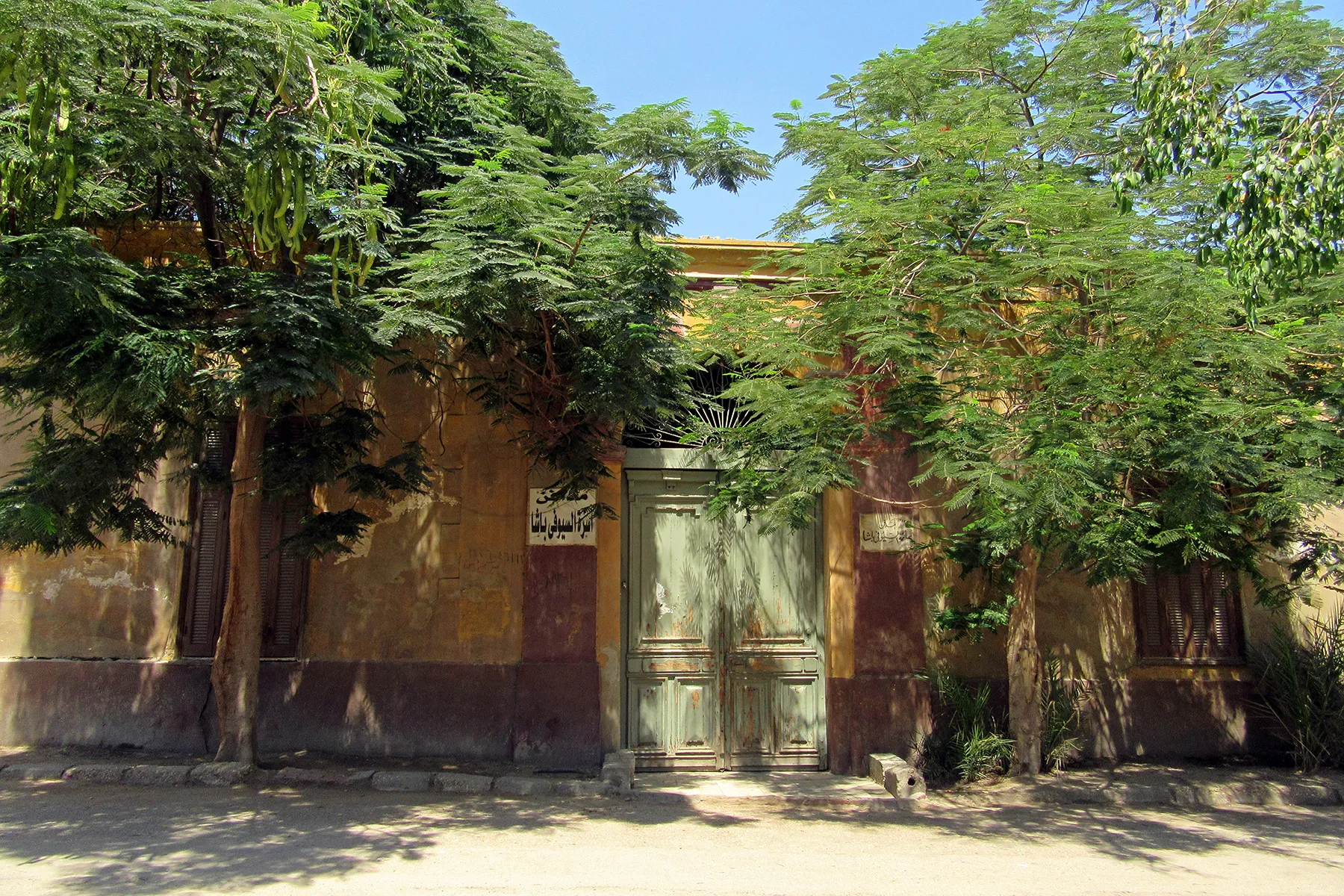
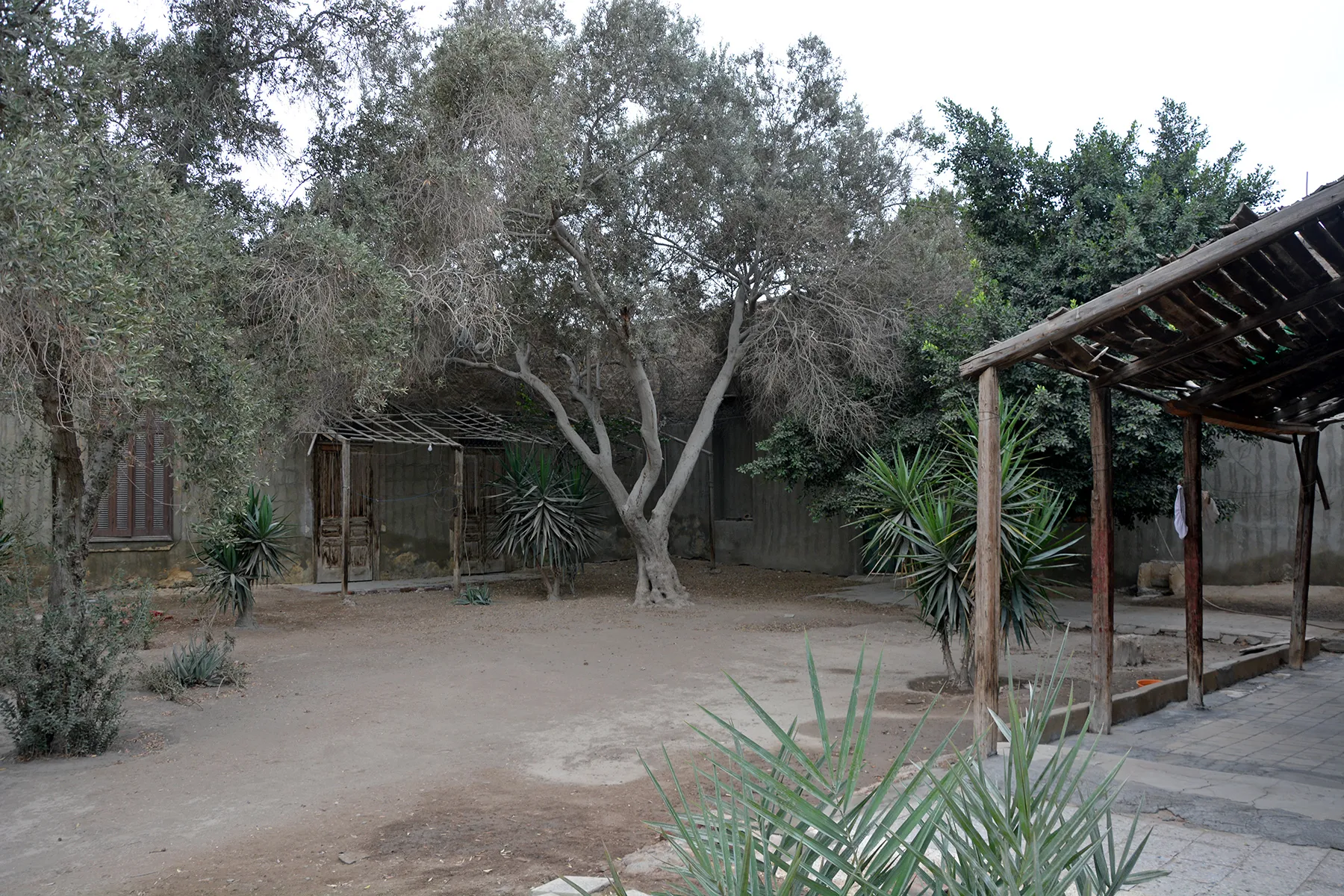
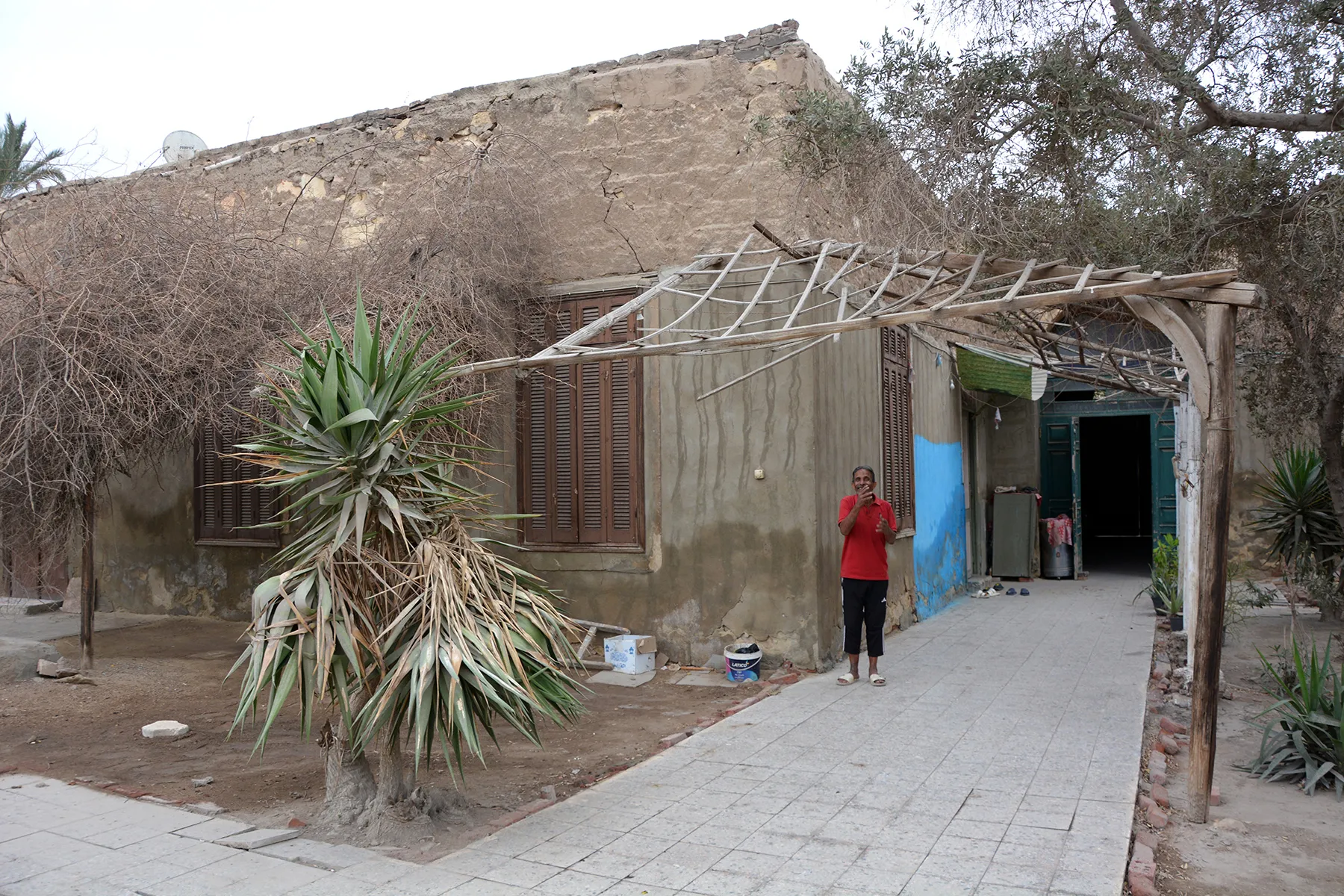
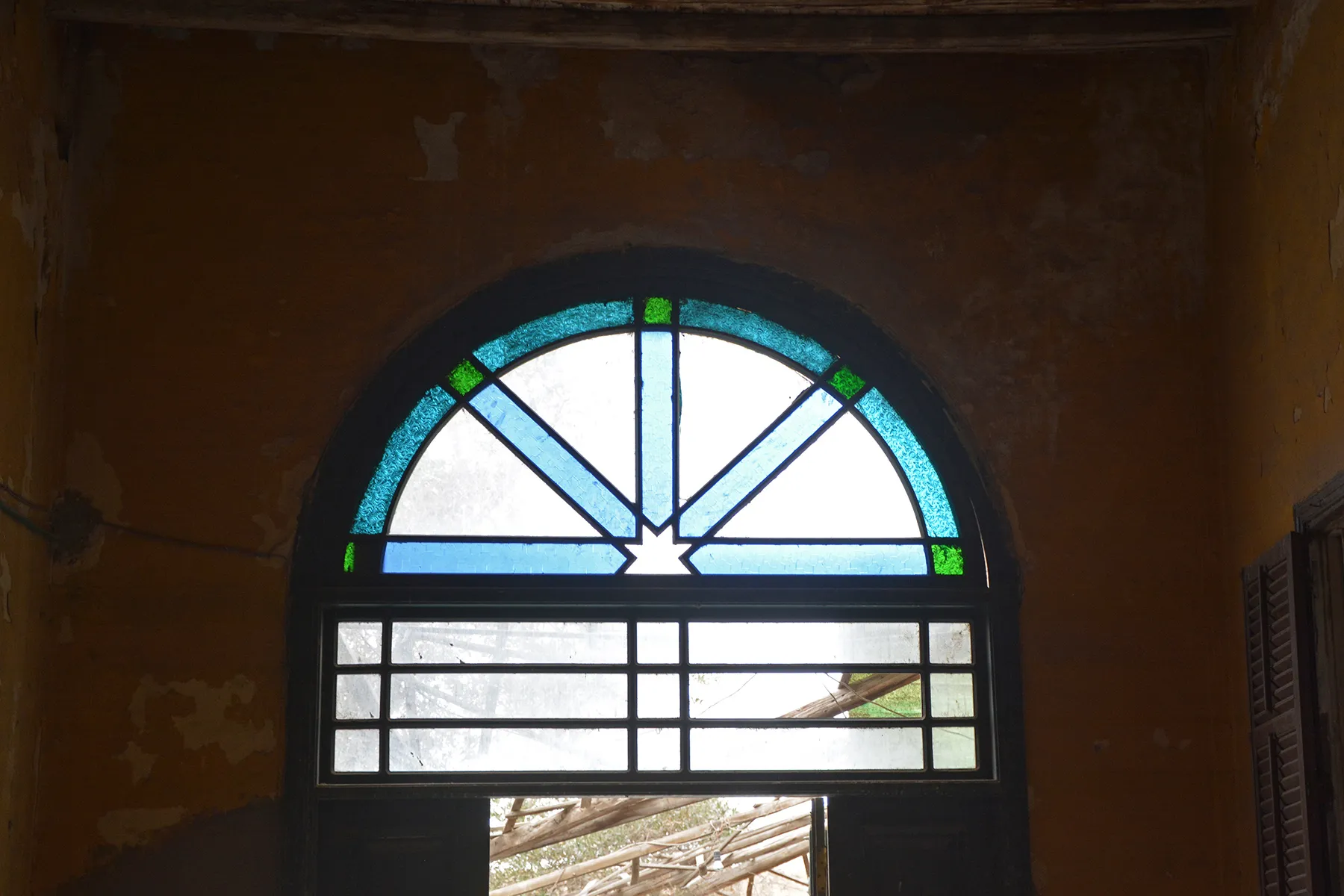
A sizeable rectangular enclosure (measuring ca 35 x 38 metres), with all facades facing surrounding streets, and the main (entrance) façade facing east, i.e., on Sultan Ahmad Street. There is a main single-storey L-shaped building by the main and about half of the northern facades, and a subsidiary single-storey building in the south-western corner of the enclosure. The rest of the lot is an open courtyard planted with trees, with simple wooden verandas (now much dilapidated) by the southern and western facades of the main building and the eastern façade of the subsidiary building. External and courtyard façades of the complex are all in a highly simplified, Classically-inspired style, without any neo-Mamluk or otherwise Islamic elements. In the axially arranged entrance façade, a centrally placed entrance gate is topped with a boldly rusticated semi-circular arch, with decoratively panelled wooden door and a simple decorative wrought iron grille in the arch above. There are two huge plain rectangular windows to the left (north) right (south) sides of the gate, all fitted with simple, plain louvre shutters and simple decorative wrought iron grilles. The north-eastern corner is rounded, with a huge, plain rectangular sabil window with simple panelled shutters and a simple decorative wrought iron grille. There is a simple rectangular recess over the sabil window, evidently intended for an inscription panel, but now empty. A secondary gate in the southern façade leads directly to the courtyard. The corners of the enclosure, framings of the gates, and the cornice are bult of ashlar stone, the rest of the walls are constructed of rough stone, those of the western part of the enclosure left unplastered. The front façade and eastern parts of the north and south facades are topper with simple classical cornice.
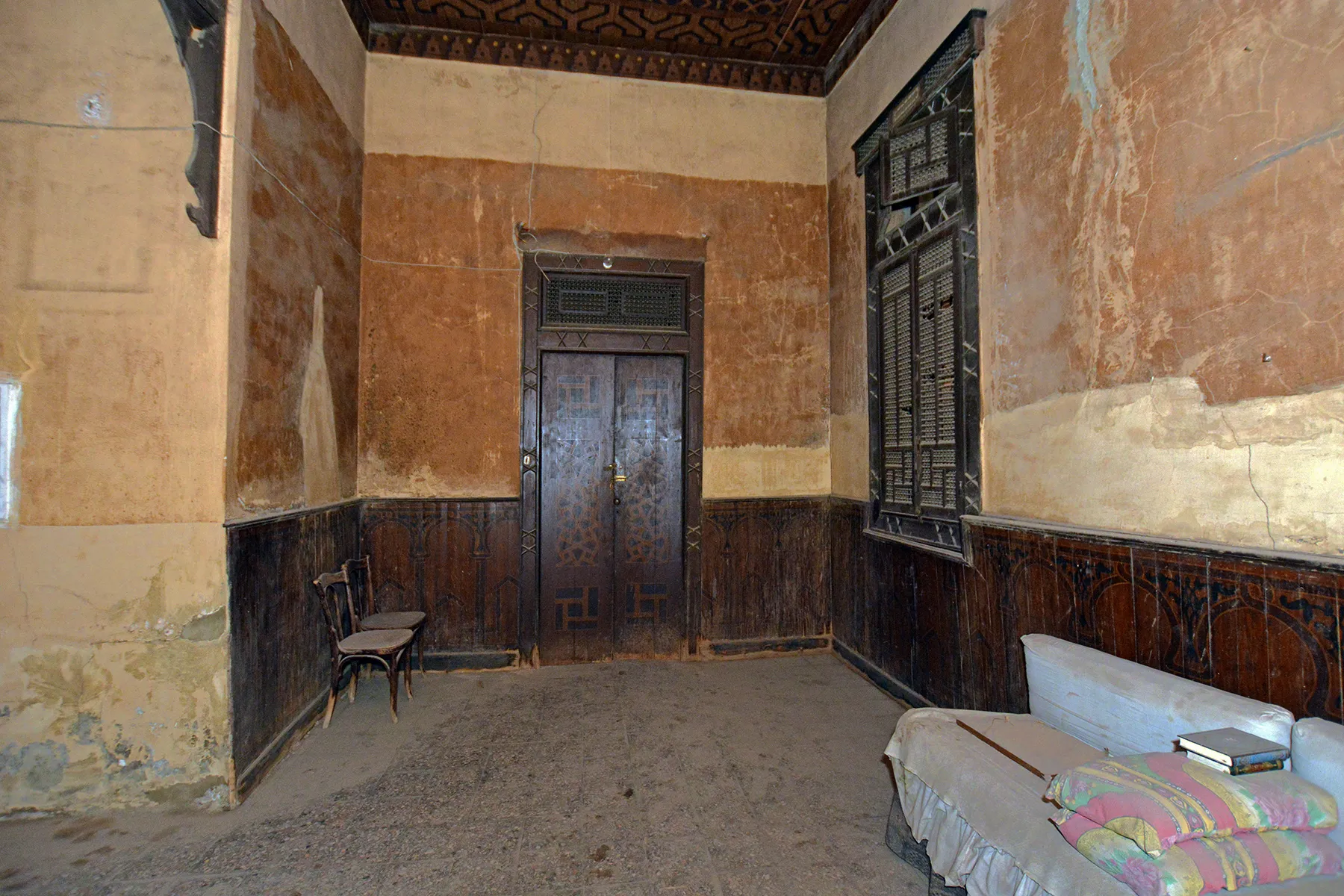
The entrance door leads to a huge hallway leading to the courtyard, with doors leading to two burial chambers on either side, in the two wings of the building that also include residential and service rooms.
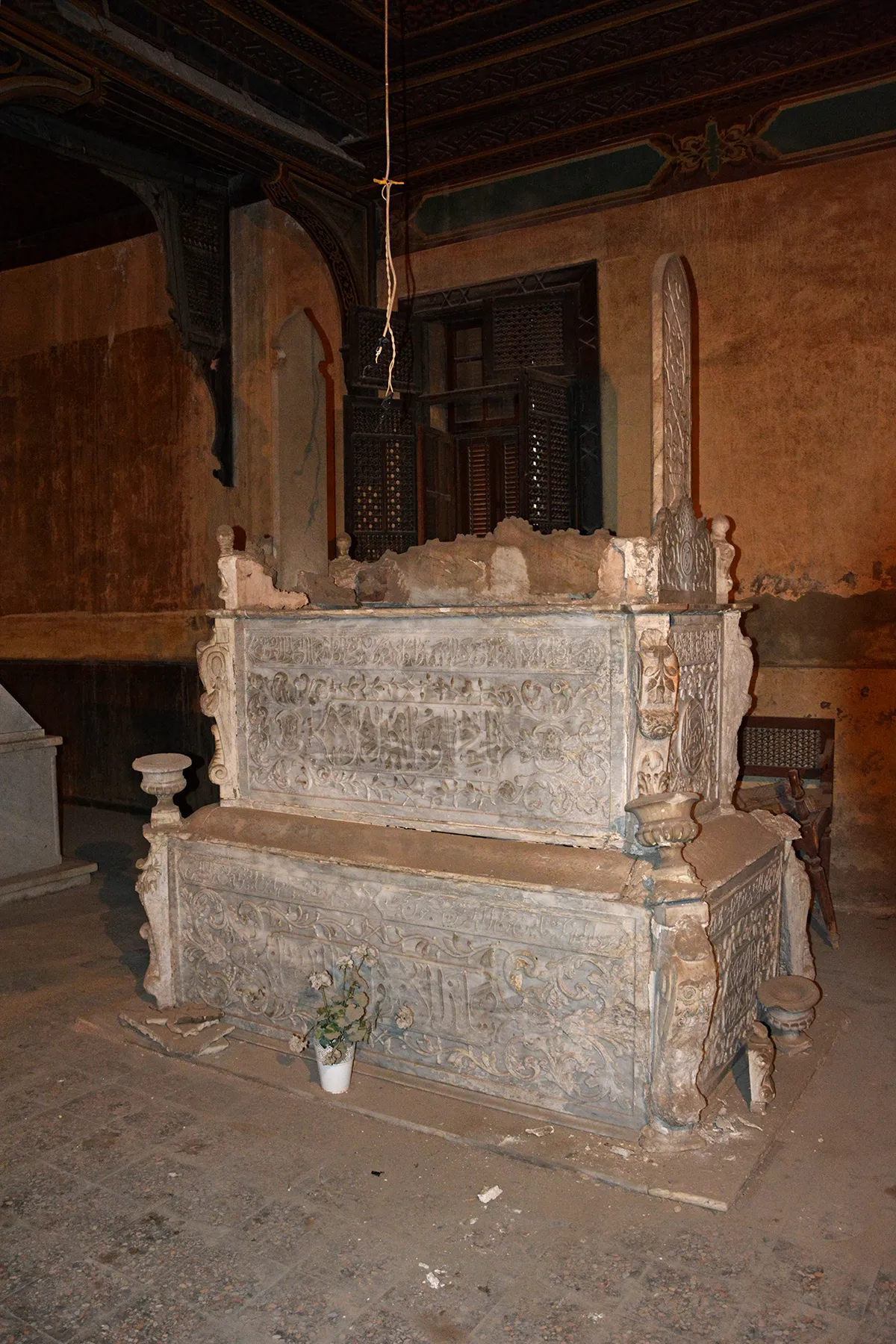
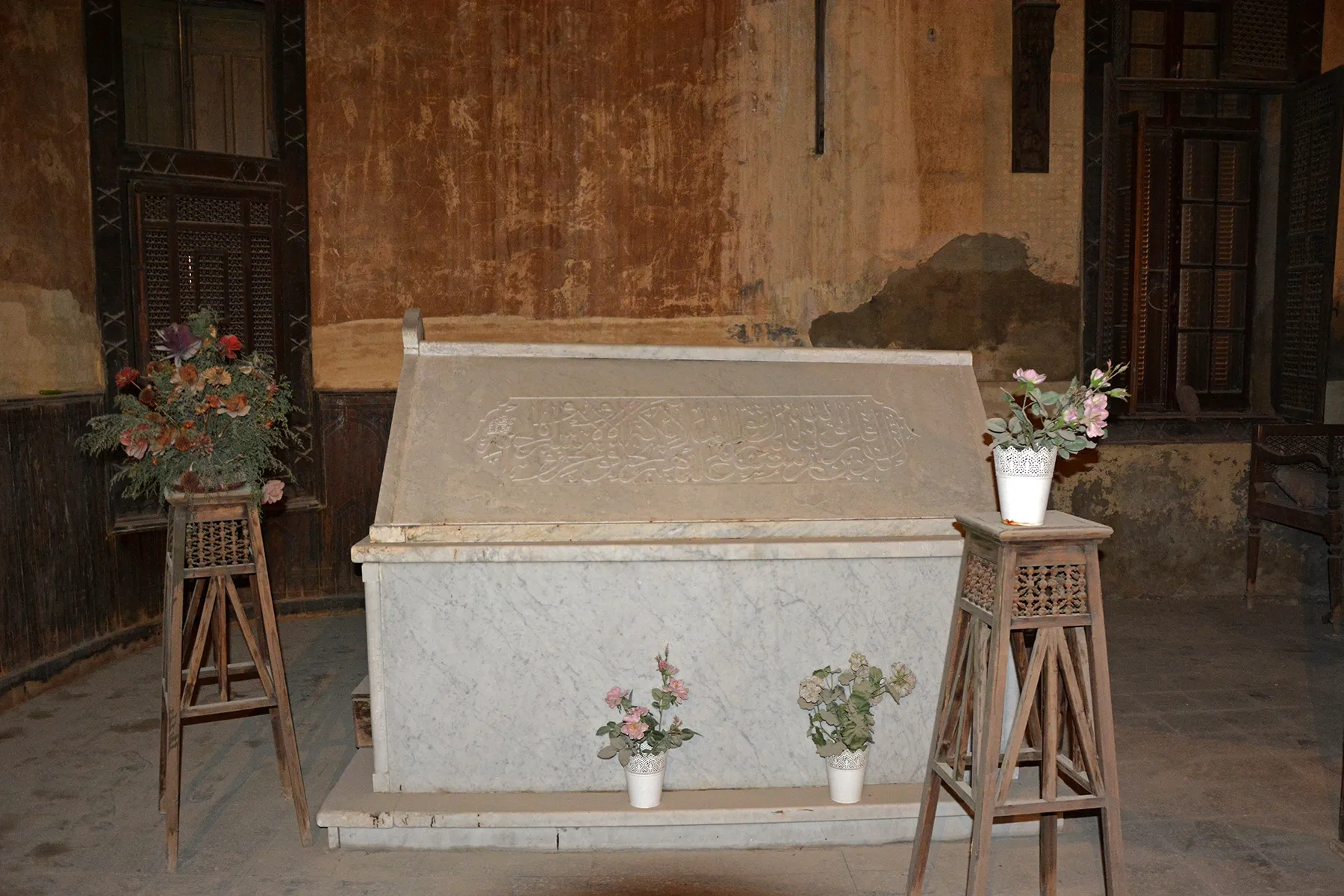
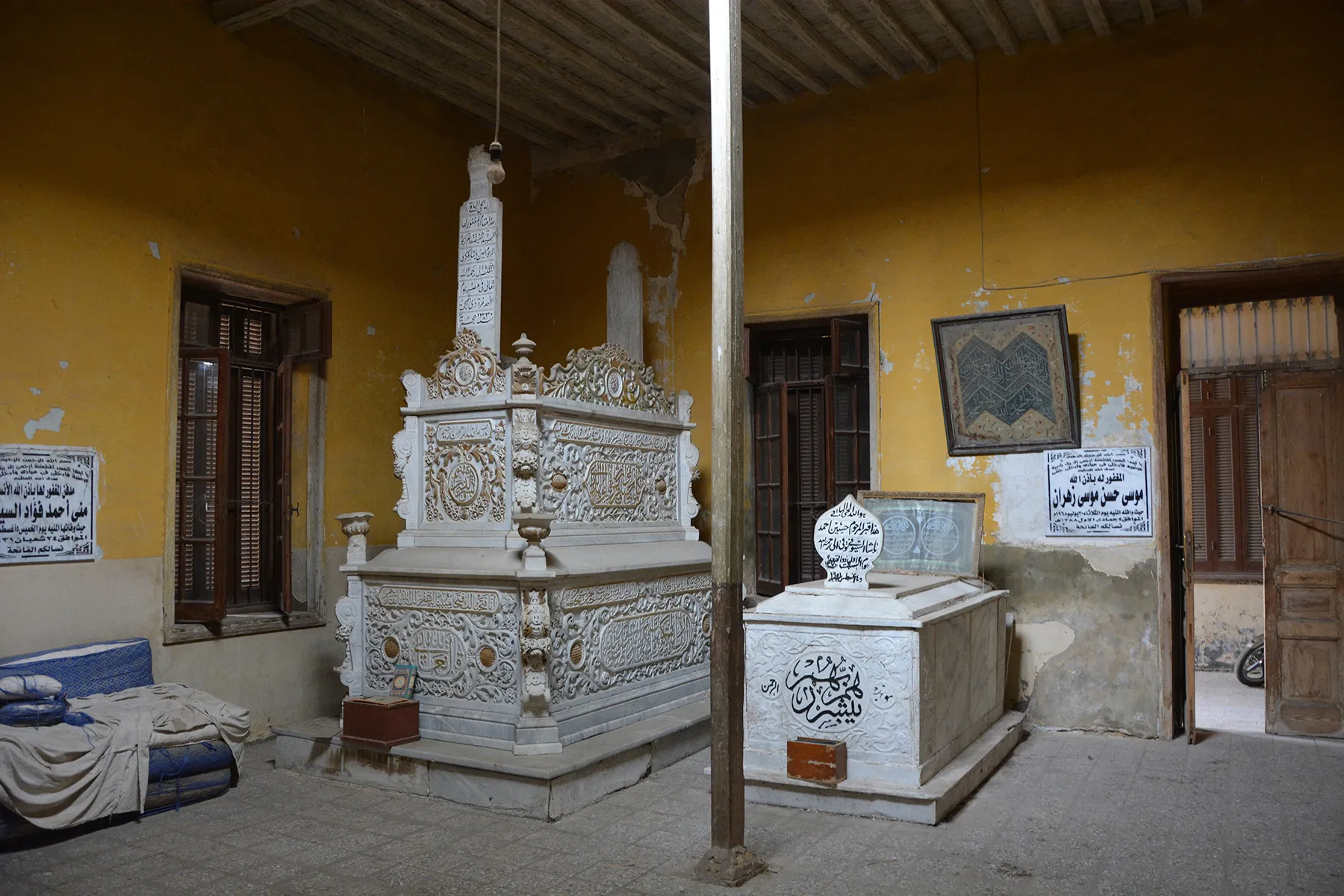
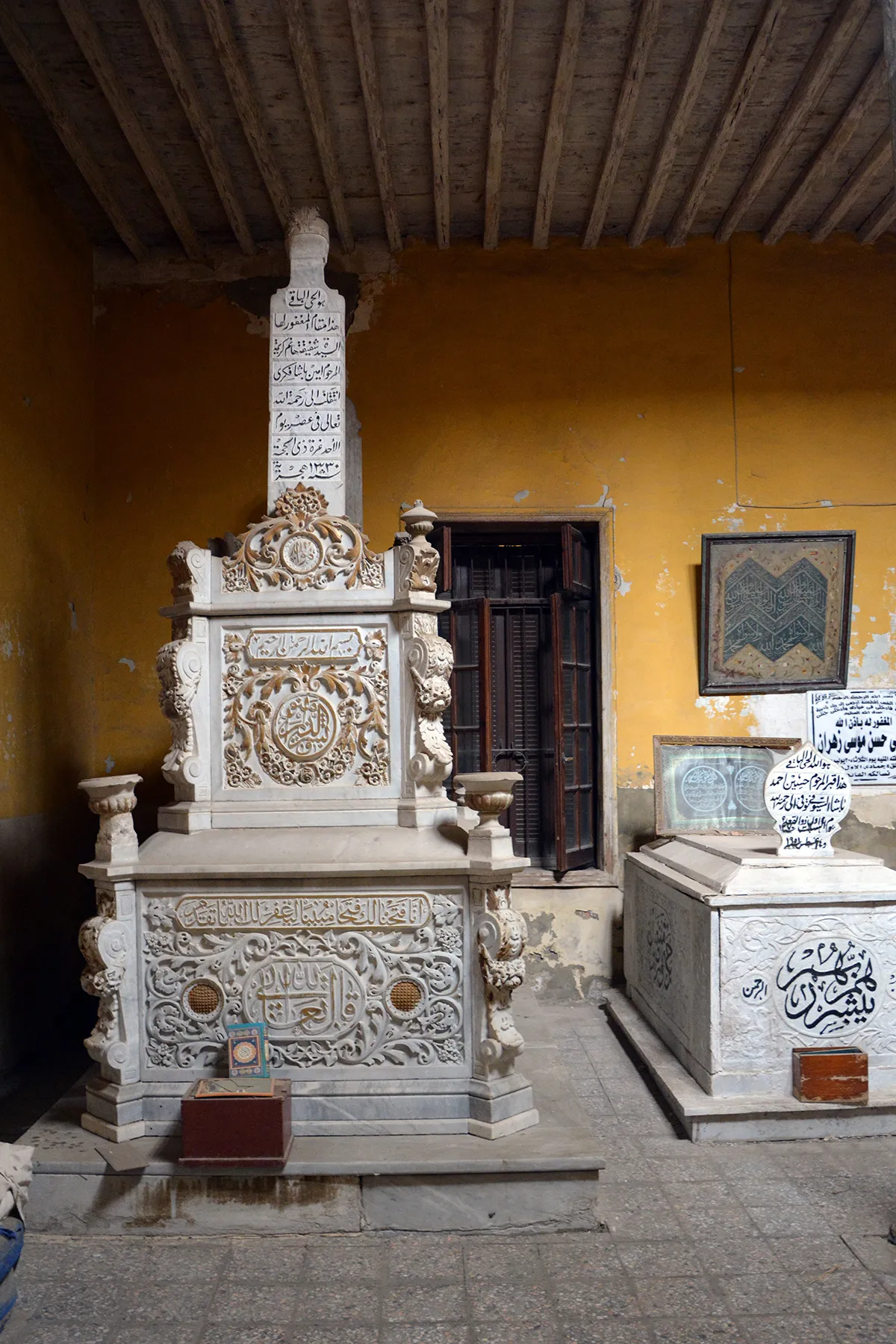
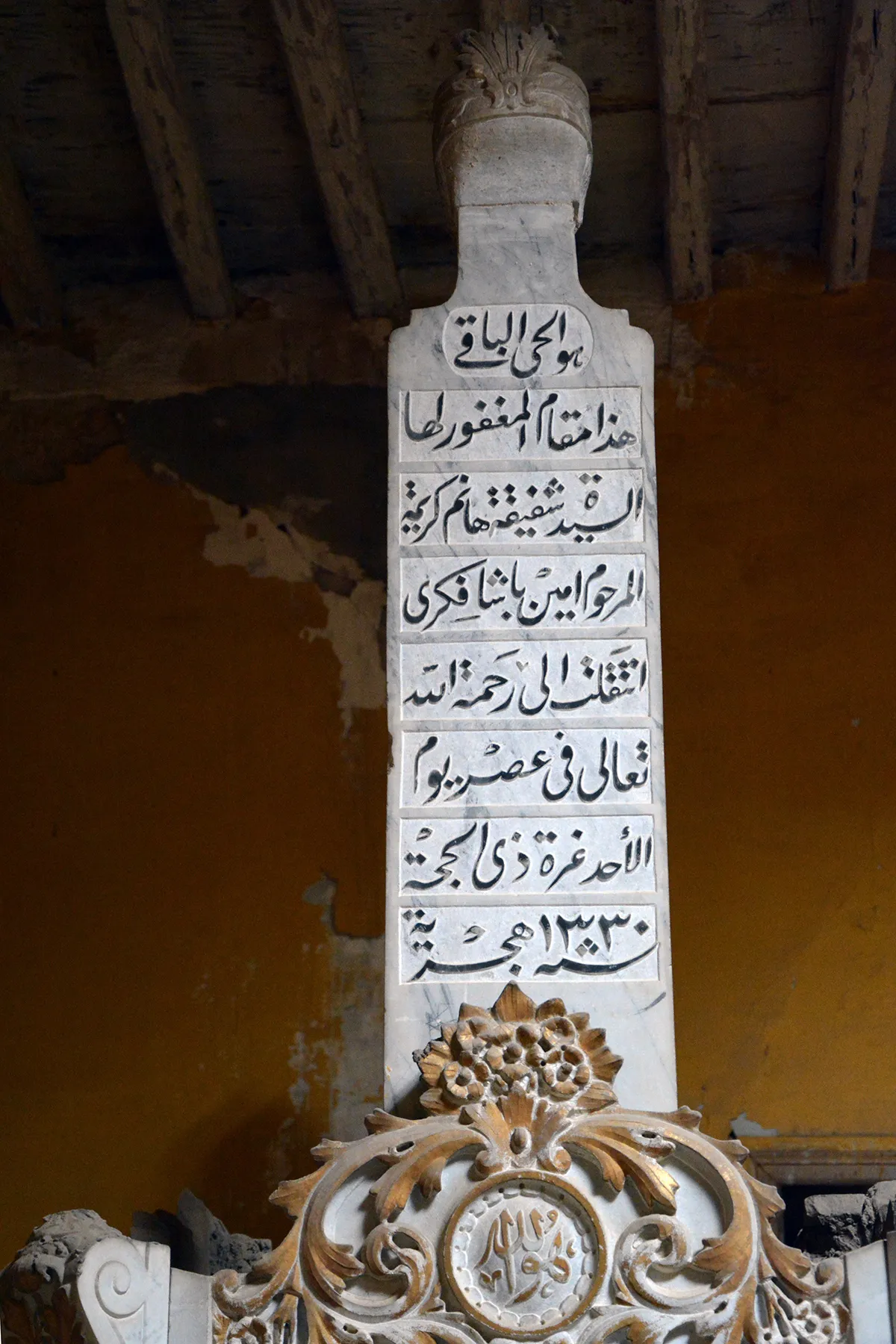
The southern burial chamber is a plain undecorated room covered with a ceiling with exposed wooden roofing beams resting on doubled steel C-beams, which are supported by two simple wooden posts. In the north-western part of the chamber stands a very elaborately carved marble cenotaph dated 1912, and to the east to it a smaller, less sumptuously decorated one of Hasayn Ahmad Pasha al-Suyufi dated 1370 / 1951.
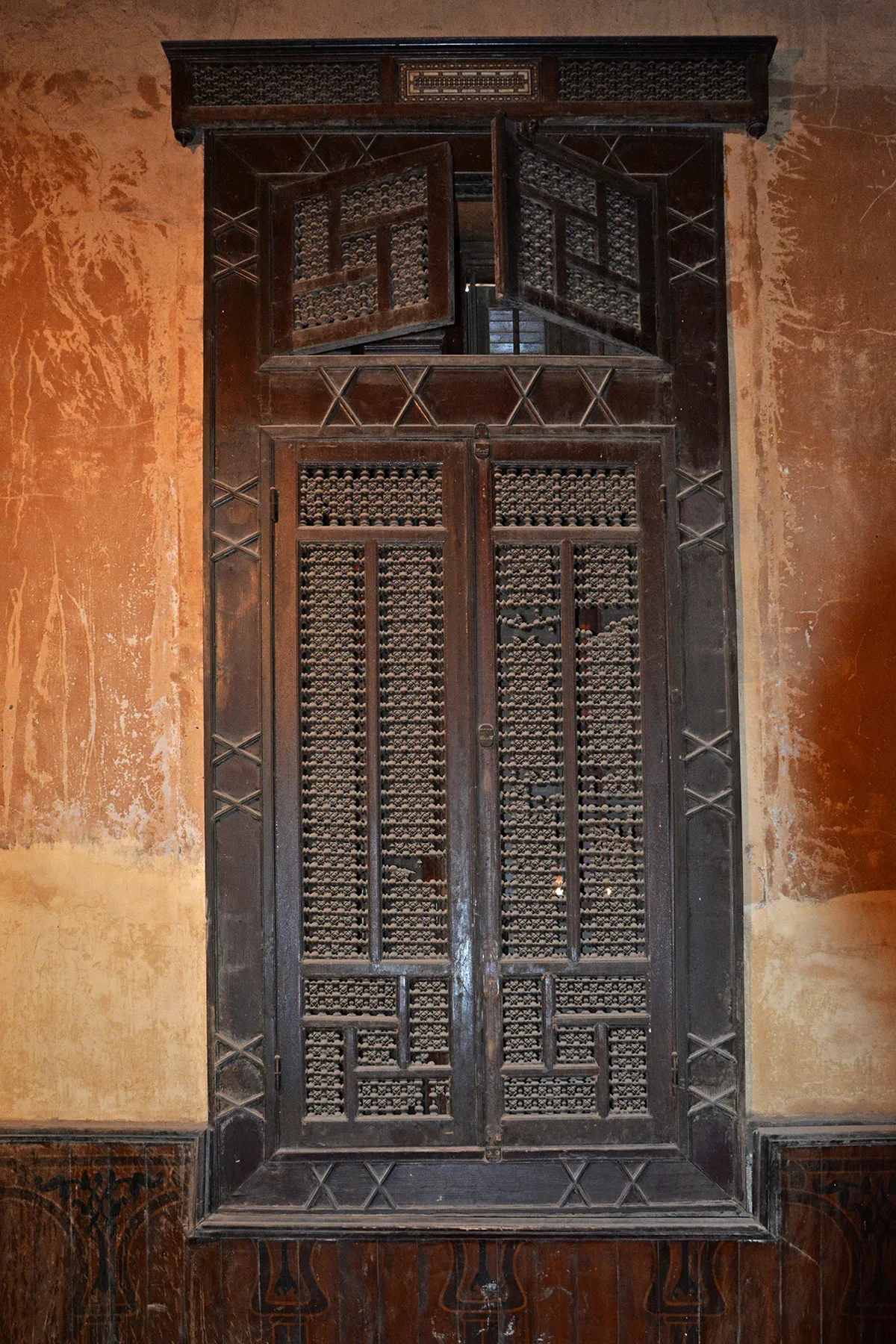
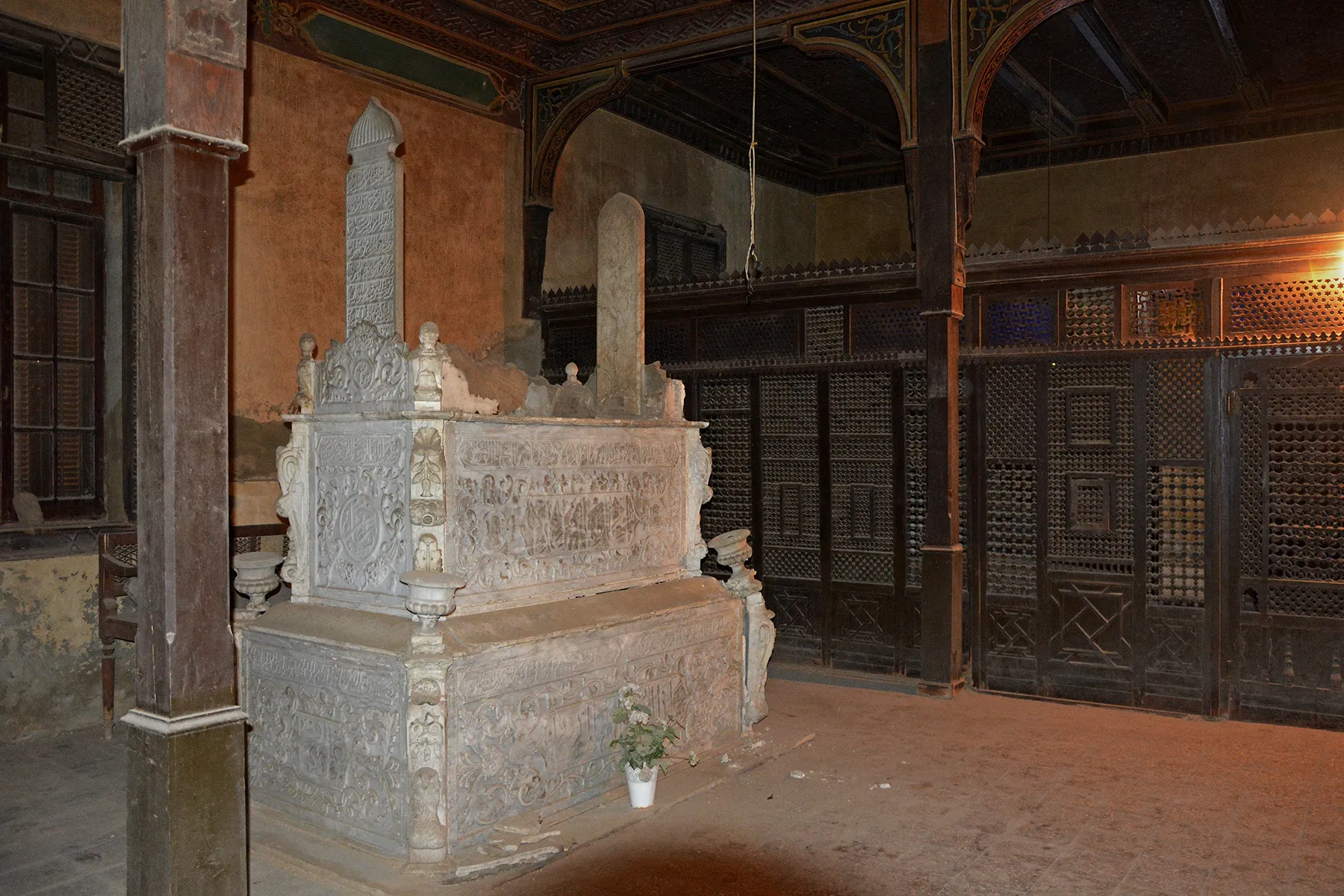
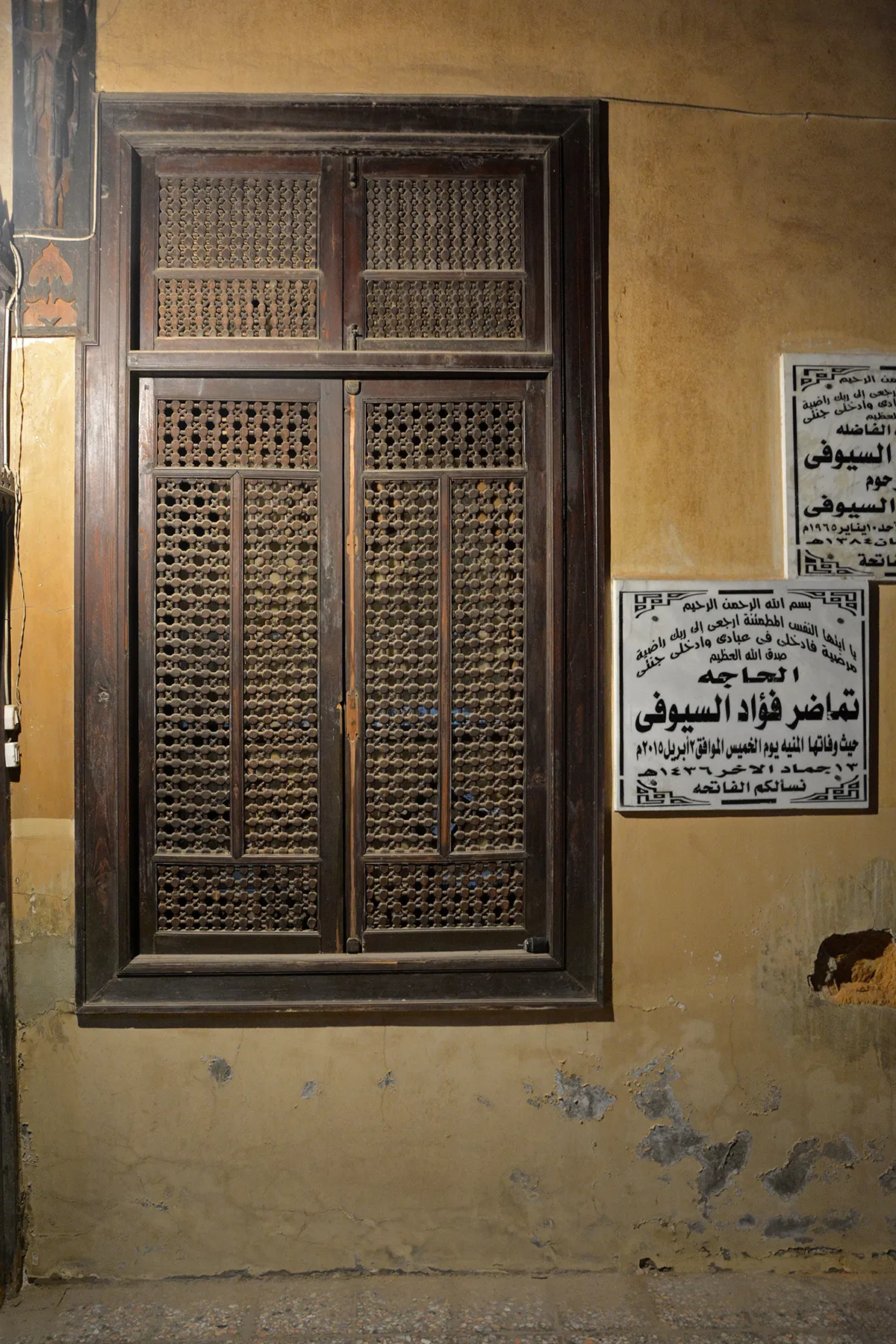
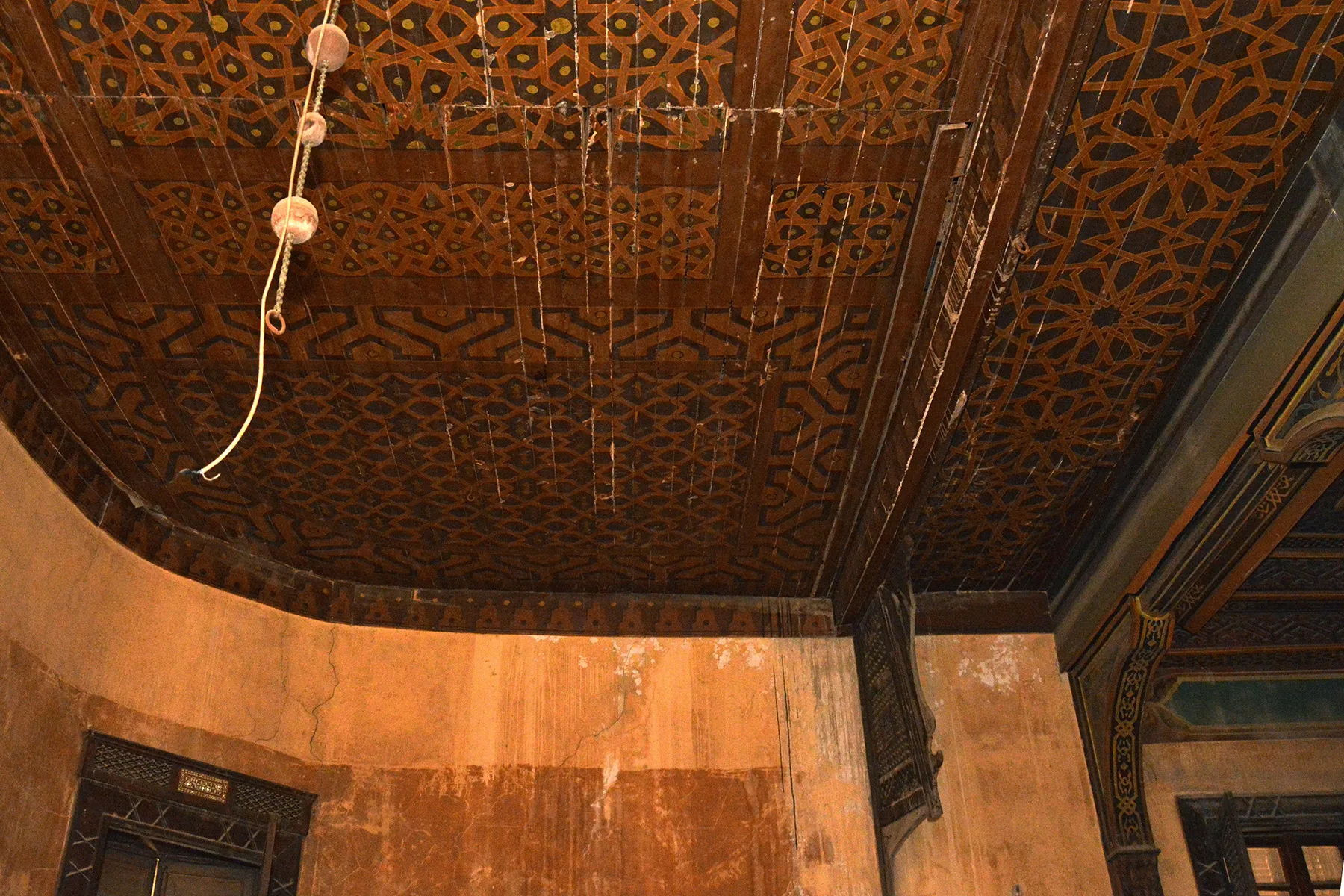
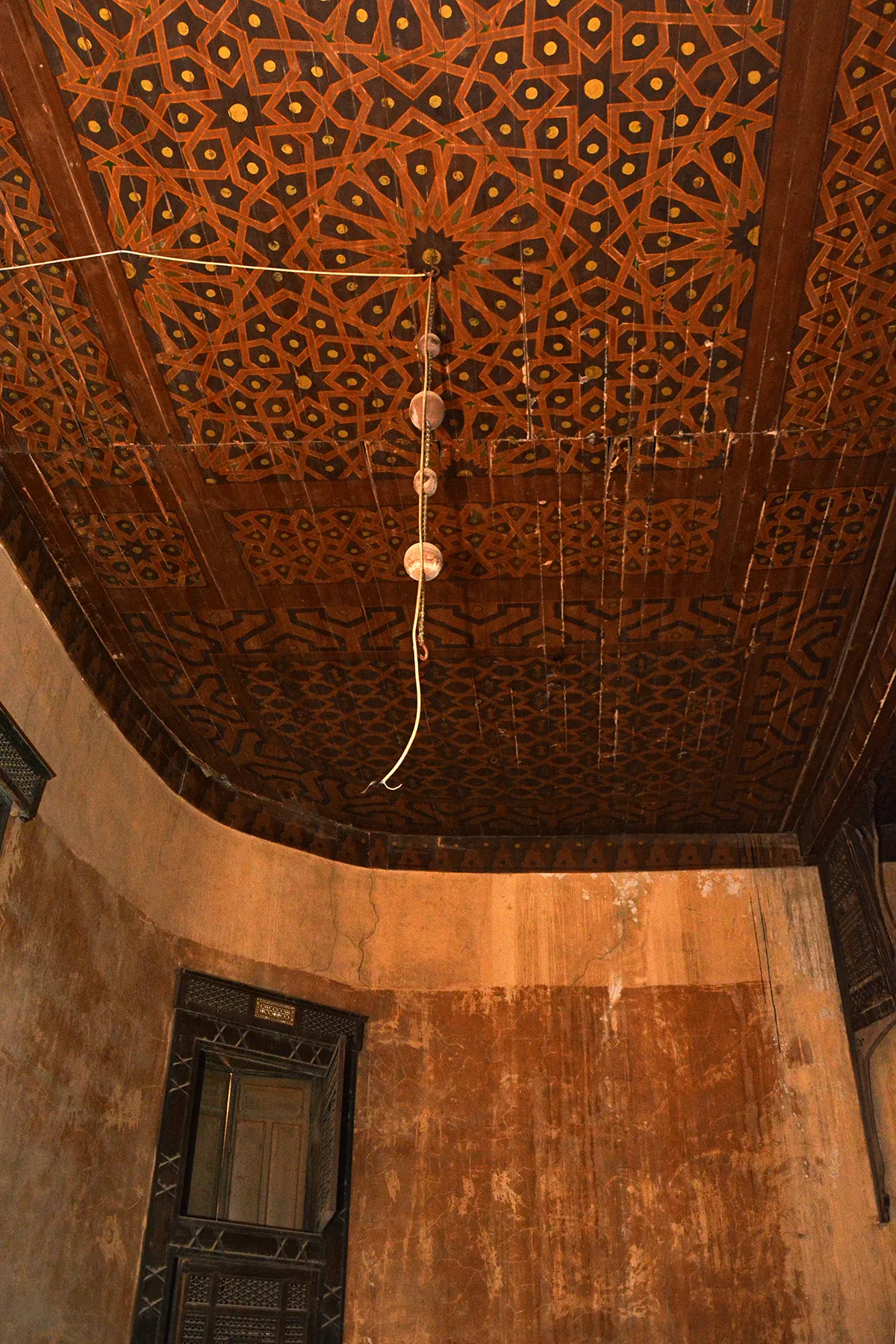
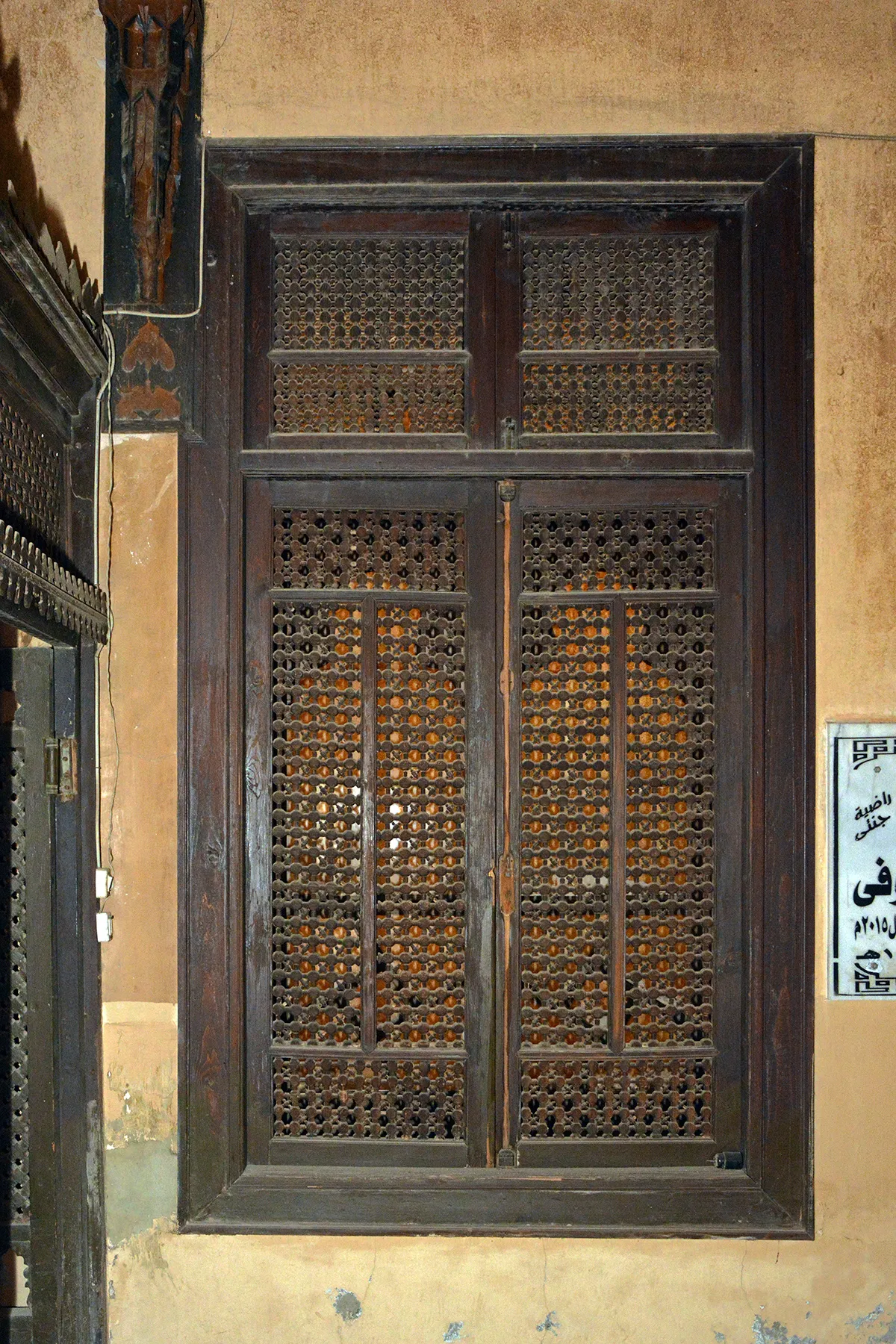
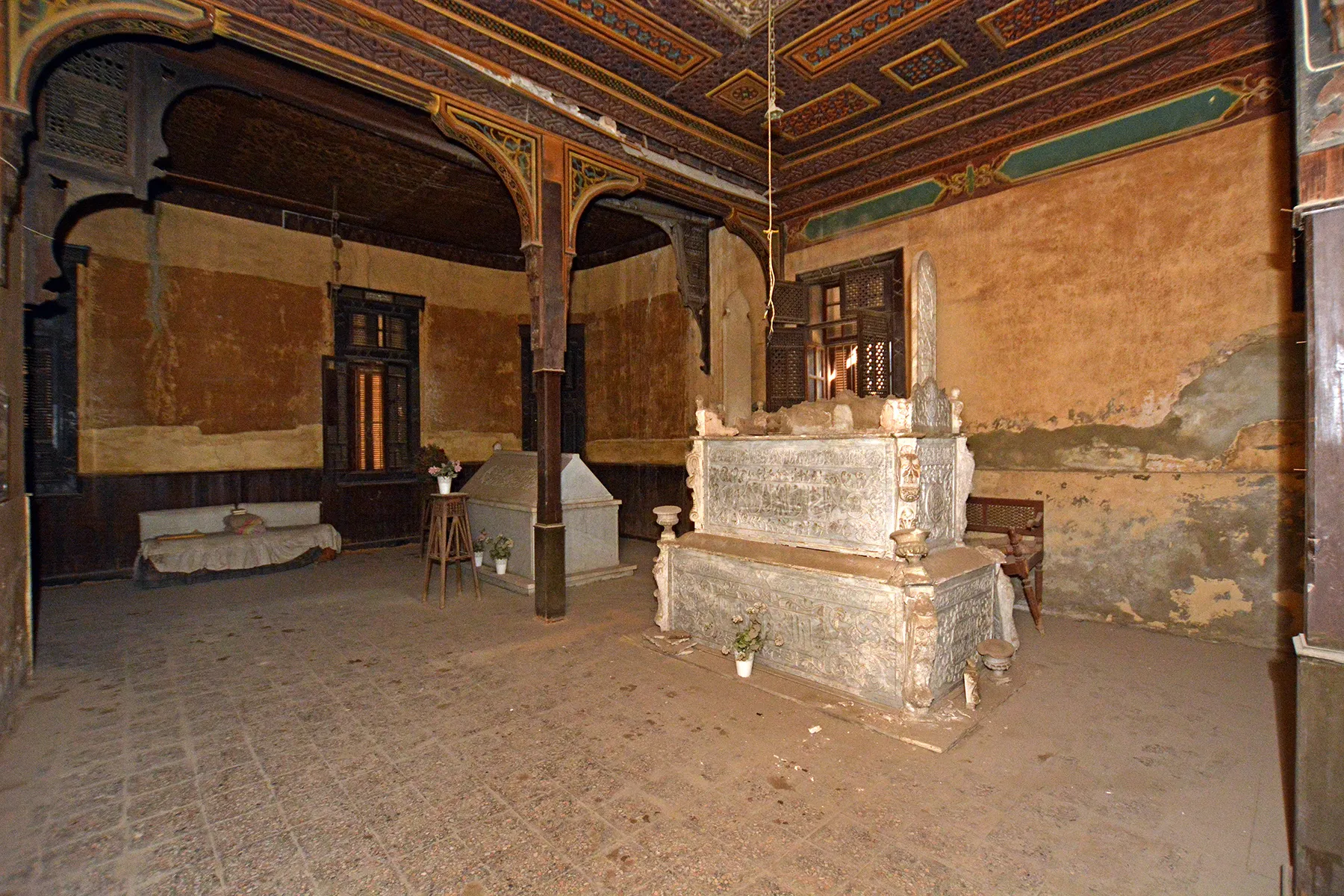
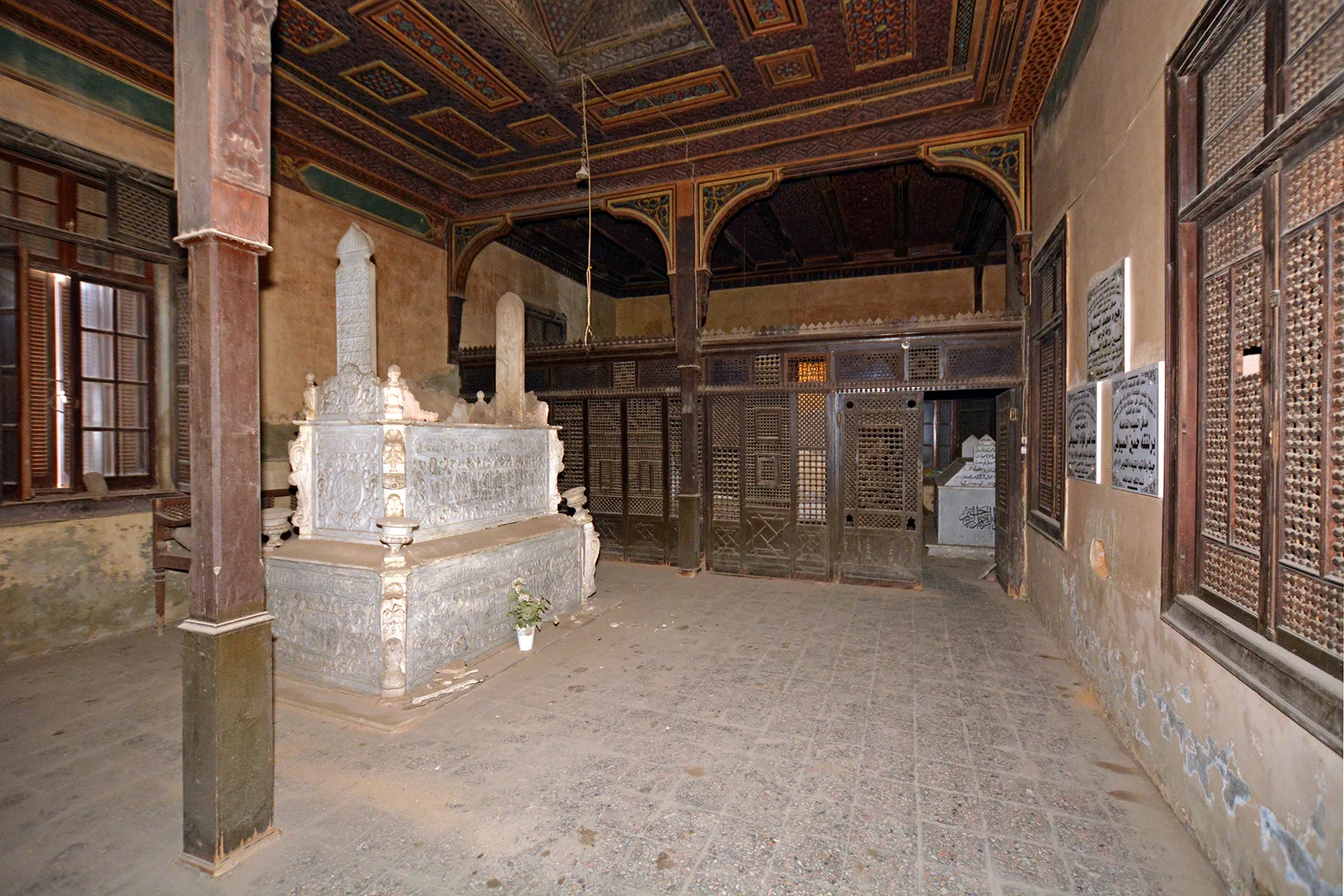
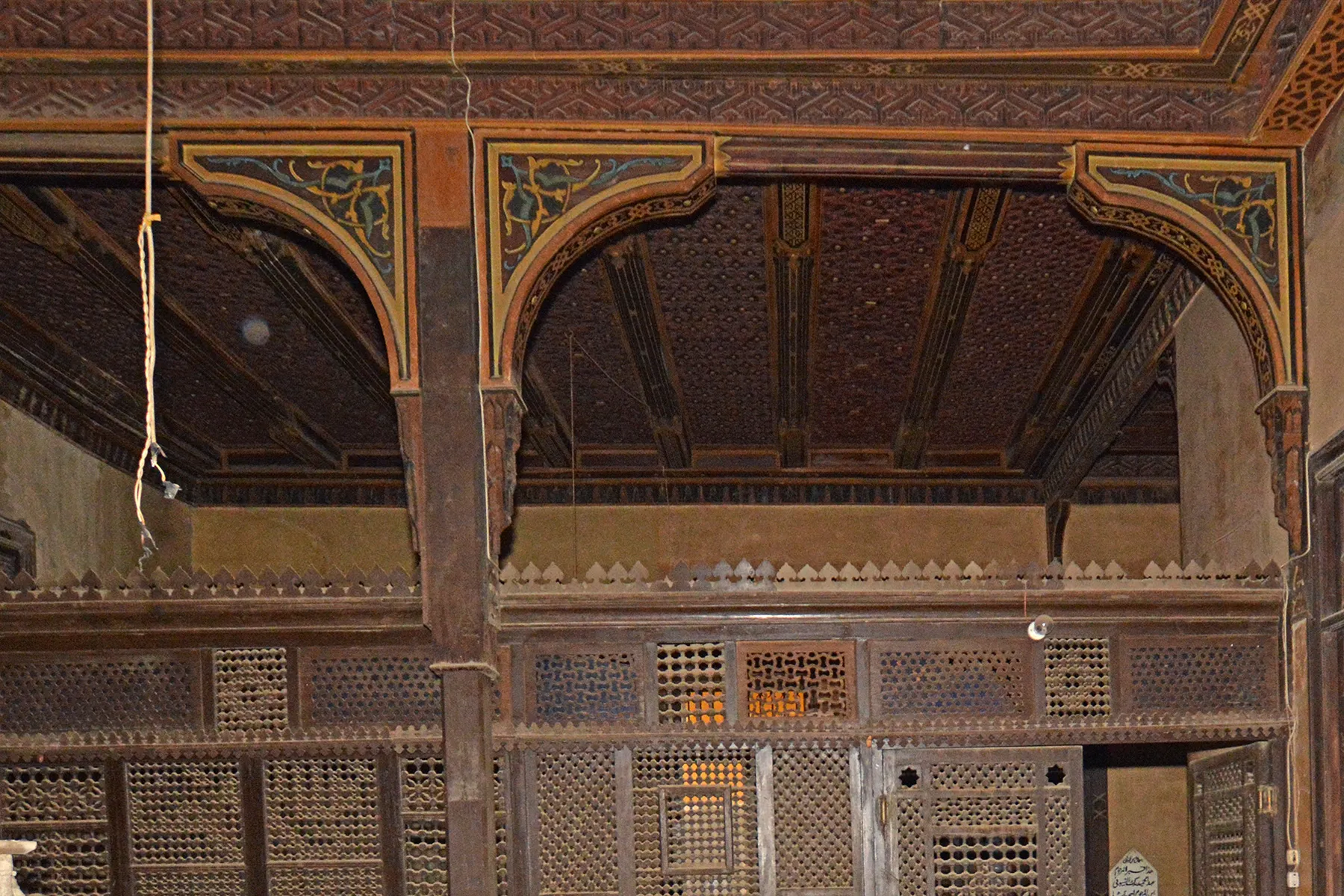
The interior decoration of the northern burial chamber belies the austerity of the external look of the building. It is divided into three sections, the side sections extending further to the west than the square central one. The southern section, accessed from the hallway to its south, is a vestibule separated from the rest of the burial chamber with a tall, very elaborate wooden screen of turned-wood mashrabiya panels and openwork patterns, with a double-leaf door in its left (western)part leading to the central section of the chamber. In the southern section stand two simple marble cenotaphs dated to the 1930s.The wooden ceiling has exposed chamfered and moulded beams and is painted in colourful geometric patterns. The window in the eastern wall, as well as windows of the eastern and western walls of the central section are fitted with internal wooden shutters of mashrabiya panels and wooden frames decorated with knotted mouldings.
The square central section is covered with an extremely elaborate wooden ceiling divided into rectangular panels and bands separating them filled with nailed-on lath forming complex Islamic geometric patterns, colourfully painted. Over the middle square is an octagonal lantern with windows filled with qamariyat grilles and the octagonal ceiling resting on a wooden muqarnas frieze. In the western part of the central hall stands an elaborately carved marble cenotaph dated 1336 / 1918. Between the central and the side sections stand two wooden pillars that carry elaborate corbels carrying transverse beams and separating the sections of the burial chamber; the corbels (termed “kurdi”) and the beams are richly painted in arabesque patterns.
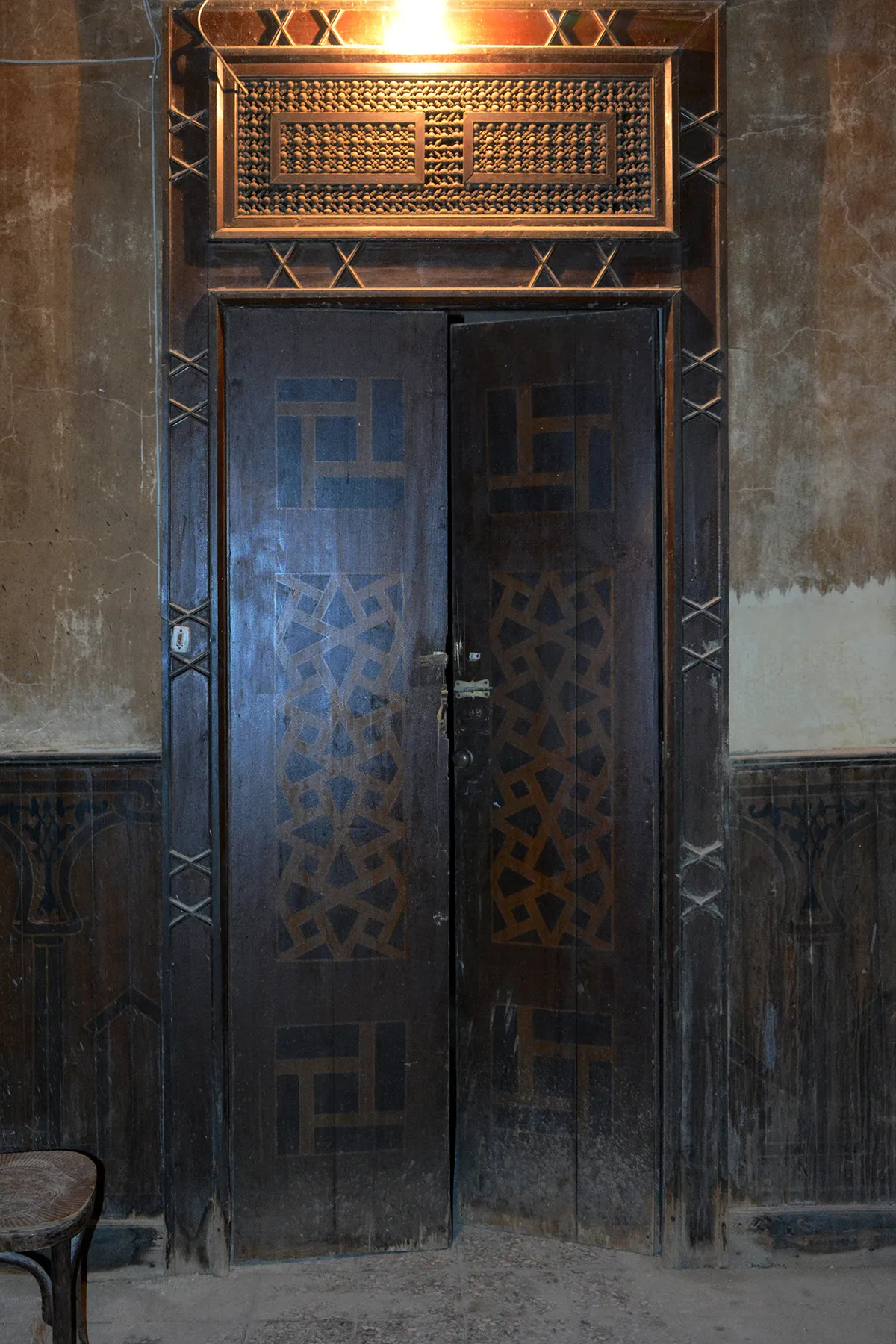
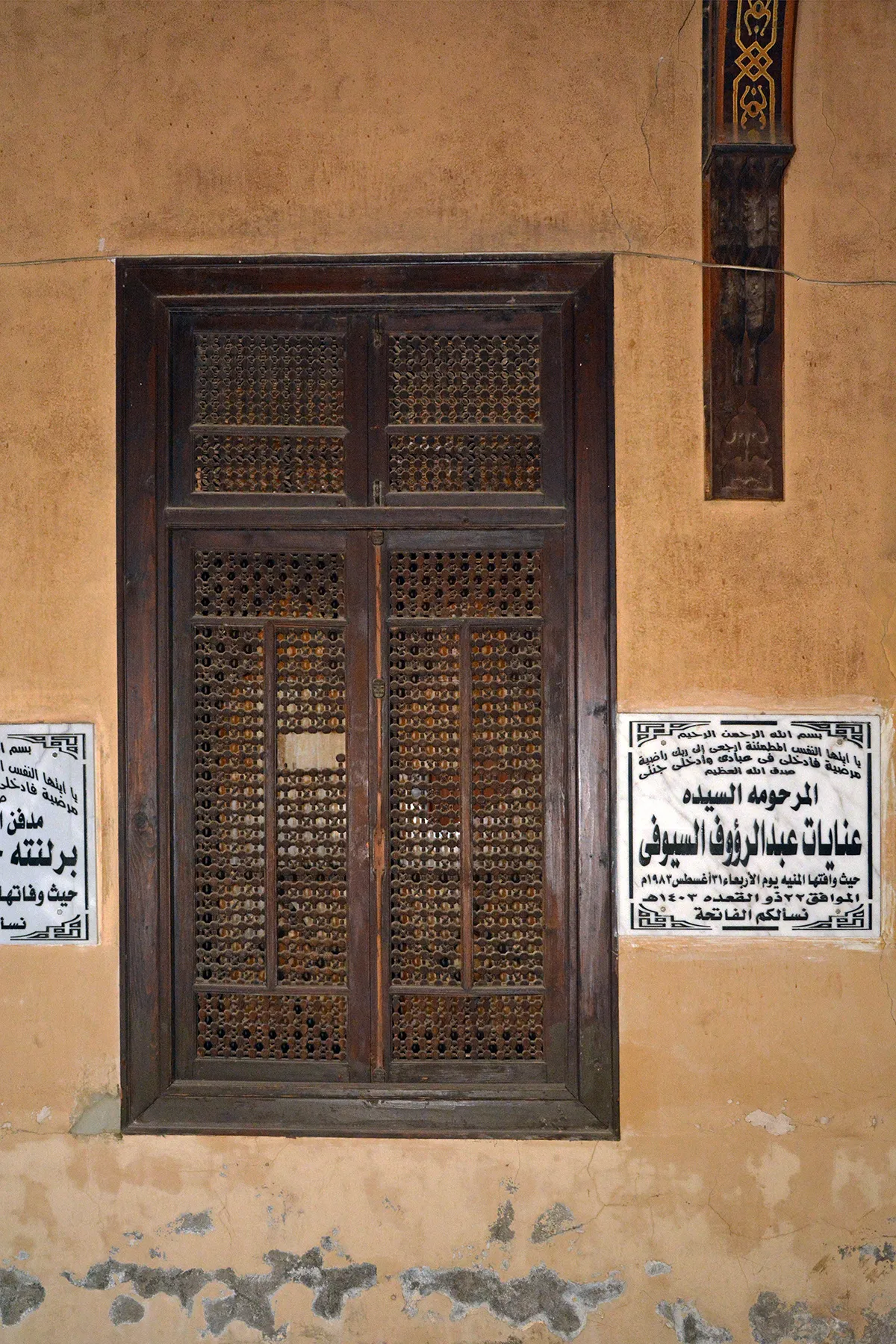
The northern section has a wooden ceiling with colourful geometric pattern painted on its flat underside boarding. A structural beam of double steel C-beams close to the central section has decorative corbels of mashrabiya panels. The lower parts of the walls are covered with wooden boarding with painted in imitation of niches with colonnettes. The windows in the northern section have elaborate internal shutters of mashrabiya panels and a mashrabiya cornice, and a door in the western wall has a similar frame and cornice, and door-leaves painted in geometric pattens. The north-eastern corner of this section is rounded and includes the sabil window. In the northern section of the burial chamber stands a simple marble cenotaph with no shahid stelae, with calligraphic panels in fine script it raised relief, signed by the calligrapher.
Condition of preservation
The larger cenotaph in the southern burial chamber bears the name of Lady Shafiqa Hanim, the daughter of the late Amin Pasha Fikri who died in the afternoon of the first day of Dhu al-Higga 1330 AH [= 10 November AD 1912]. This is the earliest date found in inscriptions within the complex.
The cenotaph in the central section of the northern burial chamber bears the name of [Zeitun?], the daughter of Hagg ‘Ali Muftah and wife of Muhammad Pasha al-Suyufi, who died on 29 Dhual-Higga 1336 AH [=4 October AD 1918.]
On the walls of both burial chambers are mounted numerous marble commemorative panels for family members buried in the complex. The newest set of the covers the late 20th and early 21st centuries, with the most recent date of AH 1436 / AD 2015.
- Field recording by
- Muhammad Esamedited by Jaroslaw Dobrowolski
- Date recorded
- August 3, 2023
- Data entered by
- Hadeer Ahmad
- Date entered
- May 9, 2024