




Unit No59
Funerary enclosure of Hasan Hosni al-Tagir
|
Coordinates of the main entrance |
30.047055N - 31.274772E |
|
Attribution |
Funerary enclosure of Hasan Hosni al-Tagir |
|
Higri (AH)Dates as given in the Inscription |
1366 |
|
Miladi (AD)Dates as given in the Inscription |
1947 |
|
Inscription Contemporary with the building? |
Yes |
|
Multiple date(s) In the inscription? |
Yes |
|
Assumed Date |
First half of the 20th century |
|
Based on |
(based on stylistic features) |
|
Original Use |
Funerary enclosure with residential rooms |
|
Current Use |
Funerary enclosure and residential |
|
Overall condition |
Fair |
Features of unit 59
| Present | Count | Material | Comments (see description for details) | |
|---|---|---|---|---|
| Free standing structure | No | |||
| Walled enclosure | Yes | 1 | stone | Two connected courtyards |
| Rooms by the perimeter wall | Yes | 2 | stone | |
| Freestanding structure(s) in enclousure | No | |||
| Dome over the tomb chamber | Yes | |||
| Neo-Mamluk architectural decoration | Yes | |||
| Garden layout | Yes | |||
| Sabil(s) | No | |||
| Wall fountain(s) | No | |||
| Canopy on columns / pillars | No | |||
| Carved marble cenotaph(s) | Yes | 2 | 2 | |
| Decorated limestone tomb-markers | No | |||
| Decorated gateway | Yes | 1 | stone | |
| Decorative door-leaves | Yes | 8 | wrought iron, wood | |
| Decorative window grilles | Yes | 10 | wrought iron, wood | |
| Decorative shutters | Yes | 13 | wood | |
| Painted ceiling(s) | No | |||
| Decorative paving(s) | No |
Description (The direction towards Mecca (Qibla) is described as eastern and other directions are named accordingly)
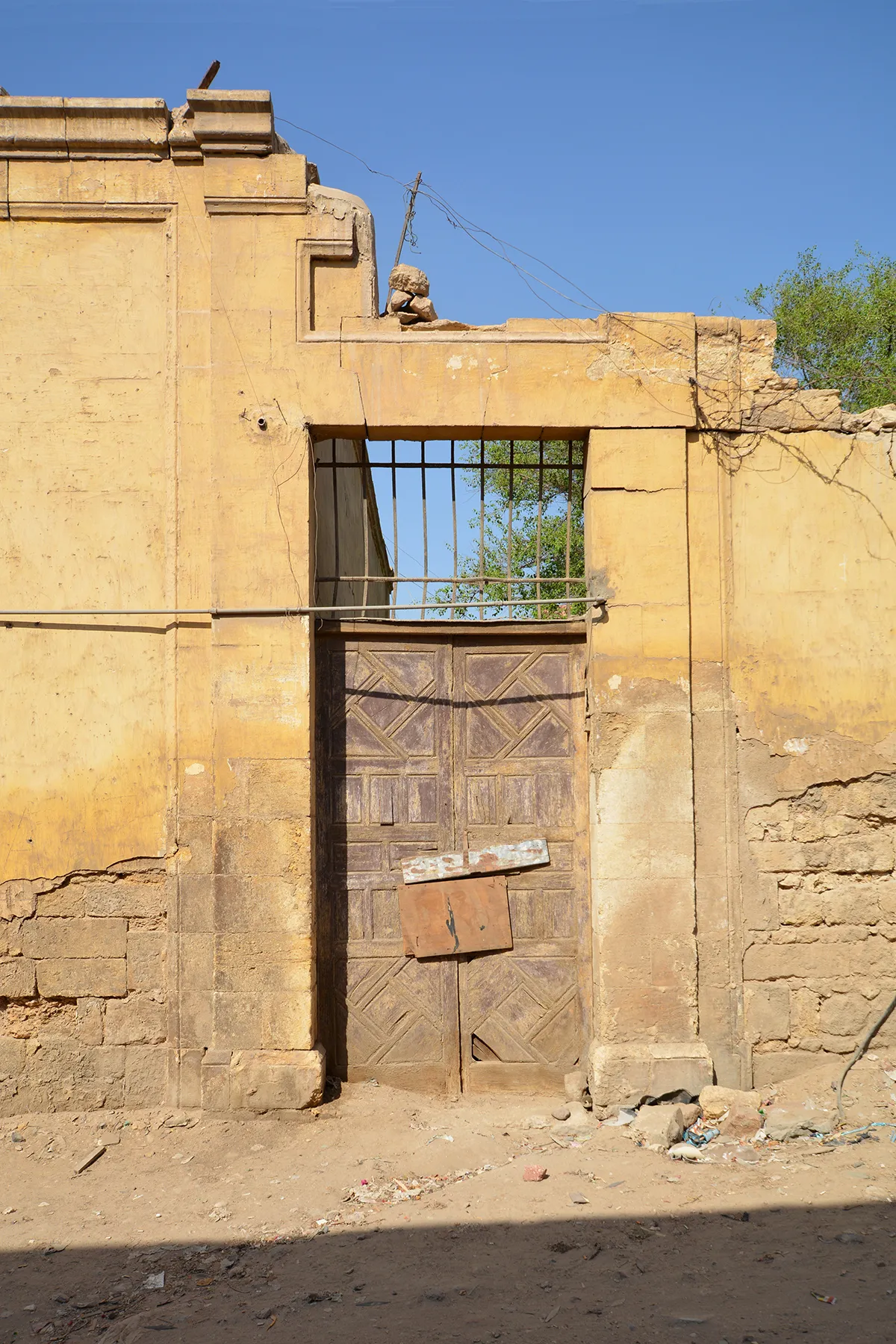
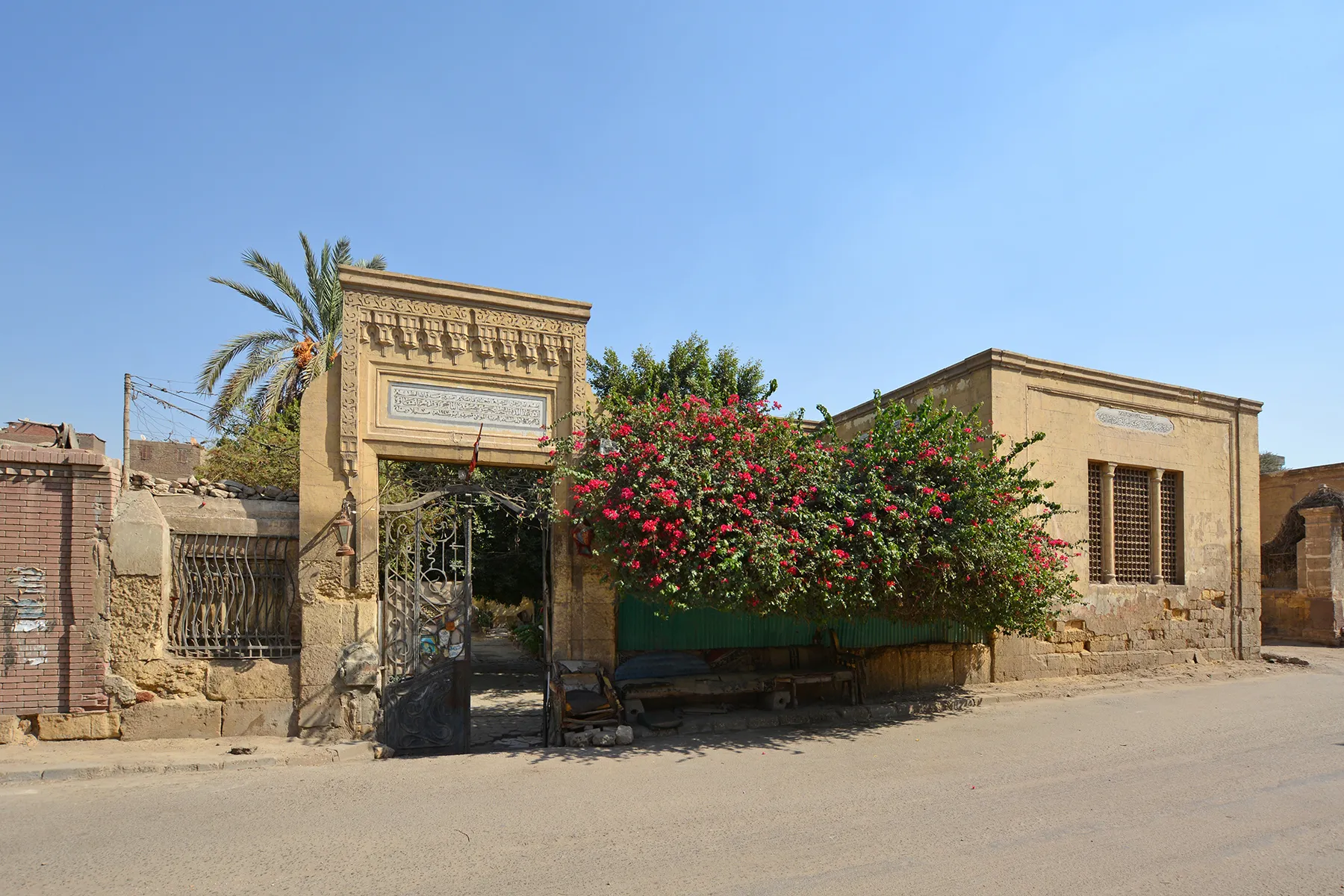
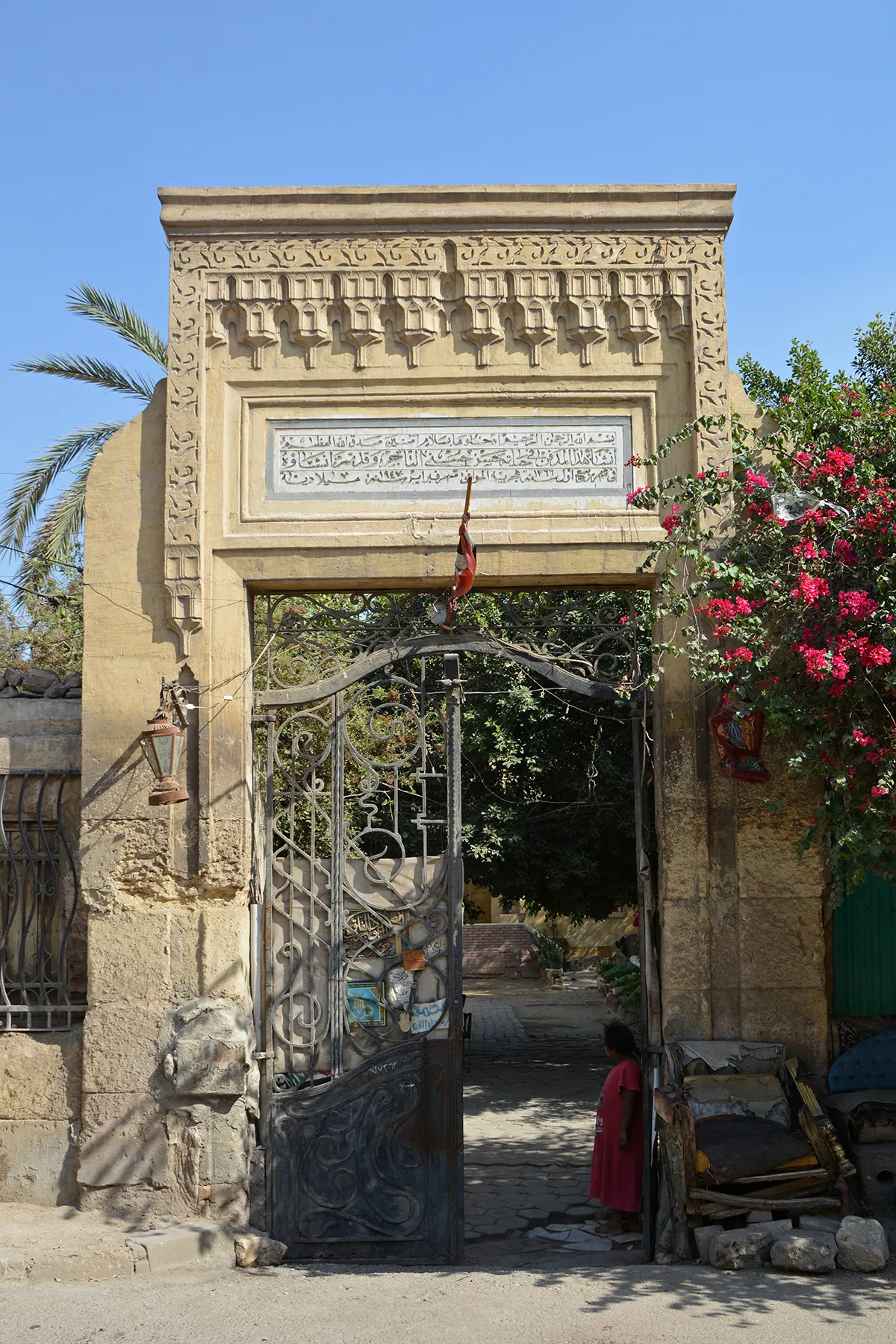
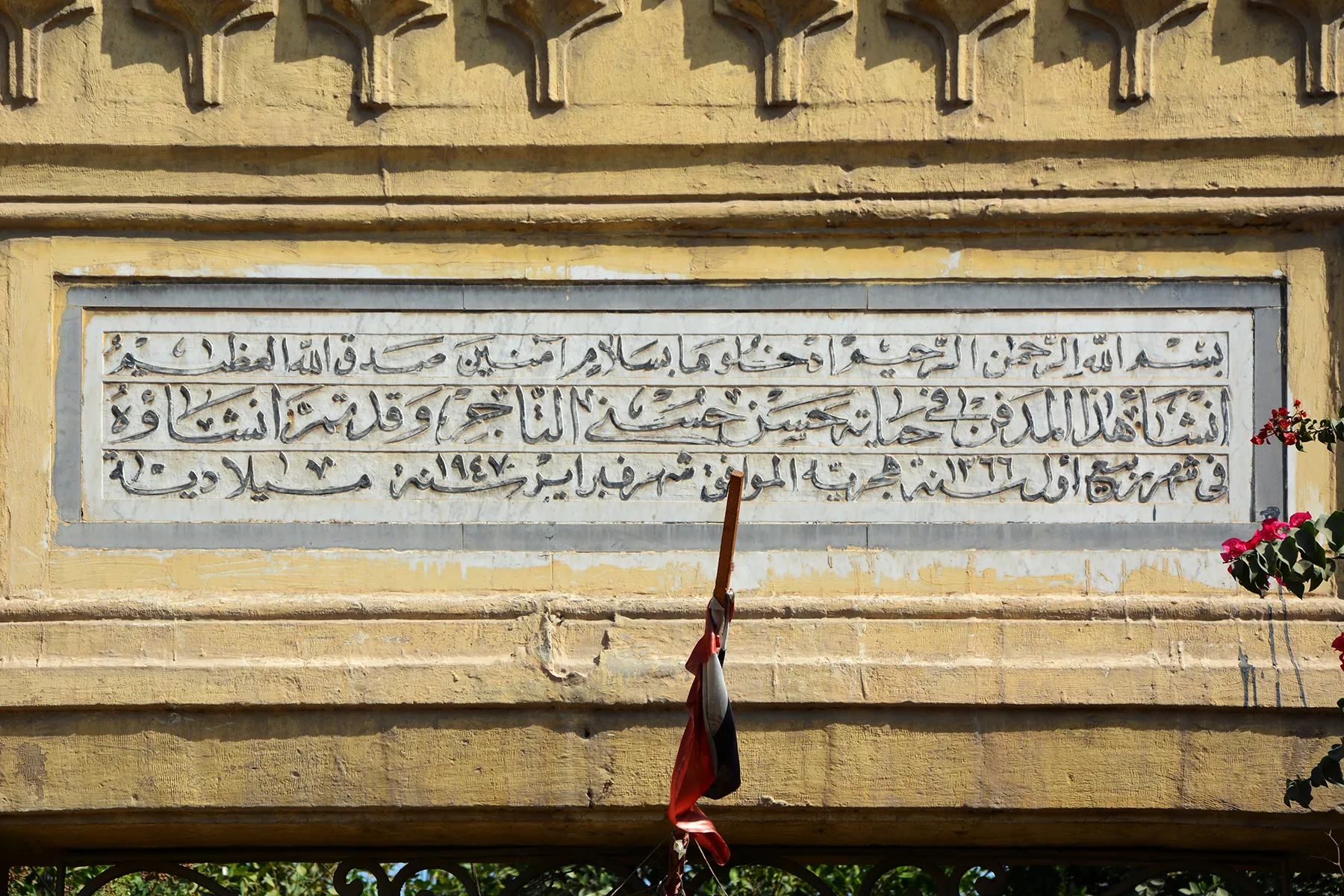
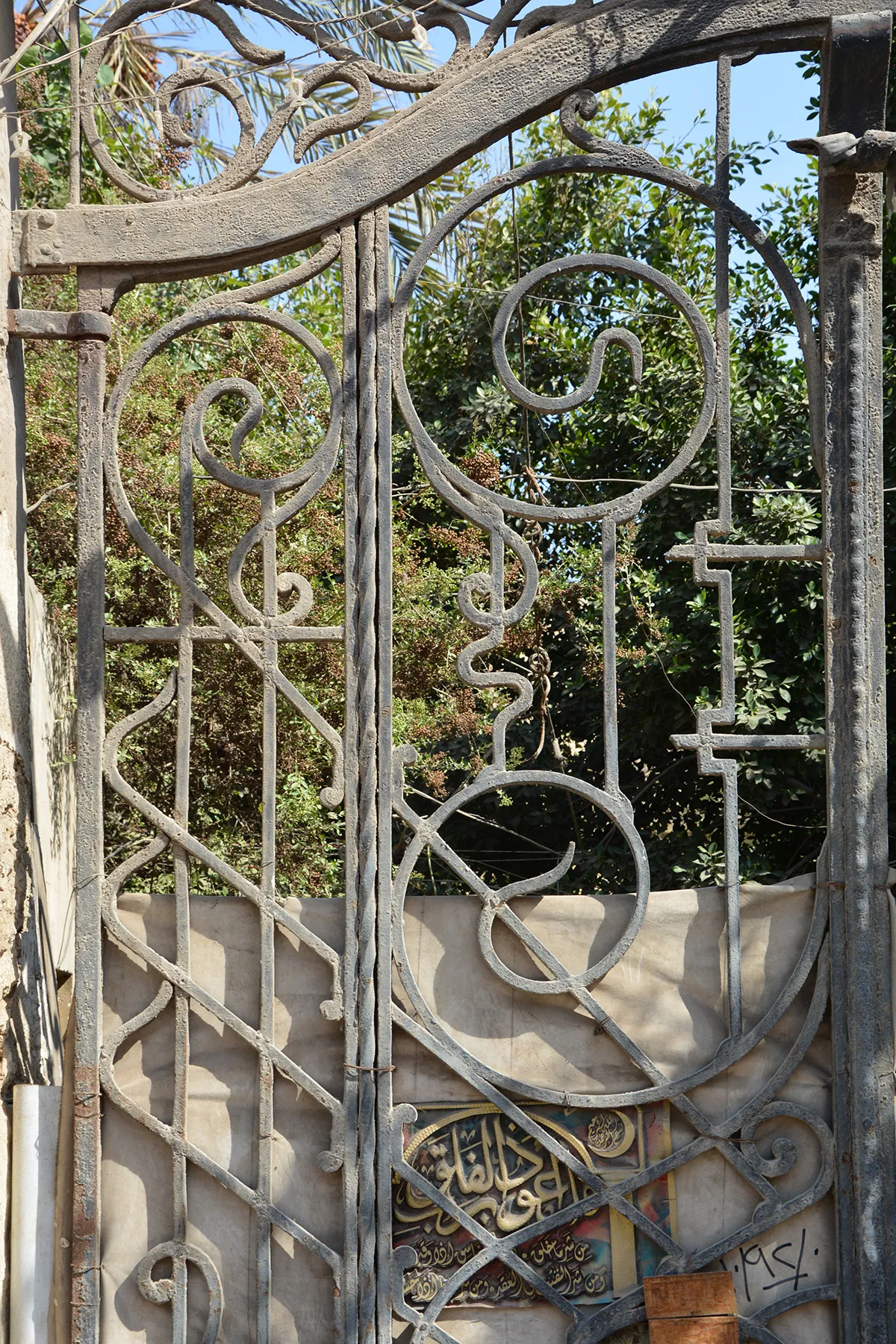
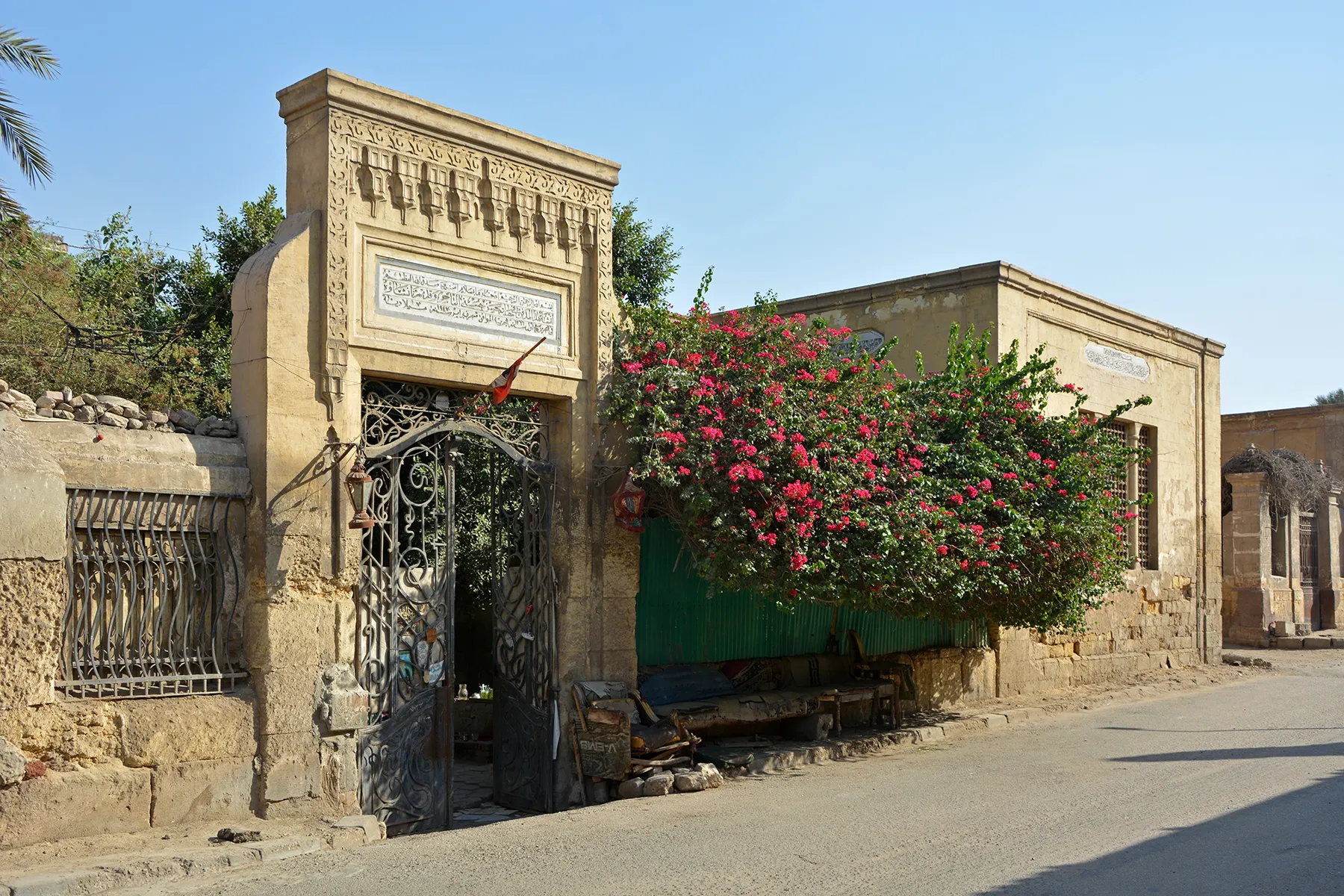
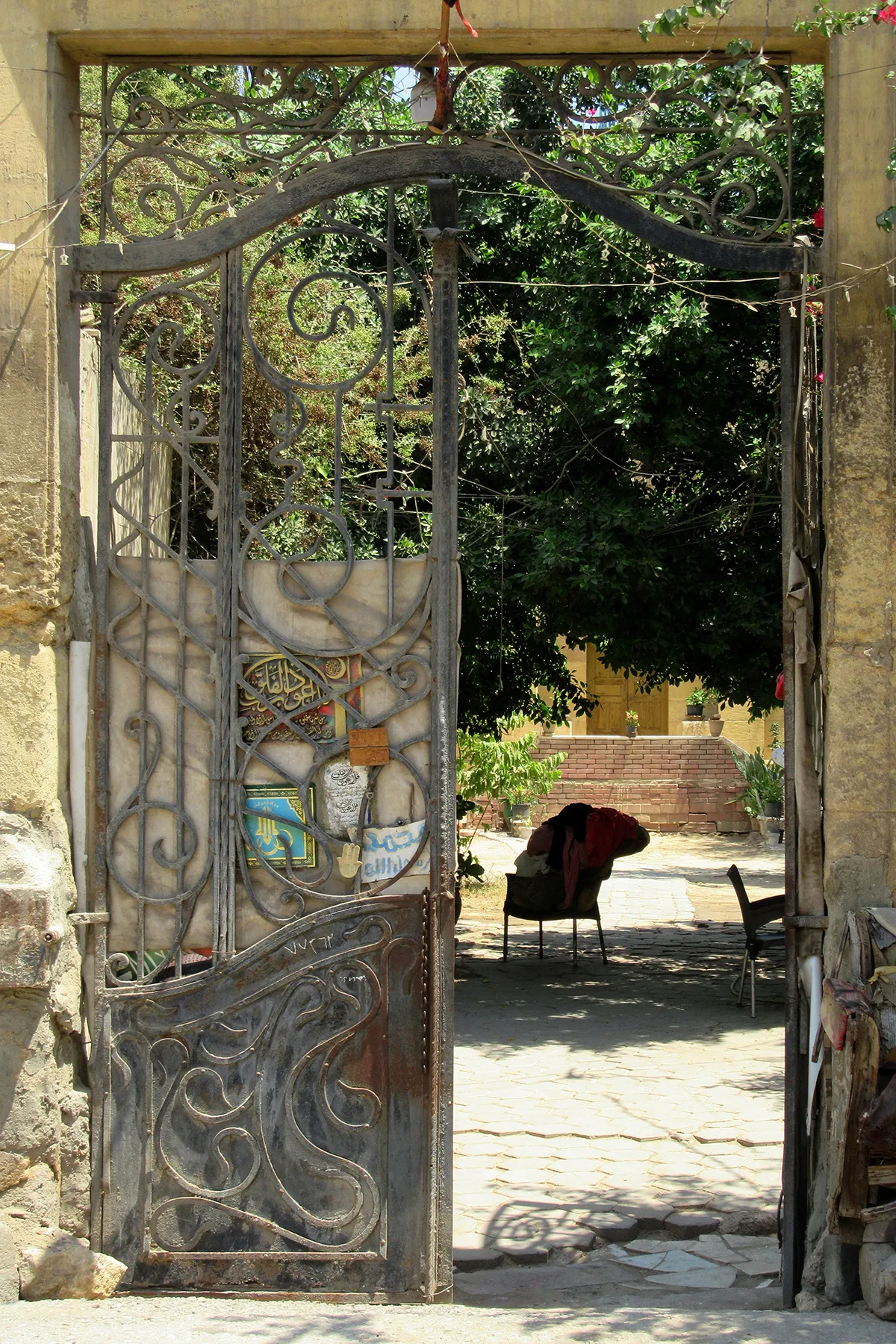
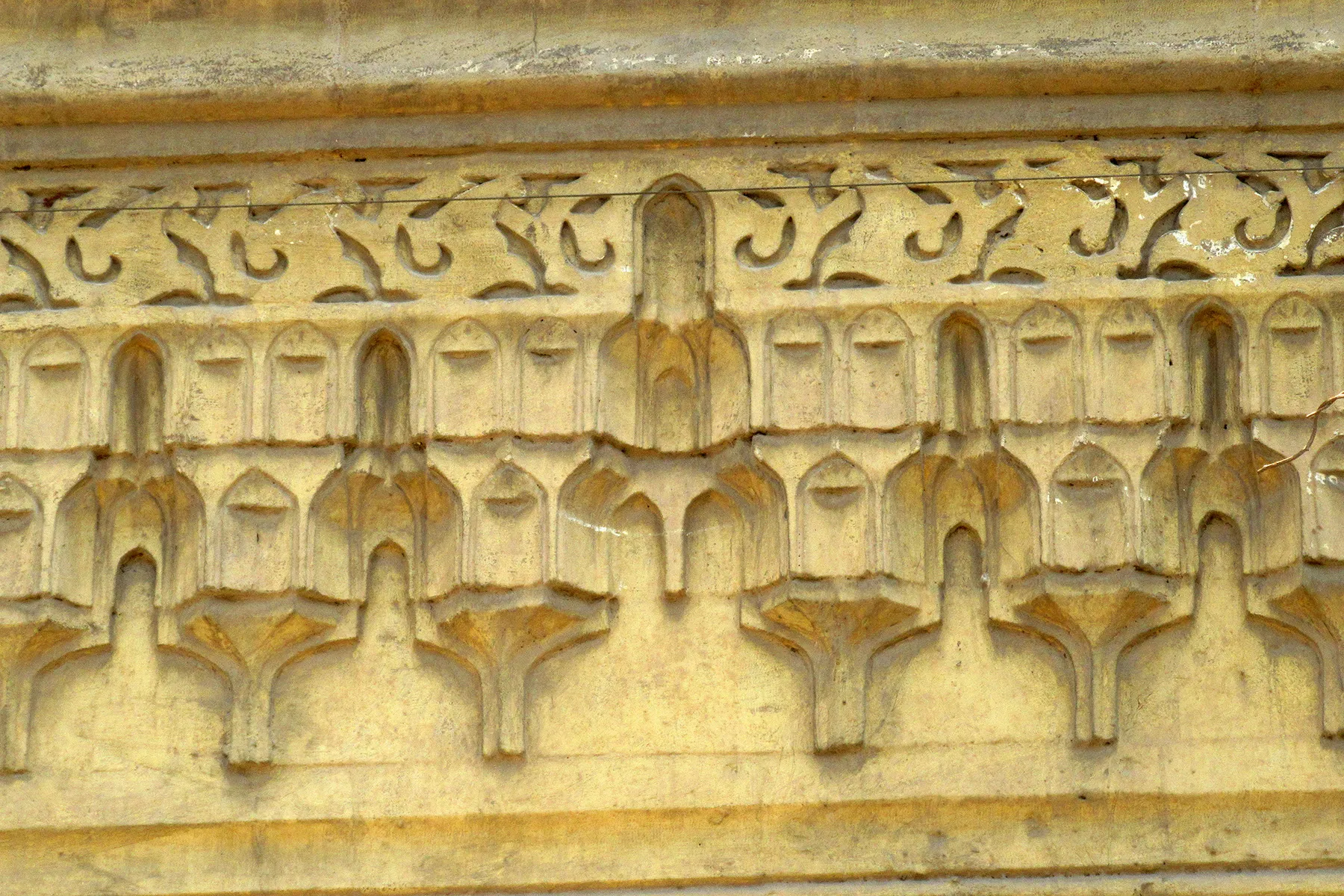
A rectangular walled enclosure measuring about 23 x 32 m, with main entrance from Sultan Ahmad Street in the western wall. The enclosure is bordered on the south by a side street, on the north by a neighbouring funerary courtyard, and on the east by a narrow back alley between funerary courtyards that opens with a gate on the side street. In the north-eastern corner of the enclosure stands a domed mausoleum, and in the south-western corner, a villa-like residential unit. The entrance gate is in the northern end of the western wall, on the axis of the mausoleum. It is a tall gate built of ashlar stone, with a large rectangular opening covered with a flat arch, with a large marble inscription panel in its lintel, containing three lines of high-quality calligraphic inscription in raised relief that gives the founder’s name and date. A band of carved floral scrolls frames the panel and an elaborate frieze above it composed of three rows of muqarnas. The gate leaves are of openwork wrought iron of Art Nouveau-inspired motifs. The front fence is also of simple iron openwork, possibly a recent replacement. There is a small service room attached to the north of the gate.
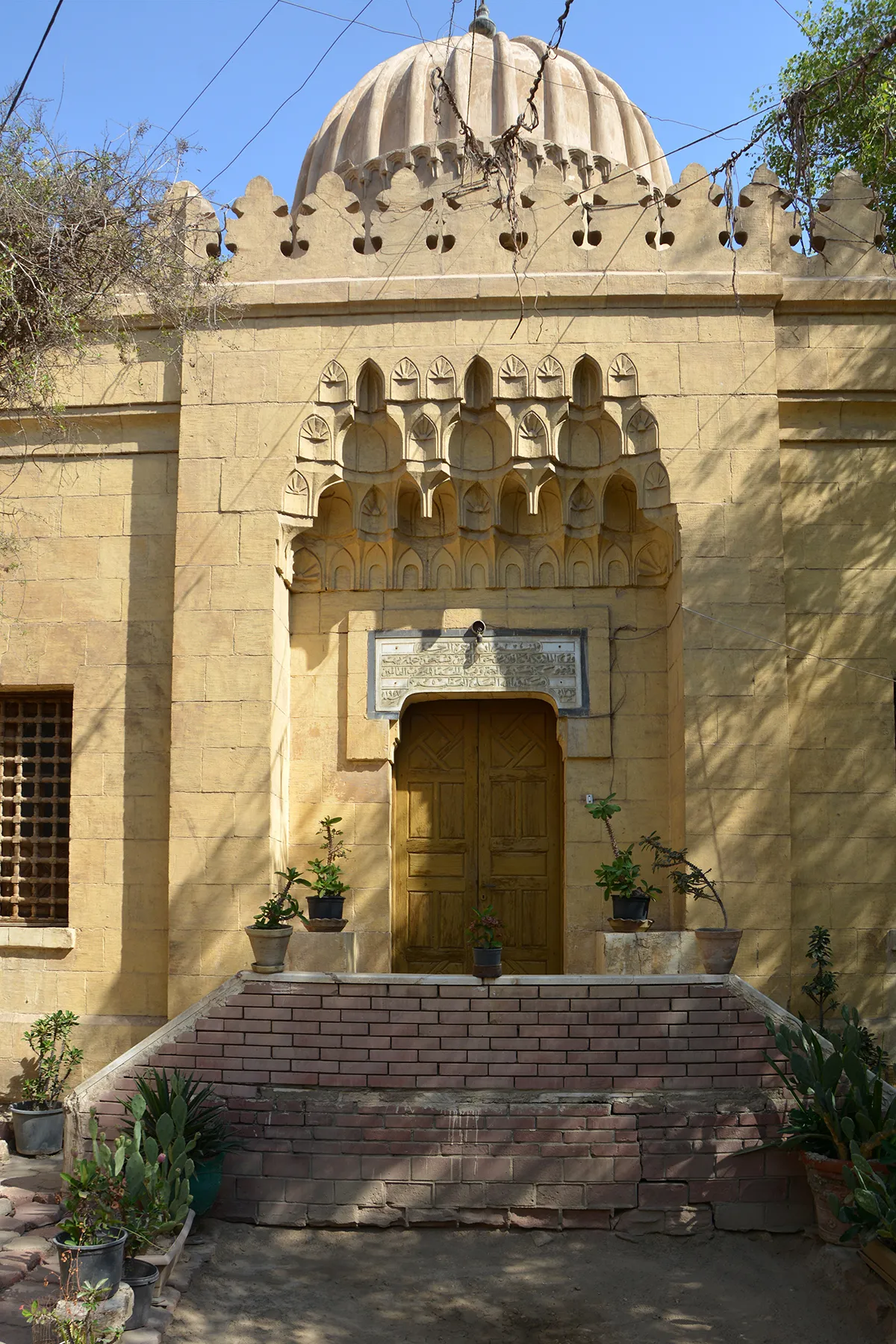
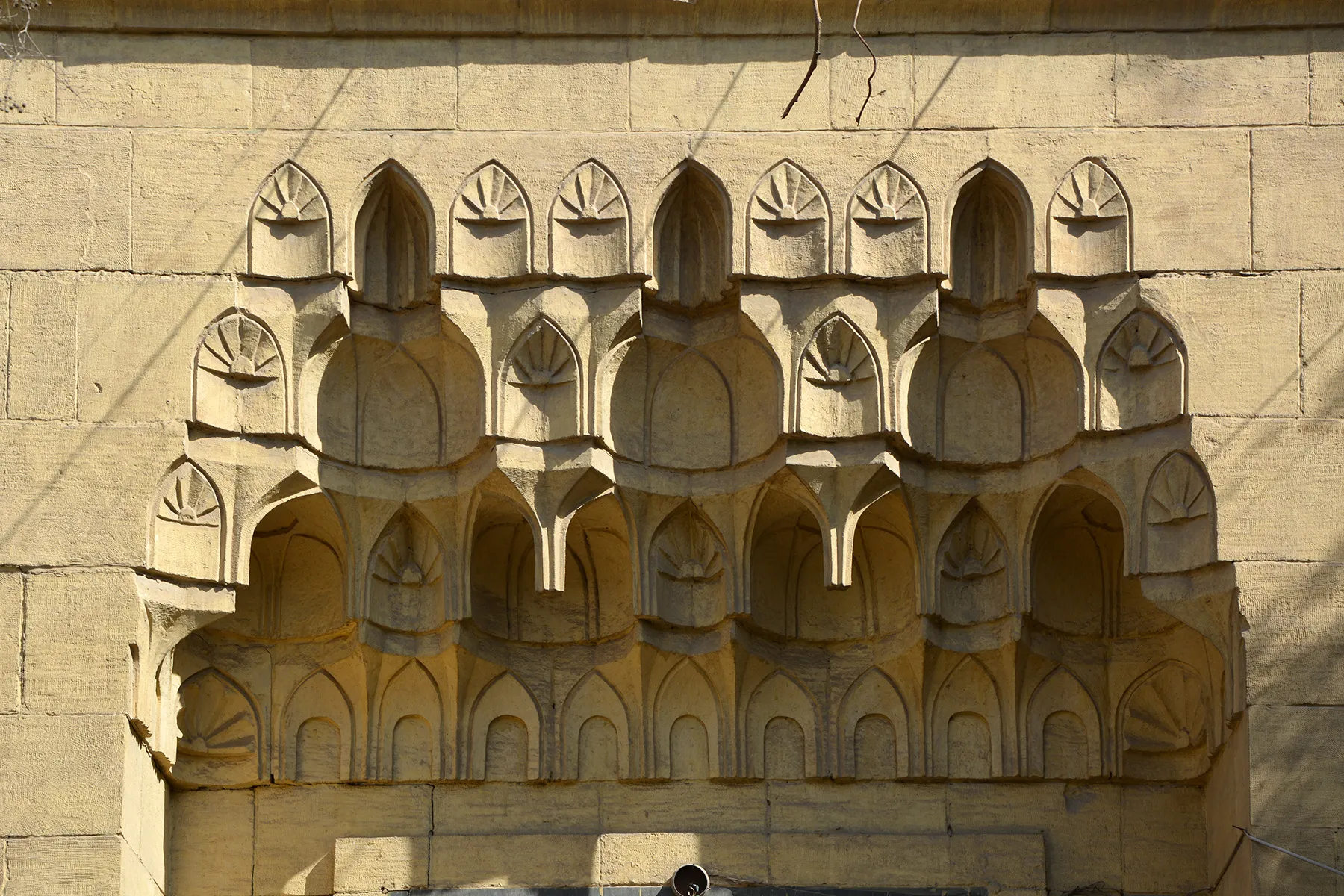
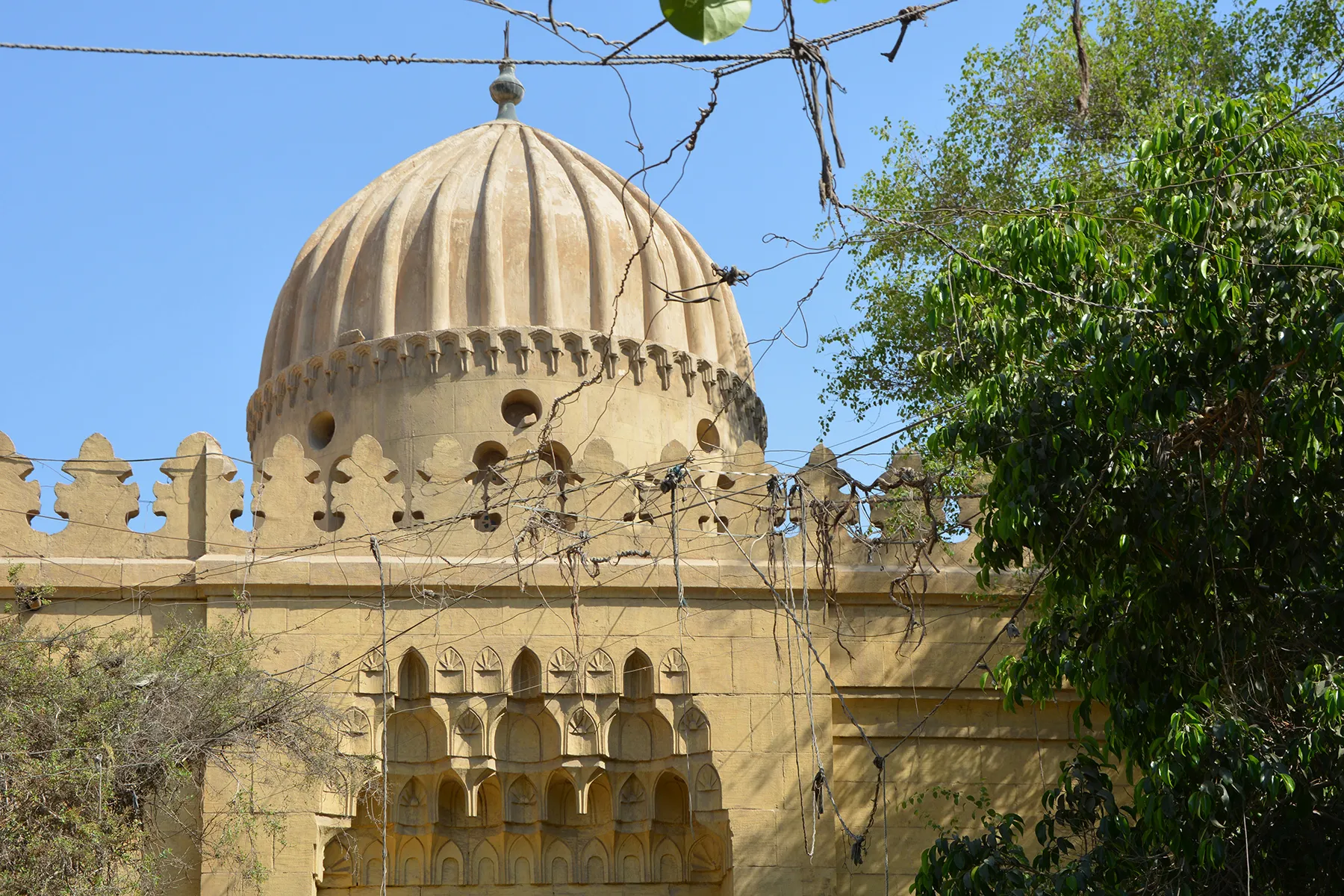
A path leads from the gate through a simple garden layout to the mausoleum. Which is a single-storey building with the entrance portal raised a few steps and flanked by a simple rectangular window on each side. The portal is placed in a projection of the same height as the rest of the façade and set in a recess topped with a very elaborate muqarnas frieze of four tiers. The lintel of the entrance door is a huge block of marble with a calligraphic inscription including the dates 1366 AH and AD 1947. The lintel is framed by a plain stone projection and rests on very simplified corbels – either indicating an extreme simplification of traditional forms to conform to modernist aesthetics, or resulting from never being completed. The simple panelled door-leave are decorated with mafruka motifs. The façade is topped with huge fleur-de-lys crenellations in stone.
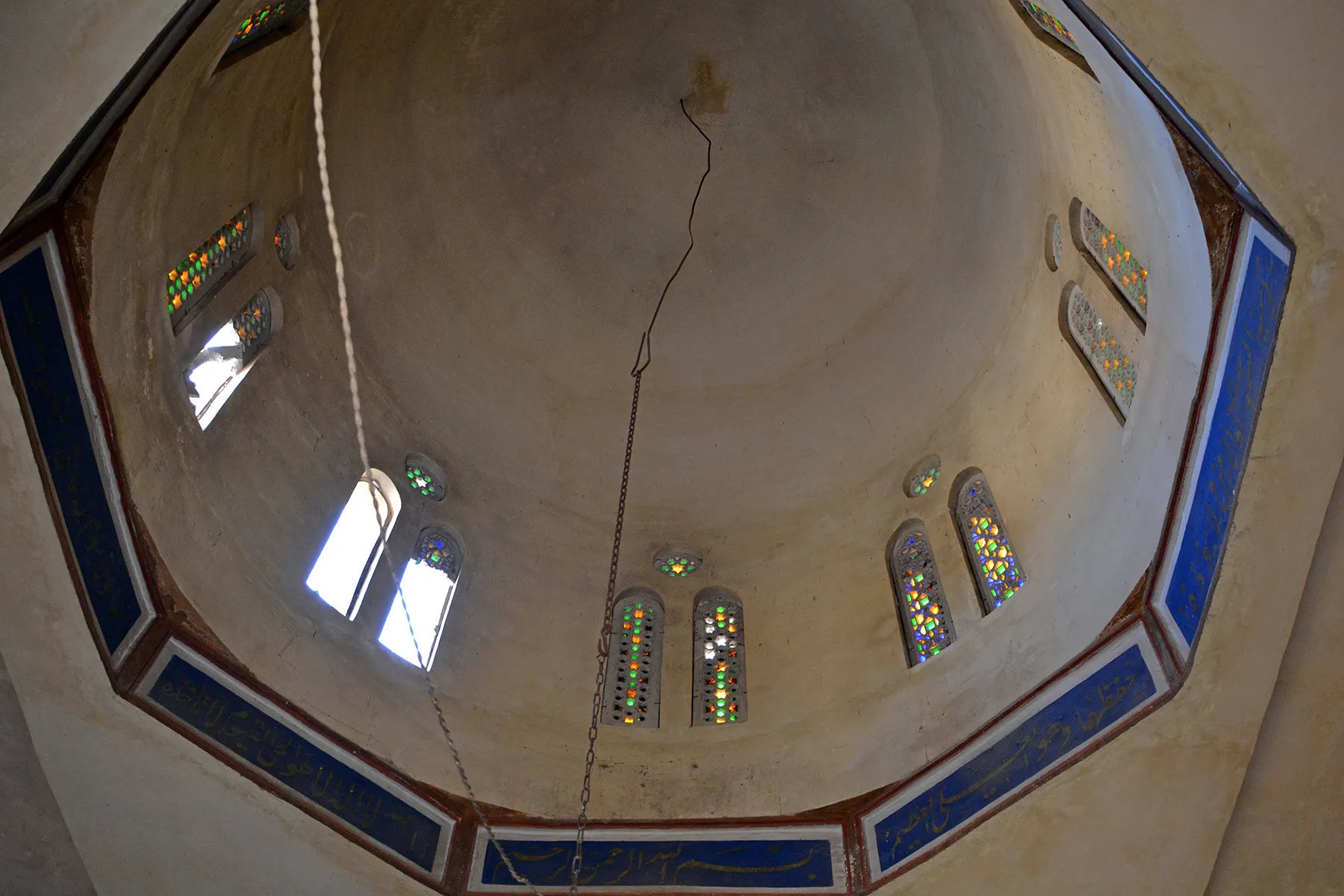
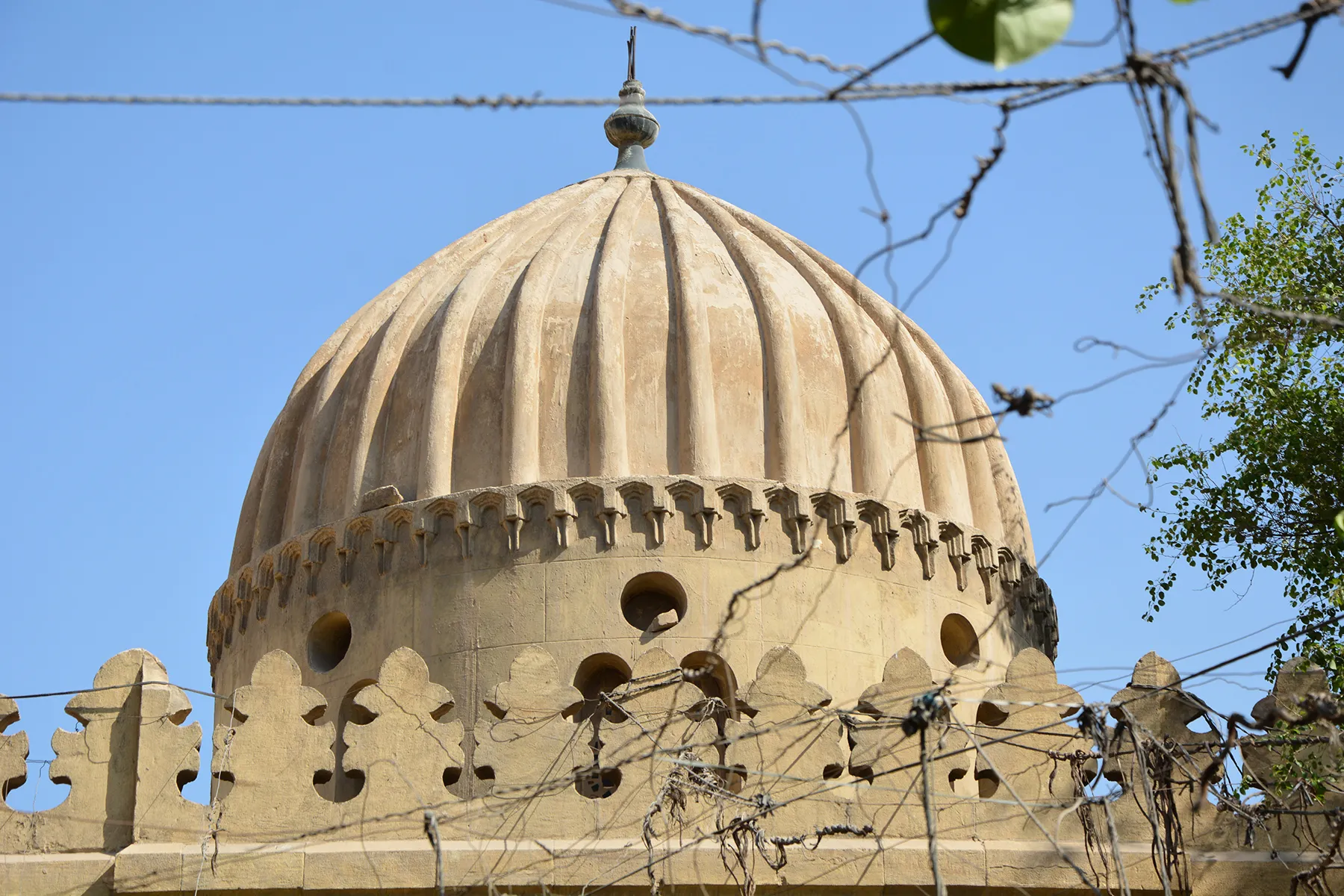
The simple undecorated cylindrical drum under the dome is pierced by eight sets of double round-arched windows with an oculus above. The dome is ribbed and set on a simple external muqarnas frieze (a solution not typical of Mamluk-period architecture, but sometimes used at that time, e.g. in the neighbouring tomb of Saba’ Banat – No 110, mid-15th century.)
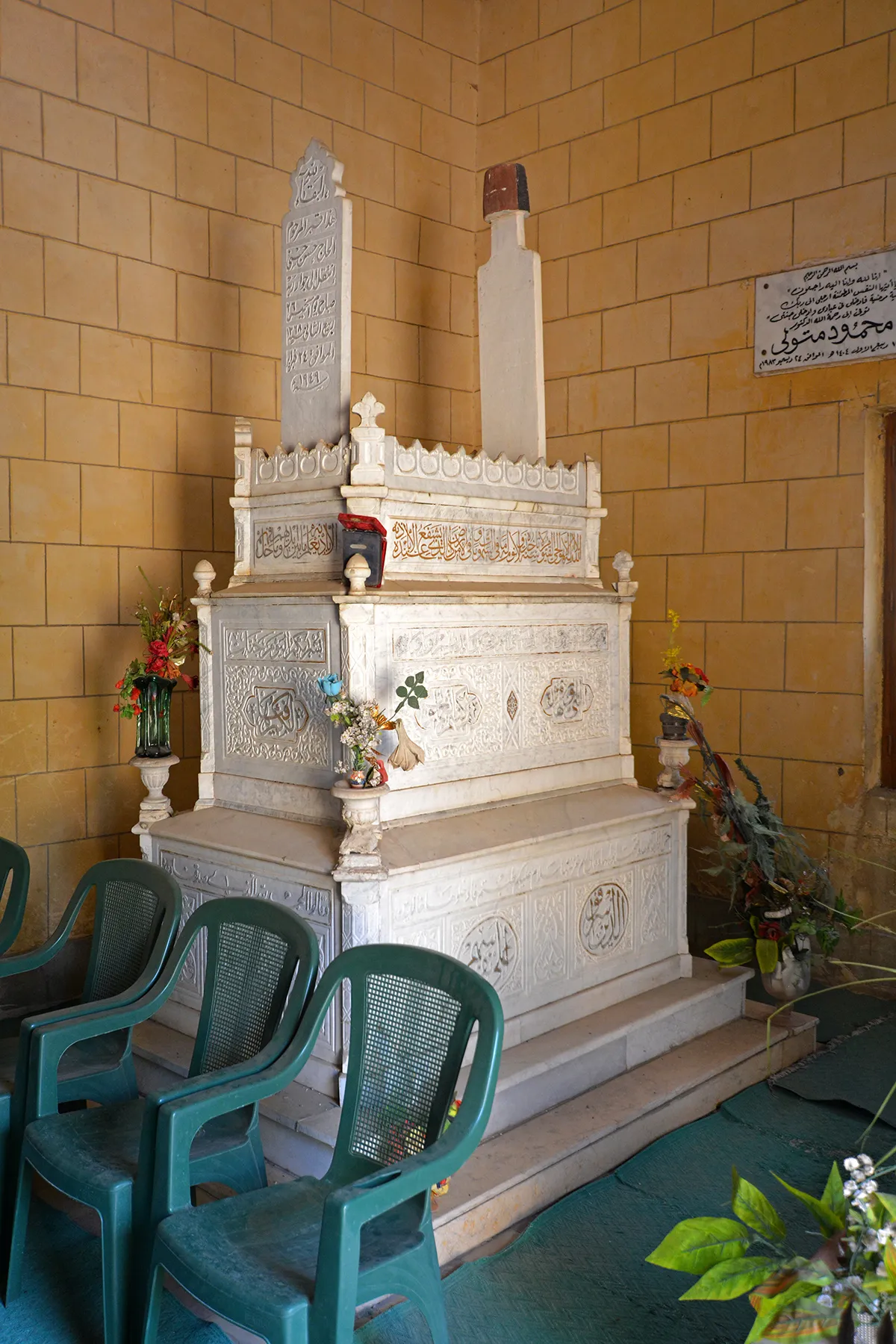
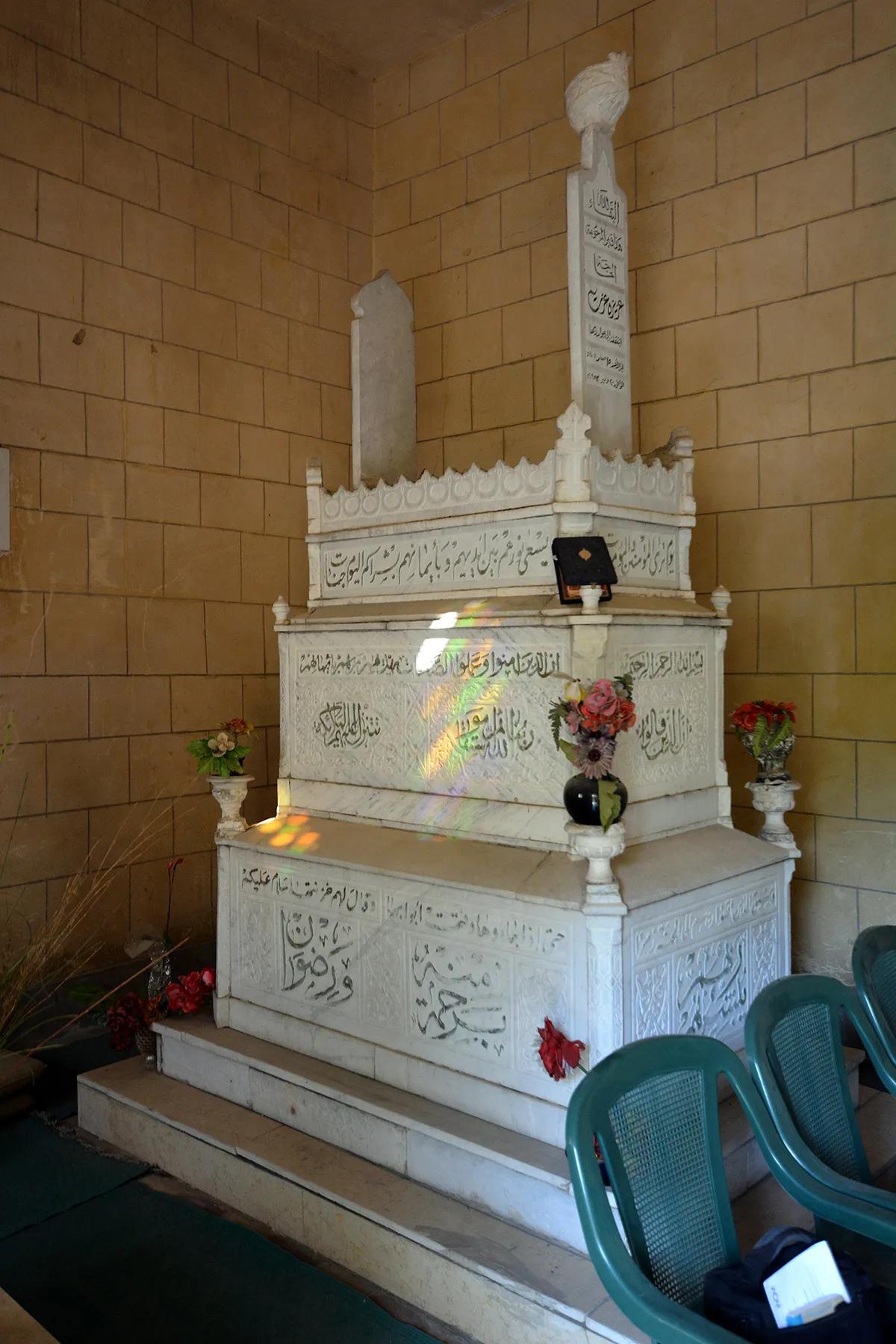
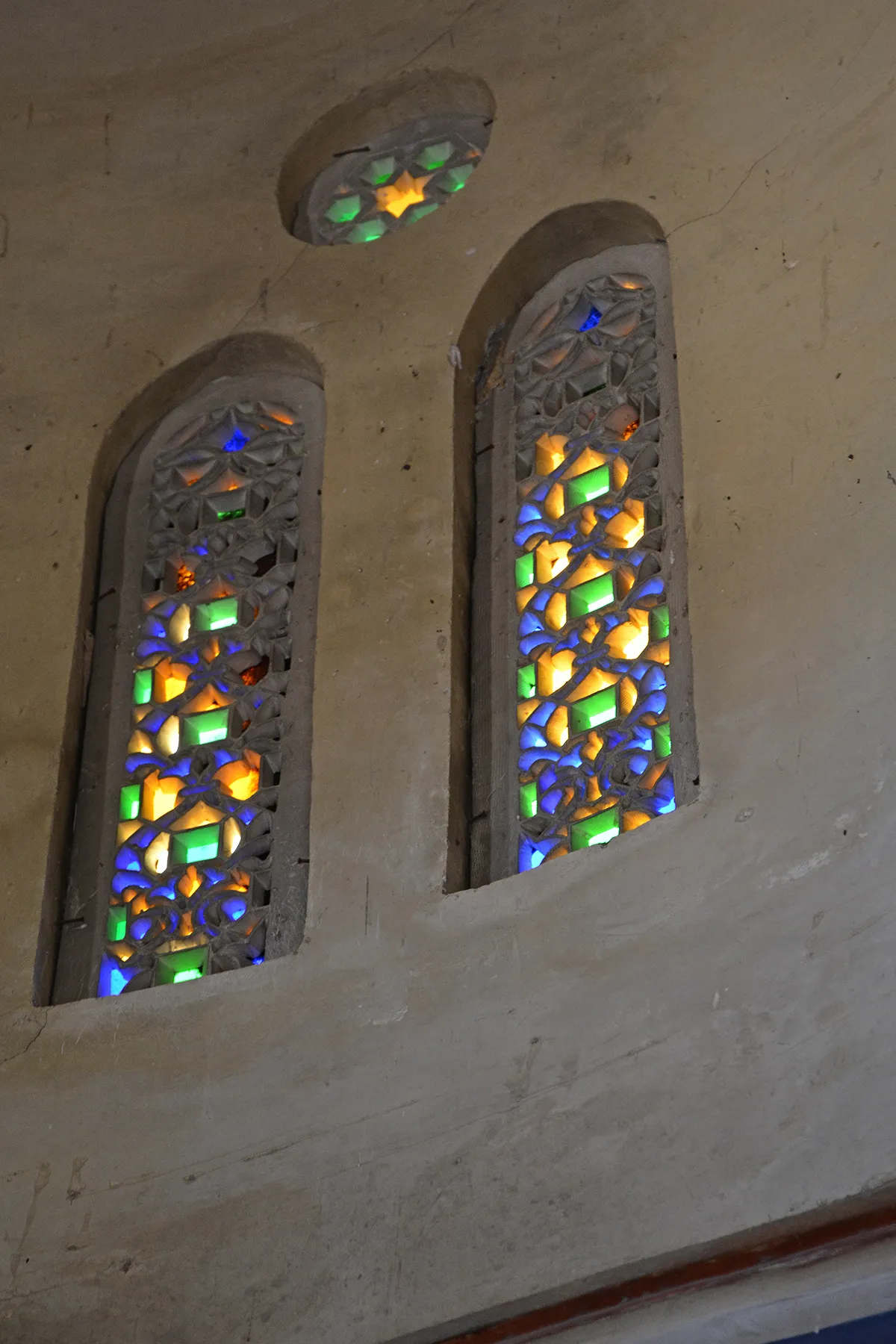
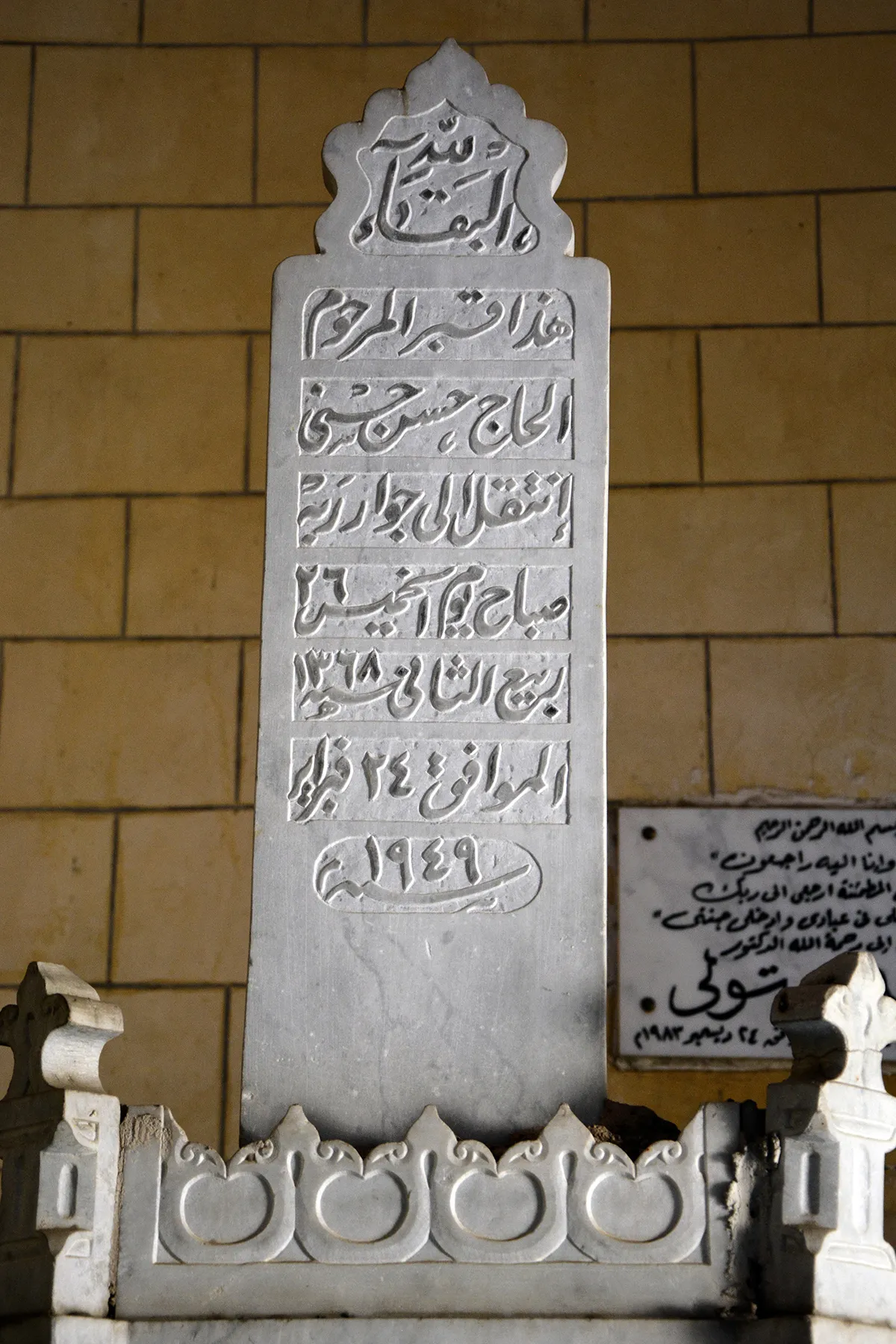
The interior is plain. There is no zone-of-transition, the drum of the dome rests directly on the reinforced concrete roofing slab. The windows in the dome are fitted with simple, but attractive qamariyat gypsum-and-stained-glass windows of good craftsmanship. Inside the mausoleum is a carved marble cenotaph of
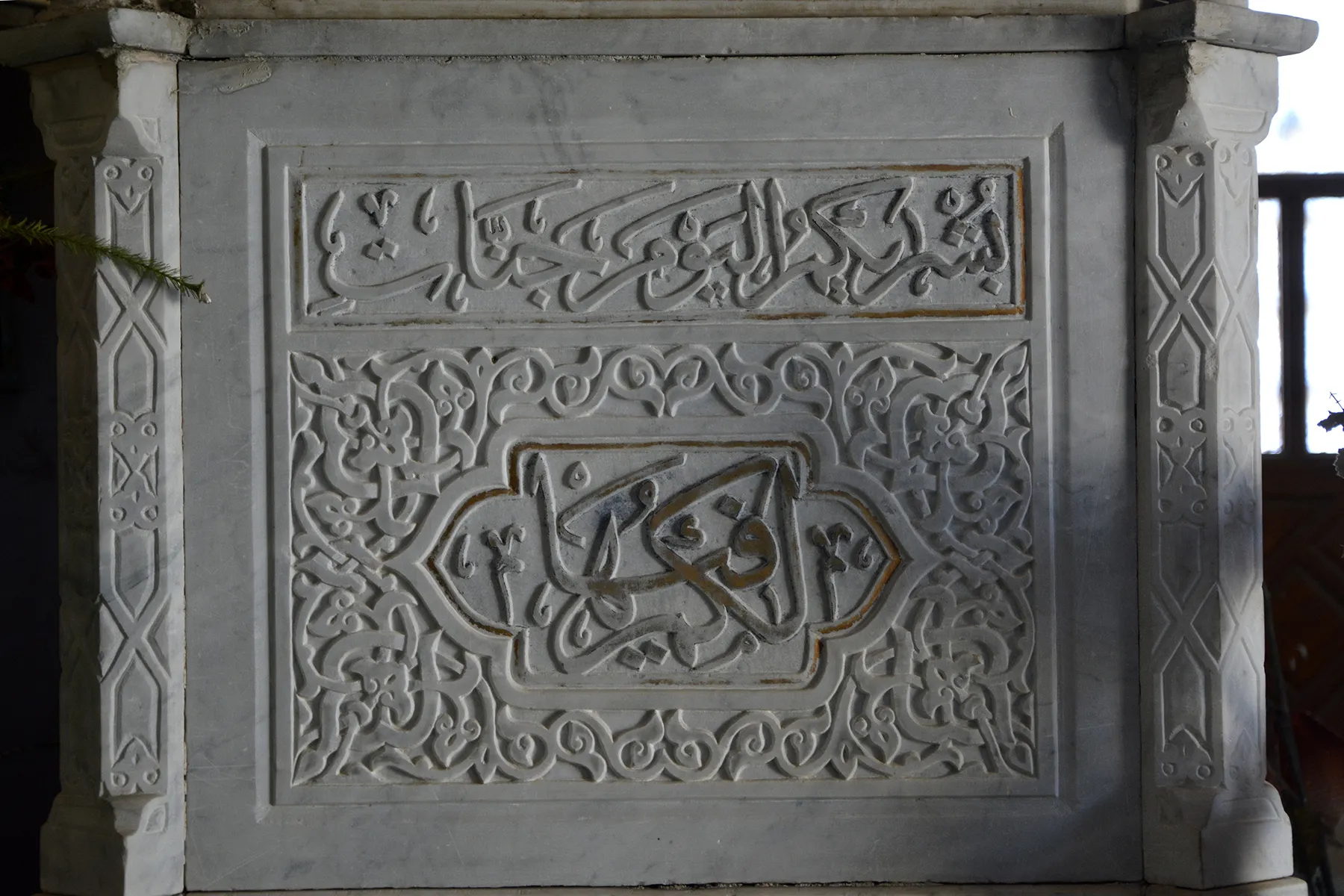
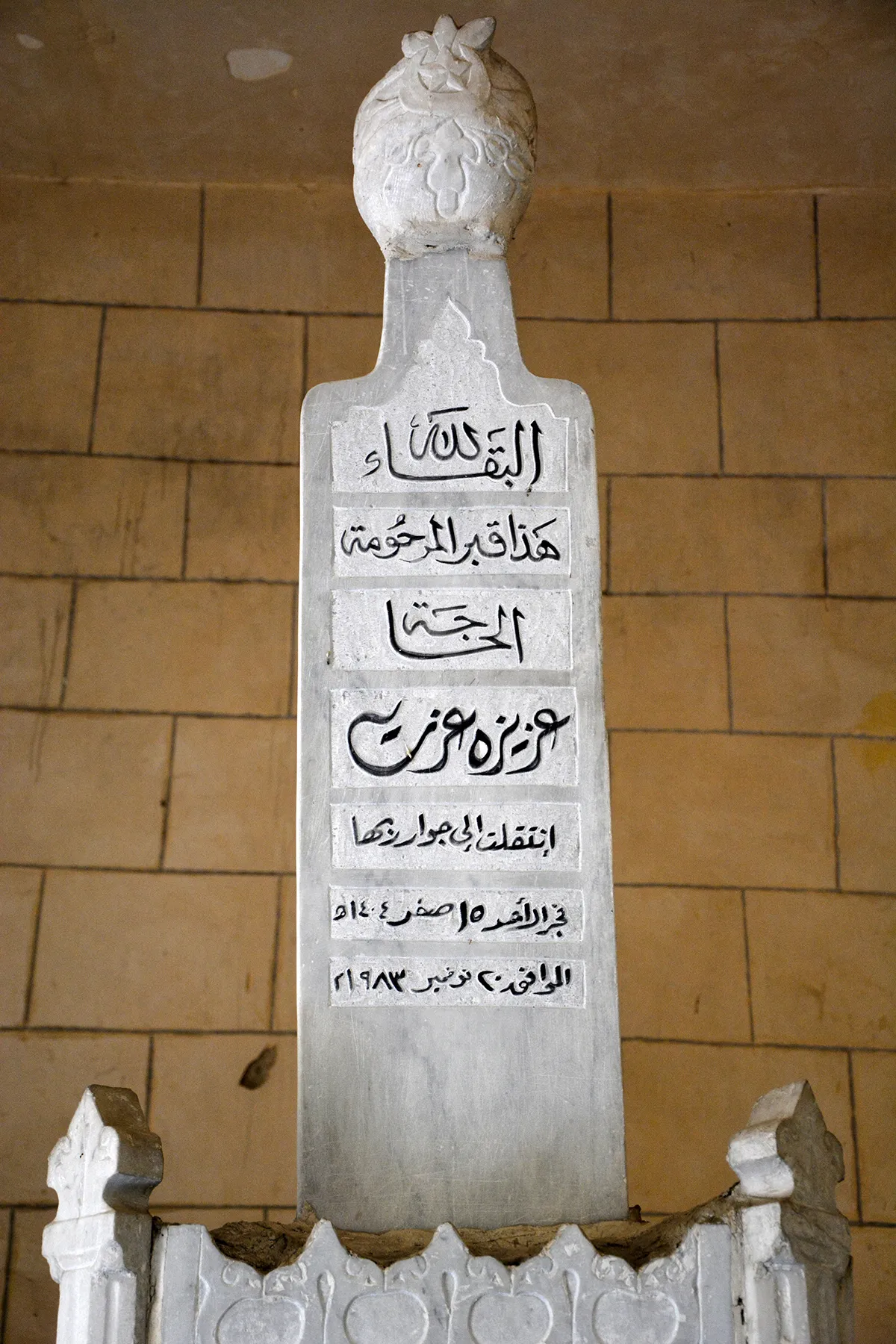
“Al-Hagg Husayn Hosni who departed to the ambiance of God in the morning of Thursday, 26 Rabiy‘a al-Thani 1368, corresponding to 24 February 1949” [i.e., two years after the date given twice on the building.] Another cenotaph is a copy of that one of inferior but still decent craftsmanship, bearing the name of Hagga ‘Aziza ‘Azmi, who died on 15 Safar 1404 AH / 12 November 1983.
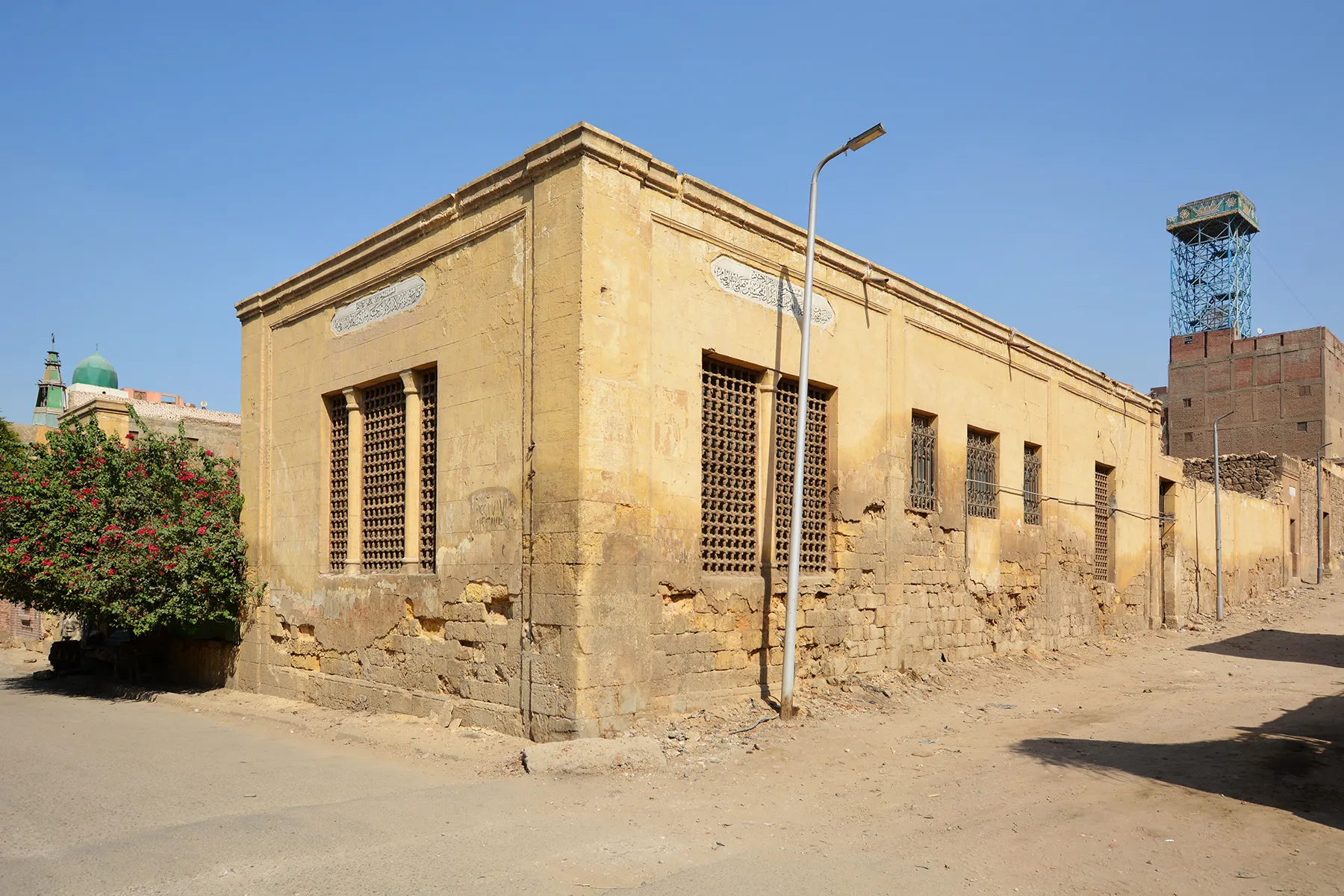
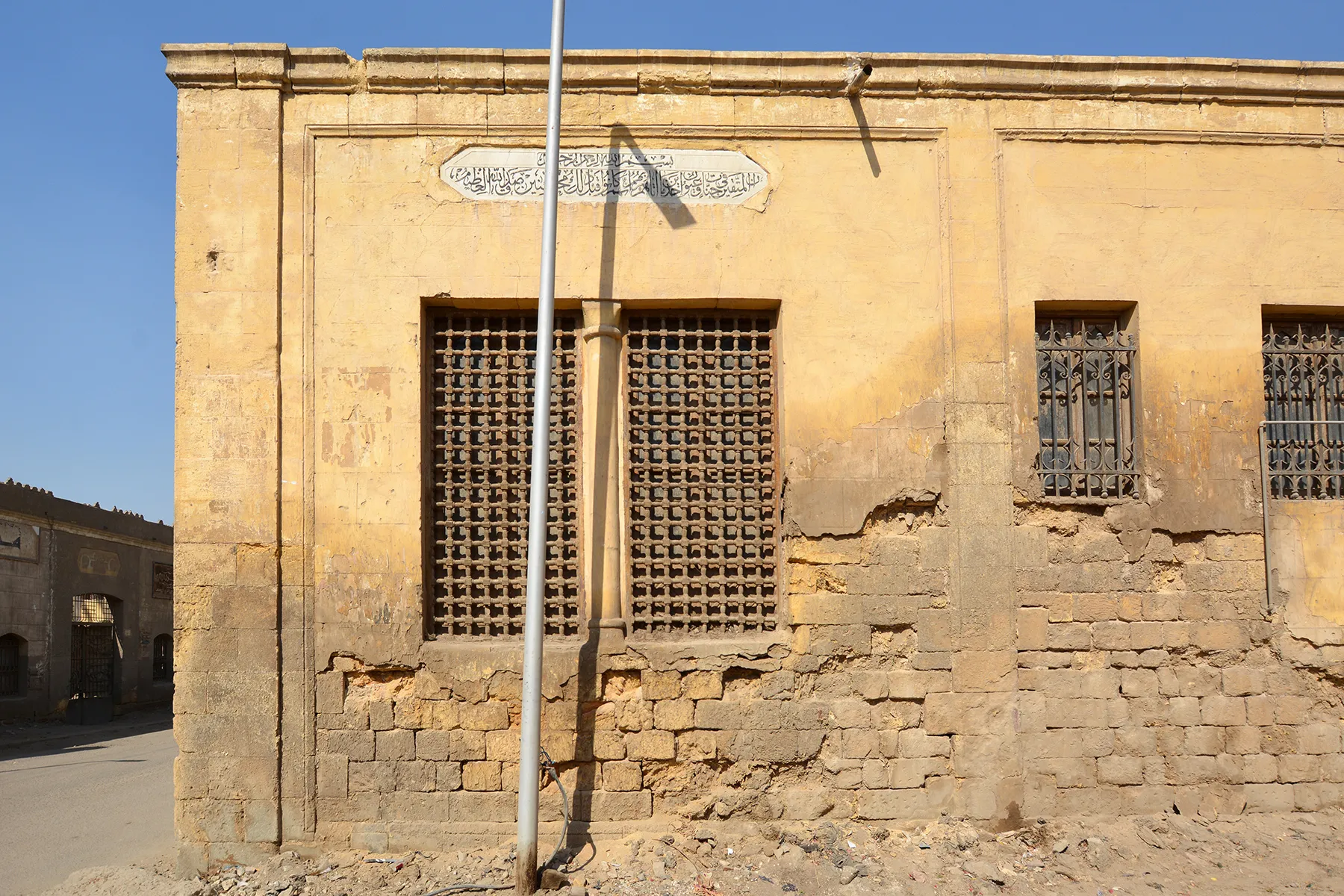
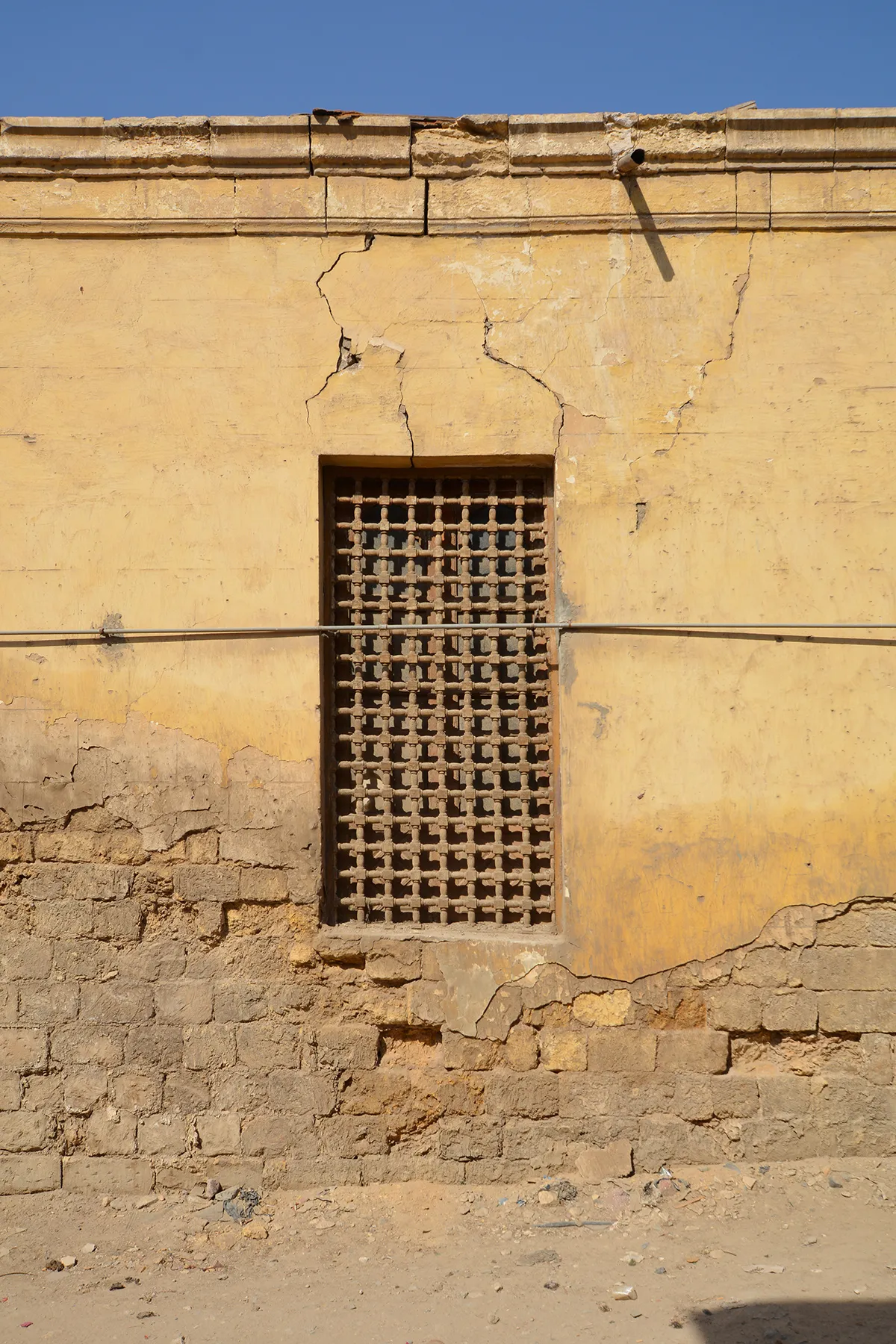
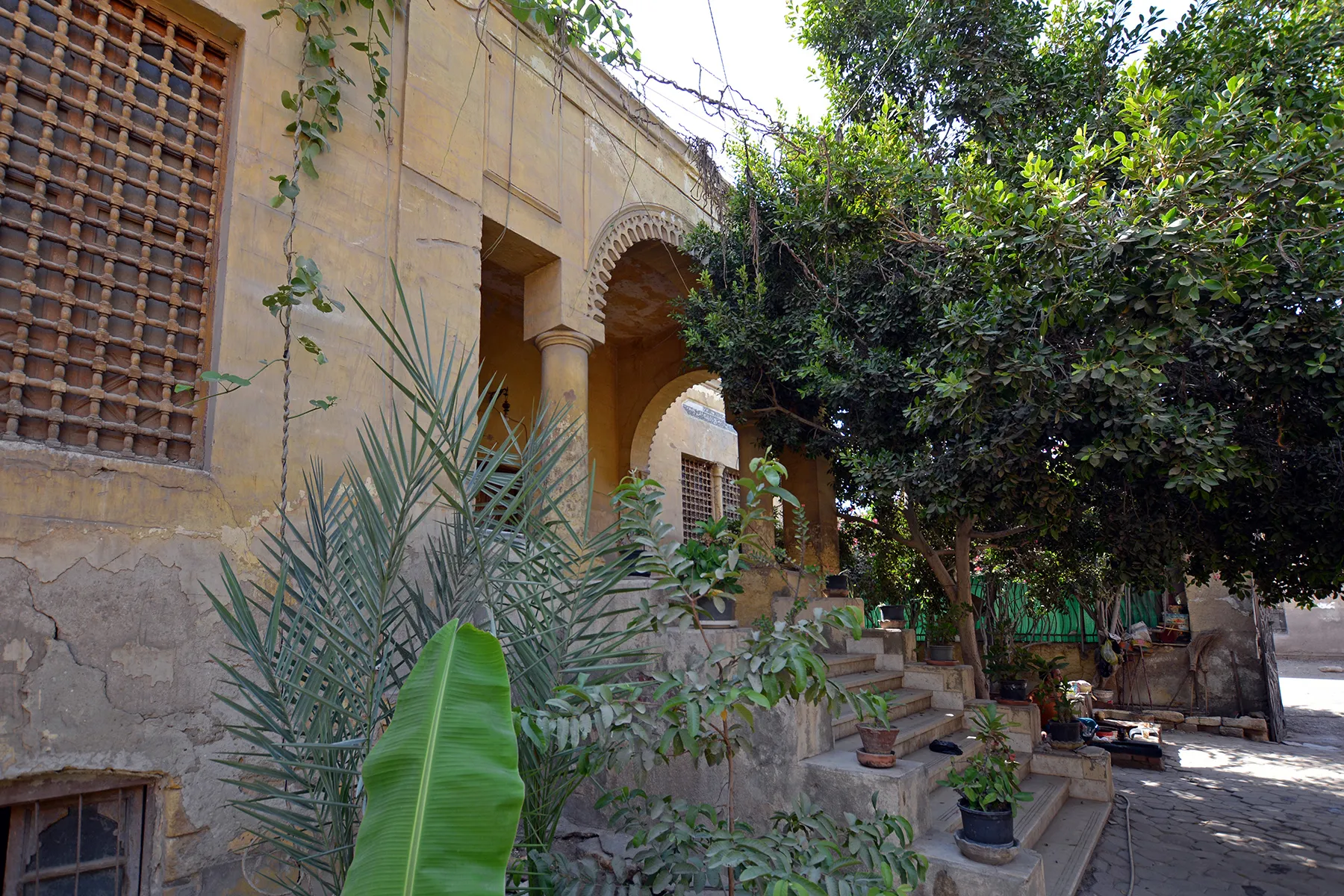
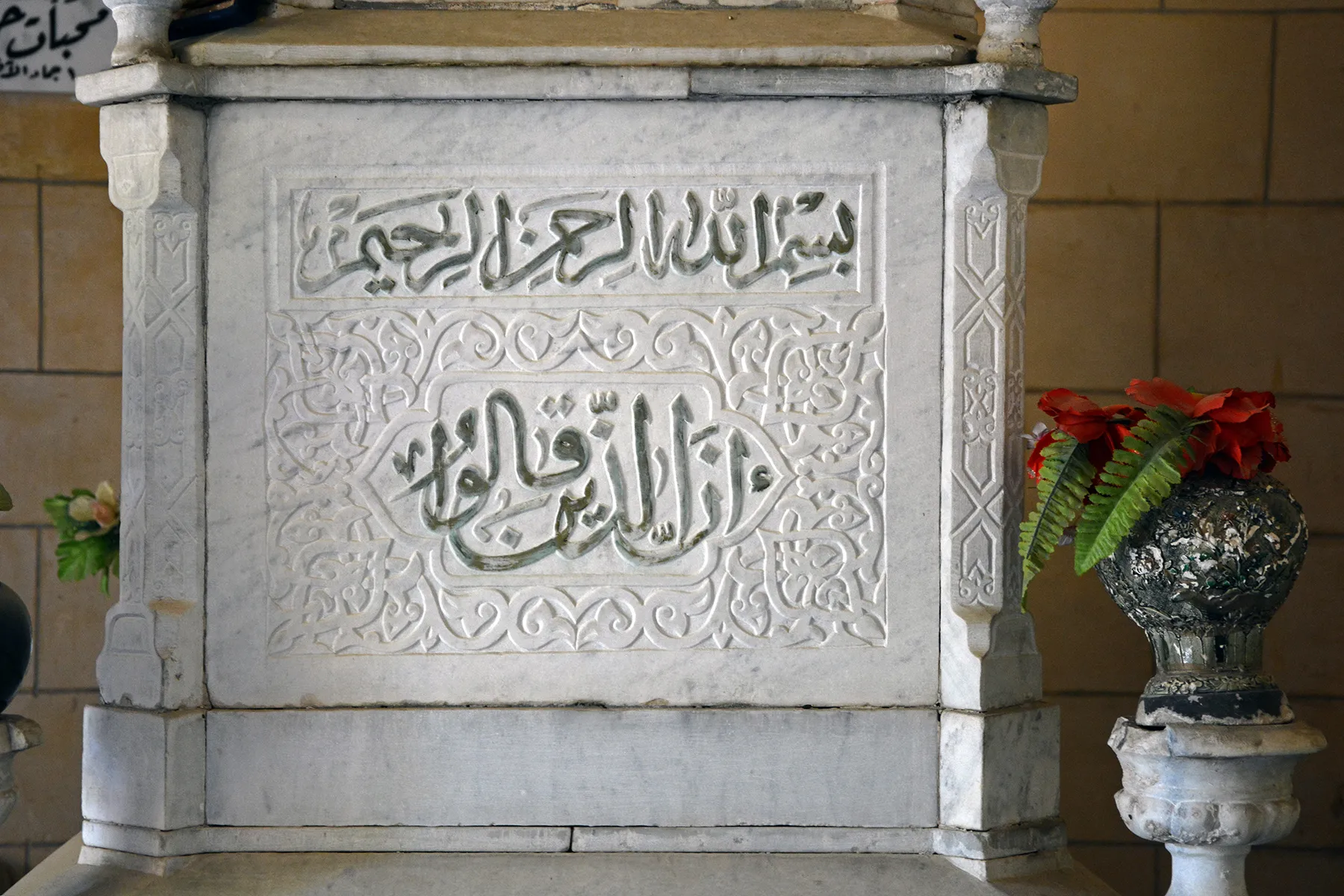
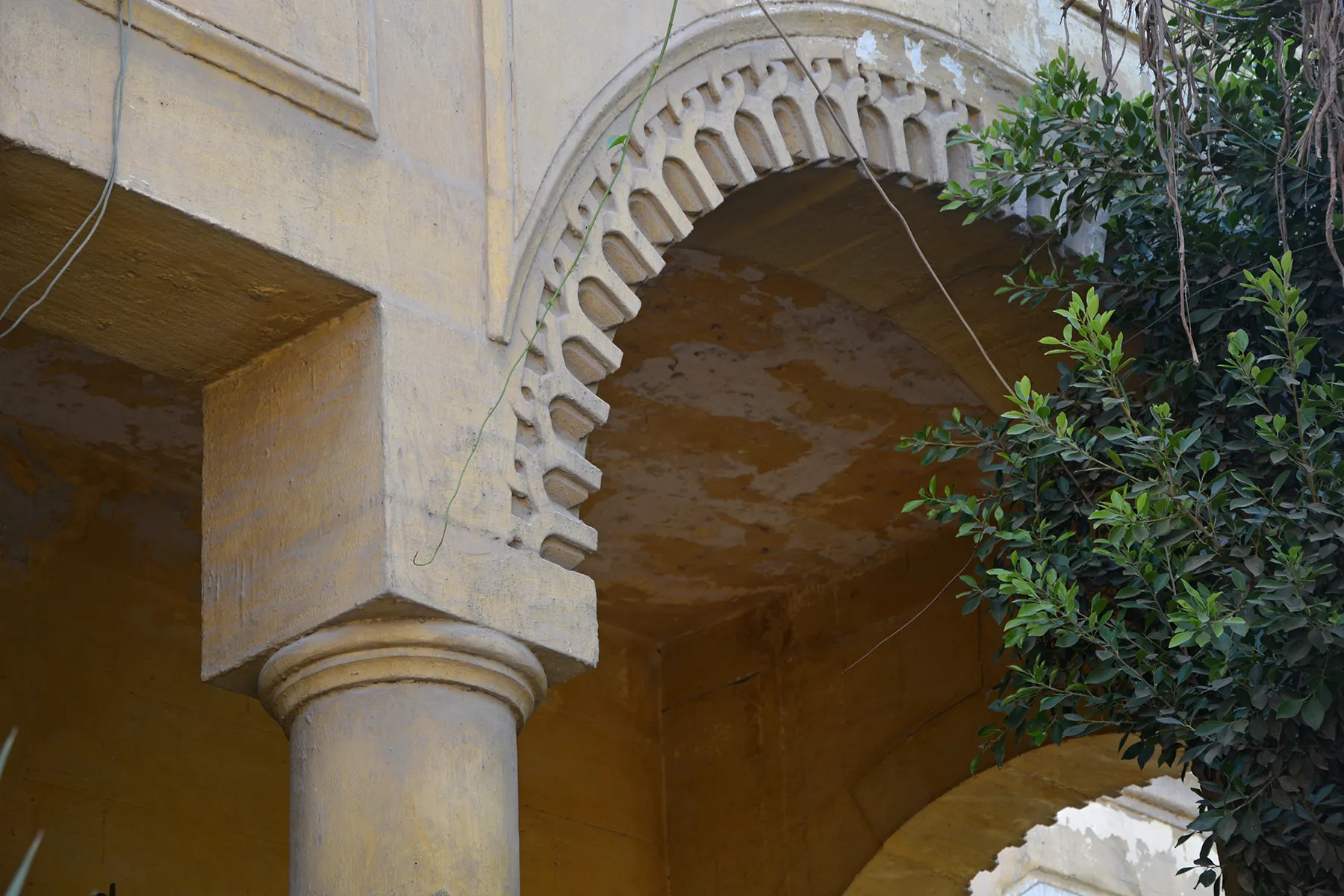
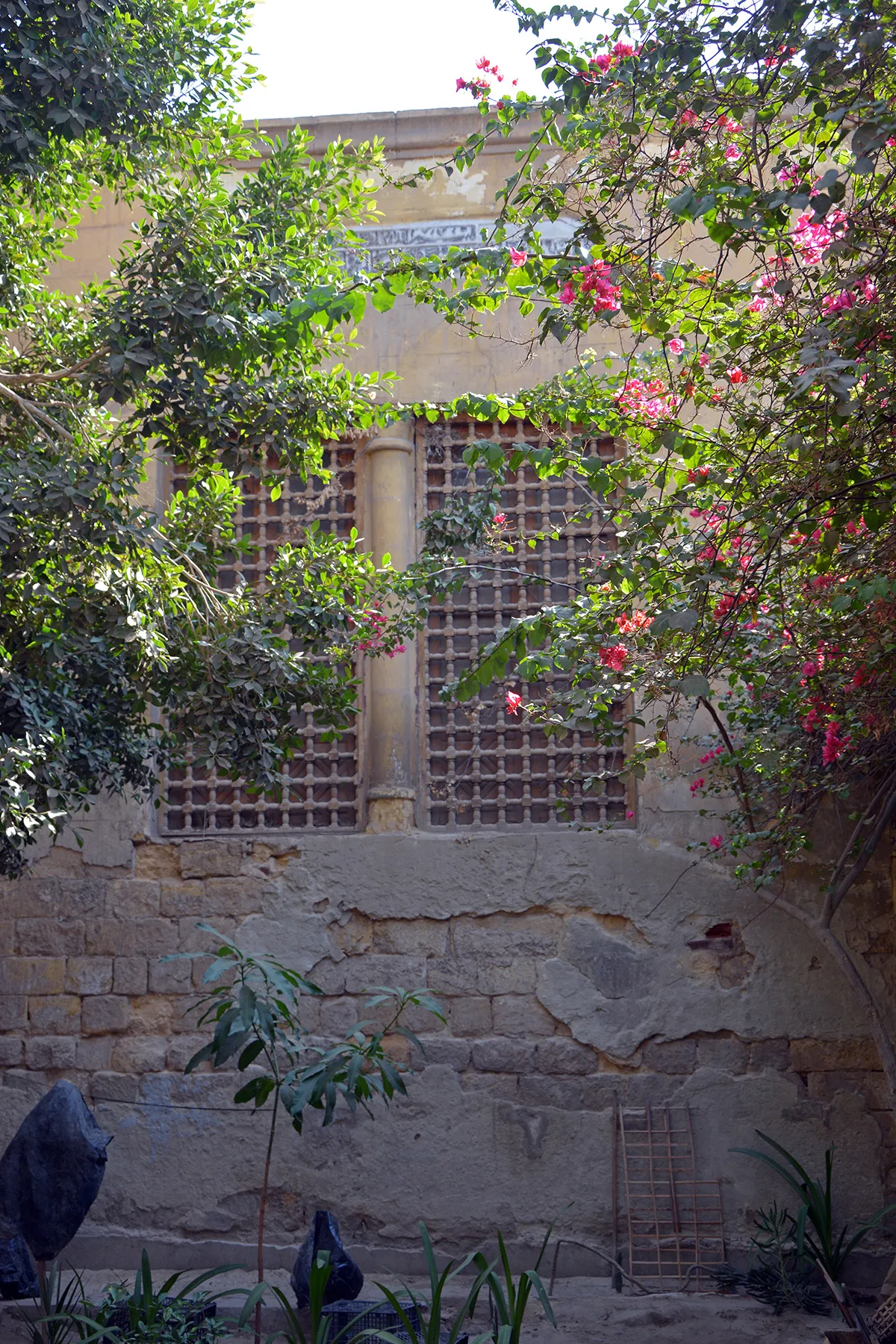
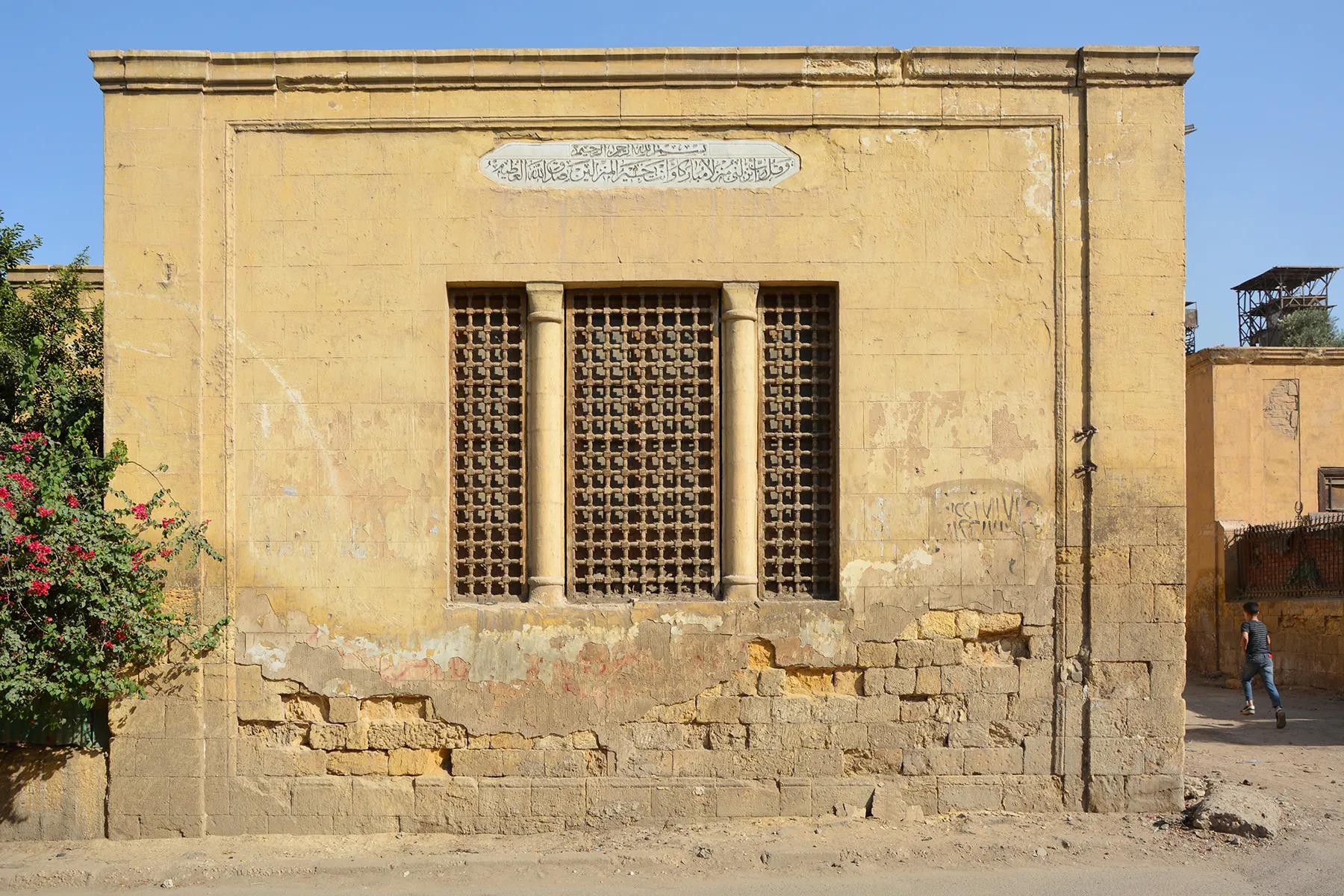
The building in the south-western part of the enclosure opens on the streets and the courtyard with large, wide undecorated windows divided by colonettes. The shorter western façade of ashlar stone is framed in flat moulded framing. The longer southern façade is divided by similar framing into three sections with huge windows in the side ones and three smaller windows of the service section in the middle one. There is a simple moulded cornice, but no crenelation. The L-shaped building has an entrance veranda on the courtyard side, with tessellated round arches on the northern and western sides. Over the wide windows of the western section of the building facing the streets and the garden are long marble panels with calligraphic inscriptions in raised relief containing verses of the Qur’an.
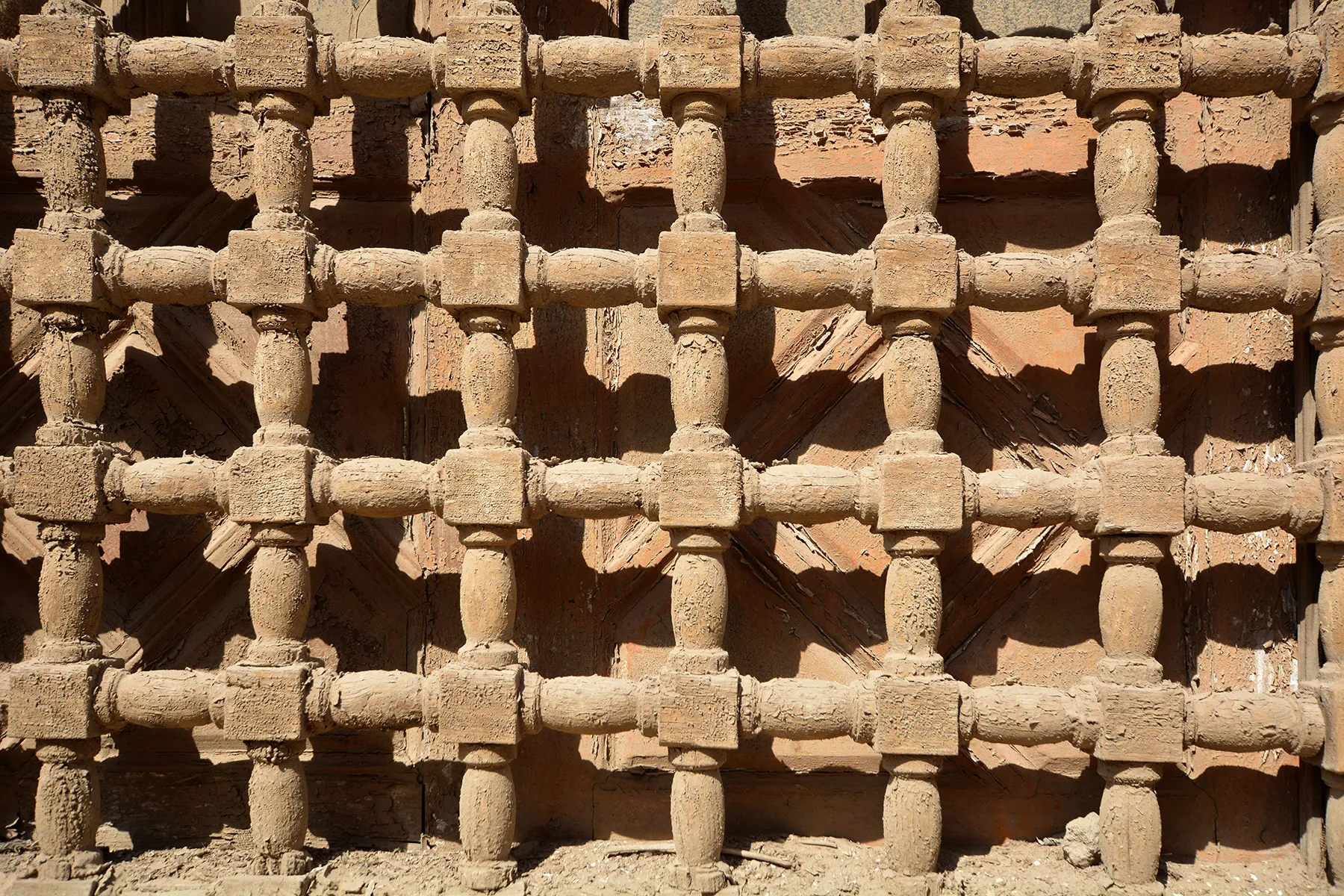
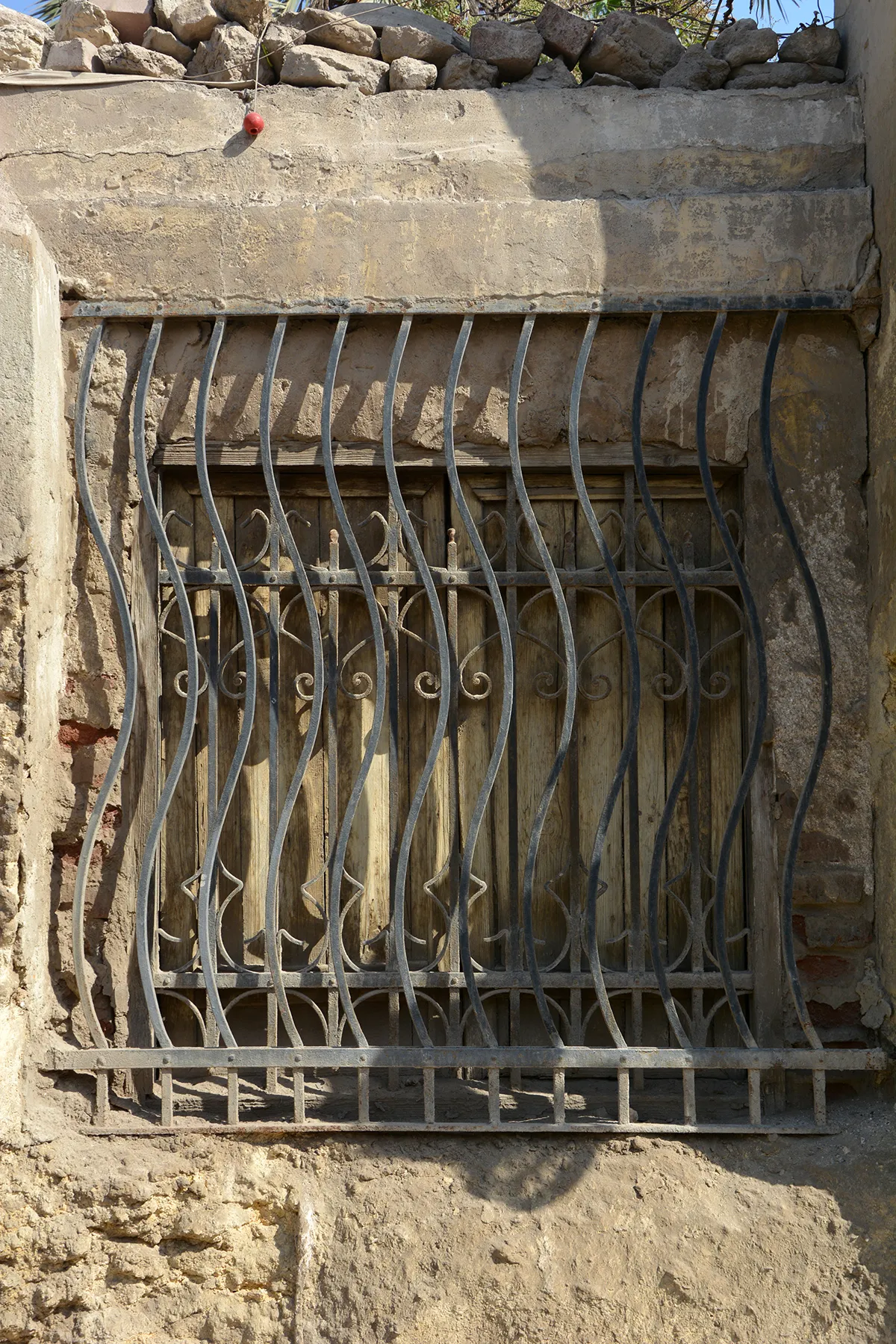
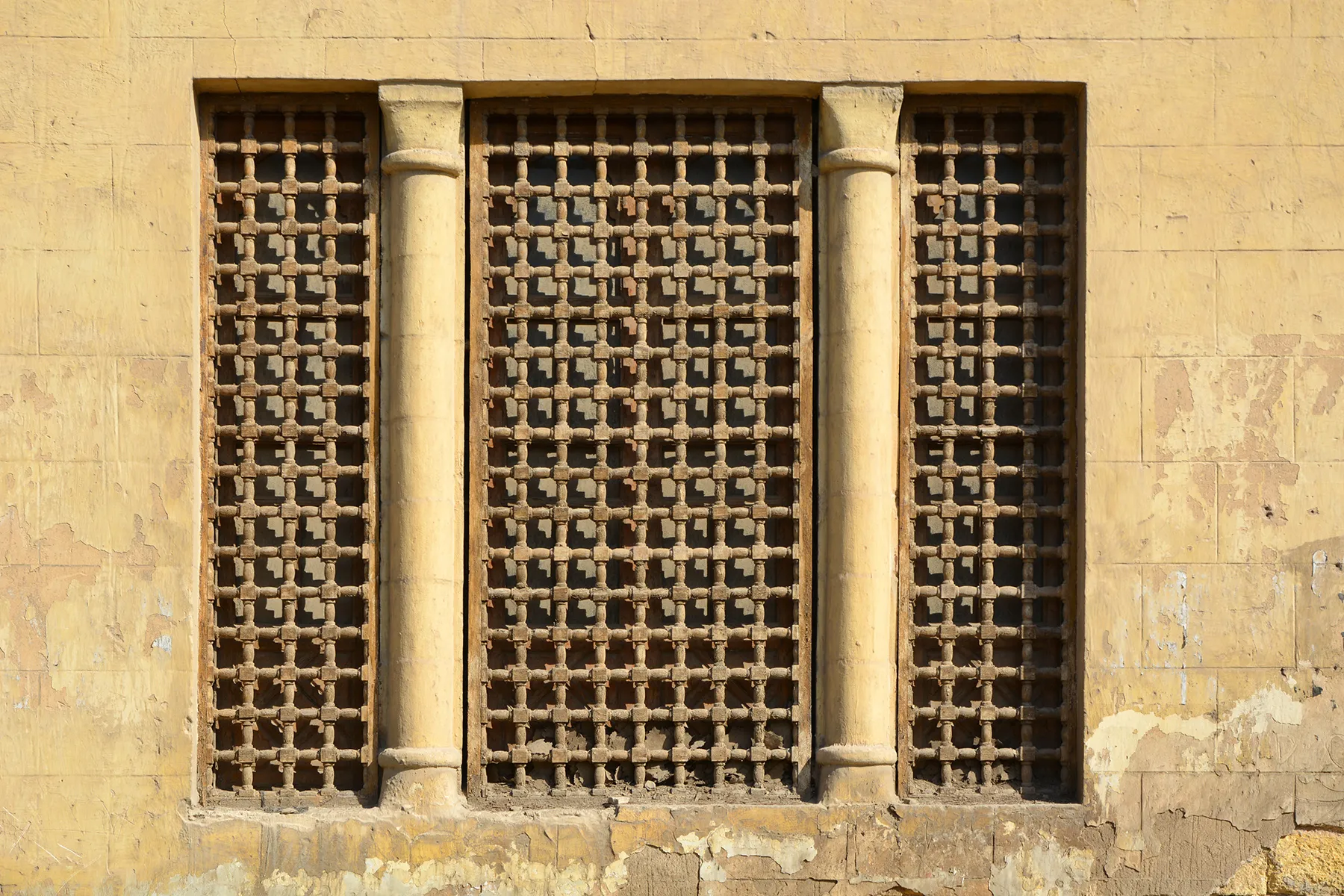
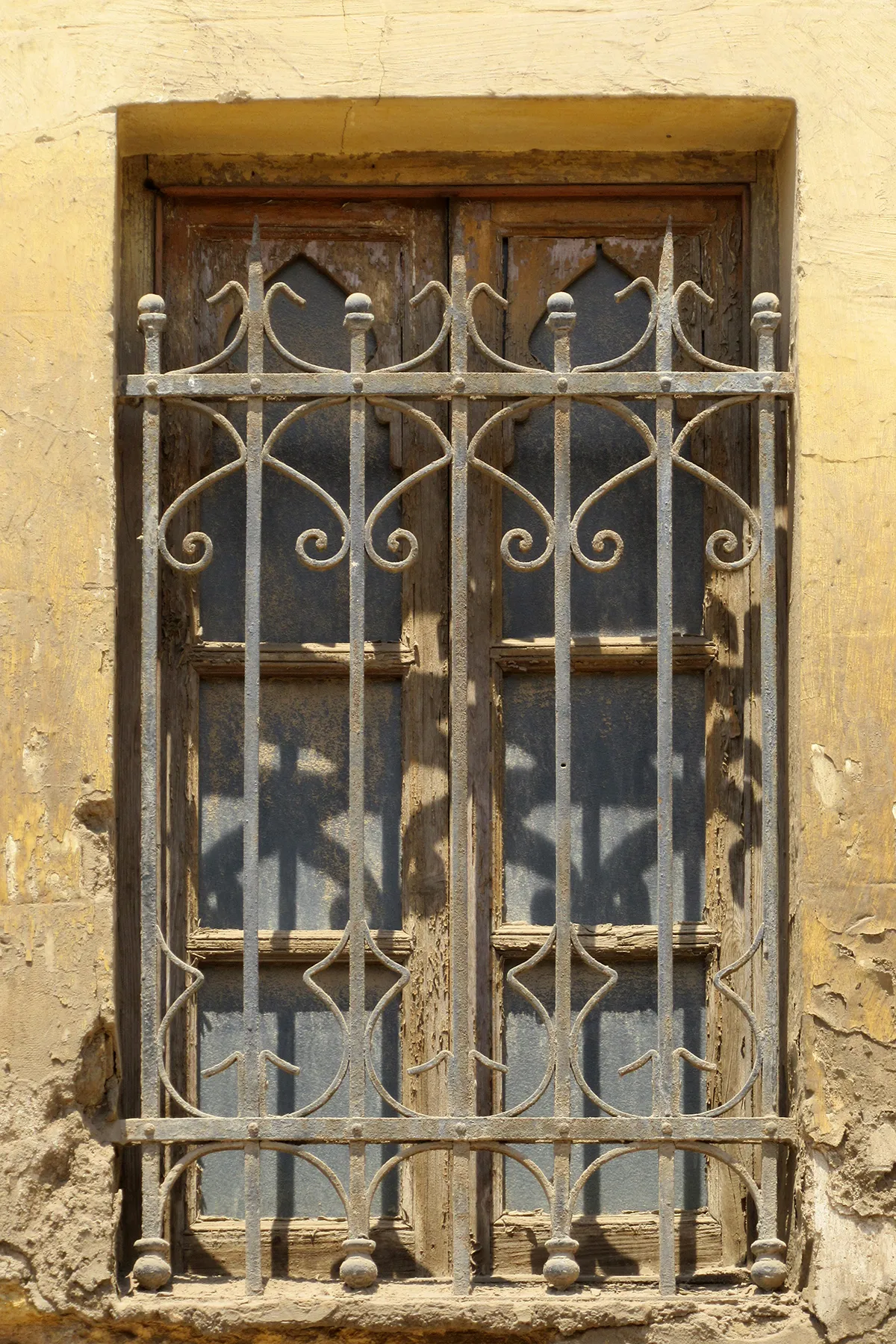
All the huge windows in the residential building and the mausoleum have turned-wood grilles of bold square divisions (a type of mashrabiya called “Ma’muni”), and simple panelled wooden shutters decorated with mafruka motifs. The windows of service rooms have simple decorative wrought-iron grilles. There is a secondary entrance in the southern façade leasing from a side street to the courtyard east of the residential unit.
Condition of preservation
The unit is used for residential purposes and receives basic maintenance, including tending to the garden. However, there is very serious damage to the lower parts of the walls from rising damp. Woodwork is desiccated, with peeling paint.
Information abut the founder, family history, etc.
According to the current residents, Hassan Hossni was the shoes maker of King Farouk, and Shahbandar [head of professional organization] of merchants at his time.
- Field recording by
- Hadeer Ahmad, Muhammad Essam, and Esraa al-Mahdi-edited by Jaroslaw Dobrowolski
- Date recorded
- August 8, 2023
- Data entered by
- Yusuf Yassir
- Date entered
- May 21, 2024