





Unit No56
Shaykh Hasuna al-Nawawi and his family
|
Coordinates of the main entrance |
30.044965N - 31.274262E |
|
Attribution |
Shaykh Hasuna al-Nawawi and his family |
|
Higri (AH)Dates as given in the Inscription |
1343 |
|
Miladi (AD)Dates as given in the Inscription |
|
|
Inscription Contemporary with the building? |
Yes |
|
Multiple date(s) In the inscription? |
Yes |
|
Assumed Date |
|
|
Based on |
|
|
Original Use |
Funerary enclosure |
|
Current Use |
Funerary enclosure with guard’s residence |
|
Overall condition |
Fair |
Features of unit 56
| Present | Count | Material | Comments (see description for details) | |
|---|---|---|---|---|
| Free standing structure | No | |||
| Walled enclosure | Yes | 1 | stone | Two separate courtyards |
| Rooms by the perimeter wall | Yes | 5 | stone | In N courtyard: mausoleum + 4 rooms |
| Freestanding structure(s) in enclousure | No | |||
| Dome over the tomb chamber | Yes | |||
| Neo-Mamluk architectural decoration | No | |||
| Garden layout | No | |||
| Sabil(s) | Yes | 1 | stone | Sabil window in N wall |
| Wall fountain(s) | No | |||
| Canopy on columns / pillars | No | |||
| Carved marble cenotaph(s) | Yes | 5 | 5 | In S courtyard; + 1 wooden in mausoleum |
| Decorated limestone tomb-markers | No | Interior and courtyard inaccessible | ||
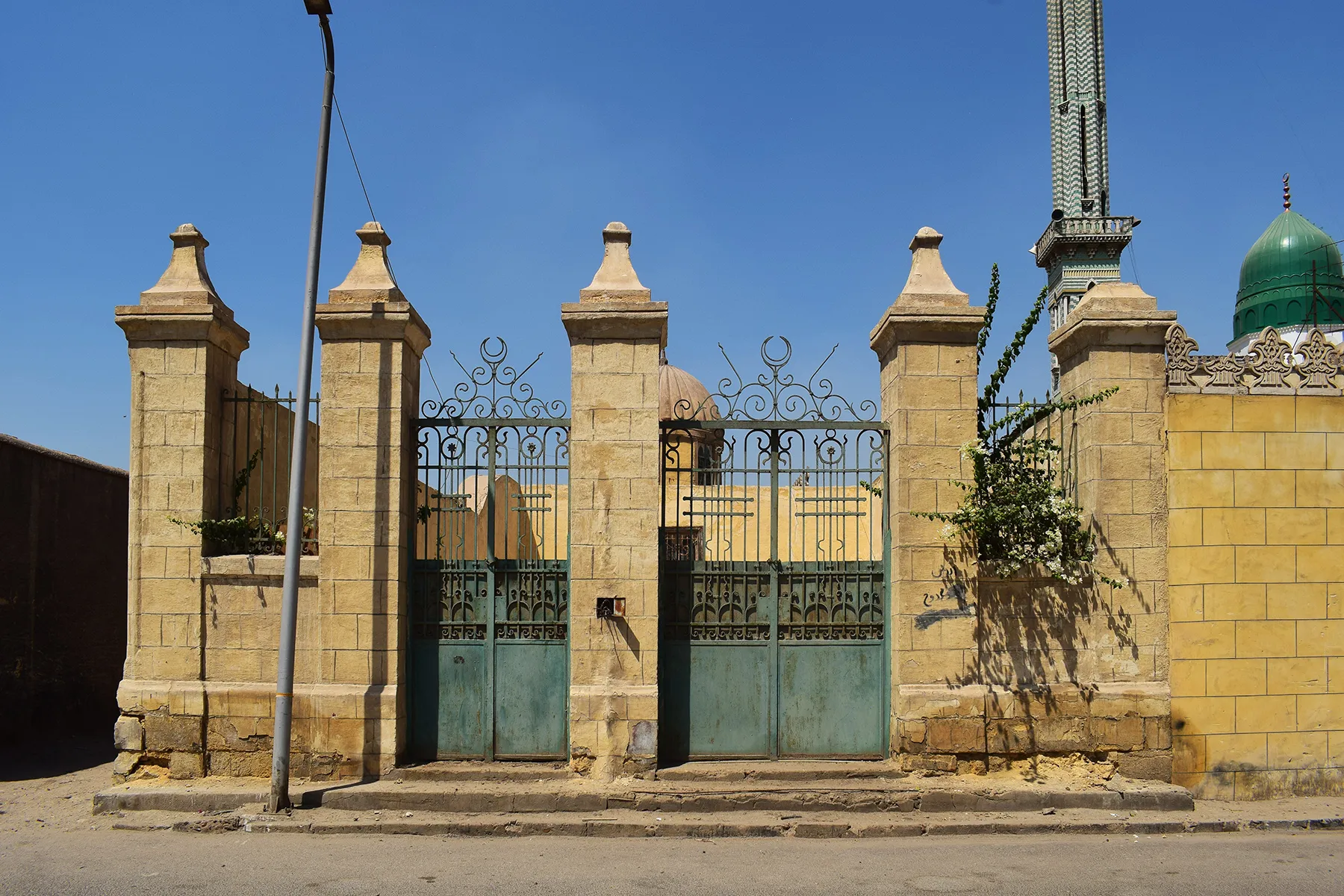
| Decorated gateway | Yes | 2 | stone | |
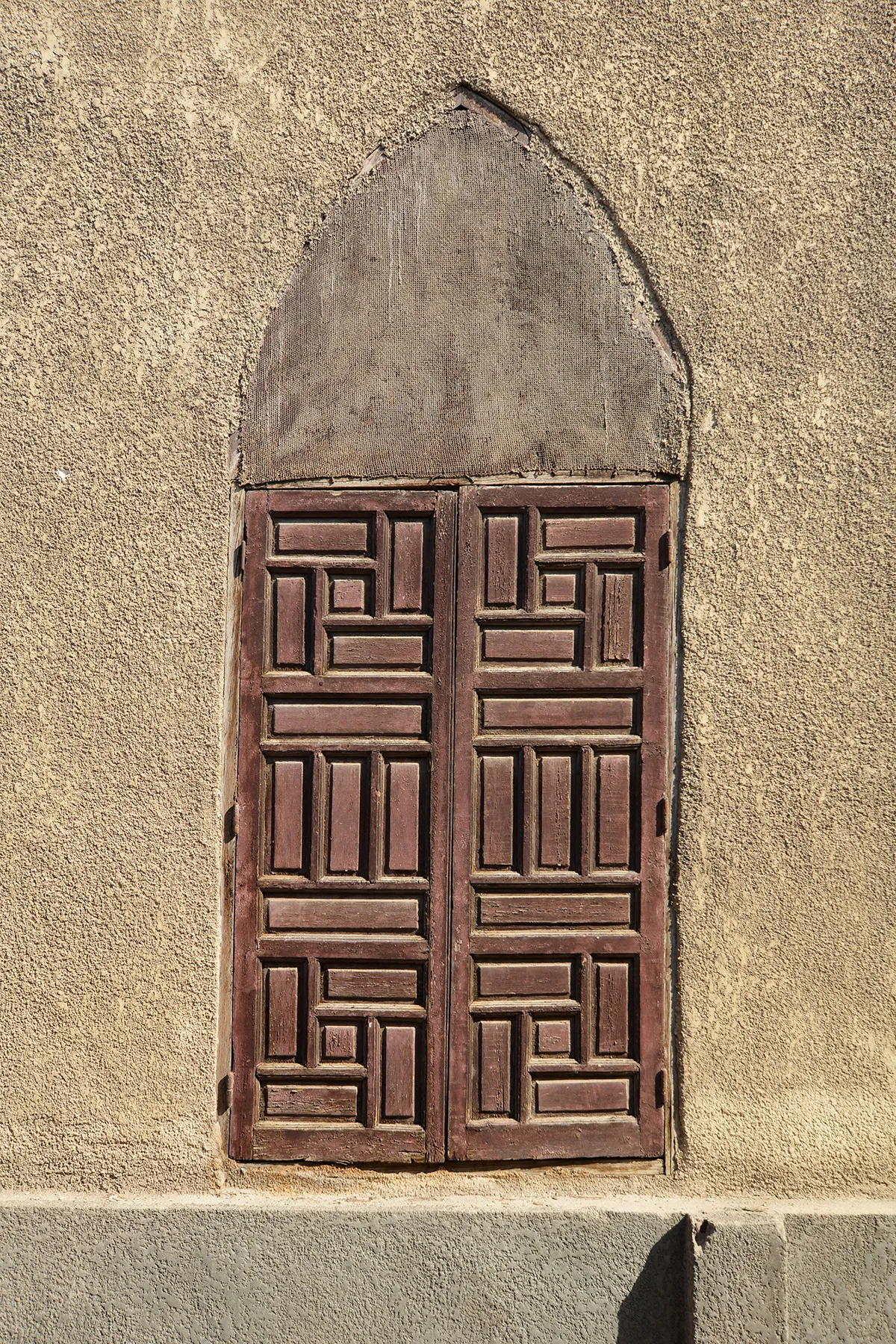
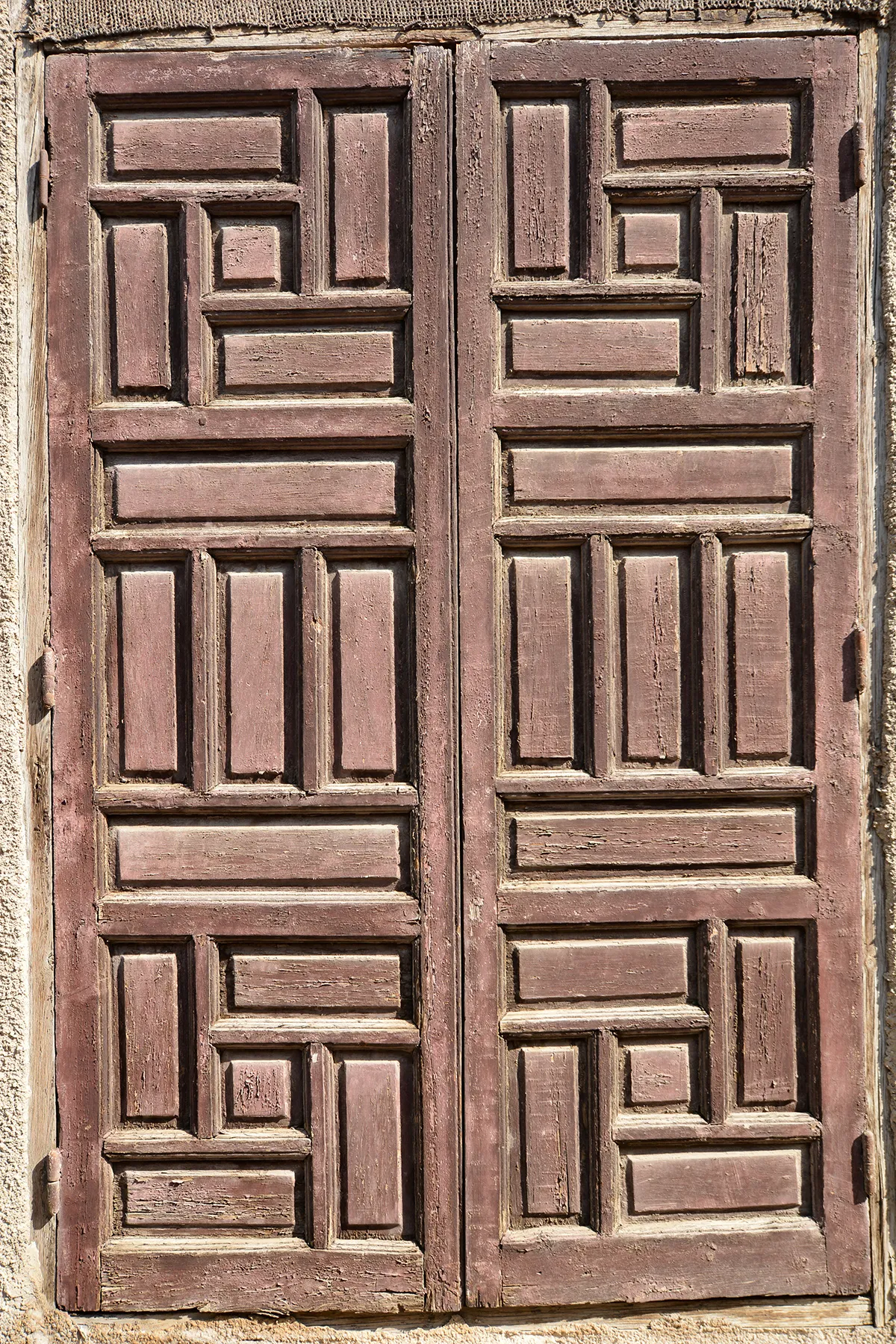
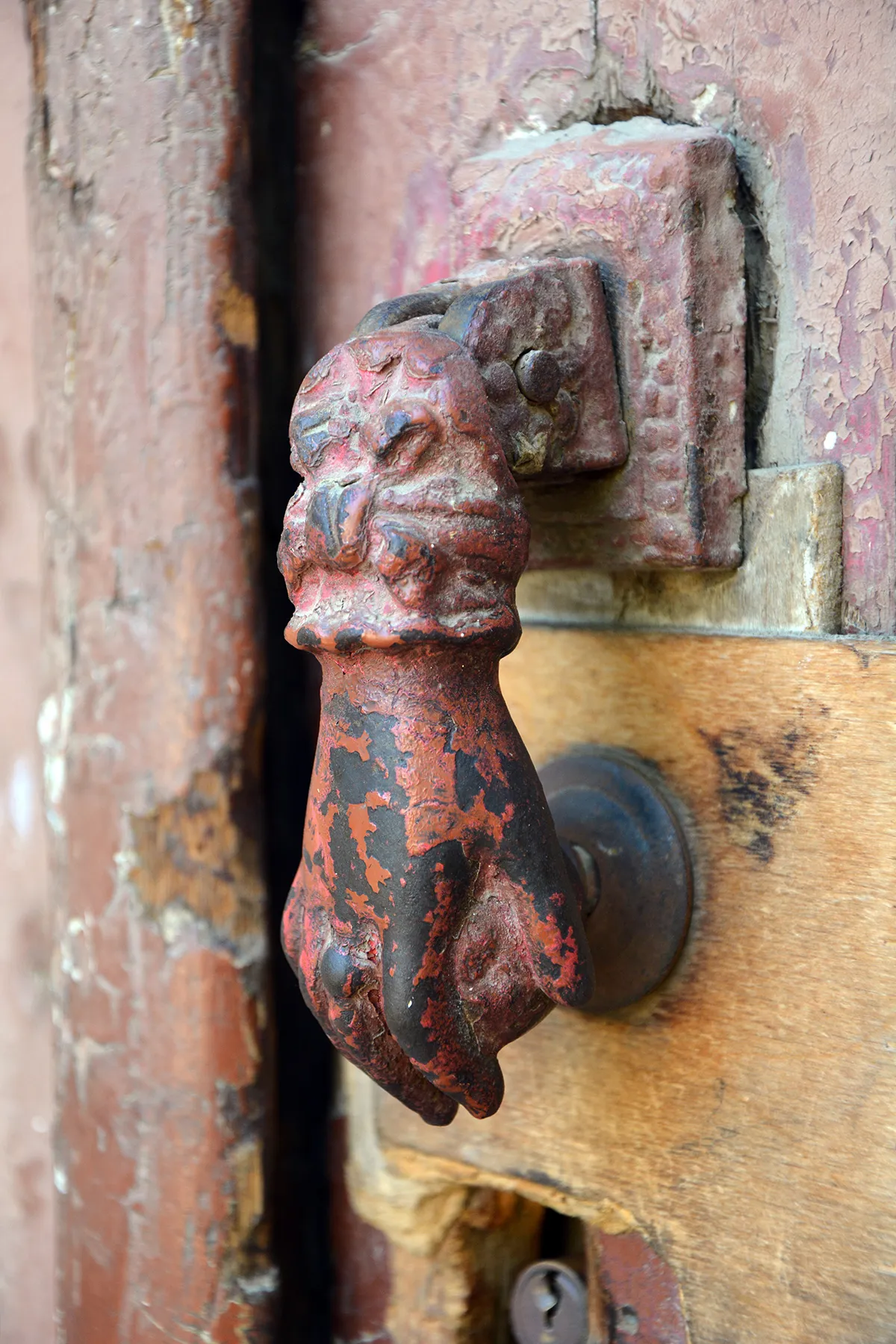
| Decorative door-leaves | Yes | 10 | wood | Simple mafruka patterns |
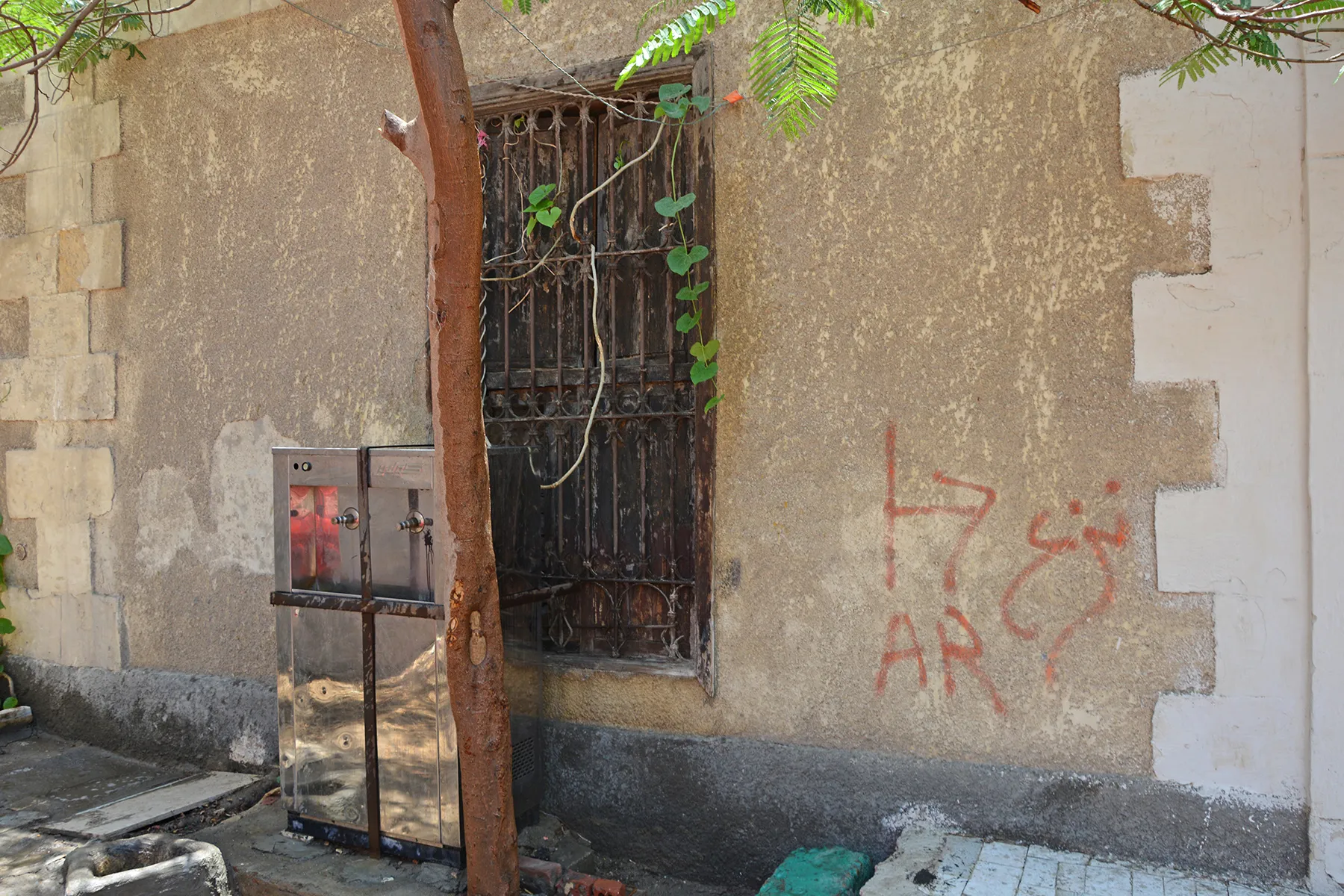
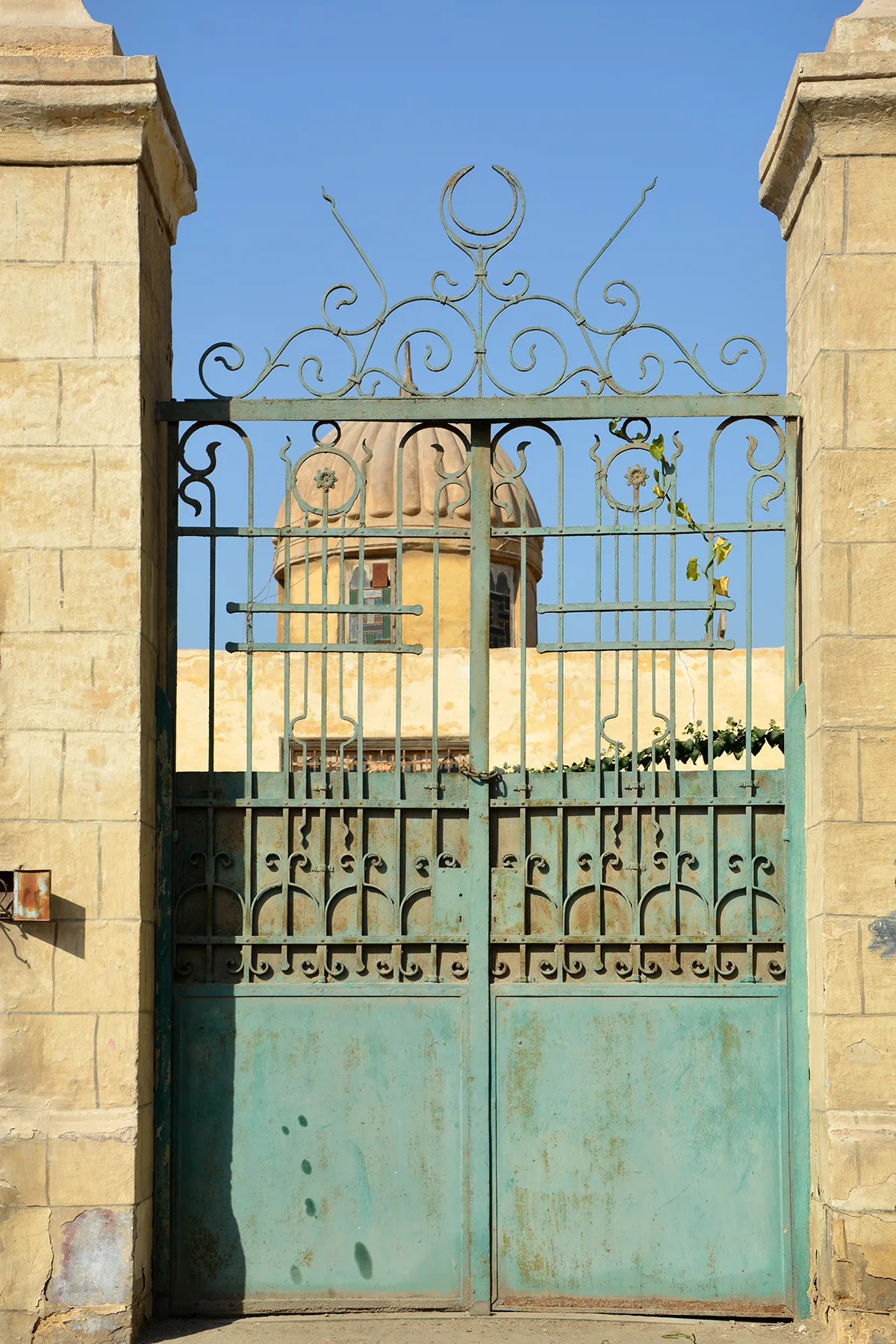
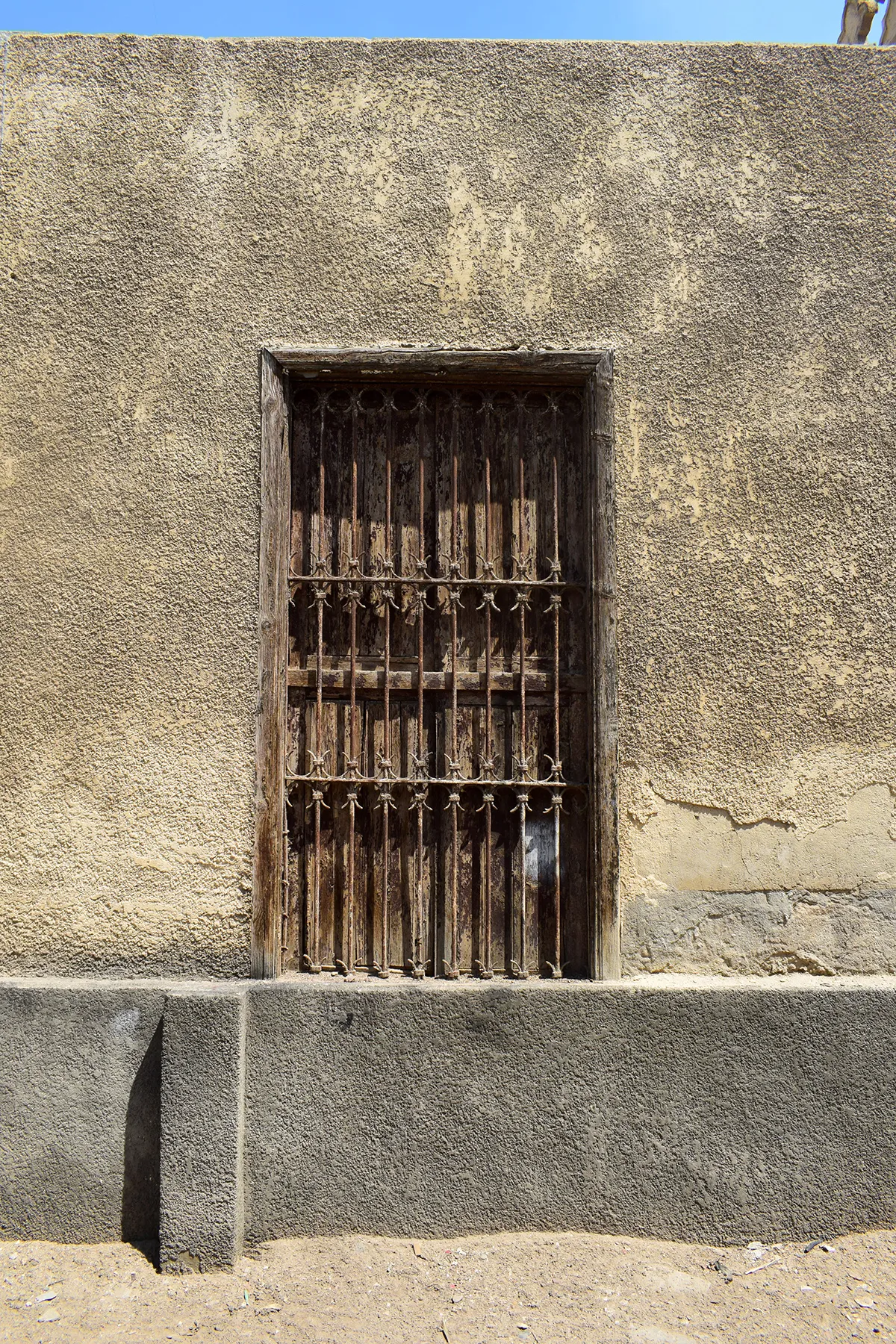
| Decorative window grilles | Yes | 3 | wrought iron | Sabil window, gates |
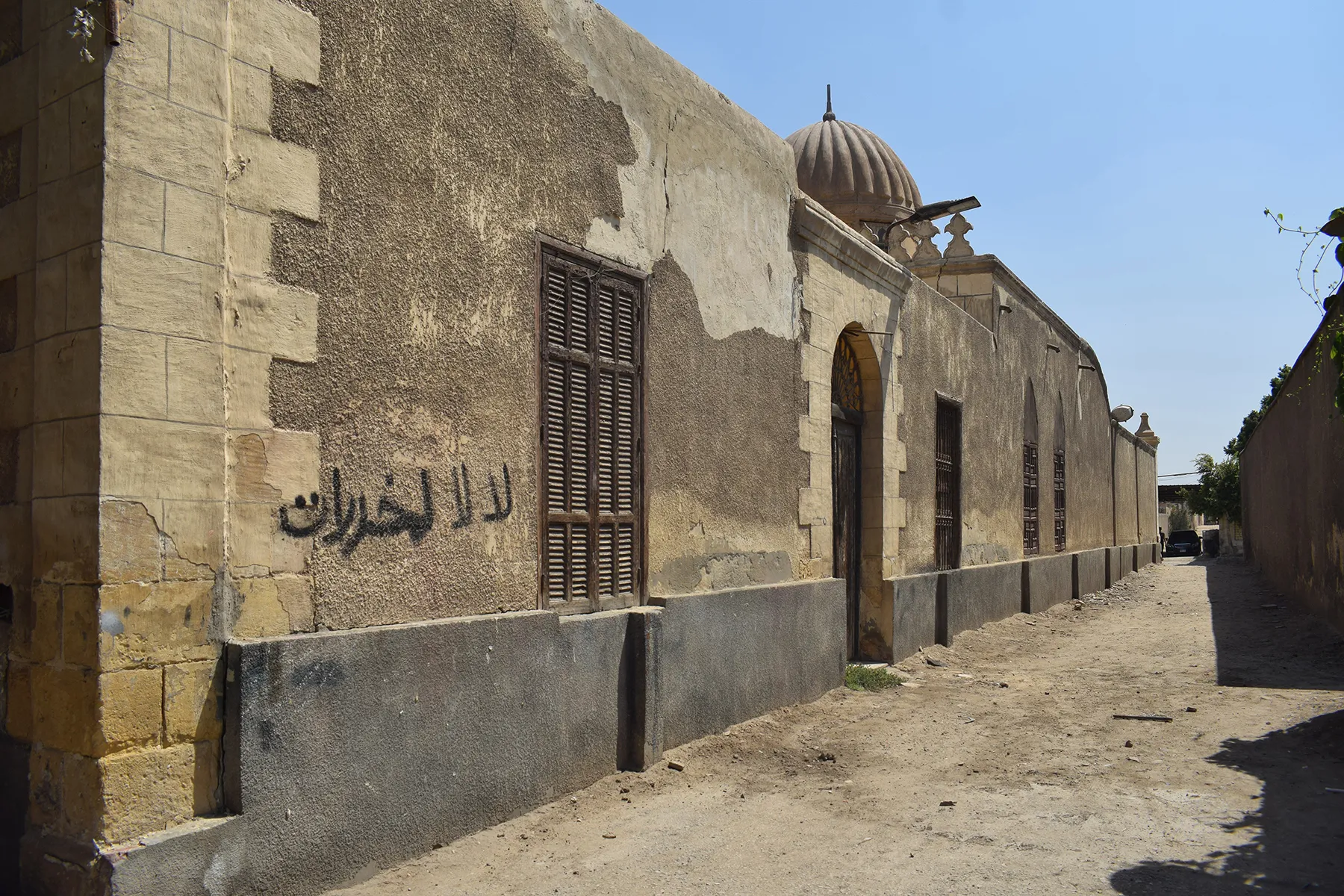
| Decorative shutters | Yes | 12 | wood | Simple mafruka patterns |
| Painted ceiling(s) | No | |||
| Decorative paving(s) | No |
Unusual or unique features
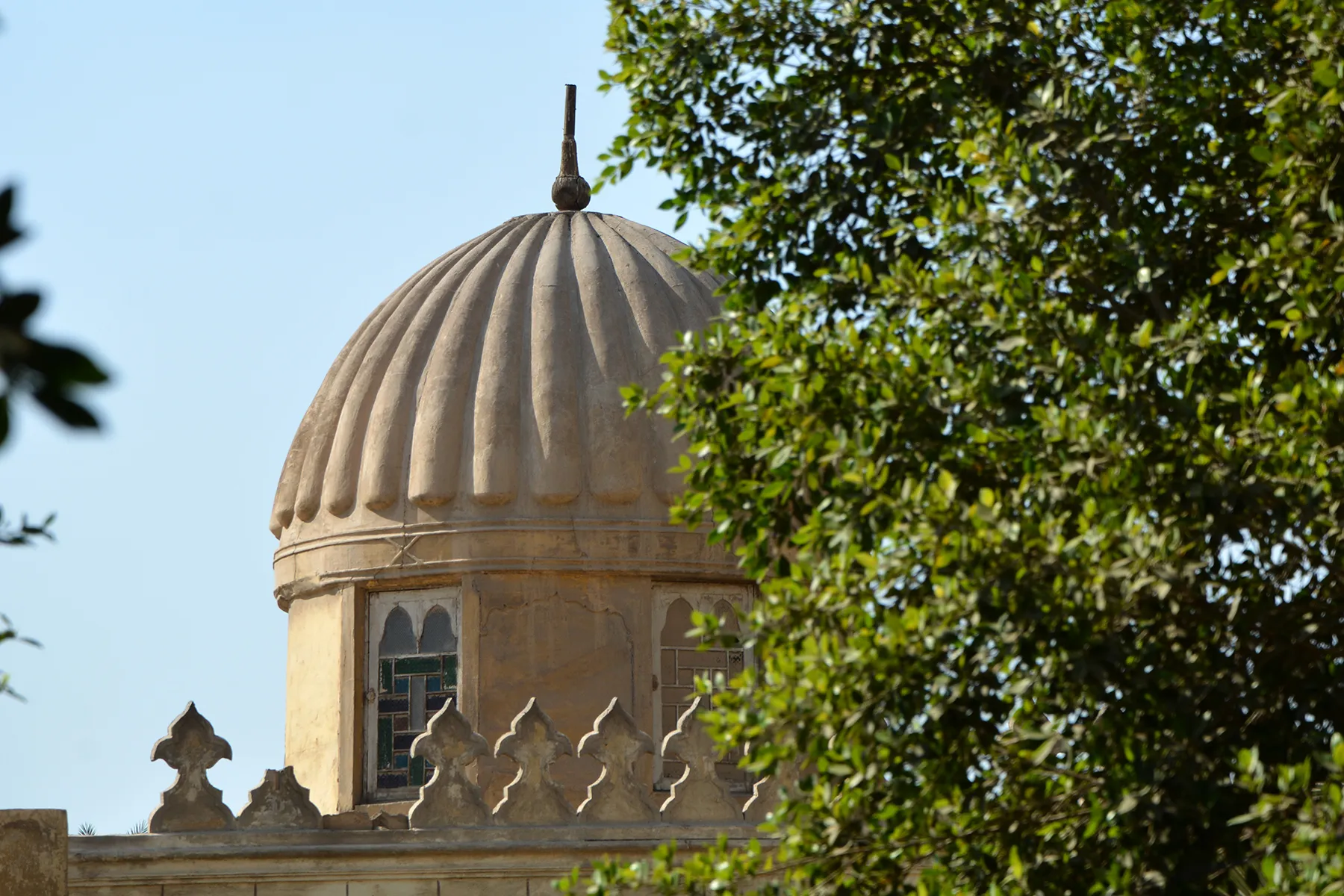
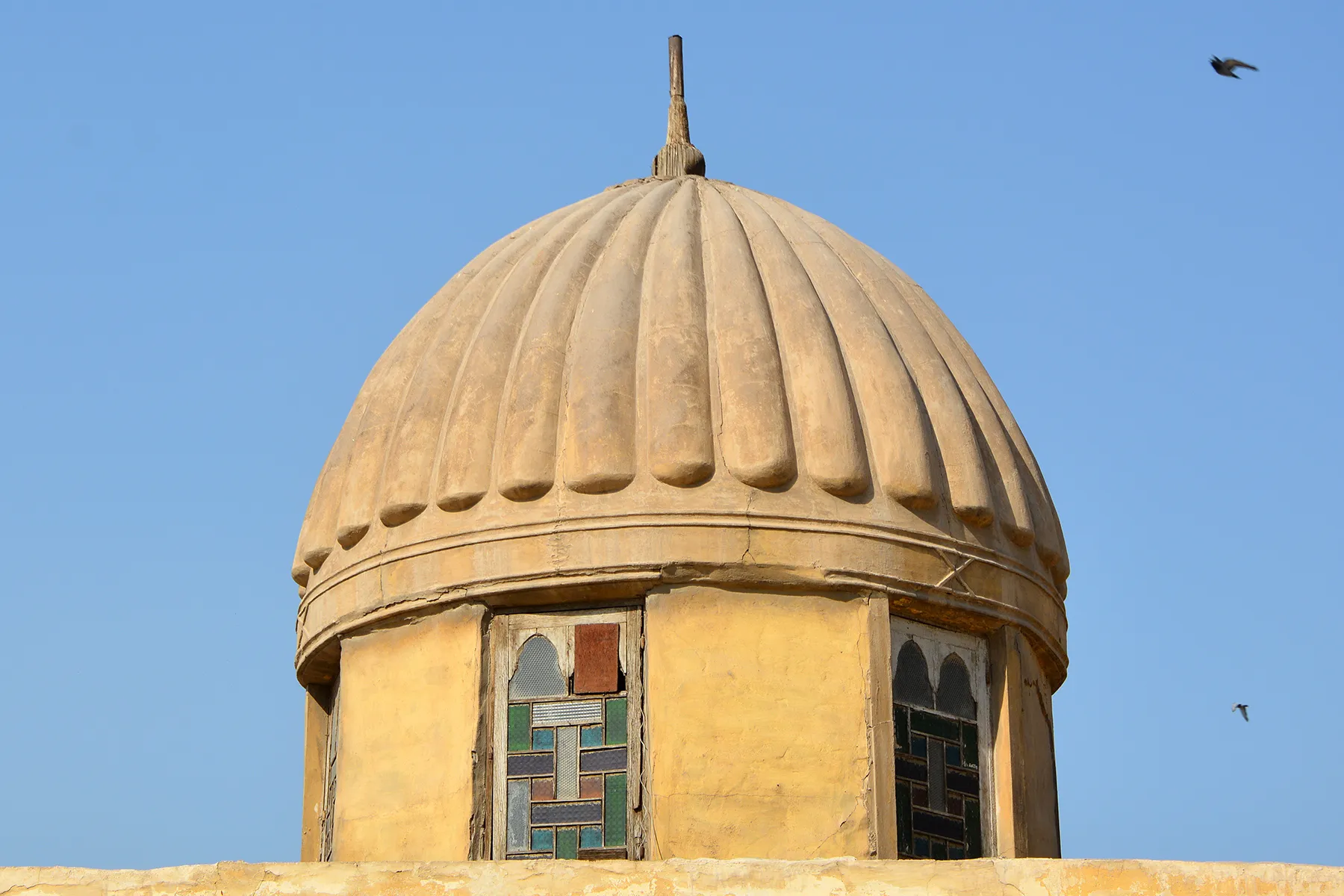
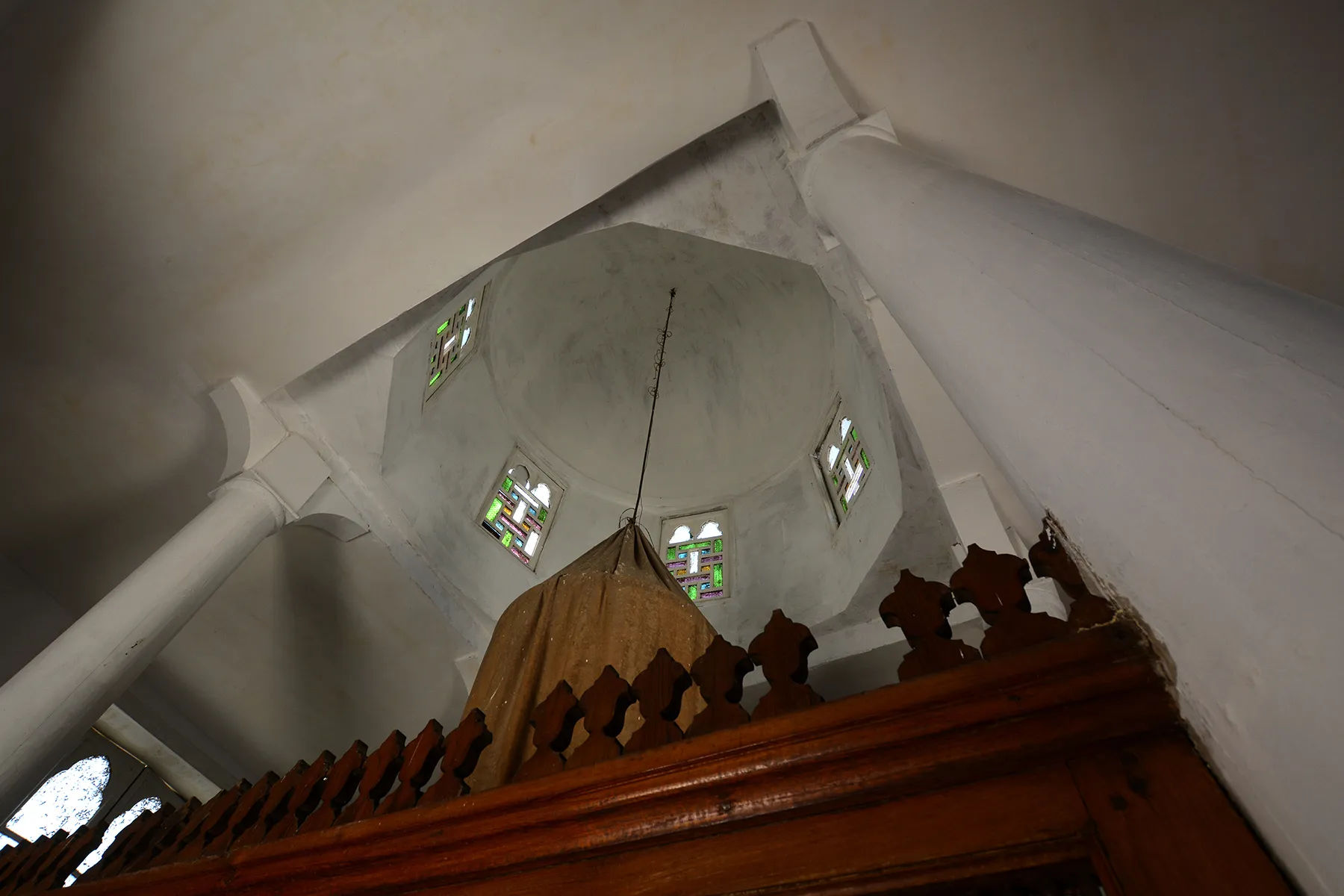
• Six windows in a twelve-sided drum of the dome.
Description (The direction towards Mecca (Qibla) is described as eastern and other directions are named accordingly)
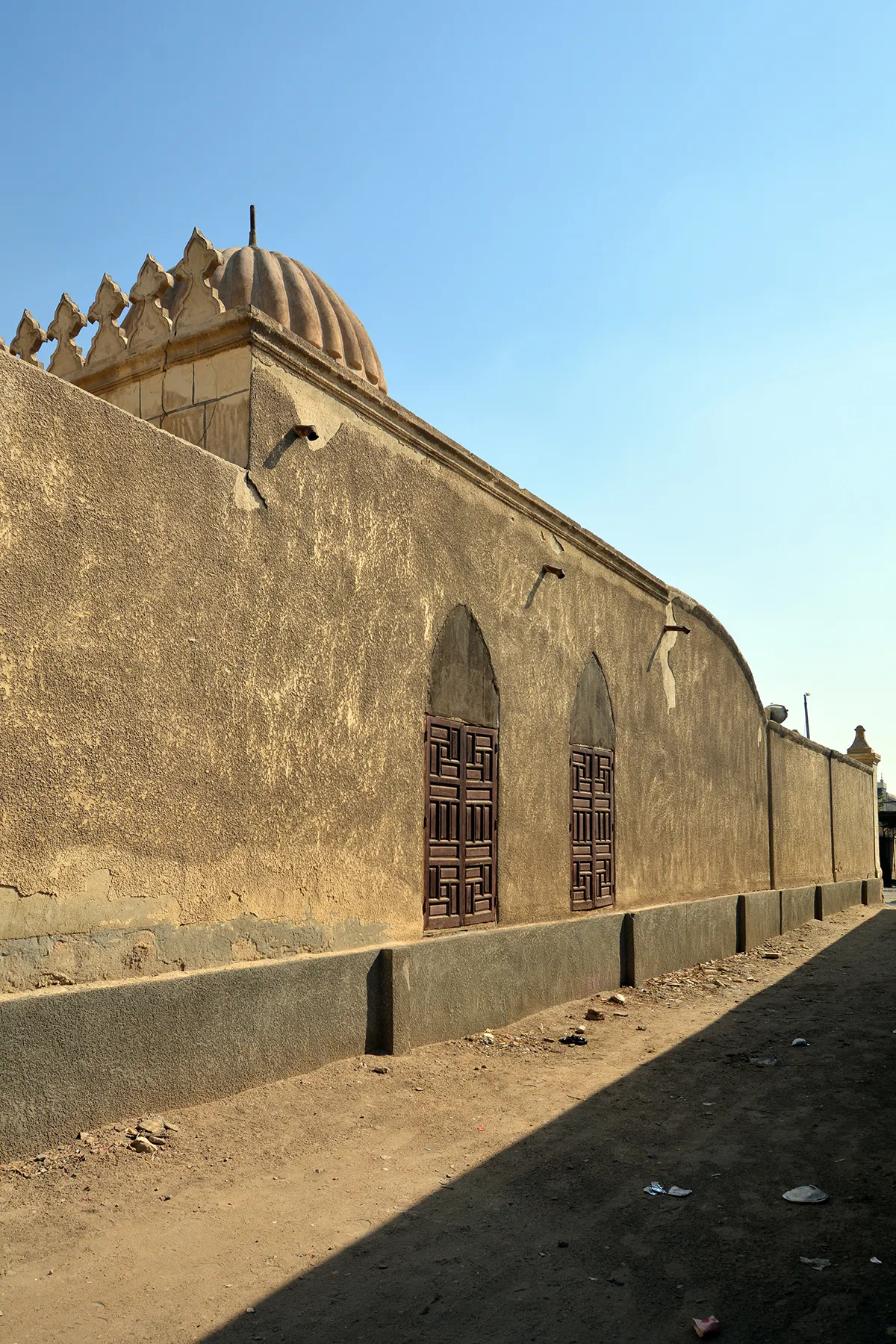
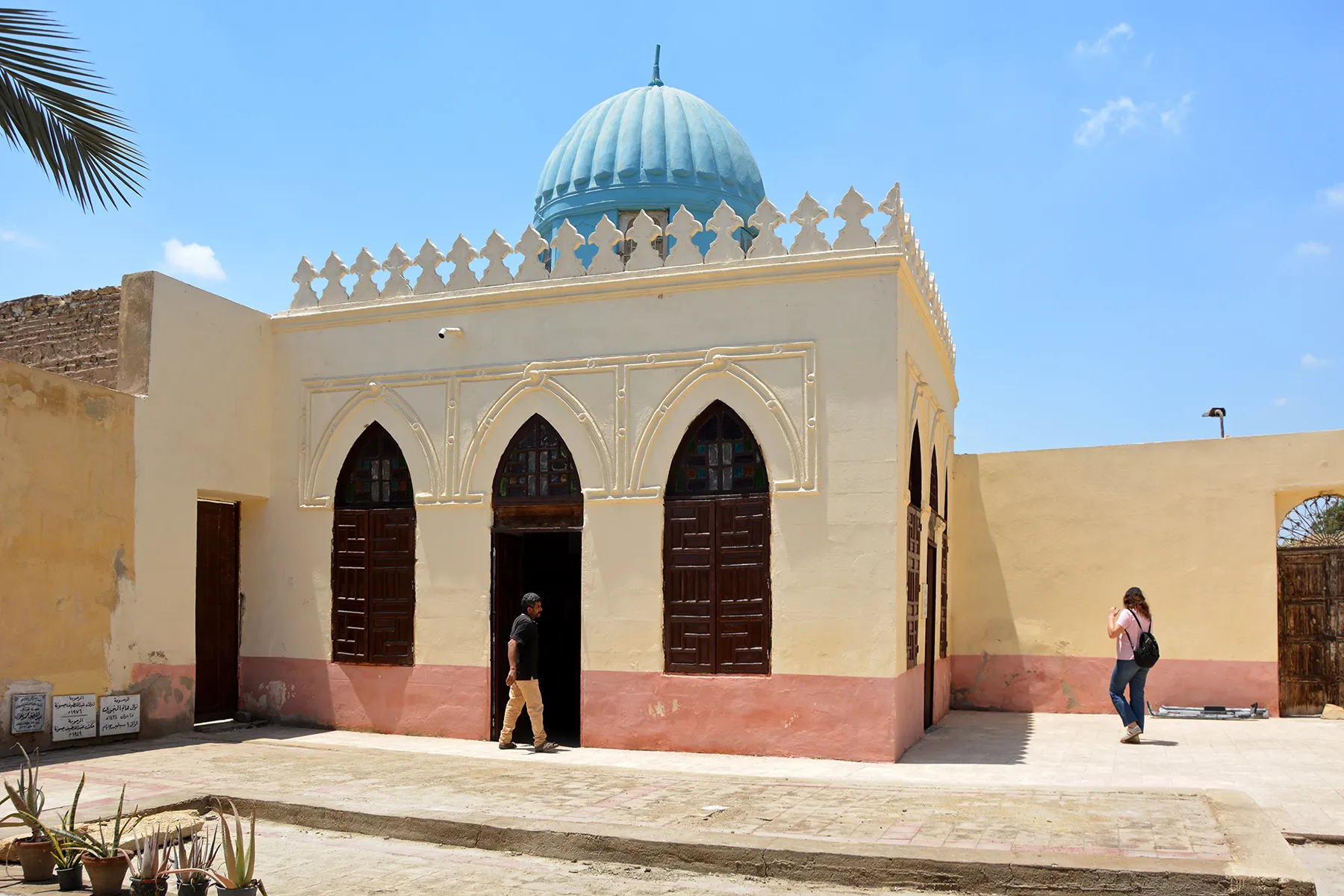
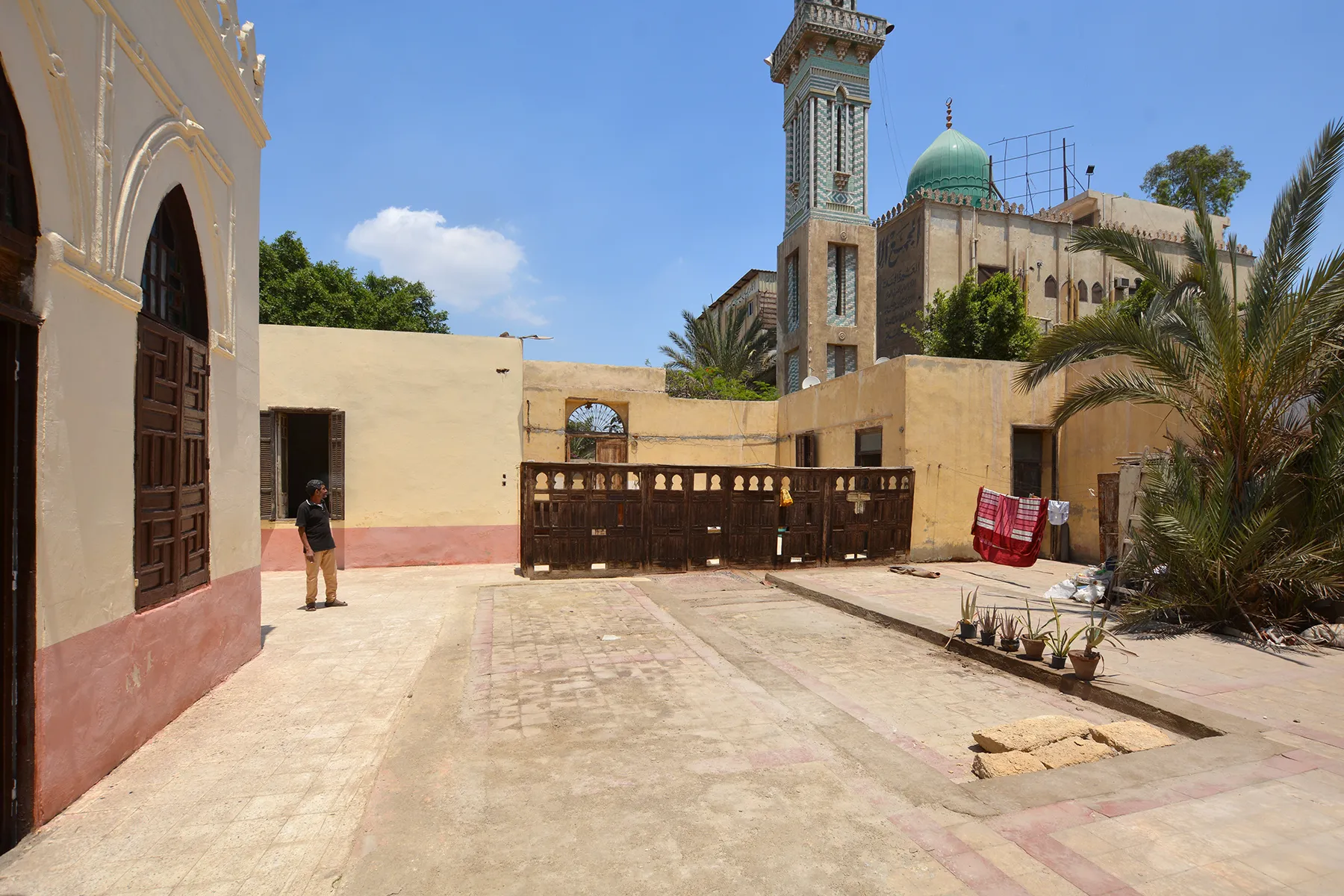
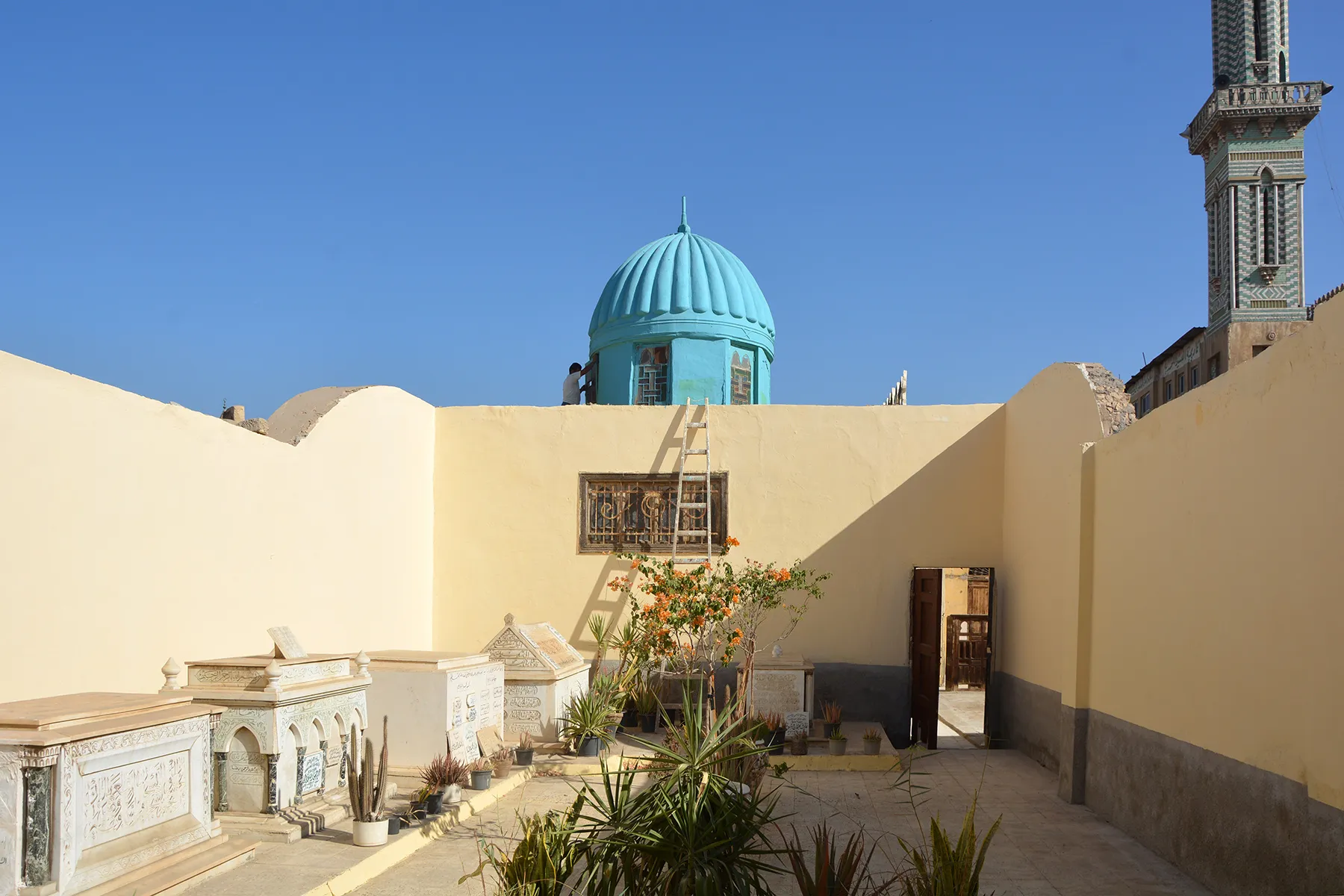
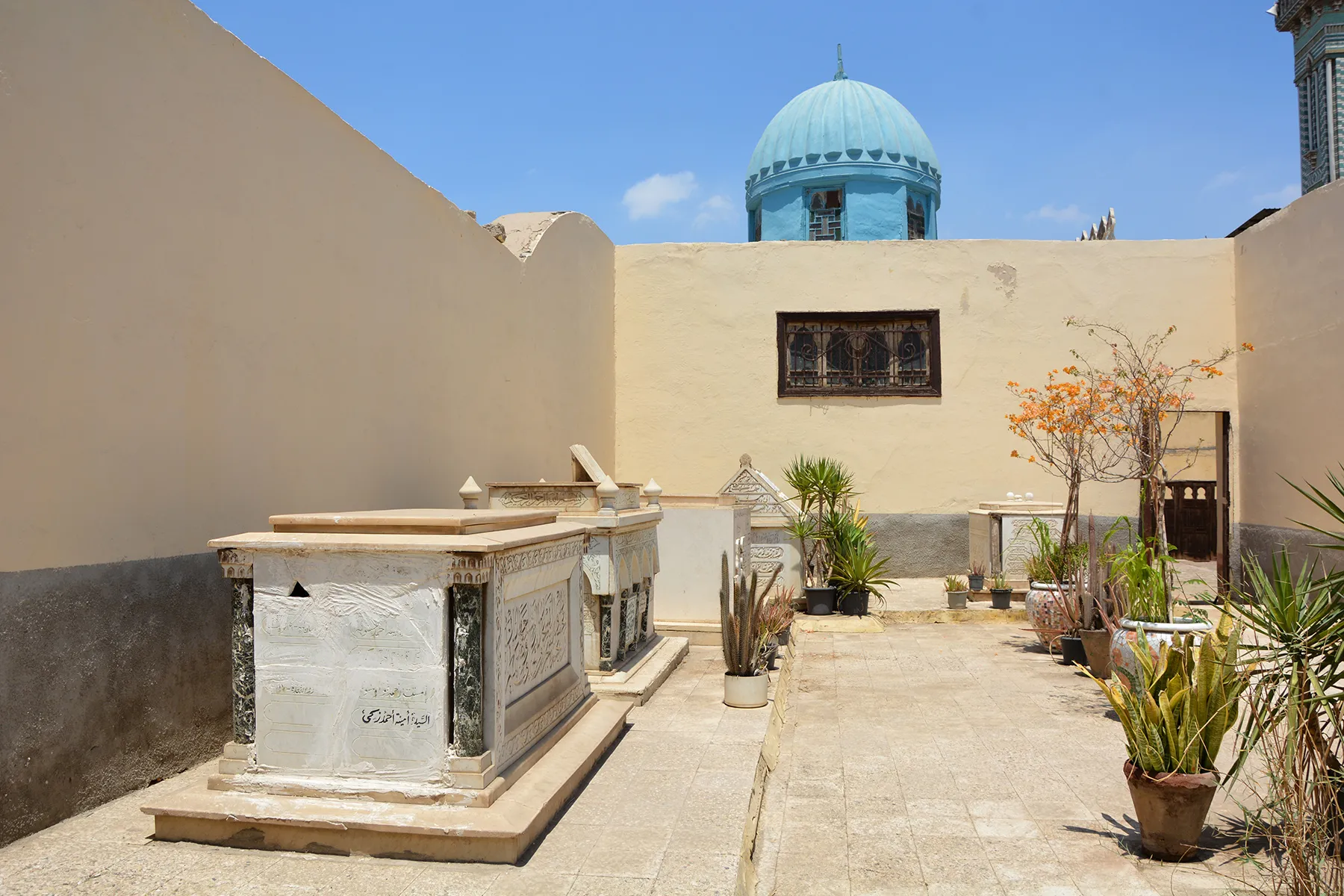
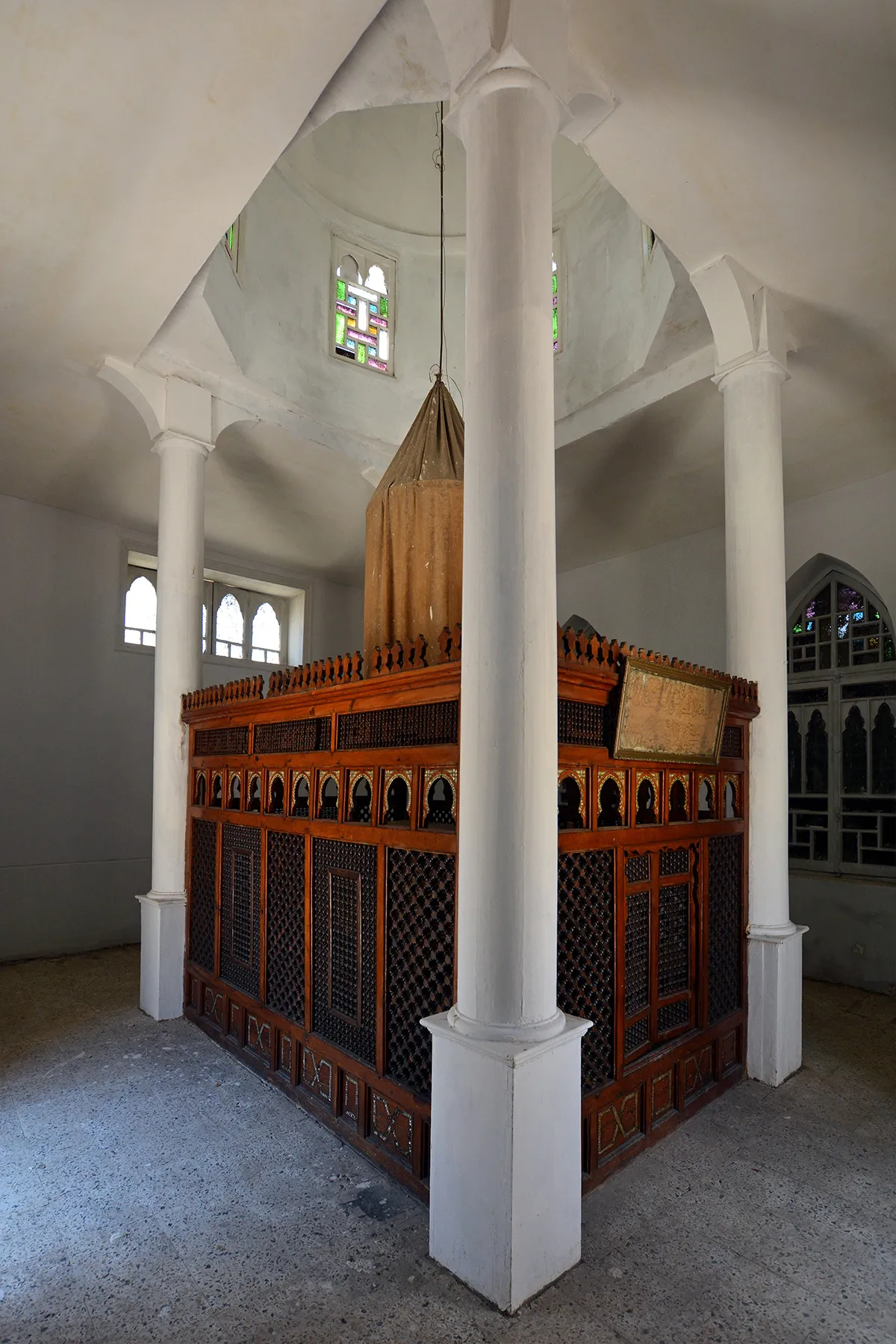
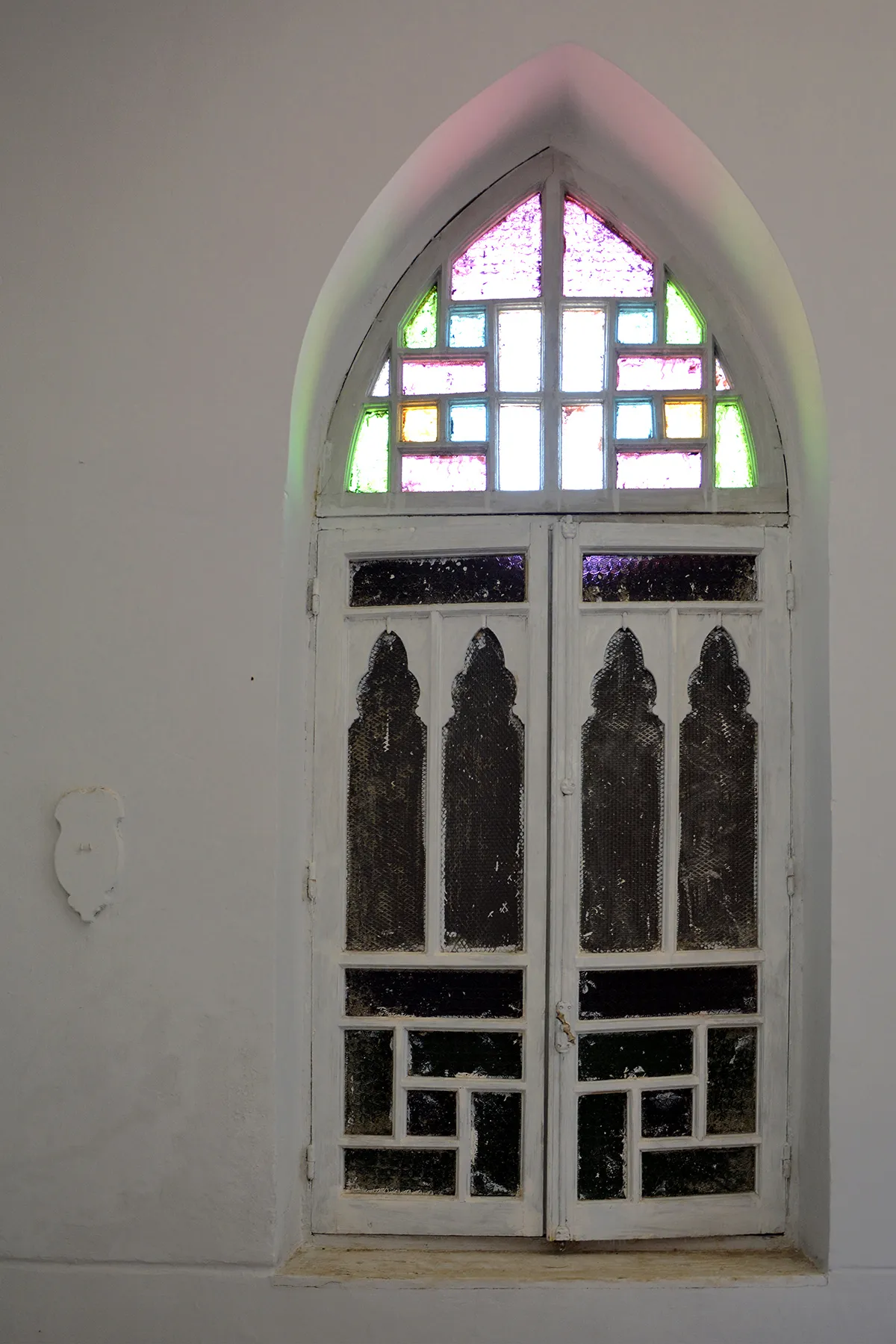
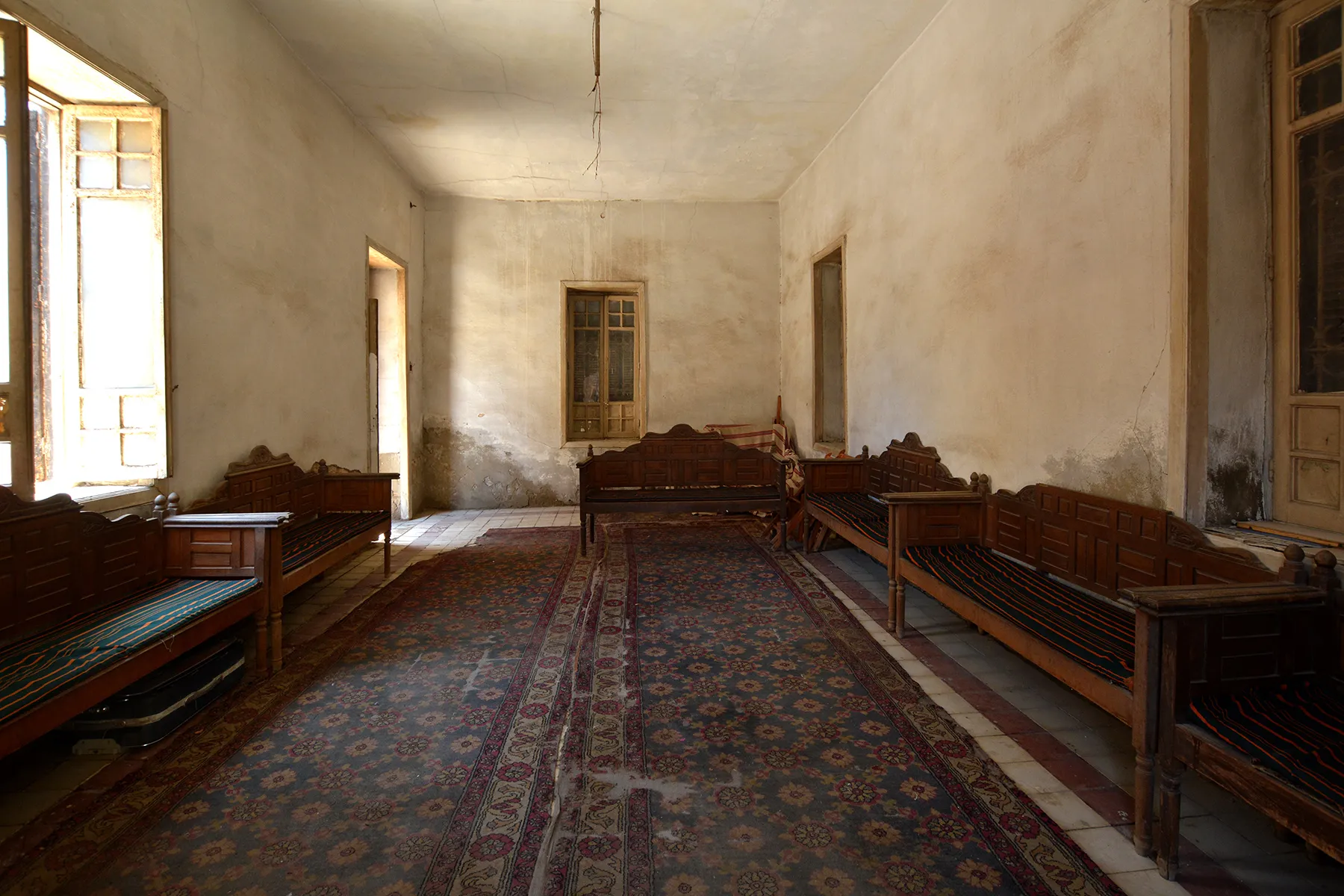
The unit comprises two enclosures connected by a door. The northern courtyard is slightly irregular and measures approximately 21 x 23 -25 metres, with the south-eastern corner taken away by a neighbouring funerary enclosure; the southern one measures approximately 8.5 x 16 metres. They share a long continuous long western wall. The northern courtyard is accessed through simple stone gates in the western and northern walls, topped with semi-circular arches. By the eastern wall are three single-storied service / residential rooms. In the north-western corner is a huge rectangular hall with undecorated interior, furnished with huge elaborate wooden benches/sofas for gatherings of visitors. In the south-western corner is a square burial chamber. Its northern and eastern façades are tripartite, with a door in the muddle flanked by two windows, all covered with steeply pointed arches. The three arches are framed together in simple and ungainly knotted moulding in plastered. The mausoleum is topped with a simple moulding and fleur-de-lys crenellations cast in plaster of cement. Otherwise, the walls of all the rooms in the courtyard are devoid of decoration. The mausoleum window shutters and door leaves are panelled, with simple mafruka patterns. The window panes over the arches have coloured glazing in decorative, mafruka-based simple divisions. The window sashes also have simple decorative divisions. The roof of the burial chamber rests on four wooden columns on tall pedestals and of very simple Tuscan capitals. The columns carry simple brackets supporting beams that carry a wooden structure of a dome drum. (There is no zone-of-transition, so technically speaking, the structure is a roof lantern rather than a dome.) The drum is twelve-sided, pierced with six windows with coloured glazing in panels of simple mafruka-based patterns. On the polygonal drum sits a round dome, which results in awkward overhangs both inside and outside. The exterior of the dome is ribbed.
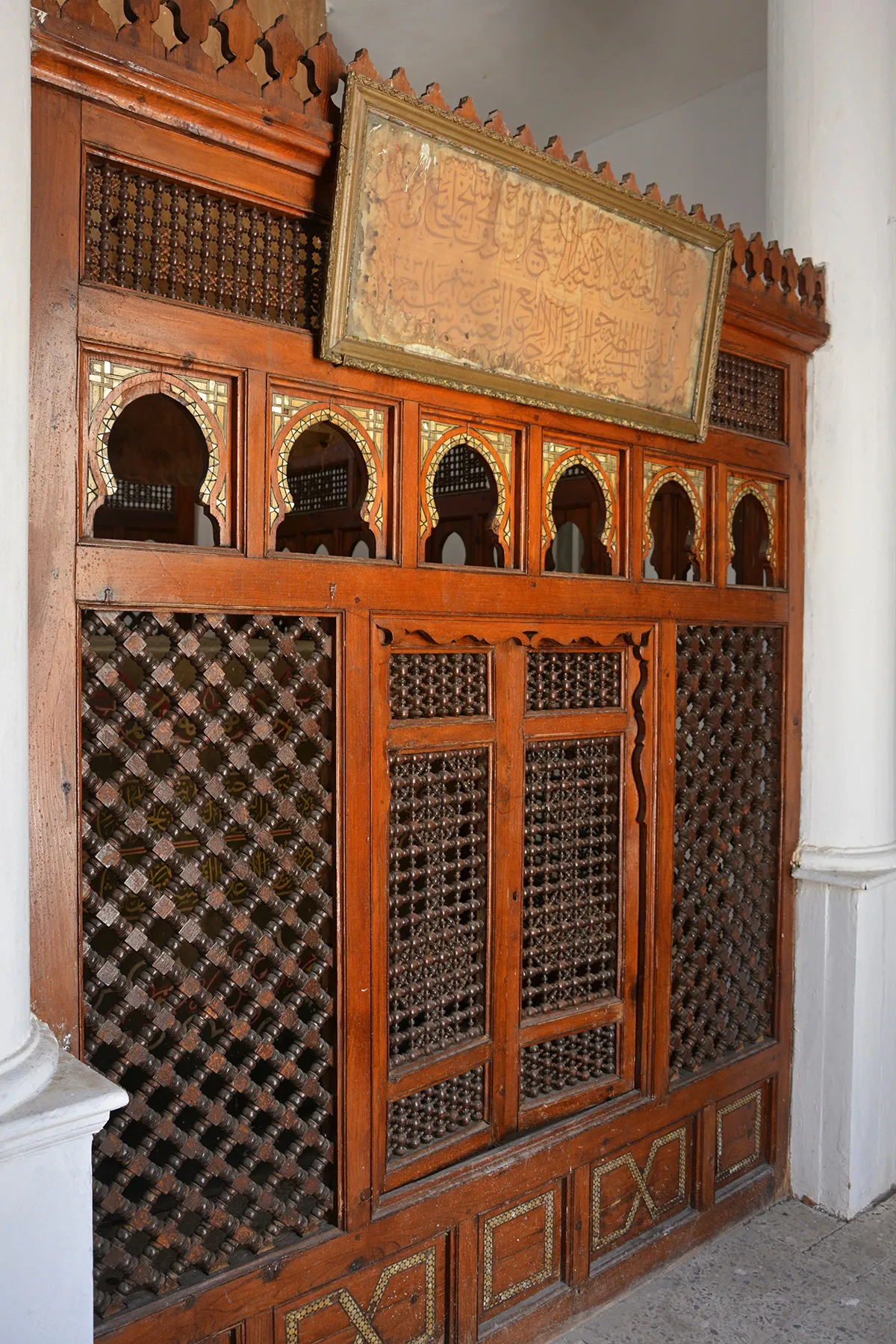
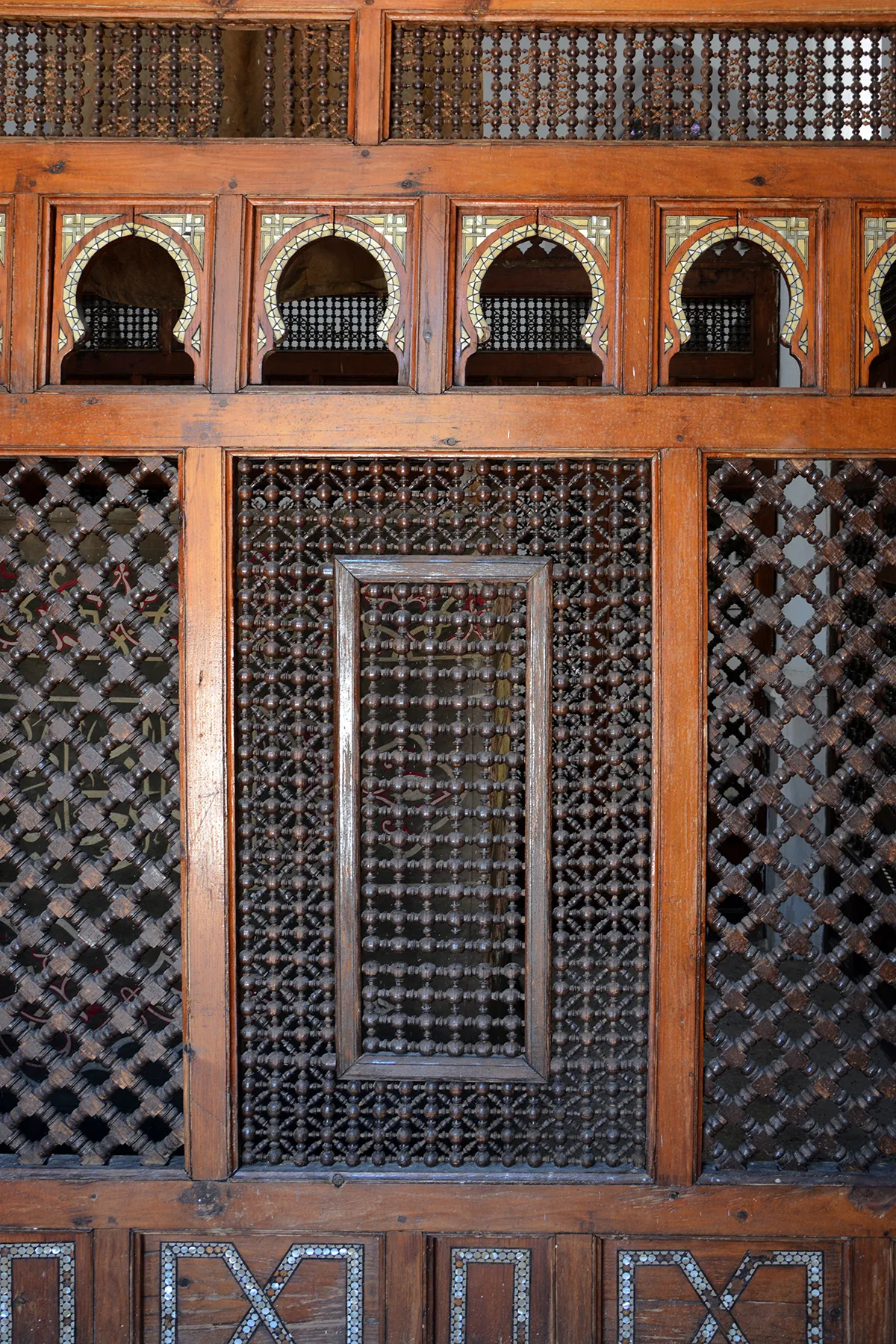
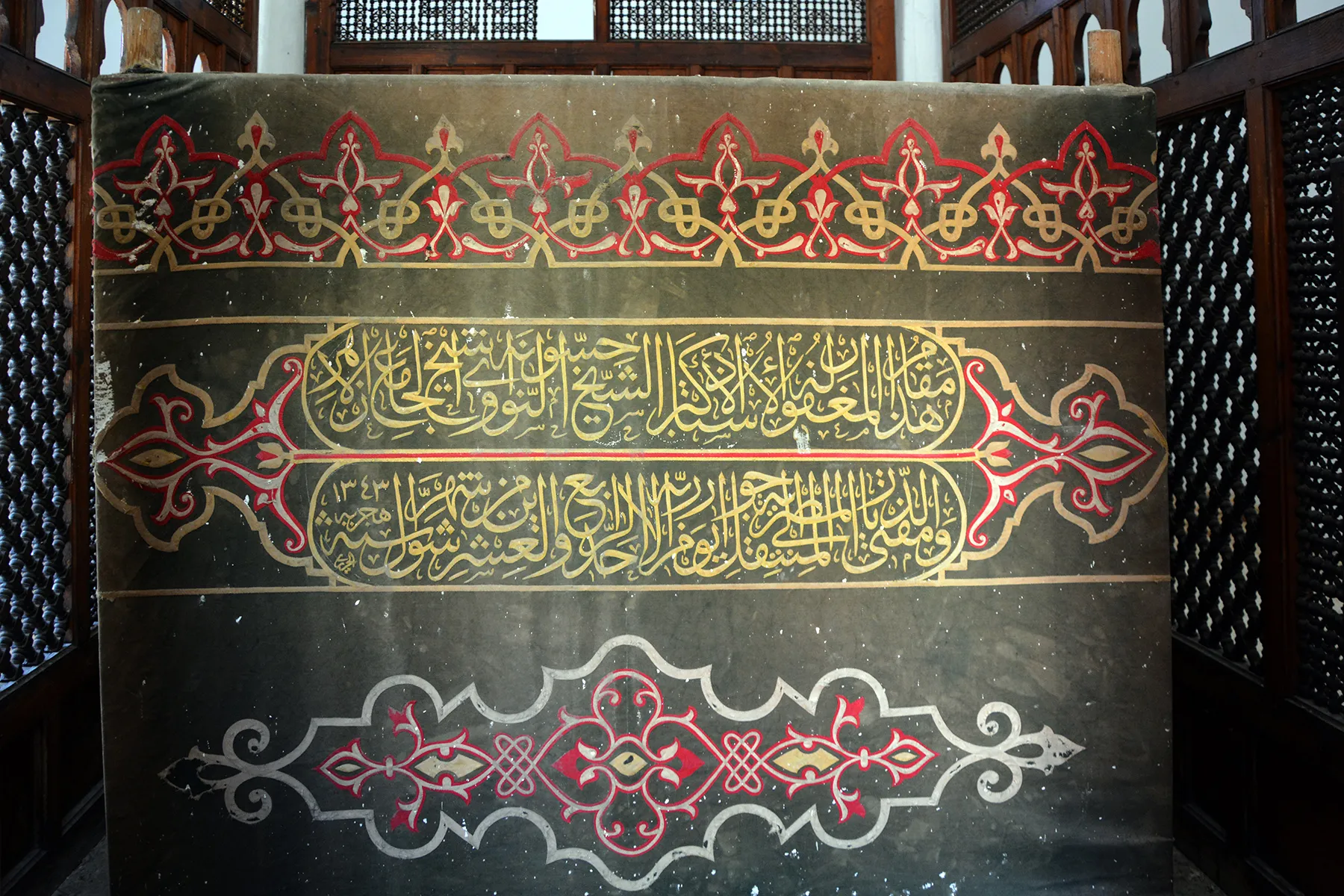
Between the columns are placed elaborate wooden screens featuring turned-wood mashrabiya panels and mother-of-pearl inlays that form an enclosure (Ar: “maqsura”) around the wooden cenotaph of Shaykh Hasuna, which is covered with a cloth bearing elaborate calligraphic inscriptions.
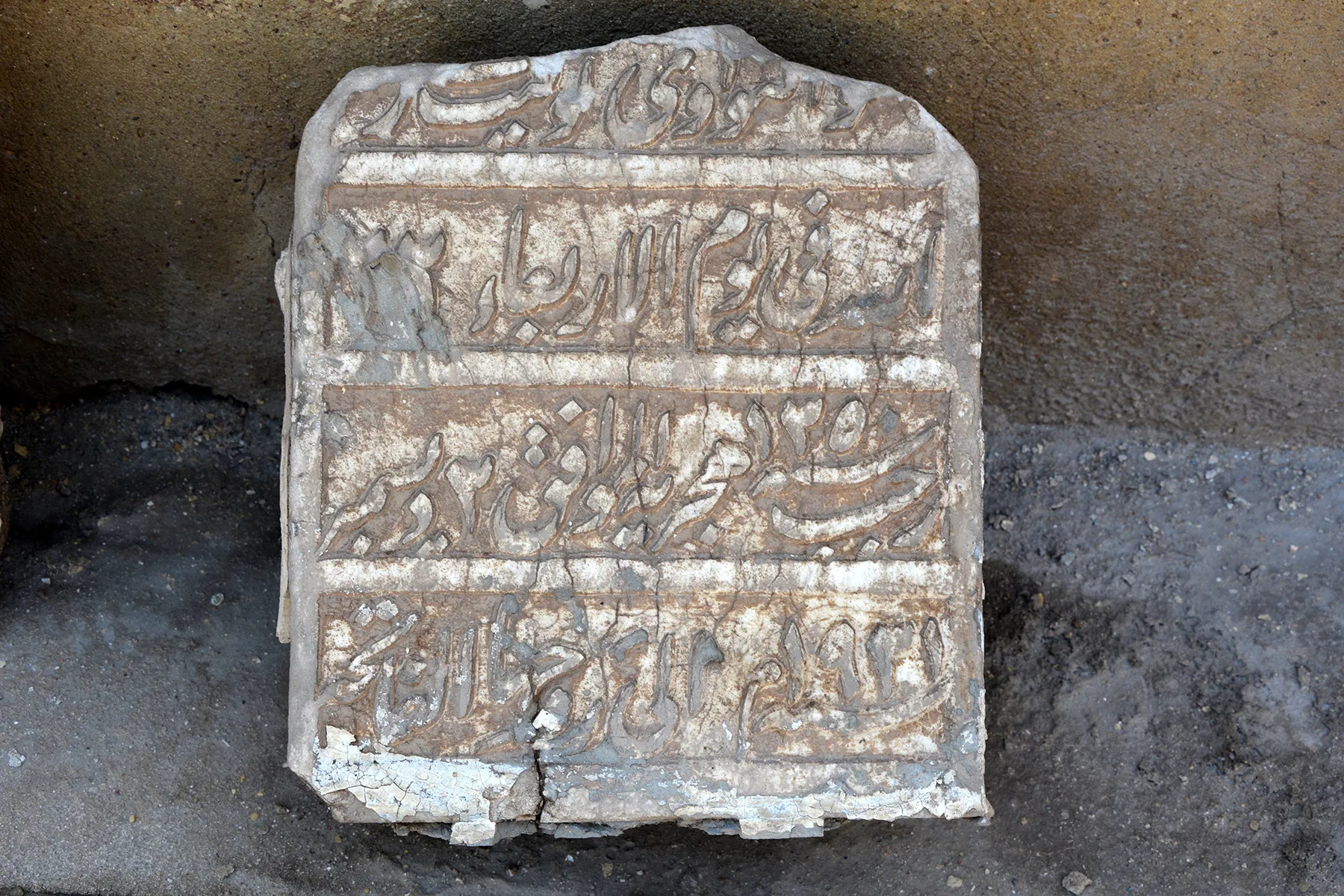
Above the northern door of the mausoleum is a half of very badly damaged stucco [?] inscription panel including the name Shaykh … Hasuna al-Nawawi and date 22 [?] Shawwal AH 1343 [corresponding to 15 May AD 1925.]
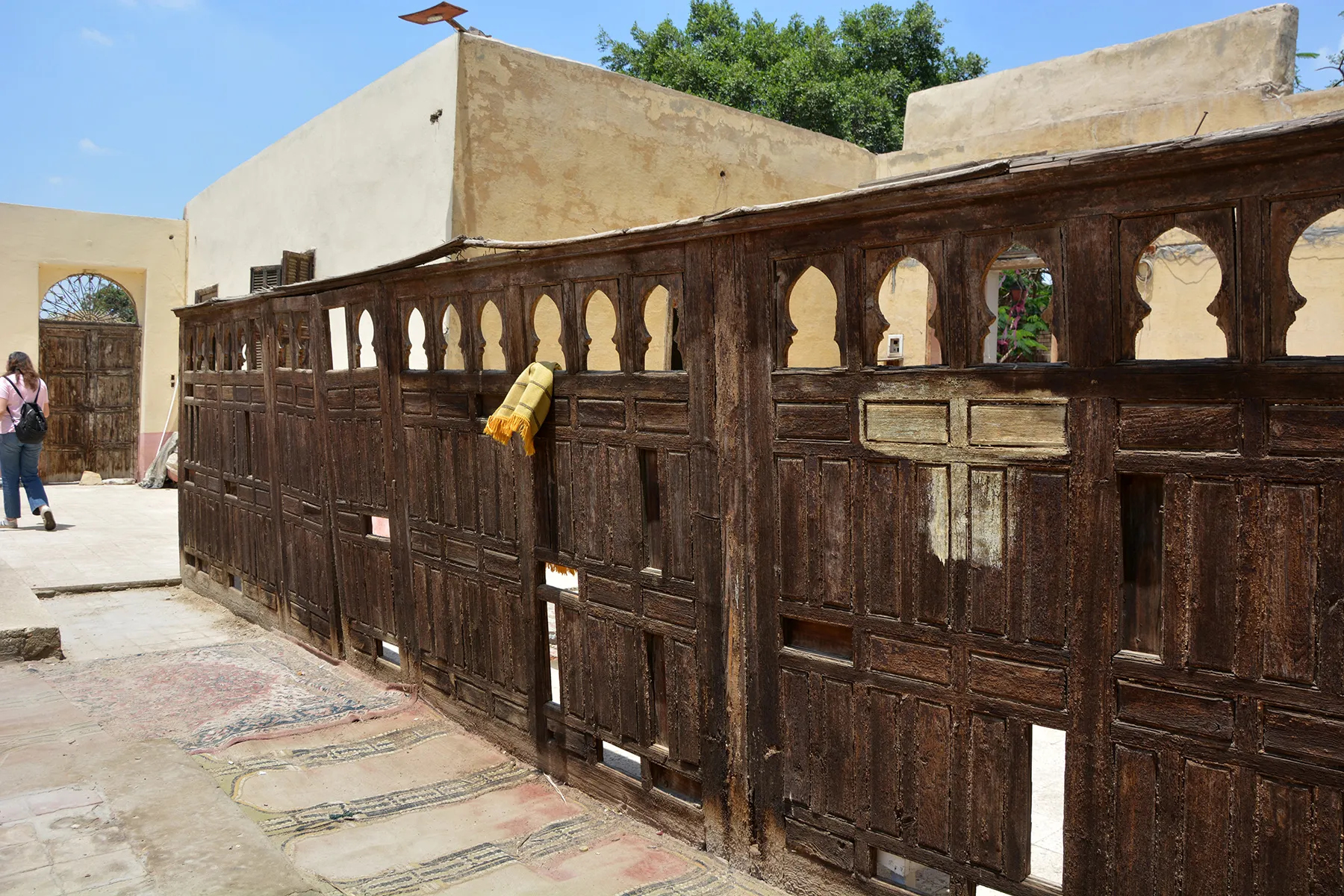
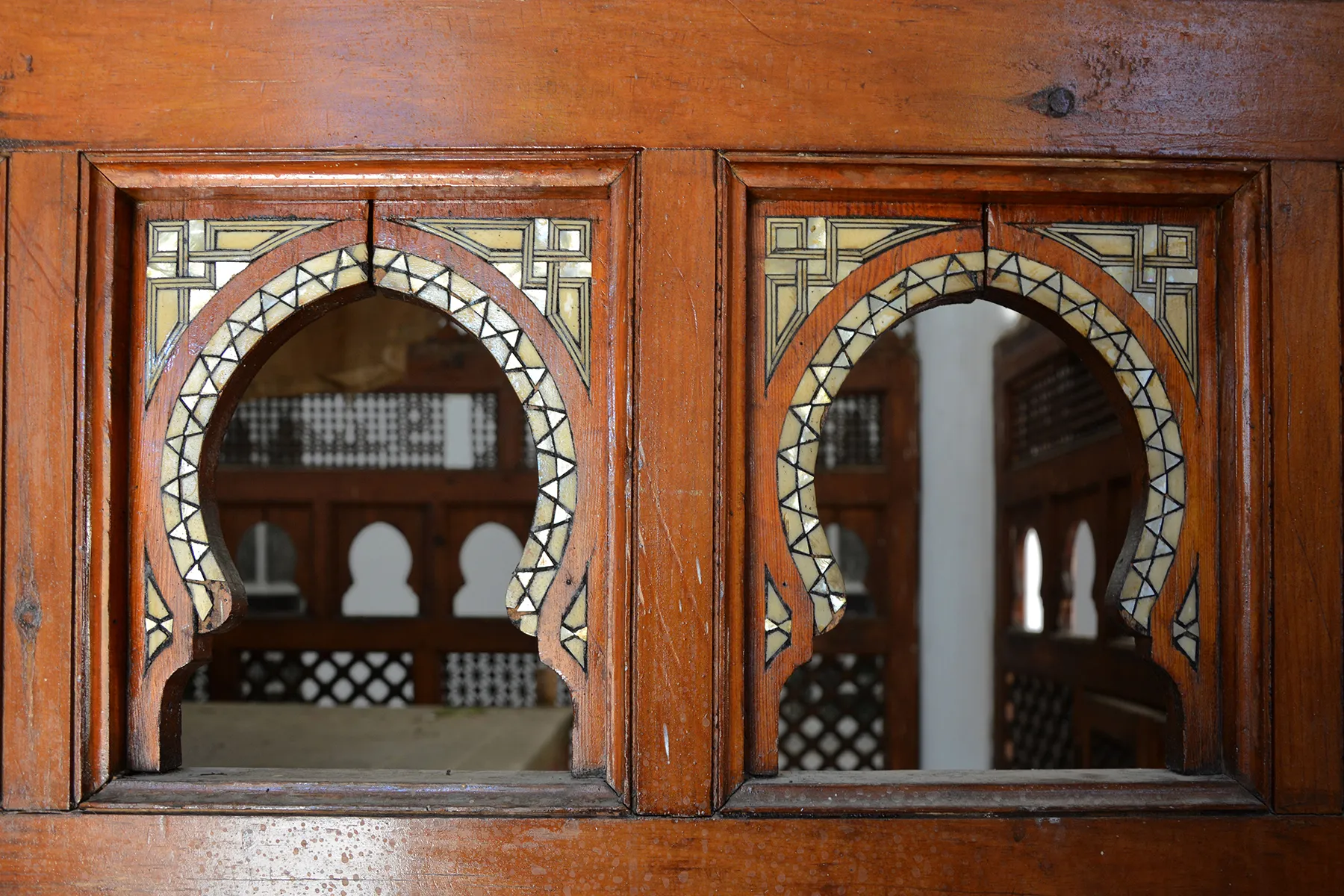
The northern section of the courtyard (between the rooms in north-western and north-eastern corners) is screened off with a large panelled wooden screen with horseshoe arched openings in the upper part.
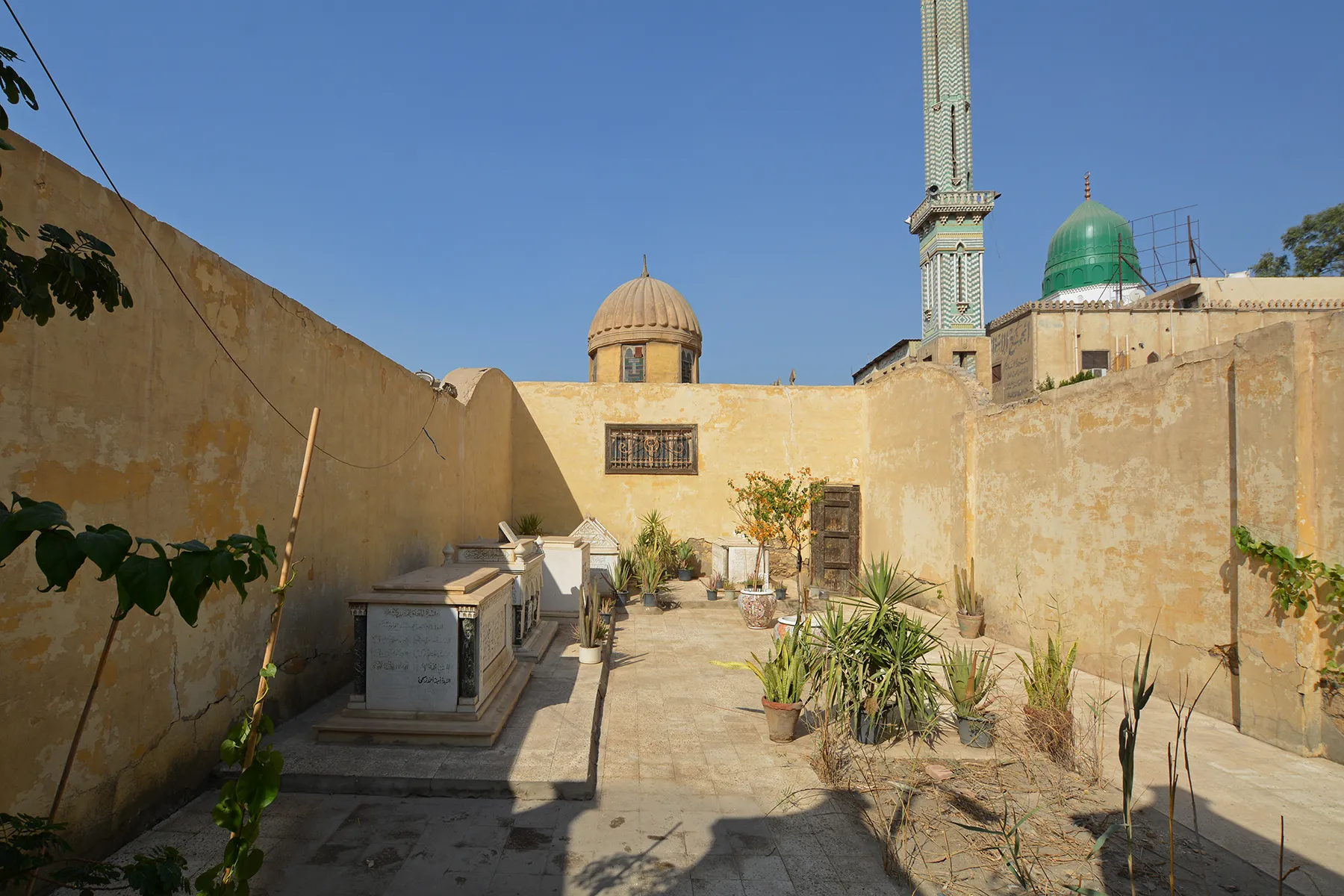
The smaller southern courtyard is an open enclosure, with no rooms within. Its southern wall is composed of four stone pillars, between which are short sections of picket fence and two openwork iron gates of slightly different widths.
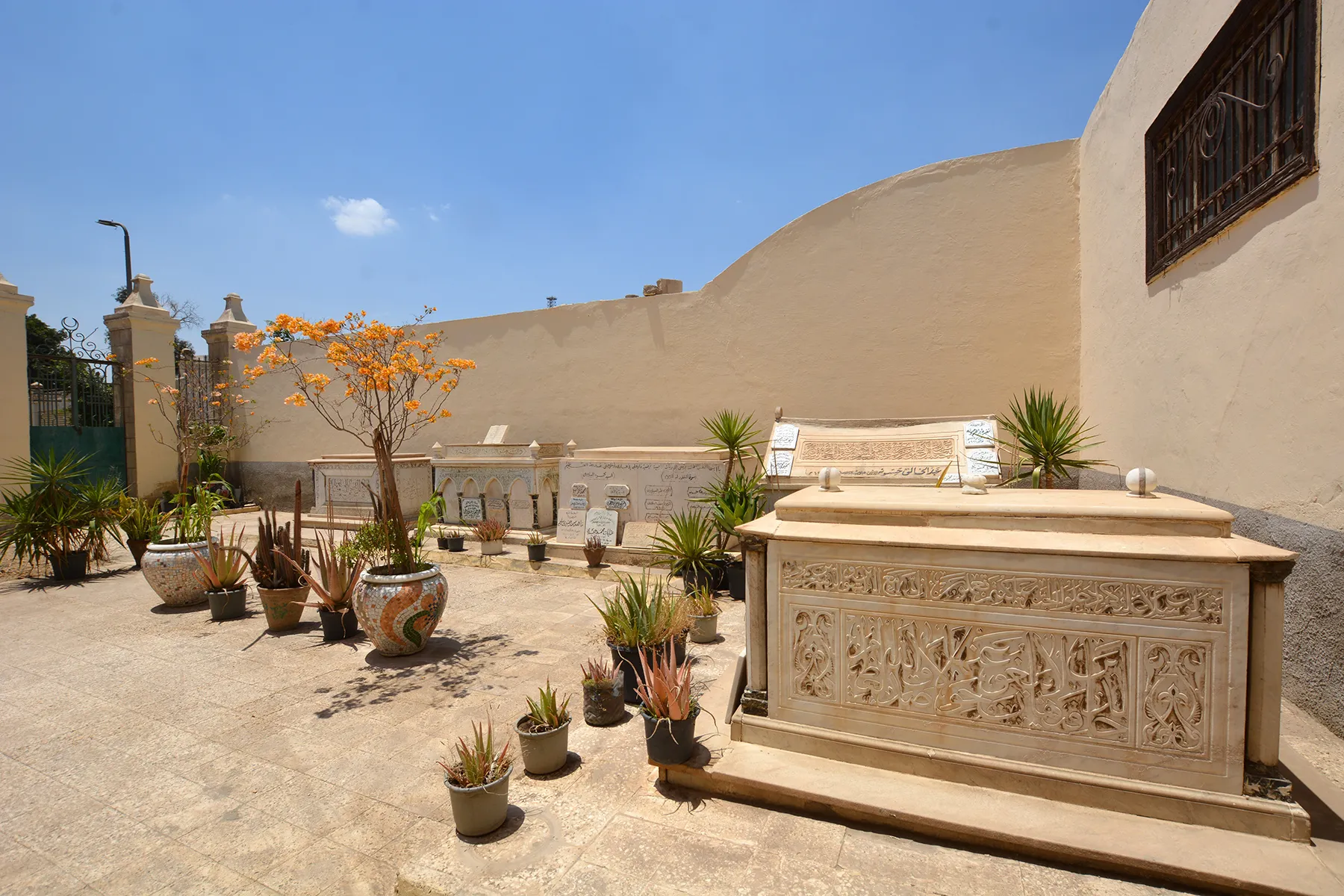
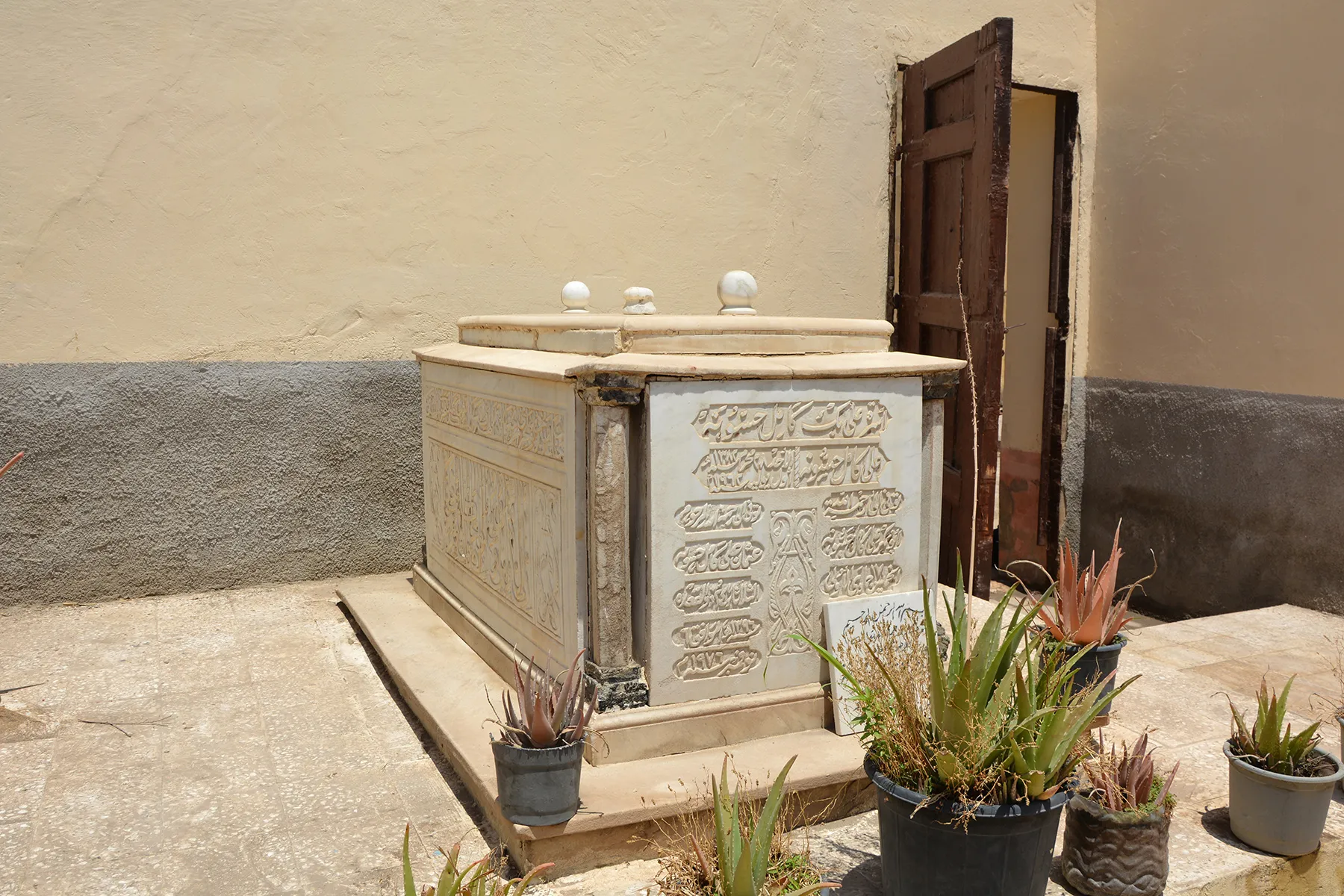
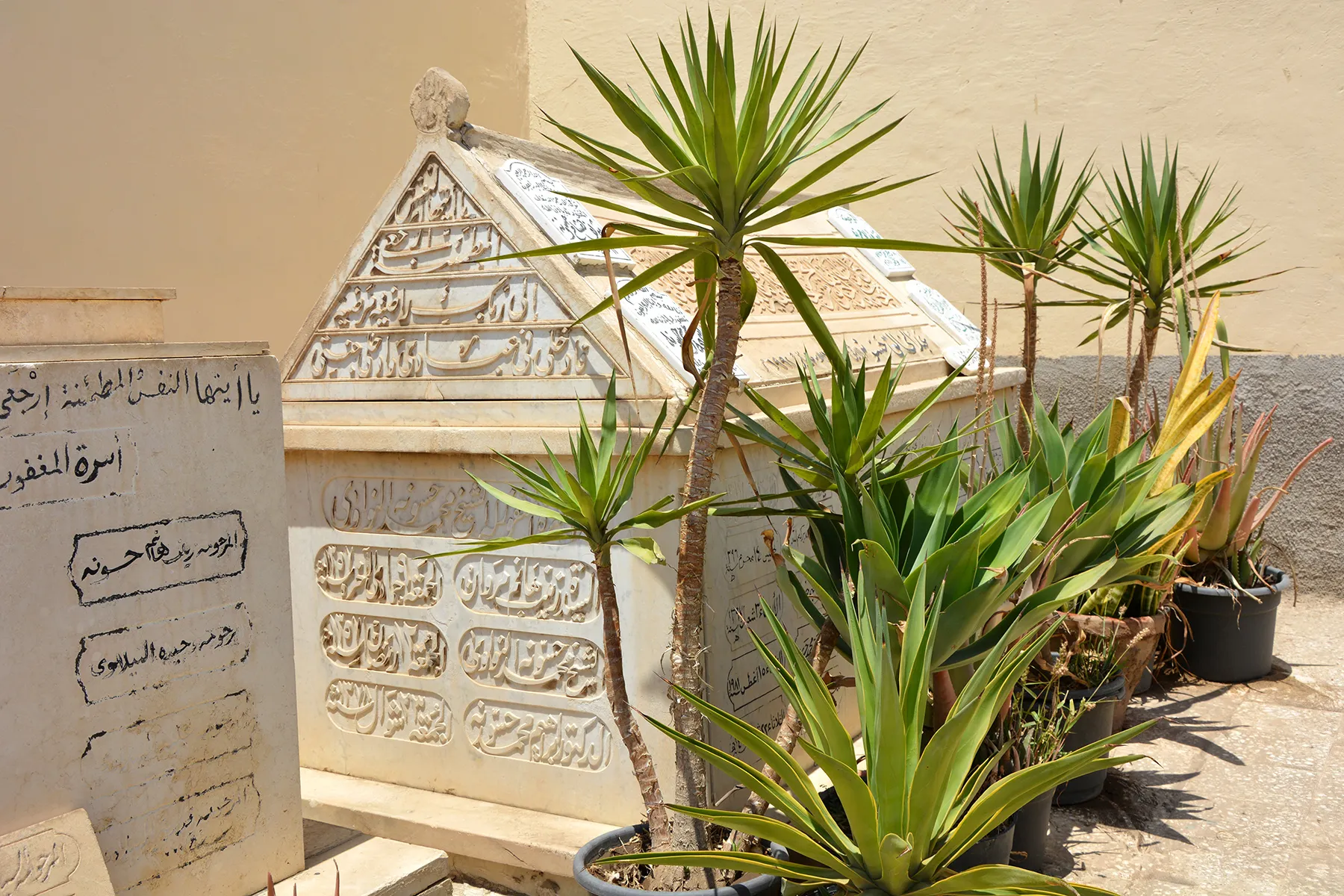
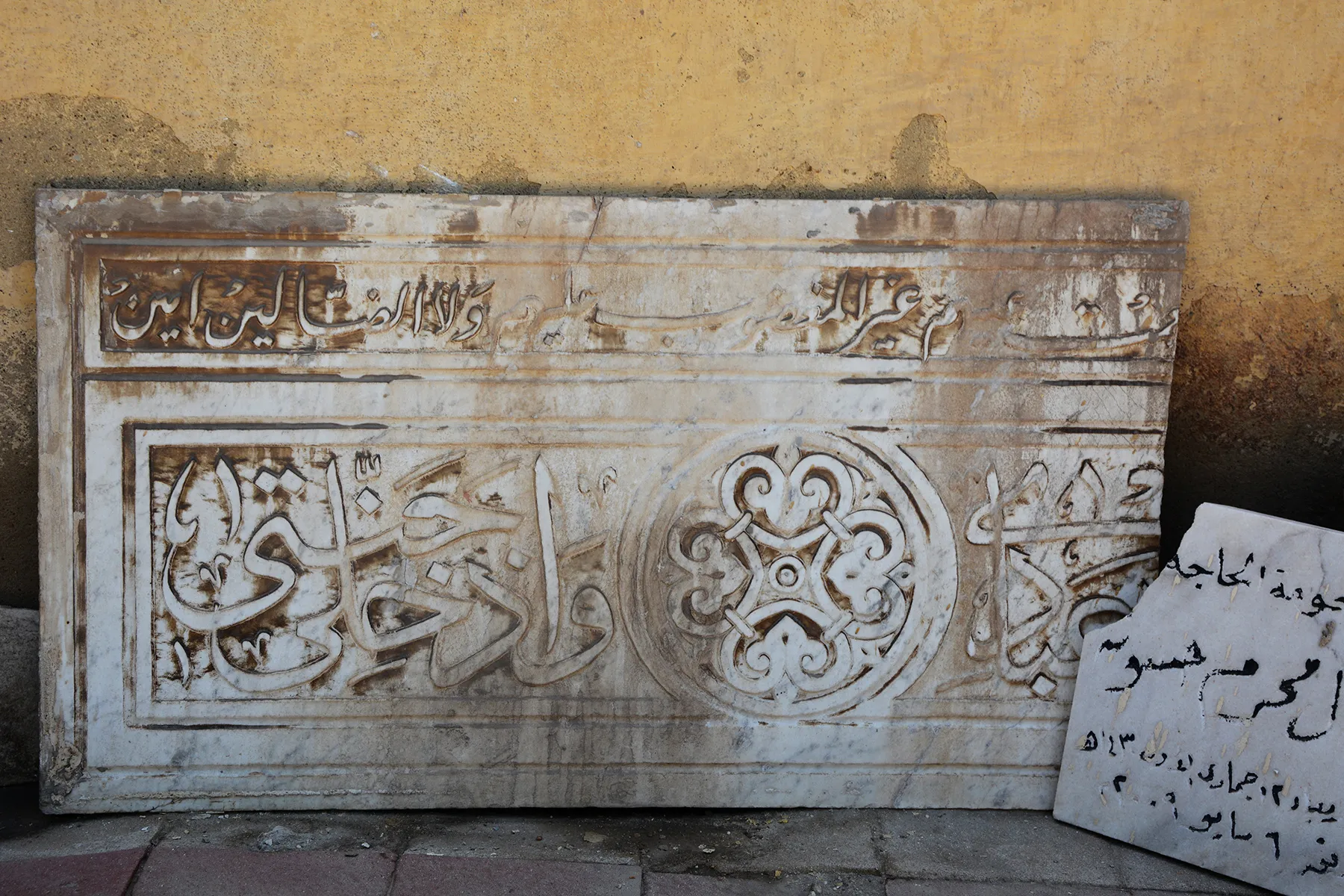
In the northern wall is the simple rectangular door to the northern courtyard, and a wide low window of the burial chamber, fitted with w wrought-iron grille of simple, Art Nouveau-inspired pattern. By the western and northern walls stand five rather simple carved marble cenotaphs, the most recent bearing the date AD 1976, the most elaborately decorated one dated to AH 1371 [corresponding to AD 1952.] On the latter cenotaph is an inscription in raised relief that was evidently added at a later date, referring to ‘Abd al-Khaliq Hasuna and giving the date 1992.
Condition of preservation
The unit is in overall fair condition and maintained. It has recently been renovated, with new coats of paint to the walls, repairs to walls damaged by rising damp, and repairs to and repainting of some woodwork. The relatively recent cenotaphs in the southern part of the southern courtyard have been damaged by rising damp, and were recently rather unprofessionally repaired.
Information abut the founder, family history, etc.
Shaykh Hasuna al-Nawawi (1839 – 1925, buried in the mausoleum in the northern courtyard) was twice the Saykh of al-Azhar in 1895 – 99 and 1907 – 1910, member of the Supreme Council of the Shariya Court in 1895, and the Grand Mufti of Egypt in 1895 – 1899. He strove to improve educational standards at al-Azhar and to introduce modern sciences (Street Story website).
Muhammad ‘Abd al-Khaliq Hasuna (1898 – 1992, buried in the southern courtyard) was an Egyptian diplomat and statesman. He held the positions of the Director of the Foreign Office from 1932 to 1934; Director of Political and Business Affairs from 1934 to 1938; Secretary-General of the Ministry of Foreign Affairs from 1938 to 1940; The first Undersecretary of the Ministry of Social Affairs from 1940 to 1942; Governor of Alexandria from 1942 to 1948; Ambassador and Undersecretary of State from 1948 to 1949; Minister of Social Affairs from 1949 to 1950; Minister of Education in 1952; and Minister of Foreign Affairs in 1952. He was Secretary-General of the League of Arab States from September 1952 to May 1972. (League of Arab States website)
Hassouna & Abou Ali company is currently among the most renowned law firms in Egypt. (Egyptian Businessmen’s Association website)
References in published/primary sources
• Stret Story: website of the Egyptian National Organization for Urban Harmony: https://streetstory.gov.eg/ retrieved May 2024
• League of Arab States website: http://www.leagueofarabstates.net/en/aboutlas/Pages/SGFormerDetails.aspx?RID=6 retrieved May 2024
• Egyptian Businessmen’s Association website: https://www.eba.org.eg/Main/CompanyDetails.aspx?comp_id=1044 retrieved May 2024
- Field recording by
- Hadeer Ahmad, Muhammad Esam, and Esraa al-Mahdi-edited by Jaroslaw Dobrowolski
- Date recorded
- August 1, 2023
- Data entered by
- Yusuf Yassir
- Date entered
- May 21, 2024