
Unit No52
Ahmad Pasha al-Daramalli
|
Coordinates of the main entrance |
30.043915N - 31.273475E |
|
Attribution |
Ahmad Pasha al-Daramalli |
|
Higri (AH)Dates as given in the Inscription |
1270 |
|
Miladi (AD)Dates as given in the Inscription |
|
|
Inscription Contemporary with the building? |
Yes |
|
Multiple date(s) In the inscription? |
Yes |
|
Assumed Date |
Second half of the 19th century |
|
Based on |
(date on cenotaph in the courtyard: 1270 AH [=AD 1854]; see infornation about founder section) |
|
Original Use |
Funerary enclosure |
|
Current Use |
Funerary enclosure, paint workshop |
|
Overall condition |
Poor |
Features of unit 52
| Present | Count | Material | Comments (see description for details) | |
|---|---|---|---|---|
| Free standing structure | No | |||
| Walled enclosure | Yes | 1 | cut stone | |
| Rooms by the perimeter wall | Yes | stone | ||
| Freestanding structure(s) in enclousure | No | |||
| Dome over the tomb chamber | No | |||
| Neo-Mamluk architectural decoration | No | |||
| Garden layout | Yes | |||
| Sabil(s) | No | |||
| Wall fountain(s) | Yes | 1 | cut stone | Disused |
| Canopy on columns / pillars | Yes | 1 | wood | Only scant traces remain |
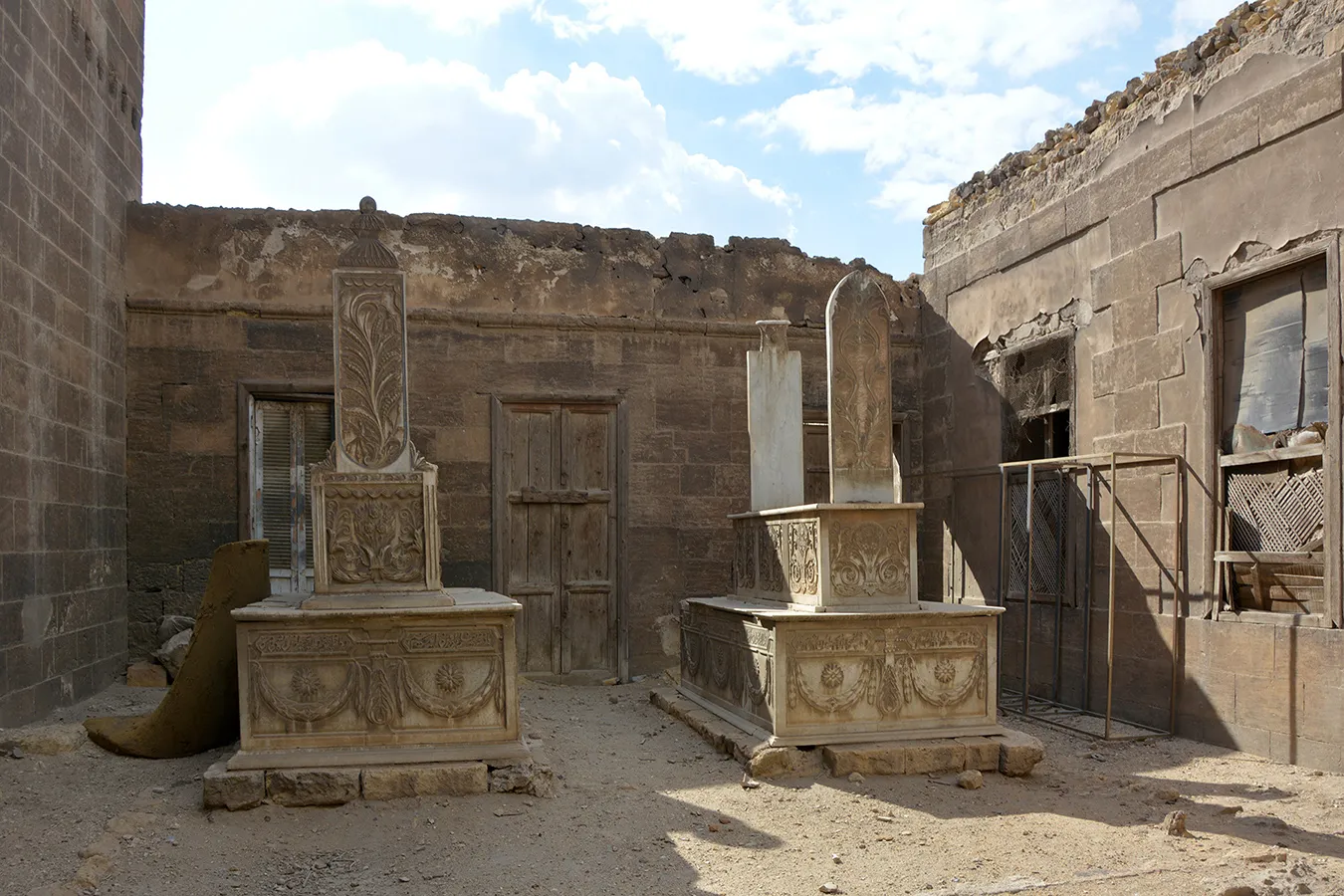
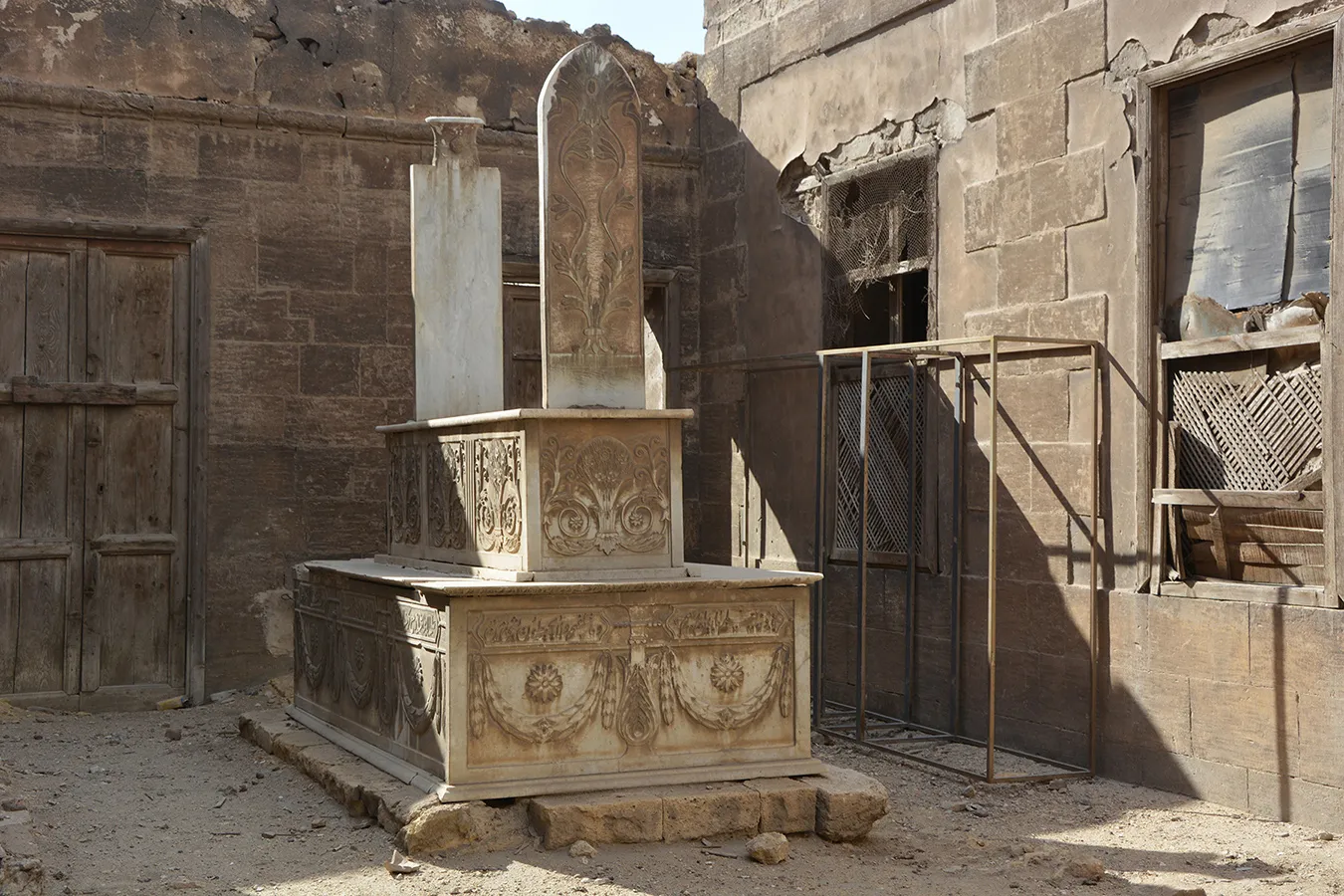
| Carved marble cenotaph(s) | Yes | 2 | 2 | |
| Decorated limestone tomb-markers | No | |||
| Decorated gateway | Yes | 1 | cut stone | Stone piers flanking an iron gate |
| Decorative door-leaves | Yes | 2 | wrought iron | Openwork wrought-iron gate |
| Decorative window grilles | No | |||
| Decorative shutters | No | |||
| Painted ceiling(s) | No | |||
| Decorative paving(s) | Yes | marble | Simple one-colour pattern in mausoleum |
Unusual or unique features
• The backyard surrounds a listed 14th-century monument (tomb of Amir Tashtimur, No. 92)
• A front garden separated from the street by an openwork fence.
Description (The direction towards Mecca (Qibla) is described as eastern and other directions are named accordingly)
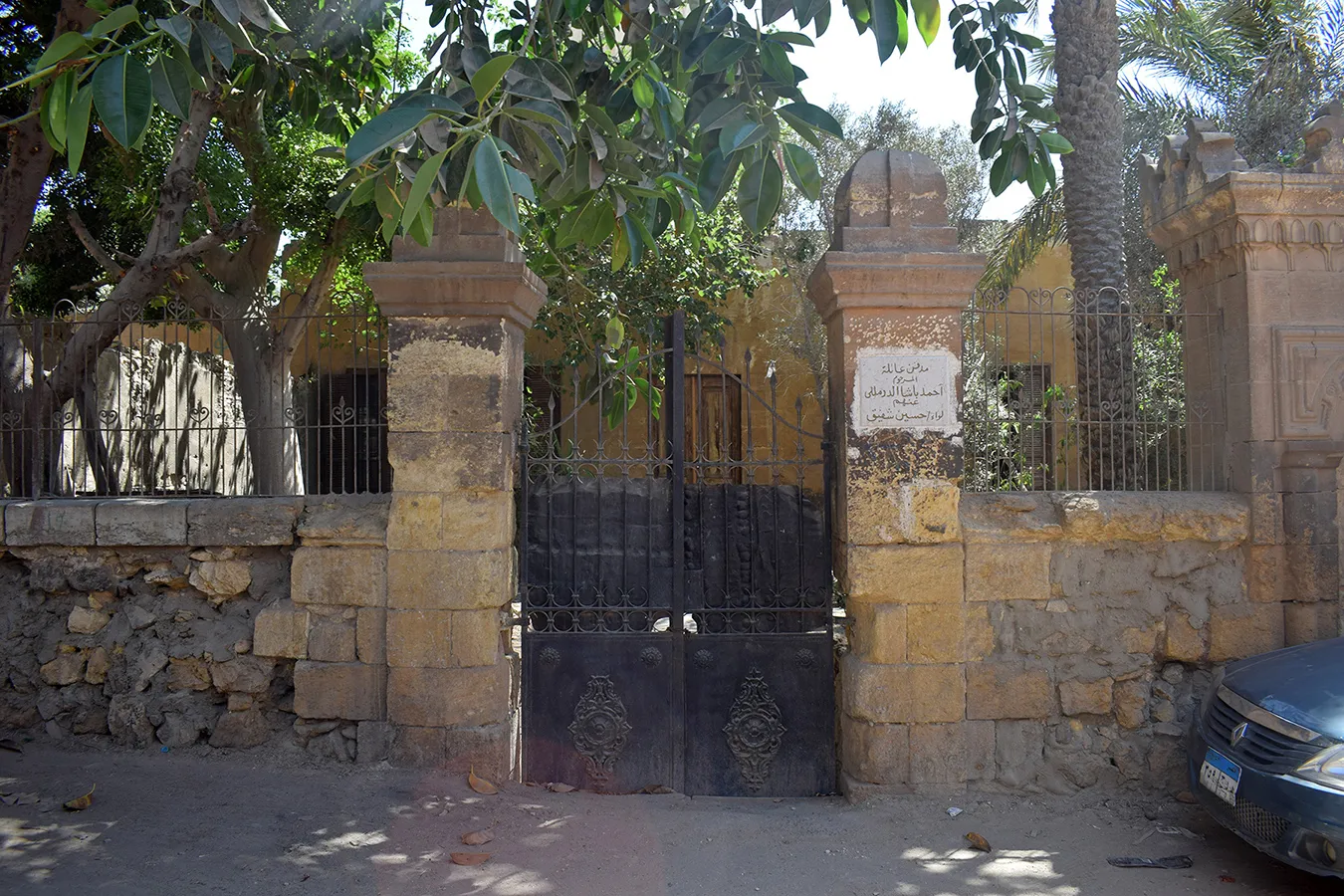
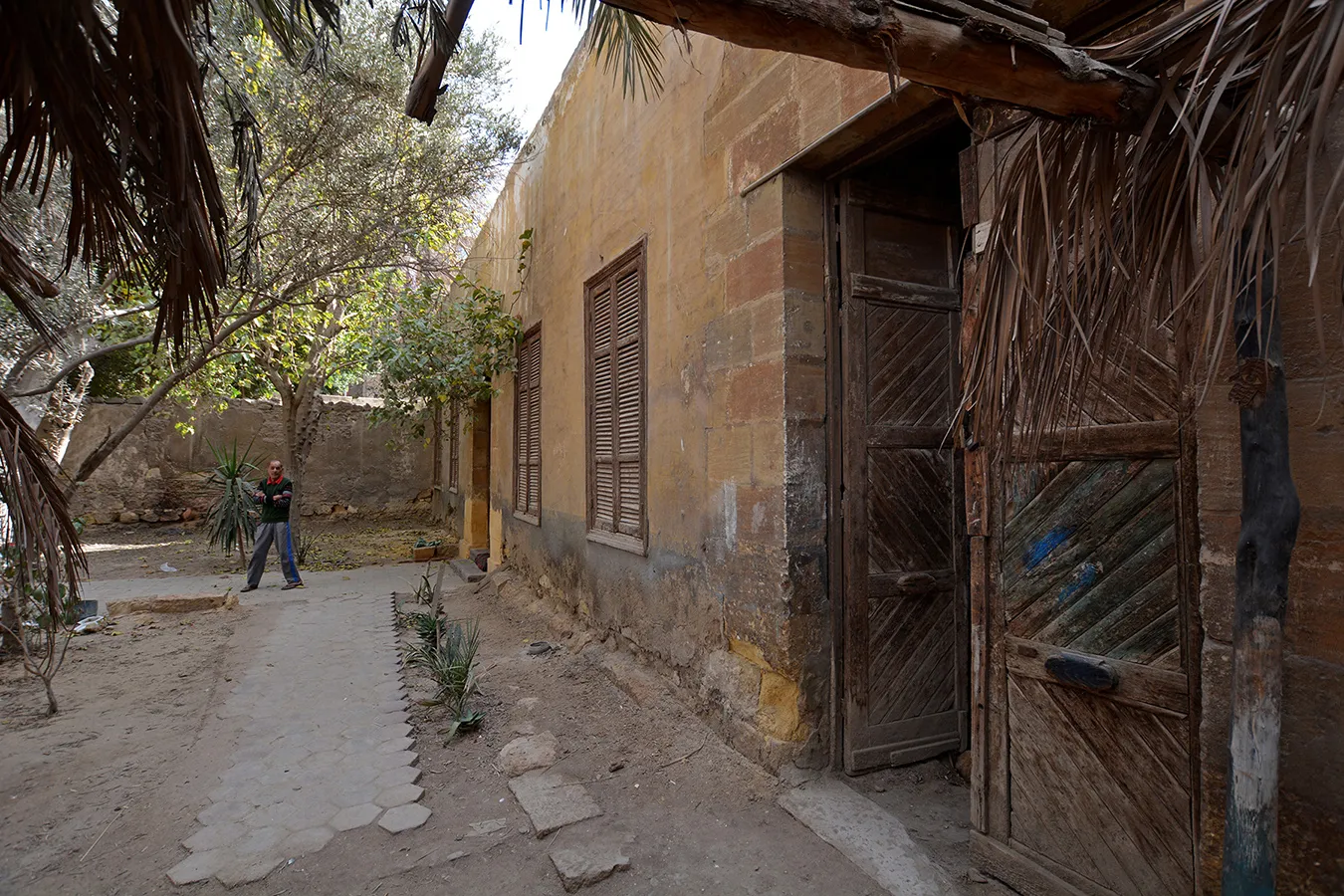
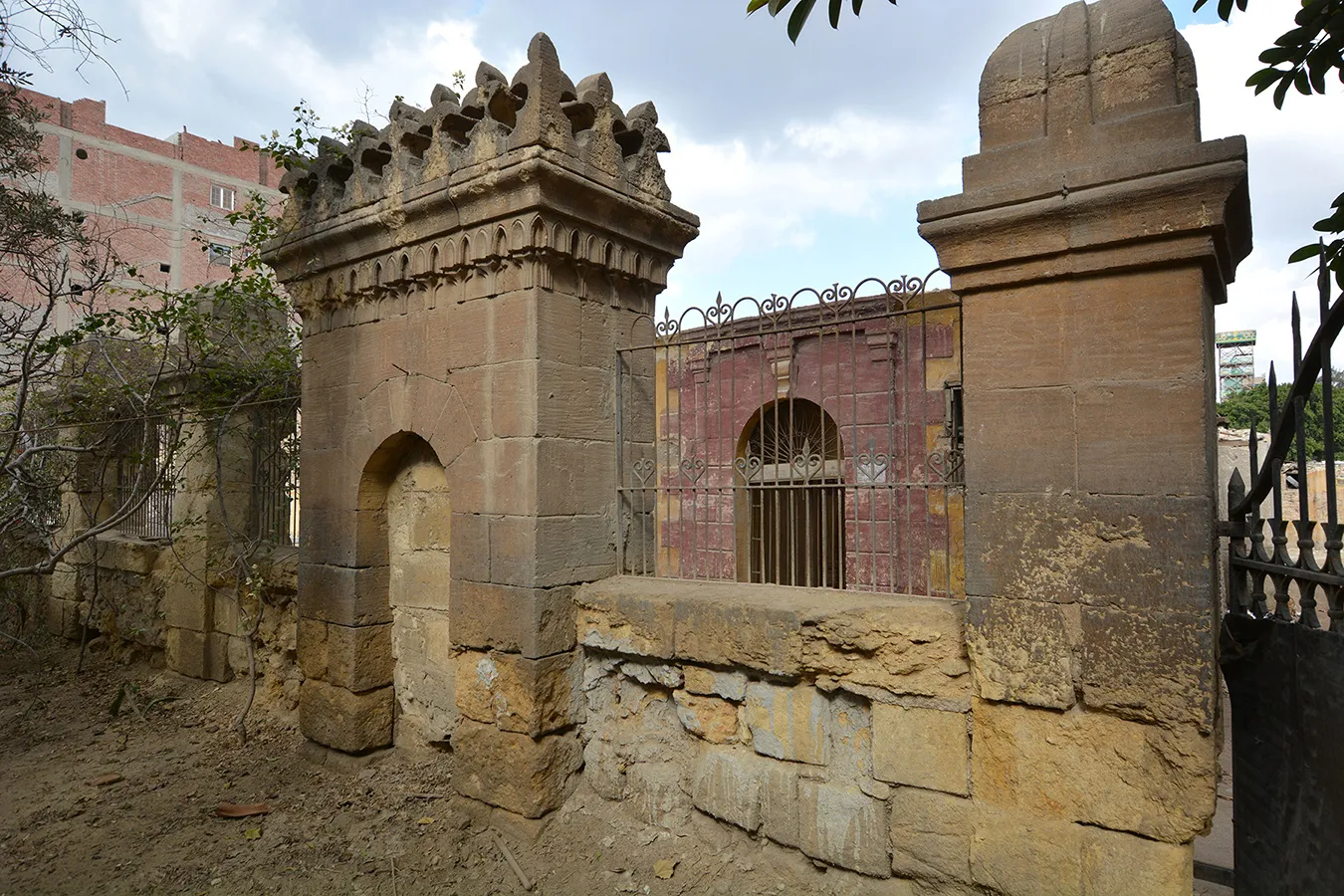
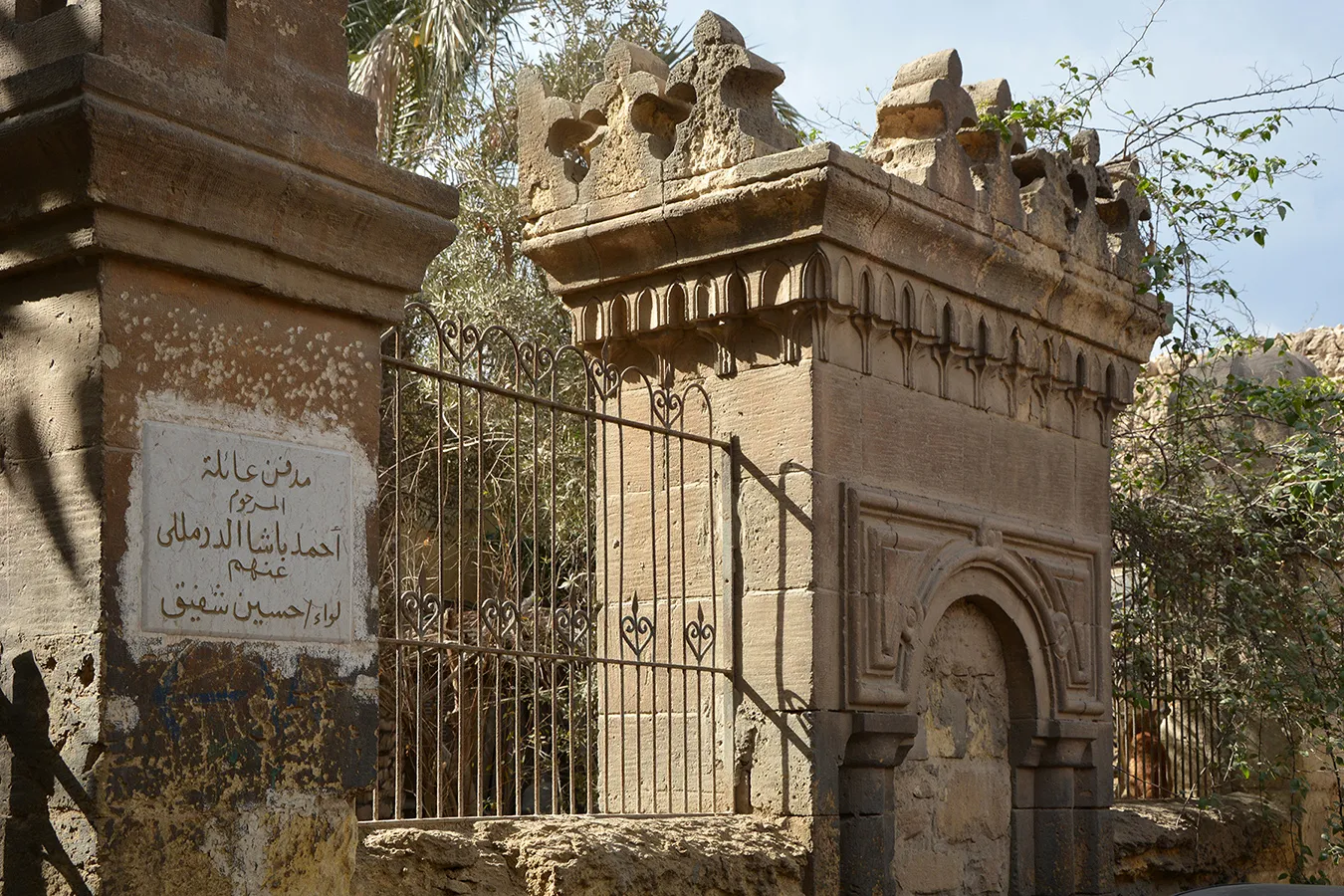
A sizeable rectangular enclosure (measuring ca 20 x 38 metres), with a front garden courtyard facing the street to the north and a back courtyard which is partly taken by an earlier 14th-century mausoleum in its south-eastern corner. Roughly a half of the lot is built up with single-storey buildings. The front gar-den is separated from the street by a breast-high wall built of ashlar stone and divided into sections by square stone pillars crowned with simple cornices and bulbous toppings, with the upper section filled with a simple decorative wrought iron fence. The gate is placed asymmetrically in the left (eastern) part of the wall. It consists of a two-leaved door of simple decorative wrought iron grille and sheet-metal or-naments in the lower part placed between two stone pillars. In the middle of the front wall is a wall fountain in the form of a rectangular block of stonemasonry topped with a muqarnas cornice and fleur-de-les crenellations. In its front wall is a recess flanked by engaged colonnettes and topped with a round arch framed in simple knotted mouldings. The northern façade of the building on the southern side of the courtyard is plain, undecorated, built of rubble stone and plastered except around the doors framed with ashlar masonry. In the left part is a door leading to the main building, flanked symmetrically by two windows on each side, and to the right, a door of the unroofed passage leading to the back yard, and to the right of it a window of a room in the tract of rooms by the western side of the lot. These rooms are currently used as a furniture-painting workshop.
Condition of preservation
Parts of the complex are used as a workshop and receive rudimentary maintenance. However, the unit is seriously dilapidated, with woodwork damaged and partly missing, and very heavy damage to front wall of the courtyard from raising damp. The marble front of the wall fountain is missing.
Information abut the founder, family history, etc.
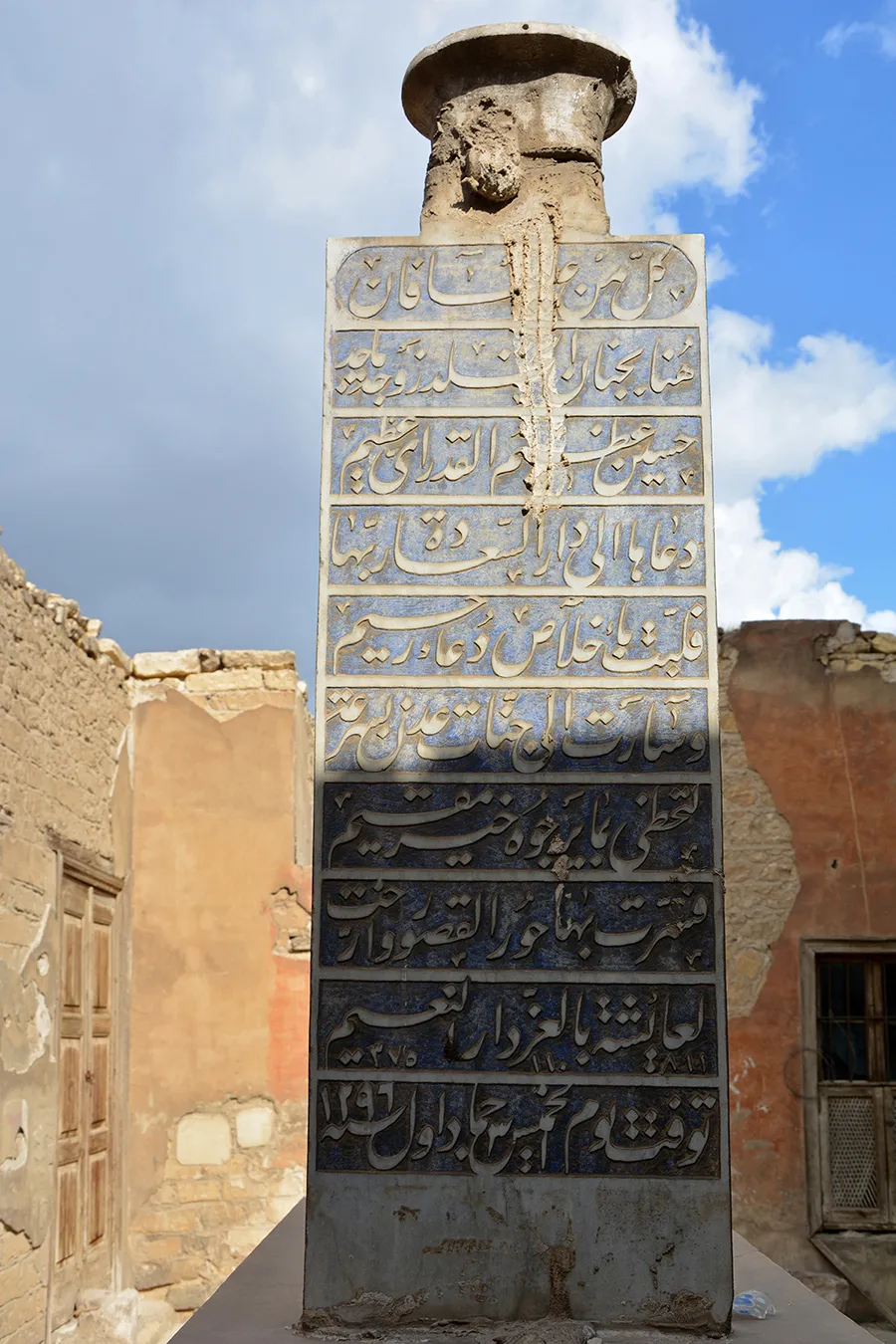
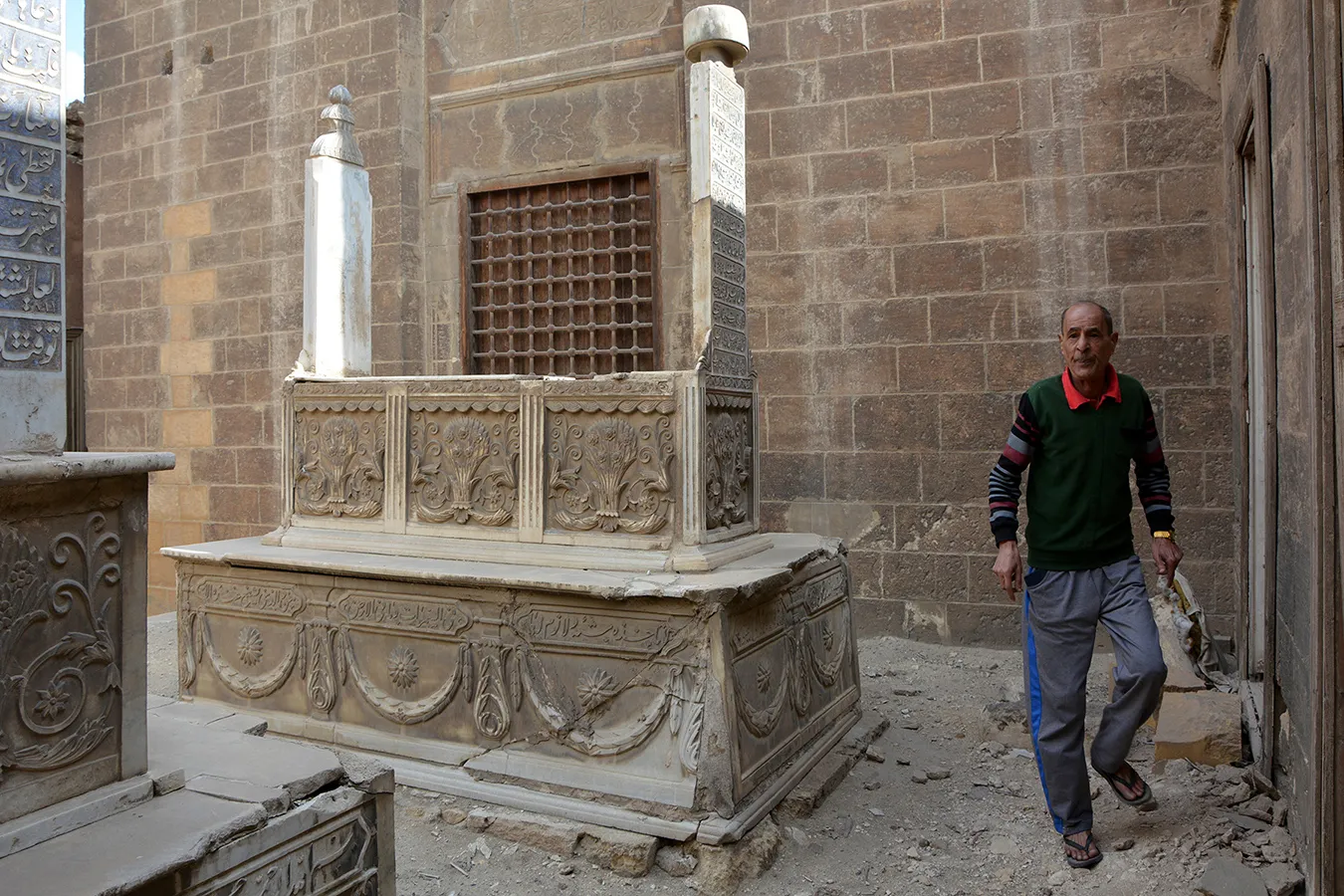
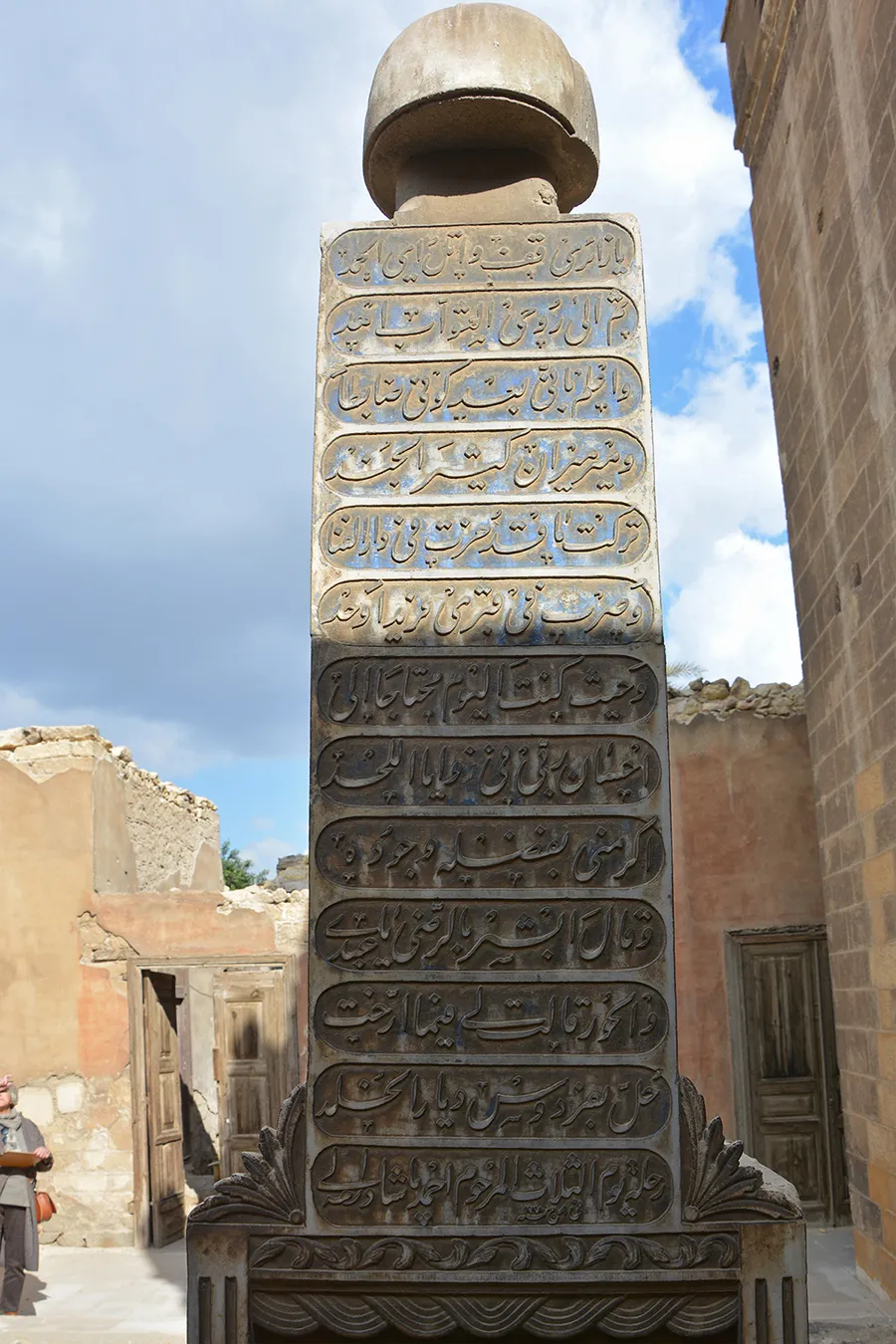
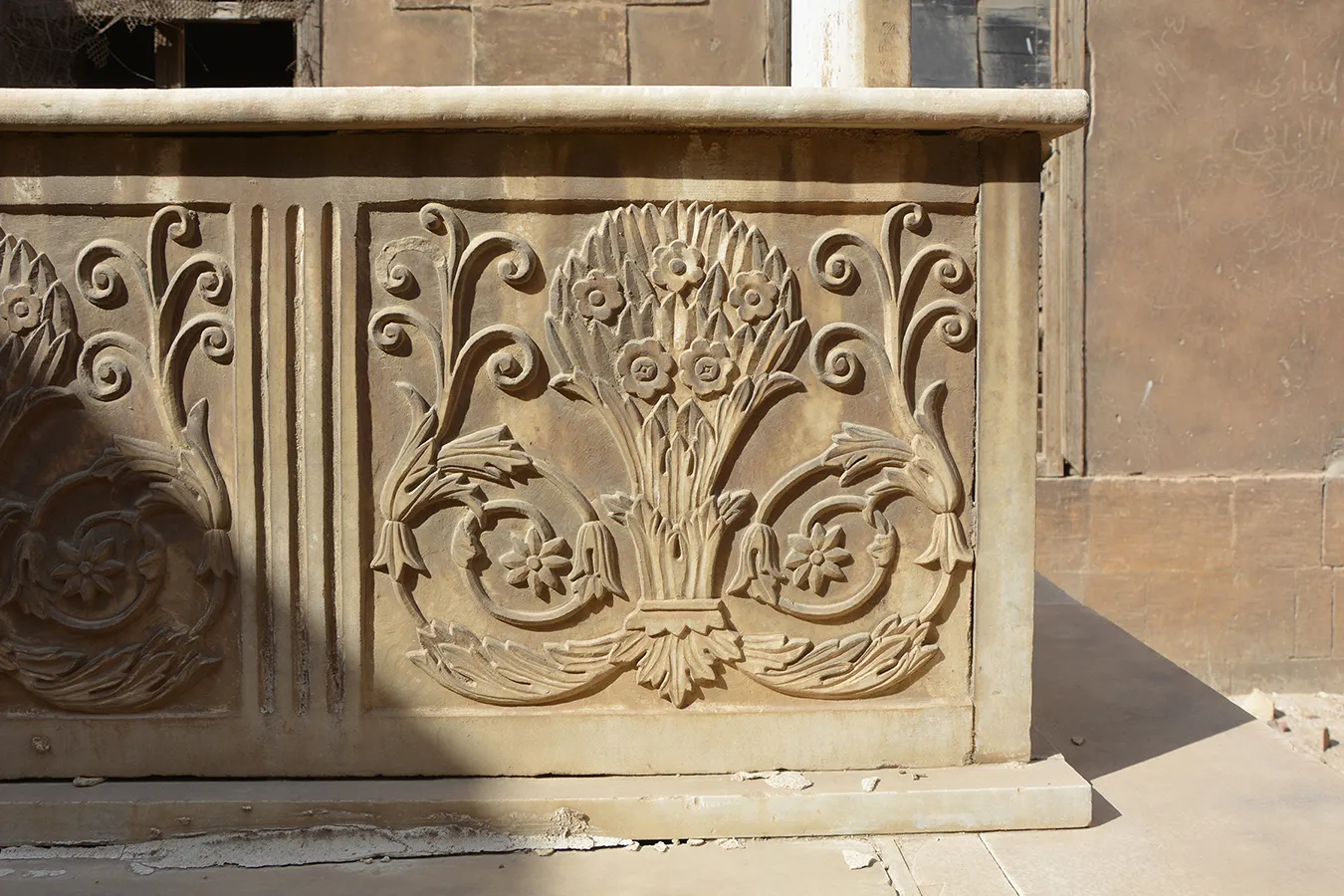
The inscription on the eastern cenotaph asks the passer-by for prayers for the deceased who held a high military rank of mirmiran (“commandant over commandants”), gives his name as Ahmad Pasha al-Daramalli, and the date of his death: 8 G[umada al-Awwal] 1270 [=5 February 1854.] The western cenotaph is dated 1296 AH [=AD 1879]). The relatively simple, neo-classical forms of the cenotaphs are consistent with that date (differing from extremely elaborate Ottoman Baroque later examples from the end of the 19th/early 20th centuries.) However, the forms of the wall of the front garden and the wall fountain seem to point at a date at the beginning of the 20th century, indicating that the wall is probably a later remodelling.
A modern stone plaque by the entrance gate states that this is a funerary enclosure of the family of the late Ahmad Pasha al-Daramalli renovated by general Husayn Shafiq.
- Field recording by
- Agnieszka Dobrowolska and Jaroslaw Dobrowolski
- Date recorded
- January 17, 2022
- Data entered by
- Yusuf Yassir
- Date entered
- May 13, 2024