


Unit No51
Ibrahim Pasha Halim
|
Coordinates of the main entrance |
30.039878N - 31.269283E |
|
Attribution |
Ibrahim Pasha Halim |
|
Higri (AH)Dates as given in the Inscription |
1347 |
|
Miladi (AD)Dates as given in the Inscription |
1928 |
|
Inscription Contemporary with the building? |
Yes |
|
Multiple date(s) In the inscription? |
Yes |
|
Assumed Date |
|
|
Based on |
|
|
Original Use |
Funerary enclosure |
|
Current Use |
Funerary enclosure and residential |
|
Overall condition |
Good |
Features of unit 51
| Present | Count | Material | Comments (see description for details) | |
|---|---|---|---|---|
| Free standing structure | No | |||
| Walled enclosure | Yes | 1 | stone | |
| Rooms by the perimeter wall | Yes | stone | ||
| Freestanding structure(s) in enclousure | Yes | 1 | stone | Free-standing mausoleum in the enclosure |
| Dome over the tomb chamber | Yes | |||
| Neo-Mamluk architectural decoration | Yes | |||
| Garden layout | Yes | |||
| Sabil(s) | Yes | 1 | stone | |
| Wall fountain(s) | No | |||
| Canopy on columns / pillars | No | |||
| Carved marble cenotaph(s) | No | |||
| Decorated limestone tomb-markers | No | |||
| Decorated gateway | Yes | 1 | stone | |
| Decorative door-leaves | Yes | 3 | wood, bronze | 3 two-leaved doors in the mausoleum |
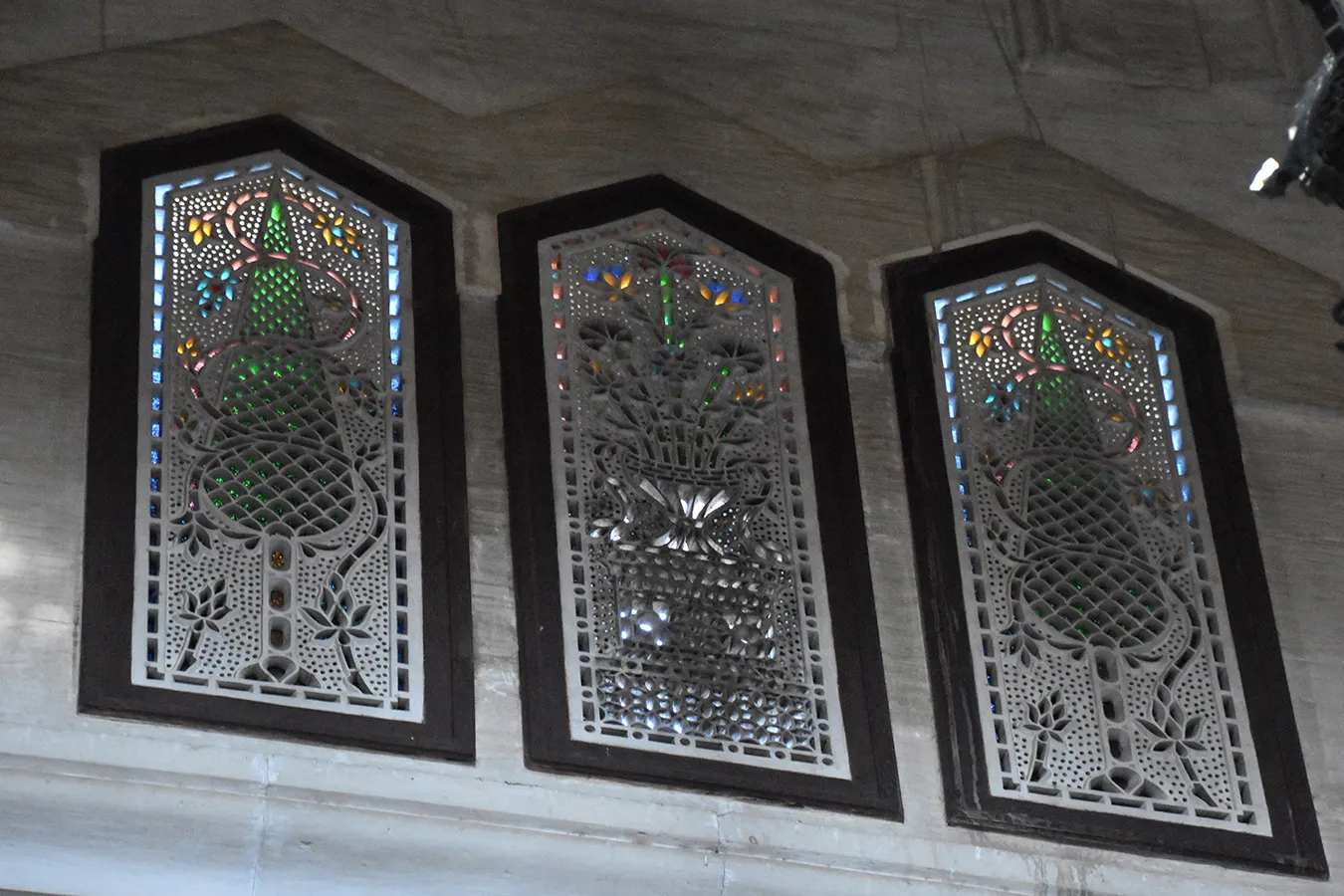
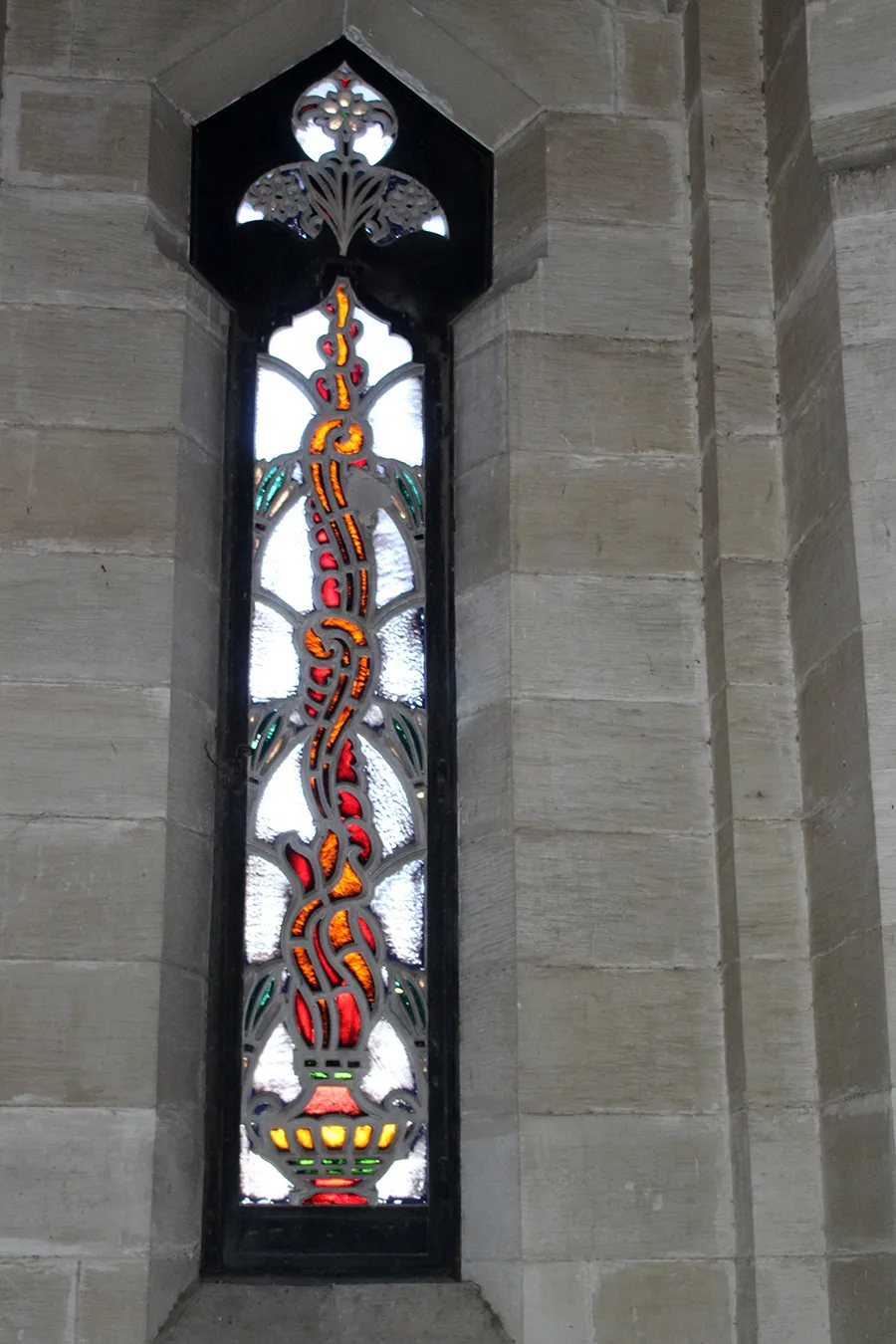
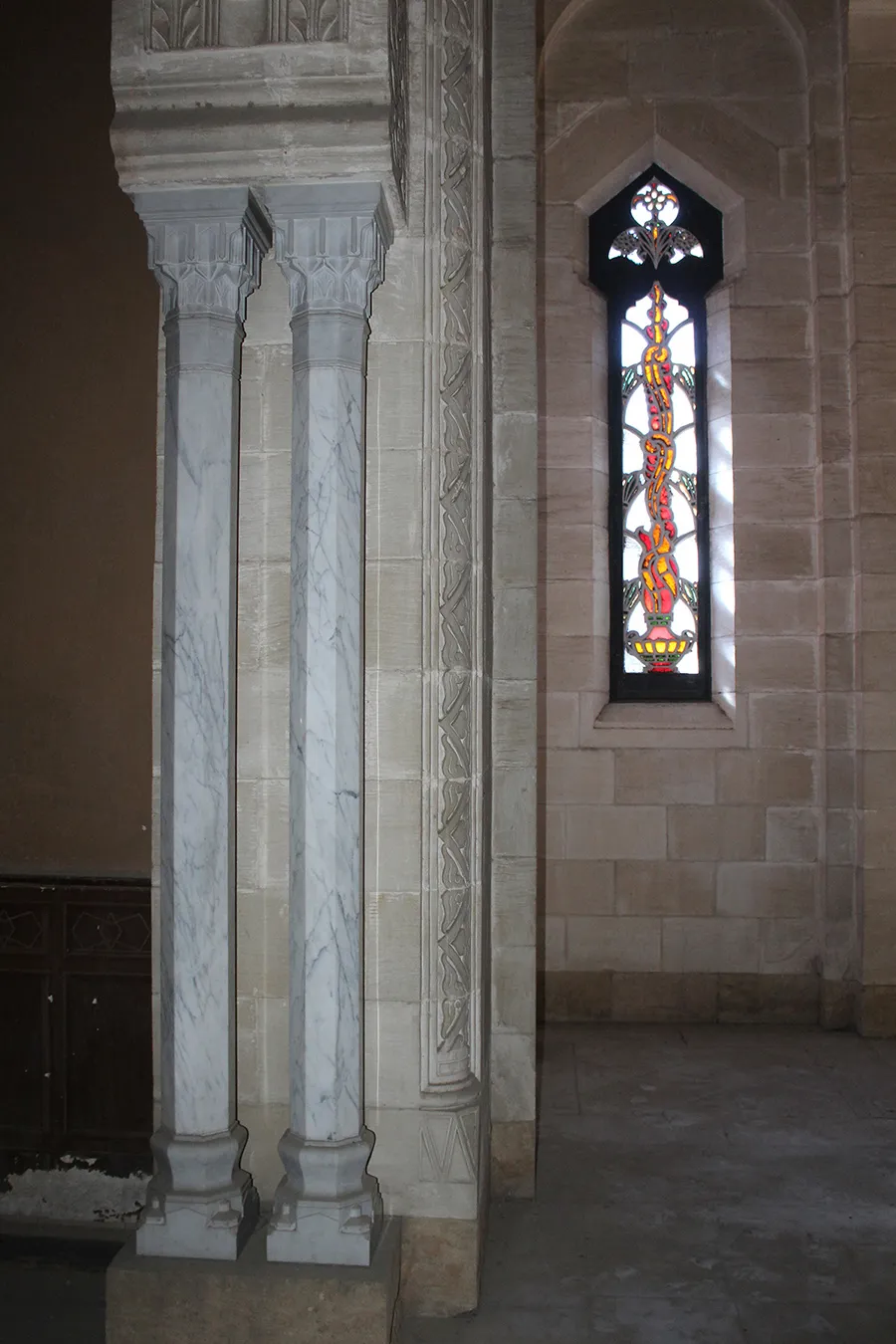
| Decorative window grilles | Yes | gypsum, glass | Qamariyat in the mausoleum | |
| Decorative shutters | Yes | 18 | wood | In 18 windows in street façades |
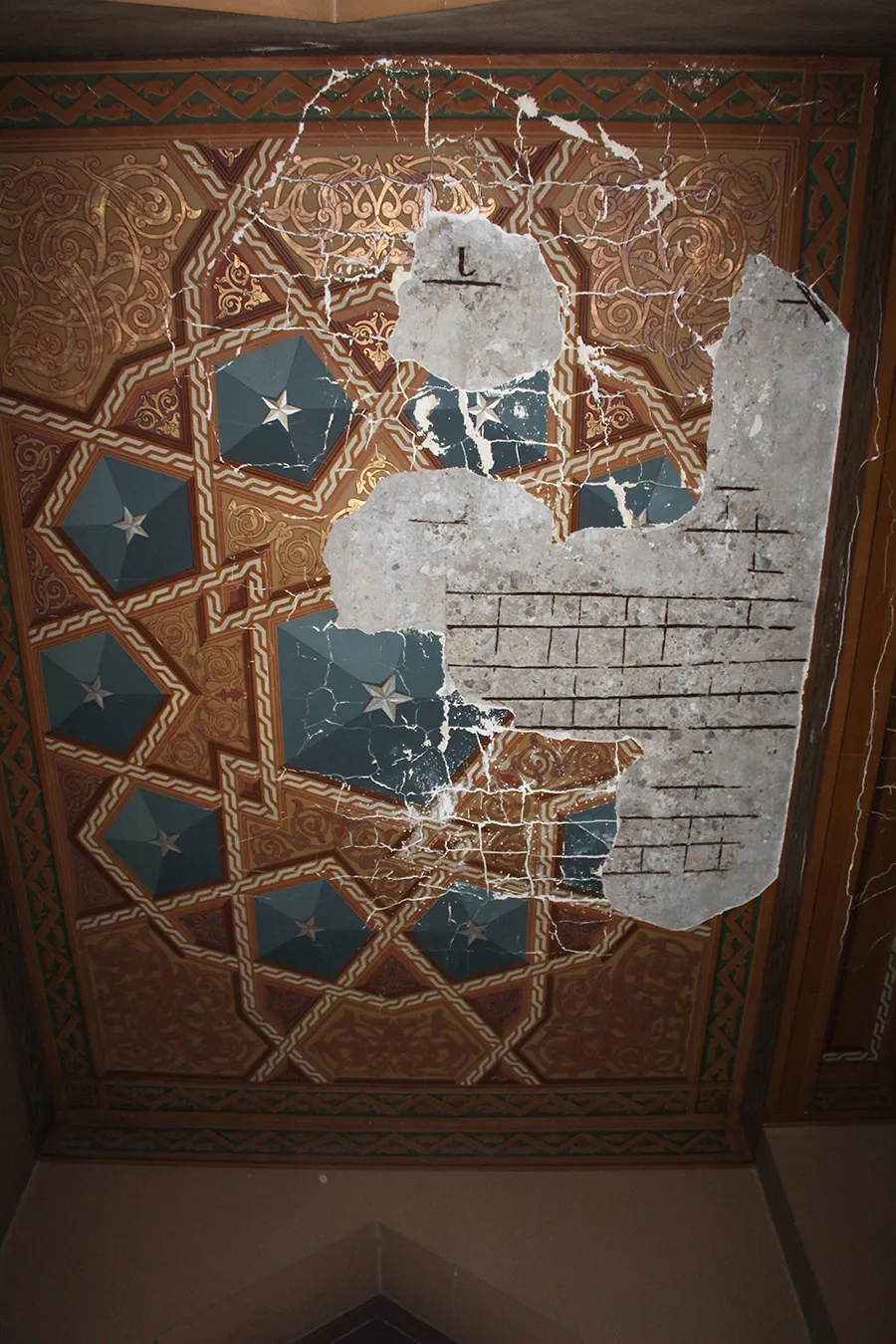
| Painted ceiling(s) | Yes | 6 | On plaster over reinforced concrete slab | |
| Decorative paving(s) | Yes | marble | Simple one-colour pattern in mausoleum |
Unusual or unique features
• Grand scale, larger than most complexes in the area
• Exceptionally high quality of design and of craftsmanship.
Description (The direction towards Mecca (Qibla) is described as eastern and other directions are named accordingly)
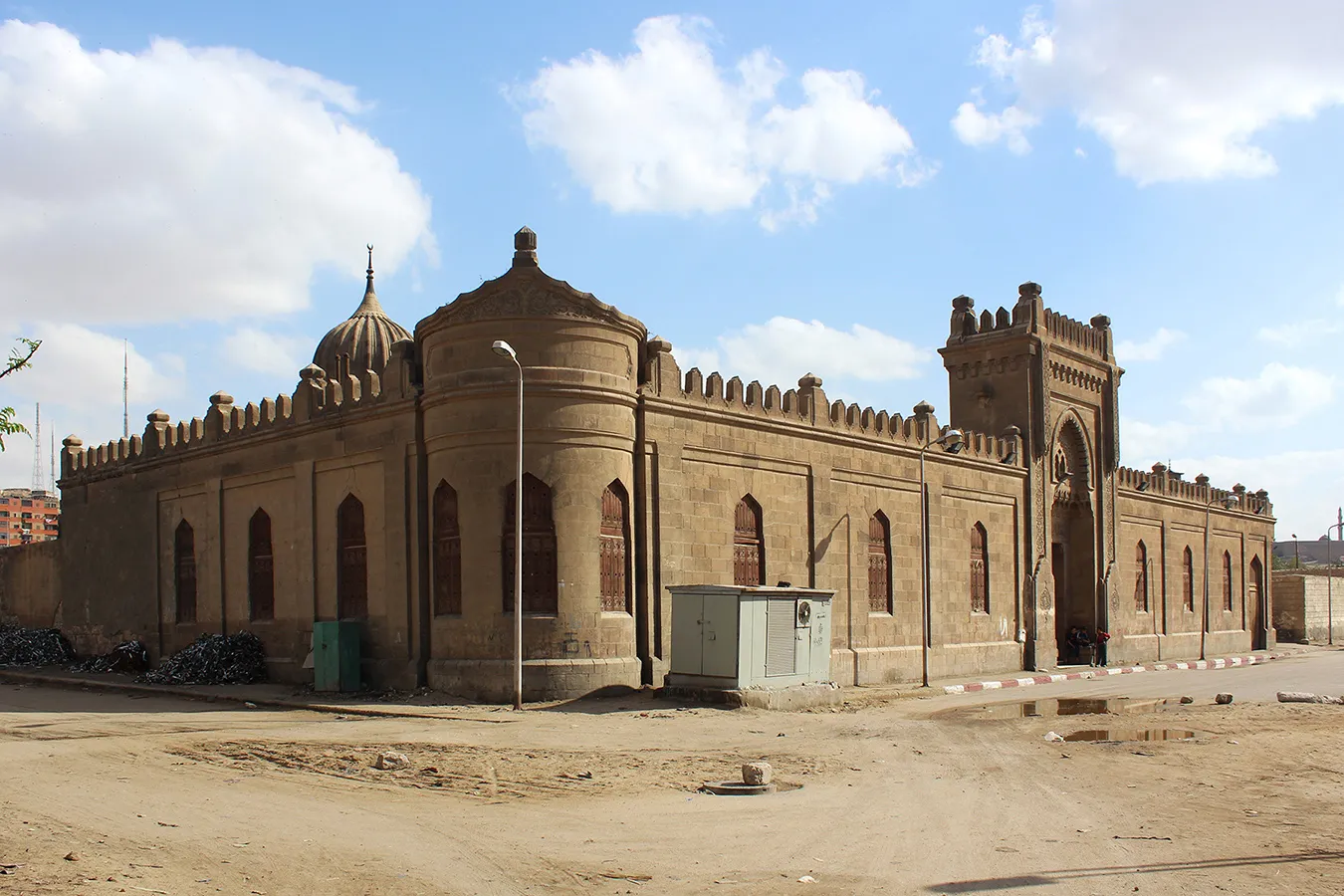
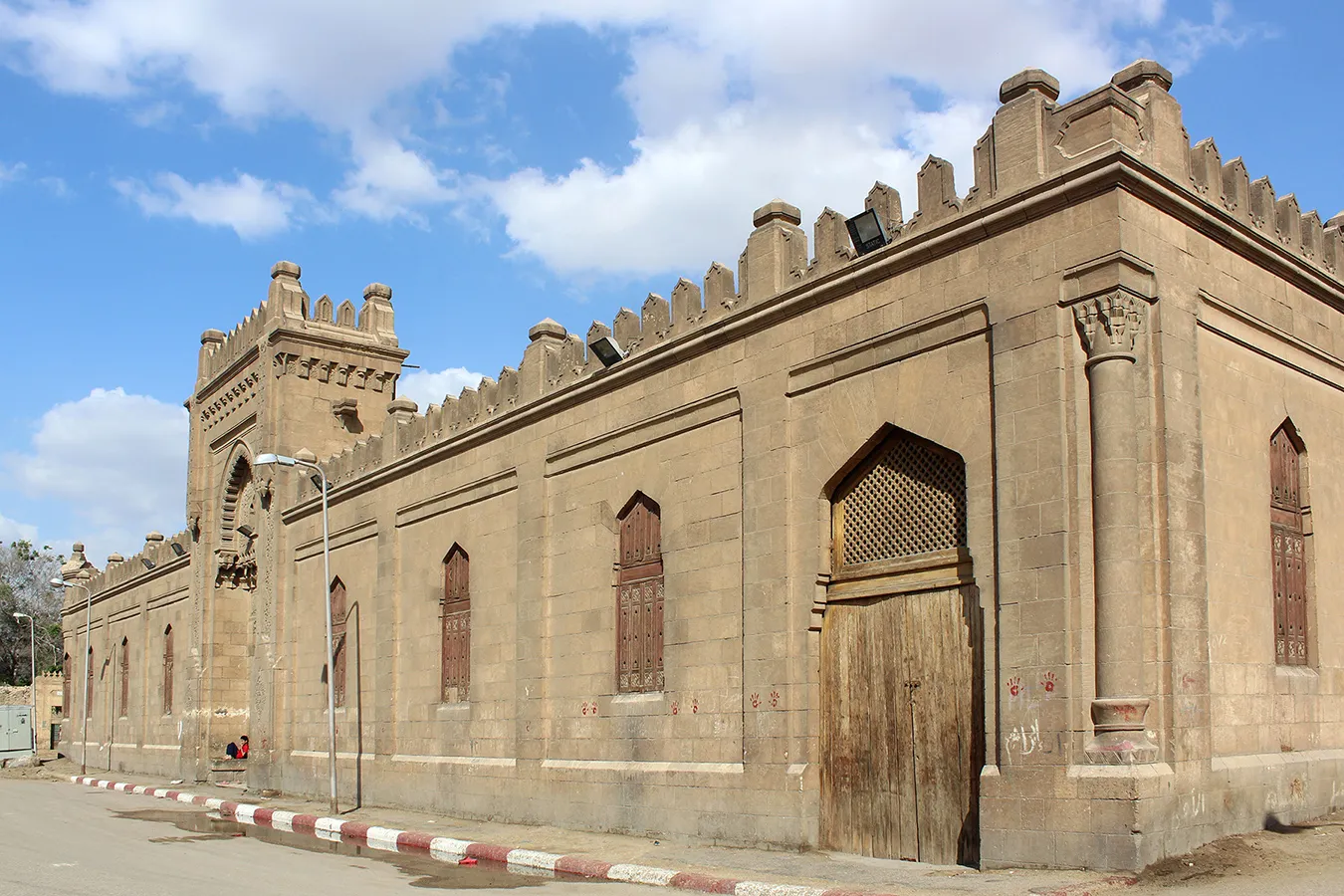
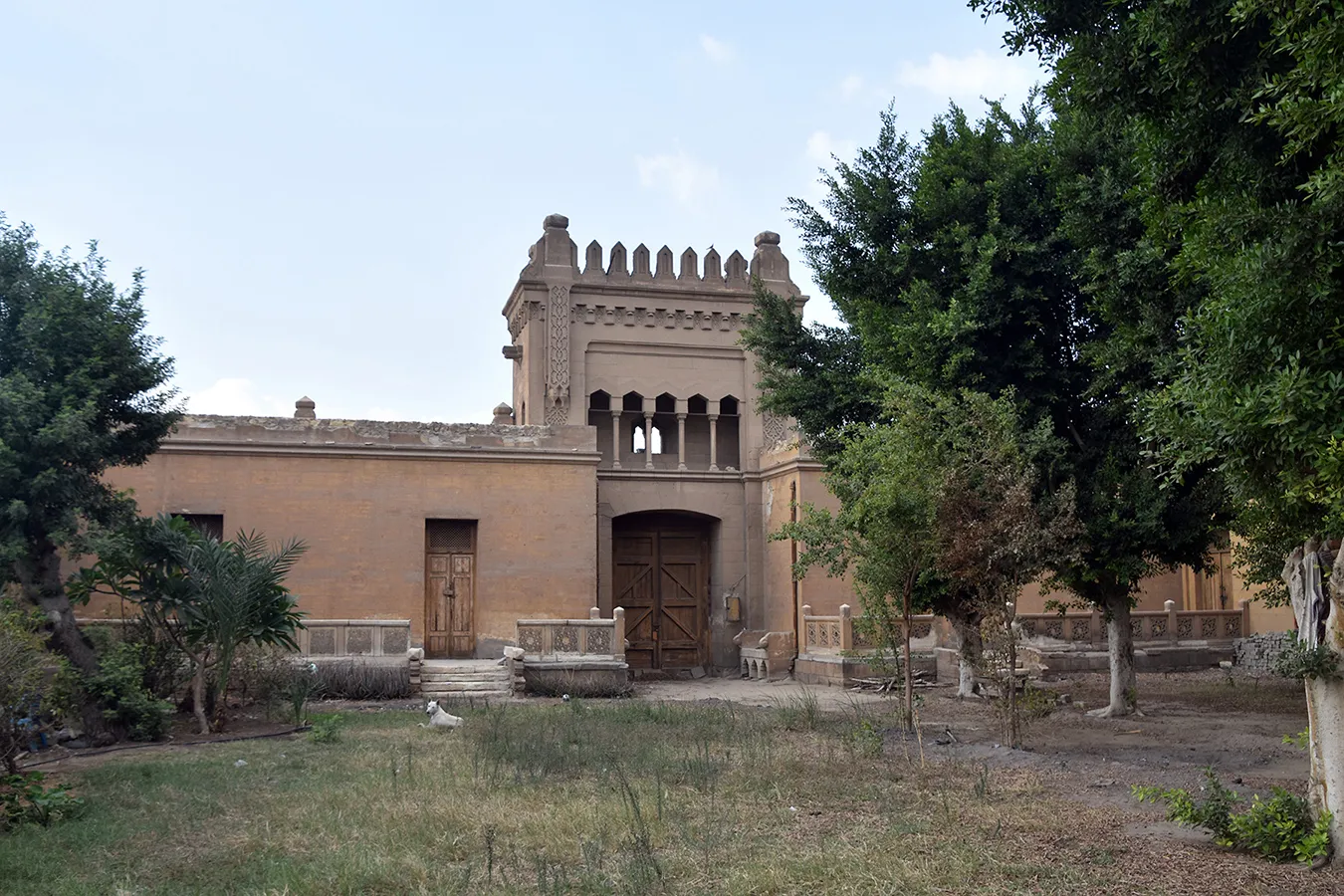
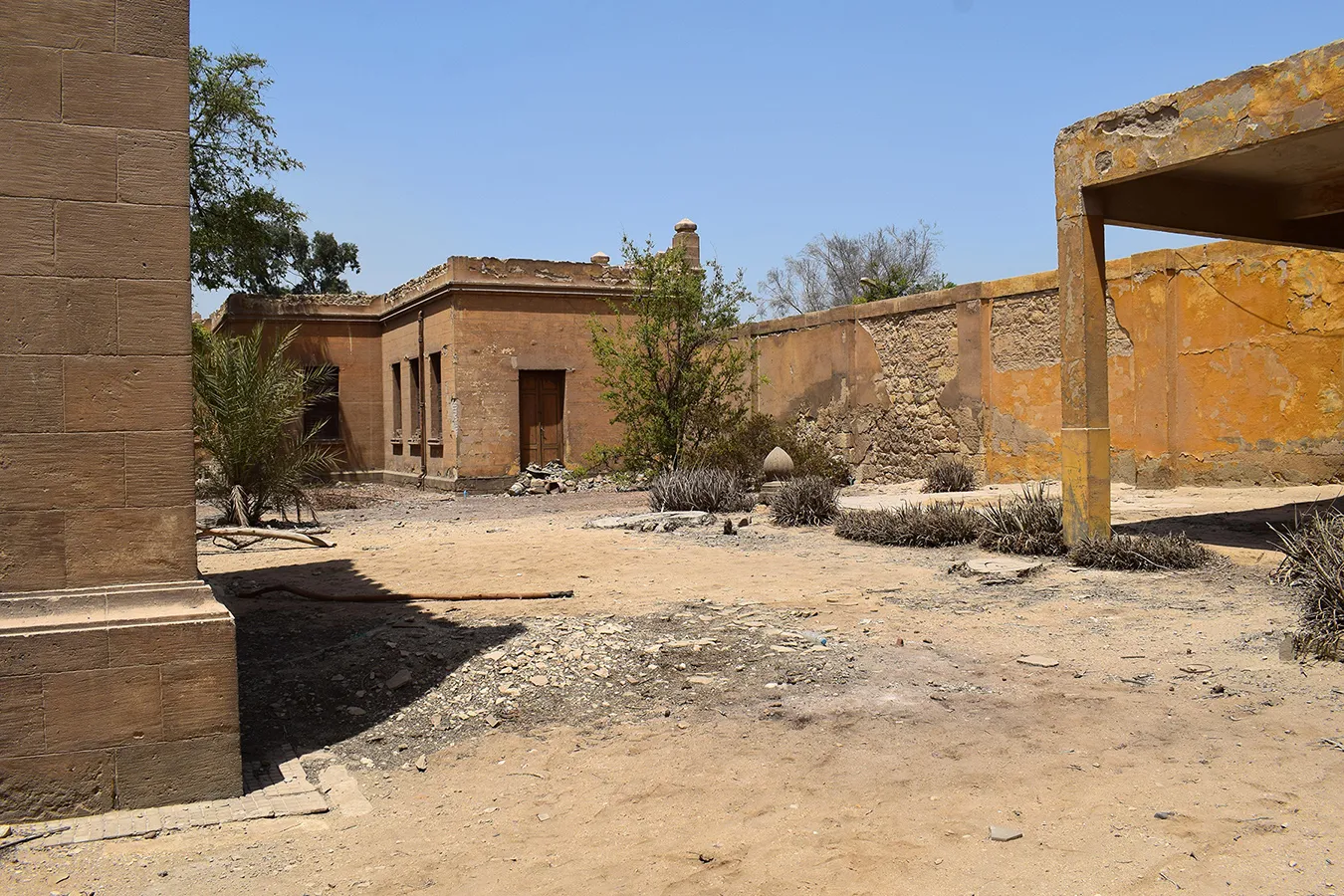
A huge square enclosure measuring ca 50×50 metres, with the main entrance façade facing west, with the northern, western, and southern façades facing streets. A narrow alley to the east has been filled with utilitarian structures. The complex has an axial layout and consists of (1) a free-standing domed mausoleum located on the main axis close to the eastern perimeter wall; (2) The main gateway in the middle of the western façade of the enclosure; (3) two generally L-shaped buildings on either side of the gateway occupying the north-western and south-western corners of the enclosure; (4) A simple service building by the southern perimeter wall of the enclosure and a simple shed of reinforced concrete in the north-eastern corner in the enclosure. The huge open courtyard is sparsely planted with greenery, with an alleyway from the gateway to the mausoleum, and with a paved burial area in the south-eastern corner, in which stands a single limestone tomb-marker.
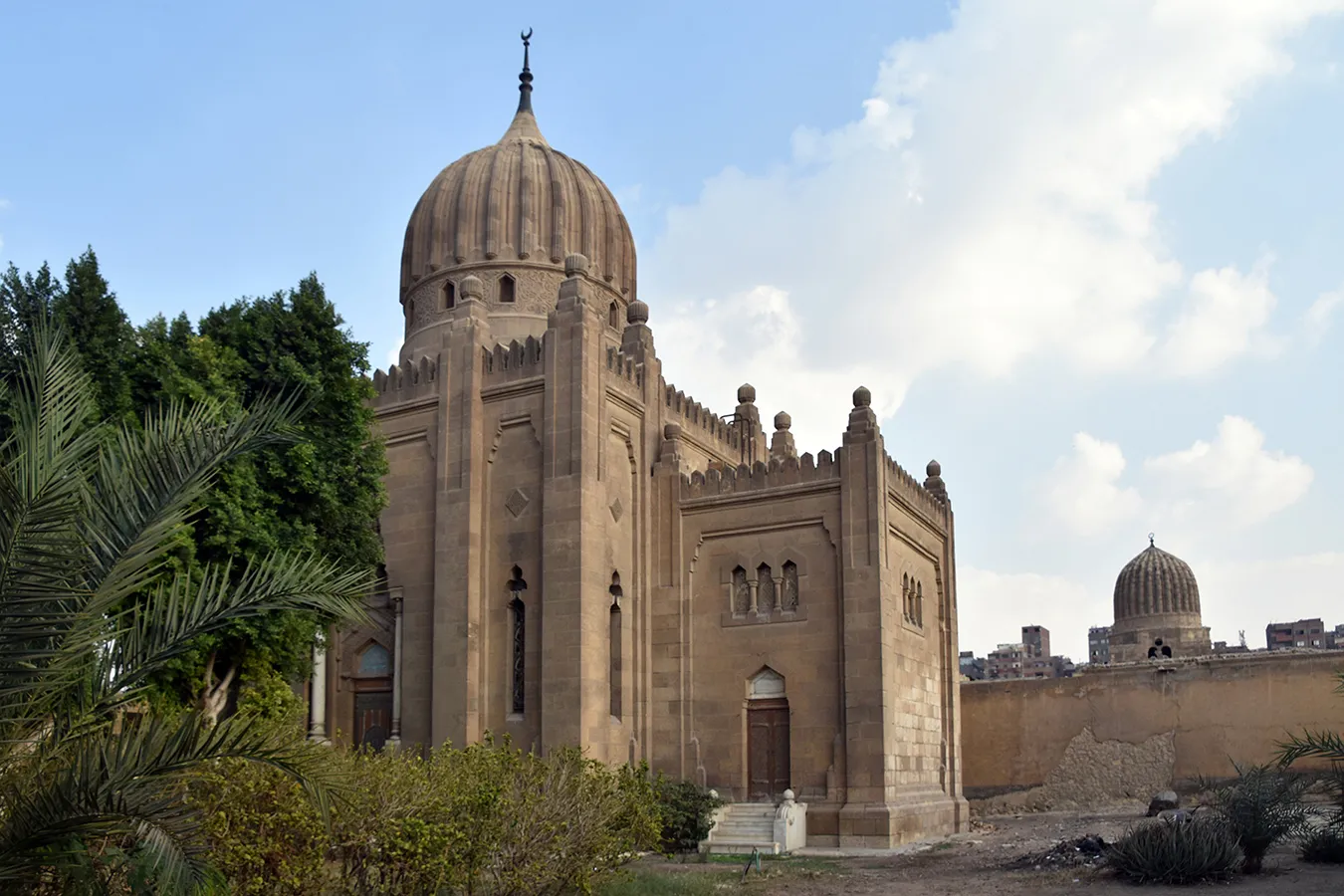
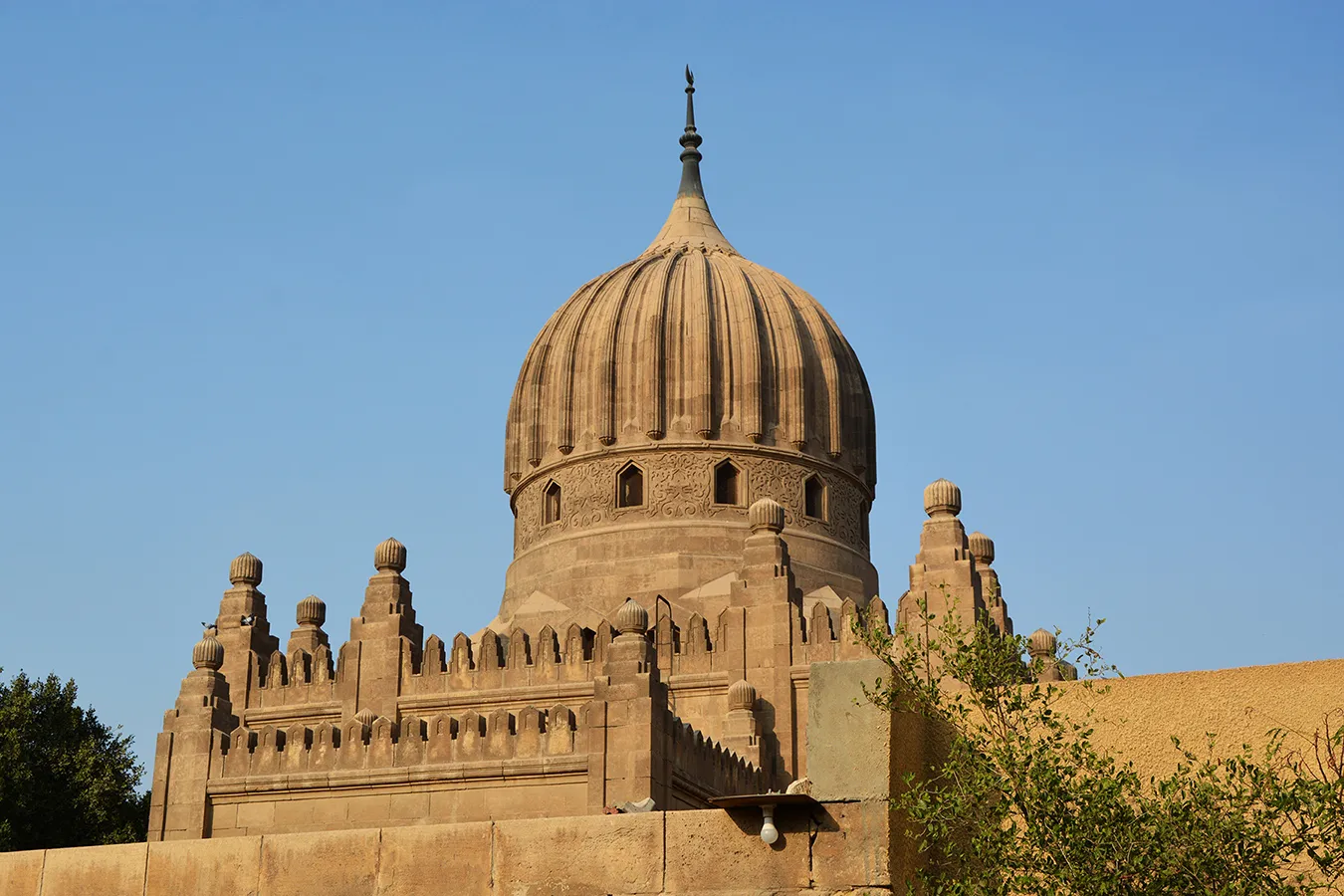
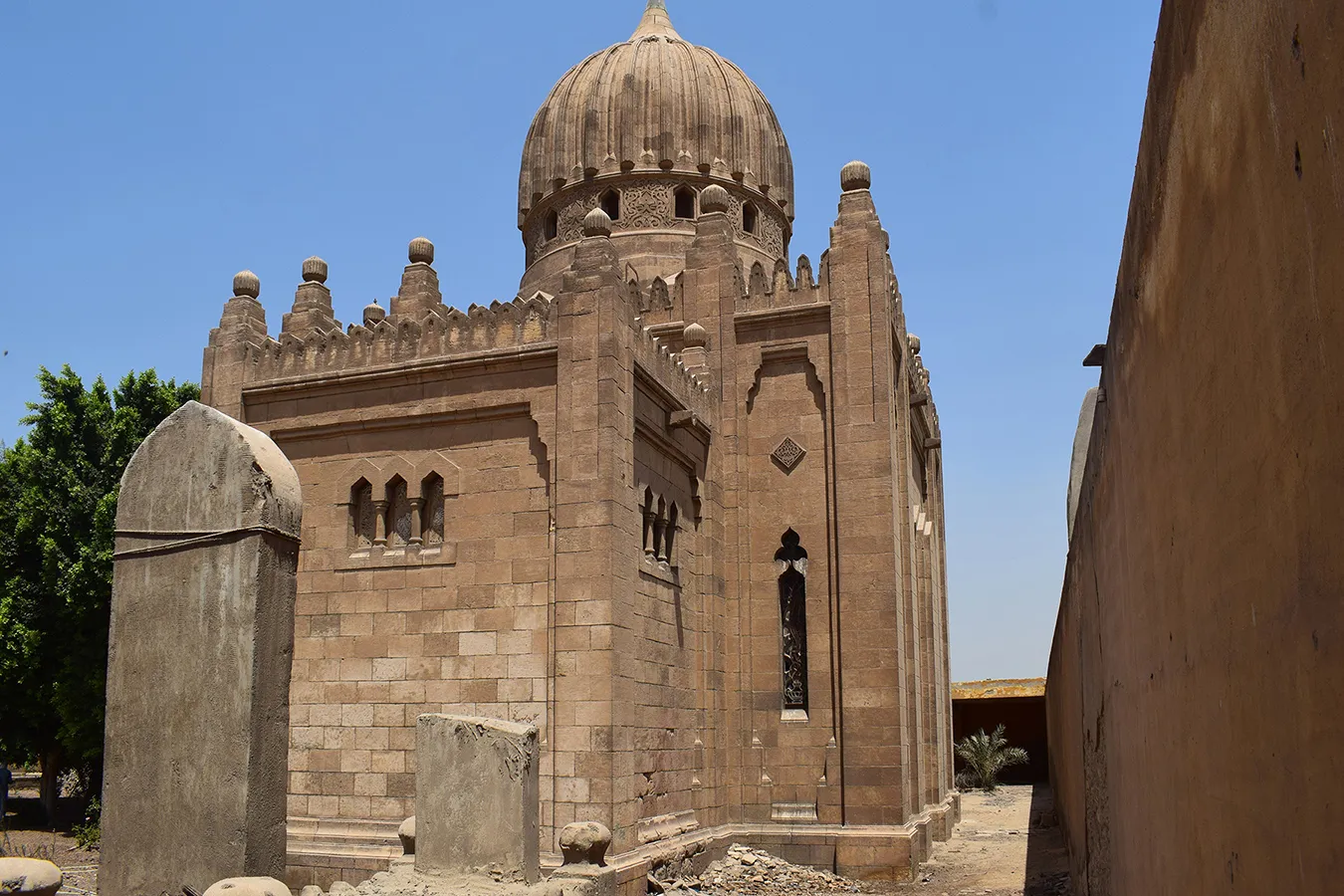
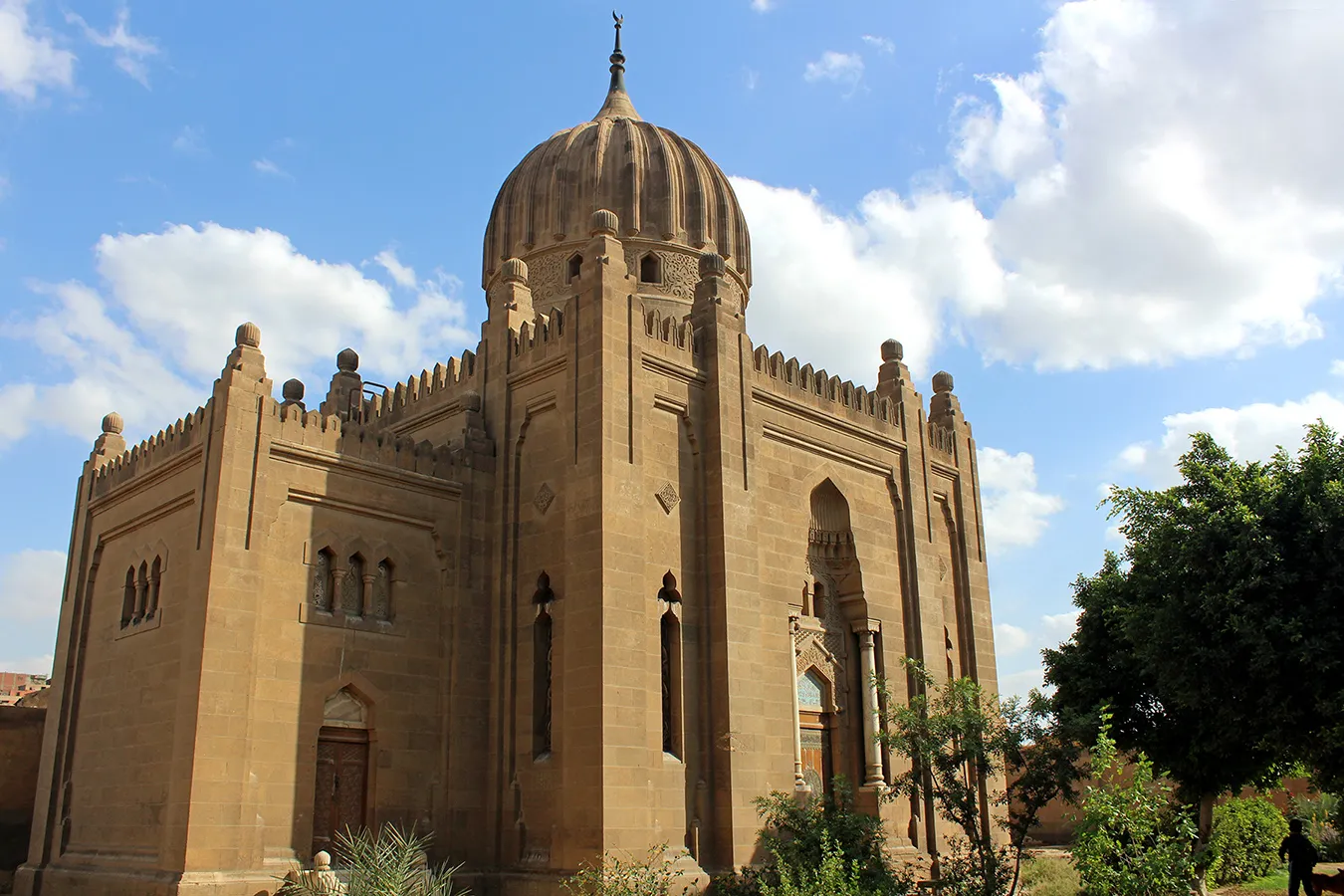
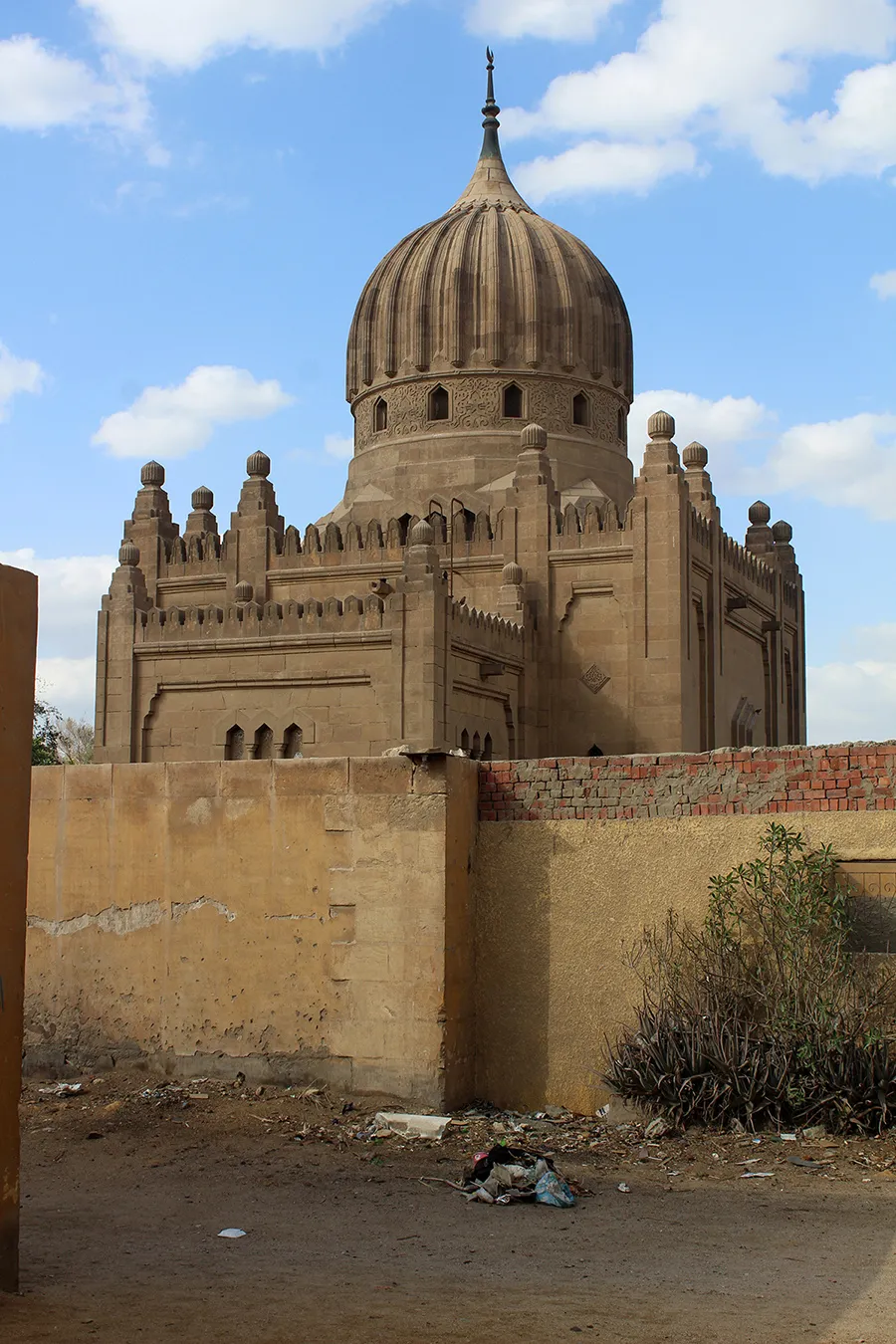
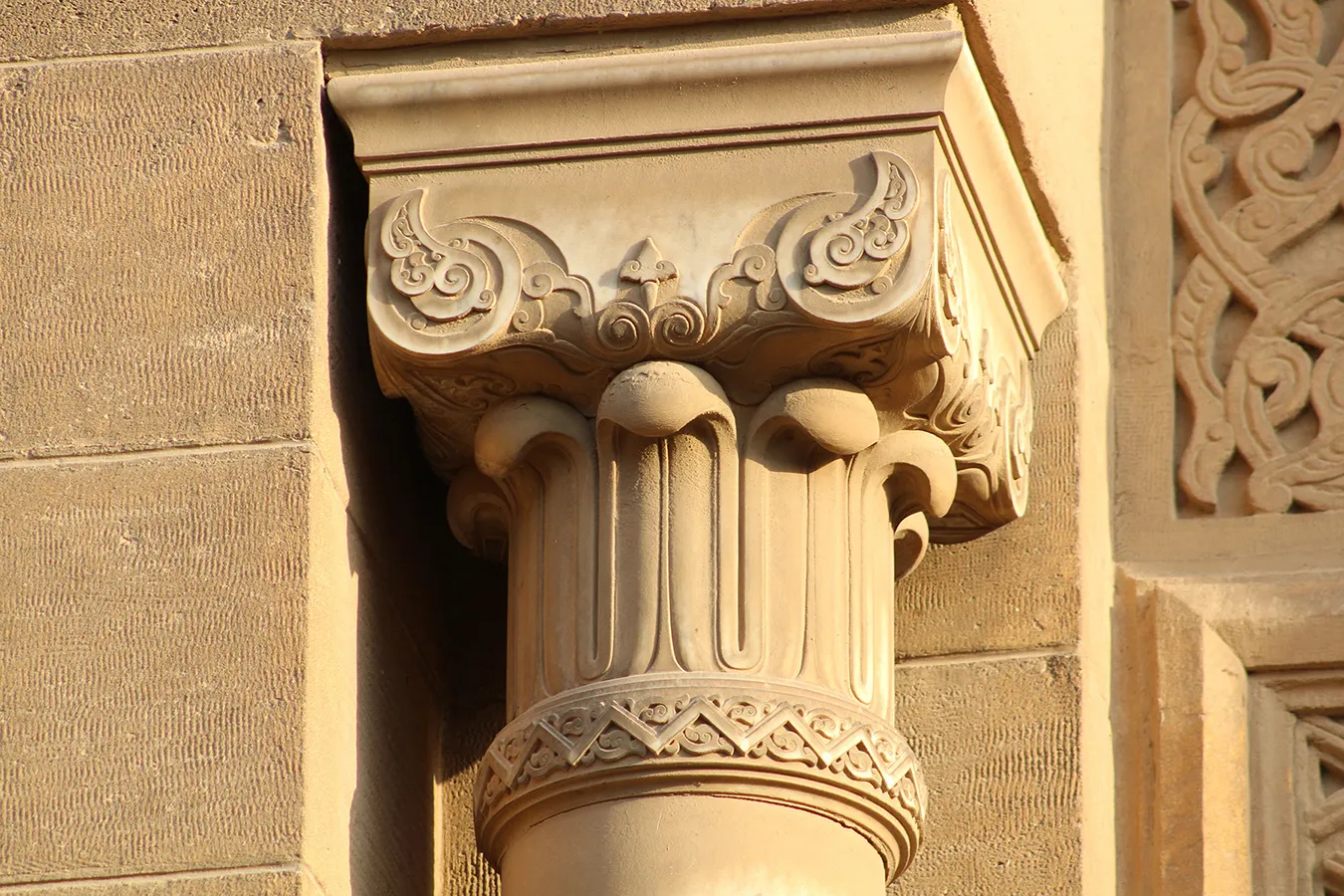
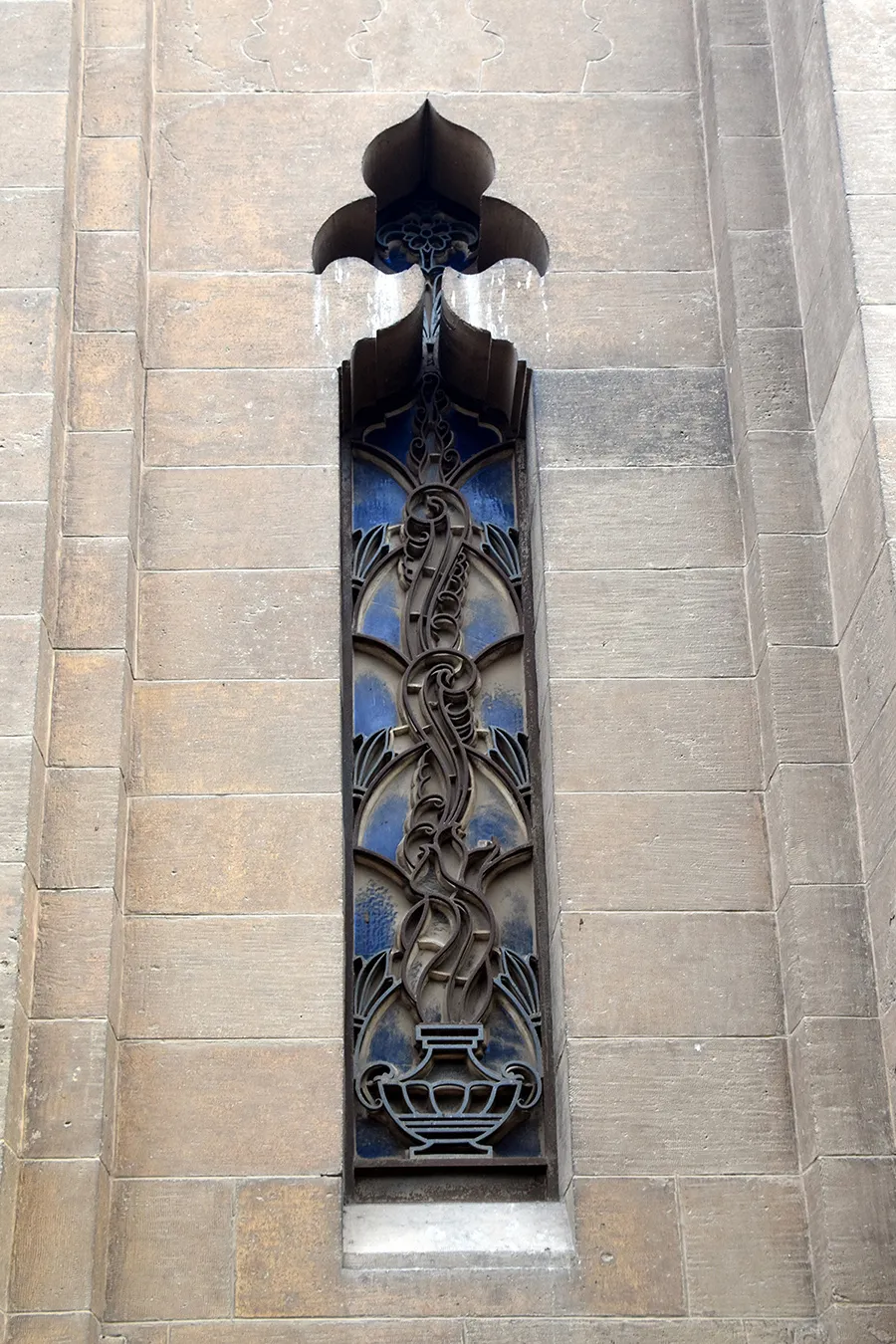
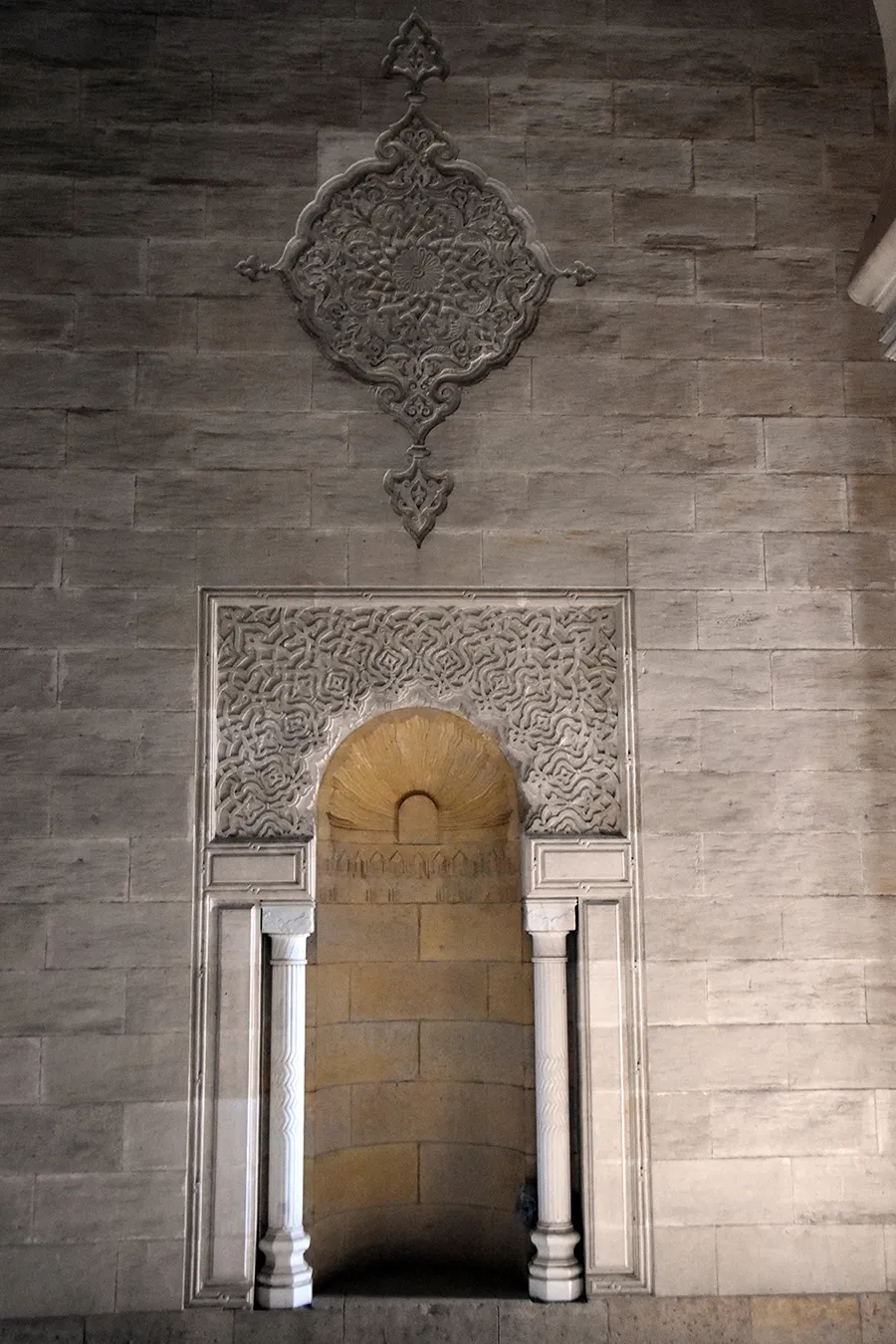
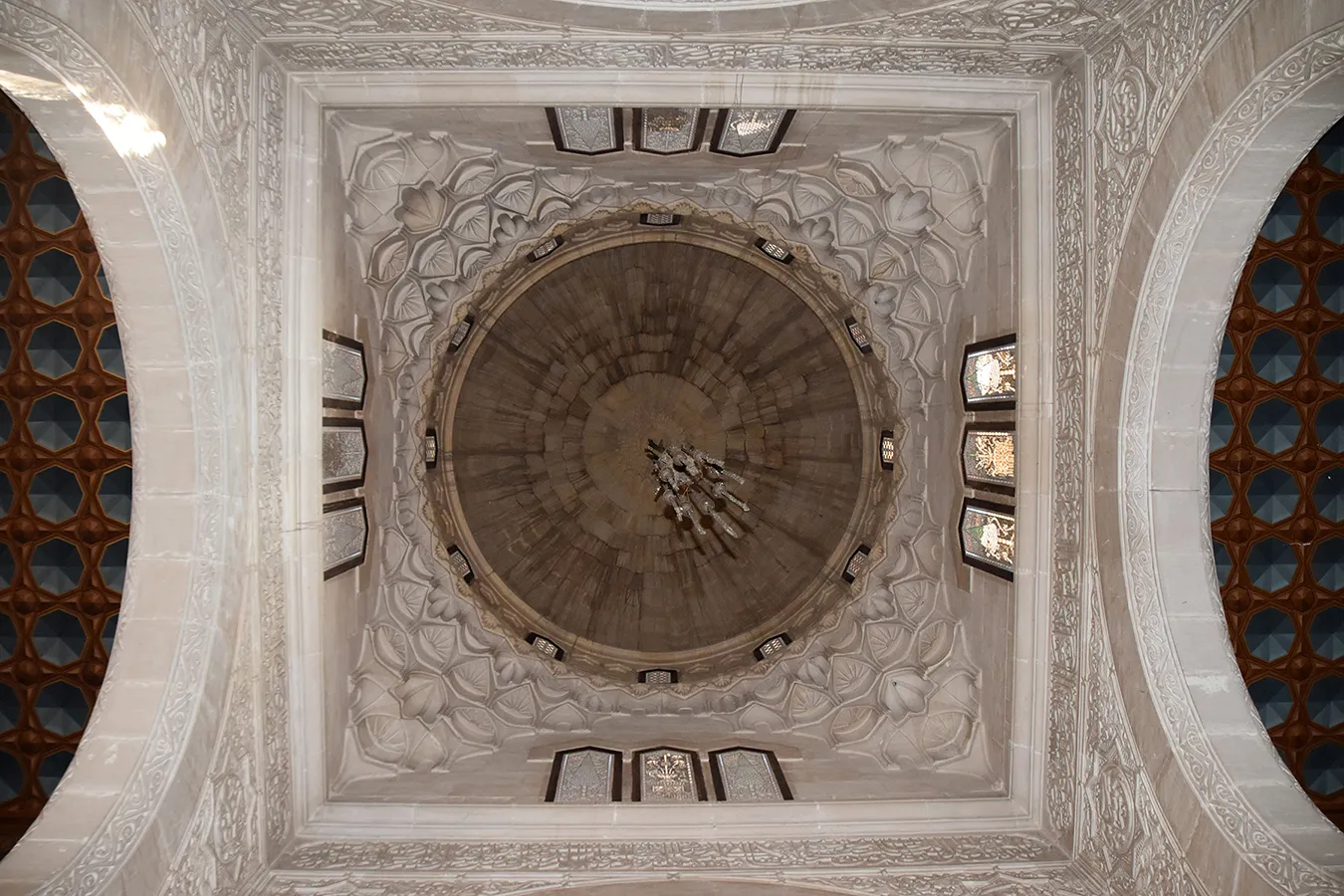
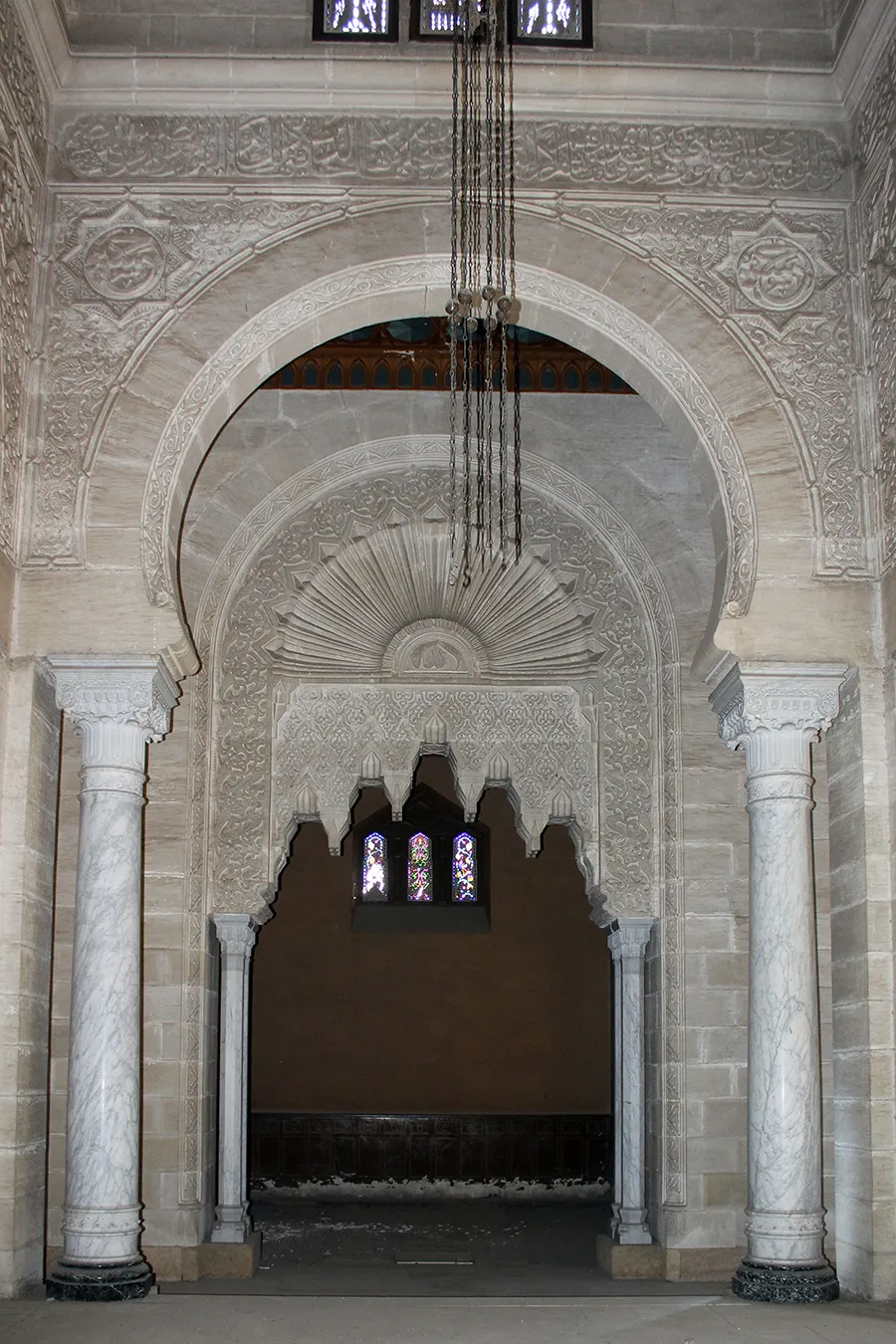
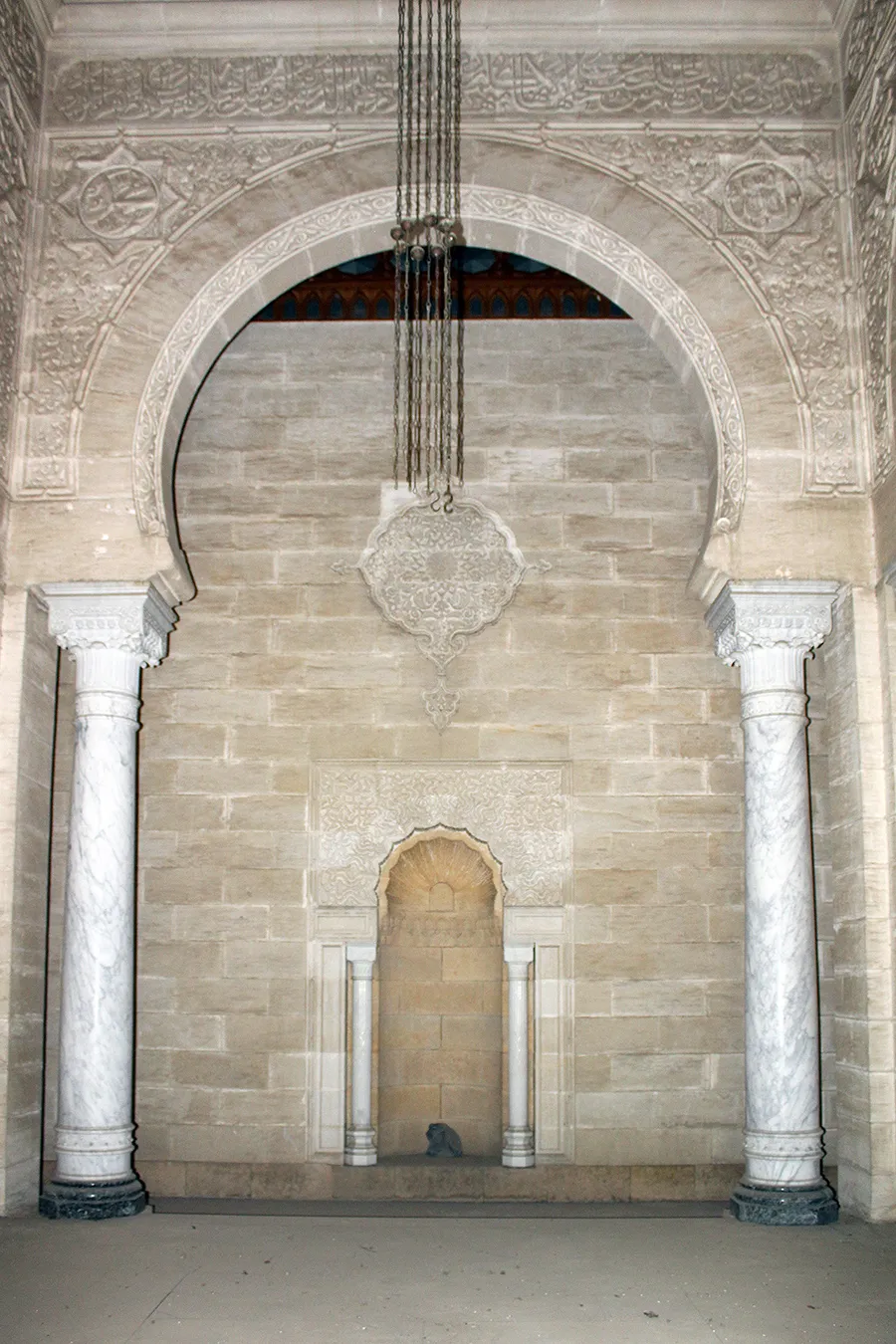
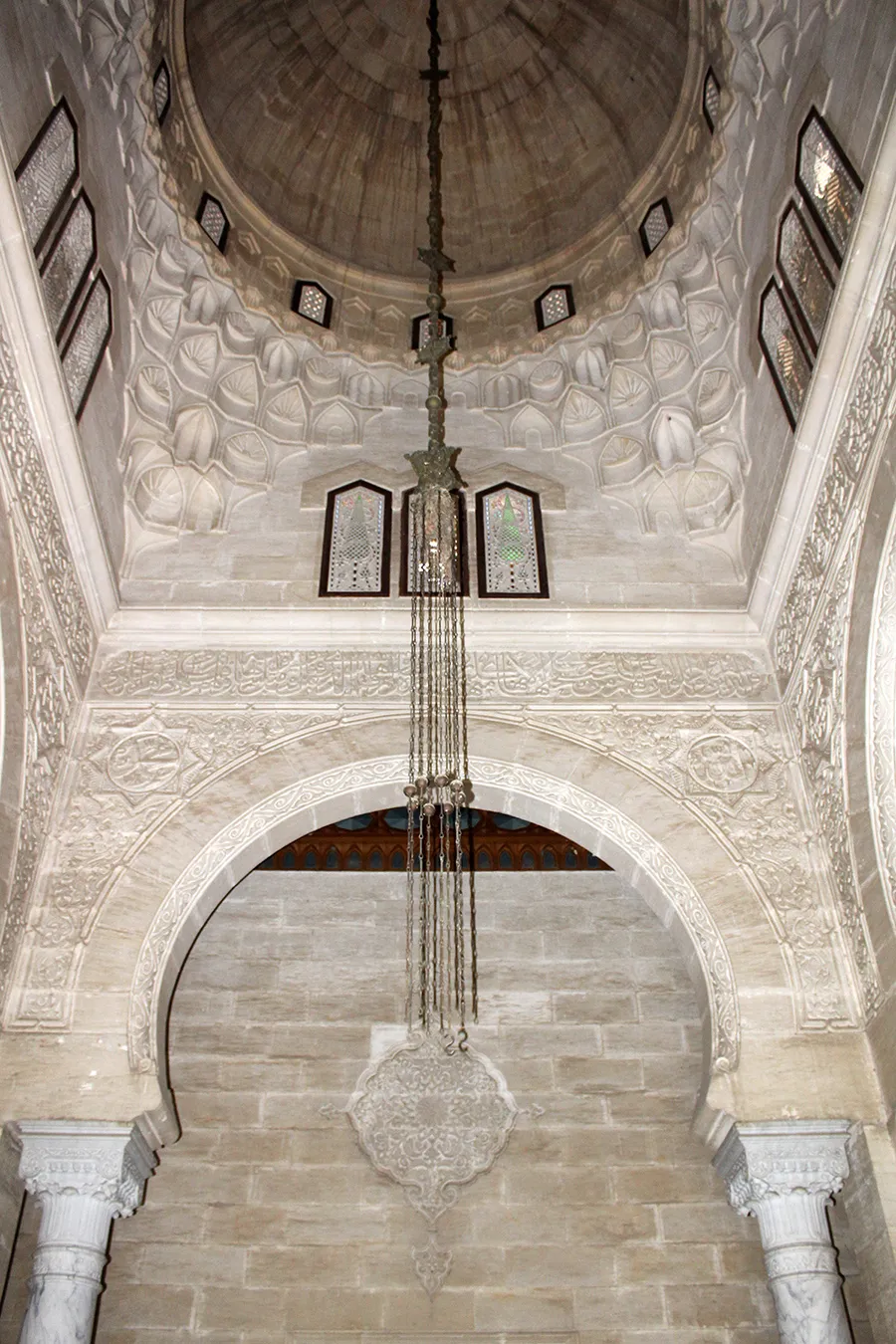
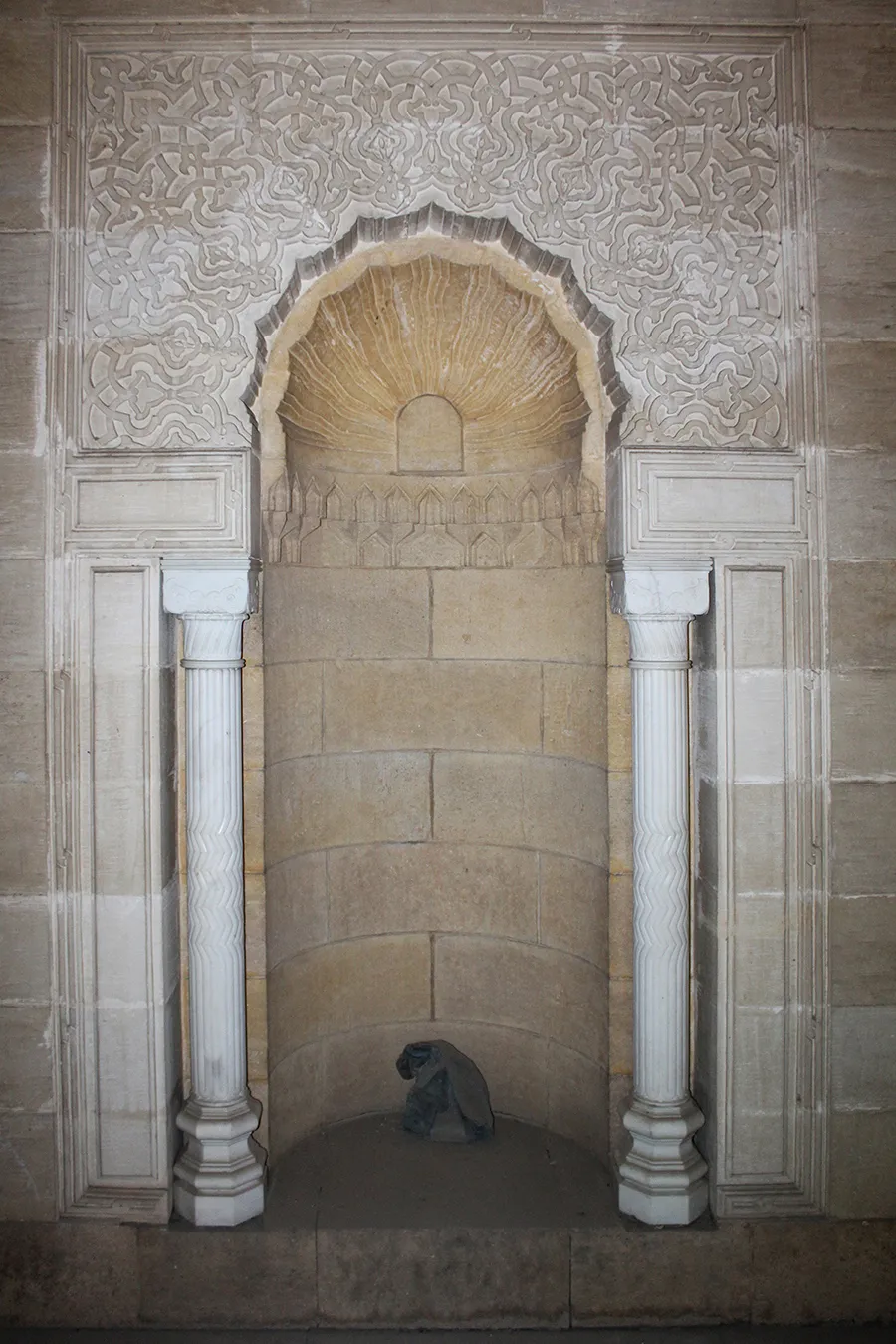
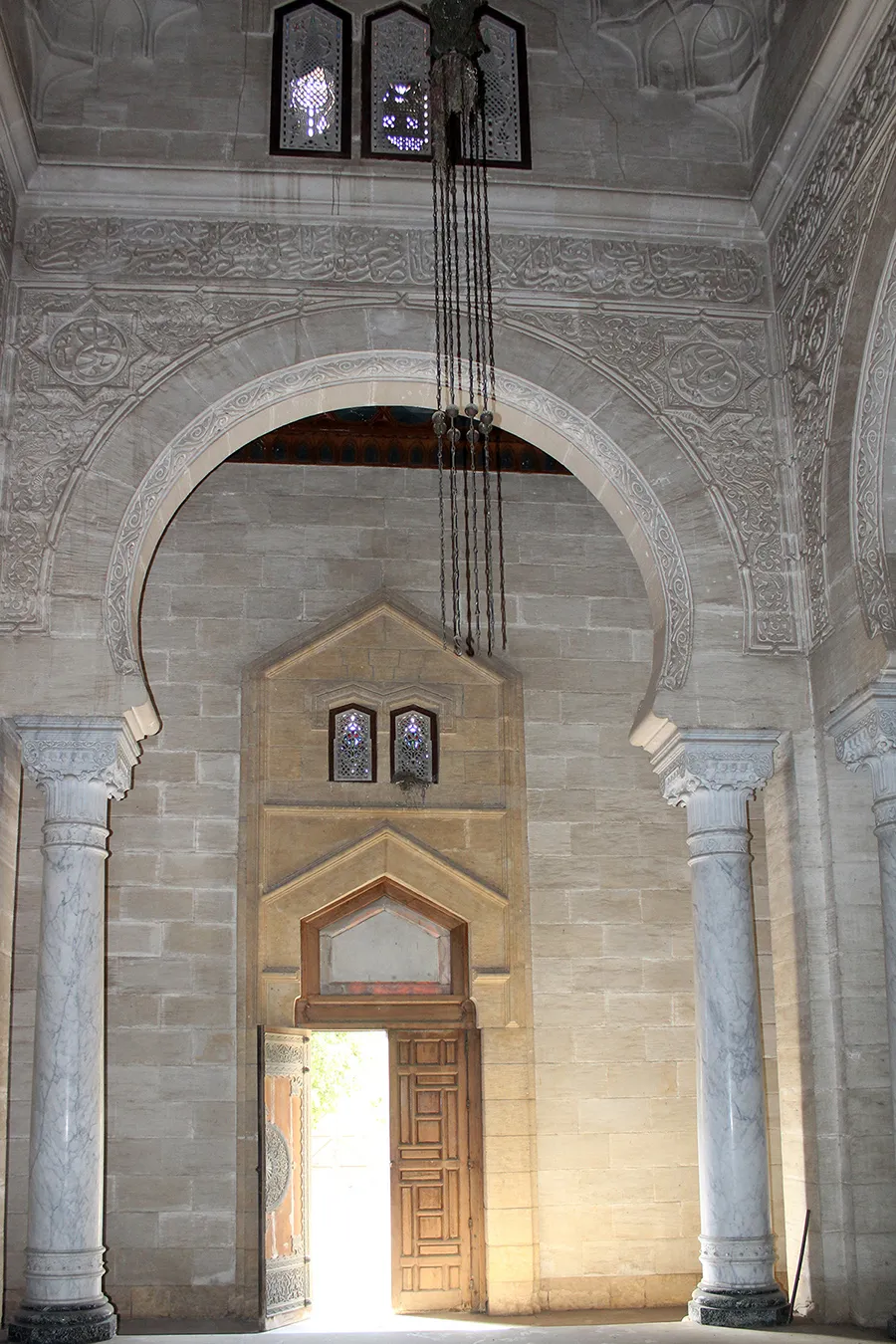
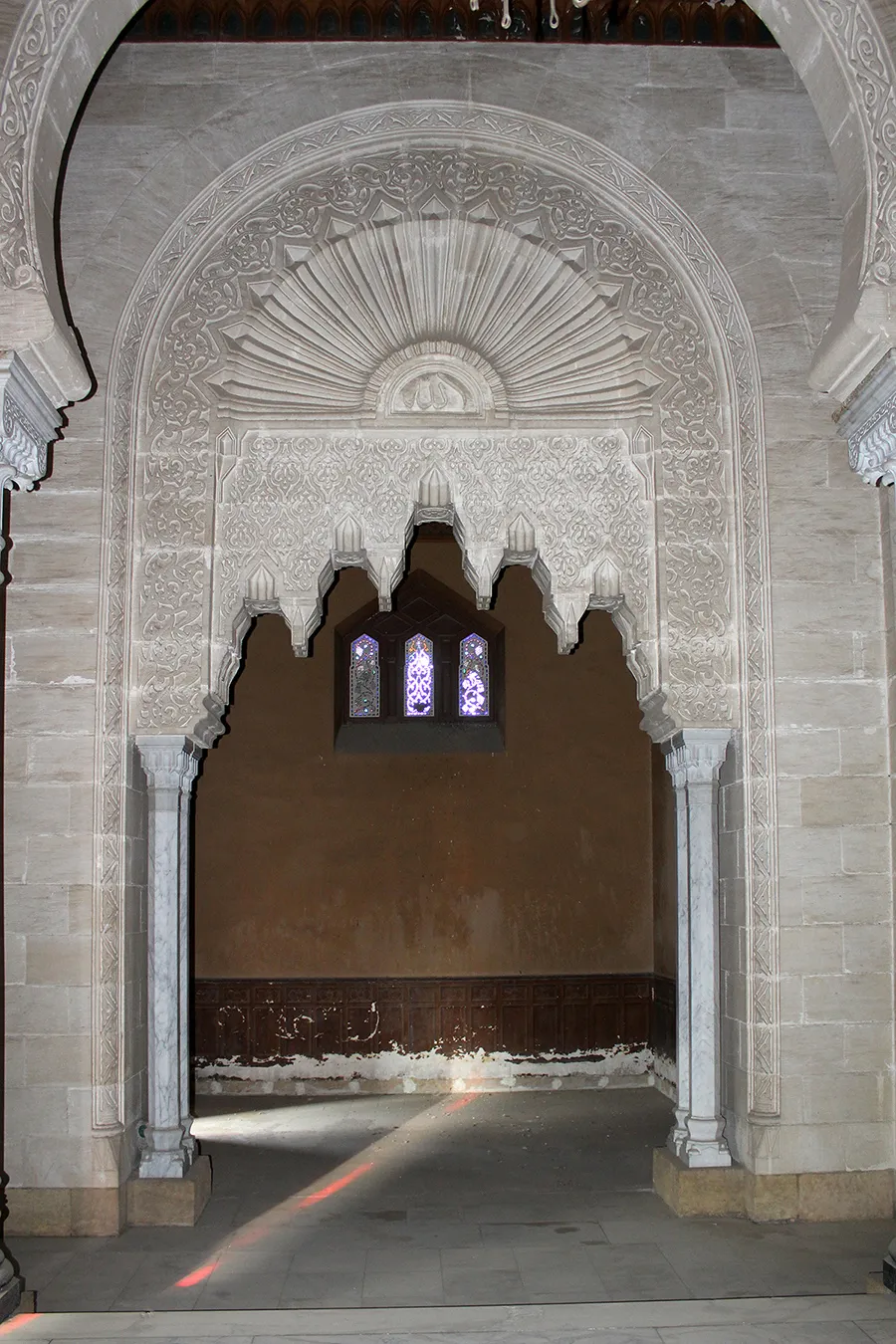
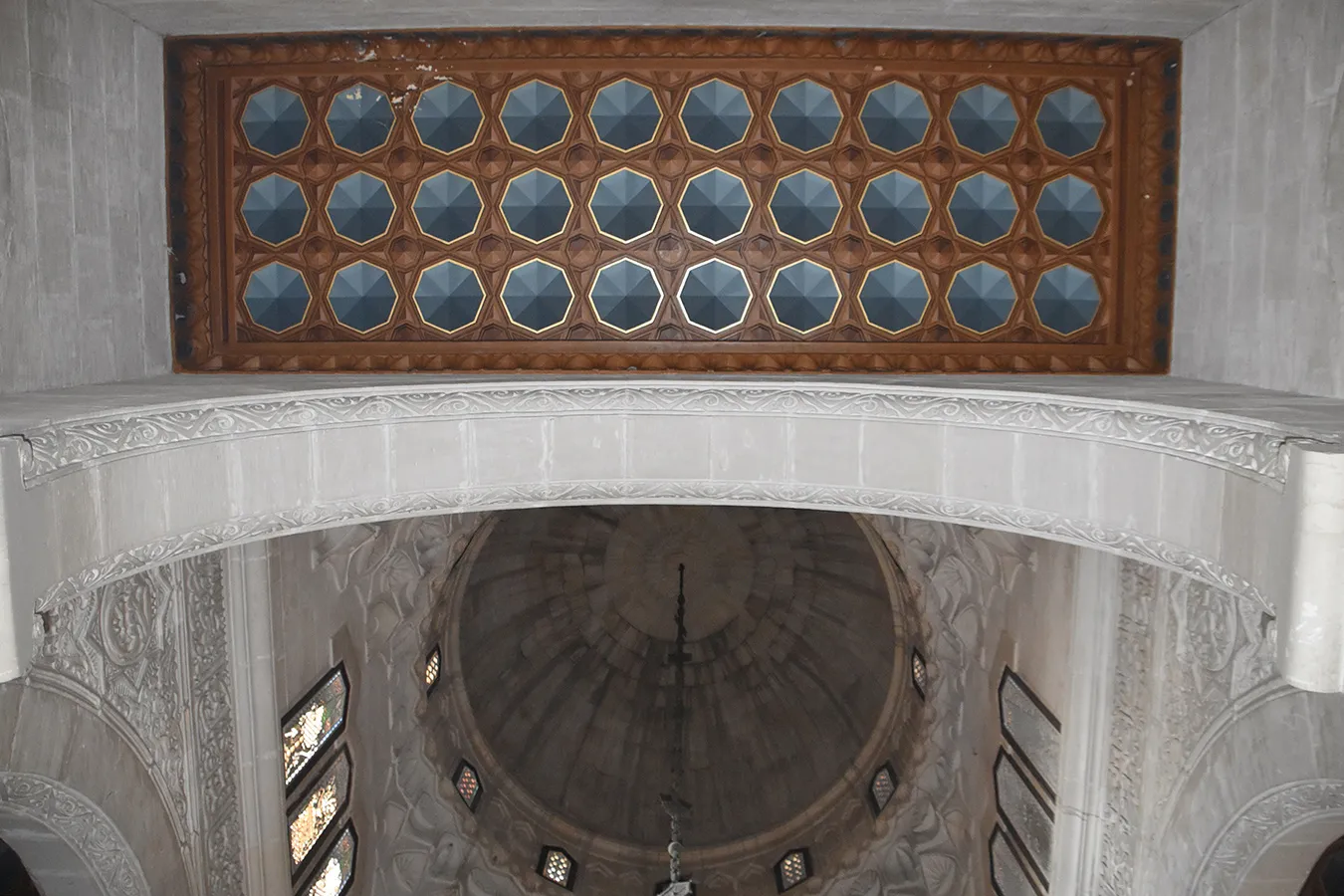
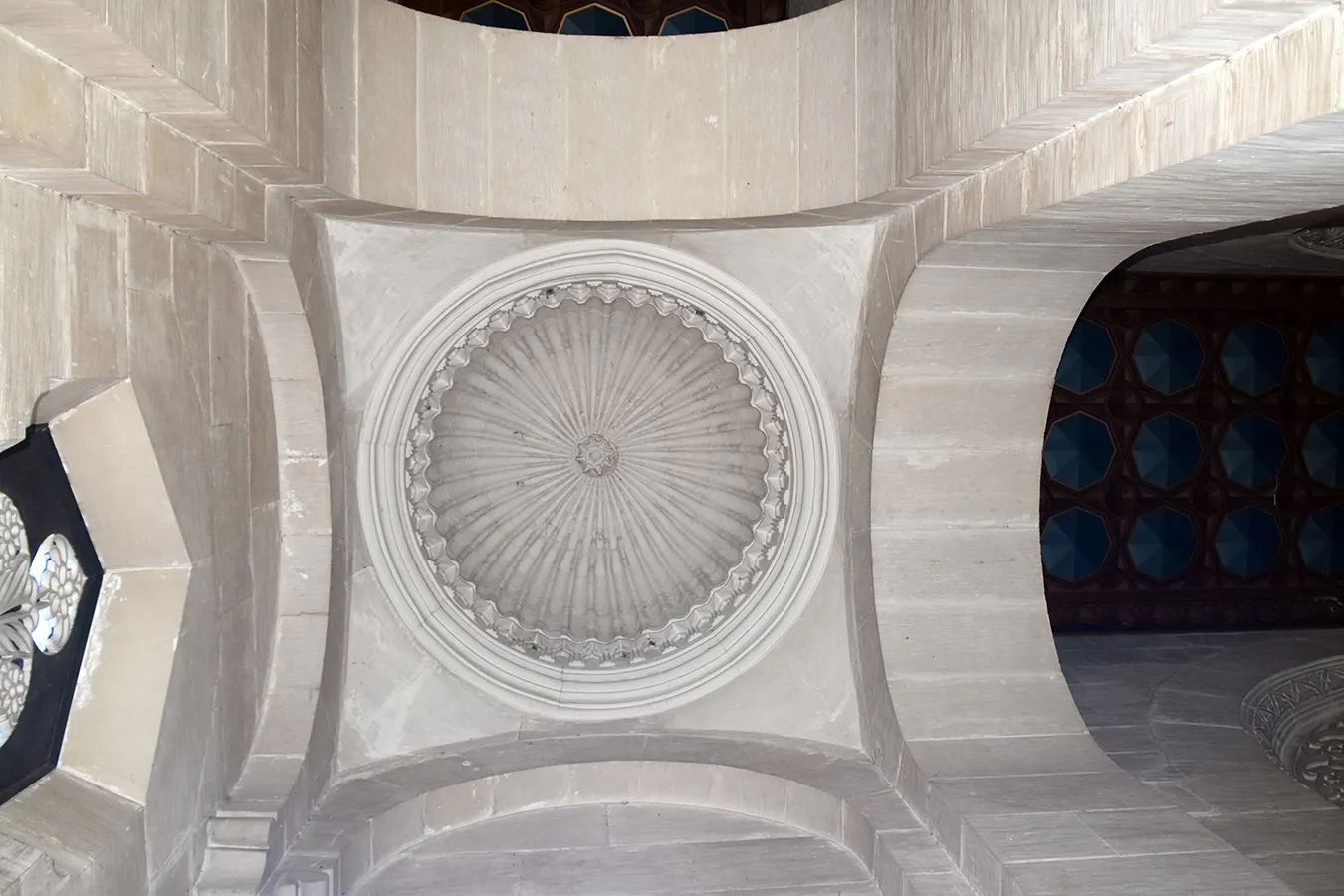
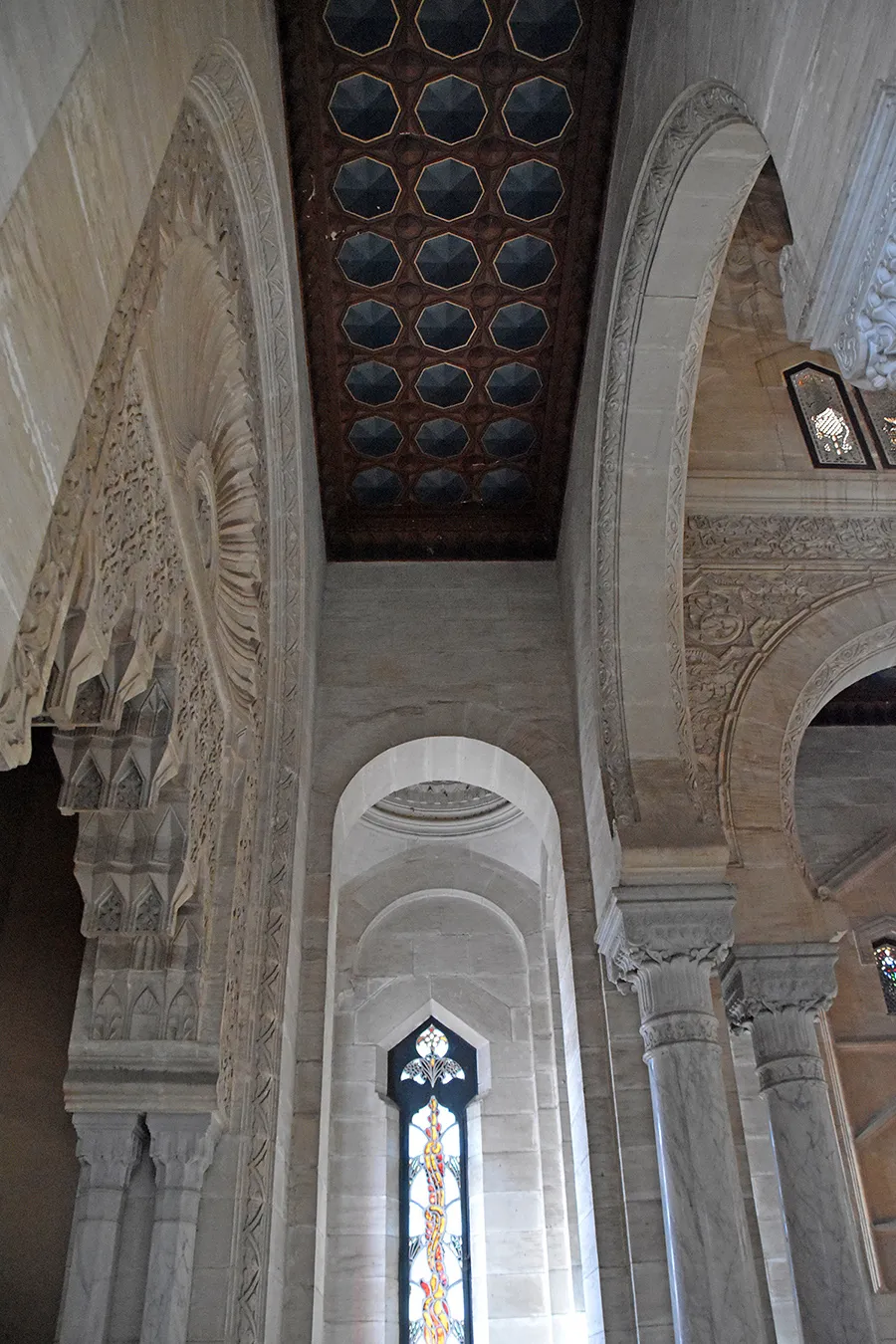
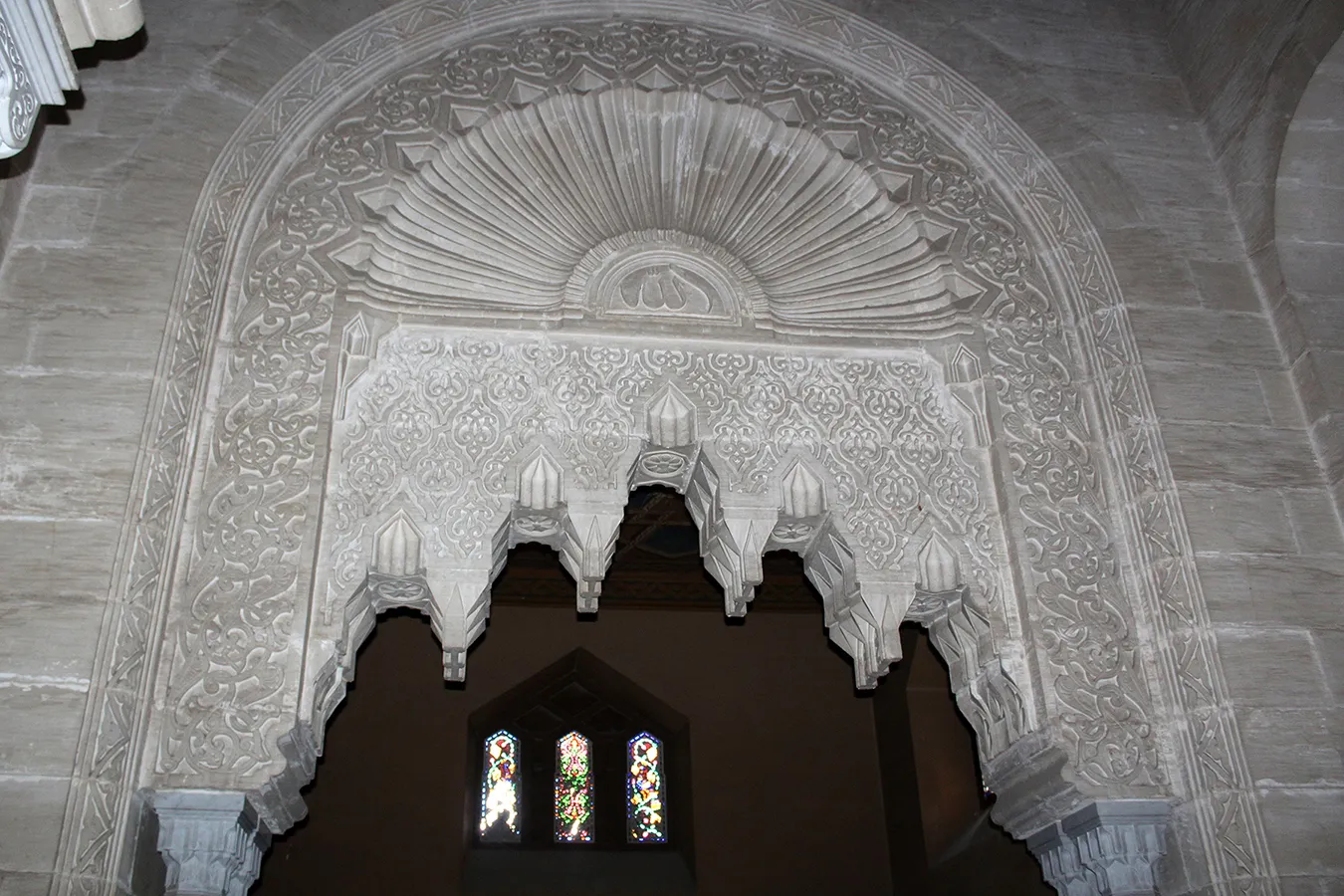
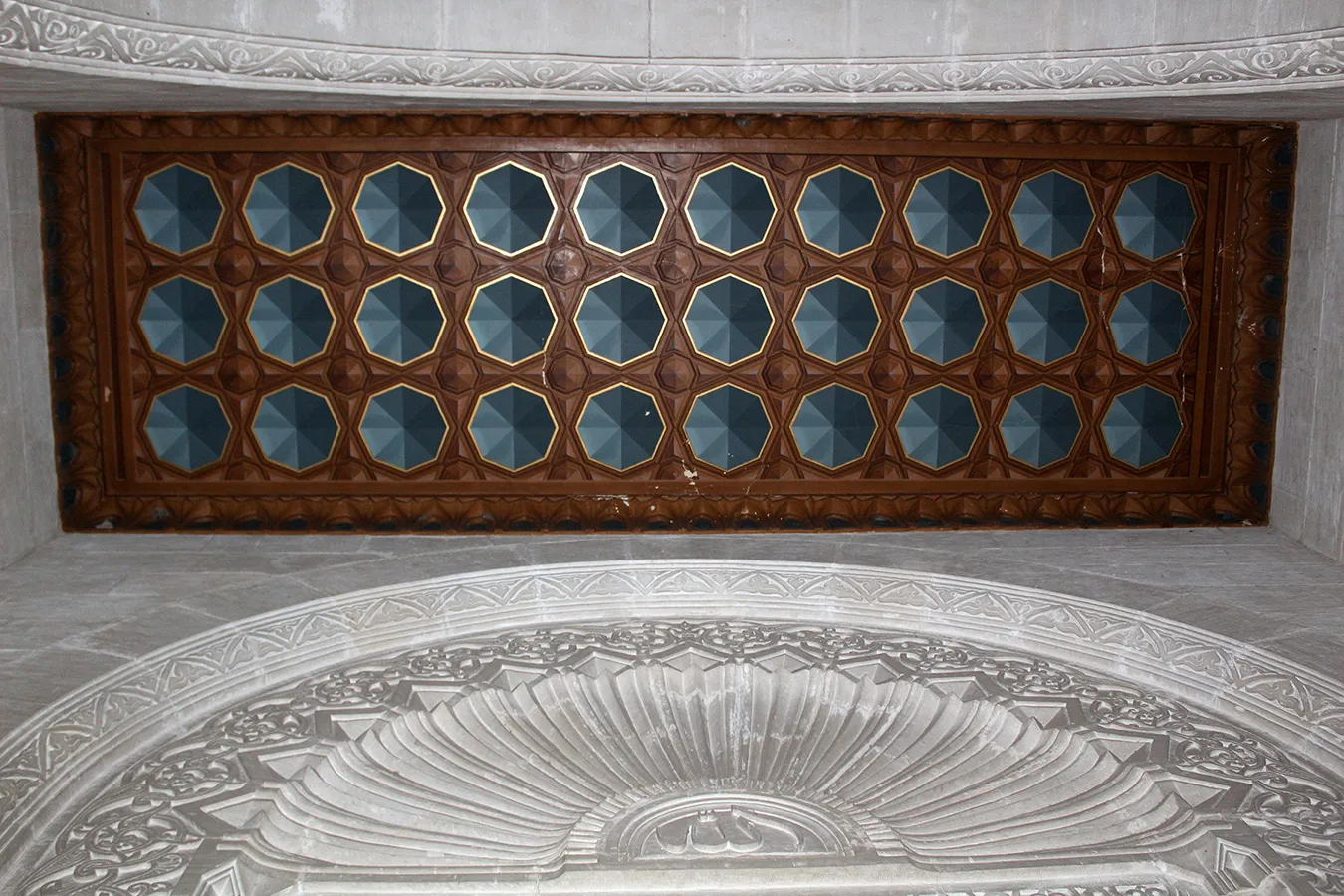
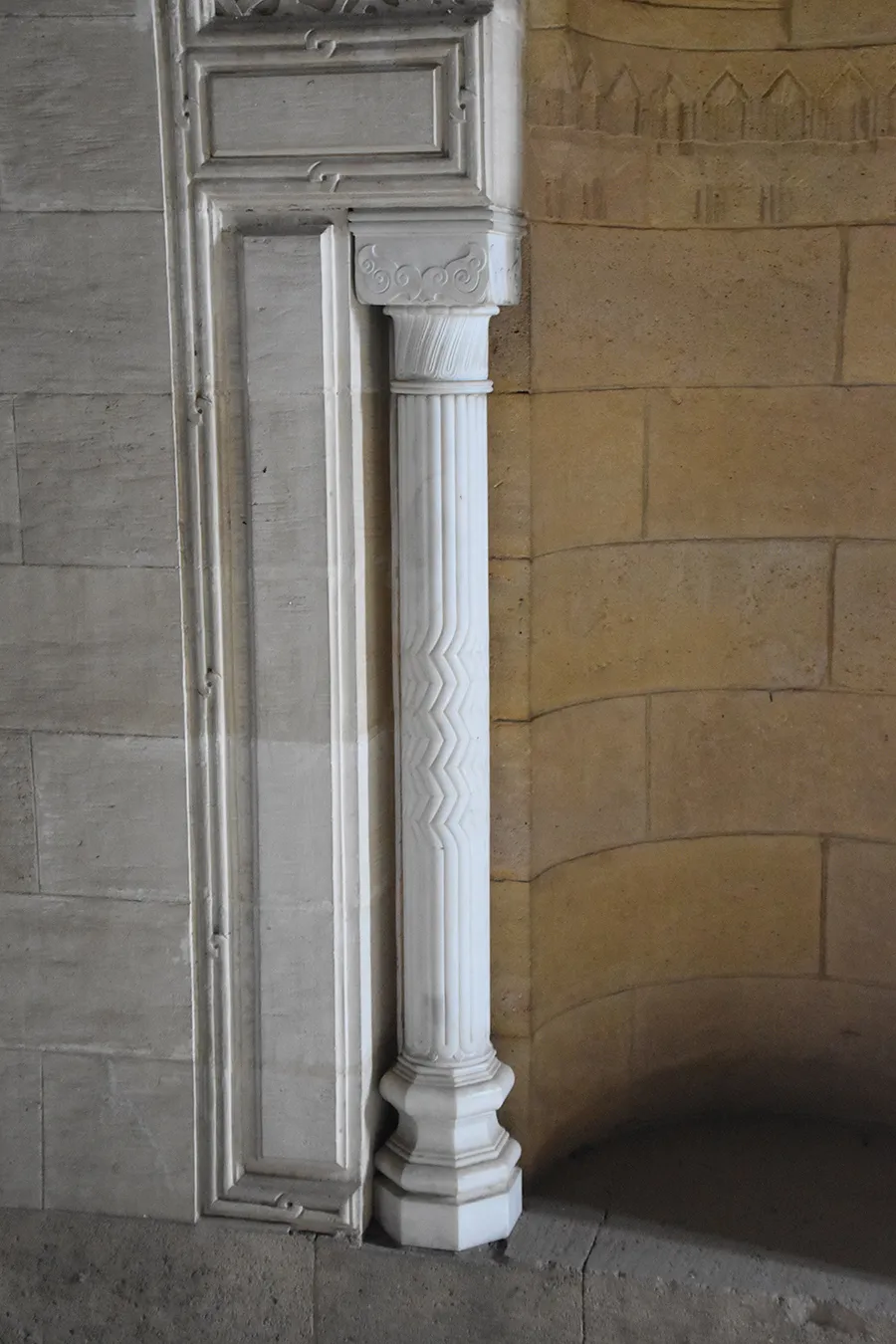
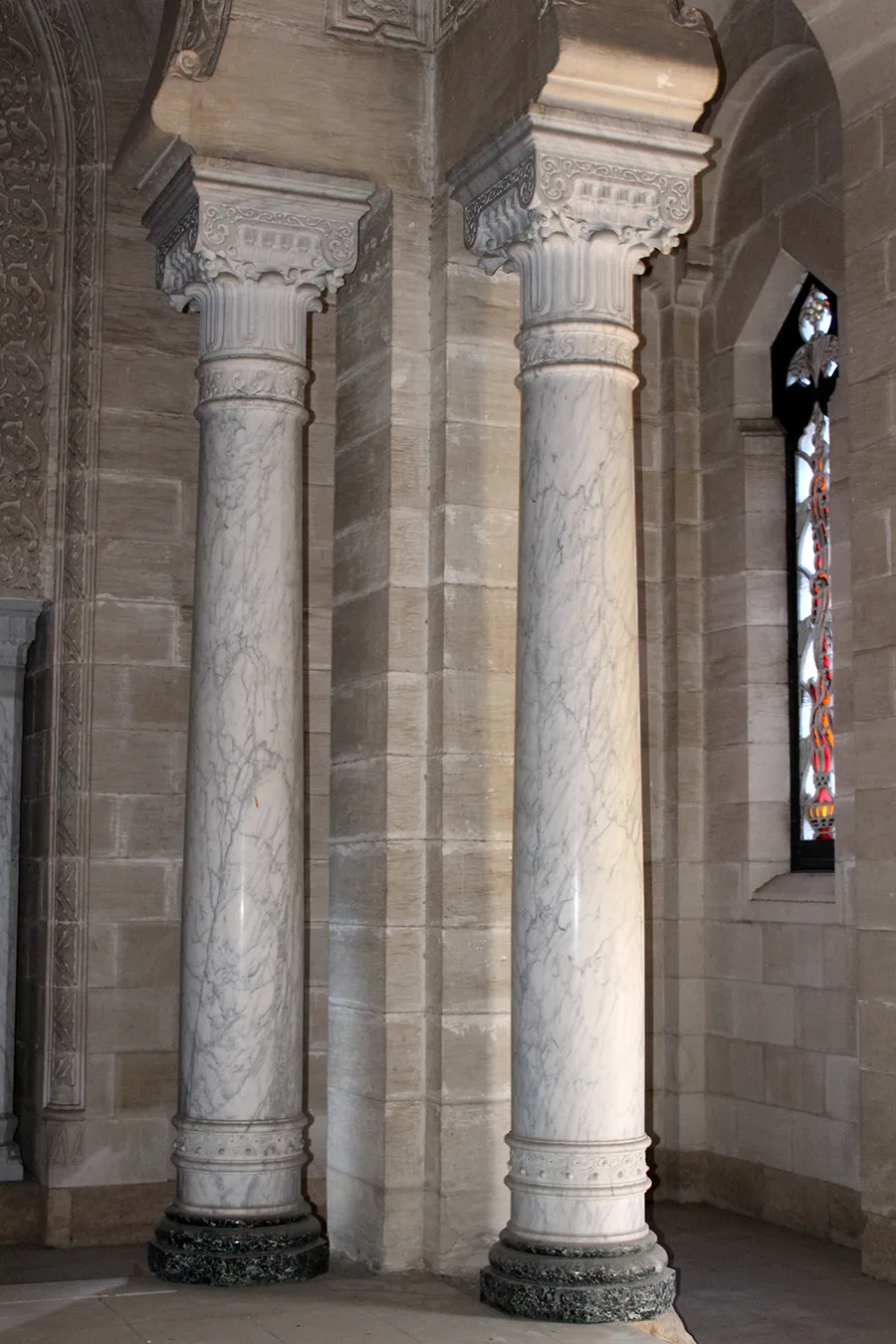
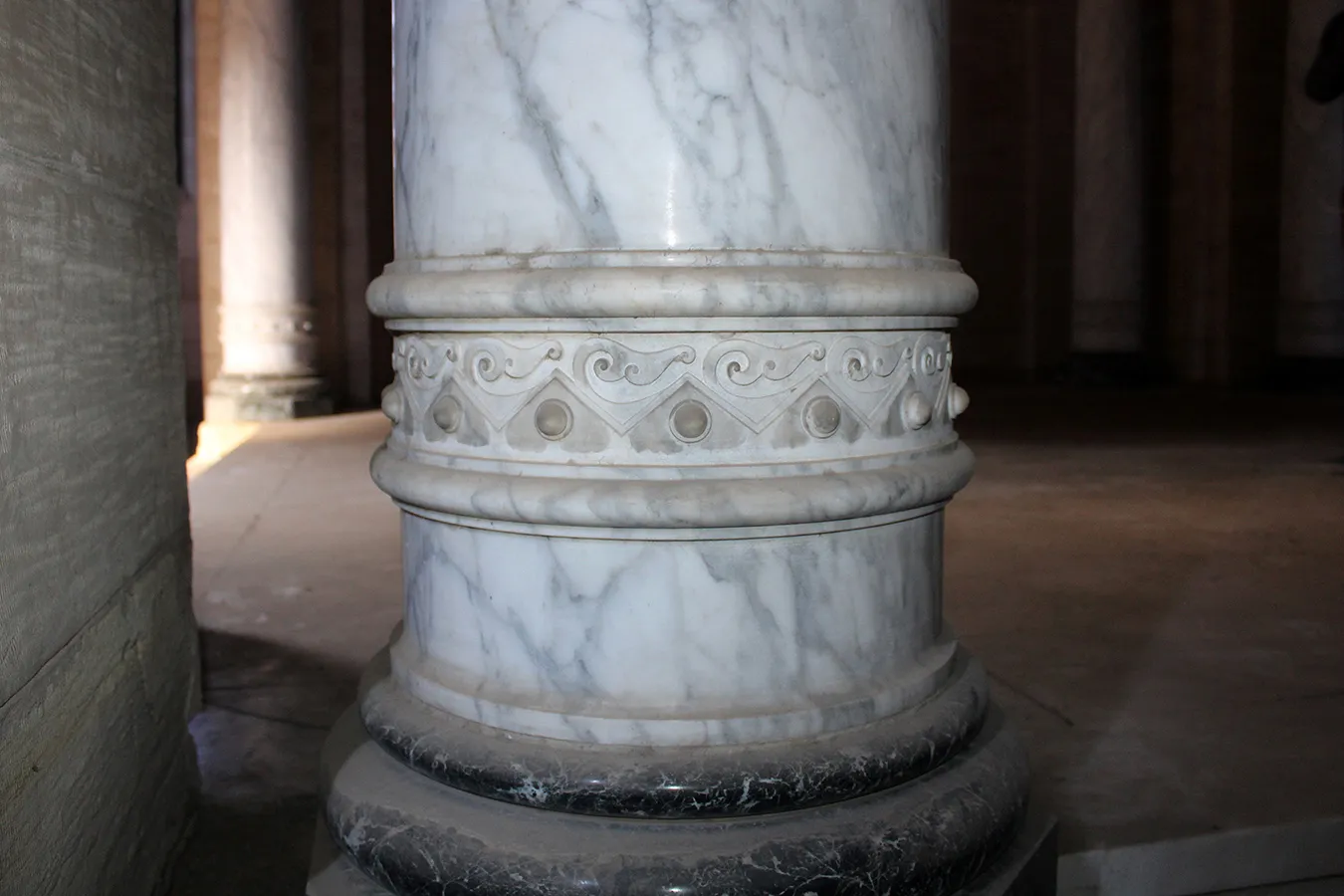
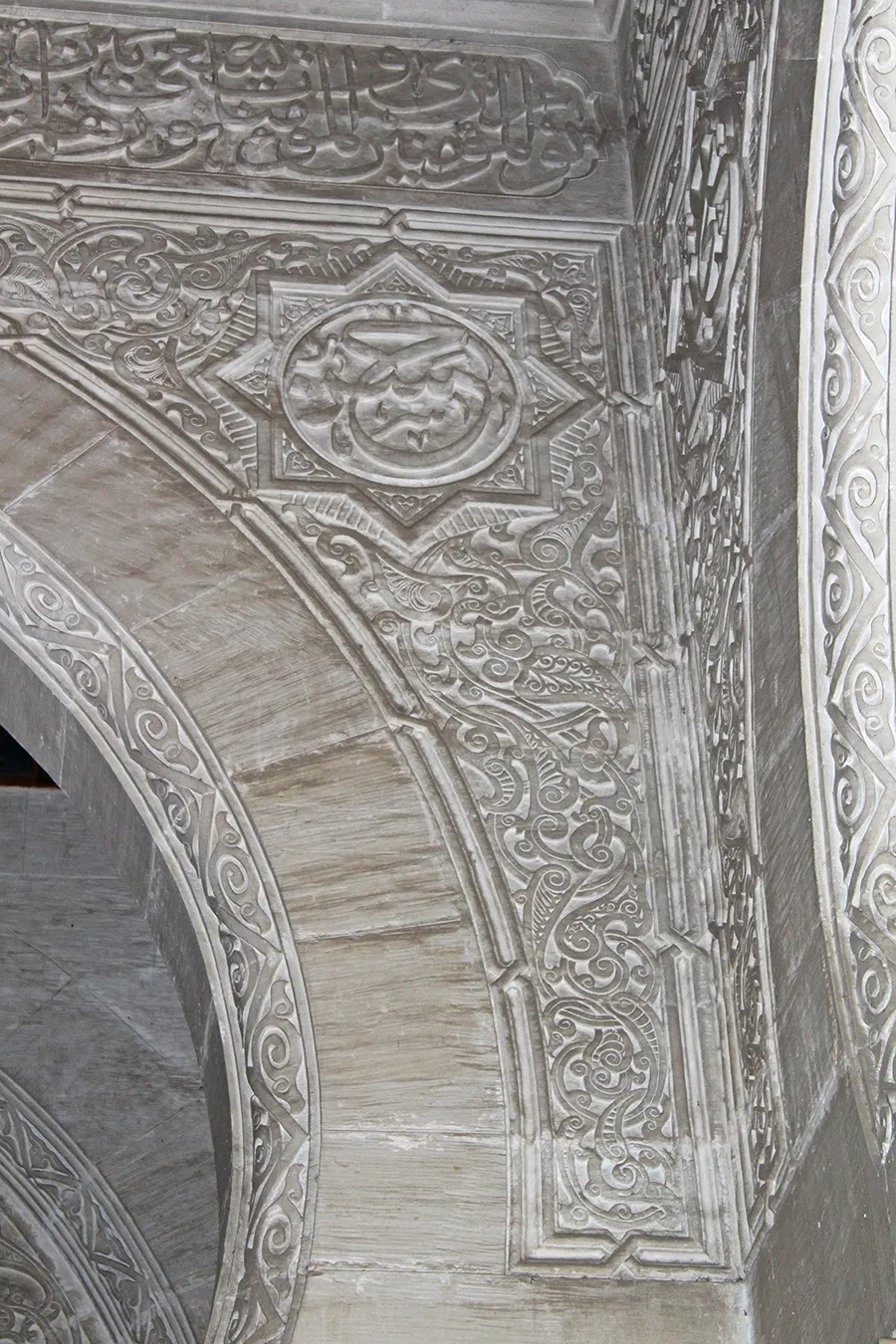
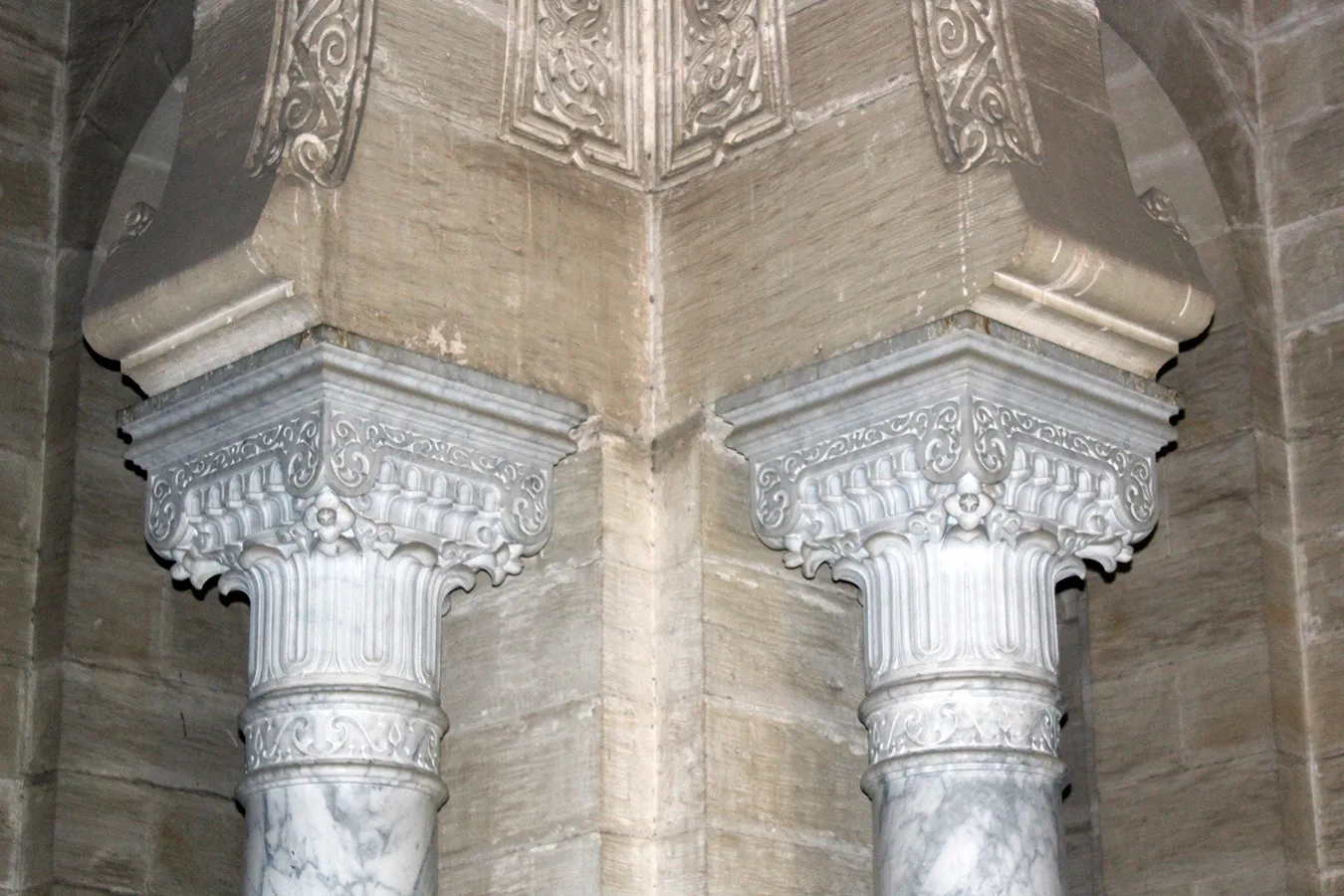
(1) The strictly axially planned mausoleum is built of ashlar stone masonry and consists of a central domed section and two flat-roofed annexes located on the northern and southern sides. Each of the three units has an entrance door on the western side. The square under the central dome rests on stone pillars and opens on all four sides onto narrow side rooms with wide horseshoe arches carried on marble columns. Over the arches runs a carved inscription band, and the spandrels are filled with arabesque floral motifs with calligraphic medallions. The side rooms are covered with flat ceilings painted in geometric patterns imitating coffering. In the corners, the four intersections of the narrow outer rooms are covered with small domes on pendentives. The walls of the small domed rooms are pierced with tall, narrow windows with qamariyat grilles. The central dome rests on four tiers of muqarnases in the corners, with triple keel arch windows in the zone of transition, with qamariyat gypsum-and-stained-glass windows. The drum is pieced with twelve keel-arched windows; the interior of the dome is plain. In the qibla wall is a mihrab niche flanked with marble columns. The mihrab is set in a rectangular frame of knotted mouldings, the upper part of which is filled with floral arabesque. Over the mihrab is a huge carved medallion, also with floral arabesque. The side annexes are reparated from the central section by round arches resting on double marble columns by the walls; the upper parts of the arches are filled with flat fluted conchs, and below them, a carved panel with elaborate “stalactite” forms protruding into the opening. In the whole interior, the elaborate, high-quality decoration carved in stone has a decidedly Andalusian flavour.
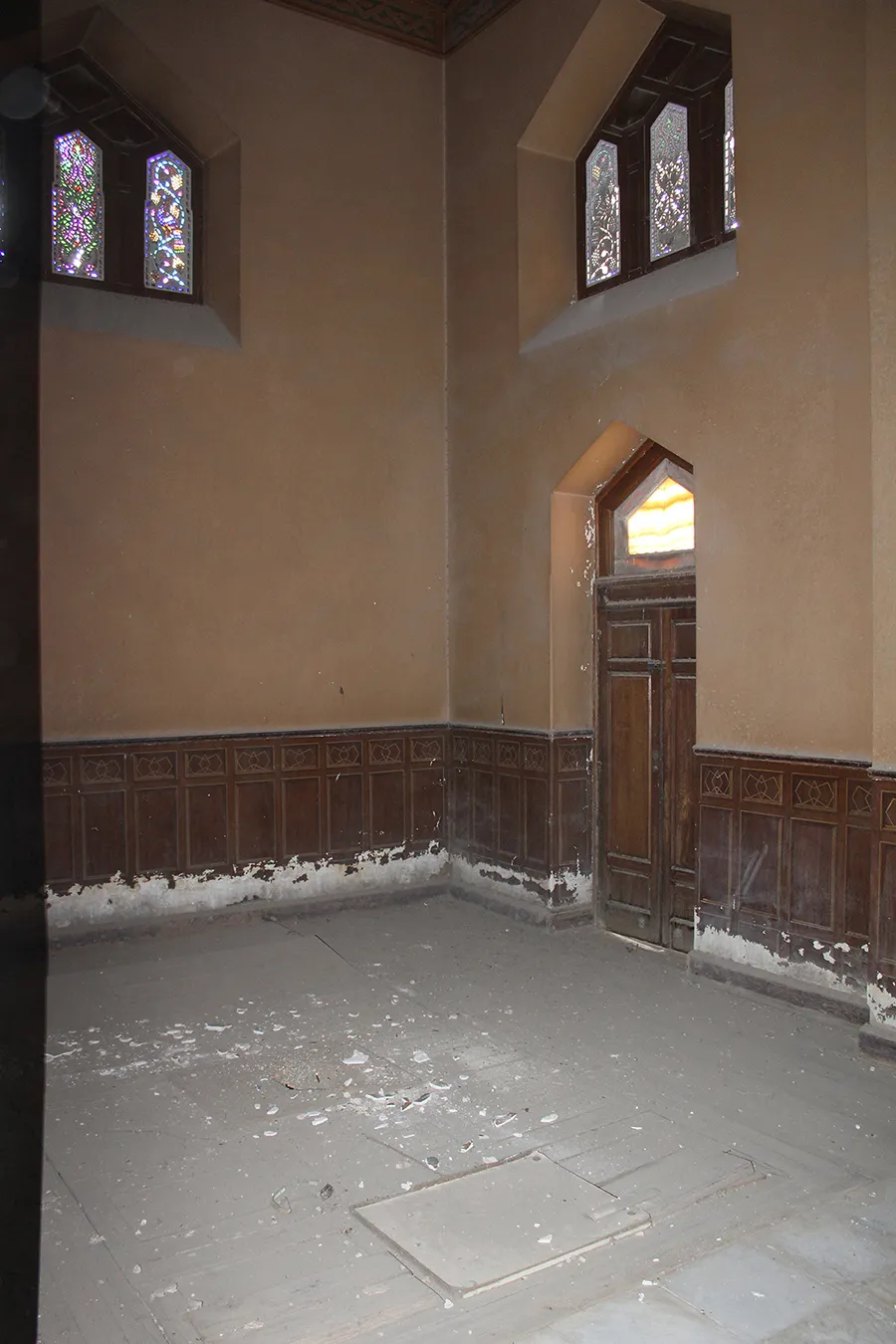
In the side annexes, there are triple keel-arched windows with qamariyat grilles. The ceilings of the annexes are flat slabs of reinforced concrete, with painted decoration of colourful geometric patterns. The walls are plastered, with a painted dado imitating wooden panelling.
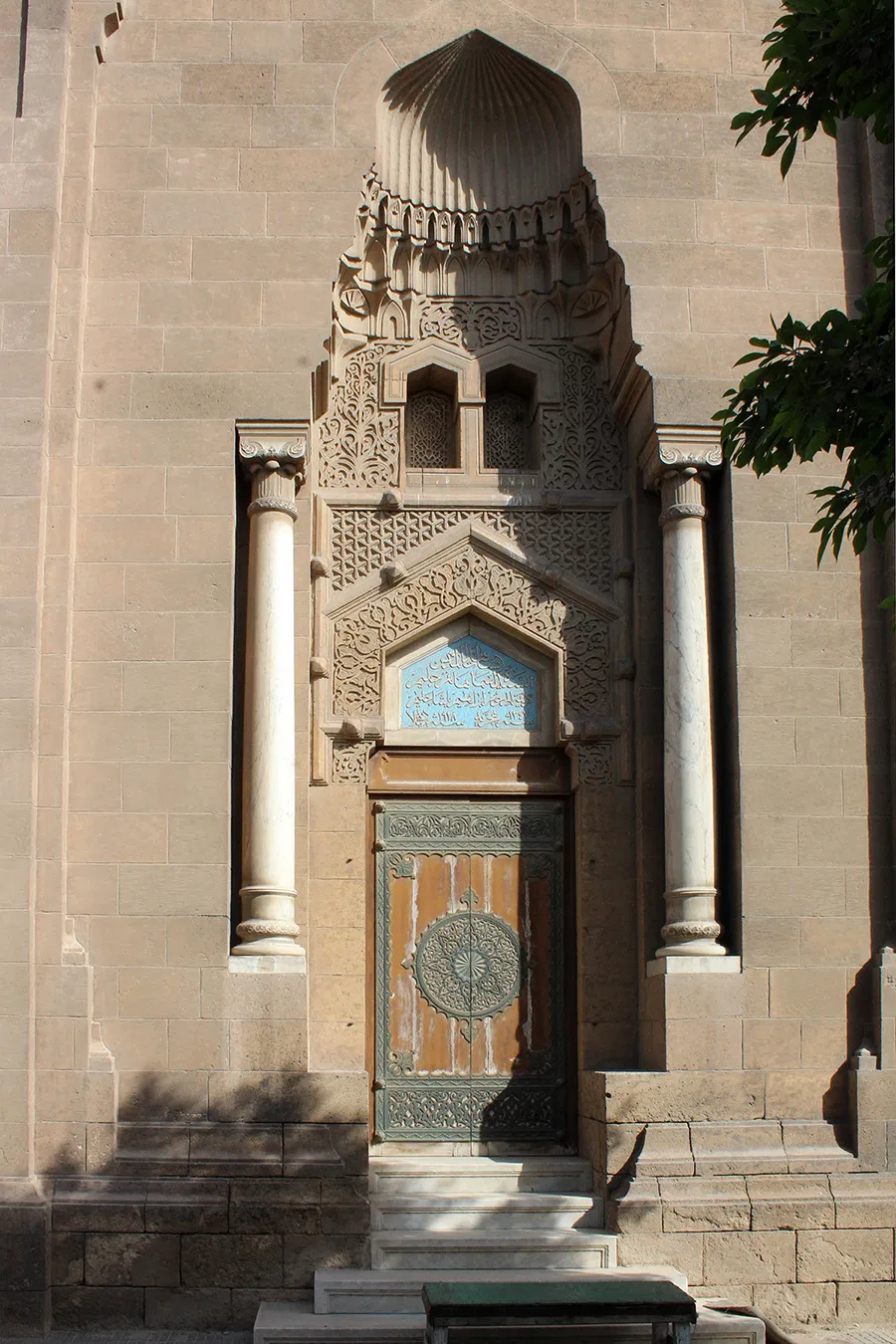
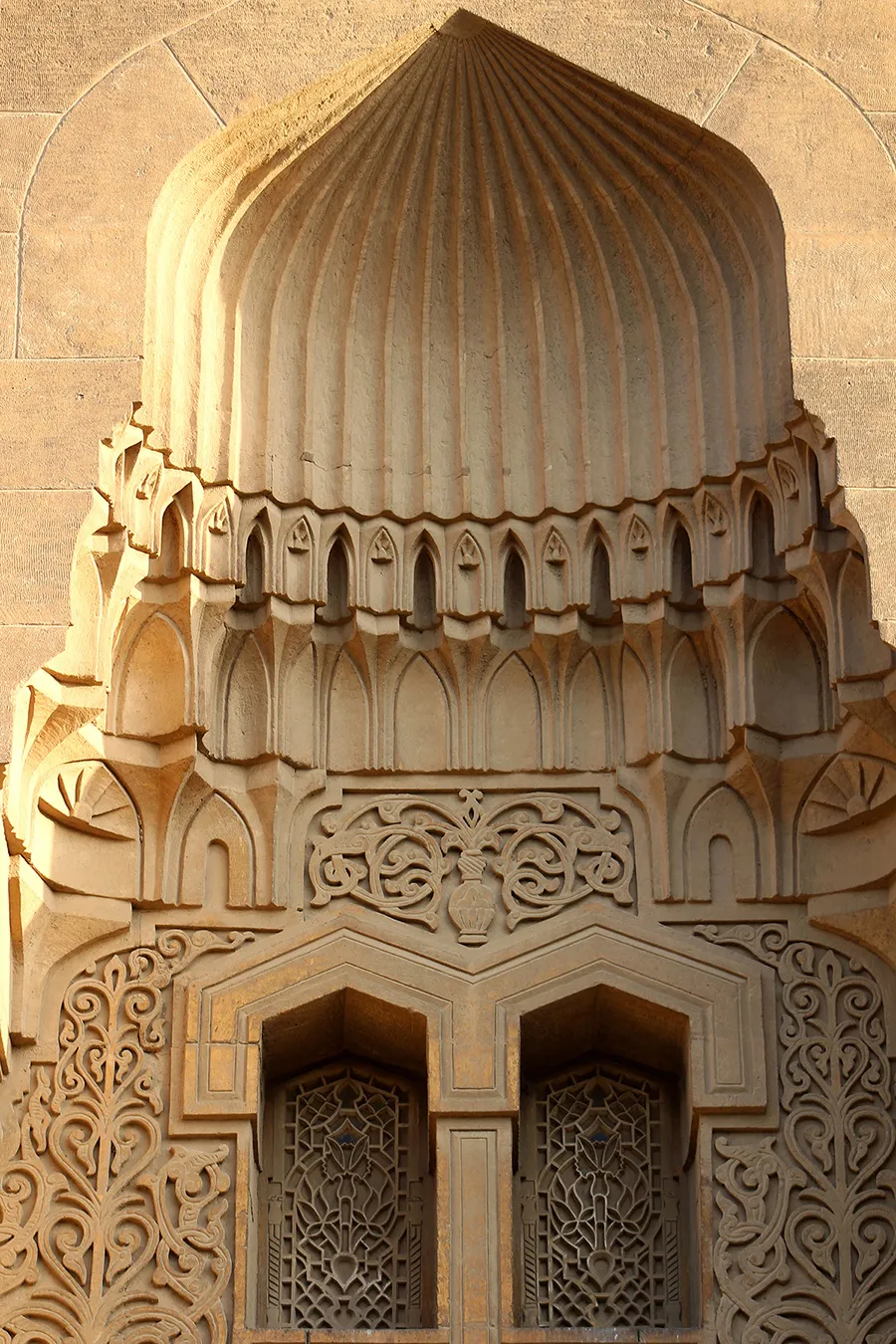
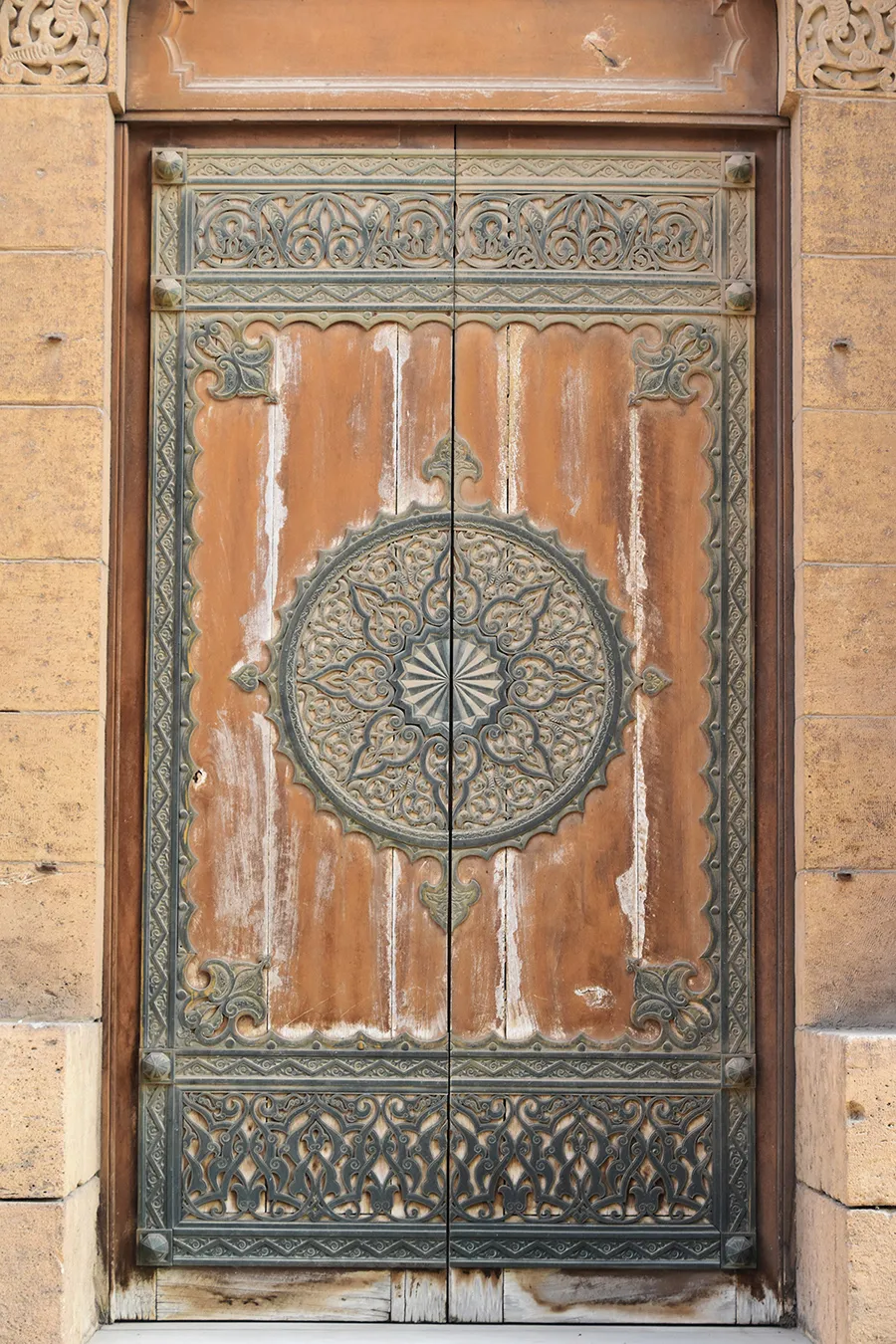
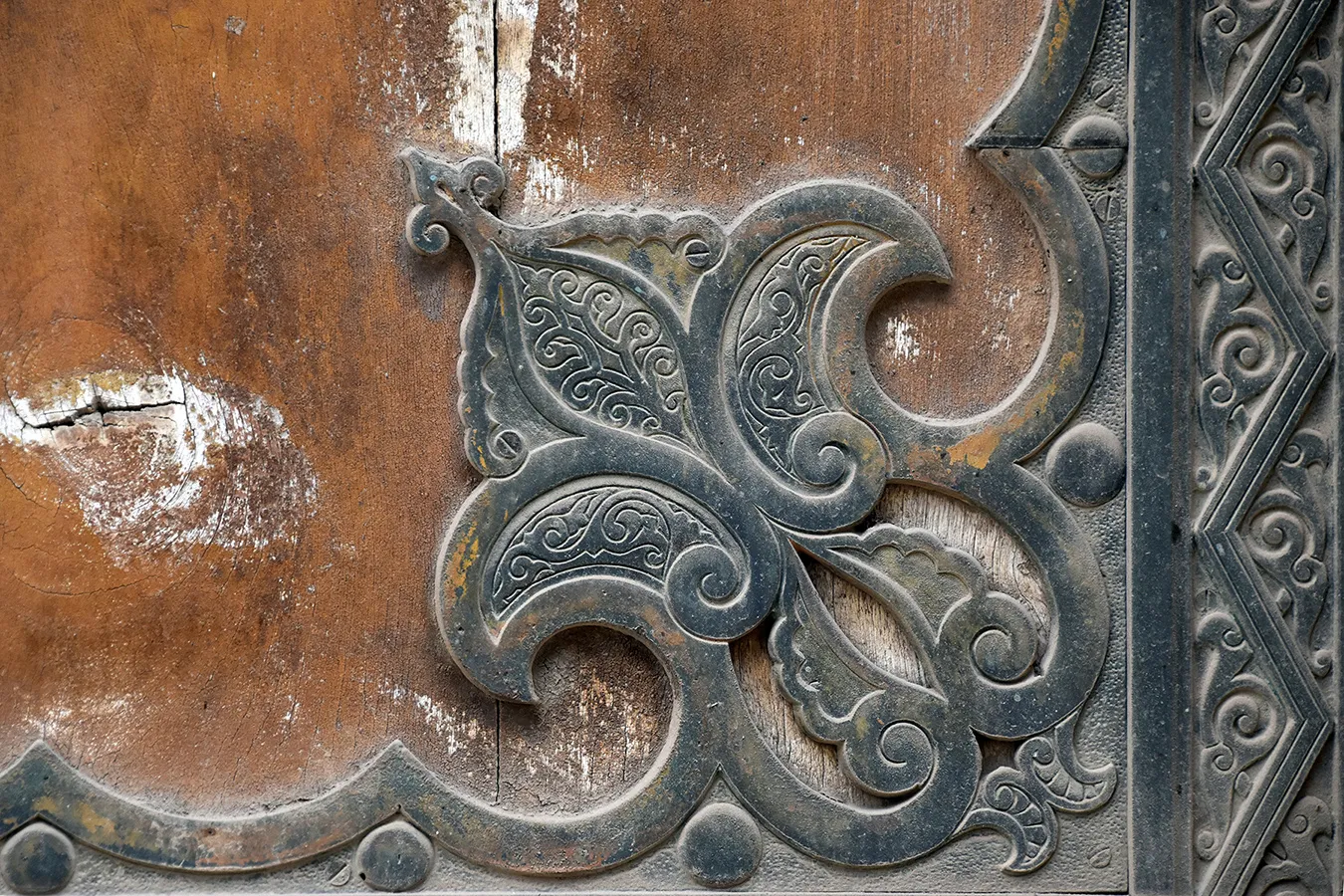
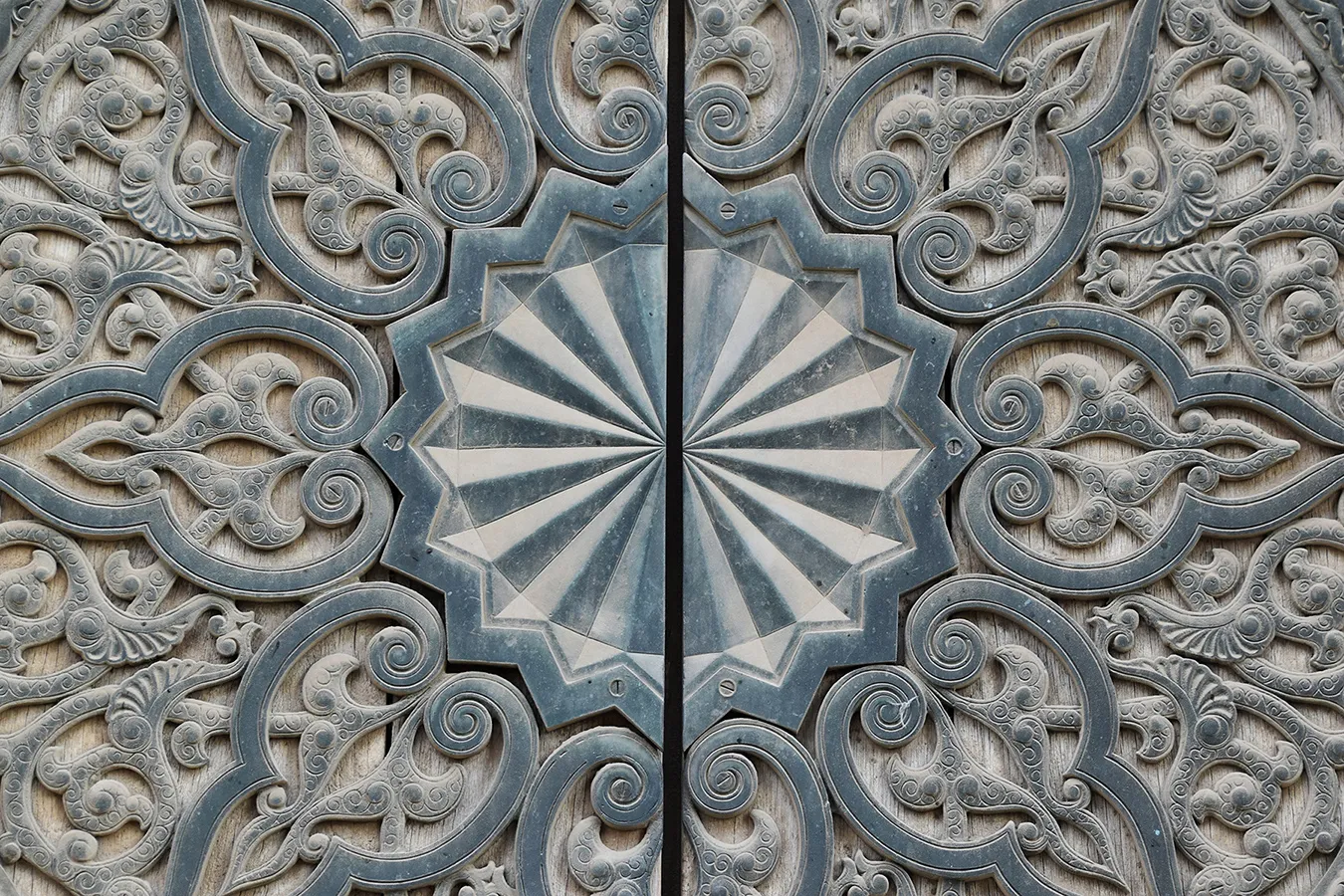
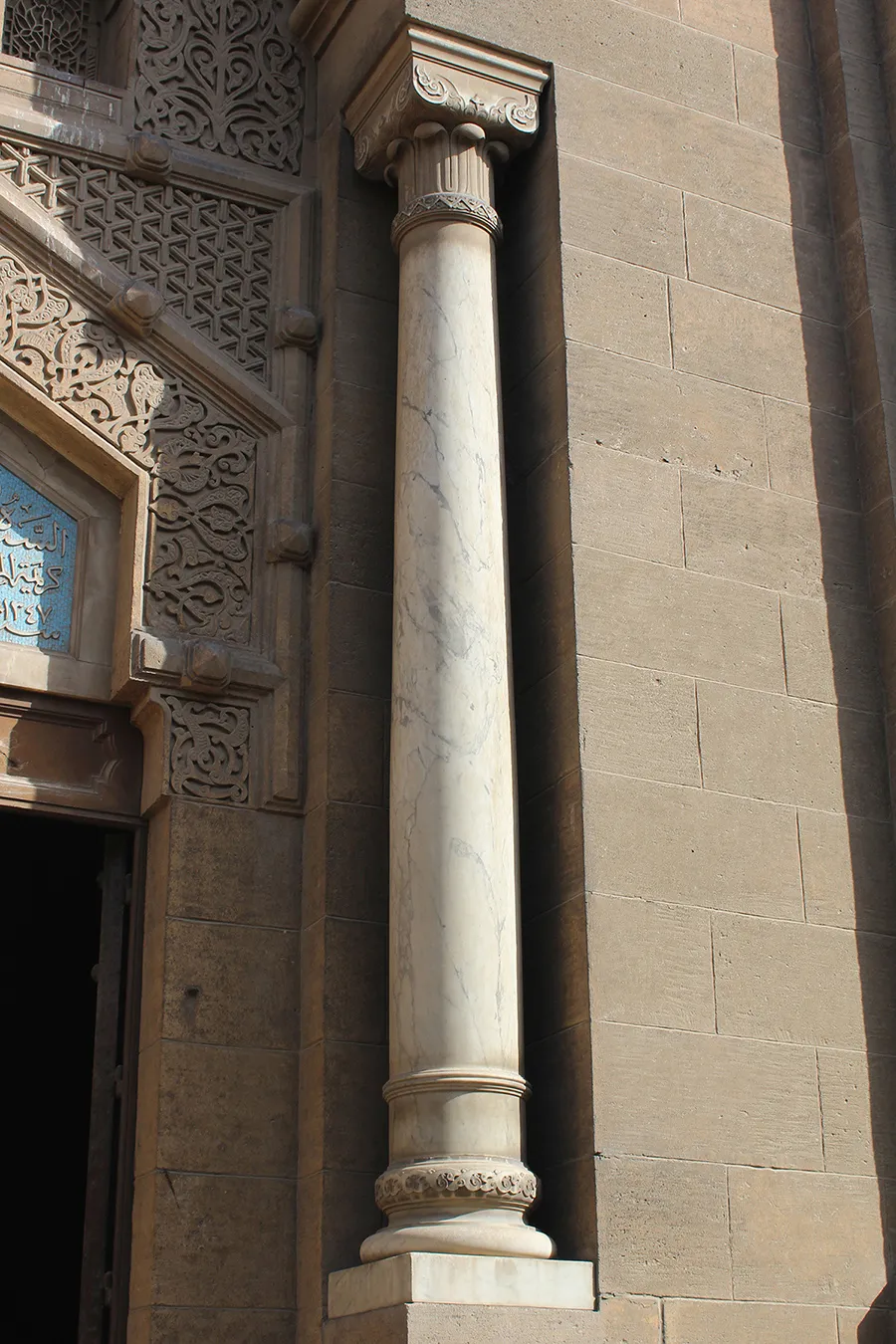
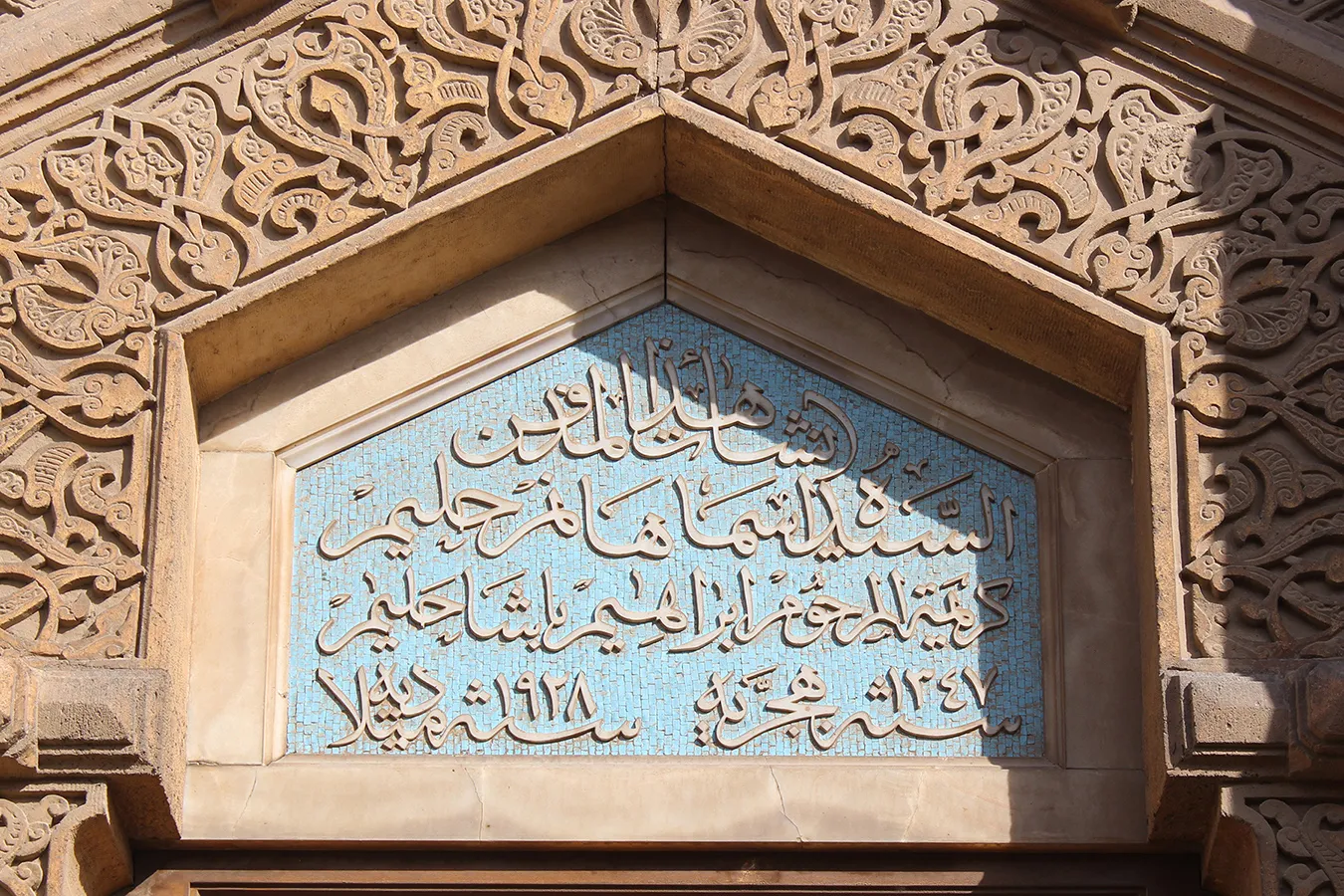
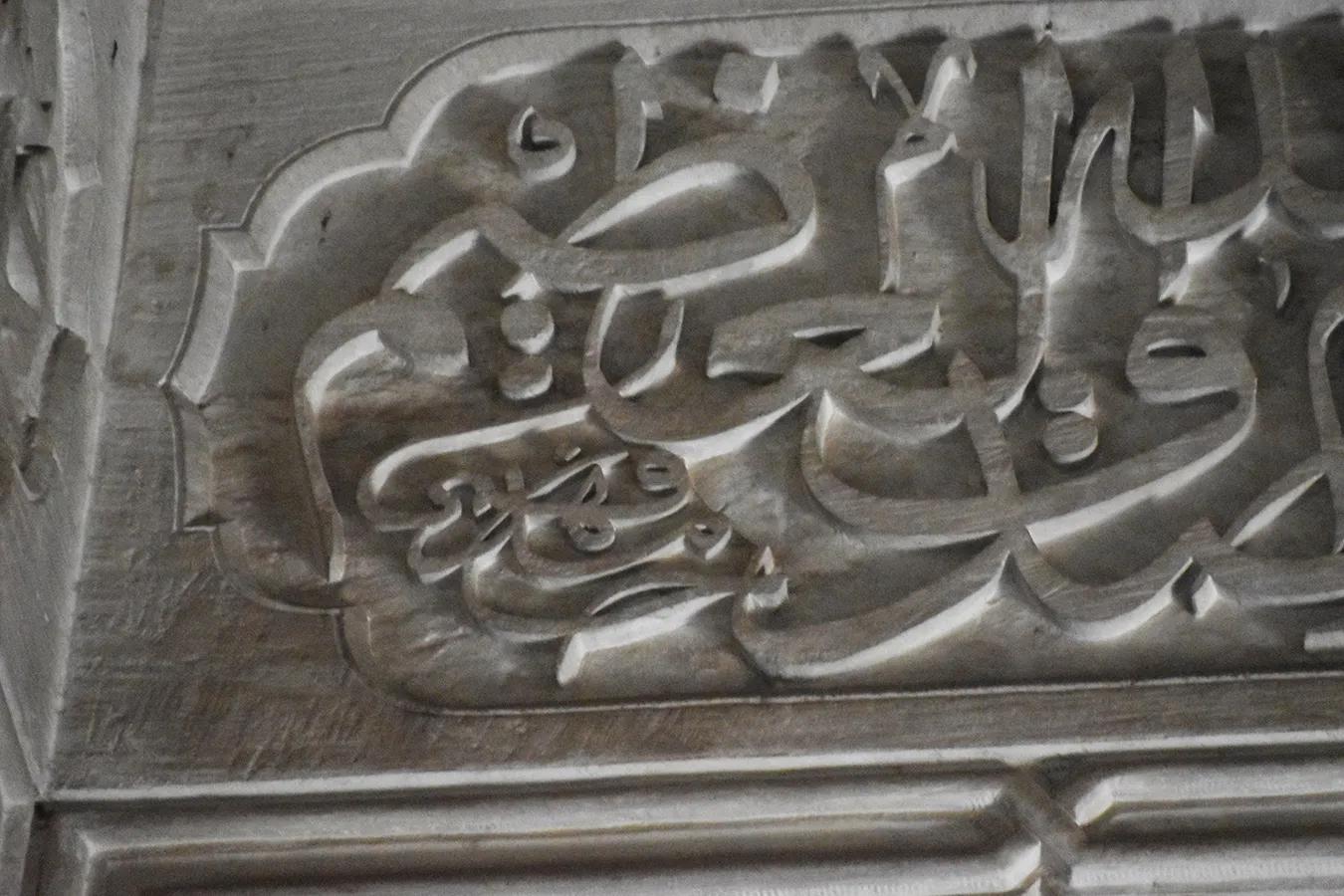
On the exterior, the entrance portal is set in a recess flanked with marble columns and topped with a fluted conch sitting on rows of muqarnases. The wooden door is fitted with elaborate bronze borders and a central rosette of floral and geometric patterns. The tympanum of the keel arch above the door contains a calligraphic inscription in stucco on a pale blue mosaic background (see section “History”).
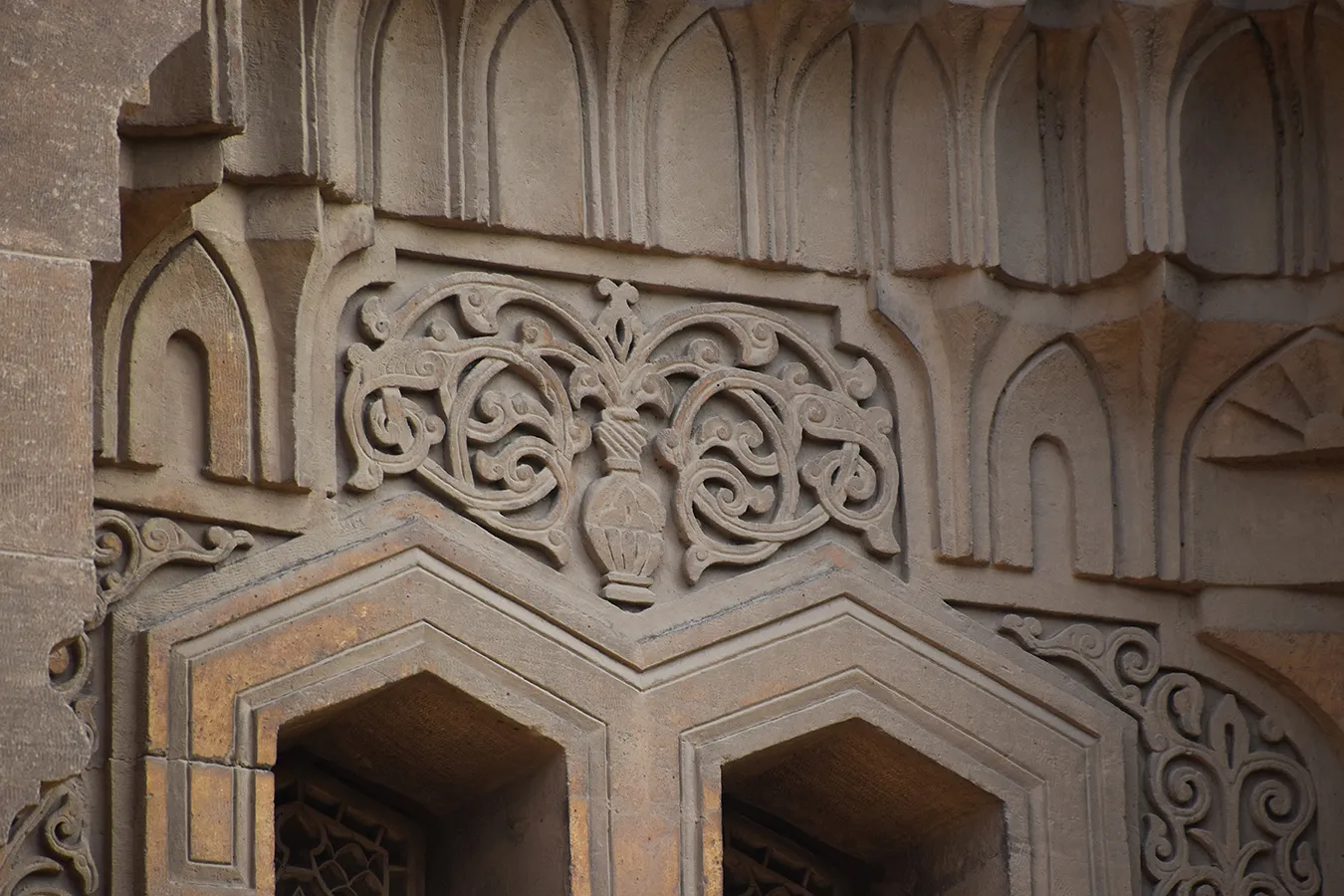
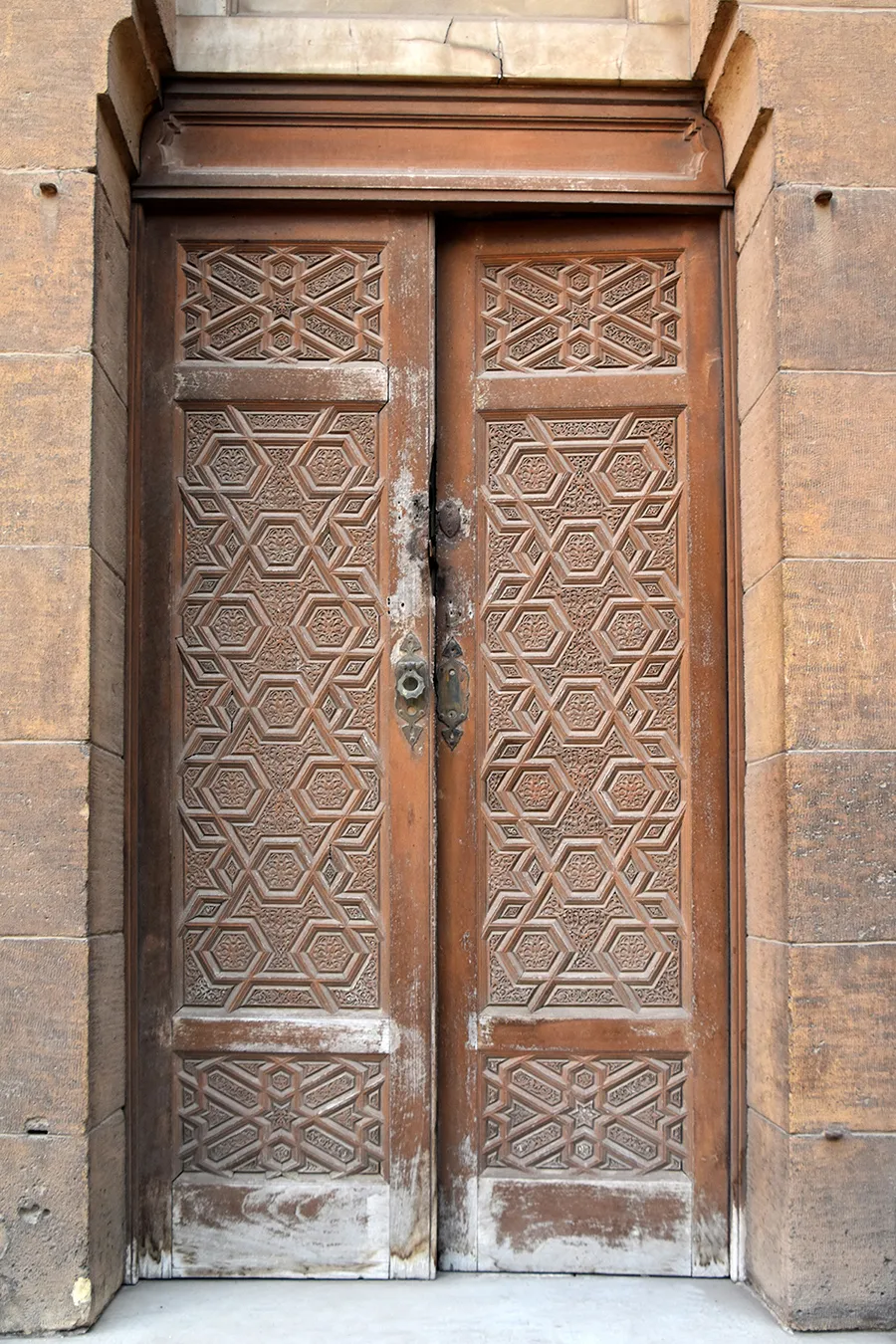
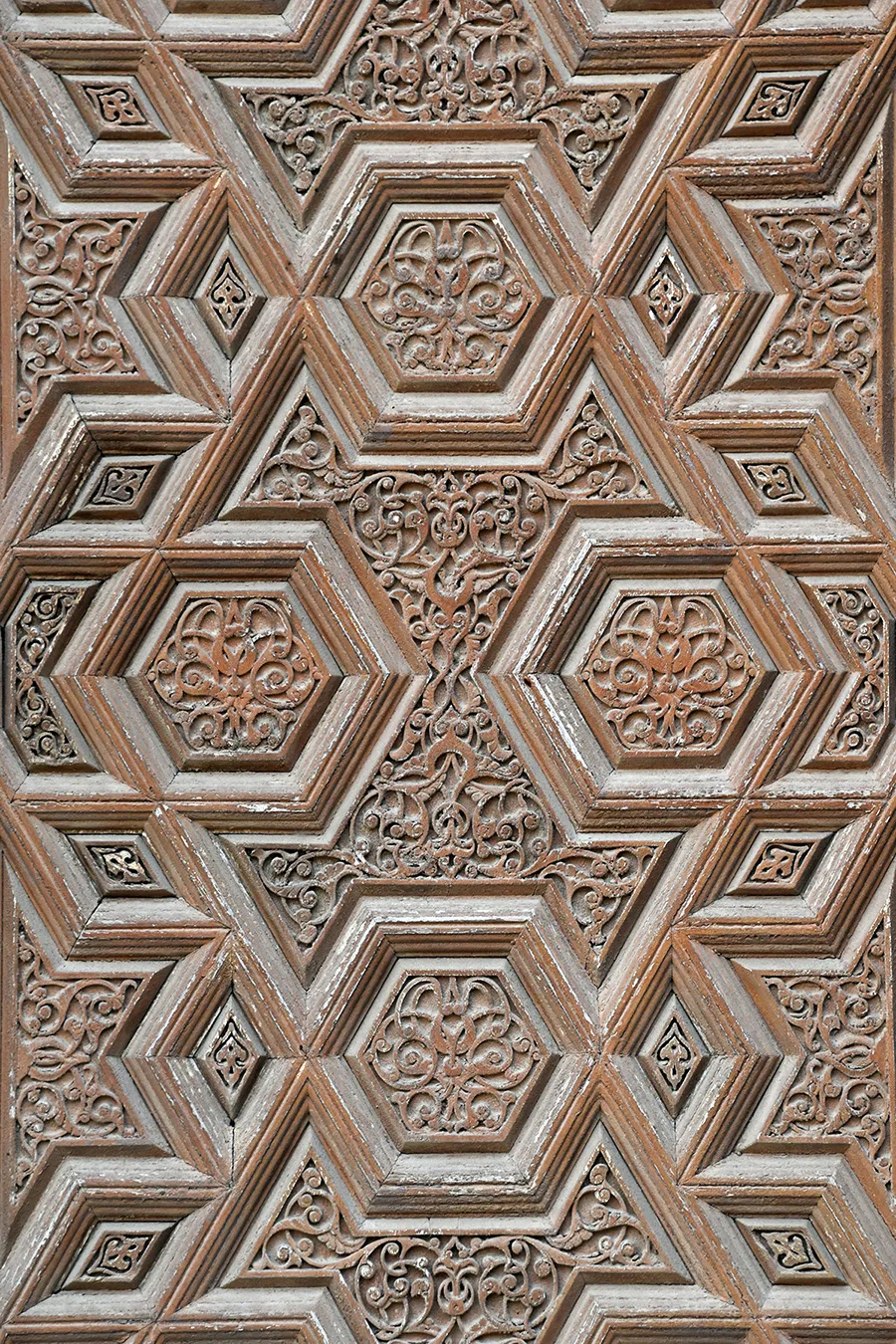
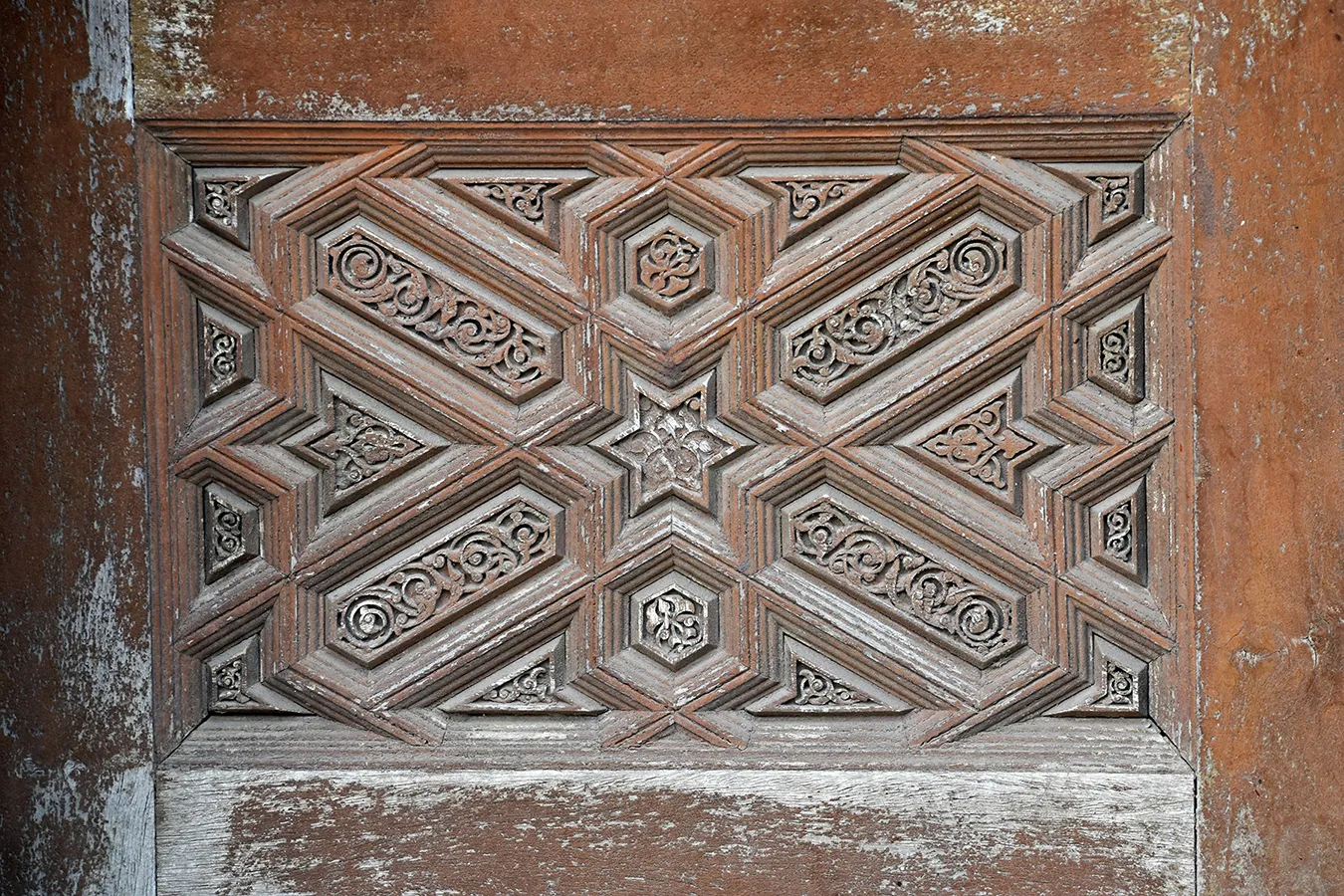
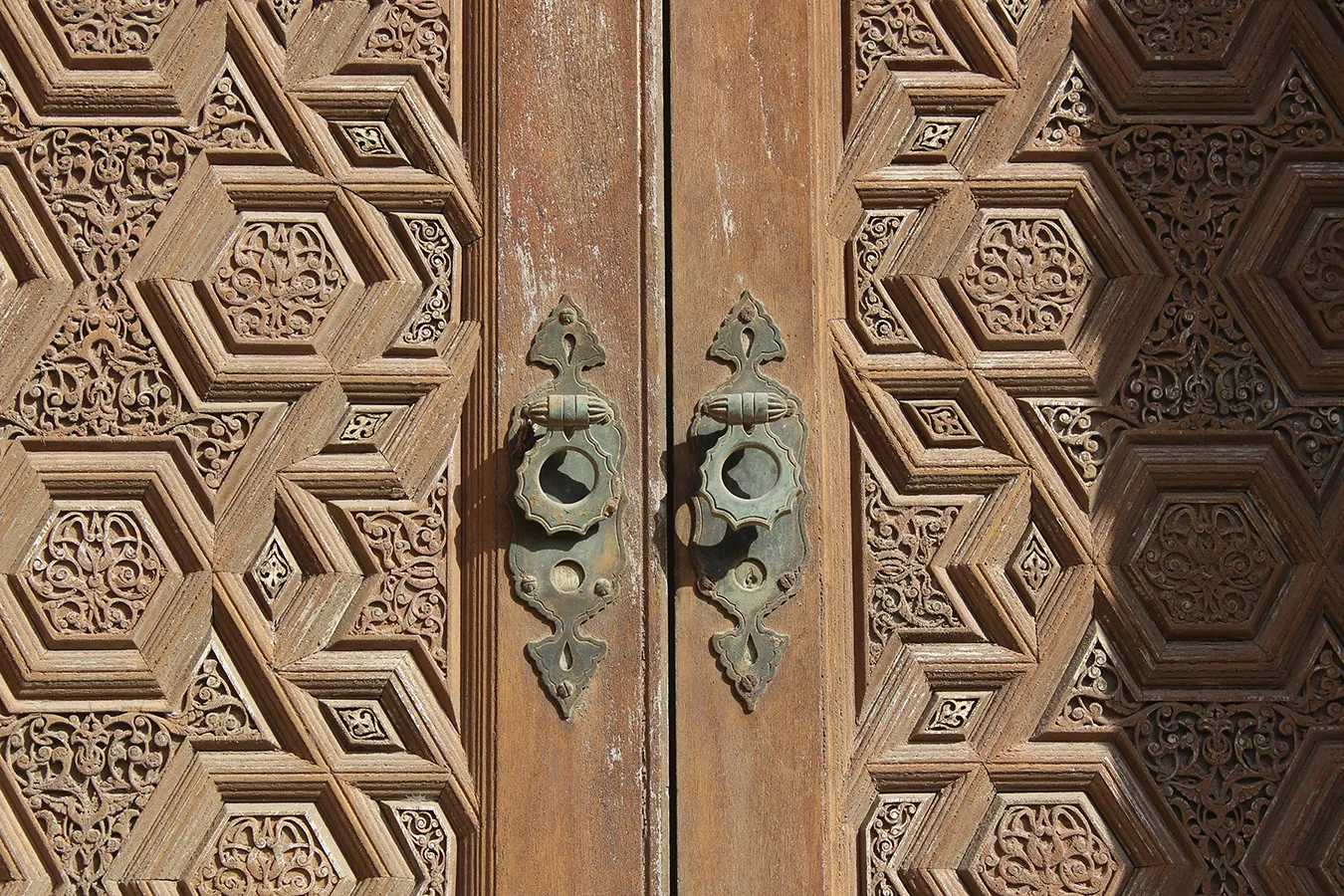
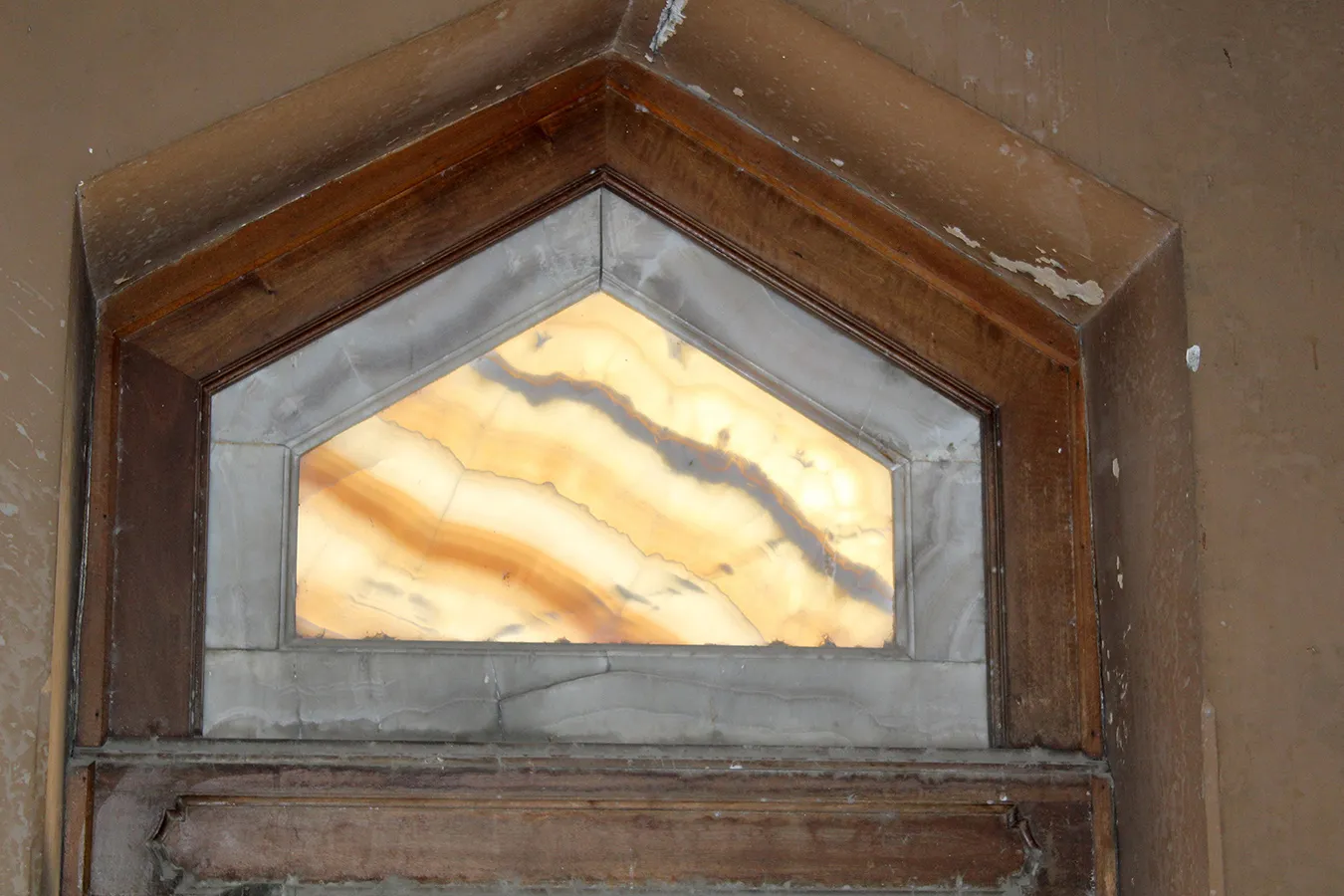
The doors of the side annexes have elaborate wooden joinery panelling in complex geometric patterns. In the keel arches over the doors are windows made of thin alabaster slabs. The drum of the dome is covered with floral arabesque patterns; the dome is ribbed, the ribs themselves fluted and separated by moulding-framed recesses. The ribbing overhanging over the drum and a markedly concave upper section give the dome a slightly “onion bulb” profile distinctly different from the Mamluk-period ones in the area. The building is topped with very simplified crenellations, with prominent “pomegranate” decorations on all corners. The interior floor is raised about a metre, so there marble steps in front of the doors.
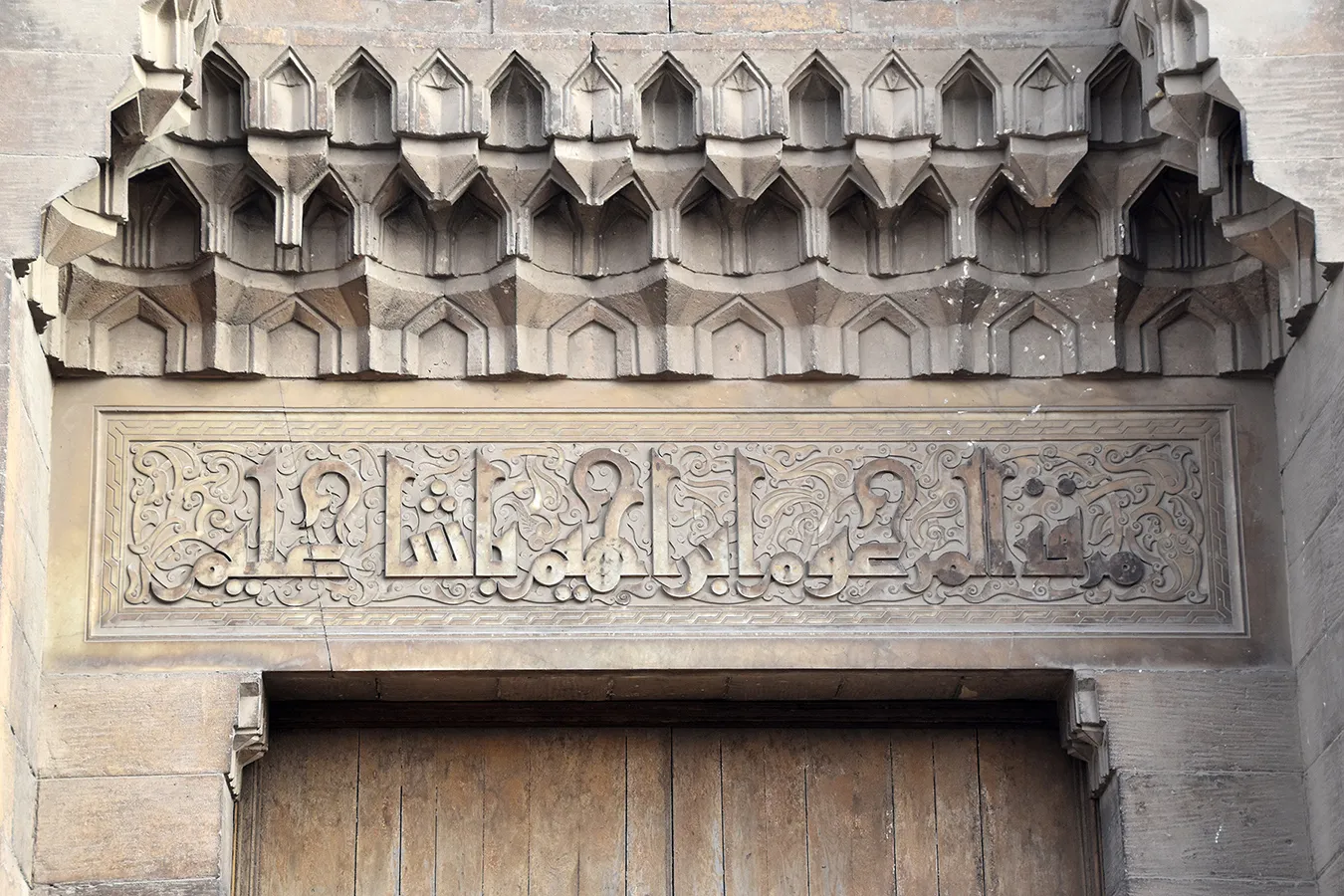
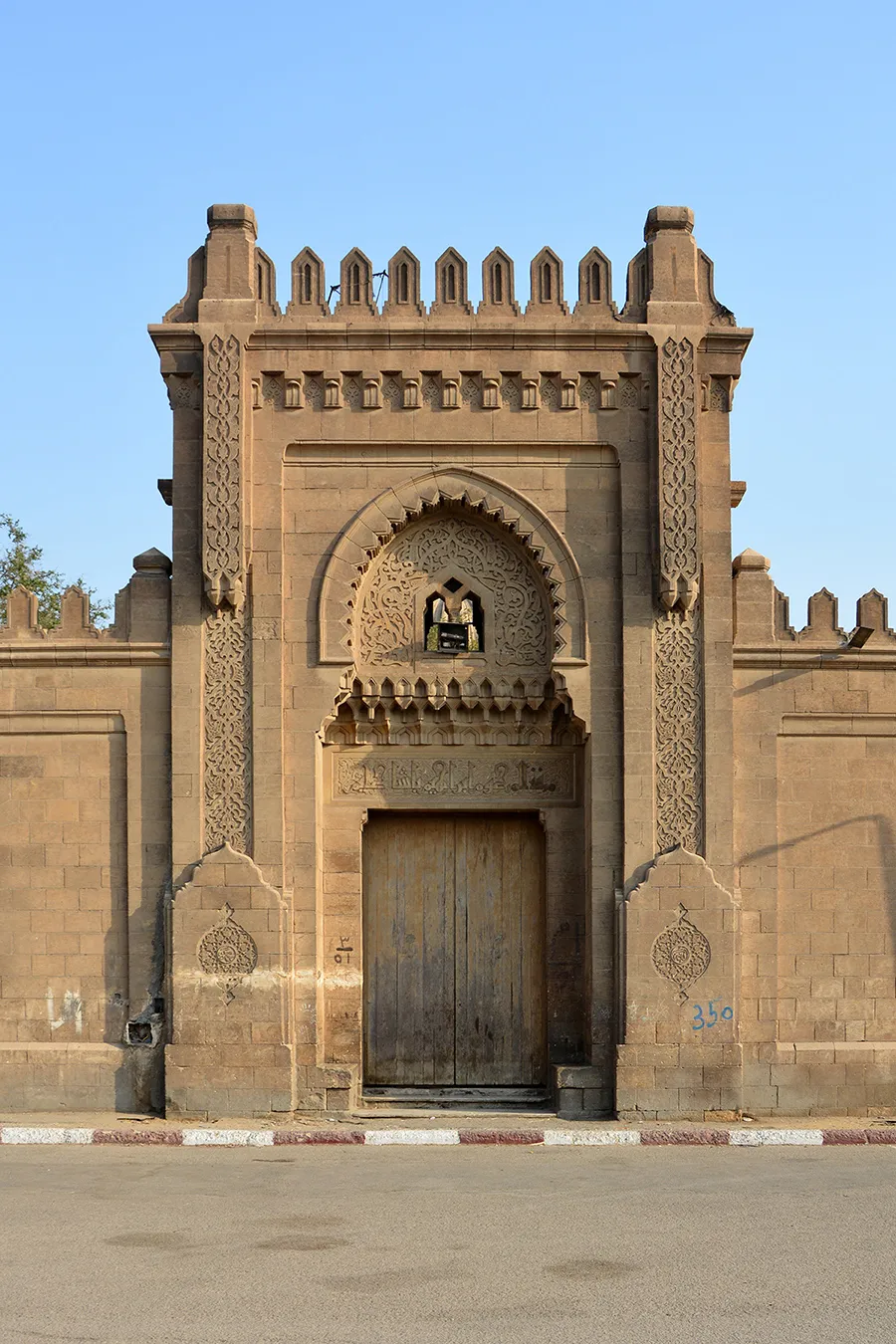
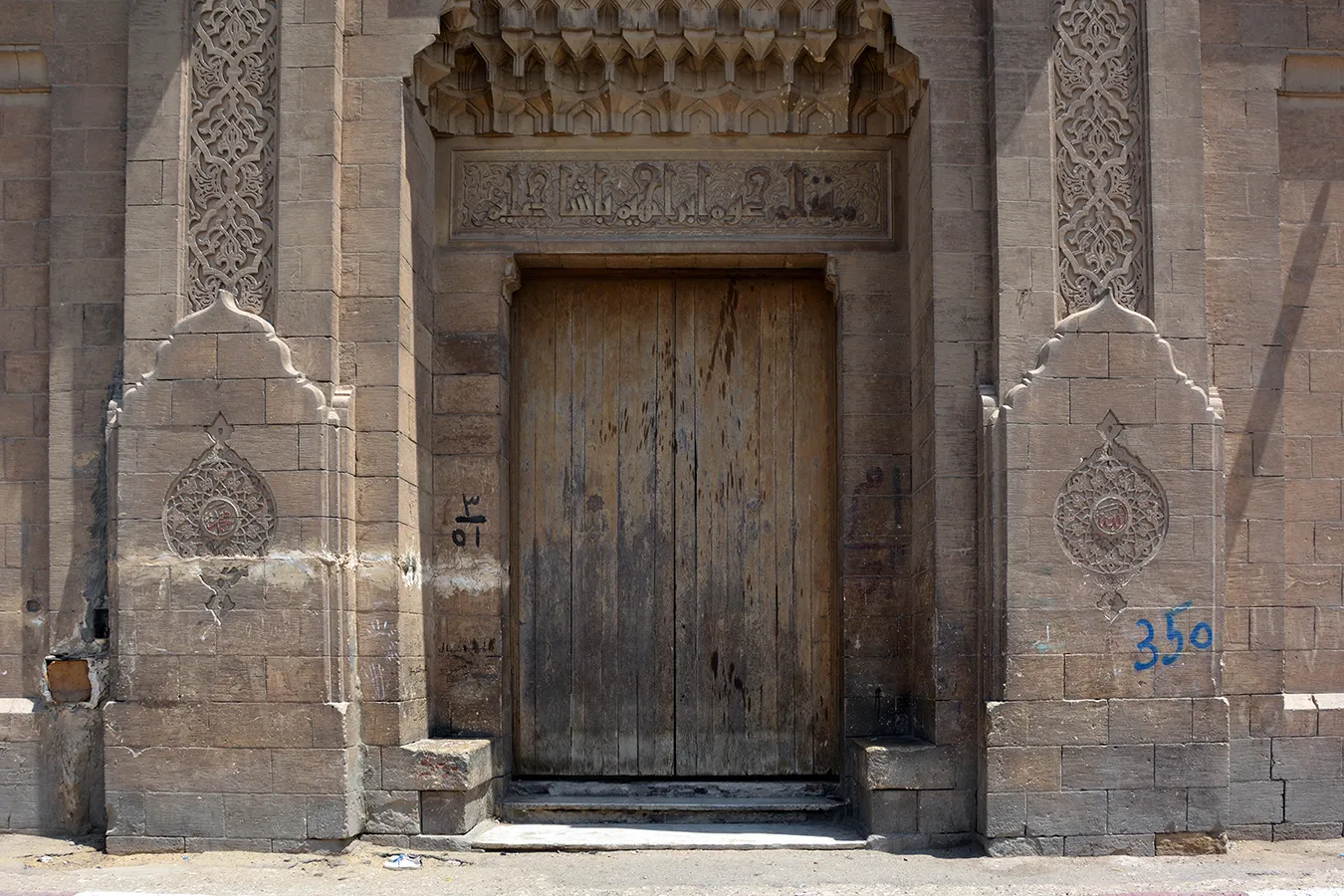
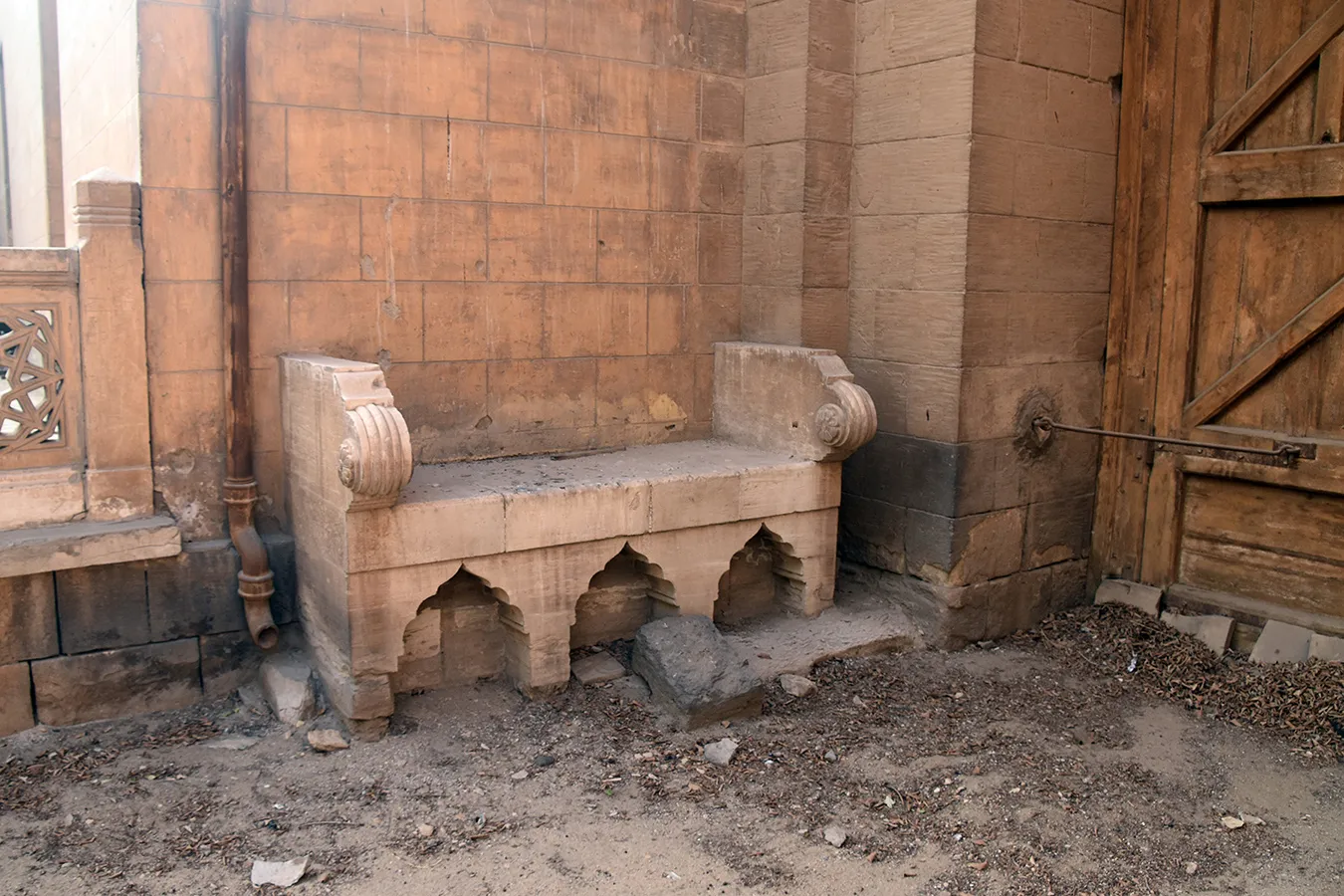
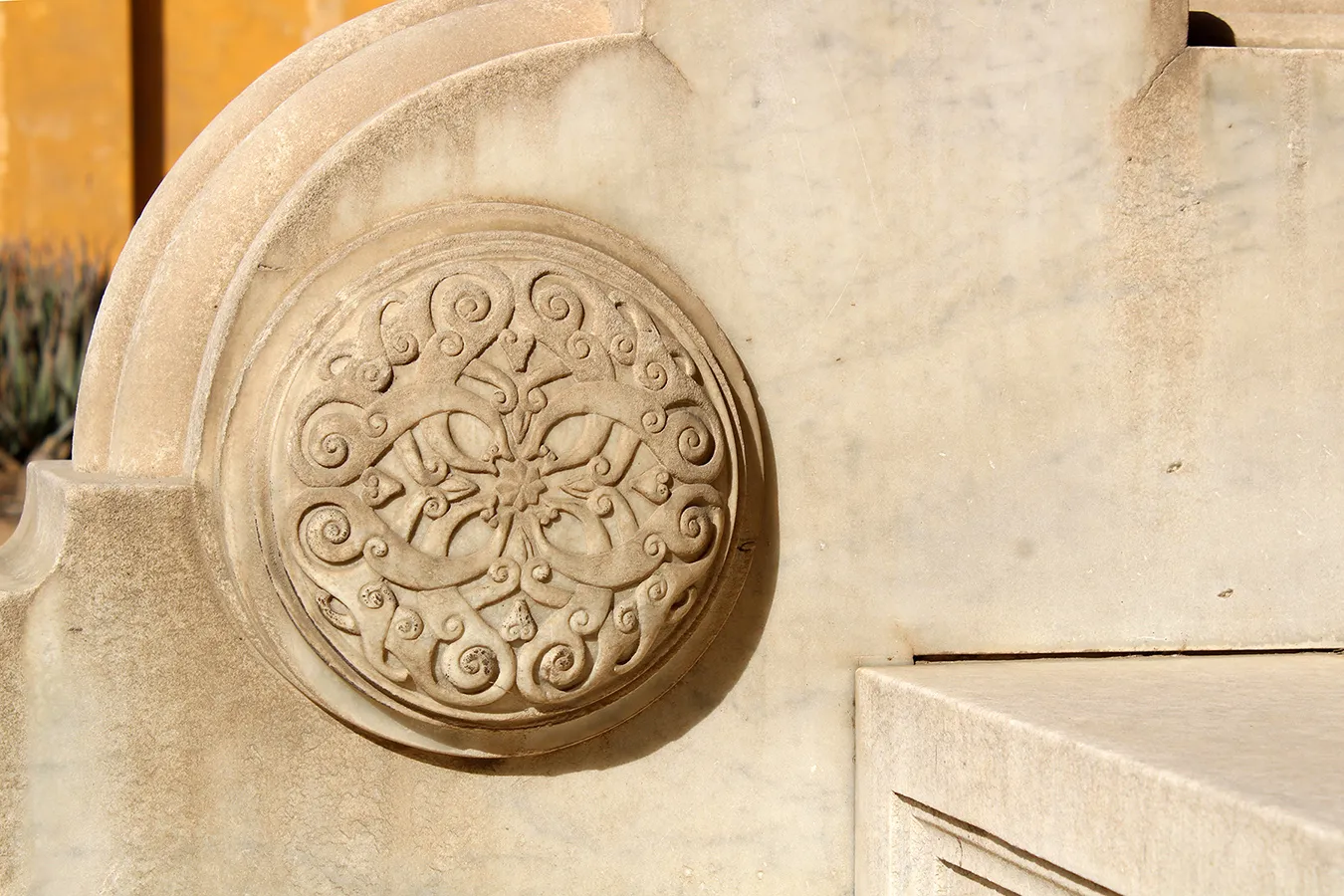
(2) The entrance gate, built of ashlar stone masonry, is much taller than the rest of the façade of the enclosure. The huge entrance door is covered with a massive marble lintel (composed of three pieces, so technically, a flat arch) bearing inscription with the name of Ibrahim Pasha Halim in Kufic script over floral scrolls background. The door is set in a recess with an elaborate muqarnas frieze above the lintel, and over it, a scalloped pointed arch with the tympanum filled with floral arabesque motifs and pierced with a double keel-arched window. The portal is set within a frame of arabesque bands and a denticulated cornice with simplified crenellations above. At the base of this framing are panels with elaborate carved arabesque medallions. On the inside, the gateway through a very thick wall is covered with a segmental arch. Over the arch is a gallery opened onto the courtyard with an arcade of five keel-arches resting on four slender marble columns. The gallery is accessible from the roofs of the buildings on either side of the gate.
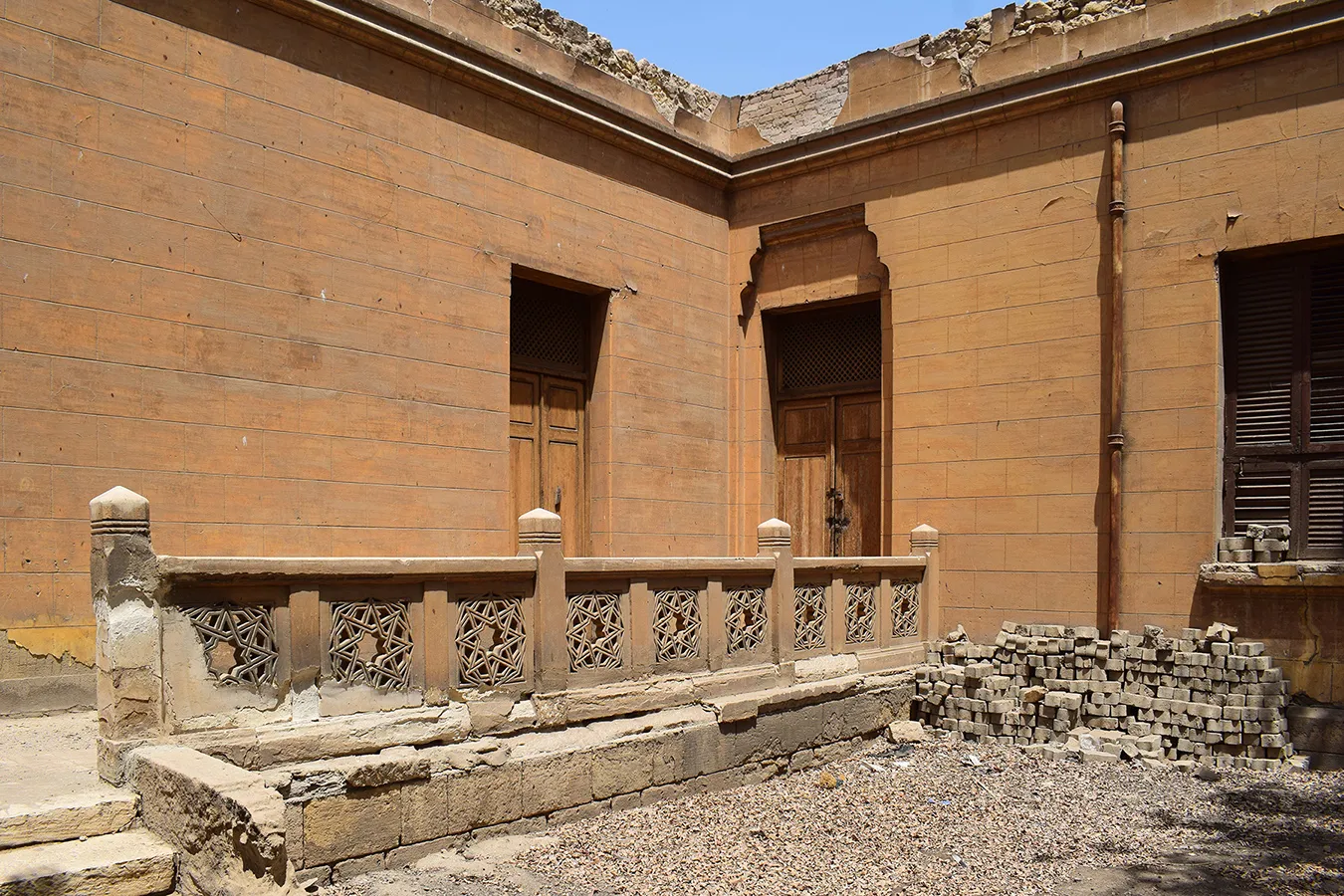
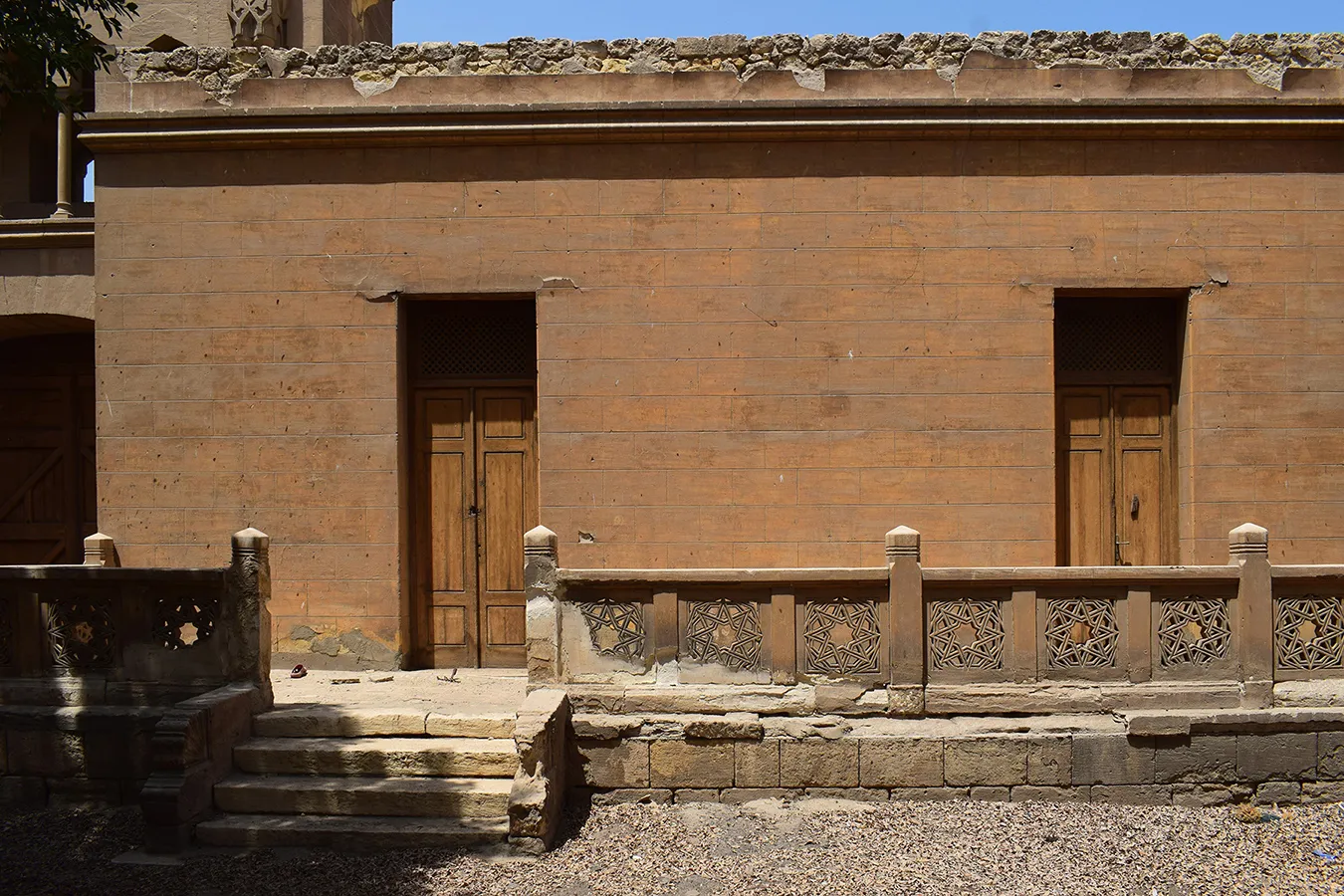
(3) The courtyard-facing walls of the buildings to the sides of the gate are constructed of rubble stone and plastered, with simple, undecorated rectangular door and windows openings. The windows are fitted with simple louvre shutters. There are raised terraces with openwork stone balustrades in front of the eastern walls i.e. to the sides of the gate.
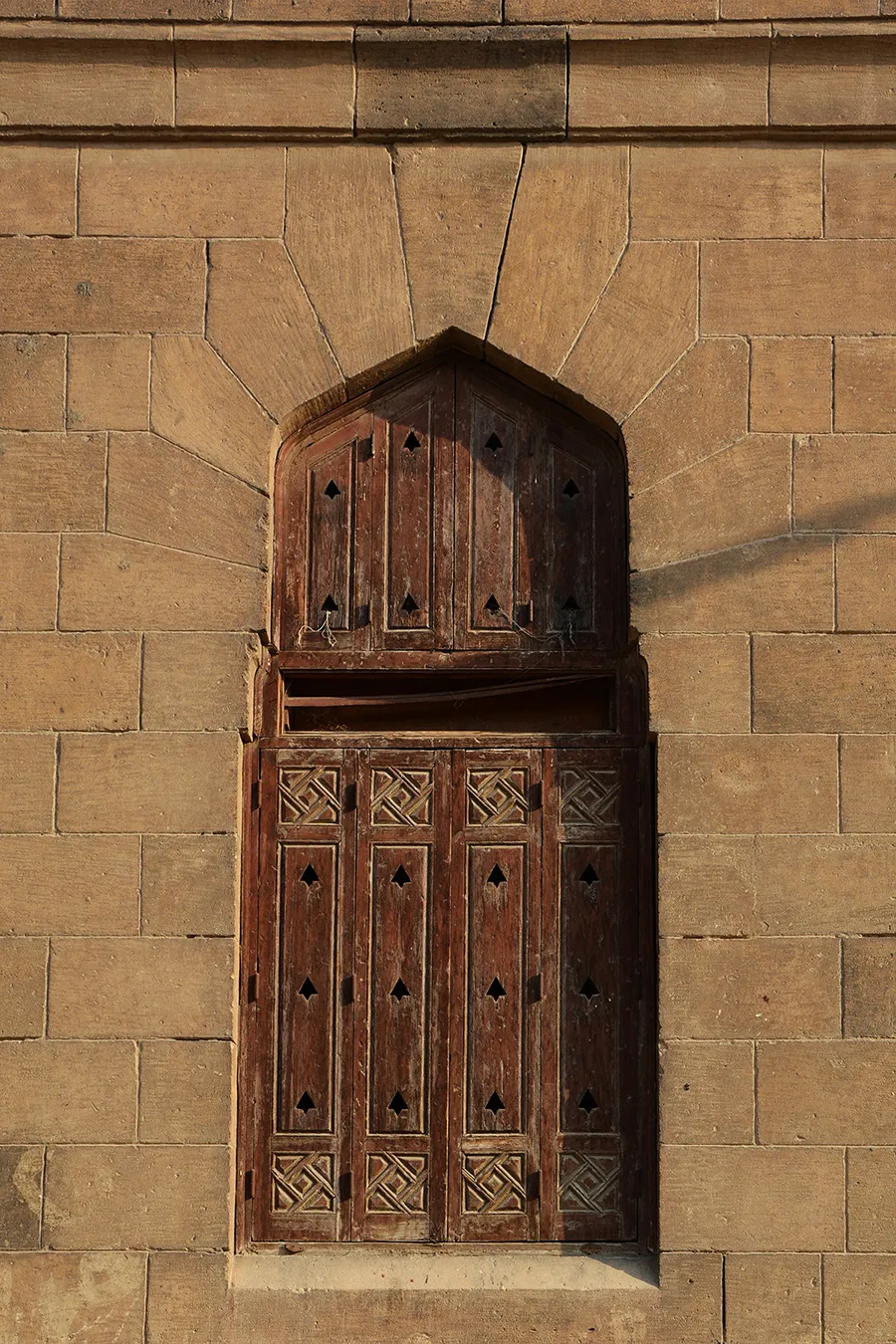
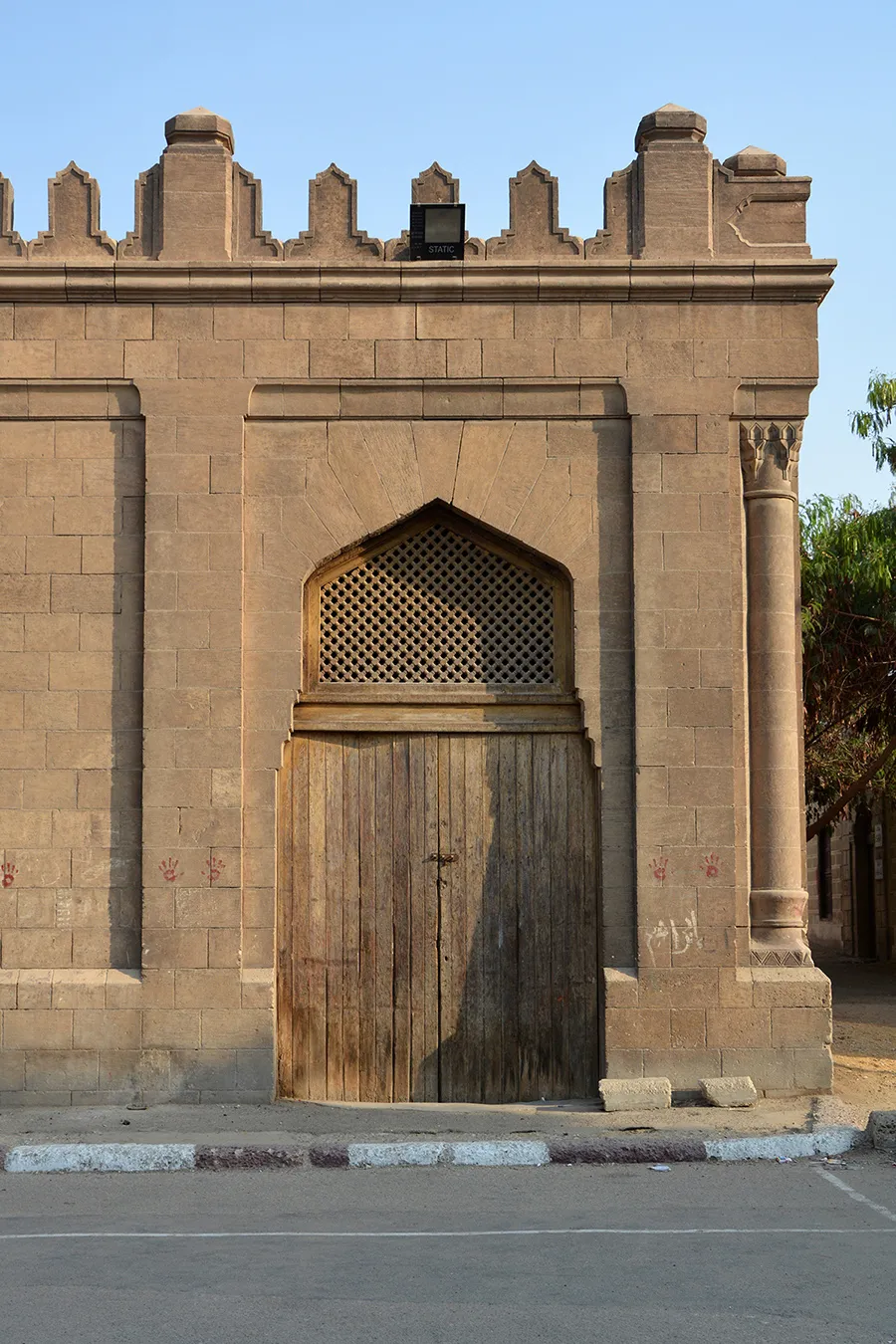
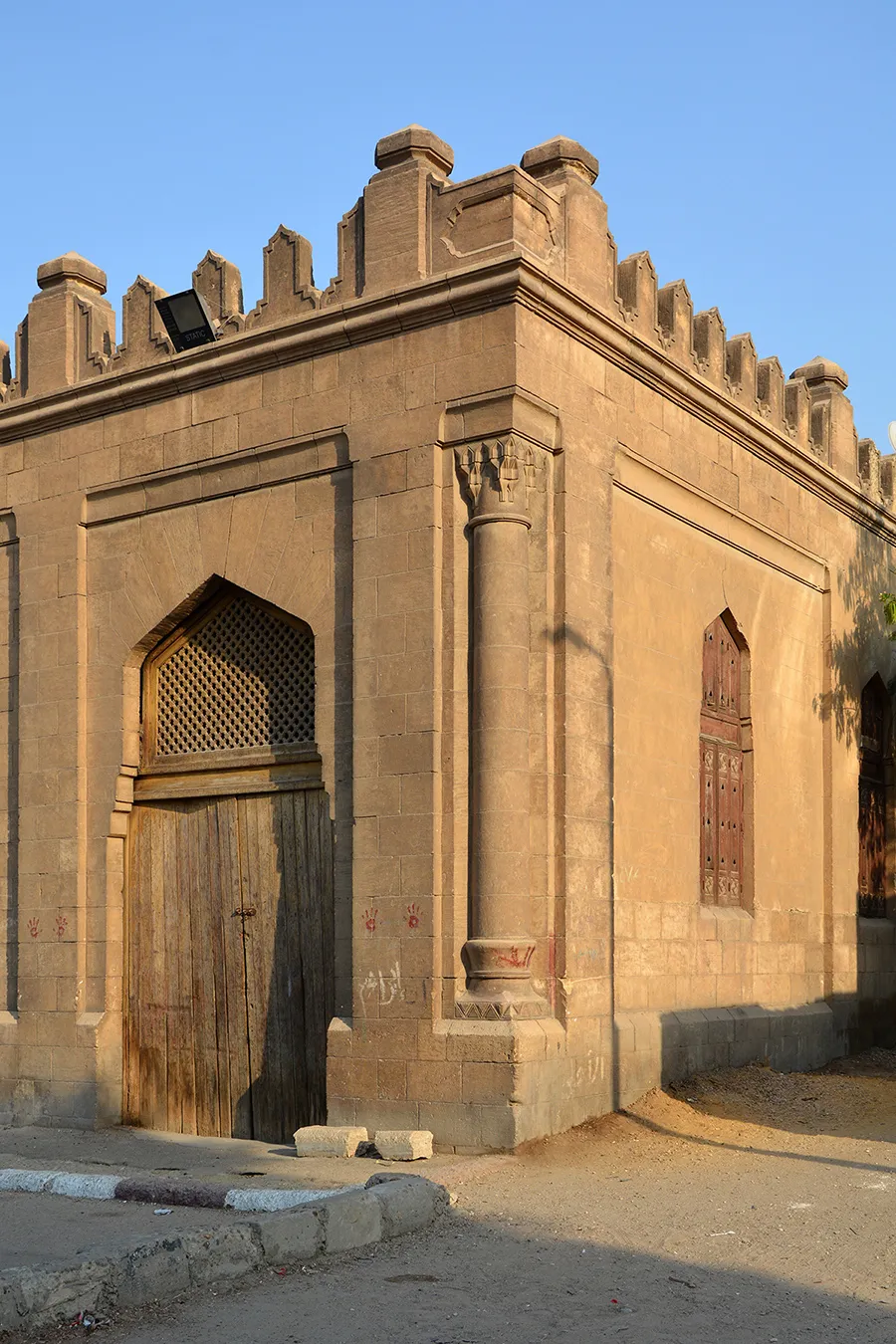
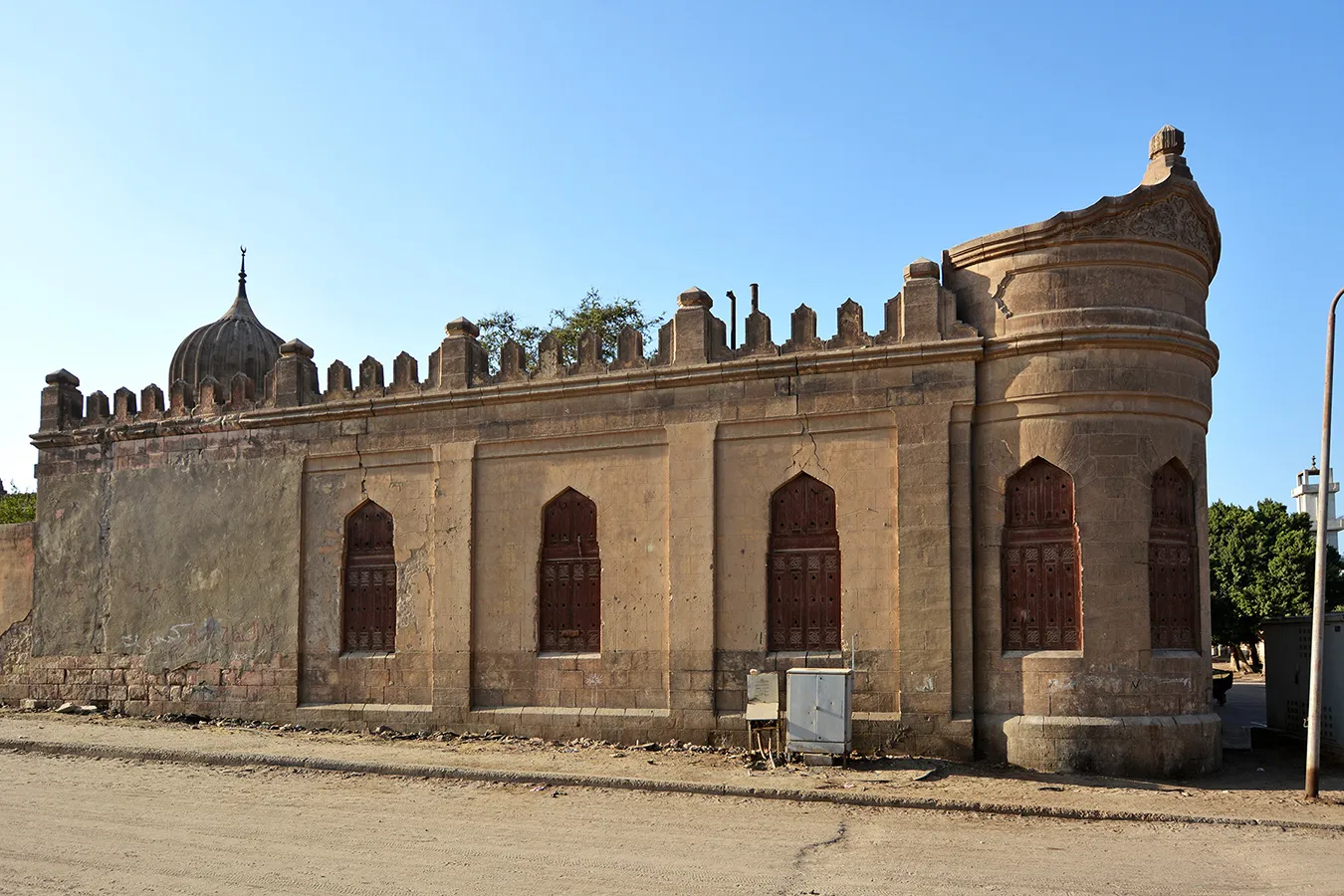
The external front (western) façade of the enclosure is built of ashlar stone, topped with simplified crenellations, and divided on each side of the gate into three sections with simple stripes of masonry framing rectangular shallow recesses with one window in each. The windows are without architectural framing, topped with keel arches and fitted with simple decorative shutters with mafruqa pattern and small openings in the panelling. At the far southern (right) end of the façade, in the fourth section is a large gate with a wide wooden door and mashrabiya screen in the keel arch above it. Apparently, this was the garage for the vehicles of visitors. There is an engaged corner column in the south-western corner. The corresponding section at the northers (left) end of the façade is taken by a huge round-fronted sabil in the north-western corner of the enclosure, with three windows.
The side façades of the front buildings are built of rubble stone and plastered, with framings and crenellations in ashlar stone. The walls of the rest of the courtyard are built of rubble stone and plastered.
Condition of preservation
The complex is in generally good condition and maintained. However, there is some damage from rising damp and from rainwater to the mausoleum and to the buildings on the sides of the entrance gate. Plaster is partially missing from the ceilings of the sid
Information abut the founder, family history, etc.
The inscription over the entrance to the mausoleum reads, “This funerary monument was erected by Lady Esma Hanim Halim, daughter of the late Ibrahim Pasha Halim in year AH 1347 / AD 1928”. This appear consistent with the stylistic features of the building
References in published/primary sources
Moawad, Ibrahim Abdelfattah. The Remaining Funerary Buildings in Qarafa Al-Majawerin, Cairo, from the Nineteenth Century AD until the First Half of the Twentieth Century. Unpublished MA thesis, Cairo University, 2022 (in Arabic). The dissertation quotes t
- Field recording by
- Hadeer Ahmad and Amr Abotawila
- Date recorded
- November 5, 2025
- Data entered by
- Yusuf Yassir
- Date entered
- May 13, 2024