
Unit No49
Khalifa Fath al-Bab
|
Coordinates of the main entrance |
30.040645N - 31.267777E |
|
Attribution |
Khalifa Fath al-Bab |
|
Higri (AH)Dates as given in the Inscription |
1342 |
|
Miladi (AD)Dates as given in the Inscription |
|
|
Inscription Contemporary with the building? |
Yes |
|
Multiple date(s) In the inscription? |
Yes |
|
Assumed Date |
|
|
Based on |
|
|
Original Use |
Funerary enclosure |
|
Current Use |
Funerary enclosure |
|
Overall condition |
Fair |
Features of unit 49
| Present | Count | Material | Comments (see description for details) | |
|---|---|---|---|---|
| Free standing structure | No | |||
| Walled enclosure | Yes | 1 | stone | |
| Rooms by the perimeter wall | Yes | 2 | stone | Mirrored rooms on each side of the gateway |
| Freestanding structure(s) in enclousure | No | |||
| Dome over the tomb chamber | No | |||
| Neo-Mamluk architectural decoration | Yes | |||
| Garden layout | No | |||
| Sabil(s) | Yes | 1 | stone | |
| Wall fountain(s) | No | |||
| Canopy on columns / pillars | No | |||
| Carved marble cenotaph(s) | No | |||
| Decorated limestone tomb-markers | No | |||
| Decorated gateway | Yes | 1 | stone | |
| Decorative door-leaves | Yes | 2 | steel | modern |
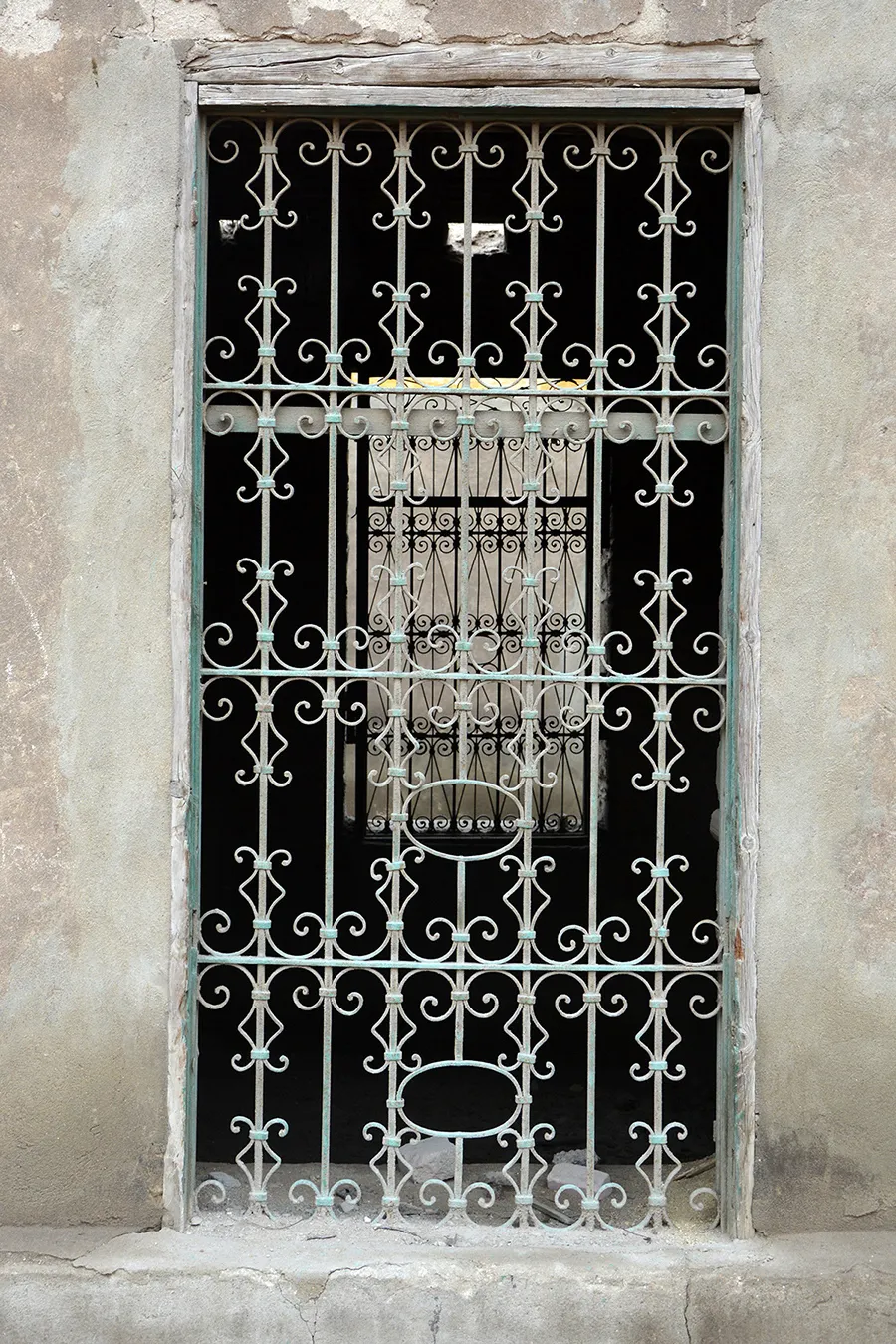
| Decorative window grilles | Yes | 4 | wrought iron | |
| Decorative shutters | No | |||
| Painted ceiling(s) | No | |||
| Decorative paving(s) | No |
Description (The direction towards Mecca (Qibla) is described as eastern and other directions are named accordingly)
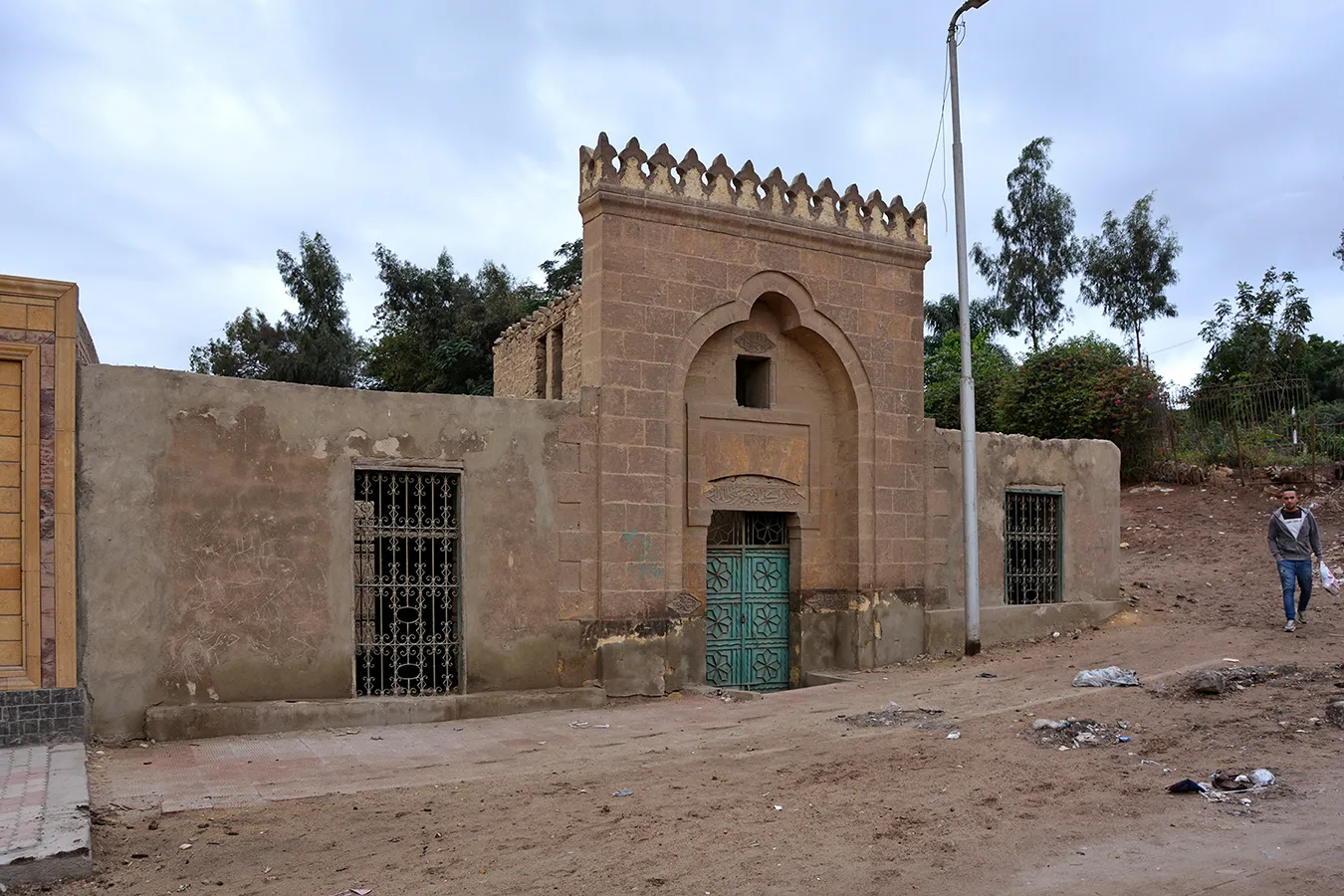
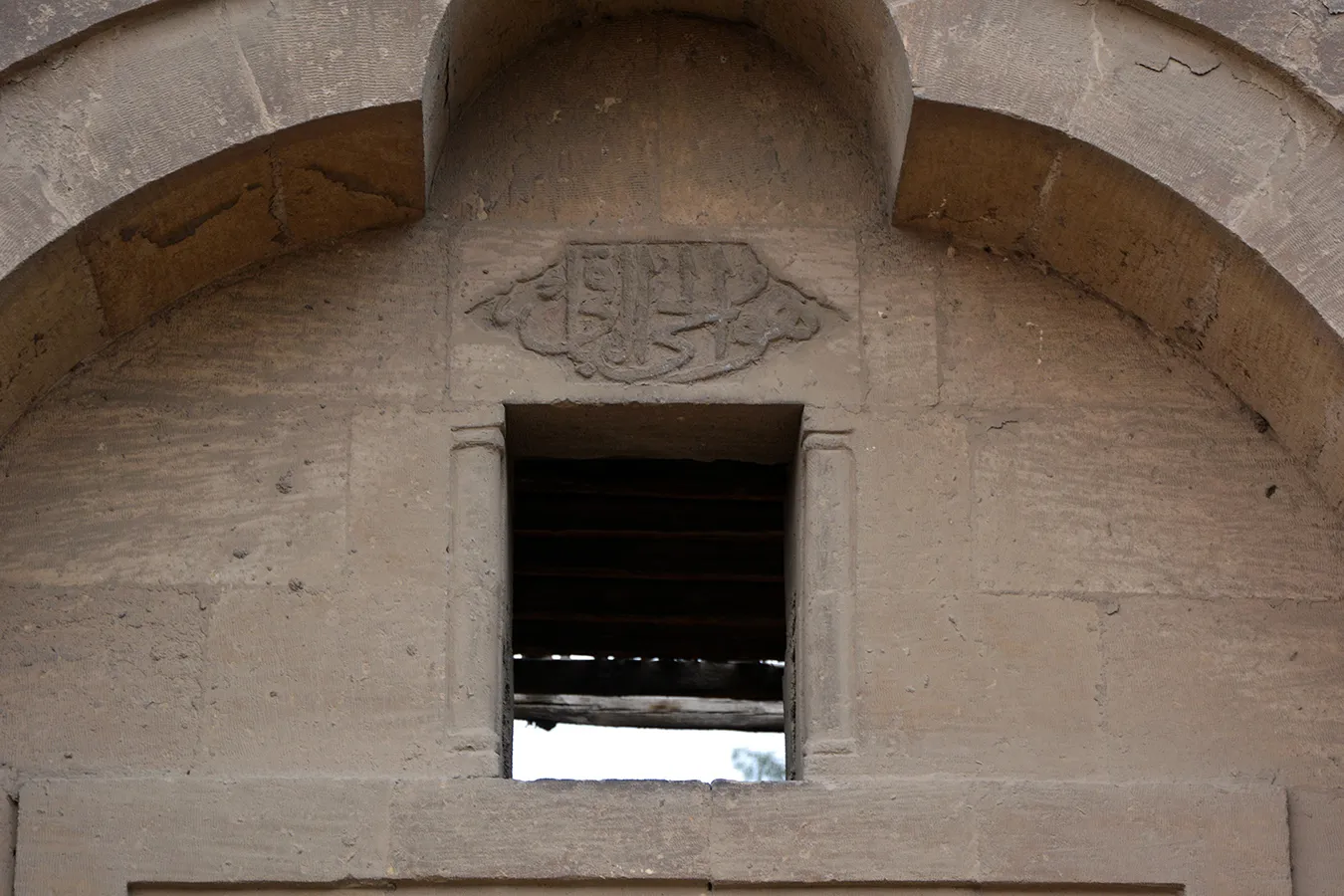
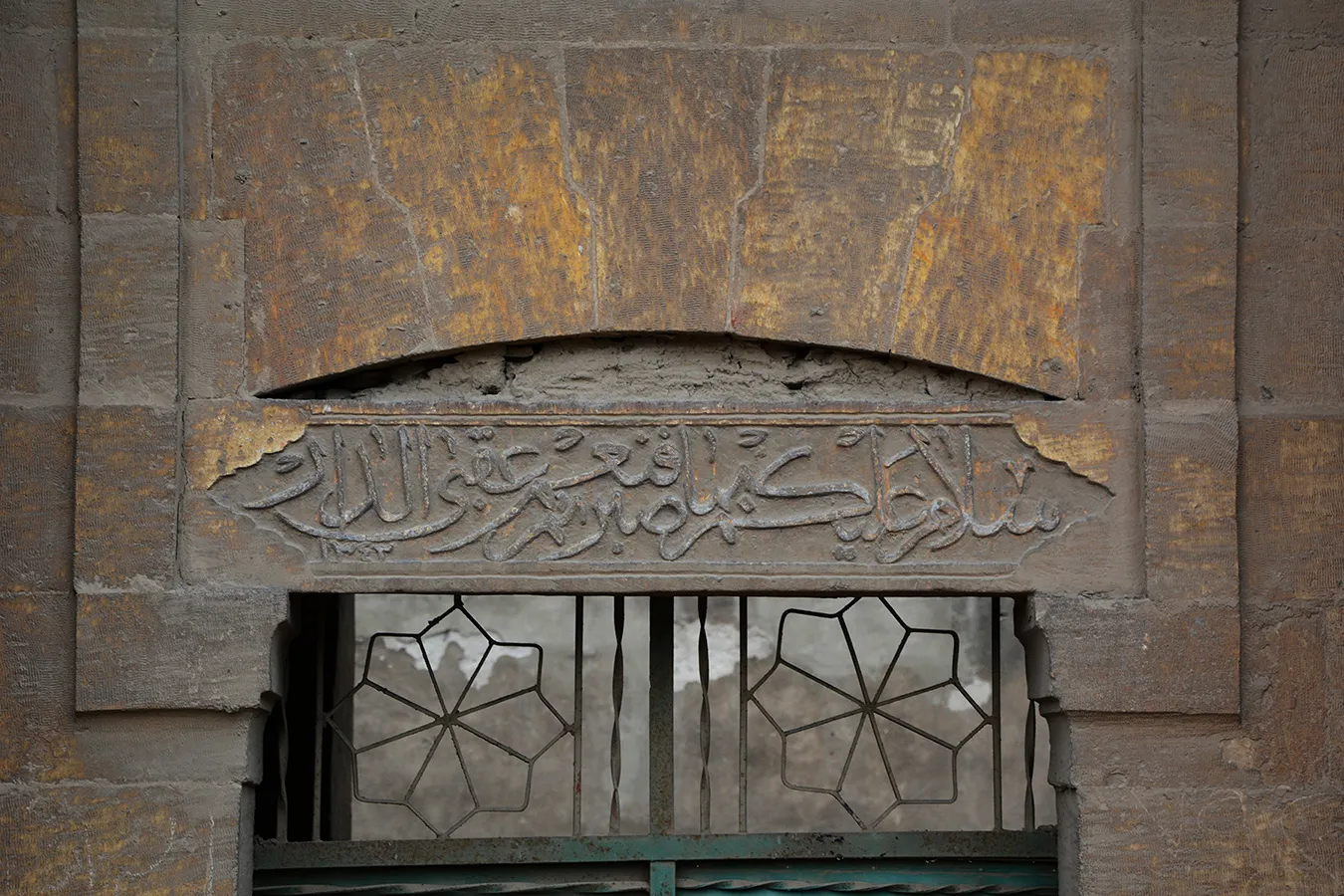
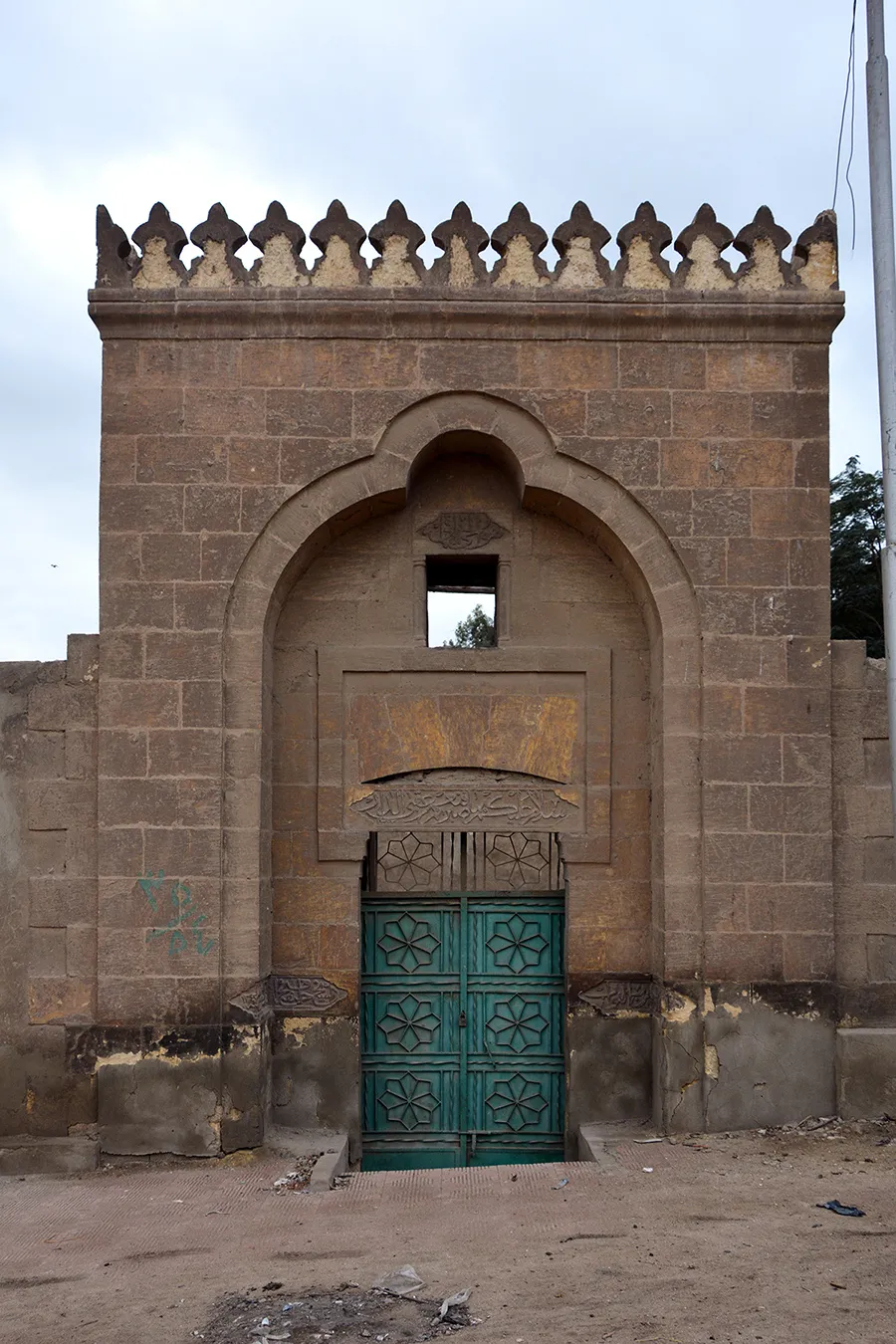
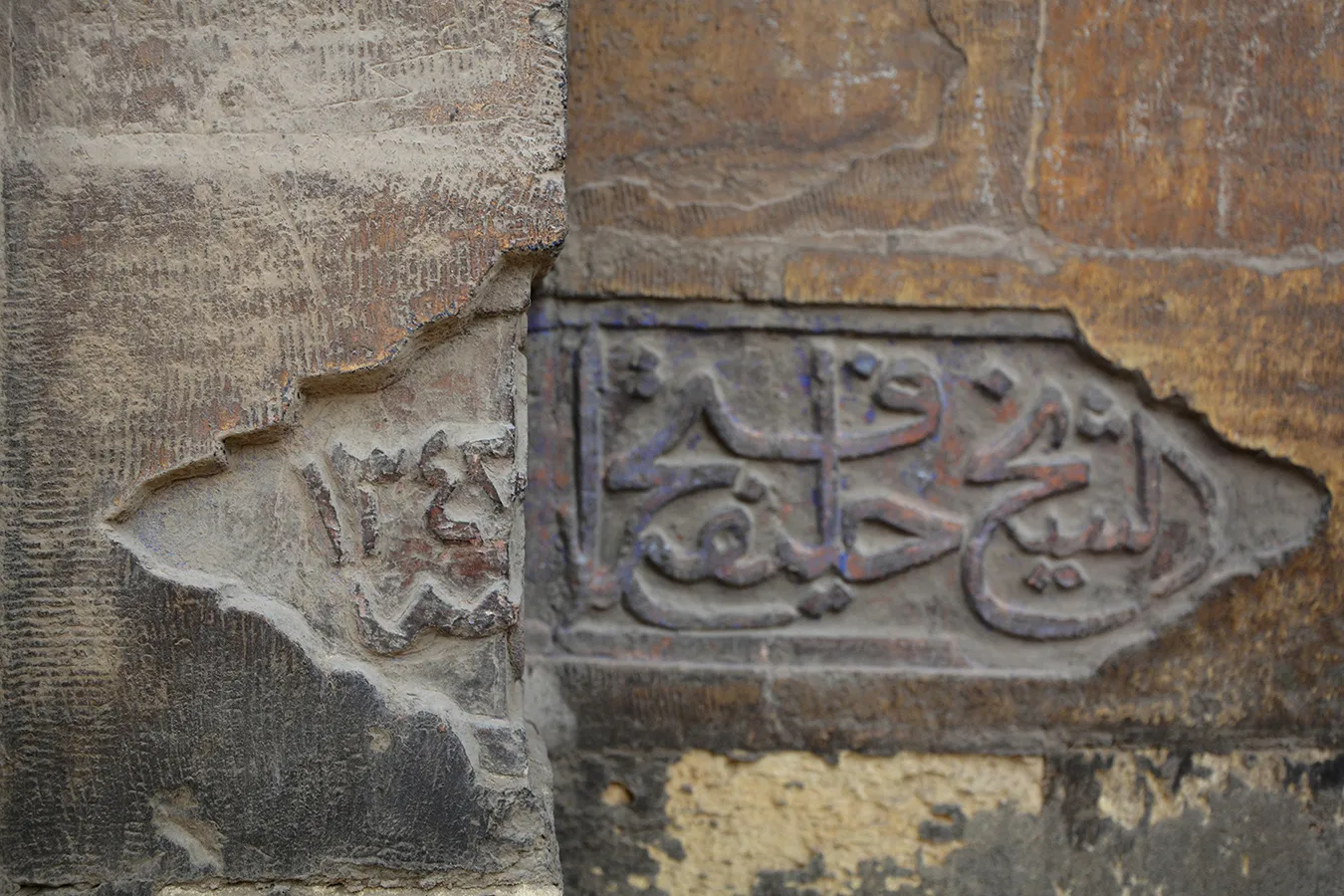
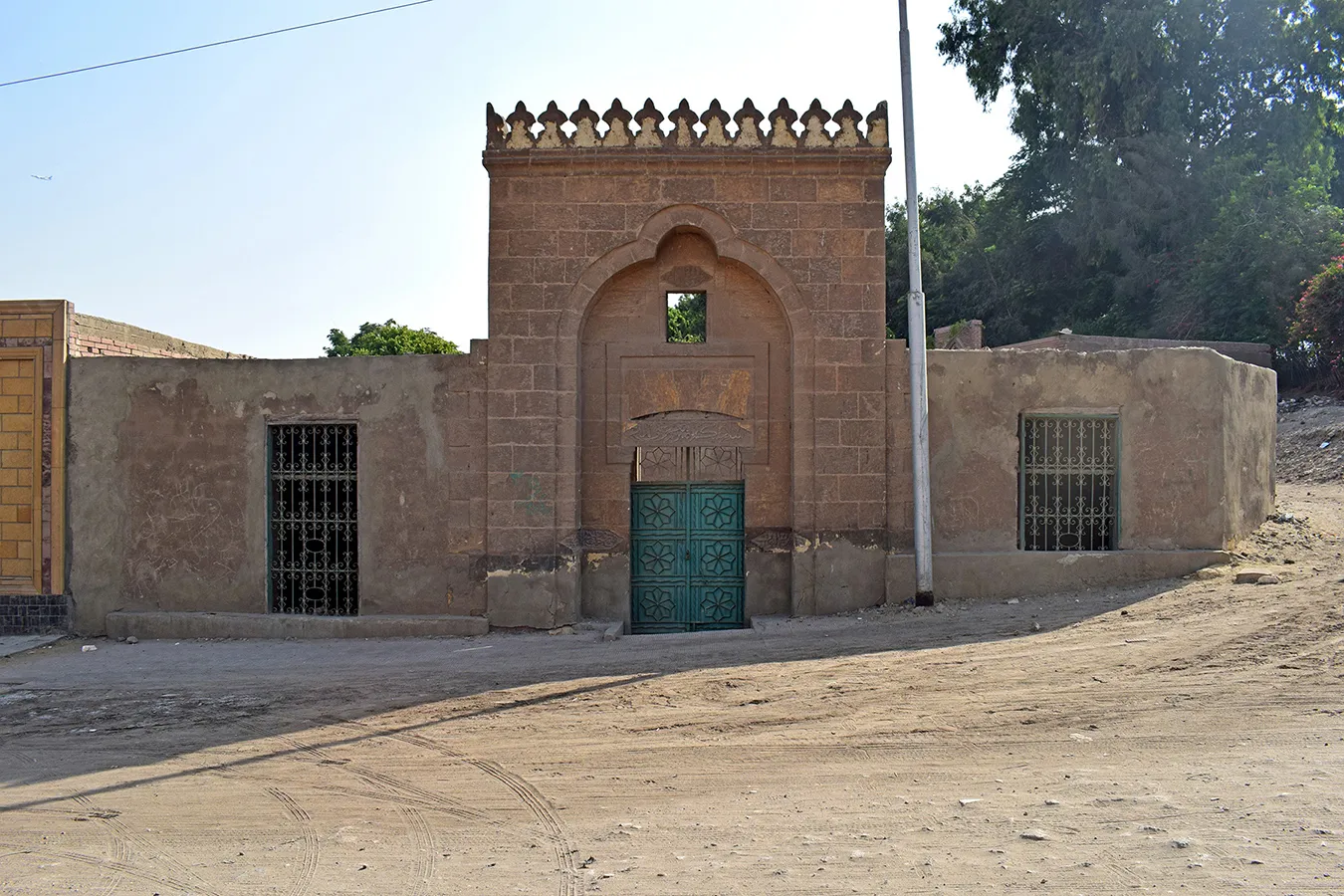
A small square enclosure measuring approximately 13×13 metres, with the entrance façade facing north and with the north-western corner cut at the 45 degrees angle. Borders on the east and south on neighbouring enclosures. There is a building along the northern side, while the southern part of the enclosure is an open courtyard. The front building comprises an entrance hall without a back wall (i.e., with its back side opened onto the courtyard), and two rooms to its sides. The front wall of the entrance hall is much taller than the rest of the façade and built of ashlar masonry, while the other walls are built of rough stone. The entrance door is set in a recess covered with an undecorated trefoil arch with the central lobe much narrower than the side ones and of a round profile rather than pointed. The rectangular gate has its monolithic stone lintel and the relieving arch of stepped-joggled voussoirs above it framed in an undecorated projecting rectangular band – either an extreme simplification of Mamluk architectural form, or evidence that the construction was not completed. The pishtaq portal is crowned by fleur-de-lys crenellations. The steel door-leaves are modern. There is an inscription panel in fine calligraphic script in raised relief on the door lintel, another inscription panel over the plain rectangular window above the door, and inscription bands on the sides of the entrance door recess, the one on the left site including the date 1342 AH (corresponding to AD 1924.) There are traces of colouring on the inscriptions. The walls of the entrance hall, built of rough stone and unplastered, form a clerestory with double windows on each side above the rooves of the side rooms. The side parts of the façade are plaster, with a plain rectangular window with a wooden lintel on each side of the portal. Each room has a similar window overlooking the courtyard. The windows are fitted with simple decorative grilles of wrought iron. Overall, the quality of both the design and craftsmanship is mediocre compared to many other enclosures in the area.
Condition of preservation
The overall condition is fair, and the building receives rudimentary maintenance. Recent repairs in cement to the lower parts of the walls are apparently an attempt to address the damage caused by rising damp. Most of the western wall is obscured by the slope of an unpaved ramp leading up to the level of the embankment of the Salah Salem throughway that was constructed nearby. The slope also obscures parts of the entrance façade, which resulted in partial walling up of the western window and in the entrance door being now a few steps below grade. The street in front is often used for dumping of raw sewage from sewage-pumping trucks.
Information abut the founder, family history, etc.
The date 1342 AH in the inscriptions on the façade corresponds to AD 1924.
- Field recording by
- Nur ‘Atiya
- Date recorded
- August 4, 2022
- Data entered by
- Hania Abdelmeguid
- Date entered
- May 9, 2024