
Unit No47
Isma‘il ‘Ali Bey
|
Coordinates of the main entrance |
30.041453N - 31.268402E |
|
Attribution |
Isma‘il ‘Ali Bey |
|
Higri (AH)Dates as given in the Inscription |
|
|
Miladi (AD)Dates as given in the Inscription |
|
|
Inscription Contemporary with the building? |
Yes |
|
Multiple date(s) In the inscription? |
Yes |
|
Assumed Date |
First half of the 20th century, probably 1930s or 40s |
|
Based on |
based on stylistic features. |
|
Original Use |
Funerary enclosure |
|
Current Use |
Funerary enclosure |
|
Overall condition |
Fair |
Features of unit 47
| Present | Count | Material | Comments (see description for details) | |
|---|---|---|---|---|
| Free standing structure | No | |||
| Walled enclosure | Yes | 1 | ||
| Rooms by the perimeter wall | Yes | 3 | ||
| Freestanding structure(s) in enclousure | No | |||
| Dome over the tomb chamber | No | |||
| Neo-Mamluk architectural decoration | No | |||
| Garden layout | No | |||
| Sabil(s) | No | |||
| Wall fountain(s) | No | |||
| Canopy on columns / pillars | No | |||
| Carved marble cenotaph(s) | No | |||
| Decorated limestone tomb-markers | Yes | |||
| Decorated gateway | Yes | 1 | stone | Gate from the street to the courtyard |
| Decorative door-leaves | Yes | 2 | wrought iron | In the gate + a wrought iron picket fence |
| Decorative window grilles | No | |||
| Decorative shutters | No | |||
| Painted ceiling(s) | No | |||
| Decorative paving(s) | Yes | 2 | cement tiles |
Description (The direction towards Mecca (Qibla) is described as eastern and other directions are named accordingly)
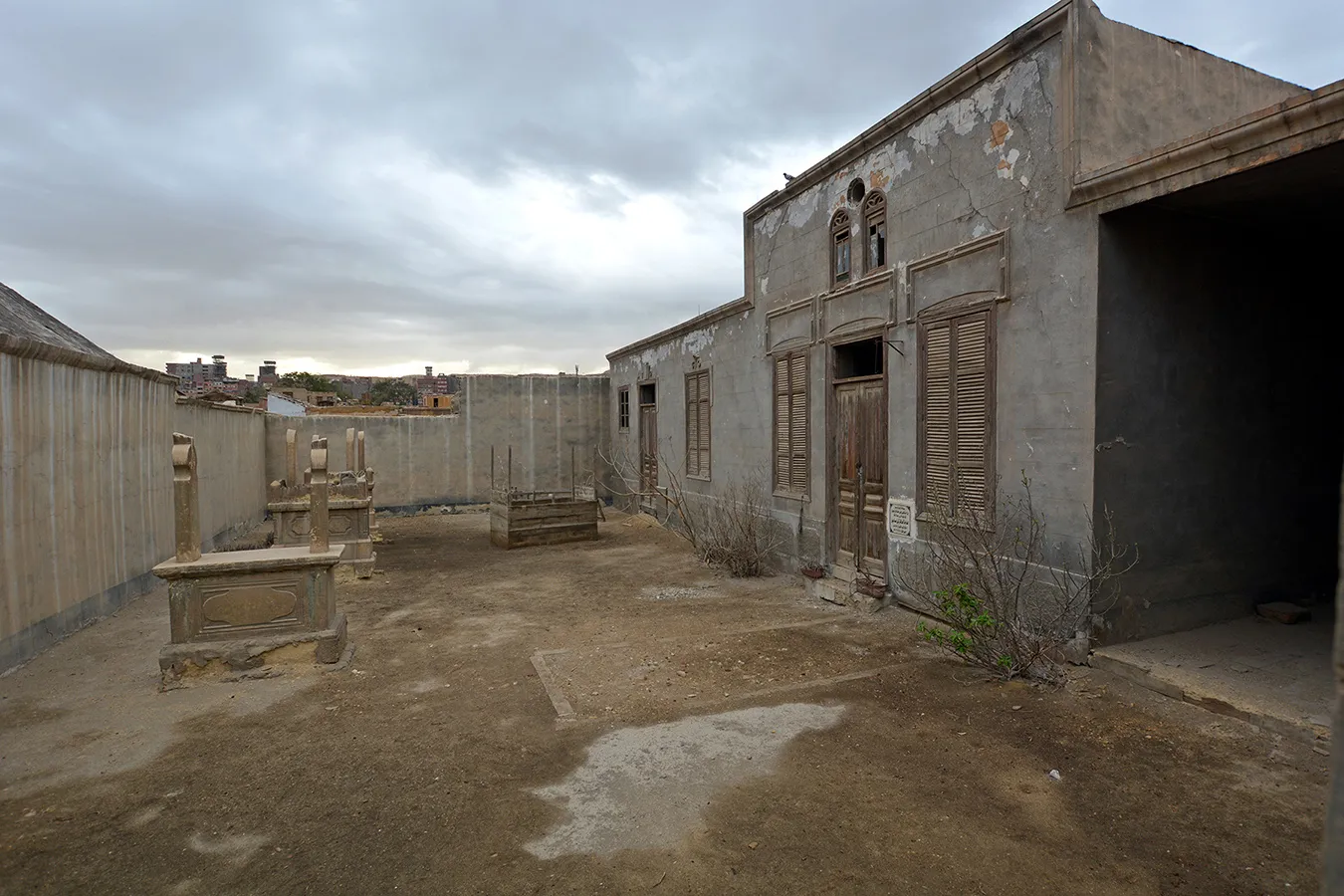
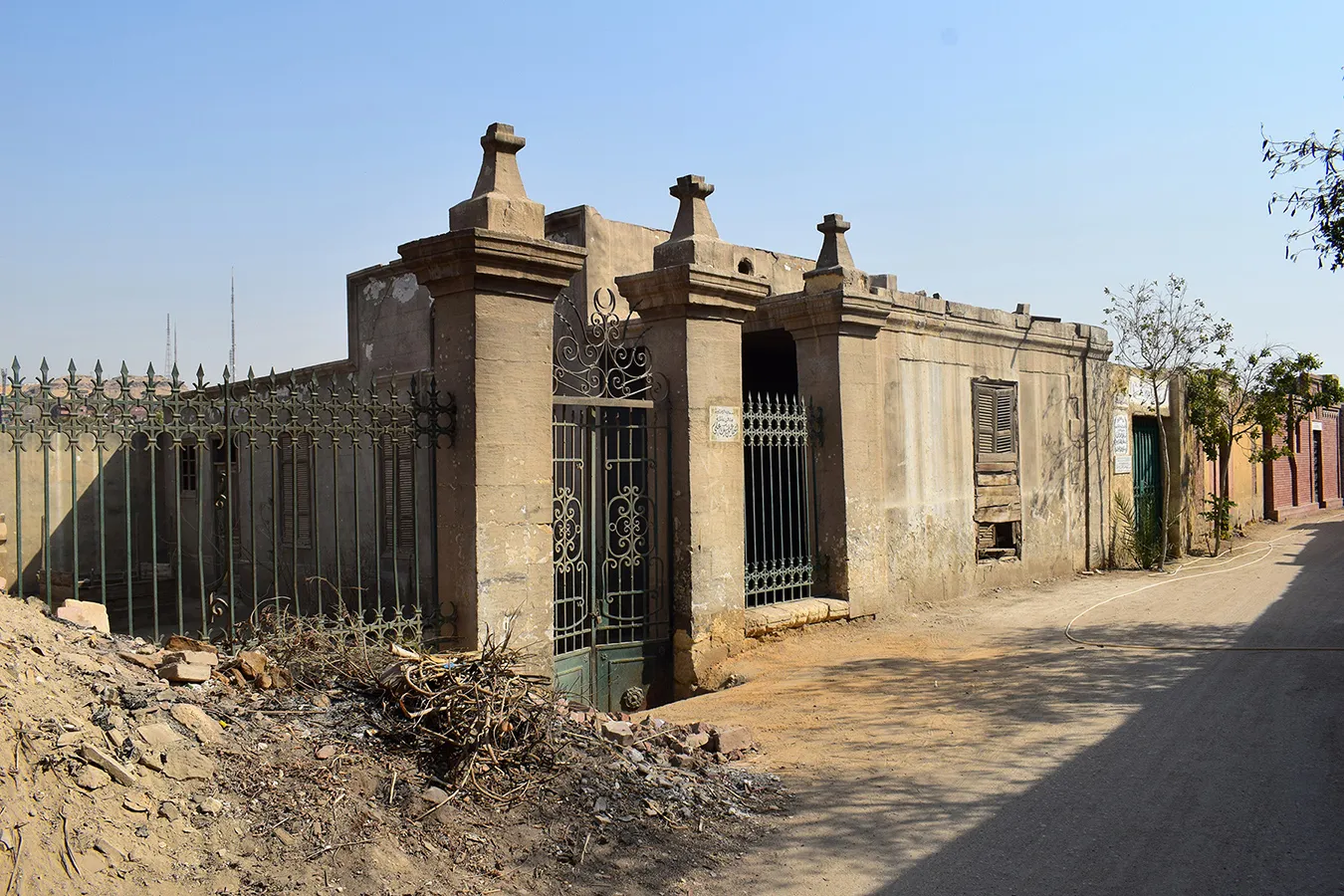
A rectangular enclosure measuring ca 15.5×20 metres, facing the street to the west and adjoining other enclosures on the other sides. There is a long single-storey building along the southern wall, and the rest of the lot is an open courtyard. Square stone pillars with Classical cornices divide the street-facing side of the courtyard into three section of unequal width, the side ones with a wrought-iron picket fence with a simple decorative pattern of circles in the top and bottom sections (an extremely rare example in Egypt nowadays of an openwork fence that has not been walled up.) The middle section is a gate with two wrought-iron leaves and an openwork grille above.
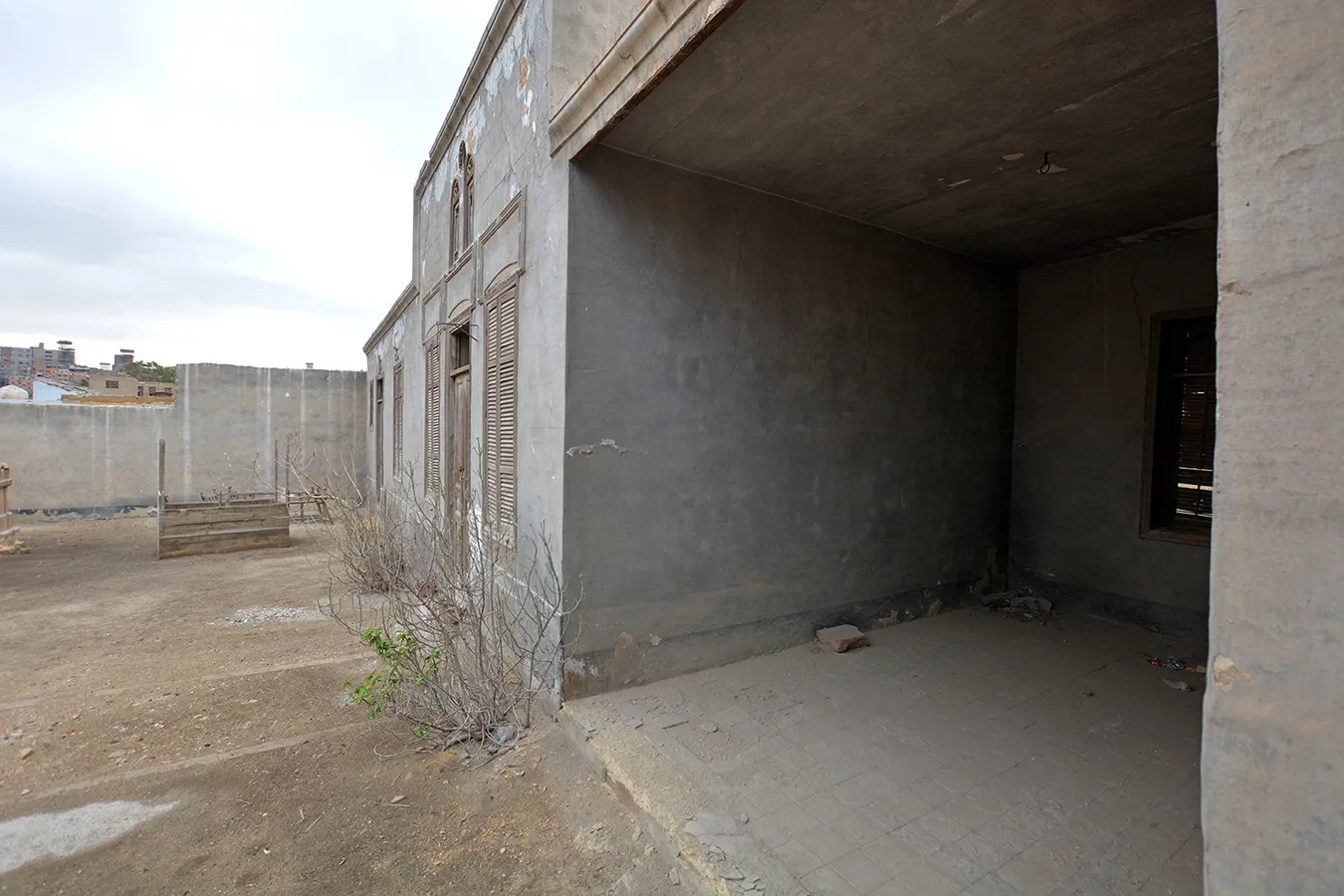
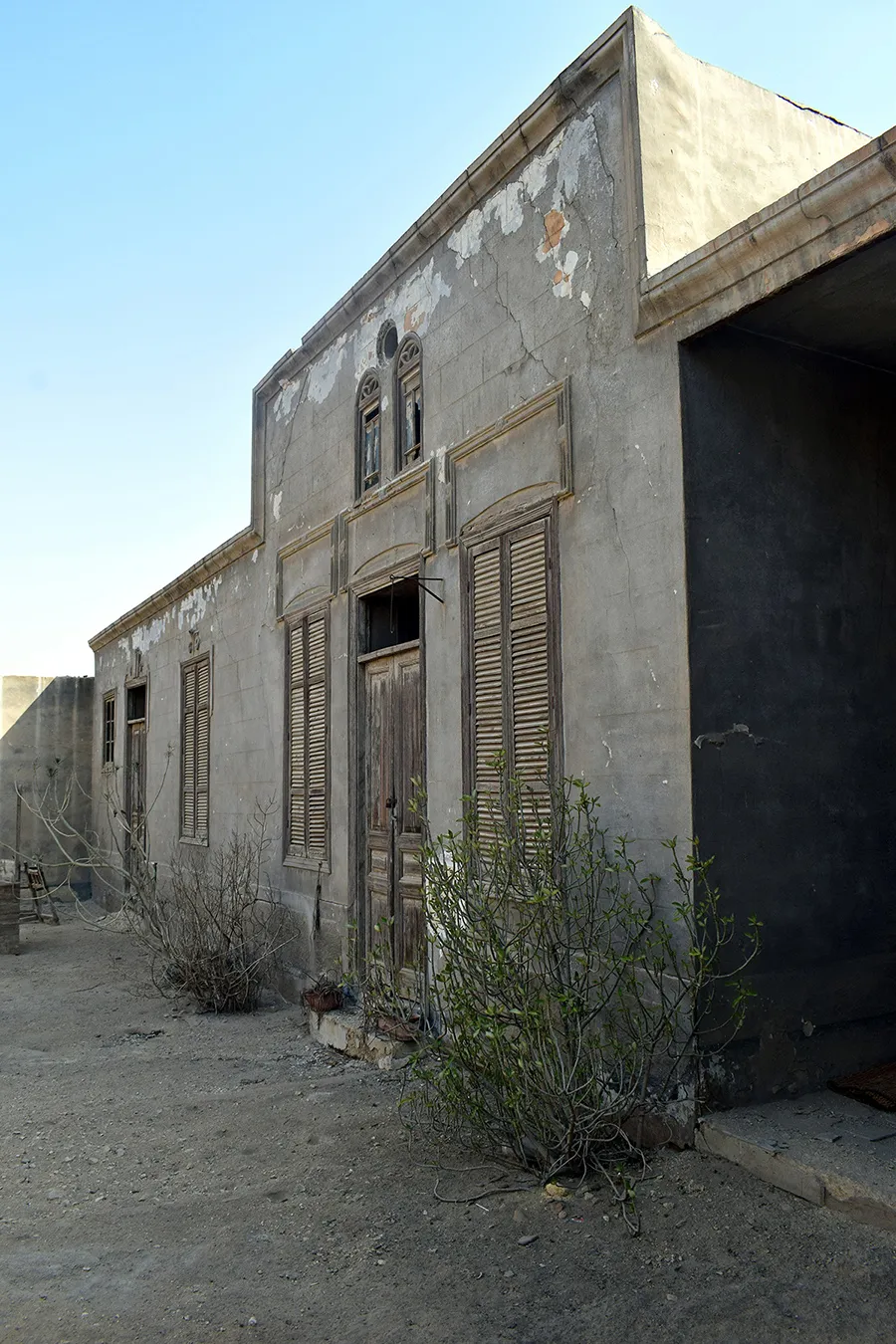
The single-storey building on the southern side of the courtyard comprises residential / service rooms in the south-eastern corner, and a narrower open-fronted shaded area in the south-western corner (with a facade on the street pierced with a large rectangular window.) Between them, a hall of square plan taller than the side wings, its upper part forming a clerestory with sets of windows in a one-over-two arrangement of openings topped with semi-circular arches and an oculus. The walls are built of rough stone and plastered, with shallow rustication imitating stone masonry. Windows and doors are rectangular and undecorated save the simplified palmette motifs over the door and window of the eastern sections, and knotted mouldings around imitation relieving arches (in plaster) over the central door of the taller hall and two windows on its sides. All ground floor windows are fitted with simple louvre shutters. A simple moulding runs around the top of the walls.
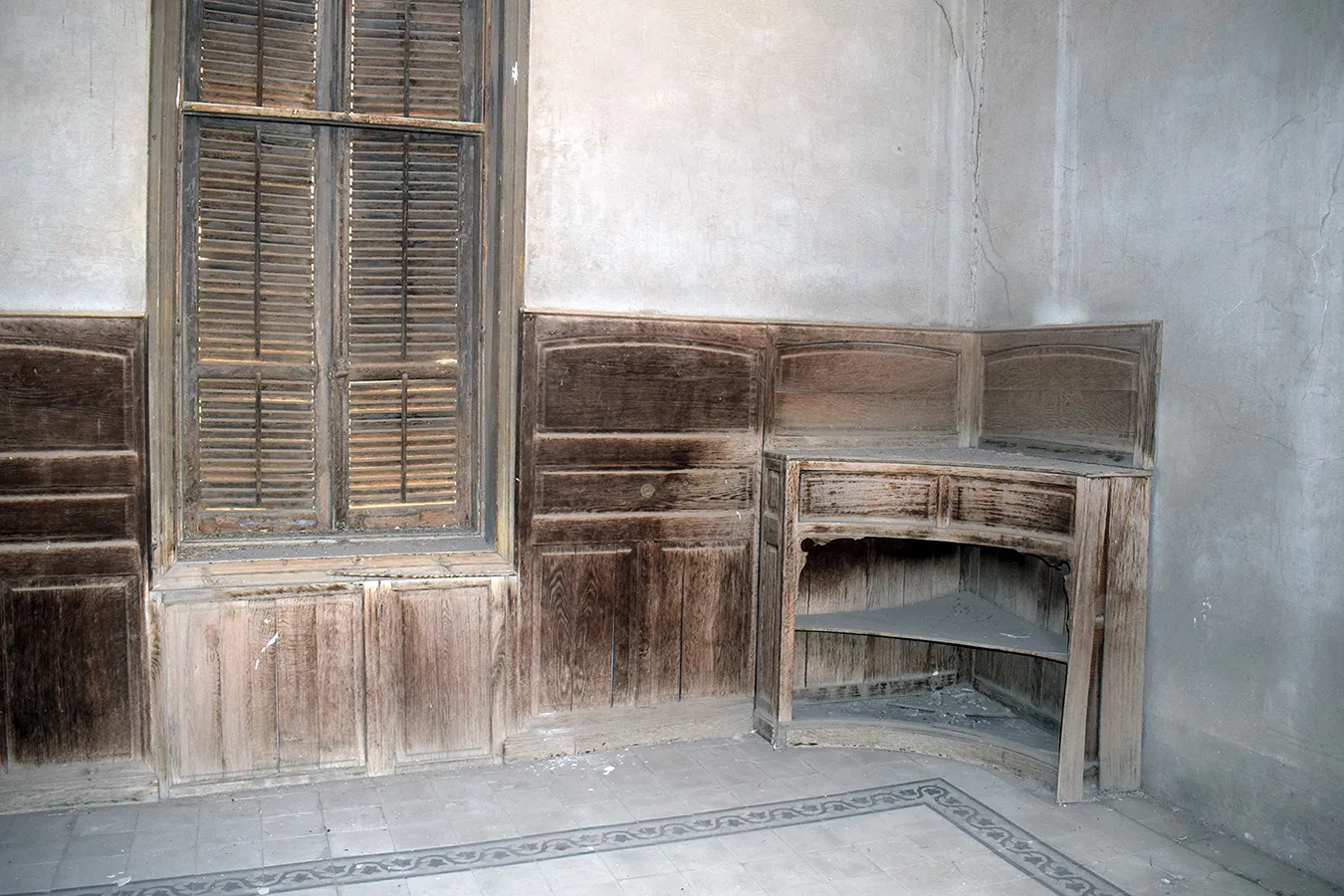
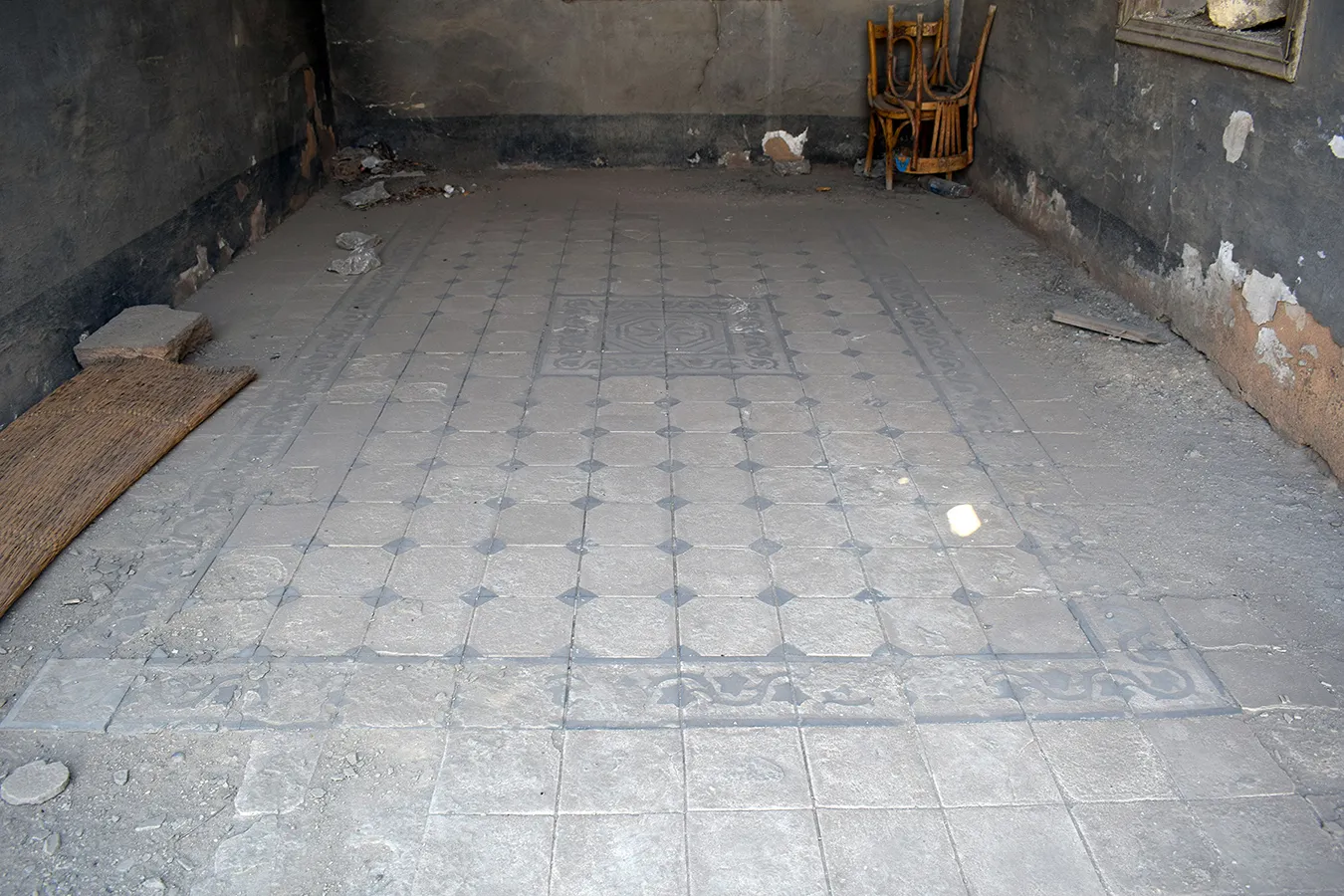
Inside, the main square hall has wooden panelling around its wall, a wooden corner console table. There are traces of coloured glazing in the clerestory windows. The floor of cement tiles has a simple border of vile scrolls. A similar border runs around the floor of the open-fronted shaded area, which also has a central square framed by identical border and a central medallion – the composition resembling Ancient Roman mosaic floors in a simplifies version.
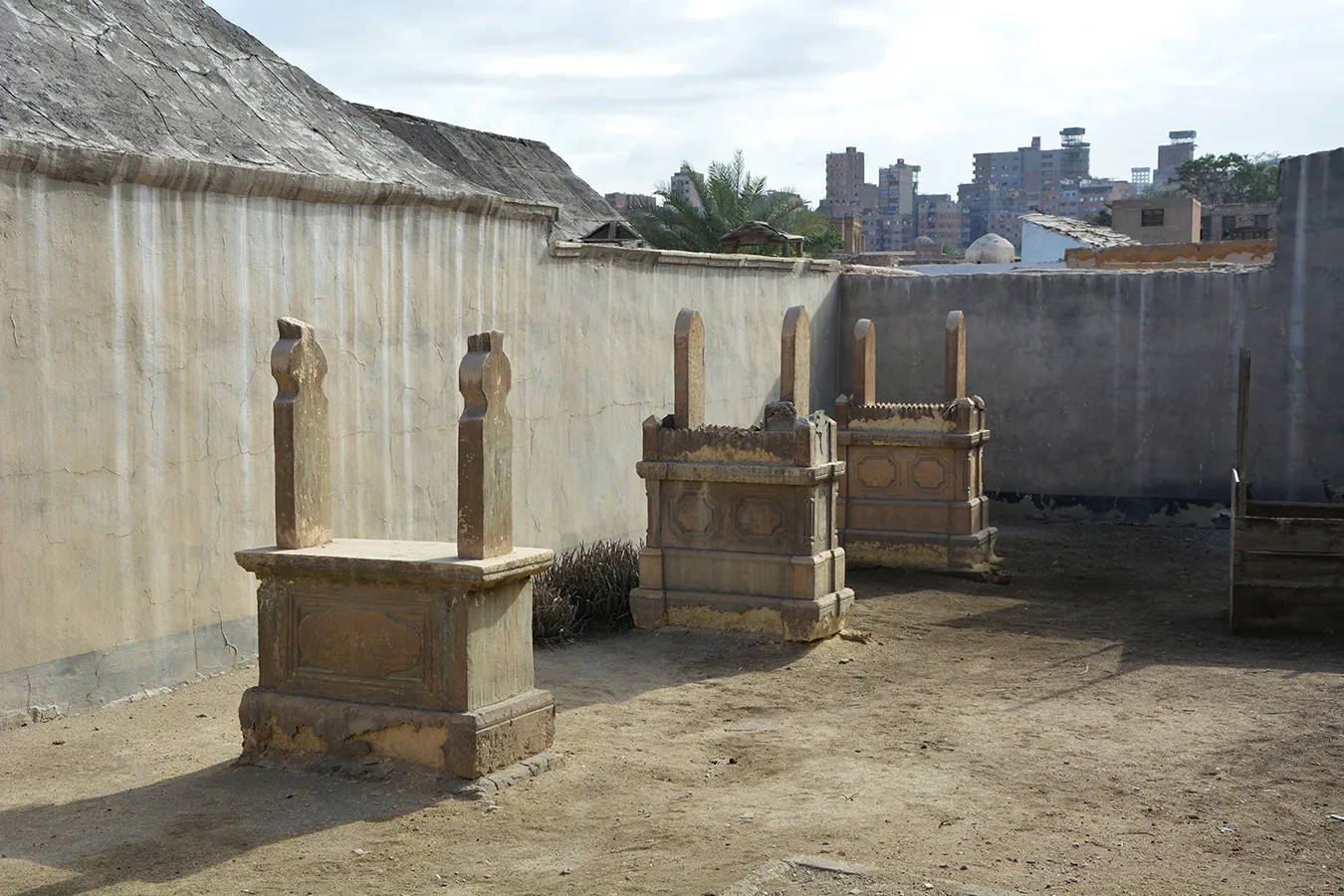
In the courtyard, there are three simple limestone tomb-markers, and a wooden one.
Condition of preservation
The structure is abandoned and disused, although it is still in generally sound structural condition. Plaster peeling from upper parts of the walls indicates inadequate roof cover. The decorative cement floor tiles are seriously damaged by rising damp.
- Field recording by
- Radwa Abu Senna
- Date recorded
- August 3, 2022
- Data entered by
- Hania Abdelmeguid
- Date entered
- May 9, 2024