
Unit No44
Unknown
|
Coordinates of the main entrance |
30.040688N - 31.270518E |
|
Attribution |
Unknown |
|
Higri (AH)Dates as given in the Inscription |
|
|
Miladi (AD)Dates as given in the Inscription |
|
|
Inscription Contemporary with the building? |
Yes |
|
Multiple date(s) In the inscription? |
Yes |
|
Assumed Date |
Ottoman period: probably 18th century (or early 19th century), but possibly earlier |
|
Based on |
based on stylistic features |
|
Original Use |
Mausoleum |
|
Current Use |
Mausoleum |
|
Overall condition |
Poor |
Features of unit 44
| Present | Count | Material | Comments (see description for details) | |
|---|---|---|---|---|
| Free standing structure | Yes | 1 | stone and brick | |
| Walled enclosure | No | |||
| Rooms by the perimeter wall | No | |||
| Freestanding structure(s) in enclousure | No | |||
| Dome over the tomb chamber | Yes | |||
| Neo-Mamluk architectural decoration | No | |||
| Garden layout | No | |||
| Sabil(s) | No | |||
| Wall fountain(s) | No | |||
| Canopy on columns / pillars | No | |||
| Carved marble cenotaph(s) | No | possibly present, floor level inaccessible | ||
| Decorated limestone tomb-markers | No | possibly present, floor level inaccessible | ||
| Decorated gateway | No | |||
| Decorative door-leaves | No | |||
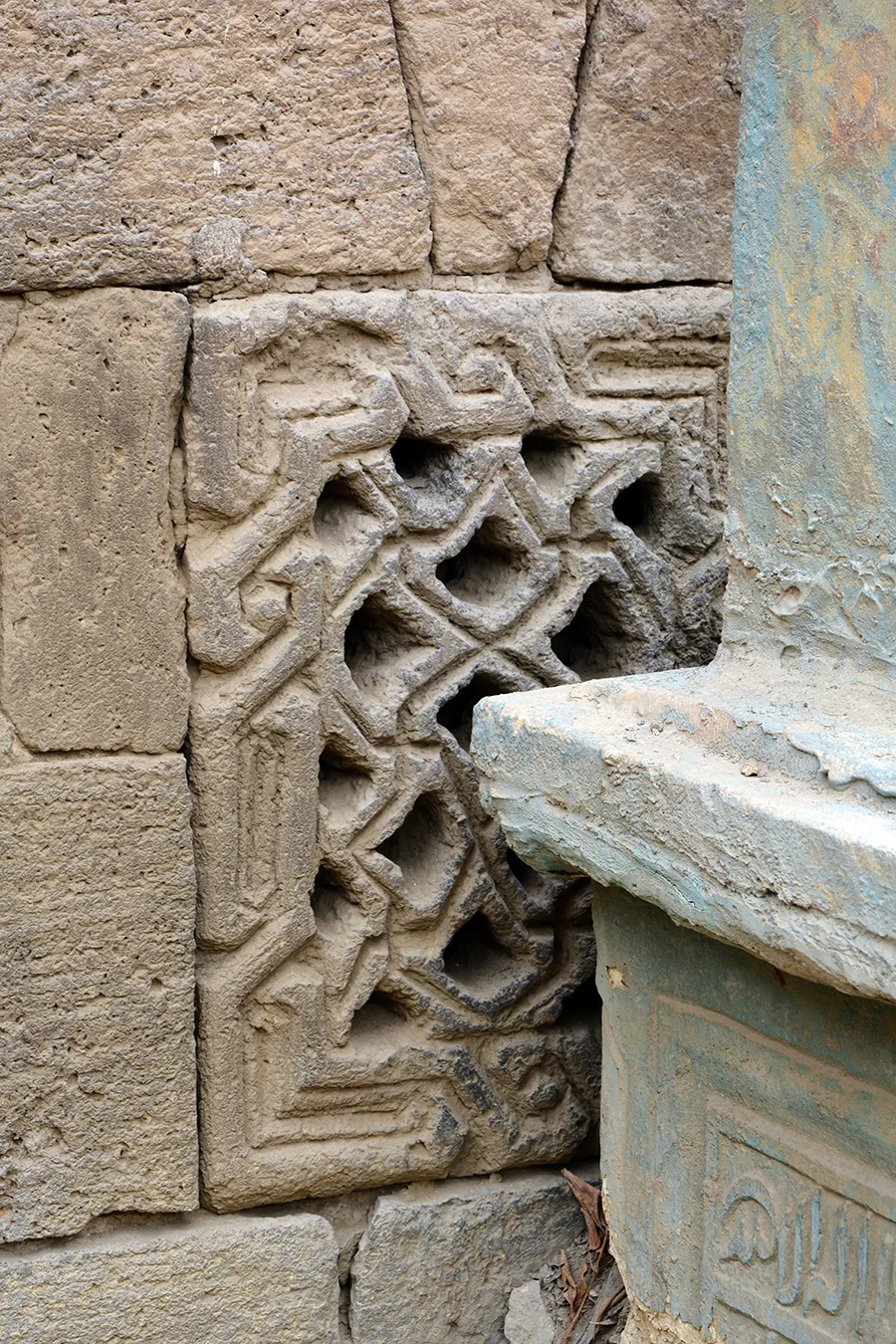
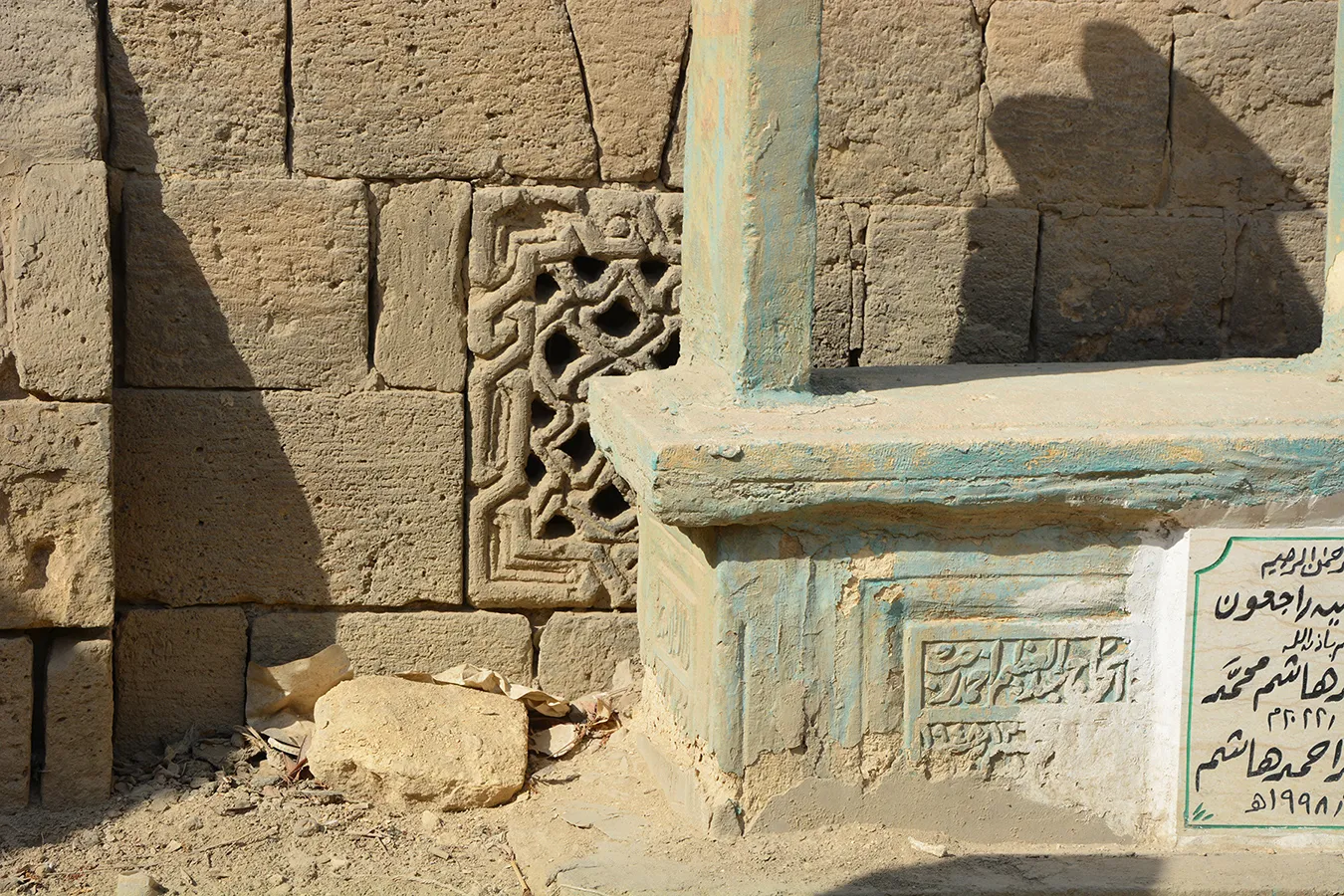
| Decorative window grilles | Yes | 1 | limestone | |
| Decorative shutters | No | |||
| Painted ceiling(s) | No | |||
| Decorative paving(s) | No |
Unusual or unique features
• Off-centre placement of mihrab
• A square window in the qibla wall
• A window grille made of limestone
• Apparently an Ottoman-period attempt of copying the form of an early Mamluk-period mausoleum
Description (The direction towards Mecca (Qibla) is described as eastern and other directions are named accordingly)
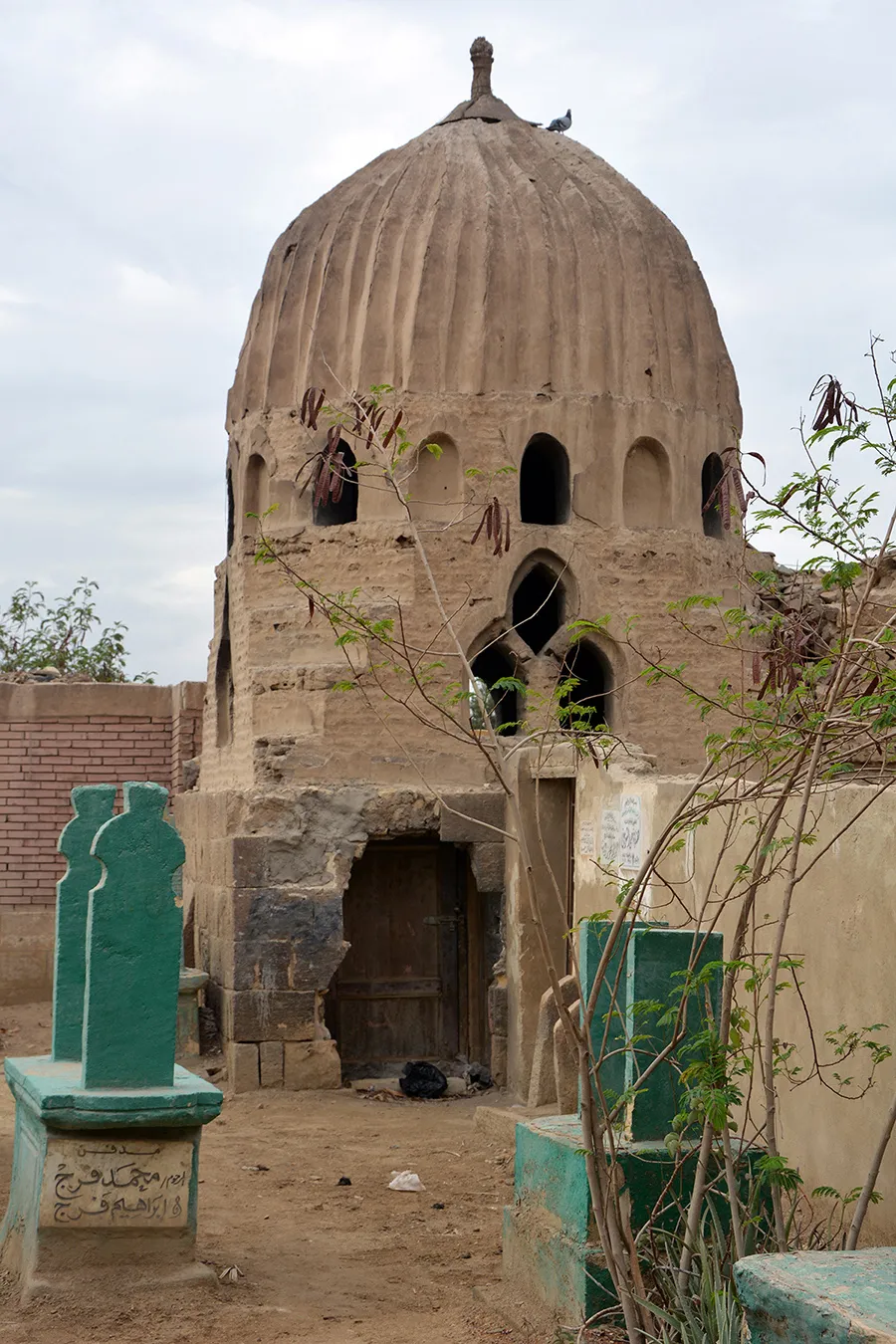
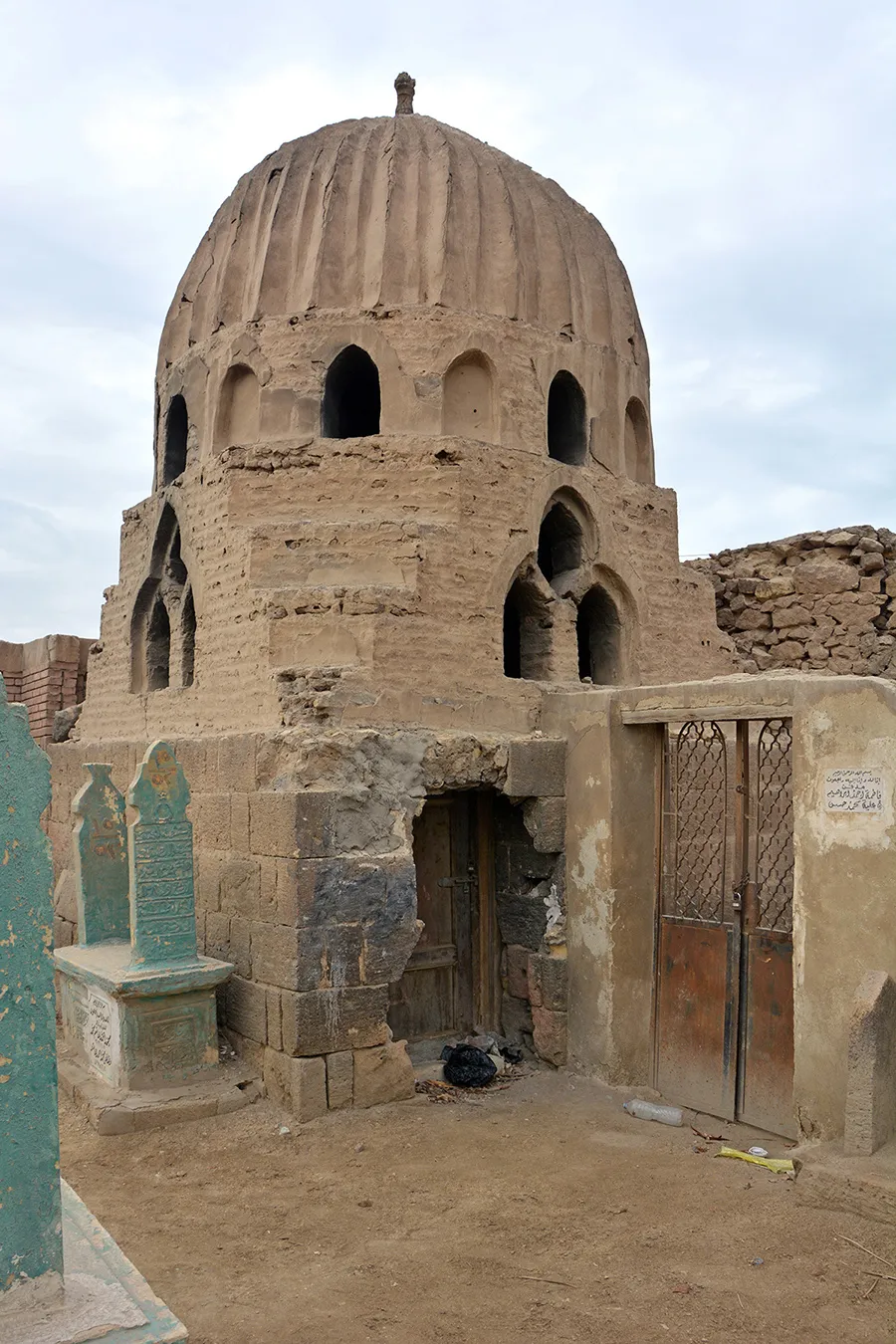
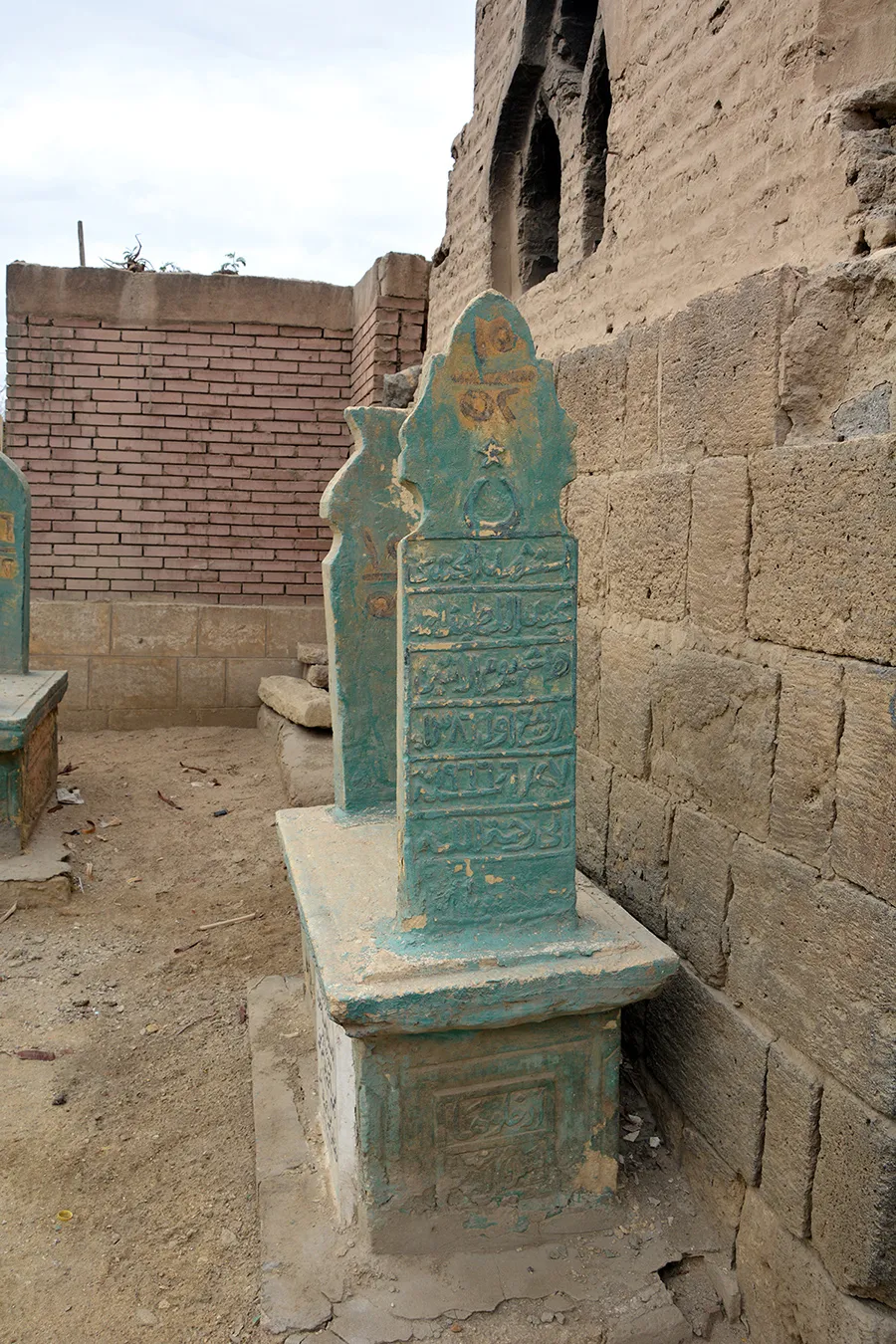
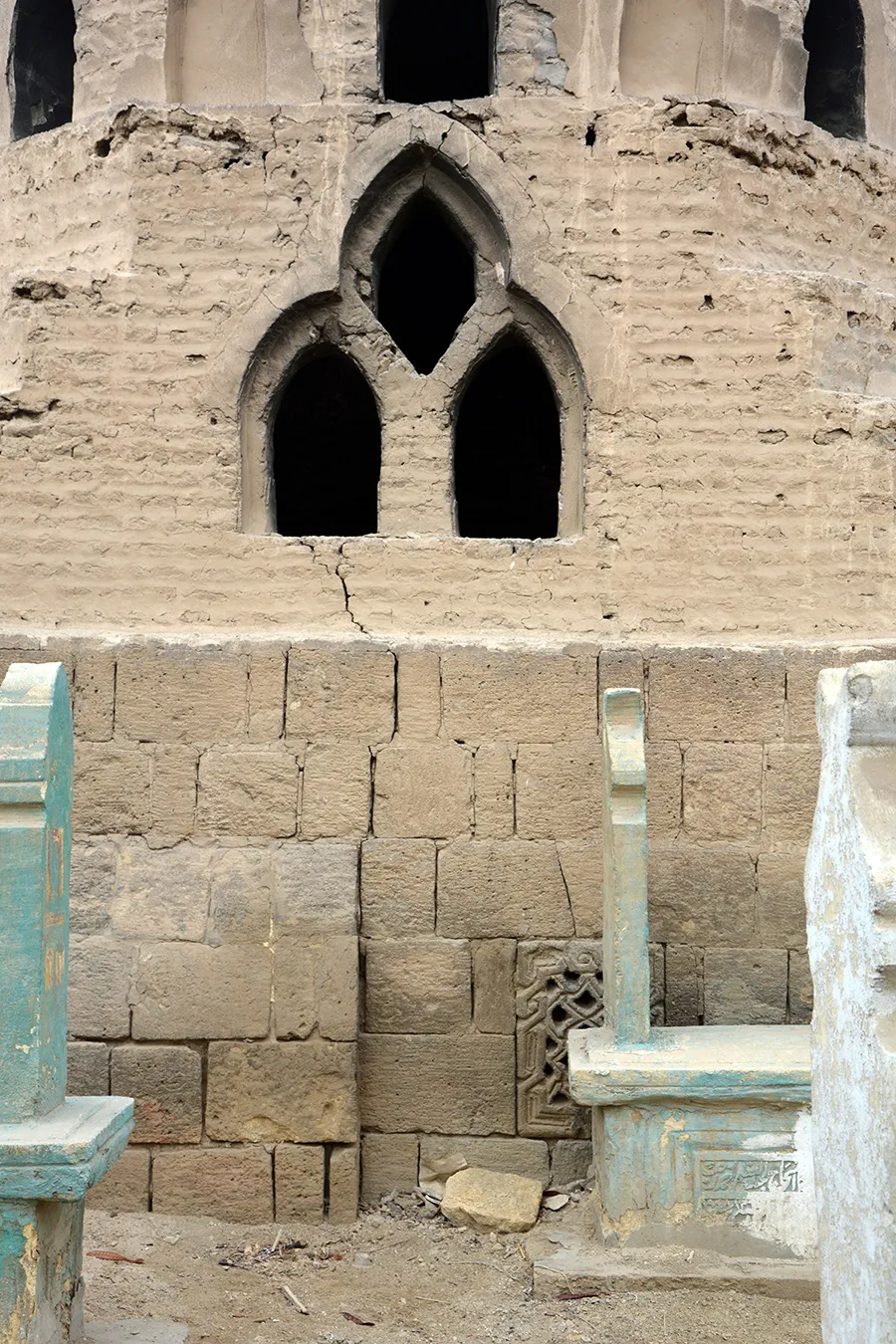
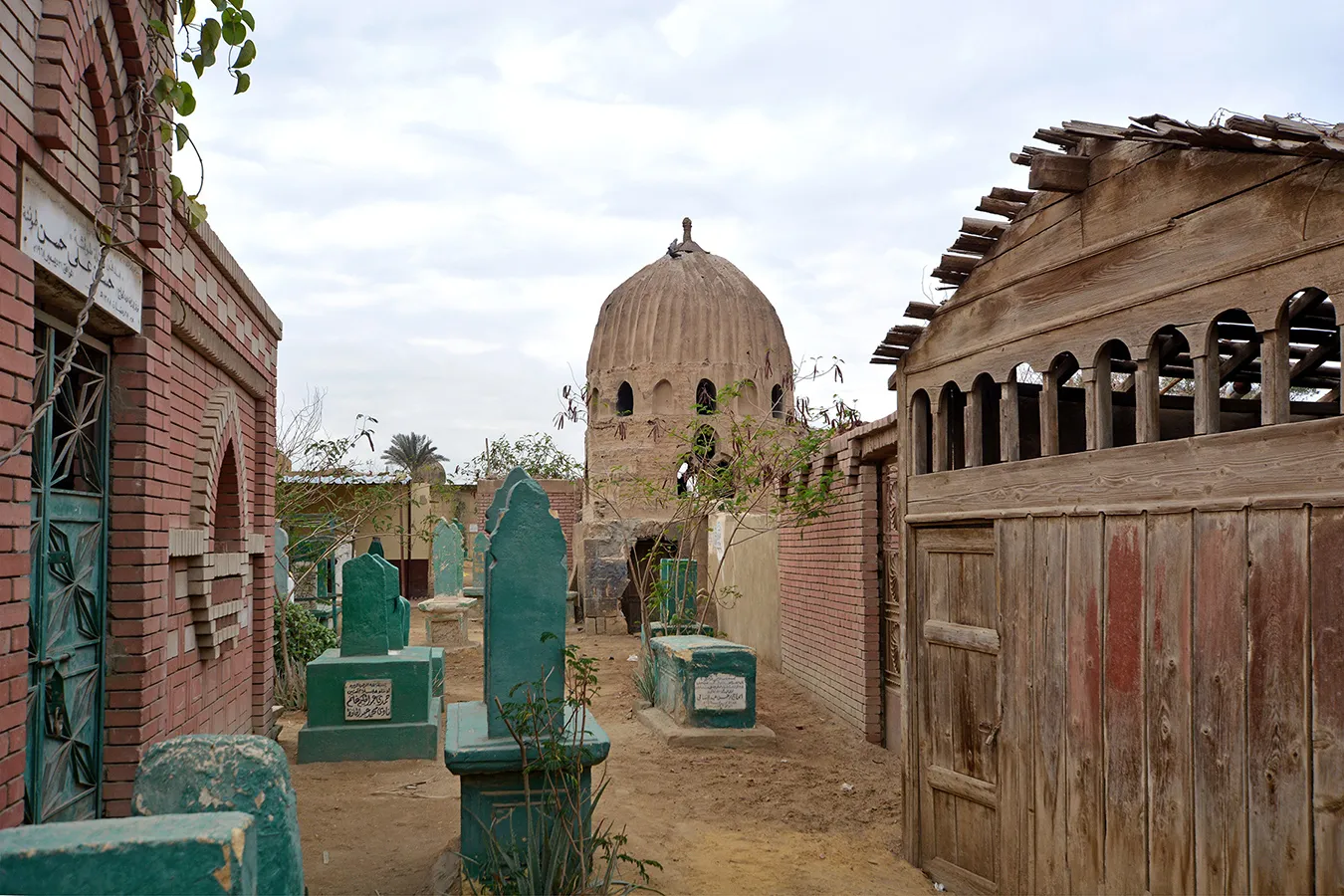
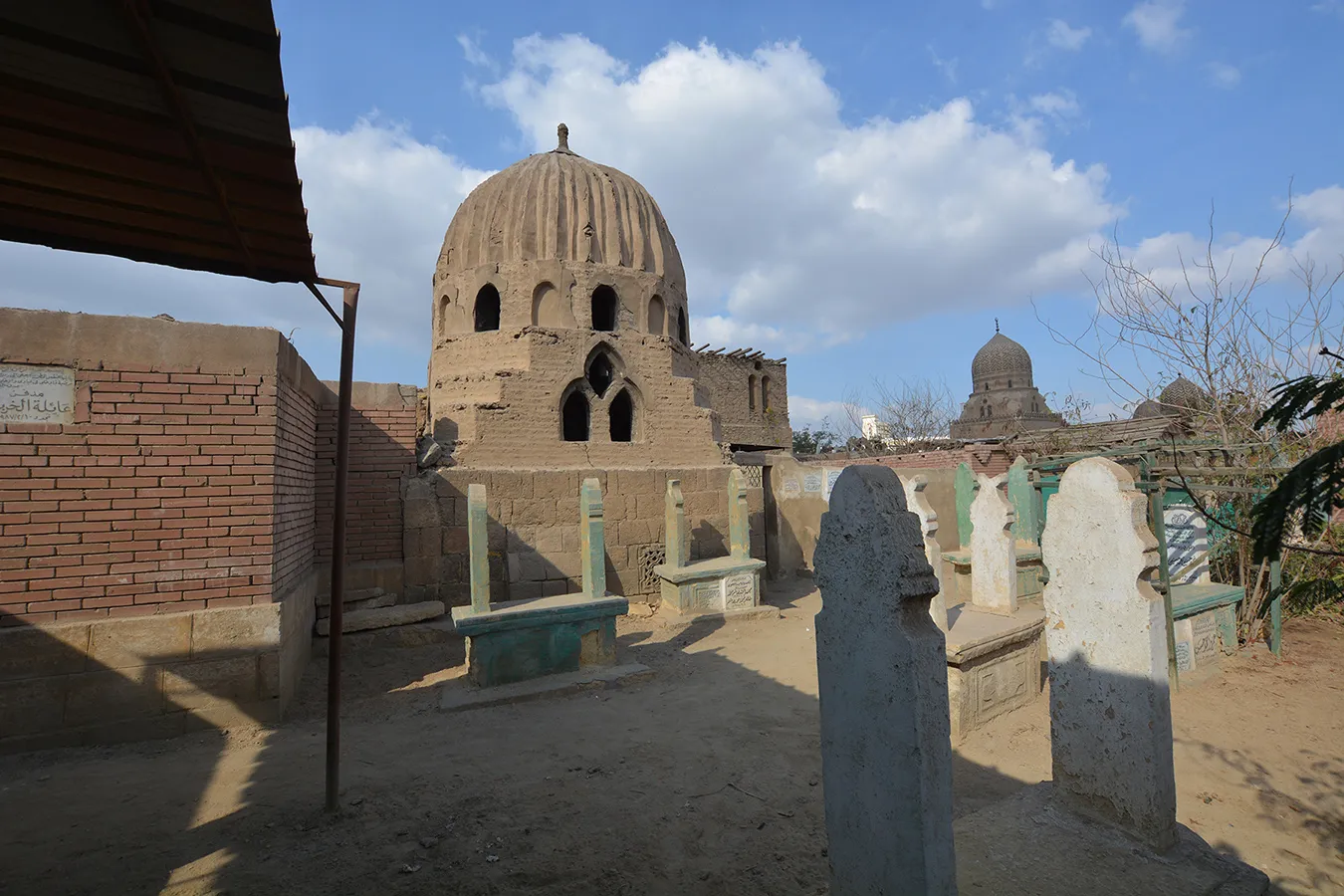
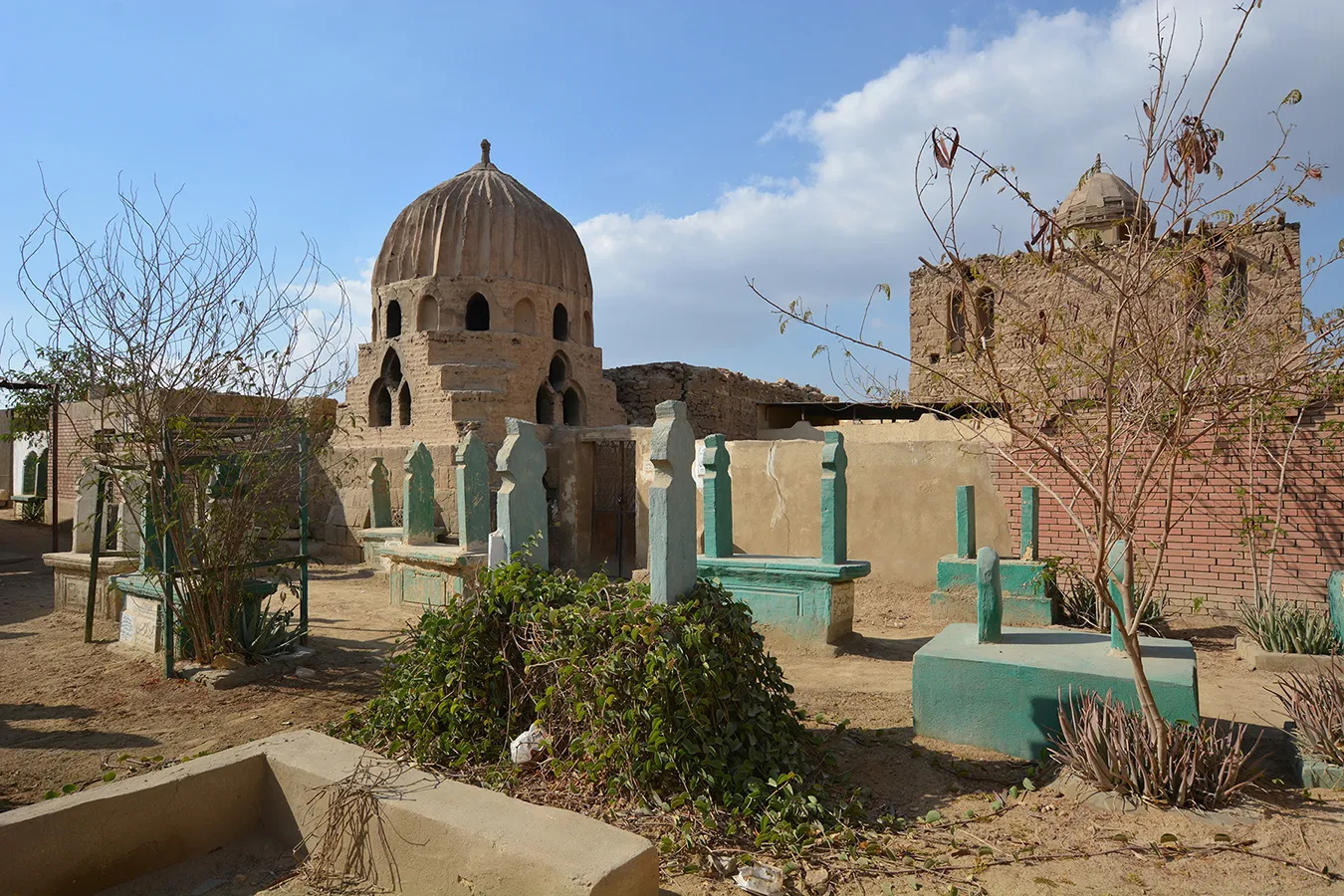
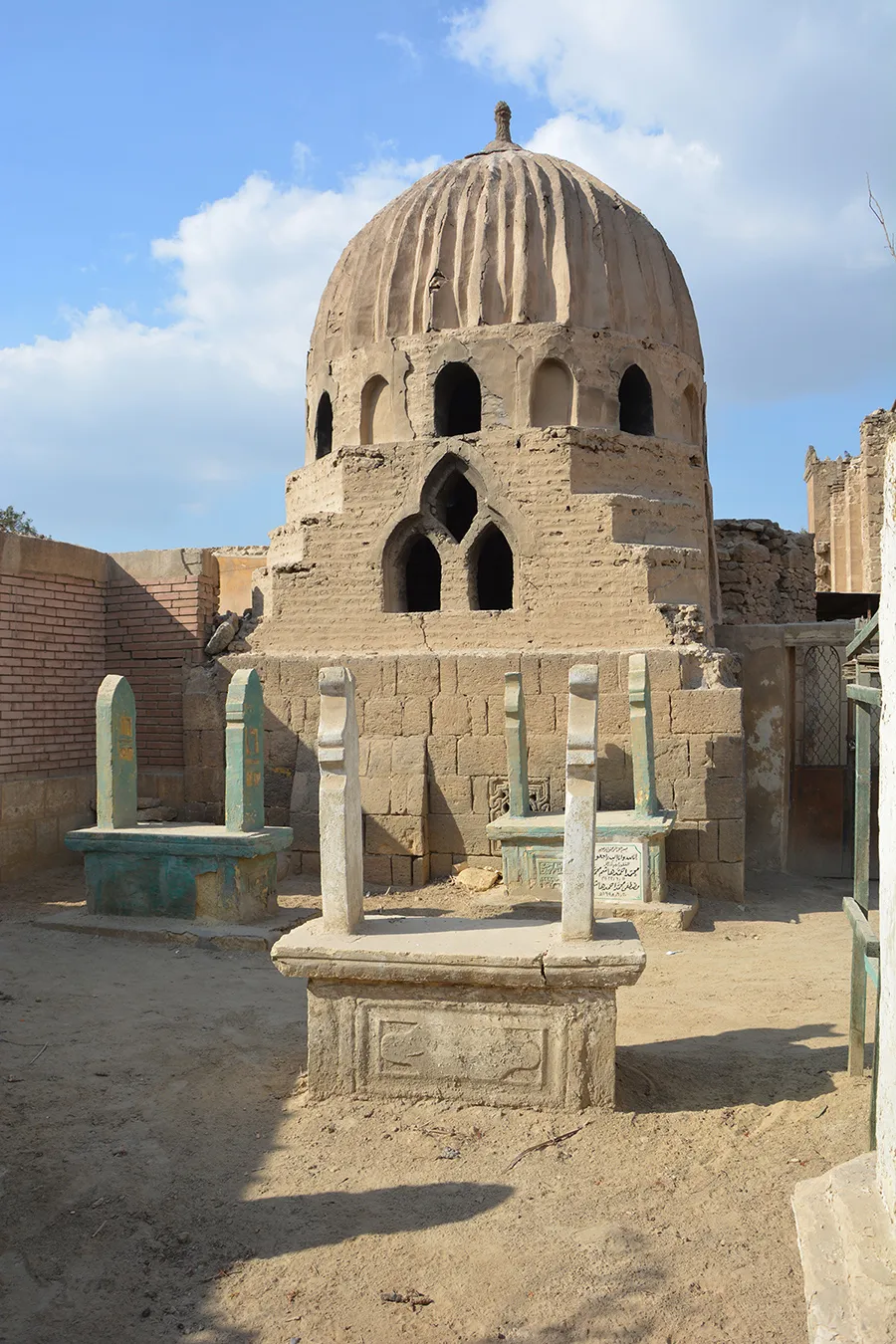
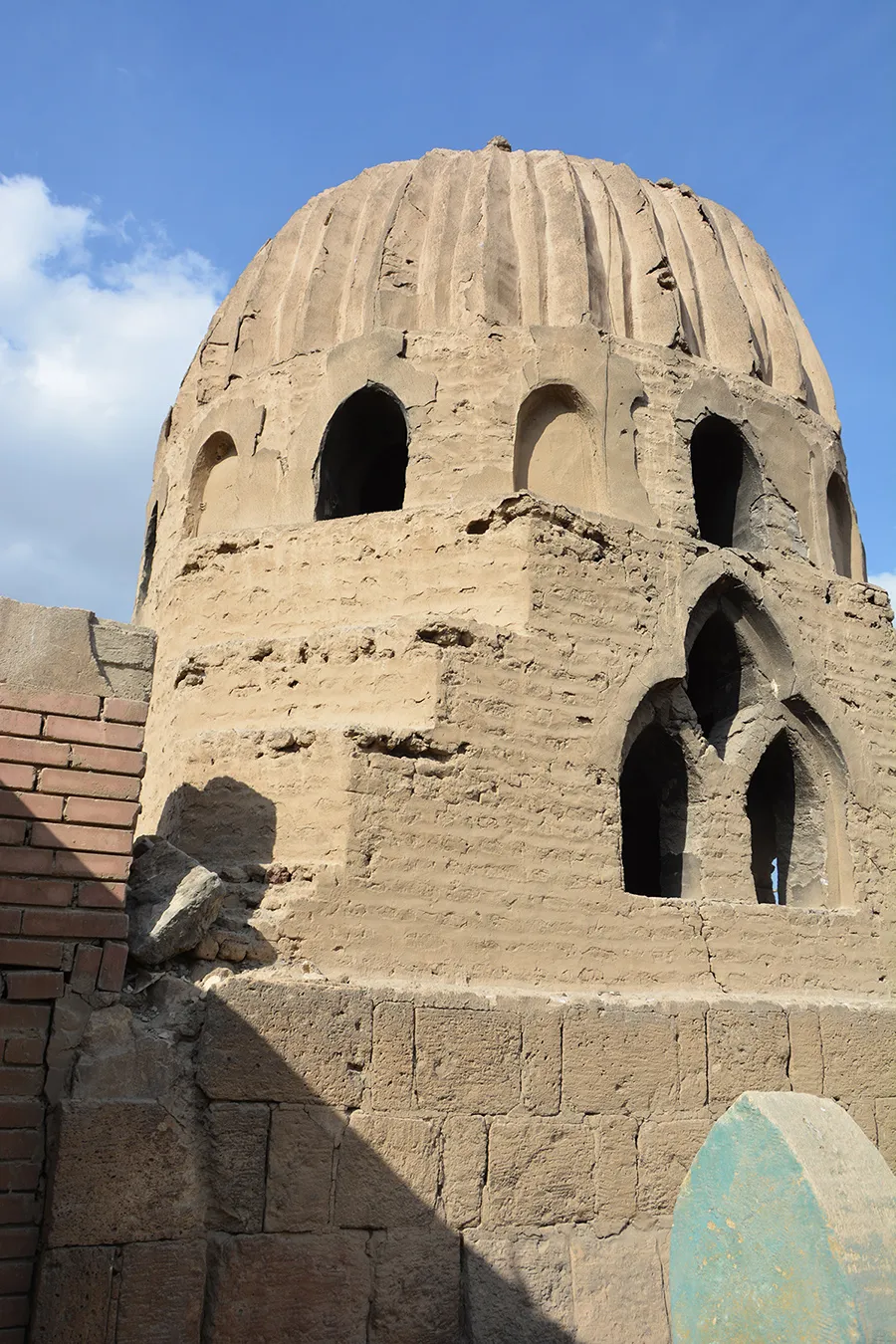
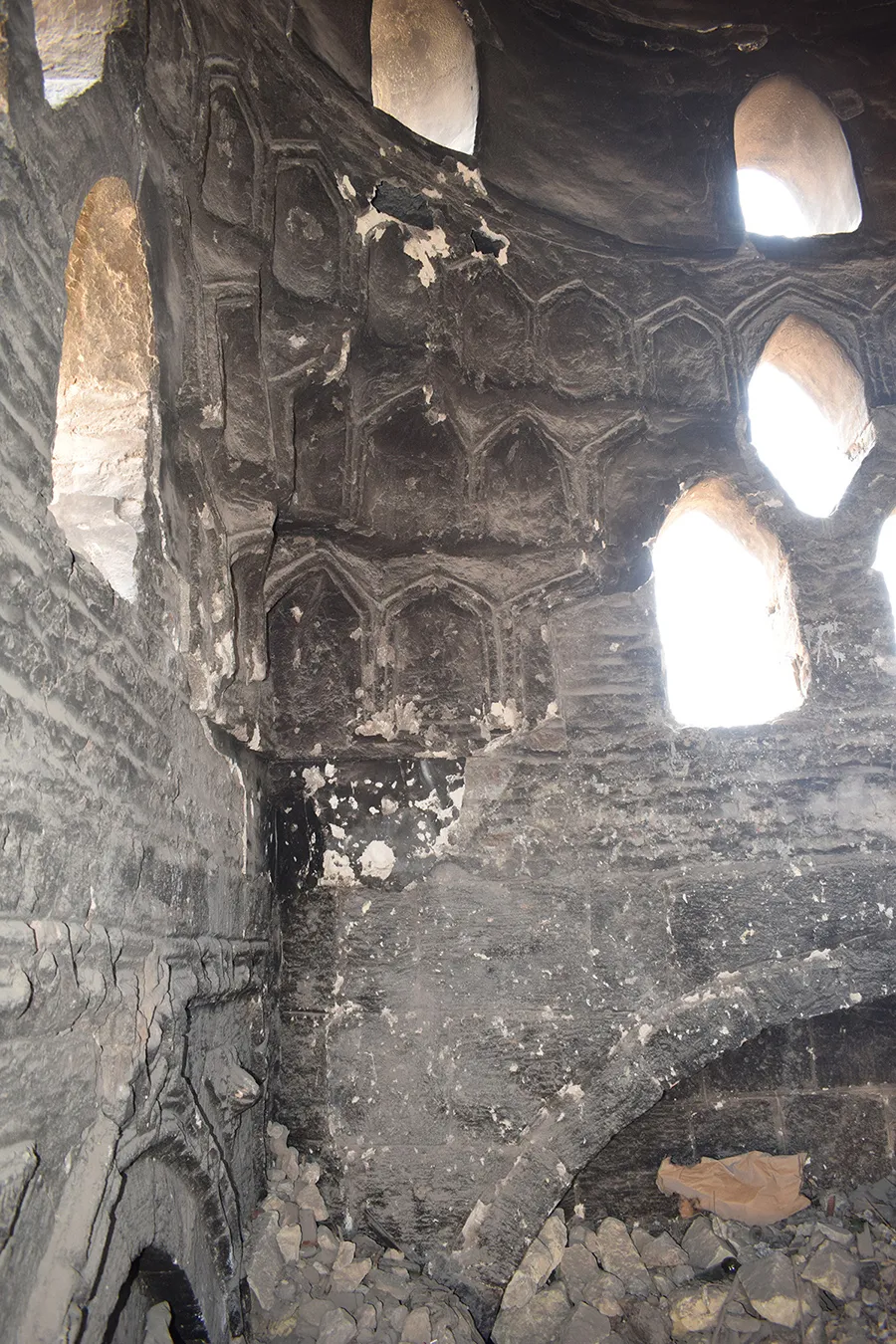
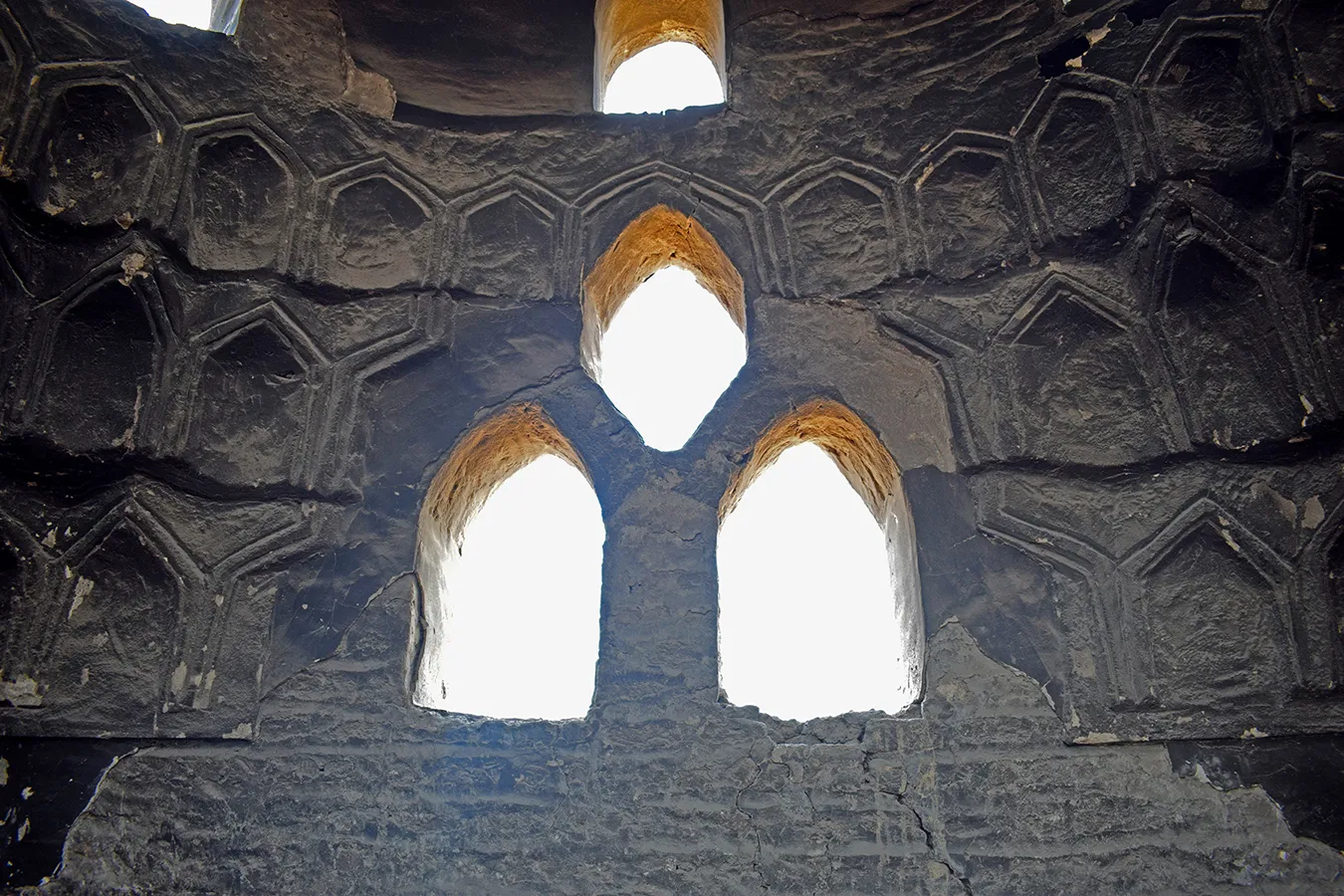
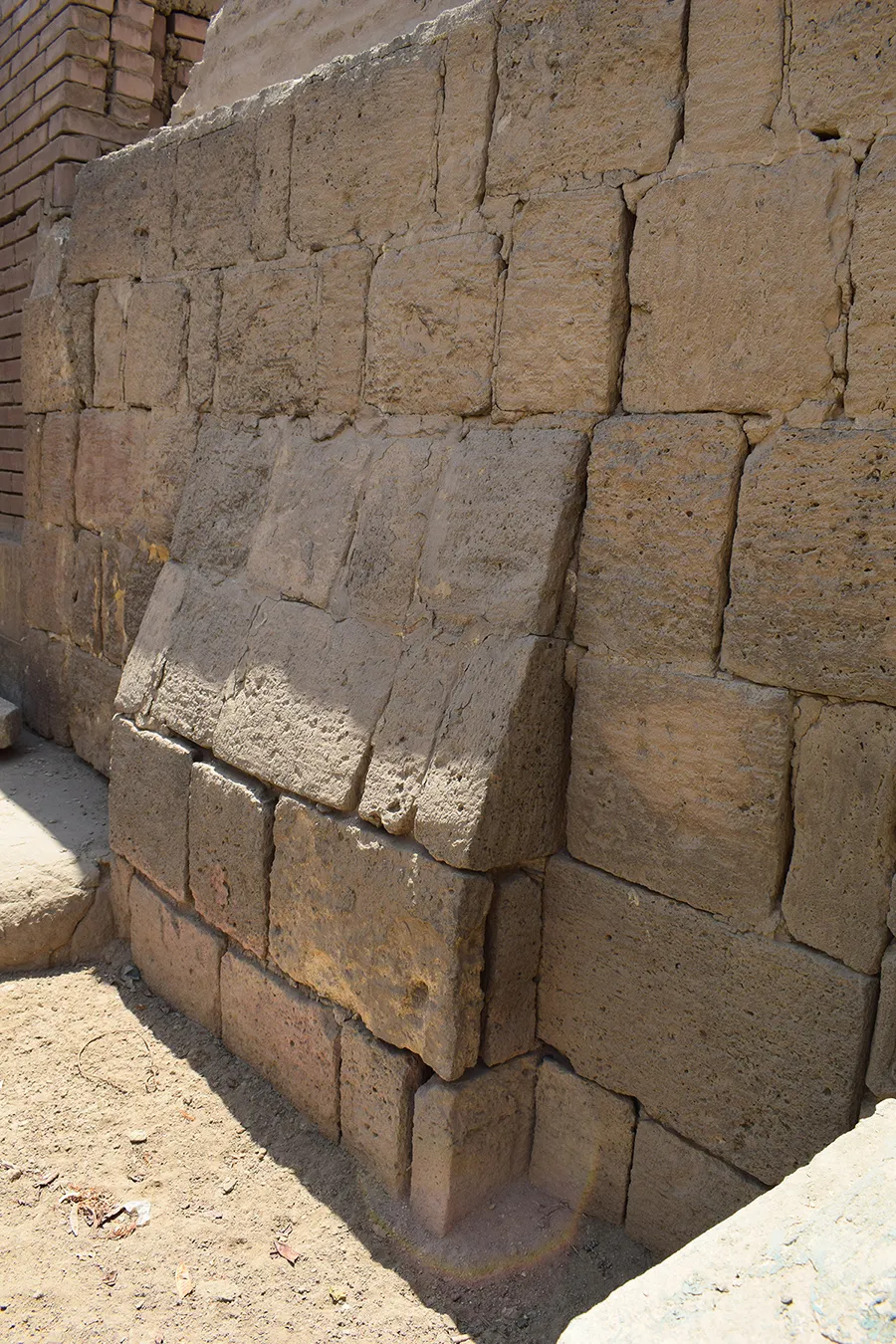
A free-standing structure on which later walls of neighbouring funerary enclosures abut. At present there is no recognisable enclosure associated with the mausoleum. The structure measures only about 4.5 x 4.5 metres in plan. The mausoleum consists of a burial chamber built of ashlar masonry covered with a brick dome. The brick-built zone of transition consists of three simple steps, with rectilinear keel-arched windows in a “honeycomb” one-over-two arrangement (albeit the recesses in which they are placed are pointed-arched.) The sixteen-sided drum is pierced with windows alternating with blind niches. The dome is fluted with ribs of alternating width. All these features resemble very closely those of nearby early-Mamluk mausolea (e.g., of Ibn Ghurab, monument No 96, ca. 1405, of Anas, No 157, 1382).
Currently, the entrance is in the eastern part of the northern façade and is obviously non-original, with the door inserted into a breach in the wall. The original entrance which should be expected to be in the western (or possibly southern) façade has apparently been blocked when the walls of the neighbouring enclosures were built. In the eastern wall is a buttress-like projection that contains the mihrab niche in the interior (similar features are commonly found in Mamluk-period architecture, e.g. the mosque of Farag Ibn Barquq: monument No 149, 1400-1411), and a rectangular window fitted with openwork limestone grille of geometric pattern design framed in knotted moulding.
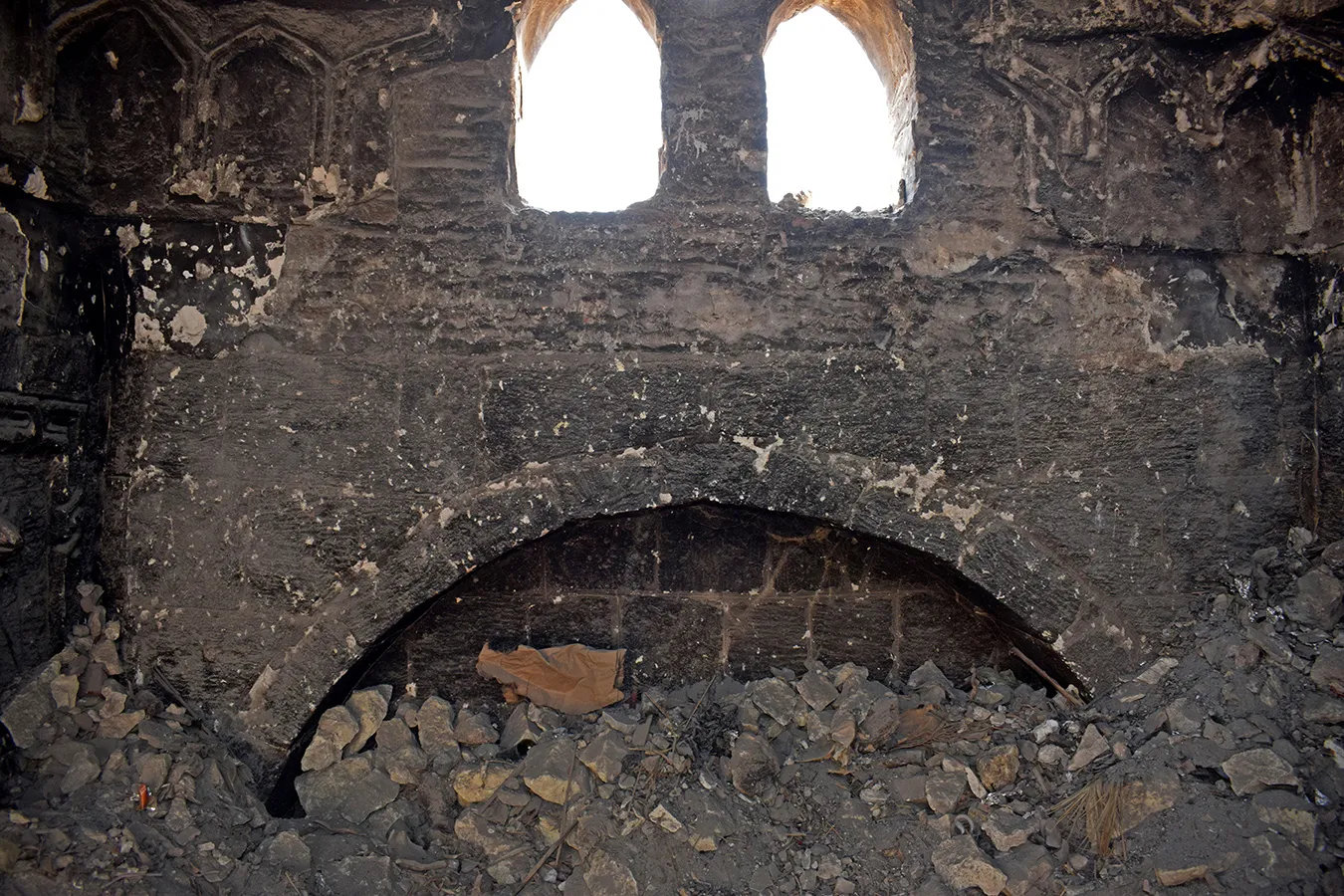
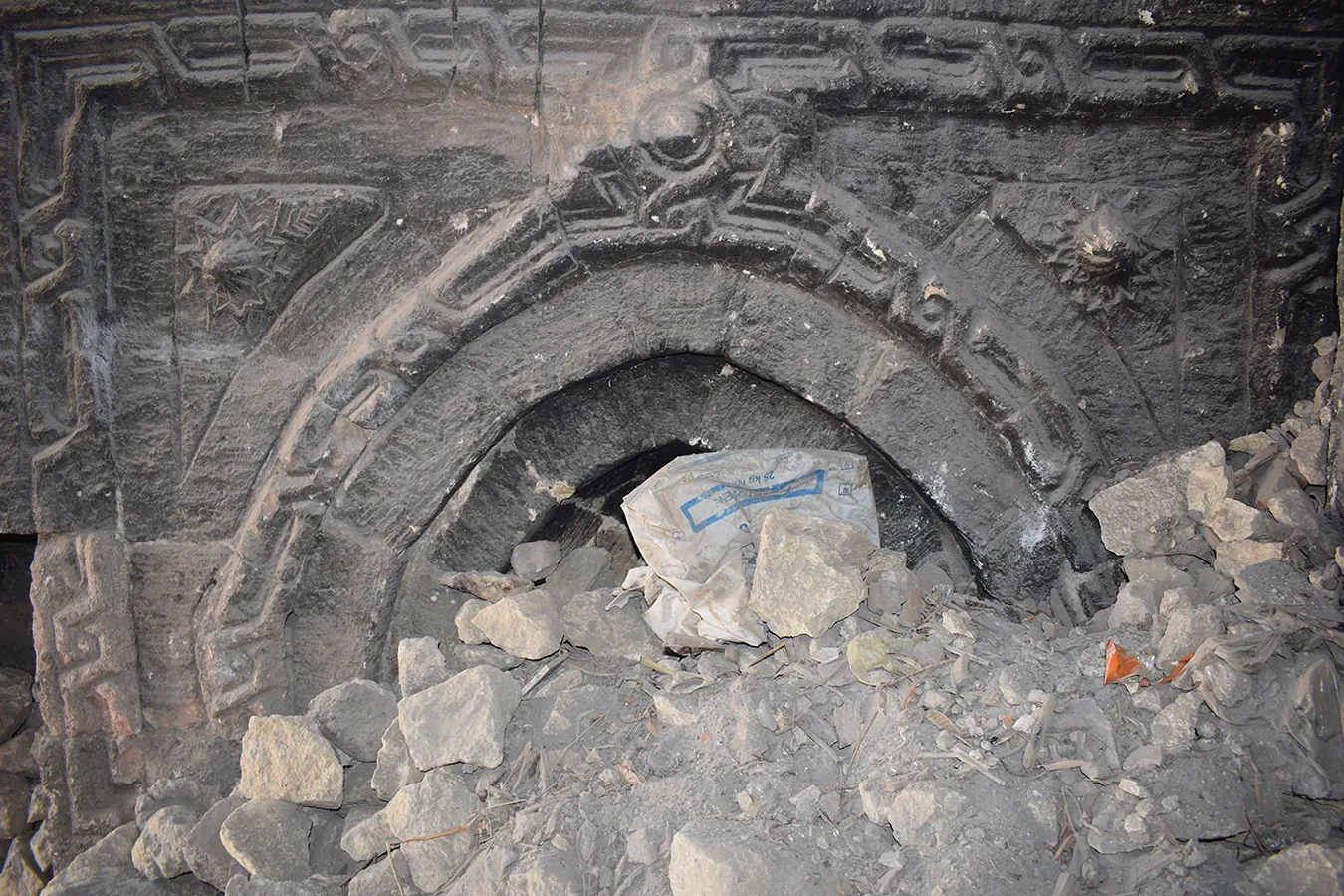
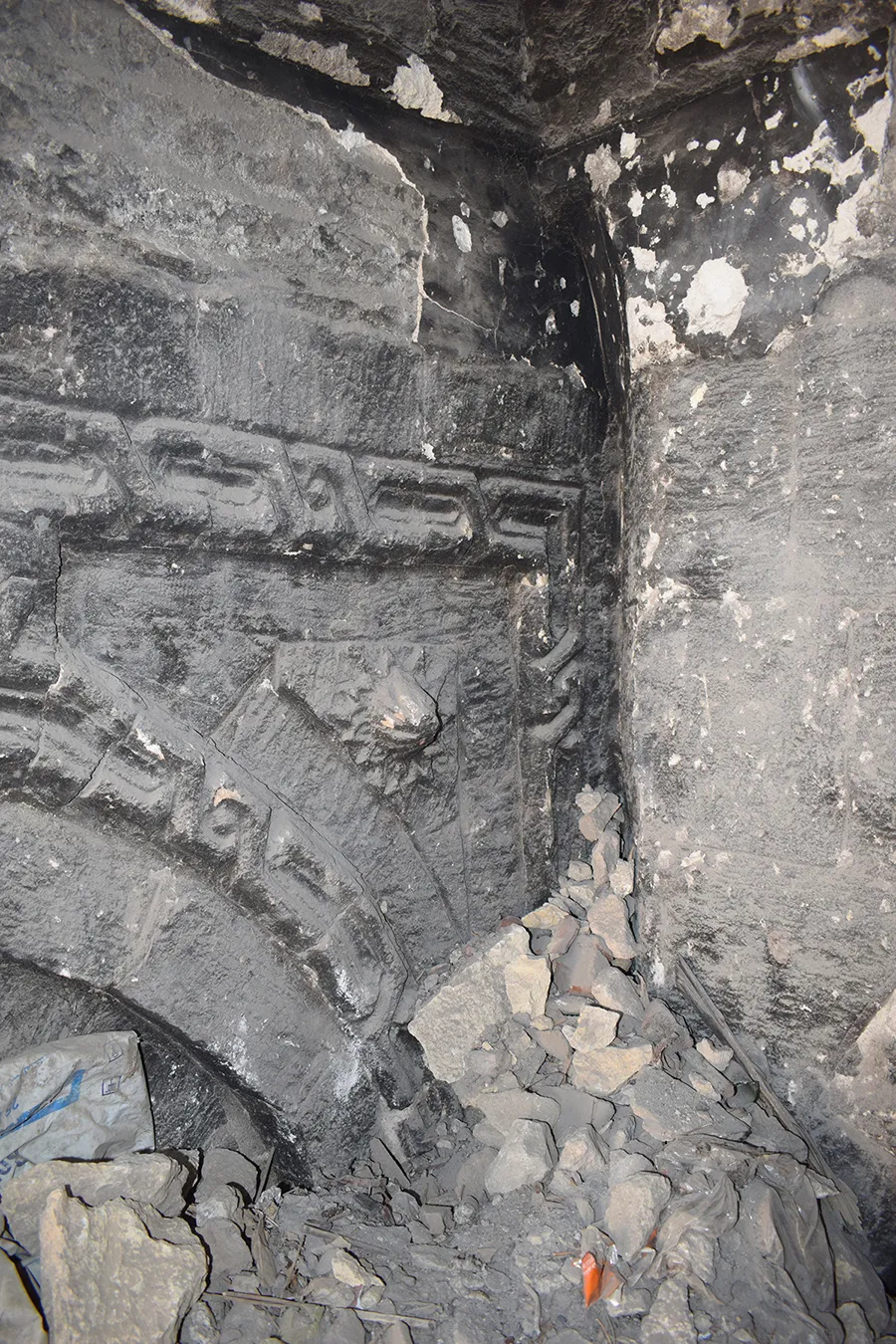
Inside, the mihrab niche is highly unusually placed off-centre in the qibla wall, with the single window left of it. The mihrab is framed with knotted mouldings of typically Ottoman-period angular and densely knotted form. The spandrels of the arch are decorated with protruding medallions framed by star-like patterns. The quality of craftsmanship is mediocre. A huge semicircular arch spans the whole southern wall internally, possibly indicating the position of the original entrance door.
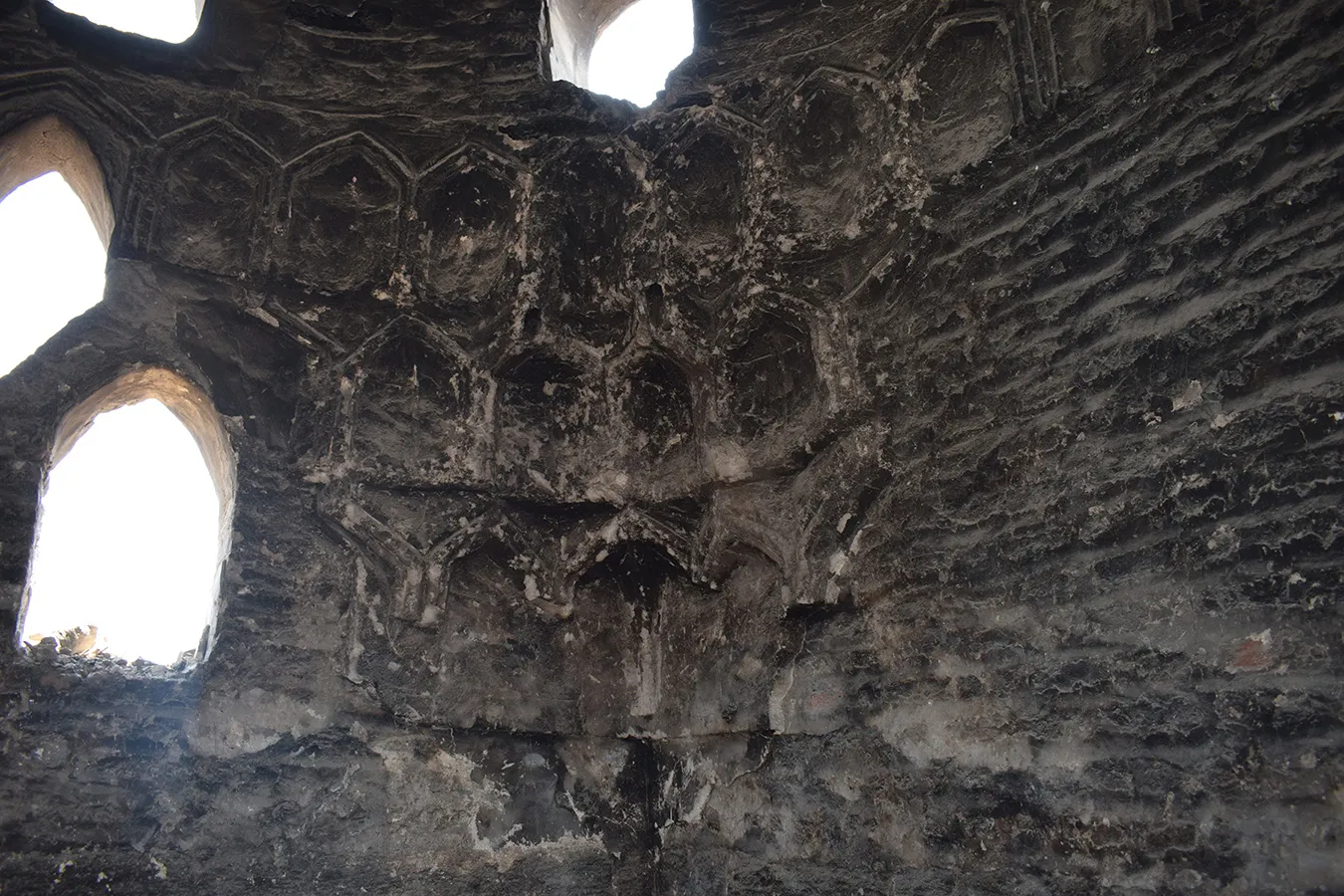
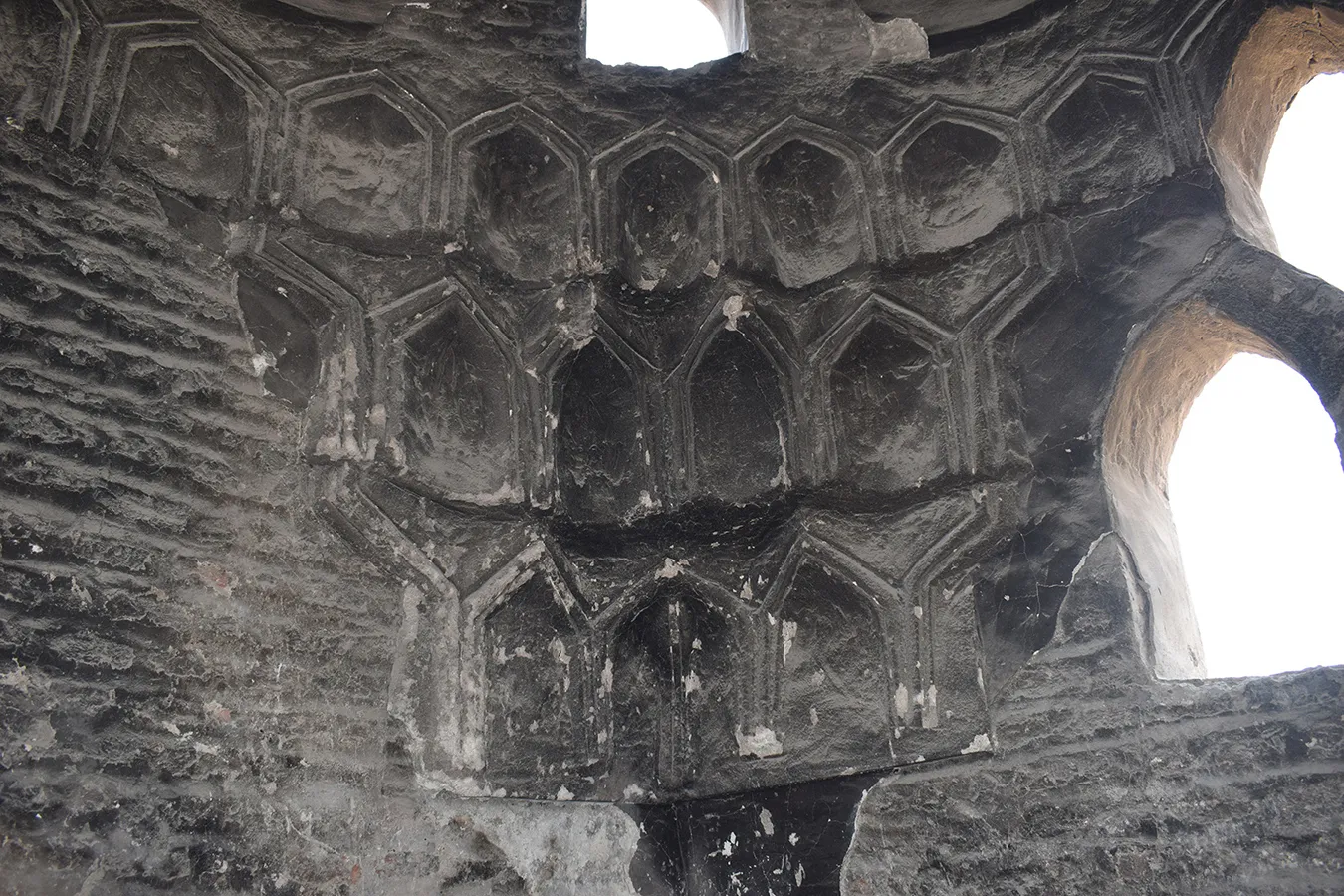
Internally, the zone of transition under the dome is composed of three tiers of muqarnas. The dome is covered inside with plain plaster.
Condition of preservation
The overall condition of the mausoleum is poor. The building is buried deep in rubble and refuse that also fills the interior. The walls are damaged by rising damp. There are some cracks in the dome. The window frames and sashes are missing. There are recent crude repairs with cement where stone blocks are missing near the current entrance door.
Information abut the founder, family history, etc.
The building techniques and the style of decoration clearly point at the Ottoman-period date. However, in its overall layout the mausoleum appears to be an attempt at copying early Mamluk-period tombs of which many are found in the neighbourhood. Why the builders decided to copy an early Mamluk forms and not more numerous late-Mamluk ones remains a mystery.
- Field recording by
- Hadeer Ahmad and Nur Atiya
- Date recorded
- August 11, 2022
- Data entered by
- Hania Abdelmeguid
- Date entered
- August 11, 2022