
Unit No42
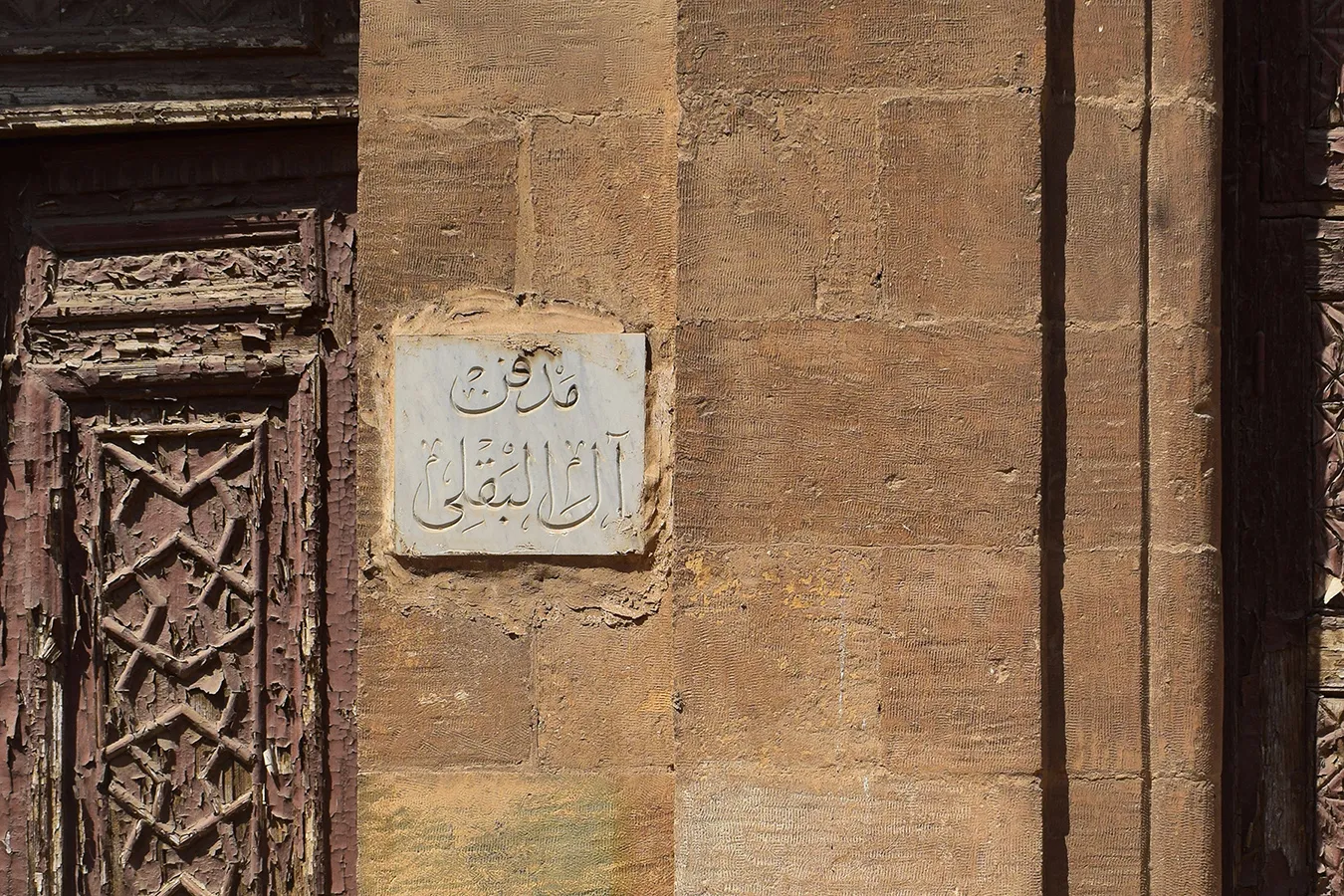
Al-Baqli Family
|
Coordinates of the main entrance |
30.041014N - 31.269717E |
|
Attribution |
Al-Baqli Family |
|
Higri (AH)Dates as given in the Inscription |
|
|
Miladi (AD)Dates as given in the Inscription |
Before 1892 |
|
Inscription Contemporary with the building? |
Yes |
|
Multiple date(s) In the inscription? |
Yes |
|
Assumed Date |
Before AD 1892 |
|
Based on |
based on the date on cenotaph |
|
Original Use |
Funerary enclosure |
|
Current Use |
Funerary enclosure |
|
Overall condition |
Fair |
Features of unit 42
| Present | Count | Material | Comments (see description for details) | |
|---|---|---|---|---|
| Free standing structure | Yes | 1 | stone | |
| Walled enclosure | No | |||
| Rooms by the perimeter wall | No | |||
| Freestanding structure(s) in enclousure | No | |||
| Dome over the tomb chamber | Yes | |||
| Neo-Mamluk architectural decoration | Yes | |||
| Garden layout | No | |||
| Sabil(s) | No | |||
| Wall fountain(s) | No | |||
| Canopy on columns / pillars | No | |||
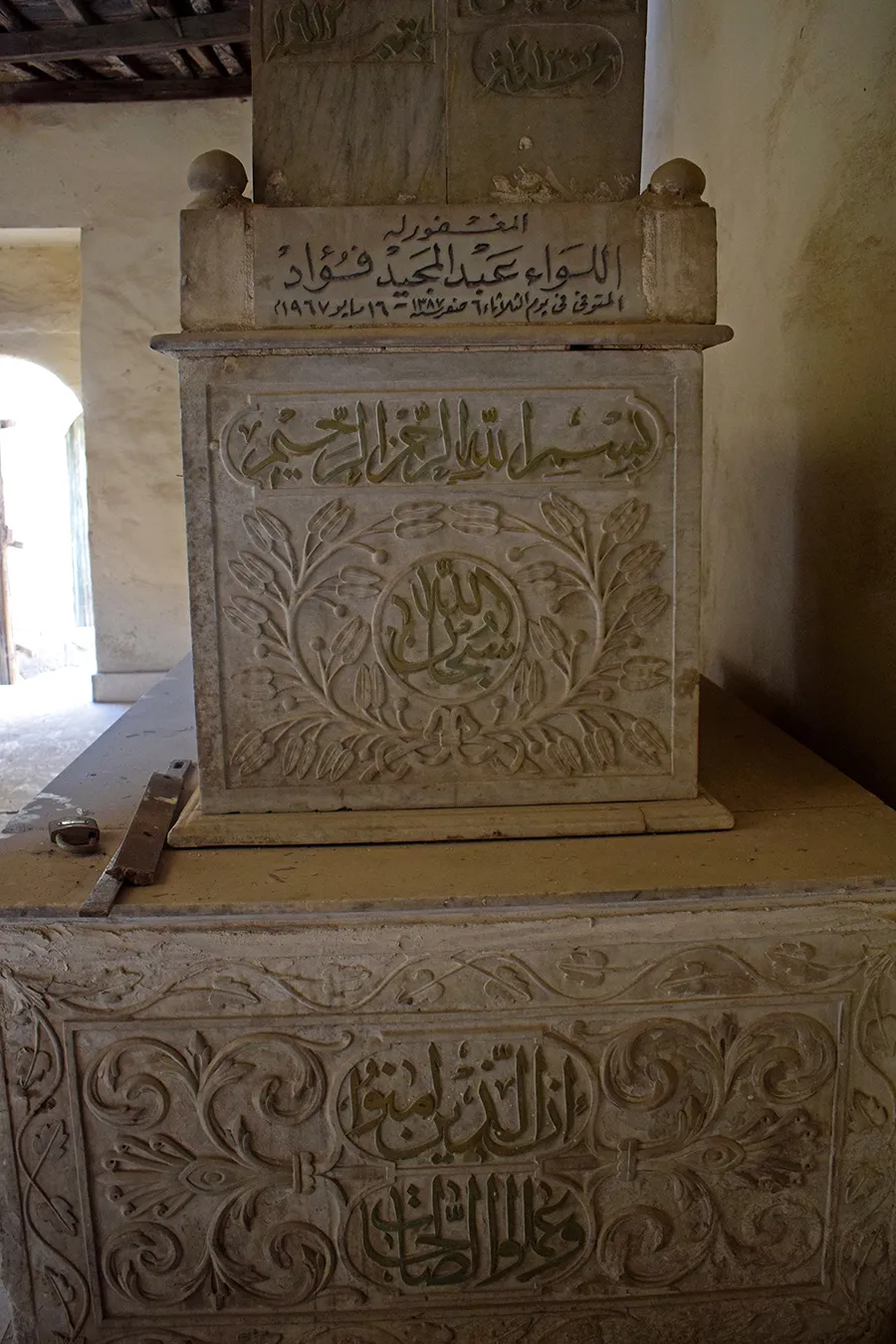
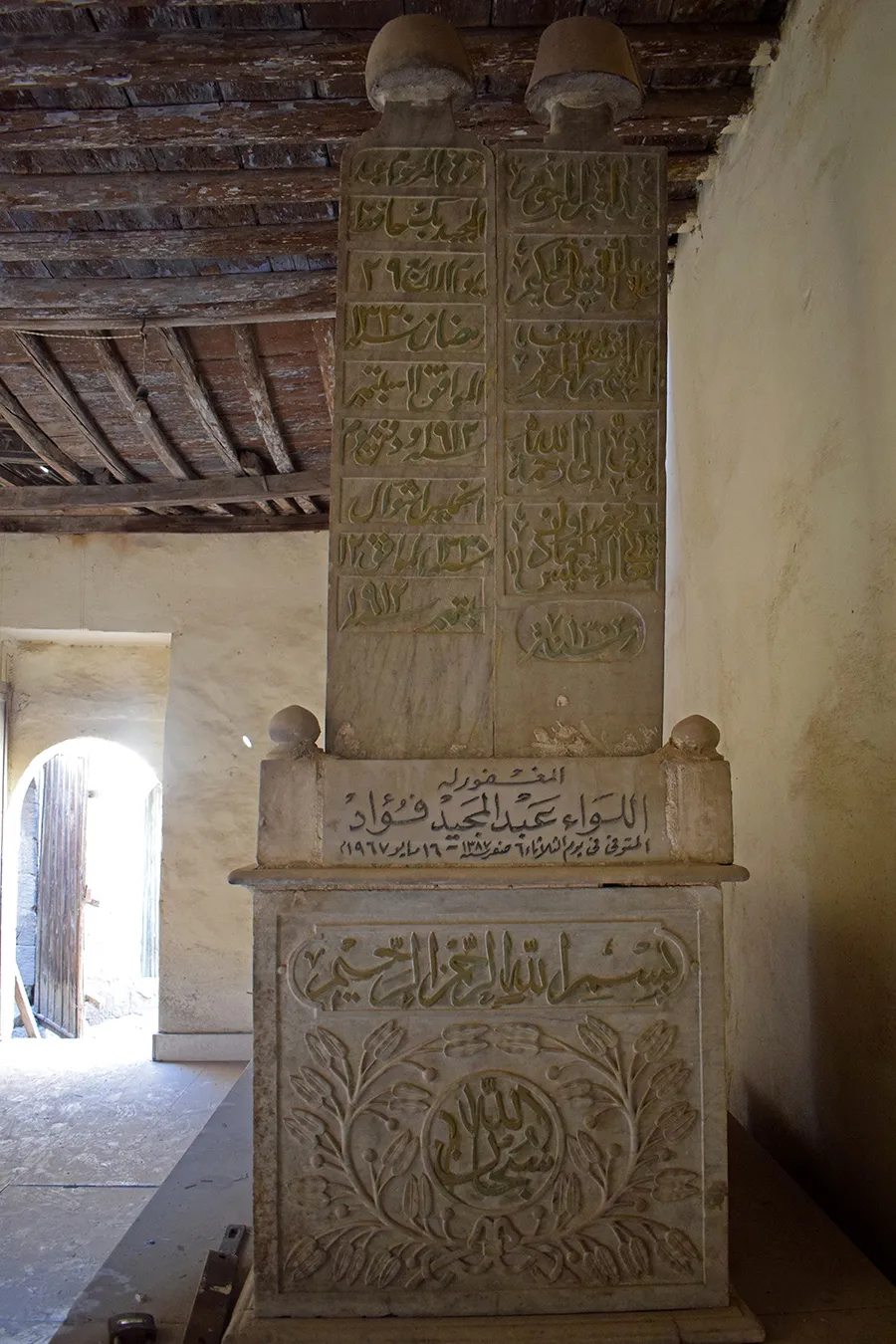
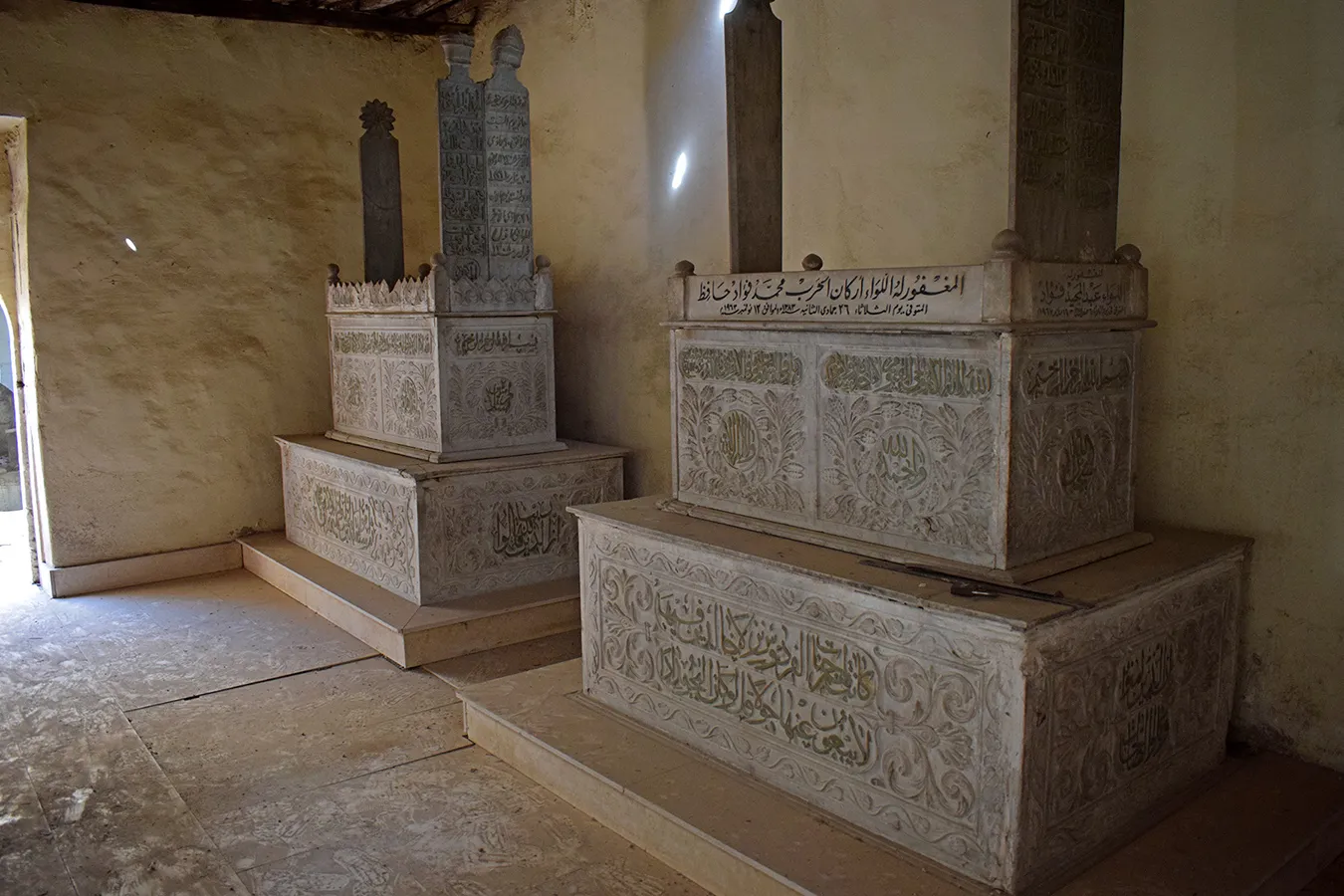
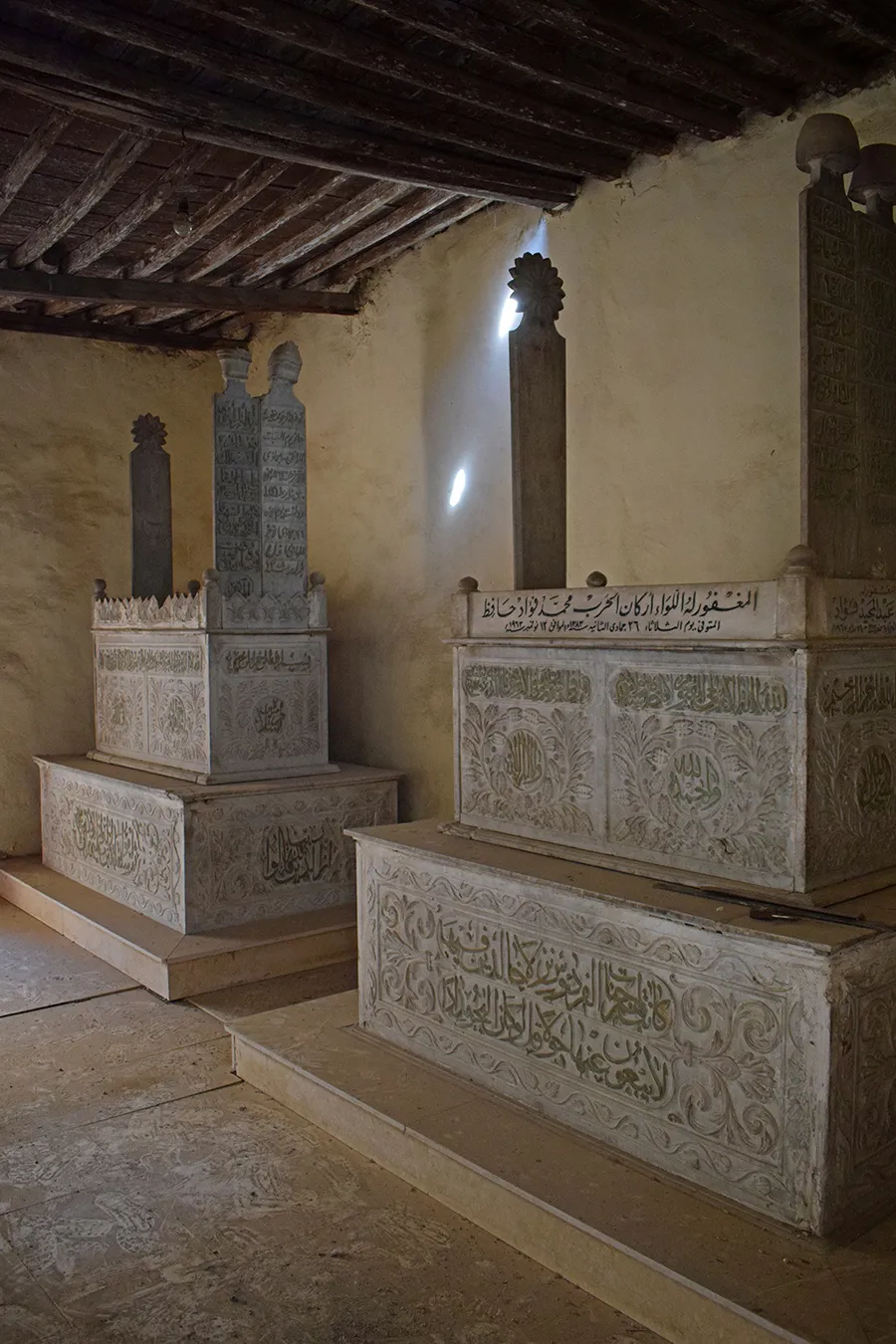
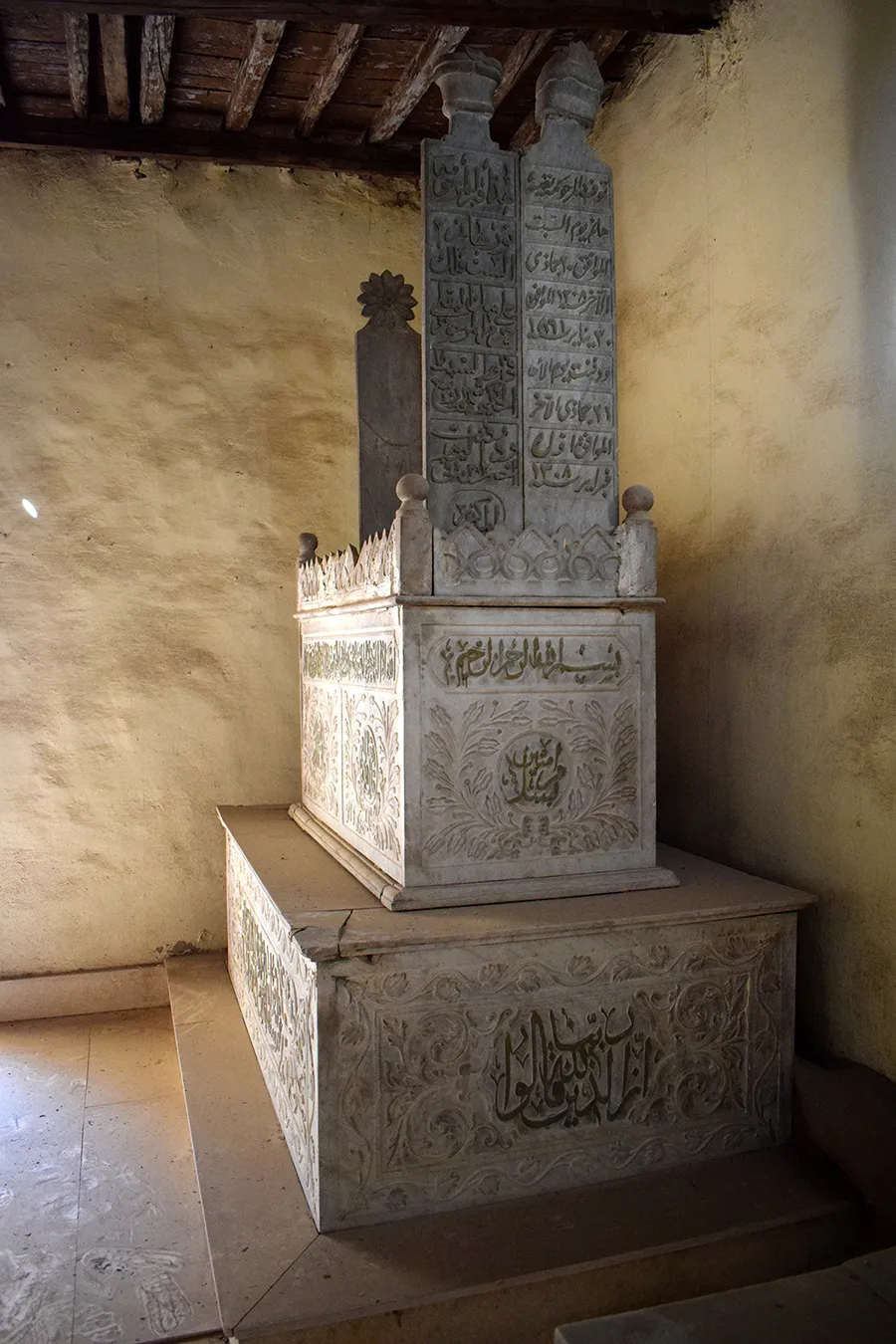
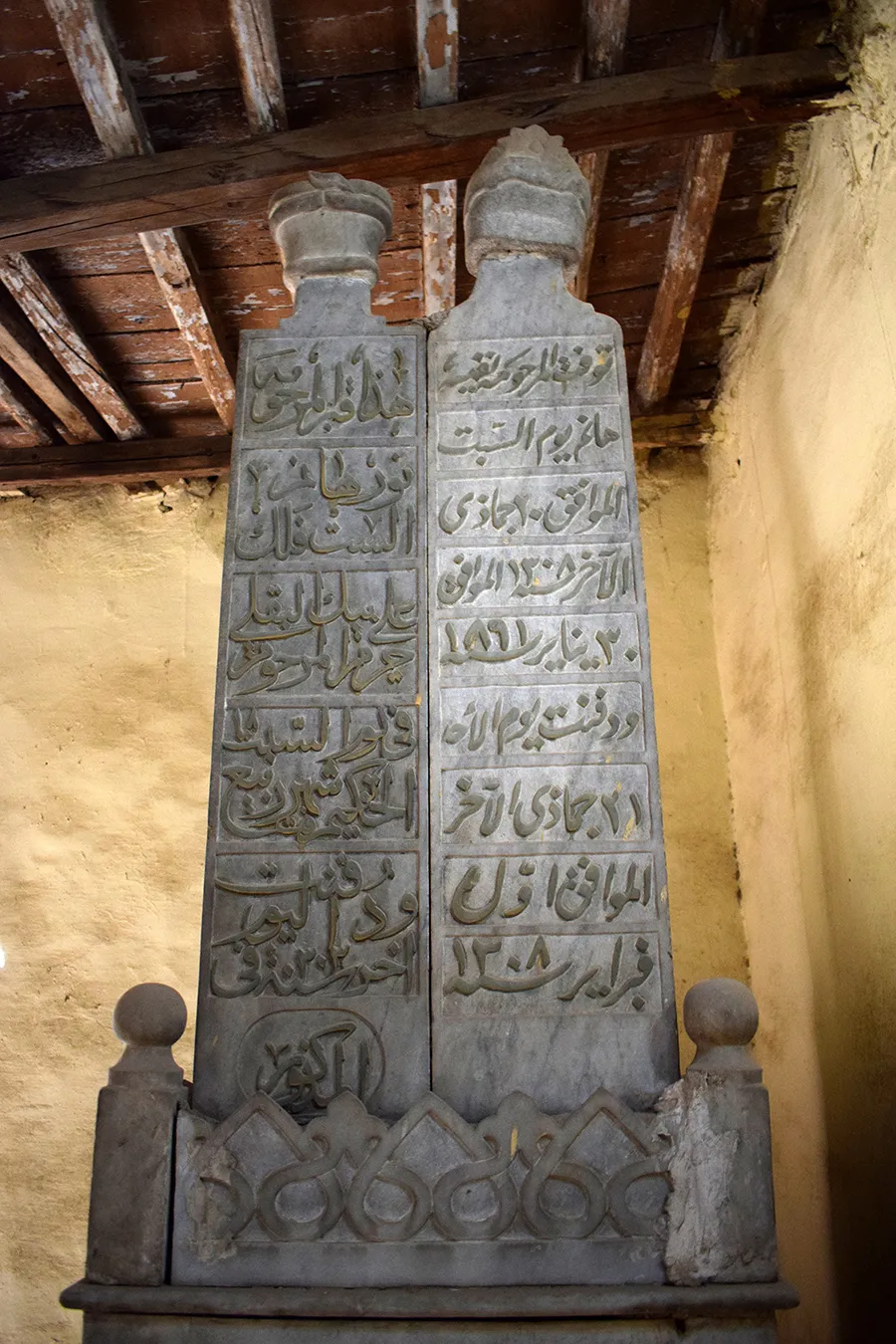
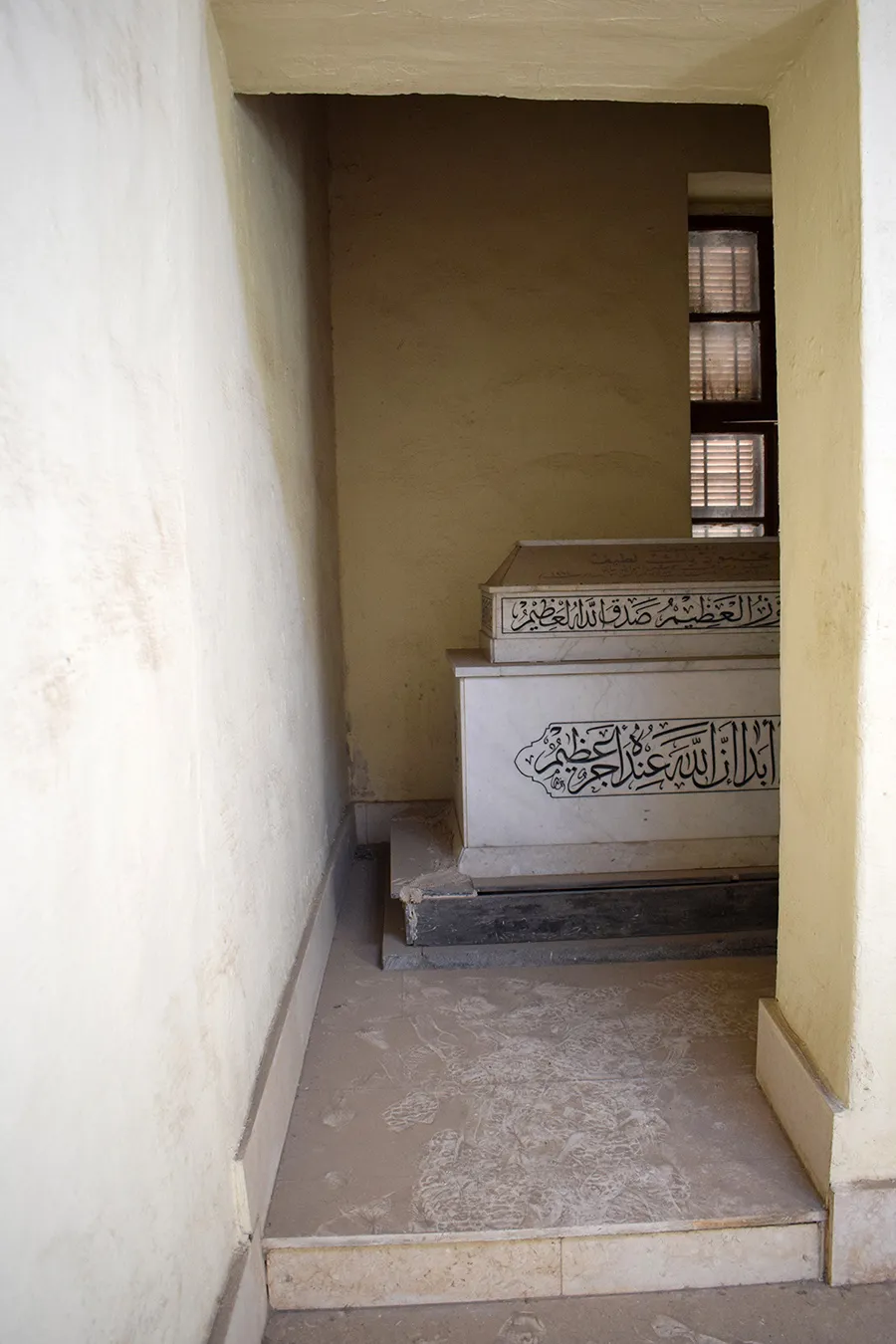
| Carved marble cenotaph(s) | Yes | 3 | 3 | Two without carved decoration |
| Decorated limestone tomb-markers | No | |||
| Decorated gateway | Yes | 1 | stone | A neo-Mamluk portal |
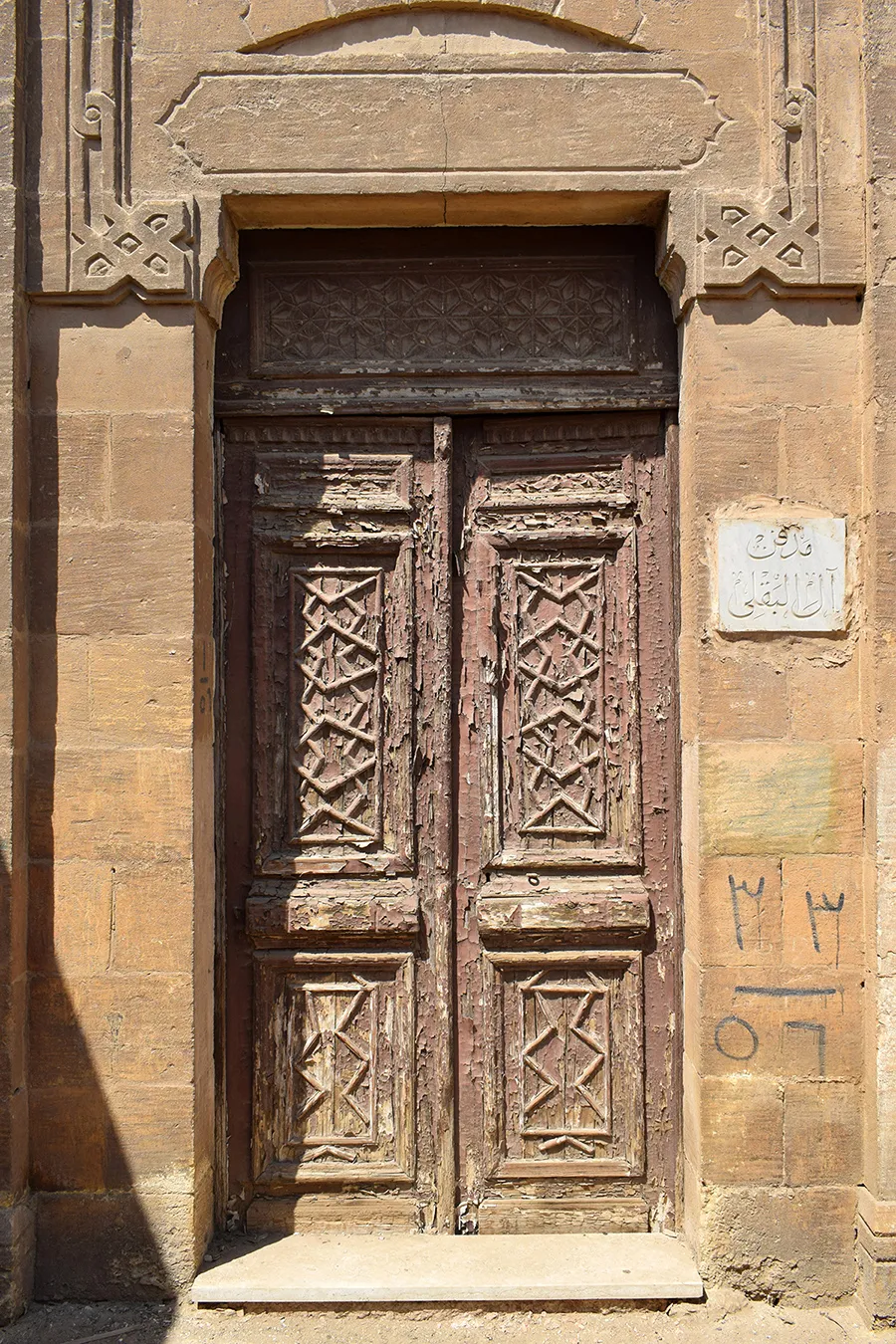
| Decorative door-leaves | Yes | 2 | wood | With finely carved panelling |
| Decorative window grilles | Yes | 11 | wrought iron; gypsum/glass | 3 Art nouveau iron grilles; 8 qamariyat |
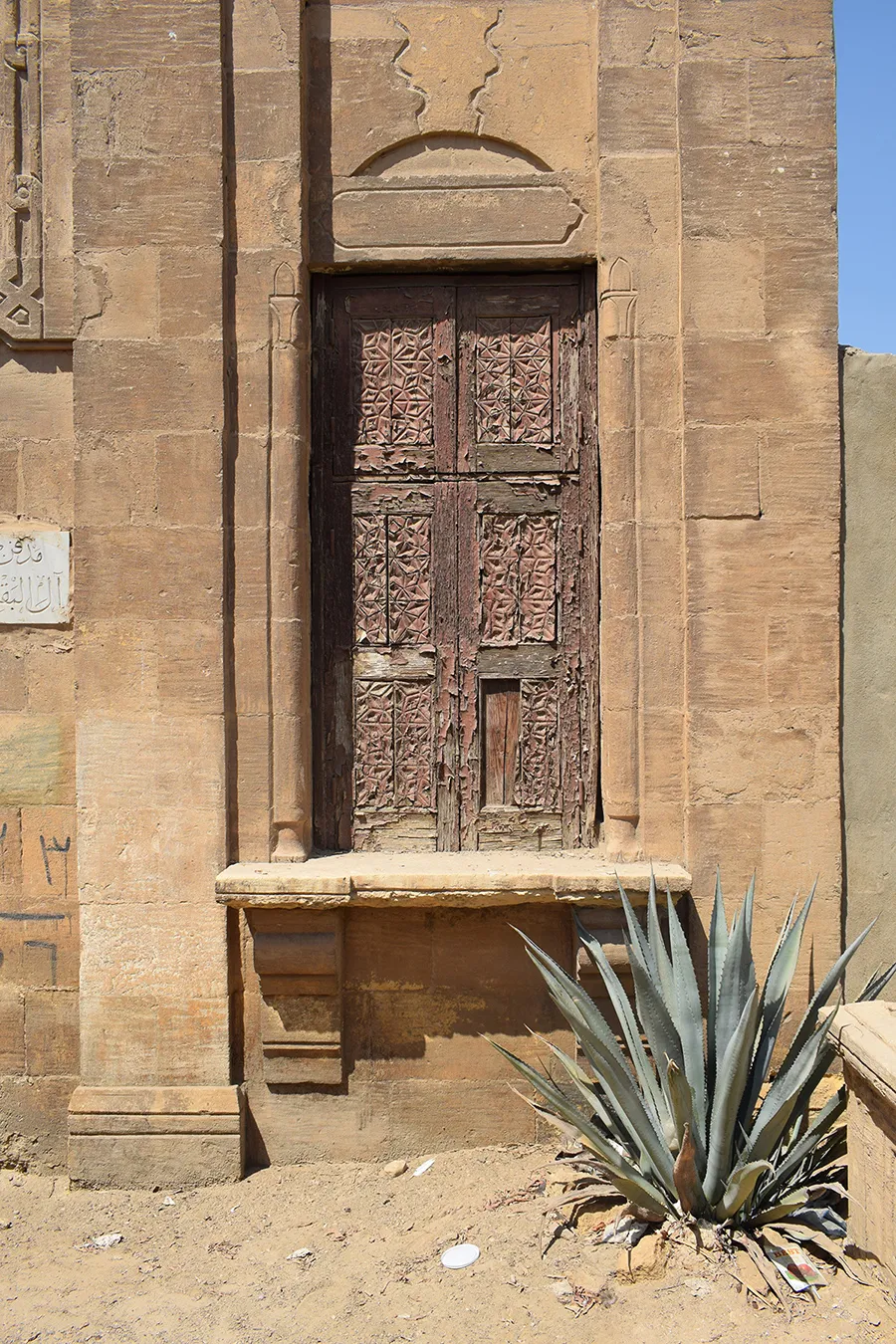
| Decorative shutters | Yes | 2 | wood | In sabil window, with finely carved panelling |
| Painted ceiling(s) | No | |||
| Decorative paving(s) | No |
Description (The direction towards Mecca (Qibla) is described as eastern and other directions are named accordingly)
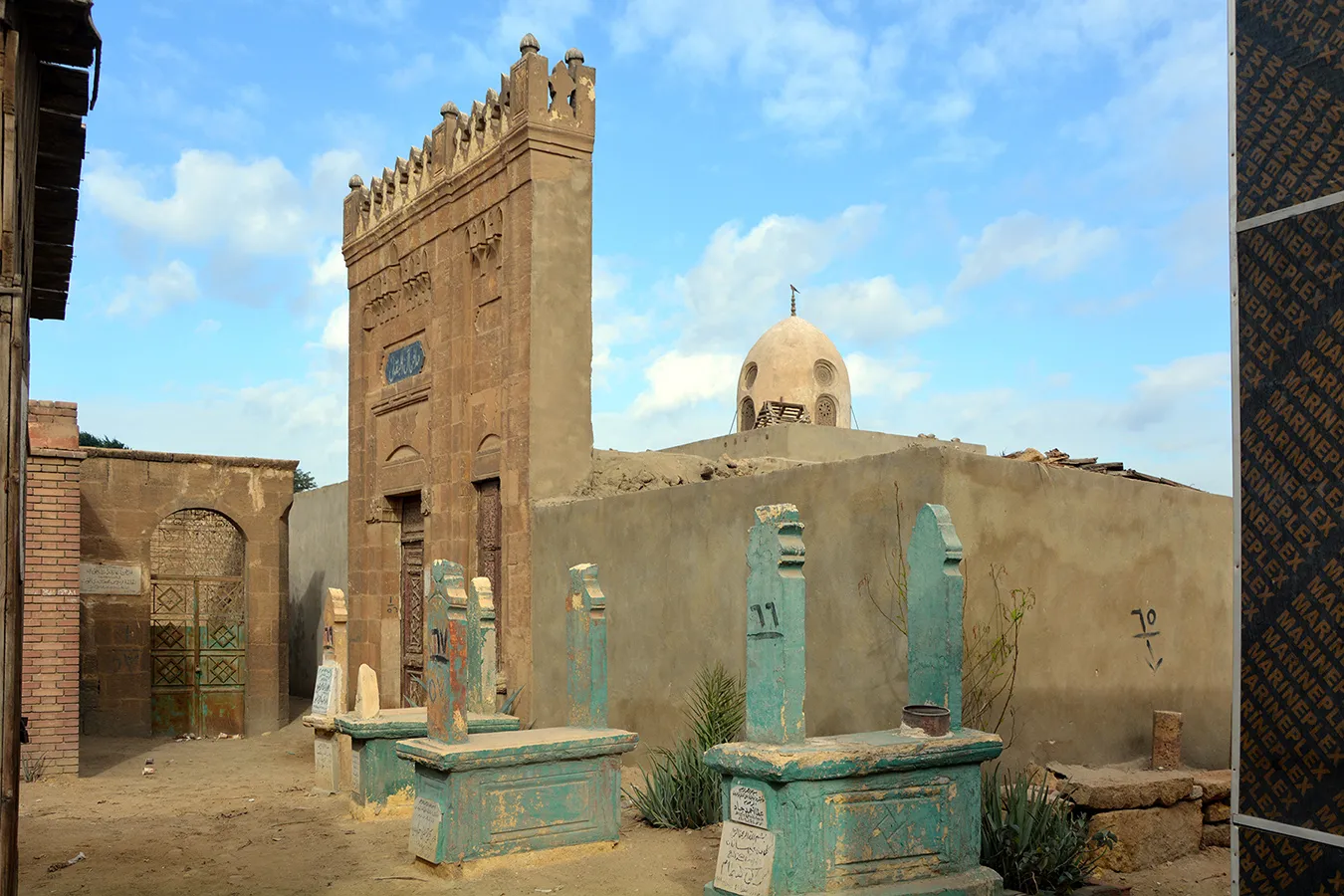
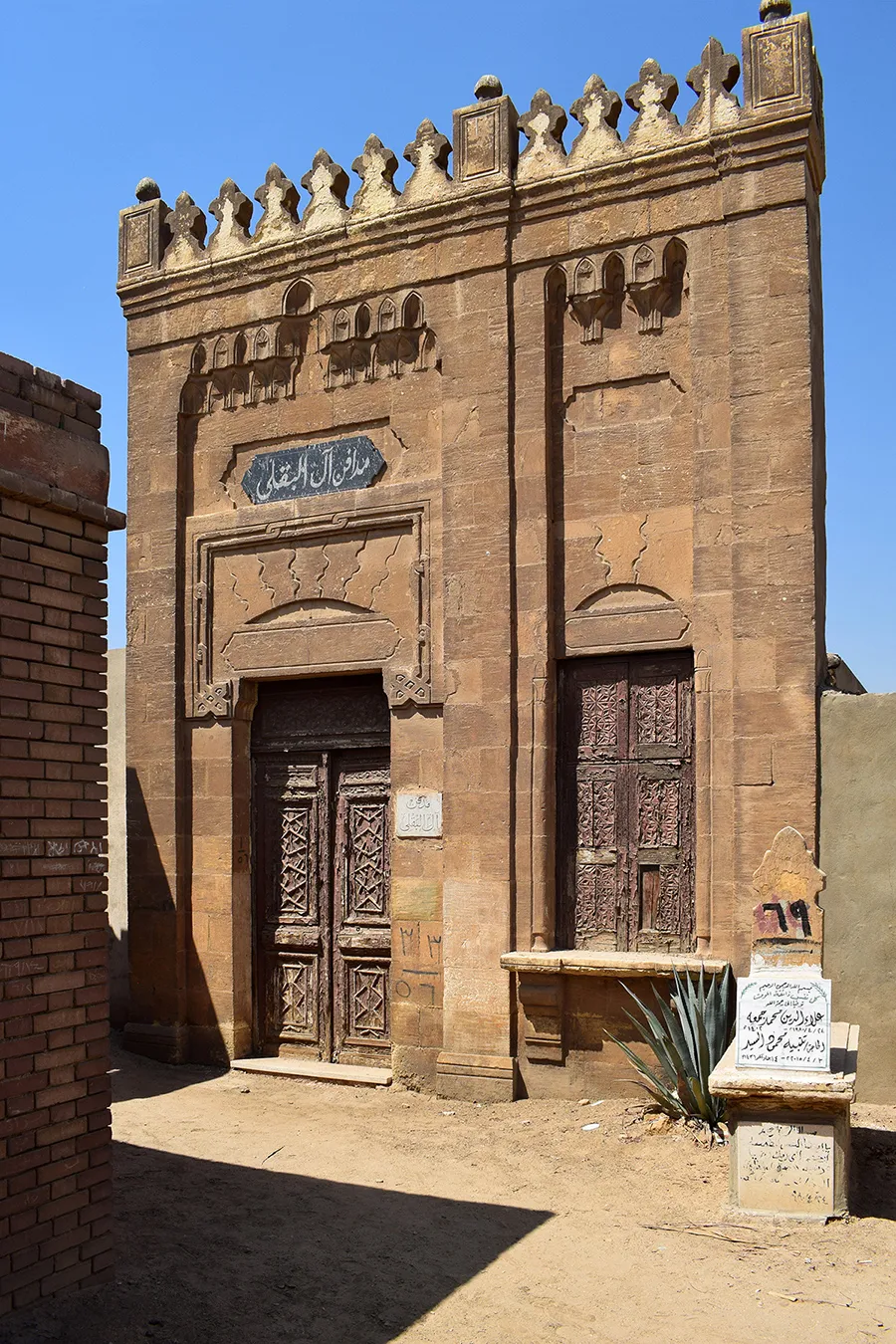
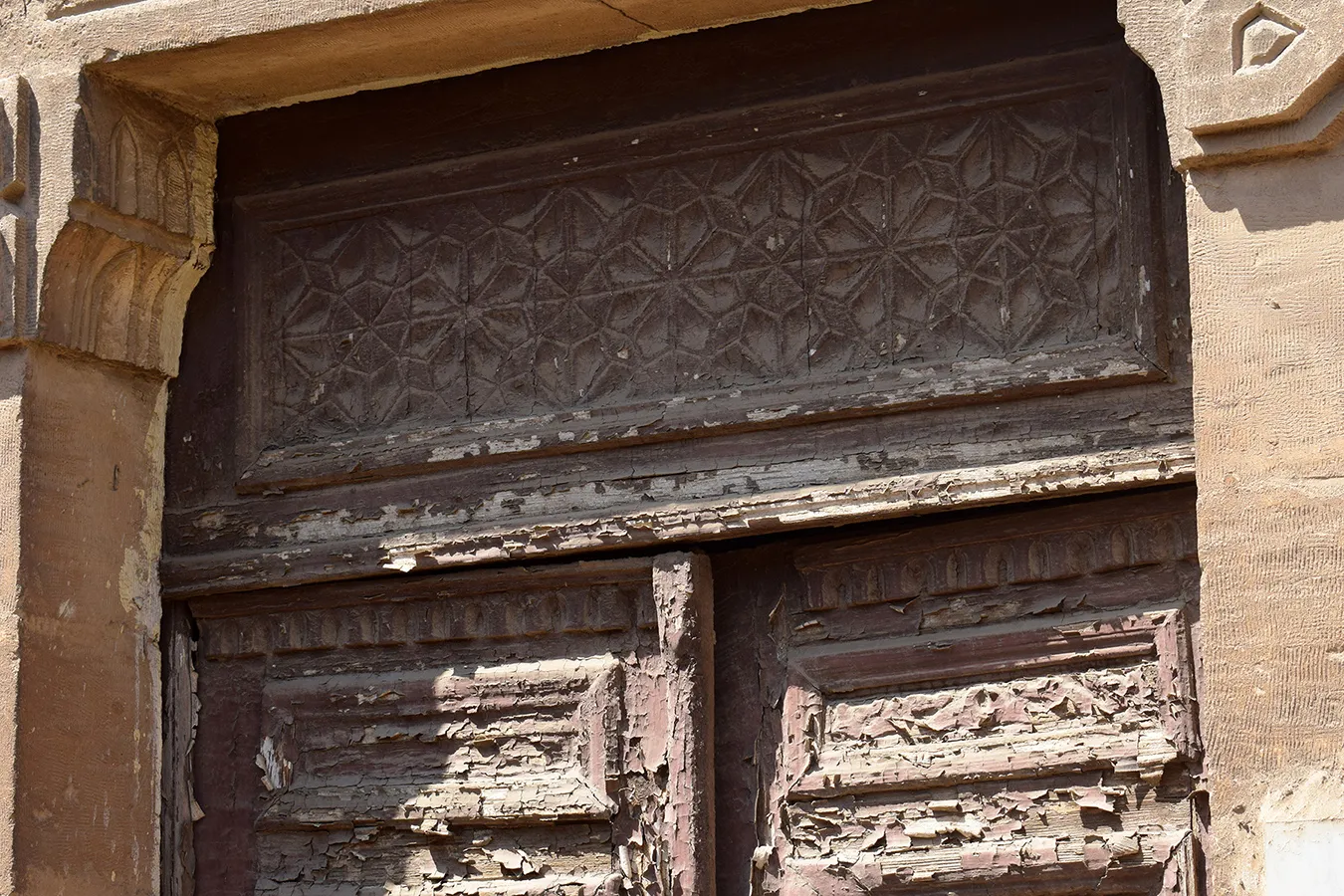
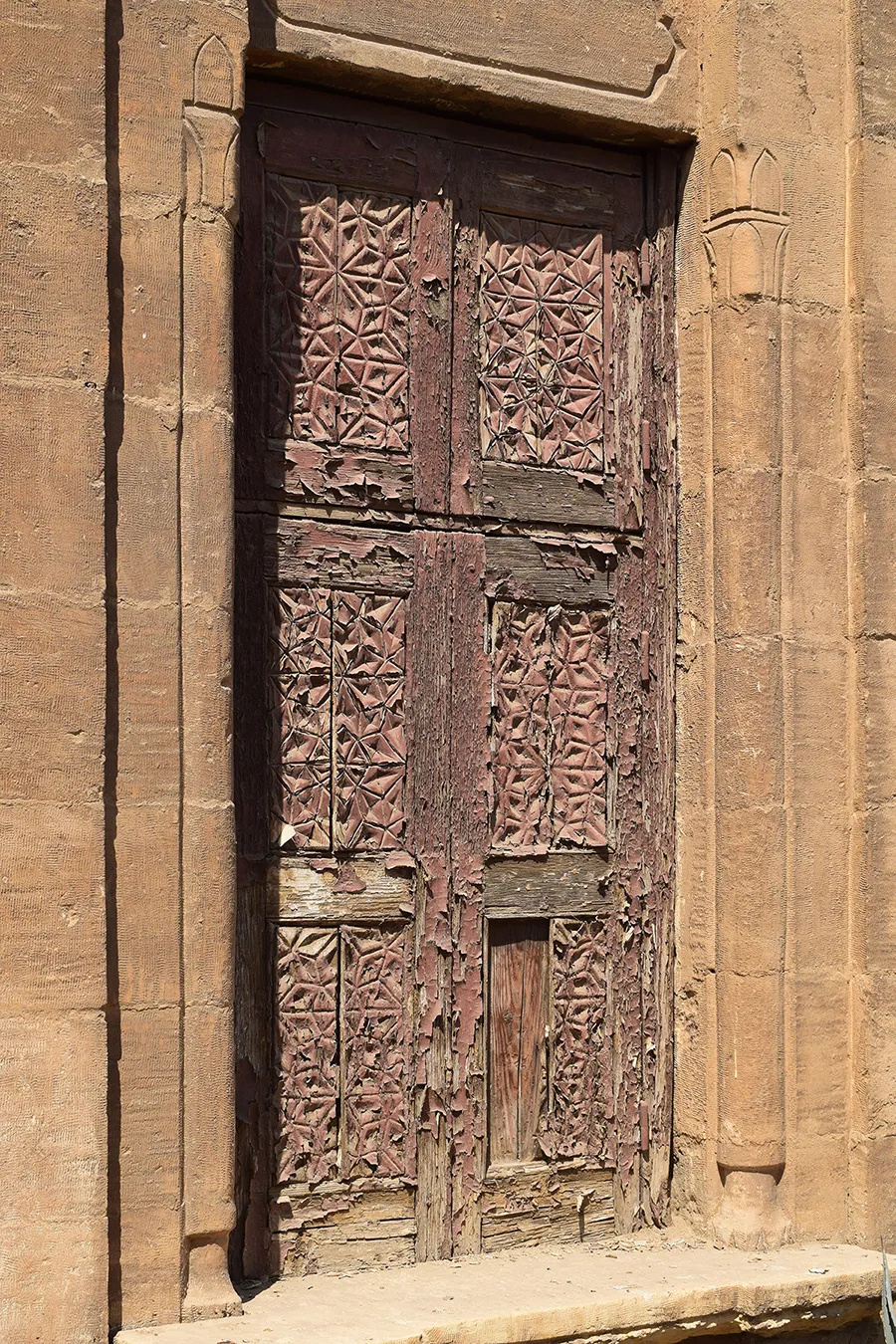
A free-standing structure with neighbouring buildings very close or abutting. The main building is a rectangular single-storey structure with the main entrance in the eastern part of the southern façade. It has uneven walls of crude stone and ashlar stone with crude, and undecorated wooden ceilings. There is a lower-height annexe to the east, and to the north, a square annexe evidently of a later date with a small dome in its ceiling. The neo-Mamluk entrance façade of ashlar stone in the eastern part of the southern wall is much taller that the building, and of markedly better craftsmanship, which suggests that it may be added to an earlier structure. The façade is composed of two shallow recesses crowned with flat muqarnas friezes. The wider recess to the left (west) contains the entrance door, and the narrower right one, a sabil window. Both openings have stone lintels, and above them, relieving arches of joggled voissoirs. Over the door, this arrangement is framed by knotted mouldings. Lower parts of the mouldings appear unfinished. The wooden door wings are decorated in geometric patterns of nailed-on lath; the sabil window shutters and a panel above the door are decorated with fine geometric patterns that are carved into wooden panelling, imitating Mamluk-period pieces created by joining small panes.
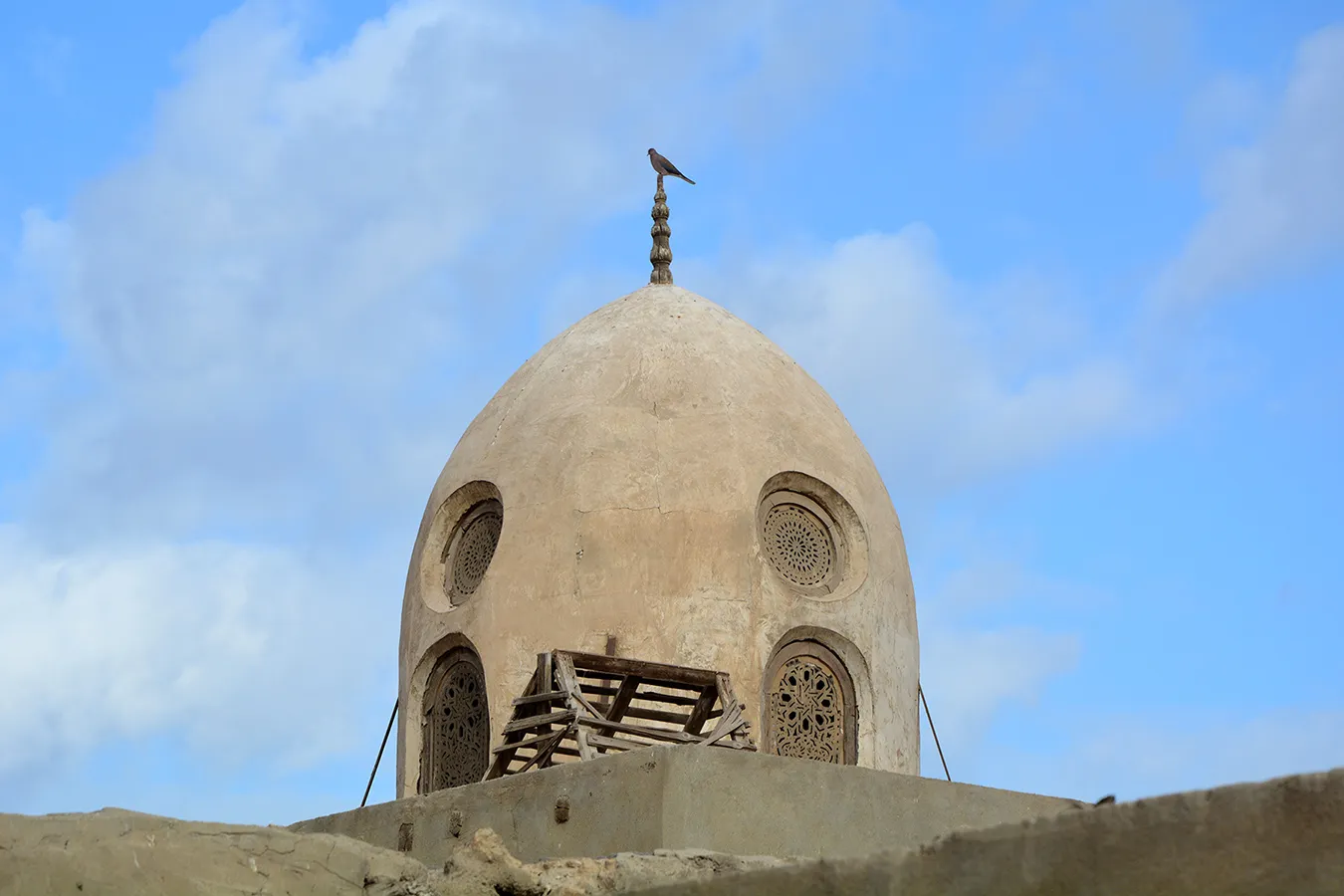
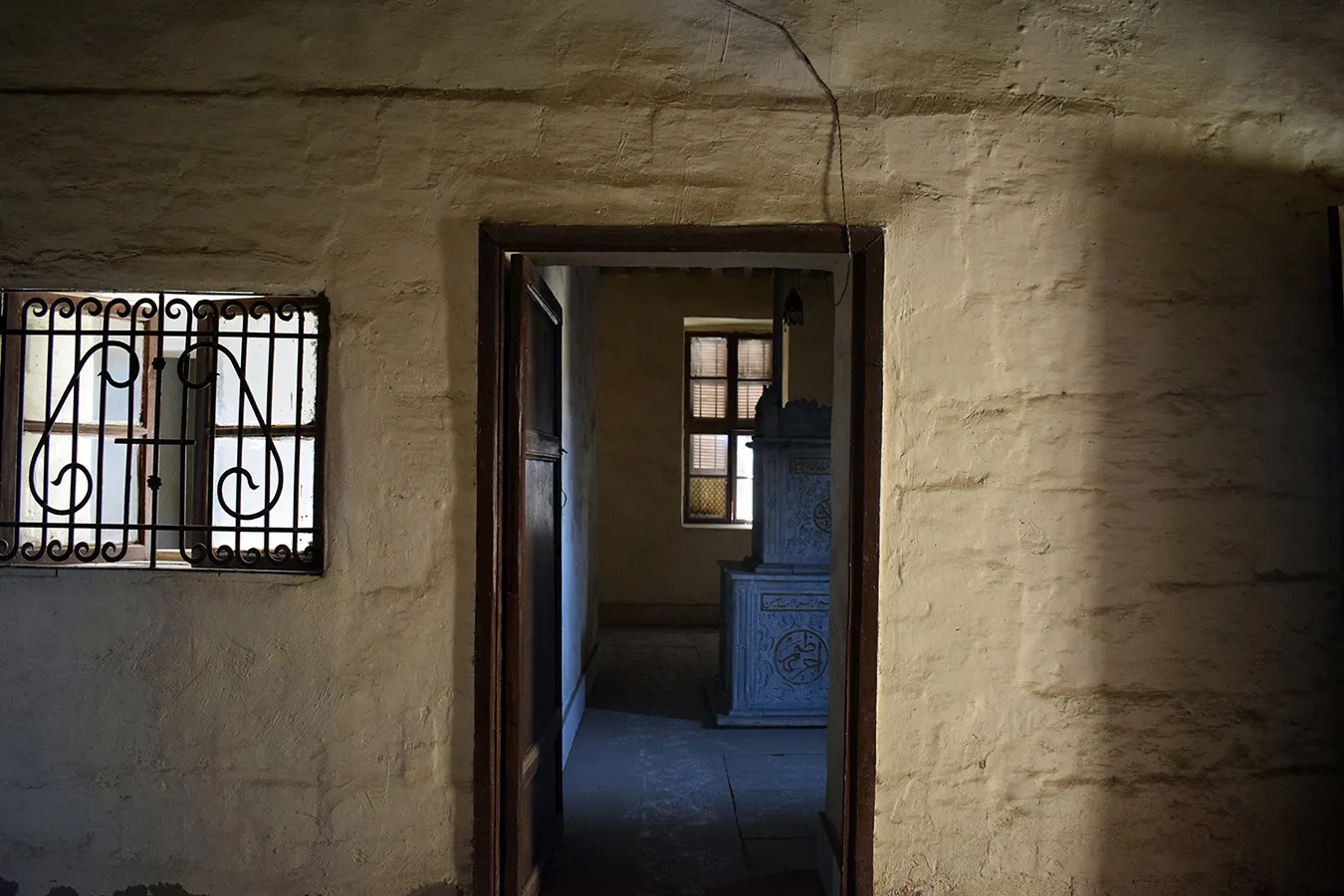
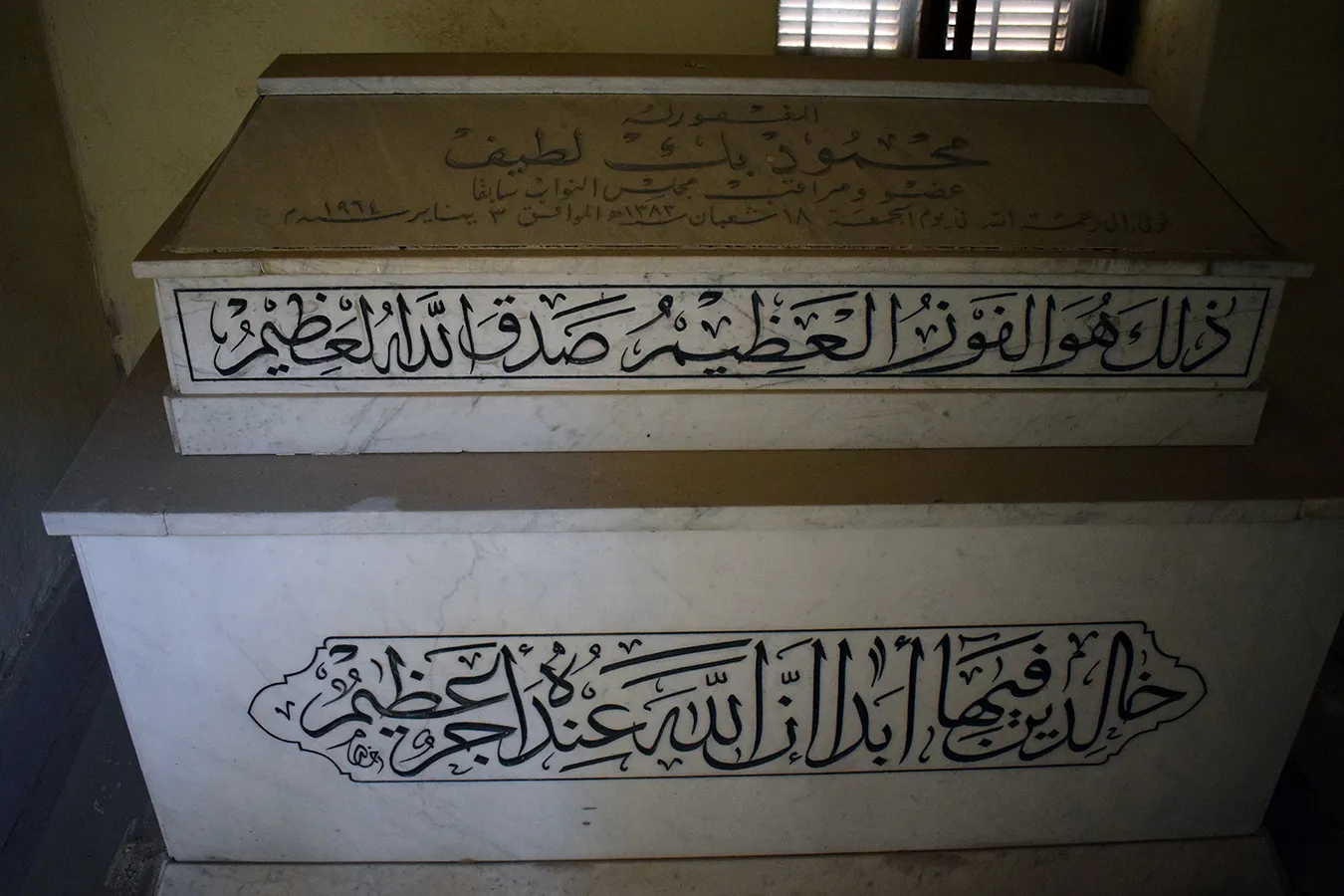
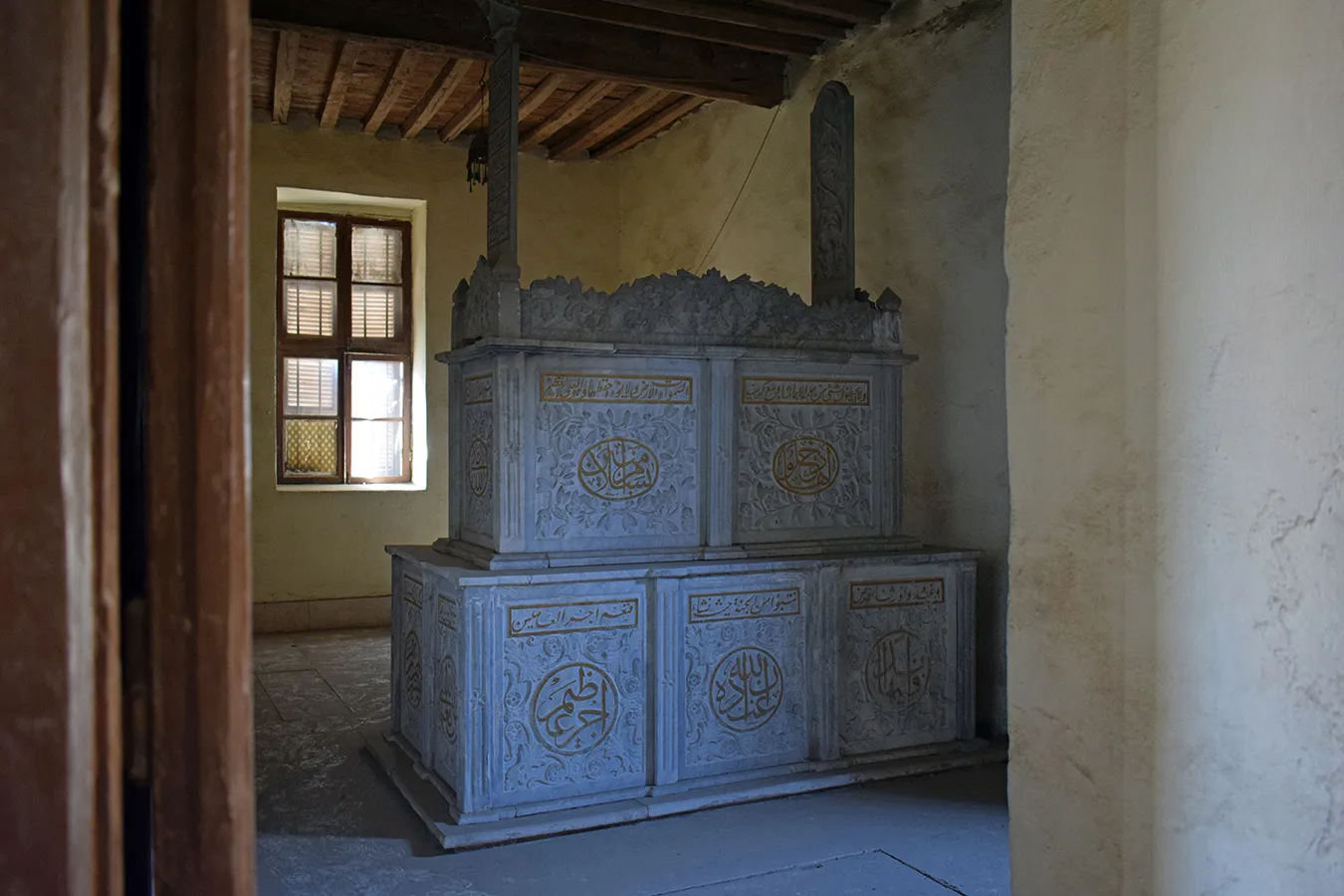
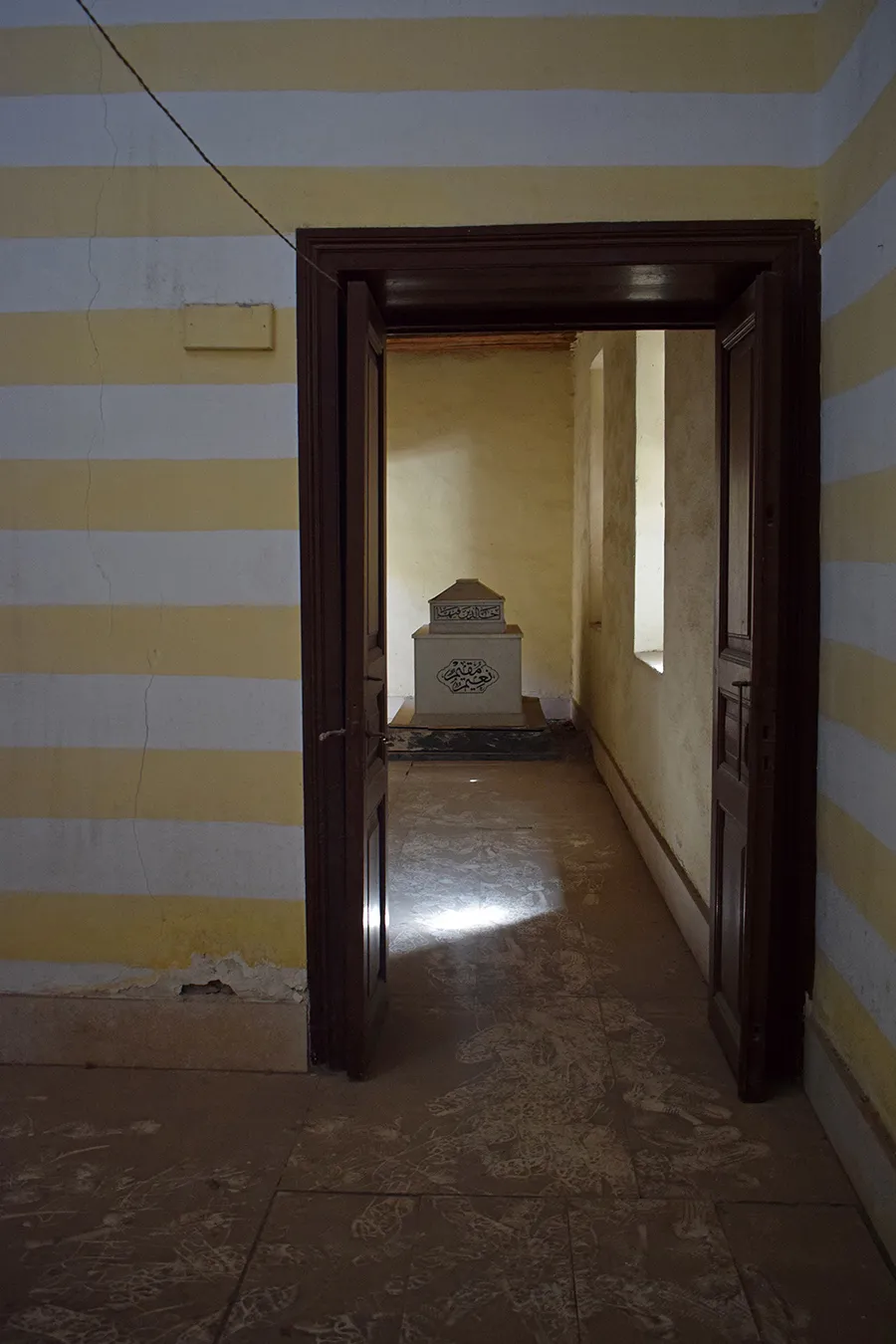
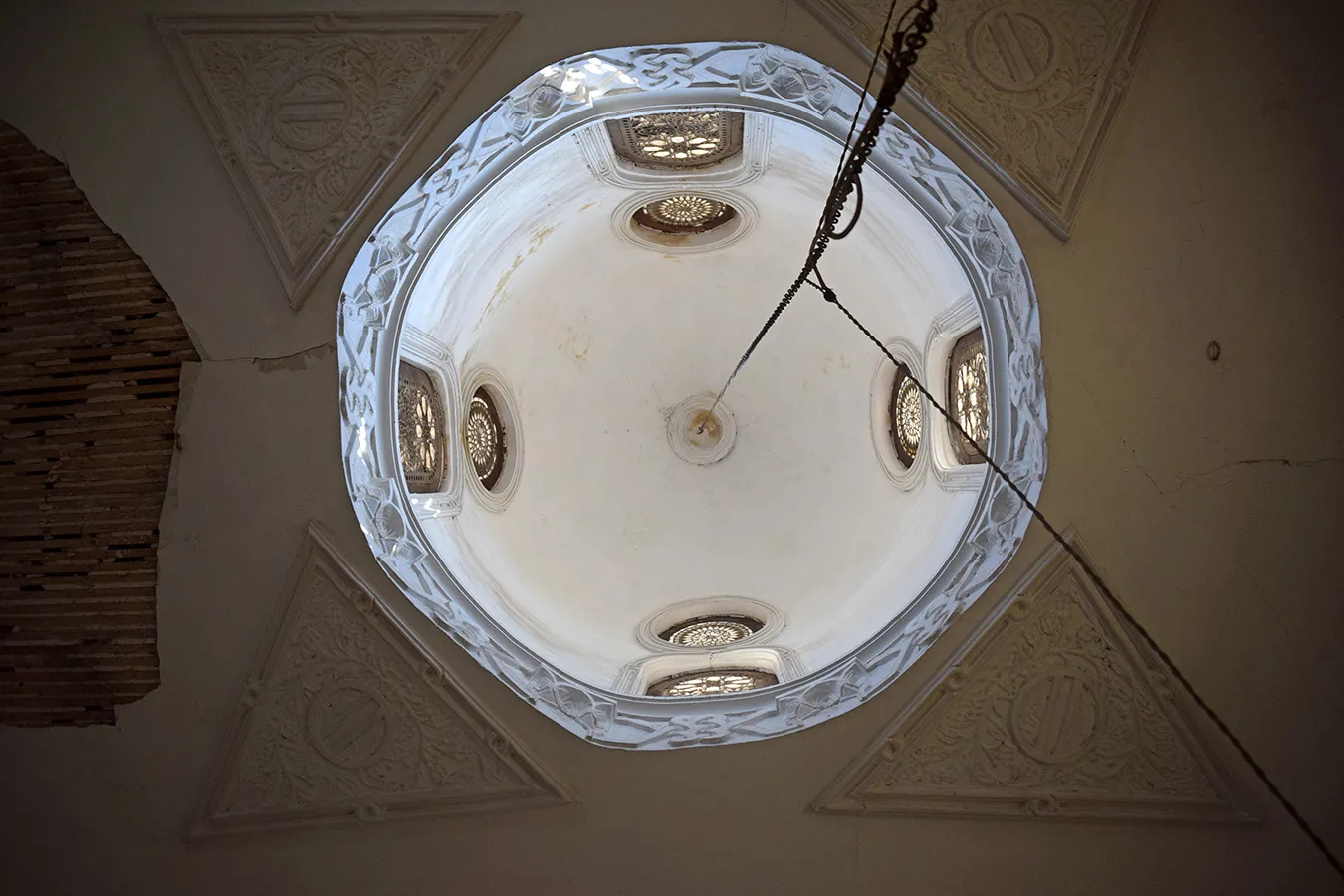
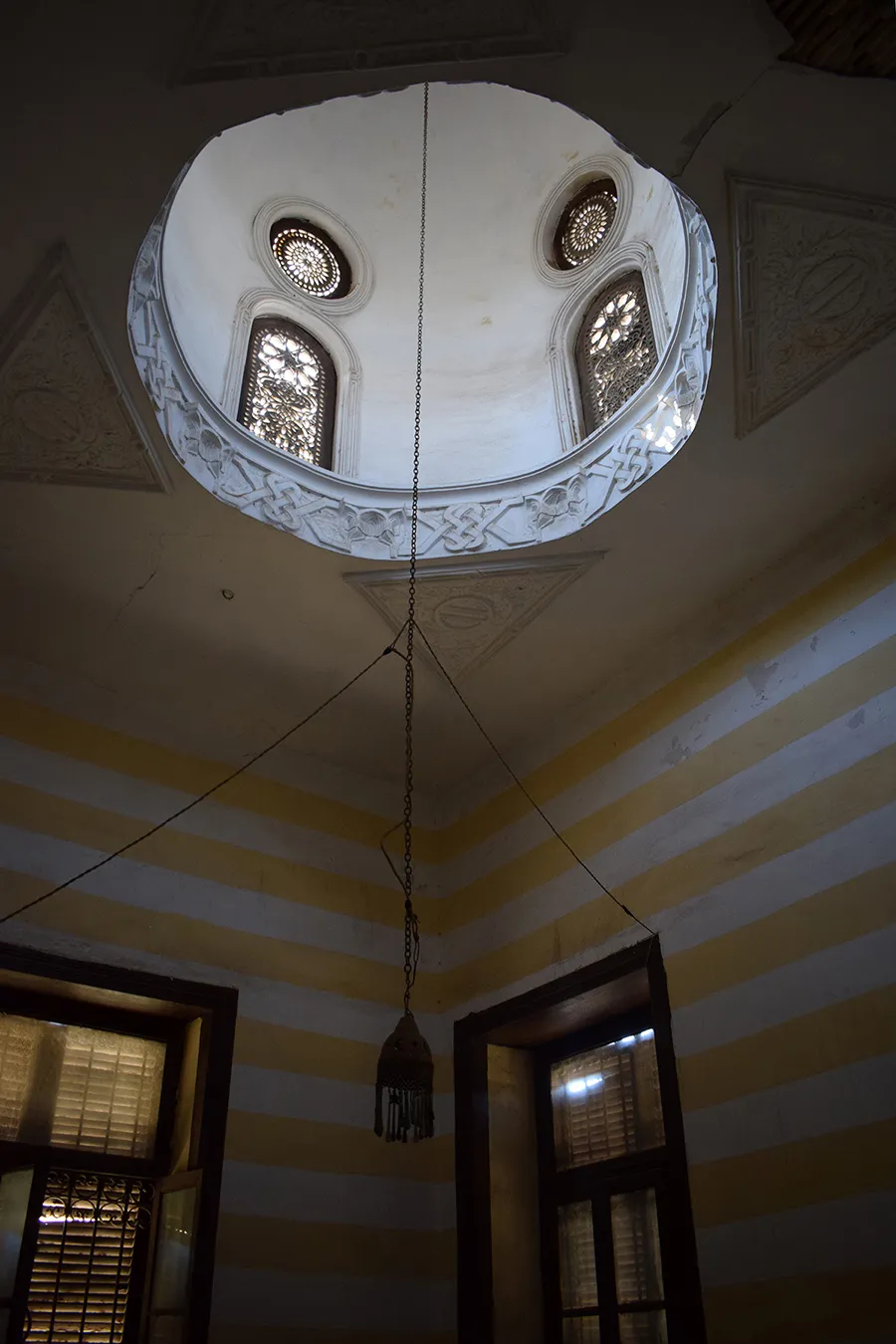
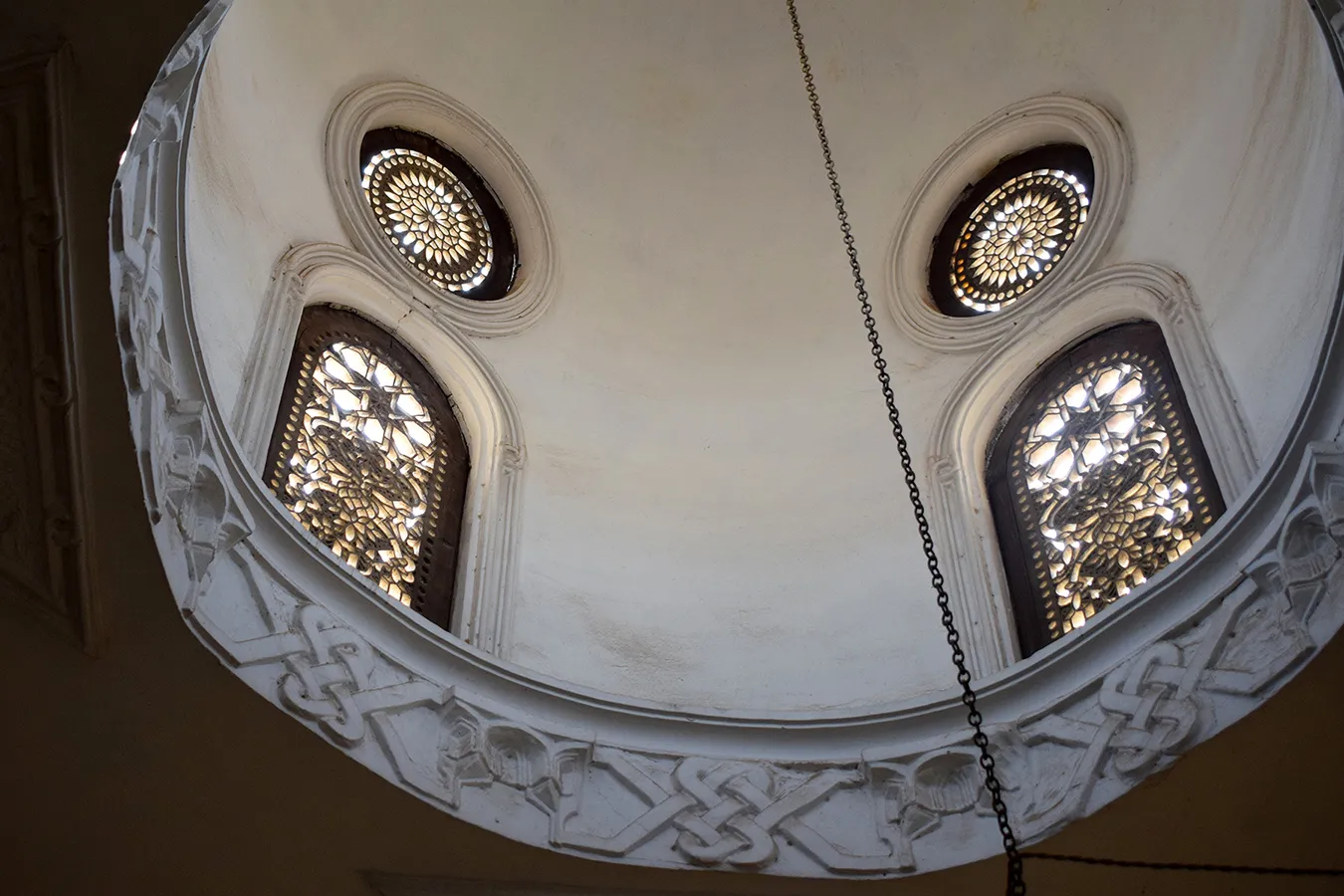
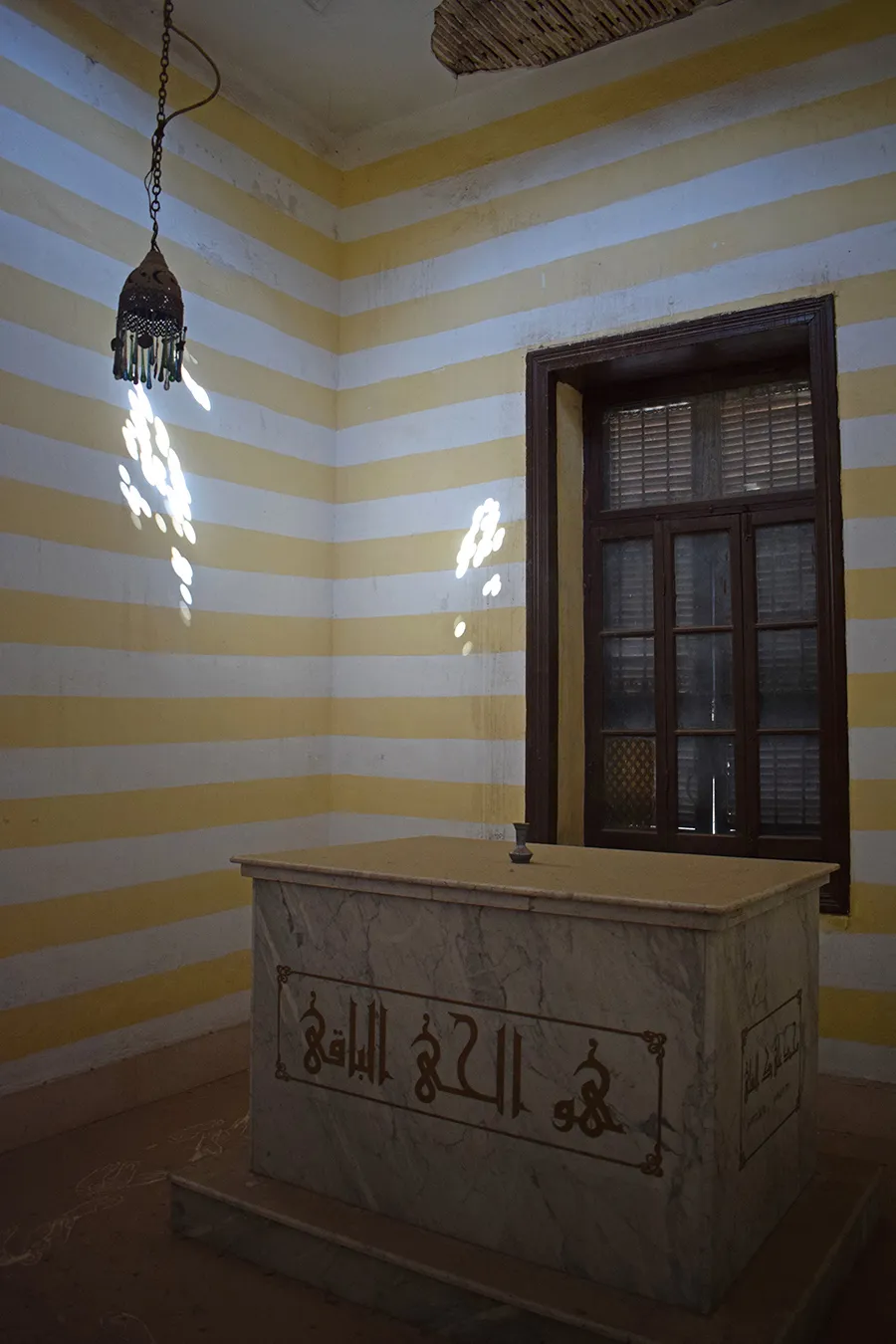
The gate leads to a hall that contains two richly carved marble cenotaphs. Two rooms on the western side are accessible from the hall, one of them containing a richly carved marble cenotaph and a simpler modern one dated 1383 AH / AD 1964. The burial chamber adjoining to the north is accessible from the room. It contains a simple modern marble cenotaph. The room painted in imitation ablaq masonry is covered with a wooden ceiling with a lath-and-plaster internal surface in the roof is a lantern shaped as a small dome on a tall round drum. The drum is pierced with four windows covered with semi-circular arches, and above them, four round windows in the dome. All windows are framed in gypsum mouldings and feature qamariyat stained glass and gypsum grilles. In the interior, the base of the dome drum and the plastered ceiling are decorated with stucco crudely imitating Mamluk-period forms.
The door in the northern wall of the entrance hall leads to an L-shaped courtyard adjoining to the east and north, which is shared with the neighbouring al-Sanhawi enclosure.
Condition of preservation
The complex is in generally fair condition and maintained. The woodwork is desiccated, incomplete, with paint peeling. Plaster on the ceiling of the domed burial chamber partly missing.
Information abut the founder, family history, etc.
The style of the neo-Mamluk façade indicates the date of early 20th century, most probably as a remodelling of an earlier structure. The burial chamber to the north, with a dome-shape lantern in the roof, is clearly a later addition, apparently from the second half of the 20th century. According to the property keeper, the complex was originally connected to the al-Sanhawi family enclosure, with which it shares a courtyard.
- Field recording by
- Amr Abotawila and Nur Atiya
- Date recorded
- August 8, 2022
- Data entered by
- Hania Abdelmeguid
- Date entered
- May 8, 2024