
Unit No41
Al-Sanhawi Family
|
Coordinates of the main entrance |
30.041202N - 31.269785E |
|
Attribution |
Al-Sanhawi Family |
|
Higri (AH)Dates as given in the Inscription |
|
|
Miladi (AD)Dates as given in the Inscription |
1880 |
|
Inscription Contemporary with the building? |
Yes |
|
Multiple date(s) In the inscription? |
Yes |
|
Assumed Date |
1880 [?] remodelling of an 18th-cent. complex |
|
Based on |
inscriptions |
|
Original Use |
Funerary enclosure and shrine |
|
Current Use |
Funerary enclosure and shrine |
|
Overall condition |
Fair |
Features of unit 41
| Present | Count | Material | Comments (see description for details) | |
|---|---|---|---|---|
| Free standing structure | Yes | 1 | stone | Abutting on neighbouring enclosures |
| Walled enclosure | No | |||
| Rooms by the perimeter wall | Yes | 6 | stone | |
| Freestanding structure(s) in enclousure | No | |||
| Dome over the tomb chamber | No | |||
| Neo-Mamluk architectural decoration | No | |||
| Garden layout | No | |||
| Sabil(s) | No | |||
| Wall fountain(s) | No | |||
| Canopy on columns / pillars | No | |||
| Carved marble cenotaph(s) | Yes | 4 | 4 | |
| Decorated limestone tomb-markers | Yes | 6 | limestone | |
| Decorated gateway | Yes | 1 | stone | Extremely simple |
| Decorative door-leaves | No | |||
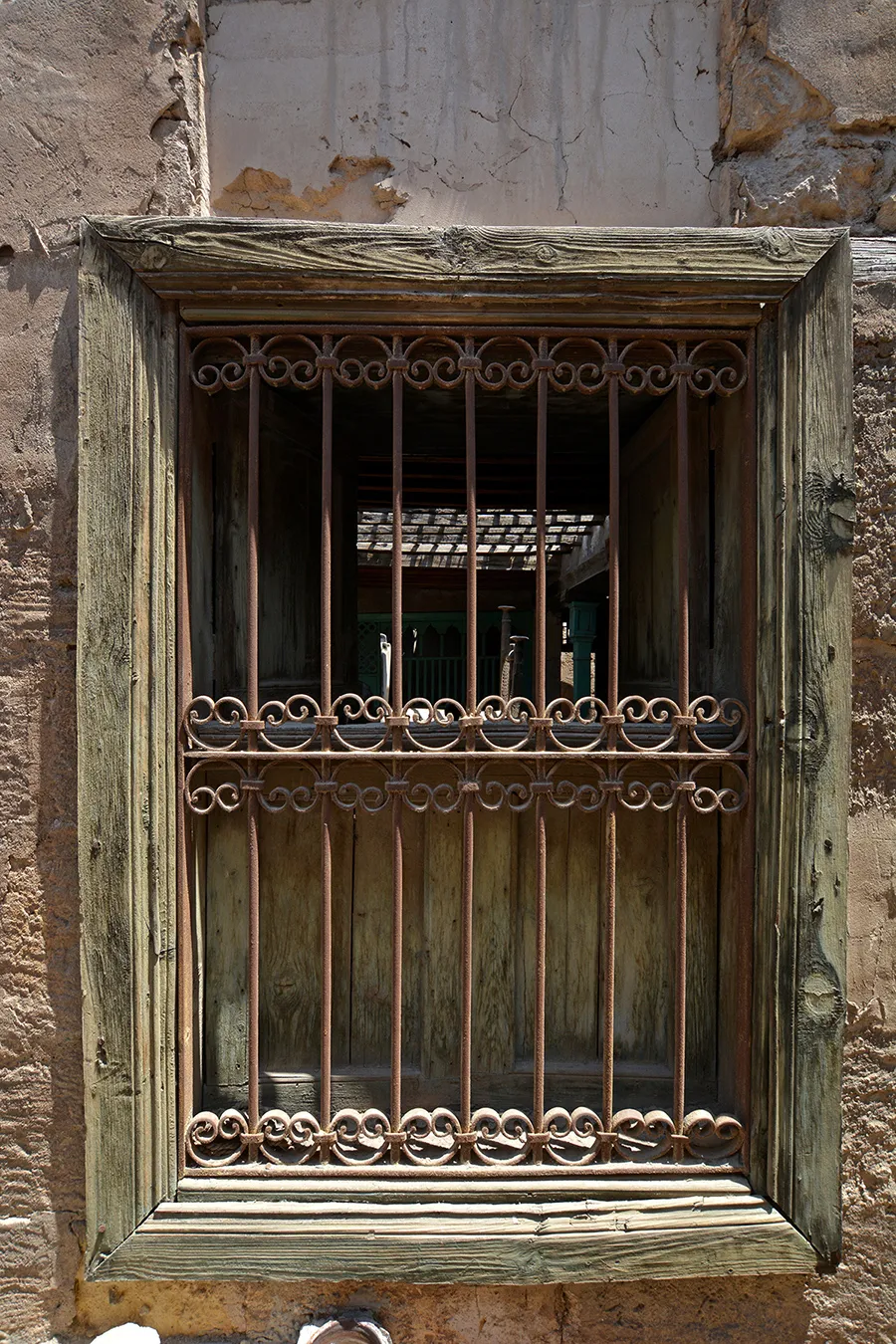
| Decorative window grilles | Yes | 2 | iron | Very simple |
| Decorative shutters | No | |||
| Painted ceiling(s) | No | |||
| Decorative paving(s) | No |
Unusual or unique features
• A huge collection of Ottoman-period tombstones
Description (The direction towards Mecca (Qibla) is described as eastern and other directions are named accordingly)
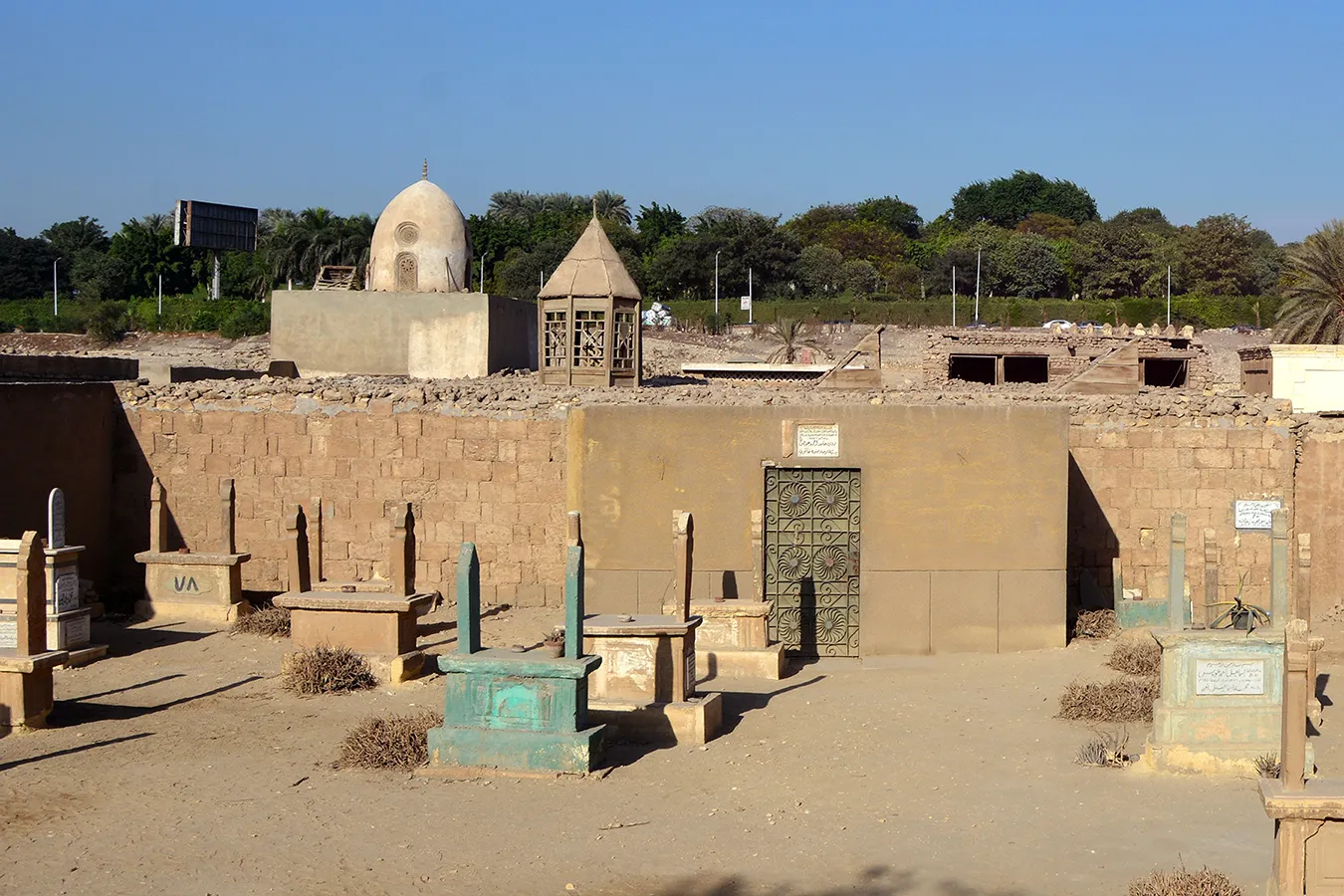
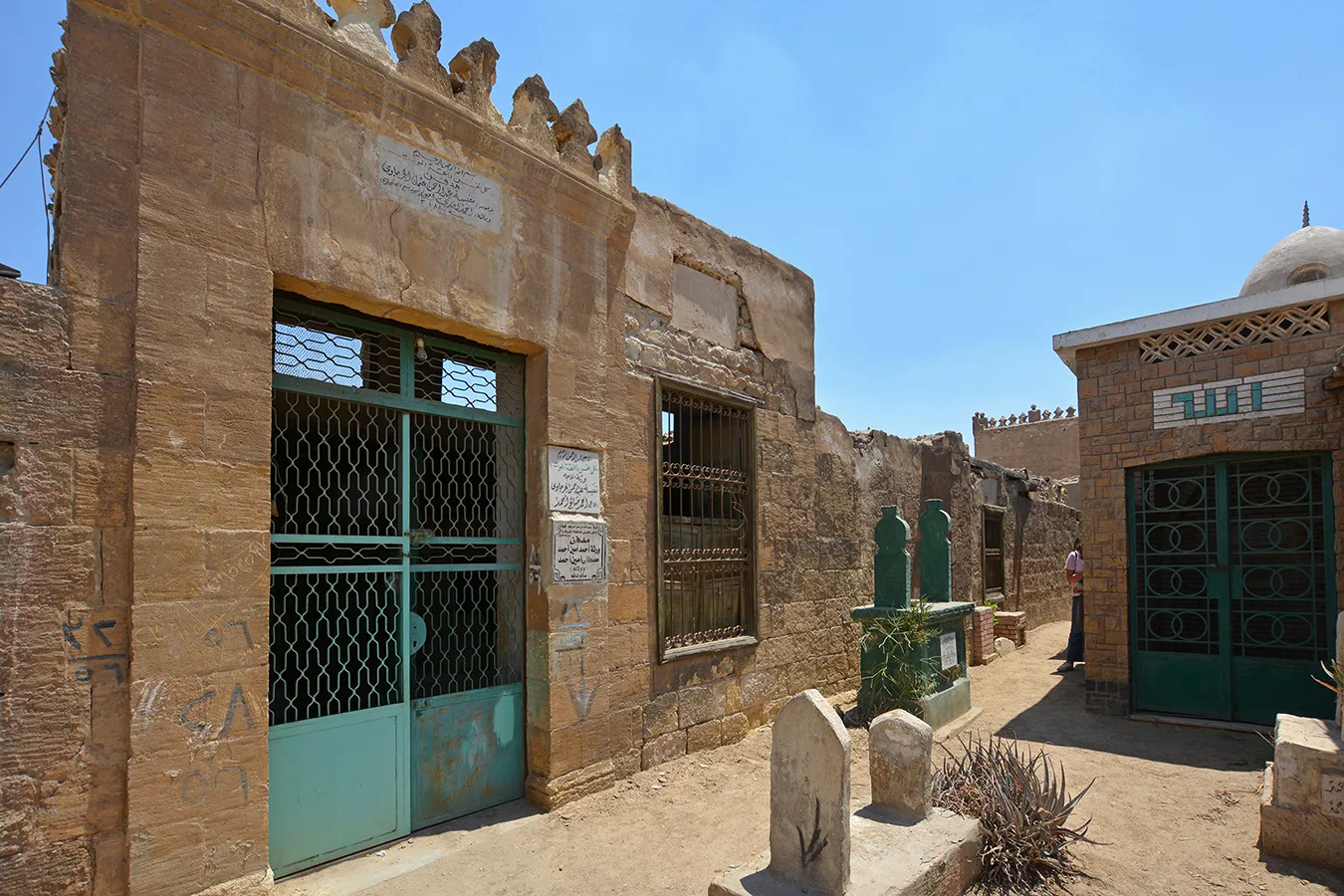
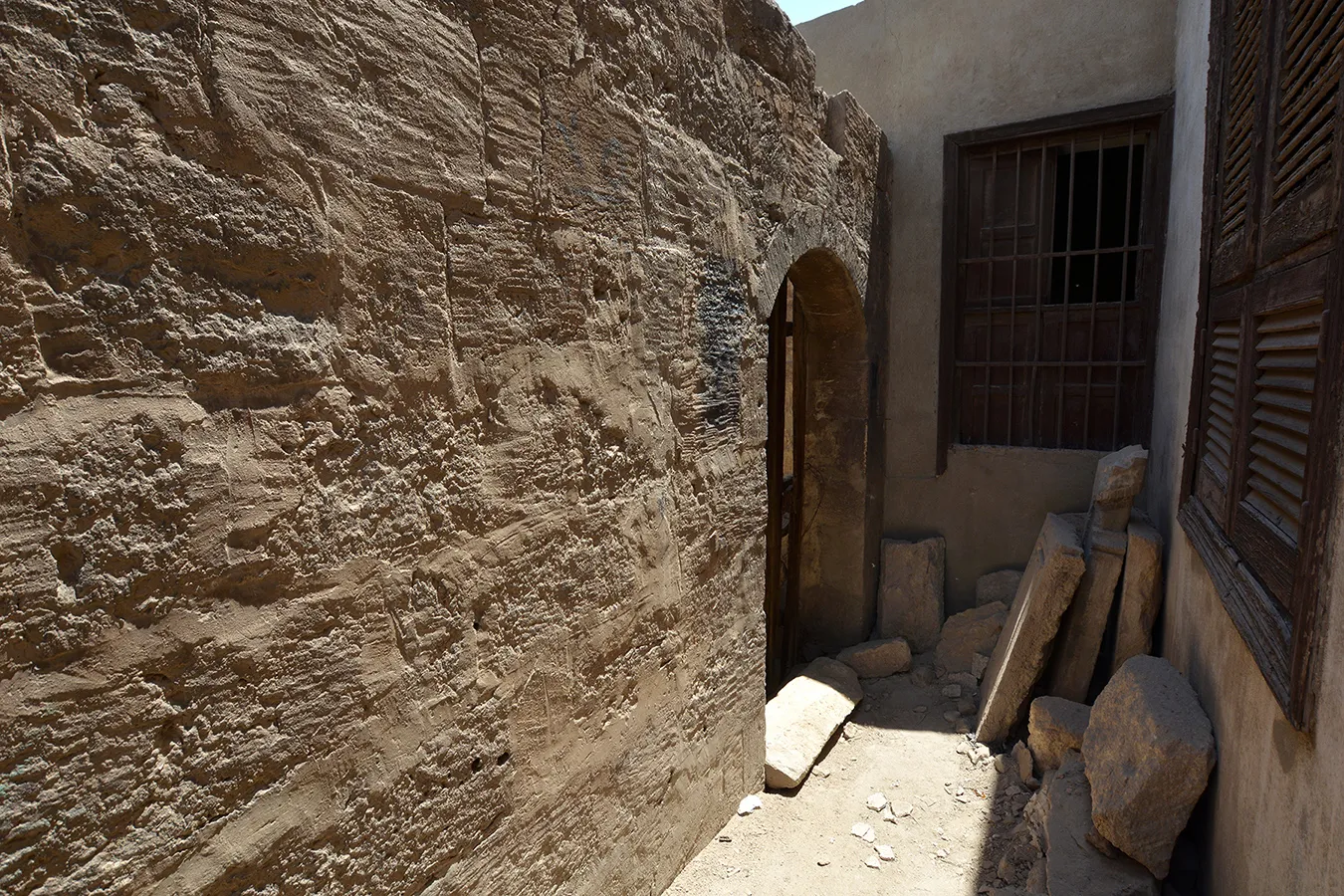
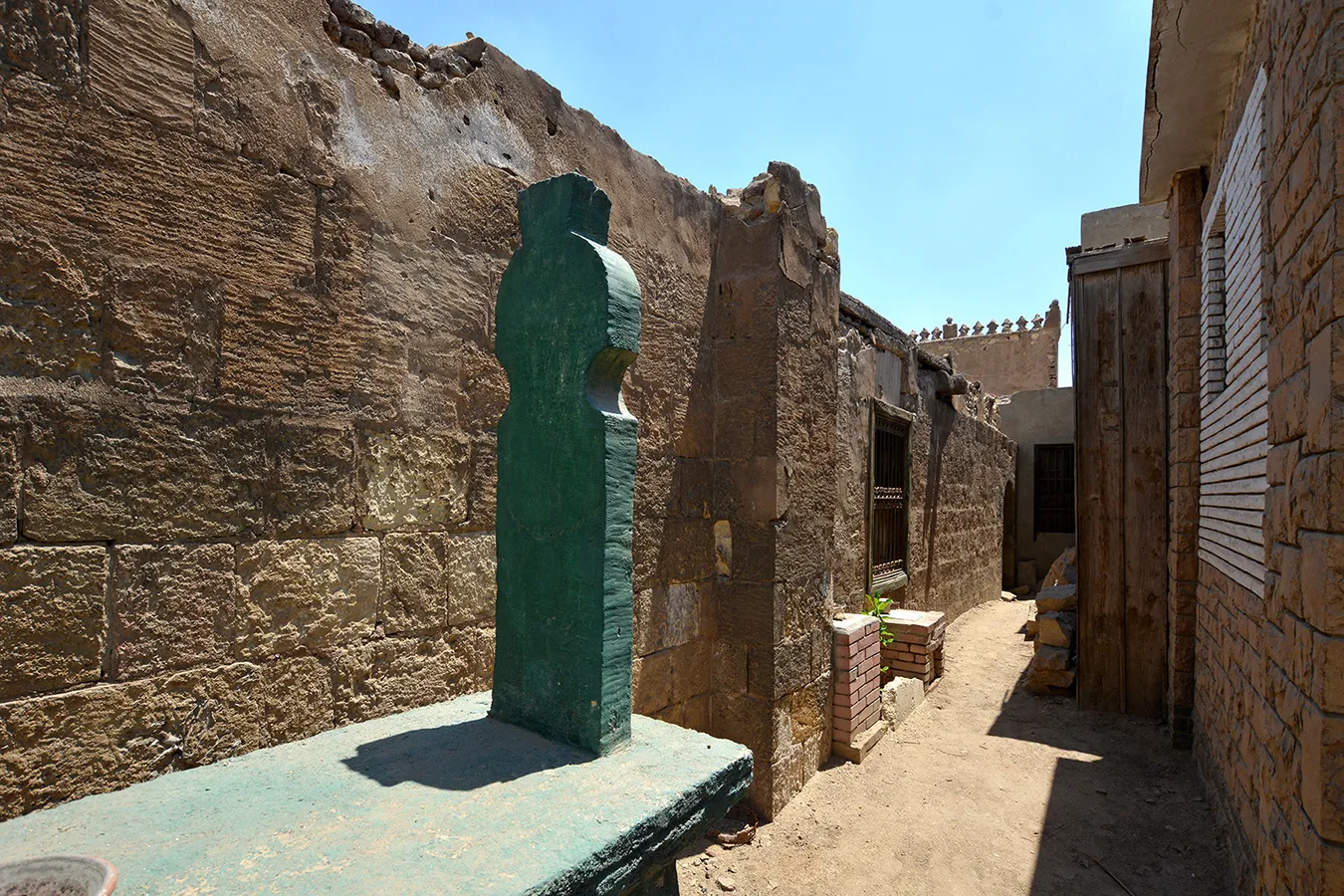
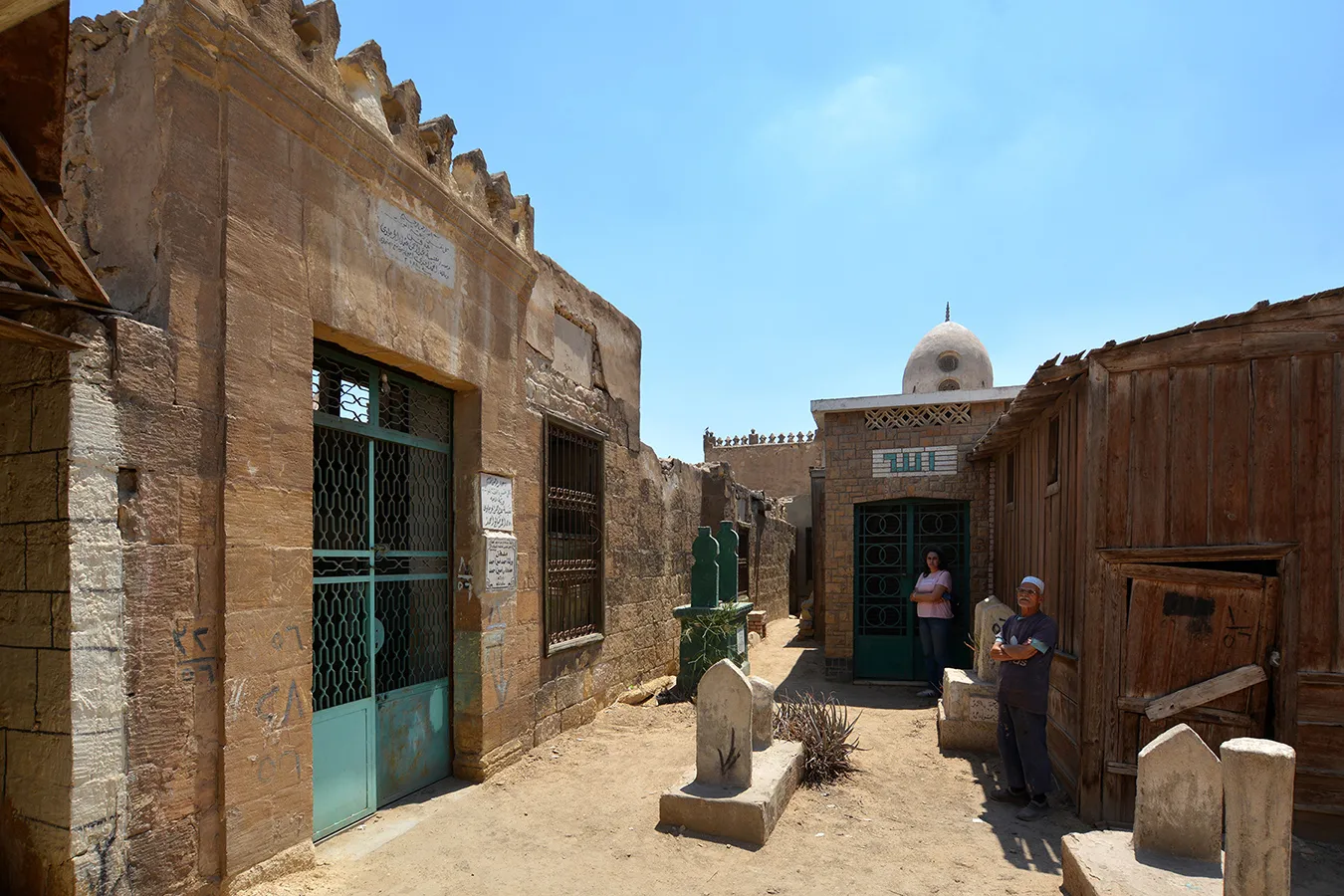
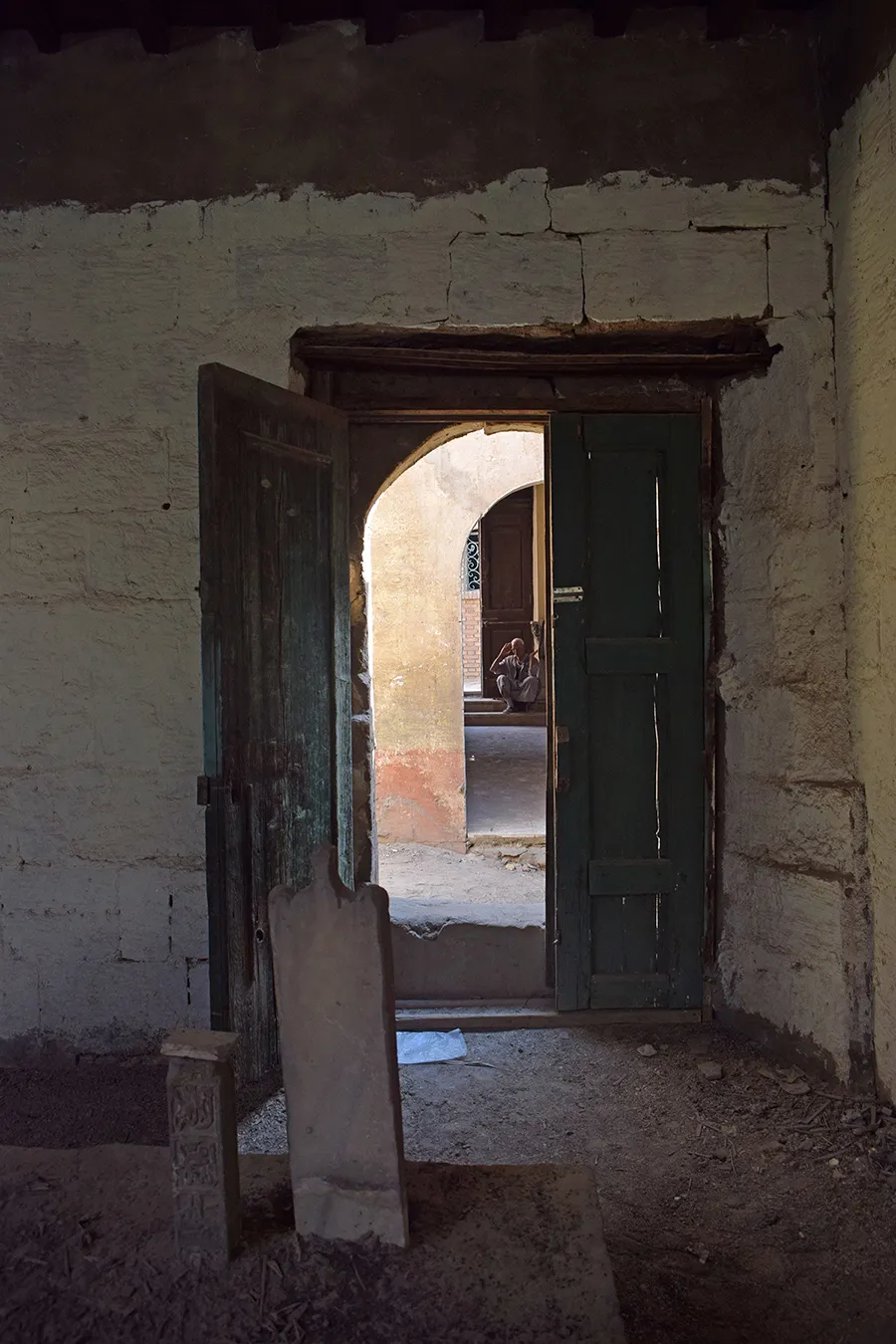
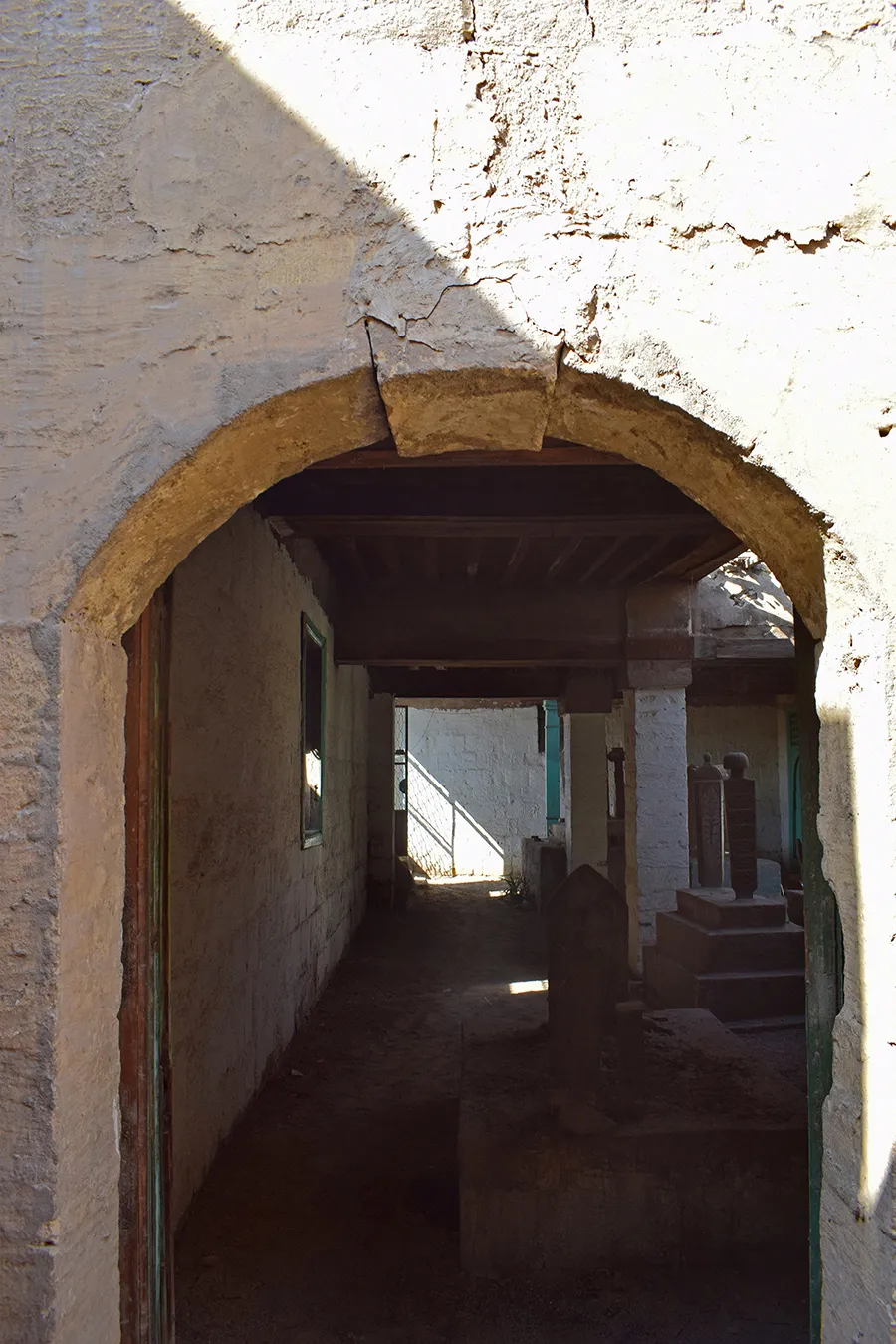
A single-storey rectangular structure measuring ca 12×17 metres. Its current form evidently results from numerous restorations and remodelling. There is no formal façade and the arrangement of the interior is haphazard. The entrance (western) façade built of rather roughly dressed ashlar stone is accessible from a narrow lane that is entered through a maze of open funerary enclosures and access lanes. It is built of rather roughly dressed ashlar stone; the workmanship appears typical of the Ottoman period. The entrance gate is in the left (northern) part of the façade. It is a wide rectangular door set in a very shallow projection topped with a simple cornice and fleur-de-lys crenellation. The door is covered with a flat arch of joggled voussoirs. The openwork steel door-leaves are modern. Farther south are two plain irregularly placed windows fitted with simple wrought iron grilles. At the far southern end of the façade is a door covered with a semi-circular arch. It leads to a narrow passage to a courtyard by the southern wall, which apparently was partly taken up by the enlargement of the neighbouring enclosure of al Baqli Family presumably in the early 20th century.
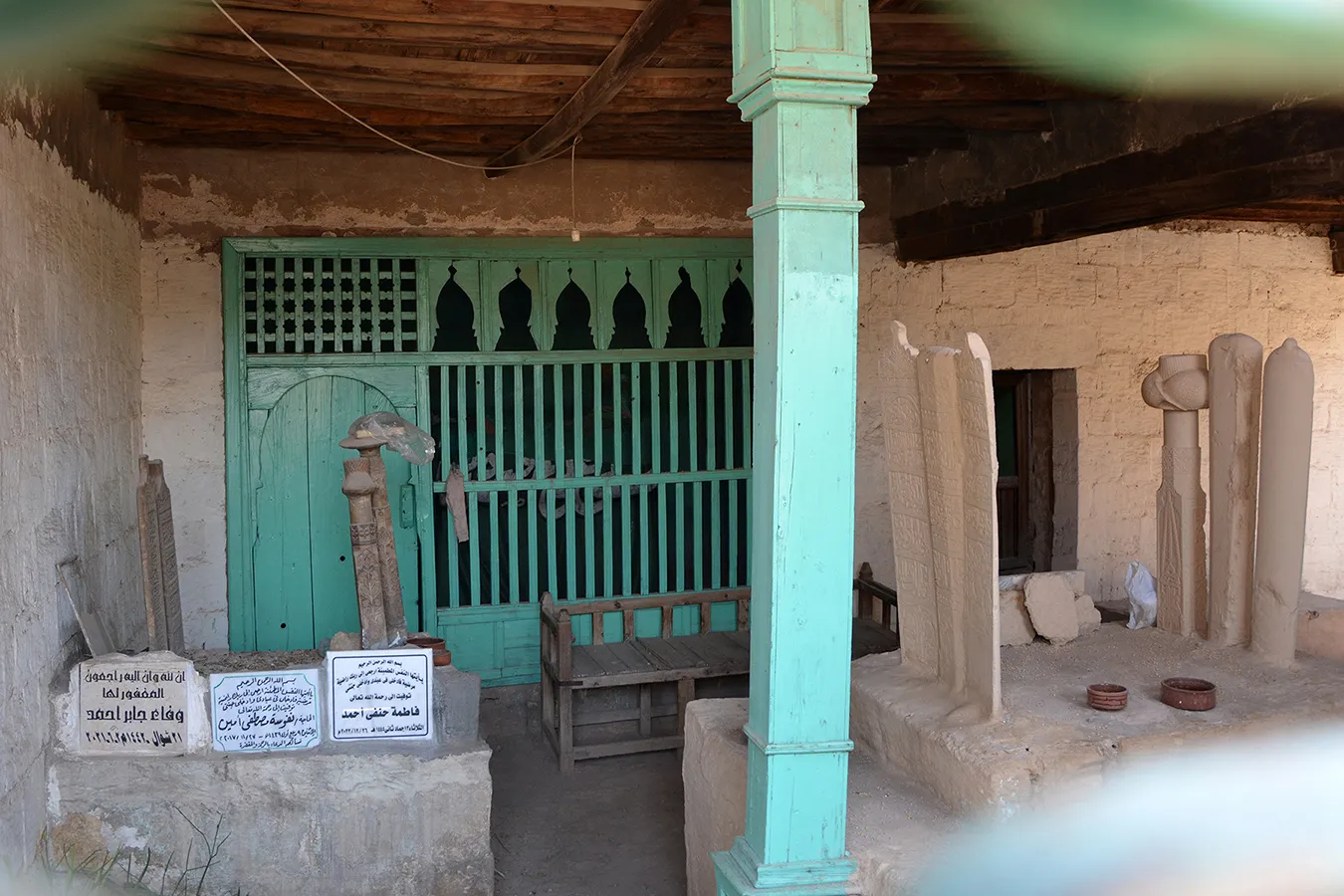
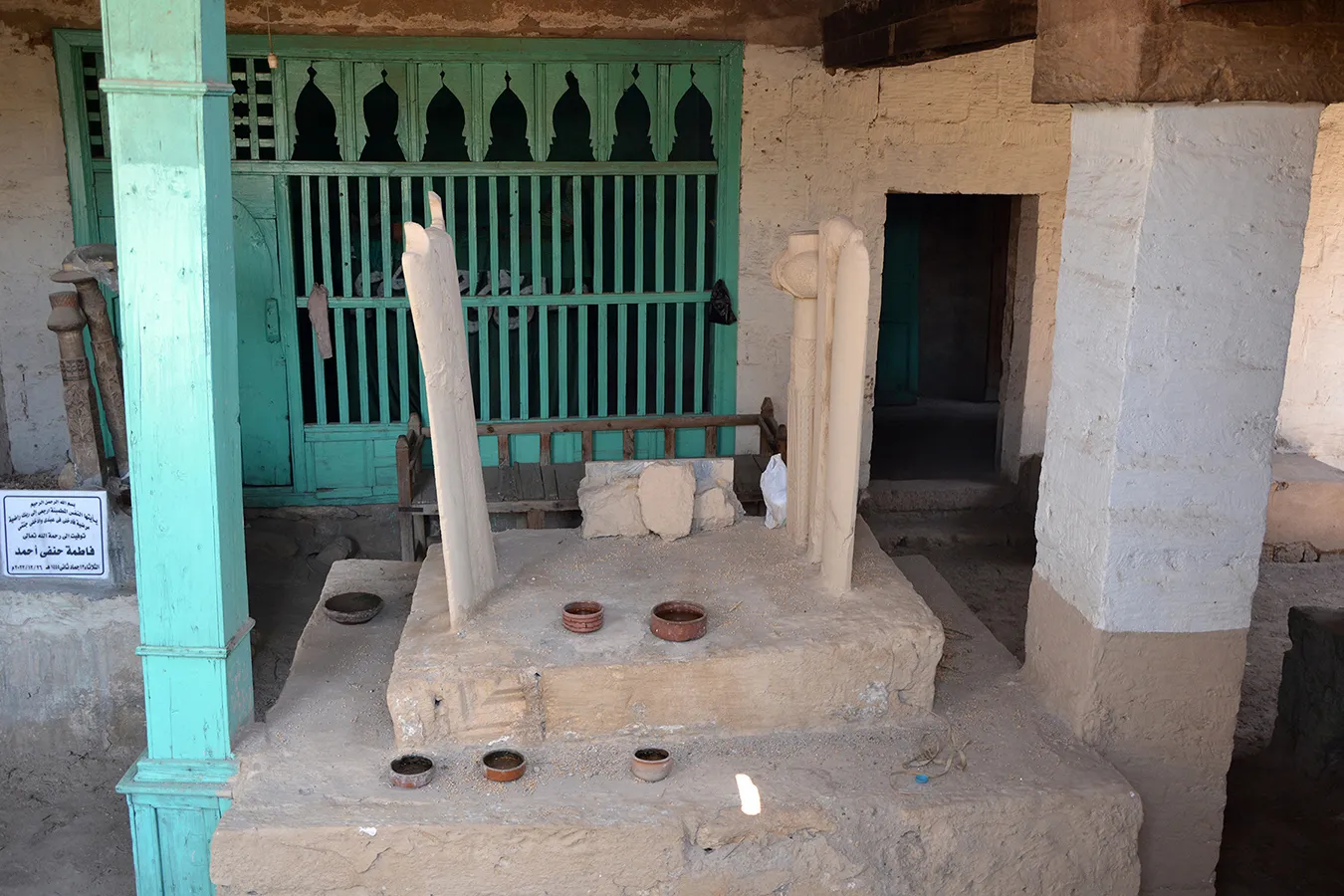
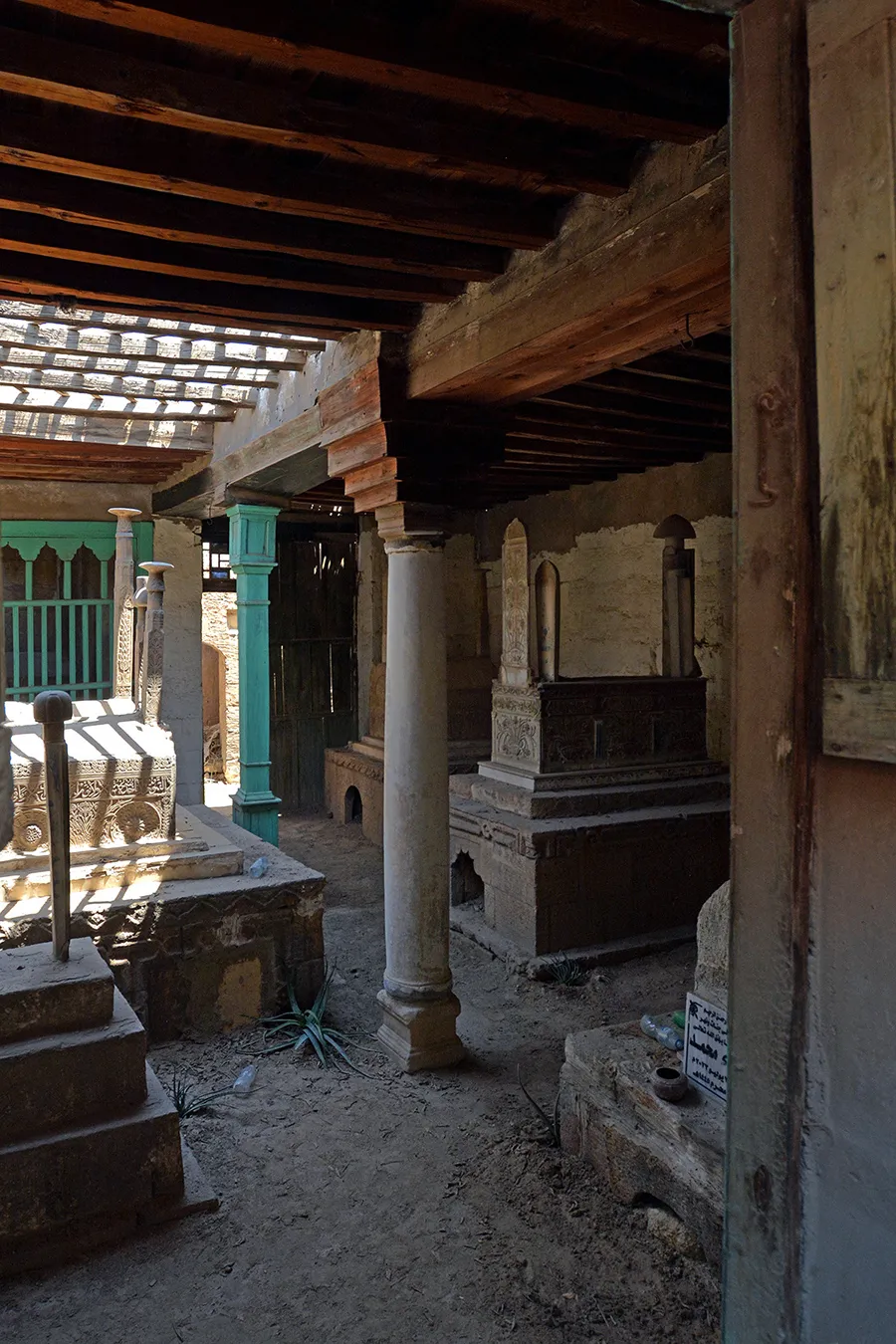
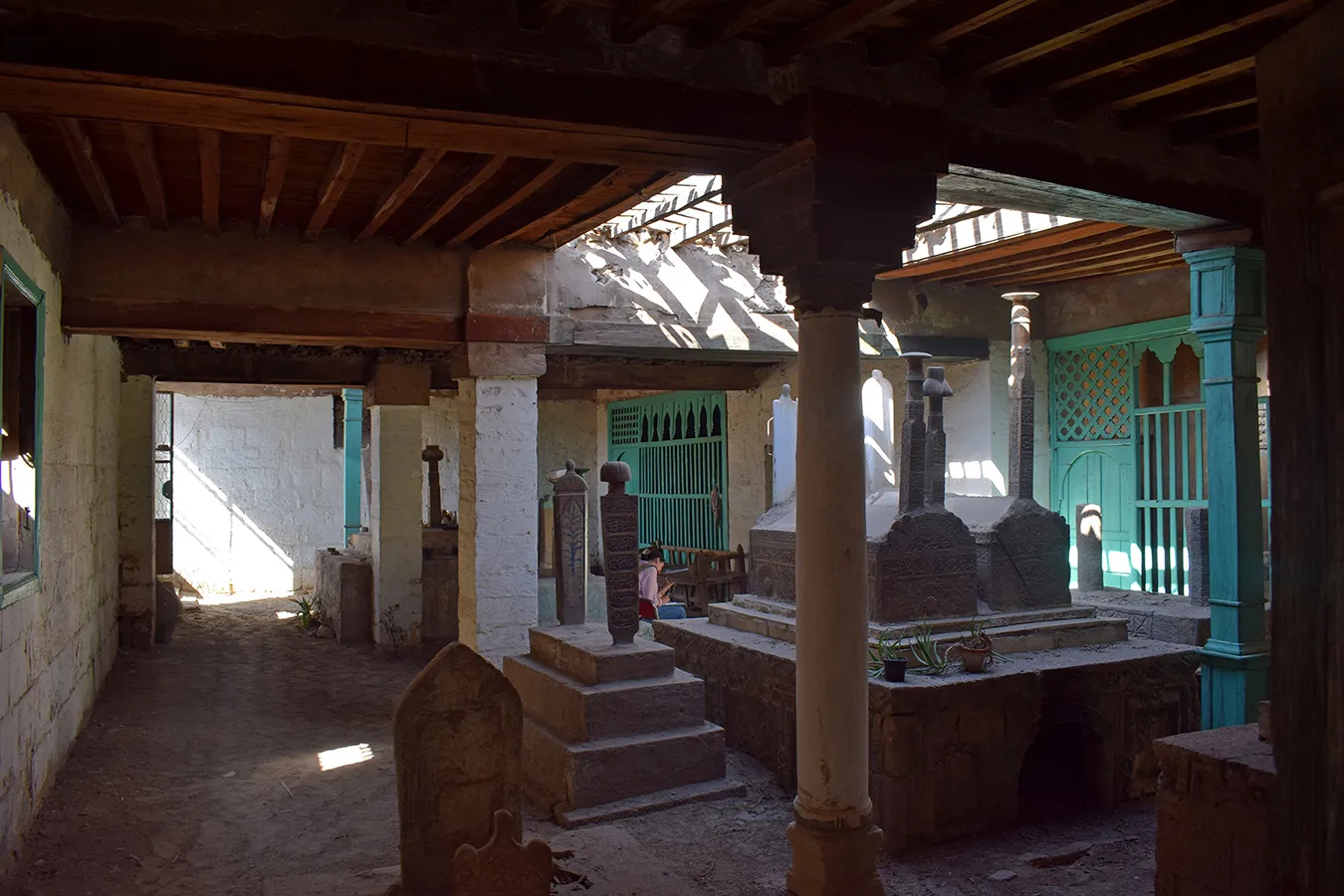
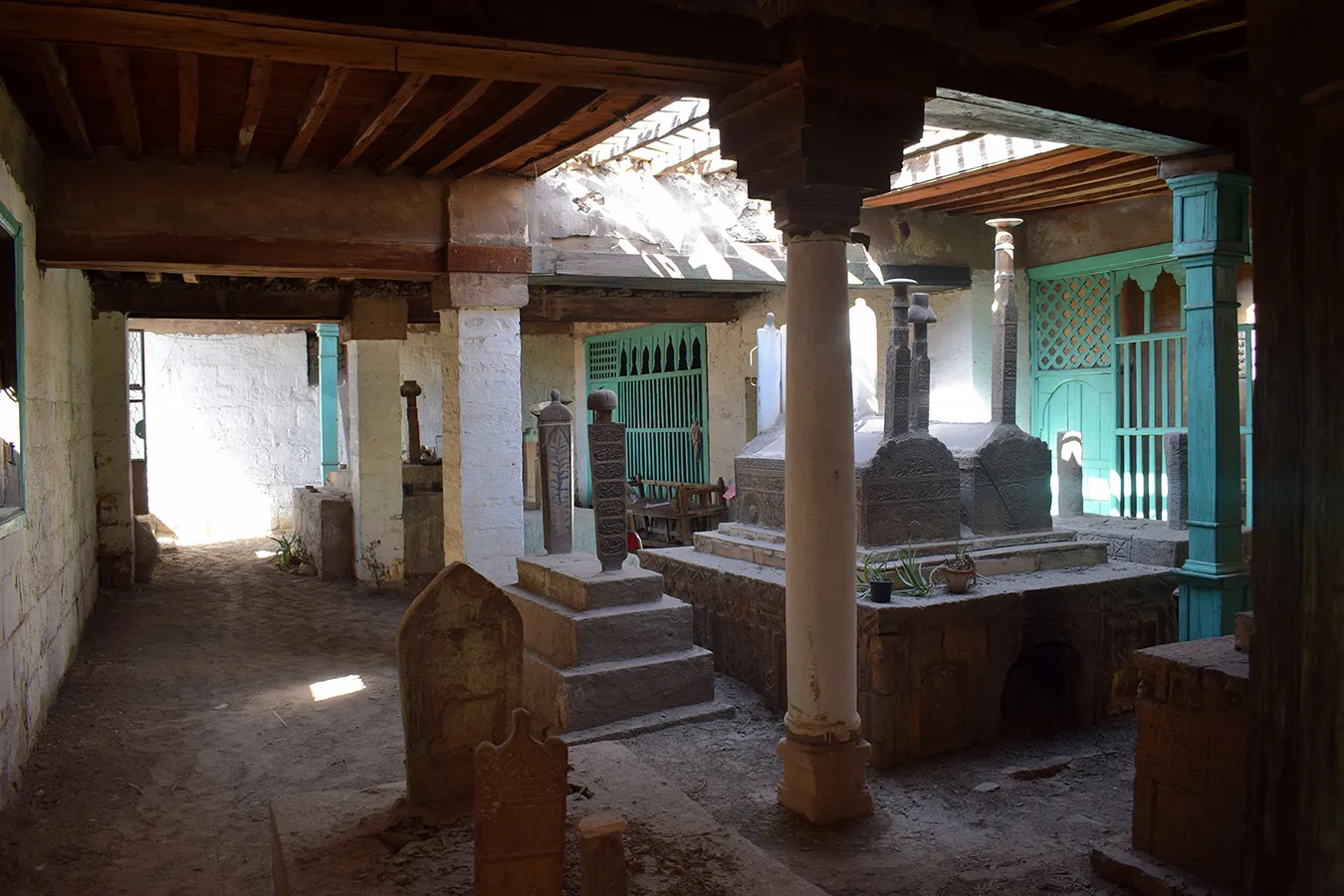
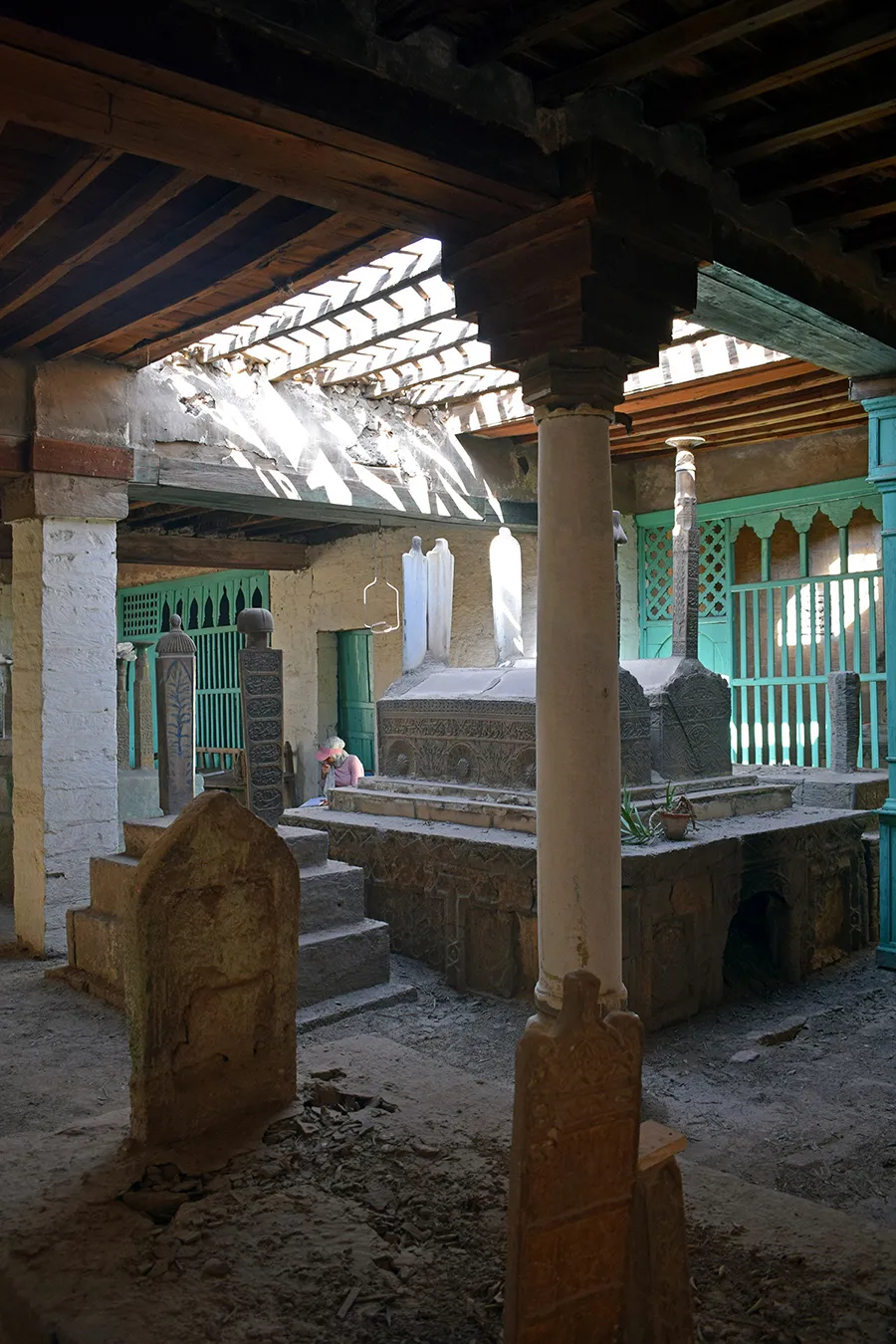
Internally, the roof is supported on an assortment of various irregularly placed columns and pillars: three square and one round pillars of stone and two of wood. There is skylight in the middle of the southern part of the structure where the roof cover over the roofing beams is replaced with a very simple trellis; the section in the north-western corner of the interior is taller, forming a clerestory of six simple windows. By the eastern wall are two open-fronted rooms screened off with simple decorative wooden screens. The southern one features an octagonal roof lantern covered with a pointed roof. In the roof over the eastern section of the building are also two small “malqaf” wind-catchers. There are service rooms: a kitchen and a toilet in the south-eastern corner.
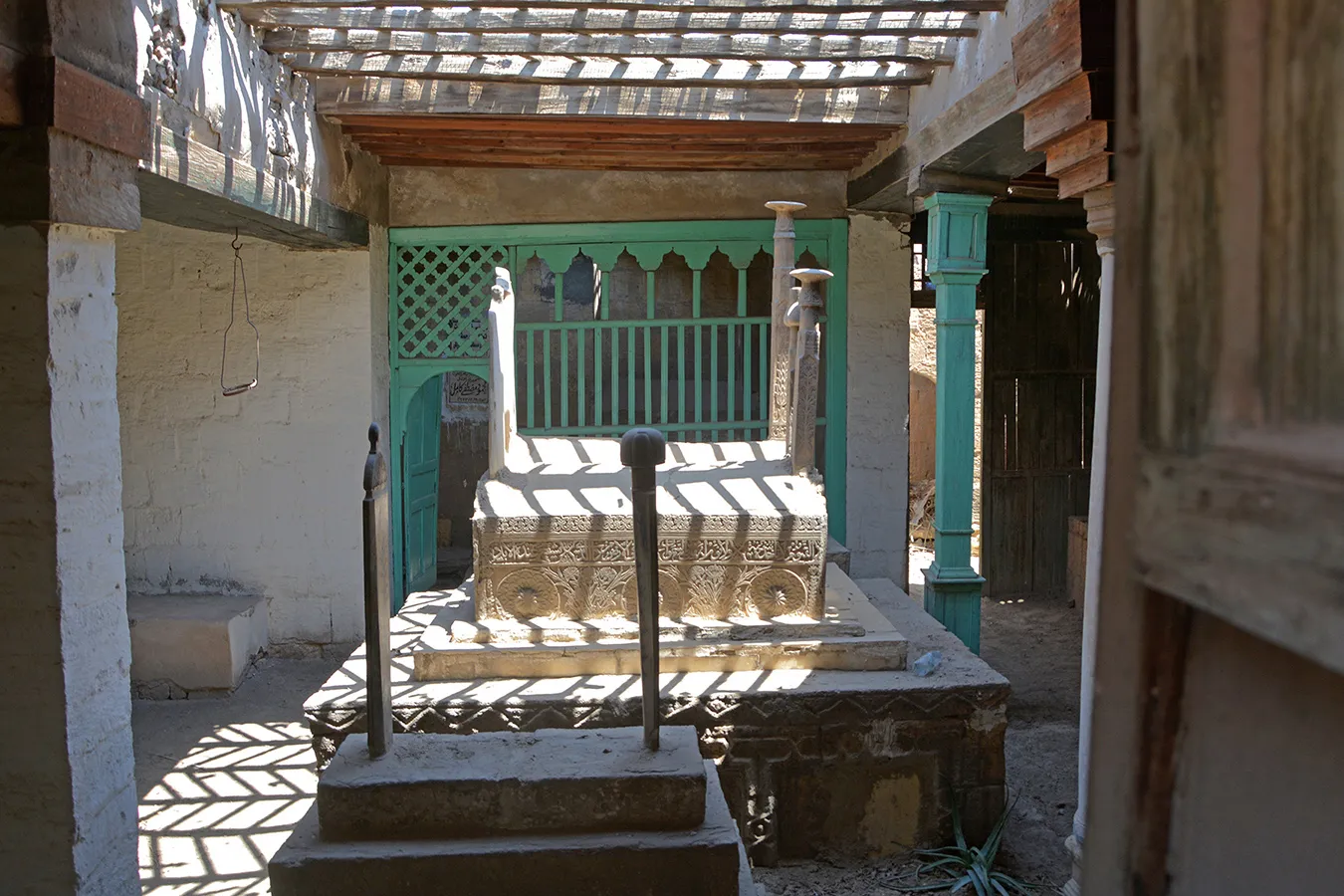
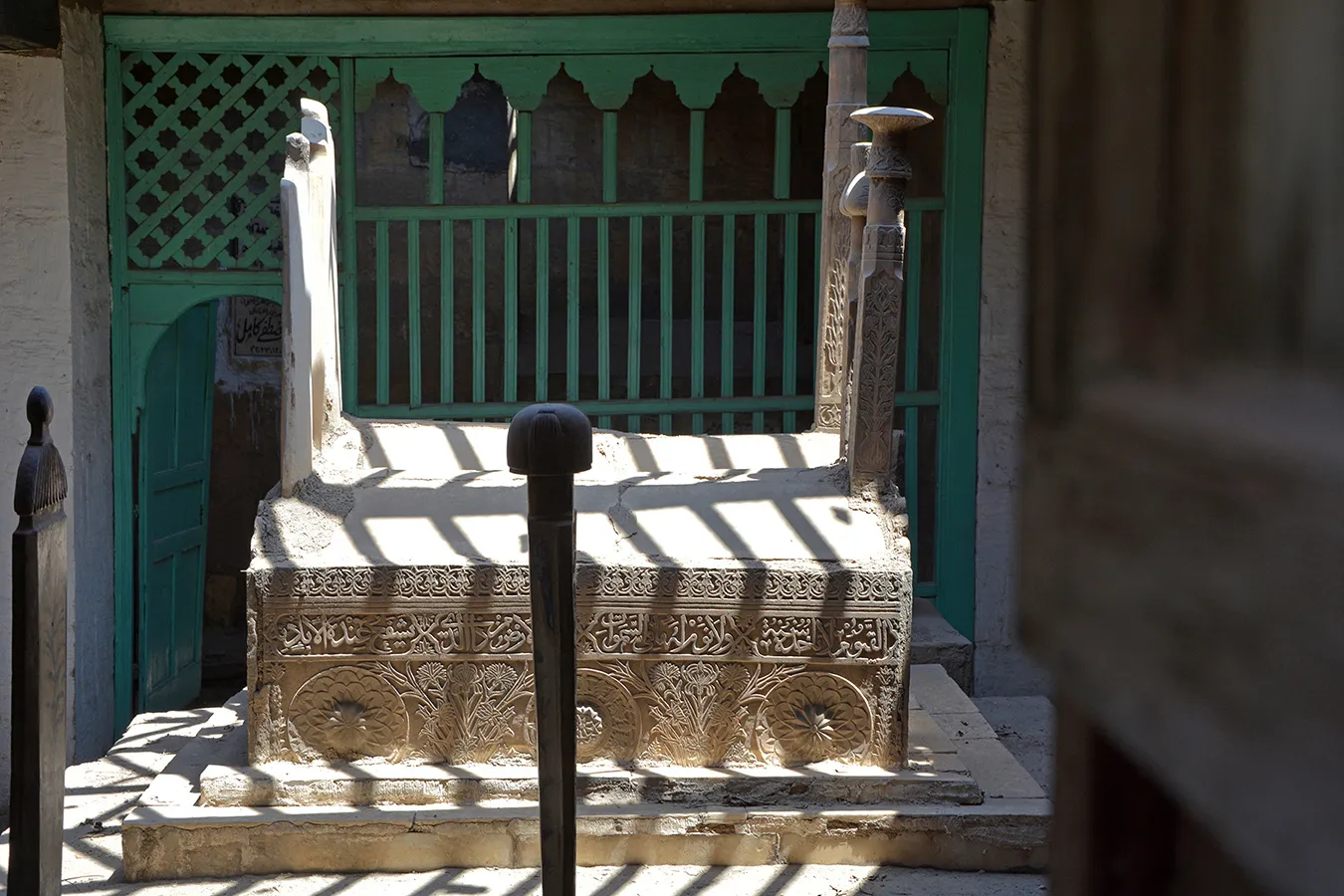
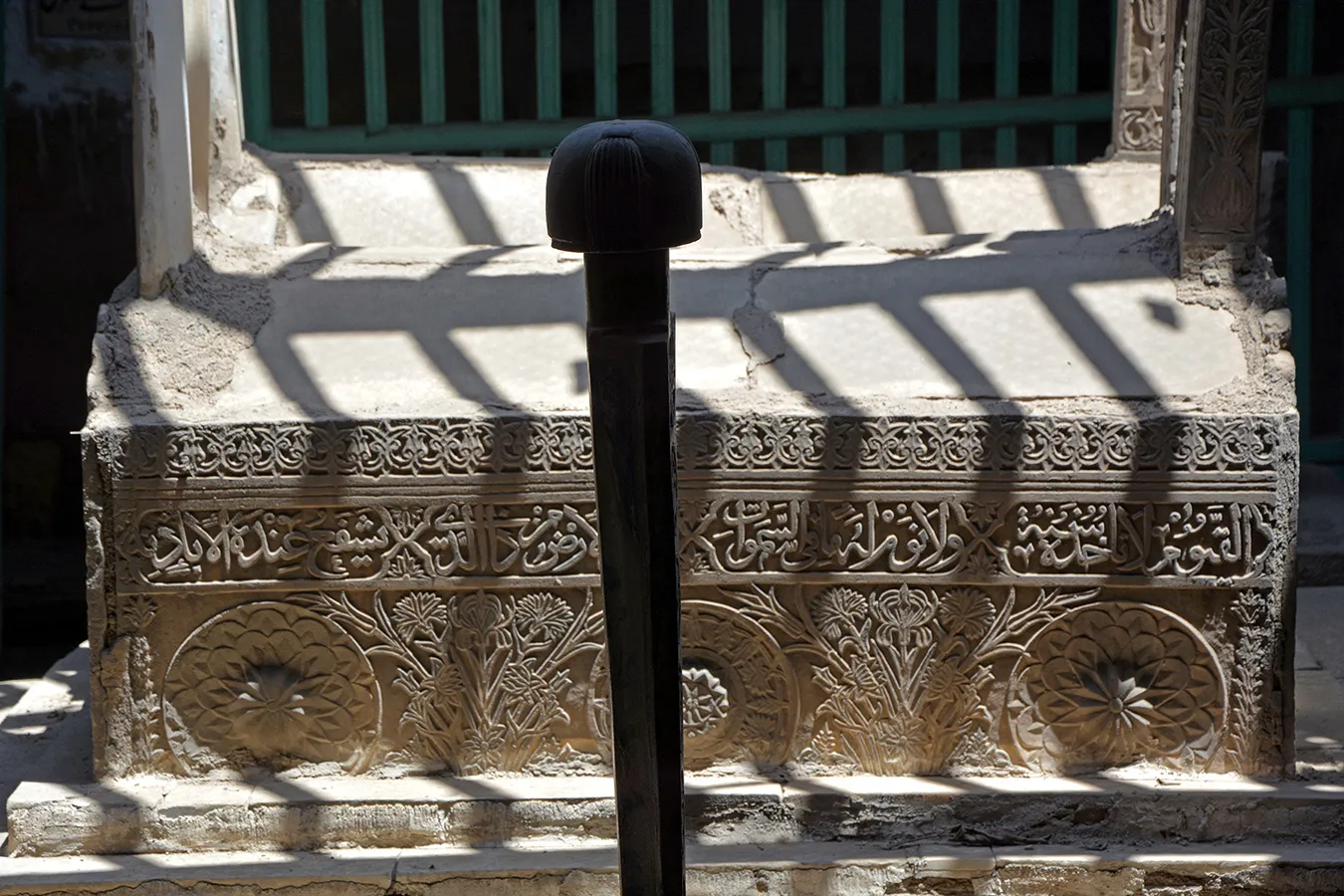
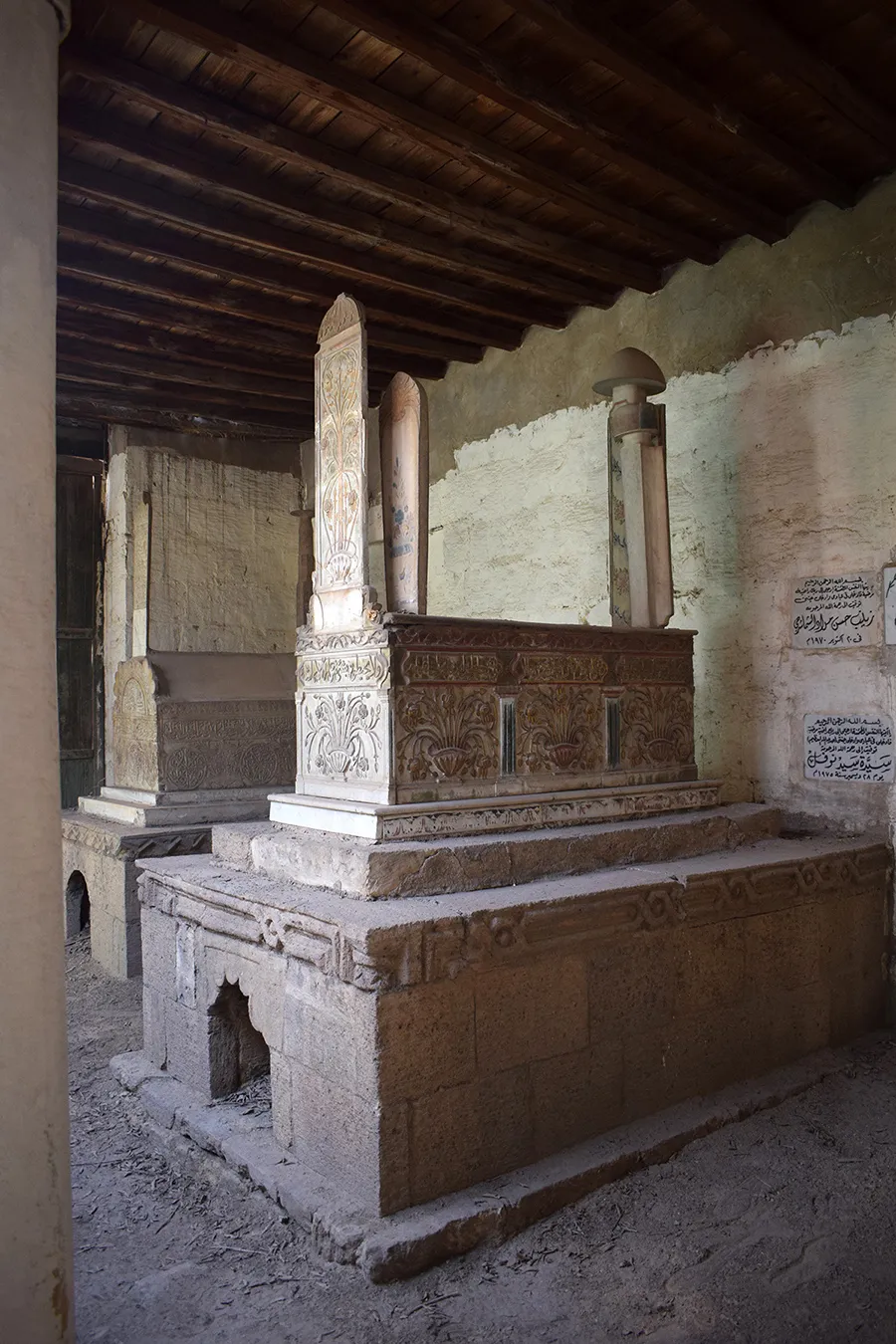
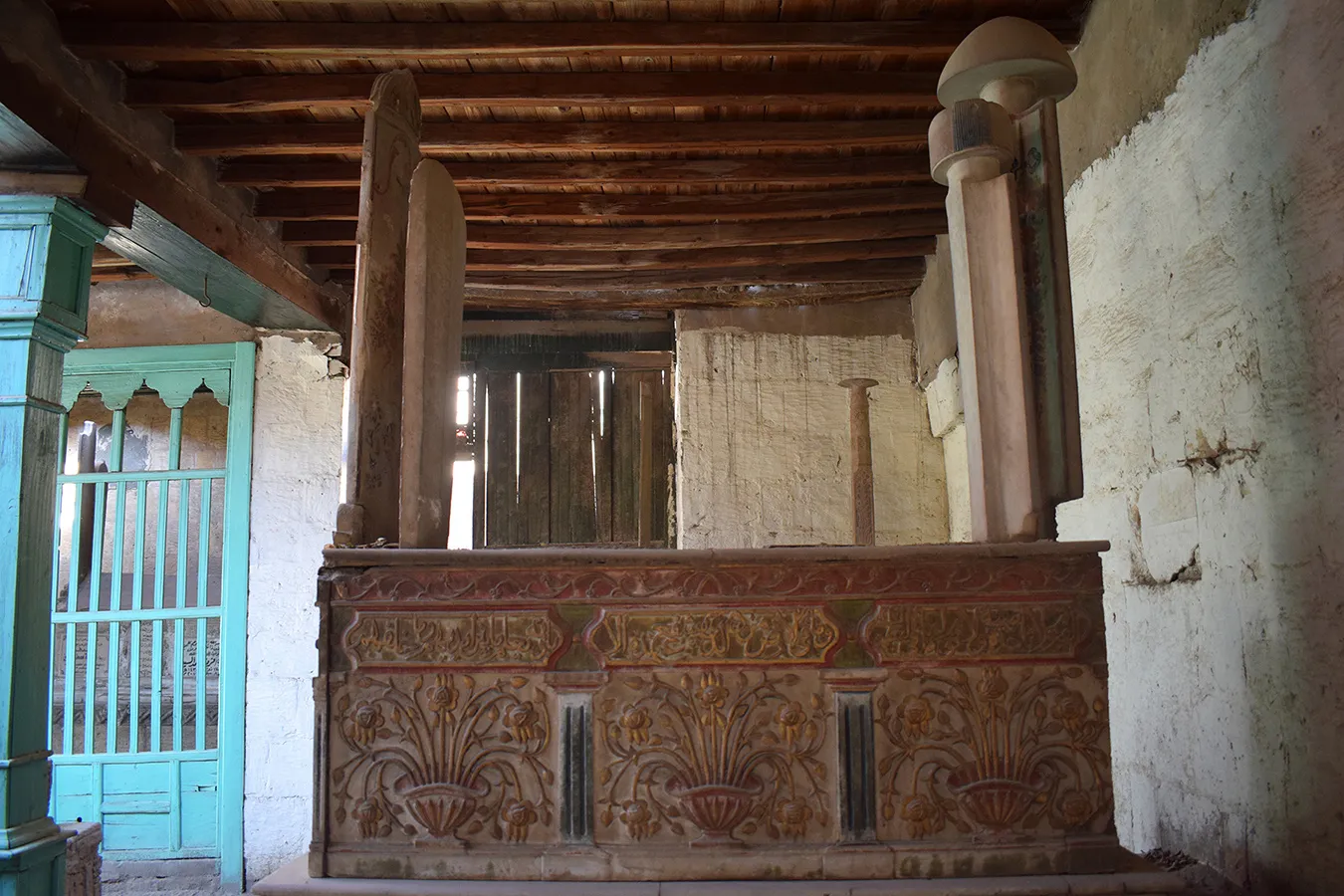
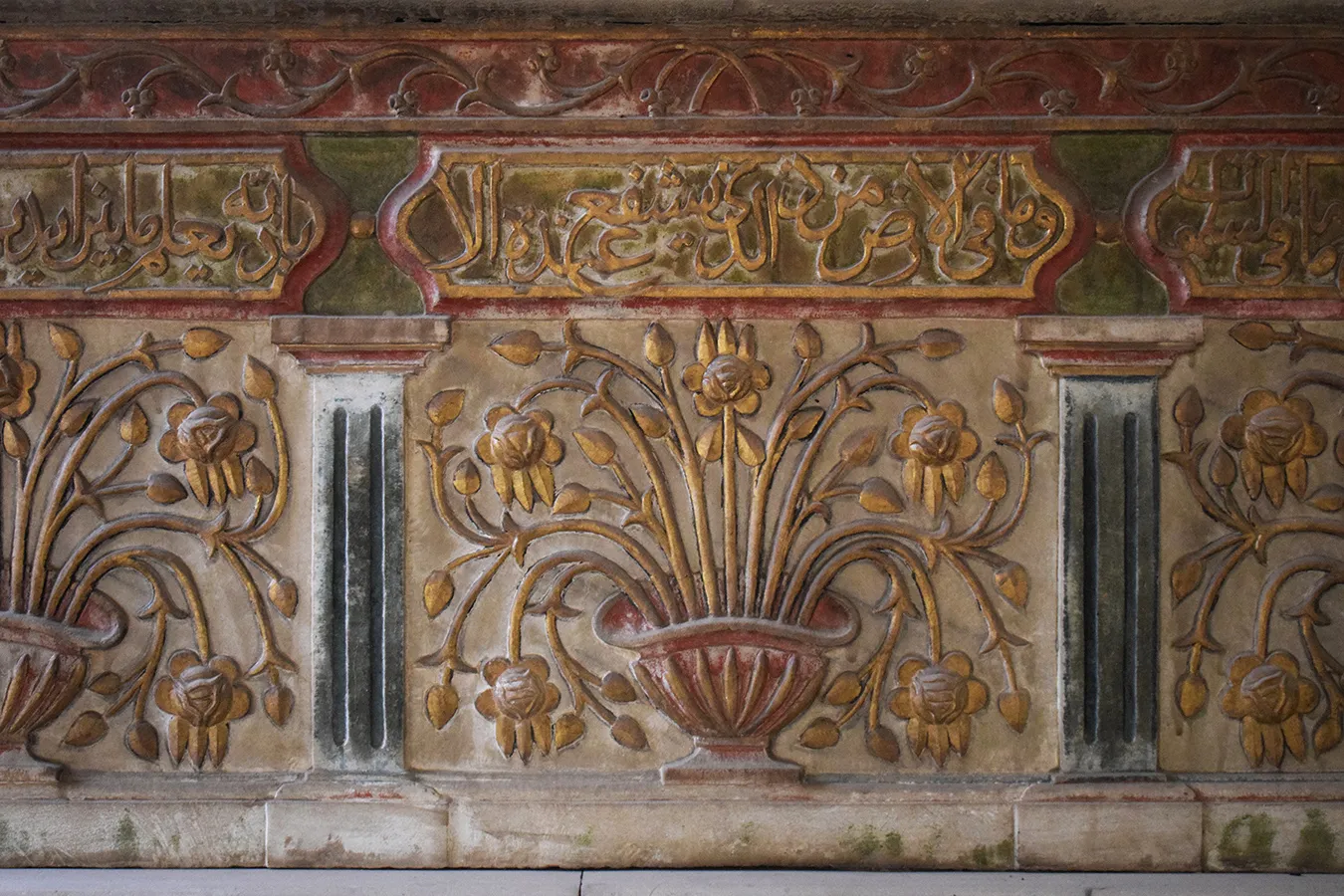
Irregularly placed within the interior are tomb markers, three of which are huge mastabas built of limestone, with arched openings in the lower parts and with edges and corners decorated with knotted mouldings of typically Otttoman angular profiles. On the two placed by the southern wall stand elaborately carved marble cenotaphs, and on the largest one under the skylight stand two cenotaphs. The other tomb markers are simple stepped structures of limestone. All carry shahid stelae, sometimes in sets of three, some of them topped with turban and other headgear ornaments. Some stelae are flat, other square or octagonal in sections. The quality of workmanship varies, but some calligraphic inscriptions in raised relief are of very high quality. The oldest are dated to 1443 and 1455 AH [corresponding to AD 1731 and 1742]. The other cenotaphs are apparently later, with one bearing the date AH 1270 [1854] and the enclosure has been used for burials up to the modern times, as attested by recent commemorative marble plaques, one dating from AH 1445 / AD 2022.
The ongoing controversy between the two families sharing the burial ground makes access difficult and often impossible.
Condition of preservation
The overall structural condition is fair; the unit is used as a burial ground and receives basic maintenance. Woodwork is damaged and desiccated.
Information abut the founder, family history, etc.
The modern inscription plaque over the entrance door stated that this is a funerary enclosure of the late Nafisa ‘Abd al-Rahman Uthman al-Girgawi and the family of Ahmad Effendi Amin, known as Shaykh al-Sanhawi and gives a date 1880 (Miladi only).
According to the keeper, the complex originally comprised both al-Sanhawi and the adjacent al-Baqli familes’ enclosures and was subsequently divided. This appear consistent with the layout of the lot
- Field recording by
- Hadeer Ahmad, Nur Attiya, and Radwa al-Sayid
- Date recorded
- August 11, 2022
- Data entered by
- Jaroslaw Dobrowolski
- Date entered
- May 19, 2024