
Unit No33
Fatma Hanim Isma‘il
|
Coordinates of the main entrance |
30.042365N - 31.268959E |
|
Attribution |
Fatma Hanim Isma‘il |
|
Higri (AH)Dates as given in the Inscription |
|
|
Miladi (AD)Dates as given in the Inscription |
|
|
Inscription Contemporary with the building? |
No |
|
Multiple date(s) In the inscription? |
No |
|
Assumed Date |
1362 A.H./A.D. 1943 |
|
Based on |
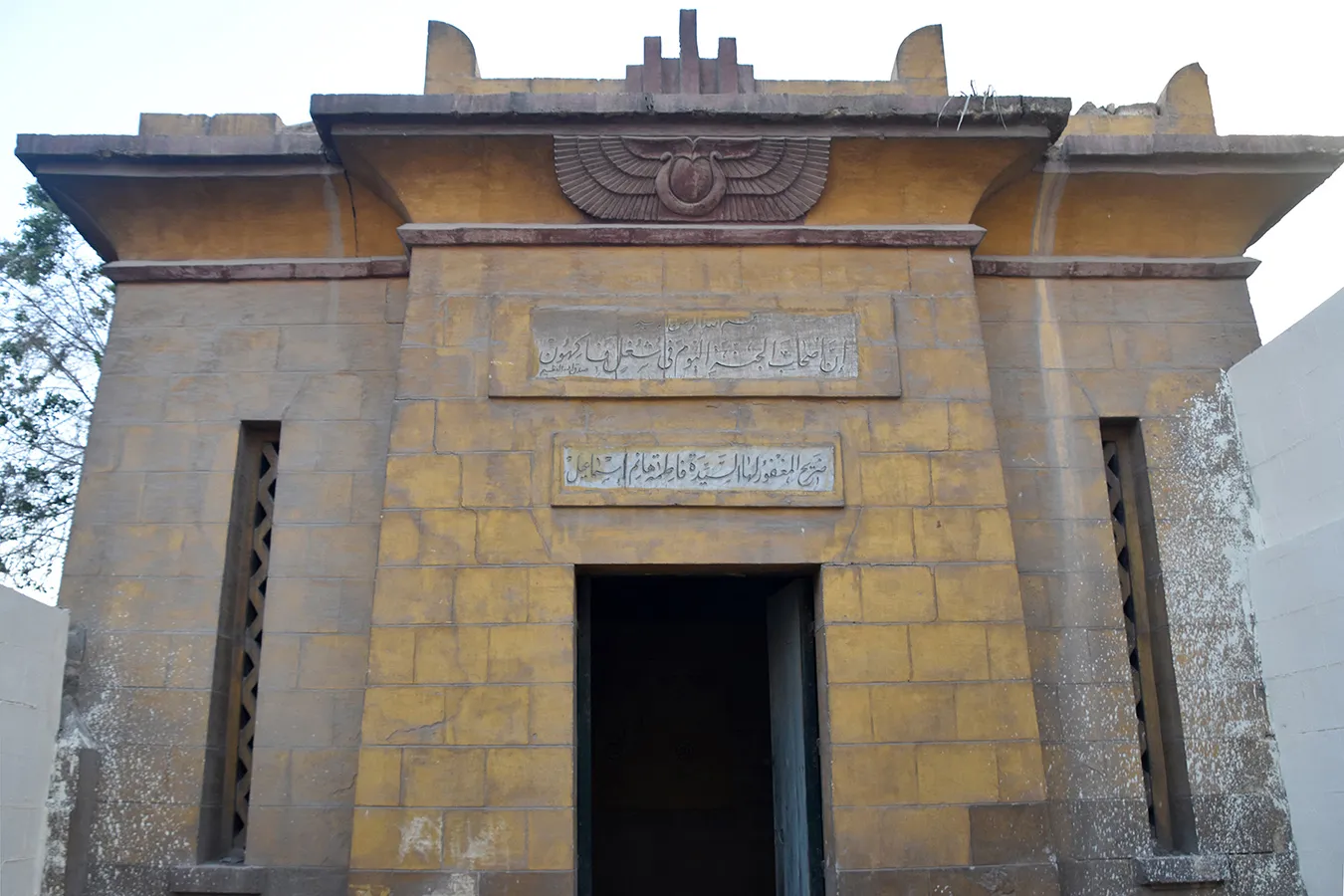
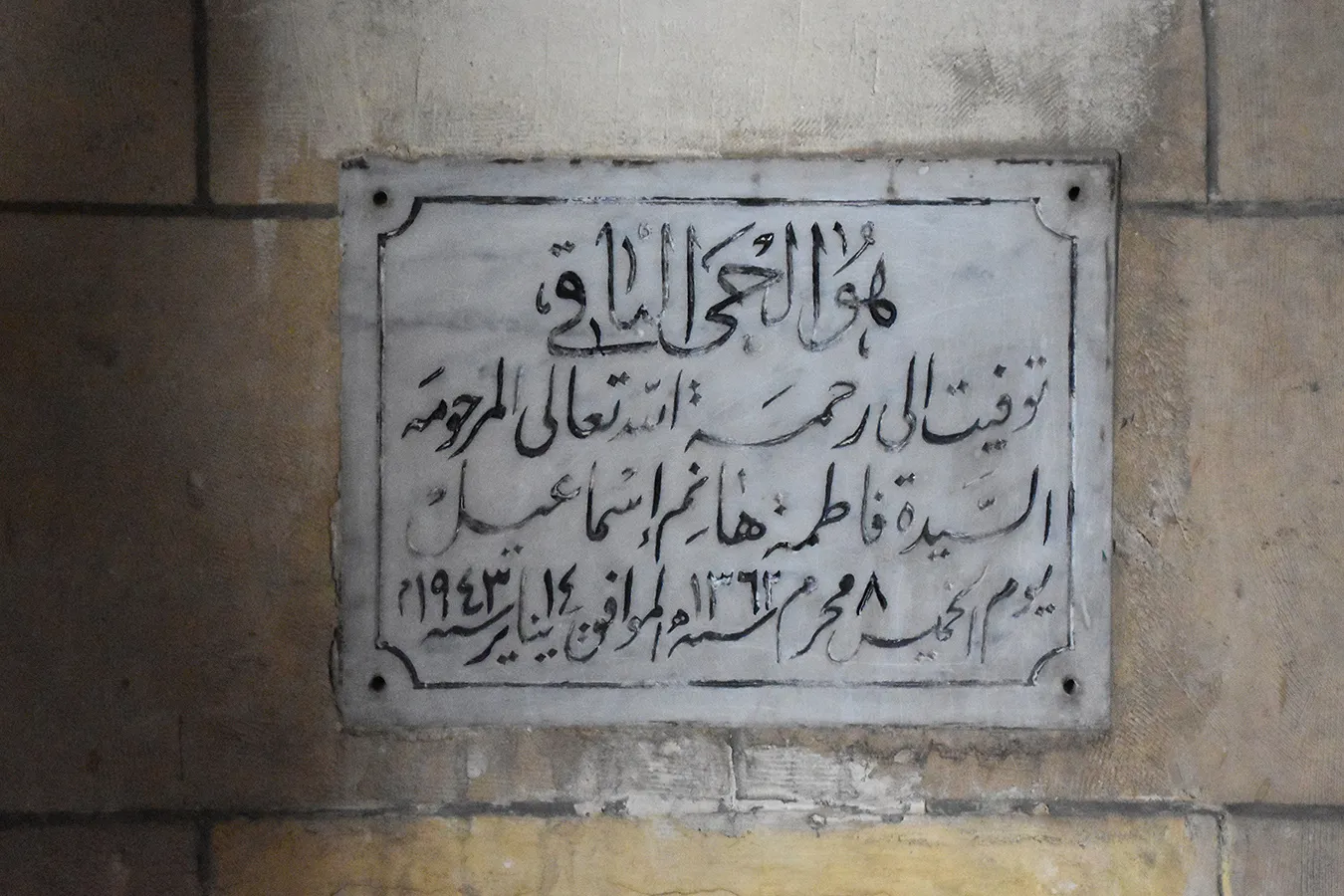
Date of Fatma Hanim Isma‘il’s death on the marble panel on the interior wall. This is consistent with the style popularised by the “Egyptomania” following the discovery of King Tutankhamun’s tomb in 1922. |
|
Original Use |
Funerary enclosure |
|
Current Use |
Funerary enclosure |
|
Overall condition |
Good |
Features of unit 33
| Present | Count | Material | Comments (see description for details) | |
|---|---|---|---|---|
| Free standing structure | No | |||
| Walled enclosure | Yes | 1 | limestone | |
| Rooms by the perimeter wall | Yes | 1 | limestone | |
| Freestanding structure(s) in enclousure | No | |||
| Dome over the tomb chamber | No | |||
| Neo-Mamluk architectural decoration | No | |||
| Garden layout | No | |||
| Sabil(s) | No | |||
| Wall fountain(s) | No | |||
| Canopy on columns / pillars | No | |||
| Carved marble cenotaph(s) | No | |||
| Decorated limestone tomb-markers | No | |||
| Decorated gateway | No | |||
| Decorative door-leaves | No | |||
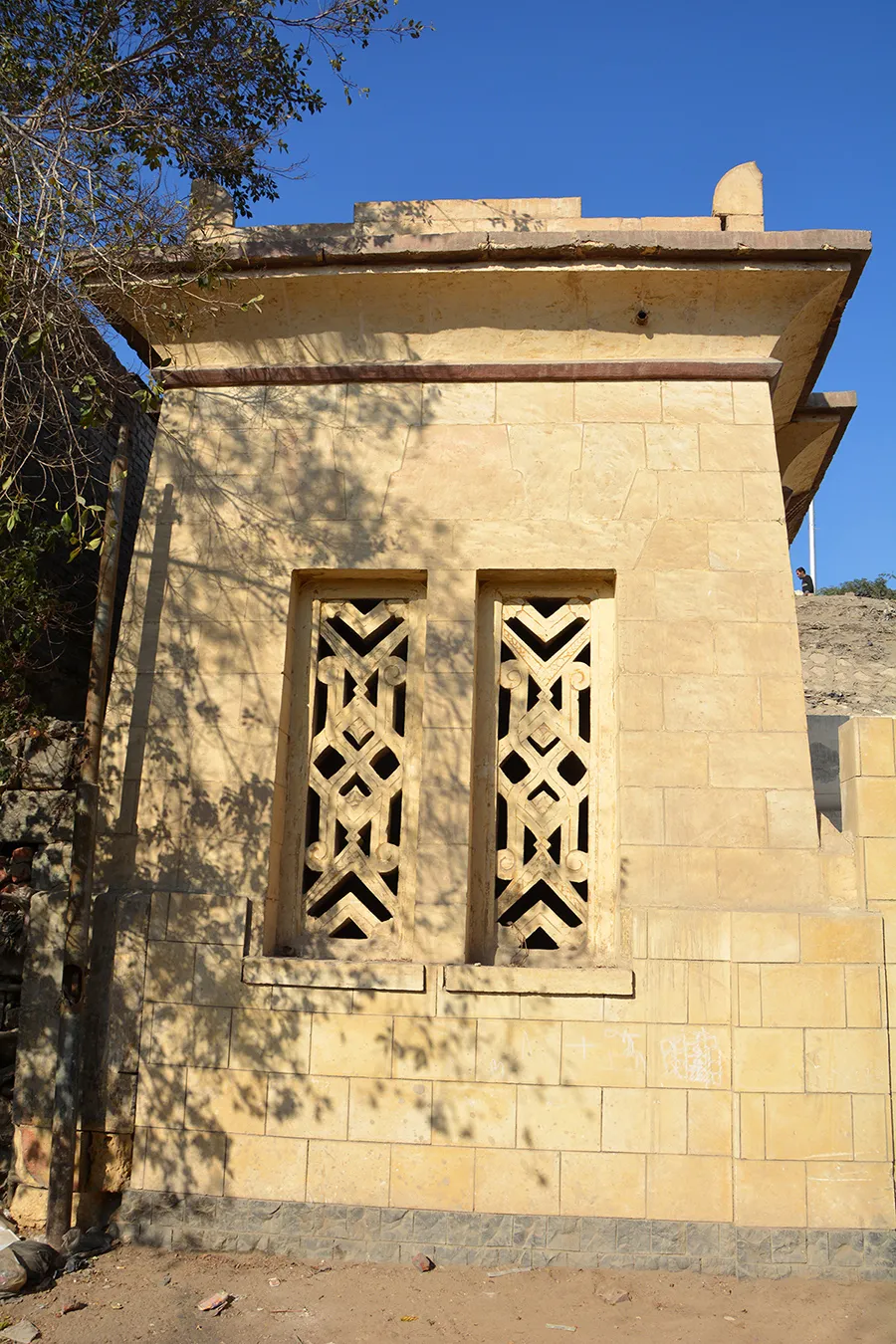
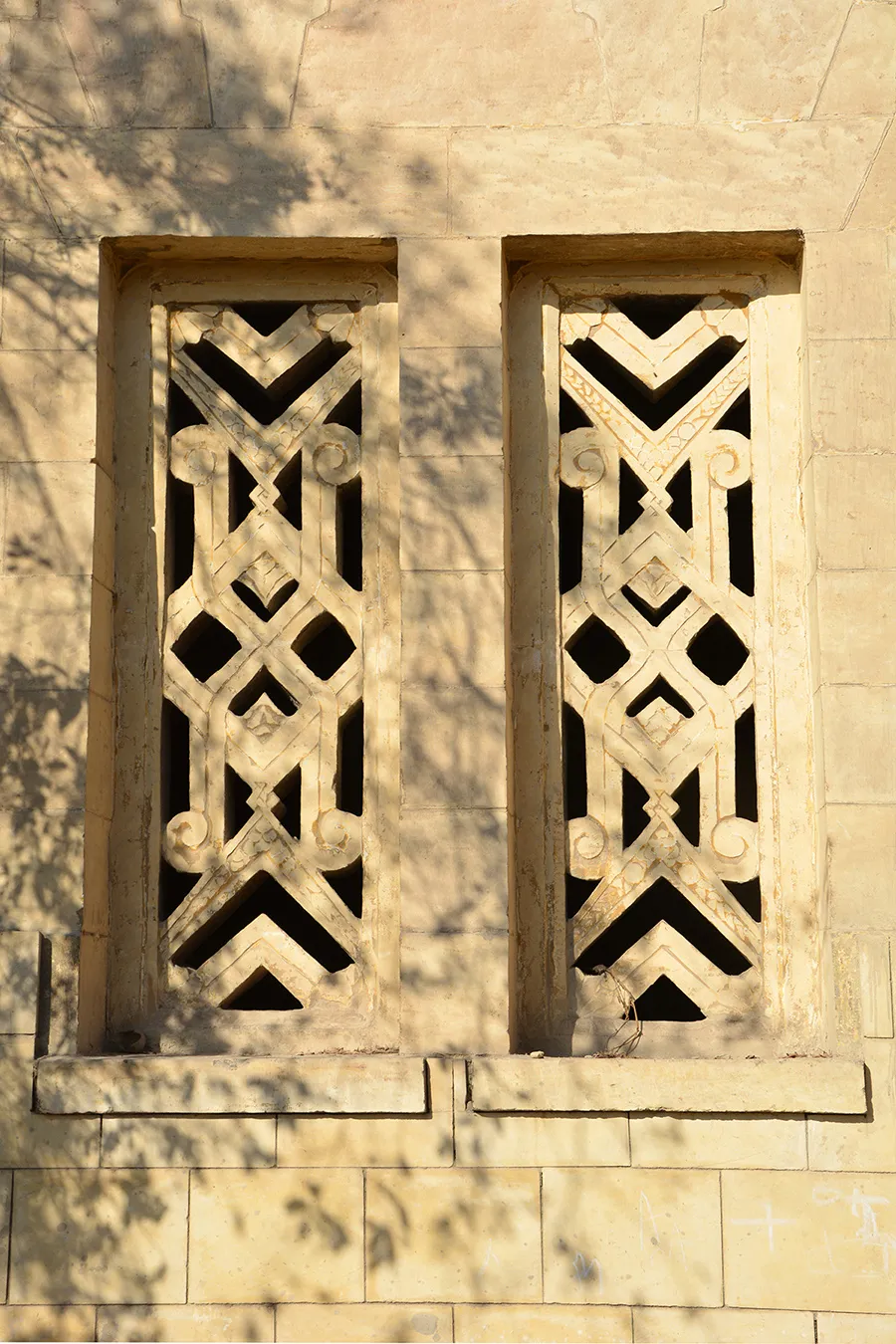
| Decorative window grilles | Yes | 6 | limestone | One blocked by the Salah Salem Road embankment |
| Decorative shutters | No | |||
| Painted ceiling(s) | No | |||
| Decorative paving(s) | No |
Unusual or unique features
• The “Ancient Egyptian revival” style
Description (The direction towards Mecca (Qibla) is described as eastern and other directions are named accordingly)
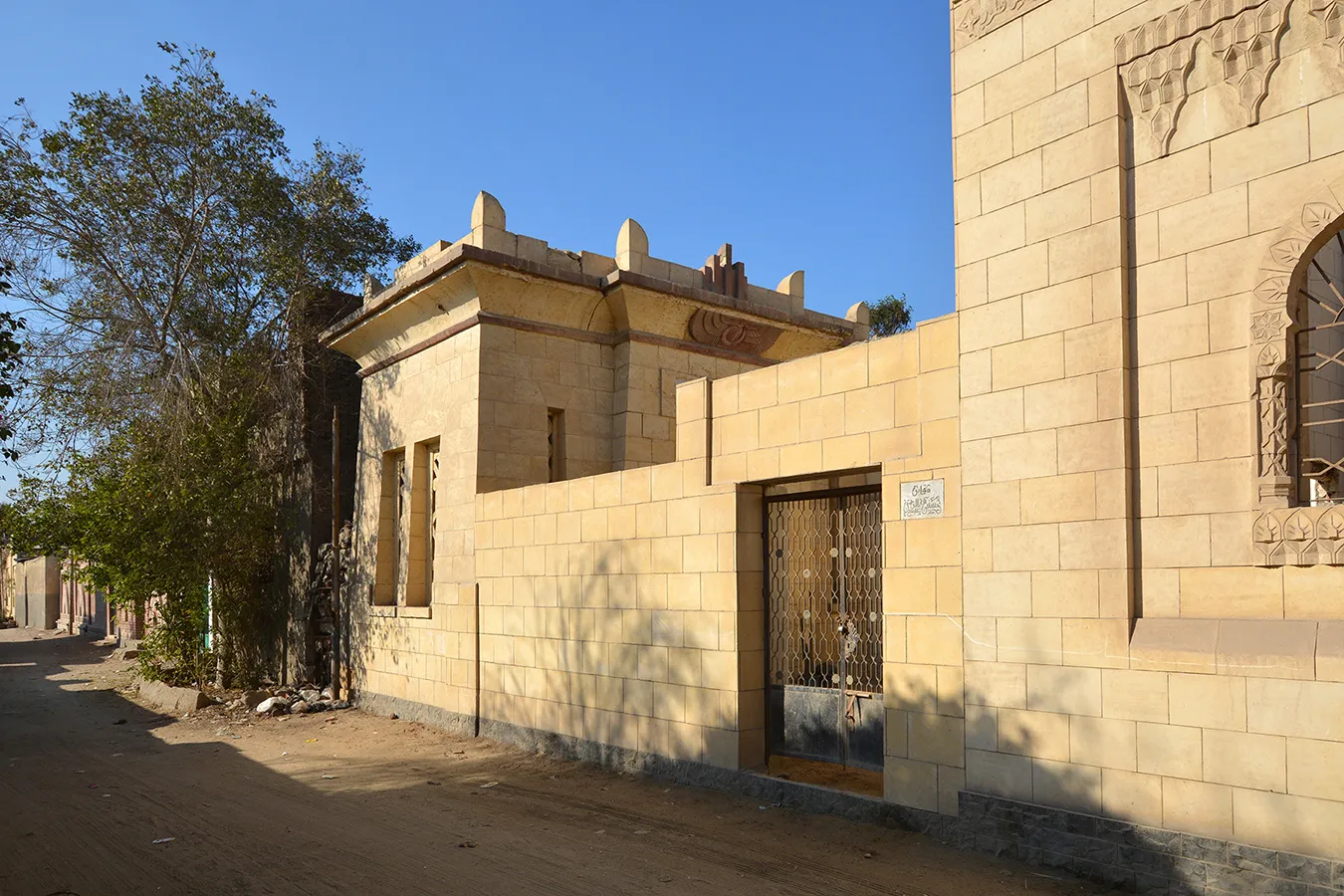
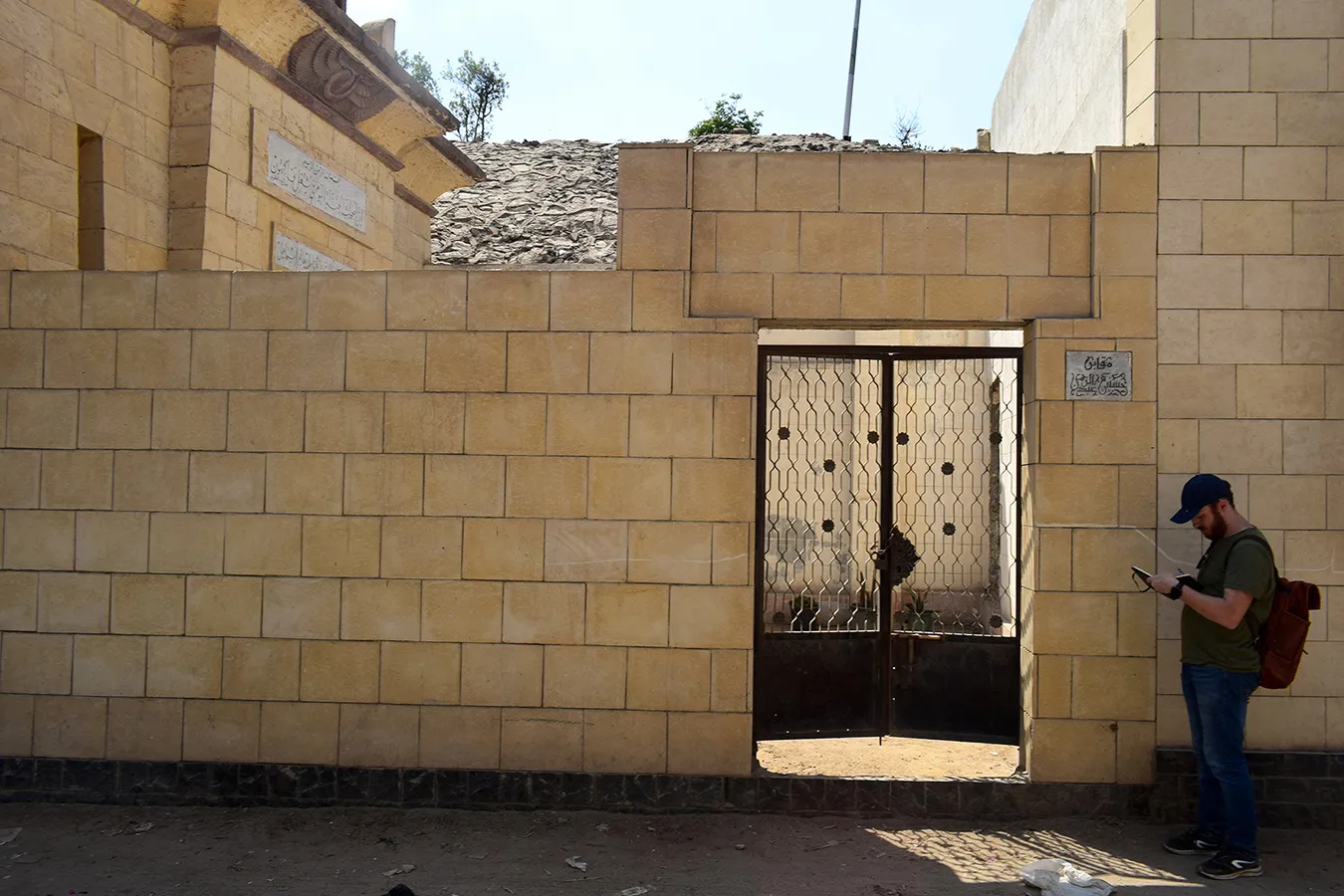
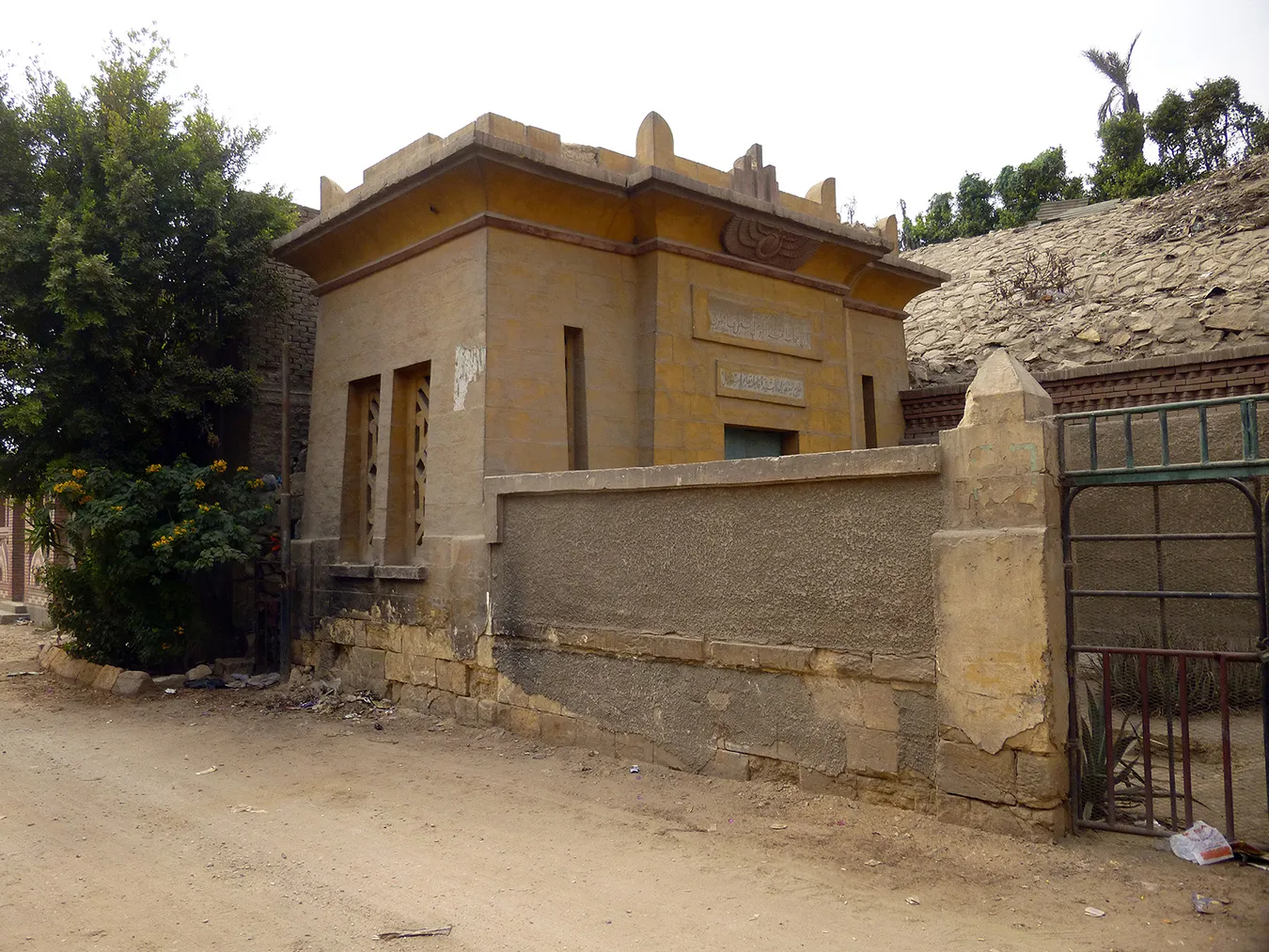
A small slightly irregular rectangular enclosure measuring ca. 7 x 10 m, with the entrance to the courtyard in the northern end of the eastern façade and the mausoleum building at the southern end. There is a square shaft in the courtyard (apparently leading to the crypt), covered with wooden planks.
The brick fence separating from the street has recently been re-faced with limestone cladding (after 2014).
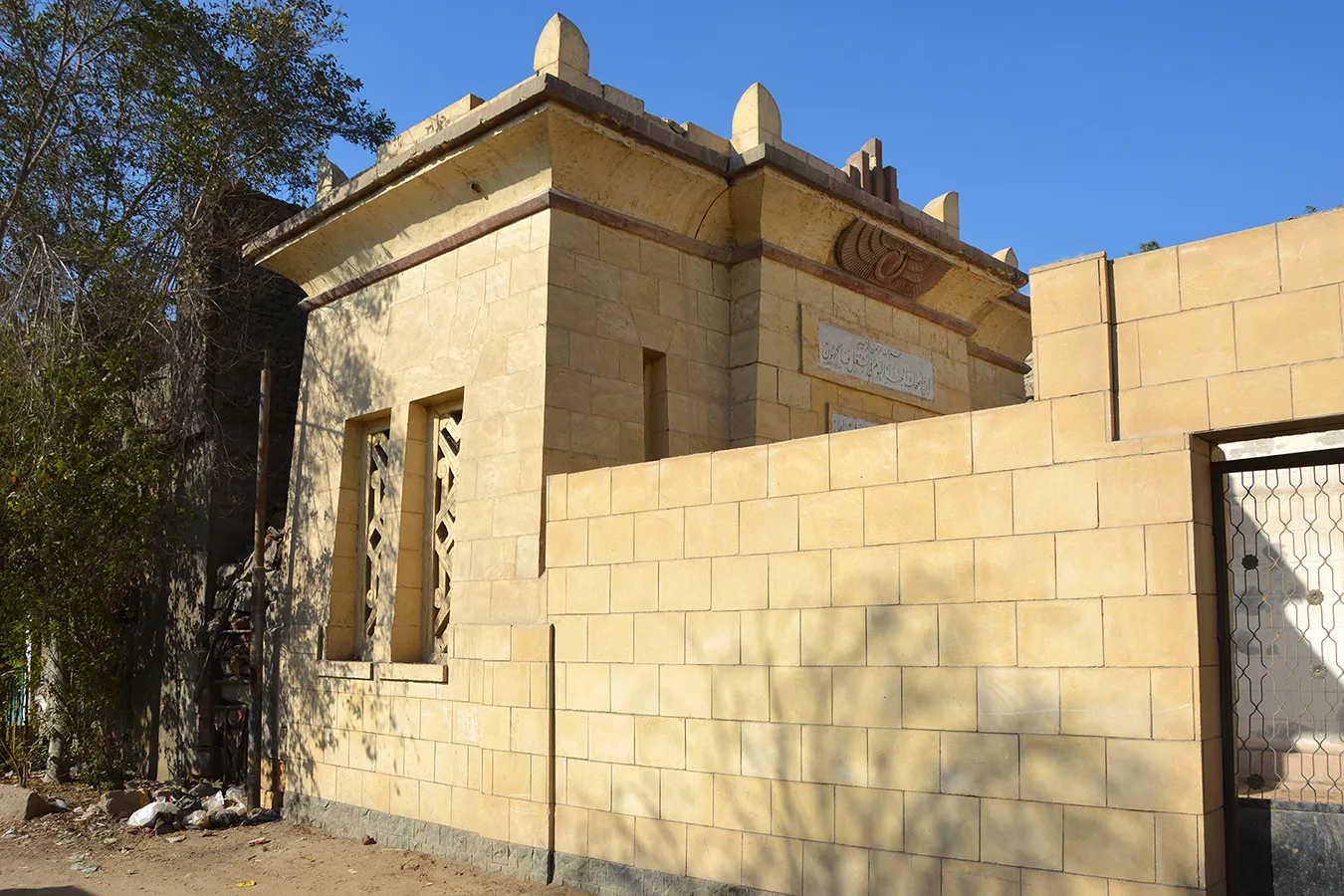
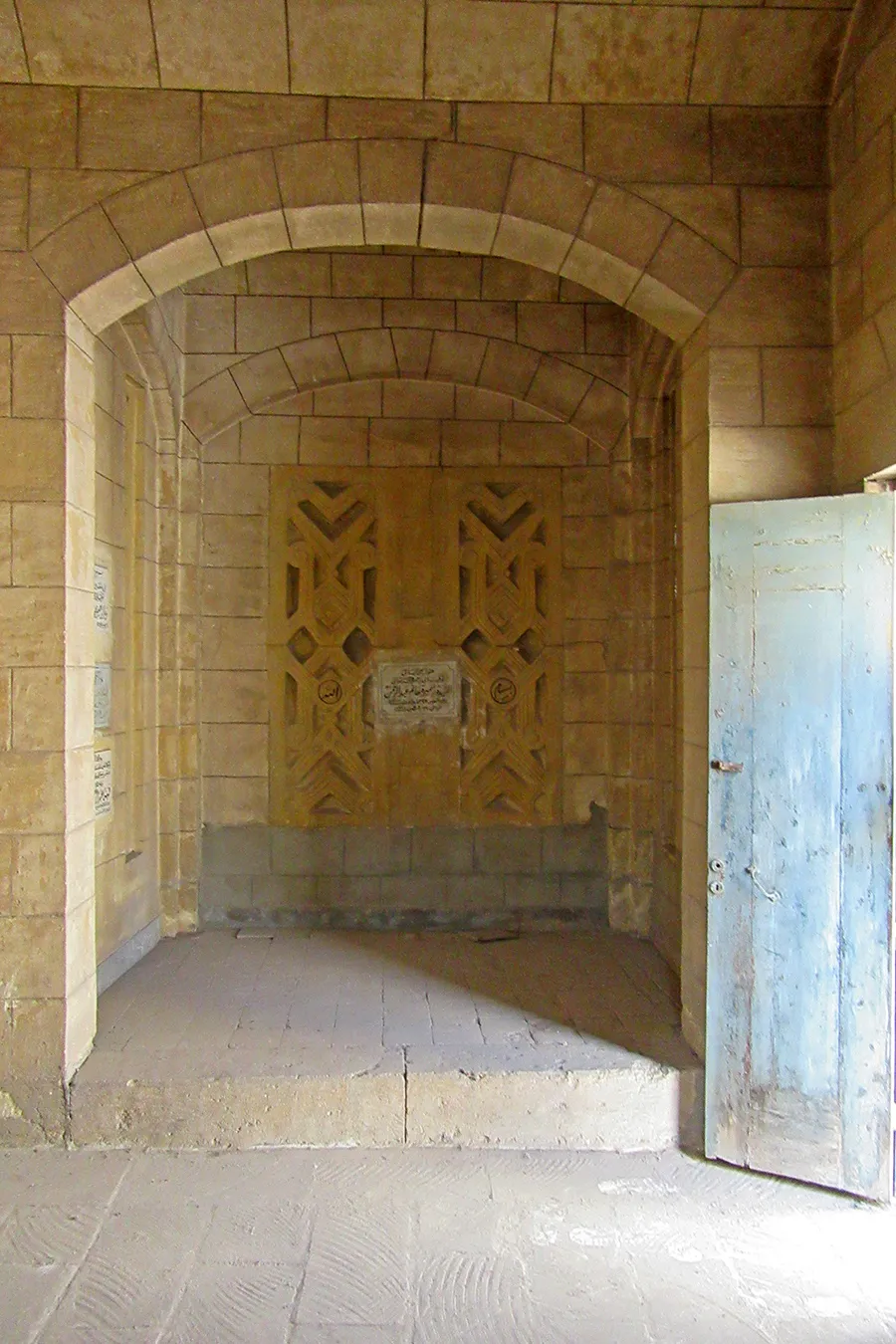
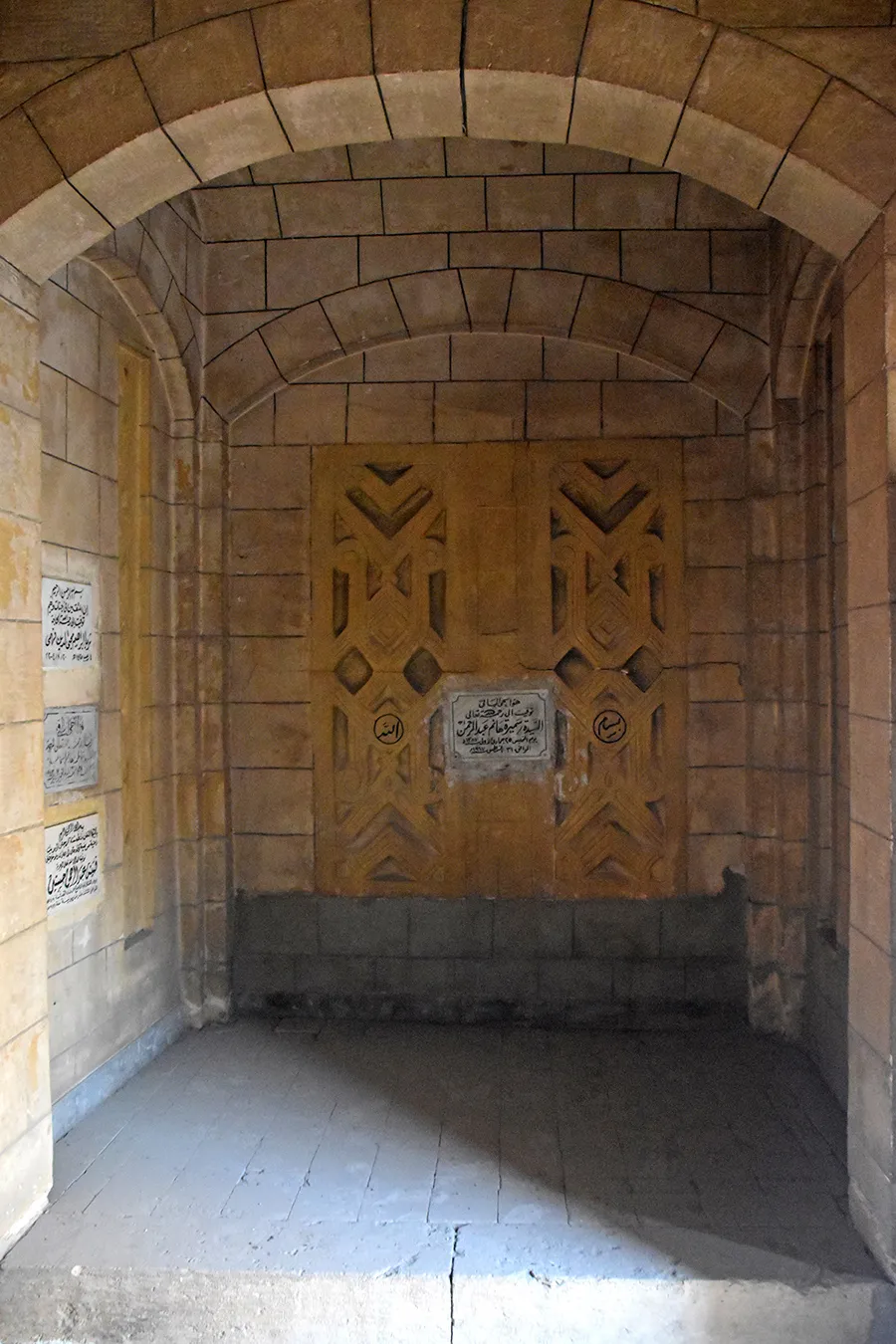
The mausoleum building is built of dressed limestone and consists of three chambers covered with stone segmental vaults. The side chambers with floors raised by one step open onto the entrance hall with wide openings covered with segmental arches (the overall arrangement is thus one of the qa’a.)
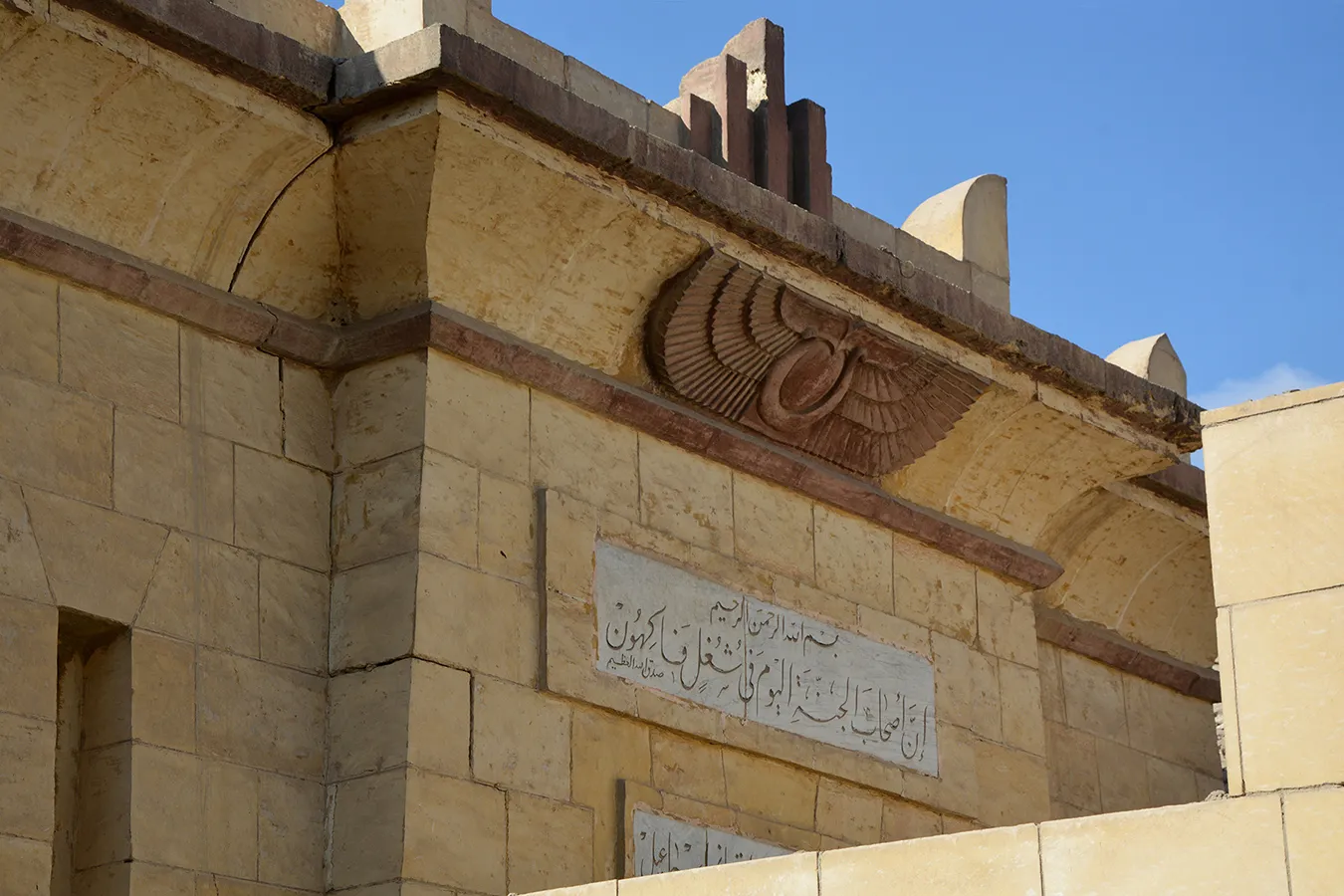
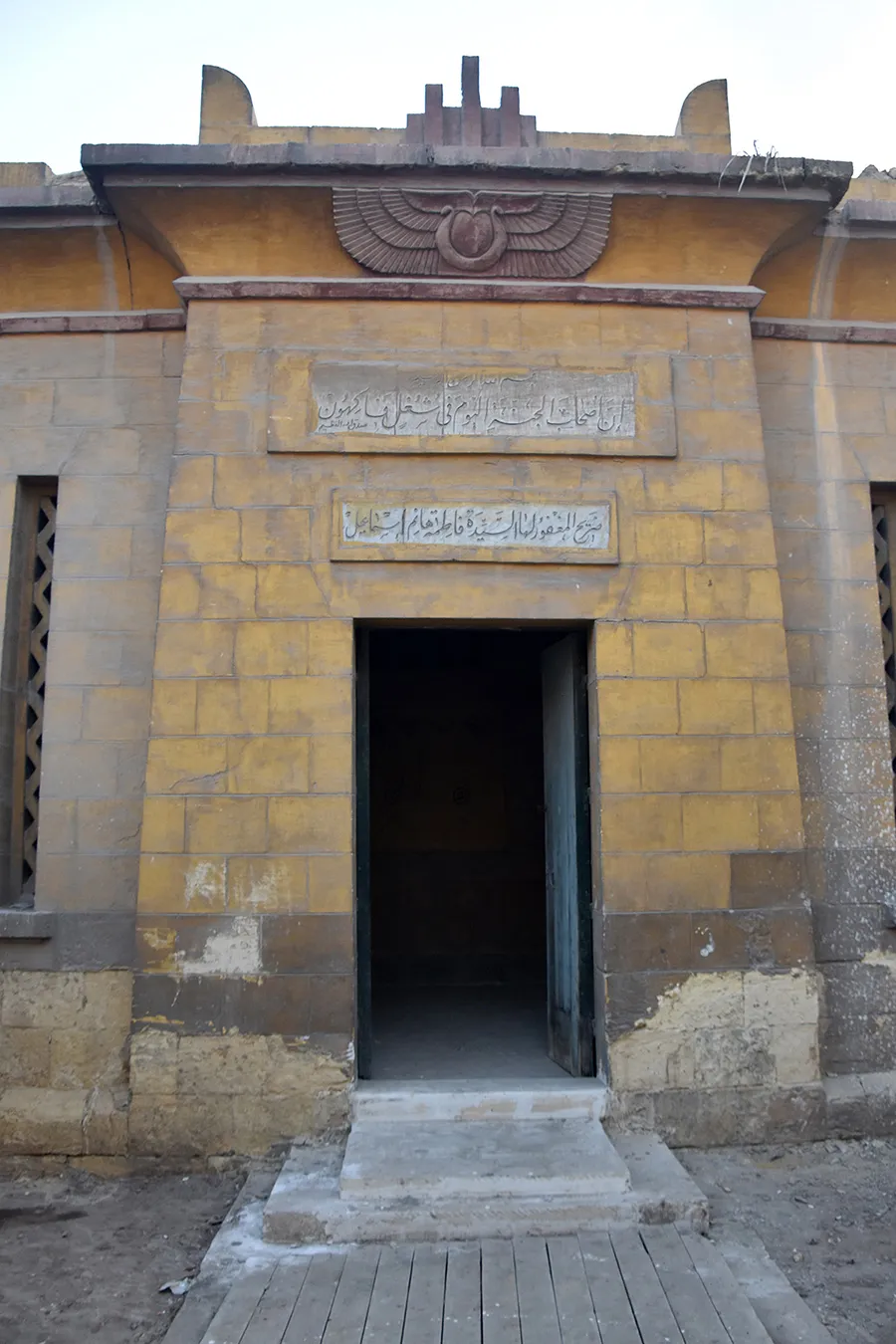
The building is in the “Ancient Egyptian revival” style with external walls tapering upwards, and a bold cavetto cornice. The undecorated rectangular entrance door is placed in a flat pylon-like projection. Over the door are two simple marble inscription panels, one with the name of the founder, the other with a Qur’anic verse. On the cornice over the door is a carved winged sun disc flanked by two cobras – a representation of the god Ra-Khorakhty popular in Ancient Egyptian art.
Condition of preservation
The enclosure is in generally good condition and was recently renovated.
Information abut the founder, family history, etc.
According to the property keeper, a part of the originally larger enclosure was turned into a separate burial ground for Hasaneyn Abderrahman, Fatma Haninim’s son.
The mausoleum was renovated after 2014, which included replacement of water-damaged stones in the lower portions of the wall, re-facing of the wall separating from the street, and raising the level of the courtyard by about 30 cm.
- Field recording by
- Radwa Abu-Senna
- Date recorded
- August 3, 2022
- Data entered by
- Hadeer Ahmad
- Date entered
- May 9, 2024