
Unit No29
Al-‘Abd al-Faqir Muhammad
|
Coordinates of the main entrance |
30.040744N - 31.27355E |
|
Attribution |
Al-‘Abd al-Faqir Muhammad |
|
Higri (AH)Dates as given in the Inscription |
1311 |
|
Miladi (AD)Dates as given in the Inscription |
|
|
Inscription Contemporary with the building? |
Yes |
|
Multiple date(s) In the inscription? |
Yes |
|
Assumed Date |
|
|
Based on |
|
|
Original Use |
Funerary enclosure with a residential section |
|
Current Use |
Funerary enclosure, residential |
|
Overall condition |
Fair |
Features of unit 29
| Present | Count | Material | Comments (see description for details) | |
|---|---|---|---|---|
| Free standing structure | No | |||
| Walled enclosure | Yes | 1 | stone | |
| Rooms by the perimeter wall | Yes | 1 | stone | |
| Freestanding structure(s) in enclousure | No | |||
| Dome over the tomb chamber | No | |||
| Neo-Mamluk architectural decoration | No | |||
| Garden layout | Yes | |||
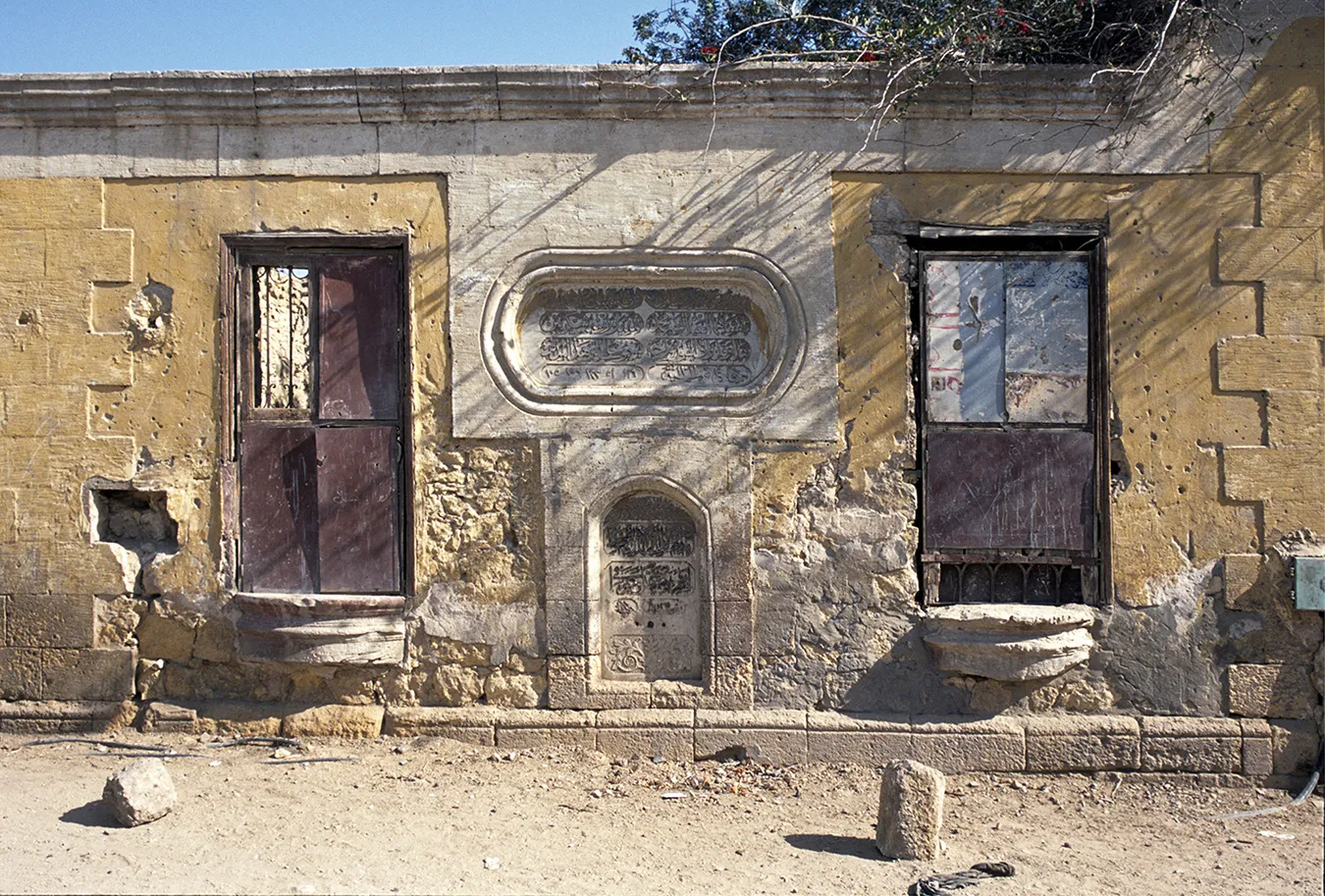
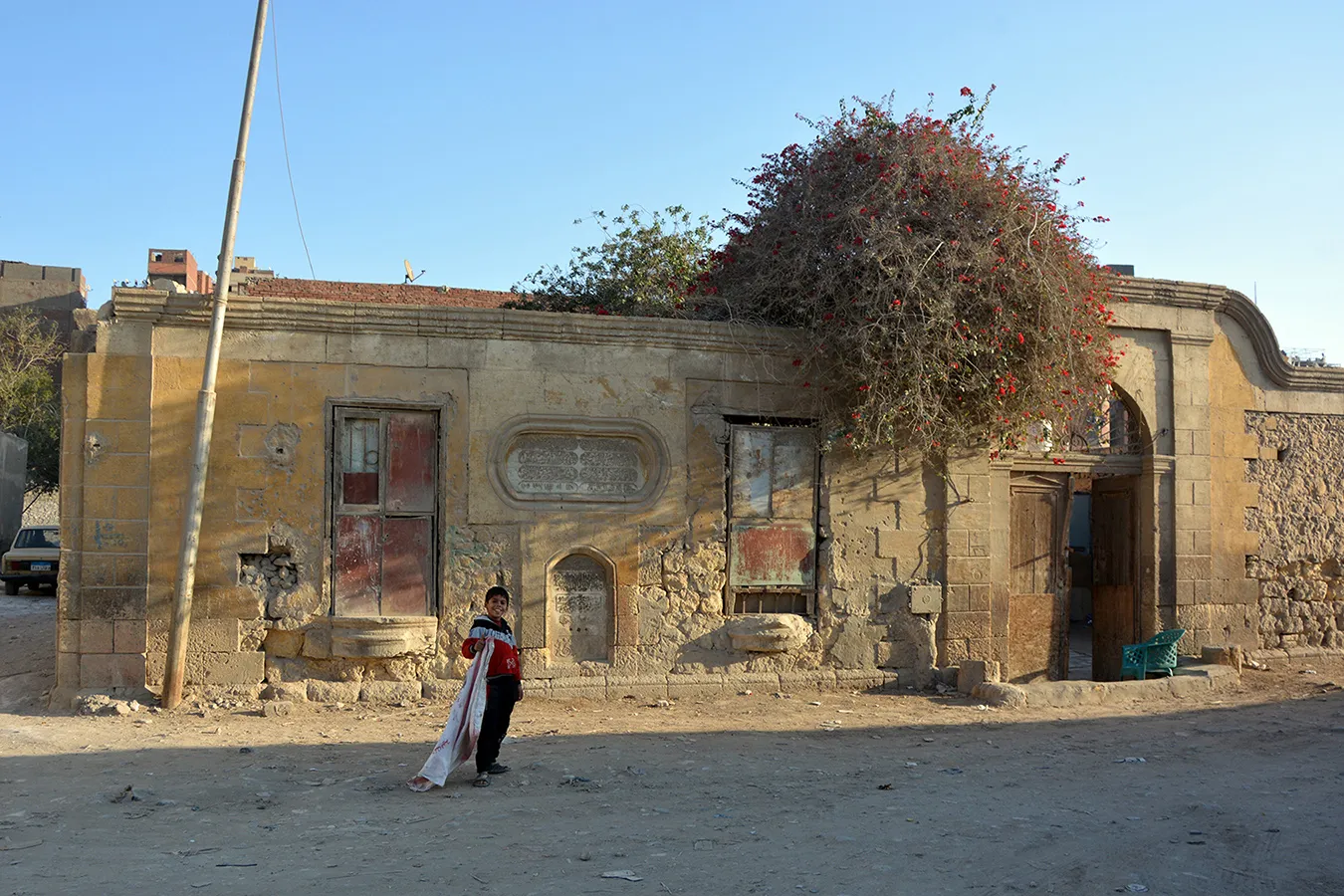
| Sabil(s) | Yes | 2 | Two windows with sabil-type grilles and marble ledges | |
| Wall fountain(s) | Yes | 1 | Marble | |
| Canopy on columns / pillars | No | |||
| Carved marble cenotaph(s) | No | |||
| Decorated limestone tomb-markers | No | 4 non-decorative limestone cenotaphs. | ||
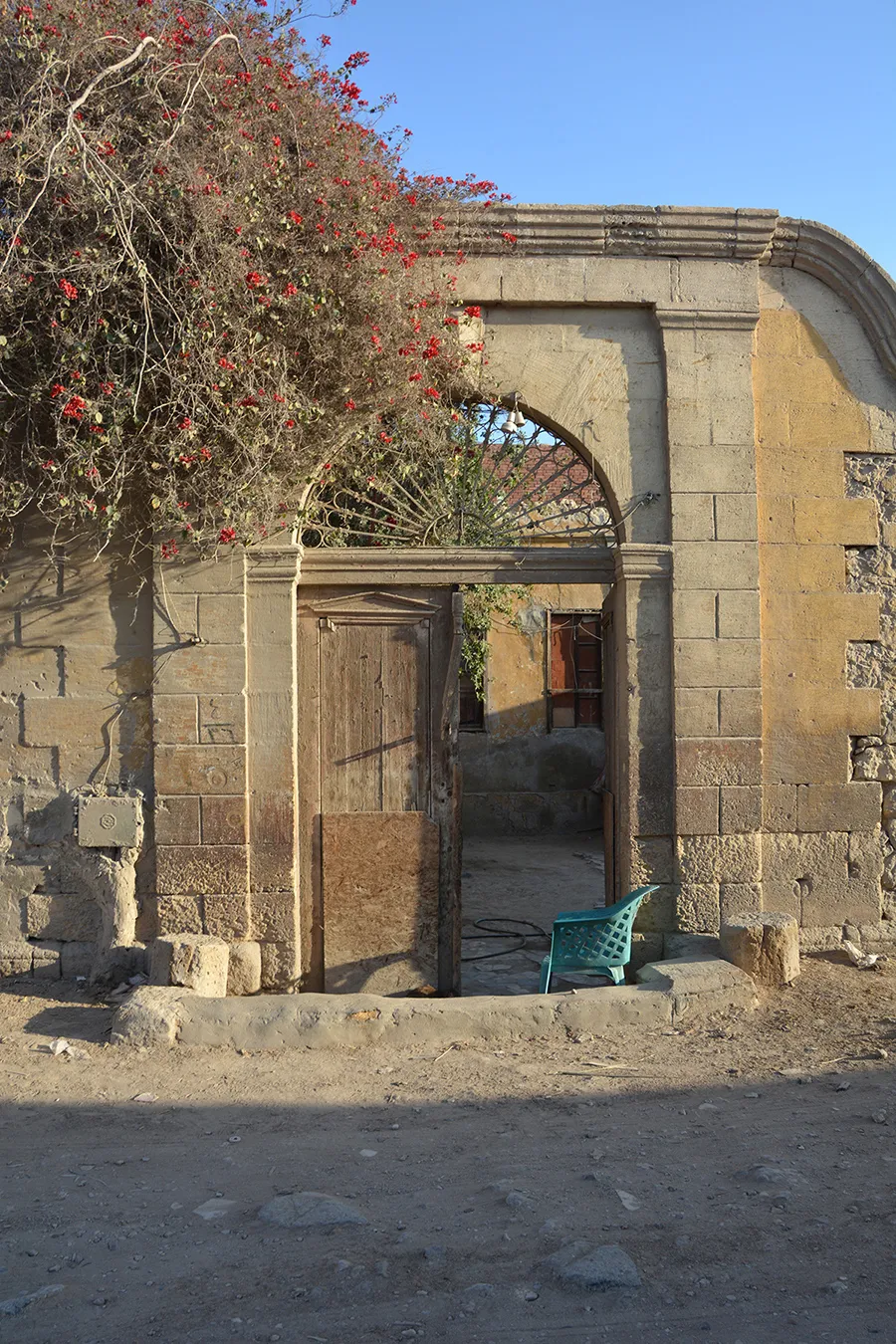
| Decorated gateway | Yes | 2 | Stone | Gate to the courtyard and gate of the back building; both very simple |
| Decorative door-leaves | Yes | wood | Very simply decorated double-leaf door in the main gate | |
| Decorative window grilles | No | |||
| Decorative shutters | No | |||
| Painted ceiling(s) | No | |||
| Decorative paving(s) | No |
Unusual or unique features
• An unusually elaborate separate water-dispensing section
• A distinctly Ottoman look, with no neo-Mamluk elements
Description (The direction towards Mecca (Qibla) is described as eastern and other directions are named accordingly)
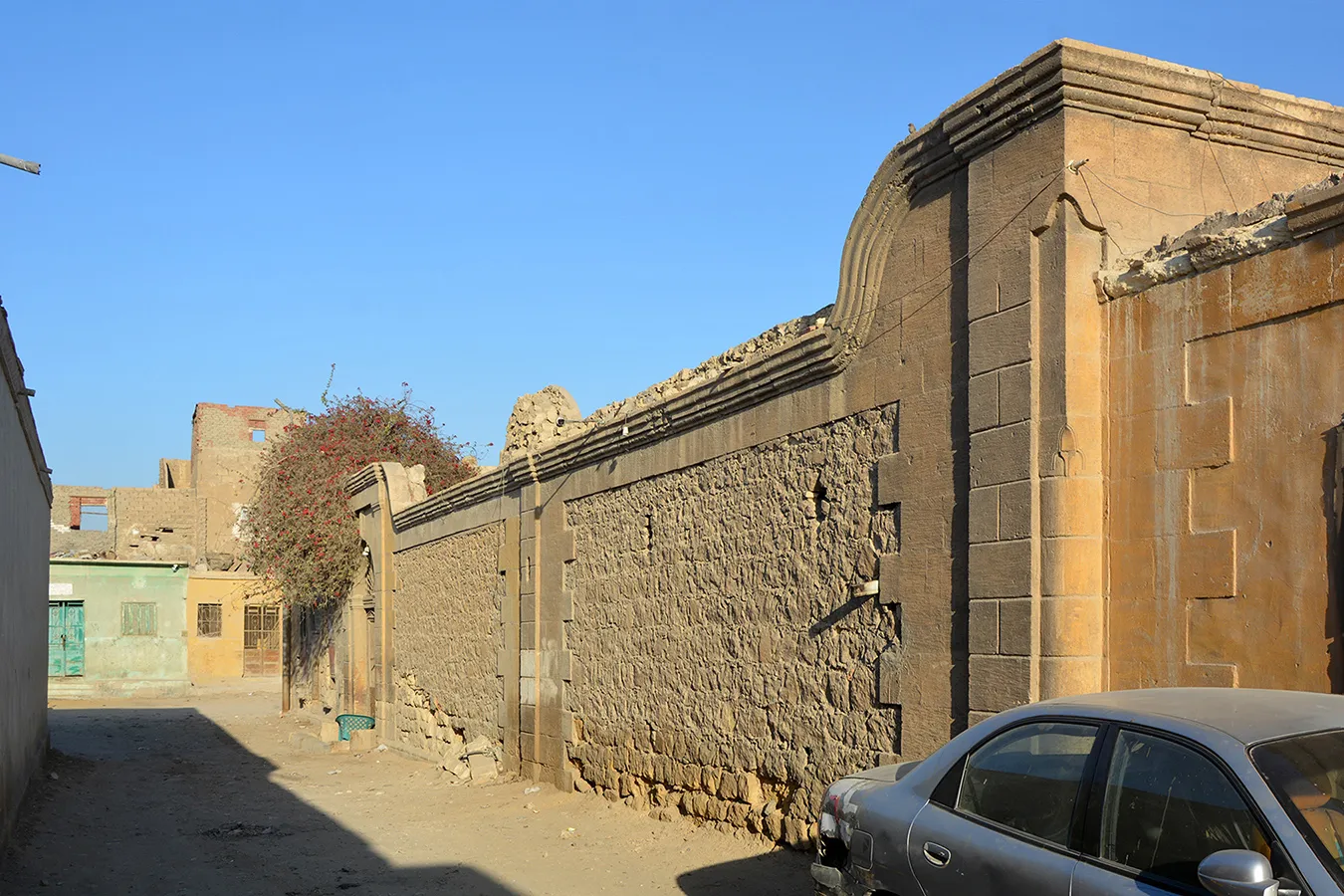
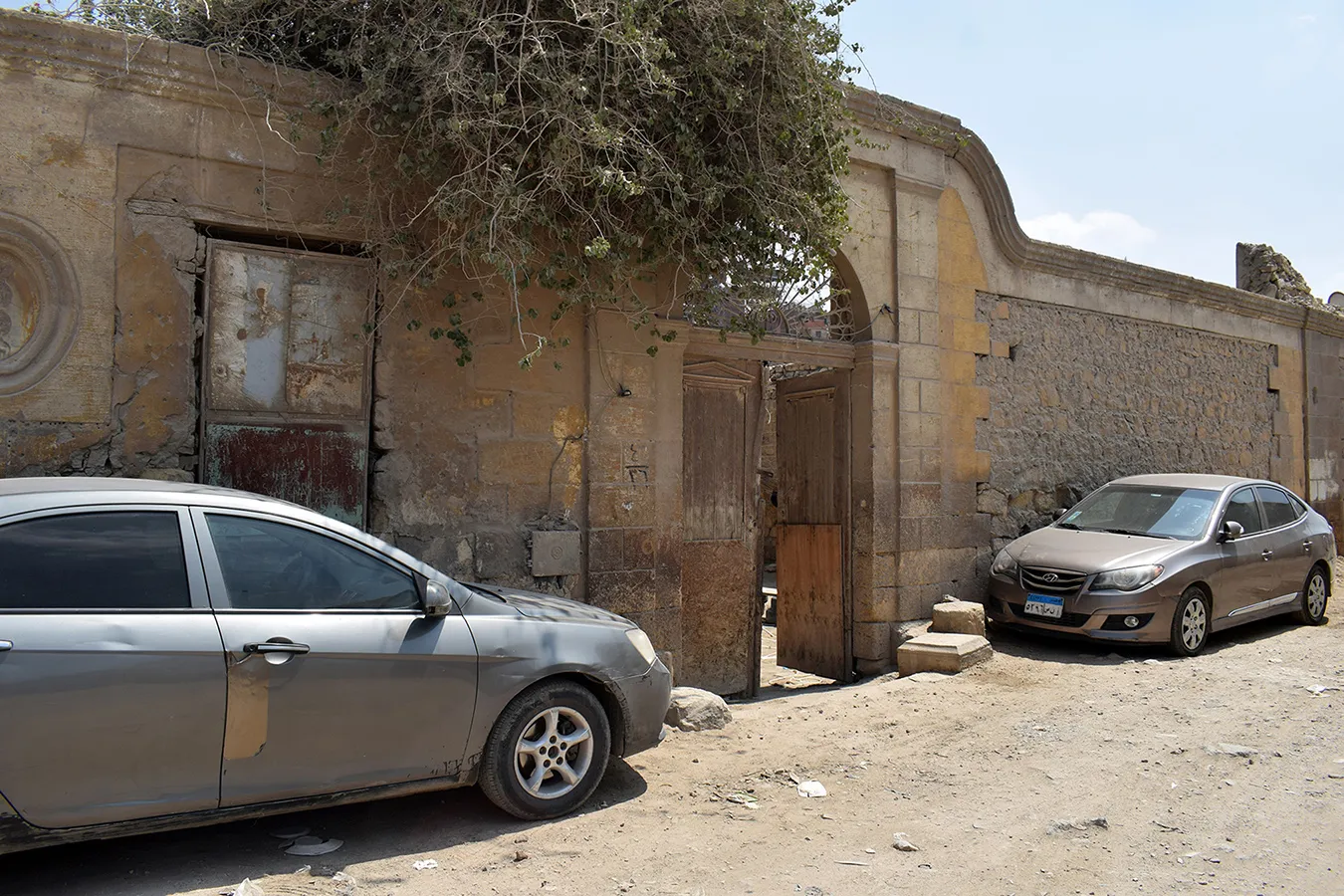
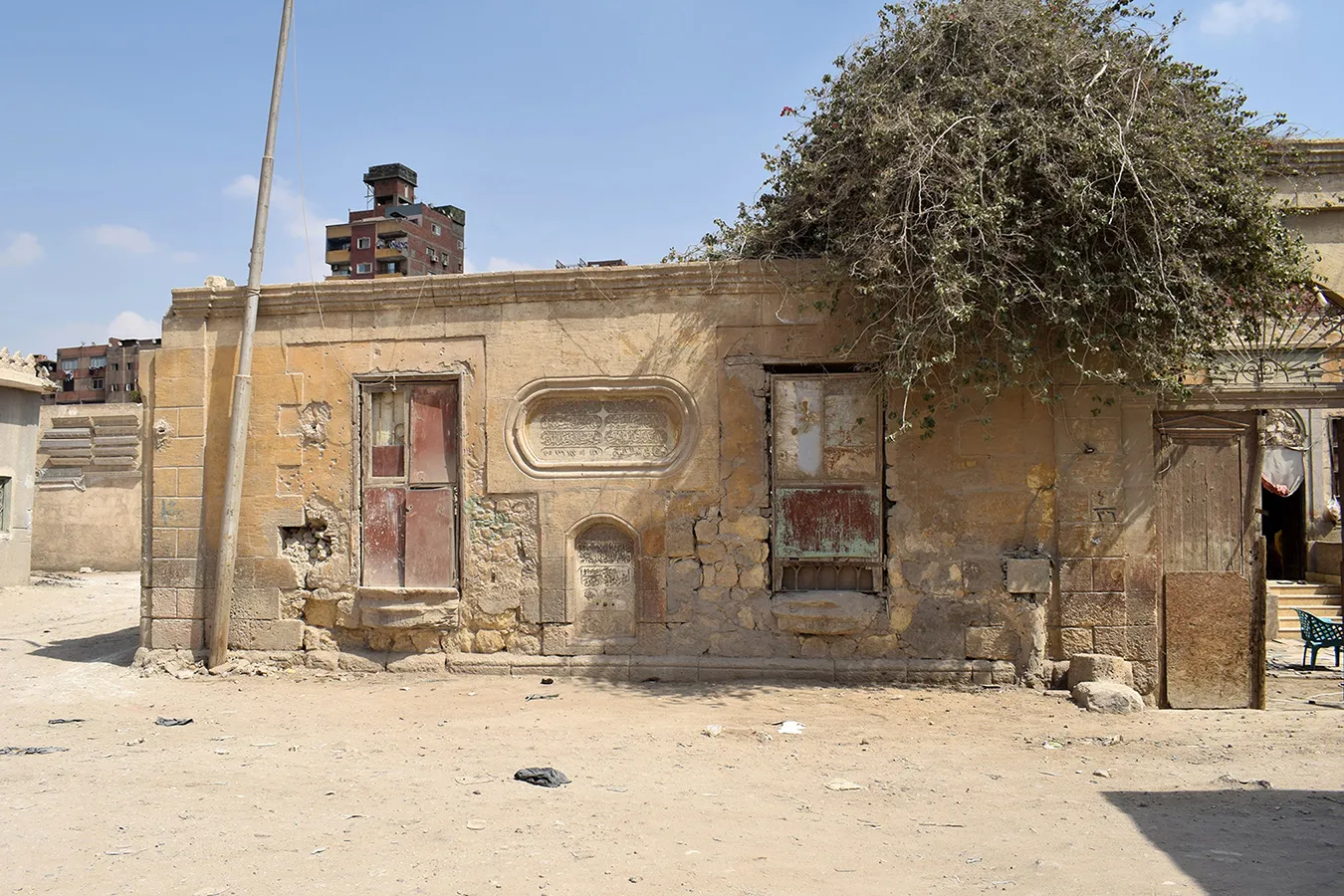
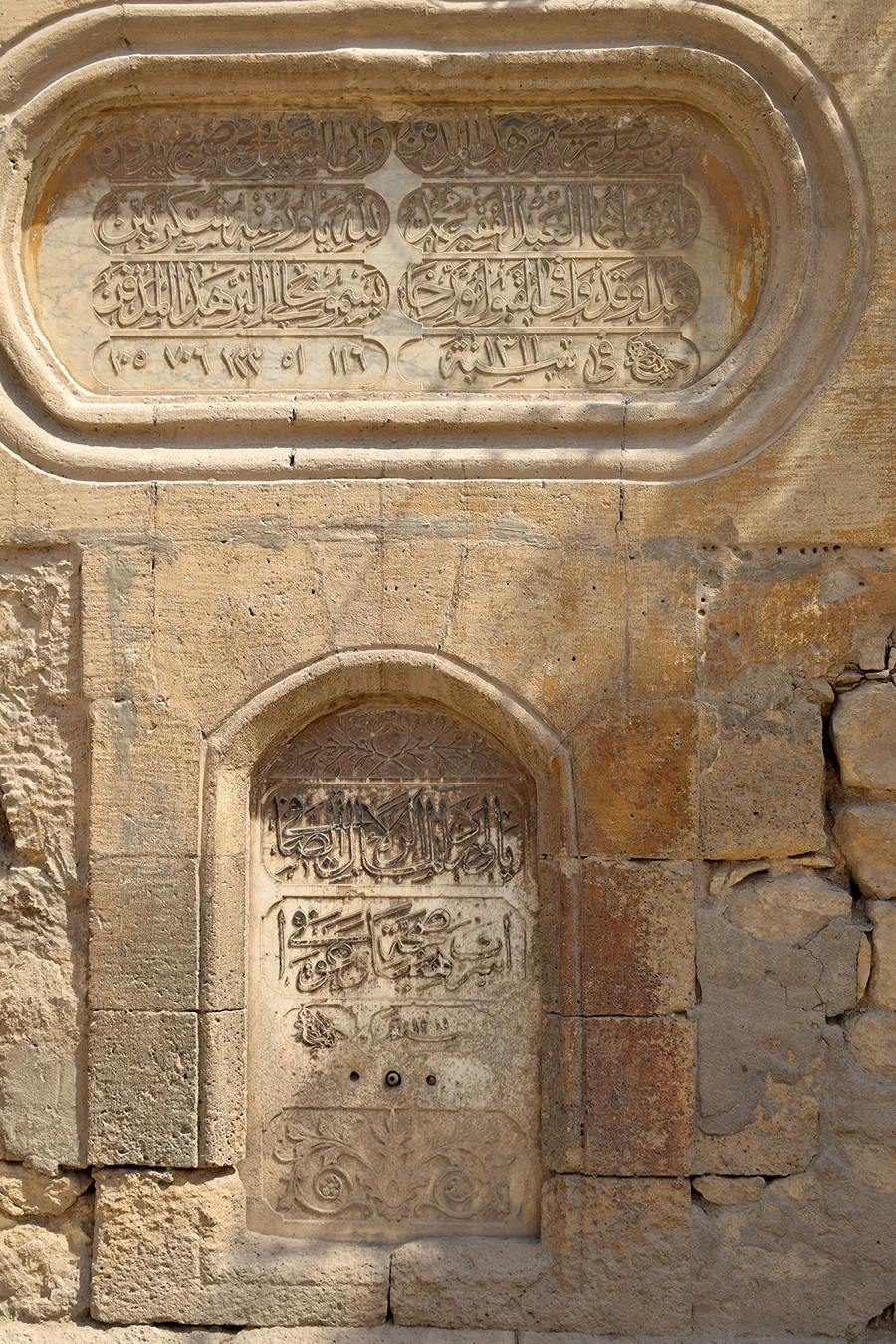
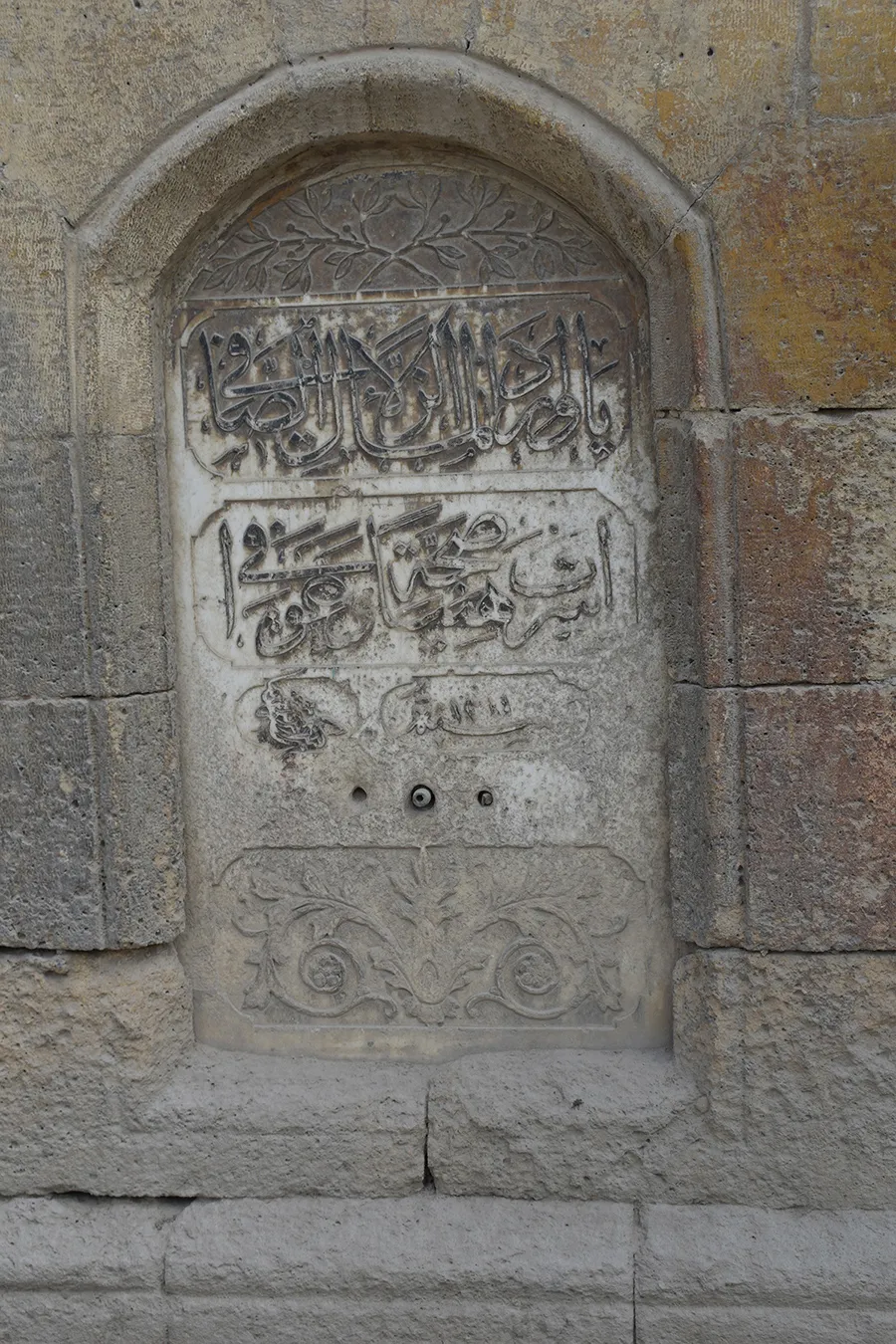
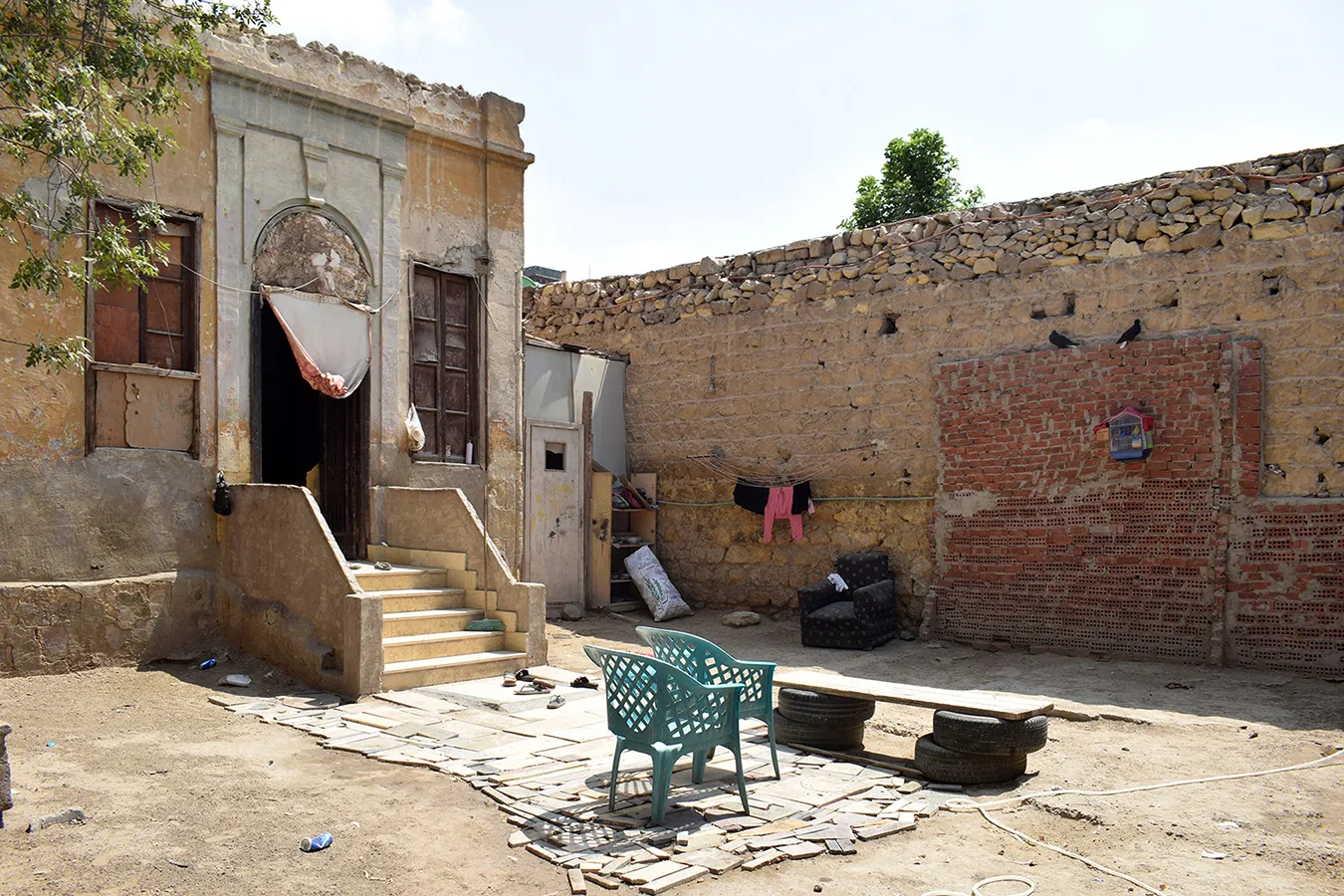
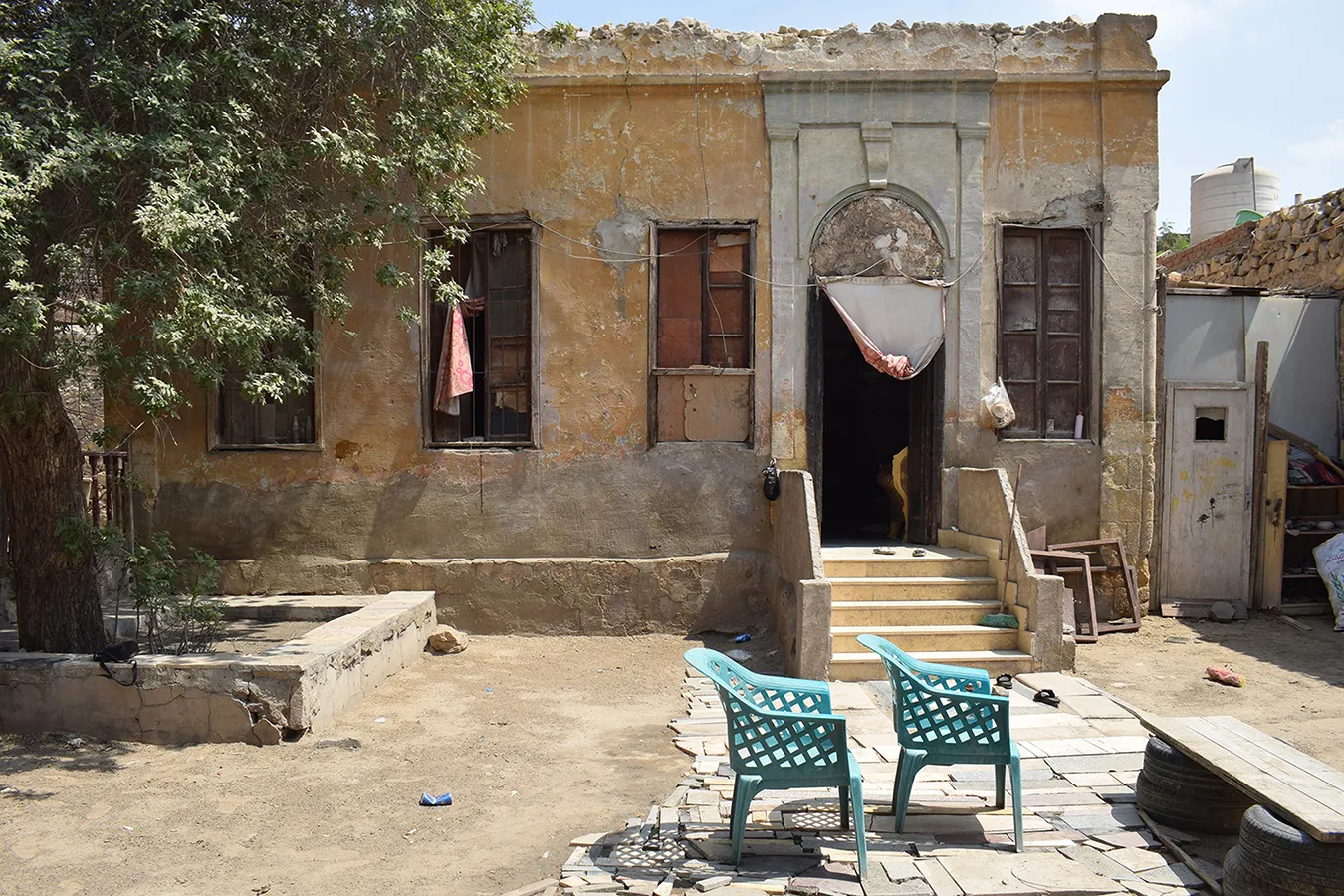
The roughly square walled enclosure is built of rough stone, with the plinth course, corners, entrance gate and the moulded cornice of ashlar stone. The arched entrance gate in the middle of the western façade has a very simple neo-classical based architectural framing and simply decorated wooden door-leaves (with most decoration apparently missing.) The section of the western perimeter wall north (left) of the entrance gate forms a symmetrical façade which is a water-distributing section of the unit. It has two large rectangular windows with simple sabil-type iron grilles (i.e., with larger arched openings at the bottom) and protruding rounded moulded marble ledges. Between the windows is a wall water-fountain (çeshme) with a metal tap (now missing) set in a marble panel with a calligraphic inscription. Over the wall-fountain is a marble panel with semi-circular sides recessed within a thick moulding and containing eight calligraphic compartments including the name of the founder. Both calligraphic panels include the date 1311 AH and a very elaborate signature of the calligrapher. To the right (south) of the entrance gate, the wall transitions to a lower southern section with a rounded section of the moulding, in a manner typical for mid-19th century Ottoman-style buildings in Cairo, such as the nearby tomb of Sulayman Pasha al-Silahdar of 1858 (El Kadi and Bonnamy, 200-4.)
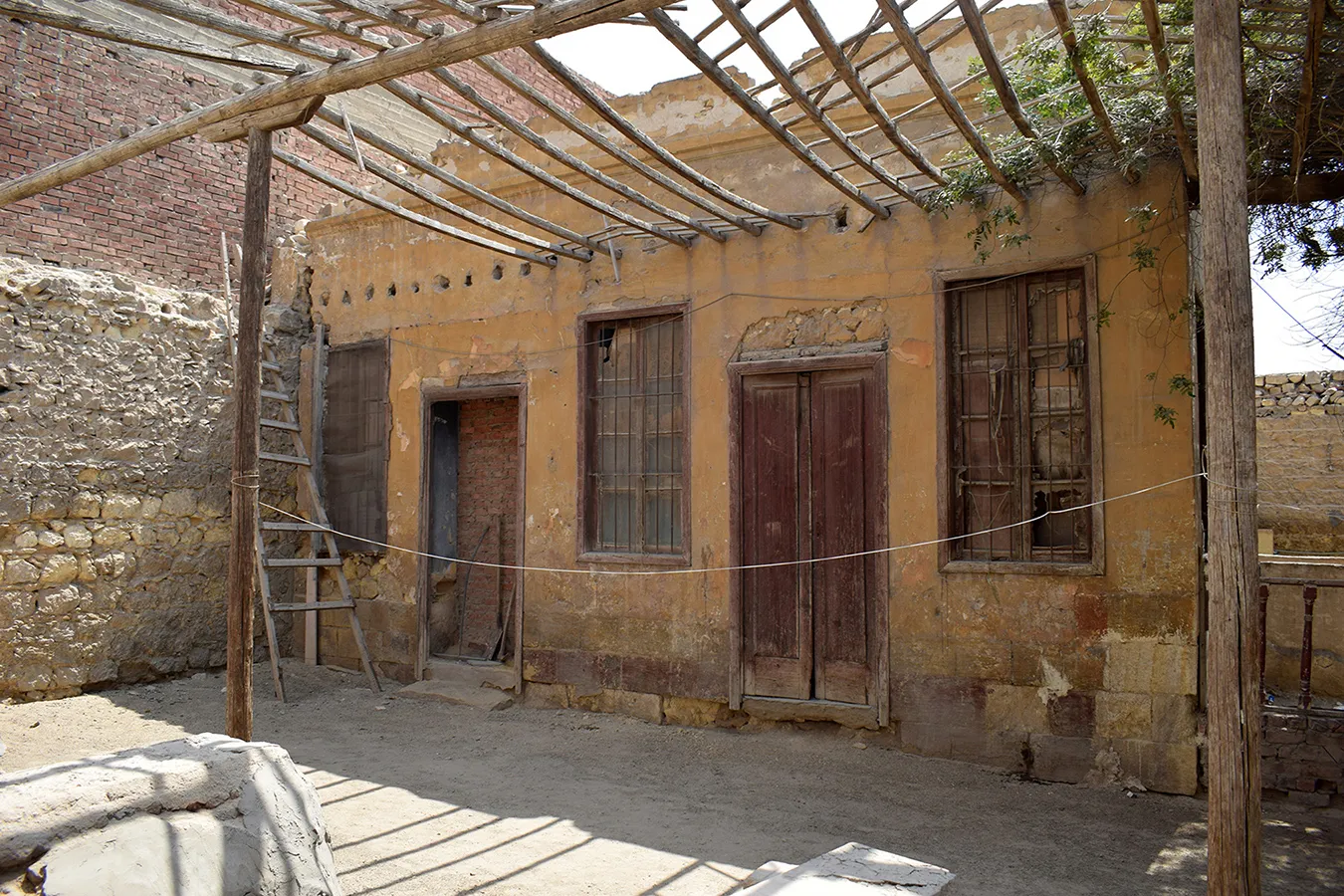
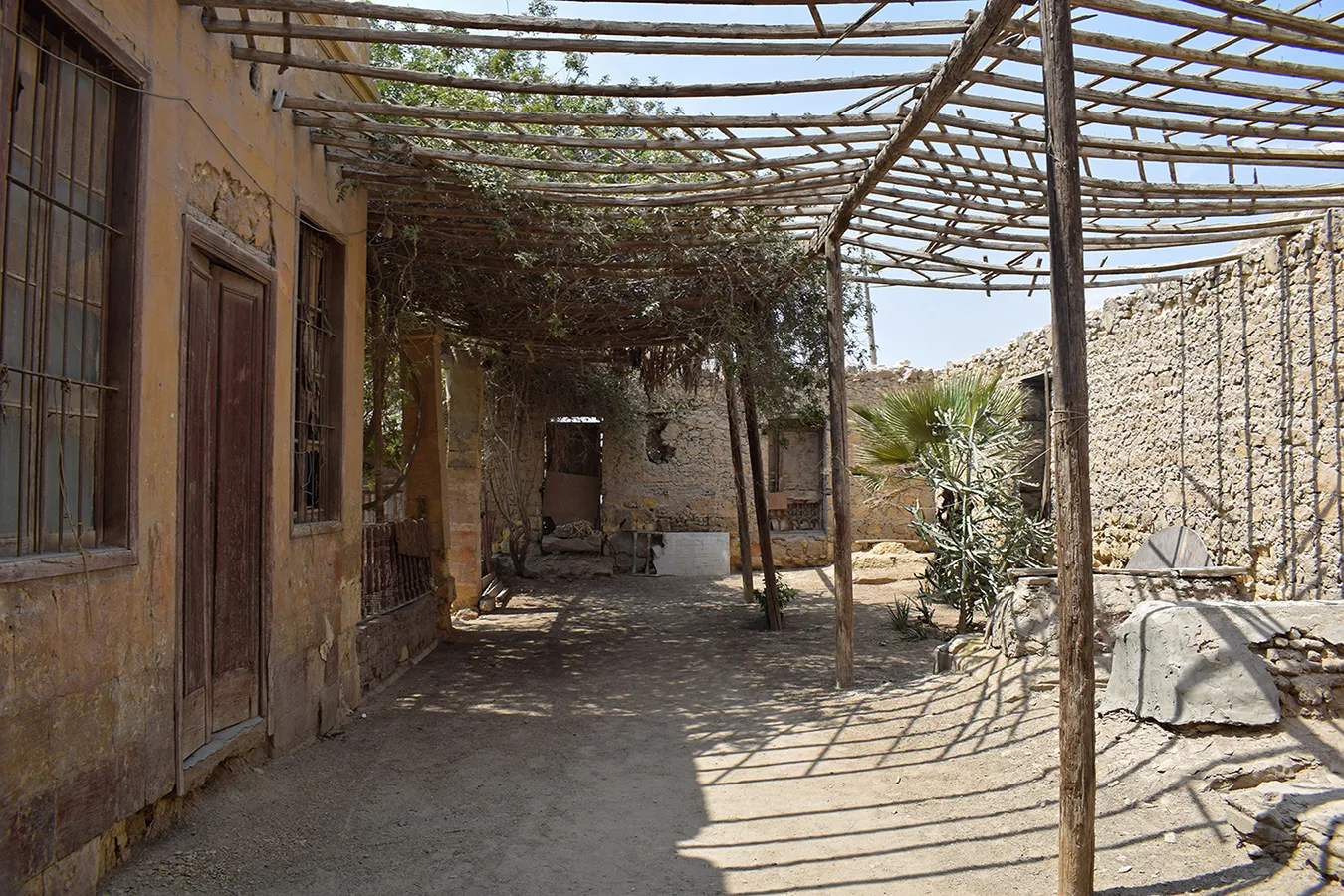
A simple single-storied residential building is placed by the eastern perimeter wall (now bordering of a tall residential building.) It has a very simple neo-classical based entrance gate asymmetrically placed, with three undecorated rectangular windows to the left and one to the right.
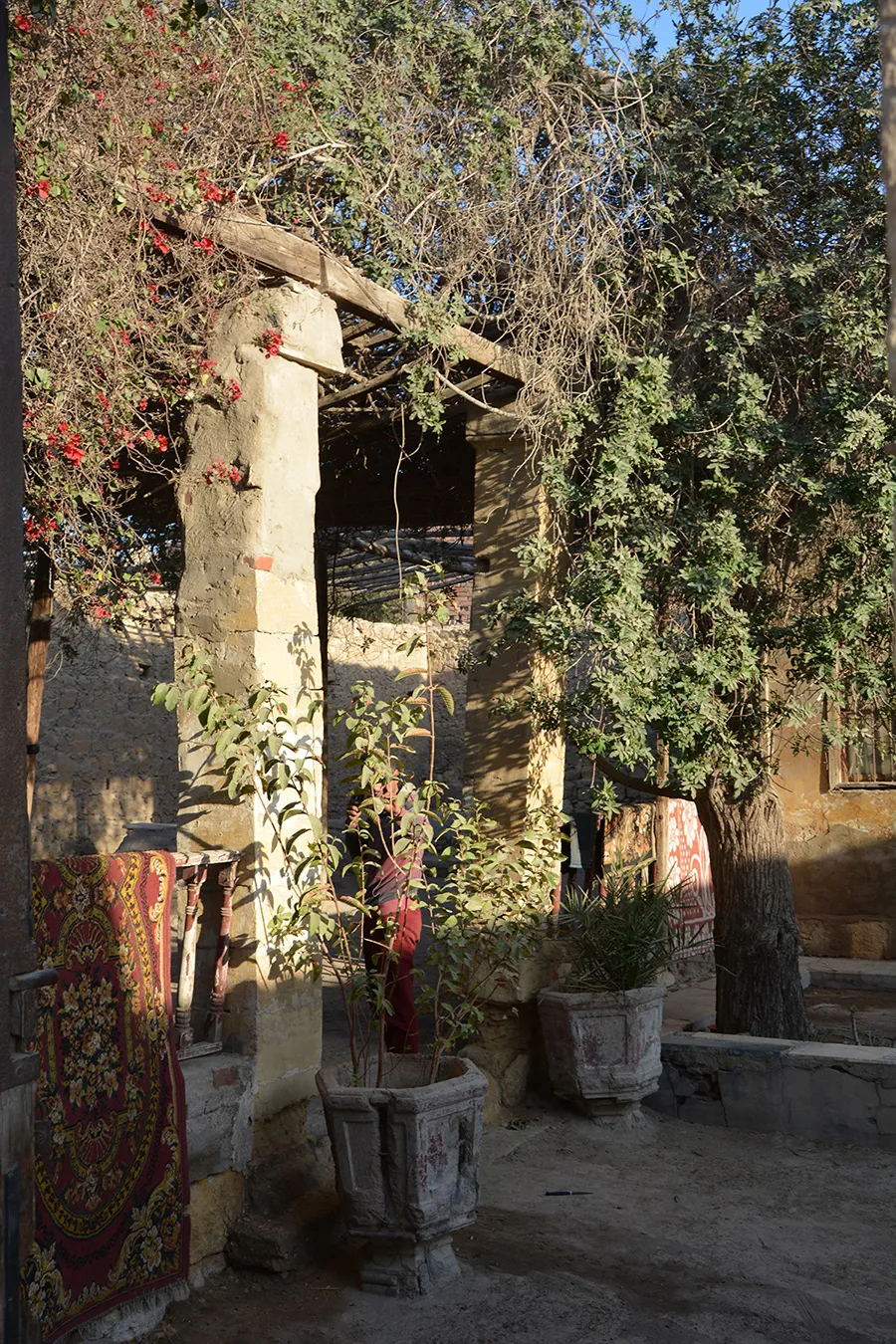
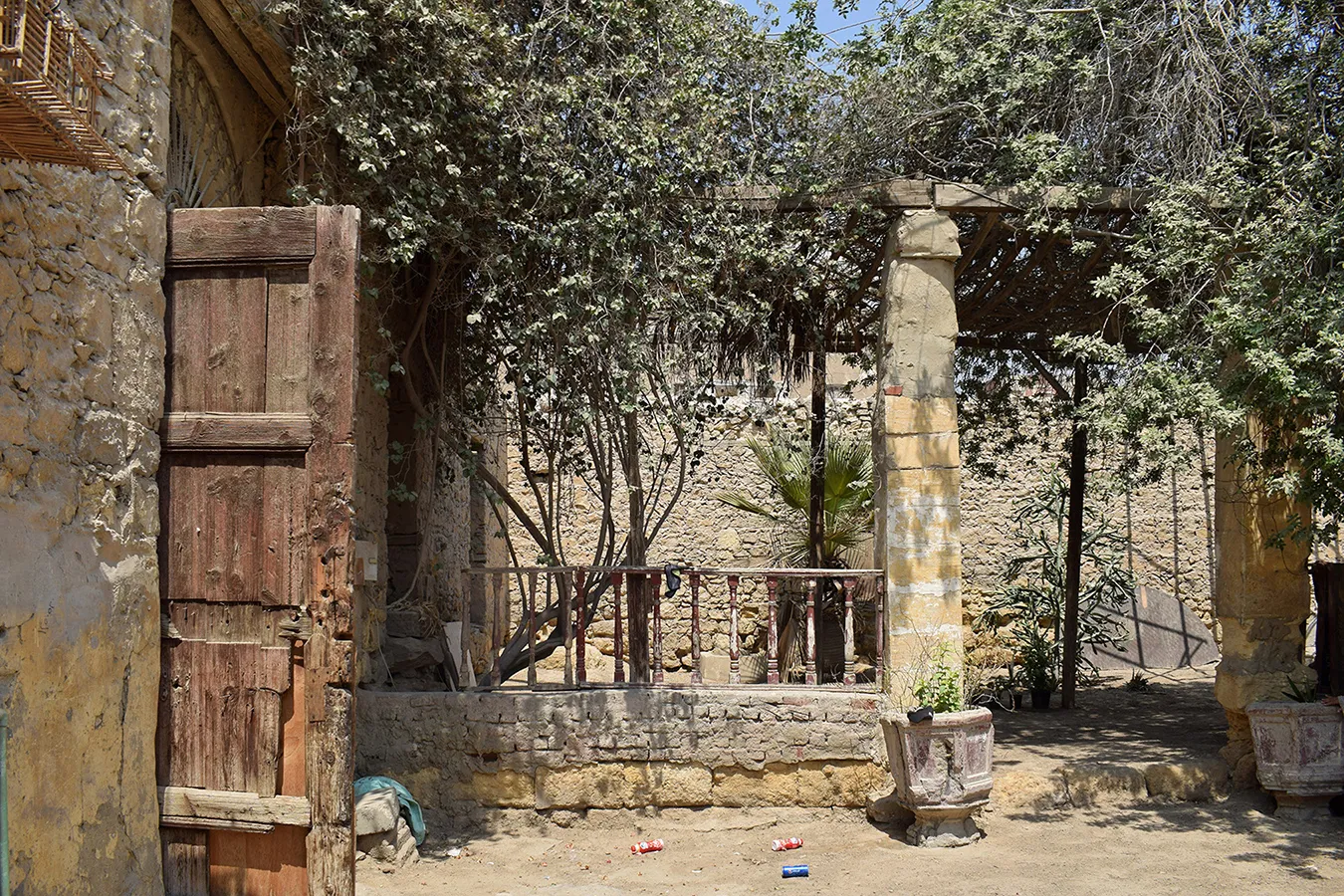
The northern side of the enclosure forms an outdoor burial area raised by one step and arranged as a garden. It is partially shaded by a wooden pergola and is separated from the courtyard in front of the residential building by a railing of wooden balusters with an entrance in the centre flanked by stone pillars. It contains four undecorated stone cenotaphs (currently rendered shapeless by crude cement rendering.) There is no building behind the sabil windows in the western wall of this section, and apparently there never was one. Two large windows in the northern perimeter wall (now blocked) originally opened onto the street to the north.
Condition of preservation
The unit is in fair overall condition, although there is severe damage to the masonry of the western façade due to raising damp. The walls of the southwestern corner of the courtyard are doubled by very crudely built thin brick wall. A room was either added and then demolished, or its construction never completed.
Information abut the founder, family history, etc.
The date 1311 AH in the inscription on the front façade corresponds to AD 1894.
According to a resident, the enclosure currently belongs to Ahmad Mandur family.
References in published/primary sources
• El Kadi, Galila and Bonnamy, Alain Architecture for The Dead: Cairo’s Medieval Necropolis, American University in Cairo Press 2007, p. 200-4.
- Field recording by
- Hadeer Ahmad and Radwa al-Saeed
- Date recorded
- August 25, 2022
- Data entered by
- Yusuf Yassir
- Date entered
- May 16, 2024