
Unit No28
Mustafa Pasha al-Khazindar
|
Coordinates of the main entrance |
30.041128N - 31.273017E |
|
Attribution |
Mustafa Pasha al-Khazindar |
|
Higri (AH)Dates as given in the Inscription |
|
|
Miladi (AD)Dates as given in the Inscription |
|
|
Inscription Contemporary with the building? |
Yes |
|
Multiple date(s) In the inscription? |
Yes |
|
Assumed Date |
AD 1910 [?] |
|
Based on |
(published information, see section “History”) |
|
Original Use |
Tomb with an external sitting area and rooms for visitors |
|
Current Use |
Tomb with an external sitting area, and residential |
|
Overall condition |
Fair |
Features of unit 28
| Present | Count | Material | Comments (see description for details) | |
|---|---|---|---|---|
| Free standing structure | Yes | 1 | Stone | Free standing building: 2 residential rooms, sabil, and burial chamber plus a wooden front porch |
| Walled enclosure | No | |||
| Rooms by the perimeter wall | No | |||
| Freestanding structure(s) in enclousure | No | |||
| Dome over the tomb chamber | No | |||
| Neo-Mamluk architectural decoration | No | |||
| Garden layout | No | |||
| Sabil(s) | Yes | 1 | ||
| Wall fountain(s) | No | |||
| Canopy on columns / pillars | No | |||
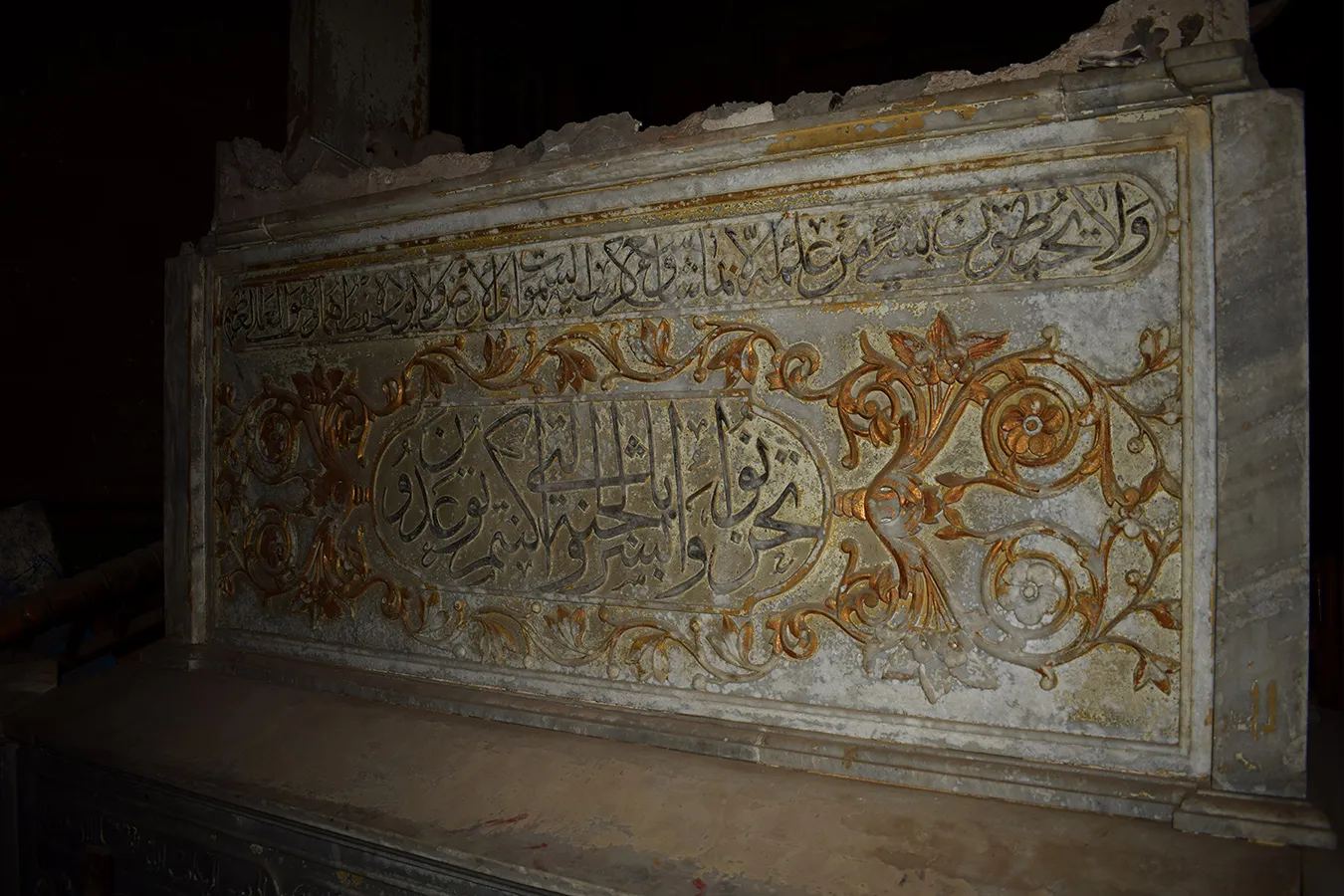
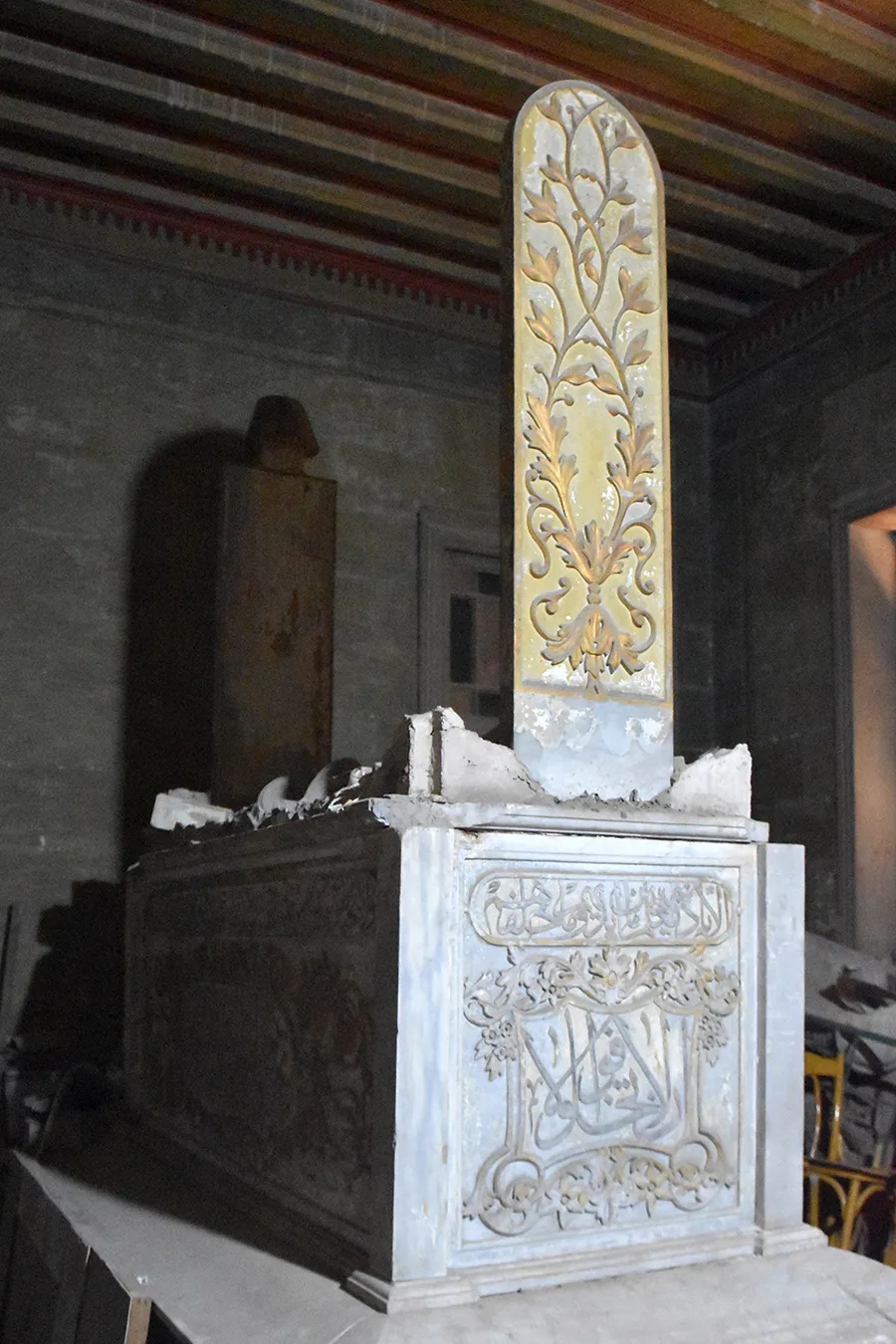
| Carved marble cenotaph(s) | Yes | 1 | 1 | Big decorative marble cenotaph. |
| Decorated limestone tomb-markers | No | |||
| Decorated gateway | Yes | 1 | Wood &stone | |
| Decorative door-leaves | Yes | 2 | Wood | In the entrance door |
| Decorative window grilles | Yes | 1 | Iron | |
| Decorative shutters | No | |||
| Painted ceiling(s) | Yes | 1 | Wood | |
| Decorative paving(s) | No |
Unusual or unique features
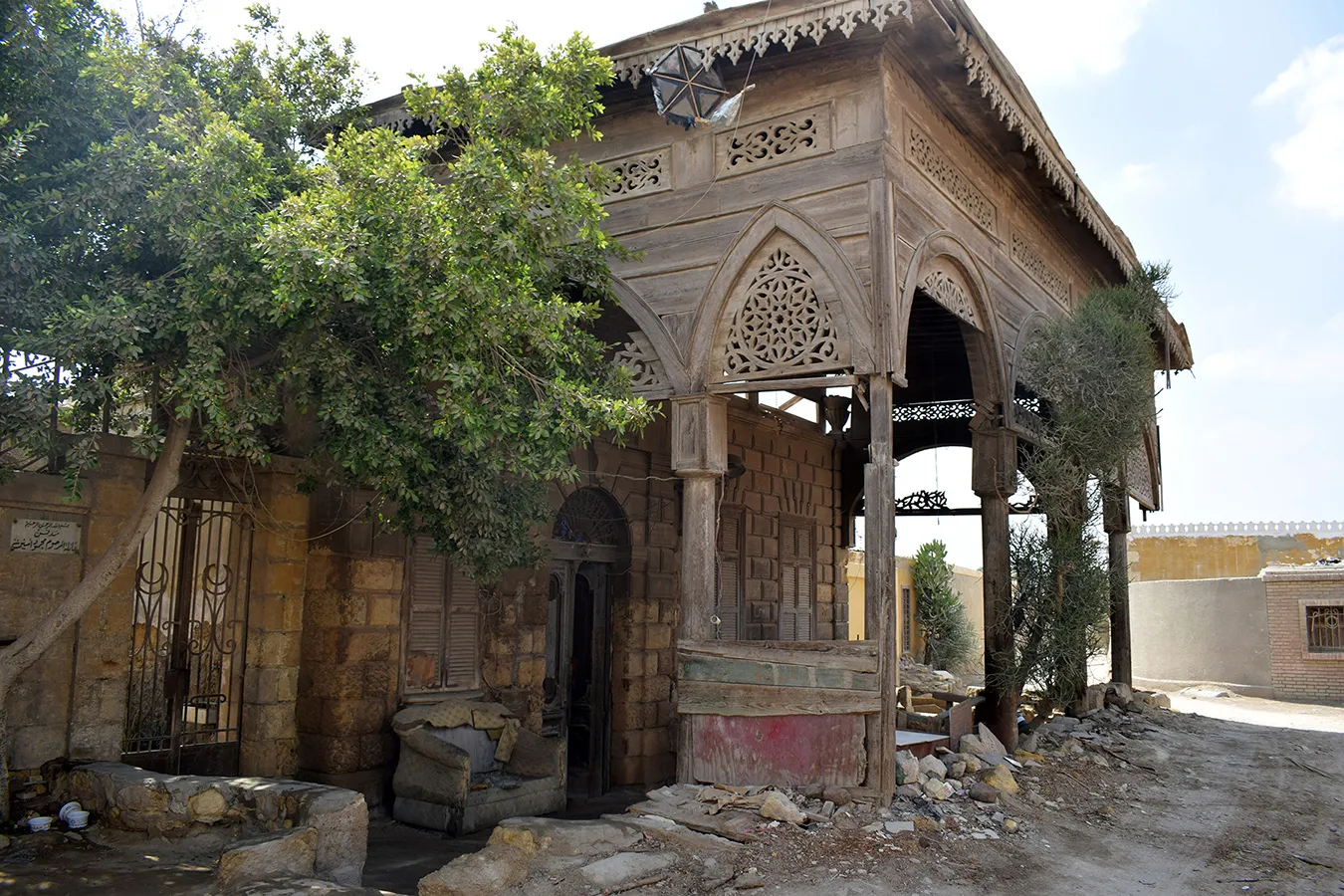
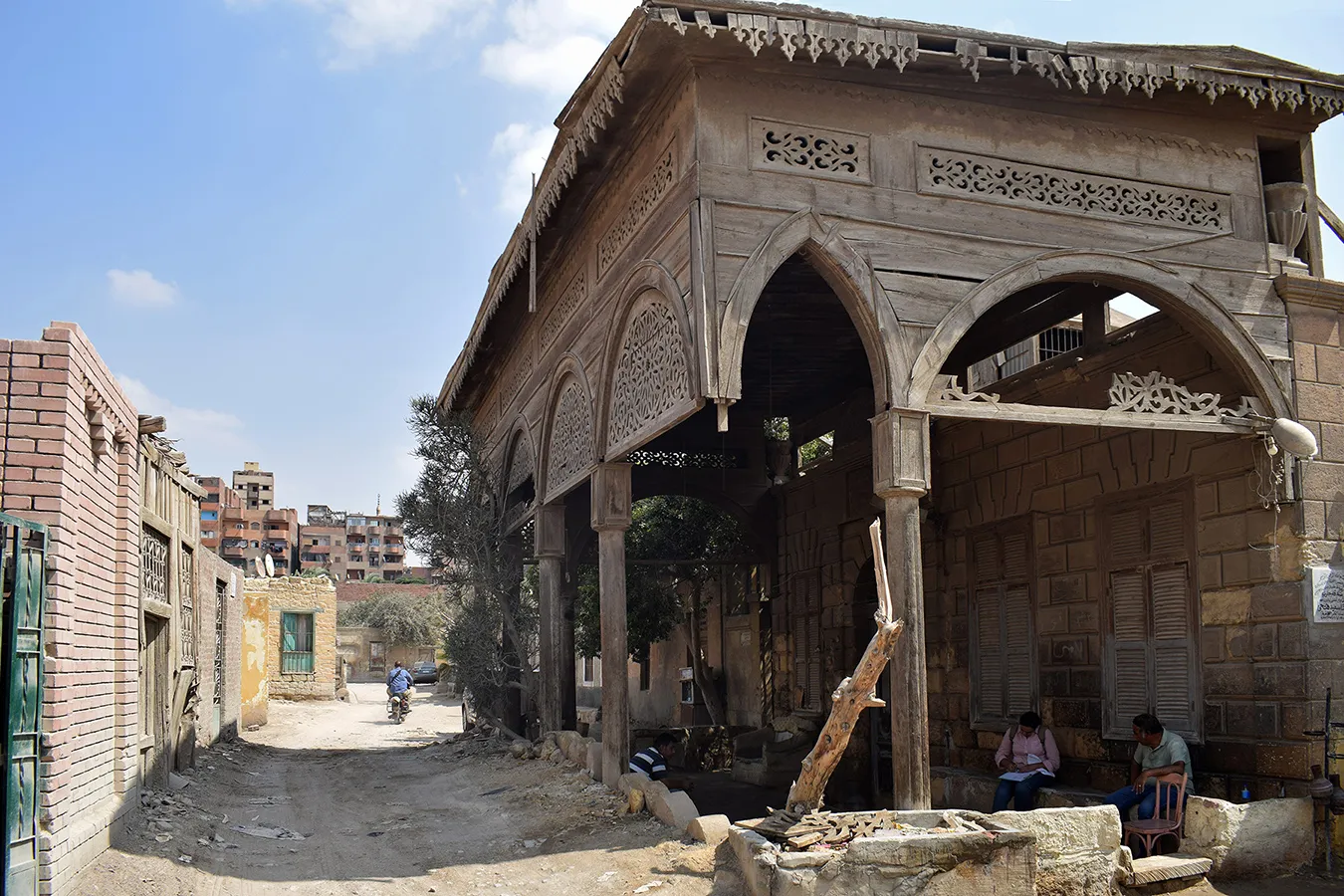
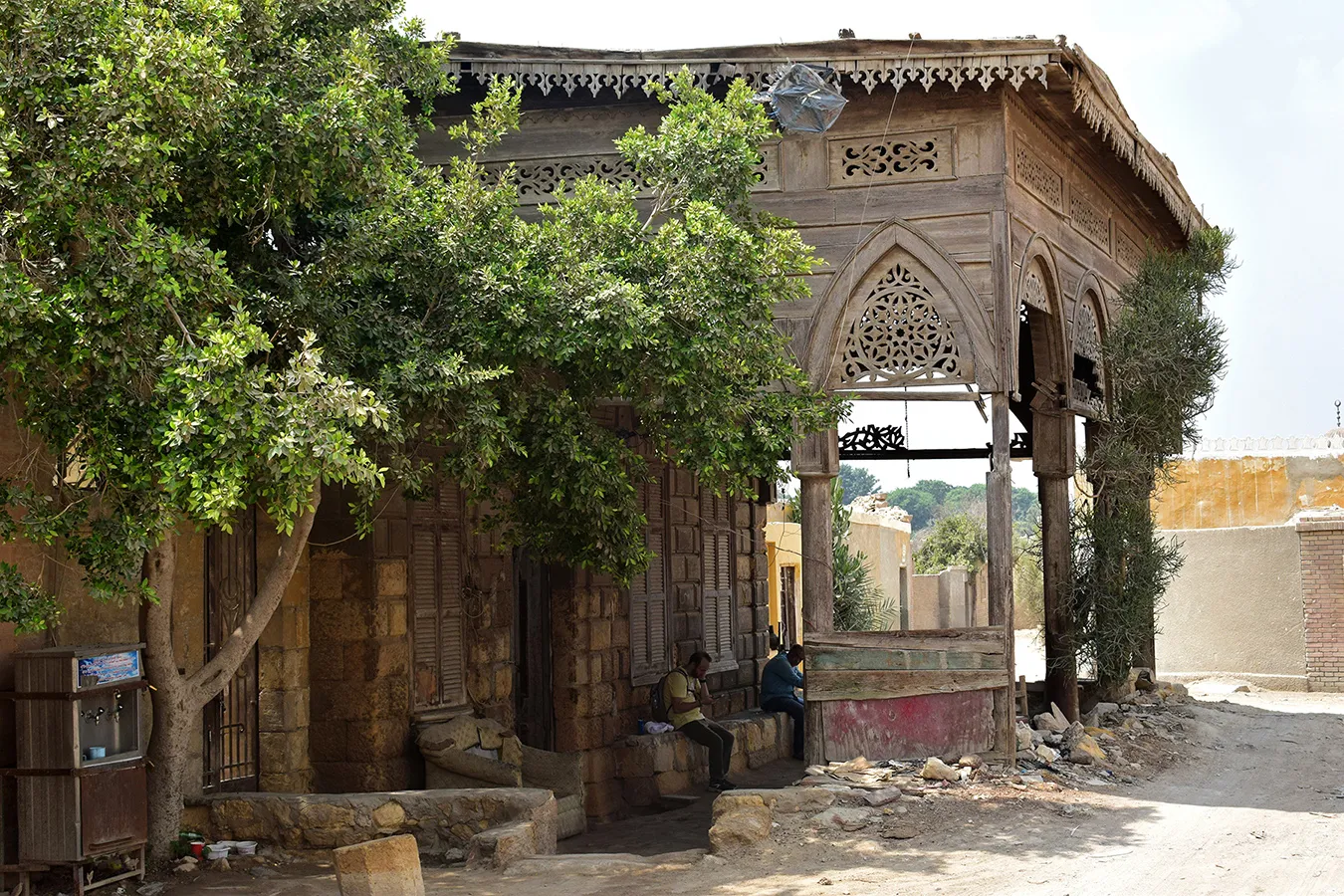
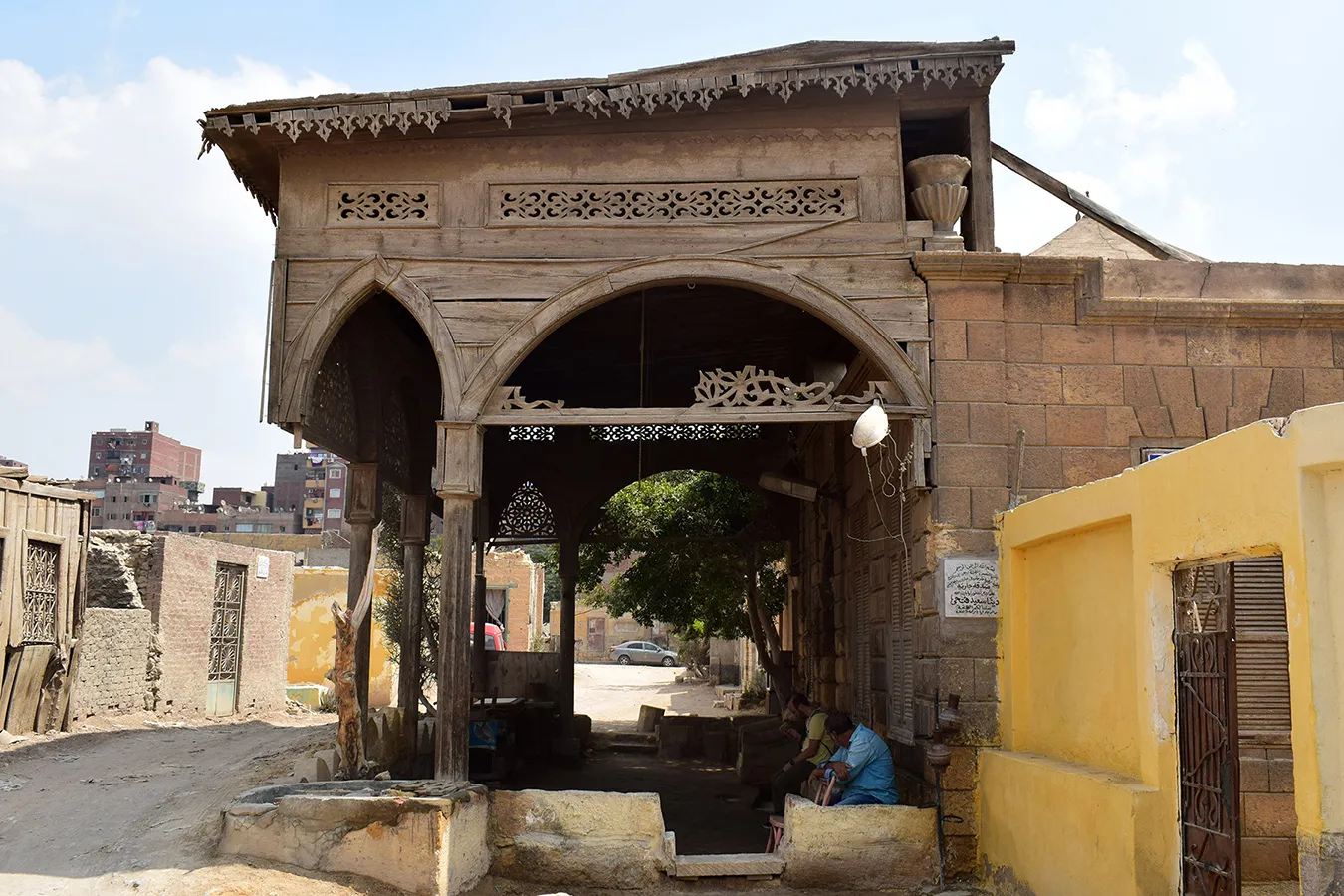
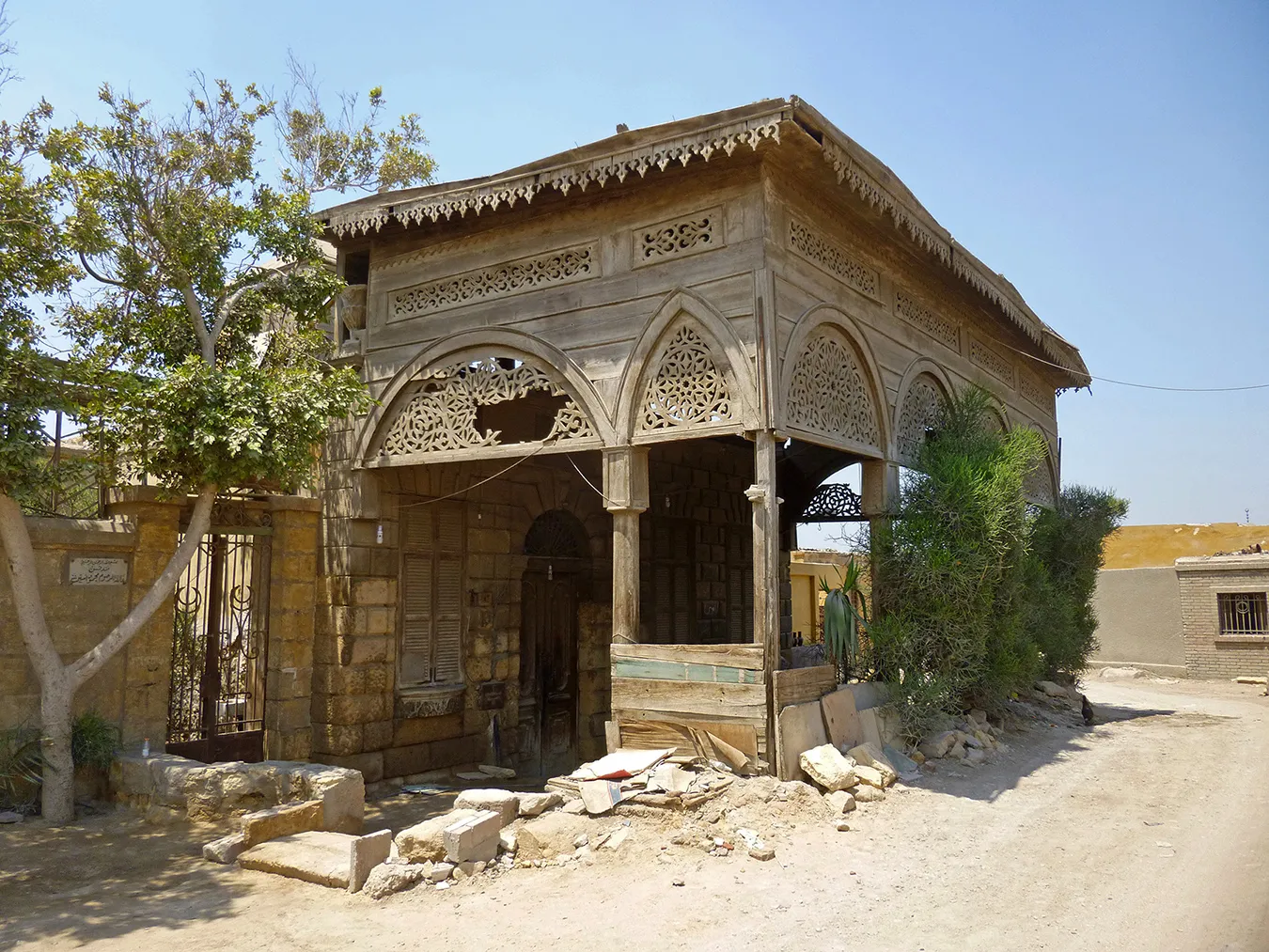
• An elaborately decorated wooden front porch.
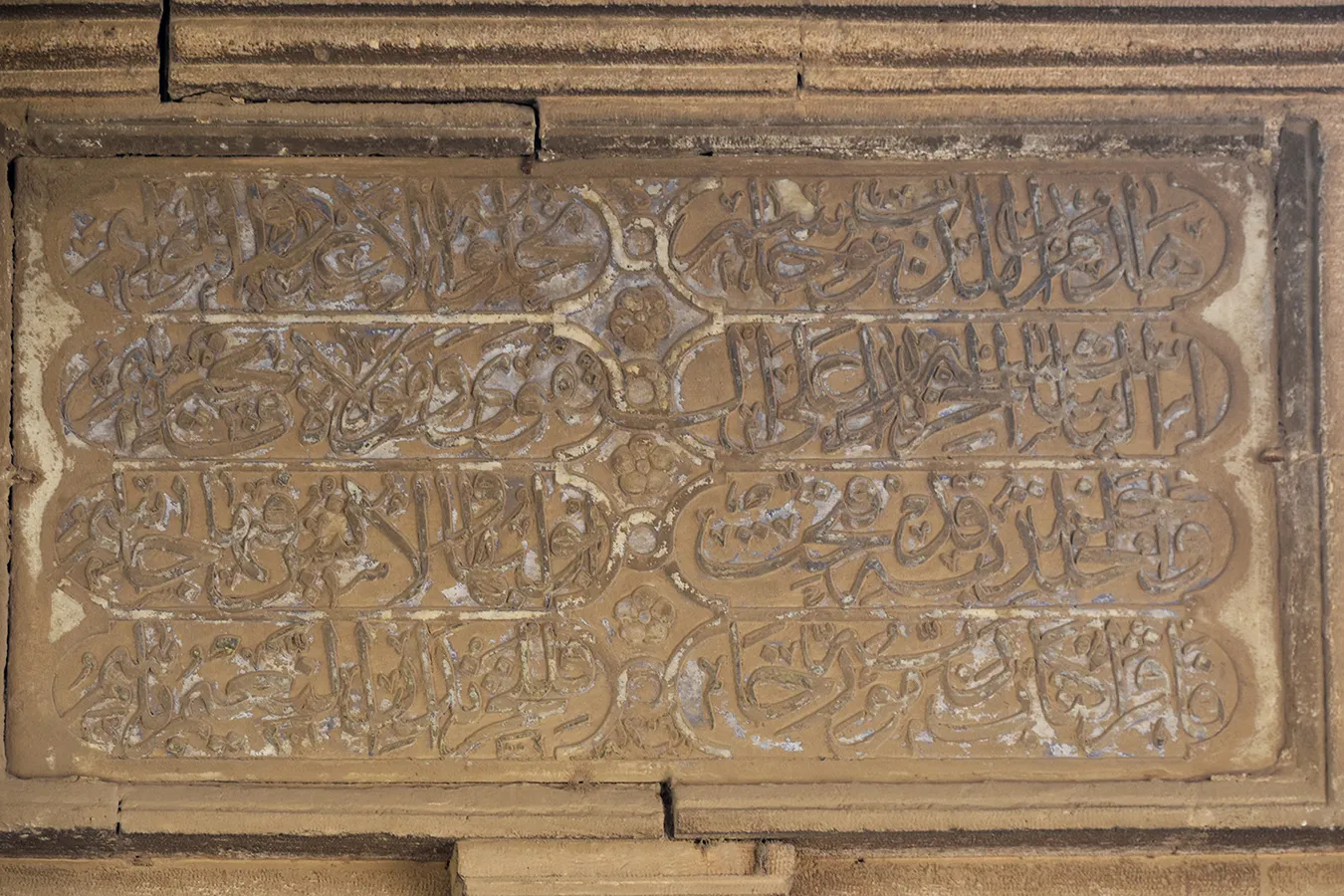
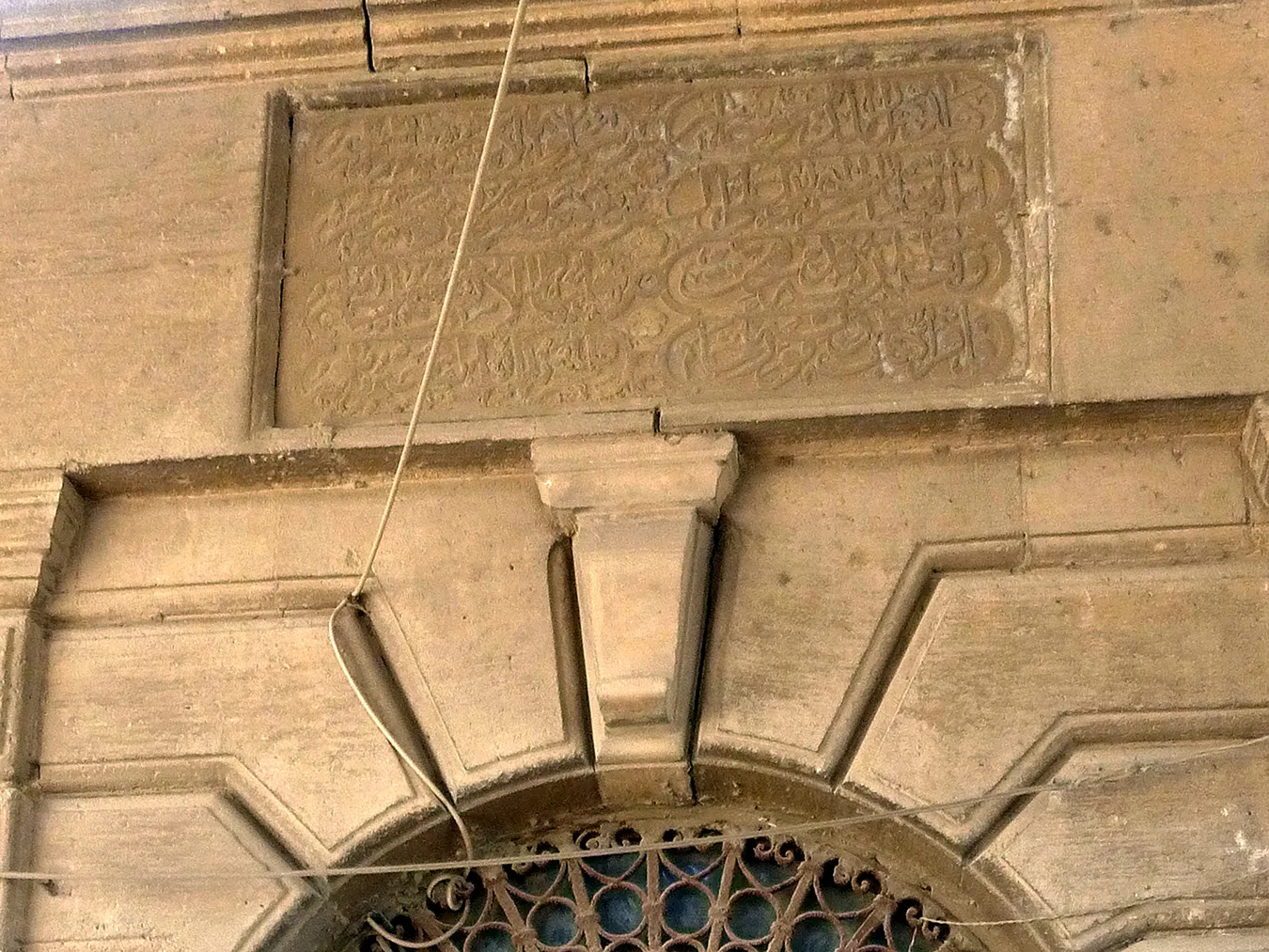
• The calligraphic inscription over the gate is unusual in containing a word that spans two framed compartments
Description (The direction towards Mecca (Qibla) is described as eastern and other directions are named accordingly)
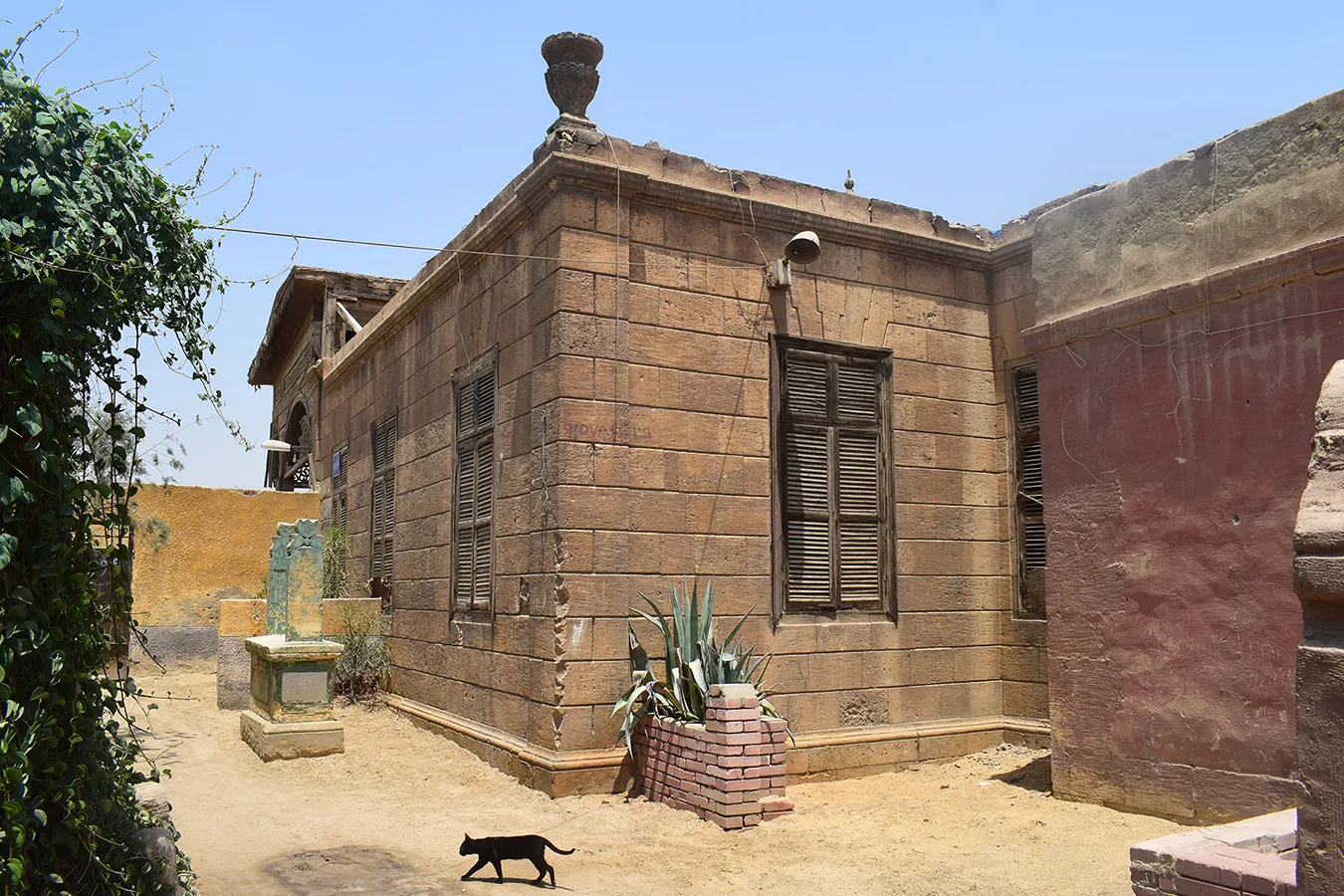
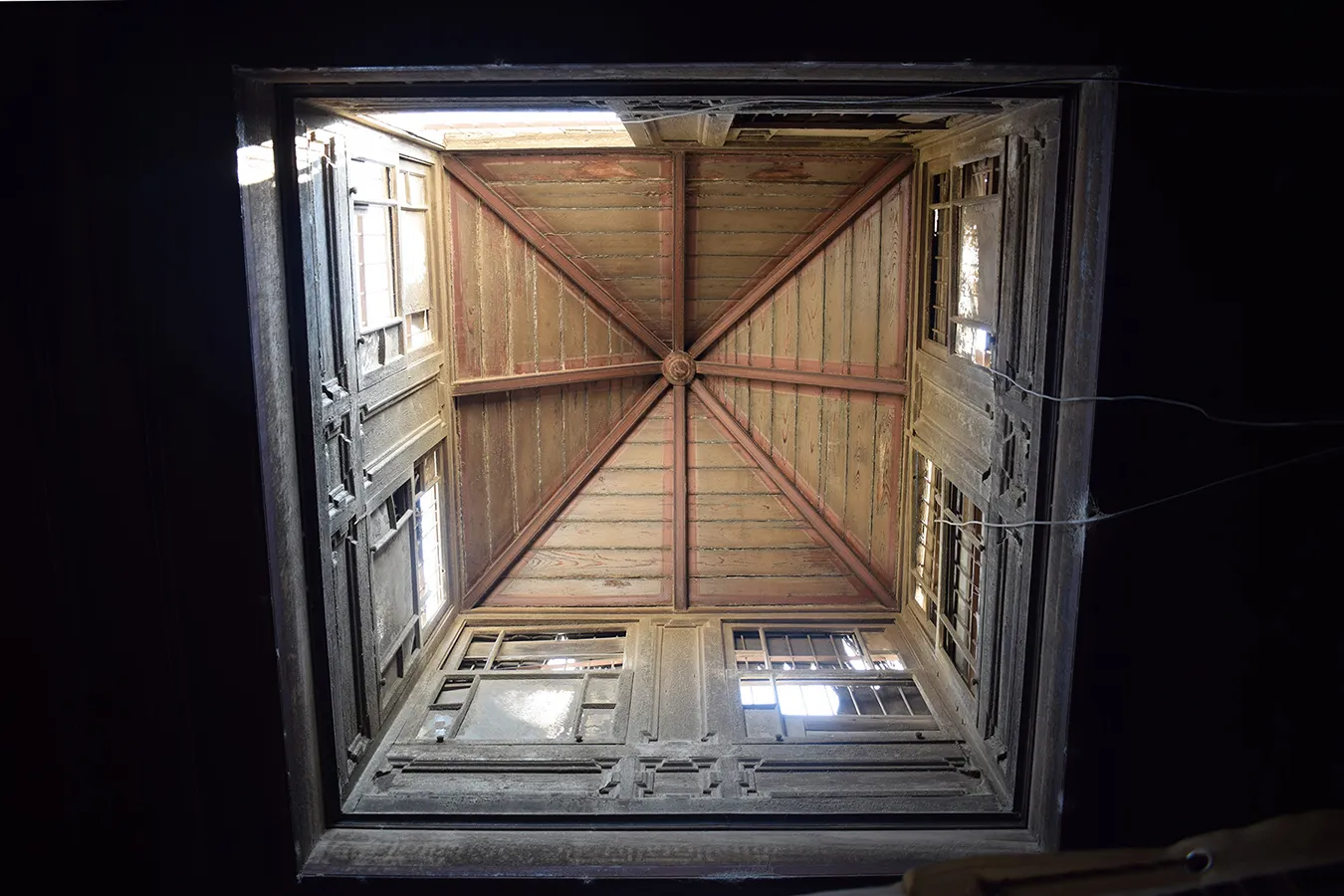
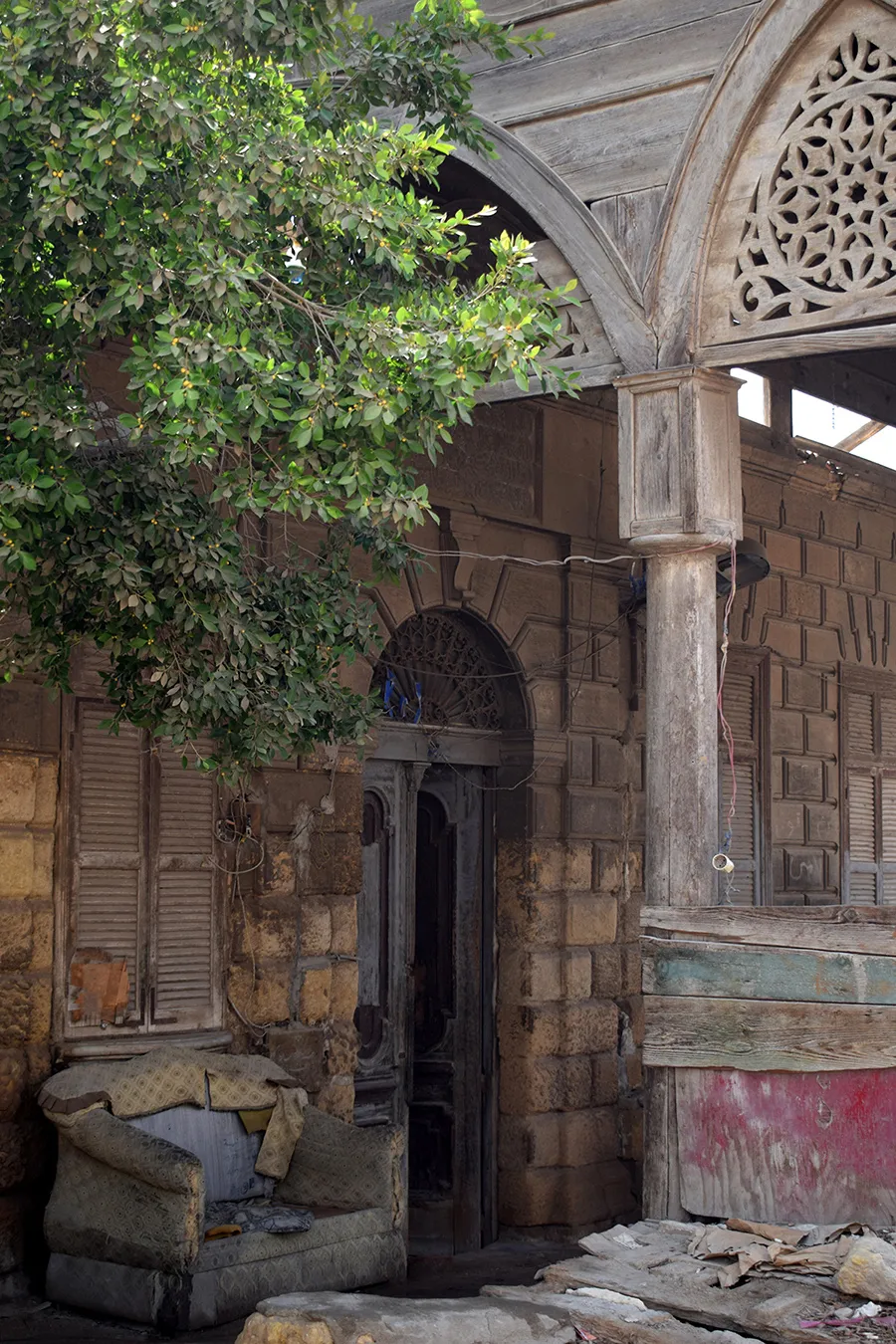
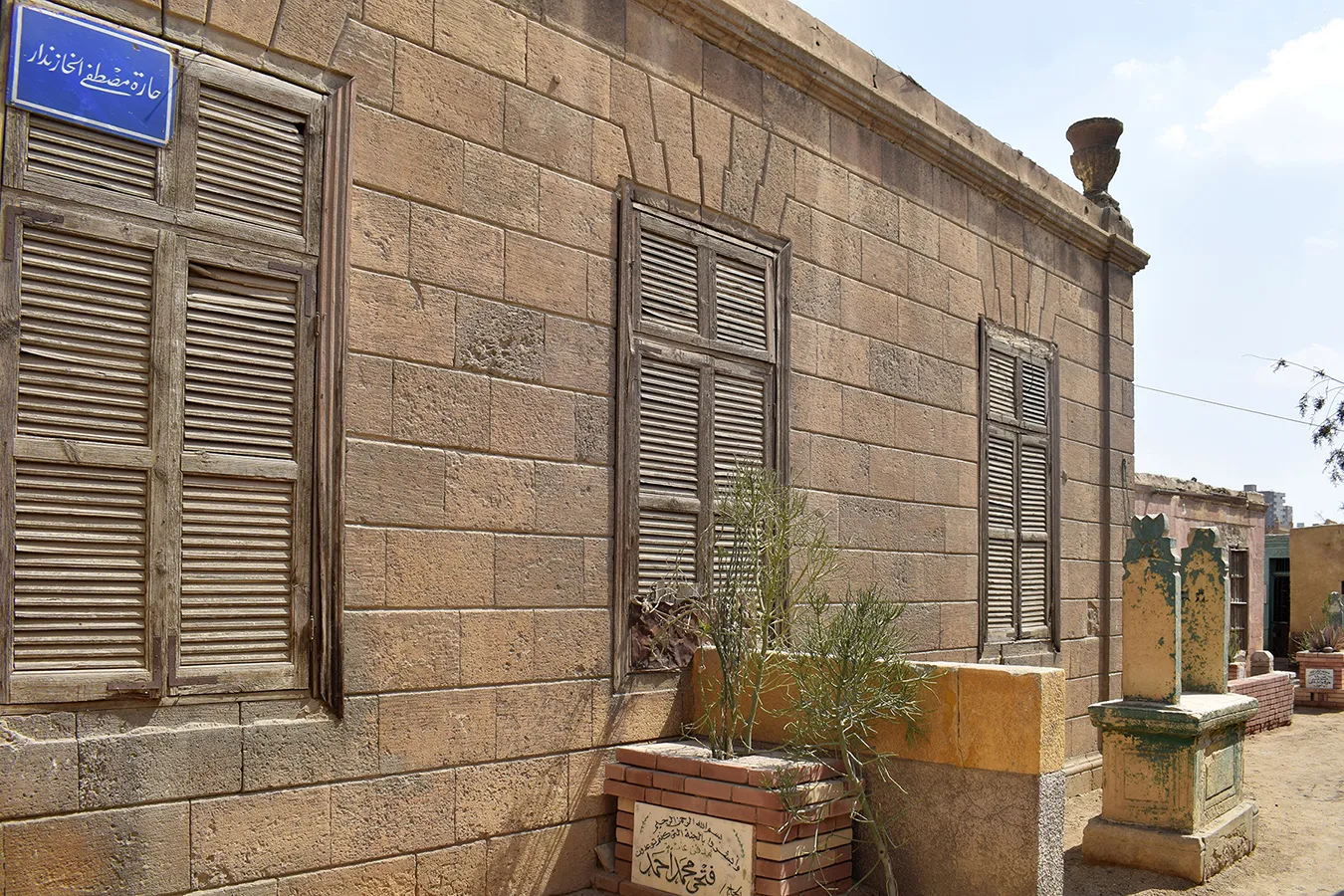
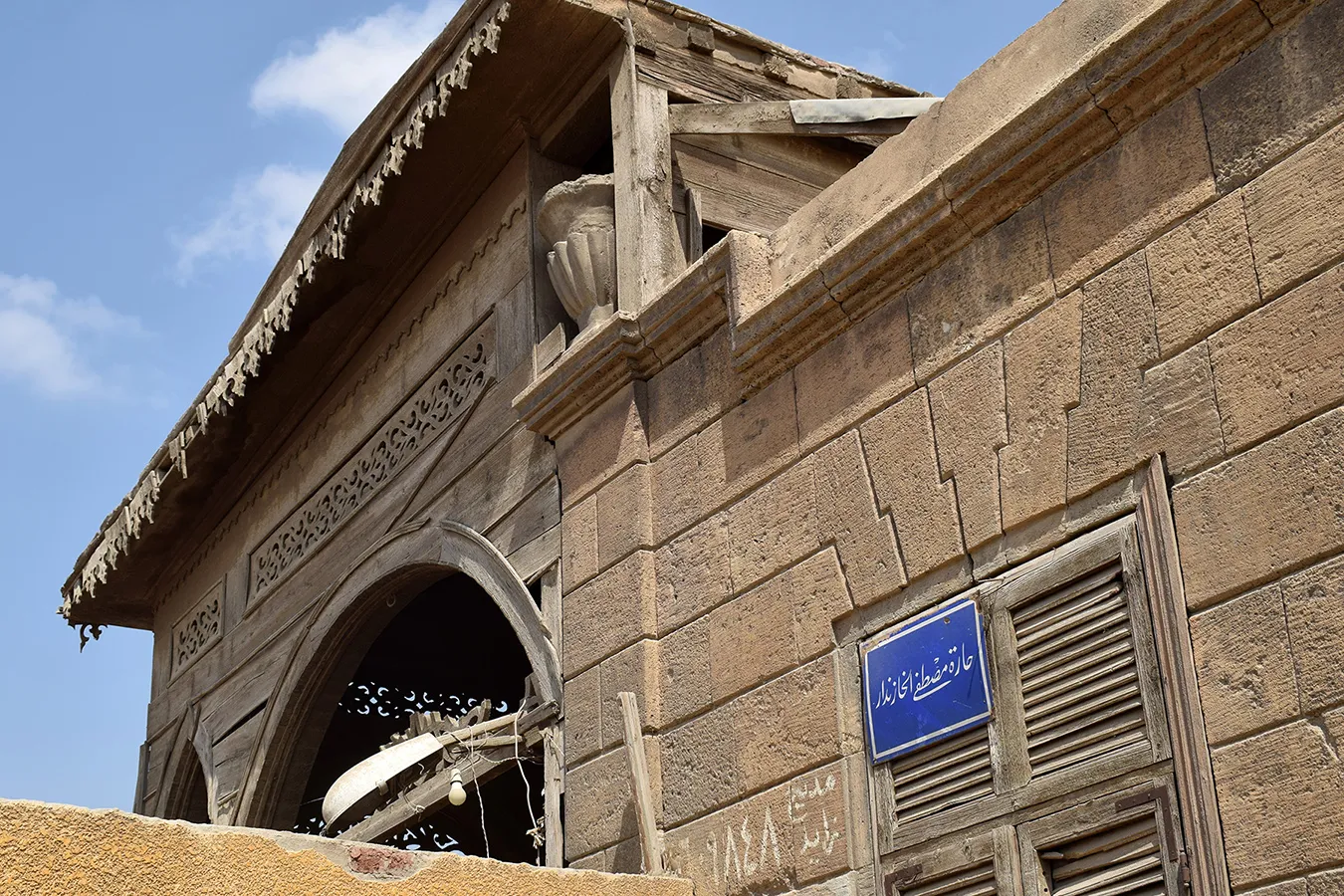
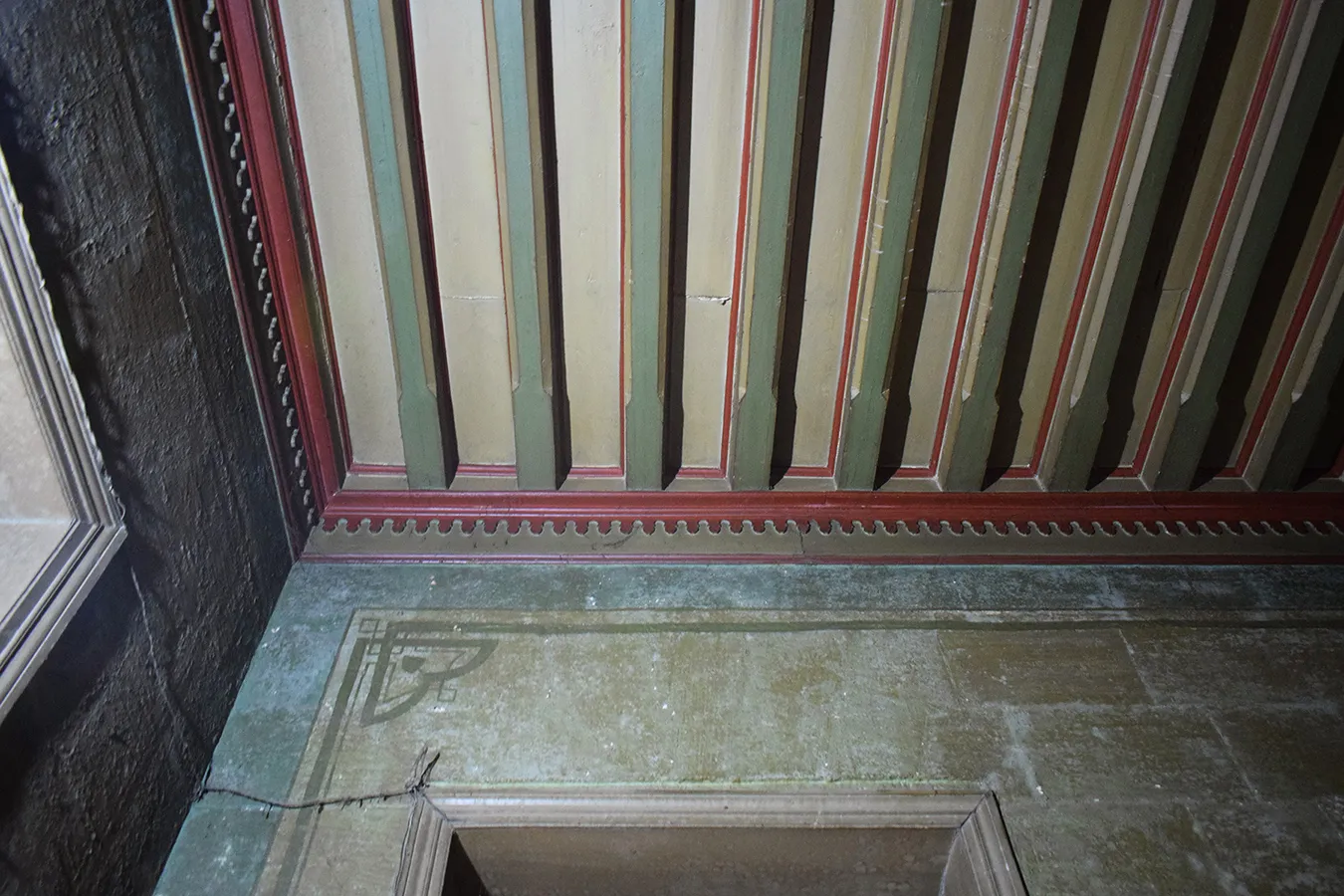
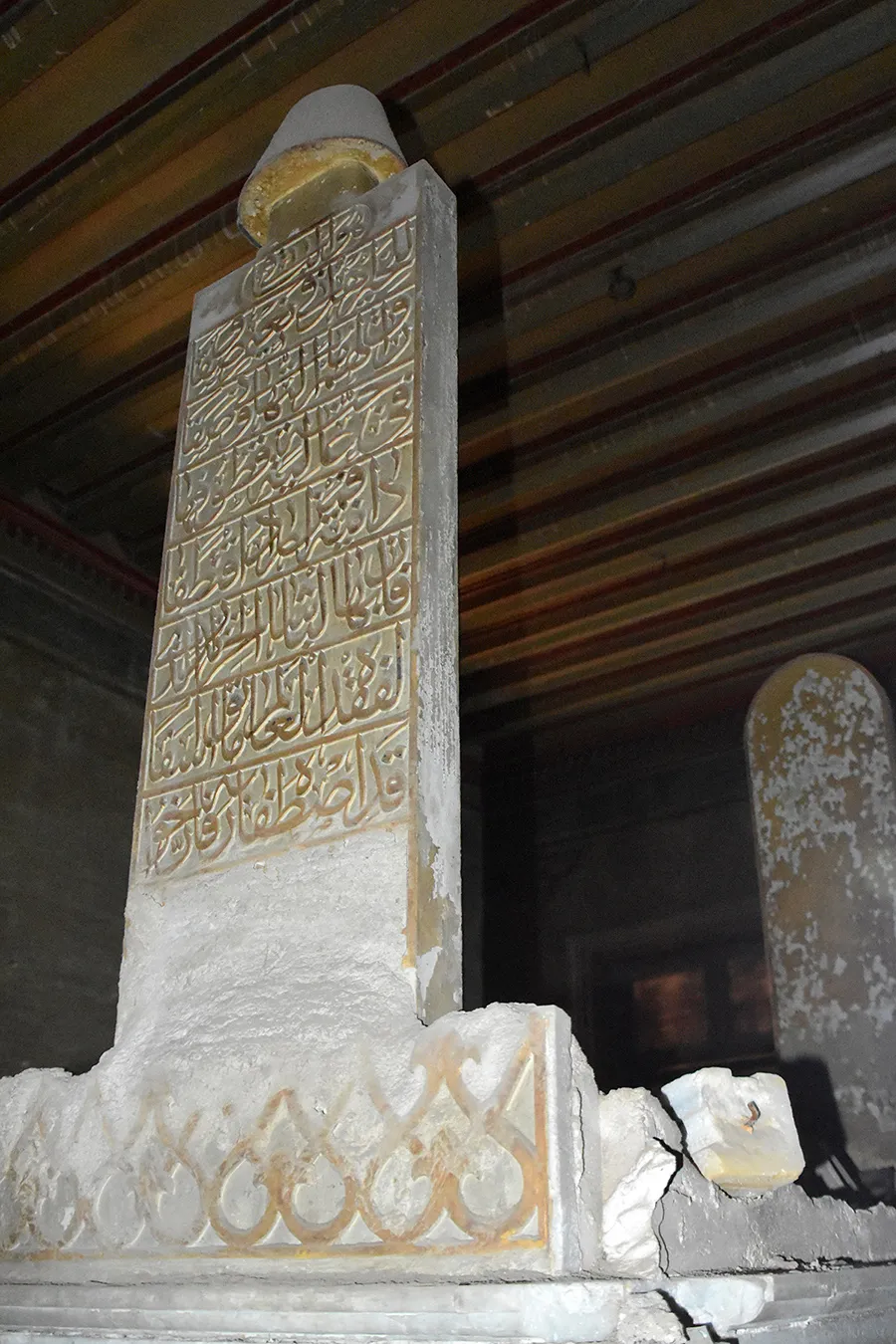
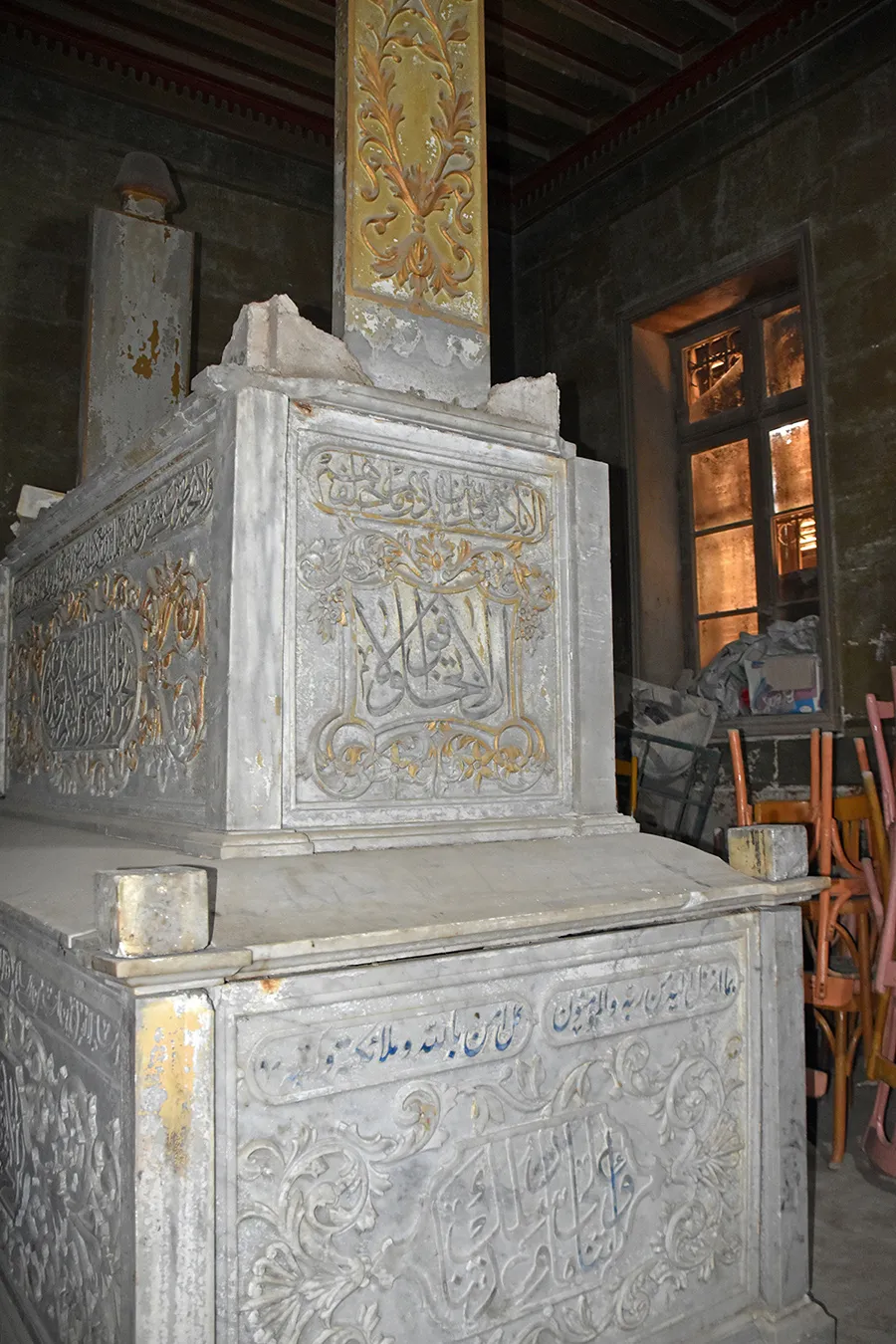
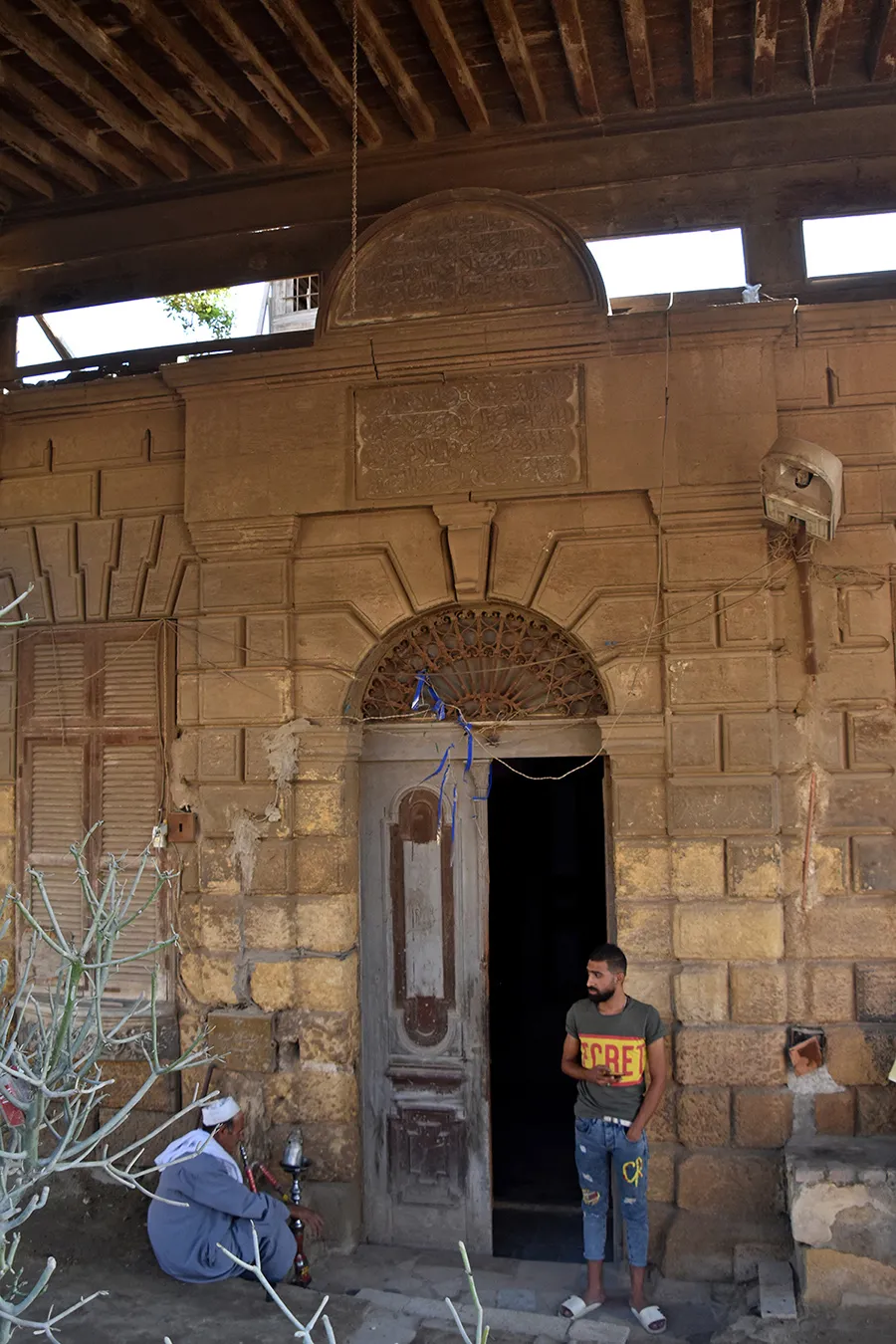
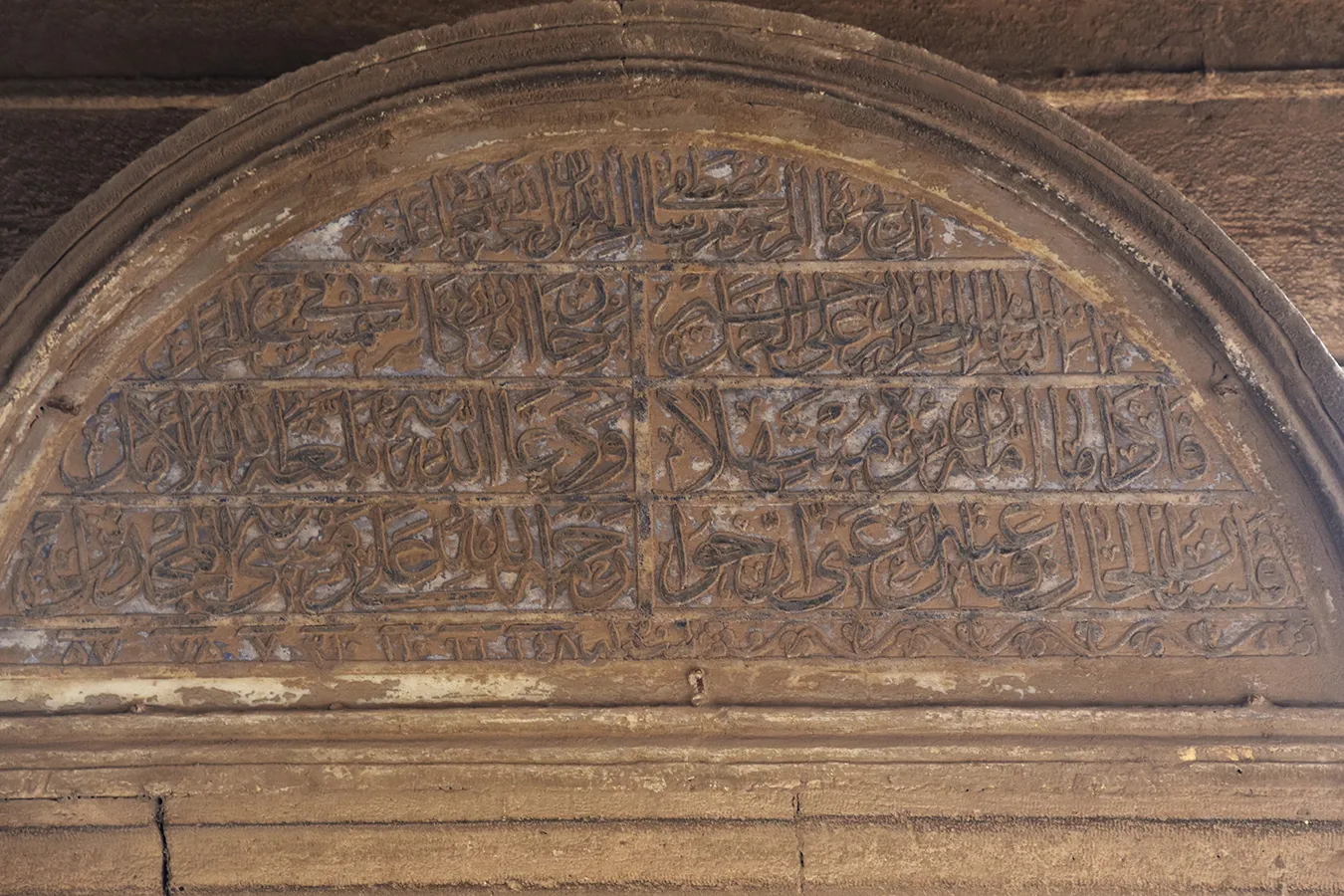
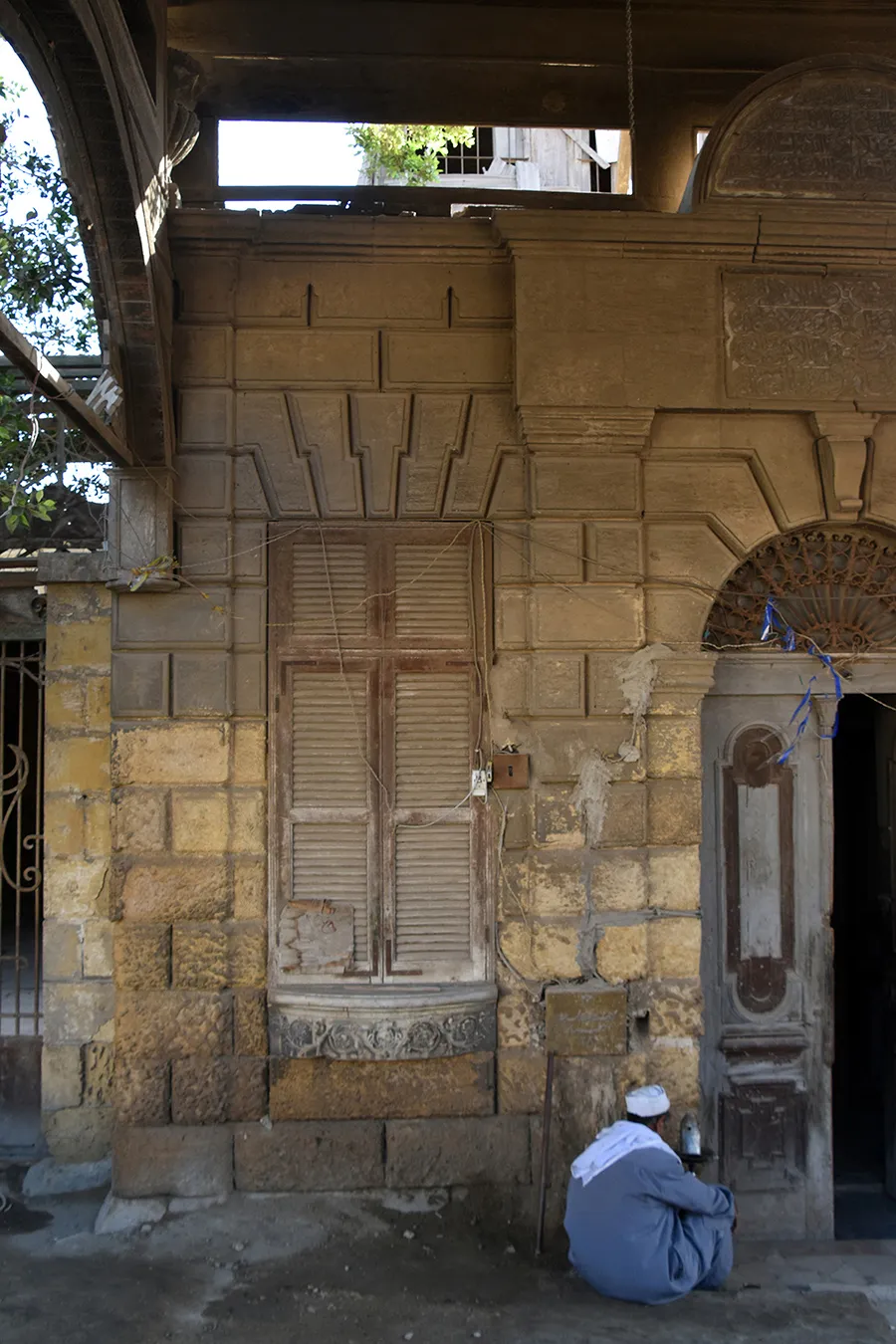
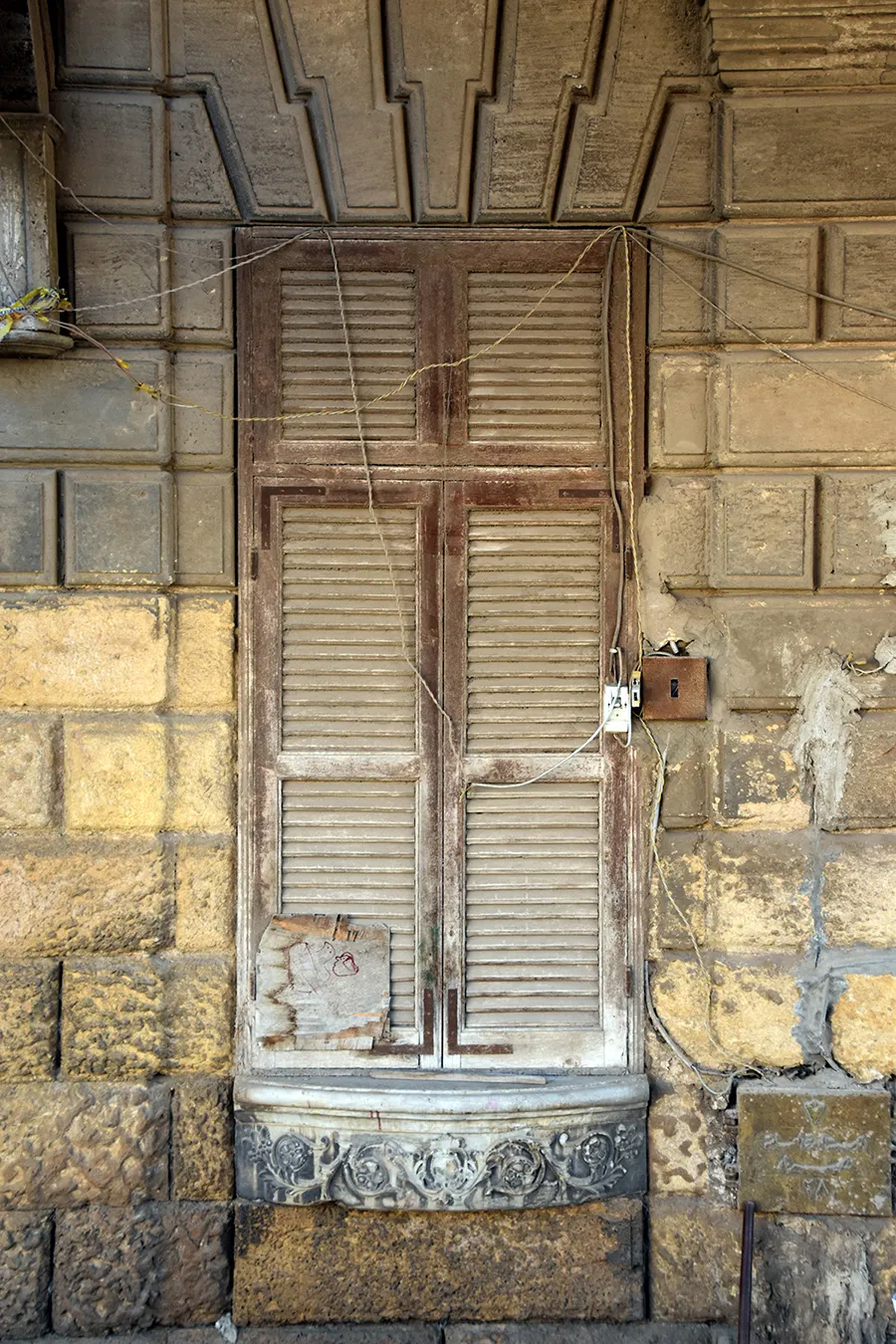
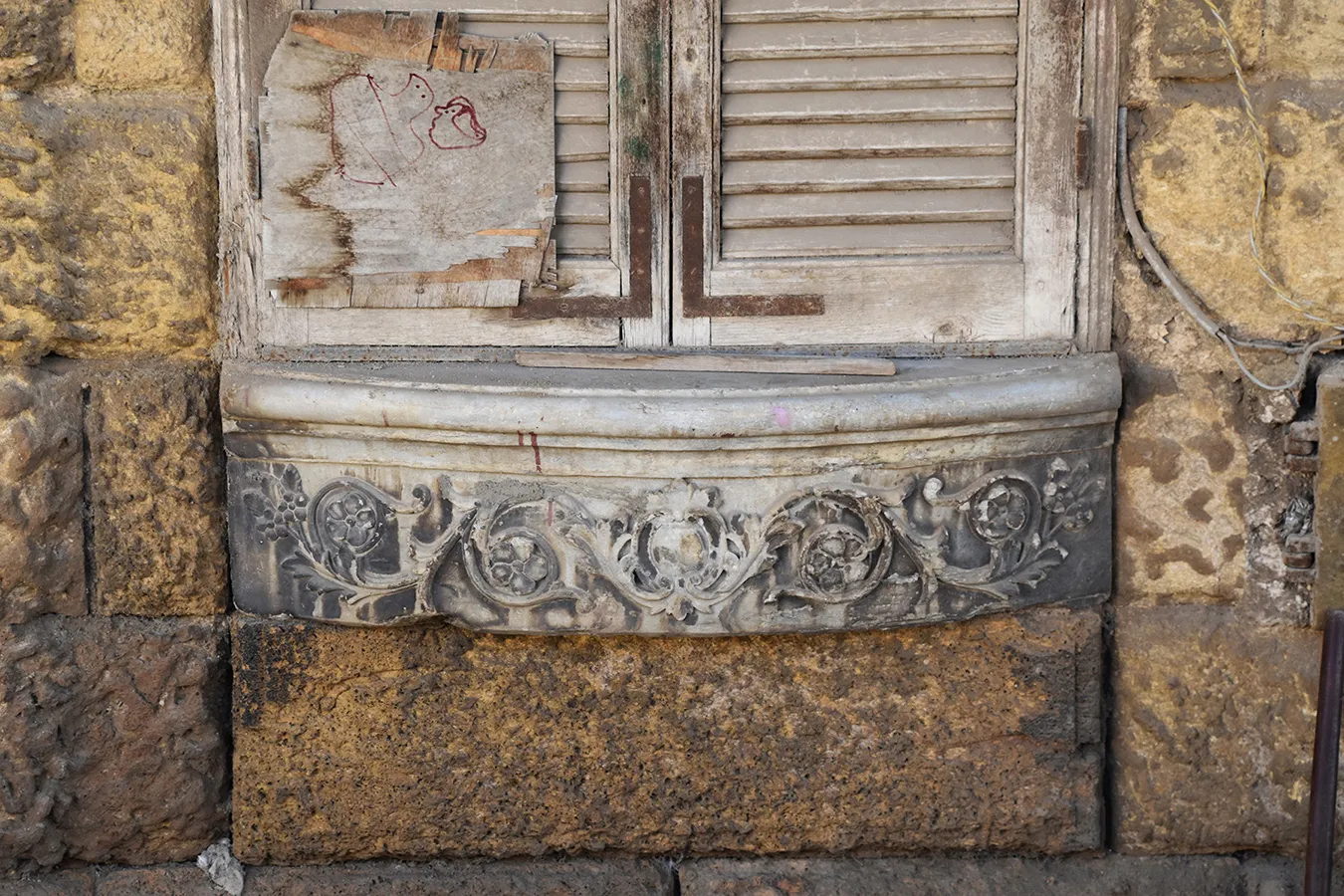
A free-standing structure consisting of a one-story stone building and an elaborately decorated wooden front porch. The building is well constructed of ashlar masonry blocks with edges rebated to accentuate the joints. The entrance gate in the north-facing façade inside the porch is asymmetrically placed, with two rectangular windows with rusticated flat arches as lintels to the right and one to the left. The windows in the courtyard-facing facades are identical. All are fitted with simple louvre shutters. The window to the left of the gate in the front façade is a sabil window with a rounded marble ledge decorated with floral scrolls under a moulding. The arched gate has a simple rusticated architectural framing and a double-leaved door with neo-classical based decorative panelling. In the entablature over the gate is a rectangular marble ainscription panel with eight calligraphic framed compartments. Over the cornice, there is a semi-circular marble inscription panel divided into nine calligraphic compartments. The gate leads to a vestibule that gives access to the sabil room to the left, the burial chamber to the right, and to two residential rooms at the back. The burial chamber contains a single marble cenotaph elaborately decorated in the Ottoman Baroque style. The chamber has a ceiling of exposed bevelled beams, painted green, red, and pea-green and featuring a simple decorative wooden frieze at the top of the walls.
The wooden front porch has in the front elevation four round arches supported on five massive wooden columns, and in each side elevation a similar round arch and a narrower pointed arch. The tympana of the arches and the rectangular horizontal openings above them are filled with very elaborate wooden openwork of geometric patterns with floral motifs. The overhanging roof has a very elaborate tassellated wooden edge. Atop the corners of the main building are decorative stone vases. The ones at the front are awkwardly hidden behind the wooden porch, suggesting that it may be a later addition or an afterthought during construction.
Condition of preservation
The unit is in fair overall condition, although dilapidated. The wooden openwork decoration of the porch is heavily damaged and partially missing. The north-western corner column of the porch is missing, apparently knocked down by a vehicle moving on the street that sometimes becomes busy. The photograph in Al-Kady and Bonnamy’s book published in 2007 (p.197) shows that this happened before that date.
Information abut the founder, family history, etc.
According to a resident, the enclosure currently belongs to Ahmad Mandur family, who also own the nearby funerary enclosure of al-‘Abd al-Fakir Muhammad (No 29 in this survey). Ahmed Mandur is reported to have worked for the original Turkish family who had owned the enclosures before.
Al-Kadi and Bonnamy (p.197) attribute the tomb to Salih Pasha Silim and date it to AD 1910 without quoting any evidence. Judging by the style of the building, the date 1910 is not improbable. The name of Mustafa Pasha al Khazindar appears in the inscription on the semi-circular marble panel over the entrance door. Khazindar means “treasurer”, and is also a given name of Turkish origin deriving from this title.
References in published/primary sources
• El Kadi, Galila and Bonnamy, Alain Architecture for The Dead: Cairo’s Medieval Necropolis, American University in Cairo Press 2007, p. 197.
- Field recording by
- Hadeer Ahmad and Radwa al-Saeed
- Date recorded
- August 25, 2022
- Data entered by
- Yusuf Yassir
- Date entered
- May 9, 2024