

Unit No26
Hasanein Salman al-Hamami
|
Coordinates of the main entrance |
30.043298N - 31.269832E |
|
Attribution |
Hasanein Salman al-Hamami |
|
Higri (AH)Dates as given in the Inscription |
1334 |
|
Miladi (AD)Dates as given in the Inscription |
|
|
Inscription Contemporary with the building? |
Yes |
|
Multiple date(s) In the inscription? |
Yes |
|
Assumed Date |
Façade in its current form: the 1950s or 1960s |
|
Based on |
(based on stylistic features, see point 17) |
|
Original Use |
Tomb chamber with residential unit upstairs |
|
Current Use |
Tomb chamber with disused residential unit upstairs |
|
Overall condition |
Good |
Features of unit 26
| Present | Count | Material | Comments (see description for details) | |
|---|---|---|---|---|
| Free standing structure | Yes | 1 | Stone and bricks | Two-storied |
| Walled enclosure | No | |||
| Rooms by the perimeter wall | No | |||
| Freestanding structure(s) in enclousure | No | |||
| Dome over the tomb chamber | No | |||
| Neo-Mamluk architectural decoration | No | |||
| Garden layout | No | |||
| Sabil(s) | No | |||
| Wall fountain(s) | No | |||
| Canopy on columns / pillars | No | |||
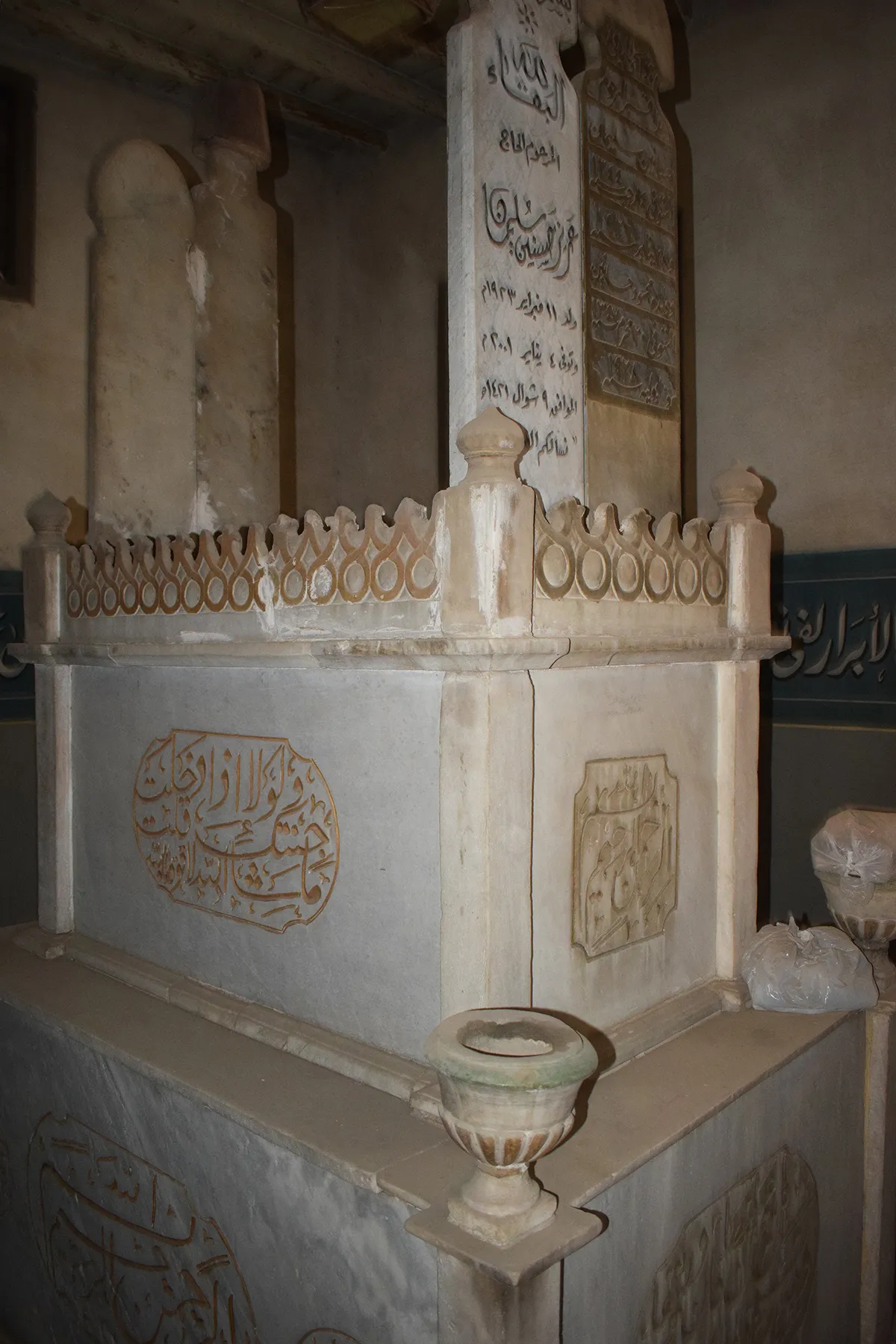
| Carved marble cenotaph(s) | Yes | 1 | 1 | |
| Decorated limestone tomb-markers | No | |||
| Decorated gateway | Yes | 1 | Stone/plaster | Extremely simple |
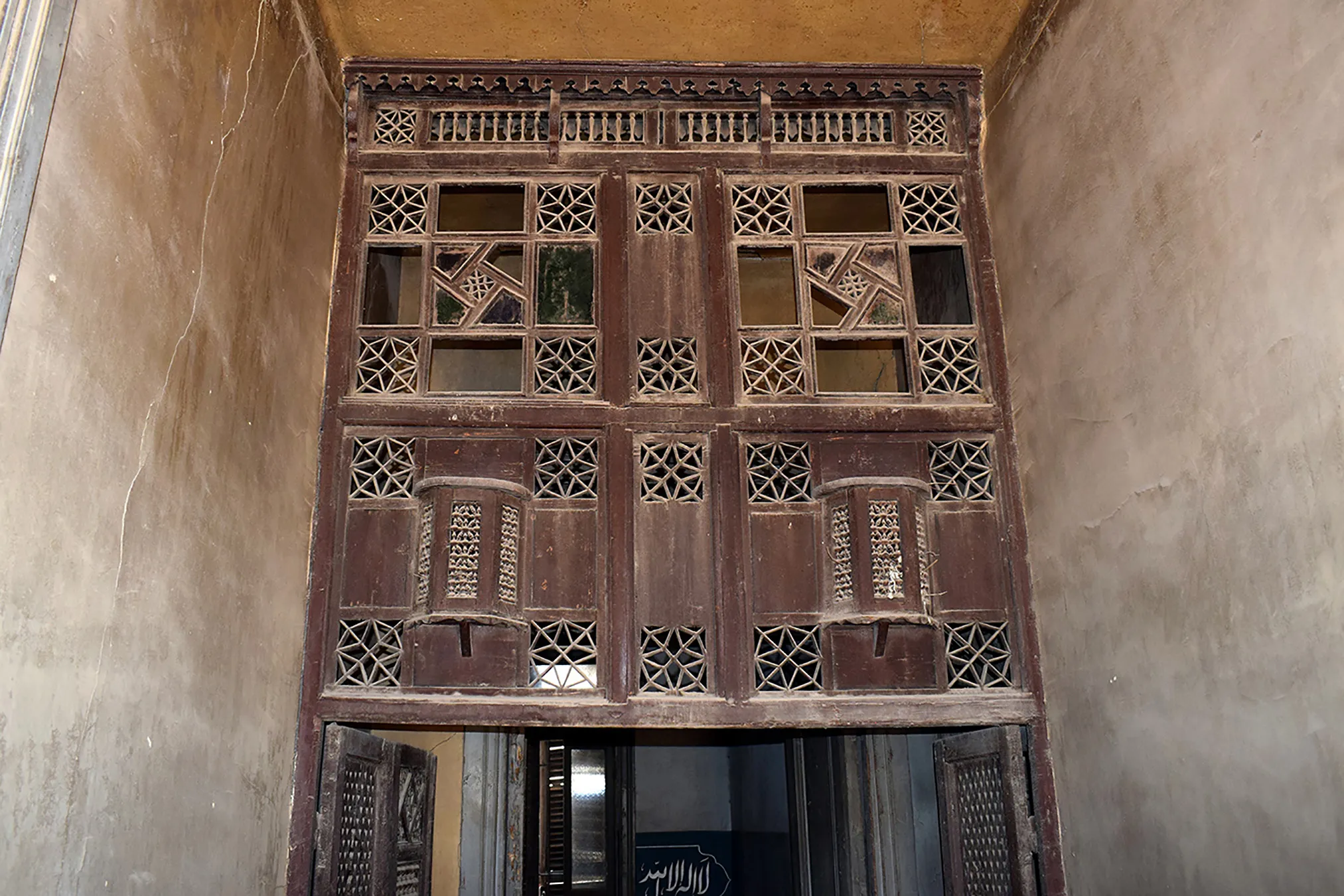
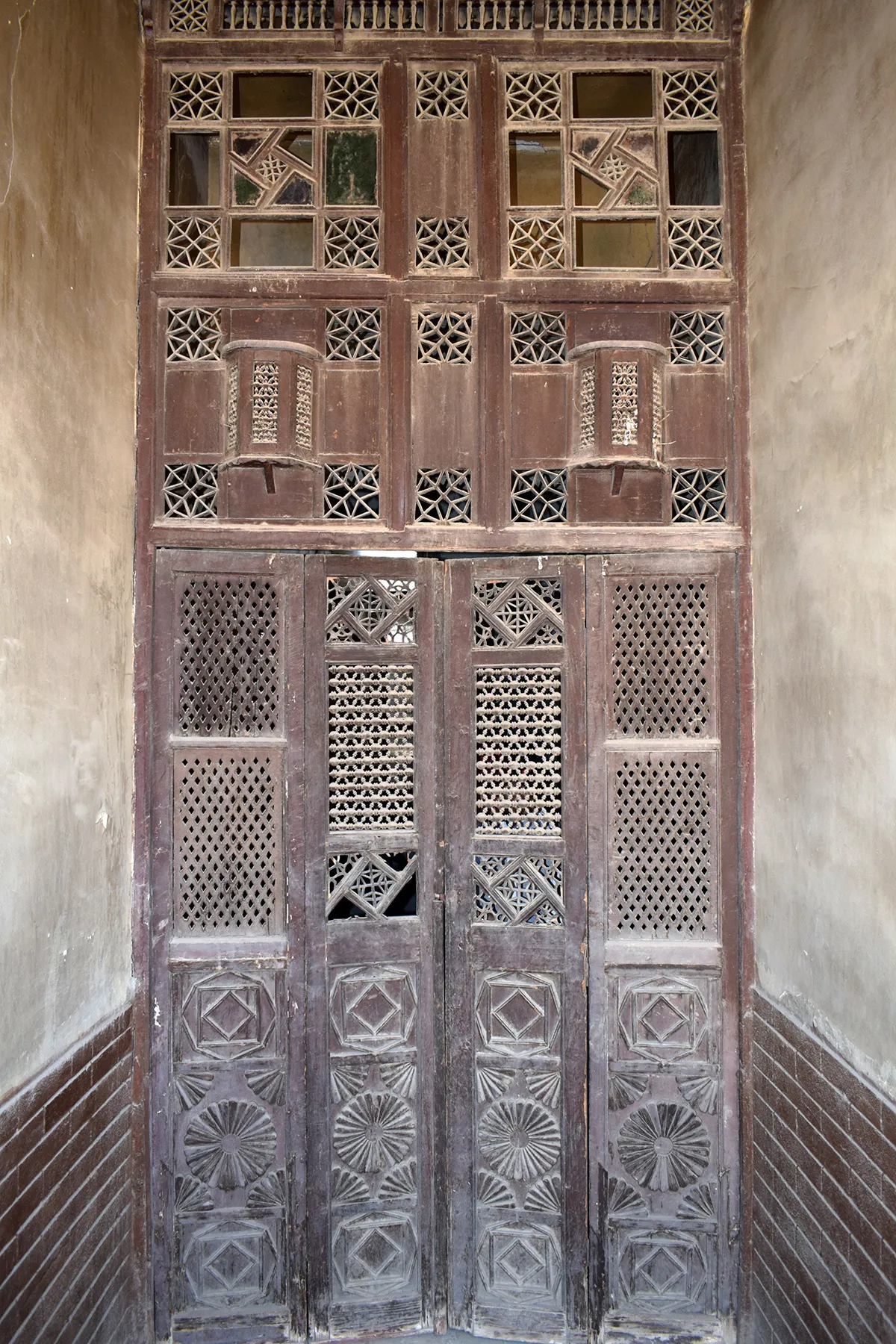
| Decorative door-leaves | No | 2 | Turned wood | In a mashrabiya turned-wood screen in the vestibule |
| Decorative window grilles | No | 2 | Iron | |
| Decorative shutters | No | |||
| Painted ceiling(s) | No | |||
| Decorative paving(s) | No |
Unusual or unique features
• Residential upper floor.
Description (The direction towards Mecca (Qibla) is described as eastern and other directions are named accordingly)
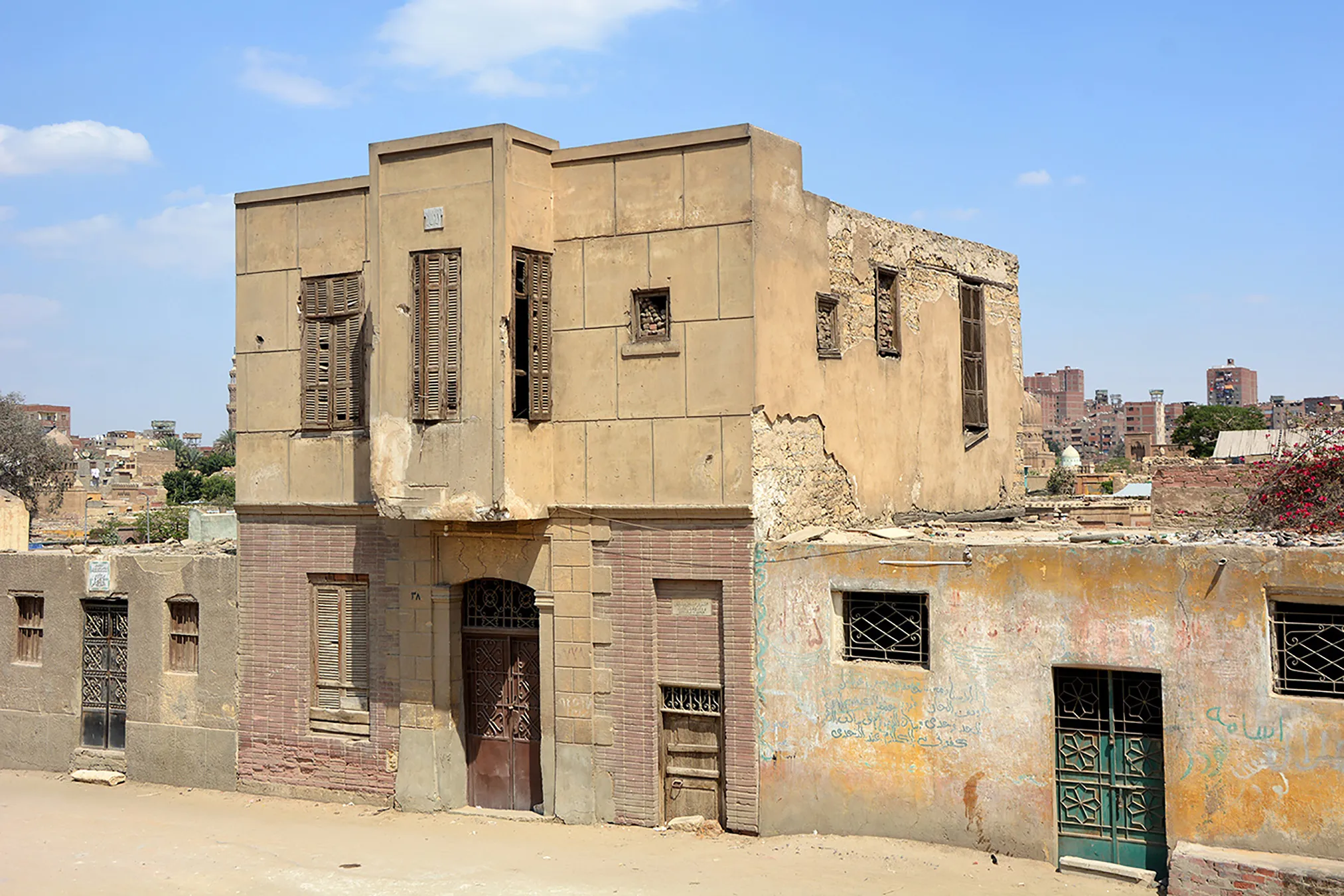
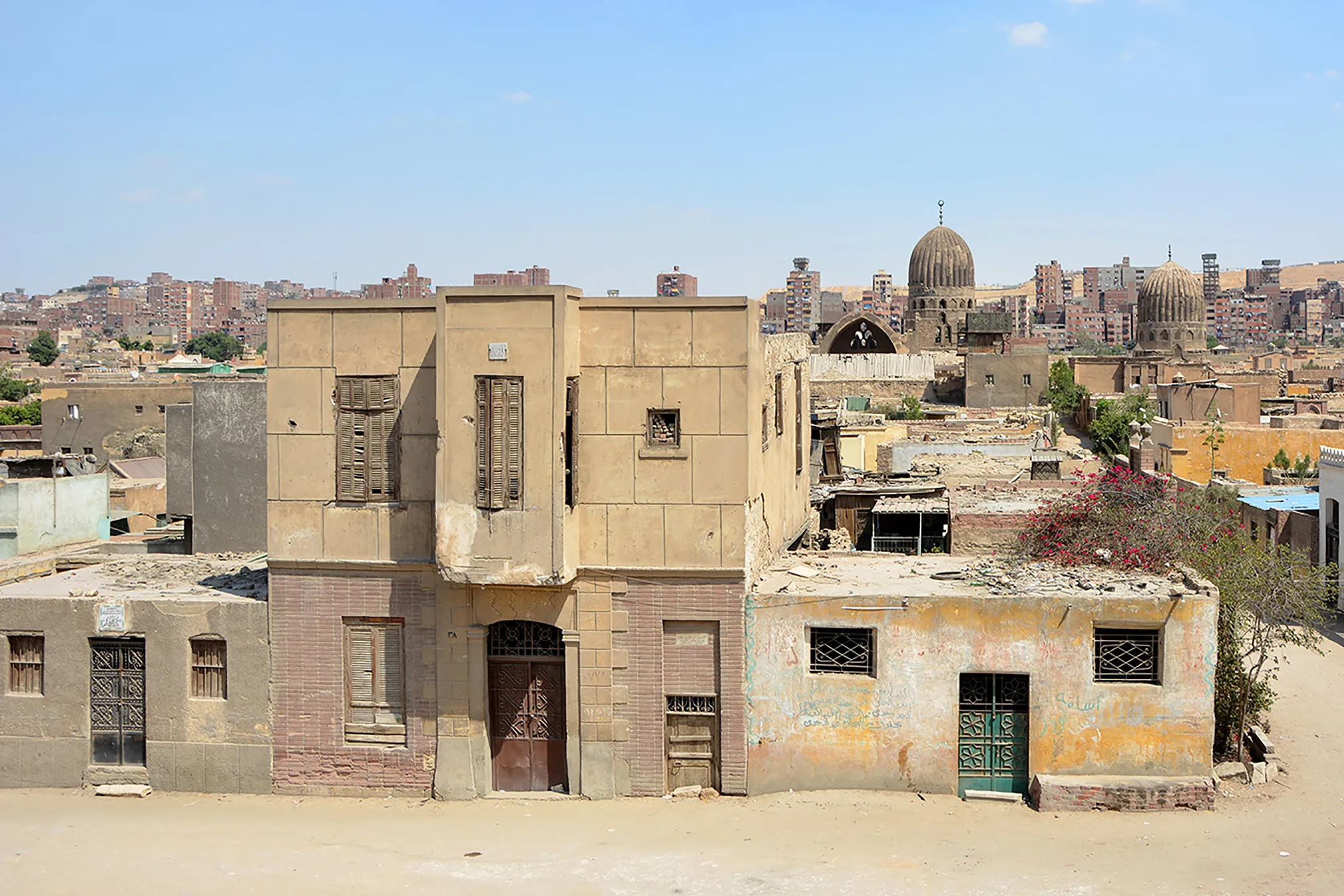
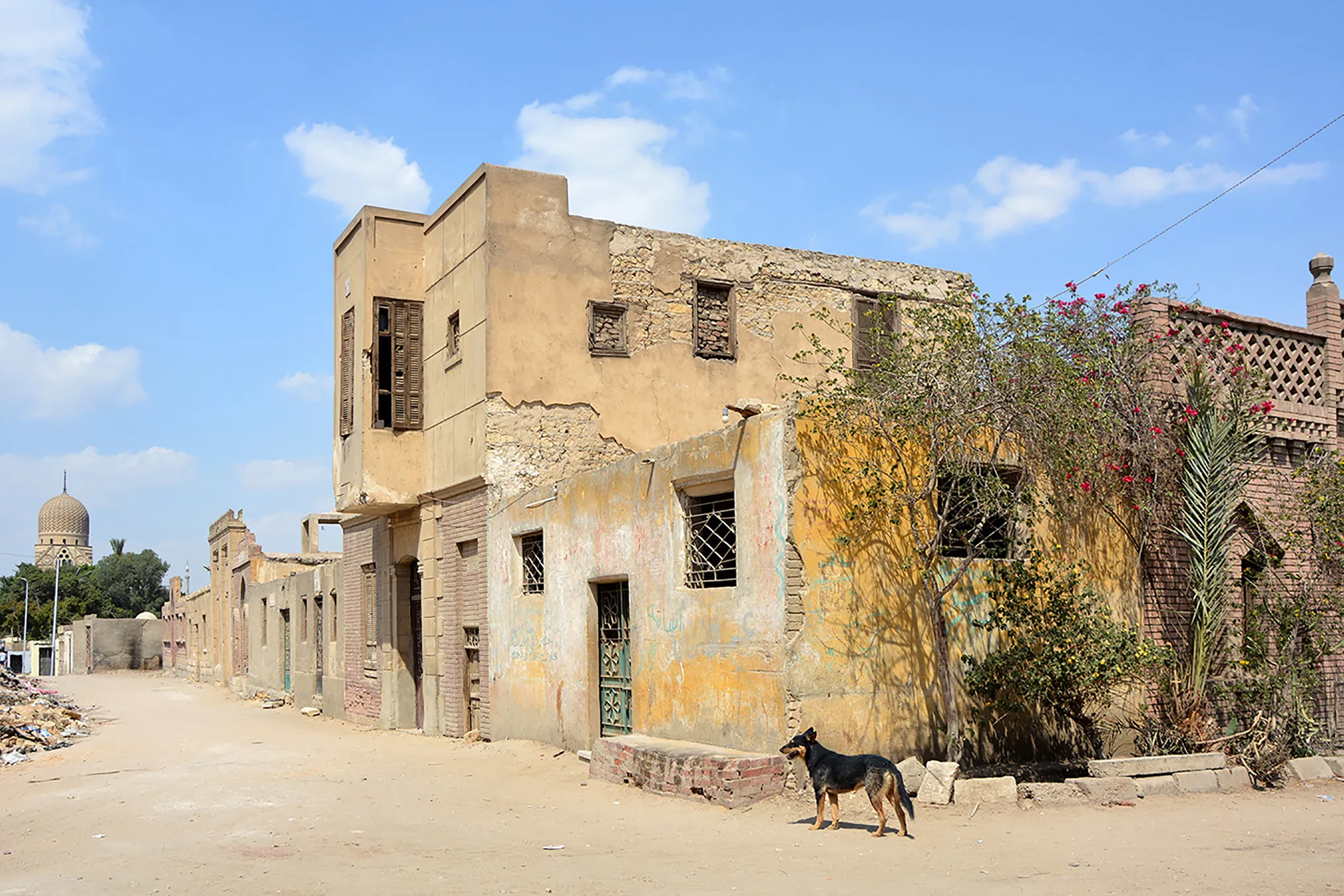
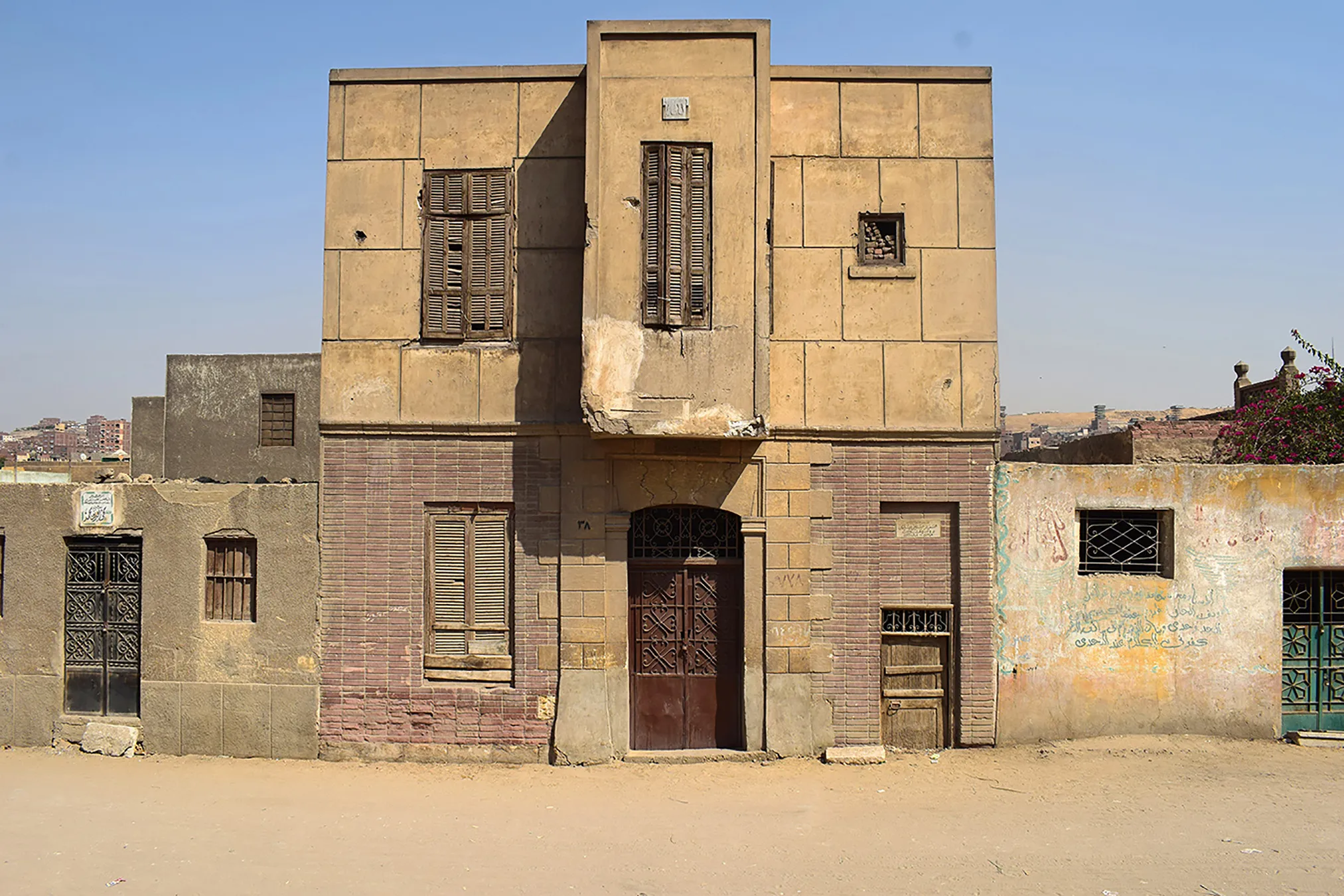
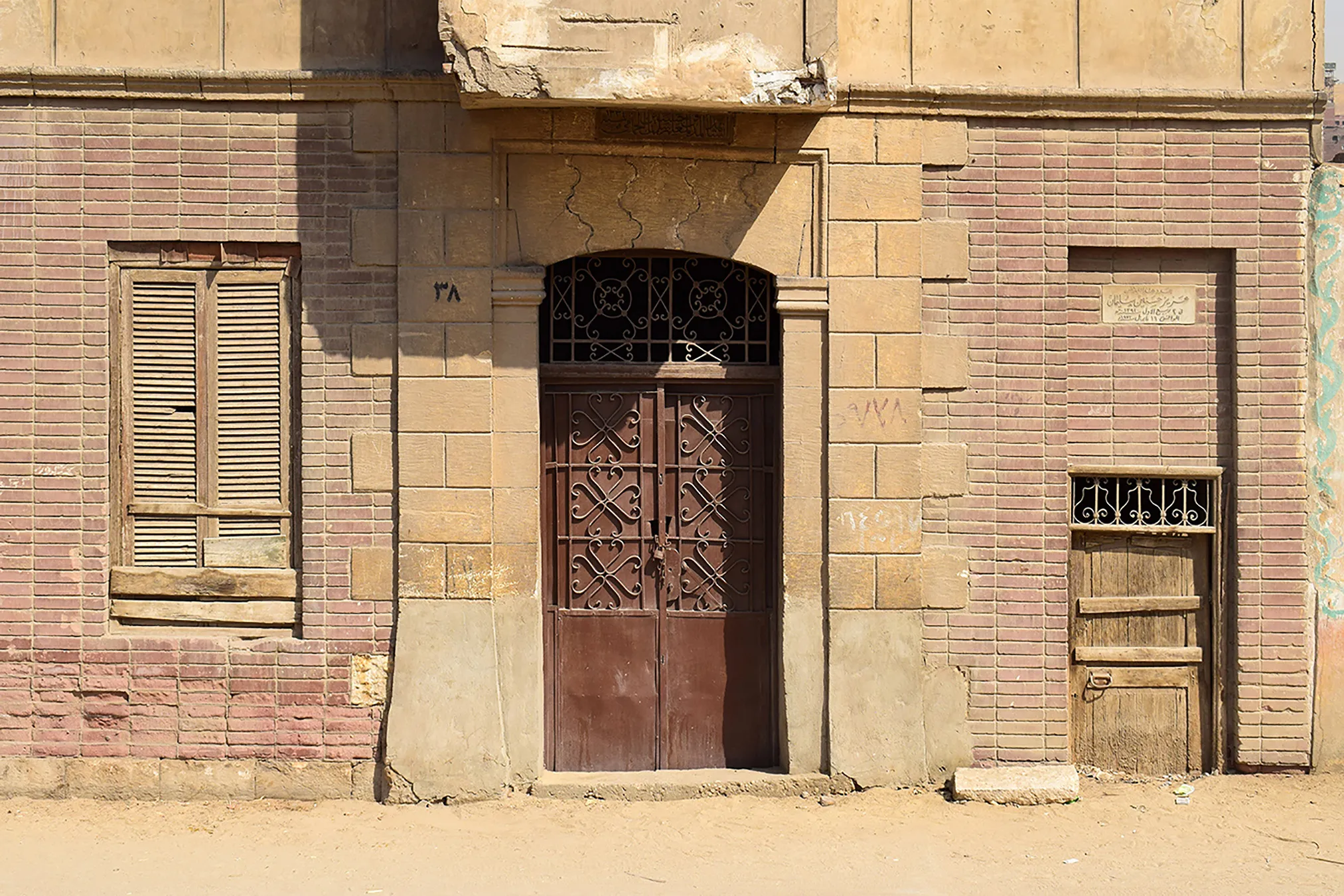
A two-storied building standing in the row of funerary structures facing the Salah Salem Road and built of rough stone. The front façade is covered with brick lining. In the centre is the entrance gate built of ashlar stone, in a very simple rusticated architectural framing, covered with a segmental arch of joggled voussoirs, with a simple decorative wrought-iron grille in the upper part (the modern welded steel door loosely imitates the motifs). Above the door is a small calligraphic panel with name of the deceased and date. To the left is an undecorated rectangular window, and to the right, a very low secondary door with a simple wrought-iron grille in the upper part. The upper storey is plastered, with divisions into huge square panels marked by incised lines in the plaster, and features a rectangular projection over the entrance gate with windows on three sides. There is an undecorated rectangular window to the left of the projection and a small square one to the right.
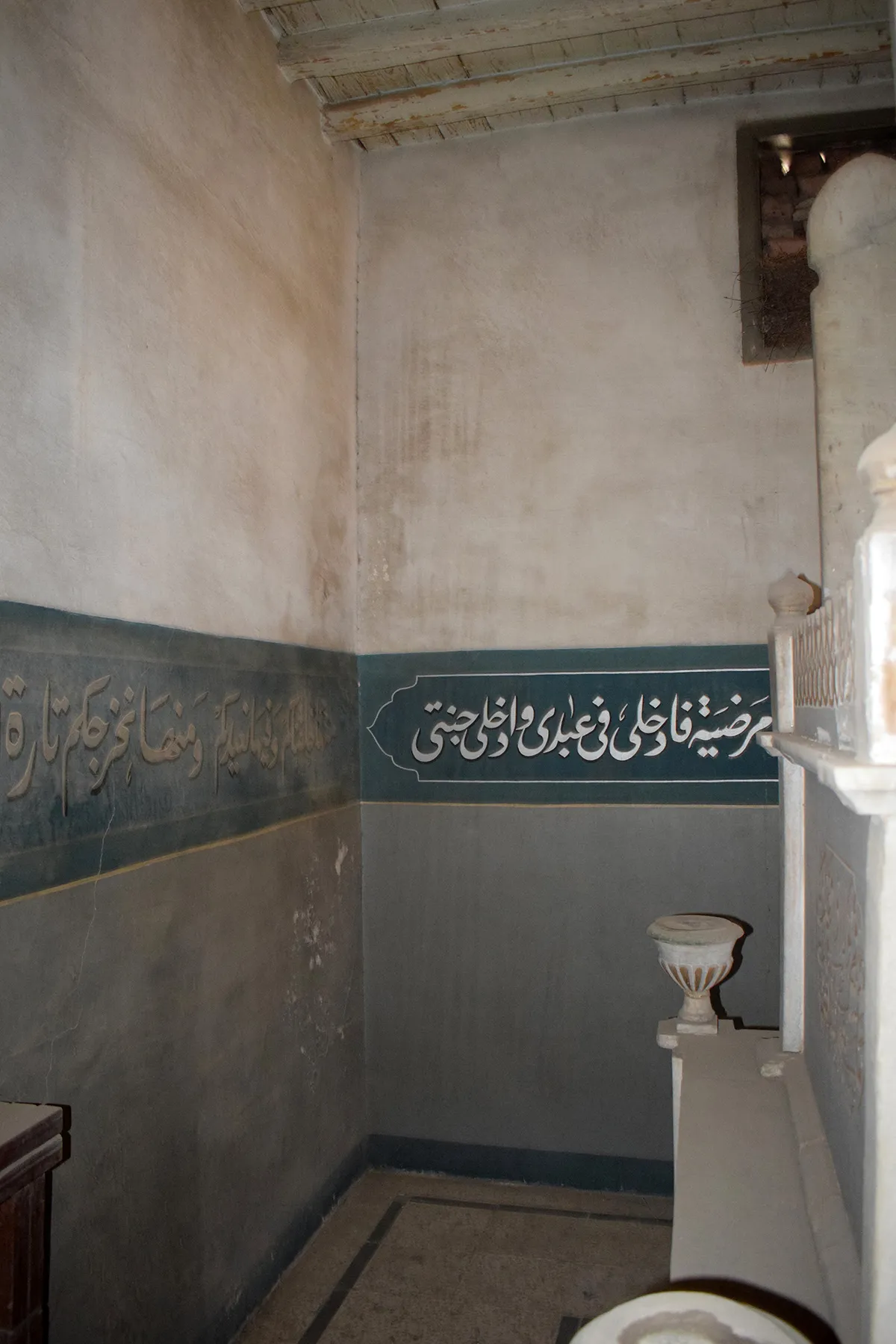
The entrance gate leads to a vestibule separated by a very elaborate full-height mashrabiya turned-wood screen from the main burial chamber in the north-eastern corner of the building. The chamber contains a rather simple stone cenotaph decorated with calligraphic inscriptions (incised, not in raised relief.) There is a band of Qur’anic inscriptions painted around the walls at breast height in bold calligraphic lettering.
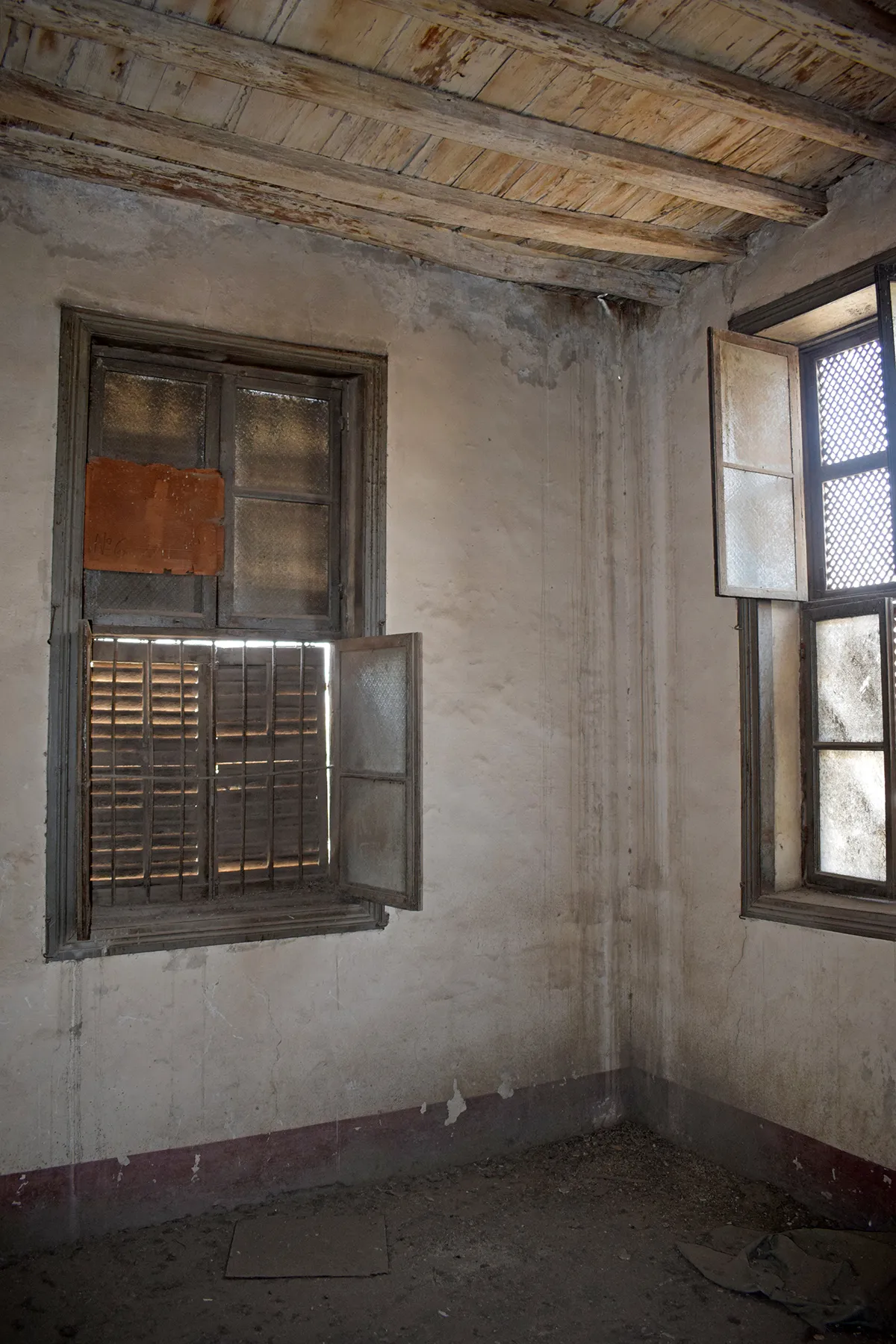
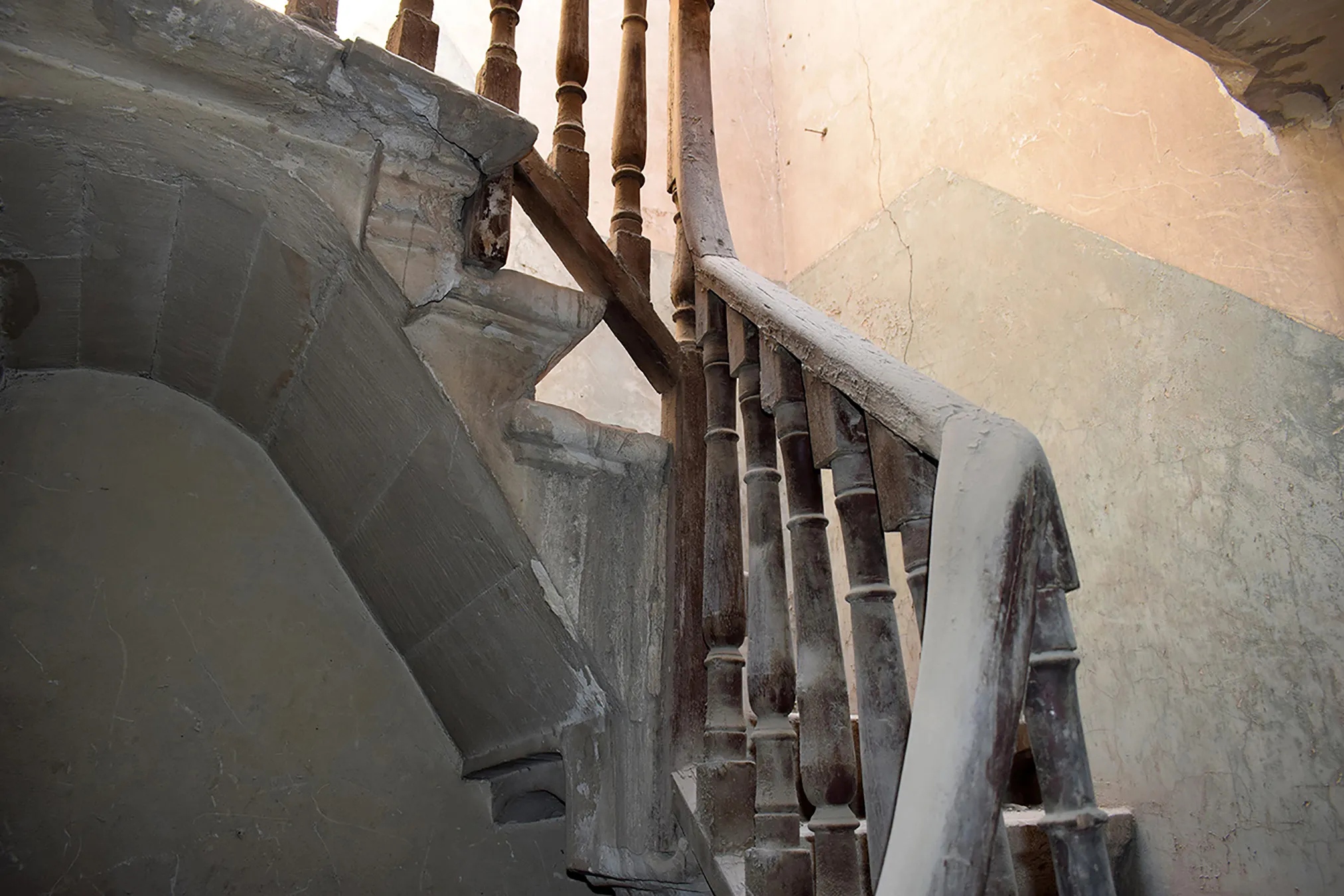
Also from the vestibule are accessible: a secondary burial chamber; a service room; and a staircase in the south-western corner. The stairs are constructed of interlocking sections of segmental vaults built of flat limestone slabs, which is a method of construction consistently used in Cairo since the Mamluk times in at least 15th century. The upper floor comprises three rooms and a lobby that ends in the bay-window projection.
Condition of preservation
The unit is overall in good condition.
The embankment of the Salah Salem Road that the enclosure faces is currently used as an informal and illegal garbage and rubble dumping ground.
Information abut the founder, family history, etc.
M‘alim means an experienced and distinguished professional or entrepreneur.
The date of M‘alim Hasanein Salman al-Hamami’s death in the inscription above the entrance door: AH 1334 corresponds to AD 1916. The current modernist-inspired appearance of the façade (with the exception of the entrance portal) is definitely later than 1916 and dates probably to the 1950s or 1960s. However, this probably applies to the façade only, as the traditional construction of the stairs is more consistent with the early 20th century dating.
A marble plaque over the side door in the front façade commemorates his son Aziz who died on 2 rabiya al-awal 1392 AH, corresponding to 16 April 1972.
According to the doorwoman, the owners visit infrequently.
- Field recording by
- Hadeer Ahmad and Nur Attiya
- Date recorded
- August 4, 2022
- Data entered by
- Yusuf Yassir
- Date entered
- May 9, 2024