
Unit No21
Hasan Mustafa
|
Coordinates of the main entrance |
30.043486N - 31.272478E |
|
Attribution |
Hasan Mustafa |
|
Higri (AH)Dates as given in the Inscription |
1332 |
|
Miladi (AD)Dates as given in the Inscription |
|
|
Inscription Contemporary with the building? |
Yes |
|
Multiple date(s) In the inscription? |
Yes |
|
Assumed Date |
|
|
Based on |
|
|
Original Use |
Tomb and residential |
|
Current Use |
Tomb and residential |
|
Overall condition |
Fair |
Features of unit 21
| Present | Count | Material | Comments (see description for details) | |
|---|---|---|---|---|
| Free standing structure | Yes | 1 | stone | Two-storied main building |
| Walled enclosure | Yes | stone | Back yard behind the main building | |
| Rooms by the perimeter wall | No | |||
| Freestanding structure(s) in enclousure | No | |||
| Dome over the tomb chamber | No | |||
| Neo-Mamluk architectural decoration | Yes | |||
| Garden layout | No | |||
| Sabil(s) | Yes | 2 | Stone, steel & wood | |
| Wall fountain(s) | No | |||
| Canopy on columns / pillars | No | |||
| Carved marble cenotaph(s) | Yes | 2 | 2 | |
| Decorated limestone tomb-markers | No | |||
| Decorated gateway | Yes | 1 | stone | An elaborate Mamluk-style portal |
| Decorative door-leaves | Yes | 4 | Wood | |
| Decorative window grilles | Yes | 2 | Wrought iron | |
| Decorative shutters | Yes | 10 | wood | |
| Painted ceiling(s) | No | |||
| Decorative paving(s) | No |
Unusual or unique features
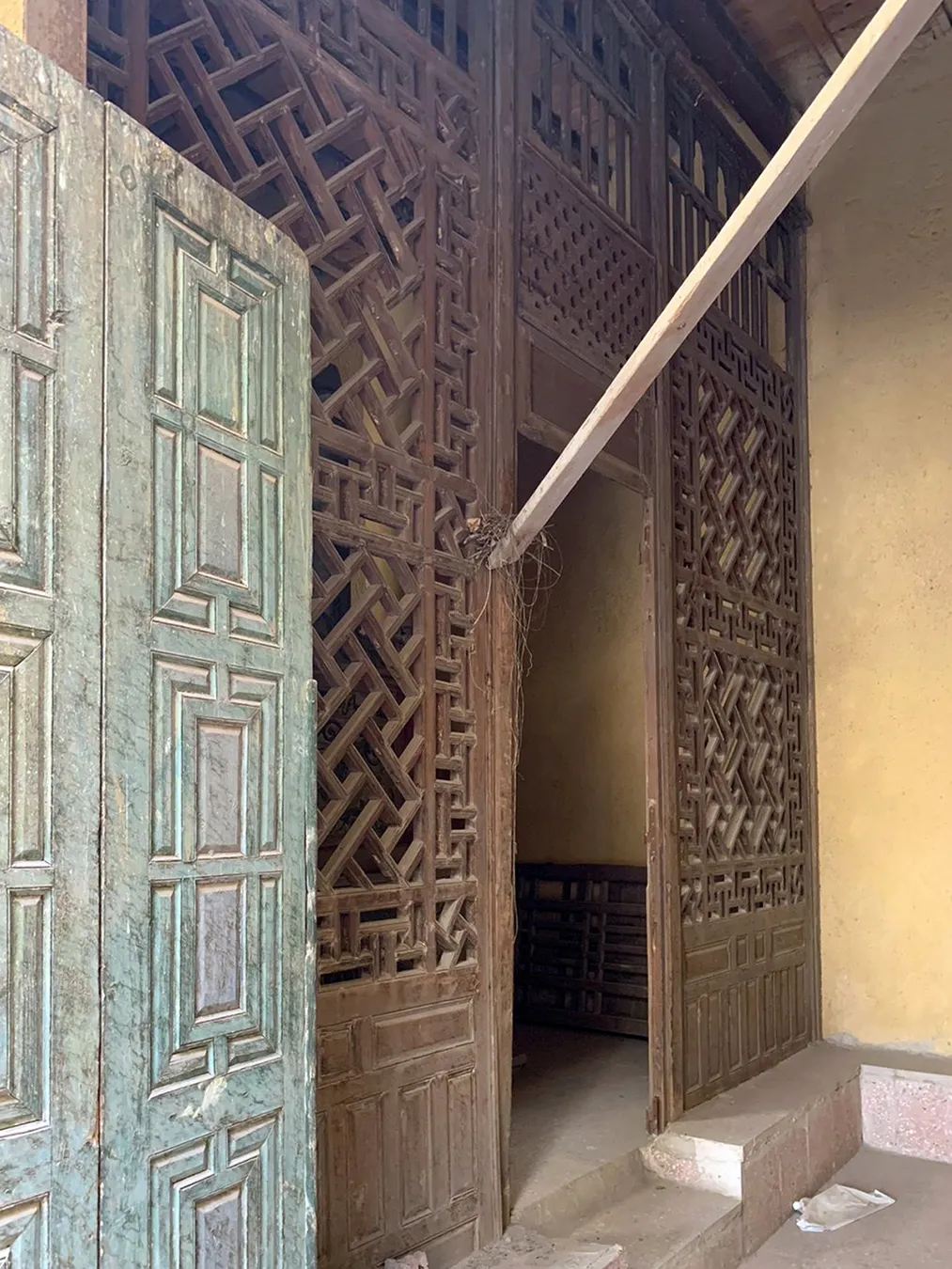
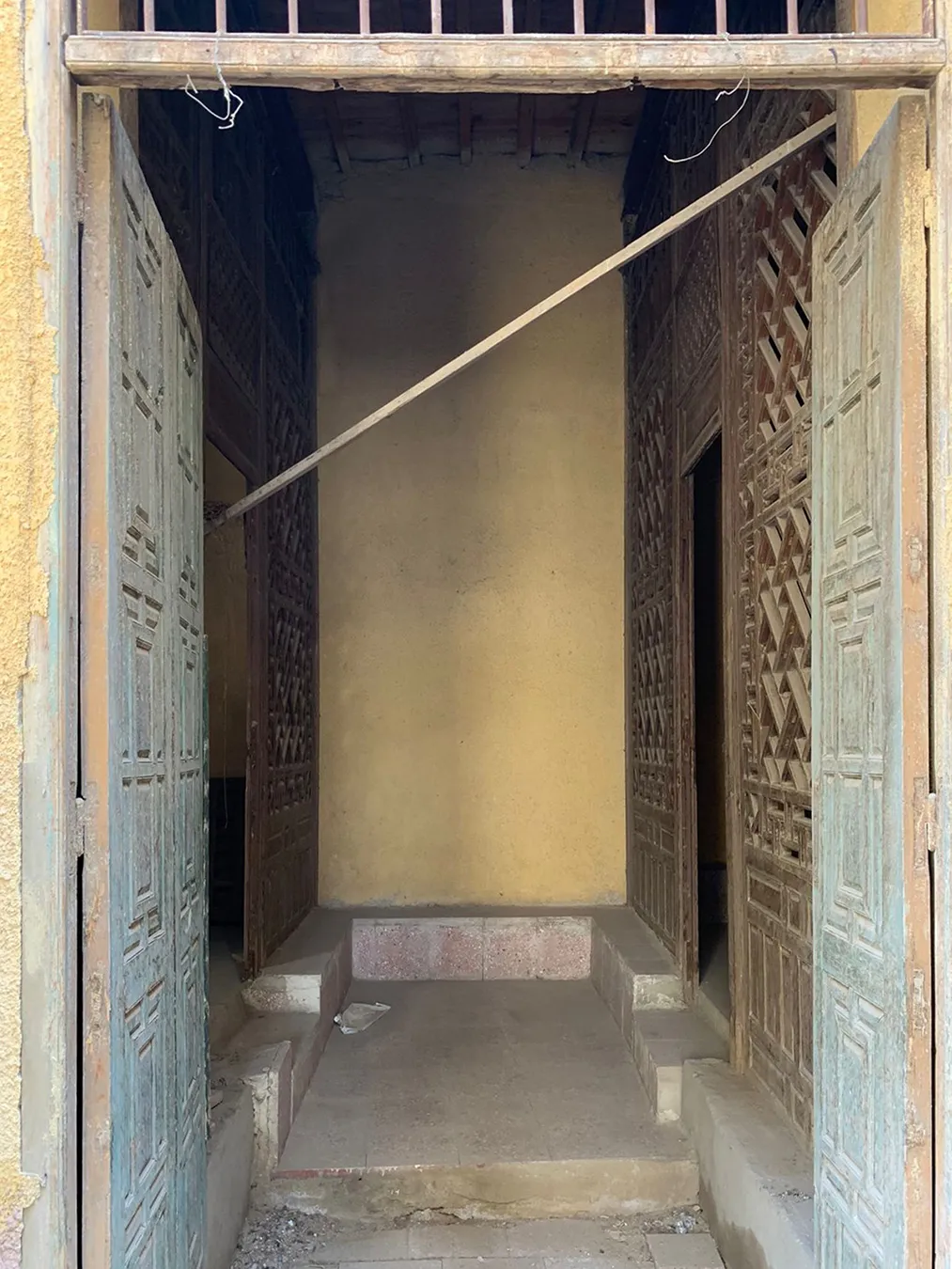
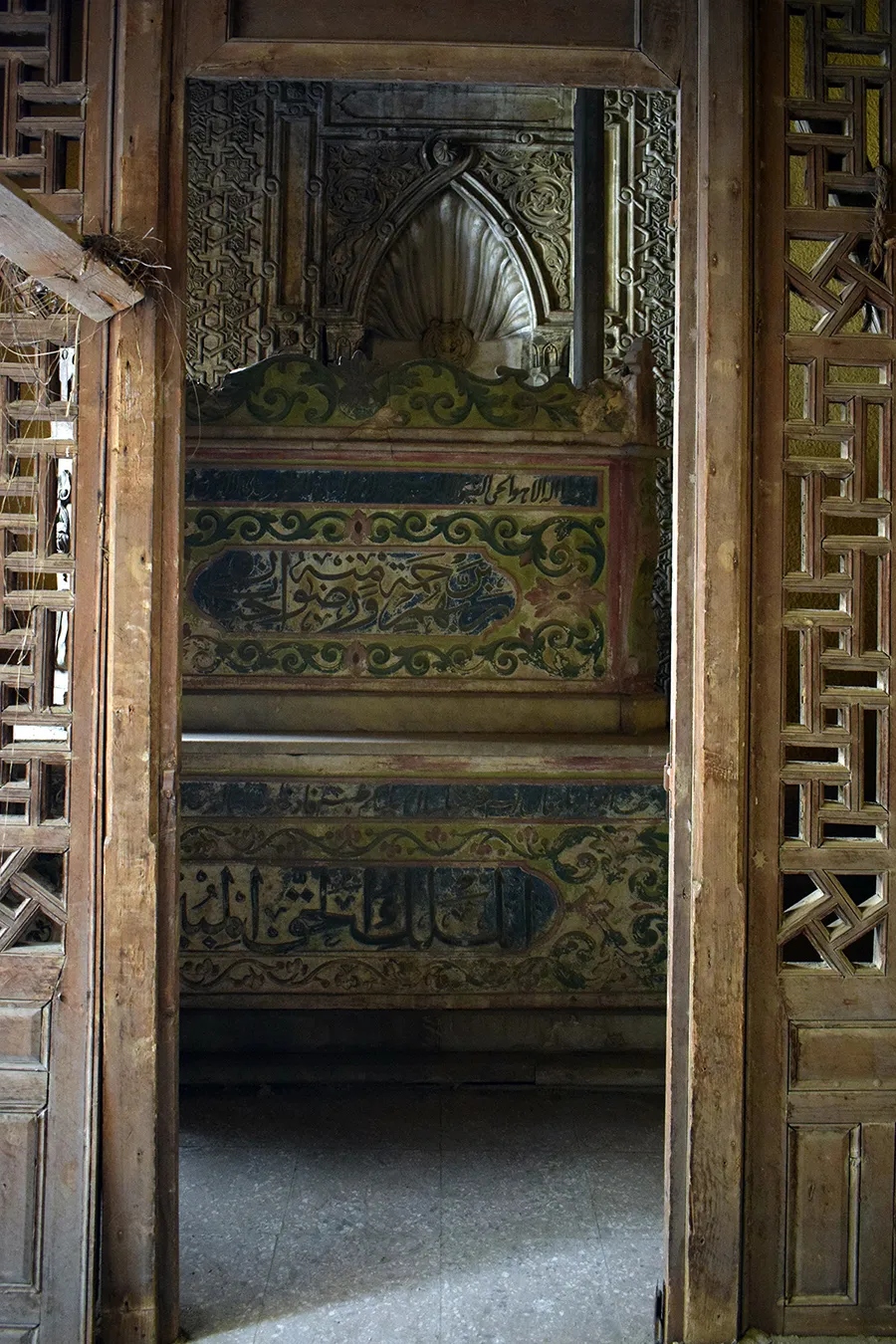
• Openwork wooden screens between a vestibule and tomb chambers
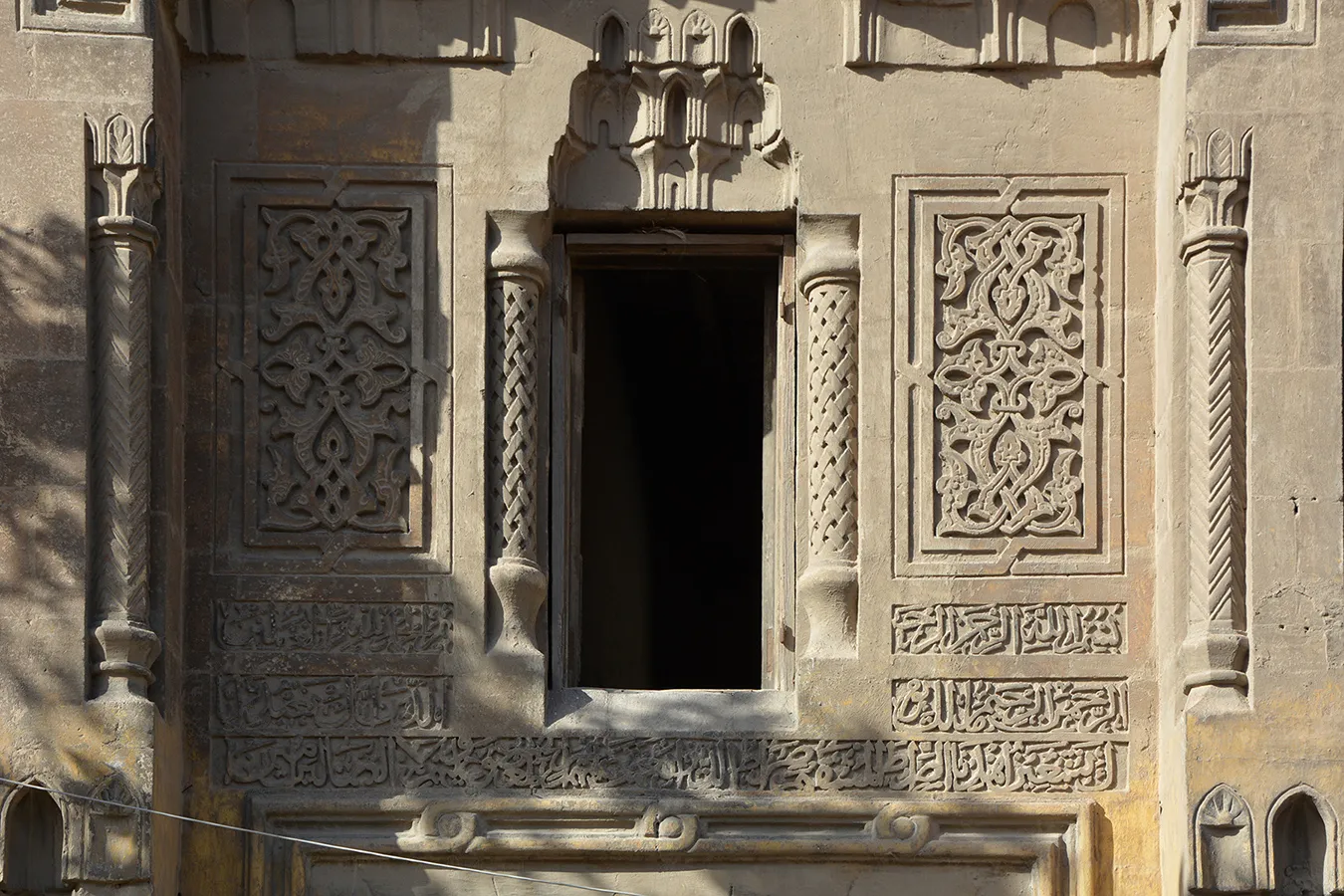
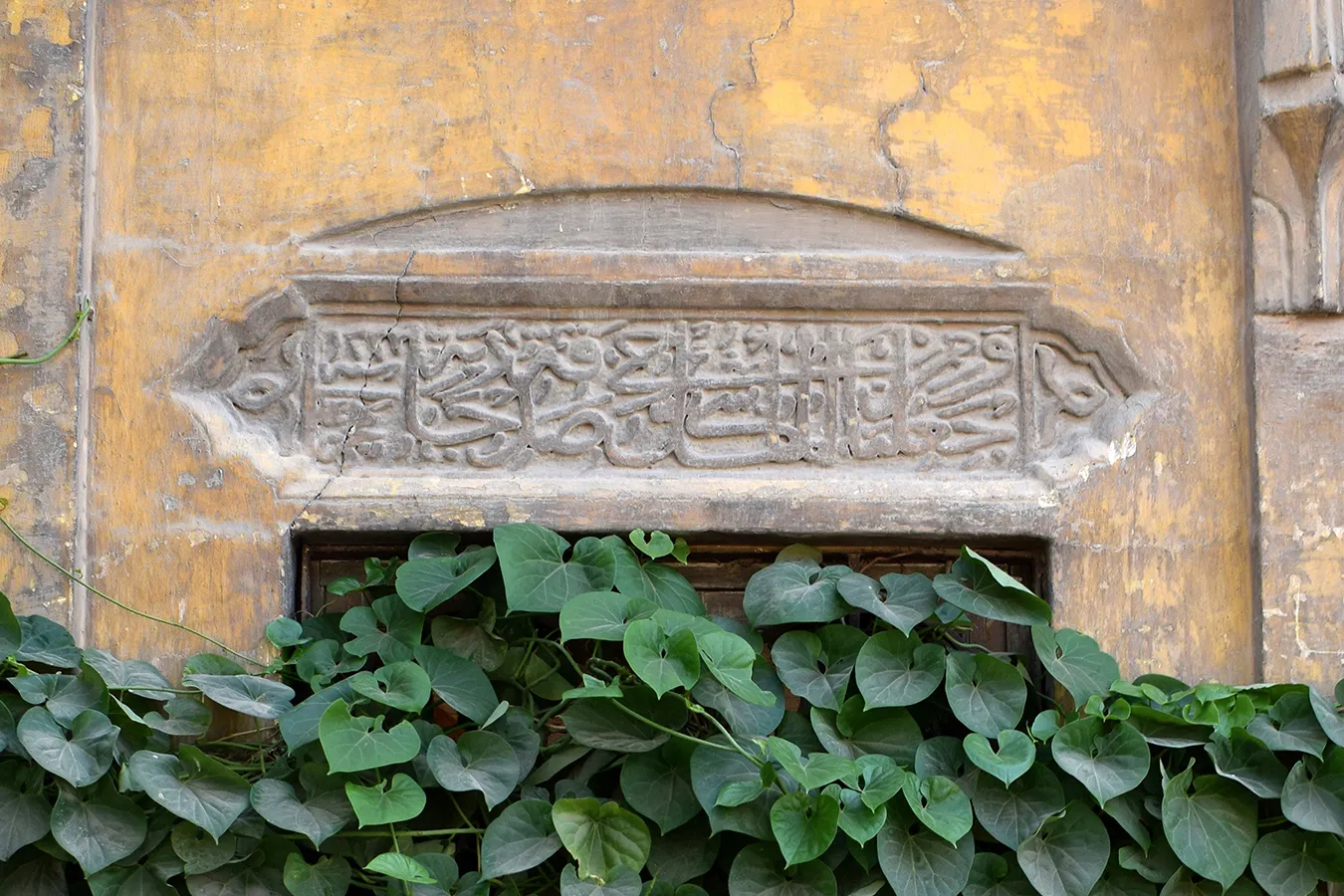
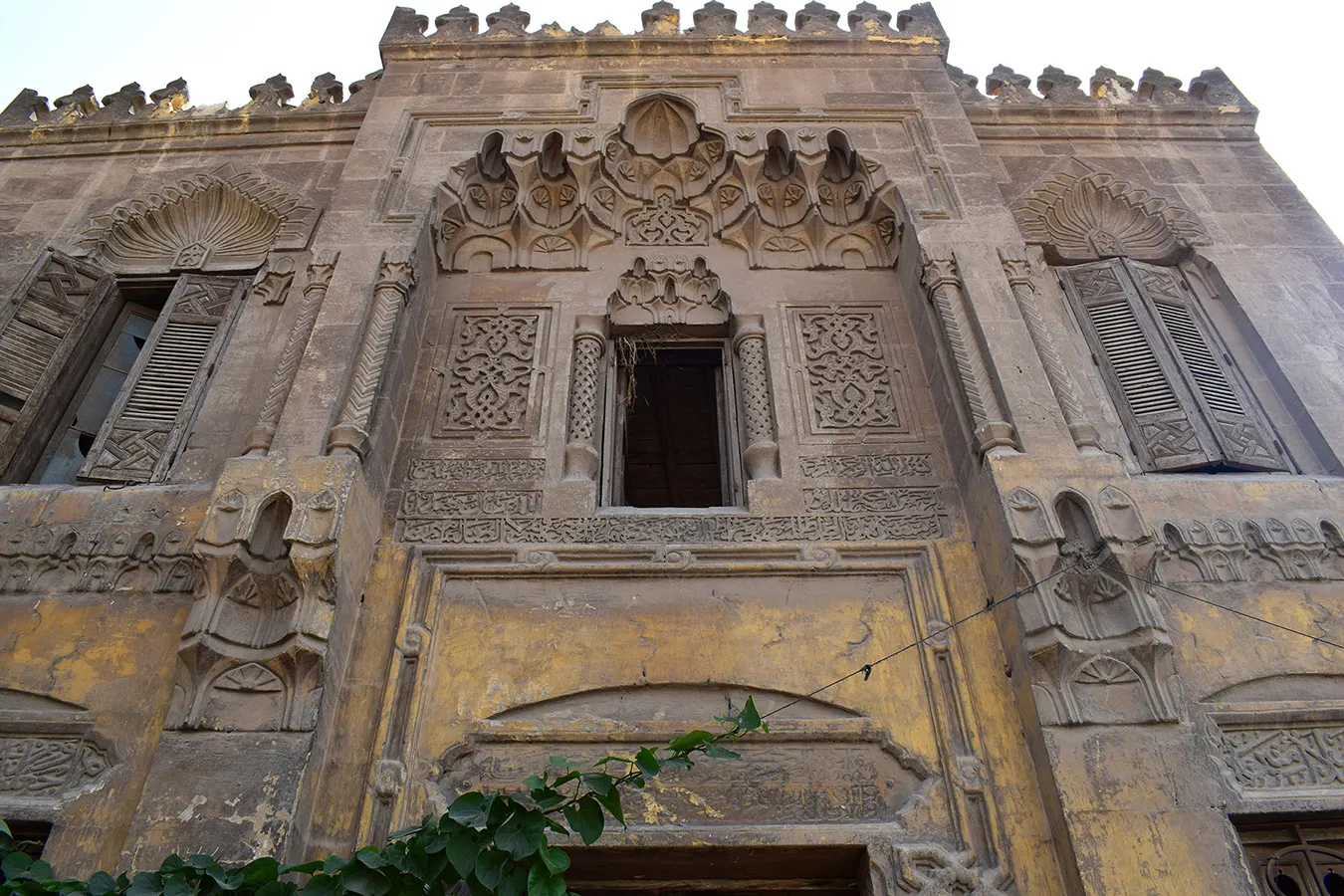
• Unusually large amount of inscriptions on the façade
• The ground floor of the front building completely opened onto the courtyard
Description (The direction towards Mecca (Qibla) is described as eastern and other directions are named accordingly)
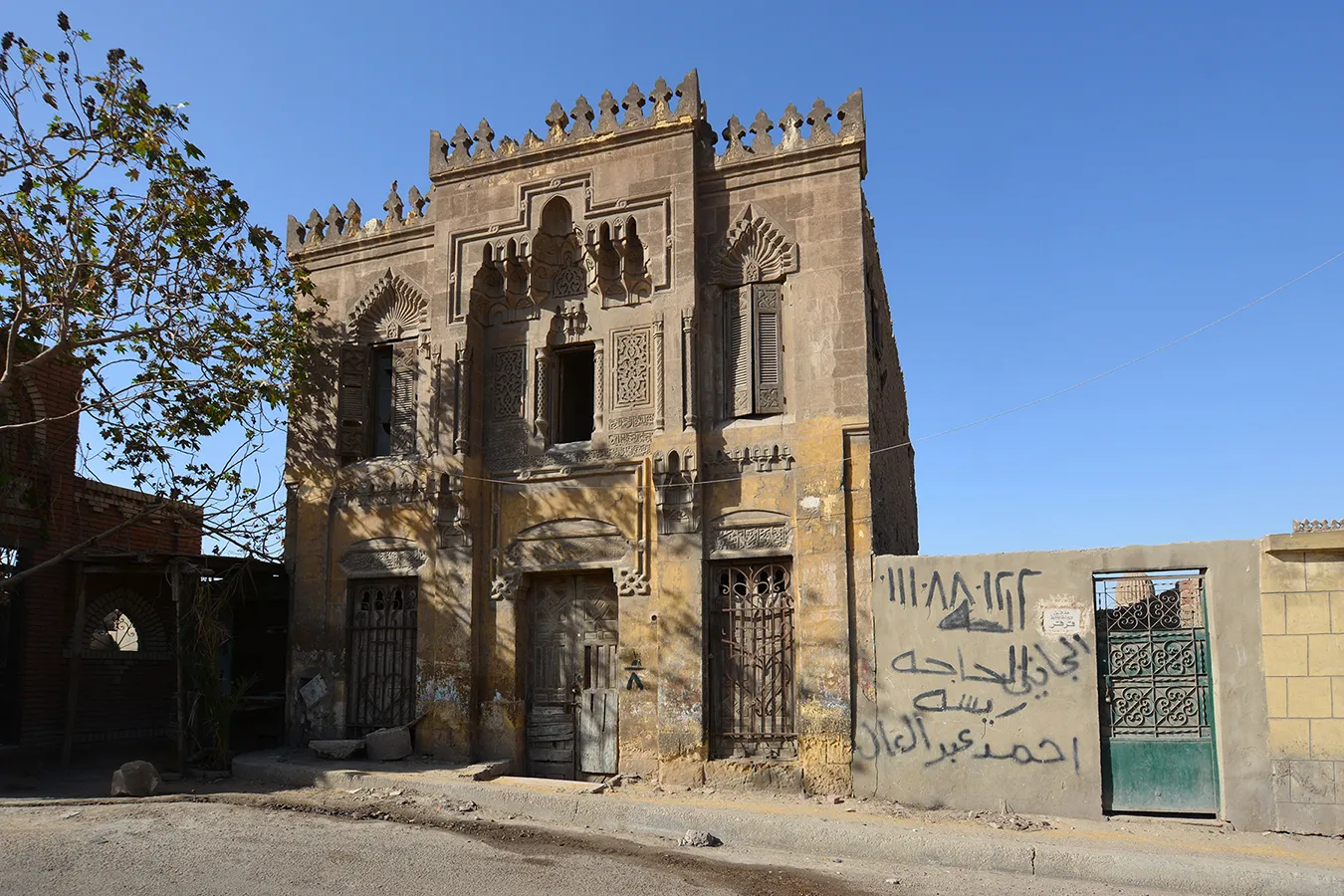
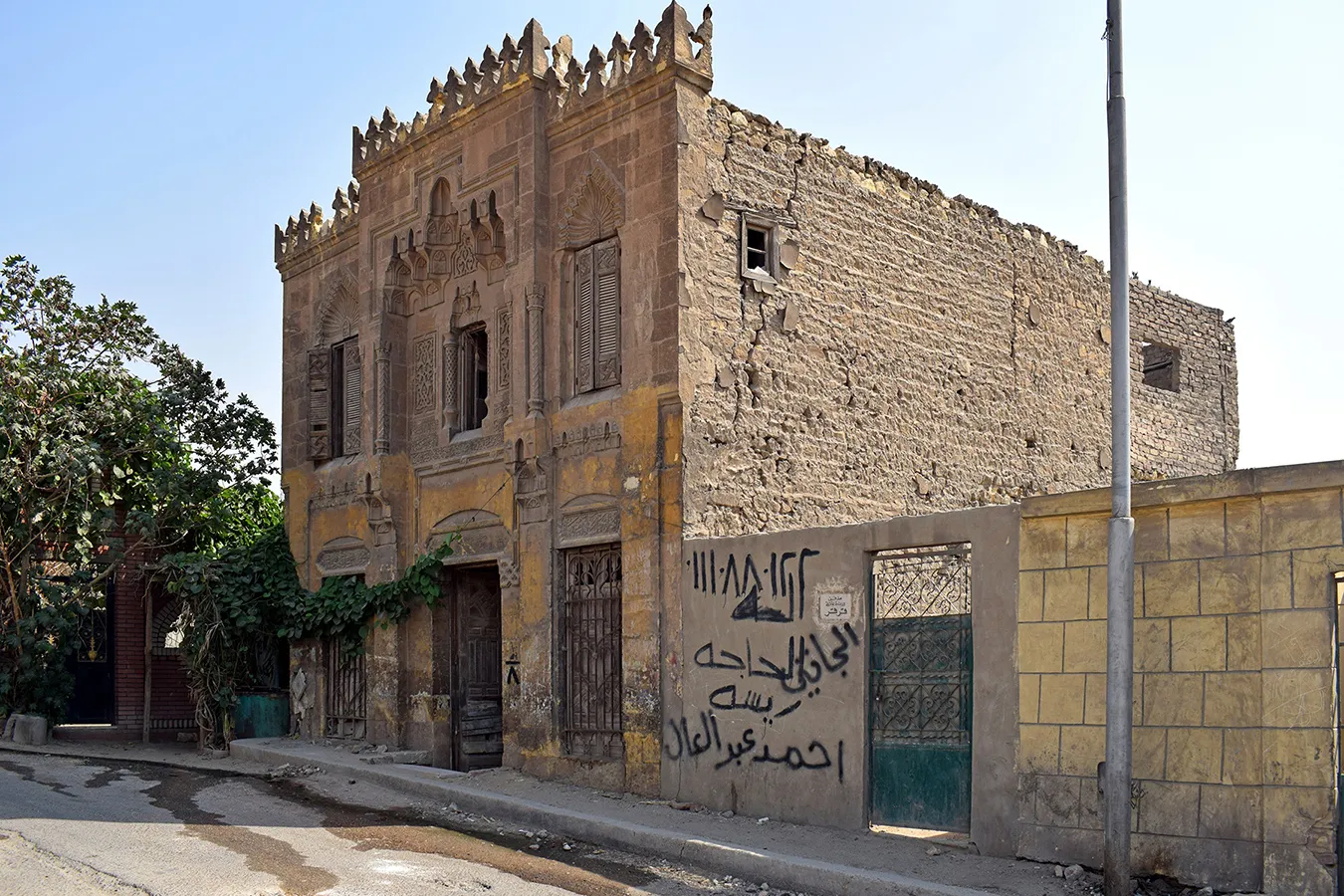
The lot comprises a two-storied building with the main (street) façade facing north, and a single-storey building containing two burial chambers by the back (southern) wall, with a small courtyard in between.
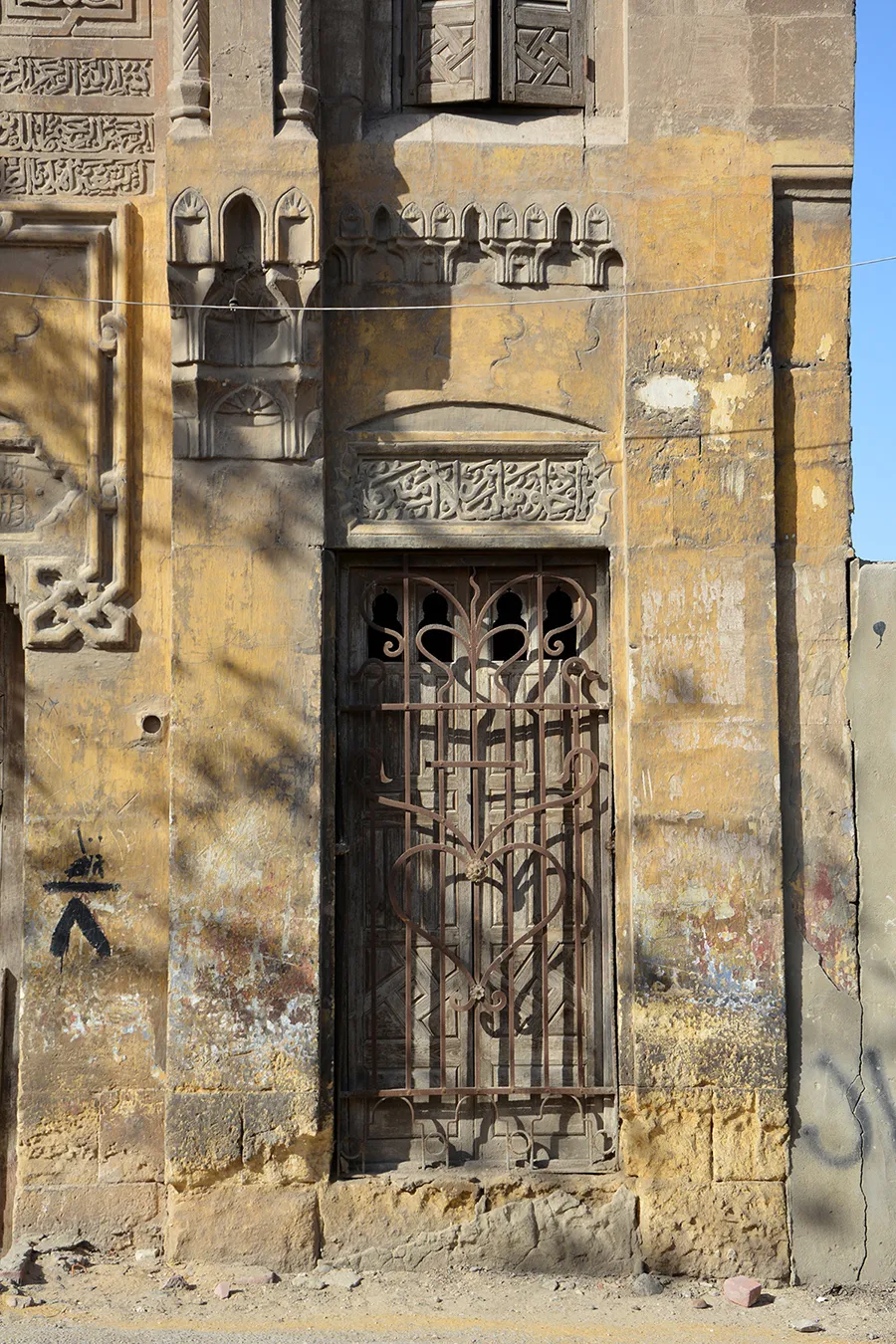
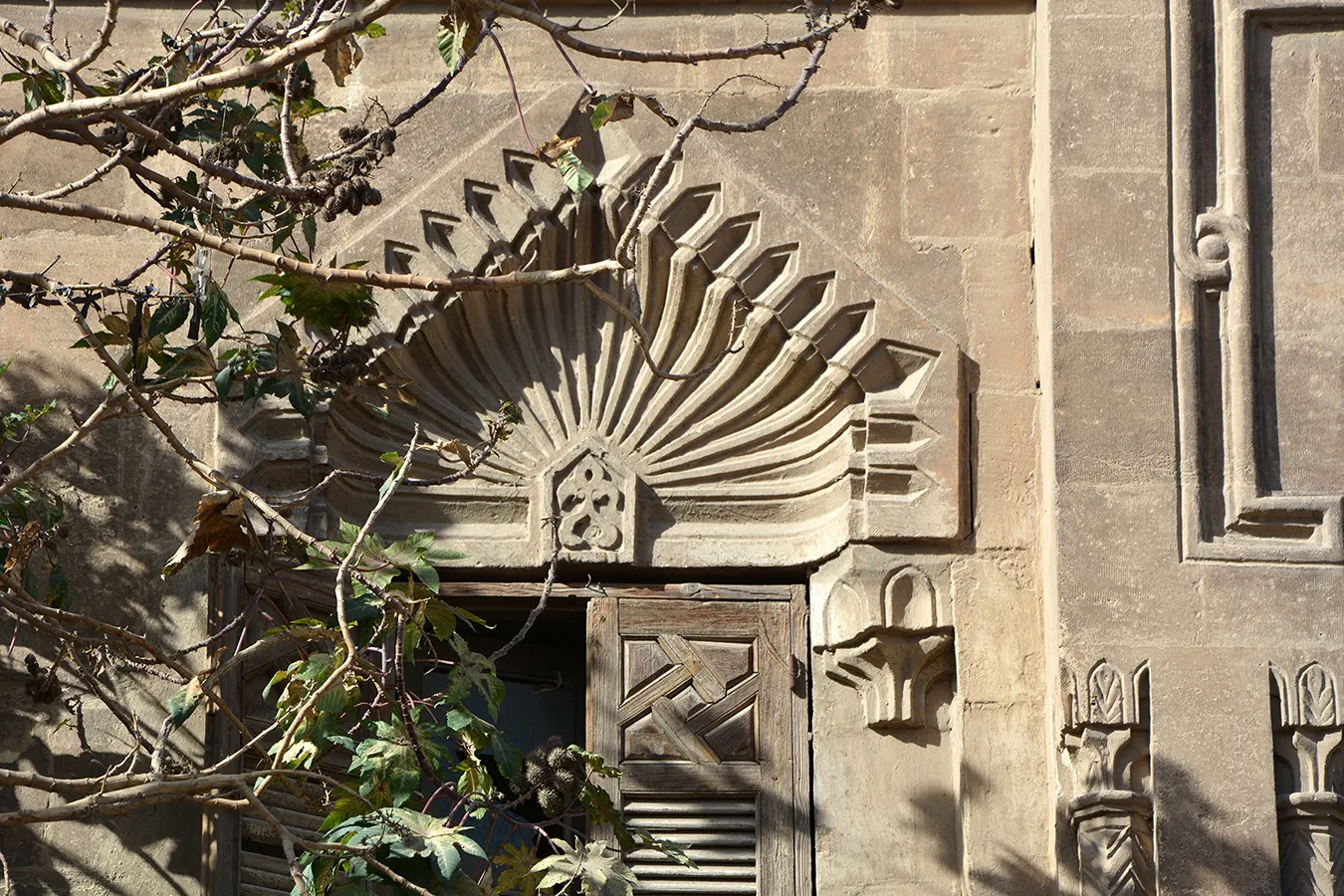
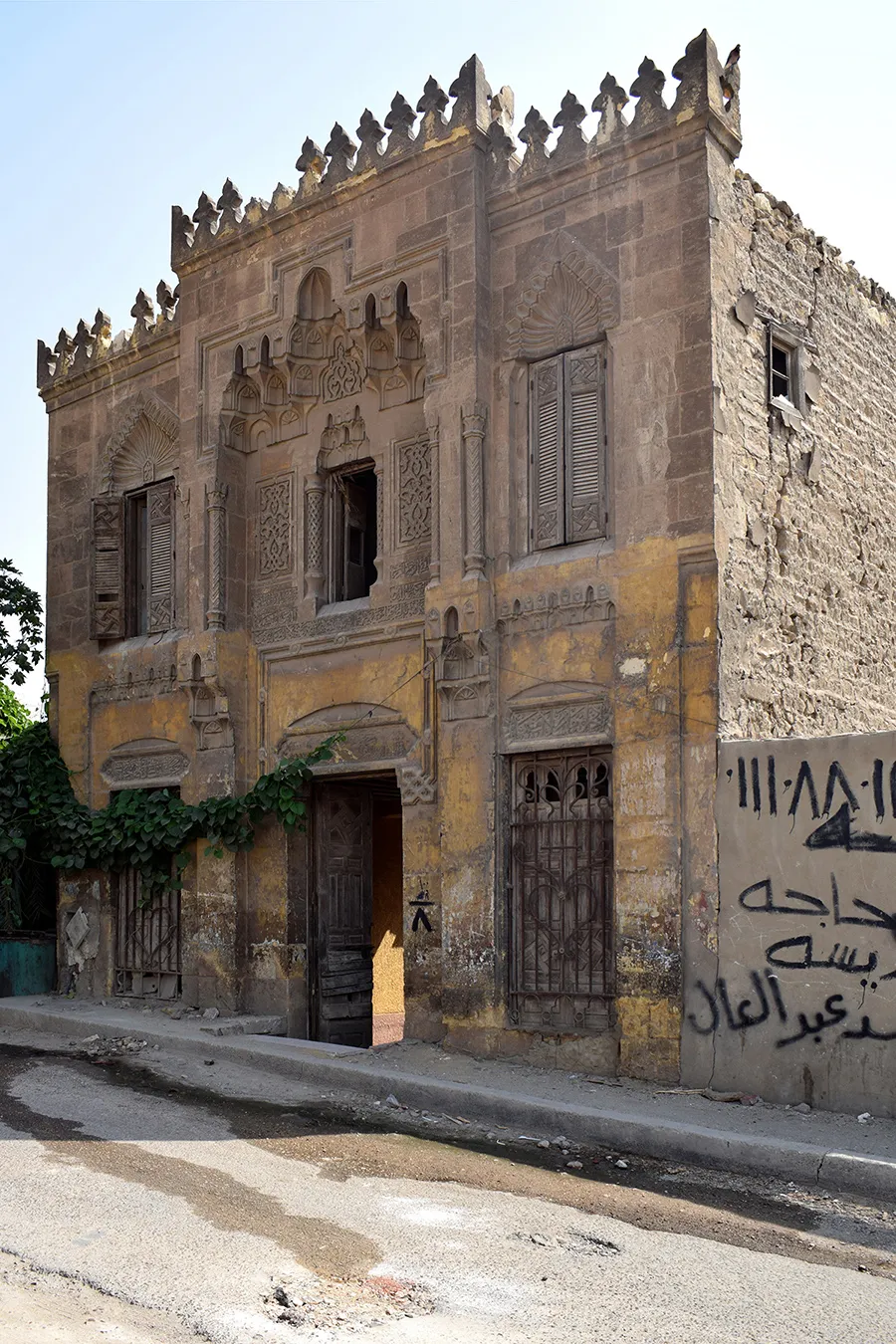
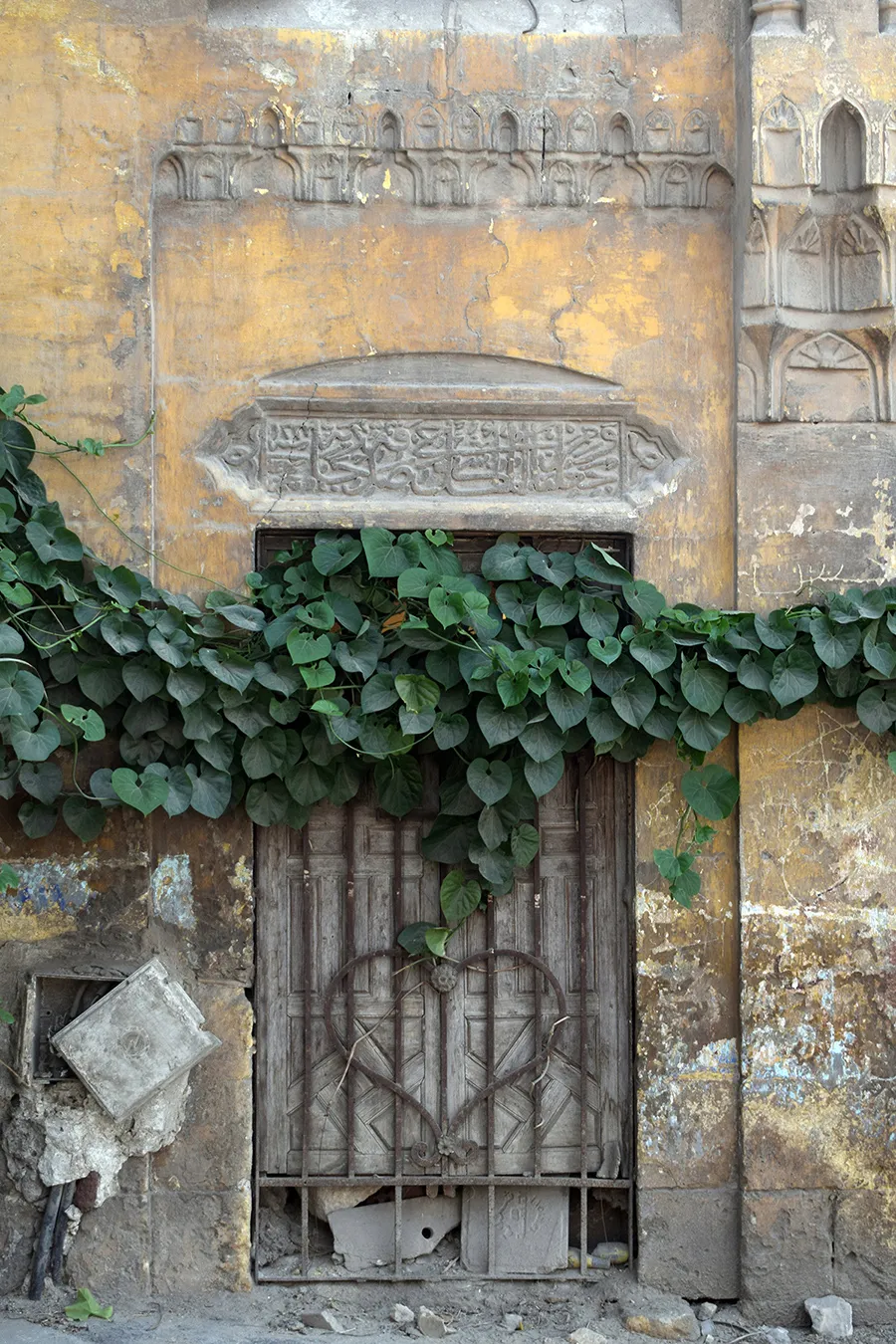
The façade built of ashlar stone is very richly decorated in neo-Mamluk style. It uses motifs taken from Mamluk architecture, but combines them in innovative and unusual ways. The façade is tripartite, with a central portal section and side sections each with a single window in the ground floor and another on the upper floor. However, while the side sections are identically composed and decorated, they are of unequal width, the left side being considerably wider. Each of the three sections of the ground floor is flanked by flat pilasters which are aligned with the wall of the upper storey and therefore in the side sections of the ground floor level form shallow recesses that are covered with flat two-tiered muqarnas hoods. The full-height central section is slightly deeper recessed and on the upper level flanked by two massive pillars resting on muqarnas corbels and carrying a flat muqarnas hood interrupted by a pointed-arch niche in the middle. The side pillars are decorated with engaged corner colonnettes. The rectangular entrance door is topped with a typically Circassian Mamluk arrangement of a rectangular panel of knotted mouldings that frames the lintel and above it a flat arch of joggled voussoirs with the intrados forming a segmental relieving arch over the lintel. Above the door is a window framed with engaged corner colonnettes and topped with a shallow flat muqarnas hood, with two rectangular panels of geometrically treated floral motifs to the sides. Below and to the sides of the lower part of the window are panels of calligraphic inscriptions containing the opening sura of the Qur’an. The lintels over the entrance door and over the plain ground floor windows all have recessed panels of calligraphic inscriptions including the name of Hasan Mustafa (central panel) and date AH 1332 (left). The windows are fitted with decorative wrought-iron grilles in Art Nouveau style, unrelated to Mamluk tradition. The right one has larger arched openings at the bottom typical for a sabil, while the bottom openings in the left-side windows are also larger, but plain and not arched. The upper floor windows are topped with rectilinear keel-arch fluted flat niches. The façade is crowned with fleur-de-lys crenelations.
The door and all windows are fitted with decorative wooden panelled shutters including panels decorated with the “mafruqa” motifs (and on the upper floor, louvre panels), and clearly intended as an integral part of the decorated facade.
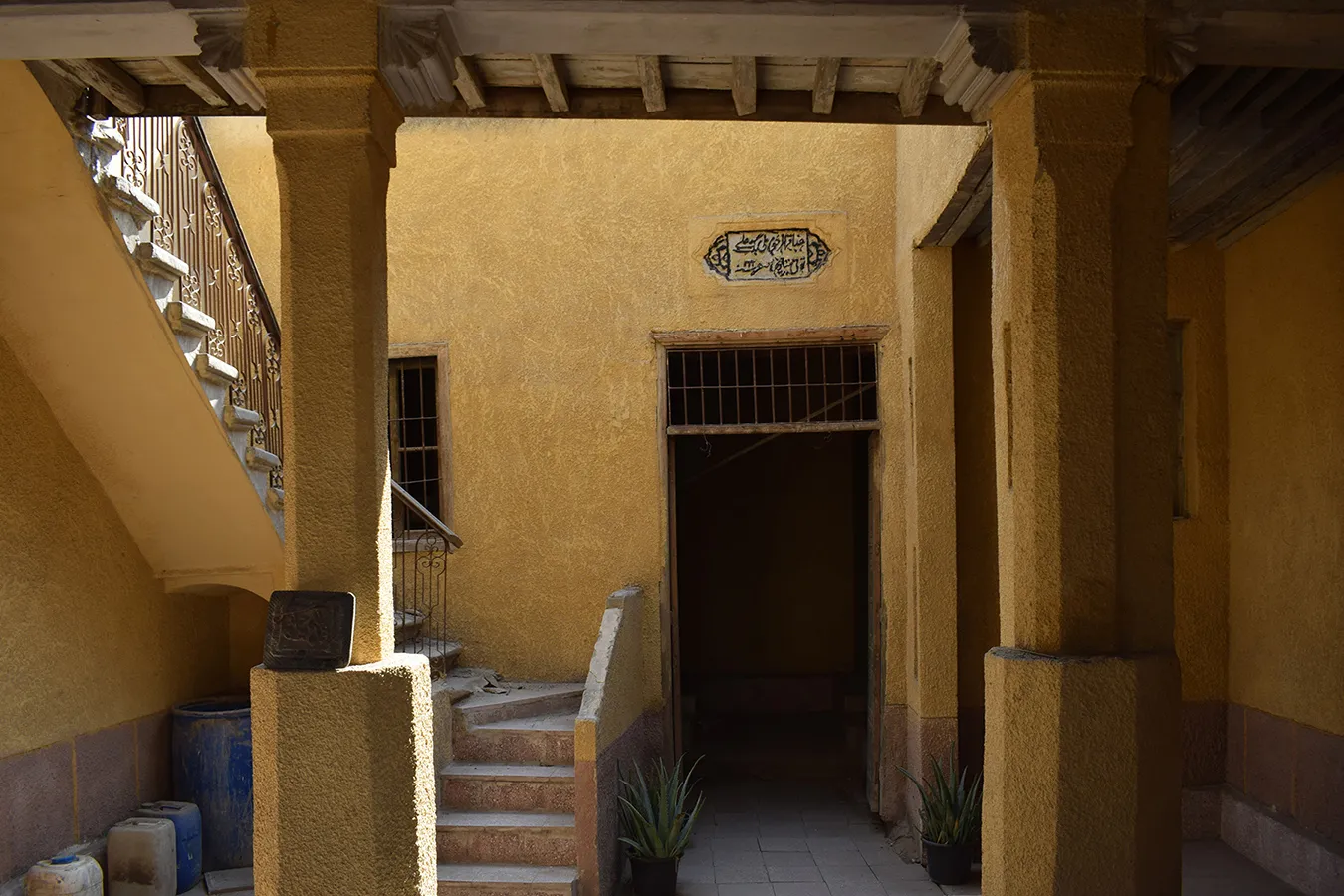
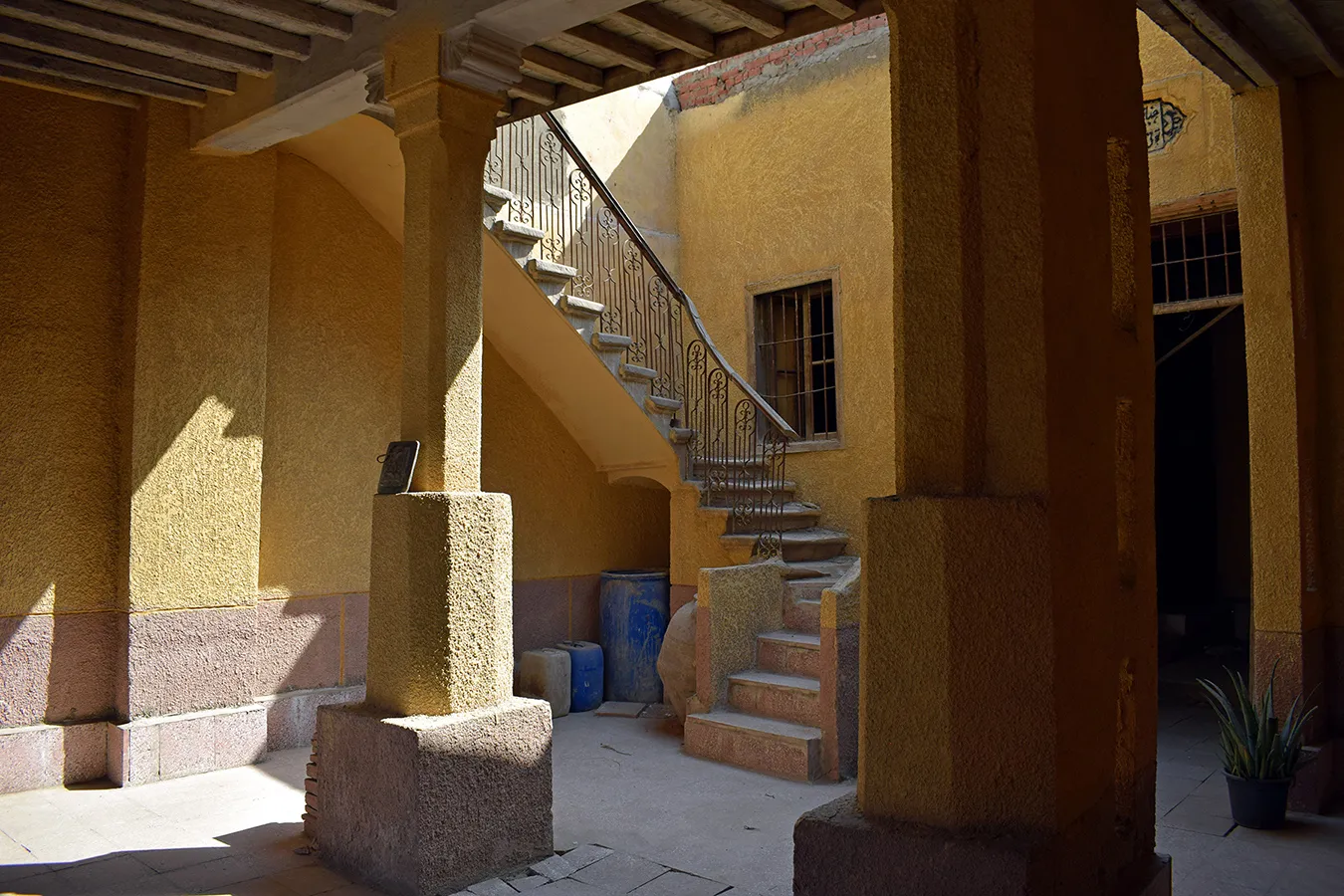
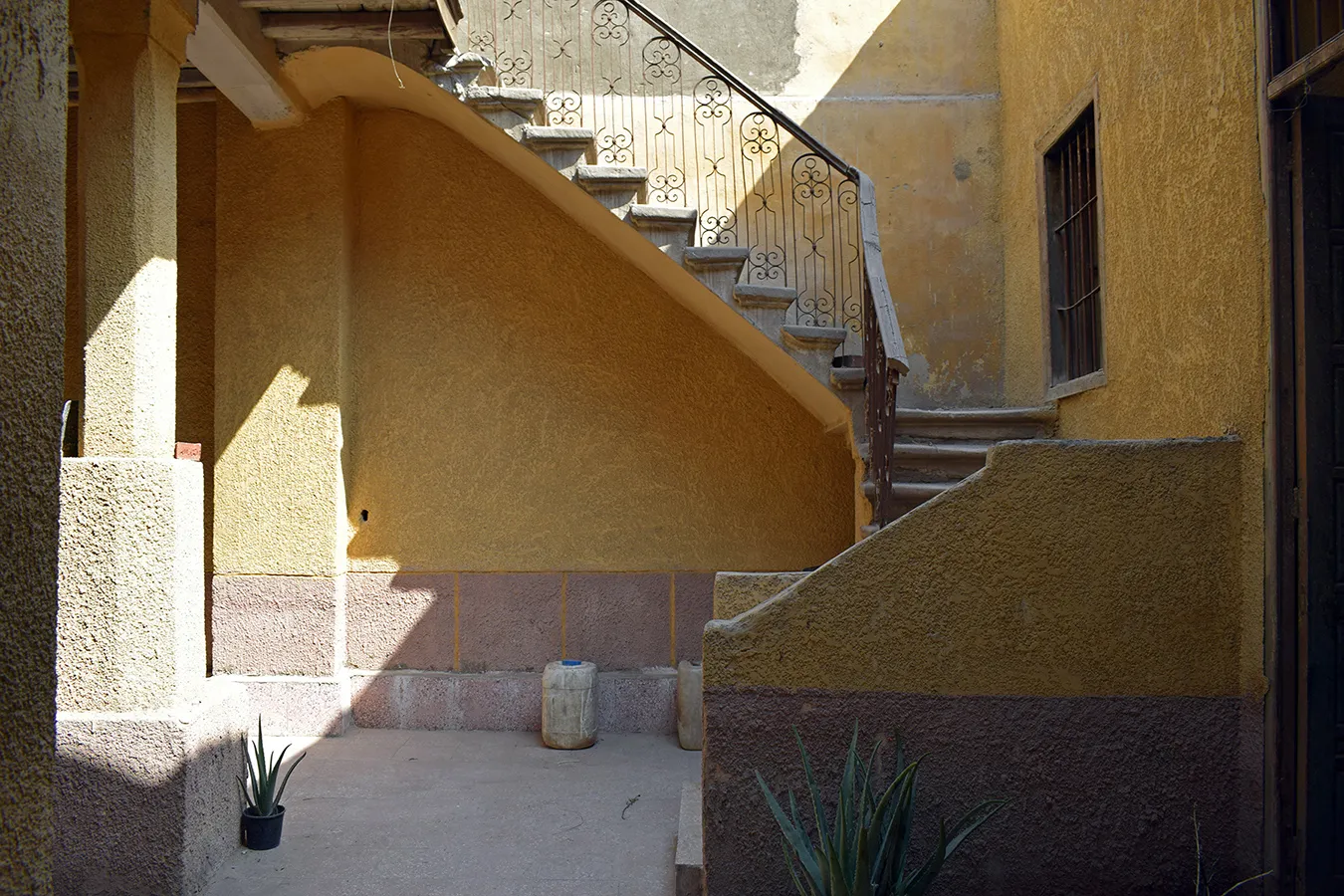
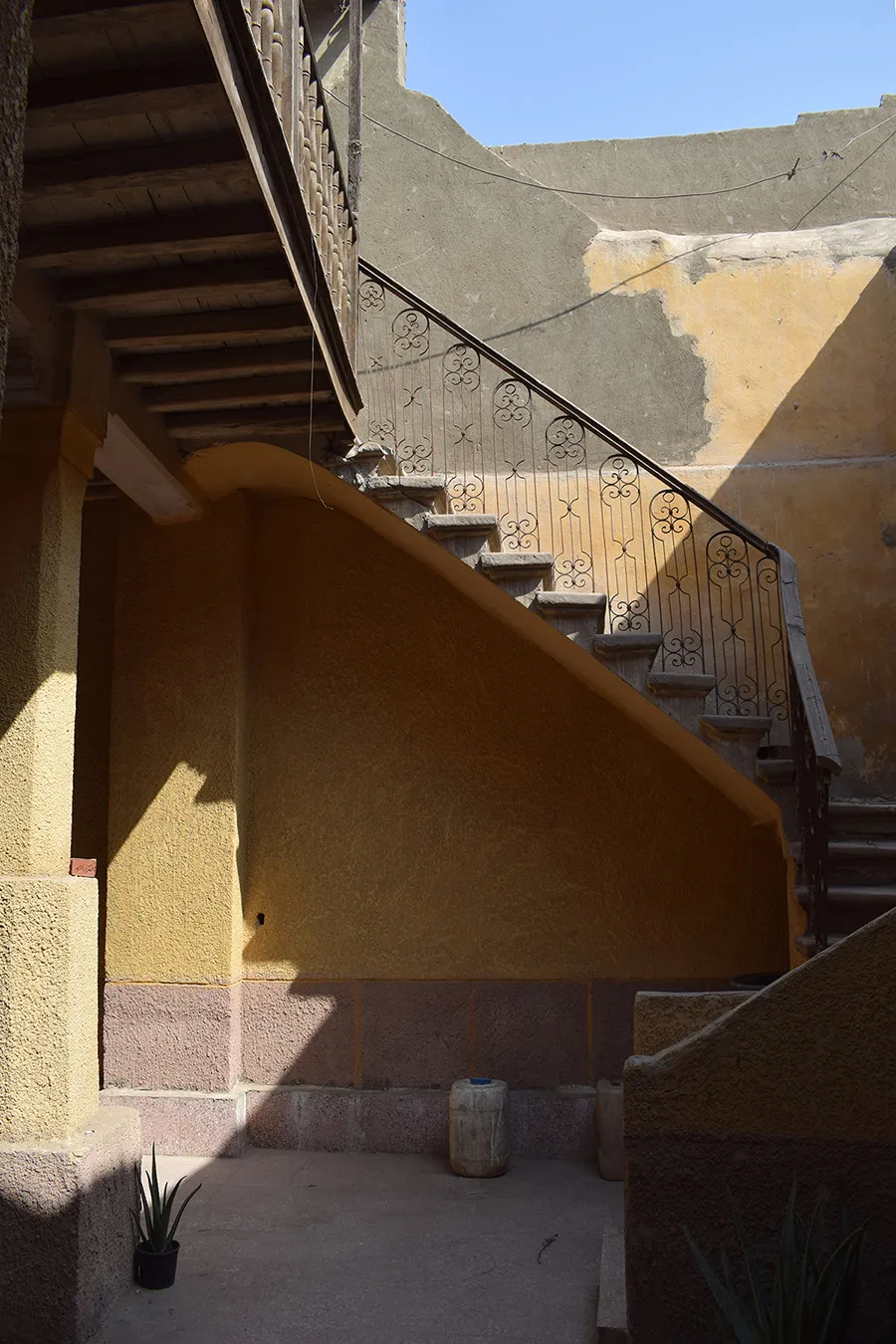
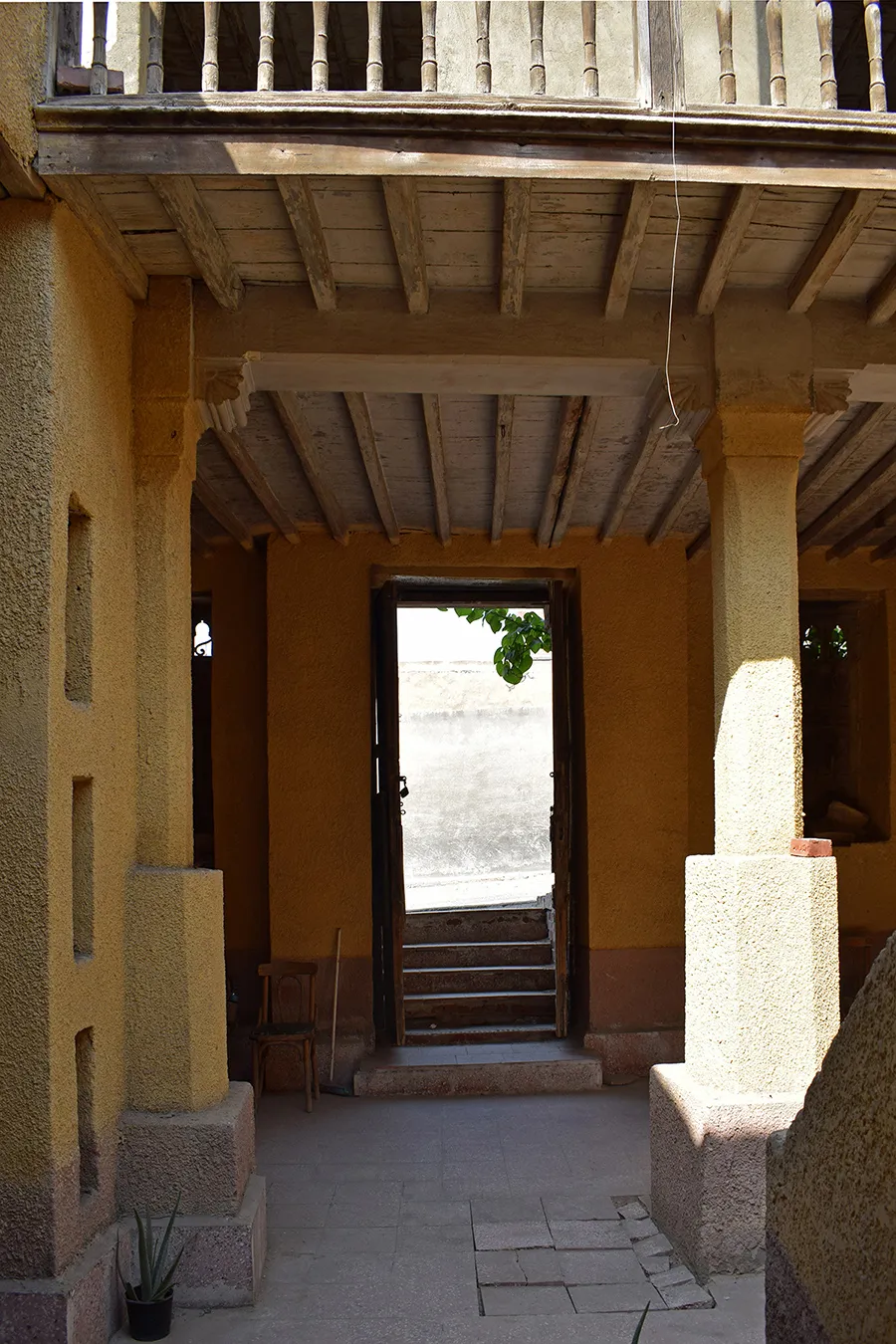
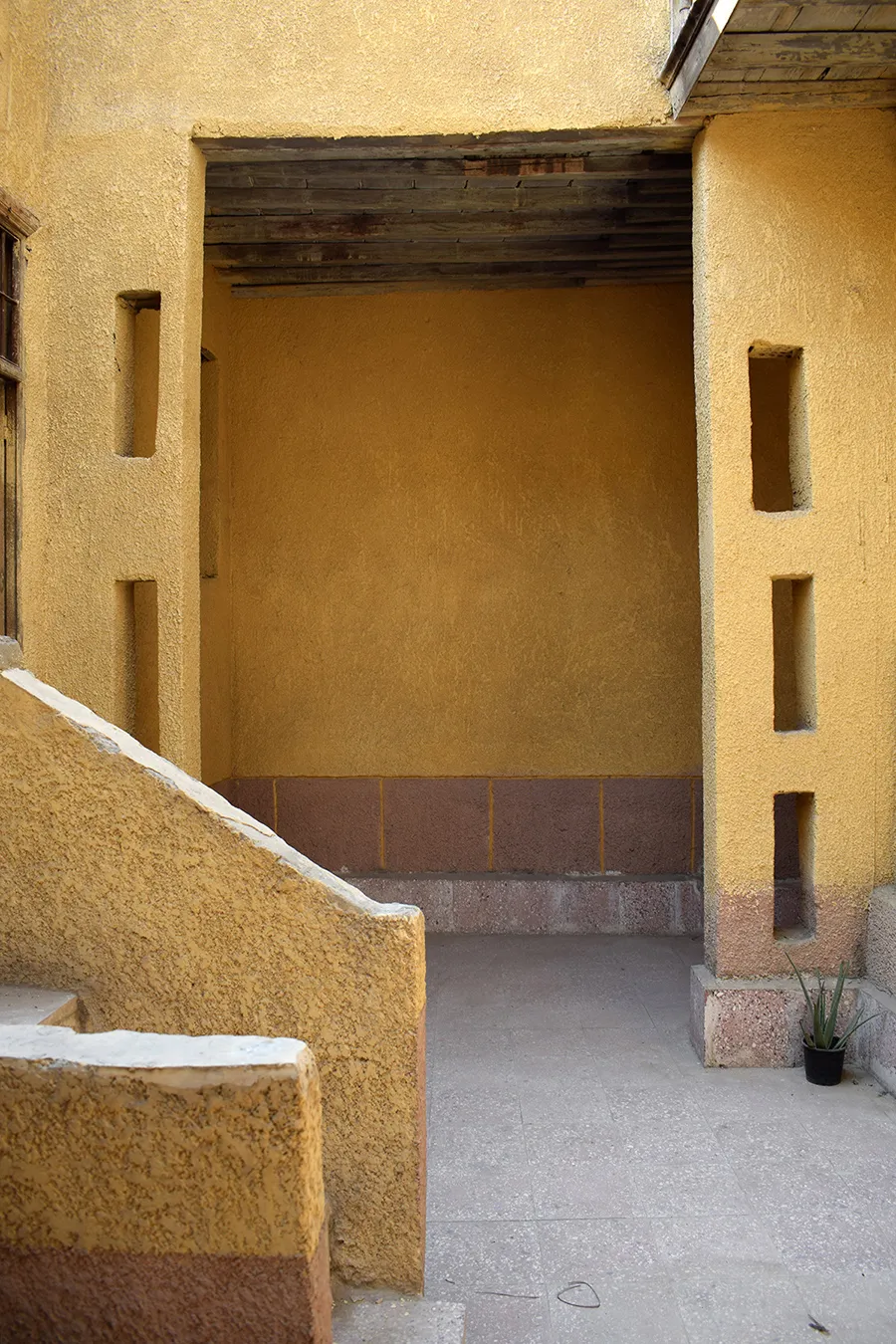
The entrance gate leads to a single space occupying the whole width of the building, and without a back wall, i.e. opening onto the back yard while the upper floor is entirely supported on two pillars, apparently wooden, but now covered in thick textured plaster like the rest of the courtyard. The upper floor continues along the western wall of the courtyard, and similarly overhangs a wide niche opened on the courtyard. An external staircase by the eastern wall of the courtyard leads to the gallery from which the rooms on the upper floor are accessed. The stairs are constructed of interlocking sections of segmental vaults built of flat limestone slabs, which was a method of construction consistently used in Cairo since the Mamluk times in at least 15th century. The stairs have a simple decorative wrought-iron balustrade in European style with no Islamic motifs.
In the plain back wall of the courtyard, an undecorated door leads to a vestibule separated on both sides from two burial chambers with full-height openwork wooden screens of geometric “mafruqa”-based motifs. The door to the vestibule is fitted with two decorative panelled wooden door-leaves.
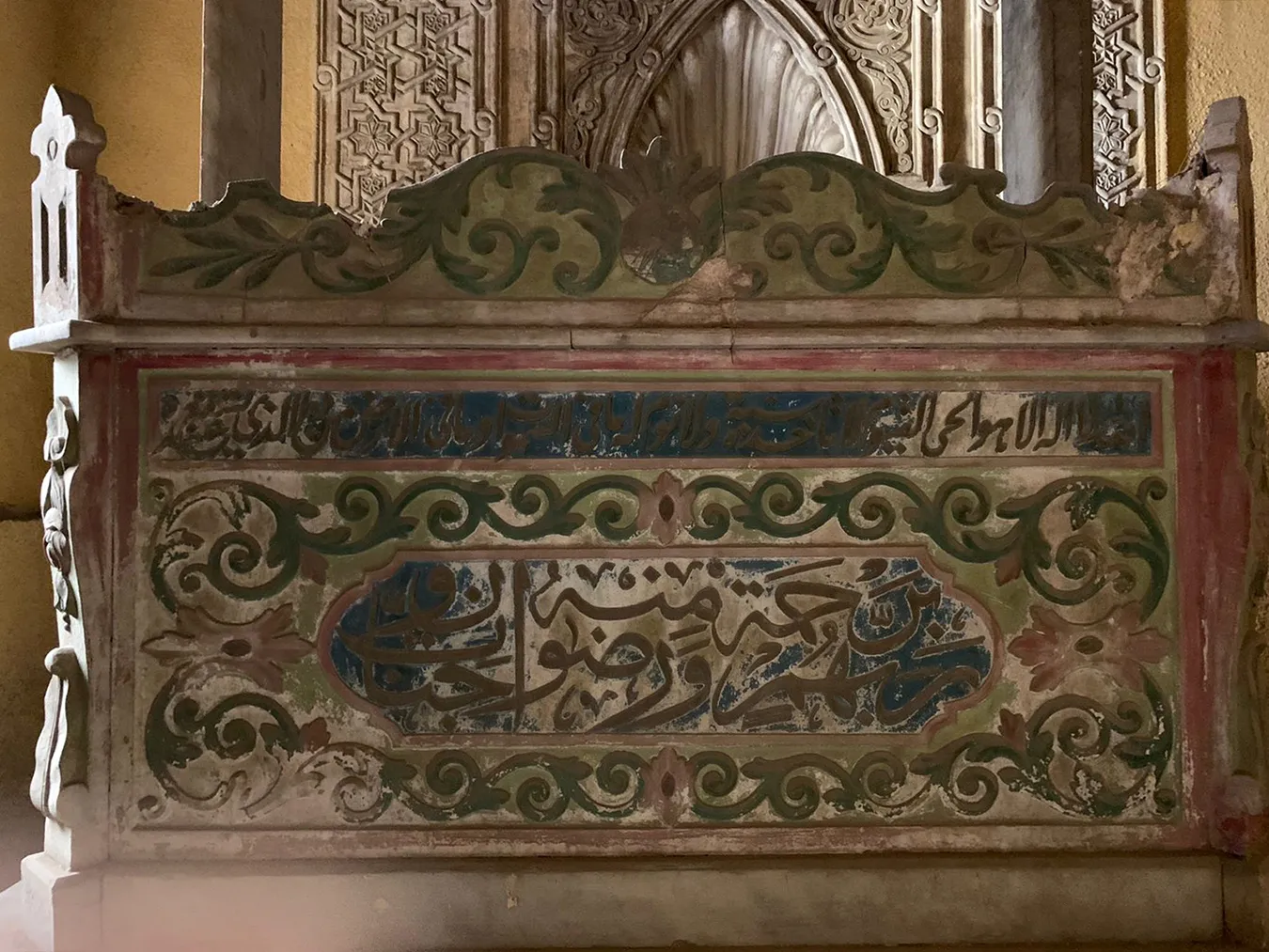
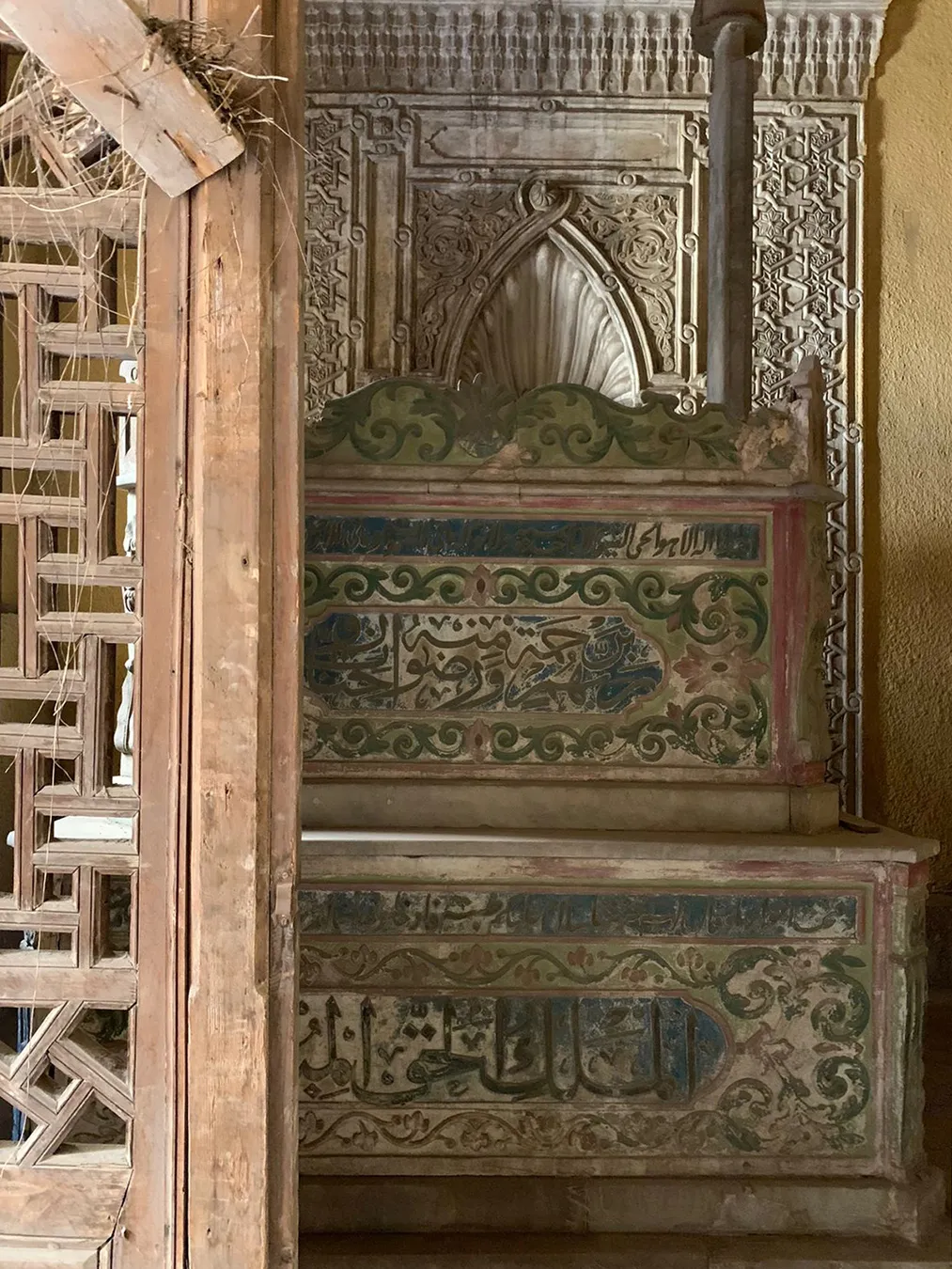
The eastern chamber features a pointed-arch mihrab prayer niche very richly decorated with geometric motifs in stucco. Also in the eastern burial chamber is a richly carved marble cenotaph in the Ottoman Baroque style.
Condition of preservation
The ground level of the unit is in use and receives regular maintenance. However, the recent renovation that included application of thick textured plaster obscured or disfigured original features. The upper floor is disused and seriously dilapidated. All woodwork in the front façade is very seriously damaged and partially missing.
Information abut the founder, family history, etc.
The date 1332 AH in the inscription over the eastern window (also appearing on a marble cenotaph) corresponds to AD 1914.
- Field recording by
- Hadeer Ahmad and Nur Atiya
- Date recorded
- August 30, 2022
- Data entered by
- Hadeer Ahmad
- Date entered
- May 14, 2024