


Unit No20
Al-Darandli family funerary enclosure
|
Coordinates of the main entrance |
30.043881N - 31.2724E |
|
Attribution |
Al-Darandli family funerary enclosure |
|
Higri (AH)Dates as given in the Inscription |
1324 |
|
Miladi (AD)Dates as given in the Inscription |
|
|
Inscription Contemporary with the building? |
Yes |
|
Multiple date(s) In the inscription? |
Yes |
|
Assumed Date |
18th century, 1324 AH=AD 1906 and later |
|
Based on |
(based on stylistic features and inscriptions, see point 17) |
|
Original Use |
Funerary enclosure |
|
Current Use |
Funerary enclosure |
|
Overall condition |
Fair |
Features of unit 20
| Present | Count | Material | Comments (see description for details) | |
|---|---|---|---|---|
| Free standing structure | No | |||
| Walled enclosure | Yes | |||
| Rooms by the perimeter wall | Yes | 3 | ||
| Freestanding structure(s) in enclousure | Yes | 1 | Stone, brick | The domed canopy |
| Dome over the tomb chamber | Yes | |||
| Neo-Mamluk architectural decoration | Yes | |||
| Garden layout | No | |||
| Sabil(s) | Yes | Stone | Only scant remnants | |
| Wall fountain(s) | No | |||
| Canopy on columns / pillars | Yes | 1 | Stone, brick | |
| Carved marble cenotaph(s) | Yes | |||
| Decorated limestone tomb-markers | No | |||
| Decorated gateway | Yes | 1 | Ashlar stone | |
| Decorative door-leaves | Yes | 2 | wood | |
| Decorative window grilles | Yes | 2 | stone | |
| Decorative shutters | No | |||
| Painted ceiling(s) | No | |||
| Decorative paving(s) | No |
Unusual or unique features
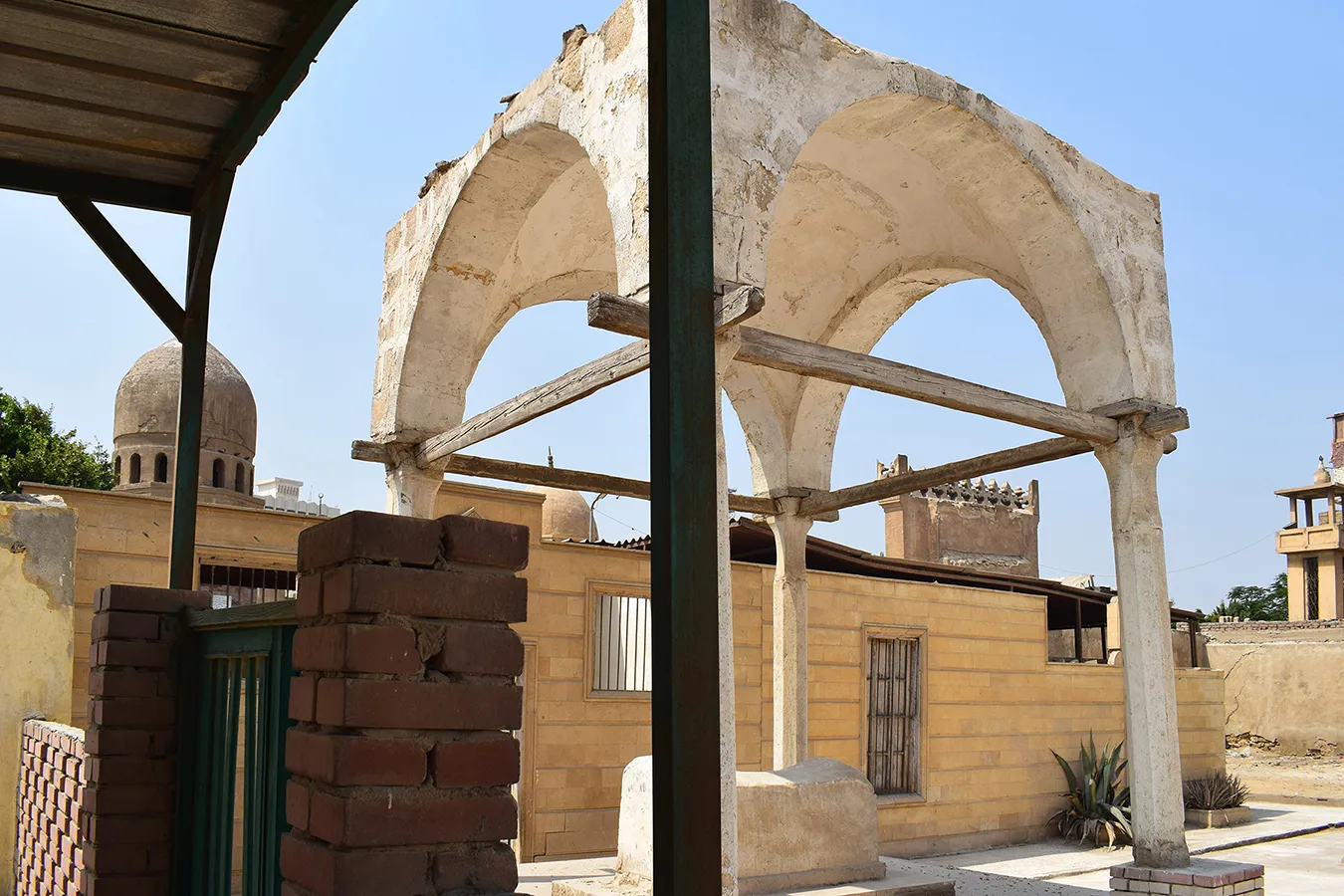
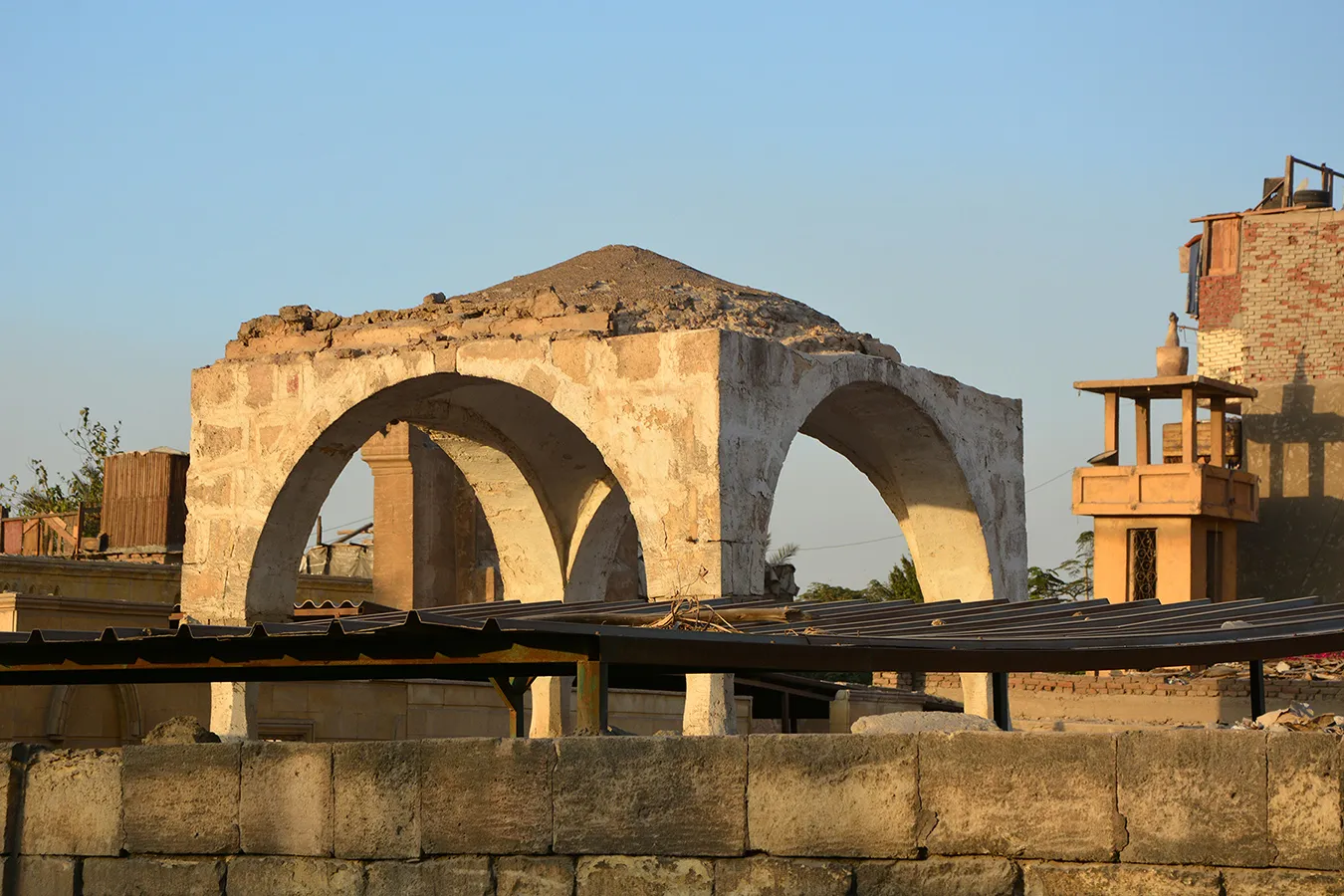
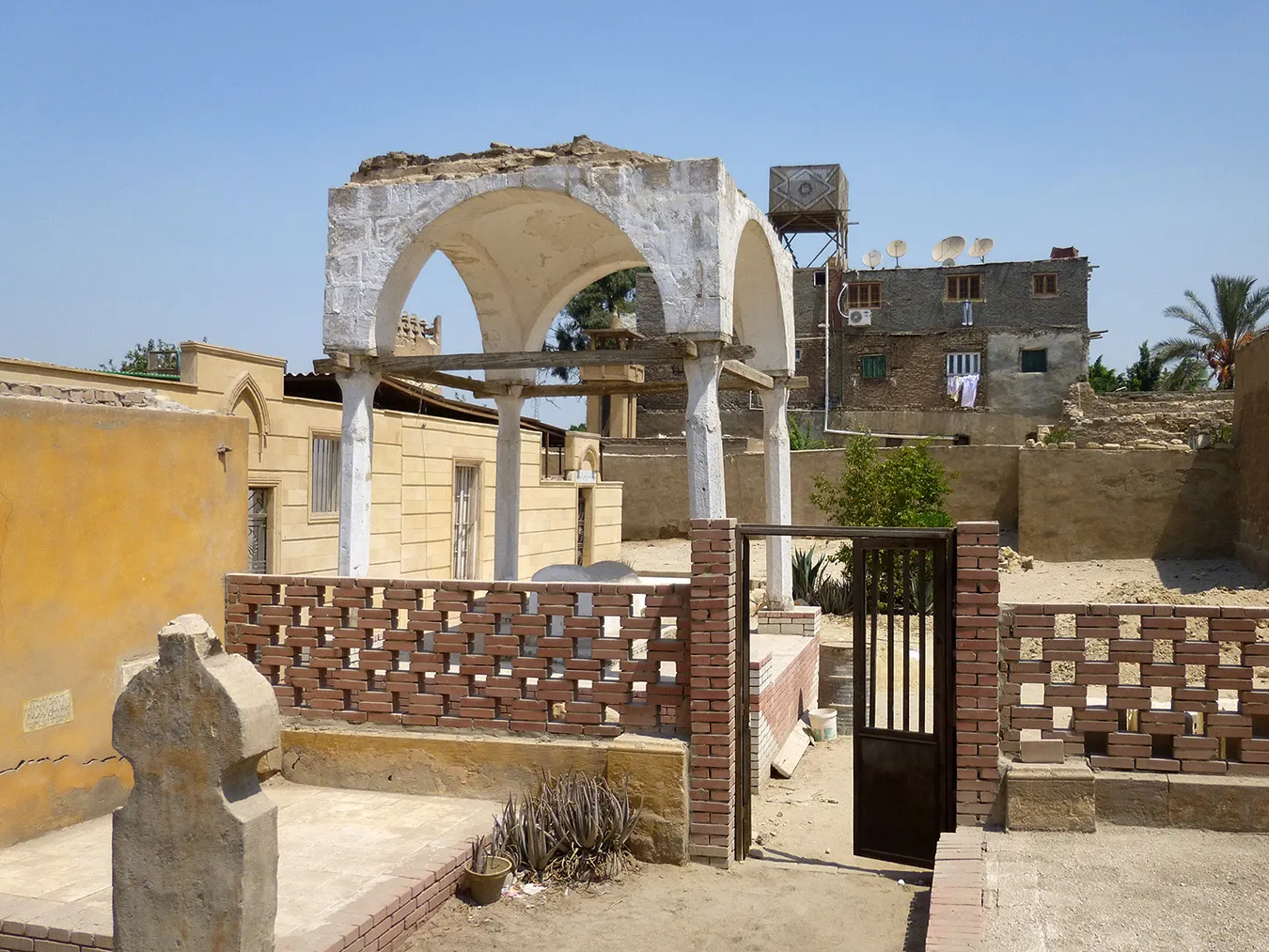
• An open canopy on four columns of a type once very common at the cemetery, but now rare.
• Openwork stone window grille
Description (The direction towards Mecca (Qibla) is described as eastern and other directions are named accordingly)
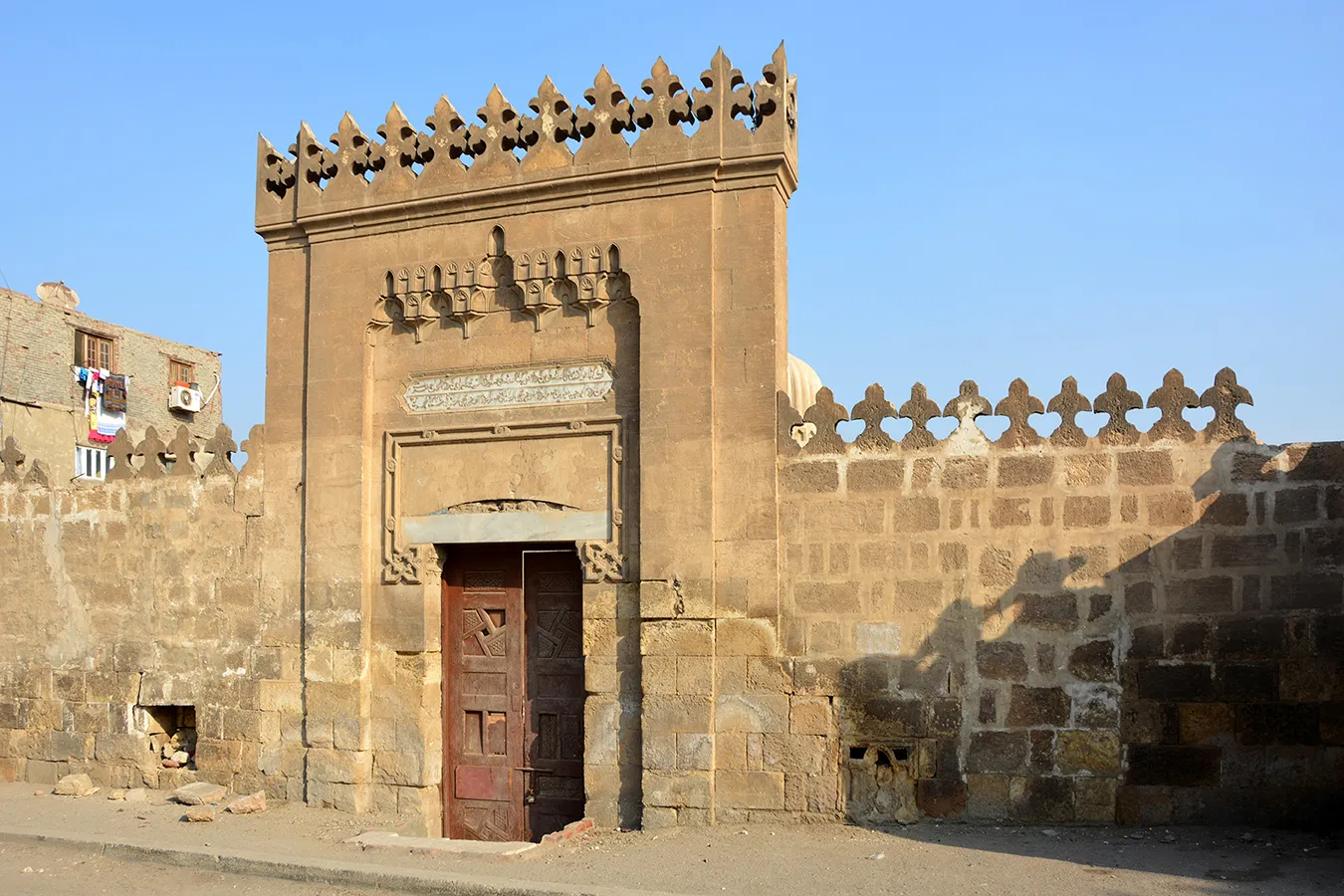
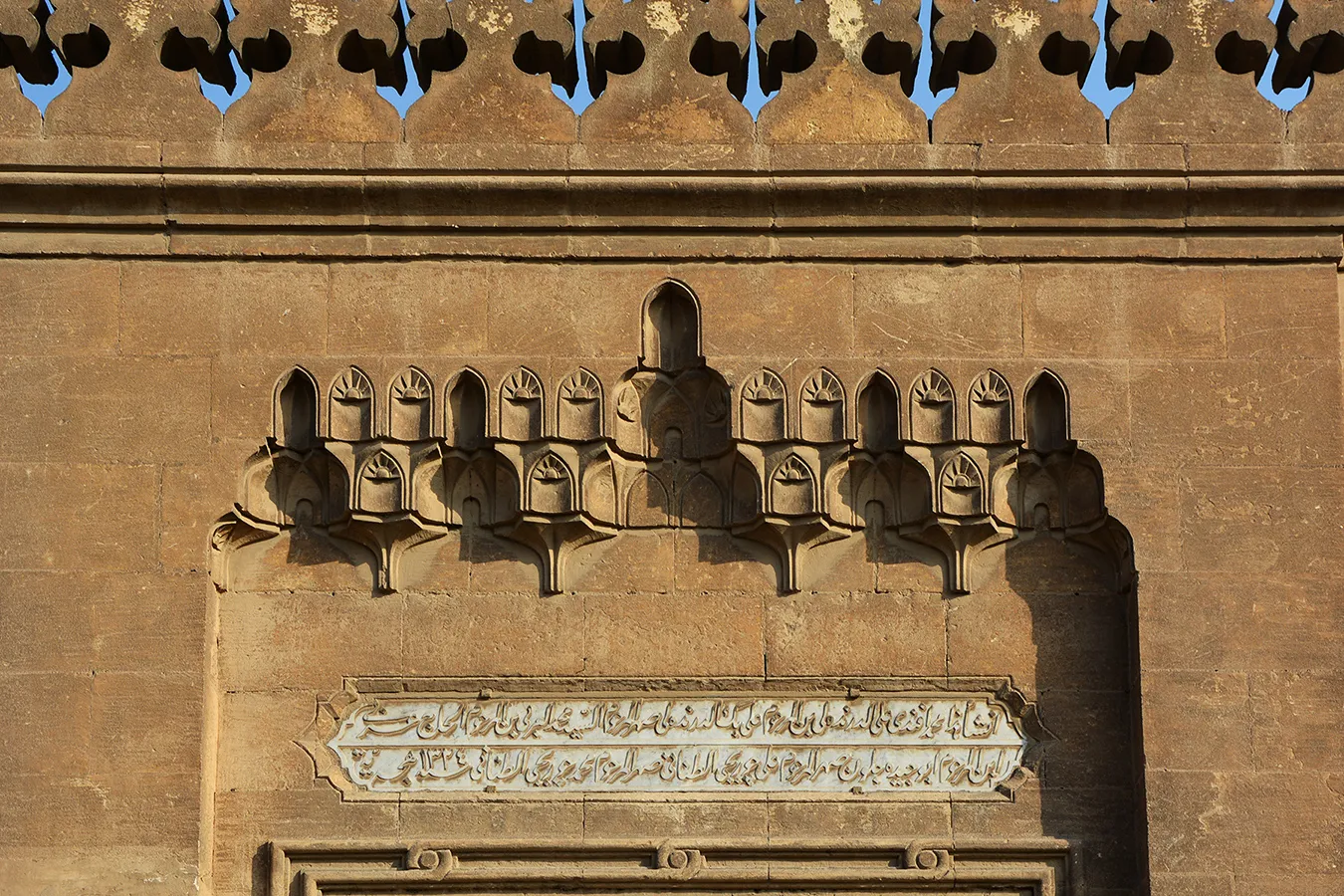
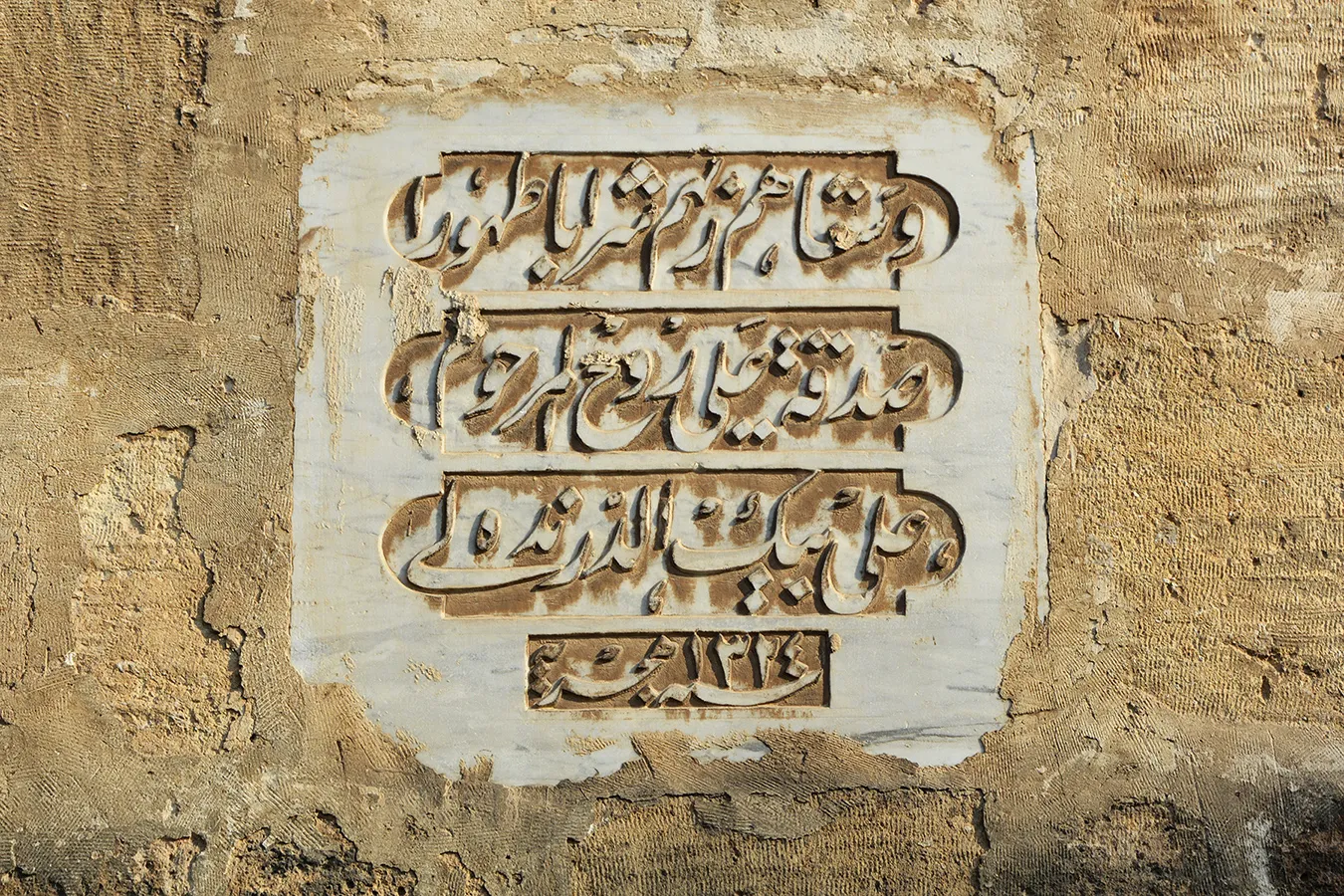
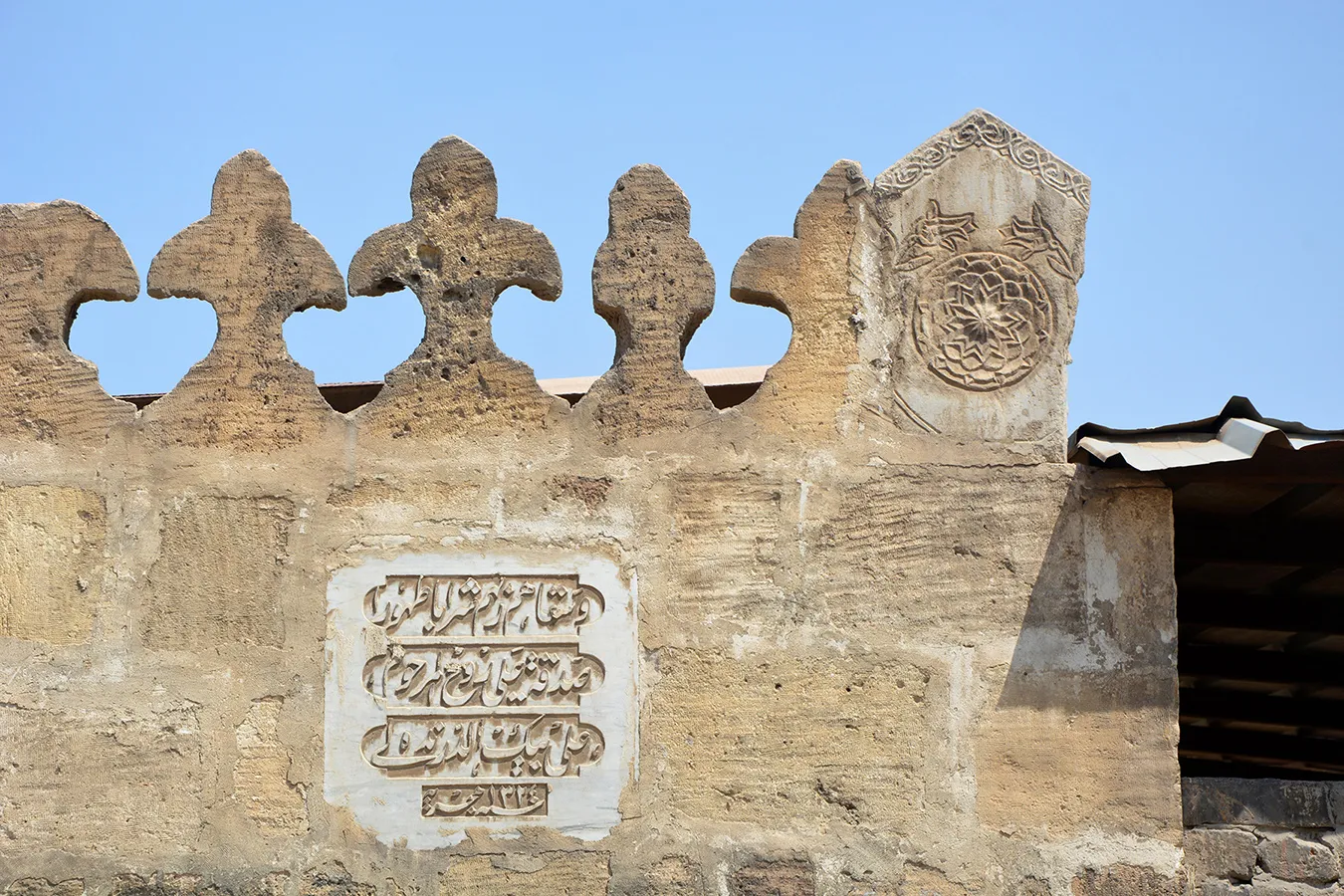
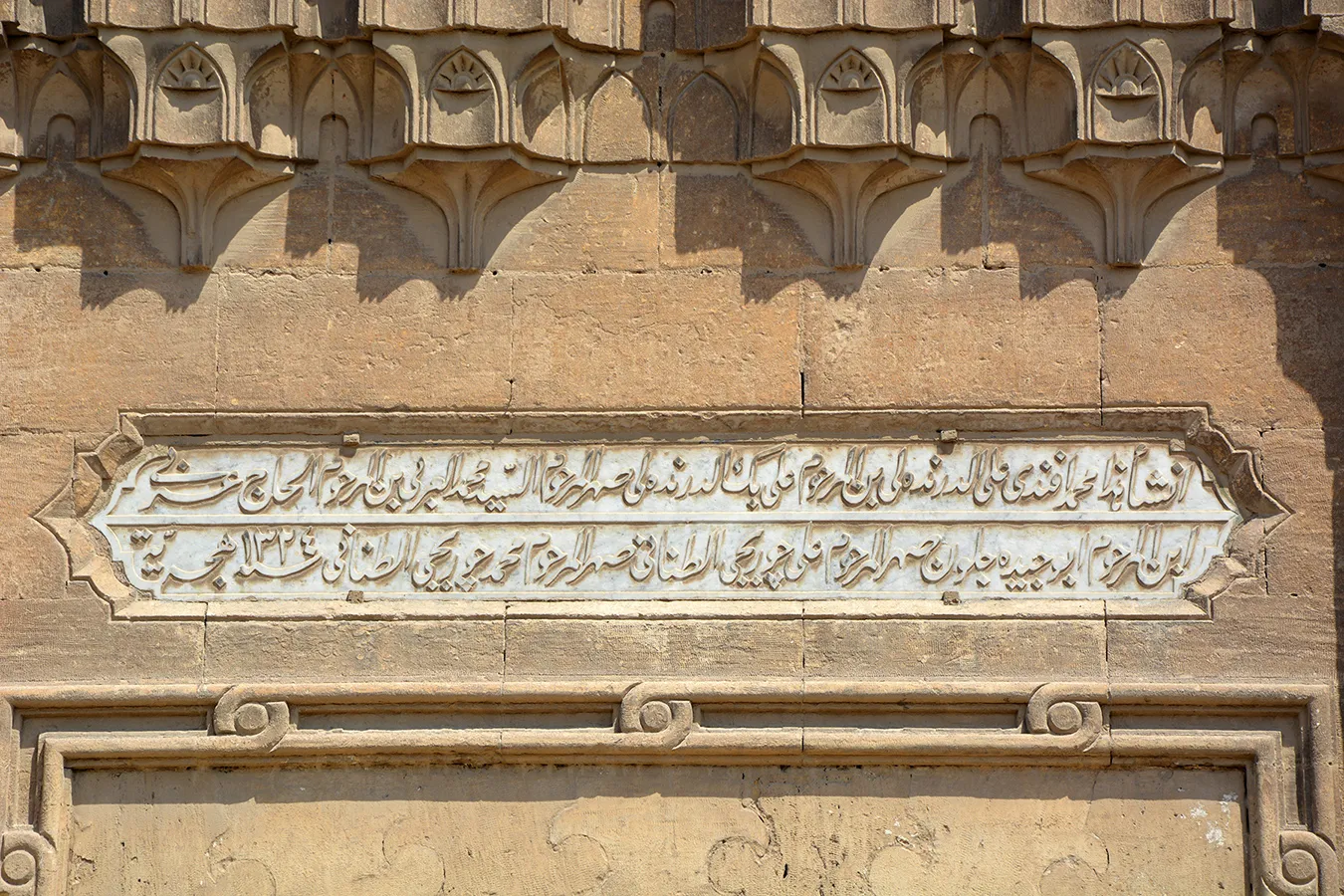
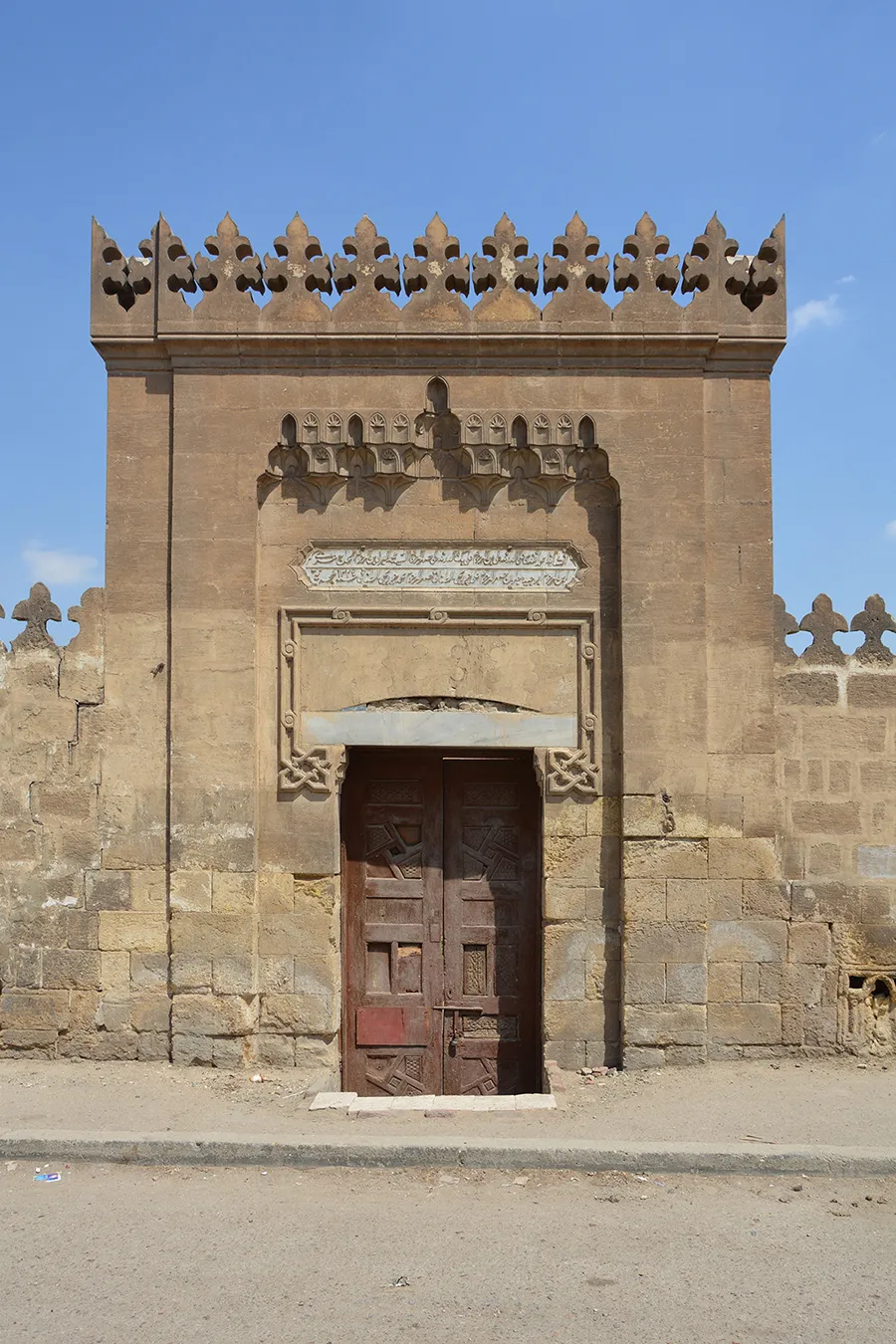
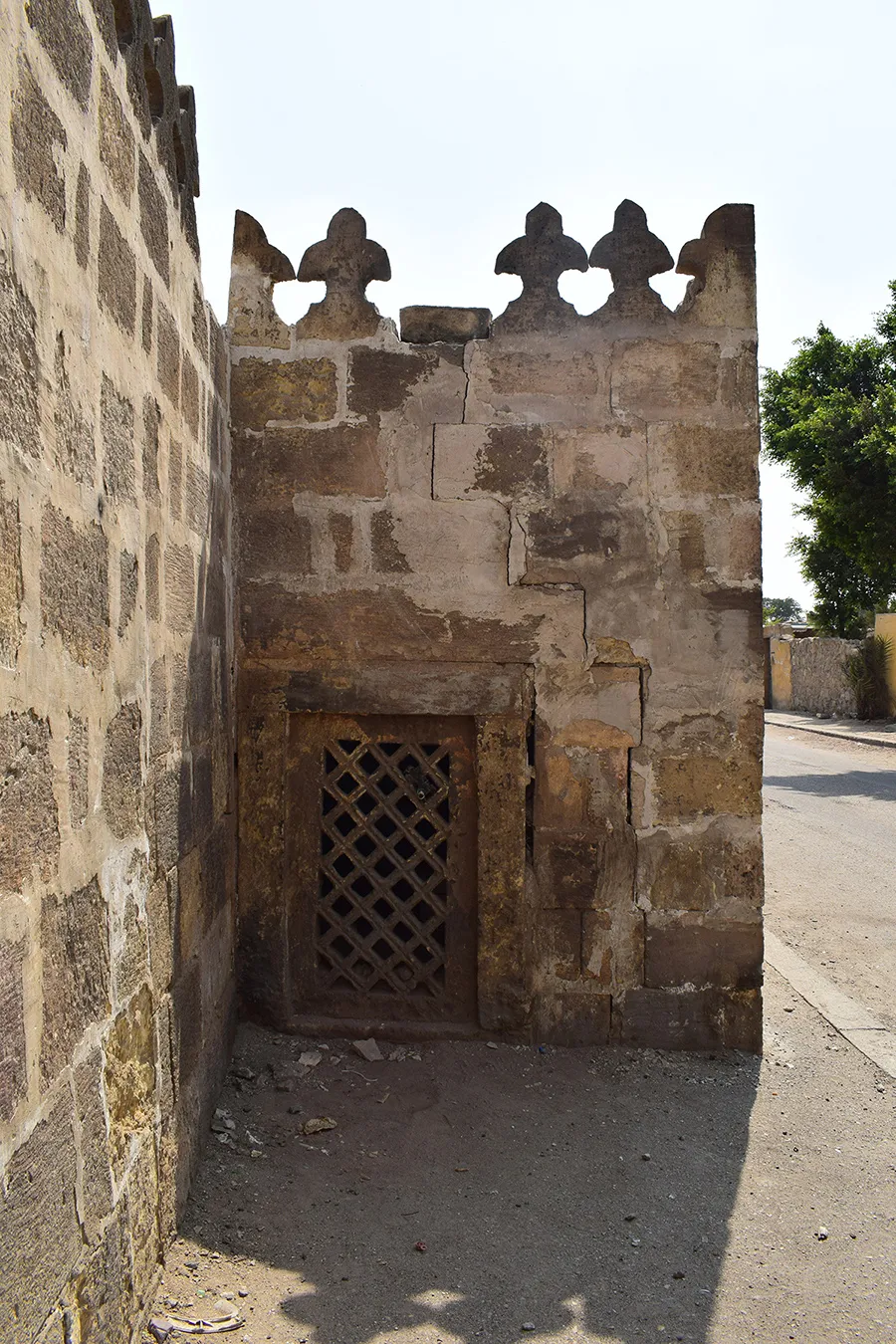
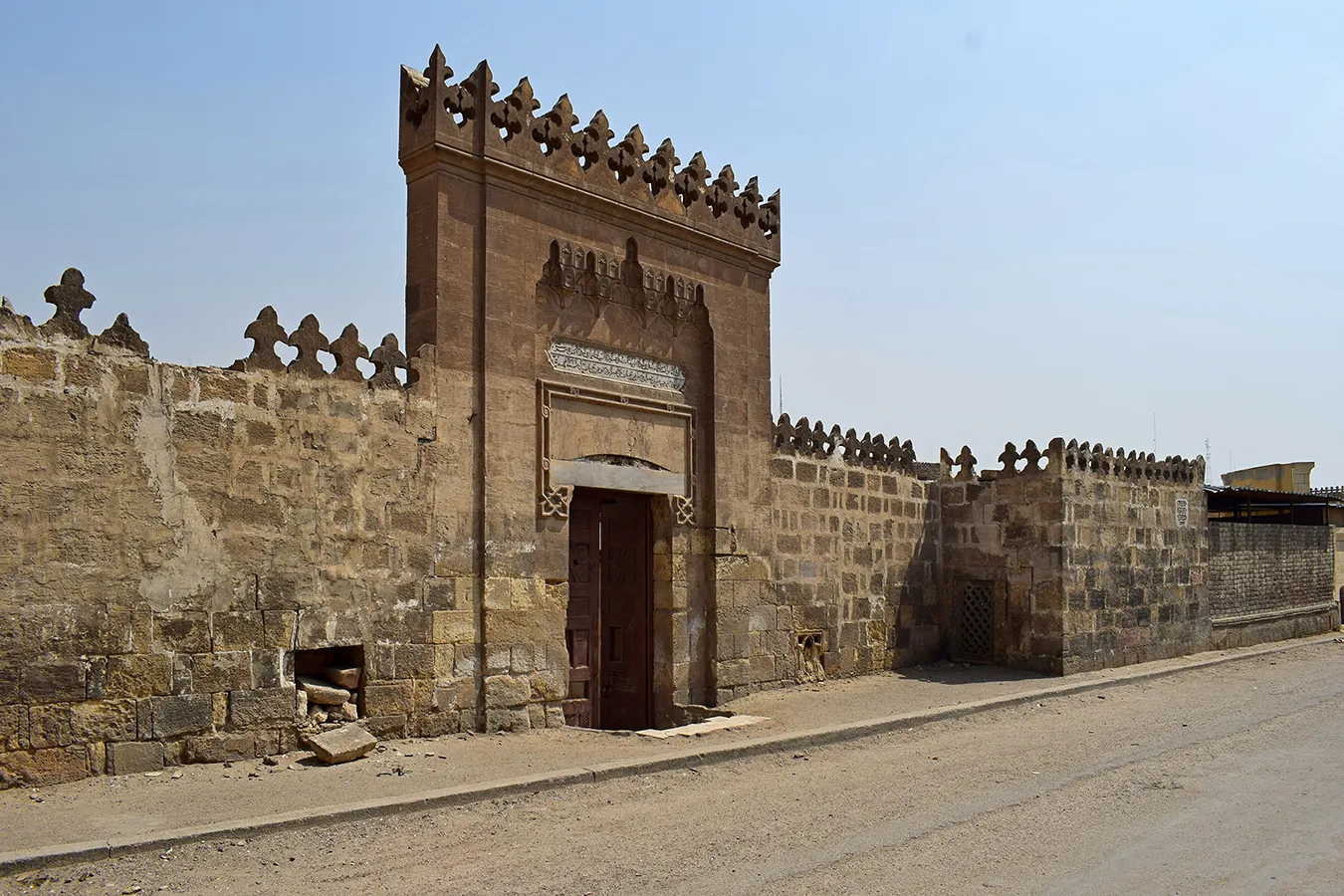
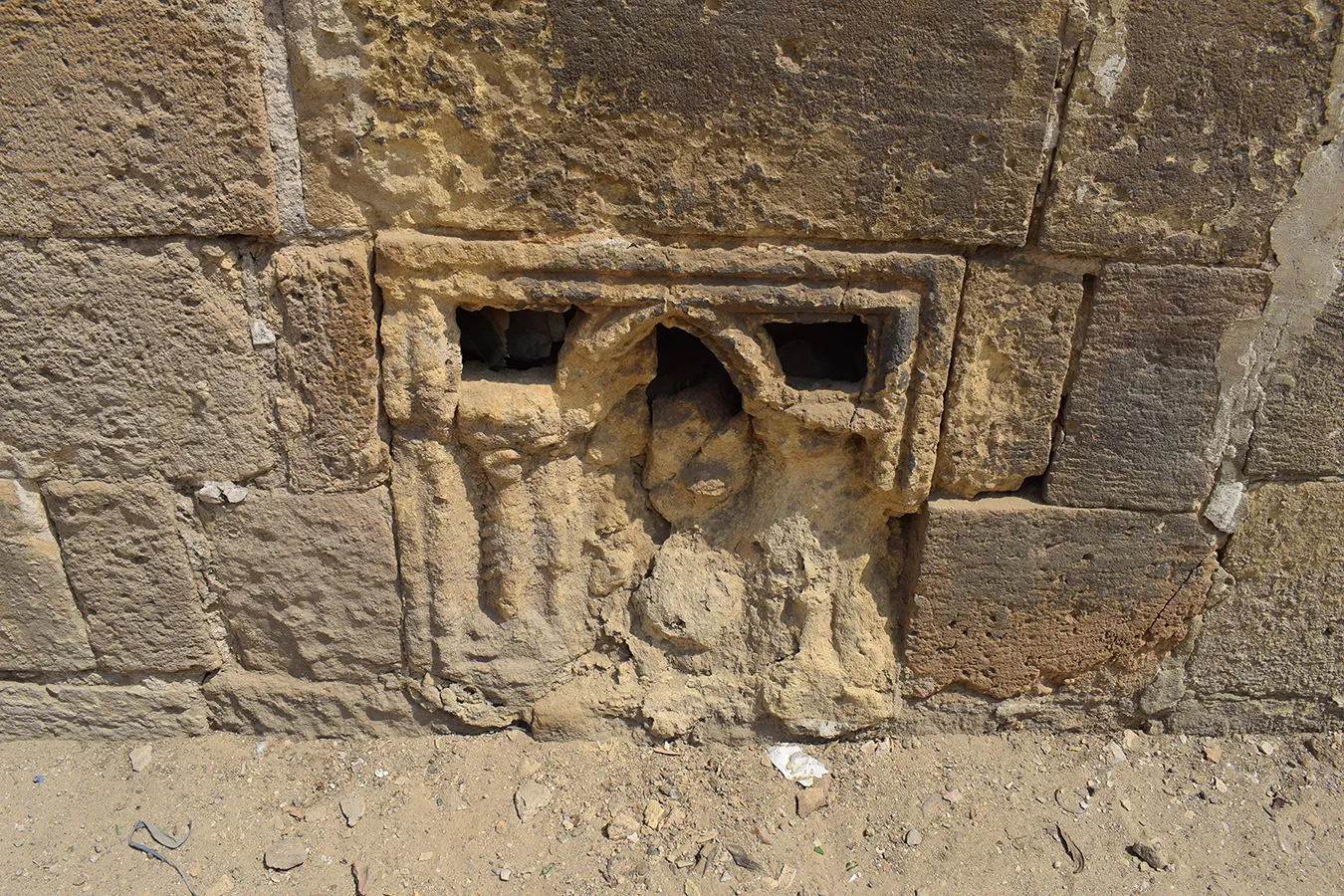
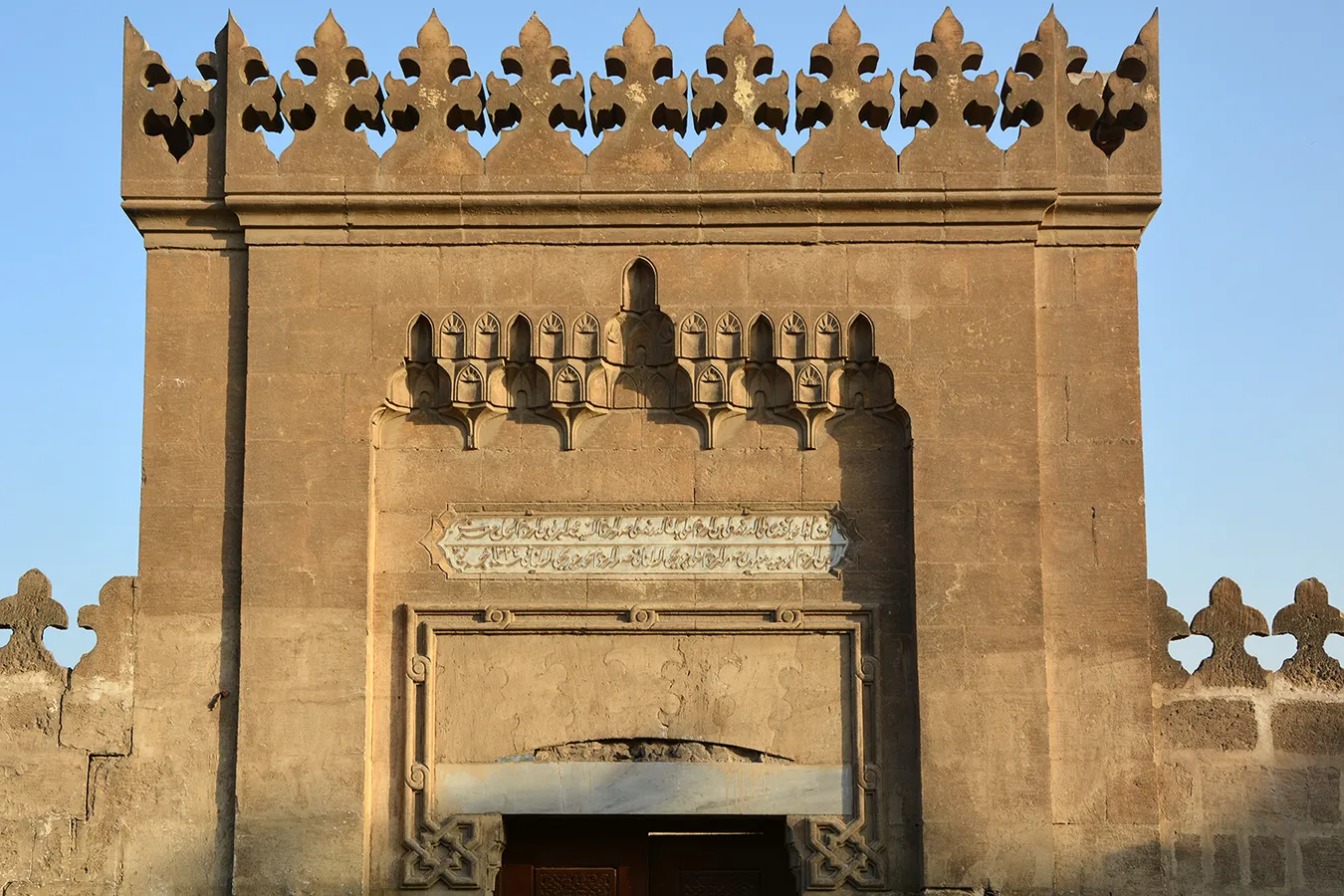
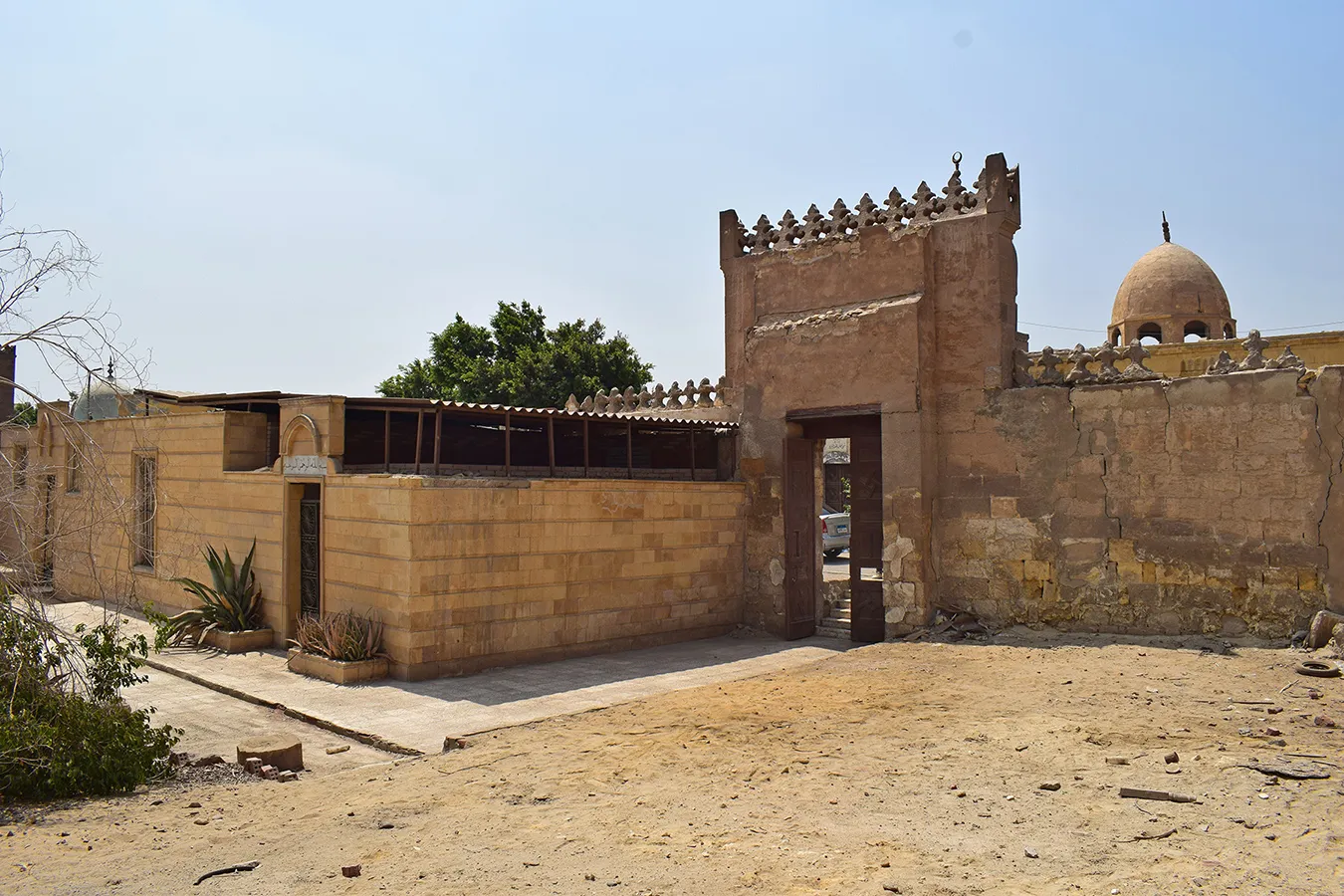
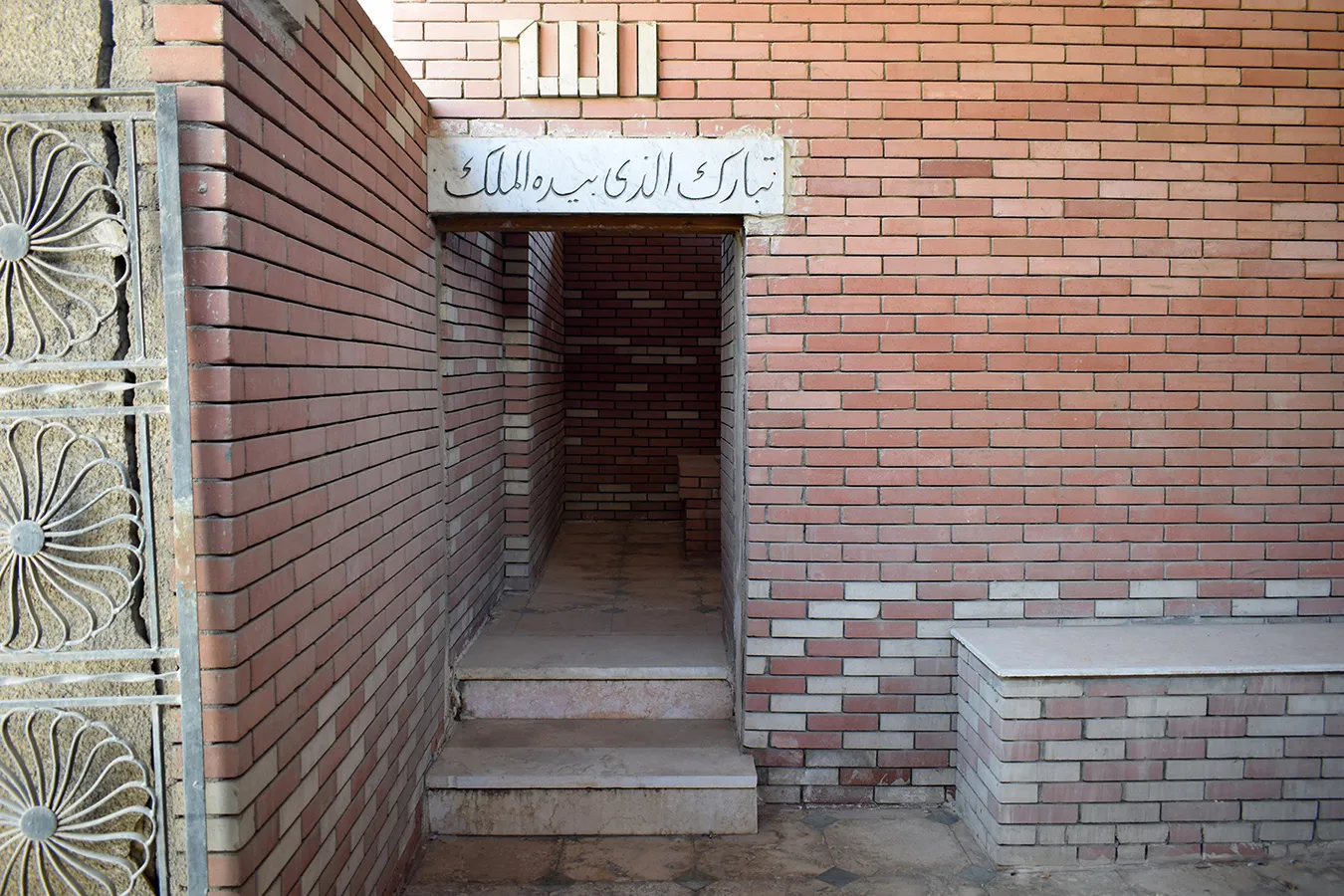
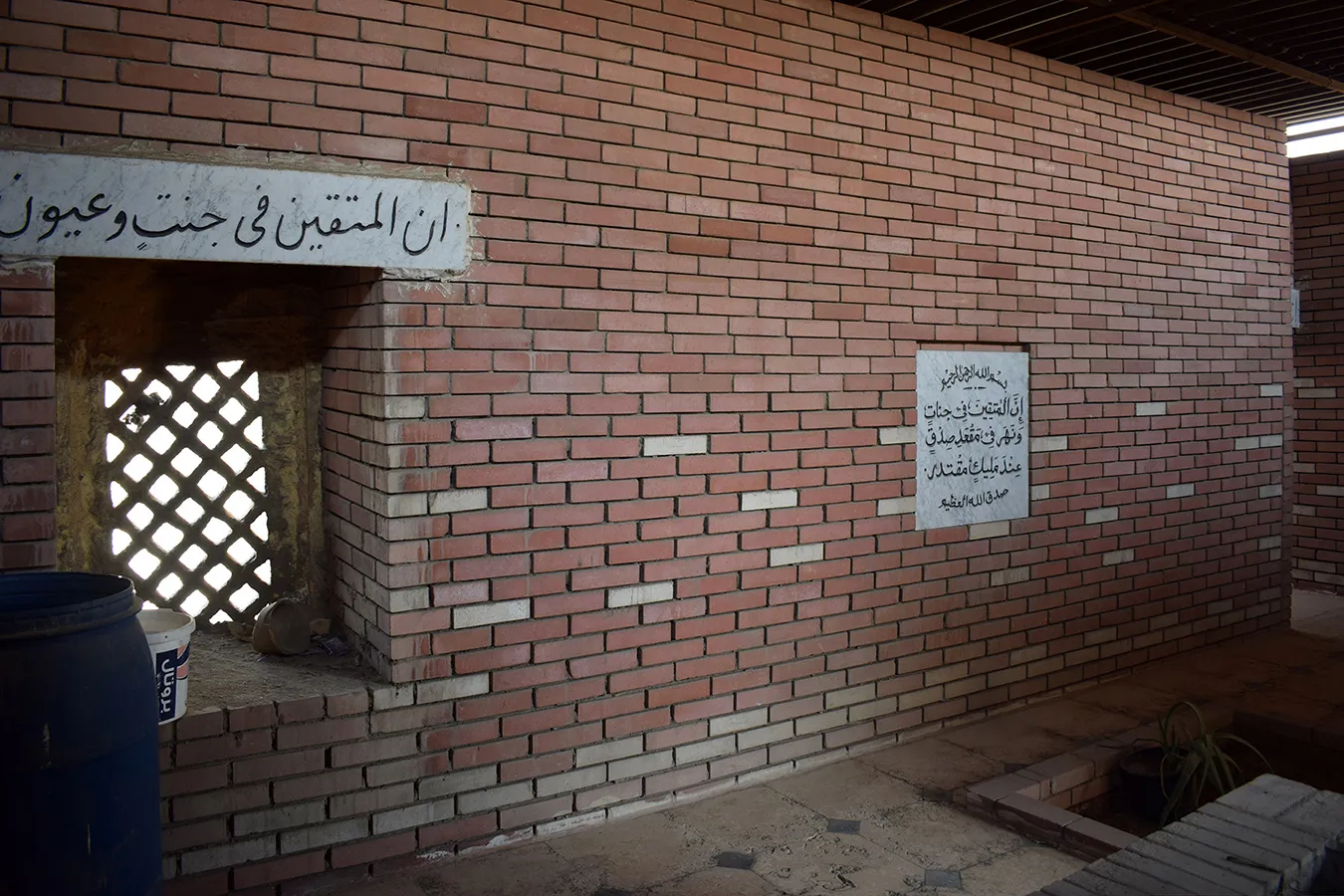
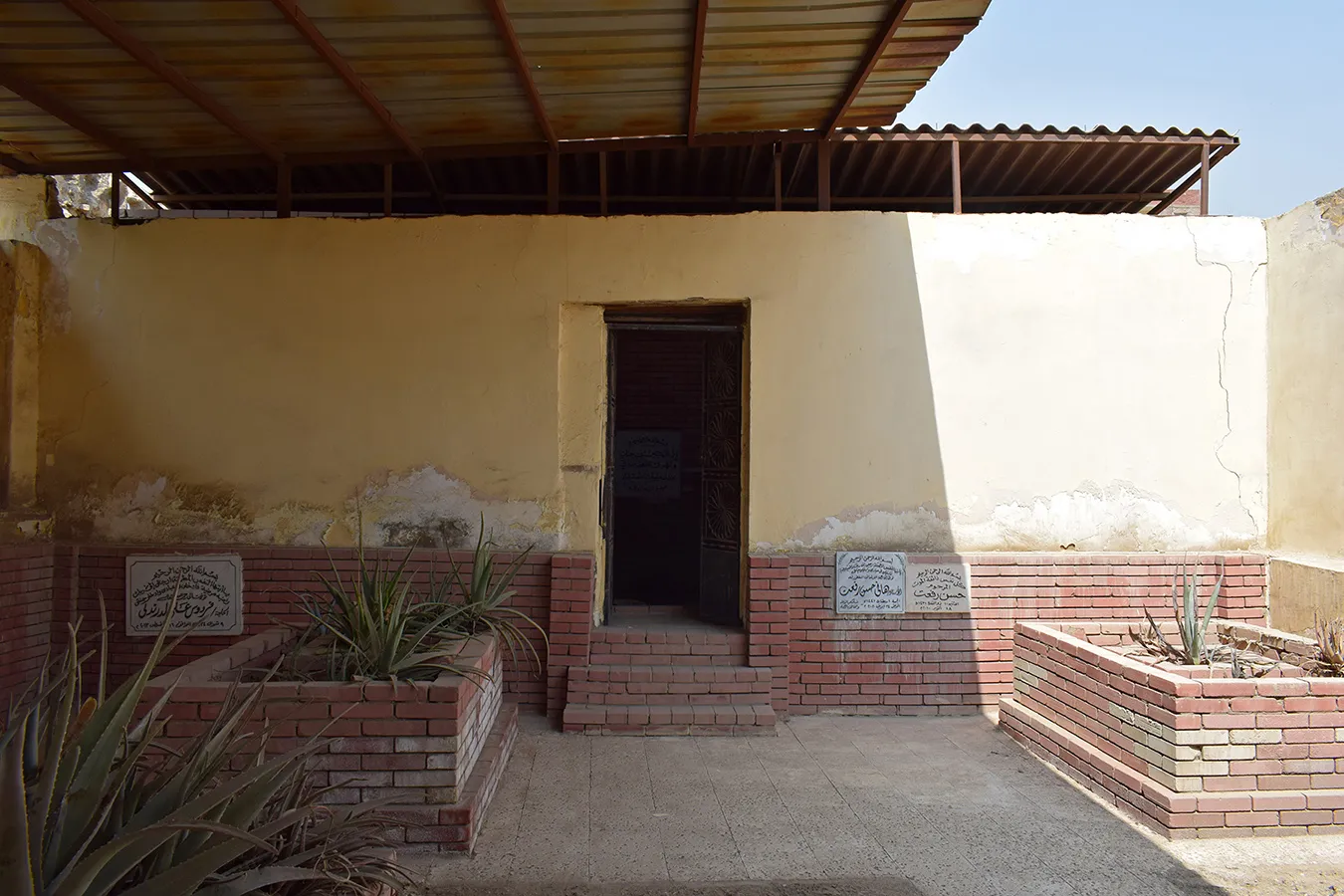
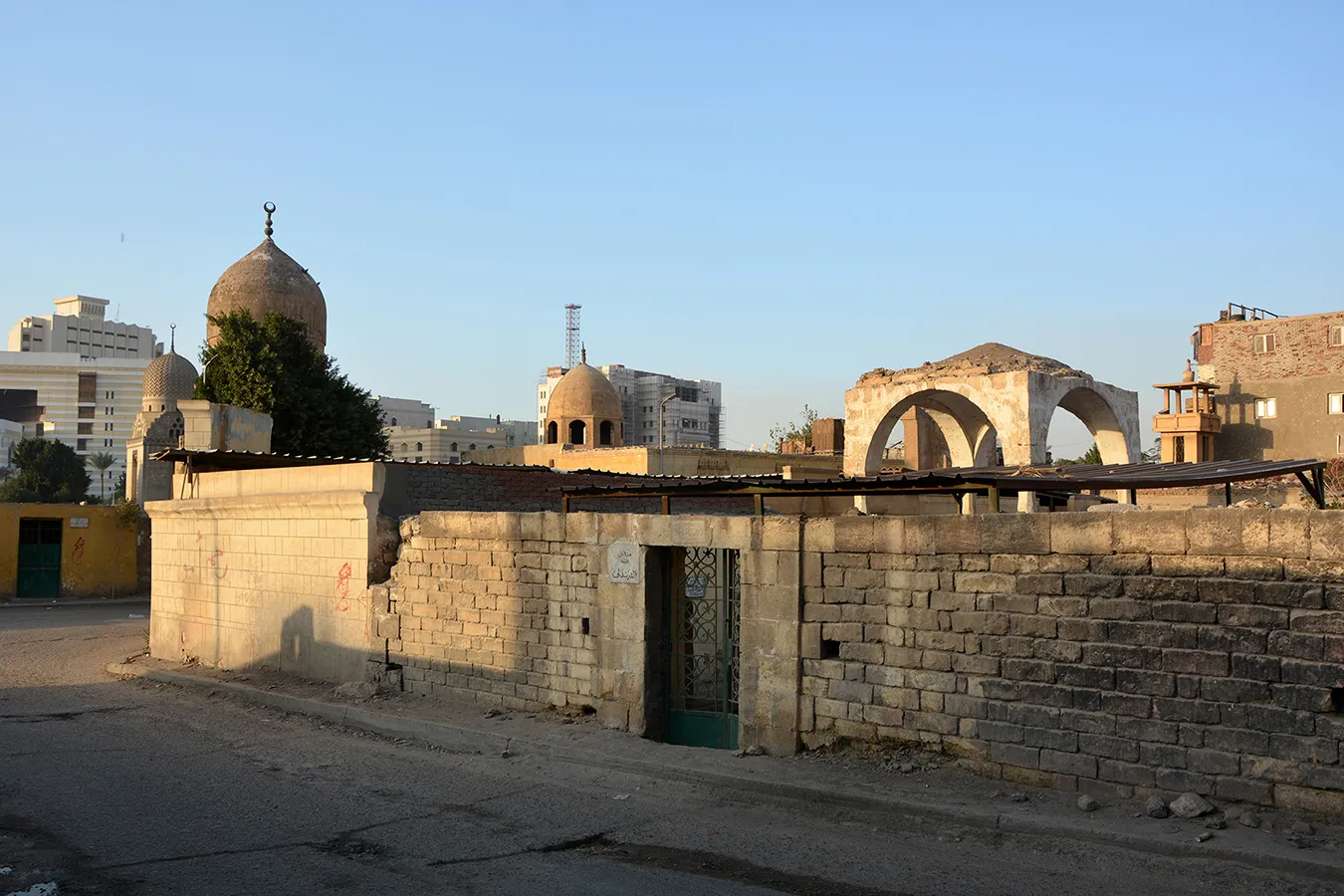
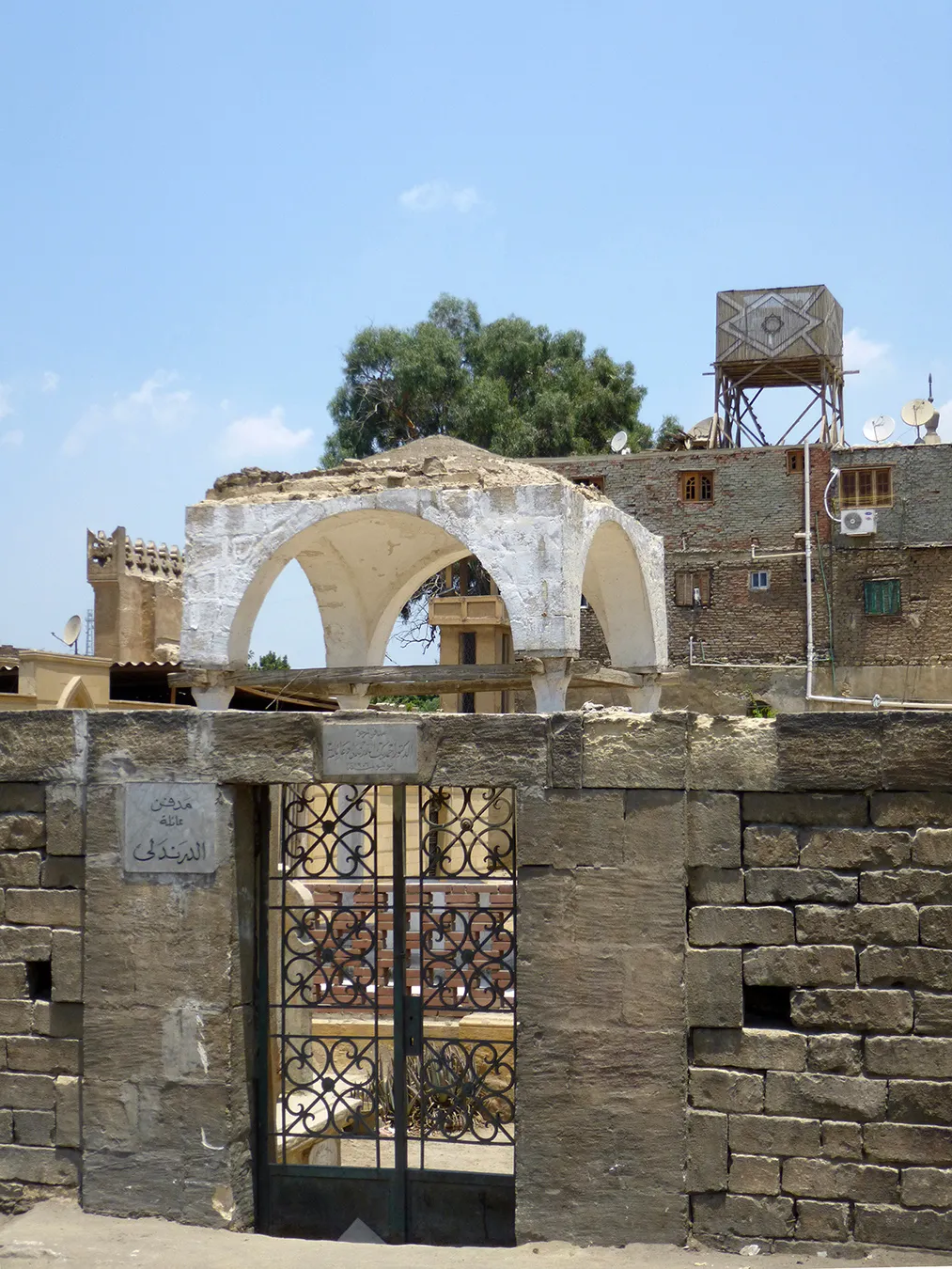
A walled funerary enclosure of irregular plan, comprising disparate parts apparently in result of a long and complex history. The main entrance is in the long wall that faces the Sultan Ahmad Street, but is slightly oblique to its course, indicating that it may be older than the regular layout of the streets in the area. The marble panel over the door carries a two-lines calligraphic inscription in high relief including the name of Muhammad Effendi ‘Ali al-Darandli and the date AH 1324 (corresponding to AD 1906). The neo-Mamluk gateway is fully consistent with that date, similar to those found in other nearby monuments from the same period. The gateway section, crowned with a very elaborate fleur-de-lys crenelation, is much taller than the wall into which it is inserted, and is obviously later than the wall itself. That wall is of uniform construction with the salient part on the southern side: plain, undecorated, and crowned with a simple fleur-de-lys crenelation of rather crude execution. A window in the northern wall (external, street-facing) of the salient part is fitted with a simple openwork grille made of a limestone slab. A small openwork panel also cut in a limestone slab is set in the western wall to the right of the entrance gate. It is an arched opening with flanking colonettes and the spandrels open through. The slab is apparently in its original placement, as it is placed in a well-built through-the-wall opening covered with a stone lintel. An identical opening (with the openwork slab now missing) is placed symmetrically on the other side of the entrance gate. (Both openings are now at the street level, as the ground level rose with time.) A calligraphic marble panel on the wall dated AH 1324, i.e., clearly later than these architectural features, refers to drinking water, which suggests that these were possibly sabil windows. If this were the case, this would be a unique instance in Cairo of the sabil window in such a form. A large door or window right (south) of the entrance gate has been blocked with blocks of ashlar masonry.
The entrance portal is set in a shallow recess topped with a muqarnas frieze. In a typically Mamluk arrangement, the lintel of the gate (which is made of a monolithic block of marble) and the relieving arch above it are framed in knotted mouldings. The lunette of the relieving arch was filled with ceramic tiles (now missing). The huge wooden panelled door leaves are decorated with mafryka motifs.
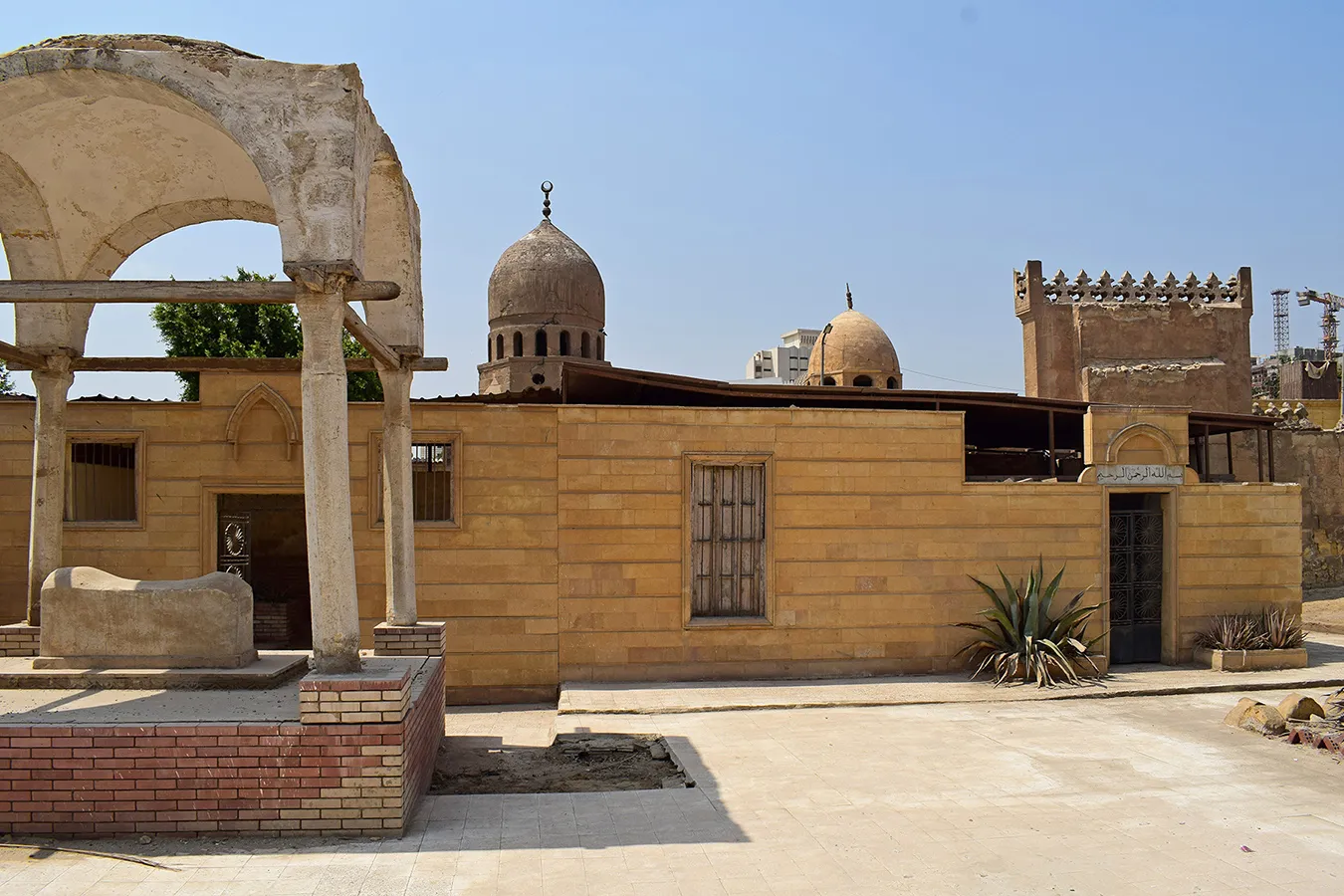
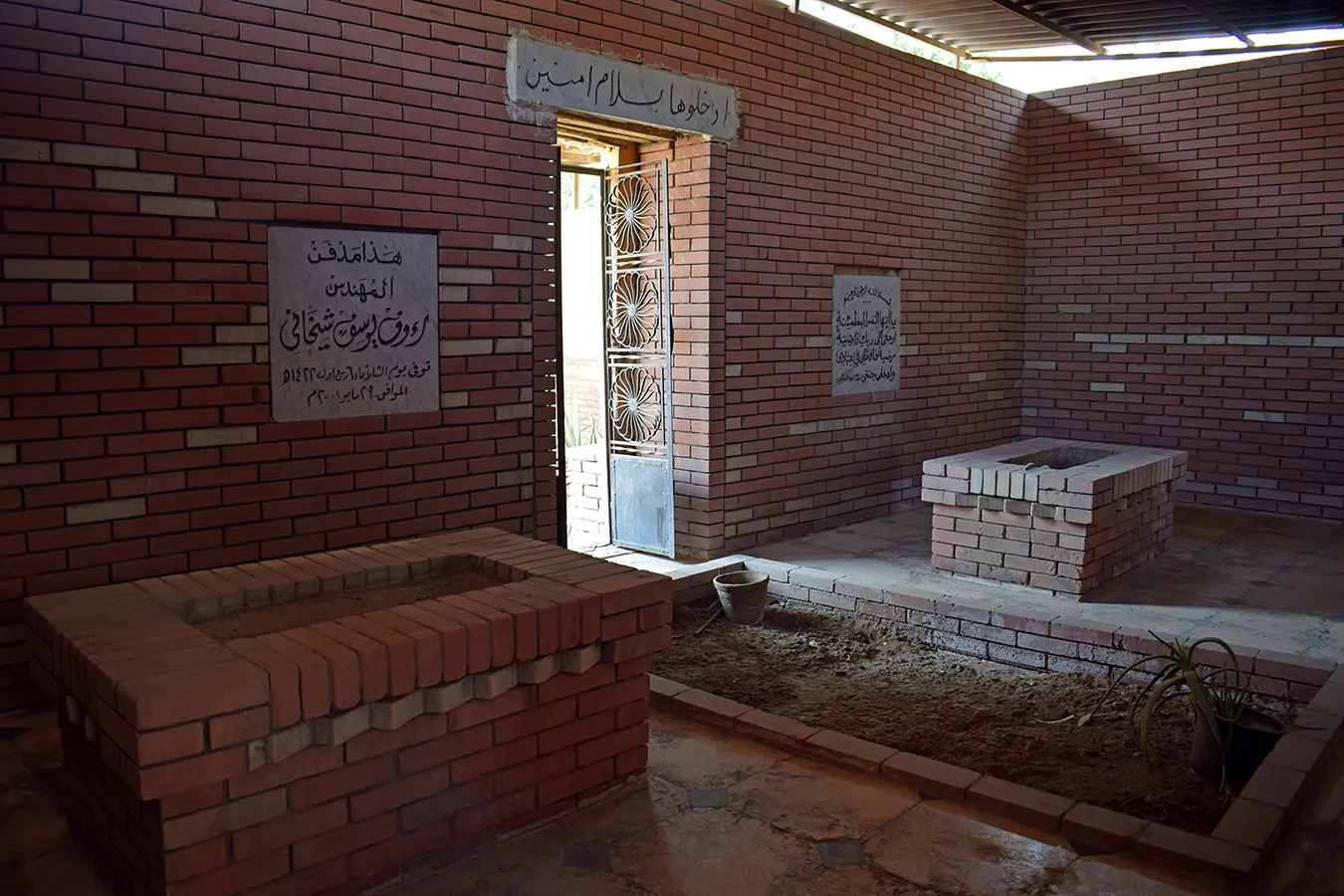
South of the entrance gate, the rooms by the western wall of the enclosure and a walled courtyard have been recently unified into a modern single-storey building with walls clad in stone on the outside and lined with bricks on the inside. In the external south-western corner of this room, a decorated marble piece, apparently part of an Ottoman-period shahid stela is built into the crenellation.
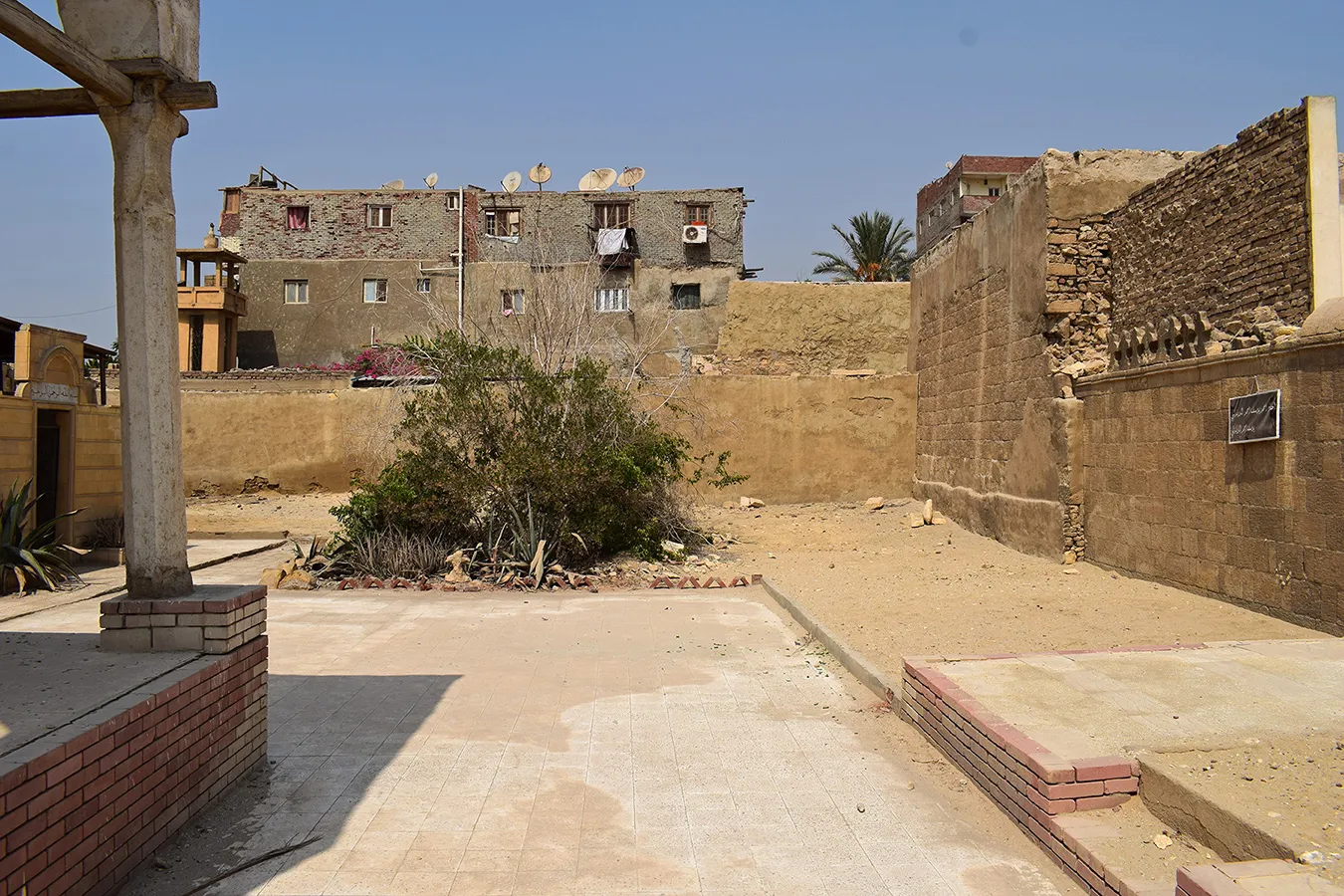
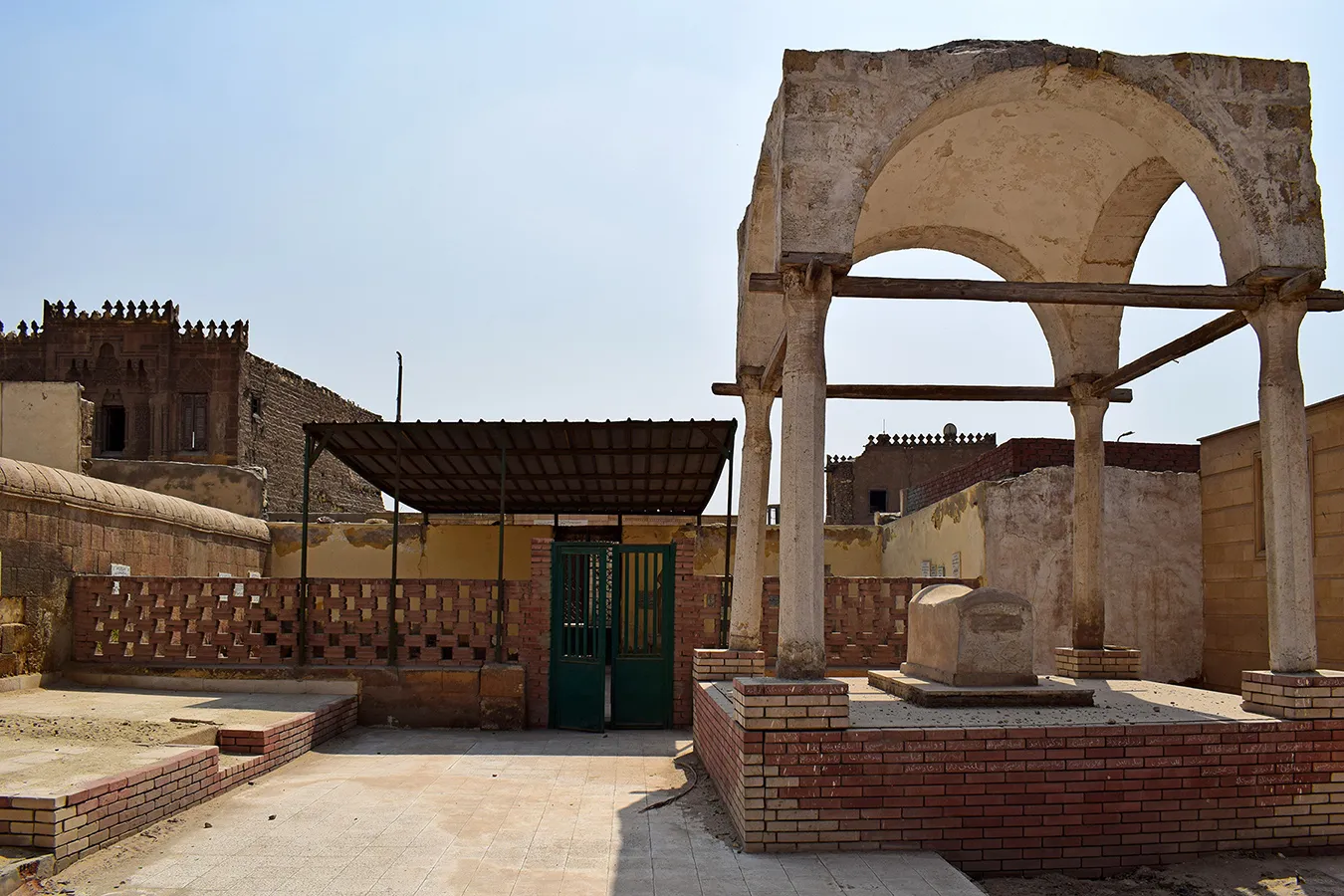
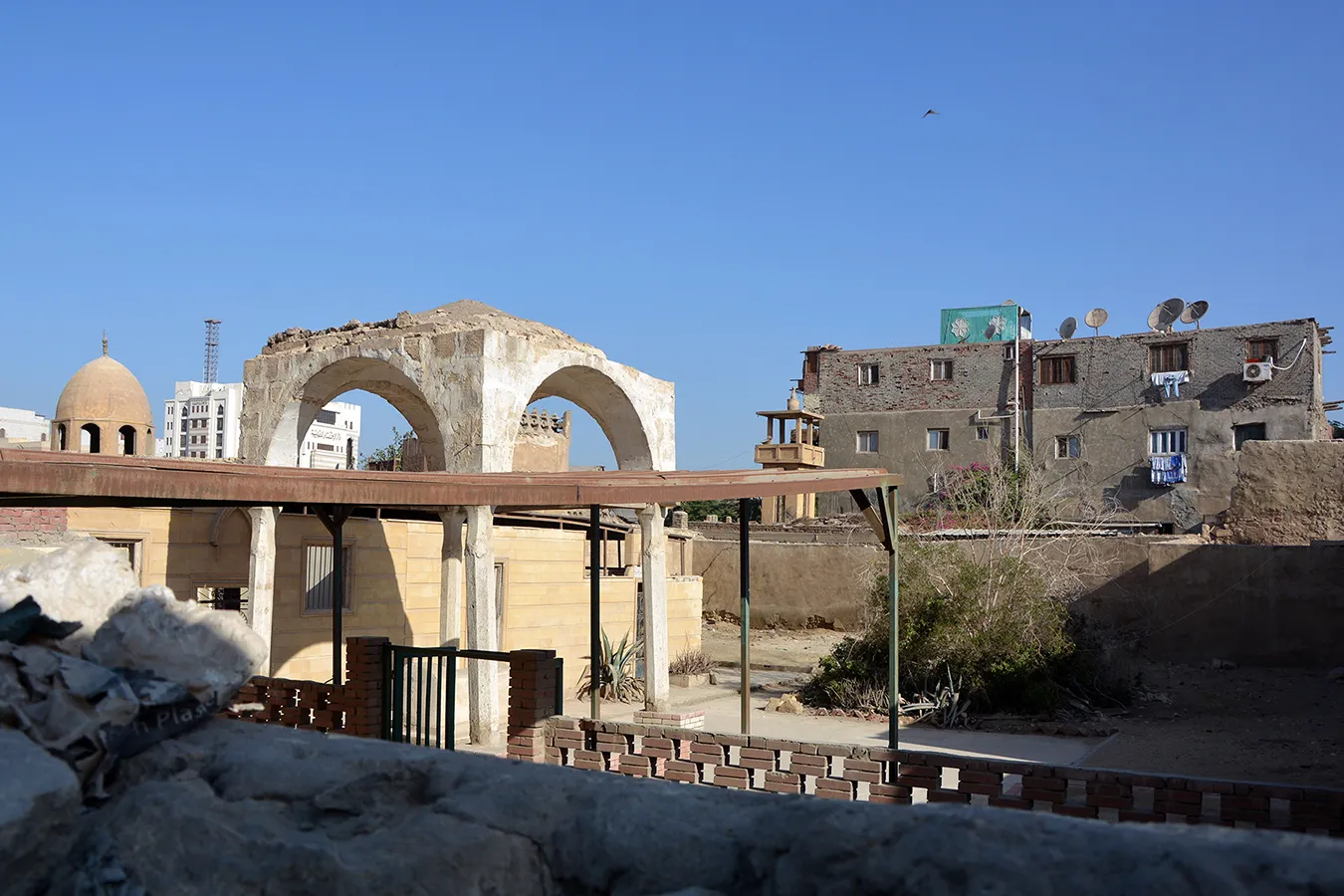
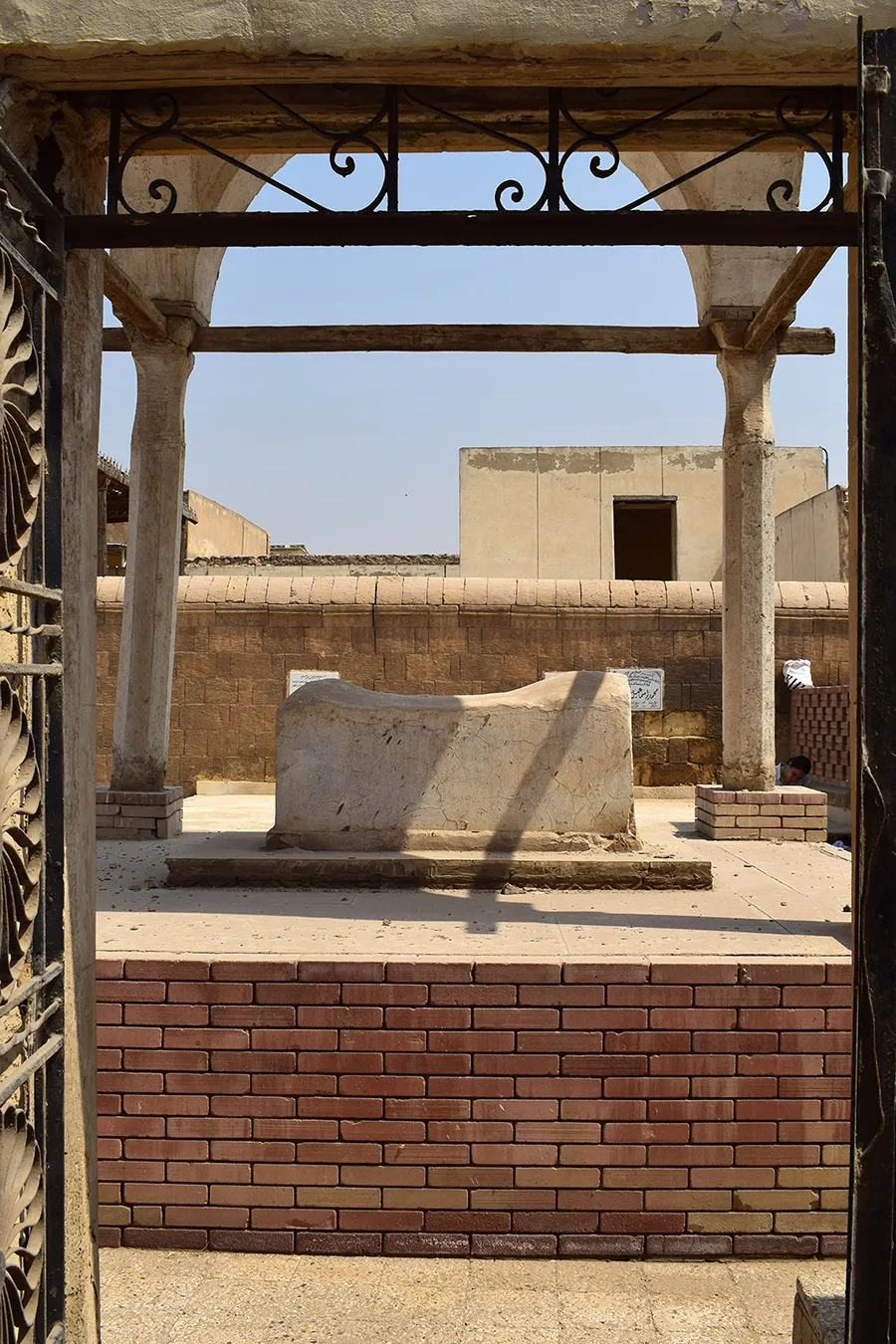
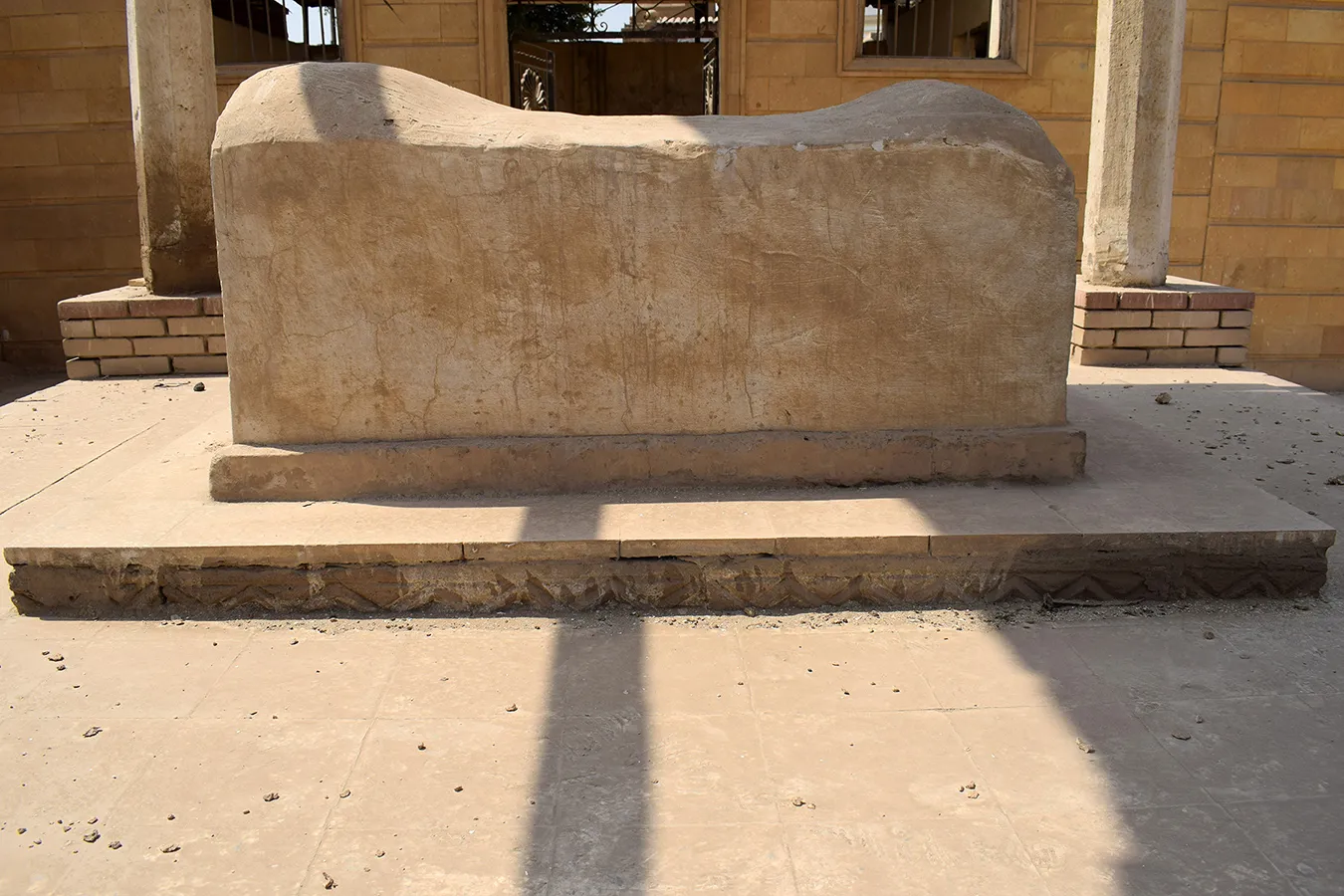
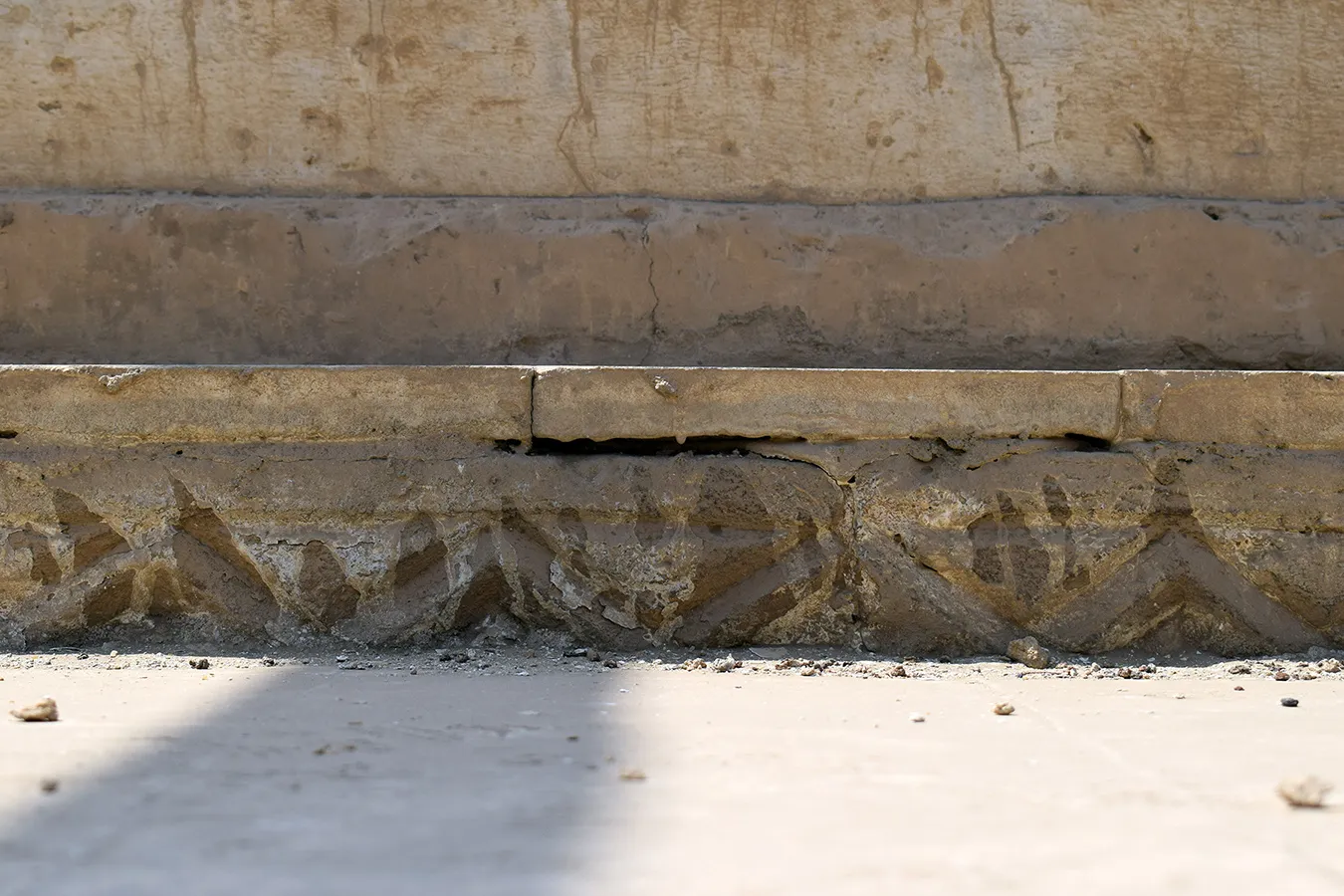
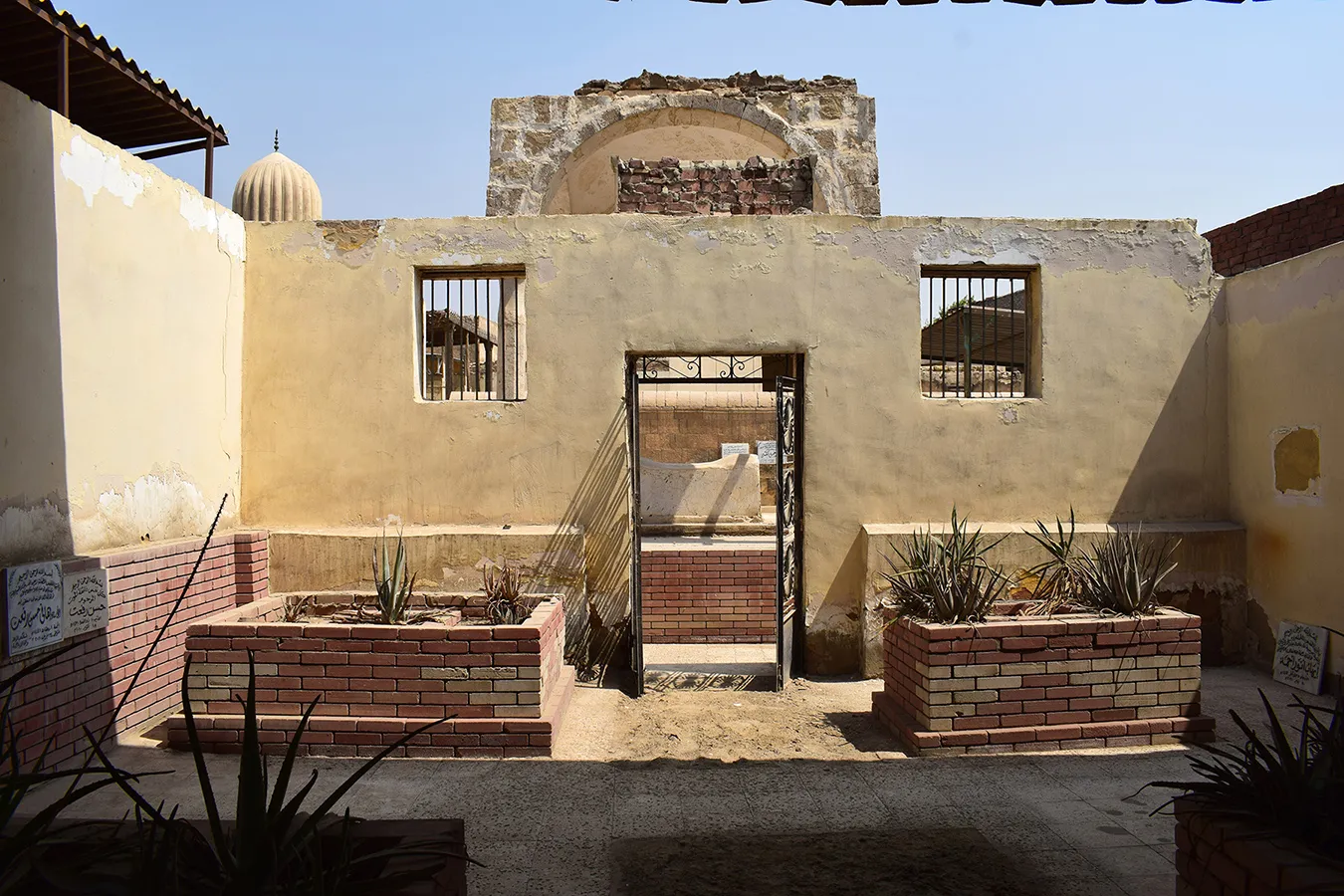
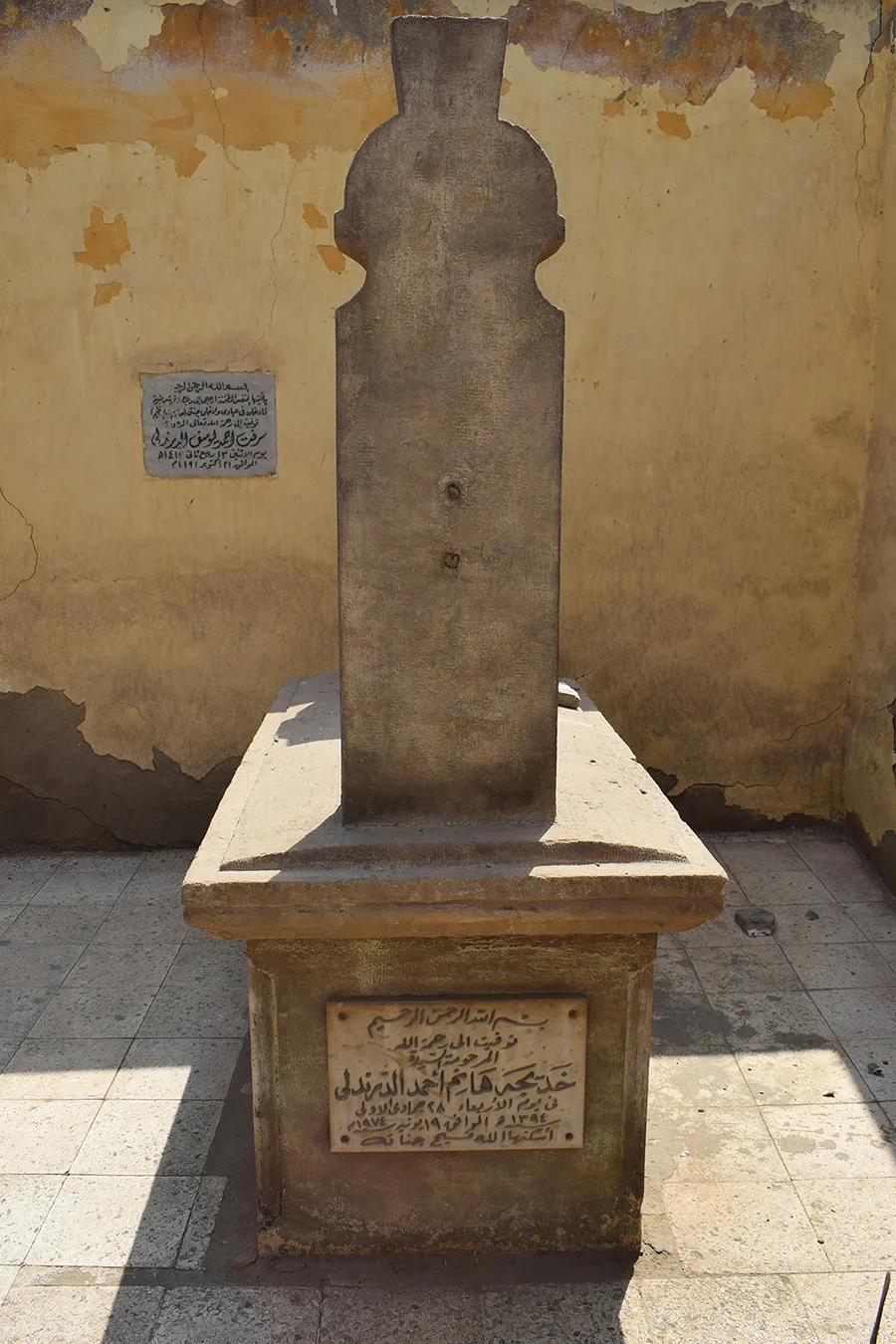
In the courtyard stands an open-sided canopy of four semi-circular arches supported on octagonal stone columns with extremely simple, nearly formless Islamic-type capitals. The arches are bound with wooden tie-beams and carry a shallow dome (technically, a sail-vault) which on the outside is plastered to form a flat pyramidal roof. It appears that above the arches was originally either a cornice, or crenellation, now missing. The canopy is rather crudely built and undecorated. Under the canopy stands an undecorated, uninscribed whitewashed cenotaph in the form of an unarticulated lump of masonry. It is placed on a raised stone platform, which has been almost completely encased in a modern brick platform under the whole canopy, which also encased the bases and possibly pedestals of the columns. The visible part of the original dais under the cenotaph is a simple geometric frieze typical of late Ottoman architecture.
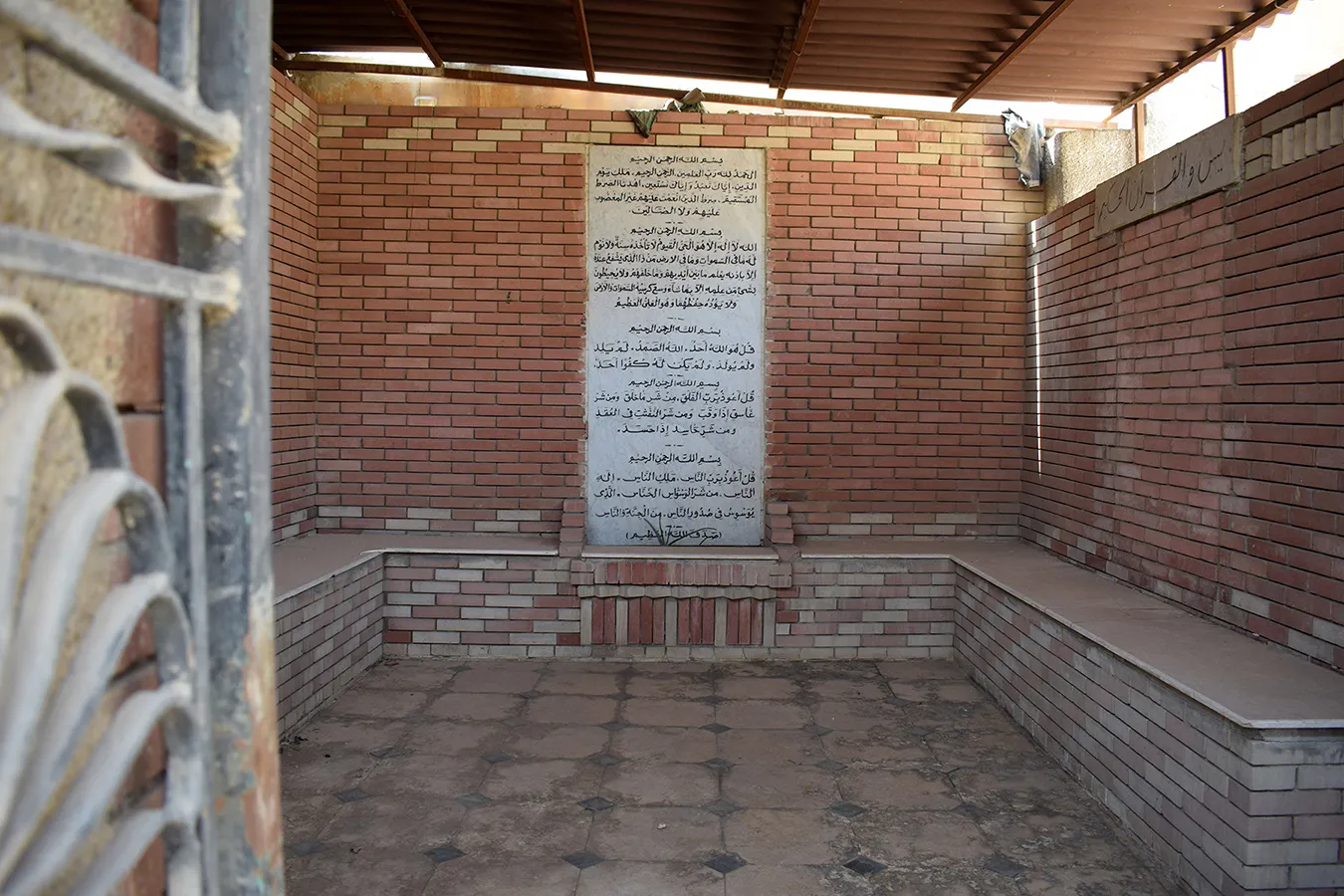
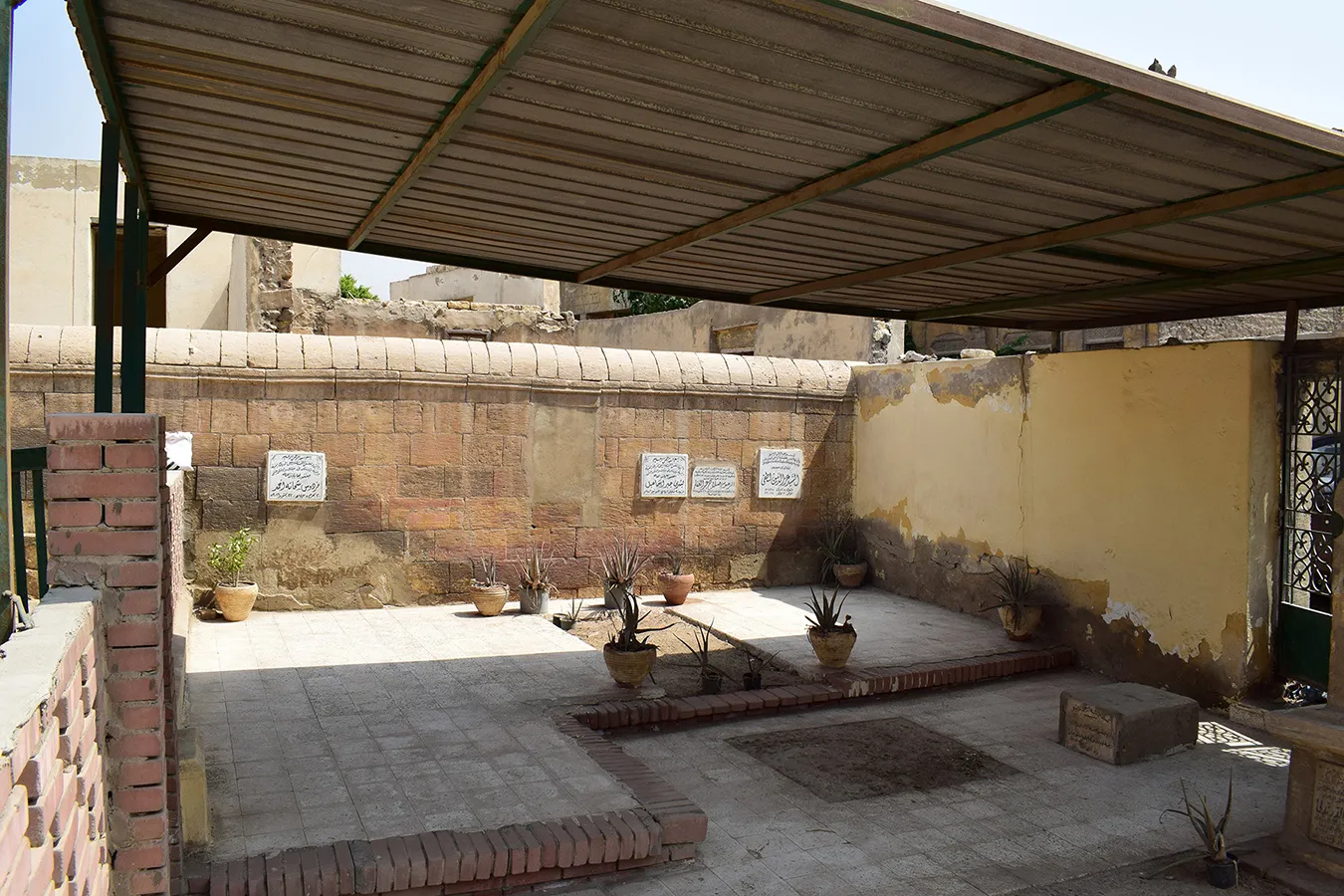
The southern part of the enclosure forms a separate rectangular courtyard with a modern wall of openwork brickwork with a simple iron gate between it and the rest of the enclosure. It has recently been partially covered with a shading roof of corrugated steel sheets on a steel structure. This section has a separate entrance from the street to the south.
The whole eastern wall of the enclosure (including the southern annexe) is built of large blocks of ashlar masonry and appears pre-modern, i.e., probably from the Ottoman period
Condition of preservation
The enclosure is used as a burial ground and maintained, although repairs and alterations have been insensitive to the historic value of the unit. The walls of the enclosure are damaged by rising damp. One of the stone grilles in the western façade is missing, the other is badly eroded by groundwater. Crenellations are incomplete. Ceramic tiles have been stolen from the lunette over the main entrance gate, apparently recently. The door leaves of the gate are severely damaged and incomplete.
Information abut the founder, family history, etc.
The date 1324 AH in the inscription over the main gate corresponds to AD 1906. The gate is obviously inserted into an earlier wall. The stone details of the earlier façade appear to be Ottoman, not later than early 19th century. The domed canopy and the pedestal of the cenotaph under it are also apparently Ottoman, although the canopy may have been rebuilt.
References in published/primary sources
For similar structures in the cemetery, compare Description de l’Egypte, Etat Moderne, Vol. I, Pl. 64, 65, 66.
- Field recording by
- Hadeer Ahmad and Nur Atiya
- Date recorded
- August 30, 2022
- Data entered by
- Yusuf Yassir
- Date entered
- May 8, 2024