
Unit No19
Al-Shaykh ‘Abd al-Ra’uf al-Segini
|
Coordinates of the main entrance |
30.042556N - 31.274581E |
|
Attribution |
Al-Shaykh ‘Abd al-Ra’uf al-Segini |
|
Higri (AH)Dates as given in the Inscription |
1356 |
|
Miladi (AD)Dates as given in the Inscription |
|
|
Inscription Contemporary with the building? |
Yes |
|
Multiple date(s) In the inscription? |
Yes |
|
Assumed Date |
the early 20th century |
|
Based on |
|
|
Original Use |
Funerary enclosure |
|
Current Use |
Funerary enclosure |
|
Overall condition |
Good |
Features of unit 19
| Present | Count | Material | Comments (see description for details) | |
|---|---|---|---|---|
| Free standing structure | No | |||
| Walled enclosure | Yes | |||
| Rooms by the perimeter wall | Yes | 2 | Rubble stone | |
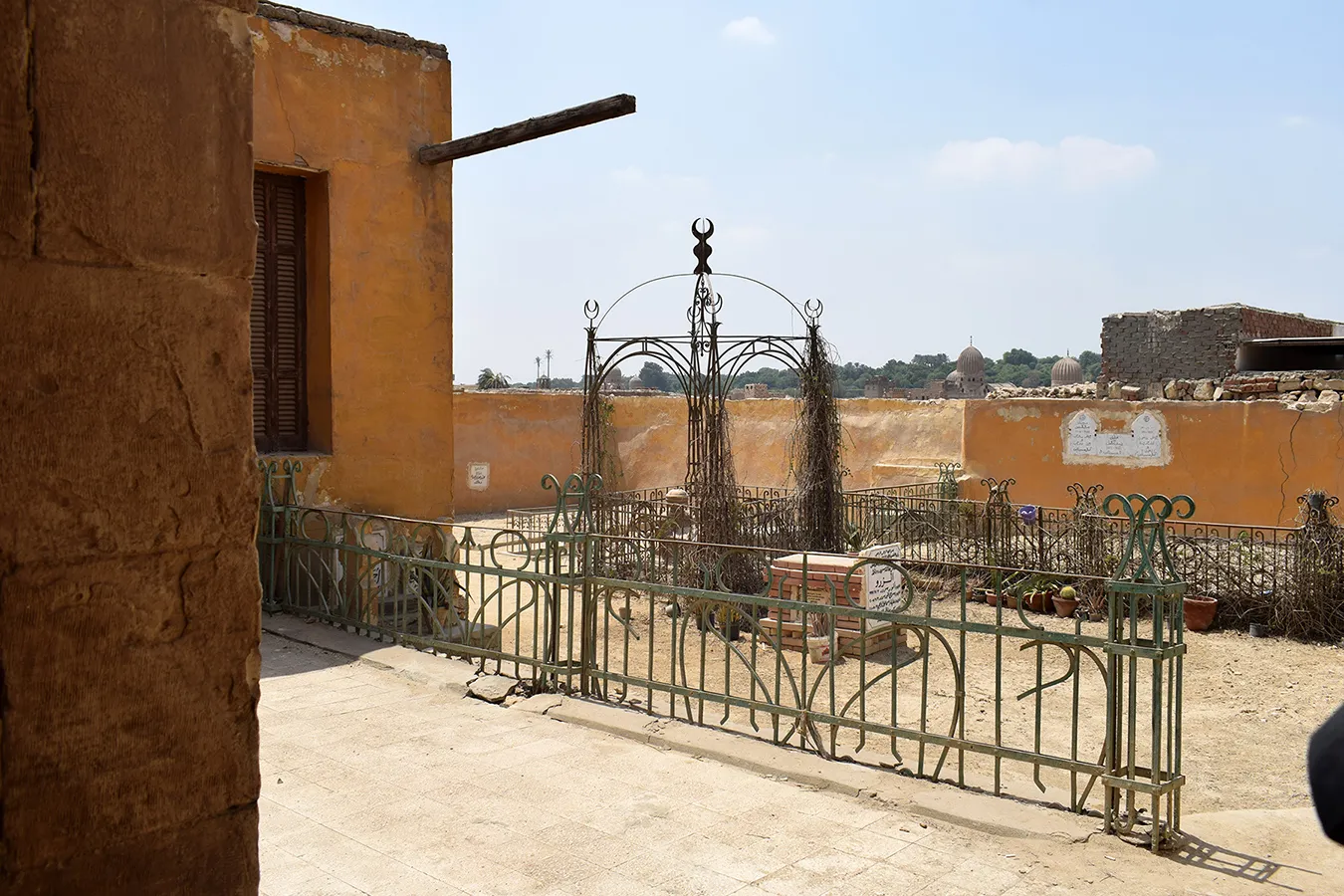
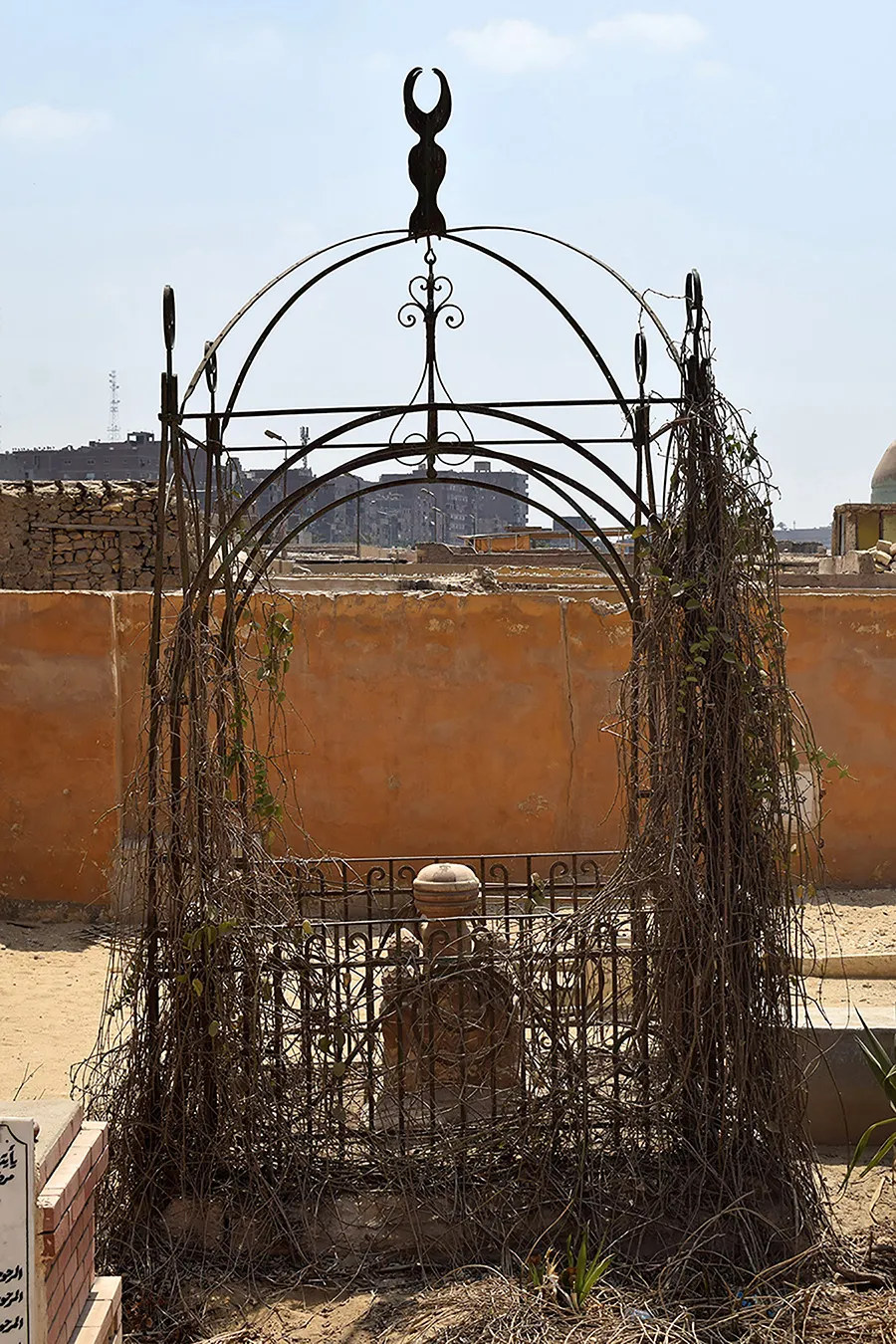
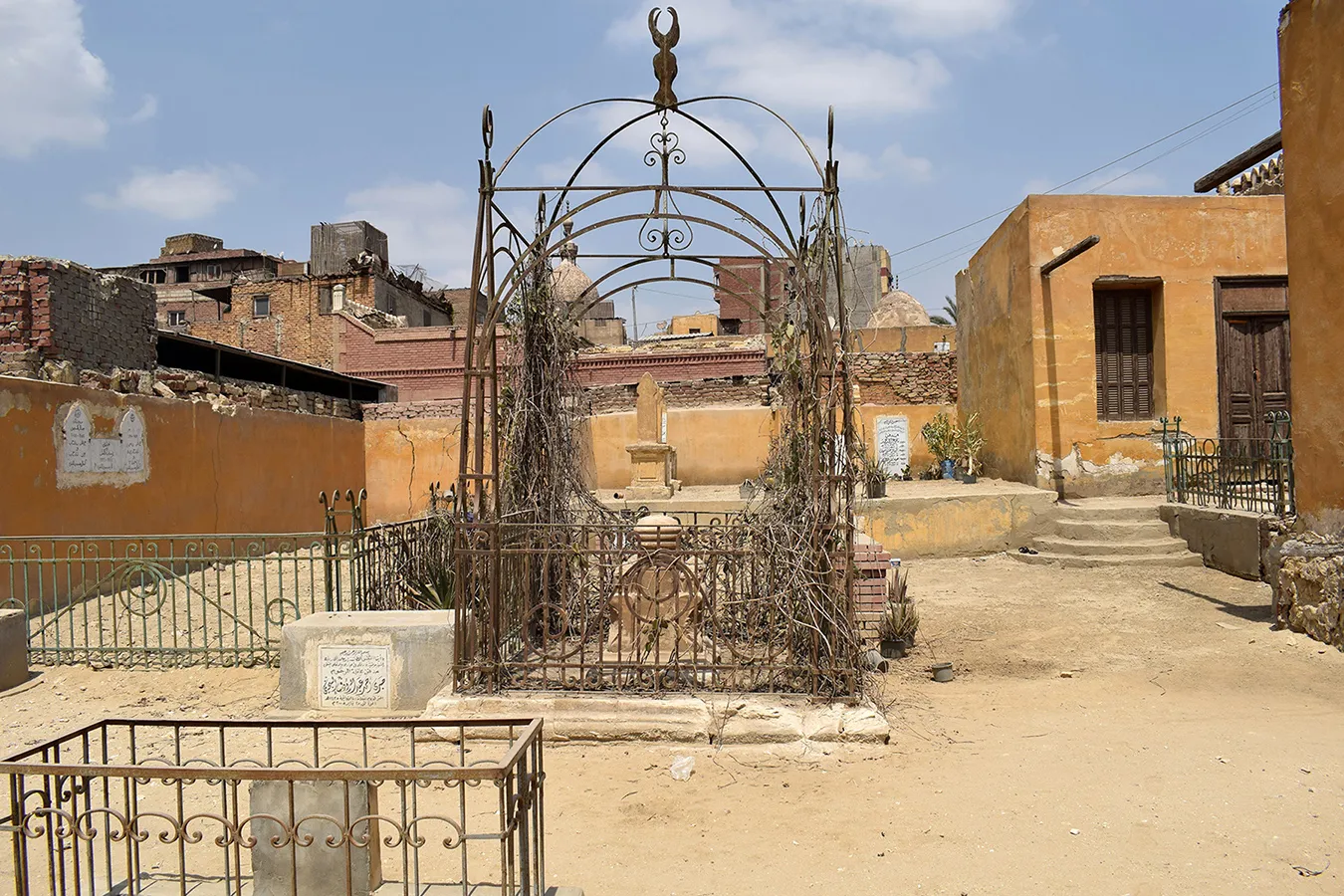
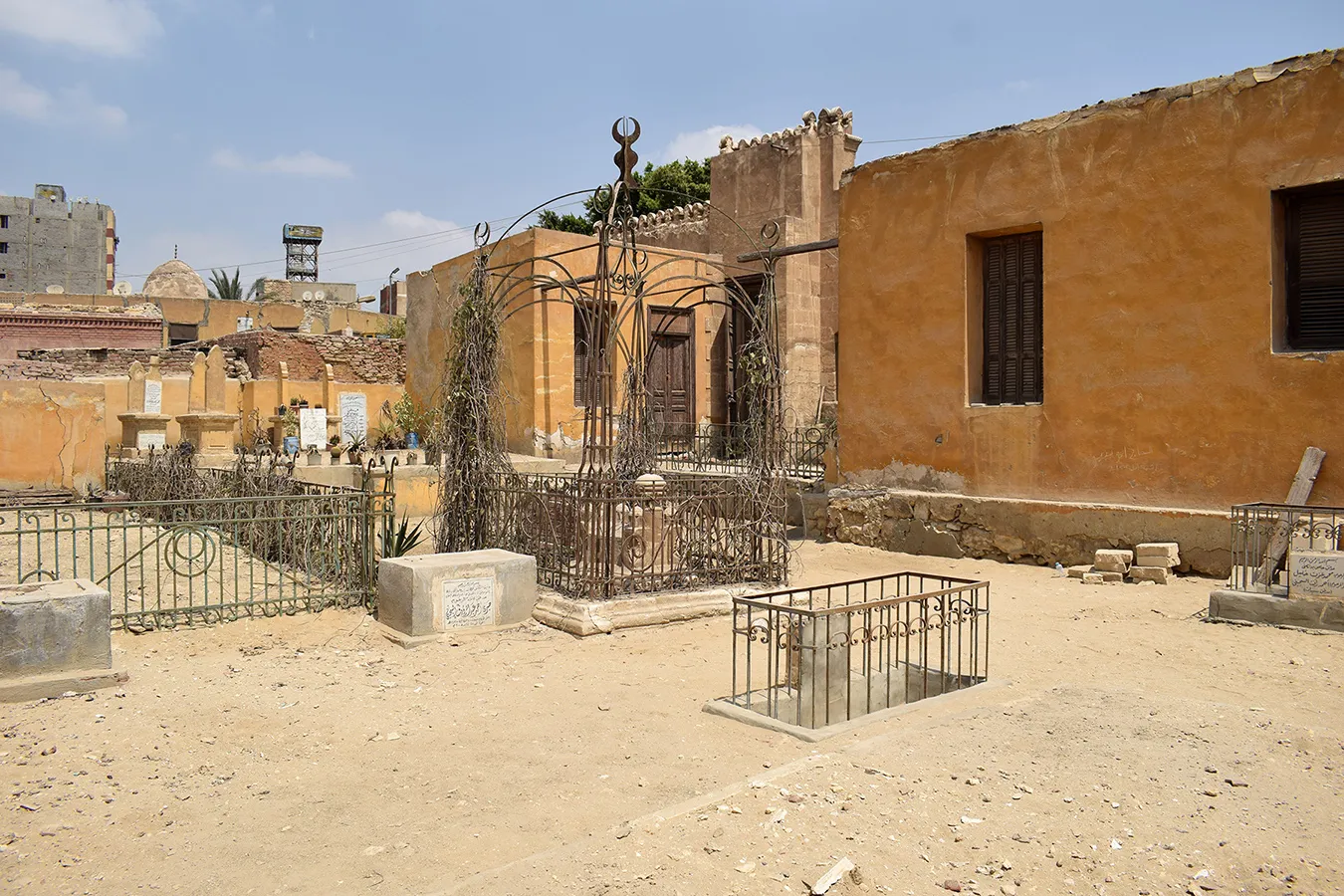
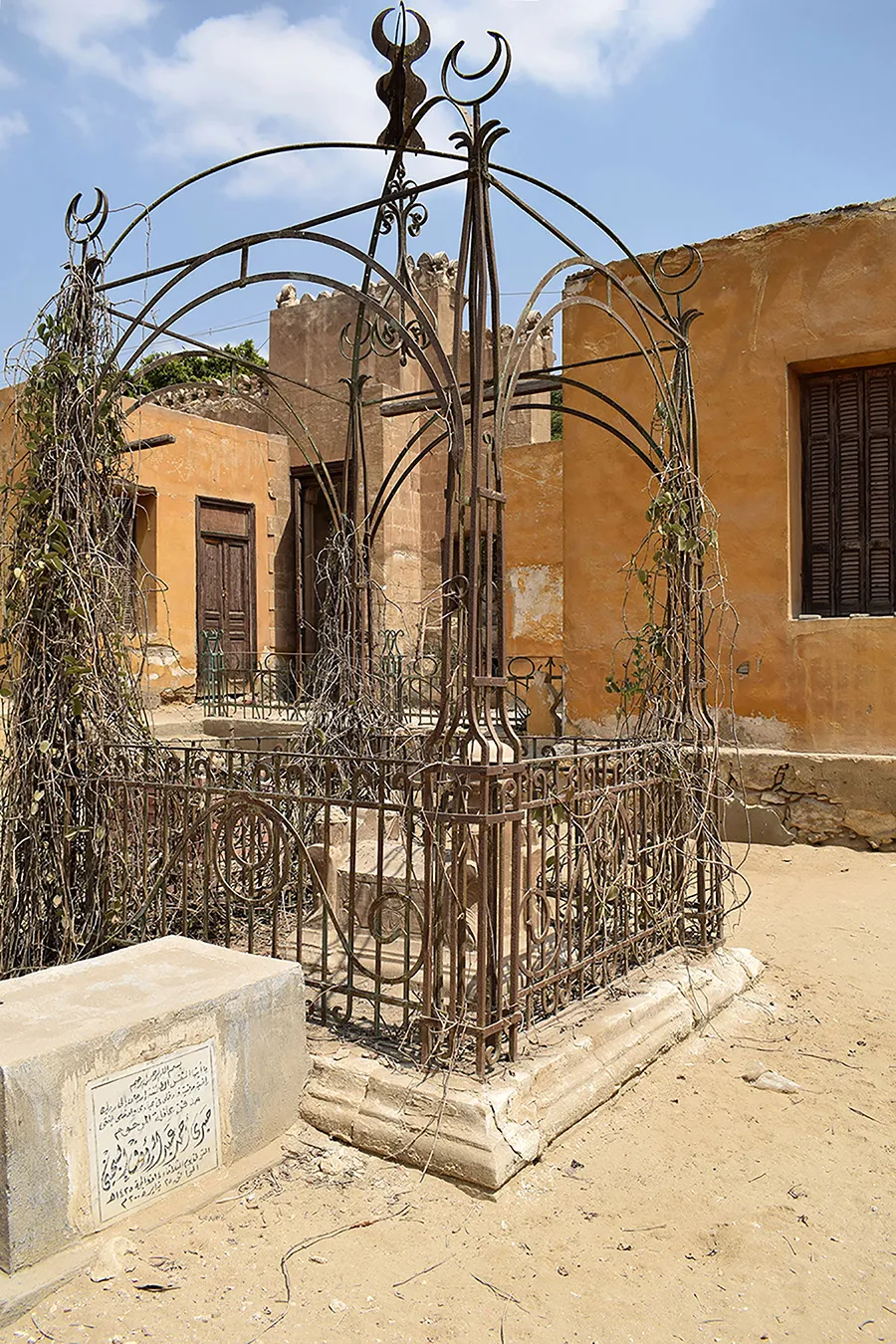
| Freestanding structure(s) in enclousure | Yes | 1 | Wrought iron | An openwork canopy over a cenotaph. |
| Dome over the tomb chamber | No | |||
| Neo-Mamluk architectural decoration | Yes | |||
| Garden layout | No | |||
| Sabil(s) | No | |||
| Wall fountain(s) | Yes | 1 | Disused, a marble panel apparently missing. | |
| Canopy on columns / pillars | No | |||
| Carved marble cenotaph(s) | No | |||
| Decorated limestone tomb-markers | Yes | 1 | ||
| Decorated gateway | Yes | 1 | Limestone | |
| Decorative door-leaves | Yes | 2 | Wood | 8 non-decorative wooden door-leaves. |
| Decorative window grilles | Yes | 3 | Wrought iron | |
| Decorative shutters | No | 8 non-decorative wooden shutters. | ||
| Painted ceiling(s) | No | |||
| Decorative paving(s) | No |
Unusual or unique features
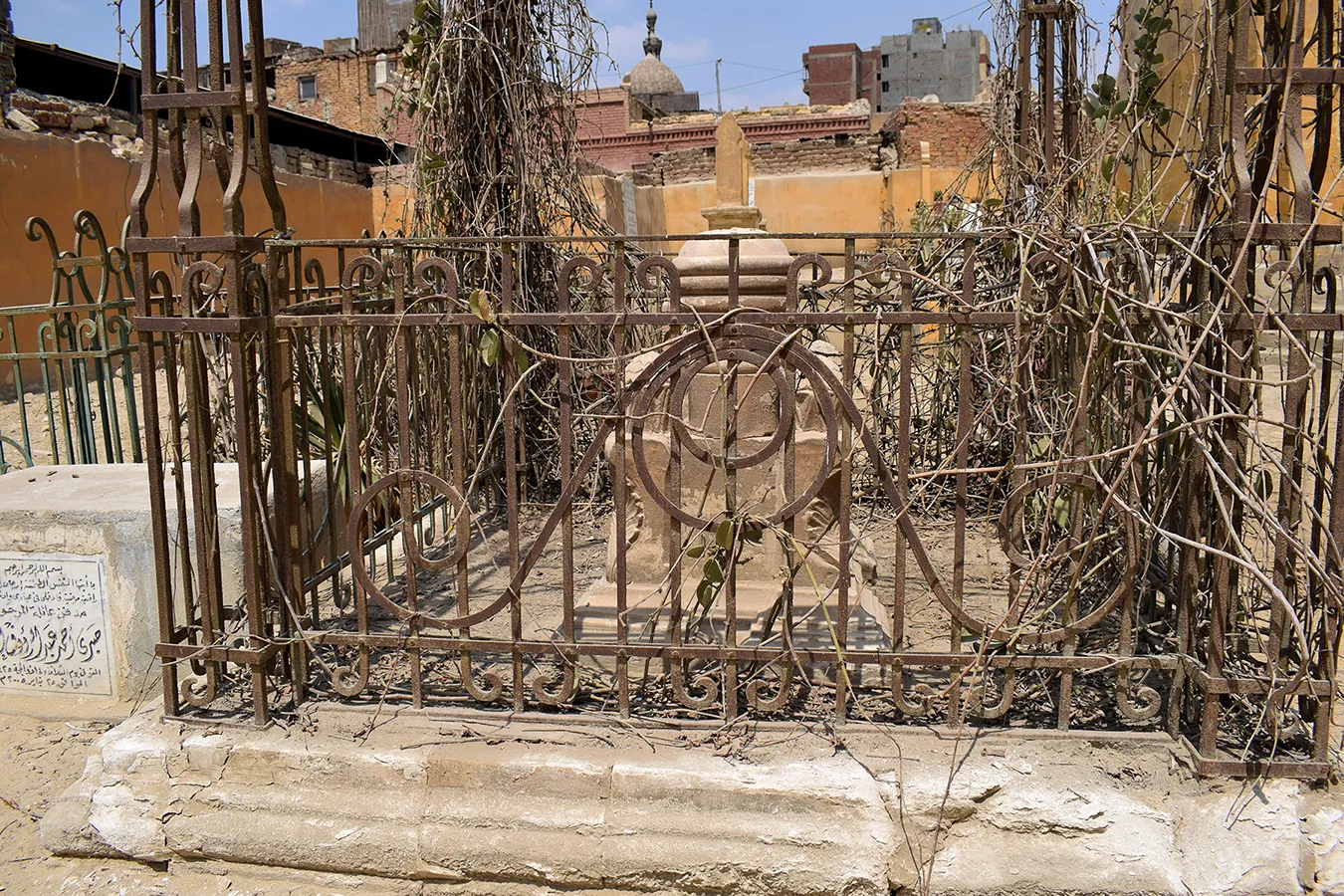
• An openwork iron canopy over a limestone cenotaph
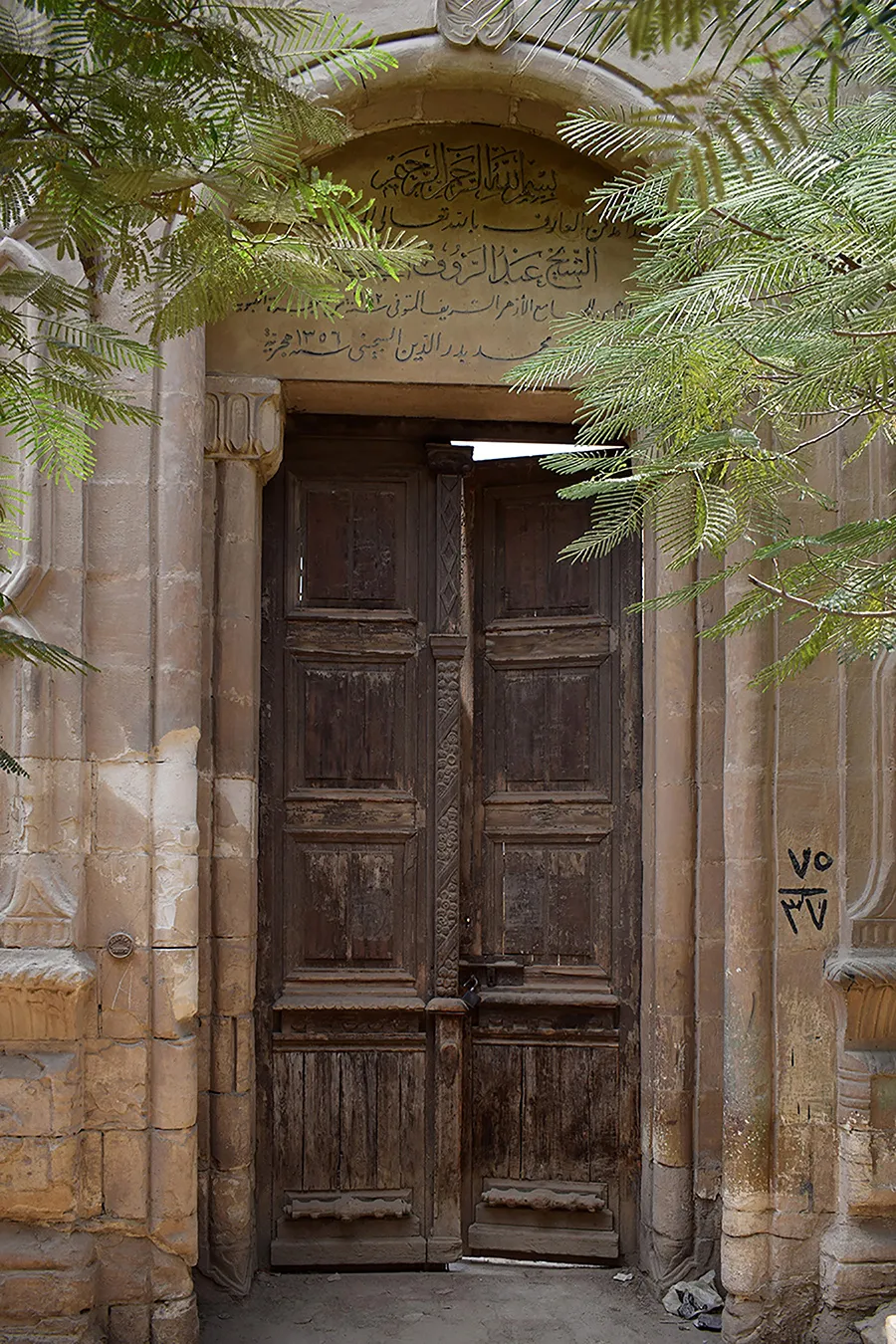
• Art Deco-inspired decoration of the entrance doo
Description (The direction towards Mecca (Qibla) is described as eastern and other directions are named accordingly)
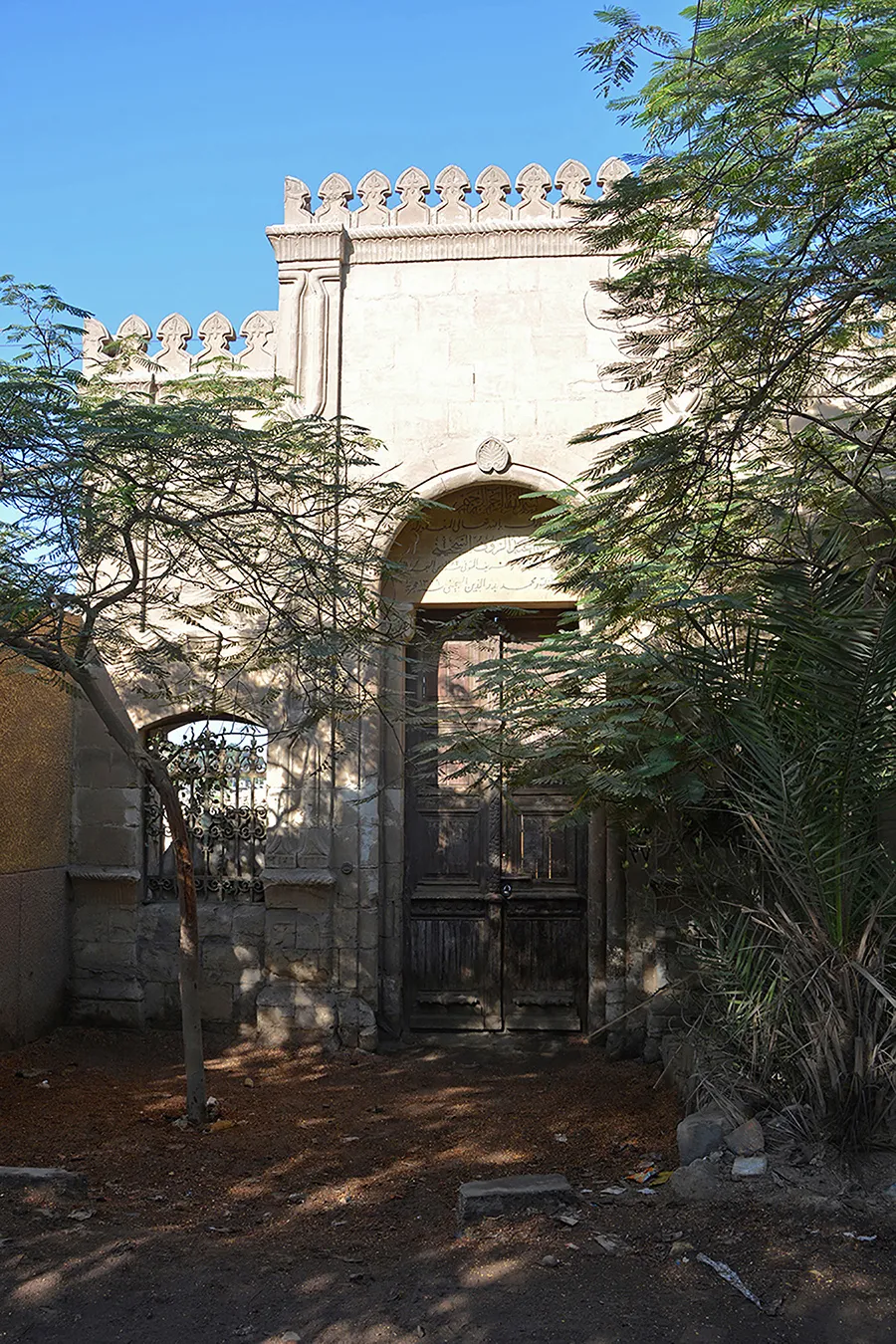
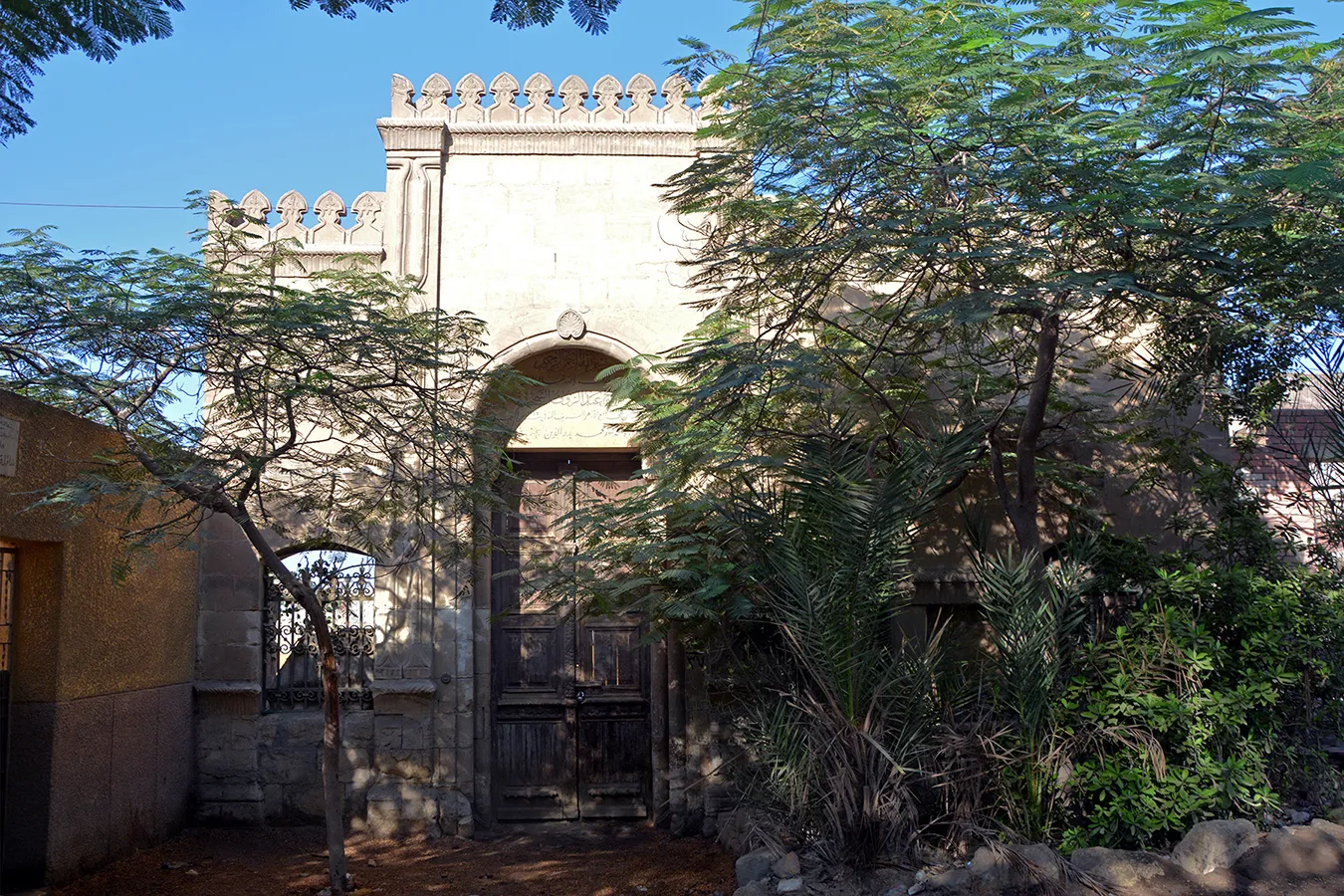
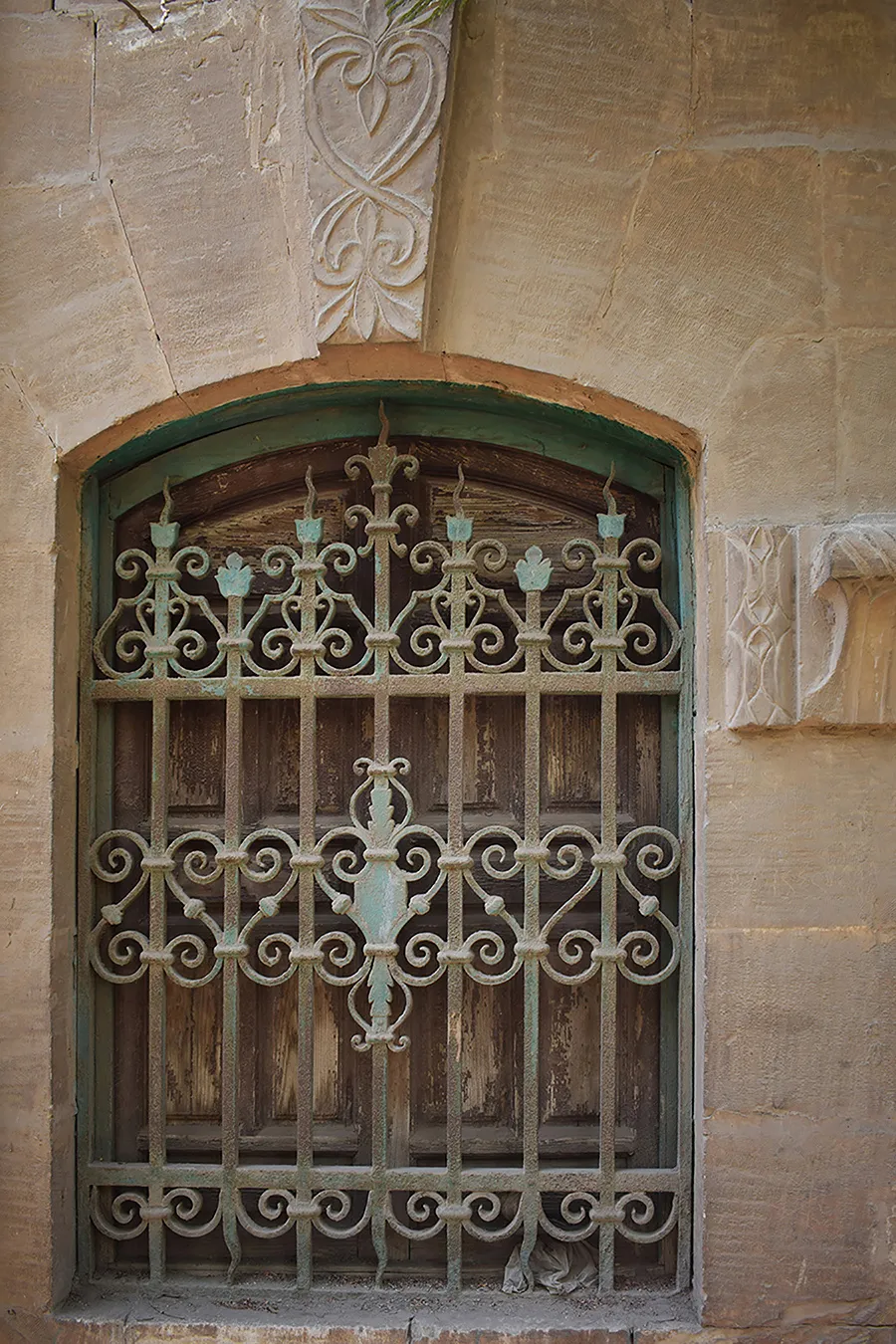
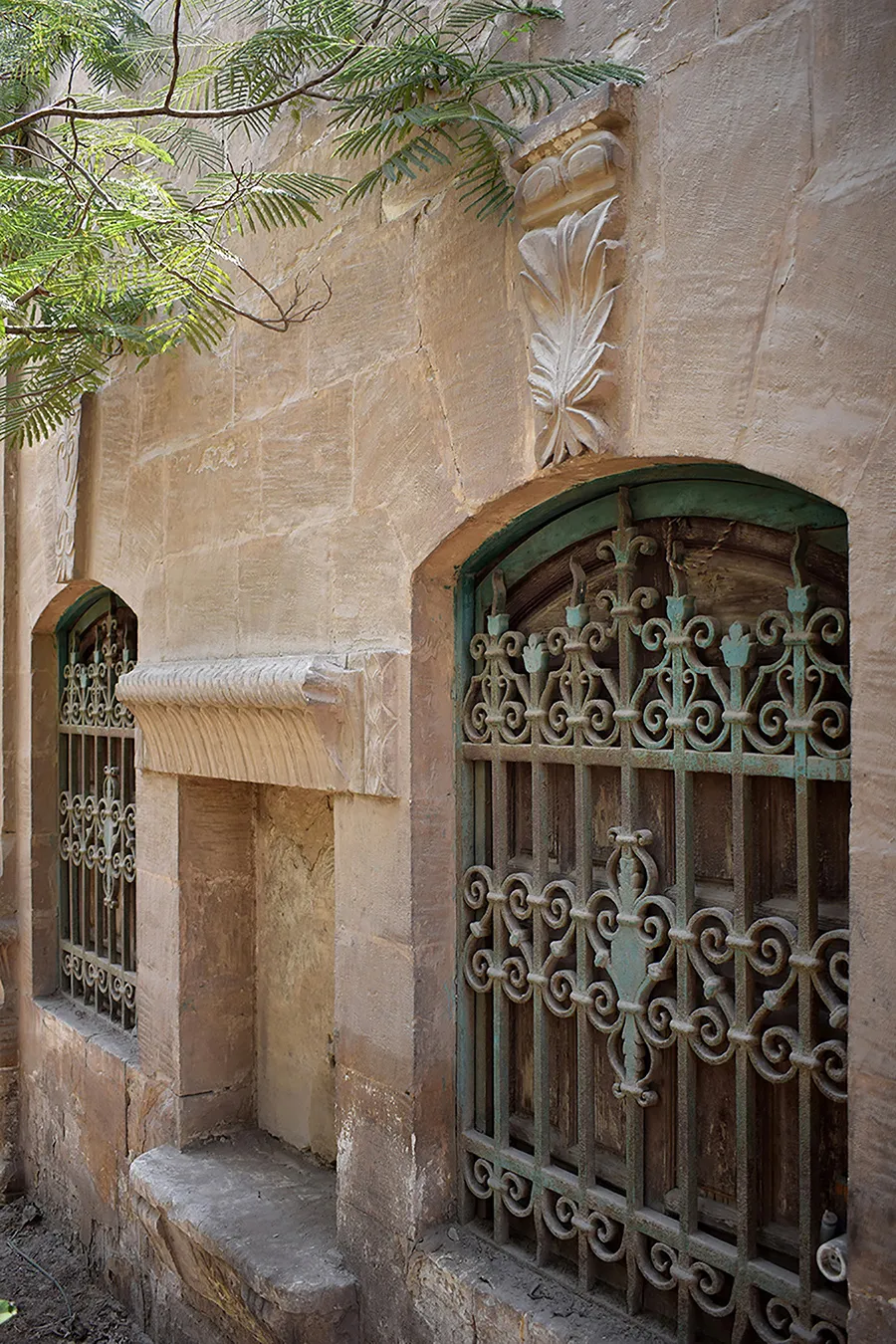
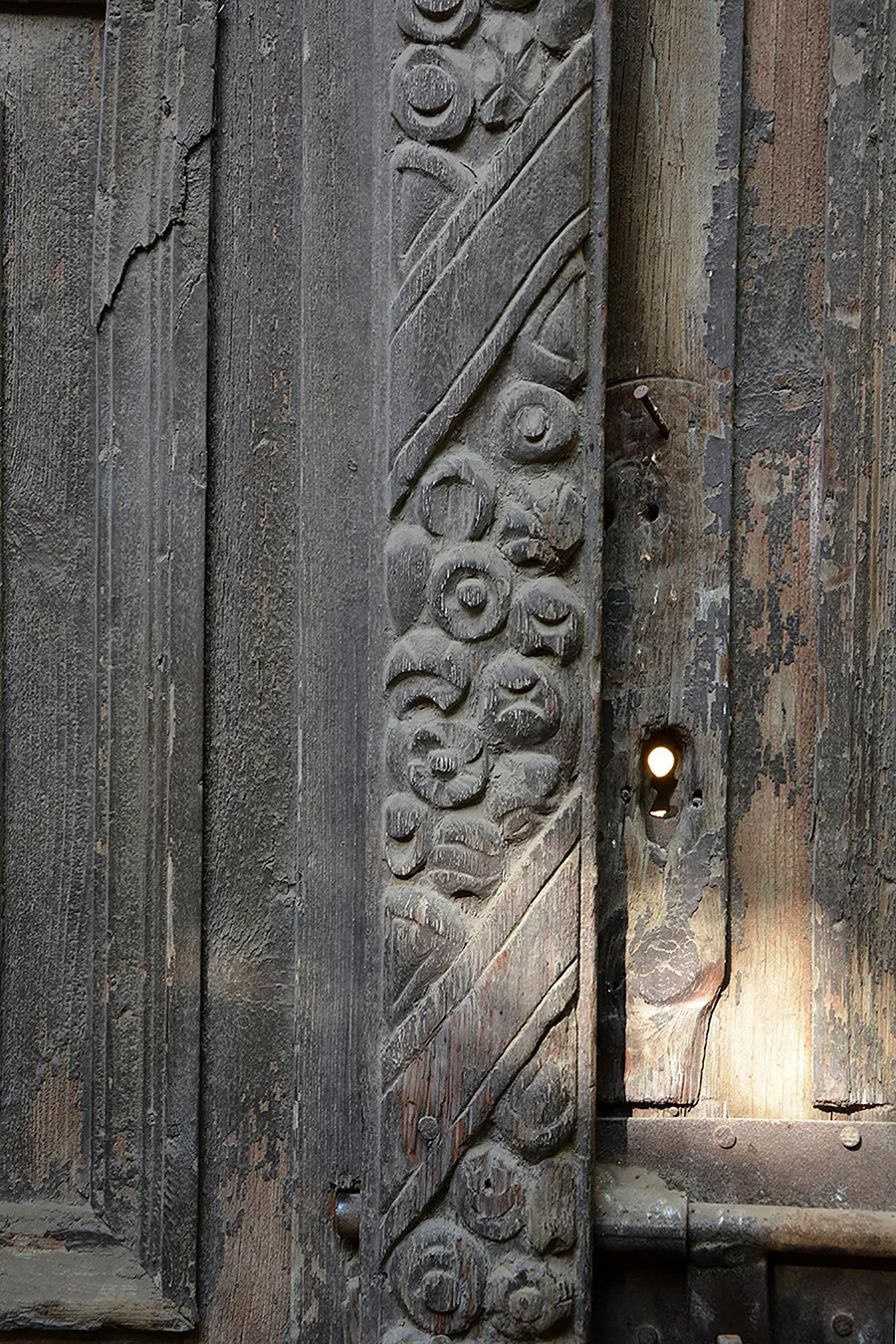
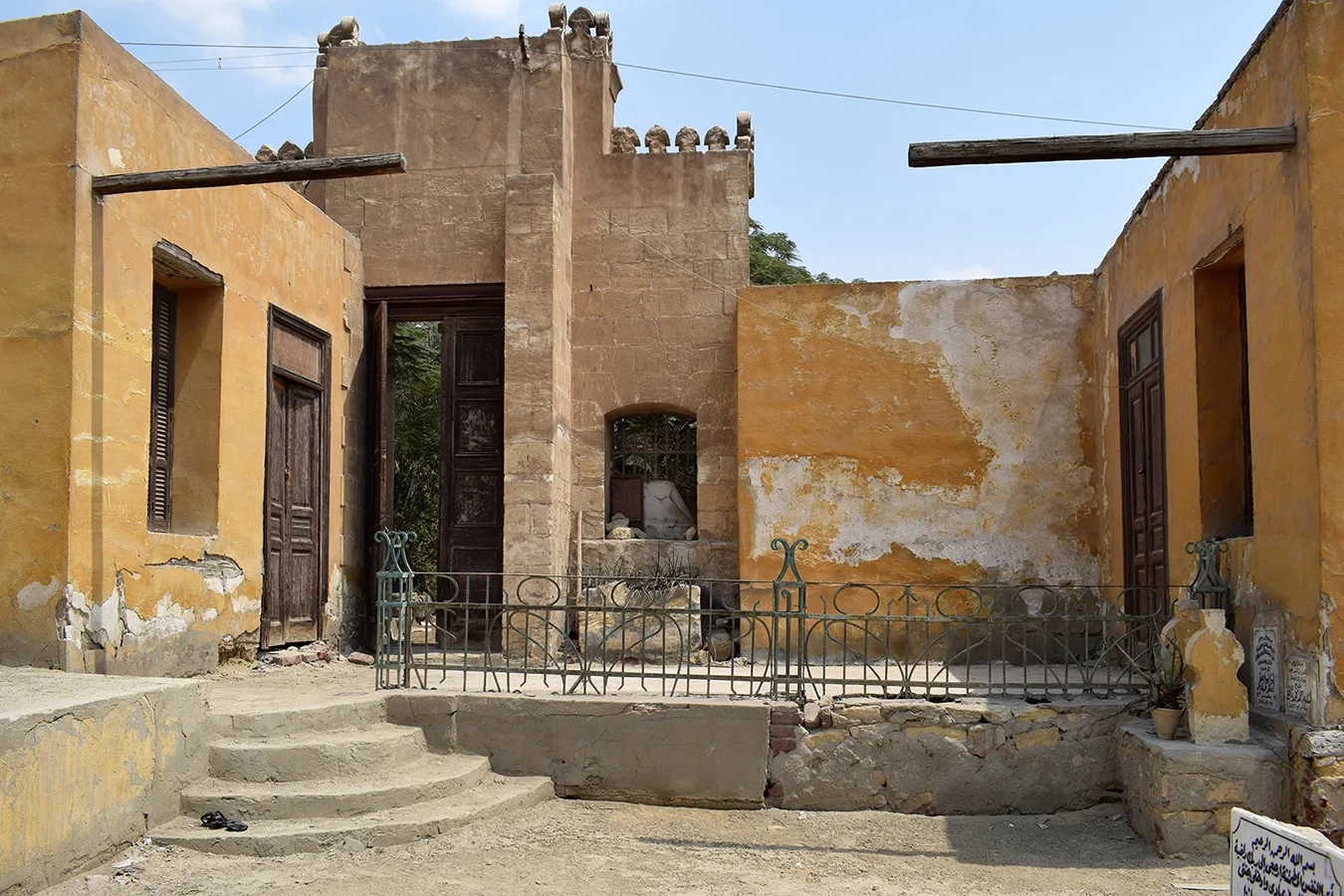
A slightly irregular, roughly rectangular walled enclosure with the entrance gate from the street placed approximately in the middle of the longer, eastern wall, the southern section ow which is hidden behind another enclosure. The façade is topped with a cavetto cornice decorated with lancet-shaped leafs possibly inspired by Pharaonic architecture, and a cable moulding. Over the cornice is a crenellation of geometric stylized palmette shapes. The entrance portal is taller than the rest of the front wall and flanked with two pilasters without capitals, with double mouldings intercrossing in a way vaguely resembling Mamluk knotted mouldings. The entrance door is placed in a recess topped with a slightly flattened (elliptical) arch and framed with a continuous torus moulding around the recess, with a palmette in the key. The door is framed by similar moulding forming engaged colonettes with extremely simplified vaguely floral geometric decoration on capitals. The tympanum of the arch is entirely filled with a marble slab bearing an inscription (see point 17 below). The double-leaf panelled wooden entrance door have carved decoration clearly inspired by Art Deco. There is a single window to the left of the portal and two windows to the right side, covered with segmental arches with huge console-like keystones with simplified floral decoration. The windows are filled with rather elaborate wrought iron grilles that bear no resemblance to Islamic art. The panelled window shutters are plain and undecorated.
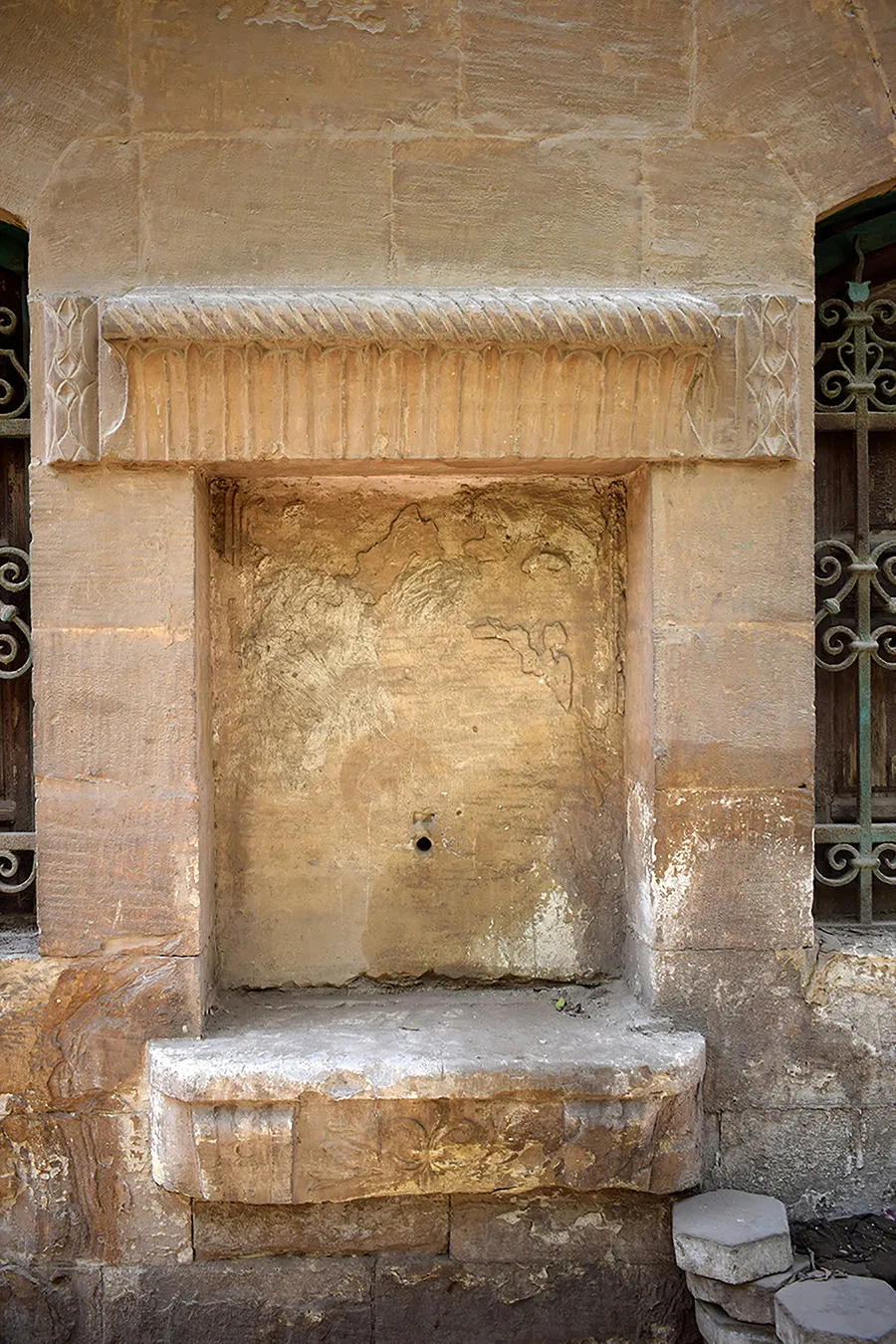
Between the two windows to the right is a rectangular recess of a wall-fountain topped by a cornice similar to this on top of the façade, and with a cantilevered stone ledge at the bottom. Apparently it featured a decorated marble slab at the back, which is now missing.
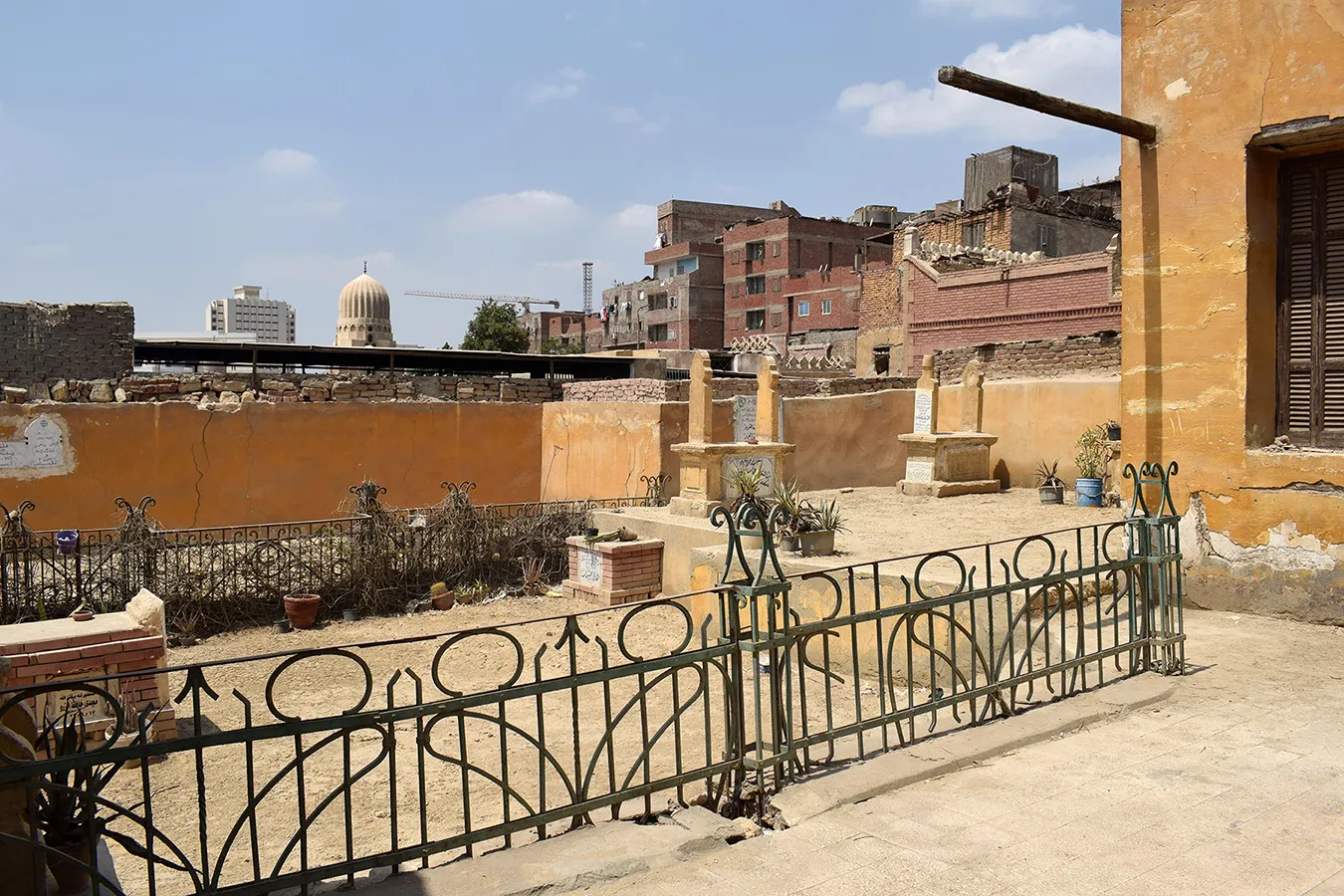
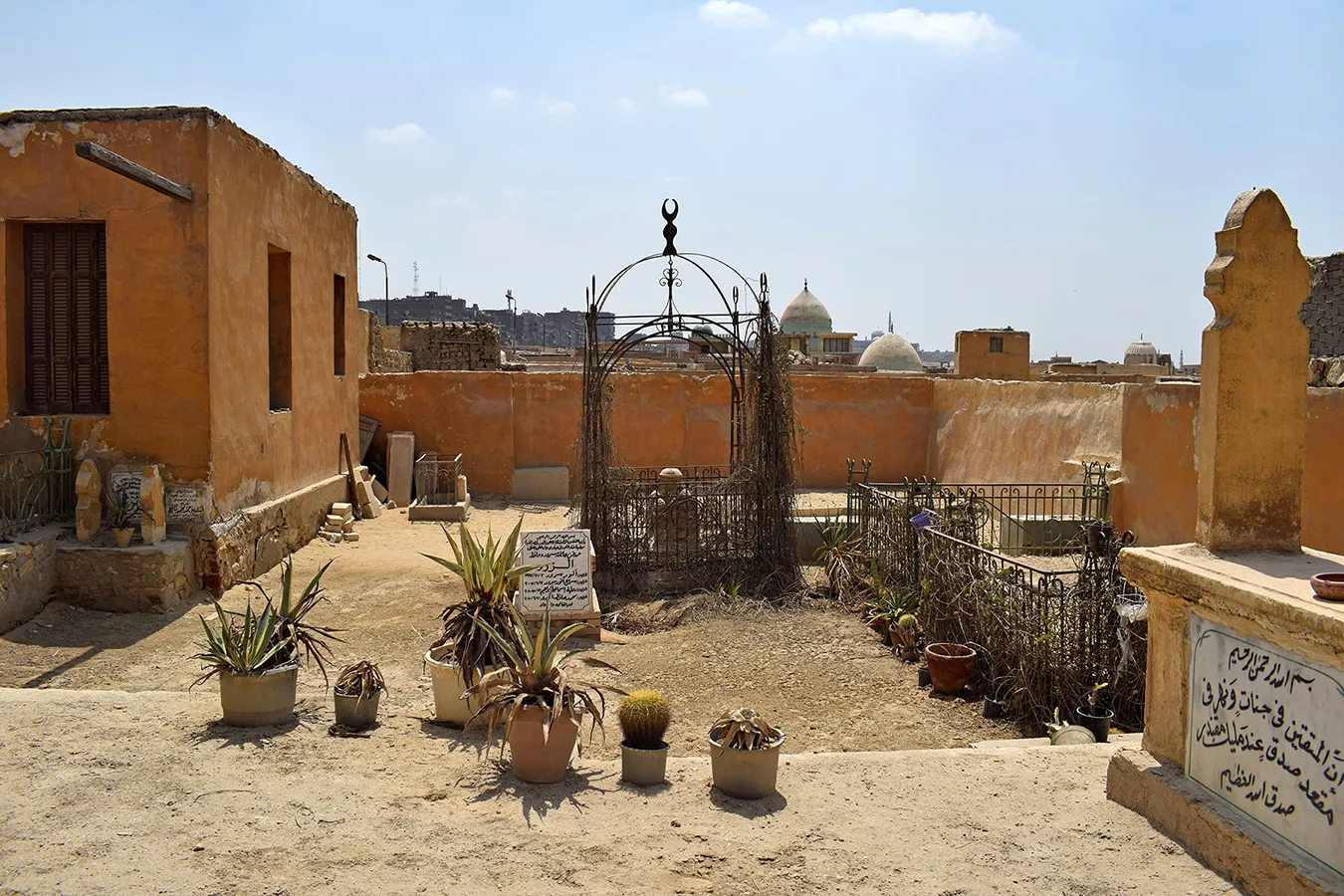
The entrance leads to a platform placed between two simple, undecorated single-storey buildings in the south-eastern and north-eastern corners of the enclosure, separated by a wrought-iron railing from the funerary courtyard in the western part of the enclosure, which is four steps lower. The simple pattern of the fence is Art Nouveau- inspired. A similar fence encloses an empty section of the courtyard in the north-western corner, while by the northern perimeter wall is a raised platform with three limestone tomb markers. They were originally uninscribed, but are fitted with modern marble inscription plaques.
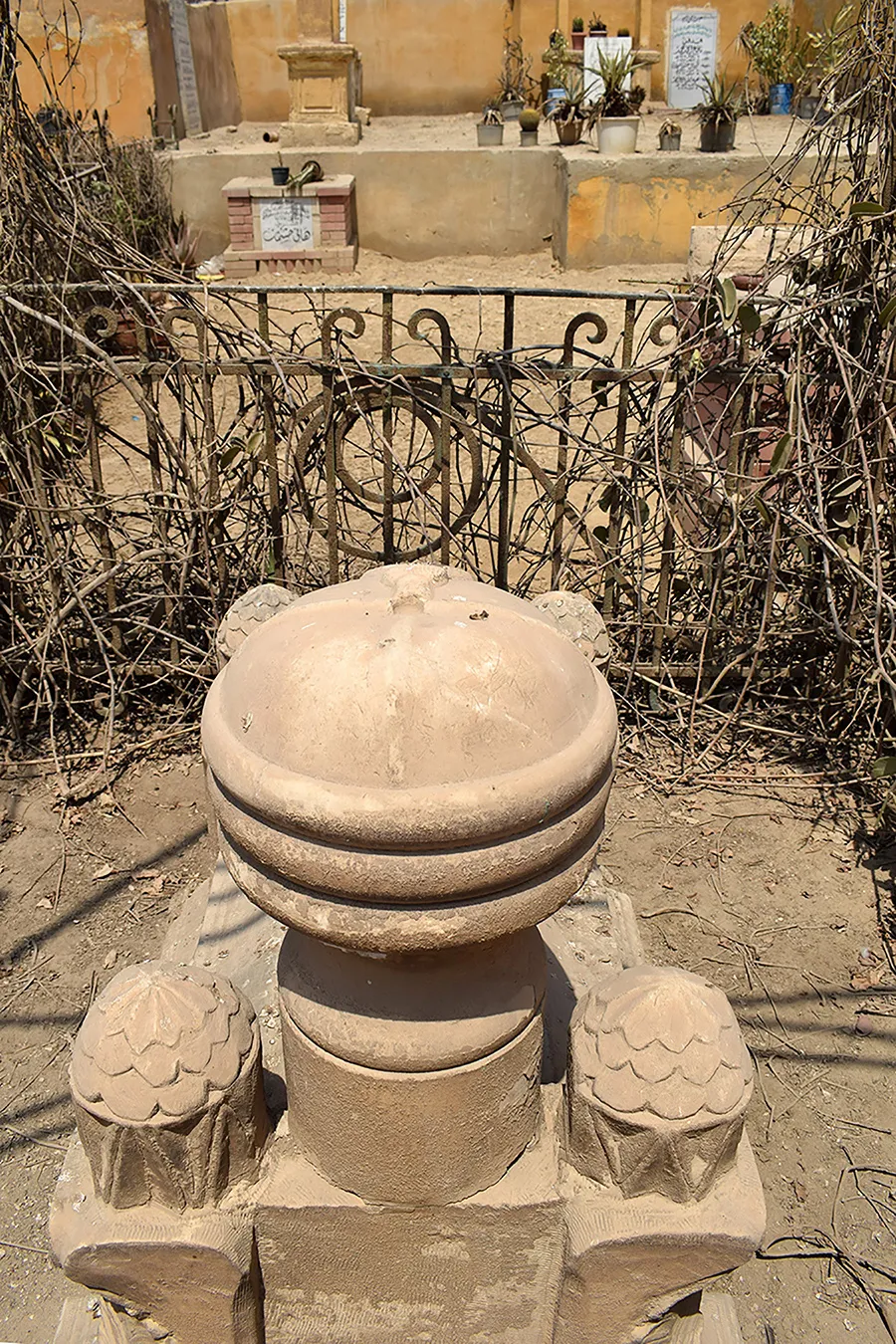
Asymmetrically placed within the enclosure is an elaborate uninscribed limestone cenotaph, with geometric decoration of simplified floral motifs. The cenotaph is surrounded by a wrought-iron fence of the pattern similar to the others in the enclosure and is covered by an openwork wrought iron canopy in a similar style. There are also modern brick-built tomb markers in the enclosure, and two shafts leading to crypts, fenced with wrought iron railings.
Condition of preservation
The enclosure is generally in good condition. Some damage to the lower parts of the walls from rising damp.
Information abut the founder, family history, etc.
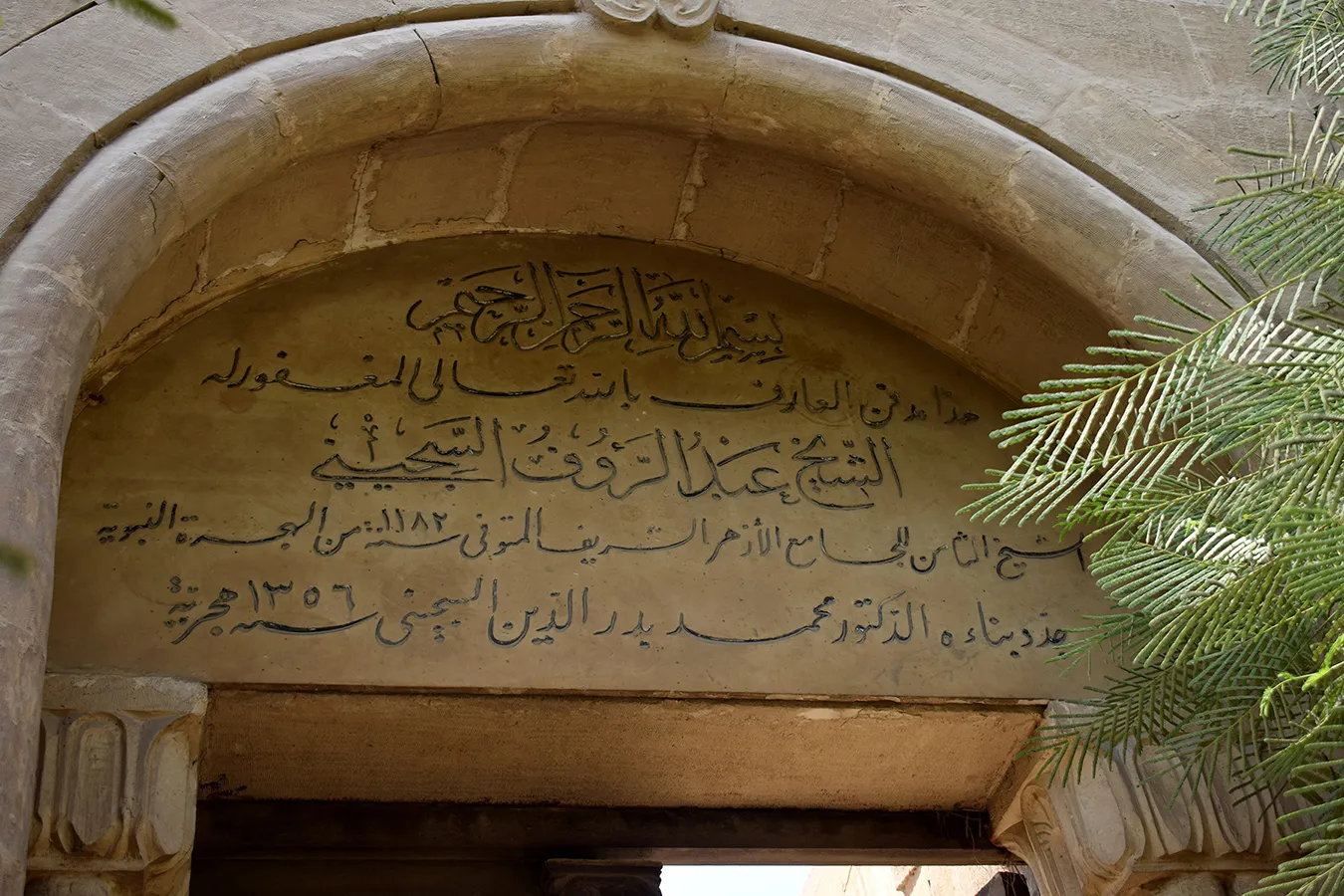
The inscription on a marble slab over the entrance door reads:
In the name of God, the Merciful, the Compassionate
This is the tomb of the God-knowing, the forgiven
Shaykh ‘Abd a-Ra’uf al-Sigini
the 8th shaykh of the noble al-Azhar Mosque, who passed away in year 1182 of the Higra of the Prophet
The building was renovated by Dr Muhammad Badr al-Din al-Sigini in AH 1356.
AH 1182 = AD 1768; AH 1356 = AD 193
- Field recording by
- Hadeer Ahmad and Radwa al-Sayeed
- Date recorded
- August 25, 2022
- Data entered by
- Yusuf Yassir
- Date entered
- May 8, 2024