
Unit No16
Khadiga Hanim Brengi
|
Coordinates of the main entrance |
30.042839N - 31.27485E |
|
Attribution |
Khadiga Hanim Brengi |
|
Higri (AH)Dates as given in the Inscription |
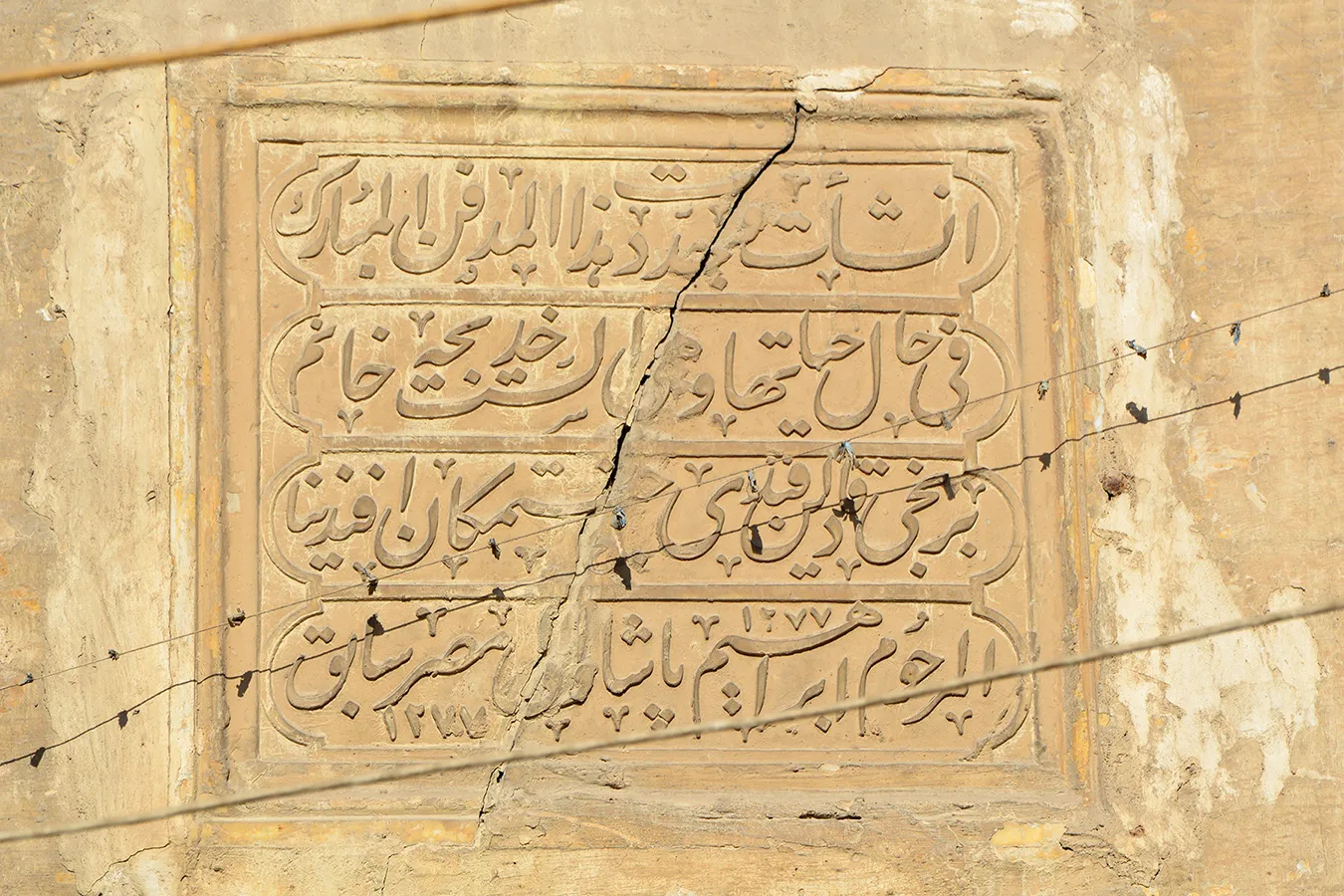
1277 (renovation) |
|
Miladi (AD)Dates as given in the Inscription |
|
|
Inscription Contemporary with the building? |
Yes |
|
Multiple date(s) In the inscription? |
Yes |
|
Assumed Date |
|
|
Based on |
|
|
Original Use |
Funerary enclosure |
|
Current Use |
Funerary enclosure, residential |
|
Overall condition |
Poor |
Features of unit 16
| Present | Count | Material | Comments (see description for details) | |
|---|---|---|---|---|
| Free standing structure | No | |||
| Walled enclosure | Yes | 1 | stone | |
| Rooms by the perimeter wall | Yes | 9 | stone | |
| Freestanding structure(s) in enclousure | Yes | 1 | stone,marble&brick | Canopy on columns. |
| Dome over the tomb chamber | Yes | |||
| Neo-Mamluk architectural decoration | Yes | |||
| Garden layout | No | |||
| Sabil(s) | No | |||
| Wall fountain(s) | No | |||
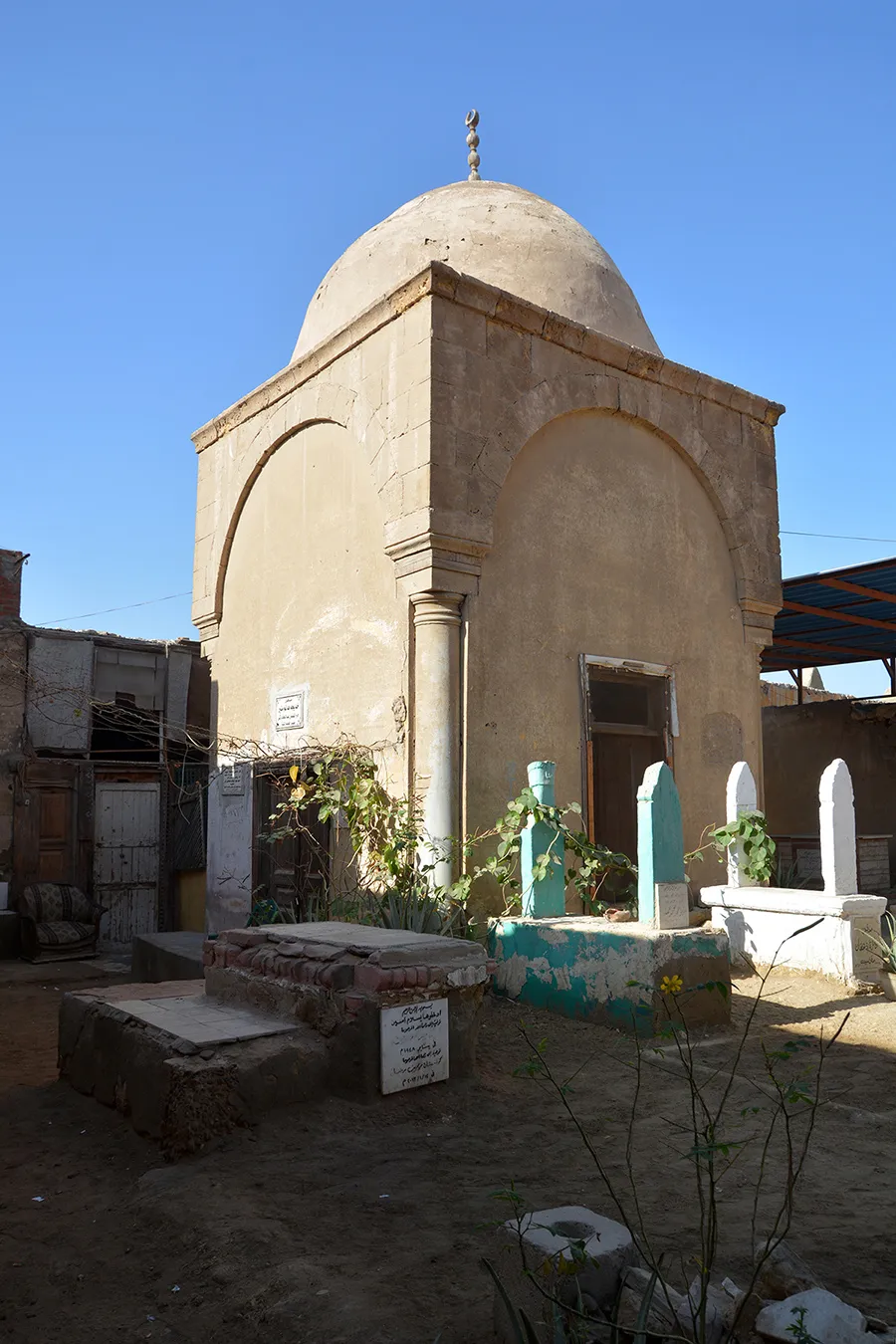
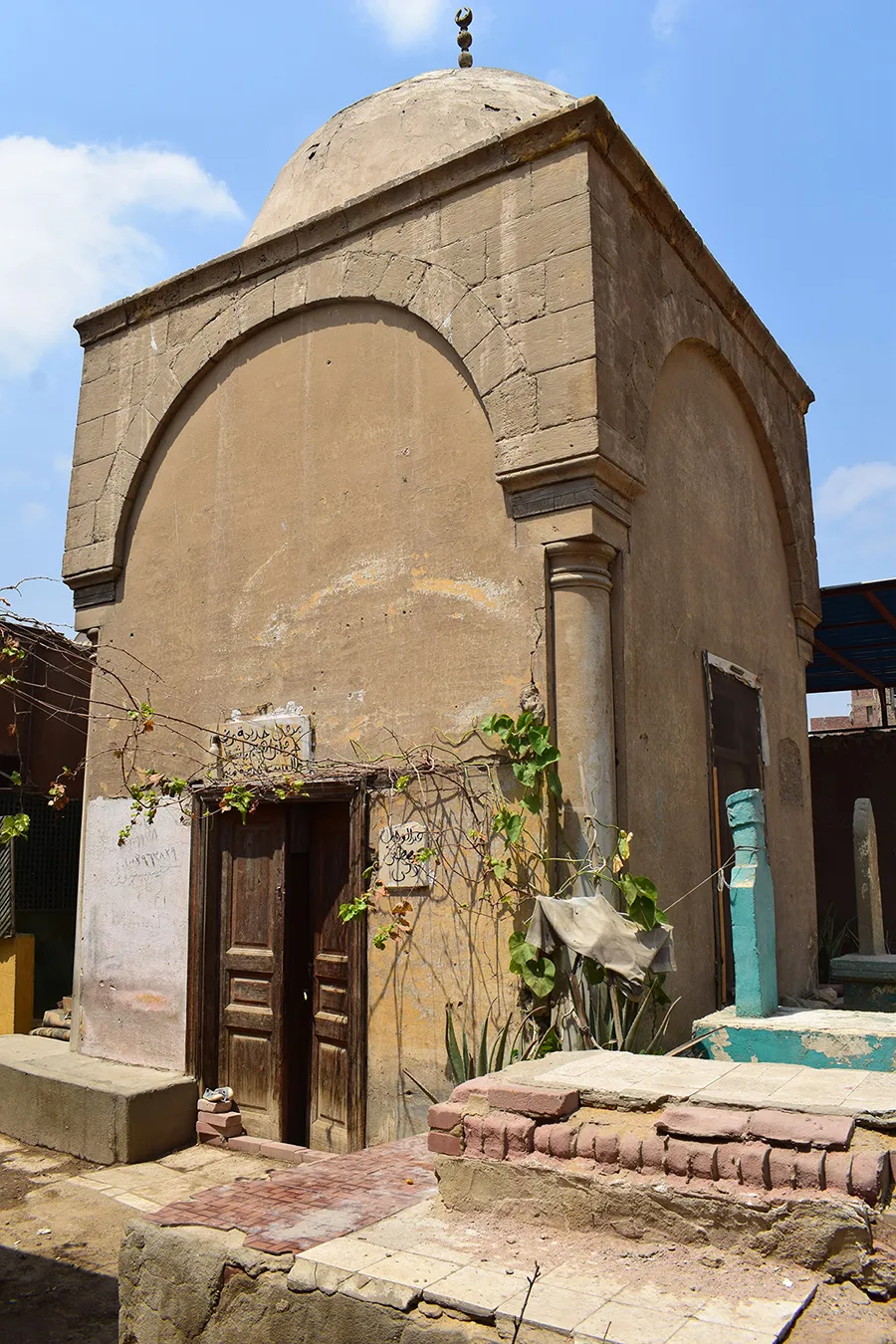
| Canopy on columns / pillars | Yes | 1 | Domed, on marble pillars. Walled up. | |
| Carved marble cenotaph(s) | Yes | 2 | 2 | Plus pieces of others. |
| Decorated limestone tomb-markers | Yes | 1 | 12 undecorated cenotaphs. | |
| Decorated gateway | No | |||
| Decorative door-leaves | Yes | 2 | steel | 12 undecorated cenotaphs. |
| Decorative window grilles | Yes | 4 | wood | 16 non-decorative steel grilles. |
| Decorative shutters | No | 73 undecorated wooden shutters. | ||
| Painted ceiling(s) | No | |||
| Decorative paving(s) | Yes | Cement tiles | Simple pattern in the E burial chamber. |
Unusual or unique features
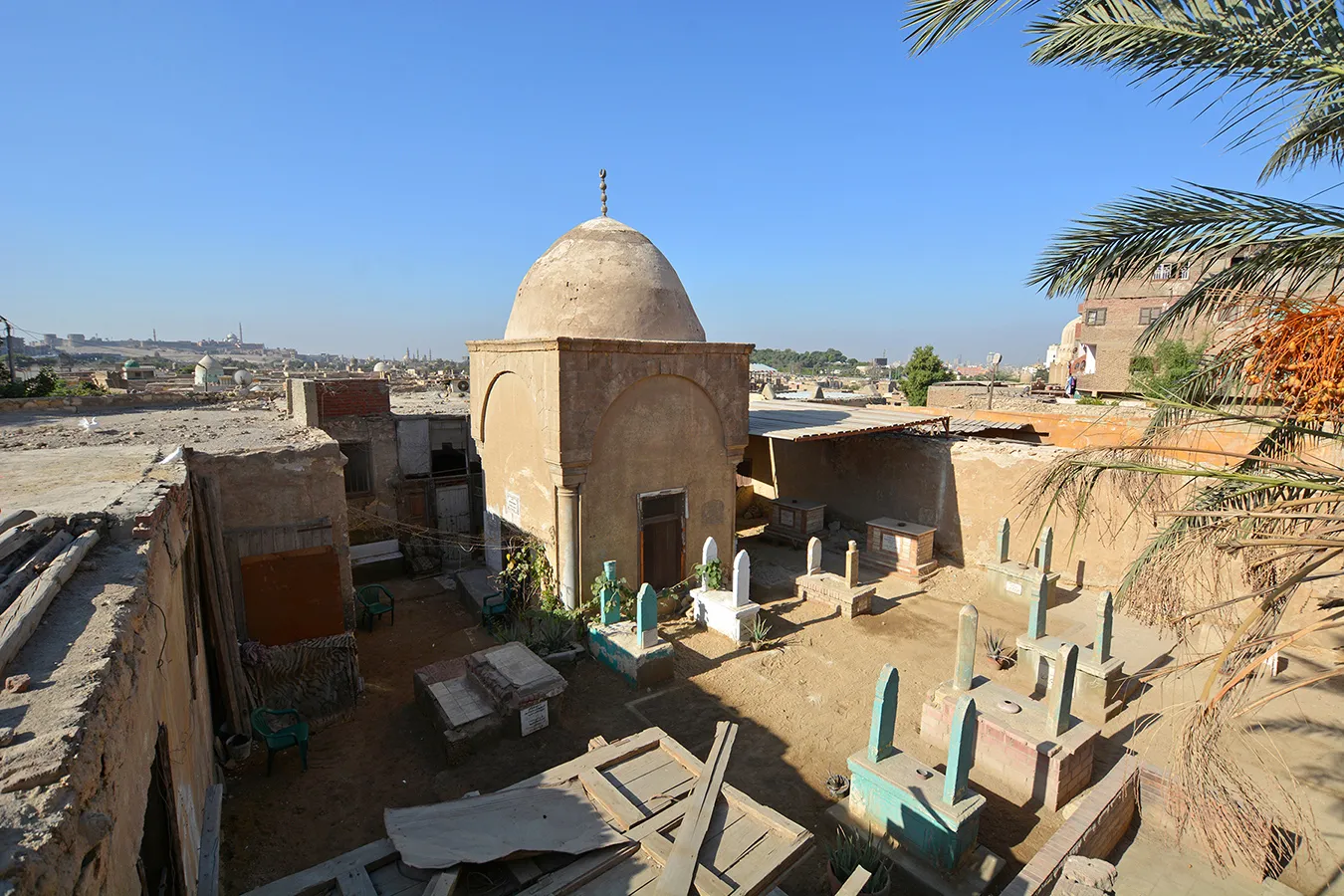
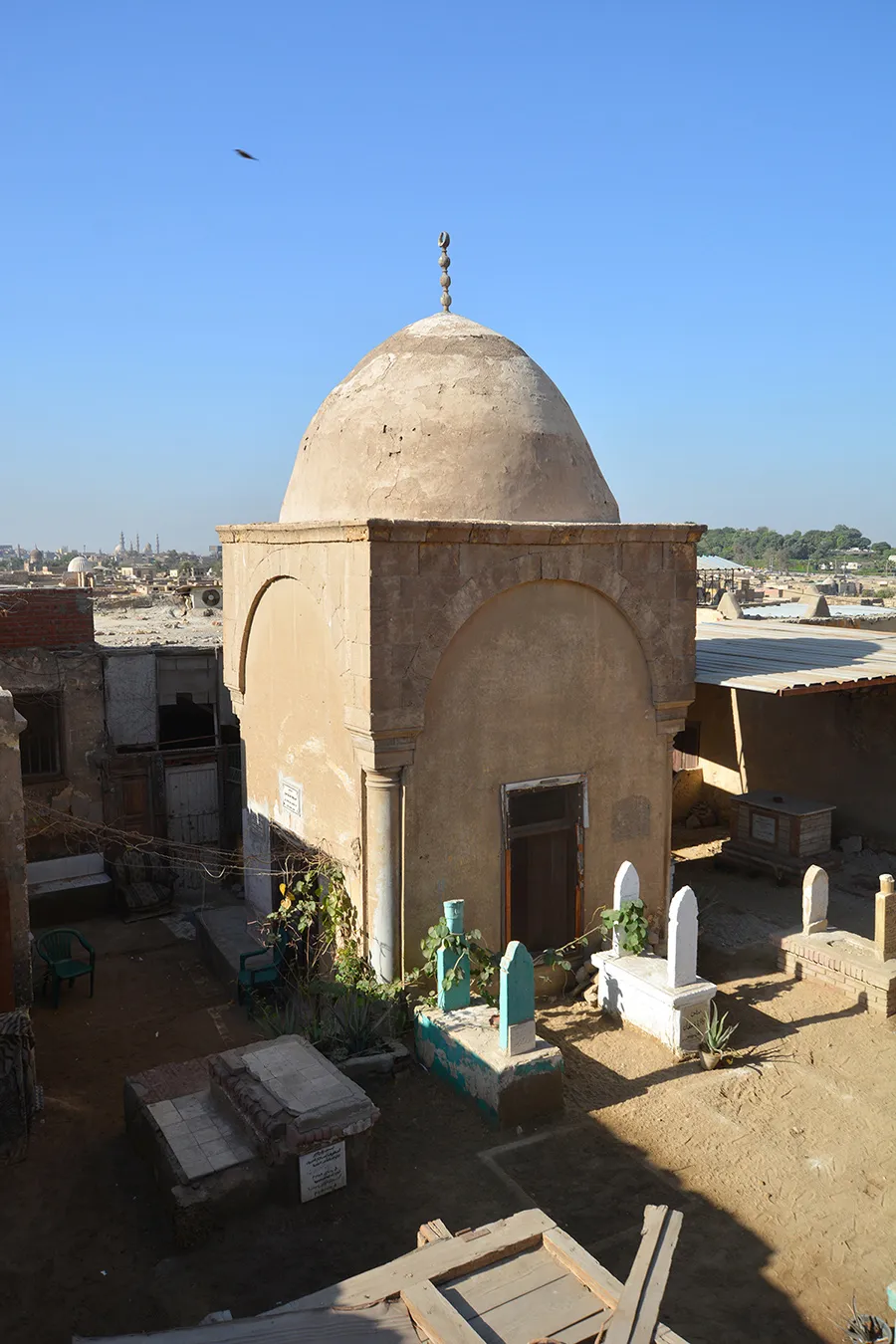
• A domed canopy on columns in the courtyard
• A royal consort’s place of burial
Description (The direction towards Mecca (Qibla) is described as eastern and other directions are named accordingly)
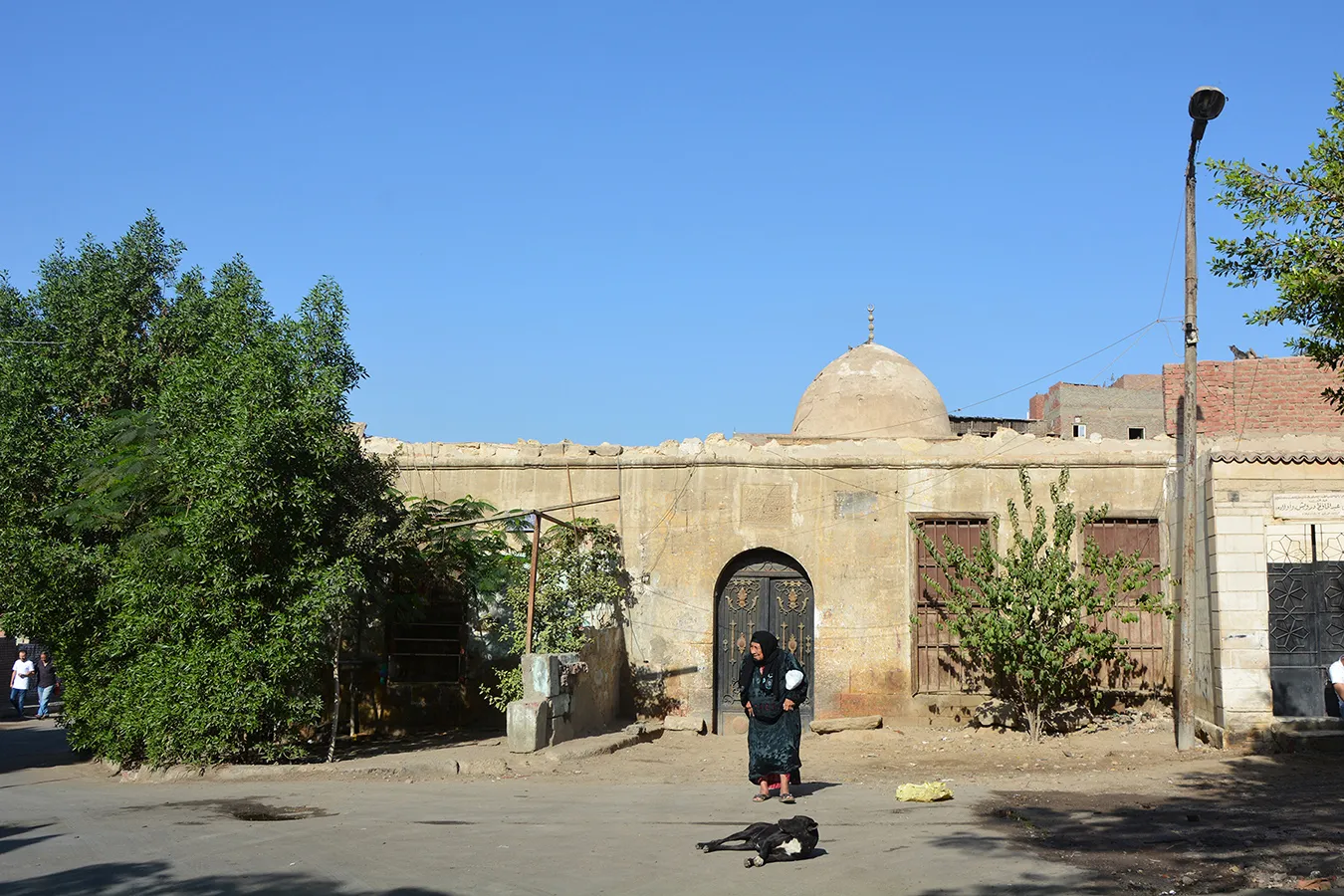
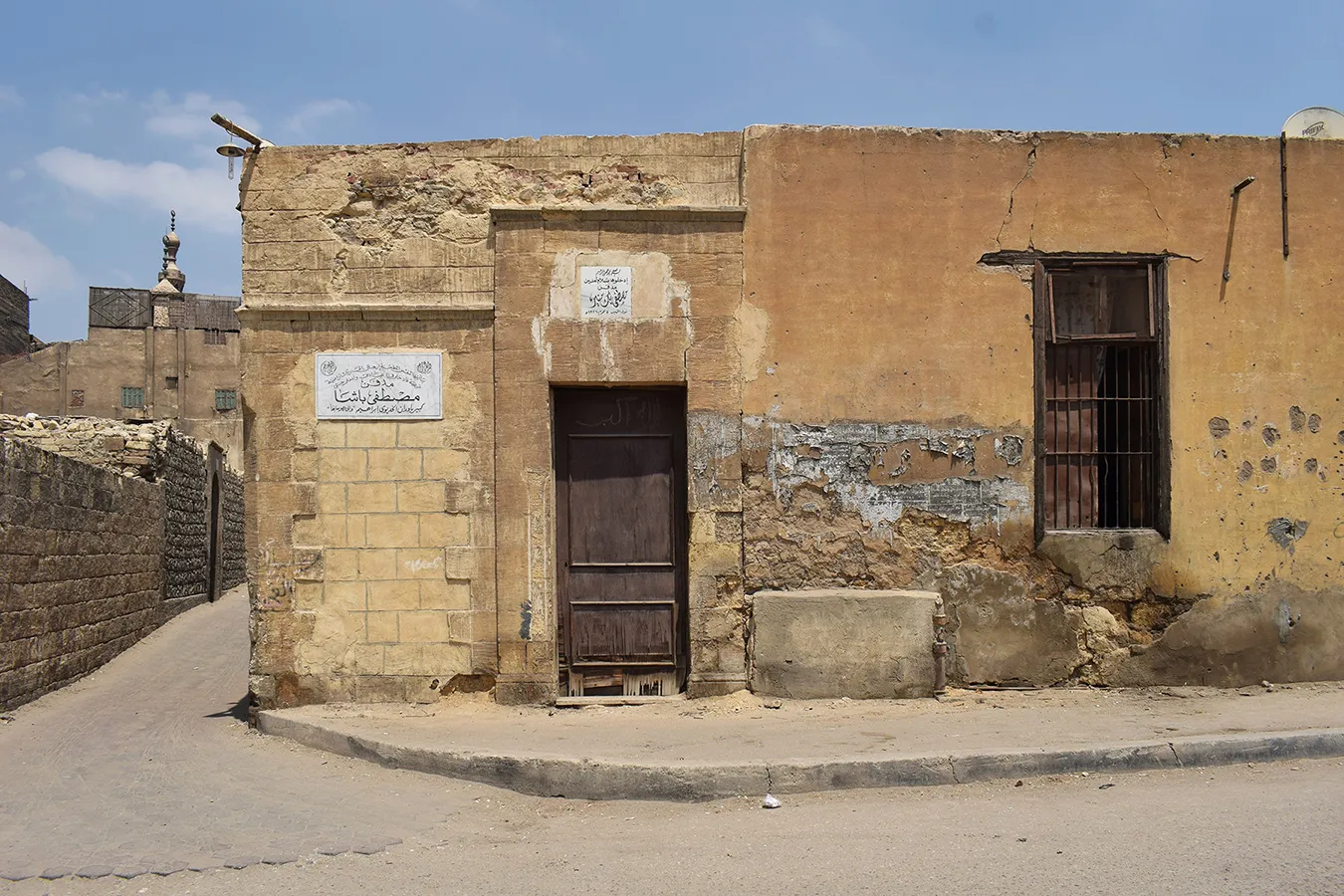
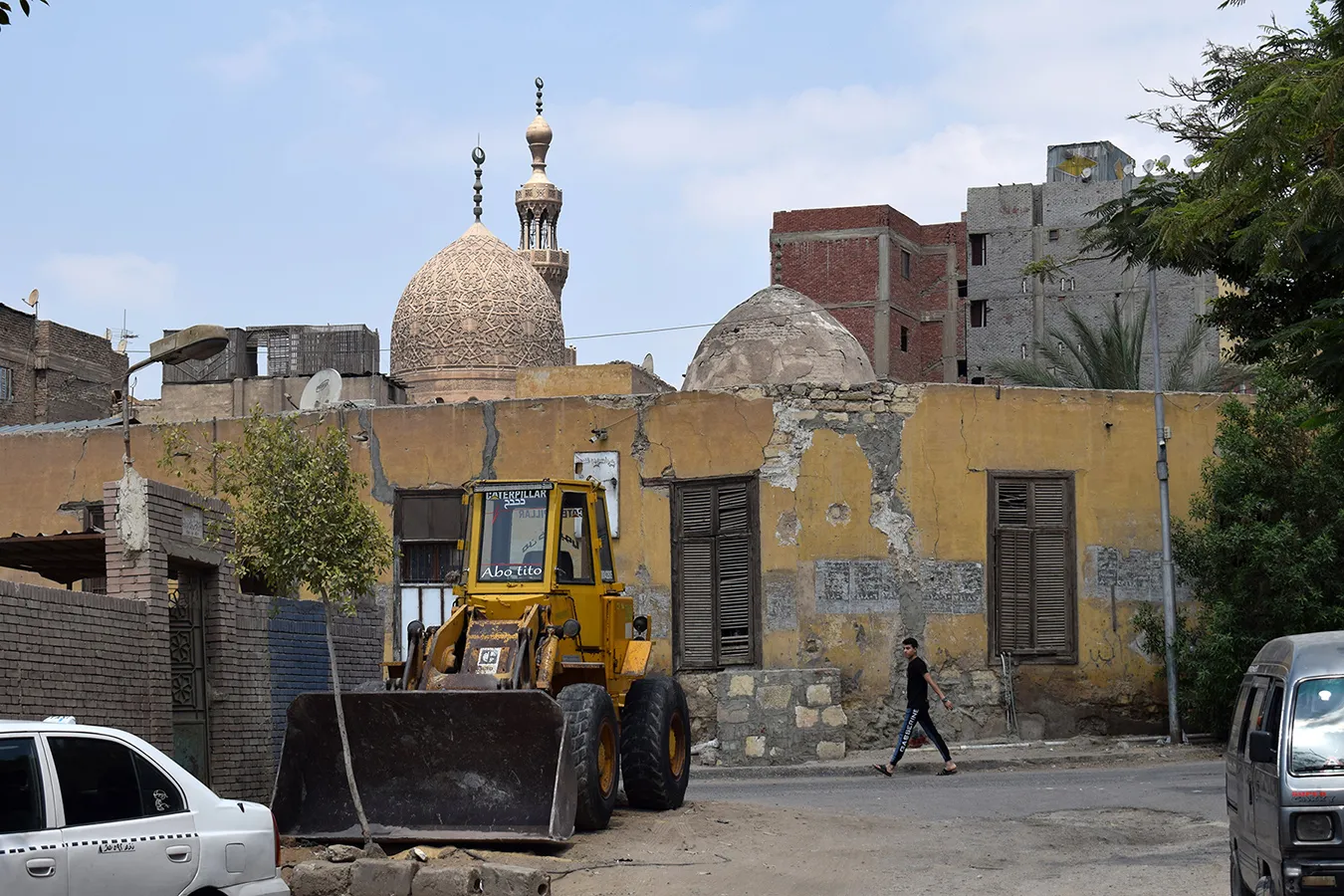
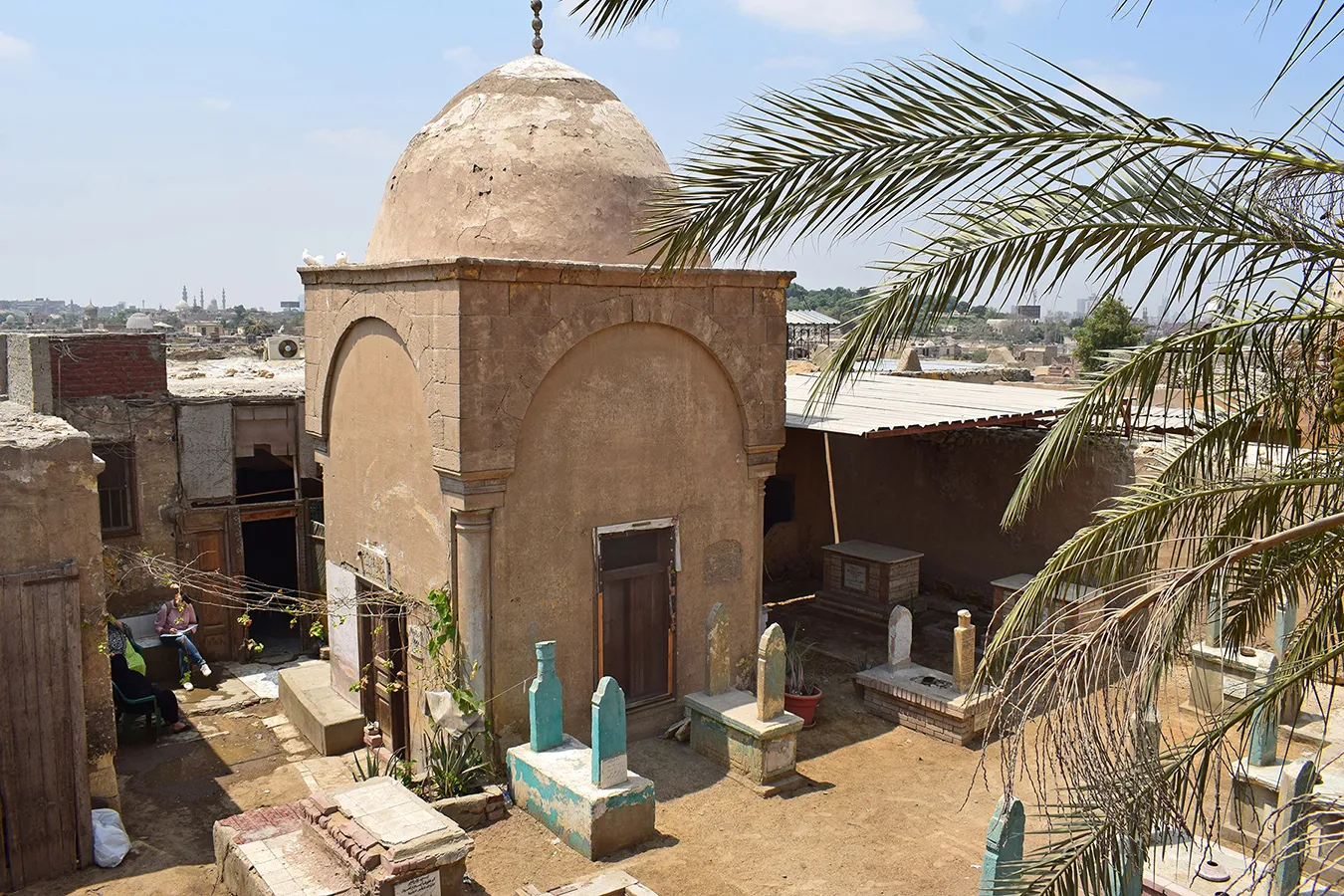
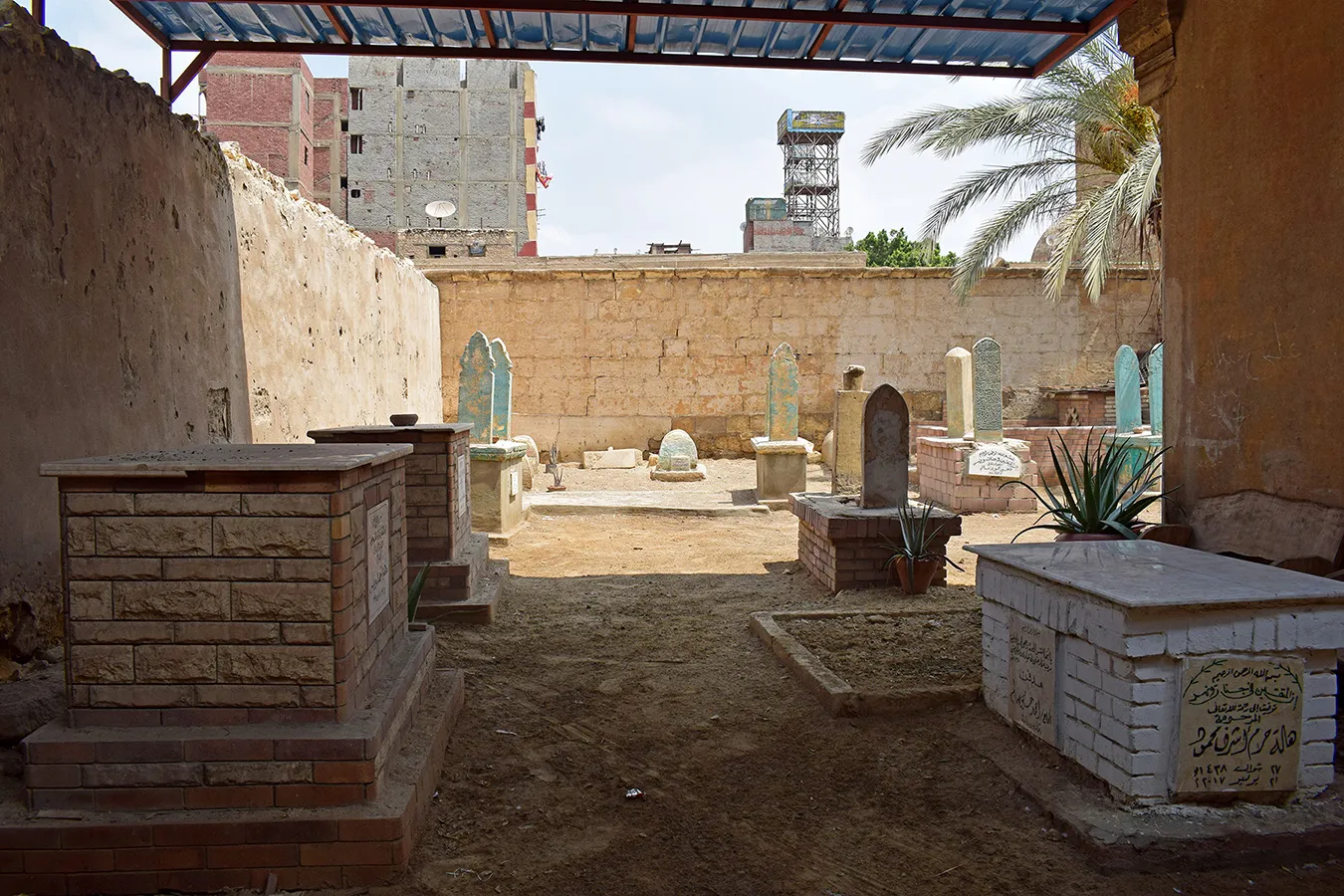
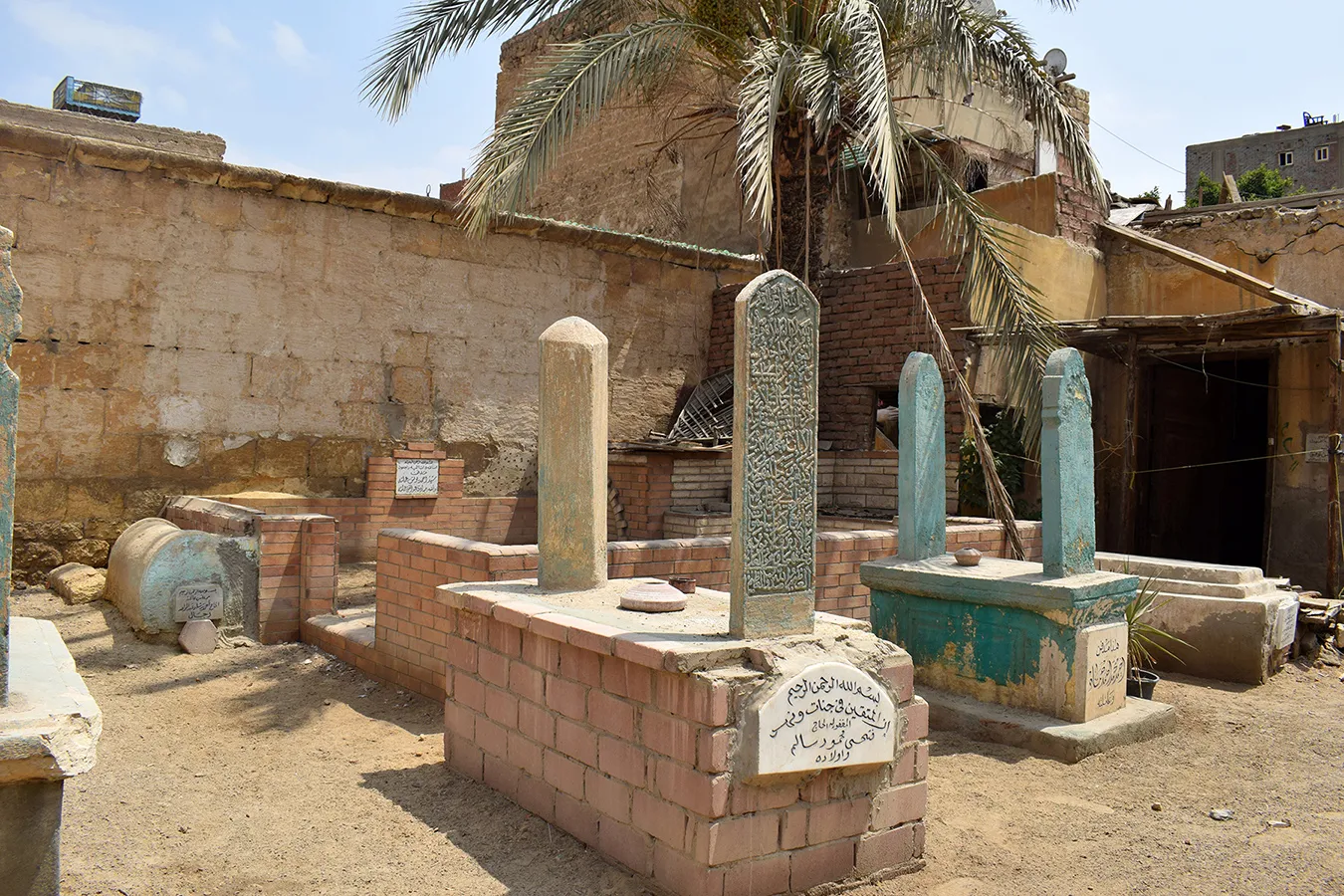
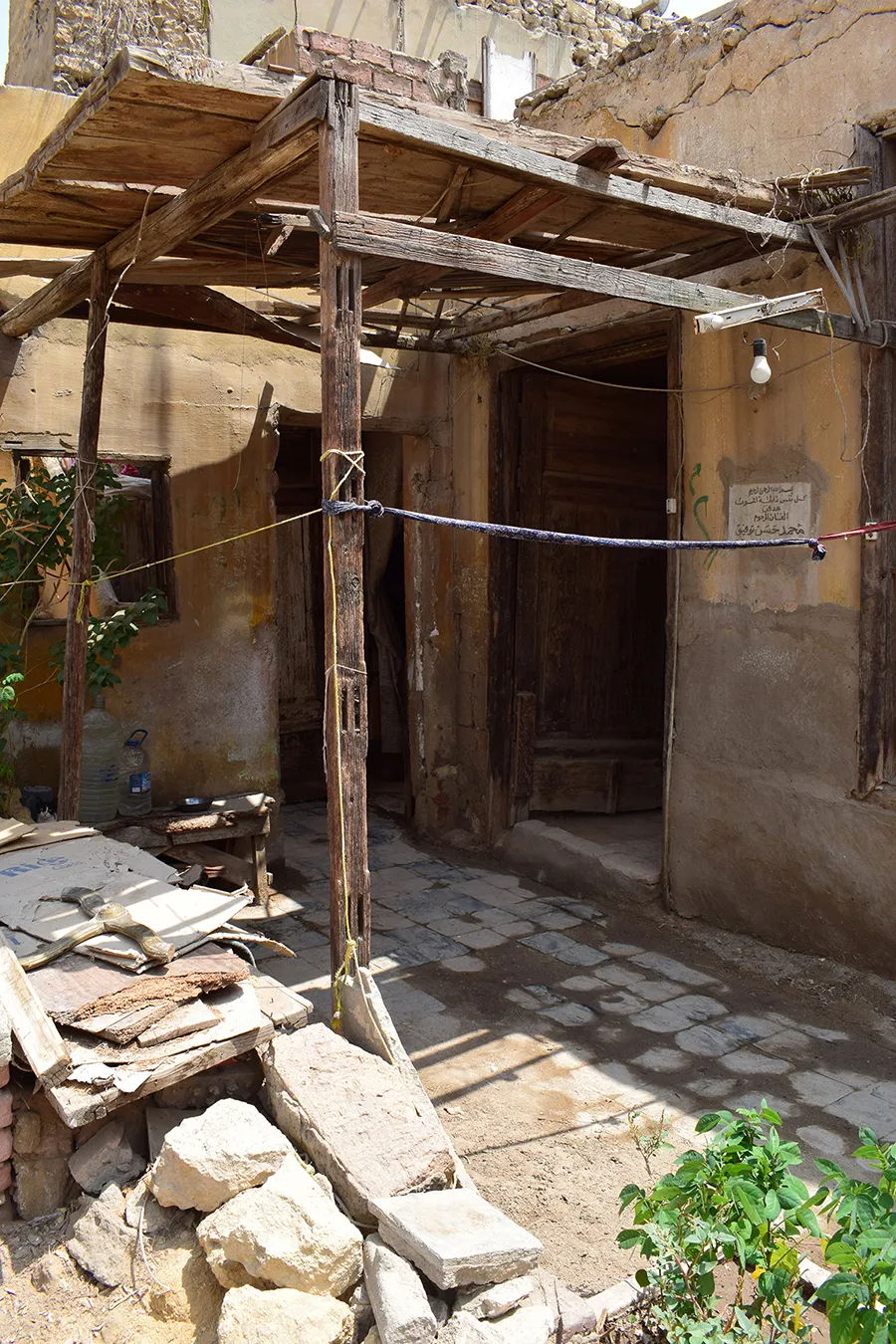
A rectangular enclosure with the north-western corner cut at the 45 degrees angle and with a later small building adjoining to the west incorporated. The entrance façade faces north. There are tracts of rooms by the northern and western walls, around a courtyard in the southern part of which stands a canopy covered with a dome resting on four semi-circular arches supported on marble columns. The openings of the arches are walled up at present, and the structure is used as a residential room.
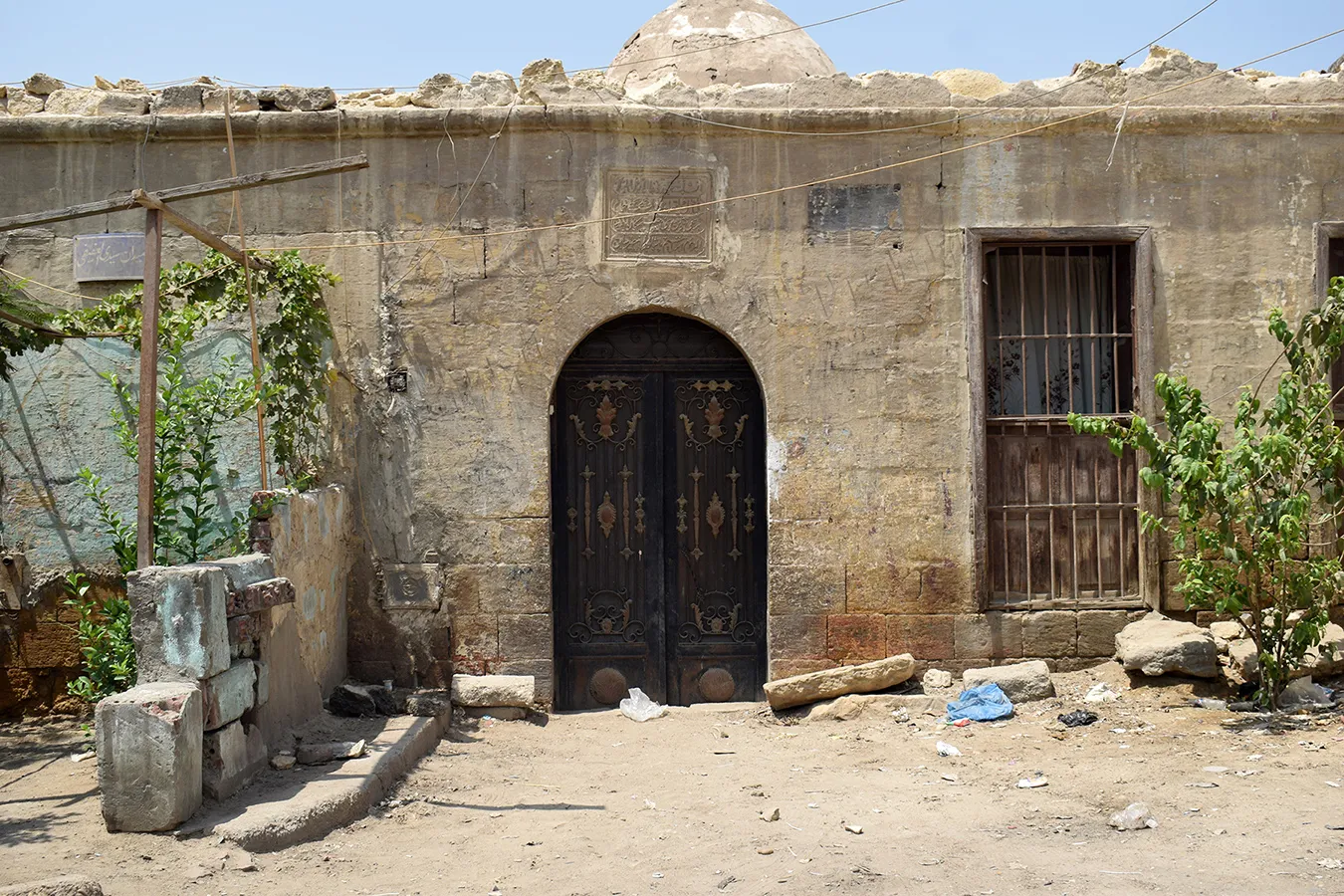
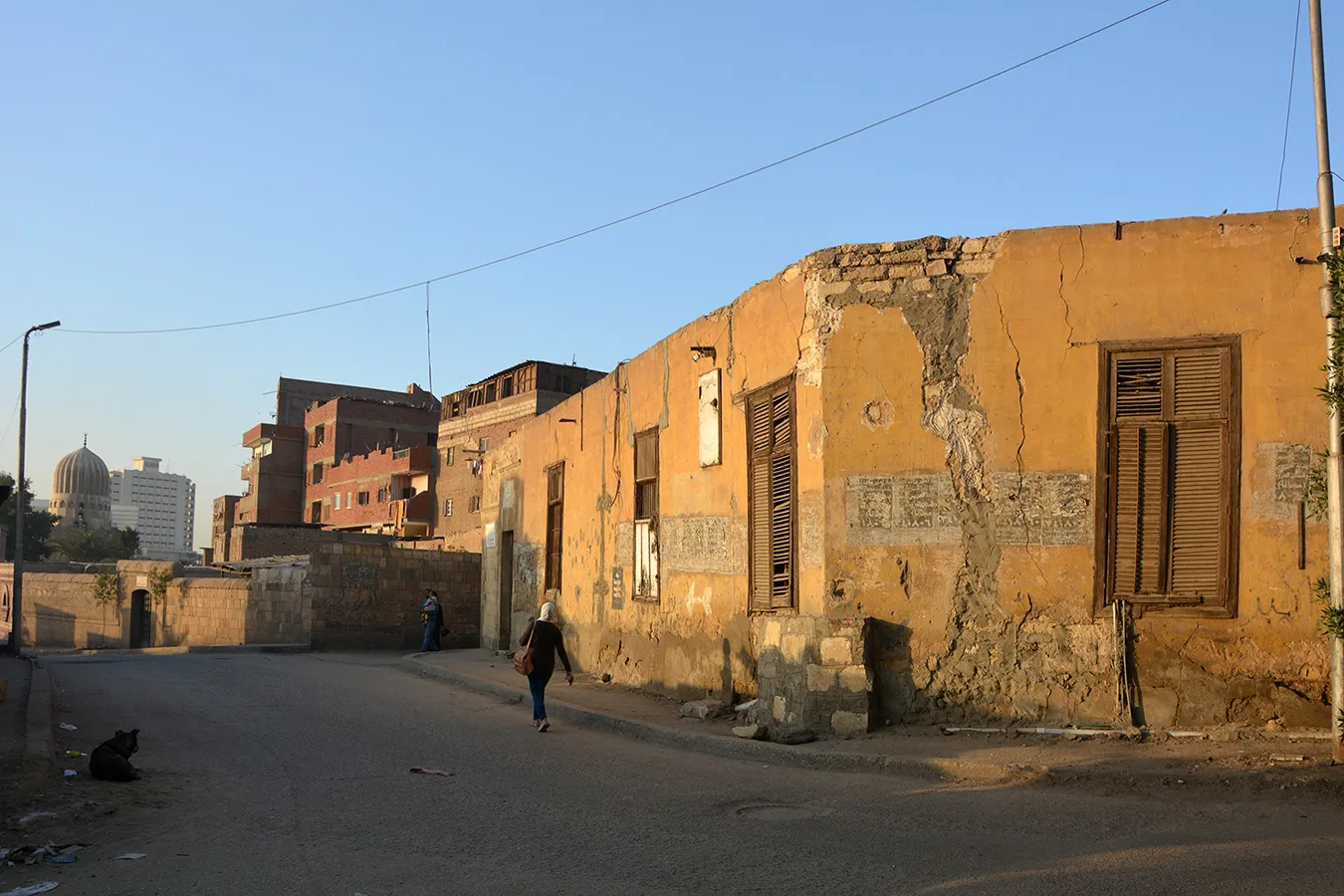
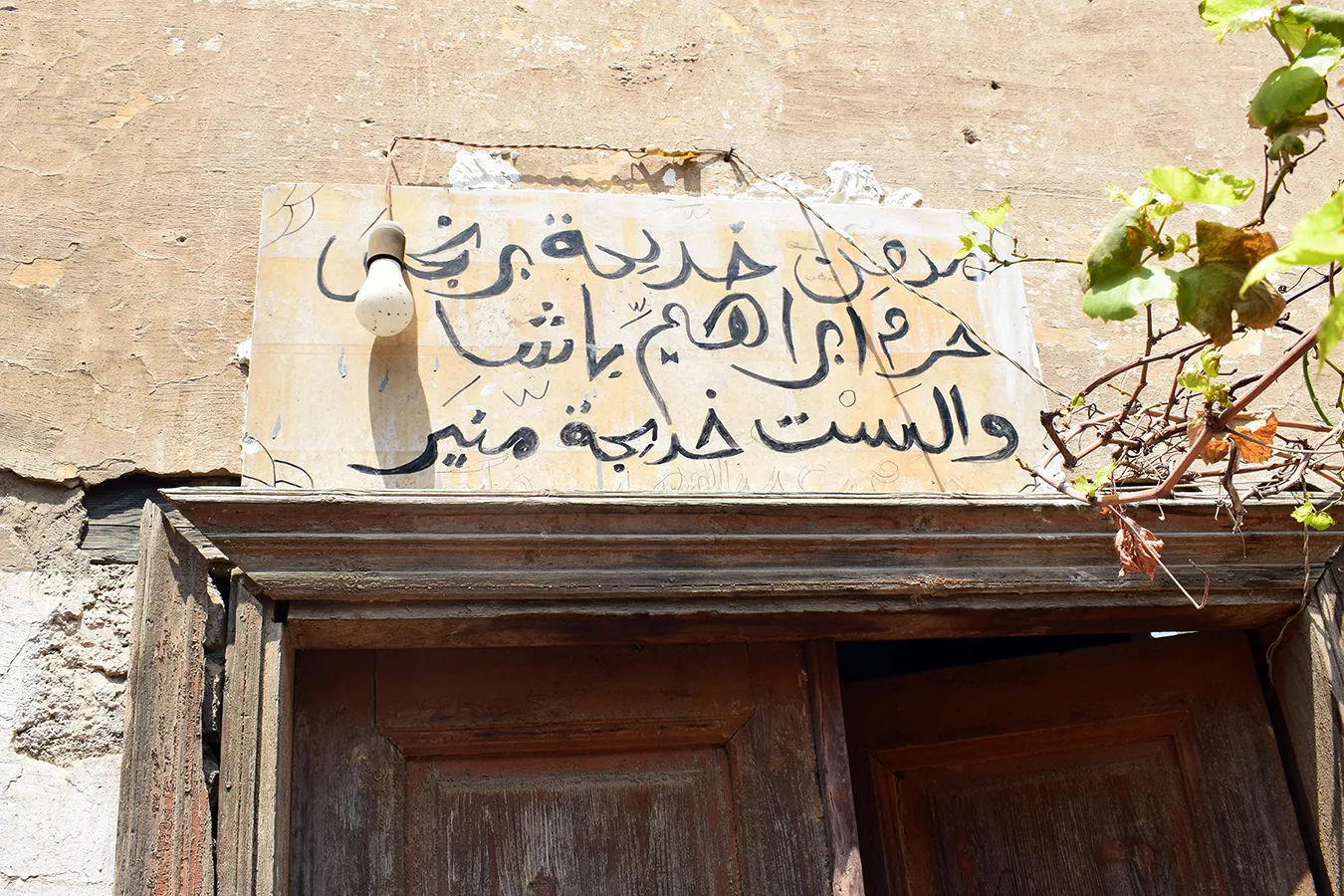
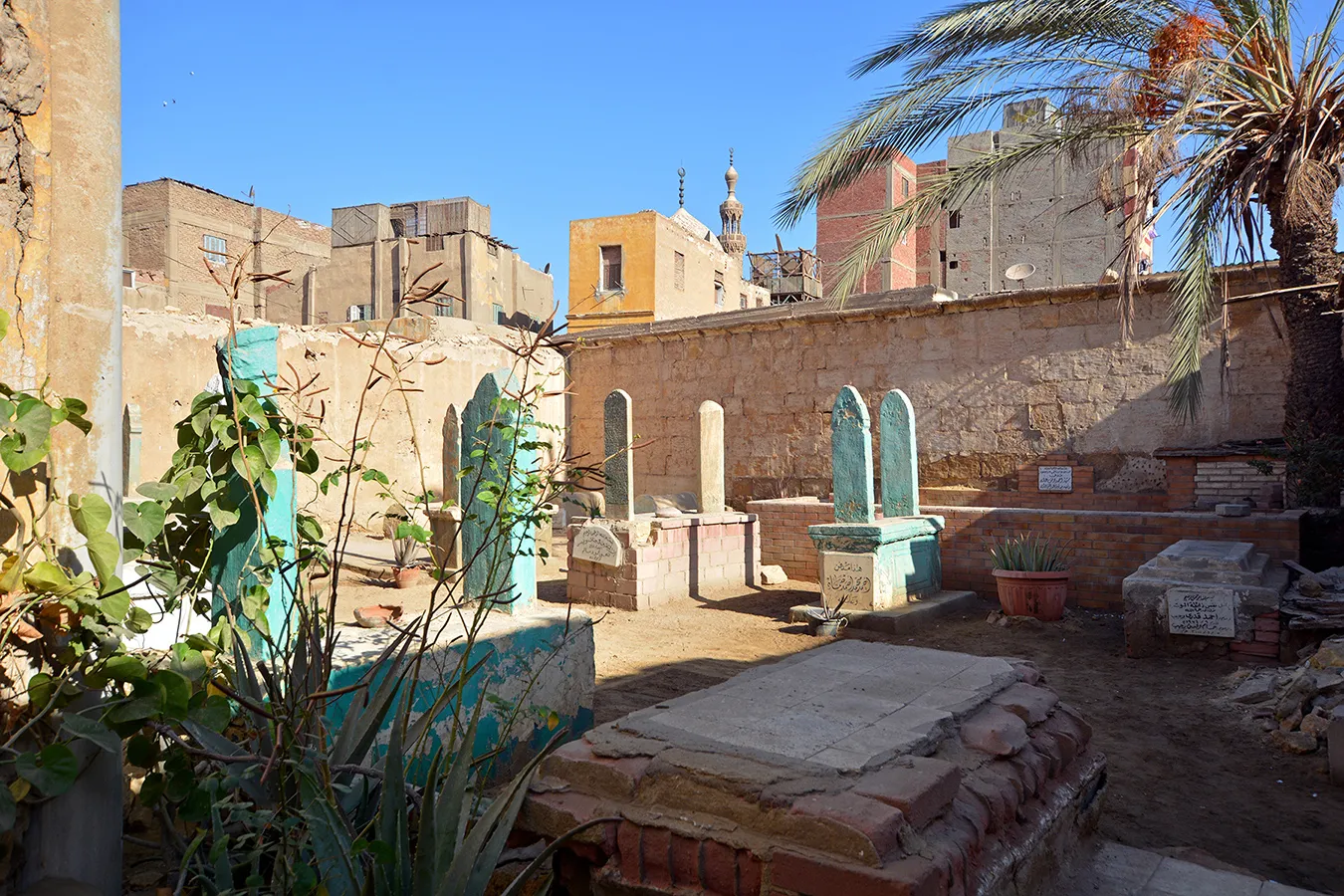
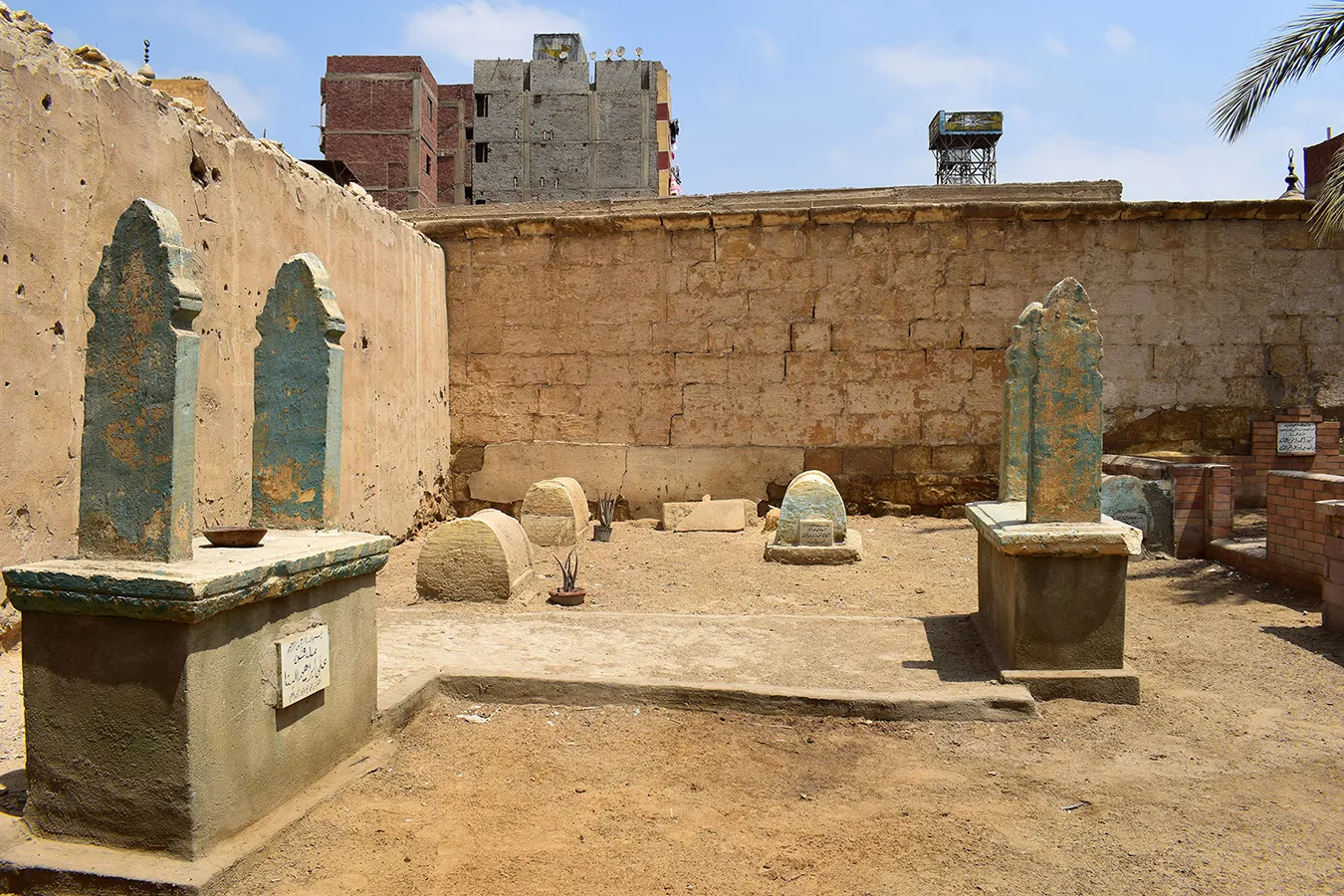
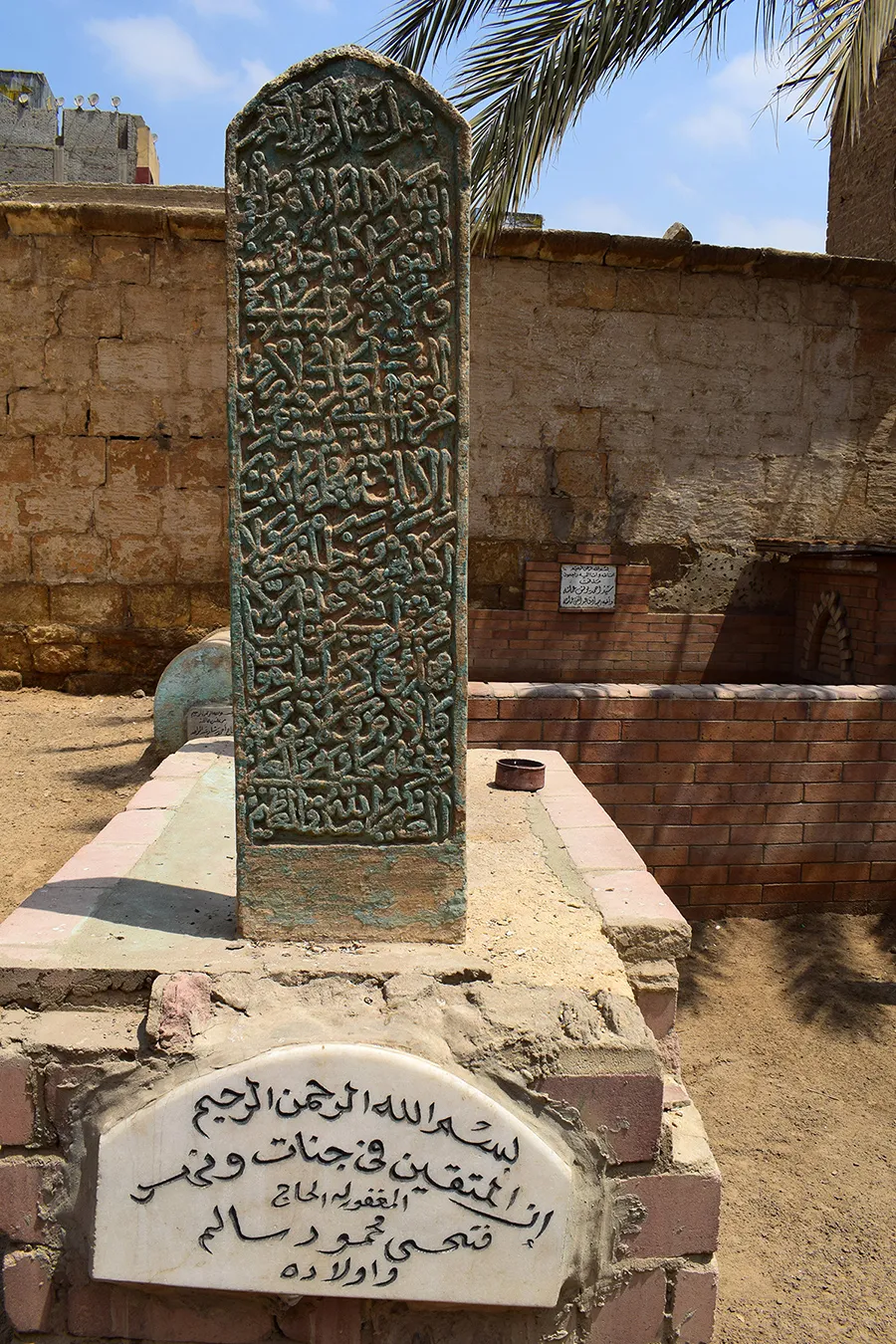
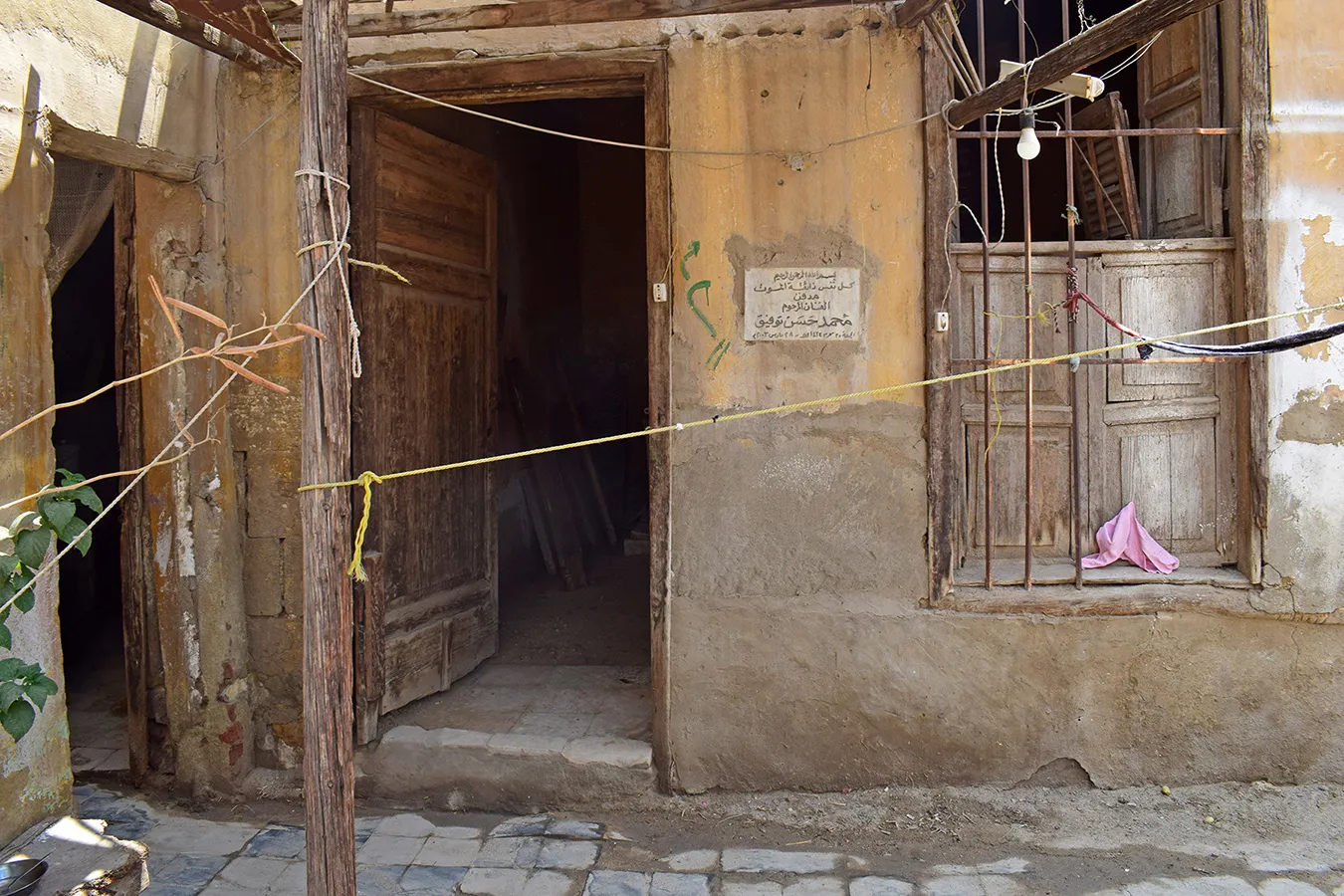
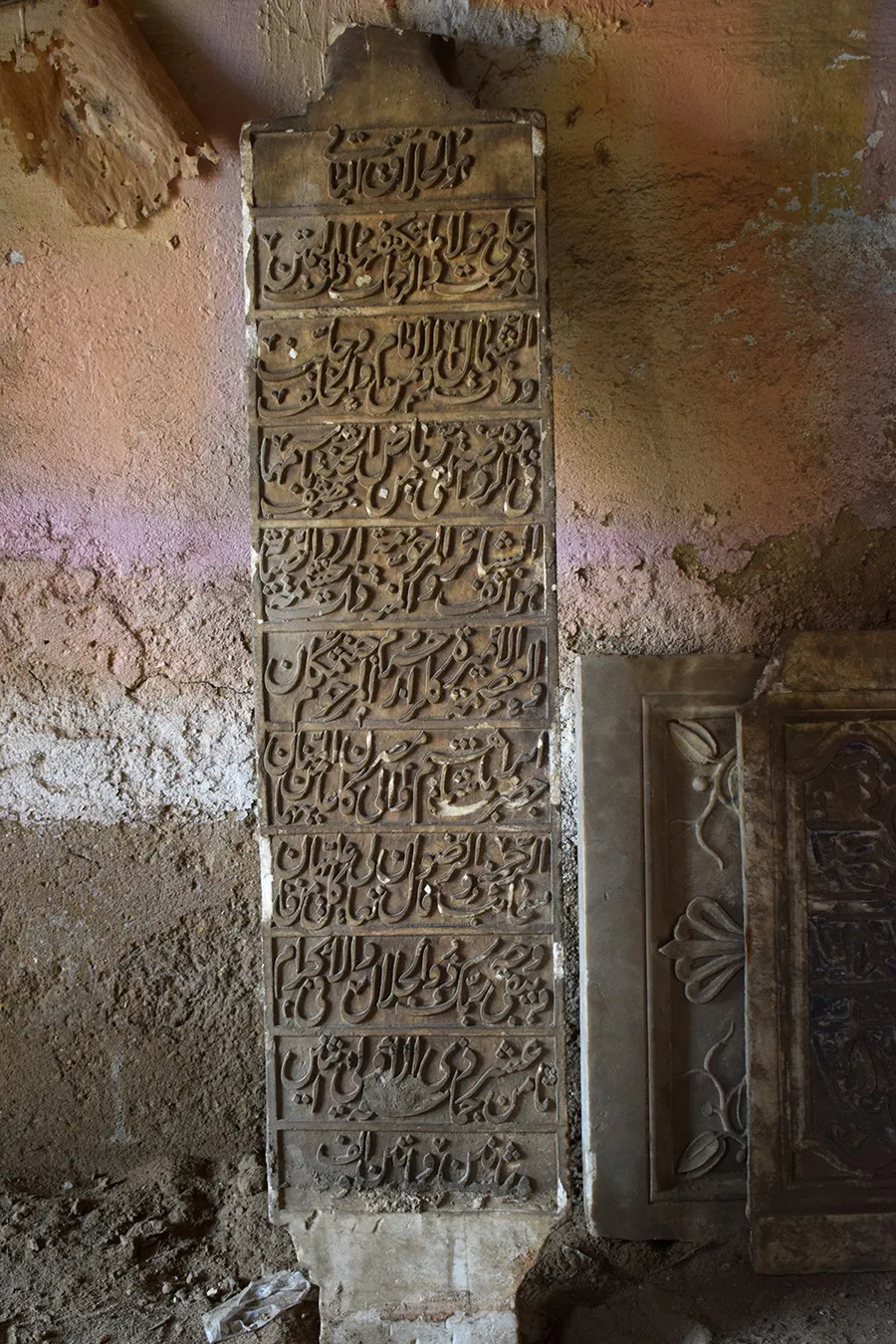
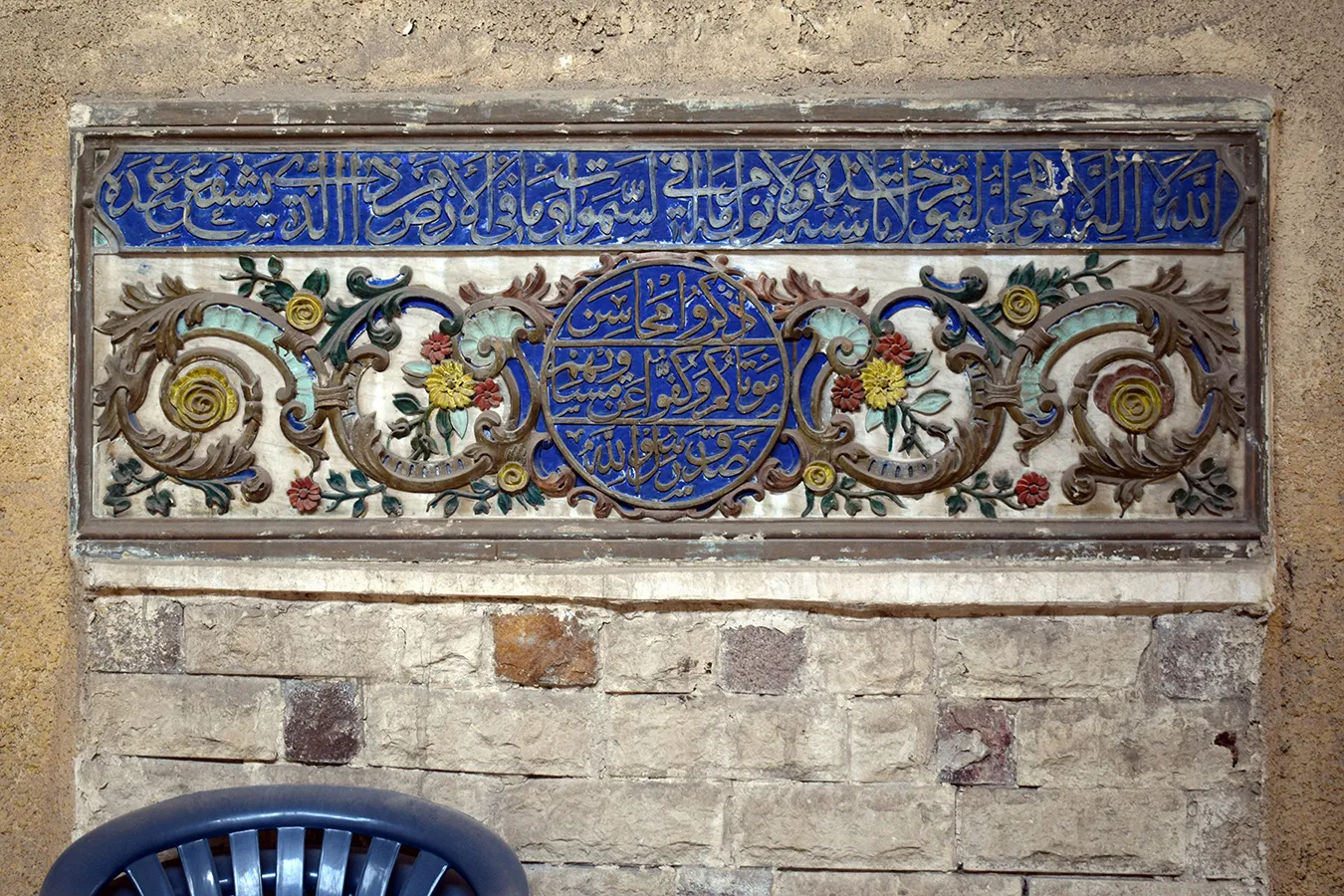
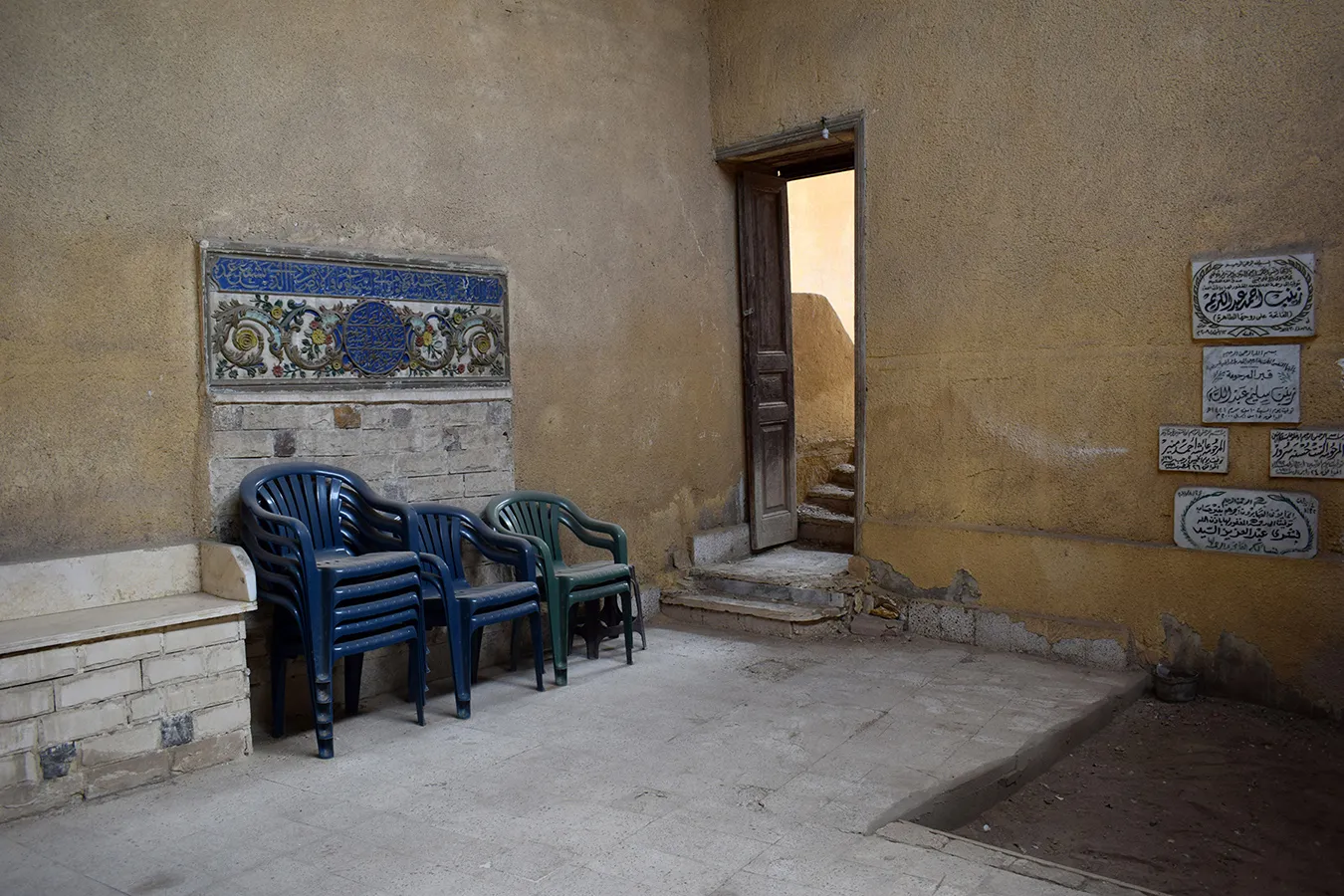
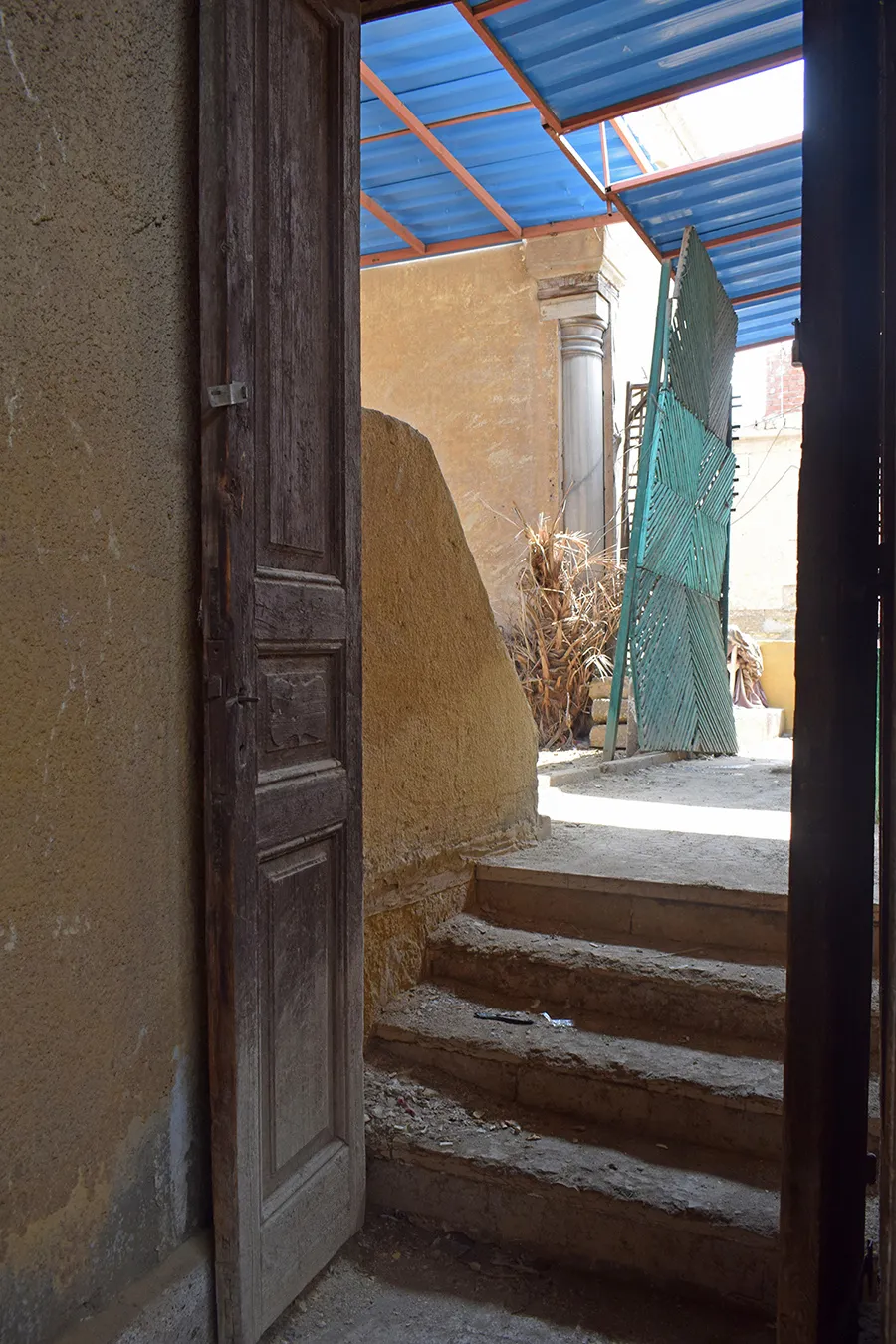
The northern façade is built of ashlar masonry and plain, topped with a simple cornice, with a simple undecorated gate covered with a semi-circular arch. The gateway leads to the courtyard. Over the gate is a marble calligraphic inscription panel recording the renovation in AH 1277 [= AD 1861] of the funerary enclosure of Lady Khadiga Khanum Brengi Qadim (see point 17). The undecorated rectangular windows are irregularly placed in the entrance façade. The rooms around the courtyard are nondescript, built of rubble stone and bricks, with undecorated facades pierced with plain rectangular windows with louvre shutters. At a certain point there was probably an upper storey over a part of the building, as there is a staircase in the north-eastern corner of the enclosure. There are thirteen tomb markers in the courtyard, some with elaborate calligraphic inscriptions in their shahid stelae. Many are recent, as young as 2017, with many modern inscription plaques added to apparently earlier tomb markers.
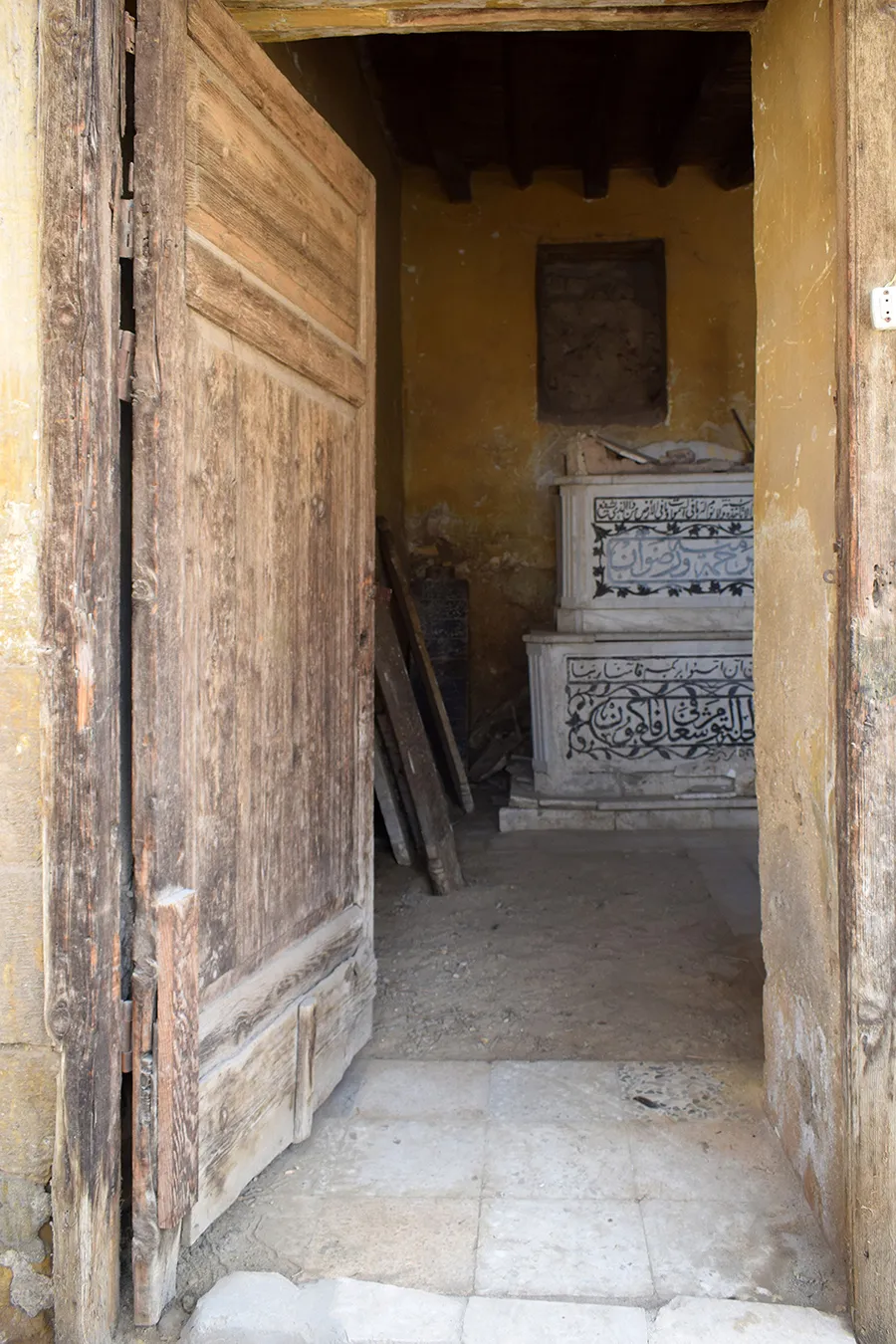
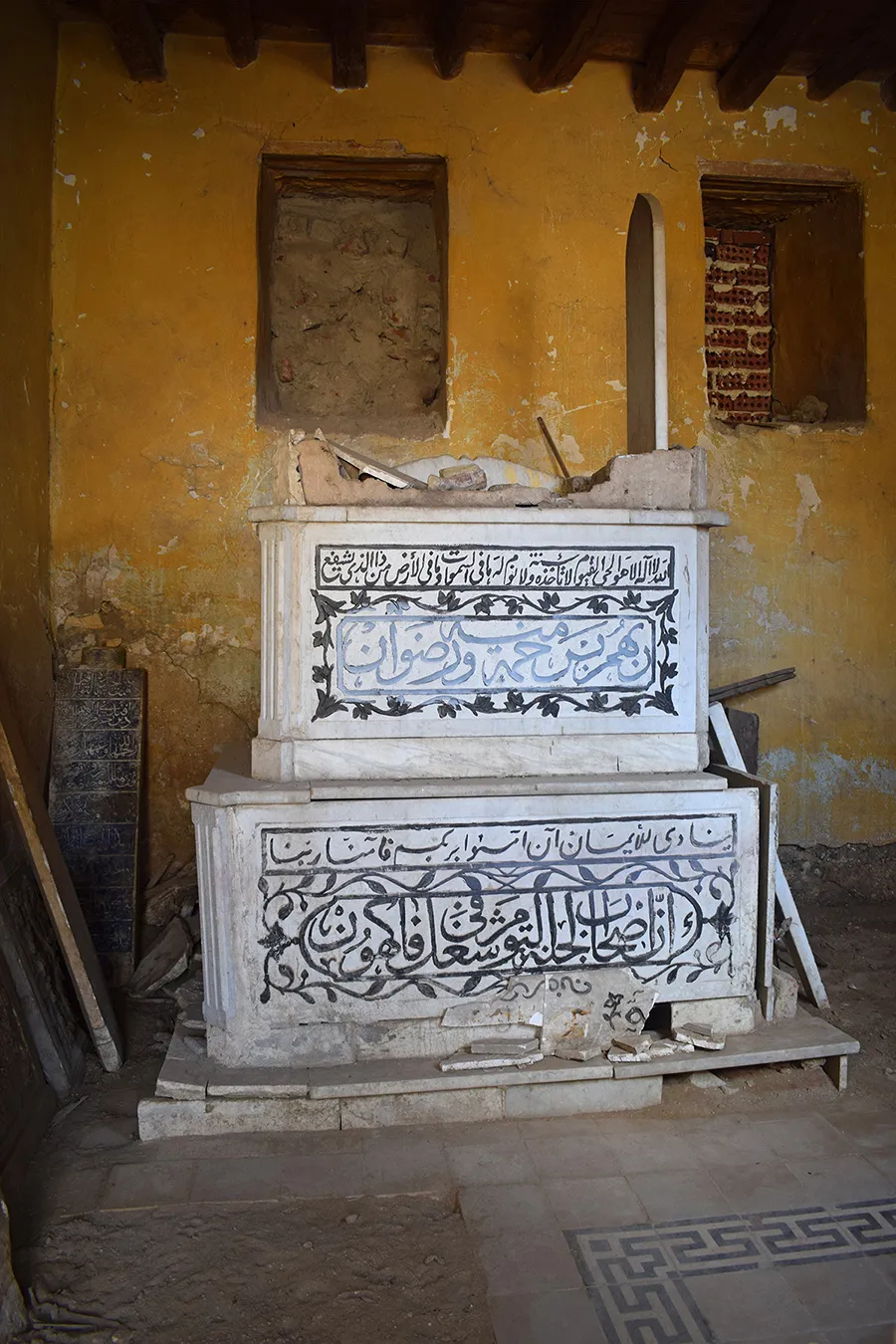
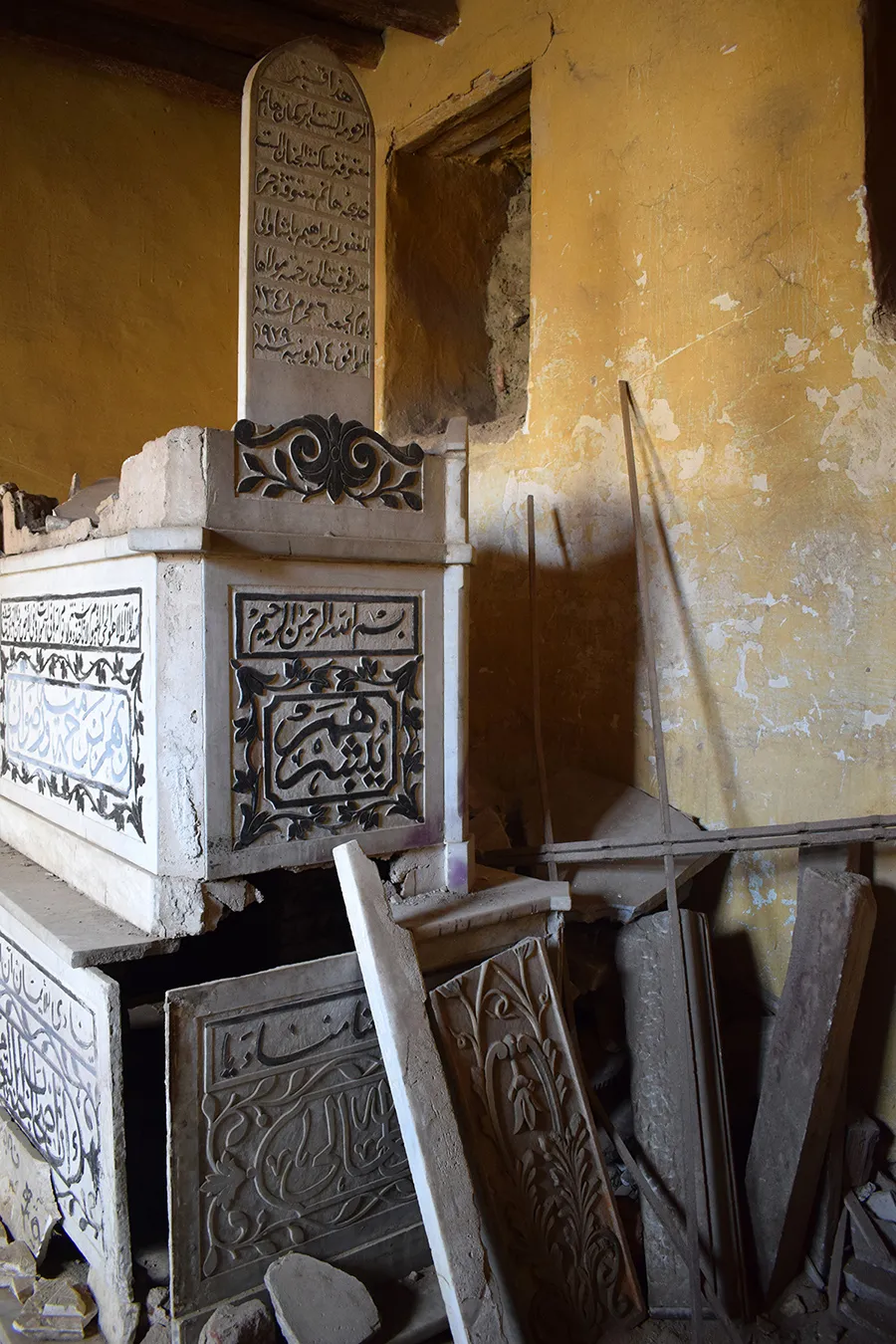
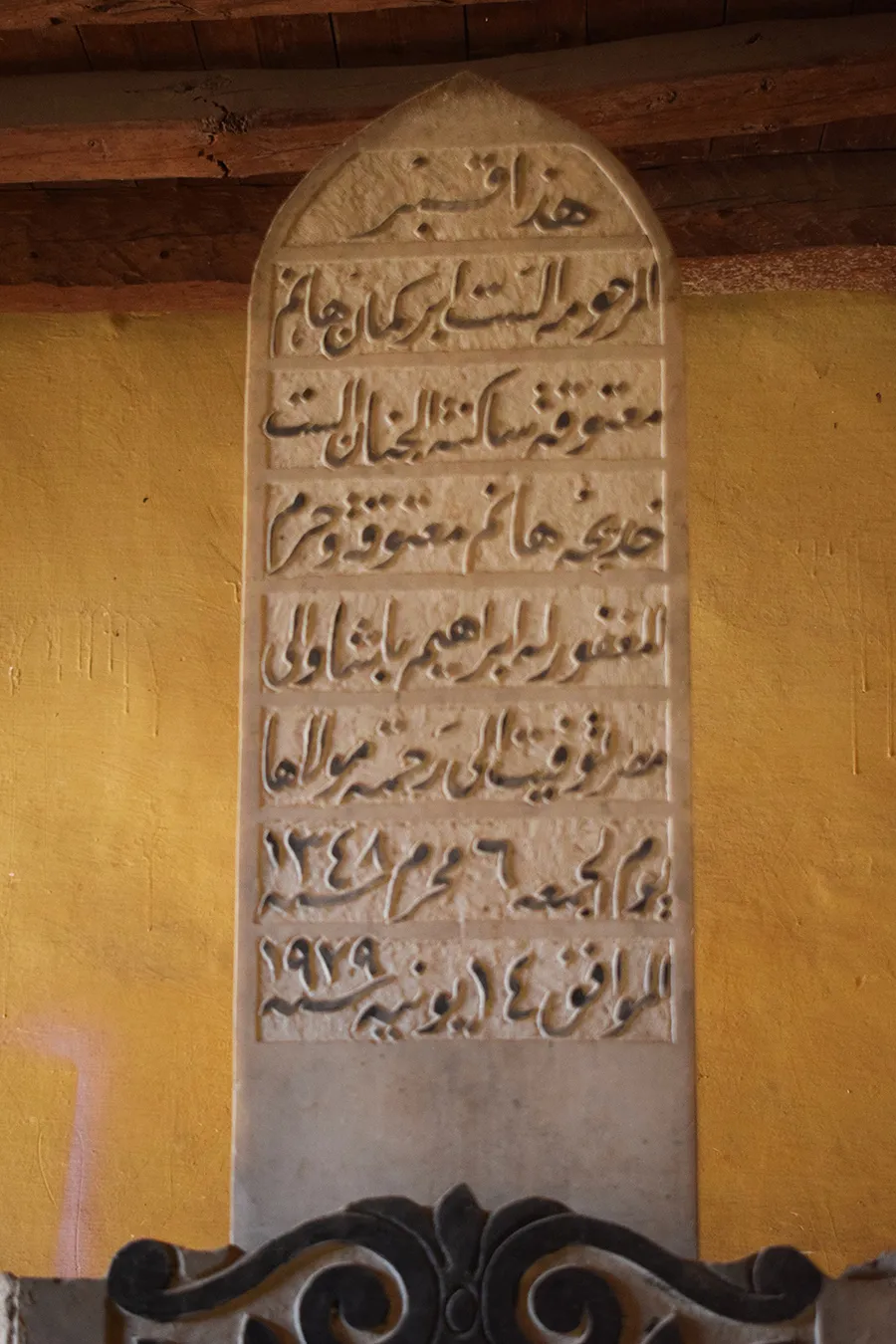
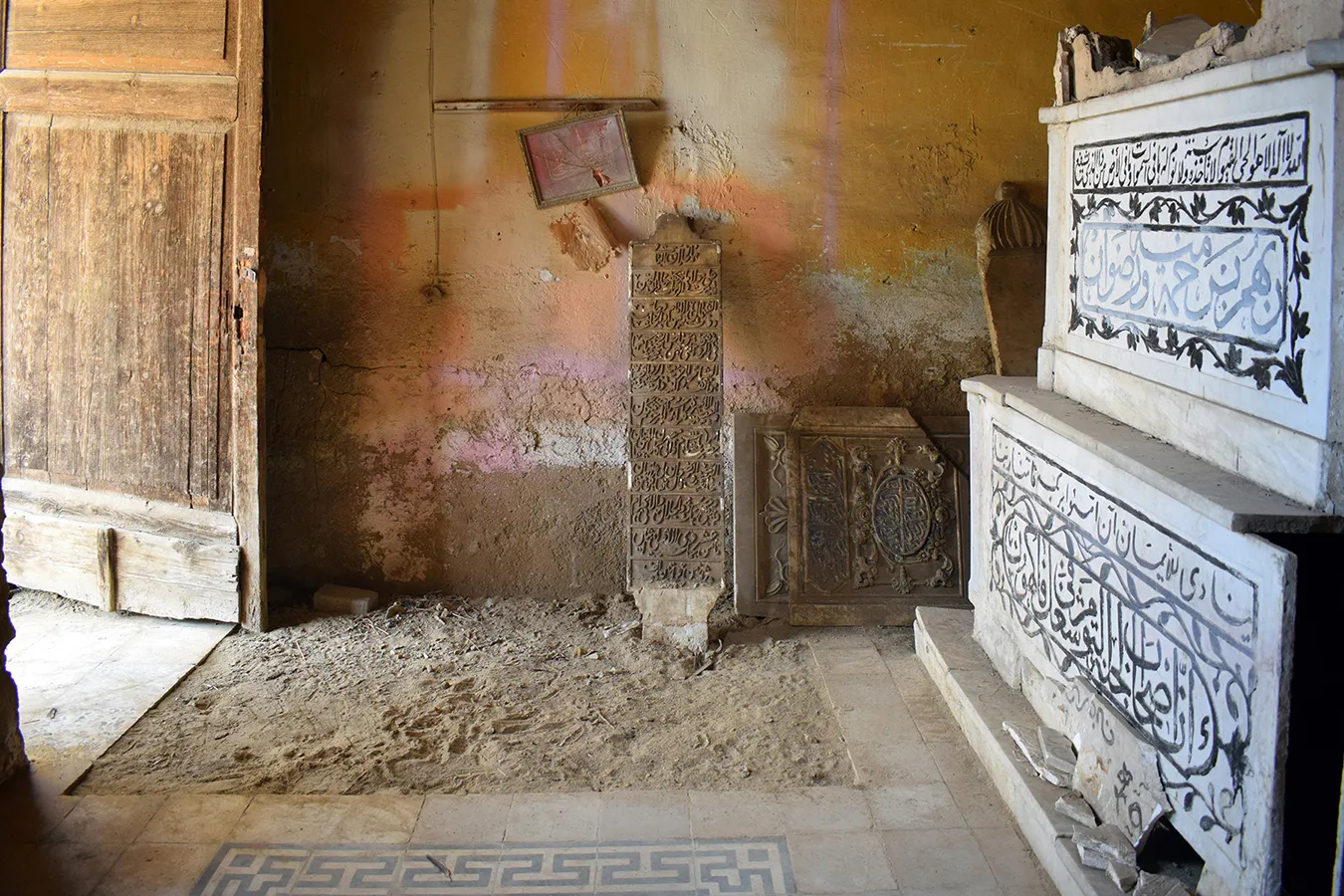
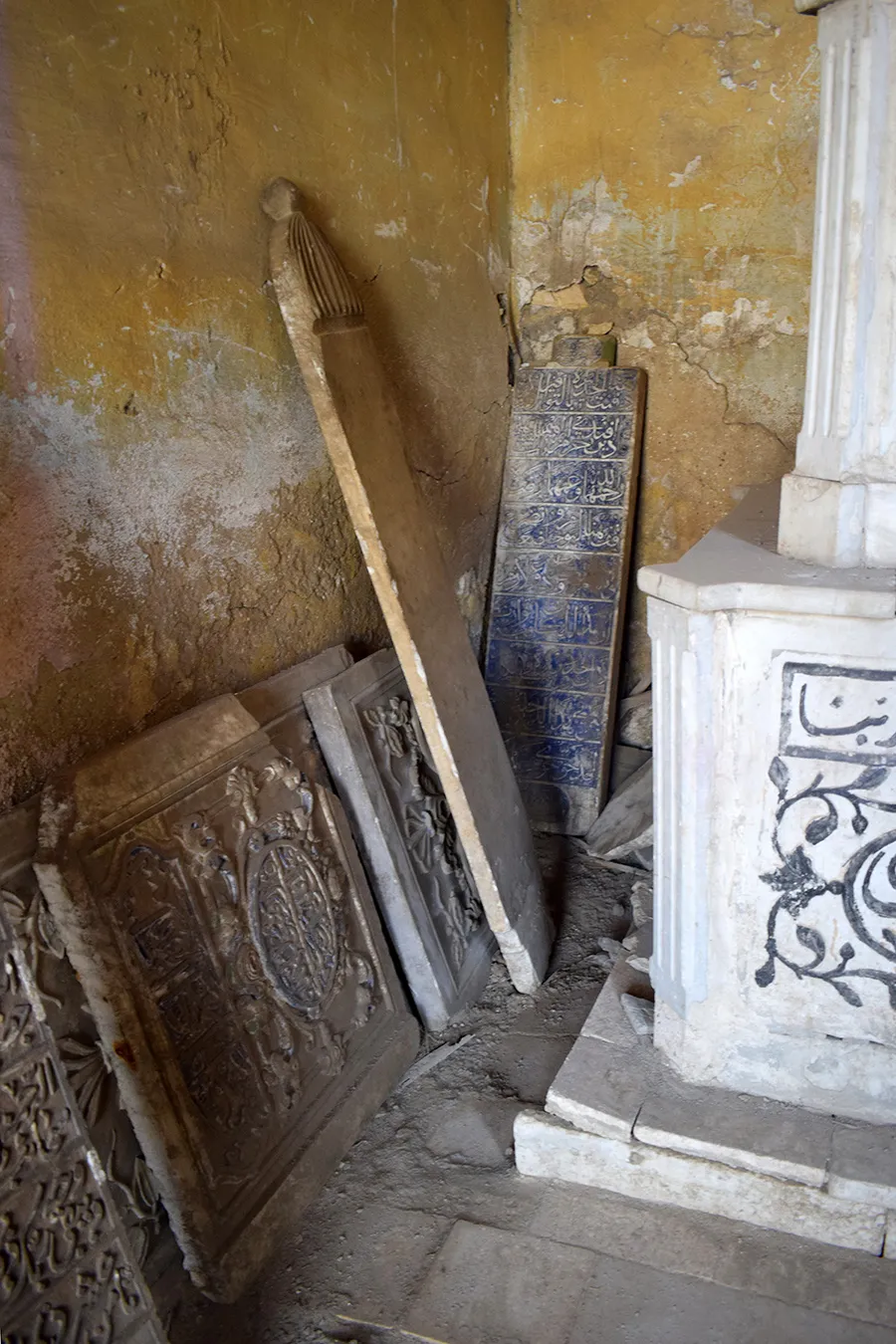
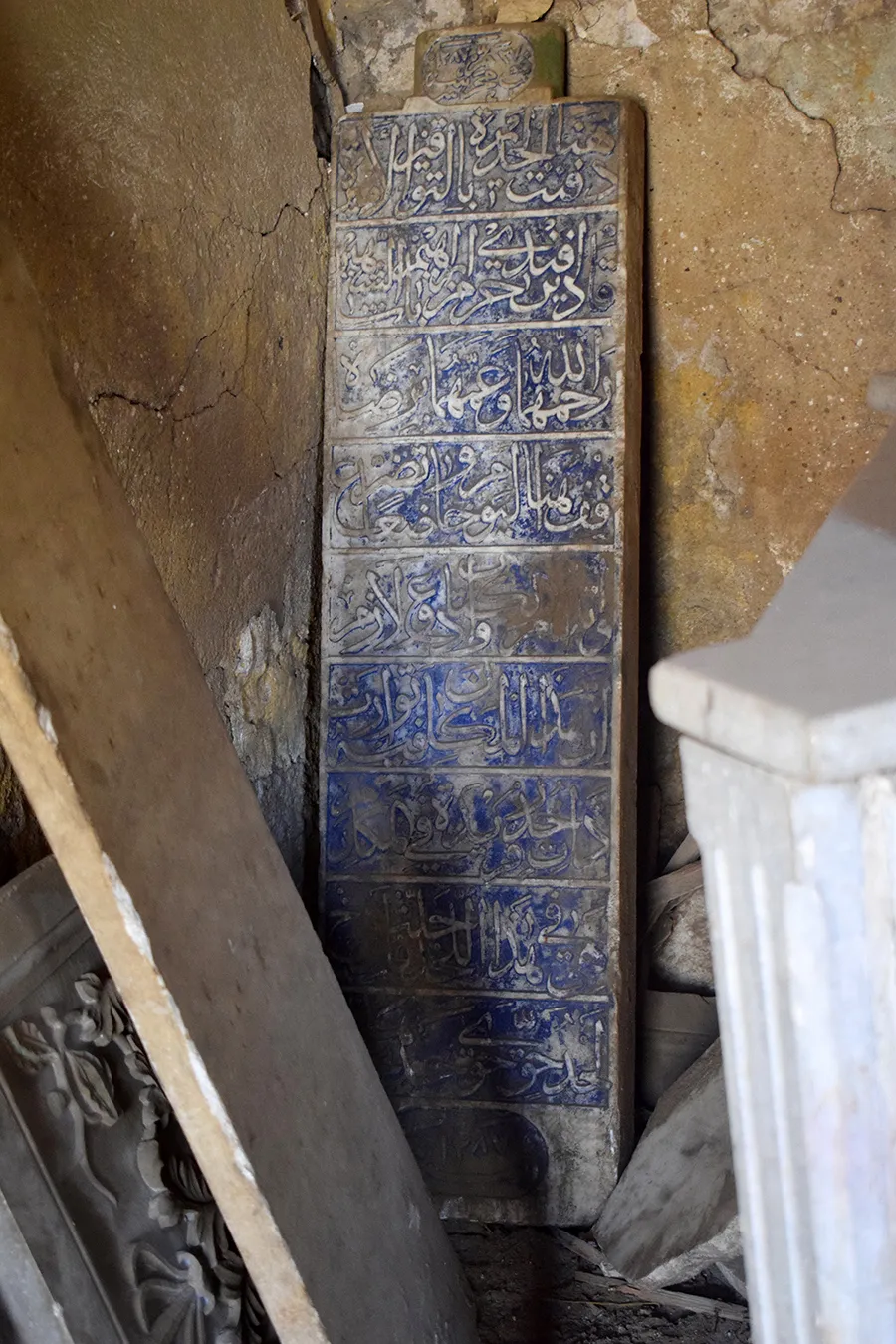
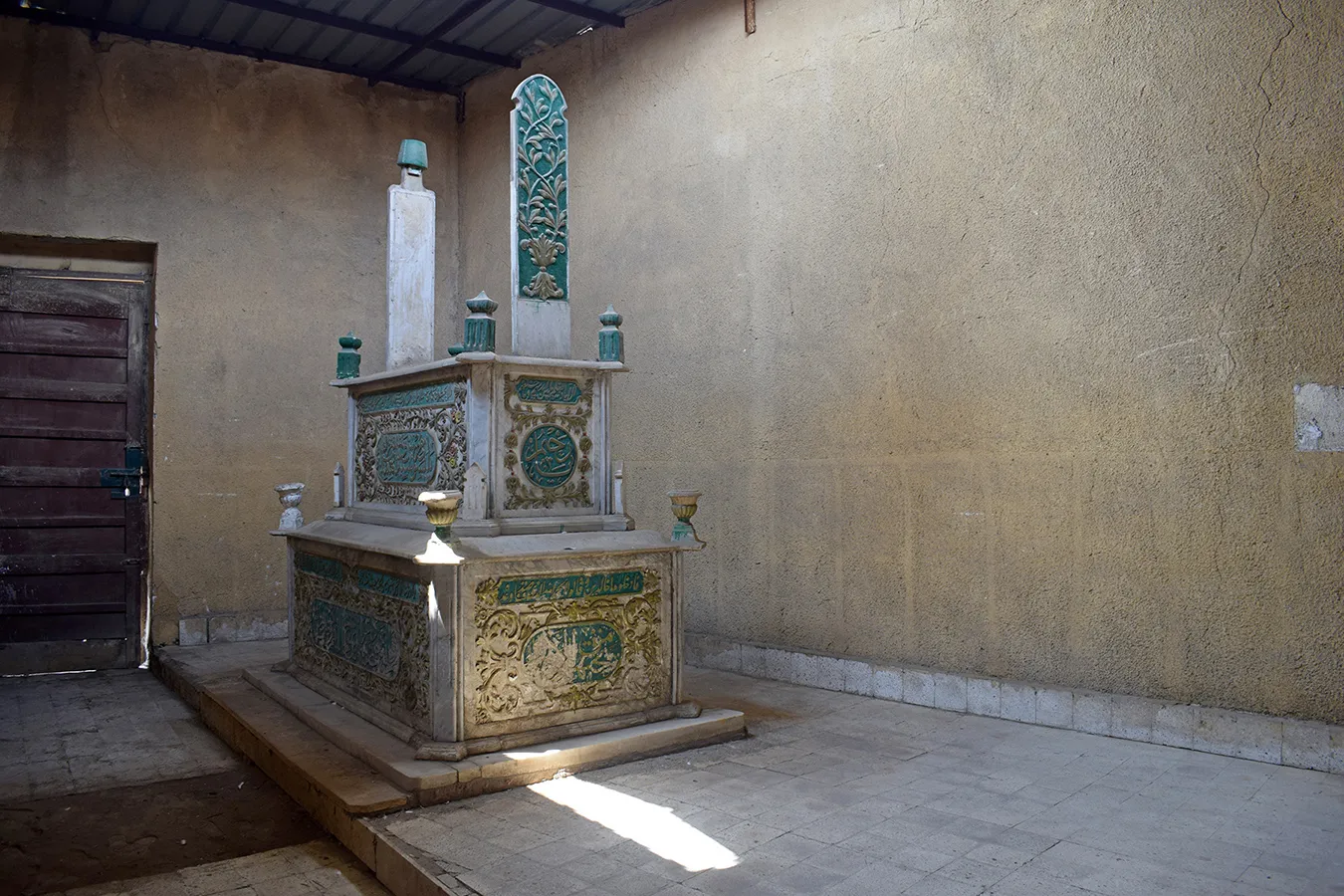
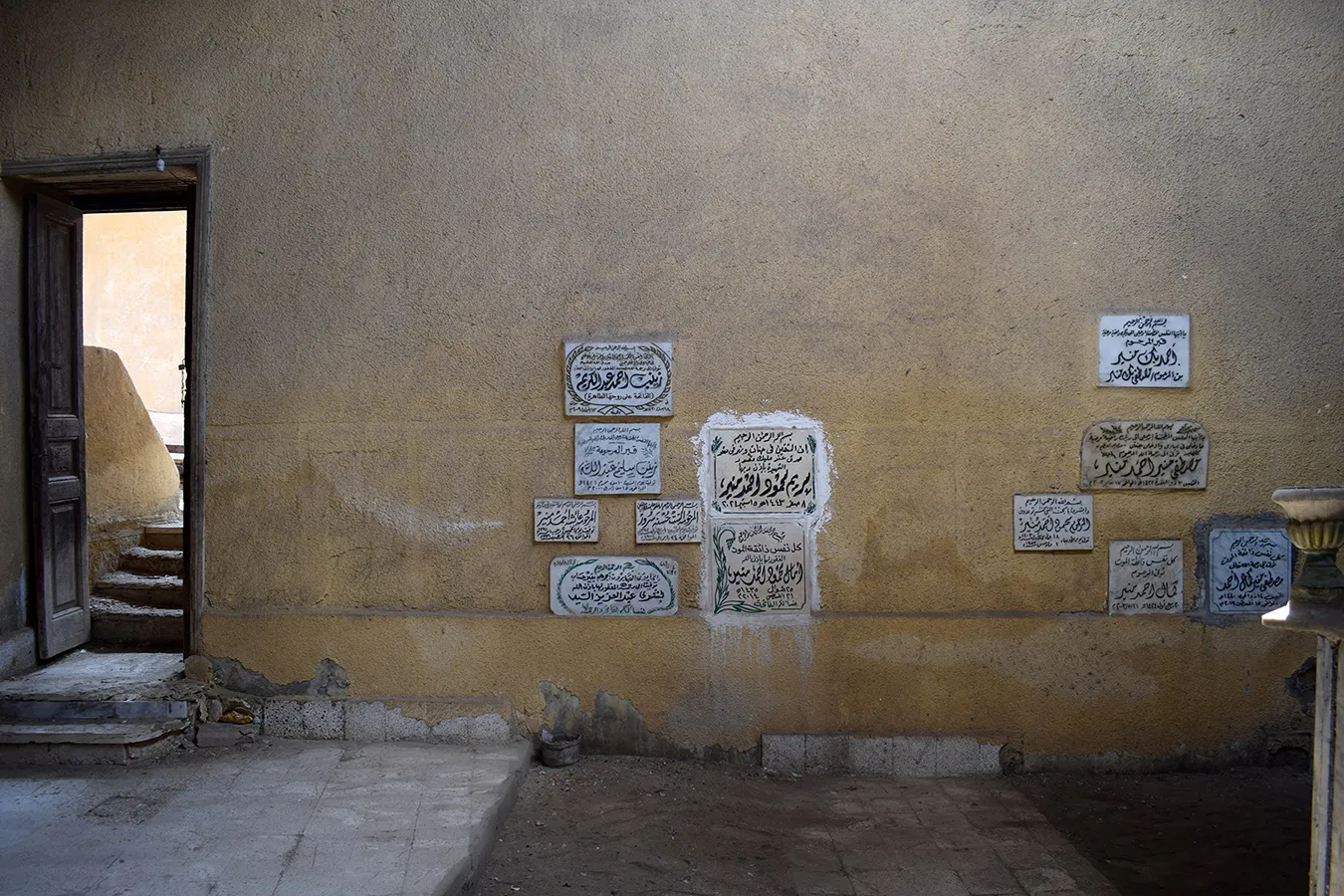
In one of the rooms by the eastern perimeter wall stands a decorated marble cenotaph dated to AH 1348 / AD 1929. In the room are stored marble pieces from other cenotaphs, including shahid stelae, one of a woman called Kalrab married to a man called Gentemkan (definitely not Arabic names), dated to AH 1282 (?) [= AD 1865], another dated 27 Muharram 1287 [= 28 April AD 1870]. A plaque on the courtyard wall next to the door to the chamber commemorates the artist (presumably an actor) Muhammad Hasan Tawfiq who died in AH 1424 / AD 2003.
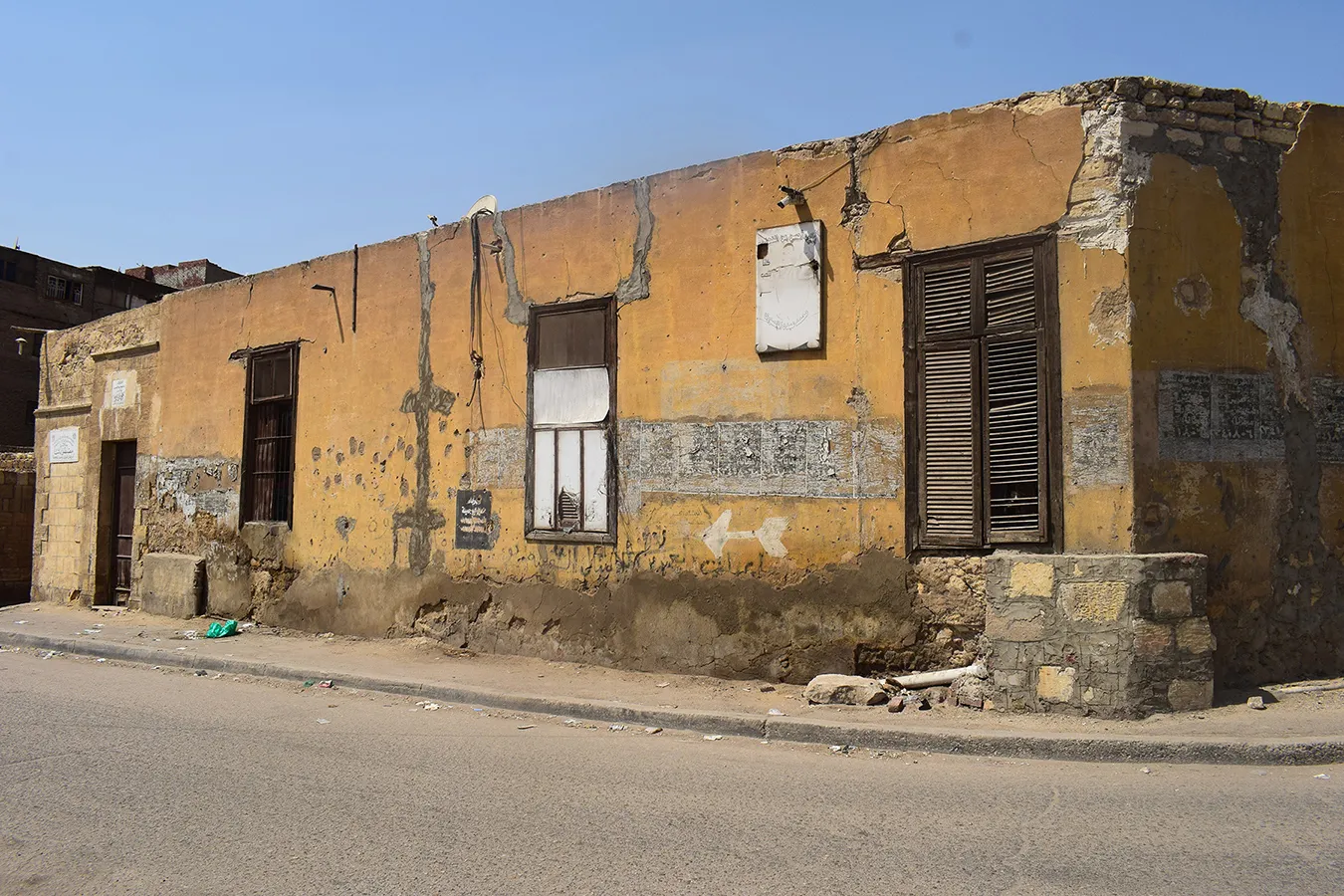
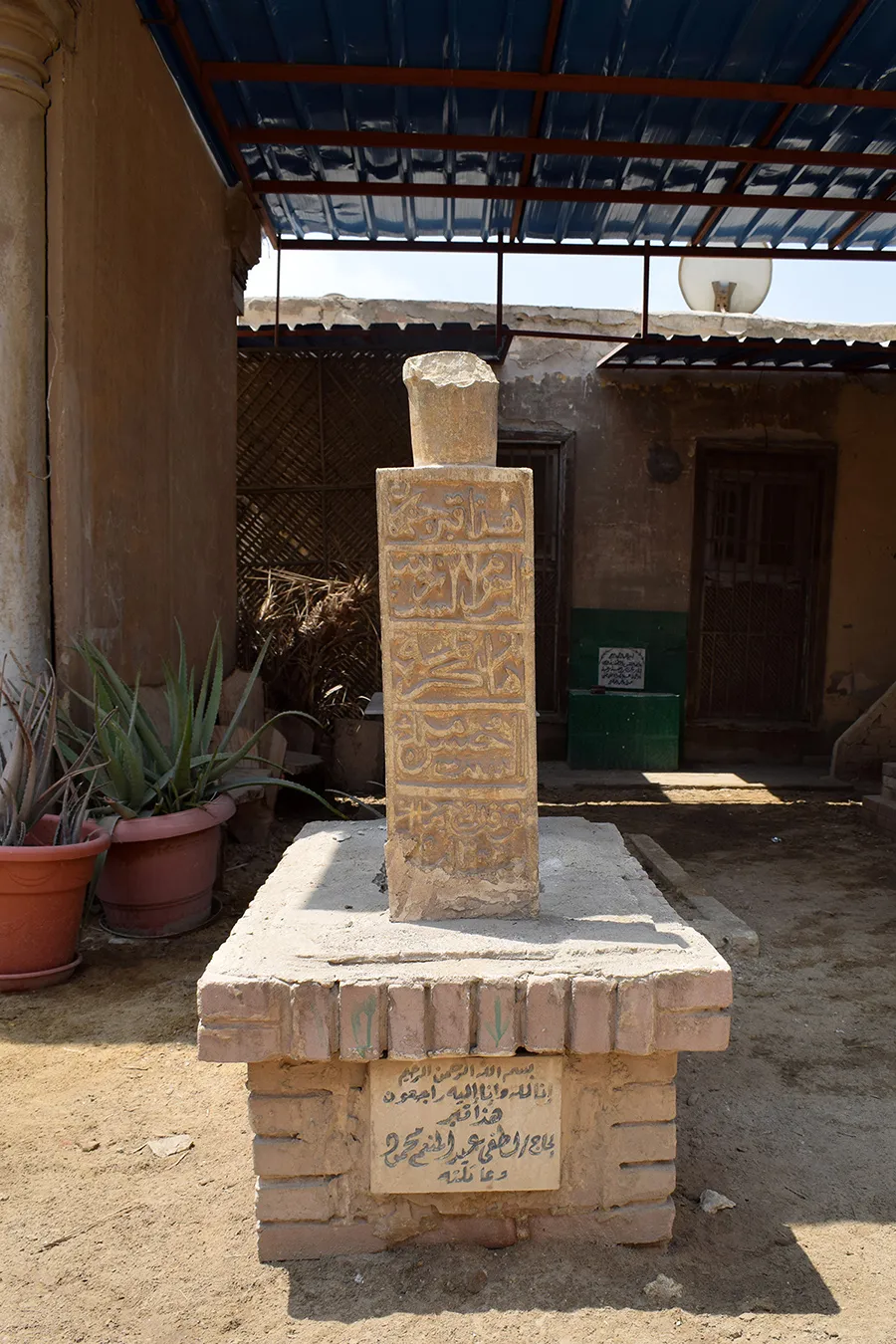
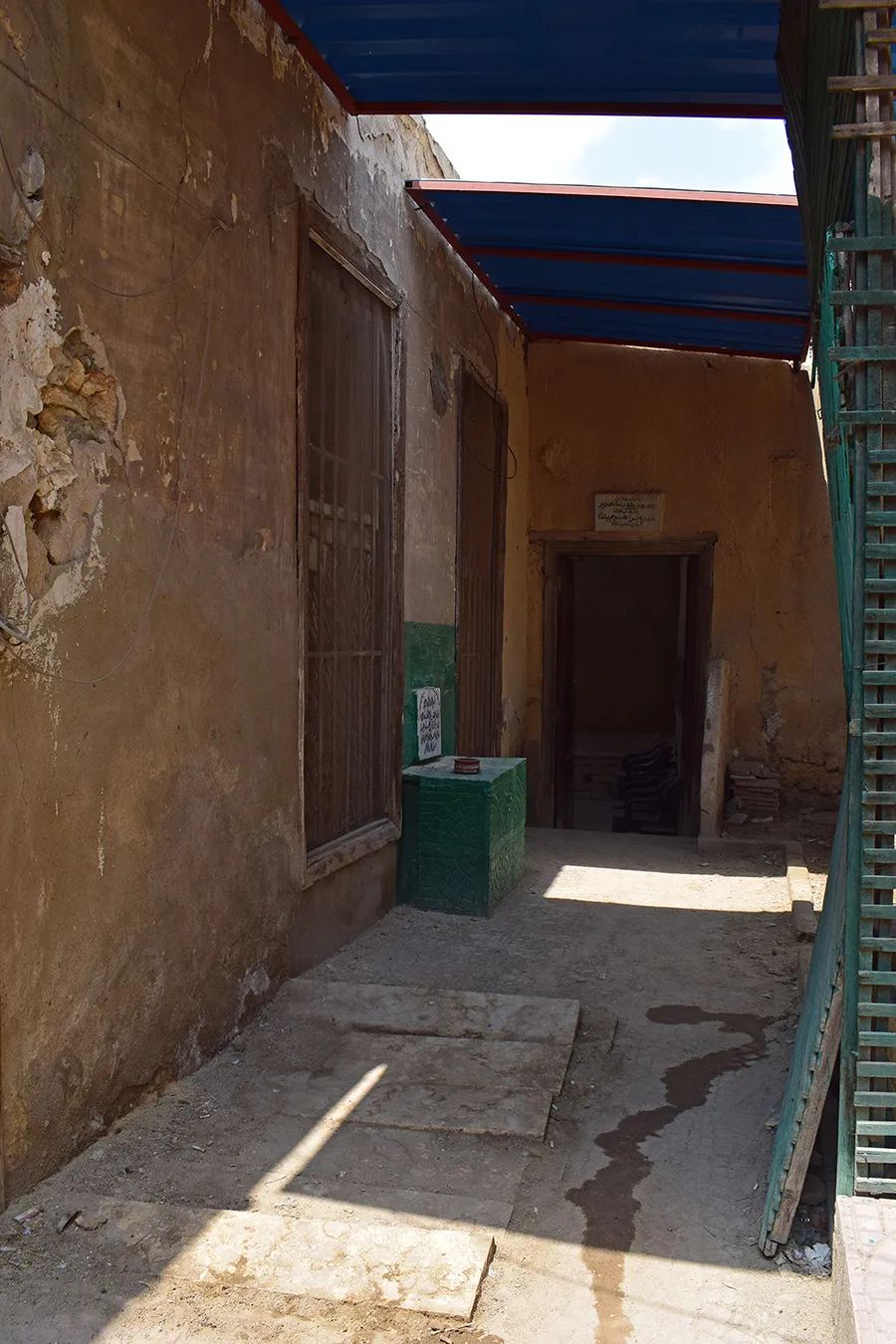
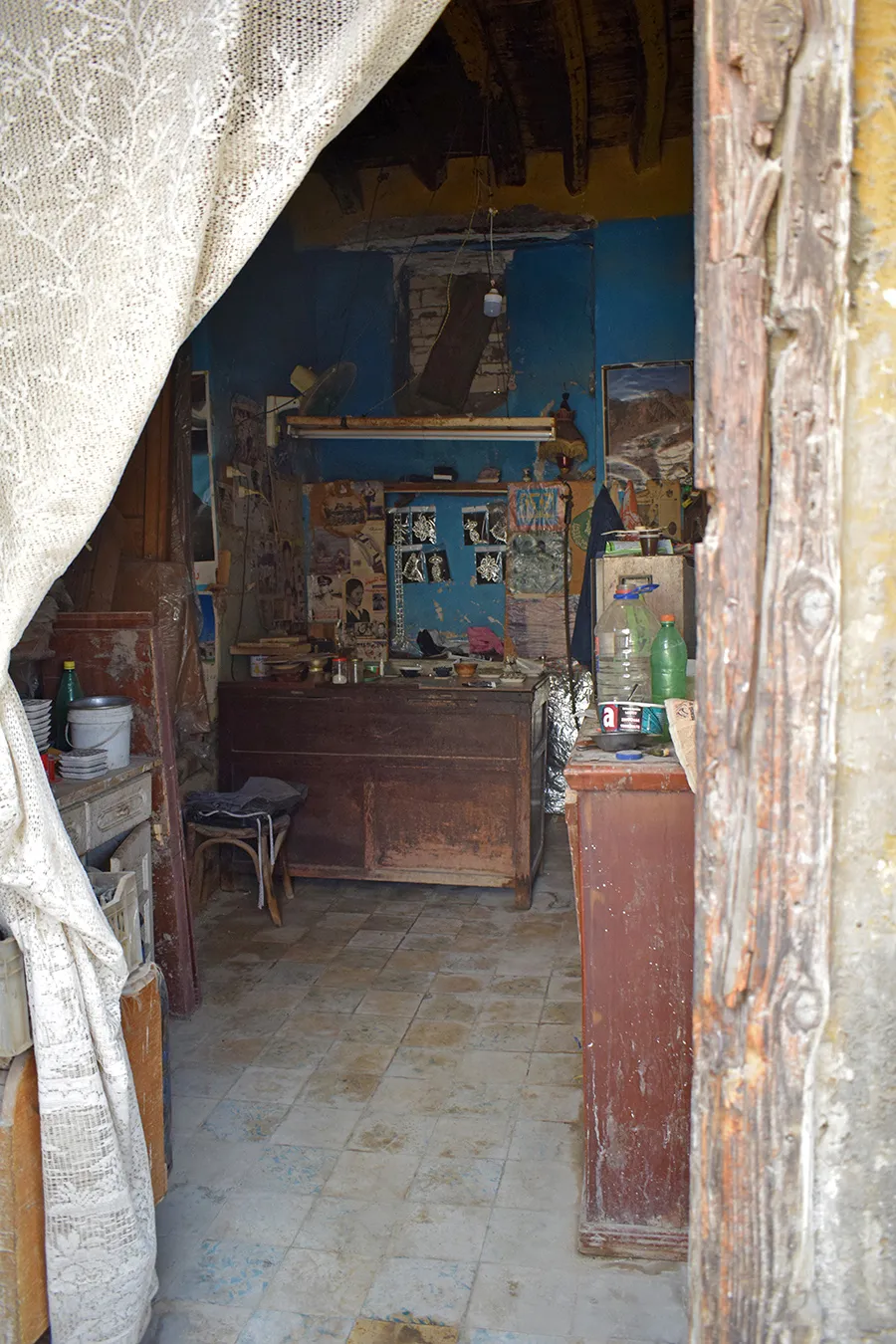
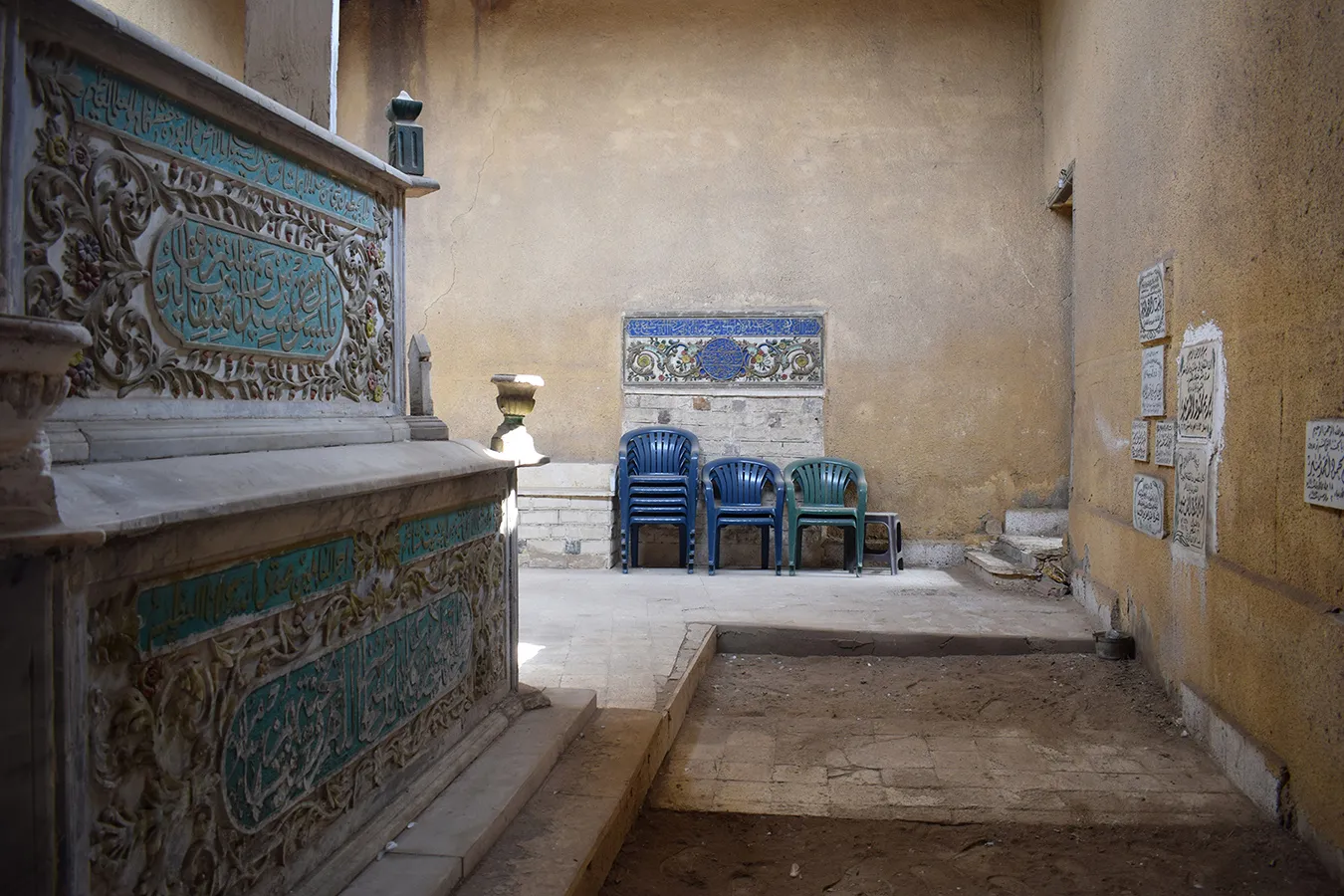
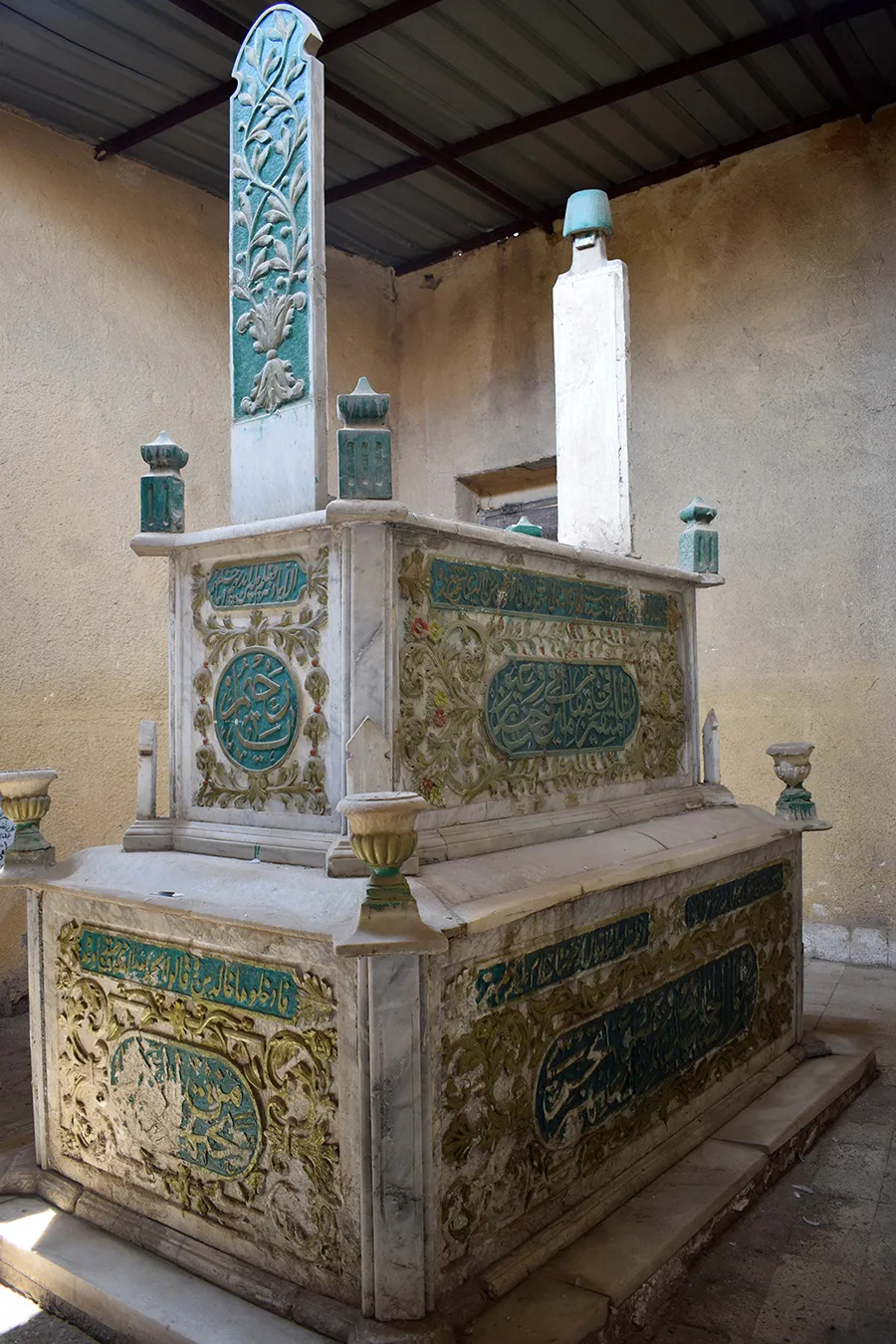
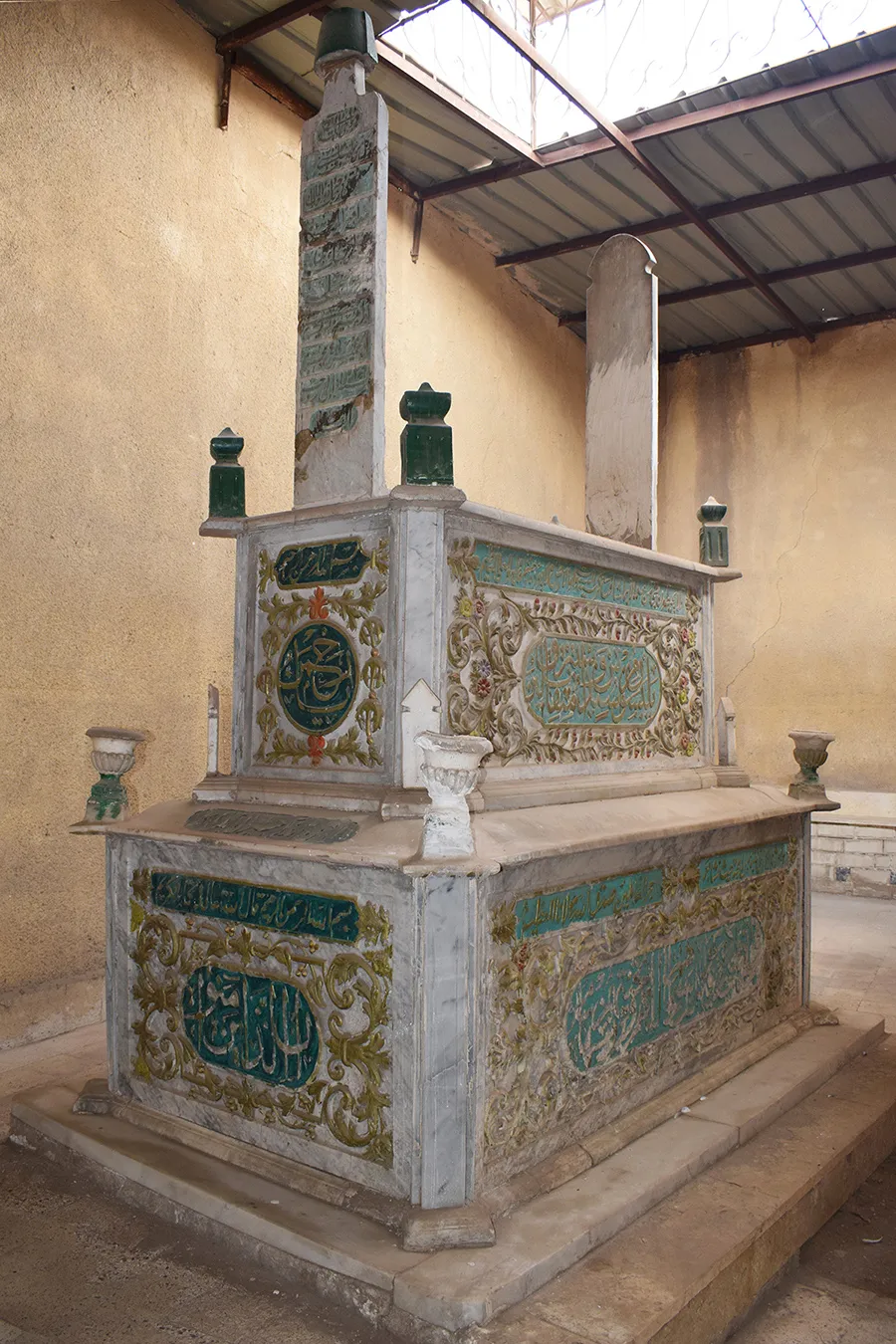
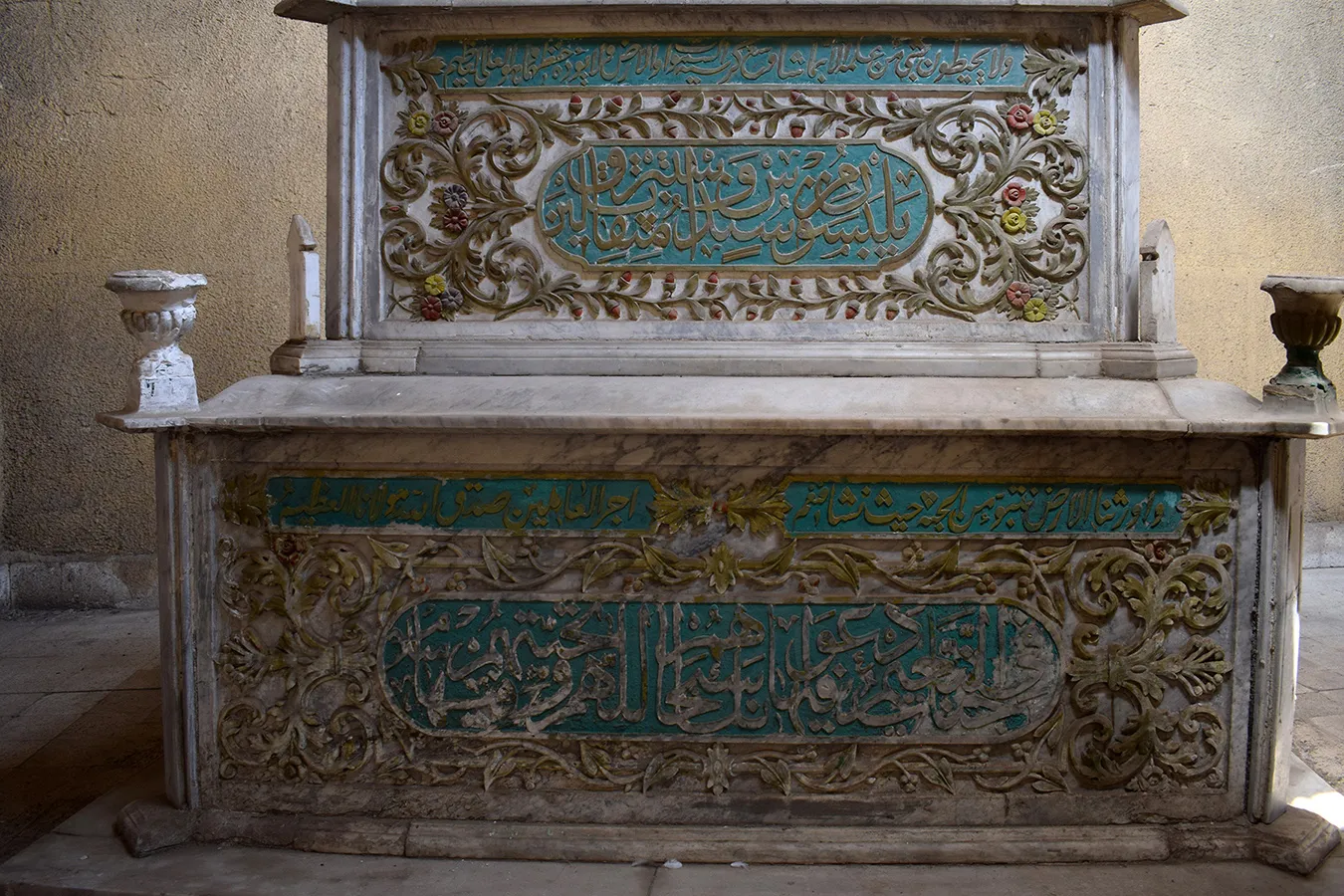
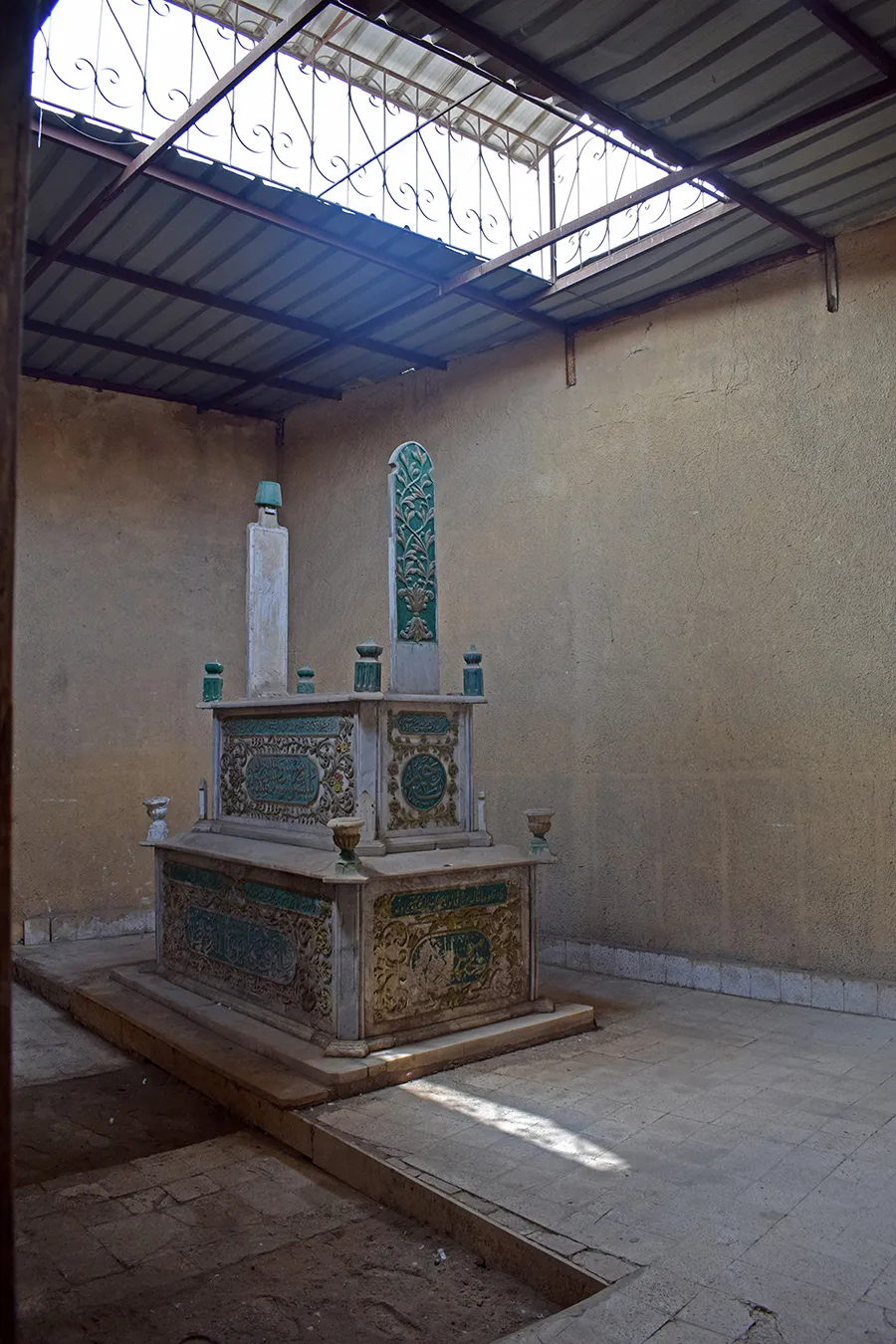
An annexe adjoins the enclosure to the west, with entrances from the street, where it continues the southern façade, and from the courtyard. The very simple structure has been recently covered with a simple roof of corrugated steel sheets on steel beams, with a roof lantern. In the room stands a richly carved marble cenotaph of Muhammad Bey Ibrahim, dated 4 Muharram 1326 AH [= 6 February AD 1908]. On the northern wall is mounted a richly carved marble side panel from another cenotaph, while on the eastern wall are twelve randomly placed commemorative marble plaques for people who died in the late 20th – early 21st centuries, the most recent of 2021.
On the external wall of the annexe are two modern marble plaques commemorating a Mustafa Basha, or Mustafa Bey Munir, a high-ranking officer in service of Ibrahim Pasha
Condition of preservation
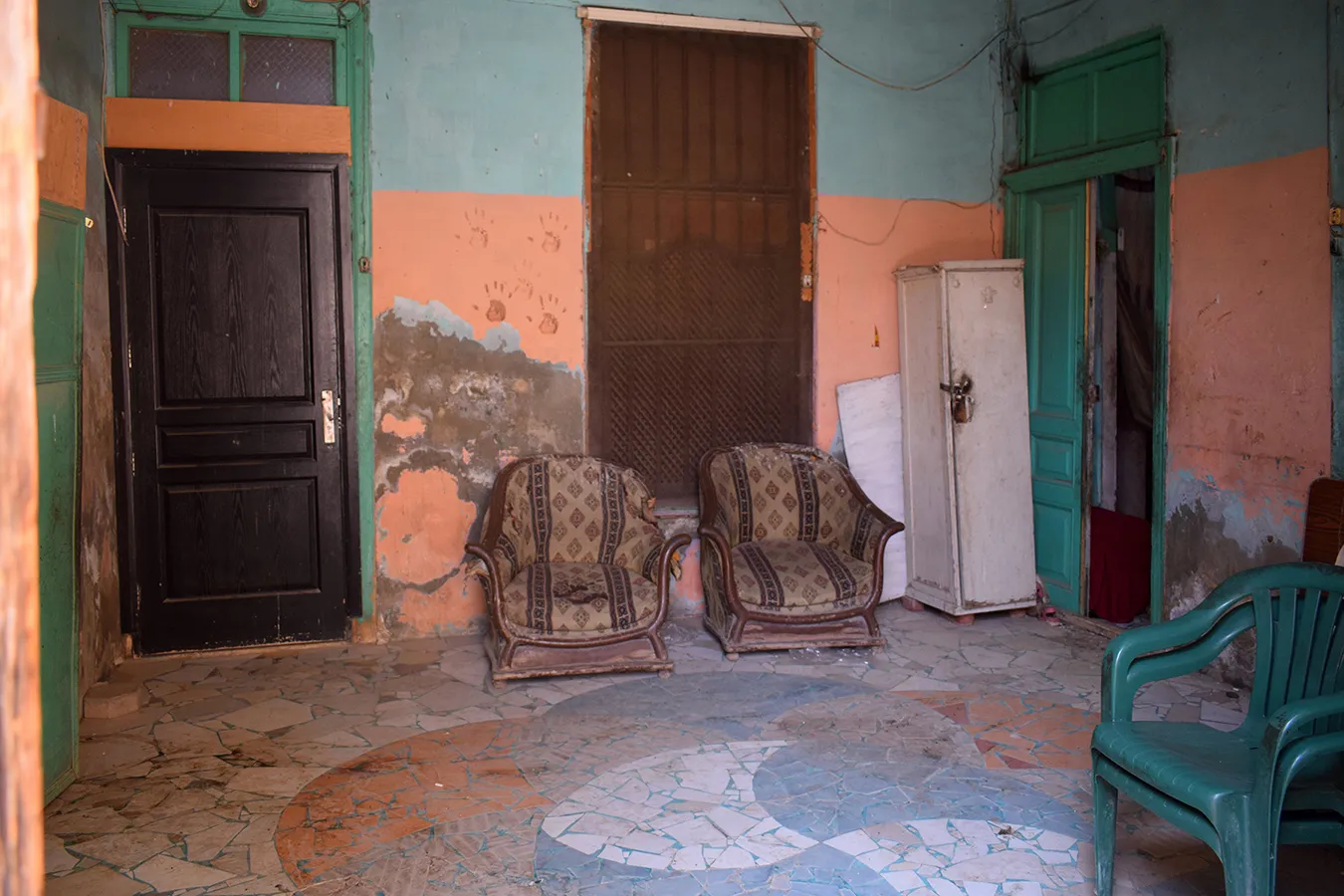
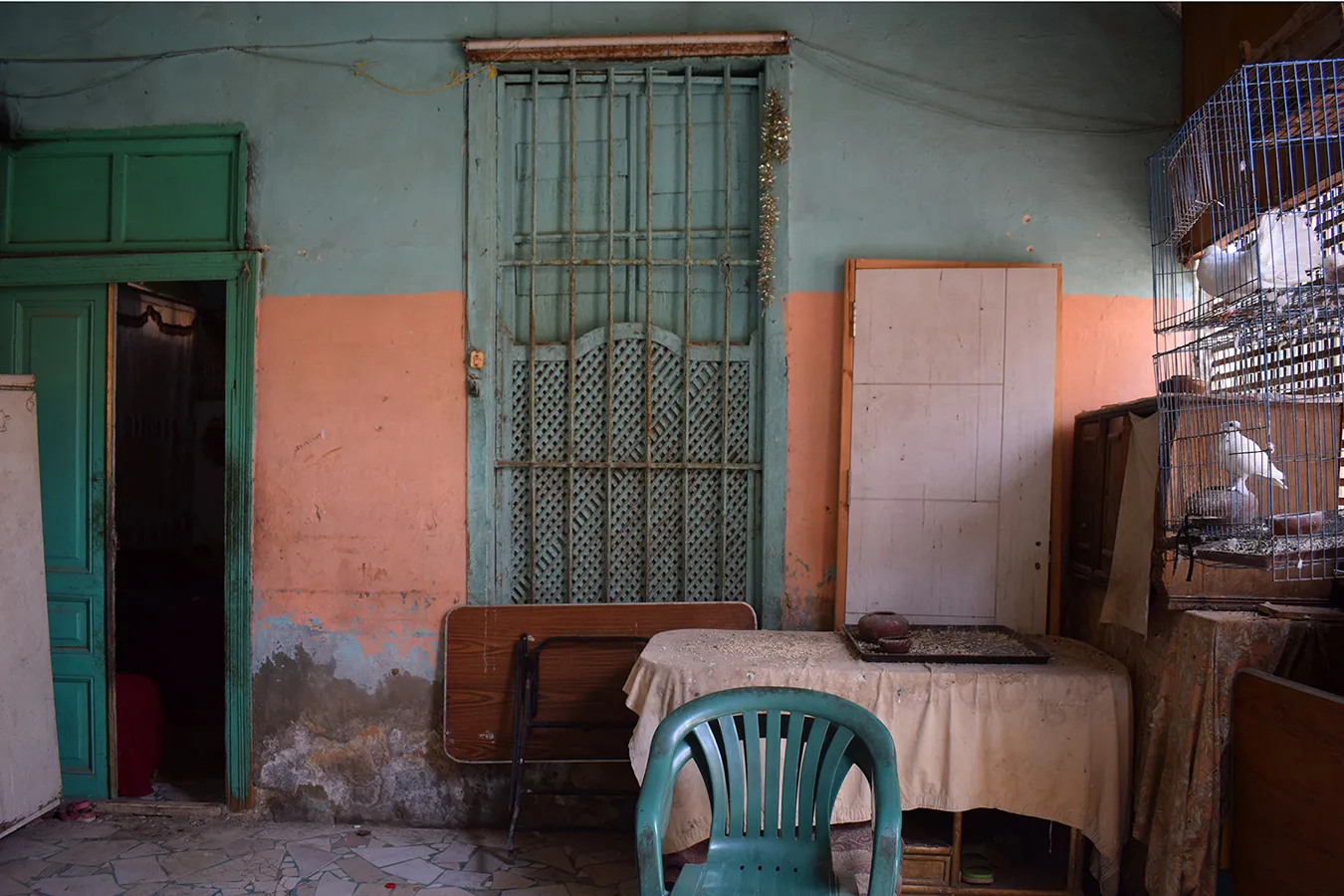
The enclosure is both inhabited and used as a burial place, so it receives rudimentary maintenance. However, it is largely derelict, with damaged and incomplete woodwork, peeling plaster, and damage from rising damp and from rainwater. The arched canopy in the courtyard is walled up.
Information abut the founder, family history, etc.
The dedicatory inscription over the entrance gate mentions “the building/renovation in AH 1277 [= AD 1861] of the funerary enclosure of Lady Khadiga Khanum Brengi Qadim of the time of the late Ibrahim Pasha, wali of Egypt”. (Khadiga is the name; khanum, brengi, and qadim are Ottoman honorific titles for women of high status in the ruling family.) The titles in the inscription, and the texts on cenotaphs in the enclosure clearly indicate that Lady Khadiga was a royal consort, the wife of Ibrahim Pasha. The inscription on a cenotaph dated AH 1348 / AD 1929 for Khadiga’s servant women indicates that Khadiga was a manumitted slave.
A shahid stela stored in the eastern burial chamber and dated to AH 1282(?) [=AD 1865] also commemorates a woman whose husband was in the service of Ibrahim Pasha.
The modern inscription plaques on the western annexe state that the person buried therein is Mustafa Basha, or Mustafa Bey Munir, who was the Great Yarawan to Ibrahim Pasha (a high Ottoman military post, an aide-de-camp), although at present, nothing inside relates to the name or suggests the date of 1848.
Ibrahim Pasha was the eldest son of Muhammad ‘Ali, the ruler of Egypt 1805-1848. He had a brilliant military career during the reign of his father, and succeeded him as a wali (viceroy) of Egypt in 1848, albeit only for four months before his own death (Wucher King, 343-5)
References in published/primary sources
• Wucher King, Joan Historical Dictionary of Egypt, American University in Cairo Press 1984, p. 343-5
- Field recording by
- Hadeer Ahmad and Radwa al-Sayid
- Date recorded
- August 25, 2022
- Data entered by
- Yusuf Yassir
- Date entered
- May 2, 2024