
Unit No15
Muhammad Qasim Bey al-Helu
|
Coordinates of the main entrance |
30.044053N - 31.273717E |
|
Attribution |
Muhammad Qasim Bey al-Helu |
|
Higri (AH)Dates as given in the Inscription |
|
|
Miladi (AD)Dates as given in the Inscription |
|
|
Inscription Contemporary with the building? |
Yes |
|
Multiple date(s) In the inscription? |
Yes |
|
Assumed Date |
Ca AH 1325 |
|
Based on |
(date on the marble cenotaph) cenotaph |
|
Original Use |
Funerary enclosure |
|
Current Use |
Funerary enclosure |
|
Overall condition |
Poor/Ruin |
Features of unit 15
| Present | Count | Material | Comments (see description for details) | |
|---|---|---|---|---|
| Free standing structure | No | |||
| Walled enclosure | Yes | stone | ||
| Rooms by the perimeter wall | Yes | 6 | stone | |
| Freestanding structure(s) in enclousure | No | |||
| Dome over the tomb chamber | No | |||
| Neo-Mamluk architectural decoration | No | |||
| Garden layout | Yes | Greenery in courtyard, no formal layout | ||
| Sabil(s) | No | |||
| Wall fountain(s) | No | |||
| Canopy on columns / pillars | No | |||
| Carved marble cenotaph(s) | Yes | 1 | 1 | |
| Decorated limestone tomb-markers | No | |||
| Decorated gateway | Yes | 2 | stone | |
| Decorative door-leaves | No | |||
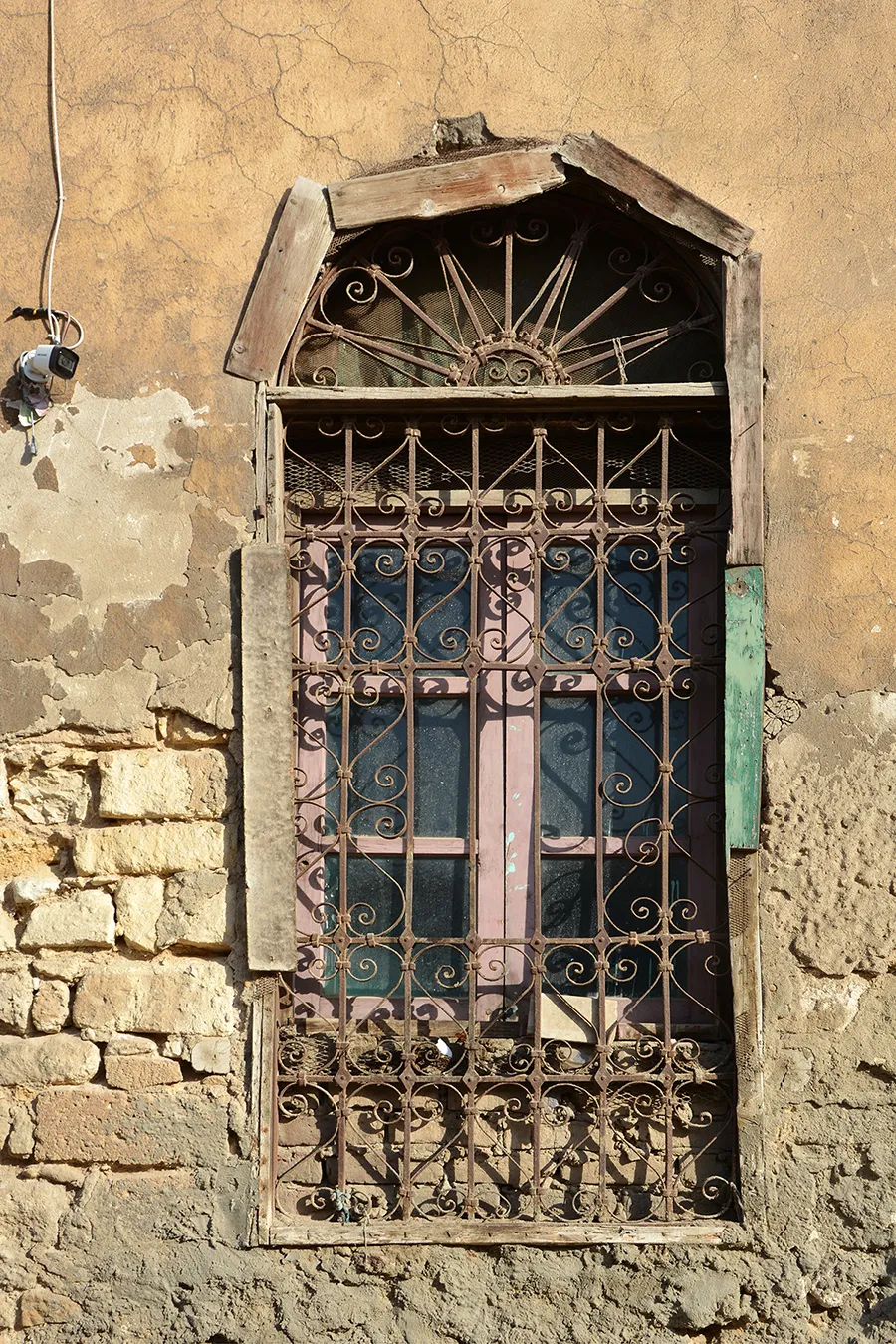
| Decorative window grilles | Yes | 8 | iron | |
| Decorative shutters | No | |||
| Painted ceiling(s) | No | |||
| Decorative paving(s) | No |
Unusual or unique features
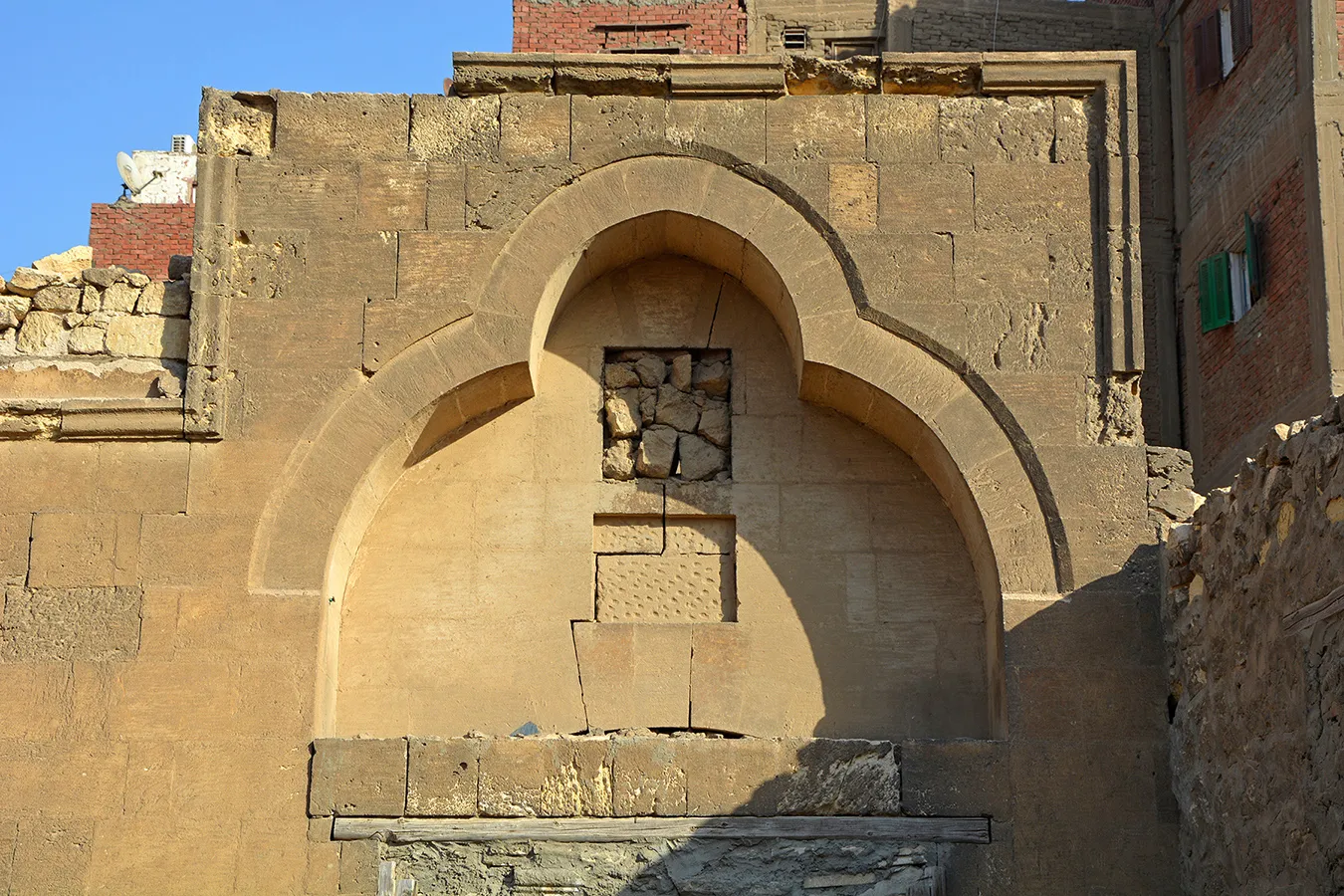
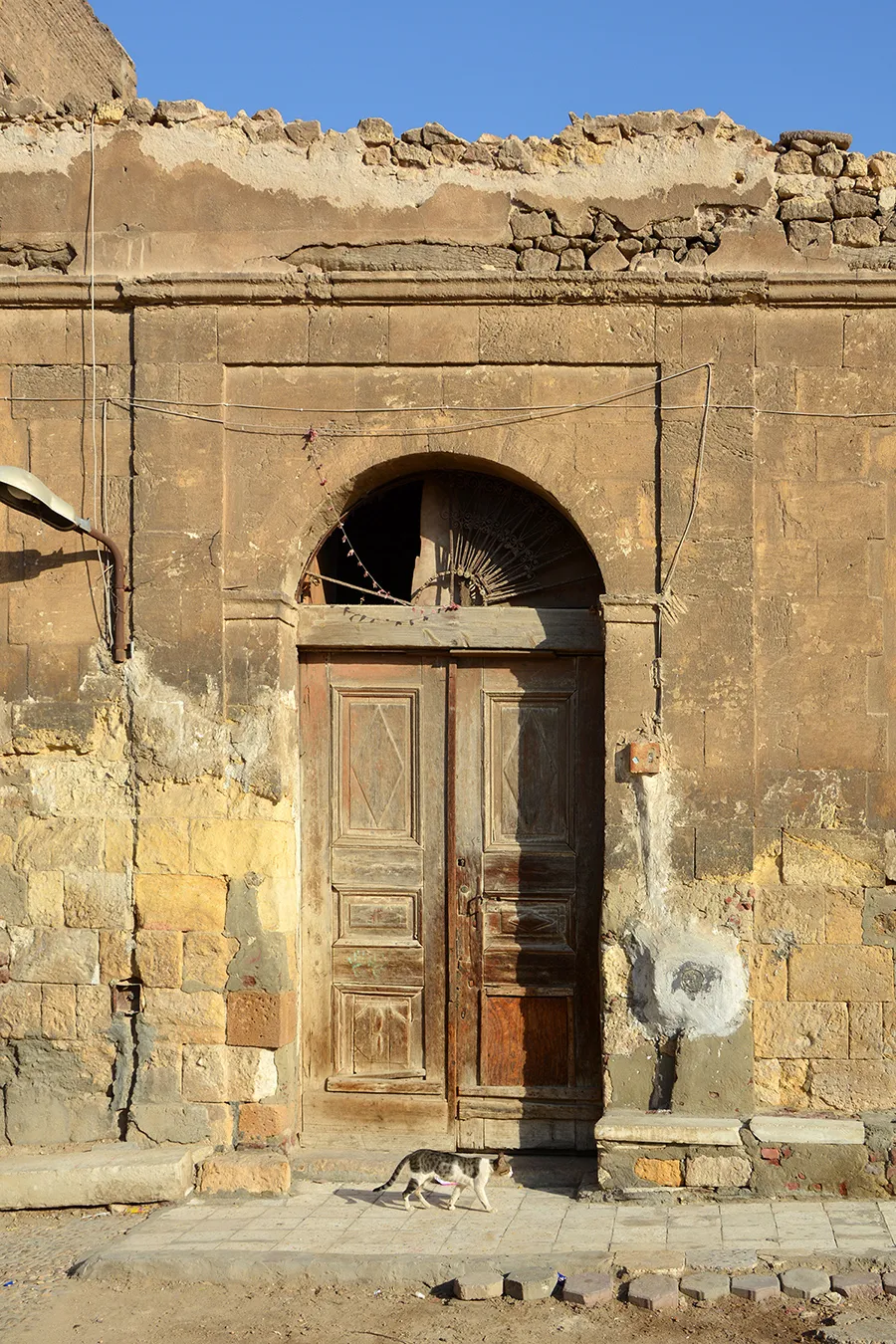
• A trilobe portal of very simple form combined with good craftsmanship.
Description (The direction towards Mecca (Qibla) is described as eastern and other directions are named accordingly)
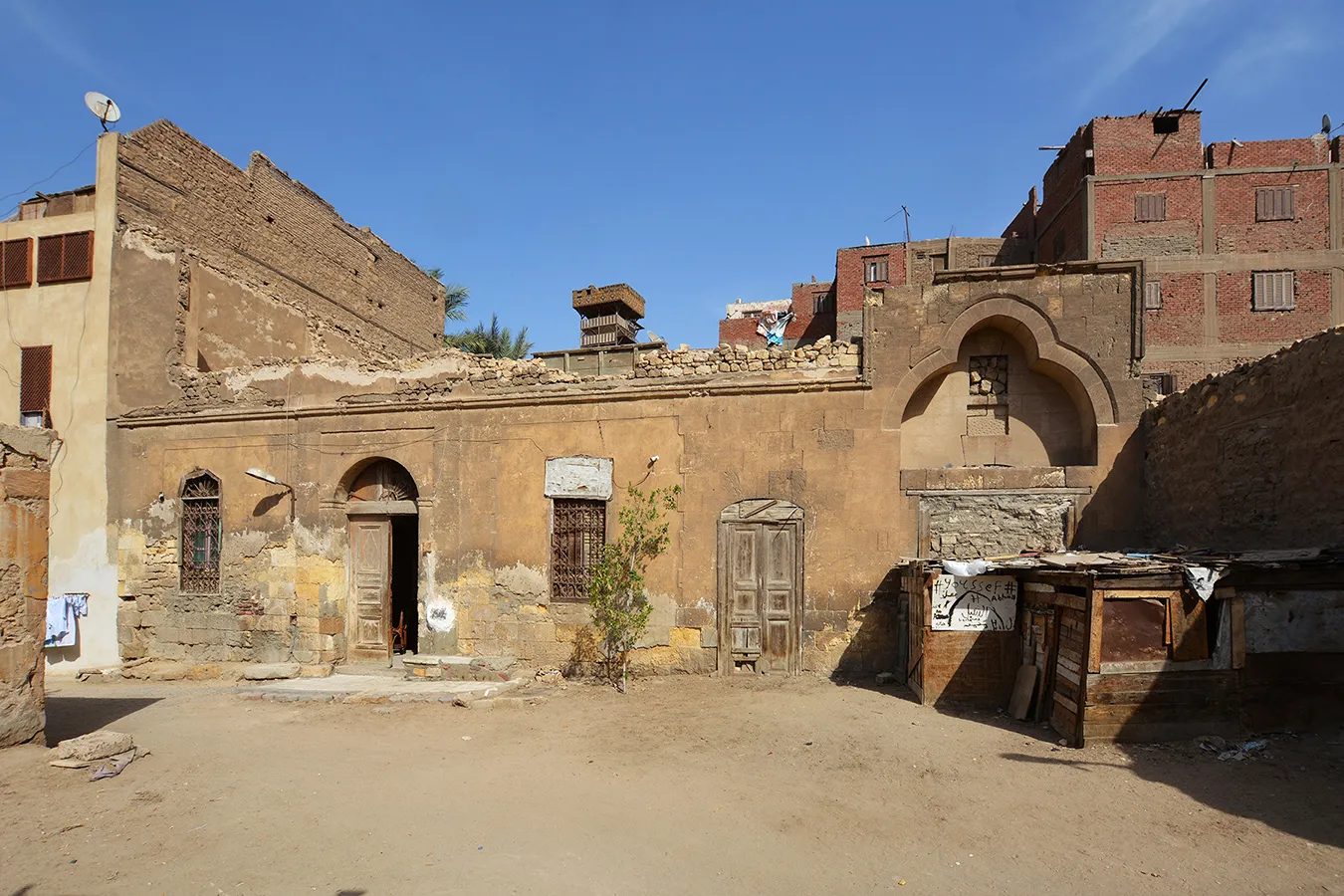
The existing structure is the ground floor of a building originally at least two storeys tall. It is located immediately west of the area that was a part (probably a service area) of Sultan Qaitbey’s large funerary complex of AD 1474 and that was later mostly built up with residential buildings. To the north of the unit is a nondescript building from the first half of the 20th century that is the last phase in remodelling and replacing the building within Sultan Qaitbey’s complex that included the back entrance to the personal-use part of the complex. (The gate is still preserved.) To the south are small open funerary enclosures.
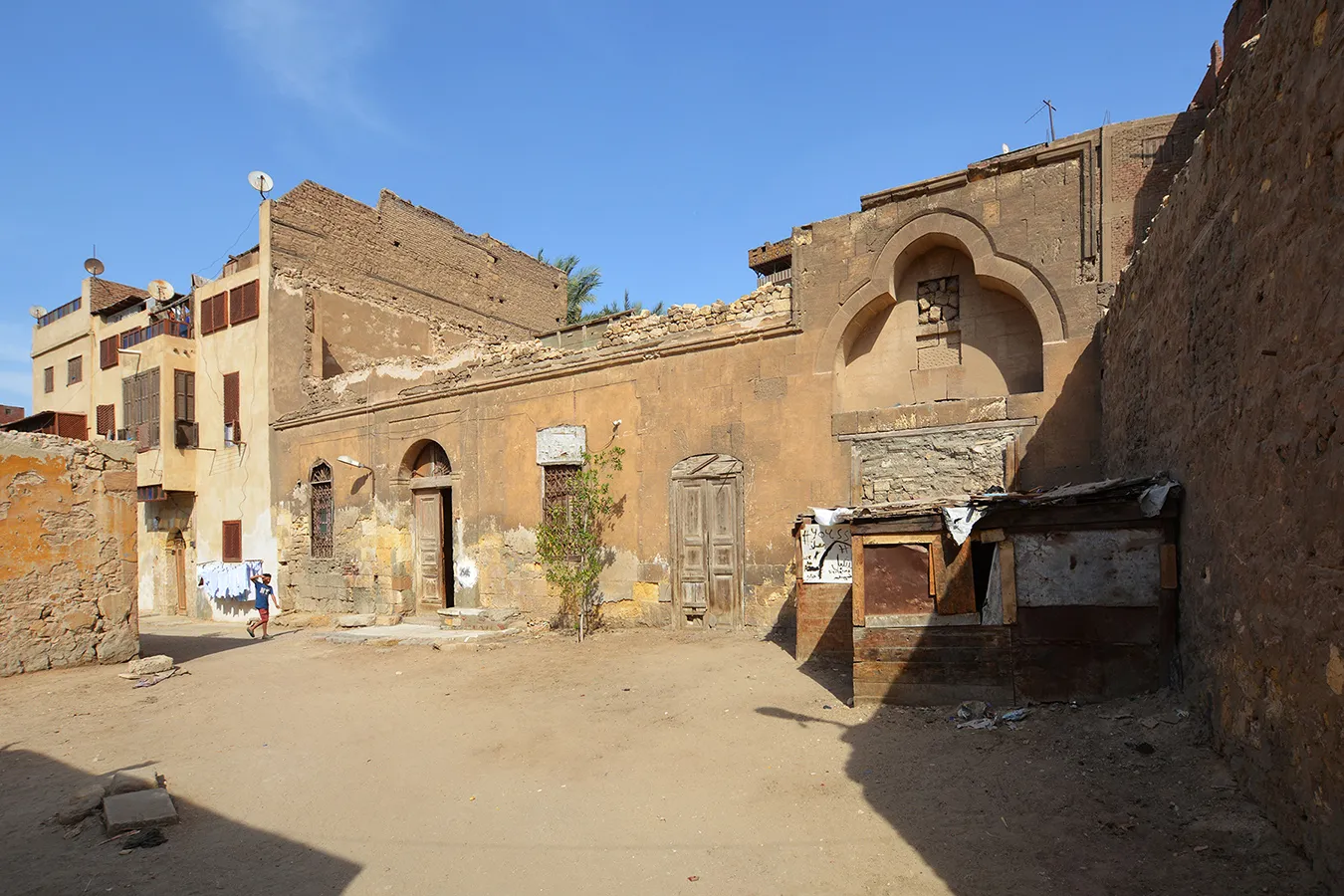
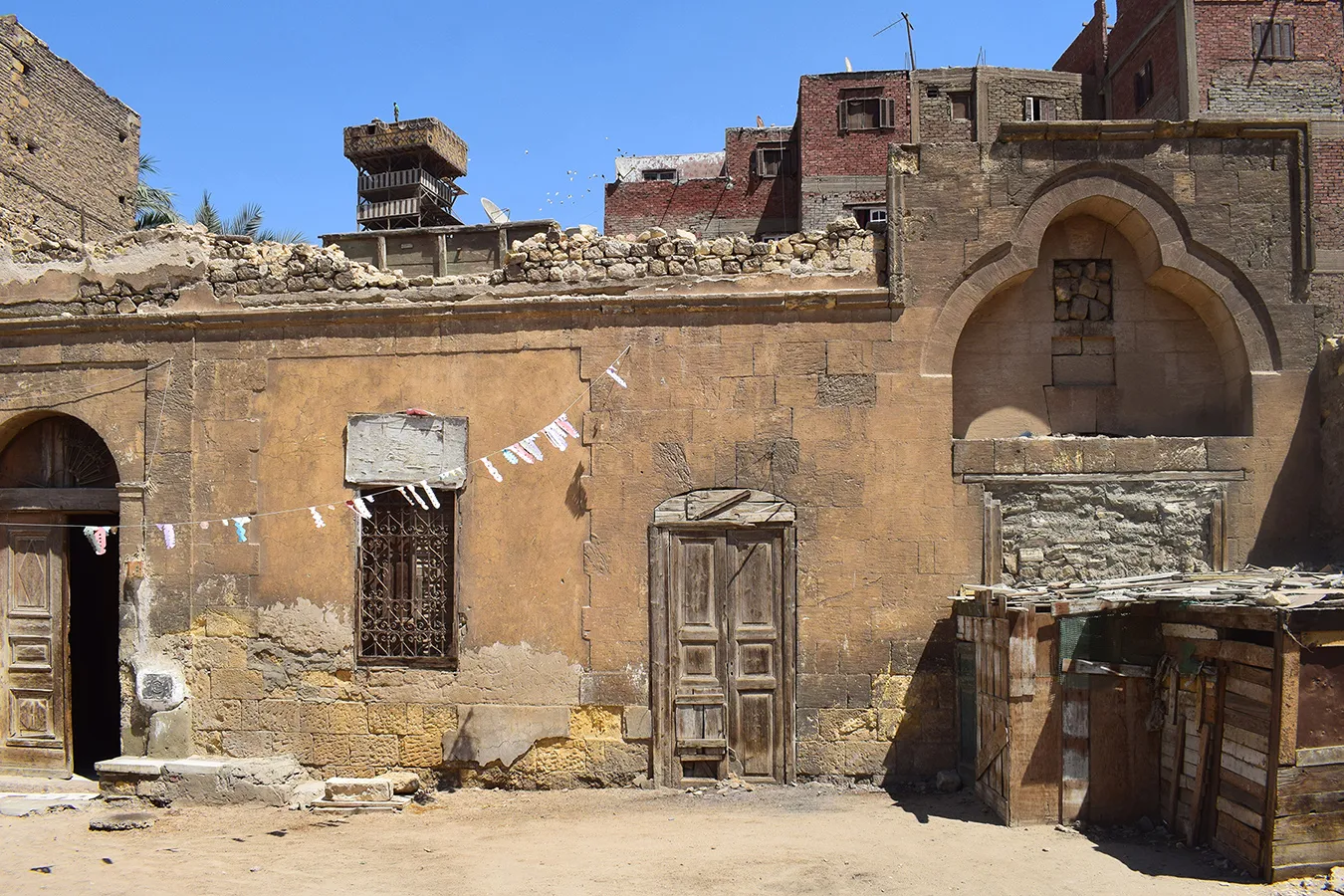
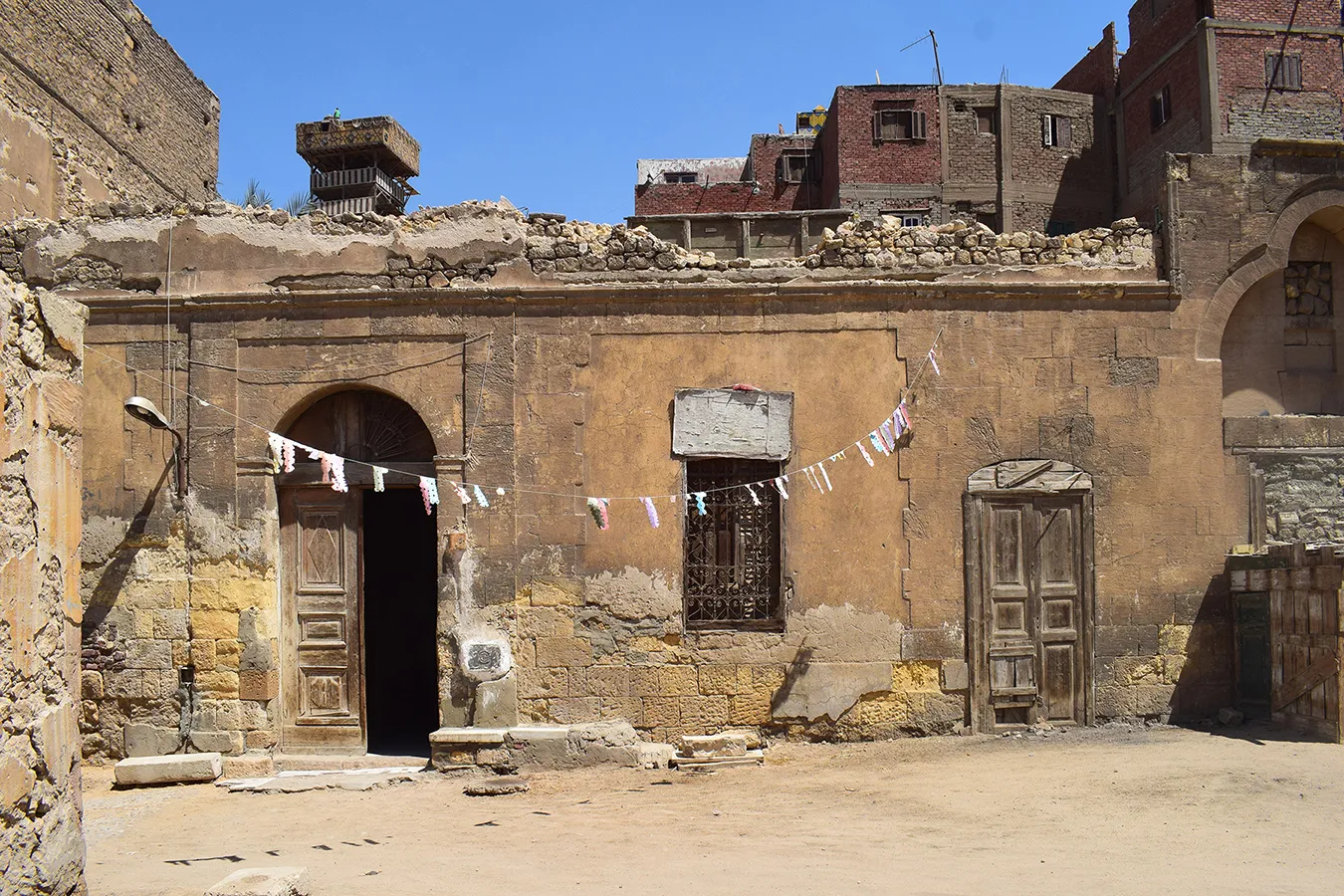
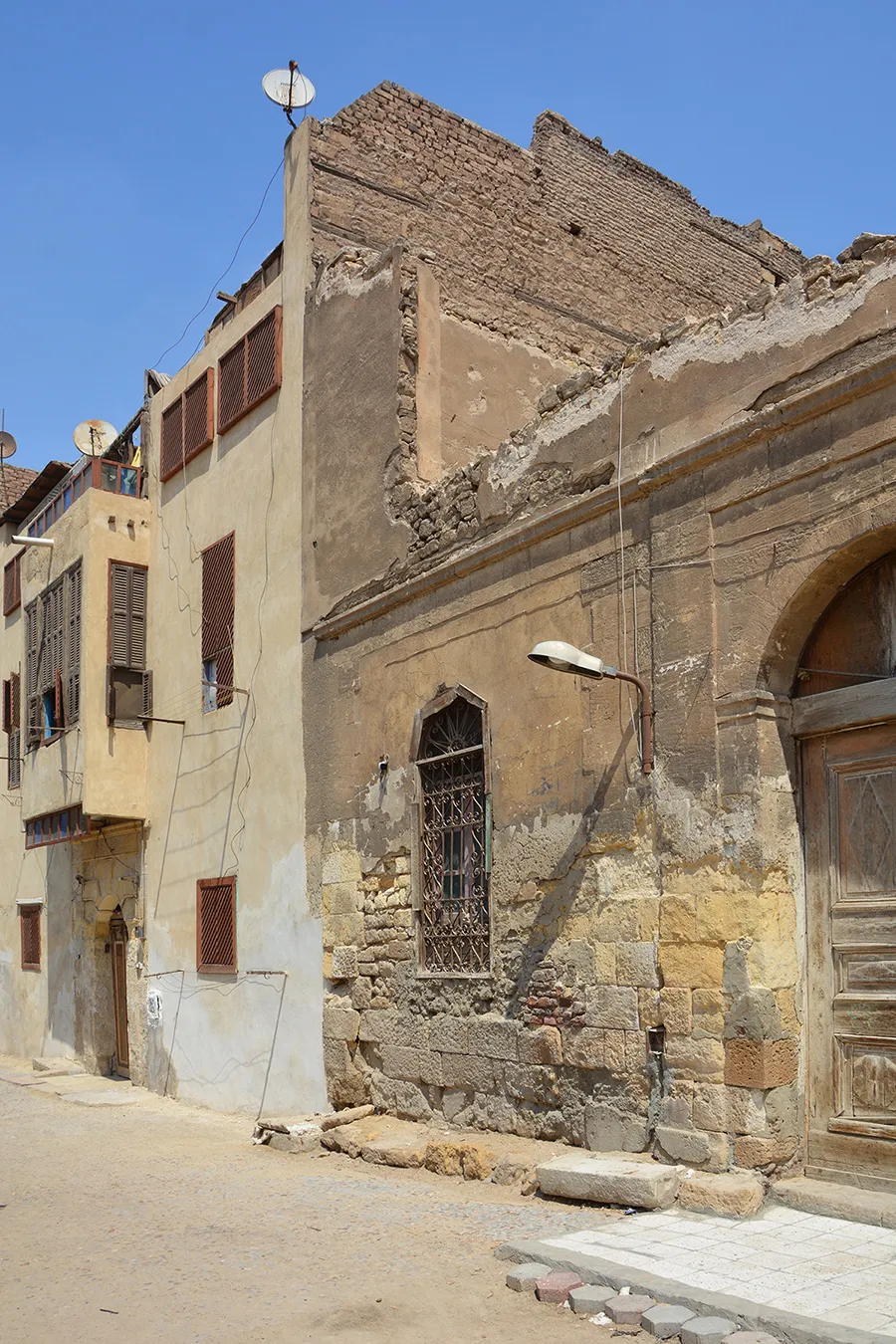
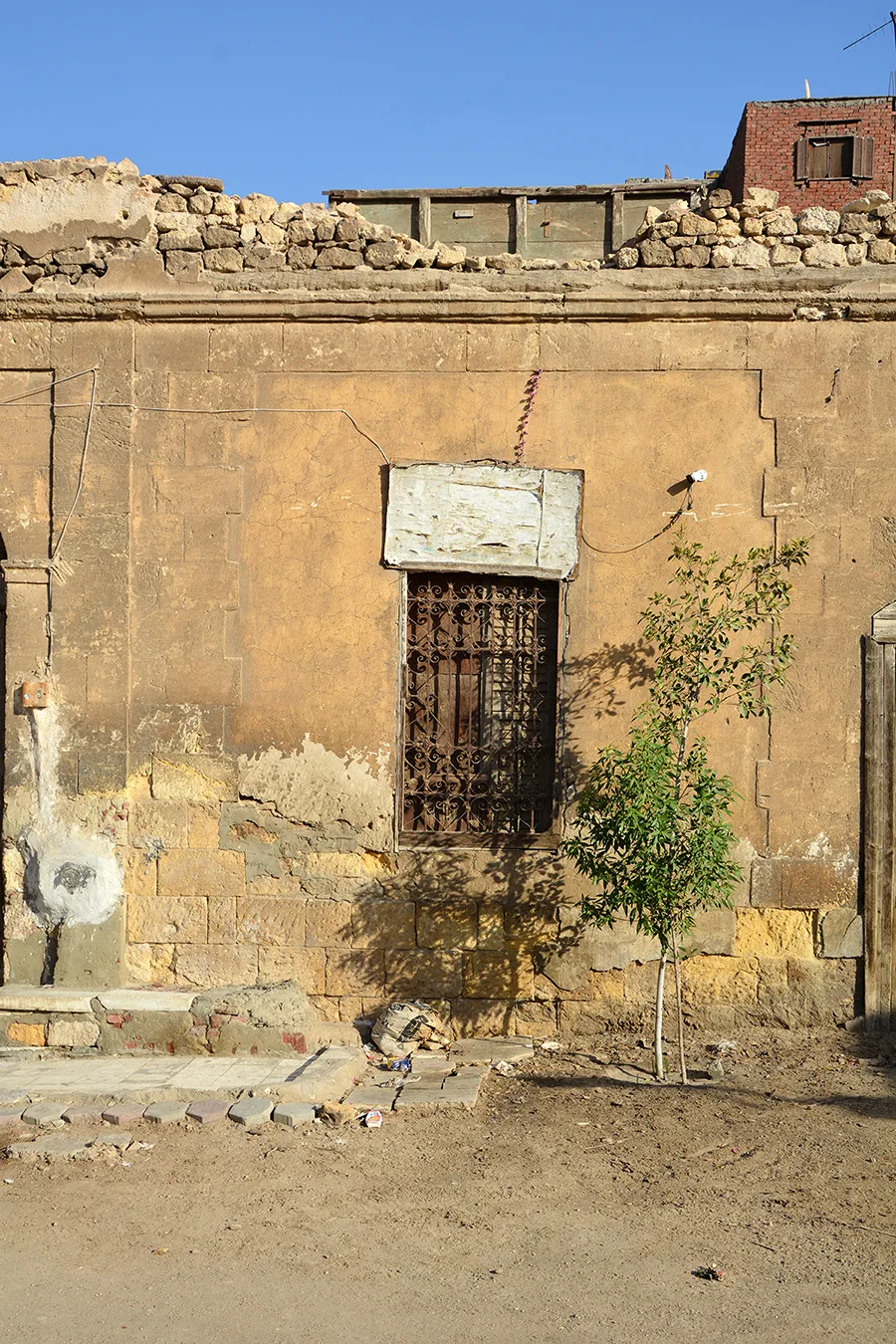
The main (western) façade faces a street that was a space outside the Sultan’s complex. There are three entrances in the facade. The northern one is a modestly decorated gate with a rounded arch that leads to an entrance hall. The windows of the rooms on either side of the hall and the gate form a symmetrical tripartite northern part of the facade. The windows, which are plain and covered with semi-circular arches, and the arch above the door are fitted with decorative wrought-iron grilles of patterns unrelated to Islamic art. Above, scant remnants of the upper floor wall are preserved, with the side of the northern window clearly visible. This part of the façade corresponds to what is now the funerary unit of Qasim Bey; the rooms behind the southern part of the uniformly built façade are currently used by different owners and accessible from behind, with front entrances permanently blocked.
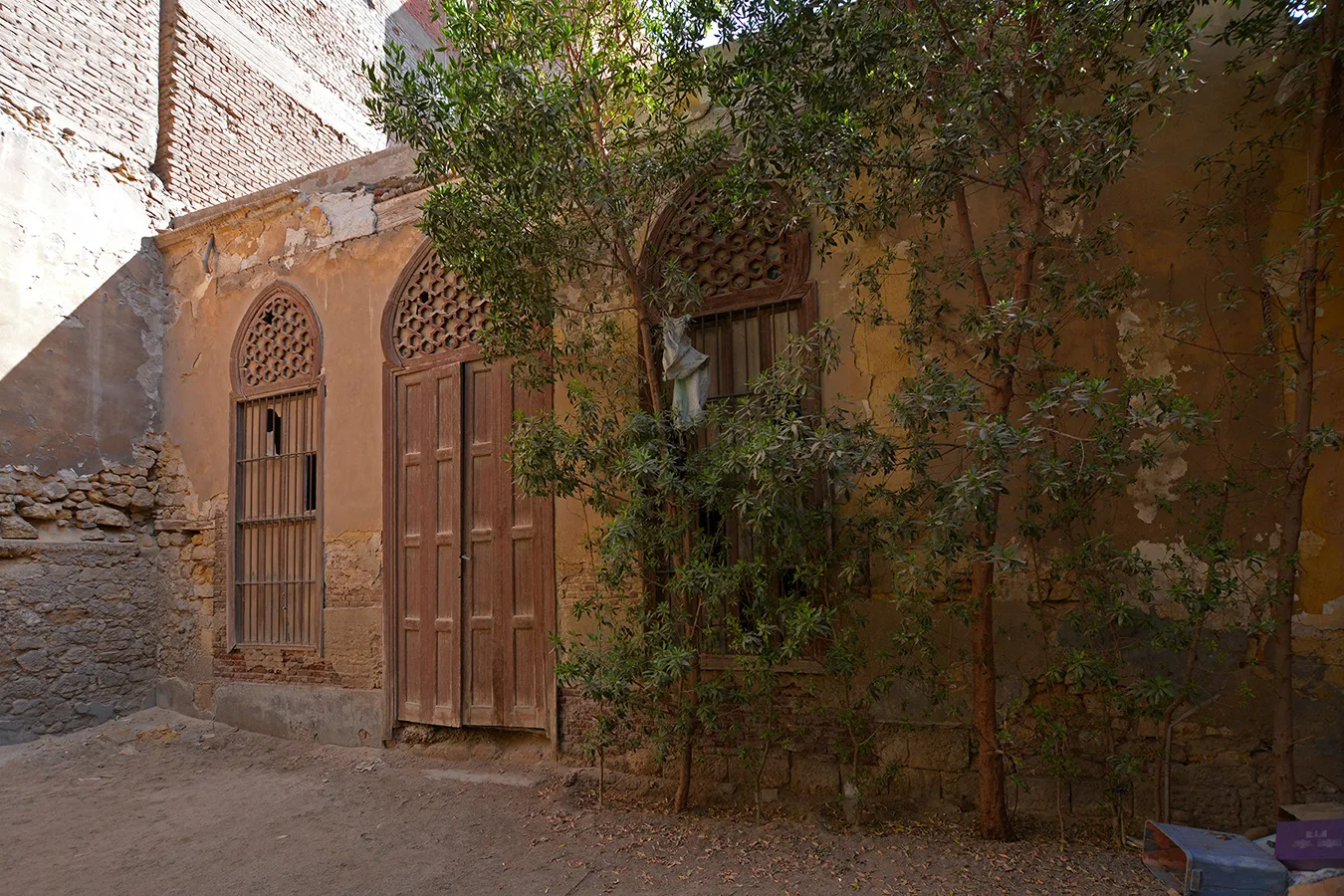
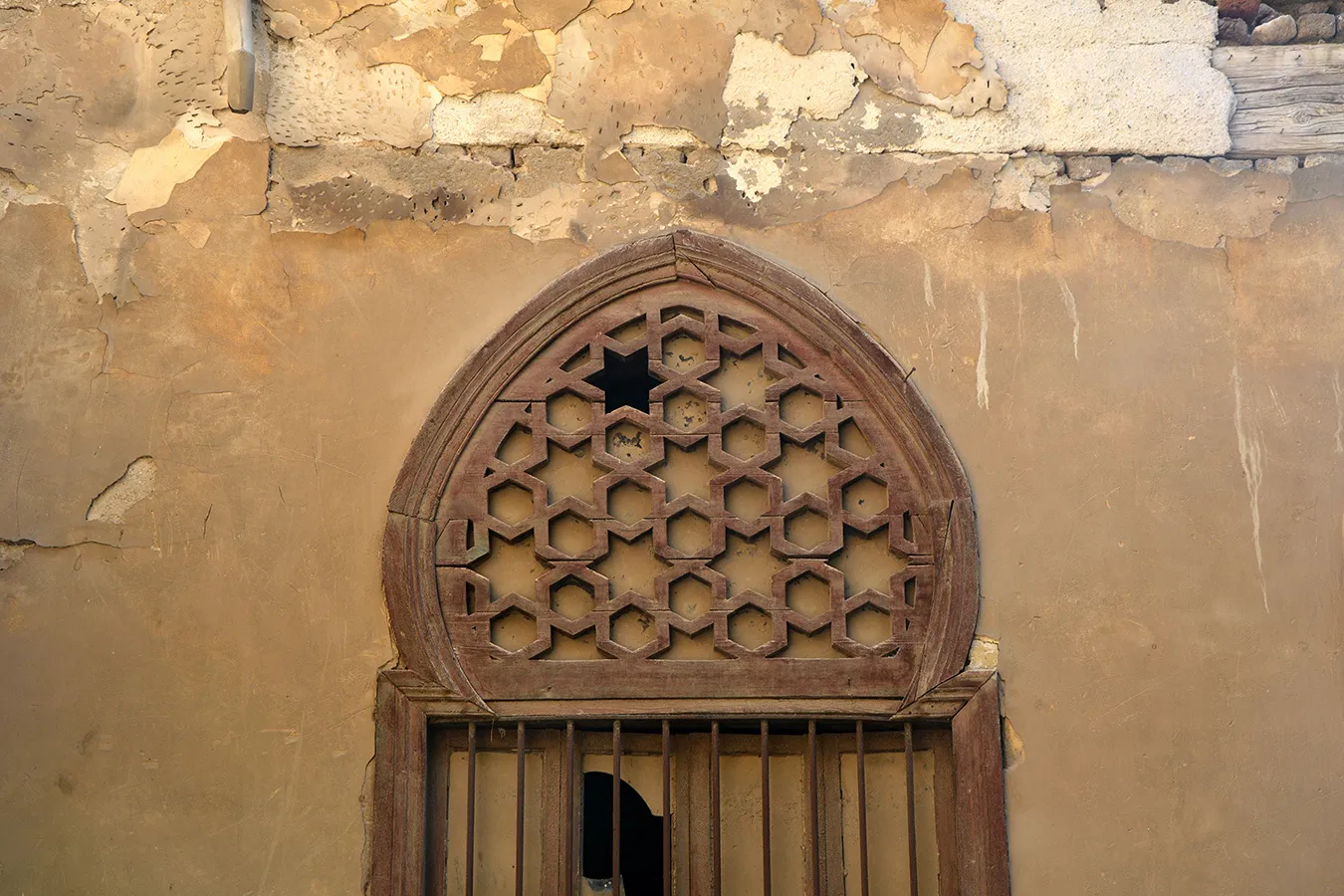
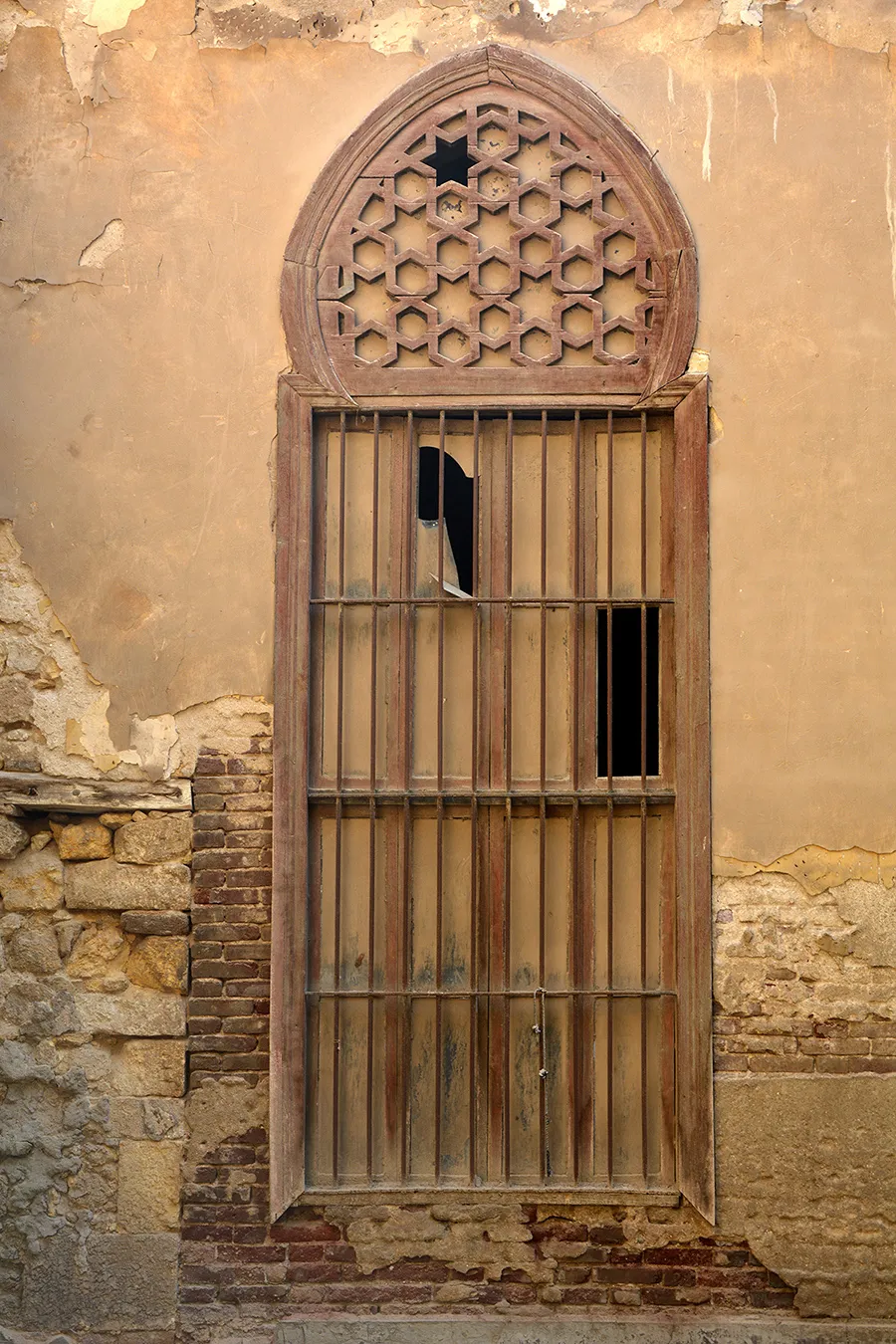
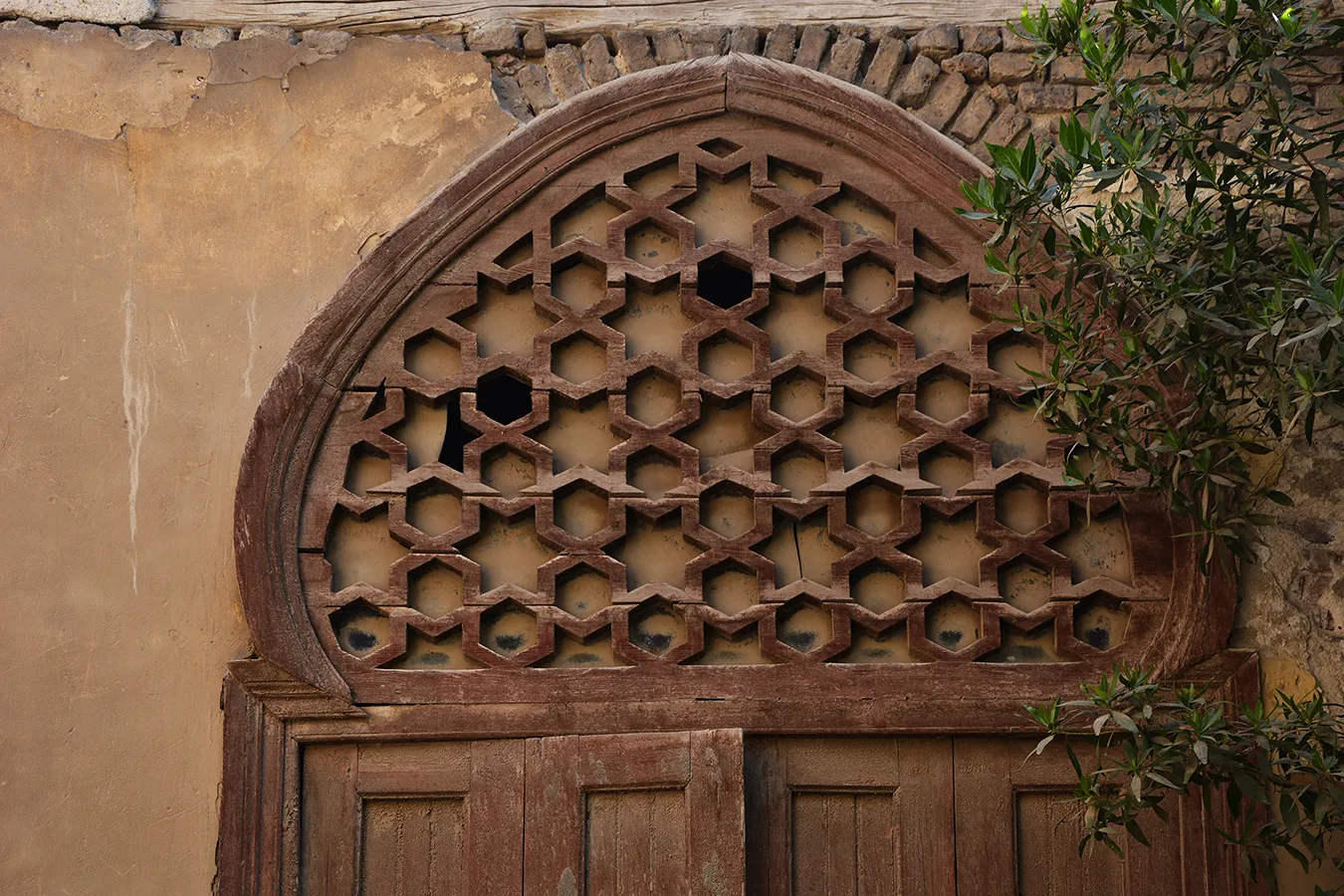
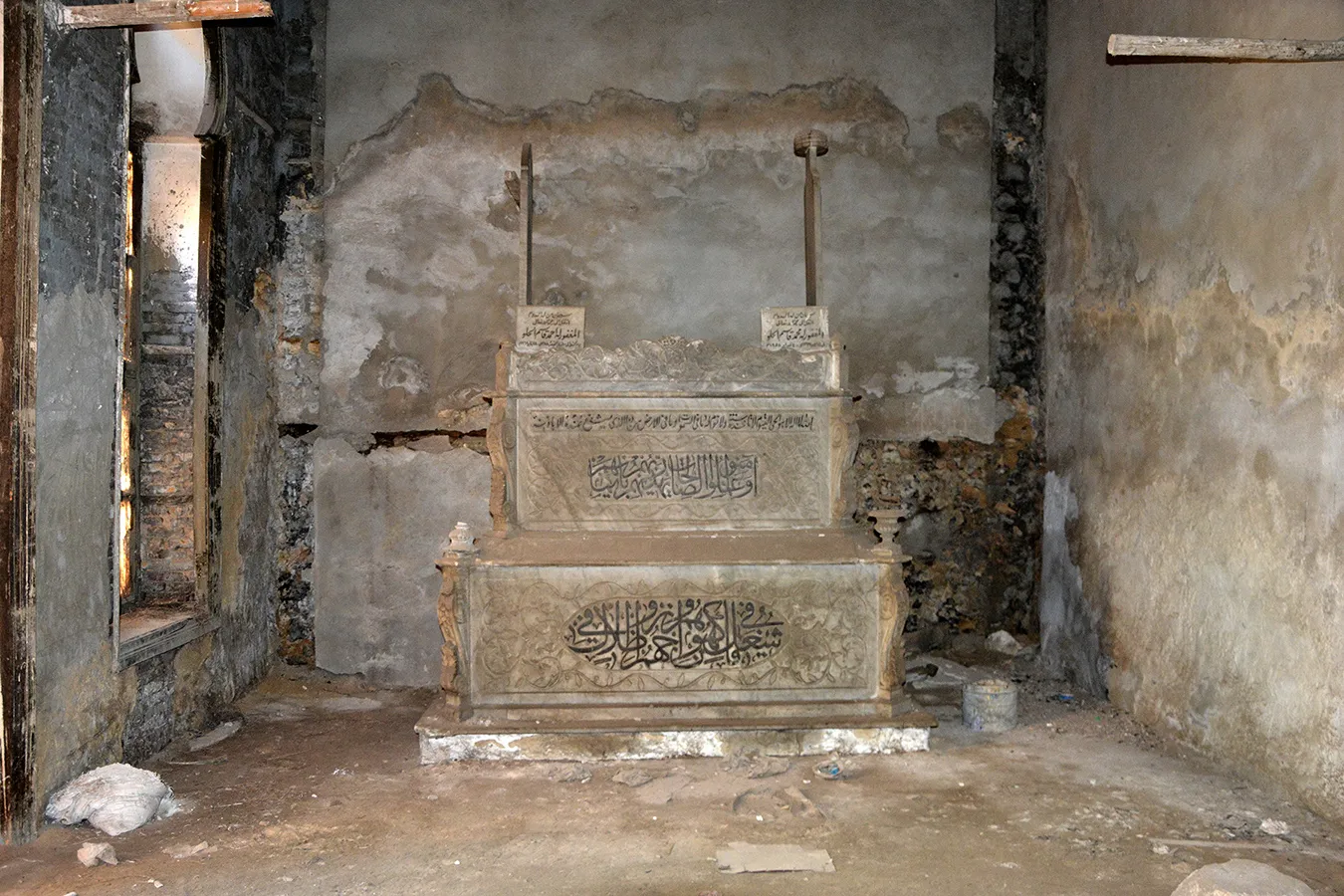
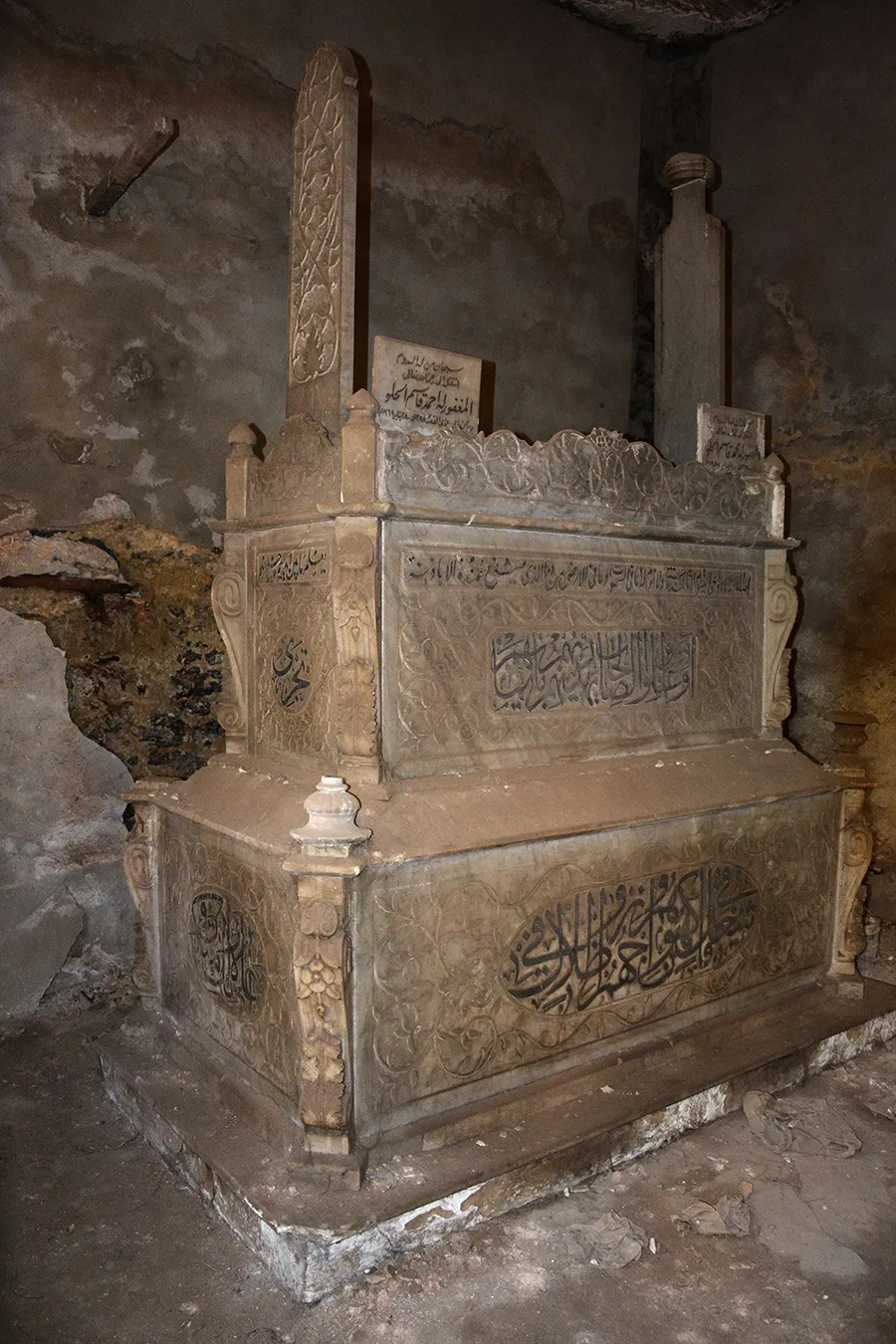
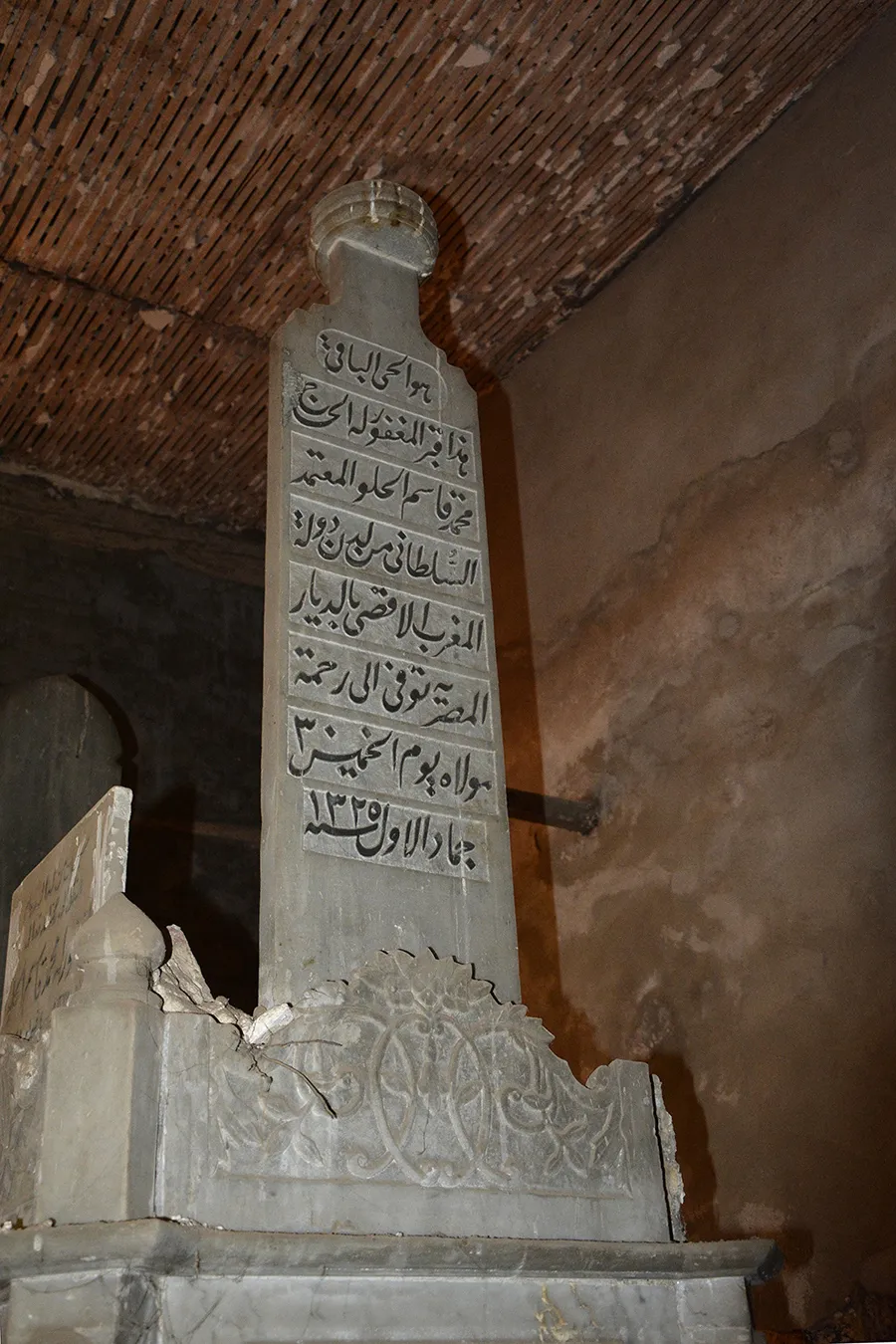
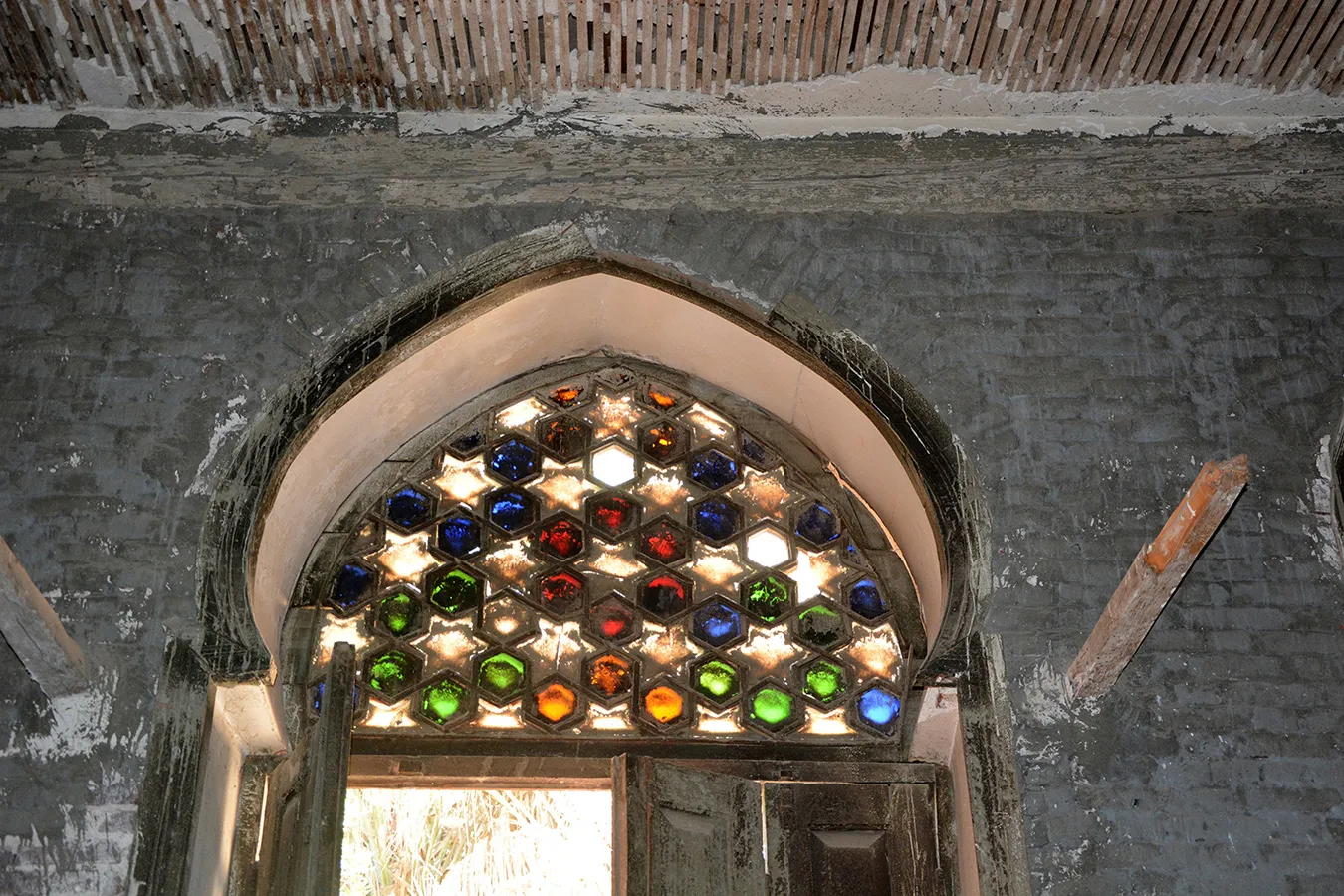
The entrance hall leads to a small courtyard shared with the building neighbouring to the north and planted with palm trees and other greenery. On the southern side of the courtyard is a burial chamber. Its symmetrical façade has the door and the two flanking windows topped with horseshoe-shaped pointed arches fitted with geometric wooden grilles with stained glass panels behind. The burial chamber is built of bricks. On the eastern side it incorporates a section of an earlier wall. In the chamber stands a carved marble cenotaph that bears the date 3 Gomada al-Awwal AH 1325. The inscription in raised relief states that the person buried is Muhammad Qasim Bey al-Helu, a representative of the Sultan of Morocco in Egypt.
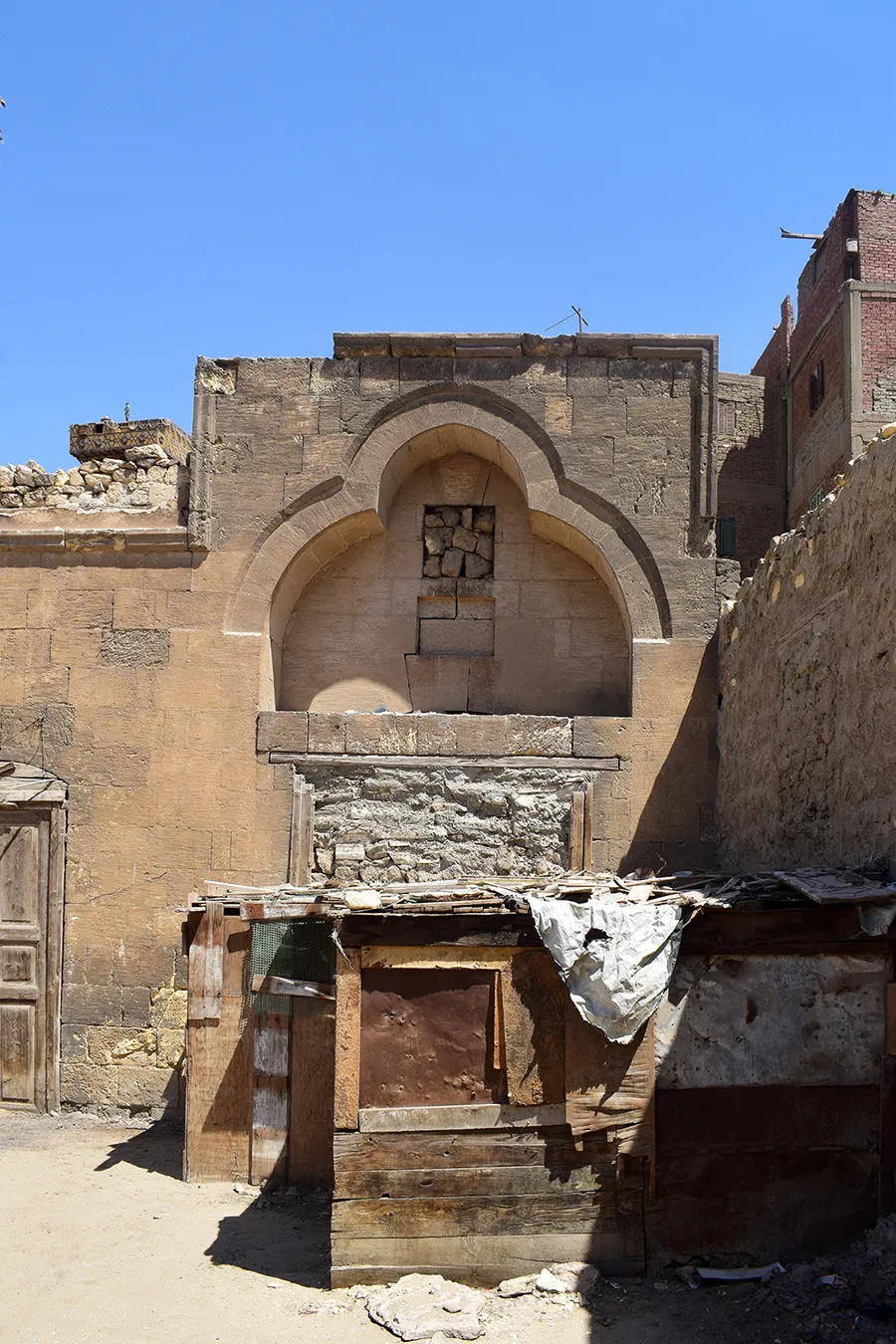
At the southern end of the façade is a recess topped with a trilobe arch with no mouldings. The recess is taller than the inter-storey cornice, which runs continuously around it. The lower part of the recess has been walled up. Just above the blocking, a segmental arch is visible, apparently a relieving arch over a door. Above, there is a rectangular recess with a hatched back surface indicating that an inscription panel (presumably of marble) was either installed there and removed, or was intended to be installed. Above is a rectangular window, now blocked. The wall surface is completely plain, with no mouldings or any other architectural decoration.
The original function of the portal is unclear. There is no visible structural discontinuity between the portal and the rest of the façade.
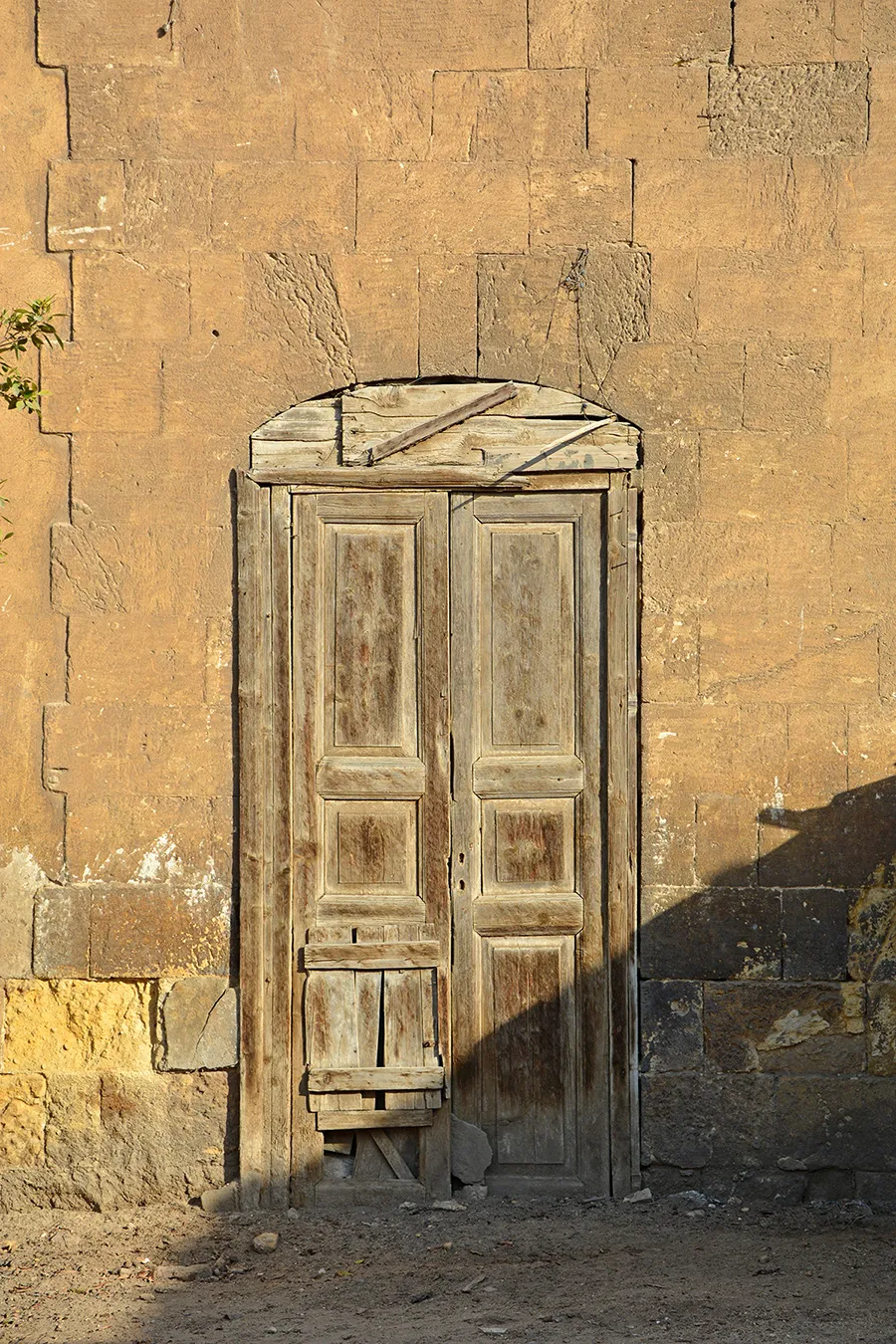
To the left (north) of the trilobed portal is a simple door covered with a segmental arch (now permanently closed) that according to the residents led to a staircase. This indicates that the upper floor was independently accessible, so it probably formed a separate residential unit.
Condition of preservation
The building is in poor overall condition and dilapidated. The upper floor is missing. There is serious damage from groundwater to the lower portions of the walls. A crack in the southern portal indicates differential settlement of foundation.
Information abut the founder, family history, etc.
According to the resident, the owner visits infrequently.
The date 3 Gomada al-Awwal AH 1325 on the cenotaph corresponds to 13 June AD 1907. This appears consistent with the style of the façade. However, the form of the portal in the southern part of the façade is highly unusual.
- Field recording by
- Hadir Ahmad, Nur Atiya-edited by Jaroslaw Dobrowolski
- Date recorded
- August 15, 2023
- Data entered by
- Yusuf Yassir
- Date entered
- May 28, 2024