
Unit No14
Khalil Allah (assumed)
|
Coordinates of the main entrance |
30.044458N - 31.273219E |
|
Attribution |
Khalil Allah (assumed) |
|
Higri (AH)Dates as given in the Inscription |
1325 |
|
Miladi (AD)Dates as given in the Inscription |
|
|
Inscription Contemporary with the building? |
Yes |
|
Multiple date(s) In the inscription? |
Yes |
|
Assumed Date |
|
|
Based on |
|
|
Original Use |
Funerary enclosure |
|
Current Use |
Funerary enclosure |
|
Overall condition |
Good |
Features of unit 14
| Present | Count | Material | Comments (see description for details) | |
|---|---|---|---|---|
| Free standing structure | No | |||
| Walled enclosure | Yes | 1 | ||
| Rooms by the perimeter wall | Yes | 1 | ||
| Freestanding structure(s) in enclousure | No | |||
| Dome over the tomb chamber | No | |||
| Neo-Mamluk architectural decoration | Yes | |||
| Garden layout | No | |||
| Sabil(s) | Yes | |||
| Wall fountain(s) | No | |||
| Canopy on columns / pillars | No | |||
| Carved marble cenotaph(s) | No | inaccessible | ||
| Decorated limestone tomb-markers | No | inaccessible | ||
| Decorated gateway | Yes | 2 | stone | |
| Decorative door-leaves | Yes | 4 | steel | |
| Decorative window grilles | Yes | 10 | steel | |
| Decorative shutters | No | 8 | wood | |
| Painted ceiling(s) | No | inaccessible | ||
| Decorative paving(s) | No | inaccessible |
Unusual or unique features
• Architectural design intended primarily for a corner view
Description (The direction towards Mecca (Qibla) is described as eastern and other directions are named accordingly)
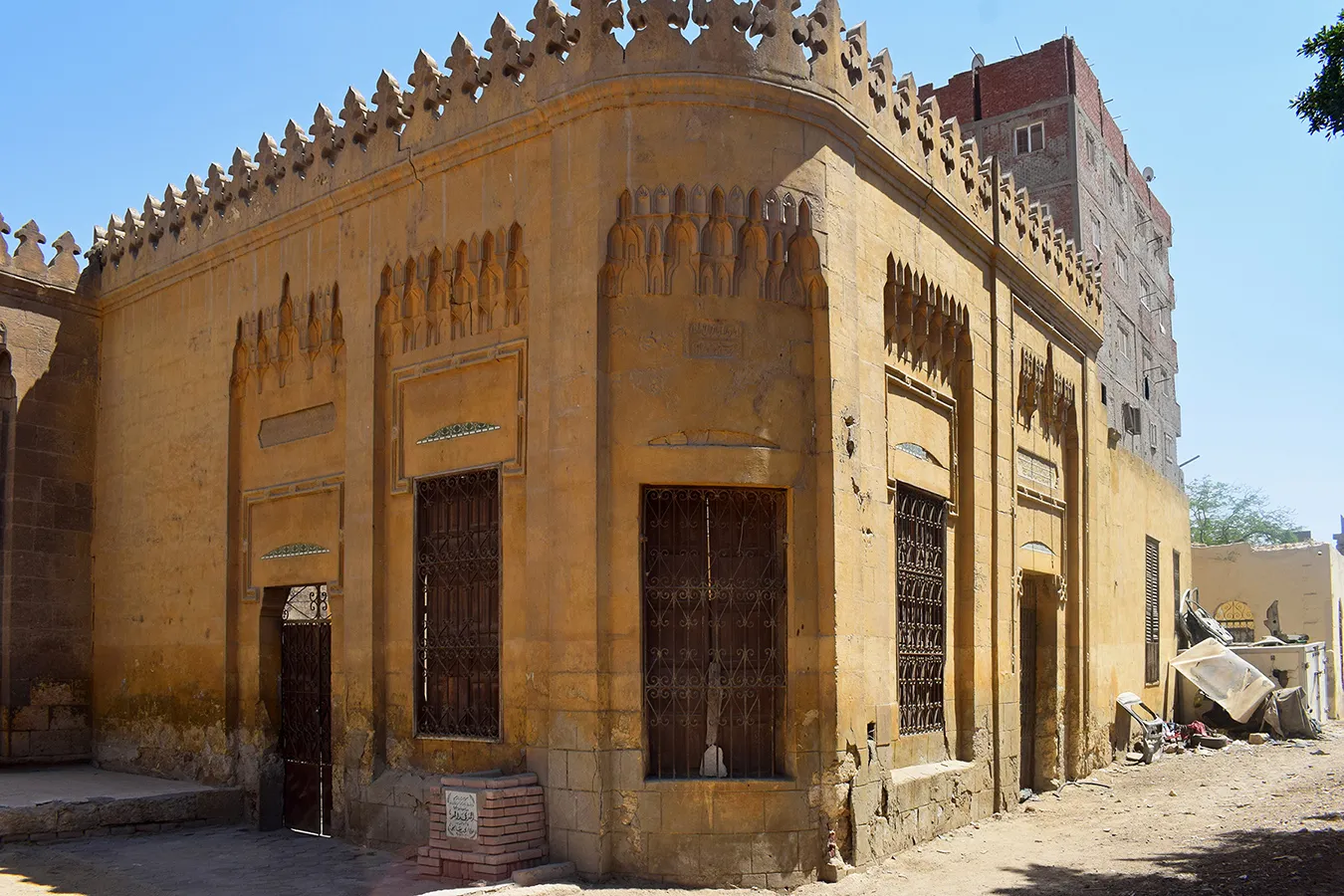
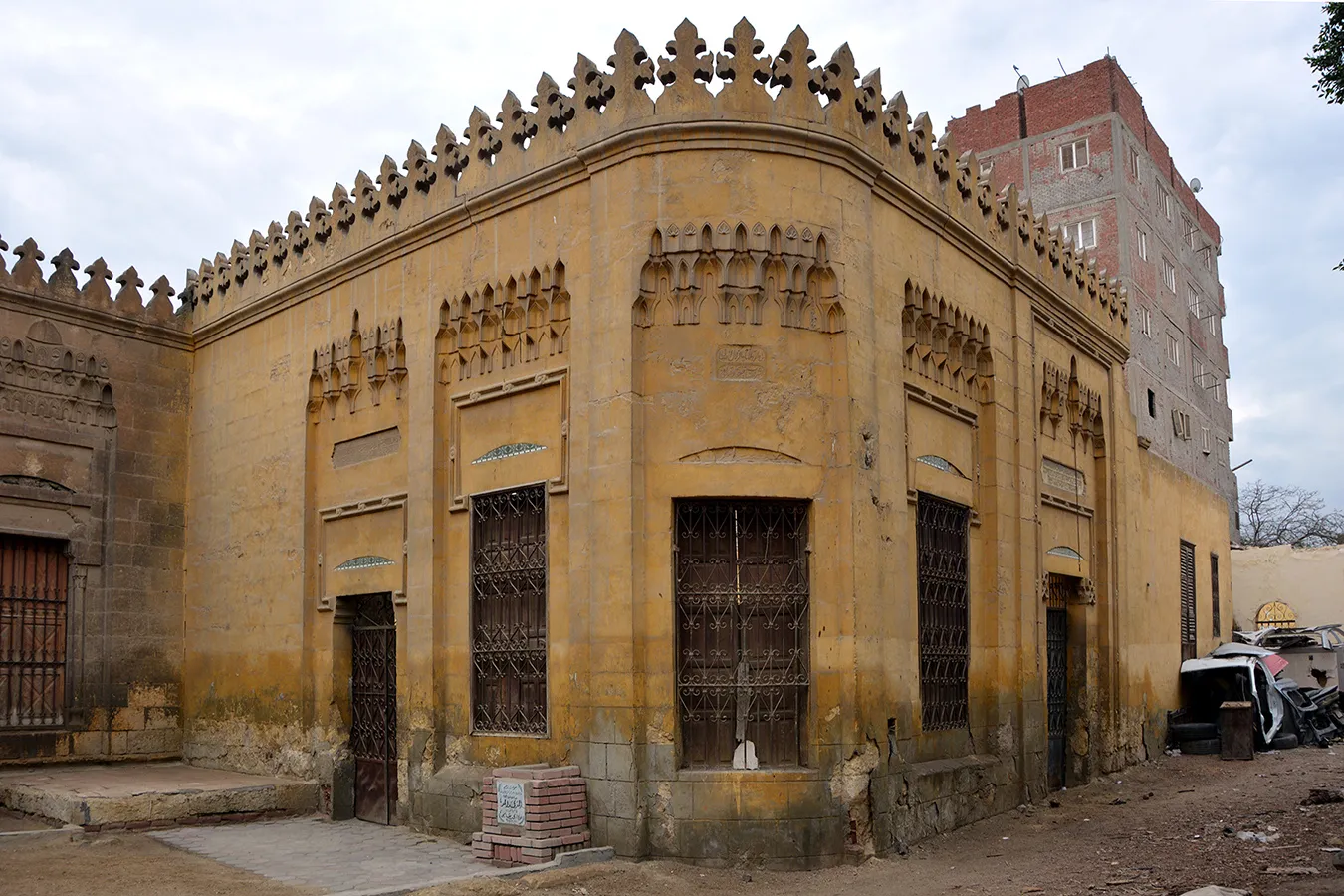
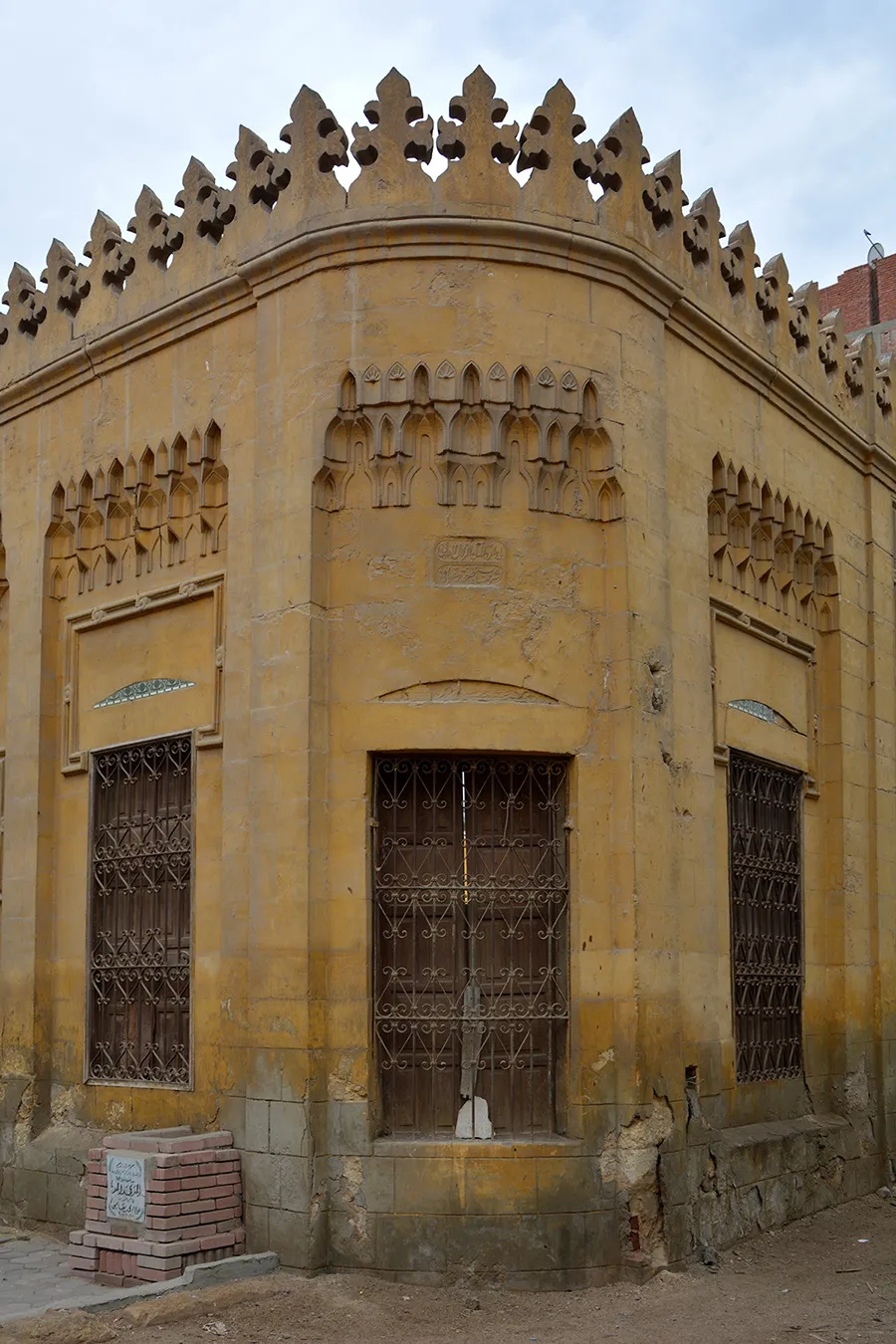
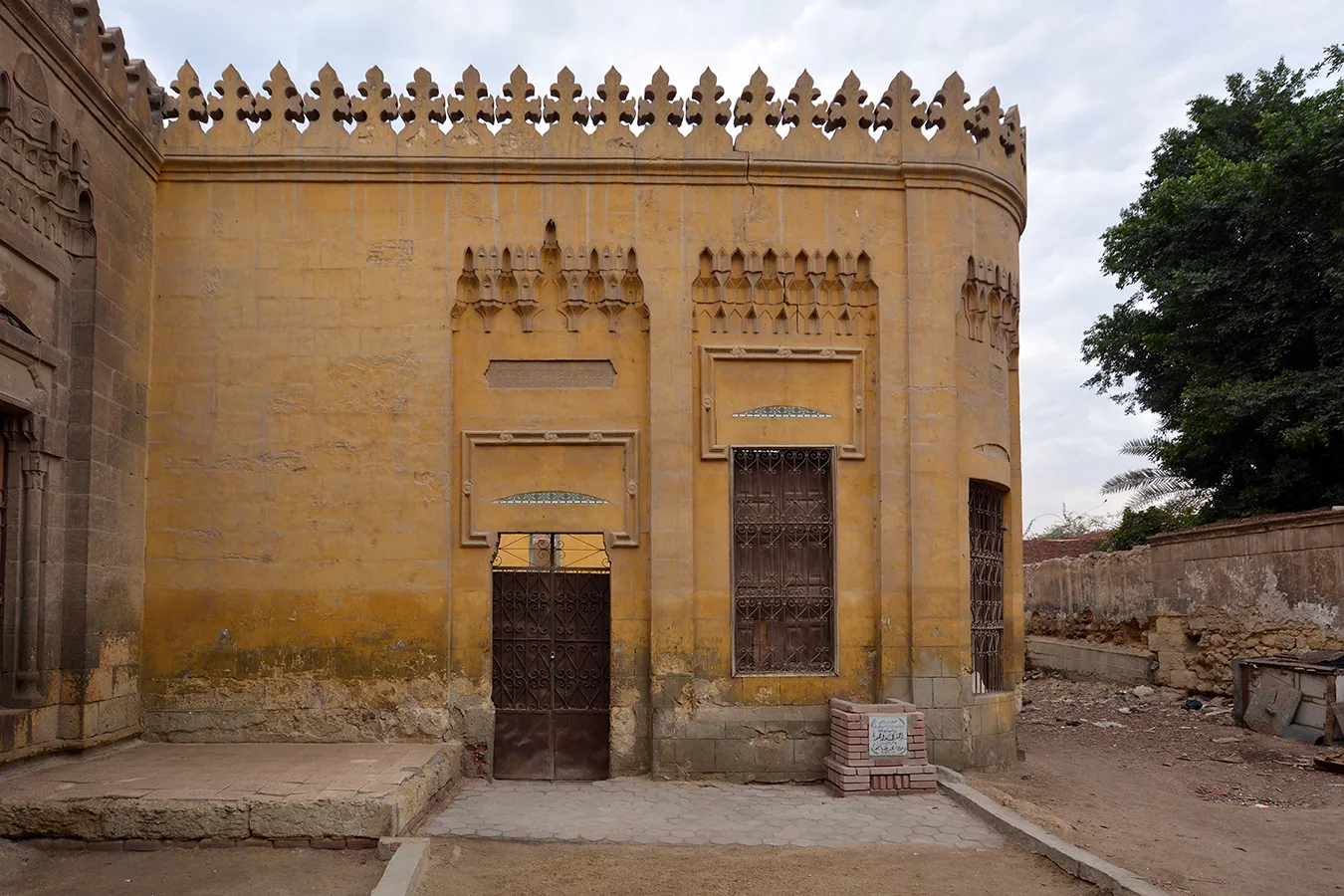
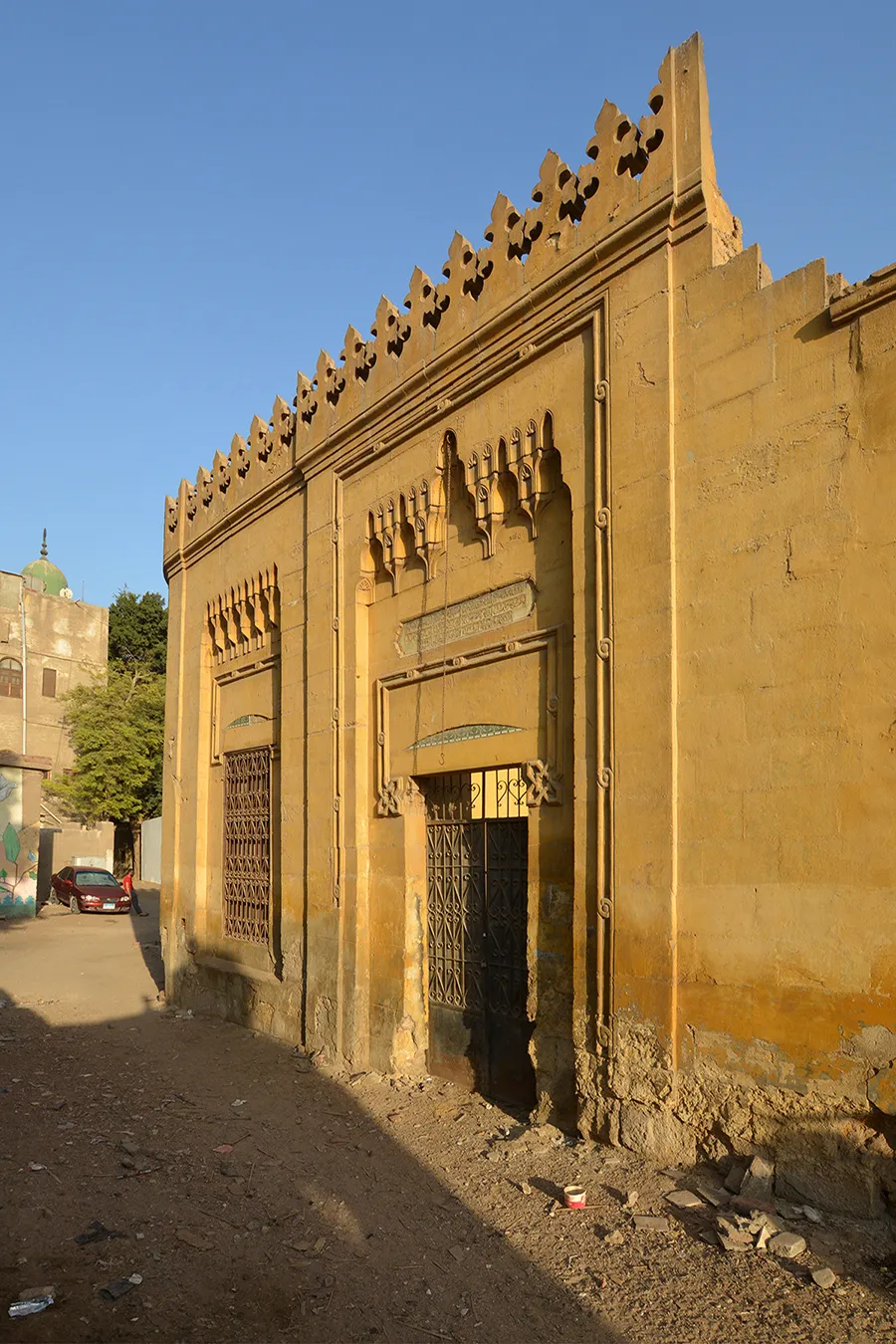
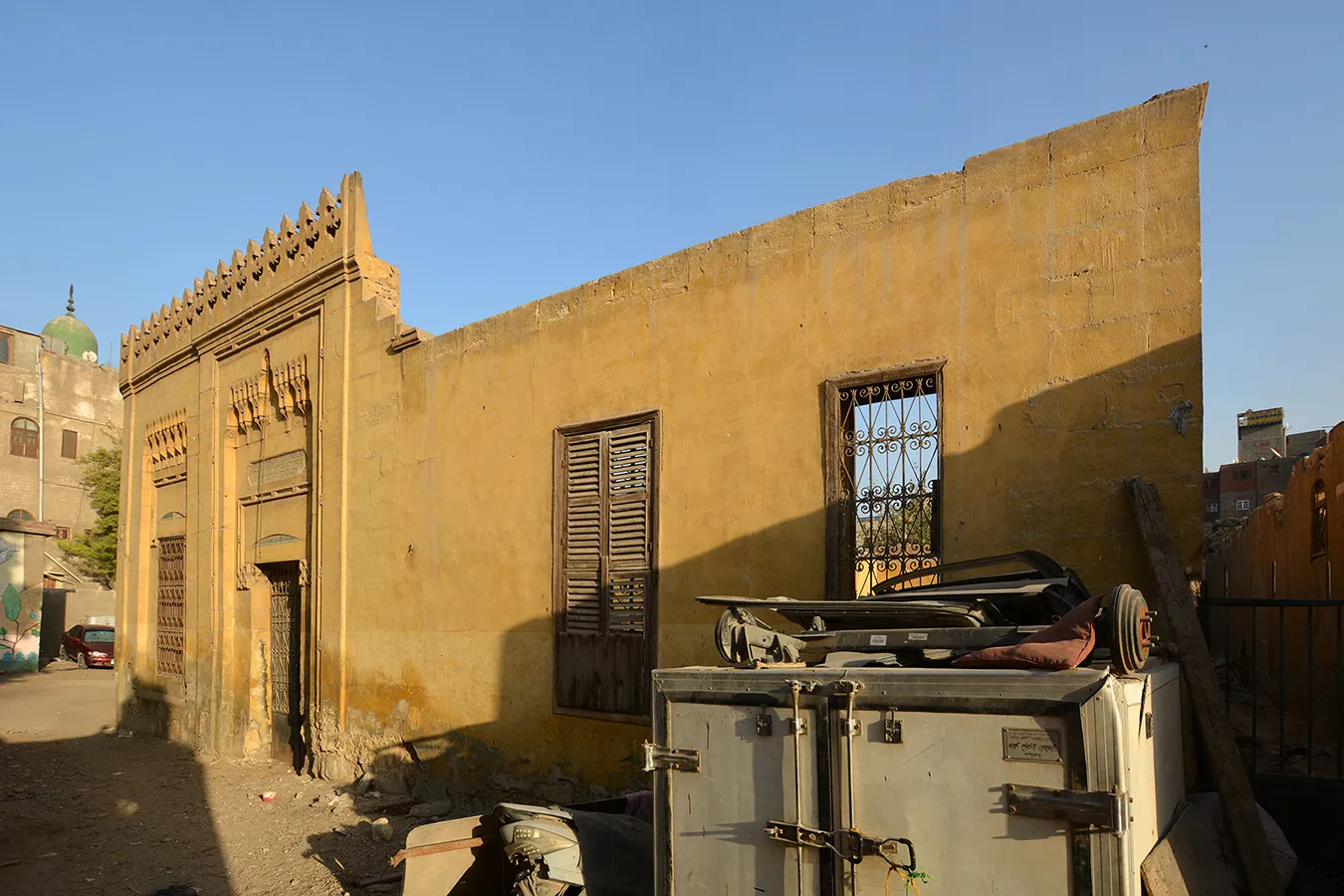
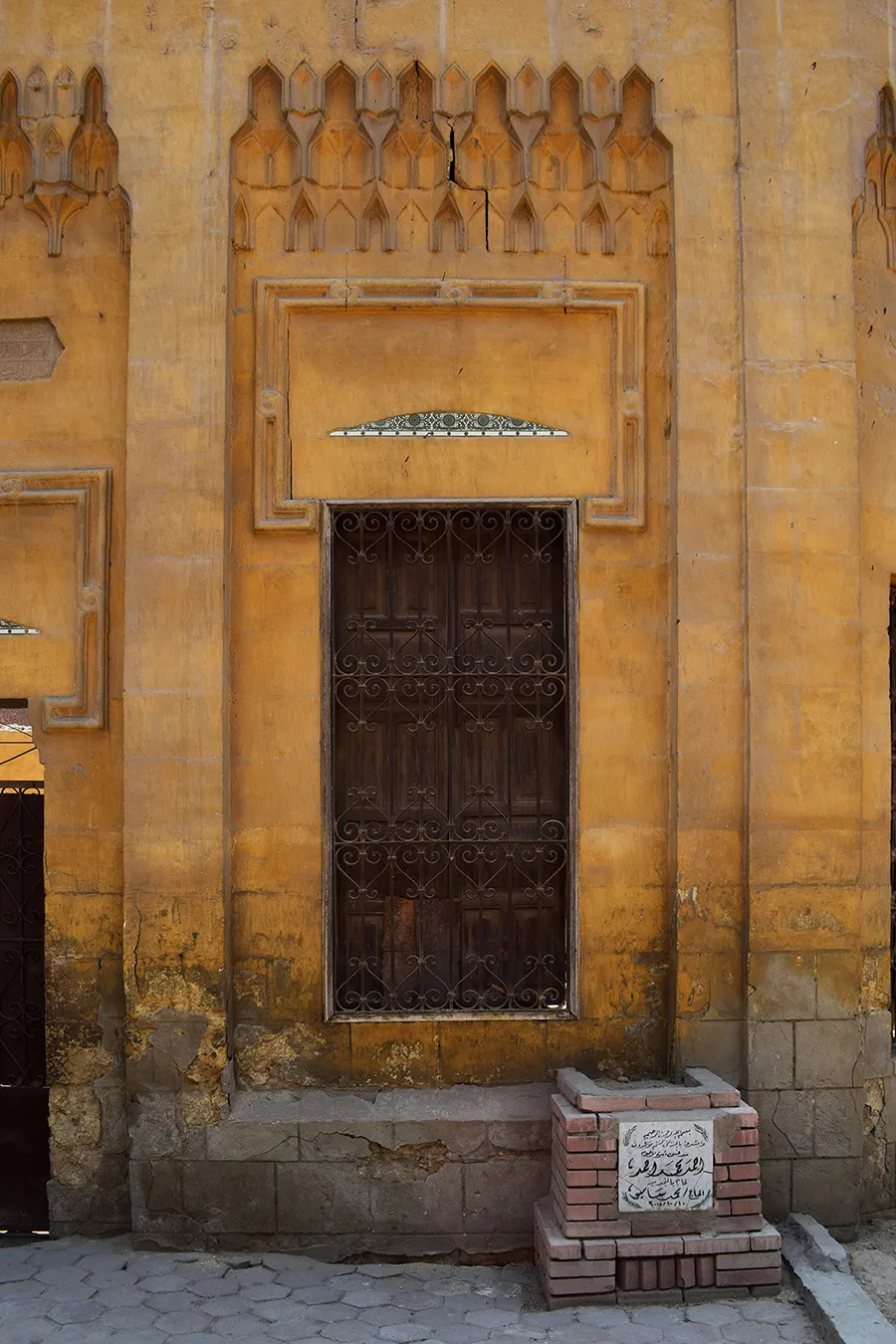
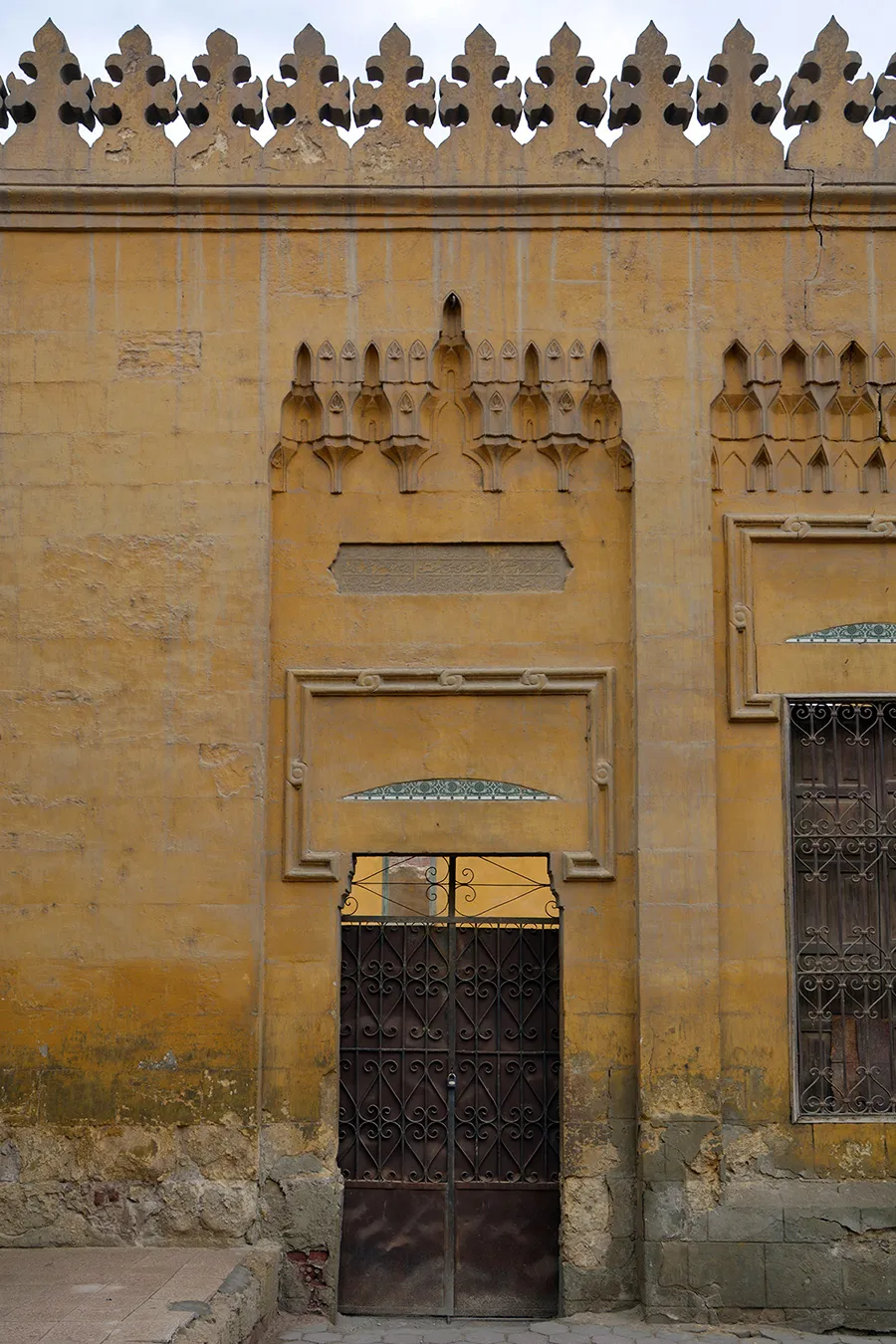
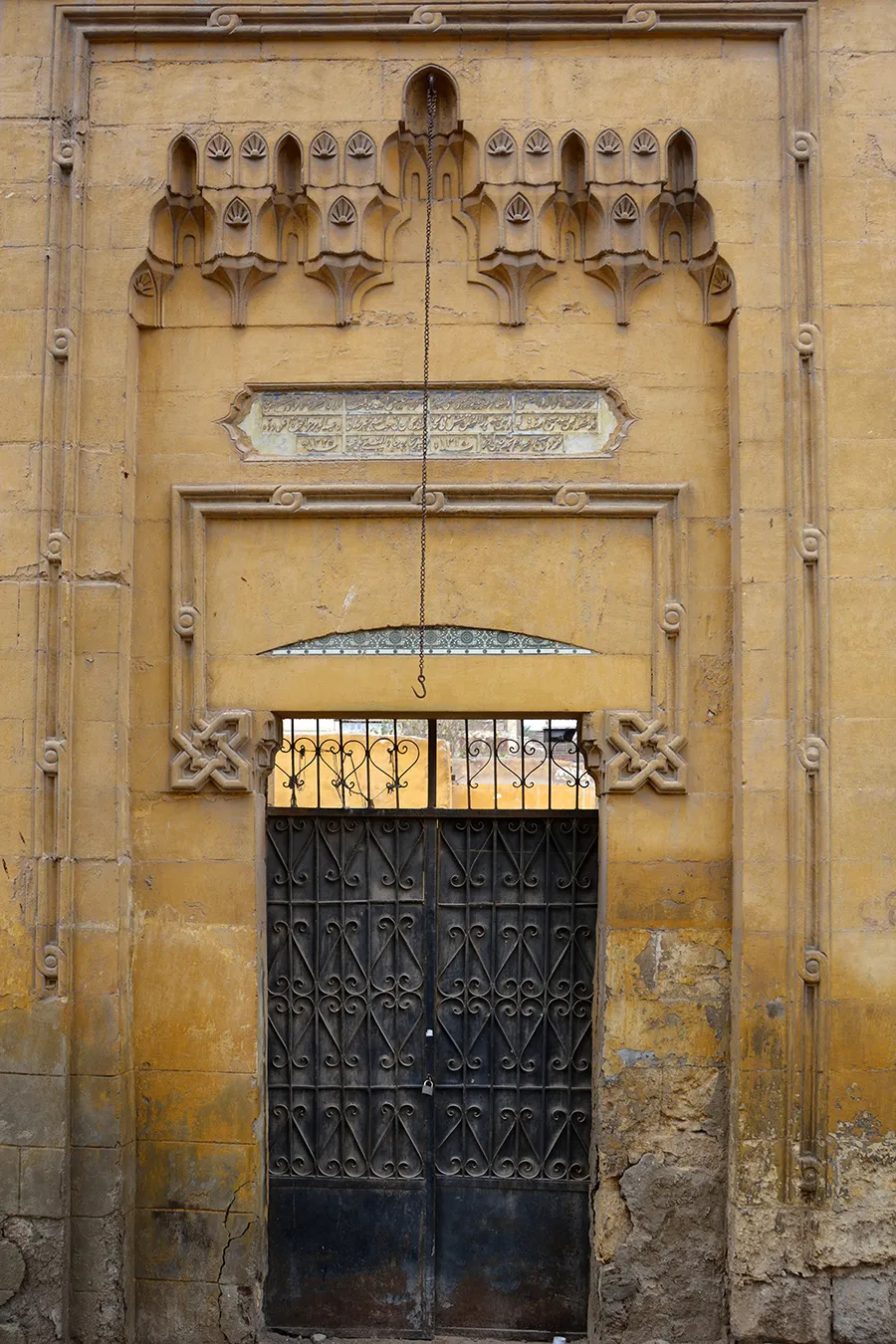
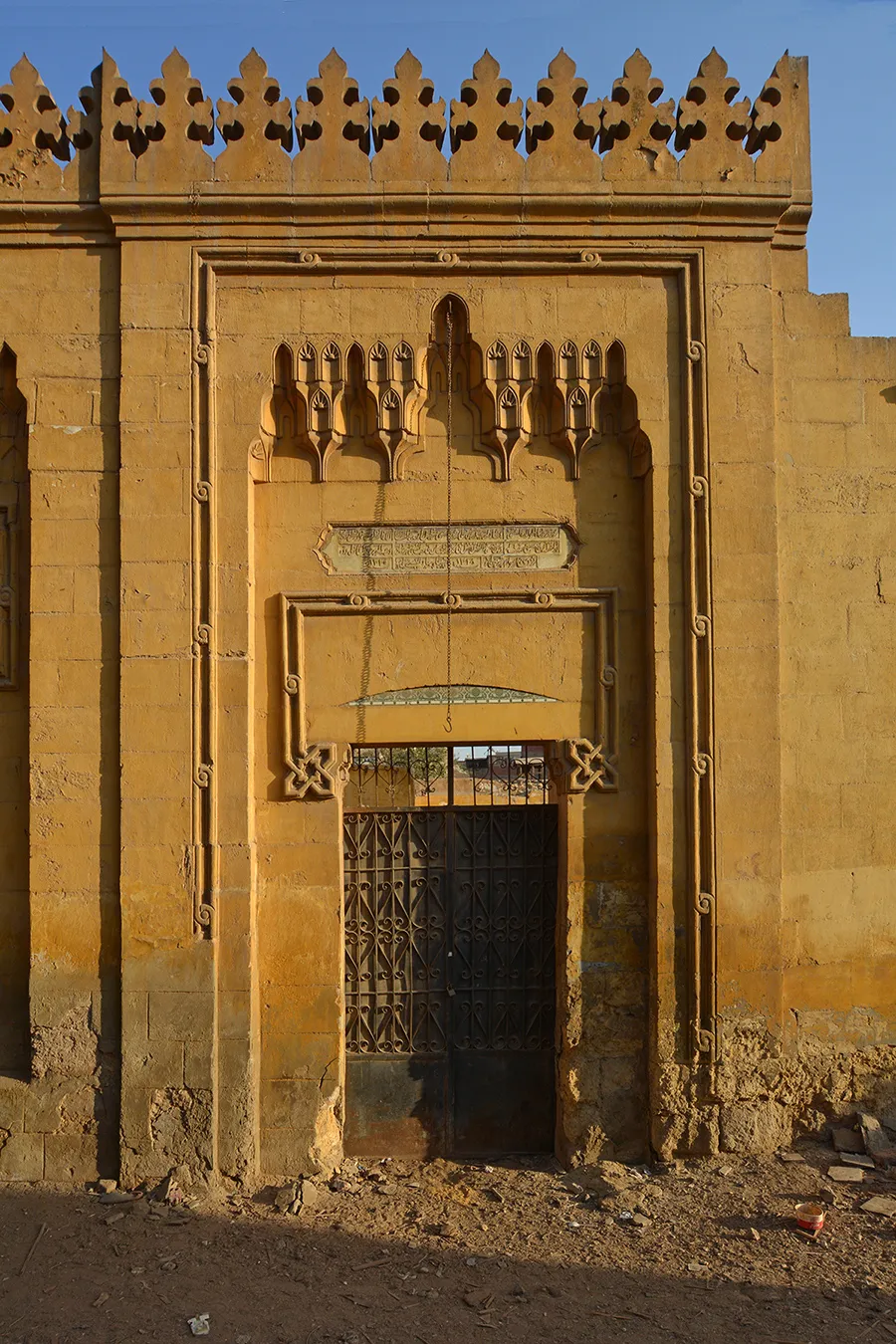
The western wall and about one third of the northern wall of the rectangular enclosure are visible from the outside and the exposed part of the northern wall and a corresponding section of the western wall are designed as decorated façades, designed to be seen primarily in a corner view. The decoration is of fine craftsmanship and accurately copies Mamluk-period architectural details (but not the design principles of Mamluk architecture, being strictly symmetrical.) The façades are free-standing decorative screens, because there is no building behind them, the only building within the enclosure being a small structure in the north-eastern corner.
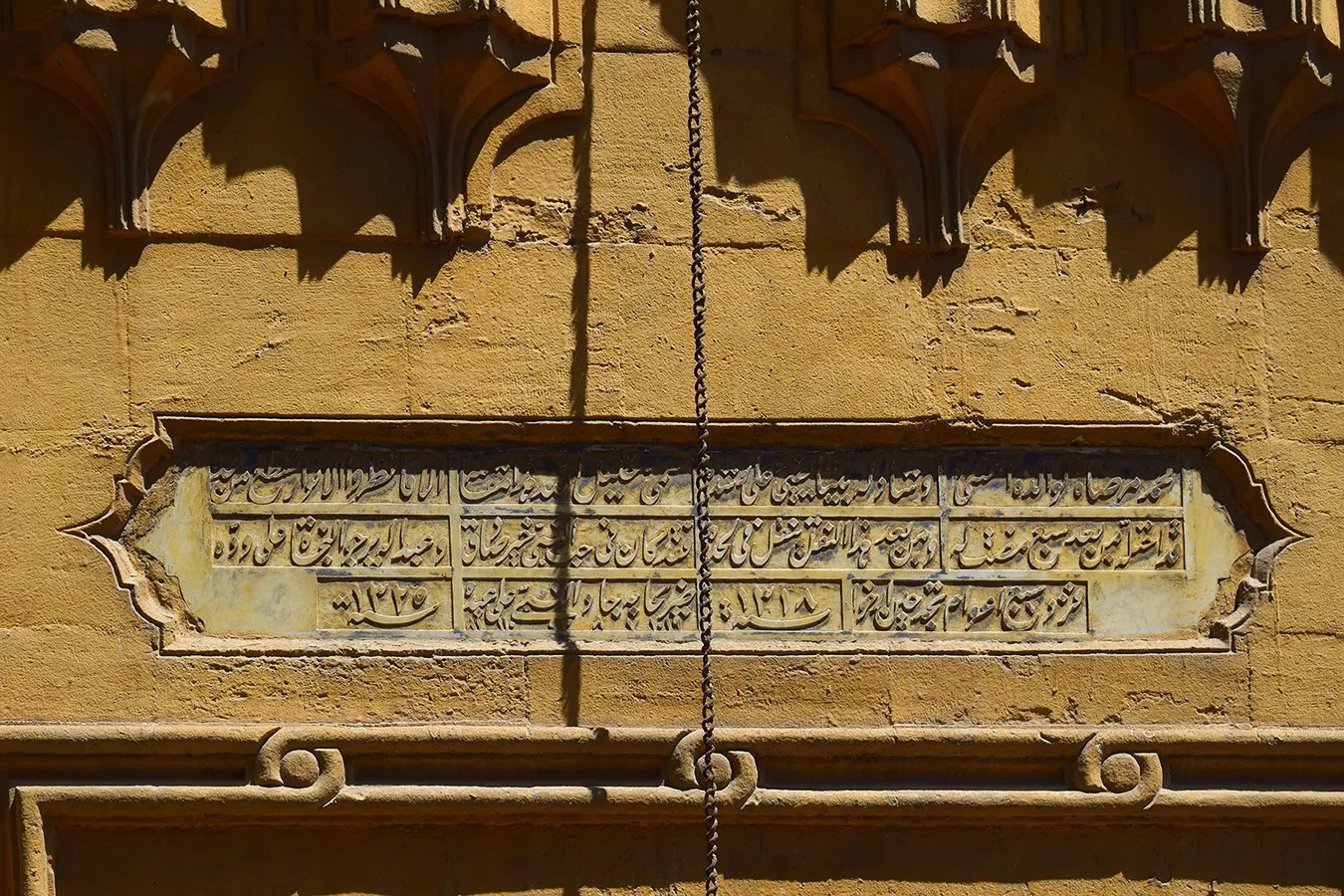
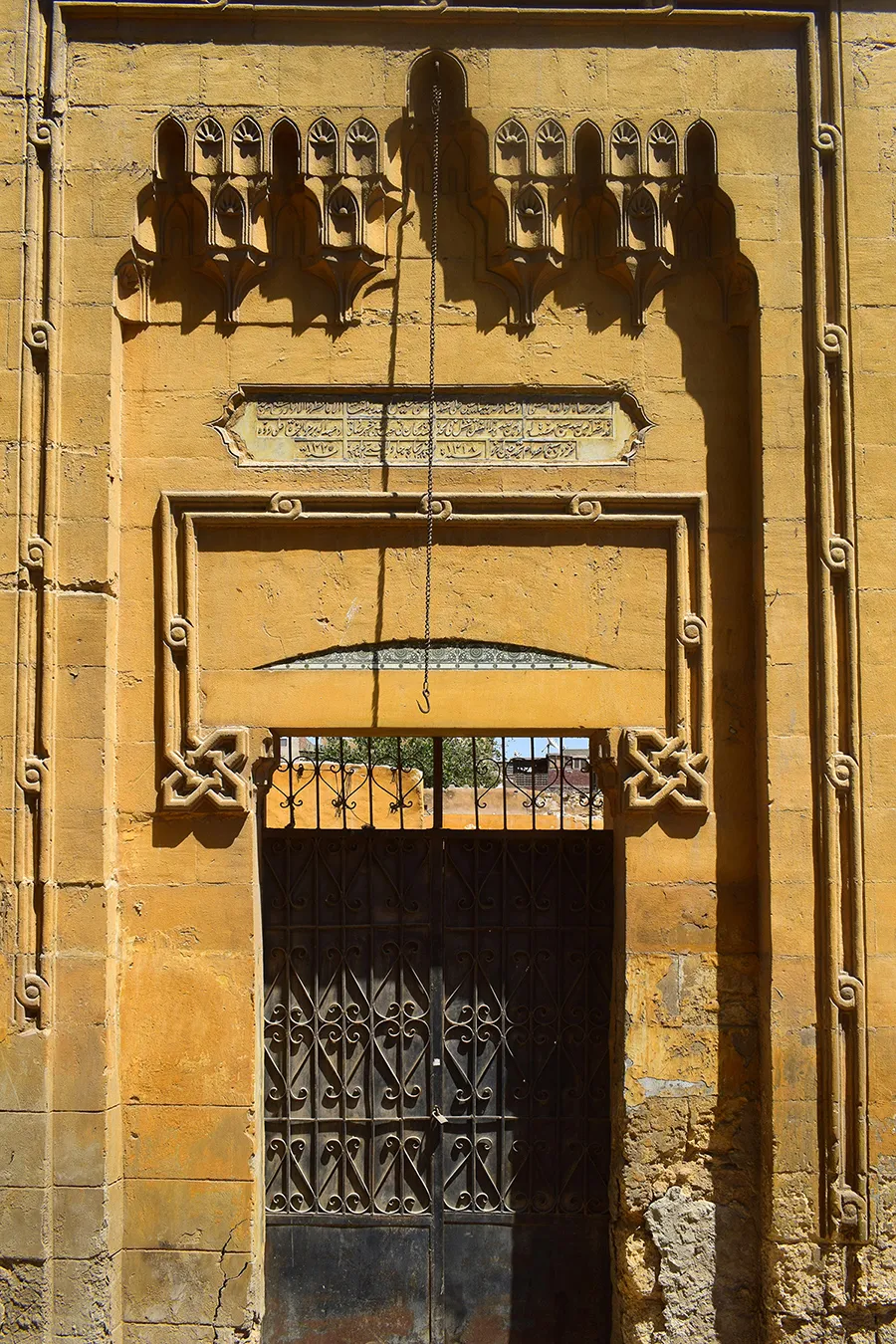
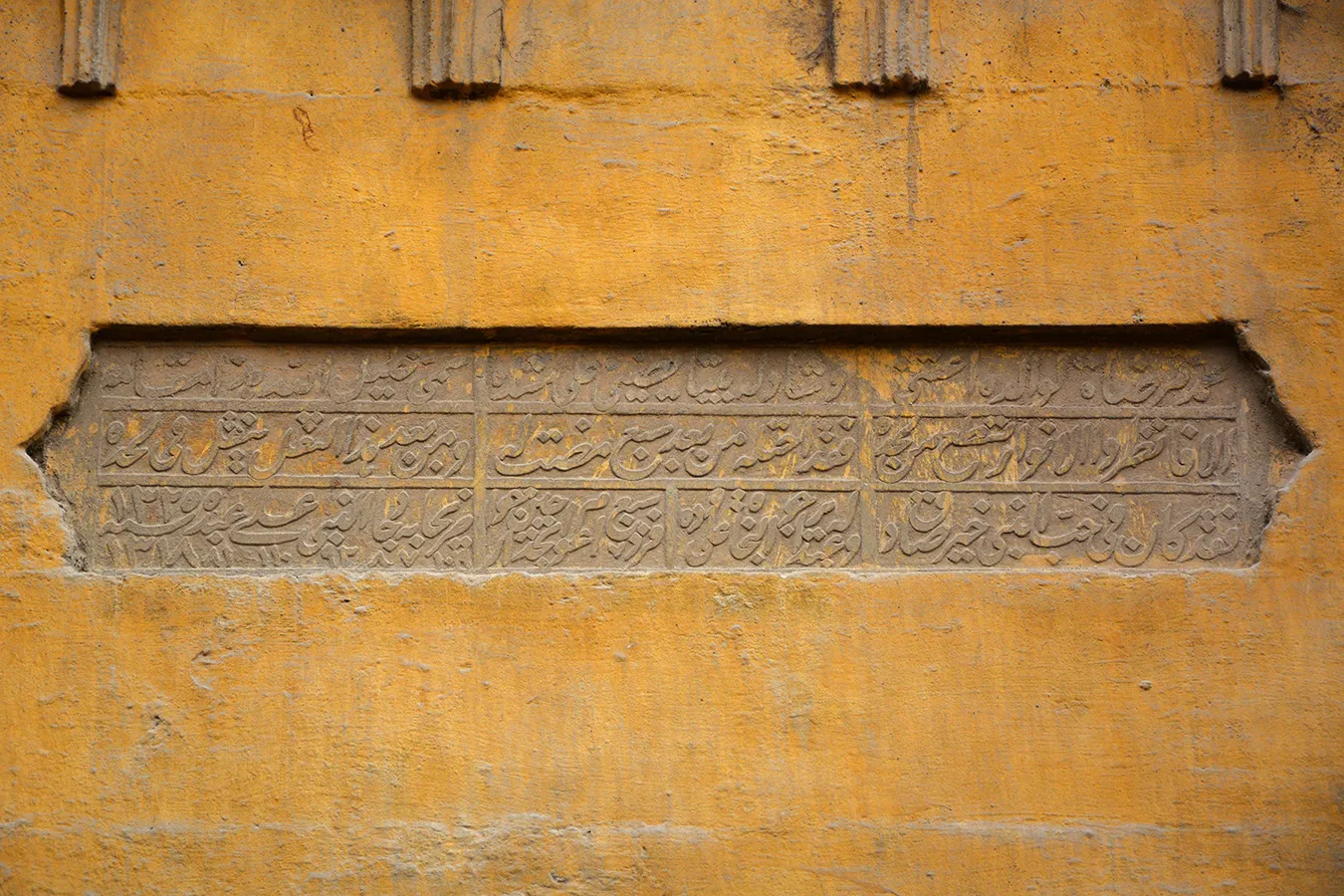
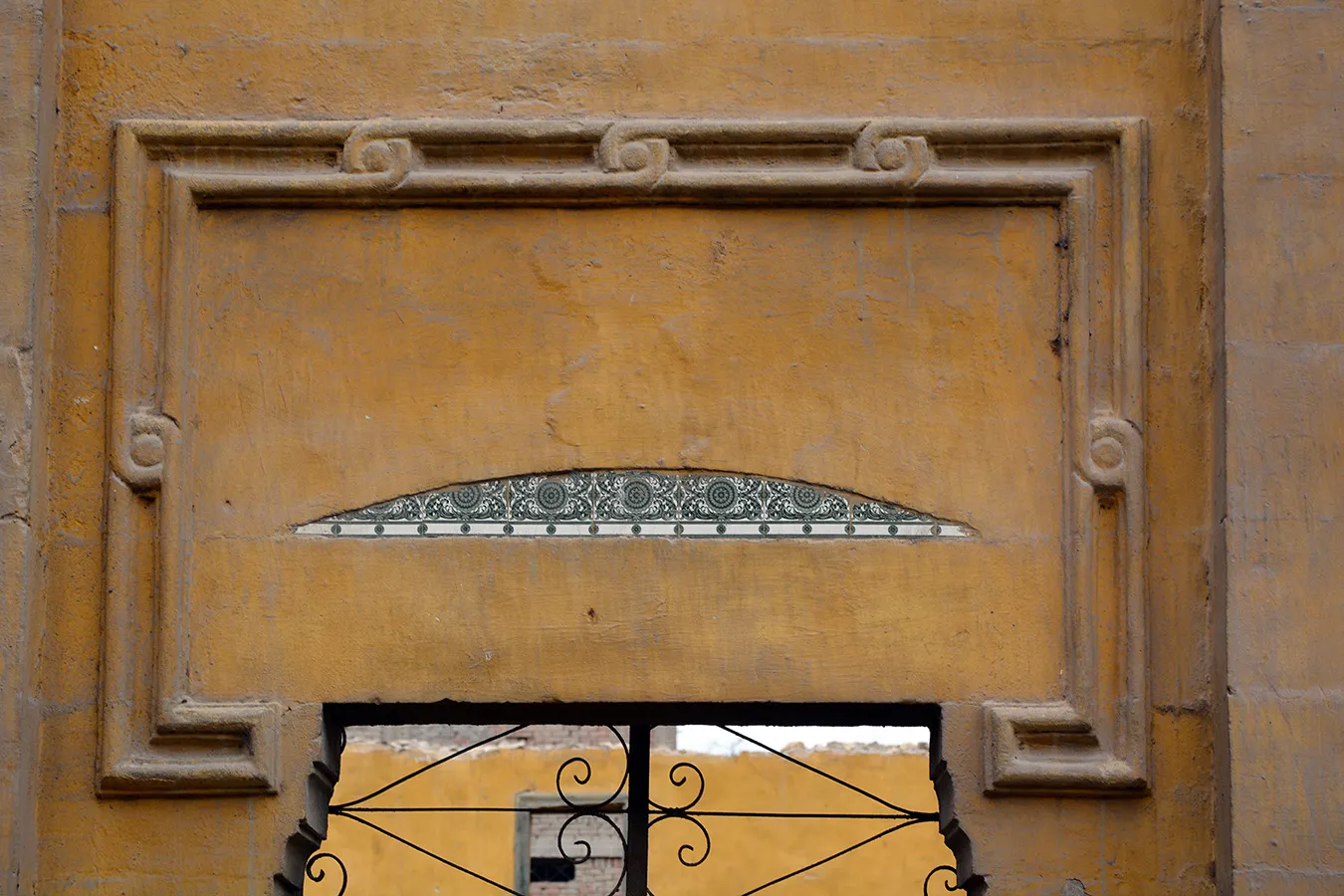
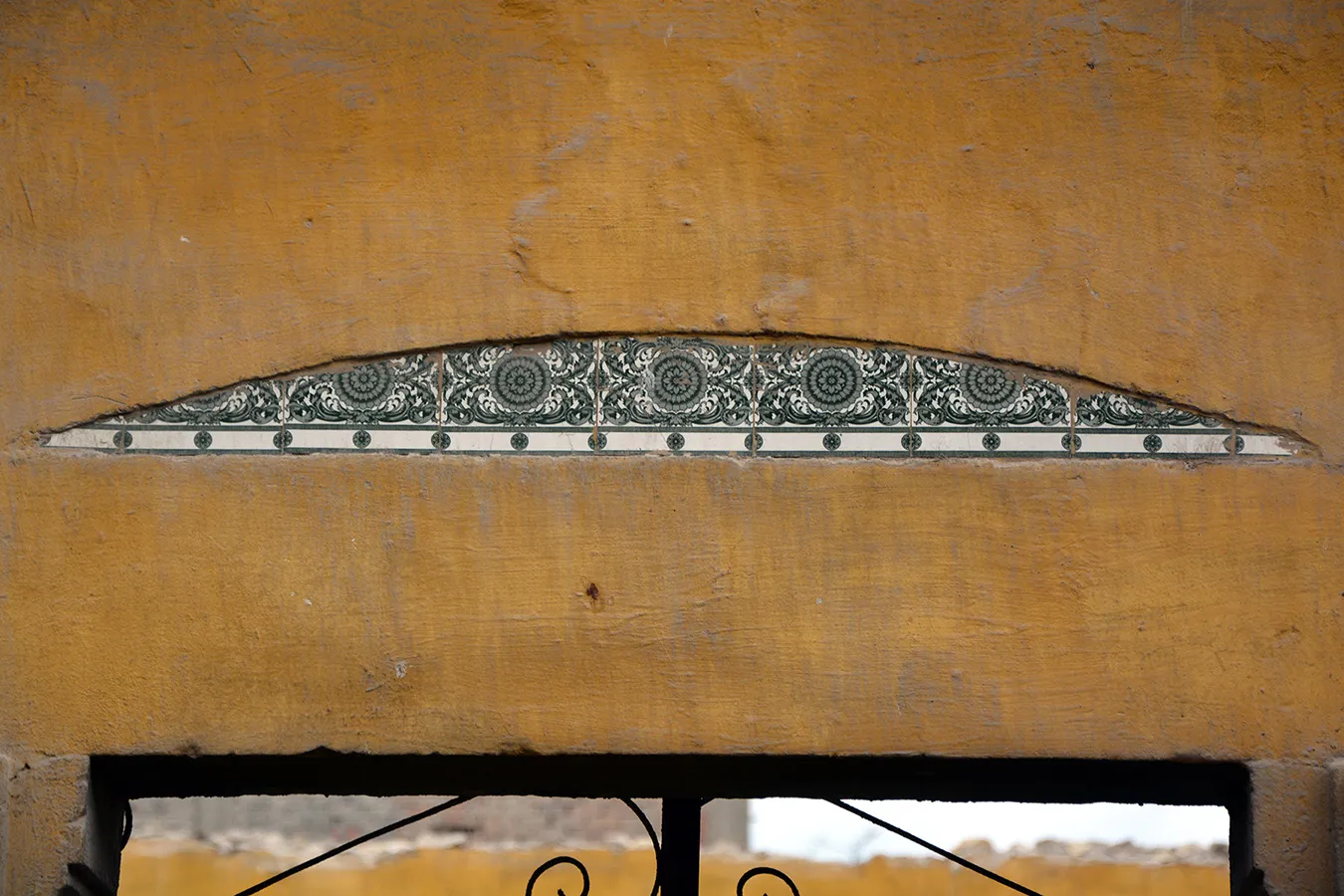
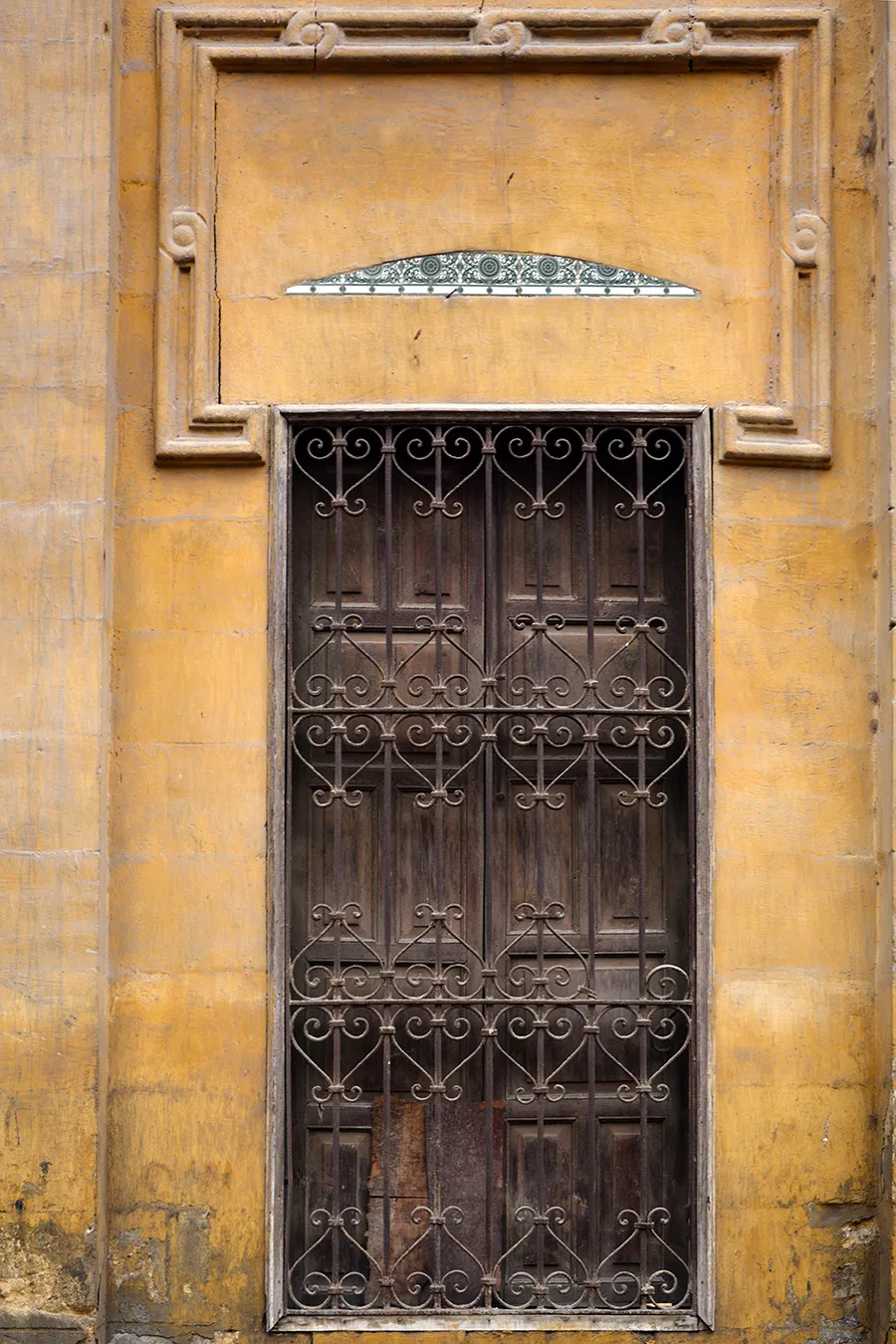
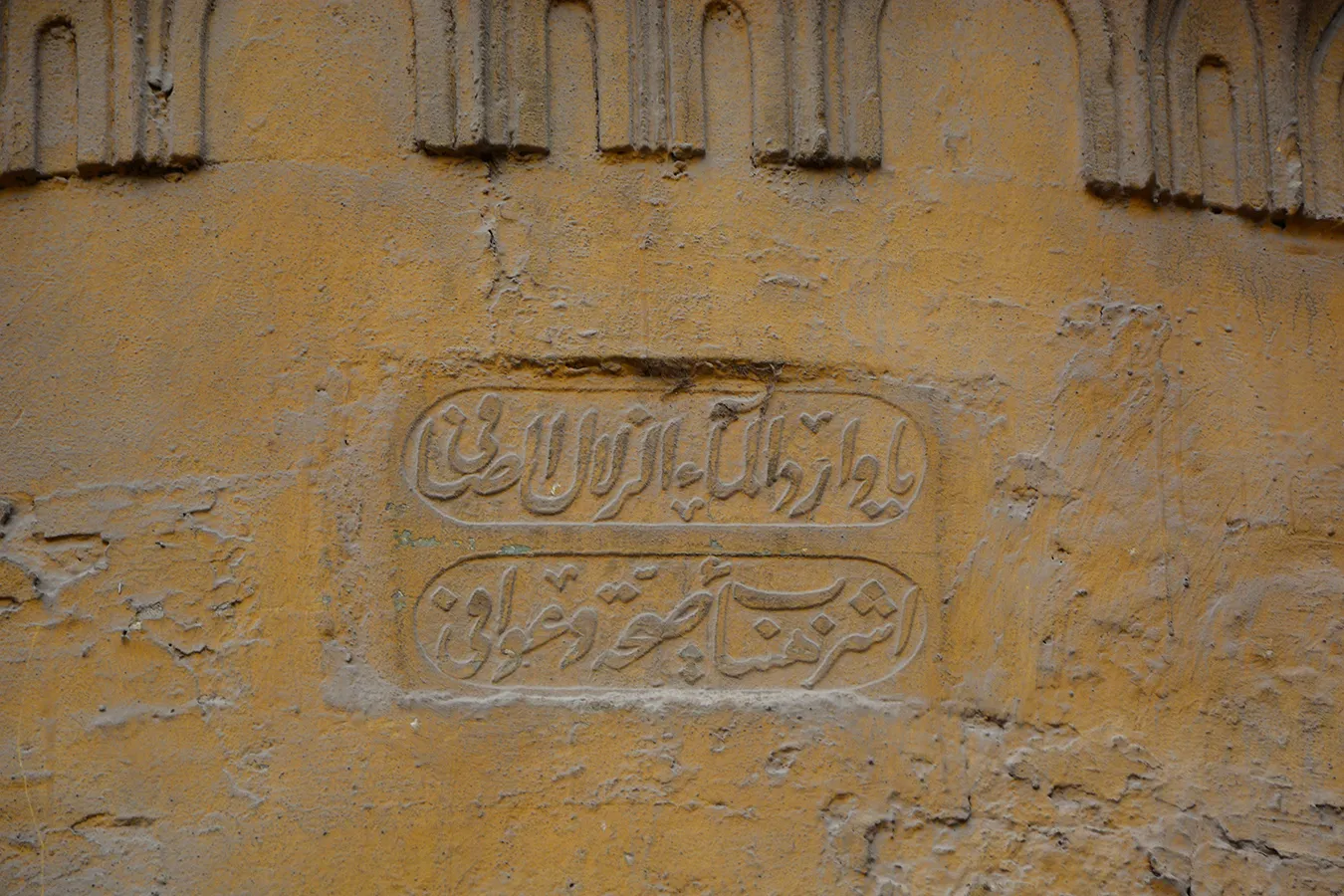
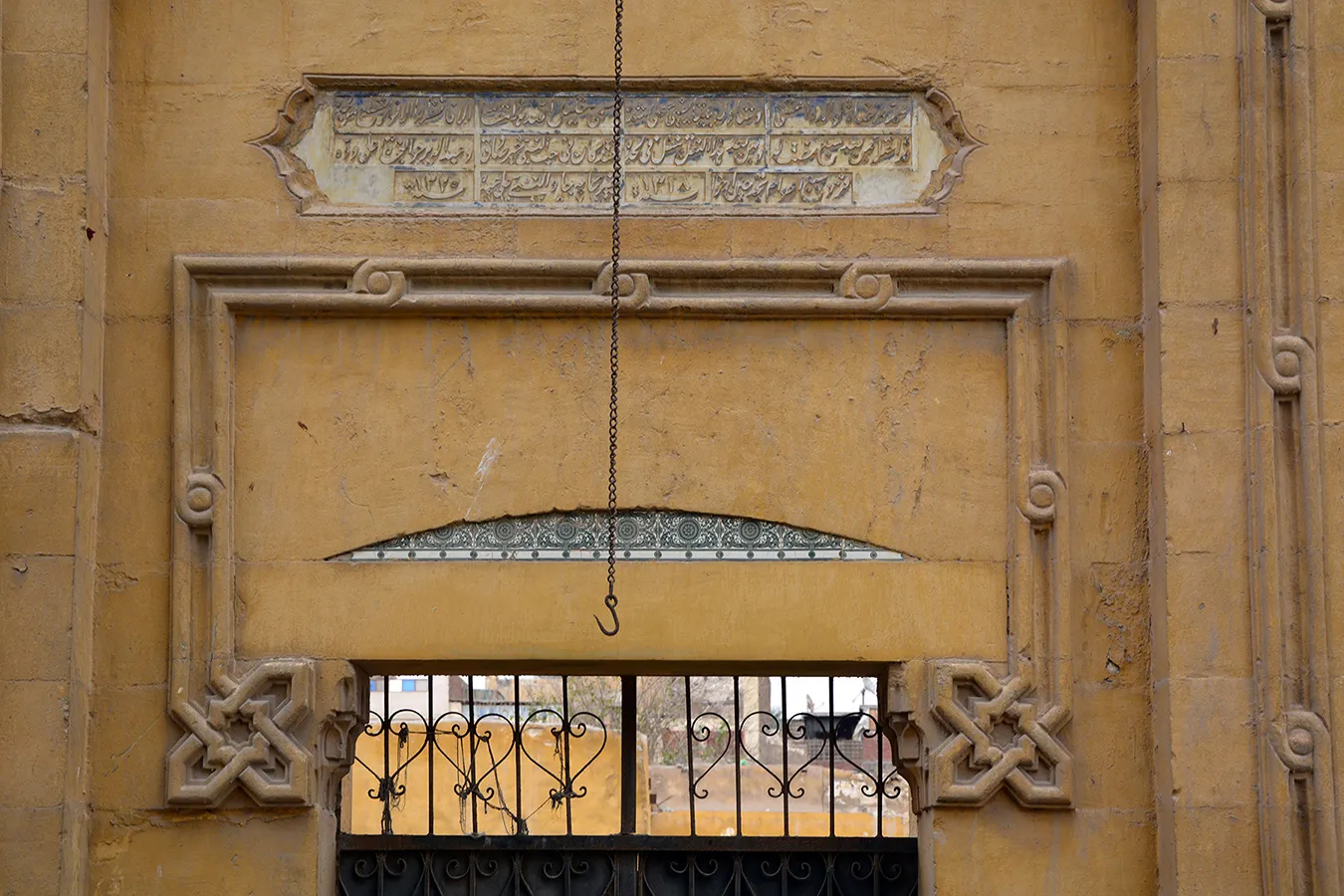
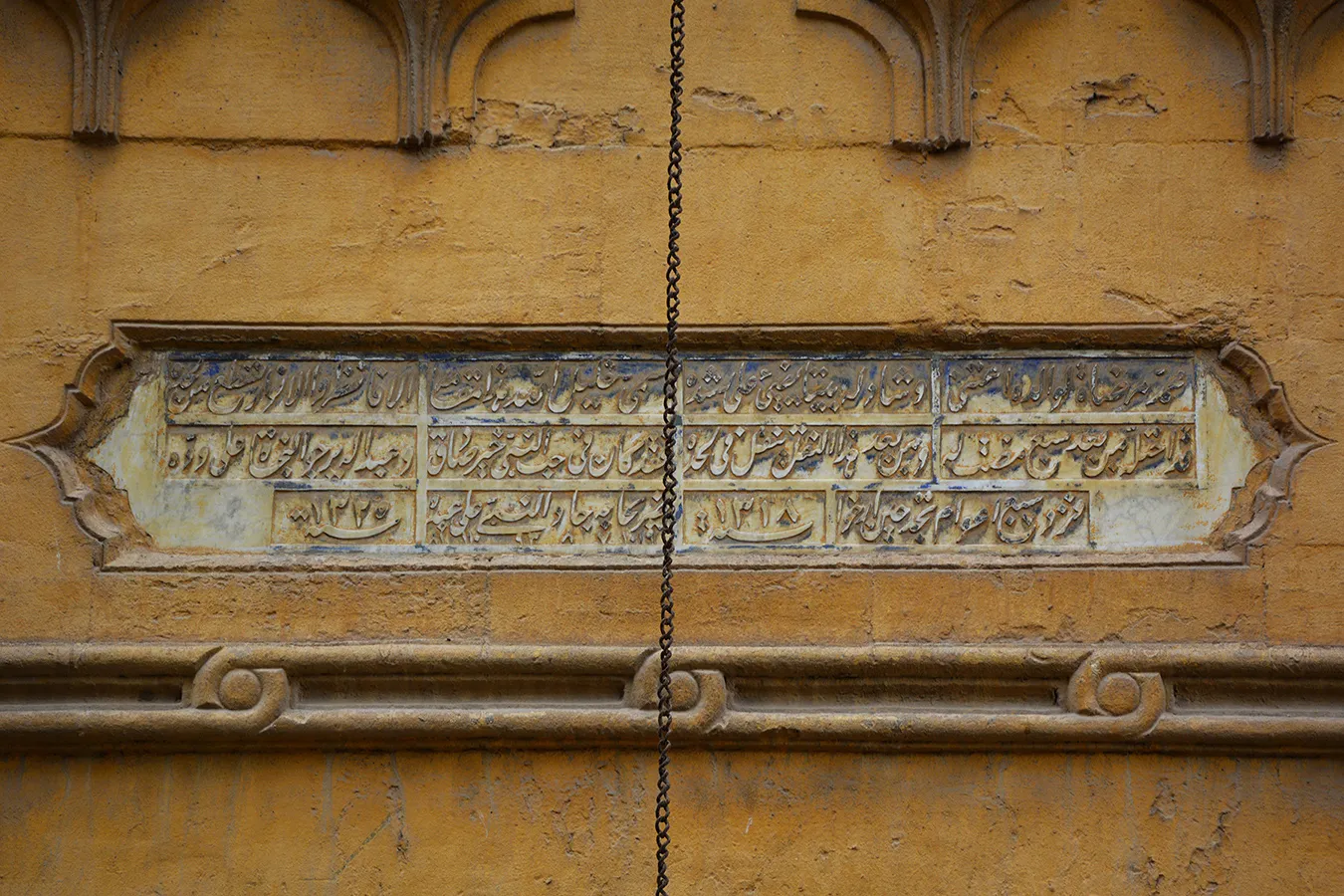
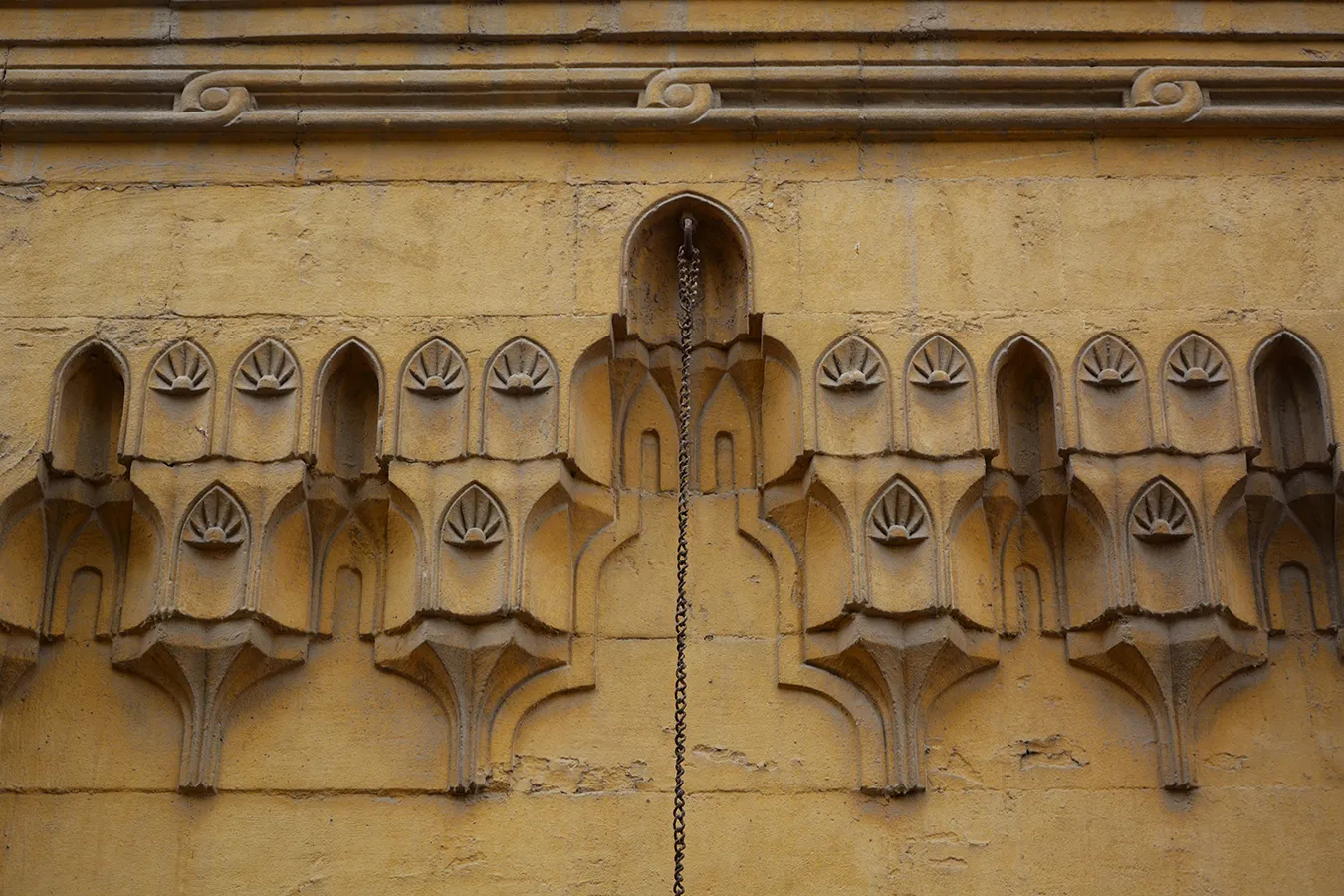
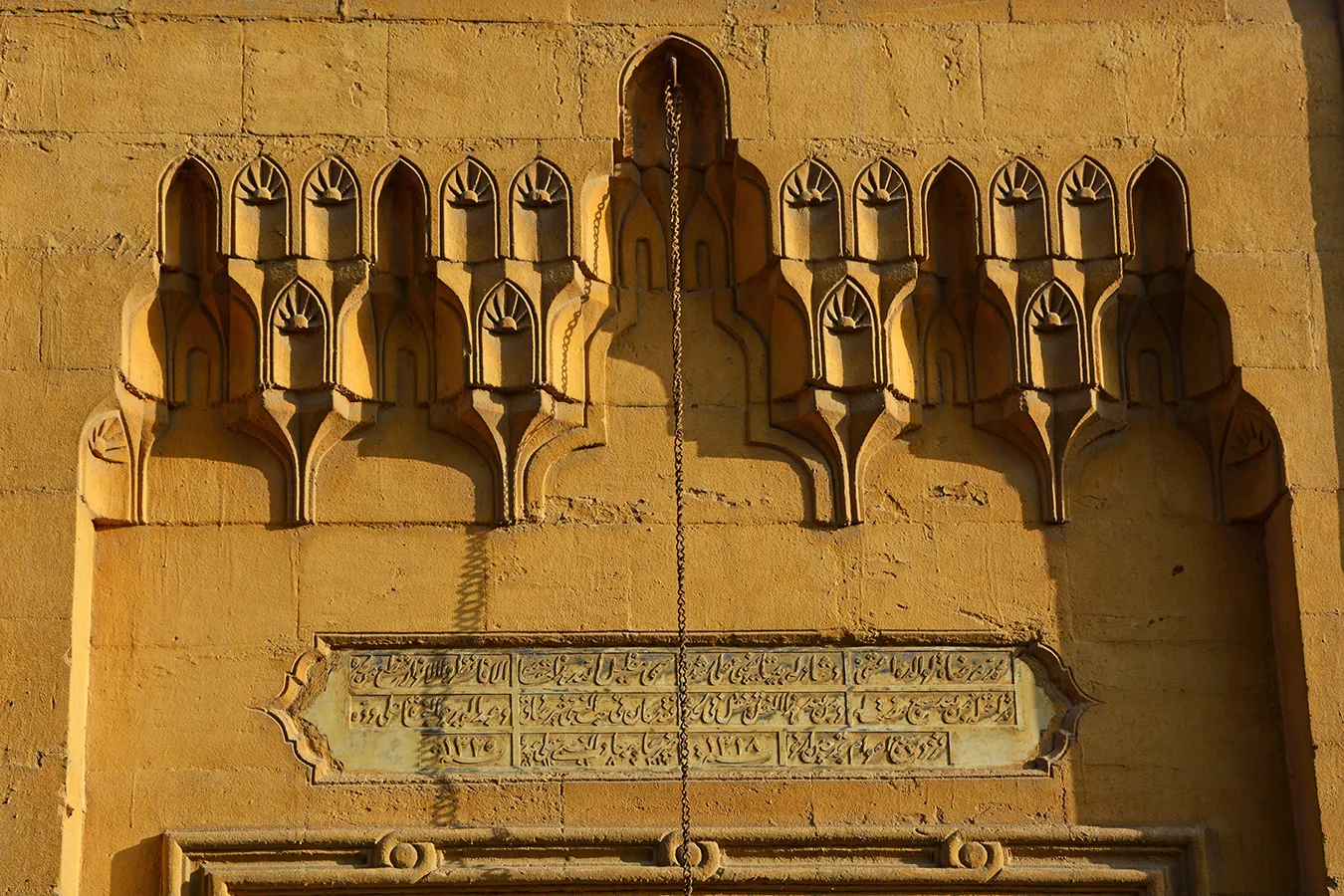
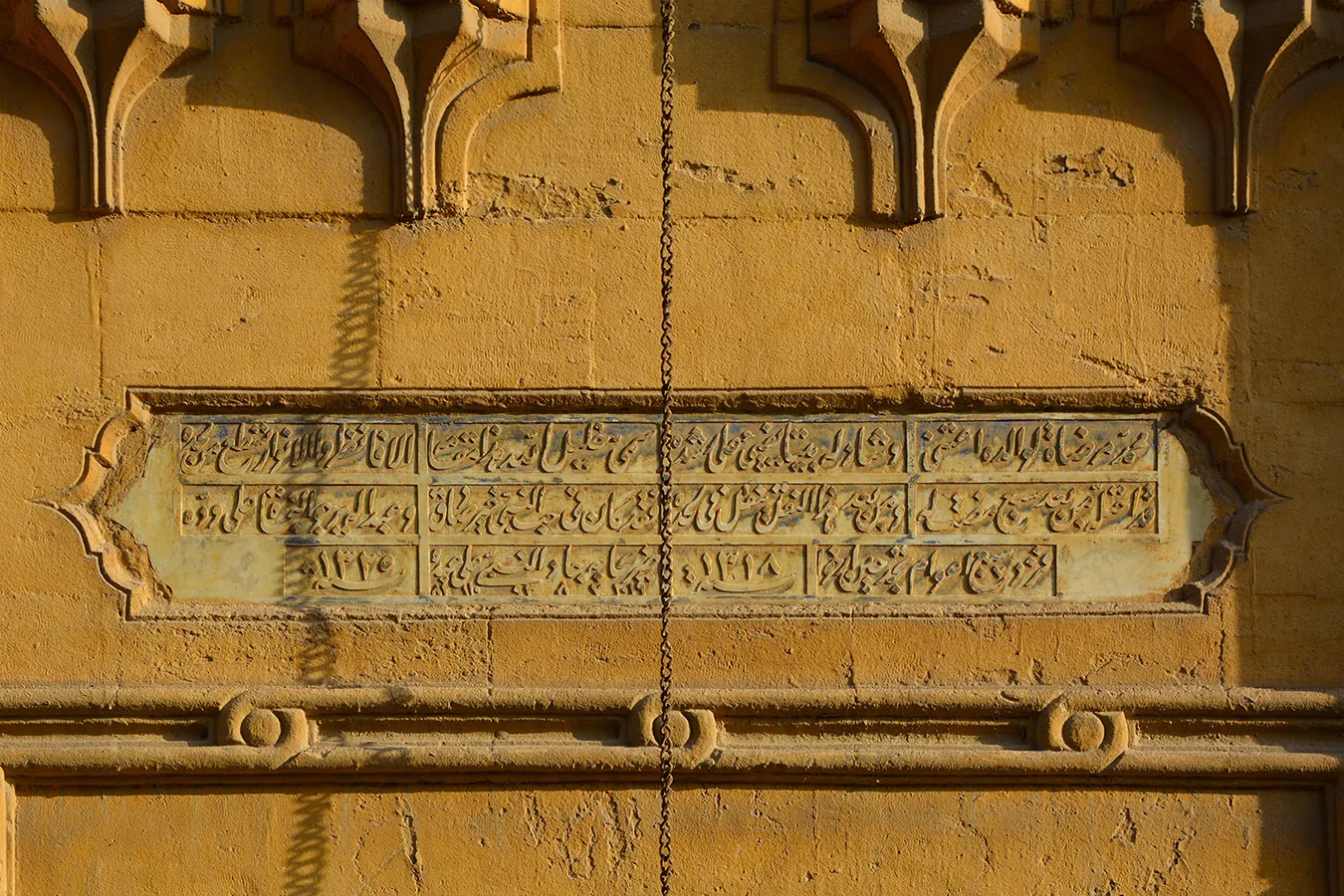
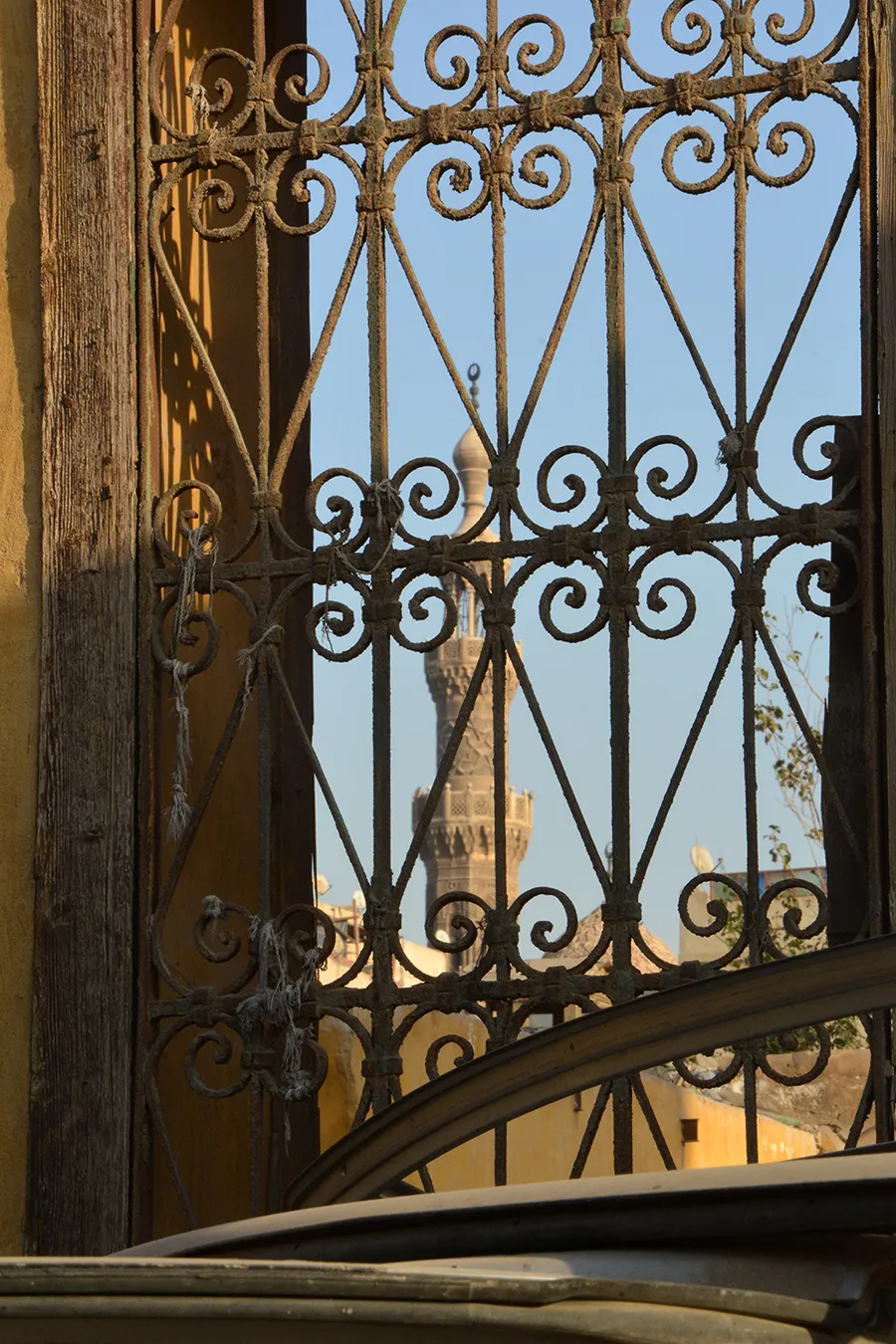
The north-western corner at the junction of the decorated façades is rounded, and protrudes very slightly from the side walls. To both sides of the rounded corner are identical rectangular recesses topped with elaborate three-tiered muqarnases and each containing a rectangular window, with the lintel and the relieving arches above it surrounded by knotted mouldings in a typically Mamluk manner. The windows are fitted with simple decorative wrought-iron grilles and simple panelled wooden shutters. In the corresponding recess in the rounded corner that extends to the ground level and is covered with a similar, but not identical muqarnas frieze, the window is placed one course lower, and has no knotted moulding framing. Above it is a marble panel with two lines of inscription in raised relief, placed in sunken round-ended panels. The inscription is a short poem related to drinking water. However, the window below hasn’t got a stone ledge, and there is no structure behind it, so it uncertain whether a sabil ever operated here. Further away from the rounded corner are muqarnas-covered recesses containing entrance gates with knotted moulding framing like those over the windows, similar, but not identical. The gate in the western façade is larger, and put in a very shallowly protruding section of the wall. Both gates are made of simple decorative wrought-iron grilles. Inside the recesses and above both gates are marble panels within sunken moulded framing, containing the same calligraphic inscription in high-quality raised relief, but in different scripts and differently distributed within calligraphic panels. The inscription is in poetic verse and states that Muhammad built the structure to commemorate his father Khalil Allah seven years after his death in AH 1318, in the year AH 1325.
The facades ate topped with elaborate muqarnases resembling those from the late Mamluk period of Sultan Qansuh al-Ghuri’s reign. The section of the eastern wall outside the decorated façade is simple and plain. All walls have been coated in yellow wash.
The interior of the enclosure was inaccessible in the time of recording.
Condition of preservation
The enclosure is in a good overall condition. However, the lower parts of the walls are severely affected by rising damp, which causes powdering of the stone masonry. A misguided mitigation attempt has been made recently by covering the base of the wall with Portland cement coating, which now is itself powdering.
Information abut the founder, family history, etc.
The dates in the dedicatory inscriptions, AH 1318 (death of Khair Allah) and AH 1325 (construction of the funerary enclosure by his son Muhammad), correspond to AD 1900 and 1907.
The current keeper referred to the founder as “al-Nahas.”
- Field recording by
- Hadeer Ahmad and Nur Atiya
- Date recorded
- August 15, 2022
- Data entered by
- Yusuf Yassir
- Date entered
- May 16, 2024