
Unit No13
Rustum family (assumed) funerary enclosure
|
Coordinates of the main entrance |
30.044544N - 31.2734E |
|
Attribution |
Rustum family (assumed) funerary enclosure |
|
Higri (AH)Dates as given in the Inscription |
|
|
Miladi (AD)Dates as given in the Inscription |
Before 1957 |
|
Inscription Contemporary with the building? |
Yes |
|
Multiple date(s) In the inscription? |
Yes |
|
Assumed Date |
Before 1957 |
|
Based on |
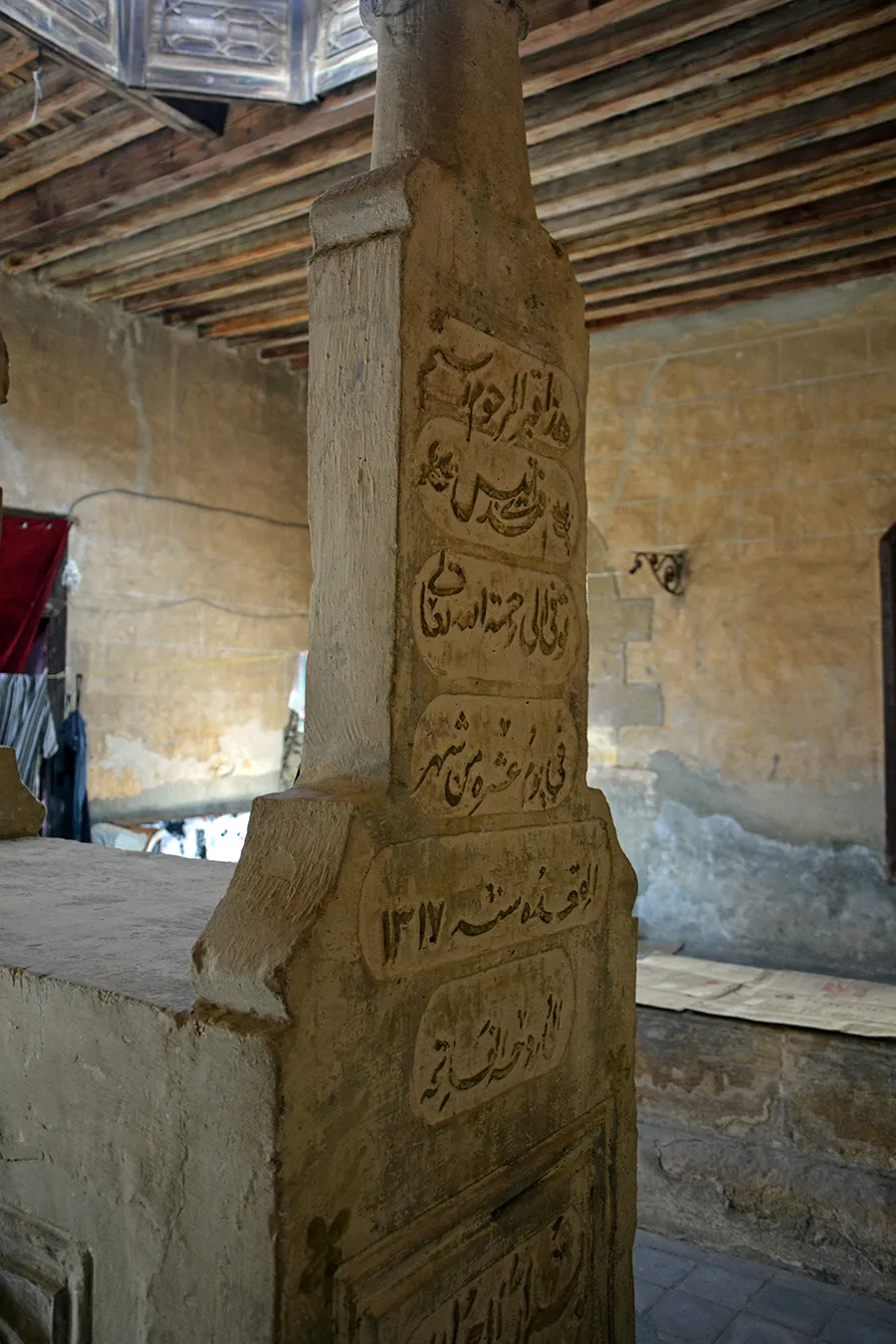
(written on cenotaph) |
|
Original Use |
Funerary enclosure |
|
Current Use |
Funerary enclosure, shrine, residential |
|
Overall condition |
Fair |
Features of unit 13
| Present | Count | Material | Comments (see description for details) | |
|---|---|---|---|---|
| Free standing structure | No | |||
| Walled enclosure | Yes | stone | ||
| Rooms by the perimeter wall | Yes | 7 | 2 rooms used as residential, 2 toilets, 3 burial chambers | |
| Freestanding structure(s) in enclousure | No | |||
| Dome over the tomb chamber | No | |||
| Neo-Mamluk architectural decoration | Yes | |||
| Garden layout | Yes | 1 | ||
| Sabil(s) | No | |||
| Wall fountain(s) | No | |||
| Canopy on columns / pillars | No | |||
| Carved marble cenotaph(s) | No | |||
| Decorated limestone tomb-markers | Yes | 3 | ||
| Decorated gateway | Yes | 2 | ||
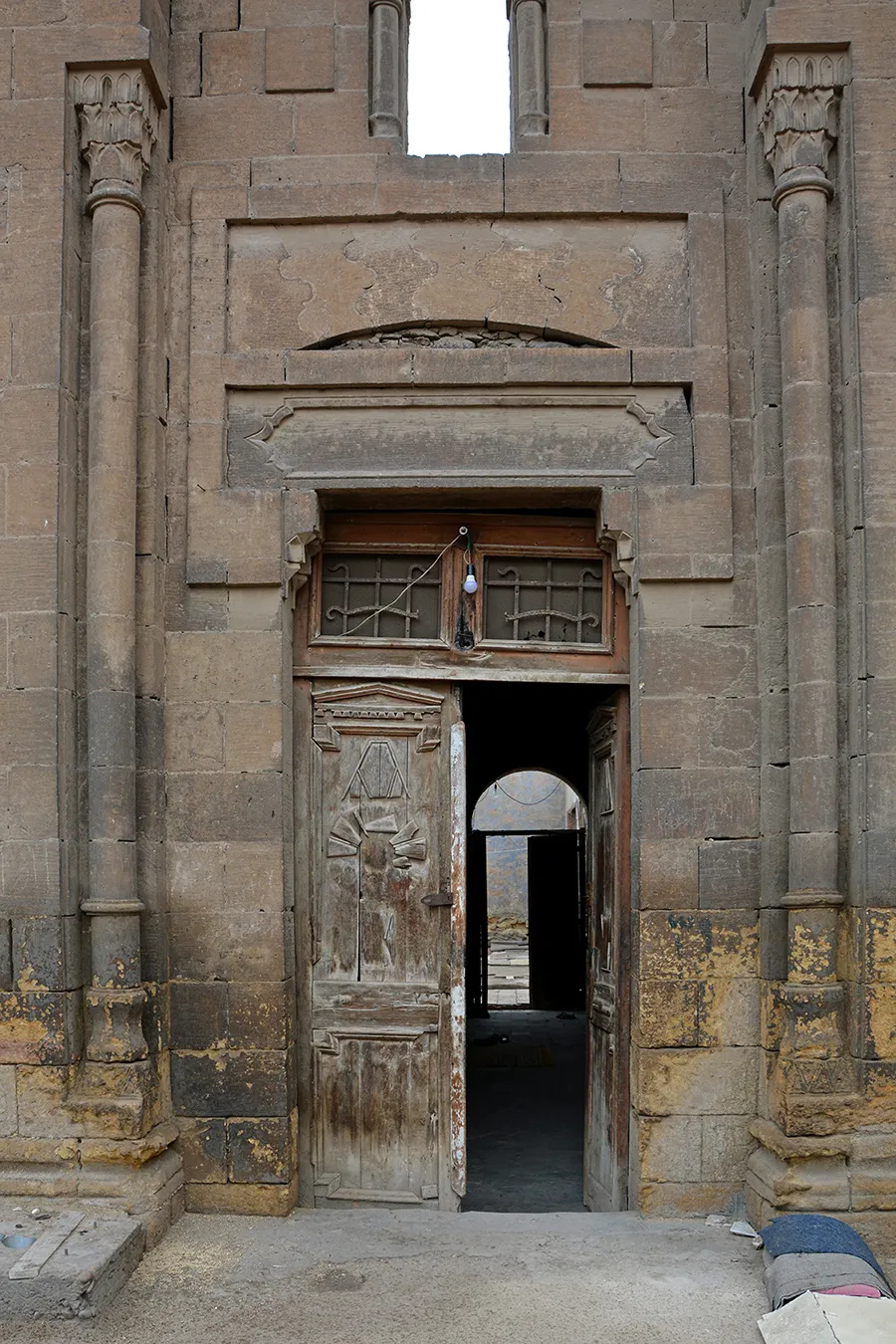
| Decorative door-leaves | Yes | 2 | In the main gateway, some parts missing | |
| Decorative window grilles | Yes | |||
| Decorative shutters | No | |||
| Painted ceiling(s) | No | |||
| Decorative paving(s) | Yes |
Unusual or unique features
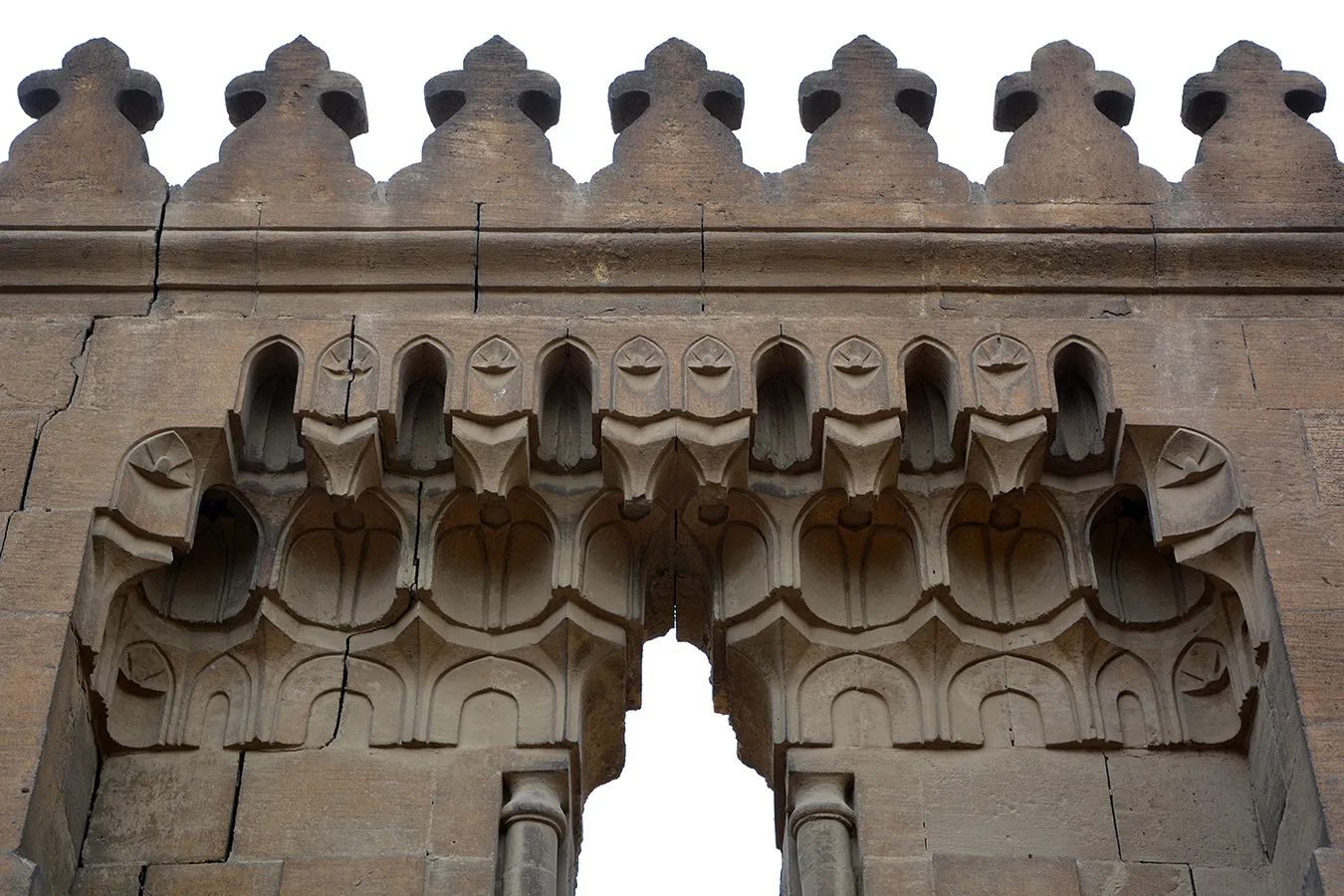
• Extremely high quality of stonemasonry, which accurately copies Mamluk-period details.
Description (The direction towards Mecca (Qibla) is described as eastern and other directions are named accordingly)
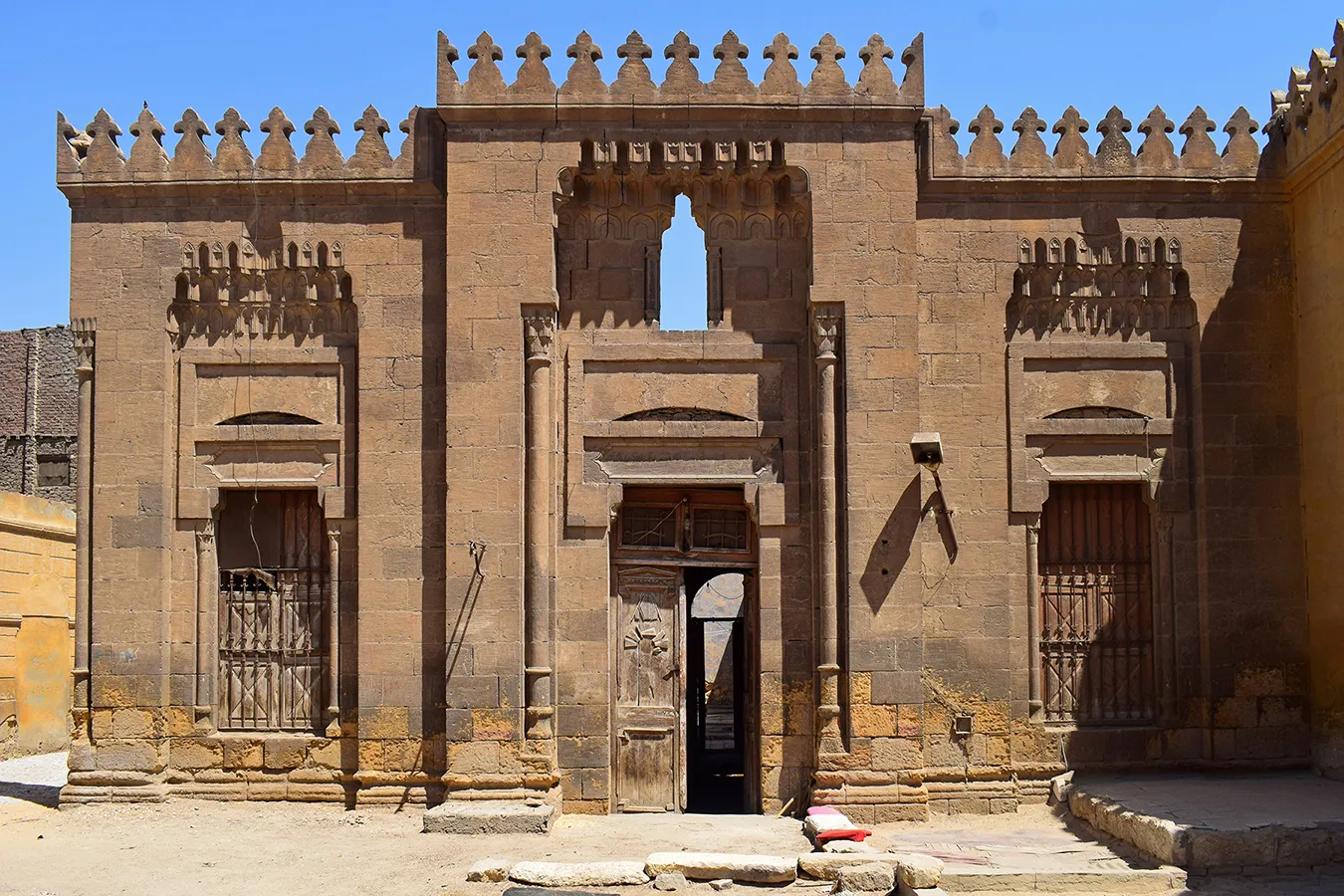
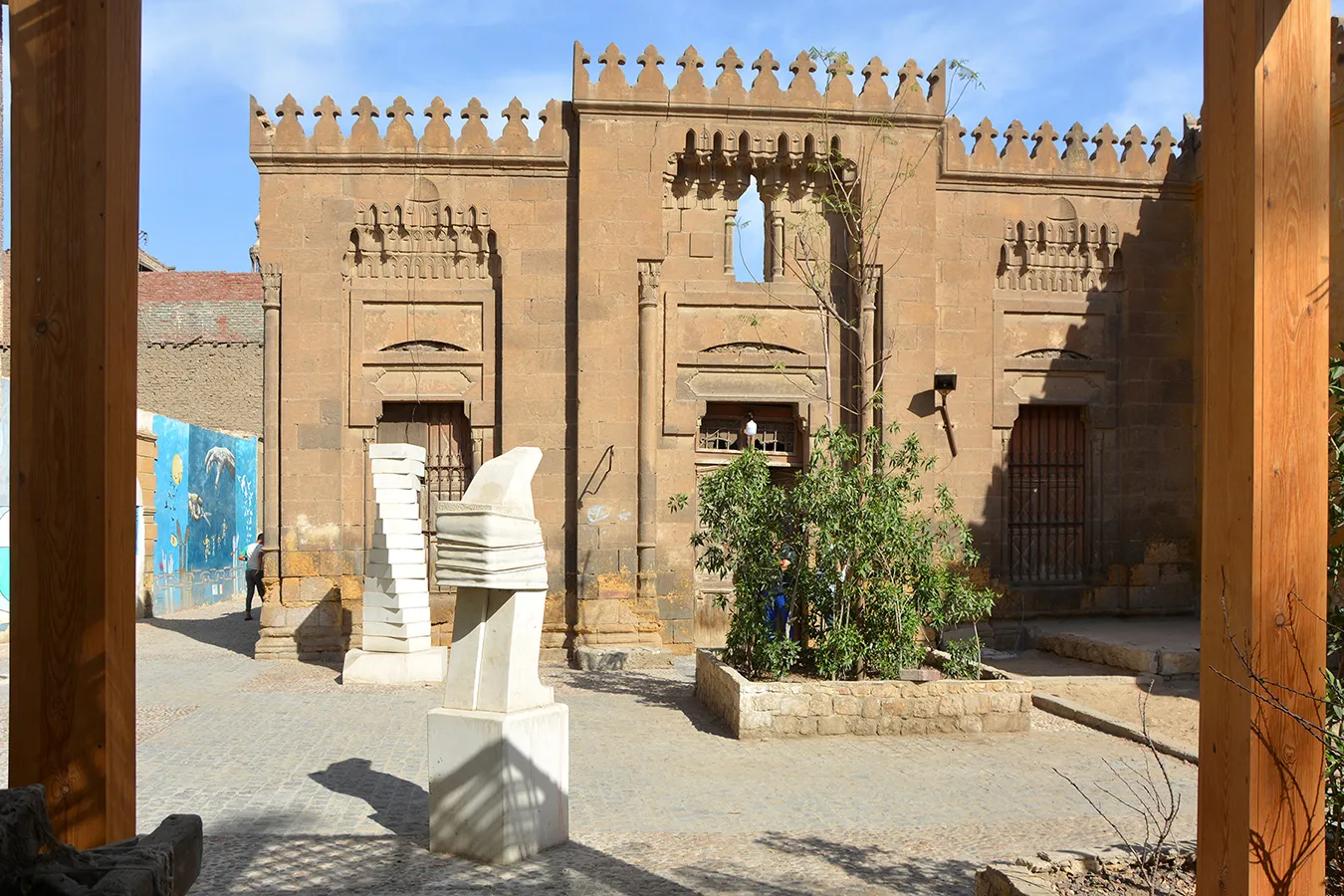
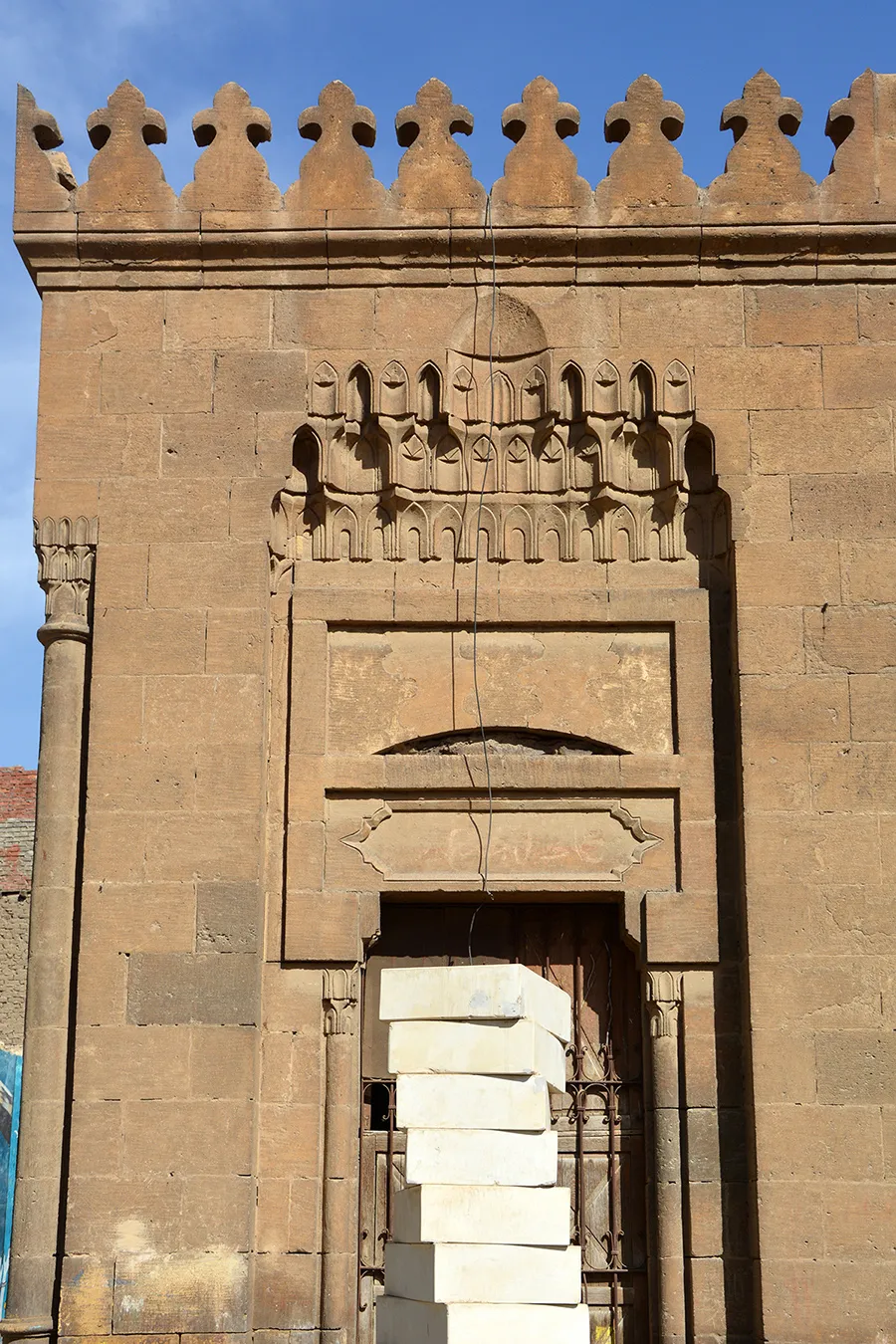
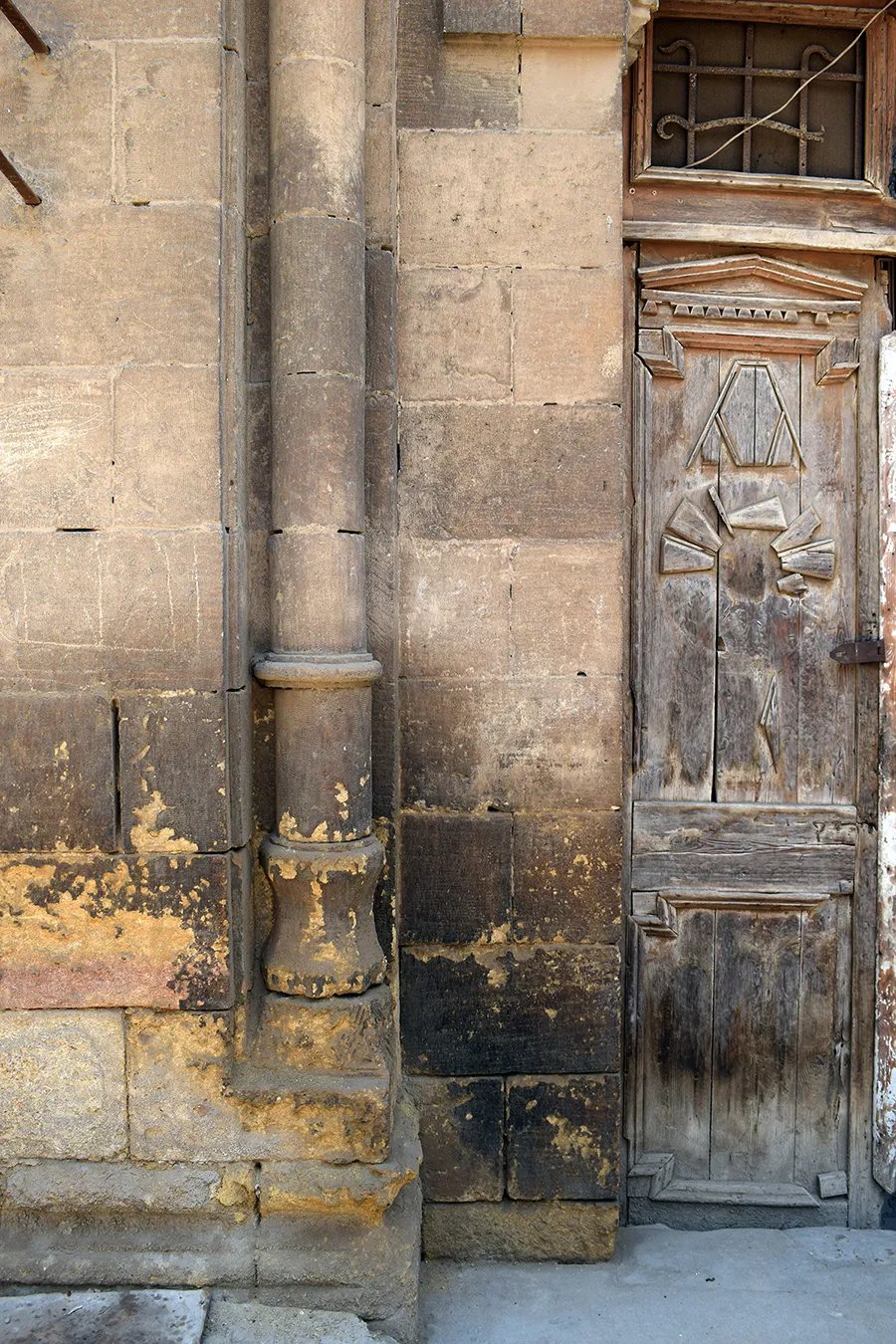
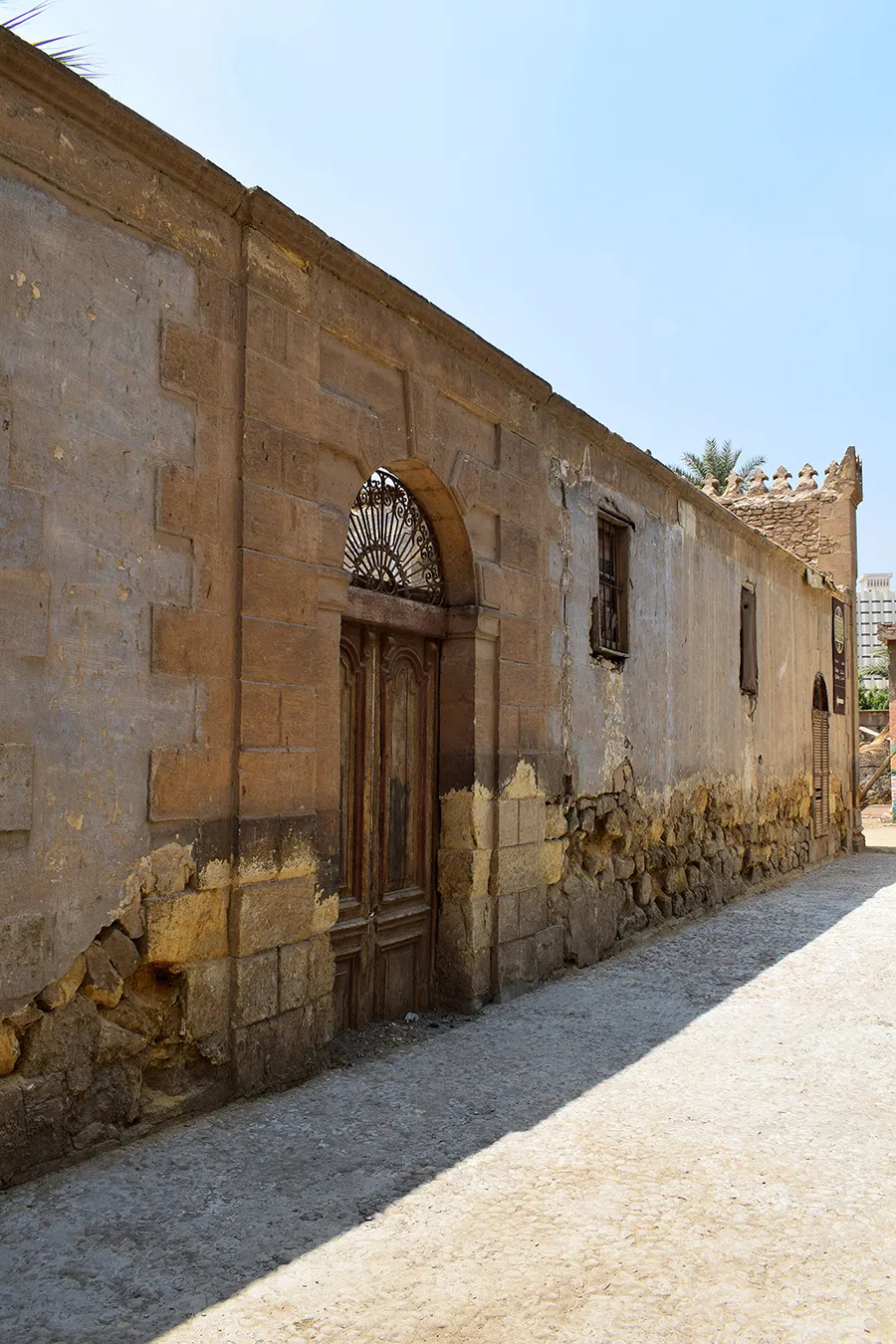
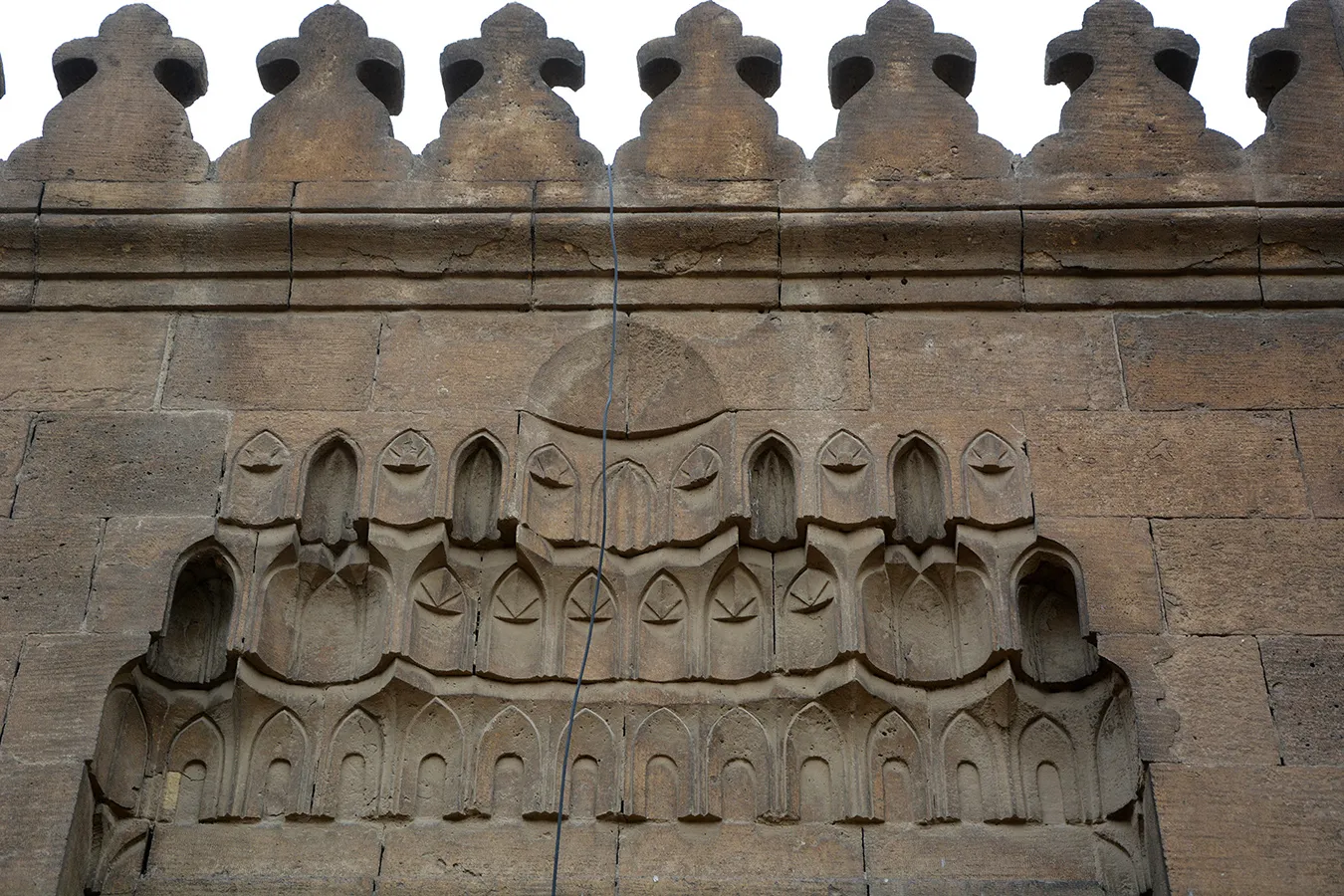
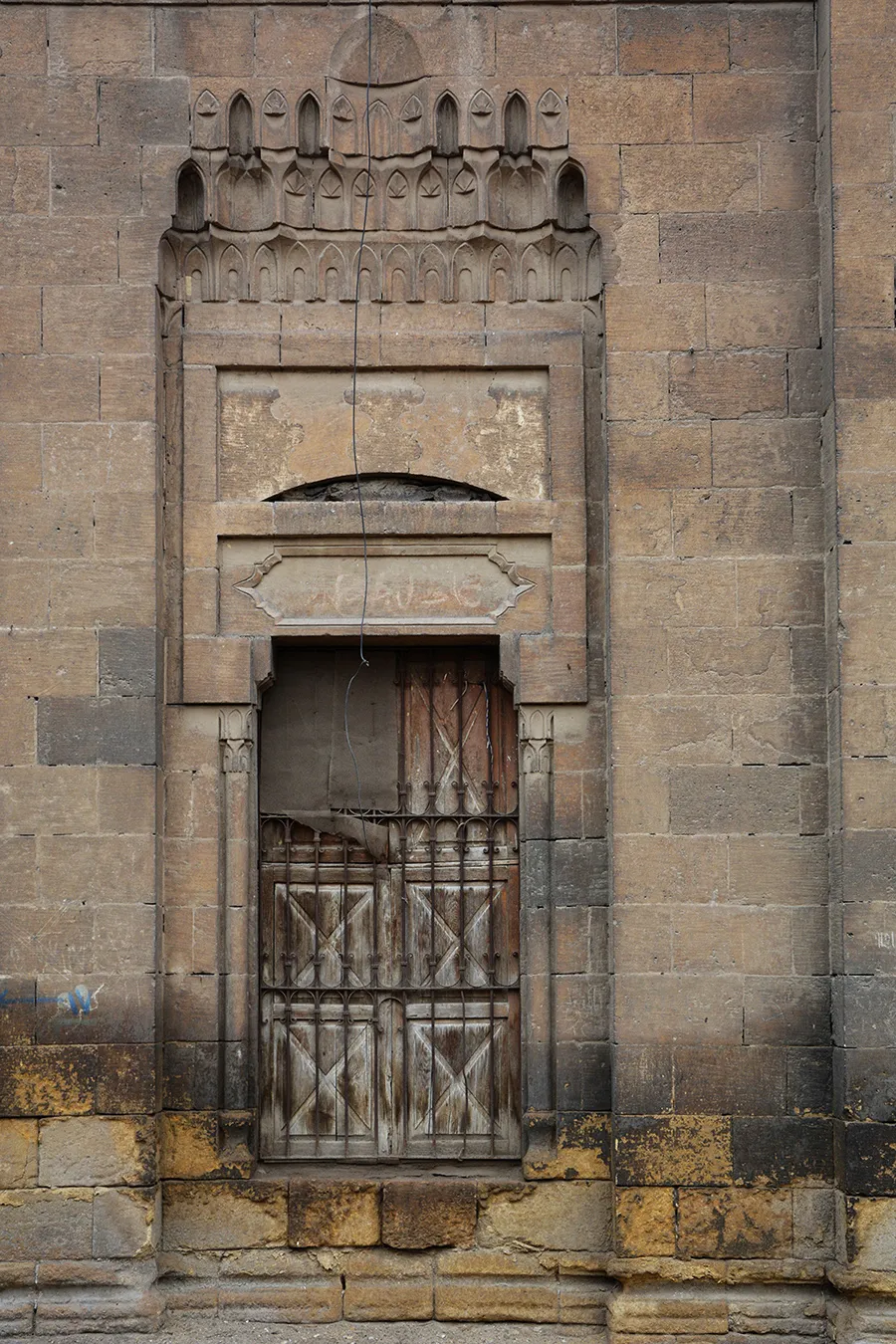
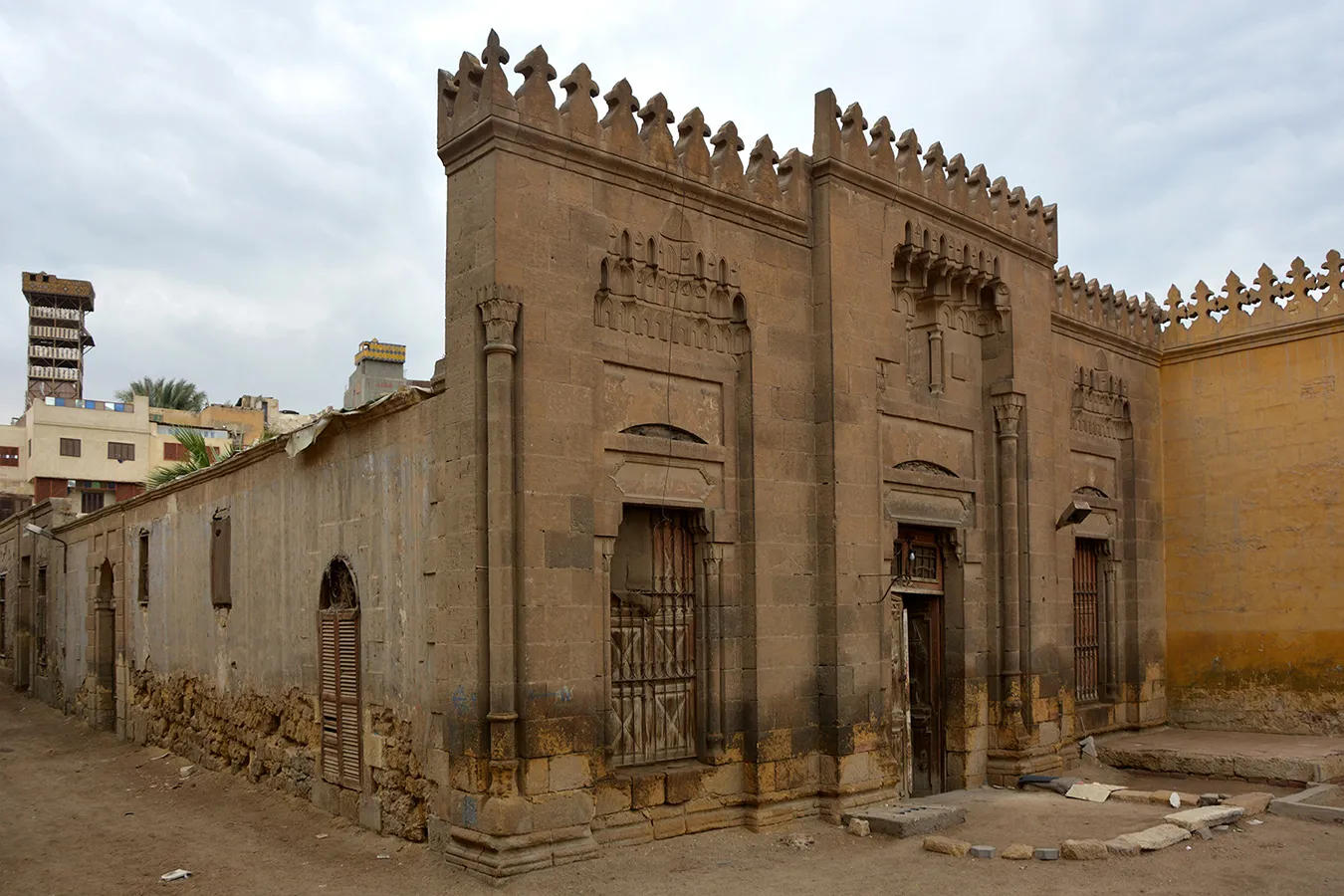
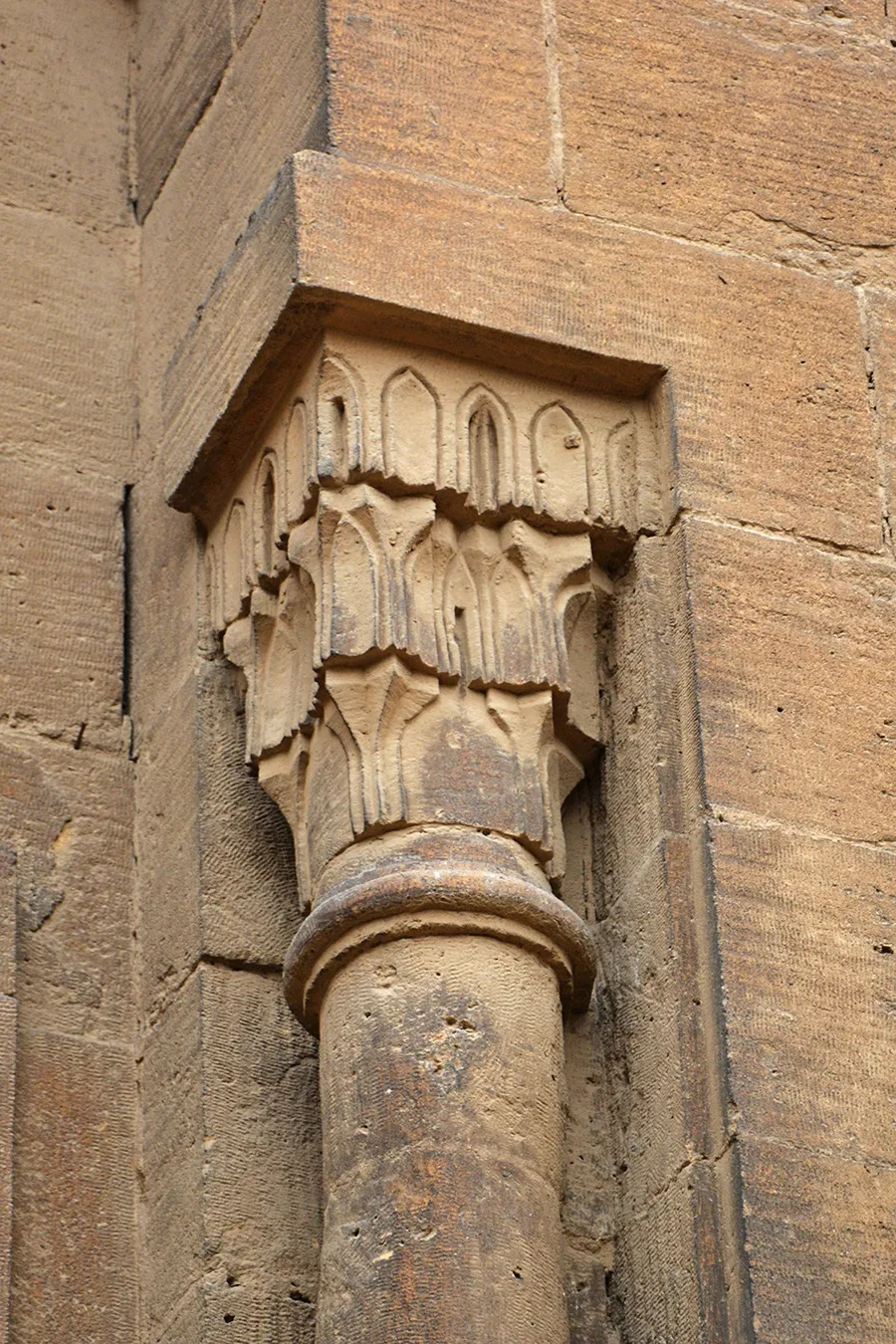
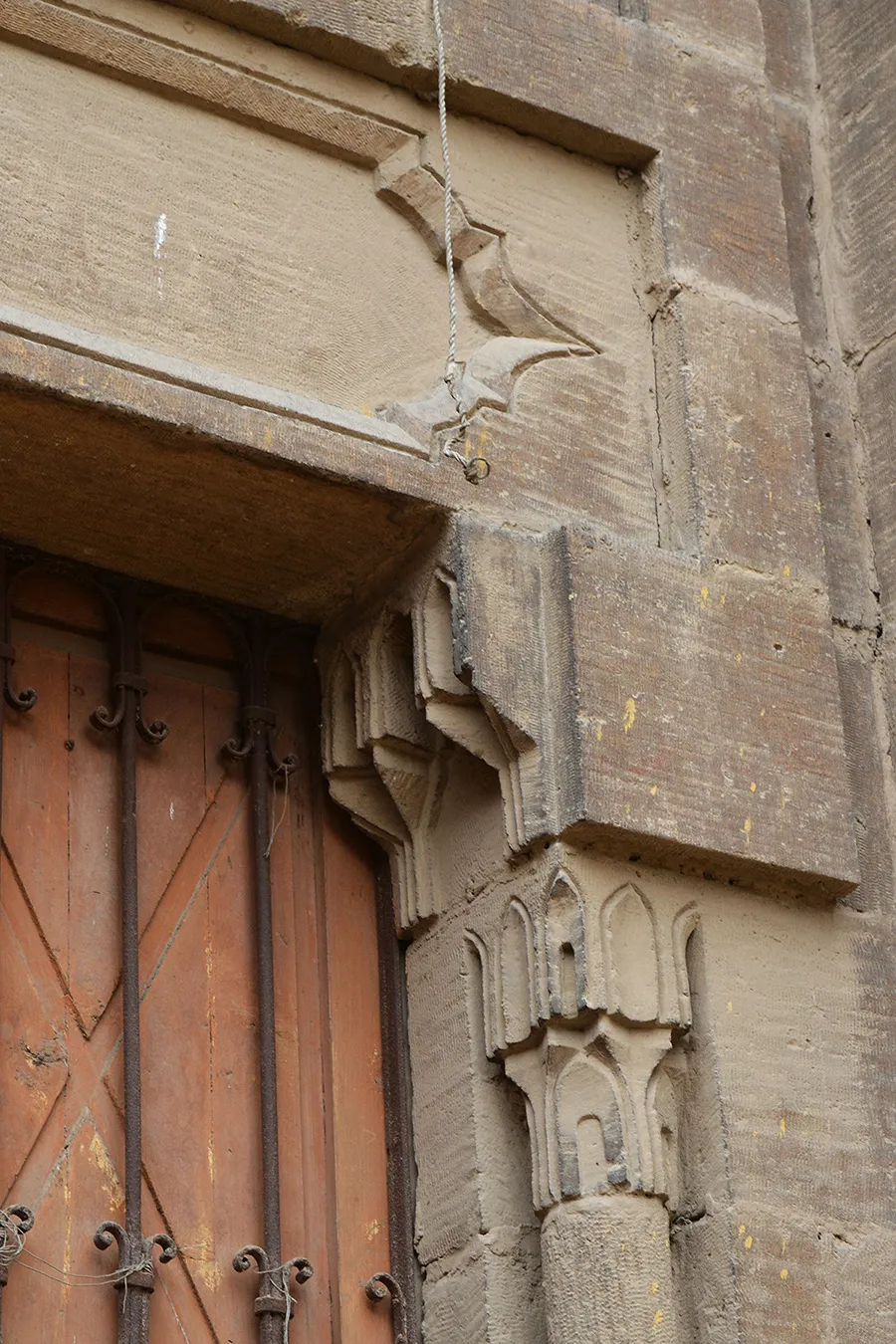
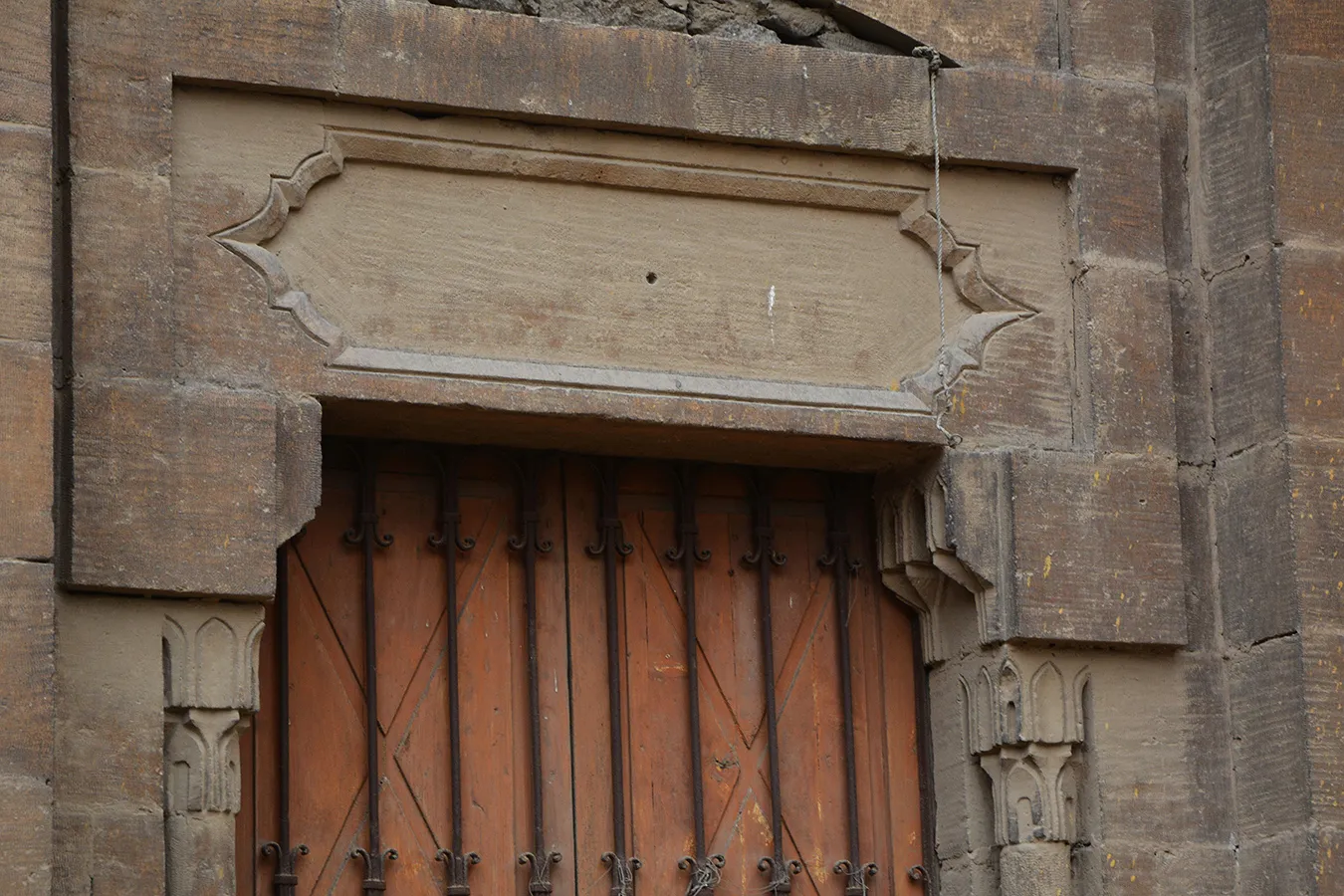
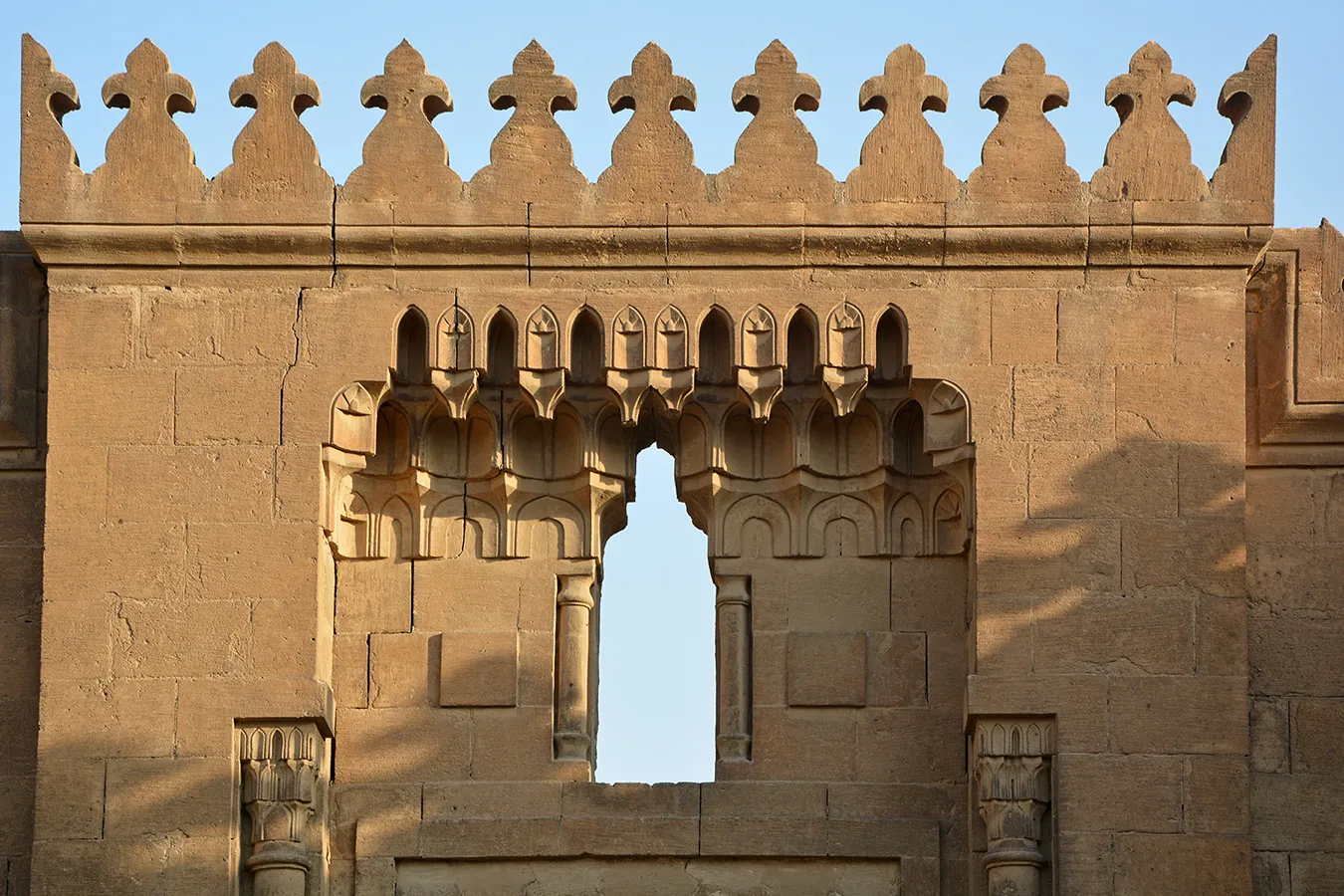
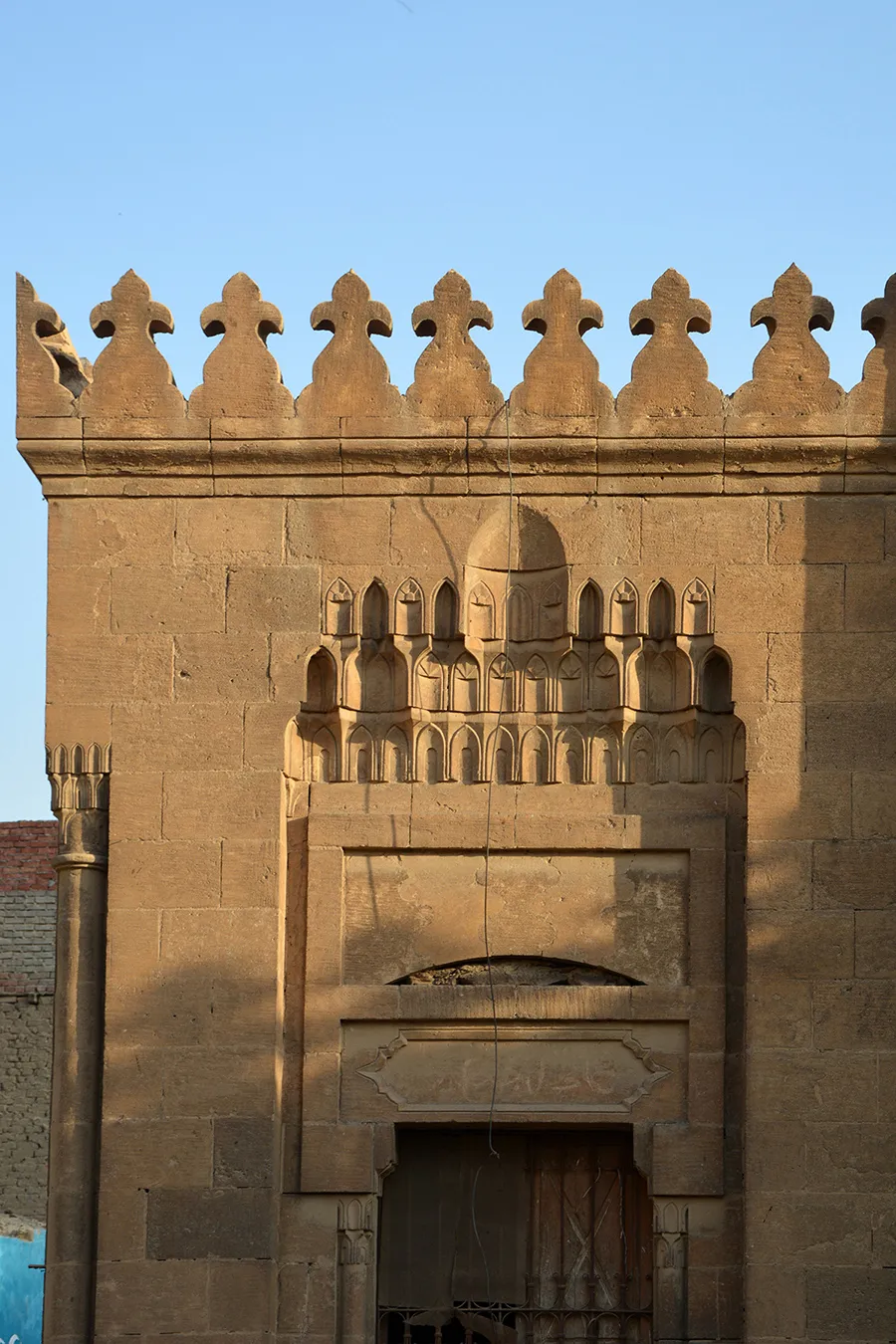
A rectangular walled funerary enclosure with the shorter western wall as the main façade. The richly decorated façade built of ashlar stone is of remarkably high quality of craftsmanship and accurately copies Mamluk-period architectural detail (but not the design principles of Mamluk architecture, being strictly symmetrical.) The tripartite façade stands on a moulded plinth course and features slender engaged columns with muqarnas capitals in the corners. The protruding central entrance section is taller than the rest of the façade, forming a pishtaq (Petersen, p.234). The entrance is set in a tall rectangular recess topped with an elaborate three-tiered muqarnas hood. In the corners of the entrance recess are engaged columns identical with those at the ends of the façade. Above the rectangular entrance door is a window flanked by two engaged colonnettes, with the covering trilobed arch integrated into the muqarnas frieze. The window does not belong to any room, as the upper part of the façade forms a tall parapet above the roof. The two-leaved wooden door are decorated with neo-classical based motifs, not Mamluk like the stonework of the façade.
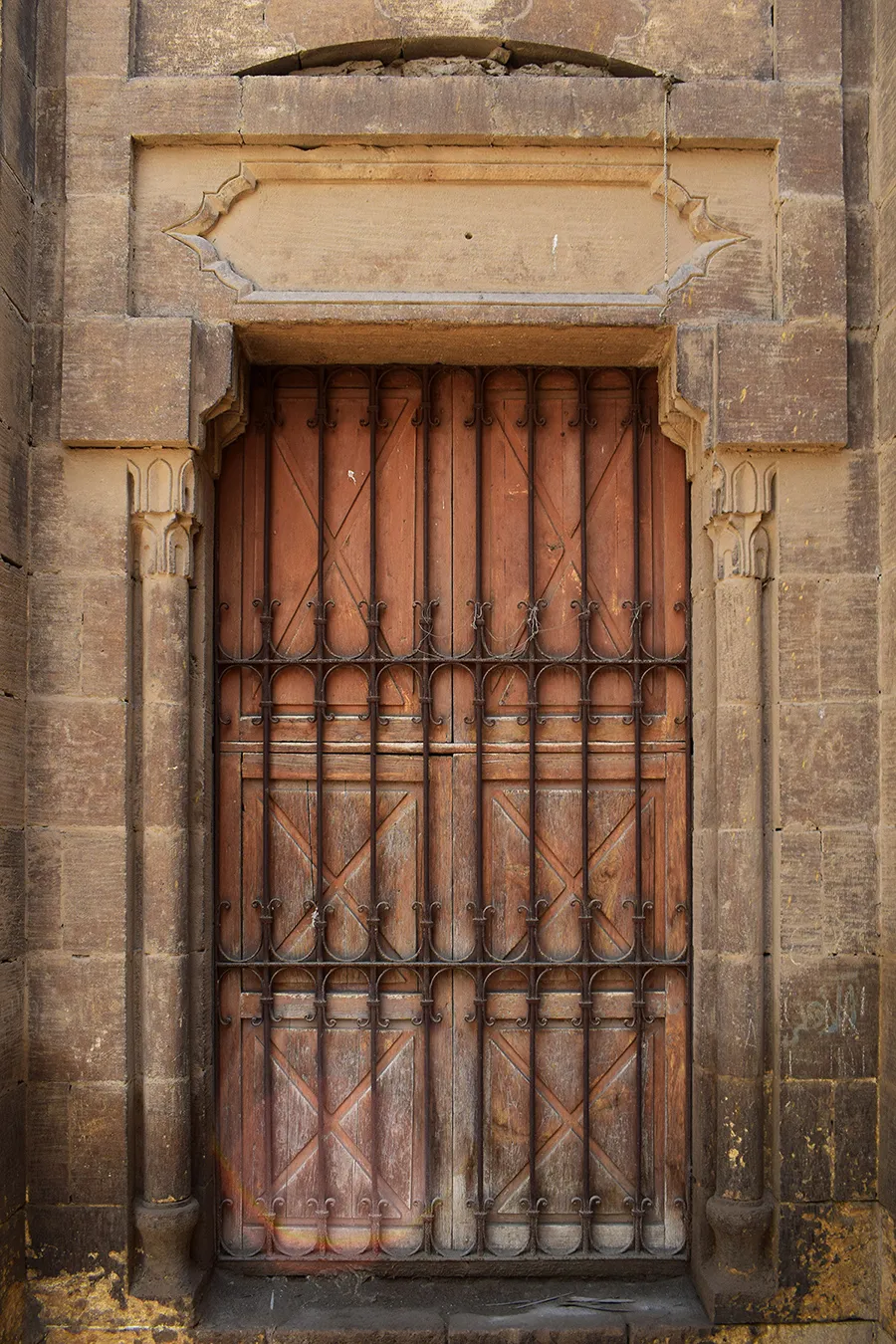
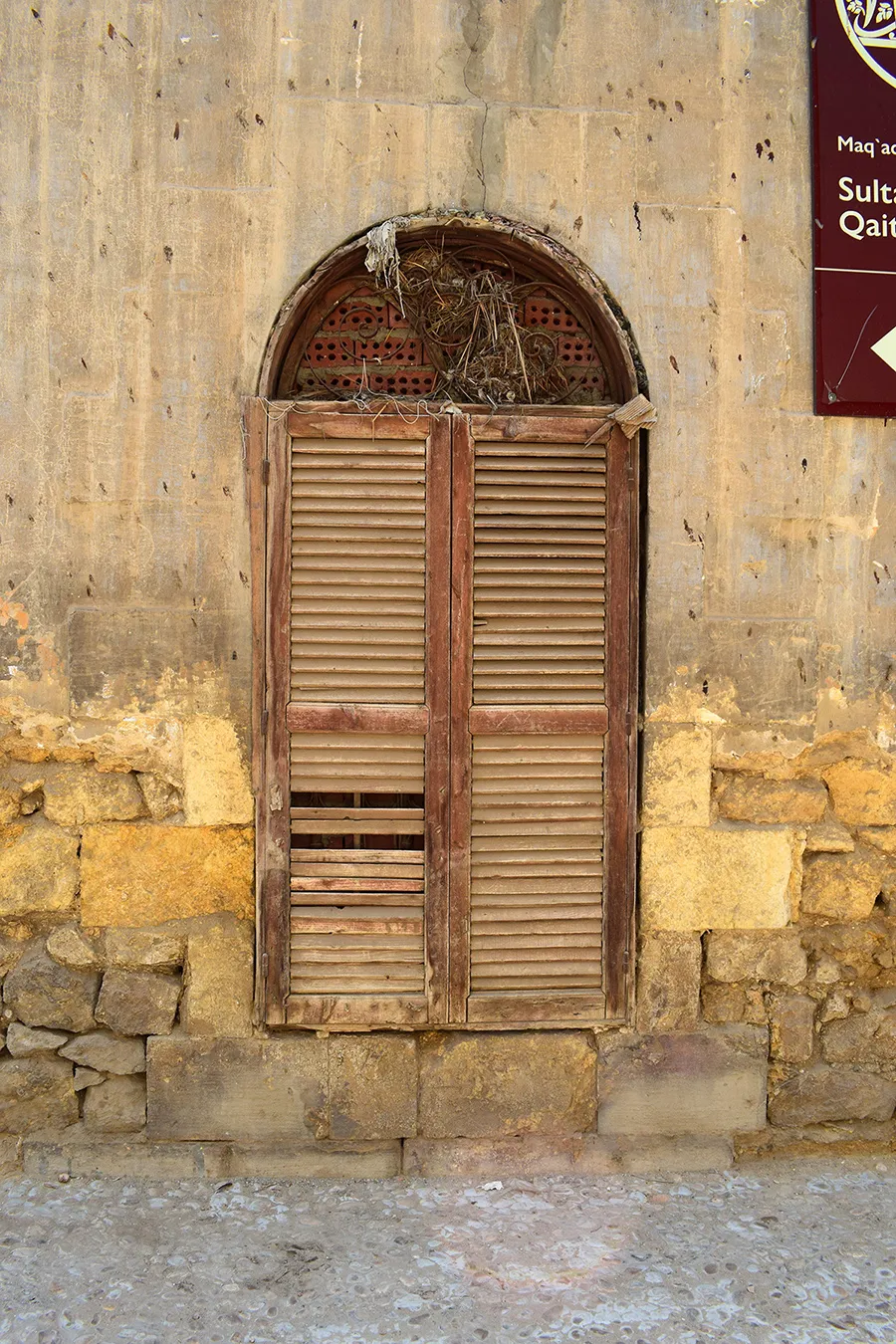
The side sections of the façade feature centrally placed rectangular recesses covered with elaborate three-tiered muqarnas hoods. The rectangular windows are flanked with engaged corner colonettes with muqarnas capitals and are fitted with simple decorative wrought-iron grilles and simple wooden panelled shutters. Over the windows and the entrance door, the lintels and the relieving arches above them are surrounded by plain protruding frames, apparently intended to be carved into knotted mouldings in a typically Mamluk manner into knotted mouldings, but never completed. This gives the otherwise ornate façade a decidedly unfinished air. The façade is topped by a simple cornice and fleur-de-lys crenellations.
The side (northern) façade is undecorated, built of rubble stone and plastered, and has three irregularly placed windows (one topped with a semi-circular arch, and two rectangular), and a secondary gate to the courtyard, built of cut stone and with a very simplified neo-classical derived architectural framing.
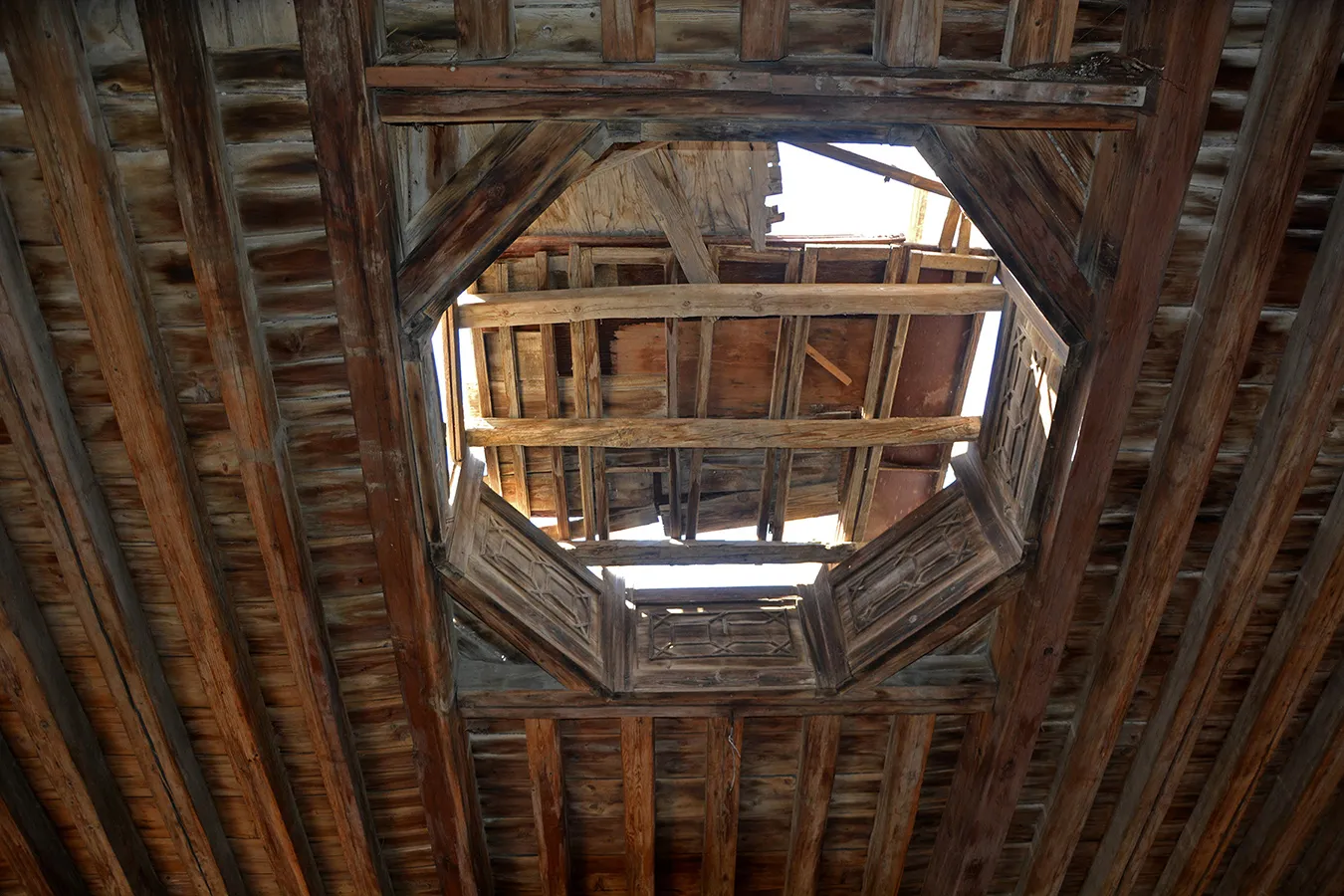
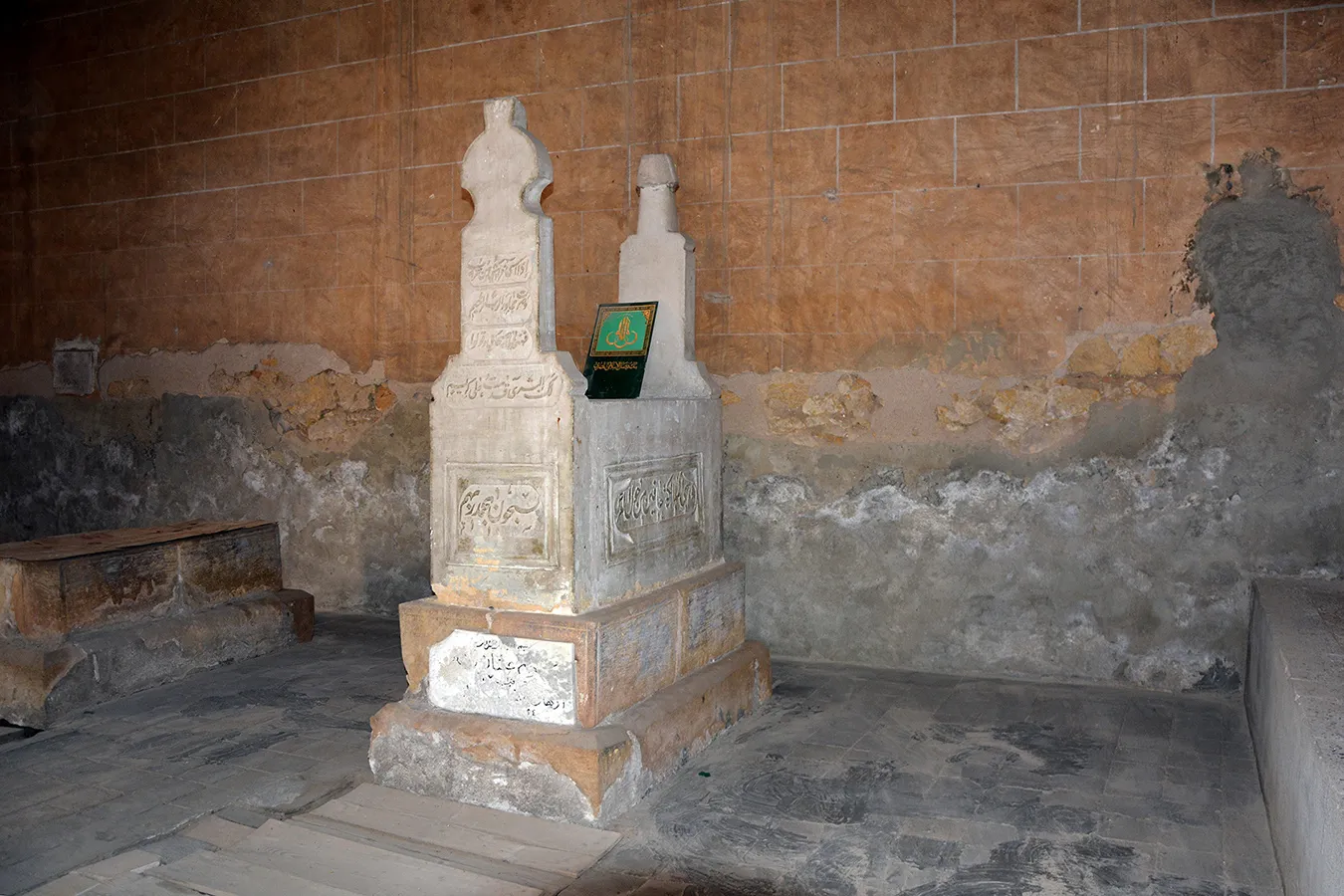
The entrance leads to a huge chamber covered with a wooden ceiling with a simple low octagonal lantern. In the southern part of the chamber are two limestone pedestals. The eastern one is empty; on the western one stands a cenotaph carved in limestone, bearing the name Rustum Anis Effendi and the date AH 1317.
To the northerh of the chamber is residential unit. In the north-eastern corner of the enclosure is a courtyard that occupies a little more than a quarter of the lot. Two more burial chambers are located at the southern side of the courtyard.
Condition of preservation
The façade, which is the most meritorious part of the unit, is in a fair overall condition, although its lower parts are severely affected by rising damp. The skylight in the south-western burial chamber is seriously damaged, and the side façade is deleterious.
Information abut the founder, family history, etc.
According to the current resident keeper, the name of Rustum is written on the cenotaph in the burial chamber (inaccessible at the time of recording.)
References in published/primary sources
• Petersen, Andrew Dictionary of Islamic Architecture, Routledge 1996, p. 234
- Field recording by
- Hadeer Ahmad and Nur Atiya
- Date recorded
- August 15, 2022
- Data entered by
- Yusuf Yassir
- Date entered
- May 16, 2024