



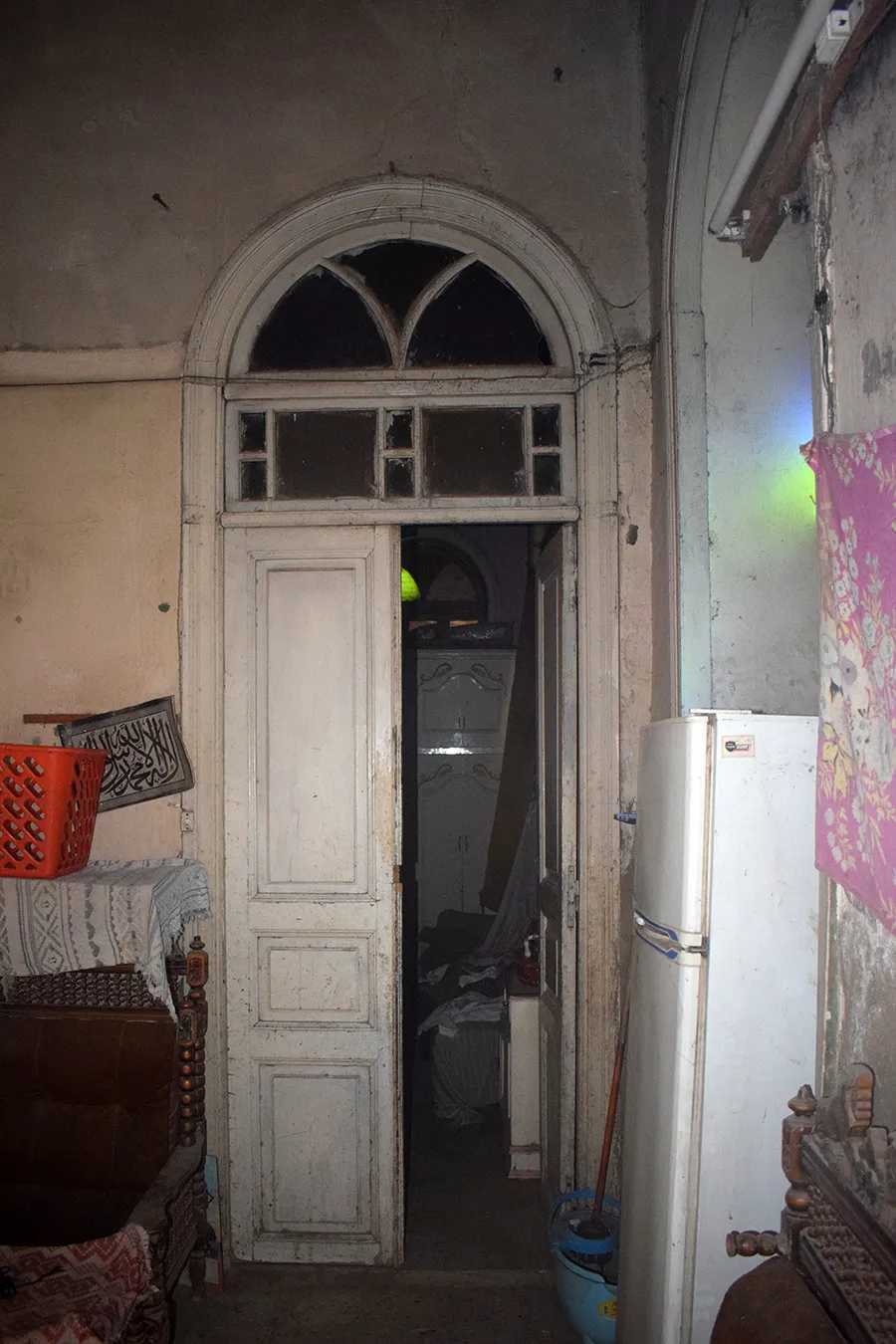
Unit No12
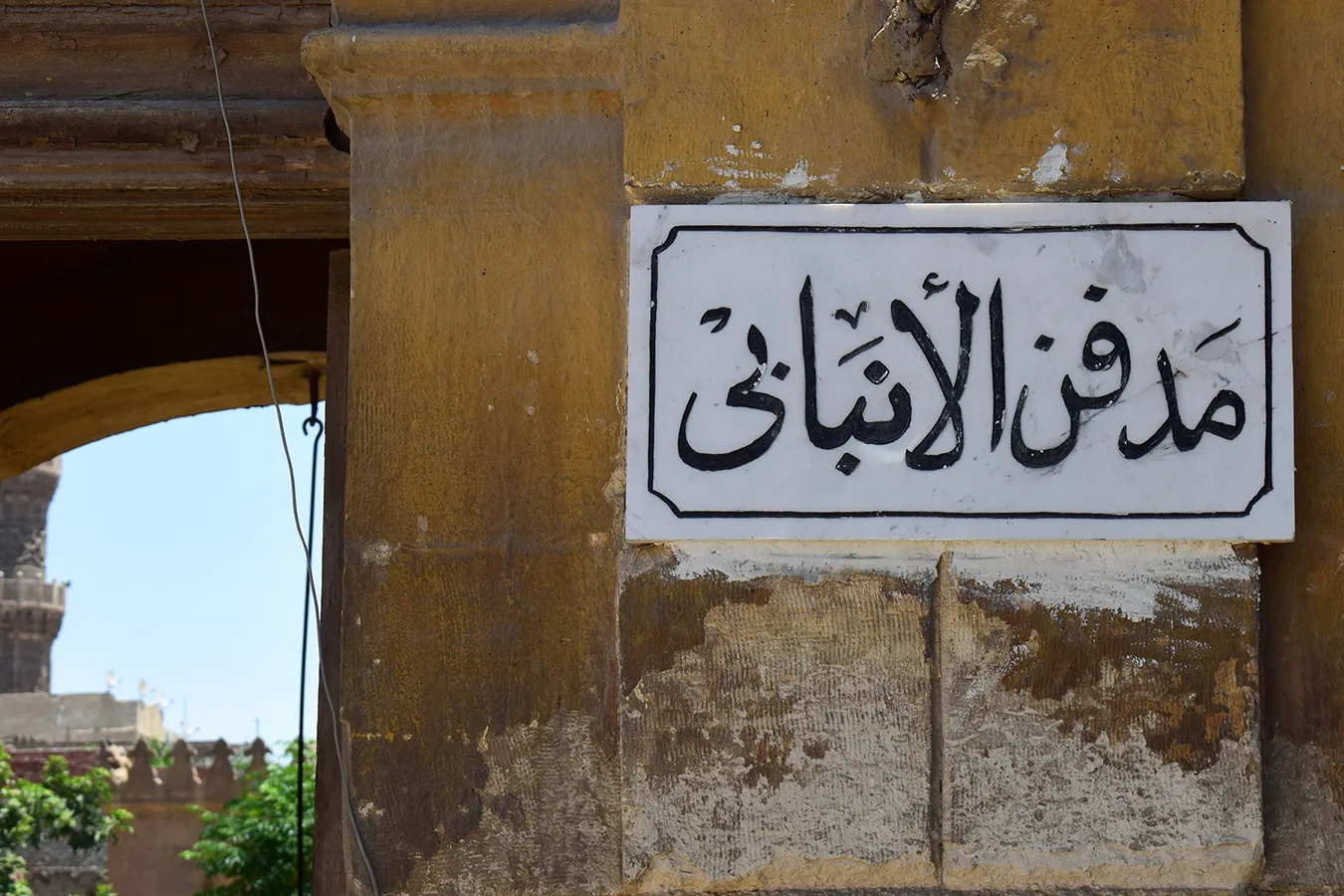
Al-Inbabi funerary enclosure
|
Coordinates of the main entrance |
30.044742N - 31.273003E |
|
Attribution |
Al-Inbabi funerary enclosure |
|
Higri (AH)Dates as given in the Inscription |
1313 |
|
Miladi (AD)Dates as given in the Inscription |
|
|
Inscription Contemporary with the building? |
Yes |
|
Multiple date(s) In the inscription? |
Yes |
|
Assumed Date |
|
|
Based on |
|
|
Original Use |
Funerary enclosure |
|
Current Use |
Funerary enclosure, shrine, residential |
|
Overall condition |
Fair |
Features of unit 12
| Present | Count | Material | Comments (see description for details) | |
|---|---|---|---|---|
| Free standing structure | No | |||
| Walled enclosure | Yes | stone | ||
| Rooms by the perimeter wall | Yes | |||
| Freestanding structure(s) in enclousure | No | |||
| Dome over the tomb chamber | No | |||
| Neo-Mamluk architectural decoration | No | |||
| Garden layout | Yes | |||
| Sabil(s) | Yes | |||
| Wall fountain(s) | No | |||
| Canopy on columns / pillars | No | |||
| Carved marble cenotaph(s) | No | |||
| Decorated limestone tomb-markers | No | |||
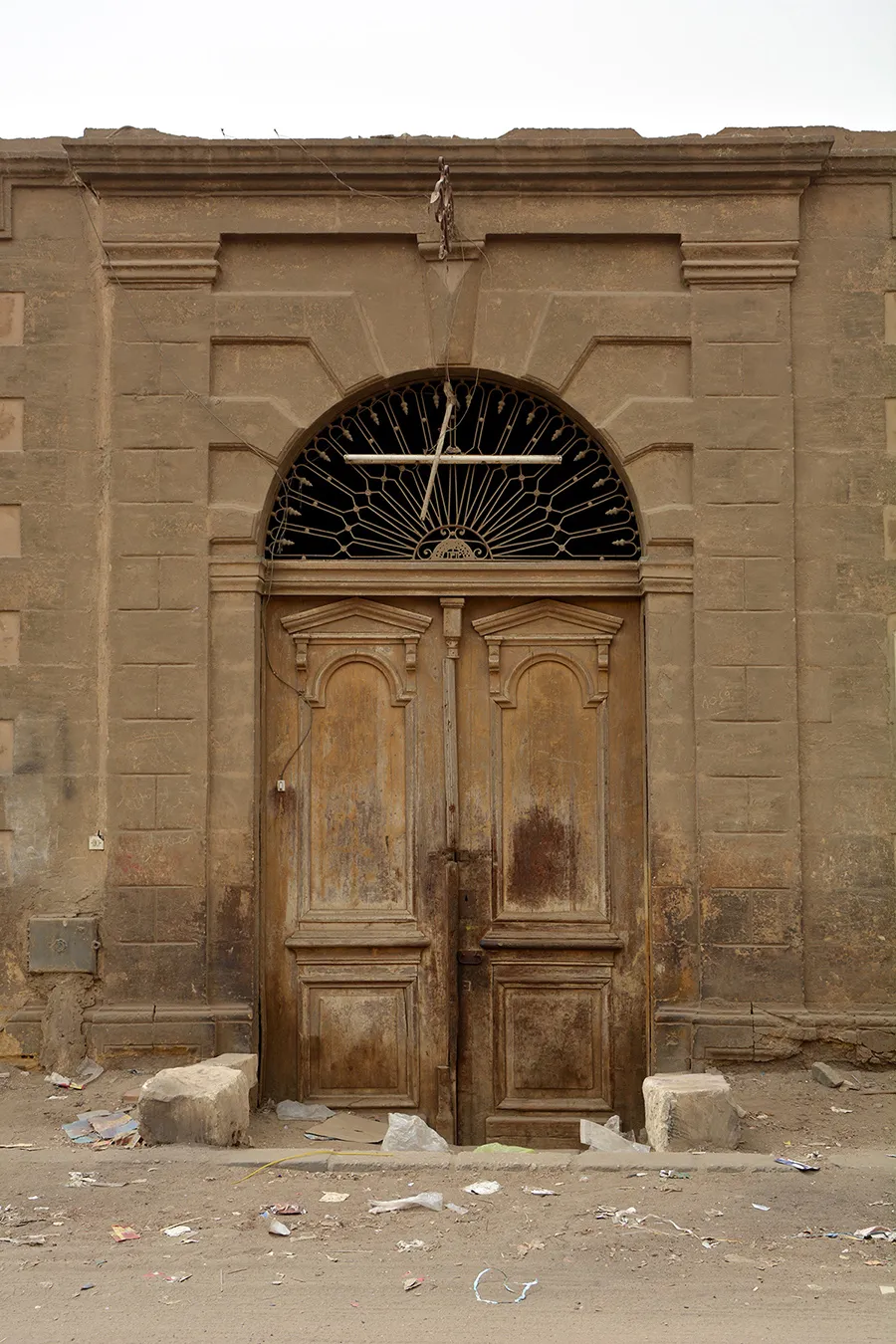
| Decorated gateway | Yes | 1 | stone | |
| Decorative door-leaves | No | wood | 27 undecorated doors | |
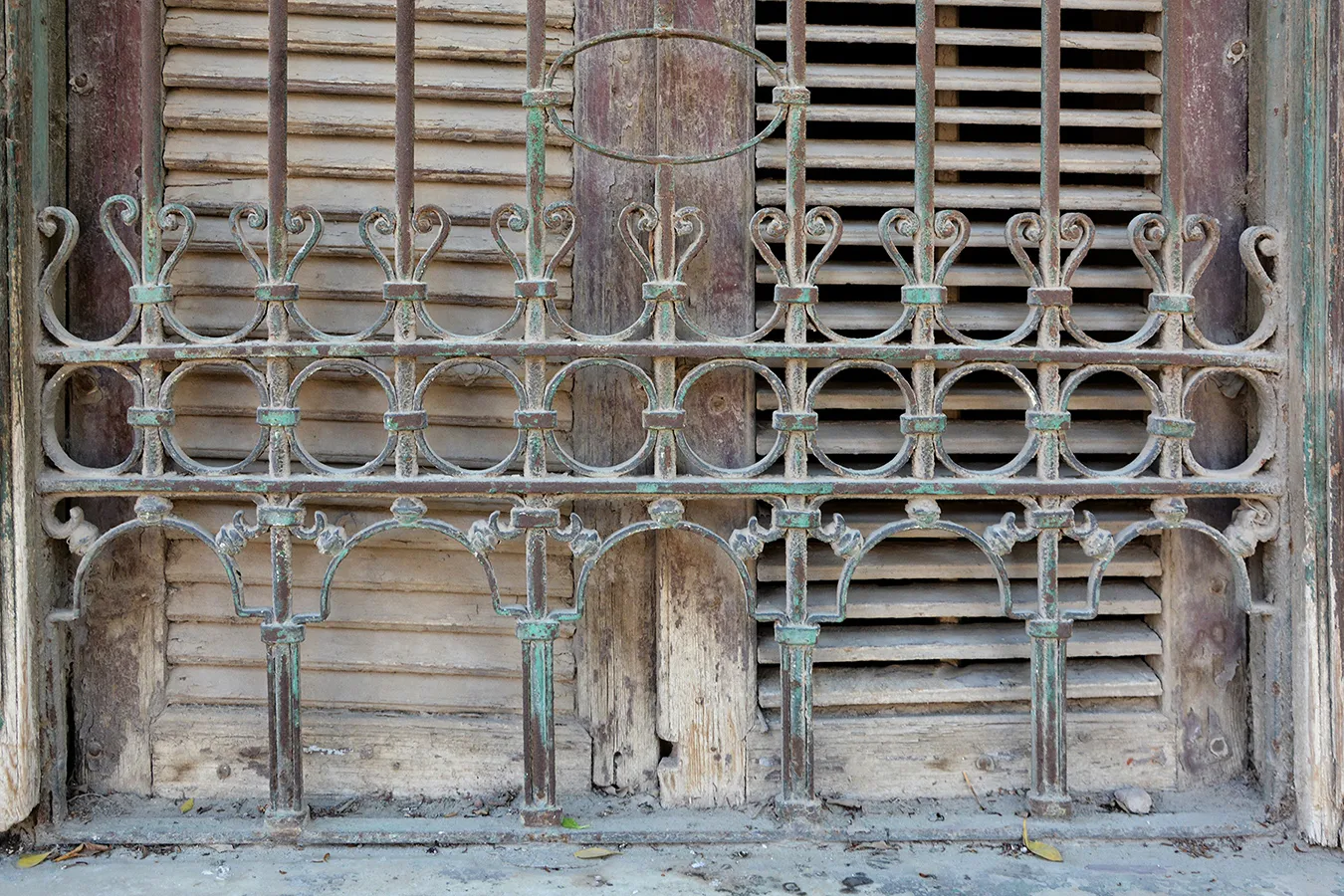
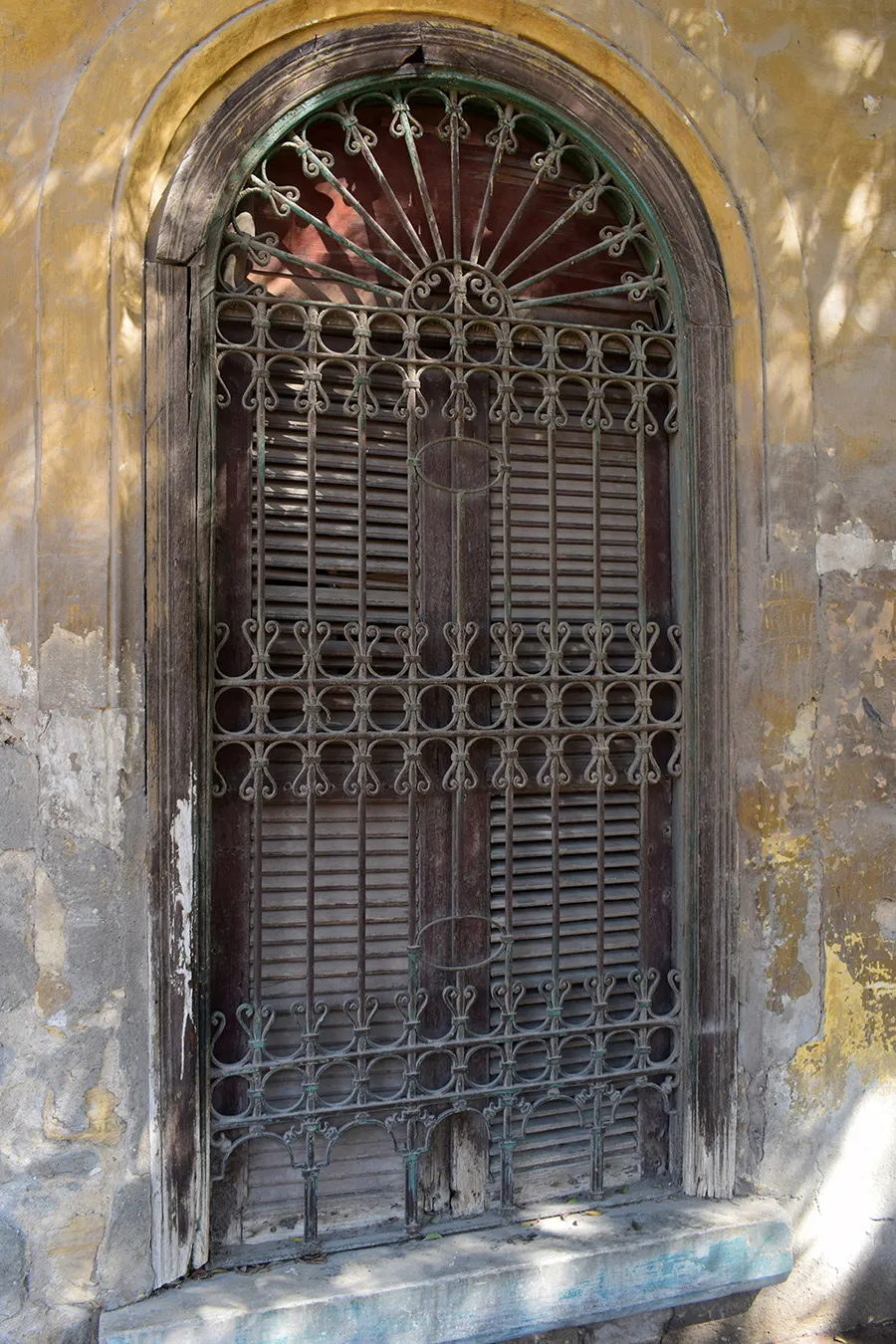
| Decorative window grilles | Yes | 16 | wrought iron | |
| Decorative shutters | No | |||
| Painted ceiling(s) | No | |||
| Decorative paving(s) | No |
Unusual or unique features
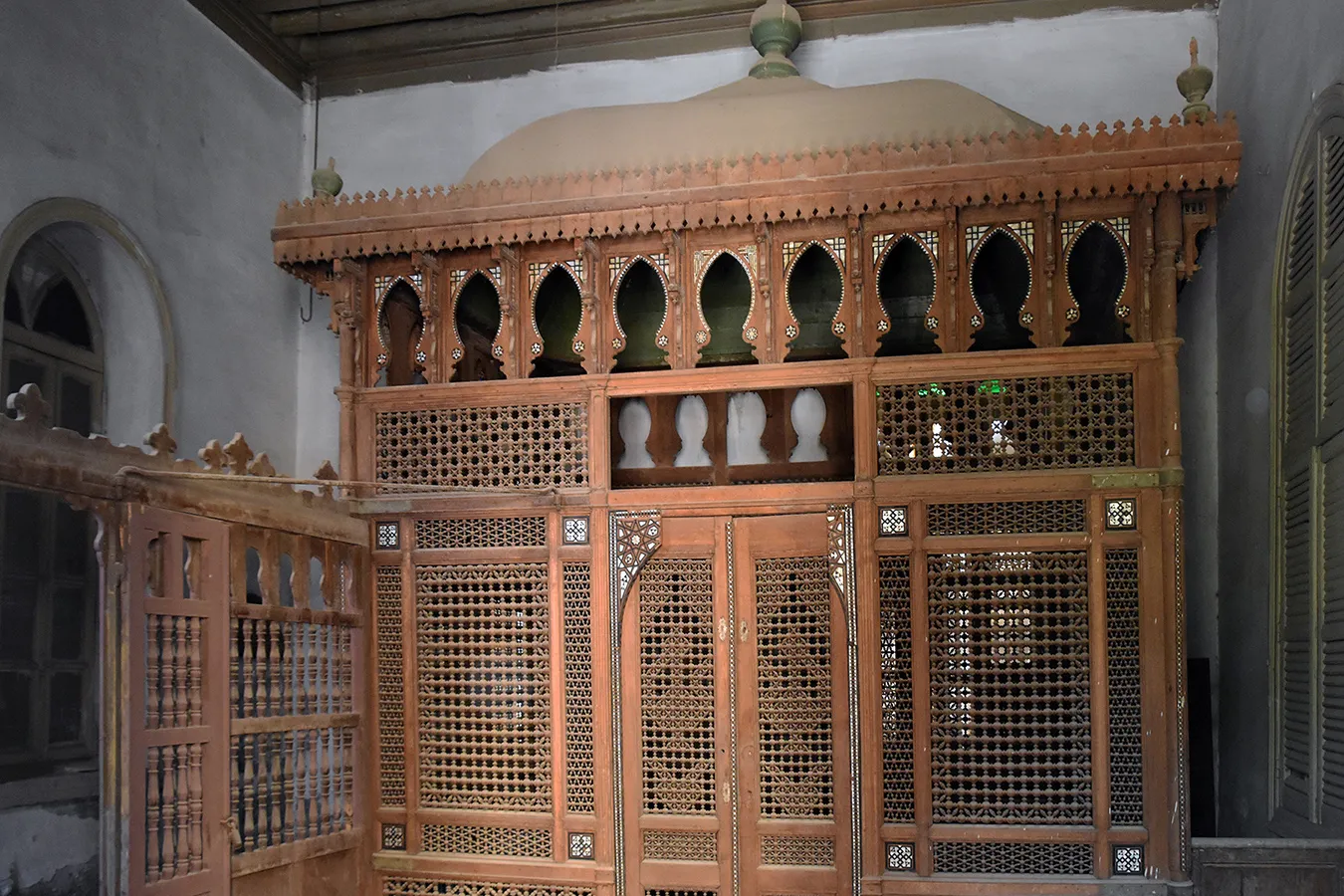
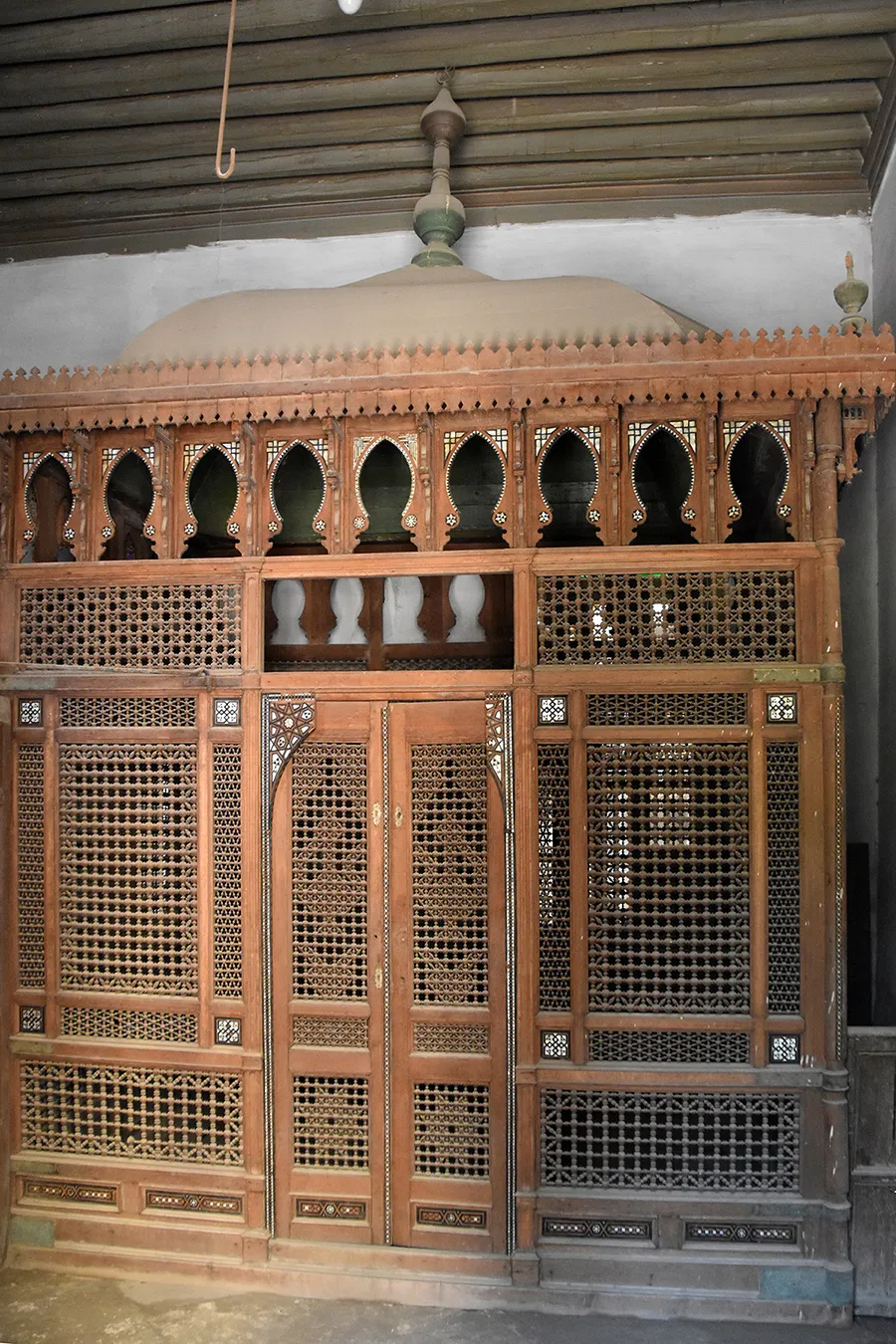
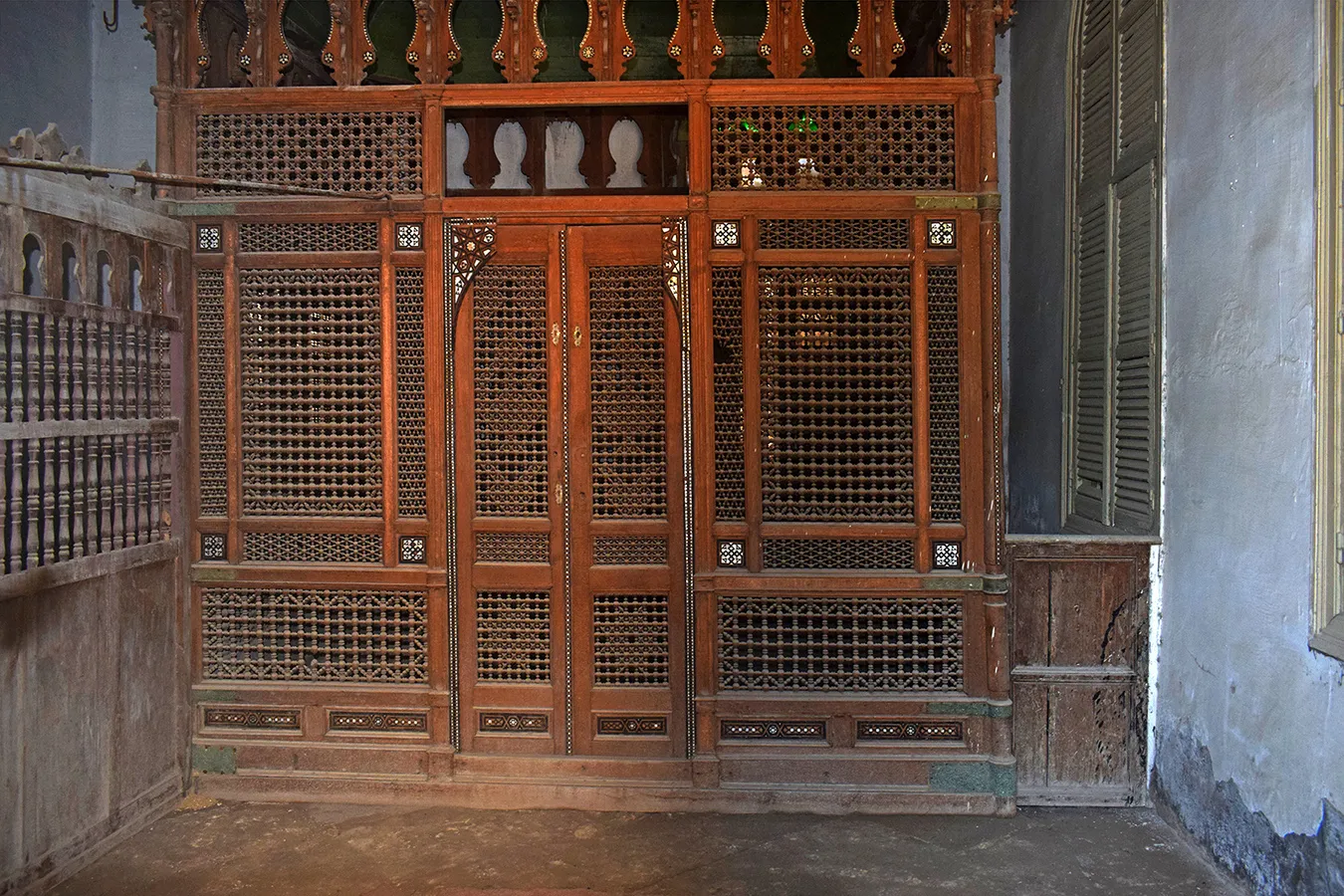
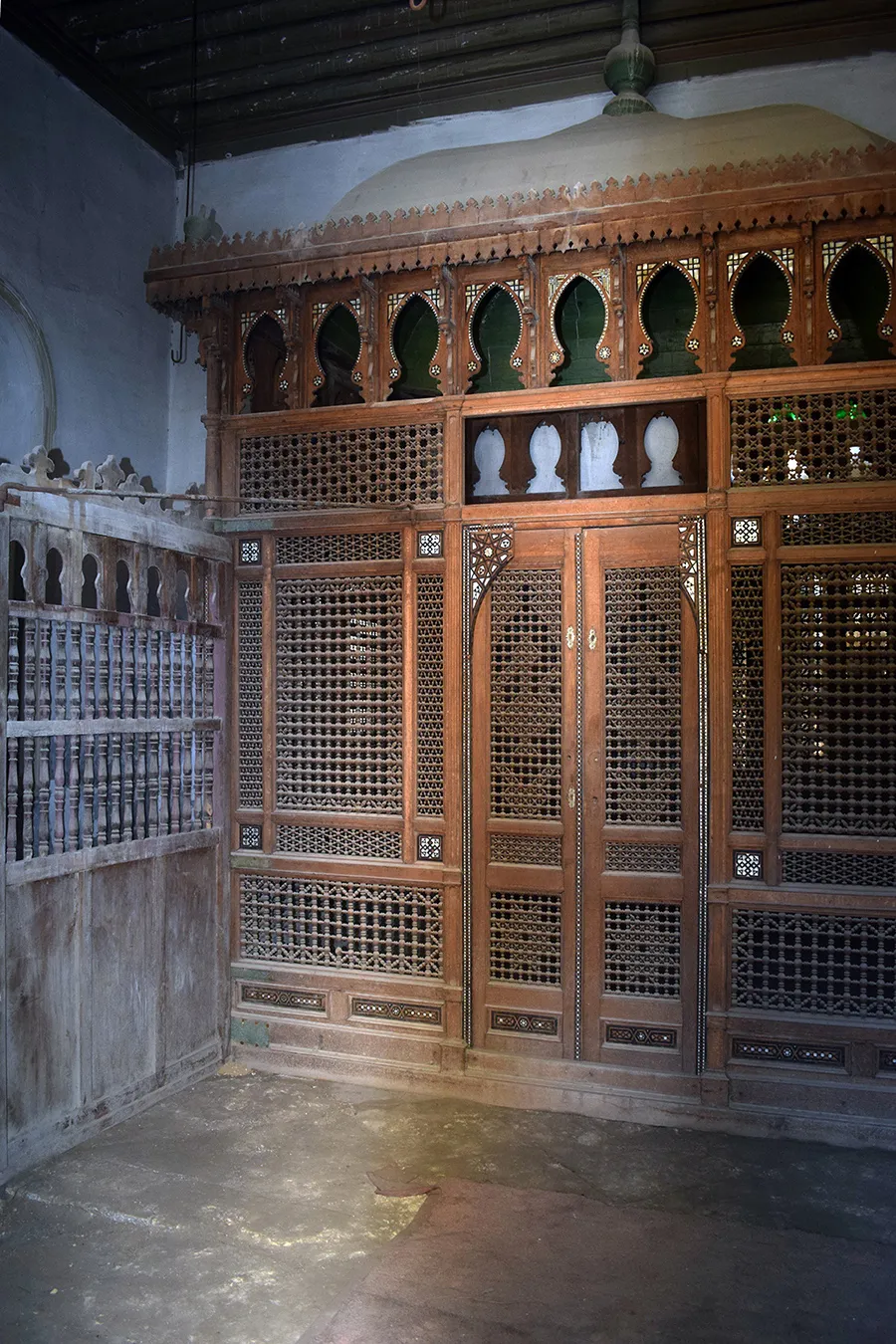
• A very elaborate shrine constructed of mashrabiya turned-wood screens, with inlaid panels.
Description (The direction towards Mecca (Qibla) is described as eastern and other directions are named accordingly)
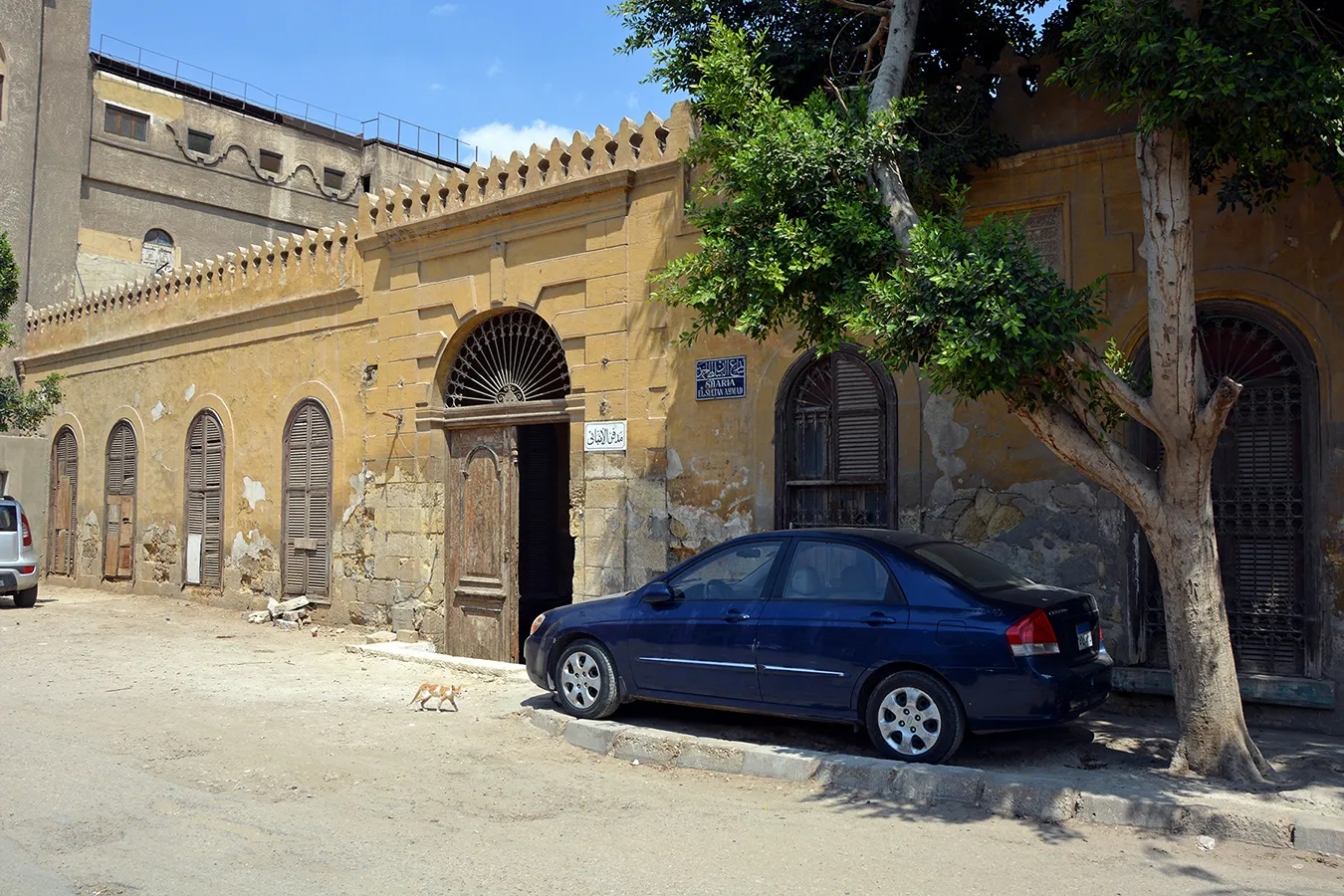
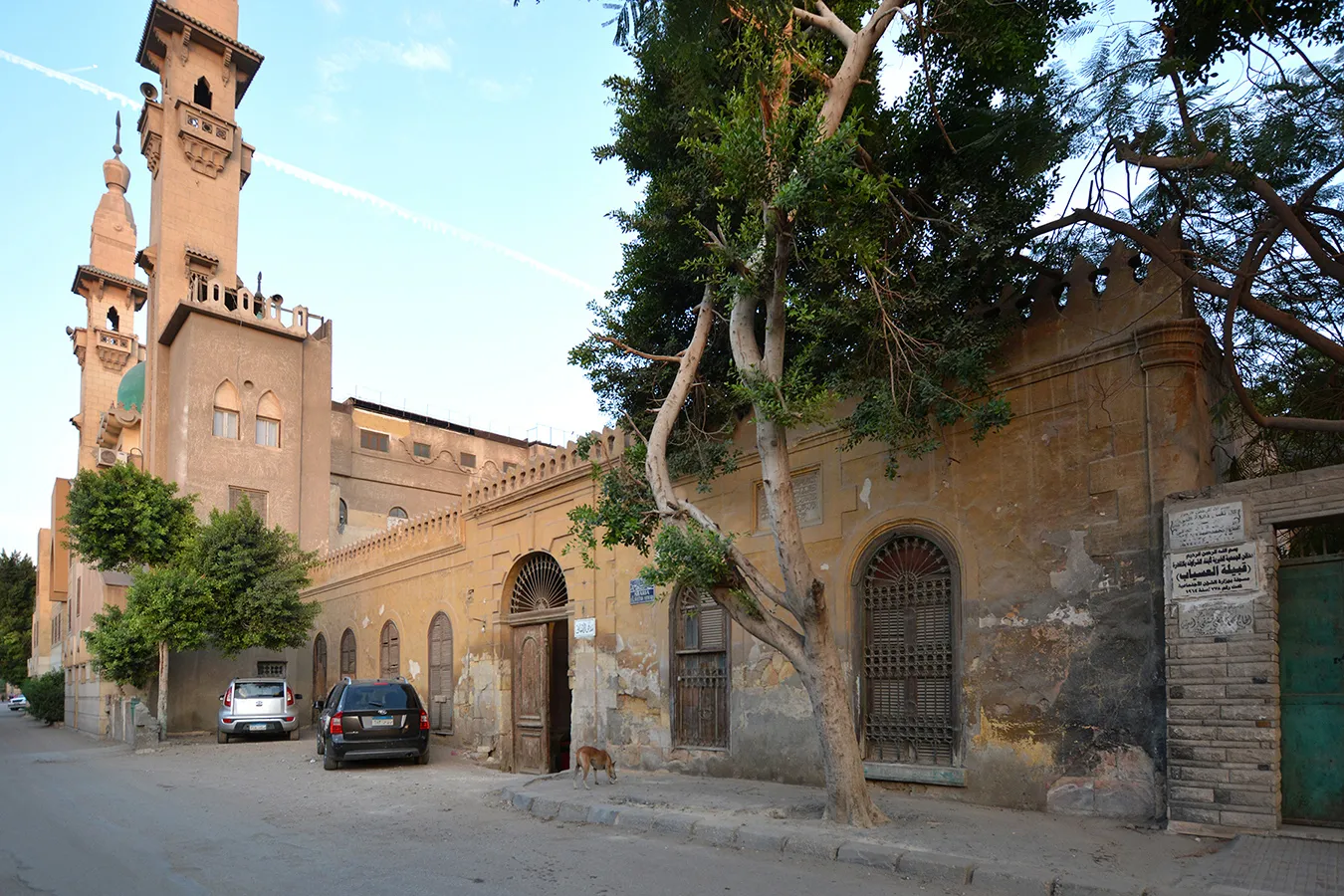
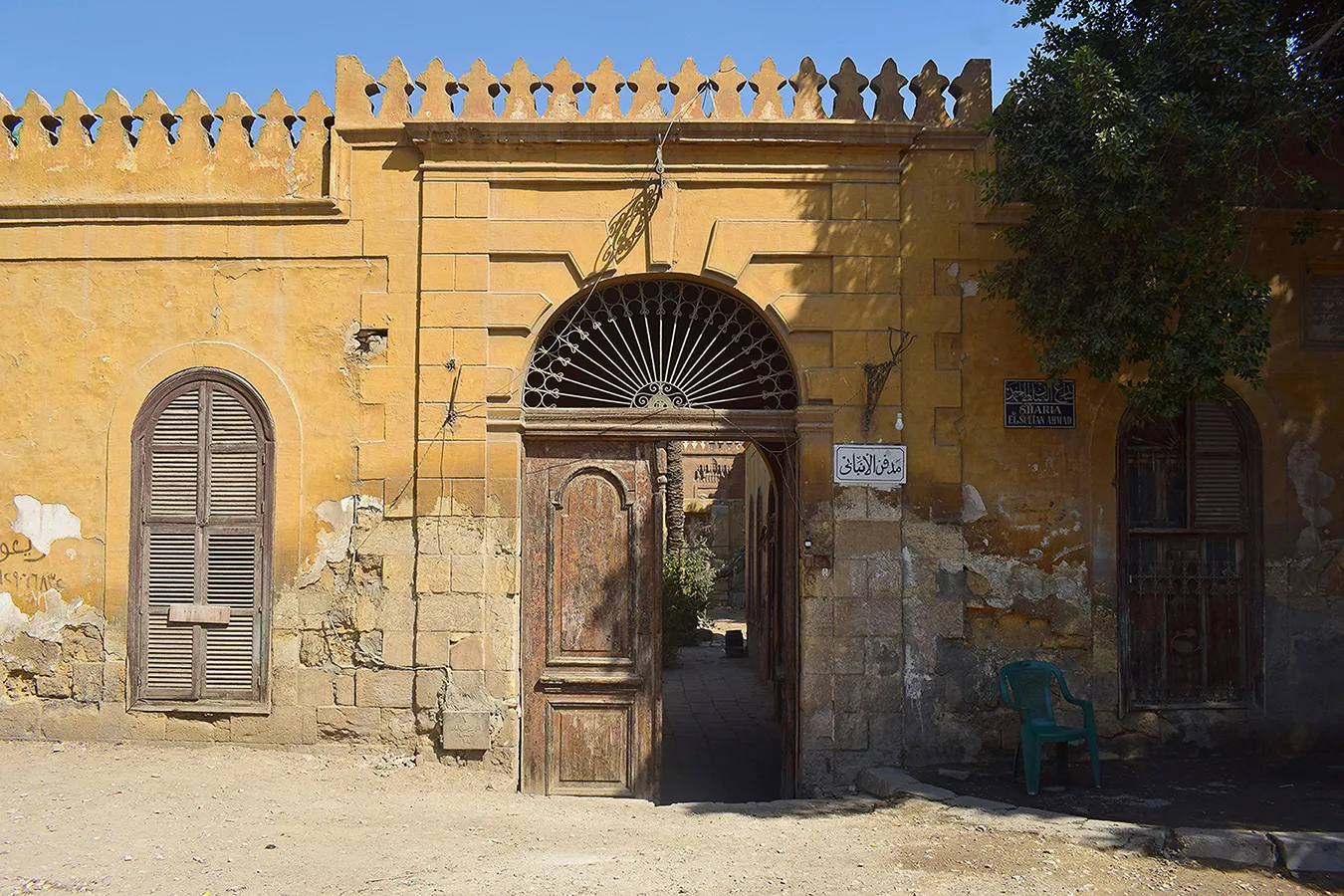
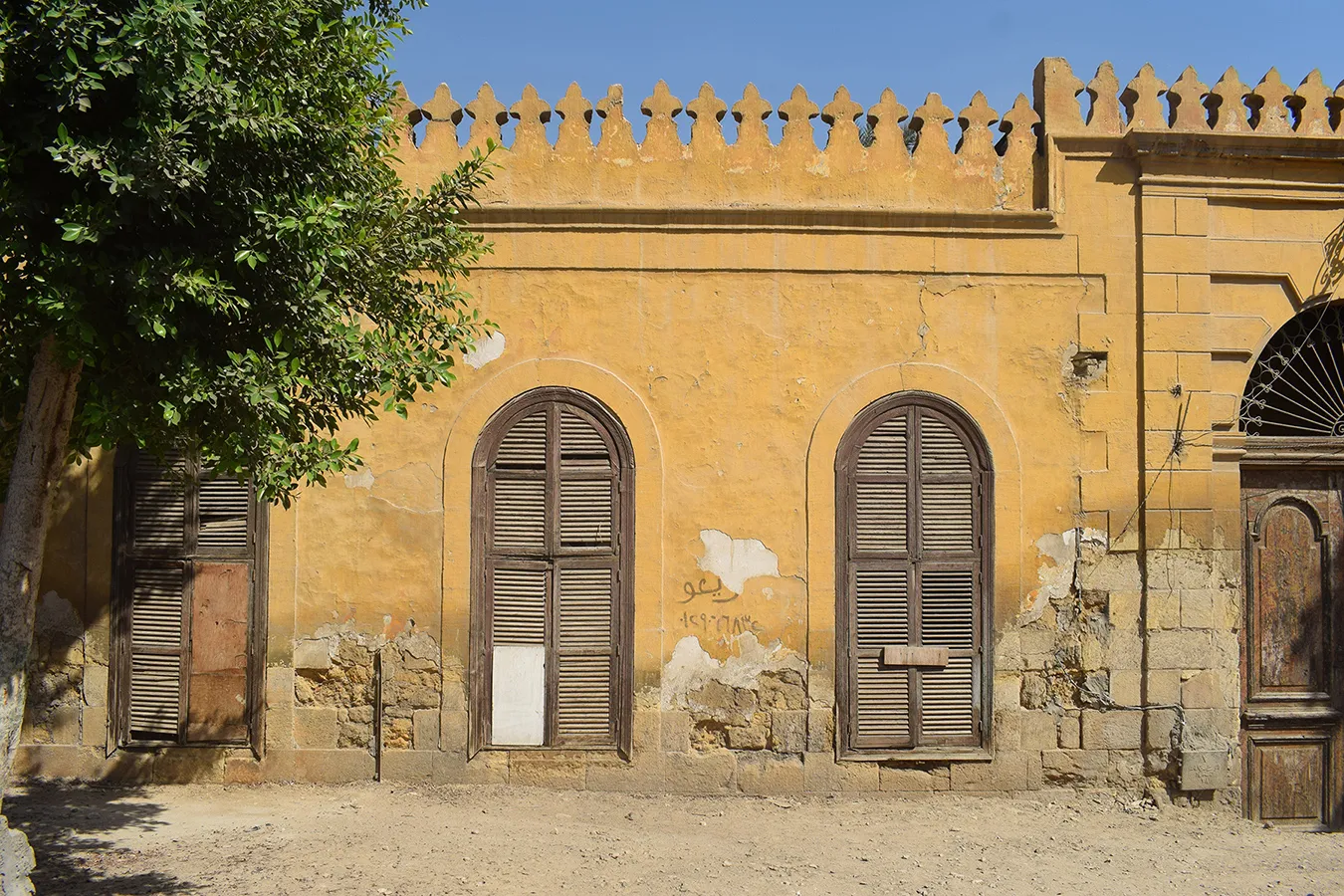
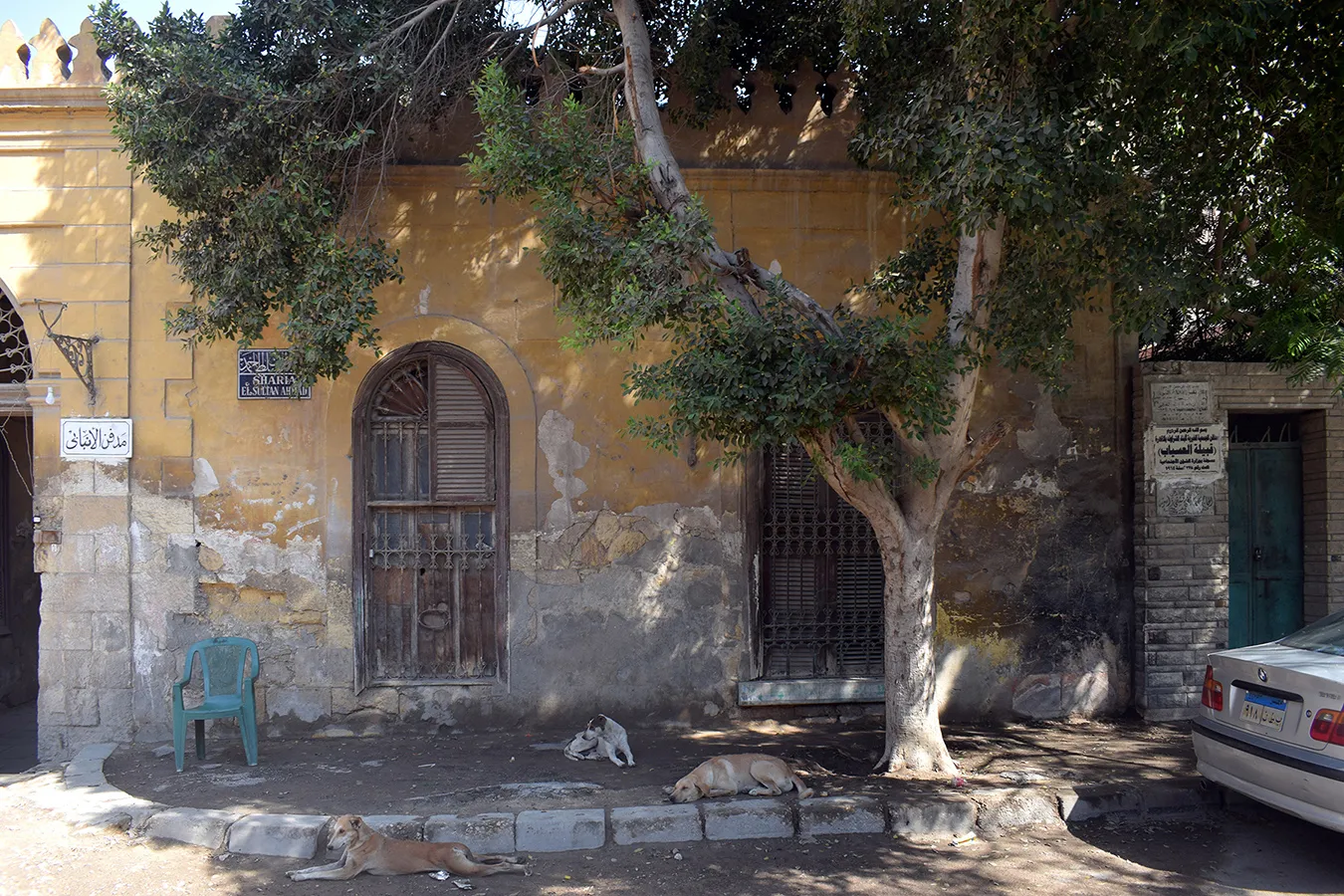
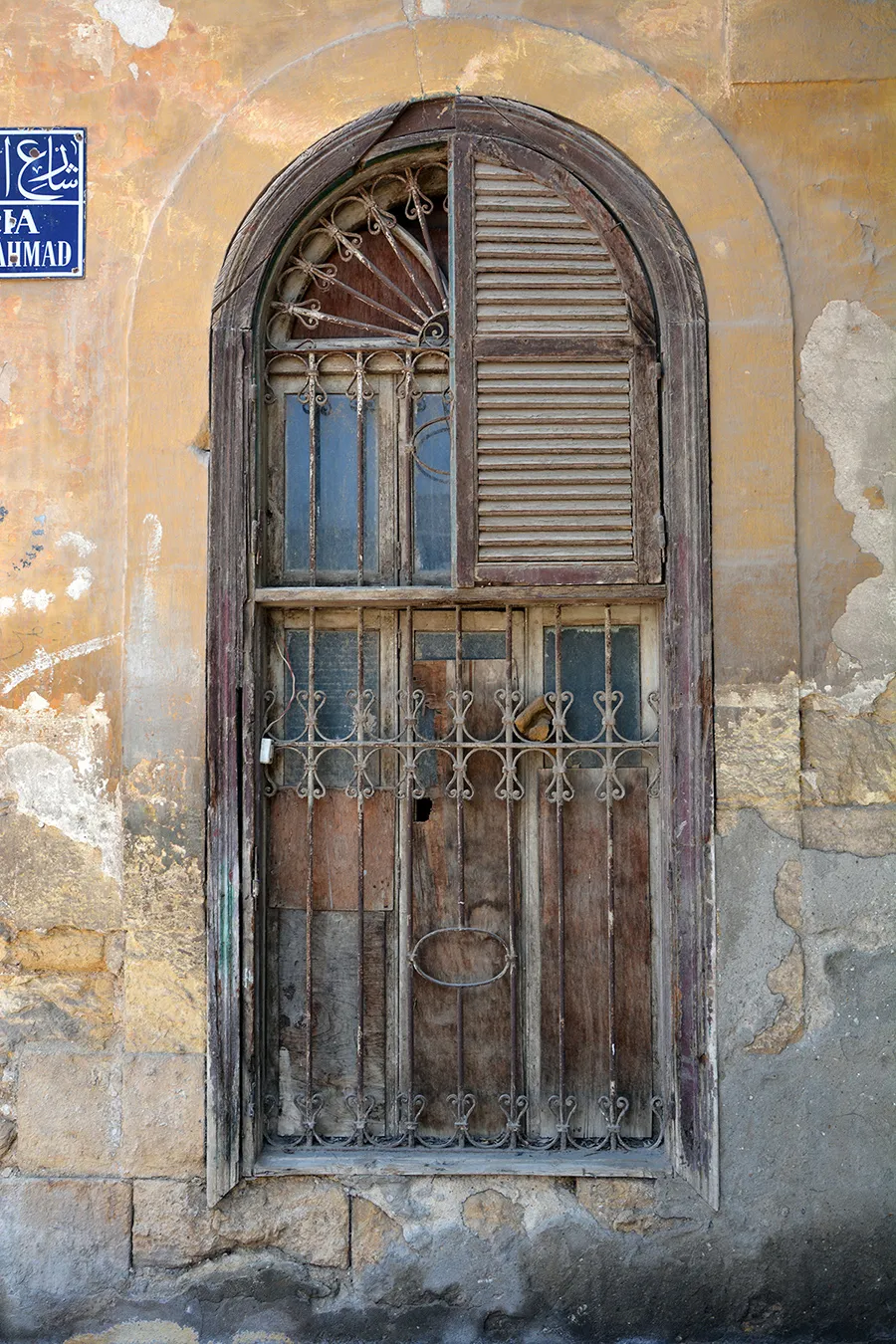
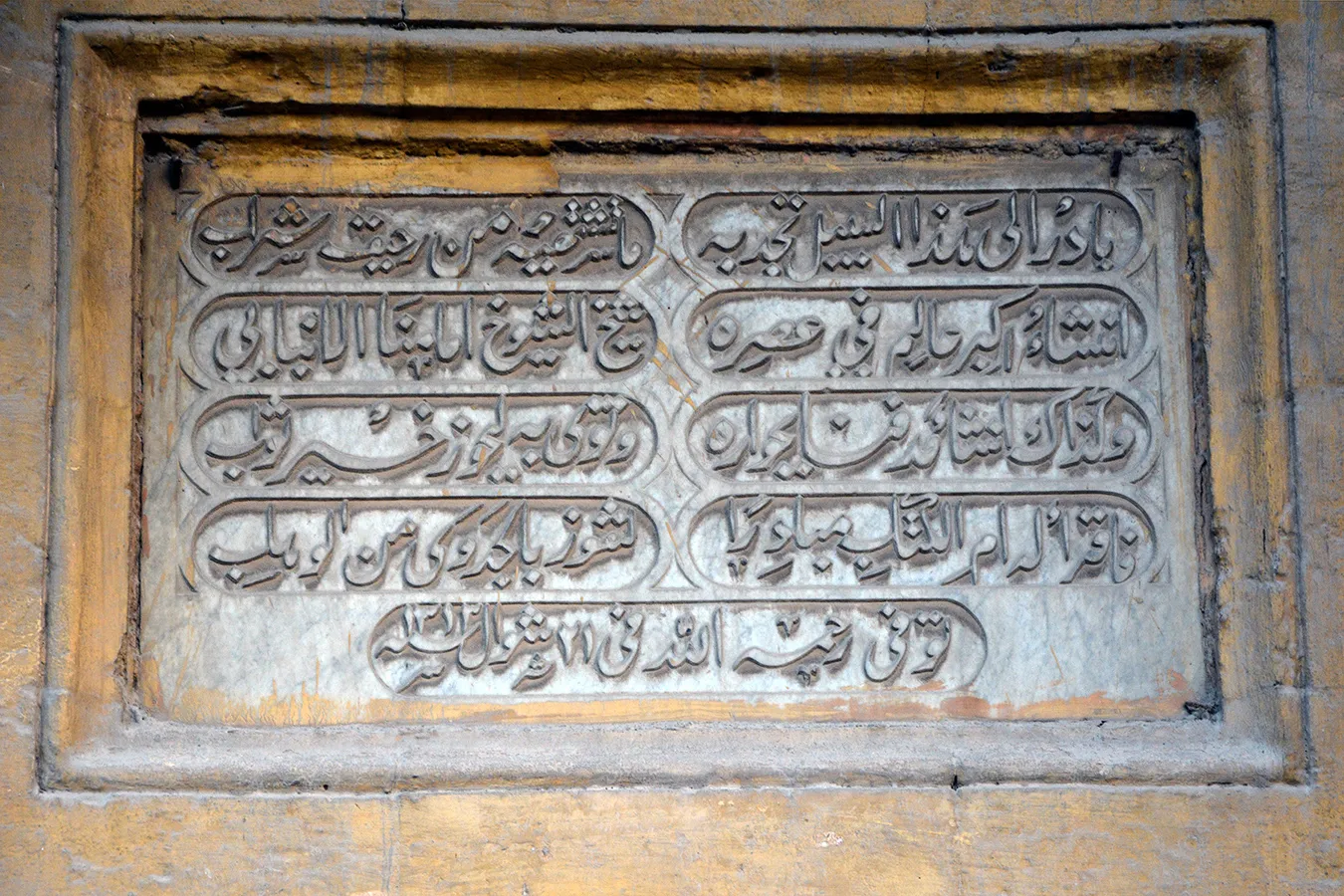
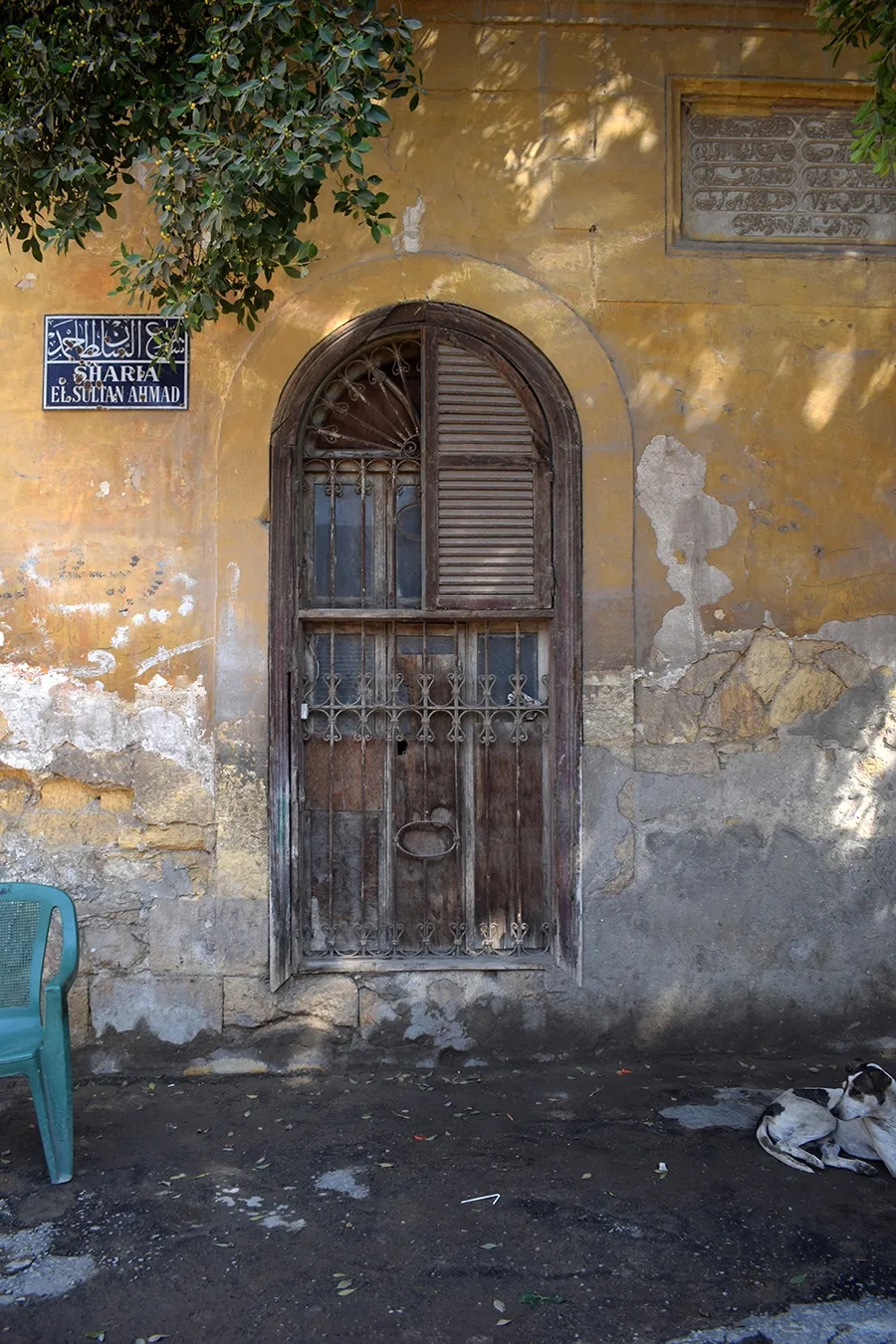
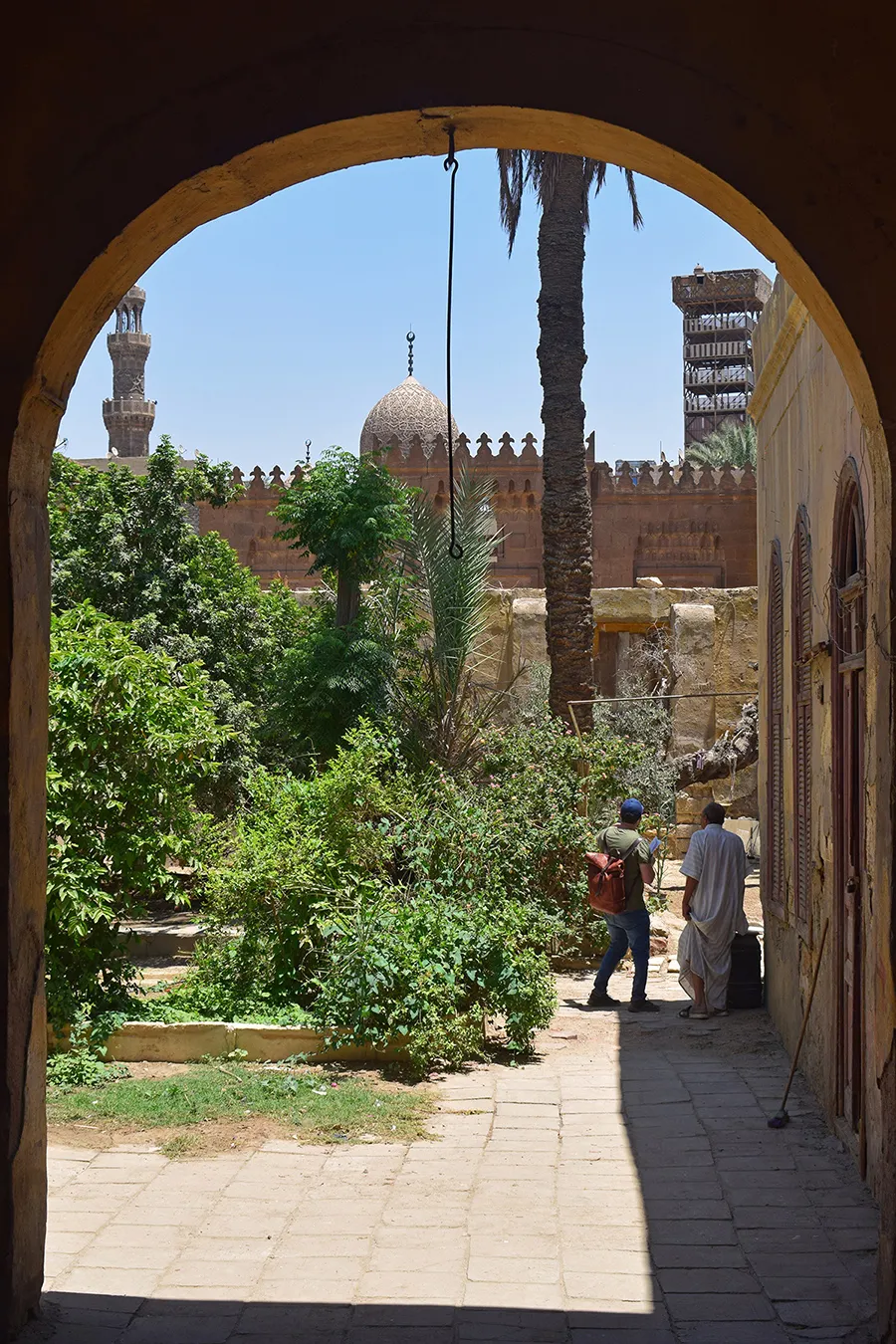
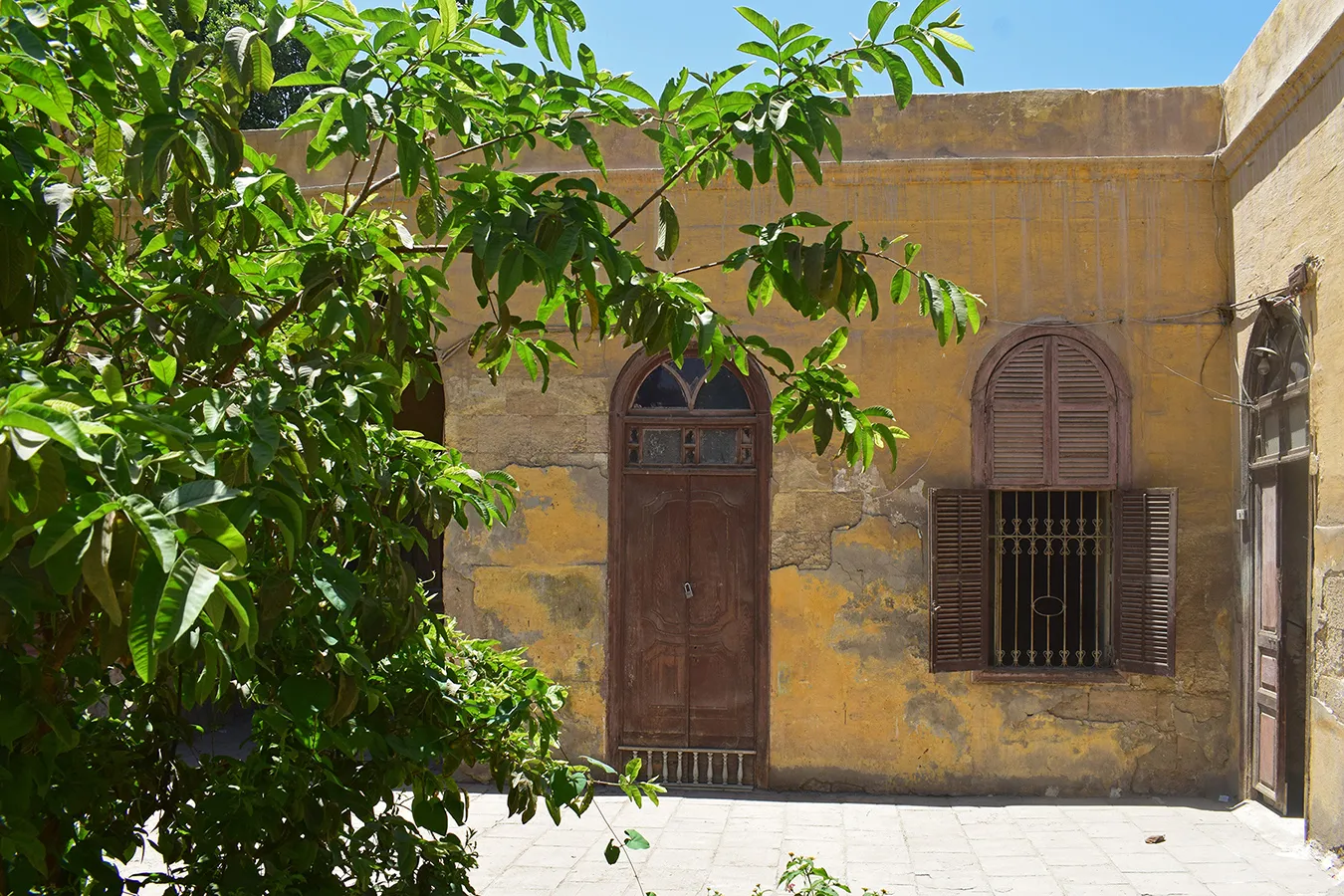
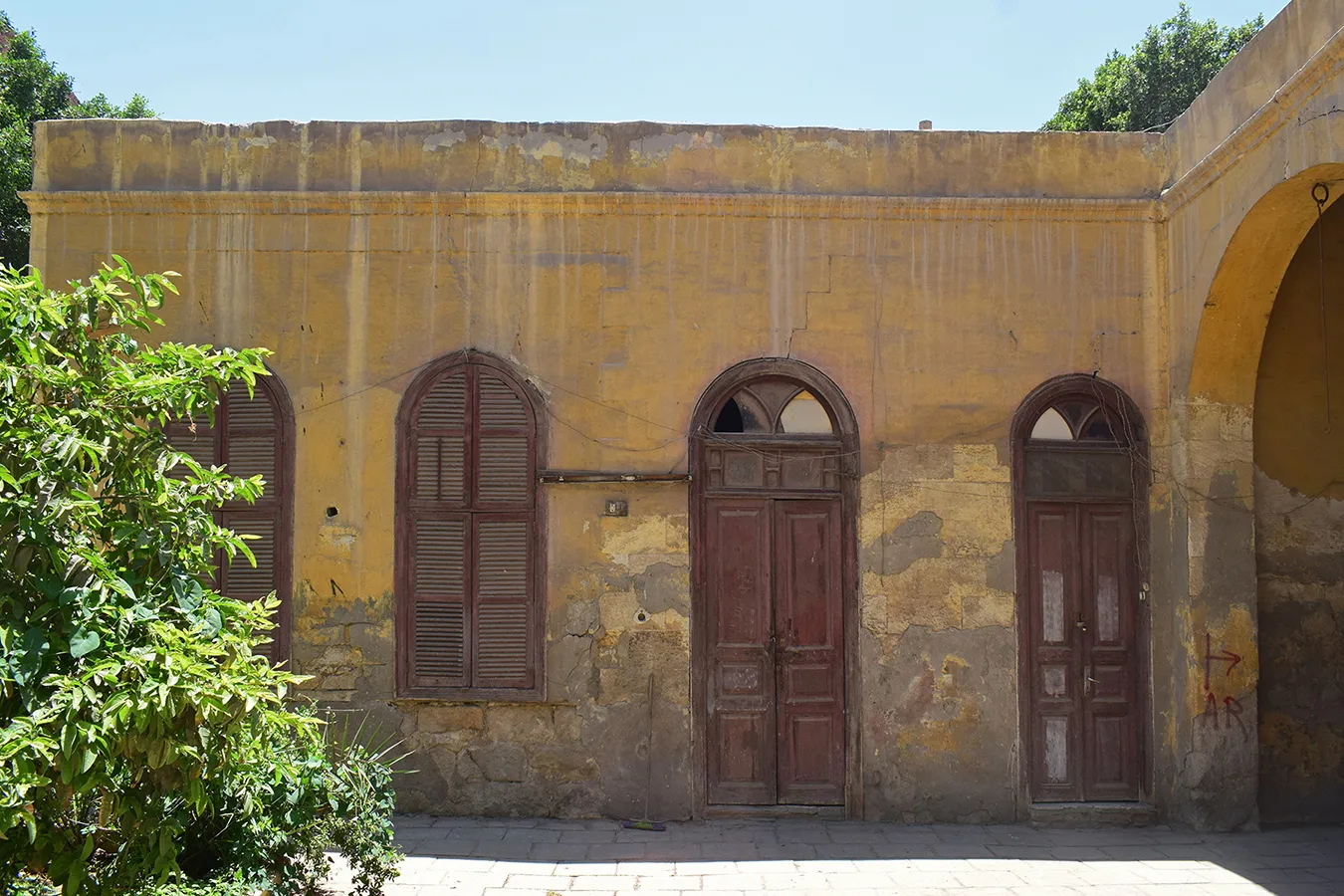
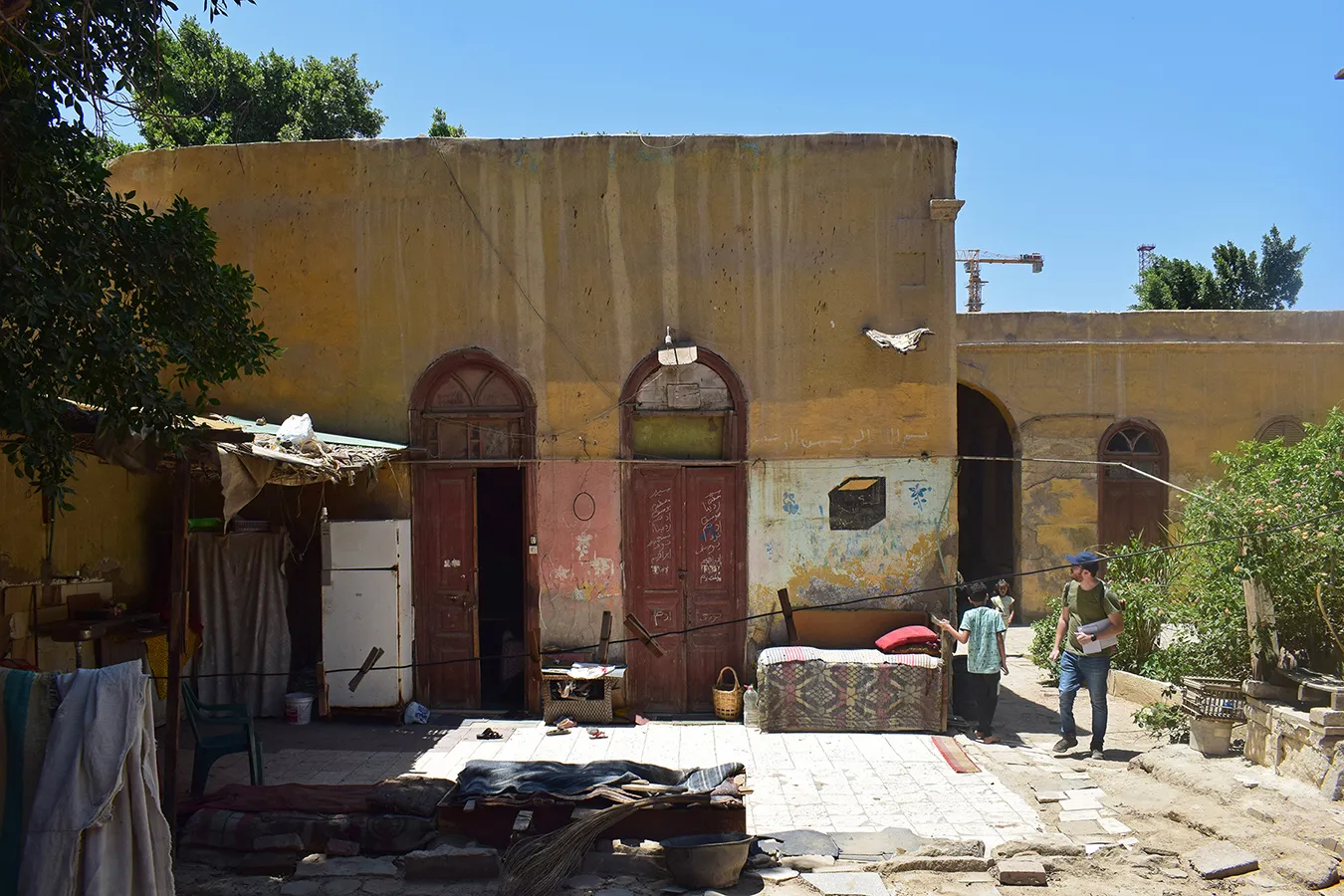
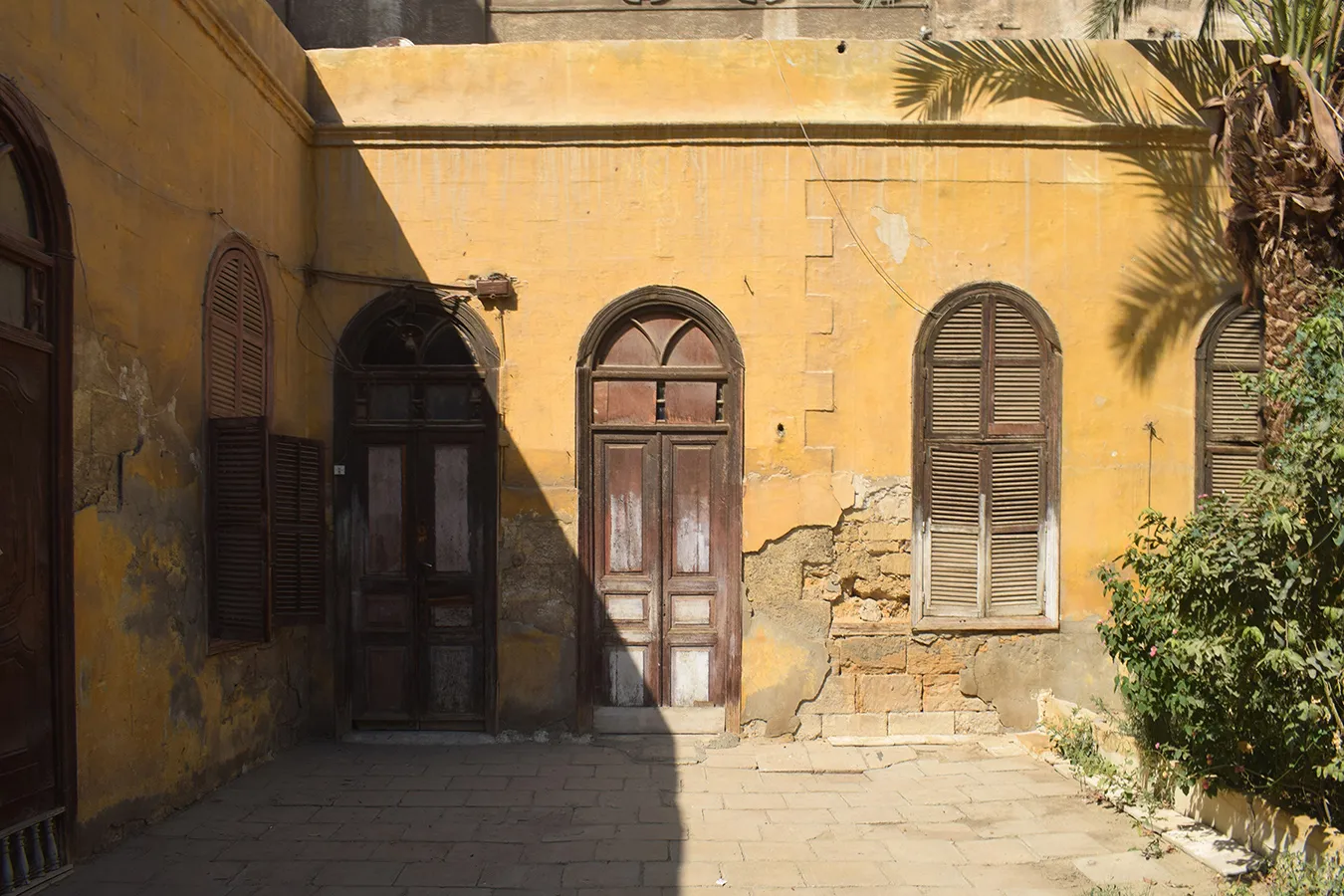
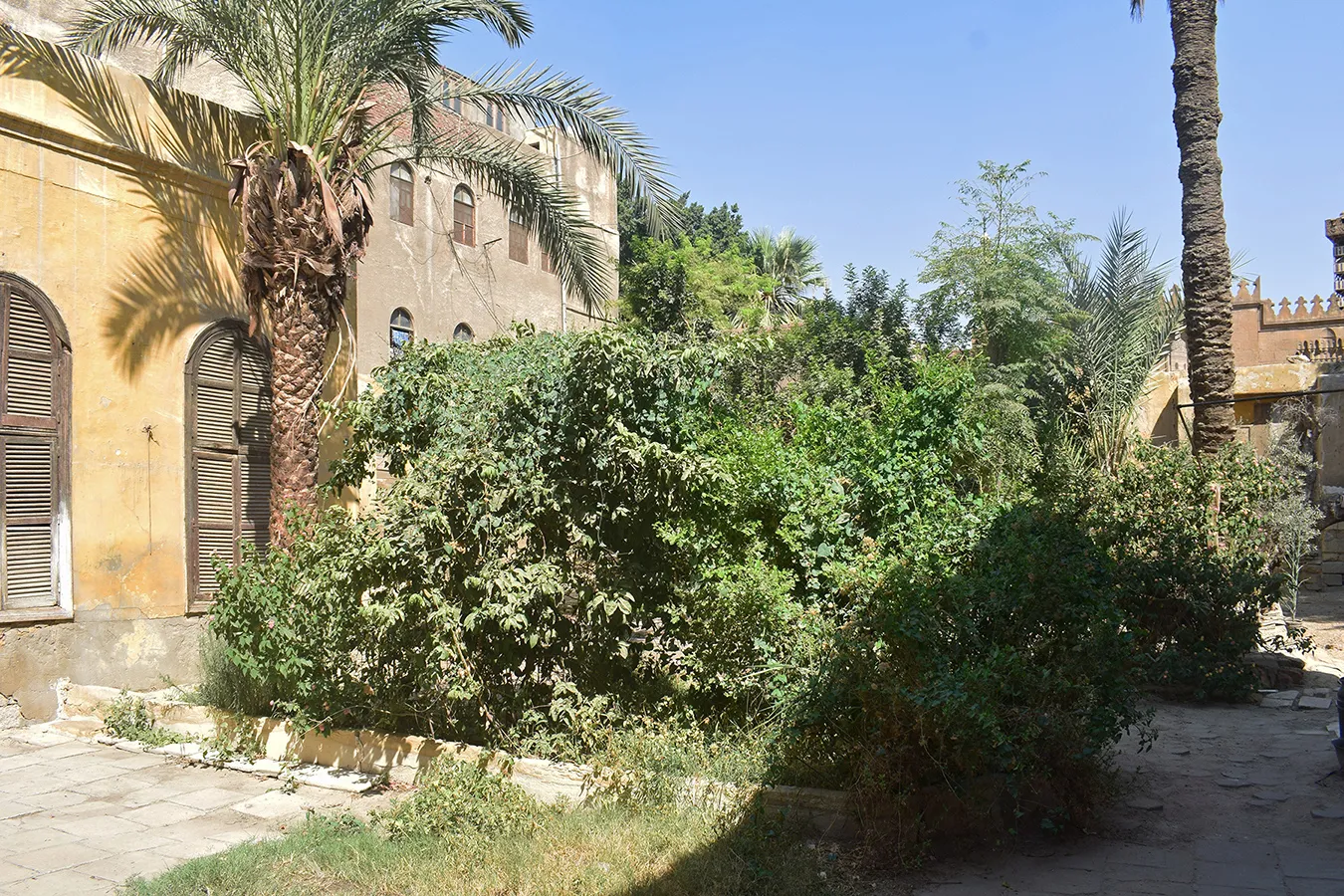
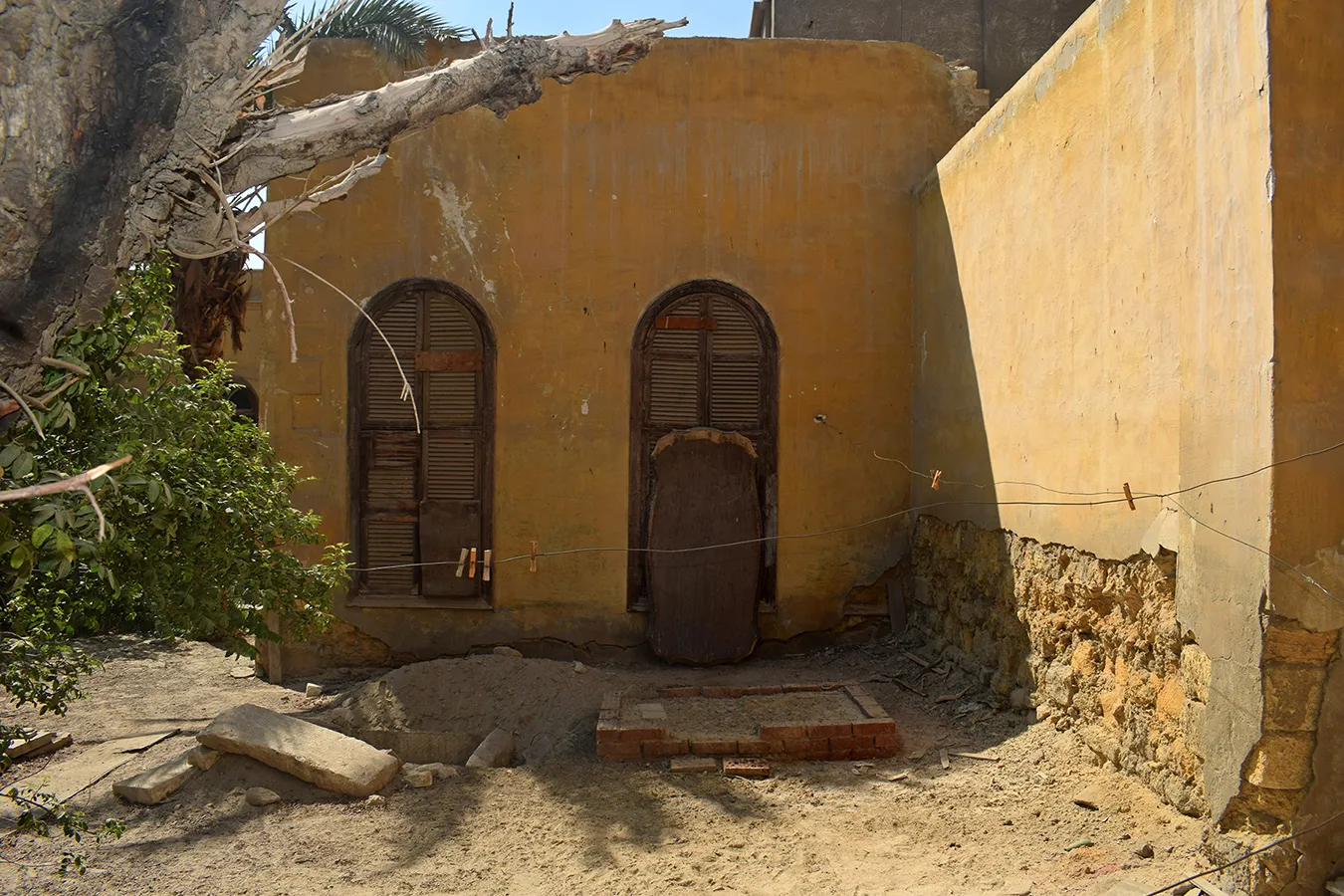
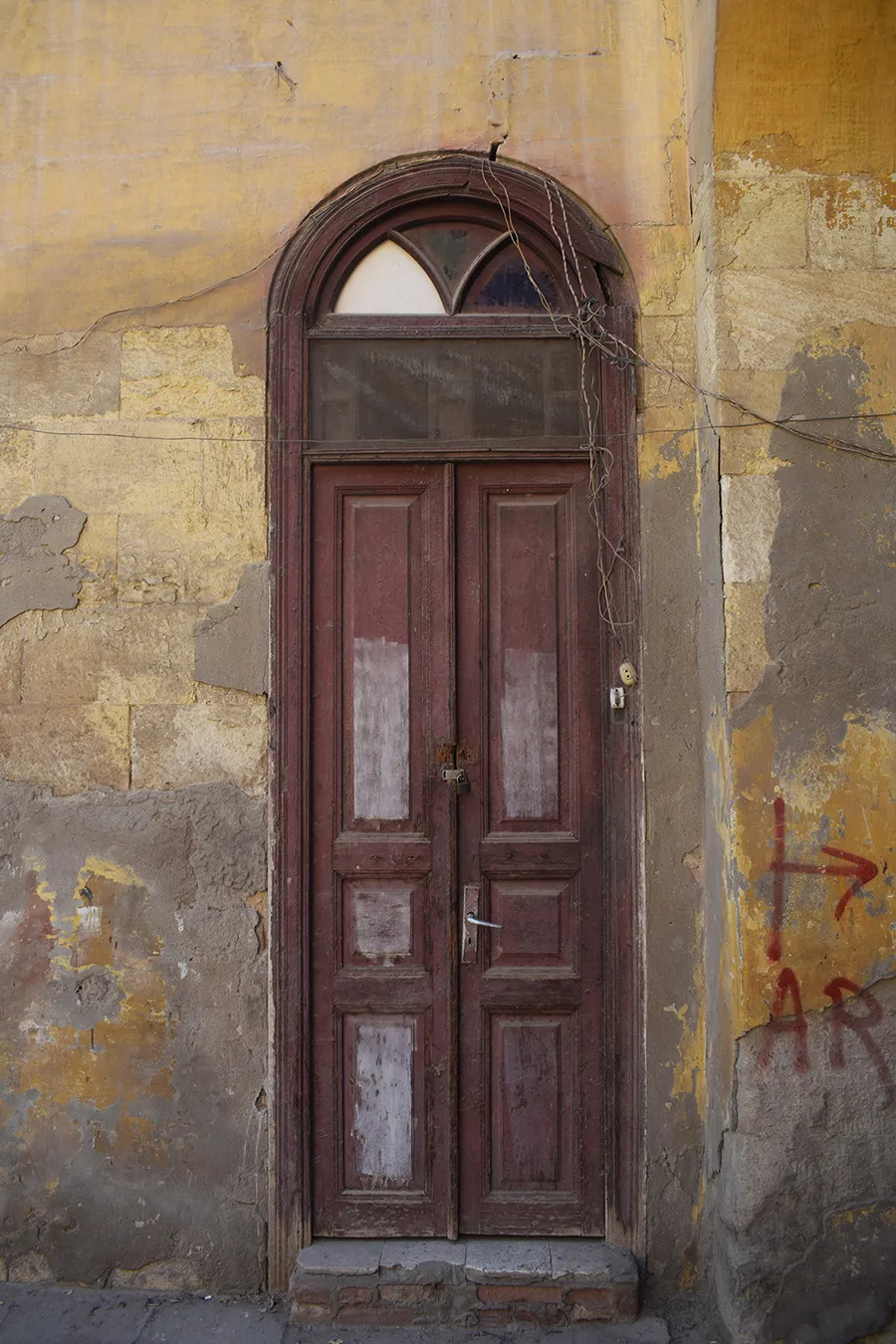
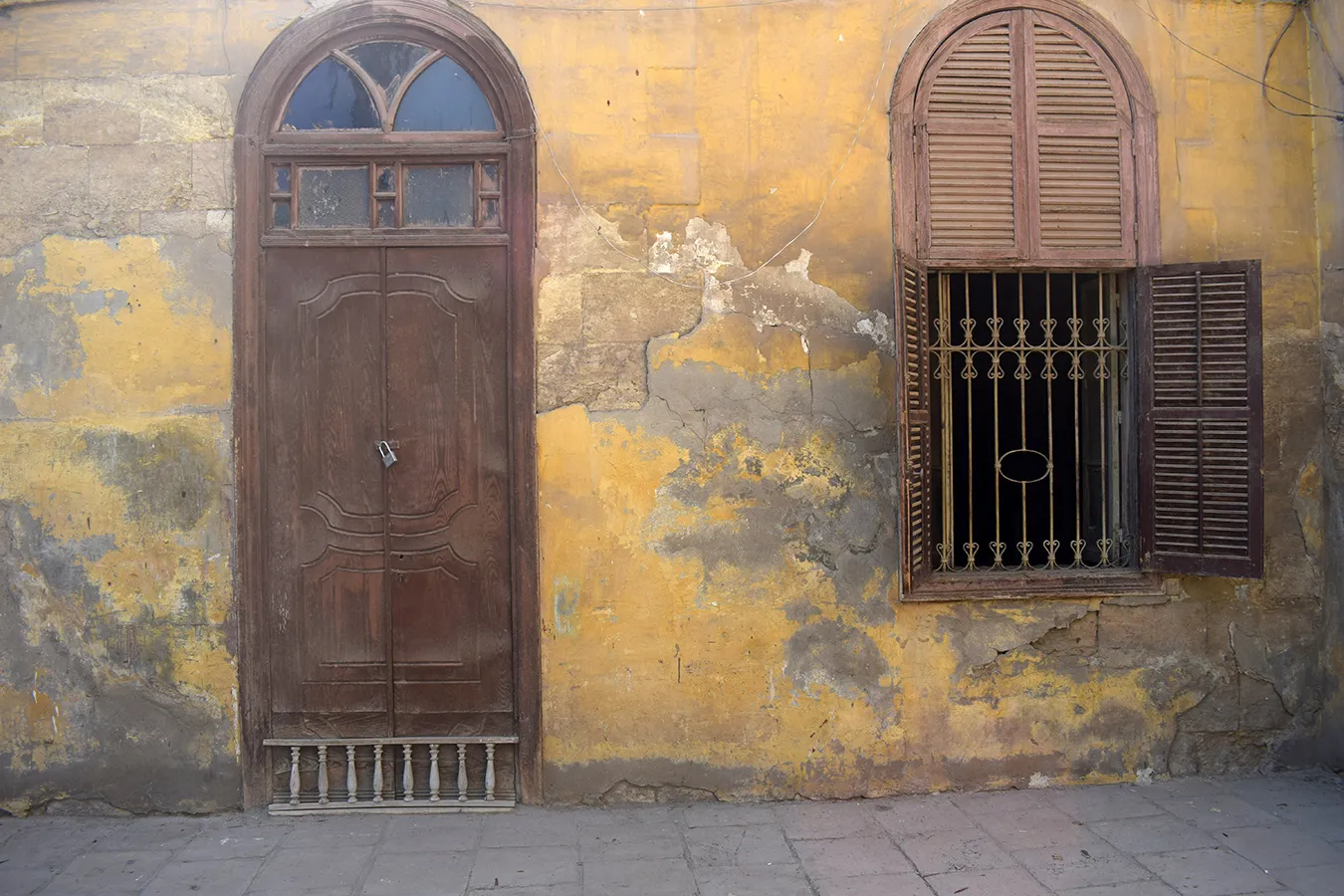
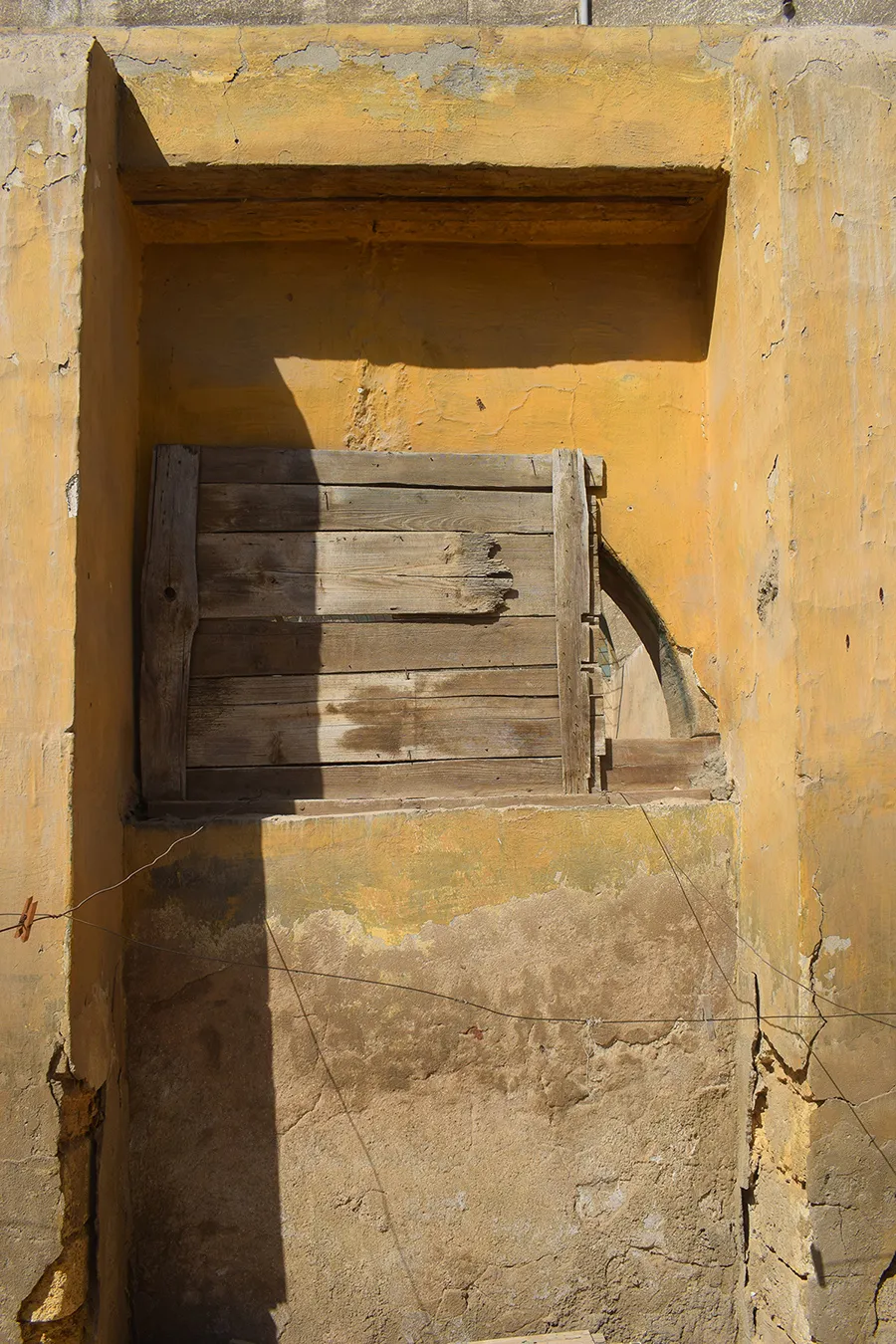
The rectangular walled enclosure features a U-shaped building that contains tall, single-storied chambers behind the main western façade and along the front halves of the side walls. The gateways, door- and window frames, corners, etc. are built of cut stone and plastered, and other sections of walls are constructed of rough stone and plastered. A gateway leads to the southern end of the wall facing the courtyard contained within the U-shaped building, which means that the entrance gate is placed asymmetrically in the main façade, with four windows to the left (north) and two windows to the right (south). The windows throughout the building are covered with semi-circular arches and plain except a flat plain, unmoulded frame around those in the front façade. They are fitted with simple decorative grilles of wrought iron and simple wooden louvre shutters. The southernmost window in the façade is slightly larger and is a sabil window with a plain marble edge and larger openings at the bottom of the grille. High on the wall between this and the next window is a rectangular marble panel sunken within a simple moulded frame, which contains nine calligraphic panels (in two columns + a centred bottom one) with an inscription carved in raised relief containing the date of foundation. The entrance gate has a simple, neo-classical-based banded framing and is fitted with huge double-leafed panelled door also of simplified neo-classical motifs and a radial wrought-iron grille over its wooden lintel, of a design similar to these in windows. The gate is slightly taller than the rest of the façade. The façade is topped with a simple neo-classical style moulding and simple fleur-de-lys crenelations which are the only Mamluk- or Islamic-related feature in the architecture of the building. The internal (courtyard) façades are plain, save a simple moulding on top of those facing the courtyard contained within the U-shaped building, with regularly placed openings. A larger door in the western wall of the courtyard leads to a shrine of Shaykh Muhammad al-Inbabi, whose tabut is enclosed within a very elaborate shrine constructed of mashrabiya turned-wood screens, with mother-of-pearl- and bone-inlaid panels.
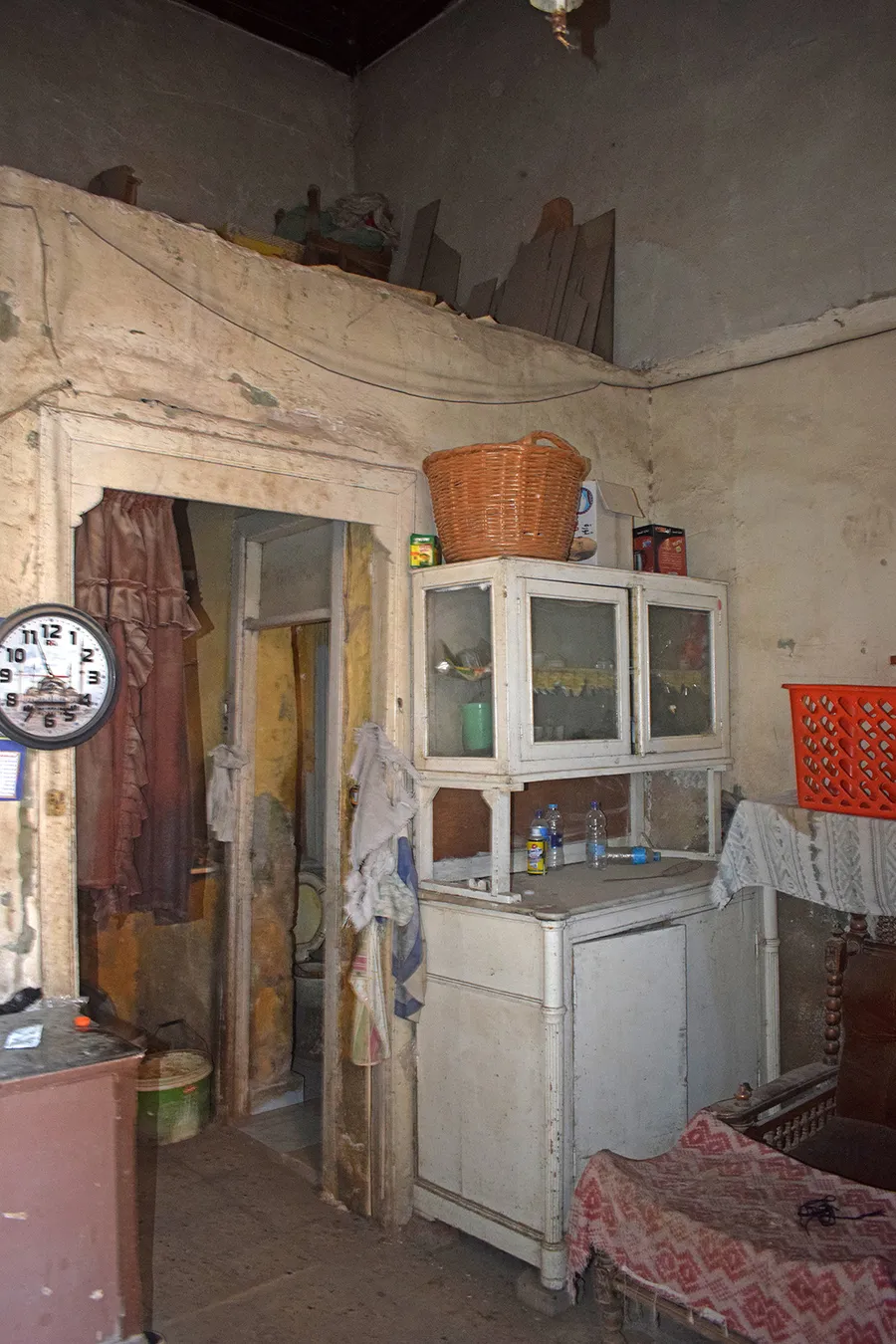
Besides the shrine, the building houses three residential apartments (including this of the keepers) and a carpentry workshop.
The wall around the back part of the enclosure, which is arranged as a garden, is lower than the front building and plain, and is pierced by two arched undecorated secondary gates in the northern and eastern sides.
Condition of preservation
The enclosure is in a fair overall condition. However, much of the woodwork is dilapidated (including damage to the decorated shrine), and lower parts of the walls are severely affected by rising damp.
Information abut the founder, family history, etc.
The date 21 Shawwal 1313 AH in the inscription over the sabil corresponds to 5 April AD 1896.
- Field recording by
- Hadeer Ahmad and Radwa al-Saeed
- Date recorded
- August 30, 2022
- Data entered by
- Yusuf Yassir
- Date entered
- May 2, 2024