
Unit No10
Faid family funerary enclosure
|
Coordinates of the main entrance |
30.0449N - 31.272992E |
|
Attribution |
Faid family funerary enclosure |
|
Higri (AH)Dates as given in the Inscription |
1368 |
|
Miladi (AD)Dates as given in the Inscription |
1948 |
|
Inscription Contemporary with the building? |
Yes |
|
Multiple date(s) In the inscription? |
Yes |
|
Assumed Date |
|
|
Based on |
|
|
Original Use |
Funerary enclosure |
|
Current Use |
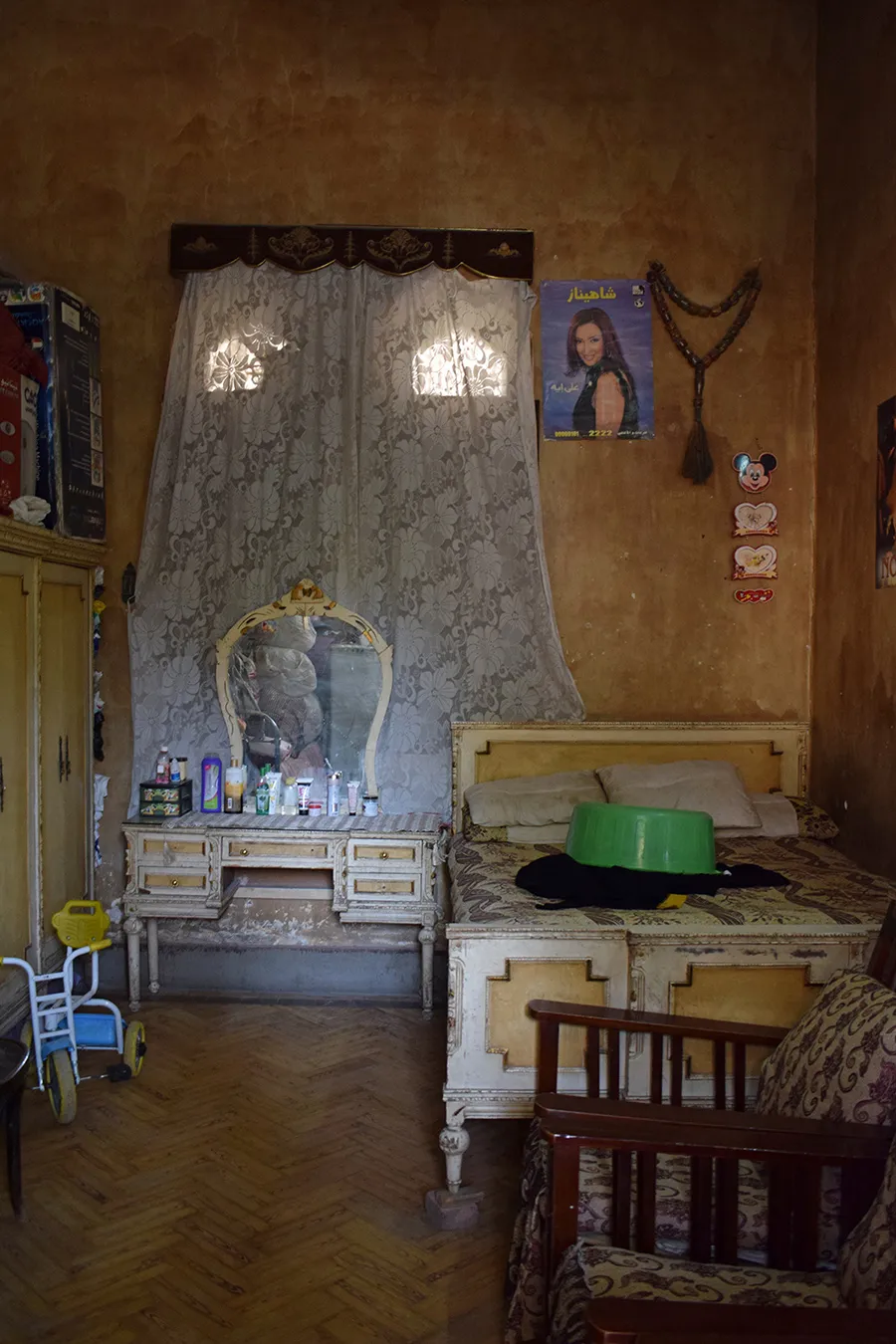
Funerary enclosure / residential |
|
Overall condition |
Fair |
Features of unit 10
| Present | Count | Material | Comments (see description for details) | |
|---|---|---|---|---|
| Free standing structure | No | |||
| Walled enclosure | Yes | |||
| Rooms by the perimeter wall | Yes | 5 | stone and brick | 2 rooms built of brick are recent |
| Freestanding structure(s) in enclousure | No | |||
| Dome over the tomb chamber | No | |||
| Neo-Mamluk architectural decoration | Yes | |||
| Garden layout | No | |||
| Sabil(s) | No | A modern “sabil” operates | ||
| Wall fountain(s) | No | |||
| Canopy on columns / pillars | No | |||
| Carved marble cenotaph(s) | No | |||
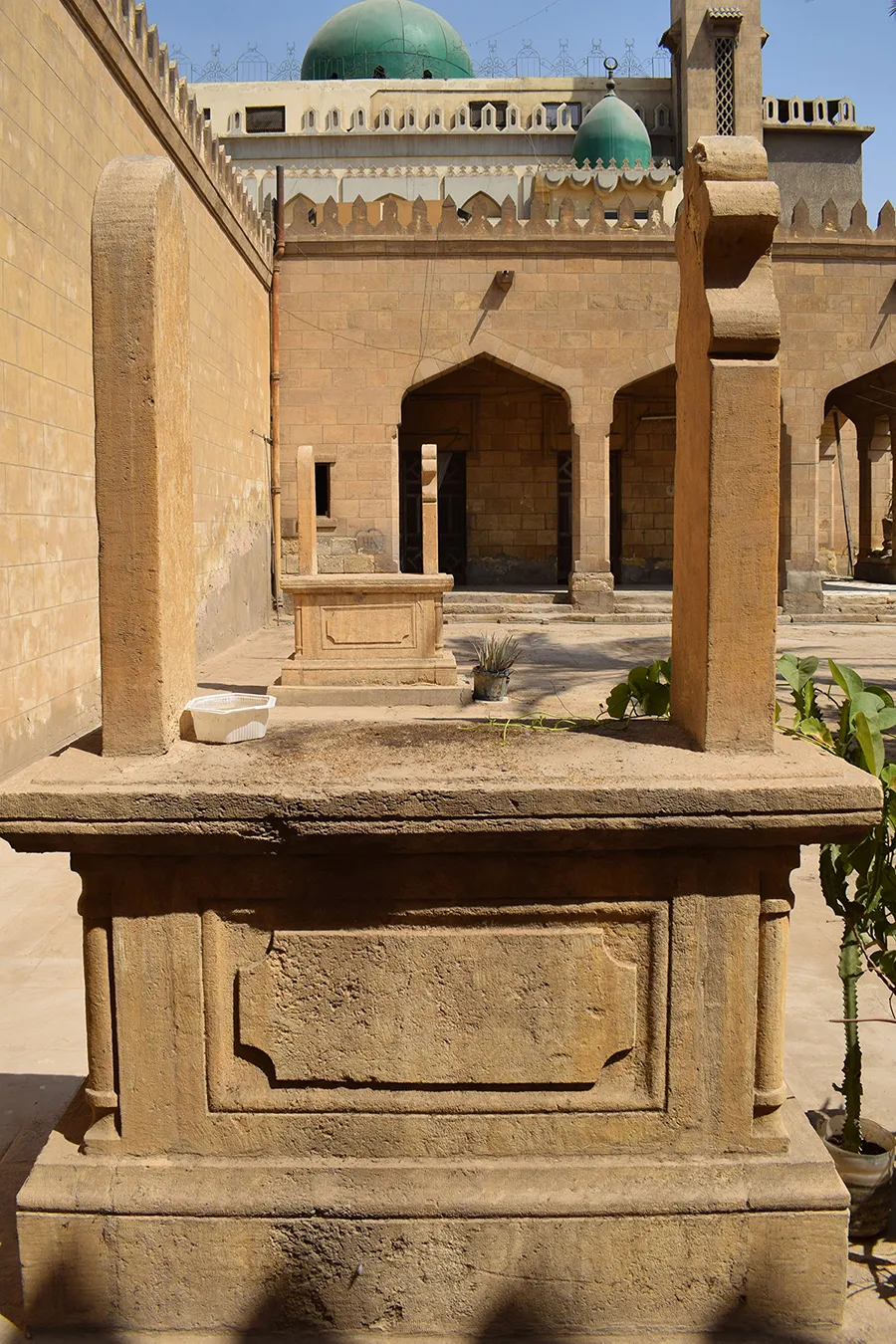
| Decorated limestone tomb-markers | Yes | 7 | ||
| Decorated gateway | Yes | 2 | ||
| Decorative door-leaves | Yes | 8 | ||
| Decorative window grilles | Yes | 14 | steel and wood | |
| Decorative shutters | Yes | 2 | wood | |
| Painted ceiling(s) | No | |||
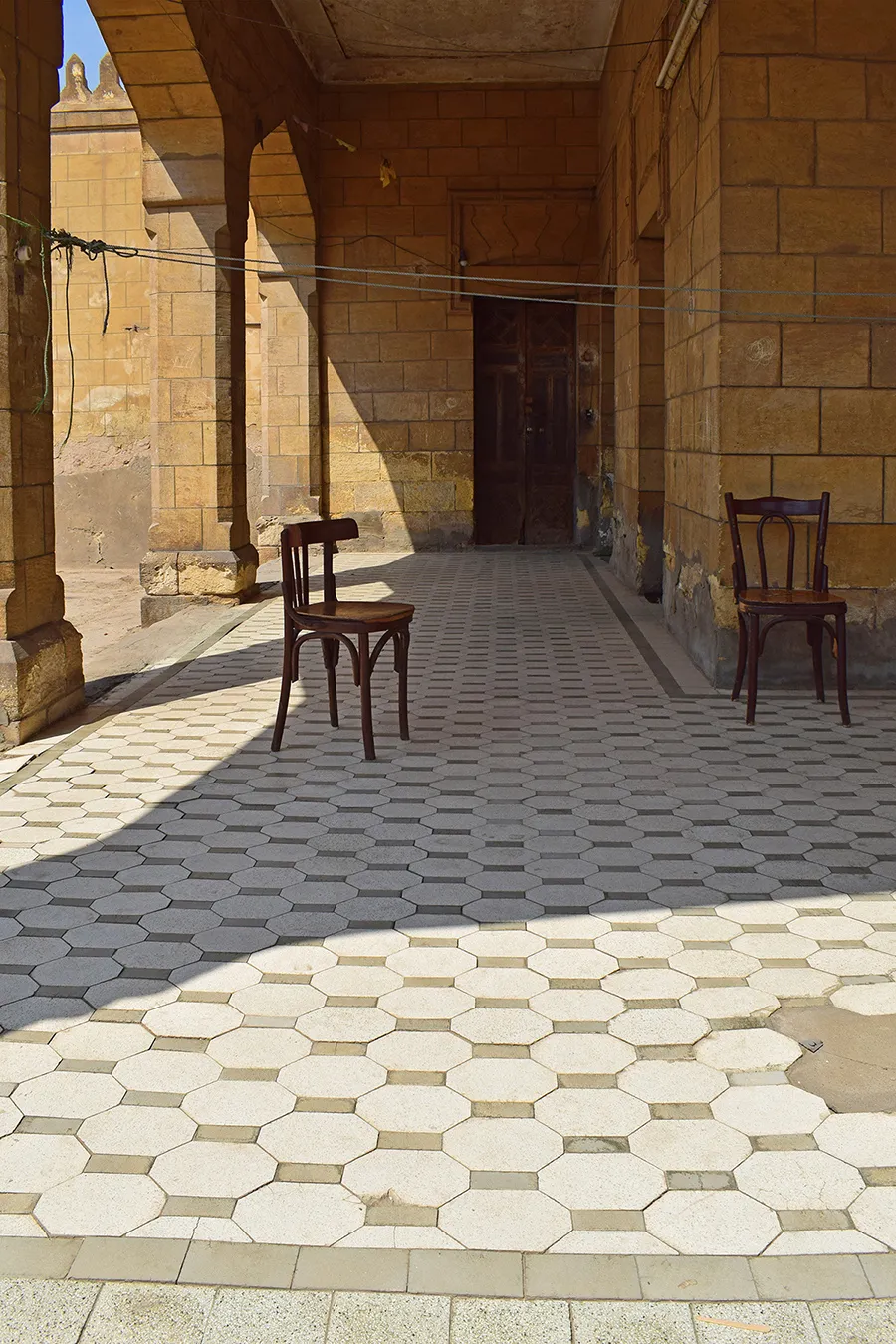
| Decorative paving(s) | Yes | cement tiles | In the portico of the front building |
Unusual or unique features
• Small back courtyard with a separate entrance, facing a back street running obliquely to the front façade
• Double crenelations aligned with both sides of the walls
• Uninscribed tomb markers
Description (The direction towards Mecca (Qibla) is described as eastern and other directions are named accordingly)
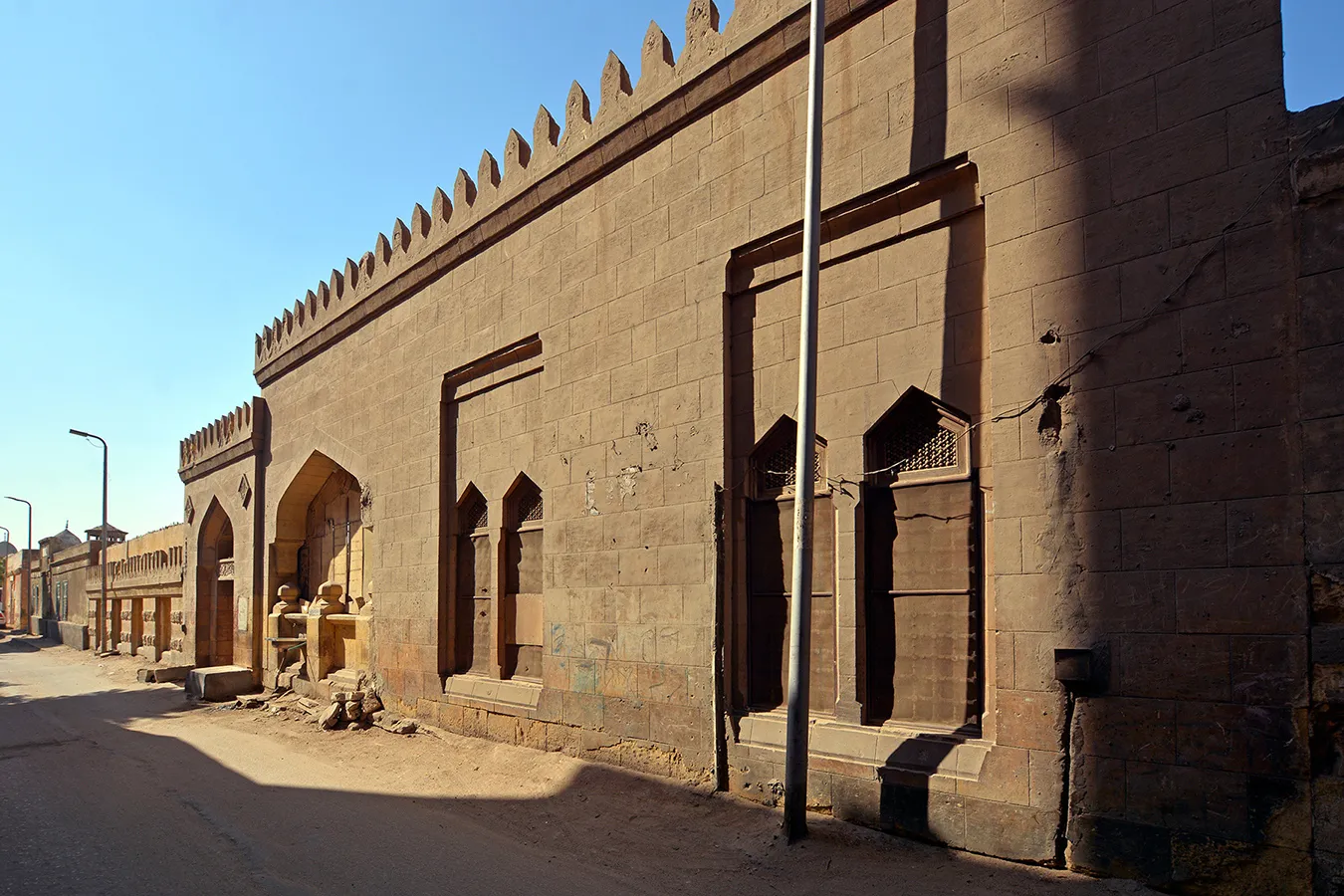
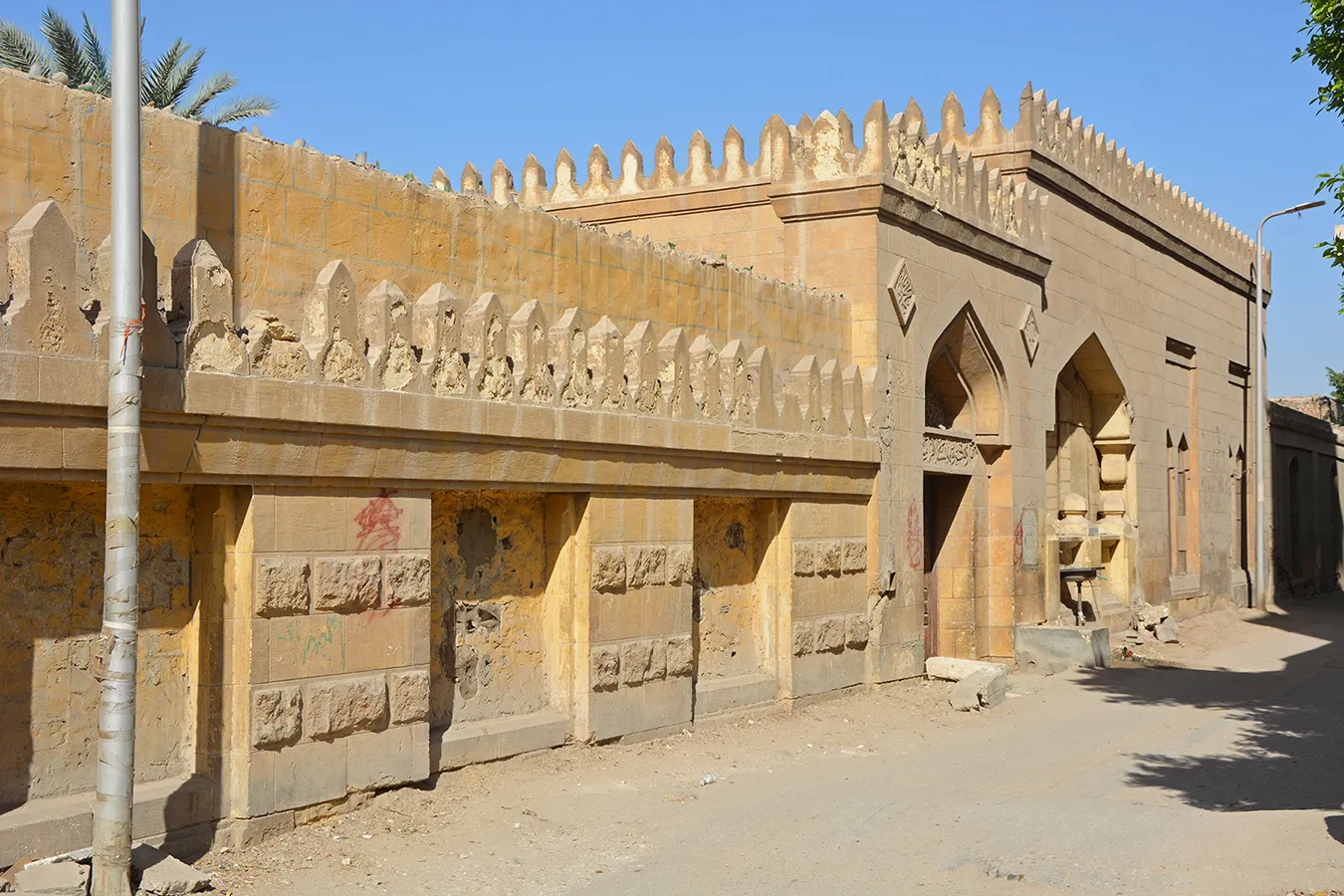
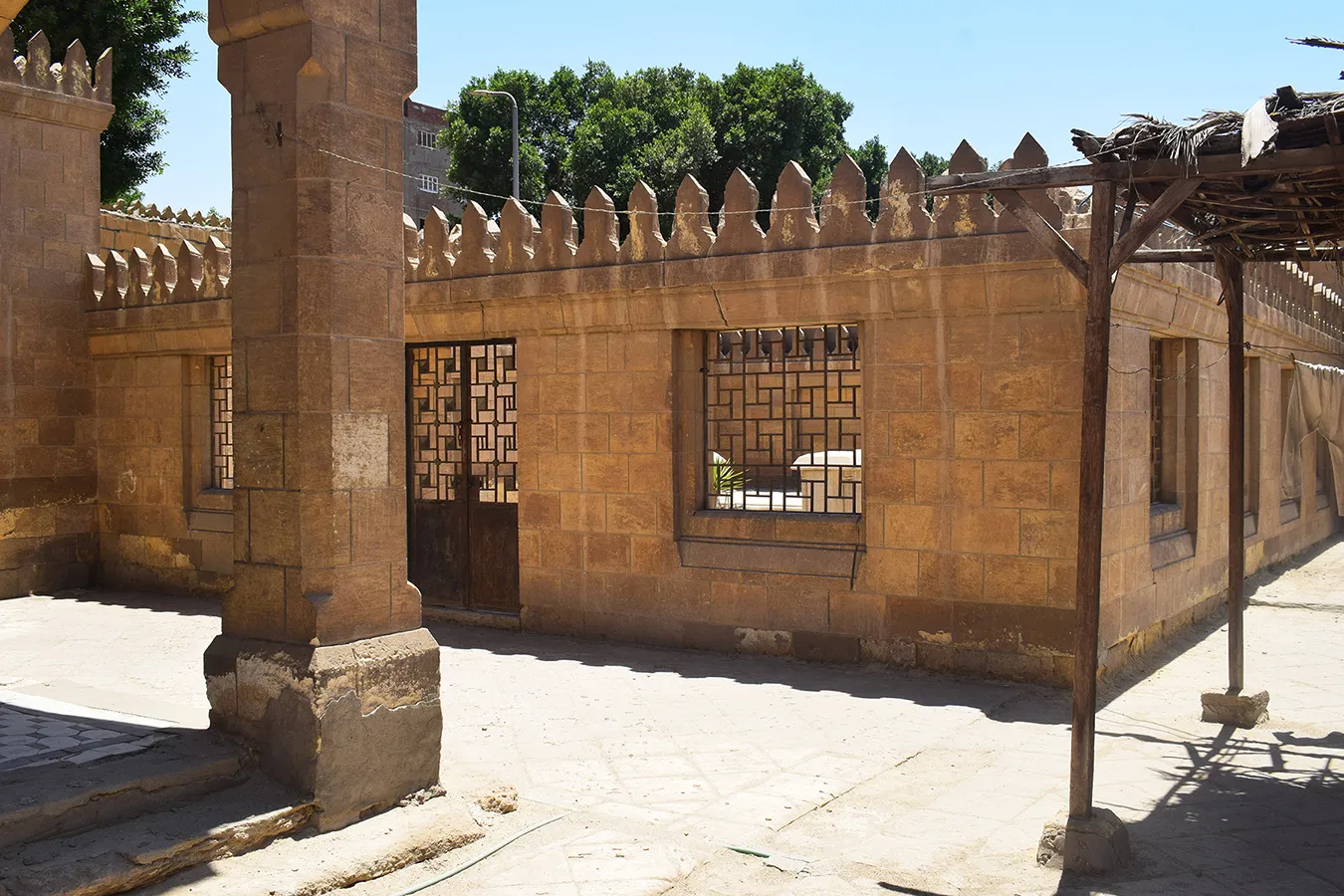
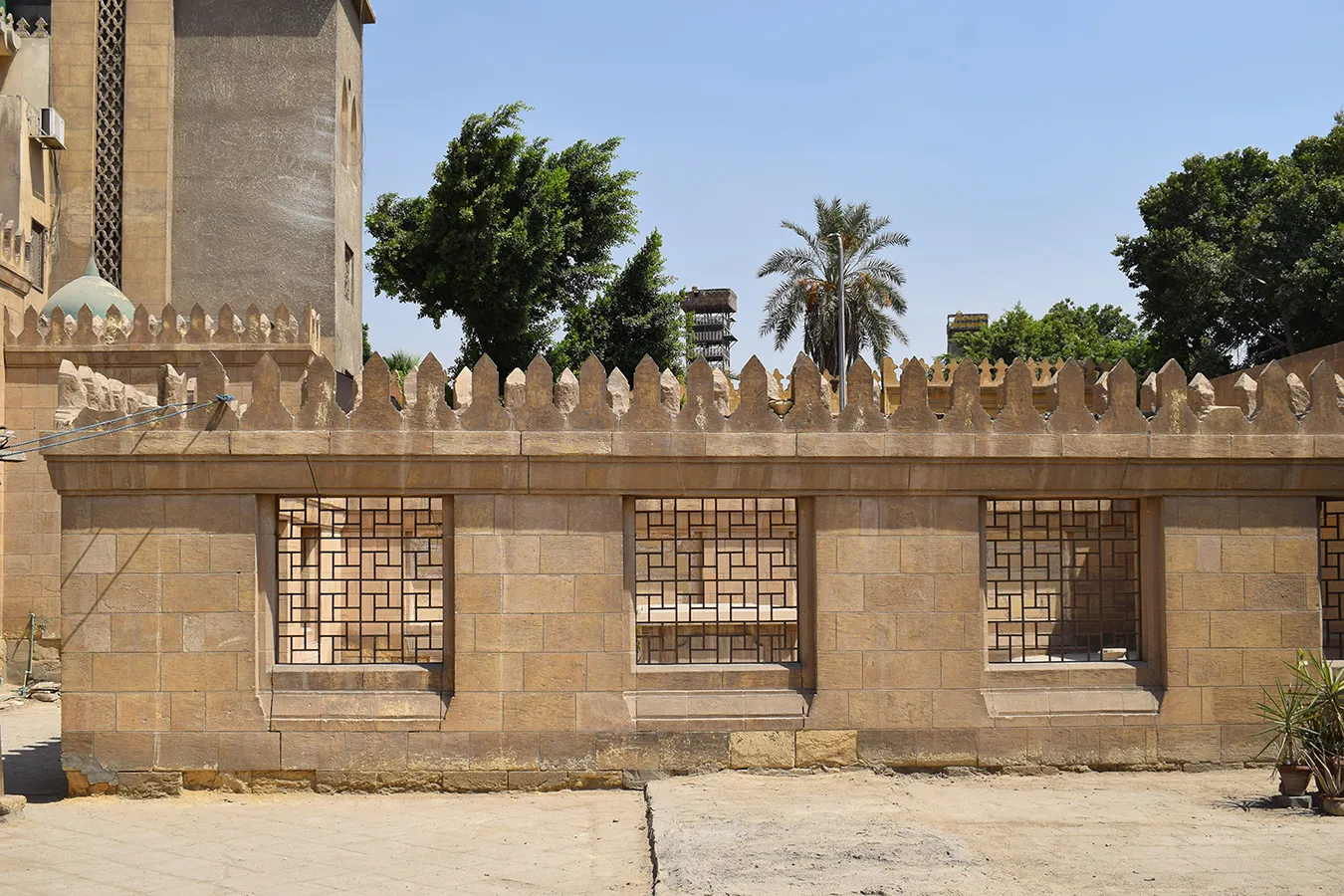
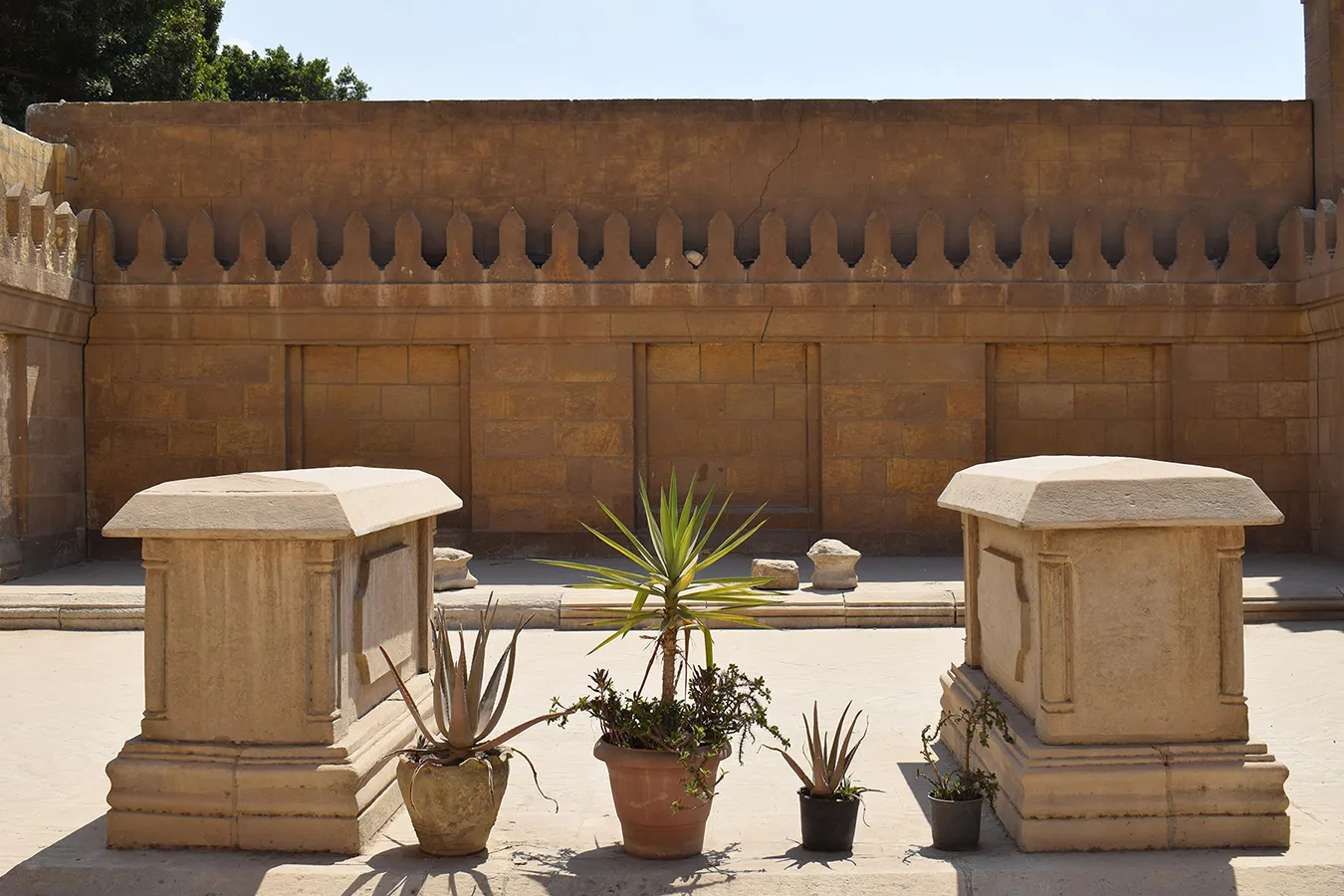
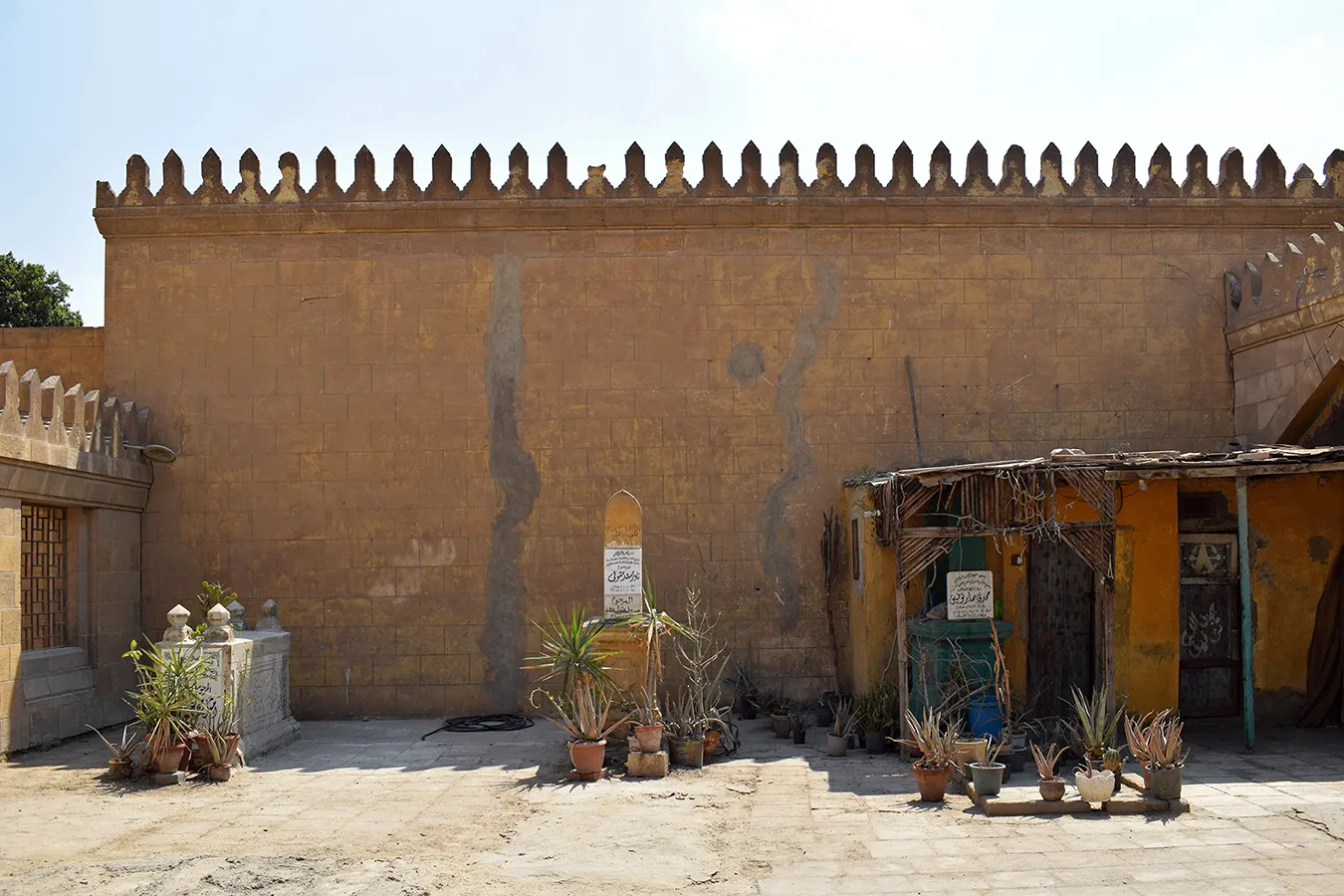
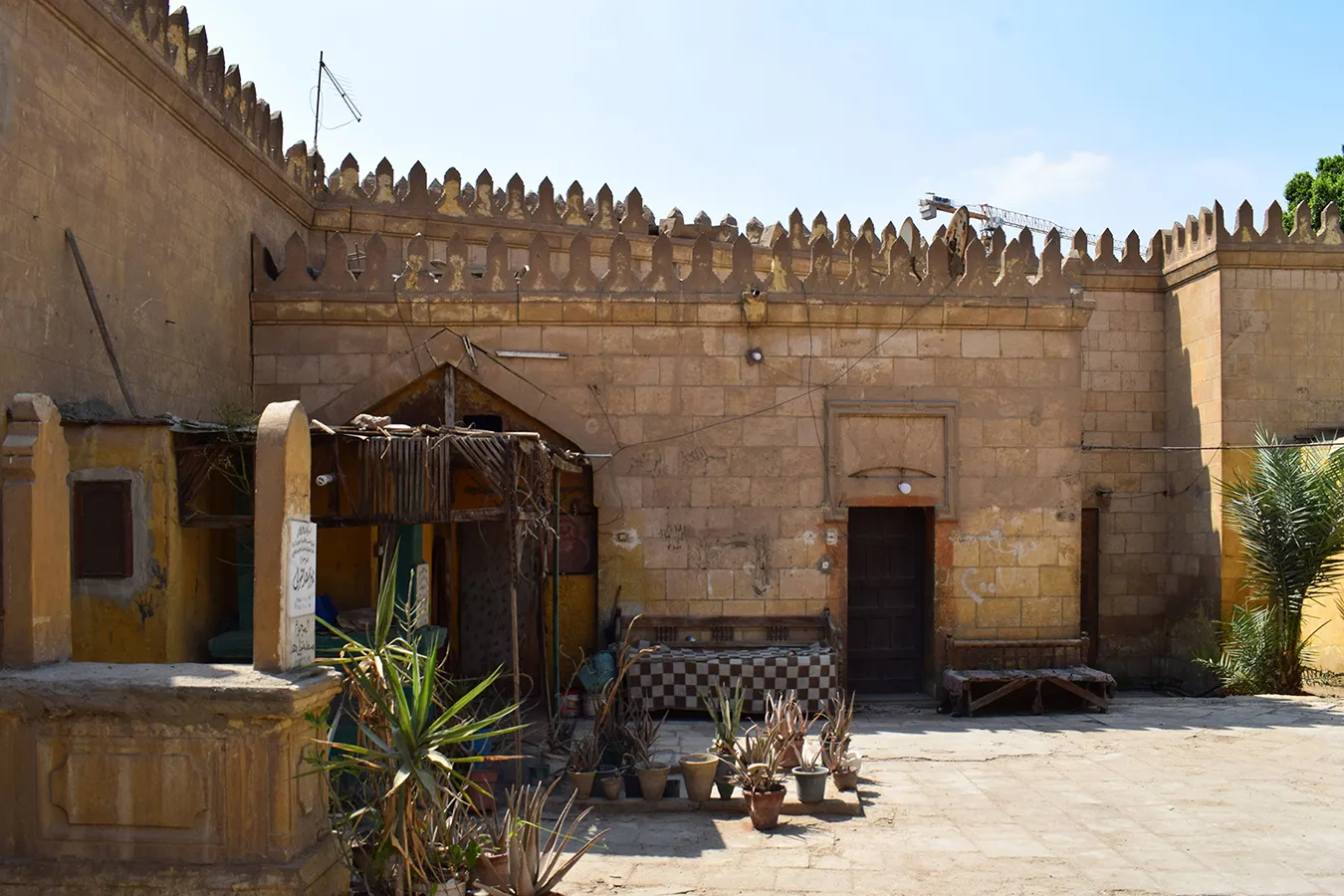
The enclosure is composed of various disparate parts, possibly due to its remodelling from an earlier structure (see point 17.) It comprises a roughly square courtyard with its eastern side facing the Sultan Ahmad Street and a smaller courtyard attached on the western side, with one side cut obliquely to conform to the line of the back street. The south-western corner of the main courtyard is also slightly irregular and cut obliquely. A burial courtyard occupies the south-eastern quarter of the enclosure and contains two identical simple uninscribed limestone tomb markers. Its walls are well-built of huge blocks of stone (in the street façade with alternating smooth and rusticated courses.) The eastern and western sides are each pierced with four square windows with lintels of remarkably well-built flat arches of single keystones wedged between two cantilevered blocks, while the southern wall neighbouring on another lot has identical four blind niches. The northern wall is tripartite with the entrance door in the midde and a window to each side. In the windows and the entrance door are simple iron grilles of mafruqa-based geometric pattern. The windows on the Sultan Ahmad Street have been grudely walled up and the wall was hightened with a crudely excuted wall.
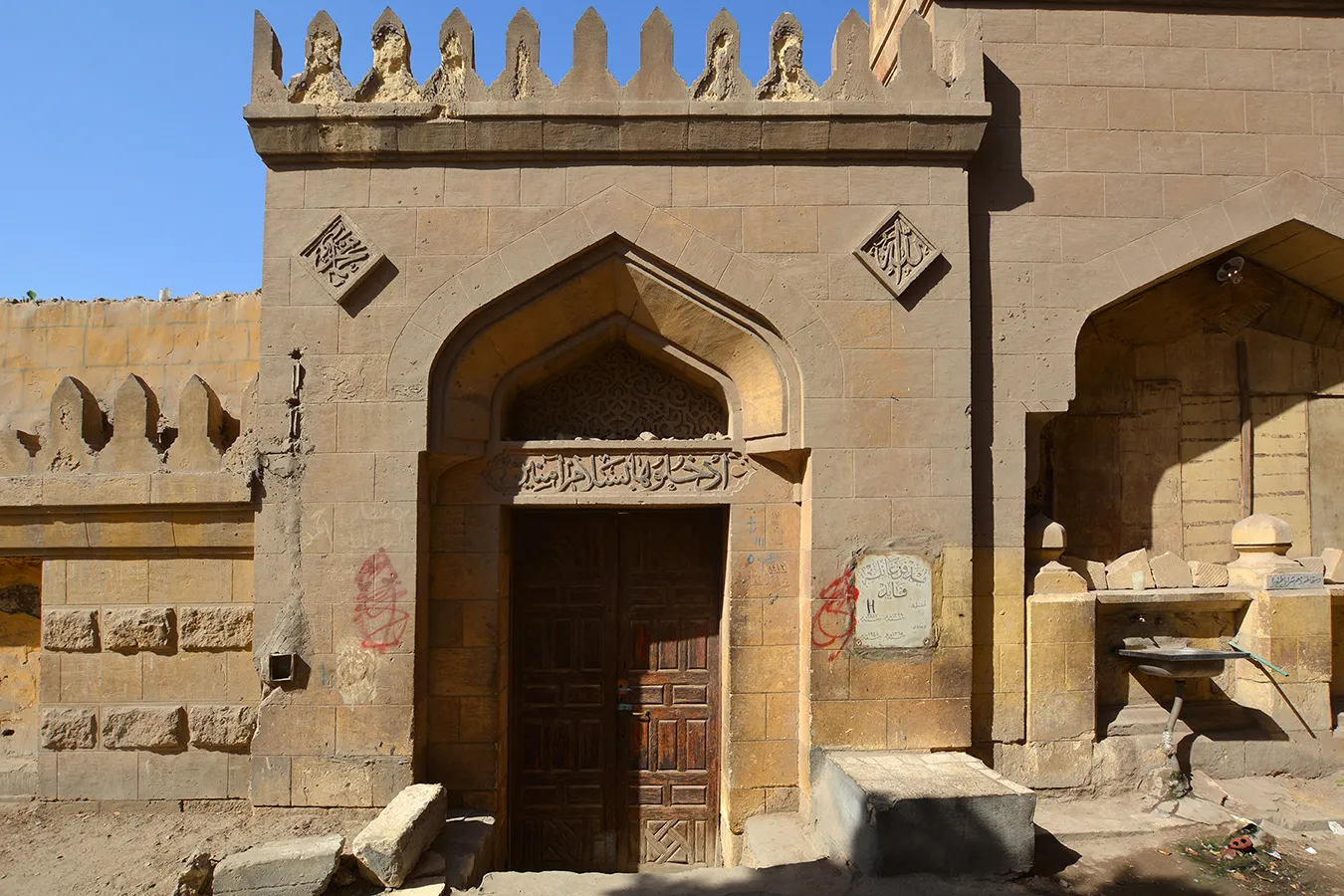
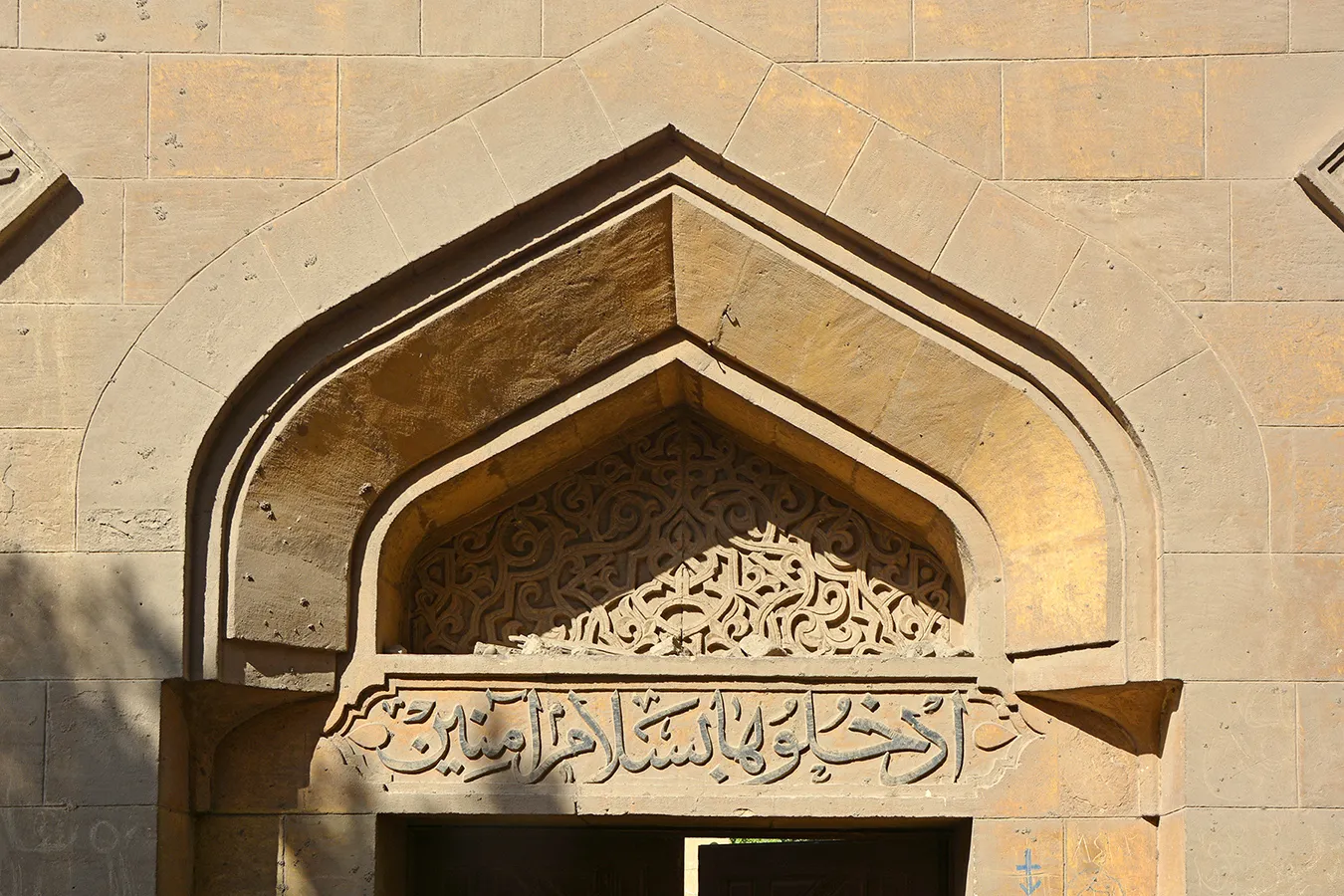
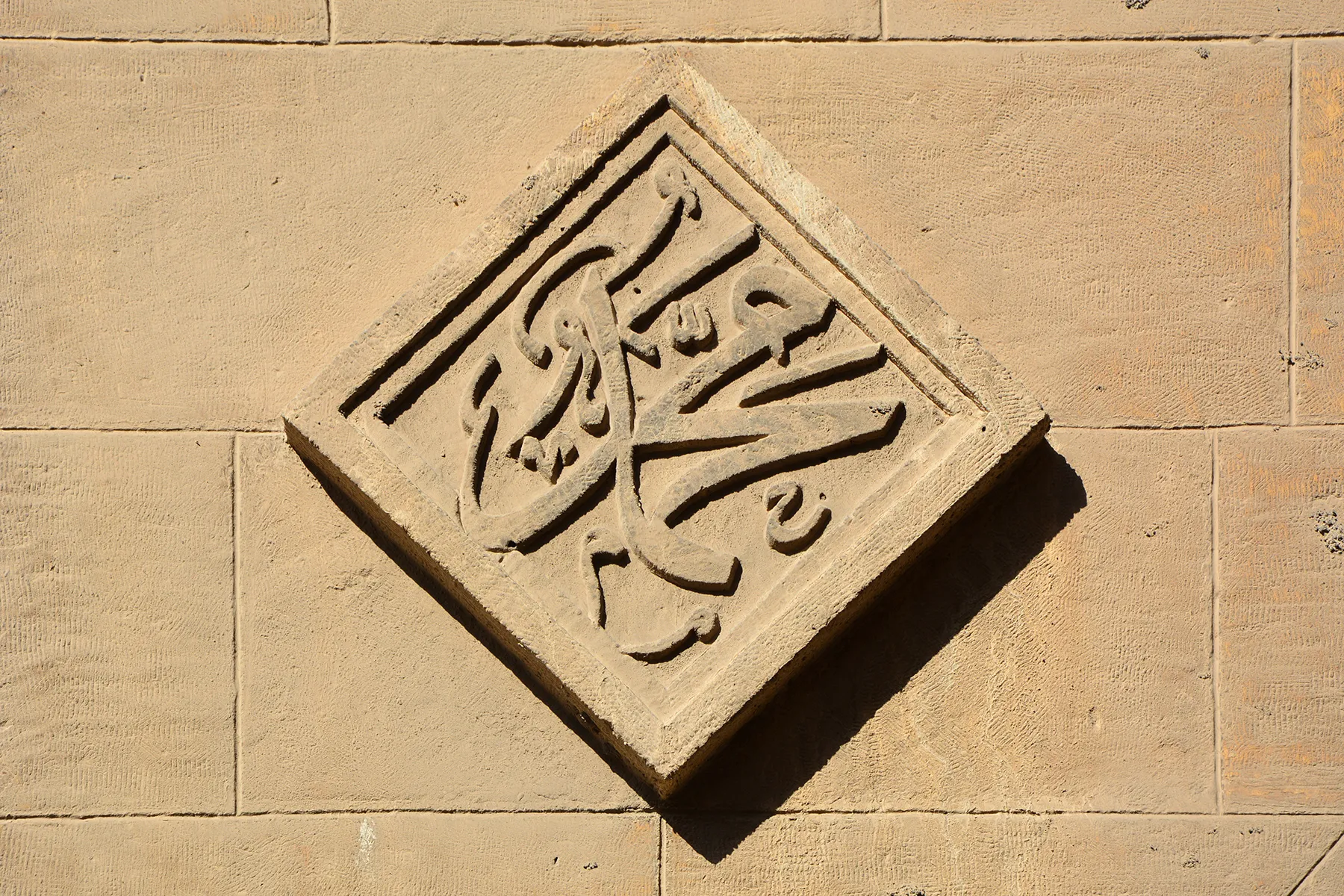
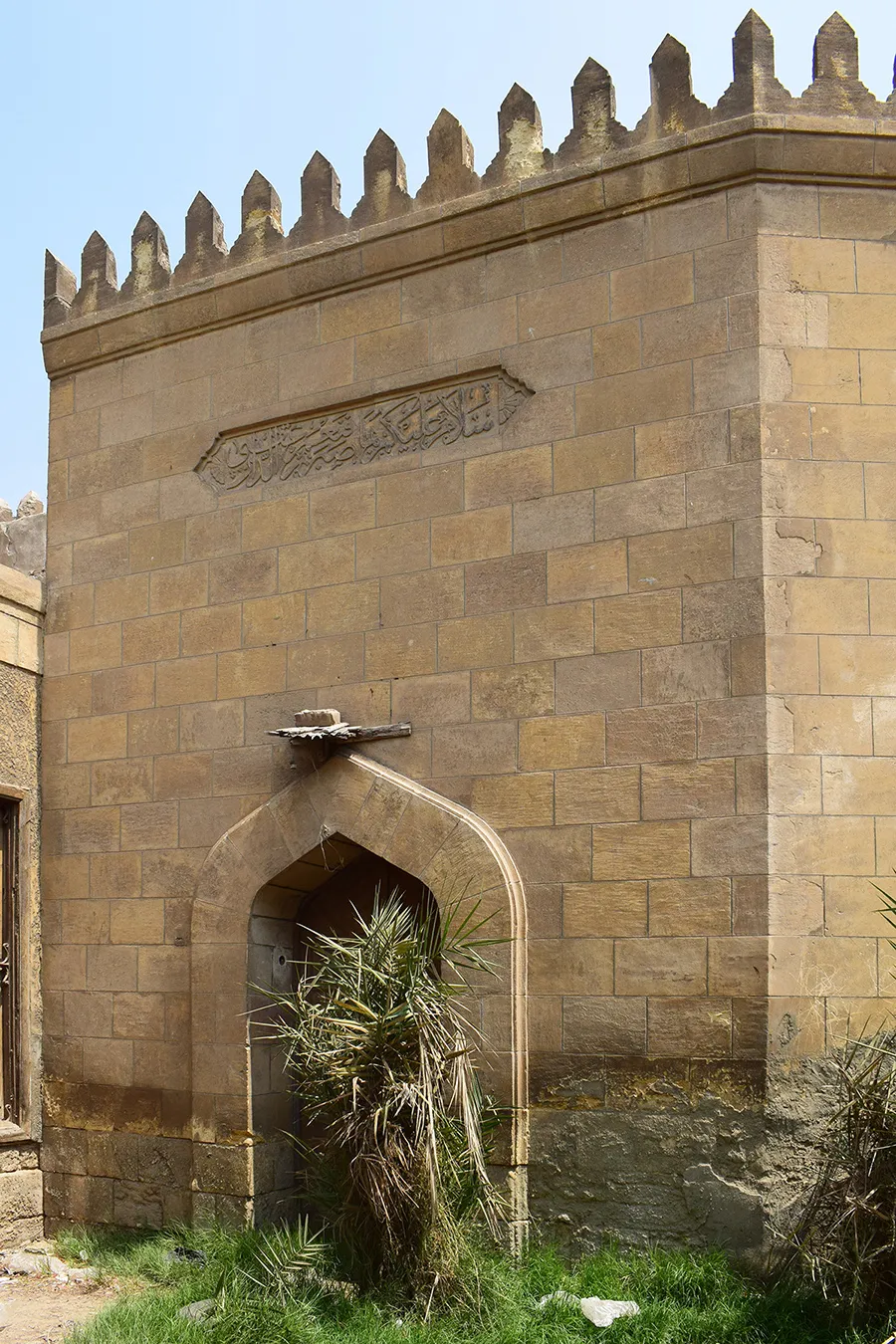
The front façade on Sultan Ahmad Street is composed of three varied units: To the left (south) of the centrally placed entrance gate is the façade of the burial courtyard. The slightly protruding gate section is taller, with a gate placed in a shallow recess covered with a bevelled keel arch. Over the door is a stone lintel with an inscription panel containing the verse 15:46 (in surat al-hig’r) of the Qur’an: “Enter ye here in peace and security” (translation: Yusuf ‘Ali), and in the arch is a double-sided panel with a floral Islamic arabesque pattern on the front (street) side and a geometric pattern on the interior side. Diamond-positioned squares to the sides of the arch contain inscriptions “Allah” and “Muhammad”. The panelled wooden double-leaver door is decorated with mafruqa pattern (Amin and Ibrahim, p.112) in upper and lower parts. The gate is accessed by 5 descending steps.
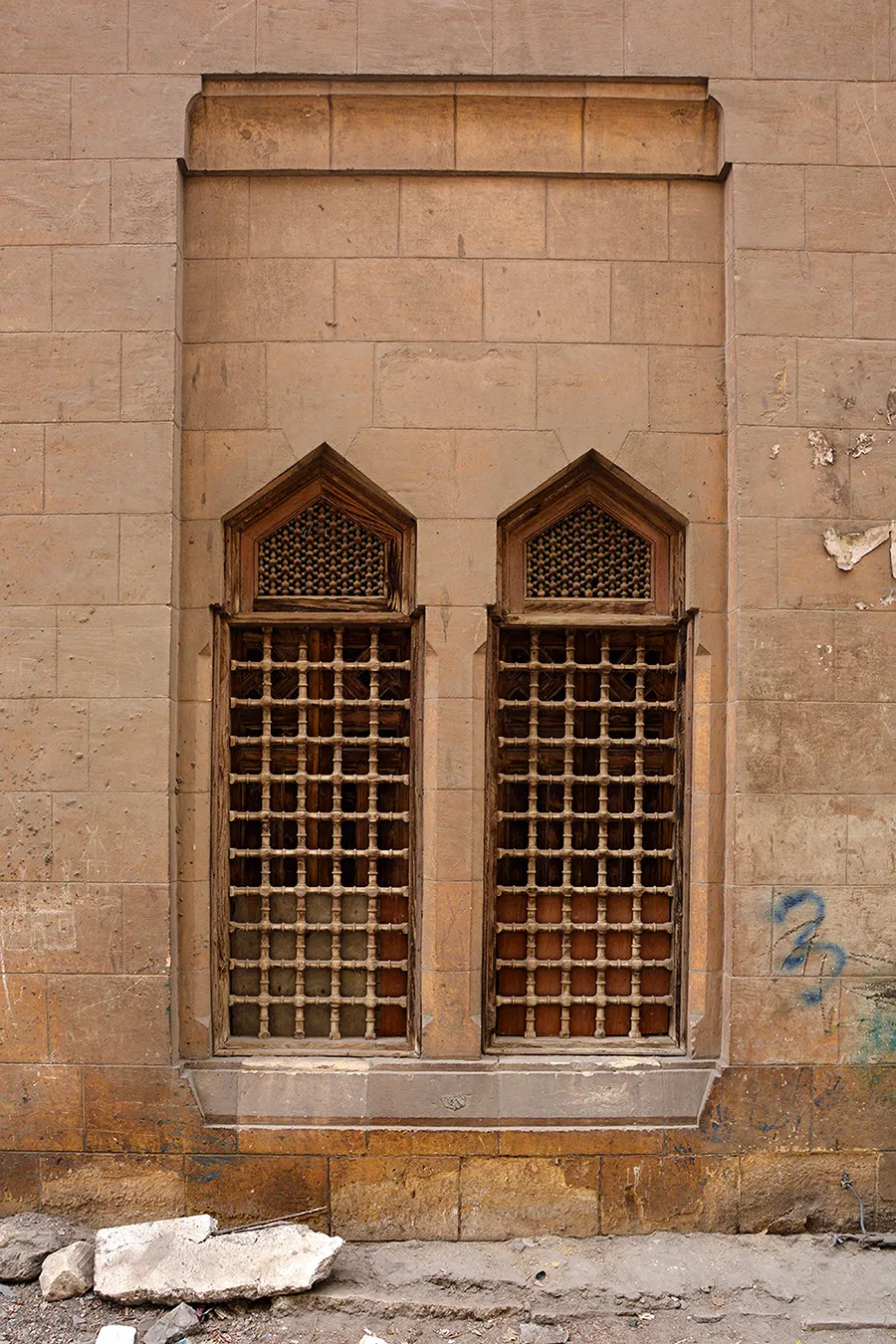
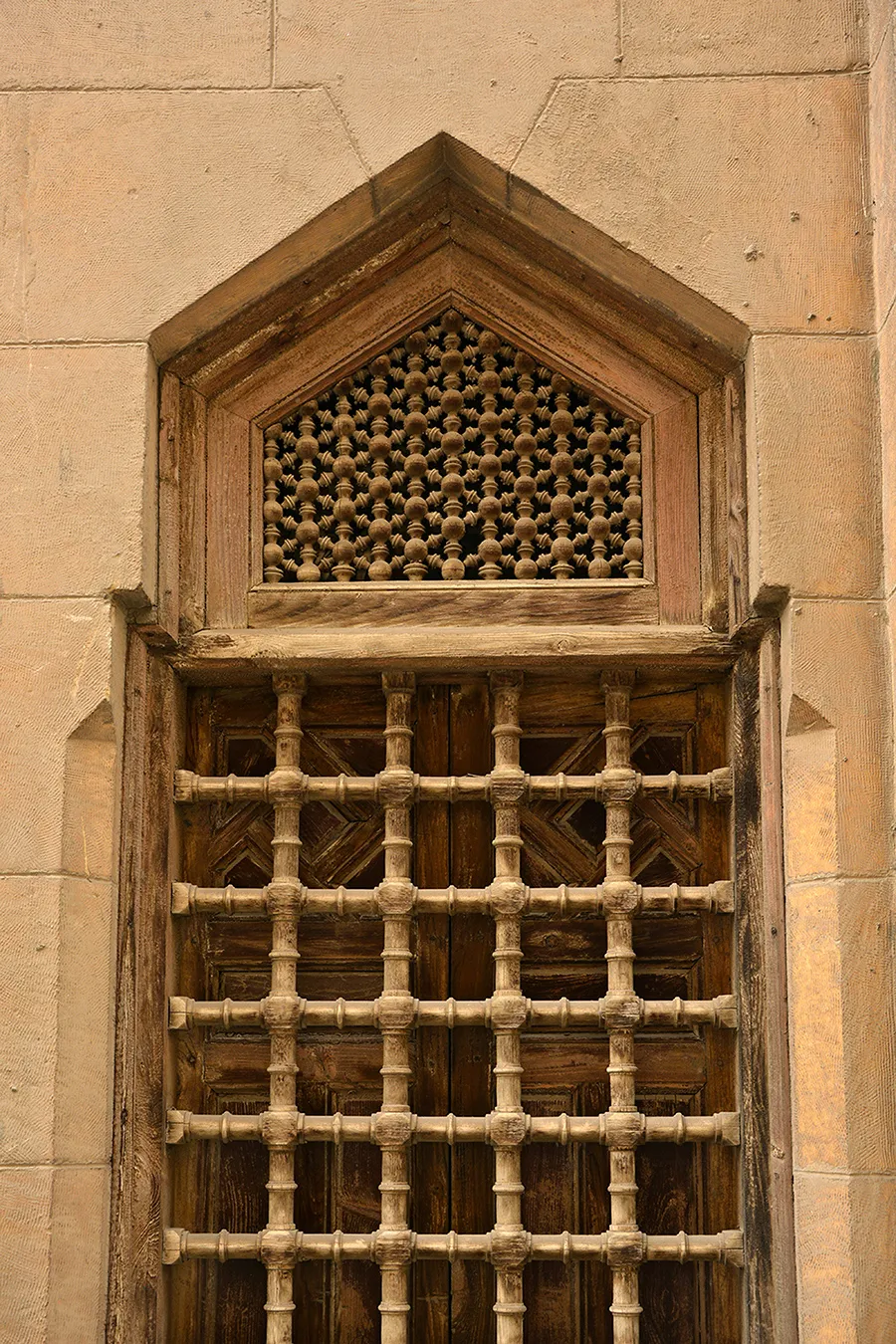
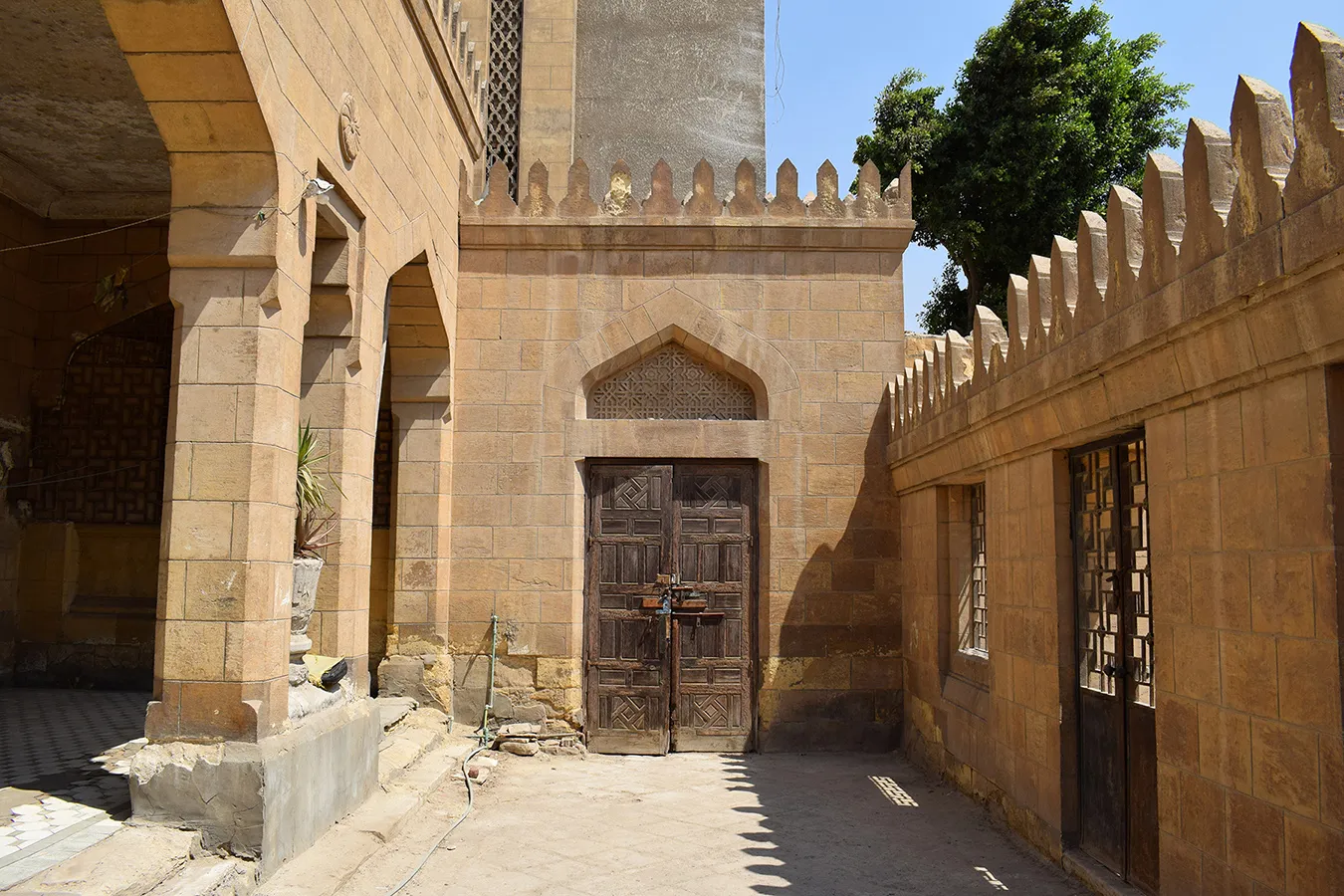
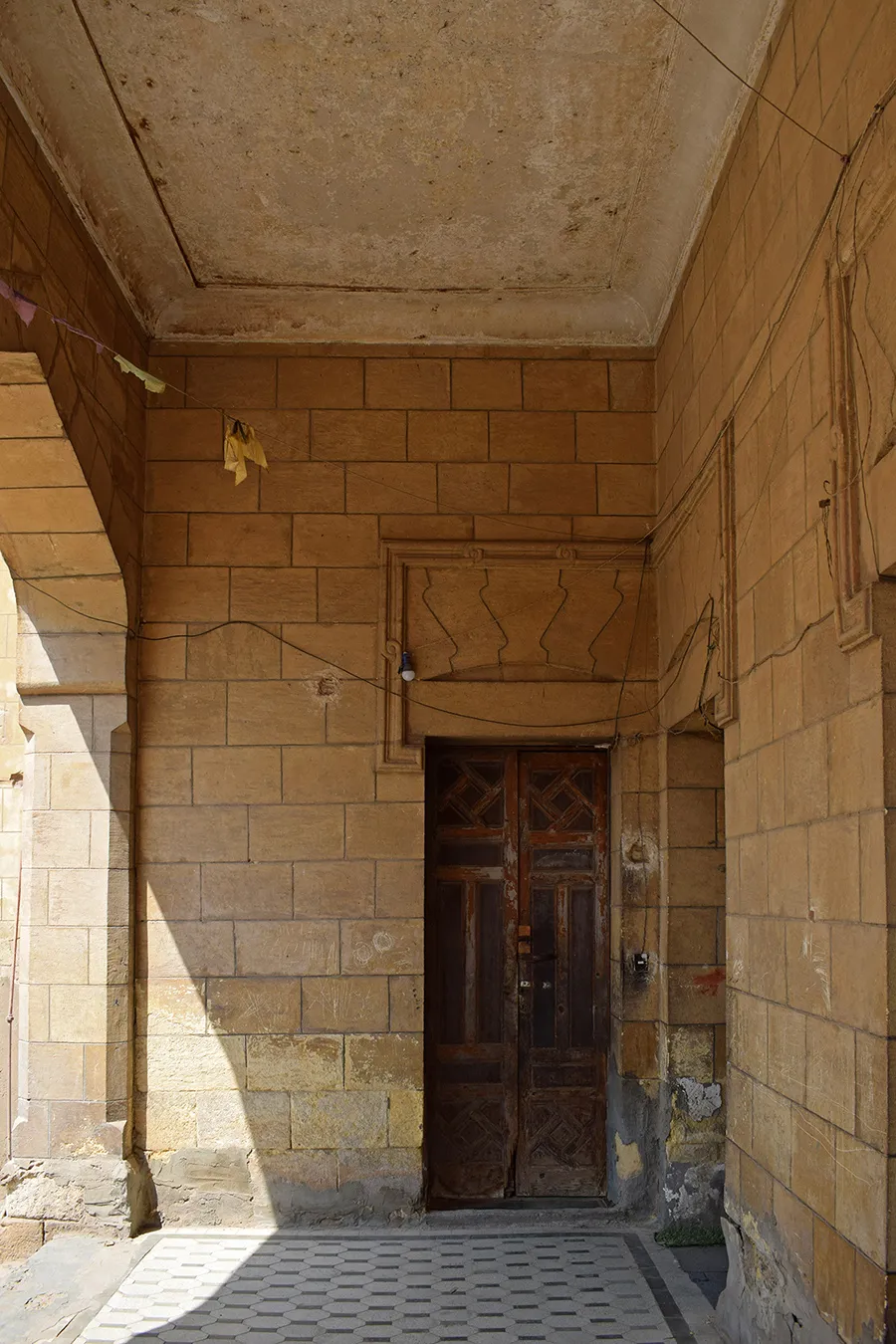
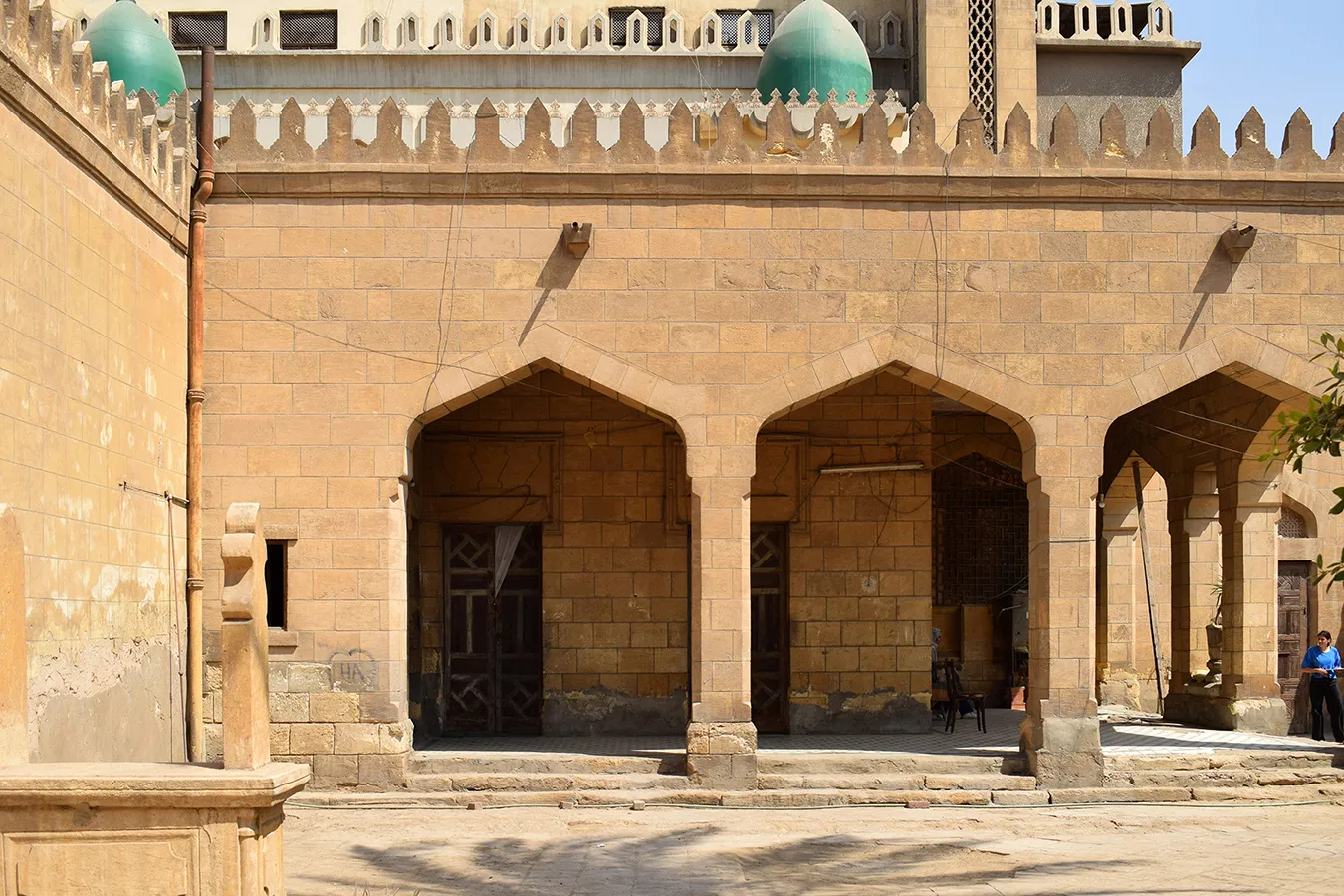
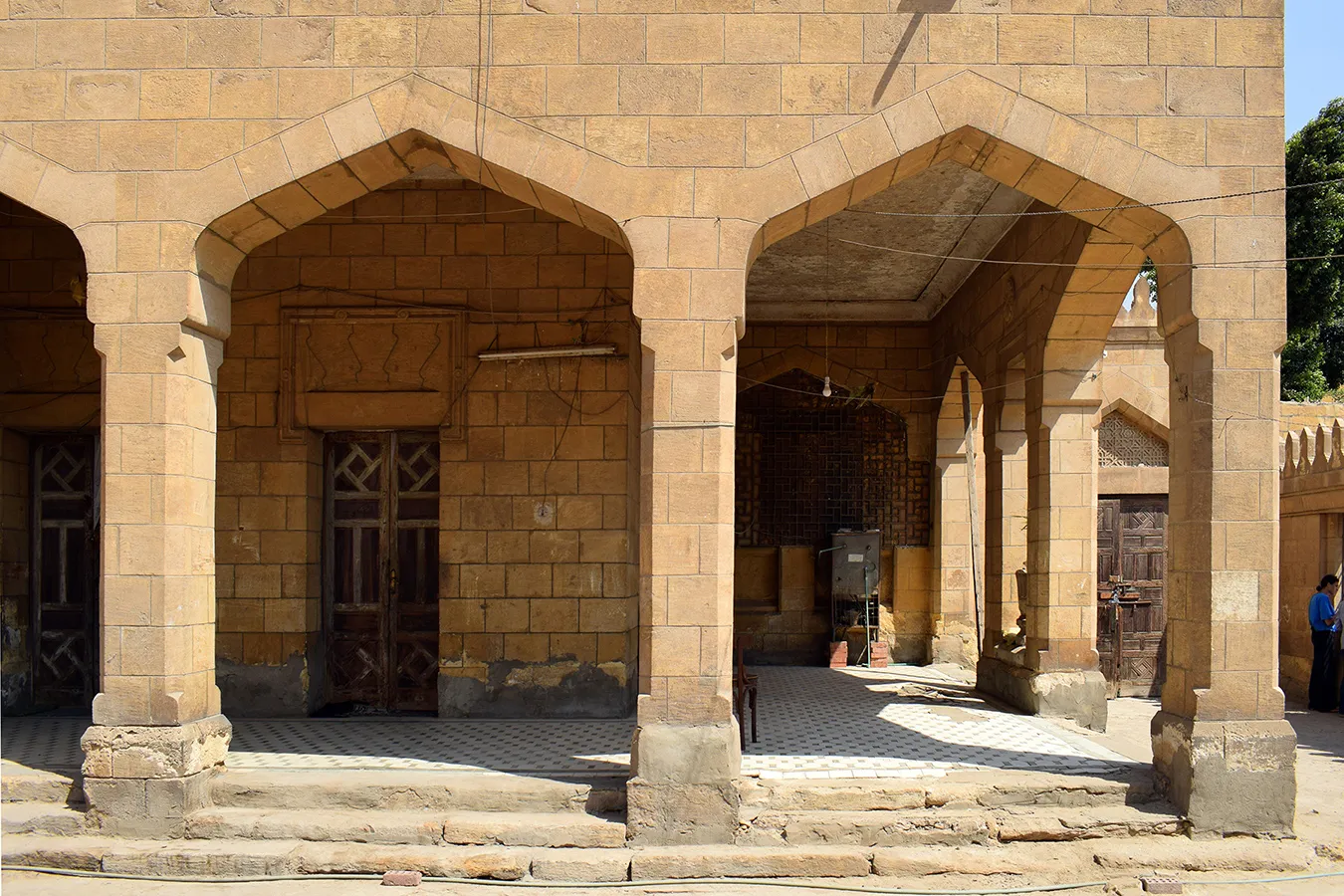
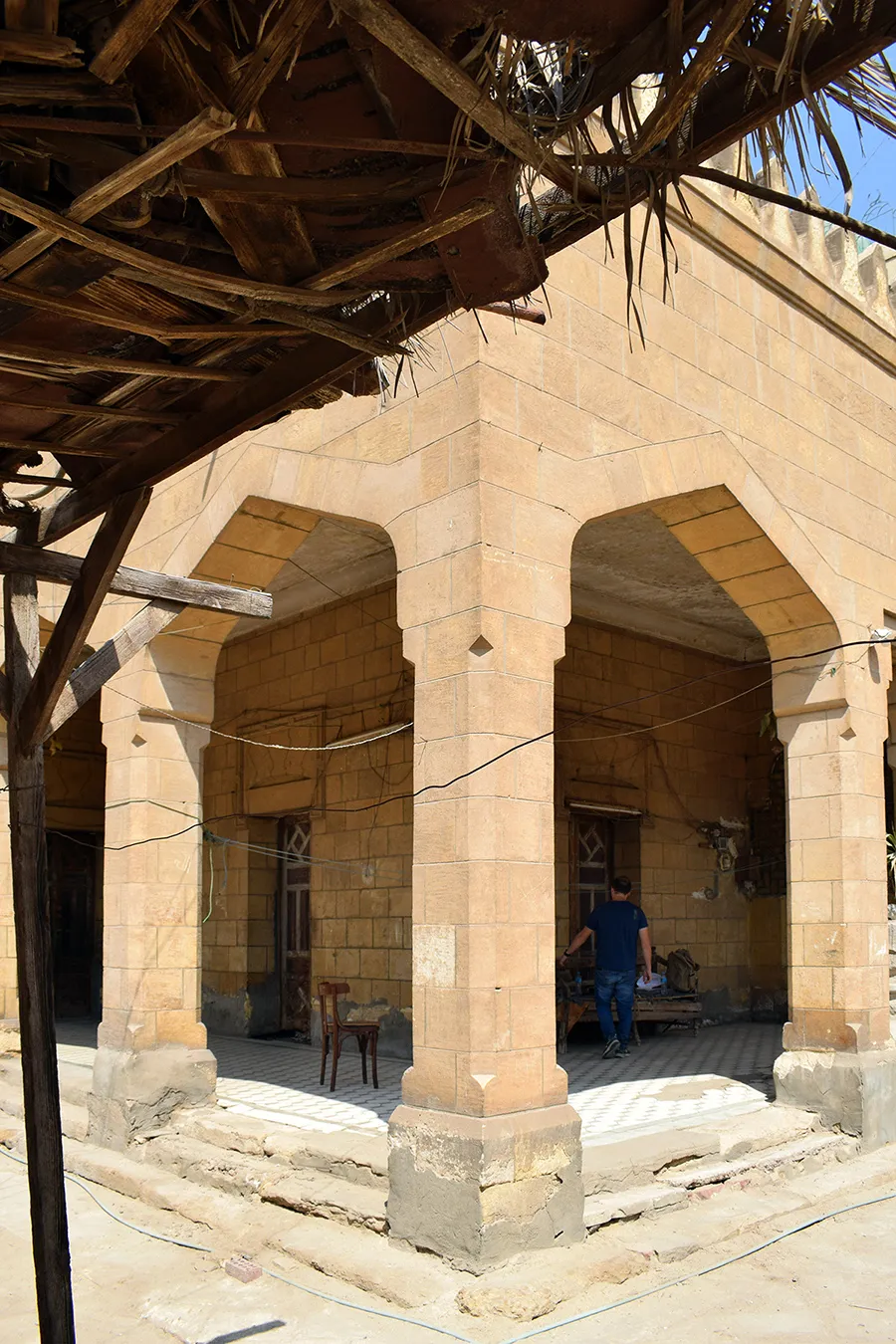
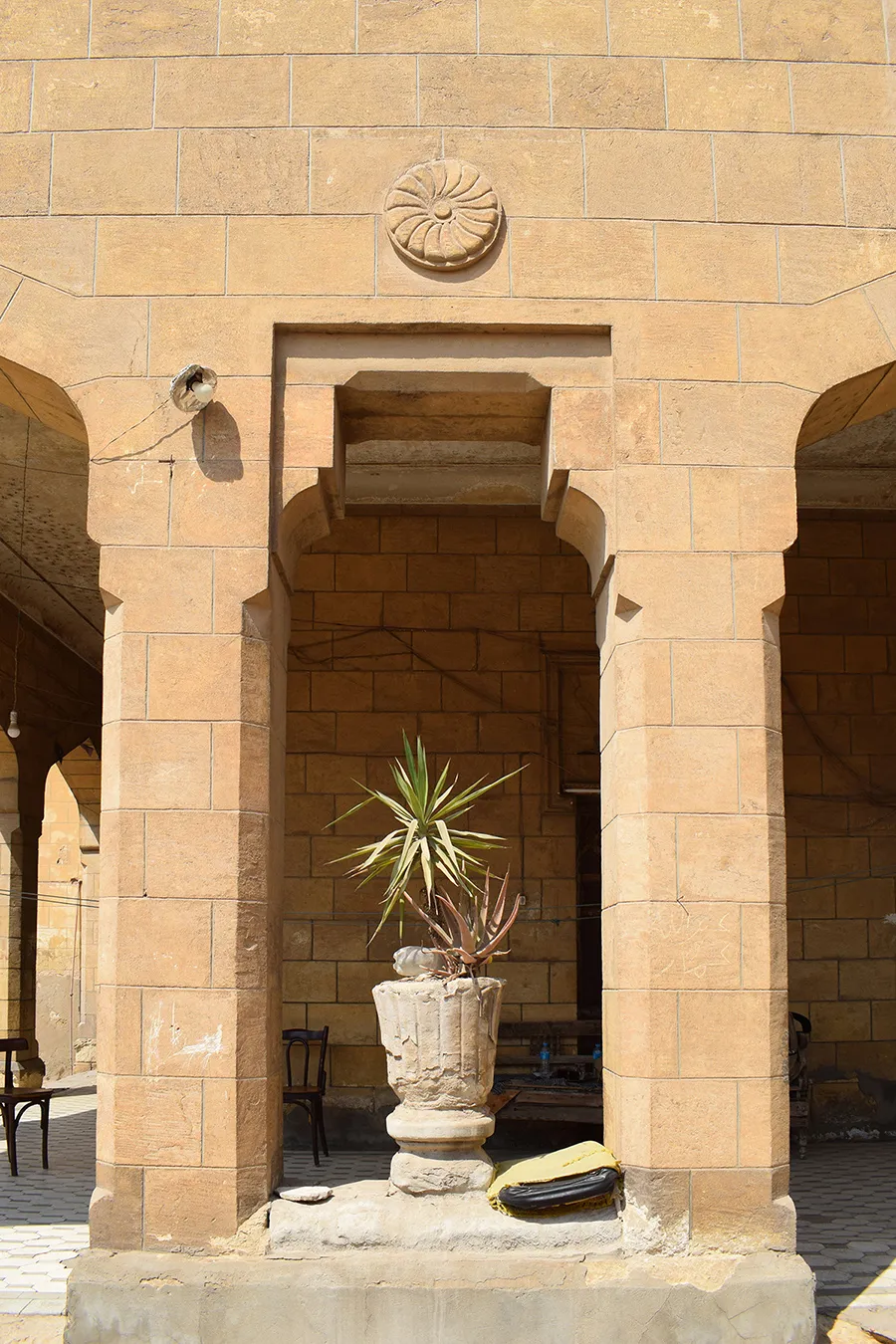
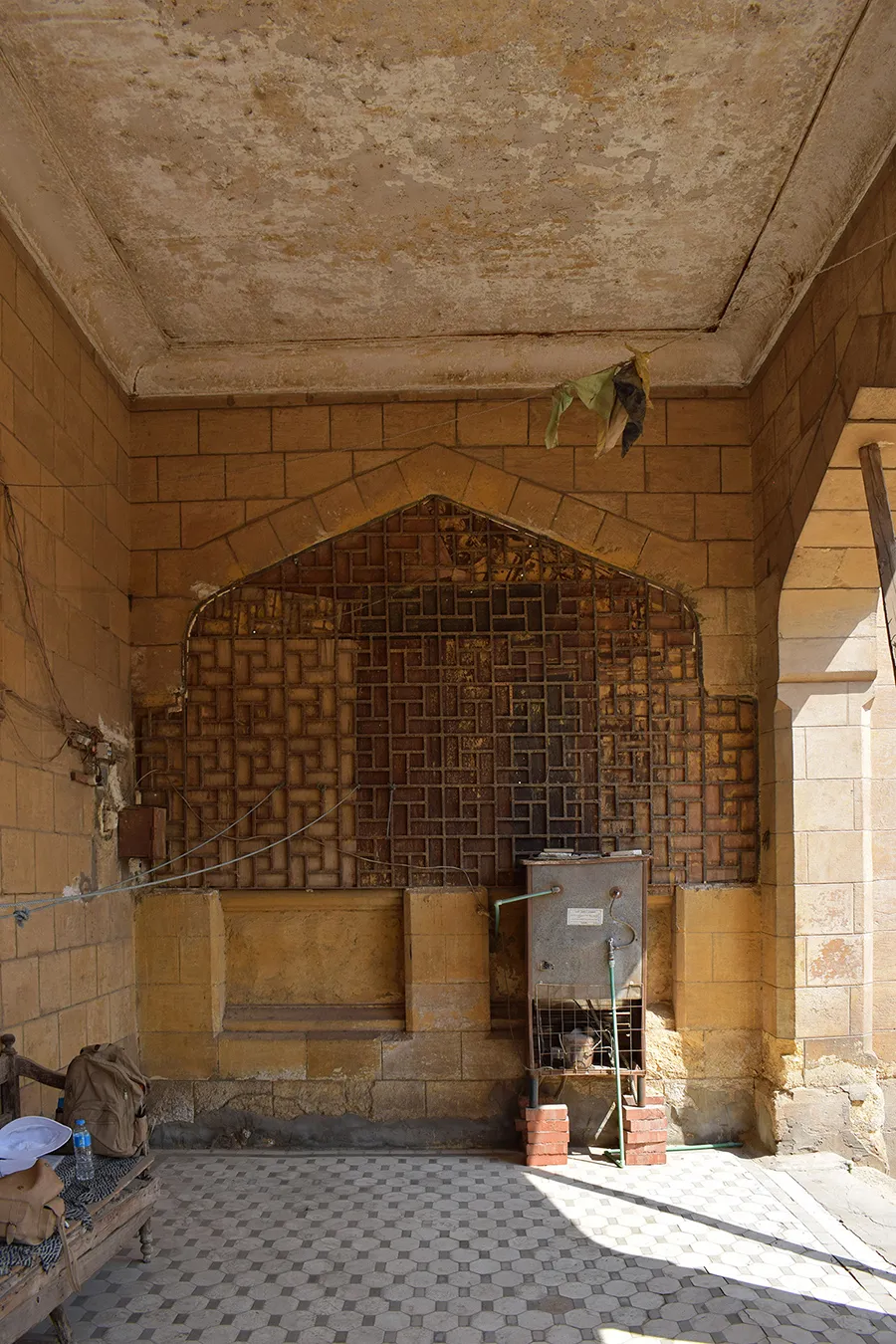
The section of the front façade right (north) of the entrance is slightly taller than the gate section and belongs to the building in the north-eastern corner of the enclosure. Its street elevation has in its right (northern) section two shallow rectangular recesses topper with cavetto cornices, with a pair of windows in each one. The windows are separated by a tall chamfered pillar and over plain blocks of slightly cantilevered impost stones are covered with rectilinear keel arches. The lower, rectangular parts of the windows are fitted with grilles with square openings in thick turned-wood mashrabiya screeens, while the interiors of the rectilinear arches aabove are filled with fine mashrabiya turned-wood screens of hexagonal patterns. In the left part of the façade are two wide openings covered with flat keel arches resting on simple corbels. In the lower parts of the openings are solid balustrades of two bays, with “pomegranade” ornaments over the vertical stands. The openings are fitted with iron grilles of the same pattern as those in the windows of the burial courtyard (now invisible, as the openings are crudely blocked with plywood.) Inside the enclosure, the building is surrounded on its western and southern sides with porticos of wide stone keel arches on square, chamfered stone pillars – three arches in the W façade, and two arches separated by a narrow rectangular opening between the pillars in the S façade. The portico is elevated on four steps over the courtyard level. Two doors in the W wall inside the portico and one in the S wall have a typically Mamluk decoration of knotted mouldings that frame the lintels and flat arches of joggled voissioirs over segmental relieving arches; the panelled wooden double-leaver door leaves are decorated with mafruqa pattern. The building contains a two-bedroom apartment with a toilet.
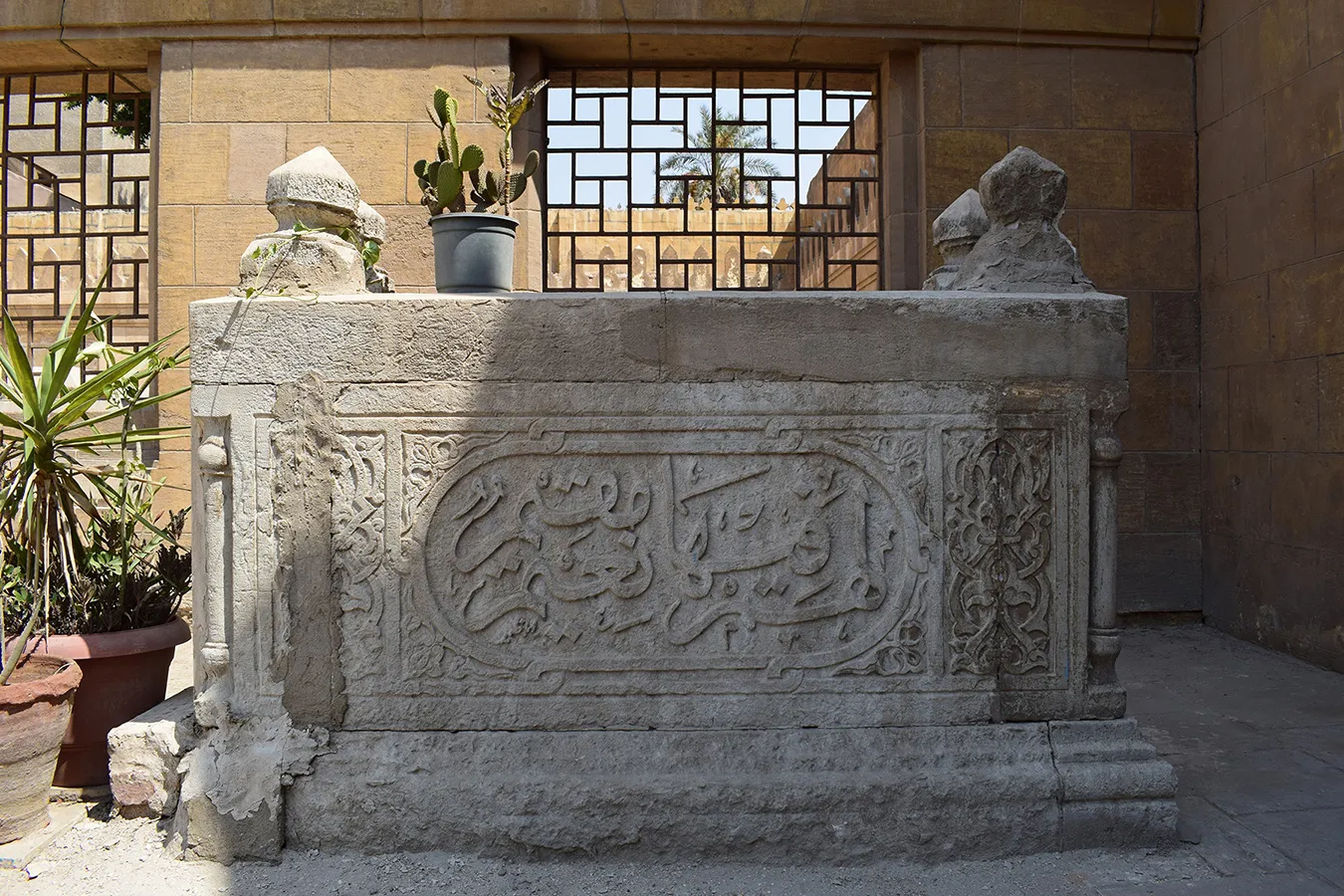
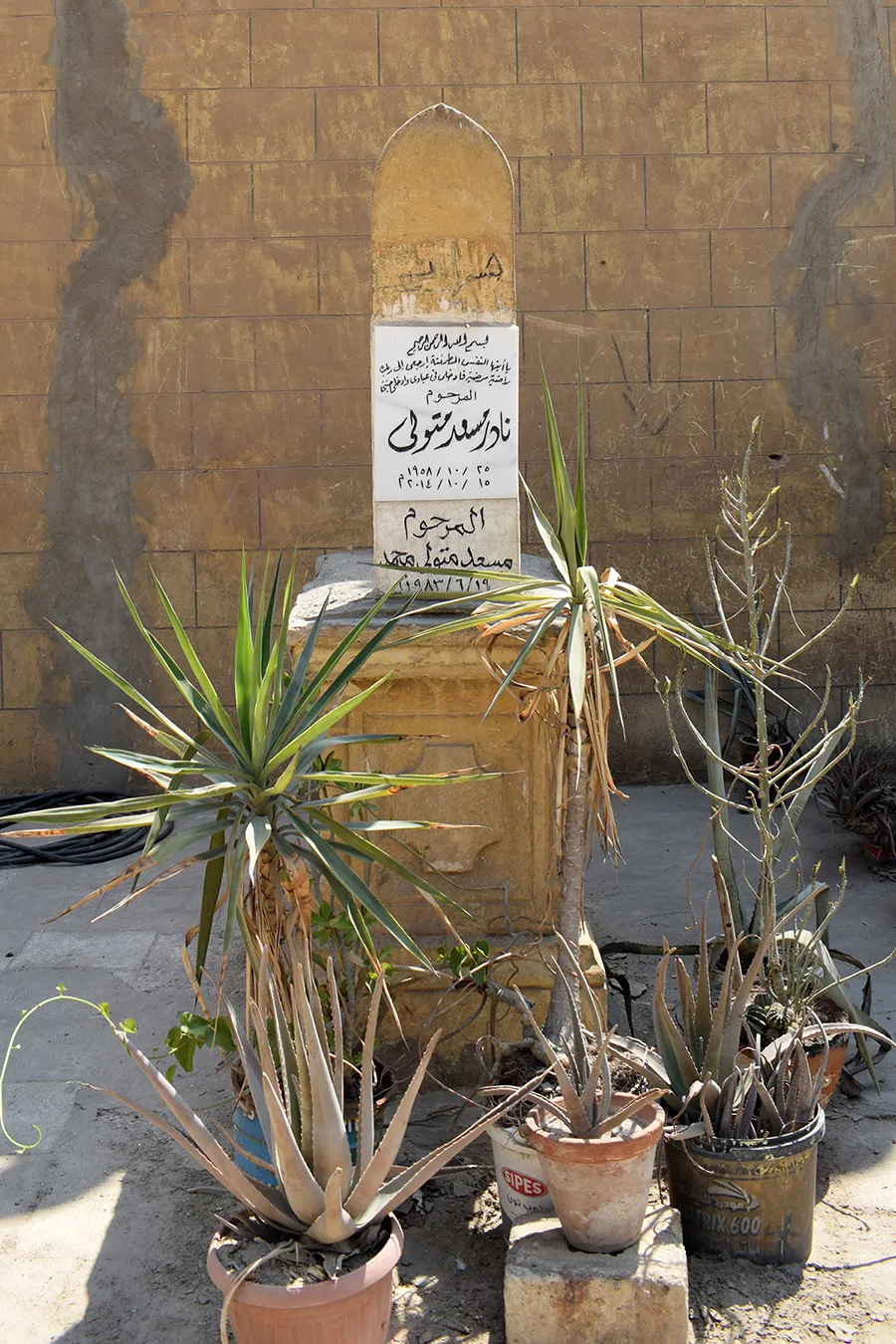
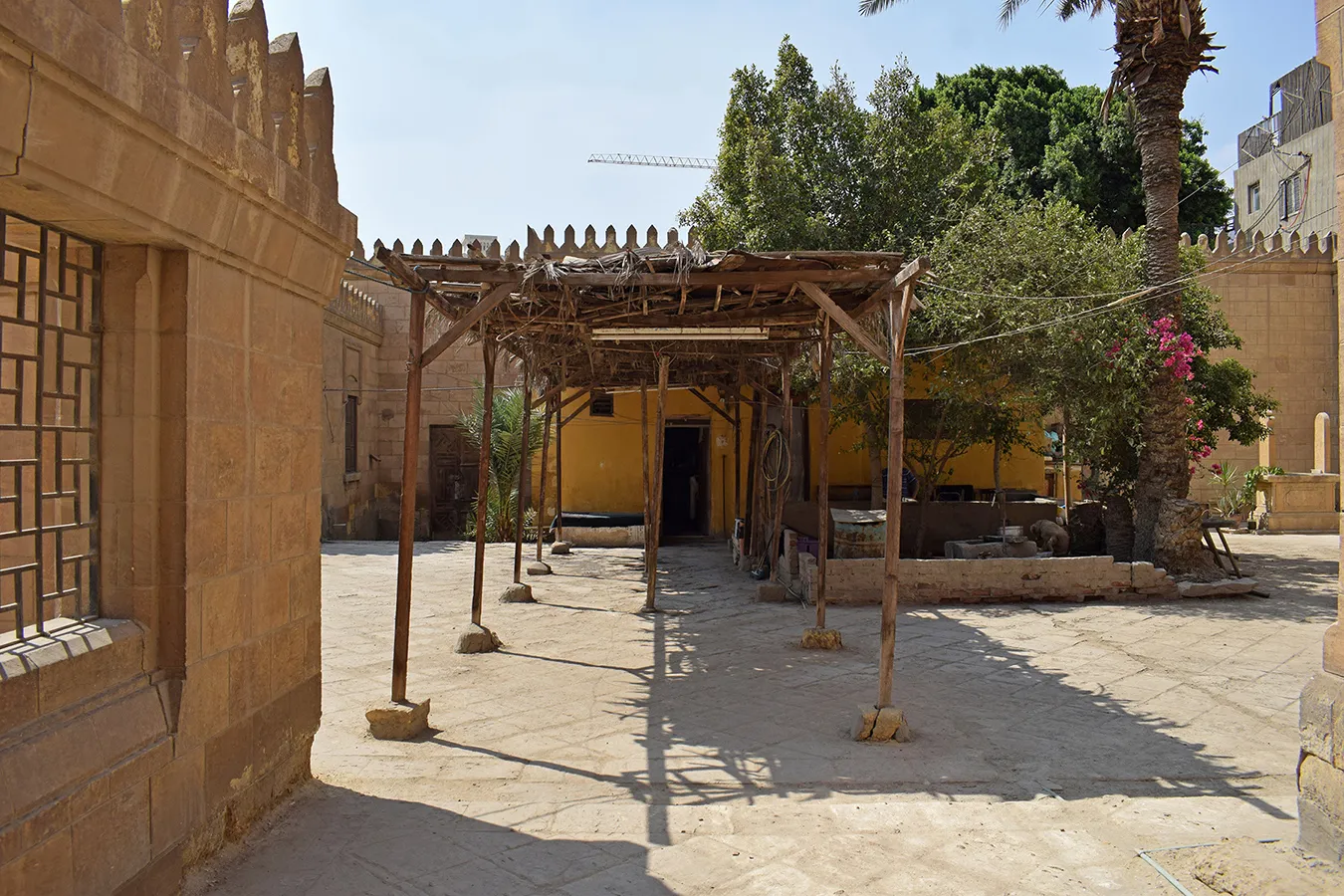
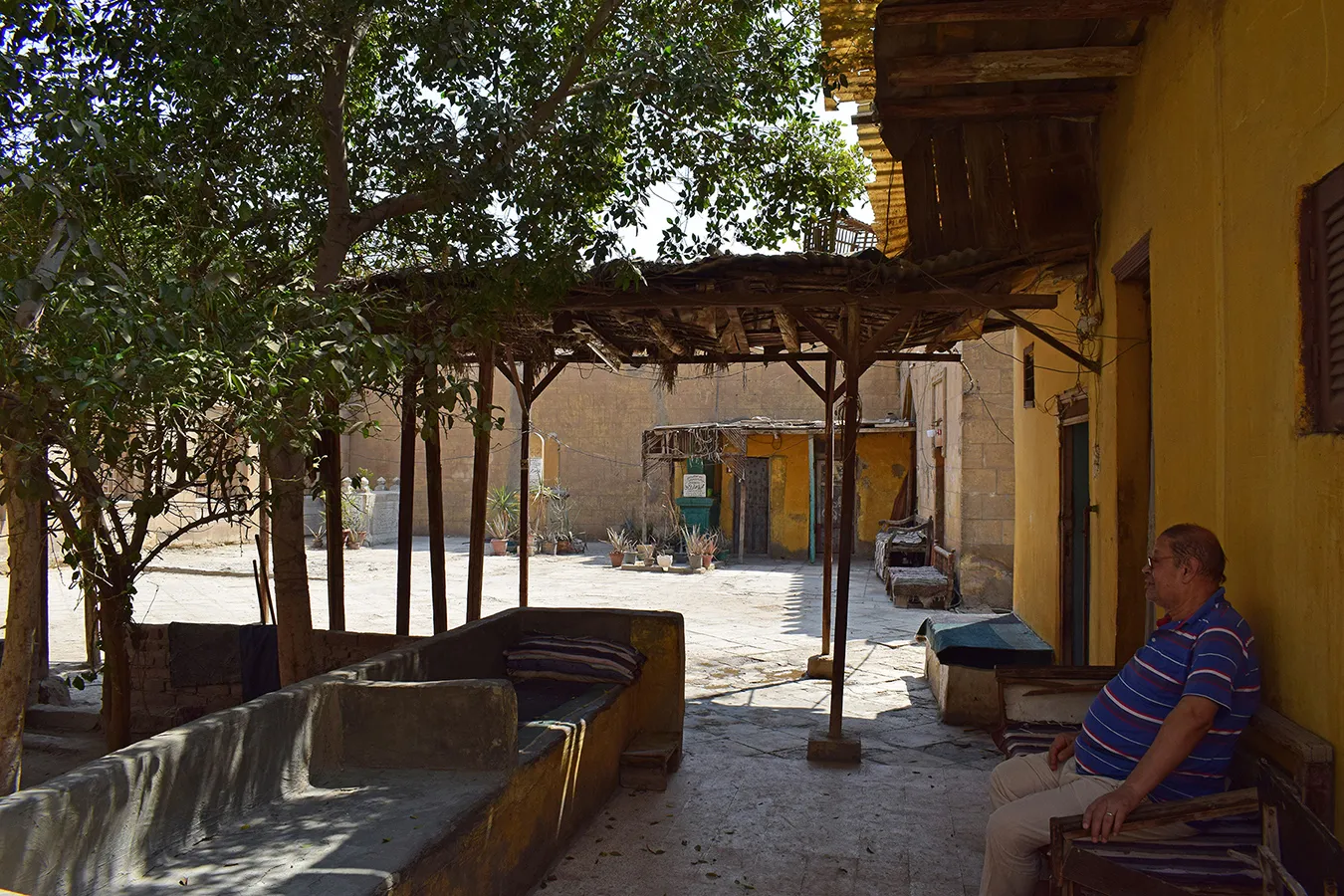
Another small building, lower than the perimeter wall, is located in the south-western corner of the enclosure, with the back wall slanting obliquely. It consists of two rooms, a bathroom, and a kitchen. The door and and window of the northern room are of the same design as in the front building, while the shallow southern room opened onto the curtyard with a wide keel arch (now obscured by a modern nondescript shack.) Next to the building is the door in the western wall leading to the back courtyard (inaccessible at the time of recording.) By the middle of the back wall is a nondescript modern brick-built two-room partment, and in front of it, a simple wooden pergola crossing the courtyard towards the passage between the front building and the burial courtyard to which the main gateway leads. By the southern wall of the enclosure are two simple stone tomb markers, and a richly decorated limestone cenotaph with a marble inscription panel on the shorter side. The cenotaph appears to predate the current complex which consistently uses simple, geometrical forms. Two more stone tomb-markers are located by the northern wall. A square in the middle of the courtyard is arranges as a simple garden.
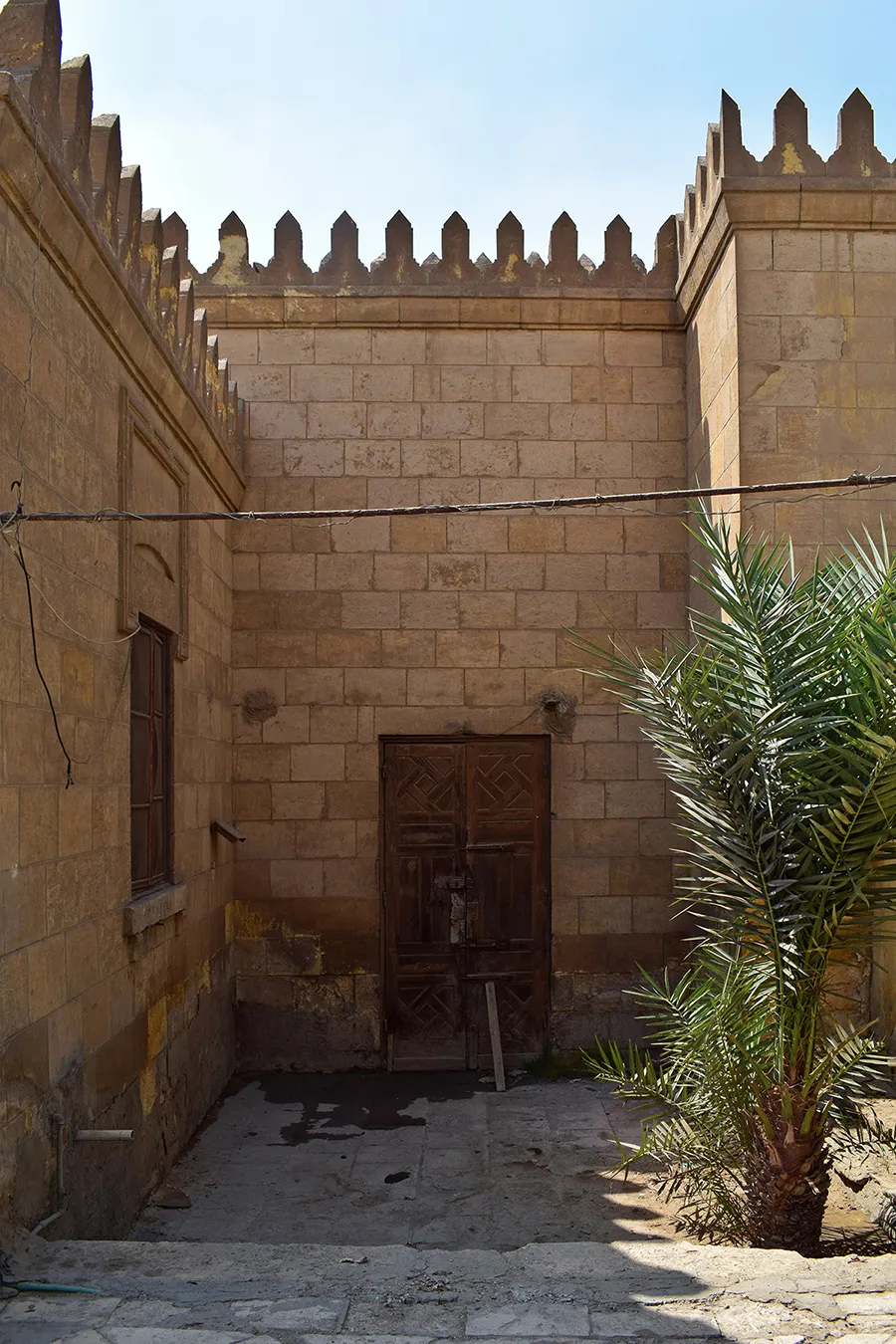
The crenellations, which are peculiar in being double, separate for each side of the wall, have very simple, rectilinear geometric form throughout the complex.
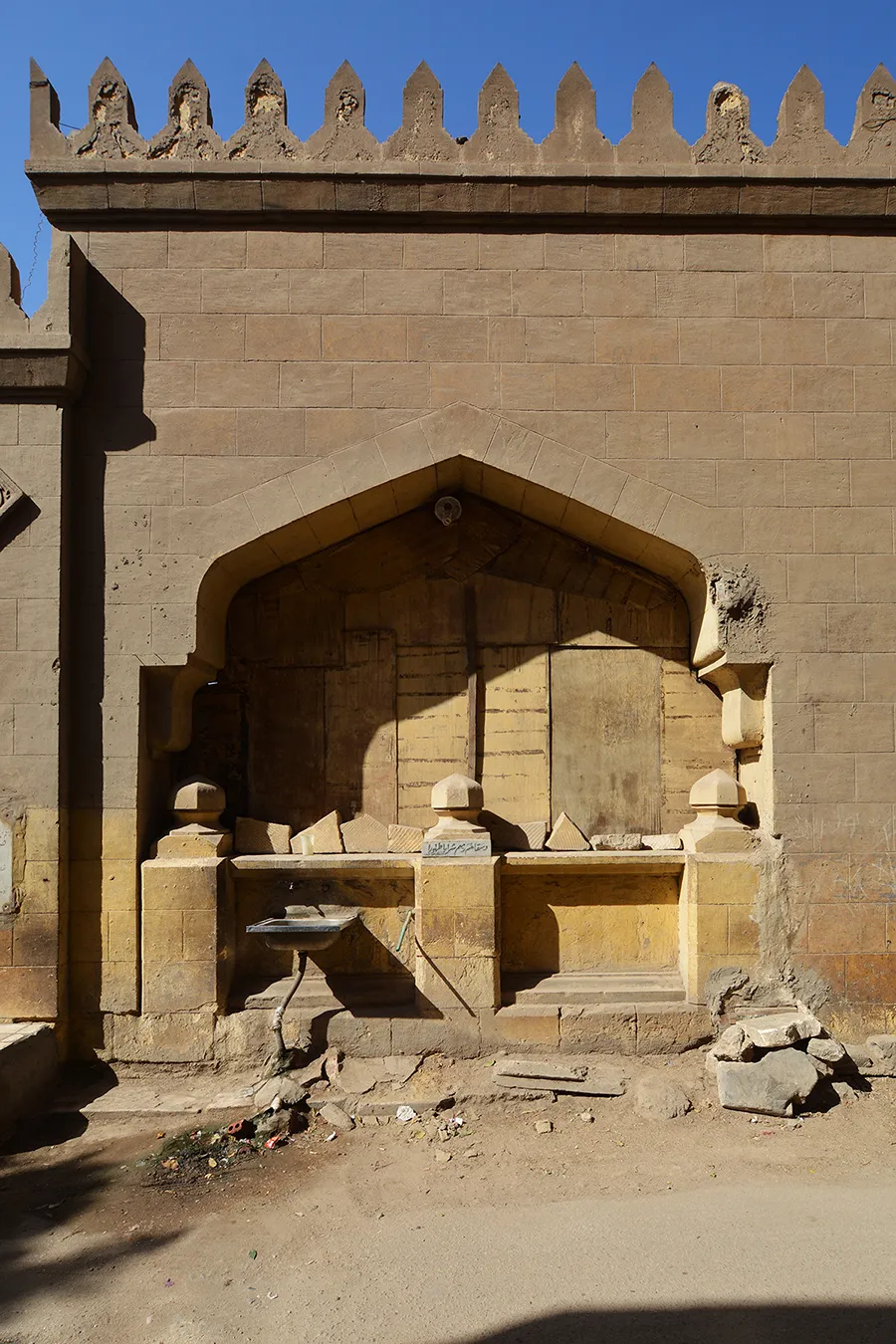
A new water cooler inside the front building portico with a dispensing faucet and washbasin acessible from the street operates as a modern equivalent of a sabil. A tiny marble plaque next to the “sabil” reads: “their Lord will give them a pure drink” (the Qur’an, 76:21, surat al-insan, transl. Mohsin Khan.)
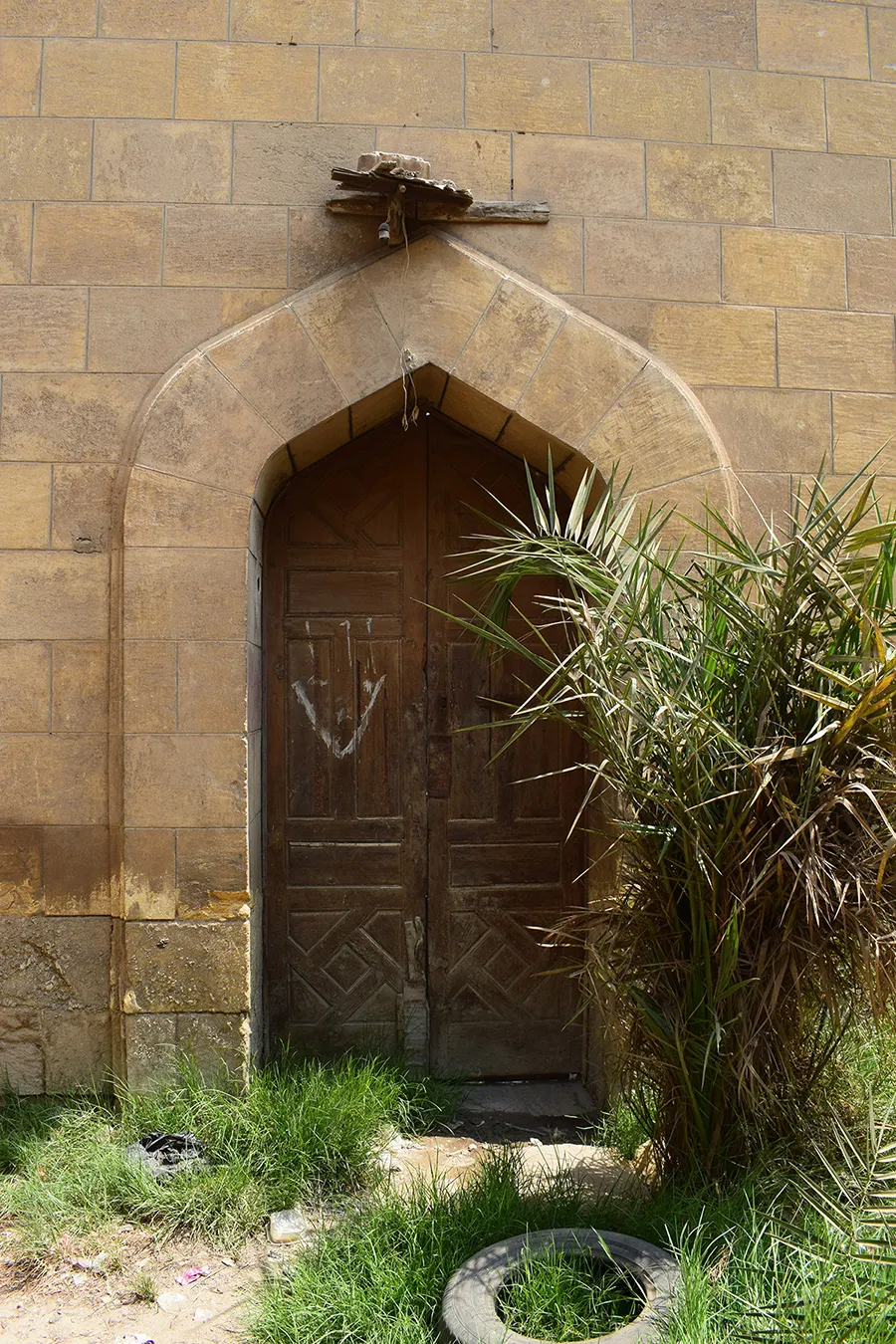
The gate from the back street to the back courtyard is covered with a keel arch and has a wide plain flat framing with a simple moulding around. Over the gate is a sunken inscription panel with verse 13:24 (from surat al-ra‘d): “Peace unto you for that ye persevered in patience! Now how excellent is the final home!” (Translation: Yusuf ‘Ali.)
Condition of preservation
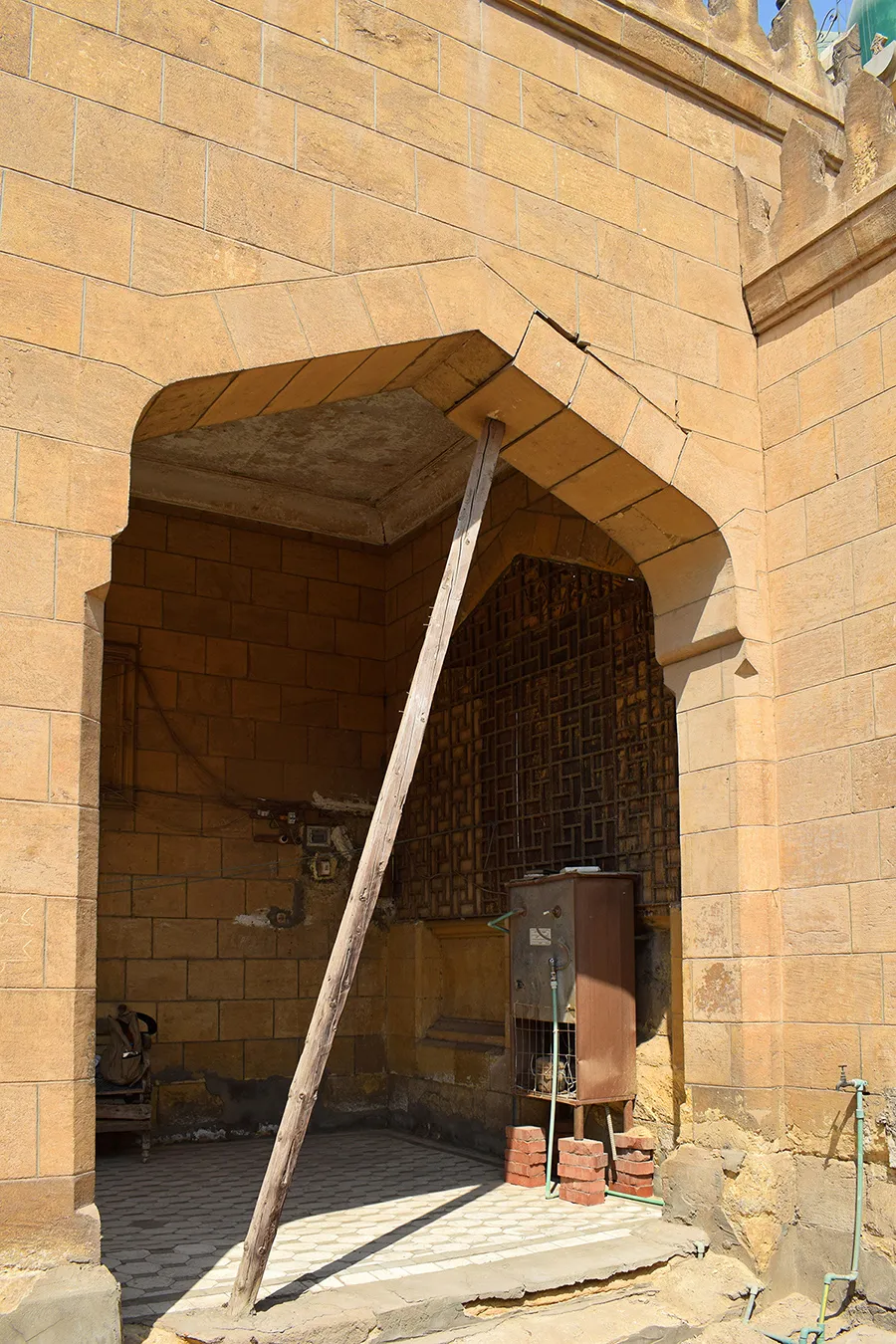
The unit is overall in fair condition and reasonably well-maintained. The carved stone cenotaph has undergone inexpert attempts at repair. The external windows have been crudely blocked. In the areas exposed to water there is visible damage from rising damp. The deformed arch of the eastern bay of the portico of the front building (by the eastern wall of the enclosure), which is shored by a wooden prop, indicates differential settlement of foundations in this area, which is a serious structural problem.
Information abut the founder, family history, etc.
The inscription on a marble plaque by the entrance gate states: “Burial ground of the Faid family. Created AH 1299, AD 1882, renewed AH 1368, AD 1948” It is clear from the architectural forms of the complex that it was entirely built anew in 1948.
Inscriptions over the two entrance gates both in their context within the Qur’an relate to entering Paradise.
References in published/primary sources
• Ali, Abdullah Yusuf, transl. The Holy Qur’an: Text, Translation & Commentary (3rd ed.). Kashmiri Bazar, Lahore: Shaik Muhammad Ashraf, 1938
• Muhsin Khan, Muhammad and al-Hilali, Muhammad Taqi-ud-Din, transl. Noble Qur’an, King Fahd Complex for the Printing of the Holy Quran, 1999
• Amin, Muhammad Muhammad and Ibrahim, Layla ‘Ali Architectural Terms in Mamluk Documents, American University in Cairo Press 1990, p. 112
• Petersen, Andrew Dictionary of Islamic Architecture, Routledge 1996, p. 234
- Field recording by
- Hadeer Ahmad and Nur Atiya
- Date recorded
- August 15, 2022
- Data entered by
- Hadeer Ahmad
- Date entered
- May 12, 2024