
Unit No6
Ahmad Khairi Pasha funerary enclosure
|
Coordinates of the main entrance |
30.045117N - 31.274014E |
|
Attribution |
Ahmad Khairi Pasha funerary enclosure |
|
Higri (AH)Dates as given in the Inscription |
Before 1304 |
|
Miladi (AD)Dates as given in the Inscription |
|
|
Inscription Contemporary with the building? |
Yes |
|
Multiple date(s) In the inscription? |
Yes |
|
Assumed Date |
Before 1304 AH |
|
Based on |
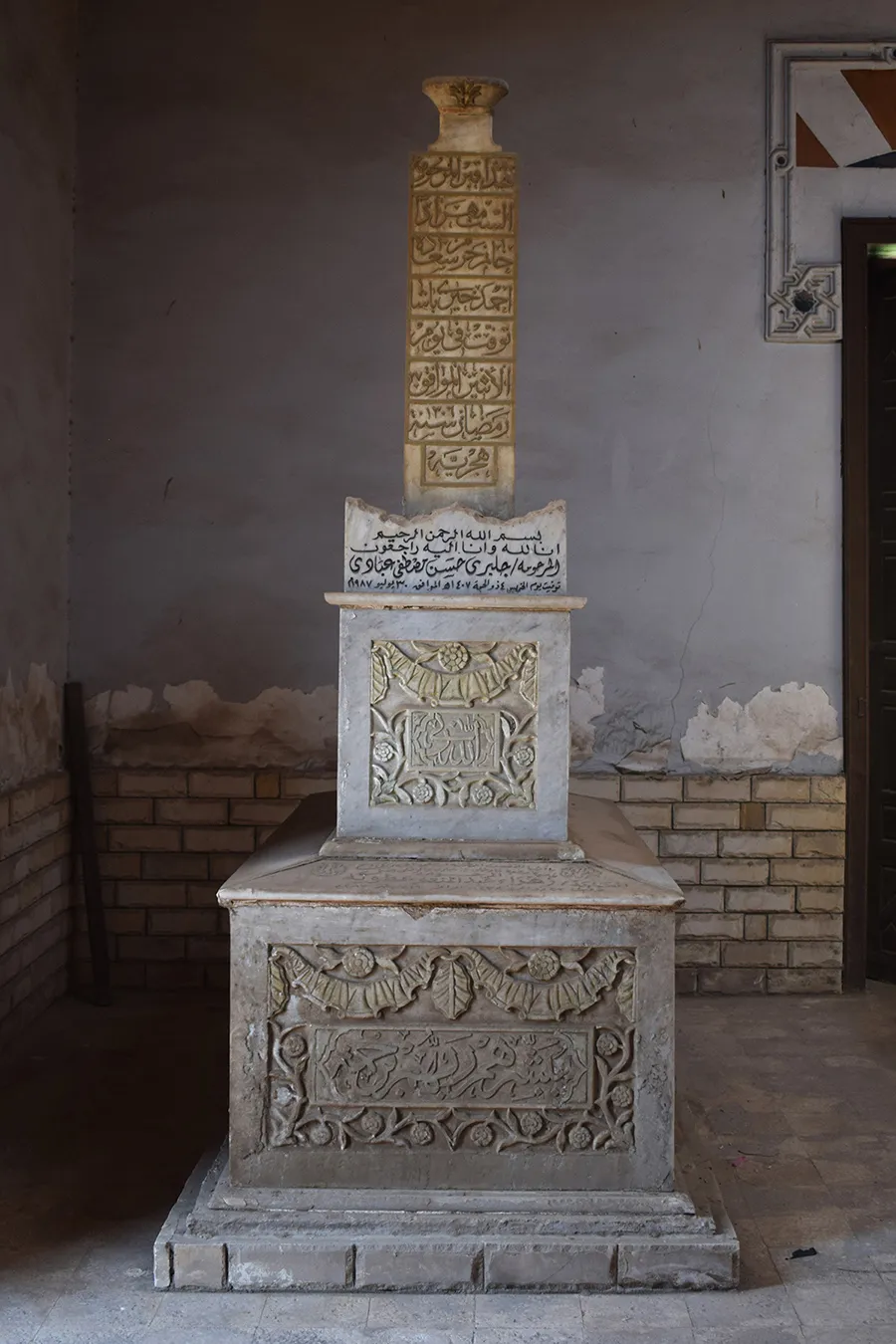
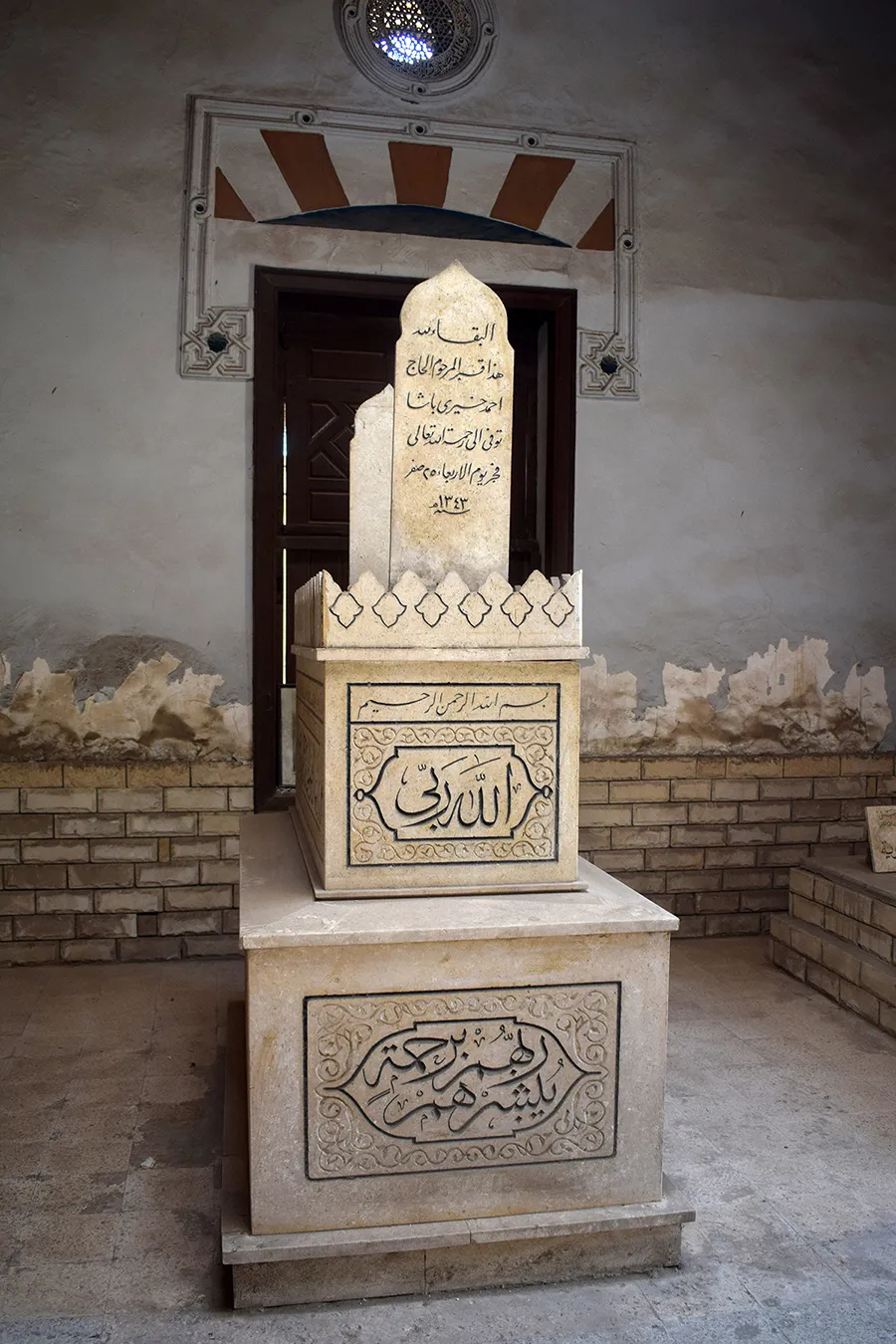
(written on decorated marble cenotaph) |
|
Original Use |
Funerary enclosure |
|
Current Use |
Funerary enclosure |
|
Overall condition |
Fair |
Features of unit 6
| Present | Count | Material | Comments (see description for details) | |
|---|---|---|---|---|
| Free standing structure | No | |||
| Walled enclosure | Yes | 1 | Stone | |
| Rooms by the perimeter wall | No | |||
| Freestanding structure(s) in enclousure | No | 2 | Ashlar stone | |
| Dome over the tomb chamber | No | |||
| Neo-Mamluk architectural decoration | Yes | |||
| Garden layout | Yes | 1 | ||
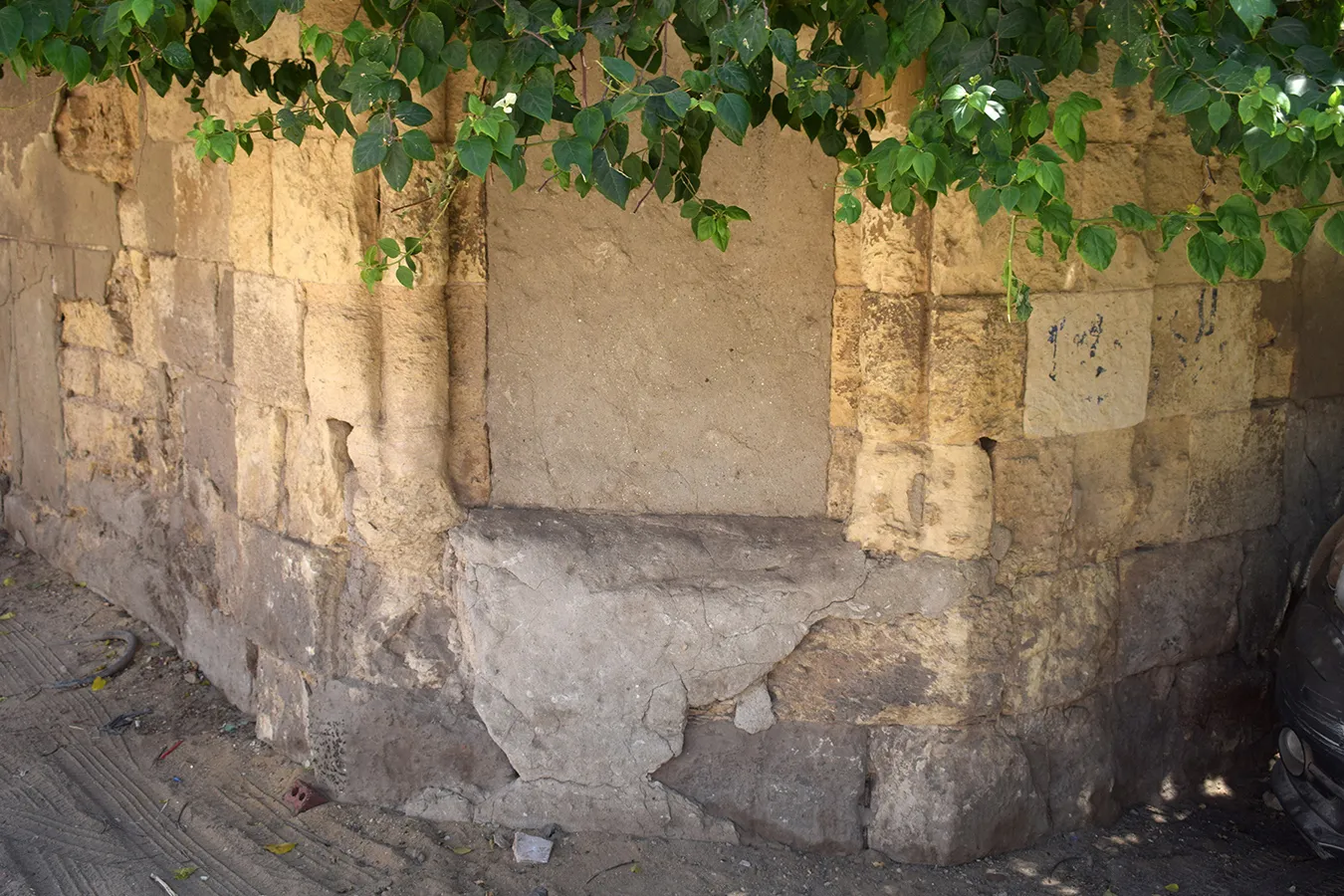
| Sabil(s) | Yes | 1 | Stone | Sabil window blocked with bricks and cement |
| Wall fountain(s) | No | |||
| Canopy on columns / pillars | No | |||
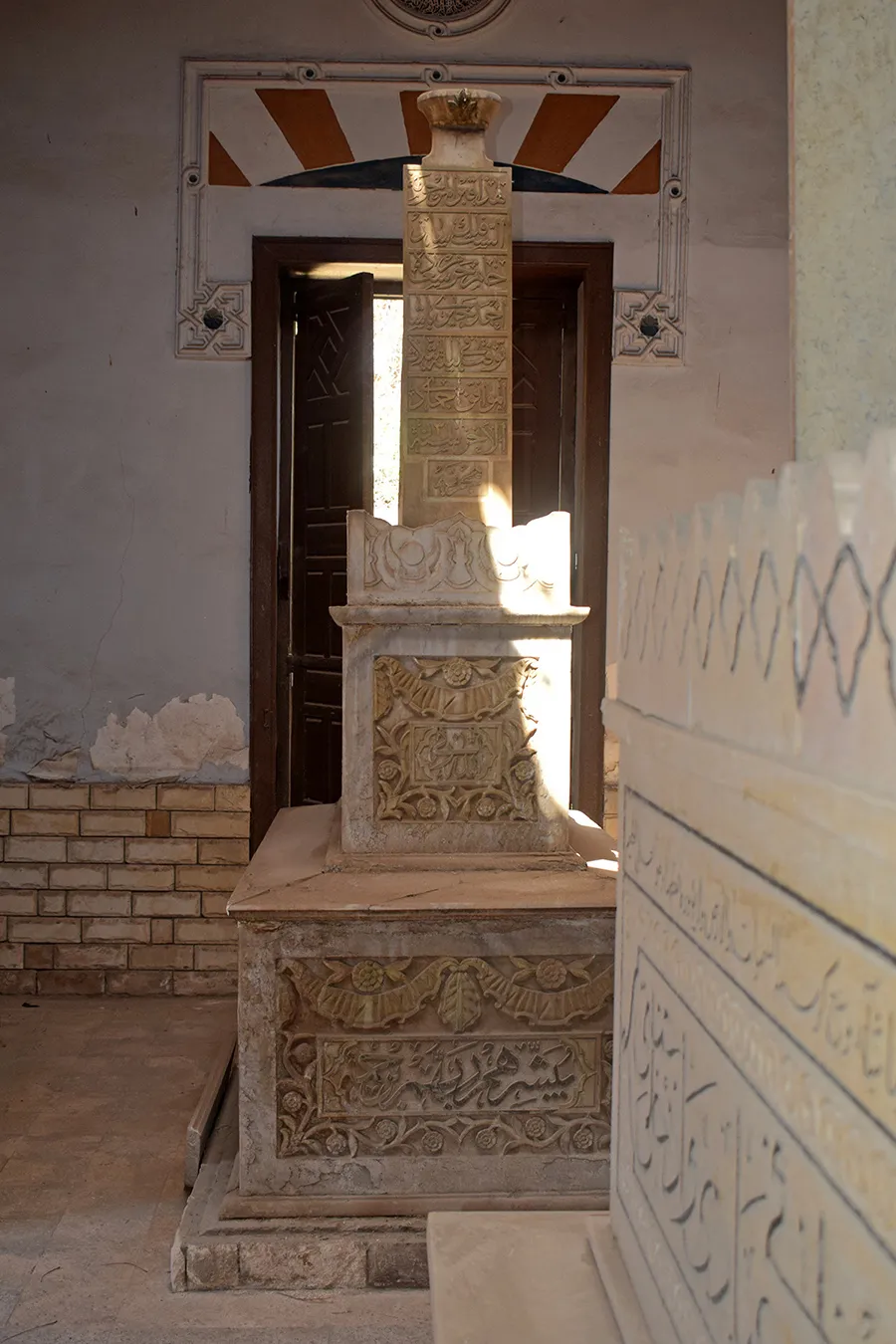
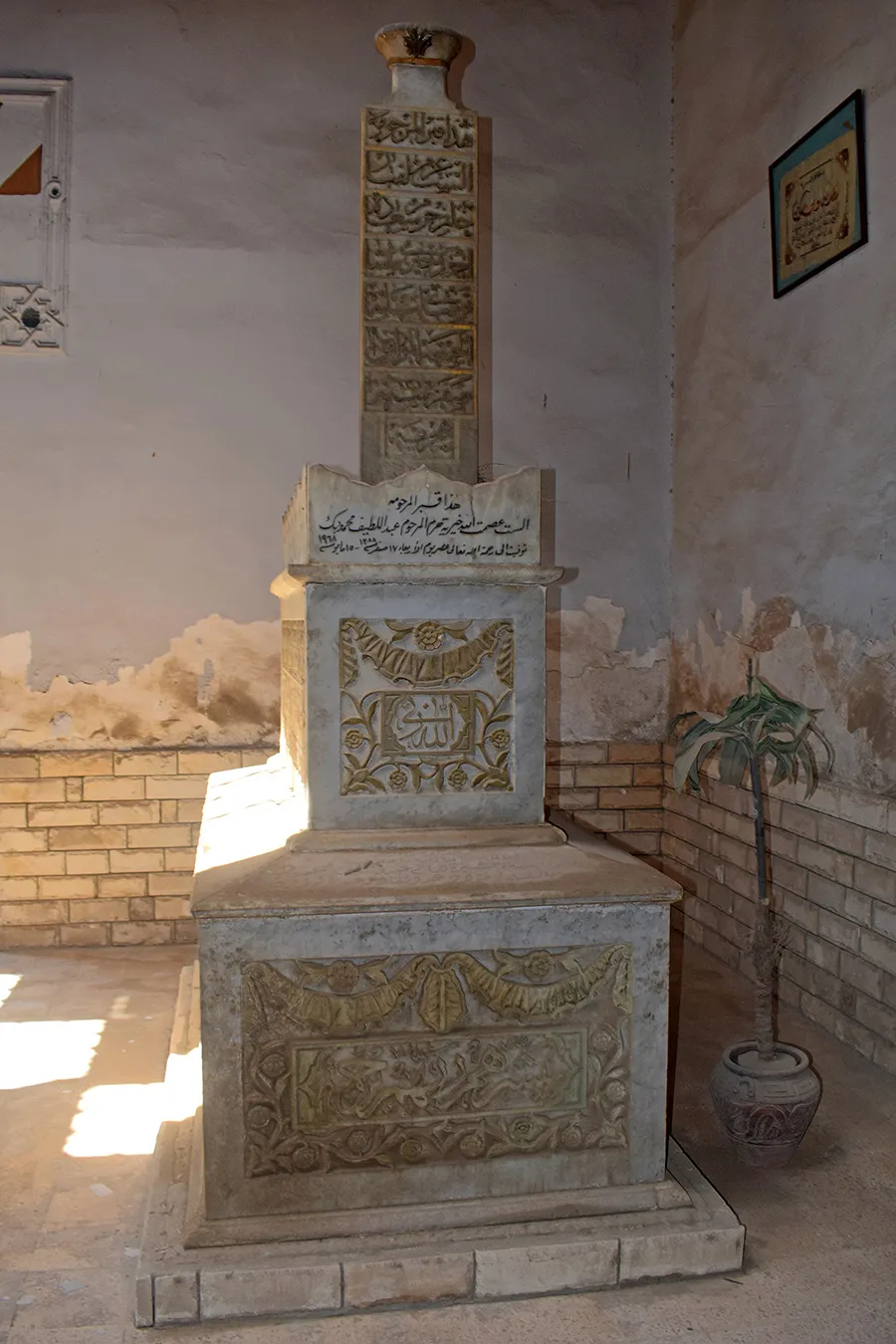
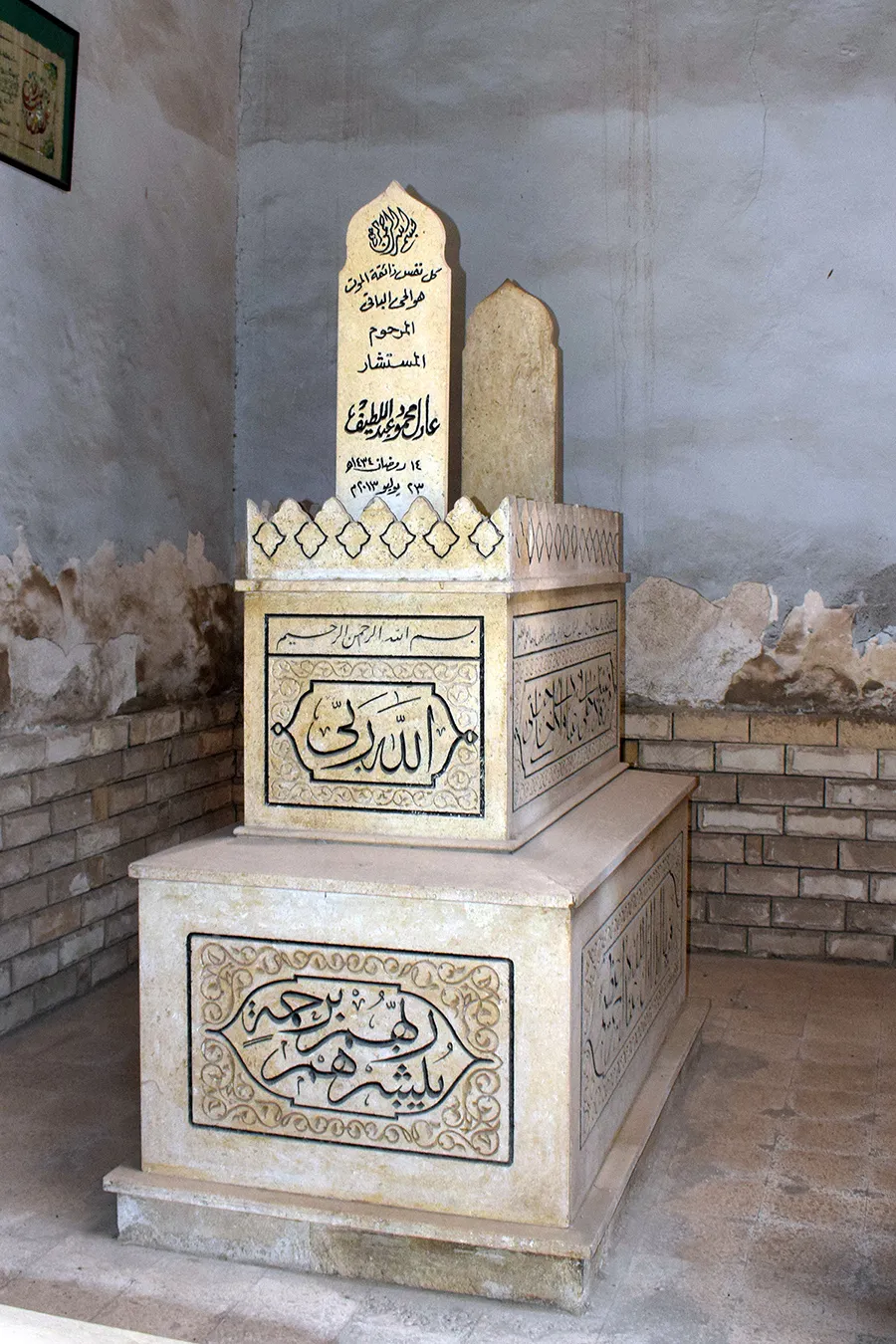
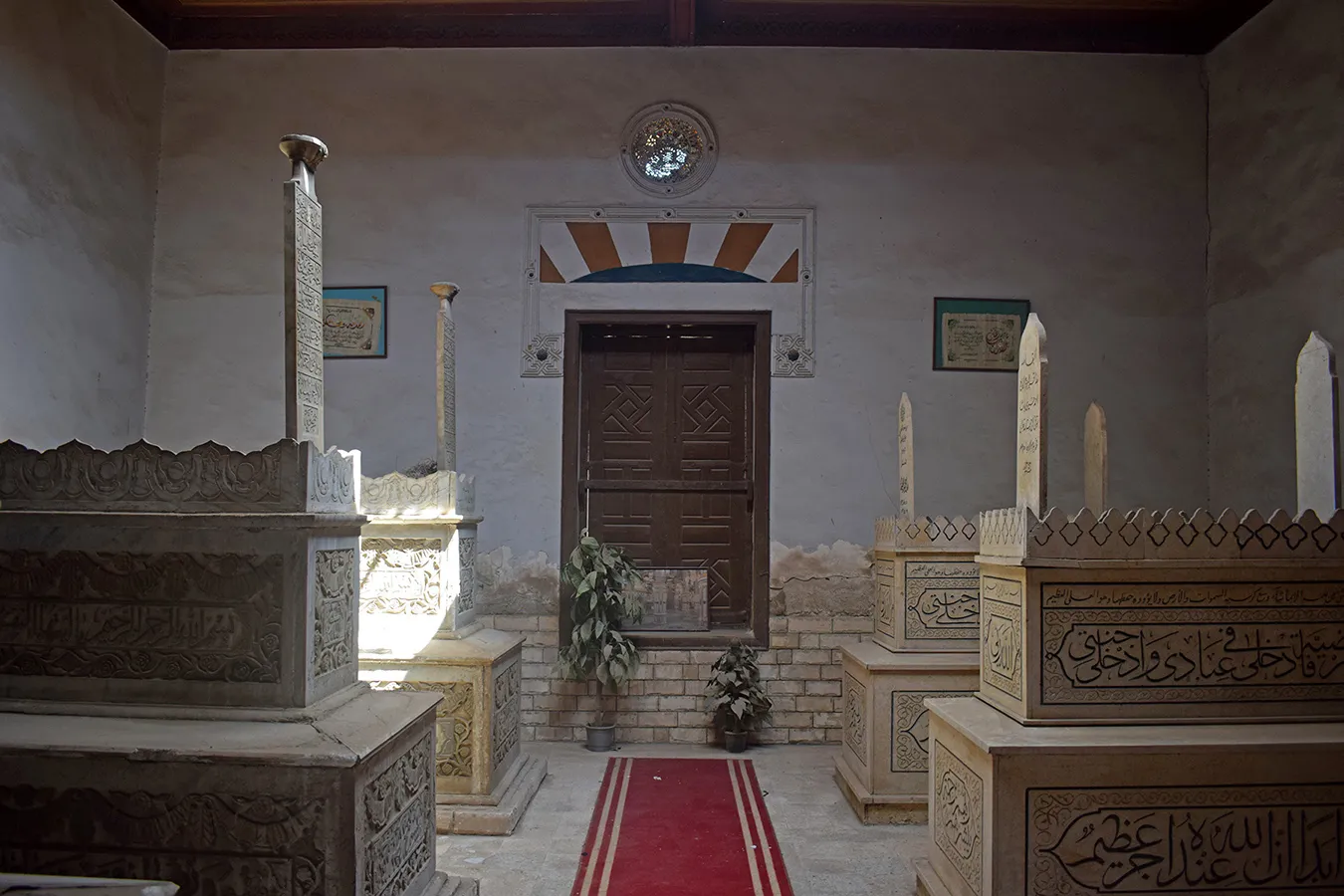
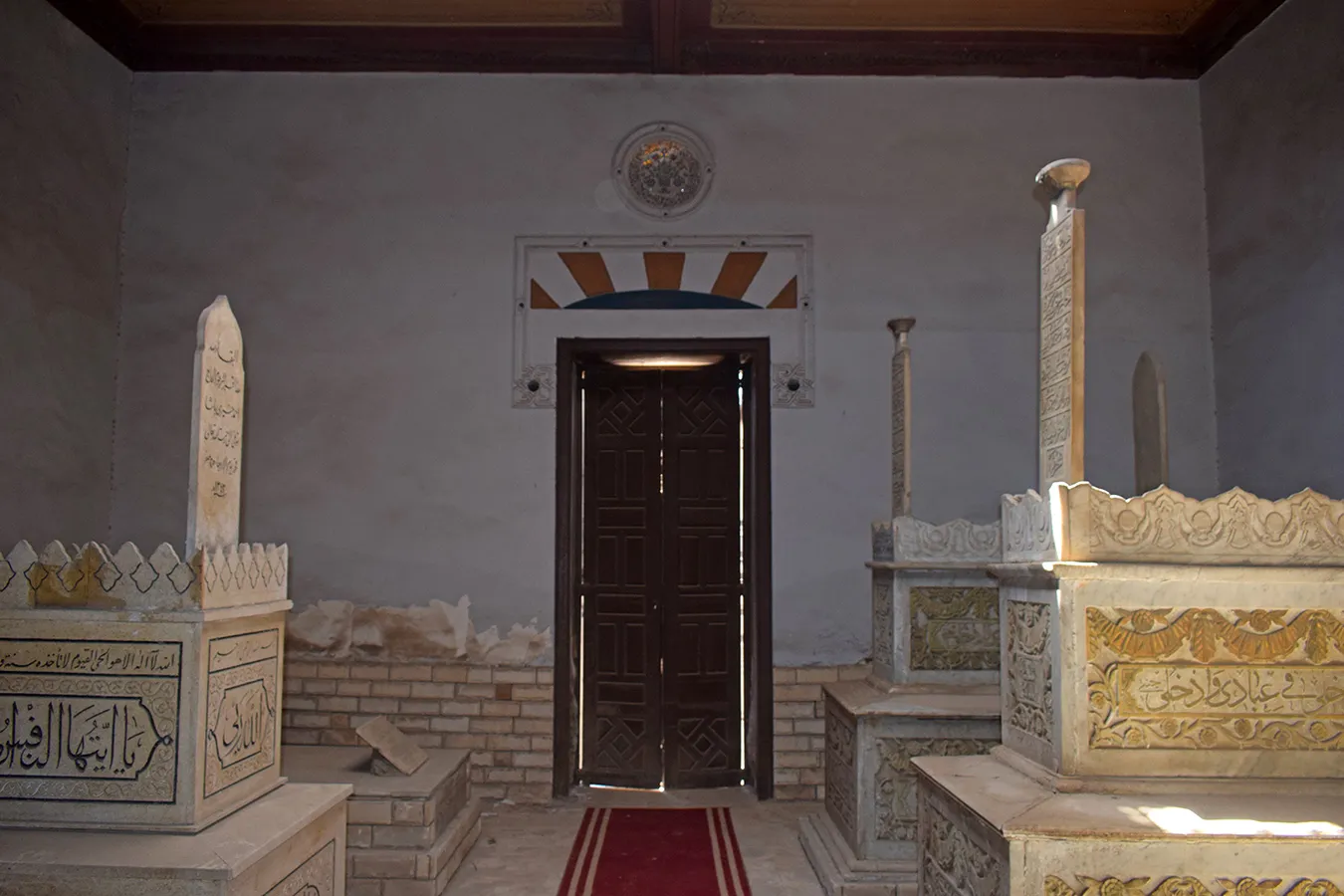
| Carved marble cenotaph(s) | Yes | 5 | 5 | 3 old richly decorated cenotaphs, 2 simpler, newer ones |
| Decorated limestone tomb-markers | No | |||
| Decorated gateway | Yes | 2 | Ashlar stone | |
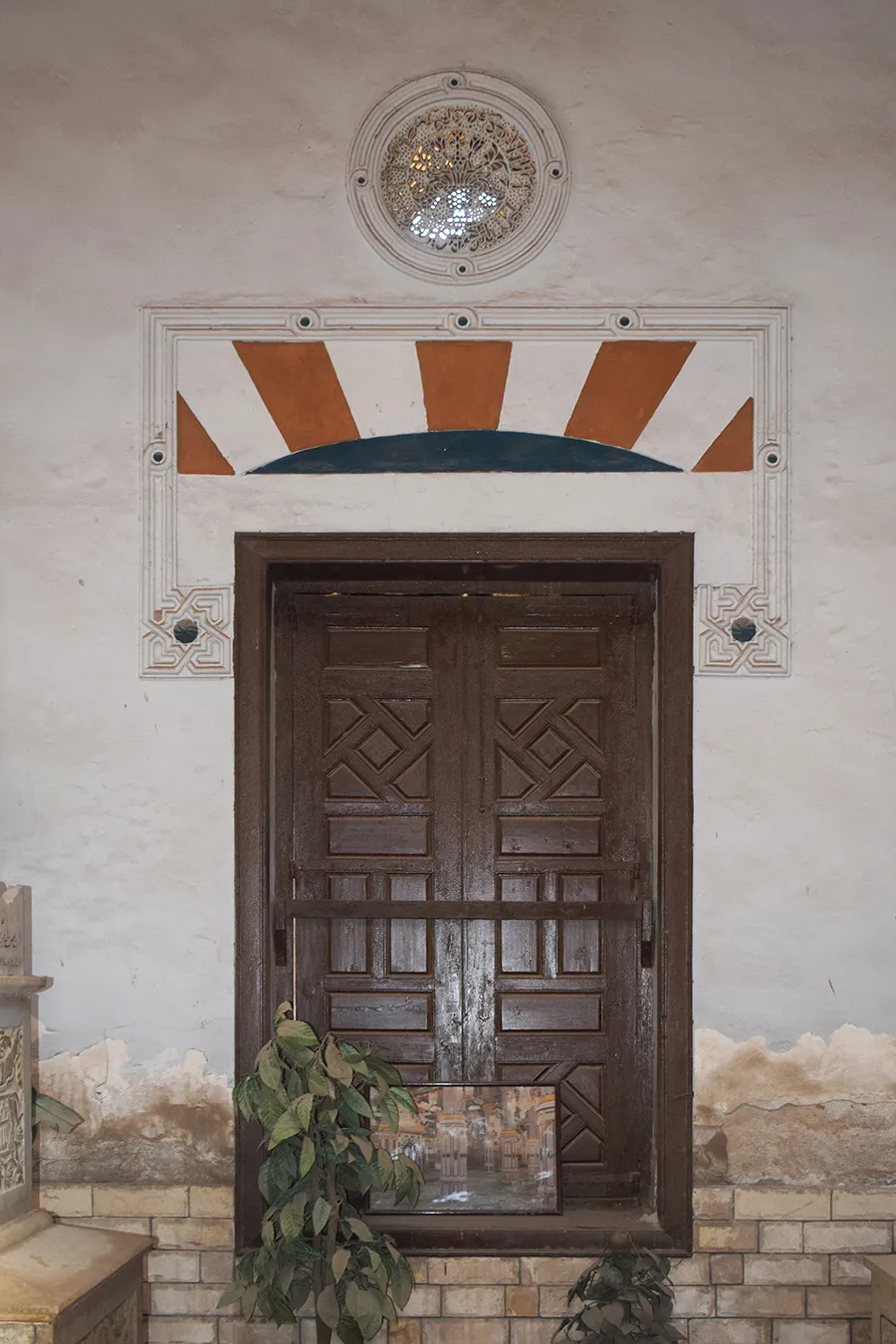
| Decorative door-leaves | Yes | 2 | Wood | |
| Decorative window grilles | Yes | 4 | Stucco / stained glass | 4 round qamariyat stucco grilles, one in each façade of the mausoleum |
| Decorative shutters | Yes | 6 | Wood | The same design as the entrance door |
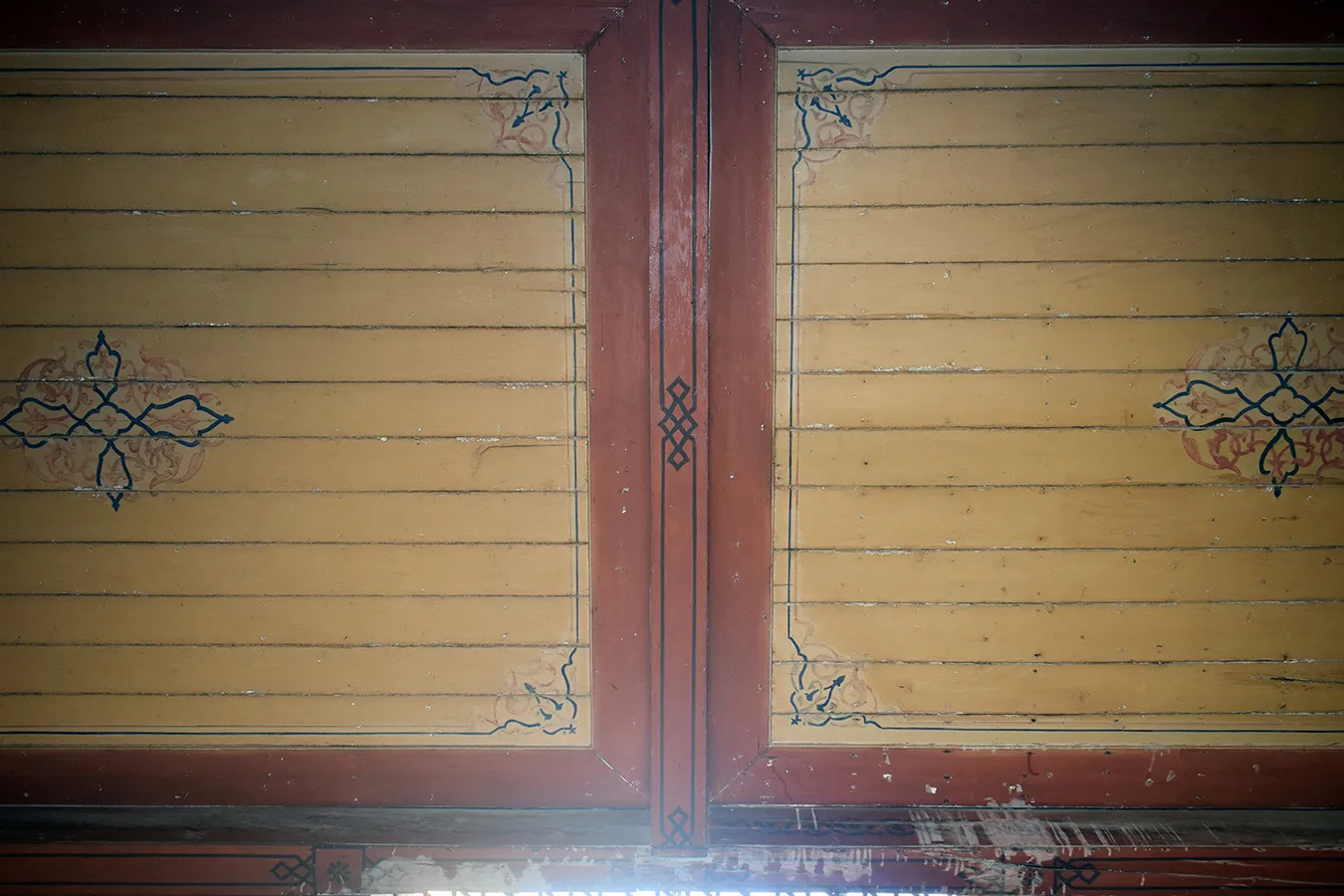
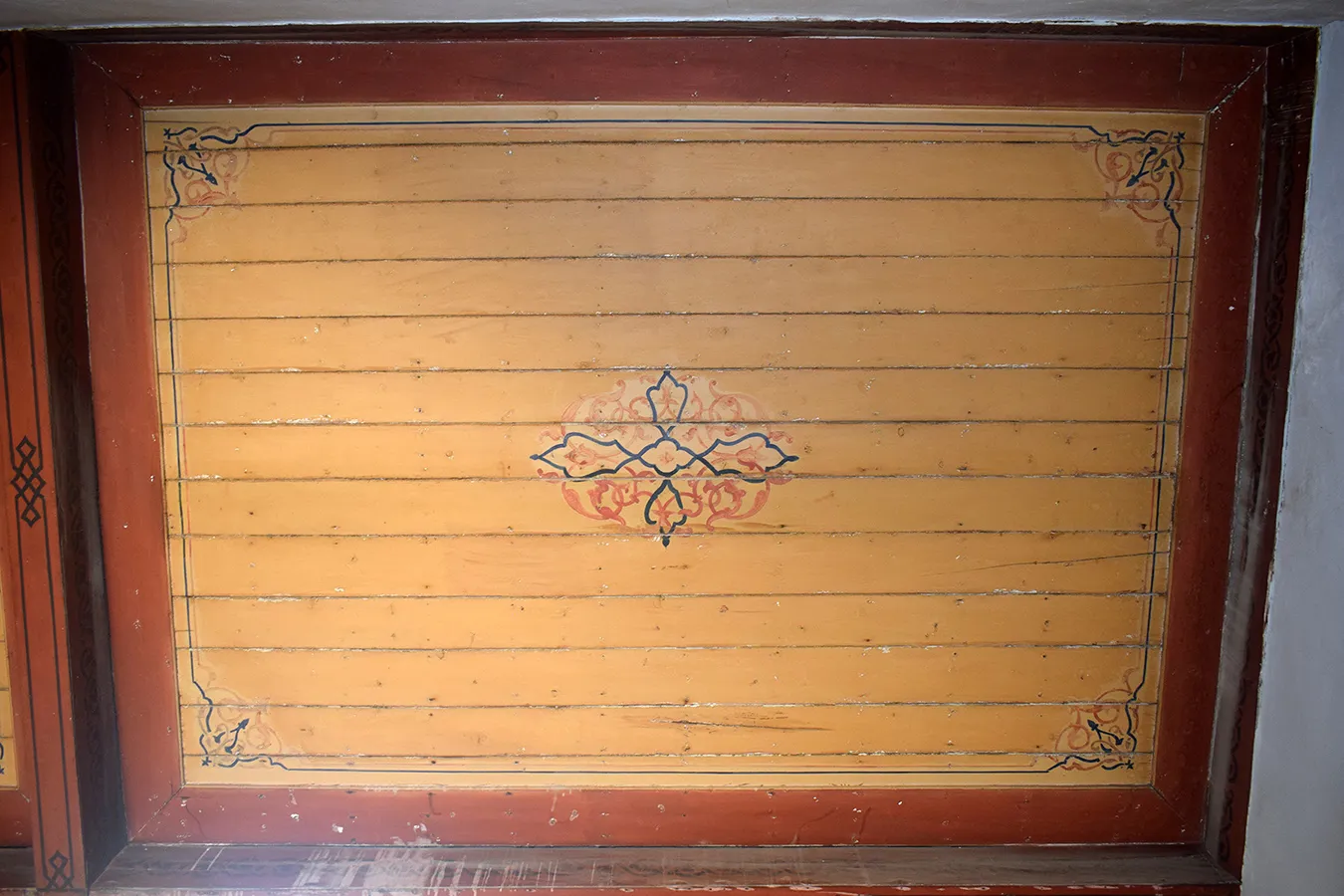
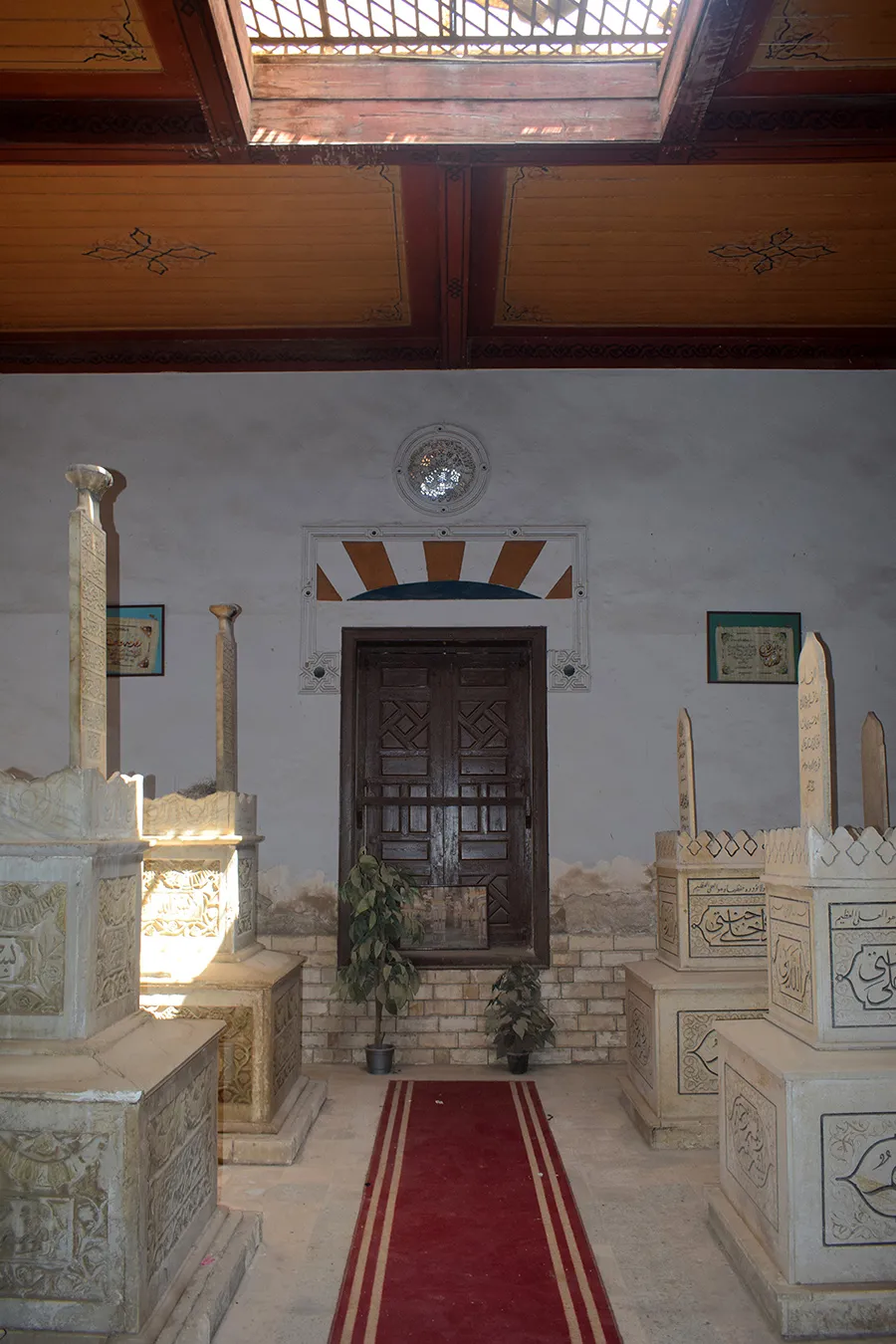
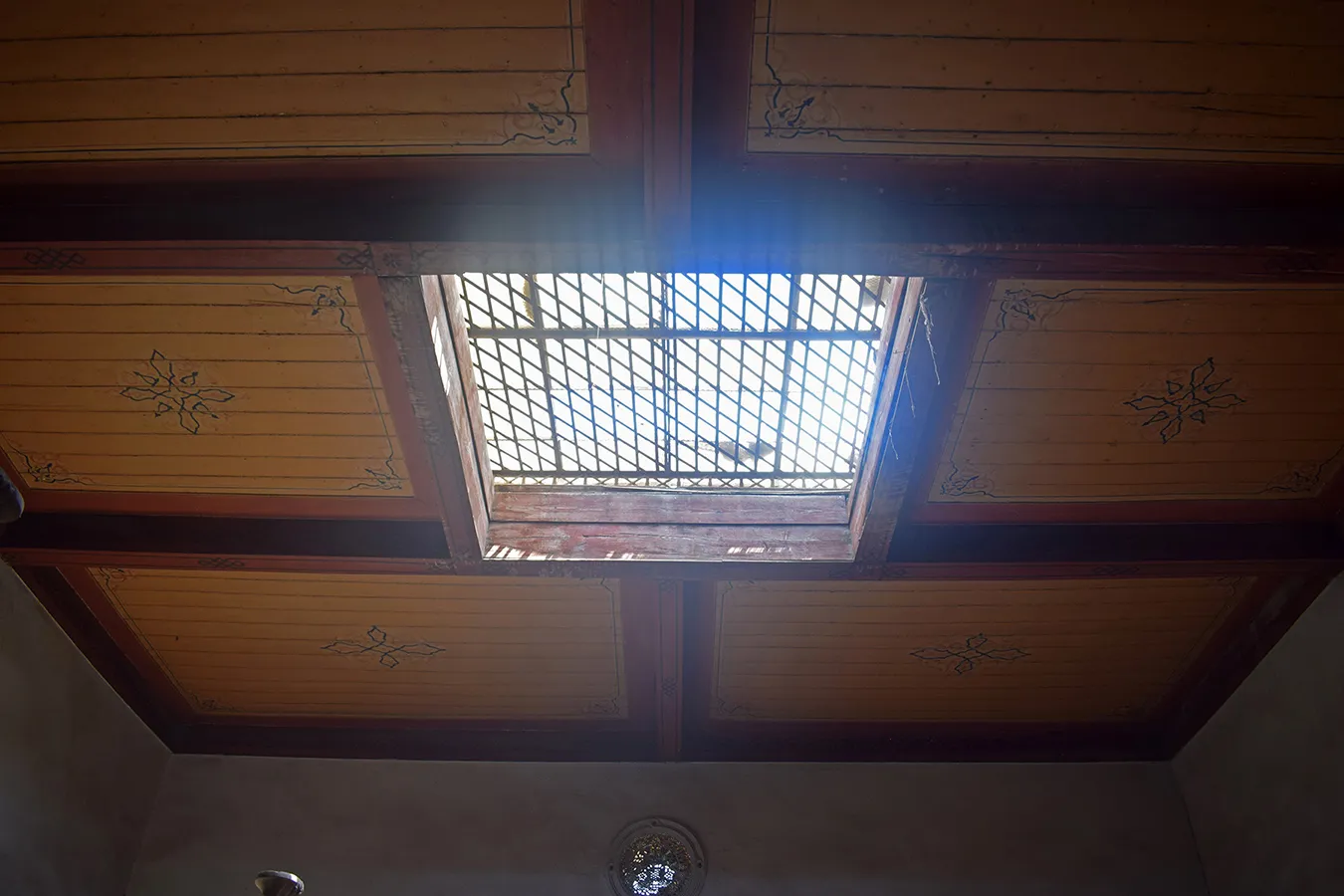
| Painted ceiling(s) | Yes | 1 | Wood | With a skylight in the middle |
| Decorative paving(s) | No |
Unusual or unique features
• A free-standing structure is in the middle of the enclosure.
Description (The direction towards Mecca (Qibla) is described as eastern and other directions are named accordingly)
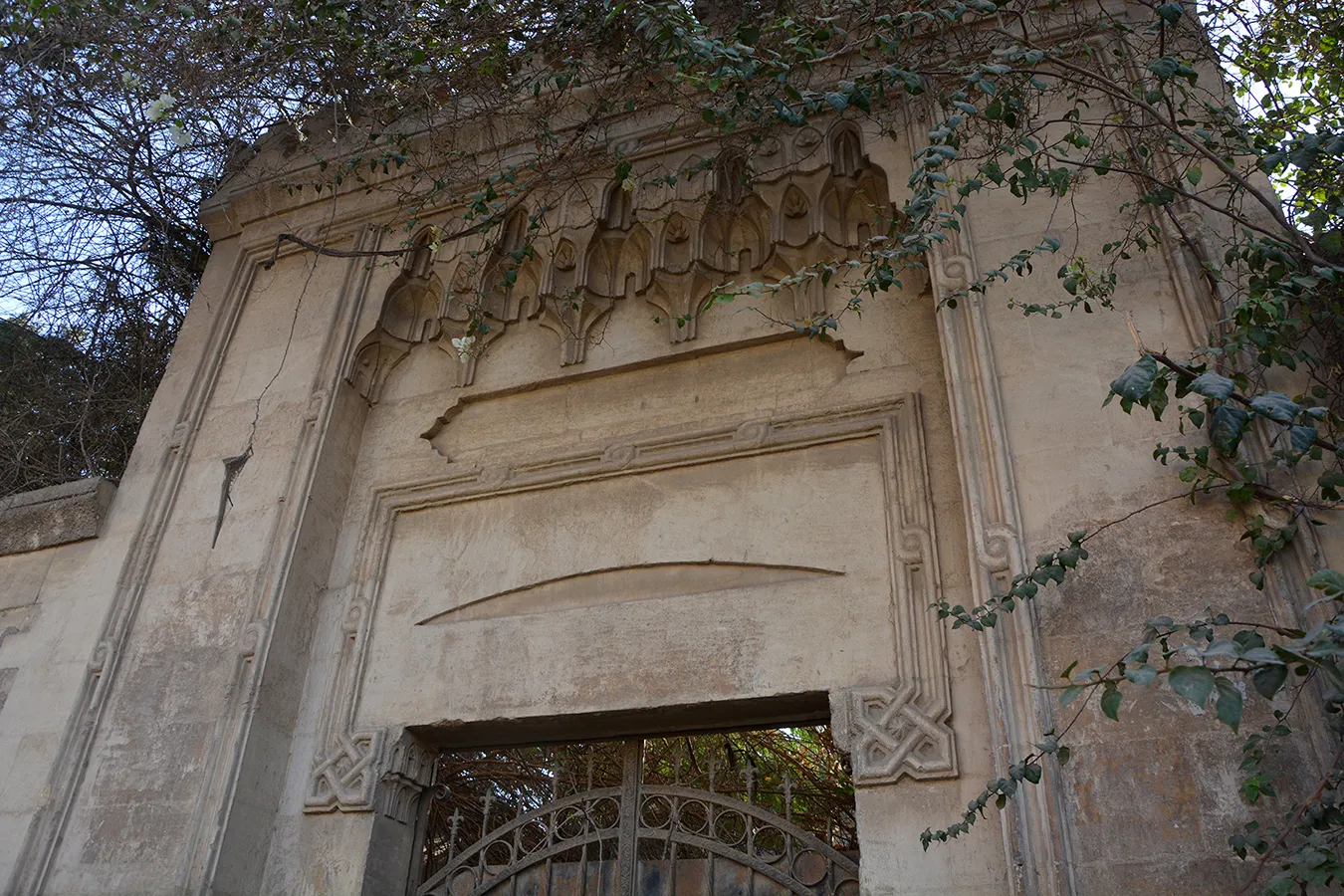
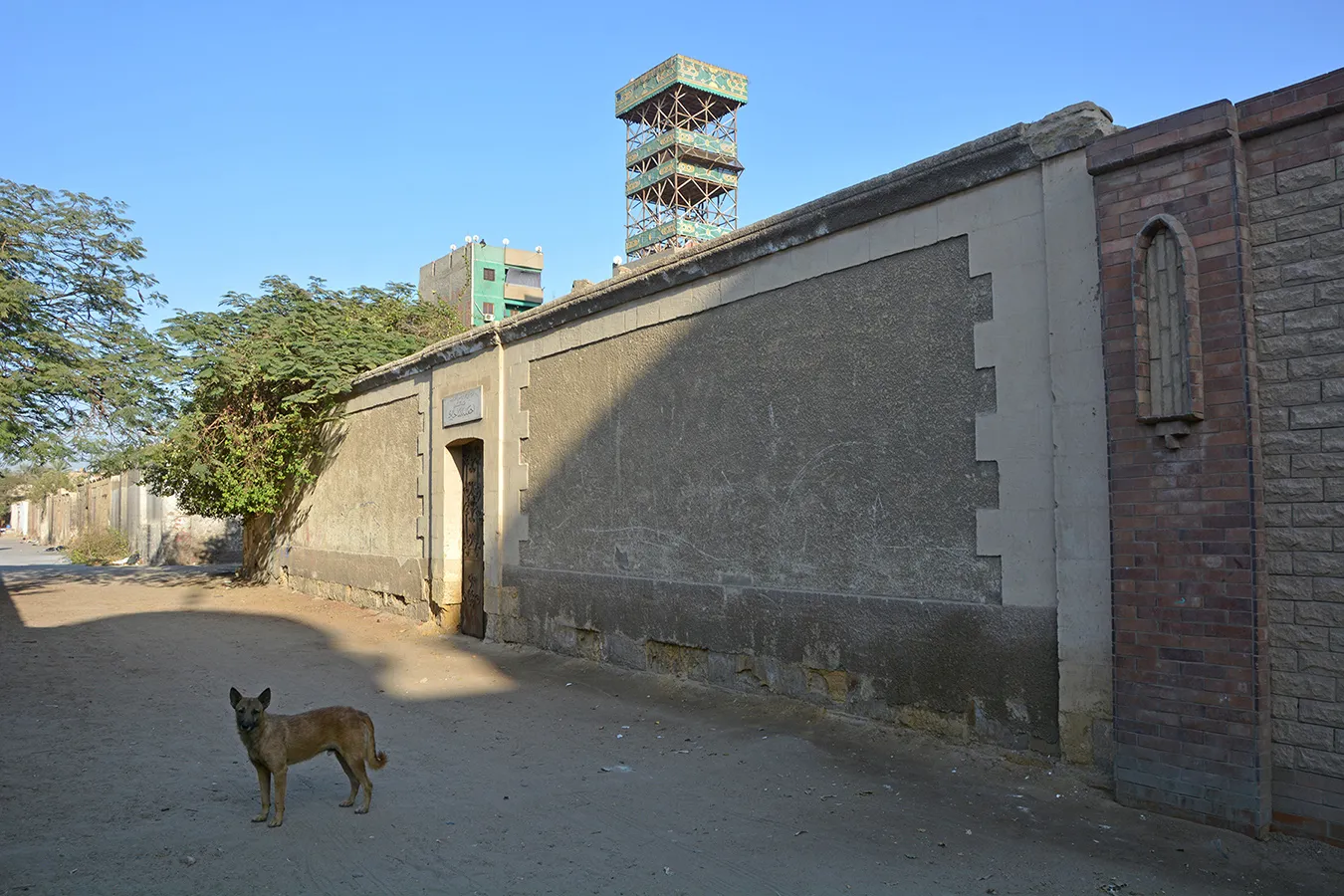
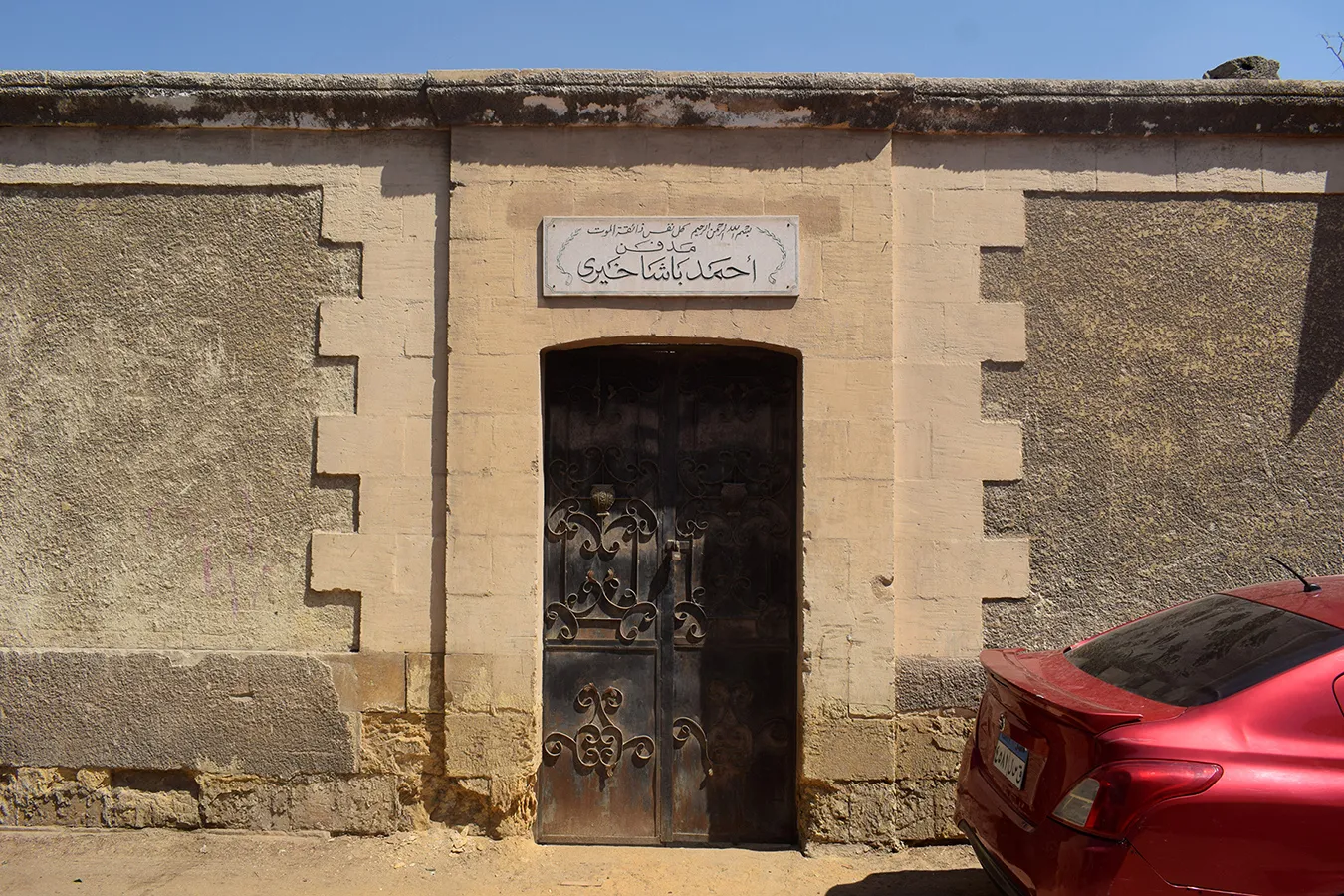
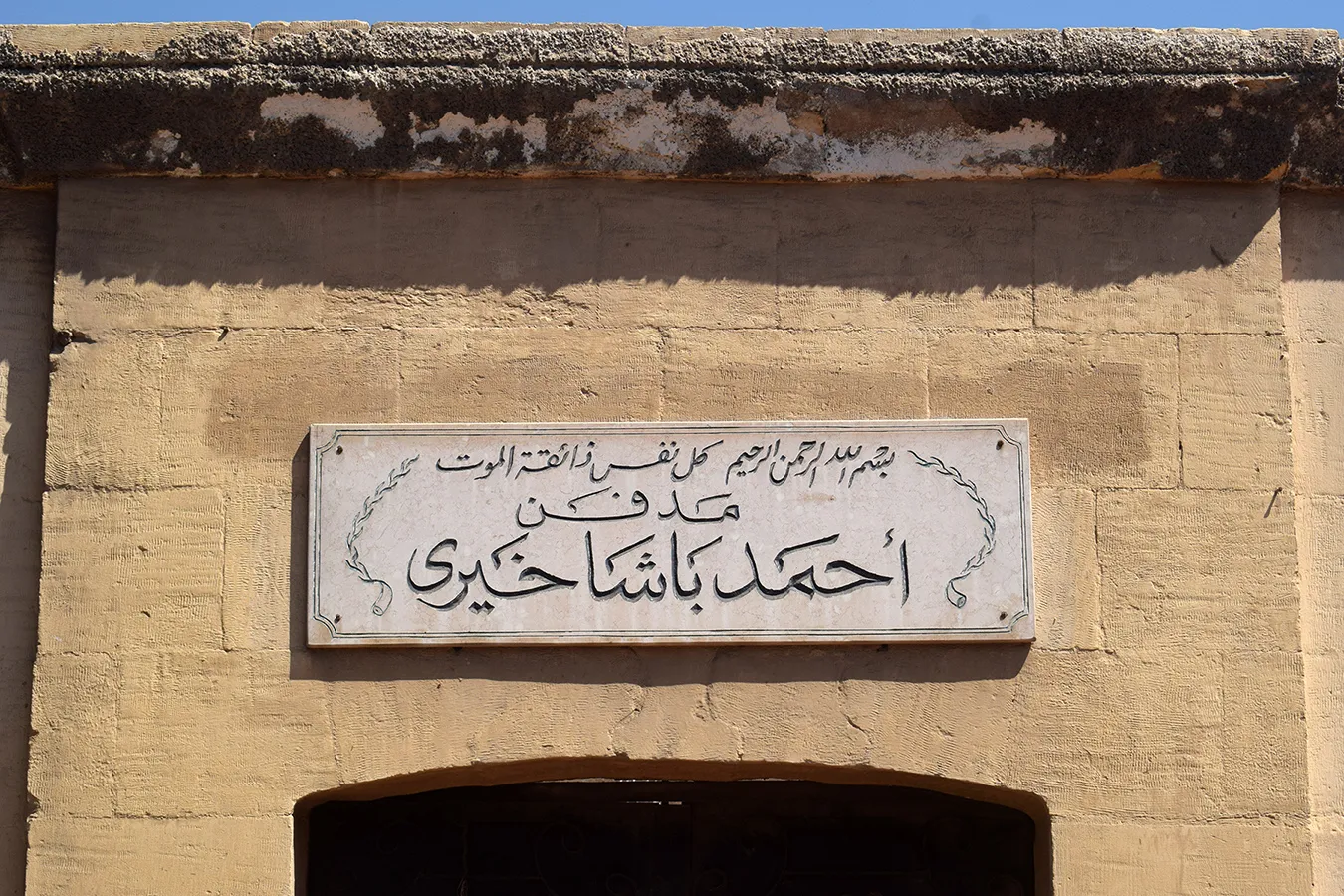
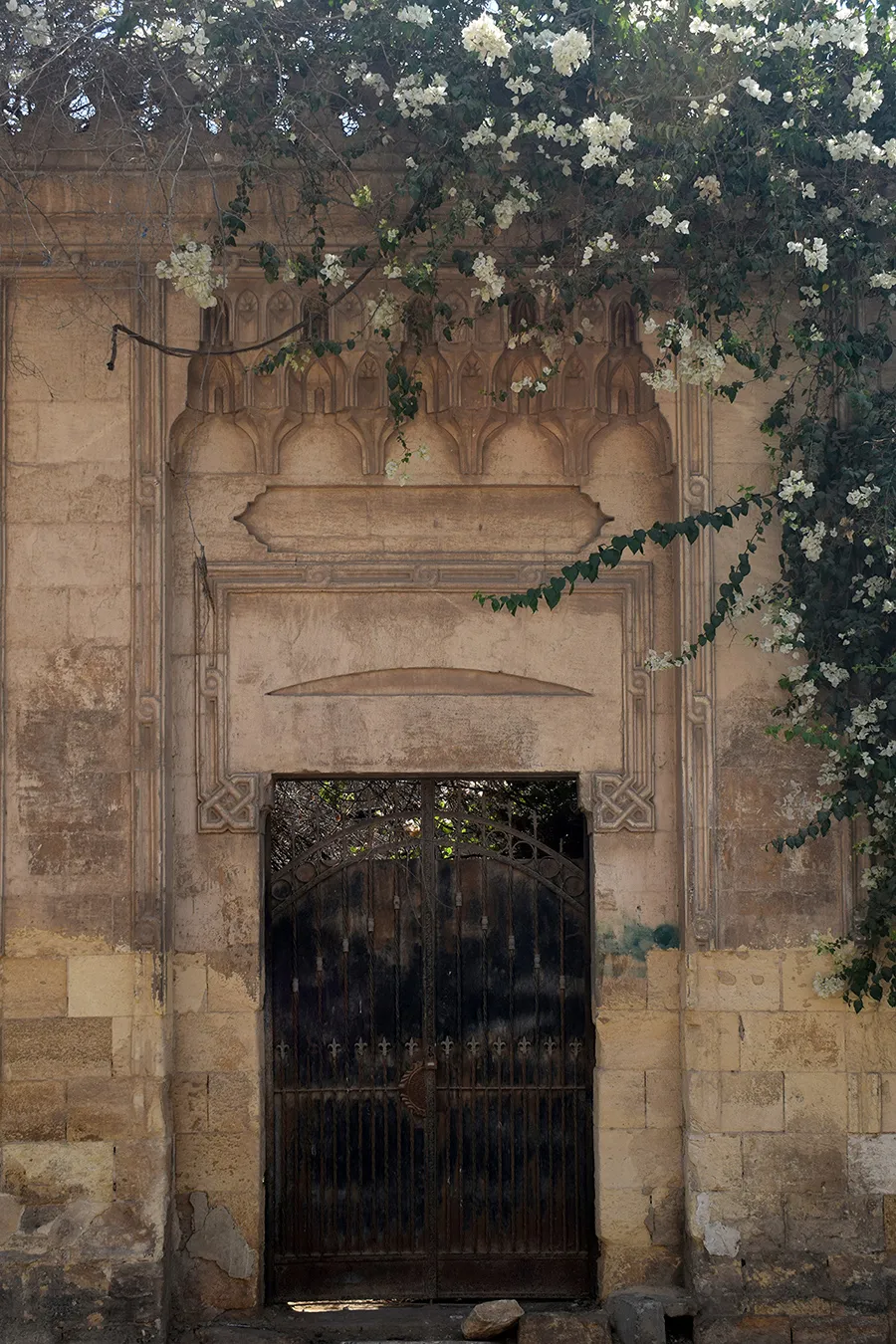
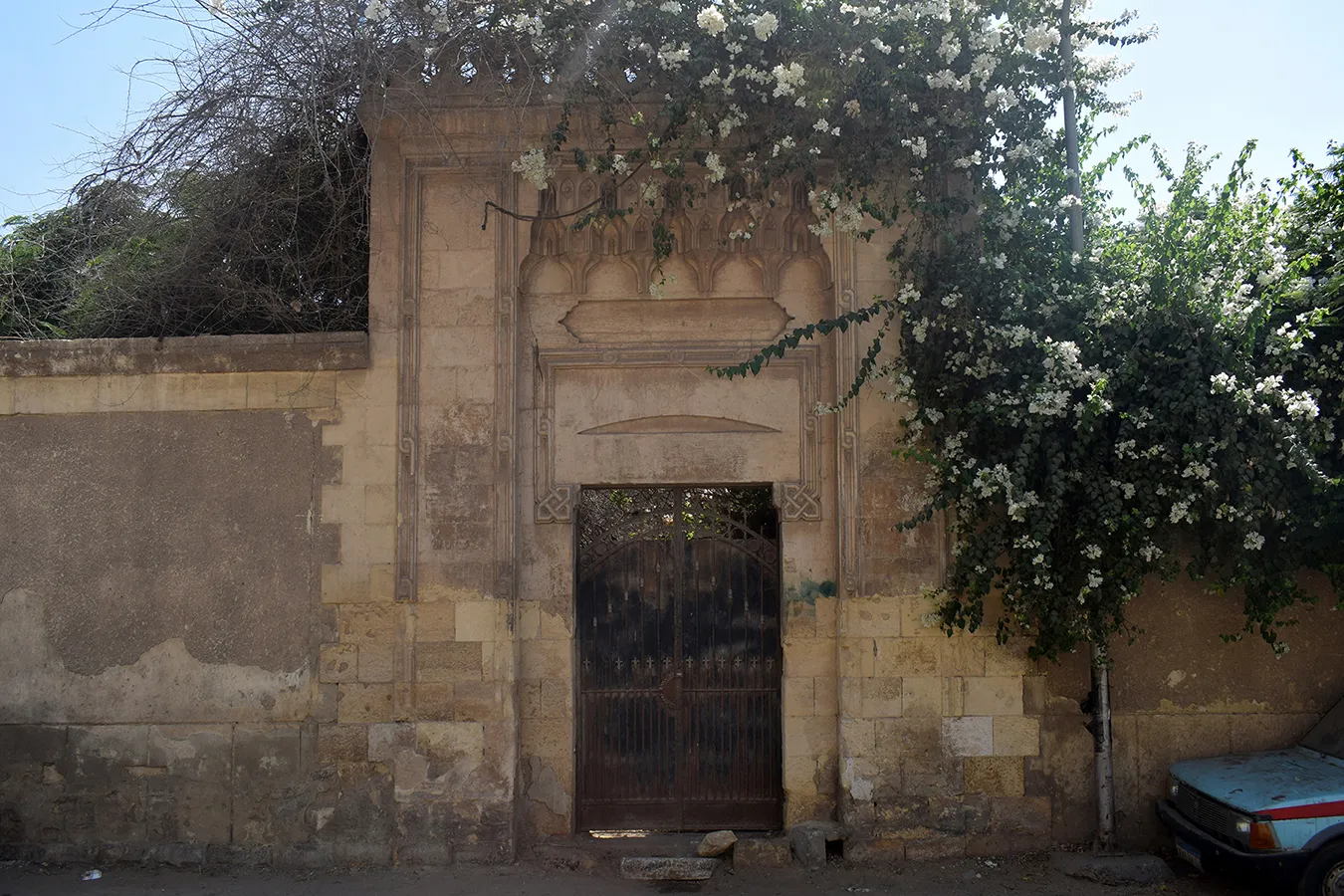
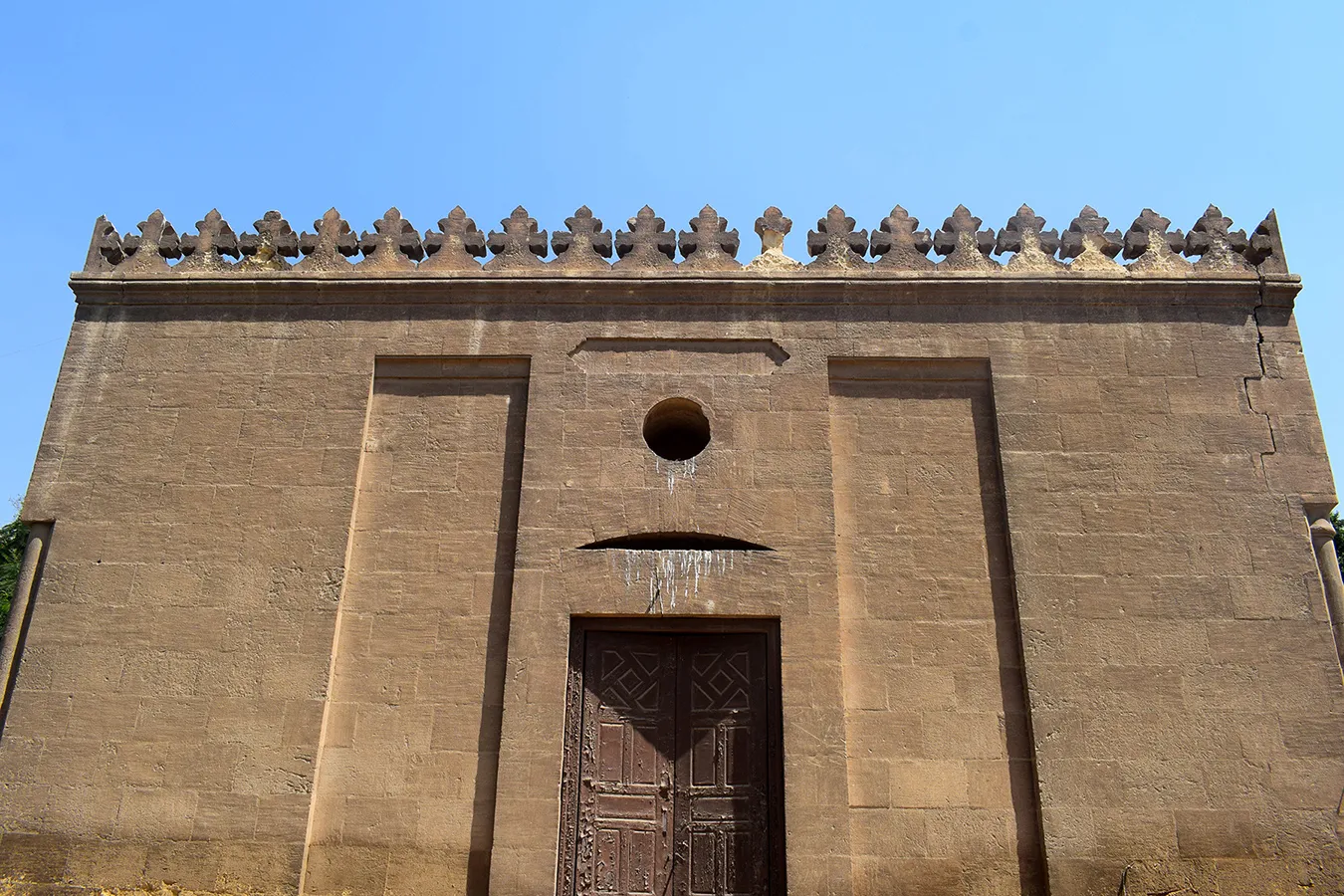
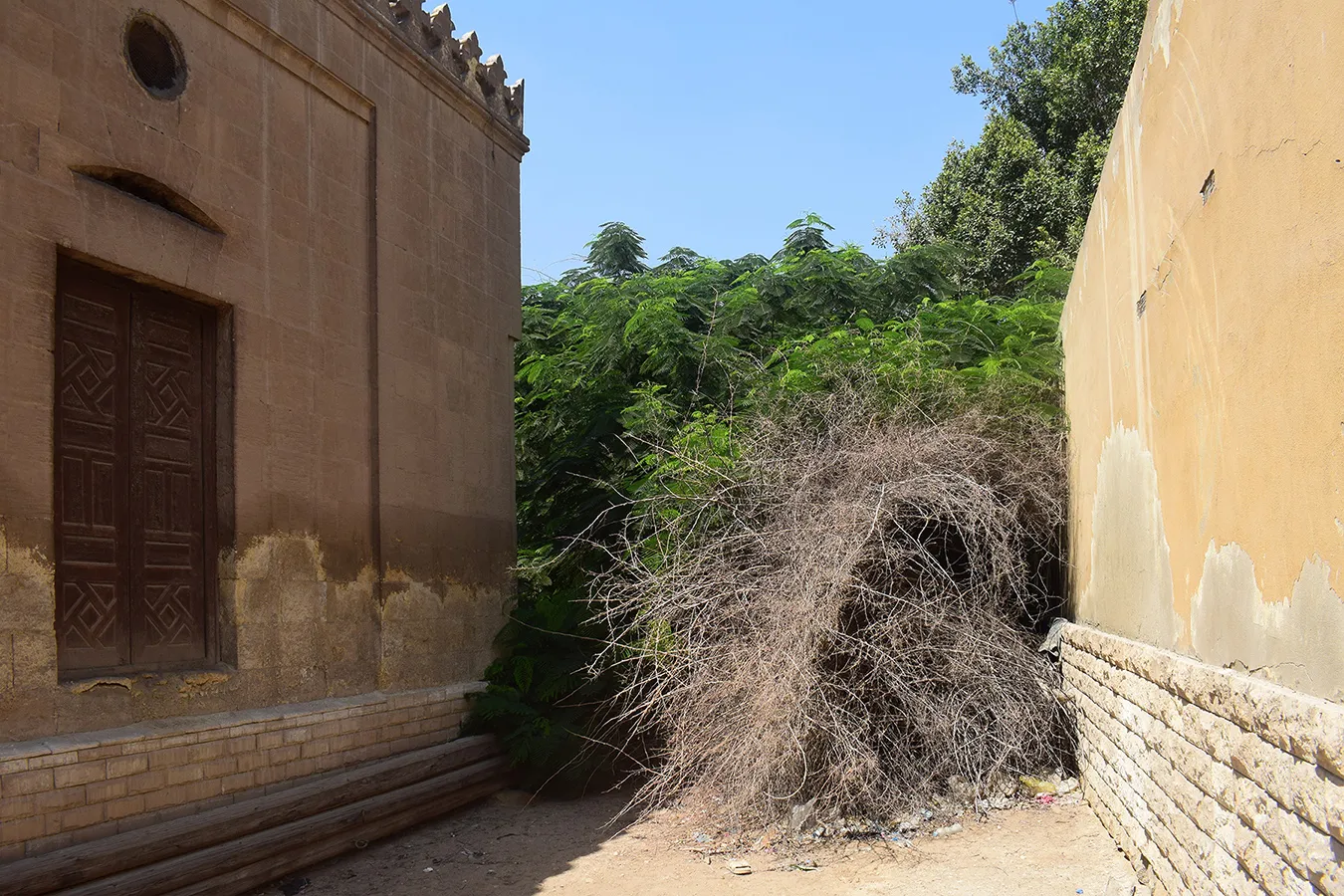
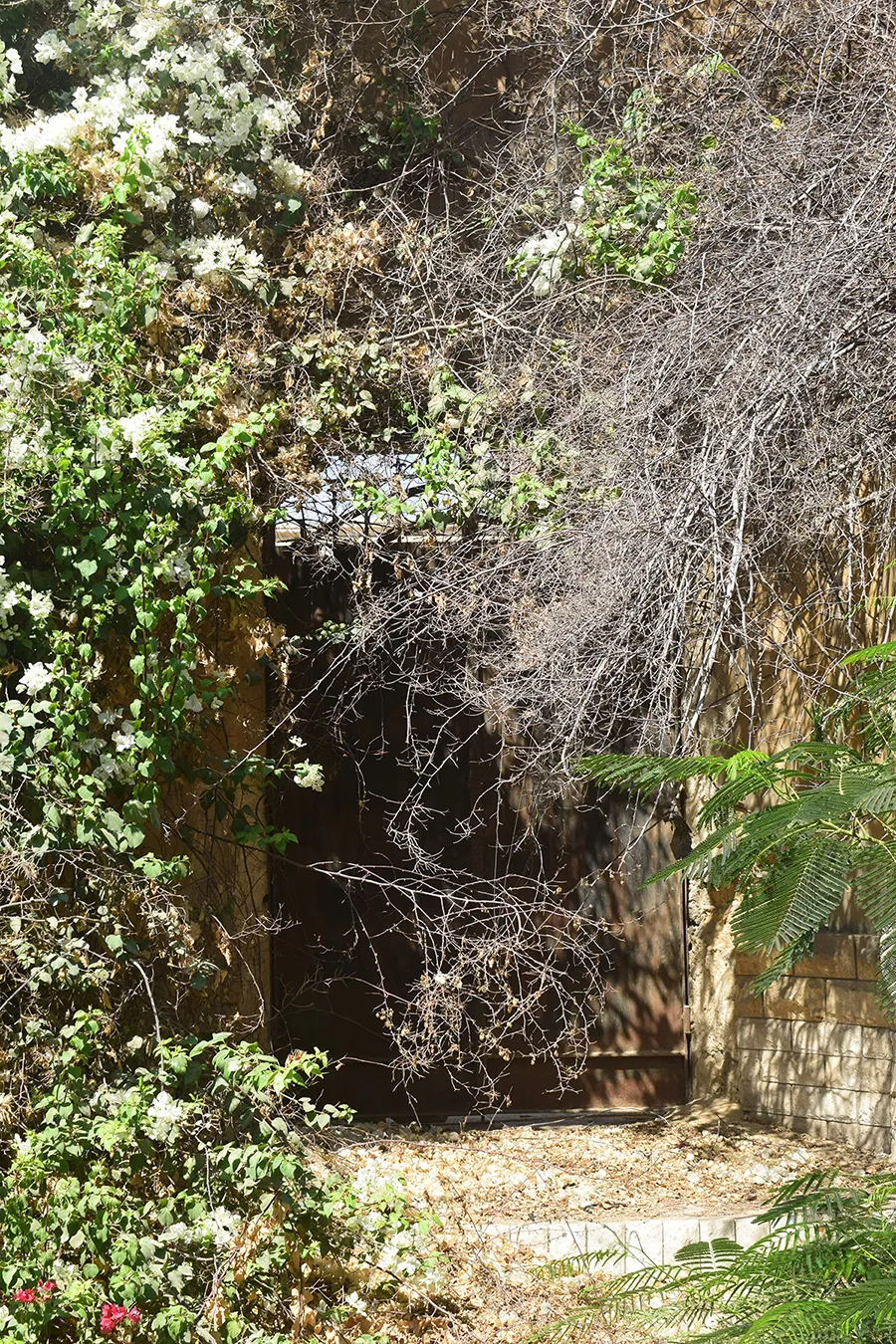
Ahmad Khairi Pasha’s family funerary enclosure is a roughly square perimeter wall containing a mausoleum which is square in plan and placed slightly off-center in the enclosure. The mausoleum is entered through doors in the western and eastern façades (the eastern door currently unused). The western entrance faces a simple undecorated stone gate covered with a segmental arch in the western side of the perimeter wall, which has a modern marble plaque with the owner’s name above it. In the centre of the eastern façade of the perimeter wall is a more elaborate neo-Mamluk gate set in a shallow rectangular recess topped with a three-tiered muqarnas and framed in knotted mouldings. The relieving arch over the flat lintel has joggled voussoirs. The gate is in a pishtaq higher than the rest of the perimeter wall and is crowned with decorative crenellations. Both the crenellations and the muqarnas are of a different design than those on the mausoleum. The sabil window in the north-western corner of the enclosure is blocked with bricks and cement. The sabil is inaccessible due to massive plant overgrowth in this part of the enclosure.
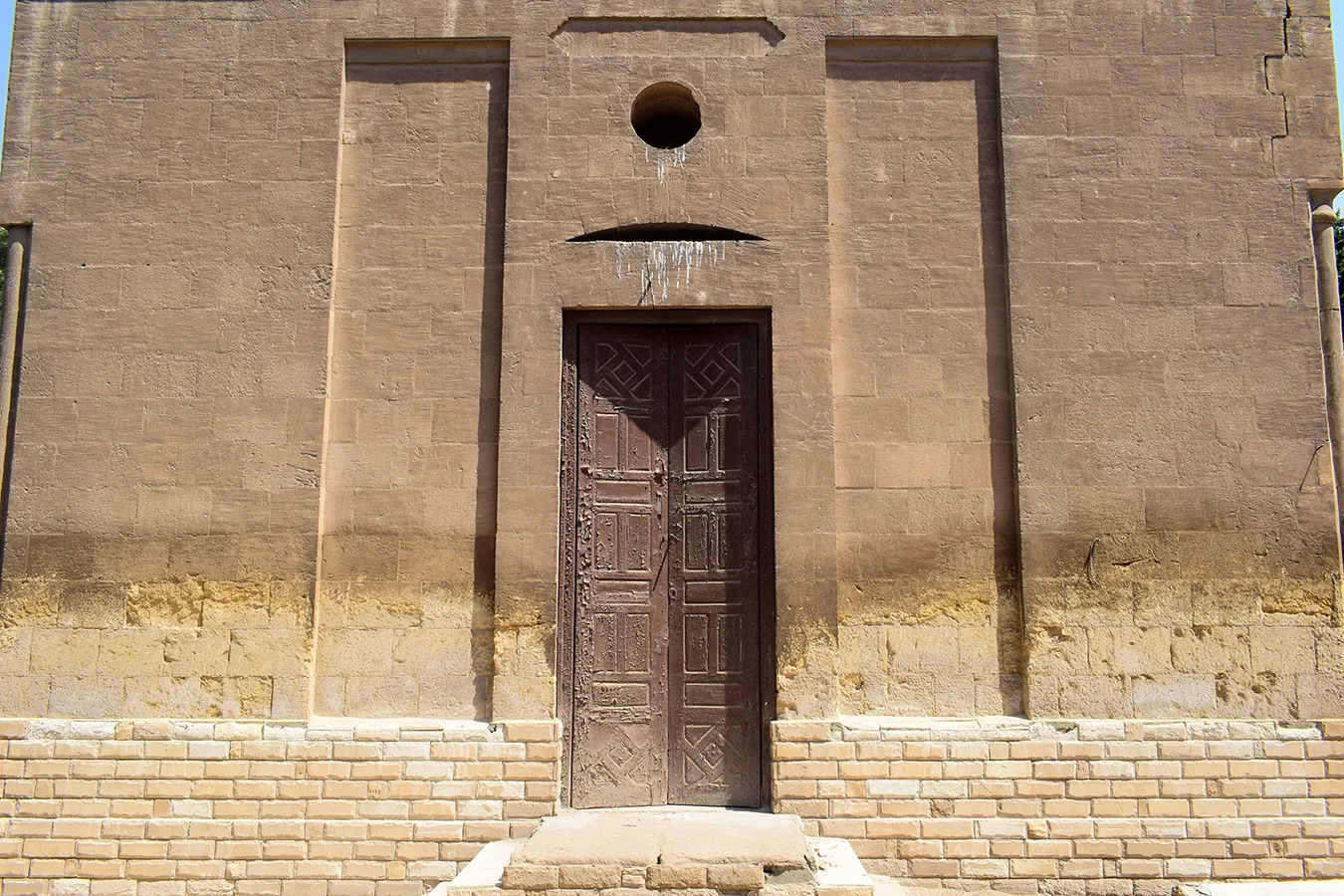
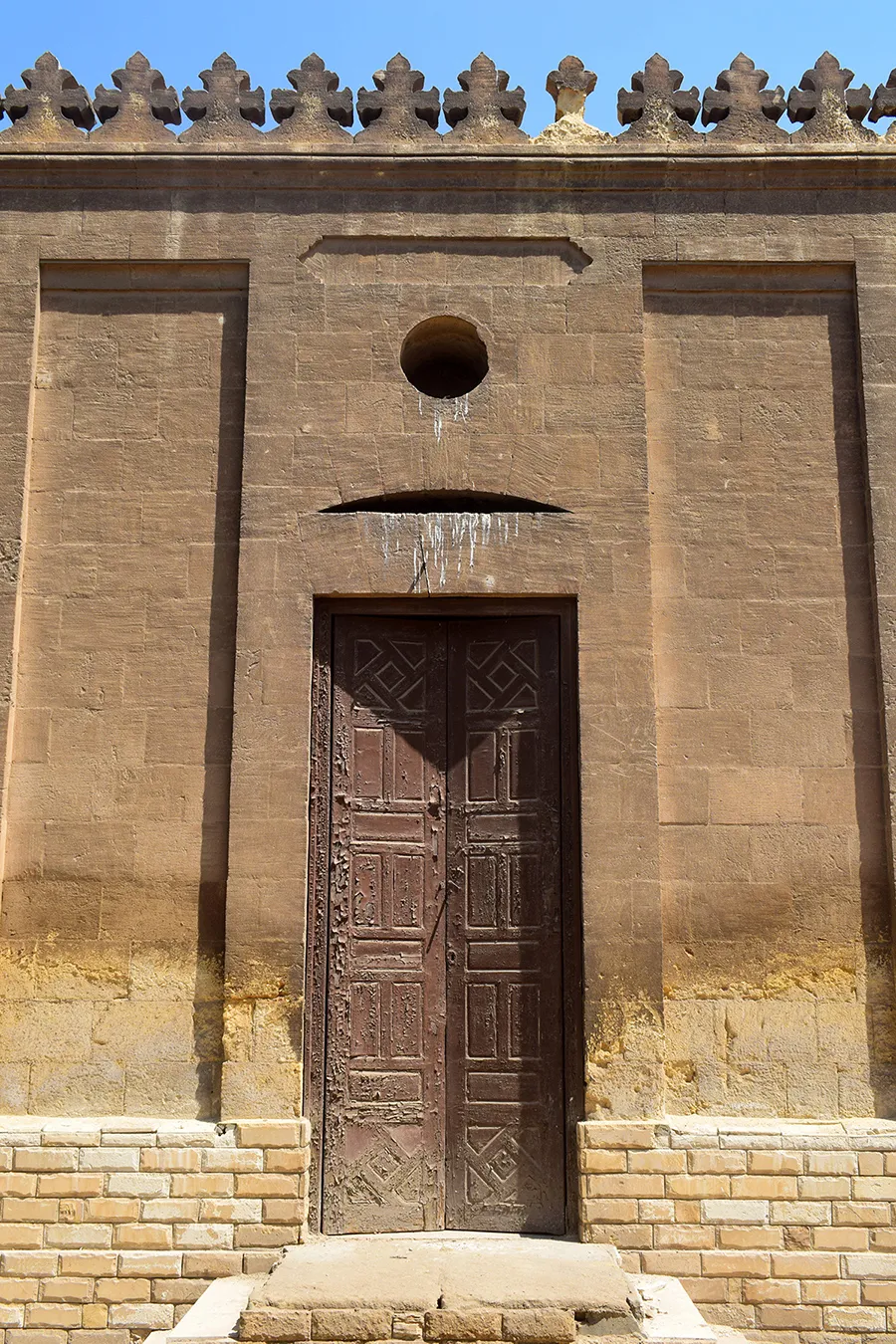
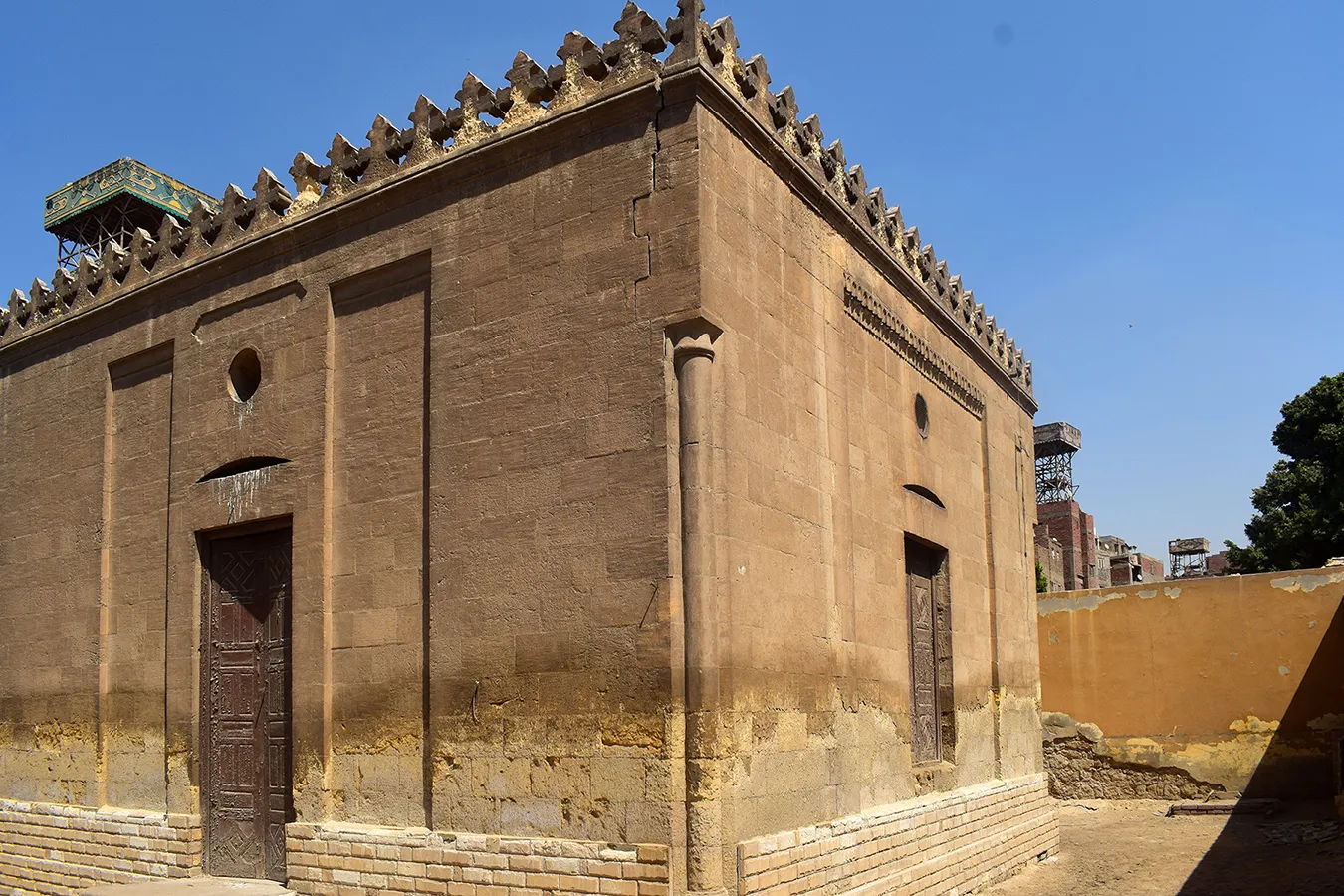
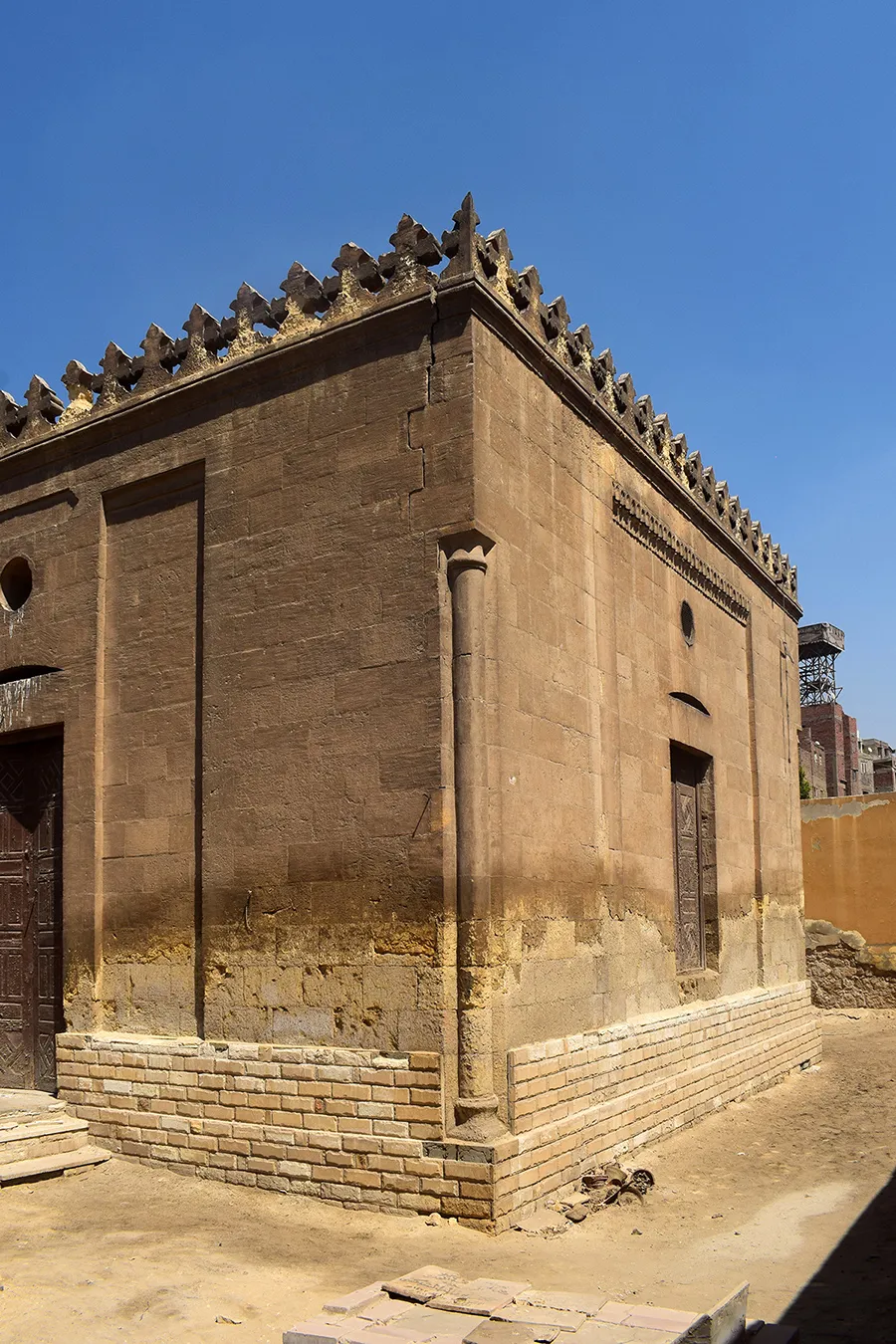
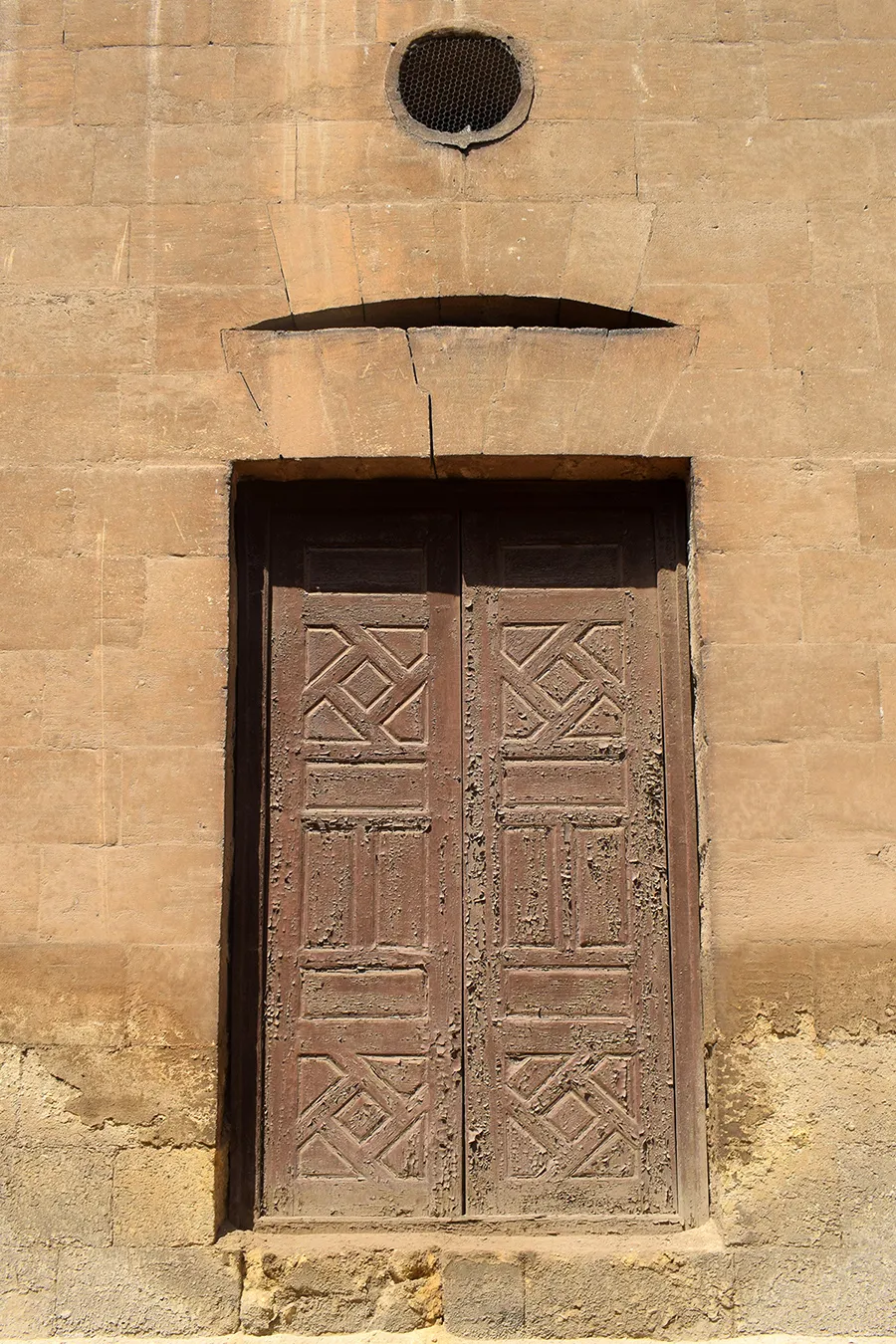
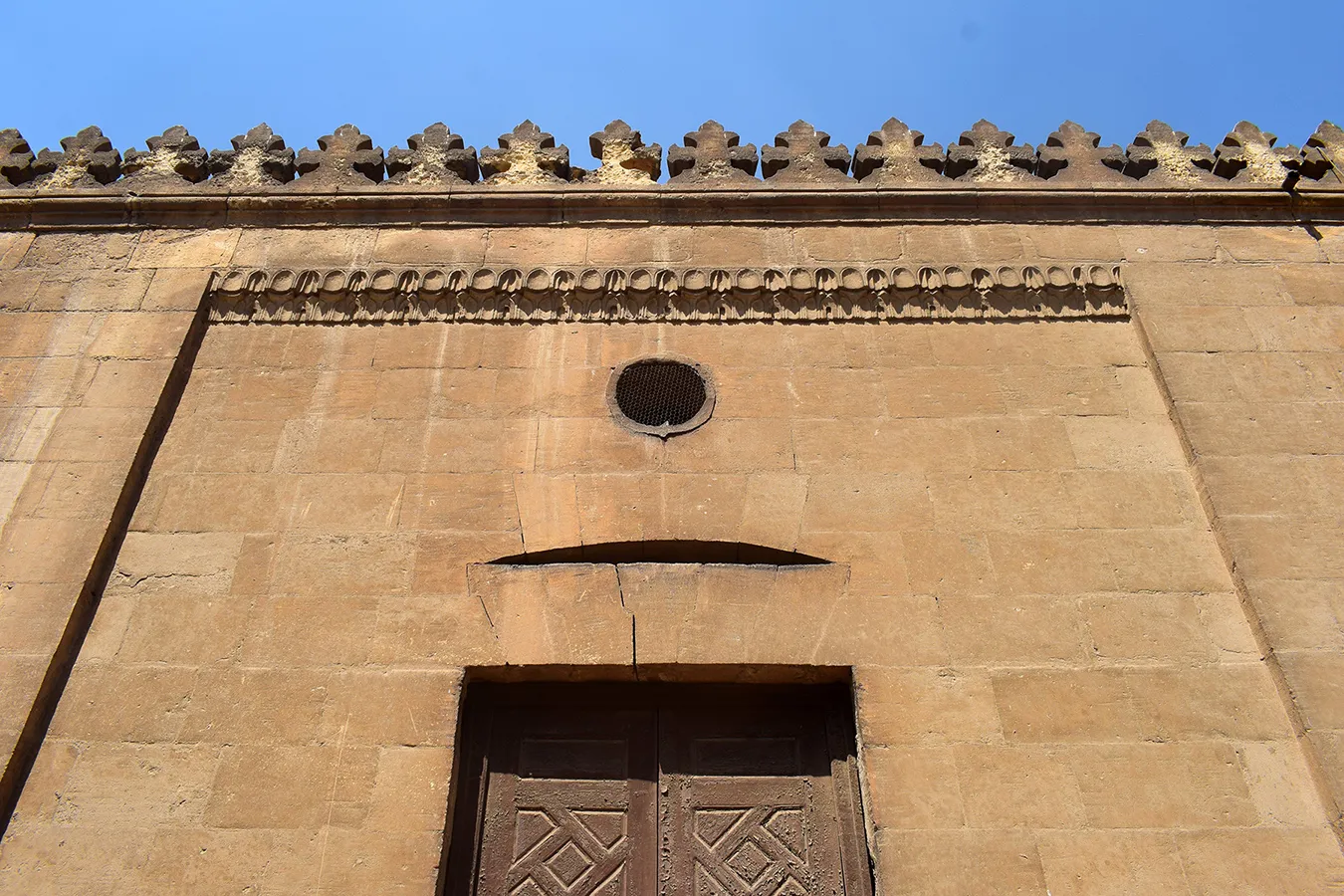
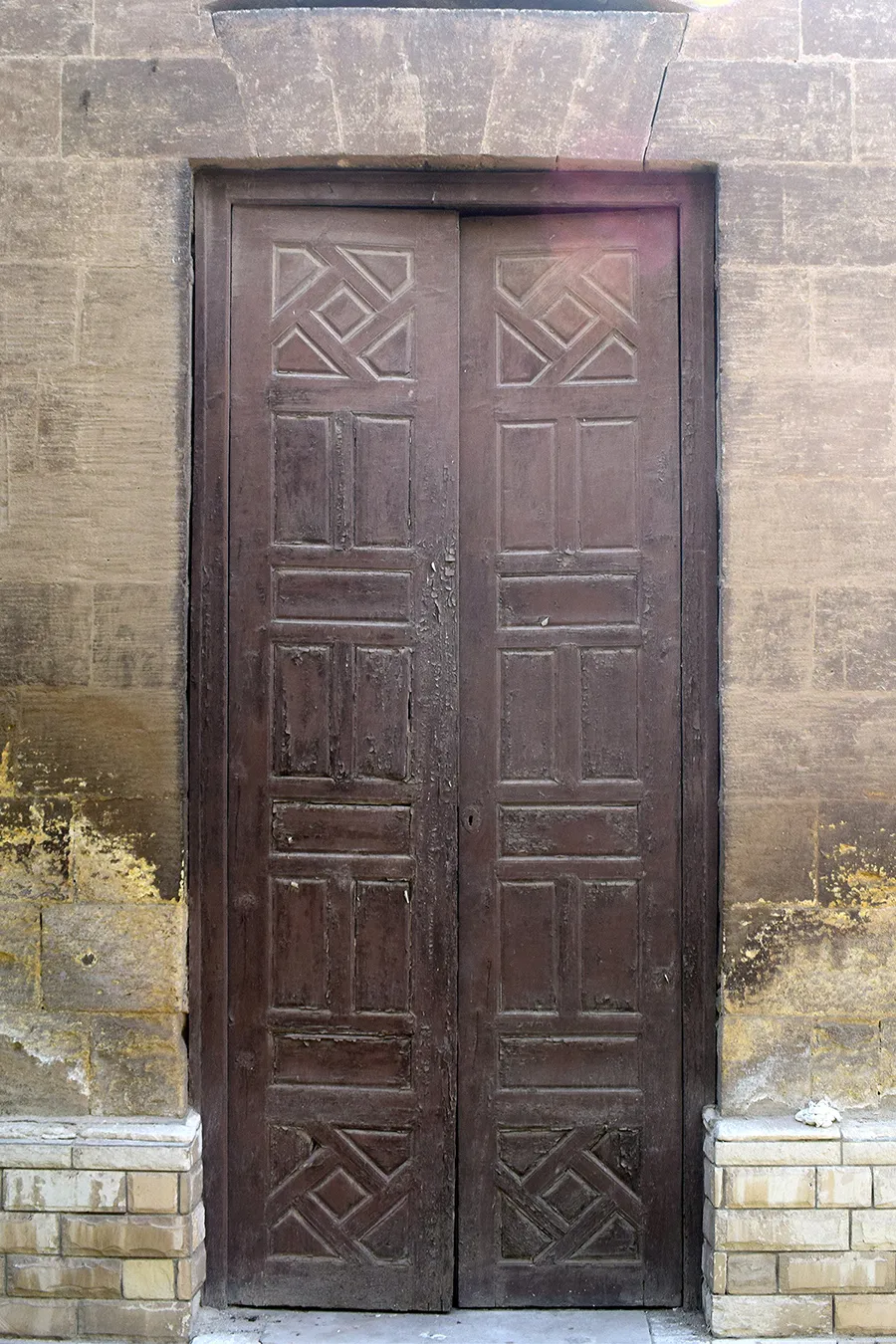
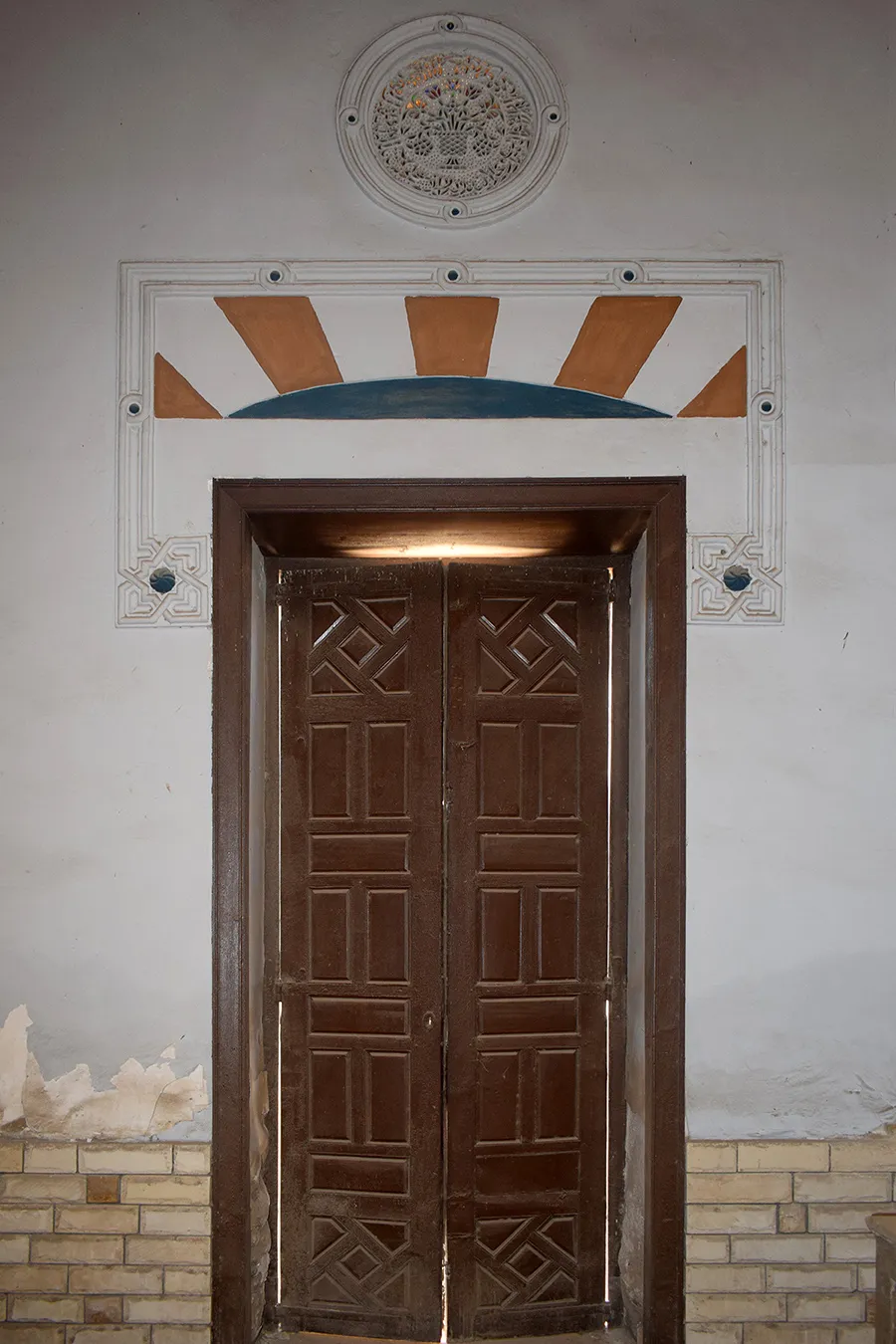
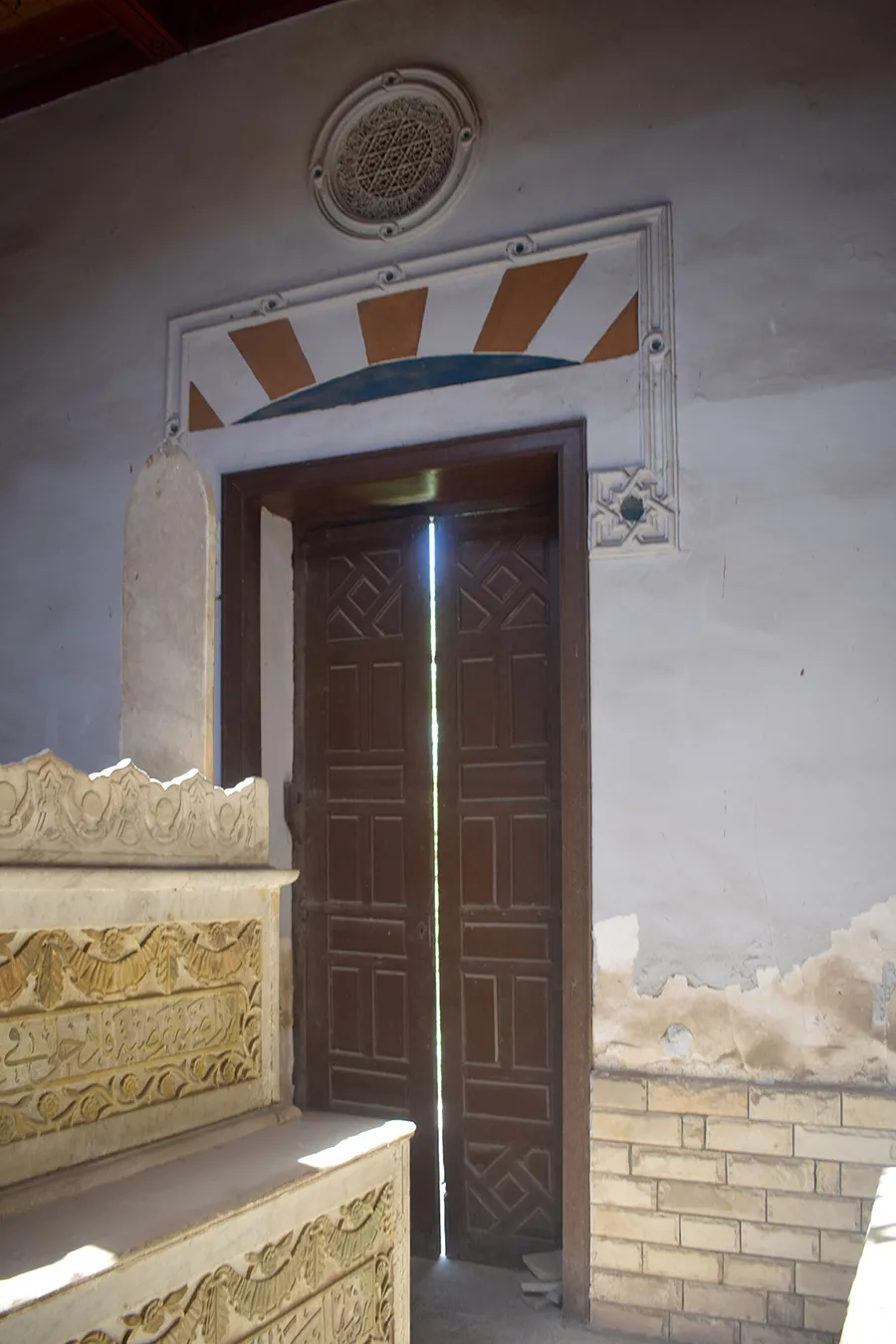
The cubical mausoleum has facades of ashlar stone masonry crowned with decorative crenellations of elaborate form emulating late Circassan Mamluk period and engaged columns in the corners. The side and façades each have a single rectangular window with a flat arch forming the lintel and a segmental relieving arch above it, and over it a small round window. The windows are placed in wide shallow recesses topped with simple two-tiered small muqarnases. In the entrance façades, the doors have identical arrangement of the lintel and an oculus above as the windows in other facades, but it is not placed in a recess and is flanked by two narrow recesses without muqarnas tops. The wooden door and the window have a simple decoration of mafruqa panels.
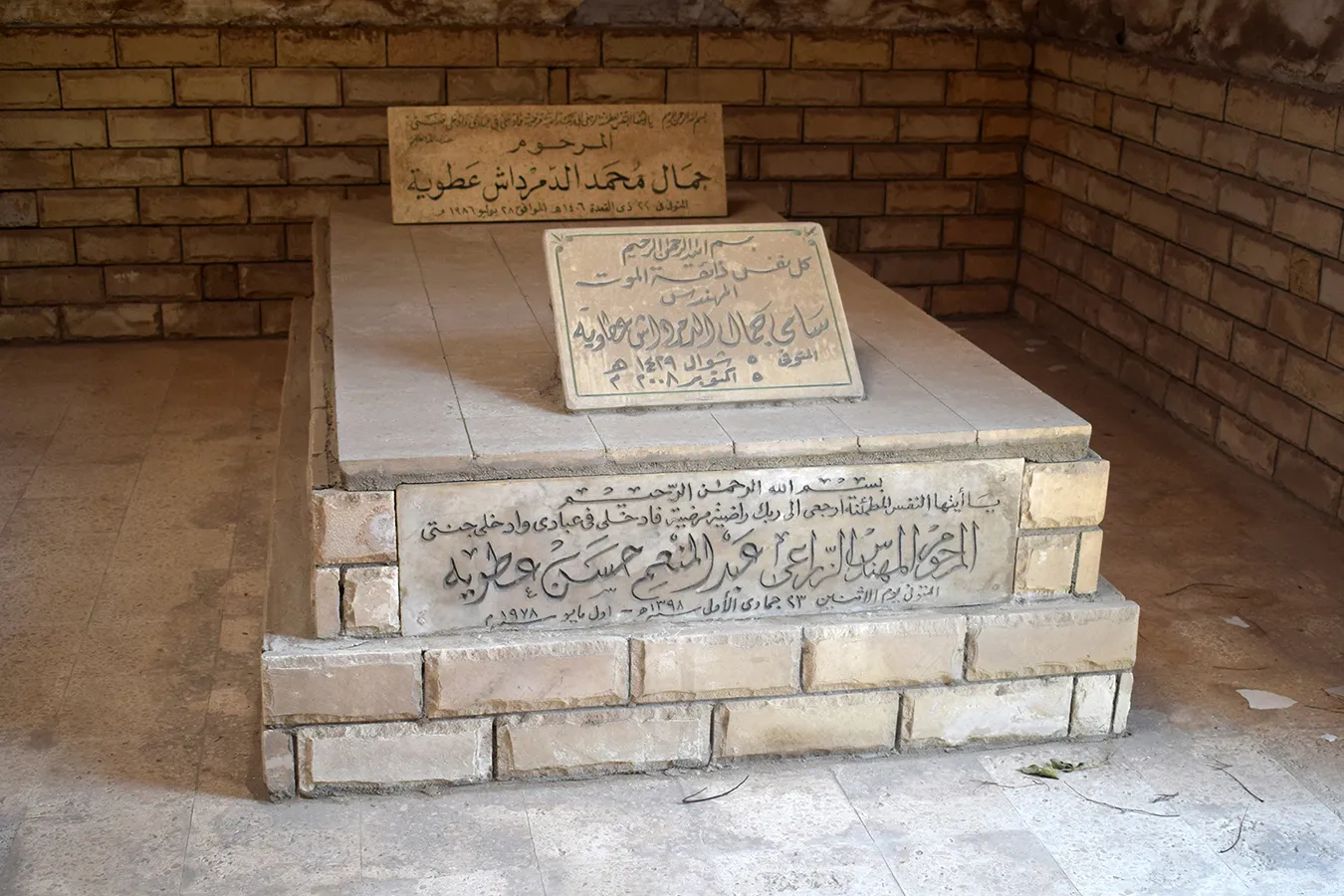
Inside, there are three elaborately carved marble cenotaphs bearing the names of Ahmad Khairi Pasha’s wives, two simpler, newer marble cenotaphs, and a modern brick-built cenotaph. The door and windows lintels are framed in knotted mouldings, and above each is a round qamariya gypsum grille with a vase of flowers surrounded by an inscription. The ceiling has a central skylight and is painted in simple Ottoman Baroque-style motifs around the edges of the ceiling compartments with similar motifs in the centre.
Condition of preservation
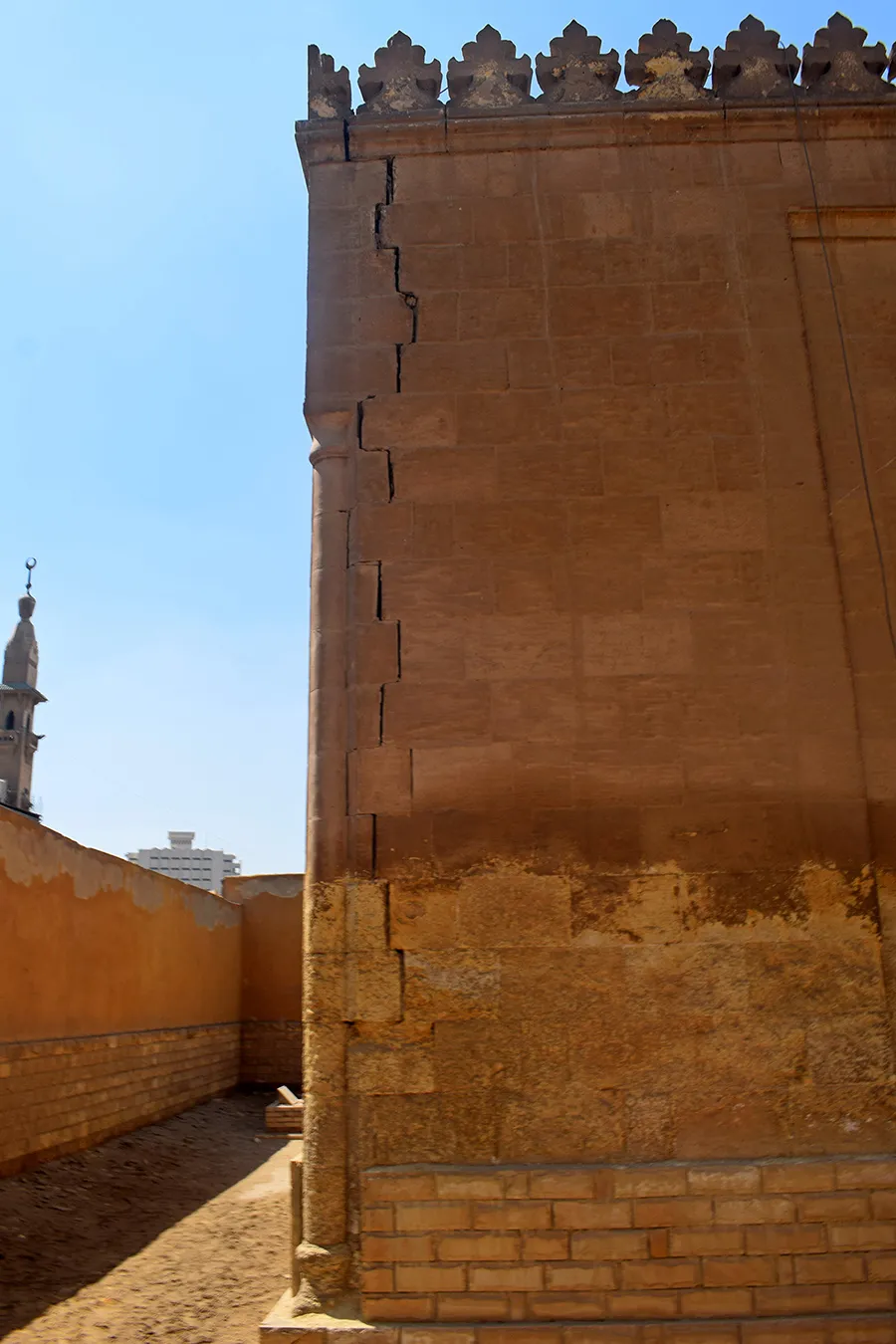
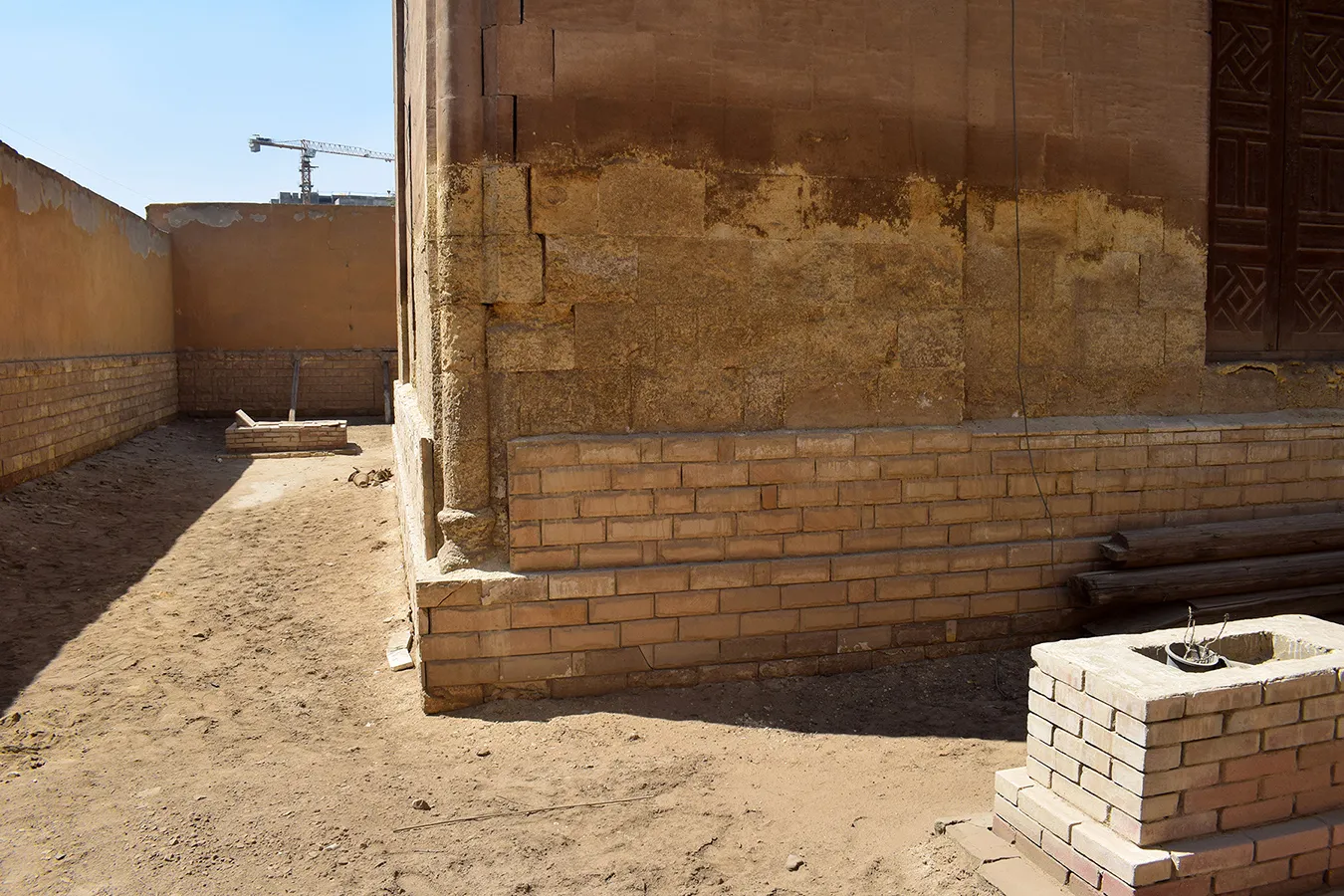
The bottom parts of the wall are seriously affected by rising damp, with the stones powdering. To mask the damage, the lower parts of the walls have been covered by modern facing of small limestone tiles, which itself is powdering now. The cracks in the southern corner of the entrance façade and in the lintel over the window in the south-western façade indicate differential settlement of the foundations. Otherwise, the unit is in fair condition.
Information abut the founder, family history, etc.
Previously, the enclosure used to be a walled complex comprising al-Baqli family enclosure and al-Sanhawi enclosure sharing a courtyard, before the family separated the complex, turning it into an independent unit. (According to the keeper.)
This seems to be corroborated by the style of the gate in the eastern perimeter wall, which –although also neo-Mamluk—is different from the mausoleum inside.
The date 1304 on the marble cenotaph corresponds to AD 1887.
- Field recording by
- Hadeer Ahmad and Radwa al-Saeed
- Date recorded
- August 18, 2022
- Data entered by
- Yusuf Yassir
- Date entered
- May 19, 2024