

Unit No3
Funerary enclosure attributed to al-Waqad family
|
Coordinates of the main entrance |
30.047742N - 31.275178E |
|
Attribution |
Funerary enclosure attributed to al-Waqad family |
|
Higri (AH)Dates as given in the Inscription |
|
|
Miladi (AD)Dates as given in the Inscription |
|
|
Inscription Contemporary with the building? |
Yes |
|
Multiple date(s) In the inscription? |
Yes |
|
Assumed Date |
see section "History" |
|
Based on |
|
|
Original Use |
Funerary enclosure, residential |
|
Current Use |
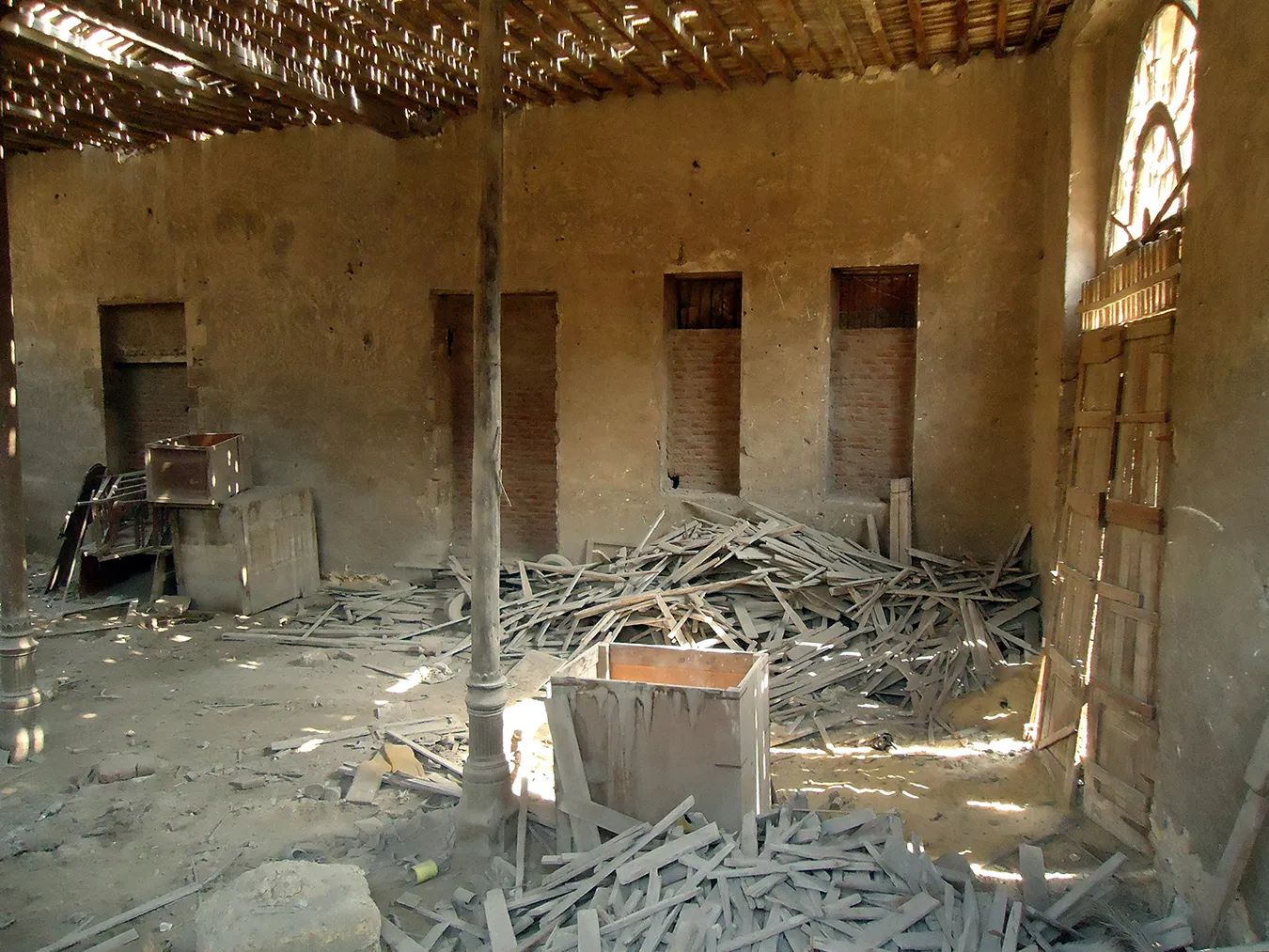
Funerary enclosure, Residential, Storage & Café |
|
Overall condition |
Poor/Ruin |
Features of unit 3
| Present | Count | Material | Comments (see description for details) | |
|---|---|---|---|---|
| Free standing structure | No | |||
| Walled enclosure | Yes | |||
| Rooms by the perimeter wall | Yes | |||
| Freestanding structure(s) in enclousure | Yes | 3 | Red Brick | Apartment buildings take up a large portion of the enclosure’s total plot size. |
| Dome over the tomb chamber | No | |||
| Neo-Mamluk architectural decoration | No | |||
| Garden layout | Yes | |||
| Sabil(s) | No | |||
| Wall fountain(s) | No | |||
| Canopy on columns / pillars | No | |||
| Carved marble cenotaph(s) | No | |||
| Decorated limestone tomb-markers | No | |||
| Decorated gateway | Yes | 3 | Stone, Wood & Steel | The main gateway is the largest and most decorative in the cemetery |
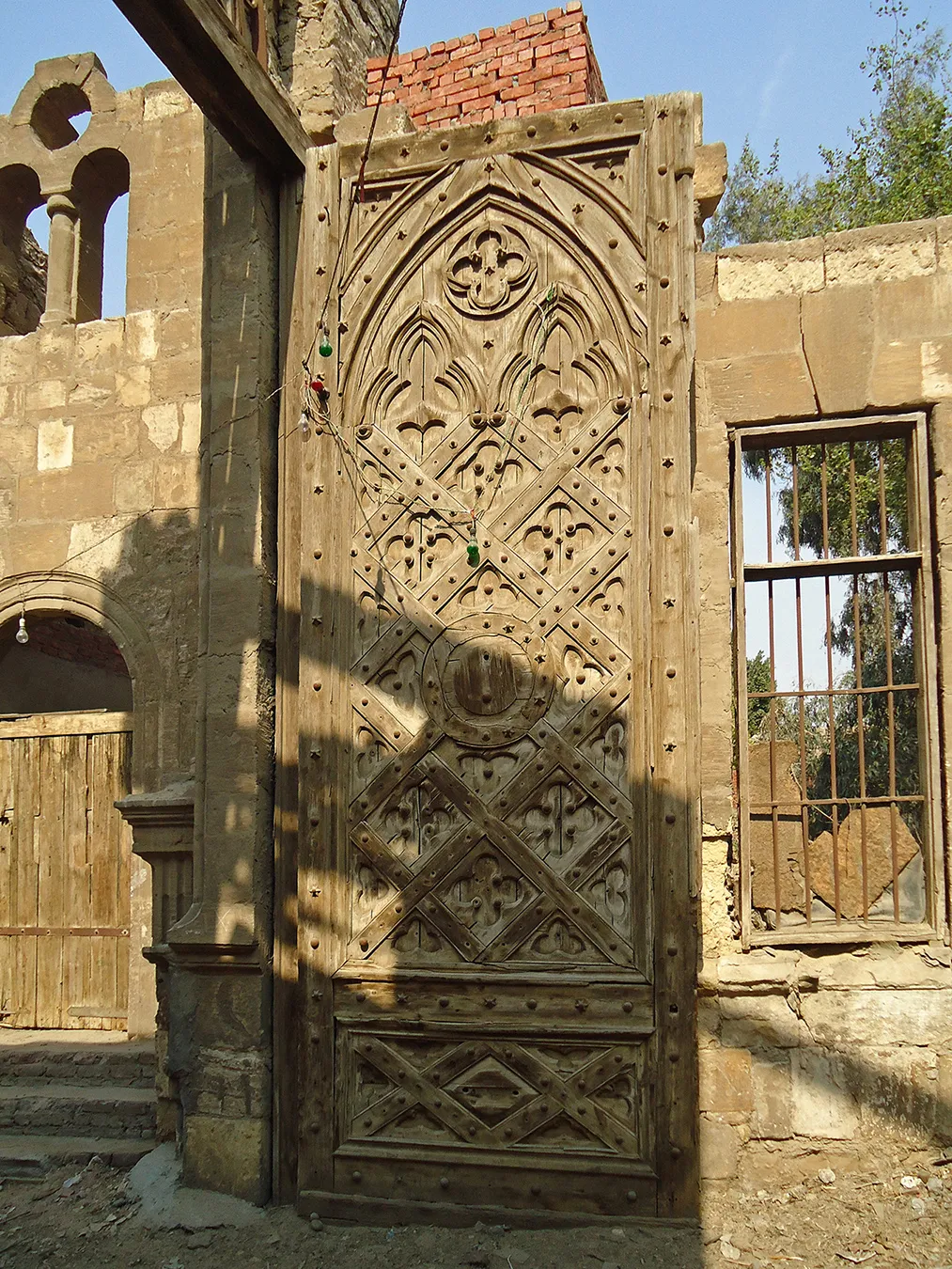
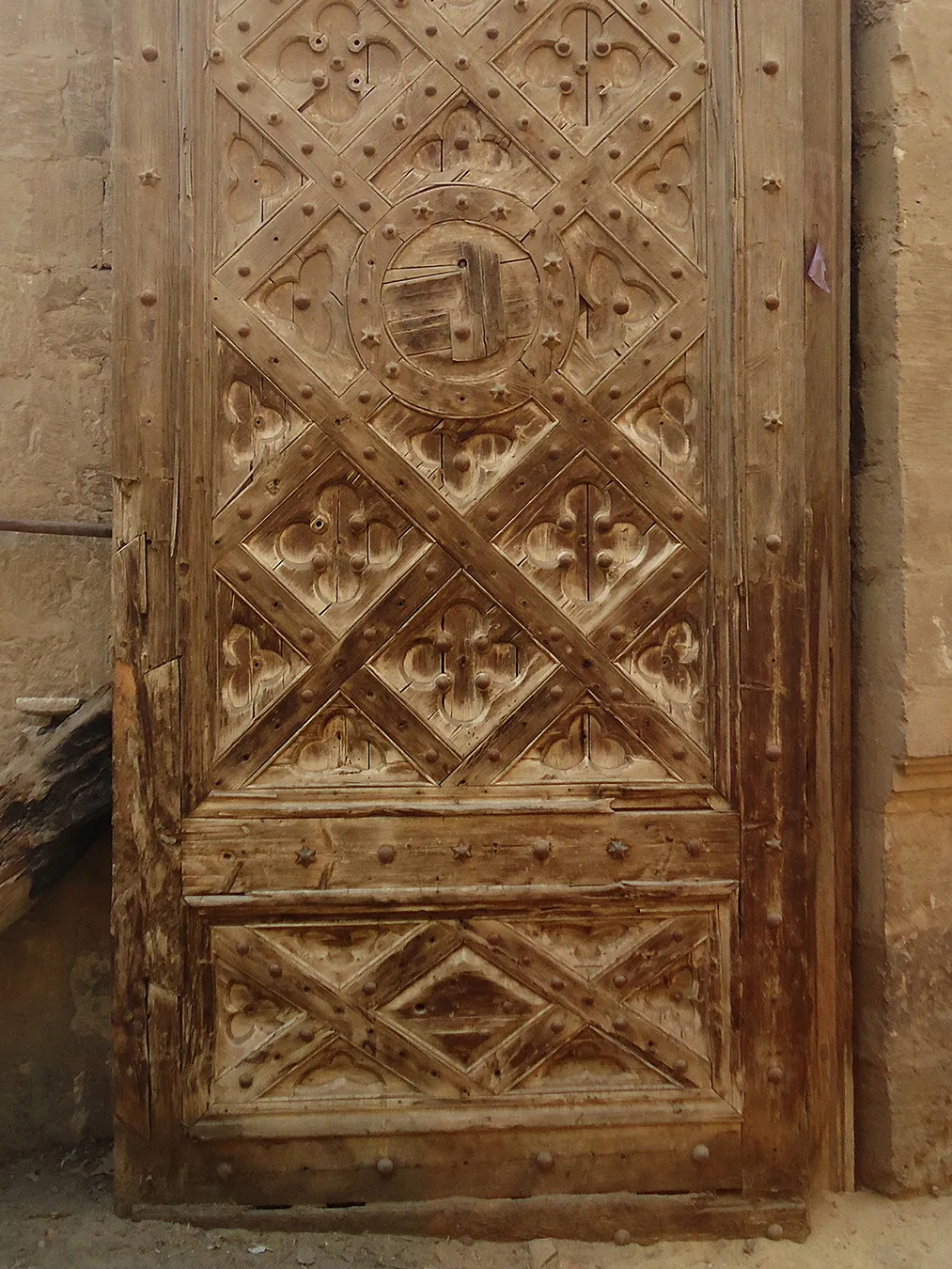
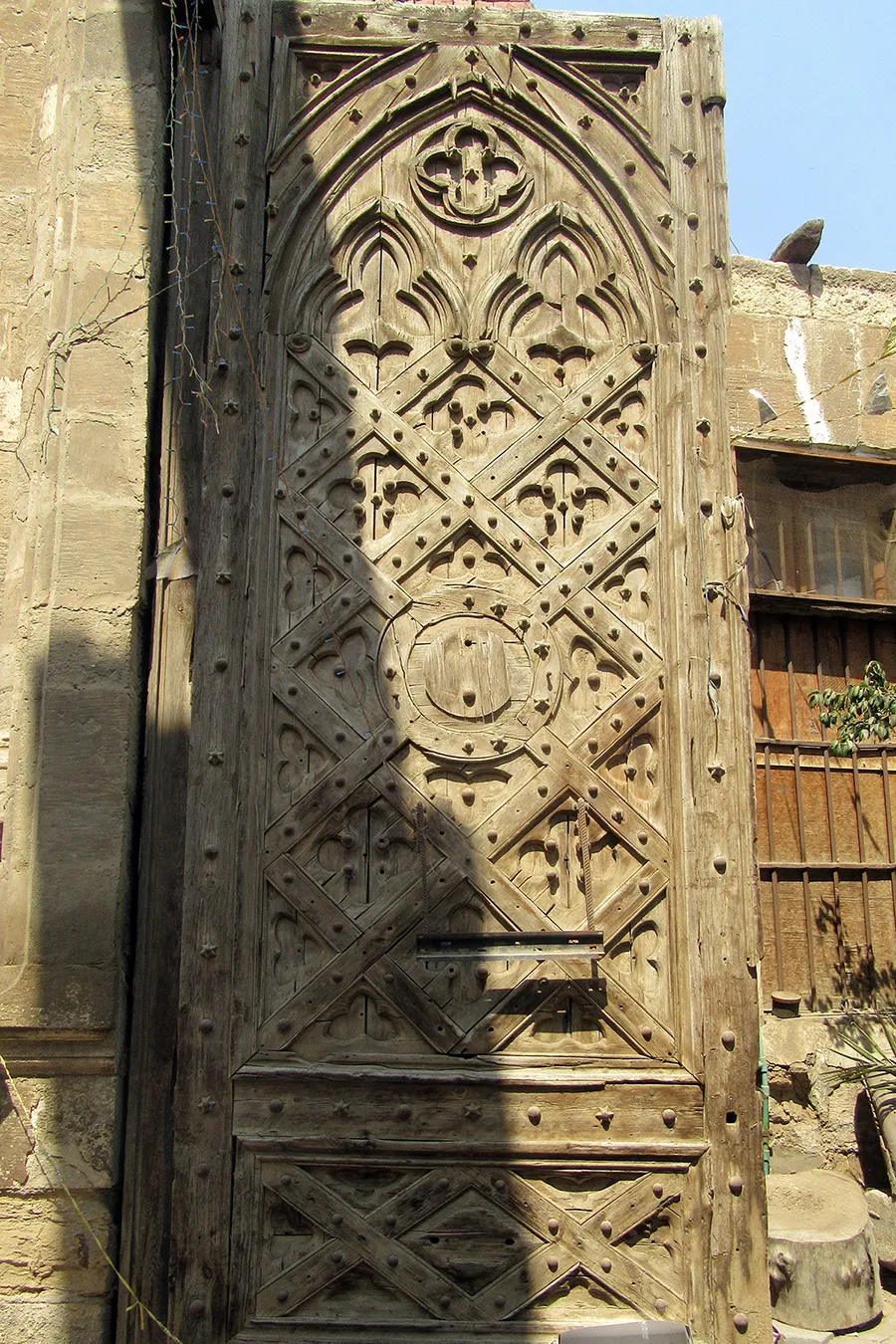
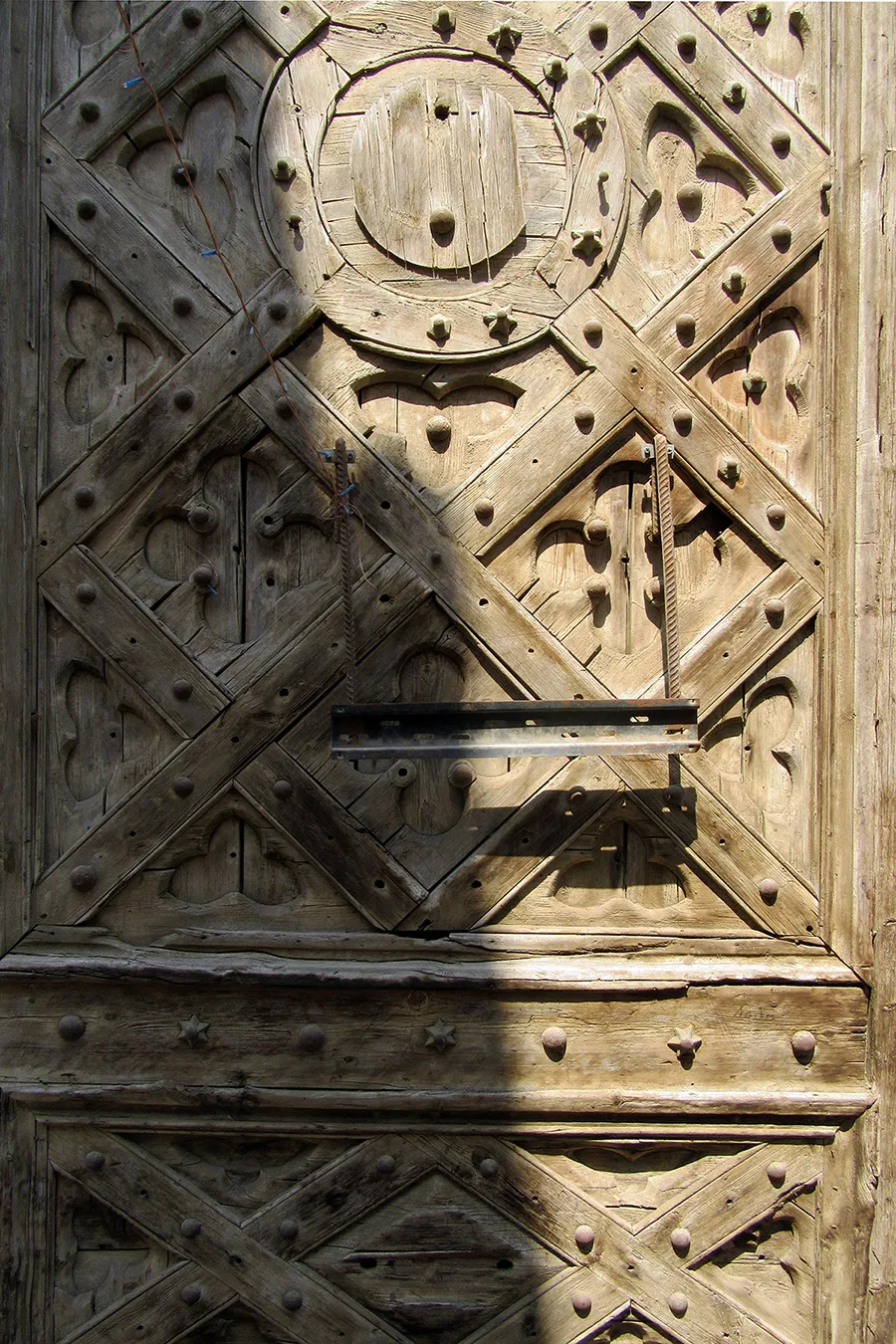
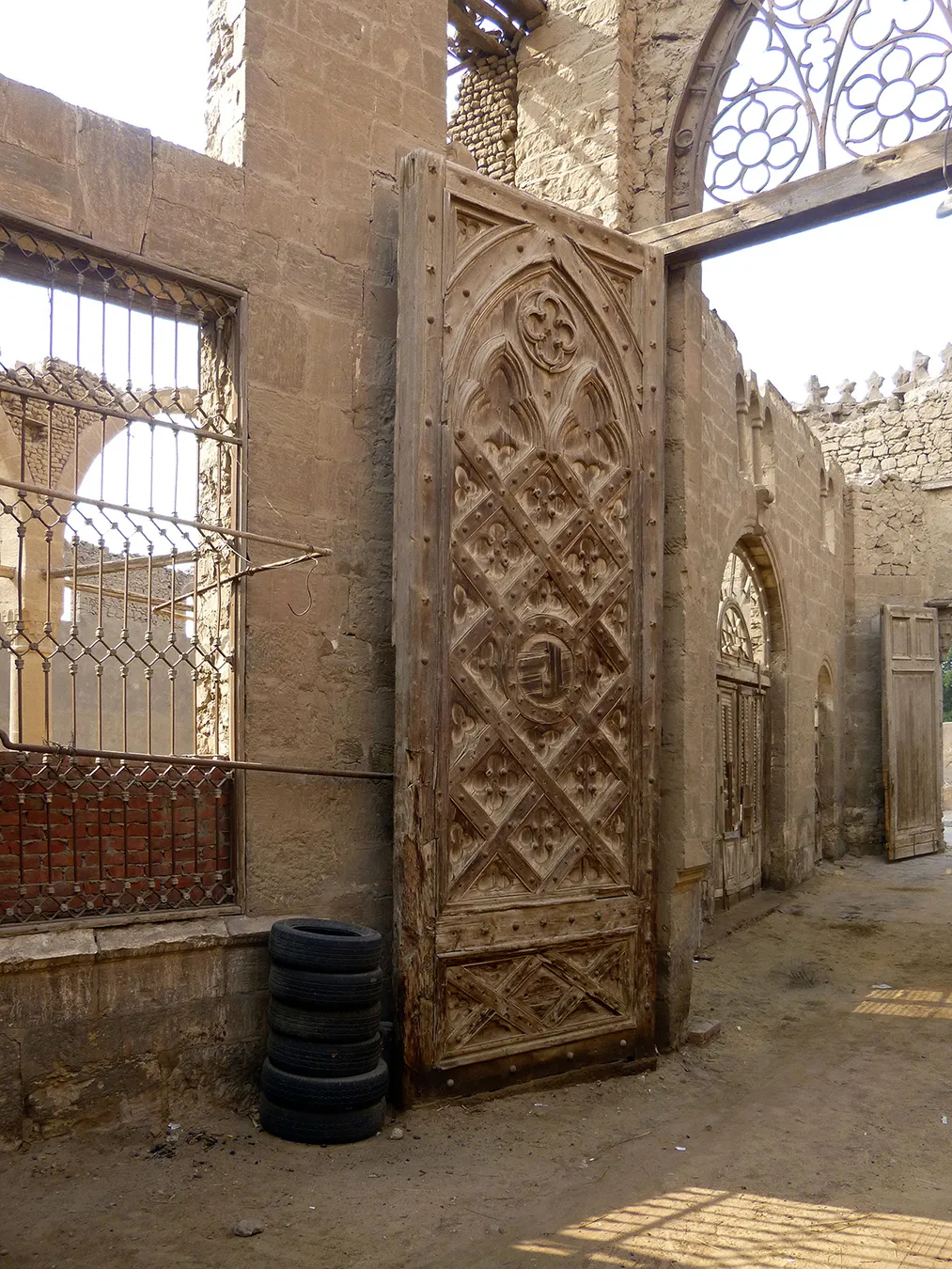
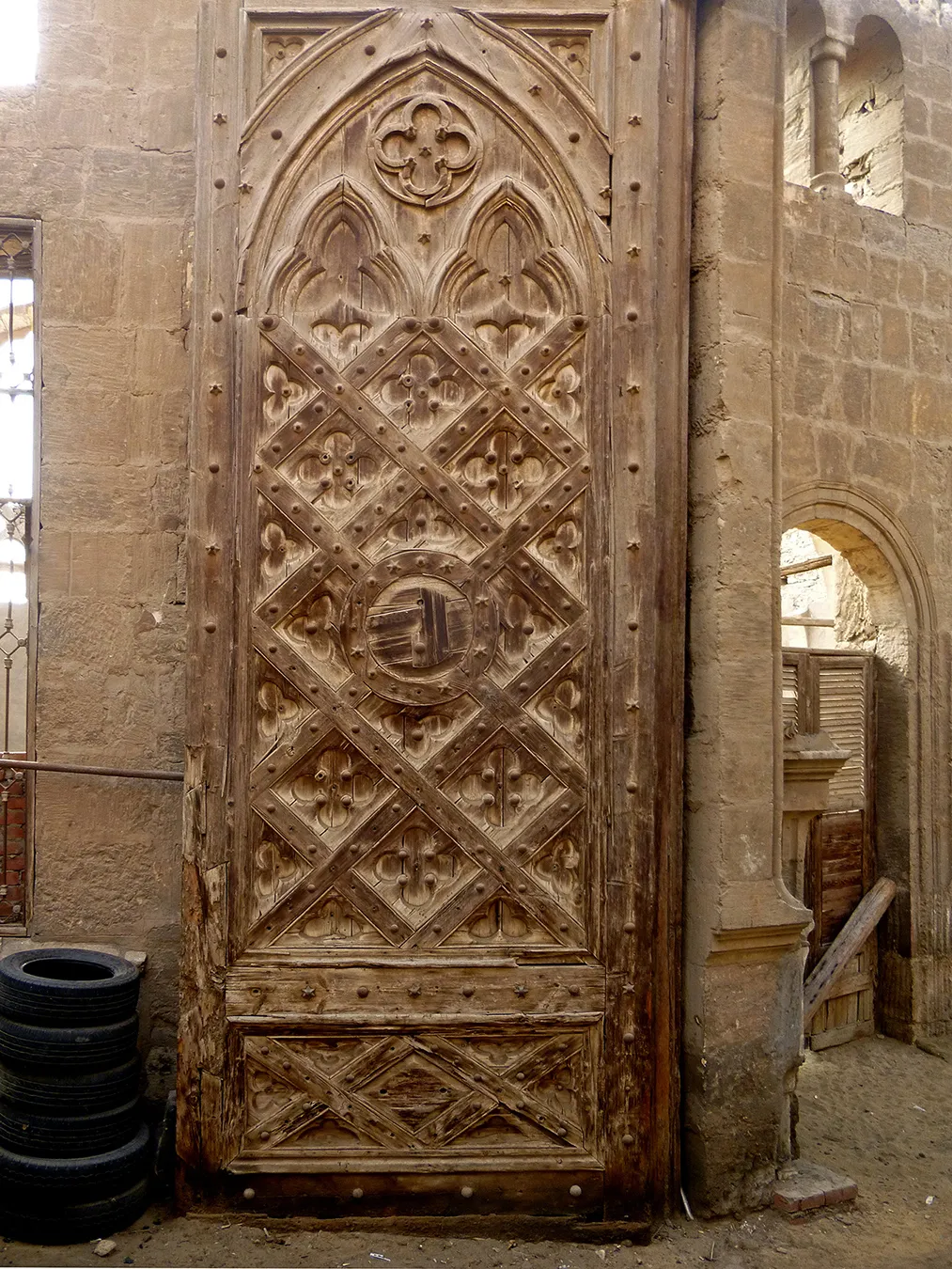
| Decorative door-leaves | Yes | 4 | Elaborately decorated | |
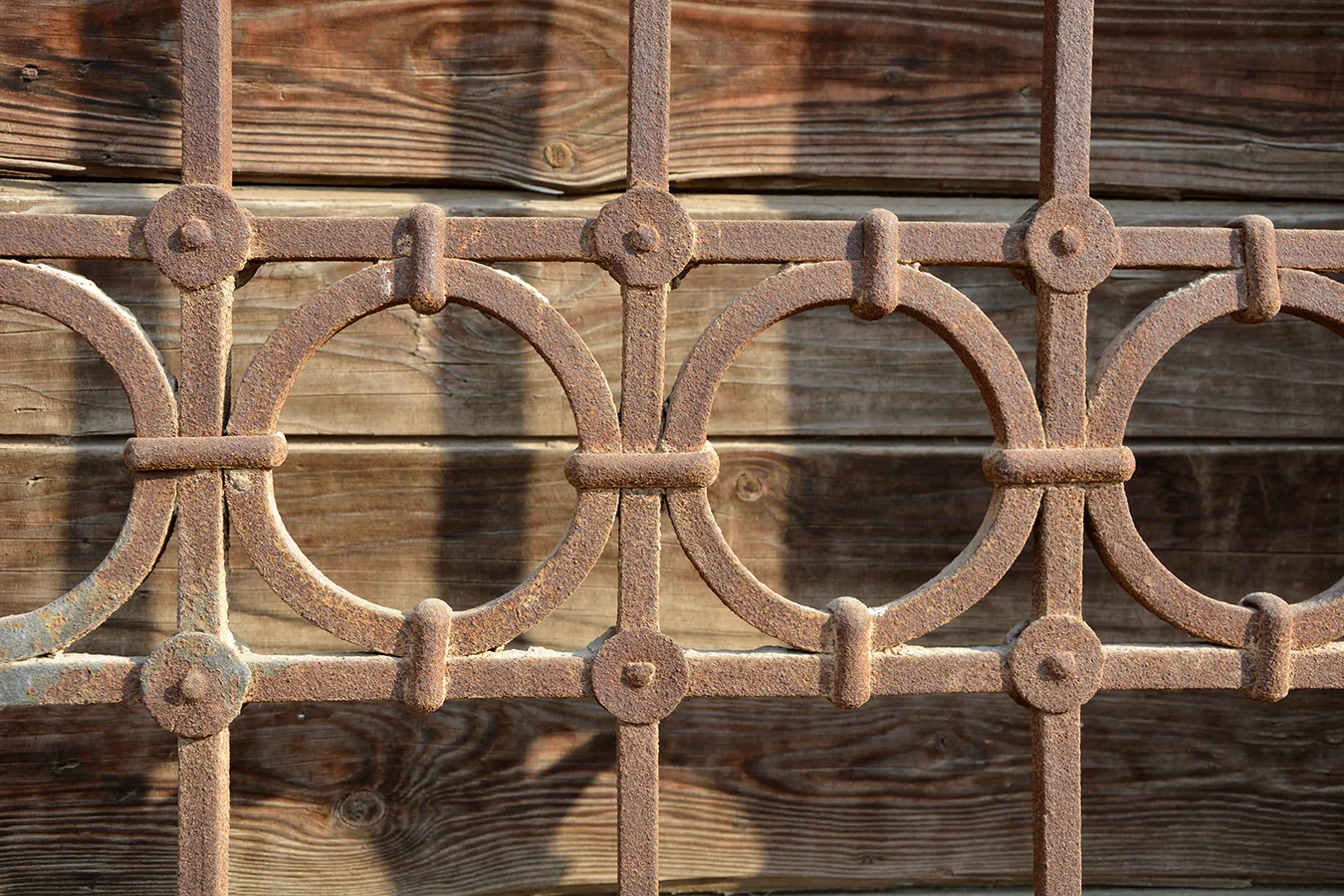
| Decorative window grilles | Yes | 15 | Steel & Wood | Three wooden grilles and twelve steel ones |
| Decorative shutters | No | Wood | Twenty-eight non-decorative shutters | |
| Painted ceiling(s) | No | |||
| Decorative paving(s) | No |
Unusual or unique features
• A palatial façade unusual in a funerary enclosure
• The long gateway with the sequence of three elaborately decorated gates
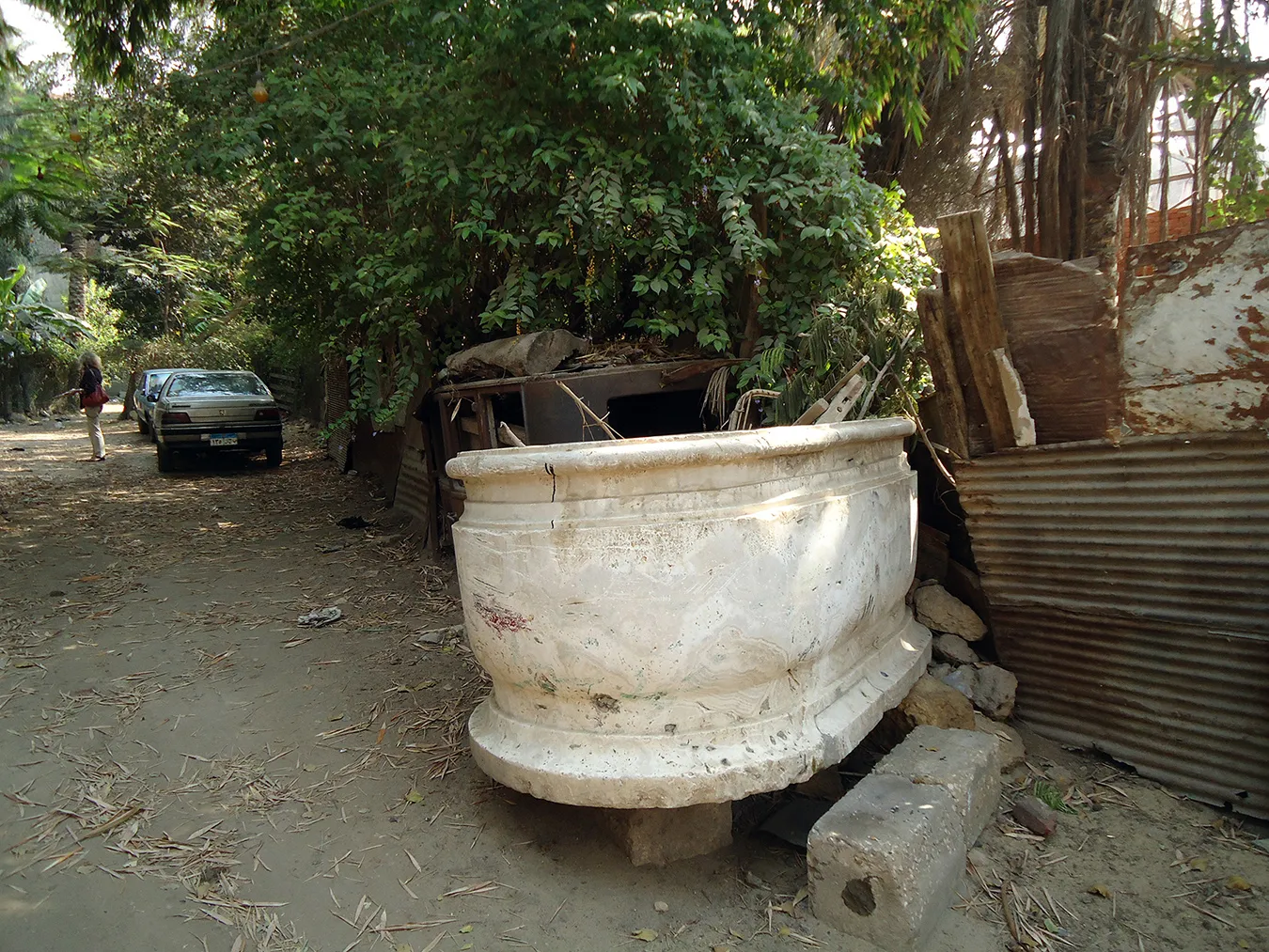
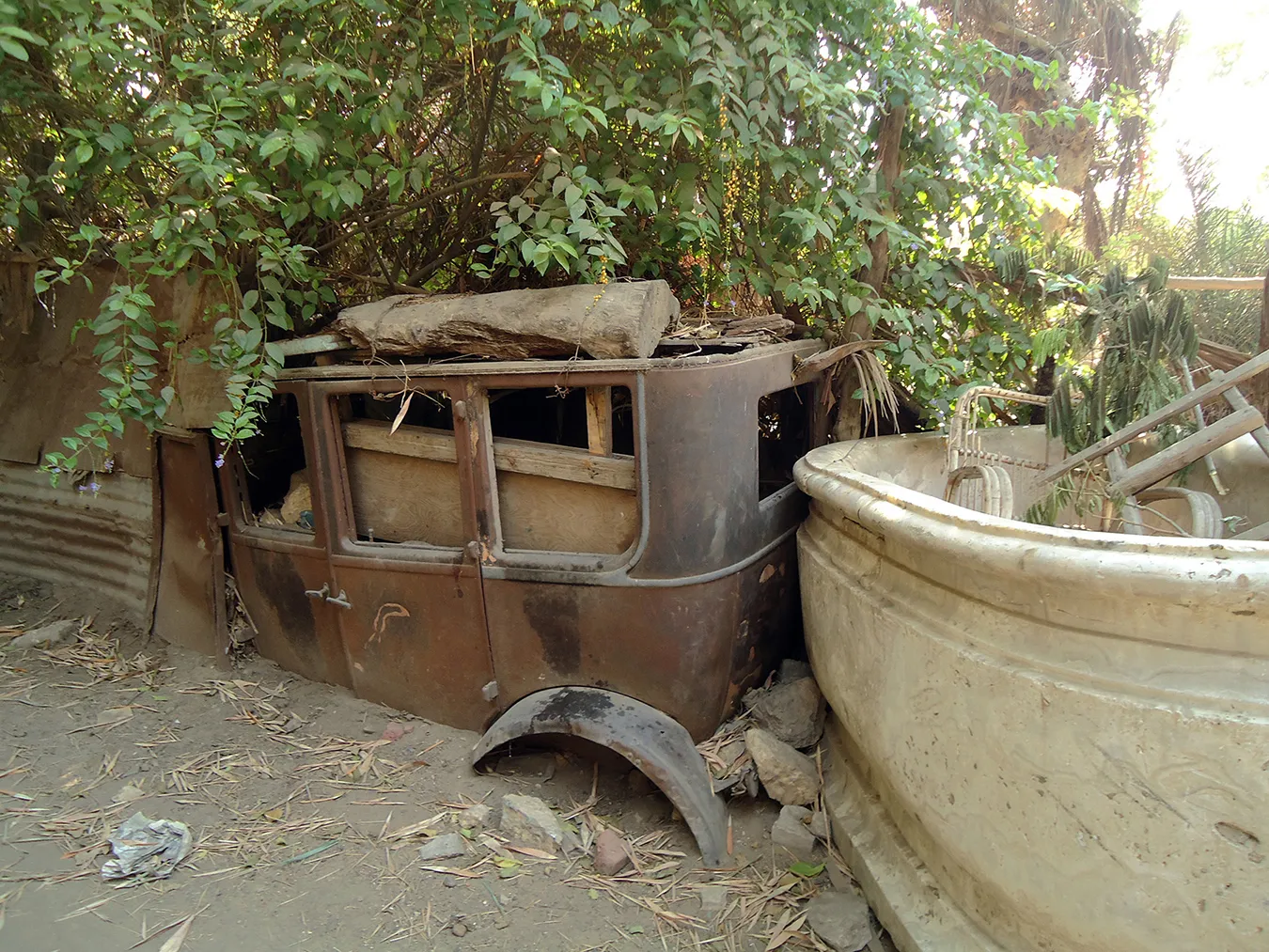
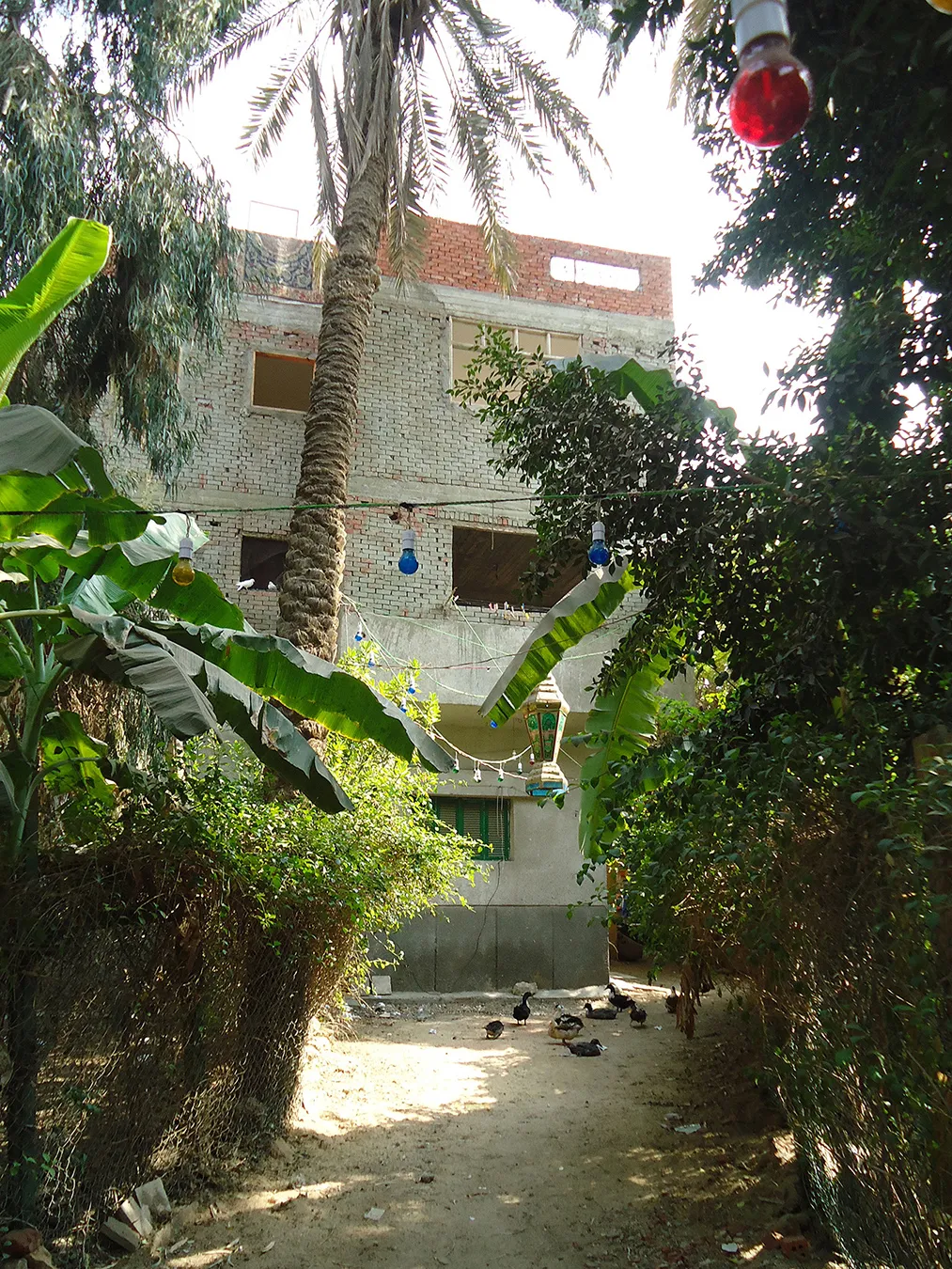
• A huge alabaster bathtub randomly thrown in the garden
Description (The direction towards Mecca (Qibla) is described as eastern and other directions are named accordingly)
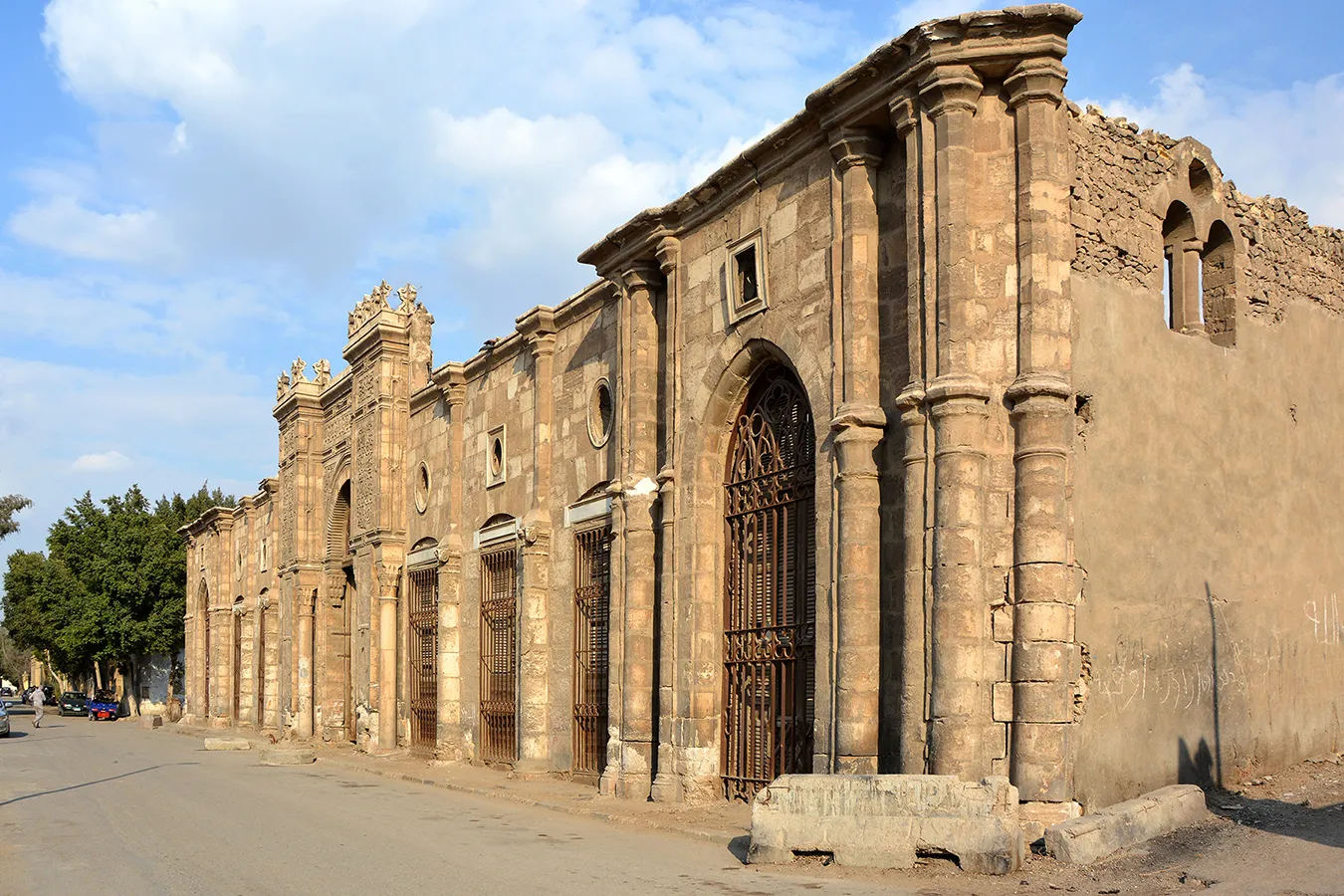
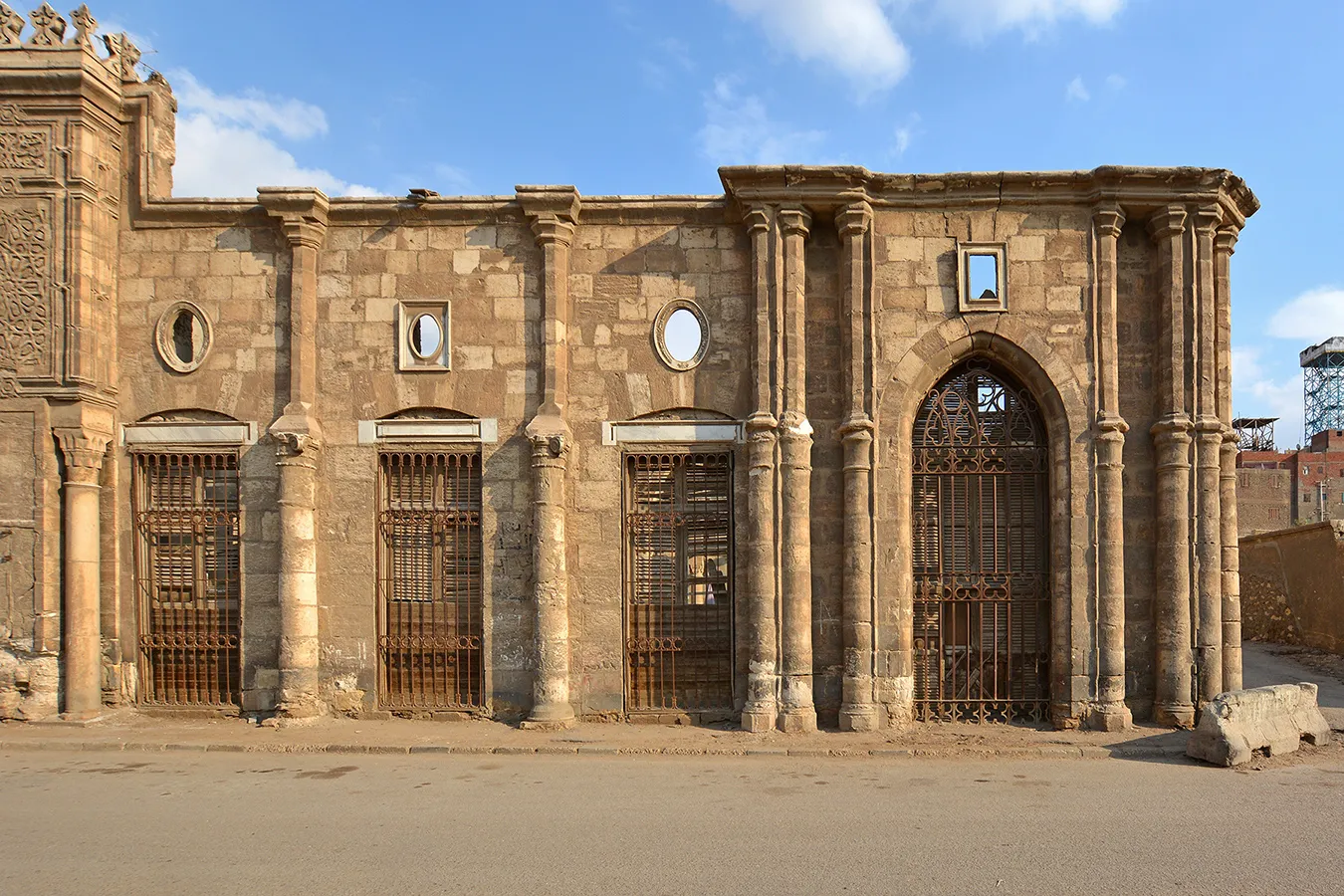
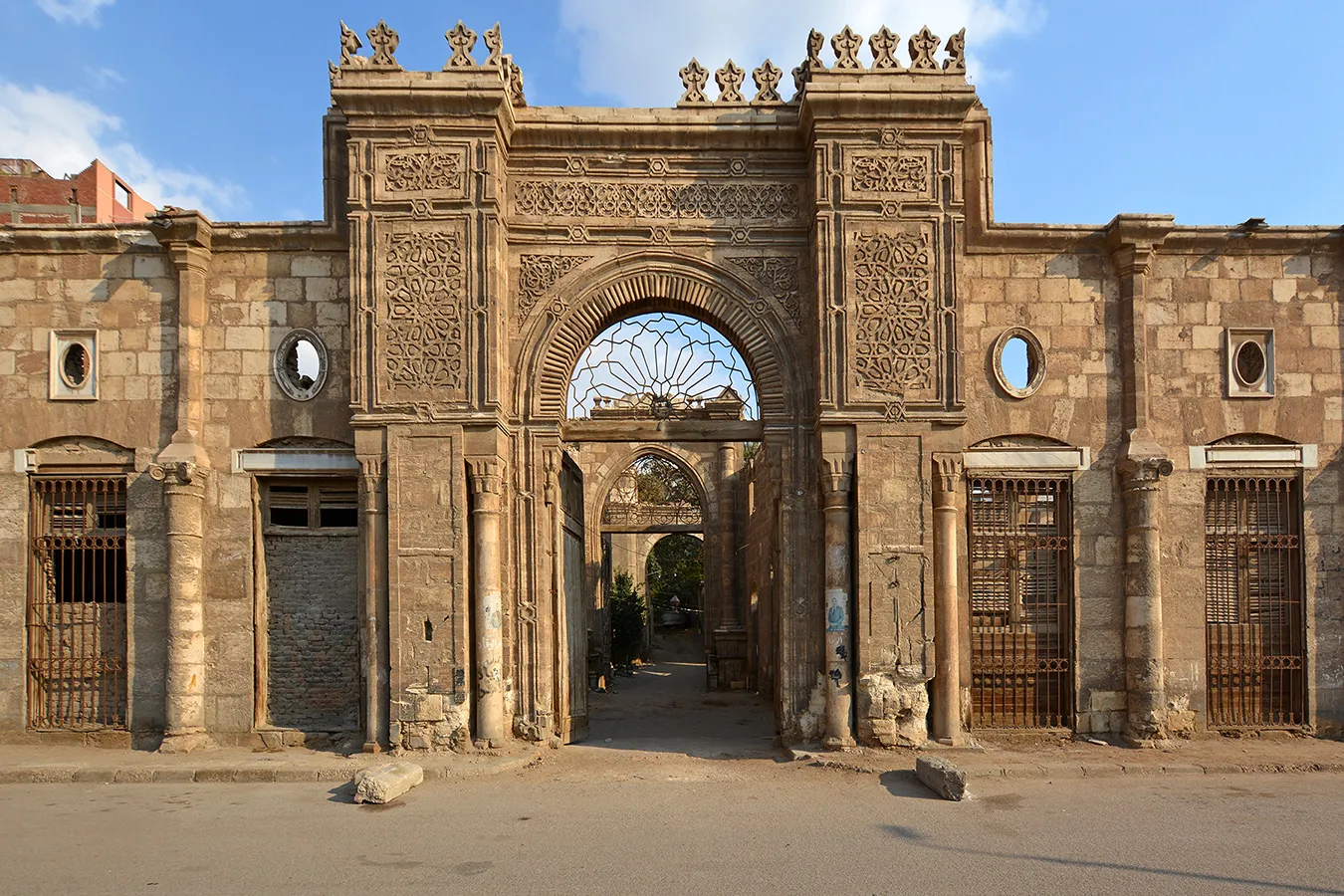
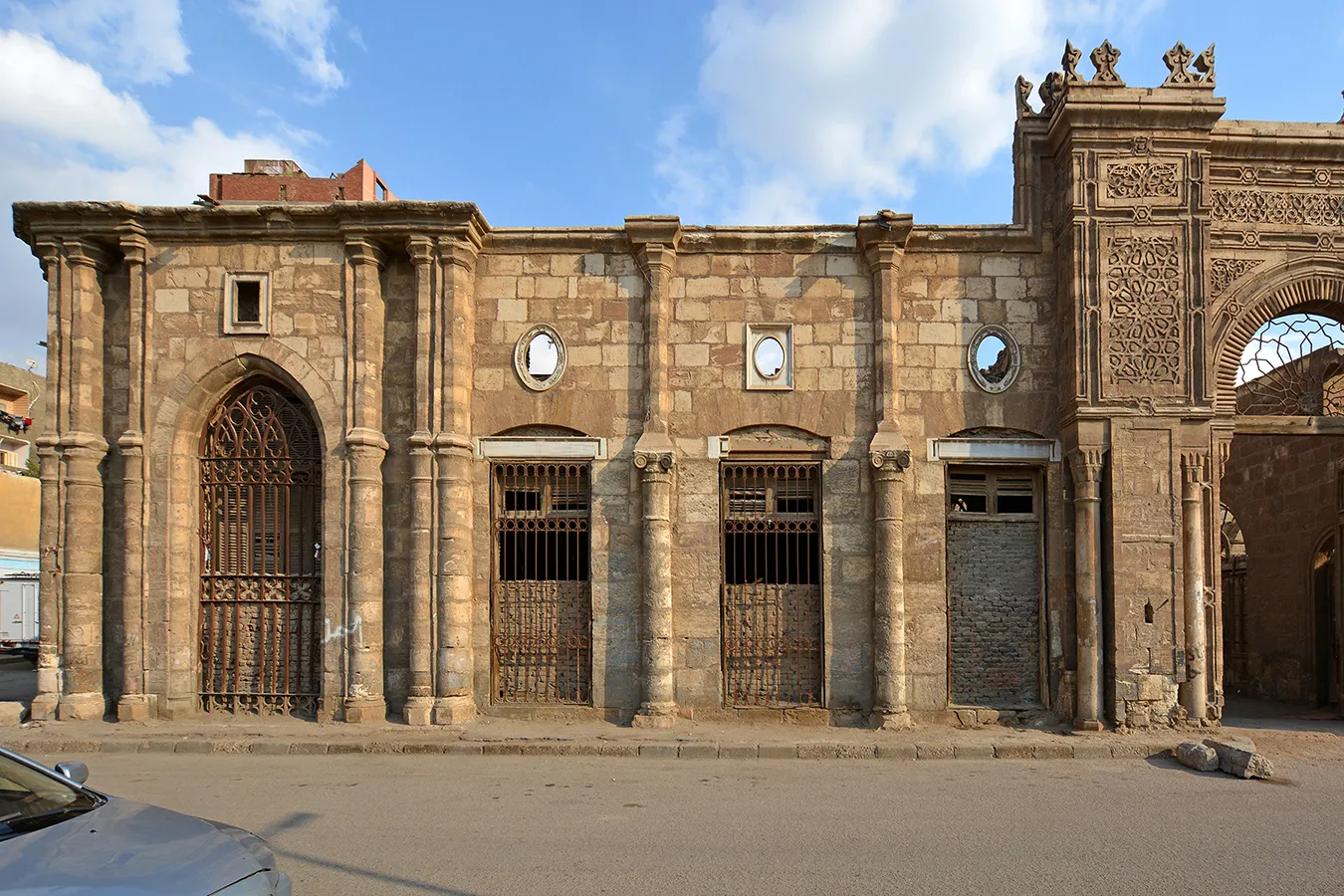
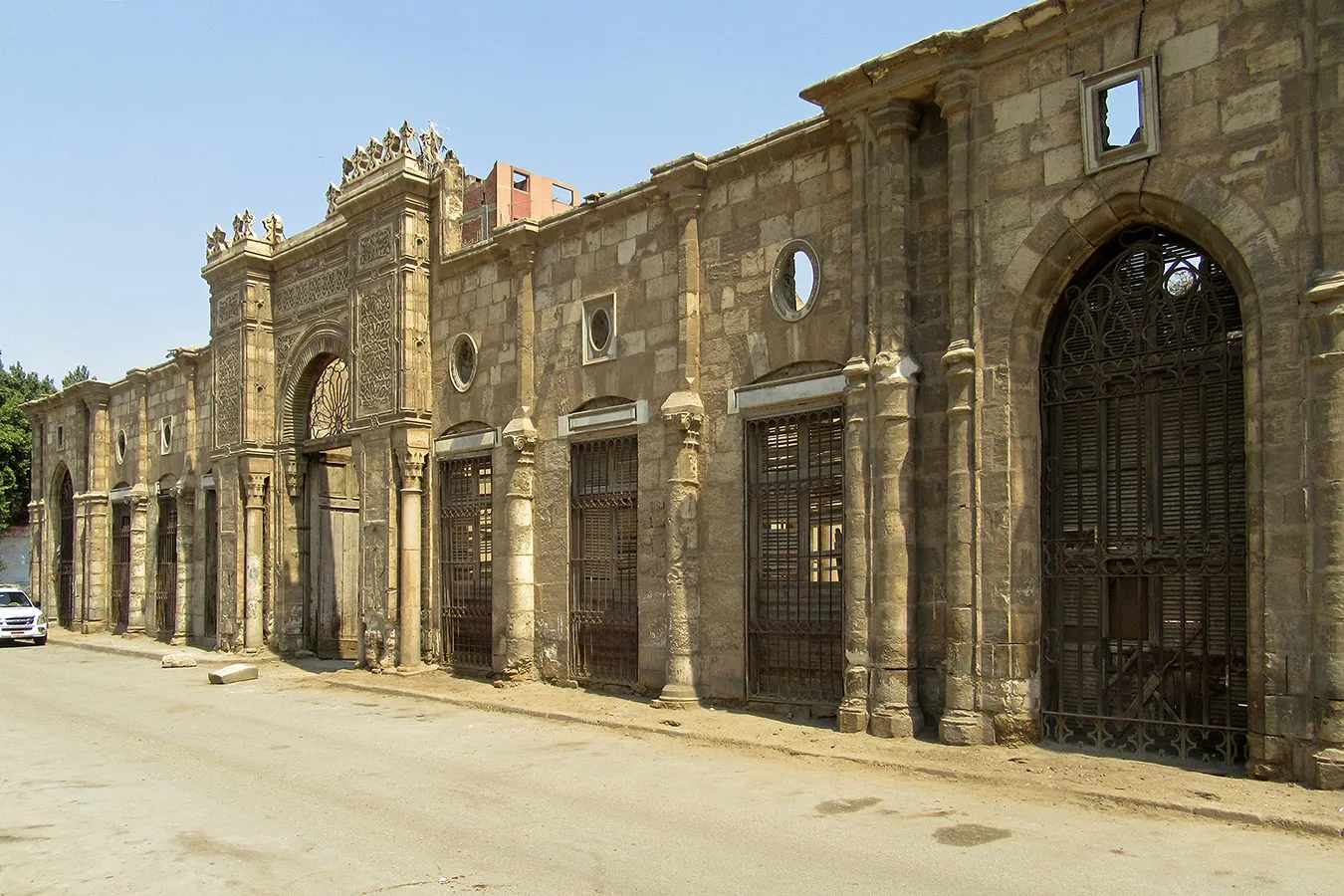
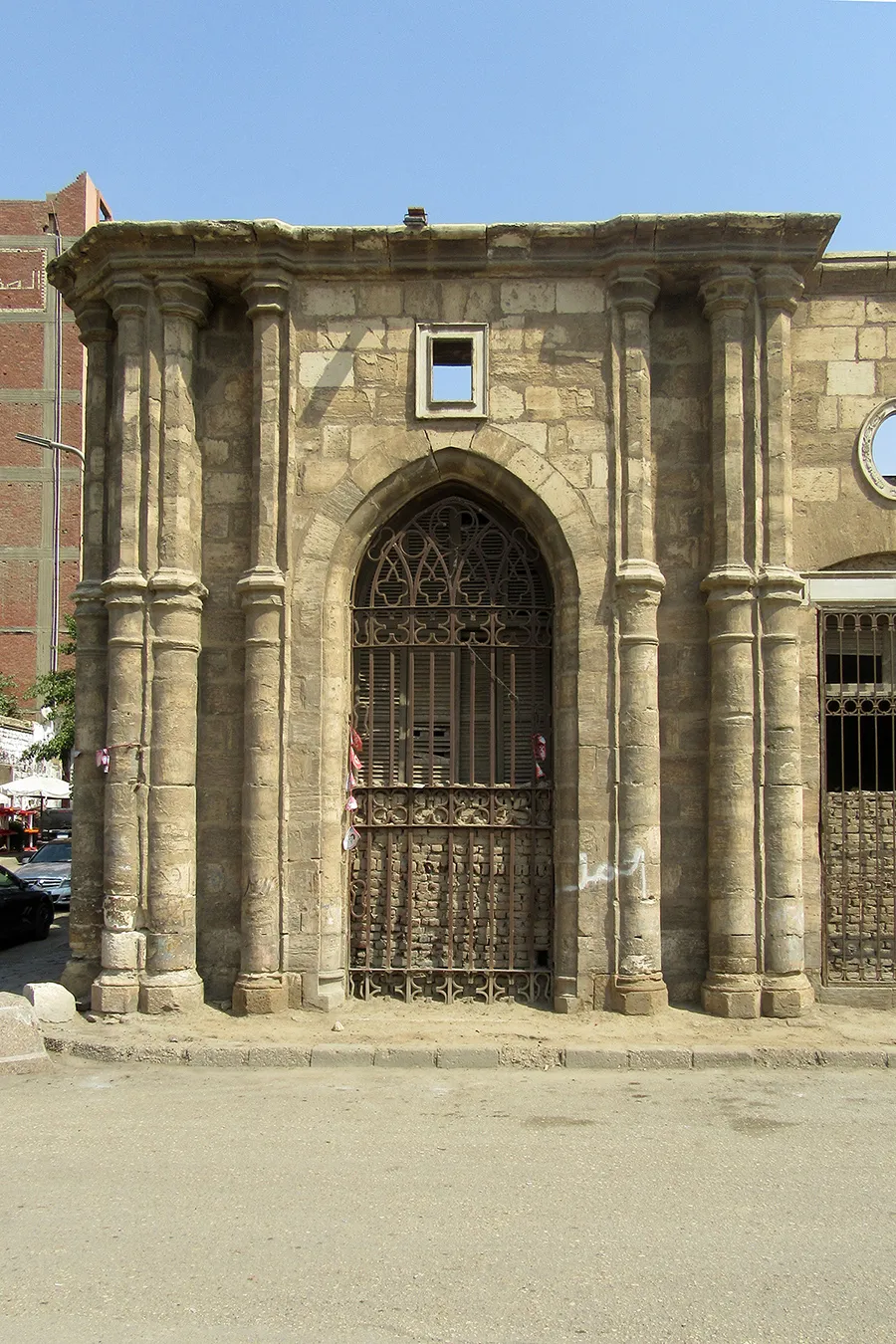
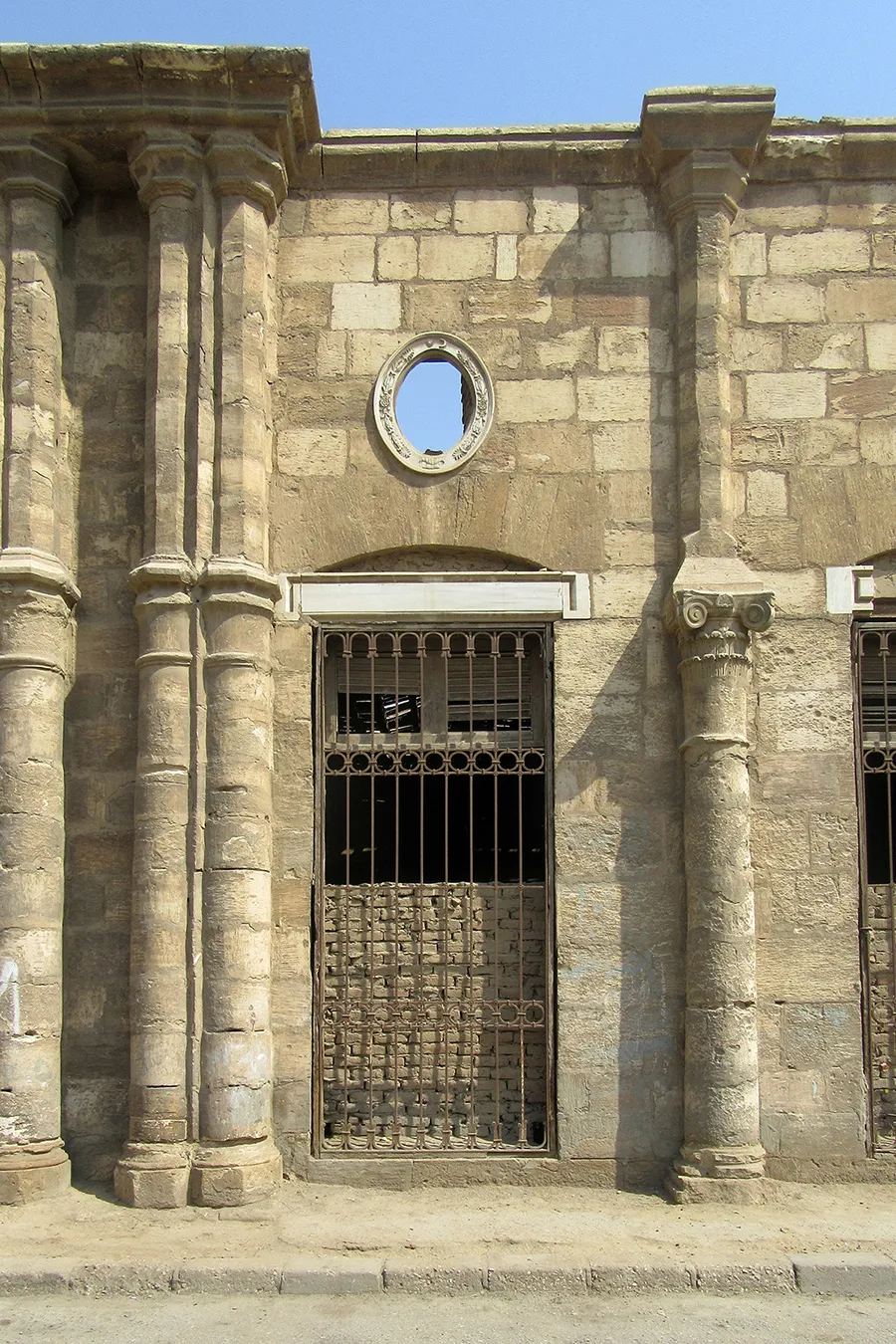
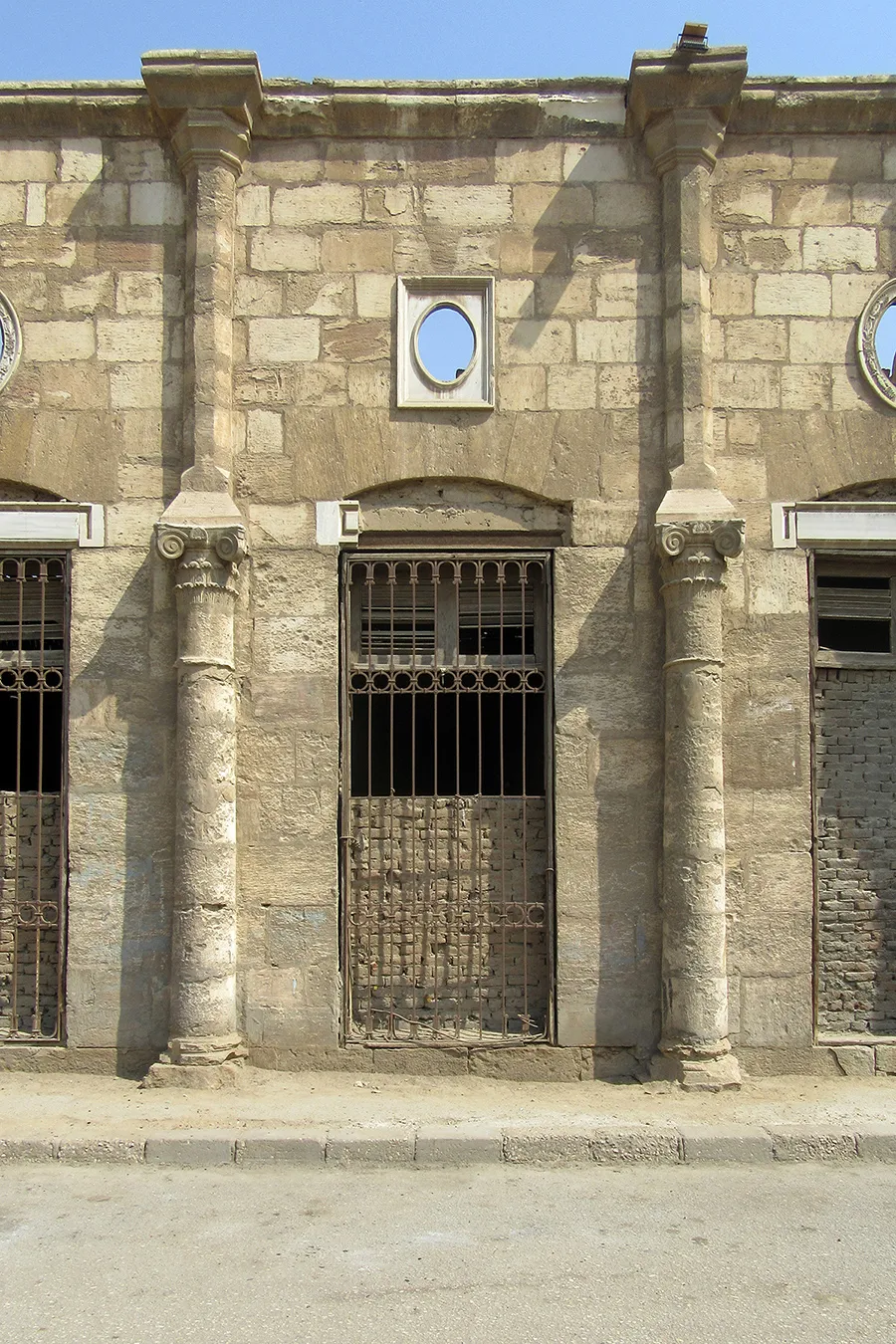
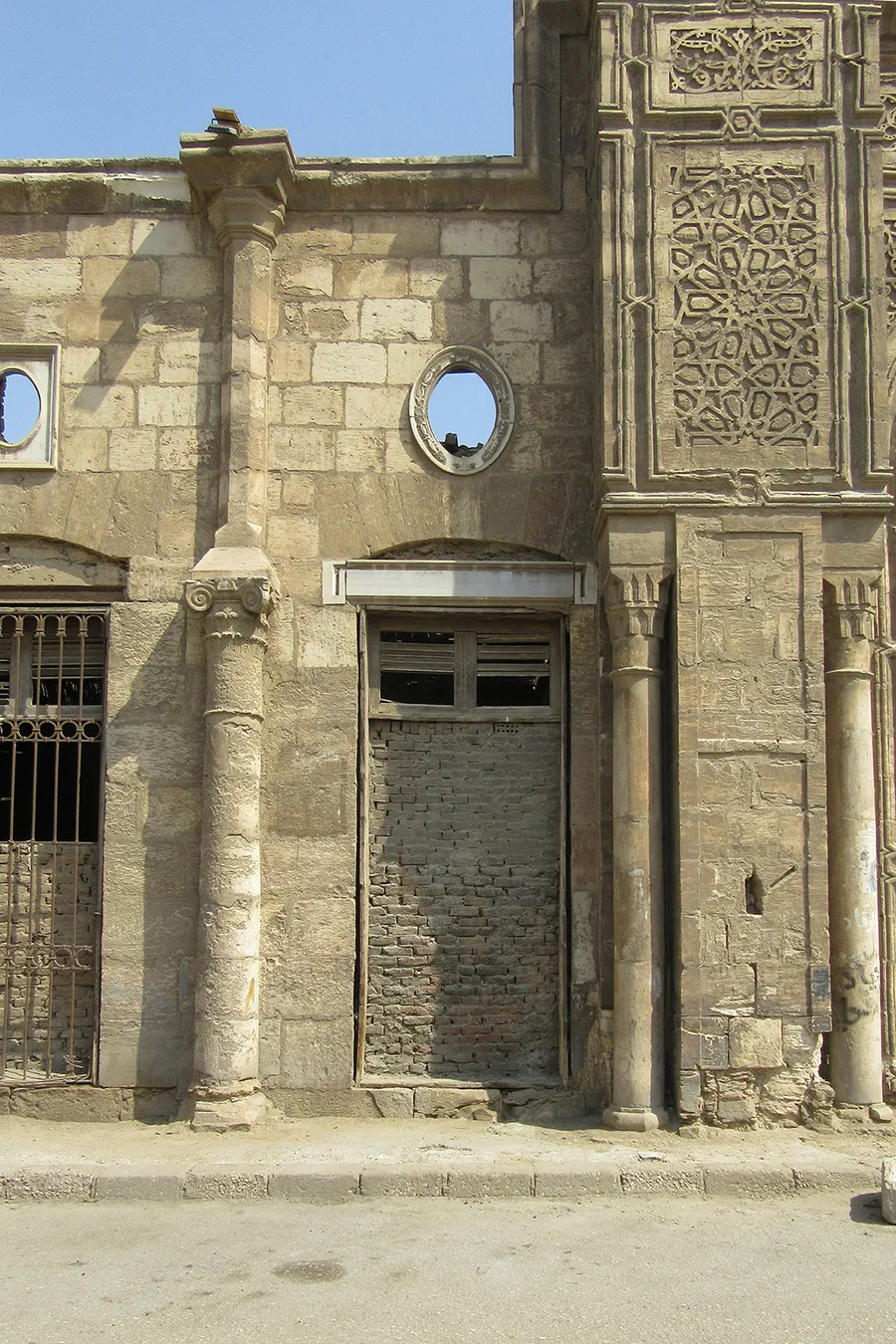
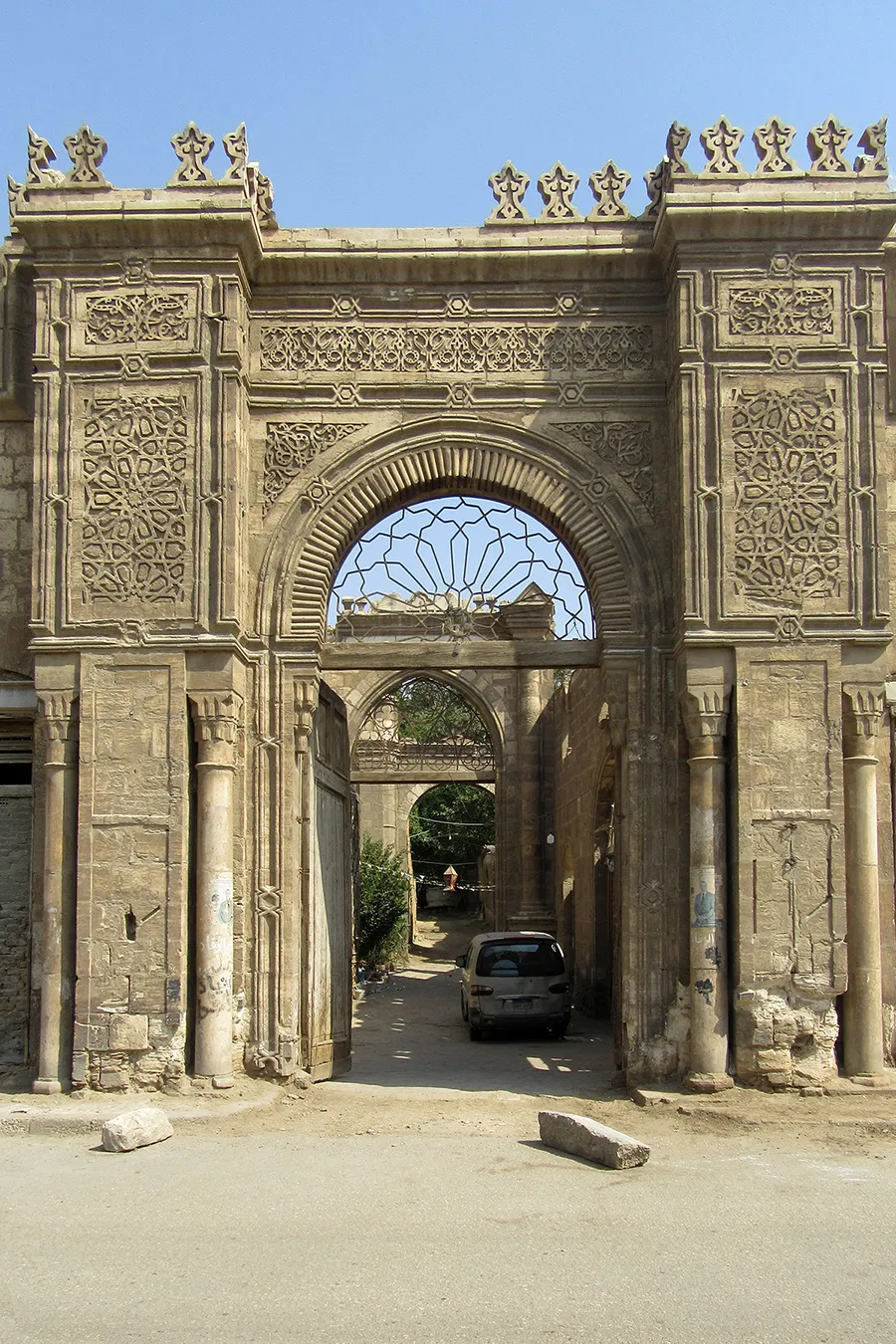
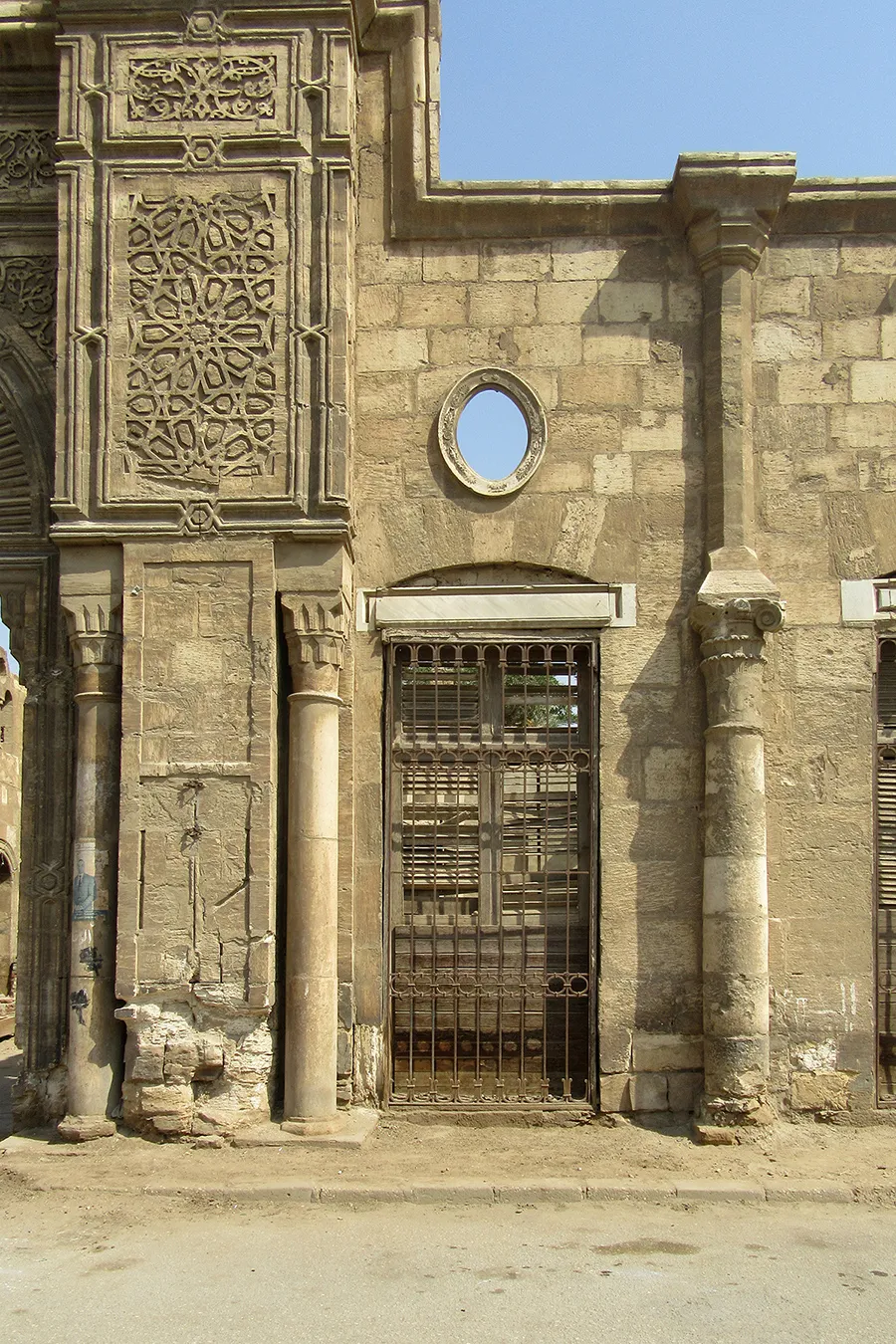
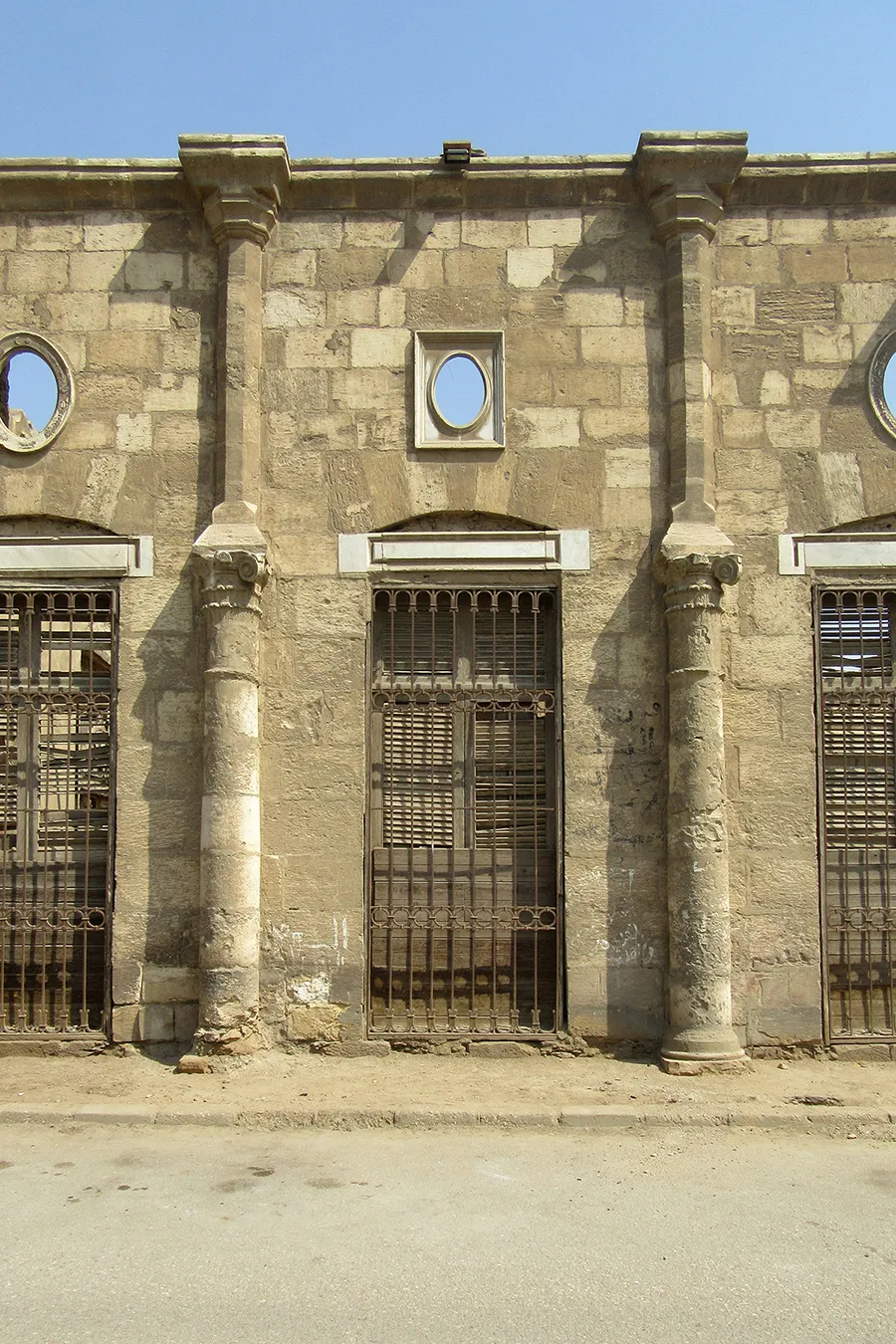
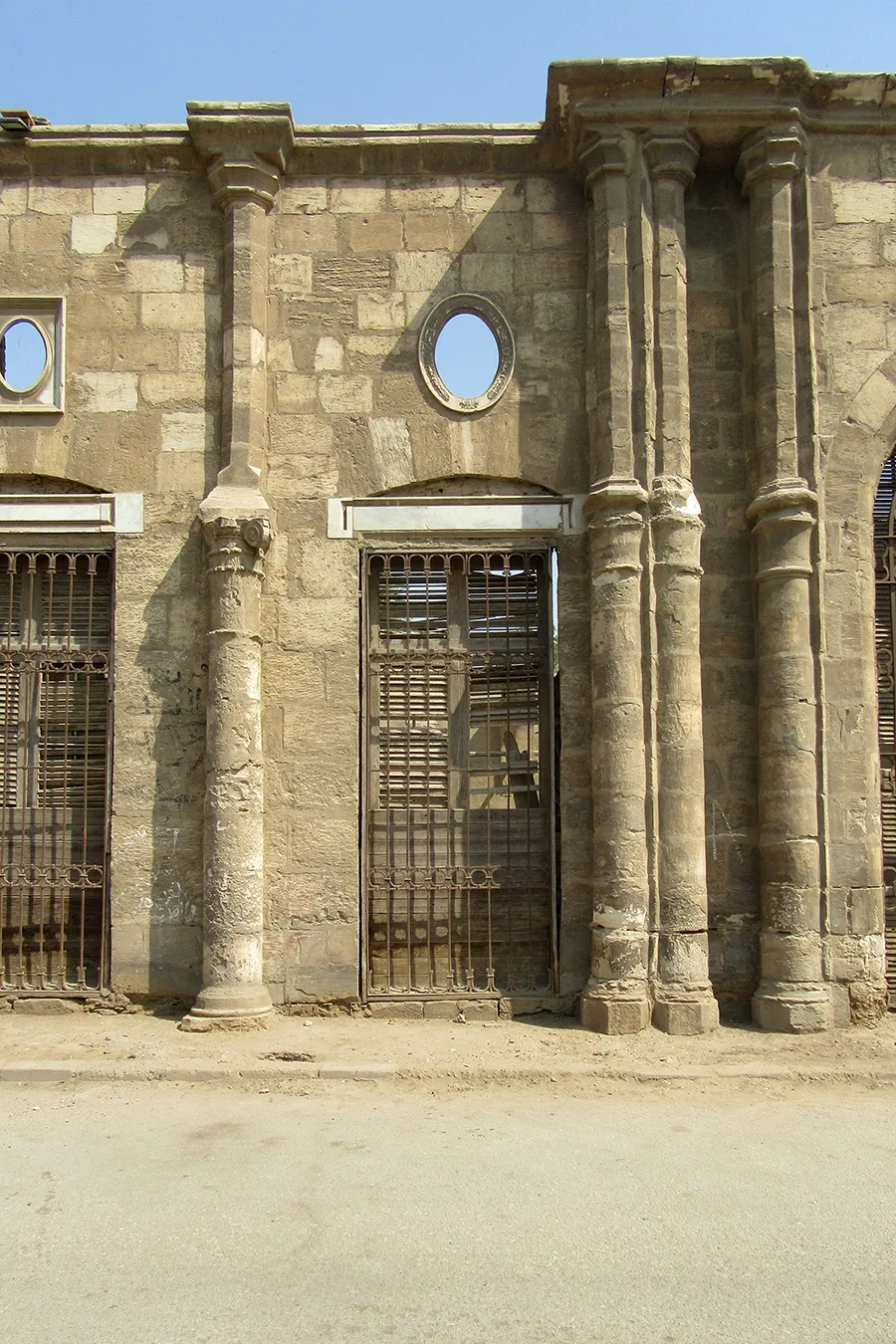
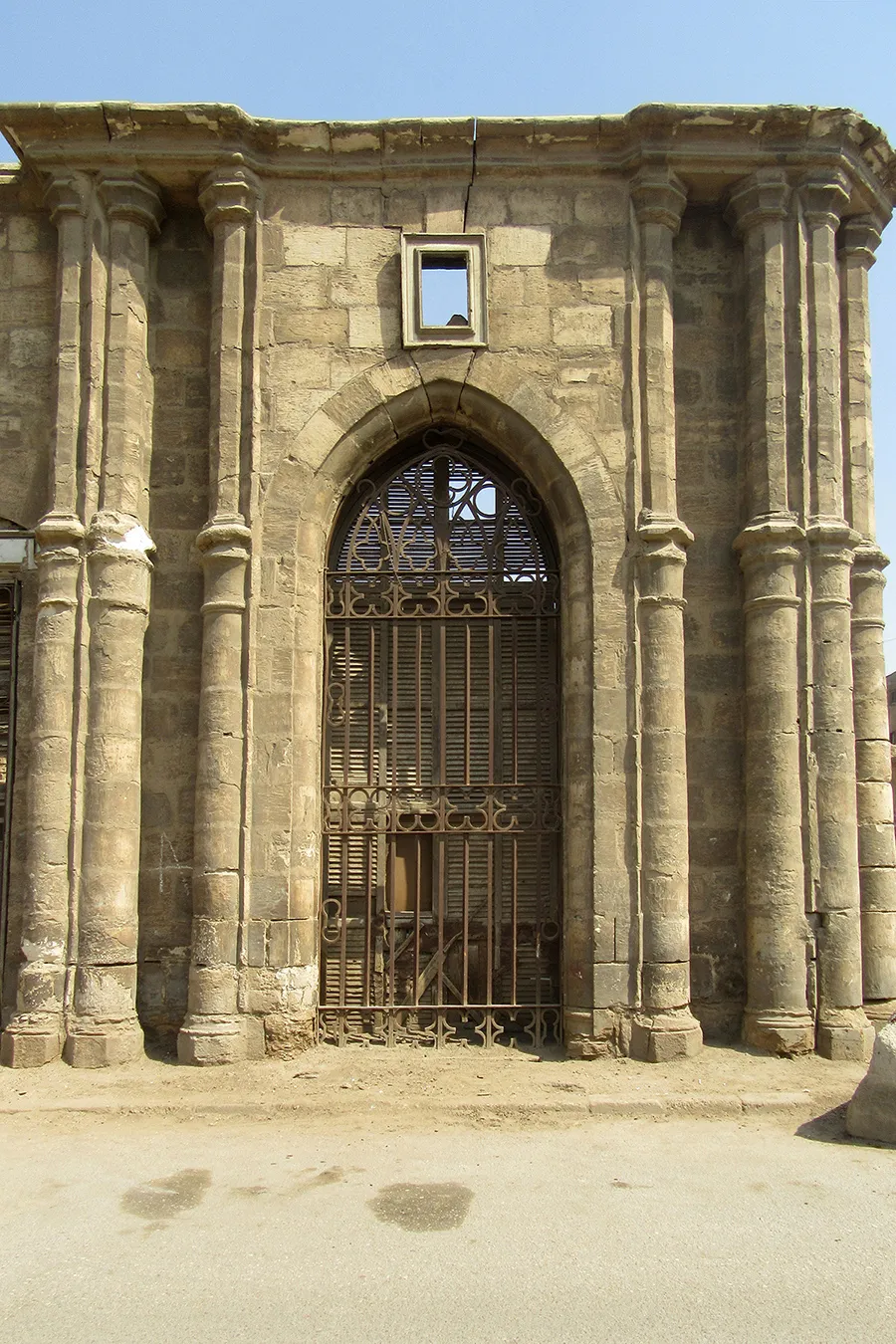
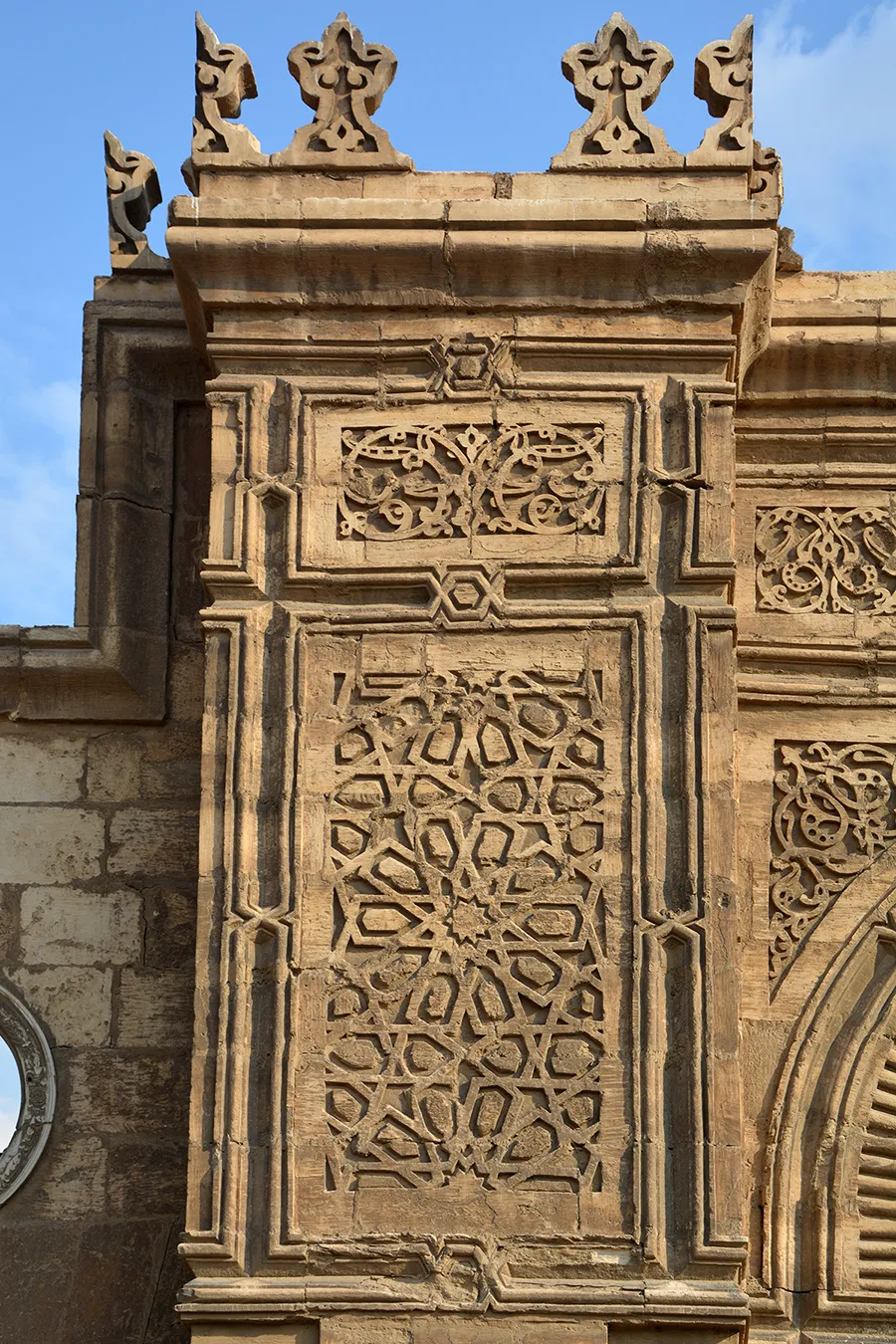
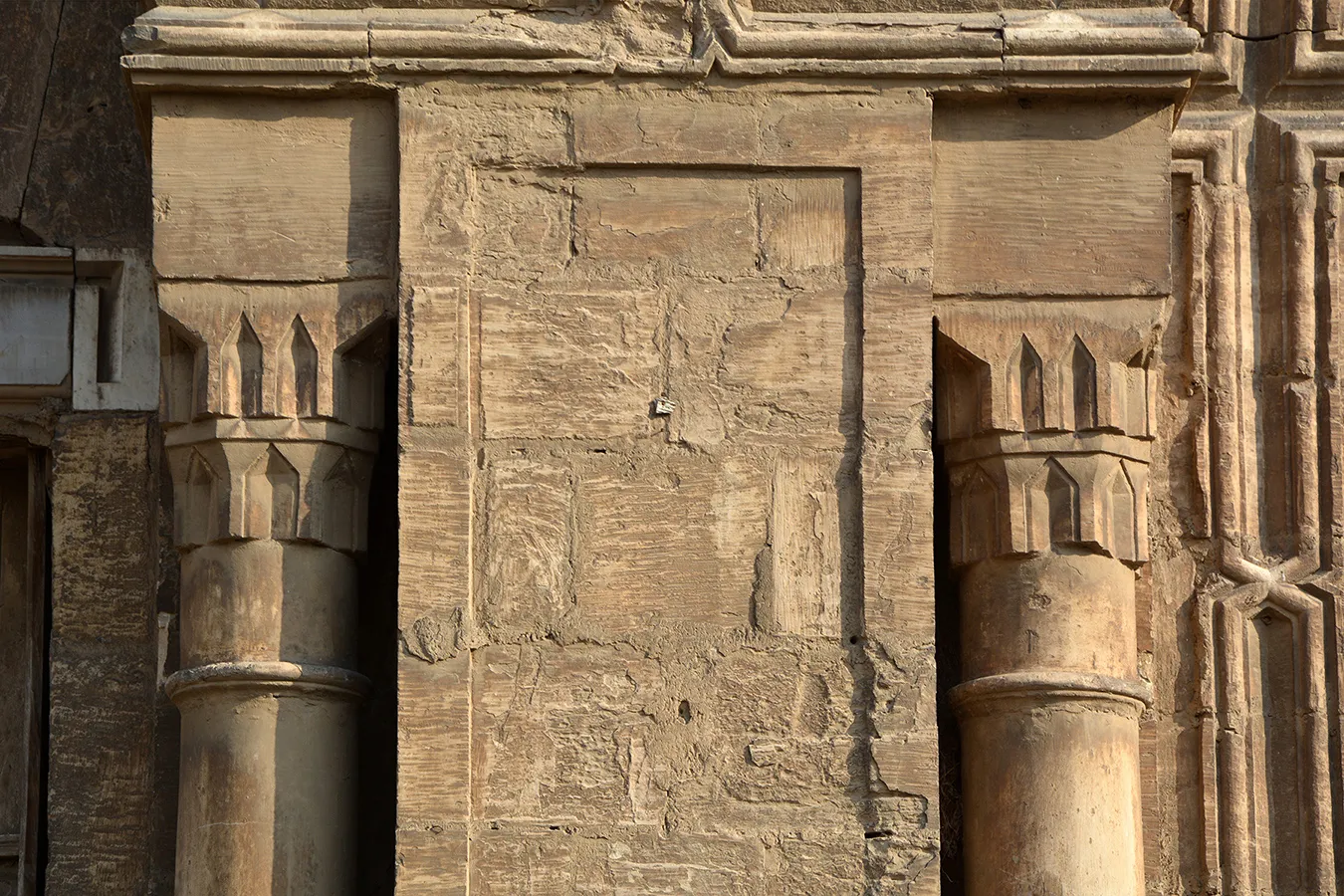
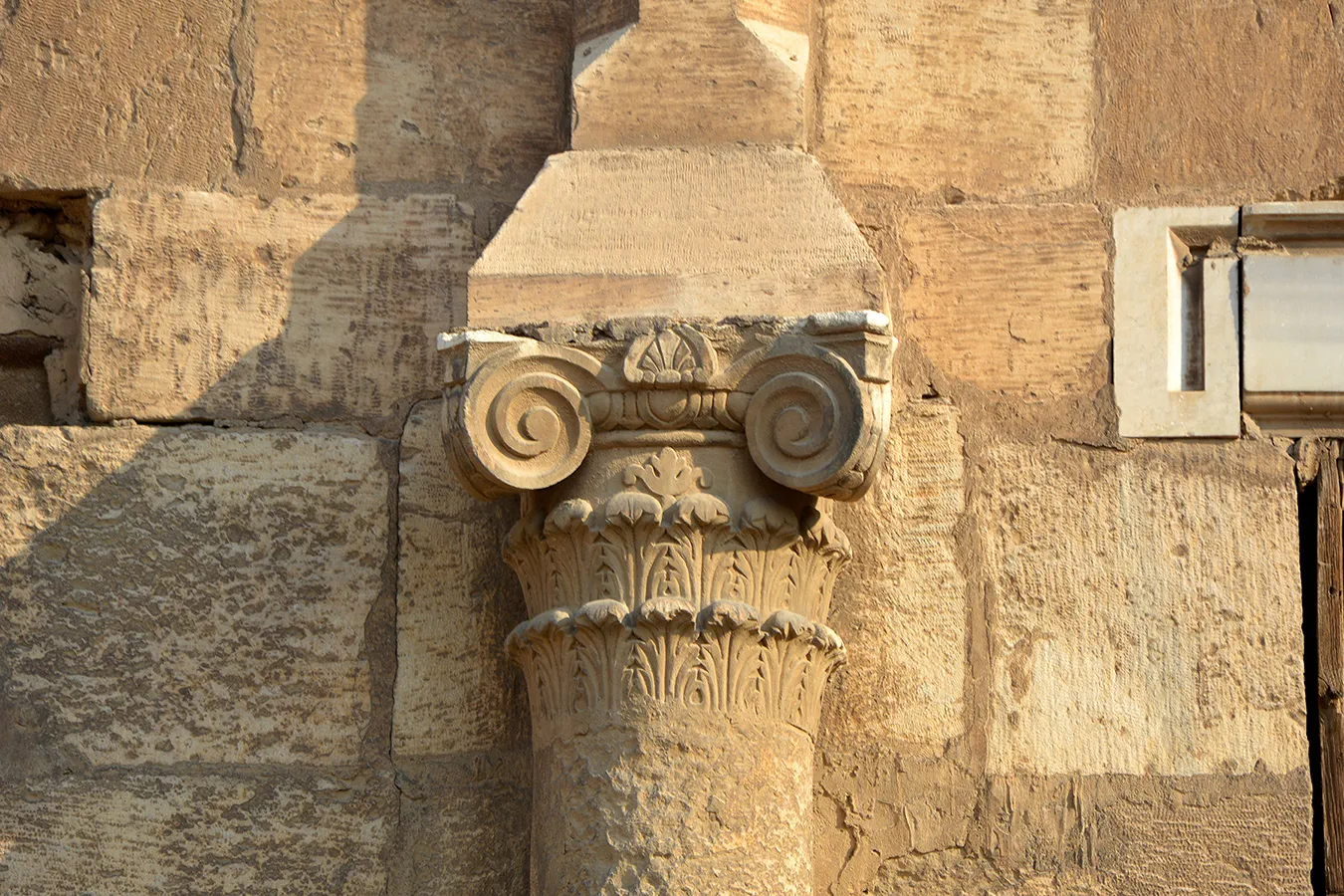
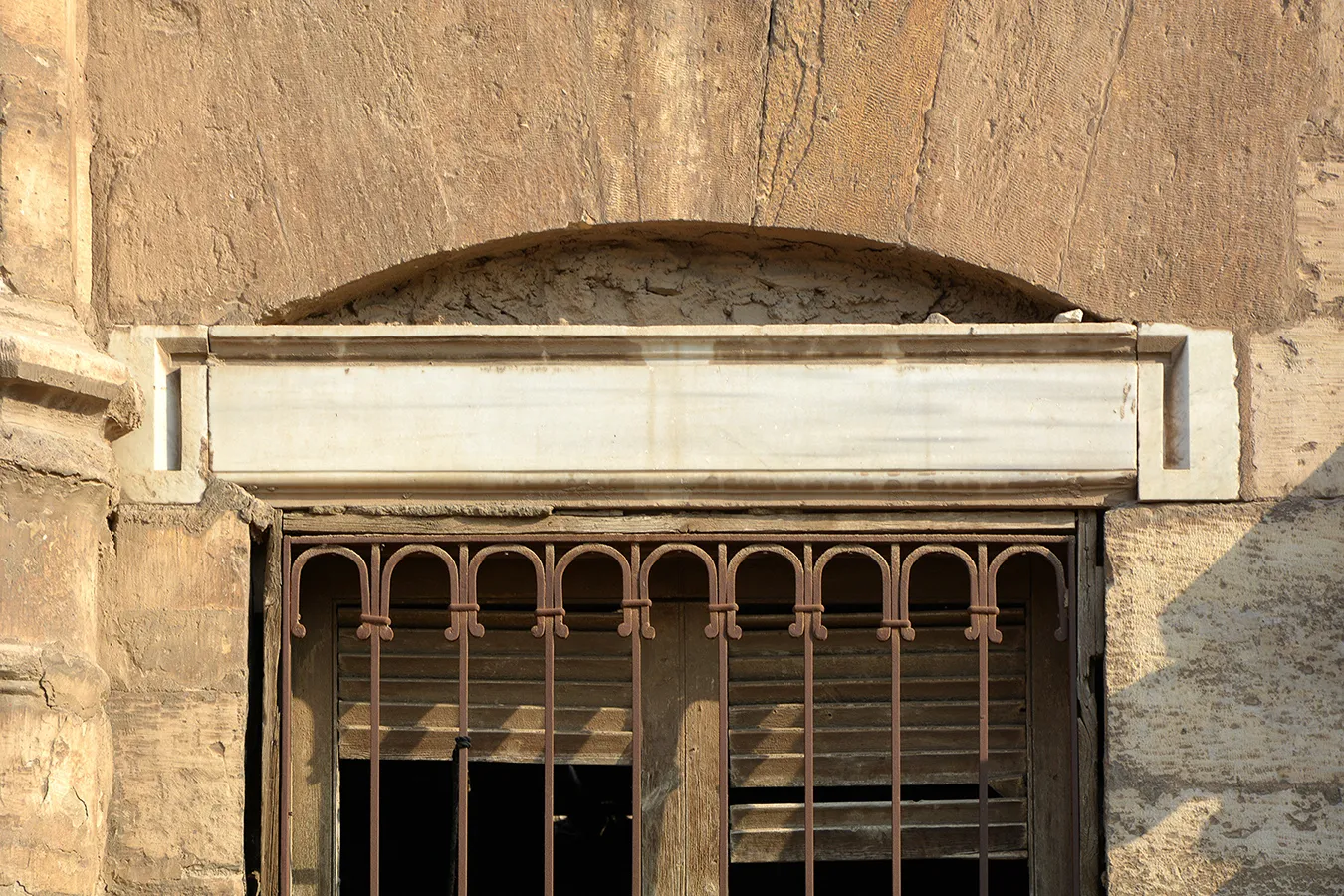
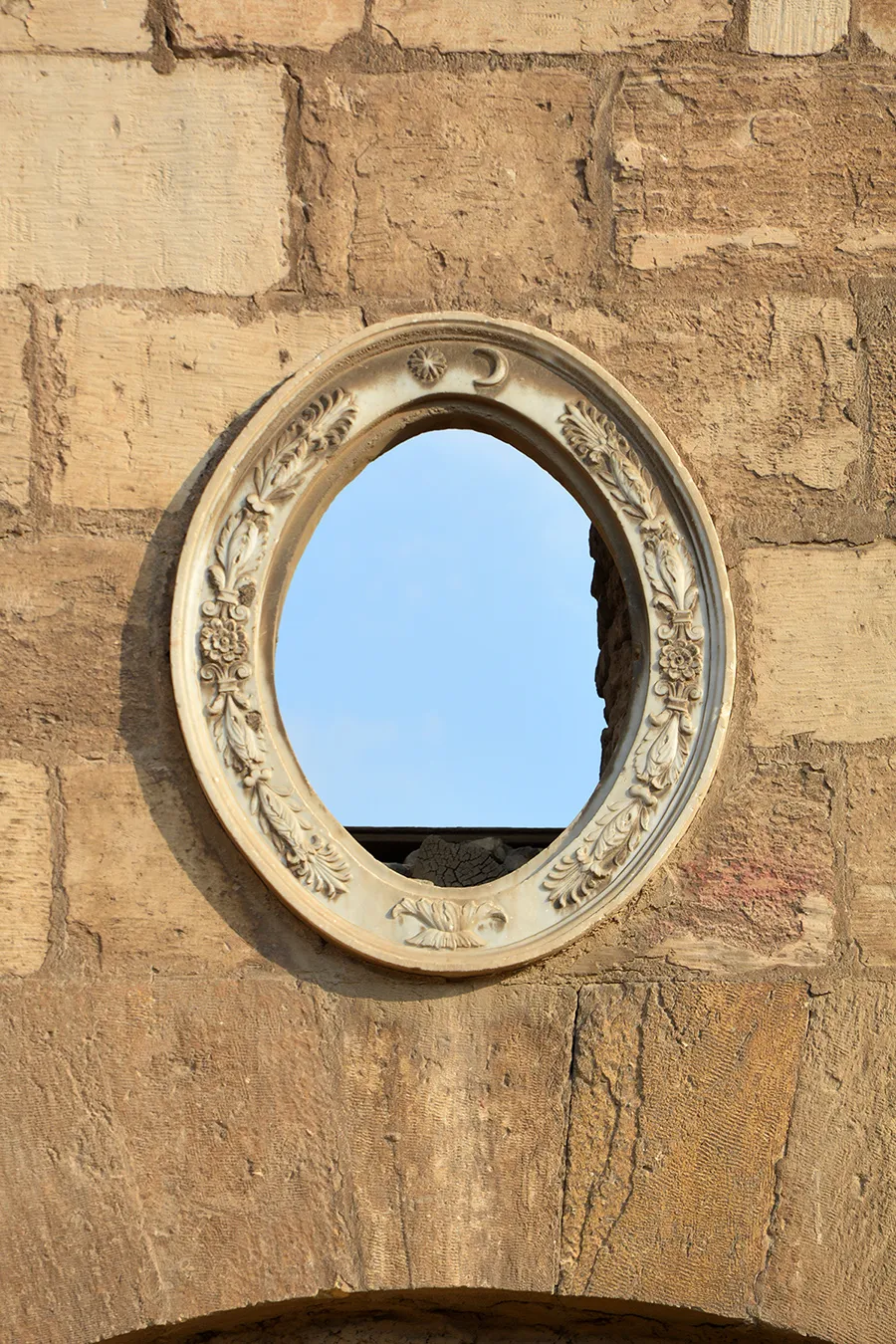
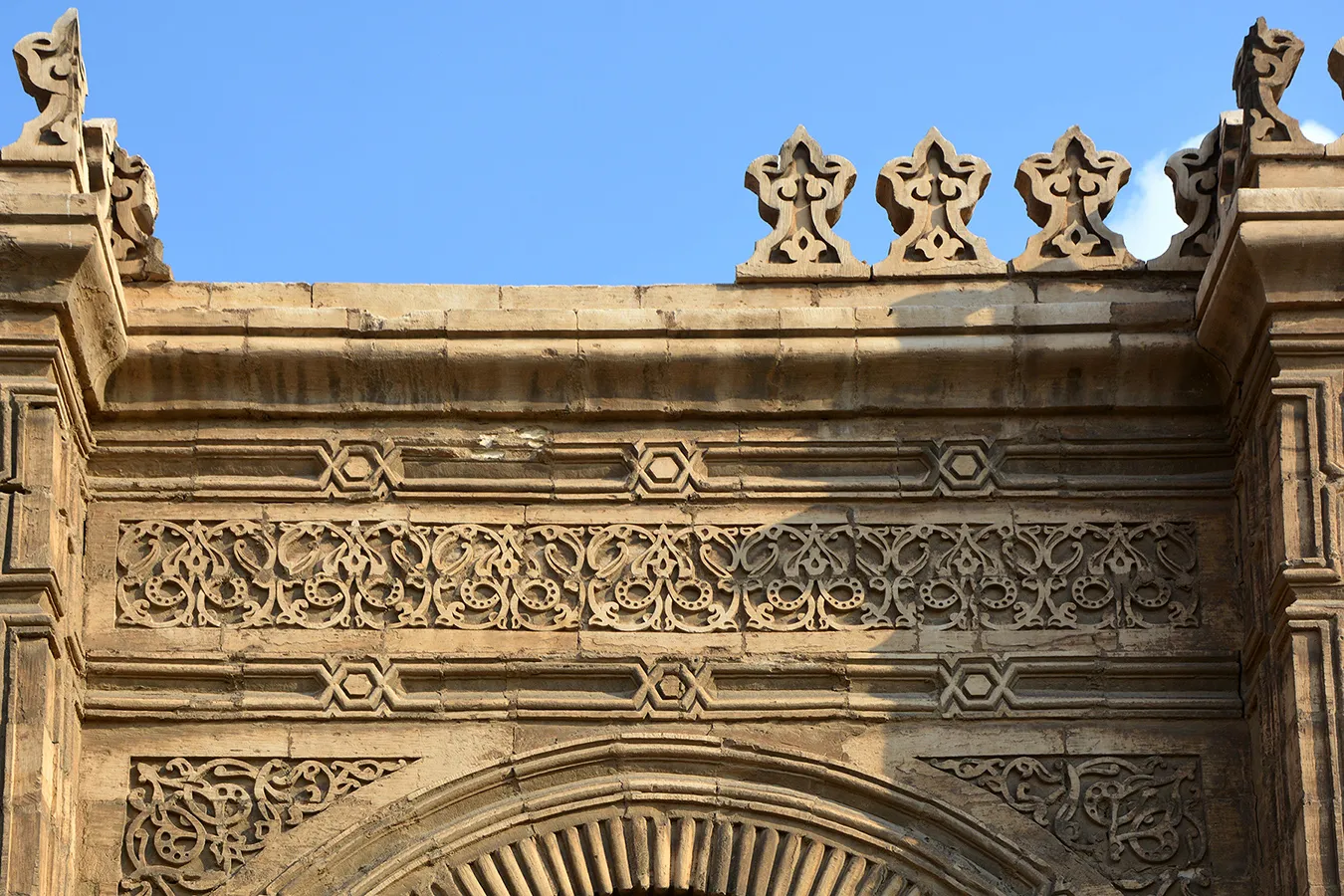
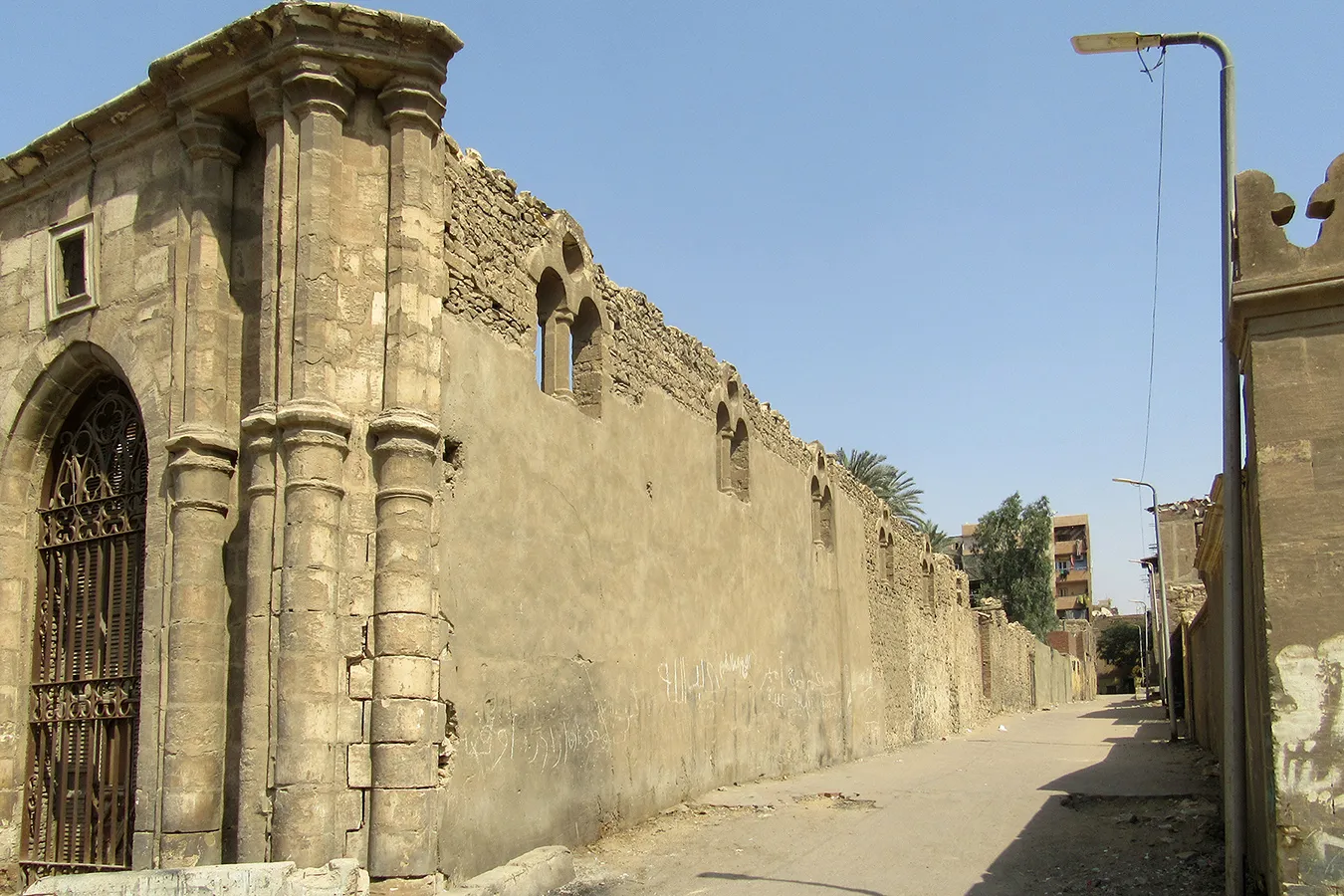
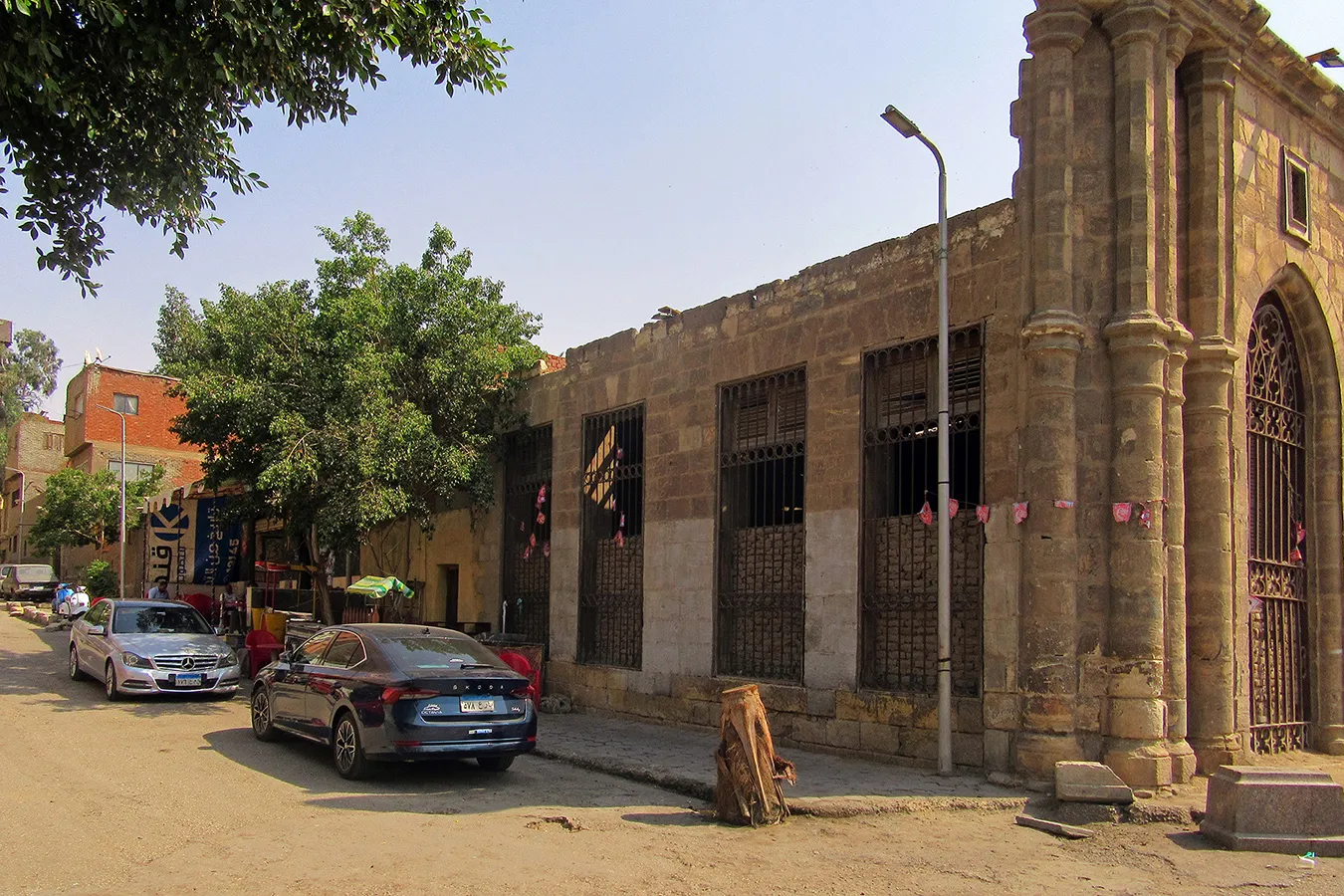
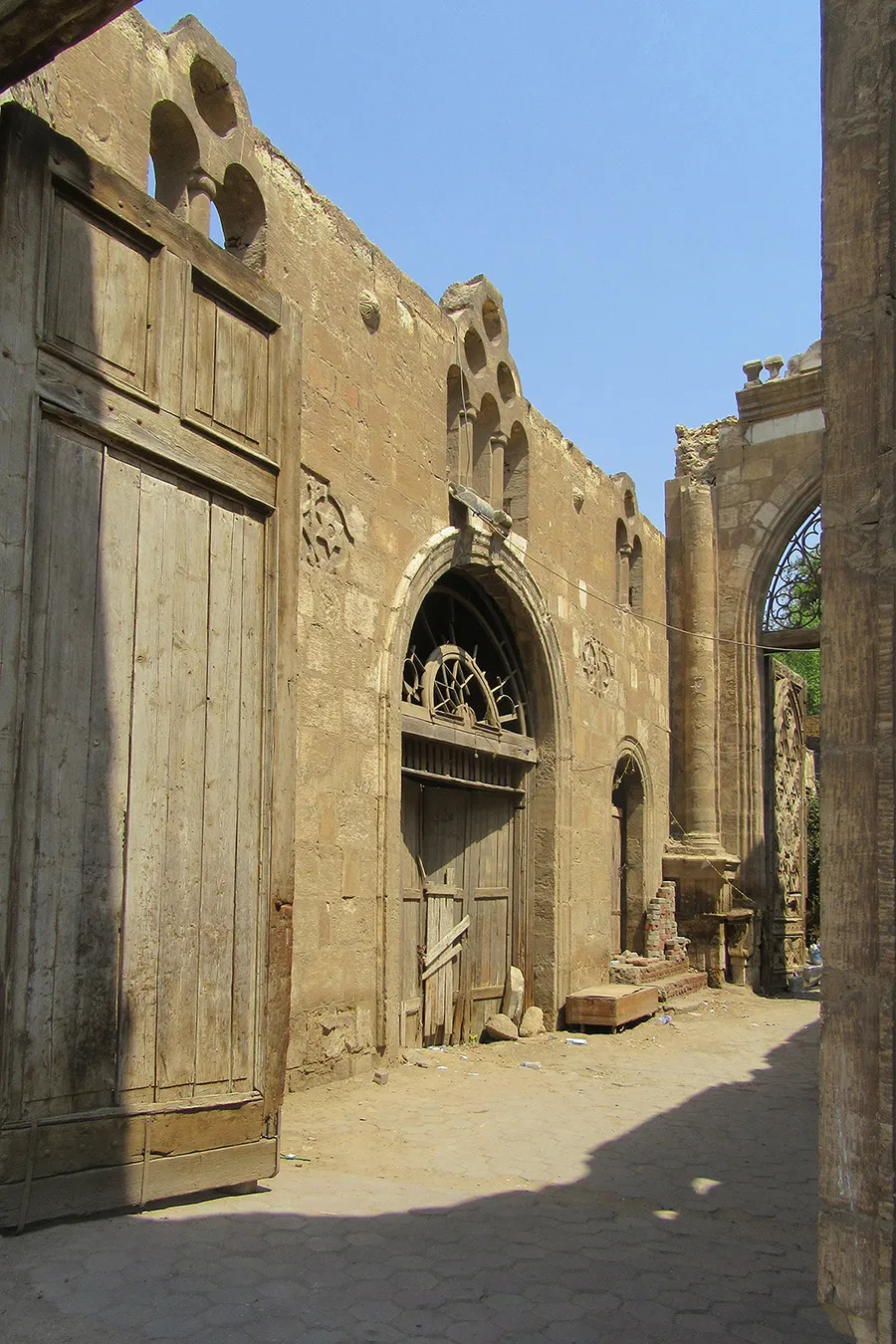
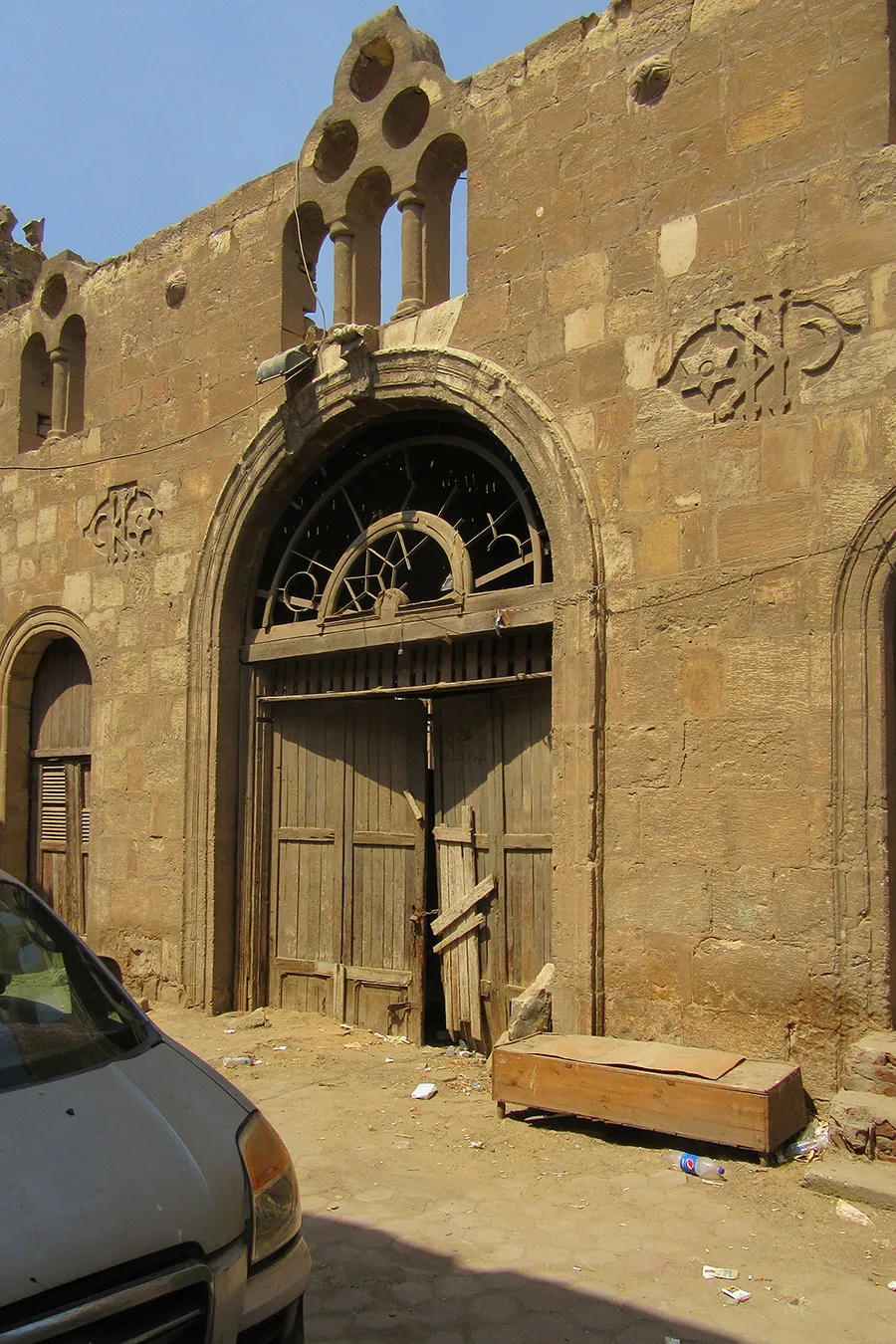
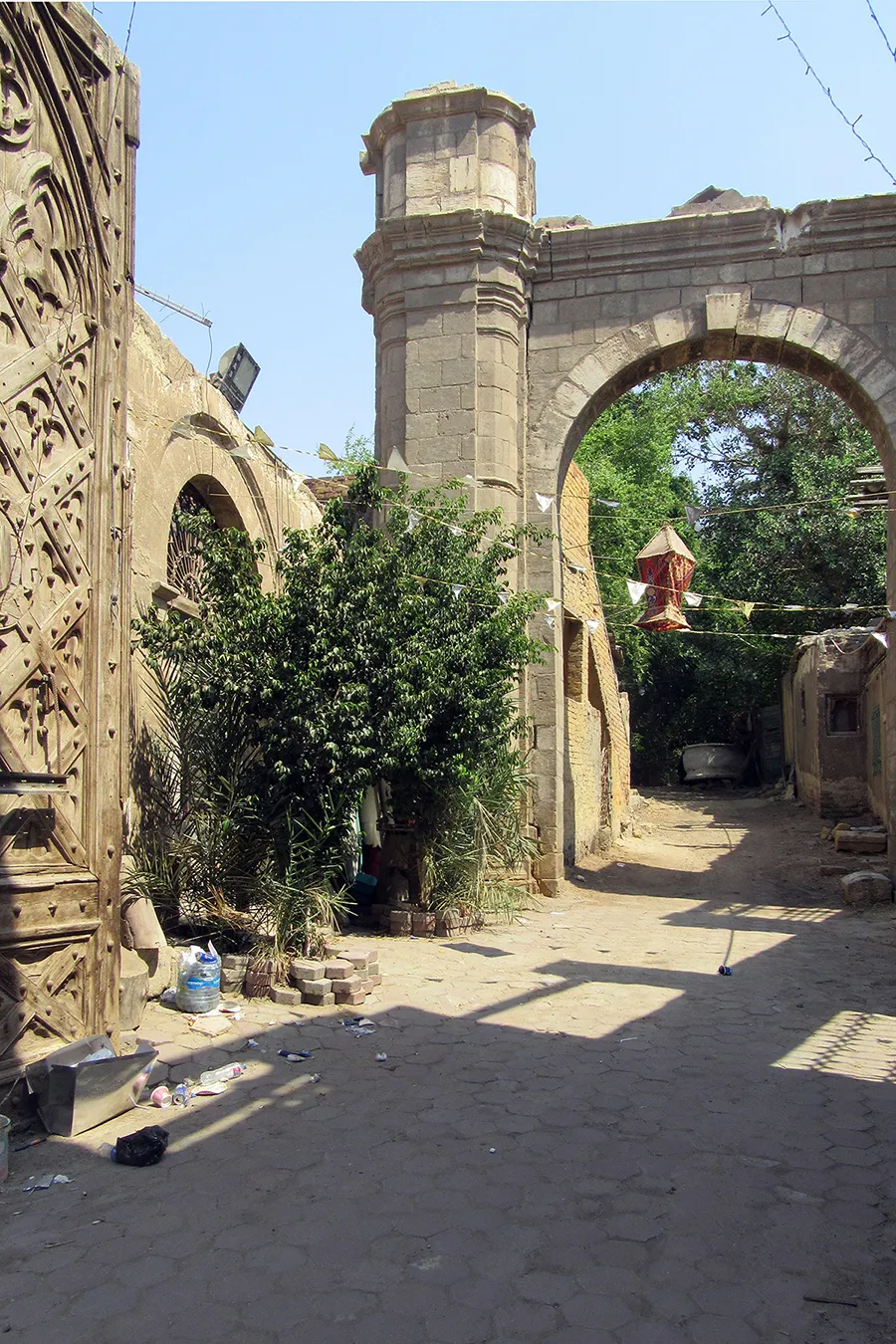
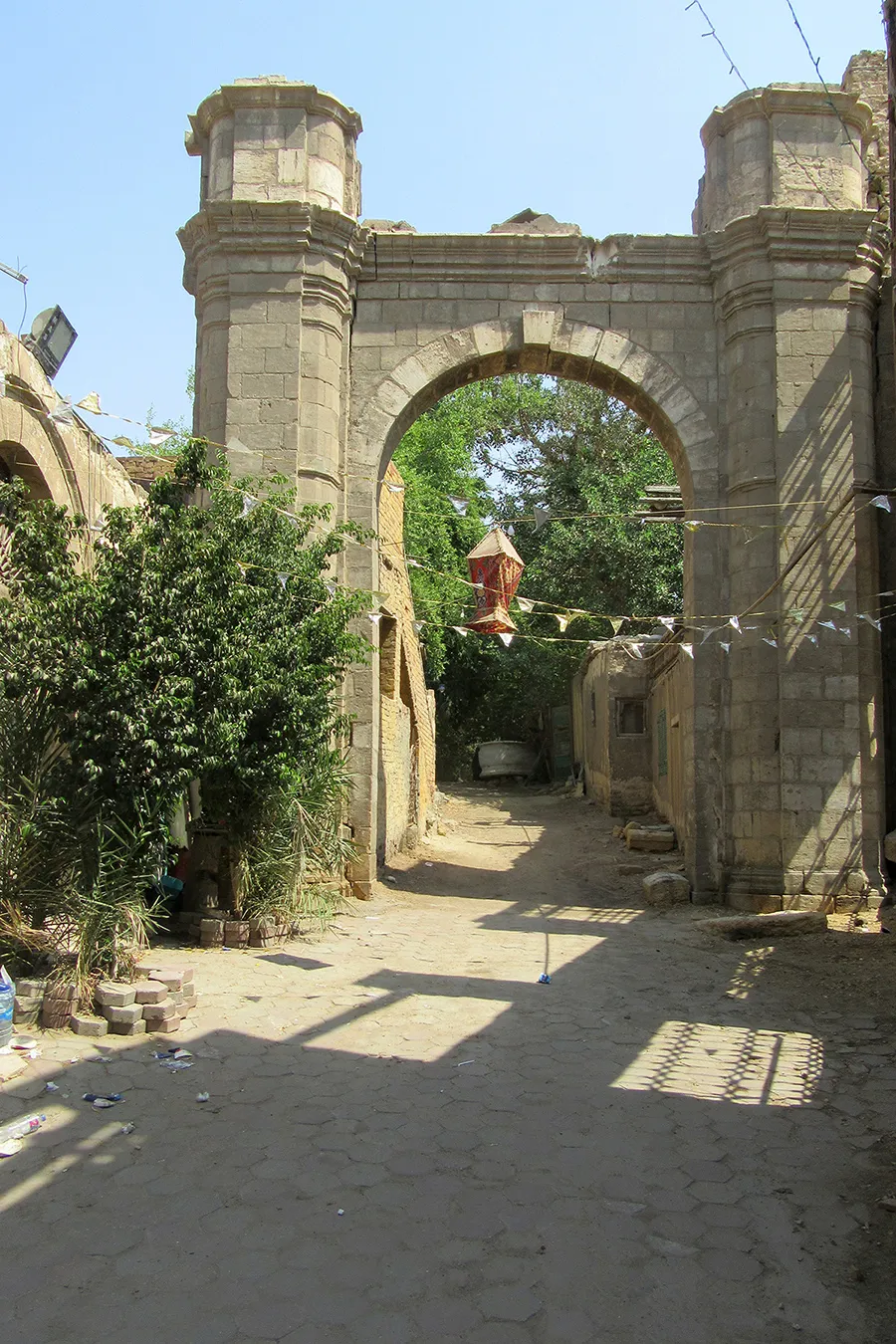
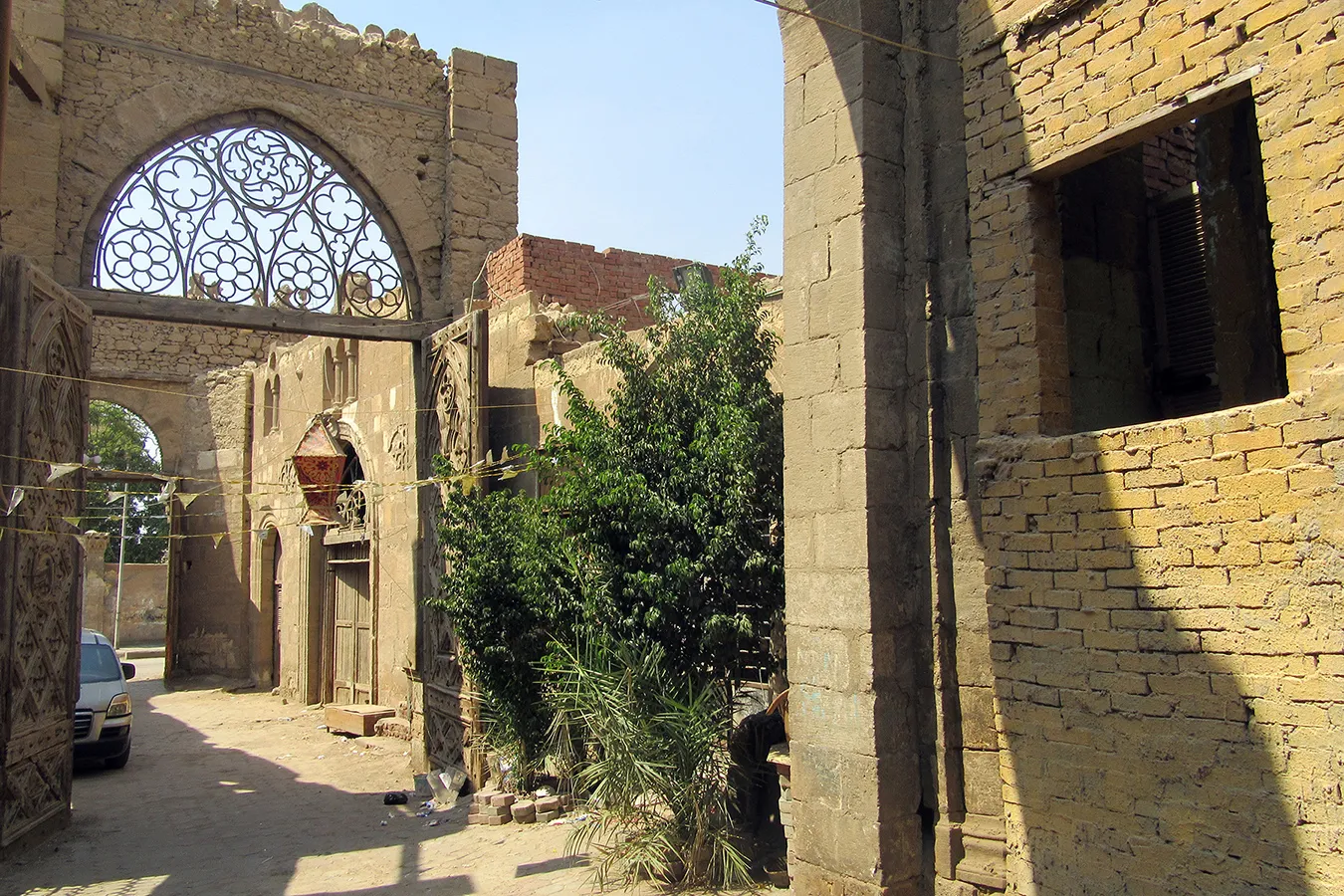
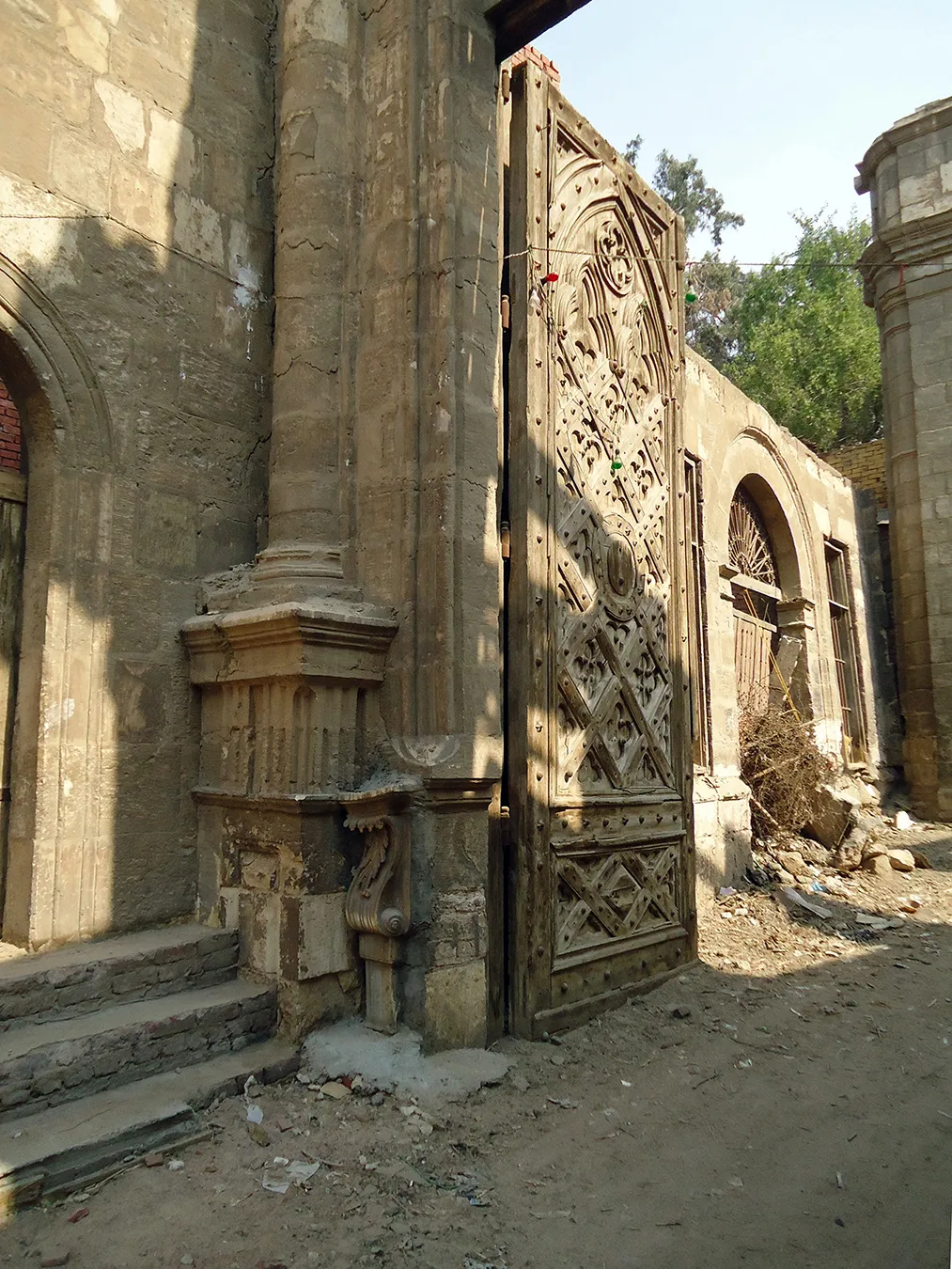
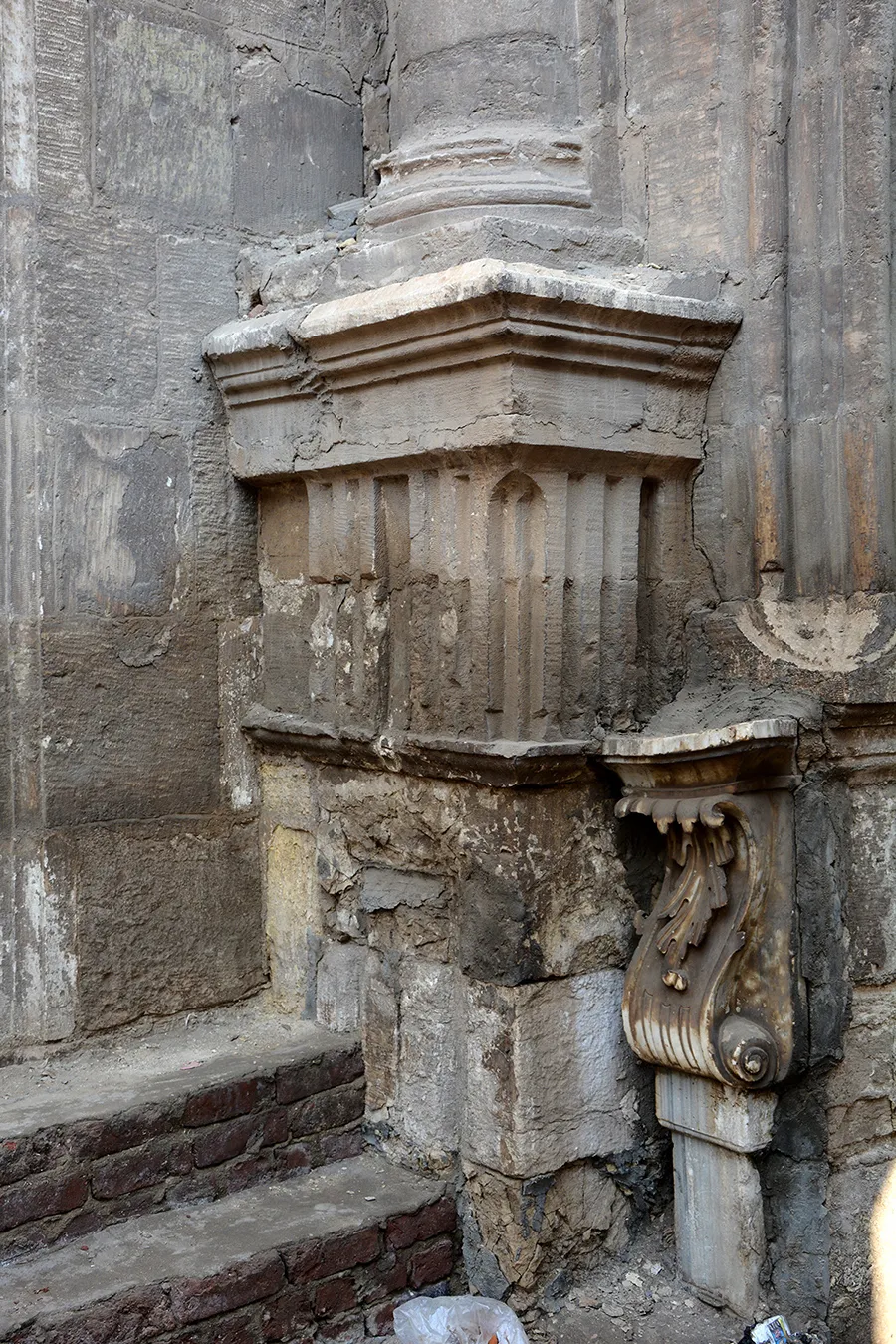
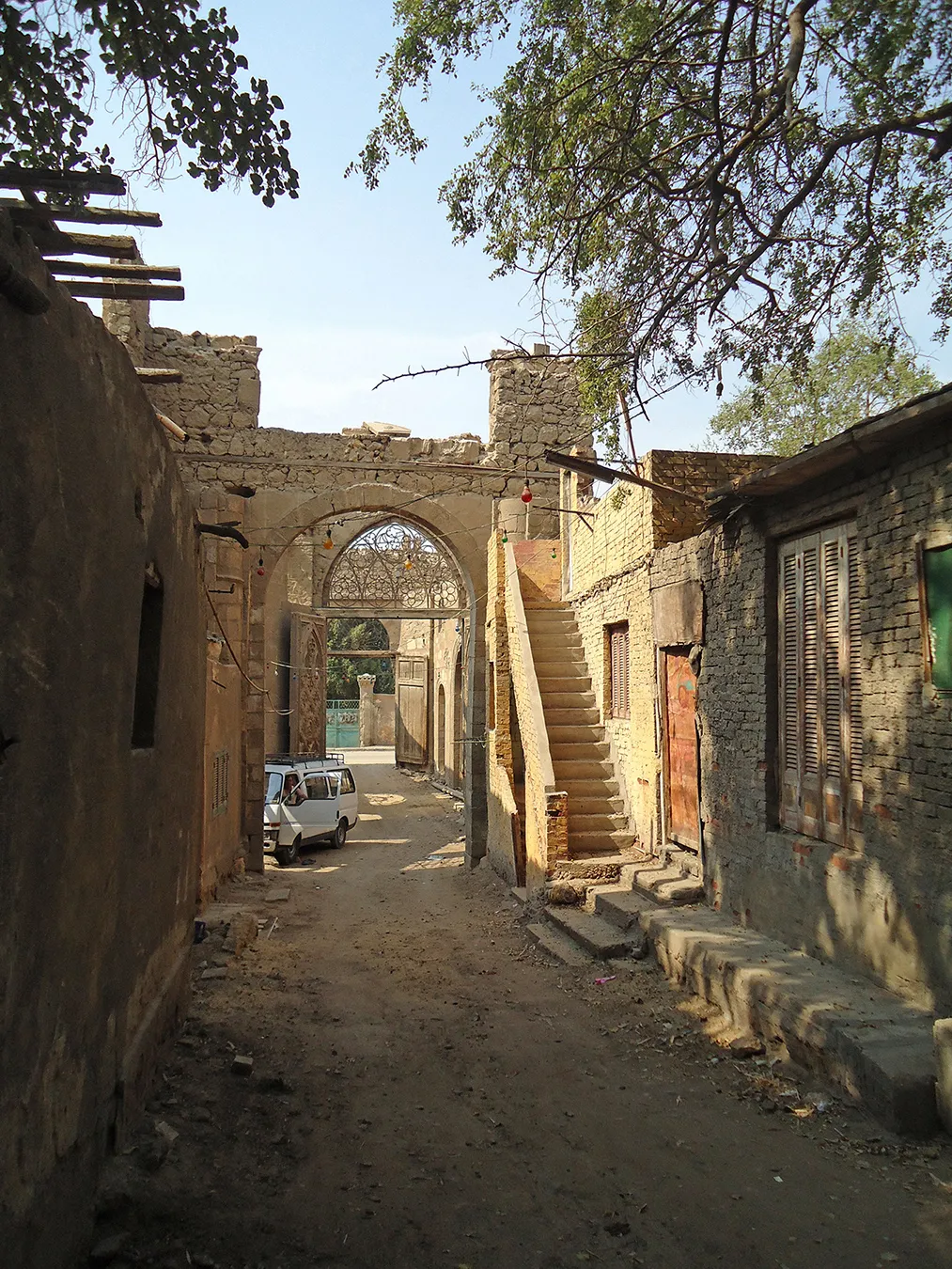
The largest and most decorated funerary enclosure documented in this research is a one-story stone-built walled enclosure, with the main entrance in the formally designed elaborate eastern façade. The façade is articulated with engaged columns in two tiers, without an inter-story cornice. The main gate is flanked by two massive buttresses with engaged corner columns topped with Islamic-style geometric capitals in the lower story and panels of geometric pattern above, which –like the gate itself– are framed in knotted mouldings. The gateway section is taller than the rest of the façade, topped with elaborate fleur-de-lys crenelations, and is the only section of the façade clearly based on Islamic architectural tradition. On both ends of the façade are flat projections framed with triple engaged columns, each with a tall pointed-arch window and a small rectangular marble-framed window above. The sections of the façade between the gateway and the side projections are each divided into three bays by engaged columns: round and with composite order capitals in the lower tier and semi-octagonal with simple geometric capitals in the upper tier. Each bay has a large rectangular window in the lower level with a marble lintel and a segmental relieving arch above it, over which is placed a smaller oval window in marble framing, those in the central bays having the oval window within a rectangular marble frame. (The façade therefore gives the impression of a double-storied building, while in fact behind it are single full-height halls.)
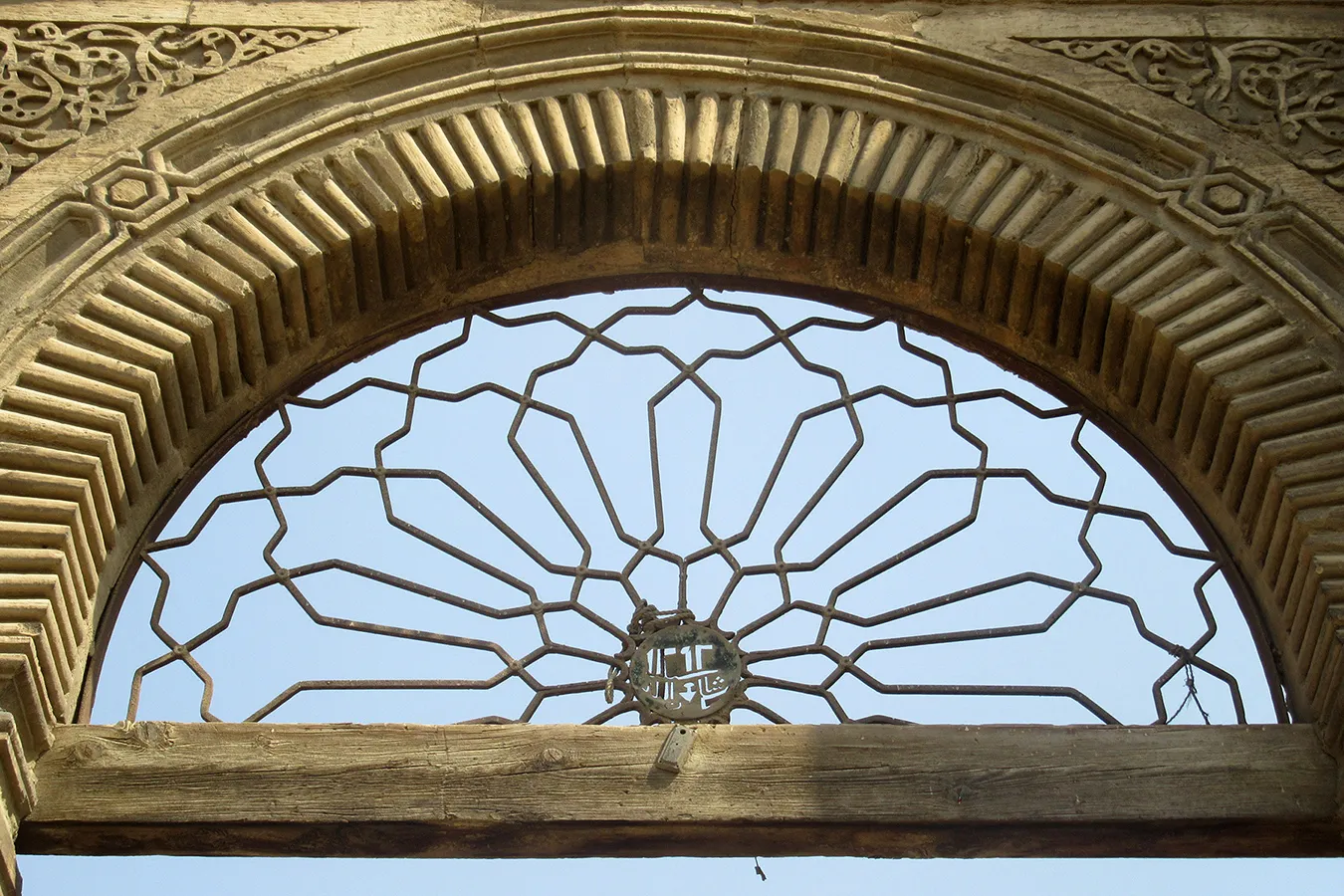
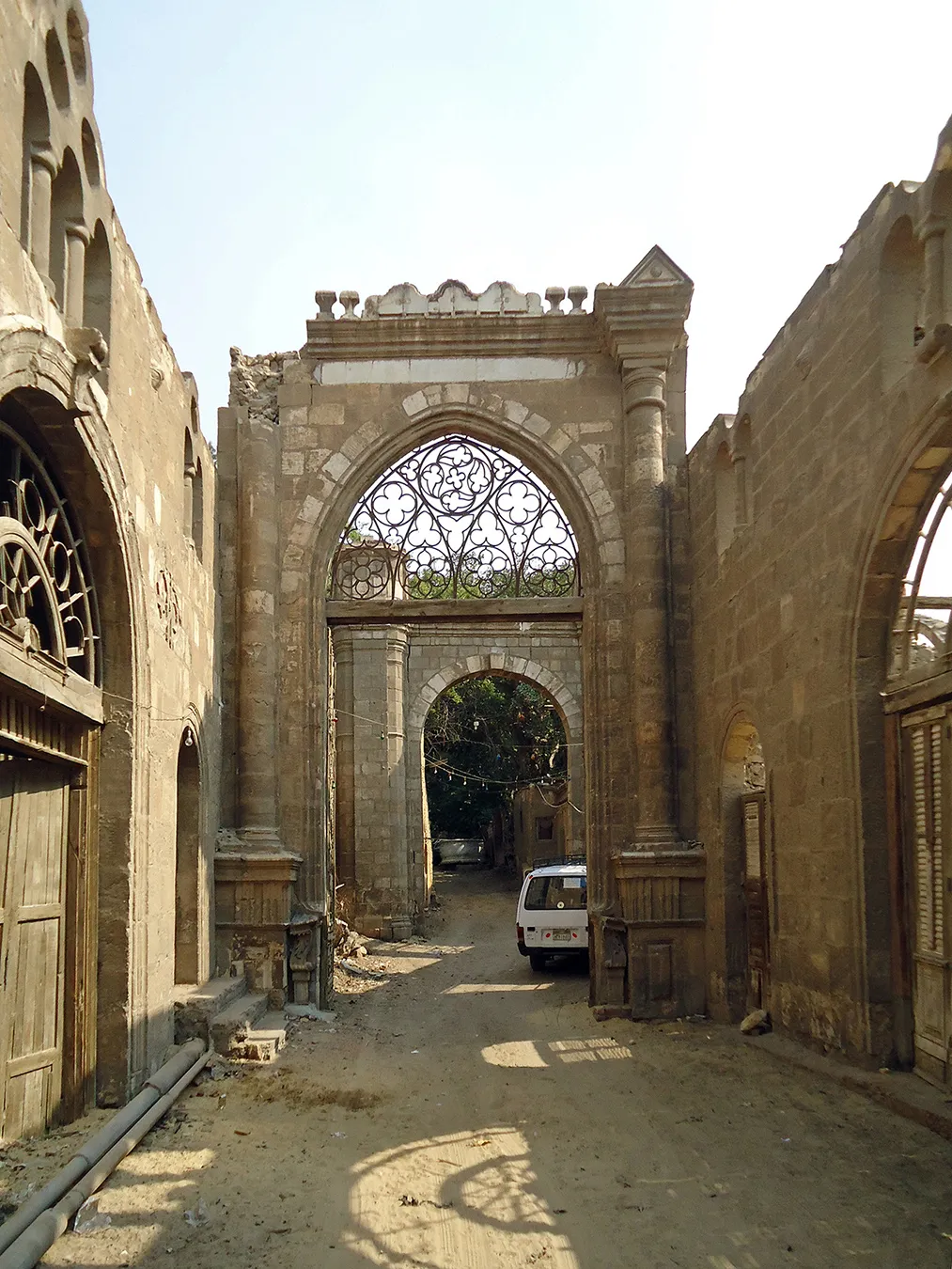
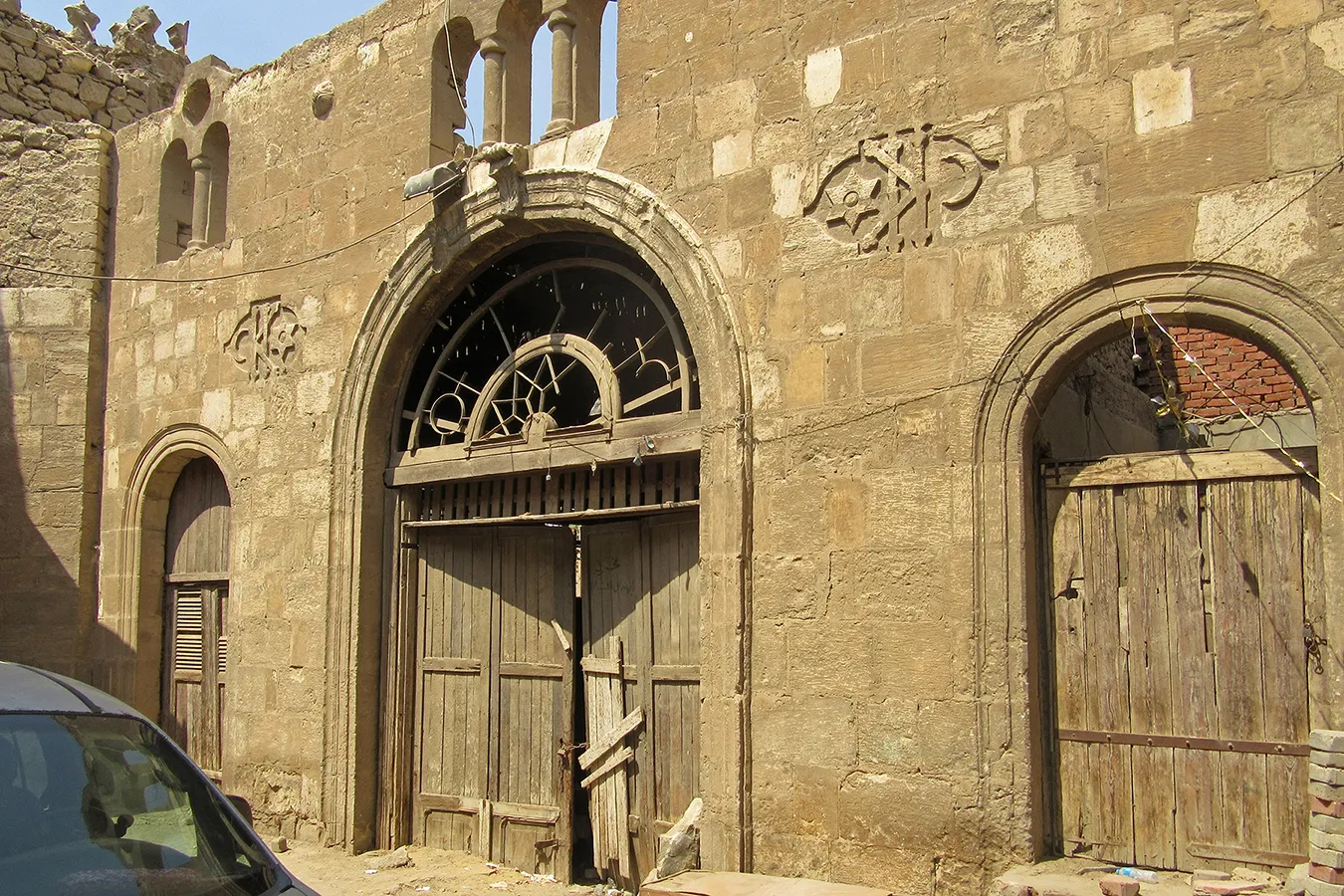
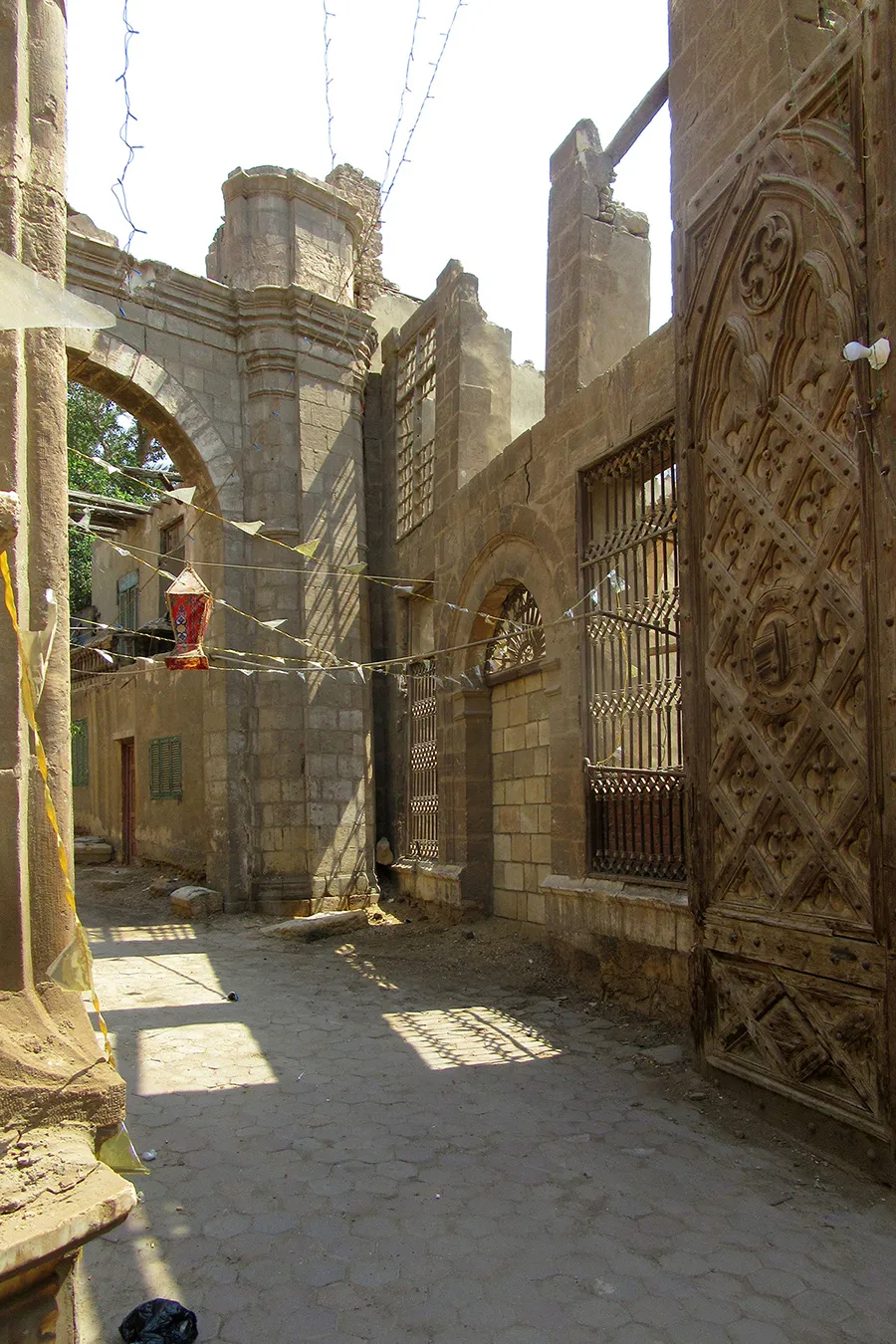
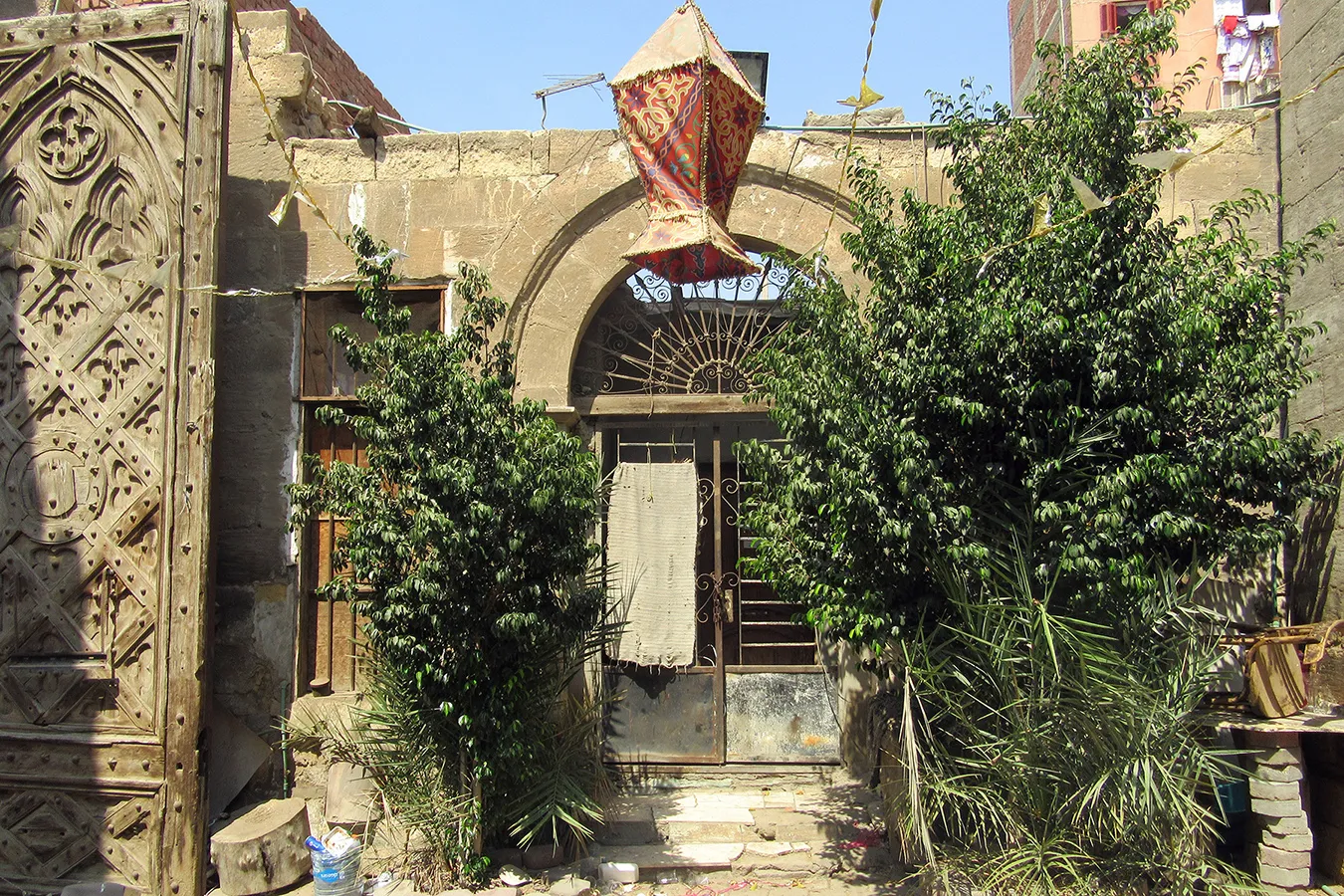
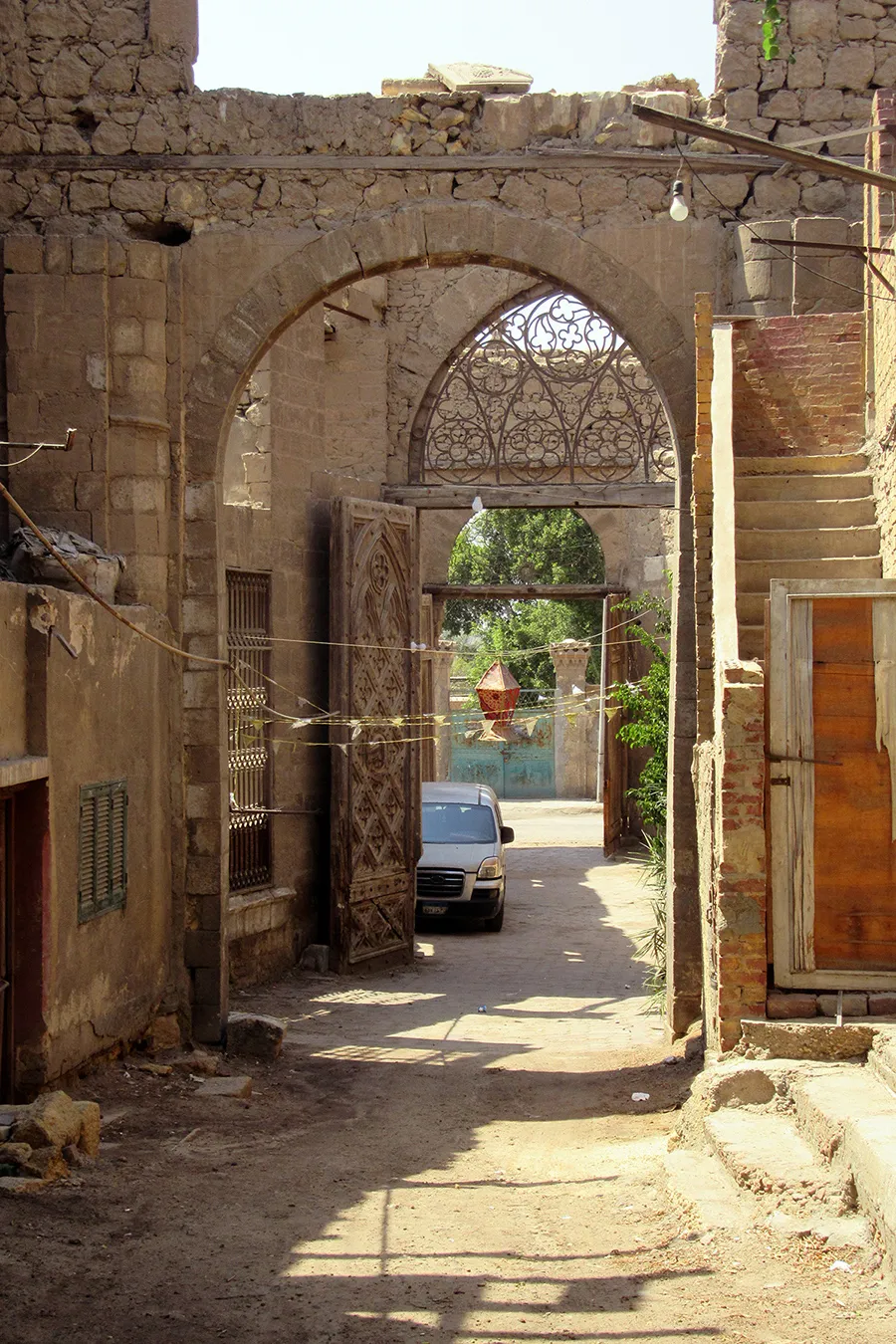
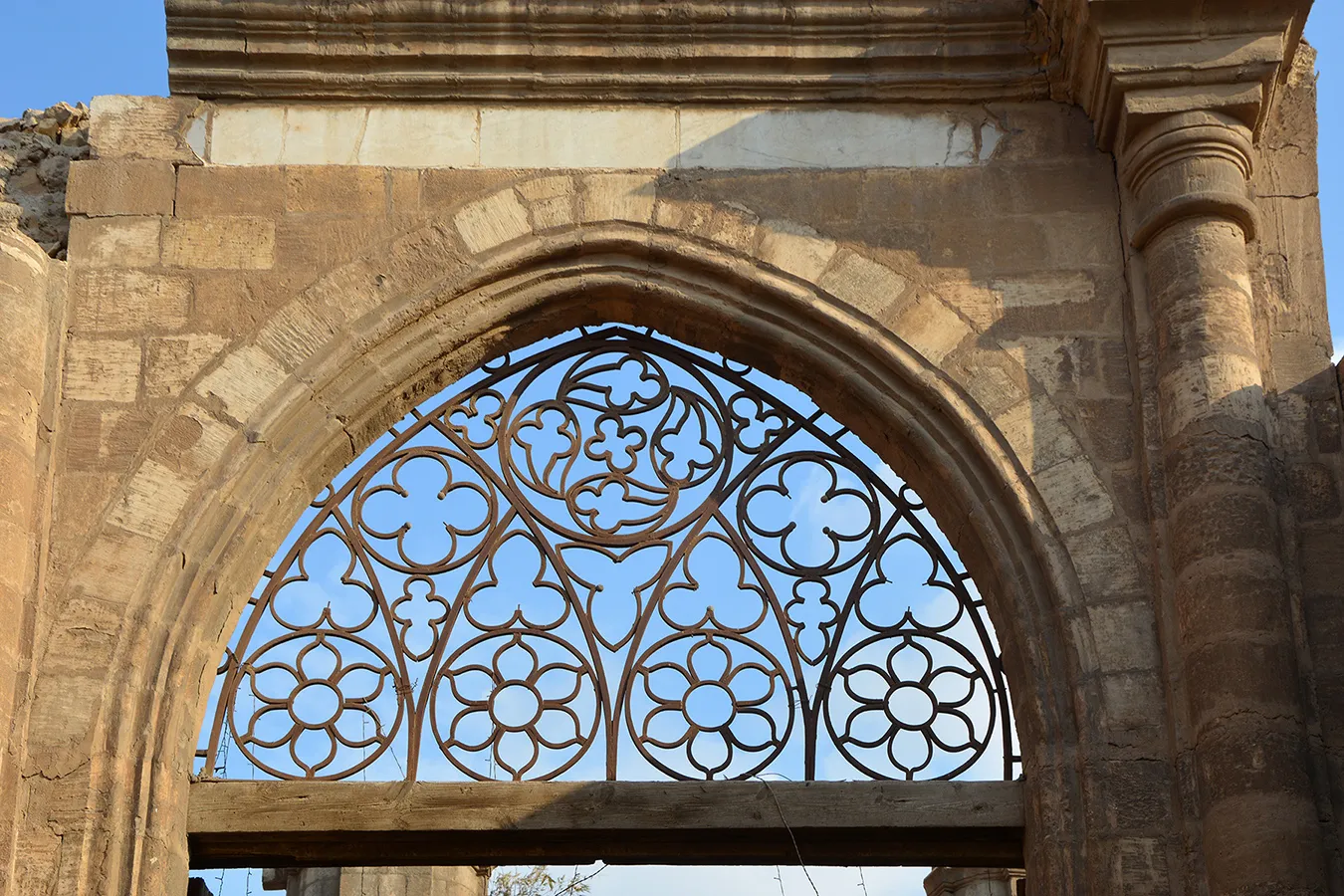
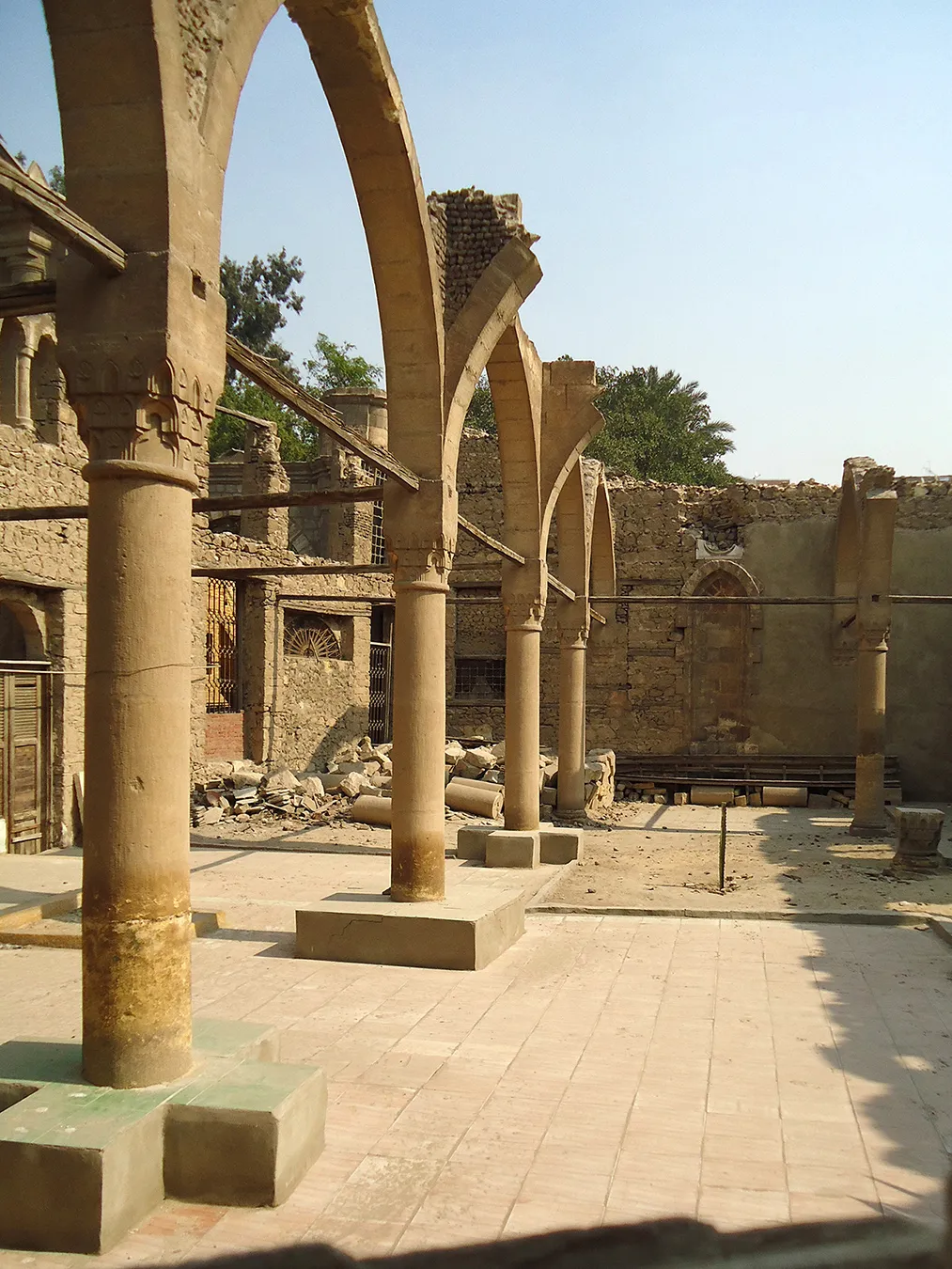
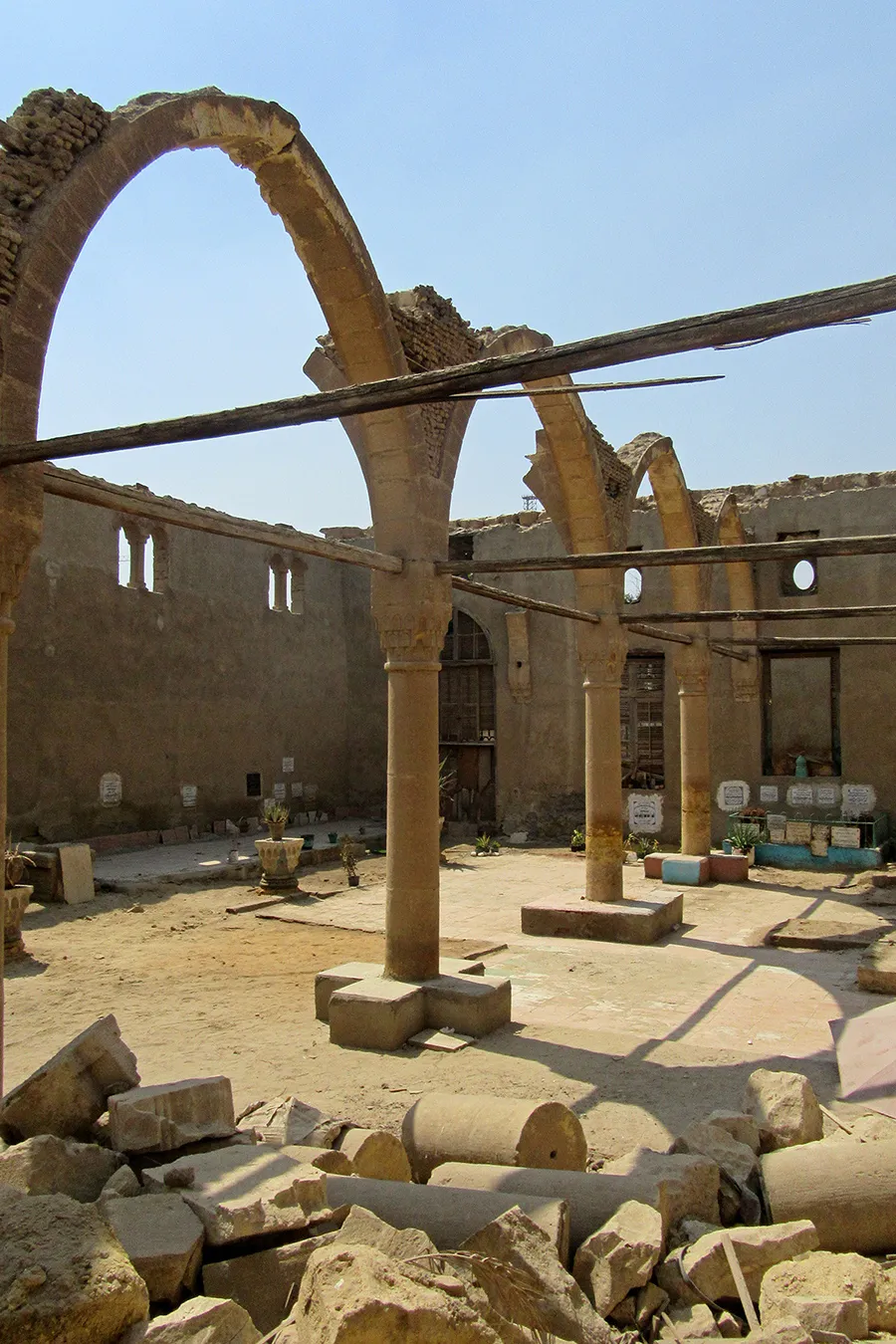
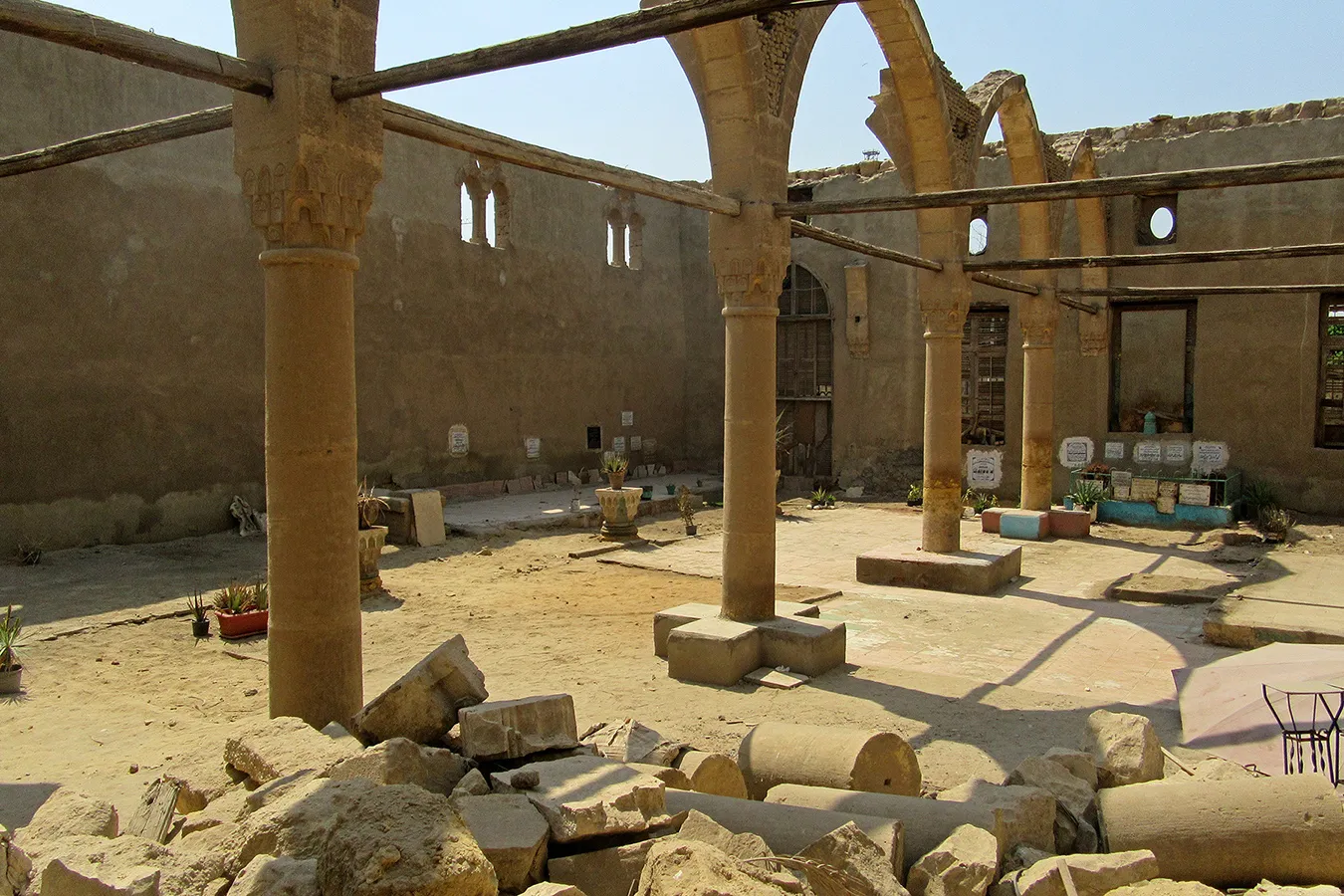
The round-arched main entrance leads into a long passage divided into two chambers by a gate in the middle, which is pointed-arched and fitted with extremely elaborate double-leaved wooden coffered door in Gothic Revival style, with an iron openwork in the arch over the lintel in Gothic tracery motifs. To the right side of the gateway is a huge hall with a mihrab in its shorter wall, originally divided into three aisles perpendicular to the main façade (and not related to its architectural divisions) by two rows of four columns each. The capitals are in Islamic style, decorated with muqarnases. The southern row of columns has largely collapsed, and the roof is missing. The hall is accessible from the first vestibule through a huge arched doorway flanked by two smaller doors, and also from the second vestibule through an arched gate placed in the middle of a façade with huge rectangular windows in two tiers.
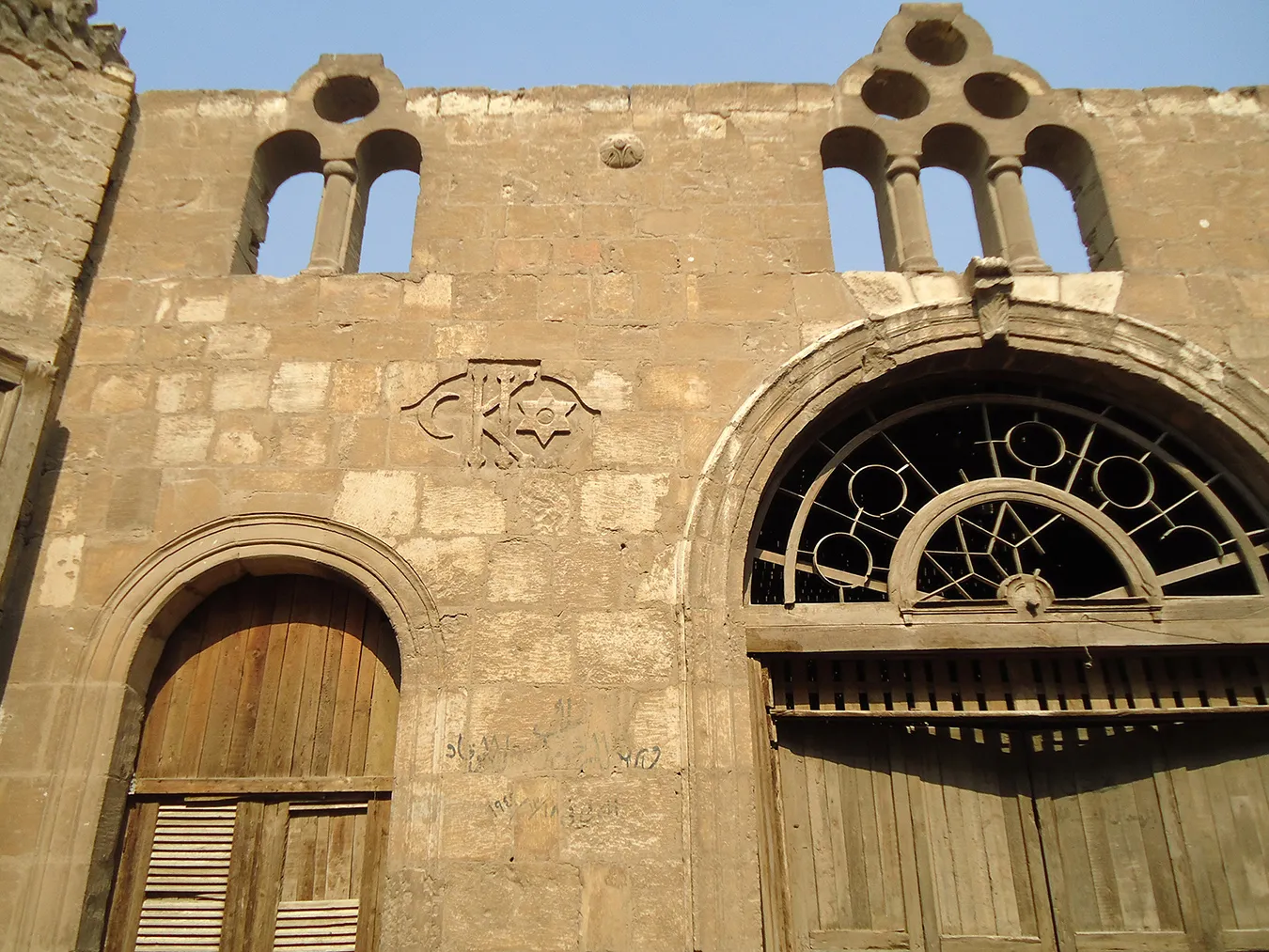
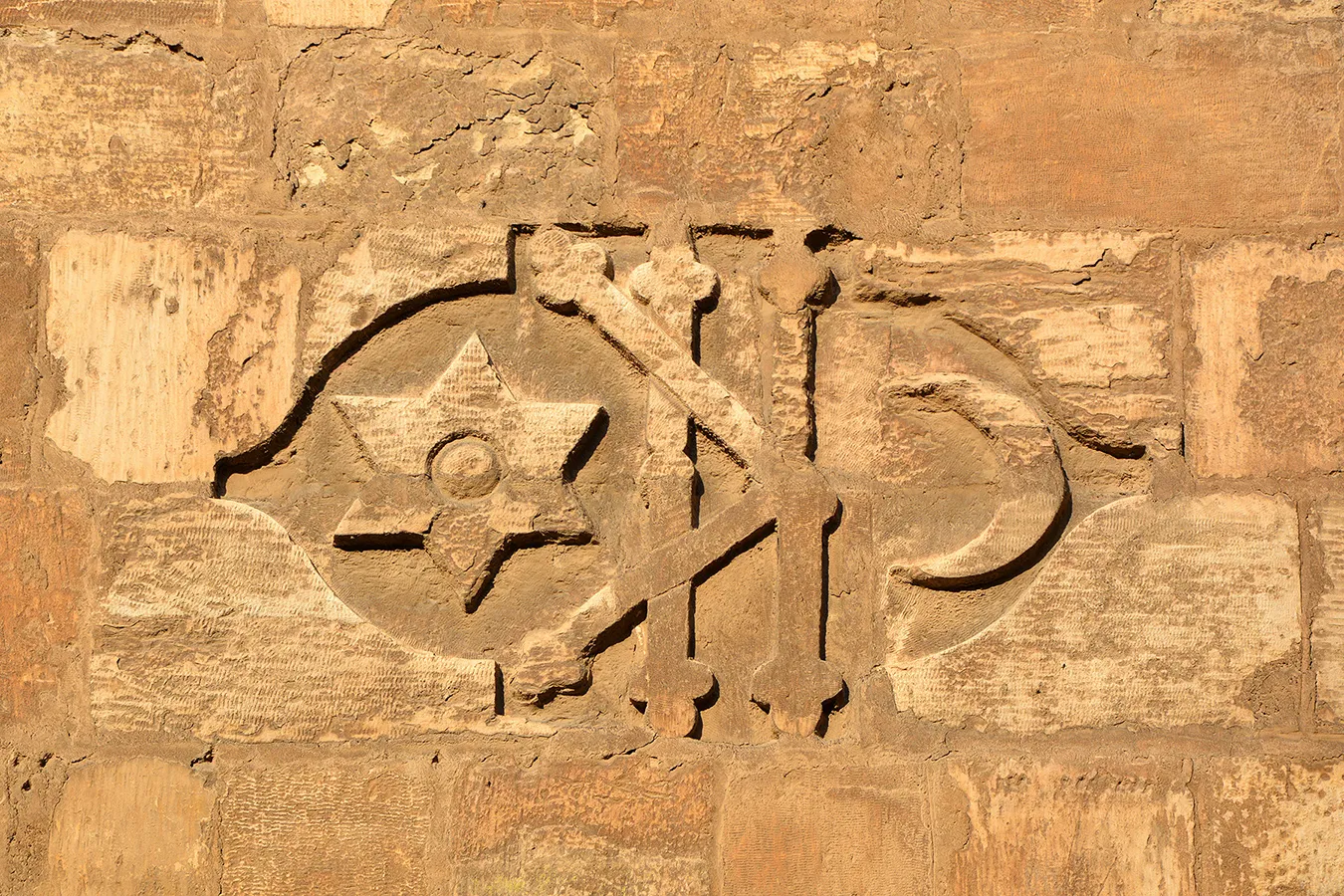
To the left of the gateway is a large room along the main façade, now used for storage purposes, and behind it, a set of smaller rooms, now much altered. The northern internal elevation of the first vestibule is decorated with stone medallions including the initials of Khedive Isma‘il (K.I.), the right one being a mirror image.
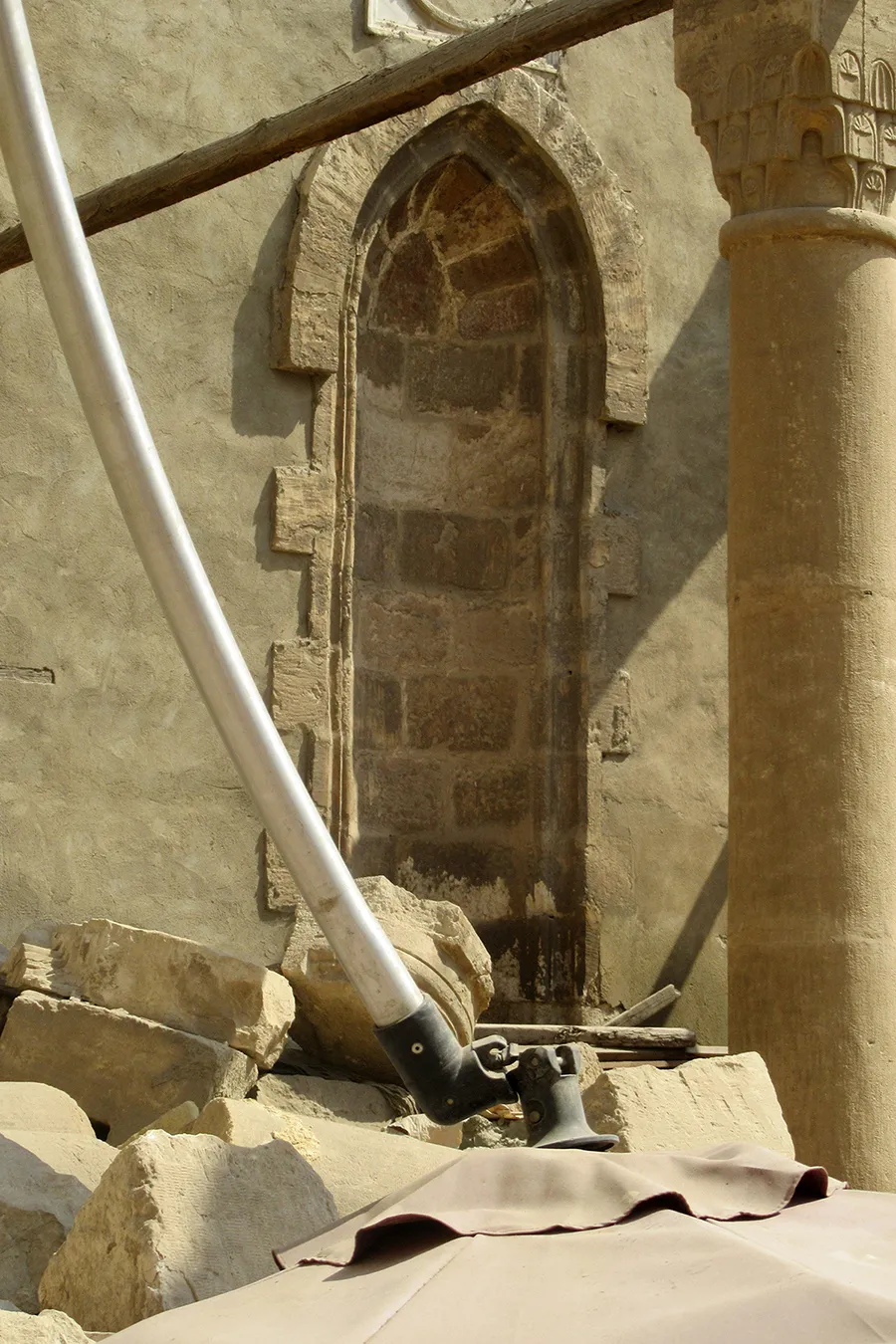
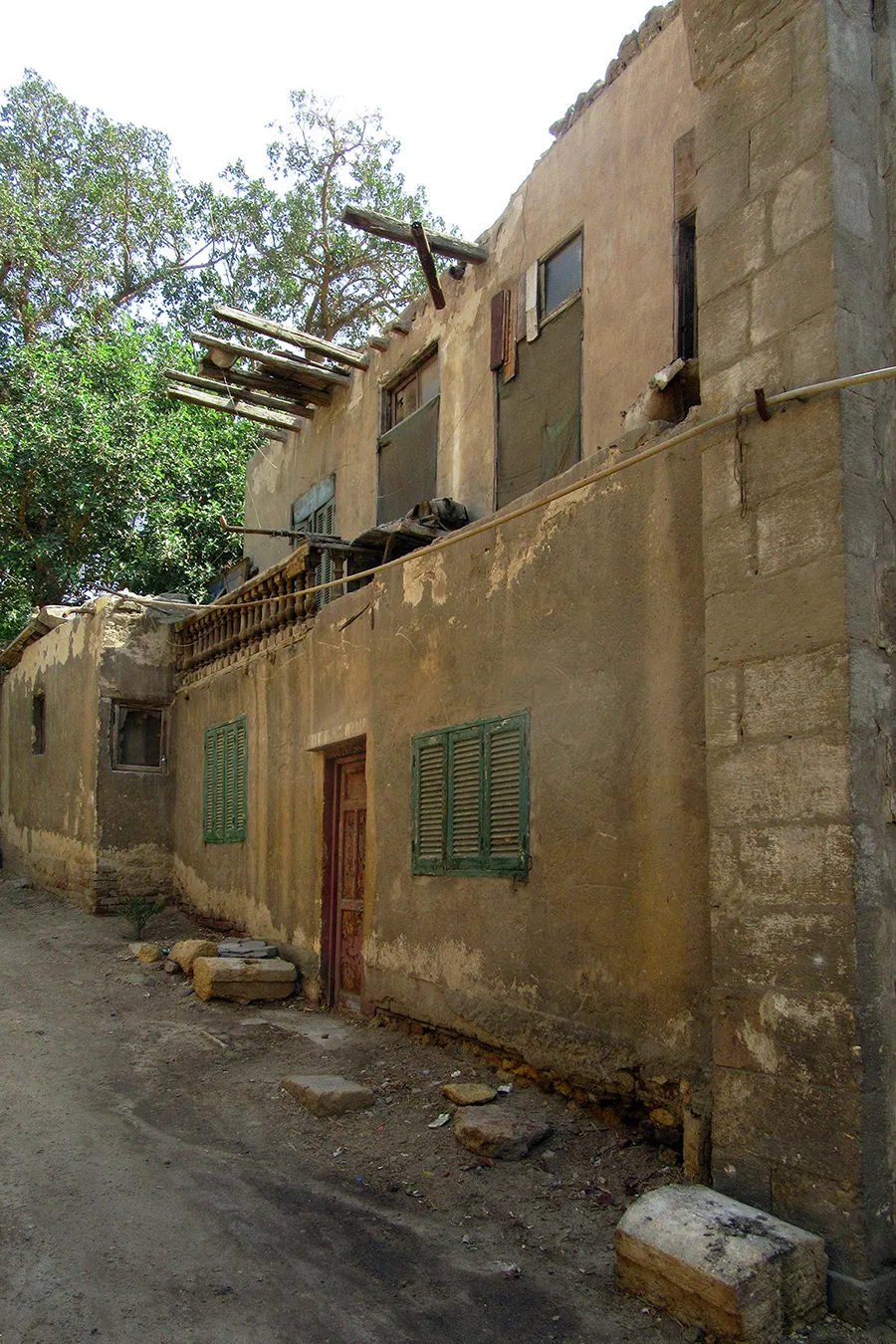
In the southern lateral façade, the windows (of the huge three-aisled hall) are placed high and are double arched windows divided by piers with engaged colonettes and topped by an oculus in a fashion reminiscent of Mamluk fenestration. The windows of the northern lateral façade are huge, rectangular, placed low and fitted with iron grilles.
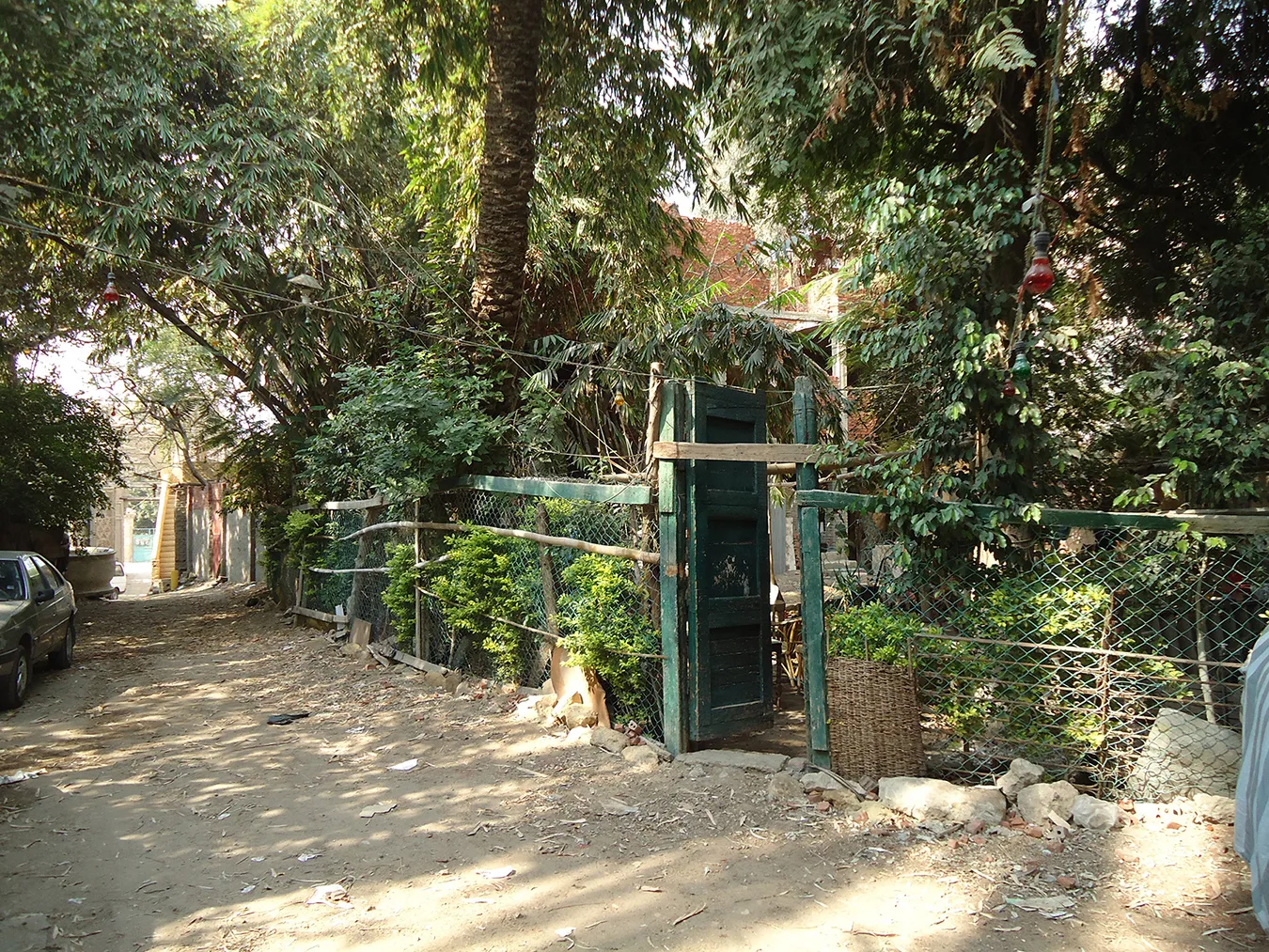
The third gate leads from the second vestibule to a huge garden, currently including four free-standing residential buildings Three of them are constructed of red bricks, while the fourth imitates in stone the features of the enclosure’s façade. A luxurious ornate bathtub of a huge monolithic piece of alabaster, apparently dating back to Khedive Isma‘il’s era is randomly thrown in the garden.
Condition of preservation
The general structural condition of the enclosure is poor
The roof of the huge prayer hall south of the gateway chamber has fallen, as has much of the southern row of columns in the hall.
Information abut the founder, family history, etc.
Ibrahim Pasha, son of the ruler of Egypt and founder of the dynasty Muhammad ‘Ali Pasha built a palace known under the name The High Palace in 1820 in what is now known as Garden City. It hosted the first meeting of the Egyptian advisory council “Majlis al-Mashoura” on 2 December 1829. After ‘Abbas Hilmi I assumed power, he donated the High Palace and its appurtenances in 1848 to Isma’il Bey, later Khedive Isma’il, who later sold the palace to his mother Hoshiyar Hanim Qadin in 1863. Khedive Isma’il’s remodelling of the palace is evidenced by his initials (K.I. – Khedive Isma’il) carved in stone in the gateway, still existing on the current remnants located in the Desert of the Mamluks. Hoshiyar Hanim Qadin took good care of the building until it was returned to the Egyptian Government in 1880. It was subsequently sold in 1898 to “al-Dayra al-Sunnya”, who sold it finally to the real estate company Charles Bacchus. The company demolished the palace in 1906 and sold its ruins, luxurious furniture, precious antiques, and rare garden trees (Negm, 2002). One of the façades of the High Palace was purchased by Sheikh ‘Ali al-Waqad and rebuilt in the Desert of the Mamluks. (El Kadi and Bonnamy, 2007, the date 1870 in this publication is certainly mistaken.) Two photographs in the collection of the Musée Nicéphore Niépce in Chalon sur Saône in France show the street façade of the High Palace before the transfer, clearly showing architectural elements now in the façade of the al-Waqqad family funerary enclosure. It is evident, however, that after the transfer, these elements were put in a different order in a differently designed façade. The present façade is straight, while in the original one, the entrance gate was placed in a deep recess. Moreover, what used to be an external gate on a street is now a gate between the first and second open vestibules. The photographs with numbers MNN 96.33.222 and MNN 96.33.223 are available in the Museum’s online collection : https://www.open-museeniepce.com/accueil
Sheikh ‘Ali al-Waqqad was a pioneer of the bamboo industry in Egypt. He opened a factory on Queen Nazli Street (currently Ramses), where French labourers processed bamboo imported from India. After a dispute over wages in 1920 the French workers left and the factory was threatened with closure. However, the sheikh insisted on continuing the operation of the factory and entrusted the task to his son Muhammad. He trained Egyptian workers who replaced the French, and that area in Ramses Street is still famous for the bamboo industry, with the most important businesses owned by the descendants of students of Muhammad ‘Ali al-Waqqad (Ahmad al-Waqad, 2018).
It appears that the façade and gateway that were transferred to the Desert of the Mamluks by al-Waqad family date to the times of Khedive Isma’il, judging from the style of their architecture. It uses Gothic Revival forms in a rather generic way, similar to other early Orientalist buildings in Cairo, such as the Gezira Palace (1869), and not the neo-Mamluk forms that were used after the work of the Comite de Conservation des Monuments de l’Art Arabe from 1882 on made the Mamluk architecture better known, resulting in such works as the al-Rifa’i Mosque (completed 1905, designed by Max Herz).
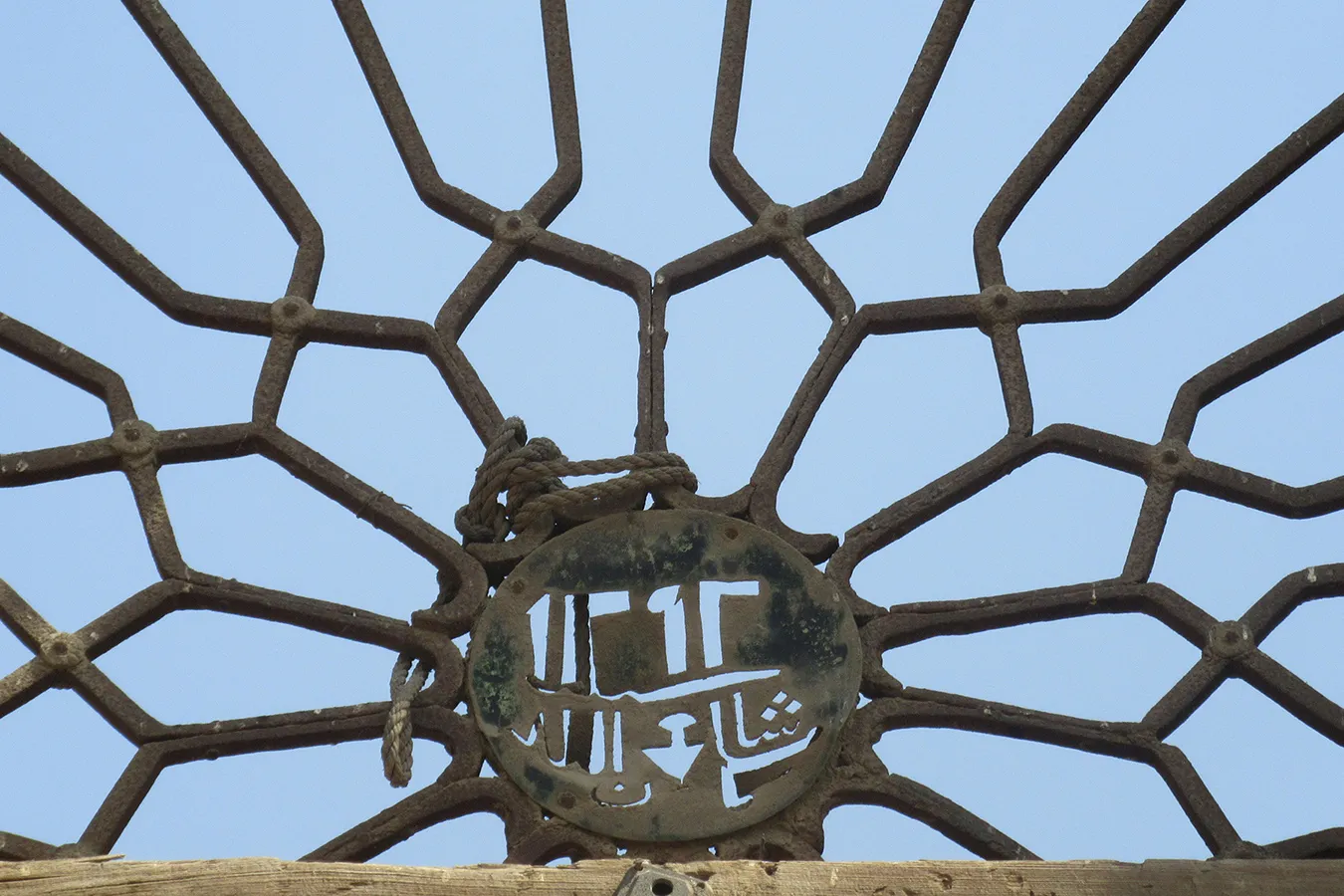
The date 1292 in the grille in the arch of the main gate translates to AD 1875. At that time, Khedive Isma‘il was in a precarious financial condition, and burdened with enormous debt, which forced him to sell in that year his shares in the Suez Canal for a fraction of their value (Thompson, p.248). The date is therefore unlikely to be of original construction. This is also suggested by the very crude execution of the plaque with the date, incompatible with the details of other metalwork in the building.
References in published/primary sources
• Grand, Pierre Bey, Plan général de la Ville du Caire, available online in the American University in Cairo’s Rare Books and Special Collections Digital Library
• El Kadi, Galila and Bonnamy, Alain Architecture for The Dead: Cairo’s Medieval Necropolis, American University in Cairo Press 2007, p. 206.
• Al Ahram Newspaper, 10 November 1948 (Special edition for the 100 anniversary of Ibrahim Pasha).
• Interview with Ahmed al-Waqad, Al-Nahar TV, 4 May 2018.
• Negm, Abdel Monsif قصور الأمراء والباشاوات في مدينة القاهرة في القرن التاسع عشر, Zahraa Al-Sharq Press in Cairo 2002, p.81 – 99.
• Thompson, Jason A History of Egypt, American University in Cairo Press 2008, p. 248
- Field recording by
- Amr Abotawila and Nur Atiya
- Date recorded
- September 1, 2022
- Data entered by
- Hadeer Ahmad
- Date entered
- November 5, 2025