

Unit No1
Funerary enclosure of Mustafa al-Babi al-Halabi
|
Coordinates of the main entrance |
30.049202N - 31.27614E |
|
Attribution |
Funerary enclosure of Mustafa al-Babi al-Halabi |
|
Higri (AH)Dates as given in the Inscription |
1350 |
|
Miladi (AD)Dates as given in the Inscription |
|
|
Inscription Contemporary with the building? |
Yes |
|
Multiple date(s) In the inscription? |
Yes |
|
Assumed Date |
|
|
Based on |
|
|
Original Use |
Funerary enclosure |
|
Current Use |
Funerary enclosure |
|
Overall condition |
Good |
Features of unit 1
| Present | Count | Material | Comments (see description for details) | |
|---|---|---|---|---|
| Free standing structure | No | |||
| Walled enclosure | Yes | 1 | stone / reinforced concrete (RC) | |
| Rooms by the perimeter wall | Yes | 2 | stone / RC | |
| Freestanding structure(s) in enclousure | No | |||
| Dome over the tomb chamber | Yes | |||
| Neo-Mamluk architectural decoration | Yes | |||
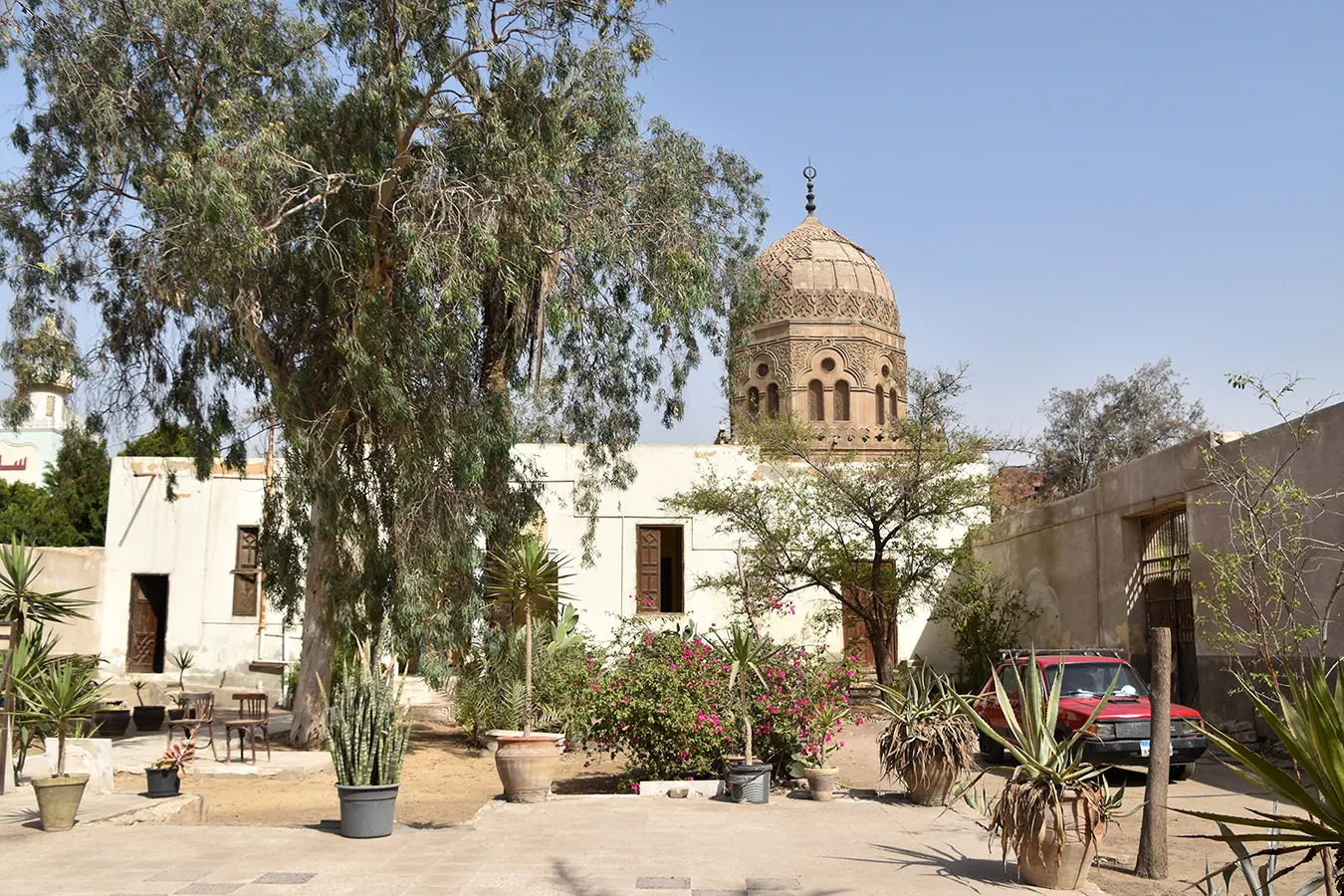
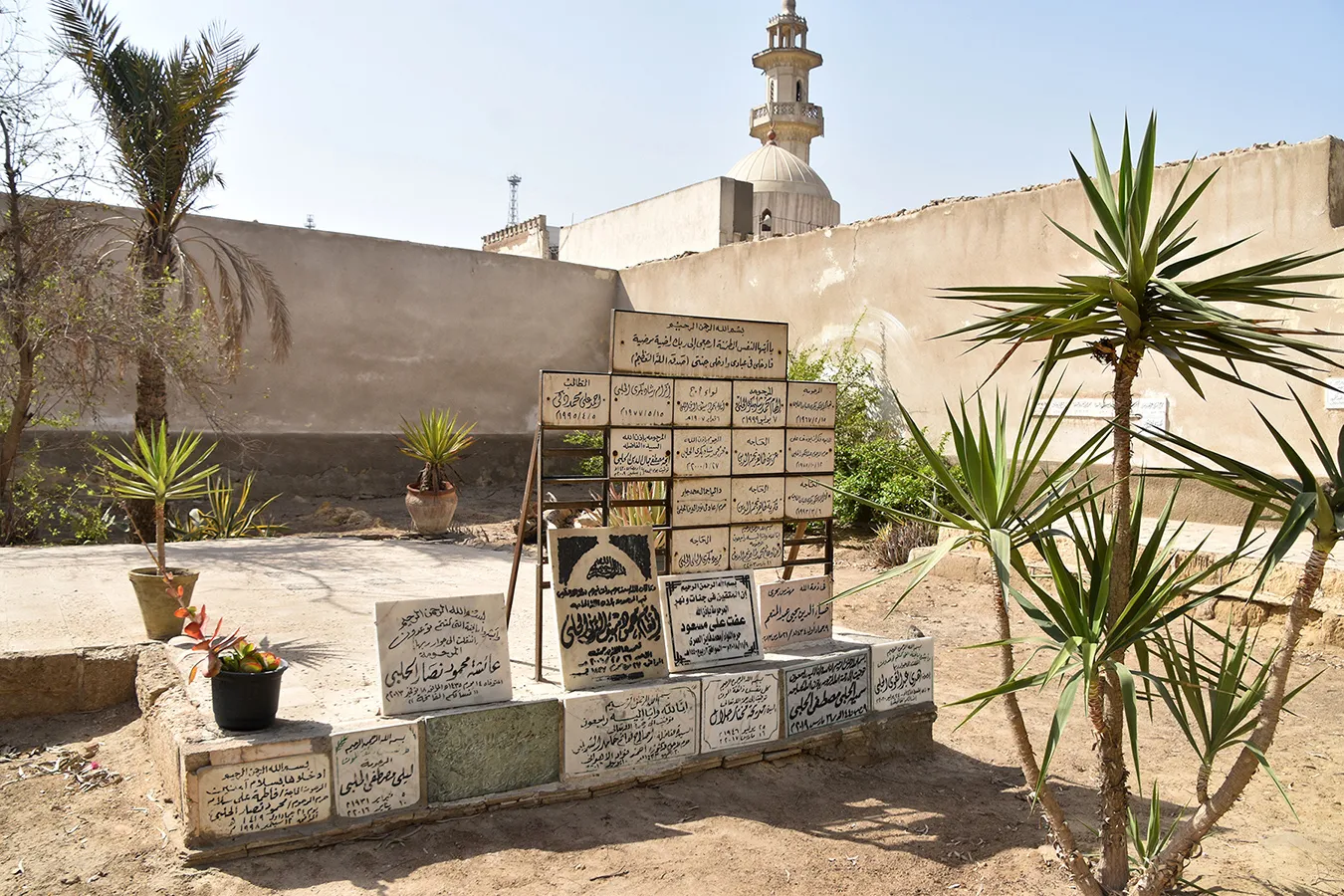
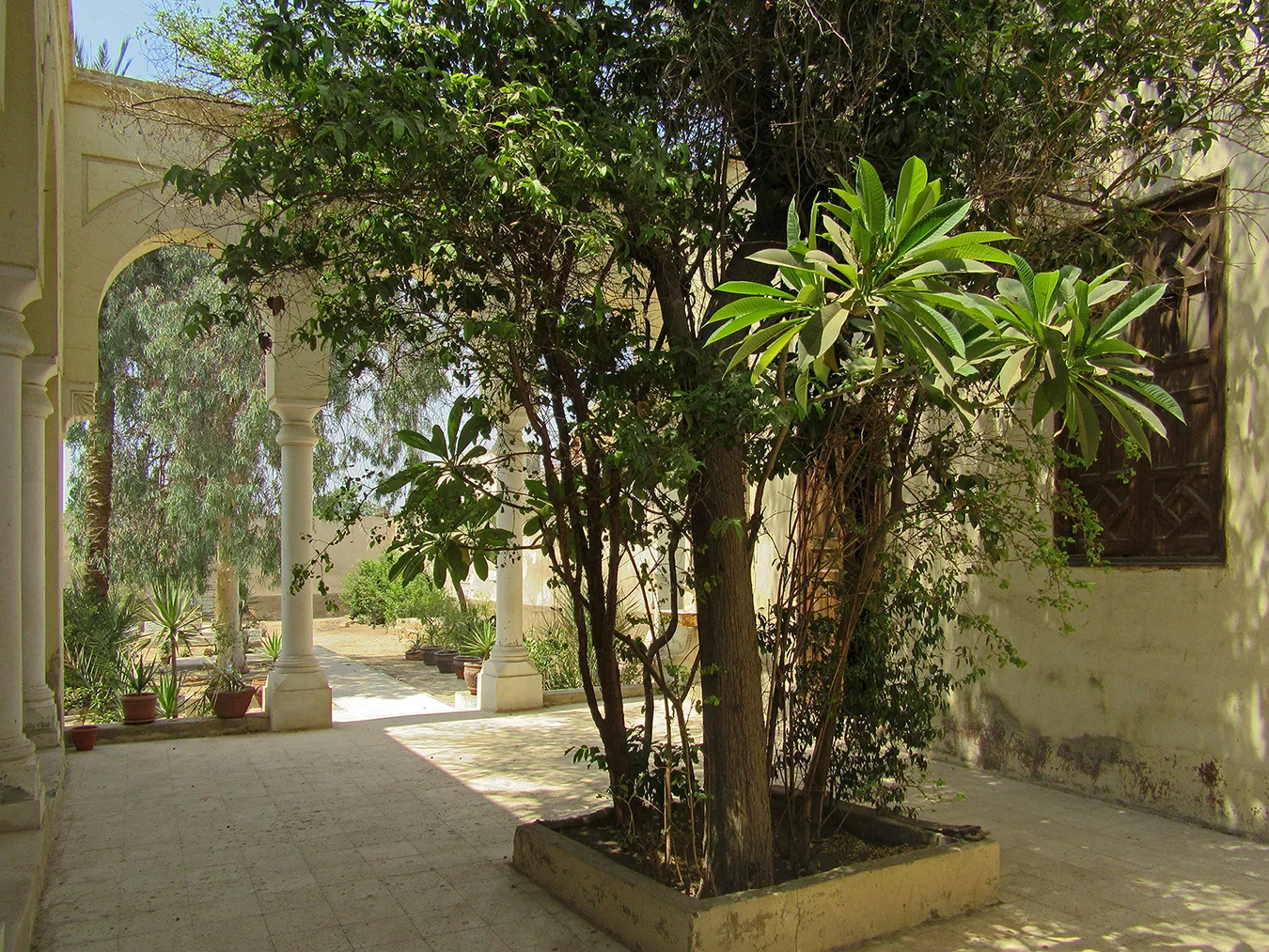
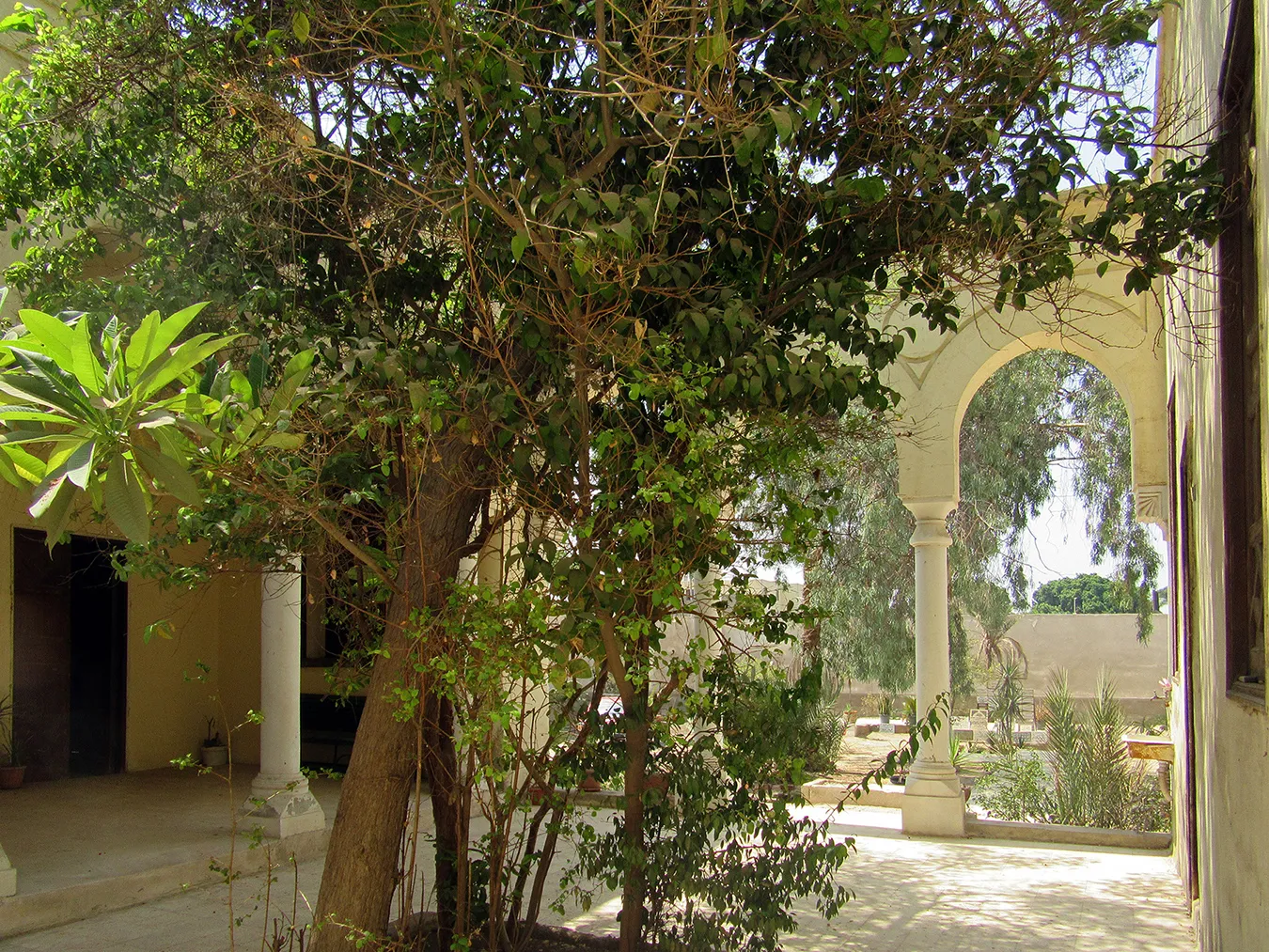
| Garden layout | Yes | 1 | The large garden takes up two-thirds of the plot area | |
| Sabil(s) | No | |||
| Wall fountain(s) | No | |||
| Canopy on columns / pillars | No | |||
| Carved marble cenotaph(s) | Yes | 1 | 1 | Underneath the dome |
| Decorated limestone tomb-markers | No | |||
| Decorated gateway | Yes | 1 | ||
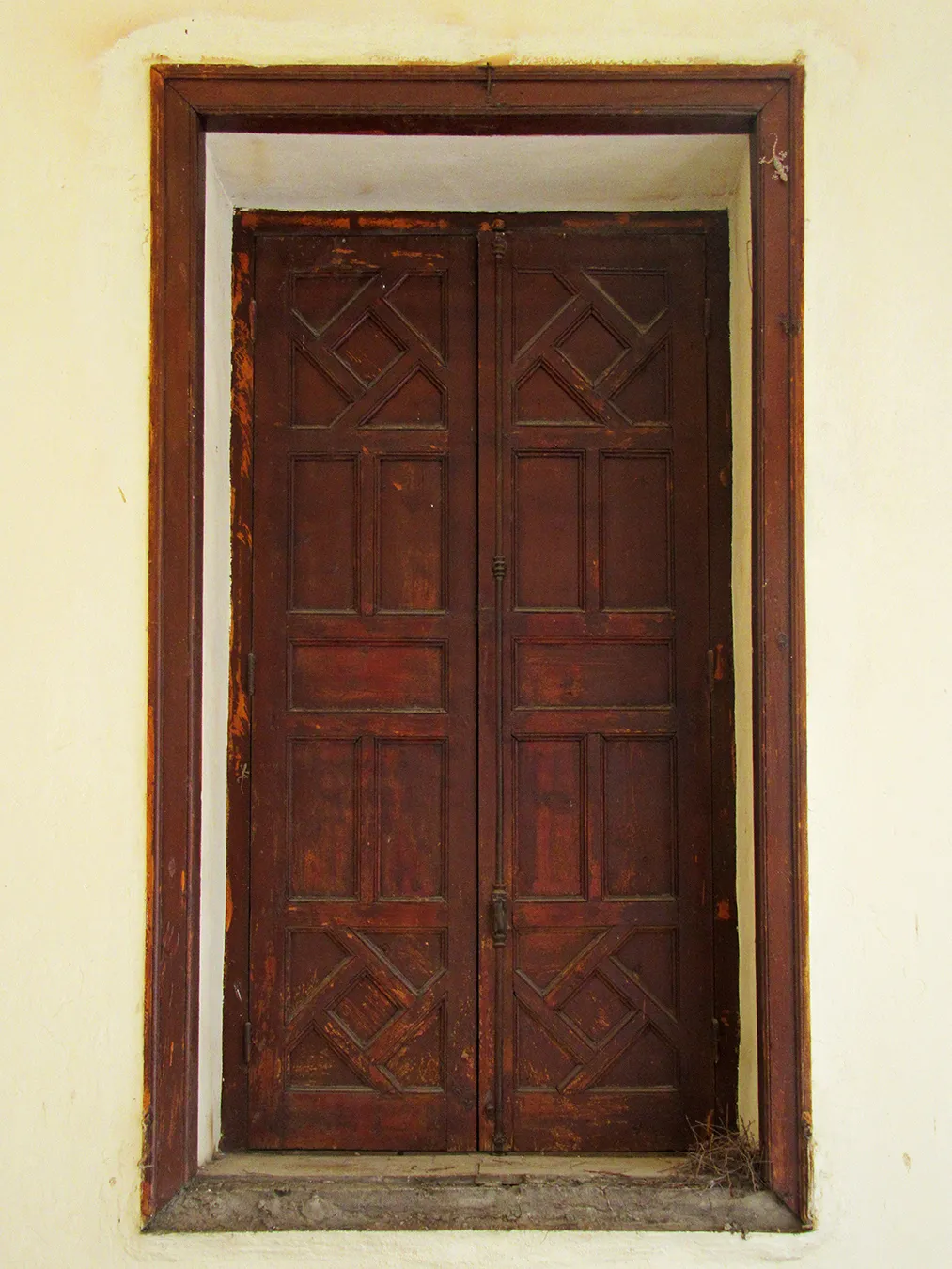
| Decorative door-leaves | Yes | 16 | wood | |
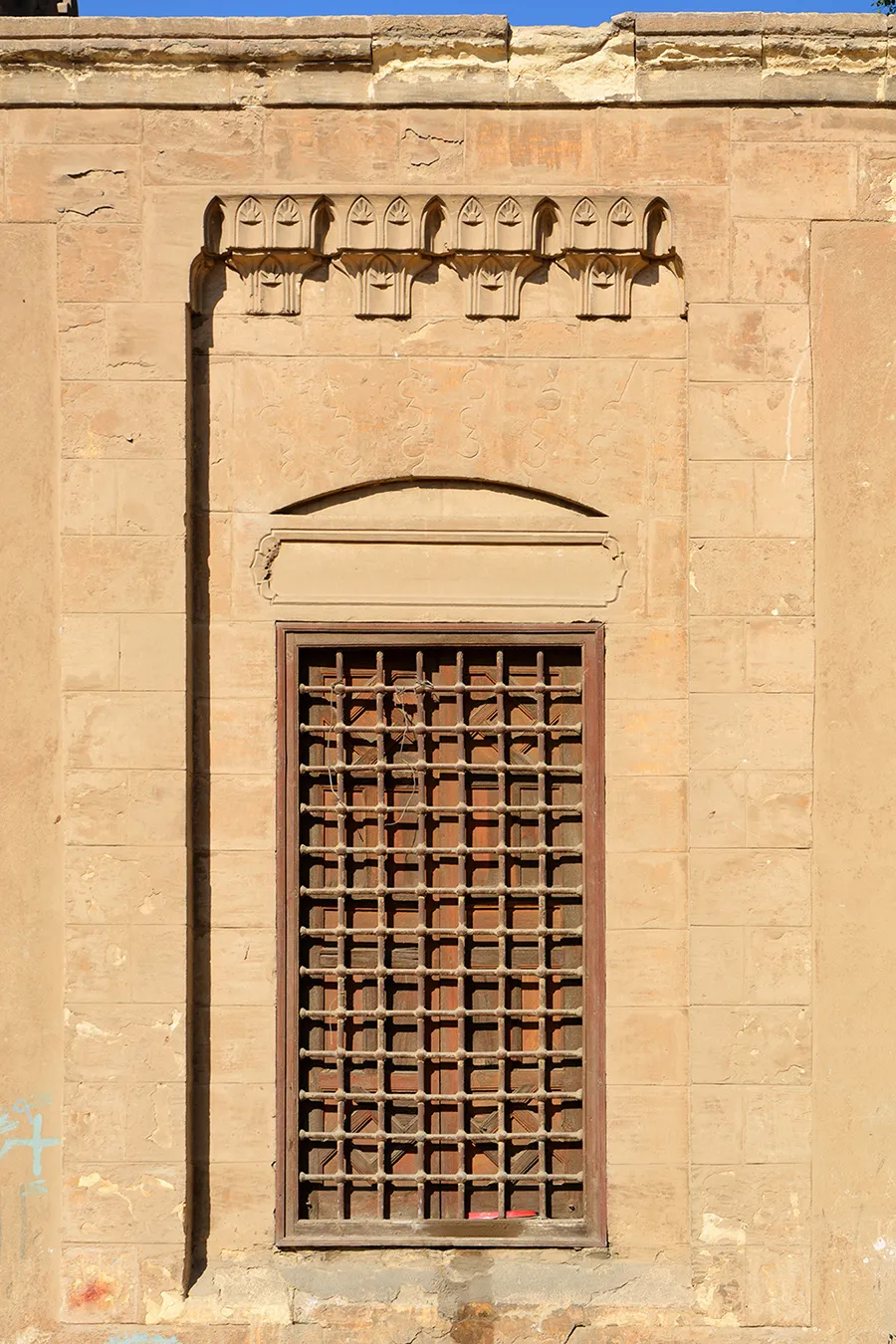
| Decorative window grilles | Yes | 5 | steel | |
| Decorative shutters | Yes | 20 | wood | |
| Painted ceiling(s) | No | |||
| Decorative paving(s) | No |
Unusual or unique features
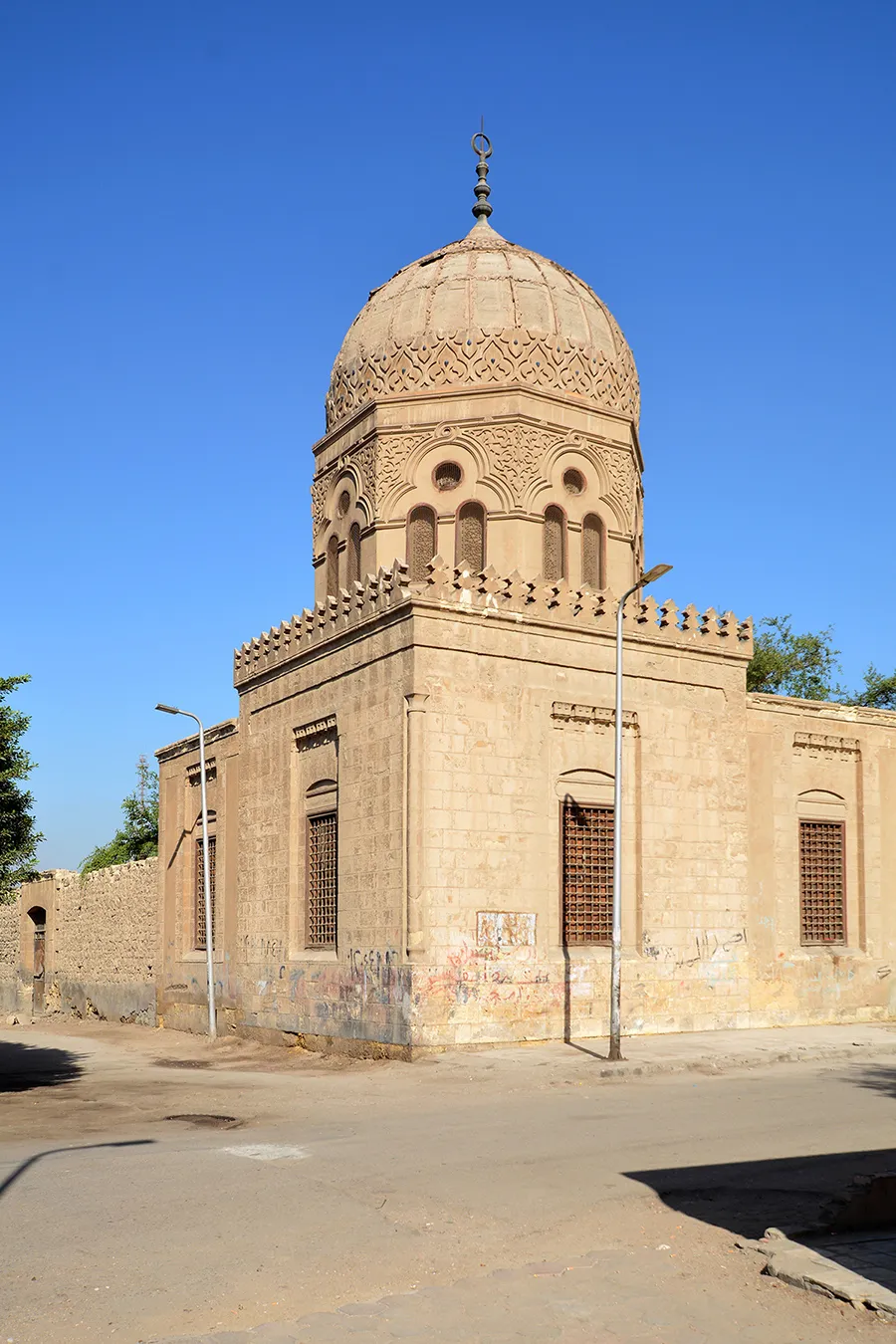
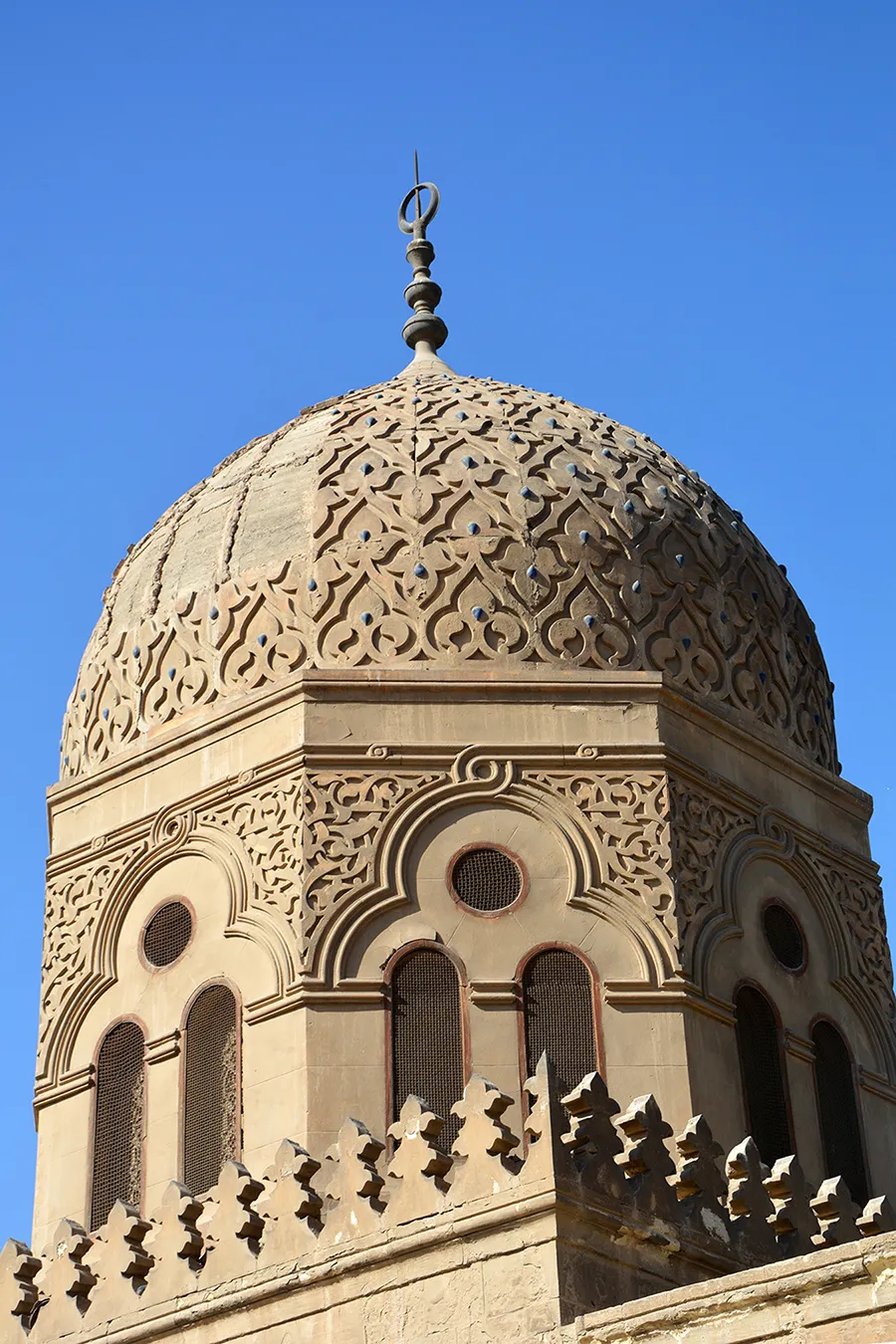
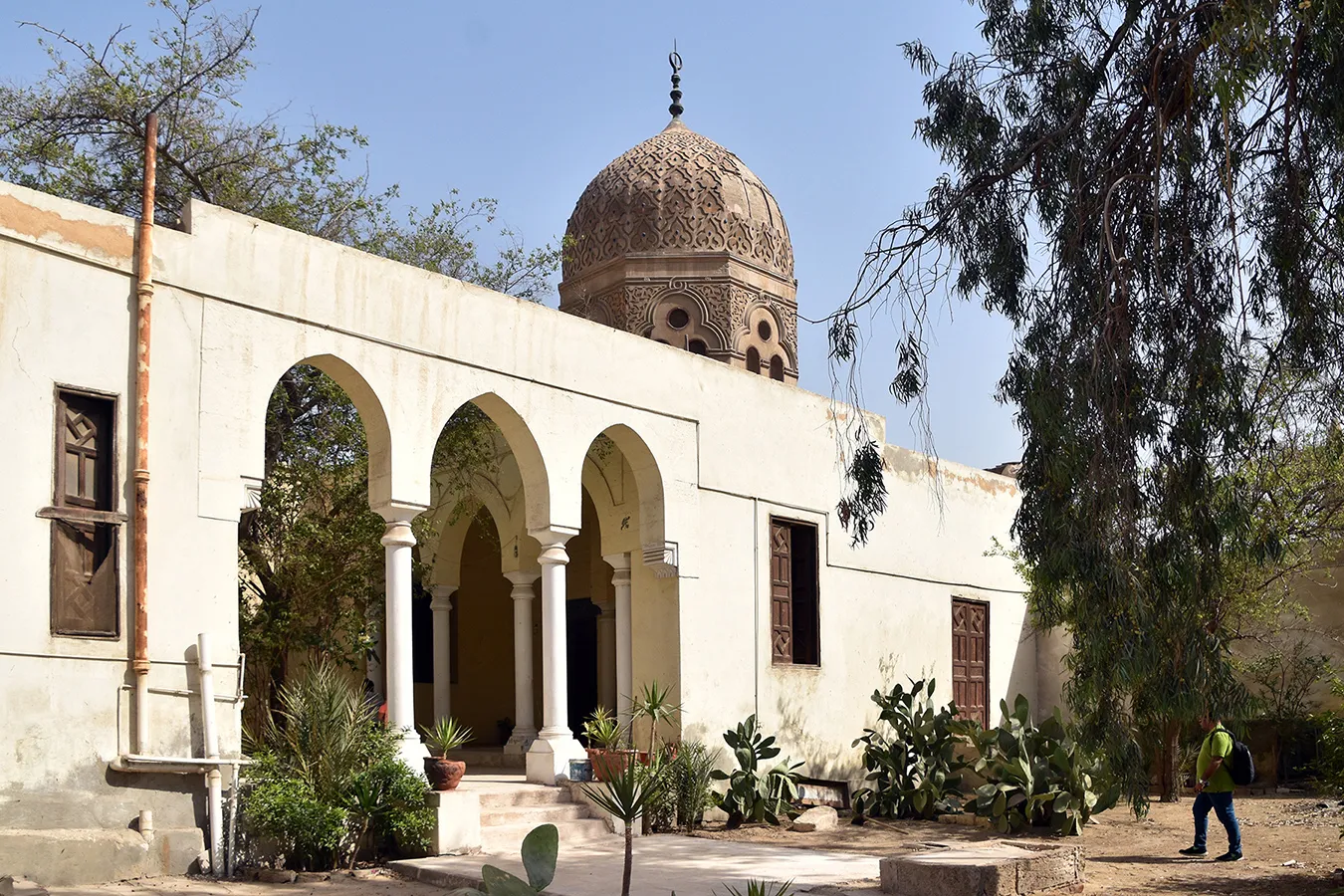
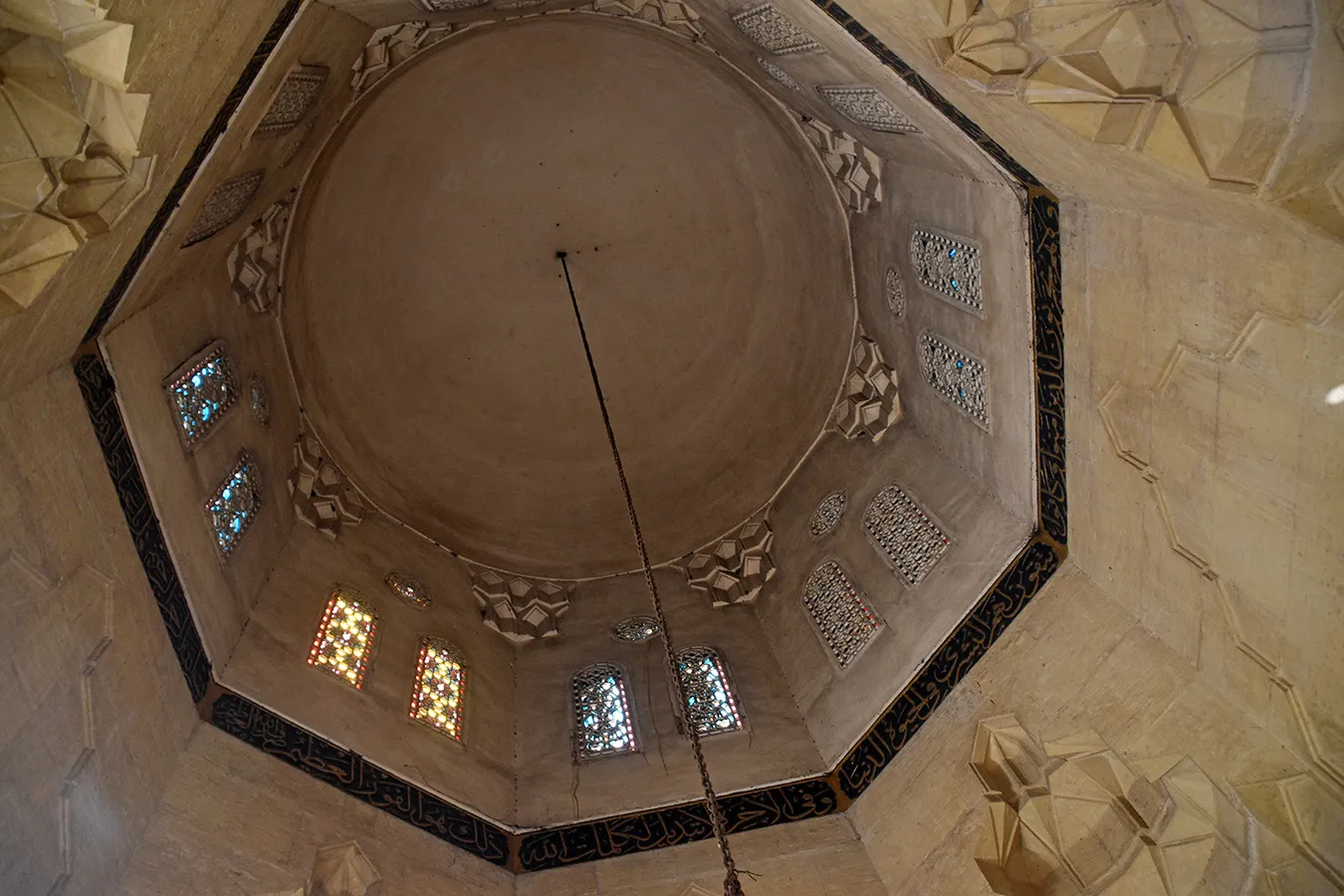
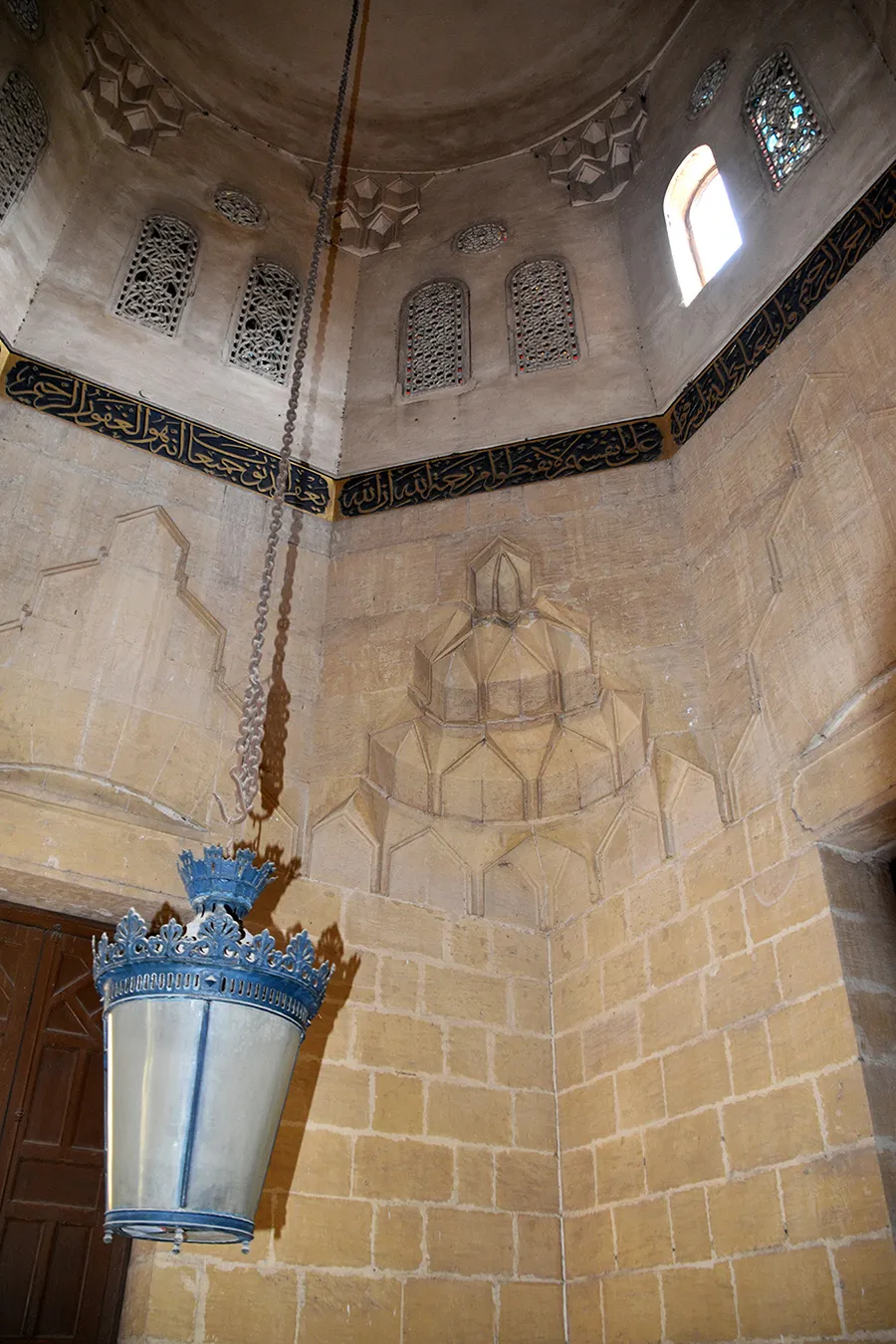
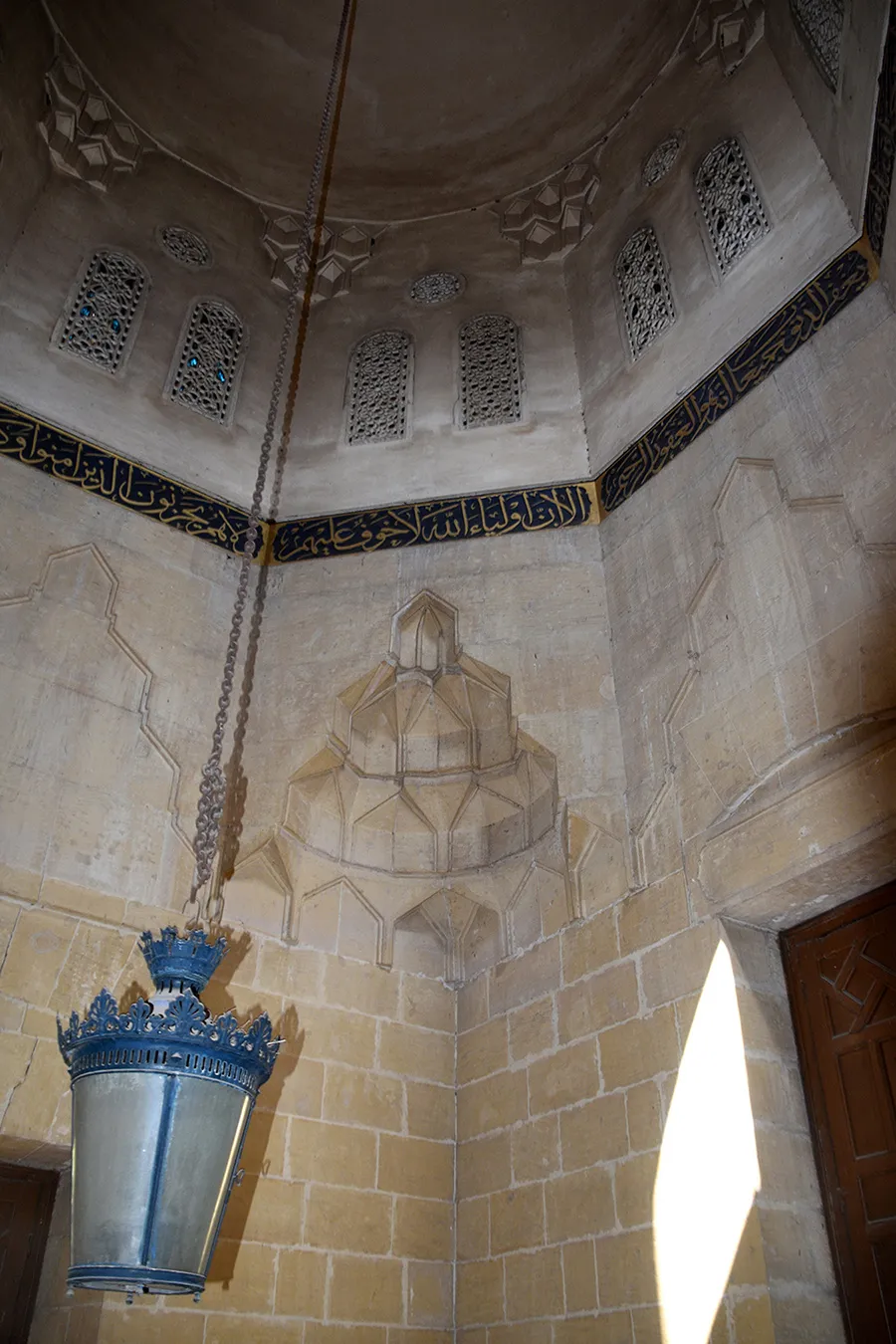
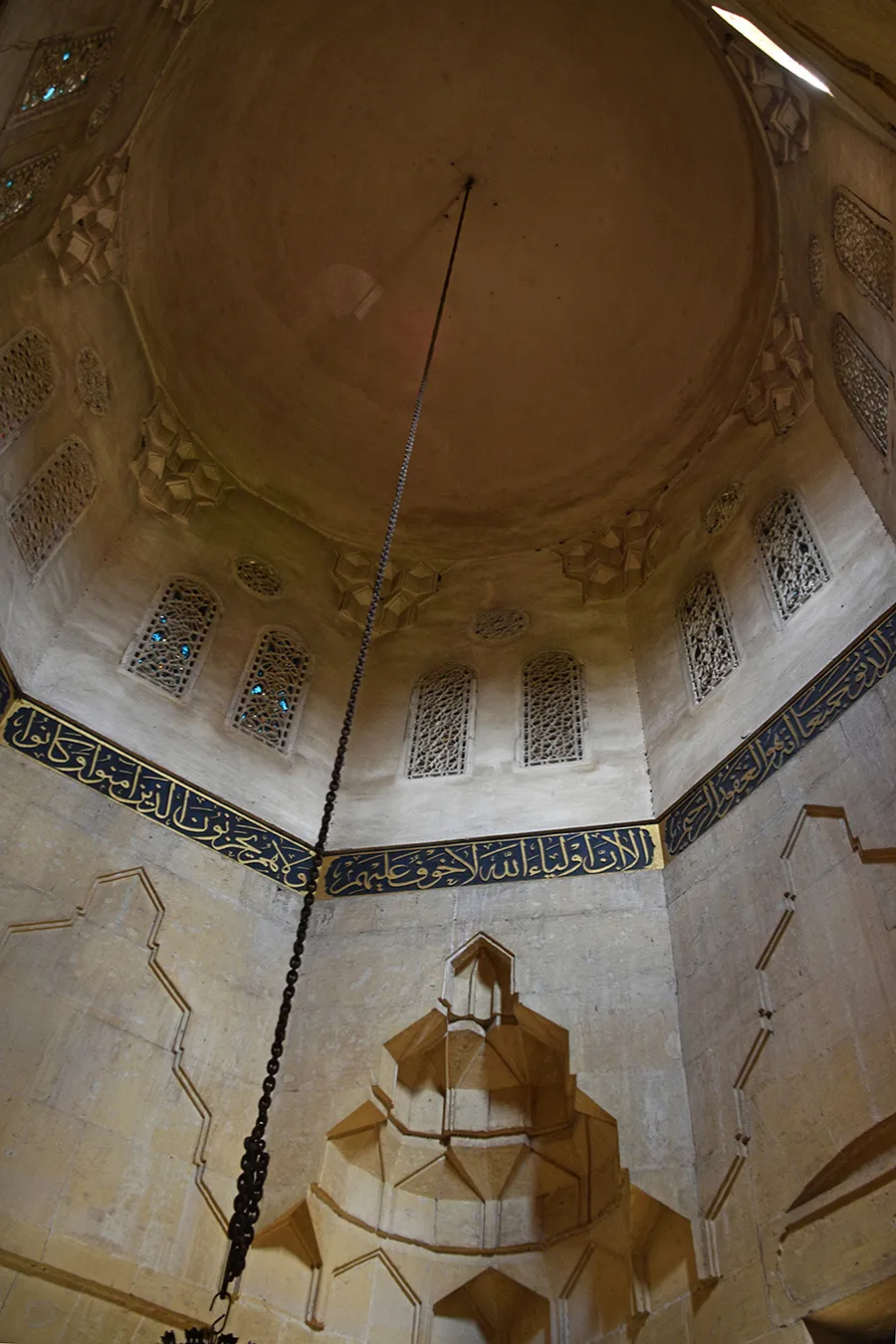
• The dome is one of the biggest and most significant in the area
• Small blue convex insets of glazed ceramic that decorate the dome
Description (The direction towards Mecca (Qibla) is described as eastern and other directions are named accordingly)
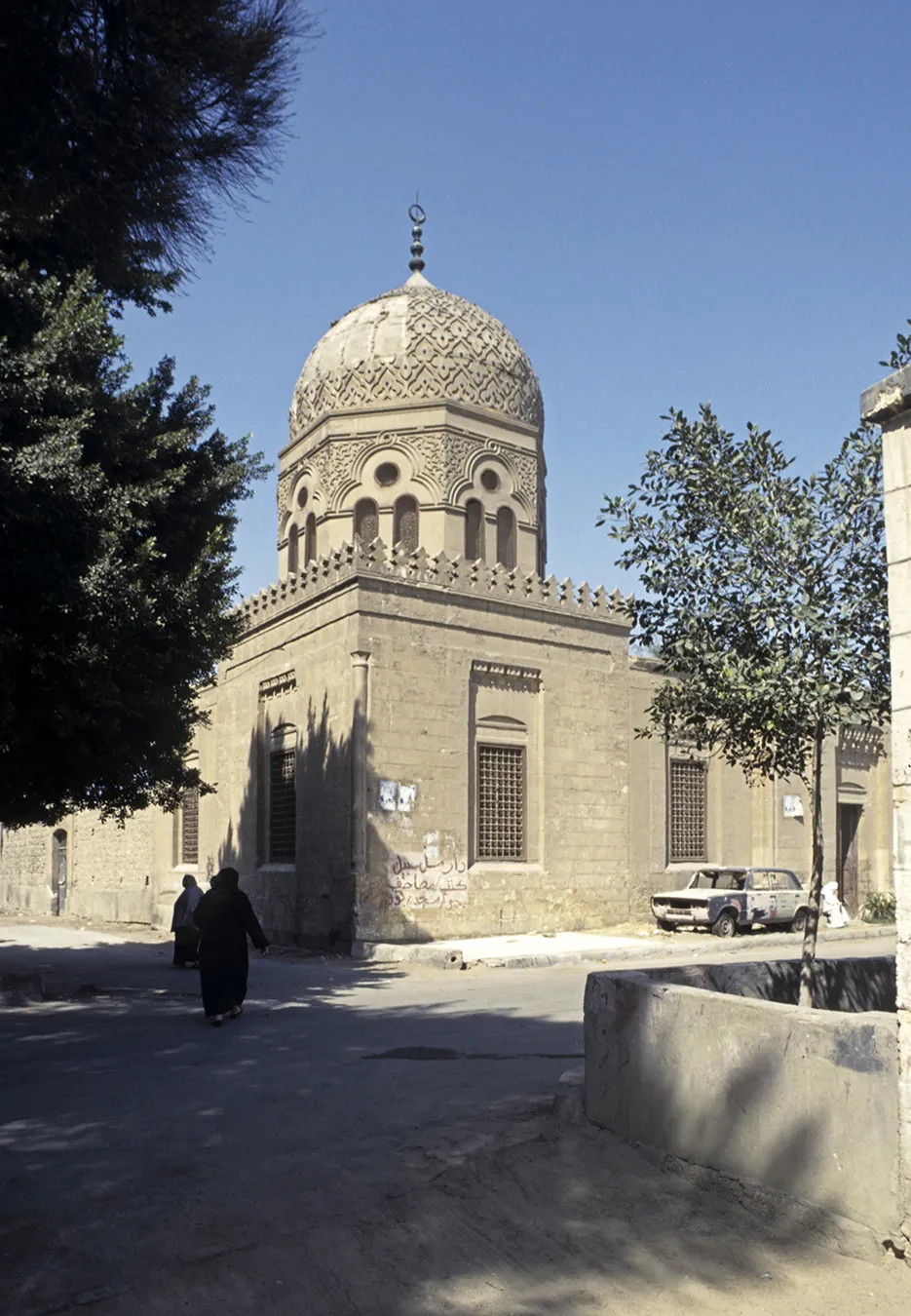
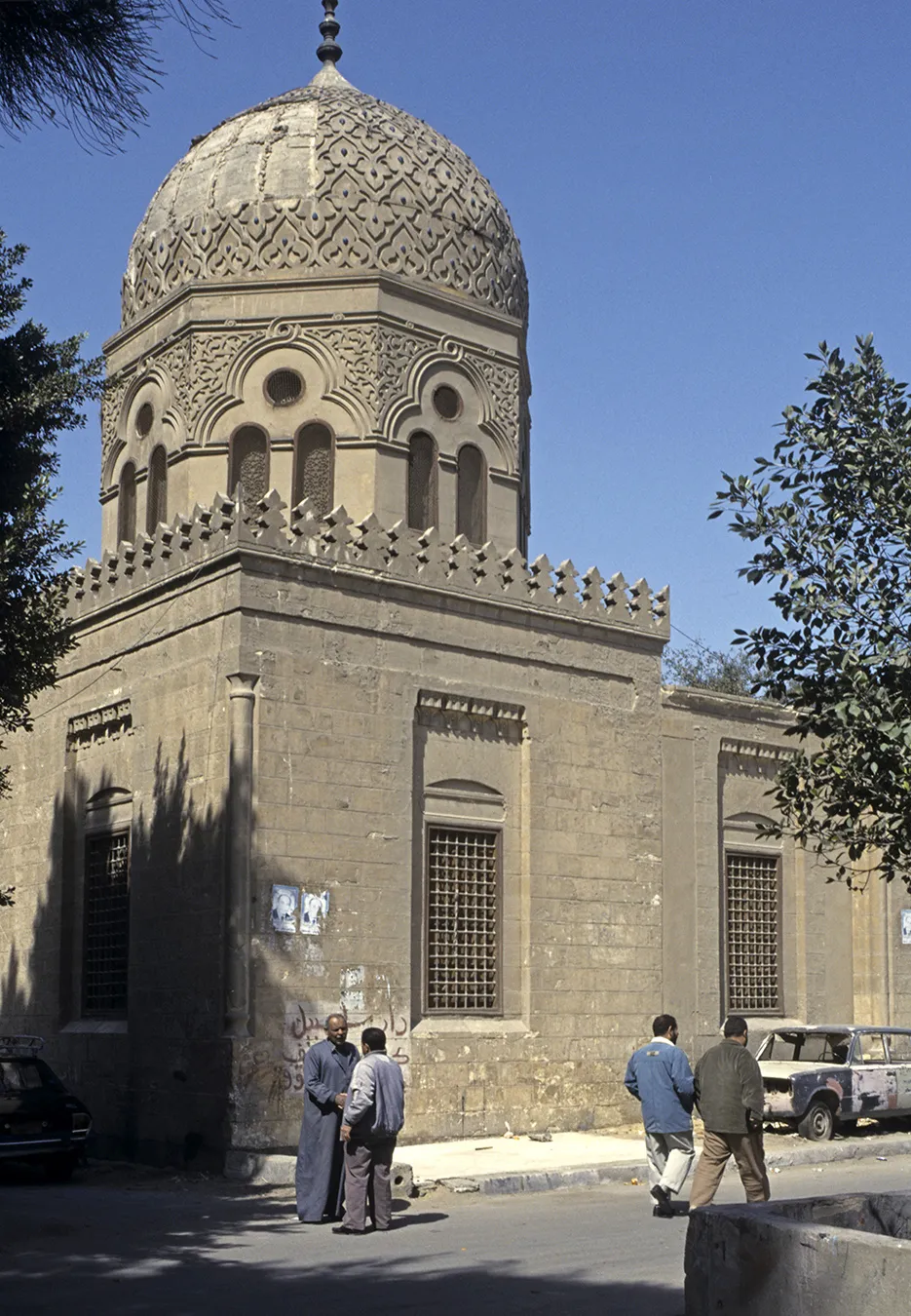
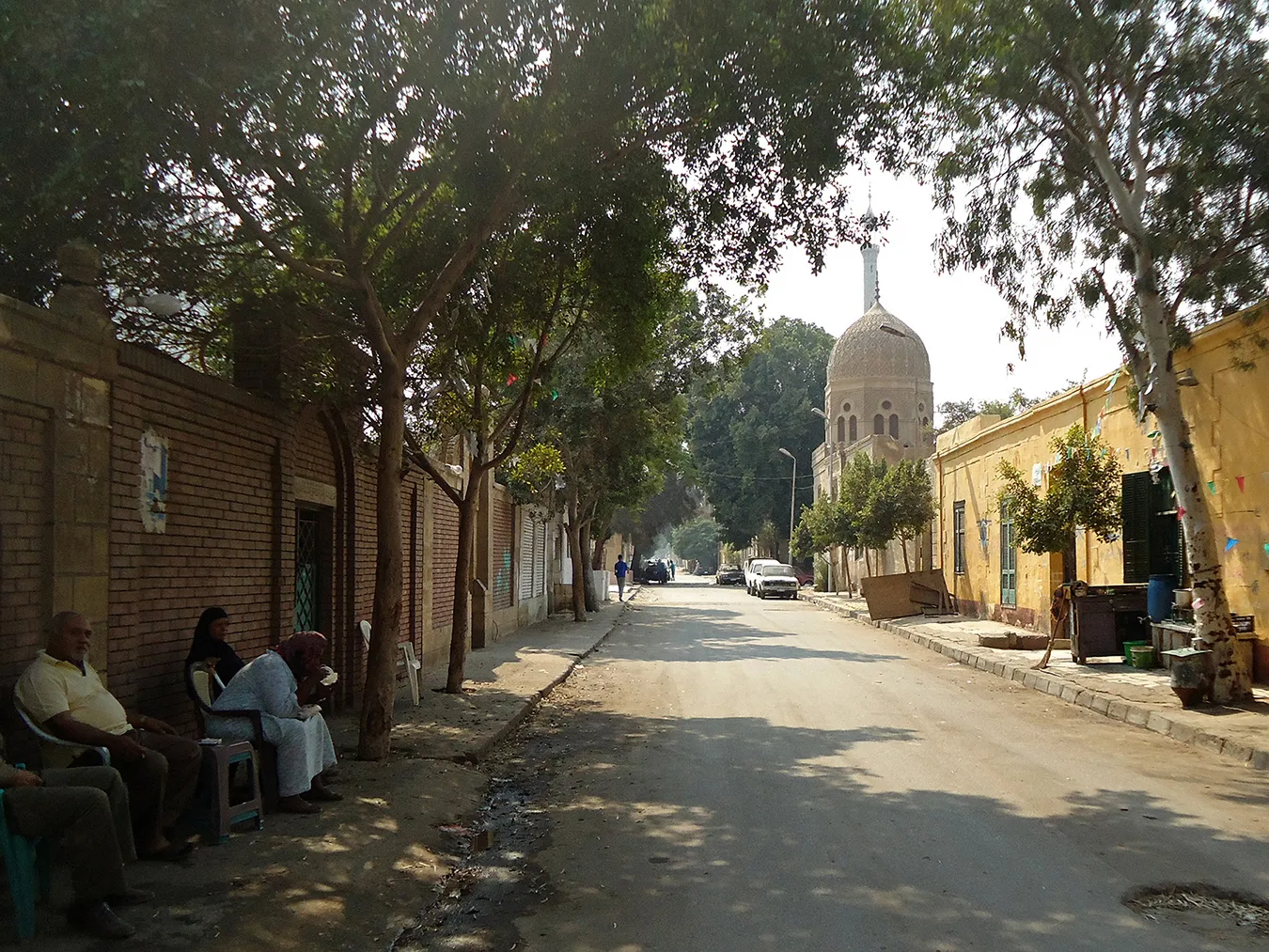
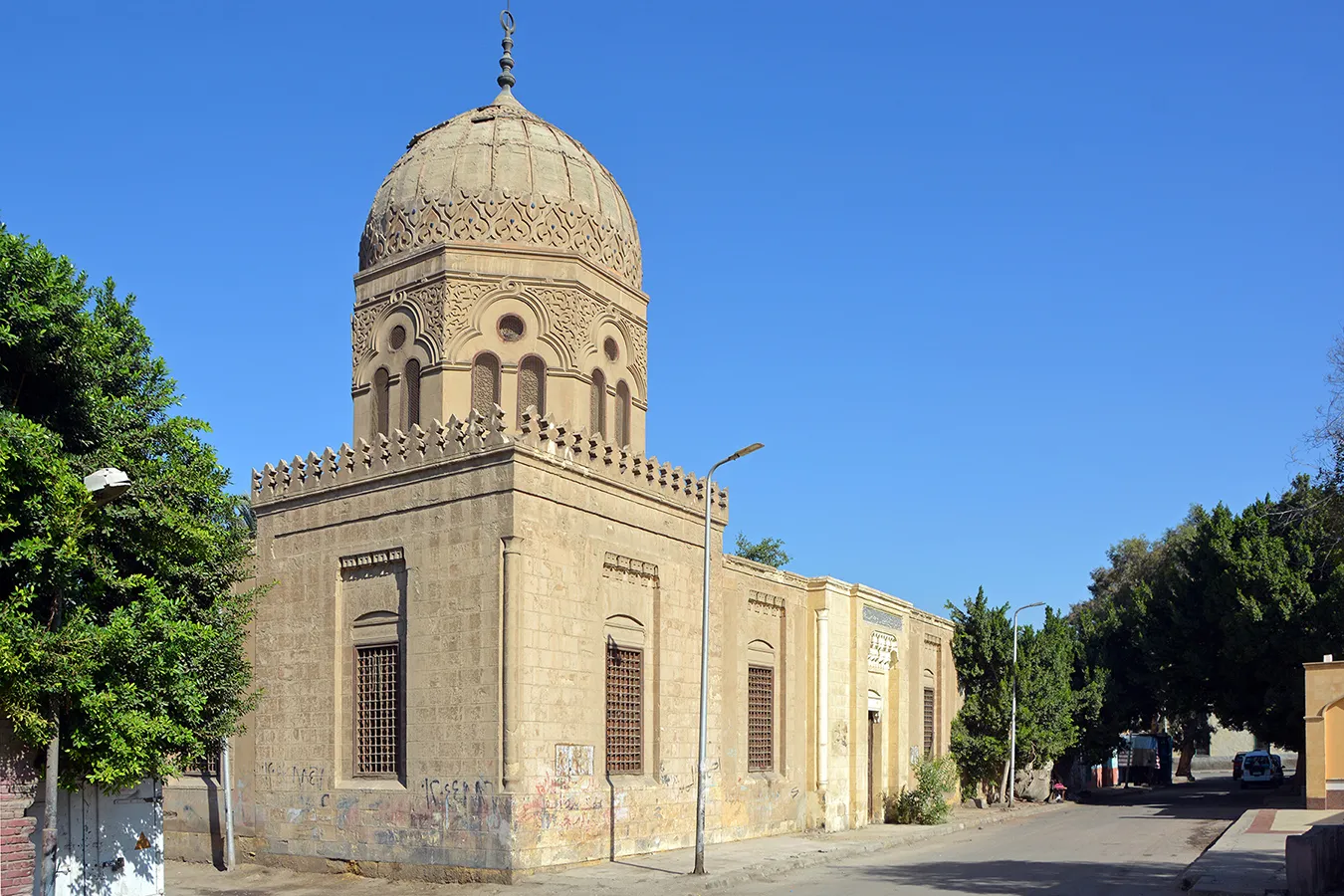
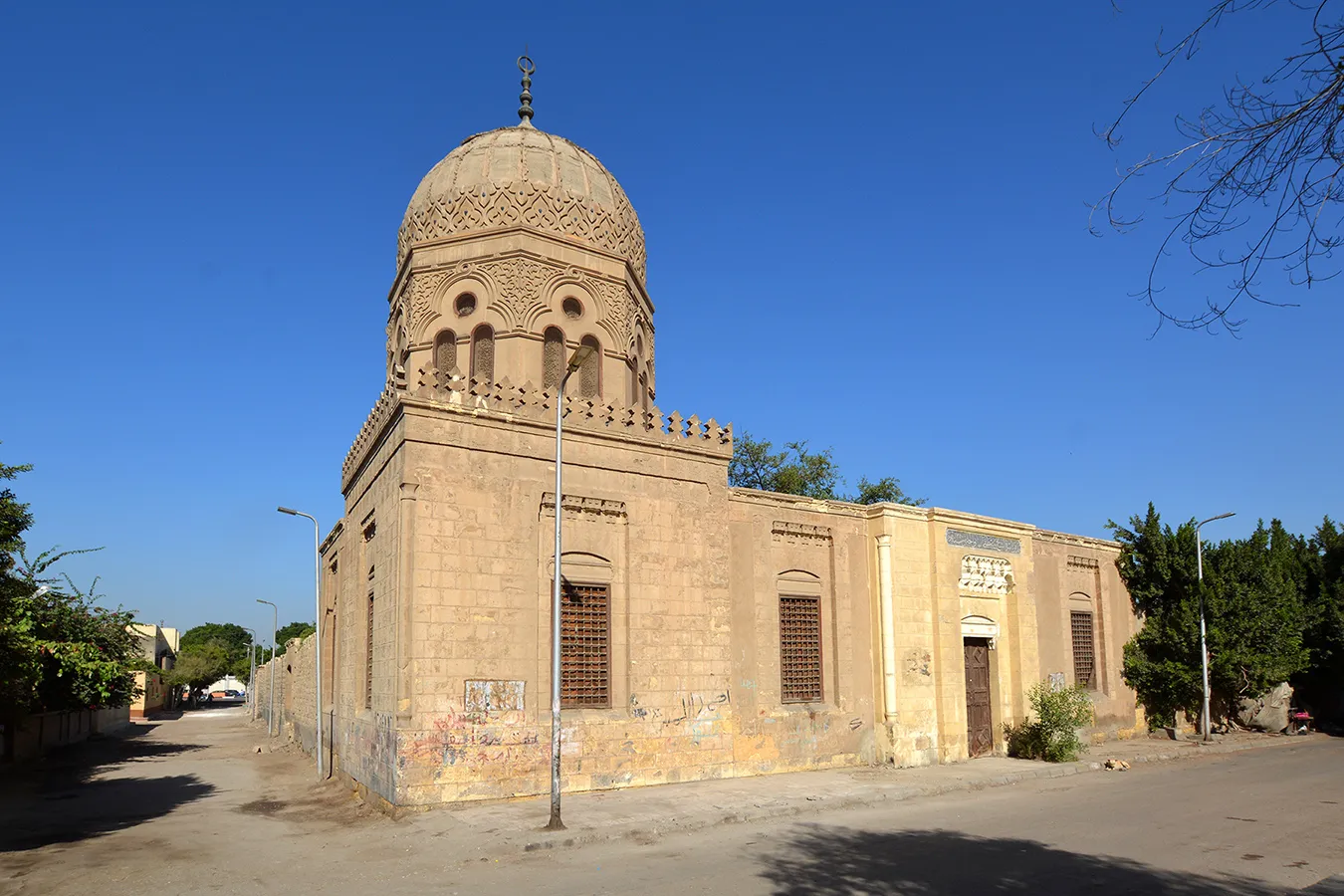
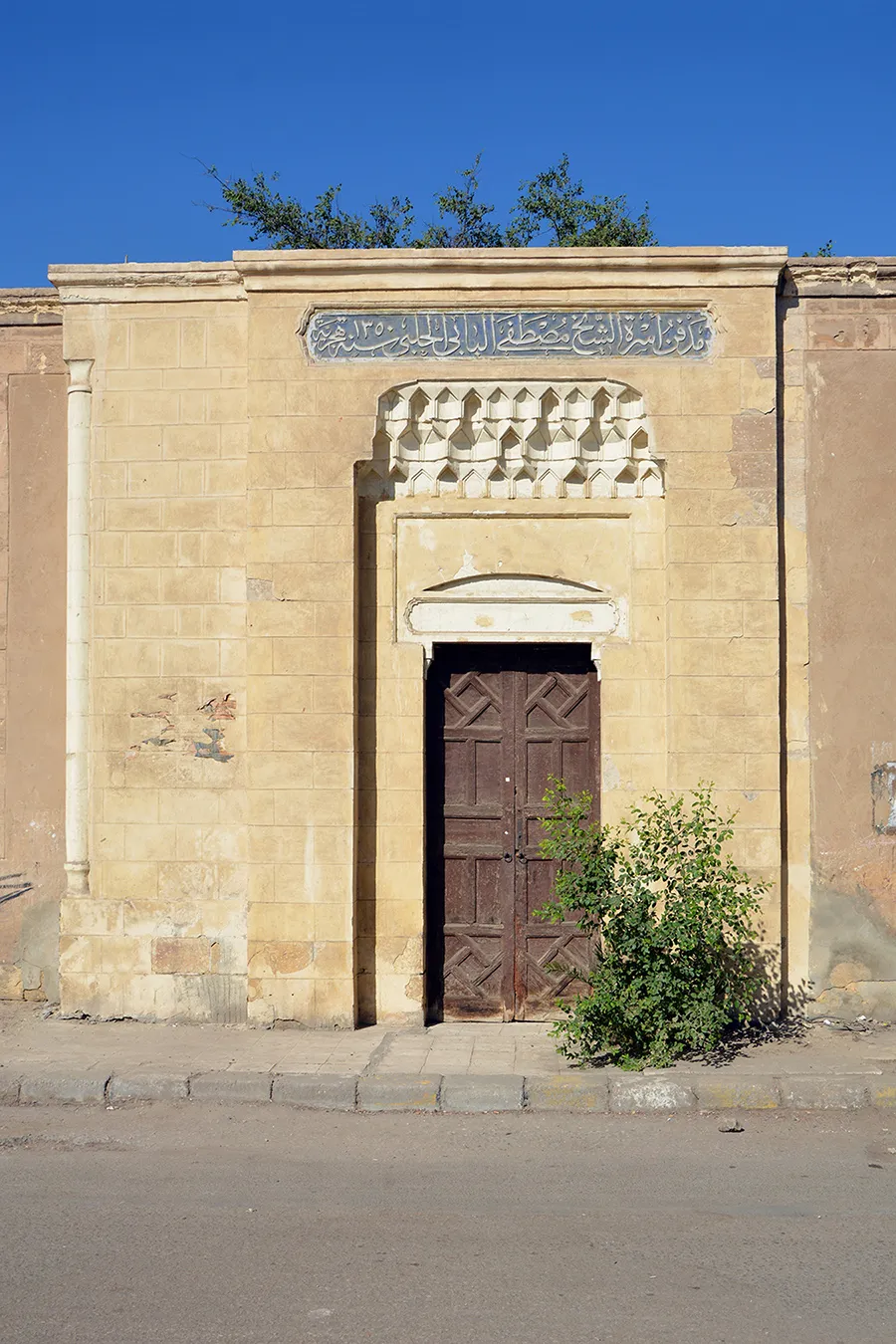
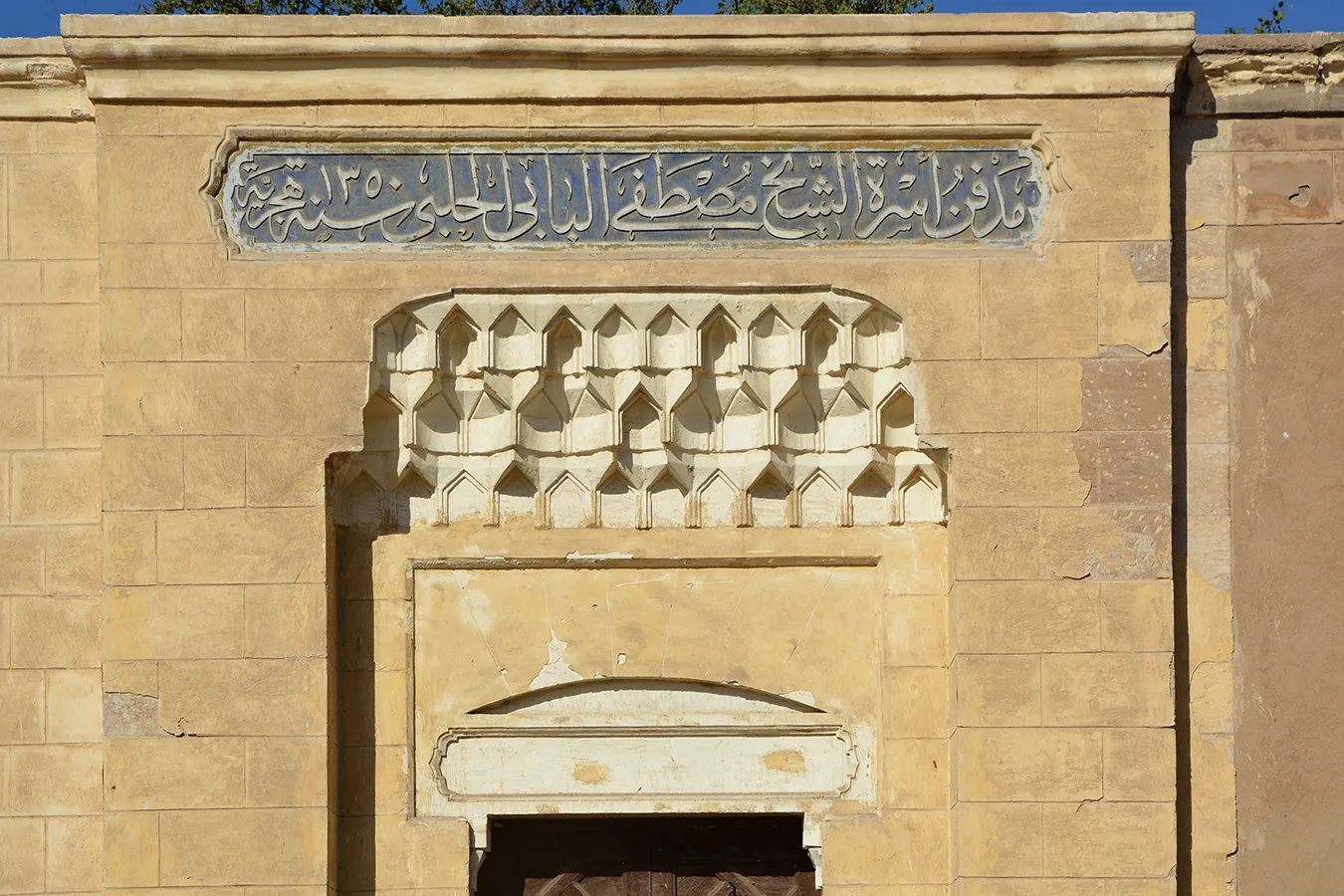
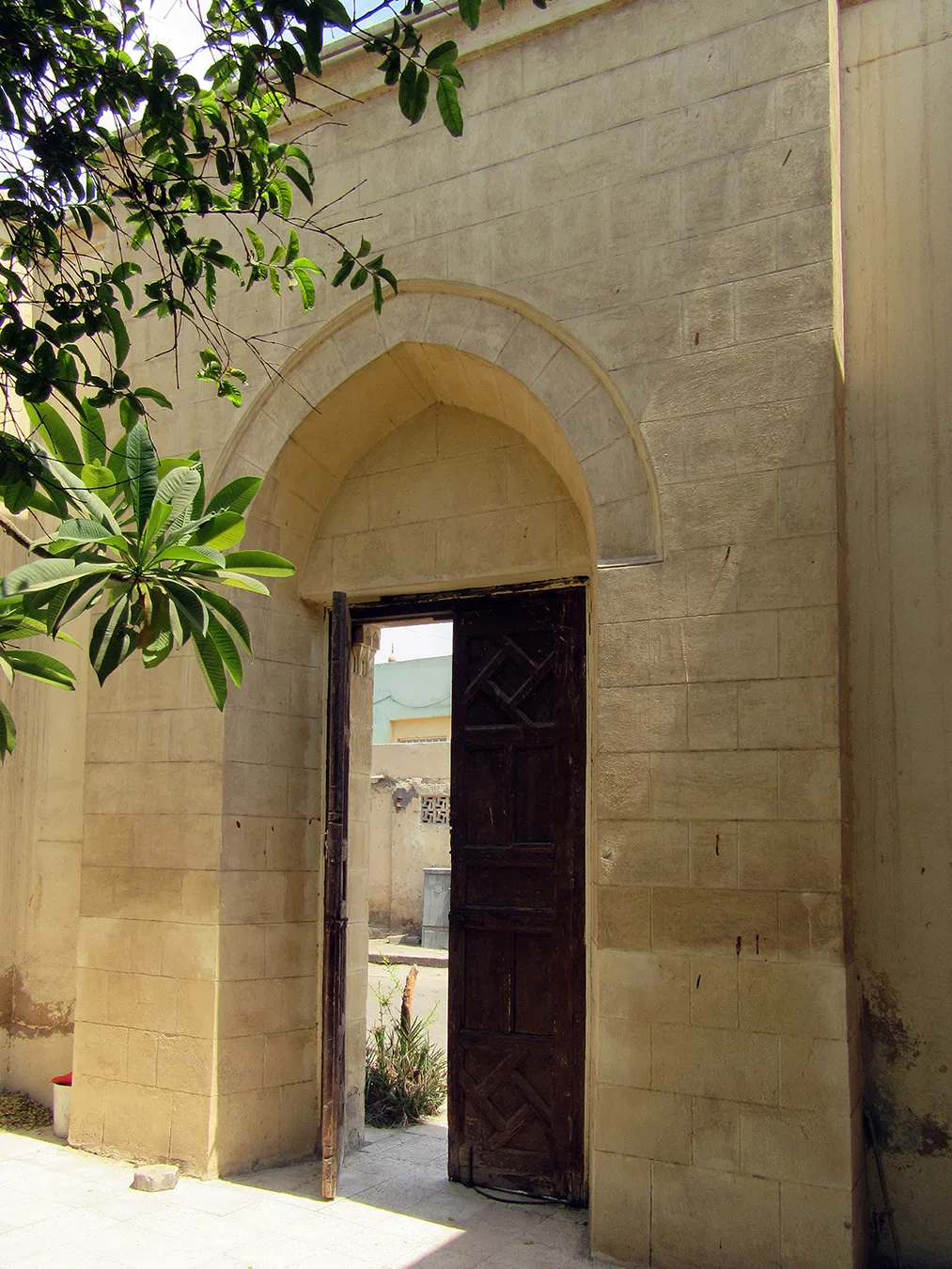
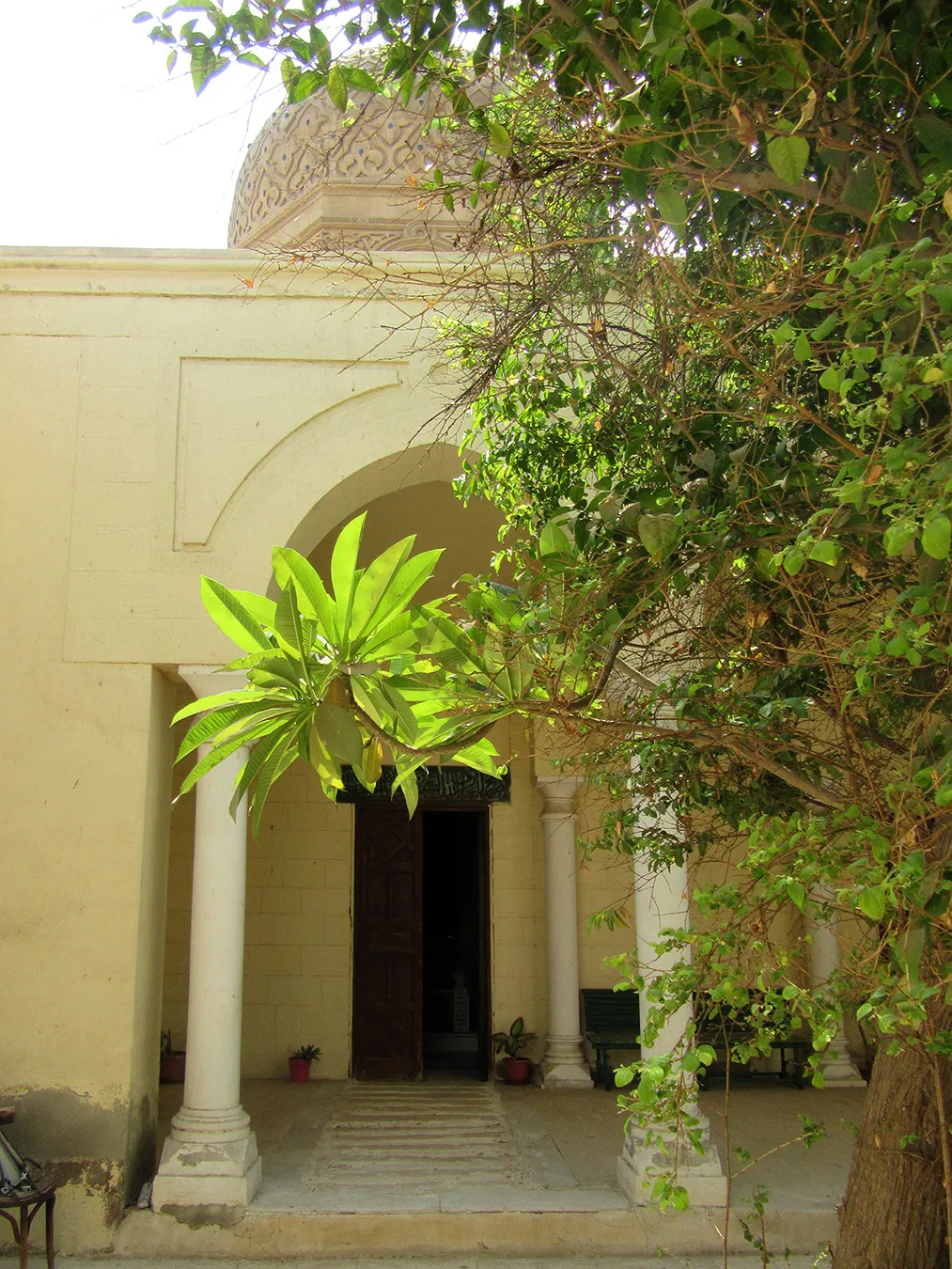
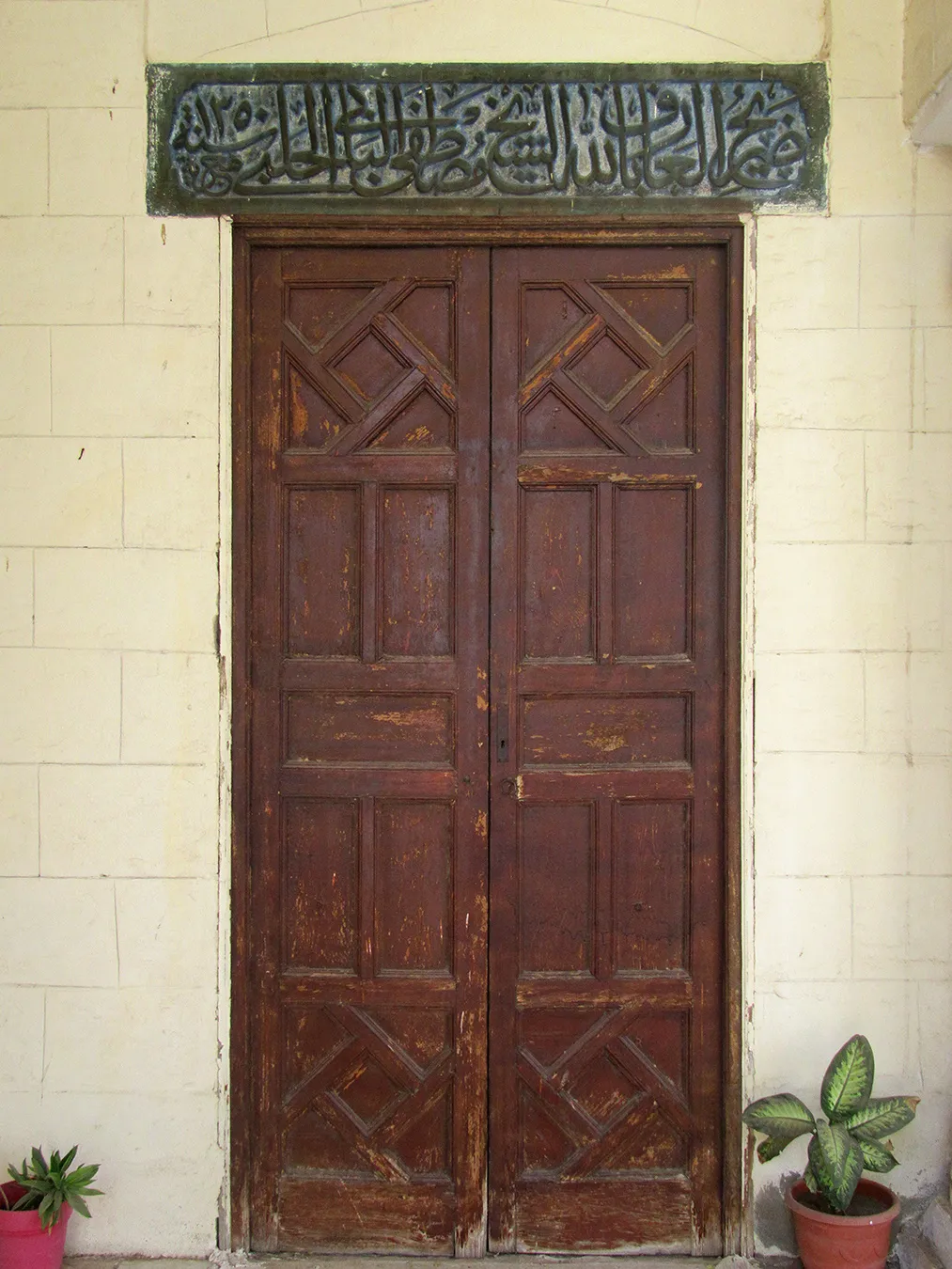
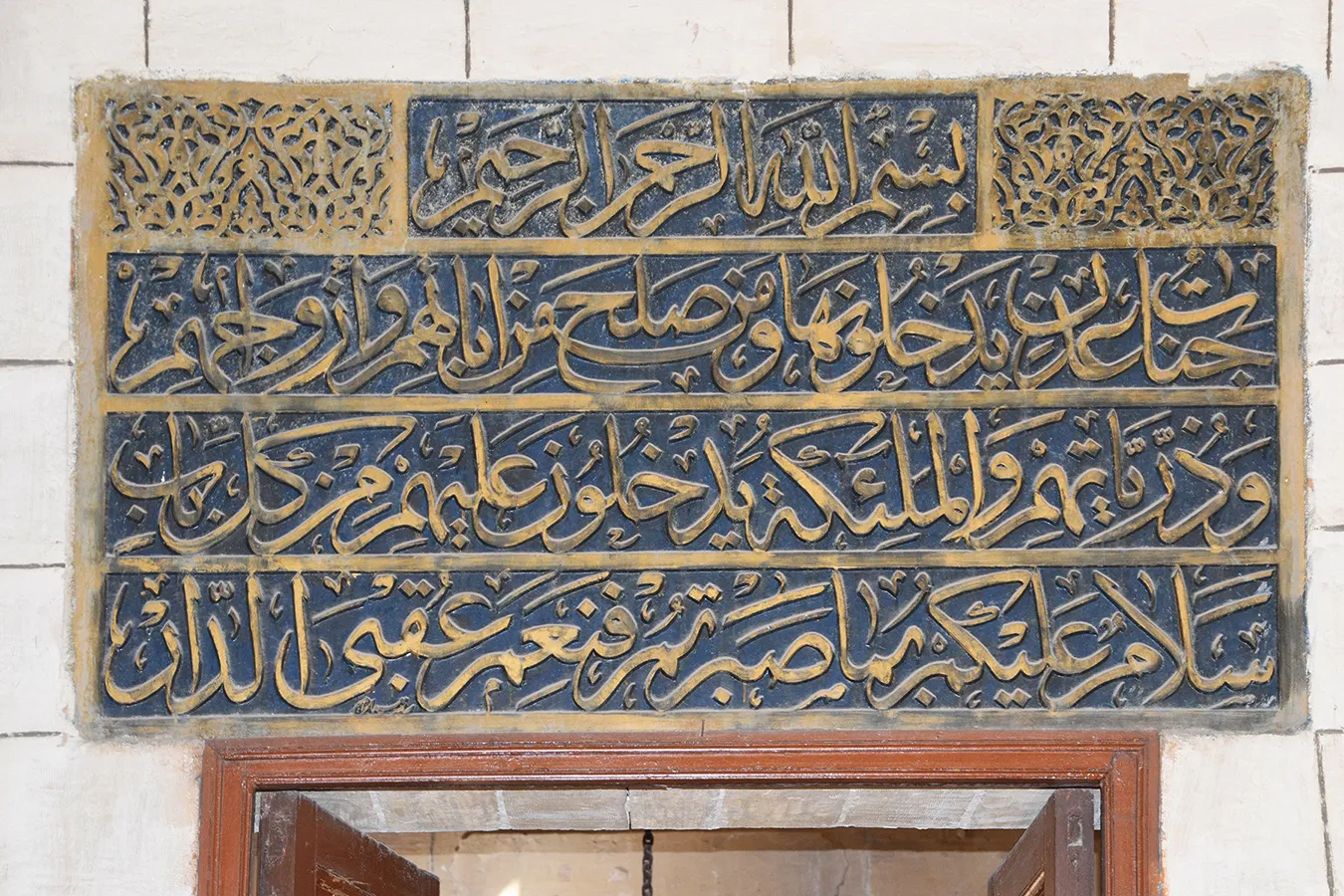
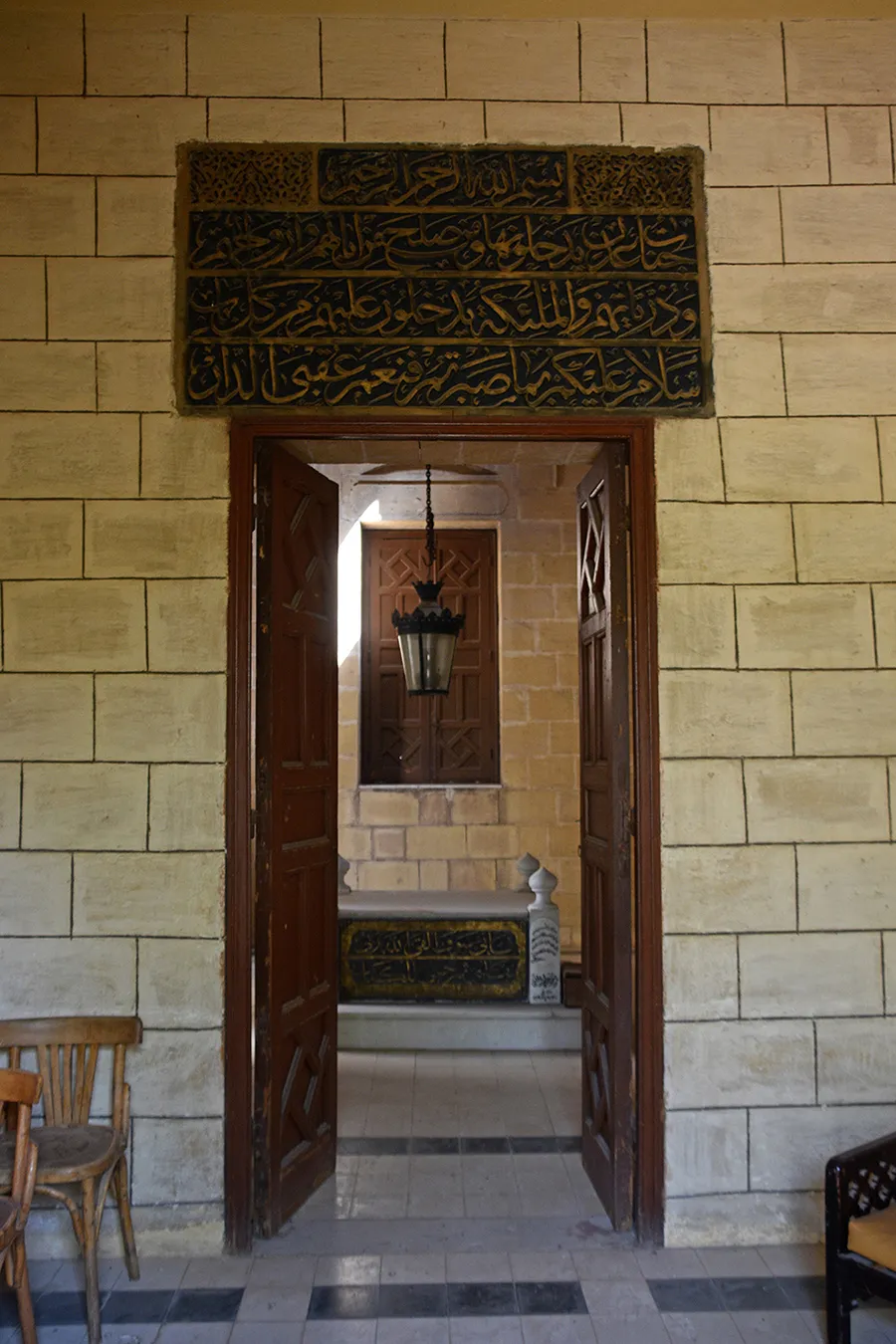
Mustafa al-Babi al-Halabi’s funerary enclosure is one of the largest and best maintained in the area under study. More than two-thirds of the rectangular plot is taken up by an open funerary enclosure arranged as a garden, while the section facing the Sultan Ahmad Street is a Neo-Mamluk building. The domed mausoleum is placed in the southern corner of the enclosure. The cubical block of the mausoleum is taller than the adjacent facades and topped with an elaborate fleur-de-lys crenellation resembling those of late Mamluk period in the reign of Sultan Qansuh al-Ghuri. The dome sits on a tall octagonal drum with no zone-of-transition visible from the outside, featuring double round-arch windows topped by an oculus in each of the eight sides, with knotted mouldings framing and floral “arabesque” motifs in the spandrels. The dome constructed of reinforced concrete is decorated with fleur-de-lys floral pattern in prefabricated plaster panels. The pattern is virtually identical with this on the dome of Amir Azrumuk (monument No. 87, AD 1504-5) (Index, s.v.), located about one kilometre to the south in the same area of the cemetery. The small blue convex insets of glazed ceramic decorating the dome are also present in the tomb of Azrumuk. (Williams, p. 279-80). The main façade adjacent to the mausoleum is tripartite, with two bays each featuring a single window flanking the central, slightly projecting part with the main entrance portal. The right (north) bay is slightly wider and protruding forwards compared to the left one. The entrance section is asymmetrical, with the entrance door set to the right of its axis, and a single engaged corner column to the left. The rectangular entrance door is set in a rectangular recess topped with a three-tiered muqarnas frieze. Above the door is a recessed long inscription panel with one line of text. The windows of the façade are identical with those of the mausoleum. They are rectangular, fitted with iron grilles, with marble lintels decorated with recessed panels, over which are segmental relieving arches with joggled voussoirs and set in a rectangular recess topped by a two-tiered muqarnas frieze with muqarnases grouped in pairs, a feature of many Mamluk-period buildings including the tomb of Amir Azrumuk. The section adjacent to the mausoleum in the side (south) elevation is identical with the corresponding bay of the front façade, while the rest of the enclosure is surrounded by a lower simple wall of rough stone.
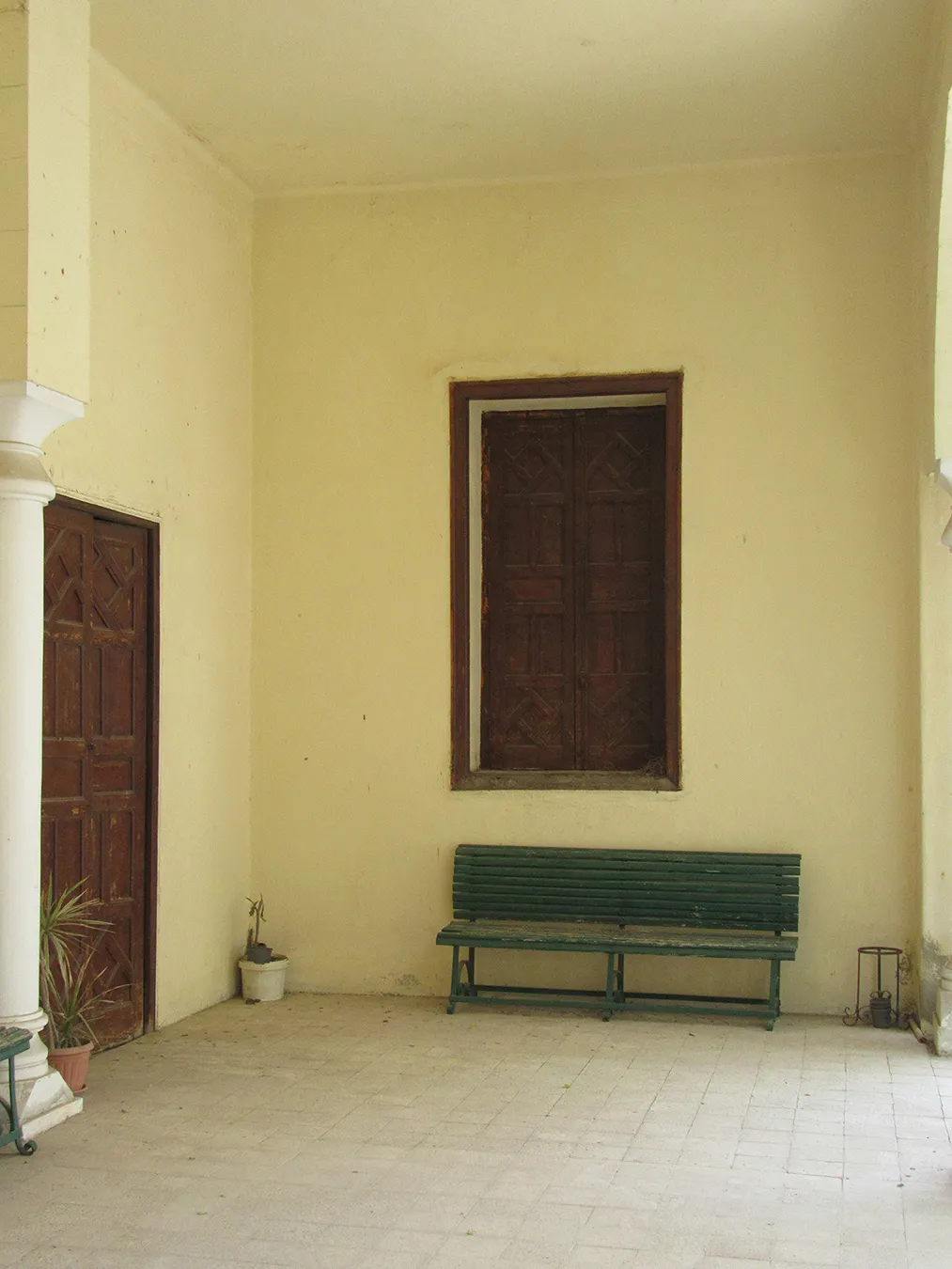
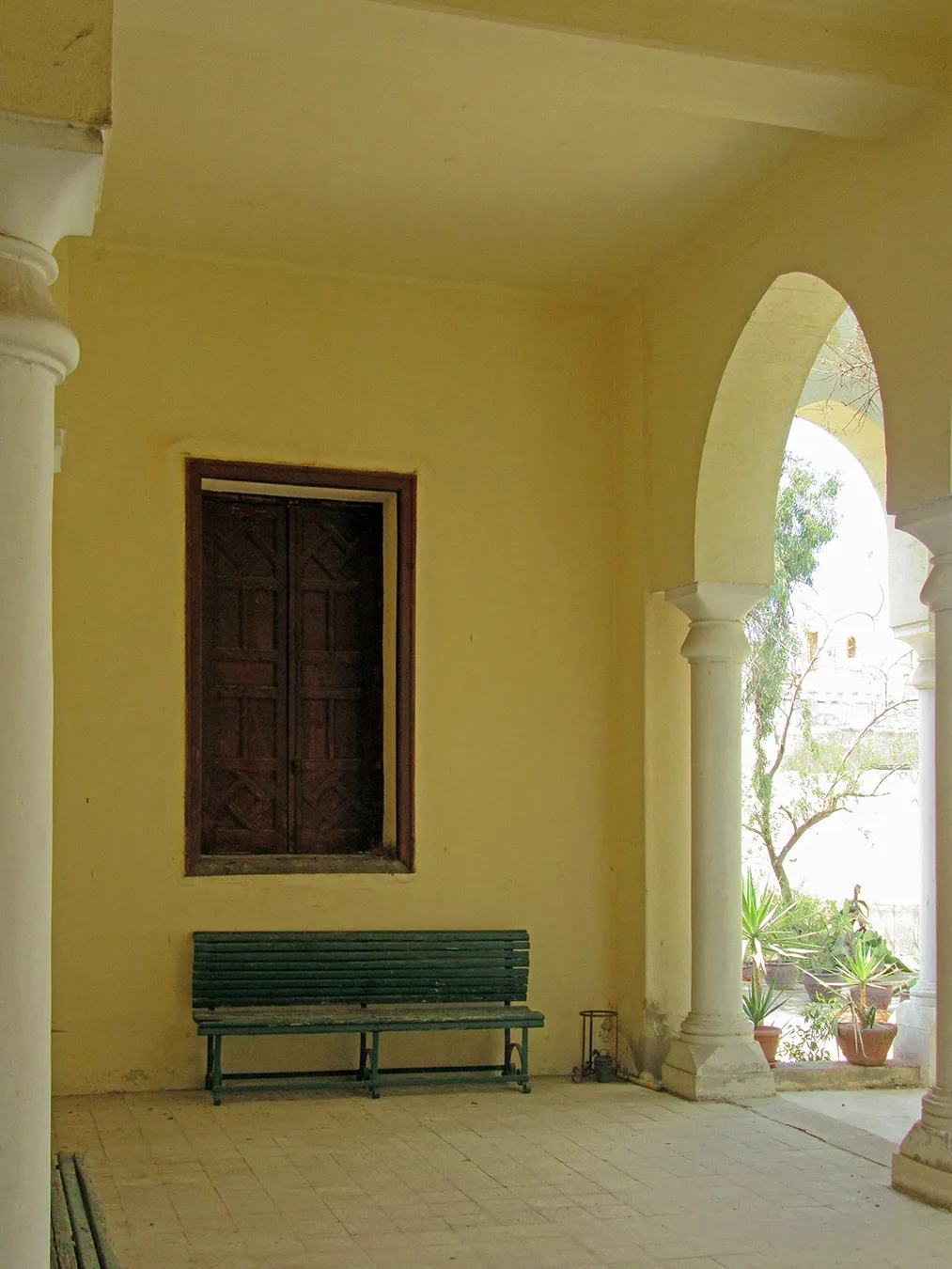
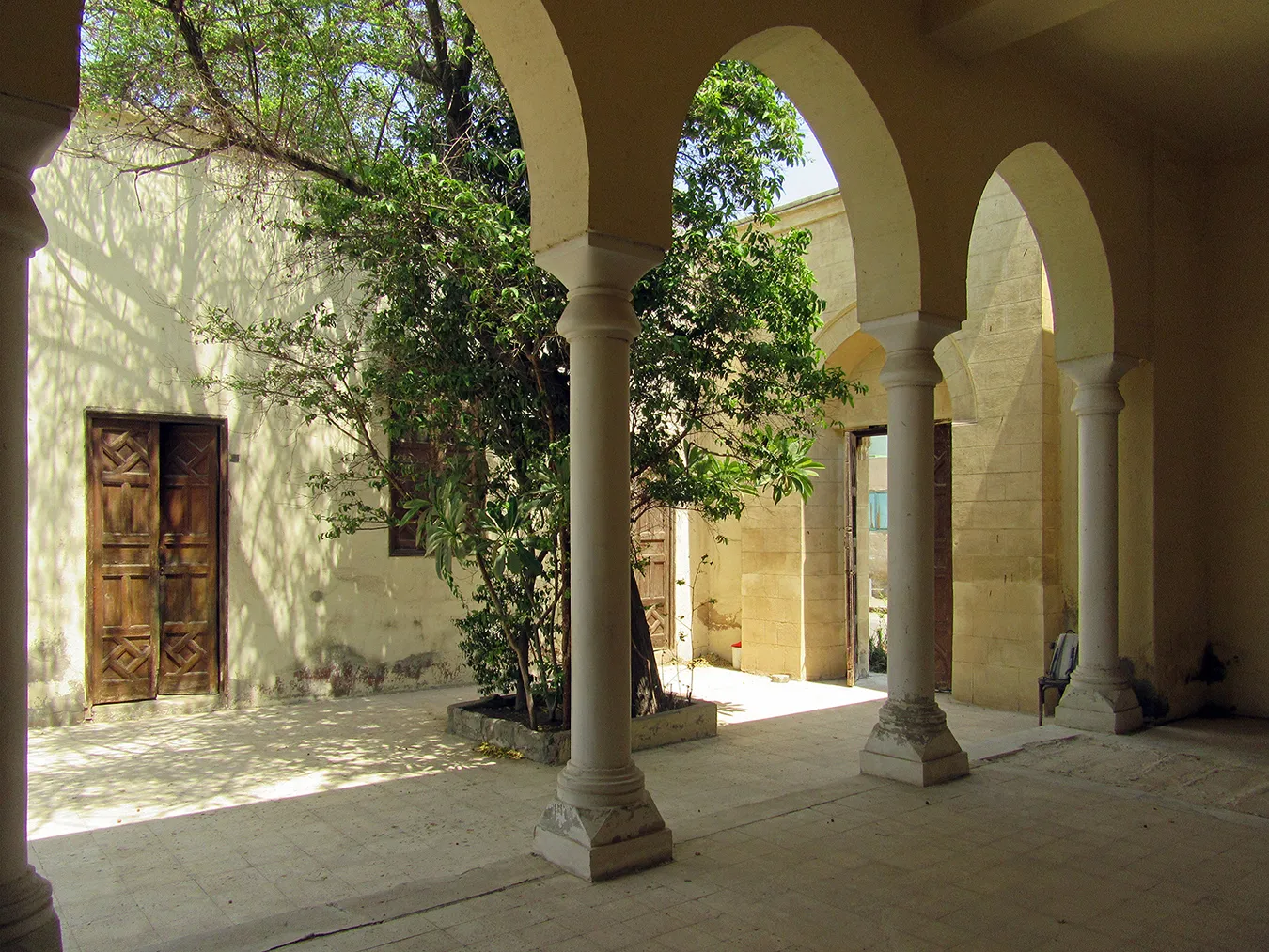
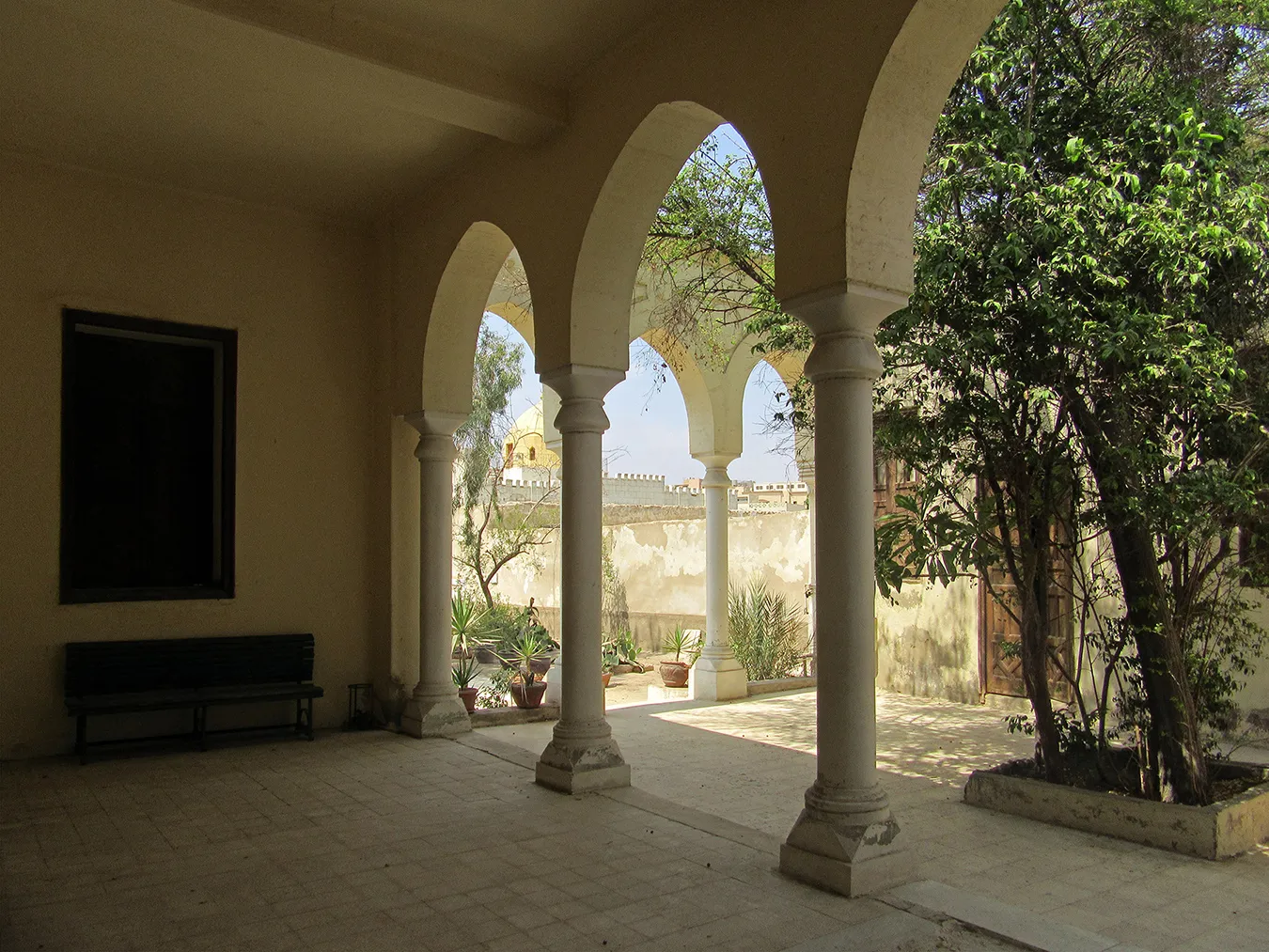
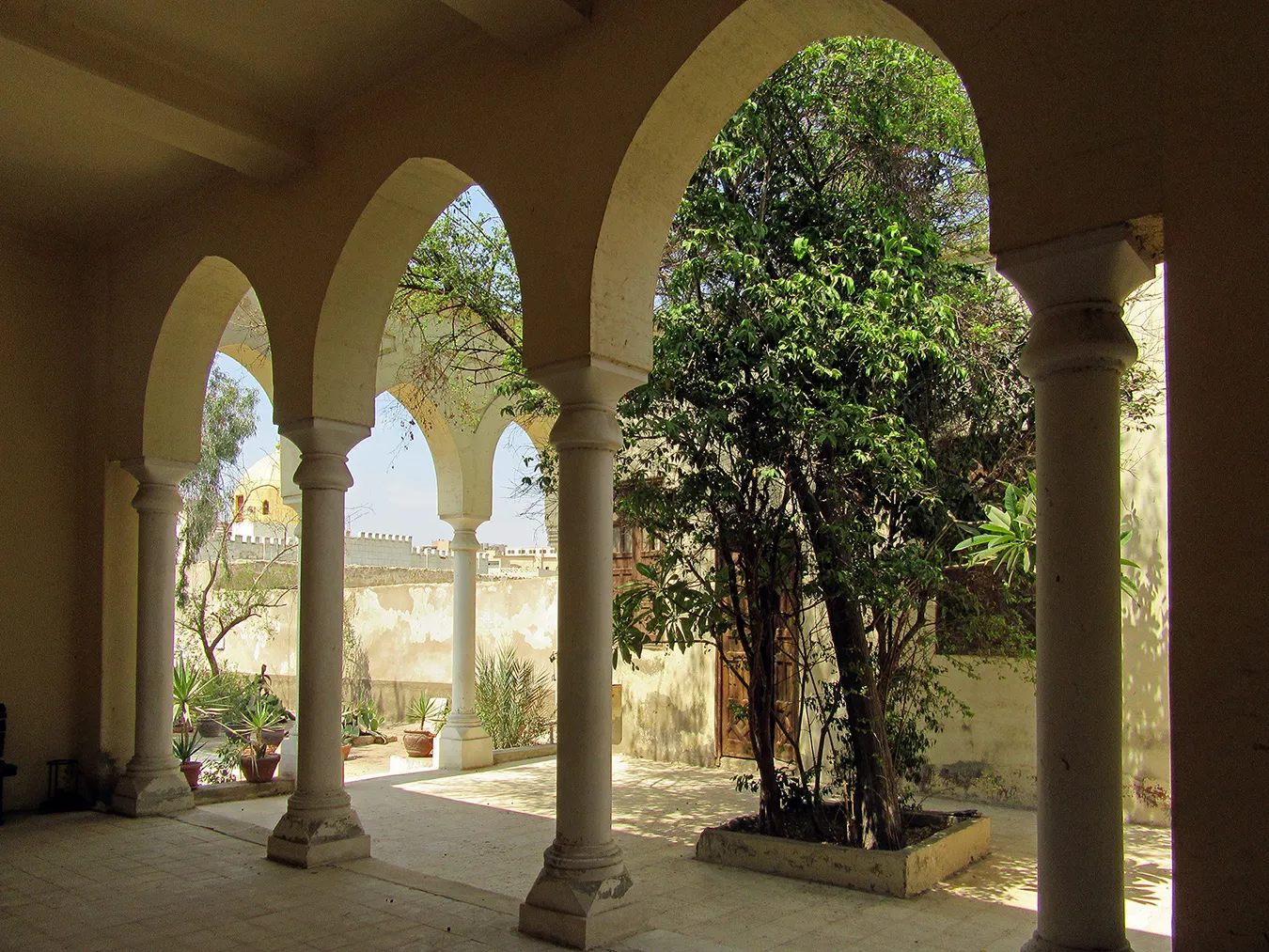
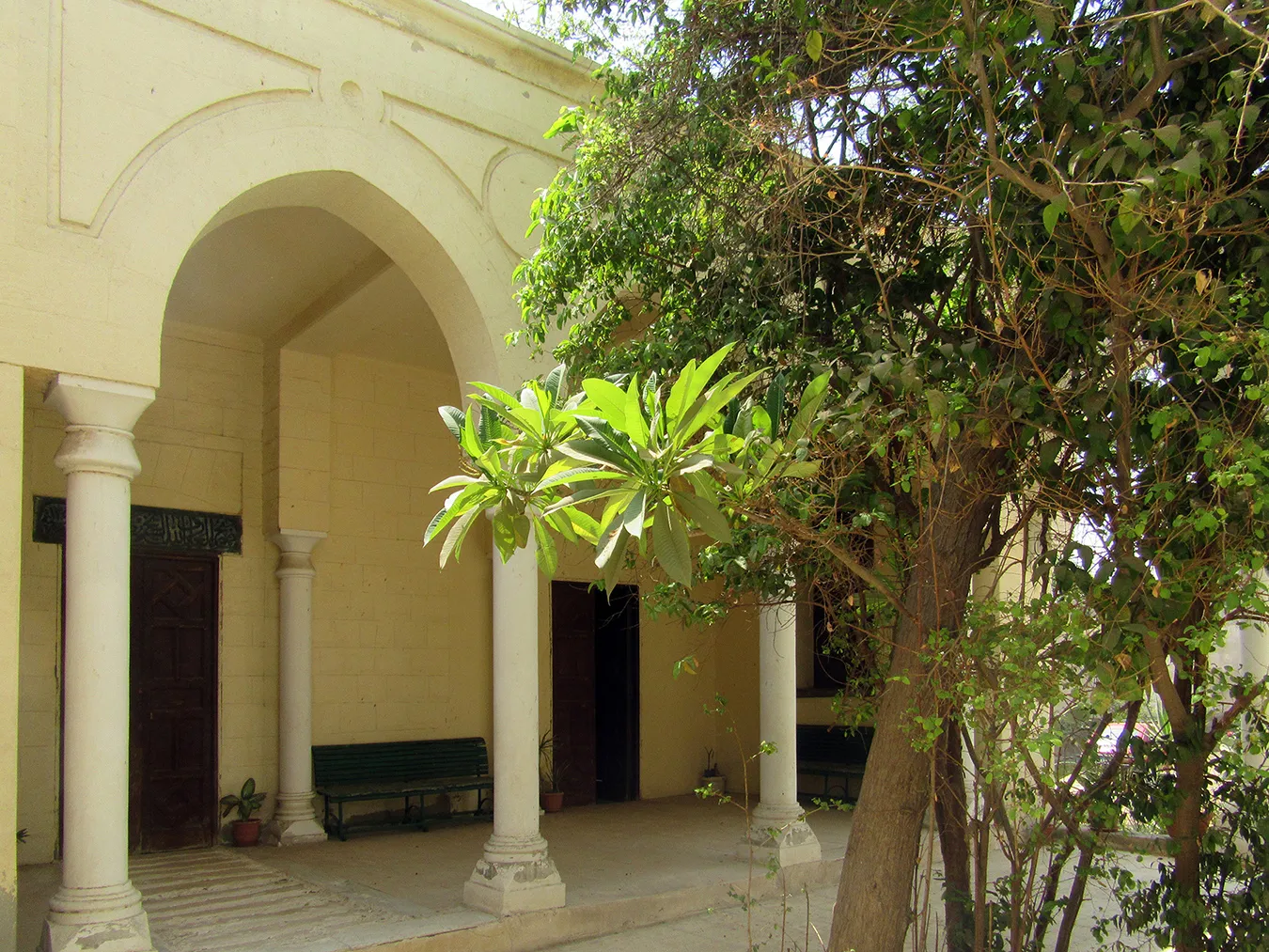
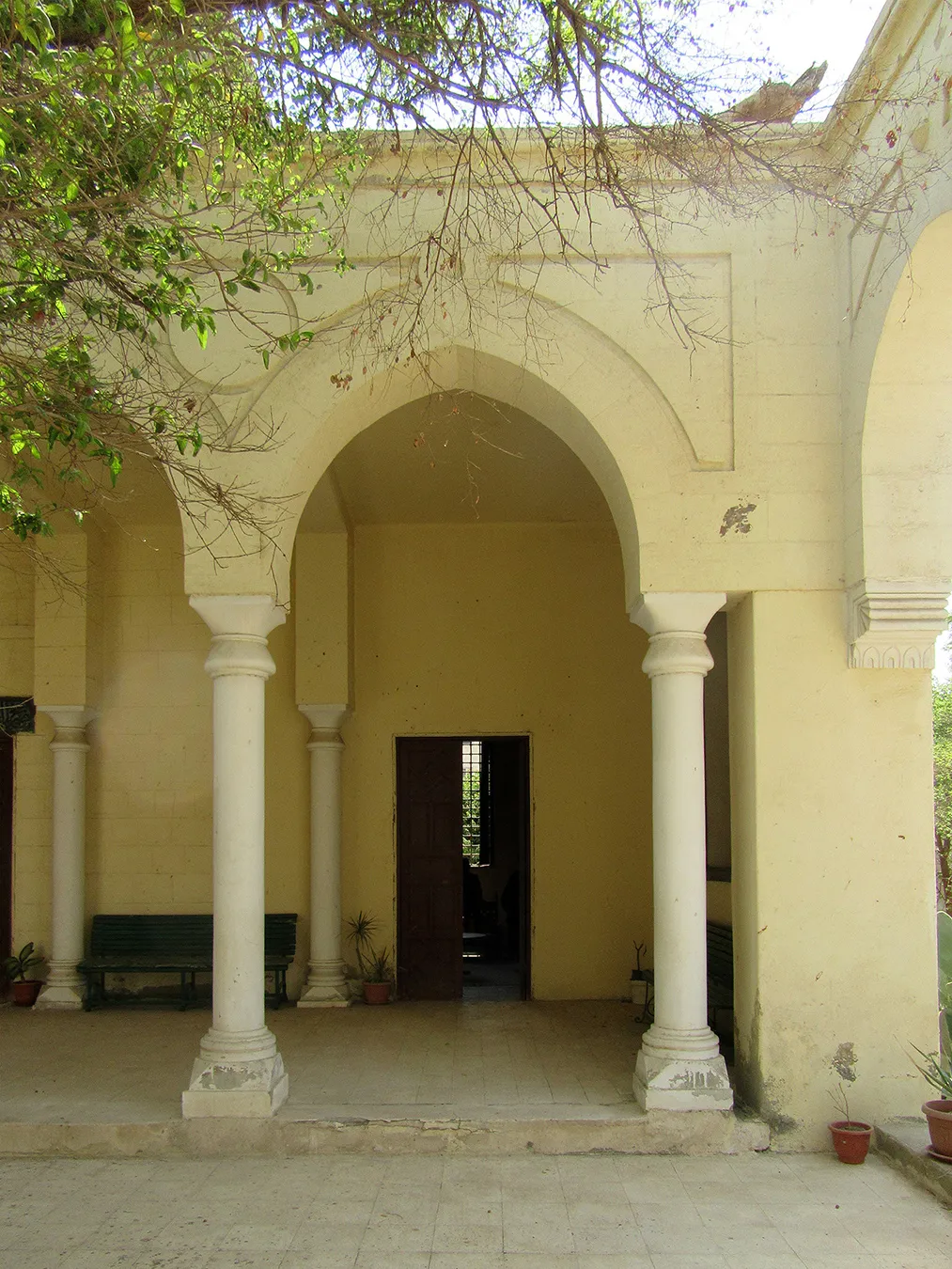
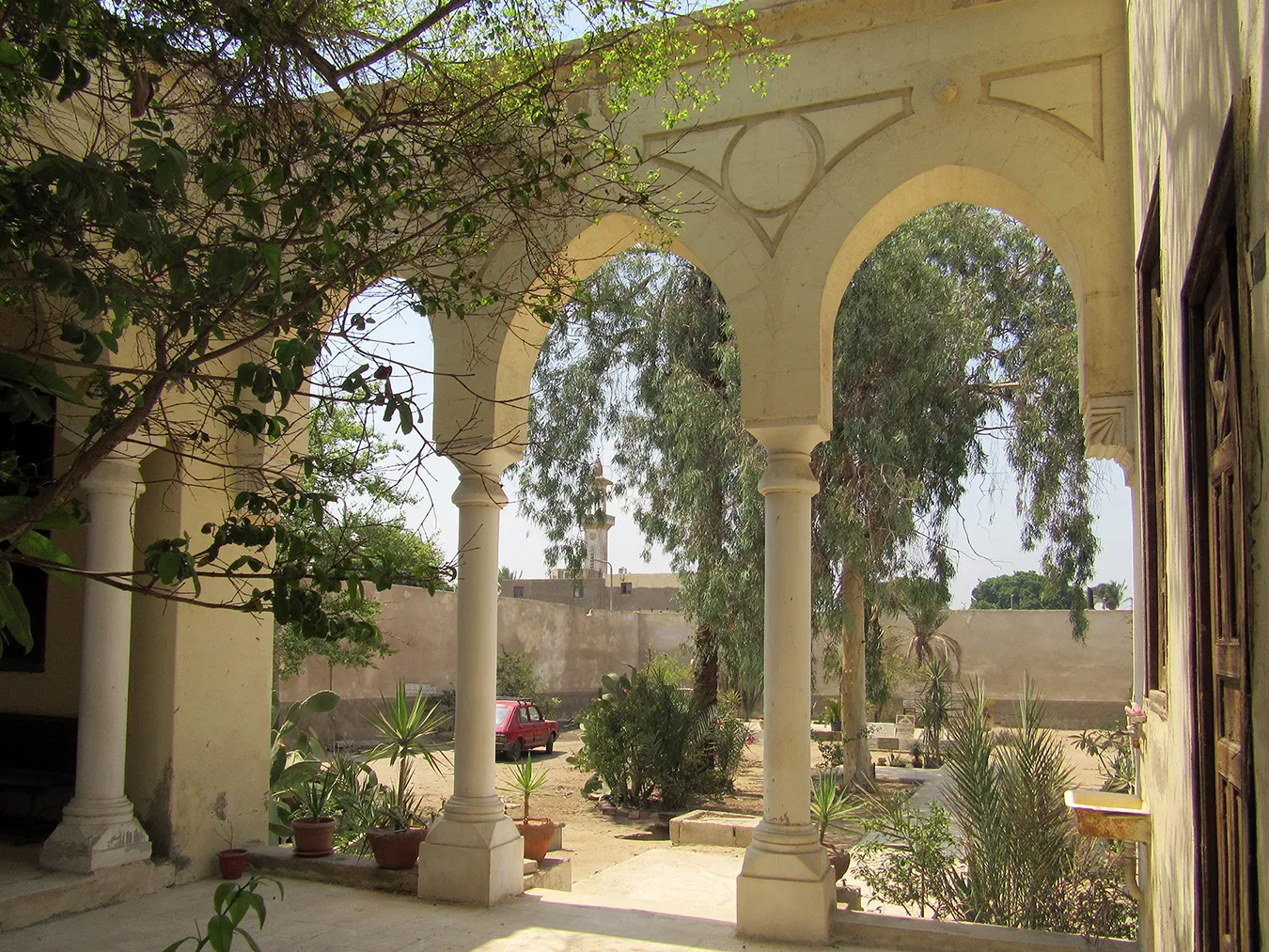
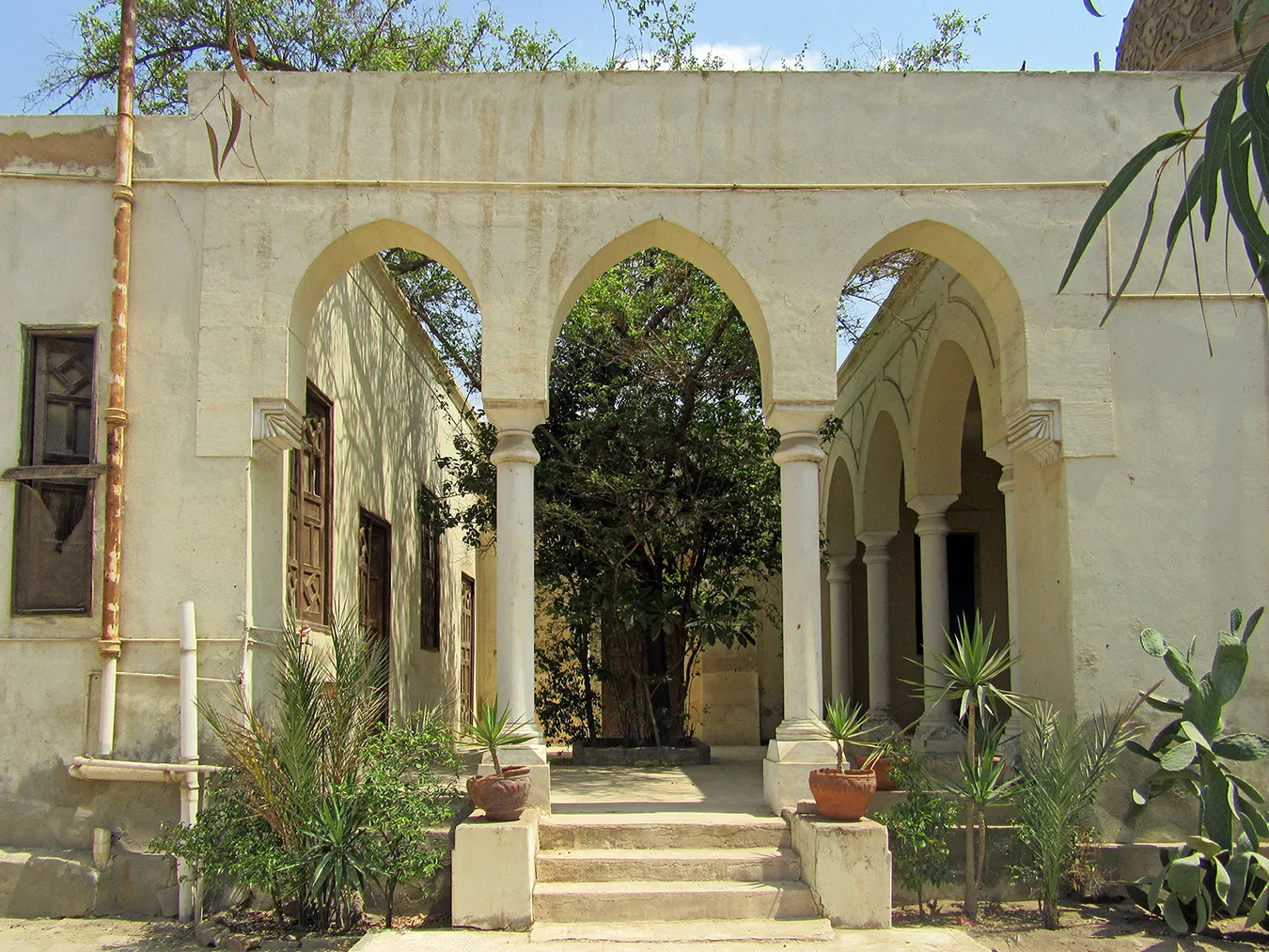
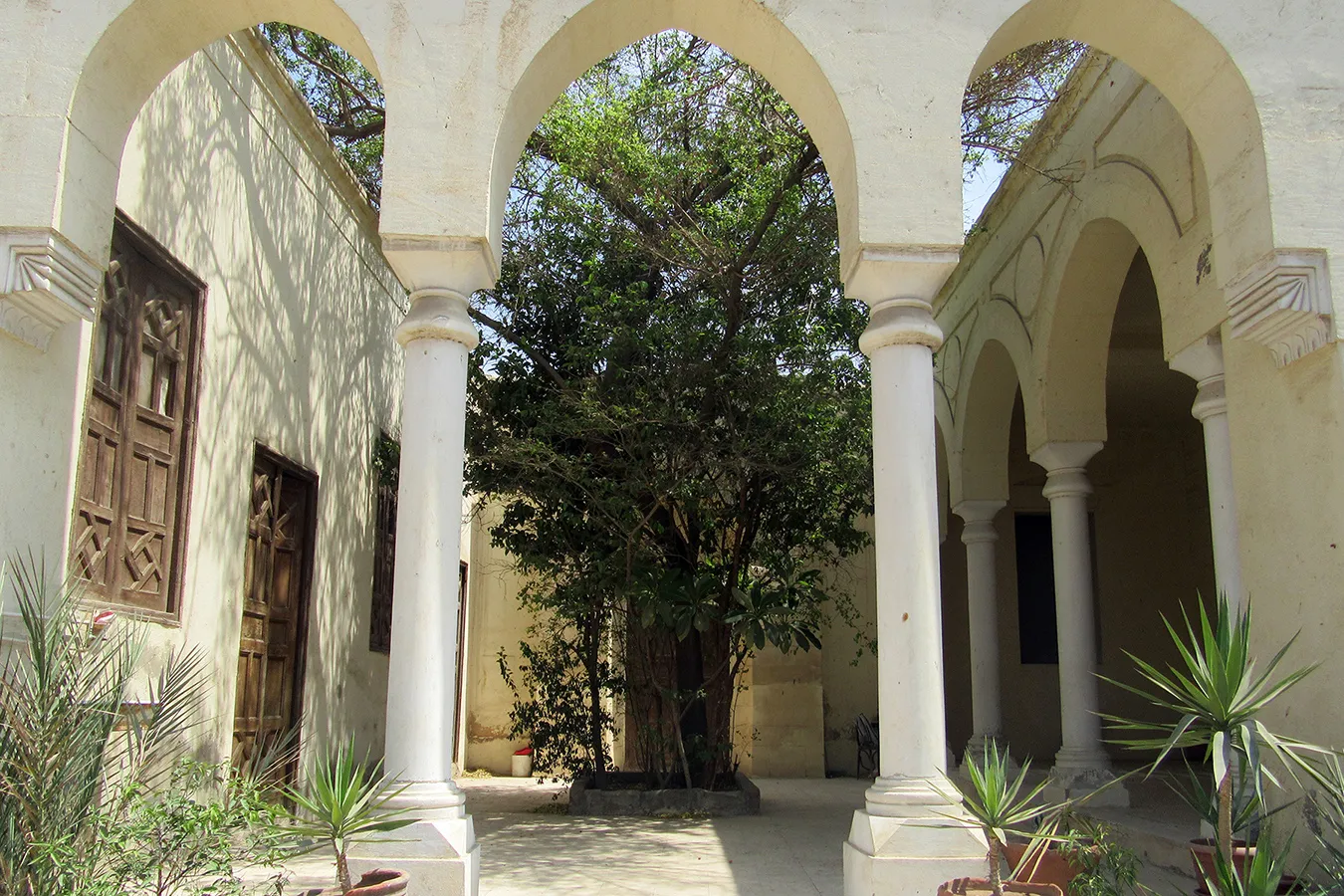
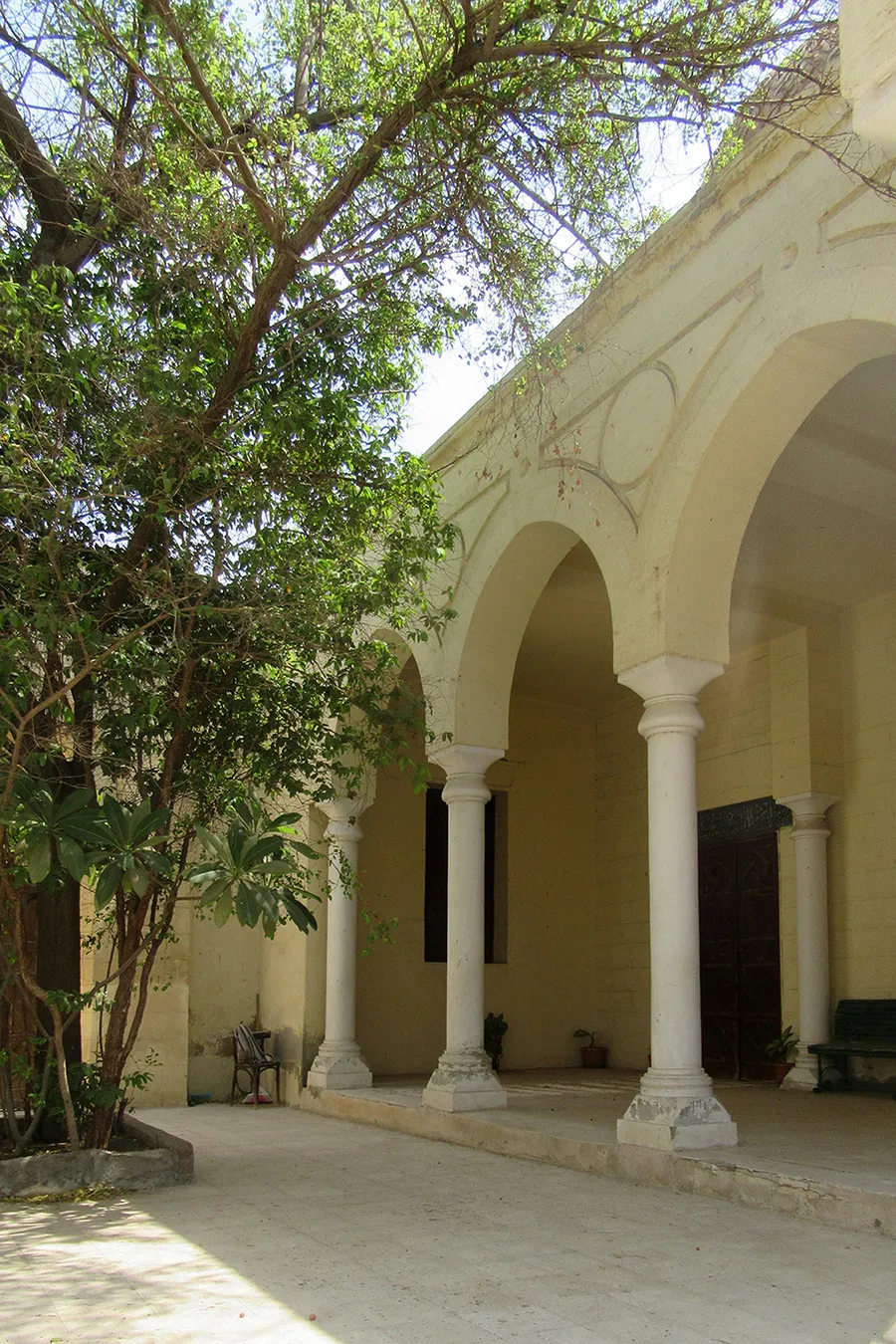
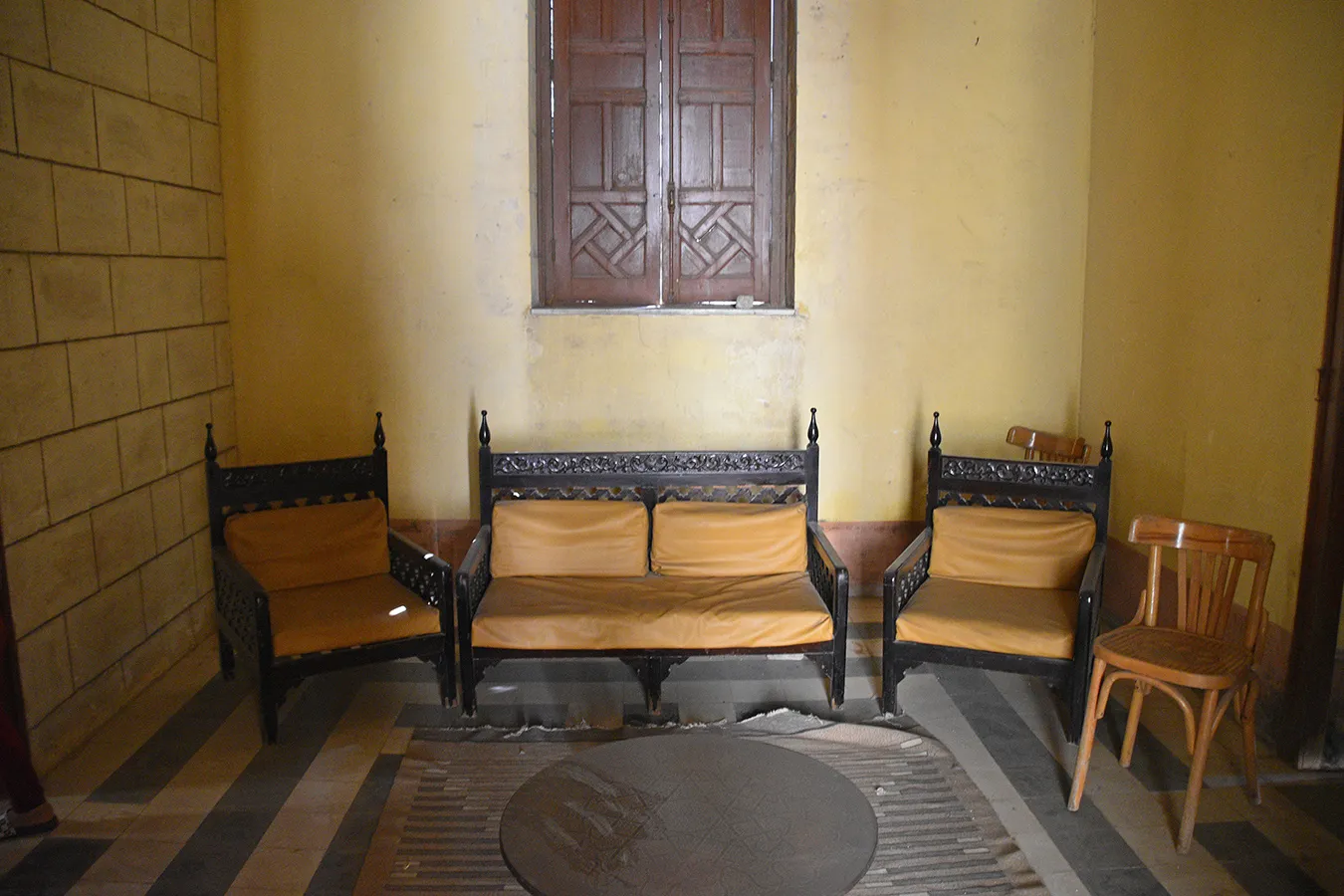
The entrance gate leads to a vestibule open to the sky, which on the back end opens to the garden with an arcade of three pointed arches on round columns with simple Mamluk-style capitals. A similar arcade of three arches faces the vestibule to the left, forming a portico in front of the mausoleum and the reception room that precedes it. To the right (north) of the vestibule, is a residential zone composed of two rooms and a toilet.
Condition of preservation
(In all descriptions, the direction towards Mecca is called eastern, and other directions are named accordingly) The structure is in a generally good condition, and well-maintained. However, much of the decoration of the dome is missing, leaving exposed the concrete structure.
Information abut the founder, family history, etc.
Mustafa Al-Babi Al-Halabi was the owner of the printing press and publishing house which were among the earliest and most important in Cairo. His Syrian uncle Ahmad Al-Halabi originating from Albab village in the Aleppo region was a businessman who immigrated to Egypt and established the “Maymaniyah Press” in 1859 which later became “Al-Babi Al-Halabi Press”. Ahmad was infertile so he brought his nephews from Aleppo to carry on the business. The business later split into two entities, where Eissa Al-Halabi established the House of Revival of Arabic Books “دار إحياء الكتب العربية”, while Mustafa Al-Halabi, the owner of this funerary enclosure, established the “Mustafa Al-Babi Al-Halabi and Sons Library and Printing Company”. The printing house was mainly concerned with publishing avant-garde Islamic studies books like “Al-Tabari and Al-Ghazali”. The print house still exists and is run by his descendants, located in al-Darrasa a few hundred meters away from the funerary enclosure and is also close to Al-Halabi Square, which might be named after him.
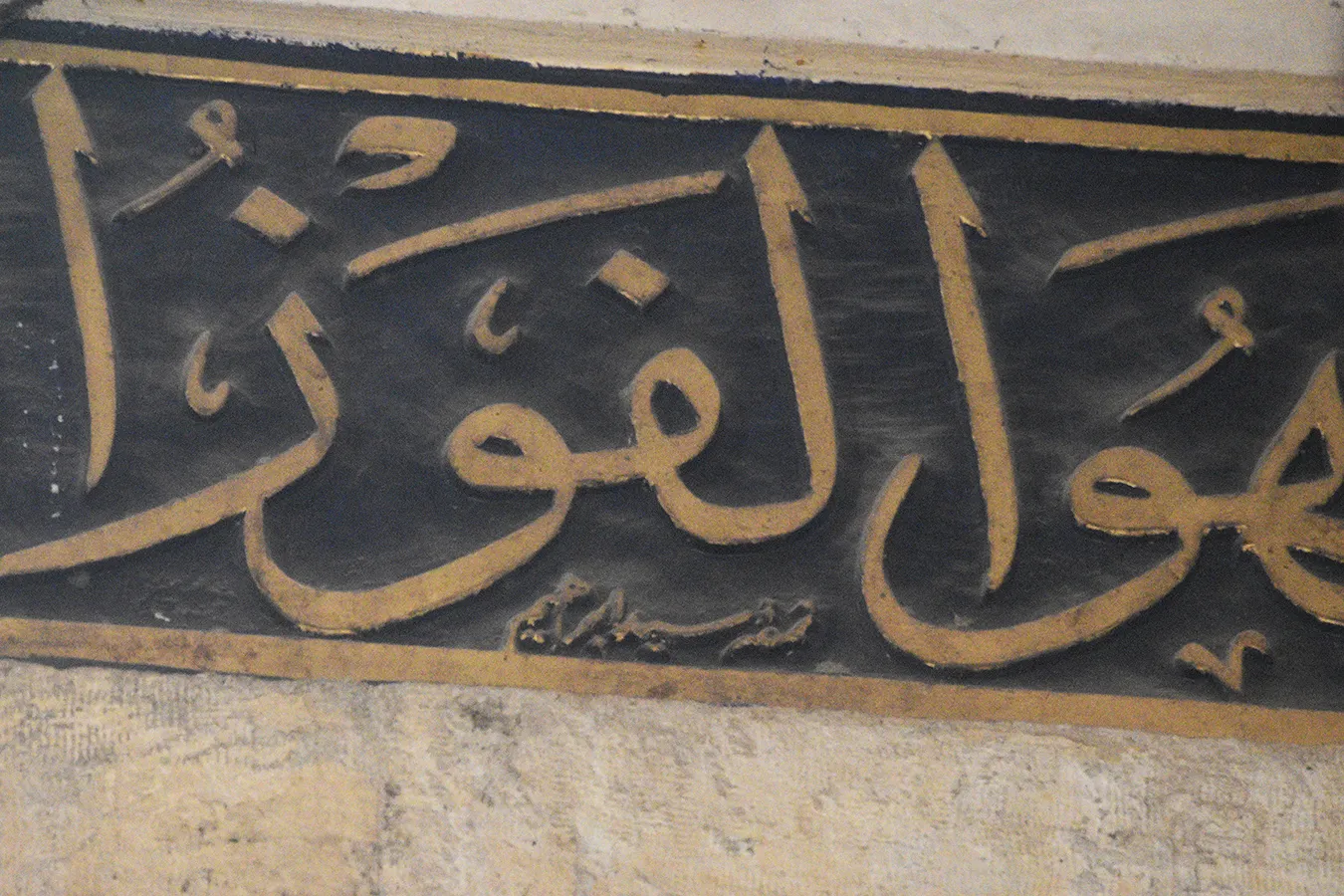
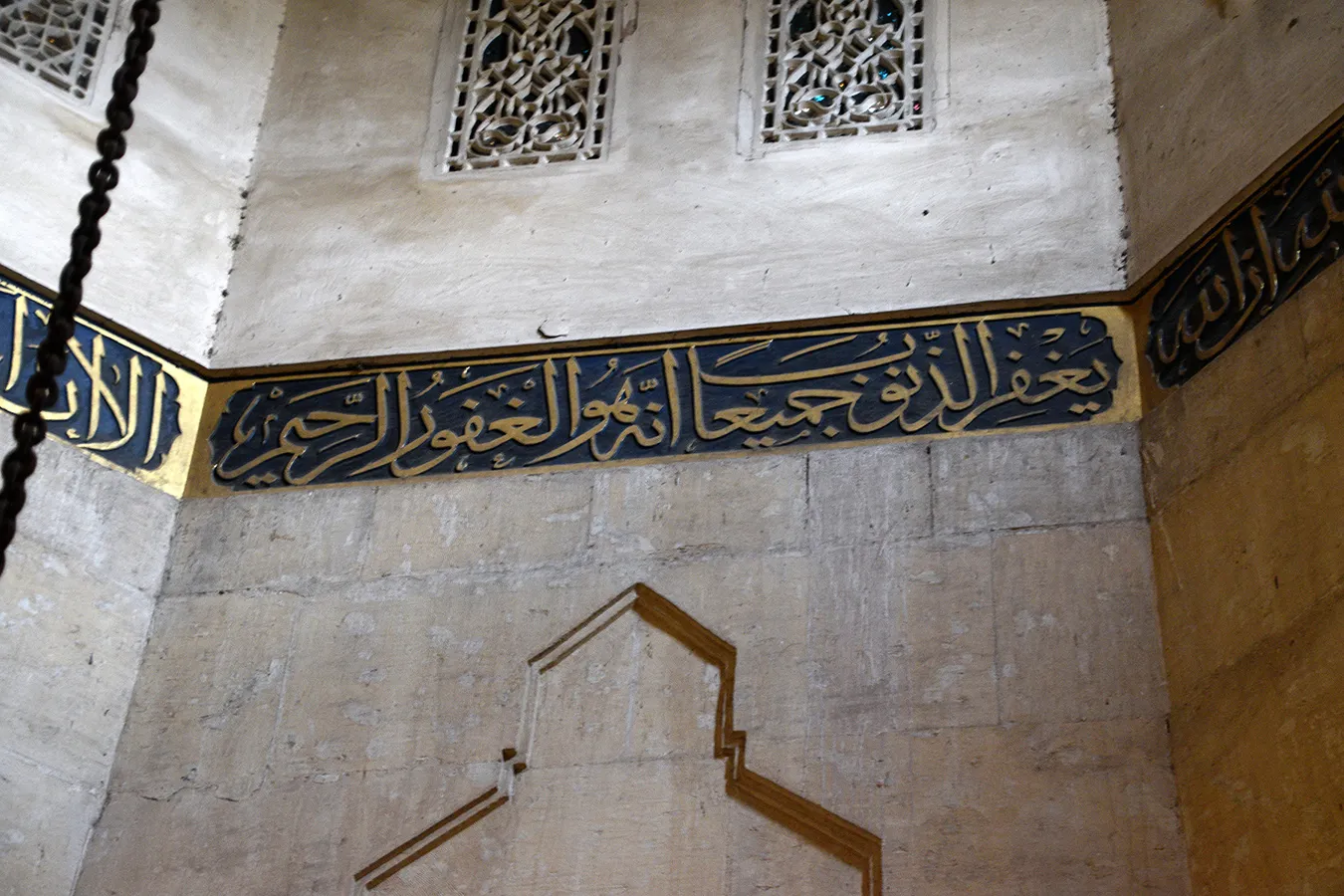
The main inscription is signed by the calligrapher Sayed Ibrahim.
The date 1350 AH in the inscription over the entrance gate corresponds to AD 1931.
References in published/primary sources
• Index to Mohammedan Monuments Appearing on the Special 1:5000 Scale Maps of Cairo, reprinted by authority of the Egyptian Association of Friends of Antiquity, The American University in Cairo Press, 1980
• Williams, Caroline Islamic Monuments of Cairo: The Practical Guide, American University in Cairo Press 2018, p. 275-7, 279-80)
- Field recording by
- ‘Amr Abotawila and Nur Atiya
- Date recorded
- September 1, 2022
- Data entered by
- Hadir Ahmad and Yusuf Yassir
- Date entered
- April 29, 2024