
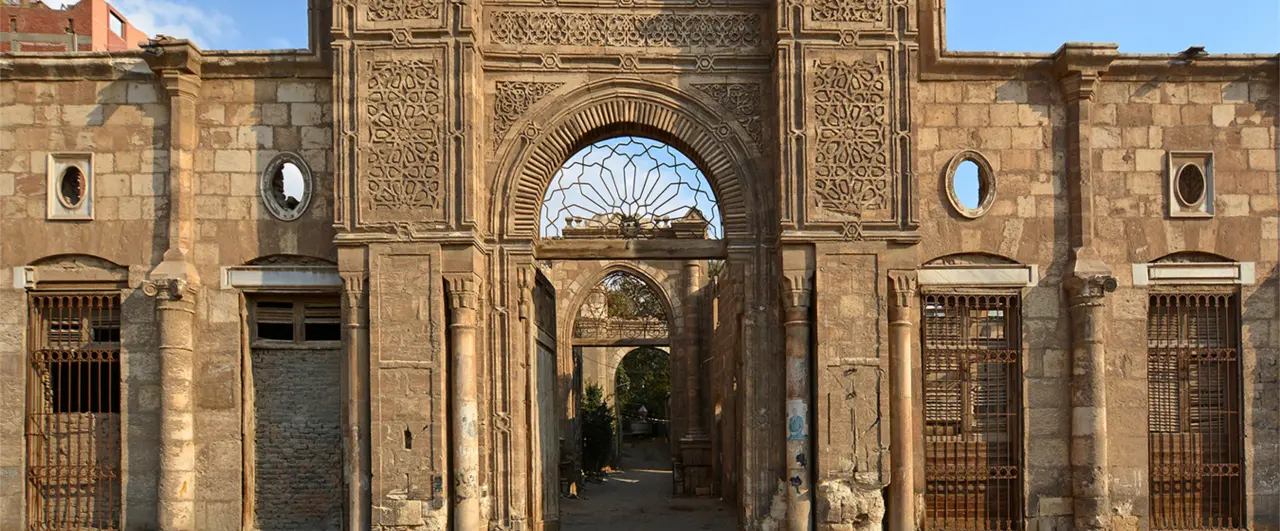
about the project
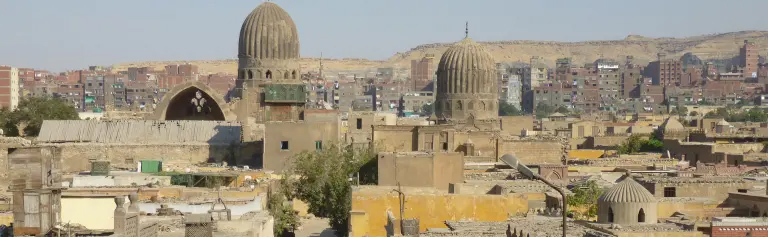
The Eastern Cemetery in Cairo
The vast Muslim cemeteries of Cairo, often referred to as the “City of the Dead”, stretch for more than eight kilometres, are of exceptional cultural value because of their unique character as a historic urban unit, form a part of a World Heritage site that includes some of the city’s most important historic monuments, and are home to hundreds of thousand people. The Eastern Cemetery section (sahra’ al-mamalik) is located to the east of the historic city. It is sometimes also referred to as the Northern Cemetery, and in the past was often erroneously named “Tombs of the Caliphs.” It was first developed in the first half of the 14th century, was the burial ground for sultans and dignitaries in the Mamluk period (1250 – 1517) and later continued as a cemetery for prominent families. Beginning with Khedive Tawfiq (d. 1892), members of the Egyptian royal family were buried in the Eastern Cemetery, attracting other prestigious families. Unlike at European cemeteries, the mausolea of the rulers and notables were huge multifunctional religious complexes that permanently employed a considerable number of people, so the “City of the Dead” has always been also the city of the living. Nowadays, the area is place of living and work for a numerous community.
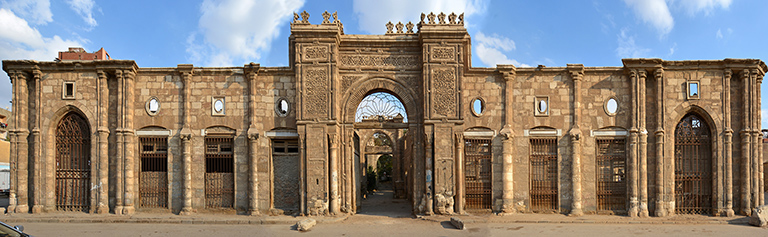
The Forgotten Heritage
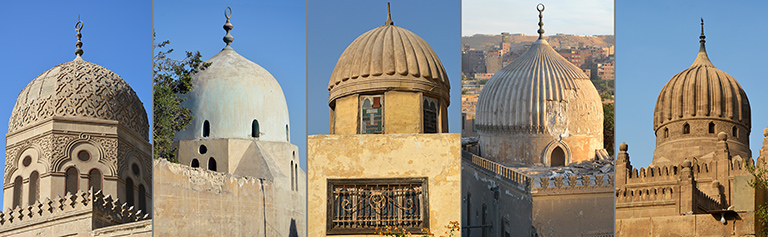
The Eastern Cemetery contains numerous listed historic monuments, mainly from the Mamluk period, including some of exceptional value. In contrast, almost none of its 19th- and 20th-century monuments enjoy legal protection, in spite of their often high artistic value, great aesthetic appeal, and historical importance. The significance of these unlisted monuments derives from the intrinsic artistic value of their design, from the historical importance of people buried therein, as well as the complex relation to the mediaeval architecture of the area that inspired the design at the time when the neo-Mamluk style was seen as an expression of Egyptian national identity.
Typical monuments at the cemetery are walled enclosures that contain tombs and sepulchres of different forms, as well as rooms built by the enclosure walls for families visiting the cemetery, a popular custom that still continues. Nowadays, many of these rooms are inhabited, and the enclosures turned into residential courtyards. Usually, the inhabitants are not intrusive squatters, but are in some relation to the families of the buried, which is one of the qualities that make the neighbourhood a unique urban and social landscape. Residential houses have also been built here for a long time.
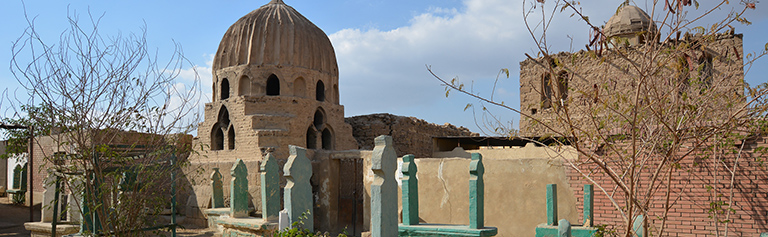
The Recording Project
ARCHiNOS Architecture, a Cairo-based consulting office incorporated in Egypt in 2008 whose focus is on culture, heritage, and art, has been working in the “Desert of the Mamluks” for many years. Since 2014, it has been running in the Sultan Qaitbey area a project that grafts together historic preservation, cultural activities, and social development work. Having long seen a need for taking care of the area’s “forgotten heritage”, in 2022 ARCHiNOS secured funding from the ARCADIA Fund, a UK charity organization founded by Lisbet Rausing and Prof Peter Baldwin, to document the unlisted heritage of the “Desert of the Mamluks”. The ARCADIA grant was awarded to the UK charity HERITAGE AND BEYOND, which after the completion of the documentation produced by ARCHiNOS in 2022-23 put the processed records on the database of the Endangered Archaeology in the Middle East and North Africa (EAMENA) project.
The second phase of the project, conducted in 2025-26, was funded by the Gerda Henkel Foundation. Besides recording many more historic units, this phase resulted in making the records publicly available on-line.
The Database
Information in the database accessible on this website was gathered directly on-site and recorded by hand in specially designed record sheets. The sheets were then typed and edited to form a physical archive of the records.
The selection of monuments to be recorded was based on:
- Historical and artistic merit, and unusual or unique features
- Vulnerability and threat of destruction
- Representing a building-type characteristic of the varied repertoire present in the area.
While the resulting record is not exhaustive, it offers a representative sample of the area’s heritage in its various forms, and covers its most valuable heritage pieces.
The ARCHiNOS team working on the project were: Agnieszka Dobrowolska (Project Director), Jaroslaw Dobrowolski (database design), ‘Amr Abotawila, Hadeer Ahmad, Yusuf Yaser and Hania ‘Abdelmegid, Farida Husam and Karim al-Gabali. Dr Mustafa al-Sadiq generously shared his knowledge of the cemetery and photographic records from his extensive archive.
In carrying out the field recording and in data entry, the ARCHiNOS team was aided by dedicated volunteering interns, recent graduates of Cairo University, ‘Ain Shams University and the German University in Cairo: Nur Atiya, Radwa al-Saeed, Esraa’ al-Mahdi, and Muhammad ‘Esam.
The records were put on-line in 2026 by the team of the Cairo-based Road9 Company.